
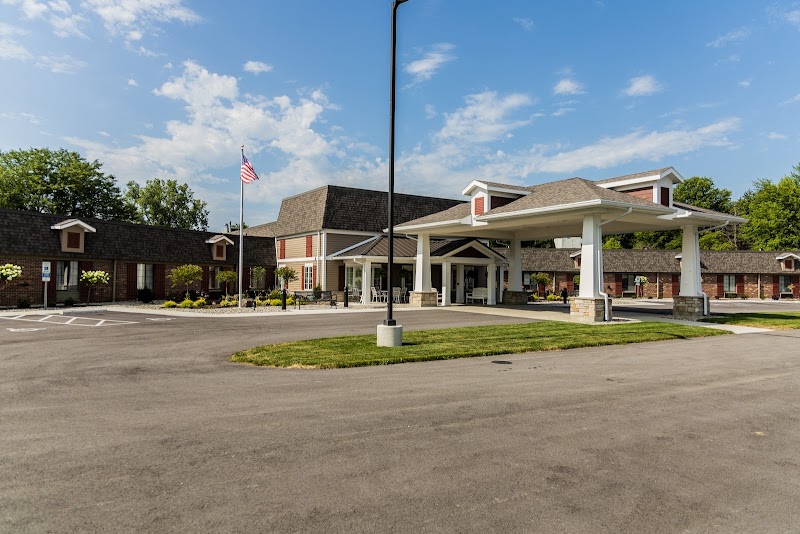
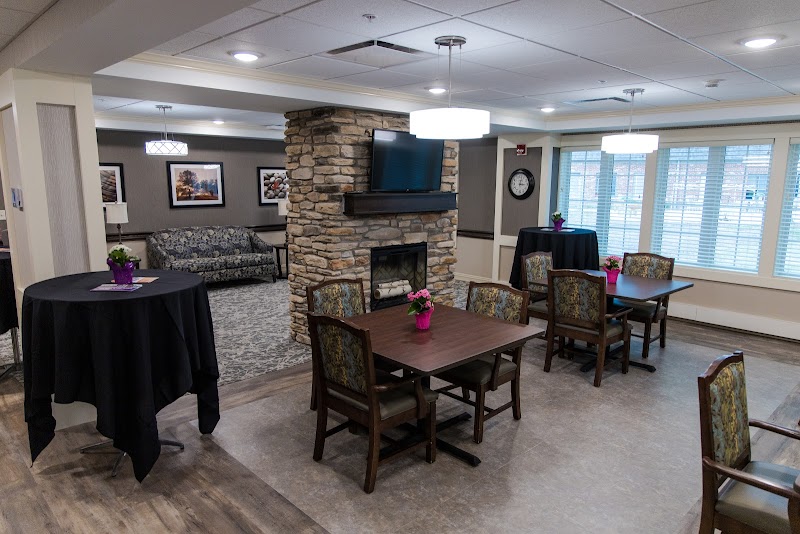


BOWLING GREEN MANOR

1021 W POE RD, BOWLING GREEN, OH 43402 (419) 352-4694
For profit - Corporation 99 Beds HCF MANAGEMENT Data: November 2025
Trust Grade
78/100
#226 of 913 in OH
Last Inspection: February 2025

Within standard 12-15 month inspection cycle. Federal law requires annual inspections.

Overview

Bowling Green Manor has a Trust Grade of B, indicating it is a good choice for families seeking care, sitting in the top half of nursing homes in Ohio at #226 out of 913 facilities. In Wood County, it ranks #5 out of 11, which means there are only four other local options that are better. However, the facility's trend is concerning as it has worsened, increasing from 3 issues in 2022 to 9 in 2025. Staffing is a relative strength with a turnover rate of just 29%, significantly lower than the Ohio average, although RN coverage is rated as average. Notably, the facility has not incurred any fines, which is a positive sign. On the downside, recent inspector findings raised concerns regarding meal quality and food safety practices. For example, staff failed to ensure that food was stored properly, leading to potential contamination risks, and many residents reported that their meals were not palatable or properly cooked. Additionally, the facility did not maintain adequate documentation for required quality assessment meetings, which could affect overall resident care. While Bowling Green Manor has strengths in staffing and no fines, families should be aware of these significant issues when considering care for their loved ones.

Trust Score
B
78/100
In Ohio
#226/913
Top 24%
Safety Record
Low Risk
No red flags
Inspections
Getting Worse
3 → 9 violations
Staff Stability
✓ Good
29% annual turnover. Excellent stability, 19 points below Ohio's 48% average. Staff who stay learn residents' needs.
Penalties
✓ Good
No fines on record. Clean compliance history, better than most Ohio facilities.
Skilled Nurses
⚠ Watch
Each resident gets only 29 minutes of Registered Nurse (RN) attention daily — below average for Ohio. Fewer RN minutes means fewer trained eyes watching for problems.
Violations
⚠ Watch
15 deficiencies on record. Higher than average. Multiple issues found across inspections.
★★★★☆
4.0
Overall Rating
★★★☆☆
3.0
Staff Levels
★★★★★
5.0
Care Quality
★★★☆☆
3.0
Inspection Score
Stable
2022: 3 issues
2025: 9 issues

The Good

  • 5-Star Quality Measures · Strong clinical quality outcomes
  • Low Staff Turnover (29%) · Staff stability means consistent care
  • Full Sprinkler Coverage · Fire safety systems throughout facility
  • No fines on record
  • Staff turnover is low (29%)

    19 points below Ohio average of 48%

Facility shows strength in quality measures, staff retention, fire safety.

The Bad

Chain: HCF MANAGEMENT

Part of a multi-facility chain

Ask about local staffing decisions and management

The Ugly 15 deficiencies on record

Feb 2025 9 deficiencies
CONCERN (D)

Potential for Harm - no one hurt, but risky conditions existed

Assessment Accuracy (Tag F0641)

Could have caused harm · This affected 1 resident

**NOTE- TERMS IN BRACKETS HAVE BEEN EDITED TO PROTECT CONFIDENTIALITY** Based on medical record review and staff interview, the facility failed to ensure resident assessments were completed accurately...

Read full inspector narrative →
**NOTE- TERMS IN BRACKETS HAVE BEEN EDITED TO PROTECT CONFIDENTIALITY** Based on medical record review and staff interview, the facility failed to ensure resident assessments were completed accurately. This affected one (#73) of 19 residents reviewed for assessments. The facility census was 93. Findings include: Review of the medical record revealed Resident #73 was admitted on [DATE]. Diagnoses included late onset Alzheimer's disease, dementia, anxiety, lumbosacral disc degeneration, abnormalities of gait and mobility, oropharyngeal dysphagia, hypertension, and peripheral vascular disease. Review of the quarterly Minimum Data Set (MDS) assessment, dated 01/15/25, revealed Resident #73 required a mechanically altered diet and did not take scheduled pain medication. Review of Resident #73's physician orders revealed an order dated 08/21/23 for Oxycodone with acetaminophen 5-325 milligrams (mg), one pill by mouth twice daily for moderate pain. Further review revealed an order dated 10/10/23 for a regular texture and regular consistency diet. Interview on 02/18/25 at 8:30 A.M. with Registered Nurse (RN) #532 verified Resident #73's MDS assessment was incorrectly coded and further confirmed the resident did not require a mechanically altered diet and received scheduled pain medication.
CONCERN (D)

Potential for Harm - no one hurt, but risky conditions existed

Comprehensive Care Plan (Tag F0656)

Could have caused harm · This affected 1 resident

Based on observation, resident interview, medical record review, staff interview and review of facility policy, the facility failed to ensure resident care plans were comprehensive and included care n...

Read full inspector narrative →
Based on observation, resident interview, medical record review, staff interview and review of facility policy, the facility failed to ensure resident care plans were comprehensive and included care needs related to smoking for two (#38 and #88) residents and for one (#61) resident for edema care. This affected three residents (#38, #88 and #61) of 19 residents reviewed for comprehensive care planning. The facility census was 93. Findings include: 1. Review of Resident #38's medical record revealed an admission date of 01/22/25. Diagnoses included type II diabetes, anxiety disorder, adult failure to thrive and nicotine dependence. Review of the Minimum Data Set (MDS) assessment, dated 01/28/25, revealed Resident #38 had a Brief Interview for Mental Status (BIMS) score of 15, indicating the resident was cognitively intact. Further review revealed Resident #38 was dependent on staff for transfers and putting on footwear, required maximal assistance with parts of dressing, utilized a manual wheelchair for mobility and displayed verbal behavioral symptoms directed toward others one to three days during the review period. Review of the care plan revealed no supports or interventions related to nicotine dependence or smoking were in place for Resident #38 until the care plan was revised on 02/11/25. Interview on 02/11/25 at 7:53 A.M. with Resident #38 revealed he smoked cigarettes. Concurrent observation revealed the resident had cigarettes and a lighter in his coat pocket. Observation on 02/11/25 at 7:56 A.M. of Resident #38 revealed he was smoking in the parking lot of the facility. Interview on 02/13/25 at 1:20 P.M. with the Director of Nursing (DON) verified Resident #38 smoked and his care plan was not updated to include smoking interventions until 02/11/25. 2. Review of Resident #88's medical record revealed an admission date of 12/21/24. Diagnoses included peripheral vascular disease, anxiety disorder, cannabis abuse, type II diabetes, cocaine abuse, and nicotine dependence. Review of the MDS assessment, dated 12/27/24, revealed Resident #88 had a BIMS score of 15, indicating the resident was cognitively intact. Further review revealed Resident #88 was dependent on staff for putting on footwear, required moderate assistance with parts of dressing, maximal assistance with transfers, utilized a manual wheelchair for mobility and displayed rejection of care behaviors one to three days during the review period. Review of the care plan revealed Resident #88 had no supports or interventions in place related to smoking or nicotine dependence until the care plan was revised on 02/11/25. Observation on 02/11/25 at 7:43 A.M. of Resident #88 revealed he was off to the side of the facility parking lot smoking. Interview on 02/13/25 at 1:20 P.M. with the DON verified Resident #88 smoked and his care plan was not updated to include smoking interventions until 02/11/25. 3. Review of the medical record for Resident #61 revealed an admission date of 05/19/23. Diagnoses included subdural hemorrhage (bleeding in the brain), and brain tumor. Further medical record review revealed Resident #61 was hospitalized in October 2024 and, upon return from the hospital, was found to have edema (swelling) of the left upper arm and left hand. Review of the physician progress note dated 10/24/24 revealed Resident #61 was finishing a course of Lasix (used to treat edema) and no improvement was noted to the left hand edema. A Doppler (ultrasound) was completed on 10/14/2024, which was negative for deep vein thrombosis (DVT). The physical examination revealed the left upper extremity and hand continued with edema and the plan was to start a lymphedema sleeve (applies pressure to reduce swelling) to the left upper extremity, on in the morning and off at bedtime or may wear at all times if the resident preferred Review of the quarterly MDS assessment, dated 12/02/24, revealed Resident #61 was cognitively impaired and dependent on staff for dressing. Review of the February 2025 physician orders revealed Resident #61 had an order for a lymphedema sleeve to the left upper extremity. Review of the care plan, revised December 2024, revealed no care plan supports or interventions related to edema/lymphedema sleeve were implemented for Resident #61. Interview on 02/13/25 at 1:02 P.M. with the DON verified there was no care plan in place for Resident #61's edema or use of a lymphedema sleeve. Review of the facility policy titled, Comprehensive Care Plan, revised November 2016, revealed the facility would develop a comprehensive person centered care plan for each resident that included measurable objectives and timetables to meet a resident's medical, nursing, and mental and psychosocial needs.
CONCERN (D)

Potential for Harm - no one hurt, but risky conditions existed

Quality of Care (Tag F0684)

Could have caused harm · This affected 1 resident

Based on medical record review, staff interview and review of the facility's bowel protocol, the facility failed to ensure residents at risk for constipation had bowel interventions implemented as dir...

Read full inspector narrative →
Based on medical record review, staff interview and review of the facility's bowel protocol, the facility failed to ensure residents at risk for constipation had bowel interventions implemented as directed. This affected one (#64) of one resident reviewed for constipation. The facility census was 93. Findings include: Review of Resident #64's medical record revealed an admission date of 06/24/24. Diagnoses included dementia, anxiety disorder, depression, altered mental status, muscle weakness, cognitive communication deficit, and prostate cancer. Review of the Minimum Data Set (MDS) assessment, dated 01/16/25, revealed Resident #64 had a Brief Interview for Mental Status (BIMS) score of nine, indicating the resident was moderately cognitively impaired. Further review revealed Resident #64 required touching assistance with toilet use, dressing and transfers and was always continent of bowel. Review of the care plan, revised 02/09/25, revealed Resident #64 was at risk for constipation. Interventions included administer medications and treatments as ordered, assess bowel sounds, and monitor for bowel movements (BM). Review of the Certified Nursing Assistant (CNA) task documentation revealed Resident #64's BMs were tracked daily. Further review revealed from 01/27/25 through 02/03/25 (total of eight days), no BM was documented. Review of Resident #64's physician orders revealed an order dated 06/24/24, and discontinued 02/06/25, for Docusate Sodium (laxative) 100 milligrams (mg), one capsule by mouth two times a day for constipation. Review of the corresponding Medication Administration Record (MAR) revealed Resident #64's scheduled medication was administered as ordered. Further review revealed on 01/24/25, Resident #64 received as needed (PRN) Maalox Plus 30 milliliters (ml) for indigestion. Additional review revealed no other PRN interventions were implemented to address Resident #64 not having a BM for the eight days between 01/27/25 to 02/03/25. Attempted interview on 02/11/25 at 9:39 A.M. with Resident #64 found him anxious, restless, and confused. Resident #64 was not able to be interviewed. Interview on 02/12/24 at 7:50 A.M. with Registered Nurse (RN) #410 revealed the facility had a bowel protocol in place. RN #410 explained that if a resident did not have a BM in three days, the staff implemented a progressive protocol until the resident had a BM, beginning with prune juice, then milk of magnesia, followed by a Dulcolax (laxative) tab, then a rectal suppository, and the final step would be an enema. RN #410 verified Resident #64 was at risk for constipation and added Resident #64 was not on the list generated in the electronic medical record (EMR) for a bowel protocol. Interview on 02/12/25 at 9:19 A.M. with the Director of Nursing (DON) verified there was no documentation Resident #64 had a bowel movement from 01/27/25 through 02/03/25 and further confirmed there was no evidence bowel protocol interventions were implemented during that time. Interview on 02/12/25 with CNA #504 revealed Resident #64's BMs were tracked in the care tracker (tasks). CNA #504 reported Resident #64 had been declining and was no longer able to take himself to the bathroom, resulting in staff checking and changing or toileting the resident every two hours. Prior to electing hospice services (02/06/25), CNA #504 stated Resident #64 was able to take himself to the bathroom, but still required staff assistance with clean up following a BM. CNA #504 confirmed staff would be aware when Resident #64 had a BM and documented it in care tracker. CNA #504 stated if a BM was not documented in a few days, the system would alert the nurse and the nurse would take care of it from that point. CNA #504 confirmed the documentation for Resident #64's BM tracking was accurate. Review of the facility's undated Bowel Protocol revealed if the resident had no BM in three days, start bowel protocol/prune juice, then milk of magnesia, Dulcolax tabs, rectal suppository, and enema.
CONCERN (D)

Potential for Harm - no one hurt, but risky conditions existed

Accident Prevention (Tag F0689)

Could have caused harm · This affected 1 resident

Based on observation, resident interview, medical record review, staff interview and review of the facility admission Agreement, the facility failed to maintain safe smoking practices. This affected t...

Read full inspector narrative →
Based on observation, resident interview, medical record review, staff interview and review of the facility admission Agreement, the facility failed to maintain safe smoking practices. This affected two residents (#38 and #88) of two residents reviewed for smoking. The facility census was 93. Findings include: 1. Review of Resident #38's medical record revealed an admission date of 01/22/25. Diagnoses included type II diabetes, anxiety disorder, adult failure to thrive, and nicotine dependence. Review of the Minimum Data Set (MDS) assessment, dated 01/28/25, revealed Resident #38 had a Brief Interview for Mental Status (BIMS) score of 15, indicating the resident was cognitively intact. Further review revealed Resident #38 was dependent on staff for transfers and putting on footwear, required maximal assistance with parts of dressing, utilized a manual wheelchair for mobility, and displayed verbal behavioral symptoms directed toward others one to three days during the review period. Review of the care plan, revised 02/11/25, revealed Resident #38 had supports and interventions for admission adjustment issues, impaired cognitive function, potential for verbally abusive behaviors, and non-compliance with smoking policy (updated 02/11/25). Further review of the medical record revealed no evidence a smoking assessment was completed to determine Resident #38's ability to independently smoke safely. Interview on 02/11/25 at 7:52 A.M. with Resident #38 verified he smoked and kept his cigarettes and lighter with him in his room. Coinciding observation revealed Resident #38 had his smoking materials in the left pocked of his winter coat. Resident #38 reported he went out when he wanted and went to smoke at the neighboring church. Observation on 02/11/25 at 7:53 A.M. of Resident #38 revealed he went out the front door of the facility. Resident #38 propelled himself in his wheelchair to edge of the facility's parking lot. Continuous observation revealed at 7:55 A.M., Resident #38 pulled a cigarette and lighter out of his coat pocket, lit the cigarette, and proceeded to smoke on the facility's smoke-free campus. Interview on 02/11/25 at 7:56 A.M. with the Administrator verified Resident #38 was smoking on facility property. The Administrator reported they were aware Resident #38 smoked, and he had been directed to go over to the church parking lot to smoke. The Administrator stated he would remind Resident #38 to go off the property to smoke. 2. Review of Resident #88's medical record revealed an admission date of 12/21/24. Diagnoses included peripheral vascular disease, anxiety disorder, cannabis abuse, type II diabetes, cocaine abuse, and nicotine dependence. Review of the MDS assessment, dated 12/27/24, revealed Resident #88 had a BIMS score of 15, indicating the resident was cognitively intact. Further review revealed Resident #88 was dependent on staff for putting on footwear, required moderate assistance with parts of dressing, maximal assistance with transfers, utilized a manual wheelchair for mobility, and displayed rejection of care behaviors one to three days during the review period. Review of the care plan, revised 02/11/25, revealed Resident #88 had supports and interventions in place for emphysema related to smoking, occasional noncompliance with care, and refusal to follow the smoking policy. Further review of the medical record revealed no evidence a smoking assessment was completed to determine Resident #88's ability to independently smoke safely. Observation on 02/11/25 at 7:43 A.M. of Resident #88 revealed he was sitting in his wheelchair outside in the facility parking lot and appeared to be smoking. Further observation revealed Resident #88 was wearing a hat and winter coat. While observation did not reveal a cigarette being lit, white plumes of smoke were observed rising from Resident #88's mouth. Concurrent interview with an unidentified housekeeping staff verified Resident #88 was smoking in the facility's parking lot. Interview on 02/11/25 at 7:46 A.M. with the Administrator revealed he was aware Resident #88 smoked. The Administrator reported Resident #88 actually vaped and the arrangement for smoking or vaping was the residents were to sign out and go over to the church parking lot to smoke. The Administrator verified smoking assessments were not completed for Resident #38 and Resident #88 due to it being a non-smoking facility. The Administrator confirmed smoking supplies were to be kept locked/secured by staff. Review of the facility's admission Agreement, dated January 2018, revealed the facility was smoke-free. Residents and visitors were not permitted to smoke in any area or around the facility campus. By signing the agreement the resident agreed to not smoke at any time or any location on the facility's campus including property attached to the surrounding facility.
CONCERN (D)

Potential for Harm - no one hurt, but risky conditions existed

Deficiency F0697 (Tag F0697)

Could have caused harm · This affected 1 resident

Based on medical record review, staff interview and review of the facility's skills competency for pain management document, the facility failed to ensure pain assessments were completed with the admi...

Read full inspector narrative →
Based on medical record review, staff interview and review of the facility's skills competency for pain management document, the facility failed to ensure pain assessments were completed with the administration of narcotic pain medications. This affected one (#73) of five residents reviewed for unnecessary medications. The facility census was 93. Findings include: Review of Resident #73's medical record revealed and admission date of 05/17/23. Diagnoses included late onset Alzheimer's disease, dementia, anxiety, lumbosacral disc degeneration, abnormalities of gait and mobility, oropharyngeal dysphagia, gastroesophageal reflux disease (GERD), hyperlipidemia, long term current drug therapy, hypertension, hypothyroidism, and peripheral vascular disease. Review of the quarterly Minimum Data Set (MDS) assessment, dated 01/15/25, revealed Resident #73 was cognitively impaired, used a manual wheelchair and was at risk for pressure ulcers. The assessment indicated Resident #73 did not take scheduled pain medication. Review of a physician order dated 08/21/23 revealed Resident #73 was ordered a scheduled dose of Oxycodone with acetaminophen (Percocet) 5-325 milligrams (mg), one pill by mouth twice daily for moderate pain. Review of the Medication Administration Record (MAR) for January 2025 and February 2025 revealed Resident #73 received the scheduled doses of Oxycodone as ordered. Further review of the MAR revealed no evidence a pain assessment was completed with the administrations. Additional review of the Treatment Administration Record (TAR) for January 2025 and February 2025 also revealed no evidence pain assessments were completed for Resident #73. Review of the progress notes from 12/01/24 to 02/13/25 revealed documentation related to three instances of pain assessments. On 12/11/24, Resident #73's pain was recorded as zero on a scale of zero to ten, with zero being no pain. Additional review revealed pain assessments dated 12/20/24 and 01/12/25 were completed in coordination with MDS assessments and pain intensity over the previous five days was identified as mild. Interview with the Director of Nursing (DON) on 02/12/25 at 1:30 P.M. confirmed pain assessments were not being completed with the administration of Resident #73's scheduled Oxycodone and further verified pain assessments should be completed and documented in the medical record in conjunction with the administration of pain medication. Review of the facility document titled, Skills Competency Checklist - Pain Management, dated April 2008, revealed the resident's response to analgesics (pain medication) would be evaluated.
CONCERN (E)

Potential for Harm - no one hurt, but risky conditions existed

Deficiency F0804 (Tag F0804)

Could have caused harm · This affected multiple residents

Based on observation, resident interview, staff interview and review of facility policy, the facility failed to ensure resident meals were palatable. This affected all residents, except 31(#6, #8, #10...

Read full inspector narrative →
Based on observation, resident interview, staff interview and review of facility policy, the facility failed to ensure resident meals were palatable. This affected all residents, except 31(#6, #8, #10, #18, #22, #24, #25, #26, #35, #39, #40, #44, #49, #52, #58, #61, #65, #67, #71, #75, #77, #84, #90, #92, #95, #148, #152, #245, #246, #247, #248) residents the facility identified as not being served French fries. Additionally, the facility failed to ensure recipes for pureed diets were followed to maintain nutritive value. This affected four (#8, #39, #61 and #90) of four residents identified by the facility as receiving pureed meals. The facility census was 93. Findings include: 1. Interview on 02/10/25 at 8:15 P.M. with Resident #24 revealed the food at the facility was not good. Interview on 02/11/25 at 11:43 A.M. with Resident #52 revealed the only area of concern at the facility was the food, adding the vegetables were either under or overcooked and meals were not warm enough to be palatable. Interview on 02/11/25 at 12:33 P.M. with Resident #80 revealed her lunch meal was cold and the French fries were not cooked. Concurrent observation revealed the French fries appeared white and flimsy. Interview on 02/11/25 at 12:35 P.M. with Resident #9 revealed the French fries served for lunch were not edible. Interview on 02/11/25 at 2:15 P.M. with Resident #73's family representative revealed most of the food served at the facility was not palatable. Observation on 02/11/25 at 12:37 P.M. revealed a test plate of the French fries, served from the steam table the lunch meal was served from. The French fries appeared white and unappetizing, were cold, unflavored, and had an unfavorable texture. Interview on 02/11/25 at 12:38 P.M. with [NAME] #439 revealed salt was added to the French fries prior to baking. Further interview with [NAME] #439 confirmed the French fries did not have a taste and were not palatable. Interview on 02/11/25 at 12:39 P.M. with Dietary Manager #546 verified the French fries were not cooked appropriately. Review of the facility policy titled, Nutrition Services Policy and Procedure Objectives, dated January 2018, revealed the objectives of the nutrition services department was to provide nutritious, palatable, and attractive meals to meet and satisfy individual needs. 2. Observation on 02/12/25 at 10:20 A.M. of pureed meal preparation revealed [NAME] #439 added hamburger patties and an unknown amount of hot water to the puree blender. Concurrent interview with [NAME] #439 verified she added an unknown amount of water to the hamburger patties to puree and added she always used hot water to puree food, unless the meal was pot roast and there was gravy available. Dietetic Technician (DT) #592 intervened and added gravy to the hamburger and water in the puree blender. Review of the undated pureed hamburger recipe revealed to place sandwich filler in the blender or food processor, add condiments/gravy, and blend until pudding like consistency was reached.
CONCERN (E)

Potential for Harm - no one hurt, but risky conditions existed

Deficiency F0805 (Tag F0805)

Could have caused harm · This affected multiple residents

Based on observation, staff interview, review of the pureed food recipe and review of facility policy, the facility failed to ensure pureed foods were prepared to an appropriate consistency. This affe...

Read full inspector narrative →
Based on observation, staff interview, review of the pureed food recipe and review of facility policy, the facility failed to ensure pureed foods were prepared to an appropriate consistency. This affected four (#8, #39, #61, and #90) of four residents identified by the facility as receiving pureed food. The facility census was 93. Findings include: Observation on 02/12/25 at 10:20 A.M. of pureed meal preparation revealed [NAME] #439 added hamburger patties and hot water to the puree blender. At 10:24 A.M., [NAME] #439 stopped the blender, took off the lid, and used her gloved fingers to test the texture of the pureed meat. Concurrent interview with [NAME] #439 revealed the expected texture of the meat should be a honey thick texture and she determined the meat was of an appropriate consistency. After further observation, it was determined the hamburger was not appropriately pureed and [NAME] #439 continued to blend. Interview on 02/12/25 at 10:27 A.M. with Dietetic Technician (DT) #592 revealed the hamburger meat seemed to be pureed to a pudding like texture and stated it was ready to be served. Coinciding observation of the pureed hamburger, with DT #592, revealed small, chewable pieces of hamburger. Further interview with DT #592 verified there were pieces of hamburger in the pureed meat and the hamburger was not fully pureed to a smooth texture. Observation on 02/12/25 at approximately 10:40 A.M. revealed the hamburger was further pureed to a smooth, pudding-like consistency. Review of the undated pureed hamburger preparation recipe revealed to blend the hamburger until it was smooth and pudding-like consistency. Review of the facility policy titled, Nutrition Services Meal Service, dated October 2017, revealed food was served in accordance with diet texture modifications prescribed.
CONCERN (E)

Potential for Harm - no one hurt, but risky conditions existed

Food Safety (Tag F0812)

Could have caused harm · This affected multiple residents

3. Observation on 02/12/25 at 10:50 A.M. of the kitchen revealed Dietary Manager (DM) #546 donned gloves, without performing hand hygiene prior donning the gloves. Continued observation revealed DM #5...

Read full inspector narrative →
3. Observation on 02/12/25 at 10:50 A.M. of the kitchen revealed Dietary Manager (DM) #546 donned gloves, without performing hand hygiene prior donning the gloves. Continued observation revealed DM #546 proceeded to wipe her nose on her forearm, then placed her gloved hand in a pan with cooked food to pull out a thermometer that had fallen in the pan. Interview on 02/12/25 at 10:54 A.M. with DM #546 verified she donned gloves without performing hand hygiene, touched her nose to her forearm, then put her gloved hand in the food to take out a thermometer that had fallen in. Review of the facility policy titled, Handwashing, dated March 2017, revealed proper handwashing techniques were to be practiced by Nutrition Services employees. Further review revealed hands were the point of contact with bacteria, that may contaminate the food, or equipment. Proper handwashing techniques were the key to eliminating the source of some bacteria, and preventing the spread of infection in the Nutrition Services Department. Food handlers must wash their hands before starting to work and after performing activities including, but not limited to, touching the hair, face, or body; sneezing, coughing, or using a tissue; touching clothing; and touching anything else that may contaminate hands, such as dirty equipment, work surfaces, or towels. Based on observation, staff interview and review of facility policy, the facility failed to ensure food was properly labeled and dated and further failed to remove items from stock when expired. Additionally, the facility failed to ensure kitchen staff performed adequate hand hygiene. This had the potential to affect all residents, except one (#248) resident identified by the facility as receiving no nutrition from the kitchen. Lastly, the facility failed to ensure meals were distributed in a manner that protected against contamination. This affected three (#32, #57, and #69) of 17 residents who received meal trays on the B Hall. The facility census was 93. Findings include: 1. Observations on 02/10/25 between 6:25 P.M. and 7:24 P.M. of the reach-in refrigerator, located in the main kitchen, revealed the following unlabeled food items: two clear gallon pitchers with orange liquid, two uncovered one-cup sized bowls filled with diced peaches and an unopened piping bag of whipped topping that did not have an expiration date. Additional observation of the walk-in refrigerator revealed one plastic bowl of uncovered and unlabeled shredded greens on a white tray, one clear gallon pitcher of ranch dressing with a use by date f 02/07/25, on three-cup plastic container of tuna covered with torn aluminum foil and dated 02/05/25 and one 12 quart bucket filled with unlabeled individual zipper baggies containing one slice of bread and one single serve butter packet. Further observation of the dry storage area revealed one 12 count package of hoagie buns covered with what appeared to be mold and one eight count package of Italian split-top buns with an approximately three inch circle of what appeared to be mold. Concurrent interview with Nutrition Services Assistant (NSA) #419 and [NAME] #513 verified the above findings, with [NAME] #513 adding the tuna dated 02/05/25 should have been used or thrown away within three days. Observation on 02/11/25 at 7:50 A.M. of the refrigerator located in the activities room revealed the following undated items: four bottles of mustard, three bottles of mayonnaise, three bottles of ketchup, two bottles of coffee creamer, two bottles of salad dressing, three two-liter bottles of pop, one take out container, one container of french onion dip, one bottle of ice cream syrup, and one gallon of rainbow sherbet. Interview on 02/11/25 at 7:54 A.M. with Activity Assistant (AA) #403 confirmed the items in the activity room refrigerator were undated. Further interview revealed the refrigerator was used for staff lunches and resident activities. Review of the facility policy titled, Food Safety Code Regulations - OH, dated March 2017, revealed food would be discarded when expired or within three days of preparation. 2. Observation on 02/11/25, beginning at 7:57 A.M., of meal tray service to the B Hall revealed Certified Nursing Assistant (CNA) #487 delivered a meal tray to Resident #25. CNA #487 set up the meal tray, touched Resident #25's bedside tray table and reclining chair remote, and put a clothing protector on Resident #25. Without performing hand hygiene, CNA #487 continued with meal tray service and meal set-up to Residents #32, #57, and #69. Interview on 02/11/25 at 8:07 A.M. with CNA #487 confirmed she touched multiple surfaces in multiple resident rooms and did not perform hand hygiene between delivering and setting up meal trays for Residents #32, #57, and #69.
CONCERN (F)

Potential for Harm - no one hurt, but risky conditions existed

Deficiency F0868 (Tag F0868)

Could have caused harm · This affected most or all residents

Based of review of the Quality Assessment and Assurance (QAA) committee meeting sign in sheets, staff interview and review of facility policy, the facility failed to ensure the required personnel were...

Read full inspector narrative →
Based of review of the Quality Assessment and Assurance (QAA) committee meeting sign in sheets, staff interview and review of facility policy, the facility failed to ensure the required personnel were in attendance at the quarterly QAA meetings and further failed to maintain documentation of personnel in attendance at all QAA meetings This had the potential to affect all residents. The facility census was 93. Findings include: Review of the first quarter QAA meeting sign in sheet, dated 05/02/24, revealed no evidence the Medical Director (MD) was in attendance at the meeting. Further review of documentation for the second quarter QAA meeting, held in July 2024, and the third quarter QAA meeting, held in October 2024, revealed no evidence of who was in attendance at the meetings. Interview on 02/18/25 at 1:34 P.M. with the Administrator verified there was no signature, or other evidence of the MD's attendance, at the the first quarter 2024 QAA meeting and further confirmed there were no sign in sheets or other evidence for the second and third quarter QAA meetings to verify those personnel in attendance. Review of the facility policy titled, Quality Assurance and Performance Improvement (QAPI), dated 2018, revealed the QAA committee would meet at least quarterly with the required personnel and as needed to coordinate and evaluate activities under the QAPI program.
Sept 2022 3 deficiencies
CONCERN (D)

Potential for Harm - no one hurt, but risky conditions existed

Deficiency F0637 (Tag F0637)

Could have caused harm · This affected 1 resident

**NOTE- TERMS IN BRACKETS HAVE BEEN EDITED TO PROTECT CONFIDENTIALITY** Based on medical record review, staff interview and policy review, the facility failed to complete a comprehensive assessment af...

Read full inspector narrative →
**NOTE- TERMS IN BRACKETS HAVE BEEN EDITED TO PROTECT CONFIDENTIALITY** Based on medical record review, staff interview and policy review, the facility failed to complete a comprehensive assessment after a significant change. This affected one (#78) of two residents reviewed for hospice services. The facility census was 82. Findings include: Review of the medical record for Resident #78 revealed an admission date of 11/05/13 with medical diagnoses of Alzheimer's disease, dementia without behavioral disturbance, anxiety disorder, and heart failure. Review of a physician order dated 08/26/22 revealed Resident #78 was admitted to hospice care on 08/26/22. Review of the quarterly minimum data set (MDS) assessment dated [DATE] revealed Resident #78's cognition was not assessed and she required extensive assistance of two people for bed mobility, extensive assistance of one person for dressing and toileting, was totally dependent on one person for hygiene, and required supervision with one person assist for eating. Further review revealed she was under the care of hospice. Further medical record review revealed the facility did not complete a significant change MDS assessment after Resident #78 was admitted to hospice. Interview on 09/28/22 at 10:06 A.M. with the Director of Nursing (DON) confirmed a significant change MDS assessment should have been completed for Resident #78 after she was admitted to hospice. Further interview with the DON confirmed a quarterly assessment was completed on 08/29/22 and a comprehensive significant change assessment was not completed. Review of the facility policy titled Resident Assessment Policy, revised November 2015, revealed a comprehensive assessment would be completed within 14 days after a significant change in a resident's condition.
CONCERN (D)

Potential for Harm - no one hurt, but risky conditions existed

Deficiency F0698 (Tag F0698)

Could have caused harm · This affected 1 resident

**NOTE- TERMS IN BRACKETS HAVE BEEN EDITED TO PROTECT CONFIDENTIALITY** Based on medical record review, observations, resident and staff interviews and policy review, the facility failed to accurately...

Read full inspector narrative →
**NOTE- TERMS IN BRACKETS HAVE BEEN EDITED TO PROTECT CONFIDENTIALITY** Based on medical record review, observations, resident and staff interviews and policy review, the facility failed to accurately monitor fluid intake for a resident receiving dialysis services. This affected one (#385) of one residents reviewed for dialysis. The facility census was 82. Findings include: Review of Resident #385's medical record revealed the resident was admitted to the facility on [DATE] with diagnoses that included arthritis, hypertension, diabetes mellitus, type II, end stage renal disease with dependence on renal dialysis, anemia, hyperlipidemia. Review of the admission Minimum Data Set (MDS) assessment dated [DATE] revealed Resident #385 was cognitively intact, required extensive assistance for bed mobility, transfers, locomotion, and toilet use. Resident #385 required limited assistance needed with personal hygiene, dressing and walking. Resident #385 required total dependence for bathing with one-person physical assist. Resident #385 received renal dialysis three times a week on Monday, Wednesday, and Thursday. Review of physician orders revealed an ordered dated 09/15/22 for a renal diabetic diet with a 1,000 milliliter (ml) fluid restriction per twenty-four hours, 100 ml per shift for nursing and 700 ml per shift for dietary. An additional order written on 09/16/22 for a 1,000 ml fluid restriction per 24 hours, 100 ml per shift for nursing and 700 ml a day for dietary. Renal dialysis order written on 09/26/22 stated encourage resident to go for scheduled dialysis appointments on Monday, Wednesday, and Thursday. Review of the care plan dated 09/16/22 revealed Resident #385 had a potential for fluid overload. Interventions included medications administered as ordered, diet as ordered, a fluid restriction, vital signs monitored, and document intake and output each shift and for a daily weight to be completed at the same time each day. Review of the daily fluid consumed by mouth for Resident #385 from 09/16/22 to 09/28/22 revealed the following: On 09/16/22 the total fluid consumed was 360 ml. On 09/17/22 the total fluid consumed was 360 ml. On 09/18/22 the total fluid consumed was 840 ml. On 09/19/22 the total fluid consumed was 720 ml. On 09/20/22 the total fluid consumed was 360 ml. On 09/21/22 the total fluid consumed was 360 ml. On 09/22/22 the total fluid consumed was 420 ml. On 09/23/22 the total fluid consumed was 440 ml. On 09/24/22 the total fluid consumed was 820 ml. On 09/25/22 the total fluid consumed was 600 ml. On 09/26/22 the total fluid consumed was 760 ml. On 09/27/22 the total fluid consumed was 470 ml. On 09/28/22 the total fluid consumed was 660 ml. Review of the September treatment record for Resident #385 revealed the following fluid outputs each day. On 09/16/22 the total fluid intake was 850 ml. On 09/17/22 the total fluid intake was 730 ml. On 09/18/22 the total fluid intake was 750 ml. On 09/19/22 the total fluid intake was 1,020 ml. On 09/20/22 the total fluid intake was 520 ml. On 09/21/22 the total fluid intake was 660 ml. On 09/22/22 the total fluid intake was 600 ml. On 09/23/22 the total fluid intake was 470 ml. On 09/24/22 the total fluid intake was 810 ml. On 09/25/22 the total fluid intake was 790 ml. On 09/26/22 the total fluid intake was 1060 ml. On 09/27/22 the total fluid intake was 790 ml. On 09/28/22 the total fluid intake was 820 ml. Review of the recording of fluid intake for Resident #385 found the facility had not accurately monitored fluid intake. Resident #385 exceeded the 1,000 ml fluid restriction as ordered on 09/19/22 and 09/26/22. Additionally, the intake recorded on the fluid consumed task was more than the twenty-four-hour total recorded on the treatment record on 09/18/22 and 09/24/22. Observation on 09/28/22 at 3:05 P.M. of State Tested Nursing Assistant (STNA) #602 filled the gray lidded pitcher at the bedside of Resident #385 with ice. Interview with STNA #602 at the time of the observation verified Resident #385 had a lidded gray pitcher that was filled with ice at bedside. Interview with the Director of Nursing (DON) on 09/28/22 at 5:14 P.M. verified Resident #385 was on a fluid restriction. The DON was unaware of a gray lidded pitcher at the bedside of Resident #385. Observation on 09/29/22 at 9:10 A.M. revealed no gray lidded pitcher at the bedside of Resident #385. Interview at the time of the observation with Resident #385 verified the gray lidded pitcher had been removed by the staff. An additional interview on 09/29/22 at 9:13 A.M. with STNA #602 verified the gray water pitcher should not have been at the bedside of Resident #385. STNA #602 further verified she was unaware of what the fluid amount would be when the gray pitcher was filled with ice. Interview on 09/28/22 at 5:20 P.M. with the DON revealed the fluid documentation on the fluid consumed task is completed by the nursing assistants and included the fluids provided for meals. The fluids provided by the nurses with medication administration is added to what is reported by the nursing assistants and documented on the treatment record. The DON verified the fluid restriction was not followed as ordered on 09/19/22 and 09/26/22 and further verified the intake recorded on the fluid consumed task was more than the twenty-four-hour total recorded on 09/18/22 and 09/24/22. Additional interview with the DON on 09/29/22 at 7:54 A.M. verified the facility is not accurately recording the fluid intake for Resident #385. Review of the facility policy titled Fluid Restrictions dated February 2017 revealed residents on fluid restricted diets will receive the prescribed amount of fluids per day on order to manage a medical condition related to fluid balance or to meet their specific needs. Review of facility policy titled Instructions Food and Fluid Acceptance titled June 2016 revealed food and fluid acceptance will be recorded at each meal and input will be documented in the electronic documentation system. The recording of fluids at each meal are recorded as fluid milliliters.
CONCERN (D)

Potential for Harm - no one hurt, but risky conditions existed

Dental Services (Tag F0791)

Could have caused harm · This affected 1 resident

**NOTE- TERMS IN BRACKETS HAVE BEEN EDITED TO PROTECT CONFIDENTIALITY** Based on medical record review, observation, resident and staff interview and review of facility policy, the facility failed to ...

Read full inspector narrative →
**NOTE- TERMS IN BRACKETS HAVE BEEN EDITED TO PROTECT CONFIDENTIALITY** Based on medical record review, observation, resident and staff interview and review of facility policy, the facility failed to ensure dental services were provided timely for residents with dental concerns. This affected one (#76) of one residents reviewed for dental services. The facility census was 82. Findings Include: Review of Resident #76's medical record revealed an admission date of 07/01/20. Diagnoses included hemiplegia, pseudobulbar affect, dysphagia, type II diabetes, major depressive disorder, anxiety disorder, peripheral vascular disease, and psychosis. Review of Resident #76's Minimum Data Set (MDS) dated [DATE] revealed a Brief Interview for Mental Status (BIMS) score of nine out of 15 indicating Resident #76 was moderately cognitively impaired. Resident #76 required extensive assistance with bed mobility, transfer, dressing, eating, toilet use and personal hygiene including brushing teeth. Resident #76 displayed no behaviors during the review period. Resident #76 was noted to have mouth or facial pain, discomfort, or difficulty with chewing at the time of the review. Resident #76 received scheduled pain medications at the time of the review. Resident #76 reported pain almost constantly and the pain made it hard for her to sleep at night and limited her day to day activities. Resident #76 rated her pain at an eight on a scale of one to ten. Review of Resident #76's care plan revised 09/20/22 revealed supports and interventions for potential for pain and poor dental health. Interventions for dental health included coordinating arrangements for dental care, transportation as needed/as ordered, inspect oral cavity twice daily and report changes to the nurse including broken teeth, bleeding, swollen gums or discomfort with oral care, monitor, document and report signs and or symptoms of oral/dental problems needing attending and provide mouth care as per activities of daily living (ADL) personal care hygiene. Review of Resident #76's Dental Services information revealed on 03/18/21 Resident #76 was seen by the dentist and it was noted extractions were proposed. On 06/17/21 it was noted the dentist was waiting for approval for extractions. On 09/24/21 it was noted Resident #76 had broken and decayed teeth. At the time Resident #76 was cooperative with care, asymptomatic, and they were waiting for prior authorization for extractions to be done. On 06/09/22 it was noted Resident #76 was seen by the dentist and he spoke with Resident #76's daughter about the treatment plan. The dentist advised full upper and lower dentures if the insurance refused the partials. Resident #76 had no reported pain or discomfort at the time. On 07/15/22 Resident #76 was seen again by the dentist. Resident #76 reported her teeth hurt her at times. They were still awaiting prior authorization. Resident #76 had gone from 03/18/21 to 09/28/22 without having her dental concerns addressed or her recommended extractions completed. In addition, Resident #76 went from 07/15/22 to 09/28/22, 75 days, without dental treatment following reported pain. Interview on 09/27/22 at 2:38 P.M. with State Tested Nursing Assistant (STNA) #561 revealed Resident #76 was able to make her needs known and was cooperative with care. STNA #561 reported Resident #76 has broken and decaying teeth which had been causing Resident #76 pain. STNA #561 reported at times Resident #76 would be resistant to brushing her teeth because of the oral pain. STNA #561 stated she had reported the oral pain to the nurse but she was not aware if the dentist was in to see Resident #76 or if anything was being done to help Resident #76 with her mouth pain. Interview on 09/28/22 at 8:51 A.M. with Resident #76 revealed she had mouth pain that got in the way of her wanting to brush her teeth and sometimes got in the way of her eating. Resident #76 reported her mouth hurt, pointing to her top front teeth indicating what part of her mouth hurt. Resident #76 reported the dentist saw her but hasn't done anything to help her with her teeth. Coinciding observation of Resident #76's teeth found her front top teeth were broken and discolored. Resident #76 repeated her top teeth hurt her. Interview on 09/28/22 at 1:38 P.M. with Corporate Nurse (CN) #625 reviewed the timeline of Resident #76 dental services. CN #625 verified in March of 2021 Resident #76 was seen by the dentist and extractions were recommended with a partial lower and partial upper plate. CN #625 stated the dentist would not do the extractions until the plates were authorized. In June of 2021 the dentist was still waiting on approval. On 07/06/21 and again on 01/28/22 the partial was denied by Resident #76's insurance. Then on 06/09/22 the timeline revealed the dentist spoke with Resident #76's daughter about the treatment plan. The dentist advised to reattempt treatment plan of partial lower and partial upper. If Resident #76's insurance refused, then the recommendation was for a full upper and full lower. Resident #76 had no pain or discomfort at the time. On 07/15/22 Resident #76 was seen again. The dental note indicated Resident #76 reported her teeth were hurting. At the time they were continuing to wait for prior authorization. CN #625 reported Resident #76's next dental appointment was scheduled 11/01/22 and she may have been approved for her dentures so her extractions may be able to be completed. CN #625 stated the Director of Nursing (DON) would have more information. Interview on 09/28/22 at 2:13 P.M. with the DON verified Resident #76 had intermittent dental pain and the pain was managed with her scheduled and as need (PRN) pain medications. She verified Resident #76 at times needed assistance with oral hygiene as she would refuse. The DON stated it was not known if the refusals were from dental pain or something else. The DON reported Resident #76 was seen by the dentist and had been waiting for insurance approval to have her teeth extracted. The DON reported the managed care insurance provider case manager was difficult to work with and she had a call out to her to check on status of her approval so Resident #76 could have her teeth extracted. Interview on 09/28/22 at 2:28 P.M. with the DON revealed an insurance approval was received and while waiting for extractions to be completed a request was put in today for an oral topical paste to aide in oral pain and provision of care. Review of the approval notice titled, Medicaid Denture Prior Authorization, received by the facility on 09/28/22 revealed Resident #76 was approved for an upper denture to improve chewing function with necessary extractions on 09/06/22. Interview on 09/28/22 at 2:50 P.M. with Residential Service Coordinator (RSC) #502 and the DON revealed regular case conferences were held and included discussion of Resident #76's dental status. An approval for Resident #76's dentures was received today 09/28/22 so they could move forward with her tooth extractions. Resident #76's next dental appointment was scheduled for 11/01/22 and they had her on the list for any cancellations. The DON reported they had already gotten the order for the topical oral pain medication and it was going to be used prior to oral care until her upper tooth concerns were addressed. The facility had not followed up with the prior authorization request until 09/28/22 and learned on 09/28/22 of the 09/06/22 approval. Review of the facility policy titled, Dental Services, revised 05/09/22 revealed the facility would assist residents in obtaining routine and twenty four hour emergency dental care. Emergency dental services included services needed to treat episodes of acute pain of teeth, gums or palate, broken or otherwise damaged teeth or any other problems of the oral cavity.
Oct 2019 3 deficiencies
CONCERN (D)

Potential for Harm - no one hurt, but risky conditions existed

Resident Rights (Tag F0550)

Could have caused harm · This affected 1 resident

**NOTE- TERMS IN BRACKETS HAVE BEEN EDITED TO PROTECT CONFIDENTIALITY** 2. Review of the medical record for Resident #224, revealed an admission date of 09/26/19. Diagnoses included unspecified dement...

Read full inspector narrative →
**NOTE- TERMS IN BRACKETS HAVE BEEN EDITED TO PROTECT CONFIDENTIALITY** 2. Review of the medical record for Resident #224, revealed an admission date of 09/26/19. Diagnoses included unspecified dementia without behavioral disturbance, and benign prostatic hyperplasia with lower urinary tract symptoms. Review of the care plan dated 09/27/19 revealed Resident #224 was admitted with an indwelling suprapubic catheter related to benign prostatic hypertrophy with obstructive uropathy. Review of the current physician orders dated 09/27/19 for Resident #224 revealed an order to use privacy bag for the resident's catheter bag. Observation and interview on 10/01/19 at 8:41 A.M. revealed Resident #224 being assisted with his breakfast by State Tested Nurse Aide (STNA) #201. The resident's catheter bag was hanging on the right side of the bed and did not have a privacy bag. Interview with STNA #201 verified Resident #224 did not have a privacy bag and they should of put one on when he was admitted . Observation and interview on 10/03/19 at 8:32 A.M. revealed Resident #224's catheter bag was not covered with a privacy bag. Interview with STNA #202 verified Resident #224's catheter bag was uncovered and should be covered with a privacy bag. Review of the facility policy titled, Resident Rights revised October 2004 revealed residents had the right to be treated with dignity and respect. Based on medical record review, observation, resident interview, staff interview, and review of facility policy, the facility failed to ensure residents with indwelling catheters had their catheters managed in a dignified manner. This affected two residents (#174 and #224) of the three reviewed for dignity. The facility census was 81. Findings include: 1. Review of Resident #174's medical record revealed an admission date of 09/15/19. Diagnoses included acute respiratory failure, and metabolic encephalopathy (chemical imbalance in the brain). Review of Resident #174's physician orders dated 09/15/19 revealed an order for a privacy bag over the resident's catheter bag every shift. Review of Resident #174's Minimum Data Set (MDS) dated [DATE] revealed the resident was moderately cognitively impaired. Observation on 09/30/19 at 10:08 A.M. of Resident #174 revealed the resident's catheter bag was hanging on the right side of the bed, visible from the hall, partially full with red colored urine. No privacy bag was observed. Interview on 09/30/19 at 10:10 A.M. with Resident #174 she did not want people to see her catheter bag or her urine as they walked by her room. Resident #174 reported she had a privacy bag for her catheter when she was in her wheelchair and she was supposed to have a privacy bag when she was in her room and in bed. Interview on 09/30/19 10:23 A.M. with State Tested Nursing Assistant (STNA) #200 verified Resident #174's privacy bag was not in place covering her catheter bag. STNA #200 further verified the bag contained red tinged urine and was visible from the hallway.
CONCERN (D)

Potential for Harm - no one hurt, but risky conditions existed

Quality of Care (Tag F0684)

Could have caused harm · This affected 1 resident

**NOTE- TERMS IN BRACKETS HAVE BEEN EDITED TO PROTECT CONFIDENTIALITY** Based on medical record review, resident interview, and staff interview, the facility failed to ensure a resident at risk for co...

Read full inspector narrative →
**NOTE- TERMS IN BRACKETS HAVE BEEN EDITED TO PROTECT CONFIDENTIALITY** Based on medical record review, resident interview, and staff interview, the facility failed to ensure a resident at risk for constipation had regular bowel movements. This affected one resident (#19) of one reviewed for constipation. The facility census was 81. Findings include: Review of Resident #19's medical record revealed an admission date of 04/09/19. Diagnoses included heart failure, personal history of breast cancer, and depressive disorder. Review of Resident #19's physician's orders revealed active orders dated 04/09/19 for Biscolax Suppository 10 mg (milligrams) insert one application rectally as needed (PRN) for constipation, Senna Plus table 8.6-50 mg, one tablet PRN for constipation one to four tablets daily, and for Glycolax Powder give one dose PRN daily for constipation. Review of physician order dated 04/15/19 revealed an order for Sennosides - Docusate Sodium tablet 8.6-50 mg, one tablet, twice a day for constipation. Review of Resident #19's care plan revised 07/18/19 revealed supports and interventions for risk for constipation related to opioid medications and decreased mobility. Interventions for constipation included to administer Senna plus and Sennosides - Docusate as ordered, assess bowel sounds, and monitor resident for bowel movements. Review of Resident #19's Minimum Data Set (MDS) assessment dated [DATE] revealed the resident was moderately cognitively impaired. Review of Resident #19's State Tested Nursing Assistant (STNA) tracking for the last 30 days revealed Resident #19 went five days from 09/18/19 to 09/22/19 without a bowel movement. Resident #19 then went six days from 09/26/19 to 10/01/19 without a bowel movement. Review of Resident #19's Medication Administration Record (MAR) for the months of September and October 2019 revealed Resident #19 received Sennosides-Docusate Sodium Tablet 8.6-50 mg daily as ordered. Resident #19 received PRN Senna Plus tablet and PRN GlycoLax Power on 09/04/19. Administration effectiveness was noted as unknown. Resident #19 was provided PRN Biscolax Suppository 10 mg on 10/01/19 and administration effectiveness was noted as ineffective. No other interventions were noted as being administered for the time frames of 09/18/19 to 09/22/19 and 09/26/19 to 10/01/19 when Resident #19 went without a bowel movement. Interview on 10/01/19 at 9:18 A.M. with Resident #19 revealed she had not had a bowel movement in six days. Resident #19 stated she told the staff about it and she was not aware of anything they had done to help. Resident #19 reported no pain or discomfort at the time. Interview on 10/01/19 at 10:10 A.M. with STNA #201 confirmed Resident #19's bowel tracking revealed the resident had not had a bowel movement in six days. STNA #201 reported notifications were provided to the nursing staff regarding lack of bowel movements through the electronic tracking system. STNA #201 reported not being aware of how long a resident would go before an alert was triggered, however reported knowledge of suppositories being used for Resident #19 if she went too long. Interview on 10/03/19 at 10:42 A.M. with Corporate Nurse #380 revealed there was no written bowel protocol or procedures for constipation.
CONCERN (F)

Potential for Harm - no one hurt, but risky conditions existed

Food Safety (Tag F0812)

Could have caused harm · This affected most or all residents

Based on observation, staff interview and review of facility policy, the facility failed to ensure food was stored in a safe and sanitary manner. This had the potential to affect all 81 residents who ...

Read full inspector narrative →
Based on observation, staff interview and review of facility policy, the facility failed to ensure food was stored in a safe and sanitary manner. This had the potential to affect all 81 residents who received food from the kitchen. Findings include: Observation on 09/30/19 at 9:36 A.M. of the dry storage room revealed an open, partially used gallon of soy sauce on the dry storage shelf. The label revealed to refrigerate after opening. Interview at the time of the observation with Dietary Manager (DM) verified the soy sauce was not refrigerated and the label indicated to do so after opening. Observation on 09/30/19 at 9:40 A.M. of the walk in cooler revealed an opened, uncovered, undated, unlabeled bag of hard boiled eggs on a shelf. Six eggs were observed in the open bag. Interview at the time of the observation with DM #300 verified the eggs were opened, uncovered, and undated. Review of the facility policy titled, Dry Storage, revised January 2018 revealed the facility was to protect food from contamination and spoilage. Stock was to be dated with the month day and year on the arrival and older stock was to be used first.
Understanding Severity Codes (click to expand)
Life-Threatening (Immediate Jeopardy)
J - Isolated K - Pattern L - Widespread
Actual Harm
G - Isolated H - Pattern I - Widespread
Potential for Harm
D - Isolated E - Pattern F - Widespread
No Harm (Minor)
A - Isolated B - Pattern C - Widespread

Questions to Ask on Your Visit

  • "Can I speak with families of current residents?"
  • "What's your RN coverage like on weekends and overnight?"

Our Honest Assessment

Strengths
  • • No major safety red flags. No abuse findings, life-threatening violations, or SFF status.
  • • No fines on record. Clean compliance history, better than most Ohio facilities.
  • • 29% annual turnover. Excellent stability, 19 points below Ohio's 48% average. Staff who stay learn residents' needs.
Concerns
  • • 15 deficiencies on record. Higher than average. Multiple issues found across inspections.
Bottom line: Generally positive indicators. Standard due diligence and a personal visit recommended.

About This Facility

What is Bowling Green Manor's CMS Rating?

CMS assigns BOWLING GREEN MANOR an overall rating of 4 out of 5 stars, which is considered above average nationally. Within Ohio, this rating places the facility higher than 99% of the state's 100 nursing homes. This rating reflects solid performance across the metrics CMS uses to evaluate nursing home quality.

How is Bowling Green Manor Staffed?

CMS rates BOWLING GREEN MANOR's staffing level at 3 out of 5 stars, which is average compared to other nursing homes. Staff turnover is 29%, compared to the Ohio average of 46%. This relatively stable workforce can support continuity of care.

What Have Inspectors Found at Bowling Green Manor?

State health inspectors documented 15 deficiencies at BOWLING GREEN MANOR during 2019 to 2025. These included: 15 with potential for harm.

Who Owns and Operates Bowling Green Manor?

BOWLING GREEN MANOR is owned by a for-profit company. For-profit facilities operate as businesses with obligations to shareholders or private owners. The facility is operated by HCF MANAGEMENT, a chain that manages multiple nursing homes. With 99 certified beds and approximately 94 residents (about 95% occupancy), it is a smaller facility located in BOWLING GREEN, Ohio.

How Does Bowling Green Manor Compare to Other Ohio Nursing Homes?

Compared to the 100 nursing homes in Ohio, BOWLING GREEN MANOR's overall rating (4 stars) is above the state average of 3.2, staff turnover (29%) is significantly lower than the state average of 46%, and health inspection rating (3 stars) is at the national benchmark.

What Should Families Ask When Visiting Bowling Green Manor?

Based on this facility's data, families visiting should ask: "Can I visit during a mealtime to observe dining assistance and food quality?" "How do you handle medical emergencies, and what is your hospital transfer rate?" "Can I speak with family members of current residents about their experience?"

Is Bowling Green Manor Safe?

Based on CMS inspection data, BOWLING GREEN MANOR has a clean safety record: no substantiated abuse findings (meaning no confirmed cases of resident harm), no Immediate Jeopardy citations (the most serious violation level indicating risk of serious injury or death), and is not on the Special Focus Facility watch list (a federal program monitoring the lowest-performing 1% of nursing homes). The facility has a 4-star overall rating and ranks #1 of 100 nursing homes in Ohio. While no facility is perfect, families should still ask about staff-to-resident ratios and recent inspection results during their visit.

Do Nurses at Bowling Green Manor Stick Around?

Staff at BOWLING GREEN MANOR tend to stick around. With a turnover rate of 29%, the facility is 17 percentage points below the Ohio average of 46%. Low turnover is a positive sign. It means caregivers have time to learn each resident's needs, medications, and personal preferences. Consistent staff also notice subtle changes in a resident's condition more quickly. Registered Nurse turnover is also low at 18%, meaning experienced RNs are available to handle complex medical needs.

Was Bowling Green Manor Ever Fined?

BOWLING GREEN MANOR has no federal fines on record. CMS issues fines when nursing homes fail to meet care standards or don't correct problems found during inspections. The absence of fines suggests the facility has either maintained compliance or corrected any issues before penalties were assessed. This is a positive indicator, though families should still review recent inspection reports for the full picture.

Is Bowling Green Manor on Any Federal Watch List?

BOWLING GREEN MANOR is not on any federal watch list. The most significant is the Special Focus Facility (SFF) program, which identifies the bottom 1% of nursing homes nationally based on persistent, serious quality problems. Not being on this list means the facility has avoided the pattern of deficiencies that triggers enhanced federal oversight. This is a positive indicator, though families should still review the facility's inspection history directly.