KINGSTON REHABILITATION OF PERRYSBURG
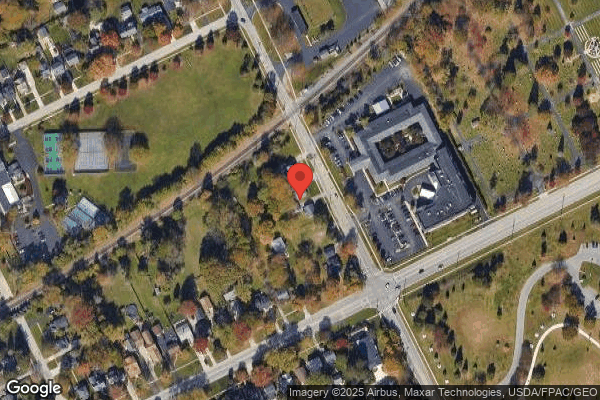
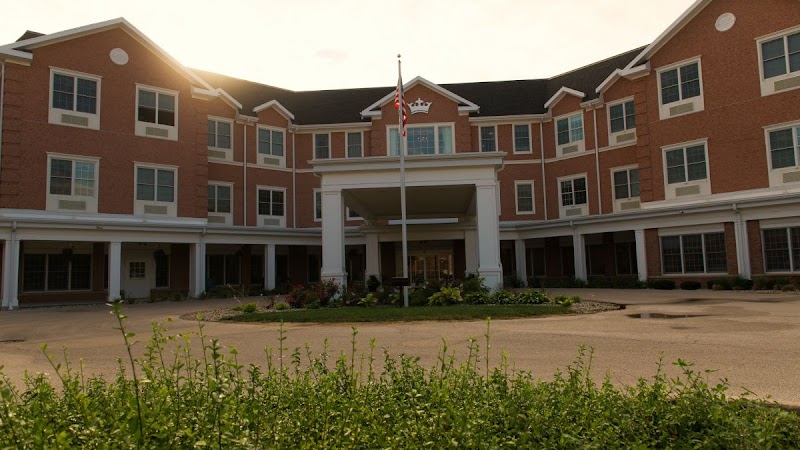
345 EAST BOUNDARY STREET, PERRYSBURG, OH 43551 (419) 873-6100
For profit - Limited Liability company 62 Beds KINGSTON HEALTHCARE Data: November 2025
Trust Grade
90/100
#95 of 913 in OH
Last Inspection: September 2024

Within standard 12-15 month inspection cycle. Federal law requires annual inspections.

Overview

Kingston Rehabilitation of Perrysburg has received a Trust Grade of A, indicating it is an excellent facility that is highly recommended for care. It ranks #95 out of 913 nursing homes in Ohio, placing it in the top half of state facilities, and #3 out of 11 in Wood County, meaning there are only two local options ranked higher. However, the facility's trend is worsening, with the number of reported issues increasing from 2 in 2022 to 7 in 2024. Staffing received a 3/5 rating, which is average, with a turnover rate of 50%, slightly above the state average. Importantly, the facility has not incurred any fines, and it has more RN coverage than 85% of Ohio facilities, which enhances care quality. On the downside, there have been specific concerns noted during inspections. For instance, the staff failed to wear proper Personal Protective Equipment while caring for a resident with COVID-19, which could put others at risk. Additionally, the facility did not perform required water flushes to prevent Legionella bacteria growth, potentially affecting all residents. Furthermore, there was an incident where a resident did not have a bed long enough for their height, which could lead to discomfort. Overall, while the facility has strong points, these issues raise concerns that families should consider when making their decision.

Trust Score
A
90/100
In Ohio
#95/913
Top 10%
Safety Record
Low Risk
No red flags
Inspections
Getting Worse
2 → 7 violations
Staff Stability
⚠ Watch
50% turnover. Above average. Higher turnover means staff may not know residents' routines.
Penalties
✓ Good
No fines on record. Clean compliance history, better than most Ohio facilities.
Skilled Nurses
✓ Good
Each resident gets 64 minutes of Registered Nurse (RN) attention daily — more than 97% of Ohio nursing homes. RNs are the most trained staff who catch health problems before they become serious.
Violations
○ Average
10 deficiencies on record. Average for a facility this size. Mostly minor or procedural issues.
★★★★★
5.0
Overall Rating
★★★☆☆
3.0
Staff Levels
★★★★★
5.0
Care Quality
★★★★☆
4.0
Inspection Score
Stable
2022: 2 issues
2024: 7 issues

The Good

  • 5-Star Quality Measures · Strong clinical quality outcomes
  • Full Sprinkler Coverage · Fire safety systems throughout facility
  • No fines on record

Facility shows strength in quality measures, fire safety.

The Bad

Staff Turnover: 50%

Near Ohio avg (46%)

Higher turnover may affect care consistency

Chain: KINGSTON HEALTHCARE

Part of a multi-facility chain

Ask about local staffing decisions and management

The Ugly 10 deficiencies on record

Sept 2024 7 deficiencies
CONCERN (D)

Potential for Harm - no one hurt, but risky conditions existed

Deficiency F0558 (Tag F0558)

Could have caused harm · This affected 1 resident

Based on observation, record review, resident and staff interview, and review of the facility policy, the facility failed to ensure residents were provided a bed long enough to accommodate their heigh...

Read full inspector narrative →
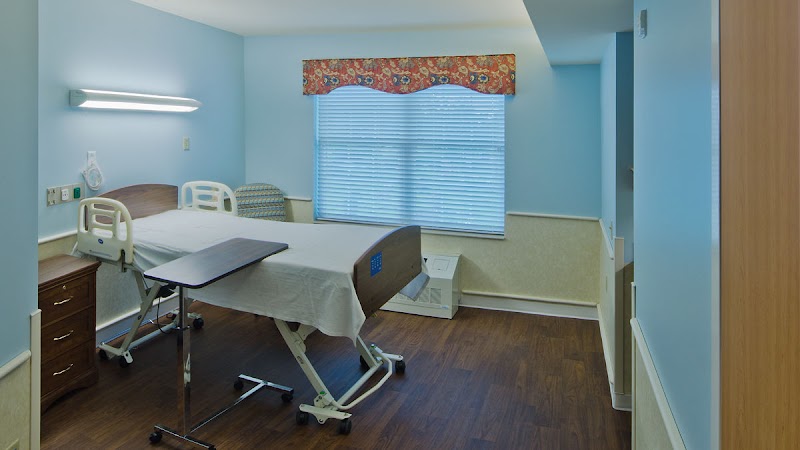
Based on observation, record review, resident and staff interview, and review of the facility policy, the facility failed to ensure residents were provided a bed long enough to accommodate their height. This affected one (#107) of one resident reviewed for bed length. The facility census was 55. Findings include: Review of the medical record for Resident #107 revealed an admission date of 09/03/24 with diagnoses of osteoarthritis, anxiety, and gout. Review of the admission Evaluation/Observation dated 09/03/24 revealed Resident #107 was alert and oriented to person, place, time, and event. Review of the Resident #107's height, documented 09/03/24, revealed he was 78 inches tall (six feet, six inches tall). Review of a nurses progress note dated 09/03/24 revealed a tall bed was ordered for Resident #107. Observation and interview on 09/16/24 at 9:33 A.M. revealed Resident #107 in bed with the head of the bed elevated to allow him to sit up in bed. Resident #107's head was at the same height as the top of the mattress and he had pillows under each knee keeping his knees bent. A flat footboard was flush against the end of the mattress and extended approximately one-and-one-half feet above the mattress. Resident #107 stated he was not comfortable in the bed and stated he was given the extended bed but it was still too short. Resident #107 stated he was six feet, six inches tall. Observation on 09/17/24 at 1:58 P.M. revealed Resident #107 in bed with the head of bed elevated and both legs propped up at the knees with pillows in such a way to keep both legs bent. Observation and interview on 09/17/24 at 5:16 P.M. with Resident #107 and his daughter revealed Resident #107 again with the head of bed elevated and both legs bent at the knee with pillows under them. Resident #107 stated he had not slept well the previous evening and again confirmed the bed was too short. Interview on 09/18/24 at 10:22 A.M. with the Assistant Director of Nursing (ADON) #319 stated she was aware Resident #107 had a long bed. ADON #319 stated she did not know whether Resident #107's height was considered when the facility requested a long bed from the contracted supplier. ADON #319 stated she was not aware Resident #107's bed was too short for him; however, she was aware his bed had a very high footboard. Interview on 09/18/24 at 10:34 A.M. with State Tested Nurse Aide (STNA) #359 revealed he was familiar with Resident #107 and was aware the bed seemed a little short for Resident #107. STNA #359 stated there were a few techniques, such as bending his legs and sliding Resident #107 to the very top of the bed, to keep Resident #107 from being so tight in the bed. STNA #359 stated he reported his concern regarding the length of Resident #107's bed to the nurse but could not recall which nurse he reported it to. Follow up interview on 09/18/24 at 11:10 A.M. with ADON #319 revealed she spoke with the bed supplier and learned Resident #107's bed was 80 inches (six feet, eight inches) long and further stated she ordered a longer bed for Resident #107 and was told by the contracted supplier the bed would be delivered later in the day. Interview on 09/18/24 at 12:16 P.M. with ADON #319 revealed she did not visualize Resident #107 in his bed before calling to order a longer bed. ADON #319 stated she spoke with Licensed Practical Nurse (LPN) #362, who was the floor nurse for Resident #107, and LPN #362 told ADON #319 Resident #107 looked uncomfortable in his bed. Observation on 09/18/24 at 12:18 P.M. revealed Resident #107 lying in the newly delivered bed. Resident #107 was able to fully extend his legs without his feet pressing against the footboard. Interview on 09/19/24 at 8:18 A.M. with Resident #107 stated the longer bed was much better. Resident #107 stated he slept for seven hours the previous night due to the comfort of his bed. Review of the policy, Accomodation of Needs, dated October 2023, revealed the resident's individual needs and preferences, including the need for modifications to the physical environment, shall be evaluated upon admission and reviewed on an ongoing basis. Additionally, the resident's individual needs and preferences shall be accommodated to the extent possible.
CONCERN (D)

Potential for Harm - no one hurt, but risky conditions existed

Deficiency F0657 (Tag F0657)

Could have caused harm · This affected 1 resident

**NOTE- TERMS IN BRACKETS HAVE BEEN EDITED TO PROTECT CONFIDENTIALITY** Based on medical record review, resident interview, staff interview, and review of policy, the facility failed to ensure care co...

Read full inspector narrative →
**NOTE- TERMS IN BRACKETS HAVE BEEN EDITED TO PROTECT CONFIDENTIALITY** Based on medical record review, resident interview, staff interview, and review of policy, the facility failed to ensure care conferences were offered quarterly. This affected two (#13 and #41) of three residents reviewed for care plan conferences. The facility census was 55. Findings include: 1. Review of the medical record revealed Resident #13 was admitted on [DATE]. Diagnoses included hemiplegia and hemiparesis following cerebral infarction affecting left non-dominant side, hypertensive heart disease without heart failure, major depressive disorder recurrent, and mixed hyperlipidemia. Review of the Minimum Data Set (MDS) assessment dated [DATE] revealed the resident was not assessed for cognition. The previous MDS assessment, dated 04/04/24, revealed Resident #13 was cognitively impaired. Review of the social service progress note dated 11/02/23 revealed a care conference was held. Further review of the medical record revealed no additional care conferences were completed. Interview on 09/19/24 at 10:54 A.M. with Licensed Social Worker (LSW) #460 verified a care conference had not been held for Resident #13 since the documented care conference on 11/02/23. LSW #460 reported Resident #13's resident representative did not want to meet over the summer due to personal reasons. LSW #460 reported the interdisciplinary team met but did not attempt to include the resident and did not document meeting as a care conference. 2. Review of the medical record revealed Resident #41 was admitted on [DATE]. Diagnoses included other incomplete lesion at C1, C2, C3, and C4 level of cervical spinal cord, acute and chronic respiratory failure with hypoxia, type two diabetes mellitus with hyperglycemia, pressure ulcer of sacral region stage four, and pressure ulcer of other site stage four. Review of the MDS assessment dated [DATE] revealed the resident was cognitively intact. Review of the social service progress notes dated 04/10/24 revealed a care conference was held. Further review of the medical record revealed no other documented care conferences taking place. Interview on 09/16/24 at 2:37 P.M. with Resident #41 revealed she could not recall having a care conference. Interview on 09/18/24 at 11:10 A.M. with LSW #460 verified Resident #41 has not had a documented care conference since April 2024. Review of policy, Care Update Meeting, approved 03/06/19, verified care update meeting will be held every 90 days on all residents. If the resident or representative cancels or does not come to the scheduled meeting the medical record should reflect this.
CONCERN (D)

Potential for Harm - no one hurt, but risky conditions existed

ADL Care (Tag F0677)

Could have caused harm · This affected 1 resident

**NOTE- TERMS IN BRACKETS HAVE BEEN EDITED TO PROTECT CONFIDENTIALITY** Based on observation, resident interview, staff interview, and policy review, the facility failed to assist dependent male resid...

Read full inspector narrative →
**NOTE- TERMS IN BRACKETS HAVE BEEN EDITED TO PROTECT CONFIDENTIALITY** Based on observation, resident interview, staff interview, and policy review, the facility failed to assist dependent male residents with shaving. This affected two (Residents #22 and #157) of two reviewed for activities of daily living. The facility census was 55. Findings include: 1. Review of Resident #22's medical record revealed an admission date of 07/24/24. Diagnoses included hemiplegia, hemiparesis, and diabetes mellitus. Review of Resident #22's admission Minimum Data Set (MDS) assessment dated [DATE] revealed the resident was cognitively intact and required substantial assistance for showering and bathing. Review of Resident #22's most recent care plan revealed the resident required assistance with activities of daily living related to weakness. He required assistance with dressing and grooming. Observation of Resident #22 on 09/16/22 revealed he had a full beard which was uneven and approximately 1.5 inches long. Interview with Resident #22 on 09/16/24 at 1:23 P.M. revealed he wanted his beard shaved off, but staff were unable to do so due to not having the proper equipment. The resident required assistance with shaving due to the inability to lift his left arm. Review of Resident #22's progress note dated 09/18/24 revealed the resident voiced he would like to have his beard shaved off. The nurse informed the resident that the beautician does provide beard trims, but the resident stated he wanted it shaved all of the way. The nurses informed the resident that staff could assist with shaving and Resident #22 agreed and asked the nurse to assist and she stated she didn't have time, but staff would assist him in the morning. Interview with Occupational Therapy Assistant #356 on 09/18/24 revealed she did assist Resident #22 with trimming his neck area with a razor, but the facility did not have a trimmer to shave off the beard. She stated he would have to wait to get home to shave where he owned the proper equipment. 2. Review of Resident #157's medical record revealed an admission date of 06/25/24. Diagnoses included hemiplegia, hemiparesis, dysphasia, aphasia, and congestive heart failure. Review of Resident #157's admission MDS dated [DATE] revealed he had was cognitively intact. The resident required set up for personal hygiene including shaving. Review of Resident #157's most recent care plan revealed he required assistance with ADL care related to left hemiplegia and dysphasia. The resident should receive appropriate assistance for ADLs through next review. Observation on 09/16/24 at 9:50 A.M. revealed Resident #157 had approximately 1/2 inch of beard growth and stated he was unable to get assistance from staff for shaving. Interview with Resident #157 on 09/16/24 at 9:50 A.M. revealed he wanted to have his beard trimmed, but could not receive assistance from staff. Interview with State Tested Nursing Aides (STNA) #316 and #359 on 09/17/24 between 8:10 A.M. and 8:32 A.M. revealed the residents usually brought their electric razors on admission, but the facility did supply disposable razors. Once the resident's beards were longer the disposable razors were ineffective. Review of the facility policy titled, Shaving the Resident, dated 01/2024 revealed the purpose of this procedure is to promote cleanliness and to provide skin care. Notify the supervisor if the resident refuses the procedure document the reasons why and interventions taken.
CONCERN (D)

Potential for Harm - no one hurt, but risky conditions existed

Pressure Ulcer Prevention (Tag F0686)

Could have caused harm · This affected 1 resident

**NOTE- TERMS IN BRACKETS HAVE BEEN EDITED TO PROTECT CONFIDENTIALITY** Based on medical record review, observation, resident interview, staff interview, and review of policy, the facility failed to e...

Read full inspector narrative →
**NOTE- TERMS IN BRACKETS HAVE BEEN EDITED TO PROTECT CONFIDENTIALITY** Based on medical record review, observation, resident interview, staff interview, and review of policy, the facility failed to ensure pressure ulcer reducing interventions were implemented as ordered. This affected one (#41) of one residents reviewed for pressure ulcers. The facility census was 55. Findings include: Review of the medical record revealed Resident #41 was admitted on [DATE]. Diagnoses included other incomplete lesion at C1, C2, C3, and C4 level of cervical spinal cord, acute and chronic respiratory failure with hypoxia, type two diabetes mellitus with hyperglycemia, pressure ulcer of sacral region stage four, and pressure ulcer of other site stage four. Review of the Minimum Data Set (MDS) assessment dated [DATE] revealed the resident was cognitively intact and had range of motion impairment on the upper and lower extremities. Resident #41 required substantial/maximal assistance with toileting, bathing and was dependent for transfers. Review of physician orders dated 03/25/24 revealed Resident #41 to off-load heels when in bed if the resident tolerates or will allow. Review of physician orders dated 04/02/24 revealed Resident #41 had an order for a pressure relieving aircushion to the wheelchair to promote skin integrity. With an additional note to plug in at nighttime. Review of the most recent care plan revealed Resident #41 was care planned for impaired skin integrity due to coccyx pressure wound, right posterior leg (calf), and pressure injury right heal. Interventions included offloading boots on while in bed, elevate heels when in bed, and pressure relieving aircushion to the wheelchair. Review of pressure injury review dated 09/13/24 revealed Resident #41 had coccyx wound currently at a stage three measuring 1.4 centimeter (cm) x 0.5 cm x 0.1 cm., a right posterior leg stage 4 measuring 4.6 cm x 1.7 cm x 0.9 cm, and a deep tissue pressure injury of the right heel measuring 0.6 cm x 1.5 cm x 0.0. Review of wound documentation revealed no worsening of the pressure wounds from the previous week. Observation on 09/16/24 at 2:19 P.M. of Resident #41 revealed the resident laying in bed with no heel boots applied and heels not elevated. Resident was observed to be wearing thin slippers on her feet. Interview on 09/16/24 at 2:21 P.M. with Resident #41 revealed the heel boots and elevating the heels was typically only done at nighttime. Resident #41 stated she had not refused to have her heels elevated. Interview on 09/16/24 at 2:59 P.M. with the Administrator verified Resident #41 did not have the heel boots applied and the heels were not elevated while Resident #41 was in bed. Observation on 09/17/24 at 8:58 A.M. revealed Resident #41 sitting up in her wheelchair in the resident room. Observation of the alternating pressure wheelchair seat cushion was turned off. Interview on 09/17/24 at 9:01 A.M. with Licensed Practical Nurse (LPN) #407 verified the alternating pressure wheelchair seat cushion was off stating it needed to be plugged in and turned on. Review of policy Pressure Injury: Assessment and Prevention, approved 06/09/22, verified the facility will identify residents at risk for developing pressure injuries and implement interventions to prevent the development of pressure injuries. Interventions include to encourage and assist residents to assist to float/offload heels to keep the heels off the bed and use pillows, wedges, and/or other devices for repositioning.
CONCERN (D)

Potential for Harm - no one hurt, but risky conditions existed

Deficiency F0909 (Tag F0909)

Could have caused harm · This affected 1 resident

**NOTE- TERMS IN BRACKETS HAVE BEEN EDITED TO PROTECT CONFIDENTIALITY** Based on observation and staff interview, the facility failed to ensure the gap between mattresses and bed rails were safe and a...

Read full inspector narrative →
**NOTE- TERMS IN BRACKETS HAVE BEEN EDITED TO PROTECT CONFIDENTIALITY** Based on observation and staff interview, the facility failed to ensure the gap between mattresses and bed rails were safe and appropriate. This affected one (#32) of two residents reviewed for bed rails. The facility census was 55. Findings include: Review of the medical record for Resident #32 revealed an admission date of 08/13/24 with diagnoses of acute and chronic respiratory failure and quadriplegia. Review of the 5-day Minimum Data Set (MDS) assessment dated [DATE] revealed Resident #32 was rarely/never understood and was dependent on staff for all Activities of Daily Living (ADLs). Review of the Bed Rail Safety assessment dated [DATE] revealed Resident #32 was appropriate for bed rails to assist in alerting staff when unsafe transfers were attempted. Review of the current care plan for Resident #32 revealed bed rails were in place to provide a feeling of comfort/security, increase mobility, and act as a bed perimeter reminder. Interview on 09/16/24 at 9:25 A.M. with Licensed Practical Nurse (LPN) #362 revealed Resident #32 was quadriplegic and had no function of his arms and legs. Observation on 09/17/24 at 5:25 P.M. revealed Resident #32 lying in bed on an air mattress. A large gap was identified between Resident #32's mattress and the bed rails. Interview and observation on 09/18/24 at 10:15 A.M. with the Director of Nursing (DON) confirmed the gap between Resident #32's mattress and bed rail was 5.25 inches on his left side, measured at the narrowest point, and 3.25 inches on his right side, measured at the narrowest point. Interview on 09/18/24 at 4:47 P.M. with the DON revealed she was unable to obtain manufacturers guidelines for Resident #32's bed regarding the acceptable distance between the mattress and bedrails; however, the DON confirmed the gaps Resident #32's were too large and were potentially unsafe.
CONCERN (D)

Potential for Harm - no one hurt, but risky conditions existed

Deficiency F0919 (Tag F0919)

Could have caused harm · This affected 1 resident

**NOTE- TERMS IN BRACKETS HAVE BEEN EDITED TO PROTECT CONFIDENTIALITY** Based on observation and staff interview, the facility failed to ensure residents had access to a call light. This affected one ...

Read full inspector narrative →
**NOTE- TERMS IN BRACKETS HAVE BEEN EDITED TO PROTECT CONFIDENTIALITY** Based on observation and staff interview, the facility failed to ensure residents had access to a call light. This affected one (#32) of one resident reviewed for call light accessibility. The facility census was 55. Findings include: Review of the medical record for Resident #32 revealed an admission date of 08/13/24 with diagnoses of acute and chronic respiratory failure and quadriplegia. Review of the 5-day Minimum Data Set (MDS) assessment dated [DATE] revealed Resident #32 was rarely/never understood and was dependent on staff for all Activities of Daily Living (ADLs). Review of the current care plan for Resident #32 revealed he had a communication problem, Resident #32 was unable to communicate and had been working with speech language pathology (SLP) therapy, outpatient, to use eye gaze device. Interventions included keeping Resident #32's call light in reach. Interview on 09/16/24 at 9:25 A.M. with Licensed Practical Nurse (LPN) #362 revealed Resident #32 was quadriplegic and had no function of his arms and legs. Observation on 09/16/24 at 2:29 P.M. revealed Resident #32 lying in bed with a standard push-call light button clipped to his bed near his left upper arm. Resident #32 had an electronic communication board in front of his face propped up by a metal stand. Observation of Resident #32's communication board revealed he requested help and wanted the head of his bed lowered. The ODH surveyor pressed the call light and LPN #362 entered the room. LPN #362 confirmed Resident #32 could not use the call light and staff would frequently check on him. LPN #362 did not believe Resident #32's communication board was connected to the call light system. Interview on 09/17/24 at 2:31 P.M. with SLP #410 revealed she was familiar with Resident #32 who used the electronic communication board and stated Resident #32 was able to use the device well to communicate and answer questions. SLP #410 explained Resident #32 used his eyes to focus on a word or letter and the device would detect what his eyes focused on and would type the letter or word on the monitor. SLP #410 stated Resident #32's computer also had an audible button that would speak and say I need the nurse or I need help. SLP #410 stated his device was not connected the call light system. Further interview revealed SLP #410 was not aware if the facility had access to a breath-activated call light device but thought Resident #32 could be able to use one. Observation on 09/17/24 at 1:52 P.M. revealed Resident #32 lying in bed. Resident #32's electronic communication board was backed against the wall on Resident #32's right side and was not within visual range for him. Observation on 09/17/24 at 3:08 P.M. revealed Resident #32 lying in bed. Resident #32's electronic communication board remained backed against the wall on Resident #32's right side and was not within visual range for him. Continuous observation on 09/17/24 from 3:08 P.M. until 4:35 P.M. revealed State Tested Nurse Aide (STNA) #417 providing care to Resident #37, Resident #104, and Resident #105. STNA #417 was not seen providing care to Resident #32 during the observation. Interview on 09/17/24 at 4:35 P.M. with STNA #417 stated she began her shift at 1:50 P.M. and the STNA from first shift left the floor when STNA #417 arrived. STNA #417 confirmed she had not yet provided care for Resident #32 since beginning her shift. STNA #417 confirmed Resident #32's electronic communication board was placed out of range for him to use it. STNA #417 confirmed she observed Resident #32 effectively use the electronic communication board. Interview and observation on 09/17/24 at 5:25 P.M. with STNA #417 confirmed Resident #32 was repositioned; however, his electronic communication board remained out of range. STNA #417 stated it took time to reposition the electronic communication board and had not returned to his room to place it in range. Review of the policy, Answering the Call Light, dated 02/2023, revealed the use of call lights should be explained and demonstrated to residents and staff should ensure the resident can use the call system.
CONCERN (F)

Potential for Harm - no one hurt, but risky conditions existed

Infection Control (Tag F0880)

Could have caused harm · This affected most or all residents

**NOTE- TERMS IN BRACKETS HAVE BEEN EDITED TO PROTECT CONFIDENTIALITY** Based on observation, staff interview, medical record review, review of maintenance documents, and review of the facility's poli...

Read full inspector narrative →
**NOTE- TERMS IN BRACKETS HAVE BEEN EDITED TO PROTECT CONFIDENTIALITY** Based on observation, staff interview, medical record review, review of maintenance documents, and review of the facility's policies, the facility failed to ensure staff wore appropriate Personal Protective Equipment (PPE) when providing care for residents who were infected with COVID-19. This affected one (Resident #114) of one resident observed for droplet precautions. Additionally, the facility failed to complete weekly water flushes of equipment at risk for developing Legionella pneumophila (the cause of Legionnaire's Disease). This had the potential to affect all 55 residents in the facility. Findings include: 1. Review of the medical record for Resident #114 revealed an admission date of 08/26/24 with a diagnosis of COVID-19 on 09/12/24. Review of modified 5-day Minimum Data Set (MDS) assessment dated [DATE] revealed Resident #114 had intact cognition. Review of a physician order dated 08/27/24 revealed Resident #114 received occupational therapy (OT) five times weekly for 60 days. Review of a physician order dated 09/12/24 revealed Resident #114 was positive for COVID-19. Review of a physician order dated 09/17/24 revealed Resident #114 should remain in droplet precautions in single room isolation due to COVID-19 through 09/22/24. Review of the Matrix provided by the facility on 09/16/24 revealed Resident #114 tested positive for COVID-19 and was in droplet isolation. Observation on 09/16/24 at approximately 10:00 A.M. revealed Resident #114's door was closed. Upon the door was a yellow apron with several pockets containing PPE. Additionally, a sign indicated Resident #114 was in droplet precautions. Interview on 09/16/24 at approximately 3:15 P.M. with the Director of Nursing (DON) confirmed residents in droplet precautions require staff to wear PPE prior to entering the resident's room. Required PPE included an N95 mask, a gown, gloves, and eye protection. Observation on 09/18/24 at 2:59 P.M. revealed a housekeeper in the doorway of Resident #114's room removing PPE and placing it in the appropriate disposal bin. As the housekeeper exited the room and pulled the door closed, an observation was made of a person not wearing a yellow disposable gown and sitting in a chair inside Resident #144's room. Interview and concurrent observation on 09/18/24 at 3:00 P.M. with Occupational Therapist (OT) #437 revealed he was putting on a yellow disposable gown when he came to Resident #114's doorway to answer the surveyor's knock at the door. OT #437 confirmed he was sitting in Resident #114's for a moment, setting his things down, and was just putting on the gown. OT #437 was wearing an N-95 mask. Continued interview and observation confirmed OT #437 was not wearing eye protection or gloves. OT #437 continued to tie on the disposal gown during the interview. Review of OT #437's Daily Treatment Log for 09/18/24, printed 09/19/24, revealed Resident #114 was the last person OT #437 treated for the day. Review of the policy, Resident COVID-19 Quarantine Guidance, revised 01/05/24, revealed residents who tested positive for COVID-19 must be placed in transmission-based precautions and full PPE must be worn, including face mask, gloves, eye protection and a gown. Further review revealed an N95 mask was required to be worn by all staff providing direct patient care to residents in transmission based precautions. 2. Review of the maintenance document titled, Weekly Fixture Exercise Log, revealed each device must be exercised 30 seconds weekly minimum revealed the log identified several locations throughout the facility, including (but not limited to) trash chutes, the salon, the Bistro restroom, restrooms, housekeeping closets, and the education room. Review of the Weekly Fixture Exercise Logs dated January 2024 through May 2024 revealed the exercise occurred only the first week of the month. Further review revealed no logs were available for June 2024 through August 2024. Interview on 09/19/24 at 1:33 P.M. with Maintenance Manager (MM) #349 revealed he began working at the facility 12 days prior. MM #349 confirmed the facility identified the areas on the Weekly Fixture Exercise Log as areas at risk for growing Legionella pneumophilia and therefore, the areas needed to be flushed by letting water run for at least 30 seconds weekly. MM #349 could provide no evidence the areas were flushed weekly since January 2024. Review of the policy Water Management Protocol, dated 08/2019, revealed the policy was established to provide appropriate monitoring and proactive intervention relative to the skilled nursing facility potable water systems. Further review revealed fixtures will be exercised and allowed to flush with a moderate or better flow for 30 seconds weekly. The exercise would be documented on the Weekly Fixture Exercise Log.
Jun 2022 2 deficiencies
CONCERN (D)

Potential for Harm - no one hurt, but risky conditions existed

Pharmacy Services (Tag F0755)

Could have caused harm · This affected 1 resident

**NOTE- TERMS IN BRACKETS HAVE BEEN EDITED TO PROTECT CONFIDENTIALITY** Based on medical record review, observation, staff interview, and policy review, the facility failed to ensure medications were ...

Read full inspector narrative →
**NOTE- TERMS IN BRACKETS HAVE BEEN EDITED TO PROTECT CONFIDENTIALITY** Based on medical record review, observation, staff interview, and policy review, the facility failed to ensure medications were not left at bedside and were administered appropriately. This affected one (Resident #30) out of 24 residents on the third floor. The facility census was 52. Findings include: Review of Resident #30's medical record revealed an admission date of 04/26/22 with diagnoses including macular degeneration, multiple fractures due to a preadmission fall, diabetes mellitus, and depression. Review of Resident #30's 5-day admission Minimum Data Set assessment dated [DATE] revealed Resident #30 had a high cognitive function. Review of Resident #30's most recent care plan revealed the resident had impaired swallowing related to dysphagia and wearing a cervical collar. Interventions included to observe the resident for signs and symptoms of swallowing issues. Observation on 06/06/22 at 9:51 A.M. revealed Resident #30 was laying in bed with a plastic cup on her bedside table. The cup contained four medication tablets. Interview with Resident #30 on 06/06/22 at 9:52 A.M. revealed she had taken a couple of pills like but liked to take the rest at her leisure so the nurse would leave the medication at the bedside. Interview with Licensed Practical Nurse (LPN) #462 on 06/06/22 at 9:54 A.M. verified she placed Resident #30's medications in a cup on her bedside table for her to take on her own because Resident #30 took the medication slowly. Interview with the Administrator, Director of Nursing, and Corporate Nurse #463 on 06/09/22 at 10:48 A.M. verified Resident #30 was not to have medications left at the bedside table. Review of the facility policy titled Administering Medications, dated June 2019, revealed residents may self-administer their own medications only if the Attending Physician, in conjunction with the Interdisciplinary Care Planning Team, has determined that they have the decision-making capacity to do so safely.
CONCERN (D)

Potential for Harm - no one hurt, but risky conditions existed

Deficiency F0761 (Tag F0761)

Could have caused harm · This affected 1 resident

**NOTE- TERMS IN BRACKETS HAVE BEEN EDITED TO PROTECT CONFIDENTIALITY** Based on observation, resident and staff interview, medical record review, and review of a facility policy, the facility failed ...

Read full inspector narrative →
**NOTE- TERMS IN BRACKETS HAVE BEEN EDITED TO PROTECT CONFIDENTIALITY** Based on observation, resident and staff interview, medical record review, and review of a facility policy, the facility failed to ensure medications were stored in a safe and secure manner. This affected two (Resident #34 and #152) out of 28 resident bedrooms observed on the second floor of the facility. The census was 52. Findings include: 1. Review of Resident #34's medical record revealed an admission date of 05/03/22. Diagnoses included orthopedic aftercare following surgical amputation, chronic respiratory failure with hypoxia, end stage renal disease, diabetes mellitus type two, and peripheral vascular disease. Review of an admission Minimum Data Set (MDS) assessment dated [DATE] revealed Resident #34 was assessed with moderately impaired cognition. Review of physician orders dated between 05/03/22 and 06/07/22 revealed Resident #34 had no physician order for artificial tears. Review of medication administration records (MARs) from May 2022 and June 2022 revealed no documentation of Resident #34 ever having received artificial tears while in the facility. Review of progress notes between 05/03/22 and 06/07/22 revealed no documentation of Resident #34 having received artificial tears while in the facility. Observation on 06/06/22 at 11:17 A.M. revealed Resident #34 had a bottle of artificial tears eye drops, a medication for dry eyes, inside of its box located on a shelf in Resident #34's bedroom among other personal items. Observation inside the box revealed the plastic seal on the eye drops bottle was removed. Observation on 06/07/22 at 1:17 P.M. revealed the box with the bottle of artificial tears medication remained in Resident #34's bedroom. Interview on 06/07/22 at 1:17 P.M. with Resident #34 revealed an unidentified nurse gave him the bottle of artificial tears because he complained about having an itchy left eye. Resident #34 stated he could not remember the nurses name, what she looked like, or the day the bottle was given to him, and stated he only used the eye drops once. Resident #34 stated he did not know the eye drops were still in his bedroom and stated the nurse must have left them in the room in case he needed to use them again. Observation on 06/08/22 at 2:12 P.M. revealed the box with the bottle of artificial tears medication still remained in Resident #34's bedroom. Interview on 06/08/22 at 2:46 P.M. with Licensed Practical Nurse (LPN) #464 verified there was a bottle of artificial tears medication in Resident #34's bedroom and LPN #464 removed it. LPN #464 stated she was not aware of anytime Resident #34 received the medication and verified it should not be stored in his bedroom. 2. Review of Resident #152's medical record revealed an admission date of 05/19/22. Diagnoses included old myocardial infarction, acute kidney failure, insomnia, restless leg syndrome, anxiety, and heart failure. Review of an admission MDS assessment dated [DATE] revealed Resident #152 was assessed with moderately impaired cognition. Review of physician orders dated between 05/19/22 and 06/08/22 revealed Resident #152 had no physician order for calcium carbonate. Review of MARs from May 2022 and June 2022 revealed no documentation of Resident #152 having received calcium carbonate in the facility. Review of progress notes between 05/19/22 and 06/08/22 revealed no documentation of Resident #152 having received calcium carbonate while in the facility. Observation on 06/06/22 at 11:10 A.M. revealed a partial bottle of calcium carbonate, a antacid medication, tablets on a shelf under the television in Resident #152's bedroom. Observation on 06/07/22 at 1:15 P.M. and on 06/08/22 at 8:32 A.M. revealed the partial bottle of calcium carbonate tablets remained in Resident #152's bedroom. Observation on 06/08/22 at 2:14 P.M. revealed the partial bottle of calcium carbonate remained in Resident #152's bedroom. Interview with Resident #152 at that time revealed she brought the medication with her from home because she sometimes had acid reflux but had not taken any of the calcium carbonate since she was in the facility. Interview on 06/08/22 at 2:40 P.M. with LPN #464 verified the partial bottle of calcium carbonate in Resident #152's bedroom and LPN #464 told Resident #152 she was going to secure the medication. At that time, Resident #152 told LPN #464 she had not taken any of the medication since she was admitted to the facility. LPN #464 stated she was not aware of anytime Resident #152 received the medication and verified it should not be stored in her bedroom. Review of a facility policy titled Storage of Medications, dated 01/07/21, revealed the facility shall store all drugs and biologicals in a safe, secure, and orderly manner. Drugs shall be stored in an orderly manner in cabinets, drawers, carts, or automatic dispensing systems and each resident's medications shall be assigned to an individual cubicle, drawer, or other holding area to prevent the possibility of mixing medications of several residents.
Jul 2019 1 deficiency
CONCERN (F)

Potential for Harm - no one hurt, but risky conditions existed

Infection Control (Tag F0880)

Could have caused harm · This affected most or all residents

Based on review of the Water Management Protocol and staff interview, the facility failed to ensure Legionella control measures were implemented per the facility protocol. This had the potential to af...

Read full inspector narrative →
Based on review of the Water Management Protocol and staff interview, the facility failed to ensure Legionella control measures were implemented per the facility protocol. This had the potential to affect 53 of 53 residents who reside in the facility. Findings include: Review of the undated facility protocol titled, Water Management Protocol, revealed the purpose was to provide appropriate monitoring, proactive intervention, corrective action and continuous process improvement relative to the facility potable systems. Water management protocols included: regular water samples will be collected from control point area; chlorine concentration levels will be taken and recorded from multiple areas (no established time frames documented); all fixtures will be exercised and allowed to flush with a moderate or better water flow (both hot and cold water) for 30 seconds weekly; staff members will complete this task in all resident rooms (including lavatory sinks, eye wash station, all point of use devices; the Maintenance Director or designee is responsible for flushing point of use devices in secured areas of the facility; a master flush log will be kept by the Maintenance Director; and the maintenance staff or a qualified vendor will flush expansion tanks, water hammer arrestors, and other infrequently used equipment monthly (if present). Further review of the Water Management Protocol revealed no documentation of the above monitoring. The facility had documentation of yearly Legionella water testing completed on 12/18, from one sample site, which was not noted in the protocol as part of the water management controls. Interview with Maintenance Director #150 on 07/02/19 at 10:35 A.M., verified the facility had no documentation of chlorine concentration level monitoring, no documentation of weekly flushes, and no documentation of flushing of expansion tanks, water hammer arrestors, and other infrequently used equipment monthly as per the facility protocol. He stated the facility was sending a water sample for yearly testing of Legionella only.
Understanding Severity Codes (click to expand)
Life-Threatening (Immediate Jeopardy)
J - Isolated K - Pattern L - Widespread
Actual Harm
G - Isolated H - Pattern I - Widespread
Potential for Harm
D - Isolated E - Pattern F - Widespread
No Harm (Minor)
A - Isolated B - Pattern C - Widespread

Questions to Ask on Your Visit

  • "Can I speak with families of current residents?"
  • "What's your RN coverage like on weekends and overnight?"

Our Honest Assessment

Strengths
  • • Grade A (90/100). Above average facility, better than most options in Ohio.
  • • No major safety red flags. No abuse findings, life-threatening violations, or SFF status.
  • • No fines on record. Clean compliance history, better than most Ohio facilities.
Concerns
  • • No significant concerns identified. This facility shows no red flags across CMS ratings, staff turnover, or federal penalties.
Bottom line: Generally positive indicators. Standard due diligence and a personal visit recommended.

About This Facility

What is Kingston Rehabilitation Of Perrysburg's CMS Rating?

CMS assigns KINGSTON REHABILITATION OF PERRYSBURG an overall rating of 5 out of 5 stars, which is considered much above average nationally. Within Ohio, this rating places the facility higher than 99% of the state's 100 nursing homes. This rating reflects solid performance across the metrics CMS uses to evaluate nursing home quality.
How is Kingston Rehabilitation Of Perrysburg Staffed?

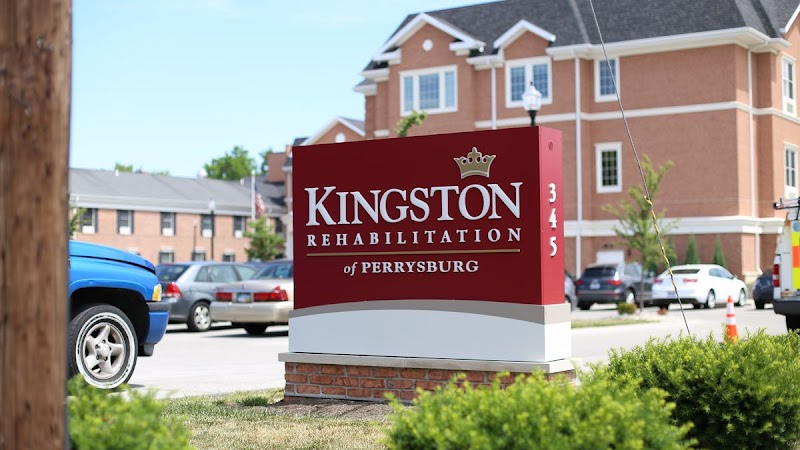
CMS rates KINGSTON REHABILITATION OF PERRYSBURG's staffing level at 3 out of 5 stars, which is average compared to other nursing homes. Staff turnover is 50%, compared to the Ohio average of 46%.

What Have Inspectors Found at Kingston Rehabilitation Of Perrysburg?

State health inspectors documented 10 deficiencies at KINGSTON REHABILITATION OF PERRYSBURG during 2019 to 2024. These included: 10 with potential for harm.
Who Owns and Operates Kingston Rehabilitation Of Perrysburg?

KINGSTON REHABILITATION OF PERRYSBURG is owned by a for-profit company. For-profit facilities operate as businesses with obligations to shareholders or private owners. The facility is operated by KINGSTON HEALTHCARE, a chain that manages multiple nursing homes. With 62 certified beds and approximately 56 residents (about 90% occupancy), it is a smaller facility located in PERRYSBURG, Ohio.
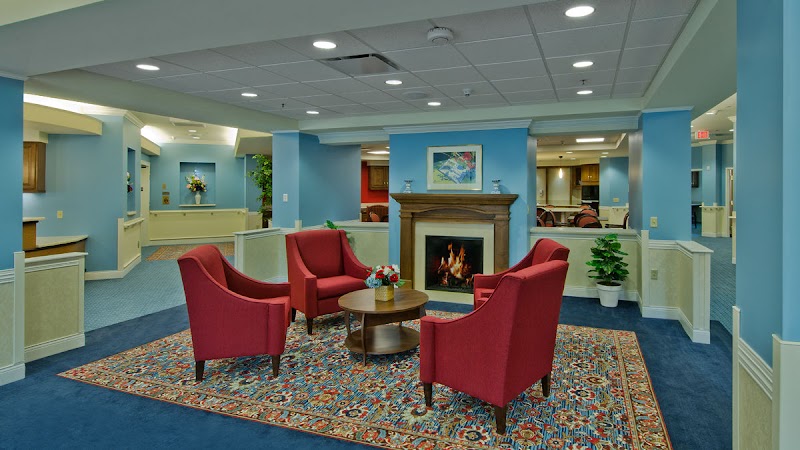
How Does Kingston Rehabilitation Of Perrysburg Compare to Other Ohio Nursing Homes?

Compared to the 100 nursing homes in Ohio, KINGSTON REHABILITATION OF PERRYSBURG's overall rating (5 stars) is above the state average of 3.2, staff turnover (50%) is near the state average of 46%, and health inspection rating (4 stars) is above the national benchmark.

What Should Families Ask When Visiting Kingston Rehabilitation Of Perrysburg?

Based on this facility's data, families visiting should ask: "Can I visit during a mealtime to observe dining assistance and food quality?" "How do you handle medical emergencies, and what is your hospital transfer rate?" "Can I speak with family members of current residents about their experience?"

Is Kingston Rehabilitation Of Perrysburg Safe?

Based on CMS inspection data, KINGSTON REHABILITATION OF PERRYSBURG has a clean safety record: no substantiated abuse findings (meaning no confirmed cases of resident harm), no Immediate Jeopardy citations (the most serious violation level indicating risk of serious injury or death), and is not on the Special Focus Facility watch list (a federal program monitoring the lowest-performing 1% of nursing homes). The facility has a 5-star overall rating and ranks #1 of 100 nursing homes in Ohio. While no facility is perfect, families should still ask about staff-to-resident ratios and recent inspection results during their visit.

Do Nurses at Kingston Rehabilitation Of Perrysburg Stick Around?

KINGSTON REHABILITATION OF PERRYSBURG has a staff turnover rate of 50%, which is about average for Ohio nursing homes (state average: 46%). Moderate turnover is common in nursing homes, but families should still ask about staff tenure and how the facility maintains care continuity when employees leave.

Was Kingston Rehabilitation Of Perrysburg Ever Fined?

KINGSTON REHABILITATION OF PERRYSBURG has no federal fines on record. CMS issues fines when nursing homes fail to meet care standards or don't correct problems found during inspections. The absence of fines suggests the facility has either maintained compliance or corrected any issues before penalties were assessed. This is a positive indicator, though families should still review recent inspection reports for the full picture.

Is Kingston Rehabilitation Of Perrysburg on Any Federal Watch List?

KINGSTON REHABILITATION OF PERRYSBURG is not on any federal watch list. The most significant is the Special Focus Facility (SFF) program, which identifies the bottom 1% of nursing homes nationally based on persistent, serious quality problems. Not being on this list means the facility has avoided the pattern of deficiencies that triggers enhanced federal oversight. This is a positive indicator, though families should still review the facility's inspection history directly.