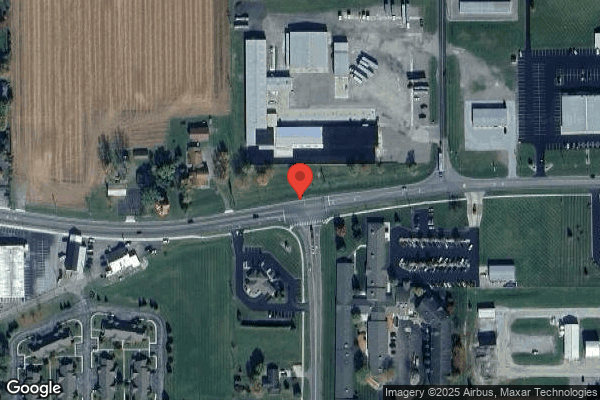
VANCREST OF DELPHOS

1425 EAST FIFTH STREET, DELPHOS, OH 45833 (419) 695-2871
For profit - Partnership 99 Beds VANCREST HEALTH CARE CENTERS Data: November 2025
Trust Grade
90/100
#185 of 913 in OH
Last Inspection: September 2023

Over 2 years since last inspection. Current conditions may differ from available data.

Overview

Vancrest of Delphos has received an excellent Trust Grade of A, indicating they are highly recommended for care quality. They rank #185 out of 913 facilities in Ohio, placing them in the top half, and #2 out of 11 in Allen County, meaning only one nearby facility ranks better. The facility's trend is stable, with three concerns identified in both 2021 and 2023, and they have not incurred any fines, which is a positive sign. However, staffing is a weakness with a rating of 2 out of 5 stars and a turnover rate of 34%, which, while lower than the state average, still suggests some instability. Specific incidents include a failure to notify a physician about a resident's significant weight gain, which could impact health management, and staff members were observed neglecting to engage with residents during meal assistance, focusing instead on personal conversations. While the facility has strong overall health and quality measures, these concerns highlight areas for improvement in staff engagement and communication regarding resident health updates.

Trust Score
A
90/100
In Ohio
#185/913
Top 20%
Safety Record
Low Risk
No red flags
Inspections
Holding Steady
3 → 3 violations
Staff Stability
○ Average
34% turnover. Near Ohio's 48% average. Typical for the industry.
Penalties
✓ Good
No fines on record. Clean compliance history, better than most Ohio facilities.
Skilled Nurses
⚠ Watch
Each resident gets only 26 minutes of Registered Nurse (RN) attention daily — below average for Ohio. Fewer RN minutes means fewer trained eyes watching for problems.
Violations
○ Average
9 deficiencies on record. Average for a facility this size. Mostly minor or procedural issues.
★★★★★
5.0
Overall Rating
★★☆☆☆
2.0
Staff Levels
★★★★★
5.0
Care Quality
★★★★★
5.0
Inspection Score
Stable
2021: 3 issues
2023: 3 issues

The Good

  • 5-Star Quality Measures · Strong clinical quality outcomes
  • Full Sprinkler Coverage · Fire safety systems throughout facility
  • No fines on record
  • Staff turnover below average (34%)

    14 points below Ohio average of 48%

Facility shows strength in quality measures, fire safety.

The Bad

Staff Turnover: 34%

12pts below Ohio avg (46%)

Typical for the industry

Chain: VANCREST HEALTH CARE CENTERS

Part of a multi-facility chain

Ask about local staffing decisions and management

The Ugly 9 deficiencies on record

Sept 2023 3 deficiencies
CONCERN (D)

Potential for Harm - no one hurt, but risky conditions existed

Notification of Changes (Tag F0580)

Could have caused harm · This affected 1 resident

**NOTE- TERMS IN BRACKETS HAVE BEEN EDITED TO PROTECT CONFIDENTIALITY** Based on medical record review, observation, staff interviews, and review of facility policy, the facility failed to notify a re...

Read full inspector narrative →
**NOTE- TERMS IN BRACKETS HAVE BEEN EDITED TO PROTECT CONFIDENTIALITY** Based on medical record review, observation, staff interviews, and review of facility policy, the facility failed to notify a resident's physician of a significant change in weight. This affected one (Resident #52) of one resident reviewed for notification. The facility census was 75. Findings include: Review of the medical record revealed Resident #52 was admitted to the facility on [DATE] with a diagnosis of Congestive Heart Failure (CHF). Review of the Minimum Data Set (MDS) completed 07/25/23 revealed Resident #52 required limited to extensive assistance with activities of daily living. Review of Resident #52's weight history revealed on 09/21/23, Resident #52 weighed 139.6 pounds (lbs.) and on 09/26/23, the resident weighed 148.4 lbs. (8.8 lb. gain). Further review of the medical record revealed no documentation the physician was notified of Resident #52's 8.8 lb. weight gain. Observation on 09/25/23 at 1:31 P.M. revealed Resident #52 had edema (swelling) to both legs. Staff interview on 09/26/23 at 1:43 P.M. with Registered Nurse (RN) #316 and Licensed Practical Nurse (LPN) #352 revealed if a resident lost or gained five or more pounds, the physician would be notified. Residents were weighed based on diagnoses. Residents with congestive heart failure were weighed daily and the physician would be called if there was a five-pound weight gain. Staff interview on 09/27/23 at 8:23 A.M. with Nurse Practitioner (NP) #500 revealed the expectation was for staff to notify the physician the day it was discovered a resident with congestive heart failure had a three-pound weight gain in a day or a five-pound weight gain in a week. Staff interview on 09/27/23 at 1:28 P.M. with Director of Nursing #300 verified Resident #52's weights were correct and the physician was not notified of the weight gain. Review of the facility's undated policy titled, Weight Out of Parameter, revealed CHF residents will be weighed daily, if a resident has CHF, the nurse will monitor ad notify the provider if the residents weight increased by three pounds in one day or five pounds in one week. The nurse will document any communications made with the provider and any new orders received.
CONCERN (D)

Potential for Harm - no one hurt, but risky conditions existed

Deficiency F0685 (Tag F0685)

Could have caused harm · This affected 1 resident

**NOTE- TERMS IN BRACKETS HAVE BEEN EDITED TO PROTECT CONFIDENTIALITY** Based on review of the medical record, observation, staff interviews, and facility policy review, the facility failed to ensure ...

Read full inspector narrative →
**NOTE- TERMS IN BRACKETS HAVE BEEN EDITED TO PROTECT CONFIDENTIALITY** Based on review of the medical record, observation, staff interviews, and facility policy review, the facility failed to ensure a resident had access to hearing devices and failed to investigate missing hearing aids. This affected one (Resident #23) of one resident reviewed for hearing aids. The facility census was 75. Findings include: Review of the medical record revealed Resident #23 admitted to the facility on [DATE] with diagnoses including hypertensive heart and chronic kidney disease with heart failure, type 2 diabetes mellitus, acute kidney failure, essential hypertension, chronic kidney stage 4, major depressive disorder, atrial fibrillation, presence of cardiac pacemaker, and anemia. Review of the most recent Minimum Data Set (MDS) revealed Resident #23 utilized hearing aids. Review of physician's orders revealed an order dated 08/22/23 to put left hearing aid in and collect hearing aid every shift. Review of the care plan initiated on 08/19/23 revealed Resident #23 had altered communication or impaired verbal communication related to hearing deficit, with intervention of ensure hearing aids are put in every morning and collected at bedtime. Review of the progress note dated 09/03/23 at 8:36 A.M. revealed Resident #23 was noted to be without her hearing aid. Staff looked through the room and was unable to find it. Laundry was notified of missing hearing aid and will be looking for it. Review of the progress note dated 09/03/23 at 11:40 A.M. revealed administration was notified of missing hearing aid. Review of the progress noted dated 09/03/23 1:40 P.M. revealed Resident #23's power of attorney was notified of the missing hearing aid. Staff would continue to search for the hearing aid and the resident continued to state she did not know where it could be. Further review of the medical record revealed no additional documentation pertaining to the missing hearing aid. Observation on 09/26/23 at 2:24 P.M. revealed Resident #23 seated in a recliner chair with hearing aids not in place. Staff interview on 09/26/23 at 2:26 P.M. with Registered Nurse (RN) #316 revealed Resident #23's hearing aids are missing. The treatment cart was checked and hearing aids were not in the cart. Staff interview on 09/26/23 at 3:44 P.M. with the Director of Nursing (DON) revealed when an item is missing, it is reported to the social worker and she passes it along to the Administrator. Lost or broken items are investigated and if it is staff's fault, the item is fixed or replaced, if it resident breaks the item or loses it, the family is notified, and it is the family's discretion on whether they want to replace or fix it. Staff interview on 09/27/23 at 2:19 P.M. with the Administrator and Social Services #342 revealed they were not aware of the missing hearing aid until 09/26/23, when Resident #23's son called the Administrator to say the hearing aids were missing. The Administrator acknowledged they did not follow up on the missing hearing aids when reported. Review of the undated Personal Property Policy revealed the facility promptly investigates any complaints of misappropriation or mistreatment of resident property. If it is found that the facility has lost or damaged a resident's personal property, the item will be replaced by the facility.
CONCERN (D)

Potential for Harm - no one hurt, but risky conditions existed

Deficiency F0688 (Tag F0688)

Could have caused harm · This affected 1 resident

**NOTE- TERMS IN BRACKETS HAVE BEEN EDITED TO PROTECT CONFIDENTIALITY** Based on medical record review, staff and resident interviews, and policy review, the facility failed to provide restorative pro...

Read full inspector narrative →
**NOTE- TERMS IN BRACKETS HAVE BEEN EDITED TO PROTECT CONFIDENTIALITY** Based on medical record review, staff and resident interviews, and policy review, the facility failed to provide restorative programs per therapy recommendations. This affected one (Resident #66) of two residents reviewed for positioning and range of motion. The facility census was 75. Findings include: Review of the medical record for Resident #66 revealed an admission date of 07/11/23 with medical diagnoses of acute cystitis, atherosclerosis heart disease (ASHD), chronic kidney disease stage III, and Parkinson's disease. Review of the Minimum Data Set (MDS) assessment dated [DATE] indicated Resident #66 was cognitively intact and required extensive staff assistance with bed mobility, transfers, toileting, and bathing. Resident #66 received physical therapy (PT) and occupational therapy (OT) services. Review of the OT evaluation and treatment plan dated 07/19/23 revealed Resident #66's sitting balance was fair and Resident #66 required maximum assistance for functional mobility during activities of daily living (ADLs) and required 25% verbal cues for safety and proper positioning. Continued review of OT progress notes revealed a note dated 07/21/23 which stated OT was working on techniques to increase safety for ADLs in sitting, wheelchair seating, and positioning during ADLs. Review of an OT discharge summary note dated 08/04/23 stated therapy services were discontinued because Resident #66's insurance provider denied further coverage of therapy services. The OT discharge summary note stated therapy recommended restorative nursing/functional maintenance programs to facilitate Resident #66' ability to maintain current level of performance and prevent decline. The note stated OT recommended range of motion (ROM) and ambulation restorative programs. Review of the form titled, VanCrest Health Care Center Department of Rehabilitation Therapy Referral to Nursing, dated 08/04/23, revealed therapy recommended Resident #66 receive restorative ROM and positioning programs six to seven days per week. The form stated the programs were to include wheelchair, walker, and positioning in sitting. The form stated Resident #66 refused wedge cushion, lateral support, half lap tray, and tilt chair to assist with positioning. The form also stated to monitor seated position and fix as needed and to perform active ROM in sitting. Further review of the medical record for Resident #66 revealed no documentation to support Resident #66 participated in restorative ROM or positioning programs. Observation and interview on 09/26/23 at 8:26 A.M. revealed Resident #66 sitting in his wheelchair leaning to the right side with right side of his abdomen bent over the side of the right handle of the wheelchair and his right arm hanging over the handle with his hand touching the floor. Interview with Resident #66 stated he always leaned to the right side of his wheelchair, but the lean has worsened since he was no longer receiving therapy services. Observation on 09/26/23 at 2:27 P.M. of Resident #66 sitting in his wheelchair with right side of abdomen leaning into right wheelchair handle and right arm handing over the handle with his hand touching the floor. Interview on 09/26/23 at 2:27 P.M. with State Tested Nursing Assistant (STNA) #371 confirmed Resident #66 was leaning over the right side of his wheelchair with the right side of his abdomen pressing into the handle and right arm hanging over the handle with his hand touching the floor. STNA #371 stated the facility had tried positioning devices to assist Resident #66 with proper positioning in his wheelchair but Resident #66 refused to use the devices. Interview on 09/27/23 at 8:54 A.M. with Occupation Therapist (OT) #328 stated Resident #66's ability to maintain upright posture had declined since the resident was on therapy services. OT #328 stated Resident #66 was discharged from therapy services on 08/04/23. OT #328 stated when restorative programs are recommended upon discharge from therapy services, the therapist would write the programs and provide them to nursing staff. Interview on 09/27/23 at 3:45 P.M. with Licensed Practical Nurse (LPN) #343 confirmed the therapy department provided recommendations for restorative programs for Resident #66 on 08/04/23. LPN #343 stated staff assisted Resident #66 with positioning in wheelchair daily but confirmed the facility did not have documentation to support staff completed the restorative programs for positioning and ROM as recommended by the therapy department. Review of Restorative Program policy stated rehabilitation goals and objectives are developed for each resident and outlined in his/her plan of care relative to therapy services and staff are to assist the resident in adjusting to his/her abilities and encouraging the resident to maintain his/her independent and self-esteem.
Nov 2021 3 deficiencies
CONCERN (D)

Potential for Harm - no one hurt, but risky conditions existed

Deficiency F0657 (Tag F0657)

Could have caused harm · This affected 1 resident

**NOTE- TERMS IN BRACKETS HAVE BEEN EDITED TO PROTECT CONFIDENTIALITY** Based on medical record review, observation, and staff interview, the facility failed to revise a resident's care plan. This aff...

Read full inspector narrative →
**NOTE- TERMS IN BRACKETS HAVE BEEN EDITED TO PROTECT CONFIDENTIALITY** Based on medical record review, observation, and staff interview, the facility failed to revise a resident's care plan. This affected one (#65) of three residents reviewed for accidents. The census was 74. Findings include: Review of the medical record for Resident #65 revealed the resident was admitted to the facility on [DATE]. Diagnoses include dementia with behavioral disturbances, cognitive communication deficit, and unsteadiness on feet. Review of a quarterly minimum data set (MDS) assessment dated [DATE], revealed Resident #65 required extensive assistance of two people for transfers, walking in room, and locomotion on unit. Resident #65 was assessed as having one fall since admission or prior assessment. Review of a care plan dated 02/05/21, revealed Resident #65 was at risk for falls with the potential for injury related balance deficit, cognitive deficits, weakness, a history of falls, forgets to use safety devices, verbalizes dizziness, unable to transfer without assistance, impulsive, poor safety awareness, and dementia with behavioral disturbance. Interventions included anti-roll back device to wheelchair. Review of a physician order dated 03/15/21, revealed anti-roll backs to the wheelchair due to Resident #65's attempts at unassisted transfers. Observation on 11/17/21 at approximately 9:00 AM. of Resident #65 revealed the resident was sitting up in the wheelchair in the dining room. Observation of the wheelchair revealed there was no anti-roll back device on the resident wheelchair. Interview on 11/17/21 at 9:18 A.M. with registered nurse (RN) #290 verified Resident #65 had a physicians order for anti-roll back devices on the residents wheel chair. RN #280 further verified the anti-roll back device on the residents wheelchair was a care planned fall interventions. Observation completed during the interview with RN #290 verified there was no anti-roll back device on Resident #65's wheel chair. Interview on 11/17/21 at 10:10 A.M. with the director of maintenance revealed an anti-roll back device would not fit on the high back wheelchair for Resident #65 because of the way the chair was put together. Interview on 11/17/21 at 10:15 A.M. with the director of nursing (DON) revealed Resident #65 was switched to a high back wheelchair for comfort and positioning. The DON further revealed the anti-roll back device order should have been discontinued and the care plan updated when the resident was provided the high back wheel chair.
CONCERN (D)

Potential for Harm - no one hurt, but risky conditions existed

Deficiency F0760 (Tag F0760)

Could have caused harm · This affected 1 resident

**NOTE- TERMS IN BRACKETS HAVE BEEN EDITED TO PROTECT CONFIDENTIALITY** Based on medication administration observation, medical record review, staff interview, and manufacturer's instructions review, ...

Read full inspector narrative →
**NOTE- TERMS IN BRACKETS HAVE BEEN EDITED TO PROTECT CONFIDENTIALITY** Based on medication administration observation, medical record review, staff interview, and manufacturer's instructions review, the facility failed to ensure insulin was administered as ordered by the physician and as instructed by the manufacturer resulting in a significant medication error. This affected one (#10) of one resident observed for insulin administration. The census was 74. Findings include: Observation on 11/16/21 at 7:06 A.M. of licensed practical nurse (LPN) #280 preparing and administering insulin for Resident #10 revealed the basaglar kwikpen in the medication cart did not contain enough insulin for the nurse to administer the entire scheduled dose. LPN #280 went to the storage room, obtained another basaglar kwikpen, and returned to the medication cart. The observation revealed LPN #280 turned the dose knob on one kwikpen to seven units and turned the dose knob on the other kwikpen to 51 units. Continued observation revealed the nurse administered Resident #10 basaglar seven units and basaglar 51 units. The observation revealed LPN #280 did not prime either of the kwikpens prior to injecting the basaglar insulin. Review of the medical record for Resident #10 revealed the resident was admitted to the facility on [DATE]. Diagnoses includes diabetes mellitus type two, heart disease, and hypothyroidism. Review of a physician order dated 11/10/21, revealed Resident #10 was to be administered basaglar (insulin) kwikpen solution pen injector 100 units/milliliter (ml), inject 60 units subcutaneously one time a day related to diabetes mellitus type two. Interview on 11/16/21 at 7:08 A.M. with LPN #280 verified the basaglar insulin dose administered to Resident #10 was seven units from one kwikpen and 51 units from the other kwikpen which was not the correct dose of insulin. LPN #280 further verified the basaglar kwikpens were not primed prior to insulin administration. Review of basaglar kwikpen packaging instructions revealed the pen was to be primed (to remove the air from the needle and cartridge that may collect during normal use) before injection. It is important to prime your pen before each injection so that it will work correctly. To prime your pen- turn the dose knob to select two units. Hold your pen with the needle pointing up, tap the cartridge holder gently to collect air bubbles at the top. Continuing to hold the pen with needle pointing up push the dose knob in until it stops and zero is seen in the dose window, hold the knob in and count to five slowly.
CONCERN (E)

Potential for Harm - no one hurt, but risky conditions existed

Resident Rights (Tag F0550)

Could have caused harm · This affected multiple residents

Based on observation, staff interview, and policy review, the facility failed to ensure residents were treated with dignity and respect while being provided assistance with eating in the dining room. ...

Read full inspector narrative →
Based on observation, staff interview, and policy review, the facility failed to ensure residents were treated with dignity and respect while being provided assistance with eating in the dining room. This affected four (#22, #7, #19, and #36) of four residents observed receiving assistance with eating in the memory care dining room. The census was 74. Findings include: Observation on 11/15/21 at 12:05 P.M. of the afternoon meal service in the memory care dining room revealed state tested nurse aide (STNA) #260 was providing assistance with eating for Resident #22 and Resident #7 and STNA #270 was at another table, providing assistance with eating for Resident #19 and Resident #36. The observation revealed STNA #260 and STNA #270 were having a personal conversation with each other rather than interacting with the residents. The personal conversation between the two STNA's continued until the STNA's had finished assisting the residents with eating. Interview on 11/15/21 at 12:17 P.M. with STNA #270 verified STNA #270 was having a personal conversation with STNA #260 while providing Resident #19 and Resident #36 assistance eating. Interview on 11/15/21 at 12:19 P.M. with STNA #260 verified STNA #260 was having a personal conversation with STNA #270 while providing Resident #22 and Resident #7 assistance with eating. Review of a policy titled, Assistance with Meals undated, revealed facility staff will serve residents trays and will help residents who require assistance with eating. Residents who can not feed themselves will be fed with attention to safety, comfort, and dignity. The policy revealed keep interactions with other staff to a minimum while assisting a resident with meals.
May 2019 3 deficiencies
CONCERN (D)

Potential for Harm - no one hurt, but risky conditions existed

Deficiency F0688 (Tag F0688)

Could have caused harm · This affected 1 resident

**NOTE- TERMS IN BRACKETS HAVE BEEN EDITED TO PROTECT CONFIDENTIALITY** Based on observation, record review, staff interview and policy review, the facility failed to apply hand splints as ordered for...

Read full inspector narrative →
**NOTE- TERMS IN BRACKETS HAVE BEEN EDITED TO PROTECT CONFIDENTIALITY** Based on observation, record review, staff interview and policy review, the facility failed to apply hand splints as ordered for one (Resident #9) of one residents reviewed for positioning. The facility census was 70. Findings include: Review of the medical record of Resident #9 revealed an admission date of 01/18/16 with diagnoses including persistent vegetative state and contracture of the right and left hand. Review of the quarterly minimum data set assessment dated [DATE] revealed the resident was never or rarely understood and was totally dependent of staff for all activities of daily living. The assessment further revealed impairment of upper extremities, assistance with splints occurred three days of the look back period of 02/02/19 to 02/08/19. Observations on 05/13/19 and 05/14/19 until 1:30 P.M. revealed no splints had been applied to bilateral hands of Resident #9. Observation on 05/14/19 at 1:30 P.M. with Licensed Practical Nurse (LPN) #200 revealed no splints were applied to Resident #9's bilateral hands. LPN #200 located the splints in the bottom drawer of the bedside table and applied the splints. Interview on 05/14/19 at 1:30 P.M. with LPN #200 provided verification of the missing splints. When questioned as to the need of any splints for Resident #9, LPN #200 replied he was unaware of any need. When review of the treatment administration record for 05/19 revealed the order for bilateral hand splints to be applied from 7:00 A.M. to 7:00 P.M., LPN #200 replied I don't consider them splints. Interview on 05/14/19 at 1:35 P.M. with State Tested Nursing Assistant #210 revealed a Resident Care form is in each room to identify the devices each resident has been ordered to be wearing or using. STNA #210 reviewed the form for Resident #9 and confirmed bilateral hand splints should be applied from 7:00 A.M. to 7:00 P.M. She then verified the braces had not been applied at 7:00 A.M. as ordered. Review of the facility policy tilted Contractures and Splinting undated, revealed the device should be applied according to the resident's care plan.
CONCERN (D)

Potential for Harm - no one hurt, but risky conditions existed

Accident Prevention (Tag F0689)

Could have caused harm · This affected 1 resident

**NOTE- TERMS IN BRACKETS HAVE BEEN EDITED TO PROTECT CONFIDENTIALITY** Based on medical record review, staff interview, and review of a facility policy, the facility failed to complete a thorough inv...

Read full inspector narrative →
**NOTE- TERMS IN BRACKETS HAVE BEEN EDITED TO PROTECT CONFIDENTIALITY** Based on medical record review, staff interview, and review of a facility policy, the facility failed to complete a thorough investigation to determine the root cause of a fall. This affected one (Resident #41) of three residents reviewed for accidents. The facility census was 70. Findings include: Review of Resident #41's medical record revealed an admission dated of 05/16/03. Medical diagnoses included cerebral palsy, diabetes mellitus, mild intellectual disability, major depressive disorder, epilepsy, restlessness and agitation, generalized muscle weakness, spinal stenosis, chronic ischemic heart disease, and age related osteoporosis. Review of the resident's care plan originally dated 02/19/14 revealed she had difficulty with ambulation related to an unsteady gait. Interventions included use a gait belt at all times, unless contraindicated. Review of the resident's Minimum Data Set (MDS) assessment dated [DATE] revealed the resident had a brief interview for mental status (BIMS) score of 13, indicating mild cognitive impairment. She required extensive assistance with one staff for bed mobility, transfers, walking, dressing, toilet use, and personal hygiene. She used a walker and/or wheelchair for locomotion. She had one fall since her prior assessment with no injuries. Review of the resident's nursing note from Licensed Practical Nurse (LPN) #240 dated 05/10/19 at 5:03 A.M. revealed the resident was ambulating to the bathroom with a State Tested Nursing Assistant (STNA) when she urinated on floor and slipped and fell onto her buttocks. The resident complained of pain in the left leg. Review of the resident's fall investigation dated 05/10/19 created by LPN #240 and completed by the Director of Nursing (DON) revealed the resident was ambulated to the bathroom with STNA and urinated while walking and slipped and fell on her buttocks. Resident #41 was assessed and no injuries were noted. The resident was oriented to person and situation. All interventions in place at time was checked. Predisposing environmental factor was wet floor. Predisposing physical factors were listed as incontinence and gait imbalance. Predisposing situation factors were ambulating with assistance, recent room change, and using a walker. No witness statements were included. Under the section titled Witnesses was written no witnesses found. Continued review of the resident's medical record revealed the resident was sent to the emergency room on [DATE] at 7:23 A.M. for further evaluation. Review of the resident's hospital documentation dated 05/10/19 revealed the resident presented for evaluation following a fall. The resident tripped over her walker while ambulating to the bathroom and fell. Results of a computed tomography (CT) of the resident's left hip revealed a sacral fracture. Review of a fall follow up events note dated 05/13/19 from the DON revealed the resident was educated to alert staff when she was urinating. Staff was to utilize a wheelchair if the resident had already been incontinent when in route to the bathroom. Interview with the DON on 05/15/19 at 2:34 P.M., revealed the STNA assisting Resident #41 on 05/10/19 was STNA #270. She stated she interviewed STNA #270 and the resident had her gait belt on when she fell. She stated she did not have her write a witness statement. Interview with LPN #280 on 05/15/19 at 2:40 P.M. revealed STNA #270 was not assisting the resident during the fall. She stated it was STNA #250. Interview with STNA #250 via telephone on 05/15/19 at 2:56 P.M., revealed he was assisting Resident #41 to the bathroom on 05/10/19 when she fell. He stated he assisted her with a gait belt. She stated her leg hurt and as she was walking to the bathroom, her leg gave out. She urinated on the floor. He stated he did not notice she urinated until after she fell. Interview with LPN #240 via telephone on 05/15/19 at 3:39 P.M. revealed she was called to check Resident #41 after she fell on [DATE]. She stated when she got to the resident's room, she was sitting on the floor in front of her bed. There was urine on the floor. She stated the resident did not have her gait belt on and she told STNA #250 to put the gait belt on the resident so they could assist her to stand. She stated she had not been interviewed about the fall. Interview with the DON on 05/15/19 at 4:21 P.M. verified she did not interview STNA #250 or LPN #240 regarding the resident's fall interventions. She verified she did not obtain a witness statement from STNA #250 regarding the fall. Further interview with STNA #250 on 05/15/19 at 5:35 P.M. revealed he took the resident's gait belt off after she fell. He stated he noticed it was a little loose. He stated no one had interviewed him or asked him to write a statement about the fall. Review of an undated facility policy titled Incident/Accident Reporting revealed an incident is an unexpected occurrence which is not consistent with the routine operation of the facility or the routine care of a particular resident. It may be an accident or an unusual occurrence which may or may not result in an injury. Procedures included post fall investigation and plan of care changes for falls should be completed soon after the fall to ensure appropriate follow through. Immediate intervention to prevent reoccurrence must be instituted for all falls. The administrator, DON, and/or nursing designee will review and investigate as appropriate.
CONCERN (E)

Potential for Harm - no one hurt, but risky conditions existed

Deficiency F0761 (Tag F0761)

Could have caused harm · This affected multiple residents

Based on observation, staff interview and facility policy review, the facility failed to properly store tuberculin purified protein derivative and the control solution for the blood glucose monitoring...

Read full inspector narrative →
Based on observation, staff interview and facility policy review, the facility failed to properly store tuberculin purified protein derivative and the control solution for the blood glucose monitoring system. This affected one (D Hall) of three medication storage rooms observed and five residents (#10, #22, #33, #45 and #47) who have their blood glucose monitored in the C Hall. The facility census was 70. Findings include: Observation on 05/16/19 at 12:45 P.M. of the C Hall medication cart revealed a box of control solution for blood glucose monitoring system which contained a small bottle of control solution labeled Level 1 and a second small bottle labeled Level 2. The box was dated 11/23/18. Observation of the medication storage room in the D Hall revealed an opened vial of tuberculin purified protein derivative undated. Review of the box of control solution revealed to discard after three month from opening date. Interview on 05/16/19 12:52 P.M. with Licensed Practical Nurse (LPN) #230 provided verification of the outdated control solution and the undated tuberculin purified protein derivative. Review of the facility policy titled Medication Storage in the Facility dated 10/22/07, revealed outdated medications should be removed and disposed of according to procedure.
Understanding Severity Codes (click to expand)
Life-Threatening (Immediate Jeopardy)
J - Isolated K - Pattern L - Widespread
Actual Harm
G - Isolated H - Pattern I - Widespread
Potential for Harm
D - Isolated E - Pattern F - Widespread
No Harm (Minor)
A - Isolated B - Pattern C - Widespread

Questions to Ask on Your Visit

  • "Can I speak with families of current residents?"
  • "What's your RN coverage like on weekends and overnight?"

Our Honest Assessment

Strengths
  • • Grade A (90/100). Above average facility, better than most options in Ohio.
  • • No major safety red flags. No abuse findings, life-threatening violations, or SFF status.
  • • No fines on record. Clean compliance history, better than most Ohio facilities.
  • • 34% turnover. Below Ohio's 48% average. Good staff retention means consistent care.
Concerns
  • • No significant concerns identified. This facility shows no red flags across CMS ratings, staff turnover, or federal penalties.
Bottom line: Generally positive indicators. Standard due diligence and a personal visit recommended.

About This Facility

What is Vancrest Of Delphos's CMS Rating?

CMS assigns VANCREST OF DELPHOS an overall rating of 5 out of 5 stars, which is considered much above average nationally. Within Ohio, this rating places the facility higher than 99% of the state's 100 nursing homes. This rating reflects solid performance across the metrics CMS uses to evaluate nursing home quality.

How is Vancrest Of Delphos Staffed?

CMS rates VANCREST OF DELPHOS's staffing level at 2 out of 5 stars, which is below average compared to other nursing homes. Staff turnover is 34%, compared to the Ohio average of 46%. This relatively stable workforce can support continuity of care.

What Have Inspectors Found at Vancrest Of Delphos?

State health inspectors documented 9 deficiencies at VANCREST OF DELPHOS during 2019 to 2023. These included: 9 with potential for harm.

Who Owns and Operates Vancrest Of Delphos?

VANCREST OF DELPHOS is owned by a for-profit company. For-profit facilities operate as businesses with obligations to shareholders or private owners. The facility is operated by VANCREST HEALTH CARE CENTERS, a chain that manages multiple nursing homes. With 99 certified beds and approximately 84 residents (about 85% occupancy), it is a smaller facility located in DELPHOS, Ohio.

How Does Vancrest Of Delphos Compare to Other Ohio Nursing Homes?

Compared to the 100 nursing homes in Ohio, VANCREST OF DELPHOS's overall rating (5 stars) is above the state average of 3.2, staff turnover (34%) is significantly lower than the state average of 46%, and health inspection rating (5 stars) is much above the national benchmark.

What Should Families Ask When Visiting Vancrest Of Delphos?

Based on this facility's data, families visiting should ask: "Can you walk me through typical staffing levels on day, evening, and night shifts?" "Can I visit during a mealtime to observe dining assistance and food quality?" "How do you handle medical emergencies, and what is your hospital transfer rate?" "Can I speak with family members of current residents about their experience?" These questions are particularly relevant given the below-average staffing rating.

Is Vancrest Of Delphos Safe?

Based on CMS inspection data, VANCREST OF DELPHOS has a clean safety record: no substantiated abuse findings (meaning no confirmed cases of resident harm), no Immediate Jeopardy citations (the most serious violation level indicating risk of serious injury or death), and is not on the Special Focus Facility watch list (a federal program monitoring the lowest-performing 1% of nursing homes). The facility has a 5-star overall rating and ranks #1 of 100 nursing homes in Ohio. While no facility is perfect, families should still ask about staff-to-resident ratios and recent inspection results during their visit.

Do Nurses at Vancrest Of Delphos Stick Around?

VANCREST OF DELPHOS has a staff turnover rate of 34%, which is about average for Ohio nursing homes (state average: 46%). Moderate turnover is common in nursing homes, but families should still ask about staff tenure and how the facility maintains care continuity when employees leave.

Was Vancrest Of Delphos Ever Fined?

VANCREST OF DELPHOS has no federal fines on record. CMS issues fines when nursing homes fail to meet care standards or don't correct problems found during inspections. The absence of fines suggests the facility has either maintained compliance or corrected any issues before penalties were assessed. This is a positive indicator, though families should still review recent inspection reports for the full picture.

Is Vancrest Of Delphos on Any Federal Watch List?

VANCREST OF DELPHOS is not on any federal watch list. The most significant is the Special Focus Facility (SFF) program, which identifies the bottom 1% of nursing homes nationally based on persistent, serious quality problems. Not being on this list means the facility has avoided the pattern of deficiencies that triggers enhanced federal oversight. This is a positive indicator, though families should still review the facility's inspection history directly.