LIBERTY RETIREMENT COMMUNITY OF LIMA INC


2440 BATON ROUGE AVENUE, LIMA, OH 45805 (419) 331-2273
For profit - Corporation 60 Beds Independent Data: November 2025
Trust Grade
45/100
#718 of 913 in OH
Last Inspection: May 2024

Within standard 12-15 month inspection cycle. Federal law requires annual inspections.

Overview

Liberty Retirement Community of Lima Inc has a Trust Grade of D, indicating below-average performance with some concerns about care quality. Ranking #718 out of 913 facilities in Ohio places it in the bottom half, and #9 out of 11 in Allen County means only two local options are better. While the facility is improving, having reduced issues from 18 in 2024 to 2 in 2025, staffing is a concern with a turnover rate of 63%, higher than the state average. There are no fines recorded, which is a positive sign, and RN coverage is average, meaning there is adequate nursing oversight. Specific incidents include a failure to have a qualified dietary manager, improper food storage practices, and staff transporting soiled linens inappropriately, raising potential health risks. Overall, while there are some strengths, families should weigh these issues carefully when considering this nursing home.

Trust Score
D
45/100
In Ohio
#718/913
Bottom 22%
Safety Record
Low Risk
No red flags
Inspections
Getting Better
18 → 2 violations
Staff Stability
⚠ Watch
63% turnover. Above average. Higher turnover means staff may not know residents' routines.
Penalties
✓ Good
No fines on record. Clean compliance history, better than most Ohio facilities.
Skilled Nurses
✓ Good
Each resident gets 46 minutes of Registered Nurse (RN) attention daily — more than average for Ohio. RNs are trained to catch health problems early.
Violations
⚠ Watch
41 deficiencies on record. Higher than average. Multiple issues found across inspections.
★★☆☆☆
2.0
Overall Rating
★★★☆☆
3.0
Staff Levels
★★★☆☆
3.0
Care Quality
★★☆☆☆
2.0
Inspection Score
Stable
2024: 18 issues
2025: 2 issues

The Good

  • Licensed Facility · Meets state certification requirements
  • No fines on record

This facility meets basic licensing requirements.

The Bad

2-Star Overall Rating

Below Ohio average (3.2)

Below average - review inspection findings carefully

Staff Turnover: 63%

17pts above Ohio avg (46%)

Frequent staff changes - ask about care continuity

Staff turnover is elevated (63%)

15 points above Ohio average of 48%

The Ugly 41 deficiencies on record

Jan 2025 2 deficiencies
CONCERN (D) 📢 Someone Reported This

A family member, employee, or ombudsman was alarmed enough to file a formal complaint

Potential for Harm - no one hurt, but risky conditions existed

Pressure Ulcer Prevention (Tag F0686)

Could have caused harm · This affected 1 resident

**NOTE- TERMS IN BRACKETS HAVE BEEN EDITED TO PROTECT CONFIDENTIALITY** Based on record review, resident, family, and staff interview and review of facility policy, the facility failed to timely treat...

Read full inspector narrative →
**NOTE- TERMS IN BRACKETS HAVE BEEN EDITED TO PROTECT CONFIDENTIALITY** Based on record review, resident, family, and staff interview and review of facility policy, the facility failed to timely treat and assess the resident's pressure wounds. This affected two Residents (#10 and #12) of three residents reviewed for wounds. The facility census was 43. Findings include: 1) Review of medical record for Resident #10 revealed an admission date of 01/25/24. Diagnoses included end stage renal disease, congestive heart failure, diabetes mellitus type II, and chronic venous insufficiency. The resident was hospitalized on [DATE] and did not return. The quarterly Minimum Data Set (MDS) assessment dated [DATE] revealed Resident #10 had cognitive impairment. Resident #10 was dependent on staff for toileting hygiene, bed mobility, and transfers. Review of the care plan revealed potential for wounds or pressure ulcer development related to end stage renal disease, venous insufficiency and a past history of pressure ulcers. Interventions included to administer treatments as ordered and monitor effectiveness and weekly treatment documentation to include the measurement of each area of skin breakdown's width, depth, type of tissue and exudate. Record review revealed upon the return of her hospitalization on 08/01/24, the admission skin assessment documented a pressure wound to her coccyx measuring four centimeters (cm) length by (x) one cm wide x 0.7 cm. depth. Pressure area staging documentation was blank. The wound assessment dated [DATE] revealed no documentation of the coccyx wound. The progress note dated 08/05/24 revealed documentation the wound nurse practitioner had been unable to assess the coccyx wound due to Resident #10 being in a dialysis chair. The skin assessment dated [DATE] revealed documentation of a sacral wound measuring 3.4 cm in length x 1.2 cm. wide and no depth was documented. The area type was specified as other and described as open area. The wound assessment dated [DATE] revealed documentation of coccyx wound measuring 7.5 cm in length x 3.5 cm wide x 0.1 cm. in depth. The wound was documented as pressure and staging was documented as 'not applicable'. The progress note dated 08/12/24 revealed the wound nurse practitioner provided a telehealth visit. Orders were given for Triad cream to coccyx twice daily and as needed. Review of Resident #10's physician orders and treatment administration records revealed there were no treatment orders for the coccyx and or sacral wound from 08/01/24 until 08/12/24. Interview with with Wound Licensed Practical Nurse (WLPN) #210 and MDS Nurse #21 on 01/30/25 at 11:16 A.M. confirmed there was no wound treatment in place for Resident #10's wound for 11 days from 08/01/24 until 08/12/24. 2) Review of medical record for Resident #12 revealed an admission date of 12/12/24. Diagnoses included end stage renal, dependence on dialysis, congestive heart failure and depression. The quarterly Minimum Data Set (MDS) assessment dated [DATE] revealed Resident #12 had impaired cognition. Resident #12 required extensive two person assistance for transfers and one person assistance for bed mobility and toileting. The admission skin assessment dated [DATE] revealed a bottom wound described as pressure, no measurements, staging or description was documented. Review of the late entry progress note revealed a late entry created on 01/18/25 for 12/12/24 documented Resident #12 presented with an open wound to the sacrum measuring 6.0 cm in length x 6.0 cm wide x 0.1 cm in depth, which had been covered with a dressing which contained a large amount of blood-tinged drainage. Review of the physician orders dated 12/13/24 revealed an order for Venelex (wound covering) external ointment two times a day to buttocks. There were no further assessments or measurements of the sacral wound until 01/07/25. The wound assessment revealed stage III (Full thickness tissues loss. Subcutaneous fat may be visible but bone, tendon or muscle is not exposed) sacral pressure wound measuring 5.0 cm in length x 6.0 cm wide x 0.1 cm. deep. The physician orders dated 01/07/25 revealed an order to cleanse sacral wound with cleanser, pat dry and apply calcium alginate (wound) and cover with a border gauze. Interview on 01/29/25 at 12:12 P.M. with Resident #12 and spouse revealed the sacral wound was present prior to his admission at the facility. Interview on 01/30/25 at 11:16 A.M. with LPN #10 and MDS Nurse #21 verified a late entry description of the sacral wound was documented for Resident #12's admission date of 12/12/24 and there were no further measurements or description until 01/07/25. Review of the facility policy titled Wound Management dated 01/01/24 revealed documentation to maintain accurate and timely wound assessment, care provided and changes in wound status and to implement treatment protocols based on current professional standards. This deficiency represents non-compliance investigated under Complaint Number OH00161597.
CONCERN (D) 📢 Someone Reported This

A family member, employee, or ombudsman was alarmed enough to file a formal complaint

Potential for Harm - no one hurt, but risky conditions existed

Deficiency F0760 (Tag F0760)

Could have caused harm · This affected 1 resident

**NOTE- TERMS IN BRACKETS HAVE BEEN EDITED TO PROTECT CONFIDENTIALITY** Based on record review, pharmacy staff interview, facility staff interview, and review of facility policy, the facility failed t...

Read full inspector narrative →
**NOTE- TERMS IN BRACKETS HAVE BEEN EDITED TO PROTECT CONFIDENTIALITY** Based on record review, pharmacy staff interview, facility staff interview, and review of facility policy, the facility failed to ensure residents were administered as physician ordered, resulting in a significant medication error. This affected one (Resident #10) of one resident reviewed for medication administration. The facility census was 43. Findings include: Review of medical record for Resident #10 revealed admission date of 01/25/24. The resident was admitted with diagnoses including end stage renal disease, congestive heart failure, and hypertension. The quarterly Minimum Data Set (MDS) assessment dated [DATE] revealed Resident #10 had impaired cognition. Review of the physician orders dated 11/01/24 revealed an order for Diltiazem (treats hypertension) extended release 180 milligrams (mg) daily. Review of the Medication Administration Record (MAR) from 11/01/24 to 11/07/24 revealed Diltiazem was administered on 11/01/24 and 11/06/24. It was not documented as administered on 11/02/24, 11/03/24, 11/04/24, and 11/05/24. The progress note dated 11/07/24 revealed Resident #10 was sent to the hospital by the dialysis physician for a rapid heart rate. Resident #10 returned to the facility on [DATE]. The physician order dated 11/12/24 revealed an order for Diltiazem 120 mg daily. The MAR from 11/13/24 to 11/30/24 revealed Diltiazem 120 mg was documented as administered except on 11/16/24, 11/17/24, 11/19/24, 11/22/24, 11/23/24, 11/24/24, 11/25/24, 11/27/24, 11/28/24, 11/29/24, and 11/30/24. The number nine was marked on these dates, indicating to refer to the progress notes. Review of the MAR from 12/01/24 to 12/20/24 revealed Diltiazem 120 mg was documented as administered, except on 12/02/24, 12/04/24, 12/06/24, 12/07/24, 12/08/24, 12/09/24, 12/13/24, 12/14/24, 12/15/24, 12/16/24, 12/17/24, 12/18/24 and 12/20/24. The number nine was marked on these dates, indicating to refer to the progress notes. The electronic Medication Administration Record (e-MAR) progress notes, for the Diltiazem from 11/13/24 through 12/20/24 revealed for the dates marked with a nine, the correlating progress note revealed the medication was unavailable and/or the pharmacy was contacted to inform them the medication was unavailable. Interview on 01/30/25 at 12:12 P.M. with Assistant Director of Nursing (ADON) #18 revealed after review of Resident #10's November and December [DATE], she did not recall if she had been informed why the Diltiazem had not been administered and would call the pharmacy for clarification. Interview on 01/30/25 at 12:52 P.M. with Certified Pharmacy Technician (CPT) #27 revealed an order for Diltiazem 180 mg Extended Release daily, was received on 11/01/24. A second order was received on 11/12/24 for Diltiazem 120 mg tablet daily. She explained the Pharmacist requested clarification of the 11/12/24 order because the first order for the Diltiazem 180 mg was extended release, and the second order for the 120 mg was not. Clarification was not received until 12/19/24. The correct dose was marked as delivered to the facility on [DATE]. CPT #27 explained the Diltiazem 180 mg Extended Release was sent to the facility from November first until 12/21/24. Interview on 01/30/25 at 2:28 P.M. with ADON #18 revealed although Diltiazem 120 mg was available in the Pyxis system (a computerized medication dispensing system that stores and tracks medications in healthcare settings), none had been dispensed for Resident #10 from 11/12/24 until her discharge. ADON #18 verified no Diltiazem 120 mg tablet was delivered or dispensed for her to be administered. ADON #18 acknowledged Diltiazem had not been administered as prescribed. Review of the facility policy titled Medication Administration, last updated 06/2023, revealed medications are to be administered in a safe and timely manner, and as prescribed. This deficiency was based on incidental findings discovered during the course of this complaint investigation.
Dec 2024 1 deficiency
CONCERN (D) 📢 Someone Reported This

A family member, employee, or ombudsman was alarmed enough to file a formal complaint

Potential for Harm - no one hurt, but risky conditions existed

Deficiency F0561 (Tag F0561)

Could have caused harm · This affected 1 resident

**NOTE- TERMS IN BRACKETS HAVE BEEN EDITED TO PROTECT CONFIDENTIALITY** Based on observation, medical record review, resident interview, staff interview, and review of facility policy, the facility fa...

Read full inspector narrative →
**NOTE- TERMS IN BRACKETS HAVE BEEN EDITED TO PROTECT CONFIDENTIALITY** Based on observation, medical record review, resident interview, staff interview, and review of facility policy, the facility failed to ensure residents were provided meals according to their preferences. This affected two residents (#20 and #21) of three residents reviewed for meal service. The facility census was 42. Findings include: 1. Review of Resident #20's medical record revealed an admission date of 01/15/24. Diagnoses included cerebral infarction, dysphagia, type II diabetes, gout and convulsions. Review of Resident #20's Minimum Data Set (MDS) dated [DATE] revealed a Brief Interview for Mental Status (BIMS) score of nine indicating Resident #20 was moderately cognitively impaired. Resident #20 displayed no behaviors during the review period. Resident #20 had no weight changes at the time of the review. Review of Resident #20's care plan revised 10/21/24 revealed supports and interventions for self-care deficit, limited physical mobility, resistant to care, potential for verbal aggression, impaired cognitive function, seizures, and potential for nutritional problem. Supports and interventions for nutrition included monitor intakes, weights as ordered, and provide diet as ordered. Review of Resident #20's dietary order dated 07/15/24 revealed Resident #20 was to receive a regular diet, regular texture and thin consistency liquids. Resident #20 was to receive a liberal amount of sauces/gravies to moisten meal. Review of Resident #20's Meal Tickets dated 12/06/24 revealed for breakfast Resident #20 Allergies/Dislikes included no eggs, no French toast, and no oatmeal. Her lunch Allergies/Dislikes included no bologna, no eggs, and no French toast and her Dinner Allergies/Dislikes included no bologna, no eggs, and no French toast. Observation on 12/06/24 at 8:09 A.M. of Resident #20 found her being provided her breakfast tray by Certified Nursing Assistant (CNA) #110. Resident #20 stated she was unhappy with her meal as there were scrambled eggs on her plate and she had told them over and over again she did not want eggs. Interview on 12/06/24 at 8:12 A.M. with Resident #20 found her to be alert and aware. Resident #20 stated her food was warm, but she was not provided what she wanted. Resident #20 reported she did not eat any eggs and it was a waste of time and food because the kitchen kept giving her eggs. Resident #20 stated she was not sure why because it was on her ticket she did not want eggs. Coinciding observation of Resident #20's meal ticket on her tray revealed Resident #20 dislikes included eggs. Interview on 12/06/24 at 8:15 A.M. with CNA #110 verified Resident #20 had no eggs listed on her meal ticket and verified she had been provided scrambled eggs on her breakfast tray. CNA #110 also verified it did happen often where Resident #20 was provided eggs she did not want. 2. Review of Resident #21's medical record revealed an admission date of 11/25/24. Diagnoses included diabetes, cerebral infarction, peripheral vascular disease, major depressive disorder, insomnia, chronic pain, and morbid obesity. Review of Resident #21's Minimum Data Set (MDS) dated [DATE] revealed a Brief Interview for Mental Status (BIMS) score of nine indicating Resident #21 was moderately cognitively impaired. Resident #21 displayed no behaviors at the time of the review. Resident #21 had no weight gain or weight loss at the time of the review. Review of Resident #21's care plan revised 10/22/24 revealed supports and interventions for self-care deficit, limited physical mobility, risk for delirium, depression, hemiplegia and hemiparesis and nutritional risk. Interventions for nutritional risk included provide and serve diet as ordered, monitor intakes and weight as directed. Review of Resident #21's physician orders revealed an order dated 06/28/21 for Resident #21 to have a regular diet, regular texture, thin consistency for liquids. Review of Resident #21's Meal Tickets dated 12/06/24 revealed for breakfast Resident #21 Allergies/Dislikes included no sausage or pork. Her lunch Allergies/Dislikes included no pork (ham ok), no liver, no beets, coleslaw, fish, Spanish rice or tomato soup and her Dinner Allergies/Dislikes included the same. Interview on 12/06/24 at 8:20 A.M. with Resident #21 found her to be alert and aware. Resident #21 reported the food was warm enough but she often did not get her meals according to her requests. Resident #21 reported she did not like any pork or sausage. She reported it was on her ticket, but she continued to get pork on her plate especially for breakfast. Coinciding observation of Resident #21's breakfast plate revealed one sausage link, toast, and scrambled eggs. Review of Resident #21's meal ticket on her tray found it did indicate under dislikes sausage and pork. Interview on 12/06/24 at 8:23 A.M. with CNA #324 verified Resident #21's breakfast ticket indicated Resident #21 did not want sausage or pork and Resident #21 had been provided sausage on her breakfast tray. Review of the facility's undated policy titled, Resident's Choice Meals, revealed the facility was encouraged to develop menus that met guidelines providing food from all five food groups but exceptions were allowed for the resident's alternative choice menu. This deficiency represents non-compliance investigated under Complaint Number OH00159174.
Jul 2024 2 deficiencies
CONCERN (D) 📢 Someone Reported This

A family member, employee, or ombudsman was alarmed enough to file a formal complaint

Potential for Harm - no one hurt, but risky conditions existed

Quality of Care (Tag F0684)

Could have caused harm · This affected 1 resident

**NOTE- TERMS IN BRACKETS HAVE BEEN EDITED TO PROTECT CONFIDENTIALITY** Based on review of records, facility policy and staff interviews, the facility failed to accurately document and treat wounds. T...

Read full inspector narrative →
**NOTE- TERMS IN BRACKETS HAVE BEEN EDITED TO PROTECT CONFIDENTIALITY** Based on review of records, facility policy and staff interviews, the facility failed to accurately document and treat wounds. This affected one (#10) of three residents reviewed. The facility census was 46. Findings include: Review of medical record for Resident #10 revealed admission date of 01/26/24. The resident was admitted with diagnoses including end stage renal disease, dialysis dependent, anemia, dementia without behaviors, and early onset Alzheimer's Disease. The resident was discharged on 06/17/24 to the hospital and did not return. The discharge return anticipated Minimum Data Set (MDS) dated [DATE] revealed severely impaired cognition. She required set up assistance for eating and was dependent on bed mobility, transfers and toileting hygiene. No pressure ulcer was documented. A care plan for potential for wounds or pressure development was initiated on 01/29/24 with interventions which included weekly treatment documentation to include measurement of each area of skins breakdown in width, length, depth and exudate. Record review of the 06/06/24 skin assessment revealed documentation of three separate rash areas to her right trochanter (hip) with measurements of 4.5 centimeters (cm) by (x) 3.0 cm, 7.0 cm x 5.0 cm and 2.5 cm. There were no depth measurements for any of the three areas. Review of subsequent skin assessments and progress notes revealed no further description or measurement of the rash on her right trochanter. Review of the physician orders revealed on order for skin prep to red areas every shift with a start date of 06/07/24. Interview on 07/23/24 at 11:03 A.M. with Licensed Practical Nurse (LPN) revealed she had cared for Resident #10 prior to her discharge and she recalled an area on her right hip that looked like scratches she was unsure of the diagnoses of the area, but stated she did have treatment order for it. Interview on 07/23/24 at 4:14 P.M. with the Assistant Director of Nursing (ADON) #100 acknowledged there were no subsequent measurements or description of the rash documented on 06/06/24. ADON #100 stated she had not seen the area and verified Resident #10 had not been seen by the wound nurse practitioner for an official diagnosis and was unable to provide an answer why a referral/ notification had not been made. Review of the 01/10/24 facility policy, Wound Management revealed accurate and timely wound documentation of wound assessment, and communication with healthcare providers. This deficiency represents non-compliance investigated under Complaint Number OH00155214.
CONCERN (D) 📢 Someone Reported This

A family member, employee, or ombudsman was alarmed enough to file a formal complaint

Potential for Harm - no one hurt, but risky conditions existed

Pressure Ulcer Prevention (Tag F0686)

Could have caused harm · This affected 1 resident

**NOTE- TERMS IN BRACKETS HAVE BEEN EDITED TO PROTECT CONFIDENTIALITY** Based on review of records, facility policy and staff interviews, the facility failed to accurately document and treat pressure ...

Read full inspector narrative →
**NOTE- TERMS IN BRACKETS HAVE BEEN EDITED TO PROTECT CONFIDENTIALITY** Based on review of records, facility policy and staff interviews, the facility failed to accurately document and treat pressure wounds. This affected one (#10) of three residents reviewed. The facility census was 46. Findings include: Review of medical record for Resident #10 revealed admission date of 01/26/24. The resident was admitted with diagnoses including end stage renal disease, dialysis dependent, anemia, dementia without behaviors, and early onset Alzheimer's Disease. The resident was discharged on 06/17/24 to the hospital and did not return. The discharge return anticipated Minimum Data Set (MDS) dated [DATE] revealed severely impaired cognition. She required set up assistance for eating and was dependent on bed mobility, transfers and toileting hygiene. No pressure ulcer was documented. A care plan for potential for wounds or pressure development was initiated on 01/29/24 with interventions which included weekly treatment documentation to include measurement of each area of skins breakdown in width, length, depth and exudate. Record review of the facility skin observation tool used for skin assessments revealed Part One contained a front and back diagram of a person with a section to document the site, type length, width and stage of a wound. There was also a key with descriptions of a suspected deep pressure injury (purple or maroon localized area of discolored intact skin due to damage of the underlying soft tissue) , stage one pressure area (intact skin with non-blanchable redness of a localized area usually over a bony prominence), stage two pressure area (partial thickness if dermis presenting as a shallow open ulcer with a pink or red wound bed without slough), stage three pressure area (full tissue loss, subcutaneous fat may be visible, but bone, tendon or muscle was not exposed), stage four pressure area (full tissue loss with exposure of bone, tendon or muscle), unstageable pressure area (full tissue loss in which the base of the ulcer is covered with slough (yellow, tan, gray, or green) or eschar (tan, black, brown) as well as an option of Not Available (NA). Part Two had an area for notes. Review of the 06/11/24 skin assessment revealed documentation of a pressure area to her right heel which measured 4.0 cm x 3.5 cm x 0.0 cm. the stage section was blank. Review of subsequent skin assessments and progress notes revealed no further staging or measurement of the right heel. Review of the physician orders revealed on order for skin prep to right heel every day and night shift with a start date of 06/12/24. Review of the 06/14/24 skin assessment revealed there was no documentation in part one. In part two the note documented reddened area on right heel and buttocks, not of new concern, resident refused to stay repositioned in a way to relieve pressure. Interview on 07/23/24 at 4:14 P.M. with the Assistant Director of Nursing (ADON) #100 acknowledged there were no subsequent measurements or description of the pressure area to her right heel documented on the 06/11/24. ADON #100 also agreed the documentation on her 06/14/24 skin assessment regarding the right heel and buttock was incomplete with no description or measurements documented. ADON #100 verified Resident #10 had not been seen by the wound nurse practitioner and was unable to provide an answer why a referral/ notification had not been made. Review of the 01/10/24 facility policy, Wound Management revealed accurate and timely wound documentation of wound assessment, and communication with healthcare providers. This deficiency represents non-compliance investigated under Complaint Number OH00155214.
May 2024 15 deficiencies
CONCERN (D)

Potential for Harm - no one hurt, but risky conditions existed

Deficiency F0558 (Tag F0558)

Could have caused harm · This affected 1 resident

**NOTE- TERMS IN BRACKETS HAVE BEEN EDITED TO PROTECT CONFIDENTIALITY** Based on medical record review, observation, resident interview, staff interview, and policy review, and facility policy the fac...

Read full inspector narrative →
**NOTE- TERMS IN BRACKETS HAVE BEEN EDITED TO PROTECT CONFIDENTIALITY** Based on medical record review, observation, resident interview, staff interview, and policy review, and facility policy the facility failed to reasonably accommodate a resident's requests. This affected one (#197) of one resident reviewed for choices. The census was 51. Findings include: Review of the medical record revealed Resident #197 was initially admitted on [DATE] with re-entry on 05/01/24. Diagnoses included other acute osteomyelitis left shoulder, neuromuscular dysfunction of bladder, bipolar disorder, quadriplegia, colostomy status, primary osteoarthritis, hypothyroidism, and adult failure to thrive. Review of the Minimum Data Set (MDS) assessment, dated 04/14/24, revealed the resident was cognitively intact. Resident #197 required substantial/maximum assistance for eating and dependent on staff for bed mobility. Review of the most recent care plan revealed the resident had a care plan for activities of daily living (ADL) care and required weight bearing assistance by staff to eat, the facility was to provide the diet as ordered and offer favorite foods as available and food alternatives as appropriate/available. If the resident refuses a meal the facility is to provide finger foods as appropriate/available when the resident has difficulty using utensils. Observation on 05/06/24 at 2:16 P.M., revealed Resident #197's call light was on. Upon entering the room Resident #197 verified her call light was on stating she had refused her lunch tray. Resident #197 stated she requested State Tested Nursing Assistant (STNA) #342 at approximately 1:20 P.M., to microwave instant macaroni and cheese. Resident #197 stated STNA #342 agreed and took the lunch tray and the instant macaroni and cheese package with her. Resident #197 stated she put her call light on approximately 10 minutes ago to inquire about the status of her lunch because it had been so long (approximately one hour). Observation on 05/06/24 at 2:28 P.M., revealed Licensed Practical Nurse (LPN) #302 entered Resident #197's room and the resident explained she was waiting for her instant macaroni and cheese. LPN #302 informed the resident she would let STNA #342 know. LPN #302 was observed to come out to the nurse's station and make a verbal observation the instant macaroni and cheese cup was on the counter sealed. Observation on 05/06/24 at 2:43 P.M., revealed STNA #342 coming back from break. LPN #302 informed STNA #342 that Resident #197 was waiting for her instant macaroni and cheese. STNA #342 stated Resident #197 said she wanted her instant macaroni and cheese later, so she went on break and stated it had not been more than 20 minutes. STNA #342 took the instant macaroni and cheese and left the unit. Interview on 05/06/24 at 2:45 P.M., with LPN #302 verified STNA #342 had just come back from break. Observation on 05/06/24 at 3:01 P.M., revealed STNA #342 came back to the unit with the instant macaroni and cheese and set it on the nurse's station counter. Interview with STNA #342 verified she used the microwave to cook instant macaroni and cheese. At 3:03 P.M., STNA #342 took the instant macaroni and cheese to the resident's room and informed Resident #197 it needed to cool down (approximately 1 hour and 40 minutes since initial request and over 30 minutes since follow-up request). Observation on 05/06/24 at 3:10 P.M., revealed Resident #197 was assisted with eating the instant macaroni and cheese. Review of policy titled, Homelike Environment, revised February 2021, revealed staff provide person-centered care that emphasizes the residents' comfort, independence and personal needs and preferences.
CONCERN (D)

Potential for Harm - no one hurt, but risky conditions existed

Deficiency F0578 (Tag F0578)

Could have caused harm · This affected 1 resident

Based on observation, record review, policy review and staff interviews, the facility failed to ensure code status documentation was addressed timely. This affected one (#247) of 19 reviewed for advan...

Read full inspector narrative →
Based on observation, record review, policy review and staff interviews, the facility failed to ensure code status documentation was addressed timely. This affected one (#247) of 19 reviewed for advanced directives. The facility census was 51. Findings included: Review of medical record for Resident #247 revealed admission date of 04/29/24. The resident was admitted with diagnoses including chronic obstructive pulmonary disease, malignant neoplasm of left breast, secondary malignant neoplasm of brain, depression and anxiety. The resident remained at the facility. Observation and interview on 05/05/24 at 3:36 P.M., with Registered Nurse (RN) #354 verified there was no code status information in Resident #247's hard chart. The side of the hard chart and paper behind the advance directive tab was labeled as Comfort Care (CC). There was an order for Do Not Resuscitate Comfort Care Arrest (DNR-CCA) dated 04/29/24 in the electronic charting. RN #354 explained sometimes the resident information will not be placed in the hard chart until after therapy reviews the chart. Interview on 05/07/24 at 10:10 A.M., with Licensed Practical Nurse (LPN) #319 revealed the facility had an electronic Do Not Resuscitate (DNR) Comfort Care Arrest (CCA) order from discharging hospital. LPN #319 provided an Ohio DNR CC form signed by Resident #247 only, the physician section was blank. LPN #319 verified the facility did not obtain a copy of the signed DNR form from the discharging hospital, or ensure the medical director signed the current form. Review of the policy titled, admission Assessment and Follow Up: Role of the Nurse, last revised September 2012 revealed to determine if the resident had an existing advance directive and if so initiate obtaining a copy for the medical record.
CONCERN (D)

Potential for Harm - no one hurt, but risky conditions existed

Pressure Ulcer Prevention (Tag F0686)

Could have caused harm · This affected 1 resident

**NOTE- TERMS IN BRACKETS HAVE BEEN EDITED TO PROTECT CONFIDENTIALITY** Based on medical record review, observation, resident interview, nurse practitioner interview, staff interview, and policy revie...

Read full inspector narrative →
**NOTE- TERMS IN BRACKETS HAVE BEEN EDITED TO PROTECT CONFIDENTIALITY** Based on medical record review, observation, resident interview, nurse practitioner interview, staff interview, and policy review, the facility failed to implement interventions to prevent skin impairment timely for a resident with stage 4 pressure ulcers and ensure would measurements were completed upon readmission. This affected one (#197) of three residents reviewed for pressure ulcers. The facility census was 51. Findings include: Review of the medical record revealed Resident #197 was initially admitted on [DATE] with re-entry on 05/01/24. Diagnoses included other acute osteomyelitis left shoulder, neuromuscular dysfunction of bladder, bipolar disorder, quadriplegia, colostomy status, primary osteoarthritis, hypothyroidism, and adult failure to thrive. Review of the Minimum Data Set (MDS) assessment, dated 04/14/24, revealed the resident was cognitively intact. Resident #197 was dependent on staff for bed mobility, upper and lower body extremity dressing. Review of the most recent care plan revealed Resident #197 had an activities of daily living care plan due to quadriplegia, muscle spasms, and spinal cord injury. The resident was totally dependent on staff for repositioning and turning in bed. The resident had pressure ulcer development and interventions included to encourage and assist the resident to turn and reposition frequently. The care plan noted the resident is resistive to care and will refuse to let staff turn and reposition her. Review of the weekly wound observation tool, dated 04/23/24, revealed Resident #197 had abrasion on the rear right lower leg measuring 1.0 centimeter (cm) in length by 0.4 cm in width by 0.3 cm in depth; stage IV pressure ulcer to the sacrum measuring 1.5 cm in length by 1.5 cm in width by 0.1 cm in depth; stage IV pressure ulcer to the left gluteal fold measure 2.0 cm in length by 1.5 cm in width by 0.1 cm in depth; stage IV pressure ulcer to the right gluteal fold measuring 0.5 cm in length by 0.5 cm in width by 0.1 cm in depth; excoriation on left back measuring 4 cm in length by 1 cm in width by 0.1 cm in depth; and a stage III pressure ulcer to the left upper posterior thigh measuring 0.5 cm in length by 0.5 cm in width by 0.5 cm in depth. Review of the admission Assessment, dated 05/01/24, revealed a skin assessment verifying Resident #197 had current skin conditions present upon (re)admission. The assessment identified a surgical incision on the abdomen, abrasion on the rear right lower leg, pressure on the sacrum, pressure on the left gluteal fold, pressure on the right gluteal fold, and pressure on the left upper back. No measurements of the wounds were noted. Review of the weekly wound observation tool, dated 05/07/24, revealed Resident #197 had stage IV pressure ulcer to the sacrum measuring 1.0 cm in length by 1.5 cm in width by 0.5 cm in depth; stage IV pressure ulcer to the left gluteal fold measure 3.5 cm in length by 2.0 cm in width by 0.1 cm in depth; stage IV pressure ulcer to the right gluteal fold measuring 1.5 cm in length by 1.0 cm in width by 0.1 cm in depth; excoriation on the left posterior thigh measuring 2.5 cm in length by 1 cm in width by 0.1 cm in depth; shearing on the right upper back measuring 4.0 cm in length by 3.0 cm in width by 0.1 cm in depth; and a stage III pressure ulcer to the left back measuring 1.0 cm in length by 1.0 cm in width by 1.0 cm in depth. Interview on 05/05/24 at approximately 2:00 P.M., with Resident #197 revealed she is rarely repositioned and the last time she was repositioned was when she had her dressing changed on third shift. Resident #197 stated the facility staff do not offer to reposition her and she has not recently refused. Observation on 05/06/24 at 8:31 A.M., of Resident #197, revealed the resident was observed to be in bed with positioning noted. The resident was on her back with heel boots on, pillow on the left side tucked under her shoulder to her torso and a blue wedge on the right side. Resident #197 stated she was last repositioned during the dressing change last night. Observation on 05/06/24 at 10:36 A.M., of Resident #197 revealed the resident was observed to be in bed with positioning noted. The resident appeared to be in the same position as previously observed on her back with heel boots on, pillow on the left side tucked under her shoulder to her torso and a blue wedge on the right side. Resident #197 stated she has not been repositioned and no staff had offered. Observation on 05/06/24 at 2:16 P.M., Resident #197 revealed the resident was observed no changes to the resident's positioning in bed. Resident #197 reported no staff have offered to reposition her during this shift. Interview on 05/06/24 at 2:43 P.M., with State Tested Nursing Assistant (STNA) #342 verified providing care to Resident #197 throughout the shift. STNA #342 verified Resident #197 has not been repositioned today and stated the resident has refused. Interview on 05/06/24 at 2:46 P.M., with Licensed Practical Nurse (LPN) #302 verified a STNA must report to the nurse if a resident refuses to be repositioned because they would need to document it. LPN #302 stated there were no reports of Resident #197 refusing to be repositioned and added that she had went in the resident room a short time ago and the resident asked to be repositioned. LPN #302 reported she told the STNA and was informed she would provide care to her next. Observation on 05/06/24 at 3:01 P.M., revealed STNA #342 offer to reposition Resident #197 and she agreed. STNA #342 revealed how often a resident is repositioned depends on the resident and if the resident is cognitively intact she will ask and if they are not she will assess and determine how often a resident is to be repositioned. Interview on 05/07/24 at 9:18 A.M., with Resident #197 revealed the resident in bed. Resident #197 stated she had not been repositioned since approximately 2:00 A.M., when her ostomy had leaked. Resident #197 denied any refusals for repositioning. Observation on 05/07/24 at 12:09 P.M., with Registered Nurse (RN ) #37, LPN #319, and Nurse Practitioner (NP) #376 of Resident #197 wound care revealed wound to left shoulder measured one centimeter (cm) in length by 1.0 cm in width by 1.0 cm in depth with 1.5 cm tunneling at 12:00. Wound to sacral are measured 1.0 cm in length by 1.5 cm in width by 0.5 cm in depth. Wound to right gluteal area measured 1.5 cm in length by 1.0 cm in width by 0.1 cm in depth. Wound to left gluteal area measured 3.5 cm in length by 2.0 cm in width by 0.1 cm in depth. Wound to left upper posterior thigh measured 2.5 cm in length by 1.0 cm in width by 0.1 cm in depth. All wounds were observed without any necrotic (dead) tissue, slough (yellow viscous fibrinous tissue), or odors. Peri wound for all wounds observed to be pink and blanchable. No drainage was observed. Interview via telephone, on 05/07/24 at 2:43 P.M., with NP #376 revealed while repositioning could potentially affect Resident #197 wound healing it was more likely the wounds were worsened due to the Vaseline gauze dressings at the hospital. NP #376 reports Resident #197 has chronic conditions and has had numerous wounds that have been there a long time, shut and reopened. Interview on 05/07/24 at 3:58 P.M., with Licensed Practical Nurse (LPN) #379 verified she was not notified of Resident #197 being turned and repositioned today. Interview on 05/07/24 at 4:13 P.M., with STNA #362 verified providing care to Resident #197 throughout the shift. STNA #362 verified she had not offered to reposition Resident #197 during the 12 hour shift stating she had not thought about it. STNA #362 stated she does not think anyone does because when she was trained no one ever offered to reposition Resident #197 and added that with her STNA training she knows better. Resident #197 was repositioned during wound care at 12:09 P.M. Interview on 05/08/24 at 3:15 P.M., with the Assistant Director of Nursing (ADON) #319 verified Resident #197's care plan stated the resident should be repositioned frequently and stated repositioning should be offered every two hours. ADON #319 also verified no wound measurements were completed with the re-admission from the hospital on [DATE]. Review of the policy titled, Repositioning, revised May 2013, verified repositioning is a common, effective intervention for preventing skin breakdown, promoting circulation, and providing pressure relief. Repositioning is critical for for a resident who is immobile or dependent on staff for repositioning. A turning/repositioning program includes a continuous consistent program for changing the resident's position and realigning the body. A program is defined as a specified approach that is organized, planned, documented, monitored, and evaluated. Residents who are in bed should be on at least an every two hour repositioning schedule. Use two people and a draw sheet to avoid shearing while turning or moving the resident in bed. Review of the policy titled, Skin Assessment and Documentation. dated November 2017, verified skin assessments are performed at the time of admission or re-admission and daily for three days to identify the presence of pressure areas, deep tissue injury, surgical wounds, lacerations present at admission. An order for skin assessments to be completed for three days and admission or re-admission are entered in the electronic chart and recorded on the treatment record. Review of the policy titled, Clinical Protocol Pressure Ulcers/Skin breakdown, dated April 2018, verified the nursing staff shall describe and document/report the following full assessment of pressure sore including location, stage, length, width, and depth and presence of exudates or necrotic tissue. The staff and practitioner will examine the skin of newly admitted residents for evidence of existing pressure ulcers or other skin conditions.
CONCERN (D)

Potential for Harm - no one hurt, but risky conditions existed

Accident Prevention (Tag F0689)

Could have caused harm · This affected 1 resident

**NOTE- TERMS IN BRACKETS HAVE BEEN EDITED TO PROTECT CONFIDENTIALITY** Based on record review, observation, staff interview and policy review, the facility failed to provide adequate supervision for ...

Read full inspector narrative →
**NOTE- TERMS IN BRACKETS HAVE BEEN EDITED TO PROTECT CONFIDENTIALITY** Based on record review, observation, staff interview and policy review, the facility failed to provide adequate supervision for residents while they were smoking. This affected two (#1 and #6) of two residents reviewed for smoking. The facility identified five residents who smoke. The facility census was 51. Findings include: 1. Review of medical record for Resident #1 revealed admission date of 07/19/18, with diagnoses including multiple sclerosis, chronic obstructive pulmonary disease, seizures, hemiplegia affecting right dominant side, and major depressive disorder. Review of minimum data set (MDS) assessment dated [DATE] revealed a brief interview of mental status (BIMS) score of 15 which indicated cognitively intact. Resident #1 was dependent on staff for activities of daily living. Review of care plan dated 04/04/24 revealed Resident #1 is a smoker and often refuses to wear smoking apron. Interventions included the resident has been assessed and requires supervision while smoking, and smoking apron required while smoking. Review of smoking-safety screen dated 04/04/24 revealed Resident #1 can light their own cigarette, required smoking apron, and supervision. 2. Review of medical record for Resident #6 revealed admission date of 03/15/19 with diagnoses including schizoaffective disorder, chronic obstructive pulmonary disease, hypertension, bipolar disorder, tremor, anxiety, and other motor neuron disease. Review of MDS assessment dated [DATE] revealed a BIMS score of 15 which indicated cognitively intact. Resident #6 required supervision/touching assistance for activities of daily living. Review of care plan dated 04/05/24 revealed Resident #6 was a smoker. Interventions included the resident has been assessed and requires supervision while smoking, and smoking apron required while smoking. Review of smoking-safety screen dated 04/05/24 revealed Resident #6 can light his own cigarette and needs a smoking apron. Resident found to have burn holes in his clothing and wheelchair. Resident #6 stated he does not have a problem holding his cigarettes and he is not dropping them. Resident #6 stated the holes were from the wind when it blows the ashes get on him. Smoking apron to be worn while smoking with supervision. Observation on 05/05/24 at 11:05 A.M., revealed Resident #1 and Resident #6 in the smoking area with no staff supervision. No staff was observed in the dining area beside the door as well. Both residents were wearing smoking aprons. Resident #1 was observed to be very shaky while holding her cigarette and when bringing the cigarette up to her mouth. Both residents were able to use the ashtrays. State Testing Nursing Assistant (STNA) #363 who was assisting another resident out to the smoking area at 11:08 A.M., verified that no staff was noted to be out with Resident #1 or Resident #6. STNA #363 stated that an aide probably let them out and the aide did not smoke so they probably went back inside the facility. Interview on 05/05/24 at 11:08 A.M., with STNA #363 verified that a staff member is to be out with residents while they smoke. STNA #363 verified no staff was providing supervision for Resident #1 and Resident #6. Review of the undated policy titled, Resident Smoking Policy revealed smoking aprons and other safety devices are provided for residents whose assessment shows they require them. Direct supervision will be provided to residents who are assessed to need such supervision.
CONCERN (D)

Potential for Harm - no one hurt, but risky conditions existed

Deficiency F0757 (Tag F0757)

Could have caused harm · This affected 1 resident

**NOTE- TERMS IN BRACKETS HAVE BEEN EDITED TO PROTECT CONFIDENTIALITY** Based on medical record review, staff interview, and review of National Center for Biotechnology Information (NCBI) National Lib...

Read full inspector narrative →
**NOTE- TERMS IN BRACKETS HAVE BEEN EDITED TO PROTECT CONFIDENTIALITY** Based on medical record review, staff interview, and review of National Center for Biotechnology Information (NCBI) National Library of Medicine (NLM), the facility failed to monitor medication for potential side effects, toxicity and/or effectiveness. This affected one (#28) of five residents reviewed for unnecessary medications. The facility census was 51. Findings include: Review of medical record for Resident #28 revealed admission date of 07/13/23. The resident was admitted with diagnoses including Parkinsonism, chronic kidney disease, hyperlipidemia and type two diabetes mellitus. Review of the quarterly MDS assessment dated [DATE] revealed he had a Brief Interview Mental Status (BIMS) score of 12 indicating impaired cognition. He required supervision for bed mobility, transfers, toileting and eating. Review of the physician orders revealed an order for Pravastatin (cholesterol) 40 milligrams (mg). Give one tablet at bedtime for hyperlipidemia. Record review of the physician orders for Resident #28 revealed there was no lab work ordered to monitor cholesterol levels, kidney or liver enzymes. Review of https://www.ncbi.nlm.nih.gov/books/NBK551621/#article-59.s7 revealed patients renal function, liver function and lipid panel should be monitored during medication administration. Review of physician orders revealed an order for Ergocalciferol (vitamin D supplement) 50000 units. Give one capsule every Thursday. Record review of the physician orders for Resident #28 revealed there was no lab work ordered to monitor Vitamin D levels. Review of https://www.ncbi.nlm.nih.gov/books/NBK557876 revealed vitamin D levels should be monitored during administration to avoid toxicity. Interview on 05/07/24 at 3:55 P.M., with the Director of Nursing (DON) revealed no lab work was currently ordered. The last lipid panel was on 08/23/23, the last creatine (kidney) was on 12/13/23 and no liver panel or vitamin D level was documented as completed. She verified the nurses were expected to notify the physician for routine lab work. She stated the expectation would be vitamin levels would be checked when receiving the supplement and kidney monitoring and a lipid and liver panel for cholesterol medication.
CONCERN (D)

Potential for Harm - no one hurt, but risky conditions existed

Deficiency F0772 (Tag F0772)

Could have caused harm · This affected 1 resident

**NOTE- TERMS IN BRACKETS HAVE BEEN EDITED TO PROTECT CONFIDENTIALITY** Based on record review and staff interview, the facility failed to ensure laboratory (lab) test were completed per physician ord...

Read full inspector narrative →
**NOTE- TERMS IN BRACKETS HAVE BEEN EDITED TO PROTECT CONFIDENTIALITY** Based on record review and staff interview, the facility failed to ensure laboratory (lab) test were completed per physician orders. This affected three (#10, #17 and #26) of five residents reviewed for laboratory test. The facility census was 51. Findings include: 1. Review of medical record for Resident #10 revealed admission date of 11/25/12, with diagnoses including neuropathy, diabetes, cerebral infarction, major depressive disorder, chronic pain, hallucinations, chronic embolism and thrombosis of unspecified vein, and pure hypercholesterolemia. Review of minimum data set (MDS) assessment dated [DATE] revealed a brief interview of mental status (BIMS) score of 12 which indicated moderate cognitive impairment. Resident #10 required extensive assistance to full dependence on staff for activities of daily living. Review of current monthly physician orders for May 2024 revealed orders for Complete Blood Count (CBC), Basic Metabolic Panel (BMP), Hepatic Panel, and Lipid Panel every three months (March, June, September, December), CBC and Complete Metabolic Panel (CMP) yearly in April, and Hemoglobin A1C and Thyroid Stimulating Hormone (TSH) level every six months in March and September dated 06/28/21. Review of laboratory results in the medical record revealed the last CBC/BMP/Hepatic Panel, TSH, and Lipid Panel that was drawn was on 08/17/23. Last Hemoglobin A1C was drawn on 02/19/24 with no TSH level drawn. Interview on 05/07/24 at 11:22 A.M., with Director of Nursing (DON) verified the last CBC, platelet count/CMP, lipid profile, and TSH was drawn for Resident #10 on 08/17/23. DON verified labs were not completed every three months as ordered. DON verified that labs drawn on 02/19/24 did not include TSH level per physician's order. 2. Review of medical record for Resident #26 revealed admission date of 03/24/22, with diagnoses including but not limited to hypothyroidism, type two diabetes, congestive heart failure, chronic kidney disease stage three, and nontoxic goiter. Review of MDS assessment dated [DATE] revealed BIMS score of 15 which indicated the resident was cognitively intact. Resident #26 required supervision/touching to partial/moderate assistance for activities of daily living. Review of current monthly physician orders for May 2024 revealed orders for hemoglobin A1C, microalbumin and BMP to be drawn every three months, dated 10/11/22. Review of laboratory results revealed hemoglobin A1C drawn on 11/17/23 and 02/19/24. CBC, CMP, lipid profile, and TSH drawn on 08/17/23, and BMP, and hemoglobin A1C drawn on 07/13/23. No documentation that a BMP or microalbumin was drawn every three months. Interview on 05/07/24 at 11:22 A.M., with DON verified that BMP and microalbumin for Resident #26 was not drawn every three months per physician order and the last BMP drawn was on 07/13/23. DON verified that no microalbumin was drawn. 3. Review of medical record for Resident #17 revealed admission date of 04/05/21. The resident was admitted with diagnoses including seizures, hyperlipidemia, psychotic disorder with delusions, depression, and anxiety. Review of the MDS assessment, dated 04/23/24, revealed he had a Brief Interview Mental Status (BIMS) score of 15 indicating intact cognition. He was dependent for bed mobility, transfers, toileting and extensive one person assistance for eating. Review of the monthly physician orders for May 2024 revealed orders for a Complete Metabolic Panal (CMP), Complete Blood Count (CBC) every six months; lipids, Thyroid Stimulating Hormone and Vitamin D yearly dated 07/20/21. Review of the lab results revealed a CBC and CMP had not been completed since 08/18/23. Interview on 05/07/24 at 3:55 P.M., with the DON verified the CBC and CMP had not been drawn since 08/18/23.
CONCERN (D)

Potential for Harm - no one hurt, but risky conditions existed

Deficiency F0805 (Tag F0805)

Could have caused harm · This affected 1 resident

Based on review of the menu, observation, review of the recipe, and staff interview, the facility failed to ensure pureed foods were made of appropriate consistency. This affected two (#24 and #48) re...

Read full inspector narrative →
Based on review of the menu, observation, review of the recipe, and staff interview, the facility failed to ensure pureed foods were made of appropriate consistency. This affected two (#24 and #48) residents who the facility identified as receiving a pureed diet. The census was 51. Findings include: Review of the lunch menu on 05/06/24 revealed the lunch included meatballs, noodles, mixed vegetables, and bread and butter. Review of the pureed meatloaf recipe revealed the recipe included meatloaf, beef base, hot water, and food thickener. Instructions included to prepare meatloaf in food processer, add broth and process until a smooth texture, add thickener and process briefly until mixed. Measurements of liquid and thickener may be adjusted to achieve desired texture. Observation on 05/06/24 at 10:50 A.M. revealed the facility substituted meatballs for meatloaf. Dietary Aide #321 placed two servings of meatloaf, two spoonsful of thickener, and an unknown amount of hot water (approximately half of a mug) in the blender. The meal was blended for approximately one to two minutes then poured into two individual bowls. Taste test of a spoonful of the pureed meatloaf from the blender revealed a soup like mixture and liquid dripped from the spoon and the texture was gritty. Interview on 05/06/24 at 10:55 A.M., with Dietary Aide #321 revealed they were trained to make purees as a soup like texture. Interview on 05/06/24 at approximately 11:03 A.M., with Director of Therapy #382 verified the pureed meatloaf was gritty and was like a soup. Observation on 05/06/24 at 11:15 A.M., revealed the puree of mixed vegetables. Dietary Manager #340 added the mixed vegetables to the blender and an unknown amount of hot water. The mix was blender for approximately 2 minutes then poured equally into two bowls to serve. Taste test of a spoonful of vegetable from the blender revealed the vegetables were not adequately pureed. A carrot approximately the size of a pencil eraser was in the spoonful. Interview on 05/06/24 at 11:19 A.M., with Dietary Manager #340 verified the pencil eraser size carrot in the pureed meal. Dietary Manager #340 threw away the vegetable puree and made broccoli puree instead. The meatloaf was also remade. Dietary Manager #340 verifed two (#24 and #48) residents who receive a pureed diet.
CONCERN (E)

Potential for Harm - no one hurt, but risky conditions existed

Resident Rights (Tag F0550)

Could have caused harm · This affected multiple residents

**NOTE- TERMS IN BRACKETS HAVE BEEN EDITED TO PROTECT CONFIDENTIALITY** Based on observation, resident diet list review, resident interview, resident representative interview, staff interviews, and re...

Read full inspector narrative →
**NOTE- TERMS IN BRACKETS HAVE BEEN EDITED TO PROTECT CONFIDENTIALITY** Based on observation, resident diet list review, resident interview, resident representative interview, staff interviews, and review of policies, the facility failed to provide residents a dignified dining experience. This had the potential to affect all residents except 15 residents (#1, #3, #6, #18, #23, #24, #27, #30, #32, #34, #37, #41, #47 #48, and #198) who did not receive food by mouth and residents with a puree or mechanical soft diet. The facility census was 51. Findings include: Observation of the lunch meal on 05/05/24 revealed the meal included baked chicken, mashed potatoes, green beans, bread and butter, and fruit. Continued observation revealed the eating utensils residents received only included a fork and spoon. Residents were observed attempting to cut the chicken with a fork and spoon, shredding the chicken breast with a fork, or asking for assistance. Interview on 05/05/24 at 12:10 P.M., with an unidentified resident in the dining room revealed the chicken was hard to cut without a knife. Interview on 05/05/24 at 12:13 P.M., with Resident #26 revealed residents have not been allowed to have a butter knife with their meals for a long time. If residents want something cut up, they can ask a staff member to help them. Resident #26 stated with the proper utensils she was capable of cutting up her own food and stated it made her feel like a five-year-old and that they do not trust her. Observation revealed Resident #26 shredding her chicken with a fork to eat it. Interview on 05/05/24 at 12:17 P.M., with Resident #29 revealed he is capable of using a butter knife with his meal and is frustrated the facility will not provide one to him with meals. Interview on 05/05/24 at 12:22 P.M., with an unknown State Tested Nursing Assistant (STNA) revealed the residents never receive knives and staff are not provided one to assist with either. Interview on 05/05/24 at 12:25 P.M., with Dietary Aide #323 when asked for an explanation of why residents are not allowed butter knives on meal trays stated a few residents are handsy and ruined it for everyone. Interview on 05/05/24 at 12:42 P.M., with Dietary Manager #340 reports residents have only ever received a fork and a spoon and does not know why knives were not provided to residents. Interview on 05/05/24 at 1:10 P.M., Resident Care Coordinator #327 verified residents do not receive knives with their meals. Resident Care Coordinator #327 reported the previous dietary manager had made the decision but in the future residents will receive a knife starting with the next meal except the residents on the memory care unit because they are not in their right mind. Interview on 05/05/24 at 2:38 P.M., with STNA #367 verified most of the memory care residents would be appropriate and capable of using a knife to cut their meals if a knife was provided. STNA #367 verified the aides are not provided a knife either to assist residents in cutting their food. Interview on 05/05/24 at 2:45 P.M., with Resident #36's family member revealed Resident #36 would be capable of using a knife with her meal and added that she is not a risk to herself or anyone else. Resident #36 is in the memory care unit. Interview on 05/07/24 at 10:12 A.M., with STNA #341 in the memory care unit verified residents do not receive a butter knife with meals and aides are not provided one to assist with cutting up food either. STNA #341 stated she uses a spoon and fork to cut up their food when needed and stated it is effective. Review of a facility resident diet list revealed 15 residents (#1, #3, #6, #18, #23, #24, #27, #30, #32, #34, #37, #41, #47 #48, and #198) who did not receive food by mouth and residents with a puree or mechanical soft diet. Review of policy titled, Sharp Utensils, dated November 2019, revealed the facility has determined that knives and other sharp utensils will not be given to the residents on [NAME] (memory care) to protect the safety on the unit. The STNA will have access to sharp utensils to cut up food as needed for residents. Review of policy titled, Resident Rights, revised December 2016, verified residents have the right to a dignified existence.
CONCERN (E) 📢 Someone Reported This

A family member, employee, or ombudsman was alarmed enough to file a formal complaint

Potential for Harm - no one hurt, but risky conditions existed

Deficiency F0744 (Tag F0744)

Could have caused harm · This affected multiple residents

**NOTE- TERMS IN BRACKETS HAVE BEEN EDITED TO PROTECT CONFIDENTIALITY** Based on observation, medical record review, resident family interview, staff interview, review of the activities calendar, revi...

Read full inspector narrative →
**NOTE- TERMS IN BRACKETS HAVE BEEN EDITED TO PROTECT CONFIDENTIALITY** Based on observation, medical record review, resident family interview, staff interview, review of the activities calendar, review of the facility brochure, and review of policy, revealed the facility failed to provide appropriate and engaging activities in the memory care unit. This affected five residents (#20, #30, #36, #38, and #43) were reviewed with the potential to affect an additional five (#3, #24, #31, #32, and #34) residents in the memory care unit. The facility census was 51. Findings include: Review of the memory care activity calendar, dated 05/05/24 revealed two scheduled activities including at 12:00 P.M. root beer floats and 2:00 P.M. church. On 05/06/24, there were three scheduled activities including 9:00 A.M. Good Morning, 10:00 A.M. Shopping, and 3:00 P.M. Game Day (cards). On 05/07/24, three activities were scheduled including 9:00 A.M. Good Morning, 12:00 P.M. Book Swap, and 3:00 P.M. Book Read. Review of the facility brochure revealed Memory Care program is highlighted and stated the following: Our philosophy of care focuses on programs designed to keep residents engaged, provide stimulating activities for interaction in our secure unit. This often helps to refuse the need for medication and assists in structuring their time while enhancing their well being by adding purpose and meaning to their everyday life. 1. Review of the medical record revealed Resident #20 was admitted on [DATE]. Diagnoses included type two diabetes mellitus with hyperglycemia, hypothyroidism, schizoaffective disorder, essential primary hypertension, major depressive disorder, atherosclerotic heart disease of native coronary artery without angina pectoris, hyperlipidemia, type two diabetes mellitus without complications, and unspecified dementia. Review of the Minimum Data Set (MDS) assessment, dated 03/04/24, revealed the resident was rarely understood. At the time of the annual assessment fresh air was the only activity determined to be somewhat important. Review of the most recent care plan revealed Resident #20 was dependent on staff for emotional, physical, spiritual, creative, and community activities and social well-being. Interventions include ensure the activities the resident is attending are compatible with physical and mental capabilities, known interest and preferences, adapted as needed, compatible with individual needs and abilities and age appropriate, offer program that is not overly demanding, engage in simple structured activities such as arts and crafts, reminisce, news, and trivia. Observation on 05/06/24 at 10:33 A.M. and 3:09 P.M., revealed Resident #20 sitting in the common area in her wheelchair facing the television with the television on. Interview on 05/07/24 at 10:18 A.M., with State Tested Nursing Assistant (STNA) #341 was not certain what activities Resident #20 liked but stated she likes to talk. 2. Review of the medical record revealed Resident #30 was admitted on [DATE]. Diagnoses included major depressive disorder recurrent, essential (primary) hypertension, unspecified osteoarthritis, schizoaffective disorder bipolar type, and dementia unspecified type. Review of the MDS assessment dated [DATE] revealed the resident was severely cognitively impaired. Review of the annual assessment completed on 10/11/23 revealed no resident or staff interview identified activities preferences. Review of the most recent care plan revealed Resident #20 was dependent on staff for emotional, physical, spiritual, creative, and community activities and social well-being. Interventions include ensure the activities the resident is attending are compatible with physical and mental capabilities, known interest and preferences, adapted as needed, compatible with individual needs and abilities and age appropriate, offer program that is not overly demanding, engage in simple structured activities such as bingo, music, food, spiritual and social programs, and music. Review of quarterly assessments for activities revealed Resident #30 had not had a quarterly activities assessment since 06/15/23. Observation on 05/06/24 and 05/07/24 of Resident #30 throughout the day in the common area watching television. Interview on 05/07/24 at 10:20 A.M., with STNA #341 reported Resident #30 loves television and music, when music is on she will rock back and forth. 3. Review of the medical record revealed Resident #36 was admitted on [DATE]. Diagnoses included other fracture of right femur, Alzheimer's disease, essential primary hypertension, hyperlipidemia, hypothyroidism, type 2 diabetes mellitus without complications, generalized anxiety disorder, chronic gout. Review of the MDS assessment, dated 04/12/24, revealed the resident was severely cognitively impaired. Review of the most recent care plan revealed Resident #20 was dependent on staff for emotional, physical, spiritual, creative, and community activities and social well-being. Interventions include provide with activities calendar and notify resident of any changes to the calendar of activities and resident needs assistance/escort to activity functions. Review of the memory care activity calendar, dated 05/05/24 revealed at 2:00 P.M. church was scheduled. Interview on 05/06/24 at 10:56 A.M., with Resident #36 family revealed the resident was Catholic and would be very interested in attending church services at the facility. Resident #36's family verified visiting yesterday during the church activity time but was not included. 4. Review of the medical record revealed Resident #38 was admitted on [DATE]. Diagnoses included fracture of unspecified part of neck of right femur subsequent encounter for closed fracture with routine healing, hyperlipidemia, major depressive disorder recurrent, unspecified dementia moderate with psychotic disturbance. Review of the MDS assessment, dated 03/21/24, revealed the resident is severely cognitively impaired. Review of the annual assessment, completed 10/12/23, revealed Resident #38 identified music, animals, and fresh weather were very important activities, and religious activities were somewhat important. Interview via telephone, on 05/05/24 at 2:16 P.M., with Resident #38's family revealed Resident #38 is a Christian and would like to go to church. It was reported the facility has church on Sunday and they do not include her. Observation on 05/05/24 at 2:30 P.M., revealed church service occurring in the main dining room with four residents present. Observation on 05/05/24 at 2:32 P.M., of Resident #38 revealed the resident was in the memory care unit sitting at the dining room table alone with a cup of water in front of her. Interview on 05/05/24 at 2:40 P.M. with Activities #325 verified church service was offered in the facility main dining room and residents from memory care were not included. Observation on 05/06/24 at 3:10 P.M. revealed Resident #38 sitting across from another resident and next to Activities #325 while Activities #350 stood next to the table. The group was playing the card game Uno with the staff prompting the residents to play. Interview on 05/07/24 at 9:42 A.M. with Activities #350 revealed the Good Morning activity includes walking around saying good morning to everyone. The Shopping activity every Monday at 10:00 A.M. includes asking all residents if they want anything at the store and the Shopping activity on Tuesday includes the staff shopping for requested items if they have money in their account. Interview on 05/07/24 at 10:03 A.M. with Activities #325 reported on 05/06/24 for the shopping activity she had asked the nurse if anyone needed anything like shampoo and snacks and no one from memory care did. Activities #325 reported yesterday for Uno three residents initially participated but one walked away. Activities #325 reported the two residents were able to engage in play mostly with the colors of the cards. Interview on 05/07/24 at 10:12 A.M. with STNA #341 revealed Resident #38 has a laundry basket and likes to fold laundry. 5. Review of the medical record revealed Resident #43 was admitted on [DATE]. Diagnoses included unspecified dementia with behavioral disturbances, Alzheimer's disease, hyperlipidemia, essential hypertension, unspecified diastolic congestive heart failure, cerebral infarction due to unspecified occlusion or stenosis of unspecified cerebral artery, benign prostatic hyperplasia without lower urinary tract symptoms, malignant neoplasm of prostate, and hypothyroidism. Review of the MDS assessment, dated 04/05/24 revealed the resident is rarely understood. Resident #43 was not interviewed for activity preferences and the staff assessment all indicated no preferences. Review of the care plan, dated 03/26/24, revealed the resident is dependent on staff for meeting emotional, intellectual, physical, and social needs. Interventions included assist with arranging community activities and transportation, invite the resident to scheduled activities, provide a program of activities that are of interest. Review of activities tracking for the last two weeks revealed resident was marked as active for participating in activities category of entertainment. Observations throughout the survey revealed Resident #43 sitting in a chair in front of the television, walking around the memory care unit, or asking staff at the nurse's station to call his wife. Interview on 05/07/24 at 10:03 A.M. with Activity Aide #325 and #350 revealed Resident #43 was marked as participating in Activities/entertainment daily because is active as far as walking around as he pleases, watched television, and got to call his wife several times yesterday. Review of the policy titled, Dementia Care, effective November 2017, revealed the facility provides a secure, specialized memory care unit with trained staff and environmental adaptations. Assessments resulted in the development of individualized care planned activities such as Music and Memory and others appropriate to the residents' level of cognition so they achieve a feeling of success and social interaction. This deficiency represents non-compliance investigated under Master Complaint Number OH00153572.
CONCERN (E)

Potential for Harm - no one hurt, but risky conditions existed

Menu Adequacy (Tag F0803)

Could have caused harm · This affected multiple residents

Based on review of the menu, observation, staff interview, review of census sheet, review of the dietary spreadsheet, and policy review, the facility failed to ensure menus were followed including off...

Read full inspector narrative →
Based on review of the menu, observation, staff interview, review of census sheet, review of the dietary spreadsheet, and policy review, the facility failed to ensure menus were followed including offering appropriate substitutions for 12 (#5, #21, #28, #27, #33, #40, #42, #47, #197, #198, #199, and #243) residents and serving sizes for 10 (#3, #20, #24, #30, #31, #32, #34, #36, #38, and #43) residents. The facility census was 51. Findings include: 1. Review of the 05/05/25 lunch meal revealed included baked chicken, mashed potatoes, green beans, bread and butter, and fruit. Observation on 05/05/24 at 12:31 P.M., of the lunch meal revealed the 300 and 400 hall resident cart meals included baked chicken, rice, pasta salad, and fruit. Observation revealed 12 (#5, #21, #28, #27, #33, #40, #42, #47, #197, #198, #199, and #243) residents were served the incorrect substitute. Interview on 05/05/24 at 12:35 P.M., with Dietary Aide #313 revealed they had run out of Italian green beans so she served left over pasta salad and they had also run out of mashed potatoes and determined to serve rice instead. Interview on 05/05/24 at 12:42 P.M., with Dietary Manager #340 was not aware of the substitution of pasta salad for green beans and rice for mashed potatoes. Interview on 05/07/24 at 11:31 A.M., with Dietician #381 verified pasta salad was not an appropriate substitution for Italian green beans stating the substitution should have been a vegetable. Dietician #381 reported in the past there was a substitution list she would sign off of once a week. Review of undated policy titled, Menu Substitution revealed menu substitutions will be made after a discussion with the director of food and nutrition services whenever possible. Last-minute substitutions may be needed to be made for uncontrollable circumstances (example: inventory emergency when a food items is temporarily unavailable). Kitchen staff will consult with the director of food and nutrition services or designee on any needed menu substitutions. If the director is unavailable then designated staff will make the substation. 2. Review of the menu spreadsheet for 05/07/24 revealed the lunch meal included sloppy joe (#10 (3 ounces) scoop meat, 1 bun), baked French fries (2 ounces), corn (4 ounce spoodle), roll (1 each), and cookie (1 each). Observation on 05/07/24 during the lunch meal serving revealed a #8 scoop/4 ounce scoop used for the sloppy joe and a #16 scoop/2 ounces to be used for the corn. Dietary [NAME] #321 was observed plating one #16 scoop on resident plates. Observations revealed 10 (#3, #20, #24, #30, #31, #32, #34, #36, #38, and #43) residents were served the incorrect serving size. Interview on 05/07/24 at approximately 11:40 A.M., with Dietary Manager #340 revealed the facility did not have a 3 ounces scoop and used a 4 ounce scoop instead for the sloppy joe. Dietary Manager #340 verified the #16 scoop was half of the portion size identified on the spreadsheet.
CONCERN (F)

Potential for Harm - no one hurt, but risky conditions existed

Deficiency F0801 (Tag F0801)

Could have caused harm · This affected most or all residents

Based on review of personnel files, review of facility documentation, and staff interviews, the facility failed to employ a qualified dietary manager. This affected all residents who received food fro...

Read full inspector narrative →
Based on review of personnel files, review of facility documentation, and staff interviews, the facility failed to employ a qualified dietary manager. This affected all residents who received food from the kitchen. The facility identified two residents (#24 and #48) who did not receive food by mouth. The facility census was 51. Findings include: Review of personnel files revealed Dietary Manager #340 was hired on 06/09/23 and was promoted to the role of Dietary Manager on 04/21/24. Dietary Manager #340 did not have a Servesafe certification. Review of facility provided documentation revealed former Dietary Manager #380 was no longer employed at the facility effective 04/01/24. Interview on 05/05/24 at 12:42 P.M., with Dietary Manager #340 revealed she was in the process of taking the ServeSafe course with plans to complete it by the end of the month. Interview on 05/05/24 at 1:10 P.M., with Resident Care Coordinator #327 verified Dietary Manager #340 did not have the ServeSafe certification.
CONCERN (F) 📢 Someone Reported This

A family member, employee, or ombudsman was alarmed enough to file a formal complaint

Potential for Harm - no one hurt, but risky conditions existed

Food Safety (Tag F0812)

Could have caused harm · This affected most or all residents

Based on observation, staff interview, review of the dishwasher manual, review of the dishwasher temperature log, and policies review, the facility failed to appropriately store food and ensure the di...

Read full inspector narrative →
Based on observation, staff interview, review of the dishwasher manual, review of the dishwasher temperature log, and policies review, the facility failed to appropriately store food and ensure the dishwasher was sanitizing. This had the potential to affect all residents who received food from the kitchen. The facility identified two (#24 and #48) residents who do not receive food by mouth. The facility census was 51. Findings include: 1. Observation of the initial kitchen tour on 05/05/24 on 8:33 A.M., revealed a prepackage of frozen meatloaf thawing in the refrigerator with a sticky note on it that stated use for dinner on 04/25/24, hard boiled eggs to be discarded on 04/29/24, and bologna to be discarded on 04/29/24. There were also multiple boxes of keep frozen food such a pork links, meatloaf, and chicken fillets in the refrigerator. In the freezer there was an open to air bag of beef fritters and on the floor were three cracked eggs with no shells in different areas of the freezer. In the storage area were two large trays with unfrosted cupcakes covered with cardboard. The cake was sticking to the cardboard and the cardboard appeared dirty. Interview on 05/05/24 at 8:42 A.M., with Dietary Aide #313 verified the expired items in the refrigerator and the meatloaf was originally to be used on 04/25/24 and was thawed then when not used refrozen and now thawing again. Dietary Aide #313 stated frozen meal items were moved to the refrigerator the day prior to assist with cooking times. The cracked eggs and open beef fritters in the freezer were also verified. Dietary Aide #313 verified the cardboard covering the unfrosted cupcakes and does not know where the cardboard came from. Review of the policy titled, Food Storage, dated March 2023, verified all food should be covered, labeled, and dated and routinely monitored to assure that foods will be consumed by their safe to use date. If thawing frozen meat, poultry, and fish in the refrigerator, allow a minimum of 24 to 48 hours and cook immediately after thawing 2. Observation on 05/06/24 at 11:25 A.M. revealed after running the dishwasher multiple times the high temperature dishwasher final rinse cycle reach a high temperature of 168 degrees Fahrenheit. Interview on 05/06/24 at 11:27 A.M., with Dietary Aide #321 showed the two temperature gages and reported the wash should reach 160 degrees Fahrenheit and the rinse should reach 180 Fahrenheit. Dietary Aide #321 verified the highest temperature of the final rinse was 168 degrees Fahrenheit. Review of the dish machine temperature log, dated 04/17/24 to 05/06/24 revealed the rinse cycle had never been documented as reaching 180 degrees Fahrenheit. Most of the documentation was incomplete however when temperatures were documented the dishwasher rinse cycle ranged from 170 to 175 degrees Fahrenheit, typically 170 degrees Fahrenheit. Review of the undated policy titled, Dishwasher Temperature, revealed the high temperature dishwasher process involves washing the dishware at a specific temperature and sanitizing it at a high temperature. The exact temperatures are not specified in the provided knowledge base. Wash cycle is 150 to 165 degrees Fahrenheit and final rise 180 degrees Fahrenheit. Interview on 05/06/24 at 1:12 P.M., with Assistant Director of Nursing (ADON) #319 verified the documented dishwasher temperatures. Interview on 05/06/24 at approximately 3:50 P.M., with Resident Care Coordinator #327 revealed a repairman was at the facility and would need to order a part but in the meantime increased the temperature on the dishwasher. Review of the dishwasher manual revealed the electric booster heater is typically used to provide 180 degrees Fahrenheit sanitizing water. This deficiency represents non-compliance investigated under Complaint Number OH00152901.
CONCERN (F)

Potential for Harm - no one hurt, but risky conditions existed

Infection Control (Tag F0880)

Could have caused harm · This affected most or all residents

2. Observation on 05/06/24 at 8:05 A.M., revealed State Tested Nursing Assistant (STNA) #377 carrying soiled linen in a bundle, in one hand, next to her body and a soiled brief in the other hand, down...

Read full inspector narrative →
2. Observation on 05/06/24 at 8:05 A.M., revealed State Tested Nursing Assistant (STNA) #377 carrying soiled linen in a bundle, in one hand, next to her body and a soiled brief in the other hand, down the hallway, into the soiled utility room that was located at the beginning of the dining room. A random resident was observed sitting at the table in the dining room eating breakfast across from the soiled utility area. Interview on 05/06/24 at 8:09 A.M., with STNA #377 verified that linen and soiled briefs are to be bagged prior to transporting in the hallways to the soiled utility rooms. STNA #377 verified she did not have the linen nor the soiled brief in a bag prior to carrying it down the hallway. Review of the policy titled Laundry and Bedding, Soiled, dated October 2018, revealed all soiled laundry/bedding shall be handled, transported and processed according to best practices for infection prevention and control. Based on staff interviews, observations, review of Legionella Water Management Plan, and the review of policy, the facility failed to ensure procedures were followed for Legionella prevention and ensure staff properly transported soiled lines in common areas. This had the potential to affect all 51 residents. The census was 51. Findings include: 1. Review of the facility's, Legionella Water Management Plan updated 10/02/23 revealed control measures and monitoring included all sinks/showers/toilets would be visually checked daily, eye wash stations visually checked weekly and ice machines would be visually checked monthly. Upon request for records of the checks being completed, no records were provided. Interview on 05/07/24 at 4:22 P.M., with Maintenance Director #333 verified he was unable to provide documentation the visual checks had been completed.
CONCERN (F) 📢 Someone Reported This

A family member, employee, or ombudsman was alarmed enough to file a formal complaint

Potential for Harm - no one hurt, but risky conditions existed

Deficiency F0923 (Tag F0923)

Could have caused harm · This affected most or all residents

Based on observation, staff interview, ombudsman interview, family interview, and policy review the facility failed to ensure pungent smells of urine did not permeate into common areas and dining room...

Read full inspector narrative →
Based on observation, staff interview, ombudsman interview, family interview, and policy review the facility failed to ensure pungent smells of urine did not permeate into common areas and dining room. This had the potential to affect all residents. The facility census was 51. Findings include: Observation on 05/06/24 at 7:25 A.M., of 300/400 hall nurses station/common area into the dining room revealed permeating urine odor with no residents in the area. Observation on 05/06/24 at 8:50 A.M., of 600 [NAME] hallway revealed permeating urine smell at the end of the hallway. Observation on 05/06/24 at 10:50 A.M., of 300/400 hall nurses station revealed urine odor was lightly detected. better at this time. When rounding the corner to the common area and dining room urine smell detected. Observation on 05/06/24 at 4:00 P.M., of 300/400 hall common area and dining room revealed faint urine odor. Observation on 05/07/24 at 7:24 A.M., revealed permeating urine odor still present in the 300/400 common area with no residents around in the area. On the way back through the 300/400 hall common area at 7:37 A.M., the urine smell was lightened and the area smelled like air freshener. Observation on 05/07/24 at 10:52 A.M., revealed the pungent urine smell continues in the 300/400 hall common area. The urine smell continues throughout the 600 [NAME] hallway and a feces odor is noted at the end of the hallway. Observation on 05/08/24 at 8:15 A.M., revealed permeating urine smell continues on the 300/300 hallway common area with no residents in the vicinity. Dining room continues with faint urine smell. Observation on 05/08/24 at 9:05 A.M. of Tuscan Way Dining room on 600 hall revealed the room smelled musty with a urine odor. Observation on 05/08/24 at 11:39 A.M., revealed urine odor remained in the dining room and 300/400 hall common area. Tuscan Way dining room continued to have musty urine smell. Interview on 05/05/24 at 2:48 P.M., with Resident #36's family revealed there is a strong urine odor near the nurse's station and dining area outside of the memory care area. Interview on 05/08/24 at 8:18 A.M., with Housekeeper #329 stated they use HDQ C2 (neutral disinfectant cleaner) for cleaning in the facility. Housekeeper #329 stated she will wipe down surfaces, clean the bathrooms, and sweep and mop rooms. Housekeeper #329 stated she uses Odoban spray for urine odors. Housekeeper #329 stated she will spray down the cushions in the common areas sometimes. Interview on 05/08/24 at 9:07 A.M., with Physical Therapy Assistant (PTA #379) verified that the 300/400 common area and dining room have a permeating urine odor. PTA #379 verified the Tuscan Way dining room on 600 hall smelled musty with faint urine odor. Interview via phone communication, on 05/08/24 at 9:55 A.M., with the Ombudsman verified on some visits there has been a strong urine odor. Review of policy titled, Homelike Environment, dated February 2021, revealed the facility staff and management maximizes, to the extent possible, the characteristics of the facility that reflect a personalized, homelike setting. These characteristics include pleasant, neutral scents. This deficiency represents non-compliance investigated under Complaint Number OH00152901.
MINOR (C)

Minor Issue - procedural, no safety impact

Deficiency F0577 (Tag F0577)

Minor procedural issue · This affected most or all residents

Based on resident interviews, staff interview, and observation, the facility failed to prominently post where state survey results were located for residents to view. This had the potential to affect ...

Read full inspector narrative →
Based on resident interviews, staff interview, and observation, the facility failed to prominently post where state survey results were located for residents to view. This had the potential to affect all 51 residents. The facility census was 51. Findings include: Interview on 05/07/24 at 2:19 P.M., with Residents (#2, #4, #26, #29, and #35) who attended the resident group meeting denied knowing where to find the state survey results. Observation on 05/07/24 at 2:55 P.M., of hallway posting board revealed no mention of where to find the state survey results. Observation of the postings on the front desk where you enter the facility revealed no documentation regarding the location of the state survey results book. Interview on 05/07/24 at 2:58 P.M., with the Director of Nursing (DON) verified there was no posting for the residents or their families for locating the state survey results. DON produced the state survey results book that was located at the front desk.
Dec 2023 1 deficiency
CONCERN (F) 📢 Someone Reported This

A family member, employee, or ombudsman was alarmed enough to file a formal complaint

Potential for Harm - no one hurt, but risky conditions existed

Food Safety (Tag F0812)

Could have caused harm · This affected most or all residents

Based on observation, staff interview, review of the facility kitchen cleaning schedule checklist, and review of the facility policy, the facility failed to maintain a clean and sanitary kitchen envir...

Read full inspector narrative →
Based on observation, staff interview, review of the facility kitchen cleaning schedule checklist, and review of the facility policy, the facility failed to maintain a clean and sanitary kitchen environment. This had the potential to affect 47 residents in the facility. Resident #8 received no food by mouth and thus no food from the kitchen. The facility census was 48. Findings include: Observation on 12/29/23 at 7:22 A.M. of the facility kitchen found the three-sink dishwashing system was not in use. Food debris and a wet towel with brown areas and brown specks was found under it. In addition, a wet area with three or four wet towels and steam table tray was observed on the floor under a steam oven. Interview on 12/29/23 at 7:25 A.M. with Dietary Manager (DM) #157 verified there was a wet soiled towel under the dishwashing sink and wet towels and tray under the steam oven. DM #157 reported there had been a drain leak under the sink so the towel was there to absorb the water. DM #157 reported the drain leak had been repaired but they had not removed the towel. DM #157 also verified there was some sort of leak under the steam oven. The towels and steam table tray were placed on the floor to absorb and catch the water. DM #157 reported they were not sure where the water was coming from but maintenance was aware and was trying to figure out where it was coming from. DM #157 reported she had started two months ago and was trying to get things in order. DM #157 reported the towels under the steam oven were changed every three to four days, but she was not aware of when the towel under the sink was last changed. Observation on 12/29/23 at 7:28 A.M. found built up food down the side of the gas grill stove top. The build up was much more than the eggs that were being cooked at the time. Interview on 12/29/23 at 7:30 A.M. with DM #157 verified the side of the grill and floors needed to be cleaned and had not been. DM #157 reported there were cleaning sheets posted for the cooks and dietary aides on all shifts but the tasks were not being completed. Observation on 12/29/23 at 7:31 A.M. of the walk-in cooler found debris, food pieces, and spilled liquids on the floor and under the shelves. A yellow substance, which appeared to have been a liquid, was dried and crusted to the floor. Observation on 12/29/23 at 7:33 A.M. of the walk-in freezer found debris and food pieces including frozen carrots and frozen French fries on the floor. Observation on 12/29/23 at 7:35 A.M. of the dry food storage area found cereal pieces and debris on the floor and what appeared to be dried cake icing on the wire rungs of a storage shelf. Observations of the trash can by the handwashing sink found what appeared to be dried food splatter on the wall behind and next to the trash can. Observation of the trash can by the drink machine also had a dried splatter pattern of what appeared to have been food. Interview on 12/29/23 at 7:40 A.M. with DM #157 verified the areas of the kitchen and storage areas needed to be cleaned and had not been. Review of the undated facility's Kitchen Daily Check Lists revealed assigned responsibilities for morning and evening dietary aides as well as day and evening shift cooks. The morning dietary aide was to mop the dish area and the cart area. The evening dietary aide was to sweep and mop the cart area and the dish area, and on Mondays and Tuesdays mop walk in fridge. The day shift cook was to clean the grill and sweep and mop the line, clean under the line sink, organize, and clean under line well, and on Wednesdays clean the steamer. Review of the facility policy titled, Food Safety and Sanitation, dated 2021 revealed food stored in dry storage should be placed on clean racks. The room should be clean, dry, and cool. This deficiency represents non-compliance investigated under Complaint Number OH00148363.
Jul 2023 1 deficiency
CONCERN (D) 📢 Someone Reported This

A family member, employee, or ombudsman was alarmed enough to file a formal complaint

Potential for Harm - no one hurt, but risky conditions existed

Deficiency F0761 (Tag F0761)

Could have caused harm · This affected 1 resident

**NOTE- TERMS IN BRACKETS HAVE BEEN EDITED TO PROTECT CONFIDENTIALITY** Based on medical record review, observations, resident and staff interviews, and review of facility policy, the facility failed ...

Read full inspector narrative →
**NOTE- TERMS IN BRACKETS HAVE BEEN EDITED TO PROTECT CONFIDENTIALITY** Based on medical record review, observations, resident and staff interviews, and review of facility policy, the facility failed to ensure medications were not left at a residents beside. This affected one (#63) on three observed for medication storage. The census was 46. Findings include: Review of Resident #63's medical record revealed an admission date of 09/01/22. Diagnoses listed included multiple sclerosis, hyperlipidemia, neuralgia, and major depressive disorder. Review of a quarterly Minimum Data Set (MDS) assessment dated [DATE] revealed Resident #63 was cognitively intact with a brief interview for mental status (BIMS) score of 15 and required extensive assistance with activities of daily living (ADL's). Observation on 07/05/23 at 9:36 A.M. revealed a medication cup containing multiple pills/tablets/capsules sitting on Resident #63's beside tray. Resident #63 reported those were her morning medications. During interview and observation on 07/05/23 at 9:40 A.M. Licensed Practical Nurse (LPN) #32 confirmed she had left medications with Resident #63 and had not watched her take the medications. LPN #32 stated she will leave medications at the bedside with Resident #63 because she does not like to take until she has food. LPN #63 stated the medication cup would have contained all Resident #63 morning pills/tablets/capsules she documented as being administered. Further review of medication administration records (MAR's) revealed 21 medications were documented as being administered to Resident #63 by LPN #32 on 07/05/23 at 8:00 A. M. These medications were Amantadine Hydrochloride (HCL) 100 milligrams (mg), Aspirin enteric coated 81 mg, Ferrous Gluconate 240 mg, Folic Acid one mg, Lisinopril five mg, Nitrofurantoin Macrocrystal 100 mg, Norvasc 10 mg, Oxybutynin HCL 15 mg, Potassium Chloride 20 milliequivalent's (mEq), Sertraline HCL 100 mg, Sertraline HCL 50 mg, Vitamin B-12 1000 micrograms (mcg), Acidophilus one tablet, Baclofen 10 mg, Buspirone HCL 7.5 mg, Carbamazepine 100 mg, Docusate Sodium 100 mg, Oxycarbazepine 600 mg, Sodium Chloride one gram, Gabapentin 400 mg, and Hydralazine HCL 50 mg. Review of Resident #63's medical record revealed there was no documentation (i.e. assessment, care plan, physician orders, etc.) regarding allowing the self-administration of medications. Review of the facility's policy titled Administering Oral Medications date revised October 2010 revealed staff should remain with the resident until all medications have been taken. This deficiency is based on incidental findings discovered during the course of this complaint investigation.
Apr 2023 6 deficiencies
CONCERN (D) 📢 Someone Reported This

A family member, employee, or ombudsman was alarmed enough to file a formal complaint

Potential for Harm - no one hurt, but risky conditions existed

Deficiency F0558 (Tag F0558)

Could have caused harm · This affected 1 resident

**NOTE- TERMS IN BRACKETS HAVE BEEN EDITED TO PROTECT CONFIDENTIALITY** Based on record review, staff interview, resident interview and policy review, the facility failed to ensure a resident received...

Read full inspector narrative →
**NOTE- TERMS IN BRACKETS HAVE BEEN EDITED TO PROTECT CONFIDENTIALITY** Based on record review, staff interview, resident interview and policy review, the facility failed to ensure a resident received showers per personal preference on shower days. This affected one (#13) of three residents reviewed for choices. The facility census was 47. Findings include: 1.Review of Medical Record for Resident #13 revealed admission date 01/25/22, with diagnoses including chronic respiratory failure with hypoxia, dysphagia, hyperlipidemia, hypertension, generalized anxiety disorder, chronic gout, depression, type two diabetes, and morbid obesity. Review of Quarterly Minimum Data Set (MDS) assessment dated [DATE] revealed brief interview of mental status (BIMS) score of 14 which indicated cognitively intact. Resident required extensive assistance for activities of daily living (ADL's). Review of Care Plan dated 12/08/22 for Resident #13 revealed the resident had an ADL self-care performance deficit related to chronic respiratory failure, dysphagia, obesity, hypertension, hypothyroidism, anxiety, depression, and diabetes. Interventions include bathing/showering provide a sponge bath when a full bath or shower cannot be tolerated, resident required assistance by staff with bathing/showering per bath schedule and as necessary. Review of shower sheet/skin check for Resident #13 from 02/01/23 through 04/09/23 revealed bed baths were given instead of shower/whirlpool on 02/05, 02/08, 02/16, 02/20, 02/23, 03/02, 03/05, 03/08, 03/12, 03/15, 03/19, 03/22, 03/26, 03/29, 04/02, and 04/09. Resident received a shower/whirlpool on 02/01, 02/14, and 02/27. Interview on 04/18/23 at 9:43 A.M., with Resident #13 stated she does not get showers when she is supposed to. Stated she gets washed up instead. Stated she was supposed to get a shower on Sunday and did not. Stated the aid told her she would do it on Monday which also did not happen. Stated she had not had her hair washed in two weeks. Resident stated she has never refused a shower. Interview on 04/19/23 at 10:32 A.M., with Resident #13 stated she wanted a whirlpool bath today however, the girl that came in stated she did not know how to do a whirlpool, so she received a complete bed bath instead. Further review of shower/skin check forms dated 04/19/23 for Resident #13 revealed resident received a complete bed bath, and bed sheets were changed. Interview on 04/20/23 at 8:44 A.M., with Director of Nursing (DON) verified Resident #13 received bed baths instead of showers/whirlpools on 02/05, 02/08, 02/16, 02/20, 02/23, 03/02, 03/05, 03/08, 03/12, 03/15, 03/19, 03/22, 03/26, 03/29, 04/02, and 04/09. Verified received bed bath on 04/19. Review of policy titled Activities of Daily Living (ADL's), Supporting revised March 2018 revealed appropriate care and services will be provided for resident who are unable to carry out ADL's independently, with the consent of the resident and in accordance with the plan of care, including appropriate support and assistance with: hygiene (bathing, dressing, grooming, and oral care).
CONCERN (D) 📢 Someone Reported This

A family member, employee, or ombudsman was alarmed enough to file a formal complaint

Potential for Harm - no one hurt, but risky conditions existed

Deficiency F0687 (Tag F0687)

Could have caused harm · This affected 1 resident

**NOTE- TERMS IN BRACKETS HAVE BEEN EDITED TO PROTECT CONFIDENTIALITY** Based on record review and staff interviews, the facility failed to ensure a resident was provided care and treatment to maintai...

Read full inspector narrative →
**NOTE- TERMS IN BRACKETS HAVE BEEN EDITED TO PROTECT CONFIDENTIALITY** Based on record review and staff interviews, the facility failed to ensure a resident was provided care and treatment to maintain foot health. This affected one (#35) of one resident reviewed for foot care. The facility census was 47. Findings include: Review of medical record for Resident #35 revealed admission date of 12/16/20, with diagnoses including schizoaffective disorder, bipolar type, anxiety, depression, and dementia with behavioral disturbances. The resident remains in the facility. Review of the quarterly Minimum Data Set (MDS) assessment dated [DATE] revealed she was rarely/never understood with severely impaired cognition. She required extensive one person assistance for bed mobility, transfers, eating toileting and personal hygiene. Review of the care plan for actual impairment to skin integrity related to left second toe with drainage and edema. Interventions included but were not limited to monitor and document size and treatment of skin injury. Report failure to heal, signs and symptoms of infections to physician. Review of progress note dated 04/06/23 revealed a wound to Resident #35's left second toe was noted on 04/03/23. The wound nurse assessed the wound which was described as the entire toe was edematous with the base of the nail lifting upward, scant amount of serous drainage. The social worker was notified of the need for a podiatry consult. Review of a late entry progress note dated 04/12/23 documented the social worker was in the process of obtaining another podiatrist consult because the facility podiatrist did not remove nails in house. Review of progress note dated 04/13/23 revealed the wound nurse had been in to assess Resident #35, her left second toe wound was documented as edematous, with base of nail lifting upward and a large amount of purulent drainage. The social worker informed facility wound nurse Licensed Practical Nurse (LPN) #544 of an outside podiatrist needed to be consulted. Review of the physician orders revealed an order for a C-Reactive Protein (CRP) and wound culture. Review of the CRP results dated 04/13/23 revealed it was less than 0.1 (within normal limits) milligrams per liter (mg/L). There were no culture results in the electronic chart. Review of progress note dated 04/18/23 revealed an outside podiatrist was contacted for referral but actual insurance cards needed to be provided before an appointment would be made. Interview on 04/18/23 at 4:31 P.M., with facility rounding wound LPN #544 revealed the left toe wound of Resident #35 was discovered on 04/03/23. The physician was contacted and an order for an oral antibiotic was given. The wound Certified Nurse Practitioner (CNP) #602 seen Resident #35 on 04/06/23 and ordered a podiatry consult. The facility podiatrist was already scheduled to come to the facility on [DATE]. The second wound visit was 04/13/23 and staff had notified Wound LPN #544 insurance verification needed to be provided before an appointment could be made. LPN #544 confirmed the consultation appointment had still not been made at the time of the interview. Interview on 04/19/23 at 11:00 A.M., with Social Worker (SW) #587 revealed the facility podiatrist was scheduled to provide services at the facility on 04/07/23. She was later informed the podiatrist would not remove Resident #35's toenail in the house. She told the management she knew a podiatrist who may come to the facility, and she would contact him, however he was out of state on vacation. SW #587 updated the nurse and Administrator on 04/13/23, Resident #35 needed an outside podiatry appointment, explaining she was responsible for the in-house ancillary appointments and the nurse was responsible for outside appointments. Interview on 04/20/23 at 7:32 A.M., with the Director of Nursing revealed the wound culture for Resident #35 was picked up by the lab but was lost. She confirmed it was the responsibility of the facility to follow up with orders to ensure they were resulted. She also confirmed the outside podiatrist consult was scheduled for 04/24/23 was not made timely.
CONCERN (D)

Potential for Harm - no one hurt, but risky conditions existed

Medication Errors (Tag F0758)

Could have caused harm · This affected 1 resident

**NOTE- TERMS IN BRACKETS HAVE BEEN EDITED TO PROTECT CONFIDENTIALITY** Based on medical record review, staff interview, and policy review, the facility failed to ensure an antianxiety medication, whi...

Read full inspector narrative →
**NOTE- TERMS IN BRACKETS HAVE BEEN EDITED TO PROTECT CONFIDENTIALITY** Based on medical record review, staff interview, and policy review, the facility failed to ensure an antianxiety medication, which was ordered as needed (PRN), had an end date for use. The facility also failed to offer non-pharmacological interventions prior to administration of the PRN antianxiety medication. This affected one (#48) of the five residents reviewed for psychotropic medication use. The facility census was 47. Findings include: Review of the medical record for Resident #48 revealed an admission date of 03/28/23, with medical diagnoses of end stage renal disease (ESRD), chronic respiratory failure, diabetes mellitus, anxiety, and dependence upon dialysis. Review of the medical record for Resident #48 revealed an admission Minimum Data Set (MDS) assessment dated [DATE], which indicated Resident #48 was cognitively intact and required extensive assist with bed mobility, dressing, toileting and was dependent upon staff for transfers. The MDS indicated Resident #48 received two days of antianxiety medication. Review of the medical record for Resident #48 revealed a physician order, dated 03/28/23, for Lorazepam (antianxiety medication) tablet 1 milligram (mg), give one tablet by mouth every six hours PRN. Review of the medical record for Resident #48 revealed a use of antianxiety medication related to adjustment issues and anxiety order care plan with interventions to administer medications as ordered and to monitor for side effects of the medication. Review of the medical record for Resident #48 revealed an April 2023 medication administration record (MAR) which indicated Resident #48 received Lorazepam 1 mg by mouth daily on 04/01/23, 04/02/23, 04/03/23, 04/04/23, 04/05/23, 04/08/23, 04/09/23, 04/10/23, 04/12/23, 04/17/23, 04/18/23, and 04/19/23. Review of the medical record for Resident #48 revealed it did not contain documentation to support Resident #48 was offered non-pharmacological interventions prior to the administration of PRN Lorazepam or physician documentation to support the use of the PRN Lorazepam greater than 14 days. Interview on 04/20/23 at 8:38 A.M., with the Director of Nursing (DON) confirmed Resident #48's Lorazepam was ordered as PRN and did not have an end date to the order. The DON confirmed the medical record did not contain documentation to support the continued use of the PRN Lorazepam. The DON also confirmed the facility had no evidence of Resident #48 being offered non-pharmacological interventions prior to administering the PRN antianxiety medication. Review of the undated policy titled, Psychotropic Gradual Dose Reduction, stated the physicians will prescribe psychotropic medications appropriately with the interdisciplinary team to ensure the continual appropriate use, evaluation, and monitoring of medication. Staff are to document rationale/diagnosis for use and identify target symptoms.
CONCERN (D) 📢 Someone Reported This

A family member, employee, or ombudsman was alarmed enough to file a formal complaint

Potential for Harm - no one hurt, but risky conditions existed

Laboratory Services (Tag F0770)

Could have caused harm · This affected 1 resident

**NOTE- TERMS IN BRACKETS HAVE BEEN EDITED TO PROTECT CONFIDENTIALITY** Based on record review and staff interviews, the facility failed to ensure timely wound culture was obtained per physician order...

Read full inspector narrative →
**NOTE- TERMS IN BRACKETS HAVE BEEN EDITED TO PROTECT CONFIDENTIALITY** Based on record review and staff interviews, the facility failed to ensure timely wound culture was obtained per physician orders. This affected one (#35) of one resident reviewed for laboratory test. The facility census was 47. Findings include: Review of medical record for Resident #35 revealed admission date of 12/16/20, with diagnoses including schizoaffective disorder, bipolar type, anxiety, depression, and dementia with behavioral disturbances. The resident remains in the facility. Review of the quarterly Minimum Data Set (MDS) assessment dated [DATE] revealed she was rarely/never understood with severely impaired cognition. She required extensive one person assistance for bed mobility, transfers, eating toileting and personal hygiene. Review of the care plan for actual impairment to skin integrity related to left second toe with drainage and edema. Interventions included but were not limited to monitor and document size and treatment of skin injury. Report failure to heal, signs and symptoms of infections to physician. Review of progress note dated 04/06/23 revealed a wound to Resident #35's left second toe was noted on 04/03/23. The wound nurse assessed the wound which was described as the entire toe was edematous with the base of the nail lifting upward, scant amount of serous drainage. The social worker was notified of the need for a podiatry consult. Review of progress note dated 04/13/23 revealed the wound nurse had been in to assess Resident #35, her left second toe wound was documented as edematous, with base of nail lifting upward and a large amount of purulent drainage. The social worker informed facility wound nurse Licensed Practical Nurse (LPN) #544 of an outside podiatrist needed to be consulted. Review of the physician orders revealed an order for a C-Reactive Protein (CRP) and wound culture. Review of the CRP results dated 04/13/23 revealed it was less than 0.1 (within normal limits) milligrams per liter (mg/L). There were no culture results in the electronic chart. Interview on 04/20/23 at 7:32 A.M., with the Director of Nursing revealed the wound culture for Resident #35 was picked up by the lab but was lost. She confirmed it was the responsibility of the facility to follow up with orders to ensure they were resulted.
CONCERN (D) 📢 Someone Reported This

A family member, employee, or ombudsman was alarmed enough to file a formal complaint

Potential for Harm - no one hurt, but risky conditions existed

Deficiency F0825 (Tag F0825)

Could have caused harm · This affected 1 resident

**NOTE- TERMS IN BRACKETS HAVE BEEN EDITED TO PROTECT CONFIDENTIALITY** Based on medical record review and staff interviews, the facility failed to assess and provide rehabilitation services as ordere...

Read full inspector narrative →
**NOTE- TERMS IN BRACKETS HAVE BEEN EDITED TO PROTECT CONFIDENTIALITY** Based on medical record review and staff interviews, the facility failed to assess and provide rehabilitation services as ordered. This affected one (#203) resident of the two residents reviewed for rehabilitation services. The facility census was 47. Findings included: Review of the medical record for Resident #203 revealed an admission date of 04/11/23, with medical diagnoses of acute and chronic respiratory failure with hypoxia, chronic obstructive pulmonary disease (COPD), malignant neoplasm of retromolar area, and anxiety. Review of the medical record revealed Resident #203's payer source was Medicaid. Review of the medical record for Resident #203 revealed a nursing admission assessment, dated 04/11/23, which stated Resident #203 was alert and oriented to person, place, time, and situation and was dependent upon staff for bed mobility, transfers, toileting, and extensive assist for dressing and grooming. Review of the medical record for Resident #203 revealed hospital discharge orders, dated 04/11/23, for Physical therapy (PT), Occupational therapy (OT), and Speech therapy (ST) to evaluate and treat. Review of the medical record for Resident #203 revealed an activities of daily living (ADL) self-care deficit related to COPD, anxiety, severe protein calorie malnutrition and weakness care plan with interventions for staff to provide assistance with Activities of Daily Living (ADLs) and PT, OT, ST to evaluate and treat per doctor's orders. Review of the medical record for Resident #203 revealed a physician order 04/11/23, for PT, OT, and ST to evaluate Resident #203. Further review of the medical record for Resident #203 revealed an order dated 04/12/23 to discontinue PT and OT evaluations. The medical record revealed a clarification order dated 04/15/23 for ST to provide services three times per week for 30 days due to swallowing dysfunction. Review of the medical record for Resident #203 revealed a Social Service assessment, dated 04/12/23, stated Resident #203's discharge goal was to return home with spouse and daughter. Interview on 04/18/23 at 9:22 A.M., with Resident #203 stated she wanted to get stronger so she could go home but has not had any therapy services since her admission to the facility on [DATE]. Interview on 04/19/23 at 11:43 A.M., with Physical Therapy Assistant (PTA) #601 stated Resident #203 had only been evaluated for ST services because the Interdisciplinary Team (IDT) determined her swallowing issues were the most important medical condition to treat upon admission. PTA #601 stated she believed the facility policy for residents who require therapy services and have Medicaid as a payer source, was to only receive one therapy service at a time. PTA #601 stated she believed Resident #203 would benefit from PT and OT services. Interview on 04/29/23 at 1:16 P.M., interview with admission Director #571 stated if a Medicaid payer resident admitted to the facility, the therapy services would conduct PT, OT, or ST evaluations as ordered. The admission Director #571 stated if therapy determined the resident required therapy services, based on the evaluations, the therapy director would email the owner of the facility for authorization for 10 therapy treatments. The admission Director #571 stated therapy would continue to email the owner of the facility with updated progress notes for the therapy services to get authorization for further treatment if needed. Interview on 04/29/23 at 1:49 P.M., with PTA #601 confirmed Resident #203 had not be screened or evaluated by PT or OT services since admission on [DATE]. Interview on 04/19/23 at 1:49 P.M., with Rehab Director (RD) #600 via phone stated all new admissions are screened for therapy services upon admission. RD #600 stated if a resident had Medicaid as a payer source, she would email the owner of the facility for authorization to provide treatments. RD #600 stated she had never been denied, by the owner of the facility, to provide therapy services if there was a medical need or because of payer source. RD #600 stated due to limited availability of evaluating therapists, there have been times when residents have not had therapy evaluations completed timely. RD #600 confirmed Resident #203 was not evaluated by PT and OT services due to the facility did not having an evaluating PT or OT to complete the evaluations. Interview on 04/20/23 at 9:34 A.M., with Director of Nursing (DON) #526 confirmed Resident #203 had orders for PT, OT, and ST evaluations and treatment upon admission and the orders were discontinued on 04/12/23 prior to the evaluations being completed. This deficiency represents the noncompliance discovered during the complaint investigation.
CONCERN (E) 📢 Someone Reported This

A family member, employee, or ombudsman was alarmed enough to file a formal complaint

Potential for Harm - no one hurt, but risky conditions existed

Accident Prevention (Tag F0689)

Could have caused harm · This affected multiple residents

**NOTE- TERMS IN BRACKETS HAVE BEEN EDITED TO PROTECT CONFIDENTIALITY** Based on observation, resident interview, staff interview and policy review, facility failed to ensure residents were properly s...

Read full inspector narrative →
**NOTE- TERMS IN BRACKETS HAVE BEEN EDITED TO PROTECT CONFIDENTIALITY** Based on observation, resident interview, staff interview and policy review, facility failed to ensure residents were properly supervised while smoking and smoking aprons were applied as required. This affected three (#1, #10, and #37) of three reviewed for smoking. The facility failed to sure a resident was transferred safely with a mechanical lift. This affected one (#48) of one resident reviewed for transfers. The facility census was 47. Findings include: 1. Review of medical record for Resident #1 revealed admission date 07/19/18, with diagnoses including multiple sclerosis, acute respiratory failure with hypoxia, chronic obstructive pulmonary disease, dysphagia, chronic kidney disease, seizures, idiopathic progressive neuropathy, right foot drop, nicotine dependence cigarettes, major depressive disorder, hypertension, and anxiety. Review of Quarterly Minimum Data Set (MDS) assessment for Resident #1 dated 02/02/23 revealed brief interview of mental status (BIMS) score of 13 which indicated cognitively intact. Resident required extensive assist for activities of daily living (ADL's). Review of Care Plan dated 01/26/23 for Resident #1 revealed resident is a smoker. Interventions included resident had been assessed and requires supervision while smoking, instruct resident about smoking risks and hazards and about smoking cessation aids that are available, observe clothing and skin for signs of cigarette burns, smoking apron required while smoking, and resident is able to light own cigarette and hold own cigarette. Review of Smoking Safety Screen dated 03/31/23 for Resident #1 revealed resident required supervision and smoking apron. Interview on 04/17/23 at 7:54 P.M., with Resident #1 stated residents can go out to smoke by themselves. Stated the nurse or aide give them their cigarettes and lighter before they go out. 2. Review of medical record for Resident #10 revealed admission date 01/19/22, with diagnoses including hemiplegia and hemiparesis following cerebral infarction affecting left non-dominant side and right dominant side, peripheral vascular disease, type two diabetes, hyperlipidemia, adjustment disorder with mixed anxiety and depressed mood, anorexia, insomnia, chronic obstructive pulmonary disease, and history of falling. Review of Quarterly MDS assessment dated [DATE] for Resident #10 revealed BIMS score of 15 which indicated cognitively intact. Resident #10 required supervision for ADL's. Review of Care Plan dated 03/27/23 for Resident #10 revealed resident is a smoker. Interventions included resident required supervision while smoking and observe clothing and skin for signs of cigarette burns. Review of smoking safety screen dated 03/31/23 for Resident #10 revealed resident is safe to smoke with supervision. Interview on 04/18/23 at 8:53 A.M., with Resident #10 stated staff do not go out with him when he smokes. Interview on 04/19/23 at 10:21 A.M., with Resident #10 stated he has never burnt himself while smoking even though his jacket shows otherwise. Observation on 04/19/23 at 10:21 A.M., of Resident #10's jacket revealed several burn holes. Resident also observed to have several holes in sweatpants which he stated were from his cat. 3. Review of medical record for Resident #37 revealed admission date 09/01/22, with diagnoses including multiple sclerosis, trigeminal neuralgia, hypertension, hyperlipidemia, syndrome of inappropriate secretion of antidiuretic hormone, neuromuscular dysfunction of bladder, urinary tract infection, cystostomy status, urge incontinence, major depressive disorder, nicotine dependence, and cramp and spasm. Review of Quarterly MDS assessment dated [DATE] for Resident #37 revealed a BIMS score of 14 which indicated cognitively intact. Resident #37 required extensive assistance for ADL's. Review of Care Plan dated 04/12/23 for Resident #37 revealed resident is a smoker. Interventions included resident had been assessed and required supervision while smoking and observe clothing and skin for signs of cigarette burns. Observation on 04/19/23 at 11:07 A.M., of smoke break revealed six residents outside smoking. No residents are noted to be wearing smoking aprons. Resident #1 is outside smoking. Resident #37 is noted to have burn holes in blanket covering her lap. Resident #10 is noted to have burn holes in sweatshirt jacket. Maintenance Director (MD) #566 is out with the residents. One resident dropped a cigarette on the ground and asked the surveyor to pick it up. MD #566 was looking at door across the courtyard with back to residents. MD #566 came over to pick up the cigarette for the resident, however, the resident had picked it up himself. MD #566 relit resident's cigarette currently. Interview on 04/19/23 at 11:17 A.M., with MD #566 of smoke break verified burn holes in Resident #37's blanket covering her lap; verified burn holes in Resident #10's jacket; verified no residents were wearing smoke aprons. MD #566 stated he was unsure if the facility had smoking aprons. Interview on 04/19/23 at 12:20 P.M., with Director of Nursing (DON) verified the facility had smoking aprons. DON stated the facility bases the need for smoke aprons on their smoking assessments. DON verified that staff could stand inside the door to supervise smokers due to some staff being nonsmokers. Interview on 04/19/23 at 1:28 P.M., with DON stated direct supervision would be outside with the residents per facility policy. Review of undated policy titled Resident Smoking Policy revealed smoking aprons and other safety devices are provided for residents whose assessments showed they require them. Direct supervision will be provided to residents who are assessed to need such supervision. 4. Review of medical record for Resident #48 revealed admission date of 03/28/23, with diagnoses including end stage renal disease, chronic respiratory failure with hypoxia, Diabetes Mellitus with neuropathy, and dependence on renal dialysis. Review of the admission MDS assessments dated 04/01/23 revealed she was cognitively intact and required extensive assistance with bed mobility, dressing, toileting, bathing and was dependent on staff for transfers. Review of Resident #48's activities of daily living care plan revealed she had a self-care deficit and interventions included two-person assistance with mechanical lift for transfers. Observation on 04/20/23 at 8:05 A.M., revealed State Tested Nursing Assistant (STNA) #506 was preparing Resident #48 to be transferred out of bed with the mechanical lift. STNA #506 was the only staff member present in Resident #48's room. Surveyor left room to allow care to be provided. At 8:08 A.M., observed Resident #48's room door open. Surveyor entered room and observed Resident #48 sitting in geriatric chair. Interview on 04/20/23 at 8:09 A.M., with STNA #506 confirmed she transferred Resident #48 to her geriatric chair utilizing the mechanical lift and did not have another staff member present when utilizing mechanical lift for the transfer. Interview on 04/20/23 at 8:10 A.M., with Licensed Practical Nurse (LPN) #512 stated staff are to use two-person assist with mechanical lift transfers. Interview on 04/20/23 at 9:43 A.M., with DON confirmed staff are to use two-person assistance with all mechanical lift transfers. Review of the policy Lifting Machine, Using a Mechanical last revised July 2017 revealed the guideline was for at least two nursing assistants were needed to safely move a resident with a mechanical lift.
Mar 2023 1 deficiency
CONCERN (E) 📢 Someone Reported This

A family member, employee, or ombudsman was alarmed enough to file a formal complaint

Potential for Harm - no one hurt, but risky conditions existed

ADL Care (Tag F0677)

Could have caused harm · This affected multiple residents

**NOTE- TERMS IN BRACKETS HAVE BEEN EDITED TO PROTECT CONFIDENTIALITY** Based on medical record review, staff interview, and review of a facility policy, the facility failed to provide showers per the...

Read full inspector narrative →
**NOTE- TERMS IN BRACKETS HAVE BEEN EDITED TO PROTECT CONFIDENTIALITY** Based on medical record review, staff interview, and review of a facility policy, the facility failed to provide showers per the facility shower schedule. This affected four (#1, #4, #6, and #7) of five reviewed for showers. The facility census was 50. Findings include: 1. Review of the medical record for Resident #1 revealed an admission date of 09/01/22 with diagnoses including multiple sclerosis, trigeminal neuralgia, hypertension, hyperlipidemia, neuromuscular dysfunction of bladder, urinary tract infection, major depressive disorder, and nicotine dependence. Review of the Minimum Data Set (MDS) assessment for Resident #1 dated 01/17/23 revealed Resident #1 was cognitively intact and required extensive assist of two staff members for activities of daily living (ADLs). Further review of Resident #1's care plan revealed the resident was totally dependent on staff for bathing per the bath schedule and as necessary. Review of shower sheet documentation for Resident #1 revealed the resident went nine days from 02/11/23 to 02/21/23 without a shower or documented refusal. Resident #1's shower days were every Tuesday and Saturday on the night shift. 2. Review of the medical record for Resident #4 revealed an admission date of 05/17/22 with diagnoses including quadriplegia, urinary tract infection, dehydration, neuromuscular dysfunction of bladder, anemia, depression, cachexia, hypertension, noncompliance with medication regimen, anxiety, bipolar disorder, and unspecified injury at cervical six level of the spinal cord. Review of a MDS assessment dated [DATE] for Resident #4 revealed Resident #4 was cognitively intact and was dependent on staff for ADLs. Review of the care plan for Resident #4 revealed the resident had an ADL self-care performance deficit related to quadriplegia, muscle spasms, and a spinal cord injury. Resident #4 was totally dependent on staff to provide bathing per the bath schedule and as necessary. The staff were to provide a sponge bath when a full bath or shower could not be tolerated. Review of shower documentation for Resident #4 revealed the resident went 13 days between 01/28/23 to 02/11/23 without a shower. No refusals were documented during that timeframe. Resident #4's shower days were Wednesday and Saturday on night shift. 3. Review of the medical record for Resident #6 revealed and admission date of 12/21/22 with diagnoses including dementia, diabetes mellitus type II, congestive heart failure, repeated falls, depression, hypertension, and chronic obstructive pulmonary disease. Review of a MDS assessment dated [DATE] for Resident #6 revealed Resident #6 was cognitively intact and required extensive assist for ADLs. Review of the care plan for Resident #6 revealed the resident had an ADL self-care performance deficit and required assistance by staff with bathing per the bath schedule and as necessary. Review of shower documentation for Resident #6 revealed the resident went seven days without a shower from 01/08/23 to 01/12/23, seven days between 01/12/23 to 01/19/23, and seven days from 01/19/23 to 01/26/23 with no documentation indicating the resident refused a shower. Resident #6's shower days were Sunday and Thursday on night shift. 4. Review of the medical record for Resident #7 revealed and admission date of 12/02/21 with diagnoses including vascular dementia, diabetes mellitus type II, stage three chronic kidney disease, hypertension, urinary incontinence, anxiety, and major depressive disorder. Review of a MDS assessment dated [DATE] for Resident #7 revealed Resident #7 was assessed with severely impaired cognitive skills for daily decision making and required supervision of one staff members for ADLs. Review of the care plan for Resident #7 revealed the resident had an ADL self-care performance deficit and required assistance by staff for bathing per bath schedule and as necessary. Review of shower documentation for Resident #7 revealed the resident went 10 days from 01/16/23 to 01/26/23 without a shower or documented refusal of shower. Resident #7's shower days were every Monday and Thursday. Interview on 03/02/23 at 11:03 A.M. with Director of Nursing (DON) verified Resident #1 did not receive a shower for nine days, verified Resident #4 did not receive a shower for 13 days, verified Resident #6 received only one documented shower per week for three weeks, and verified Resident #7 did not receive a shower for 10 days between 01/16/23 to 01/26/23. Review of policy titled, Activities of Daily Living (ADLs), Supporting, revised March 2018, revealed appropriate care and services will be provided for residents who are unable to carry out ADLs independently, with the consent of the resident and in accordance with the plan of care, including appropriate support and assistance with hygiene (bathing, dressing, grooming, and oral care). This deficiency represents non-compliance investigated under Complaint Number OH00140567.
Oct 2019 12 deficiencies
CONCERN (D)

Potential for Harm - no one hurt, but risky conditions existed

Deficiency F0661 (Tag F0661)

Could have caused harm · This affected 1 resident

Based on closed record review and staff interview, the facility failed to ensure the discharge summary contained the required elements. This affected one (#46) of one resident reviewed for discharge. ...

Read full inspector narrative →
Based on closed record review and staff interview, the facility failed to ensure the discharge summary contained the required elements. This affected one (#46) of one resident reviewed for discharge. The facility census was 44. Findings include: Review of the closed medical record for Resident #46 revealed an admission date of 08/03/19. Diagnoses included hypertension, gastroesophageal reflux disease, hyperlipidemia, unspecified severe protein calorie malnutrition, anxiety disorder, depressive disorder, metabolic encephalopathy and sleep disorder. The record review revealed Resident #46 was discharged on 08/21/19. Continued review of the medical record revealed a discharge summary to have been completed by the physician with the inclusion of diagnoses and medications only. The discharge summary was silent for a recapitulation of Resident #46's stay at the facility and silent for documentation surrounding the resident's course of treatment, therapies, pertinent laboratory and/or radiology results or consultation reports. Interview on 10/31/19 at 1:14 P.M., with Licensed Practical Nurse (LPN) #32 confirmed the discharge summary for Resident #46 was silent for recapitulation of the residents stay and that it only documented medications and diagnoses.
CONCERN (D)

Potential for Harm - no one hurt, but risky conditions existed

Quality of Care (Tag F0684)

Could have caused harm · This affected 1 resident

**NOTE- TERMS IN BRACKETS HAVE BEEN EDITED TO PROTECT CONFIDENTIALITY** Based on medical record review, staff interview and policy review, the facility failed to ensure physician ordered non-pressure ...

Read full inspector narrative →
**NOTE- TERMS IN BRACKETS HAVE BEEN EDITED TO PROTECT CONFIDENTIALITY** Based on medical record review, staff interview and policy review, the facility failed to ensure physician ordered non-pressure wound treatments were completed and documented as completed on the treatment administration record (TAR). This affected one (#8) resident of one resident reviewed for non-pressure wounds. The facility census was 44. Findings include: Review of the medical record for Resident #8 revealed an admission date of 07/12/19. Diagnoses included chronic obstructive pulmonary disease, metabolic encephalopathy, schizophrenia, neuromuscular dysfunction of bladder, major depressive disorder, gastroesophageal reflux disease, embolism and thrombosis of superficial veins of lower extremity, spinal stenosis of cervical region, anxiety disorder, sleep disorder, pressure ulcers and venous and arterial ulcers. Review of the admission Minimum Data Set (MDS) assessment dated [DATE] revealed Resident #8 to have a Brief Interview for Mental Status (BIMS) score of 15 indicating cognitive intactness. Resident #8 required extensive assistance with bed mobility, transferring and toileting. The MDS indicated the resident was admitted with multiple pressure ulcers and venous and arterial ulcers. Review of Resident #8's physician orders for October 2019 revealed the following treatments: 1) Nursing to remove the right lower extremity splint daily for skin assessment and dressing changes with padding the leg and cast with and ABD for protection and wrapping with ace wraps daily at night and as needed; 2) clean and dry between the toes on both feet and weave gauze between the toes daily at night and as needed; 3) cleanse the right dorsal and lateral foot with 0.125% Dakins Solution, pat dry and apply silver alginate to wound base and cover with ABD and wrap with kerlix daily at night and as needed; 4) cleanse right lateral malleolus with 0.125% Dakins Solution, apply mesalt to wound base and cover with ABD and wrap with kerlix daily at night and as needed; 5) cleanse right lateral knee with normal saline, apply skin prep and cover with ABD and wrap with kerlix at night and as needed; 6) cleanse right achilles with 0.125% Dakins Solution, apply mesalt and cover with ABD and wrap with kerlix at night and as needed; 7) cleanse right lateral foot with normal saline and apply skin prep and cover with ABD and wrap with kerlix at night and as needed; 8) cleanse right dorsal ankle with 0.125% Dakins Solution and apply mesalt and cover with ABD and wrap with kerlix at night and as needed; and 9) cleanse right dorsal foot with 0.125% Dakins Solution, apply mesalt to wound base and cover with ABD and wrap with kerlix at night and as needed. Review of Resident #8's Treatment Administration Record (TAR) for October 2019 revealed the following: 1) right lower extremity splint treatments were silent for documented completion of treatment on 10/01/19, 10/03/19 through 10/08/19, 10/10/19, 10/12/19, 10/15/19 through 10/22/19 and 10/26/19; 2) cleaning and drying between the toe treatments was silent for documented completion on 10/04/19 through 10/08/19, 10/10/19, 10/12/19, 10/15/19 through 10/22/19 and 10/26/19; 3) cleansing of the right dorsal and lateral foot treatment was silent for documented completion of treatments on 10/04/19 through 10/08/19, 10/10/19, 10/12/19, 10/15/19 through 10/22/19 and 10/26/19; 4) cleansing of the right lateral malleolus treatments were silent for documented treatment being completed on 10/18/19 through 10/22/19 and 10/26/19; 5) cleansing of the right lateral knee treatments were silent for documentation on 10/18/19 through 10/22/19 and 10/26/19; 6) cleansing of the right achilles was silent for treatment documentation on 10/18/19 through 10/22/19 and 10/26/19; 7) cleansing of the right lateral foot treatment documentation was silent for completion on 10/18/19 through 10/22/19 and 10/26/19; 8) cleansing of the right dorsal ankle was silent for treatment documentation on 10/18/19 through 10/22/19 and 10/26/19; and 9) cleansing of the right dorsal foot was silent for treatment being documented on 10/18/19 through 10/22/19 and 10/26/19. Interview on 10/29/19 at 4:10 P.M. with the Director of Nursing (DON) and Licensed Practical Nurse (LPN) #31 confirmed the blank areas for the wound treatments on the TAR. The DON reported the utilization of agency staff, the difficulty in navigating the electronic medical record system and electronic medical record malfunctions as reasons for lack of the documented treatments. Observation of wound care was not observed by the surveyor due to Resident #8's request. Review of a facility provided policy titled, Non-Pressure Related Skin Injury dated 11/2017 revealed skin inspections are documented in the medical record and residents receive ongoing assessments and treatment as ordered by the physician until healed.
CONCERN (D)

Potential for Harm - no one hurt, but risky conditions existed

Deficiency F0772 (Tag F0772)

Could have caused harm · This affected 1 resident

Based on medical record review, policy review and staff interview, the faciltiy failed to obtain laboratory work as ordered by the physciain. This affected one (#13) of five residents reviewed for med...

Read full inspector narrative →
Based on medical record review, policy review and staff interview, the faciltiy failed to obtain laboratory work as ordered by the physciain. This affected one (#13) of five residents reviewed for medication. The faciltiy census was 44. Findings include: Review of the medical record for Resident # 13 revealed an admission date of 10/16/18. Diagnoses included hypertension automatic implantable cardiac defibrillator and portal vein thrombosis. Review of the physician's orders for Resident #13 revealed an order dated 10/31/19 for Coumadin three milligram (mg) to give one tablet twice a week on Monday and Friday, to give two mg five times a week on Tuesday, Wednesday, Thursday, Saturday and Sunday. An order dated 10/16/19 for Metoprolol 25 mg to give 1/2 tablet 12.5 mg twice daily, to hold if systolic blood pressure (SPB) is less than 100 and a pulse less than 50. Also a written order dated 08/19/19, to continue Coumadin order as is two mg Monday and Friday, two mg Tuesday, Wednesday, Thursday, Saturday and Sunday. Recheck prothrombin time and international normalized ratio (PT/ INR) in one month 09/19/19. An order was obtained after this surveyor inquired about 09/19/19 was dated 10/29/19 PT/INR on 10/30/19 a verbal order. Interview with Licensed Practical Nurse #31 on 10/30/19 at 11:39 A.M., verified the order for PT/INR did not get completed on 09/19/19 but an order for PT/INR was reorder last night and awaiting results. Review of the laboratory work for Resident#13 date printed 10/30/19 revealed the PT was 27.2, INR is 2.5. The standard anticoagulation is 2.0- 3.0. Review of the facility's policy Anticoagulation Protocol dated 09/04 revealed it is the standard of this facility to monitor residents that require anticoagulation therapy as prescribed by their attending physician or medical director.
CONCERN (D)

Potential for Harm - no one hurt, but risky conditions existed

Deficiency F0773 (Tag F0773)

Could have caused harm · This affected 1 resident

**NOTE- TERMS IN BRACKETS HAVE BEEN EDITED TO PROTECT CONFIDENTIALITY** Based on record review, review of the laboratory results and staff interview, the facility failed to ensure the physician was no...

Read full inspector narrative →
**NOTE- TERMS IN BRACKETS HAVE BEEN EDITED TO PROTECT CONFIDENTIALITY** Based on record review, review of the laboratory results and staff interview, the facility failed to ensure the physician was notified of laboratory results for one resident. This affected one (#13) of five residents reviewed for unnecessary medications. The total facility census was 44. Findings include: Review of the record for Resident #13 revealed an admission date of 10/16/18. Diagnoses included Alzheimer's disease, hypertension, implantable cardiac defibrillator and anemia. Review of the physician's orders dated 09/20/19, revealed an order to complete a comprehensive metabolic panel (CMP) on 09/20/19, for frequent muscle cramping in the bilateral lower extremities at night. Review of the laboratory tests dated 09/20/19, revealed the facility completed a CMP, however, there was no evidence of a signature from the physician verifying the results. Interview with Licensed Practical Nurse (LPN) #31 on 10/30/19 at 11:39 A.M., verified she could not confirm the physician was notified of the results of the laboratory results dated [DATE]. Review of the undated facility policy titled, Laboratory services, revealed laboratory services were to be obtained on the order of a physician and the results were to be promptly reported to the prescriber.
CONCERN (D)

Potential for Harm - no one hurt, but risky conditions existed

Infection Control (Tag F0880)

Could have caused harm · This affected 1 resident

Based on observations, staff interview and review of the facility policy, the facility failed to ensure glucometers were properly cleansed to prevent contamination. This had the potential to affect on...

Read full inspector narrative →
Based on observations, staff interview and review of the facility policy, the facility failed to ensure glucometers were properly cleansed to prevent contamination. This had the potential to affect one (#38) of one resident observed during an observation of a blood sugar test. The facility identified nine residents who receive accu-checks on the Tuscan hall. The total facility census was 44. Findings include: Observations on 10/30/19 at 4: 28 P.M., of the accu-check on Resident # 33 with Licensed Practical Nurse (LPN) #38, revealed she took the residents blood sugar in her room then proceeded to take the glucometer back to the cart where she cleaned the glucometer with an alcohol pad. Interview with LPN #38 on 10/30/19 at 4:40 P.M., verified she always cleans the glucometer with alcohol because she said it kills everything. LPN #38 was going into another resident's room to perform a glucose blood sugar test on another resident. Due to surveyor intervention, the accu check was stopped in order to inquire about the proper cleaning of the glucometer. Interview on 10/30/19 at 4:48 P.M. with Registered Nurse (RN) # 400, revealed LPN #38 went to her to get verification on what to be used to clean a glucometer. RN #400 verified the glucometer should be cleaned with disinfected cleaner wipes but she sometimes also uses alcohol pads if there were none at her cart. Review of the facility policy titled, Finger Stick Blood Glucose Procedure, dated 11/17, revealed to cleanse the monitor with Micro Kill Germicidal Bleach Wipes.
CONCERN (E)

Potential for Harm - no one hurt, but risky conditions existed

Pressure Ulcer Prevention (Tag F0686)

Could have caused harm · This affected multiple residents

**NOTE- TERMS IN BRACKETS HAVE BEEN EDITED TO PROTECT CONFIDENTIALITY** Based on medical record review, staff interviews and policy review, the facility failed to ensure physician ordered pressure ulc...

Read full inspector narrative →
**NOTE- TERMS IN BRACKETS HAVE BEEN EDITED TO PROTECT CONFIDENTIALITY** Based on medical record review, staff interviews and policy review, the facility failed to ensure physician ordered pressure ulcer wound treatments were completed and documented as completed in the treatment administration record (TAR). This affected three residents (#3, #8 and #24) of three residents reviewed for pressure ulcers. The facility census was 44. Findings include: 1. Review of the medical record revealed Resident #24 was admitted to the facility on [DATE] with diagnoses that included chronic respiratory failure with hypoxia and pressure ulcer. Review of the minimum data set (MDS) assessment dated [DATE], quarterly assessment revealed the resident had some cognitive impairment and was total dependent on staff for activities of daily living (ADL's). Resident #24's bladder and bowel function was described as having an indwelling catheter and ostomy. The MDS revealed skin conditions including pressure ulcers (PU) including two stage two, three stage three, and four stage four PU present upon admission. Review of the current Physician orders (PO) contained treatment orders for the Resident #24's wound care dated 08/08/19, revealed treatment of the skin's sacrum to ensure packing is applied at nine o'clock and 12 o'clock undermining and all tunnels. The PO dated 08/08/19, revealed cleanse the right medial heel with normal saline (NS), then pat dry and apply betadine daily on night shift. The PO dated 08/08/19, revealed cleanse the sacrum, right ishcium and left ishcium with 0.0125% dakin's solution. Also to apply mesalt to wound base and pack sacrum and tunnels twice a day and as needed. Then cover with army battle dressing, (ABD) and secure with tape in the morning. The PO dated 08/08/19 for treatment to the skin of the left and right heel and to cleanse with 0.0125% dakins then pat dry. The PO further revealed to apply nickel thick santyl to wound bases and apply ABD and wrap with kerlix on left heel. The PO further ordered to place saline moistened gauze over santyl then wrap daily on night shift. The PO dated 10/17/19 ordered treatment next to right second toe and clean with NS and apply mesalt to wound base daily and PRN then cover with gauze on night shift. The PO dated 10/17/19 ordered a treatment to skin on the right calf and cleanse with NS or wound cleanser. The PO further ordered to apply silver alginate to wound base daily and as needed and to cover with ABD of kerlix. Review of the treatment administration record (TAR) for October 2019 revealed the PO's dated 08/08/19 for wound treatment of the sacrum contained 14 days with no documentation for morning (AM) treatments from 10/01/19 through 10/22/19 being completed. The TAR revealed additionally through the same dates of 10/01/19 to 10/22/19 there were 12 days without wound documentation being completed. The indication on the TAR from 10/01/19 through 10/22/19 revealed 26 sacrum treatments were not documented as being completed. The October TAR revealed the above PO's dated 10/17/19 were not implemented until 10/21/19. The TAR revealed no treatments were completed for the Resident #24's skin areas of toe, heel, and calf for the first three days ordered. Interview on 10/31/19 at 1:30 P.M. with Licensed Practical Nurse (LPN) #31 revealed she is the wound nurse for the facility and is aware on Resident #24's TAR there is dates where there is no indication the treatments were completed. 3. Review of the medical record for Resident #8 revealed an admission date of 07/12/19. Diagnoses included chronic obstructive pulmonary disease, metabolic encephalopathy, schizophrenia, neuromuscular dysfunction of bladder, major depressive disorder, gastroesophageal reflux disease, embolism and thrombosis of superficial veins of lower extremity, spinal stenosis of cervical region, anxiety disorder, sleep disorder, pressure ulcers and venous and arterial ulcers. Review of the admission Minimum Data Set (MDS) dated [DATE] revealed Resident #8 to have a Brief Interview for Mental Status (BIMS) score of 15 indicating cognitive intactness. Resident #8 required extensive assistance with bed mobility, transferring and toileting. The MDS indicated the resident was admitted with multiple pressure ulcers and venous and arterial ulcers. Review of Resident #8's physician orders for October 2019 revealed the following treatments: 1) cleanse left lateral thigh with 0.125% Dakins Solution and pack wound base and 6:00 tunnel with mesalt and cover with ABD twice daily and as needed; 2) cleanse right gluteus with 0.125% Dakins Solution and pack with mesalt and cover with ABD twice daily and as needed; 3) cleanse right posterior thigh with 0.125% Dakins Solution, apply mesalt to wound base and cover with ABD daily at night and as needed; 4) cleanse left heel with 0.125% Dakins Solution, apply mesalt to wound base and cover with ABD and wrap with kerlix at night and as needed; 5) re-enforce offloading to gluteus and lower extremities; 6) cleanse right plantar first metatarsal with normal saline, apply skin prep and cover with ABD and wrap with kerlix at night and as needed; and 7) cleanse right proximal plantar foot with 0.125% Dakins Solution, apply mesalt and cover with ABD and wrap with kerlix at night and as needed. Review of Resident #8's Treatment Administration Record (TAR) for October 2019 revealed the following: 1) cleansing of the left lateral thigh was silent for treatments being completed on 10/10/19 in the morning, 10/12/19, 10/13/19 in the morning, 10/15/19 at night, 10/16/19, 10/17/19 at night, 10/18/19, 10/19/19, 10/20/19 at night, 10/21/19 at night, 10/22/19 at night, 10/24/19 in the morning, 10/25/19 at night, 10/26/19 at night, 10/27/19 in the morning, 10/28/19 at night and 10/29/19 at night; 2) cleansing of the right gluteus was silent for treatments being completed on 10/17/19 through 10/19/19, 10/20/19 at night, 10/21/19 at night, 10/22/19 at night, 10/24/19 in the morning, 10/25/19 at night, 10/26/19 at night, 10/27/19 in the morning, 10/28/19 at night and 10/29/19 at night; 3) cleansing of the right posterior thigh was silent for treatments being completed on 10/01/19 through 10/08/19, 10/10/19, 10/12/19, 10/15/19 through 10/22/19 and 10/26/19; 4) cleansing of the left heel was silent for treatments being completed on 10/01/19, 10/03/19 through 10/08/19, 10/10/19, 10/12/19, 10/15/19 through 10/22/19 and 10/26/19; 5) offloading to gluteus and lower extremities treatments were silent for completion on 10/01/19, 10/03/19 through 10/08/19, 10/10/19, 10/12/19, 10/15/19 through 10/22/19 and 10/26/19; 6) cleansing of the right plantar first metatarsal was silent for completion of treatments on 10/18/19 through 10/22/19 and 10/26/19; and 7) cleansing of the right proximal plantar foot was silent for completion of treatments on 10/18/19 through 10/22/19 and 10/26/19. Interview on 10/29/19 at 4:10 P.M., with the Director of Nursing (DON) and Licensed Practical Nurse (LPN) #31 confirmed the blank areas for the wound treatments on the TAR. The DON reported the utilization of agency staff, the difficulty in navigating the electronic medical record system and electronic medical record malfunctions as reasons for lack of the documented treatments. Observation of wound care was not observed by the surveyor due to Resident #8's request. Review of a facility provided policy titled, Skin Assessment and Documentation Policy dated 11/2017 revealed the designated wound nurse is responsible to observe, measure and document the size and character of pressure injuries and evaluate the progress of healing at regular intervals and documented in the electronic charting system. 2. Review of the medical record for Resident #3 revealed an admission date of 09/22/17. Diagnoses included cellulitis, idiopathic peripheral autonomic neuropathy, peripheral vascular disease (PVD), history of venous thrombosis and embolism. Review of the Treatment Administration Record (TAR) dated 10/19 for Resident #3 revealed treatment order date of 10/03/19 to sacrum to cleanse with normal saline or wound cleanser. Apply Alginate to wound base, skin prep to peri wound and cover with foam dressing daily in the evening (NOC) and as needed (PRN) which was only documented as completed on 10/06/19, 10/09/19, 10/11/19, 10/23/19, 10/24/19, 10/28/19. An order dated 10/17/19, for left lateral shin to cleanse with normal saline or wound wash. Apply silver Alginate to wound base and cover with abd and kerlix. Change daily NOC which was only documented as being completed on 10/23/19, 10/24/19, 10/27/19 10/28/19 and 10/29/19. An order for right shin dated 10/17/19, to cleanse with normal saline or wound wash. Apply Zinc Oxide to silver Alginate and place on wound base, cover with ABD and wrap with Kerlix. Change daily NOC and PRN which was only documented as being completed on 10/23/19, 10/24/19, 10/27/19 10/28/19 and 10/29/19. An order for left knee dated 10/17/19 to irrigate wound with Dakins with 0.125% Dakins solution. Pack the wound with Silver Alginate. Secure with Kerlix . Change twice a day in the morning (AM) and NOC and PRN as being only documented as being completed on 10/17/19, 10/19/19,10/21/19, 10/22/19,10/23/19, 10/25/19, 10/26/19, 10/27/19 10/28/19 and 10/29/19 in AM, and 10/23/19, 10/24/19, 10/27/19, 10/28/19 in NOC. Interview with Director of Nursing (DON) on 10/31/19 at 1:15 P.M., verified there was no documentation of the the treatments being completed for Resident #3. Observation of wound care with Licensed Practical Nurse (LPN) #31 on 10/29/19 at 10:10 A.M. on Resident #3 revealed she performed the treatment on her legs only due to the resident refused to lay down to complete the treatment of the sacral area. LPN #31 completed the treatment appropriately per physician order while using proper infection control measures. Interview with Resident #3 on 10/29/19 at 10:30 A.M., stated the nurses do complete her treatments every day.
CONCERN (E)

Potential for Harm - no one hurt, but risky conditions existed

Pharmacy Services (Tag F0755)

Could have caused harm · This affected multiple residents

**NOTE- TERMS IN BRACKETS HAVE BEEN EDITED TO PROTECT CONFIDENTIALITY** Based on record review, staff interview, and review of facility policy, the facility failed to ensure medications were available...

Read full inspector narrative →
**NOTE- TERMS IN BRACKETS HAVE BEEN EDITED TO PROTECT CONFIDENTIALITY** Based on record review, staff interview, and review of facility policy, the facility failed to ensure medications were available for administration and/or documented according to blood pressure parameters ordered by the physician This affected three (#8, #10 and #13) of five residents reviewed for medications. The facility census was 44. Findings Include: 1. Review of the medical record for Resident #10 revealed an admission date of 07/16/19. Diagnoses included unspecified dementia with behavioral disturbance, atherosclerotic heart disease, hypertension, gastroesophageal reflux disease, stage three chronic kidney disease, hyperlipidemia, moderate protein calorie malnutrition, unspecified psychosis not due to a substance or known physiological condition and radiculopathy of the sacral and sacrococcygeal region. Review of the quarterly Minimum Data Set (MDS) assessment, dated 07/24/19 revealed Resident #10 had a Brief Interview for Mental Status (BIMS) score of nine indicating impaired cognition. Review of physician orders for October 2019 revealed Resident #10 was ordered Losartan Potassium 25 milligrams (mg) one tablet daily by mouth if systolic blood pressure is 130 mg of mercury (hg) or above. Review of the medication administration record (MAR) for October 2019 revealed no documentation of Losartan Potassium being administration and blood pressure assessments for 10/02/19 and 10/10/19. The following dates were documented as not available on 10/03/19, 10/06/19, 10/11/19, 10/12/19, 10/13/19, 10/14/19, 10/17/19, 10/19/19, 10/20/19 and 10/21/19. The MAR and medical record contained no documentation of blood pressure readings being documented for these dates. 2. Review of the medical record for Resident #8 revealed an admission date of 07/12/19. Diagnoses included chronic obstructive pulmonary disease, metabolic encephalopathy, schizophrenia, neuromuscular dysfunction of bladder, major depressive disorder, gastroesophageal reflux disease, embolism and thrombosis of superficial veins of lower extremity, spinal stenosis of cervical region, anxiety disorder, sleep disorder, pressure ulcers and venous and arterial ulcers. Review of the admission Minimum Data Set (MDS) assessment dated [DATE] revealed Resident #8 to have a Brief Interview for Mental Status (BIMS) score of 15 indicating cognitive intactness. Review of Resident #8's physician orders for October 2019 revealed an order for Xarelto (anticoagulant) 20 mg one tablet by mouth with food daily at 8:00 A.M., Nicoderm CQ 21 mg/24 hour patch to be administered topically daily, Olopatadine HCL 0.7% one drop to both eyes daily and Hydrolyzed Wheat Protein 30 milliters (ml) orally three times a day. Review of an undated consultant pharmacist recommendation revealed a recommendation to adjust the administration time of the Xarelto to be given with the dinner meal at 5:00 P.M. and to document administer with food on the pharmacy order. This pharmacy recommendation was signed by the physician on 09/04/19 with the response agree - see above. Review Resident #8's October MAR revealed the Xarelto was being administered at 8:00 A.M. and not the recommended 5:00 P.M. Continued review of Resident #8's October 2019 MAR revealed the Nicoderm CQ was documented as not available on 10/03/19, 10/0619, 10/07/19, 10/12/19, 10/13/19, 10/14/19, 10/17/19, 10/18/19, 10/19/19, 10/20/19, 10/21/19, 10/22/19, 10/23/19, 10/24/19, 10/25/19, 10/27/19, 10/28/19 and 10/30/19. Review of the October 2019 MAR for Resident #8 continued to reveal the Olopatadine HCL 0.7% was documented as not available on 10/03/19, 10/06/19, 10/07/19, 10/11/19, 10/12/19, 10/13/19, 10/14/19, 10/17/19, 10/18/19, 10/19/19, 10/20/19, 10/21/19, 10/22/19, 10/23/19, 10/24/19, 10/25/19, 10/27/19, 10/28/19, 10/29/19 and 10/30/19. Review of the October 2019 MAR for Resident #8 continued to reveal the Hydrolyzed Wheat Protein 30 milliters was documented as not available on 10/22/19 at 11:00 P.M., 10/23/19, 10/24/19 at 11:00 P.M., 10/25/19, 10/26/19 at 3:00 P.M. and 11:00 P.M., 10/27/19, 10/28/19, 10/29/19 and 10/30/19 at 3:00 P.M. Interview on 10/31/19 at 10:12 A.M. with the Director of Nursing confirmed the above findings. Review of a facility provided policy titled, Medication Administration dated July 2018 revealed medication orders are verified with the attending physician and forwarded to the pharmacy for dispensing and delivery. The facility maintains an emergency supply of starter medications. 3. Review of the medical record for Resident # 13 revealed an admission date of 10/16/18. Diagnoses included hypertension automatic implantable cardiac defibrillator and portal vein thrombosis. Review of the physician's orders for Resident #13 revealed an order dated 10/31/19 for Coumadin three milligram (mg) to give one tablet twice a week on Monday and Friday, to give two mg five times a week on Tuesday, Wednesday, Thursday, Saturday and Sunday. An order dated 10/16/19 for Metoprolol 25 mg to give 1/2 tablet 12.5 mg twice daily, to hold if systolic blood pressure (SPB) is less than 100 and a pulse less than 50. Also a written order dated 08/19/19, to continue Coumadin order as is two mg Monday and Friday, two mg Tuesday, Wednesday, Thursday, Saturday and Sunday. Recheck prothrombin time and international normalized ratio (PT/ INR) in one month 09/19/19. An order was obtained after this surveyor inquired about 09/19/19 was dated 10/29/19 PT/INR on 10/30/19 a verbal order. Review of the Medication Administration Record (MAR) dated 10/19 for Resident #13 revealed for the order to give Metoprolol 25 mg to give 1/2 tablet 12.5 mg twice daily, to hold if systolic blood pressure is less than 100 and a pulse less than 50, was held on 10/03/19 and the SPB was 110/65, pulse 70, on 10/08/19 SBP was 114/74, pulse 72, on 10/11/19 SBP was 108/63 pulse 70, on 10/13/19 SPB was 108/50 pulse 72, on 10/14/19 SPB was 107/60 pulse 71, on 10/17/19 SPB was 114/64 pulse 72, on 10/21/19 SPB was 110/69 pulse 70. The MAR was absent of documentation the medication was given on the dates 10/10/19 in the morning (AM), 10/17/18 at bedtime (hs), 10/18/19 in AM, 10/23/19 in AM, 10/29/19 in hs. Review of the nurse progress notes for the month of October 2019 for Resident #13 revealed it was absent of notification the physician this medication was held or not given per physician order. Interview with Licensed Practical Nurse #31 on 10/30/19 at 11:39 A.M., verified the order for PT/INR did not get completed on 09/19/19 but an order for PT/INR was reorder last night and awaiting results. Review of the laboratory work for Resident#13 date printed 10/30/19 revealed the PT was 27.2, INR is 2.5. The standard anticoagulation is 2.0- 3.0. Review of the facility's policy Anticoagulation Protocol dated 09/04 revealed it is the standard of this facility to monitor residents that require anticoagulation therapy as prescribed by their attending physician or medical director.
CONCERN (E)

Potential for Harm - no one hurt, but risky conditions existed

Unnecessary Medications (Tag F0759)

Could have caused harm · This affected multiple residents

**NOTE- TERMS IN BRACKETS HAVE BEEN EDITED TO PROTECT CONFIDENTIALITY** Based on observation, medical record review and staff interview, the facility failed to ensure a medication error rate less than...

Read full inspector narrative →
**NOTE- TERMS IN BRACKETS HAVE BEEN EDITED TO PROTECT CONFIDENTIALITY** Based on observation, medical record review and staff interview, the facility failed to ensure a medication error rate less than 5 %. Five errors were observed of 30 opportunities that resulted in a medication error rate was 16.76%. This affected two (#10 and #4) of four residents observed for medication administration The census was 44. Findings include: 1. Review of the medical record for Resident #10 revealed an admission date of 07/16/19. Diagnoses included unspecified dementia with behavioral disturbance, atherosclerotic heart disease, hypertension, gastroesophageal reflux disease, chronic kidney disease - stage 3, hyperlipidemia, moderate protein calorie malnutrition, unspecified psychosis not due to a substance or known physiological condition, radiculopathy of the sacral and sacrococcygeal region and abnormal weight loss. Review of physician's orders for Resident #10 revealed an order dated 07/16/19 for Seroquel 25 milligram (mg) give two tablets twice daily, Tums 500 mg give one tablet every eight hours, Centrum Silver one tablet, to give daily, Iron 325 mg per 65 mg give one tablet daily and dated 07/26/19 Losartan 25 mg one tablet for Systolic blood pressure greater than 130 or higher as needed. These medications were timed for 8:00 A.M. Observation of medication pass with Licensed Practical Nurse (LPN) #38 on 10/29/19 at 10:22 A.M. to Resident # 10 revealed she gave Seroquel 25 milligram (mg) give two tablets , Tums 500 mg one tablet, Centrum Silver one tablet, Iron 325 mg per 65 mg give one tablet and dated 07/26/19 Losartan 25 mg one tablet for Systolic blood pressure greater than 130 or higher as needed. The residents blood pressure was 144 over 100. Interview with LPN #38 verified on 10/29/19 at 9:00 A.M. verified she has all of Tuscan hall and [NAME] hall, so the medications on Tuscan are always given late. She verified she had to give medications in Tuscan hall first because they have insulin which needs to be given on time. She verified Resident # 10 was her first resident to give medications too which were due at 8:00A.M. and late also the other residents who reside on [NAME] need their medications given to them. 2. Review of the medical record for Resident #4 revealed an admission date of 11/25/12. Diagnoses included diabetes mellitus, chronic pain, hypertension, edema, cerebral infarction, peripheral vascular disease, and gastro-esophageal reflux disease. Review of the physician's order for Resident #4 revealed an order for Atenolol 25 mg to give three tablets daily, Plavix 75 mg to give one tablet daily, Colace 100 mg one tablet daily, Gabapentin 800 mg 1 tablet three times a day, Lasix 40 mg one tablet daily, Protonix 40 mg one tablet daily, Olopatadine 0.1 % one drop both eyes twice daily , Clonidine 0.1 mg one tablet daily, Tramadol 50 mg one tablet every four hours as needed, Lantus 100 unit per milliliter (ml) 40 units subcutaneously twice daily, Humalog 100 unit per ml, give six units then sliding scale, ( 61-150 = 0 units, 151-200 = 4 units, 251- 300 = 6 units, 301-350 = 8 units, 351-400 =10 units, and over 400 =12 units and call doctor). These medications were all scheduled to be given at 7:00 A.M. Observation of medication pass with LPN #31 on 10/31/19 at 8:50 A.M. revealed she gave Resident #4 Atenolol 25 mg three tablets, Plavix 75 mg one tablet , Colace 100 mg one tablet, Gabapentin 800 mg one tablet, Lasix 40 mg one tablet, Protonix 40 mg one tablet , Olopatadine 0.1 % one drop both eyes, Clonidine 0.1 mg one tablet, Tramadol 50 mg one tablet, Lantus 100 unit per milliliter (ml) 40 units subcutaneously and Humalog 100 unit per ml, eight units given in left abdomen. Her breakfast tray was on the bedside table and she had already eaten it, the nurse still proceeded to take her blood sugar which was 182. These medications were all scheduled to be given at 7:00 A.M. Interview with LPN #31 on 10/31/19 at 9:00 A.M., verified she gave insulin and checked her blood sugar after she had eaten her meal to Resident #4 late at 8:50 A.M., due to staff call in and because she has all of Tuscan and [NAME] hall, and the rest of the medication pass will also be late.
CONCERN (E)

Potential for Harm - no one hurt, but risky conditions existed

Deficiency F0760 (Tag F0760)

Could have caused harm · This affected multiple residents

Based on observations, record review and staff interview, the facility failed to ensure medications were given on time which resulted in a significant medication error for two residents. This affected...

Read full inspector narrative →
Based on observations, record review and staff interview, the facility failed to ensure medications were given on time which resulted in a significant medication error for two residents. This affected two (#10 and #4) of four residents observed during medication administration. The total census was 44. Findings include: 1. Review of the record for Resident #10 revealed an admission date of 07/16/19. Diagnoses included unspecified dementia with behavioral disturbance, atherosclerotic heart disease, hypertension, gastroesophageal reflux disease, chronic kidney disease Stage 3, hyperlipidemia, moderate protein calorie malnutrition, unspecified psychosis not due to a substance or known physiological condition, radiculopathy of the sacral and sacrococcygeal region and abnormal weight loss. Review of the physician's orders for Resident #10 revealed an order dated 07/16/19, for Seroquel 25 milligram (mg) give two tablets twice daily. This medications was scheduled for 8:00 A.M. and 8:00 P.M. Observation of the medication administration with Licensed Practical Nurse (LPN) #38 on 10/29/19 at 10:22 A.M., for Resident #10, revealed she gave Seroquel 25 milligram (mg) give two tablets. This medications was scheduled for 8:00 A.M. and the Seroquel will be considered a medication error. Interview with LPN #38 on 10/29/19 at 9:00 A.M., verified Resident #10 was her first resident to give medications too which were due at 8:00 A.M. and were late. 2. Review of the record for Resident #4 revealed an admission date of 11/25/12. Diagnoses included diabetes mellitus, chronic pain, hypertension, edema, cerebral infarction, peripheral vascular disease, and gastro-esophageal reflux disease. Review of the physician's order for Resident #4 revealed an order for Lantus 100 unit per milliliter (ml) 40 units subcutaneously twice daily, Humalog 100 unit per ml, give six units then sliding scale, (61-150 = 0 units, 151-200 = 4 units, 251- 300 = 6 units, 301-350 = 8 units, 351-400 =10 units, and over 400 =12 units and call physician). These medications were all scheduled to be given at 7:00 A.M. Observation of the medication administration with LPN #31 on 10/31/19 at 8:50 A.M., revealed she gave Resident #4 Lantus 100 unit per milliliter (ml) 40 units subcutaneously and Humalog 100 unit per ml, eight units given in left abdomen. Resident #4's breakfast tray was on the bedside table and she had already eaten it and the nurse proceeded to take her blood sugar which was 182. These medications were all scheduled to be given at 7:00 A.M. and Lantus and Humalog were considered a medication error. Interview with LPN #31 on 10/31/19 at 9:00 A.M., verified she gave insulin and checked her blood sugar after she had eaten her meal to Resident #4 late, at 8:50 A.M.
CONCERN (E)

Potential for Harm - no one hurt, but risky conditions existed

Deficiency F0883 (Tag F0883)

Could have caused harm · This affected multiple residents

**NOTE- TERMS IN BRACKETS HAVE BEEN EDITED TO PROTECT CONFIDENTIALITY** Based on record review, review of facility policy, and staff interview, the facility failed to ensure residents were offered the...

Read full inspector narrative →
**NOTE- TERMS IN BRACKETS HAVE BEEN EDITED TO PROTECT CONFIDENTIALITY** Based on record review, review of facility policy, and staff interview, the facility failed to ensure residents were offered the pneumococcal vaccination. This affected five (#24, #27, #29, #42, #244) of five residents reviewed for immunizations. The total facility census was 44. Findings include: 1. Record review for Resident #24 revealed an admission date of 11/20/18. Diagnosis included chronic respiratory failure with hypoxia. Review of the Resident #24's immunization record revealed she did not receive a pneumococcal vaccination. Further review of Resident #24's immunization record revealed no declination, no consent, and no documentation regarding the pneumococcal vaccination. 2. Record review revealed Resident #27 was admitted on [DATE] with a diagnosis that included dependence on respirator (ventilator) status. Review of Resident #27's immunization record revealed she did not receive a pneumococcal vaccination. Further review of Resident #27's immunization record revealed no declination, no consent, and no documentation regarding the pneumococcal vaccination. 3. Record review revealed Resident #29 was admitted on [DATE]. Diagnoses included acute and chronic respiratory failure. Review of Resident #29's immunization record revealed she did not receive a pneumococcal vaccination. Further review of Resident #29's immunization record revealed no declination, no consent, and no documentation regarding the pneumococcal vaccination. 4. Record review revealed Resident #42 was admitted on [DATE] with a diagnosis that included dependence on respirator (ventilator) status. Review of Resident #42's immunization record revealed he did not receive a pneumococcal vaccination. Further review of Resident #42's immunization record revealed no declination, no consent, and no documentation regarding the pneumococcal vaccination. 5. Record review revealed Resident #244 was admitted on [DATE] with a diagnosis that included gastro-esophageal reflux disease without esophagitis. Review of Resident #244's immunization record revealed she did not receive a pneumococcal vaccination. Further review of Resident #244's immunization record revealed no declination, no consent, and no documentation regarding the pneumococcal vaccination. Interview on 10/31/19 at 2:30 P.M. with the Director of Nursing (DON), revealed the facility did not have consents for the above residents to receive the pneumococcal vaccination and there was no evidence the residents were offered the vaccination. The DON verified the facility did not offer the pneumococcal immunization to any of the five residents. Review of the facility policy titled, Resident Pneumococcal Vaccine policy dated November 2017, revealed residents in the facility will be offered the pneumococcal pneumonia vaccine, unless contraindicated or the resident has already been immunized.
CONCERN (F)

Potential for Harm - no one hurt, but risky conditions existed

Deficiency F0727 (Tag F0727)

Could have caused harm · This affected most or all residents

Based on the review of the staffing tool, staff schedules, facility policy and staff interview, the facility failed to ensure there was Registered Nurse coverage for eight hours on two days. This had ...

Read full inspector narrative →
Based on the review of the staffing tool, staff schedules, facility policy and staff interview, the facility failed to ensure there was Registered Nurse coverage for eight hours on two days. This had a potential to affect 44 of 44 residents who reside in the facility. The census was 44. Finding include: Review of the Liberty Retirement Community of Lima Daily Staff Sheet for 10/26/19, 10/27/19 revealed there was not a Registered Nurse (RN) scheduled and this was also verified the daily staffing report. Review of the Staffing Tool dated 10/21/19 to 10/27/19 revealed on the dates on 10/26/19 and 10/27/19, there were not any hours listed for a RN on these dates. Interview on 10/28/19 17 12:45 P.M. with the Administrator confirmed there was no RN coverage for Saturday 10/26/19 and Sunday 10/27/19. Review of the facility policy Liberty Nursing Centers Nursing Department Staffing Protocol undated revealed it is the policy of this facility to have sufficient staff on duty at all times to meet the needs of the residents in an appropriate and timely manner and in accordance with the requirements of state and federal regulations.
CONCERN (F)

Potential for Harm - no one hurt, but risky conditions existed

QAPI Program (Tag F0867)

Could have caused harm · This affected most or all residents

Based on review of the Quality Assessment and Assurance (QAA) documentation/monitoring, staff interview and review of facility policy, the facility failed to ensure an effective QAA plan for an identi...

Read full inspector narrative →
Based on review of the Quality Assessment and Assurance (QAA) documentation/monitoring, staff interview and review of facility policy, the facility failed to ensure an effective QAA plan for an identified concern. This had the potential to affect 44 of 44 residents in the facility. The total facility census was 44. Findings include: Review of the QAA plan for the Medication Administration Records (MAR's) and Treatment Administration Records (TAR's), revealed the facility identified there were empty blank boxes with the utilization of the facility's current electronic medical record system. The facility identified the following concerns: computers freezing up, Internet service interruption, electronic medical record system shutting down for updates and not saving the work without prior notifications, system being difficult to navigate, no real time reporting auditing tools for medication administration and treatments and timing issues with the electronic system not saving documentation. The goal date was documented as 11/25/19, with the implementation of a new electronic health record. Review of the QAA monitoring revealed January 2019 had 37 empty boxes on the MAR's and 40 empty boxes on the TAR's. March 2019, revealed four empty boxes on the MAR's and 45 empty boxes on the TAR's. May 2019 revealed five empty boxes on the MAR's and 48 empty boxes on the TAR's. July 2019, revealed 45 empty boxes on the MAR's and 45 empty boxes on the TAR's. September 2019 revealed 35 empty boxes on the MAR's and 30 empty boxes on the TAR's. Interview on 10/31/19 at 2:25 P.M. with the Administrator and Director of Nursing, confirmed the facility had identified the blank areas on the MAR's and TAR's in October 2018, with no significant improvement in correcting the identified concerns at the time of the survey. Review of a facility policy titled, Quality Assurance and Process improvement (QAPI) Plan dated 02/2018, revealed the facility will monitor the effectiveness or interventions and modify them as necessary. The policy further indicated the policy and/or procedure development, staff education, equipment changes and other strategies may be utilized to achieve improvement.
Understanding Severity Codes (click to expand)
Life-Threatening (Immediate Jeopardy)
J - Isolated K - Pattern L - Widespread
Actual Harm
G - Isolated H - Pattern I - Widespread
Potential for Harm
D - Isolated E - Pattern F - Widespread
No Harm (Minor)
A - Isolated B - Pattern C - Widespread

Questions to Ask on Your Visit

  • "Why is there high staff turnover? How do you retain staff?"
  • "Can I speak with families of current residents?"
  • "What's your RN coverage like on weekends and overnight?"

Our Honest Assessment

Strengths
  • • No major safety red flags. No abuse findings, life-threatening violations, or SFF status.
  • • No fines on record. Clean compliance history, better than most Ohio facilities.
Concerns
  • • 41 deficiencies on record. Higher than average. Multiple issues found across inspections.
  • • Grade D (45/100). Below average facility with significant concerns.
  • • 63% turnover. Above average. Higher turnover means staff may not know residents' routines.
Bottom line: Trust Score of 45/100 indicates significant concerns. Thoroughly evaluate alternatives.

About This Facility

What is Liberty Retirement Community Of Lima Inc's CMS Rating?

CMS assigns LIBERTY RETIREMENT COMMUNITY OF LIMA INC an overall rating of 2 out of 5 stars, which is considered below average nationally. Within Ohio, this rating places the facility higher than 0% of the state's 100 nursing homes. A rating at this level reflects concerns identified through health inspections, staffing assessments, or quality measures that families should carefully consider.
How is Liberty Retirement Community Of Lima Inc Staffed?

CMS rates LIBERTY RETIREMENT COMMUNITY OF LIMA INC's staffing level at 3 out of 5 stars, which is average compared to other nursing homes. Staff turnover is 63%, which is 17 percentage points above the Ohio average of 46%. High turnover can affect care consistency as new staff learn residents' individual needs. RN turnover specifically is 60%, which is notably high. RNs provide skilled clinical oversight, so turnover in this role can affect medical care quality.

What Have Inspectors Found at Liberty Retirement Community Of Lima Inc?

State health inspectors documented 41 deficiencies at LIBERTY RETIREMENT COMMUNITY OF LIMA INC during 2019 to 2025. These included: 40 with potential for harm and 1 minor or isolated issues.
Who Owns and Operates Liberty Retirement Community Of Lima Inc?

LIBERTY RETIREMENT COMMUNITY OF LIMA INC is owned by a for-profit company. For-profit facilities operate as businesses with obligations to shareholders or private owners. The facility operates independently rather than as part of a larger chain. With 60 certified beds and approximately 43 residents (about 72% occupancy), it is a smaller facility located in LIMA, Ohio.
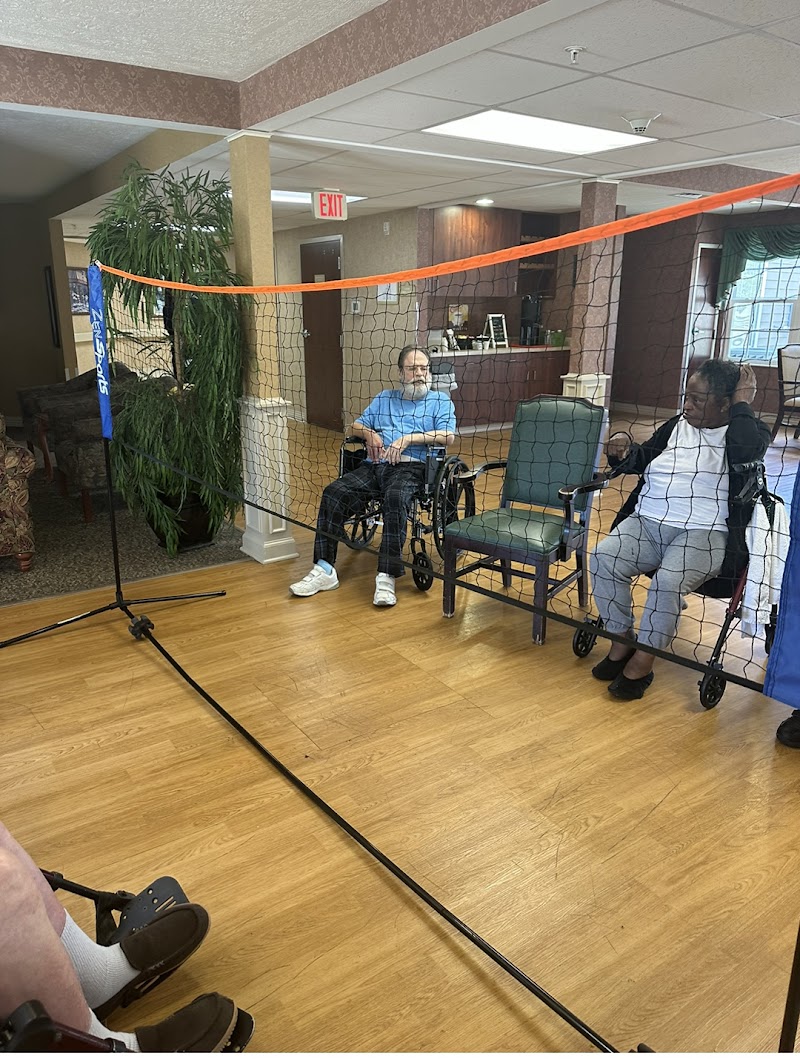
How Does Liberty Retirement Community Of Lima Inc Compare to Other Ohio Nursing Homes?

Compared to the 100 nursing homes in Ohio, LIBERTY RETIREMENT COMMUNITY OF LIMA INC's overall rating (2 stars) is below the state average of 3.2, staff turnover (63%) is significantly higher than the state average of 46%, and health inspection rating (2 stars) is below the national benchmark.

What Should Families Ask When Visiting Liberty Retirement Community Of Lima Inc?

Based on this facility's data, families visiting should ask: "How do you ensure continuity of care given staff turnover, and what is your staff retention strategy?" "Can I visit during a mealtime to observe dining assistance and food quality?" "How do you handle medical emergencies, and what is your hospital transfer rate?" "Can I speak with family members of current residents about their experience?" These questions are particularly relevant given the facility's high staff turnover rate.

Is Liberty Retirement Community Of Lima Inc Safe?

Based on CMS inspection data, LIBERTY RETIREMENT COMMUNITY OF LIMA INC has a clean safety record: no substantiated abuse findings (meaning no confirmed cases of resident harm), no Immediate Jeopardy citations (the most serious violation level indicating risk of serious injury or death), and is not on the Special Focus Facility watch list (a federal program monitoring the lowest-performing 1% of nursing homes). The facility has a 2-star overall rating and ranks #100 of 100 nursing homes in Ohio. While no facility is perfect, families should still ask about staff-to-resident ratios and recent inspection results during their visit.

Do Nurses at Liberty Retirement Community Of Lima Inc Stick Around?

Staff turnover at LIBERTY RETIREMENT COMMUNITY OF LIMA INC is high. At 63%, the facility is 17 percentage points above the Ohio average of 46%. Registered Nurse turnover is particularly concerning at 60%. RNs handle complex medical decisions and coordinate care — frequent RN changes can directly impact care quality. High turnover means new staff may not know residents' individual needs, medications, or preferences. It can also be disorienting for residents, especially those with dementia who rely on familiar faces. Families should ask: What is causing the turnover? What retention programs are in place? How do you ensure care continuity during staff transitions?

Was Liberty Retirement Community Of Lima Inc Ever Fined?

LIBERTY RETIREMENT COMMUNITY OF LIMA INC has no federal fines on record. CMS issues fines when nursing homes fail to meet care standards or don't correct problems found during inspections. The absence of fines suggests the facility has either maintained compliance or corrected any issues before penalties were assessed. This is a positive indicator, though families should still review recent inspection reports for the full picture.

Is Liberty Retirement Community Of Lima Inc on Any Federal Watch List?

LIBERTY RETIREMENT COMMUNITY OF LIMA INC is not on any federal watch list. The most significant is the Special Focus Facility (SFF) program, which identifies the bottom 1% of nursing homes nationally based on persistent, serious quality problems. Not being on this list means the facility has avoided the pattern of deficiencies that triggers enhanced federal oversight. This is a positive indicator, though families should still review the facility's inspection history directly.