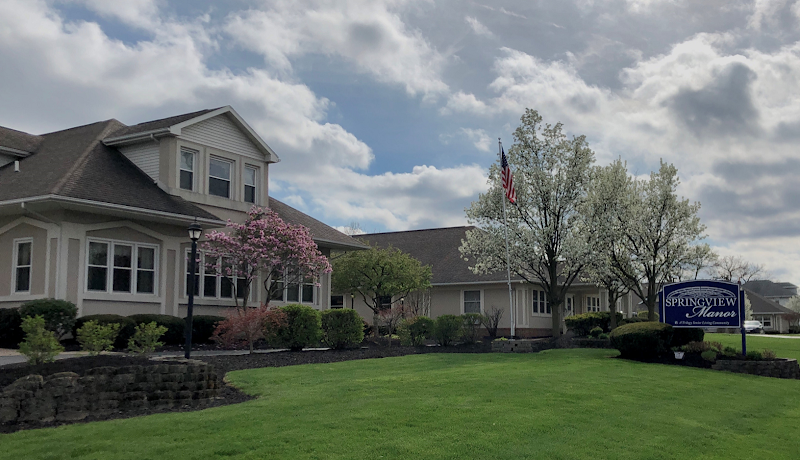
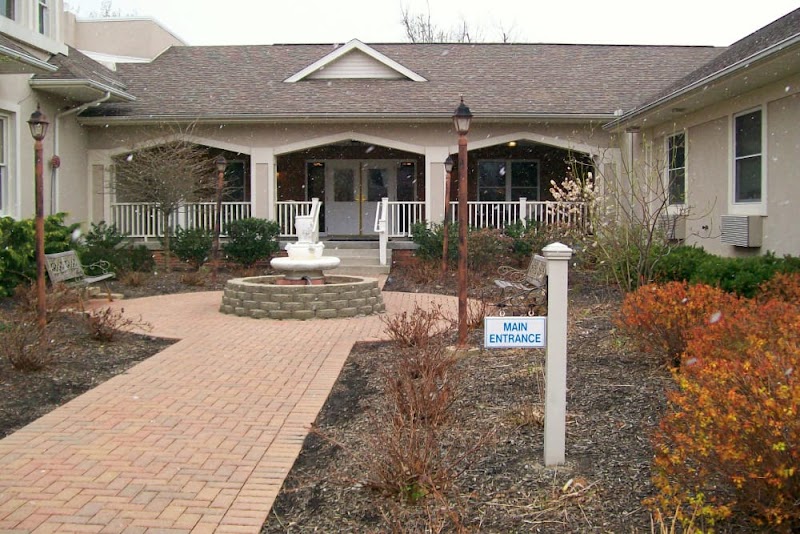
SPRINGVIEW MANOR

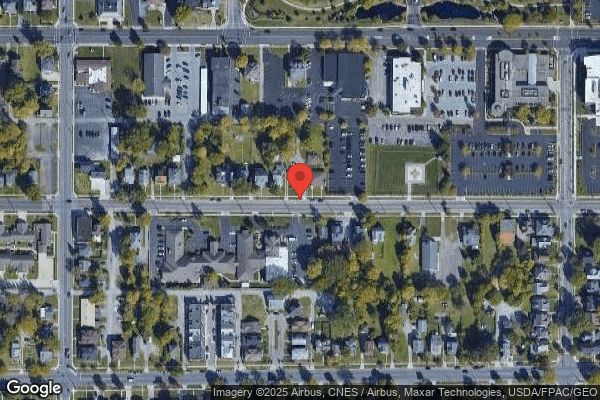
883 WEST SPRING STREET, LIMA, OH 45805 (419) 227-3661
For profit - Corporation 62 Beds TRILOGY HEALTH SERVICES Data: November 2025 1 Immediate Jeopardy citation
Trust Grade
61/100
#341 of 913 in OH
Last Inspection: April 2025

Within standard 12-15 month inspection cycle. Federal law requires annual inspections.

Overview

Springview Manor in Lima, Ohio has a Trust Grade of C+, which means it is considered decent and slightly above average among nursing homes. It ranks #341 out of 913 facilities in Ohio, placing it in the top half, and #6 out of 11 in Allen County, indicating that only five other local options are better. However, the facility's performance is worsening, as the number of identified issues rose from 1 in 2024 to 7 in 2025. Staffing is relatively stable, with a 3 out of 5 rating and a turnover rate of 31%, which is below the state average of 49%. Concerns arise from $16,113 in fines, which is higher than 76% of Ohio facilities, suggesting potential compliance issues. The facility has average RN coverage, which is important for catching problems that CNAs might miss. Specific incidents include a critical failure to respond to door alarms, allowing a cognitively impaired resident to leave the facility unnoticed, and issues with serving food at the correct temperature, which has been reported as sometimes cold and unappetizing. Additionally, a leaking kitchen steamer posed safety concerns for residents. While the facility has some strengths, such as decent staffing levels, these concerning incidents highlight areas that families should carefully consider.

Trust Score
C+
61/100
In Ohio
#341/913
Top 37%
Safety Record
High Risk
Review needed
Inspections
Getting Worse
1 → 7 violations
Staff Stability
○ Average
31% turnover. Near Ohio's 48% average. Typical for the industry.
Penalties
○ Average
$16,113 in fines. Higher than 74% of Ohio facilities. Some compliance issues.
Skilled Nurses
○ Average
Each resident gets 33 minutes of Registered Nurse (RN) attention daily — about average for Ohio. RNs are the most trained staff who monitor for health changes.
Violations
⚠ Watch
13 deficiencies on record. Higher than average. Multiple issues found across inspections.
★★★★☆
4.0
Overall Rating
★★★☆☆
3.0
Staff Levels
★★★★★
5.0
Care Quality
★★★☆☆
3.0
Inspection Score
Stable
2024: 1 issues
2025: 7 issues

The Good

  • 5-Star Quality Measures · Strong clinical quality outcomes
  • Full Sprinkler Coverage · Fire safety systems throughout facility
  • No fines on record
  • Staff turnover below average (31%)

    17 points below Ohio average of 48%

Facility shows strength in quality measures, fire safety.

The Bad

Staff Turnover: 31%

15pts below Ohio avg (46%)

Typical for the industry

Federal Fines: $16,113

Below median ($33,413)

Minor penalties assessed

Chain: TRILOGY HEALTH SERVICES

Part of a multi-facility chain

Ask about local staffing decisions and management

The Ugly 13 deficiencies on record

1 life-threatening
Apr 2025 7 deficiencies
CONCERN (D)

Potential for Harm - no one hurt, but risky conditions existed

Deficiency F0558 (Tag F0558)

Could have caused harm · This affected 1 resident

**NOTE- TERMS IN BRACKETS HAVE BEEN EDITED TO PROTECT CONFIDENTIALITY** 3. Review of the medical record for Resident #17 revealed an admission date of 12/21/22 with diagnoses including but not limited...

Read full inspector narrative →
**NOTE- TERMS IN BRACKETS HAVE BEEN EDITED TO PROTECT CONFIDENTIALITY** 3. Review of the medical record for Resident #17 revealed an admission date of 12/21/22 with diagnoses including but not limited to diabetes mellitus two with diabetic polyneuropathy, encounter for orthopedic aftercare following surgical amputation, acquired absence of right leg above the knee, atrial fibrillation, congestive heart failure, and dependence on supplemental oxygen. Review of the Minimum Data Set (MDS) assessment dated [DATE] revealed Resident #17 was cognitively intact. Resident #17 required setup or clean-up assistance with eating. Supervision or touching assistance for oral hygiene, upper body dressing, and personal hygiene. Substantial/maximal assistance for lower body dressing, putting on/taking off footwear, bathing, and toileting. Observation on 04/07/25 at 10:16 A.M. revealed the call light for Resident #17 did not work. Observation of the bell ringing revealed the bell was able to be heard three doors down the hallway with the resident's door closed and the hallway quiet. Observation on 04/08/25 at 10:03 A.M. revealed the call light for Resident #17 did not light up outside the door when pushed. Interview on 04/07/25 at 10:16 A.M. with Resident #17 revealed the resident stated his call light did not work. Resident #17 stated his call light had not been working for about a week. Resident #17 stated he was given a bell to ring for help. Interview on 04/09/25 at 9:53 A.M. with LPN #99 verified the call light for Resident #17 did not work. LPN #99 stated she was unaware the call light was not working. Interview on 04/09/25 at 10:28 A.M. with Director of Plant Operations (DPO) #195 revealed the call light that was hooked to the resident's bed in his reach was not hooked into the new call light system. DPO #195 verified the call light cord that hooked into the new system was lying on the floor out of the reach of the resident. DPO #195 stated the staff did not give the resident the new call light cord. DPO #195 verified the call light was functioning it was just not in reach of the resident. Observation at the time of the interview revealed the call light was functioning and was now in reach of the resident. Review of the facility policy, Guidelines for Answering Call Lights, dated 05/11/16, revealed staff to ensure call light is plugged in securely to the outlet and in reach of the resident. Based on medical record review, observation, interview, and facility policy, the facility failed to have call lights within reach. This affected three residents (#40, #41, and #17) out of twelve residents observed for call lights. The facility census was 56. Findings included: 1. Medical record review revealed Resident #40 was admitted on [DATE] with diagnoses of chronic obstructive pulmonary disease, acute kidney failure, weakness, difficulty walking, peripheral vascular disease, atherosclerotic heart disease, and mild cognitive impairment. Review of the care plan dated 01/24/25 revealed Resident #40 was at risk for falling due to unsteady gait and poor safety awareness. Call light was to be kept within reach. Observation on 04/07/25 at 11:03 A.M. revealed Resident #40 was laying on her back in bed. Touch call light was on the furthest back corner of nightstand with the dividing curtain covering the touch pad. Call light was not in reach or in sight of Resident #40. 2. Medical record review revealed Resident #41 was admitted on [DATE] with diagnoses of spinal stenosis, lumbar region with neurogenic claudication, tarlov-sacral cyst, chronic obstructive pulmonary disease, paroxysmal atrial fibrillation, heart failure, chronic kidney disease-stage three, history of falling, anxiety disorder, and osteorarthritis. Review of the care plan dated 03/25/25 revealed Resident #41 was at risk for falling related to medication use, weakness, and unsteady gait. Call light was to be kept within reach. Observation on 04/07/25 at 11:02 A.M. revealed Resident #41 sitting in her recliner parallel from her bed. Back of recliner is equal to end of bed. Approximately one foot in between bed and recliner. Call light was placed on foot board one inch from the wall hanging down in between the mattress and foot board, out of reach and sight for Resident #41. Interview on 04/07/25 at 11:03 A.M. with Licensed Practiced Nurse (LPN) #99 verified Resident #40 and #41 did not have their call light within reach.
CONCERN (D)

Potential for Harm - no one hurt, but risky conditions existed

Deficiency F0698 (Tag F0698)

Could have caused harm · This affected 1 resident

**NOTE- TERMS IN BRACKETS HAVE BEEN EDITED TO PROTECT CONFIDENTIALITY** Based on record review, interviews, and policy review, the facility failed to ensure assessments were documented and/or complete...

Read full inspector narrative →
**NOTE- TERMS IN BRACKETS HAVE BEEN EDITED TO PROTECT CONFIDENTIALITY** Based on record review, interviews, and policy review, the facility failed to ensure assessments were documented and/or completed prior to and after dialysis. This affected one (#9) of one resident reviewed for dialysis. The facility further failed to ensure dialysis documentation was completed by the dialysis center. This affected one (#9) of one reviewed for dialysis. The facility census was 56. Findings include: Review of medical record for Resident #9 revealed admission date of 09/24/24 with diagnoses including but not limited to Parkinson's disease, adjustment disorder with depressed mood, end stage renal disease, dependence on renal dialysis, malignant neoplasm, and atrial fibrillation. Review of the Minimum Data Set (MDS) assessment dated [DATE] for Resident #9 revealed the resident was cognitively intact. The resident required setup or clean-up assistance for eating. Supervision or touching assistance for oral hygiene, upper body dressing, and personal hygiene. Partial/moderate assistance for lower body dressing and putting on/taking off footwear. Substantial/maximal assistance for toileting and bathing. The resident was receiving dialysis. Review of current physician orders for Resident #9 revealed controlled carbohydrate diet (CCHO) with thin liquids, Glucerna four ounces (oz) three times daily, encourage 1500 milliliter (ml)/day fluid restriction, monitor for signs and symptoms of infection to dialysis port to right chest daily, dialysis Tuesday, Thursday, and Saturday at 12:00 P.M. complete dialysis center communication observation under other clinical observation and send with resident. Review of care plan dated 10/01/24 revealed Resident #9 has End Stage Renal Disease (ESRD) related to renal failure. Interventions included fluid restriction per orders, administer medications as ordered, dietary consult and follow recommendations as needed, observe adverse side effects and report as necessary, labs as ordered, assess for fluid excess, monitor weight per order, and diet as ordered. Review of dialysis communication forms dated 02/01/25, 02/06/25, 02/15/25, 03/06/25, 03/15/25, and 04/03/25 revealed no vital signs obtained after Resident #9 returned from dialysis. Review of dialysis communication forms sent to dialysis center on Tuesday, Thursday, and Saturday from 02/01/25 through 04/08/25 with the exception of 03/15/25 revealed the dialysis center portion was not filled out including no pre and post dialysis weights. Interview on 04/09/25 at 11:40 A.M. with the Director of Nursing (DON) verified no vital signs were obtained on the above listed dates upon Resident #9's return to the facility. Interview on 04/09/25 at 2:02 P.M. with the DON verified the dialysis center has never filled out their portion of the dialysis communication form. DON stated that if they filled out the form it would be scanned into the electronic record upon return to the facility. DON verified the communication form is filled out by the night shift nurse between 12:00 A.M. and 1:00 A.M. and that the residents chair time is not until 12:00 P.M. Review of dialysis contract dated 04/16/18 revealed the facility is responsible for ensuring that the ESRD residents are medically stable to receive treatment at the ESRD Dialysis Unit. Obligations of the ESRD Dialysis unit included to provide the facility information on all aspects of the management of the ESRD resident's care related to the provision of renal dialysis services including directions on management of medical and non-medical emergencies including but not limited to bleeding, infections, and care of dialysis access site. Mutual obligations both parties shall ensure there is documented evidence of collaboration of care and communication between the facility and ESRD dialysis unit. Review of policy titled, Guidelines for Dialysis, dated 05/11/16 revealed the purpose of the policy is to provide communication to Dialysis providers and monitoring of resident receiving dialysis. A report (may be written or verbal) shall be requested from the Dialysis provider that will alert the campus regarding tolerance to procedure, vital signs, medications administered, and other information deemed necessary for the ongoing provision of care. Upon return from the Dialysis provider the campus shall provide ongoing monitoring of the shunt site for signs of complications and review the Dialysis provider paperwork for any necessary follow up requirements.
CONCERN (D)

Potential for Harm - no one hurt, but risky conditions existed

Deficiency F0761 (Tag F0761)

Could have caused harm · This affected 1 resident

**NOTE- TERMS IN BRACKETS HAVE BEEN EDITED TO PROTECT CONFIDENTIALITY** Based on observation, interview, and policy review, the facility failed to ensure medications were not left at the bedside. This...

Read full inspector narrative →
**NOTE- TERMS IN BRACKETS HAVE BEEN EDITED TO PROTECT CONFIDENTIALITY** Based on observation, interview, and policy review, the facility failed to ensure medications were not left at the bedside. This affected one (#23) of four residents reviewed for medication pass. The facility further failed to ensure medications were dated when opened. This affected one of three med carts reviewed for med storage. The facility census was 56. Findings include: 1. Record review for Resident #23 revealed admission date of 10/16/23 with diagnoses including but not limited to rheumatoid arthritis, cervicalgia, age-related osteoporosis, nonrheumatic mitral valve annulus calcification, cardiomegaly, chronic obstructive pulmonary disease, pleural effusion, lymphedema, hypothyroidism, and nutritional anemia. Review of the Minimum Data Set (MDS) assessment dated [DATE] for Resident #23 revealed the resident was cognitively intact. Resident #23 required supervision or touching assistance for transfers and ambulation. Setup or clean-up assistance for eating, oral hygiene, upper body dressing, lower body dressing, and personal hygiene. Supervision or touching assistance for toileting, bathing, and putting on/taking off footwear. Review of physician orders revealed Vitamin C 500 milligrams (mg) daily, beta carotene capsule 7500 micrograms (mcg) daily, citracal D3 petites 200 mg-6.25 mcg three capsules daily, magnesium oxide 250 mg twice daily, odorless garlic concentrated extract capsule 50 mg daily, super B-50 complex capsule 400 mcg-20 mg- 50 mg daily and vitamin E 180 mg daily. Further review of the medical record revealed no self administration of medication assessments. Observation and interview on 04/07/25 at 11:48 A.M. of Resident #23's over the bed table revealed med cup containing seven pills sitting in front of the resident. Resident #23 stated the medications in the med cup were vitamins. Resident #23 stated she takes them after breakfast and was in the process of taking the medication when surveyor walked in the room. No nursing staff was observed in the room at the time. Interview on 04/07/25 at 11:59 A.M. with Licensed Practical Nurse (LPN) #92 verified Resident #23 had a med cup with vitamins in her room unattended by nursing staff. 2. Observation on 04/08/25 at 8:13 A.M. of med cart on 300 hall revealed a Lantus Solostar insulin pen not labeled or dated and one lubricating eye drop bottle opened and not dated. Interview on 04/08/25 at 8:15 A.M. with LPN #210 verified the insulin pen was not labeled or dated and the eye drops were not dated. Interview on 04/08/25 at 9:32 A.M. with Director of Nursing (DON) verified she discarded the insulin pen at this time. DON verified the insulin pen was not labeled and she could not determine which resident the pen belonged to. Review of policy titled, Storage of Medications, revised 10/19 revealed certain medications or package types, such as intravenous solutions, multiple dose, injectable vials, ophthalmic, nitroglycerin tablets, blood sugar testing solutions and strips, once opened require an expiration date shorter than the manufacturer's expiration date to insure medication purity and potency. When the original seal of a manufacturer's container or vial that requires a shorter expiration is initially broken, the container or vial will be dated. A date opened sticker shall be placed on these medications. The expiration date of the vial or container will be 30 days unless the manufacturer recommends another date or regulations/guidelines require different dating. Review of policy titled, Medication Administration-General Guidelines, revised 11/18 revealed the resident is always observed after administration to ensure that the dose was completely ingested. If only a partial dose is ingested, this is noted on the medication administration record and action was taken as appropriate.
CONCERN (D)

Potential for Harm - no one hurt, but risky conditions existed

Infection Control (Tag F0880)

Could have caused harm · This affected 1 resident

Based on observation, interview, and facility policy the facility failed to ensure staff practices hand hygiene when delivering meal trays. This affected two (#258 and #260) out of seven room trays ob...

Read full inspector narrative →
Based on observation, interview, and facility policy the facility failed to ensure staff practices hand hygiene when delivering meal trays. This affected two (#258 and #260) out of seven room trays observed. Census was 56. Findings include: Observation on 04/07/25 at 12:18 P.M. revealed Certified Nursing Assistant (CNA) #71 carried Resident #258's lunch tray into her room. Before placing lunch tray on bedside tray, CNA #71 removed kleenex box, TV remote and multiple personal items from bedside tray. CNA #71 placed lunch tray on bedside table and removed plastic wrap from top of food and silverware out of napkin and adjusted bedside tray. CNA #71 walked out of Resident #258's room, took a cup of lemonade off food tray and walked into Resident #260's with cup of lemonade, placed it on Resident #260's lunch tray, took the lid off, and walked out the door. No hand hygiene was performed at start of meal tray pass and no hand hygiene was performed in between one resident's room to another resident's room. Interview on 04/07/25 at 12:22 P.M. with CNA #71 and Culinary Support #205 verified no hand hygiene was completed before passing meal trays and in between resident's rooms. Review of facility policy, Guideline for Handwashing/Hand Hygiene, dated 12/17/24, hand hygiene is to be used before/after having direct physical contact with residents and before/after preparing/serving meals and drinks.
CONCERN (F)

Potential for Harm - no one hurt, but risky conditions existed

Deficiency F0804 (Tag F0804)

Could have caused harm · This affected most or all residents

**NOTE- TERMS IN BRACKETS HAVE BEEN EDITED TO PROTECT CONFIDENTIALITY** Based on observation, interview, and policy review, the facility failed to ensure food was served at a palliative and warm food ...

Read full inspector narrative →
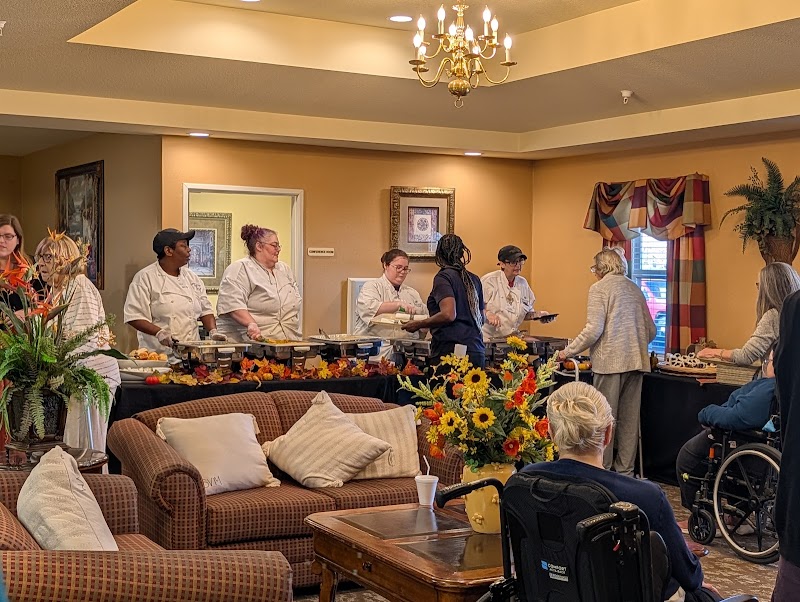
**NOTE- TERMS IN BRACKETS HAVE BEEN EDITED TO PROTECT CONFIDENTIALITY** Based on observation, interview, and policy review, the facility failed to ensure food was served at a palliative and warm food temperature. This had the potential to affect all residents in the facility at the time of entrance. The census was 56. Findings include: Review of medical record for Resident #4 revealed an admission date of 06/22/22 with diagnoses including but not limited to panlobular emphysema, influenza, other specified symptoms and signs involving the digestive system, congestive heart failure, auditory and visual hallucinations, major depressive disorder, anxiety, and other symptoms and signs concerning food and fluid intake. Review of the Minimum Data Set (MDS) assessment dated [DATE] revealed Resident #4 was cognitively intact. Interview on 04/07/25 at 10:40 A.M. revealed Resident #4 stated that sometimes the food is cold. Resident #4 stated sometimes the food just does not taste good. Observation of the tray line was made on 04/09/25 at 12:18 P.M. with Culinary Support #205. The lunch menu consisted of mashed potatoes, smoked sausage, and brussel sprouts. A test tray was requested, and Culinary Support #205 took starting temperatures of the food being placed on the test tray on 04/09/25 at 12:18 P.M. Culinary Support #205 confirmed the mashed potatoes were 158 degrees Fahrenheit, smoked sausages were 141 degrees Fahrenheit, and the brussel sprouts were 137 degrees Fahrenheit. The tray was then placed on the meal cart on 04/09/25 at 12:19 P.M. The meal cart left the kitchen for the 300 and 100 halls on 04/09/25 at 12:20 P.M. The meal cart arrived at the 300 hall on 04/09/25 at 12:21 P.M. The meal cart arrived at the 100 hall on 04/09/25 at 12:25 P.M. Interview on 04/09/25 at 12:28 P.M. with Culinary Support #205 revealed she wants food served at 135 degrees Fahrenheit or as hot as possible for residents. Observation on 04/09/25 at 12:25 P.M. of the meal cart with the test tray arrived on the 100 Hall. The test tray was served on 04/09/25 at 12:28 P.M. after all other 100 Hall food trays were served. Observation of the test tray opened on 04/09/25 at 12:28 P.M. with Culinary Support #205. Culinary Support #205 checked the food on the tray and confirmed the food temperatures. The mashed potatoes were 145 degrees Fahrenheit, the smoked sausages were 129 degrees Fahrenheit, and the brussel sprouts were 134 degrees Fahrenheit. The food was tasted, and the smoked sausage and brussel sprouts were lukewarm. Interview on 04/09/25 at 02:34 P.M. with Director of Food Service #5 revealed hot foods are delivered to residents at 135 or 141 degrees Fahrenheit. Review of the Food Production Guidelines - Sanitation and Safety dated 01/25 stated Food is served as soon after preparation as possible and is held at the following temperature: Hold food - HOT= 135°F. Review of the Meal Time Express Cart policy dated 01/01/25 stated The Meal Time Express Cart ensures that the in-room dining residents are being served meals at the correct and desired temperature to ensure a great meal is being served.
CONCERN (F)

Potential for Harm - no one hurt, but risky conditions existed

Room Equipment (Tag F0908)

Could have caused harm · This affected most or all residents

Based on observation, interview, and policy review, the facility failed to maintain the kitchen steamer in a safe operating condition. This had the potential to affect all residents in the facility at...

Read full inspector narrative →
Based on observation, interview, and policy review, the facility failed to maintain the kitchen steamer in a safe operating condition. This had the potential to affect all residents in the facility at the time of entrance. The facility census was 56. Findings include: Observation on 04/07/25 at 11:49 A.M. of the kitchen steamer unit revealed it was leaking onto the floor, and it formed a large puddle. Interview on 04/07/25 at 11:49 A.M. with Director of Food Service #5 confirmed the steamer was leaking and making a puddle. Observation on 04/08/25 at 12:04 P.M. of the kitchen steamer unit revealed it was leaking onto the floor. Interview on 04/08/25 at 12:04 P.M. with Director of Food Service #5 confirmed the steamer is still leaking. Observation on 04/09/25 at 12:12 P.M. of the kitchen steamer unit revealed the steamer leaked onto floor out of two places and it made another puddle. Interview on 04/09/25 at 12:12 P.M. with [NAME] #65 confirmed the steamer unit is leaking on the floor. Review of the Preventative Maintenance Procedures policy dated 02/06/18 stated Each piece of equipment or section of the building has its own inspection schedule and procedures to follow to prolong the life expectancy of the equipment and decrease the chances of equipment failure.
CONCERN (F)

Potential for Harm - no one hurt, but risky conditions existed

Safe Environment (Tag F0921)

Could have caused harm · This affected most or all residents

Based on observation and staff interview, the facility failed to ensure no pervasive odors were present in hallways or common areas. This had the potential to affect all residents. The census was 56. ...

Read full inspector narrative →
Based on observation and staff interview, the facility failed to ensure no pervasive odors were present in hallways or common areas. This had the potential to affect all residents. The census was 56. Findings included: Observation on 04/07/25, 04/08/24, and 04/09/24 at various times revealed on the 200 and 300 halls, there was a strong urine smell. Observation on 04/09/24 at 10:40 A.M. in the legacy hall revealed a strong urine smell. Interview on 04/09/24 at 10:50 A.M. with Director of Environmental Services #250 verified strong urine smell throughout the 200 hall, 300 hall, and legacy hall. Director of Environmental Services #250 stated in legacy, two gentlemen urinate on the carpet instead of using the restroom. Director of Environmental Services #250 verified all carpets in the facility are cleaned once a month with a commercial carpet cleaner, dinning chairs are wiped down daily, and cloth upholstery couches are cleaned when housekeeping is notified.
Jan 2024 1 deficiency 1 IJ
CRITICAL (J) 📢 Someone Reported This

A family member, employee, or ombudsman was alarmed enough to file a formal complaint

Immediate Jeopardy (IJ) - the most serious Medicare violation

Accident Prevention (Tag F0689)

Someone could have died · This affected 1 resident

THE FOLLOWING DEFICIENCY REPRESENTS AN INCIDENT OF PAST NON-COMPLIANCE THAT WAS SUBSEQUENTLY CORRECTED PRIOR TO THIS SURVEY. Based on record review, staff interview, review of hospital records, review...

Read full inspector narrative →
THE FOLLOWING DEFICIENCY REPRESENTS AN INCIDENT OF PAST NON-COMPLIANCE THAT WAS SUBSEQUENTLY CORRECTED PRIOR TO THIS SURVEY. Based on record review, staff interview, review of hospital records, review of camera footage, review of the facility's investigation, observations, review of Weather Underground computerized environmental temperatures website, review of Google Maps, and review of the facility's Guideline for Elopement/Missing Resident policy, the facility failed to follow their policy for responding to door alarms and checking residents after the sounding of a door alarm, to prevent the elopement of a cognitively impaired resident, with a history of attempted elopement and who was assessed to be at risk for elopement from the facility. This resulted in Immediate Jeopardy and the potential for serious life-threatening injuries, negative health outcomes and/or death, when Resident #11 left the facility through an alarmed door, without staff knowledge, and was found by staff in the Emergency Department (ED) of a local hospital, approximately one-half mile from the facility and across a four-lane road with a speed limit of 35 miles-per-hour, after being brought to the ED by an unknown community member. This affected one (#11) of five (#11, #12, #13, #14, #15) residents reviewed for exit seeking behaviors from the facility. The facility identified five residents with a history of exit seeking, and 15 residents at risk for elopement. The facility census was 52. On 01/08/24 at 1:38 P.M., the Executive Director, the Director of Health Services (DHS), and the Clinical Campus Support Registered Nurse (CCSRN) #500 were notified Immediate Jeopardy began on 12/26/23 at approximately 12:56 P.M. when Resident #11 walked out of the north door of the secured unit causing the door alarm to activate, alerting staff a resident may have exited the building. At 12:57 P.M., Certified Resident Care Associate (CRCA) #101 responded to the door alarm and silenced the alarm without opening the door to check outside, and without conducting a headcount of residents on the secured unit; therefore, not following the facility procedure for responding to an activated door alarm. The facility was unaware Resident #11 was missing until approximately 2:44 P.M. when staff determined that the resident sleeping in Resident #11's bed was not Resident #11. Resident #11 was subsequently discovered approximately two hours and 20 minutes later, at 3:16 P.M. by facility staff at the Emergency Department of a local hospital with abrasions to his left hand, right forehead and left knee. The Immediate Jeopardy was removed, and the deficiency corrected on 12/27/23 when the facility implemented the following corrective actions: • On 12/26/23 at 3:25 P.M., the DHS began educating all staff on the facility elopement and missing resident policy, and staff response to door alarms. This was completed at 6:20 P.M. • On 12/26/23 at 3:30 P.M., Licensed Practical Nurse (LPN) #203 notified Resident #11's primary care physician and the Medical Director of the elopement. • On 12/26/23 at 3:37 P.M., a Wanderguard was placed on Resident #11 by the Assistant Director of Health Services (ADHS) #301. • On 12/26/23, ADHS #301 checked the Wanderguards of all residents in the facility to ensure proper functioning. • On 12/26/23 at 3:46 P.M., the DHS and ADHS #301 audited the records of all residents on the secure unit and of all residents on the non-secured units who had a brief interview for mental status (BIMS) of eight or less, indicating cognitive impairment, for elopement risk. • On 12/26/23 at 4:00 P.M., LPN #203 notified Resident #11's son of the incident. • On 12/26/23 at 5:15 P.M., the Executive Director conducted an elopement drill. The facility began completing elopement drills at random times five days a week for four weeks to ensure staff follow the policy. All findings will be relayed to the campus Quality Assurance Committee for review. • On 12/26/23, the Director of Plant Operations #303 checked all the exit doors to ensure they were functioning properly with alarms activating. • On 01/08/24, the medical records for Resident #12, Resident #13, Resident #14, and Resident #15, identified with exit seeking behaviors, were reviewed with no concerns of elopement identified. • Interviews on 01/08/24 between 11:20 A.M. and 2:14 P.M. with CRCA #101, CRCA #102, CRCA #103, and CRCA #104 revealed staff received education and were knowledgeable about the facility's elopement/missing person policy and procedure. • Interviews on 01/08/24 between 10:16 A.M. and 3:53 P.M. with LPN #201 and LPN #202 revealed staff received education and were knowledgeable about the facility's elopement/missing person policy and procedure. Findings include: Review of the medical record for Resident #11 revealed an admission date of 03/22/23. Diagnoses included Alzheimer's disease, dementia, and unsteadiness on his feet. Resident #11 resided on the secured unit in the facility beginning 03/25/23. Review of the quarterly Minimum Data Set (MDS) assessment, dated 11/15/23, revealed Resident #11 was rarely/never understood with short- and long-term memory problems and severely impaired cognitive skills for daily decision making. Review of a care plan initiated 03/29/23 revealed Resident #11 was at risk for wandering. Interventions included observing wandering patterns and escort away from other residents, providing meaningful leisure activities, and monitoring cognitive functioning. Review of the Elopement Risk Review, completed 05/23/23, revealed Resident #11 was at risk for elopement due to a history of exit seeking and residing on a locked/secure unit. Interventions included observing elopement attempts. Review of a progress note dated 07/02/23 revealed Resident #11 was observed by staff to exit the alarmed north door of the secured unit. Staff maintained visual contact of Resident #11 and caught up with Resident #11 on the sidewalk outside the building. Resident #11 was escorted back inside the facility. Review of a progress note dated 12/26/23 at 3:25 P.M. revealed staff found Resident #11 in the local hospital's ED seated in the waiting room. Staff notified the facility's physician regarding Resident #11's status. The facility's physician advised staff to return Resident #11 to the facility and the physician would assess him later in the day. Resident #11 was observed to have abrased areas to his left hand and right forehead. First aid was given by ED staff prior to facility staff's arrival. Review of a progress note dated 12/26/23 at 4:19 P.M. revealed MDS Nurse #300 was notified of the unknown whereabouts of Resident #11 at 2:44 P.M. A head count was completed on the secured unit and all rooms were checked. Resident #11 was unable to be located. The DHS was notified at 2:50 P.M., a facility head count was completed, and the grounds were observed for Resident #11. The elopement protocol was initiated. A phone call was received at 3:15 P.M. from the local hospital stating Resident #11 was in their ED. Resident #11 was returned without incident. Review of a progress note dated 12/26/23 at 4:20 P.M. revealed a skin sweep was completed on Resident #11 and he was found to have abrasions to his left hand and superficial abrasions to his right forehead and left knee. Review of the hospital records dated 12/26/23, revealed Resident #11 was admitted at 2:23 P.M. Resident #11 arrived via walk-in. Arrival complaint revealed Resident #11 was found face down. Resident #11 complained of left-hand pain, stating he tripped earlier and landed on it. Resident #11 had some abrasion noted to his palm. Resident #11 was alert with stable vital signs. A left-hand x-ray was completed on 12/26/23 at 2:56 P.M. No fracture or dislocation was identified. Review of the facility investigation of the incident revealed a witness statement from CRCA #101 which revealed CRCA #102 directed CRCA #101 to turn off the door alarm. CRCA #101's statement revealed she did not check outside the door or complete a resident headcount. Review of the witness statement for CRCA #102 revealed she heard the north door alarming but did not look to see if someone was trying to enter the building. Review of the facility investigation revealed staff did not follow protocol when responding to the door alarm on 12/26/23. Interview on 01/08/24 at 11:04 A.M. with the Executive Director and the DHS revealed the DHS was at the facility on 12/26/23 and was notified Resident #11 was missing at 2:50 P.M. The DHS initiated an internal and external search for Resident #11, including sending staff out on foot and in vehicles to look for Resident #11. One staff walked to the ED at the local hospital and found Resident #11 sitting in the waiting room at 3:16 P.M. Further interview revealed Resident #11 had a suspected, unobserved fall between the facility and the ED. Interview on 01/08/24 at 2:05 P.M. with CRCA #101 revealed she worked on the secured unit on 12/26/23 at the time of Resident #11's elopement. She recalled the north door alarm sounding. CRCA #101 silenced the alarm without opening the door and checking outside, and without completing a head count on the secured unit. Interview on 01/08/24 at 2:14 P.M. with CRCA #102 revealed she worked on the secured unit on 12/26/23 at the time of Resident #11's elopement. CRCA #102 stated she was not the staff who responded to the door. Interview on 01/08/24 at 4:29 P.M. with LPN #203 revealed she picked up Resident #11 from the ED on 12/26/23. LPN #203 stated she talked with the receptionist at the ED who stated a Good Samaritan brought Resident #11 to the ED. LPN #203 stated she had no additional information regarding the Good Samaritan and how or where that person found Resident #11. LPN #203 stated she assessed Resident #11's injuries upon return to the facility and found abrasions to his left hand, and superficial abrasions to his right forehead and left knee. Review of the camera footage on 01/09/24 at 9:34 A.M. from 12/26/23 revealed Resident #11 approached the north door at 12:56 P.M. Resident #11 was wearing black shoes, jeans, a hooded sweatshirt and a baseball cap. Resident #11 held down the push bar and placed his foot against the base of the door. Resident #11 then released the door and turned around to face the open hallway. Resident #11 exited the facility at 12:57:38 P.M. The window in the north door was treated with a film allowing light to pass through but clear observation was not possible. A shadow was observed through the window on the left side of the door at 12:57:42 P.M. No additional shadow was observed. The video footage shows CRCA #101 approached the door, pulled the door handle closed, and silenced the alarm at 12:58:03 P.M. CRCA #101 did not open the door or look outside. Review of Google Maps revealed the facility was approximately one-half mile from the ED where Resident #11 was found. The route included crossing a four-lane road. Observation on 01/09/24 at 8:30 A.M. revealed the speed limit in front of the hospital varied from 35 miles per hour to 25 miles per hour. Review of the Weather Underground computerized environmental temperatures on 12/26/23 between 12:53 P.M. and 3:49 P.M. was 55 degrees Fahrenheit and clear. Review of the policy titled Guideline for Elopement/Missing Resident, revised 05/01/17, revealed staff should respond promptly to a sounding door alarm. The charge nurse, facility supervisor or Executive Director should call staff to a central area and designate the following: 1) a staff person to perform a facility head count to determine who may be missing, and 2) two additional staff members to exit the alarming doorway and go in opposite directions around the building perimeter until they meet each other and return to the central area of the facility. This is non-compliance found during the investigation of Complaint Number OH00149625.
Jul 2022 1 deficiency
CONCERN (D)

Potential for Harm - no one hurt, but risky conditions existed

MDS Data Transmission (Tag F0640)

Could have caused harm · This affected 1 resident

**NOTE- TERMS IN BRACKETS HAVE BEEN EDITED TO PROTECT CONFIDENTIALITY** Based on resident record review and staff interview; the facility failed to timely finalize and transmit Minimum Data Set (MDS) ...

Read full inspector narrative →
**NOTE- TERMS IN BRACKETS HAVE BEEN EDITED TO PROTECT CONFIDENTIALITY** Based on resident record review and staff interview; the facility failed to timely finalize and transmit Minimum Data Set (MDS) assessments. This affected two (#30 and #2) of 15 residents reviewed for accuracy of the MDS assessment. The census was 54. Findings include: 1. Review of the medical record for Resident #30 revealed the resident was admitted to the facility on [DATE]. Diagnoses included Alzheimer's disease, chronic kidney disease, a diabetes mellitus (DM) type two. Review of a significant change MDS assessment dated [DATE], for Resident #30 revealed the encoded data date finalized was 12/09/21. The assessment was transmitted on 12/10/21. Review of a quarterly MDS assessment dated [DATE] for Resident #30 revealed the assessment was finalized on 06/09/22 and transmitted on 07/05/22. Interview on 07/06/22 at 11:47 A.M. with Registered Nurse (RN) #330 verified the quarterly MDS assessment dated [DATE] for Resident #30 was not transmitted timely. The RN further verified the significant change MDS assessment dated [DATE] for Resident #30 was not encoded and transmitted timely. 2. Review of the medical record for Resident #2 revealed the resident was admitted to the facility on [DATE]. Diagnoses included end stage renal disease, DM type two, and altered mental status. Review of a quarterly MDS assessment dated [DATE] for Resident #2 revealed the encoded data date finalized was 12/14/21. The assessment was transmitted on 12/16/21. Review of an annual MDS assessment dated [DATE] for Resident #2 revealed the encoded data date finalized was 06/09/22. The assessment was transmitted on 07/05/22. Interview on 07/06/22 at 11:55 A.M. with RN #330 verified the annual MDS assessment dated [DATE] for Resident #2 was not transmitted timely. RN #330 verified the quarterly MDS assessment dated [DATE] for Resident #2 was not encoded and transmitted timely.
Aug 2019 4 deficiencies
CONCERN (D)

Potential for Harm - no one hurt, but risky conditions existed

Quality of Care (Tag F0684)

Could have caused harm · This affected 1 resident

Based on observation, medical record review, and staff interview, the facility failed to ensure a resident received treatment for edema to bilateral lower extremities. This affected one (#47) of two r...

Read full inspector narrative →
Based on observation, medical record review, and staff interview, the facility failed to ensure a resident received treatment for edema to bilateral lower extremities. This affected one (#47) of two residents reviewed for skin conditions. The facility identified eight residents being treated for edema. The facility census was 50. Findings include: Review of Resident #47's medical record revealed an admission date of 07/02/19. Medical diagnoses included hypertensive heart disease with heart failure, atrial fibrillation, acute respiratory failure, pleural effusion, chronic obstructive pulmonary disease, moderate protein-calorie malnutrition, and urinary retention. Review of the Minimum Data Set (MDS) assessment, dated 07/09/19, revealed Resident #47 had moderate impairment in cognition. She required extensive assistance for dressing and hygiene. Review of the resident's nursing notes revealed documentation of two plus edema to bilateral lower extremities on 07/02/19, 07/03/19, 07/04/19, 07/06/19, 07/09/19, 07/19/19, and 07/20/19. Review of an interdisciplinary team (IDT) note dated 07/26/19 revealed the resident was reviewed by the IDT. Orders for antibiotic (left foot), change to thromboembolic disease (TED) hose (elastic stockings that compress the superficial veins in the lower limbs) , and doppler to leg. Review of the resident's physician's orders throughout the resident's admission revealed no order to address edema in the resident's right foot/ankle. Observation of the resident's bilateral feet during a dressing change to her left foot on 07/31/19 at 8:41 A.M. revealed the resident had two plus pitting edema to her bilateral feet/ankles. The resident was sitting in a wheelchair with her feet on the ground. She had no treatment to her right foot. During the observation, Licensed Practical Nurse (LPN) #120 verified the resident had no ace wrap or TED hose to her right foot. She verified the resident's right foot was edematous, with two plus pitting edema. She stated there was no order for the resident's right foot edema. She stated she was going to notify the physician to address the lack of treatment. Further observations of the resident on 07/31/19 at 10:16 A.M., 12:25 P.M., 3:09 P.M., and 5:20 P.M. revealed she was in her wheelchair and had no treatment to the right foot. Interview with the Director of Nursing (DON) on 07/31/19 at 5:25 P.M. revealed the resident's IDT note dated 07/26/19 was supposed to say Ace wraps and not TED hose for bilateral lower extremity edema. She stated the resident had been wearing TED hose to her bilateral lower extremities prior to the development of a wound on her left foot on 07/26/19. The DON verified there was no order in place to treat the resident's edema since admission. She verified the resident still had no Ace wrap in place to the right lower extremity.
CONCERN (D)

Potential for Harm - no one hurt, but risky conditions existed

Deficiency F0688 (Tag F0688)

Could have caused harm · This affected 1 resident

**NOTE- TERMS IN BRACKETS HAVE BEEN EDITED TO PROTECT CONFIDENTIALITY** Based on observation, medical record review, and family and staff interview, the facility failed to ensure a splint was in place...

Read full inspector narrative →
**NOTE- TERMS IN BRACKETS HAVE BEEN EDITED TO PROTECT CONFIDENTIALITY** Based on observation, medical record review, and family and staff interview, the facility failed to ensure a splint was in place as ordered for one (Resident #1) of one residents reviewed for limited mobility. The facility identified three residents with splint devices ordered. The facility census was 50. Findings include: Review of Resident #1's medical record revealed an admission date of 02/26/14. Medical diagnoses included hemiplegia and hemiparesis following unspecified cerebrovascular disease affecting left non-dominant side, dysphagia, neuromuscular dysfunction of bladder, major depressive disorder, cognitive communication deficit, unspecified dementia with behaviors, cerebral infarction due to unspecified occlusion or stenosis of unspecified cerebral artery, difficulty in walking, and generalized anxiety disorder. Review of the Minimum Data Set (MDS) assessment, dated 07/01/19, revealed Resident #1's cognition was severely impaired. She required extensive assistance for bed mobility, transfers, dressing, and hygiene. She had impairment of mobility to the upper and lower extremity on one side. Splint or brace assistance was coded as zero. Review of the resident's occupational therapy (OT) progress and Discharge summary dated [DATE] revealed short term goals history included prosthetic/orthotic use; the patient will demonstrate tolerance of left resting hand splint nightly to prevent contractures and protect joint integrity. Long term orthotic goal not met on 01/04/19 and noted staff will appropriately don and doff left wrist/hand orthotic with patient tolerating four plus hours and monitor skin condition for effective contracture prevention and joint protection. Analysis of functional outcome/clinical impression was patient tolerates left resting hand splint up to two hours without adverse reactions, order written for splint wear up to two hours every shift as tolerated. Patient refuses splint at times however tolerates well when in use. Caregiver training to safely manage left upper extremity splinting performance. Patient/caregiver training since last report, splinting to left upper extremity. Discharge plans and instructions were patient will remain in skilled nursing facility with staff education. Order written for left hand splinting up to two hours every shift as tolerated. Review of the resident's physician's orders revealed an order dated 01/04/19 to wear a left resting hand splint up to two hours every shift as tolerated. Review of the resident's treatment administration record revealed no documentation of splint use. Review of the resident's care plan, dated 08/15/16 and revised on 07/09/19, revealed the resident required assistance with her activities of daily living (ADLs) and was at risk for increased ADL support related to her diagnosis of cerebrovascular accident with left sided hemiparesis, heart disease, and cognitive deficit. Interventions included on 01/07/19 a left hand splint as tolerated up to two hours per shift. Observation of the resident and her room on 07/29/19 at 5:36 P.M. revealed her left hand appeared to have a range of motion deficit, with no hand splint in place, and no splint observed in the room. Interview with Resident #1's family member on 07/30/19 at 9:26 A.M. revealed he was not sure what the facility was doing for the resident's left hand. He stated he thought she might have had a splint, but was not sure if she was wearing it or not. Further observations on 07/30/19 at 2:30 P.M. and 07/31/19 at 10:15 A.M. and 12:04 P.M. revealed Resident #1 did not have a splint in place to her left hand. Interview with State Tested Nursing Assistant (STNA) #150 on 07/31/19 at 10:59 A.M. revealed she was not aware of any splint for Resident #1. She stated there was no place in the STNA care tracker for her to document splint use for the resident. Interview with Licensed Practical Nurse (LPN) #130 on 07/31/19 at 12:05 P.M. revealed she was not aware of a splint for the resident. LPN #130 verified there was an order for a resting hand splint two hours per shift as tolerated. She verified there was no documentation indicating the resident was wearing the splint. After the interview, LPN #130 went in Resident #1's room and found two left hand splints in the closet. Interview with Regional Nurse #200 on 07/31/19 at 12:36 P.M. verified there was no STNA documentation of the resident's splint use. She stated she had began educating the STNA staff on the resident's splint use.
CONCERN (D)

Potential for Harm - no one hurt, but risky conditions existed

Pharmacy Services (Tag F0755)

Could have caused harm · This affected 1 resident

**NOTE- TERMS IN BRACKETS HAVE BEEN EDITED TO PROTECT CONFIDENTIALITY** Based on medical record review and staff interview, the facility failed to ensure a resident received medication as ordered. Thi...

Read full inspector narrative →
**NOTE- TERMS IN BRACKETS HAVE BEEN EDITED TO PROTECT CONFIDENTIALITY** Based on medical record review and staff interview, the facility failed to ensure a resident received medication as ordered. This affected one (Resident #47) of five residents reviewed for medication. The facility census was 50. Findings include: Review of Resident #47's medical record revealed an admission date of 07/02/19. Medical diagnoses included hypertensive heart disease with heart failure, atrial fibrillation, acute respiratory failure, pleural effusion, chronic obstructive pulmonary disease, moderate protein-calorie malnutrition, and urinary retention. Review of Resident #47's Minimum Data Set (MDS) assessment, dated 07/09/19, revealed moderate impairment in cognition. Review of the resident's laboratory results dated [DATE] revealed a potassium level of 2.9 millimoles per liter (mmol/L) (normal 3.5-5.3). The physician was notified and responded on 07/11/19 with an order for potassium supplement 40 milliequivalents (mEq) by mouth now, then potassium 40 mEq twice daily on 07/12/19. Review of the resident's July Medication Administration Record (MAR) revealed Licensed Practical Nurse (LPN) #110 did not administer the morning dose of potassium 40 mEq on 07/12/19. She documented it was not available. Further review of the medical record revealed no indication LPN #110 notified the physician the potassium was not available. Interview with Regional Nurse #200 on 07/31/19 at 5:25 P.M. revealed LPN #110 was an as needed nurse. She stated she contacted LPN #110 via telephone, who stated she could not find the resident's potassium on 07/12/19 and did not administer it. Regional Nurse #200 verified LPN #110 should have notified the physician and attempted to obtain the medication.
CONCERN (D)

Potential for Harm - no one hurt, but risky conditions existed

Infection Control (Tag F0880)

Could have caused harm · This affected 1 resident

Based on observation, medical record review, staff interview, and review of a facility policy, the facility failed to follow their isolation policy for a resident with a drug resistant infection. This...

Read full inspector narrative →
Based on observation, medical record review, staff interview, and review of a facility policy, the facility failed to follow their isolation policy for a resident with a drug resistant infection. This affected one (Resident #47) of two residents reviewed for infections. The facility census was 50. Findings include: Review of Resident #47's medical record revealed an admission date of 07/02/19. Medical diagnoses included hypertensive heart disease with heart failure, atrial fibrillation, acute respiratory failure, pleural effusion, chronic obstructive pulmonary disease, moderate protein-calorie malnutrition, and urinary retention. Review of the Minimum Data Set (MDS) assessment, dated 07/09/19, revealed Resident #47 had moderate impairment in cognition. Review of the resident's laboratory results revealed a urine culture reported on 07/14/19 with results of vancomycin resistant enterococcus faecium (VRE). Continued review revealed no further urine cultures. Review of the resident's physicians orders revealed an order dated 07/15/19 for contact isolation. Review of an interdisciplinary team (IDT) note dated 07/15/19 at 8:09 A.M. revealed the resident was in contact isolation for VRE in urine. Review of the resident's care plan dated 07/16/19 revealed the resident had a need for isolation related to active infectious disease (VRE) in urine. The goal of the resident's isolation was to reduce the spread of the infectious agent and minimize the transmission of the infection. Interventions included following the facility's infection control policies/procedures when cleaning/disinfecting room, handling soiled and/or contaminated linen, disinfecting equipment, etc. Have adequate personal protective equipment available for staff and visitors. Practice good handwashing, teach residents and caregivers chain of infection/methods of transmission, and use principles of infection control and standard precautions. Observation of the resident on 07/31/19 at 8:41 A.M. with Licensed Practical Nurse #120 and State Tested Nursing Assistant #150 revealed the resident was in the bathroom on the toilet. There was also a bedside commode in the bathroom. The resident had a roommate. Interview with the Director of Nursing (DON) on 07/31/19 at 5:25 P.M. verified Resident #47 had a roommate who did not have a diagnosis of VRE. She stated they had placed the bedside commode in the room for Resident #47's use. She verified Resident #47 should not have been cohorted with a resident who did not have VRE per the facility policy. She verified the resident did not have an order for a repeat urine culture. She stated she had called the physician and obtained an order to get a repeat urine culture on 08/01/19. She stated the facility had no other residents with VRE and the resident's roommates was not having any VRE symptoms. She stated they were going to move the resident's roommate so Resident #47 would have her own room. Review of a facility policy titled Guidelines for Management of Residents with Vancomycin Resistant Enterococcus, reviewed 05/22/18, revealed it was recommended the resident be placed in contact precautions. The nursing staff will follow the physician orders for follow up cultures. If the screens are negative, remove the resident from contact precautions. When possible, the resident should be given a private room or blocked multi-resident room until the screen/culture results are obtained. When a resident's screen/culture is positive for VRE, the resident shall be placed in a private room or cohorted with residents with like organisms. Contact precautions will be continued unless all of the following are identified: symptoms are resolved, antibiotic therapy discontinued, negative culture is obtained. The physician and/or the infection control committee will evaluate timing for reculture.
Understanding Severity Codes (click to expand)
Life-Threatening (Immediate Jeopardy)
J - Isolated K - Pattern L - Widespread
Actual Harm
G - Isolated H - Pattern I - Widespread
Potential for Harm
D - Isolated E - Pattern F - Widespread
No Harm (Minor)
A - Isolated B - Pattern C - Widespread

Questions to Ask on Your Visit

  • "What changes have you made since the serious inspection findings?"
  • "Can I speak with families of current residents?"
  • "What's your RN coverage like on weekends and overnight?"

Our Honest Assessment

Strengths
  • • 31% turnover. Below Ohio's 48% average. Good staff retention means consistent care.
Concerns
  • • Multiple safety concerns identified: 1 life-threatening violation(s). Review inspection reports carefully.
  • • 13 deficiencies on record, including 1 critical (life-threatening) violation. These warrant careful review before choosing this facility.
  • • $16,113 in fines. Above average for Ohio. Some compliance problems on record.
Bottom line: Mixed indicators with Trust Score of 61/100. Visit in person and ask pointed questions.

About This Facility

What is Springview Manor's CMS Rating?

CMS assigns SPRINGVIEW MANOR an overall rating of 4 out of 5 stars, which is considered above average nationally. Within Ohio, this rating places the facility higher than 99% of the state's 100 nursing homes. This rating reflects solid performance across the metrics CMS uses to evaluate nursing home quality.

How is Springview Manor Staffed?

CMS rates SPRINGVIEW MANOR's staffing level at 3 out of 5 stars, which is average compared to other nursing homes. Staff turnover is 31%, compared to the Ohio average of 46%. This relatively stable workforce can support continuity of care.

What Have Inspectors Found at Springview Manor?

State health inspectors documented 13 deficiencies at SPRINGVIEW MANOR during 2019 to 2025. These included: 1 Immediate Jeopardy (the most serious level, indicating potential for serious harm or death) and 12 with potential for harm. Immediate Jeopardy findings are rare and represent the most serious regulatory concerns. They require immediate corrective action.

Who Owns and Operates Springview Manor?

SPRINGVIEW MANOR is owned by a for-profit company. For-profit facilities operate as businesses with obligations to shareholders or private owners. The facility is operated by TRILOGY HEALTH SERVICES, a chain that manages multiple nursing homes. With 62 certified beds and approximately 57 residents (about 92% occupancy), it is a smaller facility located in LIMA, Ohio.

How Does Springview Manor Compare to Other Ohio Nursing Homes?

Compared to the 100 nursing homes in Ohio, SPRINGVIEW MANOR's overall rating (4 stars) is above the state average of 3.2, staff turnover (31%) is significantly lower than the state average of 46%, and health inspection rating (3 stars) is at the national benchmark.

What Should Families Ask When Visiting Springview Manor?

Based on this facility's data, families visiting should ask: "What changes have been made since the serious inspection findings, and how are you preventing similar issues?" "Can I visit during a mealtime to observe dining assistance and food quality?" "How do you handle medical emergencies, and what is your hospital transfer rate?" "Can I speak with family members of current residents about their experience?" These questions are particularly relevant given the facility's Immediate Jeopardy citations.

Is Springview Manor Safe?

Based on CMS inspection data, SPRINGVIEW MANOR has documented safety concerns. Inspectors have issued 1 Immediate Jeopardy citation (the most serious violation level indicating risk of serious injury or death). The facility has a 4-star overall rating and ranks #1 of 100 nursing homes in Ohio. Families considering this facility should ask detailed questions about what corrective actions have been taken since these incidents.

Do Nurses at Springview Manor Stick Around?

SPRINGVIEW MANOR has a staff turnover rate of 31%, which is about average for Ohio nursing homes (state average: 46%). Moderate turnover is common in nursing homes, but families should still ask about staff tenure and how the facility maintains care continuity when employees leave.

Was Springview Manor Ever Fined?

SPRINGVIEW MANOR has been fined $16,113 across 1 penalty action. This is below the Ohio average of $33,240. While any fine indicates a compliance issue, fines under $50,000 are relatively common and typically reflect isolated problems that were subsequently corrected. Families should ask what specific issues led to these fines and confirm they've been resolved.

Is Springview Manor on Any Federal Watch List?

SPRINGVIEW MANOR is not on any federal watch list. The most significant is the Special Focus Facility (SFF) program, which identifies the bottom 1% of nursing homes nationally based on persistent, serious quality problems. Not being on this list means the facility has avoided the pattern of deficiencies that triggers enhanced federal oversight. This is a positive indicator, though families should still review the facility's inspection history directly.