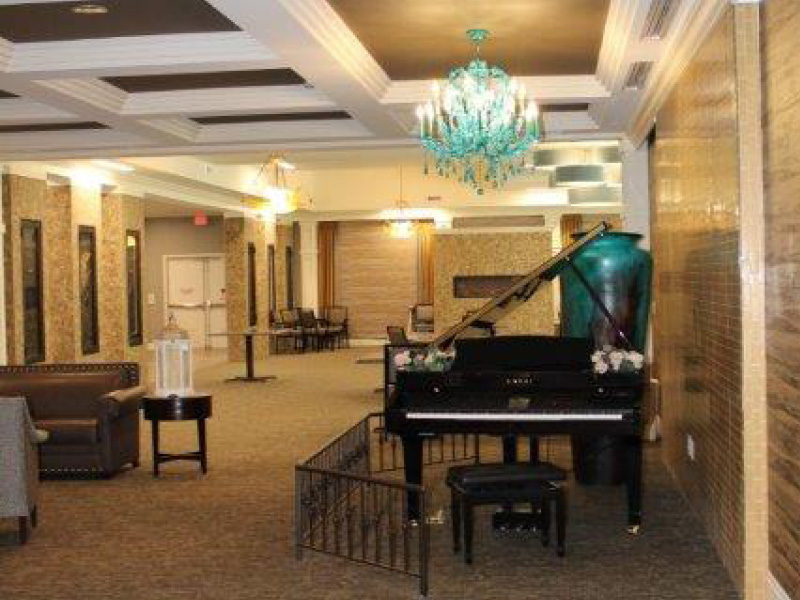
AVENUE AT MACEDONIA

9730 VALLEY VIEW ROAD, MACEDONIA, OH 44056 (330) 748-8800
For profit - Corporation 98 Beds PROGRESSIVE QUALITY CARE Data: November 2025
Trust Grade
18/100
#613 of 913 in OH
Last Inspection: February 2025

Within standard 12-15 month inspection cycle. Federal law requires annual inspections.

Overview

The Avenue at Macedonia has a Trust Grade of F, indicating significant concerns about the quality of care provided. With a state ranking of #613 out of 913, they are in the bottom half of Ohio facilities, and they rank #29 out of 42 in Summit County, meaning there are better local options available. Unfortunately, the facility is worsening, with the number of issues increasing from 9 in 2024 to 12 in 2025. Staffing is a concern as well, with a turnover rate of 63%, which is higher than the Ohio average of 49%, and they have received $23,140 in fines, indicating repeated compliance problems. While the nursing home offers good quality measures with a 4/5 star rating, there have been serious incidents, such as a resident developing a hip fracture due to delayed care and another resident acquiring a severe pressure ulcer that was not addressed in a timely manner.

Trust Score
F
18/100
In Ohio
#613/913
Bottom 33%
Safety Record
High Risk
Review needed
Inspections
Getting Worse
9 → 12 violations
Staff Stability
⚠ Watch
63% turnover. Above average. Higher turnover means staff may not know residents' routines.
Penalties
⚠ Watch
$23,140 in fines. Higher than 95% of Ohio facilities. Major compliance failures.
Skilled Nurses
○ Average
Each resident gets 36 minutes of Registered Nurse (RN) attention daily — about average for Ohio. RNs are the most trained staff who monitor for health changes.
Violations
⚠ Watch
35 deficiencies on record. Higher than average. Multiple issues found across inspections.
★★☆☆☆
2.0
Overall Rating
★★☆☆☆
2.0
Staff Levels
★★★★☆
4.0
Care Quality
★★☆☆☆
2.0
Inspection Score
Stable
2024: 9 issues
2025: 12 issues

The Good

  • 4-Star Quality Measures · Strong clinical quality outcomes
  • Full Sprinkler Coverage · Fire safety systems throughout facility
  • No fines on record

Facility shows strength in quality measures, fire safety.

The Bad

2-Star Overall Rating

Below Ohio average (3.2)

Below average - review inspection findings carefully

Staff Turnover: 63%

17pts above Ohio avg (46%)

Frequent staff changes - ask about care continuity

Federal Fines: $23,140

Below median ($33,413)

Minor penalties assessed

Chain: PROGRESSIVE QUALITY CARE

Part of a multi-facility chain

Ask about local staffing decisions and management

Staff turnover is elevated (63%)

15 points above Ohio average of 48%

The Ugly 35 deficiencies on record

2 actual harm
Feb 2025 11 deficiencies
CONCERN (D)

Potential for Harm - no one hurt, but risky conditions existed

Deficiency F0558 (Tag F0558)

Could have caused harm · This affected 1 resident

**NOTE- TERMS IN BRACKETS HAVE BEEN EDITED TO PROTECT CONFIDENTIALITY** Based on record review, observation, and interviews, the facility failed to ensure call lights were within reach for Residents #...

Read full inspector narrative →
**NOTE- TERMS IN BRACKETS HAVE BEEN EDITED TO PROTECT CONFIDENTIALITY** Based on record review, observation, and interviews, the facility failed to ensure call lights were within reach for Residents #6 and #8. This affected two residents (#6 and #8) of five observed for accommodation of needs. The facility census was 88. Findings include: 1. Review of the medical record for Resident #6 revealed an admission date of 11/29/24 with diagnoses including multiple sclerosis (disease that affects the central nervous system which causes numbness, weakness, difficulty walking, vision changes and other symptoms) and contractures. Review of the comprehensive Minimum Data Set (MDS) assessment dated [DATE] revealed Resident #6 had severe cognitive impairment. She was dependent on staff for oral care and hygiene. Review of the care plan dated 06/07/19 for Resident #6 revealed she had self-care performance deficit for activities of daily living related to limited mobility and contractures. Interventions revealed she was dependent on one staff for activities of daily living and the staff were to ensure the call light was within reach for her to utilize. Observation and interview on 02/24/25 at 9:33 A.M. revealed Resident #6's paddle push call light was out of Resident #6's reach; it was hanging on the bedrail. Resident #6 stated she was able to utilize the call light when it was positioned correctly by her head. Resident #6 stated she was unable to call for help as the staff had not placed the call light in the correct position at the side of her head. Interview on 02/24/25 at 9:19 A.M. with Licensed Practical Nurse (LPN) #556 verified Resident #6's call light was out of reach. LPN #556 stated Resident #6 was able to use the paddle push call light with her head when staff positioned it correctly. LPN #556 stated the staff forgot to place the call light in the correct position after they finished assisting her with breakfast. Additional observation on 02/26/25 at 8:12 A.M. revealed Resident #6 lying in bed with the pressure push pad call light out of her reach. Because of the positioning of the call light Resident #6 could not activate the call light. Interview on 02/26/25 at 8:14 A.M. with Dietician #600 verified Resident #6's call light was out of the resident's reach and because of the position of the call light, Resident #6 could not be activate by using her head. Review of the facility policy Resident Call System dated November 2016, revealed when leaving the room, staff were to ensure call light was placed within the resident's reach. 2. Review of Resident #8's medical record revealed she was admitted on [DATE] with diagnoses including hemiplegia (paralysis on one side of the body), contractures, seizures, dementia and depression. Review of Resident #8's care plan dated 11/05/19 revealed she had impaired musculoskeletal status related to contractures and right below the elbow amputation. Interventions included for staff to encourage Resident #8 to ask for assistance when needed. Resident #8 also was at risk for decline in activities of daily living related to hemiplegia, dementia, depression and contractures. Interventions included for Resident #8 to utilize a soft touch call light button. Review of the quarterly Minimum Data Set (MDS) assessment dated [DATE] revealed Resident #8 had moderate cognitive impairment. Resident #8 had impairment to both upper and lower extremities and was dependent on staff for all activities of daily living. Observation on 02/24/25 at 9:50 A.M. revealed Resident #8's soft touch call light button was out of reach for her to utilize as it was on the right side at the head of her bed. Observation and interview on 02/24/25 at 9:55 A.M. with Certified Nursing Assistant (CNA) #576 verified Resident #8's call light was on the right side at the head of the bed and not within Resident #8's reach. CNA #576 stated Resident #8 was able to activate the soft touch button by pressing on it with her right shoulder. Resident #8 could not use her left arm to activate the call light because of a contracture. CNA #576 confirmed the call light was not placed within Resident #8's reach after care was provided. An observation on 02/25/25 at 1:37 P.M. revealed Resident #8 was sitting in wheelchair and the call light was not within her reach; the call light was on the bed. An observation and interview on 02/25/25 at 1:39 P.M. with Registered Nurse #526 verified Resident #8's call light was out of reach. Review of the facility policy Resident Call System dated November 2016, revealed when leaving the room, staff were to ensure the call light was placed within the resident's reach.
CONCERN (D) 📢 Someone Reported This

A family member, employee, or ombudsman was alarmed enough to file a formal complaint

Potential for Harm - no one hurt, but risky conditions existed

Safe Environment (Tag F0584)

Could have caused harm · This affected 1 resident

Based on record review, observation and interview, the facility failed to maintain resident rooms in a clean and sanitary manner. This affected one (Resident #41) of two residents reviewed for enteral...

Read full inspector narrative →
Based on record review, observation and interview, the facility failed to maintain resident rooms in a clean and sanitary manner. This affected one (Resident #41) of two residents reviewed for enteral feedings. The facility census was 88. Findings include: Review of the medical record for Resident #41 revealed an admission date of 12/19/23 with diagnoses including hemiplegia (paralysis on one side of the body) and gastrostomy. Observation of Resident #41's room on 02/25/25 at 8:23 A.M. revealed there was yellowed dried enteral feeding on the floor and on the feeding tube pole. Observation on 02/25/25 at 9:58 A.M. revealed yellow dried enteral feeding on the floor by Resident #41's bed and on the feeding tube pole. Observation of Resident #41's room on 02/25/24 at 1:25 P.M. revealed the trash can was empty with no trash bag liner currently in place and there was thick yellow dried enteral feeding on the bottom of the can. There was dried tube feeding also noted to Resident #41's tray table, the bottom of the tray table, on the floor under the tube feeding pole and on the tube feeding pole. Observation of Resident #41's room on 02/26/25 at 3:11 P.M. with Certified Nursing Assistant (CNA) # 567 verified the trash can had dried enteral feeding on the bottom, the trash can did not have a liner, the floor had dried enteral feeding under the feeding tube pole, and there was dried enteral feeding on the feeding tube pole, on Resident #41's tray table and below the tray table. Interview with CNA #567, at the time of the observation, revealed resident rooms were to be cleaned daily. This deficiency represents non-compliance investigated under Complaint Number OH00161919.
CONCERN (D)

Potential for Harm - no one hurt, but risky conditions existed

Assessment Accuracy (Tag F0641)

Could have caused harm · This affected 1 resident

**NOTE- TERMS IN BRACKETS HAVE BEEN EDITED TO PROTECT CONFIDENTIALITY** Based on interviews and record review, the facility failed to ensure resident assessments were completed as required and/or accu...

Read full inspector narrative →
**NOTE- TERMS IN BRACKETS HAVE BEEN EDITED TO PROTECT CONFIDENTIALITY** Based on interviews and record review, the facility failed to ensure resident assessments were completed as required and/or accurate. This affected two (Resident #79 and Resident #197) of 27 residents reviewed for Minimum Data Set (MDS) 3.0 assessments. The facility census was 88. Findings include: 1. Review of the medical record for Resident #79 revealed an admission date 07/08/23 with diagnoses including Alzheimer's disease, anxiety and hypertension. Resident #79 was discharged to the hospital on [DATE] and did not return to the facility. Review of Resident #79's MDS assessments revealed she had a quarterly assessment on 10/01/24. There were no assessments completed after that date. Interview on 02/25/25 at 10:37 A.M. with Registered Nurse (RN) #526 verified she had not completed a discharge return not anticipated MDS assessment for Resident #79 after she was discharged and did not return to the facility. 2. Review of the medical record for Resident #197 revealed an admission date of 07/15/24 with diagnoses including diabetes mellitus, hypertension and dementia. Review of the nursing progress note dated 10/30/24 timed 7:00 P.M. for Resident #197 revealed nursing had observed a dark red area on the left heel side of her heel. Review of the wound physician documentation dated 11/01/24 revealed Resident #197 was seen for an initial consultation for suspected deep tissue pressure ulcer that was acquired in-house. Review of the wound physician documentation dated 01/03/25 revealed continued assessment of Resident #197 left heel, which was now a stage two pressure ulcer. Review of the quarterly MDS assessment dated [DATE] revealed Resident #197 had a pressure ulcer stage two that was present on admission. Interview on 02/26/25 at 8:15 A.M. with Regional Director of Clinical Services #599 verified Resident #197's MDS assessment dated [DATE] was inaccurate under section M as she had a stage two pressure ulcer that was acquired in-house.
CONCERN (D) 📢 Someone Reported This

A family member, employee, or ombudsman was alarmed enough to file a formal complaint

Potential for Harm - no one hurt, but risky conditions existed

ADL Care (Tag F0677)

Could have caused harm · This affected 1 resident

**NOTE- TERMS IN BRACKETS HAVE BEEN EDITED TO PROTECT CONFIDENTIALITY** 3. Review of Resident #56's medical record revealed Resident #56 was admitted on [DATE]. Diagnoses included schizoaffective diso...

Read full inspector narrative →
**NOTE- TERMS IN BRACKETS HAVE BEEN EDITED TO PROTECT CONFIDENTIALITY** 3. Review of Resident #56's medical record revealed Resident #56 was admitted on [DATE]. Diagnoses included schizoaffective disorder, paranoid schizophrenia, unspecified dementia, muscle weakness, and functional quadriplegia. Review of the comprehensive Minimum Data Set (MDS) assessment, dated 01/15/25, revealed Resident #56 had impaired cognition and required set-up and clean-up for eating and was dependent with mobility. Resident #56 was receiving a pureed diet to help reduce risk of aspiration. Review of the facility Dietary Nutritional assessment dated [DATE] revealed Resident #56 required supervision for feeding, her appetite could vary at times, and supervision was required at meals following tray set-up. Review of the plan of care dated 02/02/25 revealed Resident #56 was at risk for decline in activities of daily living due to schizoaffective disorder, dementia, and quadriplegia. Interventions included one person assist for eating. Observations on 02/24/25 at 10:24 A.M. revealed Resident #56 was sleeping in a Broda chair located in the hallway in front of the entrance to her room. Resident #56's breakfast tray was on the bedside table and the warming lid was removed. The breakfast plate looked to be untouched. No staff or residents were observed in the hallway. The food looked coagulated. Resident #56 woke up and quickly ate the food without assistance or supervision. Interview on 02/24/25 at 10:26 A.M. with Certified Nurse Assistant (CNA) #534 revealed Resident #56 was placed in the hall so staff could monitor her because she was at risk for falls. Interview on 02/24/25 at 10:34 A.M. with Registered Nurse (RN) #579 revealed Resident #56 was placed in the hallway so staff could watch her. RN #579 stated the breakfast trays were delivered around 8:00 A.M. and there should be someone supervising Resident #56 while eating. Interview on 02/26/25 at 8:54 A.M. with Dietitian #500 revealed staff were usually with Resident #56 when she was eating. Dietitian #500 stated Resident #56 was on a mechanical soft diet due to concerns with swallowing and required supervision when eating. Interview on 02/26/25 at 9:30 A.M. with Regional Director of Clinical Operations (RDCO) #599 revealed staff were to provide supervision with meals as defined in the activity of daily living flow chart in the Resident Assessment Instrument (RAI) manual. Review of the RAI coding in the manual revealed supervision was defined as providing oversight, encouragement, or cueing. This deficiency represents non-compliance investigated under Complaint Numbers OH00161919 and OH00161679. Based on record review, observation, and interviews, the facility failed to ensure residents who were unable to carry out activities of daily living (ADLs) received the necessary services for incontinence care, oral hygiene, and feeding assistance. This affected three (Residents #6, #56 and #59) out of four residents reviewed for ADL assistance. The facility census was 88. Findings include: 1. Review of the medical record for Resident #6 revealed an admission date of 11/29/24 with diagnoses including multiple sclerosis (disease that affects the central nervous system which causes numbness, weakness, difficulty walking, vision changes and other symptoms) and contractures. Review of the comprehensive Minimum Data Set (MDS) assessment dated [DATE] revealed Resident #6 had severe cognitive impairment and was dependent on staff for oral care and hygiene. Review of Resident #6's care plan dated 12/01/24 revealed she had self-care performance deficit for activities of daily living related to limited mobility and contractures. Interventions revealed she was dependent on one staff for personal hygiene and oral care. Observation on 02/24/25 at 9:33 A.M. revealed a large amount food debris covering Resident #6's upper teeth. Resident #6 denied any recent mouth care by staff. Resident #6's call light light was not within reach for her to be able to call for care needs. Observation on 02/25/25 at 9:19 A.M. revealed a large amount of food debris remained on Resident #6's upper teeth. Observation and interview on 02/25/25 at 9:25 A.M. with Licensed Practical Nurse (LPN) #556 verified Resident #6 had not received mouth care and Resident #6 had a large amount of food debris on her teeth. Interview with Resident #6, at the time of the observation and interview with LPN #556, confirmed she had not received oral care from staff and was unsure of the last time oral care had been completed. Review of the facility policy Activities of Daily Living (ADLs), dated March 2023, revealed the facility staff would provide care and services for hygiene including grooming and oral care. 2. Review of medical record for Resident #59 revealed an admission date of 12/14/24 with diagnoses including cerebral infarction (stroke), epilepsy (seizures) and major depressive disorder. Review of Resident #59's care plan dated 09/21/24 revealed he had self-care performance deficit for activities of daily living (ADLs) related to epilepsy, diabetes, and heart disease. Interventions included one staff member to assist Resident #59 with toileting. Review of the quarterly Minimum Data Set (MDS) assessment dated [DATE] revealed Resident #59 was occasionally incontinent of urine and needed substantial to maximal assistance with toileting hygiene. Observation on 02/24/25 at 9:21 A.M. revealed Resident #59 was lying in bed with visibly wet sheets with yellow stains. There was a strong odor of urine in the room and on the resident. Observation on 02/24/25 at 11:21 A.M. revealed Resident #59 was still lying in bed and bed sheets were still saturated with urine. There was a strong odor still present when opening Resident #59's door. Interview with Licensed Practice Nurse (LPN) #562 on 02/24/25 at 11:23 A.M. revealed Resident #59 had not previously refused any care from staff. LPN #562 stated there were only two certified nursing assistants (CNAs) assigned to the floor which had high volume of maximum assistance/dependent care residents. LPN #562 stated both aides were giving showers to other residents which required two assistants. Interview and observation with LPN #574 on 02/24/25 at 11:28 A.M. revealed Resident #59 was still saturated with urine. LPN #574 stated the expectation was that staff were to check on residents every two hours or more often if needed to ensure care was provided as needed. LPN # 574 verified the strong odor of urine in Resident #59's room and on the resident. LPN #574 also confirmed the soiled bedding with wet urine stains on it and Resident #59's damp clothing. LPN #574 asked the resident when he was changed last and he stated it had been a long time. Resident #59 agreed to allow LPN #574 to assist him with incontinence care. Review of the facility policy Activities of Daily Living (ADLs), dated March 2023, revealed the facility staff would provide care and services for hygiene including grooming and oral care.
CONCERN (D)

Potential for Harm - no one hurt, but risky conditions existed

Quality of Care (Tag F0684)

Could have caused harm · This affected 1 resident

Based on record review, observation, and interviews the facility failed to ensure Vancomycin (antibiotic) levels were monitored. This had the potential to affect one (Resident #195) of one resident re...

Read full inspector narrative →
Based on record review, observation, and interviews the facility failed to ensure Vancomycin (antibiotic) levels were monitored. This had the potential to affect one (Resident #195) of one resident reviewed for Vancomycin administration. The facility census was 88. Findings include: Review of medical record for Resident #195 revealed an admission date of 02/19/25 with diagnoses including bacteremia and streptococcal polyarthritis (inflammatory joint condition). Review of the physician's orders for Resident #195 for February 2024 revealed an order for Vancomycin intravenous solution 500 milligrams (mg), use 1.75 grams intravenously every 12 hours at 8:00 A.M. and 8:00 P.M. for 22 days dated 02/20/25. There were no laboratory orders to monitor for Vancomycin levels to ensure appropriate levels and efficacy. Observation and interview on 02/25/25 at 12:00 P.M. revealed Licensed Practical Nurse (LPN) #556 administering Vancomycin to Resident #195. After administration, LPN #556 was unable to state how the facility was monitoring the Vancomycin serum levels. Interview on 02/26/25 at 11:10 A.M. with Regional Director of Nursing (DON) #599 verified there were no orders for Vancomycin serum monitoring. DON #599 stated the nurse practitioner had ordered laboratory testing for Resident #195, however, when she had entered the orders in the computer, she failed to order a Vancomycin serum level. Review of the facility policy titled, Medication Administration-General Guidelines, dated August 2014, revealed there were no directives related to Vancomycin serum levels.
CONCERN (D)

Potential for Harm - no one hurt, but risky conditions existed

Deficiency F0685 (Tag F0685)

Could have caused harm · This affected 1 resident

**NOTE- TERMS IN BRACKETS HAVE BEEN EDITED TO PROTECT CONFIDENTIALITY** Based on record review and interview, the facility failed to ensure residents received recommended ancillary services. This affe...

Read full inspector narrative →
**NOTE- TERMS IN BRACKETS HAVE BEEN EDITED TO PROTECT CONFIDENTIALITY** Based on record review and interview, the facility failed to ensure residents received recommended ancillary services. This affected one resident (Resident #47) of three reviewed for vision and hearing. The census was 88 residents. Findings include: Review of the medical record for Resident #47 revealed an admission date of 05/30/22. Diagnoses included kidney disease, diabetes, heart failure, and depression. Review of the quarterly Minimum Data Set (MDS) assessment dated [DATE] revealed Resident #47 was cognitively intact. Resident #47 required set up help for eating and oral hygiene, partial to moderate assistance for showering and personal hygiene and was dependent for toileting. Resident #47's vision was adequate and she did not have corrective lenses. Interview on 02/24/25 at 9:43 A.M. with Resident #47 revealed she had a cataract and the facility had not assisted her in setting up an appointment for surgery. Review of the optometrist note dated 03/13/24 revealed Resident #47 had cataracts which were visually significant. A recommendation was made for Resident #47 to have a cataract evaluation. Review of the progress note dated 05/09/24 revealed Resident #47 left the facility for cataract surgery and returned later that day. The surgery was not performed. Review of the optometrist note dated 09/30/24 revealed Resident #47 was not seen due to time constraints. Review of the optometrist notes dated 10/21/24 and 11/18/24 revealed Resident #47 refused to be seen. Review of the optometrist note dated 01/24/25 revealed Resident #47 was not brought down to be seen by the optometrist while he was at the facility, they were unable to locate Resident #47 despite several attempts and facility staff did not assist in locating Resident #47. Interview on 02/27/25 at 9:47 A.M. with the Director of Nursing (DON) confirmed there was no other evidence the facility had made any efforts to assist Resident #47 with scheduling her cataract surgery. Review of the Ohio Revised Code Section 3721.13, Residents'' Rights dated 10/03/23 as provided by the facility revealed residents had the right to adequate and appropriate medical care and services, including ancillary services.
CONCERN (D) 📢 Someone Reported This

A family member, employee, or ombudsman was alarmed enough to file a formal complaint

Potential for Harm - no one hurt, but risky conditions existed

Accident Prevention (Tag F0689)

Could have caused harm · This affected 1 resident

**NOTE- TERMS IN BRACKETS HAVE BEEN EDITED TO PROTECT CONFIDENTIALITY** Based on record review, interview, and observation the facility failed to ensure safety measures were in place to prevent a fall...

Read full inspector narrative →
**NOTE- TERMS IN BRACKETS HAVE BEEN EDITED TO PROTECT CONFIDENTIALITY** Based on record review, interview, and observation the facility failed to ensure safety measures were in place to prevent a fall. This affected one resident (#107) of three residents (#5, #31 and #197) reviewed for falls. The census was 88. Findings include: Review of the medical record for Resident #197 revealed an admission date of 07/15/24. Diagnoses included Alzheimer's disease, diabetes, essential hypertension and dementia with other behavioral disturbance. Review of the quarterly Minimum Data Set (MDS) assessment dated [DATE] revealed Resident #197 was cognitively impaired and was dependent for transfers. Review of Resident #197's care plan dated 07/26/23 and last revised on 01/13/25 revealed a goal to minimize risks for falls and to minimize injuries related to falls. Interventions included implementing preventative fall interventions/devices and to rearrange furniture. Review of the fall investigation dated 01/05/25 timed 6:27 P.M. revealed Resident #197 was observed with head, shoulders and torso between the wall and the bed on the resident's left side. The resident's legs and pelvis were still on the bed. The bed had been placed against the wall due to prior falls from the same side of the bed with a floor mat on the right side of the bed. Immediate actions included the Certified Nursing Assistants (CNAs) pulling the bed further out from the wall in order to assess Resident #197 and then assisting her to a wheelchair. There were no injuries noted and the CNAs assisted her back into bed. The report indicated Resident #197's bed was against the wall on the left side with all wheels locked and the bed in the lowest position with a floor mat on the opposite side of the bed. The family was present during the assessments. Observation of an undated photograph revealed Resident #197 lying on the floor on her left side between a bed and a wall. Resident #197's buttock and right hand and arm were resting against the wall located to her right, her head was towards the foot of the bed and her legs were towards the head of the bed, a bed was to her left. Interview and observation on 02/26/25 at 6:50 P.M. with CNA #576 revealed a resident would not be able to get between a bed and the wall if the bed was locked and the locks were functional. CNA #576 demonstrated how the bed would not move when pulled and pushed when in a locked position. Interview on 02/27/25 at 10:03 A.M. with the Administrator, Regional Director of Clinical Operations (RDCP) #599 and Licensed Practical Nursing (LPN) #504 revealed they were aware of Resident #197's fall on 01/05/25 and stated the family had shared a photograph of the resident on the floor between the bed and wall. The Administrator and RDCP #599 verified the bed should not have been able to move from the wall if it was in the locked position and functional. This deficiency represents non-compliance investigated under Complaint Number OH00161919.
CONCERN (D)

Potential for Harm - no one hurt, but risky conditions existed

Tube Feeding (Tag F0693)

Could have caused harm · This affected 1 resident

**NOTE- TERMS IN BRACKETS HAVE BEEN EDITED TO PROTECT CONFIDENTIALITY** Based on record review, observation, and interview the facility failed to ensure Resident #15's enteral feeding was delivered pe...

Read full inspector narrative →
**NOTE- TERMS IN BRACKETS HAVE BEEN EDITED TO PROTECT CONFIDENTIALITY** Based on record review, observation, and interview the facility failed to ensure Resident #15's enteral feeding was delivered per the physician's orders. This affected one (Resident #15) of one resident reviewed for enteral feedings. The facility census was 88. Findings include: Review of the medical record for Resident #15 revealed an admission date of 12/13/22 with diagnoses including cerebral palsy (condition that affects movement and posture) and gastrostomy status. Review of the comprehensive Minimum Data Set (MDS) assessment dated [DATE] revealed Resident #15 was dependent on staff for eating and received 51 percent (%) of his total calories through tube feeding. Review of the physician's orders for Resident #15 revealed an order for enteral feeding at 70 milliliters (mL) per hour, up at 11:00 P.M. and down at 11:00 A.M. dated 02/20/25. Review of the Medication Administration Record (MAR) for February 2025 for Resident #15 revealed the nurse had documented on 02/25/25 for the 6:00 A.M. to 6:00 P.M. shift the enteral feeding was taken down at 11:00 A.M. Observation on 02/25/25 at 11:01 A.M. of Resident #15 revealed he had his enteral feeding running at 70 mL per hour. There was one inch of tube feeding left in the feeding tube bag. Observation on 02/25/25 at 1:01 P.M. revealed the enteral feeding was still on and set to 70 mL an hour and the delivery pump was beeping to alert the nurse. Observation on 02/25/25 at 1:33 P.M. revealed Resident #15's enteral feeding was on and set to 70 mL. The delivery pump was still beeping to alert the nurse and there was no feeding left in the bag. Interview on 02/25/25 at 1:33 P.M. with Licensed Practical Nurse (LPN) #504 verified Resident #15's enteral feeding was to be administered from 11:00 P.M. to 11:00 A.M. daily. She stated it should have been turned off at 11:00 A.M. Review of the facility policy titled, Enteral Feeding, undated, revealed enteral feeding orders were determined by the physician which included the hours of feeding and total volume.
CONCERN (E)

Potential for Harm - no one hurt, but risky conditions existed

Infection Control (Tag F0880)

Could have caused harm · This affected multiple residents

**NOTE- TERMS IN BRACKETS HAVE BEEN EDITED TO PROTECT CONFIDENTIALITY** 2. Review of the medical record for Resident #5 revealed an admission date of 08/21/24 with diagnoses including diabetes mellitu...

Read full inspector narrative →
**NOTE- TERMS IN BRACKETS HAVE BEEN EDITED TO PROTECT CONFIDENTIALITY** 2. Review of the medical record for Resident #5 revealed an admission date of 08/21/24 with diagnoses including diabetes mellitus, hypertension and urinary tract infection. Review of the physician's orders for Resident #5 revealed an order for isolation precautions due to diagnosis of extended-spectrum beta-lactamases (ESBL) (bacteria enzyme that makes some antibiotics ineffective in treating certain bacterial infections, also known as a multidrug-resistant organism) dated 02/19/25 without a stop date. Observation and interview on 02/26/25 at 9:06 A.M. revealed Registered Nurse (RN) #579 was at Resident #5's room with a medication cart. RN #579 then pushed the medication cart inside Resident #5's room and began assisting Resident #5 with repositioning with the assistance of an aide. There was no isolation signage at the door nor personal protective equipment (PPE) available for staff to utilize directly outside of the room. When RN #579 had completed assisting Resident #5, she went back to the medication cart and the aide left the room. RN #579 stated Resident #5 did not have isolation orders and she had recently completed an antibiotic. RN #579 verified she did not have PPE on nor did the aide that assisted with Resident #5's care. Interview on 02/26/25 at 9:55 A.M. with Licensed Practical Nurse (LPN) #504 verified Resident #5 had an order for contact isolation due to ESBL in her urine, however, the order should have been discontinued on 02/23/25. LPN #504 stated Resident #5 should have been on enhanced barrier precautions (EBP) as she was susceptible to a multidrug-resistant organism. She also verified RN #579 should not have taken the medication cart into a resident room. Review of the facility policy titled, Enhanced Barrier Precautions, dated August 2022, revealed that EBP was indicated for residents infected or colonized with organisms including ESBL. 3. Review of the medical record for Resident #195 revealed an admission date of 02/19/25 with diagnoses including bacteremia and streptococcal polyarthritis (inflammatory joint condition). Review of the physician's orders for February 2025 for Resident #195 revealed she did not have an order for isolation. Resident #195 was noted to have an orders for treatment to her right knee for a surgical wound and peripherally inserted central line care. Review of the care plan dated 02/20/25 for Resident #195 revealed she required Enhanced Barrier Precautions (EBP) to reduce transmission of multidrug-resistant organisms related to an indwelling device and wound. Interventions included to reinforce education to maintain compliance with isolation precautions and to use disposable gowns and gloves during high-contact care. Observation and interview on 02/26/25 at 12:29 P.M. with Licensed Practical Nurse (LPN) #504 and Regional Director of Clinical Services #599 revealed Resident #195's room did not have signage stating she was on EBP, an isolation cart or personal protective equipment (PPE) available for staff outside of her door. LPN #504 verified Resident #195 was on EBP and should have had a sign alerting staff as well as PPE available outside of the door. Review of the facility policy titled, Enhanced Barrier Precautions, dated August 2022, revealed that EBP was indicated for residents with wounds and/or indwelling medical devices. Based on observation, record review, interview, and facility policy review, the facility failed to implement and follow transmissions based precautions (TBP) and enhanced barrier precautions (EBP) as required. This affected three residents (Residents #5, #73 and #195) of five reviewed for TBP. The facility identified four residents (Residents #52, #60, #64 and #72) on droplet TBP and 14 residents (Residents #2, #3, #5, #6, #12, #14, #30, #39, #41, #46, #56, #69, #80 and #89) on EBP. The facility census was 88. Findings include: 1. Review of the medical record for Resident #73 revealed an admission date of 06/13/23. Diagnoses included diabetes, hypertension, depression, dementia and kidney disease. Review the quarterly Minimum Data Set (MDS) assessment dated [DATE] revealed Resident #73 was severely cognitively impaired. Resident #73 required setting up for eating, partial to moderate assistance for oral hygiene and substantial or maximum assistance for toileting and showering. Review of the progress note dated 02/21/25 revealed Resident #73 tested positive for COVID. Observation on 02/26/25 at 9:34 A.M. of Resident #73's room revealed she was on droplet precautions. Certified Nurse Aid (CNA) #506 was delivering breakfast to Resident #73. CNA #506 entered Resident #73's room wearing a gown and an N95 face mask. Interview on 02/26/25 at 9: 41 A.M. with CNA #506 upon exiting Resident #73's room confirmed he was not wearing gloves, shoe coverings or eye protection when he entered Resident #73's room. Review of the facility policy Isolation - Categories of Transmission Based Precautions dated September 2022 revealed when entering the room of a resident on droplet precautions, masks, gown, gloves and goggles should be worn.
CONCERN (E)

Potential for Harm - no one hurt, but risky conditions existed

Deficiency F0887 (Tag F0887)

Could have caused harm · This affected multiple residents

Based on record review and interview the facility failed to maintain documentation the COVID-19 vaccine was offered to residents and residents were provided education regarding the benefits and risks ...

Read full inspector narrative →
Based on record review and interview the facility failed to maintain documentation the COVID-19 vaccine was offered to residents and residents were provided education regarding the benefits and risks associated with the COVID-19 vaccine annually. This affected four Residents (Residents #1, #31 #42 and #76) of five reviewed for immunizations. The census was 88. Findings include: Review of the medical record for Resident #1 revealed an admission date of 12/11/21. There was no evidence Resident #1 had been offered or educated regarding the COVID-19 vaccination within the past year. Review of the medical record for Resident #31 revealed an admission date of 09/04/19. There was no evidence Resident #31 had been offered or educated regarding the COVID-19 vaccination within the past year. Review of the medical record for Resident #42 revealed an admission date of 07/30/20. There was no evidence Resident #42 had been offered or educated regarding the COVID-19 vaccination within the past year. Review of the medical record for Resident #76 revealed an admission date of 04/14/23. There was no evidence Resident #1 had been offered or educated regarding the COVID-19 vaccination within the past year. Interview on 02/26/25 09:58 A.M. with Licensed Practical Nurse (LPN) #504 who was the Infection Control Preventionist, revealed she could provide no evidence Residents #1, #31 #42 or #76 had been offered or declined the COVID-19 vaccination. Review of the facility policy titled COVID-19 Vaccination dated 01/02/24 revealed all residents would be offered the COVID-19 vaccination. If the resident was unable to make decisions due to decreased mental capacity, the resident's designated representative would be provided with a fact sheet regarding the vaccine and given the option to administer on the resident's behalf.
MINOR (C)

Minor Issue - procedural, no safety impact

Deficiency F0680 (Tag F0680)

Minor procedural issue · This affected most or all residents

Based on review of personnel files and staff interview the facility failed to ensure the activities program was directed by a qualified professional. This had the potential to affect all 88 residents....

Read full inspector narrative →
Based on review of personnel files and staff interview the facility failed to ensure the activities program was directed by a qualified professional. This had the potential to affect all 88 residents. Findings include: Review of the personnel file for Activity Director (AD) #514 revealed no evidence to support AD #514 had the appropriate qualifications for holding the position of activity director. AD #514's hire date was 10/28/24. Interview and record review on 02/27/25 at 11:30 A.M. with Human Resource Director (HR) #554 revealed HR #554 was unaware of the qualifications AD #514 held for directing the activity program. A subsequent interview on 02/27/25 at 11:43 A.M. revealed AD #514 was in the process of completing a training course approved by the state. HR #554 stated the former AD, now the current Admissions Director (Admissions Director #545) still worked at the facility and trained AD #514. Review of admission Director #514's personnel file revealed admission Director #545 did not meet the qualifications to direct the activities program and had not completed a training course approved by the state. Review of the job description titled Progressive Quality Care Activity Director revealed a header for Qualifications with no additional information after it. AD #514 signed the job description on 10/24/24.
Jan 2025 1 deficiency
CONCERN (D) 📢 Someone Reported This

A family member, employee, or ombudsman was alarmed enough to file a formal complaint

Potential for Harm - no one hurt, but risky conditions existed

Free from Abuse/Neglect (Tag F0600)

Could have caused harm · This affected 1 resident

**NOTE- TERMS IN BRACKETS HAVE BEEN EDITED TO PROTECT CONFIDENTIALITY** Based on record review, review of a facility self-reported incident and investigation, personnel file review, facility policy re...

Read full inspector narrative →
**NOTE- TERMS IN BRACKETS HAVE BEEN EDITED TO PROTECT CONFIDENTIALITY** Based on record review, review of a facility self-reported incident and investigation, personnel file review, facility policy review, Centers for Medicare and Medicaid guidance and interview, the facility failed to ensure an employee (Laundry Aide #201) did not engage in an inappropriate relationship with Resident #91 which had the potential to be considered an abuse of power and resulted in an allegation of staff to resident sexual abuse reported by the resident. This affected one resident (#91) of three residents reviewed for abuse. The facility census was 92. Findings include: Review of the medical record for Resident #91 revealed an admission date of 04/05/22 with diagnoses including emphysema, diabetes, alcohol abuse, depression, hypertension and history of right arm fracture. Review of the Minimum Data Set (MDS) assessment dated [DATE] revealed Resident #91 was cognitively intact. The assessment revealed the resident had hallucinations, delusions or behaviors and was independent in all activities of daily living (ADL). Review of a nursing progress note dated 11/10/24 at 5:04 P.M. revealed Resident #91 was not in his room when dinner trays were delivered. A handwritten note was observed stating Resident #91 was on leave of absence (LOA) and would return after 7:00 P.M. Review of a nursing progress note dated 11/11/24 revealed Resident #91 returned from LOA in the Administrator's vehicle at 9:45 A.M. Resident #91 had a notable odor of alcohol but denied drinking. The resident was assessed and presented with a facial edema (swelling) but refused any further assessment. Nurse Practitioner (NP) #212 was notified and ordered the resident to be sent to the emergency department (ED) for further evaluation. When emergency medical transportation arrived, Resident #91 refused to go to the hospital. NP #212 ordered blood work and a urine toxicology screen. Resident #91 refused to provide a urine sample. The complete blood count (CBC) with differential (diff) and basic metabolic panel (BMP) was obtained and did not show anything remarkable. Review of a progress note dated 11/12/24 written by Physician's Assistant (PA) #214 revealed Resident #91 went on LOA on 11/10/24 and returned on 11/11/24 at 9:45 A.M. Resident #91 reported he took an Uber to visit a friend in the hospital, but the driver took him to the wrong hospital. When asked if he had any alcohol or returned to the facility in an intoxicated state, he said he did not believe he did. Review of an assessment titled Evaluation for Resident Sexual/Intimate Relationship dated 11/12/24 revealed that Resident #91 was aware of who was initiating sexual contact and had the ability to say no to uninvited sexual contact. A facility investigation revealed on 01/10/25 at approximately 5:30 P.M. Resident #91 told Receptionist #213 he was taken out of the facility and to a motel by Laundry Aide #201. He stated they did sexual things. Interview on 01/15/25 at 9:26 A.M. with the Administrator revealed she received a call the evening of 11/10/24 stating Resident #91 left a note at his bedside stating he was going to visit another resident in the hospital. The Administrator attempted calling Resident #91 on his cell phone multiple times with no answer. Resident #91 returned a text to the Administrator and told her he was okay and was on LOA. The next morning, the Administrator received a call from the Director of Nursing (DON) stating Resident #91 had not returned. The Administrator reached out to Resident #91 who stated he was at a gas station in town, his Uber broke down, and he was stranded. The Administrator got in her own vehicle and headed to the area where Resident #91 claimed to be. While sitting in her car at a stop sign, she looked over and noticed Laundry Aide #201 in her own vehicle and she appeared to be looking for someone. The Administrator followed Laundry Aide #201 to a local motel. Laundry Aide #201 drove around the back of the motel, and the Administrator saw Resident #91 standing in the doorway of the motel room talking to Laundry Aide #201. The Administrator asked Resident #91 if he would like a ride back to the facility. Resident #91 got in the Administrator's car and apologized for worrying her and they returned to the facility. The Administrator revealed at the time of the incident she had text messages with Resident #91 who said he was ok. However, the Administrator verified she did not interview Laundry Aide #201 at that time. The Administrator revealed Laundry Aide #201 was employed at the facility until 01/10/25 when she was suspended. The Administrator revealed at the time of the incident on 11/11/24, she did not question Laundry Aide #201 about why she was with Resident #91 because Laundry Aide #201 was not working at the time, and the facility believed they had no right to question anyone about what they were doing off company time. She added the facility did not have a policy to address staff relationships with residents outside of work. Interview on 01/15/25 at 10:22 A.M. with Badge #D51 revealed there was an open police investigation involving Resident #91; however, the police report could not be released as the investigation was currently still open. Interview on 01/15/25 at 12:10 P.M. with Laundry Aide #201 revealed she admitted to taking Resident #91 out of the facility and to a motel in November 2024. She reported she got him a few drinks and stayed in the motel with him for a bit but did not stay overnight. She stated she returned the following morning to take him back to the facility, at which time the Administrator pulled into the motel behind her. During the interview, the employee admitted to having intimate moments with Resident #91 which involved consensual kissing. Interview on 01/15/25 at 12:50 P.M. with Resident #91 revealed he left the facility with Laundry Aide #201 on 11/10/24 at approximately 2:15 P.M. He reported both he and Laundry Aide #201 stayed in the motel for a while and drank alcohol, but Laundry Aide #201 did not stay overnight. He stated the Administrator picked him up at the motel on the morning of 11/11/24. Interview on 01/15/25 at 2:22 P.M. with Human Resources (HR) #211 revealed if an employee approached her about beginning a relationship with a resident, she would tell them they would need to talk to the Administrator but would advise against it. She believed it would be a conflict of interest, and did not think it would be allowed. If she found out it had happened, she stated she would notify the Administrator. She revealed if the employee was not on the clock, she felt the situation might be different if they were consenting adults, but stated she would still tell the Administrator. Review of the facility SRI tracking number 255983 created on 01/10/25 at 6:33 P.M. and completed on 01/16/25 at 5:39 P.M. by the Administrator revealed on 01/10/2025 at approximately 7:00 P.M. Receptionist #213 called the Administrator stating Resident #91 was alleging an employee (Laundry Aide #201) on a previous date, took him out of facility against his will, got him drunk against his will and took advantage of him. The Administrator suspended alleged Laundry Aide #201 and opened an investigation on this date. The local police were notified on the evening of 01/10/25 and their investigation was still pending. A head-to-the assessment completed on Resident #91 revealed no concerns. Resident #91 was his own responsible party, and the physician was notified of the allegation. The facility investigation and SRI revealed upon interviewing Resident #91 on 01/16/25, he stated Laundry Aide #201 did not force him out of the facility, she took his hand and he followed; she did not force him to drink, but made a bottle of vodka readily available in the backseat and he, at the time, did not have the ability to choose to say no. The resident stated Laundry Aide #201 did not force him into the hotel, but he took her hand and followed her into the room. Resident #91 stated Laundry Aide #201 did essentially rape him. The local police were notified a second time, due to the resident alleging he was raped by the employee on 01/16/25. Laundry Aide #201's statement was received, along with text messages and phone calls from the night in question and following the event. Resident #91 had a Brief Interview for Mental Status (BIMS) score of 15, indicating the resident was cognitively intact, with diagnoses of alcohol abuse and depressive disorder. Statements were collected from employees regarding conversations with Resident #91, and no concerns were noted upon return, including allegations of abuse. The facility did not substantiate the allegation of sexual abuse indicating communications were reviewed between Resident #91 and Laundry Aide #201 which revealed both were consenting adults. The police investigation was still pending as of this date. Interview on 01/16/25 at 1:43 P.M with Resident #91, when asked if he was raped (as alleged), he stated Rape? Isn't that when a man does it to another man? Is that what I said? No additional information was provided from the resident regarding the allegation or circumstances of 11/10/24-11/11/24. Review of the personnel file for Laundry Aide #201 revealed a hire date of 08/27/24. The file contained the appropriate background checks, abuse education, and abuse registration verifications. Laundry Aide #201 was an employee of the facility until a contracted laundry service took over services at the facility at which time she remained on as a contracted employee. The contracted company took over two days after the hotel incident, which occurred on 11/10/24 and 11/11/24. Review of the undated facility Abuse Prohibition policy revealed it did not address personal relationships between staff and residents. An ethical concern is created with the existence of a significant power dynamic between nursing home staff and residents, making any romantic relationship potentially exploitative. Lastly, nursing home residents may be particularly vulnerable to undue influence or manipulation, making a romantic relationship with staff problematic. The Centers for Medicare and Medicaid provide the following guidance regarding employee-resident relationships. Nursing home staff are entrusted with the responsibility to protect and care for the residents of that facility. Nursing home staff are expected to recognize that engaging in a sexual relationship with a resident, even an apparently willingly engaged and consensual relationship, is not consistent with the staff member's role as a caregiver and will be considered an abuse of power. This deficiency represents non-compliance investigated under Complaint Number OH00161549.
Nov 2024 2 deficiencies 1 Harm
SERIOUS (G) 📢 Someone Reported This

A family member, employee, or ombudsman was alarmed enough to file a formal complaint

Actual Harm - a resident was hurt due to facility failures

Quality of Care (Tag F0684)

A resident was harmed · This affected 1 resident

**NOTE- TERMS IN BRACKETS HAVE BEEN EDITED TO PROTECT CONFIDENTIALITY** Based on record review, facility policy review and interview, the facility failed to provide timely and necessary care/treatment...

Read full inspector narrative →
**NOTE- TERMS IN BRACKETS HAVE BEEN EDITED TO PROTECT CONFIDENTIALITY** Based on record review, facility policy review and interview, the facility failed to provide timely and necessary care/treatment for Resident #100 and Resident #102 following identified changes in condition. Actual Harm occurred beginning on 10/09/24 when Resident #100, who was severely cognitively impaired was noted by direct care staff (Certified Nursing Assistant 3249) to be favoring her right side, had bruising noted and wasn't right without evidence a licensed nurse assessed the resident or provided necessary intervention. On 10/11/24 licensed staff documented Resident #100 was sitting awkwardly in her chair and guarding her upper right side thigh area. Between 10/11/24 and 10/14/24 the resident exhibited signs of increased pain (facial grimacing and guarding of the leg) with an inability to obtain an x-ray of the area (due to positioning issues). On 10/14/24 (five days after the initial change was identified) the resident was transferred to the hospital and diagnosed with a right hip fracture which required surgery. The resident did not return to the facility after being transported to the hospital. Actual Harm occurred on 09/21/24 when Resident #102, who was severely cognitively impaired sustained a witnessed fall that resulted in a fracture. However, at the time of the incident the resident was not comprehensively assessed for injury or need for additional medical treatment nor was there documentation of the incident at the time it occurred. On 09/24/24 (three days after the fall occurred), Resident #102 was transported to the hospital with bilateral hip pain and diagnosed with a pelvic fracture. The resident did not return to the facility after being transported to the hospital. This affected two residents (#100 and #102) of three residents reviewed for change in condition. Findings include: 1. Review of the closed medical record for Resident #100 revealed an admission date of 07/08/23 with diagnoses including Alzheimer's disease, anxiety disorder, disorder of bone density and structure, osteoarthritis, subsequent encounter for closed fracture of left femur, hypercholesterolemia, hypertension, muscle weakness, dysphagia, and difficulty walking. Resident #100 was discharged to the hospital on [DATE]. Review of the fall assessment completed on 04/15/24 revealed Resident #100 was at risk for falls. Review of next fall assessment, still showing in progress, dated 09/24/24 revealed Resident #100 was not at risk for falls. Review of the care plan dated 07/18/24 revealed Resident #100 was at risk for falls. Interventions included two-person transfer assist for transfers, educate resident and family to call for assistance before transferring, maintain food/fluids/ and needed items within reach, implement preventative fall interventions/devices, maintain call light within reach and educate resident to use call light, and monitor for changes in mobility. Review of the care plan dated 07/18/24 revealed Resident #100 had potential for pain. Interventions included administer medications per physician orders and monitor for side effects and effectiveness, notify physician if current pain medication is ineffective, determine what the resident's optimal pain level is for day-to-day function and quality of life, encourage resident to request pain medication before the pain becomes too intense or prior to activities, monitor for any change sin usual activities, monitor for changes in behavior such as screaming, refusals, monitor for changes in mood that may be indicators of pain, monitor for changes in sleep, monitor for verbal and non-verbal signs and symptoms relating to pain: grimacing, guarding, moaning, crying, increased anxiety, and offer non-pharmacological interventions to relieve pain and monitor for effectiveness. Review of the quarterly Minimum Data Set (MDS) Assessment, dated 10/01/24, revealed Resident #100 had severely impaired cognition, utilized a wheelchair for mobility, and required substantial or maximum assistance for all activities of daily living (ADLs). Review of a progress note dated 10/11/24 at 4:44 P.M. revealed Resident #100 was sitting awkwardly in her chair and guarding her upper right side thigh area. Resident #100 was transferred to bed and Registered Nurse (RN) 334 noted two bruises approximately three inches in length on the dorsal aspect of the right thigh. Resident #100 was actively guarding and fighting against the assessment of the area. The note revealed there was no warmth, redness, or distinctive swelling identified. Resident #100 was unable to report if she was having pain. There was no knowledge of any falls. RN #334 notified Resident #100's nurse practitioner and new orders were received for x-rays of the right hip and thigh areas. RN #334 notified the unit manager and DON. Review of the pain assessment for October 2024 revealed Resident #100 had pain rated a three on a pain scale (scale of 1 the least pain to 10 the worse pain) on 10/11/24. Review of the progress note dated 10/11/24 at 5:48 P.M. revealed Resident #100's daughter was notified of the bruising and the orders for x-rays. Review of the undated photos (identified by family to be taken on 10/12/24) provided by Resident #100's family revealed four (4) photos of Resident #100. The first and second photo of Resident #100 showed her front right thigh with large bruising, left lower arm/hand with bruising, with CNA #207's body and badge visible in the photo. The third and fourth photo showed Resident #100's right posterior thigh area with large bruising. Review of Resident #100's progress note dated 10/12/24 at 7:06 P.M. revealed the x-ray technician was unable to obtain x-rays this shift and would attempt to obtain x-rays later this evening or the following morning. Review of the Medication Administration Records (MARS) and Treatment Administration Records (TARS) for October 2024 revealed Resident #100 received Tylenol on 10/13/24 at 2:00 P.M. for pain rated a level three. However, the medical record contained no information on where the resident's pain was, how the resident's pain was being monitored or treated further on this day. Review of Resident #100's progress note dated 10/13/24 at 07:35 A.M. revealed x-ray technician arrived to perform x-rays to right hip, pelvis, and femur. Resident #100 resisted positioning of x-rays. A call was placed to the resident's power of attorney (POA) per request for additional help with positioning. The resident's daughter did arrive and did attempt several times to assist with positioning. Resident #100 continued to resist assistance. A call placed to physician answering service and facility was awaiting call back. Review of Resident #100's progress note dated 10/13/24 at 09:17 A.M. revealed a call back was received from the on-call nurse practitioner with new orders for Flexeril (muscle relaxant) five milligrams (mg) one hour prior to x-rays being obtained on Monday 10/14/24 at 7:30 A.M. Resident #100's POA was notified. Review of Resident #100's progress note dated 10/13/24 at 11:05 A.M. revealed call placed to NP regarding signs and symptoms of pain observed during transferring and the facility was awaiting call back. Review of Resident #100's progress noted dated 10/13/24 at 12:02 P.M. revealed NP #345 returned call with new orders for Tylenol increased to 1000 milligrams (mg) every eight hours and as needed (PRN). Resident #100's POA was notified. Review of Resident #100's progress note dated 10/14/24 at 1:00 P.M., authored by the DON, identified a change of condition, but had no additional documentation completed to identify what the change in condition was or why the change in condition occurred. Review of a progress noted dated 10/14/24 at 2:00 P.M. revealed Resident #100 was transferred to hospital due to an inability to obtain an x-ray of resident's right hip. Resident #100's family was notified. The NP and DON were made aware of transfer. Review of the progress noted dated 10/14/24 at 9:00 P.M., authored by the DON, revealed Resident #100 transferred to a different hospital for trauma with right hip fracture. The resident's POA at bedside and notified at this time. Review of hospital orthopedic surgery operative note dated 10/15/24 revealed Resident #100 was seen in the emergency room and had presented as a patient who fell and injured their right hip which required surgery. X-rays were taken and revealed the resident sustained an intertrochanteric fracture with subtrochanteric extension of the right hip. Record review revealed the facility submitted a self-reported incident (SRI), tracking number 252914 to the State agency involving Resident #100. The SRI submitted by the DON revealed on 10/12/24 the receptionist notified the Administrator Resident #100's family was alleging the resident had an injury of unknown origin. Upon investigation, it was discovered a skin assessment was completed, and family and physician had been contacted on 10/11/24 with orders for an x-ray after a CNA reported the resident had a change in condition. Interview on 10/29/24 at 1:25 P.M. with Receptionist #260 revealed on Saturday, 10/12/24 Resident #100's daughter came to front desk, was upset, and showed pictures of bruises to Resident #100's inner thigh (couldn't remember which side). Receptionist #260 revealed she reported this immediately via telephone to the Administrator, the abuse coordinator. Receptionist #260 stated she saw the pictures on the phone and couldn't see how anyone else change/bathing the resident could not see the bruising. Interview on 10/30/24 at 9:15 A.M. with Resident #100's family revealed she was notified on 10/11/24 at 5:45 P.M. from someone at the facility that Resident #100 had slight bruising to right thigh and was favoring it. Resident #100's family reported she went to the facility on Saturday, 10/12/24 and found Resident #100 out in the lounge and asked CNA #207 to assist the resident to the bathroom and change her. Resident #100's family reported she saw large bruising on the resident's leg and took photos. Resident #100's family reported on 10/12/24 she showed the photos to Receptionist #260, who told her she was going to report this to the administrator. Interview on 10/31/24 at 2:24 P.M. with the DON revealed LPN #339 was terminated because she worked on 10/09/24 and it was reported to her by CNA #249 that Resident #100 was favoring her right side, bruising was noted, and something wasn't right with the resident. The DON reported LPN #339 failed to report the findings, there was no assessment or treatment of the resident, as the nurse did nothing. Interview on 11/04/24 at 8:24 A.M. via telephone with CNA #249 revealed on the morning of 10/09/24 while attempting to get Resident #100 up, she noticed she was holding onto her right leg like it was hurting when she attempted to straighten it, and the resident appeared to be in pain by making grimacing faces. CNA #249 revealed she notified LPN #339 Resident #100 was holding onto her right leg and grimacing, like she was in pain and LPN #339 stated okay. CNA #249 reported on 10/11/24 Resident #100 presented the same way, holding right leg in pain and grimacing. CNA #249 reported she notified LPN #318 of Resident #100's pain in her right leg and LPN #318 said okay. CNA #249 revealed on 10/11/24 in the morning while getting Resident #100 ready she was making noises like she was in pain, grimacing, and holding the right leg. CNA #249 stopped dressing her and immediately notified LPN #339 of the pain and stated something was wrong with the resident's right leg. LPN #339 informed CNA #249 Resident #100 was getting an x-ray. Interview on 11/04/24 at 12:31 P.M. via telephone with RN #334 revealed on 10/11/24 CNA #249 notified her Resident #100 was sitting in her chair funny and guarding her leg. RN #334 reported she assessed Resident #100 and found two bruises on the back lower thigh area of her right leg. RN #334 stated she notified the physician, unit manager, RN #258, the DON, and resident's family. RN #334 reported Resident #100 seemed in pain, and she was acting differently. RN #334 reported it was hard to tell due to her being non-verbal about what happened. RN #334 reported she didn't know how the resident got the bruising due to there being no reported falls. RN #334 revealed she was trying to figure out what happened. RN #334 confirmed she did not report to the Administrator, the abuse coordinator, because she didn't think to notify her and didn't know what was going on. Interview on 11/04/24 at 12:50 P.M. with CNA #206 revealed she was working on 10/11/24 and Resident #100 was not acting herself and noted her right leg was swollen. CNA #206 reported she notified RN #334 who assessed the resident and noted a bruise in her inner right thigh. CNA #206 reported Resident #100 was holding her right thigh, digging into it and didn't want anyone to touch it. Interview on 11/04/24 at 1:09 P.M. and on 11/05/24 at 9:38 A.M. with LPN #339 revealed on 10/09/24 CNA #249 notified her Resident #100 was guarding her right side and it was during change of shift, and LPN #339 had to go pick up her daughter. LPN #339 confirmed she did not do an assessment because it was during change of shift, and she had to go. LPN #339 reported on 10/09/24 she notified the oncoming nurse, LPN #270, Resident #100 needed assessed. LPN #339 reported on 10/11/24 the nurse, (she didn't remember who), during report notified her she needed to order an x-ray for Resident #100. LPN #339 denied any CNA notified her of Resident #100 having pain in her leg. LPN #339 reported she got in trouble, was suspended on Saturday, 10/12/24 and then fired by phone on either 10/14/24 or 10/15/24, but couldn't remember for sure. Interview on 11/04/24 at 2:17 P.M. with LPN #250 revealed she worked on 10/12/24 and Resident #100 was exhibiting signs of pain around her hip area by wincing and pushing away staff. LPN #250 reported she was told by LPN #339 Resident #100 was awaiting x-rays and denied being told the resident needed assessed. Interview on 11/05/24 at 11:20 A.M. with CNA #207 revealed he worked on Saturday 10/12/24 and Resident #100's family requested he take the resident to the bathroom and change her. CNA #207 revealed the resident had bruises on her thigh, could not remember which thigh and stated the family took photos. Interview on 11/05/24 at 12:02 P.M. with the Administrator and Regional Nurse (RN) #338 revealed LPN #339 was suspended on 10/25/24 once they discovered Resident #100's change in condition and when they received statement from CNA #249 that the CNA notified LPN #339 regarding the concerns with Resident #100. Information obtained via email on 11/08/24 at 11:43 from Nurse Practitioner (NP) #345 revealed the on-call NP was notified of Resident #100's pain making it hard to get x-ray images on 10/13/24. NP #345 reported Resident #100 was known to be resistant to care. NP #345 reported the resident was ordered Tylenol and Flexeril to be given prior to getting the x-ray. NP #345 reported being notified later that day of Resident #100's pain to right lower extremity with repositioning and transfer. NP #345 gave an order to increase Tylenol to 1000 milligrams and change to three times a day. NP #345 reported on 10/14/23 the facility was still unable to get an x-ray, the pain was persistent and Resident #100 was sent to emergency department for evaluation. Review of the employee file for LPN #339 revealed she had a discipline for corrective action form dated 10/17/24 for performance/policy violation for incident/accident policy and not reporting a change in condition and was terminated via phone. Review of the facility policy, Resident Change In Condition, dated July 28, 2022 revealed the facility ensured staff provide timely and appropriate care and services when resident experienced a change in condition that has or was likely to cause serious life-threatening harm or injuries and/or adverse negative health outcomes. The facility would promptly notify resident, his/her attending physician, and responsible party of changes in the resident's condition and/or status. The licensed nurse would take immediate action to ensure timely and appropriate care and services are met when a resident change in condition was identified. 2. Review of the closed medical record for Resident #102 revealed an admission date of 04/14/24 and a discharge date of 09/24/24 with diagnoses including but not limited to acute chronic respiratory failure with hypoxia, congestive heart failure, encephalopathy, ventricular tachycardia, and history of malignant neoplasm of breast. Review of the quarterly Minimum Data Set (MDS) Assessment, dated 07/21/24, revealed Resident #102 had severely impaired cognition, utilized a wheelchair for mobility, and required substantial or maximum assistance for all activities of daily living (ADLs). Review of the most recent completed fall assessment dated [DATE] revealed Resident #102 was at risk for falls. Review of the care plan dated 04/15/24 revealed the resident was at risk for falls. Interventions included educate resident/family to call for assistance before transferring, implement preventative fall interventions/devices, maintain call light/food/fluids within reach, educate resident to use call light, and monitor for changes in mobility, Review of Resident #102's care plan dated 04/15/24 revealed resident had potential for pain. Interventions included administer medications per physician order and monitor for side effects, determine what the resident's optimal pain level is for day-to-day function and quality of life, encourage resident to request pain medication before pain becomes too intense, monitor any change sin usual activities, monitor for changes in behavior that may be indicators of pain such as kicking, screaming, refusals, monitor for changes in mood, monitor for changes sleep pattern, monitor for verbal and non-verbal signs and symptoms relating to pain: grimacing, guarding, crying, moaning, and increased anxiety, offer non-pharmacological interventions to relieve pain, provide rest periods, therapy screen/eval as needed (PRN), and refer to ancillary services PRN. Review of Resident #102's medical record revealed no progress notes were documented for the resident on 09/21/24. Review of a progress note dated 09/24/24 at 4:18 P.M., authored by LPN #342, revealed Resident #102 had a change in condition. However, no additional information about the resident's condition was noted at that time. Review of a hospital transfer form revealed Resident #102 was transferred to the hospital on [DATE] at 4:17 P.M. for a change in condition after falling and having bilateral hip pain. However, review of the resident's medical record revealed no additional information about a fall or bilateral hip pain prior to this documentation or evidence the resident had been assessed and/or monitored for pain following a fall. Review of a progress note dated 09/25/24 at 08:00 A.M., (as a late entry note), authored by the Director of Nursing (DON), revealed the DON called the hospital to follow up on Resident #102 who was sent to hospital with right hip pain. The hospital reported Resident #102 was admitted with a pelvic fracture. The resident did not return to the facility. Interview on 10/24/24 at 3:10 P.M. with the DON revealed the facility completed staff training on 09/25/24 related to reporting accidents/incidents because Resident #102 had sustained a fall (on 09/21/24) that was witnessed by LPN #342 and CNA #209, but the nurse did not report the incident, failed to document the fall occurred and failed to fill out an incident report. The DON reported she only found out about it because CNA #274 came forward and told the DON that the fall happened. Interview on 10/29/24 at 11:58 A.M. with Administrator and Regional Nurse (RN) 338 revealed it was discovered on 09/24/24 Resident #102 had a fall on 09/21/24 that wasn't reported, the resident was not assessed (until 09/24/24) and there was not an incident report completed. RN #338 reported after being made aware of the incident, she came to the facility to help with the investigation. RN #338 verified Resident #102 had a fall on 09/21/24 and CNA #274 and CNA #341 notified LPN #342. RN #338 confirmed LPN #342 never did an assessment, didn't report the incident, and no notifications (to the physician or family) were completed. RN #338 reported the DON found out about the fall on 09/24/24 when CNA #274 notified her. RN #338 reported LPN #342 was suspended pending investigation and then was terminated as a result of the incident. RN #338 reported CNA #209 found Resident #102 on the floor in her room. CNA #341 assisted and notified LPN #342 of the fall. CNA #274 was walking by the room, went to assist the resident, and notified LPN #342 of the fall. RN #338 reported all staff were educated and a plan of correction was put in place. Interview on 11/07/24 at 1:08 P.M. with CNA #209 revealed she was walking by Resident #102's room on 09/21/24 after breakfast when she heard her call out for help. CNA #209 reported she could see in the room the resident was on the floor, and she asked CNA #341 to notify the nurse of the fall. CNA #209 reported she immediately went into the room and found Resident #102 on the floor. CNA #341 returned to the room after she notified LPN #342 of the fall. CNA #209 reported CNA #274 came in to see if they needed help and if the nurse needed notification. CNA #209 informed CNA #274 LPN #342 was notified by CNA #341. Interview on 11/07/24 at 1:13 P.M. with CNA #274 revealed she was walking by Resident #102's room and saw her on the floor on 09/21/24 in the morning and CNAs #209 and #341 were assisting the resident. CNA #274 went into to see if they needed help. CNA #274 reported CNA #341 already notified LPN #342 of the fall. CNA #274 reported when she left the room, she notified LPN #342 of the fall. CNA #274 confirmed Resident #102 had a fall and LPN #342 was notified. CNA #274 revealed she was telling human resources how she hurt her back from the resident falling resulting in the DON discovering the resident has a fall. Attempts to interview LPN #342 on 11/07/24 1:25 P.M. and 11/12/24 at 9:15 A.M. were unsuccessful as the LPN was not available via telephone and did not return the surveyor's calls. Review of employee file for LPN #342 revealed a discipline on 09/24/24 of suspension for performance and safety/carelessness for failure to report an incident per policy and terminated. Review of facility policy, Fall Management, Revised December 2022, revealed that if a fall occurs, the licensed nurse would assess the resident for the injury from the fall immediately and initiate an investigation of the reason for the fall and implement an immediate intervention to attempt in preventing future falls. The licensed nurse would update the Fall Risk and Pain Assessment at the time of the fall. Physician and responsible party were notified promptly. Nurse would assess the resident for fall risk through the fall risk assessment upon admission, quarterly, and with significant change. This deficiency represents non-compliance investigated under Complaint Number OH00159351, Complaint Number OH00158985, and Complaint Number OH00158756.
CONCERN (D) 📢 Someone Reported This

A family member, employee, or ombudsman was alarmed enough to file a formal complaint

Potential for Harm - no one hurt, but risky conditions existed

Deficiency F0657 (Tag F0657)

Could have caused harm · This affected 1 resident

**NOTE- TERMS IN BRACKETS HAVE BEEN EDITED TO PROTECT CONFIDENTIALITY** Based on record review, interviews, and facility policy review, the facility failed to ensure Resident #62 received quarterly ca...

Read full inspector narrative →
**NOTE- TERMS IN BRACKETS HAVE BEEN EDITED TO PROTECT CONFIDENTIALITY** Based on record review, interviews, and facility policy review, the facility failed to ensure Resident #62 received quarterly care conferences. This affected one resident (Resident #62) out of three residents reviewed for care plan conferences. Census was 89. Findings include: Record review revealed Resident #62 was admitted to the facility on [DATE] with diagnosis included but not limited to Alzheimer's Disease, Dementia, adult failure to thrive, and delusional disorders. Review of the quarterly Minimum Data Set (MDS) assessment completed on 09/10/24 revealed Resident #62 had severely impaired cognition. Revealed Resident #62's Care Plan Conference Summary Forms revealed a care plan meeting was held on 05/30/23, 11/02/23, 02/01/24, and 04/18/24. Interview on 10/28/24 at 1:30 P.M. with Social Service Designee (SSD) 268 revealed care conference should be completed upon admission within the first five days then quarterly, annually, with significant changes, or if family/resident wants sooner. SSD #268 confirmed Resident #62's first care plan meeting was held on 05/30/23. SSD #268 unable to provide explanation as to why it wasn't completed timely. SSD #269 confirmed next care plan meeting should have been August 2023 and unable to provide explanation as to why next care meeting was held on 11/02/23. SSD #269 confirmed no meeting was held after the last meeting 04/18/24. SSD #269 was unable to explain why. Interview on 10/29/24 at 1:09 P.M. with MDS Nurse #231 confirmed Resident #62 should have had an initial care plan meeting before 05/08/23. MDS Nurse #231 was unable to explain why it didn't occur timely. MDS Nurse #231 reported care plan meetings are held upon admission, quarterly, annually, significant change, and if resident/family wants sooner. MDS Nurse #231 confirmed next care plan meeting should have been August 2023 and unable to provide explanation as to why next care meeting was held on 11/02/23. MDS Nurse #231 confirmed no meeting was held after the last meeting 04/18/24. MDS Nurse #231 was unable to explain why as she just started a couple months ago. Interview on 10/29/24 at 9:44 A.M. with Administrator confirmed Resident #62's care plan meetings were not held timely. Review of facility policy, Care Conference, revised August 2022, revealed the Minimum Data Set (MDS) nurse will schedule and coordinate routine schedule of the resident's care conference and Social Services/Designee will send letters in advance of the meeting to the resident's responsible party and/or resident. Review of facility policy, Care Plan - Advanced Care Plan Process, revised December 2022, revealed resident and their sponsor will be invited to participate in the care plan process on admission, quarterly, and with significant change and as needed (PRN). This deficiency represents non-compliance investigated under complaint number OH0018928.
Jul 2024 2 deficiencies
CONCERN (D) 📢 Someone Reported This

A family member, employee, or ombudsman was alarmed enough to file a formal complaint

Potential for Harm - no one hurt, but risky conditions existed

Comprehensive Care Plan (Tag F0656)

Could have caused harm · This affected 1 resident

**NOTE- TERMS IN BRACKETS HAVE BEEN EDITED TO PROTECT CONFIDENTIALITY** Based on review of the medical record and interview with staff the facility failed to ensure the comprehensive care plan for Res...

Read full inspector narrative →
**NOTE- TERMS IN BRACKETS HAVE BEEN EDITED TO PROTECT CONFIDENTIALITY** Based on review of the medical record and interview with staff the facility failed to ensure the comprehensive care plan for Resident #95 included hearing impairment and need for sign language as her primary means of communication with the facility. This affected one resident ( Resident #95) of three residents reviewed for care plans. The facility census was 90. Findings included: Review of the medical record revealed Resident #95 was admitted to the facility on [DATE]. Diagnoses included staphylococcal arthritis of the left knee, esophageal varices, endocarditis, diabetes, cirrhosis of the liver, osteomyelitis of the vertebrae, discitis, chondrocalcinosis, cervicalgia, migraines, deaf and nonspeaking. She was discharged on 07/03/24. Review of the document titled Referral Information, dated 05/22/24, sent by Cleveland Clinic hopsitals to the facility for Resident #95 revealed the referral comments stated patient is deaf. Do you have ability to provide access to a video remote interpreter for sign language or an app on a tablet or something similar that communicates in sign language or access to an in-person interpreter? The facility reply included there are apps we can get that shows someone doing the sign language - it is not a live person. This document made it clear that Resident #95's primary means of communication was sign language. Review of the admission assessment dated [DATE] revealed the language used by Resident #95 was sign language. Review of the admission Minimum Data Set 3.0 assessment dated [DATE] revealed Resident #95 had highly impaired hearing and did not wear a hearing aid, she had no speech, she was able to understand others and was able to make herself understood. She had intact cognition. Review of the plan of care dated 06/18/24 revealed Resident #95 had a communication plan of care however the plan of care did not address her hearing deficit or need for sign language to communicate. The plan of care interventions included to ask simple yes or no questions and allow adequate time to respond and do not pretend to understand dated 06/18/24. Interview was conducted on 07/25/24 at 12:20 P.M. with Resident #95's son who revealed when the family chose the facility for Resident #95, the family was told Resident #95 would be provided an interpreter which was what she needed due to being deaf, non speaking and required the use of sign language for communication, but she was not provided an interpreter. The son said the facility gave his mom an electronic tablet on the first day at the facility which was suppose to have a sign language app on it, however it was not updated, was password protected and it took the facility a week to get it working but then it did not interpret words correctly. He said it was difficult for the aides to use the tablet so the facility gave his mom a dry erase board instead. The son said his mom was very nervous and anxious while she was there because she was having trouble understanding what they were doing for her and her medications. The son said he believed the staff tried their best with what they had but he believed upper management dropped the ball. The son stated several times the staff while in his mom's room would have to facetime (video call) him so he could explain to his mother using sign language what the staff wanted or what his mom wanted. The son confirmed Resident #95's primary means of communication was sign language and expecting his mom to communicate using a dry erase board was not effective for her. On 07/25/24 at 3:05 P.M. an interview with Reimbursement Specialist #110 confirmed the care plan for Resident #95 did not address her hearing impairment or need for sign language. This deficiency represents non-compliance investigated under Complaint Number OH00155374.
CONCERN (D) 📢 Someone Reported This

A family member, employee, or ombudsman was alarmed enough to file a formal complaint

Potential for Harm - no one hurt, but risky conditions existed

ADL Care (Tag F0677)

Could have caused harm · This affected 1 resident

**NOTE- TERMS IN BRACKETS HAVE BEEN EDITED TO PROTECT CONFIDENTIALITY** Based on observation, review of the medical record and interview with the staff the facility failed to ensure the facial hairs o...

Read full inspector narrative →
**NOTE- TERMS IN BRACKETS HAVE BEEN EDITED TO PROTECT CONFIDENTIALITY** Based on observation, review of the medical record and interview with the staff the facility failed to ensure the facial hairs on dependent Resident #48 were removed. This affected one resident ( Resident #48) of three residents reviewed who were dependent for care and services. The facility census was 90. Findings included: Review of the medical record revealed Resident #48 was admitted to the facility on [DATE]. Diagnoses included dementia, viral hepatitis C, dysphagia, major depressive disorder, and irritable bowel syndrome. Review of the care plan dated 08/07/23 with a revision date of 04/19/24 revealed Resident #48 had behaviors including crawling on the floor, purposely placing herself on the floor, verbal aggression, yells out at times, takes clothes off and throwing them, taking her brief off, and racial slurs. Interventions included to provide a calm, safe environment when the residents frustration escalate and allow her time to voice her feelings, give nonjudgmental support, offer support to identify problems that cannot be controlled, psychological services as needed, administered medication as ordered, approach her in a calm manner to avoid frustration and behavior escalation, attempt to redirect her, encourage her to ask questions, encourage her to participate in care, keep her safe during episodes of behaviors, and monitor and document behaviors. This care plan did not indicate Resident #48 had a behavior of refusing to be shaved during bathing. Further review of the care plan dated 08/07/23 revealed Resident #48 was at risk for bleeding due to aspirin use. Intervention included use an electric razor when shaving. Review of an email communication sent by the Administrator on 07/29/24 revealed the care plan for Resident #48 was attached to the email with the comment in body of the email this is the care plan for Resident #48 in regards to citation for quality of care resident refuses shaving during bathing and refuses bathing at times. Review of the care plan sent by the Administrator via email on 07/29/24 revealed the care plan had a date revised of 07/25/24 indicating a revision had been made during the survey on 07/25/24 to include Resident #48 had behaviors of refusing shaving during bathing, refusing bathing at times. Review of the progress notes from 05/28/24 to 07/25/24 revealed no documentation Resident #48 refused to be shaved. Review of the quarterly Minimum Data Set assessment dated [DATE] revealed Resident #48 had impaired cognition, did not refuse care and was dependent on staff for personal hygiene including shaving, Observation on 07/25/24 at 9:35 A.M. revealed Resident #48 was sitting out in the dining room/lounge in her wheelchair. She had over a dozen very long gray hairs growing from her chin indicating she had not been provided shaving assistance during showers/bathing. On 07/25/24 at 9:37 A.M. an interview with Licensed Practical Nurse #104 confirmed Resident #48 had very long chin hairs. She stated they were to be shaved when they get long and with their showers. On 07/25/24 at 11:30 A.M. an interview with Registered Nurse #133 confirmed Resident #48 had long chin hairs and she would have them taken care of as soon as possible. On 07/29/24 at 11:27 A.M. an interview was conducted with the Administrator via telephone. The Administrator revealed she disagreed with the citation about Resident #48 not being shaved because it was care planned the resident would refuse to be shaved. When asked if the resident's refusal to be shaved had been on the care plan prior to the current survey start date of 07/25/24, the Administrator said she thought it had been on the care plan prior to the survey start date. Review of the facility policy titled, Bathing-Personal Care, dated 08/22 revealed the resident would receive personal care in the facility according to the resident's plan of care to promote dignity, cleanliness and general well-being. Shaving would be offered to the resident daily during the routine bathing process. This deficiency represents noncompliance as an incidental finding during the investigation of Master Complaint Number OH00155723 and Complaint Number OH00155374.
Feb 2024 1 deficiency
CONCERN (D) 📢 Someone Reported This

A family member, employee, or ombudsman was alarmed enough to file a formal complaint

Potential for Harm - no one hurt, but risky conditions existed

Deficiency F0557 (Tag F0557)

Could have caused harm · This affected 1 resident

Based on record review and interview the facility failed to ensure Resident #1 was treated with dignity and respect. This affected one resident (#1) of three residents reviewed for resident rights. Th...

Read full inspector narrative →
Based on record review and interview the facility failed to ensure Resident #1 was treated with dignity and respect. This affected one resident (#1) of three residents reviewed for resident rights. The facility census was 86. Findings Include: Review of the medical record for Resident #1 revealed an admission date of 09/18/23. Diagnoses included acute and chronic respiratory failure with hypoxia, type two diabetes mellitus, and injury to sacral spinal cord. The resident was cognitively intact. Interview on 02/07/24 at 1:30 P.M. with Resident #1 revealed State Tested Nursing Assistant (STNA) #220 spoke to him in a disrespectful manner a few weeks prior. He stated he put his call light on, and when STNA #220 answered it, she responded, Seriously, that's what you called me in here for? then shut the door loudly after she completed the task. Resident #1 stated he did not feel he was abused but rather felt it was a matter of customer service and lack of dignity and respect. He stated he reported it to the Director of Nursing (DON) immediately. He was satisfied with the DON educating STNA #220 on customer service and dignity and respect. Interview with the DON on 02/07/24 at 4:22 P.M. revealed Resident #1 did speak to her a few weeks ago about STNA #220 making the above comment. She stated she asked him what he felt should happen. The DON stated, he said STNA #220 needed customer service training. Attempts to interview STNA #220 were unsuccessful. She was scheduled to work on 02/08/24 but reported off. Attempted to call STNA #220 on 02/08/24 at 4:17 P.M. with no answer and no return call. Review of the personnel file for STNA #220 revealed an employee corrective action form stating a verbal warning and customer service training, for lack of customer service and lack of dignity and respect when dealing with residents. It was given over the phone to STNA #220 on 01/30/24 and signed by two witnesses. This deficiency is an incidental finding discovered during the complaint investigation.
Jan 2024 4 deficiencies
CONCERN (D) 📢 Someone Reported This

A family member, employee, or ombudsman was alarmed enough to file a formal complaint

Potential for Harm - no one hurt, but risky conditions existed

Free from Abuse/Neglect (Tag F0600)

Could have caused harm · This affected 1 resident

**NOTE- TERMS IN BRACKETS HAVE BEEN EDITED TO PROTECT CONFIDENTIALITY** Based on record review and interview, the facility failed to ensure Resident #53 was free from verbal abuse. This finding affect...

Read full inspector narrative →
**NOTE- TERMS IN BRACKETS HAVE BEEN EDITED TO PROTECT CONFIDENTIALITY** Based on record review and interview, the facility failed to ensure Resident #53 was free from verbal abuse. This finding affected one (Resident #53) of three residents reviewed for abuse. Findings include: Review of Resident #53's medical record revealed the resident was initially admitted on [DATE] and readmitted on [DATE] with diagnoses including Alzheimer's disease, vascular dementia and anxiety disorder. Review of Resident #53's Minimum Data Set (MDS) 3.0 assessment dated [DATE] revealed the resident exhibited severe cognitive impairment. Review of an Emotional/Verbal Abuse Self-Reported Incident (SRI) Form Tracking #241367 dated 11/20/23 revealed on 11/17/23 at approximately 1:45 P.M., the Hospice State Tested Nursing Assistant (STNA) #810 asked Licensed Practical Nurse (LPN) #811 (facility staff) to assist her with care for the resident. While performing the care, Resident #53 started getting verbally and physically aggressive with the nurse. The nurse continued to assist the STNA with care but got overwhelmed with the aggressiveness from the resident and spoke to the resident unprofessionally. The Hospice STNA spoke to her hospice case manager regarding the incident that day. The Administrator was notified by the family on 11/20/23 and the investigation was opened. The SRI was unsubstantiated (evidence indicates abuse, neglect or misappropriation did not occur). Review of a Witness Statement dated 11/22/23 authored by Hospice STNA #810 indicated on Friday, 11/17/23, the STNA needed help with caring for Resident #53 and asked LPN #811 for assistance. The witness statement indicated STNA #810 felt the nurse was being verbally and physically aggressive with the resident and she reported the concern to the case manager and the Hospice Director of Nursing (DON). Review of a Witness Statement dated 11/22/23 authored by Hospice Registered Nurse (RN) #814 indicated the nurse notified the direct manager immediately after she was informed of the incident. RN #814 encouraged STNA #810 to notify the facility DON and notify the resident's daughter. Interview on 01/02/24 at 9:11 A.M. with the Administrator indicated a nurse got overwhelmed and did not typically work the unit that Resident #53 resides on. The Administrator confirmed she viewed the surveillance video provided by Resident #53's family and thought the nurse lost her cool. The Administrator confirmed the facility was not aware of the abuse allegation until 11/20/23 and at that time, a SRI with an investigation was initiated. Interview on 01/02/24 at 11:56 A.M. with the Administrator indicated LPN #811 was removed from the schedule for three days while the investigation was in process. She stated she felt the nurse was new and overwhelmed by Resident #53's behaviors. Telephone interview on 01/02/24 at 4:46 P.M. with Resident #53's Daughter #813 (emergency contact number one) indicated she had observed on video surveillance that LPN #811 had called the resident an explicit name and was unprofessional during resident care. She stated that the behavior was unacceptable, and she brought the behavior to the attention of the Administrator on 11/20/23 and requested LPN #811 to not provide care to Resident #53 during resident care. Daughter #813 stated she was unsure if she could provide the video surveillance on this date because the video overwrites with new information daily. Interview on 01/03/24 at 9:01 A.M. with the Administrator indicated she could not recall if LPN #811 had called Resident #53 names or used inappropriate language while caring for the resident when she observed the surveillance video provided by the family members on 11/20/23. Telephone interview on 01/03/24 at 9:31 A.M. with Hospice STNA #810 stated she was in the room when LPN #811 used inappropriate language and called Resident #53 an explicit name. She stated she also felt the nurse was unnecessarily rough with the resident. She stated she went to the front of the building and did not see the administration staff in the office and that was why she did not report the concern timely to the facility. She stated she called her supervising hospice nurse and reported the concern. Review of the undated Abuse Prohibition policy indicated each resident has the right to be free from abuse, neglect and corporal punishment of any type by anyone. This deficiency represents non-compliance investigated under Complaint Number OH00149369.
CONCERN (D) 📢 Someone Reported This

A family member, employee, or ombudsman was alarmed enough to file a formal complaint

Potential for Harm - no one hurt, but risky conditions existed

Report Alleged Abuse (Tag F0609)

Could have caused harm · This affected 1 resident

**NOTE- TERMS IN BRACKETS HAVE BEEN EDITED TO PROTECT CONFIDENTIALITY** Based on record review and interview, the facility failed to timely report an allegation of verbal abuse. This finding affected ...

Read full inspector narrative →
**NOTE- TERMS IN BRACKETS HAVE BEEN EDITED TO PROTECT CONFIDENTIALITY** Based on record review and interview, the facility failed to timely report an allegation of verbal abuse. This finding affected one (Resident #53) of three residents reviewed for abuse. Findings include: Review of Resident #53's medical record revealed the resident was initially admitted on [DATE] and readmitted on [DATE] with diagnoses including Alzheimer's disease, vascular dementia and anxiety disorder. Review of Resident #53's Minimum Data Set (MDS) 3.0 assessment dated [DATE] revealed the resident exhibited severe cognitive impairment. Review of an Emotional/Verbal Abuse Self-Reported Incident (SRI) Form Tracking #241367 dated 11/20/23 revealed on 11/17/23 at approximately 1:45 P.M., the Hospice State Tested Nursing Assistant (STNA) #810 asked Licensed Practical Nurse (LPN) #811 (facility staff) to assist her with care for the resident. While performing the care, Resident #53 started getting verbally and physically aggressive with the nurse. The nurse continued to assist the STNA with care but got overwhelmed with the aggressiveness from the resident and spoke to the resident unprofessionally. The Hospice STNA spoke to her hospice case manager regarding the incident that day. The Administrator was notified by the family on 11/20/23 and the investigation was opened. The SRI was unsubstantiated (evidence indicates abuse, neglect or misappropriation did not occur). Review of a Witness Statement dated 11/22/23 authored by Hospice STNA #810 indicated on Friday, 11/17/23, the STNA needed help with caring for Resident #53 and asked LPN #811 for assistance. The witness statement indicated STNA #810 felt the nurse was being verbally and physically aggressive with the resident and she reported the concern to the case manager and the Hospice Director of Nursing (DON). Review of a Witness Statement dated 11/22/23 authored by Hospice Registered Nurse (RN) #814 indicated the nurse notified the direct manager immediately after she was informed of the incident. RN #814 encouraged STNA #810 to notify the facility DON and notify the resident's daughter. Interview on 01/02/24 at 9:11 A.M. with the Administrator indicated a nurse got overwhelmed and did not typically work the unit that Resident #53 resides on. The Administrator confirmed she viewed the surveillance video provided by Resident #53's family and thought the nurse lost her cool. The Administrator confirmed the facility was not aware of the abuse allegation until 11/20/23 and at that time, a SRI with an investigation was initiated. Telephone interview on 01/02/24 at 4:46 P.M. with Resident #53's Daughter #813 (emergency contact number one) indicated she had observed on video surveillance that LPN #811 had called the resident an explicit name and was unprofessional during resident care. She stated that the behavior was unacceptable, and she brought the behavior to the attention of the Administrator on 11/20/23 and requested LPN #811 to not provide care to Resident #53 during resident care. Daughter #813 stated she was unsure if she could provide the video surveillance on this date because the video overwrites with new information daily. Telephone interview on 01/03/24 at 9:31 A.M. with Hospice STNA #810 stated she was in the room when LPN #811 used inappropriate language and called Resident #53 an explicit name. She stated she also felt the nurse was unnecessarily rough with the resident. She stated she went to the front of the building and did not see the administration staff in the office and that was why she did not report the concern timely to the facility. She stated she called her supervising hospice nurse and reported the concern. Interview on 01/03/24 at 2:00 P.M. with the Administrator confirmed she filed the required SRI with the State agency when she was made aware of Resident #53's abuse allegation. She stated the hospice staff did not report the allegation of abuse to her timely even though it was in their hospice contract. Review of the undated Abuse Prohibition policy indicated each resident has the right to be free from abuse, neglect and corporal punishment of any type by anyone. This deficiency represents non-compliance investigated under Complaint Number OH00149369.
CONCERN (D) 📢 Someone Reported This

A family member, employee, or ombudsman was alarmed enough to file a formal complaint

Potential for Harm - no one hurt, but risky conditions existed

Unnecessary Medications (Tag F0759)

Could have caused harm · This affected 1 resident

**NOTE- TERMS IN BRACKETS HAVE BEEN EDITED TO PROTECT CONFIDENTIALITY** Based on observation, record review and interview, the facility failed to ensure a medication error rate of less than 5% (percen...

Read full inspector narrative →
**NOTE- TERMS IN BRACKETS HAVE BEEN EDITED TO PROTECT CONFIDENTIALITY** Based on observation, record review and interview, the facility failed to ensure a medication error rate of less than 5% (percent). A total of 34 medications were observed with six errors for a medication error rate of 17.64%. This finding affected two (Residents #3 and #53) of three residents observed for medication administration. Findings include: 1. Review of Resident #3's medical record revealed the resident was admitted on [DATE] with diagnoses including schizophrenia, chronic obstructive pulmonary disease and dementia. Review of Resident #3's physician orders revealed an order dated 07/20/23 for Aspirin 81 mg (milligrams) oral tablet chewable give one tablet by mouth one time a day for heart health; an order dated 07/20/23 for Folic Acid oral tablet one mg give one tablet by mouth one time a day for health maintenance; an order dated 07/20/23 for Calcium Carbonate-Vitamin D oral tablet 600-10 mg-mcg (micrograms) give one tablet by mouth two times a day for low calcium; and an order dated 07/20/23 for Chlorhexidine Gluconate mouth/throat solution 0.12% give 0.018 gram by mouth two times a day for mouth care swish and spit; do not swallow. Observation on 01/02/24 at 6:55 A.M. with Licensed Practical Nurse (LPN) #803 of Resident #3's morning medication administration revealed fifteen medications were administered with four errors. LPN #803 administered Calcium 600 mg plus D 5 mcg and the order was for Calcium 600 mg plus D 10 mcg; administered Folic Acid 400 mcg and the order was for folic Acid One mg; administered Aspirin 81 mg enteric coated and the order was for Aspirin 81 mg chewable. LPN #803 also did not administer Chlorhexidine Gluconate 0.12% per the physician orders. A total of four medication errors were observed. Interview on 01/02/24 at 10:45 A.M. with LPN #803 confirmed she did not administer the appropriate dosage of Resident #3's Calcium 600 mg plus D 10 mcg, Folic Acid one mg, Aspirin chewable and Chlorhexidine Gluconate as indicated in the physician's orders. 2. Review of Resident #53's medical record revealed the resident was initially admitted on [DATE] and readmitted on [DATE] with diagnoses including Alzheimer's disease, vascular dementia and major depressive disorder. Review of Resident #53's physician orders revealed an order dated 03/27/23 for therapeutic multivitamin with minerals give one tablet by mouth in the morning for skin health and an order dated 12/19/23 for Seroquel oral tablet (antipsychotic) 25 mg give two tablets by mouth two times a day for mood disorder. Observation on 01/02/24 at 7:53 A.M. with Registered Nurse (RN) #808 of Resident #53's morning medication administration revealed twelve medications were administered with two errors. RN #808 administered Seroquel 25 mg and the order was for Seroquel 50 mg; and one multi-vitamin when the order was for one multivitamin with minerals. A total of two medication errors were observed. Interview on 01/02/23 at 11:27 A.M. with RN #808 confirmed she did not administer Resident #53's Seroquel 50 mg and multi-vitamin with minerals as indicated in the physician orders. A total of 34 medications were administered with six errors for a medication error rate of 17.64%. Review of the policy titled Specific Medication Administration Procedures/Administration Procedures for All Medications revised 08/2014 indicated the policy was to administer medications in a safe and effective manner. This deficiency represents non-compliance investigated under Complaint Number OH00149369.
CONCERN (D) 📢 Someone Reported This

A family member, employee, or ombudsman was alarmed enough to file a formal complaint

Potential for Harm - no one hurt, but risky conditions existed

Menu Adequacy (Tag F0803)

Could have caused harm · This affected 1 resident

**NOTE- TERMS IN BRACKETS HAVE BEEN EDITED TO PROTECT CONFIDENTIALITY** Based on observation, record review and interview, the facility failed to ensure Resident #42 and Resident #53 were served food ...

Read full inspector narrative →
**NOTE- TERMS IN BRACKETS HAVE BEEN EDITED TO PROTECT CONFIDENTIALITY** Based on observation, record review and interview, the facility failed to ensure Resident #42 and Resident #53 were served food items per the dietary menu and meal ticket. This finding affected two (Residents #42 and #53) of three residents reviewed for meals. Findings include: 1. Review of Resident #42's medical record revealed the resident was admitted on [DATE] with diagnoses including autistic disorder, quadriplegia and epilepsy. Review of Resident #42's physician orders revealed an order dated 02/09/23 for a regular diet, pureed texture with a thin liquids consistency for pleasure. Review of Resident #42's breakfast meal ticket dated 01/02/24 indicated the beverage was water, a banana and yogurt with the pureed meal. Observation on 01/02/23 at 8:38 A.M. revealed Resident #42's breakfast meal tray was sitting on his overbed table by the wall out of reach of the resident. Observation on 01/02/24 at 8:49 A.M. revealed State Tested Nursing Assistant (STNA) #809 came in to assist the resident with the breakfast meal. The meal consisted of pureed eggs, pureed bread, yogurt cream of wheat. The tray did not include a banana as indicated on the meal ticket. Interview on 01/02/24 at 8:51 A.M. with STNA #809 confirmed Resident #42 was not served the banana on his meal tray as indicated on the meal ticket. Interview on 01/02/24 at 11:56 A.M. with the Administrator indicated the kitchen ran out of fresh fruit and that was why there was not fruit on Residents #42 and #53's breakfast trays. She stated she educated the kitchen staff to replace with canned fruit and they obtained the fresh fruit from the store. 2. Review of Resident #53's medical record revealed the resident was initially admitted on [DATE] and readmitted on [DATE] with diagnoses including Alzheimer's disease, vascular dementia and major depressive disorder. Review of Resident #53's physician orders revealed an order dated 03/30/23 for a regular diet, with a regular texture with thin liquids consistency and finger foods for all meals. Review of Resident #53's breakfast meal ticket dated 01/02/24 revealed a regular diet with finger foods including fresh fruit, hot coffee, ginger ale, six ounce cranberry juice, a hard boiled egg, six ounce sausage biscuit and one danish. Observation on 01/02/24 at 8:15 A.M. with the Administrator of Resident #53's breakfast meal revealed the resident was served a hard boiled egg, ginger ale in a two-handled cup, a biscuit with a piece of sausage on top and a danish. Interview on 01/02/24 at 8:18 A.M. with the Administrator of Resident #53's breakfast meal confirmed the resident did not have fresh fruit or cranberry juice served to the resident per the resident's meal ticket. This deficiency represents non-compliance investigated under Complaint Number OH00149369.
Oct 2023 1 deficiency
CONCERN (E) 📢 Someone Reported This

A family member, employee, or ombudsman was alarmed enough to file a formal complaint

Potential for Harm - no one hurt, but risky conditions existed

Menu Adequacy (Tag F0803)

Could have caused harm · This affected multiple residents

Based on observation, staff interview, and record review the facility failed to ensure the proper serving size was provided for the main lunch entrée. This affected five residents (#3, #16, #17...

Read full inspector narrative →
Based on observation, staff interview, and record review the facility failed to ensure the proper serving size was provided for the main lunch entrée. This affected five residents (#3, #16, #17, #18, and #73) of five residents who received the main lunch entrée in the dining room. The facility census was 82. Findings include: Review of the menu extension dated 10/11/23 revealed lunch included an eight ounce spoodle of cheese tortellini alfredo, four ounce spoodle drained of seasoned Italian green beans, and one slice of cheesy garlic toast. Observation of tray line on 10/11/23 at 11:45 A.M. revealed Dietary [NAME] (DC) #409 plating the lunch meal for the residents in the dining room. DC #409 served the tortellini using a green handled spoon providing one scoop per plate. Interview on 10/11/23 at 11:54 A.M. with Corporate Registered Dietitian (CRD) #408 revealed the green handled spoon served four ounces. CRD #408 verified the serving for the tortellini was supposed to be eight ounces and DC #409 served four ounces of tortellini using the green handled spoon. Observation in the dining room on 10/11/23 at approximately 12:05 P.M. revealed Residents #3, #16, #17, #18, and #73 received the tortellini for lunch. This deficiency represents non-compliance investigated under Complaint Number OH00147273.
Jun 2023 1 deficiency
CONCERN (D) 📢 Someone Reported This

A family member, employee, or ombudsman was alarmed enough to file a formal complaint

Potential for Harm - no one hurt, but risky conditions existed

Tube Feeding (Tag F0693)

Could have caused harm · This affected 1 resident

Based on observation, medical record review, staff interview and policy review, the facility failed to change an enteral tube feeding after 24 hours. This affected one resident (Resident #227) of two ...

Read full inspector narrative →
Based on observation, medical record review, staff interview and policy review, the facility failed to change an enteral tube feeding after 24 hours. This affected one resident (Resident #227) of two residents (Resident #211 and #227) reviewed for enteral tube feedings. The facility identified four residents (#211, #225, #227, and #228) receiving enteral tube feedings. The facility census was 70. Findings include: Review of the medical record review for Resident #227 revealed an admission date of 01/03/23. Diagnoses included but were not limited to unspecified severe protein-calorie malnutrition, quadriplegia, autistic disorder, epilepsy, cerebral palsy, and schizophrenia. Review of 03/24/23 quarterly Minimum Data Set (MDS) 3.0 for Resident #227 revealed a Brief Interview of Mental Status (BIMS) score of 00 which indicated severe cognitive impairment. Review of activities of daily living (ADLs) revealed Resident #227 required extensive assist of two staff for bed mobility, transfer, toileting, total dependence of one staff for dressing, personal hygiene, and extensive assist of one staff for eating. Resident #227 was noted to receive an enteral tube feeding and mechanically altered diet. Review of the 01/04/23 physician's order for Resident #227 revealed an order to change enteral feeding syringe and tubing nightly, label and date tube feeding supplies nightly. Review of the 03/15/23 physician's order for Resident #227 revealed an order for Novasource Renal at 38 milliliters per hour continuous. Observation on 05/30/23 at 12:34 P.M. revealed Resident #227's open system plastic enteral tube feeding bag with a handwritten date of 05/29/23 and 5 A.M. below it. No additional writing was on the bag to identify the product inside. The plastic bag hanging on the other side of the medication administration pole which contained the syringe was also dated 05/29/23. The enteral tube feeding was running at 38 milliliters per hour. Interview on 05/30/23 at 12:58 P.M. with Registered Nurse #311 confirmed the enteral tube feeding was dated 05/29/23 with 5:00 A.M. below it as well as the bag containing the syringe and stated he did not know why it had not been changed by the night shift. Interview on 05/31/23 at 3:23 P.M. with the Director of Nursing (DON) stated the facility used the tetra pak cartons of Novasource Renal from Nestle for Resident #227. The DON confirmed that the facility opens the tetra pak containers of Novasource Renal product and pours them into the disposable tube feeding bag. The DON provided a Hang Time Guidelines for Using Open and Closed Tube Feeding Systems guidelines sheet from Nestle that indicated The American Society for Parenteral and Enteral Nutrition (ASPEN) Safe Practices for Enteral Nutrition therapy for an open system or tetra pak cartons provide the following hang time recommendations: for a commercially sterile, liquid formulas decanted from a carton, an eight-hour hang time is recommended . Higher degrees of contamination have been found in reconstituted powdered formula and in open systems allowed to hang for extended periods of time (greater than 21 hours). The DON confirmed opening the cartons and pouring the product into the plastic tube feeding bag was considered an open system. Review of the Novasource Renal tetra pak eight fluid ounce container for enteral feedings revealed Nestle Health Science if the manufacturer. Review of the Nestle Health Science Your-Guide-To-Home-Tube-Feeding revealed the term formula hang time refers to how long a tube feeding formula should remain at room temperature for feeding after the formula has been opened or the original package seal has been broken. The recommended hang time for open system formulas is up to eight hours for ready to use liquids. Your-Guide-to-Home-Tube-Feeding.pdf (nestlehealthscience.ca) The following deficiency was cited relative to incidental findings that were discovered during this complaint investigation completed on 06/01/23.
Oct 2022 8 deficiencies 1 Harm
SERIOUS (G)

Actual Harm - a resident was hurt due to facility failures

Pressure Ulcer Prevention (Tag F0686)

A resident was harmed · This affected 1 resident

**NOTE- TERMS IN BRACKETS HAVE BEEN EDITED TO PROTECT CONFIDENTIALITY** Based on observation, interview, record review and review of facility policy the facility failed to ensure one resident (Residen...

Read full inspector narrative →
**NOTE- TERMS IN BRACKETS HAVE BEEN EDITED TO PROTECT CONFIDENTIALITY** Based on observation, interview, record review and review of facility policy the facility failed to ensure one resident (Resident #54) did not develop an unstageable pressure ulcer of the sacrum. Actual Harm occurred when Resident #54 who was re-admitted to the facility on [DATE] for rehabilitation following surgery for a left hip fracture developed a sacral pressure ulcer that was not identified until it was unstageable. This affected one resident (Resident #54) out of three residents reviewed for pressure ulcers. The facility census was 57. Findings include: Review of Resident #54's medical record revealed an admission date of 03/16/18 and diagnoses included Alzheimer's disease, dementia, and urinary incontinence. Review of Resident #54's physician orders dated, 03/16/18, revealed turn and reposition frequently while in bed as tolerated every shift. Review of Resident #54's care plan dated 03/17/18, revealed Resident #54 had the potential for pressure ulcers, skin breakdown related to Alzheimer's disease, dementia, unsteadiness on feet, generalized muscle weakness, difficulty in walking, and fragile skin. The goal indicated Resident #54 would have intact skin, free of redness, blisters or discoloration through the review date. Interventions included to follow facility policies and protocols for prevention and treatment of skin breakdown; Braden skin assessment per facility protocol. Review of Resident #54's Braden Scale For Predicting Pressure Sore Risk dated, 01/04/22 and 03/31/22 revealed Resident #54 was at mild risk for developing a pressure ulcer or injury. Review of Resident #54's progress notes dated, 05/28/22, revealed Resident #54 had an unwitnessed fall and was sent via Emergency Medical Services (EMS) to the local hospital emergency room and was admitted with a hip fracture, possible head injury, and wrist pain. Review of Resident #54's progress notes dated, 06/02/22, included Resident #54 returned to the facility via ambulance from the hospital. Review of the admission assessment dated [DATE], included Resident #54 had a left hip fracture and a right wrist fracture. The admission Assessment also included Resident #54's coccyx had positional redness and was blanchable. Review of the Braden Scale For Predicting Pressure Sore Risk on 06/02/22 revealed Resident #54 was at a moderate risk for developing a pressure ulcer or injury. Review of Resident #54's progress notes from 06/02/22 through 06/21/22 did not reveal documentation Resident #54 refused to be turned and repositioned. Review of Resident #54's Medication Administration Record (MAR) revealed there was no documentation Resident #54 was turned and repositioned frequently on 06/06/22 and 06/07/22 from 6:00 P.M. through 6:00 A.M. Further review revealed there was no documentation Resident #54 was turned and repositioned frequently on 06/09/22 from 6:00 A.M. through 6:00 P.M. Review of Resident #54's Weekly Skin Checks dated, 06/08/22 and 06/16/22 revealed documentation of no new skin problems. Review of Resident #54's Weekly Skin Checks dated, 06/15/22, revealed Resident #54 had new skin problems but no details were documented why the new skin problem box was marked yes. Review of Resident #54's Quarterly Minimum Data Set (MDS) 3.0 assessment dated , 06/15/22, revealed Resident #54 had moderate cognitive impairment and required extensive assistance of two staff for bed mobility, transfers and toilet use. Resident #54 was frequently incontinent of urine and bowel. Review of Resident #54's Certified Nurse Practitioner (CNP) #909's Wound Care assessment and instructions dated, 06/15/22, included Resident #54 was admitted to the facility for rehabilitation. Resident #54 felt okay, there was no change in her current status, no fever, no change in activity level, no significant weight change. Resident #54 moaned with repositioning. Resident #54 was evaluated for a concerning area on her left heel which was present on admission to the facility. There was no documentation Resident #54 had a sacrum pressure ulcer. Review of Resident #54's Skin Pressure Ulcer Record dated, 06/21/22, revealed an unstageable sacrum pressure ulcer was first observed on 06/21/22 and measured a length of 3.0 centimeters (cm), width of 4.0 cm, and the depth was unable to be determined (UTD). The pressure ulcer had moderate serosanguinous (thin watery fluid that is pink in color) drainage, the wound bed had 80 percent granulation and 20 percent slough (dead tissue). Review of Resident #54's physician orders dated, 06/22/22, revealed cleanse coccyx area with normal saline or wound cleanser, apply calcium alginate then foam dressing, change every day and as needed every night shift and as needed for wound. Review of Resident #54's CNP #909's Wound Care assessment and instructions dated, 06/28/22, revealed Resident #54 had an unstageable pressure injury wound, located on the sacrum and was present on admission to the facility (see later note, the wound was not present on admission to the facility). The measurements were length 2.6 cm, width 3.1 cm, and depth was unable to be determined. The wound bed was composed of 80 percent granulation tissue and 20 percent slough. The wound had moderate serous drainage. This was an initial evaluation. Review of Resident #54's Medication Administration Record (MAR) and Treatment Administration Record (TAR) from 06/22/22 through 07/19/22 revealed cleanse coccyx area with normal saline or wound cleanser, apply calcium alginate then foam dressing, change every day and as needed every night shift and as needed for wound. Documentation revealed the dressing changes were completed daily, except on 07/17/22 there was no documentation the dressing change was completed. Review of Resident #54's Quarterly Minimum Data Set (MDS) 3.0 assessment dated , 09/11/22, revealed Resident #54 had moderate cognitive impairment and required extensive assistance of two staff for bed mobility and transfers. Resident #54 required extensive assistance of one staff for toilet use. Review of Resident #54's physician orders dated 10/10/22 revealed skin treatment sacrum, cleanse with normal saline, pat dry, apply nickel thick Santyl (enzymatic debrider) and calcium alginate, apply Triad paste to peri wound cover with absorbent dressing ( (abdominal pad [ABD]) daily every night shift and as needed. Change dressing if it becomes soiled or dislodged. No foam dressings. Review of Resident #54's progress notes from 10/16/22 through 10/20/22 did not reveal documentation Resident #54 refused to be turned and repositioned or was encouraged to turn and reposition. Review of facility document titled Skin Injury-Pressure Ulcers dated 10/17/22 revealed Resident #54 had an in-house acquired pressure ulcer. Review of Resident #54's CNP #909's Wound Care assessment and instructions dated, 10/17/22, revealed an addendum added on 10/19/22. The addendum stated CNP #909 had inadvertently documented the sacral pressure ulcer was present on admission. Further discussion with the staff and review of records showed that this was actually a wound that developed in-house (and appropriately documented in the facility records as such). Observation on 10/18/22 at 10:51 A.M. of Resident #54 revealed she was lying in bed on her right side and her television was on. Resident #54 made eye contact but did not respond when spoken to. During observation on 10/18/22 at 10:57 A.M. of State Tested Nursing Assistant (STNA) #891 providing incontinence care for Resident #54, STNA #891 stated she arrived at 7:00 A.M. for her shift and this was the first time today she checked, changed and repositioned Resident #54. STNA #891 stated this was because she just finished giving a resident shower and was busy making rounds on other residents. STNA #891 provided appropriate incontinence care and observation of the sacral dressing revealed it was dated 10/18/22 at 3:00 A.M. STNA #891 positioned resident on her back and slightly propped up on the right side using a pillow. STNA #891 stated Resident #891 did not refuse to be turned and repositioned. Interview on 10/18/22 at 2:44 P.M. with CNP #909 revealed 06/15/22 was the first time she evaluated Resident #54's wounds. CNP #909 stated she was not told Resident #54 had a sacral pressure ulcer on 06/15/22 and only evaluated the left heel unstageable pressure ulcer. CNP #909 stated she did not go to the facility the following week and on 06/28/22 she evaluated the unstageable pressure ulcer on Resident #54's left heel and another unstageable pressure ulcer on Resident #54's sacrum. CNP #909 stated she was not told on 06/15/22 to evaluate Resident #54's sacral area. CNP #909 indicated she did not have a statement in her notes stating the sacral pressure ulcer was present on admission. Observations on 10/20/22 at 9:32 A.M., 10:38 A.M., and 11:19 A.M. of Resident #54 lying on her back and the head of the bed was elevated approximately 45 degrees. There were no observations of staff turning and repositiong Resident #54 or encouraging resident to turn and reposition. Observation on 10/20/22 at 12:27 P.M. of Resident #54 lying on her back with head of bed elevated and the lunch tray on the bedside table. Observation of the lunch tray revealed Resident #54 had not eaten any of it, she was slumped to the right and in an awkward position to eat the meal. Nurse #876 walked in the room, confirmed Resident #54 was in an awkward position for eating and positioned her on her back in an upright position so she could eat her food. Nurse #876 indicated she should have an STNA assist with positioning but there were no aides available at the moment and she had to do it herself. Interview on 10/20/22 at 1:00 P.M. with STNA #803 revealed she had not changed or repositioned Resident #54 since just after breakfast which was around 9:00 A.M. to 9:30 A.M. because she needed assistance and was waiting on STNA #812. STNA #803 stated she was taking a break now and would check and position Resident #54 after she was done with the break. Observations on 10/20/22 at 1:18 P.M. and 1:51 P.M. of Resident #54 revealed she was lying on her back with the head of bed elevated and was slumped to the right and sleeping. There was no observation of staff turning and repositioning Resident #54 or encouraging Resident #54 to turn and reposition. Observation on 10/20/22 at 2:26 P.M. of Wound Nurse/Licensed Practical Nurse (WN/LPN) #811 and Assistant Director of Nursing (ADON) #907 revealed they were preparing to change Resident #54's sacral pressure ulcer dressing. Observation of Resident #54 revealed she was lying on her back with a pillow slightly under her left hip. ADON #907 removed the wet incontinence brief, provided appropriate incontinence care and assisted WN/LPN #811 to roll Resident #54 onto her right side. Resident #54's sacral dressing was dated 10/20/22 at 5:30 A.M. and a small to moderate amount of brownish yellow drainage was noted on the dressing. WN/LPN #811 removed the soiled sacral dressing, washed her hands and cleansed the pressure ulcer wound with normal saline. The wound bed was pink, had whitish colored areas throughout and was approximately a two inch circle. WN/LPN #811 applied Santyl ointment to the sacral pressure ulcer, covered the Santyl with calcium alginate, applied Triad cream to the surrounding skin, and covered the calcium alginate with an ABD and tape. The edges of the wound were pink and raised and the surrounding skin had a two inch reddened area around the edges. Resident #54 flinched and nodded yes when asked if she was in pain and would like pain medication. WN/LPN #811 and ADON #907 positioned Resident #54 on her left side. Review of the facility policy titled Pressure Ulcer Prevention and Risk Identification revised, 10/2020, included licensed nurses would assess for redness, rashes, ecchymosis (bruising), shearing and open areas. The licensed nurse would pay close attention to surfaces of the skin that came in contact with the bed or chair, bony prominences, surfaces of the skin that came in contact with orthotic devices and skin folds. The physician and responsible party would be notified by the licensed nurse promptly of the newly identified skin area and a treatment would be initiated according to the physician order. This deficiency represents non-compliance investigated under Complaint Number OH00134790.
CONCERN (D)

Potential for Harm - no one hurt, but risky conditions existed

ADL Care (Tag F0677)

Could have caused harm · This affected 1 resident

Based on observation, interview, record review and review of facility policy the facility failed to ensure two resident's (Resident's #30 and #63) received assistance with activities of daily living (...

Read full inspector narrative →
Based on observation, interview, record review and review of facility policy the facility failed to ensure two resident's (Resident's #30 and #63) received assistance with activities of daily living (ADL). This affected two resident's (Resident's #30 and #63) out of three residents reviewed for ADLs. The facility census was 57. Findings include: Review of Resident #30's medical record revealed an admission date of 05/30/22 and diagnoses including periprosthetic fracture around internal prosthetic right knee joint, type two diabetes mellitus and major depressive disorder. Review of Resident #30's care plan dated, 09/13/22, revealed Resident #30 had ADL functional rehabilitation potential. Resident #30 would achieve maximum functional mobility. Interventions included ambulation, transferring assist of two; bathing, hygiene assist of two. Resident #30 was resistive at times and refused care related to bathing, showers, help with grooming. Further review of the care plan revealed Resident #30 would be encouraged to participate in care through next review date. Interventions included to allow Resident #30 to make decisions about treatment regime, to provide a sense of control. Review of Resident #30's Quarterly Minimum Data Set (MDS) 3.0 assessment dated , 09/27/22, revealed Resident #30 had moderate cognitive impairment and required extensive assistance of two staff for bed mobility, transfers, toilet use, and bathing. Review of Resident #30's progress notes from 10/12/22 through 10/20/22 did not reveal documentation Resident #30 refused to be bathed or to have a shower. Observation on 10/17/22 at 12:04 P.M. of Resident #30 revealed she was lying in her bed, wearing a hospital gown, her hair was long, very greasy and uncombed and her fingernails were approximately one half inch long, yellow and brown material was observed underneath the nails. Interview on 10/17/22 at 12:18 P.M. with State Tested Nursing Assistant (STNA) #853 revealed the facility was short staffed on this date. STNA #853 stated she was assigned to care for residents on two halls and it was hard to give the residents the care they needed because she had so many residents and a lot of them required extensive care. Observation on 10/18/22 at 10:35 A.M. of Resident #30 revealed she was lying in bed, had pajamas on, her hair was greasy, and her fingernails were long, yellow and dirty. Resident #30 stated her shower day was Wednesday. Observation on 10/18/22 at 4:53 P.M. of Resident #30 revealed she was sitting in a wheelchair in her room, was wearing pajamas, and her hair was uncombed and greasy. Interview on 10/19/22 at 10:00 A.M. with STNA #812 revealed today was Resident #30's birthday and she was going to give her a shower because her daughter would be coming to visit later. STNA #812 stated as soon as STNA #803 was available Resident #30 would get her shower. Interview on 10/19/22 at 4:51 P.M. with Family Member (FM) #920 revealed she was in her car driving to the facility to visit her mother. FM #920 stated the care the residents received was horrible. FM #920 stated the staff told her Resident #30 refused care, but FM #920 indicated if asked Resident #30 would not refuse to get out of bed or have shower. FM #920 stated Resident #30's hair was often greasy, her fingernails dirty and FM #920 frequently cleaned her fingernails. FM #920 stated she was told by the facility staff that due to short staffing Resident #30 could not get a shower. FM #920 indicated Resident #30's shower days were Wednesdays and Saturdays and Resident #30 usually got a bed bath. Observation on 10/19/22 at 5:07 P.M. of Resident #30 revealed she was lying in bed, the head of bed was elevated about sixty degrees and Resident #30 was slumped to the right side. Resident #30's dinner meal tray was sitting on the tray table in front of Resident #30, but she was in an awkward position to eat and had food splattered on her shirt and her blanket. FM #920 arrived to the facility, walked in Resident #30's room and stated look at her, how can she eat like that. FM #920 stated she often found Resident #30 in an awkward position for eating when she came to visit and she had food on her clothing and bed linens. FM #920 stated when Resident #30 was admitted to the facility she did not eat and the staff did not assist Resident #30 to eat and she lost a lot of weight. FM #920 stated Resident #30 hated to be left in a hospital gown and she was constantly left in a hospital gown all day. Observation on 10/20/22 at 1:00 P.M. of Resident #30 revealed she was wearing the same shirt she wore on 10/19/22. STNA #803 stated she gave Resident #30 a bed bath and did not change the shirt because it was not dirty. Resident #30 very emphatically stated she liked showers over bed baths. Although review of shower sheets revealed documentation indicating Resident #30 was given showers on her scheduled shower days Resident #30's hair was observed to be very greasy and uncombed and her fingernails long, yellow and with dirt underneath them. Review of Resident #30's electronic STNA charting record did not reveal documentation showers were given on scheduled shower days. 2. Review of Resident #63's medical record revealed an admission date of 01/04/19 and diagnoses including hemiplegia (weakness) and hemiparesis (paralysis) following nontraumatic subarachnoid hemorrhage affecting left non dominant side, nontraumatic intracerebral hemorrhage, cerebral infarction, spastic hemiplegia affecting left nondominant side. Review of Resident #63's Annual MDS 3.0 assessment dated , 10/04/22 revealed Resident #63 was cognitively intact and required extensive assistance of two staff for bed mobility, and total dependence on two staff for transfers and bathing. Interview on 10/17/22 at 3:32 P.M. with Resident #63 revealed staff did not get him out of bed. Resident #63 stated the staff did not give him showers and he would like a shower. Observation on 10/18/22 at 11:00 A.M. and 4:22 P.M. revealed R#63 was lying in bed and was wearing a hospital gown Interview on 10/18/22 at 4:26 P.M. of STNA #891 revealed she did not ask Resident #63 today if he wanted to get out of bed. STNA #891 stated she did not ask Resident #63 if he wanted to change out of the hospital gown today because he was able to tell her if he wanted to be changed or not. STNA #891 stated she thought Resident #63 took showers but did not know for sure. STNA #891 stated she did not know if Resident #63 was on her list for showers, and misplaced her shower sheet so she could not check it. Interview on 10/18/22 at 4:40 P.M. with Nurse #876 revealed she did not know which residents were supposed to be given a shower and the STNAs had not given her the shower sheets yet for her to sign. Interview on 10/19/22 at 10:41 A.M. with STNA #803 revealed she would get Resident #63 out of bed if he requested STNA #803 was informed Resident #63 stated he wanted to have a shower and the STNAs would not give him one. STNA #803 stated this was not his shower time, and when asked if showers were given on non-shower days if the resident requested them STNA #803 stated she did not know. Interview on 10/19/22 at 10:54 A.M. with Resident #63 revealed on 10/18/22 in the evening he asked STNA #854 to help wash him up because no one helped him get cleaned up during the day. Resident #63 stated STNA #854 refused and said your shower day is tomorrow. Resident #63 stated he told her I stink now, at least wash under my arms, STNA #854 did not wash under his arms, STNA #813 came later and helped him get washed. Resident #63 stated he wanted a shower not a bed bath. Interview on 10/19/22 at 11:00 A.M. with Nurse #876 revealed Resident #63 sometimes would go to shower room for a shower. Interview on 10/20/22 at 6:20 A.M. with STNA #844 revealed she worked night shift last night and did not give Resident #63 a shower. STNA #844 stated Resident #63 did not like the shower chair and would refuse. STNA #844 stated there was a shower bed but it took two people and she was uncomfortable using it by herself for safety reasons. STNA #844 stated she did not offer Resident #63 a shower using the shower bed. Interview on 10/20/22 at 6:30 A.M. with STNA #854 revealed she did not usually give Resident #63 a shower. STNA #854 stated she would change shower assignments with a male aide because Resident #63 was inappropriate at times. STNA #854 confirmed she swapped Resident #63's bathing with STNA #813 the other night because he was giving her a hard time and she thought it would be best if someone else helped wash him up. STNA #854 stated Resident #63 needed the shower bed and it took two people and there were not always two staff available to assist with Resident #63's shower. Review of Resident #63's shower sheet for 10/19/22 revealed he was not given a shower. Review of facility policy titled Personal Care and Bathing, revised 10/2020 included showers, baths, or tub was offered to the resident twice a week, as needed, and as often as the resident would like per their request. A bed bath was offered to the resident on the other days that a shower or tub bath was not scheduled and as often as the resident would like. The resident would be dressed in appropriate clothing for the time of the day. If the resident's condition or choice warranted use of night time clothing during the day, then mention of this would be documented in the resident's care plan. Shampoos would be two times a week or as often as the resident would like. Resident's hair was to be combed and or brushed daily and as needed. Nails were to be checked daily during the bathing process for cleanliness and trimmed every week and as needed. This deficiency represents non-compliance investigated under Complaint Number OH00136571, OH00135718, OH00134790, and OH00134250.
CONCERN (D)

Potential for Harm - no one hurt, but risky conditions existed

Deficiency F0688 (Tag F0688)

Could have caused harm · This affected 1 resident

Based on observation, interview, record review and review of therapy evaluation the facility failed to ensure Resident #63 wore his left hand splint per physician orders and therapy recommendations. T...

Read full inspector narrative →
Based on observation, interview, record review and review of therapy evaluation the facility failed to ensure Resident #63 wore his left hand splint per physician orders and therapy recommendations. This affected one resident (Resident #63) out of three residents reviewed for orthotic devices. The facility census was 57. Findings include: Review of Resident #63's medical record revealed an admission date of 01/04/19 and diagnoses included hemiplegia (weakness) and hemiparesis (paralysis) following nontraumatic subarachnoid hemorrhage affecting left non dominant side, nontraumatic intracerebral hemorrhage, cerebral infarction, spastic hemiplegia affecting left nondominant side. Review of Resident #63's physician orders dated, 07/15/21, revealed physician orders for Resident #63 to wear left hand splint for six to eight hours daily and check skin when removed. Review of Resident #63's Annual Minimum Data Set (MDS) 3.0 assessment dated , 10/04/22 revealed Resident #63 was cognitively intact and required extensive assistance of two staff for bed mobility, and total dependence on two staff for transfers and bathing. Further review of the MDS assessment did not reveal documentation Resident #63 wore a brace, splint to left hand. Review of Resident #63's care plan dated, 06/16/22, revealed Resident #63 had an activities of daily living (ADL) self-care performance deficit related to activity intolerance, limited mobility, cerebrovascular accident, hemiplegia, seizures. Resident #63 would improve the current level of function in ADLs through the review date. Interventions included to wear left hand splint during daytime hours and remove at bedtime, please verify skin integrity upon application and removal. Review of Resident #63's Occupational Therapy Discharge summary dated , 09/14/22 through 10/13/22, included Resident #63 to tolerate left hand T Bar splint for up to two hours with good anatomical alignment, with skin intact in order to decrease risk of further soft tissue tightness and deformity. Resident #63 tolerated the T Bar orthotic device for two hour intervals without signs of discomfort, redness, or skin breakdown. Physician review in progress. Interview on 10/17/22 at 3:33 P.M. with Resident #63 revealed he had a splint for his left hand but the State Tested Nursing Assistant's (STNAs) did not put it on him. Resident #63 stated he did not even know where it was. Resident #63 stated he had a stroke in 2015 and his left side was completely paralyzed. Observation of Resident #63's left hand did not reveal he was wearing a splint. Observation on 10/18/22 at 10:34 A.M. of Resident #63 revealed Resident #63 was sleeping with no splint visible on his left hand. Observation on 10/19/22 at 8:35 A.M. and 10:33 A.M. of Resident #63 revealed he was not wearing a splint on his left hand. Interview on 10/19/22 at 10:41 A.M. of STNA #803 revealed she did not put Resident #63's splint on his left hand and did not notice if he was wearing the splint. STNA #803 could not remember what hand the splint went on. STNA #803 walked into Resident #63's room to find his splint, looked in his closet and around the room and was unable to find the splint. STNA #803 then looked in Resident #63's chest of drawers and found the splint in the bottom drawer. STNA #803 placed the splint on Resident #63's left hand. Interview on 10/19/22 at 11:00 A.M. with STNA #812 revealed she was not aware Resident #63 was supposed to wear a splint and had not put a splint on his left hand. STNA #812 stated no one made her aware Resident #63 was supposed to wear a splint. Interview on 10/19/22 at 11:00 A.M. with Nurse #876 revealed she was not aware Resident #63 was supposed to wear a splint. Nurse #876 confirmed Resident #63 had an order to wear a splint on his left hand. Interview on 10/19/22 at 12:30 P.M. with Therapy Director (TD) #921 revealed Resident #63 was evaluated for left hand splint. TD #921 stated he could tolerate the splint two hours and was to work towards wearing it longer. This deficiency represents non-compliance investigated under Complaint Number OH00135718.
CONCERN (D)

Potential for Harm - no one hurt, but risky conditions existed

Deficiency F0692 (Tag F0692)

Could have caused harm · This affected 1 resident

**NOTE- TERMS IN BRACKETS HAVE BEEN EDITED TO PROTECT CONFIDENTIALITY** Based on observation, interview, record review and review of facility policy the facility failed to ensure two residents (Reside...

Read full inspector narrative →
**NOTE- TERMS IN BRACKETS HAVE BEEN EDITED TO PROTECT CONFIDENTIALITY** Based on observation, interview, record review and review of facility policy the facility failed to ensure two residents (Residents #1 and #30) were provided assistance with feeding and failed to ensure weekly weights were obtained. This affected two residents (Residents #1 and #30) out of three residents reviewed for nutrition. The facility census was 57. Findings include: Review of Resident #30's medical record revealed an admission date of 05/30/22 and diagnoses included periprosthetic fracture around internal prosthetic right knee joint, type two diabetes mellitus and major depressive disorder. Review of Resident #30's weights revealed 05/30/22, 05/31/22, 06/16/22 and 06/22/22 were struck out and documented as incorrect documentation. Resident #30's weight on 06/30/22 was 186.2 pounds. Resident #30's weight on 10/10/22 was 142 pounds. This was a significant weight loss of 23.74 percent. Further Review of Resident #30's weights revealed weekly weights were not documented on 07/21/22, 07/28/22, 08/18/22, 09/26/22 and 10/03/22. Review of Resident #30's care plan dated, 09/13/22, revealed Resident #30 had activity of daily living (ADL) function, rehabilitation potential. Resident #30 would achieve maximum functional mobility. Interventions included feeding assist as needed. Resident #30 had the potential for altered nutrition, hydration related to diagnoses, severe weight variance, poor appetite and intakes, continued poor appetite. Resident #30 would consume more than 75 percent of two meals daily. Resident #30 would maintain weight without significant change through the next review date. Interventions included to monitor and record weights as ordered. Review of Resident #30's Quarterly Minimum Data Set (MDS) 3.0 assessment dated , 09/27/22, revealed Resident #30 had moderate cognitive impairment and required required extensive assistance with ADLs and supervision with eating. Review of Resident #30's physician orders dated, 10/13/22, revealed feed assist at meals. Interview on 10/17/22 at 3:51 P.M. with Resident #30 revealed she had a weight loss. Observation on 10/18/22 at 5:00 P.M. of Resident #30 revealed she was sitting in a wheelchair with her meal tray on a table in front of her. There were no staff present assisting Resident #30 with her meal. Observation on 10/18/22 at 5:10 P.M. of Resident #30 revealed she was attempting to eat her food. Resident #30's hamburger bun was laying on the plate and her hamburger was in another area of the plate. One half of the hamburger was eaten and about half the beans. Resident #30 reached for food using an adaptive spoon and her hand was shaking, making it difficult for her to eat the food. There was not staff present assisting with feeding. Observation on 10/19/22 at 8:14 A.M. revealed Resident #30 lying in bed with meal tray in front of her. There was no staff assisting Resident #30 to eat. During interview on 10/19/22 at 8:27 A.M., Nurse #876 stated Resident #30 did not need assistance eating except for set-up. Interview on 10/19/22 at 11:00 A.M. with STNA #812 revealed Resident #30 did not need assistance with feeding. STNA #812 stated Resident #30 needed assistance with tray set-up and then she could feed herself. Interview on 10/19/22 at 11:42 A.M. with Registered Dietician (RD) #914 revealed Resident #30 had not been faring well and she was perplexed over her weight loss. RD #914 stated Resident #30 should have been on weekly weights, was on the risk list since she was admitted to the facility and was reviewed every week. RD #914 stated Resident #30 was missing weights including some of the initial weights. RD #914 stated upon review of four initial weights there was some question regarding accuracy and the weights were struck out in the electronic record. RD #914 confirmed Resident #30 was admitted to the facility on [DATE] and the first recorded weight was 06/30/22. RD #914 stated Resident #30 had a 26.8 pound weight loss in a month and was continuing to lose weight since 08/2022. RD #914 stated in the past week a physician order was placed that Resident #30 needed to be fed at meals. RD #914 stated when there was an order for staff to feed a resident such as Resident #30 she would expect to see the Resident #30 out of bed in a chair or sitting on the side of the bed. RD #914 stated if Resident #30 was in bed the bed should be in the upright positioned at a 90 degree angle with a staff member sitting next to her. RD #914 stated this would give Resident #30 the one-on-one assistance needed. RD #914 stated it was very difficult for staff to feed residents in their room due to staffing. RD #914 confirmed weights in Resident #30's medical record were not documented weekly. RD #914 indicated she was not aware staff were not sitting and assisting Resident #30 with feeding. Interview on 10/19/22 at 12:31 P.M. with Therapy Director (TD) #921 revealed Resident #30 had an evaluation on 09/09/22 and had no signs and symptoms of esophageal dysphagia present. Observation on 10/20/22 at 12:07 P.M. revealed STNAs #803 and #812 assisted Resident #30 with her meal set-up but did not stay in room and assist with feeding. Observation of Resident #30 revealed she slid down in the bed, was slumped to the side, the head of bed was not elevated 90 degrees and Resident #30 was in an awkward position for eating. Observation on 10/20/22 at 12:19 P.M. of Nurse #876 revealed she walked in Resident #30's room and confirmed Resident #30 was slumped to the right, the head of the bed was not at a 90 degree angle and Resident #30 was in an awkward position to eat. Nurse #876 attempted to reposition Resident #30 but was unable to do it alone and went to find another staff member to assist her. Review of the facility Nutrition Risk List dated, 10/24/22, revealed Resident #30 was on the list for nutrition risk. Review of the facility policy titled Weight and Weight Change Management undated, indicated each resident was weighed and measured upon admission. Height and weight were recorded in the medical record. Resident weights would be entered in the electronic record. Each resident would be weighed every 30 days or more frequently (weekly or daily) per physician's order, nursing or dietary recommendation. Residents' were reweighed within 24 hours if a weight change triggered any of the following criteria, a five pound weight change in one week, a five percent weight change in one month, a seven and a half percent weight change in three months and a ten percent weight change in six months. Anyone identified as having a significant weight change that was unplanned would be added to the Nutrition Risk Meeting list and discussed at the next interdisciplinary team Nutrition Risk Meeting. 2. Review of Resident #1's medical record revealed an admission date of 04/15/18 and diagnoses included congestive heart failure, dementia, and major depressive disorder. Review of Resident #1's physician orders dated 03/10/22 revealed to use a divided plate, two handle cup with straw and soft built up utensils with each meal. Review of Resident #1's weight on 06/01/22 revealed she was 105.2 pounds. Further review of Resident #1's weights revealed weekly weights were not documented on 07/27/22, 09/06/22, 09/21/22, 09/28/22, and 10/05/22. On 10/10/22 Resident #1's weight was 92.4 pounds. This was a significant weight loss of 12.17 percent. Review of Resident #1's Quarterly MDS 3.0 assessment dated , 09/26/22, revealed Resident #1 had severe cognitive impairment and required extensive assistance of one person for eating. Review of Resident #1's care plan dated, 10/10/22 revealed Resident #1 had altered nutrition, hydration related to diagnoses. Resident #1 had significant weight loss for three months and continued gradual weight decline. Resident #1 would consume more than 75 percent of two meals daily, weight would remain stable through the next review date. Interventions included to cut meat into bite sized pieces during tray set-up assist; monitor and record weights as ordered; monitor tolerance to diet and observe for episodes of coughing, choking after trying to swallow, running nose during meals, etcetera; nursing to assist with meals as appropriate and as resident allowed; prompt, cue resident to feed self; assist Resident #1 with pouring fluids and holding cups as needed. Interview on 10/17/22 at 12:55 P.M. with STNA #853 revealed Resident #1 needed assistance with eating. STNA #853 stated she was going to assist Resident #1 with her tray set-up and feeding. STNA #853 stated the facility was short staffed today and she had a lot of residents needing assistance. Observation on 10/17/22 at 1:03 P.M. of Resident #1 revealed she was sitting in the wheelchair with plate of untouched food in front of her with soft built up utensils. There was no staff observed assisting Resident #1 with feeding. Observation on 10/17/22 at 1:09 P.M. of Resident #1 revealed she had eaten a couple bites of mashed potatoes. No other food was touched on her tray. There was no observation of staff assisting Resident #1 with feeding. Observation on 10/17/22 at 1:34 P.M. revealed Resident #1 was sitting in a wheelchair with her meal tray in front of her. There was no staff member assisting Resident #1 with feeding. Interview on 10/17/22 at 3:57 P.M. with Resident #1's daughter revealed there was not enough staff to give the residents the care they needed. Resident #1's daughter stated staff should be cutting up her mother's food, opening her packages but half the time this did not happen. Resident #1's daughter stated while eating her mother became shaky and had difficulty feeding herself. Observations on 10/18/22 at 5:03 P.M. and 10/19/22 at 8:19 A.M. revealed Resident #1 was sitting in a wheelchair with her meal tray in front of her with no staff assistance with eating. Interview on 10/18/22 at 8:19 A.M. with Nurse #876 revealed Resident #1 only needed set-up help with her meal tray and did not need assistance eating. Interview on 10/20/22 at 1:26 P.M. with Registered Dietician (RD) #914 revealed Resident #1 went through intermittent periods of not wanting to eat. RD #914 stated different supplements were tried and finally found a supplement Resident #1 liked. RD #914 stated Resident #1 had never been off the Nutrition Risk List. RD #914 stated Resident #1 should have been on weekly weights. RD #914 stated she recommended Resident #1 have feeding assistance. RD #914 stated she gave the staff weekly weight sheets for residents needing weighed but it did not always happen. RD #914 confirmed Resident #1 had a significant weight loss. Review of the facility Nutrition Risk List dated, 10/24/22, revealed Resident #1 was on the list for nutrition risk. This deficiency represents non-compliance investigated under Complaint Number OH00136571.
CONCERN (D)

Potential for Harm - no one hurt, but risky conditions existed

Unnecessary Medications (Tag F0759)

Could have caused harm · This affected 1 resident

**NOTE- TERMS IN BRACKETS HAVE BEEN EDITED TO PROTECT CONFIDENTIALITY** Based on observation, record review and interview, the facility failed to ensure a medication error rate of less than five perce...

Read full inspector narrative →
**NOTE- TERMS IN BRACKETS HAVE BEEN EDITED TO PROTECT CONFIDENTIALITY** Based on observation, record review and interview, the facility failed to ensure a medication error rate of less than five percent. This finding affected three (Residents #21, #46 and #63) of five residents observed for medication administration. A total of 27 medications were administered with three errors for a medication error rate of 11.11 percent. Findings include: 1. Review of Resident #21's medical record revealed he was readmitted on [DATE] with diagnoses including type two diabetes, anemia and alcohol abuse with intoxication. Review of Resident #21's Minimum Data Set (MDS) 3.0 assessment dated [DATE] revealed she exhibited intact cognition. Review of Resident #21's physician orders revealed an order dated 08/06/21 for thiamine tablet 250 milligrams (mg) give one tablet by mouth in the morning for vitamin. Observation on 10/18/22 at 7:12 A.M. with Licensed Practical Nurse (LPN) #801 of Resident #21's medication administration revealed she administered eight medications including thiamine 100 mg. Interview on 10/18/22 at 7:50 A.M. with LPN #801 confirmed she administered thiamine 100 mg and the physician order was for thiamine 250 mg. She indicated she would administer the additional 150 mg of thiamine to Resident #21. 2. Review of Resident #46's medical record revealed she was admitted on [DATE] with diagnoses including type two diabetes, chronic obstructive disorder and anemia. Review of Resident #46's MDS 3.0 assessment dated [DATE] revealed she exhibited intact cognition. Review of Resident #46's physician orders revealed an order dated 01/25/22 for novolog (fast acting insulin) inject four units subcutaneously with meals for diabetes mellitus and an order dated 02/16/21 for a low concentrated sweets diet, regular texture with a thin liquids consistency. Observation on 10/18/22 at 7:00 A.M. with LPN #801 of Resident #46's morning medication administration revealed she administered novolog four units. The meal was not delivered at the time of the observation. Interview on 10/18/22 at 7:34 A.M. with LPN #801 confirmed she administered Resident #46's morning insulin approximately thirty minutes before the breakfast meal instead of with breakfast meal as ordered. 3. Review of Resident #63's medical record revealed he was admitted to the facility on [DATE] with diagnoses including cerebral infarction, spastic hemiplegia and essential hypertension. Review of Resident #63's MDS 3.0 assessment dated [DATE] revealed he exhibited intact cognition. Review of Resident #63's physician orders revealed an order dated 01/29/22 for Rena Vite tablet give one tablet by mouth in the morning for vitamin B deficiency. Observation on 10/18/22 at 7:41 A.M. with Registered Nurse (RN) #876 of Resident #63's medication administration revealed she administered nine medications. She did not administer the Rena Vite tablet as ordered. Interview on 10/18/22 at 8:10 A.M. with RN #876 confirmed she signed off the Rena Vite as administered. RN #867 said she was going to pull it from the medication room but she did not have a chance to complete the task yet. A total of 27 medications were administered with three errors for a medication error rate of 11.11 percent. Review of the facility Medication Administration policy revised August 2014 indicated the policy was to administer medications in a safe and effective manner.
CONCERN (D)

Potential for Harm - no one hurt, but risky conditions existed

Deficiency F0805 (Tag F0805)

Could have caused harm · This affected 1 resident

**NOTE- TERMS IN BRACKETS HAVE BEEN EDITED TO PROTECT CONFIDENTIALITY** 2. Review of the medical record for Resident #52 revealed an admission date of 12/16/21. Diagnoses included cerebral infarction,...

Read full inspector narrative →
**NOTE- TERMS IN BRACKETS HAVE BEEN EDITED TO PROTECT CONFIDENTIALITY** 2. Review of the medical record for Resident #52 revealed an admission date of 12/16/21. Diagnoses included cerebral infarction, diabetes, dementia, schizophrenia, and post traumatic stress disorder. Review of the quarterly Minimum Data Set (MDS) assessment, dated 09/06/22, revealed the Resident #52 had impaired cognition. The resident required supervision, set up help only, for eating. The assessment indicated the resident had a mechanically altered diet. Review of physician orders for October 2022 identified orders for a Regular diet, pureed texture, thin liquids consistency on 08/10/22. Observation on 10/17/22 at 12:28 P.M. revealed Resident #52 received a lunch tray which contained chicken that was not pureed. The chicken appeared to be chopped/coarsely ground. Interview on 10/17/22 at 12:35 P.M. with Dietary Manager #904 verified the chicken was not adequately pureed. It was chunky. This deficiency represents non-compliance investigated under Complaint Number OH00134790. Based on observation, record review and interview, the facility failed to ensure Residents #20 and #52 received their diets as ordered. This affected two (Residents #20 and #52) of five residents reviewed for weight loss. Findings include: 1. Review of Resident #20's medical record revealed she was admitted on [DATE] with diagnoses including Alzheimer's disease with late onset, unspecified dementia with behavioral disturbance and other specified anxiety disorders. Review of Resident #20's Minimum Data Set (MDS) 3.0 assessment dated [DATE] revealed she exhibited a memory problem and required extensive one person assist for bed mobility, transfers, dressing, eating, toilet use and personal hygiene. She resided on the secured memory care unit. Review of Resident #20's physician orders revealed an order dated 05/04/22 for a regular diet, pureed texture with thin liquids consistency; an order dated 06/14/22 for her to be fed at every meal; and an order dated 10/04/22 for double portions at each meal every shift. Review of Resident #20's meal ticket dated 10/17/22 for the lunch meal indicated she was to have ice cream for lunch and a pureed diet with double portions. Observation on 10/17/22 at 12:29 P.M. revealed State Tested Nursing Assistant (STNA) #867 sat down to assist Resident #20 with the lunch meal. Her meal consisted of mashed potatoes, ground chicken, pureed vegetables, juice and Magic cup. The chicken was a mechanical soft consistency with small chunks of chicken observed and not a pureed consistency. Interview on 10/17/22 at 12:35 P.M. with Dietary Manager #904 confirmed Resident #20 was served a single portion of mashed potatoes, chicken and pureed vegetables instead of a double portion as ordered. In addition, Dietary Manager #904 confirmed the chicken served to Resident #20 was more of a mechanical soft texture and not a pureed consistency. Review of the undated facility Nutrition Assessment policy revealed all resident would receive a comprehensive nutrition assessment by the dietitian/designee and the concerns would be documented in the medical record.
CONCERN (D)

Potential for Harm - no one hurt, but risky conditions existed

Medical Records (Tag F0842)

Could have caused harm · This affected 1 resident

**NOTE- TERMS IN BRACKETS HAVE BEEN EDITED TO PROTECT CONFIDENTIALITY** Based on observation, record review and interview, the facility failed to ensure accurate medication administration records. Thi...

Read full inspector narrative →
**NOTE- TERMS IN BRACKETS HAVE BEEN EDITED TO PROTECT CONFIDENTIALITY** Based on observation, record review and interview, the facility failed to ensure accurate medication administration records. This affected two (Residents #46 and #63) of five residents observed for medication administration. Findings include: 1. Review of Resident #46's medical record revealed she was admitted on [DATE] with diagnoses including type two diabetes, sepsis and anemia. Review of Resident #46's medication administration records (MARS) on 10/18/22 for the morning medication administration time period revealed Licensed Practical Nurse (LPN) #801 documented she administered amlodipine (for high blood pressure) 2.5 milligrams (mg), aspirin chewable 81 mg, famotidine (antacid) 20 mg, ferrousul tablet (iron) 325 mg, furosemide 40 mg, multivitamin, potassium 20 milliequivalent (meq) and saline nasal spray two sprays in both nostrils. Observation on 10/18/22 at 7:00 A.M. revealed LPN #801 administered Resident #46's insulin and no other medications were administered. LPN #801 indicated Resident #46 did not want her oral medications yet. Interview on 10/18/22 at 7:34 A.M. with LPN #801 confirmed she accidentally signed off all of Resident #46's morning medications when she signed off the insulin as administered as she was going to go back and administer Resident #46's medications later in the medication pass. She confirmed Resident #46's medical record did not accurately reflect the medications administered. 2. Review of Resident #63's medical record revealed he was admitted to the facility on [DATE] with diagnoses including cerebral infarction, spastic hemiplegia and essential hypertension. Review of Resident #63's physician orders revealed an order dated 01/29/22 for Rena Vite tablet give one tablet in the morning for a vitamin B deficiency. Review of Resident #63's MARS for the morning medication administration on 10/18/22 revealed Registered Nurse (RN) #876 documented she administered the Rena Vite tablet as ordered. Observation on 10/18/22 at 7:41 A.M. with RN #876 of Resident #63's medication administration revealed she administered nine medications. She did not administer the Rena Vite tablet as ordered; however, she documented the medication as administered. Interview on 10/18/22 at 8:10 A.M. with RN #876 confirmed she signed off the Rena Vite tablet as ordered although hit was not administered. RN #867 indicated she was going to pull it from the medication room but she did not have a chance to complete the task yet. She confirmed Resident #63's medical record did not accurately reflect the medications administered.
CONCERN (F)

Potential for Harm - no one hurt, but risky conditions existed

Garbage Disposal (Tag F0814)

Could have caused harm · This affected most or all residents

Based on observation and interview the facility failed to ensure garbage was disposed of properly. This had the potential to affect all residents in the building. Facility census was 57. Finding incl...

Read full inspector narrative →
Based on observation and interview the facility failed to ensure garbage was disposed of properly. This had the potential to affect all residents in the building. Facility census was 57. Finding include: During initial tour of the kitchen on 10/17/22 at 10:58 A.M. with Dietary Manager #904 observation revealed the garbage dumpster had an open door. There was a pile of boxes beside dumpster on a cart and bag of mixed garbage beside the dumpster. Interview on 10/17/22 at 11:05 A.M. with Dietary Manager #904 verified the garbage was not disposed of properly.
Nov 2019 4 deficiencies
CONCERN (D)

Potential for Harm - no one hurt, but risky conditions existed

Medical Records (Tag F0842)

Could have caused harm · This affected 1 resident

Based on record review and interview the facility failed to ensure documentation on the treatment administration records for Resident #3, Resident #38 and Resident #48 was complete. This affected thre...

Read full inspector narrative →
Based on record review and interview the facility failed to ensure documentation on the treatment administration records for Resident #3, Resident #38 and Resident #48 was complete. This affected three residents (#3, #38 and #48) of six residents reviewed for treatment documentation. Findings include: 1. Review of the medical record for Resident #3 revealed an admission dated of 06/26/17 with diagnoses including Parkinson's disease, psychotic disorder and pressure ulcers. Review of the treatment administration record dated October 2019 revealed a lack of documentation for seven of thirty days related to assessing pain and wound dressing changes which were ordered to be completed every Tuesday, Thursday and Saturday. Review of the treatment administration record dated November 2019 revealed a lack of documentation for three of thirteen days related to assessing pain and wound dressing change to the coccyx every daily. During an interview on 11/14/19 at 5:00 P.M. the facility wound nurse revealed wound dressings were completed as ordered, however, the nurse verified the treatment completion was not documented on the administration record for the resident. 2. Review of the medical record for Resident #38 revealed an admission dated of 02/20/19 with diagnoses including autistic disorder, unspecified disorder of psychological development, splints and pressure ulcers. Review of the treatment administration record dated October 2019 revealed a lack of documentation for seven of thirty days related to assessing pain, applying elbow splints, barrier cream to buttocks, floating heels and repositioning. Review of the treatment administration record dated November 2019 revealed a lack of documentation for three of thirteen days related to assessing pain, cleansing great toes and repositioning. During an interview on 11/14/19 at 5:00 P.M. the facility wound nurse revealed wound dressings were completed as ordered, however, the nurse verified the treatment completion was not documented on the administration record for the resident. 3. Review of the medical record for Resident #48 revealed an admission dated of 03/29/18 with diagnoses including pressure ulcers, contracture and mild cognitive impairment. Review of the treatment administration record dated October 2019 revealed a lack of documentation for seven of thirty days related to assessing pain, float heels while in bed and wound dressing changes to gluteal fold every shift. Review of the treatment administration record dated November 2019 revealed a lack of documentation for three of thirteen days related to assessing pain, repositioning, wound dressing changes to gluteal fold every shift. During an interview on 11/14/19 at 5:00 P.M. the facility wound nurse revealed wound dressings were completed as ordered, however, the nurse verified the treatment completion was not documented on the administration record for the resident. Review of the facility policy titled Dressing Change - Clean, dated 2017 revealed that dressing changes were to be documented in the treatment administration record at the completion of wound care.
CONCERN (D)

Potential for Harm - no one hurt, but risky conditions existed

Infection Control (Tag F0880)

Could have caused harm · This affected 1 resident

**NOTE- TERMS IN BRACKETS HAVE BEEN EDITED TO PROTECT CONFIDENTIALITY** Based on observation, record review and interview the facility failed to maintain adequate infection control practices during in...

Read full inspector narrative →
**NOTE- TERMS IN BRACKETS HAVE BEEN EDITED TO PROTECT CONFIDENTIALITY** Based on observation, record review and interview the facility failed to maintain adequate infection control practices during incontinence care for Resident #99 to prevent the spread of infection. This affected one resident (#99) of one resident observed during incontinence care. Findings include: Record review revealed Resident #99 was admitted to the facility on [DATE] with diagnoses including vascular dementia, Alzheimer's disease, anxiety disorder and major depressive disorder. Review of the physician's orders, dated 09/20/19 revealed Resident #99 was to have bilateral floor mats every shift, (padded mats that are placed on the floor each side of the bed). Resident #99 had a care plan, dated 09/22/19 which included staff to cleanse resident after each incontinent episode. Review of the most recent Minimum Data Set (MDS) 3.0 assessment dated [DATE] revealed Resident #99 exhibited severe cognitive impairment and required extensive assistance from staff for activities of daily living. Resident #99 had been assessed on the MDS to be incontinent of bowel and bladder at all times. On 11/12/19 at 1:55 P.M. observation of incontinence care for Resident #99 revealed State Tested Nursing Assistant (STNA) #501 and STNA #502 entered the resident's room. STNA #502 applied gloves without first washing her hands and then proceeded to pick up two floor mats, both on the floor, one on each side of the resident's bed. STNA #501 left the resident's room to gather supplies to complete incontinence care. STNA #501 returned to the room with towels and wash cloths, put gloves on without washing her hands and then proceeded to assist STNA #502. STNA #502 next washed Resident #99 buttocks area without first changing her gloves or washing her hands after picking up the floor mats. After completion of washing Resident #99's buttocks, STNA #502 placed the soiled washcloth directly on the resident's bare floor. STNA #502 then dried the resident's buttocks with the corner of the towel and laid the towel back on the resident's bed. STNA #501 and STNA #502 then turned Resident #99 to her backside. STNA #502 took a second wash cloth and washed the front area of Resident #99 and again placed the soiled washcloth on the bare floor. STNA #502 then used the same towel to dry the front of Resident #99 then placed the soiled towel on the floor. STNA #502 continued with dressing Resident #99. Interview with STNA #502 on 11/12/19 at 2:10 P.M. verified the soiled wash cloths and towels were placed directly on the floor with no barrier. Interview with STNA #502 on 11/14/19 at 9:55 A.M. verified she did not wash her hands on 11/12/19 prior to putting on her gloves and initiating personal care with Resident #99. STNA #502 also verified she did not change her gloves or wash her hands after picking up the floor mats which were located on Resident #99's floor and also verified she placed the soiled wash clothes and towel on the bare floor. Review of the Infection Control policy and procedure manual 2001 Med-Pass, Inc, revised August 2015 titled Hand washing/ Hand Hygiene revealed alcohol based hand rub containing at least 62% alcohol or alternatively soap and water should be used before and after direct contact with residents, after contact with objects (i.e. medical equipment) in the immediate vicinity of the resident. The policy also stated the use of gloves does not replace hand washing/hand hygiene and to perform hand hygiene before applying non sterile gloves.
CONCERN (E)

Potential for Harm - no one hurt, but risky conditions existed

Deficiency F0807 (Tag F0807)

Could have caused harm · This affected multiple residents

Based on observations, record review and interview the facility failed to provide adequate accessible hydration to residents who resided on the secured dementia unit. This had the potential to affect ...

Read full inspector narrative →
Based on observations, record review and interview the facility failed to provide adequate accessible hydration to residents who resided on the secured dementia unit. This had the potential to affect all 21 residents (#7, #8, #11, #15, #16, #17, #18, #19, #21, #22, #27, #28, #30, #37, #58, #60, #71, #299, #323, #324 and #325) residing on the secured dementia unit. The facility census was 72. Findings include: On 11/12/19 from 9:00 A.M. to 11:30 A.M. observations on the secured dementia unit revealed two residents were observed to have drinking water in their room. Resident #27 was observed to have a glass of water. Resident #27 was observed to have water, which was dated 11/08/19 and placed on a counter approximately five feet away from the resident. On 11/12/19 at 12:15 P.M. observation of the lunch meal revealed there were 16 of the 21 residents in the dining room. Each resident was observed to receive one four ounce drink. None of the residents were offered any type of beverage alternative at the time the beverages were given. Three of the residents requested and received coffee and two additional residents requested refills of their beverages. State Tested Nursing Assistant (STNA) #501 and STNA #502 were observed assisting the residents in the dining room and not offering refills to the residents. On 11/12/19 at 1:11 P.M. STNA #501 verified she only refilled two residents drinks, gave coffee to three residents, and did not offer other alternative beverages to any of the other residents. Interview with Activity Aide (AA) #503 on 11/12/19 at 12:32 P.M. revealed sometimes the activities had beverages, however AA #503 does not offer drinks with all activities secondary to not knowing which residents require different consistencies of beverages. On 11/13/19 at 8:45 A.M. observations of the breakfast meal revealed the residents received one four ounce drink and were not offered alternative beverages with their meal. Interview on 11/13/19 at 11:18 A.M. with STNA #504 revealed residents on the secured dementia unit were to receive cups of water in their rooms twice a day. STNA #504 stated if the residents were not in their rooms the activity staff and nurses give out water. STNA #504 stated staff were also responsible for giving out water if a resident looks parched. STNA #504 stated during meal times the residents normally received just the four ounces of juice or milk and they could get refills. STNA #504 also stated residents could get coffee if they asked for it. When questioned if the dementia unit received a hydration cart, STNA #504 stated the dementia unit does not receive a hydration cart, their liquids come on top of their food cart. It was noted staff confirmed on 11/13/19 no residents on the dementia unit received thickened liquids. Interview on 11/13/19 at 11:49 A.M. with STNA #502 revealed residents on the dementia unit were supposed to get two choices for beverages during meals and offered a beverage every two hours. STNA #502 verified the residents do only get a small cup of fluids during meals, however stated staff were supposed to walk around and give refills if residents requested. STNA #502 also stated if a resident was observed not to be drinking well, staff were expected to document in the electronic record and notify the unit manager, the resident could be offered a beverage and would be encouraged to drink more. It was noted staff confirmed on 11/13/19 no residents on the dementia unit received thickened liquids. Interview on 11/13/19 at 12:39 P.M. with Licensed Practical Nurse (LPN) #505 revealed she has to encourage the STNA staff to make sure they give the residents on the unit water. LPN #505 also stated during meals the staff does refill the residents drinks and stated some residents would request additional refills. LPN #505 also stated if a resident was observed to not be eating or drinking, staff should sit with them and either assist with feeding or prompt the resident to drink more. LPN #505 was not able to state why the dementia unit residents did not get more beverages on their food carts. Interview on 11/13/19 at 12:46 P.M. with Dietary Supervisor (DS) #506 revealed all units get the same amount of beverages. DS #506 stated the dementia unit gets their beverages on top of their food cart and it was the responsibility of the nursing staff to deliver the beverages. DS #506 was unable to state whether the residents on the dementia unit were receiving the 600 cubic centimeters (cc) per meal which was stated in the facility policy. On 11/14/19 at 8:39 A.M. observation of the breakfast meal on the secured dementia revealed 13 of the 21 residents in the dementia unit dining room were offered choices in beverages and refills during the meal. However, there were ten facility staff members present in the dining room for this meal including the Administrator and Director of Nursing at the time of the observation. The facility identified 21 residents, Resident #7, #8, #11, #15, #16, #17, #18, #19, #21, #22, #27, #28, #30, #37, #58, #60, #71, #299, #323, #324 and #325 who resided on the secured dementia unit. Review of the facility policy titled Hydration, effective May 2004 revealed each resident would be given a water pitcher upon admission for their room unless contraindicated by their order or diagnosis, such as fluid restriction or NPO status. The policy also indicated water would be served with all meals, the dietary department would provide a minimum of 600 cc of fluid per meal (including water) unless fluid restriction was ordered. Water or another decaffeinated beverage would be offered during activities as possible. Nursing assistants would offer residents fluids during care and a hydration cart would be passed mid-morning and mid-afternoon.
MINOR (C)

Minor Issue - procedural, no safety impact

Deficiency F0625 (Tag F0625)

Minor procedural issue · This affected most or all residents

**NOTE- TERMS IN BRACKETS HAVE BEEN EDITED TO PROTECT CONFIDENTIALITY** Based on record review and interview the facility failed to provide a bed hold notice to Resident #73 as required. This affected...

Read full inspector narrative →
**NOTE- TERMS IN BRACKETS HAVE BEEN EDITED TO PROTECT CONFIDENTIALITY** Based on record review and interview the facility failed to provide a bed hold notice to Resident #73 as required. This affected one resident (#73) and had the potential to affect all 72 residents residing in the facility. Findings include: Record review revealed Resident #73 was initially admitted to the facility on [DATE] with diagnoses including open wound of right elbow, kidney failure, and hypertension. Resident #73's fourteen day Minimum Data Set (MDS) 3.0 assessment dated [DATE] revealed Resident #73 had no cognitive impairment or indicators of depression. Review of Resident #73's progress notes dated 10/07/19 and 10/08/19 revealed Resident #73 had been refusing her medications and was discharged to the emergency room on [DATE] with both her son and daughter's knowledge. Review of Resident #73's medical record revealed no evidence a bed hold notice as provided at the time of discharge to the hospital on [DATE]. However Resident #73's admission paperwork revealed at the time of admission, Resident #73 signed a form which stated if admitted to the hospital, Resident #73 did not wish to hold a bed at the facility. Interview with Regional Accounts Receivable Manager #500 on 11/13/19 at 12:25 P.M. revealed Resident #73 was not given a bed hold notice secondary to stating upon admission she would not want to hold her bed if admitted to the hospital. Regional Accounts Receivable Manager #500 also stated during the interview she was not aware a bed hold notice had to be given for all residents at the time of discharge to the hospital.
Understanding Severity Codes (click to expand)
Life-Threatening (Immediate Jeopardy)
J - Isolated K - Pattern L - Widespread
Actual Harm
G - Isolated H - Pattern I - Widespread
Potential for Harm
D - Isolated E - Pattern F - Widespread
No Harm (Minor)
A - Isolated B - Pattern C - Widespread

Questions to Ask on Your Visit

  • "What safeguards are in place to prevent abuse and neglect?"
  • "Why is there high staff turnover? How do you retain staff?"
  • "Can I speak with families of current residents?"
  • "What's your RN coverage like on weekends and overnight?"

Our Honest Assessment

Strengths
  • • Licensed and certified facility. Meets minimum state requirements.
Concerns
  • • Multiple safety concerns identified: Federal abuse finding, 2 harm violation(s), Payment denial on record. Review inspection reports carefully.
  • • 35 deficiencies on record, including 2 serious (caused harm) violations. Ask about corrective actions taken.
  • • $23,140 in fines. Higher than 94% of Ohio facilities, suggesting repeated compliance issues.
  • • Grade F (18/100). Below average facility with significant concerns.
Bottom line: This facility has a substantiated abuse finding. Extreme caution advised. Explore alternatives.

About This Facility

What is Avenue At Macedonia's CMS Rating?

CMS assigns AVENUE AT MACEDONIA an overall rating of 2 out of 5 stars, which is considered below average nationally. Within Ohio, this rating places the facility higher than 0% of the state's 100 nursing homes. A rating at this level reflects concerns identified through health inspections, staffing assessments, or quality measures that families should carefully consider.

How is Avenue At Macedonia Staffed?

CMS rates AVENUE AT MACEDONIA's staffing level at 2 out of 5 stars, which is below average compared to other nursing homes. Staff turnover is 63%, which is 17 percentage points above the Ohio average of 46%. High turnover can affect care consistency as new staff learn residents' individual needs. RN turnover specifically is 67%, which is notably high. RNs provide skilled clinical oversight, so turnover in this role can affect medical care quality.

What Have Inspectors Found at Avenue At Macedonia?

State health inspectors documented 35 deficiencies at AVENUE AT MACEDONIA during 2019 to 2025. These included: 2 that caused actual resident harm, 31 with potential for harm, and 2 minor or isolated issues. Deficiencies causing actual harm indicate documented cases where residents experienced negative health consequences.

Who Owns and Operates Avenue At Macedonia?

AVENUE AT MACEDONIA is owned by a for-profit company. For-profit facilities operate as businesses with obligations to shareholders or private owners. The facility is operated by PROGRESSIVE QUALITY CARE, a chain that manages multiple nursing homes. With 98 certified beds and approximately 83 residents (about 85% occupancy), it is a smaller facility located in MACEDONIA, Ohio.

How Does Avenue At Macedonia Compare to Other Ohio Nursing Homes?

Compared to the 100 nursing homes in Ohio, AVENUE AT MACEDONIA's overall rating (2 stars) is below the state average of 3.2, staff turnover (63%) is significantly higher than the state average of 46%, and health inspection rating (2 stars) is below the national benchmark.

What Should Families Ask When Visiting Avenue At Macedonia?

Based on this facility's data, families visiting should ask: "What safeguards and monitoring systems are in place to protect residents from abuse or neglect?" "How do you ensure continuity of care given staff turnover, and what is your staff retention strategy?" "Can you walk me through typical staffing levels on day, evening, and night shifts?" "Can I visit during a mealtime to observe dining assistance and food quality?" These questions are particularly relevant given the substantiated abuse finding on record, the facility's high staff turnover rate, and the below-average staffing rating.

Is Avenue At Macedonia Safe?

Based on CMS inspection data, AVENUE AT MACEDONIA has documented safety concerns. The facility has 1 substantiated abuse finding (meaning confirmed case of resident harm by staff or other residents). The facility has a 2-star overall rating and ranks #100 of 100 nursing homes in Ohio. Families considering this facility should ask detailed questions about what corrective actions have been taken since these incidents.

Do Nurses at Avenue At Macedonia Stick Around?

Staff turnover at AVENUE AT MACEDONIA is high. At 63%, the facility is 17 percentage points above the Ohio average of 46%. Registered Nurse turnover is particularly concerning at 67%. RNs handle complex medical decisions and coordinate care — frequent RN changes can directly impact care quality. High turnover means new staff may not know residents' individual needs, medications, or preferences. It can also be disorienting for residents, especially those with dementia who rely on familiar faces. Families should ask: What is causing the turnover? What retention programs are in place? How do you ensure care continuity during staff transitions?

Was Avenue At Macedonia Ever Fined?

AVENUE AT MACEDONIA has been fined $23,140 across 1 penalty action. This is below the Ohio average of $33,310. While any fine indicates a compliance issue, fines under $50,000 are relatively common and typically reflect isolated problems that were subsequently corrected. Families should ask what specific issues led to these fines and confirm they've been resolved.

Is Avenue At Macedonia on Any Federal Watch List?

AVENUE AT MACEDONIA is not on any federal watch list. The most significant is the Special Focus Facility (SFF) program, which identifies the bottom 1% of nursing homes nationally based on persistent, serious quality problems. Not being on this list means the facility has avoided the pattern of deficiencies that triggers enhanced federal oversight. This is a positive indicator, though families should still review the facility's inspection history directly.