LAURELS OF MT VERNON THE
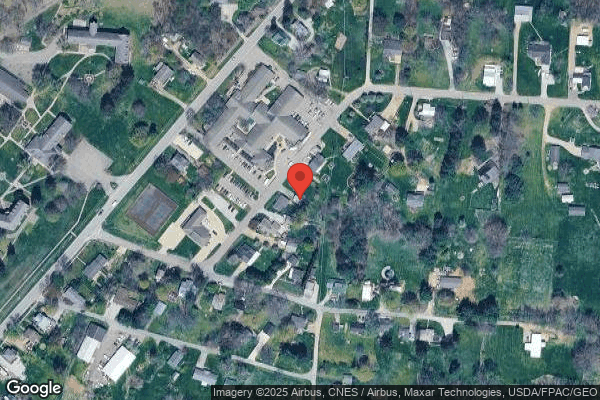

13 AVALON ROAD, MOUNT VERNON, OH 43050 (740) 397-3200
For profit - Limited Liability company 99 Beds CIENA HEALTHCARE/LAUREL HEALTH CARE Data: November 2025
Trust Grade
50/100
#712 of 913 in OH
Last Inspection: February 2025

Within standard 12-15 month inspection cycle. Federal law requires annual inspections.

Overview

Laurels of Mt Vernon has a Trust Grade of C, meaning it is average and falls in the middle of the pack, not particularly great but not terrible either. It ranks #712 out of 913 facilities in Ohio, placing it in the bottom half of state facilities, and #6 out of 7 in Knox County, indicating only one local option is better. The facility's performance is worsening, with issues increasing from 1 in 2024 to 17 in 2025. Staffing is a concern, with a rating of 2 out of 5 stars and a turnover rate of 51%, which is about average for Ohio. While it has no fines on record, indicating good compliance, there have been serious concerns about medication management and inadequate staffing levels, which could impact resident care. Specific incidents included not properly dating and disposing of medications, which could affect all 88 residents, and failing to maintain sufficient nursing staff to meet residents' needs, risking their well-being.

Trust Score
C
50/100
In Ohio
#712/913
Bottom 23%
Safety Record
Low Risk
No red flags
Inspections
Getting Worse
1 → 17 violations
Staff Stability
⚠ Watch
51% turnover. Above average. Higher turnover means staff may not know residents' routines.
Penalties
✓ Good
No fines on record. Clean compliance history, better than most Ohio facilities.
Skilled Nurses
⚠ Watch
Each resident gets only 29 minutes of Registered Nurse (RN) attention daily — below average for Ohio. Fewer RN minutes means fewer trained eyes watching for problems.
Violations
⚠ Watch
35 deficiencies on record. Higher than average. Multiple issues found across inspections.
★★☆☆☆
2.0
Overall Rating
★★☆☆☆
2.0
Staff Levels
★★☆☆☆
2.0
Care Quality
★★☆☆☆
2.0
Inspection Score
Stable
2024: 1 issues
2025: 17 issues

The Good

  • Full Sprinkler Coverage · Fire safety systems throughout facility
  • No fines on record

Facility shows strength in fire safety.

The Bad

2-Star Overall Rating

Below Ohio average (3.2)

Below average - review inspection findings carefully

Staff Turnover: 51%

Near Ohio avg (46%)

Higher turnover may affect care consistency

Chain: CIENA HEALTHCARE/LAUREL HEALTH CARE

Part of a multi-facility chain

Ask about local staffing decisions and management

The Ugly 35 deficiencies on record

Aug 2025 5 deficiencies
CONCERN (D) 📢 Someone Reported This

A family member, employee, or ombudsman was alarmed enough to file a formal complaint

Potential for Harm - no one hurt, but risky conditions existed

Abuse Prevention Policies (Tag F0607)

Could have caused harm · This affected 1 resident

**NOTE- TERMS IN BRACKETS HAVE BEEN EDITED TO PROTECT CONFIDENTIALITY** Based on record review, review of the abuse policy and Quality Assurance Performance Improvement (QAPI) Committee policy, and in...

Read full inspector narrative →
**NOTE- TERMS IN BRACKETS HAVE BEEN EDITED TO PROTECT CONFIDENTIALITY** Based on record review, review of the abuse policy and Quality Assurance Performance Improvement (QAPI) Committee policy, and interview, the facility failed to implement policies and procedures to communicate and coordinate with the QAPI program regarding situations of abuse, neglect, and misappropriation of resident property, and exploitation. This affected four residents (#1, #2, #14, and #24) and had the potential to affect all 86 residents residing in the facility. The facility census was 86.Findings include:1. Review of the medical record for Resident #1 revealed the resident was admitted to the facility on [DATE] with diagnoses including anxiety disorder, major depressive disorder, and Alzheimer's disease. Review of an incident and accident investigation form revealed on 06/06/25 at 5:00 P.M. Resident #1 was holding onto Resident #2 in the memory care unit before the supper meal. When staff asked Resident #1 to let go of Resident #2, Resident #1 shoved Resident #2 as she let go. Resident #2 fell backwards. The investigation form revealed staff witnessed the incident. Resident #1 was put on 15-minute checks and Resident #2 was sent to the hospital. The form indicated resident files were not reviewed, no other documentation was reviewed, and no additional interviews were conducted. A brief description of conclusion revealed Resident #1 and Resident #2 were separated immediately. Resident #2 was sent to the hospital for evaluation and Resident #1 was placed on 15-minute checks. Resident #1 and Resident #2 did not remember the incident. A review of others that may be at risk was marked as yes but no information was provided indicating what review was completed. The plan to avoid this situation in the future was to redirect away from each other during meals and the nursing staff and Director of Nursing would monitor the corrective action. The facility abuse prohibition policy revised 09/09/22 revealed allegations of resident abuse, exploitation, neglect, misappropriation of property, adverse events, or mistreatment shall be thoroughly investigated and documented by the Administrator, and reported to the appropriate state agencies, physician, families, and/or representative. The subject of abuse should be routinely and openly discussed. Guests/residents would be educated concerning the commitment of the facility to deal quickly and effectively with abuse or suspected abuse incidents on admission and at least annually. The Administrator, Director of Nursing or designee would compile a final summary of all investigations and report the findings at the facility QAPI committee meeting(s).The QAPI Committee policy revised 03/05/25 revealed the QAPI committee oversees and identifies all efforts that improved the quality of care in the facility by monitoring performance measures, developing and implementing appropriate performance improvement plans to correct quality concerns, and evaluating the effectiveness of the performance improvement plans. The following reports, logs and similar documents were created by or at the direction of, and for use by, the QAPI committee. These reports logs and similar documents were used to determine improvement priorities based on facility-identified concerns. These reports, logs and similar documents were: incident/accident summary reports, incident/accident logs and other related data, and all investigations including adverse events and medical errors. The QAPI committee shall collect and analyze data about the facility's performance and present findings to the committee. An interview on 08/06/25 at 5:14 P.M. Licensed Nursing Home Administrator (LNHA) revealed a log of incidents were verbally discussed during QAPI; however, there was no documentation of what was discussed or what the findings of the discussion were as they pertained to the incident involving Resident #1 and Resident #2. 2. Review of the medical record revealed Resident #24 was admitted to the facility on [DATE] with diagnoses that included Alzheimer's disease, psychosis, major depressive disorder, and adjustment disorder with disturbance of conduct. Review of an incident and accident investigation form dated 03/25/25 at 11:40 A.M. revealed Resident #24 entered Resident #14's room and was rummaging through Resident #14's things. Resident #14 asked Resident #24 to leave his room. Resident #24 became agitated and hit Resident #14 in the abdomen. Resident #14 then hit Resident #24 in the right upper arm. Staff entered the room and separated the residents as Resident #14 was hitting Resident #24. Staff became aware of the incident when Resident #14 was yelling for Resident #24 to get out of his room. Resident #14 was questioned about the incident. Certified Nursing Assistant (CNA) #100 was interviewed about the incident. Resident #14 was placed on 15-minute checks and Resident #24 was placed on one-on-one observation. No injuries were noted other than redness to Resident #24's right arm and redness to Resident #14's abdomen. A review of others that may be at risk was marked as yes but no information was provided indicating what review was completed. The plan to avoid this situation in the future was to place a stop sign on Resident #14's door because it was a reoccurring issue of other residents wandering into Resident #14's room even if the door was closed. No information was provided on how and who would monitor the corrective action. An interview summary revealed Resident #24 was unable to describe what happened. An interview with CNA #100 revealed Resident #14 was yelling to get Resident #24 to leave his room. Resident #14 was in the motion of hitting Resident #24 because Resident #24 was hitting Resident #14. Residents #14 and #24 were separated and Resident #24 was removed from Resident #14's room. The facility abuse prohibition policy revised 09/09/22 revealed allegations of resident abuse, exploitation, neglect, misappropriation of property, adverse events, or mistreatment shall be thoroughly investigated and documented by the Administrator, and reported to the appropriate state agencies, physician, families, and/or representative. The subject of abuse should be routinely and openly discussed. Guests/residents would be educated concerning the commitment of the facility to deal quickly and effectively with abuse or suspected abuse incidents on admission and at least annually. The Administrator, Director of Nursing or designee would compile a final summary of all investigations and report the findings at the facility QAPI committee meeting(s).The QAPI Committee policy revised 03/05/25 revealed the QAPI committee oversees and identifies all efforts that improved the quality of care in the facility by monitoring performance measures, developing and implementing appropriate performance improvement plans to correct quality concerns, and evaluating the effectiveness of the performance improvement plans. The following reports, logs and similar documents were created by or at the direction of, and for use by, the QAPI committee. These reports logs and similar documents were used to determine improvement priorities based on facility-identified concerns. These reports, logs and similar documents were: incident/accident summary reports, incident/accident logs and other related data, and all investigations including adverse events and medical errors. The QAPI committee shall collect and analyze data about the facility's performance and present findings to the committee. An interview on 08/06/25 at 5:14 P.M. Licensed Nursing Home Administrator (LNHA) revealed a log of incidents were verbally discussed during QAPI; however, there was no documentation of what was discussed or what the findings of the discussion were as they pertained to the incident involving Resident #24 and Resident #14. This deficiency is an incidental finding discovered during the complaint investigation.
CONCERN (D) 📢 Someone Reported This

A family member, employee, or ombudsman was alarmed enough to file a formal complaint

Potential for Harm - no one hurt, but risky conditions existed

Investigate Abuse (Tag F0610)

Could have caused harm · This affected 1 resident

**NOTE- TERMS IN BRACKETS HAVE BEEN EDITED TO PROTECT CONFIDENTIALITY** Based on review of medical records, review of facility investigations, review of the abuse policy, and interview, the facility f...

Read full inspector narrative →
**NOTE- TERMS IN BRACKETS HAVE BEEN EDITED TO PROTECT CONFIDENTIALITY** Based on review of medical records, review of facility investigations, review of the abuse policy, and interview, the facility failed to thoroughly investigate allegations of abuse for Residents #1, #2, #14, and #24. This affected four (Residents #1, #2, #14, and #24) out of six residents reviewed for abuse investigations. The facility census was 86.Findings include:1. Review of the medical record revealed Resident #1 was admitted on [DATE] with diagnoses that included but not limited to anxiety disorder, major depressive disorder, and Alzheimer's disease. A nurse's note dated 06/06/25 at 6:07 P.M. revealed Resident #1 had a hold of another resident's (Resident #2) arm. A certified nurse assistant (CNA) asked Resident #1 multiple times to let go of Resident #2's arm. When Resident #1 decided to let go of Resident #2, Resident #1 pushed Resident #2 on the floor. Resident #2 fell and hit her head on the floor.Review of self-reported incident (SRI) #261328 dated 06/06/25 revealed Resident #1 was observed holding Resident #2 in the activity room of the memory care unit. When staff asked Resident #1 to let go of Resident #2, Resident #1 shoved Resident #2 as she let go which resulted in Resident #2 falling backwards. Resident #2 had a laceration to the back of the head and was sent to the hospital for evaluation. Resident #1 was placed on 15-minute checks. Review of the incident and accident investigation form revealed on 06/06/25 at 5:00 P.M. Resident #1 was holding onto Resident #2 in the memory care unit before the supper meal. When staff asked Resident #1 to let go of Resident #2, Resident #1 shoved Resident #2 as she let go. Resident #2 fell backwards. The investigation form revealed staff witnessed the incident. Resident #1 was put on 15-minute checks and Resident #2 was sent to the hospital. The form indicated resident files were not reviewed, no other documentation was reviewed, and no additional interviews were conducted. A brief description of conclusion revealed Resident #1 and Resident #2 were separated immediately. Resident #2 was sent to the hospital for evaluation and Resident #1 was placed on 15-minute checks. Resident #1 and Resident #2 did not remember the incident. A review of others that may be at risk was marked as yes but no information was provided indicating what review was completed. The plan to avoid this situation in the future was to redirect away from each other during meals and the nursing staff and Director of Nursing would monitor the corrective action. Review of the medical record revealed the quarterly Minimum Data Set (MDS) dated [DATE] revealed Resident #1 had severe cognitive impairment. The MDS also revealed Resident #1 had verbal behaviors directed at others for one to three days during the assessment period.An interview on 08/06/25 at 5:14 P.M. Licensed Nursing Home Administrator (LNHA) verified the investigation did not include witness statements and the information on the incident and accident investigation form was obtained from the nurse's note dated 06/06/25 at 6:07 P.M. LNHA verified a complete and thorough investigation was not completed. Review of the Abuse Prohibition Policy revised 09/09/22 revealed it is the responsibility of all staff to provide a safe environment for the residents. Allegations of resident abuse, exploitation, neglect, misappropriation of property, adverse events, or mistreatment shall be thoroughly investigated and documented by the LNHA. The investigation may consist of (as appropriate) a review of the completed incident report, an interview with the person reporting the incident, and interview with the resident, if possible, an interview with staff members who had contact with the resident during the period/shift of the alleged incident, and a review of all circumstances surround the incident. 2. Review of the medical record revealed Resident #24 was admitted on [DATE] with diagnoses that included but limited to Alzheimer's disease, psychosis, major depressive disorder, and adjustment disorder with disturbance of conduct.A nurse's note dated 03/25/25 at 12:34 P.M. revealed Resident #24 went into another resident's (Resident #14) room. Resident #14 asked Resident #24 three times to leave Resident #14's room. Resident #24 started yelling at Resident #14. Resident #24 then slapped Resident #14 on the abdomen. Resident #14 then slapped Resident #24 on the right arm. A CNA removed Resident #24 from Resident #14's room. The nurse did a skin check and noted Resident #24 had redness to the right upper arm. Resident #24 was placed on one-on-one supervision. Review of SRI #258622 dated 03/25/25 revealed Resident #24 wandered into Resident #14's room. Resident #14 tried to get Resident #24 to leave, and Resident #24 struck Resident #14 in the stomach and Resident #14 struck Resident #24 on the arm. Residents #14 and #24 were immediately separated and no injuries occurred. Resident #14 stated they were not afraid of Resident #24. Resident #24 could not describe what happened. Resident #24 was placed on one-on-one observation and was transferred to a behavior facility for evaluation and treatment on 03/26/25. Resident #14 was placed on 15-minute checks. Review of the incident and accident investigation form dated 03/25/25 at 11:40 A.M. revealed Resident #24 entered Resident #14's room and was rummaging through Resident #14's things. Resident #14 asked Resident #24 to leave his room. Resident #24 became agitated and hit Resident #14 in the abdomen. Resident #14 then hit Resident #24 in the right upper arm. Staff entered the room and separated the residents as Resident #14 was hitting Resident #24. Staff became aware of the incident when Resident #14 was yelling for Resident #24 to get out of his room. Resident #14 was questioned about the incident. CNA #100 was interviewed about the incident. Resident #14 was placed on 15-minute checks and Resident #24 was placed on one-on-one observation. No injuries were noted other than redness to Resident #24's right arm and redness to Resident #14's abdomen. A review of others that may be at risk was marked as yes but no information was provided indicating what review was completed. The plan to avoid this situation in the future was to place a stop sign on Resident #14's door because it was a reoccurring issue of other residents wandering into Resident #14's room even if the door was closed. No information was provided on how and who would monitor the corrective action. An interview summary revealed Resident #24 was unable to describe what happened. An interview with CNA #100 revealed Resident #14 was yelling to get Resident #24 to leave his room. Resident #14 was in the motion of hitting Resident #24 because Resident #24 was hitting Resident #14. Residents #14 and #24 were separated and Resident #24 was removed from Resident #14's room. The quarterly MDS dated [DATE] revealed Resident #24 had severe cognitive impairment. The MDS also revealed Resident #24 had physical and verbal behaviors directed towards others one to three days during the assessment period. An interview on 08/06/25 at 5:14 P.M. LNHA verified the investigation did not include a witness statement from Resident #14 and most of the information on the incident and accident investigation form was obtained from the nurse's note dated 03/25/25 at 12:34 P.M. LNHA verified a complete and thorough investigation was not completed. Review of the Abuse Prohibition Policy revised 09/09/22 revealed it is the responsibility of all staff to provide a safe environment for the residents. Allegations of resident abuse, exploitation, neglect, misappropriation of property, adverse events, or mistreatment shall be thoroughly investigated and documented by the LNHA. The investigation may consist of (as appropriate) of a review of the completed incident report, an interview with the person reporting the incident, and interview with the resident, if possible, an interview with staff members having contact with the resident during the period/shift of the alleged incident, and a review of all circumstances surrounding the incident. This deficiency is an incidental finding discovered during the complaint investigation.
CONCERN (D) 📢 Someone Reported This

A family member, employee, or ombudsman was alarmed enough to file a formal complaint

Potential for Harm - no one hurt, but risky conditions existed

Deficiency F0657 (Tag F0657)

Could have caused harm · This affected 1 resident

**NOTE- TERMS IN BRACKETS HAVE BEEN EDITED TO PROTECT CONFIDENTIALITY** Based on record review and interview, the facility failed to revise plans to provide comprehensive, resident centered care relat...

Read full inspector narrative →
**NOTE- TERMS IN BRACKETS HAVE BEEN EDITED TO PROTECT CONFIDENTIALITY** Based on record review and interview, the facility failed to revise plans to provide comprehensive, resident centered care related to agitation and/or aggression. This affected two (Resident #1 and #24) of six residents reviewed. The facility census was 86. Findings include:1. Review of the medical record revealed Resident #1 was admitted on [DATE] with diagnoses that included but not limited to anxiety disorder, major depressive disorder, and Alzheimer's disease. A care plan dated 05/19/23 revealed Resident #1 was at risk for decline in cognition and had impaired cognitive function or impaired thought processes related to impaired decision making, and impulsivity. Interventions included provide a homelike environment and notify the nurse of any changes in cognitive function.A care plan dated 06/19/24 revealed Resident #1 had an actual behavior problem of hoarding food items such as sour cream, cream cheese, butter and salad dressings in her nightstand. Interventions included, if reasonable, discuss the resident's behavior, explain/reinforce why the behavior is inappropriate and/or unacceptable to the resident.A nurse's note dated 05/24/25 at 9:39 A.M. authored by Licensed Practical Nurse (LPN) #116 revealed Resident #1 became verbally aggressive towards staff today during care. Resident stated, I'm sick of that woman coming in her all the time. Resident #1 was referring to another resident. Resident #1 was easily redirected. Resident #1 let staff provide care and was pleasant. A nurse's note dated 05/24/25 at 10:42 A.M. authored by LPN #116 revealed Resident #1 was agitated and took the nurse to the window and stated Resident #1 was going outside. Resident #1 attempted to stand up and mess with the window. Resident #1 was redirected but became agitated. A nurse's note dated 05/24/25 at 12:02 P.M. authored by LPN #116 revealed Resident #1 attempted to get out of the main doors. Redirection was unsuccessful and Resident #1 was agitated. The quarterly Minimum Data Set (MDS) dated [DATE] revealed Resident #1 had severe cognitive impairment. The MDS also revealed Resident #1 had verbal behaviors directed at others for one to three days during the assessment period.A nurse's note dated 06/06/25 at 6:07 P.M. revealed Resident #1 had a hold of another resident's (Resident #2) arm. A certified nurse assistant (CNA) asked Resident #1 multiple times to let go of Resident #2's arm. When Resident #1 decided to let go of Resident #2, Resident #1 pushed Resident #2 on the floor. Resident #2 fell and hit her head on the floor.A nurse's note dated 06/25/25 at 10:16 A.M. authored by LPN #116 revealed Resident #1 was restless and very agitated. Resident #1 was exit seeking and unable to be redirected. A nurse's note dated 06/25/25 at 1:52 P.M. authored by LPN #116 revealed Resident #1 was very agitated and restless. Resident #1 had set off the door alarms multiple times in the last hour. Resident #1 became more agitated when redirected. Staff attempted to take Resident #1 out for fresh air. Resident #1 grabbed the tables and started yelling. Resident #1 was brought back to the memory care unit because Resident #1 was uncooperative with staff. A nurse's note dated 06/25/25 at 2:54 P.M. authored by LPN #116 revealed Resident #1 was taken outside for fresh air. Resident #1 was cooperative. Resident #1 was currently relaxing and listening to music.An interview on 08/06/25 at 8:46 A.M. Licensed Practical Nurse (LPN) #101 revealed Resident #1 was upset with a family member prior to the incident with Resident #2. An interview on 08/06/25 at 2:28 P.M. Certified Nursing Assistant (CNA) #135 revealed Resident #1 was easily agitated. CNA #135 stated she tried to keep Resident #1 separated from other residents and would put music on that Resident #1 enjoyed. An interview on 08/06/25 at 5:14 P.M. Licensed Nursing Home Administrator (LNHA) verified Resident #1's care plan did not address agitation or aggression. 2. Review of the medical record revealed Resident #24 was admitted on [DATE] with diagnoses that included but limited to Alzheimer's disease, psychosis, major depressive disorder, and adjustment disorder with disturbance of conduct.A care plan dated 04/01/25 revealed Resident #24 was exit seeking and/or wandering. Interventions included to apply a Wander Guard (bracelet to alert caregivers when a resident has wandered from a protected zone) to the right ankle, observe wandering and attempt diversional interventions when wandering into inappropriate locations, and provide structured activities as needed.The quarterly MDS dated [DATE] revealed Resident #24 had severe cognitive impairment. The MDS also revealed Resident #24 had physical and verbal behaviors directed towards others one to three days during the assessment period. A nurse's note dated 03/25/25 at 12:34 P.M. revealed Resident #24 went into another resident's (Resident #14) room. Resident #14 asked Resident #24 three times to leave Resident #14's room. Resident #24 started yelling at Resident #14. Resident #24 then slapped Resident #14 on the abdomen. Resident #14 then slapped Resident #24 on the right arm. A CNA removed Resident #24 from Resident #14's room. The nurse did a skin check and noted Resident #24 had redness to the right upper arm. Resident #24 was placed on one-on-one supervision. An interview on 08/06/25 at 5:14 P.M. LNHA verified Resident #24's care plan did not address agitation or aggression. This deficiency is an incidental finding discovered during the complaint investigation.
CONCERN (D) 📢 Someone Reported This

A family member, employee, or ombudsman was alarmed enough to file a formal complaint

Potential for Harm - no one hurt, but risky conditions existed

Quality of Care (Tag F0684)

Could have caused harm · This affected 1 resident

**NOTE- TERMS IN BRACKETS HAVE BEEN EDITED TO PROTECT CONFIDENTIALITY** Based on record review and interview, the facility failed to complete neurological checks for Resident #2 after two falls with i...

Read full inspector narrative →
**NOTE- TERMS IN BRACKETS HAVE BEEN EDITED TO PROTECT CONFIDENTIALITY** Based on record review and interview, the facility failed to complete neurological checks for Resident #2 after two falls with injuries occurred. This affected one (Resident #2) out of six residents reviewed for incidents with injuries. The facility census was 86.Findings include:Review of the medical record revealed Resident #2 was admitted on [DATE] with diagnoses that included but limited to dementia, degenerative disease of nervous system, major depressive disorder, and generalized anxiety disorder.A change in condition note dated 06/05/25 at 9:16 A.M. revealed Resident #2 was found sitting on the floor in her room. Neurological checks were completed as Resident #2 would allow. A change in condition note dated 06/06/25 at 4:34 P.M. revealed Resident #2 was pushed to the floor by Resident #1. Resident #2 hit the back of her head on the floor. Resident #2 had a laceration to the back of her head. Pressure was applied to the back of Resident #2's head and Resident #2 was transferred to the hospital for evaluation.The hospital records dated 06/06/25 revealed Resident #2 had a 2.5-centimeter irregular contusion to the left posterior occiput. A nurse note dated 06/07/25 at 12:55 A.M. revealed Resident #2 returned to the facility.Review of Certified Nurse Practitioner progress note dated 06/10/25 revealed Resident #2 was shoved by another resident and fell backward and hit her head. The staff reported when Resident #2's head hit the floor; it made a loud sound and there was blood on the floor. Resident #2 was transported to the hospital and medical glue was applied to the left posterior occiput. Resident #2 continued to have hematoma, but staff reported it was beginning to recede. Resident #2 likely had a concussion, and vital signs, neurological checks, fall precautions, and monitoring were to continue per protocol. The significant change Minimum Data Set (MDS) dated [DATE] revealed Resident #2 had severe cognitive impairment. An interview on 08/07/25 at 9:03 A.M. Licensed Nursing Home Administrator (LNHA) verified there was no evidence of neurological checks being done when Resident #2 returned from the hospital on [DATE]. This deficiency is an incidental finding discovered during the complaint investigation.
CONCERN (E) 📢 Someone Reported This

A family member, employee, or ombudsman was alarmed enough to file a formal complaint

Potential for Harm - no one hurt, but risky conditions existed

Deficiency F0744 (Tag F0744)

Could have caused harm · This affected multiple residents

Based on observation, schedule review, activity calendar review and interviews, the facility failed to provide comprehensive, resident centered services to ensure dementia care needs were met and prom...

Read full inspector narrative →
Based on observation, schedule review, activity calendar review and interviews, the facility failed to provide comprehensive, resident centered services to ensure dementia care needs were met and promote resident well-being on the specialty unit. This affected two residents (Resident #18 and #24) and had the potential to affect the remaining 20 residents (#1, #2, #7, #8, #9, #10, #11, #12, #13, #14, #15, #16, #17, #19, #20, #21, #22, #23, #25, and #27) who resided on the specialty care dementia unit. The facility census was 86.Findings include: Review of the staffing schedules revealed on 07/30/25, 07/31/25, and 08/01/25 there was one certified nursing assistant (CNA) and one nurse scheduled to work on the memory care unit. An observation on 08/06/25 at 8:41 A.M. revealed Resident #24 was sitting at a table with a large amount of oatmeal on the underside of her right sweater sleeve. The oatmeal was smeared on the table as the resident moved her arm. At the time of the observation, the nurse was at the nurse's station and the CNA was giving residents showers.An additional observation on 08/06/25 at 9:34 A.M. revealed Resident #24 was still wearing the sweater with oatmeal on the sleeve. An activities calendar in the dining room/activity room revealed activities on 08/06/25 included morning stretches at 9:30 A.M., coffee and daily chronicle at 10:00 A.M., coloring at 11:00 A.M. and snack and chat at 2:00 P.M. An observation on 08/06/25 at 9:34 A.M. revealed residents sitting in the dining/activity room and no staff were in the room. Morning stretches were on the activity schedule to take place at this time. However, the activity was not occurring. An observation on 08/06/25 at 10:43 A.M. revealed a unit manager was in an office on the memory care unit (out of sight of the dining/activity room and hallway) and no other staff were observed. Coffee and daily chronicle were on the activity schedule for 10:00 A.M. and coloring scheduled to begin at 11:00 A.M. There was no observed activity occurring at this time.An observation on 08/06/25 at 2:25 P.M. revealed Resident #18 (female) entered Resident #9 and #10's (males) room. Resident #18 closed the door. This writer knocked and entered the room. Resident #9 was sitting in a chair and Resident #10 was lying in bed. Resident #18 was standing by Resident #10's bed, holding Resident 10's hand. This writer notified the nurse that Resident #18 was in Resident #9 and #10's room. On 08/06/25 at 2:27 P.M. LPN #115 verified Resident #18 should not be in Resident #9 and #10's room. LPN #115 and the CNA were at the nurse's station and were not aware Resident #18 had gone into Resident #9 and #10's room. LPN #115 redirected Resident #18 to the dining/activity room however, there were no activities occurring at that time.An interview on 08/06/25 at 2:28 P.M. with CNA #135 verified there was one nurse and one CNA working on the memory care unit this date. CNA #135 stated a float CNA did come on the unit around lunch time to ask if she needed help passing meal trays but had not been back any other times. CNA #135 verified no one from activities had been on the memory care unit to provide the residents with activities as indicated on the activity schedule. CNA #135 stated she completed nine showers on 08/06/25. CNA #135 verified Resident #24 had oatmeal on her sleeve, but stated other residents had removed incontinence briefs and required showers and assistance and she needed to address those things first. CNA #135 stated Residents #2, #10, #15, and #27 required two staff assist for care and this was difficult with only an aide and a nurse to coordinate when they both could provide care to the residents. An observation on 08/06/25 at 2:39 P.M. revealed activity staff arrived at the memory care unit to make residents root beer floats. Interview on 08/06/25 at 2:41 P.M. with Activities Aide #137 and #160 verified they had not been on the memory care unit until they brought the root beer floats. Activities Aide #137 stated a coffee cart with coffee and juice was provided to the dementia unit and the nursing staff were to provide the residents with the drinks. Coloring pages were printed off and left in the dining room/activity room for residents to color. They stated root beer floats were being provided so the snack and chat was not done at 2:00 P.M. but soft cookies would be provided later. Activities staff verified the scheduled activities on the calendar were not provided as scheduled on 08/06/25.Interview on 08/06/25 at 5:14 P.M. with the Administrator revealed recently there was one CNA scheduled on the memory care unit and one CNA that was to float to the unit as needed. The Administrator (LNHA) stated several staff were pregnant and could not work on the memory care unit, limiting the number of staff they had available to schedule on the memory/dementia care unit. The LNHA revealed there was an activity director and two activity aides and usually one of the activity aides was on the memory care unit to help supervise and provide activities for the residents, but a new activity aide had started and was receiving training off the memory care unit so that support was not always available on the dementia unit despite also having issues with not having adequate nursing staff numbers on the unit. This deficiency represents non-compliance investigated under Master Complaint Number 2577719.
Feb 2025 12 deficiencies
CONCERN (D)

Potential for Harm - no one hurt, but risky conditions existed

Notification of Changes (Tag F0580)

Could have caused harm · This affected 1 resident

**NOTE- TERMS IN BRACKETS HAVE BEEN EDITED TO PROTECT CONFIDENTIALITY** Based on medical record review, review of fall investigations, staff interview and review of facility policy and procedure, the ...

Read full inspector narrative →
**NOTE- TERMS IN BRACKETS HAVE BEEN EDITED TO PROTECT CONFIDENTIALITY** Based on medical record review, review of fall investigations, staff interview and review of facility policy and procedure, the facility failed to ensure the residents guardian was notified of all falls. This affected two (Resident #39 and #76) of three residents reviewed for falls. The census was 89. Findings include: 1. Review of Resident #76's medical record revealed she was admitted to the facility 07/30/24. Diagnoses included encephalopathy, Alzheimer's Dementia, mood disorder, psychosis, restlessness, agitation, anxiety, suicidal ideation's and major depression. Review of the quarterly Minimum Data Set (MDS( dated 11/06/24 revealed her cognition was not intact. She required set up or clean up assistance with eating, supervision or touching assistance with oral hygiene, and partial/moderate assistance with toileting, shower/bathing, dressing, personal hygiene and turning and repositioning. Resident identified as having falls without major injury. Review of the fall assessment dated [DATE] revealed Resident #76 was at risk for falls. Review of the fall investigations and nursing progress notes revealed Resident #76 had a fall on 08/08/24 at 8:05 P.M She was witnessed sitting down on the floor by a CNA. She was on her hands and knees by the locked door that leads to the 200 hall. She proceeded to go from her knees to her buttocks. There was no documentation the guardian was notified. Review of the fall investigations and nursing progress notes revealed Resident #76 had a fall on 08/14/24 at 10:45 P.M. She was attempting to get up out of the recliner and slid off of the recliner on to the floor on her bottom. There was no documentation the guardian was notified. Review of the fall investigations and nursing progress notes revealed Resident #76 had a fall on 09/02/24 at 6:48 P.M. She was found on the floor in front of her dresser. She was wearing nonslip socks, and stated she was dizzy and fell. There was no documentation the guardian was notified. Review of the fall investigations and nursing progress notes revealed Resident #76 had a fall on 09/12/24 at 9:40 P.M. She placed herself on the floor, somersaulted and stood up. Then walked down the hall. There was no documentation the guardian was notified. Review of the fall investigations and nursing progress notes revealed Resident #76 had a fall on 09/13/24 at 7:45 P.M. She was on all fours in the hallway, got to her feet, before staff could reach her. She revealed she just slipped. There was no documentation the guardian was notified. Review of the fall investigations and nursing progress notes revealed Resident #76 had a fall on 01/20/25 at 10:20 P.M. She was found on the floor by a walker. She could not recall what happened or what she was trying to do. There was no documentation the guardian was notified. Interview on 02/05/25 at 2:04 P.M. with Director of Nursing verified there was no evidence Resident #76's guardian was notified of the falls. Review of the Notification of Change policy and procedure dated 12/19/22 revealed a change in status would include an accident involving the resident, revealed changes in the residents status or any unusual occurrences, the licensed nurse will notify the residents representative, unless otherwise dictated by the resident. 2. Review of the medical record for Resident #39 revealed an admission date of 06/30/19 with diagnoses included but not limited to Huntington's disease, generalized anxiety disorder, and major depressive disorder. Review of the quarterly Minimum Data Set (MDS) 3.0 assessment dated [DATE] revealed Resident #39 had severely impaired cognition and was dependent for activities of daily living (ADLs). Review of the fall investigation dated 10/24/24 revealed Resident #39 was found on the floor between the bed and the wall. Fall investigation stated that no notifications were found under the section of agencies/people notified. Interview on 02/05/25 at 3:17 P.M. with Director of Nursing (DON) verified that notification was not given to power of attorney (POA) in reference to the unwitnessed fall on 10/24/24.
CONCERN (D)

Potential for Harm - no one hurt, but risky conditions existed

Assessment Accuracy (Tag F0641)

Could have caused harm · This affected 1 resident

**NOTE- TERMS IN BRACKETS HAVE BEEN EDITED TO PROTECT CONFIDENTIALITY** Based on medical record review, observation and staff interview, revealed the facility failed to ensure accuracy of assessments....

Read full inspector narrative →
**NOTE- TERMS IN BRACKETS HAVE BEEN EDITED TO PROTECT CONFIDENTIALITY** Based on medical record review, observation and staff interview, revealed the facility failed to ensure accuracy of assessments. This affected one (Resident #47) of two residents reviewed for dental assessments. The census was 89. Findings include: Review of Resident #47 revealed they were admitted on [DATE]. Diagnoses included alcoholic cirrhosis of the liver, alcohol dependence with alcohol induced persisting dementia, acute kidney failure, viral hepatitis C, severe protein calorie malnutrition, and anxiety. Review of the admission Minimum Data Set (MDS) assessment dated [DATE] revealed his cognition was not intact, was independent with eating, turning and reposition, required supervision or touching assistance with oral hygiene, toileting, bathing/showering, dressing and personal hygiene, with no obvious or likely cavity or broken natural teeth. Observation on 02/03/25 at 3:49 P.M. revealed his lower teeth were broken and missing with decay of teeth. Interview on 02/05/25 at 2:04 P.M. with Director of Nursing verified the admission MDS for 11/25/24 was incorrect in regard to Resident #47's dental status. On 02/05/25 at 2:33 P.M. Interview with Social Service Assistant #335 revealed the resident's dentist comes to the facility quarterly and was last at the facility on 12/04/24. She revealed Resident #47 had not been referred to her to see the dentist and she was not aware of any dental issues. On 02/06/25 at 10:28 A.M. observation of Resident #47's teeth revealed broken, missing and decay of the teeth. This was verified with Licensed Practical Nurse #213 at the time of the observation and she asked him if he had seen a dentist since he had been here and he revealed he has not.
CONCERN (D)

Potential for Harm - no one hurt, but risky conditions existed

Comprehensive Care Plan (Tag F0656)

Could have caused harm · This affected 1 resident

**NOTE- TERMS IN BRACKETS HAVE BEEN EDITED TO PROTECT CONFIDENTIALITY** Based on medical record review, observation and staff interview, the facility failed to develop a comprehensive care plan for Re...

Read full inspector narrative →
**NOTE- TERMS IN BRACKETS HAVE BEEN EDITED TO PROTECT CONFIDENTIALITY** Based on medical record review, observation and staff interview, the facility failed to develop a comprehensive care plan for Resident #47's dental needs. This affected one (Resident #47) of two residents reviewed for dental care. Findings include: Review of Resident #47 revealed they were admitted on [DATE]. Diagnoses included alcoholic cirrhosis of the liver, alcohol dependence with alcohol induced persisting dementia, acute kidney failure, viral hepatitis C, severe protein calorie malnutrition, and anxiety. Review of the admission Minimum Data Set (MDS) assessment dated [DATE] revealed his cognition was not intact, was independent with eating, turning and reposition, required supervision or touching assistance with oral hygiene, toileting, bathing/showering, dressing and personal hygiene, with no obvious or likely cavity or broken natural teeth. Review of Resident #47's medical record revealed no evidence the facility developed a comprehensive care plan for dental care. Observation on 02/03/25 at 3:49 P.M. revealed his lower teeth were broken and missing with decay of teeth. On 02/05/25 at 2:33 P.M. Interview with Social Service Assistant #335 revealed the dentist comes to the facility quarterly and was last at the facility on 12/04/24. She revealed Resident #47 had not been referred to her to see the dentist and she was not aware of any dental issues. She also revealed she thinks nursing would be responsible for the dental plan of care and verified Resident #47 did not have a dental plan of care.
CONCERN (D)

Potential for Harm - no one hurt, but risky conditions existed

Quality of Care (Tag F0684)

Could have caused harm · This affected 1 resident

**NOTE- TERMS IN BRACKETS HAVE BEEN EDITED TO PROTECT CONFIDENTIALITY** Based on medical record review, observation and staff interview, the facility failed to ensure pressure reduction interventions ...

Read full inspector narrative →
**NOTE- TERMS IN BRACKETS HAVE BEEN EDITED TO PROTECT CONFIDENTIALITY** Based on medical record review, observation and staff interview, the facility failed to ensure pressure reduction interventions were in place at all times for Resident #53. This affected one resident (Resident #53) of three residents reviewed for pressure ulcer prevention. Findings include: Review of the medical record for Resident #53 revealed an admission date of 01/07/25 with diagnoses including but not limited to injury of left Achilles tendon, muscle wasting, and bradycardia. Review of the comprehensive Minimum Data Set (MDS) 3.0 assessment dated [DATE] revealed Resident #53 had moderately impaired cognition, required dependent for activities of daily living (ADLs) and had a surgical wound. Review of the care plan dated 01/08/25 revealed Resident #53 was at risk for impaired skin integrity. Interventions included but not limited to encourage to float heels while in bed and assist as needed. Review of the physician's orders for February 2025 revealed an order for heel elevation boots to bilateral feet while in bed, as guest tolerates. Observation on 02/03/25 at 11:00 A.M. revealed that Resident #53 was not wearing her boots. Interview at time of observation with Licensed Practical Nurse (LPN) #385 verified that Resident #53 did not have elevation boots on her feet. Review of the facility policy with an effective date of 09/19/24 titled, Skin Management, revealed that practice guidelines state residents admitted with skin impairment will have appropriate interventions implemented to promote healing.
CONCERN (D)

Potential for Harm - no one hurt, but risky conditions existed

Accident Prevention (Tag F0689)

Could have caused harm · This affected 1 resident

**NOTE- TERMS IN BRACKETS HAVE BEEN EDITED TO PROTECT CONFIDENTIALITY** Based on observation, medical record review and interview the facility failed to ensure fall interventions were in place for Res...

Read full inspector narrative →
**NOTE- TERMS IN BRACKETS HAVE BEEN EDITED TO PROTECT CONFIDENTIALITY** Based on observation, medical record review and interview the facility failed to ensure fall interventions were in place for Resident #60. This affected one resident (Resident #60) of one reviewed for falls. The facility census was 89. Findings include: Review of the medical record for Resident #60 revealed an admission date of 10/21/23 with diagnoses including end stage renal disease, obstructive uropathy, chronic kidney disease stage four, osteoarthritis, major depressive disorder and paroxysmal atrial fibrillation. Review of Resident #60 dated 10/26/23 revealed Resident #60 was at risk for fall related injury and falls related to muscle weakness with limited mobility and end stage renal disease (ERSD), psychoactive medication use antidepressant for depression, antianxiety for anxiety. Interventions included activities to access for in-room activities and preferences, encourage the resident to wear appropriate footwear, call light within reach, commonly used items within reach, move closer to nurses' station for closer observation by staff; observe for fatigue and/or unsteadiness and encourage rest periods as needed; offer resident to get up in wheelchair, when restless, perimeter mattress to bed at all times, nonskid strips to right side of bed, visual cues to remind resident to ask for assistance for transfers. Review of fall investigation report dated 01/06/25 revealed resident was ambulating to the bathroom and while attempting to open the door, his hand slipped off the handle and he fell, landing on his left shoulder. gripper socks were in place. The new intervention was to move his room closer to the nurses' station. Review of Resident #60 quarterly Minimum Data Set (MDS) 3.0 assessment dated [DATE] revealed a Brief Interview for Mental Status (BIMS) of 13 out of 15 indicating mild cognitive impairment. The resident was assessed to require set up for meals and substantial assistance for activity of daily living (ADL'S) such as dressing, personal hygiene and bathing. Resident #60 required moderate assistance for bed mobility and transfers. Resident #60 utilized a wheelchair for mobility. Resident # 60 experienced a fall prior to admission and experienced two falls since admission to the facility, one with major injury and one without injury. On 02/05/25 at 11:43 A.M. Resident #60 was observed resting in bed. The non-skid strips were not observed on the floor and there were no visual signs posted to remind Resident #60 to ask for help. On 02/05/25 at 11:52 A.M. interview with Licensed Practical Nurse (LPN)# 266 confirmed non-skid strips were not in place and there was no signage reminding the resident to ask for help. Review of fall policy dated 05/01/10, revised 09/22/23, revealed the interdisciplinary team will review all the resident falls within 24-72 hours and at the clinical operations meeting to evaluate/investigate the circumstances and probable cause for the fall, review/modify the plan of care to minimize repeat falls and link to the resident's [NAME] as needed.
CONCERN (D)

Potential for Harm - no one hurt, but risky conditions existed

Respiratory Care (Tag F0695)

Could have caused harm · This affected 1 resident

**NOTE- TERMS IN BRACKETS HAVE BEEN EDITED TO PROTECT CONFIDENTIALITY** Based on observations, medical record review, interview, and facility policy review the facility failed to ensure proper storage...

Read full inspector narrative →
**NOTE- TERMS IN BRACKETS HAVE BEEN EDITED TO PROTECT CONFIDENTIALITY** Based on observations, medical record review, interview, and facility policy review the facility failed to ensure proper storage of Resident #8 and Resident #78 respiratory equipment, and failed to implement an order for a breathing improvement device for Resident #286. This affected three residents (Resident #8, Resident #78, and Resident #286) out of four residents reviewed for respiratory care. The facility census was 89. Findings Include: 1. Review of the medical record for Resident #8 revealed an admission date 11/30/18 and re-admission date 12/03/24 with the following diagnoses including but not limited to acute respiratory failure, Chronic Obstructive Pulmonary Disease (COPD), sleep apnea, and type two diabetes mellites. Resident #8 had impaired cognition with a Brief Interview of Mental Status (BIMS) score of nine out of a possible 15. Resident #8 required assistance for completion of Activities of Daily Living (ADLs) tasks including medication administration and the use of a wheelchair for mobility. Review of Resident #8's physician orders revealed an order dated 12/04/24 for Oxygen (02) 4 liters per minute via nasal cannula to maintain 02 blood saturation (SP02) between 88% to 92% every day and night shift for shortness of breath. Review of Resident #8 Medication Administration Record (MAR) dated 01/01/25 to 01/31/25 revealed the completed order for Oxygen (02) 4 liters per minute via nasal cannula to maintain 02 blood saturation (SP02) between 88% to 92% every day and night shift for shortness of breath. Review of Resident #8's SP02 readings dated 01/21/25 to 02/02/25 revealed SP02 results ranged from 93% to 98%. Review of Resident #8's admission Minimum Data Set (MDS) dated [DATE] revealed Section O - Special Treatments, Procedures, and Programs was marked as Resident #8 using oxygen therapy. An observation on 02/03/25 from 10:00 A.M. to 11:15 A.M. revealed Resident #8 sitting at a table in the lounge/activity room in a wheelchair. There was an oxygen concentrator plugged into the wall behind where Resident #8 was sitting at the table. There was oxygen tubing attached to the concentrator which was laying on the floor and stretched across the aisle to where Resident #8 sat in the wheelchair with the nasal cannula in place. The concentrator was set at 4 liters. There was a portable oxygen tank in a storage bag hanging on the back of Resident #8's wheelchair. A review of the facility policy titled, Use of Oxygen dated 08/17/21 revealed, To promote guest/resident safety in administration of oxygen. The tubing should be kept off the floor. An interview on 02/03/25 at 11:22 A.M. with the Director of Nursing (DON) confirmed Resident #8 was sitting at a table in the lounge/activity room with the oxygen concentrator plugged into the wall with the oxygen tubing laying on the floor and stretched across the aisle. The DON stated the oxygen tubing should be off the floor and secured in a bag. 2. Review of the medical record for Resident #78, revealed an admission date of 10/09/24. Diagnoses included trisomy 21 (down syndrome), hypothyroidism, pulmonary embolism, displaced bimalleolar fracture of the right lower leg, Review of the most recent Minimum Data Set (MDS) 3.0 assessment dated [DATE] revealed a Brief Interview for Mental Status (BIMS) of one out of 15 indicating severe cognitive impairment. The resident was assessed and required set up with meals and dependent on staff for all other activities of daily living (ADL's) such as bathing, dressing, hygiene, bed mobility and transfers. Review of Resident #78's plan of care dated 01/12/25 for a potential difficulty breathing and at risk for respiratory complications. Interventions included administer medications and treatment as ordered by physician, monitor for ineffectiveness, side effects and adverse reactions, report abnormal findings to the physician. Oxygen as needed, nebulizer as ordered, pulse pximetry, elevate head of bed, identify and eliminate sources of respiratory irritation such as cigarette smoke, pollen, perfumes, observe for difficulty breathing (dyspnea) on exertion. Observe for signs and symptoms of acute respiratory insufficiency: anxiety, confusion, restlessness, shortness of breath at rest, cyanosis, somnolence. Report abnormal findings to the physician. Review of Resident #78's physician orders revealed Ipratropium-Albuterol Inhalation Solution 0.5-2.5 (three) milligrams/ milliliter (MG/ML) (Ipratropium-Albuterol) three ml inhale every six hours as needed for shortness of breath or wheezing, oxygen one to three liters per minute by nasal cannula as needed for short of breath and to maintain oxygen saturation greater than 92%. On 02/03/25 at 01:49 P.M. observation of Resident #78 room revealed respiratory equipment laying in the chair without a bag. On 02/04/25 at 08:40 A.M., observation was made of a nebulizer and oxygen concentrator in Resident #78 room. Tubing for the nebulizer and oxygen mask was laying in the chair beside the bed without a bag, and the resident's oxygen nasal cannula was observed on the floor. On 2/04/25 at 10:24 A.M., interview with certified nursing assistant (CNA) #256 confirmed tubing should be in a bag not lying in chair or hanging off of concentrator. On 02/04/25 at 12:00 P.M., interview with Director of Nursing (DON) confirmed oxygen equipment and tubing should be in a bag and not laying in the chair or on the floor. Review of the facility policy Use of Oxygen revised 01/17/21 revealed oxygen tubing should be changed and dated weekly. The tubing should be kept off the floor. The oxygen cannula or mask, when not in use, should be stored in a clean bag. Bags should be changed weekly. 3. Review of the medical record for Resident #286 revealed an admission date of 01/28/25 with diagnoses including influenza A and pneumonia, unspecified organism. Review of the plan of care dated 01/29/25 revealed interventions to observe for signs and symptoms of respiratory infection: elevated temp, change in level of consciousness, malaise, chills, increase in sputum (document the amount, color and consistency), chest pain, increased difficulty breathing (dyspnea), increased coughing and wheezing. Report abnormal findings to the physician. Review of physician orders revealed orders for Albuterol Sulfate HFA Inhalation Aerosol Solution 108 (90 Base) milligram per activation (MCG/ACT) two puffs: inhale every six hours as needed for shortness of breath or wheezing and droplet precautions dated 01/29/25 for influenza A. Review of Resident #286's physician orders, Medication Administration Record, and Treatment Administration Record for January through February 2025 revealed no order for a Aerobika device or incentive spirometer. On 02/04/25 at 10:13 A.M. observation of Resident #286's room revealed he had a Aerobik oscillating positive expiratory pressure device (a medical device used to improve airway clearance and reduce symptoms in patients with respiratory conditions) and incentive spirometer (a handheld medical device used to help patients improve the functioning of their lungs) on Resident #286 over the bed table. Resident # 286 demonstrated how it is used and stated he uses the Aerobika twice a day. Interview on 02/04/25 at 10:53 A.M. with Assistant Director of Nursing (ADON) #391 confirmed there were no orders for Aerobika or incentive spirometer were present in physicians orders or plan of care and she was unaware he had them.
CONCERN (D)

Potential for Harm - no one hurt, but risky conditions existed

Deficiency F0697 (Tag F0697)

Could have caused harm · This affected 1 resident

Based on medical record review, interview and facility policy review the facility failed to ensure non-pharmacological pain interventions were implemented for one resident. This affected one resident ...

Read full inspector narrative →
Based on medical record review, interview and facility policy review the facility failed to ensure non-pharmacological pain interventions were implemented for one resident. This affected one resident (Resident #237) out of two residents reviewed for pain management. The facility census was 89. Findings Include: A review of Resident #237's medical record revealed admission date of 01/15/23 with the following diagnoses including but not limited to acute kidney failure, pulmonary emboli (clot), alcohol abuse, bipolar disorder, and weakness. Resident #237 had intact cognition with a Brief Interview of Mental Status (BIMS) score of 14 out of a possible 15 dated 01/22/25. Resident #237 required assistance from staff to complete Activities of Daily Living (ADL) tasks including transfers and personal hygiene tasks. Resident #237 was non-ambulatory and used a wheelchair for mobility. A review of Resident #237's physician orders revealed an order dated 01/22/25 with a revision date of 02/04/25 for pain medication Oxycodone HCL oral tablet 10 milligrams (MG) give one tablet by mouth every four hours as needed (PRN) for pain. The revision of this order was the addition of document non-pharmacological interventions used: 1) Massage, 2) Meditation/Relaxation, 3) Positioning, 4) Ice/cold pack, 5) Diversional Activity, 6) Guided imagery, 7) Rest, 8) social interaction. A review of Resident #237's Medication Administration Record (MAR) dated 01/15/25 to 01/31/25 revealed Resident #237 was administered PRN pain medication Oxycodone on the following dates; 01/22/25 two times, 01/23/25 two times, 01/24/25 three times, 01/25/25 two times, 01/26/25 two times, 01/27/25 two times, 01/28/25 three times, 01/30/25 two times, and 01/31/25 four times. There was no documentation of non-pharmacological interventions being attempted or provided prior to the administration of the pain medication Oxycodone. A review of Resident #237's MAR dated 02/01/25 to 02/05/25 revealed Resident #237 was administered on the following dates; 02/01/25 one time, 02/02/25 two times, 02/03/25 three times there was no documentation of non-pharmacological interventions being attempted or provided prior to the administration of the pain medication Oxycodone. Following the revision of the order dated 02/04/25, Resident #237 was administered the PRN pain medication Oxycodone one time on 02/04/25 and on 02/05/25 the non-pharmacological interventions were marked as nonapplicable (NA). A review of Resident #237's admission evaluation and baseline care plan dated 01/16/25 revealed the pain interview with Resident #237 was marked as generalized pain with pain level of 10 out of 10 possible pain scale. Non-pharmacological interventions included rest and medication for relieving the pain. A review of Resident #237's Plan of Care (POC) dated 01/17/25 revealed Resident #237 was at risk for pain related to weakness, impaired mobility, bipolar disorder, and history of alcohol abuse. An interview on 02/05/25 at 1:37 P.M. with the Director of Nursing (DON) confirmed there were no non-pharmacological interventions documented on the initial pain medication Oxycodone order dated 01/22/25. The DON also confirmed the revised order dated 02/04/25 did have the non-pharmacological interventions added to the order with documentation marked as NA on Resident #237's MAR dated 02/04/25 and 02/05/25. The DON stated when pain medication orders are implemented there should be non-pharmacological interventions included and should be attempted and documented prior to administering the pain medication. Review of the facility's policy titled, Pain Management revised 04/11/23 revealed, Individualized interventions related to that resident's individual control of pain management should include both pharmacological, non-pharmacological and include Complementary and Alternative Medicine (CAM) pain management interventions.
CONCERN (D)

Potential for Harm - no one hurt, but risky conditions existed

Laboratory Services (Tag F0770)

Could have caused harm · This affected 1 resident

Based on medical record review and interview the facility failed to ensure laboratory testing was completed for residents. This affected one resident (Resident #237) out of five residents reviewed for...

Read full inspector narrative →
Based on medical record review and interview the facility failed to ensure laboratory testing was completed for residents. This affected one resident (Resident #237) out of five residents reviewed for use of unnecessary medications. The facility census was 89. Findings Include: A review of Resident #237's medical record revealed admission date of 01/15/23 with the following diagnoses including but not limited to bacteremia, acute kidney failure, pulmonary emboli (clot), alcohol abuse, bipolar disorder, and weakness. Resident #237 had intact cognition with a Brief Interview of Mental Status (BIMS) score of 14 out of a possible 15 dated 01/22/25. Resident #237 required assistance from staff to complete Activities of Daily Living (ADL) tasks including transfers and personal hygiene tasks. Resident #237 was non-ambulatory and used a wheelchair for mobility. A review of Resident #237's physician's history and physical progress note dated 01/21/25 authored by the facility's medical director revealed laboratory tests requested for Complete Blood Count (CBC) and Basic Metabolic Panel (BMP) for Resident #237 to be completed on 01/23/25. A review of Resident #237's physician orders dated 01/16/25 to 01/31/25 revealed there were no orders for laboratory tests CBC and BMP to be completed on 01/23/25. A review of Resident #237's Treatment Administration Record (TAR) dated 01/16/25 to 01/31/25 revealed there were no orders marked as completed for laboratory tests CBC and BMP on 01/23/25 or on any day following. A review of the facility's laboratory forms revealed there were no laboratory forms completed for Resident #237 dated 01/23/25. An interview on 02/06/25 at 8:55 A.M. with Licensed Practical Nurse (LPN) #290 revealed when the physician orders are reviewed and laboratory tests are ordered, the nurse will complete the laboratory test sheet with the resident's information and will mark the laboratory tests which were ordered. The order and the laboratory form will be faxed to the laboratory. The laboratory staff will make rounds at the facility and will complete the laboratory form to reflect when the laboratory test was obtained. The laboratory results are faxed to the facility and the facility will notify the physician or certified nurse practitioner (CNP) which ordered the laboratory tests. If the laboratory tests had not been obtained, the physician is notified, and the laboratory tests are rescheduled for another day. An interview on 02/05/25 at 9:01 A.M. with the Director of Nursing (DON) confirmed the laboratory tests (CBC and BMP) which had been ordered on 01/23/25 by the facility medical director had not been completed and had not been rescheduled for another day to be obtained.
CONCERN (D)

Potential for Harm - no one hurt, but risky conditions existed

Dental Services (Tag F0791)

Could have caused harm · This affected 1 resident

**NOTE- TERMS IN BRACKETS HAVE BEEN EDITED TO PROTECT CONFIDENTIALITY** Based on medical record review, observation and staff interview, revealed the facility failed to ensure routine dental services ...

Read full inspector narrative →
**NOTE- TERMS IN BRACKETS HAVE BEEN EDITED TO PROTECT CONFIDENTIALITY** Based on medical record review, observation and staff interview, revealed the facility failed to ensure routine dental services were in place for Resident #47. This affected one (Resident #47) of two residents reviewed for dental care. The census was 89. Findings include: Review of Resident #47 revealed they were admitted on [DATE]. Diagnoses included alcoholic cirrhosis of the liver, alcohol dependence with alcohol induced persisting dementia, acute kidney failure, viral hepatitis C, severe protein calorie malnutrition, and anxiety. Review of the admission Minimum Data Set (MDS) assessment dated [DATE] revealed his cognition was not intact, was independent with eating, turning and reposition, required supervision or touching assistance with oral hygiene, toileting, bathing/showering, dressing and personal hygiene, with no obvious or likely cavity or broken natural teeth. Observation on 02/03/25 at 3:49 P.M. revealed his lower teeth were broken and missing with decay of teeth. Interview on 02/05/25 at 2:04 P.M. with Director of Nursing verified the admission MDS for 11/25/24 was incorrect in regard to Resident #47's dental status. On 02/05/25 at 2:33 P.M. interview with Social Service Assistant #335 revealed the resident's dentist comes to the facility quarterly and was last at the facility on 12/04/24. She revealed Resident #47 had not been referred to her to see the dentist and she was not aware of any dental issues. She also said she thinks nursing would be responsible for the dental plan of care. On 02/06/25 at 10:28 A.M. observation of Resident #47's teeth revealed broken, missing and decay of the teeth. This was verified with Licensed Practical Nurse #213 at the time of the observation and she asked him if he had seen a dentist since he had been here and he revealed he has not.
CONCERN (E)

Potential for Harm - no one hurt, but risky conditions existed

Deficiency F0761 (Tag F0761)

Could have caused harm · This affected multiple residents

Based on observation, interview, review of medications manufactures guidelines, and facility policy review the facility failed to ensure medication was dated and discarded properly. This affected six ...

Read full inspector narrative →
Based on observation, interview, review of medications manufactures guidelines, and facility policy review the facility failed to ensure medication was dated and discarded properly. This affected six residents (Resident #12, Resident #39, Resident #48, Resident #136, Resident #139, and Resident #290) out of 22 residents reviewed for medication storage and had the potential to affect all 89 residents in the facility. Findings include: 1. On 02/05/25 at 9:00 A.M. observation of the medication storage area for the 300-400 hall revealed the following: Resident #12 had an opened bottle of Morphine Sulfate (concentrate) solution 20 milligrams per milliliter (MG/ML), give 0.25 ml by mouth every hour as needed for pain. Per the pharmacy label, the medication was dispensed on 01/24/25 however, the bottle was not dated when it was opened. Resident #39 had Morphine Sulfate (concentrate) solution 20 milligrams per MG/ML, give 0.25 ml by mouth every hour as needed for pain. Per the pharmacy label, the medication was dispensed on 01/25/25, however the bottle was not dated when opened. On 02/06/25 at 09:00 A.M., interview with Registered Nurse (RN) #284 confirmed medications were not dated when opened. 2. On 02/06/25 at 09:30 A.M. observation of the medication storage area for 200 hall revealed the following: Resident #48 had an opened bottle of Cromolyn 4% ophthalmic solution (used in the eye to treat certain disorders of the eye caused by allergies). According to the pharmacy storage guide the medication was dispensed on 11/11/24, and the bottle was labeled with an open date of 11/19/24. According to manufacturers' insert provided in the box with the medication, the medication should be discarded 30 days after opening. The medication storage room had a multi vial Tuberculin purified protein derivative dispensed on 01/30/25 and the vial was not dated when opened. According to manufacturers' insert located in the box with the vial revealed the vial should be discarded 30 days after opening/expires 30 days after opening (and should be discarded). Review of new admission since the date the Tuberculin was dispensed reveaeld Resident #290, Resident 139, Resident # 136 were admitted since 01/30/25. On 02/06/25 at 09:30 A.M., interview with Licensed Practical Nurse (LPN) #395 confirmed the Cromolyn eye solution and the tuberculin was not dated when they were opened.
CONCERN (E)

Potential for Harm - no one hurt, but risky conditions existed

Safe Environment (Tag F0921)

Could have caused harm · This affected multiple residents

Based on observation and staff interview the facility failed to maintain a clean and sanitary environment for Resident #15, #16, #27, and #73. This four residents (#15, #16, #27, and #73) our of 19 re...

Read full inspector narrative →
Based on observation and staff interview the facility failed to maintain a clean and sanitary environment for Resident #15, #16, #27, and #73. This four residents (#15, #16, #27, and #73) our of 19 residents reviewed for environment. Findings include: Observation on 02/03/25 at 10:30 A.M. revealed that Resident #73's privacy curtain had black marks and blue stains on it. This was verified by Certified Nursing Assistant (CNA) #260 on 02/03/25 at 10:31 A.M. An environmental tour was conducted with the Administrator on 02/06/25 between 9:03 A.M. and 9:30 A.M. which revealed the rooms belonging to Residents #15, #16, and #27 contained privacy curtains that were stained to various degrees by unknown substances. These findings were observed and verified by the Administrator during the environmental tour. Review of the housekeeping schedule revealed that resident rooms are scheduled to be deep cleaned every 30 to 45 days.
CONCERN (F)

Potential for Harm - no one hurt, but risky conditions existed

Smoking Policies (Tag F0926)

Could have caused harm · This affected most or all residents

Based on observations and interviews the facility failed to ensure the smoking area was maintained in a clean and safe manner. This had the potential to affect all 89 residents. Findings include: Obs...

Read full inspector narrative →
Based on observations and interviews the facility failed to ensure the smoking area was maintained in a clean and safe manner. This had the potential to affect all 89 residents. Findings include: Observation on 02/03/25 at 12:03 P.M. of the smoking area located in the courtyard revealed a smoking area not maintained properly. There were numerous cigarette butts located on the ground and not in the designated ashtrays. Observation on 02/06/25 at 9:18 A.M. with the Administrator revealed that there were approximately 25 cigarette butts around the courtyard and a pile of cigarette butts that looked like someone dumped an ashtray on the ground. Interview on 02/06/25 at 9:18 A.M. with the Administrator verified the condition of the smoking area located in the courtyard. Review of the undated facility policy titled, Smoking Policy, revealed the facility permits smoking in the designated area outside the facility, compliant with state regulations. Review of the facility document revealed the facility did not implement the policy.
May 2024 1 deficiency
CONCERN (D) 📢 Someone Reported This

A family member, employee, or ombudsman was alarmed enough to file a formal complaint

Potential for Harm - no one hurt, but risky conditions existed

Free from Abuse/Neglect (Tag F0600)

Could have caused harm · This affected 1 resident

**NOTE- TERMS IN BRACKETS HAVE BEEN EDITED TO PROTECT CONFIDENTIALITY** THE FOLLOWING DEFICIENCY REPRESENTS AN INCIDENT OF PAST NON-COMPLIANCE THAT WAS SUBSEQUENTLY CORRECTED PRIOR TO THIS SURVEY. Bas...

Read full inspector narrative →
**NOTE- TERMS IN BRACKETS HAVE BEEN EDITED TO PROTECT CONFIDENTIALITY** THE FOLLOWING DEFICIENCY REPRESENTS AN INCIDENT OF PAST NON-COMPLIANCE THAT WAS SUBSEQUENTLY CORRECTED PRIOR TO THIS SURVEY. Based on medical record review, review of a facility investigation, review of the facility abuse policy, and interview, the facility failed to protect from abuse Resident #87, who exhibited severe cognitive impairment (with a Brief Interview for Mental Status score of two) and had the diagnoses of unspecified dementia and cognitive communication deficit. This resulted in verbal and physical abuse occurring on 04/12/24 at 7:28 P.M. by Licensed Practical Nurse (LPN) #655 when Resident #87 was yelled at and forcibly placed back into the wheelchair. This affected one resident (#87) of six residents reviewed for dementia care. The facility census was 83. Findings Include: Review of the medical record for Resident #87 revealed an admission date of 04/04/24 with the diagnoses including unspecified dementia, cognitive communication deficit, depression, anxiety, and difficulty in walking. Resident #87 required assistance from staff for activities of daily living (ADLs) tasks and used a wheelchair for mobility. Resident #87 was discharged to home on [DATE]. Review of Resident #87's comprehensive care plan dated 04/04/24 revealed Resident #87 was incontinent of both bowel and bladder and required assistance from staff for incontinence care. Resident #87 was at risk for decline in cognition and had impaired cognitive function related to dementia, short attention span, and inability to follow directions. Resident #87 had the potential for fluctuations in mood related to dementia. Review of the progress notes for Resident #87 dated 04/12/24 at 8:05 P.M. authored by Assisted Director of Nursing (ADON) #412 revealed a head-to-toe skin assessment was completed with negative results noted. Review of the progress notes for Resident #87 dated 04/11/24 at 10:30 P.M. to 04/12/24 at 5:15 A.M. revealed Resident #87 was exhibiting aggressive behaviors towards staff and self-harming behaviors. Resident #87 was transferred to the hospital emergency room for evaluation and treatment. Resident #87 returned to the facility with the diagnosis of urinary tract infection and order for antibiotic use. Review of the physician orders for Resident #87 revealed an order dated 04/12/24 for the antibiotic Doxycycline 100 mg by mouth two times per day for seven days to treat urinary tract infection. Review of the facility's completed investigation initiated on 04/12/24 revealed the following statements as part of the facility investigation included but were not limited to: A written statement completed by ADON #412 dated 04/12/24 at 7:28 P.M. revealed, LPN #655 was witnessed by (State Tested Nursing Assistant) STNAs #486 and #499 yelling at Resident #87 using profanities and pushing her into her wheelchair very aggressively. A verbal interview conducted by ADON #412 dated 04/12/24 at 8:20 P.M. via telephone conversation with STNA #486 revealed, I witnessed LPN #655 yell and cuss at Resident #87 in her face and aggressively shoved her down into her wheelchair. LPN #655 used profanity and was screaming at Resident #87 we are not doing this tonight. A verbal interview conducted by ADON #412 dated 04/12/24 at 8:35 P.M. via telephone conversation with STNA #499 revealed, I witnessed LPN #655 screaming at Resident #87 after she had hit LPN #655. LPN #655 yelled profanities saying, Who do you think you are? Then said, I'm sending her out, I'm dealing with this tonight. A verbal interview conducted by ADON #412 dated 04/13/24 via telephone conversation with STNA #480 revealed, states she didn't witness anything that would be mistreatment of Resident #87. States that STNA #486 and #499 took over trying to calm Resident #87 and the only thing she witnessed was everyone trying to calm Resident #87 down from the behaviors she was having. A verbal interview conducted by ADON #412 dated 04/13/24 at 10:00 A.M. via telephone conversation with STNA #504 revealed, I witnessed LPN #655 being mean, using foul language, and being not nice to Resident #87. The physical interactions of Resident #87 being shoved down into her wheelchair and the way she was talking to her was very inappropriate. Review of the in-depth analysis of how the deficiency occurred dated 04/12/24 authored by the Administrator revealed, Resident #87 was confused and trying to get out her wheelchair repeatedly and the nurse yelled at the resident. Interview on 05/06/24 at 3:17 P.M. with ADON #412 revealed on 04/12/24 at 7:30 P.M. she was notified by STNAs #486 and #499 reporting the yelling, cussing and physical force used by LPN #655 towards Resident #87. ADON #412 revealed they went into the facility then and spoke with LPN #655 concerning the situation, notified the Administrator and then suspended LPN #655 pending investigation. ADON then assessed Resident #87 for any injuries that may have occurred during the altercation. I did not observe any injuries. Resident #87 was known for having behaviors since her admission to the facility and she was also being treated for a urinary tract infection. LPN #655 was suspended and then was terminated a couple days later. Interview on 05/06/24 at 4:05 P.M. with Regional Nurse Consultant (RNC) #650 confirmed LPN #655 did yell at and forcibly place Resident #87 into the wheelchair. RNC #650 revealed the ADON conducted the investigation due to the Director of Nursing being on vacation. LPN #655 was reported to the Ohio Board of Nursing and was terminated from employment at the facility. Interview on 05/07/24 at 10:31 A.M. with SS #574 revealed they attempted to follow up with Resident #87 the next day. SS #574 couldn't have a conversation with her due to her impaired cognition. Resident #87 appeared that she did not remember the incident and she did not appear in any type of distress. Review of the facility's policy titled, Abuse Prohibition Policy dated 10/04/22 revealed, Each guest/resident shall be free from abuse, neglect, mistreatment, exploitation, and misappropriation of property. The abuse was reported and subsequently corrected on 04/14/24 when the facility implemented the following corrective actions: • On 04/12/24 at 7:30 P.M. Resident #87 was removed from the activity lounge by STNAs #486 and #499. • On 04/12/24 at 7:40 P.M. LPN #655 was suspended from work pending investigation of the incident by the ADON #412. • On 04/12/24 at 7:50 P.M. ADON #412 conducted a head-to-toe skin assessment for Resident #87 with negative results documented. • On 04/12/24 at 8:05 P.M. all staff abuse prohibition policy review and reeducation was initiated by ADON #412 via in -person and verbal education and was completed on 04/13/24. • On 04/14/24 LPN #655 was terminated from employment at the facility by the Administrator. • On 04/16/24 a weekly audit was initiated by SS #574 for five random residents to be interviewed to ensure that they feel safe, for the next four weeks with the results to be reviewed by the facility's interdisciplinary team (IDT) and the next scheduled quality assurance and performance improvement (QAPI) meeting. • On 04/23/24 LPN #655 was reported to the Ohio Board of Nursing by the Administrator. This deficiency represents non-compliance investigated under Complaint Number OH00153282.
Oct 2023 11 deficiencies
CONCERN (D)

Potential for Harm - no one hurt, but risky conditions existed

Deficiency F0604 (Tag F0604)

Could have caused harm · This affected 1 resident

**NOTE- TERMS IN BRACKETS HAVE BEEN EDITED TO PROTECT CONFIDENTIALITY** Based on observation, record review, facility policy review, and interview the facility failed to ensure the use of a lap buddy ...

Read full inspector narrative →
**NOTE- TERMS IN BRACKETS HAVE BEEN EDITED TO PROTECT CONFIDENTIALITY** Based on observation, record review, facility policy review, and interview the facility failed to ensure the use of a lap buddy was assessed to be the least restrictive device for Resident #42 and failed to identify the device as a physical restraint once the resident could no longer independently remove the device on command. This affected one resident (#42) of one resident reviewed for physical restraints. The facility census was 88. Findings include: Review of Resident #42's medical record revealed Resident #42 was admitted to the facility on [DATE] with diagnoses including Huntington's Disease, anxiety disorder, major depression, traumatic brain injury, and insomnia. Review of Resident #42 fall history revealed Resident #42 fell while she was pushing the empty wheelchair on 10/10/22. Following the incident, the facility fall committee implemented the use of a lap buddy (a cushion which fits into to the armrests of a wheelchair and lays across a resident's upper thighs while sitting in a wheelchair) as a fall intervention. Review of Resident #42 physician orders revealed a signed order dated 10/10/22 for a lap buddy while in wheelchair. Review of Resident #42's fall care plan revised on 10/10/22 revealed a fall intervention for a lap buddy while Resident #42 is in the wheelchair. Review of Resident #42's evaluation revealed a completed Physical Device Evaluation dated 10/10/22 reflecting the implementation of the lap buddy for Resident #42 while she is in the wheelchair. Review of Resident #42 therapy notes for services on 04/27/23 and 08/11/23 revealed Resident #42 was evaluated for appropriate transfers and for activities of daily living (ADL) decline due to the disease process. The use of the lap buddy was not included in either therapy note. Record review revealed no further evaluation of the lap buddy, a completed quarterly Physical Device Evaluation until 07/20/23 which noted the continued use of the lap buddy while Resident #42 was in the wheelchair. Review of the Minimum Data Set (MDS) 3.0 assessment dated [DATE] revealed Resident #42 had impaired cognition and required extensive assistance from staff for completion of ADL tasks including bed mobility and transfers. The assessment also noted the resident used a wheelchair for mobility and had a history of falls since admission to the facility. Observations on 10/16/23 at 9:30 A.M. and again at 12:14 P.M. revealed Resident #42 sitting in the wheelchair self-propelling in the activity area and then sitting at a dining room table during the lunch meal with the lap buddy in place. Resident #42 did not attempt to remove the lap buddy. Observations on 10/17/23 at 7:34 A.M. and 11:50 A.M., and again at 2:49 P.M. revealed Resident #42 siting at a dining room table during the breakfast meal and self-propelling in the wheelchair throughout the hallway and lounge area with the lap buddy in place. Resident #42 did not attempt to remove the lap buddy. Observations on 10/18/23 at 7:29 A.M., 9:30 A.M., and again at 10:16 A.M. revealed Resident #42 was self-propelling throughout the dining room and lounge area in the wheelchair with the lap buddy in place. Resident #42 did not attempt to remove the lap buddy. Observation on 10/18/23 at 12:05 P.M. revealed Resident #42 was sitting at a dining room table during the lunch meal. The lap buddy was partially attached to the left armrest and was completely attached to the right armrest. The lap buddy was positioned in an upward angle from Resident #42's lap. Resident #42 was continually rolling forward towards the table in an attempt to reach the plate of food. The positioning of the lap buddy was prohibiting Resident #42 from getting up next to the table and the plate of food located on the table in front of her. After several attempts to get up next to the table, Resident #42 reversed the wheelchair and self-propelled out of the dining room. Observation of Resident #42's plate revealed less than 25 percent (%) of her meal was consumed. Observation on 10/18/23 at 2:01 P.M. revealed Resident #42 was participating in activities and was eating an ice cream sundae. Resident #42 was sitting in the wheelchair with the lap buddy in place. Resident #42 did not attempt to remove the lap buddy. Interview on 10/18/23 at 12:05 P.M. with State Tested Nursing Assistant (STNA) #228 revealed Resident #42 usually required verbal cues to eat meals. STNA #228 stated, She usually only drinks cranberry juice and eats the ice cream. Her best meal is breakfast. She always has that lap buddy in the wheelchair. Interview on 10/18/23 at 2:49 P.M. with STNA #214 revealed the lap buddy was there to prevent the resident from standing up from the wheelchair. STNA #214 stated, She would always try to stand up from the wheelchair and several times she has fallen and hurt herself. I would remove it when I must change her or when I put her to bed. Interview on 10/18/23 at 3:04 P.M. with Registered Nurse (RN) #204 revealed the lap buddy was in place for Resident #42 due to multiple falls when Resident #42 would attempt to stand up from the wheelchair. Interview on 10/18/23 at 3:11 P.M. with the Director of Nursing (DON) revealed Resident #42 could remove the lap buddy from the wheelchair and if staff attempted to remove the lap buddy, Resident #42 would start to yell at the staff. The DON revealed therapy staff would evaluate Resident #42 for appropriate positioning in the wheelchair. Interview on 10/18/23 at 3:21 P.M. with Unit Manager Licensed Practical Nurse (LPN) #219 revealed the Physical Device Evaluations were to be completed upon implementation of the device and then quarterly to ensure the device was still appropriate. LPN #219 confirmed there had been only the initial evaluation completed on 10/10/22 and a quarterly evaluation completed on 07/20/23 for the use of the lap buddy for Resident #42. Interview on 10/18/23 at 3:36 P.M. with Therapy Staff #260 revealed Resident #42 would remove the lap buddy and transfer to the couch to lay down and watch television. Therapy Staff #42 stated, Her cognition has rapidly declined due to Huntington's Disease. She doesn't really know how to remove the lap buddy now. She seems to like having it in place, it must make her feel safe. On 10/16/23 at 11:00 A.M. and again on 10/18/23 at 8:15 A.M. Resident #42 was asked if she was able to remove the lap buddy from the wheelchair. The resident made no attempt to remove it upon request. Review of the facility policy titled, Restraint Management, revised date 03/07/23, revealed when a resident's condition necessitates consideration for a restraint, alternative interventions must be attempted and documented on the Physical Device Evaluation and in the care plan. During the time a restraint is in place, the restraint is periodically removed. Restraints should always be removed during supervised mealtimes and activities unless clinical contraindications are documented.
CONCERN (D)

Potential for Harm - no one hurt, but risky conditions existed

Quality of Care (Tag F0684)

Could have caused harm · This affected 1 resident

**NOTE- TERMS IN BRACKETS HAVE BEEN EDITED TO PROTECT CONFIDENTIALITY** Based on record review and interview the facility failed to ensure medications were administered as ordered to treat medical con...

Read full inspector narrative →
**NOTE- TERMS IN BRACKETS HAVE BEEN EDITED TO PROTECT CONFIDENTIALITY** Based on record review and interview the facility failed to ensure medications were administered as ordered to treat medical conditions of Resident #59 and/or medications were administered as needed/ordered based on the resident's hemodialysis schedule. This affected one resident (#59) of six residents reviewed for unnecessary medication use. The facility census was 88. Findings include: Review of the medical record for Resident #59 revealed an admission date of 07/03/23 with diagnoses including end stage renal disease with dependence on renal dialysis, type two diabetes mellitus, chronic viral hepatitis C, unspecified protein-calorie malnutrition, and hemiplegia and hemiparesis. Review of the quarterly Minimum Data Set (MDS) assessment dated [DATE] revealed Resident #59 had intact cognition. She was on a therapeutic diet. She was on dialysis. Review of the physician order dated 10/10/23 revealed Resident #59 had dialysis at DaVita every Tuesday, Thursday, and Saturday. a. Review of the physician order dated 07/03/23 revealed an order for Carvedilol (beta blocker to treat high blood pressure) oral tablet 25 milligrams (mg) one tablet by mouth two times a day for hypertension. Review of the physician order dated 07/04/23 revealed Resident #59 was to receive Amlodipine Besylate (calcium channel blocker to treat high blood pressure) 10 mg one tablet by mouth for hypertension. Review of the October 2023 Medication Administration Record (MAR) revealed Amlodipine Besylate 10 mg and Carvedilol 25 mg were not administered at 8:00 A.M. due to the Resident #59 being 'absent from the home' on 10/03/23, 10/05/23, 10/07/23, 10/10/23, and 10/14/23. On 10/12/23 and 10/17/23 it was indicated to see nurses' notes. Review of the progress notes dated 10/12/23 revealed no reasoning for holding Amlodipine Besylate or Carvedilol. Review of the progress notes dated 10/17/23 revealed only 'dialysis today.' b. Review of the physician order dated 07/03/23 revealed an order for Sevelamer 800 mg (lowers the amount of phosphorus in the blood for residents receiving dialysis) one tablet by mouth with meals for supplement. Review of the October 2023 MAR revealed Sevelamer was not administered due to Resident #59 being 'absent from the home' at 7:30 A.M. on 10/03/23, 10/05/23, 10/07/23, 10/10/23 and 10/15/23 and at 12:00 P.M. on 10/03/23, 10/05/23, 10/07/23, 10/10/23, 10/12/23 and 10/15/23. c. Review of the physician order dated 07/03/23 revealed an order for Senexon-S oral tablet 50 mg two tablets to be administered twice a day for constipation. Review of the physician order dated 07/03/23 revealed an order for Cilostazol oral tablet 100 mg (vasodilator) one tablet by mouth two times a day for atrial fibrillation. Review of the physician order dated 07/04/23 revealed Resident #59 was to receive Aspirin low dose tablet delayed release 81 mg one tablet by mouth for preventative. Review of the physician order dated 07/04/23 revealed an order for Topiramate oral tablet 50 mg (anticonvulsant) one tablet by mouth for migraines. Review of the physician order dated 07/04/23 revealed an order for B-Complex oral tablet one time a day for supplement. Review of the physician order dated 07/04/23 revealed an order for Bupropion extended-release oral tablet 150 mg (antidepressant) by mouth one time a day for depression. Review of the physician order dated 07/04/23 revealed an order for cholecalciferol tablet 1000 units (vitamin D supplement) by mouth one time a day for supplement. Review of the physician order dated 07/04/23 to 10/13/23 revealed an order for Omeprazole delayed release 20 mg (proton-pump inhibitor) one capsule by mouth one time a day for gastro-esophageal reflux disease. Review of the physician order dated 07/06/23 revealed an order for liquid protein 30 milliliters (ml) two times a day. Review of the physician order dated 09/04/23 revealed an order for Clopidogrel Bisulfate tablet 75 mg (blood thinner) one tablet by mouth one time a day for atrial fibrillation. Review of the physician order dated 09/19/23 revealed an order for Celexa Oral Tablet 20 mg (antidepressant) one tablet by mouth one time a day for depression. Review of the physician order dated 10/14/23 revealed an order for Omeprazole delayed release 20 mg one capsule by mouth one time a day every other week. Review of the October 2023 MAR revealed Senexon-S 50 mg, Cilostazol 100 mg, Aspirin 81 mg, B-Complex, Bupropion, Celexa, cholecalciferol, Clopidogrel Bisulfate, Omeprazole, Topiramate, liquid protein 30 ml, were not administered at 8:00 A.M. due to Resident #59 being 'absent from the home' on 10/03/23, 10/05/23, 10/07/23, 10/10/23, and 10/14/23. d. Review of the physician order dated 09/18/23 revealed an order for Buspirone oral tablet 5 mg (antianxiety) one tablet by mouth three times a day for anxiety. Review of the October 2023 MAR revealed Buspirone 5 mg was not administered at 12:00 P.M. due to Resident #59 being 'absent from the home' on 10/03/23, 10/05/23, 10/07/23, 10/10/23, and 10/14/23. Interview on 10/18/23 at 10:00 A.M. with the Director of Nursing (DON) verified Resident #59 had not been given medications and supplements as ordered without hold orders. She reported some medication times had been changed on 10/17/23 but verified medications were still not administered as ordered on that day.
CONCERN (D)

Potential for Harm - no one hurt, but risky conditions existed

Accident Prevention (Tag F0689)

Could have caused harm · This affected 1 resident

**NOTE- TERMS IN BRACKETS HAVE BEEN EDITED TO PROTECT CONFIDENTIALITY** Based on observation, record review, interview, and facility policy review the facility failed to implement fall interventions f...

Read full inspector narrative →
**NOTE- TERMS IN BRACKETS HAVE BEEN EDITED TO PROTECT CONFIDENTIALITY** Based on observation, record review, interview, and facility policy review the facility failed to implement fall interventions for Resident #17. This affected one resident (#17) of two residents reviewed for fall interventions. The facility census was 88. Findings include: Review of Resident #17's medical record revealed Resident #17 was admitted to the facility on [DATE] with diagnoses including stroke, diabetes mellites type two, sleep apnea, depression, anxiety, and breast cancer. Review of Resident #17 fall investigation dated 03/03/23 revealed Resident #17 slid out of bed and was on the floor beside the bed. Resident #17 had no injuries. Review of Resident #17's fall care plan revised on 03/03/23 revealed the intervention for the fall out of bed was to place a perimeter mattress on Resident #17's bed. Review of Resident #17's physician orders revealed a signed order dated 03/29/23 for a perimeter mattress to bed at all times, check every shift. Review of the Minimum Data Set (MDS) assessment dated [DATE] revealed Resident #17 had impaired cognition and required extensive assistance from staff for completion of activities of daily living (ADL) tasks including bed mobility and transfers. The assessment also noted the resident used a wheelchair for mobility and had a history of falls since admission to the facility. Observation on 10/16/23 at 11:36 A.M. revealed Resident #17 was lying in bed watching television. Resident #17 was lying on a regular flat bariatric mattress. The sides of mattress were not raised to create a perimeter to the mattress. mattress: on 10/17/23 at 1:52 P.M. with the Director of Nursing (DON) confirmed the mattress that was currently on Resident #17's bed was not a perimeter mattress; it was a regular flat bariatric mattress. Review of the facility's policy titled Fall Management, revised date 09/22/23, revealed The facility will identify hazards and resident risk factors and implement interventions to minimize falls and risk of injury related to falls.
CONCERN (D)

Potential for Harm - no one hurt, but risky conditions existed

Incontinence Care (Tag F0690)

Could have caused harm · This affected 1 resident

**NOTE- TERMS IN BRACKETS HAVE BEEN EDITED TO PROTECT CONFIDENTIALITY** 2. Review of the medical record for Resident #334 revealed an admission date of 10/04/23 with diagnoses including malignant neop...

Read full inspector narrative →
**NOTE- TERMS IN BRACKETS HAVE BEEN EDITED TO PROTECT CONFIDENTIALITY** 2. Review of the medical record for Resident #334 revealed an admission date of 10/04/23 with diagnoses including malignant neoplasm of larynx, acute respiratory failure with hypoxia, non-ST elevation myocardial infarction, chronic kidney disease, obstructive and reflux uropathy, and disorder of the kidney and ureter. Review of a hospital consultation note for Resident #334 dated 09/29/23 revealed a urinary retention assessment and plan. The plan states Urinary Retention: continue indwelling foley catheter upon discharge. Will plan for outpatient voiding trial in 1-2 weeks. Review of Resident #334's physician order dated 10/05/23 states Foley Catheter 18 French (F)/10 cubic centimeters (cc) balloon to gravity drainage. Leave in place until seen by Urologist on 10/09/23 Diagnosis: Obstructive Uropathy. Review of a nurses note dated 10/09/23, Resident #334 was transported by Emergency Medical Services (EMS) to the emergency room. A nurse's note from 10/11/23 states that the resident had returned from the hospital. Review of the October 2023 Administration record for Resident #334 revealed under Unscheduled Other Orders displays Foley Catheter 18F/10cc balloon to gravity drainage. Leave in place until seen by Urologist on 10/09/23 Diagnosis: Obstructive Uropathy. The October 2023 Administration record documents Foley catheter care each shift from 10/05/23 to 10/09/23 and 10/11/23 to 10/17/23. Review of the medical record from 10/04/23 to 10/19/23 for Resident #334 revealed no documentation of the facility consulting with a urologist or having Resident #334's urology appointment rescheduled. Interview on 10/17/23 at 3:53 P.M. with Unit Manager #215 revealed the facility didn't know the appointment for Resident #334 was missed. Interview on 10/18/23 at 10:03 A.M. with the DON revealed they do not have a policy for scheduling or rescheduling appointments. Interview on 10/18/23 at 10:15 A.M. with the DON verified that the urologist was not contacted for Resident #334. 3. Review of the medical record for Resident #60 revealed an admission date of 08/20/21 with diagnoses including other muscle spasm, type II diabetes mellitus, lymphedema, generalized anxiety disorder, major depressive disorder, post-traumatic stress disorder, bipolar disorder, and hypertension. Review of the quarterly MDS assessment dated [DATE] revealed Resident #60 had intact cognition. There was no catheter indicated, and she was always continent of bowel and bladder. Review of the plan of care dated 09/30/22 revealed Resident #60 had a history of incontinence of bladder related to limited mobility. Interventions included checking the resident every two hours and as needed for incontinence, encouraging fluids to promote prompted voiding responses, observing for signs and symptoms of UTI, and providing incontinence care as needed. Review of the physician order dated 10/09/23 revealed Resident #60 had a Foley catheter 16 F/30 cc balloon to gravity drainage. Review of the physician order dated 10/10/23 revealed Resident #60 was to get Foley catheter care every shift. Review of the physician order dated 10/10/23 revealed Resident #60's Foley catheter was to be changed every month and as needed. Review of the 10/05/23 nursing comprehensive assessment for readmission revealed Resident #60 had an indwelling Foley catheter due to need for accurate measurement of urinary output. Review of the medical record revealed no evidence the facility was monitoring output from the catheter. Review of the progress notes from 10/05/23 to 10/17/23 revealed no mention of Resident #60's Foley catheter. Review of the medical record revealed no documented evidence the physician assessed Resident #60 for Foley catheter use. Observation on 10/16/23 at 1:41 P.M. of Resident #60 revealed a catheter bag in place. Interview on 10/17/23 at 10:23 A.M. and 11:21 A.M. with Licensed Practical Nurse (LPN) #222 revealed Resident #60 came back from the hospital on [DATE] with a Foley catheter. She verified there was no diagnosis listed in the order or diagnosis list for Resident #60's Foley catheter; however, she believed it was overactive bladder. LPN #222 additionally verified the comprehensive nurse's assessment said the Foley catheter was in place to monitor output; however, the urinary output was not documented. In addition, LPN #222 confirmed there was not a plan of care in place for the Foley catheter. Interview on 10/18/23 at 8:40 A.M. with the DON verified Resident #60 should have not had the Foley catheter in place any longer. She reported from what she could tell, the Foley catheter should have been removed within a week after she returned from the hospital. Based on observation, record review, and interview the facility failed to provide timely care and interventions for Resident #183 related to a urinary tract infection (UTI). The facility also failed to provide proper oversight, assessment, and follow up of urinary catheters for Resident #60 and Resident #334. This affected one resident (#183) of four residents reviewed for UTI and two residents (#60 and #334) of two residents reviewed for urinary catheters. The facility census was 88. Findings include: 1. Resident #183 was admitted to the facility on [DATE] with diagnoses including displaced intertrochanteric fracture of right femur, type II diabetes, hypertension, insomnia, muscle weakness, difficulty walking, cognitive communication deficit, hypothyroidism, atrial fibrillation, chronic obstructive pulmonary disease, enterocolitis, chronic kidney disease (stage III), depression, heart failure, hyperlipidemia, edema, and anxiety disorder. Review of the Minimum Data Set (MDS) assessment dated [DATE] revealed Resident #183 was cognitively intact. Review of Resident #183's laboratory reports revealed the original urine sample was collected on 09/29/23 due to her having signs/symptoms of a potential UTI. Documentation found that the urine sample was read on 09/30/23, which had six abnormal test results, including white blood cell count, red blood cell count, and urine appearance was cloudy. Then, on 10/04/23, the lab results were read again with the gram-negative rods being abnormal. This prompted the culture and sensitively to being completed. Then, on 10/07/23, the same urine same was reviewed and it determined the urine sample was contaminated, so the sensitivity could not be performed. Review of Resident #183's physician orders dated 10/11/23 revealed a new order for a urinalysis was to be collected to determine if the resident had a UTI. The urine sample was collected on 10/13/23, and the results of the UTI ProX results, which was read on 10/14/23, revealed she had a UTI. Review of Resident #183 physician orders revealed she was prescribed Macrobid (antibiotic) 100 milligrams (mg) twice daily for seven days for a UTI. From the initial onset of symptoms, dated 09/29/23, to the date the treatment was ordered on 10/15/23 it was 16 days. Review of Resident #183 progress notes, dated 09/29/23 to 10/15/23, revealed no documentation to support the facility contacted the lab to determine if there was a problem with the sample prior to a handwritten note on the lab results, dated 10/07/23, and there was no documentation to support they contacted the lab and/or physician to determine why there was a lag time in getting the actual lab results. Interview with the Director of Nursing (DON) on 10/18/23 at 2:59 P.M. and 10/19/23 at 8:41 A.M. confirmed the initial urine sample was taken on 09/29/23, and they did not receive information from the lab that the sample was contaminated to complete the sensitivity until 10/07/23. She confirmed there was no documentation to support communication with the lab to get this information in a timelier manner. She confirmed there was 16 days between the initial urine sample was taken to determine if Resident #183 had a UTI, and when treatment finally started (09/29/23 to 10/15/23). She confirmed that is more time than desired to start treatment, which is why they are switching lab companies; she confirmed they have had multiple issues with this lab company. She also agreed the lab should have told the facility prior to 10/07/23 if the initial urine sample was contaminated, especially since they received two lab reports from them prior to getting that information.
CONCERN (D)

Potential for Harm - no one hurt, but risky conditions existed

Deficiency F0692 (Tag F0692)

Could have caused harm · This affected 1 resident

**NOTE- TERMS IN BRACKETS HAVE BEEN EDITED TO PROTECT CONFIDENTIALITY** Based on record review, interview, and facility policy review the facility failed to ensure weekly weights were obtained for Res...

Read full inspector narrative →
**NOTE- TERMS IN BRACKETS HAVE BEEN EDITED TO PROTECT CONFIDENTIALITY** Based on record review, interview, and facility policy review the facility failed to ensure weekly weights were obtained for Resident #46 who had significant weight loss. This affected one resident (#46) of two residents reviewed for nutrition. The facility census was 88. Findings include: Review of the medical record for Resident #46 revealed an admission date of 10/13/22 with diagnoses including Parkinson's disease, dementia, chronic obstructive pulmonary disease, type two diabetes, heart failure, depression, and dysphagia. Review of the plan of care dated 10/18/22 revealed Resident #46 was at nutritional or dehydration risk related to diagnoses, and as of 09/23/23 a significant weight gain or loss in one and three months. Interventions included administering medications as ordered, encouraging choices within ordered diet, observing for signs of dehydration, obtaining labs as ordered, obtaining weight, regular diet, supplements as ordered, and referring to dietitian as needed. Review of the quarterly Minimum Data Set (MDS) assessment dated [DATE] revealed impaired cognition. Resident #46 had no significant weight changes and was on a mechanically altered and therapeutic diet. Review of Resident #46's weights revealed on 03/08/23 he weighed 127.1 pounds, on 03/10/23 he weighed 127.1 pounds, on 03/17/23 he weighed 129.4 pounds, 03/22/23 he weighed 139 pounds, on 04/13/23 he weighed 140.6 pounds, on 05/02/23 he weighed 135.4 pounds, on 06/20/23 he weighed 132.4 pounds, on 07/26/23 he weighed 131.6 pounds, on 08/03/23 he weighed 131.4 pounds, on 08/16/23 he weighed 134.6 pounds, on 09/08/23 he weighed 130.2 pounds, on 09/14/23 he weighed 130 pounds, and on 09/20/23 he weighed 125.2 pounds which was a 9.9 percent (%) loss over six months, a 7% loss over one month, and a 5.1% loss over three months. His weight was obtained again on 10/18/23 and was 133.4 pounds. Review of the dietary progress note dated 09/21/23 revealed Resident #46 had a significant weight loss. Resident #46's intake was improving, and he was on house supplements. The dietitian recommended adding a supplement shake every day to increase caloric intake and continuing weekly weights. Review of the resident at risk progress note dated 09/21/23 revealed Resident #46 had a significant weight loss. The facility was to continue to monitor his weight weekly. Interview on 10/18/23 at 2:15 P.M. with Diet Technician #304 verified Resident #46 was supposed to be getting weekly weights. Diet Technician #304 reported it was against corporate policy to have orders for weekly weights; however, she made a list weekly of those who needed weighed and provided it to nursing staff. She reported she would check the list on Tuesday's, Thursday's, and Friday's and would send daily reminders of residents who had not been weighed. She was aware Resident #46's weekly weights had not been obtained and said she continued to put him on the list. Interview on 10/19/23 at 8:30 A.M. with the Director of Nursing (DON) verified Resident #46 did not get weighed weekly as he should have. Review of the policy titled Weight Management, dated 09/22/23, revealed residents determined to be at risk or who have had significant weight changes will be weighed on a weekly basis.
CONCERN (D)

Potential for Harm - no one hurt, but risky conditions existed

Respiratory Care (Tag F0695)

Could have caused harm · This affected 1 resident

**NOTE- TERMS IN BRACKETS HAVE BEEN EDITED TO PROTECT CONFIDENTIALITY** Based on observation, record review, and interview the facility failed to ensure respiratory equipment was stored in a clean env...

Read full inspector narrative →
**NOTE- TERMS IN BRACKETS HAVE BEEN EDITED TO PROTECT CONFIDENTIALITY** Based on observation, record review, and interview the facility failed to ensure respiratory equipment was stored in a clean environment. This affected one resident (#17) of one resident reviewed for respiratory care. The facility census was 88. Findings include: Review of the medical record revealed Resident #17 was admitted to the facility on [DATE] with diagnoses including stroke, diabetes mellites type II, sleep apnea, depression, anxiety, and breast cancer. Review of the Minimum Data Set (MDS) assessment dated [DATE] revealed Resident #17 had impaired cognition and required extensive assistance from staff for completion of activities of daily living (ADL) tasks including bed mobility and transfers. Review of Resident #17's physician's orders revealed a signed physician order dated 10/09/23 for Budesonide inhalation suspension (steroid) 0.5 milligram (mg) per milliliter (ml) to be administered 2.0 ml via nebulizer machine every twelve hours for respiratory care. Review of Resident #17's medication administration record (MAR) for October 2023 revealed Budesonide inhalation suspension was administered twice daily (at 8:00 A.M. and at 8:00 P.M.). The administration of this medication was verified and documented by the floor nurse. Observation on 10/16/23 at 11:36 A.M. in Resident #17's room revealed a nebulizer machine located on the top of the three-drawer dresser next to Resident #17's bed. There was tubing connected to the nebulizer machine and a nebulizer mask attached to the end of the tubing which was lying on the floor on the opposite side of the three-drawer dresser from the bed. The tubing and mask were not inside a bag nor was there a barrier on the floor underneath the tubing and mask. Interview on 10/16/23 at 12:02 P.M. with Licensed Practical Nurse (LPN) #305 revealed once the nebulizer medication was administered via the nebulizer mask and tubing, the mask should be rinsed with water and dried then placed in a bag until the next time for administration of the medication. LPN #305 confirmed Resident #17's nebulizer mask and tubing was lying on the floor beside the three-drawer dresser in Resident #17's room.
CONCERN (D)

Potential for Harm - no one hurt, but risky conditions existed

Deficiency F0698 (Tag F0698)

Could have caused harm · This affected 1 resident

**NOTE- TERMS IN BRACKETS HAVE BEEN EDITED TO PROTECT CONFIDENTIALITY** Based on record review, interview, and facility policy review the facility failed to complete pre and post dialysis assessments ...

Read full inspector narrative →
**NOTE- TERMS IN BRACKETS HAVE BEEN EDITED TO PROTECT CONFIDENTIALITY** Based on record review, interview, and facility policy review the facility failed to complete pre and post dialysis assessments for Resident #59. This affected one resident (#59) of one resident reviewed for dialysis. The facility census was 88. Findings include: Review of the medical record for Resident #59 revealed an admission date of 07/03/23 with diagnoses including end stage renal disease with dependence on renal dialysis, type II diabetes mellitus, chronic viral hepatitis C, unspecified protein-calorie malnutrition, and hemiplegia and hemiparesis. Review of the quarterly Minimum Data Set (MDS) assessment dated [DATE] revealed Resident #59 had intact cognition. She was on a therapeutic diet. She was on dialysis. Review of the plan of care dated 09/20/23 revealed Resident #59 was at risk for complications related to dialysis due to end stage renal disease. Interventions included administering medications as ordered, not using shunted arm for blood pressure, checking bruit and thrill every shift, utilizing dialysis communication form to communicate with the dialysis center, upon return from dialysis observe resident's access site, and checking and reinforcing dressing at access site as needed. Review of the physician order dated 10/10/23 revealed Resident #59 had dialysis at DaVita every Tuesday, Thursday, and Saturday. Review of Resident #59's dialysis binder on 10/18/23 at 8:55 A.M. revealed the binder was empty. Interview on 10/18/23 at 8:55 A.M. with the Director of Nursing (DON), Registered Nurse (RN) #204, and Licensed Practical Nurse (LPN) #222, verified there were no pre and post dialysis assessments for Resident #59. They reported they had problems getting dialysis to complete the assessments sent with the resident, and many residents had refused to bring the binder since dialysis was not looking at the forms anyway. However, they verified there was no documented evidence pre-dialysis assessments were being completed which would not require dialysis cooperation. Interview on 10/18/23 at 10:00 A.M. with the DON revealed she had spoken to dialysis on that day to restart the dialysis forms, and both facility staff and dialysis staff would be educated. She reported the facility would have to make sure they were sending the forms again as residents were refusing to bring the binders at times. The DON verified there was no documentation present to indicate the resident refused to bring the binder or previous attempts to speak to dialysis about the form. Review of the facility policy titled Hemodialysis, dated 10/14/21, revealed the facility was to complete the appropriate sections of the hemodialysis communication form prior to the resident receiving each dialysis session and again when the resident returned from dialysis.
CONCERN (D)

Potential for Harm - no one hurt, but risky conditions existed

Deficiency F0757 (Tag F0757)

Could have caused harm · This affected 1 resident

**NOTE- TERMS IN BRACKETS HAVE BEEN EDITED TO PROTECT CONFIDENTIALITY** Based on record review, interview, and facility policy review the facility failed to comprehensively assess/provide written desc...

Read full inspector narrative →
**NOTE- TERMS IN BRACKETS HAVE BEEN EDITED TO PROTECT CONFIDENTIALITY** Based on record review, interview, and facility policy review the facility failed to comprehensively assess/provide written description of pain and provide evidence of non-pharmacological interventions prior to administering as needed pain medications for Resident #60. This affected one resident (#60) of five residents reviewed for unnecessary medications. The facility census was 88. Findings include: Review of the medical record for Resident #60 revealed an admission date of 08/20/21 with diagnoses including other muscle spasm, type II diabetes mellitus, lymphedema, generalized anxiety disorder, major depressive disorder, post-traumatic stress disorder, bipolar disorder, and hypertension. Review of the plan of care dated 08/23/21 revealed Resident #60 was at risk for pain related to diagnoses, muscle spasms, and back pain. Interventions included administering medications as ordered, anticipating the residents need for pain relief, evaluating the effectiveness of pain interventions, observing for probable cause of pain and removing or limiting causes, offering non-pharmacological interventions, and reporting to the nurse any changes in activity. Review of the quarterly Minimum Data Set (MDS) assessment dated [DATE] revealed Resident #60 had intact cognition. Record review revealed Resident #60 had been hospitalized from [DATE] to 10/05/23 for sepsis. Review of the physician order dated 10/06/23 (re-admission) revealed non-pharmacological pain interventions were to be documented when needed. Non-pharmacological interventions included massage, meditation, positioning, ice or cold pack, diversional activity, guided imagery, rest, social interaction, or other. Review of the physician order dated 10/09/23 revealed Resident #60 had an order for Oxycodone HCl oral tablet (opioid pain medication) 5 milligrams (mg), one tablet by mouth every six hours as needed for pain. Review of the Medication Administration Record (MAR) for October 2023 revealed Resident #60 received Oxycodone HCl 5 mg once on 10/07/23, twice on 10/08/23, once on 10/09/23, twice on 10/10/23, once on 10/11/23, 10/12/23, and 10/13/23, twice on 10/14/23, once on 10/15/23, and once on 10/17/23. Additional review revealed no non-pharmacological interventions were documented prior to the administration of the as needed medication. Review of the medication administration progress notes from 10/07/23 to 10/17/23 revealed there were no descriptions or locations given for pain upon administration of Oxycodone HCL. Interview on 10/18/23 at 12:53 P.M. with the Director of Nursing (DON) verified there was no indication non-pharmacological interventions had been attempted and no description of or location of pain. The DON verified that descriptions of pain should have been given and non-pharmacological interventions should have been attempted for every 'as needed' administration. Review of the policy titled Pain Management, dated 04/11/23, revealed staff should ask residents and observe the residents to determine the location of pain.
CONCERN (D)

Potential for Harm - no one hurt, but risky conditions existed

Medication Errors (Tag F0758)

Could have caused harm · This affected 1 resident

**NOTE- TERMS IN BRACKETS HAVE BEEN EDITED TO PROTECT CONFIDENTIALITY** Based on medical record review and staff interview, the facility failed to have proper justification for the use of psychotropic...

Read full inspector narrative →
**NOTE- TERMS IN BRACKETS HAVE BEEN EDITED TO PROTECT CONFIDENTIALITY** Based on medical record review and staff interview, the facility failed to have proper justification for the use of psychotropic medication for Resident #75. This affected one resident (#75) of six residents reviewed for unnecessary medications. The facility census was 88. Findings include: Resident #75 was admitted to the facility on [DATE] with diagnoses including dementia without behavioral disturbance, psychotic disturbance, mood disturbance, and anxiety, degenerative disease of nervous system, amnesia, aphasia, hyperlipidemia, cognitive communication deficit, major depressive disorder, insomnia, hypertension, anxiety disorder, and constipation. Review of Resident #75's Minimum Data Set (MDS) assessment dated [DATE] revealed the resident had a severe cognitive impairment. Review of Resident #75's current physician orders revealed she was prescribed Depakote (anticonvulsant used to treat bipolar disorder) 125 milligrams (mg) twice daily for dementia without behavioral disturbance, psychotic disturbance, mood disturbance, and anxiety. Review of Resident #75's psychiatric/mental health report, dated 09/25/23, revealed the resident was prescribed Depakote 125 mg twice daily for dementia with mood disturbances. There was no other documentation to support why Resident #75 should be prescribed Depakote. Interview with Director of Nursing (DON) on 10/18/23 at 11:05 A.M. confirmed Resident #75 was prescribed Depakote for dementia with mood disturbances. She confirmed there were no other diagnoses to support the need for Depakote.
CONCERN (D)

Potential for Harm - no one hurt, but risky conditions existed

Safe Environment (Tag F0921)

Could have caused harm · This affected 1 resident

**NOTE- TERMS IN BRACKETS HAVE BEEN EDITED TO PROTECT CONFIDENTIALITY** Based on observation, record review, and interview the facility failed to maintain a safe, homelike environment. This affected t...

Read full inspector narrative →
**NOTE- TERMS IN BRACKETS HAVE BEEN EDITED TO PROTECT CONFIDENTIALITY** Based on observation, record review, and interview the facility failed to maintain a safe, homelike environment. This affected two residents (#17 and #21) of 88 residents residing in the facility. Findings include: 1. Review of the medical record revealed Resident #21 was re-admitted to the facility on [DATE] with the diagnoses including obesity, bipolar disorder, major depression, and anxiety. Review of the Minimum Data Set (MDS) assessment dated [DATE] revealed Resident #21 had intact cognition and required extensive assistance from staff to complete activities of daily living (ADL) tasks including bed mobility and transfers. Observation on 10/16/23 at 9:25 A.M. revealed Resident #21's half of the room was nearest the window. Resident #21 uses a large bariatric bed which was in the far corner of the room beneath the light fixture. Immediately to the left side of Resident #21's bed was a wall with multiple patched areas. The wall was blue in color, and the patched areas were white in color with rough edges located throughout the patched material. On the wall directly behind the headboard of Resident #21's bed were large, long gouges with exposed drywall material. Further observation revealed Resident #21's land line phone connection box cover was unattached to the phone connection box. The land line phone wire was protruding from the phone connection box with the connection box cover hanging from the end of the wire which was attached to the phone jack with exposed individual wires noted. Interview on 10/16/23 at 1:35 P.M. with Licensed Practical Nurse (LPN) #305 confirmed the multiple patched areas to the wall on the left side of Resident #21's bed, the large, long gouges to the wall behind Resident #21's headboard to the bed, the unattached phone connection box cover, and the exposed wires attached to the phone jack hanging out of the phone connection box. 2. Review of the medical record revealed Resident #17 was admitted to the facility on [DATE] with diagnoses including stroke, diabetes mellites type two, sleep apnea, depression, anxiety, and breast cancer. Review of the MDS assessment dated [DATE] revealed Resident #17 had impaired cognition and required extensive assistance from staff for completion of activities of daily living (ADL) tasks including bed mobility and transfers. Observation on 10/16/23 at 10:26 A.M. revealed Resident #17's half of the room was nearest the window. Resident #17 uses a large bariatric bed which was in the far corner of the room underneath the light fixture. Further observation revealed approximately two feet up the wall from the floor were long large gouges in the wall with drywall material exposed. Directly above the baseboard was a linear penetration in the wall approximately twelve inches in length and at the widest section approximately four inches wide. At the widest section there was a hole approximately two inches in diameter with exposed drywall material and wood particles from the wall support structures. There was an empty rodent glue trap lying on the floor underneath Resident #17's bed and directly in front of the wall penetration. Interview on 10/16/23 at 1:20 P.M. with LPN #305 confirmed in Resident #17's room the long, large gouges in the wall with exposed drywall material, the linear wall penetration with a hole located in the center of the penetration above the baseboard, and the empty rodent glue trap lying on the floor underneath Resident #17's bed and in front of the hole in the wall penetration. Review of the facility resident admission paperwork booklet titled Federal & Ohio Resident Rights & Facility Responsibilities revealed in the section of Residents' rights; sponsor may protect rights. (3721.13) Safe and Clean-Living Environment. The right to a safe and clean-living environment pursuant to the Medicare and Medicaid programs.
CONCERN (F)

Potential for Harm - no one hurt, but risky conditions existed

Deficiency F0761 (Tag F0761)

Could have caused harm · This affected most or all residents

**NOTE- TERMS IN BRACKETS HAVE BEEN EDITED TO PROTECT CONFIDENTIALITY** Based on observation, record review, and interview the facility failed to ensure medications were dated and disposed of accordin...

Read full inspector narrative →
**NOTE- TERMS IN BRACKETS HAVE BEEN EDITED TO PROTECT CONFIDENTIALITY** Based on observation, record review, and interview the facility failed to ensure medications were dated and disposed of according to industry standards. This had the potential to affect all 85 residents residing at the facility. The facility census was 88. Findings include: 1. Observation on [DATE] at 7:40 A.M. revealed during medication room review of the facility's second medication room refrigerator and opened multi-use vial of Aplisol Tuberculin solution without the date it was opened. The vial of Aplisol Tuberculin solution had been delivered from the pharmacy on [DATE] and had an expiration date of 09/2024. Interview on [DATE] at 7:55 A.M. with Licensed Practical Nurse (LPN) #212 confirmed the opened multi-use vial of Aplisol Tuberculin solution did not have the date it was opened, and the vial was delivered to the facility from the pharmacy on [DATE]. Review of the manufacturer's information sheet for Aplisol Tuberculin solution revealed, Vials in use more than 30 days should be discarded due to possible oxidation and degradation which may affect potency. 2. Observation on [DATE] at 11:37 A.M. of the facility's 400 Hallway medication cart revealed an open bottle of over-the-counter Artificial Tears eye drops with no resident's name or date it was opened. Interview on [DATE] at 11:40 A.M. with LPN #222 confirmed the open bottle of over-the-counter Artificial Tears eye drops with no resident's name or dated it was opened in the drawer of the 400 Hallway medication cart. Review of the facility's policy titled, Storage and Expiration Dating of Medications, Biologicals, revised date [DATE] revealed, Once any medication or biological package is opened, facility should follow the manufacturer's guidelines with respect to expiration dates for opened medications. Facility staff should record the date opened on the primary medication container. 3. Observation on [DATE] at 7:50 A.M. revealed during the medication storage room review of the facility's main medication storage room on the shelves for stock medications, an over-the-counter unopened bottle of Magnesium Tablets 500 milligram (mg) with an expiration date of 09/2023. Interview on [DATE] at 8:00 A.M. with LPN #212 confirmed the expired over - the-counter bottle of Magnesium Tablets 500 mg in the facility's main medication storage room. Review of the facility's policy titled, Storage and Expiration Dating of Medications, Biologicals revised date [DATE] revealed, Facility should ensure that medications and biologicals that (1) have an expiration date on the label; (2) have been retained longer than recommended by the manufacturer guidelines; (3) have been contaminated or deteriorated, are stored separate from the other medications until destroyed or returned to the pharmacy or supplier.
Dec 2022 1 deficiency
CONCERN (D) 📢 Someone Reported This

A family member, employee, or ombudsman was alarmed enough to file a formal complaint

Potential for Harm - no one hurt, but risky conditions existed

Abuse Prevention Policies (Tag F0607)

Could have caused harm · This affected 1 resident

Based on interview, record review, and policy and procedure review, the facility failed to ensure their abuse policy and procedure was implemented in regard to staff reporting an injury of unknown ori...

Read full inspector narrative →
Based on interview, record review, and policy and procedure review, the facility failed to ensure their abuse policy and procedure was implemented in regard to staff reporting an injury of unknown origin in a timely manner. This affected one resident (#24) of three residents reviewed. The facility census was 76. Findings include: Review of the medical record for Resident #24 revealed an admission date of 08/10/22. Diagnoses included left femur fracture, falls, muscle weakness and dementia. Review of the Minimum Data Set (MDS) assessment, dated 11/23/22, revealed Resident #24 had impaired cognition, required extensive assistance with transfers, ambulation, toileting and personal hygiene, and was incontinent of bowel and bladder. Review of the care plan dated 11/23/22 revealed Resident #24 had self care deficits. Interventions included assist resident with care as needed. Resident #24 was at risk for bruising related to anticoagulant use. Interventions included monitor for signs of bruising and report abnormalities to the physician. Resident #24 was at risk for falls related to gait abnormalities and confusion. Interventions included maintain a safe, clutter free environment, keep call light within reach and encourage resident to call for help when needed. Review of the progress note dated 12/01/22 timed 5:37 P.M. authored by Licensed Practical Nurse (LPN) #310 revealed LPN #310 observed a bruise near Resident #24's right eye during medication administration. The progress note stated the resident had indicated the injury had occurred during a farming accident. The nurse practitioner was notified as well as the resident's son. The resident's son indicated he had observed the bruise earlier and it may have been from Resident #24 hitting the side of his face on the wall because when the son saw Resident #24 earlier that morning he was sleeping in bed with the right side of his face against the wall. Observation on 12/14/22 at 8:33 A.M. revealed Resident #24 was in his wheelchair in a common area. Resident #24 had a small crescent shaped bruise to the side of his right eye. Resident #24 was unable to answer questions appropriately. Interview on 12/14/22 at 12:27 P.M. with LPN #310 revealed on 12/01/22 she worked from 7:00 A.M. to 7:30 P.M. LPN #310 did not see Resident #24 until approximately 5:30 P.M. when she administered his evening medications. LPN #310 stated during medication administration she observed Resident #24 with a bruise to his right eye which was red and purple in color. LPN #310 asked Resident #24 how the injury occurred and he had stated it was from a farming accident. LPN #310 performed a full body assessment of the resident with no other injuries observed. LPN #310 asked State Tested Nurse Aide (STNA) #311 about the bruising and STNA #311 stated she observed the bruising earlier that day. LPN #310 stated she had not been informed by STNA #311 of the injury. Interview on 12/14/22 at 12:49 P.M. with STNA #311 revealed she worked on 12/01/22 from 7:00 A.M. to 7:00 P.M. STNA #311 stated shortly after she had started her shift she observed Resident #24 with a small red/purple colored bruise to the side of his right eye. STNA #311 stated the resident was unable to tell her how the injury occurred. STNA #311 did not inform the nurse about the bruise at that time, however when LPN #310 asked her about the injury around 5:30 P.M. she told her she saw it earlier and was unaware how it occurred. Interview on 12/14/22 at 2:49 P.M. with Regional Registered Nurse (RRN) #400 revealed STNA #311 should have reported Resident #24's bruising to the nurse immediately upon discovery. RRN #400 stated the facility investigation did not determine how the injury had occurred. Review of facility policy titled Abuse Prohibition revised 09/09/22, revealed staff should immediately report injuries of an unknown source. This deficiency represents non-compliance investigated under Control Number OH00138297.
Sept 2021 5 deficiencies
CONCERN (D)

Potential for Harm - no one hurt, but risky conditions existed

PASARR Coordination (Tag F0644)

Could have caused harm · This affected 1 resident

**NOTE- TERMS IN BRACKETS HAVE BEEN EDITED TO PROTECT CONFIDENTIALITY** Based on resident record review, staff interview, and facility policy review, the facility failed to complete updated Pre-admiss...

Read full inspector narrative →
**NOTE- TERMS IN BRACKETS HAVE BEEN EDITED TO PROTECT CONFIDENTIALITY** Based on resident record review, staff interview, and facility policy review, the facility failed to complete updated Pre-admission Screening and Resident Reviews (PASRR) which included all mental health diagnoses. This affected two residents (Resident #43 and Resident #44) out of two reviewed for PASRR screenings. Findings Include: 1. Review of Resident #43's medical record revealed an admission date of 11/14/12 with medical diagnoses including other osteoporosis without current pathological fracture. On 07/13/17, additional medical diagnoses were added including major depressive disorder, bipolar disorder, delusional disorders, and other schizoaffective disorders. On 01/05/18, the resident was diagnosed with metabolic encephalopathy. Review of the PASRR screening dated 12/04/12 revealed only mood disorder was included on the review. No other medical diagnoses were included on the PASRR screening. Interview on 09/14/21 at 04:56 PM with Social Services (SS) #511 confirmed Resident #43's most recent PASRR was completed upon admission on [DATE]. SS #511 confirmed Resident #43 was diagnosed with mental health disorders and a new PASRR was not completed. SS #511 agreed to submit an updated PASRR screening for Resident #43. 2. Review of Resident #44's medical chart revealed an admission date of 07/18/17 and a readmission date of 12/15/19. Medical diagnoses included hallucinations, delirium due to a known physiological condition, anxiety disorder, schizophrenia, bipolar disorder and encephalopathy in 2017. In 2018, Resident #44 was diagnosed with pseudobulbar affect. In 2019, the resident was diagnosed with major depressive disorder. In 2021, the resident was diagnosed with Alzheimer's Disease. Review of the PASRR screening dated 04/04/18 revealed schizophrenia and mood disorder were the only mental health diagnoses included on the review. Interview on 09/14/21 at 4:56 P.M. with SS #511 confirmed Resident #44's most recent PASRR was completed on 04/04/18. SS #511 confirmed the resident's diagnoses of delirium, hallucinations, or anxiety disorder were not included on the review. Also, SS #511 confirmed an updated PASRR was not completed when Resident #44 was diagnosed with Alzheimer's Disease. Review of the facility policy, Pre-admission Screening, revised 11/2016, stated all potential guests of the facility will be assessed and screened according to Federal and State regulations and the facility's admission policy. All potential guests of the facility will be evaluated using facility specific tools as well as the Pre-admission Form (PASARR) for mental illness, mental retardation, or related conditions.
CONCERN (D)

Potential for Harm - no one hurt, but risky conditions existed

Accident Prevention (Tag F0689)

Could have caused harm · This affected 1 resident

**NOTE- TERMS IN BRACKETS HAVE BEEN EDITED TO PROTECT CONFIDENTIALITY** Based on observation, interview, record review, and review of the facility policy, the facility failed to properly assess Reside...

Read full inspector narrative →
**NOTE- TERMS IN BRACKETS HAVE BEEN EDITED TO PROTECT CONFIDENTIALITY** Based on observation, interview, record review, and review of the facility policy, the facility failed to properly assess Resident #35 after a fall. In addition, the facility failed to ensure Resident #291 safely smoked based on the individualized smoking assessment. This affected two residents (Resident #35 and Resident #291) of five residents reviewed for accidents. Findings include: 1. Record review for Resident #35 revealed an admission date of 07/13/21 with diagnoses including adult failure to thrive, difficulty in walking and muscle weakness. Diagnosis dated 09/08/21 included fracture of unspecified part of neck of left femur subsequent encounter for closed fracture with routine healing. Record review of Resident #35's fall assessment, dated 07/14/21, revealed the resident was at risk for fall related injury and falls related to weakness and history of falling. Review of Resident #35's care plan, dated 07/14/21, revealed the resident was at risk for fall related injury and falls related to history of falling. The resident had an activities of daily living self-care performance deficit and required assistance with activities of daily living. The resident required extensive assistance of two staff members for bed mobility, and transfers. Review of Resident #35's Minimum Data Set (MDS) 3.0, dated 07/20/21, revealed the resident's cognition was moderately impaired. Resident #35 required two person assistance for bed mobility, transfers, and toilet use, and extensive assistance of one person for walking in the room, dressing, and personal hygiene. Record review of the facility electronic medical records utilized by State Tested Nursing Assistants (STNA) to review Resident #35's plan of care, revealed Resident #35 required extensive assistance with transfers of two staff members and the resident required extensive assistance of one staff member to dress. Record review of the nursing progress note, dated 09/05/21 at 9:35 A.M. completed by Licensed Practical Nurse (LPN) #513, revealed Resident #35 self-reported a fall and stated he just [NAME] fell getting dressed. Resident #35 complained of a three out of 10 pain in the left hip, and the resident declined any pain medication. The resident denied any pain with palpation of hips, legs equal in length no internal or external rotation noted. Moveable bruised soft lump without pain, with or without palpation noted to left medius gluteus (a muscle that helps with hip movement). The nurse practitioner was notified. STAT two view X-ray of the left hip was ordered. At 2:19 P.M. X-ray of left hip was completed. Record review of Resident #35's progress note, dated 09/05/21 at 4:06 P.M. completed by LPN #501, revealed the STAT X-ray came back and the nurse practitioner was notified and new orders were received to send the resident to the hospital for a fracture. At 4:02 P.M. the resident left facility. Record review of Resident #35's nursing progress note, dated 09/08/21 at 5:49 P.M. completed by LPN #544, revealed the resident had returned from the hospital. The resident's right hip had a surgical incision that was covered with a dry dressing. The dressing was intact. Interview on 09/14/21 at 07:49 A.M. with Resident #35 revealed, Sometimes they don't come when I need help, one time I fell and they didn't come for over an hour. Resident #35 confirmed prior to the fall on the morning of 09/05/21, he had dressed himself, he was turning to sit back in the wheelchair when he fell, and he got himself back in the wheelchair and put his call light on. The STNA (unable to recall the name) came in, he told her he fell, and his hip hurt. Resident #35 confirmed the STNA turned the call light off, said she would get the nurse, then no one came back for over an hour until his roommate put his call light on to ask for the nurse to assist him. An STNA came in and took him to the nurse. Interview on 09/14/21 at 1:57 P.M. with LPN #513 revealed STNA #563 came and told her Resident #35 reported a unwitnessed fall. LPN #513 stated, when STNA #563 came and told me, I was getting morphine orders for a hospice patient, I asked if he was up and can she bring him to me. STNA #563 brought him to me at the nurse's station, and the resident stated he fell, and he first denied pain. When he came to me, he was in his wheelchair. I had him hold the rail in the shower room and stand up, there was a discolored fatty area on the left side, so I put him in bed to check his feet for rotation and palpitation, and he rated his pain a three out of 10. I called the doctor for x-ray stat. LPN #513 confirmed with her statement, I assessed Resident #35 approximately 30 minutes after I was first told, as my hospice patient just turned active and was distressed. LPN #513 confirmed there were three other nurses in the facility that would have been able to assist her when Resident #35 fell. LPN #513 confirmed she did not request any assistance from any nurse until after she had Resident #35 stand and hold on to the bars in the shower room and, she noticed a change in his hip. LPN #513 stated they assisted him back into bed and he stayed in bed until transferred to the hospital. Interview on 09/14/21 at 2:15 P.M. with Corporate Clinical Coordinator Registered Nurse (RN) #612 revealed when Resident #35 fell, the nurse should have gone to the resident to assess the resident after the fall. If the nurse was unavailable, she would have expected LPN #513 to ask another nurse to assist. Corporate Clinical Coordinator Registered Nurse (RN) #612 confirmed the nurse should not have stood the resident up, bearing weight, to assess the resident. Interview on 09/15/21 at 11:30 A.M. with STNA #563 revealed when Resident #35's call light came on, she glanced to see if anyone was around, as this was not her resident. No one was around so she answered the light, it was between 7:30 A.M. and 8:00 A.M. STNA #563 went in his room and he said he just fell. He was sitting up in his wheelchair and said his left hip hurts. STNA $563 stated she did not move him and went into the hall and told LPN #513 that Resident #35 said he had fallen. LPN #513 turned to me and said, yep ok. STNA stated she repeated that the resident had fallen again. STNA #563 stated she reported the fall to Resident #35's caregiver as well, STNA #604. Interview 09/15/21 at 12:20 P.M. with STNA #604 revealed she was the main aid, and during breakfast it was reported to her by STNA #563 that Resident #35 fell. STNA #604 revealed LPN #512 had also told her Resident #35 fell. She stated it was between 8:30 A.M. and 9:00 A.M. when she was told. STNA #604 stated Resident #35's roommate called to see where the nurse was because Resident #35 was not assessed yet. The STNA indicated she stuck her head out of the room and asked LPN #513 if she had assessed Resident #35 yet and to bring Resident #35 to her. Resident #35 was in his wheelchair. STNA #604 indicated LPN #512 asked the resident if he was in pain and he rated it a three on a scale of one to ten. STNA #604 then indicated she and LPN #512 took the resident to the shower room and had him stand with their support using the metal grab bars. STNA #604 stated there was a weird mass below the left buttock. The nurse instructed the STNA to lay the resident down in bed. Interview on 09/15/21 at 12:40 P.M. with Resident #35 revealed when they took him in the bathroom (clarified shower room) and stood him up, it hurt like the dickens. Record review of the facility policy titled, Fall Management dated 05/2010 revealed when a fall occurs, do not move the resident until he/she has been examined by a nurse. 2. Review of the medical record revealed Resident #291 was admitted to the facility on [DATE] with diagnoses including acute exacerbation of chronic obstructive pulmonary disease, chronic respiratory failure with hypoxia, pneumonia, anxiety disorder, recurrent major depressive disorder and nicotine dependence. Review of the admission comprehensive MDS 3.0 assessment, dated 09/02/21, revealed she was moderately cognitively impaired. She displayed inattention, disorganized thinking, and altered level of consciousness that fluctuates. No behaviors were identified. Review of the smoking evaluation, dated 08/27/21, revealed she required supervision when smoking. Review of the smoking plan of care, initiated 08/27/21, revealed if the interdisciplinary team determined that the resident was an unsafe smoker, the resident was required to wear a protective smoking vest apron or other devices as needed during smoking activity. Staff members would distribute smoking materials to the residents who smoke at the designated smoking times and would supervise and maintain the safety of the resident during smoking. Review of the physician orders, dated 09/03/21, revealed Resident #291 must wear a smoking apron when smoking. Resident #291 was observed smoking on 09/13/21 at 2:39 P.M., 09/14/21 at 9:33 A.M. and 09/14/21 at 1:41 P.M. On 09/14/21 at 1:43 P.M. Resident #291 was observed to drop her lit cigarette onto the table, it rolled onto her hospital gown and onto the ground. Resident #291 was looking for it on her gown and socks. On 09/14/21 at 1:45 P.M. Door Greeter #611 was observed to pick up the cigarette from the ground and hand it back to Resident #291 who continued to smoke it. Interview with Resident #291 on 09/14/21 at 11:39 A.M. reported she had spilled coffee on herself this morning and then pudding and had to have her gowns changed twice. She reported she does not wear a smoking apron while smoking. Interview with the administrator on 09/14/21 at 1:51 P.M. reported all smokers were supervised due to COVID-19. She indicated Door Greeter #611 was supervising the smoking currently. She was not aware of any current resident requiring an apron for safe smoking. She was informed Resident #291 had a current order to use a smoking apron. Further interview with the administrator on 09/14/21 at 2:18 P.M. indicated they had not had an order to use a smoking apron with a resident for over a year and began educating the staff. The deficiency substantiates Complaint Number OH00125734.
CONCERN (D)

Potential for Harm - no one hurt, but risky conditions existed

Drug Regimen Review (Tag F0756)

Could have caused harm · This affected 1 resident

**NOTE- TERMS IN BRACKETS HAVE BEEN EDITED TO PROTECT CONFIDENTIALITY** Based on medical record review and staff interview, the facility failed to complete monthly pharmacy recommendations. This affec...

Read full inspector narrative →
**NOTE- TERMS IN BRACKETS HAVE BEEN EDITED TO PROTECT CONFIDENTIALITY** Based on medical record review and staff interview, the facility failed to complete monthly pharmacy recommendations. This affected three residents (#34, #47 and #69) out of six residents reviewed for unnecessary medications. Findings Include: 1. Review of the medical record for Resident #34 revealed an admission date of 03/20/21 and the diagnoses of anxiety, high blood pressure, schizophrenia, insomnia, and depression. Review of the Minimum Data Set (MDS) assessment dated [DATE] revealed the resident's cognition was intact, and required extensive assistance of two staff for bed mobility, transfers, and toilet use, and limited assistance of one staff for locomotion via wheelchair. Review of Resident #34's physician orders revealed orders for Trazodone 50 milligrams (mg) at night for insomnia, Latuda 20 mg for schizophrenia, Buspirone 10 mg twice daily, Eliquis 2.5 mg twice daily for blood clot prevention, and Alprazolam 1 mg three times daily for anxiety. Review of the care plan, dated 03/26/21, revealed the resident had the potential for fluctuations in mood related to disease processes, depression, anxiety, insomnia, and schizophrenia with interventions to administer medications as ordered, assist to identify strengths, positive coping skills, attempt non-pharmacological interventions to decrease mood exacerbations, and in-house counseling as needed. Review of the care plan, dated 04/03/21, revealed the resident was at risk for abnormal bleeding/bruising related to anticoagulant medication use with interventions to administer medications as ordered and obtain labs and diagnostics as ordered and report abnormal findings to the physician. In addition, the resident had an alteration in sleeping pattern related to taking Trazodone for a diagnoses of insomnia with interventions to assist her to identify circumstances that interrupt sleep, attempt non-pharmacological interventions to improve sleep, encourage a consistent daily schedule for rest and sleep and dose reduction attempted as appropriate. Review of Resident #34's medication regimen reviews revealed on 05/18/21 the pharmacist recommended the physician decrease the resident Eliquis from 5 mg twice daily to 2.5 mg twice daily with a rationale that after the initial six months of deep vein thrombosis/pulmonary embolism (DVT/PE) treatment, the manufacturer recommends a lower dose when on going prophylaxis was deemed necessary. On 07/26/21 the physician accepted the recommendation and ordered the resident to receive Eliquis 2.5 mg twice daily. On 05/18/21 the pharmacist also recommended the physician decrease one out of two antipsychotics the resident was on. The resident was receiving Quetiapine Fumarate 50 mg and Latuda 20 mg and the recommendation was to decrease one of them due to possible drug interactions. On 07/26/21 the physician accepted the recommendation and decreased the residents Quetiapine to 25 mg daily. On 06/09/21 the pharmacist recommended a gradual dose reduction (GDR) for Alprazolam 1 mg three times daily and/or Buspar 10 mg twice daily. On 06/21/21 the physician declined the recommendation checking a box that stated a GDR was clinically contraindicated because its continued use was in accordance with current standards of practice and a GDR would impair the individuals ability to function or cause psychiatric instability as documented below. It stated Please provide Centers for Medicare and Medicaid Services (CMS) REQUIRED patient-specific rationale describing why a GDR attempt is likely to impair function or cause psychiatric instability in this individual: The area to document the rationale was left blank. Interview on 09/16/21 at 9:31 A.M. with Registered Nurse (RN) Clinical Coordinator #612 revealed the facility had no specified time frame for when medication regimen reviews should be reviewed by the physician but she would expect one to two weeks. She also stated it was the expectation of the physician to document the rational if they declined a recommendation. RN Clinical Coordinator #612 confirmed the medication regimen reviews were not reviewed timely and further confirmed the absence of rationale documentation. 2. Review of the medical record for Resident #47 revealed an admission date of 01/16/21 and the diagnoses of rhabdomyolysis, anxiety, fracture of left humorous, sciatica, insomnia, depression, muscle weakness, and nicotine dependence. Review of the Minimum Data Set (MDS) assessment, dated 07/23/21, revealed the resident had a Brief Interview of Mental Status (BIMS) of 15 indicating intact cognition, and the resident required extensive assistance of two staff for bed mobility, extensive assistance of one staff for transfers, supervision for locomotion via wheelchair, and limited assistance of one staff for toilet use and personal hygiene. Review of Resident #47's physician orders revealed orders for Gabapentin 600 milligrams (mg) three times daily, Duloxetine 60 mg daily, Trazodone 50 mg at night, Morphine 15 mg every six hours as needed for pain, Zolpdiem 10 mg daily, and Hydralizine 50 mg three times daily. Review of Resident #47's medication regimen reviews (MRR) revealed the March 2021 and May 2021 MRR's were missing. Interview on 09/16/21 at 9:31 A.M. with Registered Nurse (RN) Clinical Coordinator #612 confirmed the absence of medication regimen reviews for the months of March 2021 and May 2021 for Resident #47. 3. Review of the medical record for Resident #69 revealed an admission date of 08/10/21 and the diagnoses of cellulitus of left an right lower limbs, muscle weakness, difficulty walking, atrial fibrillation, high blood pressure, high blood pressure, anemia, anxiety disorder, rheumatoid arthritis, gout, Hepititus B, osteoporosis, anxiety, and congestive heart failure. Review of the Minimum Data Set (MDS) assessment, dated 08/17/21, revealed the resident's cognition was intact, required extensive assistance of two staff for bed mobility and transfers and toileting, extensive one assist for locomotion via wheel chair, personal hygiene and dressing, and supervision for eating. Review of Resident #69's physician orders revealed orders for Lasix Tablet 40 milligrams (mg) daily for edema, Buspirone 15 mg with instructions to give 0.5 mg twice daily, Xanax 0.25 mg as needed for anxiety, Remeron 7.5 mg at night for appetite, and prostat64 30 milliliters (ml) twice daily for protein calorie malnutrition. Review of the Medication Regimen Review, dated 08/11/21, revealed the review was completed and recommendations were made, but there was no documented evidence of what the recommendation was. Interview on 09/16/21 at 9:31 A.M. with Registered Nurse (RN) Clinical Coordinator #612 confirmed the absence of a medication regimen review for the month of August 2021 for Resident #69.
CONCERN (E)

Potential for Harm - no one hurt, but risky conditions existed

ADL Care (Tag F0677)

Could have caused harm · This affected multiple residents

**NOTE- TERMS IN BRACKETS HAVE BEEN EDITED TO PROTECT CONFIDENTIALITY** Based on medical record review, observation, resident interview, staff interview, and facility policy and procedure, the facilit...

Read full inspector narrative →
**NOTE- TERMS IN BRACKETS HAVE BEEN EDITED TO PROTECT CONFIDENTIALITY** Based on medical record review, observation, resident interview, staff interview, and facility policy and procedure, the facility failed to complete showers per resident preference and complete nail care as needed. This affected five (#34, #35, #43, #76, and #80) out of five residents reviewed for activities of daily living (ADL's). Findings Include: 1. Review of the medical record for Resident #34 revealed an admission date of 03/20/21 and the diagnoses of anxiety, high blood pressure, schizophrenia, insomnia, and depression. Review of the Minimum Data Set (MDS) Assessment, dated 07/12/21, revealed the resident had intact cognition and required extensive assistance of two staff for bed mobility, transfers, and toilet use, extensive assistance of one staff for personal hygiene, and limited assistance of one staff for locomotion via wheelchair. Review of the care plan dated 03/24/21 revealed the resident had an ADL self care performance deficit and required assistance with ADL's and mobility related to activity intolerance, fatigue, weakness, impaired balance, pain, shortness of breath and diagnoses. Interventions included extensive staff assistance for personal hygiene and bathing, she had a preference for showers, and showers were on Mondays, Wednesdays, Fridays, and as needed. Review of Resident #34's shower documentation for July 2021, August 2021, and September 2021 revealed the following: For July 2021, the resident didn't receive her scheduled showers on 07/07/21, 07/24/21, and 07/28/21. For August 2021, the resident didn't receive showers on 08/04/21, 08/07/21, 08/11/21, 08/14/21, 08/21/21, and 08/25/21. For September 2021, the resident didn't receive showers on 09/01/21, 09/04/21, 09/06/21, and 09/08/21. Interview on 09/13/21 at 10:08 A.M. with Resident #34 revealed she wasn't receiving her showers in general/per her preference due to lack of staff at the facility. Interview on 09/15/21 at 11:50 A.M. with the Director of Nursing (DON) revealed residents shower preferences are documented in the care plan. Interview on 09/15/21 at 12:22 P.M. with the Administrator confirmed the above absence of showers for Resident #34. Review of the facility policy and procedure titled, Tub Baths and Showers, undated, revealed the facility policy was that residents require a minimum of one shower weekly. 2. Review of the medical record for Resident #43 revealed an admission date of 11/14/12. Diagnoses included metabolic encephalopathy, chronic obstructive pulmonary disease (COPD), other schizoaffective disorders, delusional disorders, bipolar disorder, major depressive disorder, morbid obesity due to excess calories, adult failure to thrive, displaced fracture of the left lower leg, pain in bilateral shoulders, and abnormal posture. Review of the quarterly Minimum Data Set (MDS) assessment on 07/16/21 revealed Resident #43 had severely impaired cognition and was totally dependent on staff for assistance with bathing. Review of the Individual Care Service Plan, dated 09/16/21, revealed Resident #43 required total staff assistance from one staff for bathing. The resident should receive a shower two times per week on Wednesdays and Saturdays and as needed (prn). Review of the plan of care, dated 02/28/19, revealed Resident #43 had a self-care performance deficit with completing Activities of Daily Living (ADL's) and required staff assistance. Interventions for bathing included the resident required total staff assistance from one staff person. Showers should be offered two times per week on Wednesdays and Saturdays and prn. Review of shower logs from 08/01/21 through 09/16/21 revealed Resident #43 did not receive a shower as scheduled on 8/14/21, 08/21/21, 09/04/21, 09/08/21, 09/11/21, or 09/15/21. Interview on 09/13/21 at 3:07 P.M. with Resident #43 revealed the resident did not receive showers as scheduled. Interview on 09/15/21 at 12:25 P.M. with the Administrator confirmed Resident #43 had not received showers as scheduled in August and September 2021. The Administrator stated she was looking into the issue but was not sure why the resident had not received showers as scheduled on Wednesdays and Saturdays. 3. Review of the medical record for Resident #76 revealed an admission date on 02/01/19 with medical diagnoses including chronic respiratory failure, unspecified asthma, cerebral infarction (stroke), major depressive disorder, generalized anxiety disorder, chronic viral hepatitis C, hemiplegia and hemiparesis following cerebrovascular disease affecting an unspecified side, generalized weakness, contracture of left knee, and shortness of breath. Review of the quarterly Minimum Data Set (MDS) 3.0 assessment, dated 08/17/21, revealed Resident #76 had intact cognition and required extensive assistance from one to two staff persons to complete Activities of Daily Living (ADL's). The bathing activity itself did not occur during the review period. Review of the plan of care for Resident #76, revised 08/27/21, revealed the resident had a self-care performance deficit with completing ADL's. Interventions included Resident #76 required extensive assistance from one staff person to complete bathing. The resident should be offered showers two times per week on Thursdays and Sundays and as needed (prn). Review of the Individual Care Service Plan for Resident #76, dated 09/16/21, revealed the resident required extensive assistance from one staff person to complete bathing. The resident should be offered showers two times per week on Thursdays and Sundays and as needed. Review of shower logs from 07/01/21 through 09/16/21 revealed Resident #76 was scheduled for showers three times per week on Tuesdays, Thursdays, and Saturdays. The resident did not receive showers as scheduled. The resident missed showers on 07/06/21, 07/13/21, 07/15/21, 07/18/21, 07/25/21, 07/29/21, 08/01/21, 08/03/21, 08/08/21, 08/15/21, 08/17/21, 08/24/21, 08/31/21, 09/02/21, 09/05/21, 09/07/21, or 09/14/21. Interview on 09/13/21 at 2:07 P.M. with Resident #76 revealed the resident only received showers when it was convenient for the staff. The resident stated she usually only received a shower once a week and was supposed to receive a shower three times a week on Tuesdays, Thursdays, and Saturdays. The resident stated she received a shower yesterday, 09/12/21, but had not received a shower in an entire week prior to that shower. The resident stated she only wanted a shower and would not accept a bed bath. Interview on 09/15/21 at 9:26 A.M. with Resident #76 revealed she did not receive a shower as scheduled yesterday, 09/14/21. Interview on 09/14/21 at 4:51 P.M. with the Administrator confirmed Resident #76 was scheduled to receive showers three times a week on Tuesdays, Thursdays, and Saturdays. The Administrator confirmed the resident did not receive showers as scheduled in July, August, or September. The Administrator stated she was looking into the issue but had not determined why the resident had not received showers as scheduled. 4. Resident #80 was admitted to the facility on [DATE] with diagnoses including wedge compression fracture of T11-T12, history of falls, dementia without behavioral disturbance, recurrent major depressive disorder, acute congestive heart failure, shortness of breath and nondisplaced intertrochanteric fracture of right femur. Review of Resident #80's comprehensive MDS assessment, dated 08/19/21, revealed the resident had moderate cognitive impairment and required the extensive assistance of one staff person for dressing and personal hygiene. The bathing activity was marked as not occurring during the assessment period. Review of the Resident #80's individual service care plan indicated she preferred a shower before bed. Interventions included offer showers three times per week on Tuesdays, Thursdays and Saturdays and as needed. Nails were to be trimmed on shower days. She required extensive assistance of one with bathing and staff to provide a sponge bath when a full bath or shower could not be tolerated. Review of the shower documentation from July 2021, revealed Resident #80 only received seven of 13 scheduled showers plus she refused two. August 2021 shower documentation revealed she received six of 13 scheduled showers plus she refused two. September 2021 shower documentation revealed she only received two of six scheduled showers. Interview with Resident #80 on 09/14/21 at 9:27 A.M. revealed she was not consistently receiving showers. She was observed with uncombed hair and long nails. Interview with the administrator on 09/15/21 at 11:30 A.M. reported the provided shower records were the only shower records found. 5. Record review for Resident #35 revealed an admission date of 07/13/21. Diagnosis included adult failure to thrive, difficulty in walking and muscle weakness. Review of Resident #35's Minimum Data Set (MDS) assessment, dated 07/20/21, revealed resident the resident had moderately impaired cognition. The resident required two- person assistance for bed mobility, transfers, and toilet use, extensive assistance of one person for walking in the room, dressing, and personal hygiene. Review of the care plan, dated 07/14/21, revealed the resident had an activities of daily living self-care performance deficit and required assistance with activities of daily living. Resident #35 required extensive assist of one person to dress and for personal hygiene. Interventions included to check nail length and trim and clean on bath day and as necessary. Record review of the shower sheets revealed resident was scheduled to receive a shower on Mondays and Thursdays. Record review of the shower record for September 2021 revealed resident did not receive a shower or bath on 09/09/21 or 09/13/21. Observation on 09/14/21 at 07:52 A.M. revealed Resident #35 sitting up in his bed eating breakfast. Resident #35's fingernails were approximately ½ to ¾ inch long in length, uneven and partially broken with sharp edges. The underside of each fingernail was impacted with a dark brown, black hard crusty substance. Resident confirmed he did not like his nails that long or dirty. Resident stated, I can't cut them myself. Resident revealed staff had never requested or assisted with cleaning or trimming his nails. Observation on 09/16/21 at 08:54 A.M. with Licensed Practical Nurse (LPN) #505 confirmed Resident #35 fingernails continued to be long, jagged and partially broken. Resident's fingernails continued to be impacted with the dark brown, black hard crusty substance. Resident verified no one had cleaned or requested to trim his nails since he was admitted . LPN # 505 revealed she normally did not work that hall and was unsure why the nails were not cleaned or trimmed. Interview on 09/16/21 at 11:21 A.M. with Corporate Clinical Coordinator Registered Nurse (RN) #612 verified resident did not receive the scheduled showers and revealed she was unsure why the showers were not completed, and nails were not routinely and as needed cleaned or trimmed. Interview on 09/16/21 11:34 A.M. with State Testing Nursing Assistant (STNA) #609 revealed sometimes they are short staffed and do not have time to complete the showers or the residents nails.
CONCERN (F)

Potential for Harm - no one hurt, but risky conditions existed

Deficiency F0725 (Tag F0725)

Could have caused harm · This affected most or all residents

**NOTE- TERMS IN BRACKETS HAVE BEEN EDITED TO PROTECT CONFIDENTIALITY** Based on interviews, record reviews, and document reviews, the facility failed to maintain sufficient levels of nursing staff to...

Read full inspector narrative →
**NOTE- TERMS IN BRACKETS HAVE BEEN EDITED TO PROTECT CONFIDENTIALITY** Based on interviews, record reviews, and document reviews, the facility failed to maintain sufficient levels of nursing staff to ensure resident care needs and preferences were met. This had the potential to affect all 86 residents that resided in the facility. Findings include: 1. Review of the medical record for Resident #34 revealed an admission date of 03/20/21 and the diagnoses of anxiety, high blood pressure, schizophrenia, insomnia, and depression. Review of the Minimum Data Set (MDS) Assessment, dated 07/12/21, revealed the resident had intact cognition and required extensive assistance of two staff for bed mobility, transfers, and toilet use, extensive assistance of one staff for personal hygiene, and limited assistance of one staff for locomotion via wheelchair. Review of the care plan dated 03/24/21 revealed the resident had an ADL self care performance deficit and required assistance with ADL's and mobility related to activity intolerance, fatigue, weakness, impaired balance, pain, shortness of breath and diagnoses. Interventions included extensive staff assistance for personal hygiene and bathing, she had a preference for showers, and showers were on Mondays, Wednesdays, Fridays, and as needed. Review of Resident #34's shower documentation for July 2021, August 2021, and September 2021 revealed the following: For July 2021, the resident didn't receive her scheduled showers on 07/07/21, 07/24/21, and 07/28/21. For August 2021, the resident didn't receive showers on 08/04/21, 08/07/21, 08/11/21, 08/14/21, 08/21/21, and 08/25/21. For September 2021, the resident didn't receive showers on 09/01/21, 09/04/21, 09/06/21, and 09/08/21. Interview on 09/13/21 at 10:08 A.M. with Resident #34 revealed she wasn't receiving her showers in general/per her preference due to lack of staff at the facility. Interview on 09/15/21 at 11:50 A.M. with the Director of Nursing (DON) revealed residents shower preferences are documented in the care plan. Interview on 09/15/21 at 12:22 P.M. with the Administrator confirmed the above absence of showers for Resident #34. Review of the facility policy and procedure titled, Tub Baths and Showers, undated, revealed the facility policy was that residents require a minimum of one shower weekly. 2. Review of the medical record for Resident #43 revealed an admission date of 11/14/12. Diagnoses included metabolic encephalopathy, chronic obstructive pulmonary disease (COPD), other schizoaffective disorders, delusional disorders, bipolar disorder, major depressive disorder, morbid obesity due to excess calories, adult failure to thrive, displaced fracture of the left lower leg, pain in bilateral shoulders, and abnormal posture. Review of the quarterly Minimum Data Set (MDS) assessment on 07/16/21 revealed Resident #43 had severely impaired cognition and was totally dependent on staff for assistance with bathing. Review of the Individual Care Service Plan, dated 09/16/21, revealed Resident #43 required total staff assistance from one staff for bathing. The resident should receive a shower two times per week on Wednesdays and Saturdays and as needed (prn). Review of the plan of care, dated 02/28/19, revealed Resident #43 had a self-care performance deficit with completing Activities of Daily Living (ADL's) and required staff assistance. Interventions for bathing included the resident required total staff assistance from one staff person. Showers should be offered two times per week on Wednesdays and Saturdays and prn. Review of shower logs from 08/01/21 through 09/16/21 revealed Resident #43 did not receive a shower as scheduled on 8/14/21, 08/21/21, 09/04/21, 09/08/21, 09/11/21, or 09/15/21. Interview on 09/13/21 at 3:07 P.M. with Resident #43 revealed the resident did not receive showers as scheduled. Interview on 09/15/21 at 12:25 P.M. with the Administrator confirmed Resident #43 had not received showers as scheduled in August and September 2021. The Administrator stated she was looking into the issue but was not sure why the resident had not received showers as scheduled on Wednesdays and Saturdays. 3. Review of the medical record for Resident #76 revealed an admission date on 02/01/19 with medical diagnoses including chronic respiratory failure, unspecified asthma, cerebral infarction (stroke), major depressive disorder, generalized anxiety disorder, chronic viral hepatitis C, hemiplegia and hemiparesis following cerebrovascular disease affecting an unspecified side, generalized weakness, contracture of left knee, and shortness of breath. Review of the quarterly Minimum Data Set (MDS) 3.0 assessment, dated 08/17/21, revealed Resident #76 had intact cognition and required extensive assistance from one to two staff persons to complete Activities of Daily Living (ADL's). The bathing activity itself did not occur during the review period. Review of the plan of care for Resident #76, revised 08/27/21, revealed the resident had a self-care performance deficit with completing ADL's. Interventions included Resident #76 required extensive assistance from one staff person to complete bathing. The resident should be offered showers two times per week on Thursdays and Sundays and as needed (prn). Review of the Individual Care Service Plan for Resident #76, dated 09/16/21, revealed the resident required extensive assistance from one staff person to complete bathing. The resident should be offered showers two times per week on Thursdays and Sundays and as needed. Review of shower logs from 07/01/21 through 09/16/21 revealed Resident #76 was scheduled for showers three times per week on Tuesdays, Thursdays, and Saturdays. The resident did not receive showers as scheduled. The resident missed showers on 07/06/21, 07/13/21, 07/15/21, 07/18/21, 07/25/21, 07/29/21, 08/01/21, 08/03/21, 08/08/21, 08/15/21, 08/17/21, 08/24/21, 08/31/21, 09/02/21, 09/05/21, 09/07/21, or 09/14/21. Interview on 09/13/21 at 2:07 P.M. with Resident #76 revealed the resident only received showers when it was convenient for the staff. The resident stated she usually only received a shower once a week and was supposed to receive a shower three times a week on Tuesdays, Thursdays, and Saturdays. The resident stated she received a shower yesterday, 09/12/21, but had not received a shower in an entire week prior to that shower. The resident stated she only wanted a shower and would not accept a bed bath. Interview on 09/15/21 at 9:26 A.M. with Resident #76 revealed she did not receive a shower as scheduled yesterday, 09/14/21. Interview on 09/14/21 at 4:51 P.M. with the Administrator confirmed Resident #76 was scheduled to receive showers three times a week on Tuesdays, Thursdays, and Saturdays. The Administrator confirmed the resident did not receive showers as scheduled in July, August, or September. The Administrator stated she was looking into the issue but had not determined why the resident had not received showers as scheduled. 4. Resident #80 was admitted to the facility on [DATE] with diagnoses including wedge compression fracture of T11-T12, history of falls, dementia without behavioral disturbance, recurrent major depressive disorder, acute congestive heart failure, shortness of breath and nondisplaced intertrochanteric fracture of right femur. Review of Resident #80's comprehensive MDS assessment, dated 08/19/21, revealed the resident had moderate cognitive impairment and required the extensive assistance of one staff person for dressing and personal hygiene. The bathing activity was marked as not occurring during the assessment period. Review of the Resident #80's individual service care plan indicated she preferred a shower before bed. Interventions included offer showers three times per week on Tuesdays, Thursdays and Saturdays and as needed. Nails were to be trimmed on shower days. She required extensive assistance of one with bathing and staff to provide a sponge bath when a full bath or shower could not be tolerated. Review of the shower documentation from July 2021, revealed Resident #80 only received seven of 13 scheduled showers plus she refused two. August 2021 shower documentation revealed she received six of 13 scheduled showers plus she refused two. September 2021 shower documentation revealed she only received two of six scheduled showers. Interview with Resident #80 on 09/14/21 at 9:27 A.M. revealed she was not consistently receiving showers. She was observed with uncombed hair and long nails. Interview with the administrator on 09/15/21 at 11:30 A.M. reported the provided shower records were the only shower records found. 5. Record review for Resident #35 revealed an admission date of 07/13/21. Diagnosis included adult failure to thrive, difficulty in walking and muscle weakness. Review of Resident #35's Minimum Data Set (MDS) assessment, dated 07/20/21, revealed resident the resident had moderately impaired cognition. The resident required two- person assistance for bed mobility, transfers, and toilet use, extensive assistance of one person for walking in the room, dressing, and personal hygiene. Review of the care plan, dated 07/14/21, revealed the resident had an activities of daily living self-care performance deficit and required assistance with activities of daily living. Resident #35 required extensive assist of one person to dress and for personal hygiene. Interventions included to check nail length and trim and clean on bath day and as necessary. Record review of the shower sheets revealed resident was scheduled to receive a shower on Mondays and Thursdays. Record review of the shower record for September 2021 revealed resident did not receive a shower or bath on 09/09/21 or 09/13/21. Observation on 09/14/21 at 07:52 A.M. revealed Resident #35 sitting up in his bed eating breakfast. Resident #35's fingernails were approximately ½ to ¾ inch long in length, uneven and partially broken with sharp edges. The underside of each fingernail was impacted with a dark brown, black hard crusty substance. Resident confirmed he did not like his nails that long or dirty. Resident stated, I can't cut them myself. Resident revealed staff had never requested or assisted with cleaning or trimming his nails. Observation on 09/16/21 at 08:54 A.M. with Licensed Practical Nurse (LPN) #505 confirmed Resident #35 fingernails continued to be long, jagged and partially broken. Resident's fingernails continued to be impacted with the dark brown, black hard crusty substance. Resident verified no one had cleaned or requested to trim his nails since he was admitted . LPN # 505 revealed she normally did not work that hall and was unsure why the nails were not cleaned or trimmed. Interview on 09/16/21 at 11:21 A.M. with Corporate Clinical Coordinator Registered Nurse (RN) #612 verified resident did not receive the scheduled showers and revealed she was unsure why the showers were not completed, and nails were not routinely and as needed cleaned or trimmed. Interview on 09/16/21 11:34 A.M. with State Testing Nursing Assistant (STNA) #609 revealed sometimes they are short staffed and do not have time to complete the showers or the residents nails. 6. Interviews during the initial screening of all residents between 09/13/21 at 10:08 A.M. and 09/14/21 at 9:23 A.M. revealed nine residents (#27, #29, #32, #34, #35, #43, #47, #48, #76 and #80) voiced concerns related to staffing including: not enough to receive their showers, excessive times for call lights to be answered (1-2.5 hours) resulting in incontinence, a resident fell and no staff responded for an hour, and staff answering timely but not providing the care or services needed, turning off the light and not returning. 7. Review of the concern logs and concern forms since 03/01/21 revealed 27 complaints were reported by 25 residents (#15, #17, #26, #32, #34, #44, #46, #51, #54, #59, #73, #76, #77, #80, #81, #83, #89, #91, #298, #299, #300, #301, #302, #303 and #304) related to lack to showers or general care. There were nine complaints by Resident's #26, #57, #73, #89, #298, #304, #305, #306 and #307 related to call light response time and four complaints by Resident's #19, #48, #304 and #308 related to not getting up or going to bed as desire due to a lack of staff. 8. Interviews with four Licensed Practical Nurses (LPN)'s #501, #516, #578 and #587 and State Tested Nurse Aide (STNA) #563 between 09/13/21 at 6:28 A.M. to 09/15/21 at 1:17 P.M. reported the facility did not have enough staff to meet the resident's needs. They indicated they were not able to complete showers, answer call lights timely, or pass medications in the required timeframe. 9. Review of the resident council meeting minutes, dated 06/04/21 for old business of the need for more STNA's, revealed the resolution was increasing staff and indicated the PPD always remained 2.50. The minutes included one resident requested four times to get up because she wanted to play BINGO and was not gotten up. Review of the meeting minutes, dated 07/05/21, indicated no concerns. Review of the meeting minutes, dated 08/02/21, revealed concerns of staff not honoring get up preferences. 10. Review of the facility assessment, dated 01/13/21, revealed for an average daily census of 89 residents, the facility should staff nine licensed nurses and 22 nurse aides providing direct care in a 24 hour period. The acuity the facility accepts as residents include residents on chemotherapy/radiation, oxygen, tracheostomy, BiPAP, CPAP, suctioning, behavioral health needs, dementia, depression, intravenous medications, dialysis, ostomy, Hospice, and active infectious disease. Completion of the State of Ohio staffing tool completed with the administrator on 09/16/21 at 12:00 P.M. revealed for 09/10/21 with a census of 85 residents the facility provided 19 STNA's for the day, on 09/11/21 with a census of 86 residents the facility provided 17 STNA's for the day and on 09/12/21 with a census of 85 residents the facility provided 18 STNA's for the day.
Understanding Severity Codes (click to expand)
Life-Threatening (Immediate Jeopardy)
J - Isolated K - Pattern L - Widespread
Actual Harm
G - Isolated H - Pattern I - Widespread
Potential for Harm
D - Isolated E - Pattern F - Widespread
No Harm (Minor)
A - Isolated B - Pattern C - Widespread

Questions to Ask on Your Visit

  • "Can I speak with families of current residents?"
  • "What's your RN coverage like on weekends and overnight?"

Our Honest Assessment

Strengths
  • • No major safety red flags. No abuse findings, life-threatening violations, or SFF status.
  • • No fines on record. Clean compliance history, better than most Ohio facilities.
Concerns
  • • 35 deficiencies on record. Higher than average. Multiple issues found across inspections.
  • • Grade C (50/100). Below average facility with significant concerns.
Bottom line: Mixed indicators with Trust Score of 50/100. Visit in person and ask pointed questions.

About This Facility

What is Laurels Of Mt Vernon The's CMS Rating?

CMS assigns LAURELS OF MT VERNON THE an overall rating of 2 out of 5 stars, which is considered below average nationally. Within Ohio, this rating places the facility higher than 0% of the state's 100 nursing homes. A rating at this level reflects concerns identified through health inspections, staffing assessments, or quality measures that families should carefully consider.
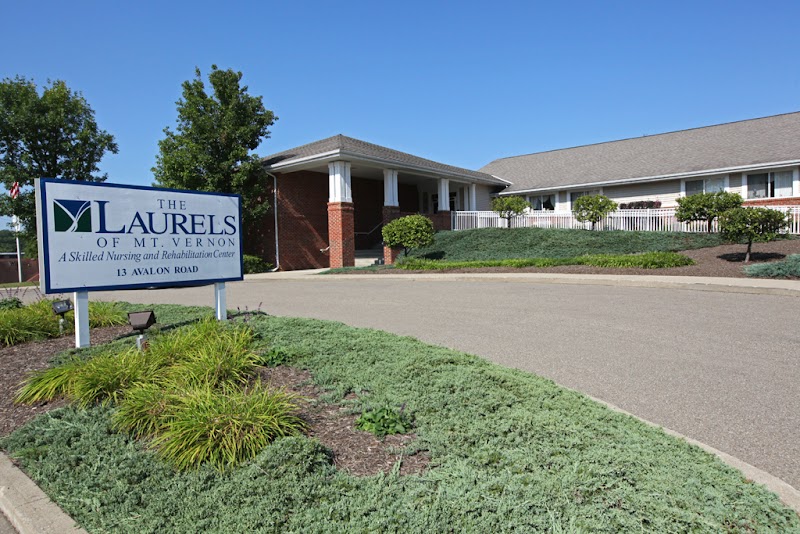
How is Laurels Of Mt Vernon The Staffed?

CMS rates LAURELS OF MT VERNON THE's staffing level at 2 out of 5 stars, which is below average compared to other nursing homes. Staff turnover is 51%, compared to the Ohio average of 46%. RN turnover specifically is 57%, which is notably high. RNs provide skilled clinical oversight, so turnover in this role can affect medical care quality.

What Have Inspectors Found at Laurels Of Mt Vernon The?

State health inspectors documented 35 deficiencies at LAURELS OF MT VERNON THE during 2021 to 2025. These included: 35 with potential for harm.
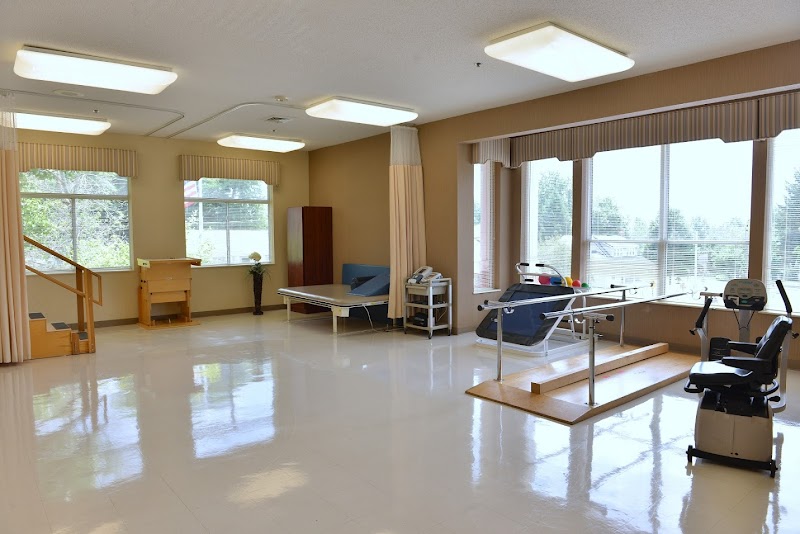
Who Owns and Operates Laurels Of Mt Vernon The?

LAURELS OF MT VERNON THE is owned by a for-profit company. For-profit facilities operate as businesses with obligations to shareholders or private owners. The facility is operated by CIENA HEALTHCARE/LAUREL HEALTH CARE, a chain that manages multiple nursing homes. With 99 certified beds and approximately 92 residents (about 93% occupancy), it is a smaller facility located in MOUNT VERNON, Ohio.
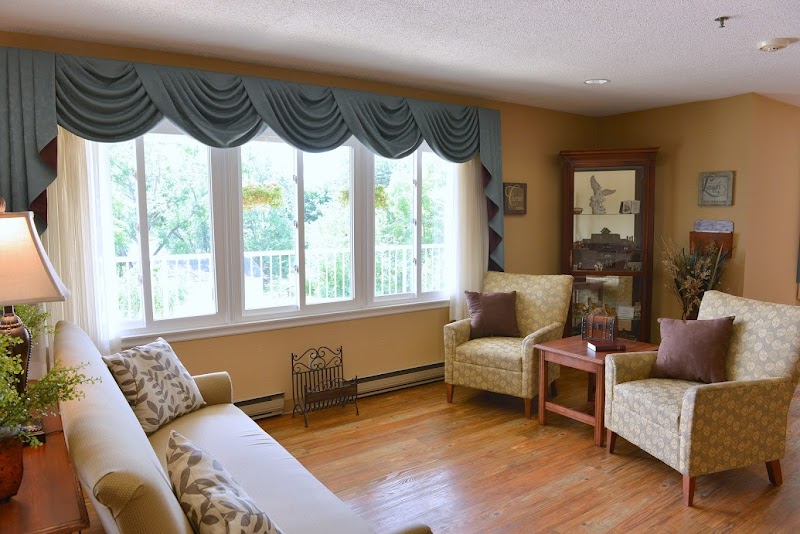
How Does Laurels Of Mt Vernon The Compare to Other Ohio Nursing Homes?

Compared to the 100 nursing homes in Ohio, LAURELS OF MT VERNON THE's overall rating (2 stars) is below the state average of 3.2, staff turnover (51%) is near the state average of 46%, and health inspection rating (2 stars) is below the national benchmark.

What Should Families Ask When Visiting Laurels Of Mt Vernon The?

Based on this facility's data, families visiting should ask: "Can you walk me through typical staffing levels on day, evening, and night shifts?" "Can I visit during a mealtime to observe dining assistance and food quality?" "How do you handle medical emergencies, and what is your hospital transfer rate?" "Can I speak with family members of current residents about their experience?" These questions are particularly relevant given the below-average staffing rating.

Is Laurels Of Mt Vernon The Safe?

Based on CMS inspection data, LAURELS OF MT VERNON THE has a clean safety record: no substantiated abuse findings (meaning no confirmed cases of resident harm), no Immediate Jeopardy citations (the most serious violation level indicating risk of serious injury or death), and is not on the Special Focus Facility watch list (a federal program monitoring the lowest-performing 1% of nursing homes). The facility has a 2-star overall rating and ranks #100 of 100 nursing homes in Ohio. While no facility is perfect, families should still ask about staff-to-resident ratios and recent inspection results during their visit.

Do Nurses at Laurels Of Mt Vernon The Stick Around?

LAURELS OF MT VERNON THE has a staff turnover rate of 51%, which is about average for Ohio nursing homes (state average: 46%). Moderate turnover is common in nursing homes, but families should still ask about staff tenure and how the facility maintains care continuity when employees leave.

Was Laurels Of Mt Vernon The Ever Fined?

LAURELS OF MT VERNON THE has no federal fines on record. CMS issues fines when nursing homes fail to meet care standards or don't correct problems found during inspections. The absence of fines suggests the facility has either maintained compliance or corrected any issues before penalties were assessed. This is a positive indicator, though families should still review recent inspection reports for the full picture.

Is Laurels Of Mt Vernon The on Any Federal Watch List?

LAURELS OF MT VERNON THE is not on any federal watch list. The most significant is the Special Focus Facility (SFF) program, which identifies the bottom 1% of nursing homes nationally based on persistent, serious quality problems. Not being on this list means the facility has avoided the pattern of deficiencies that triggers enhanced federal oversight. This is a positive indicator, though families should still review the facility's inspection history directly.