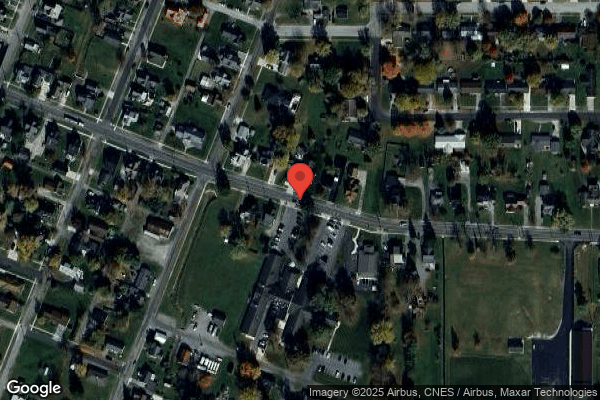
ROSELAWN MANOR

420 EAST FOURTH STREET, SPENCERVILLE, OH 45887 (419) 647-4115
For profit - Corporation 49 Beds HCF MANAGEMENT Data: November 2025
Trust Grade
85/100
#332 of 913 in OH
Last Inspection: July 2023

Over 2 years since last inspection. Current conditions may differ from available data.

Overview

Roselawn Manor in Spencerville, Ohio, has a Trust Grade of B+, which indicates it is above average and recommended for families considering care. It ranks #332 out of 913 facilities in Ohio, placing it in the top half of the state, and #5 out of 11 in Allen County, meaning only four local options are better. The facility is showing an improving trend, having reduced issues from seven in 2019 to five in 2023. Staffing is a notable strength with a rating of 4 out of 5 stars and a turnover rate of only 23%, well below the Ohio average, indicating a stable workforce. Notably, there have been no fines recorded, and the facility has more registered nurse coverage than 92% of other facilities in the state, which is a positive sign for resident care. However, there are some weaknesses to consider. Recent inspections revealed several concerns, including failure to ensure proper hand hygiene during meal preparation, which could affect resident health. Additionally, there were issues regarding the treatment of a pressure ulcer and the administration of enteral nutrition as ordered, indicating lapses in following care plans for some residents. Overall, while Roselawn Manor offers solid staffing and a good environment, families should be aware of these areas needing improvement.

Trust Score
B+
85/100
In Ohio
#332/913
Top 36%
Safety Record
Low Risk
No red flags
Inspections
Getting Better
7 → 5 violations
Staff Stability
✓ Good
23% annual turnover. Excellent stability, 25 points below Ohio's 48% average. Staff who stay learn residents' needs.
Penalties
✓ Good
No fines on record. Clean compliance history, better than most Ohio facilities.
Skilled Nurses
✓ Good
Each resident gets 57 minutes of Registered Nurse (RN) attention daily — more than average for Ohio. RNs are trained to catch health problems early.
Violations
⚠ Watch
12 deficiencies on record. Higher than average. Multiple issues found across inspections.
★★★★☆
4.0
Overall Rating
★★★★☆
4.0
Staff Levels
★★★★☆
4.0
Care Quality
★★★★☆
4.0
Inspection Score
Stable
2019: 7 issues
2023: 5 issues

The Good

  • 4-Star Staffing Rating · Above-average nurse staffing levels
  • 4-Star Quality Measures · Strong clinical quality outcomes
  • Low Staff Turnover (23%) · Staff stability means consistent care
  • Full Sprinkler Coverage · Fire safety systems throughout facility
  • No fines on record
  • Staff turnover is low (23%)

    25 points below Ohio average of 48%

Facility shows strength in staffing levels, quality measures, staff retention, fire safety.

The Bad

Chain: HCF MANAGEMENT

Part of a multi-facility chain

Ask about local staffing decisions and management

The Ugly 12 deficiencies on record

Jul 2023 5 deficiencies
CONCERN (D)

Potential for Harm - no one hurt, but risky conditions existed

Pressure Ulcer Prevention (Tag F0686)

Could have caused harm · This affected 1 resident

**NOTE- TERMS IN BRACKETS HAVE BEEN EDITED TO PROTECT CONFIDENTIALITY** Based on medical record review, staff interview, and policy review, the facility failed to ensure treatments for a pressure ulce...

Read full inspector narrative →
**NOTE- TERMS IN BRACKETS HAVE BEEN EDITED TO PROTECT CONFIDENTIALITY** Based on medical record review, staff interview, and policy review, the facility failed to ensure treatments for a pressure ulcer were provided as ordered. This affected one (Resident #8) of one resident reviewed for pressure ulcers. The facility census was 35. Findings include: Review of the medical record for Resident #8 revealed an admission date of 01/25/23, with medical diagnoses of chronic respiratory failure, chronic obstructive pulmonary disease, congestive heart failure, hypertension, and atherosclerotic heart disease. Review of the Minimum Data Set (MDS) assessment dated [DATE] revealed Resident #8 was cognitively intact and required extensive staff assistance with bed mobility, transfers, incontinence cares, and bathing. Resident #8 was frequently incontinent of bowel, and had an indwelling catheter. Further review of the medical record revealed Resident #8 had a Stage IV pressure ulcer to the sacrum. Review of the Resident #8's physician's orders revealed an order dated 03/15/23 to cleanse sacrum, apply solution soaked kerlix, cover with ABD pad and secure with tape every day and every evening shift. Further review revealed the wound care order was changed on 06/28/23. Review of the March 2023 TAR revealed Resident #8 did not receive treatment to the sacrum pressure ulcer as ordered on 03/05/23, 03/09/23, 03/17/23, 03/26/23, and 03/31/23. Review of the April 2023 TAR revealed Resident #8 did not receive treatments to the sacrum pressure ulcer as ordered on 04/10/23, 04/11/23, 04/14/23, and 04/23/23. Review of the May 2023 TAR revealed Resident #8 did not receive treatments to the sacrum pressure ulcer as ordered on 05/16/23 and 05/20/23. Review of the June TAR revealed Resident #8 did not receive treatments to the sacrum pressure ulcer as ordered on 06/03/23 and 06/27/23. Further review of the medical record for Resident #8 revealed the sacrum wound was evaluated weekly by the wound physician, who documented multiple episodes of debridement of the sacral pressure ulcer from February 2023 to July 2023. Review of the wound physician note dated 07/18/23 revealed Resident #8 had a Stage IV pressure ulcer to sacrum which measured 3.5 cm by 2.7 cm x 3.5 cm and the ulcer had improved. Interview on 07/26/23 at 9:09 A.M. with the Director of Nursing (DON) confirmed Resident #8 did not receive the treatment to his sacral pressure as ordered on the dates stated above in March, April, May, and June 2023. Review of the facility policy, Pressure ulcer, revised April 2016, stated all residents with a pressure ulcer would receive interventions and monitoring to promote healing, prevent infection, and prevent new ulcers from developing.
CONCERN (D)

Potential for Harm - no one hurt, but risky conditions existed

Tube Feeding (Tag F0693)

Could have caused harm · This affected 1 resident

**NOTE- TERMS IN BRACKETS HAVE BEEN EDITED TO PROTECT CONFIDENTIALITY** Based on record review and staff interview, the facility failed to ensure enteral nutrition (tube feeding) was provided as order...

Read full inspector narrative →
**NOTE- TERMS IN BRACKETS HAVE BEEN EDITED TO PROTECT CONFIDENTIALITY** Based on record review and staff interview, the facility failed to ensure enteral nutrition (tube feeding) was provided as ordered by the physician. This affected one (Resident #193) of two residents reviewed for enteral nutrition. The facility census was 35. Findings include: Review of the medical record for Resident #193 revealed an admission date of 06/27/23 with diagnoses of seizures, gastrostomy (an opening in the stomach for a feeding tube) status, and anoxic brain damage. Review of the comprehensive Minimum Data Set assessment dated [DATE] revealed Resident #193 was in a comatose state and was totally dependent on staff for receiving nutrition. Review of the physician order dated 06/27/23 revealed Resident #193 received tube feeding formula Impact Peptide 1.5, 225 milliliters (ml) every four hours via bolus feeding, scheduled at 12:00 A.M., 4:00 A.M., 8:00 A.M., 12:00 P.M., 4:00 P.M., and 8:00 P.M. daily. Review of the administration times of the tube feeding formula from 07/12/23 to 07/25/23 revealed thirteen instances when the tube feeding was administered late: 07/12/23 scheduled at 12:00 A.M., given at 1:17 A.M. 07/13/23 scheduled at 8:00 A.M., given at 11:53 A.M. 07/13/23 scheduled at 4:00 P.M., given at 5:19 P.M. 07/13/23 scheduled at 12:00 A.M., given at 1:47 A.M. 07/14/23 scheduled at 4:00 A.M., given at 6:18 A.M. 07/14/23 scheduled at 8:00 A.M., given at 10:03 A.M. 07/14/23 scheduled at 12:00 P.M., given at 1:25 P.M. 07/15/23 scheduled at 12:00 P.M., given at 1:19 P.M. 07/15/23 scheduled at 4:00 P.M., given at 5:35 P.M. 07/16/23 scheduled at 4:00 P.M., given at 5:19 P.M. 07/19/23 scheduled at 4:00 A.M., given at 6:10 A.M. 07/19/23 scheduled at 12:00 P.M., given at 2:09 P.M. 07/20/23 scheduled at 12:00 P.M., given at 1:28 P.M. Review of Resident #193's weight history revealed no concerns regarding weight changes. Interview on 07/27/23 at 12:15 P.M. with the Director of Nursing (DON) confirmed 13 instances when tube feeding for Resident #193 was given late. Further interview confirmed tube feeding administration times would follow the standard of practice of the medication must be administered within one hour before or after the scheduled time. Review of the facility policy, Specific Procedures for All Medications, revised 10/17/07, revealed no guidance regarding administration times for medications.
CONCERN (D)

Potential for Harm - no one hurt, but risky conditions existed

Medication Errors (Tag F0758)

Could have caused harm · This affected 1 resident

**NOTE- TERMS IN BRACKETS HAVE BEEN EDITED TO PROTECT CONFIDENTIALITY** Based on record review and staff interview, the facility failed to ensure a Gradual Dose Reduction (GDR) was attempted on a psyc...

Read full inspector narrative →
**NOTE- TERMS IN BRACKETS HAVE BEEN EDITED TO PROTECT CONFIDENTIALITY** Based on record review and staff interview, the facility failed to ensure a Gradual Dose Reduction (GDR) was attempted on a psychotropic medication in the past year. This affected one (Resident #2) of five residents reviewed for GDRs. The facility census was 35. Findings include: Review of the medical record for Resident #2 revealed an admission date of 01/18/21 with a diagnosis of depression. Review of the quarterly Minimum Data Set assessment dated [DATE] revealed Resident #2 had severely impaired cognition and received an antidepressant. Review of a physician order dated 01/19/21 revealed Resident #2 received Celexa (an anti-depressant) 20 milligrams (mg) by mouth once daily for depression. Review of a Note to Attending Physician/Prescriber form dated 12/30/21 revealed the pharmacist recommended the physician review Resident #2's order for citalopram (generic Celexa) 20 mg. Further review revealed the physician reviewed and signed the form on 01/06/22 and determined Resident #2 was stable on the current dose and was not appropriate for a GDR at that time. Interview on 07/27/23 at 2:29 P.M. with the Director of Nursing confirmed no recommendation for or attempt of a GDR for Resident #2's Celexa was completed since 01/06/22.
CONCERN (D)

Potential for Harm - no one hurt, but risky conditions existed

Deficiency F0760 (Tag F0760)

Could have caused harm · This affected 1 resident

**NOTE- TERMS IN BRACKETS HAVE BEEN EDITED TO PROTECT CONFIDENTIALITY** Based on record review, staff interview, and review of the facility policy, the facility failed to administer anti-convulsant me...

Read full inspector narrative →
**NOTE- TERMS IN BRACKETS HAVE BEEN EDITED TO PROTECT CONFIDENTIALITY** Based on record review, staff interview, and review of the facility policy, the facility failed to administer anti-convulsant medications per physician order. This affected one (Resident #193) of ten residents reviewed for medication administration. The facility census was 35. Findings include: Review of the medical record for Resident #193 revealed an admission date of 06/27/23 with diagnoses of seizures, gastrostomy (an opening in the stomach for a feeding tube) status, and anoxic brain damage. Review of the comprehensive Minimum Data Set assessment dated [DATE] revealed Resident #193 was in a comatose state and was totally dependent on staff for all activities of daily life. Review of a physician order dated 06/27/23 revealed Resident #193 received phenytoin (an anti-convulsant medication) 125 milligrams (mg) per 5 milliliters (ml) oral suspension, give 10 ml via percutaneous gastrostomy (PEG) tube three times daily for seizures. The doses were scheduled for morning (4:00 A.M. to 6:00 A.M.), lunch (11:00 A.M. to 1:00 P.M.) and evening (8:00 P.M. to 10:00 P.M.). Special instructions were to hold the tube feeding (TF) one hour before and one hour after the dose of phenytoin. Review of a physician order dated 06/27/23 revealed Resident #193 received TF formula Impact Peptide 1.5, 225 ml every four hours via bolus feeding, scheduled at 12:00 A.M., 4:00 A.M., 8:00 A.M., 12:00 P.M., 4:00 P.M., and 8:00 P.M. daily. Further review of the physician orders for Resident #193 revealed an order for Dilantin (phenytoin) laboratory level to be drawn at one month after admission, ordered for 07/28/23. Review of the phenytoin and tube feeding administration times from 07/12/23 through 07/24/23 revealed 21 instances (of 41 opportunities) when phenytoin was given within one hour of the TF: Tube feed given on 07/12/23 at 7:58 P.M. Phenytoin given on 07/12/23 at 8:03 P.M. Tube feed given on 07/13/23 at 11:53 A.M. Phenytoin given on 07/13/23 at 12:03 P.M. Tube feed given on 07/13/23 at 7:50 P.M. Phenytoin given on 07/13/23 at 7:54 P.M. Tube feed given on 07/14/23 at 8:24 P.M. Phenytoin given on 07/14/23 at 8:26 P.M. Tube feed given on 07/15/23 at 1:19 P.M. Phenytoin given on 07/15/23 at 1:21 P.M. Tube feed given on 07/16/23 at 3:52 A.M. Phenytoin given on 07/16/23 at 4:33 A.M. Tube feed given on 07/16/23 at 12:54 P.M. Phenytoin given on 07/16/23 at 12:56 P.M. Tube feed given on 07/16/23 at 7:38 P.M. Phenytoin given on 07/16/23 at 7:41 P.M. Tube feed given on 07/17/23 at 11:28 A.M. Phenytoin given on 07/17/23 at 11:29 A.M. Tube feed given on 07/17/23 at 9:02 P.M. Phenytoin given on 07/17/23 at 9:05 P.M. Tube feed given on 07/18/23 at 3:59 A.M. Phenytoin given on 07/18/23 at 3:59 A.M. Tube feed given on 07/18/23 at 11:48 A.M. Phenytoin given on 07/18/23 at 11:49 A.M. Tube feed given on 07/19/23 at 7:50 P.M. Phenytoin given on 07/19/23 at 7:53 P.M. Tube feed given on 07/20/23 at 1:28 P.M. Phenytoin given on 07/20/23 at 1:30 P.M. Tube feed given on 07/21/23 at 4:16 A.M. Phenytoin given on 07/21/23 at 4:17 A.M. Tube feed given on 07/21/23 at 11:58 A.M. Phenytoin given on 07/21/23 at 11:59 A.M. Tube feed given on 07/22/23 at 12:38 P.M. Phenytoin given on 07/22/23 at 12:38 P.M. Tube feed given on 07/22/23 at 7:23 P.M. Phenytoin given on 07/22/23 at 7:27 P.M. Tube feed given on 07/23/23 at 12:37 P.M. Phenytoin given on 07/23/23 at 12:37 P.M. Tube feed given on 07/23/23 at 8:16 P.M. Phenytoin given on 07/23/23 at 8:20 P.M. Tube feed given on 07/24/23 at 4:02 A.M. Phenytoin given on 07/24/23 at 4:42 A.M. Tube feed given on 07/24/23 at 8:11 P.M. Phenytoin given on 07/24/23 at 8:13 P.M. Review of the progress notes for Resident #193 from admission to current revealed no seizure incidents. Interview on 07/27/23 at 10:34 A.M. with the Director of Nursing confirmed the phenytoin doses and TF administration occurred without holding the TF for one hour before and after phenytoin administration as ordered on 21 occurrences for the above dates and times between 07/12/23 and 07/24/23. Review of the facility policy, Specific Procedures for All Medications, dated 10/17/07, revealed staff should read the medication label instructions three times prior to administration, and follow administration instructions.
CONCERN (E)

Potential for Harm - no one hurt, but risky conditions existed

Food Safety (Tag F0812)

Could have caused harm · This affected multiple residents

**NOTE- TERMS IN BRACKETS HAVE BEEN EDITED TO PROTECT CONFIDENTIALITY** Based on observation, resident interview, staff interview, and review of the facility policy, the facility failed to ensure staf...

Read full inspector narrative →
**NOTE- TERMS IN BRACKETS HAVE BEEN EDITED TO PROTECT CONFIDENTIALITY** Based on observation, resident interview, staff interview, and review of the facility policy, the facility failed to ensure staff performed proper hand hygiene when preparing meals. This specifically affected one (Resident #16) and had the potential to affect all residents in the facility except seven residents (#22, #31, #32, #33, #34, #36, and #193) identified to receive no meals from the kitchen. The facility census was 35. Findings include: Review of the medical record for Resident #16 revealed an admission date of 08/16/18 with diagnoses of anemia and diabetes. Review of the physician order dated 06/21/23 revealed Resident #16 received a Consistent Carbohydrate Diet (CCD) with mechanical soft textures and thin liquids. Review of the quarterly Minimum Data Set assessment dated [DATE] revealed Resident #16 had moderate cognitive impaired and required supervision with setup assistance for eating. No swallowing or weight loss concerns were identified. Observations on 07/26/23 beginning at 11:02 A.M. revealed [NAME] #100 wearing plastic gloves and touching serving utensils for the regular texture chicken and noodles, mechanically altered chicken and noodles, mashed potatoes, green beans, touching plates, and repeatedly opening lids on the steam table. Observation on 07/26/23 at 11:09 A.M. revealed [NAME] #100, wearing the same gloves, opening a bag of hot dog buns, removing a bun from the bag with her gloved hands, opening the bun, and touching the steam table lid to uncover the mechanically altered bratwurst, using a utensil to scoop the bratwurst into the bun, while holding the bun steady with her gloved hand, scooping mashed potatoes onto the plate and handing the plate to the dietary aide to place on the tray cart. Continued observation revealed dietary staff took the cart from the kitchen and delivered it to the hall. Interview on 07/26/23 at 11:11 A.M. with [NAME] #100 confirmed she touched the bun for Resident #16 with the same gloves she had worn while touching serving utensils, plates, and steam table lids. [NAME] #100 further confirmed she should have performed hand hygiene prior to touching Resident #16's ready-to-eat hotdog bun. Further observation revealed [NAME] #100 did not recall Resident #16's meal tray from the tray cart. Observation on 07/26/23 at 11:27 A.M. revealed Resident #16 in his room with a meal tray on his overbed table. Resident #16's plate was empty and spillage from his ground bratwurst was on his gown. Interview at that time with Resident #16 revealed he ate, and enjoyed, the ground bratwurst served in the hotdog bun. Review of the facility policy, Handwashing, revised March 2017, revealed food handlers must wash their hands after touching anything that may contaminate hands, such as dirty equipment, work surfaces, or towels.
Feb 2019 7 deficiencies
CONCERN (D)

Potential for Harm - no one hurt, but risky conditions existed

Free from Abuse/Neglect (Tag F0600)

Could have caused harm · This affected 1 resident

**NOTE- TERMS IN BRACKETS HAVE BEEN EDITED TO PROTECT CONFIDENTIALITY** Based on medical record review, staff interview, review of electronic mail (email) communications, and facility policy review, t...

Read full inspector narrative →
**NOTE- TERMS IN BRACKETS HAVE BEEN EDITED TO PROTECT CONFIDENTIALITY** Based on medical record review, staff interview, review of electronic mail (email) communications, and facility policy review, the facility failed to follow their policy to prevent abuse from occurring for one (#23) of six residents reviewed for abuse. The facility census was 48. Findings include: Review of the medical record for Resident #23 revealed she was admitted to the facility on [DATE]. Diagnoses included saddle embolus of the pulmonary artery, congestive heart failure, chronic obstructive pulmonary disease, maxillary sinusitis, diverticulosis of the large intestine, hypertension and chronic fatigue. Interview on 02/20/19 at 9:31 A.M., Office Manager (BOM) #107 revealed on 01/16/19 Resident #23 came to the business office. She was in her wheelchair and accompanied by her daughter and granddaughter. Resident #23 informed BOM #107 she wanted $50.00 because her daughter and granddaughter needed it to get food. BOM #107 stated the daughter immediately became verbally aggressive, yelling and cussing. The daughter yelled at Resident #23 for saying she wanted the money for her, said she had told her she did not want the money, and saying the resident should not have told BOM #107 the money was for the daughter. The daughter was yelling the money was for Resident #23 and not for her. The daughter was physically aggressive, shaking her finger at both Resident #23 and BOM #107, approaching them in a threatening manner. BOM #107 stated Resident #23 began to cry and appeared to fearful. BOM #107 stated she also felt fearful because of the daughter's aggressive, loud and threatening behavior. BOM #107 stated the resident was holding her hands. She verified she attempted to defuse the angry outburst with calm communication. The daughter continued with the verbal aggression, grabbed Resident #23's wheelchair and forcefully removed Resident #23 from the office. BOM #107 stated Resident #23 was still holding her hands and did not let go of her hands. The daughter pulled on Resident #23's wheelchair so forcefully she dragged both Resident #23 and the BOM out into the hall because Resident #23 held tightly to her hands and did not let go of her. The daughter and granddaughter eventually left the facility without the money. BOM #107 stated Resident #23 later reported her daughter and granddaughter had gone to her room and took her Cheez-its and an apple from her room prior to leaving the facility. BOM stated she reported the incident to the Administrator. Interview with Regional Human Resource Manager (HRM) #190 on 02/20/19 at 10:01 AM. verified she was present in the business office on 01/16/19 at the time of the incident with Resident #23 and her daughter. HRM #190 confirmed the statements by BOM #107. HRM #190 verified the daughter was very threatening, shaking her finger in Resident #23's and BOM #107's face, yelling, cussing and blaming Resident #23 for her and the granddaughter having no food and no money, since the resident admitted to the facility. HRM #190 verified she reported the incident to the Administrator by email. Review of the email from HRM #190 to the Administrator, dated Wednesday, 01/16/19 at 4:49 P.M., revealed HRM #190 wanted to commend BOM #107 for handling the incident which occurred involving Resident #23, her daughter and granddaughter. The email indicated Resident #23's daughter was leering and aggressive, pulling her weeping mother out of the office, with BOM #107 attached to her hands. It was loud and threatening. People came to the hall to see if everything was ok. HRM #190 wrote she stood in support of BOM #107, only to have the daughter [NAME] at her. HRM #190 wrote she can't believe it is good for the resident to go through such anguish. Interview on 02/20/19 at 10:33 A.M., the Director of Nursing (DON) verified the instance of physical and verbal abuse toward Resident #23 by her daughter and of the misappropriation of Resident #23's food. Review of the facility policy titled Abuse, Neglect, Exploitation and Misappropriation of Resident Property Policy, dated 2016, revealed the facility will not tolerate abuse, neglect, exploitation and misappropriation of resident property. This citation substantiates the Complaint Number OH00102458.
CONCERN (D)

Potential for Harm - no one hurt, but risky conditions existed

Abuse Prevention Policies (Tag F0607)

Could have caused harm · This affected 1 resident

**NOTE- TERMS IN BRACKETS HAVE BEEN EDITED TO PROTECT CONFIDENTIALITY** Based on medical record review, staff interview, review of electronic mail (email) communications, and facility policy review, t...

Read full inspector narrative →
**NOTE- TERMS IN BRACKETS HAVE BEEN EDITED TO PROTECT CONFIDENTIALITY** Based on medical record review, staff interview, review of electronic mail (email) communications, and facility policy review, the facility failed to follow their policy to prevent abuse from occurring, to report allegations of abuse to the state survey agency, and to investigate allegations of abuse for one (#23) of six residents reviewed for abuse. The facility census was 48. Findings include: Review of the medical record for Resident #23 revealed she was admitted to the facility on [DATE]. Diagnoses included saddle embolus of the pulmonary artery, congestive heart failure, chronic obstructive pulmonary disease, maxillary sinusitis, diverticulosis of the large intestine, hypertension and chronic fatigue. Interview on 02/20/19 at 9:31 A.M., Office Manager (BOM) #107 revealed on 01/16/19 Resident #23 came to the business office. She was in her wheelchair and accompanied by her daughter and granddaughter. Resident #23 informed BOM #107 she wanted $50.00 because her daughter and granddaughter needed it to get food. BOM #107 stated the daughter immediately became verbally aggressive, yelling and cussing. The daughter yelled at Resident #23 for saying she wanted the money for her, said she had told her she did not want the money, and saying the resident should not have told BOM #107 the money was for the daughter. The daughter was yelling the money was for Resident #23 and not for her. The daughter was physically aggressive, shaking her finger at both Resident #23 and BOM #107, approaching them in a threatening manner. BOM #107 stated Resident #23 began to cry and appeared to fearful. BOM #107 stated she also felt fearful because of the daughter's aggressive, loud and threatening behavior. BOM #107 stated the resident was holding her hands. She verified she attempted to defuse the angry outburst with calm communication. The daughter continued with the verbal aggression, grabbed Resident #23's wheelchair and forcefully removed Resident #23 from the office. BOM #107 stated Resident #23 was still holding her hands and did not let go of her hands. The daughter pulled on Resident #23's wheelchair so forcefully she dragged both Resident #23 and the BOM out into the hall because Resident #23 held tightly to her hands and did not let go of her. The daughter and granddaughter eventually left the facility without the money. BOM #107 stated Resident #23 later reported her daughter and granddaughter had gone to her room and took her Cheez-its and an apple from her room prior to leaving the facility. BOM stated she reported the incident to the Administrator. Interview with Regional Human Resource Manager (HRM) #190 on 02/20/19 at 10:01 AM. verified she was present in the business office on 01/16/19 at the time of the incident with Resident #23 and her daughter. HRM #190 confirmed the statements by BOM #107. HRM #190 verified the daughter was very threatening, shaking her finger in Resident #23's and BOM #107's face, yelling, cussing and blaming Resident #23 for her and the granddaughter having no food and no money, since the resident admitted to the facility. HRM #190 verified she reported the incident to the Administrator by email. Review of the email from HRM #190 to the Administrator, dated Wednesday, 01/16/19 at 4:49 P.M., revealed HRM #190 wanted to commend BOM #107 for handling the incident which occurred involving Resident #23, her daughter and granddaughter. The email indicated Resident #23's daughter was leering and aggressive, pulling her weeping mother out of the office, with BOM #107 attached to her hands. It was loud and threatening. People came to the hall to see if everything was ok. HRM #190 wrote she stood in support of BOM #107, only to have the daughter [NAME] at her. HRM #190 wrote she can't believe it is good for the resident to go through such anguish. Interview on 02/20/19 at 10:33 A.M., the Director of Nursing (DON) verified the facility did not complete an investigation in regard to the alleged physical and verbal abuse toward Resident #23 by her daughter and of the misappropriation of Resident #23's food. The DON verified the facility did not submit a Self-Reported Incident report (SRI) to the state of Ohio. Interview with Corporate Regional Manager (CRM) #189 on 02/20/19 at 11:46 A.M. verified the Administrator was aware of the alleged physical and verbal abuse and misappropriation of Resident #23's food. CRM #189 verified there was no SRI or investigation completed. Review of the facility policy titled Abuse, Neglect, Exploitation and Misappropriation of Resident Property Policy, dated 2016, revealed the facility will not tolerate abuse, neglect, exploitation and misappropriation of resident property. It is the facility policy to investigate all alleged violations, involving abuse, neglect, exploitation, and misappropriation of resident property in accordance with this policy. The facility staff should immediately report all such allegations to the Administrator and to the Ohio Department of Health (ODH) in accordance with the procedures in this policy. The Administrator or a designee will notify ODH of all alleged violations involving abuse, neglect, exploitation and misappropriation of resident property as soon as possible but in no event later than 24 hours from the time the incident/allegation was made known to the staff member. This citation substantiates the Complaint Number OH00102458.
CONCERN (D)

Potential for Harm - no one hurt, but risky conditions existed

Report Alleged Abuse (Tag F0609)

Could have caused harm · This affected 1 resident

**NOTE- TERMS IN BRACKETS HAVE BEEN EDITED TO PROTECT CONFIDENTIALITY** Based on medical record review, staff interview, review of electronic mail (email) communications, and facility policy review, t...

Read full inspector narrative →
**NOTE- TERMS IN BRACKETS HAVE BEEN EDITED TO PROTECT CONFIDENTIALITY** Based on medical record review, staff interview, review of electronic mail (email) communications, and facility policy review, the facility failed to report allegations of abuse to the state survey agency for one (#23) of six residents reviewed for abuse. The facility census was 48. Findings include: Review of the medical record for Resident #23 revealed she was admitted to the facility on [DATE]. Diagnoses included saddle embolus of the pulmonary artery, congestive heart failure, chronic obstructive pulmonary disease, maxillary sinusitis, diverticulosis of the large intestine, hypertension and chronic fatigue. Interview on 02/20/19 at 9:31 A.M., Office Manager (BOM) #107 revealed on 01/16/19 Resident #23 came to the business office. She was in her wheelchair and accompanied by her daughter and granddaughter. Resident #23 informed BOM #107 she wanted $50.00 because her daughter and granddaughter needed it to get food. BOM #107 stated the daughter immediately became verbally aggressive, yelling and cussing. The daughter yelled at Resident #23 for saying she wanted the money for her, said she had told her she did not want the money, and saying the resident should not have told BOM #107 the money was for the daughter. The daughter was yelling the money was for Resident #23 and not for her. The daughter was physically aggressive, shaking her finger at both Resident #23 and BOM #107, approaching them in a threatening manner. BOM #107 stated Resident #23 began to cry and appeared to fearful. BOM #107 stated she also felt fearful because of the daughter's aggressive, loud and threatening behavior. BOM #107 stated the resident was holding her hands. She verified she attempted to defuse the angry outburst with calm communication. The daughter continued with the verbal aggression, grabbed Resident #23's wheelchair and forcefully removed Resident #23 from the office. BOM #107 stated Resident #23 was still holding her hands and did not let go of her hands. The daughter pulled on Resident #23's wheelchair so forcefully she dragged both Resident #23 and the BOM out into the hall because Resident #23 held tightly to her hands and did not let go of her. The daughter and granddaughter eventually left the facility without the money. BOM #107 stated Resident #23 later reported her daughter and granddaughter had gone to her room and took her Cheez-its and an apple from her room prior to leaving the facility. BOM stated she reported the incident to the Administrator. Interview with Regional Human Resource Manager (HRM) #190 on 02/20/19 at 10:01 AM. verified she was present in the business office on 01/16/19 at the time of the incident with Resident #23 and her daughter. HRM #190 confirmed the statements by BOM #107. HRM #190 verified the daughter was very threatening, shaking her finger in Resident #23's and BOM #107's face, yelling, cussing and blaming Resident #23 for her and the granddaughter having no food and no money, since the resident admitted to the facility. HRM #190 verified she reported the incident to the Administrator by email. Review of the email from HRM #190 to the Administrator, dated Wednesday, 01/16/19 at 4:49 P.M., revealed HRM #190 wanted to commend BOM #107 for handling the incident which occurred involving Resident #23, her daughter and granddaughter. The email indicated Resident #23's daughter was leering and aggressive, pulling her weeping mother out of the office, with BOM #107 attached to her hands. It was loud and threatening. People came to the hall to see if everything was ok. HRM #190 wrote she stood in support of BOM #107, only to have the daughter [NAME] at her. HRM #190 wrote she can't believe it is good for the resident to go through such anguish. Interview on 02/20/19 at 10:33 A.M., the Director of Nursing (DON) verified the facility did not submit a Self-Reported Incident report (SRI) to the state of Ohio. Review of the facility policy titled Abuse, Neglect, Exploitation and Misappropriation of Resident Property Policy, dated 2016, revealed the facility will not tolerate abuse, neglect, exploitation and misappropriation of resident property. The facility staff should immediately report all such allegations to the Administrator and to the Ohio Department of Health (ODH) in accordance with the procedures in this policy. The Administrator or a designee will notify ODH of all alleged violations involving abuse, neglect, exploitation and misappropriation of resident property as soon as possible but in no event later than 24 hours from the time the incident/allegation was made known to the staff member. This citation substantiates the Complaint Number OH00102458.
CONCERN (D)

Potential for Harm - no one hurt, but risky conditions existed

Investigate Abuse (Tag F0610)

Could have caused harm · This affected 1 resident

**NOTE- TERMS IN BRACKETS HAVE BEEN EDITED TO PROTECT CONFIDENTIALITY** Based on medical record review, staff interview, review of electronic mail (email) communications, and facility policy review, t...

Read full inspector narrative →
**NOTE- TERMS IN BRACKETS HAVE BEEN EDITED TO PROTECT CONFIDENTIALITY** Based on medical record review, staff interview, review of electronic mail (email) communications, and facility policy review, the facility failed to follow their policy to prevent abuse from occurring for one (#23) of six residents reviewed for abuse. The facility census was 48. Findings include: Review of the medical record for Resident #23 revealed she was admitted to the facility on [DATE]. Diagnoses included saddle embolus of the pulmonary artery, congestive heart failure, chronic obstructive pulmonary disease, maxillary sinusitis, diverticulosis of the large intestine, hypertension and chronic fatigue. Interview on 02/20/19 at 9:31 A.M., Office Manager (BOM) #107 revealed on 01/16/19 Resident #23 came to the business office. She was in her wheelchair and accompanied by her daughter and granddaughter. Resident #23 informed BOM #107 she wanted $50.00 because her daughter and granddaughter needed it to get food. BOM #107 stated the daughter immediately became verbally aggressive, yelling and cussing. The daughter yelled at Resident #23 for saying she wanted the money for her, said she had told her she did not want the money, and saying the resident should not have told BOM #107 the money was for the daughter. The daughter was yelling the money was for Resident #23 and not for her. The daughter was physically aggressive, shaking her finger at both Resident #23 and BOM #107, approaching them in a threatening manner. BOM #107 stated Resident #23 began to cry and appeared to fearful. BOM #107 stated she also felt fearful because of the daughter's aggressive, loud and threatening behavior. BOM #107 stated the resident was holding her hands. She verified she attempted to defuse the angry outburst with calm communication. The daughter continued with the verbal aggression, grabbed Resident #23's wheelchair and forcefully removed Resident #23 from the office. BOM #107 stated Resident #23 was still holding her hands and did not let go of her hands. The daughter pulled on Resident #23's wheelchair so forcefully she dragged both Resident #23 and the BOM out into the hall because Resident #23 held tightly to her hands and did not let go of her. The daughter and granddaughter eventually left the facility without the money. BOM #107 stated Resident #23 later reported her daughter and granddaughter had gone to her room and took her Cheez-its and an apple from her room prior to leaving the facility. BOM stated she reported the incident to the Administrator. Interview with Regional Human Resource Manager (HRM) #190 on 02/20/19 at 10:01 AM. verified she was present in the business office on 01/16/19 at the time of the incident with Resident #23 and her daughter. HRM #190 confirmed the statements by BOM #107. HRM #190 verified the daughter was very threatening, shaking her finger in Resident #23's and BOM #107's face, yelling, cussing and blaming Resident #23 for her and the granddaughter having no food and no money, since the resident admitted to the facility. HRM #190 verified she reported the incident to the Administrator by email. Review of the email from HRM #190 to the Administrator, dated Wednesday, 01/16/19 at 4:49 P.M., revealed HRM #190 wanted to commend BOM #107 for handling the incident which occurred involving Resident #23, her daughter and granddaughter. The email indicated Resident #23's daughter was leering and aggressive, pulling her weeping mother out of the office, with BOM #107 attached to her hands. It was loud and threatening. People came to the hall to see if everything was ok. HRM #190 wrote she stood in support of BOM #107, only to have the daughter [NAME] at her. HRM #190 wrote she can't believe it is good for the resident to go through such anguish. Interview on 02/20/19 at 10:33 A.M., the Director of Nursing (DON) verified the facility did not complete an investigation in regard to the alleged physical and verbal abuse toward Resident #23 by her daughter and of the misappropriation of Resident #23's food. Interview with Corporate Regional Manager (CRM) #189 on 02/20/19 at 11:46 A.M. verified the Administrator was aware of the alleged physical and verbal abuse and misappropriation of Resident #23's food. CRM #189 verified there was no SRI or investigation completed. Review of the facility policy titled Abuse, Neglect, Exploitation and Misappropriation of Resident Property Policy, dated 2016, revealed the facility will not tolerate abuse, neglect, exploitation and misappropriation of resident property. It is the facility policy to investigate all alleged violations, involving abuse, neglect, exploitation, and misappropriation of resident property in accordance with this policy. This citation substantiates the Complaint Number OH00102458.
CONCERN (D)

Potential for Harm - no one hurt, but risky conditions existed

Deficiency F0625 (Tag F0625)

Could have caused harm · This affected 1 resident

**NOTE- TERMS IN BRACKETS HAVE BEEN EDITED TO PROTECT CONFIDENTIALITY** Based on medical record review, staff interview, and review of Bed Hold form, the facility failed to develop a policy regarding ...

Read full inspector narrative →
**NOTE- TERMS IN BRACKETS HAVE BEEN EDITED TO PROTECT CONFIDENTIALITY** Based on medical record review, staff interview, and review of Bed Hold form, the facility failed to develop a policy regarding bed holds upon transfer/discharge and failed to provide notice of bed hold upon transfer/discharge for one (Resident #34) of two residents reviewed for hospitalization. The facility census was 48. Findings include: Review of the medical record for Resident #34 revealed an admission date of 9/25/18. Diagnoses included acute and chronic respiratory failure, heart failure, dysphagia, non-rheumatic aortic stenosis with insufficiency, muscle weakness, acute kidney failure with tubular necrosis, hyperlipidemia, hypertension, anemia, metabolic encephalopathy, pressure ulcer of sacral region stage four, generalized anxiety disorder, hypotension, cognitive communication deficit, major depressive disorder, recurrent, and obstructive sleep apnea. Resident #34 was transferred/discharged on 12/10/18 to the hospital. There was no evidence any bed hold notice was provided to the resident upon transfer/discharge. Interview on 02/20/19 at 2:57 P.M., Resident Services Coordinator (RSC) #165 verified the facility did not provide bed hold notice to Resident #34 before transfer/discharge on [DATE]. RSC #165 stated the facility does not have a bed hold policy, they have a form they give the resident to fill out when they are admitted if they want to bed hold. Review of the Bed Hold form, dated 03/2017, revealed the resident is to choose if their bed is to be held or not held upon transfer/discharge.
CONCERN (D)

Potential for Harm - no one hurt, but risky conditions existed

Pressure Ulcer Prevention (Tag F0686)

Could have caused harm · This affected 1 resident

**NOTE- TERMS IN BRACKETS HAVE BEEN EDITED TO PROTECT CONFIDENTIALITY** Based on observation, record review, staff interview, physician interview, and review of the facility policy, the facility faile...

Read full inspector narrative →
**NOTE- TERMS IN BRACKETS HAVE BEEN EDITED TO PROTECT CONFIDENTIALITY** Based on observation, record review, staff interview, physician interview, and review of the facility policy, the facility failed to accurately assess and document the stage of a pressure ulcer for one (#46) out of three residents review for pressure ulcers. The current census was 48. Findings include: Review of the medical record revealed Resident #46 was admitted to the facility on [DATE]. Diagnoses for Resident #46 included acute and chronic respiratory failure, chronic obstructive pulmonary disease, neuropathy, obesity, pressure ulcer of left buttock unspecified stage, sleep apnea, and anxiety. Review of the physician documentation date 12/26/18 revealed Resident #46's left buttock wound measured 3.6 centimeters (cm) by 2.4 cm with 0.4 cm depth and 2.6 cm area of tunneling. The physician documented the wound as a surrounding deep tissue injury which was purple/maroon. The physician documented the wound as having 50% necrotic tissue with 20% slough. Review of Resident #46's nurse's wound assessment, dated 12/27/18, revealed the wound nurse documented a pressure ulcer on the left buttock measuring 3.6 cm, by 2.4 cm, by 0.4 cm depth and staged as a suspected deep tissue injury. The wound appeared purple/maroon peri-wound with 50% necrotic tissue and 20% slough present. Review of the physician documentation dated 01/30/19 revealed the physician measured the left buttock wound as 4.8 cm by 3.0 cm with 0 cm depth, with 1.2 cm tunneling. No staging or identification of type of wound was noted in the documentation. Review of the resident's nurse wound assessment, dated 01/30/19, described the left buttock wound as measuring 5.5 cm by 3.0 cm by 0 cm depth with no staging documented. Review of Resident #46's care plan dated 01/28/19, revealed a focus for skin breakdown risk and shearing wound. Interventions for the focus included skin assessment and treatments as ordered. Review of the quarterly Minimum Data Set, (MDS) assessment, dated 01/31/19, identified Resident #46 to have intact cognition. Per the MDS assessment the resident was coded has having no unhealed pressure ulcers and no suspected deep tissue injuries. Interview on 02/19/19 at 3:45 P.M., Corporate Registered Nurse (CRN) #188 revealed the physician had not identified Resident #46's buttock wound as a pressure ulcer. CRN #188 indicated the physician stated it was a shearing wound. CRN #188 stated the facility's wound registered nurse was able to stage a pressure ulcer per the nurse's scope of practice. Observation on 02/20/19 at 1:00 P.M. of the dressing change to Resident #46's pressure ulcer by Physician #191 and Case Manager/Wound Nurse (CM) #169 revealed the physician removed the dressing to show a stage three pressure ulcer on the resident's left buttock. The dressing removed from the wound was noted to have scant amount of yellow drainage. The wound bed appeared pink with slough noted around the edges. The physician was observed measuring the wound to the 4.6 cm wide by 3.0 cm length by 0.2 cm deep. The wound appeared to have depth and there was tunnelling at the 7 O ' clock area of the wound. Interview at the time of the observation on 02/20/19 at 1:00 P.M., Physician #191 declined to comment on the stage of the pressure ulcer, only stating it was open with thickness. Interview on 02/20/19 at 4:15 P.M., CM #169 verified the wound had not been staged as a stage three pressure ulcer until 02/20/19. CM #169 verified she was the nurse who originally documented the wound was a suspected deep tissue injury on 12/27/18. Per CM #169 she notified the physician who recommended not staging the pressure ulcer. The wound nurse stated she agreed the wound advanced to a stage three once it opened and met the requirements of a stage three pressure ulcer. Review of the facility policy titled Pressure Ulcer Policy, dated 04/2016, revealed the facility defined a stage three pressure ulcer as a full thickness skin loss involving damage to the subcutaneous tissue that may involve necrosis. Per the policy all residents will be monitored for pressure ulcers and if a pressure ulcer is present will be documented on weekly including the location and staging of the wound. This citation substantiated Complaint Number OH000102458.
CONCERN (D)

Potential for Harm - no one hurt, but risky conditions existed

Infection Control (Tag F0880)

Could have caused harm · This affected 1 resident

**NOTE- TERMS IN BRACKETS HAVE BEEN EDITED TO PROTECT CONFIDENTIALITY** Based on medical record record review, observation, staff interview, and facility policy review, the facility failed to perform...

Read full inspector narrative →
**NOTE- TERMS IN BRACKETS HAVE BEEN EDITED TO PROTECT CONFIDENTIALITY** Based on medical record record review, observation, staff interview, and facility policy review, the facility failed to perform hand hygiene when completing a dressing change. This affected one resident (#34) of two observed for dressing changes. The facility census was 48. Findings include: Review of the medical record for Resident #34 revealed an admission date of 09/25/18. Diagnoses included acute and chronic respiratory failure, acute kidney failure with tubular necrosis, and pressure ulcer of sacral region stage four. Review of the Minimum Data Set (MDS) assessment dated [DATE] revealed the resident was rarely/never understood and had one stage four pressure ulcer which was present upon admission. Review of the current physician orders revealed Resident #34 had orders dated 02/19/19 to cleanse the coccyx wound with normal saline, then pack the wound with silver alginate, skin prep perimeter of wound, cover wound with folded gauze, secure with Medipore tape daily. Observation on 02/20/19 at 10:30 A.M., revealed Physician #191 completed a dressing change for Resident #34. The physician washed his hands, put on gloves, closed the door and removed the old dressing, using the top of the dressing to pull out the wound packing. The old dressing contained serous sanquinous drainage. The physician did not wash his hands or change gloves. He then measured the wound, applied a skin prep around the perimeter of the wound, placed alginate into the wound with tweezers, covered the wound with folded gauze and covered with sterile gauze. Interview on 2/20/19 at 10:35 A.M., Physician #191, verified he did not remove his dirty gloves after removing the old dressing or wash his hands and put new gloves on before cleansing the wound and applying the new dressing. Interview on 2/20/19 at 10:36 A.M., with Case Manager #169 verified they would normally remove gloves and wash hands after removing a dirty dressing. Review of the policy titled Standard Precautions, undated, revealed hands must be thoroughly washed immediately after contact with blood, body fluids or tissues. This deficiency substantiates Complaint Number OH00102458.
Understanding Severity Codes (click to expand)
Life-Threatening (Immediate Jeopardy)
J - Isolated K - Pattern L - Widespread
Actual Harm
G - Isolated H - Pattern I - Widespread
Potential for Harm
D - Isolated E - Pattern F - Widespread
No Harm (Minor)
A - Isolated B - Pattern C - Widespread

Questions to Ask on Your Visit

  • "Can I speak with families of current residents?"
  • "What's your RN coverage like on weekends and overnight?"

Our Honest Assessment

Strengths
  • • Grade B+ (85/100). Above average facility, better than most options in Ohio.
  • • No major safety red flags. No abuse findings, life-threatening violations, or SFF status.
  • • No fines on record. Clean compliance history, better than most Ohio facilities.
  • • 23% annual turnover. Excellent stability, 25 points below Ohio's 48% average. Staff who stay learn residents' needs.
Concerns
  • • 12 deficiencies on record. Higher than average. Multiple issues found across inspections.
Bottom line: Generally positive indicators. Standard due diligence and a personal visit recommended.

About This Facility

What is Roselawn Manor's CMS Rating?

CMS assigns ROSELAWN MANOR an overall rating of 4 out of 5 stars, which is considered above average nationally. Within Ohio, this rating places the facility higher than 99% of the state's 100 nursing homes. This rating reflects solid performance across the metrics CMS uses to evaluate nursing home quality.

How is Roselawn Manor Staffed?

CMS rates ROSELAWN MANOR's staffing level at 4 out of 5 stars, which is above average compared to other nursing homes. Staff turnover is 23%, compared to the Ohio average of 46%. This relatively stable workforce can support continuity of care.

What Have Inspectors Found at Roselawn Manor?

State health inspectors documented 12 deficiencies at ROSELAWN MANOR during 2019 to 2023. These included: 12 with potential for harm.

Who Owns and Operates Roselawn Manor?

ROSELAWN MANOR is owned by a for-profit company. For-profit facilities operate as businesses with obligations to shareholders or private owners. The facility is operated by HCF MANAGEMENT, a chain that manages multiple nursing homes. With 49 certified beds and approximately 41 residents (about 84% occupancy), it is a smaller facility located in SPENCERVILLE, Ohio.

How Does Roselawn Manor Compare to Other Ohio Nursing Homes?

Compared to the 100 nursing homes in Ohio, ROSELAWN MANOR's overall rating (4 stars) is above the state average of 3.2, staff turnover (23%) is significantly lower than the state average of 46%, and health inspection rating (4 stars) is above the national benchmark.

What Should Families Ask When Visiting Roselawn Manor?

Based on this facility's data, families visiting should ask: "Can I visit during a mealtime to observe dining assistance and food quality?" "How do you handle medical emergencies, and what is your hospital transfer rate?" "Can I speak with family members of current residents about their experience?"

Is Roselawn Manor Safe?

Based on CMS inspection data, ROSELAWN MANOR has a clean safety record: no substantiated abuse findings (meaning no confirmed cases of resident harm), no Immediate Jeopardy citations (the most serious violation level indicating risk of serious injury or death), and is not on the Special Focus Facility watch list (a federal program monitoring the lowest-performing 1% of nursing homes). The facility has a 4-star overall rating and ranks #1 of 100 nursing homes in Ohio. While no facility is perfect, families should still ask about staff-to-resident ratios and recent inspection results during their visit.

Do Nurses at Roselawn Manor Stick Around?

Staff at ROSELAWN MANOR tend to stick around. With a turnover rate of 23%, the facility is 23 percentage points below the Ohio average of 46%. Low turnover is a positive sign. It means caregivers have time to learn each resident's needs, medications, and personal preferences. Consistent staff also notice subtle changes in a resident's condition more quickly. Registered Nurse turnover is also low at 17%, meaning experienced RNs are available to handle complex medical needs.

Was Roselawn Manor Ever Fined?

ROSELAWN MANOR has no federal fines on record. CMS issues fines when nursing homes fail to meet care standards or don't correct problems found during inspections. The absence of fines suggests the facility has either maintained compliance or corrected any issues before penalties were assessed. This is a positive indicator, though families should still review recent inspection reports for the full picture.

Is Roselawn Manor on Any Federal Watch List?

ROSELAWN MANOR is not on any federal watch list. The most significant is the Special Focus Facility (SFF) program, which identifies the bottom 1% of nursing homes nationally based on persistent, serious quality problems. Not being on this list means the facility has avoided the pattern of deficiencies that triggers enhanced federal oversight. This is a positive indicator, though families should still review the facility's inspection history directly.