CONTINUING HEALTHCARE AT FOREST HILL
100 RESERVOIR ROAD, ST CLAIRSVILLE, OH 43950 (740) 695-7233
For profit - Corporation 88 Beds CERTUS HEALTHCARE Data: November 2025
Trust Grade
20/100
#852 of 913 in OH
Last Inspection: October 2024

Within standard 12-15 month inspection cycle. Federal law requires annual inspections.

Overview

Continuing Healthcare at Forest Hill has a Trust Grade of F, which indicates significant concerns about the quality of care provided. Ranking #852 out of 913 facilities in Ohio places it in the bottom half, and it's #9 out of 10 in Belmont County, meaning there are few local options that are better. While the facility's trend is improving, with a decrease in reported issues from 25 in 2024 to just 2 in 2025, the overall star rating is still only 1 out of 5, which reflects poor performance. Staffing is rated 2 out of 5, indicating below-average conditions, with a turnover rate of 56%, which is near the state average. Although there have been no fines recorded, which is a positive sign, there are serious incidents of concern. For example, one resident received the wrong medications and required emergency treatment due to complications. Another resident developed finger contractures because they did not receive necessary range-of-motion care, leading to pain during procedures. These incidents highlight both the facility's struggles and the need for families to carefully consider their options when choosing care for their loved ones.

Trust Score
F
20/100
In Ohio
#852/913
Bottom 7%
Safety Record
High Risk
Review needed
Inspections
Getting Better
25 → 2 violations
Staff Stability
⚠ Watch
56% turnover. Above average. Higher turnover means staff may not know residents' routines.
Penalties
✓ Good
No fines on record. Clean compliance history, better than most Ohio facilities.
Skilled Nurses
○ Average
Each resident gets 30 minutes of Registered Nurse (RN) attention daily — about average for Ohio. RNs are the most trained staff who monitor for health changes.
Violations
⚠ Watch
54 deficiencies on record. Higher than average. Multiple issues found across inspections.
★☆☆☆☆
1.0
Overall Rating
★★☆☆☆
2.0
Staff Levels
★★★☆☆
3.0
Care Quality
★☆☆☆☆
1.0
Inspection Score
Stable
2024: 25 issues
2025: 2 issues

The Good

  • Full Sprinkler Coverage · Fire safety systems throughout facility
  • No fines on record

Facility shows strength in fire safety.

The Bad

1-Star Overall Rating

Below Ohio average (3.2)

Significant quality concerns identified by CMS

Staff Turnover: 56%

Near Ohio avg (46%)

Frequent staff changes - ask about care continuity

Chain: CERTUS HEALTHCARE

Part of a multi-facility chain

Ask about local staffing decisions and management

Staff turnover is elevated (56%)

8 points above Ohio average of 48%

The Ugly 54 deficiencies on record

3 actual harm
Jun 2025 2 deficiencies 1 Harm
SERIOUS (G) 📢 Someone Reported This

A family member, employee, or ombudsman was alarmed enough to file a formal complaint

Actual Harm - a resident was hurt due to facility failures

Deficiency F0760 (Tag F0760)

A resident was harmed · This affected 1 resident

**NOTE- TERMS IN BRACKETS HAVE BEEN EDITED TO PROTECT CONFIDENTIALITY** Based on medical record review, policy review, review of medication error reports and interview, the facility failed to ensure m...

Read full inspector narrative →
**NOTE- TERMS IN BRACKETS HAVE BEEN EDITED TO PROTECT CONFIDENTIALITY** Based on medical record review, policy review, review of medication error reports and interview, the facility failed to ensure medications were administered without significant error. Actual harm occurred on 06/06/25 when Resident #10, who had moderately impaired cognition and was dependent of staff to prepare and administer medications, received medications prescribed for another resident that included cardiac medications that lower the heart rate and blood pressure, medication to prevent platelets from clumping together, medication to treat gout and antianxiety medications. This resulted in the resident experiencing a change in condition requiring transport to the emergency room. The resident was subsequently admitted and treated for hypotension (low blood pressure) and bradycardia (low pulse) with intravenous fluids and an overnight hospital stay for monitoring secondary to the medication error after receiving incorrect medication that was prescribed for another resident. This affected one resident (#10) of two residents reviewed for medication errors. Findings include: Review of Resident #10's medical record revealed diagnoses including muscle wasting, osteoarthritis, hypertensive heart disease with heart failure, depression, Vitamin B12 deficiency anemia, pain, hyperlipidemia, and hypothyroidism. Resident #10 had no known allergies. A quarterly Minimum Data Set (MDS) assessment dated [DATE] revealed Resident #10 was usually able to make herself understood, was usually able to understand others, and was moderately cognitively impaired. Review of the monthly blood pressures recorded between December 2024 and June 2025 revealed the following: 12/04/24 was 127/72 millimeters of mercury (mm Hg) (normal blood pressure is 120/80 mm Hg). 01/01/25 was 134/78 mmHg 02/01/25 was 132/80 mmHg 03/02/25 was 126/74 mmHg 04/02/25 was 122/80 mmHg 05/03/25 was 163/88 mmHg Review of monthly pulses recorded between December 2024 and June 2025 revealed the following: 12/11/24 was 70 beats per minute (bpm) with normal range 60-90 bpm) 01/01/25 was 78 bpm 02/01/25 was 76 bpm 03/02/25 was 80 bpm 04/02/25 was 76 bpm 05/03/25 was 82 bpm Review of a medication error report dated 06/06/25 revealed Resident #10 received another resident's medications in the morning. Medications listed were Allopurinol, Buspar, ferrous sulfate, isosorbide mononitrate, losartan, metoprolol succinate, Plavix and Tylenol. The physician was notified at 10:15 A.M. The type of medication error was the wrong medication given due to failure to identify the resident. A nursing note dated 06/06/25 at 11:17 A.M. indicated Resident #10 received allopurinol (used to reduce uric acid production in the body), Buspar (anti-anxiety), ferrous sulfate (iron), isosorbide mononitrate (anti-anginal), losartan (angiotensin receptor blocker used to lower blood pressure), metoprolol succinate (beta blocker that affects the heart and circulation), Plavix (anti-platelet) and Tylenol. The doctor was notified with new orders were received to monitor vital signs and mental status. Neuro checks were initiated immediately, and an order was noted to send Resident #10 to the emergency room for an evaluation. A nursing note dated 06/06/25 at 12:45 P.M. indicated Resident #10 was administered the wrong medication. The note included vital signs were stable and no signs of altered mental status were noted. An eINTERACT Transfer Form dated 06/06/25 indicated the nurse practitioner ordered to send Resident #10 to the emergency room (ER) for an evaluation. Vital signs included temperature 97.3 degrees Fahrenheit, pulse 110 (bpm), respirations 18 and blood pressure 123/86 (mmHg). Oxygen saturation was 92% on room air (normal 92-100% on room air/without oxygen). Resident #10 was not on anticoagulants and had no known allergies. No changes were observed in mental status or functional status. The clinician was notified on 06/06/25 at 10:00 A.M. A nursing note dated 06/06/25 at 2:29 P.M. indicated Resident #10 left the facility via squad for the hospital at 12:25 P.M. A nursing note dated 06/06/25 at 2:30 P.M. indicated Resident #10 was being admitted to the hospital for overnight observation. Review of Resident #10's physician orders revealed none of the medications Resident #10 was administered in error on 06/06/25 were ordered for the resident. A hospital admission history and physical dated 06/06/25 revealed Resident #10 presented to the emergency room with hypotension (decreased blood pressure). The hospital record included, unfortunately she was given another resident's medication including allopurinol 200 milligrams (mg), Buspar 5 mg, Plavix 75 mg, isosorbide 60 mg, losartan 100 mg, metoprolol 100 mg, and Tylenol 650 mg. Resident #10 became lethargic, bradycardic, and hypotensive so Emergency medical services (EMS) was called. Upon examination, Resident #10 was easily awakened but spoke nonsensically which was reportedly her baseline. Resident #10 was able to move her extremities and denied any pain. On 06/06/25 at 3:30 P.M., a blood pressure (BP) of 81/45 and pulse of 56 was recorded. On 06/06/25 at 3:45 P.M. a BP of 99/54 and pulse of 48 was recorded. On 06/06/25 at 4:00 P.M. a BP of 87/55 and pulse of 47 was recorded. On 06/06/25 at 4:15 P.M. a pulse of 47 was recorded. A note indicated Resident #10 had hypotension throughout her ER stay but was improving with intravenous (IV) fluids. The bradycardia (low heart rate) was likely due to administration of the beta blocker medication (in error). The plan was to admit the resident for overnight observation and continue IV fluids. A hospital note dated 06/06/25 at 1:13 P.M. indicated Resident #10 presented via ambulance from the nursing home for complaints of hypotension and bradycardia with lethargy. Staff stated Resident #10 was accidentally administered medication ordered for a different resident. The medications included isosorbide, losartan and metoprolol. Hospital discharge records revealed admitting diagnosis of accidental medication overdose with multiple hypotensive medications. The resident presented (to the emergency room) with hypotension and bradycardia. A nursing note dated 06/07/25 at 1:09 P.M. indicated Resident #10 returned from the hospital. Resident #10 was in observation for lethargy and hypotension. Resident #10 received IV fluids for low blood pressure and pulse. On 06/25/25 at 2:50 P.M., the Administrator verified the medication error on 06/06/25 was identified before the nurse (LPN #130) administered Resident #10's medication to the other resident. The NP was notified, and Resident #10 was sent to the ER for evaluation. On 06/25/25 at 5:38 P.M., Licensed Practical Nurse (LPN) #130 verified the medication errors occurred after she failed to identify the correct resident prior to administering the medication. Review of the facility's Medication Administration and Documentation policy (revised 06/26/24) revealed medications may only be administered to the resident for whom they were prescribed. Prior to and during administration, the nurse must observe the 5 rights of medication administration including administering the medication to the right person. This deficiency represents non-compliance investigated under Complaint Number OH00166414.
CONCERN (D) 📢 Someone Reported This

A family member, employee, or ombudsman was alarmed enough to file a formal complaint

Potential for Harm - no one hurt, but risky conditions existed

Unnecessary Medications (Tag F0759)

Could have caused harm · This affected 1 resident

Based on observation, record review, medication information review, policy review and interview, the facility failed to administer medication as ordered and/or in accordance with acceptable standards ...

Read full inspector narrative →
Based on observation, record review, medication information review, policy review and interview, the facility failed to administer medication as ordered and/or in accordance with acceptable standards of practice. Three errors out of 28 opportunities were identified resulting in a 10.7% medication error rate. This affected one (Resident #5) of five residents observed for medication administration. Findings include: On 06/26/25 at 8:01 A.M., Licensed Practical Nurse (LPN) #100 was observed administering medication to Resident #5. Medications administered included two tablets of Potassium Chloride extended release (ER) 10 milliequivalents (meq) and one tablet of verapamil ER 240 milligrams (mg) (calcium channel blocker used to treat high blood pressure and angina). The tablets were crushed and added to other crushed medications. Review of Resident #5's physician orders revealed in addition to medication administered, Resident #5 had an order for PreserVision AREDS (multivitamin with minerals) one tablet in the morning. On 06/26/25 at 8:03 A.M., LPN #100 verified she crushed extended release tablets of potassium chloride and verapamil, stating Resident #5 could not consume the pills whole. LPN #100 stated her understanding was Resident #5 crushed the pills for consumption at home also. LPN #100 was unaware if anybody had inquired of the physician if alternate forms of the drugs were available or if alternates would be more appropriate. At 8:38 A.M., LPN #100 stated after speaking to Resident #5 she was willing to try to take the extended release tablets without crushing them. At 11:34 A.M., LPN #100 verified she had not administered the PreserVision AREDS tablet as ordered, stating she had none available on the medication cart. At that time, she inquired of LPN #110 if she had any on her medication cart. On 06/26/25 at 1:25 P.M., Registered Nurse (RN) #120 verified extended release tablets were not generally supposed to be crushed. RN #120 provided a hospital inpatient swallowing discharge summary for service provided to Resident #5 on 01/03/25 which indicated Resident #5 was taking pills crushed in applesauce/pudding (if crushable). Review of medication information from Medscape revealed consideration should be given to use liquid potassium if a resident had difficulty swallowing. Review of the verapamil extended release manufacturer guideline revealed tablets should be swallowed whole and not chewed, broken, or crushed. This deficiency represents non-compliance investigated under Complaint Number OH00166414.
Oct 2024 21 deficiencies
CONCERN (D)

Potential for Harm - no one hurt, but risky conditions existed

Deficiency F0561 (Tag F0561)

Could have caused harm · This affected 1 resident

**NOTE- TERMS IN BRACKETS HAVE BEEN EDITED TO PROTECT CONFIDENTIALITY** Based on medical record review, review of shower schedules, and interview, the facility failed to ensure bathing preferences wer...

Read full inspector narrative →
**NOTE- TERMS IN BRACKETS HAVE BEEN EDITED TO PROTECT CONFIDENTIALITY** Based on medical record review, review of shower schedules, and interview, the facility failed to ensure bathing preferences were honored. This affected one (Resident #178) of 14 residents interviewed related to choices. Findings include: Review of Resident #178's medical record revealed diagnoses including left hip fracture, depression, and type two diabetes mellitus. An assessment for Preference for Everyday Living (PELI) dated 10/07/24 revealed it was somewhat important for Resident #178 to choose between a tub bath, shower, bed bath or sponge bath. Resident #178 preferred a tub bath with no preference for bathing time. An admission Minimum Data Set (MDS) assessment dated [DATE] indicated Resident #178 was able to make herself understood and was able to understand others. Resident #178 was assessed as cognitively intact. Review of an Interdisciplinary team (IDT) note dated 10/18/24 revealed Resident #178 required substantial/maximal assistance with bathing. Review of shower schedules revealed Resident #178 was scheduled to receive showers on day shift on Mondays, Wednesdays and Fridays. Review of bathing records revealed Resident #178 received a shower on 10/14/24. There was no evidence of bathing being offered 10/21/24 or 10/25/24. Documentation only revealed bathing activities were offered one day between 10/20/24 and 10/26/24. On 10/21/24 at 3:14 P.M., Resident #178 indicated she preferred to receive bed baths but staff had provided showers instead. Resident #178 stated she was not bathed with the frequency requested and she had been bathed about twice a week. On 10/28/24 at 11:45 A.M., the Director of Nursing (DON) verified she was unable to locate evidence of bathing being offered to Resident #178 on 10/21/25 or 10/25/25 and that documentation revealed Resident #178 did receive one shower. On 10/28/24 at 7:37 A.M., the DON verified residents had the right to choose the type of bath they received. The DON verified Resident #178 preferred bed baths.
CONCERN (D)

Potential for Harm - no one hurt, but risky conditions existed

Deficiency F0578 (Tag F0578)

Could have caused harm · This affected 1 resident

**NOTE- TERMS IN BRACKETS HAVE BEEN EDITED TO PROTECT CONFIDENTIALITY** Based on medical record review, policy review and interview, the facility failed to ensure advanced directives were accurate. Th...

Read full inspector narrative →
**NOTE- TERMS IN BRACKETS HAVE BEEN EDITED TO PROTECT CONFIDENTIALITY** Based on medical record review, policy review and interview, the facility failed to ensure advanced directives were accurate. This affected one (#59) of 24 residents reviewed for advanced directives. The census was 75. Findings include: Medical record review revealed Resident #59 was admitted on [DATE] with diagnoses including cerebral infarction. Review of the medical record revealed no Advanced Directive form for review. Review of the Baseline Care Plan (dated [DATE]) revealed Resident #59 was a Full Code (a medical directive that indicates that a resident should receive all possible medical care to save their life in the event of a medical emergency). Review of Nurse Practitioner #901's History and Physical (dated [DATE]) revealed Resident #59 was a Full Code. Review of the electronic medical record, including the Physician Orders as of [DATE], indicated Resident #59 was a DNR-CCA (Do-Not-Resuscitate Comfort Care Arrest which is a medical abbreviation that allows residents to receive aggressive interventions to extend their life until they experience cardiac or respiratory arrest. After the cardiac or respiratory arrest, the resident will only receive comfort care). On [DATE] at 12:39 P.M., interview with Assistant Director of Nursing (ADON) #541 stated Resident #59 was a full code and had been out to the hospital many times. ADON #541 stated there should be a signed code status in the chart and staff were to go to the hard chart to verify code status prior to initiation of cardiopulmonary resuscitation (CPR), but the code status was also in the electronic physician orders. ADON #541 verified Resident #59's physician orders indicated Resident #59 was a DNR-CCA but the medical record did not contain an advanced directive form indicating the resident was a DNR-CCA status. On [DATE] at 3:23 P.M., interview with ADON #541 stated Resident #59's family did request to change the resident's code status on [DATE] to a DNR-CCA; however, the Ohio Advanced Directive paperwork had not yet been signed by the physician or family. ADON #541 verified until the physician signed DNR paperwork was in the resident's chart, the resident's code status would be a Full Code. Review of the PT (Physical Therapy) Evaluation and Plan of Treatment (dated [DATE]) revealed Resident #59 code status was a Full Code. As of [DATE], review of the medical record revealed no documented evidence of a signed Ohio Advanced Directive. Review of the policy: Advanced Directive Guidance (revised [DATE]) revealed all residents without advanced directives will be treated as Full Codes. If the resident wants to decide their advanced directives after speaking to the nurse, physician, or advanced nurse practitioner, a nurse or social service will initiate an Ohio Advanced Directive form with the resident signature. If the resident is unable to sign, the appointed resident representative may sign. The Ohio Advanced Directive form will need to be fully executed by the resident's physician, then a nurse will obtain a physician order following the advanced directive wishes of the resident. The advanced directive order will be entered into the resident's electronic health record. The advanced directive physician's order in the electronic health record will be the primary source the nurses will follow during a code blue situation. This can be found immediately when accessing the resident's electronic record. The Director of Nursing or designee will be responsible for reporting on auditing and managing each Ohio Advanced Directive fully executed form with each resident's advanced directive physician's order.
CONCERN (D)

Potential for Harm - no one hurt, but risky conditions existed

Transfer Requirements (Tag F0622)

Could have caused harm · This affected 1 resident

**NOTE- TERMS IN BRACKETS HAVE BEEN EDITED TO PROTECT CONFIDENTIALITY** Based on record review and interview the facility failed to ensure comprehensive information was conveyed to the receiving healt...

Read full inspector narrative →
**NOTE- TERMS IN BRACKETS HAVE BEEN EDITED TO PROTECT CONFIDENTIALITY** Based on record review and interview the facility failed to ensure comprehensive information was conveyed to the receiving health care provider and documented as such in the medical record. This affected one (Resident #52) of two residents reviewed for hospitalization. Findings included: Record review revealed Resident #52 was initially admitted to the facility on [DATE] with diagnosis including metabolic encephalopathy, urinary tract infection, Parkinson's disease, cognitive communication deficit, attention and concentration deficit, dementia, major depression, anxiety, and benign prostatic hyperplasia without lower urinary tract symptoms. Review of Resident #52's census tab from 06/01/24 to 10/18/24 revealed the resident was transferred and admitted to the hospital on [DATE], 08/11/24, 09/26/24, and 10/13/24. The resident was transferred to the hospital on [DATE], however was not admitted to the hospital and returned to the facility. Further review of Resident #52's medical record revealed no documented evidence all the required information (including but not limited to physician contact information, resident representative contact information. advanced directives (code status), all special instructions and/or precautions for ongoing care, as appropriate; and all other information necessary to meet the resident's needs) was documented and conveyed to the receiving provider for the hospital transfers that occurred on 06/13/24, 08/11/24, 09/06/24, 09/26/24, and 10/13/24. Interview on 10/29/24 at 7:48 A.M., with Registered Nurse (RN) #714 confirmed there was no documented evidence all the required information was conveyed to the hospital on [DATE], 08/11/24, 09/06/24, 09/26/24, and 10/13/24. The RN reported the facility has an assessment tool/form that staff were to complete with each transfer with all the required information, however the staff did not complete the assessment form for 06/13/24, 08/11/24, 09/06/24, 09/26/24, or 10/13/24 transfers. Interview on 10/29/24 at 9:42 A.M. with RN #714 confirmed the facility did not have a policy or procedure for transfer, however the facility would follow the regulation.
CONCERN (D)

Potential for Harm - no one hurt, but risky conditions existed

Deficiency F0661 (Tag F0661)

Could have caused harm · This affected 1 resident

Based on medical record review and staff interview, the facility failed to ensure a discharge summary of a resident stay was completed following discharge from the facility. This affected one (Residen...

Read full inspector narrative →
Based on medical record review and staff interview, the facility failed to ensure a discharge summary of a resident stay was completed following discharge from the facility. This affected one (Resident #75) of one residents reviewed for discharge. The facility census was 75. Findings include: Review of Resident #75's medical record revealed an admission date of 08/02/24 with diagnoses that included congestive heart failure, atherosclerotic heart disease, hypertension and hyperlipidemia. Further review of the medical record revealed on 08/16/24 Resident #75 was discharged to the assisted living facility connected to the facility. Review of the discharge summary revealed no evidence of completion by the nursing or dietary departments. On 10/28/24 at 10:41 A.M. interview with the Director of Nursing verified Resident #75's discharge summary was not completed thoroughly.
CONCERN (D)

Potential for Harm - no one hurt, but risky conditions existed

ADL Care (Tag F0677)

Could have caused harm · This affected 1 resident

**NOTE- TERMS IN BRACKETS HAVE BEEN EDITED TO PROTECT CONFIDENTIALITY** 3. Medical record review revealed Resident #54 was admitted on [DATE] with diagnoses including Creutzfeldt-[NAME] disease (rare ...

Read full inspector narrative →
**NOTE- TERMS IN BRACKETS HAVE BEEN EDITED TO PROTECT CONFIDENTIALITY** 3. Medical record review revealed Resident #54 was admitted on [DATE] with diagnoses including Creutzfeldt-[NAME] disease (rare brain disease), diabetes mellitus type-2, anxiety disorder and dementia. Review of the quarterly MDS 3.0 assessment (dated 09/04/24) revealed Resident #54 was severely impaired for daily decision-making. Review of the South Shower list revealed Resident #54 was to receive his showers on Tuesday, Thursday and Sunday on dayshift. Review of the Task: Self-Care Shower/bathe self (assessment reference date 09/13/24) revealed Resident #54 required substantial/maximal assistance on 09/07/24 to complete the task and was dependent on staff completing the task on 09/08/24, 09/09/24, 09/11/24 and 09/12/24. Review of Resident #54's Shower Sheets and Bathing Task (dated August 2024 through October 2024) revealed no documented evidence a bath/shower/hygiene was completed as scheduled on 08/13/24, 09/10/24, 09/15/24, 09/26/24, 09/29/24, 10/01/24 or 10/15/24. On 10/21/24 at 2:28 P.M., observation revealed Resident #54's hair was disheveled and oily. [NAME] hair and dirty fingernails were also observed. On 10/23/24 at 9:01 A.M., interview with CNA #565 verified Resident #54 required assistance and cues with all activities of daily living. On 10/23/24 at 9:35 A.M., interview with Licensed Practical Nurse (LPN) #572 verified bath/shower/hygiene should be done as scheduled and were not completed as scheduled. On 10/23/24 at 9:44 A.M., Resident #54 was observed with facial hair. On 10/24/24 at 7:40 A.M., observation revealed Resident #54 had heavy facial hair stubble. On 10/24/24 at 10:20 A.M., interview with regional Regional Nurse #714 verified there was no evidence Resident #54's showers were completed as required and there was no additional information to provide. Review of the policy: Personal Care (revised August 2023) revealed a shower was typically scheduled twice a week unless the resident request additional showers. A bed bath should be offered or encouraged on days a resident does not get a shower and assist as needed to shave, comb/brush hair etc. If a resident refuses after repeated attempts to shower or bathe, notify the charge nurse. Based on observations, medical record review, review of shower schedules and interview, the facility failed to provide hygiene and/or grooming for three (Residents #29, #54, and #73) of 24 residents screened for hygiene/grooming. Findings include: 1. Review of Resident #73's medical record revealed diagnoses including metabolic encephalopathy (a condition in which brain function is disturbed by diseases or toxins in the body), Parkinson's disease, fracture of the fourth metacarpal of the left hand, and neurocognitive disorder. A baseline care plan dated 09/18/24 indicated Resident #73 was to be assisted with bathing as needed. An admission Minimum Data Set (MDS) assessment dated [DATE] indicated Resident #73 was usually understood and usually understood others. Resident #73 was assessed as moderately cognitively impaired. No rejection of care was documented. Resident #73 required substantial/maximal assistance with bathing and partial/moderate assistance with personal hygiene. a. The medical record revealed no evidence the resident refused to be shaved in October 2024. Observations on 10/21/24 at 10:40 A.M., on 10/22/24 at 10:54 A.M. and 1:04 P.M., and on 10/23/24 at 8:41 A.M., 12:24 P.M., and 5:25 P.M. revealed Resident #73 was unshaven. On 10/23/24 at 9:14 A.M., Certified Nursing Assistant (CNA) #514 verified Resident #73 was unshaven. CNA #514 reported residents were generally shaved during showers and Resident #73 needed staff to assist with shaving. CNA #514 reported Resident #73 was compliant with care but was unable to state when he last had a shower. b. An assessment for Preference for Everyday Living (PELI) dated 10/22/24 revealed it was very important for Resident #73 to choose between a tub bath, shower, bed bath or sponge bath. Resident #73 preferred a tub bath in the mornings. Review of the shower schedule revealed Resident #73 was on a list for showers/baths every day. Review of shower records since 10/01/24 revealed no evidence showers/baths were offered on 10/05/24, 10/10/24 or 10/21/24. On 10/23/24 at 1:55 P.M., the Director of Nursing (DON) verified there was no documented evidence of baths/shower being offered on 10/05/24, 10/10/24, or 10/21/24. 2. Review of Resident #29's medical record revealed diagnoses including anxiety disorder, asthma, chronic obstructive pulmonary disease, osteoarthritis, and type two diabetes mellitus. A baseline care plan dated 10/04/23 indicated Resident #29 needed assistance with bathing and transfers as needed and indicated the use of a mechanical lift for transfers. A physician order dated 09/03/24 revealed Resident #29 had an order for hoyer lifts for all transfers. Review of shower schedules revealed Resident #29 was scheduled to get a shower on dayshift on Mondays and Thursdays. Review of bathing records since 09/01/24 revealed no evidence of showers being offered on 09/23/24, 09/26/24, and 09/30/24. Documentation revealed Resident #29 refused bathing and documented no hoyer batteries on 10/17/24. During an interview on 10/21/24 at 11:56 A.M., Resident #29 reported she was scheduled to receive showers on Mondays and Thursdays. Resident #29 reported she did not receive a shower since 10/14/24 because staff were unable to find a working battery for the mechanical lift. Resident #29's hair had an oily appearance . On 10/23/24 at 8:50 A.M., CNA #597 verified she was assigned to care for Resident #29 on 10/17/24. Resident #29 was willing to take a shower but there was no batteries charged to transfer her. CNA #597 reported a bed bath was offered and refused. On 10/23/24 at 12:00 P.M., the lack of evidence of showers being offered on 09/23/24, 09/26/24 and 09/30/24 was discussed with the DON. No additional information was provided to prove Resident #29 received showers as scheduled/per plan of care.
CONCERN (D)

Potential for Harm - no one hurt, but risky conditions existed

Pressure Ulcer Prevention (Tag F0686)

Could have caused harm · This affected 1 resident

**NOTE- TERMS IN BRACKETS HAVE BEEN EDITED TO PROTECT CONFIDENTIALITY** Based on medical record review, observations, interviews, and policy review the facility failed to ensure a decline in pressure ...

Read full inspector narrative →
**NOTE- TERMS IN BRACKETS HAVE BEEN EDITED TO PROTECT CONFIDENTIALITY** Based on medical record review, observations, interviews, and policy review the facility failed to ensure a decline in pressure ulcer was timely identified and adequately treated. This affected one (Resident #15) of two residents reviewed for pressure ulcers. Findings included: Medical record review revealed Resident #15 was admitted to the facility on [DATE] with diagnosis including cognitive communication deficit, heart failure, and vascular dementia. Review of Resident #15's current plan of care revealed the resident had pressure ulcers (left and right heel) related to mobility, dementia, edema, weakness, and chronic heart failure. Interventions included to monitor, document, and report to physician any changes in skin status (appearance, color, wound healing, signs and symptoms of infection and wound size). Notify nurse immediately of any new areas of skin breakdown noted during bath or daily care. Review of Resident #15's pressure ulcer assessment dated [DATE] revealed the left heel was a stage I (intact skin with non-blanchable redness) measuring 0.4 centimeters (cm) by 0.7 cm and depth was undetermined. The area was consisting of non-blanchable tissue. There were no signs of infection, no pain, no drainage. The peri wound was flesh tone. The area was cleansed with normal saline, and heel floated off the bed. The pressure ulcer was facility acquired. Observation on 10/22/24 at 11:35 P.M. of Resident #15 with Certified Nursing Assistant (CNA) #558 confirmed the resident had a scabbed area the size of a pea on the right heel. Observation on 10/23/24 at 8:08 A.M., of Resident #15 with Registered Nurse (RN) #574 and the visiting wound Nurse Practitioner (NP) #716. revealed the area on the right heel was a stage I and now the right heel was a suspected deep tissue injury (purple or maroon localized area of discolored intact skin or blood-blister). RN #574 confirmed staff had not reported the decline to her. The area measured 0.4 cm by 0.6 cm and depth was undetermined. The area was cleaned with normal saline and a foam dressing applied. Review of Resident #15's pressure ulcer assessment dated [DATE] revealed the facility acquired pressure ulcer to the right heel had deteriorated. The area measured 0.4 cm by 0.6 cm and depth was undetermined. The area was now a suspected deep tissue injury. Review of the facility's policy and procedure titled Wound Care dated 10/2021 revealed to review the resident's care plan to assess for any special needs of the resident. The following information may be recorded in the resident medical record: the type of wound care given, any changes in the resident's condition, all assessment data, any problems or complaints made by the resident related to the procedure. Report other information in accordance with facility policy and professional standards of practice.
CONCERN (D)

Potential for Harm - no one hurt, but risky conditions existed

Deficiency F0688 (Tag F0688)

Could have caused harm · This affected 1 resident

**NOTE- TERMS IN BRACKETS HAVE BEEN EDITED TO PROTECT CONFIDENTIALITY** Based on medical record review, observation, and interviews the facility failed to implement interventions to prevent foot drop/...

Read full inspector narrative →
**NOTE- TERMS IN BRACKETS HAVE BEEN EDITED TO PROTECT CONFIDENTIALITY** Based on medical record review, observation, and interviews the facility failed to implement interventions to prevent foot drop/contractures/limited range of motion. This affected two (Resident #30 and #59) of two residents reviewed for mobility/positioning. Findings included: 1. Medical record review revealed Resident #30 was admitted to the facility on [DATE] with diagnoses including palliative care, encephalopathy, sequelae of cerebral infarction, hemiplegia and hemiparesis, aphasia, and depression. There was no evidence the resident's diagnoses list included contractures. Review of Resident #30's Physical Therapy (PT) notes dated 01/22/24 revealed the resident had functional limitation of the knee, hip, and ankle on the right lower extremity due to contractures. Review of Resident #30's Occupation Therapy (OT) notes dated 01/20/24 to 01/26/24 revealed gentle passive range of motion (PROM) and stretching was completed to bilateral upper extremities to increase ROM and to decrease the risk for further contractors. A small foam roll/washcloth was placed in resident's hand to increase positioning and to decrease skin breakdown. The OT discharge recommendations included to position in geri chair (a special wheeled chair that can be reclined for comfort) and foam roll to right hand. Review of Resident #30's range of motion (ROM) assessment dated [DATE] revealed the resident had full loss of voluntary movement of the legs including hip and knee, foot including ankle and toes, neck, arms including shoulder and elbow, and hand including wrist and fingers on one side of the body. Review of Resident #30's current plan of care revealed the resident was at risk for decline in current status for range of motion and contracture development, however, did not indicate the resident had range of motion impairment or contractures or location of impairments. In addition, there was no evidence the resident was receiving a range of motion program or splint/device (foam roll) to prevent further decline to the right hand or right lower extremities. Review of Resident #30's Minimum Data Set Assessment (MDS) dated [DATE] revealed the resident had limited range of motion to one side of the upper extremities and impairment on both sides of the lower extremities. Observation on 10/21/24 at 10:18 A.M., 10/22/24 at 11:11 A.M., and 10/24/24 at 8:15 A.M. of Resident #30 revealed the resident's right hand was contracted and there was no evidence an intervention was in place. The resident was in a geri chair during all three observations. Review of Resident #30's tasks dated 09/24/24 to 10/24/24 revealed the resident was to receive floor maintenance for passive range of motion (PROM) to the right upper extremity during dressing and personal care/bathing. Further review revealed no evidence PROM was provided on 09/24/24, 09/26/24, 09/28/24, 09/29/24, 10/05/24, 10/06/24, 10/17/24, 10/19/24, 10/20/24. Further review of Resident #30's tasks revealed no evidence an intervention was implemented to address the resident limited ROM to the lower extremity. Interview on 10/24/24 at 8:21 A.M., with Certified Nursing Assistant (CNA) #554 confirmed Resident #30 had limited range of motion to the right hand, however she was not aware the resident had any splints/hand guards/etc. Interview on 10/24/24 at 8:21 A.M., with hospice CNA #718 confirmed Resident #30 had a right-hand contracture/limited range of motion and she had observed a hand splint in the resident's room, however she had never seen the splint on the resident. Interview on 10/24/24 at 11:24 A.M. and 12:07 P.M., with Registered Nurse (RN) #714 revealed the nurse re-assessed Resident #30's lower extremity range of motion (ROM) and there was only impairment on the right lower extremity. The resident has contractures in the right knee and foot, and limited range of motion in the right hip. The left lower extremity had no limited range of motion. RN #714 reported she will have MDS staff correct the MDS dated [DATE] to reflect limited range of motion to one side of the lower extremities not both sides. RN #714 also confirmed the staff found a hand roll in the resident's room. The RN had showed the surveyor the hand roll. The hand roll had the residents last name on the label. The resident was receiving hospice services, however she was going to have therapy screen the resident due to, at that time, staff could not get the hand roll in the resident's right hand due to the contracture and she may need some other type of device, however later RN #714 (12:07 P.M.) reported staff were able to get the resident hand open far enough to place the hand roll in her hand. RN #714 reported she was also going to ask therapy to screen the resident's lower right extremity limited range of motion. The RN confirmed there was no program in place for the resident's lower extremity limited range of motion/contractures and there were several days the resident didn't receive PROM to the right hand per the task documentation in the last 30 days. Interview on 10/24/24 11:41 A.M. with Therapy Director (TD) #549 confirmed therapy had recommended a foam roll to Resident #30's right hand for positioning for the contracture and to prevent skin breakdown on 01/22/24. 2. Medical record review revealed Resident #59 was admitted on [DATE] with diagnoses including cerebral vascular accident, altered mental status, vascular dementia, muscle wasting and atrophy. Review of the hospital Discharge Summary (dated 06/27/24) revealed a physical exam of Resident #59 revealed encephalopathic, left-sided hemiplegia and contractures. Review of the Physical Therapy (PT) Discharge Summary (dated 06/28/24 to 07/11/24) revealed Resident #59 was dependent for all care, did not ambulate and no discharge recommendations were made. Review of the Occupational Therapy (OT) Discharge Summary (dated 06/28/24 to 07/10/24) revealed contracture recommendations included a hand roll to his left hand. OT did not recommend range of motion or restorative nursing services. Review of the quarterly Minimum Data Set 3.0 assessment (dated 08/30/24) revealed Resident #59 was severely impaired for daily decision-making with no functional impairments of the lower extremity (hip, knee, ankle, foot). Functional impairments were noted to one side of the upper extremities. Review of the record revealed no evidence ROM was provided to the upper or lower extremities, or a hand roll was applied to the resident's left hand prior to 10/23/24. On 10/23/24 at 9:01 A.M., interview with CNA #565 revealed Resident #59 did not receive any ROM, splints or hand rolls. CNA #565 stated she did not know of any residents who were receiving restorative programs. On 10/23/24 at 9:45 A.M., observation revealed Resident #59 was positioned in a reclined geri-chair wearing gripper socks and left foot drop was observed. The resident's left hand was in a clinched position with no hand roll observed. On 10/23/24 at 2:24 P.M., interview with the Director of Nursing verified there was no documented evidence of range of motion services or use of the hand roll as recommended by therapy to prevent decline. On 10/23/24 at 2:53 P.M., interview with Director of Rehab (DOR) #549 and Assistant Director of Nursing #541 revealed Resident #59 had an upper extremity contracture and had been on therapy services in June and July 2024. No restorative or ROM program was recommended as staff was to perform ROM with daily ADL's. DOR #549 verified a hand roll was recommended for the resident's left hand and there was no evidence this was being completed. DOR #549 stated nursing had not notified the therapy department of Resident #59's left foot drop and she would complete a screen to see if any recommendations or therapy was needed. On 10/23/24 at 3:16 P.M., interview with ADON #541 stated the facility currently had no restorative programs. ADON #541 stated it was the expectation that ROM was to be completed with ADL care. On 10/23/24 at 4:29 P.M., interview with the DOR #549 stated she found the hand roll in the top drawer of Resident #59's storage. DOR #549 stated the resident was admitted from another facility with the hand roll and just assumed it would be continued. DOR #549 stated after the earlier discussion with the surveyor, she screened the resident and he does have new onset of left foot drop. She was having a PT evaluation completed tomorrow to get an intervention, as well as, implement a program for the hand roll. DOR #549 stated Resident #549 did have a two degree very minimal contracture of the right lower extremity now and will recommend a restorative program to try to prevent further decline. On 10/24/24 at 7:45 A.M., observation revealed Resident #59 was positioned in a geri-chair wearing gripper socks in the lobby of the South hall. The resident's left hand was clinched without a splint or hand roll, and left foot drop was observed. Review of the OT Evaluation and Plan of Treatment (dated 10/25/24) revealed left upper extremity contracture management with no significant change noted. Recommendations included to continue the hand roll on left hand four hours on and four hours off, in order to allow for ROM of hand, adequate hygiene and develop/establish wearing schedule. The resident was unable to tolerate ROM/gentle stretch to elbow or wrist without exhibiting pain related behavior. Resident was able to tolerate gentle stretch to digits to apply hand roll with good tolerance noted.
CONCERN (D)

Potential for Harm - no one hurt, but risky conditions existed

Accident Prevention (Tag F0689)

Could have caused harm · This affected 1 resident

**NOTE- TERMS IN BRACKETS HAVE BEEN EDITED TO PROTECT CONFIDENTIALITY** Based on observation, medical record review, policy review and interview, the facility failed to ensure fall prevention interven...

Read full inspector narrative →
**NOTE- TERMS IN BRACKETS HAVE BEEN EDITED TO PROTECT CONFIDENTIALITY** Based on observation, medical record review, policy review and interview, the facility failed to ensure fall prevention interventions were in place as ordered and fall investigations were completed after a fall. This affected two (#3 and #54) of four residents reviewed for accidents. The census was 75. Findings include: 1. Medical record review revealed Resident #3 was admitted on [DATE] with diagnoses including coronary artery disease, cerebral infarction, hemiplegia, anxiety disorder, depression and obsessive compulsive disorder. a. Review of the general note (dated 07/03/23) revealed a nurse had taken Resident #3 her breakfast tray and observed a dark purple/deep red bruise to her left eye. Resident #3 stated she fell out of bed and hit her face. Education was provided to the resident to utilize her call light and to ask for assistance. Review of the IDT (Interdisciplinary Team) Note dated 07/04/23 revealed Resident #3 reports she had a fall from bed. New intervention was a mat to the floor, on window side of bed. There was no evidence of a comprehensive fall investigation for Resident #3's fall on 07/03/23. Review of the Fall Risk Assessment (dated 08/11/23) revealed Resident #3 was at high risk for falls. b. Review of the quarterly Minimum Data Set (MDS) 3.0 assessment (dated 08/18/24) revealed Resident #3 was moderately impaired for daily decision-making, required partial/moderate assistance with toileting hygiene and toilet transfers, and had one fall since the prior assessment. Review of the Fall Risk Assessment (dated 09/24/24) revealed Resident #3 was at high risk for falls. Review of the Incident & Accident Investigation Form (dated 10/14/24) revealed Resident #3 fell in the bathroom after staff witnessed the resident attempting self transfer in the bathroom. Attempted to help the resident upon the entering room and resident fell. The resident's wheelchair was outside the bathroom and the new intervention implemented was to post a reminder sign on the bathroom door. Review of the general note (dated 10/14/24) revealed Resident #3 was found on the bathroom floor by staff. Resident has impaired memory and was reminded to ask for assistance. There was no evidence a fall risk assessment was completed after the fall on 10/14/24. Review of the general note (dated 10/15/24) revealed the IDT met to review the resident's fall from 10/14/24. Resident had been taking self to the bathroom, lost her balance and fell. Visual aide to bathroom door to call for assistance was implemented. Review of nurse practitioner #901's monthly progress note (10/15/24) revealed Resident #3 had frequent falls including a fall on 10/14/24. The plan was to continue her current medications, frequent toileting and fall precautions. On 10/21/24 at 9:41 A.M., observation revealed Resident #3 was laying in bed with her eyes closed. The call light was observed on the floor and not within reach. On 10/21/24 at 9:47 A.M., observation revealed Resident #3 was laying in bed awake and stated she was tired. The resident was unable to locate her call light as it was observed on the floor. The above observation was verified by Laundry #573. On 10/21/24 at 2:33 P.M., Resident #3 was observed self-propelling in a manual wheelchair, wearing blue gripper socks. Half of the gripper socks extended past her toes and was folded over. Interview with Licensed Practical Nurse (LPN) #510 verified the above and stated they were stretched out, too big and posed a risk if the resident would attempt to get up without assistance. On 10/22/24 at 11:02 A.M., observation of Resident #3's room revealed no mat could be located in the room, the call light was laying on the floor and there was no sign observed on the bathroom door. On 10/22/24 at 11:30 A.M., observation revealed yellow tape wrapped around the call light cord that was on the floor next to the bed and a sign was posted above the head of the bed stating Have staff present in room while making bed for safety. One floor strip was observed between the bed and wall. The other gripper strip was under the bed. Resident #3's wheelchair was positioned in the doorway of the bathroom, Resident #3 was attempting to get off the toilet per herself. No staff was observed in Resident #3's bedroom or bathroom. Observation of Resident #3's bathroom door revealed no sign was posted. On 10/28/24 at 7:34 A.M., observation revealed a fall mat next to the resident's bed, call light was clipped to her sheets, a red sign was posted on the bathroom door in a clear page protector. On 10/28/24 at 9:52 A.M., interview with regional Registered Nurse #714 stated there was no comprehensive fall investigation for Resident #3's fall that occurred on 07/03/23 for review. Review of the care plan: At Risk for Falls (revised 10/14/24) revealed the resident had impaired mobility and balance, a history of cerebral vascular accident, difficulty walking and osteoarthritis. Interventions included a visual cue on the bathroom door for assistance, ensure the resident's call light was within reach, encourage the resident to use the call light for assistance as needed, nonskid strips to floor between bed and wall, and a sign to remind resident to have staff in room while making the bed for safety. 2. Medical record review revealed Resident #54 was admitted on [DATE] with diagnoses including Creutzfeldt-[NAME] disease (a rare brain disease), diabetes mellitus type-2, anxiety disorder and dementia. Review of the Incident & Accident Investigation Form dated 01/25/24 revealed Resident #54 was found sitting on the floor on their buttocks with one nonskid sock on and one off. The fall was unwitnessed in his room and the call bell was not within reach. Review of the nurse practitioner progress note (dated 07/16/24) revealed Resident #54 had a recent fall on 06/25/24 and the plan was to monitor for falls and continue current medications/treatment. Review of the care plan: At Risk for Falls related to weakness, confusion, impaired mobility and medications (dated 07/26/24) revealed interventions included to be sure the resident's call light was within reach and encourage the resident to use it for assistance as needed. Review of the quarterly MDS 3.0 assessment (dated 09/04/24) revealed Resident #54 was severely impaired for daily decision-making and had no falls since the last assessment. On 10/21/24 at 10:27 A.M., observation revealed Resident #54 was laying in bed covered with a sheet with his call light on the floor and not within reach. LPN #510 verified the above at the time of the observation. Review of the Fall Policy (revised April 2023) revealed it was the policy to assure proper review of resident fall risk and implementation of interventions to attempt to prevent or reduce falls/accidents and injuries related to falls. Facility staff works with the resident/resident representative to determine risk factors for falls and appropriate interventions that promote independence while reducing the risk of falls/ injuries from falls.
CONCERN (D)

Potential for Harm - no one hurt, but risky conditions existed

Deficiency F0692 (Tag F0692)

Could have caused harm · This affected 1 resident

Based on medical record review and interview, the facility failed to ensure weekly weights were monitored for a resident who had significant weight loss. This affected one (Resident #73) of two reside...

Read full inspector narrative →
Based on medical record review and interview, the facility failed to ensure weekly weights were monitored for a resident who had significant weight loss. This affected one (Resident #73) of two residents reviewed for nutrition. Findings include: Review of Resident #73's medical record revealed diagnoses including Parkinson's disease, muscle wasting, neurocognitive disorder, and gastroesophageal reflux disease. A weight of 189.4 pounds was recorded on 09/20/24. A weight of 179.2 was recorded on 10/09/24 and 10/10/24. Review of a weight change note dated 10/10/24 at 12:49 P.M. indicated Resident #73 had a significant weight loss of 5% (10.2 pounds) in one month. Weight loss was likely due to fluid shifts from resolving edema. The note indicated Resident #73 would be added to the weekly weight list. No additional weights were located. On 10/23/24 at 12:30 P.M., Registered Nurse (RN) #541 provided a list of weekly weights dated 10/14/23 in which Resident 73's weight was recorded as 180.4. RN #541 verified the weight had been obtained on 10/23/24 as she was unable to locate a weight since 10/10/24. On 10/24/24 at 10:45 A.M. Registered Dietary Technician (DTR) #902 stated residents on weekly weights were reviewed every Thursday. DTR #902 was unable to provide an explanation regarding why Resident #73's lack of a weekly weights was not identified/addressed.
CONCERN (D)

Potential for Harm - no one hurt, but risky conditions existed

Respiratory Care (Tag F0695)

Could have caused harm · This affected 1 resident

**NOTE- TERMS IN BRACKETS HAVE BEEN EDITED TO PROTECT CONFIDENTIALITY** Based on medical record review, observation, interview, policy review and manufacturer guideline review the facility failed to e...

Read full inspector narrative →
**NOTE- TERMS IN BRACKETS HAVE BEEN EDITED TO PROTECT CONFIDENTIALITY** Based on medical record review, observation, interview, policy review and manufacturer guideline review the facility failed to ensure oxygen was administered per orders and respiratory equipment was stored properly. This affected two (Resident #15 and #229) residents of four residents reviewed for respiratory care. Findings include: 1. Record review revealed Resident #15 was admitted to the facility on [DATE] with diagnosis including heart failure, asthma, and anxiety. Review of Resident #15 Minimum Data Set (MDS) dated [DATE] revealed the resident utilized oxygen therapy and had asthma or chronic lung disease. Review of Resident #15's oxygen orders dated 09/20/24 revealed the resident was ordered oxygen at three liters per minute via nasal cannula continuously for congestive heart failure. Review of Resident #15's progress note dated 09/20/23 revealed the resident arrived via ambulette on a stretcher with three liters oxygen continuous via nasal cannula. Review of Resident #15's altered respiratory status/difficulty breathing related to asthma plan of care dated 09/25/24 revealed oxygen setting via nasal cannula per orders. Observation on 10/21/24 at 10:32 A.M. revealed Resident #15's oxygen was running at five liters per minute via nasal cannula. Observation on 10/22/24 at 11:35 A.M. of Resident #15 with Certified Nursing Assistant (CNA) #558 confirmed the resident was resting in bed with oxygen administered at five liters via nasal cannula. Observation on 10/23/24 at 8:08 A.M., of Resident #15 with Registered Nurse (RN) #574 confirmed the resident's oxygen concentrator was set to deliver oxygen at five liters per minute. Review of the facility's policy titled Oxygen Handling dated 01/2021 revealed it is the policy of this center to administer and handle oxygen in a safe and responsible manner at all times. A physician's order was required for routine and as needed use of oxygen. Licensed nurse would have oversight and monitoring of oxygen concentrators and cylinders. 2. Medical record review revealed Resident #229 was admitted on [DATE] with diagnoses including diabetes, sleep apnea, congestive heart failure, atrial fibrillation and hypothyroidism. Review of the Baseline Care Plan v3-V1 dated 10/11/24 revealed goals to maintain safe new surroundings and provide necessary support in achieving ancillary needs. Review of the electronic Physician Orders (October 2024) included CPAP (continuous positive airway pressure that treats sleep-related breathing disorders) via nose mask bleed in two liters of oxygen at bedtime for sleep apnea. Review of the Treatment Administration Record dated October 2024 revealed CPAP via nose mask was documented completed 10/11/24 through 10/23/24 except no documentation indicating it was completed on 10/21/24. On 10/21/24 at 10:05 A.M., observation revealed Resident #229's CPAP mask was observed on the floor under the resident's bed near the wall with the face piece pressed against the floor. At the time of the observation, Resident #229 stated she cared for the CPAP equipment and uses it daily. On 10/21/24 at 10:45 A.M., observation of Resident #229's room revealed the CPAP mask was still on the floor. Licensed Practical Nurse (LPN) #510 was observed coming out of another resident room and entered Resident #229's room. LPN #510 verified the oblong shaped CPAP mask was face down on the floor, against the wall between the bed and the night stand. LPN #510 verified it should not be on the floor and stated the CPAP masks were to be kept in a bag after use. LPN #510 picked up the mask off the floor and placed it in the top drawer of the night stand. On 10/23/24 at 11:25 A.M., interview with Registered Nurse #670 revealed the facility follows the manufacturer guidelines for cleaning CPAP equipment including mask. Review of the manufacturer guideline user manual (dated 2018) revealed the tubing and mask adaptor should be hand washed. For daily cleaning, disconnect the tubing from the device and the mask, and, if included, disconnect the mask adaptor from the tubing. Gently wash the tubing and mask adaptor in a solution of warm water and a liquid dish soap. Rinse thoroughly, air dry and inspect.
CONCERN (D)

Potential for Harm - no one hurt, but risky conditions existed

Deficiency F0697 (Tag F0697)

Could have caused harm · This affected 1 resident

**NOTE- TERMS IN BRACKETS HAVE BEEN EDITED TO PROTECT CONFIDENTIALITY** Based on medical record review and interview, the facility failed to provide pain medication as ordered, obtain clarification re...

Read full inspector narrative →
**NOTE- TERMS IN BRACKETS HAVE BEEN EDITED TO PROTECT CONFIDENTIALITY** Based on medical record review and interview, the facility failed to provide pain medication as ordered, obtain clarification regarding medication administration, and offer non-pharmacological interventions prior to the administration of pain medication ordered on an as needed basis. This affected two (Residents #29 and #178) of four residents reviewed for pain management. Findings include: 1. Review of Resident #29's medical record revealed diagnoses including osteoarthritis and type two diabetes mellitus. A care plan initiated 10/04/23 indicated Resident #29 was at risk for pain related to arthritis, depression, migraines, generalized discomfort and diabetes mellitus. An intervention dated 10/04/23 provided instructions to administer pain medication as ordered. Resident #29 had orders for the administration of tylenol 650 milligrams four times a day dated 08/21/24. Review of the September 2024 Medication Administration Record (MAR) revealed tylenol was not administered at midnight on 09/09/24 or 09/20/24 with the rationale documented as Resident #29 was sleeping. The September MAR also indicated tylenol was not administered at 6 A.M. on 09/03/24, 09/05/24, 09/06/24, 09/07/24, 09/08/24, 09/09/24 or 09/20/24 with a code indicating Resident #29 was sleeping. Review of an annual Minimum Data Set (MDS) assessment dated [DATE] revealed Resident #29 was able to make herself understood and was able to understand others. Resident #29 was assessed as cognitively intact and reported she had experienced pain or hurting almost constantly over the prior five days. The pain had occasionally made it hard for her to sleep at night and occasionally limited her day to day activities. On a scale of 0-10, the worst pain was rated as an eight over the prior five days. During an interview on 10/21/24 at 4:59 P.M., Resident #29 reported she had osteoarthritis and was in pain all the time. Resident #29 indicated she had an order for tylenol four times a day. Resident #29 indicated she did not always received the tylenol as ordered. On 10/28/24 at 9:08 A.M., Registered Nurse (RN) #541 stated residents should be awakened for scheduled medications unless they had requested not to be. On 10/28/24 at 9:23 A.M., RN #541 stated she was unable to find a valid reason the tylenol was not administered as ordered in September 2024. 2. Review of Resident #178's medical record revealed diagnoses including left hip fracture and type two diabetes mellitus. Resident #178 had a physician order dated 10/07/24 for acetaminophen 650 milligrams (mg) every six hours as necessary for general pain. Review of a care plan initiated 10/08/24 indicated Resident #178 was at risk for pain related to left femur fracture and generalized discomfort. The goal was for Resident #178 to have no interruption in normal activities due to pain. Interventions included administering pain medication in accordance with orders. An admission MDS dated [DATE] revealed Resident #178 was able to make herself understood and was able to understand others. Resident #178 was assessed as cognitively intact. Resident #178 received pain medication on an as necessary basis administered or it was offered and declined. Resident #178 reported almost constant pain over the prior five days. Pain frequently interfered with sleep, occasionally interfered with therapeutic activities and frequently interfered with day to day activities. The worst pain was rated a ten on a scale of 0-10. On 10/21/24 an order was written for one tablet of oxycodone-acetaminophen (narcotic pain medication) 5-325 milligrams every eight hours as needed for severe pain for two weeks. There was no clarification as to what was considered severe pain. Review of the October 2024 MAR indicated five doses of tylenol were received for pain ranging from a severity of 2-8 on a scale of 0-10. Twelve doses of percocet were administered for pain rated 4-10. There was a lack of documentation regarding non-pharmacological interventions being attempted prior to the administration of the pain medication. On 10/28/24 at 12:57 P.M., Registered Nurse (RN) #670 verified there were no parameters to address when the tylenol and oxycodone/acetaminophen should be ordered. The order regarding administration of the oxycodone/acetaminophen for severe pain was vague and did not provide concise guidelines. RN #670 verified there was a lack of documentation regarding attempts to provide non-pharmacological interventions for pain relief prior to the administration of pain medication. This deficiency represents non-compliance investigated under Complaint Number OH00159135.
CONCERN (D)

Potential for Harm - no one hurt, but risky conditions existed

Deficiency F0744 (Tag F0744)

Could have caused harm · This affected 1 resident

**NOTE- TERMS IN BRACKETS HAVE BEEN EDITED TO PROTECT CONFIDENTIALITY** Based on medical record review, policy review and interview, the facility failed to develop individualized comprehensive dementi...

Read full inspector narrative →
**NOTE- TERMS IN BRACKETS HAVE BEEN EDITED TO PROTECT CONFIDENTIALITY** Based on medical record review, policy review and interview, the facility failed to develop individualized comprehensive dementia care plans and policies related to dementia care. This affected one (#48) of one resident reviewed for dementia care. The census was 75. Findings include: Medical record review revealed Resident #48 was admitted on [DATE] with diagnoses including Alzheimer's disease, dementia and urosepsis. Review of the admission Minimum Data Set 3.0 assessment (dated 09/24/24) revealed Resident #48 was moderately impaired for daily decision-making and was receiving antipsychotic medications on a routine basis. Review of the electronic Physician Orders (dated 09/17/24) included to administer risperidone (antipsychotic) 0.5 milligrams twice a day for dementia and Memantine (treats dementia associated with Alzheimer's disease) 10 mg twice a day for dementia. On 10/21/24, the diagnosis for the use of risperidone was changed to restlessness, yelling out and impulsiveness; however, there was no documented episodes of the above behaviors. Review of the care plan: Uses Psychotropic medications related to dementia dated 09/19/24 revealed interventions to administer medications as ordered, consider dosage reduction when clinically appropriate, monitor/document/report as needed any adverse reactions and monitor/record occurrence of for target behavior symptoms and document per facility protocol. No target behavior symptoms were identified prior to 10/29/24. Review of the Task: Behavior Monitoring & Interventions (dated 09/30/24 through 10/29/24) revealed Resident #48 exhibited no behaviors. Review of the medical record revealed no documented evidence of target behaviors or interventions to implement and no comprehensive dementia care plan developed. On 10/28/24 at 3:43 P.M., interview with the Director of Nursing (DON) verified the facility did not have a dementia care policy to reference as they do not have a specialized dementia care unit but all staff were trained annually and upon hire on dementia. On 10/29/24 between 8:57 A.M. and 9:12 A.M., interview with Registered Nurse (RN) #900 stated care planning for dementia residents should address those at risk for cognition deficits, maintaining consistent care and services, as well as, keeping the family involved. RN #900 stated interventions should focus on concerns identified during resident review, identify specific target behaviors and how staff should address those behaviors. RN #900 verified Resident #48's care plans did not identify specific target behaviors or appropriateness use of an antipsychotic medication.
CONCERN (D)

Potential for Harm - no one hurt, but risky conditions existed

Drug Regimen Review (Tag F0756)

Could have caused harm · This affected 1 resident

**NOTE- TERMS IN BRACKETS HAVE BEEN EDITED TO PROTECT CONFIDENTIALITY** Based on medical record review, policy review and interview, the pharmacist failed to identify irregularities in the medical rec...

Read full inspector narrative →
**NOTE- TERMS IN BRACKETS HAVE BEEN EDITED TO PROTECT CONFIDENTIALITY** Based on medical record review, policy review and interview, the pharmacist failed to identify irregularities in the medical record. This affected two (#3 and #48) of five residents reviewed for unnecessary medications. The census was 75. Findings include: 1. Medical record review revealed Resident #48 was admitted on [DATE] with diagnoses including Alzheimer's disease, dementia and urosepsis. Review of the admission Minimum Data Set 3.0 assessment (dated 09/24/24) revealed Resident #48 was moderately impaired for daily decision-making and was receiving antipsychotic medications on a routine basis. a. Review of the Physician Order (dated 09/18/24) revealed to repeat a complete blood count and obtain Vitamin D level in one week. Review of the Lab Results Report (dated 09/23/24) revealed the following abnormal lab values: red blood cell 2.92 M/cmm (normal 3.9-5.4), hemoglobin 9.4 g/dL (normal 12-16), hematocrit 26.9% (normal 36-48) and Vitamin D25-OH Total 8 ng/mL (normal 30-100). Review of the medical record revealed no documented evidence the physician was notified and/or addressed the abnormal laboratory results. Review of the Pharmacist's Recommendation to Prescriber's (dated 09/29/24 and 10/24/24) revealed no evidence recommendations were made by the pharmacist regarding the above. b. Review of the electronic admission Physician Orders (dated 09/17/24) included to administer risperidone (antipsychotic) 0.5 milligrams twice a day for dementia. On 10/21/24, the diagnosis for the use of risperidone was changed to administer risperidone for restlessness, yelling out and impulsiveness. Review of the Pharmacist's Recommendation to Prescriber (dated 09/29/24 and 10/24/24) revealed no pharmacy recommendations regarding the documented indication of use for risperidone. 2. Medical record review revealed Resident #3 was admitted on [DATE] with diagnoses including coronary artery disease, cerebral infarction, hemiplegia, anxiety disorder, depression and obsessive compulsive disorder. The resident was not receiving end-of-life or palliative care services. Review of the Physician Orders (dated September 2024) PRN Morphine Sulfate 100 MG (milligram)/ 5 ML(milliliters) orders with no parameters as to when which dose was to be administer: a. 5 mg by mouth every 4 hours as needed for Pain/shortness of breath (sob). b. 10 mg by mouth every 4 hours as needed for Pain/sob. c. 15 mg by mouth every 4 hours as needed for Pain/sob. d. 20 mg by mouth every 4 hours as needed for Pain/sob. Review of the electronic Medication Administration Record (MAR) (dated September 2024 and October 2024) revealed pain was assessed once a shift. Resident #3 rated pain a one-out-of-10 on 09/18/24, 09/19/24 and 10/21/24 and had received Tylenol 650 mg on 09/04/24 for pain rated a three-out-of-10. This was documented as being effective. No other PRN pain medications were administered between 09/01/24 and 10/22/24. Review of the MAR (dated September and October 2024) revealed no morphine had been administered. There was no evidence the pharmacist identified or made recommendations for the facility to address appropriateness of morphine or lack of parameters for the as needed morphine. Review of the Pharmacist's Recommendation to Prescriber (dated 12/26/23 through 09/29/24) revealed no evidence the pharmacist addressed the multiple orders and lack of physician parameters of when to administer morphine 5 mg, 10 mg, 15 mg or 20 mg. On 10/28/24 at 8:49 A.M., interview with Assistant Director of Nursing (ADON) #541 verified pharmacy had not identified any irregularities regarding as needed morphine for Resident #3. On 10/29/24 at 10:40 A.M., interview with ADON #541 verified no additional pharmacy recommendations for Resident #3 or #48.
CONCERN (D)

Potential for Harm - no one hurt, but risky conditions existed

Deficiency F0757 (Tag F0757)

Could have caused harm · This affected 1 resident

**NOTE- TERMS IN BRACKETS HAVE BEEN EDITED TO PROTECT CONFIDENTIALITY** Based on medical record review, National Library of Medicine review and interview, the facility failed to address abnormal labor...

Read full inspector narrative →
**NOTE- TERMS IN BRACKETS HAVE BEEN EDITED TO PROTECT CONFIDENTIALITY** Based on medical record review, National Library of Medicine review and interview, the facility failed to address abnormal laboratory results. This affected one (Resident #48) of five residents reviewed for unnecessary medications. The census was 75. Findings include: Medical record review revealed Resident #48 was admitted on [DATE] with diagnoses including Alzheimer's disease, dementia and urosepsis. Review of the admission Minimum Data Set 3.0 assessment (dated 09/24/24) revealed Resident #48 was moderately impaired for daily decision-making. Review of the Physician Order (dated 09/18/24) revealed to repeat laboratory blood work including a CBC (complete blood count) and Vitamin D level in one week. Review of the Lab Results Report (dated 09/23/24) revealed the following abnormal lab values: red blood cell 2.92 M/cmm (normal 3.9-5.4), hemoglobin 9.4 g/dL (normal 12-16), hematocrit 26.9% (normal 36-48) and Vitamin D 25-OH Total 8 ng/mL (normal 30-100). Review of the medical record revealed no documented evidence the physician or dietitian was notified and/or addressed the above abnormal laboratory results. Review of the Physician Orders and Medication Administration Record (dated September 2024 and October 2024) revealed no evidence Resident #48 was receiving a Vitamin D supplement. Review of the electronic National Library of Medicine: Vitamin D Deficiency (updated 07/17/23) revealed vitamin D is a fat-soluble vitamin used for normal bone development and maintenance by increasing the absorption of calcium, magnesium and phosphate. Moderate deficiency is defined as less than 10 ng/mL 25-hydroxyvitamin D and severe deficiency is less than 5 ng/mL. On 10/29/24 at 10:25 A.M., interview with the Director of Nursing verified there was no evidence the physician was notified of abnormal laboratory monitoring dated 09/23/24 for Resident #48.
CONCERN (D)

Potential for Harm - no one hurt, but risky conditions existed

Medication Errors (Tag F0758)

Could have caused harm · This affected 1 resident

**NOTE- TERMS IN BRACKETS HAVE BEEN EDITED TO PROTECT CONFIDENTIALITY** Based on medical record review, policy review and interview, the facility failed to ensure residents receiving antipsychotic med...

Read full inspector narrative →
**NOTE- TERMS IN BRACKETS HAVE BEEN EDITED TO PROTECT CONFIDENTIALITY** Based on medical record review, policy review and interview, the facility failed to ensure residents receiving antipsychotic medications had adequate indications of use and behavioral interventions. This affected one (#48) of five residents reviewed for unnecessary medications. The census was 75. Findings include: Medical record review revealed Resident #48 was admitted on [DATE] with diagnoses including Alzheimer's disease, dementia and urosepsis. Review of the admission Minimum Data Set 3.0 assessment (dated 09/24/24) revealed Resident #48 was moderately impaired for daily decision-making and was receiving antipsychotic medications on a routine basis. Review of the electronic Physician Orders (dated 09/17/24) included to administer risperidone (antipsychotic) 0.5 milligrams twice a day for dementia. On 10/21/24, the diagnosis for the use of risperidone was changed to administer risperidone for restlessness, yelling out and impulsiveness. Review of the medical record revealed no documented evidence the facility obtained consent for the use of risperidone or reviewed the potential risks/benefits with Resident #48 and/or the responsible party. There was also no evidence the resident had been seen by the psychologist since admission. Review of the Pharmacist's Recommendation to Prescriber (dated 09/29/24 and 10/24/24) revealed no pharmacy recommendations regarding the use and appropriateness of risperidone. Review of the Task: Behavior Monitoring & Interventions (dated 09/30/24 through 10/29/24) revealed Resident #48 exhibited no behaviors. Review of the Medication Administration Record (dated 10/27/24 at hs 8 and on 10/28/24 in AM) indicated a behavior was observed; however, there was no documentation of what the behavior was. Review of the care plan: Uses Psychotropic medications related to dementia (dated 09/19/24) revealed interventions to administer medications as ordered, consider dosage reduction when clinically appropriate, monitor/document/report as needed any adverse reactions and monitor/record occurrence of for target behavior symptoms and document per facility protocol. No target behavior symptoms were identified prior to 10/29/24. On 10/28/24 at 3:43 P.M., interview with the Director of Nursing (DON) verified Resident #48 had not yet been seen by the psychologist but was on the list to be seen in November 2024. The DON verified Resident #48 did not have an appropriate diagnosis for the use of risperidone, the documentation did not support the presence of behaviors and specific documentation related to behaviors should be documented in the notes. On 10/29/24 between 8:57 A.M. and 9:12 A.M., interview with Registered Nurse (RN) #900 stated care planning for dementia residents should address those at risk for cognition deficits, maintaining consistent care and services, as well as, keeping the family involved. RN #900 stated interventions should focus on concerns identified during resident review, identify specific target behaviors and how staff should address those behaviors. RN #900 verified Resident #48's care plans did not identify specific target behaviors or appropriateness use of an antipsychotic medication. On 10/29/24 at 10:25 A.M., interview with the DON verified the facility does not have signed consents or evidence of review of risks/benefits for residents receiving antipsychotic medications. On 10/29/24 at 10:40 A.M., interview with Assistant Director of Nursing #541 verified the facility had no additional information regarding risperidone to provide. Review of the policy: Antipsychotic Medication Use (revised April 2023) revealed residents were to only receive antipsychotic medications when necessary to treat specific conditions for which they are indicated and ineffective. Resident who are admitted from the community or transferred from a hospital and who are already receiving antipsychotic medications will be evaluated for the appropriateness and indications for use. Re-evaluate the use of the antipsychotic medication at the time of admission and/or within two weeks (at the initial MDS assessment) to consider wether or not the medication can be reduced, tapered or discontinued. Antipsychotic medications shall generally be used only for the following conditions/diagnoses as documented in the record: schizophrenia, schizo-affective disorder, schizophreniform disorder, delusional disorder, mood disorders, psychosis in the absence of dementia and medical illnesses with psychotic symptoms and/treatment related psychosis or mania, tourette's disorder, Huntington Disease, hiccups, or nausea/vomiting associated with cancer or chemotherapy. Diagnoses alone do not warrant the use of antipsychotic medication and will generally only be considered if the following conditions are also met: the behavioral symptoms present a danger to the resident or others AND the due to mania or psychosis or behavioral interventions have been attempted and included in the plan of care except in an emergency.
CONCERN (E)

Potential for Harm - no one hurt, but risky conditions existed

Assessment Accuracy (Tag F0641)

Could have caused harm · This affected multiple residents

**NOTE- TERMS IN BRACKETS HAVE BEEN EDITED TO PROTECT CONFIDENTIALITY** Based on record review, observation, and interview the facility failed to ensure Minimum Data Set (MDS) assessments were complet...

Read full inspector narrative →
**NOTE- TERMS IN BRACKETS HAVE BEEN EDITED TO PROTECT CONFIDENTIALITY** Based on record review, observation, and interview the facility failed to ensure Minimum Data Set (MDS) assessments were completed accurately. This affected four (Resident #11, #30, #52, and #53) of 27 records reviewed. Findings included: 1. Record review revealed Resident #30 was admitted to the facility on [DATE] with diagnoses including encephalopathy, sequelae of cerebral infarction, hemiplegia and hemiparesis, aphasia, and depression. There was no evidence the resident diagnoses list included contractures. Review of Resident #30's Physical Therapy (PT) notes dated 01/22/24 revealed the resident had function limitation of the knee, hip, and ankle on the right lower extremity due to contractures. Review of Resident #30's range of motion (ROM) assessment dated [DATE] revealed the resident had had full loss of voluntary movement of the legs including hip and knee, foot including ankle and toes on one side of the body. Review of Resident #30's current plan of care revealed the resident was at risk for decline in current status for range of motion and contracture development, however, did not indicate the resident had range of motion impairment or contractures or location of impairments. Review of Resident #30's MDS dated [DATE] revealed the resident had limited range of motion one side of the upper extremity and impairment on both sides of the lower extremity. Observation on 10/22/24 at 11:11 A.M. and 10/24/24 at 8:15 A.M. of Resident #30 revealed no evidence of limited range of motion to the lower extremities. Interview on 10/24/24 at 11:24 A.M. and 12:07 P.M., with Registered Nurse (RN) #714 revealed the nurse re-assessed Resident #30's lower extremity range of motion (ROM) and there was only impairment on the right lower extremity. The resident has contractures in the right knee and foot, and limited range of motion in the right hip. The left lower extremity had no limited range of motion. RN #714 reported she will have MDS correct the MDS dated [DATE] to reflect limited range of motion to one side of the lower extremity not both sides. 2. Record review revealed Resident #52 was admitted to the facility on [DATE] discharged home on [DATE] and re-admitted [DATE] with diagnosis including metabolic encephalopathy, urinary tract infection, Parkinson's, aphasia, cognitive communication deficit, obstructive and reflux uropathy, malignant neoplasm of prostate, sleep terrors, attention and concentration deficit, dementia, major depression, anxiety, spinal stenosis, lower back pain, gastro-esophageal reflux disease, hyperlipidemia, hypertension, pulmonary embolism, constipation, and benign prostatic hyperplasia without lower urinary tract symptoms. There was no evidence hip fracture was listed on the diagnoses list. Review of Resident #52's progress note dated 10/25/23 revealed the resident had complaints of hip pain and an x-ray confirmed a hip fracture. The resident was transported to the emergency room for treatment. Review of Resident #52's hospital note dated 10/26/23 revealed the resident had a left hip fracture. Review of Resident #52's MDS dated [DATE] revealed no evidence of a fall with a major injury. Interview on 10/22/24 at 3:46 P.M., with RN #714 confirmed Resident #52 had a fall with fracture on 10/22/23. Interview on 10/28/24 at 2:25 P.M., with RN #900 confirmed the MDS dated [DATE] was inaccurate and didn't reflect the fall with major injury that occurred on 10/22/23 and she would modify the MDS to capture the fall with major injury. 3. Record review revealed Resident #53 was admitted to the facility on [DATE] with diagnoses including low back pain, cervical disc disorder, falls, dementia, weakness, and impaired mobility. Review of Resident #53's orders and medication records dated 07/11/24 to 10/24/24 revealed the Resident had been receiving a Lidoderm patch 5% to back topically every day for pain since admission [DATE]). Review of Resident #53's current plan of care revealed the resident was at risk for pain related to low back pain and generalized discomfort. Review of Resident #53's MDS dated [DATE] revealed the Resident was not on a scheduled pain medication regimen. Interview on 10/28/24 at 8:34 A.M., with RN #517 confirmed the resident receives a pain patch every morning for back pain. Interview on 10/28/24 at 10:44 A.M, with RN (MDS nurse) #900 confirmed the MDS was marked inaccurate due to the resident was on pain management (Lidoderm Patch) daily for pain control since admission. RN #900 reported she would modify the MDS to reflect the resident was on a scheduled pain regimen. 4. Medical record review revealed Resident #11 was admitted on [DATE] with diagnoses including non-traumatic brain dysfunction and pneumonia. a. Review of the Infection Surveillance Checklist (dated 08/30/24) revealed Resident #11 met criteria for a urinary tract infection (UTI) as of 09/03/24. Review of the Laboratory Report (dated 09/03/24) revealed Resident #11 urine culture revealed greater than 100,000 Klebsiella Pneumoniae (bacteria). Review of the Progress Notes (dated 09/05/24 and 09/06/24) indicated Resident #11 was tolerating treatment with intravenous (IV) antibiotics for a UTI. Review of the Medication Administration Record dated September 2024 revealed Resident #11 received Meropenem (antibiotic) one gram IV twice a day for urinary tract infection between 09/04/24 and 09/17/24. Review of the quarterly MDS 3.0 assessment (dated 09/16/24) revealed Resident #11 did not have a UTI in the last 30 days. Review of the quarterly MDS 3.0 assessment (dated 10/08/24) revealed Resident #11 did not have a UTI in the last 30 days. On 10/28/24 at 3:44 P.M., interview with RN #900 verified the MDS 3.0 assessments (09/16/24 and 10/08/24) were inaccurate as described above for Resident #11.
CONCERN (E)

Potential for Harm - no one hurt, but risky conditions existed

Quality of Care (Tag F0684)

Could have caused harm · This affected multiple residents

**NOTE- TERMS IN BRACKETS HAVE BEEN EDITED TO PROTECT CONFIDENTIALITY** 4. Medical record review revealed Resident #15 was admitted to the facility on [DATE] with diagnosis including cognitive communi...

Read full inspector narrative →
**NOTE- TERMS IN BRACKETS HAVE BEEN EDITED TO PROTECT CONFIDENTIALITY** 4. Medical record review revealed Resident #15 was admitted to the facility on [DATE] with diagnosis including cognitive communication deficit, heart failure, and vascular dementia. Review of Resident #15's risk for skin impairment plan related to fragile skin dated 09/24/24 revealed interventions to avoid scratching and keep hands and body parts from excessive moisture. Keep fingernails short. Review of Resident #15's current orders revealed no evidence of orders to monitor or treat skin alteration on the nose or right outer foot. Observation on 10/21/24 at 10:34 A.M. of Resident #15 revealed the resident had several small open and some small scabbed areas on her nose that were actively bleeding and running down the side of her nose. Observation on 10/22/24 at 11:35 P.M. of Resident #15 with CNA #558, confirmed the resident had open and scabbed areas on her nose and a scabbed area the size of a pea on the right lateral foot. The CNA did not now how the resident obtained the skin alterations. The resident reported she didn't know how she acquired the skin alternation on her nose or foot. Observation on 10/23/24 at 8:08 A.M., of Resident #15 with Registered Nurse (RN) #574 and the visiting wound Nurse Practitioner (NP) #716 revealed they had just noted the skin alteration to the resident's nose this morning. RN #574 and NP #716 confirmed they were not aware or monitoring the areas on the right outer foot area or nose. The NP reported she didn't think the area on the right outer foot was pressure, but may be an abrasion. The resident reported she didn't know how she got the area in her foot when staff inquired. The resident's fingernails were noted to be long, and the resident reported staff had just cleaned them this morning. Observed on the resident's nose was dried blood. Review of Resident #15's progress notes dated 10/01/24 to 10/23/24 revealed no evidence of skin alterations on the nose and right outer foot, until the surveyor had confirmed the areas with Registered Nurse (RN) #574 and NP #716. Review of Resident #15's assessments revealed no evidence of a skin assessment for the skin alteration area on the nose, until surveyor verified with staff. Review of Resident #15's progress note dated 10/23/24 and created at 10:24 A.M., revealed the resident was observed scratching at the top of her nose with her nails. Dried blood was noted under the fingernails. Resident stated I just scratched my nose. The area measured 0.5 centimeters (cm) by 0.1 cm by 0.1 cm. The visiting wound Nurse Practitioner (NP) was in and gave orders to cleanse with normal saline, apply A&D ointment twice daily until healed. The resident aware of orders and nail care provided. Review of skin assessment dated [DATE] at 10:25 A.M. revealed the area to the resident's nose measured 0.5 centimeter (cm) by 0.1 cm by 0.1 cm. Review of a progress note dated 10/23/24 at 12:26 P.M. revealed the resident was observed resting her right foot against the wheelchair. The resident has a 0.4 cm x 0.4 cm abrasion to (the) right lateral foot. The visiting wound NP (was) here and gave orders to cleanse with normal saline, apply foam dressing three times weekly, feet being floated while in bed and heel protectors on while in bed as resident tolerates. Resident aware. Review of skin assessment completed on 10/23/24 at 12:27 PM revealed there was an abrasion on the right lateral foot measuring 0.4 cm by 0.4 cm. Interview on 10/23/24 at 12:41 P.M., with RN #714 confirmed there was no documented evidence staff were monitoring the area on Resident #15's nose or the abrasion on the right outer foot prior to this date. The RN confirmed staff would address the areas today and new orders would be implemented. Review of the facility's policy and procedure titled Wound Care dated 10/2021 revealed to review the resident's care plan to assess for any special needs of the resident. The following information may be recorded in the resident medical record: the type of wound care given, any changes in the resident's condition, all assessment data, any problems or complaints made by the resident related to the procedure. Report other information in accordance with facility policy and professional standards of practice. Based on observation, medical record review, policy review and interview, the facility failed to identify and address changes in weight, non-pressure skin conditions, and failed to follow physician orders. This affected two (#15 and #43) of two residents with non-pressure skin alterations, one (#35)resident reviewed for change of condition, and one (#3) of five residents reviewed for unnecessary medications. The census was 75. Findings include: 1. Medical record review revealed Resident #3 was admitted on [DATE] with diagnoses including hypertension, non-ST elevation myocardial infarction and obsessive compulsive disorder. Review of the Physician Orders (dated August 2024 and September 2024) revealed the following medications were scheduled to be administered in the A.M. with physician parameters that included to hold the medications if systolic blood pressure (SBP) was below a specific value or if the resident's pulse was less than 60 beats per minute: a. Hydralazine 25 milligrams (mg) hold if SBP was less than 100. b. Toprolol Tartrate 25 mg hold if SBP was less than 110. c. Isosorbide Monomitrate ER 60 mg hold if SBP less than 110. d. Lisinopril 20 mg hold if SBP less than 110. e. Amlodipine besylate 10 mg hold if SBP less than 110. Review of the electronic Medication Administration Record (MAR) (dated August 2024) revealed Resident #3's pulse was 55 on the morning of 08/08/24 and her SBP was 100 the morning of 08/11/24. Further review revealed hydralazine, toprolol tartrate, isosorbide monomitrate ER, lisinopril and amlodipine besylate were administered during the A.M. medication pass despite the SBP and pulse readings being below the physician ordered parameters. Review of the electronic MAR (dated September 2024) revealed Resident #3's pulse was 58 on 09/24/24 and lisinopril 20 mg was administered. Review of the electronic MAR (dated August, September and October 2024) revealed Resident #3's blood pressure was not checked prior to the administration of hydralazine for the P.M. dose administered between 11:00 A.M. and 2:00 P.M. daily. Review of the care plan: Hypertension (revised 11/09/22) revealed interventions included to give antihypertensive medications as ordered. Monitor for side effects such as orthostatic hypotension and increased heart rate and effectiveness. On 10/23/24 at 11:33 A.M., interview with regional Registered Nurse #714 verified physician parameters were not followed as ordered for Resident #3. 2. Medical record review revealed Resident #43 was admitted on [DATE] with diagnoses including pneumonia and hyperlipidemia. Review of the Baseline Care Plan (dated 09/18/24) revealed Resident #43 was at risk for skin alterations and interventions included to reposition frequently, encourage good nutrition and hydration, encourage mediation and treatment regimen and keep skin clean and dry. Review of Resident #43's assessments revealed a Skin Check Weekly - V 2 was completed on 10/19/24 with no skin impairments identified. On 10/21/24 at 9:54 A.M., observation of Resident #43 with Laundry #573 revealed a skin tear with active bleeding to the left hand. At the time of the observation, Resident #43 stated he did not know what happened and asked for a band-aid. The surveyor notified Licensed Practical Nurse (LPN) #510 who was standing at her medication cart at the end of the hall. On 10/21/24 at 10:28 A.M., observation revealed the resident's skin tear had dried and fresh blood coming from the left hand. Resident #43 was observed scratching his right forearm. On 10/21/24 at 10:45 A.M., Licensed Practical Nurse #510 was observed exiting Resident #43's room and verified she had just applied a band-aid to the resident's skin tear. On 10/22/24 at 11:04 A.M., observation revealed Resident #43 was sitting up in a straight back chair in his room. Two new circular areas approximately 0.4 centimeters in diameter were observed to the back of his left hand, as well as a linear scab between his left thumb and finger. Resident #43 also had a scant bleeding from an area to the right forearm. Resident #43 stated he did not know what had happened, but his skin did not itch. Review of the medical record revealed no treatment or assessments for the above skin impairments. Review of the progress note dated 10/23/24 at 9:10 A.M. revealed staff went in to assess a new skin area on Resident #43 with the wound nurse practitioner. Review of the care plan: Potential Impairment to Skin Integrity related to weakness and impaired mobility (dated 09/19/24) revealed interventions including avoid scratching, keep hands and body parts from excessive moisture, keep fingernails short, skin clean and dry. On 10/23/24 at 10:28 A.M., interview with regional Registered Nurse #714 verified skin impairments and treatments should be documented in the medical record. On 10/24/24 at 1:37 P.M., interview with the Director of Nursing verified Resident #43's skin impairments were not addressed timely. Review of policy: Wound Care (revised October 2021) revealed guidelines for the care of wounds to promote healing included recording documentation in the medical record of the type of wound care given and the name/title of the individual performing the wound care. 3. Review of Resident #35's medical record revealed diagnoses including cognitive communication deficit, type two diabetes mellitus, chronic respiratory failure, cerebral infarction, anxiety disorder, depression, and atrial fibrillation. On 09/04/24 Resident #35 had a weight of 225.9 pounds recorded. Review of a nursing note dated 09/30/24 at 11:49 A.M. indicated Resident #35 was seen by a nurse practitioner related to cough and chest discomfort. New orders were obtained for a chest x-ray and cardiology consult. An interdisciplinary team note dated 10/03/24 at 1:50 P.M. indicated Resident #35 was reviewed and had a cardiology appointment pending. On 10/10/24, a weight of 256.2 pounds was recorded. There was no further record of a cardiology appointment being made. Review of a dietary note dated 10/10/24 at 11:33 A.M. revealed Resident #35 was having an annual review completed. The note revealed the dietitian reviewed Resident #35 based on the weight obtained 09/04/24. The monthly weight was pending. No recommendations were made. On 10/22/24 at 1:21 P.M., the Administrator verified staff had not identified the significant weight gain until it was addressed by the survey team. The Administrator stated Resident #35 had been re-weighed to determine the accuracy of the 10/10/24 weight and it was determined to be accurate. The physician was notified on 10/22/24. The weight gain was believed to be related to increased caloric intake. A weight recorded on 10/22/24 was 262.3 pounds. On 10/24/24 at 8:53 A.M., Licensed Practical Nurse (LPN) #583 stated there was nothing on the resident calendar for a cardiologist appointment for Resident #35. On 10/24/24 at 8:54 A.M., Certified Nursing Assistant (CNA) #544. the staff responsible to schedule appointments and provide transportation, stated since Resident #35 had the cardiology referral on 09/30/24 she had made a couple referrals but was waiting on a response. CNA #544 stated she had contacted one of the cardiologist's office again the week of 10/13/24 to 10/19/24 and was was told to re-fax Resident #35's information but she had not received a response. On 10/24/24 at 9:30 A.M., CNA #544 provided the name of two cardiologists she had contacted but had no documentation of when the attempts had been made. CNA #544 indicated she attempted to contact a different cardiologist after the discussion with the surveyor at 8:54 A.M. and was informed if she faxed the paper work for review, Resident #35 could potentially have an appointment the following week. The faxed information was provided. On 10/24/24 at 10:07 A.M., Registered Nurse (RN) #714 reported there should have been documentation to indicate what attempts were made to schedule a cardiology appointment. CNA #544 was new to the position and there was no documentation regarding what attempts were made and when. On 10/24/24 at 10:45 A.M., Registered Dietetic Technician (DTR) #901 reported he completed Resident #35's annual review on 10/10/24 but monthly weights had not been completed. The electronic health record did not send him an alert when the weight of 256.2 pounds was recorded. Without the alert, he was unaware of the significant weight gain. Without the system alerting him, it could have potentially been three months before another review. DTR #901 was unable to state if anybody but him reviewed weights to review for significant changes. On 10/24/24 at 1:45 P.M., CNA #544 revealed a cardiology appointment was made for 10/28/24 at 12:40 P.M.
CONCERN (E)

Potential for Harm - no one hurt, but risky conditions existed

Incontinence Care (Tag F0690)

Could have caused harm · This affected multiple residents

**NOTE- TERMS IN BRACKETS HAVE BEEN EDITED TO PROTECT CONFIDENTIALITY** 4. Medical record review revealed Resident #52 was admitted to the facility on [DATE] with diagnosis including indwelling urinar...

Read full inspector narrative →
**NOTE- TERMS IN BRACKETS HAVE BEEN EDITED TO PROTECT CONFIDENTIALITY** 4. Medical record review revealed Resident #52 was admitted to the facility on [DATE] with diagnosis including indwelling urinary catheter, metabolic encephalopathy, urinary tract infection, Parkinson's, cognitive communication deficit, obstructive and reflux uropathy, malignant neoplasm of prostate, dementia, major depression, anxiety, constipation, and benign prostatic hyperplasia without lower urinary tract symptoms. Review of Resident #52's MDS dated [DATE] revealed the resident had an indwelling urinary catheter. Review of Resident #52's current plan of care revealed the resident had an indwelling (urinary) catheter related to outlet obstruction. Intervention included to monitor/record/report to physician for signs and symptoms of urinary tract infections (UTI): pain, burning, blood-tinged urine, cloudiness, no output, deepening of urine color, increased pulse, increased temperature, urinary frequency, foul smelling urine, fever, chills, altered mental status, change in behavior, and change in eating patterns. a. Review of Resident #52's urine culture results dated 05/29/24 and reported on 05/31/24 revealed the resident's urine culture grew greater than 100,000 cfu/ml of pseudomonas aeruginosa (bacteria). The antibiotic imipehem-cilastatin was sensitive (the bacteria identified in the sample are likely to be effectively killed or inhibited by that specific antibiotic). There was a handwritten note dated 06/03/24 (three days after the results were reported) to start imipehem-cilastatin 500 mg IV every six hours for five days. Review of Resident #52's orders and Medication Administration Record (MAR) dated 06/2024 revealed on 06/04/24 the resident was started on imipehem-cilastatin (antibiotic) 500 milligrams (mg) intravenously every six hour for five days for a urinary tract infection (UTI). There was no evidence the last dose was administered on 06/09/24 at 6:00 A.M. The note indicated the medication was not available. Review of Resident #52's medical record revealed no evidence the provider was notified the last dose of imipehem-cilastatin was not administered. Further review revealed the resident was hospitalized from [DATE] to 06/21/24 for sepsis, not secondary to UTI, encephalopathy, anemia, depression, gastric reflux disease, hyperlipidemia, hypertension, and Parkinson's disease. Interview on 10/29/24 at 7:40 A.M., with Registered Nurse (RN) #714 confirmed Resident #52 did not receive the last dose of imipehem-cilastatin on 06/09/24 due to it was not available to be administered and there was no evidence the provider was notified the last dose was not administered. b. Review of Resident #52's orders and Medication Administration Record (MAR) dated 06/2024 revealed on 06/21/24 (date resident returned from hospital) the resident was ordered Zosyn (antibiotic) 4.5 grams intravenously every six hour for 12 days for UTI. There was no documented evidence the medication was administered at 6:00 P.M. on 06/21/24, 06/24/24, and 06/26/24 and midnight on 06/22/24 nor was there evidence the medication was extended to cover the missed doses to ensure the resident received 12 days of the antibiotics. Review of Resident #52's medical record revealed no evidence the provider was notified of the missing doses. Interview on 10/29/24 at 7:40 A.M., with RN #714 confirmed the resident did not receive Zosyn on 06/21/24, 06/24/24, and 06/26/24 at 6:00 P.M. and midnight on 06/22/24. The RN reported on the 06/21/24 the resident would have not received it because he didn't arrive to the facility until 3:46 P.M. and the facility would have not had the medication at that time. On 06/22/24 staff had documented the medication was not available and 06/24/24 and 06/26/24 there were no notes indicating why the medication was not administered. RN #714 confirmed there was no documented evidence the provider was notified of the missed doses nor was the medication extended to account for the missing doses. c. Review of Resident #52's orders and Medication Administration Record (MAR) dated 06/2024 revealed on 06/22/24 the resident was ordered Macrobid 100 mg twice daily for five days for UTI. There was no evidence the Macrobid was administered on 06/22/24 at 8:00 P.M., nor was the order extended to ensure the resident received five full days of Macrobid. Review of Resident #52's medical record revealed no evidence the resident's provider was notified the resident didn't receive Macrobid on 06/22/24. Interview on 10/29/24 at 7:40 A.M., with RN #714 confirmed the resident did not receive Macrobid on 06/22/24 due to the medication was not available. The RN also confirmed there was no documented evidence the provider was notified nor was the order extended to cover the missing dose. d. Review of Resident #52's urine culture dated 08/30/24 and resulted on 09/02/24 revealed the resident urine culture grew greater than 100,000 cfu/ml pseudomonas aeruginosa (bacteria). There as documentation on the culture report dated 09/02/24 at 5:06 P.M. from lab to call the nursing home due to the resident had a UTI and may need intravenous antibiotics. An additional note dated 09/03/24 at 11:25 A.M., revealed the lab called the nursing facility to ensure the facility could administer intravenous therapy and notify the facility of the results. Review of Resident #52's orders and MAR dated 09/2024 reveled the resident was ordered cefdinir 300 mg twice daily by mouth (not intravenous per labs recommendation) on 09/03/24, however not administered until 8:00 P.M., 09/04/24 then it was discontinued and switched to meropenem one gram intravenously every eight hours for 21 doses on 09/05/24 at 4:00 P.M. Interview on 10/29/24 at 7:40 A.M., with RN #714 confirmed there was a delay in treatment due to the laboratory never called report to the facility until 09/03/24. The RN confirmed the provider prescribed cefdinir which was not an appropriate antibiotic, however the following day another provider reviewed the results and changed the antibiotics to intravenous and an appropriate medication per the culture results recommendation. Review of the facility's policy titled Administration and documentation of medication undated revealed the facility policy was to ensure every resident received medication by a licensed nurse as prescribed by a licensed physician or other healthcare provider legally permitted to prescribe medication, safely, properly, and in a timely manner, and that medication shall be accurately and completely documented. 5. Record review revealed Resident #57 was admitted to the facility on [DATE] with diagnoses including acute kidney disease, cognitive communication deficit, need assistance with personal care, obstructive and reflux uropathy, hydronephrosis, retention of urine, benign prostatic hyperplasia with lower urinary tract symptoms, intellectual disabilities, and ileus. Review of Resident #57 MDS dated [DATE] revealed the resident had an indwelling urinary catheter. a. Observation on 10/21/24 at 2:02 P.M. and 2:20 P.M., and 10/23/24 at 12:52 P.M., of Resident #57 revealed the resident was sitting in a recliner and his urinary catheter was hanging from a trash can (which was shared with the roommate) that was filled with trash. The urinary catheter was also noted to be touching the floor. Review of the Resident #57's current plan of care for enhanced barrier precautions revealed the resident preferred to have catheter bag hung from the trash can for comfort. Interview and observation on 10/23/24 at 12:53 P.M. with Licensed Practical Nurse (LPN) #583 confirmed the resident's urinary catheter bag was hanging from a dirty trash can and it was touching the floor. Interview on 10/23/24 at 2:30 P.M., with the Infection Preventionist (IP) #541 revealed the resident's care plan did indicate the resident requested to have the catheter bag hung from the trash can, however the trash can should not have trash in it, and it should not be touching the floor. Staff should place a barrier between the catheter bag and the floor. The IP reported she didn't know if the facility had attempted to hang the catheter bag from anything else other than the trash can for the resident's comfort. Interview on 10/23/24 at 3:00 P.M., with Certified Nursing Assistant (CNA) #597 and #528 confirmed Resident #57 catheter bag should not be placed in the dirty trash can be due to there was only one trash can in the room for both residents to use. The CNAs reported they should have got a basin and placed the catheter bag in the basin. Interview on 10/24/24 at 11:25 A.M., with Registered Nurse (RN) #714 revealed the facility purchased a separate trash can and labeled it not for use for trash so the resident could hang his catheter bag from that trash can to prevent contamination. b. Review of Resident #57's urine culture results dated 06/30/24 revealed the urine culture had three or more bacterial isolated and suggest recollecting urine specimen to conclusively evaluate the resident's urine culture results. Review of Resident #57's medical record revealed no evidence the urine was recollected; however, the resident was treated with Macrobid 100 mg twice daily for seven days for a UTI per the Medication Administration records from 07/01/24 to 07/08/24. Review of Resident #57 McGeer criteria form dated 06/30/24 revealed the resident did not meet criteria for treatment using an antibiotic. A handwritten note indicated the resident had a fall and it was discussed with the provider and to continue antibiotic series. Interview on 10/24/24 at 4:31 P.M., with IP #541 confirmed the resident did not meet criteria for treatment on 06/30/24 and the urine was not re-collected to ensure the resident was treated with the correct antibiotic. Based on medical record review, policy review and interview, the facility failed to provide care and services to restore bladder function and treat urinary tract infections (UTI) timely. This affected four (#3, #11, #44 and #52) of four residents reviewed for UTI's, and one (#57) resident reviewed for an indwelling urinary catheter. The census was 75. Findings include: 1. Medical record review revealed Resident #3 was admitted on [DATE] with diagnoses including cerebral infarction and a history of urinary tract infections. Review of the quarterly Minimum Data Set (MDS) 3.0 assessment dated [DATE] revealed Resident #3 was moderately impaired for daily decision-making and had no urinary infections within the last 30 days. Review of the progress note (dated 03/02/24 at 1:03 P.M.) revealed Resident #3 complained of burning with urination and a foul smelling odor (with urination). Nurse Practitioner (NP) #901 ordered a urinalysis and culture to be obtained on 03/04/24. No progress notes were documented on 03/03/24. On 03/04/24, NP #901 documented the resident had also developed suprapubic tenderness and the plan was to obtain a urinalysis/culture and encourage clear fluids. No progress notes were documented on 03/05/24. On 03/06/24, NP #901 documented Resident #3 was incontinent, had dysuria (painful urination), urinary frequency, and suprapubic tenderness. The urine culture result was received indicating an infection with Escherichia Coli (e-coli) and Resident #3 was started on Macrobid (antibiotic). Review of the Urinalysis/Culture Urine Report revealed Resident #3's urine was collected on 03/04/24 at 12:00 A.M., and the urine specimen was received at the laboratory on 03/04/24 at 12:24 P.M. The urine culture result was reported on 03/06/24 at 2:54 P.M On 10/28/24 at 10:37 A.M., interview with Assistant Director of Nursing (ADON) #541 verified Resident #3 developed urinary symptoms on 03/02/24 (Saturday) and the urinalysis/culture was ordered not to be obtained until 03/04/24. ADON #541 stated labs can be sent out for analysis any day of the week and resident concerns over the weekend are addressed with NP #901 on Monday mornings. ADON #541 stated NP #901 saw the resident on 03/04/24 and treatment was initiated once the urine culture result was received. The ADON was unable to provide any additional information to support why the urinalysis was ordered to be obtained on a Monday and not the weekend resulting in delay in treatment for a symptomatic UTI. 2. Medical record review revealed Resident #11 was admitted on [DATE] with diagnoses including non-traumatic brain dysfunction and pneumonia. Review of the care plan: Bladder incontinence related to impaired mobility and overactive bladder (dated 05/06/24) revealed interventions including to monitor/document signs and symptoms of UTI , altered mental status, changes in behavior, and notify physician if foul odor or cloudy urine was observed. Review of the Infection Surveillance Checklist (dated 08/30/24) revealed Resident #11 met criteria for a urinary tract infection (UTI) as of 09/03/24. Review of the Laboratory Report (dated 09/03/24) revealed Resident #11's urine culture revealed greater than 100,000 colony forming units (cfu) per milliliter of urine with the bacteria, Klebsiella Pneumoniae. (clean catch samples that are properly collected, cultures with greater than 100,000 cfu per ml of one type of bacteria usually indicates infection). Review of the progress notes (dated 09/05/24 and 09/06/24) indicated Resident #11 was tolerating treatment with intravenous (IV) antibiotics for a UTI. Review of the Medication Administration Record (MAR) (dated September 2024) revealed Resident #11 was ordered to receive meropenem (antibiotic) one gram IV twice a day for urinary tract infection between 09/04/24 and 09/17/24. Further review of the record revealed no evidence IV meropenem was administered as ordered on 09/05/24 (one dose), 09/06/24 (two doses) or 09/08/24 (one dose). Review of the MAR (dated October 2024) revealed Resident #11 was ordered to receive meropenem one gram IV three times a day for a UTI between 10/10/24 and 10/20/24. Further review of the record revealed no evidence IV meropenem was administered as ordered on 10/17/24 (one dose) or 10/19/24 (two doses). On 10/23/24 at 7:58 AM interview with ADON #541 verified Resident #11's medical record did not indicate all IV antibiotics were administered to treat his UTI. ADON #541 stated she believed the nursing staff did administer the IV but they did not document it on the MAR. ADON #541 verified medications were to be documented at the time of administration and this was not done. ADON #541 also stated there was a progress note in the electronic record indicating the administration of IV antibiotics; however, this note did not indicate the actual administration of the medication but how the resident was tolerating the antibiotic use. 3. Medical record review revealed Resident #44 was admitted on [DATE] with diagnoses including dementia, diabetes mellitus, impaired balance and history of fractures. Review of the significant change in status Minimum Data Set (MDS) 3.0 assessment (dated 07/18/24) revealed Resident #44 was occasionally incontinent of urine and frequently incontinent of bowel with no toileting programs. Review of the care plan: Bladder and Bowel Incontinent related to impaired mobility (revised 07/26/24) revealed interventions including to assist with being clean, dry and comfortable with briefs, assist with toileting as needed, monitor for signs of an UTI, and apply skin protectant to periarea and buttocks. There was no evidence of a toileting program or type of bladder incontinence identified in the care plan. Review of the quarterly MDS 3.0 assessment (dated 09/04/24) revealed Resident #44 was cognitively intact for daily decision-making and was always continent of bowel and bladder with no toileting program. Review of the Bowel & Bladder Assessment -V 3 (dated 10/07/24) revealed Resident #44 was always continent of bowel and bladder with no toileting program. Review of the Task: Bowel and Bladder Continence/Frequency (dated 09/29/24 to 10/27/24) revealed Resident #44 was incontinent of bowel on 10/07/24 and 10/21/24, and was incontinent of bladder on 10/21/24 and 10/24/24. Review of the record revealed no evidence interventions were implemented to restore bladder and bowel function after incontinence episodes on 10/07/24, 10/21/24 and 10/24/24. On 10/22/24 at 8:18 A.M., interview with Licensed Practical Nurse (LPN) #536 revealed Resident #44 did have episodes of incontinence, she did not know what type of incontinence the resident had and was unaware of any interventions currently in place to restore bladder function. LPN #536 stated the aides check everyone for incontinence and she would have to ask her supervisor who was responsible for completing those types of assessments, as she primarily administers medications. Observations of Resident #44 on 10/22/24 at 10:52 A.M., on 10/24/24 at 7:52 A.M., and on 10/28/24 at 7:30 A.M. revealed no signs of incontinence. On 10/28/24 at 8:50 A.M., interview with Assistant Director of Nursing #541 verified there was no assessment to identify the type of bladder incontinence or interventions implemented to restore continence for Resident #44. On 10/28/24 at 10:15 A.M., interview with Registered Nurse #900 stated currently there were no toileting programs in the facility. When a decline was noted, an assessment would be completed and staff were expected to prompt the resident frequently; however, there was nothing documented regarding this. RN #900 stated she had not been informed about Resident #44's incontinence and she works primarily offsite which makes it difficult at times to be aware of everything going on. RN #900 verified a new bowel and bladder (B&B) assessment should have been completed since there was a change in continence status to try to determine why the resident was incontinent and what interventions could be implemented to restore function. On 10/29/24 at 9:32 A.M., interview with Certified Nursing Assistant (CNA) #565 and CNA #650 revealed the facility does not have restorative programs for toileting, all residents are checked every two hours for incontinence and incontinence care provided. CNA #565 and #650 stated there were a lot of dependent residents on the South Hall and it sometimes gets very busy but everyone does get checked. Review of the policy: Bowel and Bladder (B&B) Management (dated 2018) revealed the intent was to help the resident maintain or improve B&B incontinence for their quality of life. Actions included to complete a B&B assessment upon admission, readmission, significant change and on a quarterly basis. Appropriate interventions shall be put in place when appropriate and may include: assistive devices will be utilized as appropriate, encourage to utilize or assist the resident to the bathroom at strategic periods of the day for that resident i.e. of need if resident is frequently incontinent of B&B and does not have the cognitive ability to follow directions, nursing will anticipate the need to void and assist the resident to bathroom more frequently. Therapy screen for bladder exercises and e-stimulation and incontinence care will be provided during repositioning.
CONCERN (E)

Potential for Harm - no one hurt, but risky conditions existed

Antibiotic Stewardship (Tag F0881)

Could have caused harm · This affected multiple residents

**NOTE- TERMS IN BRACKETS HAVE BEEN EDITED TO PROTECT CONFIDENTIALITY** Based on medical review, review of infection control log, interviews, observations, and policy review the facility failed to ens...

Read full inspector narrative →
**NOTE- TERMS IN BRACKETS HAVE BEEN EDITED TO PROTECT CONFIDENTIALITY** Based on medical review, review of infection control log, interviews, observations, and policy review the facility failed to ensure appropriate use of antibiotics and/or assessment were completed accurately. This affected five (Resident #12, #41, #48, #52, and #57) of nine reviewed for urinary tract infection and unnecessary medication review. Findings include. 1.Medical record review revealed Resident #52 was admitted to the facility on [DATE] with diagnosis including metabolic encephalopathy, urinary tract infection, Parkinson's, aphasia, cognitive communication deficit, obstructive and reflux uropathy, malignant neoplasm of prostate, sleep terrors, attention and concentration deficit, dementia, major depression, anxiety, spinal stenosis, lower back pain, gastro-esophageal reflux disease, hyperlipidemia, hypertension, pulmonary embolism, constipation, and benign prostatic hyperplasia without lower urinary tract symptoms. a. Review of Resident #52's orders and Medication Administration Records (MAR) dated 07/2024 revealed on 07/17/24 Resident #52 was ordered and received Keflex 500 milligrams (mg) twice daily for two days for preventative due to a new foley catheter replacement. Review of the July 2024 infection control log revealed Resident #52 was ordered and received Keflex for two days. Not applicable was marked for if criteria was met. Interview on 10/29/24 at 7:40 A.M., with Registered Nurse (RN) #714 confirmed the urologist order the Keflex as preventative after replacing the foley, however the resident did not meet criteria for treatment. b. Review of Resident #2's orders dated 10/18/24 revealed the resident was ordered contact precautions for Methicillin-resistant Staphylococcus aureus (MRSA) in the wound. The resident also had order for enhanced barrier precautions related to the urinary foley catheter. Review of Resident #52's progress note dated 10/18/2024 revealed the resident returned to facility from hospital stay. The resident had surgery for stimulator removal. There was a surgical incision to lower back. The resident had a peripherally inserted central catheter (PICC) for intravenous (IV)antibiotics in place. Daughter and physician aware and medications reviewed. Resident to be on contact precautions for MRSA of the surgical site. Review of Resident #52's hospital note dated 10/13/24 to 10/18/24 revealed the resident has a PICC line which was put in two days ago. Cefepime two grams intravenous every 12 hours ordered to start tomorrow (counts as the 1st day for your facility) for urinary tract infection (UTI) and wound. Further review of the hospital records revealed the wound had grown MRSA bacteria and Cefepime was not an antibiotic listed on the culture to treat the MRSA. Review of Resident #52's MAR dated 10/2024 revealed the resident had an order for Cefepime two grams intravenous twice daily for a wound infection for 14 days. The IV was started on 10/19/24. Review of general note dated 10/21/2024 revealed received urine culture results from the hospital. The urine showed pseudomonas aeruginosa 50,000-<100,000. The Nurse Practitioner was notified and wanted IV continued for MRSA of the wound. Interview on 10/24/24 at 8:11 A.M. with the Infection Preventionist (IP) #541 revealed the resident did not meet criteria for treatment for the UTI and the antibiotic ordered would not treat the MRSA according to the culture report. The IP reported she had reached out to the facility's physician yesterday (after the surveyor had inquired) and he was going to change the antibiotic to Vancomycin, which was on the culture report as an appropriate antibiotic to treat the MRSA. 2. Record review revealed Resident #57 was admitted to the facility on [DATE] with diagnoses including acute kidney disease, cognitive communication deficit, need assistance with personal care, obstructive and reflux uropathy, hydronephrosis, retention of urine, benign prostatic hyperplasia with lower urinary tract symptoms, intellectual disabilities, and ileus. Review of Resident #57 MDS dated [DATE] revealed the resident had an indwelling catheter. Review of Resident #57's urine culture results dated 06/30/24 revealed the urine culture had three or more bacterial isolated and suggest recollecting urine specimen to conclusively evaluate the resident urine culture results. Review of Resident #57's medical record revealed no evidence the urine was recollected; however, the resident was treated with Macrobid 100 mg twice daily for seven days for a UTI per the Medication Administration records dated 07/2024 from 07/01/24 to 07/08/24. Review of Resident #57 McGeer criteria form dated 06/30/24 revealed the resident did not meet criteria. A handwritten note indicated the resident had a fall and it was discussed with the provider and to continue antibiotic series. Interview on 10/24/24 at 4:31 P.M., with IP #541 confirmed the resident did not meet criteria for treatment on 06/30/24 and the urine was not re-collected to ensure the resident was treated with the correct antibiotic. Review of the facility's policy titled Antibiotic Stewardship dated 12/2023 revealed the Centers for Disease Control (CDC) has reported that antibiotic resistance was one of the major threats to human health, especially because some bacteria have developed resistance to allow classes of antibiotics. The centers would promote appropriate use of antibiotics whole optimizing the treatment of infections, at the same time reducing the possible adverse events associated with antibiotic use. The infection preventionist would collect and review cultures before ordering antibiotics. 5. Medical record review revealed Resident #48 was admitted on [DATE] with diagnoses of Alzheimer's disease, dementia and urosepsis. Review of the admission Minimum Data Set 3.0 assessment (dated 09/24/24) revealed Resident #48 was moderately impaired for daily decision-making and was receiving antibiotics. Review of the electronic Physician Orders (dated 09/17/24) revealed to administer cipro (antibiotic) 500 milligrams (mg) twice a day and metronidazole (antibiotic) 500 mg twice a day for urosepsis. Review of the Medication Administration Record (dated September 2024) revealed Resident #48 received four doses of cipro and metronidazole between 09/17/24 and 09/19/24. Review of the Infection Control Log (dated August/September 2024) revealed Resident #48 received cipro and metronidazole for community acquired septic colitis. There was no evidence the facility completed antibiotic surveillance regarding the appropriateness of the antibiotics upon admission. On 10/29/24 at 10:36 A.M., interview with ADON #541 verified there was no infection control antibiotic surveillance completed for Resident #48 for ciprofloxacin or metronidazole due to the resident had been receiving the antibiotics prior to admission and there was no culture information to review. 3. Review of Resident #41's medical record revealed an admission date of 11/19/21 with diagnoses that included diabetes mellitus, chronic obstructive pulmonary disease and dementia. Further review of the medical record revealed physician's orders on 01/11/24 for flagyl (antibiotic) 500 milligrams (mg) twice daily for pneumonia for seven days and cefpodoxime proxetil (antibiotic) 200 mg twice daily for seven days for pneumonia. Review of antibiotic assessments for Resident #41 revealed no evidence of any antibiotic assessment completed to determine appropriate indication for the use of antibiotic. On 10/28/24 at 11:00 A.M. interview with Registered Nurse (RN) #541 verified no antibiotic assessment was completed for the use of flagyl or cefpodoxime proxetil on 01/11/24. 4. Review of Resident #12's medical record revealed an admission date of 01/20/23 with diagnoses that included metabolic encephalopathy, dementia and hypertension. Further review of the medical record revealed on 08/03/24 Resident #12 was prescribed the use of cefdinir (antibiotic) 300 milligrams (mg) twice daily for urinary tract infection (UTI) for seven days. A progress note dated 07/29/24 at 11:11 A.M. indicated Resident #12 had pain and burning upon urination. The certified nurse practitioner (CNP) was informed of the symptoms of Resident #12 and ordered a urinalysis with culture and sensitivity. Review of the culture and sensitivity results dated 08/02/24 revealed 60-70,000 CFU/ml (colony forming unit per milliliter) of Escherichia Coli. Review of the antibiotic assessment for the use of cefdinir on 08/05/24 indicated Resident #12 did not meet criteria for use of an antibiotic for treatment of a UTI. The antibiotic assessment indicated to meet antibiotic use criteria Resident #12 only had pain and did not meet criteria based on culture results. Culture results must be greater than 100,000 CFU/ml of no more than two species of organisms in a voided sample. On 10/28/24 at 1:15 P.M. interview with Registered Nurse (RN) #541 verifies Resident #12 did not meet criteria for use of cefdinir for treatment of a UTI.
CONCERN (E)

Potential for Harm - no one hurt, but risky conditions existed

Deficiency F0919 (Tag F0919)

Could have caused harm · This affected multiple residents

**NOTE- TERMS IN BRACKETS HAVE BEEN EDITED TO PROTECT CONFIDENTIALITY** Based on medical record review, observation, interview, and policy review the facility failed to ensure residents call lights we...

Read full inspector narrative →
**NOTE- TERMS IN BRACKETS HAVE BEEN EDITED TO PROTECT CONFIDENTIALITY** Based on medical record review, observation, interview, and policy review the facility failed to ensure residents call lights were readily assessable. This affected five residents (#47 Resident #3, #43, #48, #54) observed during the initial tour. Findings included: 1. Medical record review revealed Resident #47 was admitted to the facility on [DATE] with diagnosis including hunting disease, scoliosis, epilepsy, anxiety and depression. Observation on 10/21/24 at 4:11 P.M., revealed both of call lights in Resident #47's room were lying on the floor under the resident foot of bed. The resident was observed sitting in bed with back against the wall. There was a sign next to the door to remind the resident to use call light. Interview on 10/21/24 at 4:11 P.M., with the Administrator confirmed the call lights were on the floor. The Administrator placed the call lights next to the resident. Review of Resident #47's activity of daily living (ADL) deficit related to Huntington's plan of care dated 05/08/23 and revised 05/08/24 revealed to place call light within accessible reach and encourage resident to use bell to call for assistance. Review of Resident #47 fall plan of care dated 06/10/22 and revised 07/20/23 revealed to be sure the residents call light was within reach and encourage the resident to use it for assistance and as needed. The resident needs prompt response to all requests for assistance. Review of facility's policy titled Call Light Policy dated 04/2018 revealed the purpose of this procedure was the accessibility and response to the resident's request and needs. When the resident was in bed or chair be sure the call light was within easy reach of the resident. 2. Medical record review revealed Resident #3 was admitted on [DATE] with diagnoses including cerebral infarction and anxiety disorder. On 10/21/24 at 9:41 A.M., observation revealed Resident #3 was laying in bed with her eyes closed. The call light was observed on the floor and not within reach. On 10/21/24 at 9:47 A.M., observation revealed Resident #3 was laying in bed awake and stated she was tired. Surveyor asked the resident if she knew where her call light was and she was unable to locate it and the call light was observed on the floor. The above was verified at the time of the observation by Laundry #573. 3. Medical record review revealed Resident #43 was admitted on [DATE] with diagnoses including pneumonia. On 10/21/24 at 9:45 A.M., observation revealed Resident #43's call light was looped around the 1/4 siderail attached to the bed closest to the door. Resident #43 was sitting in his recliner chair next to the window and the call light was not within reach. On 10/21/24 at 9:54 A.M., interview with Laundry #573 verified the above. 4. Medical record revealed Resident #48 was admitted on [DATE] with diagnoses Alzheimer's dementia. On 10/21/24 at 10:15 A.M., Resident #48 was laying in bed and her call light was observed on the floor wrapped in circle under a straight back chair. The resident stated she did not know where her call light was. On 10/21/24 at 10:21 A.M., the above observation was verified by Licensed Practical Nurse (LPN) #510. 5. Medical record review revealed Resident #54 was admitted on [DATE] with diagnoses including Creutzfeldt-[NAME] disease. On 10/21/24 at 10:27 A.M., observation revealed Resident #54 was laying in bed covered with a sheet with his call light on the floor and not within reach. LPN #510 verified the above at the time of the observation. Review of the policy: Call Light (April 2018) revealed the purpose o the procedure was the accessibility and response to the resident's requests and needs. General guideline included When the resident was in bed or chair, be sure the call light was within easy reach of the resident.
CONCERN (F) 📢 Someone Reported This

A family member, employee, or ombudsman was alarmed enough to file a formal complaint

Potential for Harm - no one hurt, but risky conditions existed

Deficiency F0725 (Tag F0725)

Could have caused harm · This affected most or all residents

Based on review of the facility Payroll Based Journal information, facility assessment, staffing schedule information and staff interviews the facility failed to ensure sufficient staffing levels were...

Read full inspector narrative →
Based on review of the facility Payroll Based Journal information, facility assessment, staffing schedule information and staff interviews the facility failed to ensure sufficient staffing levels were maintained to provide resident care and services. This had the potential to affect all 75 residents within the facility. Findings include: Review of the facility Payroll Based Journal (PBJ) data report for the third quarter (April 1 to June 30, 2024) revealed the facility had a one star staffing rating and low weekend staffing levels. The facility assessment with a reviewed date of 08/28/24 indicated a minimum staffing level plan of five to ten direct care nurses per day and seven to 14 State Tested Nurse Aides (STNA) per day. The facility assessment indicated a daily average resident census of 71 to 78. Review of the facility staffing schedules for the dates of 05/10/24 to 05/12/24, 06/14/24 to 06/16/24 and 09/12/24 to 09/18/24 revealed the following dates and shift with low staffing levels: 05/12/24 (Sunday) census of 78 residents, dayshift one Registered Nurse (RN), four Licensed Practical Nurse (LPN), four CNA and night shift one RN, five LPN and three CNA for a total of two RN, nine LPN and seven CNA. 06/15/24 (Saturday) census of 68 residents, dayshift one RN, three LPN and three CNA and night shift one RN, one LPN and four CNA for a total staffing for the day of two RN, four LPN and seven CNA. 06/16/24 (Sunday) census of 68 residents, dayshift one RN, two LPN and five CNA and night shift two LPN and two CNA for a total staff for the day of one RN, four LPN and seven CNAs. 09/14/24 (Saturday) census of 78 residents, dayshift one RN, three LPN, four CNA and night shift one RN, two LPN and two CNA for a total staffing for the day of two RN, five LPN and six CNA. 09/16/24 (Monday) census of 78 residents, dayshift two RN, two LPN and three CNA and night shift three LPN and three CNA for a total staffing for the day of two RN, five LPN and six CNA. 09/18/24 (Wednesday) census of 79 residents, dayshift one RN, four LPN and three CNA and night shift two RN, three LPN and three CNA for a total staffing for the day of three RN, seven LPN and six CNA. On 10/22/24 at 6:11 A.M. interview with Licensed Practical Nurse (LPN) #532 revealed majority of time felt had enough staff but when dementia residents having behaviors it was difficult to provide care related to need for increased supervision. On 10/22/24 at 7:09 A.M. interview with CNA #610 revealed not enough staff because south wings has a lot of behaviors and lot of residents who required two assists. If there were only three aides it was hard to get help. On 10/22/24 at 7:18 A.M. interview with CNA #518 revealed not enough staff a lot of times there were three aides for the facility at night. Residents complain of wait times but if two aides were transferring a resident or giving a shower it left only the nurse to monitor the halls/call lights and often passing meds. Some nurses would help and answer call lights but some did not. It was difficult to say with certainty how long residents had to wait as staff did not always hear or see them when they were in rooms providing care to other residents but residents would complain how long it took. On 10/22/24 at 7:26 A.M. interview with LPN #524 indicated some nights it was difficult to provide care per residents' needs. There were generally two nurses working at night. Average number of aides on night shift was three. South wing had a lot of residents who required two assists related to dementia. Stated when two aides were tied up using the hoyer and she was passing medications on one hall a resident on the other hall could potentially have their call light going off for a while without staff knowing it. Residents did complain about wait time. She tries to help the aides when she can but that meant medications not being administered in a timely manner. Stated she worked three days a week and at least two of the three days she only had three aides in the facility. On 10/22/24 at 7:40 A.M. CNA #502 indicated most of the time there was not enough staff on night shift. Usually three to four aides for over 70 residents. Getting rounds done every two hours is difficult. When aides were giving showers call lights were going off and it could leave two halls uncovered. On 10/22/24 at 2:40 P.M. interview with the facility administrator and staffing scheduler #545 revealed minimum staffing schedules are four nurses and five CNAS on dayshift and two nurses and four CNA on night shift. The Administrator indicated the facility found this was insufficient staffing levels and have recently requested corporate office to approve increasing minimum staffing levels to four nurses and seven CNA on dayshift and three nurses and five CNA on night shift. Administrator verified the facility did not meet PBJ minimum staffing level requirements for the third quarter of 2024.
Aug 2024 4 deficiencies
CONCERN (D) 📢 Someone Reported This

A family member, employee, or ombudsman was alarmed enough to file a formal complaint

Potential for Harm - no one hurt, but risky conditions existed

Quality of Care (Tag F0684)

Could have caused harm · This affected 1 resident

**NOTE- TERMS IN BRACKETS HAVE BEEN EDITED TO PROTECT CONFIDENTIALITY** Based on medical record review, observation, interview and policy review the facility failed to provide comprehensive, resident ...

Read full inspector narrative →
**NOTE- TERMS IN BRACKETS HAVE BEEN EDITED TO PROTECT CONFIDENTIALITY** Based on medical record review, observation, interview and policy review the facility failed to provide comprehensive, resident centered care related to edema and congestive heart failure. This affected one (Resident #24) of three records reviewed. Findings included: Record review revealed Resident #24 was admitted to the facility on [DATE] with a diagnosis of cerebrovascular disease, vascular dementia, Parkinson's Disease, congestive heart failure (CHF), cardiomegaly, and presence of cardiac pacemaker. Review of Resident #24's Minimum Data Set, dated [DATE] revealed no evidence the resident had behaviors including refusal of care. Review of Resident #24's current plan of care for congestive heart failure revealed no evidence to encourage the resident to elevate their lower extremities while sitting or in bed. Interventions included to monitor/document/report as needed any signs or symptoms of congestive heart failure (dependent edema of legs and feet and weight gain unrelated to intakes). Review of Resident #24's progress notes dated 06/01/24 to 08/12/24 revealed no evidence the resident refused to elevate his legs and feet. Review of Resident #24's Physician/Nurse Practitioner (NP) progress notes dated 06/22/24 and 07/19/24 revealed to continue to monitor the resident's weights and edema. Encourage to elevate lower extremities while sitting and in bed. Review of an Interdisciplinary Team (IDT) note dated 07/18/24 revealed the resident was non-complaint with elevating his feet, causing edema. Review of Resident #24's weights revealed the resident weighed 180.8 pounds on 07/21/24 (NP had ordered weights be obtained four days in a row while the resident was receiving Lasix (diuretic) and on 08/01/24 (monthly weight) the resident weighed 186.4 pounds, which was a 5.6-pound weight gain in 11 days. There was no evidence the resident was re-weighed on 08/01/24 or afterwards to ensure accuracy of the weight. Further review of Resident #24's progress notes dated 08/01/24 to 08/13/24 revealed only one entry regarding edema on 08/06/24 which indicated the resident had bilateral lower extremity edema present form his knees to feet. There was no further assessment available related to the edema. Observation on 08/12/24 at 8:03 A.M., 12:38 P.M., 2:52 P.M. and 08/14/24 at 2:00 P.M., revealed no evidence the resident's legs and feet were elevated. Interview on 08/13/24 at 8:14 A.M. with the DON revealed the facility had no parameters for weights related to care of residents with a diagnosis of CHF. Monthly weights are obtained on every resident from the first through the tenth of each month and if there was a specific order, she would provide the information to the floor staff. The DON confirmed the NP notes dated 06/17/24 and 07/19/24 indicated to have the resident elevate his legs while up and in bed, however it was not part of the resident's comprehensive careplan (including the STNA task information) related to CHF. The DON confirmed there was an IDT note in June that indicated Resident #24 was non-complaint with elevating his feet and legs however there was no additional supporting documentation regarding resident non-compliance related to elevating the resident's feet and legs when sitting or in bed. The DON also confirmed the staff were not comprehensively assessing the resident's edema to include if it was non-pitting or pitting and the severity of the pitting edema, if present. Interview on 08/13/24 at 10:12 A.M., with Physician #501 revealed a resident with CHF and not stable (with their weight changes) should be weighed every three days or more frequently so the resident can be closely monitored. Interview on 08/13/24 at 11:18 A.M., with NP #500 revealed Resident #24 would have been weighed at least weekly. Any resident with a diagnosis of CHF should be weighed weekly. The NP reported she was not notified of the resident's weight gain on 08/01/24. Interview via phone on 08/13/24 at 11:45 A.M., with Resident #24's daughter, #600, revealed the family was concerned with Resident #24's edema. She had voiced concerns to the facility about what they were doing to prevent the edema, but their concerns never get resolved. The daughter further shared the facility needed to implement interventions to help reduce the resident's edema. Lastly, the daughter shared the family had placed a recliner chair in the resident's room but once he got a roommate, the room was too small and the resident wouldn't sit in the chair for long periods of time. Interview on 08/13/24 at 12:11 P.M., interview with the DON confirmed there was no documented evidence Resident #24's provider was notified of the weight gain on 08/01/24. The DON also confirmed there was no order for obtaining more frequent weight checks due to the resident's diagnosis of CHF. Review of NP #504's general note dated 08/13/24 revealed Resident #24 was seen today for a problem visit. He was sitting in his room and had significant increased swelling in the lower extremities. He had a six-pound weight gain this month. He had a systolic murmur and plus four edema in the lower extremities. He had acute and chronic fluid retention. We will restart Lasix and check labs, set up appointment for cardiology for echocardiogram, a renal ultrasound for acute and chronic kidney disease. Monitor weights and intakes. Interview on 08/14/24 at 2:00 P.M., with Resident #24's daughter #601, who was visiting that day, revealed herself or Daughter #600 visit daily. The daughter reported concerns with the resident's edema and the resident's legs are never elevated and the family had voiced concern with no resolution. The facility had put foot pedals on the wheelchair, however the foot pedals disappeared until last week when they voiced concerns. The facility found the pedals under his bed, The daughter reported they have been asking for something to help elevate the resident's legs/feet for two years now. Review of the facility's weight policy undated revealed it was the policy of this facility to attempt to attain/maintain a resident's weight the recommended range as appropriate in relation to their medical and physical status. Weights would be obtained in a timely and accurate manner, documented, and responded to in an appropriate manner. The dietitian/diet tech or physician would be notified of routine weights, significant changes in weights, insidious weight loss and other concerns related to diet and intake. The physician and resident/resident representative would be made aware of significant changes in weight or intake of the resident. The facility's policy did not address resident with congestive heart failure.
CONCERN (D) 📢 Someone Reported This

A family member, employee, or ombudsman was alarmed enough to file a formal complaint

Potential for Harm - no one hurt, but risky conditions existed

Pressure Ulcer Prevention (Tag F0686)

Could have caused harm · This affected 1 resident

**NOTE- TERMS IN BRACKETS HAVE BEEN EDITED TO PROTECT CONFIDENTIALITY** Based on closed record review, policy review and interview the facility failed to develop and implement a comprehensive and indi...

Read full inspector narrative →
**NOTE- TERMS IN BRACKETS HAVE BEEN EDITED TO PROTECT CONFIDENTIALITY** Based on closed record review, policy review and interview the facility failed to develop and implement a comprehensive and individualized pressure ulcer prevention program to prevent the development of a pressure ulcer for Resident #78 within 30 days of admission. The facility failed to ensure adequate interventions and treatment were in place to promote healing and prevent deterioration of the ulcer. This affected one resident (#78) of two residents reviewed for pressure ulcers. The facility census was 74. Findings included: Review of Resident #78's hospice plan certification documentation dated 04/29/24 revealed skilled nursing to provide teaching related to altered skin integrity to include offloading, frequent position changes, keep skin clean and dry to prevent skin breakdown, and minimize friction and shearing. Medical equipment supplied gel mattress overlay. The resident was bedbound and able to bear weight. The resident received assistance with all activities of daily living (ADLS) except for eating. Review of a hospice note dated 04/30/24 revealed the resident was oriented to person, place, and time but was forgetful and confused. The resident had scattered bruising and ecchymosis to bilateral arms, dry skin, and poor skin turgor. The resident has stress incontinence and used briefs and pads. The resident was chairfast and required assistance with ambulation, continence, transfers, dressing, and bathing. The resident was able to stand and pivot. Able to ambulate a short distance with walker and stand by assist of two. Left arm flaccid. Ordered gel overlay due to thin, fragile skin. No redness noted to surgical site on right side of head. Skin without pressure injuries. Closed record review revealed Resident #78 was admitted to the facility on [DATE] for respite care from 05/03/24 to 05/07/24 with diagnoses including malignant neoplasm of the brain. Additional diagnoses including anxiety, difficulty walking, cognitive communication deficit, delirium, insomnia, hemiplegia, hypertension, chronic ischemic heart disease, weakness, chronic ischemic heart disease, history of malignant neoplasm of the breast, and chronic obstructive pulmonary disease. The resident was discharged home on [DATE]. Review of an admission nursing assessment dated [DATE] revealed the resident's skin was intact. Review of an admission head to toe assessment dated [DATE] revealed the resident current Braden score (tool determine risk for pressure ulcers) was 11 (high risk). Review of an admission summary dated [DATE] revealed the resident had 43 staples intact on the right side of the skull, generalized bruising on all extremities, left side mastectomy, right groin pressure dressing intact, and a scab to the top of the right hand. Review of a baseline plan of care dated 05/03/24 revealed the plan of care was blank except for the resident demographics and advanced directives. The baseline plan of care had a skin integrity section for at risk however it was blank as well. Review of a Minimum Data Set (MDS) assessment dated [DATE] revealed the resident had a Brief Interview for Mental Status (BIMS) score of seven (moderate cognitive impairment). The assessment revealed Resident #78 had functional limitation in range of motion on one side of the upper extremity, had not used a mobility device in the last seven days, dependent with toileting, substantial/maximal assistance with shower/bathe, upper and lower body dressing, putting on/taking off footwear, personal hygiene, sitting to lying, lying to sitting, sit to stand, chair/bed-to-chair transfer, tub/shower transfer, and walking 10 feet. The resident required partial/moderate assistance with roll left and right. Toilet transfer was not attempted. The resident does use a manual wheelchair and/or scooter and required substantial/maximum assistance to wheel 50 feet with two turns once seated. The resident exhibited no behaviors including requestion of care. The resident did not have any pressure ulcer but was noted to be at risk for developing pressure ulcers. The resident was noted to have skin tears and a surgical incision. The MDS revealed the resident did not have a pressure reducing device for her chair, however had a device for her bed. She was not on a turning/repositioning program or a nutritional or hydration intervention to manage skin problems. Review of Resident #78's incontinence plan of care related to impaired mobility, delirium, and malignant neoplasm to the brain initiated on 05/14/24 revealed to assist with being cleaned, dry, and comfortable, assist with toileting, monitor of signs and symptoms urinary tract infection and ensure the resident had an unobstructive path to the bathroom. Review of a skilled documentation note dated 05/15/24 revealed the resident's skin was intact, no wounds except a surgical wound to the right side of the head. No skin conditions noted. No new skin/wound medications or medication changes. Review of a general note dated 05/16/24 revealed a State Tested Nurse's Aide (STNA) called the nurse to the resident room. The resident had an area to the crease of the left buttocks (sacrum) measuring three centimeters (cm) by 5.5 cm that was brown and yellow in the center with reddish/pink outer. New orders to cleanse with wound cleanser, apply medihoney (wound gel to treat open wounds by decreasing bacterial growth and anti-inflammatory effects to speed up healing and reducing pain) and dry dressing on Tuesday, Thursday, and Saturday. Review of a non-pressure skin assessment dated [DATE] and completed 05/24/24 revealed the skin alteration was new first observed on 05/16/24 on sacrum. The area was noted to be moisture associated skin damage measuring 3 cm by 5.5 cm. The surrounding area was pink. Treatment orders to cleanse the wound with wound cleanser, pat dry, medihoney, and dry dressing. The care plan was reviewed and revised. There was no documented evidence of the brown and yellow per the progress note written on 05/16/24. Review of physician orders dated 05/16/24 revealed a low air loss mattress to bed and may be up in reclining geri chair for comfort and positioning. Review of Resident #78's plan of care for pressure area on left buttock initiated on 05/16/24 revealed the plan of care had no intervention initially and then on 05/24/24 interventions were added to encourage the resident with turning and repositioning, encourage good nutrition, on and hydration, keep skin clean and dry, use lotion on dry skin, monitor/document location, size, and treatment of the skin, reposition frequently, protect the skin while in bed, up for meals only , and use caution when transferring. Review of a pressure ulcer note dated 05/21/24 (and signed on 05/29/24) revealed the resident had an existing area (05/16/24 that was originally documented as non-pressure) that had deteriorated and was in-house acquired. The resident's risk factors included impaired mobility, incontinence, altered nutrition, diagnoses of cancer, and cognitive impairment. The area was on the left buttocks and measured 3.0 cm by 4.8 cm by 0.1cm and was assessed to be a Stage II (Partial-thickness loss of skin with exposed dermis, presenting as a shallow open ulcer. The wound bed is viable, pink or red, moist, and may also present as an intact or open/ruptured blister) pressure ulcer. The wound bed was granulation tissue, the wound bed was reddened, peri-wound was dark red or purple and/or non blanchable, and there was scant amount of serosanguineous (thin, watery, pale, red/pink drainage). The care plan summary and treatment note indicated the resident was seen by wound care. The area was originally a reddened area (05/16/24 note indicated it had a brown/yellow center). Repositioned with barrier cream. Applied medihoney foam. Record review revealed a second plan of care for pressure ulcer initiated on 05/21/24 revealed the resident was identified to have a pressure area on the left buttocks (sacrum) related to the following comorbidities or clinical situation, cancer and chronic bowel obstruction on 05/21/24; however, no interventions were implemented until 05/24/24 which included education on the importance to keep skin clean and moisturized, encourage and assist with turning and repositioning, encourage frequent shift of weight, evaluate ulcer, monitor bony prominences, monitor nutritional status, monitor of signs of progression or declination, provide skin care as needed, provide wound care as needed, reposition frequently, and refer to specialized practitioner for wound management. Review of the Oncology note dated 05/23/24 revealed the resident was seen for an evaluation and follow up from a right frontal craniotomy for glioblastoma multiforme. The patient was currently residing in a nursing facility. The family reports that the resident mental status was impaired today. The resident was brought into the office today via wheelchair and had a sacral decubitus. The patient had hypokalemia, and she was referred to the emergency department so that this may be addressed. Review of the emergency room report dated 05/23/24 revealed the resident was seen for hypokalemia and decubitus skin ulcer. The female was a resident of a local skilled nursing facility who presents to the emergency room from the cancer center due to abnormal las. The resident was noted to have a potassium of 2.9 (reference range 3.6-5.2). The resident was administered potassium replacement in the emergency room and rechecked and it came up to 3.0. During the nurse's exam the resident was noted to have a decubitus ulcer to her coccyx. Cultures were obtained and sent. Area was cleaned and dressed. The resident is being discharged back to skilled nursing facility on the antibiotics, Keflex and Clindamycin as well as on Potassium Chloride 20 milliequivalents twice daily for five days then follow up with primary care doctor for repeat labs. Review of a general note dated 05/23/24 revealed the resident's daughter called and stated the resident's Oncologist ran labs and they were abnormal so they sent her to the emergency room (ER) and were currently running cultures on the buttocks wound and may keep her or may give her antibiotics and send her back. Review of a general note dated 05/23/24 revealed the resident returned from the ER and the daughter brought in paperwork and diagnosis for hypokalemia and decubitus ulcer. New orders given for Clindamycin 300 milligrams (mg) three time daily for 10 days, Cephalexin (Keflex) 250 mg four times daily for 10 days, and Potassium chloride 20 milliequivalents for five days. Review of a pressure ulcer note dated 05/24/24 and signed 06/11/24 revealed the resident had an existing area on the left buttocks that has deteriorated. The area was assessed to be an unstageable area measured 3.0 cm by 4.8 cm with granulation and slough present. The wound bed was reddened and yellow. The peri-wound was dark red or purple and/or non blanchable. There was scant amount of serosanguinous drainage. There were no signs of infection. The care plan summary note indicated the resident was seen by wound care. The wound had deteriorated. The note included the area was unavoidable due to decline in condition, poor appetite, cancer, and skin failure. New orders to apply Santyl daily with saline and gauze and foam dressing. Liquid protein supplement added to diet. Up for meals only. Reposition in bed. Resident on low air loss mattress. Review of the Wound Nurse Practitioner (NP) #503 wound notes dated 05/24/24 revealed a telehealth visit was completed for Resident #78. The nurse reported the resident initially had moisture associated skin damage (MASD) of the left buttocks/crease on 05/16/24. The resident was ordered a low air loss mattress for prevention on 05/16/24. The unstageable pressure ulcer wound site was located on the pelvis/sacrum and was in-house acquired measuring 3.0 cm by 4.8cm by 0.2 with 75% slough and 25% granulation tissue. There was a small amount of exudate. There was a comment note that indicated the depth was undermined to determinate. There was a rapid decline, which the Wound NP determined was unavoidable due to the resident's end stage prognosis/diagnosis. New treatment orders for Santyl for enzymatic debriding daily and as needed. Hydrogel or saline moist gauze and cover dressing daily and as needed. Intervention include barrier cream every shift, turn and reposition per facility protocol, and low air loss mattress. Recommendation on 05/24/24 house liquid protein daily and house supplement eight once daily. Review of pressure ulcer note date 05/28/24 and signed 05/29/24 revealed the pressure ulcer on the left buttocks measured 2.0 cm by 2.5 cm by 0.2 cm had improved to a Stage III (full thickness tissue loss). The wound bed was 70% granulation and 20% slough. There was no indication/documentation what the other 10% of the wound bed was. There was moderate amount of serosanguineous drainage noted. The care plan summary note indicated the NP would follow up with next visit and to discontinue saline gauze due to drainage amount. Review of Wound NP #503 note dated 05/31/24 signed 06/10/24 revealed the resident was seen for buttocks wound present admission on [DATE]. (Record review revealed there was no evidence the resident had a pressure ulcer on admission). The wound had declined after resident had been out to an unstageable. (There was no documented evidence the resident had been out except for an ER visit on 05/17/24 and Oncology/ER visit on 05/23/24). Nurses documented the wound had become more granular now since the resident had been back on a low air loss mattress. The wound bed was 30% slough and 70% granulation tissue. Treatment orders included Santyl, and hydrogel or saline moist gauze and cover dressing daily and as needed. All other prior intervention continued. Review of Resident #78's treatment administration record dated 06/2024 revealed no evidence the Santyl and hydrogel or saline moist gauze and cover dressing daily was administered on 06/01/24. Review of pressure ulcer note dated 06/04/24 and signed 06/05/24 revealed the pressure ulcer on the left buttocks had deteriorated to a Stage IV (full thickness tissue loss with exposed bone, tendon, or muscle). The area measured 2.2 cm by 3.8 cm by 0.9 cm. with undermining at 3:00 P.M. of 1.0 cm. The wound bed was 40% slough and 60% muscle. The wound had moderate serosanguineous drainage. The wound was packed with strips of calcium alginate dipped in Santyl and covered with a foam. X-ray ordered to rule out osteomyelitis. Review of Wound NP #503 noted dated 06/04/24 signed 06/11/24 the resident was seen for a buttock wound. The pressure ulcer was a Stage IV measuring 2.3 by 3.8 by 0.9 with moderate serous drainage. There was 40% slough noted. The wound required excisional debridement. Treatment orders included Santyl and alginate daily, cover with dressing. Review of a general note dated 06/07/24 revealed the resident was discharged home with hospice care due to being discharged from skilled services. Interview on 08/14/24 from 9:34 A.M. to 12:44 P.M., with RN #505, RN/IP #169, the Director of Nursing (DON) and the Administrator revealed the facility had no documented evidence pressure relieving interventions were implemented on admission for Resident #78, however the staff reported all mattresses were pressure relieving, all residents should be receiving barrier cream after incontinence care was performed, and all residents in a wheelchair should have pressure relieving devices. The staff verified a skin alteration plan of care with interventions was not completed until 05/24/24. Further interview with RN #505 confirmed the progress note on 05/16/24 indicated the resident's wound had a yellow and brown center, however the skin grid did not indicate the area was pressure or the yellow and brown center. The facility doesn't have a wound nurse currently; however, they stated a new wound nurse would be starting the following Monday. The DON reported she called the nurse who worked on 06/01/24 and she could not recall if she completed Resident #78's treatment on 06/01/24. The DON confirmed there was no documented evidence the treatment was administered to the resident left buttocks on 06/01/24. Review of the facility undated policy titled Pressure Ulcer Prevention and Risk Identification revealed the facility would assess each resident for risk of pressure ulcer development in an effort to establish measures to prevent the development of pressure ulcers within the facility or to prevent further decline of already existing pressure ulcers. The licensed nurse would complete a Braden Scale risk assessment for each resident upon admission, then quarterly, and with significant change thereafter. Preventative measures would be implemented based upon the residents assessed need and risk score. A care plan would be developed and updated routinely with identification skin risk and/or actual wound development. Intervention would be implemented as indicated by the physician and as determined by the Interdisciplinary team, This deficiency represents non-compliance investigated under Complaint Number OH00156411.
CONCERN (D) 📢 Someone Reported This

A family member, employee, or ombudsman was alarmed enough to file a formal complaint

Potential for Harm - no one hurt, but risky conditions existed

Antibiotic Stewardship (Tag F0881)

Could have caused harm · This affected 1 resident

**NOTE- TERMS IN BRACKETS HAVE BEEN EDITED TO PROTECT CONFIDENTIALITY** Based on closed record review, interview, and policy review the facility failed to ensure antibiotic use was appropriate and cri...

Read full inspector narrative →
**NOTE- TERMS IN BRACKETS HAVE BEEN EDITED TO PROTECT CONFIDENTIALITY** Based on closed record review, interview, and policy review the facility failed to ensure antibiotic use was appropriate and criteria was met for the treatment of infections. This affected one resident (Resident #78) of two residents reviewed for pressure ulcers. Findings included: Closed record review revealed Resident #78 was admitted to the facility on [DATE] for respite care (discharged from hospice on 05/07/24 to skilled services) with a diagnosis including malignant neoplasm of brain, anxiety, difficulty walking, cognitive communication deficit, delirium, insomnia, hemiplegia, hypertension, chronic ischemic heart disease, weakness, chronic ischemic heart disease, history of malignant neoplasm of the breast, and chronic obstructive pulmonary disease. Review of the emergency room report dated 05/23/24 revealed the resident was seen for hypokalemia and decubitus skin ulcer. The female was a resident of a local skilled nursing facility who presents to the emergency room from the cancer center due to abnormal labs. During the nurse's exam the resident was noted to have a decubitus ulcer to her coccyx. Cultures were obtained and sent (to lab). Area was cleaned and dressed. The resident is being discharged back to skilled nursing facility on Keflex (antibiotic) and clindamycin (antibiotic). Review of the wound culture results that were obtained from the ER visit on 05/23/24 and the results dated 05/26/24 revealed the organisms were Escherichia Coli and Methicillin Resistant Staphylococcus Aureus. The MRSA was resistant to Clindamycin and Keflex was not listed under the E. Coli or MRSA as potential treatment options. Review of the facility's infection control log dated 05/2024 revealed Resident #78's infection was community acquired, meet McGeer Criteria, and was reviewed by the Infection Preventionist (IP). The organism box and isolation box was blank. Review of Resident #78's McGeer Criteria for Infection Surveillance Checklist form dated 05/28/24 and reviewed on 05/30/24 revealed the resident met criteria for having a wound infection as evidence by having pus, heat, redness, swelling, and tenderness. There was handwritten note in the comment section that indicated the left buttocks wound grid (slough, reddened yellow) and diagnosed in the hospital and the resident returned to the facility. There was an additional handwritten note on the bottom of the form that indicated the resident had E. coli and Staphylococcus Aureus. Cephalexin for 10 days discontinued on 05/28/24 and Bactrim DS was added for five days. There was no documented evidence the resident had MRSA or was placed in isolation precautions. Review of Resident #78's paper and electronic medical record revealed no evidence the resident had heat, swelling, or tenderness of the left buttocks. Review of Resident #78's medication administration record dated 05/2024 and 06/2024 revealed the resident received Clindamycin three times daily from 05/24/24 to 05/28/24, Cephalexin (Keflex) four times day from 05/24/24 to 06/02/24, and Bactrim from 05/28/24 to 06/02/24 for a wound infection. Interview on 08/15/24 at 9:41 A.M., with the Infection Preventionist (IP) #169 revealed she was not aware of the wound culture results that were obtained on 05/23/24 and resulted on 05/26/24 from the ER visit. The IP confirmed Clindamycin was resistant to MRSA and Keflex was not listed under the MRSA or E.Coli as potential treatment. The IP nurse also confirmed there was no documented evidence the resident had heat, swelling, or tenderness of the left buttocks and would have not met McGeer Criteria for treatment at that time. Review of the facility's policy titled Antibiotic Stewardship undated revealed the facility would implement an antibiotic stewardship program which would promote appropriate use of antibiotics while optimizing the treatment of infections, at the same time reducing the possible adverse events associated with antibiotic uses. This deficiency represents non-compliance investigated under Master Complaint Number OH00156411.
CONCERN (F) 📢 Someone Reported This

A family member, employee, or ombudsman was alarmed enough to file a formal complaint

Potential for Harm - no one hurt, but risky conditions existed

Infection Control (Tag F0880)

Could have caused harm · This affected most or all residents

**NOTE- TERMS IN BRACKETS HAVE BEEN EDITED TO PROTECT CONFIDENTIALITY** Based on closed record review and interview the facility failed to ensure residents were placed in contact isolation precautions...

Read full inspector narrative →
**NOTE- TERMS IN BRACKETS HAVE BEEN EDITED TO PROTECT CONFIDENTIALITY** Based on closed record review and interview the facility failed to ensure residents were placed in contact isolation precautions as indicated. This affected one (Resident #78) of two residents reviewed for pressure ulcers. Findings included: Closed record review revealed Resident #78 was admitted to the facility on [DATE] for respite care (discharged from hospice on 05/07/24 to skilled services) with a diagnosis including malignant neoplasm of brain, anxiety, difficulty walking, cognitive communication deficit, delirium, insomnia, hemiplegia, hypertension, chronic ischemic heart disease, weakness, chronic ischemic heart disease, history of malignant neoplasm of the breast, and chronic obstructive pulmonary disease. Review of the emergency room report dated 05/23/24 revealed the resident was seen for hypokalemia (low potassium level) and decubitus skin ulcer. The female was a resident of a local skilled nursing facility who presents to the emergency room from the cancer center due to abnormal las. During the nurse's exam the resident was noted to have a decubitus ulcer to her coccyx. Cultures were obtained and sent (to lab). Area was cleaned and dressed. The resident is being discharged back to skilled nursing facility on Keflex (antibiotic) and clindamycin (antibiotic). Review of the wound culture that was obtained during the ER visit on 05/23/24 and the results were dated 05/26/24 revealed the organisms were Escherichia Coli and Methicillin Resistant Staphylococcus Aureas (MRSA). There was notation to use contact precautions. The MRSA was resistant to Clindamycin treatment and Keflex was not listed under E. Coli or MRSA as a treatment option. Review of the facility's infection control log dated 05/2024 revealed Resident #78's infection was community acquired, meet McGeer criteria for infection and treatment with an antibiotic, and was reviewed by the Infection Preventionist (IP). The organism box and isolation box was blank. Review of Resident #78's McGeer Criteria for Infection Surveillance Checklist form dated 05/28/24 and reviewed on 05/30/24 revealed the resident met criteria for wound as evidence by having pus, heat, redness, swelling, and tenderness. There was a handwritten note in the comment section that indicated the left buttocks wound grid (slough, reddened yellow) and diagnosed in the hospital and (the resident) returned to the facility. There was an additional handwritten note on the bottom of the form that indicated the resident had E.Coli and Staphylococcus Aureus. Cephalexin for 10 days was discontinued on 05/28/24 and Bactrim DS was added for five days. There was no documented evidence the resident had MRSA or was placed in isolation precautions. Review of Resident #78's paper and electronic medical record revealed no evidence the resident was placed in or was ordered contract isolation precautions. Interview on 08/15/24 at 9:41 A.M., with the Infection Preventionist (IP) #169 revealed she was not aware of the wound culture results that were obtained on 05/23/24 and resulted on 05/26/24 from the ER visit. The IP confirmed the resident was not placed in isolation for MRSA because she was not aware of the results but confirmed the wound culture from the ER visit on 05/23/24 indicated the resident had MRSA in the wound and she should have been placed in contact isolation.
Dec 2023 1 deficiency
CONCERN (D) 📢 Someone Reported This

A family member, employee, or ombudsman was alarmed enough to file a formal complaint

Potential for Harm - no one hurt, but risky conditions existed

Quality of Care (Tag F0684)

Could have caused harm · This affected 1 resident

**NOTE- TERMS IN BRACKETS HAVE BEEN EDITED TO PROTECT CONFIDENTIALITY** Based on record review, staff interview, and policy review, the facility failed to ensure a resident received treatment to a non...

Read full inspector narrative →
**NOTE- TERMS IN BRACKETS HAVE BEEN EDITED TO PROTECT CONFIDENTIALITY** Based on record review, staff interview, and policy review, the facility failed to ensure a resident received treatment to a non-pressure related skin issue as ordered by the advanced level provider. This affected one resident (#5) of three residents reviewed for wounds. Findings include: A review of Resident #5's medical record revealed she was admitted to the facility on [DATE]. Her diagnoses included heart failure, atherosclerotic heart disease (ASHD), peripheral vascular disease, major depressive disorder, and anxiety disorder. A review of Resident #5's care plans revealed she had an active care plan in place for a friction abrasion on her right great toe and left middle toe. The care plan was initiated on 11/25/23. The interventions included keeping the skin clean and dry and to monitor/ document the location, size, and treatment of skin injury. The interventions did not include the need to provide any treatments as ordered. A review of Resident #5's Skin Grid for Non-Pressure assessments dated 11/25/23 revealed the resident developed a non-pressure area to her right great toe on that date that measured 1 centimeters (cm) x 0.5 cm. The area was indicated to be scabbed. She also had a similar area to the second toe of her left foot that measured 1 cm x 0.5 cm. The summary of care and treatment for those assessments revealed the resident was seen by the wound nurse. The comments described the areas as blisters with signs and symptoms of an infection. Triple Antibiotic Ointment (TAO) was applied with dry gauze. She was to be seen by the wound nurse practitioner. Both areas were last assessed on 12/19/23 and were still present (as of 12/26/23). Both areas had shown signs of improvement despite the delay in treatment. A review of Resident #5's physician's orders revealed no treatment was ordered to the non-pressure areas to the right great toe and the second toe on the left foot until 12/12/23. The treatment ordered on 12/12/23 was for Dermasyn/ Hydrogel to be applied to the right great toe and the second toe of the left foot every day shift. A review of Resident #5's treatment administration records (TAR's) for November and December 2023 revealed no evidence of any treatment being provided to the areas on the right great toe and second toe on the left foot between 11/25/23 (date of origin) and 11/30/23. The TAR's for December 2023 revealed a treatment was not documented as having been provided to those non-pressure skin issues until 12/13/23 (17 days after the areas were first noted). On 12/26/23 at 3:53 P.M., an interview with the Director of Nursing (DON) confirmed there was no documented evidence of a treatment being provided to the two non-pressure skin areas Resident #5 was found to have on her right great toe and second toe on the left foot on 11/25/23. She confirmed a treatment was not ordered to those areas until 12/12/23 and the TAR's revealed a treatment was not initiated until 12/13/23. She spoke with the facility's wound nurse and was informed the initial treatment order given by the wound nurse practitioner was a verbal order and was not followed through with. She stated the facility's wound nurse failed to enter it into the resident's orders resulting in the order not being carried over on the TAR's. The wound nurse told her the wound nurse practitioner then wanted the area left open to air on 12/05/23 that also did not get put into the physician's orders. The facility's wound nurse did not know the directive to leave the areas open to air required a physician's orders. It was not until 12/12/23 that another treatment order was given that was entered into the computer and made its way onto the TAR. That treatment was initiated on 12/13/23, after it was ordered. A review of the facility's wound management program (dated November 2021) revealed the facility was committed to providing a comprehensive wound management program to promote the resident's highest level of functioning and well-being. Any residents with wounds would receive treatment and services consistent with the resident's goals of treatment. The goal was one of promoting healing and minimizing infection. This deficiency represents non-compliance investigated under Complaint Number OH00149210.
May 2023 10 deficiencies
CONCERN (D)

Potential for Harm - no one hurt, but risky conditions existed

Deficiency F0578 (Tag F0578)

Could have caused harm · This affected 1 resident

**NOTE- TERMS IN BRACKETS HAVE BEEN EDITED TO PROTECT CONFIDENTIALITY** Based on medical record review, policy review and interview, the facility failed to ensure resident wishes for life saving proce...

Read full inspector narrative →
**NOTE- TERMS IN BRACKETS HAVE BEEN EDITED TO PROTECT CONFIDENTIALITY** Based on medical record review, policy review and interview, the facility failed to ensure resident wishes for life saving procedures were clearly designated in the medical record. This affected one resident (Resident #31) of 31 residents reviewed for advance directives. The census was 69. Findings include: Review of Resident #31's medical record revealed diagnoses including cerebral infarction, multiple sclerosis, history of traumatic brain injury, chronic obstructive pulmonary disease and depression. A plan of care dated 09/17/20 indicated Resident #31 was a full code (the facility staff will provide emergent measures in an attempt to resuscitate the resident. It may involve chest compressions, electrical shocks, and emergency medications that act to temporarily keep blood moving to essential organs). An annual Minimum Data Set (MDS) assessment dated [DATE] indicated Resident #31 was cognitively intact. A physician order dated 04/18/23 indicated a code status of Do Not Resuscitate Comfort Care (DNRCC) (permits comfort care only both before and during a cardiac or respiratory arrest. Resuscitative therapies will not be administered prior to an arrest). A signed DNR order form dated 04/20/23 indicated an order for DNRCC-Arrest (DNRCC-A) (resuscitative therapies will be administered before an arrest but not during an arrest). On 05/08/23 at 10:20 A.M., Licensed Practical Nurse (LPN) #126 verified the order in the electronic health record did not match the signed DNR order form. LPN #126 stated Resident #31 had been ill and changed his code status a couple times so it must not have been updated in the electronic health record. LPN #126 spoke to Resident #31 upon discovering the discrepancy and confirmed his wish was for a DNRCC-A. Review of the facility's Code Status Policy, with an implementation date of 01/18, indicated a DNRCC order permitted comfort care only both before and during a cardiac or respiratory arrest. Resuscitative therapies would not be administered prior to an arrest. A DNR Comfort Care -Arrest included activating the DNR protocol at the time of a cardiac or respiratory arrest. Resuscitative therapies would be administered before an arrest but not during an arrest. A copy of the DNR order was to be sent to pharmacy to be included on the routine monthly physician orders. The Social services department was responsible for reviewing the code status with the resident/responsible party on at least an annual basis to determine if there had been a change in their preferences regarding the code status.
CONCERN (D)

Potential for Harm - no one hurt, but risky conditions existed

Deficiency F0657 (Tag F0657)

Could have caused harm · This affected 1 resident

**NOTE- TERMS IN BRACKETS HAVE BEEN EDITED TO PROTECT CONFIDENTIALITY** Based on medical record review, and interview, the facility failed to ensure Resident #59 was invited to participate in care pla...

Read full inspector narrative →
**NOTE- TERMS IN BRACKETS HAVE BEEN EDITED TO PROTECT CONFIDENTIALITY** Based on medical record review, and interview, the facility failed to ensure Resident #59 was invited to participate in care plan conferences and failed to ensure the resident's activity interests had not changed since admission and the activity program provided was meeting the resident's individual needs. This affected one resident (Resident #59) of two residents reviewed for involvement in care planning. The census was 69. Findings include: Review of Resident #59's medical record revealed diagnoses including Parkinson's disease, protein-calorie malnutrition, anxiety disorder, type two diabetes mellitus with diabetic nephropathy (diabetic kidney disease), sleep apnea, hypertension, and depression. a. On 05/07/23 at 11:28 A.M., Resident #59 stated she had not been informed of any care plan/conference meetings. Documentation revealed a care conference was held 08/18/22 with Resident #59 and responsible party attending. A care conference was held 11/09/22 with the responsible party attending. There was no evidence Resident #59 was informed of or invited to the care conference on 11/09/22 or any other conferences since. On 05/08/23 at 11:31 A.M., Social Service Designee (SSD) #106 stated the facility provided quarterly care conferences and she sent notices to responsible parties. An additional interview at 2:11 P.M. with SSD #106 revealed she usually sent care conference invitations to Resident #59's son but he did not get the notice until a week after the care conference. When asked how residents were notified of care conferences, SSD #106 provided no direct response. SSD #59 indicated she had spoken to Resident #59 multiple times but she did not document when residents or families were informed of care conferences. b. On 05/07/23 at 11:16 A.M., interview with Resident #59 revealed a lack of activities on weekends, stating she would like to see at least one activity in the afternoon that she was interested in to pass the time. An Activities assessment dated [DATE] indicated Resident #59 was Catholic by faith. Resident #59 verbalized an interest in activities during her stay. Interests included bingo, cards, crafts, church services, and trivia. Main leisure activities prior to admission included watching television and activities at the assisted living facility. Resident #59 had been in activities little time due to being on isolation. A plan of care initiated 08/16/22 indicated Resident #59 was minimally involved in the life of the facility and demonstrated limited social interaction. There was no evidence of Resident #59 being re-evaluated since admission to determine if her interests had changed or if her activity needs were being met. Review of activity participation logs from February 2023 to April 2023 revealed 11 weekend days with no activity participation. The activity participation logs revealed Resident #59 did not participate much in group activities Most of her activity participation was self-directed and included exercise, family visits, television, snacks, social interaction, and word puzzles. An admission Minimum Data Set (MDS) assessment dated [DATE] indicated it was very important for Resident #59 to do things with groups of people and to do favorite activities. A quarterly MDS dated [DATE] indicated Resident #59 was cognitively intact, able to understand others and able to make herself understood. On 05/08/23 at 4:09 P.M., Activity Director #124 indicated Resident #59's activity participation was dependent on her therapy schedule and personal preference. Resident #59 tended to sleep late so her participation was greater in the afternoon. Activity Director #124 stated the activity calendars were reviewed during resident council meetings and no residents had complained about weekend activities. Church was provided every Sunday afternoon but not Catholic services. On 5/9/23 at 2:58 P.M., Activity Director #124 verified she had found no activity assessments/evaluations since the admission assessment. On 05/09/23 at 9:09 A.M., Licensed Practical Nurse (LPN) #126 stated Resident #59 generally did not go to church Sunday afternoon. She was uncertain if it was because Resident #59 did not like the preacher or if it was because it was not Catholic services. LPN #126 stated the activities were repetitive at times and Resident #59 was not interested in some of the activities because she was alert and oriented so some of the activities were not stimulating for her. Resident #59 also had periods of increased anxiety where she preferred to sleep. On 05/09/23 at 10:40 A.M., Resident #59 stated she only liked one of the preachers that visited the facility to offer church services as the facility rotated preachers. She tried to go to that church service. Resident #59 stated she did like some group activities but she often was unable to participate because the activities were scheduled the same time as therapy. Review of the Resident Council Minutes from 04/2022 through 04/2023 revealed council met monthly with Resident #59 attending during the 02/2023 meeting. The meeting minutes did not support the lack of weekend activities voiced during council.
CONCERN (D)

Potential for Harm - no one hurt, but risky conditions existed

Deficiency F0679 (Tag F0679)

Could have caused harm · This affected 1 resident

**NOTE- TERMS IN BRACKETS HAVE BEEN EDITED TO PROTECT CONFIDENTIALITY** Based on observation, interview, record review and policy review the facility failed to ensure activities were provided on the w...

Read full inspector narrative →
**NOTE- TERMS IN BRACKETS HAVE BEEN EDITED TO PROTECT CONFIDENTIALITY** Based on observation, interview, record review and policy review the facility failed to ensure activities were provided on the weekends to meet the resident needs. This affected one resident (Resident #9) of two residents reviewed for activities. The facility census was 69. Findings include: Review of Resident #9's medical record revealed an admission date of 06/25/19 with diagnoses including unspecified dementia, weakness, attention and concentration deficit, and tremors. Review of Resident #9's plan of care, dated 07/09/19, revealed she was at risk for a decline in her activities of daily living function related to decreased mobility, weakness, and tremors. Interventions included provide physical assistance with oral hygiene and teeth brushing due to tremors. Review of Resident #9's plan of care, dated 07/19/19, revealed she had an alteration in activity participation related to behaviors, impaired decision making, and impaired mobility. She needed assistance to activities. Interventions included arrange for activity aide to visit and encourage resident to observe or designate activity, familiarize resident with nursing home environment and activity programs on a regular basis, give resident an opportunity to express opinion of activities attended, and post persona activity schedule in resident's room. Review of the facilities activities calendar for February, March and April 2023 revealed on Saturdays 02/11/23, 02/25/23, 03/11/23 03/25/23, 04/08/23, and 04/09/23 was puzzle packs and coloring sheets located in the folder on the bulletin board, on Sundays 02/12/23, 02/26/23, 03/12/23, 03/26/23, puzzle packs ad coloring sheets and at 2:00 P.M. church services. Review of Resident #9's activity participation documentation revealed for February 2023 she was active in one-to-one activities three times, in group programs 22 times, and self-directed programs 25 times, for March 2023 she was active in one-to-one activities six times, group programs 21 times, and self-directed programs 21, and for April 2023 she was active in one-to-one activities seven times, group activities 19 times, and self-directed programs 21 times. Further review of the documentation revealed she participated a total of ten days in group programs activities and self-directed programs out of 24 weekend days. Review of Resident #9's Activities Assessment, dated 03/18/23, revealed she had partial use of her right and left hand function which had an impact on activities. Review of Resident #9's annual Minimum Data Set (MDS), dated [DATE], revealed she was cognitively intact. Further review revealed it was very important to have books, newspapers, and magazines to read, listen to music she liked, be around animals such as pets, keep up with the news, do things with groups of people, do her favorite activities, go outside to get fresh air when the weather is good, and participate in religious services or practices. Interview on 05/07/23 at 10:05 A.M. with Resident #9 revealed activities offered weekend activities she cannot do. She reported they offer art, and she cannot do it with her tremors. She reported there was not much to do on every other Saturday or Sunday because they have self-directed activities like coloring, but she cannot do coloring because of her tremors. Observation on 05/07/23 at 2:00 P.M. of church services and no other scheduled group programs for the day. Observation on 05/08/23 at 10:07 A.M. of Bible Study activity in the main common area with five residents in attendance. Resident #9 was in attendance. Interview on 05/09/23 at 8:37 A.M. with Activities Director #124 revealed there were no activity staff in the facility every other weekend. She reported that there were puzzles, games, coloring sheets, and puzzle sheets (word searches, etc.) put out for the weekends that residents can do the activity. AD #124 reported there were church services every Sunday even if activity staff was not in the building. She revealed the aides were good at getting the residents to the service. AD #124 verified Resident #9 had tremors and could not do activities which required fine motor skills. She reported on the weekends when activity staff was not in the building, Resident #9 could read because she was able to turn the pages. She verified there would be no activities for Resident #9 other than reading, socializing and church services on Saturday and Sunday when no activity staff were in the facility. Review of the facility policy titled, Activities Policy, revised 04/22, revealed the center strives to provide meaningful experiences that benefit the resident psychologically, socially, spiritually, and physically through activities across all ages regardless of the resident's cognitive abilities and physical limitations. This can be a challenge as every individual has different interests.
CONCERN (D)

Potential for Harm - no one hurt, but risky conditions existed

Medication Errors (Tag F0758)

Could have caused harm · This affected 1 resident

**NOTE- TERMS IN BRACKETS HAVE BEEN EDITED TO PROTECT CONFIDENTIALITY** Based on medical record review, policy review and interview the facility failed to ensure antipsychotic medication use was appro...

Read full inspector narrative →
**NOTE- TERMS IN BRACKETS HAVE BEEN EDITED TO PROTECT CONFIDENTIALITY** Based on medical record review, policy review and interview the facility failed to ensure antipsychotic medication use was appropriate. This affected three residents (Resident #19, #21 and #67) out of five residents reviewed for unnecessary medications. The facility census was 69. Findings include: 1. Review of Resident #19 medical record revealed Resident #19 was admitted to the facility on [DATE] with admitting diagnoses including encephalopathy and unspecified dementia with behavioral disturbance. Review of Resident #19 physician medication listing revealed Resident #19 was ordered on admission [DATE]) Aricept (cognition enhancing medication) 5 milligrams (mg) daily for dementia and Seroquel (antipsychotic medication) 25 milligrams (mg) twice daily for dementia with behaviors which include aggression, hitting, and yelling. On 01/21/23 the physician attempted a gradual dose reduction for Seroquel, decreasing the dosage to 12.5 mg twice daily for dementia with behaviors. Further review revealed no physician order for psychiatric services. Review of Resident #19 abnormal involuntary movement scale (AIMS) assessment completed on 01/26/23 and 04/28/23 revealed no abnormal effects with use of antipsychotic medication. Review of Resident #19 quarterly Minimum Data Sheet (MDS) dated [DATE] revealed in Section I - Active Diagnoses having dementia marked as an active diagnosis. Further review of Section N - Medications revealed use of an antipsychotic medication administered for seven days during the seven day look back period prior to completion of the MDS. Review of Resident #19 Psychotropic medication care plan dated 04/29/23 revealed the use of antipsychotic medication for behavioral disturbances. Review of Resident #19 behavioral charting on point of care, computer documentation for staff, revealed Resident #19 had behaviors on night shift dated 02/19/23 including aggression, anxiety, and yelling. Further review of behavioral charting reveals on 04/23/23 Resident #19 had behaviors including aggression, anxiety and wandering. Review of Resident #19 pharmacist recommendations dated 02/20/23 and 04/26/23 revealed no recommendations for medication changes or addressed any irregularities of #19 medication regimen review. The pharmacist did not address the use of an antipsychotic medication for dementia with behavioral disturbance. Interview on 05/09/23 at 1:15 P.M. with Director of Nursing (DON) confirmed Resident #19 received an antipsychotic medication without an appropriate diagnosis for the use of the medication. The DON also verified the pharmacist did not address the medication use through pharmacy recommendations. 2. Review of Resident #67 medical record revealed Resident #67 was admitted to the facility on [DATE] with admitting diagnoses including depression, anxiety, diabetes mellitus type 2 and hypothyroidism. Review of Resident #67 physician order listing revealed Resident #67 has ordered buspirone (antianxiety medication) 15 milligrams (mg) twice daily for anxiety and olanzapine (antipsychotic medication) 5 milligrams (mg) daily at bedtime for depression. There were no orders for psychiatric services. Review of Resident #67 abnormal involuntary movements scale (AIMS) dated 01/27/23 and 05/05/23 revealed Resident #67 had no effects of antipsychotic medication use. Review of Resident #67 admission minimum data sheet (MDS) dated [DATE] revealed in Section E - Behavior there was no behaviors marked for the seven day look back period prior to completion of the MDS. Further review revealed Section I - active diagnoses with depression and anxiety as being marked as active diagnoses. Further review revealed Section N - medications with the use of antipsychotic medication marked for seven days of the seven day look back period and the use of antianxiety medication marked for seven days of the seven day look back period prior to the completion of the MDS. Review of Resident #67 Psychotic medication care plan dated 02/01/23 revealed use of antipsychotic medication with Resident #67 target behaviors including lack of interest, anxious state and being withdrawn. Review of Resident #67 pharmacist medication regimen review and recommendations dated 02/20/23 and 04/26/23 revealed the consulting pharmacist did not address irregularities in the use of olanzapine (antipsychotic medication) for the use of depression. Interview on 05/09/23 at 1:15 P.M. with Director of Nursing (DON) confirmed Resident #67 did not have an appropriate medical diagnosis for the use of an antipsychotic medication. The DON also confirmed the consulting pharmacist did not address the irregularity during monthly medication reviews. 3. Review of Resident #21's medical record revealed she was initially admitted on [DATE] and readmitted on [DATE] with diagnoses including metabolic encephalopathy, acute and chronic diastolic (congestive) heart failure, generalized muscle weakness, paroxysmal atrial fibrillation, obstructive and reflux uropathy, non-pressure chronic ulcer of unspecified calf with unspecified severity, cellulitis of the right lower limb, stage 4 chronic kidney disease, depression, and anxiety. Review of Resident #21's physician orders since 11/24/22 revealed she had been ordered Zyprexa for agitation, anxiousness, aggression, and vascular dementia since her admission. Review of Resident #21's plan of care, dated 11/25/22, revealed she had a mood problem related to anxiety and depression. Interventions included administering medications as ordered. Monitor and document for side effects and effectiveness. Monitor target behaviors of tearfulness, sad affect, accusatory, agitation. Monitor, record, and report to the medical doctor as need mood patterns and signs and symptoms of depression, anxiety, sad mood as per facility behavior monitoring protocols. Review of Resident #21's care plan, dated 11/25/22, revealed the resident has vascular dementia. Interventions included observe for and report to the nurse any changes in cognitive function, specifically changes in decision-making ability, memory, recall and general awareness, difficulty expressing self, difficulty understanding others, level of consciousness, and mental status. Review of Resident #21's Medication Administration Records (MARs) for January 2023, February 2023, March 2023, April 2023, and May 2023, revealed she received the Zyprexa as ordered. Review of Resident #21's pharmacy recommendations, dated January 2023 through April 2023 revealed no findings or recommendations regarding Zyprexa ordered for agitation, anxiousness, aggression, or vascular dementia were not appropriate diagnosis for the use of an antipsychotic. Review of Resident #21's quarterly Minimum Data Set (MDS) 3.0 assessment, dated 04/27/23, revealed she was mildly cognitively impaired and had active diagnoses of non-Alzheimer's dementia, anxiety disorder and depression. Interview on 05/09/23 at 1:28 P.M. with the DON verified Resident #21 did not have an appropriate diagnosis for the use of Zyprexa, an antipsychotic. The DON also verified the pharmacist did not identify the lack of appropriate diagnosis during monthly medication review. Review of the facility policy titled, Antipsychotic Medication Use, dated 04/18, revealed residents will only receive antipsychotic medications when necessary to treat specific conditions for which they are indicated and effective.
CONCERN (D)

Potential for Harm - no one hurt, but risky conditions existed

Unnecessary Medications (Tag F0759)

Could have caused harm · This affected 1 resident

Based on observation, medical record review, medication information review, interview, and policy review the facility failed to ensure the medication administration error rate was not greater than fiv...

Read full inspector narrative →
Based on observation, medical record review, medication information review, interview, and policy review the facility failed to ensure the medication administration error rate was not greater than five percent. Two medication errors out of 25 opportunities were observed resulting in an eight percent medication error rate. This affected two (Residents #4 and #16) of seven residents observed for medication administration. Findings include: 1. On 05/08/23 at 11:07 A.M., Licensed Practical Nurse (LPN) #107 was observed administering medication to Resident #16. One and one half tablets of Simethicone (used to relieve symptoms of gas) 80 milligrams (mg) was administered for a total of 120 mg. Review of the physician orders revealed simethicone 125 mg every six hours. LPN #107 verified she was administering 120 mg of simethicone as she prepared the medication prior to administration. Review of the facility's policy, Administration and Documentation of Medications (revised October 2022), revealed prior to and during administration, the nurse must observe the right dose was administered by verifying the dosage on the Medication Administration Record (MAR). Instructions revealed the physician's original order should be checked if there was a concern or question. 2. On 05/09/23 between 7:32 A.M. and 7:54 A.M., Registered Nurse (RN) #175 was observed preparing/administering medications to Resident #4. While preparing the medications, RN #175 withdrew a bottle of glargine insulin and withdrew 14 units for administration. The box indicated the vial had been opened on 04/07/23. After preparing the insulin RN #175 was asked how long the insulin could be used after being opened and she stated 30 days then looked at the date the insulin was opened for use and stated she would need to get another vial. Review of the information on the side of the box indicated the insulin should be discarded after 28 days. This information was addressed with RN #175 who verified the manufacturer indicated the insulin should be discarded after 28 days. Review of the facility's policy, Administration and Documentation of Medications (revised October 2022), revealed expiration dates of all medications must be checked prior to dispensing and administering. Once insulin was opened or removed from the refrigerator, the vial must be dated. The vial was discarded after 28 days, or as otherwise directed by the manufacturer.
CONCERN (E)

Potential for Harm - no one hurt, but risky conditions existed

ADL Care (Tag F0677)

Could have caused harm · This affected multiple residents

**NOTE- TERMS IN BRACKETS HAVE BEEN EDITED TO PROTECT CONFIDENTIALITY** 5) Review of Resident #278 medical record revealed Resident #278 was admitted to facility on 03/26/23 with admitting diagnoses i...

Read full inspector narrative →
**NOTE- TERMS IN BRACKETS HAVE BEEN EDITED TO PROTECT CONFIDENTIALITY** 5) Review of Resident #278 medical record revealed Resident #278 was admitted to facility on 03/26/23 with admitting diagnoses including sepsis, dementia, altered mental status, depression, and diabetes mellitus type II. Review of Resident #278 base line care plan dated 03/26/23 revealed Resident #278 required staff assistance with bathing. Review of Resident #278 Activities of Daily Living (ADL) care performance deficit care plan dated 03/27/23 revealed Resident #278 required staff assistance with bathing as needed. Review of Resident #278 admission Minimum Data Sheet (MDS) dated [DATE] Section G Functional Status question G0110 revealed Resident #278 required extensive assistance of one person to complete personal hygiene. Further review of question G0120 revealed bathing did not occur during the seven days look back period prior to completion of the admission MDS. Review of shower schedule for South Hall (200 hall) revealed Resident #278 to receive showers or bathing on Fridays. Review of Resident #278 staff bathing and skin assessment form dated 03/31/23 revealed Resident #278 received a bed bath performed by therapy. Further investigation of Resident #278 bathing and skin assessment forms dated 04/07/23 and 04/23/23 reveled Resident #278 received a shower with assistance from staff. There were no further bathing and skin assessment forms completed for Resident #278 scheduled shower or bathing days of Friday dated 04/14/23, 04/28/23, 05/05/23. There were no bathing and skin assessment forms for bathing completed as needed by staff. Review of Resident #278 staff computer documentation system point of care (POC), revealed the section for scheduled bathing had no documentation entered by staff for the past 30 days (04/08/23 to 05/08/23). Further review of Resident #278 POC revealed the section for bathing as needed (PRN) had no documentation entered by staff for the past 30 days (04/08/23 to 05/08/23). Interview on 05/07/23 at 11:30 A.M. with Resident #278 revealed he had only received one or two showers since being admitted . Interview on 05/08/23 at 11:30 AM with Licensed Practical Nurse (LPN) # 126 revealed staff reviews the shower schedule at the beginning of their shift for the specific day. They then record the residents who are to receive a shower or bath on their assignment sheets. The staff completes the bathing and skin assessment form and documents in Point of Care (POC) following completion of the task. The completed forms are then given to the Director of Nursing for filing. Interview on 05/08/23 at 11:57 AM with Director of Nursing (DON) confirmed Resident #278 has not received a shower or bath since 04/23/23 and there was no documentation to confirm shower or bathing had been completed as needed by staff. DON confirmed the lack of documentation and completion of shower or bathing task for Resident #278 is due to the decrease in direct care staff in the facility. Review of the facility policy titled, Activities of Daily Living Policy, revised 01/22, revealed it is the policy of this facility that each resident will have their ADL needs determined within seven days of admission, then will have an individualized plan of care to guide staff in delivering the necessary ADL support and care. ADL services are directed toward the goal of promoting the highest practicable physical, mental, and psychosocial functioning of the resident. Based on interview, record review and policy review the facility failed to ensure showers were provided as scheduled and per resident preference. This affected five Residents (#2, #16, #52, #56, and #278) of five residents reviewed for activities of daily living. The facility census was 69. Findings included: 1. Review of Resident #2's medical record revealed she was admitted to the facility on [DATE] with diagnoses including hemiplegia and hemiparesis following a cerebral infarction affecting the left non-dominant side, chronic obstructive pulmonary disease, unspecified heart failure, essential hypertension and chronic gout. Review of Resident #2's annual MDS 3.0 assessment, dated 08/10/22, revealed it was very important for her to choose between a tub bath, shower, bed bath or sponge bath. Review of Resident #2's plan of care, dated 08/12/21, revealed her hygiene preference was a shower and the resident would maintain cleanliness. Interventions included offer shave and nail trim on shower days and as needed and shower once weekly when off isolation per request. Further review of Resident #2's plan of care, dated 08/12/21, revealed she had an alteration in activities of daily living (ADL) performance and participation related to history of cerebral vascular accident, hemiplegia, weakness, anemia, and congestive heart failure. Goals included resident needs will be met with regard to activities of daily living. Interventions included encourage activity during daily care and encourage resident participation while performing activities of daily living. Review of the shower schedules for the North Hall (100 hall) revealed Resident #2 was to receive showers on Wednesdays and Saturdays. Review of Resident #2's scheduled bathing documentation in State Tested Nursing Assistant (STNA) documentation from 04/08/23 to 05/07/23 revealed she received a shower on 04/12/23 (Wednesday) and 04/15/23 (Saturday). Review of her as needed bathing documentation in STNA documentation from 04/08/23 to 05/07/23 revealed no documented showers were provided. Review of Resident #2's paper Bathing and Skin Reports, dated 02/04/23 to 05/07/23 revealed she received bathing on the following dates: 02/04/23 (shower on Saturday), 02/08/23 (type not documented on Wednesday), 02/15/23 (shower on Wednesday), 02/22/23 (shower on Wednesday), 03/01/23 (type not documented on Wednesday), 03/04/23 (shower on Saturday), 03/15/23 (bed bath on Wednesday, refused shower), 03/18/23 (shower on Saturday), 03/25/23 (shower on Saturday), 04/01/23 (shower on Saturday), 04/12/23 (shower on Wednesday), 04/15/23 (shower on Saturday), and 04/26/23 (type not documented on Wednesday) and refused showers on 04/05/23 (Sunday). Review of Resident #2's quarterly Minimum Data Set (MDS) 3.0 assessment, dated 04/14/23, revealed she was cognitively intact, personal hygiene activity occurred only once or twice during the look back period, she needed supervision with setup help for transfers, and needed limited assistance of one person to physically assist with dressing. Further review of the assessment revealed Resident #2 did not exhibit any rejection of care behavior. Interview on 05/07/23 at 11:04 A.M. with Resident #2 revealed there were not enough staff, and she did not get her showers like she was supposed to. She reported she did not get them twice a week and sometimes not every week. Interview on 05/07/23 at 12:18 P.M. with Registered Nurse (RN) #175 revealed due to a lack of staff, residents were not receiving baths/showers and their clothes were not being changed as they should be. Interview on 05/07/23 at 12:32 P.M. with Licensed Practical Nurse (LPN) #173 revealed staffing was short and residents were not getting their showers like they should. The LPN reported that through the week there is only one STNA to shower residents and she does not always get to provide showers as she is pulled to work the floor or transport residents to appointments. Interview on 05/08/23 at 11:55 A.M. with the Director of Nursing (DON) verified showers were not provided as requested or preference for Resident #2. She verified not having enough staff in the building was a concern as residents were not receiving assistance with ADLs, such as showers. 2. Review of Resident #16's medical record revealed she was admitted to the facility on [DATE] with diagnoses including quadriplegia, personal history of traumatic brain injury, chronic embolism and thrombosis of other specified deep vein of unspecified lower extremity and need for assistance with personal care. Review of Resident #16's annual MDS 3.0 assessment, dated 01/25/23, revealed it was very important to her to choose between a tub bath, shower, bed bath, or sponge bath. Review of Resident #16's plan of care, dated 03/09/20, revealed her hygiene preference was a shower and the resident would maintain cleanliness. Interventions included offer to shave and trim nails on shower day. The resident would like to maintain right to refuse and receive grooming per preference. Shower twice weekly per request; Resident would like to maintain right to refuse showers and receive bed bath in place. Review of Resident #16's quarterly Minimum Data Set (MDS) 3.0 assessment, dated 03/10/23, revealed she was cognitively intact and needed supervision with setup help only bed mobility, transfer and hygiene. Further review of the assessment revealed rejection of care behavior was not exhibited. Review of the shower schedules for the North Hall (100 hall) revealed Resident #16 was to receive showers on Mondays and Thursdays. Review of Resident #16's scheduled bathing and bathing as needed documentation in STNA documentation from 04/08/23 to 05/07/23 revealed no documented showers were provided. Review of Resident #16's paper Bathing and Skin Reports, dated 02/06/23 to 05/07/23 revealed she received bathing on the following dates: 02/06/23 (shower on Monday), 02/16/23 (shower on Thursday), 02/20/23, (shower on Monday), 02/23/23 (shower on Thursday), 03/02/23 (shower Thursday), 03/08/23 (shower on Wednesday), 03/09/23 (shower on Thursday), 03/13/23 (shower on Monday), 03/16/23 (bed bath on Thursday, refused shower), 03/20/23 (shower on Monday), 03/23/23 (shower on Thursday), 03/30/23 (shower on Thursday), 04/03/23 (type not specified on Monday), 04/15/23 (shower on Saturday), 04/17/23 (shower on Monday) and 04/27/23 (bed bath on Thursday, refused shower) and there was no documentation of refusing of bathing. Interview on 05/07/23 at 12:14 P.M. with Resident #16 revealed she did not get showers like she should and was unsure of the reason. Interview on 05/07/23 at 12:18 P.M. with RN #175 revealed there was not enough staff to meet the needs of the residents. RN #175 reported there were only enough staff to feed residents, make sure residents are dry (for incontinence), and medications were administered. She reported residents are not getting bathed and their clothes are not being changed as they should be. Interview on 05/07/23 at 12:32 P.M. with LPN #173 revealed residents were not getting their showers like they should be. She reported that through the week there was one shower STNA. However, she doesn't always get to provide showers because she got pulled to the floor to work if needed and sometimes was pulled for transporting of residents to appointments. Interview on 05/08/23 at 11:55 A.M. with the DON verified showers were not provided as requested or preference for Resident #16. 3. Review of Resident #52's medical record revealed a re-admission on [DATE] with diagnoses including polyosteoarthritis, essential hypertension, and asthma. Review of Resident #52's plan of care, dated 01/20/22, revealed a risk for decline in ADL function related to impaired mobility, impaired balance, increased weakness and obesity. Goals included resident needs will be met with regard to activity of daily living. Interventions included encourage resident participation while performing activities of daily living. Review of Resident #52's annual MDS 3.0 assessment, dated 01/01/23, revealed it was very important to choose between a tub bath, shower, bed bath, or sponge bath. Review of Resident #52's quarterly Minimum Data Set (MDS) 3.0 assessment, dated 04/03/23, revealed she was cognitively intact, required extensive assistance of one person for bed mobility and personal hygiene, and activities of transfer and dressing occurred only once or twice during the look back period. Further review of the assessment revealed Resident #52 did not reject care. Review of Resident #52's plan of care, with a review date of 04/03/23, revealed her hygiene preference was a shower and the resident would maintain cleanliness. Interventions included offer shave and nail trim on shower days and as needed and shower once weekly and as needed. Review of the shower schedules for the North Hall (100 hall) revealed Resident #52 was to receive showers on Mondays and Thursdays. Review of Resident #52's paper Bathing and Skin Reports, dated 02/04/23 to 05/07/23 revealed she received bathing on the following dates: 02/05/23 (shower on Sunday), 02/20/23 (shower on Monday), 02/27/23 (shower on Monday), 03/06/23 (shower on Monday), 03/13/23 (shower on Monday), 03/20/23 (shower on Monday), 03/30/23 (bed bath Thursday), 04/02/23 (bed bath on Sunday), 04/03/23 (shower on Monday), 04/16/12 (shower on Sunday) and 05/01/23 (shower on Monday) and refused showering on 02/04/23 (Saturday) and 02/23/23 (Thursday). Review of Resident #52's scheduled bathing and bathing as needed documentation in STNA documentation from 04/08/23 to 05/07/23 revealed no documented showers were provided. Interview on 05/07/23 at 10:52 A.M. with Resident #52 revealed there were not enough staff in the facility to provide care. She reported she was supposed to get showers everyone Monday and Thursdays and she did not. Resident #52 reported sometimes she went two weeks without a shower. Interview on 05/07/23 at 12:18 P.M. with RN #175 reported there were only enough staff to feed residents, make sure residents are dry (for incontinence), and medications were administered. She reported residents are not getting bathed and their clothes are not being changed as they should be. Interview on 05/07/23 at 12:32 P.M. with LPN #173 revealed residents are not getting their showers like they should be. She reported that throughout the week there is one shower STNA. However, she doesn't always get to provide showers because she gets pulled to the floor to work if needed and sometimes is pulled for transporting of residents to appointments. Interview on 05/08/23 at 11:55 A.M. with the DON verified showers were not provided as requested or preference for Resident #52. 4. Review of Resident #56's medical record revealed an admission on [DATE] with diagnoses including hemiplegia and hemiparesis following cerebral infarction affecting the right dominant side, progressive supranuclear ophthalmoplegia (unable to move eyes at will especially upward), and hyperlipidemia. Review of Resident #56's plan of care, dated 04/05/22, revealed her hygiene preference was a shower and the resident would maintain cleanliness. Interventions included offer shave and nail trim on shower days and as needed and shower once weekly and as needed. Review of Resident #56's plan of care, dated 04/05/22, revealed she had an ADL self-care performance deficit related to hemiplegia, impaired balance, limited mobility, limited range of motion, obesity, dysphagia, and progressive supranuclear ophthalmoplegia. Interventions included monitor, document, and report as needed any changes, any potential for improvement, reasons for self-care deficit, expected course, and declines in function. Review of Resident #56's annual Minimum Data Set (MDS) 3.0 assessment, dated 04/11/23, revealed she was cognitively intact, needed extensive assistance of one person for bed mobility, needed supervision with set up only for transfers, needed supervision with one person to assist with dressing and personal hygiene. Further review of the assessment revealed Resident #56 did not reject care and it was very important to her to choose between a tub bath, shower, bed bath, or sponge bath. Review of the shower schedules for the North Hall (100 hall) revealed Resident #56 was to receive showers on Monday and Thursdays. Review of Resident #56's paper Bathing and Skin Reports, dated 02/16/23 to 05/07/23 revealed she received bathing on the following dates: 02/16/23 (type not identified on Thursday), 02/20/23 (shower on Monday), 03/02/23 (shower on Thursday), 03/06/23 (shower on Monday), 03/16/23 (shower on Thursday), 03/23/23 (shower on Thursday), 03/30/23 (shower on Thursday), 04/03/23 (shower on Monday), 04/16/23 (shower on Sunday) and 04/27/23 (shower on Thursday) and refused showering on 02/23/23 (Thursday). Review of Resident #56's scheduled bathing and bathing as needed documentation in STNA documentation from 04/08/23 to 05/07/23 revealed no documented showers were provided. Interview on 05/07/23 at 11:56 A.M. with Resident #56 revealed she was not getting her showers like she was supposed to. Interview on 05/07/23 at 12:18 P.M. with RN #175 revealed She reported residents are not getting bathed and their clothes are not being changed as they should be. Interview on 05/07/23 at 12:32 P.M. with LPN #173 revealed residents are not getting their showers like they should be. She reported that throughout the week there is one shower STNA. However, she did not always get to provide showers because she gets pulled to the floor to work if needed and sometimes is pulled for transporting of residents to appointments. Interview on 05/08/23 at 11:55 A.M. with the DON verified showers were not provided as requested or preference for Resident #56.
CONCERN (F) 📢 Someone Reported This

A family member, employee, or ombudsman was alarmed enough to file a formal complaint

Potential for Harm - no one hurt, but risky conditions existed

Deficiency F0725 (Tag F0725)

Could have caused harm · This affected most or all residents

**NOTE- TERMS IN BRACKETS HAVE BEEN EDITED TO PROTECT CONFIDENTIALITY** Based on observation, record review and interviews, the facility failed to maintain adequate staffing levels to provide bathing ...

Read full inspector narrative →
**NOTE- TERMS IN BRACKETS HAVE BEEN EDITED TO PROTECT CONFIDENTIALITY** Based on observation, record review and interviews, the facility failed to maintain adequate staffing levels to provide bathing for residents. This affected five residents (Residents #2, #16, #52, #56 and #278) of five residents reviewed for bathing with the potential to affect all 69 residents. The facility census was 69. Findings include: On 05/07/23 at 8:30 A.M. the survey team entered the facility to conduct the annual survey. There were four licensed nurses and one State Tested Nursing Assistant (STNA) on duty to provide care for 69 residents currently residing in the facility. 1. Review of Resident #2's medical record revealed she was admitted to the facility on [DATE] with diagnoses including hemiplegia and hemiparesis following a cerebral infarction affecting the left non-dominant side. Review of the shower schedules for the North Hall (100 hall) revealed Resident #2 was to received showers on Wednesdays and Saturdays. Review of Resident #2's scheduled bathing documentation in STNA documentation from 04/08/23 to 05/07/23 revealed she received a shower on 04/12/23 and 04/15/23. Review of Resident #2 as needed bathing documentation in STNA documentation from 04/08/23 to 05/07/23 revealed no documented showers were provided. Review of Resident #2's quarterly Minimum Data Set (MDS) 3.0 assessment, dated 04/14/23, revealed she was cognitively intact, personal hygiene activity occurred only once or twice during the look back period and needed limited assistance of one person to physically assist with dressing. Further review of the assessment revealed Resident #2 did not exhibit any rejection of care behavior. Interview on 05/07/23 at 11:04 A.M. with Resident #2 revealed there were not enough staff, and she didn't get her showers like she was supposed to. She reported she didn't get them twice a week and sometimes not every week. 2. Review of Resident #16's medical record revealed she was admitted to the facility on [DATE] with diagnoses including quadriplegia, personal history of traumatic brain injury, chronic embolism, and thrombosis of other specified deep vein of unspecified lower extremity and need for assistance with personal care. Review of the shower schedules for the North Hall (100 hall) revealed Resident #16 was to received showers on Mondays and Thursdays. Review of Resident #16's paper Bathing and Skin Reports, dated 02/06/23 to 05/07/23 revealed she received bathing on the following dates: 02/06/23 (shower on Monday), 02/16/23 (shower on Thursday), 02/20/23, (shower on Monday), 02/23/23 (shower on Thursday), 03/02/23 (shower Thursday), 03/08/23 (shower on Wednesday), 03/09/23 (shower on Thursday), 03/13/23 (shower on Monday), 03/16/23 (bed bath on Thursday, refused shower), 03/20/23 (shower on Monday), 03/23/23 (shower on Thursday), 03/30/23 (shower on Thursday), 04/03/23 (type not specified on Monday), 04/15/23 (shower on Saturday), 04/17/23 (shower on Monday) and 04/27/23 (bed bath on Thursday, refused shower) and there was no documentation of refusing of bathing. Review of Resident #16's quarterly Minimum Data Set (MDS) 3.0 assessment, dated 03/10/23, revealed she was cognitively intact and needed supervision with setup help only bed mobility, transfer, and hygiene. Further review of the assessment revealed rejection of care behavior was not exhibited. Interview on 05/07/23 at 12:14 P.M. with Resident #16 revealed she did not get showers like she should. She was not sure if it was because of low staffing but she wasn't receiving them as she should. 3. Review of Resident #52's medical record revealed an admission on [DATE] with diagnoses including polyosteoarthritis, essential hypertension, and asthma. Review of Resident #52's paper Bathing and Skin Reports, dated 02/04/23 to 05/07/23 revealed she received bathing on the following dates: 02/05/23 (shower on Sunday), 02/20/23 (shower on Monday), 02/27/23 (shower on Monday), 03/06/23 (shower on Monday), 03/13/23 (shower on Monday), 03/20/23 (shower on Monday), 03/30/23 (bed bath Thursday), 04/02/23 (bed bath on Sunday), 04/03/23 (shower on Monday), 04/16/12 (shower on Sunday) and 05/01/23 (shower on Monday) and refused showering on 02/04/23 (Saturday) and 02/23/23 (Thursday). Review of Resident #52's quarterly Minimum Data Set (MDS) 3.0 assessment, dated 04/03/23, revealed she was cognitively intact, required extensive assistance of one person for bed mobility and personal hygiene, and activities of transfer and dressing occurred only once or twice during the look back period. Further review of the assessment revealed Resident #52 did not reject care. Review of the shower schedules for the North Hall (100 hall) revealed Resident #52 was to received showers on Mondays and Thursdays. Review of Resident #52's scheduled bathing and bathing as needed documentation in STNA documentation from 04/08/23 to 05/07/23 revealed no documented showers were provided. Interview on 05/07/23 at 10:52 A.M. with Resident #52 revealed there were not enough staff in the facility to provide care. She reported she was supposed to get showers everyone Monday and Thursdays and she did not. Resident #52 reported sometimes she went two weeks without a shower. 4. Review of Resident #56's medical record revealed an admission on [DATE] with diagnoses including hemiplegia and hemiparesis following cerebral infarction affecting the right dominant side, progressive supranuclear ophthalmoplegia, and hyperlipidemia. Review of Resident #56's paper Bathing and Skin Reports, dated 02/16/23 to 05/07/23 revealed she received bathing on the following dates: 02/16/23 (type not identified on Thursday), 02/20/23 (shower on Monday), 03/02/23 (shower on Thursday), 03/06/23 (shower on Monday), 03/16/23 (shower on Thursday), 03/23/23 (shower on Thursday), 03/30/23 (shower on Thursday), 04/03/23 (shower on Monday), 04/16/23 (shower on Sunday) and 04/27/23 (shower on Thursday) and refused showering on 02/23/23 (Thursday), Review of Resident #56's scheduled bathing and bathing as needed documentation in STNA documentation from 04/08/23 to 05/07/23 revealed no documented showers were provided. Review of the shower schedules for the North Hall (100 hall) revealed Resident #56 was to received showers on Monday and Thursdays. Review of Resident #56's scheduled bathing and bathing as needed documentation in STNA documentation from 04/08/23 to 05/07/23 revealed no documented showers were provided. Review of Resident #56's annual Minimum Data Set (MDS) 3.0 assessment, dated 04/11/23, revealed she was cognitively intact, needed extensive assistance of one person for bed mobility, needed supervision with set up only for transfers, needed supervision with one person to assist with dressing and personal hygiene. Further review of the assessment revealed Resident #56 did not reject care and it was very important to her to choose between a tub bath, shower, bed bath, or sponge bath. Interview on 05/07/23 at 11:56 A.M. with Resident #56 revealed she was not getting her showers like she was supposed to. 5. Review of Resident #278 medical record revealed Resident #278 was admitted to facility on 03/26/23 with admitting diagnoses including sepsis, dementia, altered mental status, depression, and diabetes mellitus type 2. Review of Resident #278 base line care plan dated 03/26/23 revealed Resident #278 required staff assistance with bathing. Review of Resident #278 Activities of Daily Living (ADL) care performance deficit care plan dated 03/27/23 revealed Resident #278 requires staff assistance with bathing as needed. Review of shower schedule for South Hall (200 hall) revealed Resident #278 to receive showers or bathing on Fridays. Review of Resident #278 staff bathing and skin assessment form dated 03/31/23 revealed Resident #278 received a bed bath performed by therapy. Further investigation of Resident #278 bathing and skin assessment forms dated 04/07/23 and 04/23/23 revealed Resident #278 received a shower with assistance from staff. There were no bathing and skin assessment forms for bathing completed as needed by staff. Resident #278 admission Minimum Data Sheet (MDS) dated [DATE] Section G Functional Status question G0110 revealed Resident #278 required extensive assistance of one person to complete personal hygiene. Further review of question G0120 revealed bathing did not occur during the look back period prior to completion of the admission MDS. Interview on 05/07/23 at 11:30 A.M. with Resident #278 revealed he had only received one or two showers since being admitted . He wasn't sure if it was because of staffing. 6. Interview on 05/07/23 at 12:18 P.M. with Registered Nurse (RN) #175 revealed there was not enough staff to meet the needs of the residents. She reported the residents are suffering and don't deserve not to get the care they need. RN #175 reported there were only enough staff to feed residents, make sure residents are dry (for incontinence), and medications were administered. She reported residents are not getting bathed and their clothes are not being changed as they should be. 7. Interview on 05/07/23 at 12:32 P.M. with Licensed Practical Nurse (LPN) #173 revealed staffing was short and the State Tested Nursing Assistants (STNAs) get overwhelmed when the facility is short staffed. She reported there was not enough staff to meet all the residents' needs. She reported residents were not getting their showers like they should be. She reported that through the week there was one shower STNA. However, she doesn't always get to provide showers because she got pulled to the floor to work if needed and sometimes was pulled for transporting of residents to appointments. 8. Interview on 05/07/23 at 3:30 P.M. with a staff member who wished to remain anonymous revealed she able to get the basic care needs completed for residents only because the nurse was able to help her complete the tasks. She stated she did not have time to complete showers due to being the only STNA working South Hall (200 hall). 9. Interview on 05/08/23 at 1:30 P.M. with Licensed Practical Nurse #126 revealed staff attempts to complete assigned tasks. She reports there's not enough staff to meet the needs of the residents. She reports she tries to help the staff but when she does then she has a hard time completing her nursing tasks. 10. Interview on 05/09/23 at 12:58 P.M. with Resident Assistant (RA) #121 reveals she can only pass ice water, pass meal trays and answer call lights but can not do any direct resident care. She reports she helps the staff as best she can within her job limitations. She reports the direct care staff have a hard time getting their jobs done due to the low staffing. Review of the facility completed Centers for Medicare and Medicaid (CMS) Census and Condition form 672 revealed the facility provided Activities of Daily Living (ADL) information for 69 residents. The ADL information revealed the facility had zero residents independent with bathing, zero residents independent with dressing, zero residents independent with transfers, zero residents independent with toilet use and 65 residents independent with eating. The facility identified 57 residents who required the assist of one or two staff for bathing and 12 residents who were totally dependent on staff. The facility identified 61 residents who required assist of one or two staff for dressing and eight residents who were totally dependent on staff. The facility identified 63 residents who required assist of one or two staff for transfers and six residents who were totally dependent on staff. The facility identified 56 residents who required assist of one or two staff for toilet use and 13 residents who were totally dependent on staff. The facility identified one resident who required assist of one or two staff for eating and three residents who were totally dependent on staff. Review of staffing schedule for the week of 05/7/23 to 05/13/23 revealed there were three to five nurses on day shift and two to four nurses on night shift. There were two to five State Tested Nursing Assistants (STNA) on day shift and two to four STNAs on night shift. Review of the Facility Assessment updated 05/01/23 reveals the facility staffing plan for a minimum of two Licensed Practical Nurses (LPN) per shift, one Registered Nurse (RN) for eight hours per day, four to five State Tested Nursing Assistants (STNA) per shift. Interview on 05/08/23 at 11:55 A.M. with the Director of Nursing (DON) verified showers were not provided as requested or preference for Residents #2, Resident #16, Resident #52, Resident #56 and Resident #278. She verified not having enough staff in the building is a concern. This deficiency represent noncompliance invetigated under Complaint NumberOH00140380.
CONCERN (F)

Potential for Harm - no one hurt, but risky conditions existed

Deficiency F0804 (Tag F0804)

Could have caused harm · This affected most or all residents

Based on resident interview, observation, staff interview and policy review, the facility failed to ensure food was served at appropriate temperatures. This had the potential to affect all but one res...

Read full inspector narrative →
Based on resident interview, observation, staff interview and policy review, the facility failed to ensure food was served at appropriate temperatures. This had the potential to affect all but one resident (Resident #4) identified as not receiving nutritional services from the dietary department. The facility census was 69. Findings include: Interview with Resident #124 on 05/07/23 at 11:29 A.M. revealed concerns with cold food served by the facility. Test tray and food service observation on 05/09/23 revealed the following: The main course served was turkey ala king. 11:58 A.M., food tray line began in the kitchen with North Unit first cart. 12:05 P.M., test tray prepared and placed onto the North Unit cart first cart. 12:06 P.M., North Unit first cart out of the kitchen and delivered to the North Unit. 12:08 P.M., North Unit first cart arrived to the North Unit. 12:12 P.M., two staff members begin passing meal trays. 12:32 P.M., two resident meal trays (Residents #9 and #38) and test tray left in North Unit 1st cart. 12:33 P.M., staff begin passing meals trays from North Unit second cart. 12:45 P.M., last tray served from North Unit first cart to Resident #9. 12:46 P.M., test tray received. Meal consisted of puree turkey ala king and regular turkey ala king. Puree meal was luke warm and tested at 92 degrees Fahrenheit (F). Regular turkey ala king was also luke warm and tested at 90 degrees F. On 05/09/23 at 12:50 P.M. State Tested Nurse Aide (STNA) #197 verified it took an extended amount of time to finish the North Unit first cart and the food was not served at an appropriate temperature. STNA #197 indicated Resident #9 and #38 are dependent for meal assistance and are served last even though their trays are placed on the North Unit first cart. Review of the facility policy titled Food Temperature Guideline dated 04/2018 indicated hot foods should be served at a temperature range of 110-120 degrees F.
CONCERN (F)

Potential for Harm - no one hurt, but risky conditions existed

Garbage Disposal (Tag F0814)

Could have caused harm · This affected most or all residents

Based on observation, staff interview and policy review the facility failed to ensure garbage was properly secured inside the dumpster and not lying on the ground outside the dumpster. This had the po...

Read full inspector narrative →
Based on observation, staff interview and policy review the facility failed to ensure garbage was properly secured inside the dumpster and not lying on the ground outside the dumpster. This had the potential to affect all residents within the facility. The facility census was 69. Findings include: Observation during the initial kitchen tour on 05/07/23 from 9:00 A.M. to 9:15 A.M. revealed two bags of trash lying on the ground next to the dumpster outside of the kitchen. Interview with the Dietary Manager (DM) #166 on 05/07/23 at 9:13 A.M. verified trash is not to be outside the dumpster and should be placed within the dumpster. Review of the facility policy Housekeeping with a review date of 04/18 indicated the dumpster are is to be kept clean at all times, free of debris, rodents and standing water.
CONCERN (F)

Potential for Harm - no one hurt, but risky conditions existed

Infection Control (Tag F0880)

Could have caused harm · This affected most or all residents

**NOTE- TERMS IN BRACKETS HAVE BEEN EDITED TO PROTECT CONFIDENTIALITY** Based on observation, interview, record review and policy review the facility failed to wear appropriate personal protective equ...

Read full inspector narrative →
**NOTE- TERMS IN BRACKETS HAVE BEEN EDITED TO PROTECT CONFIDENTIALITY** Based on observation, interview, record review and policy review the facility failed to wear appropriate personal protective equipment (PPE) when the COVID-19 county transmission level was high, failed to maintain Resident #21's urine bag off the floor, failed to ensure ice scoops during ice pass on the North Hall (100 hall) were placed in a sanitary location when not in use, failed to ensure a nurse did not handle medications with her bare hands, and failed to ensure residents who were on enhanced barrier precautions had appropriate PPE for staff to wear when providing care. This affected four residents (Resident #21, #62, #66 and #224) observed for infection control procedures and had the potential to affect all 69 residents residing in the facility Findings included: 1. Observation on 05/07/23 at 8:30 A.M. upon entrance into the facility of signage at front entry revealing the COVID-19 county transmission level was high and staff were to wear masks and eye protection. Observation on 05/07/23 at 8:32 A.M. of Licensed Practical Nurse (LPN) #126 walking to the main entrance to turn off the door alarm. She was not wearing any mask or eye protection. When asked about not wearing any mask or eye protection she responded, I just took them off. Observation on 05/07/23 at 8:35 A.M. of Speech Therapy #195 donning (putting on) a surgical mask at the nurses' station on the 100 hall. She was not wearing a mask prior. When asked about not wearing any mask she responded, I was hot and took my mask off. Observation on 05/07/at 8:39 A.M. of Dietary [NAME] #184 donning a surgical mask at the main entrance desk. He was not wearing any eye protection. When asked about not wearing any eye protection he responded, I usually do but not today. Interview on 05/07/23 at 8:48 A.M. with Registered Nurse #175 revealed the COVID-19 county transmission level had been high for weeks. Observation on 05/07/23 at 9:00 A.M. of Housekeeping #192 wearing a surgical mask but no eye protection. An interview at the time revealed he knew he should have eye protection on but did not. He revealed his eye protection was in his car. Observation on 05/07/23 at 9:01 A.M. of LPN #173 wearing a surgical mask but no eye protection. She was wearing her regular vision glasses. Interview at the time revealed she knew she should have eye protection on but did not. She reported there were no active cases of COVID-19 in the building. Review of the facility's COVID-19 county transmission level calendars for April 2023 and May 2023 revealed the COVID-19 county transmission levels had been red (high) since 04/13/23. Review of the facility policy titled, Infection Control Guidance, revised 10/22, revealed under the section use of personal protective equipment for staff, if COVID-19 infection is not suspected in a resident presenting for care (procedures and eye protection (i.e., goggles or a face shield that covers the front and sides of the face) should be worn during all resident care encounters. Further review revealed at a minimum under general circumstances staff are required to wear a facemask when in halls and resident care areas. 2. Review of Resident #21's medical record revealed she was initially admitted on [DATE] and readmitted on [DATE] with diagnoses including metabolic encephalopathy, acute and chronic diastolic (congestive) heart failure, generalized muscle weakness, paroxysmal atrial fibrillation, obstructive and reflux uropathy, non-pressure chronic ulcer of unspecified calf with unspecified severity, cellulitis of the right lower limb, stage 4 chronic kidney disease, depression, and anxiety. Review of Resident #21's quarterly Minimum Data Set (MDS) 3.0 assessment, dated 04/27/23, revealed she was mildly cognitively impaired and had an indwelling catheter. Review of Resident #21's current physician orders revealed Foley catheter size 16 French with 10 milliliter balloon to continues drain for diagnosis of obstructive uropathy, provide privacy bag. Foley catheter securement device to be monitored every shift and rotate sites weekly. Change Foley catheter as needed for obstruction, infection or system compromise. Catheter care every shift. Observation on 05/08/23 at 10:08 A.M. of Resident #21's covered urine bag lying on the floor. Observation on 05/08/23 at 1:33 P.M. of Resident #21's covered urine bag lying on the floor by her wheelchair. Interview at the time with RN #175 verified the urine bag was on the floor and should not be due to infection control concerns. Observation on 05/09/23 at 7:10 A.M. of Resident #21's covered urine bag lying on the floor by her bed. Interview at the time with RN #175 verified the urine bag was lying on the floor and should not be due to infection control concerns. 3. Observation on 04/09/23 at 11:42 A.M. of Resident Assistant #121 passing ice to residents on the North Hall (100 hall) revealed two ice scoops (one large and one small) lying on the surface where the ice cooler rested. There were noted white flecks of an unknown substance on the surface where the two scoops were lying. There was a mesh bag attached to the right side of the cart with nothing in the bag. An interview at the time with Resident Assistant #121 revealed she was not sure what to do with the scoops when she was not using them. She verified she had only been told not to leave the scoops in the cooler of ice. She verified the surface the cooler was sitting on could be dirty and she did not know what the white flecks were.4. On 05/07/23 at 11:06 A.M., Resident #224 was observed lying in bed. A sign in the doorway indicated Resident #224 was on enhanced barrier precautions. Enhanced Barrier Precautions require gown and glove use for residents with a novel or targeted multi-drug resistant organism or any resident with a wound or indwelling medical device during specific high-contact resident care activities. No personal protective equipment such as gowns were observed in the room. On 05/07/23 at 12:00 P.M., Regional Clinical Director #202 was observed exiting Resident #224's room. Regional Clinical Director #202 stated unless direct care was being provided personal protective equipment did not need to be donned. Regional Clinical Director #202 stated personal protective equipment was kept in the closet or sometimes in the hall but since she did not observe any in the hall it must be kept in the closet. At 12:46 P.M. an unidentified staff member entered the hall where Resident #224 resided with isolation carts with personal protective equipment and started placing them in rooms of residents with signs for enhanced barrier precautions. Licensed Practical Nurse (LPN) #122 inquired what the carts were for and the staff member responded residents on barrier precautions were supposed to have them in place. On 05/07/23 at 12:49 P.M., LPN #122 was interviewed regarding what process was being implemented when caring for residents on enhanced barrier precautions. LPN #122 stated staff wore resident gowns over their scrubs. On 05/07/23 at 1:02 P.M., an isolation cart was placed in Resident #66's room who had signs posted for enhanced barrier precautions. 5. On 05/08/23 at 8:18 A.M., Registered Nurse (RN) #146 was observed administering medications to Resident #62. During preparation of the medications, RN #146 was observed removing the medications from their packaging and placing them in her bare hand prior to placing them in the medication cup. This was verified with RN #146 directly after leaving Resident #62's room. Review of the facility's policy, Administration and Documentation of Medications (revised October 2022), revealed standard precautions should be maintained while administering medication.
Jun 2021 16 deficiencies 2 Harm
SERIOUS (G)

Actual Harm - a resident was hurt due to facility failures

Deficiency F0688 (Tag F0688)

A resident was harmed · This affected 1 resident

**NOTE- TERMS IN BRACKETS HAVE BEEN EDITED TO PROTECT CONFIDENTIALITY** Based on observation, staff interview, and medical record review the facility failed to ensure one resident (Resident #4) did no...

Read full inspector narrative →
**NOTE- TERMS IN BRACKETS HAVE BEEN EDITED TO PROTECT CONFIDENTIALITY** Based on observation, staff interview, and medical record review the facility failed to ensure one resident (Resident #4) did not develop contractures to the fingers. Actual Harm occurred to Resident #4 when the resident did not receive the needed range of motion to prevent the development of avoidable finger contractures. This affected one of three sampled residents reviewed for limited range of motion. Findings include: Review of Resident #4's medical record revealed he was admitted on [DATE] with diagnoses that included: type two diabetes, cognitive communication deficit, long term use of insulin, disorientation, and essential hypertension. Review of Resident #4's annual Minimum Data Set (MDS) 3.0 dated 06/09/2020 revealed the following: Resident #4's speech was clear, he sometimes made himself understood, he sometimes understands others, his short-term and long-term memory was impaired, he recalled staff name and faces, that he was in a nursing home, and decision making was moderately impaired. Resident #4 had mild depression, no indicators of psychosis, had no behaviors, and did not reject care. Resident #4 required extensive assistance of two staff for bed mobility and was dependent on two staff to transfer, required extensive assistance of one staff for personal hygiene, and had no range of motion (ROM) impairment. Observation of Resident #4 on 06/09/21 at 7:20 A.M. with Licensed Practical Nurse (LPN) #169 revealed the last three fingers of his right hand were contracted. LPN #169 was unable to passively stretch Resident #4's last three fingers. LPN #169 confirmed she was not able to passive fully extend his last three fingers. Interview with State Tested Nursing Assistant (STNA) #193 on 06/09/21 at 11:17 A.M. revealed Resident #4 was unable to extend the last three fingers on his right hand. STNA #193 stated the contractured fingers had developed over time. STNA #193 stated Resident #4 did not resist care, and staff just have to take time with him as he did not hear well and it takes time for him to understand. Observation and interview with the DON on 06/09/21 at 2:12 P.M. revealed Resident #4 was unable to extend his last 3 fingers on his right hand, The DON was unable to passively extend the last three fingers of Resident #4's right hand. The DON revealed restorative programs were placed on hold due to COVID-19. Interview with Registered Nurse (RN) #176 on 06/09/21 at 2:38 P.M. revealed when she last assessed Resident #4 on 03/12/21 she could passively extend all of his fingers. Interview with STNA #208 on 06/10/21 at 8:56 A.M. revealed she provided range of motion for Resident #4 if she had time. STNA #208 stated if put lotion on Resident #4's arms and legs then she would get him to lift his legs or lift his arms, however she did not always have time to do this.
SERIOUS (G)

Actual Harm - a resident was hurt due to facility failures

Deficiency F0697 (Tag F0697)

A resident was harmed · This affected 1 resident

**NOTE- TERMS IN BRACKETS HAVE BEEN EDITED TO PROTECT CONFIDENTIALITY** Based on observation, staff interview, and medical record review the facility failed to develop a pain management program to add...

Read full inspector narrative →
**NOTE- TERMS IN BRACKETS HAVE BEEN EDITED TO PROTECT CONFIDENTIALITY** Based on observation, staff interview, and medical record review the facility failed to develop a pain management program to address pain during dressing changes and pain associated with finger contractures. Harm occurred to Resident #4 when facility staff moved the resident's hand extending his fingers and removed a dressing from the resident's right ear causing the resident extreme pain as evidenced by facial grimacing, groaning, wincing, clenching his fists, and crying. This affected one of one resident (Resident #4) reviewed for pain. The facility census was 58. Findings include: Review of Resident #4's medical record revealed he was admitted on [DATE] with diagnoses that included: type two diabetes, cognitive communication deficit, long term use of insulin, disorientation, and essential hypertension. Review of Resident #4's annual Minimum Data Set (MDS) dated [DATE] revealed the following. Resident #4's speech was clear, he sometimes made himself understood, he sometimes understands others, his short-term and long-term memory was impaired, he recalled staff name and faces, that he was in a nursing home, and decision making was moderately impaired. Resident #4 had mild depression, no indicators of psychosis, had no behaviors, and did not reject care. Resident #4 required extensive assistance of two staff for bed mobility and was dependent on two staff to transfer, required extensive assistance of one staff for personal hygiene, and no range of motion (ROM) impairment and he had no pain. Review of Resident #4's physician orders revealed no orders for pain medications. Record review revealed on 02/12/21 Resident #4 was diagnosed with cancer of the right ear. Resident #4 did not have a pain management program. Observation of Resident #4 on 06/09/21 at 7:20 A.M. with Licensed Practical Nurse (LPN) #169 revealed the last three fingers of his right hand were contracted. When LPN #169 attempted to touch Resident #4's right hand he pulled it back and guarded his hand. Resident #4 let LPN #169 touch his hand, when she tried to extend his last three fingers Resident #4 pulled his hand away, was groaning and facially expressed pain. LPN #169 was unable to passively stretch Resident #4's last three fingers. LPN #169 confirmed she was not able to passive fully extend his last three fingers. When the LPN #160 removed the dressing to his right ear he clinched his eyes closed, turned his head away, his face was reddened, he groaned continually, and he clenched his fists. As LPN #169 cleansed his right ear he was wincing, clinched his fist, and had tears slowly running down the right side of his face. LPN #169 stated during the procedure that Resident #4 was very confused and could not tell you he was in pain. She stated if Resident #4 was in pain he says no, straightens his arms and makes a fist. LPN #169 stated she just had to talk him through the treatment. LPN #169 did not think grimacing and guarding was evidence Resident #4 was in pain, but rather it was a behavior. Interview with the Director of Nursing (DON) on 06/09/21 at 10:30 A.M. confirmed Resident #4 did not have a pain management program. She stated if the resident had pain then his physician would be notified and could order medication to treat the pain. The DON confirmed grimacing and guarding were examples of non-verbal expressions of pain. The DON confirmed Resident #4 was confused.
CONCERN (D)

Potential for Harm - no one hurt, but risky conditions existed

Resident Rights (Tag F0550)

Could have caused harm · This affected 1 resident

**NOTE- TERMS IN BRACKETS HAVE BEEN EDITED TO PROTECT CONFIDENTIALITY** Based on observation, medical record review, and staff interview the facility failed to ensure resident dignity was maintained d...

Read full inspector narrative →
**NOTE- TERMS IN BRACKETS HAVE BEEN EDITED TO PROTECT CONFIDENTIALITY** Based on observation, medical record review, and staff interview the facility failed to ensure resident dignity was maintained during meals. This affected one of 16 sampled residents (Resident #9). The facility census was 58. Findings include: Review of Resident #9's medical records revealed she was admitted on [DATE] with diagnoses that included: Alzheimer's disease, anxiety disorder, hypertension, hyperlipidemia, dementia with behavioral disturbance, restlessness and agitation, and psychotic disorder with hallucination. Review of Resident #9's annual MDS dated [DATE] revealed her speech was clear, she was rarely understood, she rarely understands others, her short-term and long-term memory was impaired, she had no recall, and her decision making was severely impaired. Resident #9 had no indicators of psychosis, no behaviors, and did not reject care. Resident #9 required extensive assistance of two staff for bed mobility, to transfer, and to eat. Review of Resident #9's quarterly MDS dated [DATE] required supervision with set up help to eat. Resident #9 had physician orders for a regular mechanical soft diet, a frozen nutritional supplement with meals, and house nutritional supplement four times a days. Observation of the lunch meal on 06/07/21 at 12:20 P.M. revealed Resident #9 was served her lunch meal with food items served in individual bowls. Resident #9 ate 25% of her frozen nutritional supplement and picked at her meal, but only took a bite or two. At 2:14 P.M. Resident #9 was observed in bed, her lunch tray was in front of her, she was picking food items up and putting them in a bowl then placing it in another bowl, barely eaten soft diet. At 2:45 P.M. Resident #9 was still putting food from tray into bowl then back. Observation of Resident #9 on 06/08/21 at 5:27 P.M. revealed she received her meal tray, a hamburger, fries, tomato juice, frozen nutritional supplement, and water. Resident #9's hamburger was cut up. At 5:31 P.M. Resident was eating the frozen nutritional supplement. At 5:34 P.M. she was eating frozen nutritional supplement with her fingers. Observation on 06/09/21 at 8:30 A.M. revealed Resident #9 received her meal tray, at 8:35 A.M. Resident #9's tray was set up. Resident #9 did not start eating until 8:52 A.M. when started eating the frozen nutritional supplement with a fork. At 9:12 A.M. Resident #9's tray was picked up; she only ate the frozen nutritional supplement. STNA #108 and #208 were on the unit but did not cue Resident #9 to use her utensils to eat with. Interview of STNA #114 on 06/09/21 at 4:39 P.M. revealed Resident #9 does not eat well, she plays in her food. If you cue her, she does a lot better, sometimes she will let you feed her, she likes to pick up food to eat. She does not eat well if you do not do that. Interview of STNA #208 on 06/10/21 at 12:54 P.M. revealed Resident #9 could not have finger foods because she is on a mechanical soft. STNA #208 stated sometimes Resident #9 would eat if she was cued, other times just looked at her.
CONCERN (D)

Potential for Harm - no one hurt, but risky conditions existed

Deficiency F0577 (Tag F0577)

Could have caused harm · This affected 1 resident

Based on observation, review of Resident Council Minutes, staff interview, and resident group interview the facility failed to ensure residents were aware of the location of the recent survey results....

Read full inspector narrative →
Based on observation, review of Resident Council Minutes, staff interview, and resident group interview the facility failed to ensure residents were aware of the location of the recent survey results. This had the potential to affect all 58 residents in the facility and specifically affected Residents #5, #24, #42, #41 and #54. Findings include: Review of Resident Council Meeting Minutes from 06/16/20 to May 2021 revealed the location of survey results were not reviewed during the meetings. Interview of the five resident (Resident #5, #24, #42, #41 and #54) in attendance of the resident group meeting on 06/08/21 at 3:30 P.M. revealed they were not aware where survey results were located. Observation of the survey results binder on 06/08/21 at 4:25 P.M. revealed it was at the front office desk with the spine identifying the survey results facing into the office and there was no sign telling where the survey results were located. Interview of the Administrator on 06/09/21 at 11:29 A.M. confirmed the binder containing the survey results was not highly visible and there was no information posted telling where the survey results were located.
CONCERN (D)

Potential for Harm - no one hurt, but risky conditions existed

Assessment Accuracy (Tag F0641)

Could have caused harm · This affected 1 resident

**NOTE- TERMS IN BRACKETS HAVE BEEN EDITED TO PROTECT CONFIDENTIALITY** Based on medical record review and staff interview the facility failed to ensure resident assessments were accurate regarding co...

Read full inspector narrative →
**NOTE- TERMS IN BRACKETS HAVE BEEN EDITED TO PROTECT CONFIDENTIALITY** Based on medical record review and staff interview the facility failed to ensure resident assessments were accurate regarding completion of a level two Pre-admission Screening and Resident Review (PASRR). This affected one of one resident (Resident #6) reviewed for PASRR. The facility census was 58. Findings include: Review of Resident #6's medical record revealed he was admitted on [DATE] and readmitted on [DATE] with diagnoses that included: schizoaffective disorder, bipolar disorder, obsessive compulsive disorder, major anxiety depressive disorder, anxiety. Review Resident #'6's annual Minimum Data Set (MDS) dated [DATE] revealed the resident did not have a level two PASRR completed. Review of Resident #6's active diagnoses revealed the following diagnoses: anxiety disorder, depression, bipolar disorder, and schizophrenia. Review of Resident #6's medical record revealed a level two PASRR was completed on 08/23/19. Interview of Social Service Designee on 06/08/21 at 9:53 A.M. confirmed a level two PASRR was completed and the MDS was not accurate.
CONCERN (D)

Potential for Harm - no one hurt, but risky conditions existed

Comprehensive Care Plan (Tag F0656)

Could have caused harm · This affected 1 resident

**NOTE- TERMS IN BRACKETS HAVE BEEN EDITED TO PROTECT CONFIDENTIALITY** 2. Medical record review revealed Resident #16 was admitted on [DATE] with diagnoses including dementia, coronary artery disease...

Read full inspector narrative →
**NOTE- TERMS IN BRACKETS HAVE BEEN EDITED TO PROTECT CONFIDENTIALITY** 2. Medical record review revealed Resident #16 was admitted on [DATE] with diagnoses including dementia, coronary artery disease and stroke. Further record review revealed Resident #16 was ordered to receive continuous oxygen 2 to 4 liters per minute for shortness of breath (SOB). Review of the care plans revealed no evidence of an oxygen care plan. On 06/07/21 at 1:44 P.M. and 06/09/21 at 11:49 A.M., the resident was observed without signs of respiratory distress or shortness of breath (SOB), was not wearing oxygen and an oxygen concentrator was observed in the resident's room. On 06/09/21 at 3:21 P.M., interview with the DON stated the resident's oxygen order was written that way so nurses could titrate oxygen up if needed or SOB. The DON stated the resident doesn't want to wear it all the time so now the order is going to be changed to an as needed basis. The DON verified there was no evidence of a respiratory or oxygen care plan. Based on medical record review, staff interview and observation the facility failed to develop comprehensive care plans that included skin non-pressure, pain management, bathing, and grooming preferences and oxygen use. This affected two of 16 sampled residents (Resident #4 and #16). The facility census was 58. Findings include: 1. Review of Resident #4's medical record revealed he was admitted on [DATE] with diagnoses that included: type two diabetes, cognitive communication deficit, long term use of insulin, disorientation, and essential hypertension. Review of Resident #4's annual Minimum Data Set (MDS) dated [DATE] revealed the following. Resident #4's speech was clear, he sometimes made himself understood, he sometimes understands others, his short-term and long-term memory was impaired, he recalled staff name and faces, that he was in a nursing home, and decision making was moderately impaired. Resident #4 had mild depression, no indicators of psychosis, had no behaviors, and did not reject care. Resident #4 required extensive assistance of two staff for bed mobility and was dependent on two staff to transfer, required extensive assistance of one staff for personal hygiene, and was dependent on two staff for a shower. Review of Resident #4's quarterly MDS dated [DATE] revealed he only transferred once or twice during the assessment period. Review of Resident #4's plan of care dated 05/11/20 revealed the resident's preference for bathing and being shaved were not identified. Resident #4's plan of care did not address pain management, and it did not address care for the mass behind his right ear and did not address pain management. Observation on 06/09/21 at 7:20 A.M. revealed Resident #4 had a mass behind his right ear, he needed shaved, and the resident was guarding and grimacing when the Licensed Practical Nurse (LPN) touched his right hand and removed the dressing on the ear mass. Interview of the Director of Nursing (DON) on 06/09/21 at 4:59 P.M. confirmed Resident #4's plan of care did not address his bathing and grooming preferences, did not address the mass, and did not address pain management.
CONCERN (D)

Potential for Harm - no one hurt, but risky conditions existed

ADL Care (Tag F0677)

Could have caused harm · This affected 1 resident

**NOTE- TERMS IN BRACKETS HAVE BEEN EDITED TO PROTECT CONFIDENTIALITY** Based on observation, staff interview, and medical record review the facility failed to ensure a resident who was dependent on s...

Read full inspector narrative →
**NOTE- TERMS IN BRACKETS HAVE BEEN EDITED TO PROTECT CONFIDENTIALITY** Based on observation, staff interview, and medical record review the facility failed to ensure a resident who was dependent on staff received needed assistance for shaving and nail care. This affected two residents (Resident #4 and #9) reviewed for activities of daily living (ADL). The facility census was 58. Findings include: 1. Review of Resident #4's medical record revealed he was admitted on [DATE] with diagnoses that included: type two diabetes, cognitive communication deficit, long term use of insulin, disorientation, and essential hypertension. Review of Resident #4's annual Minimum Data Set (MDS) dated [DATE] revealed the following. Resident #4's speech was clear, he sometimes made himself understood, he sometimes understands others, his short-term and long-term memory was impaired, he recalled staff name and faces, that he was in a nursing home, and decision making was moderately impaired. Resident #4 had mild depression, no indicators of psychosis, had no behaviors, and did not reject care. Resident #4 required extensive assistance of two staff for bed mobility and was dependent on two staff to transfer, required extensive assistance of one staff for personal hygiene, and was dependent on two staff for a shower. Review of Resident #4's quarterly MDS dated [DATE] revealed he only transferred once or twice during the assessment period. Review of Resident #4's plan of care for alteration of ADL performance related to need for assistance with personal care dated 05/11/10 revealed the plan of care called for the resident's ADL needs to be met. Review of Resident #4's bath and skin report dated 06/03/21 revealed his fingernails were cleaned, but not clipped and he was not shaved. This was the most current bath and skin report available for review. Observation of Resident #4 on 06/07/21 at 3:14 P.M. revealed greater than a day's growth of facial hair. Observation on 06/08/21 at 12:02 P.M. revealed Resident #4 still had long facial hair. Observation on 06/09/21 at 7:15 A.M. revealed Resident #4 needed shaved. Observation at 7:20 A.M. revealed Resident #4's finger nails were long, dirty, and jagged. Interview of State Tested Nursing Assistant (STNA) #193 on 06/09/21 at 11:17 A.M. revealed Resident #4 did not resist care, she stated staff just have to take time with him as he did not hear well and it takes time for him to understand. Resident #4 has a lot of confusion. STNA #193 stated he was showered twice weekly and shaved with his showers. Observation and interview with the Director of Nursing (DON) on 6/09/21 at 2:12 P.M. confirmed Resident #4 had long, dirty, jagged finger nails and he needed shaved. She confirmed the last record of resident being bathed was 06/03/21. Interview of STNA #114 on 06/09/21 at 4:00 P.M. confirmed Resident #4 did not resist care, he was hard of hearing and staff had to take time for him to understand. 2. Review of Resident #9's medical records revealed she was admitted on [DATE] with diagnoses that included: Alzheimer's disease, anxiety disorder, hypertension, hyperlipidemia, dementia with behavioral disturbance, restlessness and agitation, and psychotic disorder with hallucination. Review of Resident #9's annual MDS dated [DATE] revealed her speech was clear, she was rarely understood, she rarely understands others, her short-term and long-term memory was impaired, she had no recall, and her decision making was severely impaired. Resident #9 had no indicators of psychosis, did not wander, and did not reject care. Resident #9 required extensive assistance of two staff for bed mobility, to transfer, and to eat. Resident #9 had no swallowing problems, she was 62 inches tall 96 pounds, and no unplanned significant weight changes. Review of Resident #9's quarterly MDS dated [DATE] required supervision with set up help to eat. Resident #9 had physician orders for a regular mechanical soft diet, a frozen nutritional supplement with meals, and house nutritional supplement four times a days. Review of Resident #9's nutritional assessment dated [DATE] revealed the current nutritional plan meets and/or exceeds estimated nutrient needs. No changes were recommended to the resident diet or to the nutritional supplements ordered. Observation of the lunch meal on 06/07/21 at 12:20 P.M. revealed Resident #9 was served her lunch meal with food items served in individual bowls. Resident #9 ate 25% of her frozen nutritional supplement and picked at her meal, but only took a bite or two. At 2:14 P.M. Resident #9 was observed in bed, her lunch tray was in front of her and she was picking food items up and putting them in a bowl then placing it in another bowl, barely eaten soft diet. At 2:45 P.M. Resident #9 was still putting food from tray into bowl then back. Observation of Resident #9 on 06/08/21 at 12:50 P.M. revealed staff tried to wake for lunch, but the resident did not arouse. Observation of Resident #9 on 06/08/21 at 5:27 P.M. revealed she received her meal tray, a hamburger, fries, tomato juice, frozen nutritional supplement, and water. Resident #9's hamburger was cut up. At 5:31 P.M. Resident 39 was eating the frozen nutritional supplement. At 5:34 P.M. she was eating frozen nutritional supplement with her fingers. Observation on 06/09/21 at 8:30 A.M. revealed Resident #9 received her meal tray and at 8:35 A.M. Resident #9's tray was set up. Resident #9 did not start eating until 8:52 A.M. when started eating the frozen nutritional supplement with a fork. At 9:12 A.M. Resident #9's tray was picked up; she only ate the frozen nutritional supplement. STNA #108 and #208 were on the unit but did not cue Resident #9 to eat or use her spoon to eat. Interview of STNA #114 on 06/09/21 at 4:39 P.M. revealed Resident #9 does not eat well, she plays in her food. If you cue her she does a lot better, sometimes she will let you feed her, she likes to pick up food to eat. She does not eat if you do not do that. Interview of STNA #208 on 06/10/21 at 12:54 P.M. revealed Resident #9 could not have finger foods because she is on a mechanical soft diet. STNA #208 stated sometimes Resident #9 would eat if she was cued, other times just looked at her.
CONCERN (D)

Potential for Harm - no one hurt, but risky conditions existed

Deficiency F0679 (Tag F0679)

Could have caused harm · This affected 1 resident

**NOTE- TERMS IN BRACKETS HAVE BEEN EDITED TO PROTECT CONFIDENTIALITY** Based on observation, medical record review, and interviews, the facility failed to provide residents with a variety of activiti...

Read full inspector narrative →
**NOTE- TERMS IN BRACKETS HAVE BEEN EDITED TO PROTECT CONFIDENTIALITY** Based on observation, medical record review, and interviews, the facility failed to provide residents with a variety of activities to meet their interests/needs. This affected one of 16 sampled residents (Resident #2), four of five residents during resident council (Residents #5, #24, #41, #42 and #54) and had the potential to affect all residents residing within the facility. The census was 58. Findings include: 1. Medical record review revealed Resident #2 was admitted on [DATE] with diagnoses including acute and chronic respiratory failure with hypoxia, adult failure to thrive and major depressive disorder. The resident was cognitively intact for daily decision making, required oxygen and one of her activities of interest that was very important to participate in religious services. Review of the care plan: Alteration in activity participation dated 03/01/21 revealed the resident had impaired mobility and facility was to arrange for an activity aide to visit and encourage her to observe or designate activity, familiarize with nursing home environment and activity programs on regular basis. The care plan was not individualized and did not indicate the resident's preferences regarding activities. Review of the quarterly 3.0 Activity Participation Review dated 05/25/21 revealed the resident will not participate in group activities and needs one-on-one visits and self motivated activities. Resident enjoys playing 500 Rummy and bingo, going outside, watching game shows and everybody loves [NAME] on TV, enjoys listening to easy listening music, music from the 60's and doing puzzles/word searches. Resident wears glasses but does not wear dentures or hearing aides. Activity Plan Review revealed goals were not met but resident progress was achieved and interventions have been effective in reaching goals. It is somewhat important to have books, newspapers and magazines to read, Very important to listen to music you like. Review of the June 2021 Activity Calendar revealed one-on-one visits daily, organized activities at 10:00 A.M. and 2:00 P.M., and every other weekend only one organized activity. Review of Resident #2's Documentation Survey Report v 2 for activities dated June 2021 revealed independent activities included conversation with residents/staff and watched television on 06/08/21. No other independent activity was documented. Between 06/01/21 and 06/10/21 excluding 06/07/21, one-on-one visits were provided to Resident #2. No other activities were documented. On 06/10/21 at 12:34 P.M., observation revealed the resident was eating lunch in room sitting up at bedside, pursed lip breathing, 6 liters of oxygen via NC, no music or TV on. On 06/10/21 at 12:38 P.M., interview with Activities Director #149 stated she was used to providing more activities than currently posted; however, there was only herself and one activity aide. The facility was currently interviewing for another activity staff position but has been short staffed since May 2021. Activity Director (AD) #149 verified there were no evening activities and basically a televised church service for residents on Sundays. AD #149 agreed organized activities were sparse due to staffing and the current activity schedule included afternoon chats with friends which was just residents visiting with each other. This was not an organized activity but she didn't have the staff to do a second activity on those two weekends and only a total of 10 people could participate in posted activities which included staff. It was her expectation residents who did not participate in group activities were provided one-on-one visits that lasted 30 to 45 minutes but it was impossible at this time. AD #149 stated she was unaware of the activity interests of Resident #2 and knew residents wanted more activities but there was nothing she could do at this time. On 06/10/21 at 1:07 P.M., interview with Activity Aide (AA) #300 verified the June 2021 Activity Calendar for the entire facility had organized activities scheduled daily during the week at 10:00 A.M. and 2:00 P.M., there were no evening activities and sometimes only one organized activity on the weekends. AA #300 stated there weren't enough activities but they were doing their best with only two activity staff. AA #300 stated one-on-one visits averaged about 10 minutes, she talks to both residents in the room about the activities being offered for the day and if there was anything they would like her to bring them. AA #300 verified Resident #2 did not have a radio in her room and did not have other activities of interest available to complete independently. 2. On 06/08/21 at 3:07 P.M., a Resident Council meeting was conducted during the survey and interview with Resident #5, #24, #41, #42 and #54 revealed four of the five residents wanted more evening and weekend activities stating the days get long due to nothing to do.
CONCERN (D)

Potential for Harm - no one hurt, but risky conditions existed

Quality of Care (Tag F0684)

Could have caused harm · This affected 1 resident

**NOTE- TERMS IN BRACKETS HAVE BEEN EDITED TO PROTECT CONFIDENTIALITY** Based on observation, staff interview, and medical record review the facility failed to monitor a resident's skin mass. This aff...

Read full inspector narrative →
**NOTE- TERMS IN BRACKETS HAVE BEEN EDITED TO PROTECT CONFIDENTIALITY** Based on observation, staff interview, and medical record review the facility failed to monitor a resident's skin mass. This affected one of one sampled residents (Resident #4) reviewed for skin non-pressure. The facility census was 58. Findings include: Review of Resident #4's medical record revealed he was admitted on [DATE] with diagnoses that included: type two diabetes, cognitive communication deficit, long term use of insulin, disorientation, and essential hypertension. Review of Resident #4's annual Minimum Data Set (MDS) dated [DATE] revealed the following. Resident #4's speech was clear, he sometimes made himself understood, he sometimes understands others, his short-term and long-term memory was impaired, he recalled staff name and faces, that he was in a nursing home, and decision making was moderately impaired. Resident #4 had mild depression, no indicators of psychosis, had no behaviors, and did not reject care. Resident #4 required extensive assistance of two staff for bed mobility and was dependent on two staff to transfer. Resident #4 had no pain and no interventions, and no pain. Resident #4 had no skin issues. Review of Resident #4's quarterly MDS dated [DATE] revealed no changes. Review of the medical record revealed Resident #4 had a physician's order to cleanse right posterior ear skin mass with wound cleanser, apply an antibiotic ointment, (Bacitracin) and dry dressing daily. Review of Resident #4's skin assessment dated [DATE] revealed a new skin problem developed. Resident #4 had a boil behind his right ear that was red, scant pink drainage, and a faint odor. The resident denied pain. The boil measured two centimeters (cm) in length by two and five tenths wide and five tenths cm high. The last measurements of the boil behind the right ear was on 02/12/21 measuring two and five tenths cm in length, two cm wide, and five tenths cm high. Review of Resident #4's physician progress notes dated 02/12/21 revealed the boil behind the right ear was described as smooth with a large growth emerging. Review of Resident #4's progress notes revealed on 02/12/21 the melanoma center was contacted to schedule an appointment. The Resident's guardian was notified. The progress noted dated 02/15/21 revealed the guardian was contacted regarding scheduling an appointment at the cancer center. The guardian wanted to consult with Resident #4's nephews and would call back. Resident #4's plan of care was silent to the mass behind his ear. There was no monitoring of the mass behind Resident #4's right ear. Observation of Resident #4 on 06/08/21 at 12:02 P.M. revealed he was in bed on his back and a dressing was applied on his neck. Observation at 2:28 P.M. revealed Resident #4's dressing had visible drainage on it and the pillow case had dried red drainage on it. Observation on 06/09/21 at 7:20 A.M. revealed Resident #4's pillow case had blood tinged drainage on it, and the dressing was saturated with drainage, Observation of Resident #4's right ear mass with LPN #169 revealed the mass behind the right ear had small growths and was approximately three cm wide by five cm in length, and six cm in height. When LPN #169 cleansed the mass, bright red blood was not on the gauze. Interview with the Director of Nursing (DON) on 06/09/21 at 10:30 A.M. confirmed after 02/12/21 the mass behind Resident #4's right ear had no measurements, and there were no descriptions of the area.
CONCERN (D)

Potential for Harm - no one hurt, but risky conditions existed

Deficiency F0692 (Tag F0692)

Could have caused harm · This affected 1 resident

**NOTE- TERMS IN BRACKETS HAVE BEEN EDITED TO PROTECT CONFIDENTIALITY** 3. Review of Resident #10's medical record revealed an admission date of 09/04/20 with diagnosis that included dementia. Further...

Read full inspector narrative →
**NOTE- TERMS IN BRACKETS HAVE BEEN EDITED TO PROTECT CONFIDENTIALITY** 3. Review of Resident #10's medical record revealed an admission date of 09/04/20 with diagnosis that included dementia. Further review of the medical record revealed a physician's dietary order on 12/10/20 indicating Resident #10 was to receive a regular diet, mechanical soft texture with super cereal and super donut (fortified with extra calories) at breakfast. Resident #10's meal ticket also indicated a mechanical soft regular diet with super cereal and super donut. Observation of Resident #10's breakfast meal on 06/10/21 at 8:35 A.M. revealed breakfast meal served to the resident. Resident #10 was provided with waffles and syrup, oatmeal and a muffin. No evidence of a super donut was noted. Interview with Dietary Manager (DM) #105 on 06/10/21 at 8:40 A.M. indicated the super donut is a donut, not a muffin. Interview with State Tested Nurse Aide (STNA) #111 on 06/10/21 at 8:45 A.M. verified no super donut was provided to Resident #10 with breakfast. Based on observation, medical record review, and staff interview the facility failed to ensure residents nutritional parameters including weight was maintained. This affected three of four sampled residents (Residents #4, #10, and #11) of the five resident identified with nutritional needs. The facility census was 58. Findings include: 1. Review of Resident #4's medical record revealed he was admitted on [DATE] with diagnoses that included: type two diabetes, cognitive communication deficit, long term use of insulin, disorientation, and essential hypertension. Review of Resident #4's annual Minimum Data Set (MDS) dated [DATE] revealed the following. Resident #4's speech was clear, he sometimes made himself understood, he sometimes understands others, his short-term and long-term memory was impaired, he recalled staff name and faces, that he was in a nursing home, and decision making was moderately impaired. Resident #4 had mild depression, no indicators of psychosis, had no behaviors, and did not reject care. Resident #4 required extensive assistance of two staff for bed mobility, was dependent on two staff to transfer, supervision with set up help to eat, and no range of motion impairment. Resident #4 was 65 inches tall, weighed 178 pounds, and was not on a planned weight change program. Review of Resident #4's quarterly MDS dated [DATE] revealed the following changes: he had no recall, he transferred once or twice with two staff assistance, and his weight was 166 pounds. Resident #4 had physician orders for consistent carbohydrate diet with super cereal at breakfast as of 1022/19 on 05/23/20 house juice drink supplement in the afternoon was added. Review of Resident #4's weights revealed on 01/13/21 he weighed 169 pounds, on 04/07/21 his weight was 165 pounds, on 05/05/21 his weight was 163 pounds, and on 06/02/21 his weight was 161 pounds. Review of Resident #4's skin assessment dated [DATE] revealed a new skin problem developed. Resident #4 had a boil behind his right ear that was red, scant pink drainage, and a faint odor. The resident denied pain. The boil measured two centimeters (cm) in length by two and five tenths wide and five tenths cm high. The last measurements of the boil behind the right ear was on 02/12/21 measuring two and five tenths cm in length, two cm wide, and five tenths cm high. Review of Resident #4's physician progress notes date 02/12/21 revealed the boil behind the right ear was described as smooth with a large growth emerging. Review of Resident #4's progress notes revealed on 02/12/21 revealed the melanoma center was contacted to schedule an appointment. The Resident's guardian was notified. The progress noted dated 02/15/21 revealed the guardian was contacted regarding scheduling an appointment at the cancer center. The guardian wanted to consult with Resident #4's nephews and would call back. Resident #4's plan of care was silent to the mass behind his ear. Review of Resident #4's nutritional assessment completed 03/11/21 did not identify the emergent of a cancerous mass, slow weight loss, and did not assess Resident #4's need for additional nutritional support as a result of these changes. Review of Resident #4's meal intake from 05/11/21 to 06/08/21 revealed of the 87 meals recorded, he refused 15 meals, he consumed 50% or less of 20 meals, he consumed 75% or less of 14 meals and consumed 100% or less of 40 meals. Observation of Resident #4 on 06/08/21 at 12:02 P.M. revealed he was in bed on his back and a dressing was applied on his neck. Observation at 2:28 P.M. revealed Resident #4's dressing had visible drainage on it and the pillow case had dried red drainage on it. Observation on 06/09/21 at 7:20 A.M. revealed Resident #4's pillow case had blood tinged drainage on it, and the dressing was saturated with drainage, Observation of Resident #4's right ear mass with LPN #169 revealed the mass behind the right ear had small growths and was approximately three cm wide by five cm in length, and six cm in height. Observation of Resident #4's meal on 06/08/21 at 5:23 P.M. revealed he received a hamburger on a bun, ice cream, tomatoes, lettuce, and fries. Resident #4 ate the hamburger, fries, and ice cream. Observation on 06/09/21 at 8:44 A.M. revealed he received milk, eggs, hot cereal, sausage gravy and biscuits. At 8:52 A,M. Resident #4 ate 50 % of his eggs, all the cooked cereal, 50 % of milk and 50% of sausage gravy and biscuits. Interview of State Tested Nursing Assistant (STNA) #208 on 06/10/21 at 8:56 A.M. revealed Resident #4's meal intake varies, he eats well for breakfast and dinner, but lunch he does not eat as well. Interview of Nutrition and Dietetic Technician, Registered (NDRT) #179 on 06/10/21 at 12:22 P.M. revealed she was not aware Resident #4 had a diagnosis of cancer and she was not aware of Resident #4's slow weight loss and she had not assessed his nutritional needs or made recommendation regarding the new diagnoses of cancer and slow weight loss. 2. Review of Resident #11's medical record revealed she was admitted on [DATE] with diagnoses that included: heart failure, neuromuscular dysfunction of bladder, chronic obstructive pulmonary disease, essential hypertension, constipation, recurrent depression, and hypothyroidism. Review of Resident #11's annual MDS dated [DATE] revealed the following. Resident #11's speech was clear, she made herself understood, understood others, and her cognition was moderately impaired. Resident #11 had minimal depression, no indicators of psychosis, no behaviors, and did not reject care. Resident #11 required extensive assistance of two staff for bed mobility, to transfer, and supervision with set up help to eat. Resident #11 had no swallowing problems, was 64 inches, weighed 112 pounds, and no significant weight change Review of Resident #11's quarterly MDS dated [DATE] revealed the following changes, she weighed 104. Review of Resident #11's record revealed the resident had a physician order for a regular diet, super cereal for breakfast, Arginaid twice daily, and a supplemental juice drink three times a day. Review of Resident #11's weights revealed on 01/08/21 she weighed 206 and on 06/02/21 she weighed 100 pounds. Review of the Registered Dietitian Nutritionist (RDN) #500's progress notes dated 6/01/21 revealed a recommendation to decrease house juice supplement to once daily and start house supplement twice daily. Interview of LPN #161 on 06/10/21 at 9:30 A.M. revealed Resident #11 received a supplemental nutritional juice three times a day. Interview of the NDTR on 06/10/21 at 12:23 P.M. revealed Resident #11 supplements were not changed to the juice one time a day and the house supplement twice daily as the nurses reported the resident did not like milk and preferred juice. Review of Resident #11's food preference sheet (not dated or signed) revealed the resident used milk at breakfast with cereal. This sheet did not state the resident did not like milk. Interview of RDN #500 on 06/10/21 at 1:05 P.M. revealed she was not aware Resident #11 preferred juices over milk based products. RDN #500 stated the nursing staff did not inform her that Resident #11 did not like milk based products. She was not aware her recommendations were not implemented.
CONCERN (D)

Potential for Harm - no one hurt, but risky conditions existed

Deficiency F0757 (Tag F0757)

Could have caused harm · This affected 1 resident

**NOTE- TERMS IN BRACKETS HAVE BEEN EDITED TO PROTECT CONFIDENTIALITY** Based on medical record review and interview, the facility failed to ensure residents were not administered medications without ...

Read full inspector narrative →
**NOTE- TERMS IN BRACKETS HAVE BEEN EDITED TO PROTECT CONFIDENTIALITY** Based on medical record review and interview, the facility failed to ensure residents were not administered medications without appropriate monitoring and without documentation of amount of medication administered and failed to attempt non-pharmacological interventions prior to administering narcotics. This affected one (Resident #49) of five residents sampled for unnecessary medications. The census was 58. Findings include: Medical record review revealed Resident #49 was admitted on [DATE] with diagnoses including acute/chronic systolic congestive heart failure, ventral hernia with obstruction and atrial fibrillation. Review of the electronic Physician Orders dated May 2021 included Tylenol with Codeine #4 (narcotic) 300/60 milligram (mg) every six hours as needed, Novolog (insulin) inject per sliding scale before breakfast, lunch and dinner, and Eliquis (anticoagulant) 5 mg twice a day for atrial fibrillation hold if pulse was under 60 beats per minute. Review of the Medication Administration Record dated May 2021 revealed digoxin 250 micrograms half-tablet for A-fib was administered 05/14/21 through 05/21/21 without evidence of the resident's pulse being taken. Novolog was administered on 05/16/21, 05/17/21, 05/21/21, 05/26/21, 05/27/21, 05/28/21, 05/29/21, 05/30/21 and 05/31/21 without indication of the amount of insulin administered. Review of the Medication Administration Record dated May 2021 revealed Tylenol with Codeine #4 was administered on 05/17/21, 05/19/21 and 05/31/21 with no evidence of non-pharmacological interventions attempted prior to administration. On 06/08/21 at 2:37 P.M., interview with the Director of Nursing verified the above.
CONCERN (D)

Potential for Harm - no one hurt, but risky conditions existed

Infection Control (Tag F0880)

Could have caused harm · This affected 1 resident

**NOTE- TERMS IN BRACKETS HAVE BEEN EDITED TO PROTECT CONFIDENTIALITY** Based on observation, policy review, staff interview, and medical record review the facility failed to ensure a resident was pla...

Read full inspector narrative →
**NOTE- TERMS IN BRACKETS HAVE BEEN EDITED TO PROTECT CONFIDENTIALITY** Based on observation, policy review, staff interview, and medical record review the facility failed to ensure a resident was placed in isolation when a wound was suspected to be infected and a laboratory test was conducted. This affected one of one resident (Resident #4) reviewed for transmission based precautions (non COVID-19). The facility census was 58. Findings include: Review of Resident #4's medical record revealed he was admitted on [DATE] with diagnoses that included: type two diabetes, cognitive communication deficit, long term use of insulin, disorientation, and essential hypertension. Review of Resident #4's annual Minimum Data Set (MDS) dated [DATE] revealed the following. Resident #4's speech was clear, he sometimes made himself understood, he sometimes understands others, his short-term and long-term memory was impaired, he recalled staff name and faces, that he was in a nursing home, and decision making was moderately impaired. Review of Resident #4's quarterly MDS dated [DATE] revealed no changes. Review of Resident #4's medical record revealed he had a physician's order dated 06/04/21 for a laboratory test of the drainage from the right posterior ear skin mass. The drainage from Resident #4's posterior right ear mass was obtained and tested. The result of the laboratory test was received on 06/09/21. The drainage contained Methicillin Resistant Staphylococcus Aureus (MRSA). Resident #4's room was changed and he was placed on contact transmission based precautions. Observation of Resident #4 on 06/08/21 at 2:28 P.M. revealed Resident #4's dressing had visible drainage on it and the pillow case had dried red drainage on it. Observation on 06/09/21 at 7:20 A.M. revealed Resident #4's pillow case had blood tinged drainage on it, and the dressing was saturated with drainage, Observation of Resident #4's right ear mass with LPN #169 revealed the mass behind the right ear had small growths and was approximately three cm wide by five cm in length, and six cm in height. When LPN #169 cleansed the mass, bright red blood was noted on the gauze. LPN #169 confirmed the drainage was not contained at the time of the observation. Interview with the Director of Nursing (DON) on 06/09/21 at 10:30 A.M. revealed Resident #4's mass was cultured on 06/04/21 as Licensed Practical Nurse (LPN) #169 noted more drainage and was concerned due to resident's history of MRSA. The DON stated Resident #4 was not placed in isolation until the results of the test were obtained. Review of the facility's Transmission-Based Precautions policy and procedure revised 03/2020 revealed transmission based precautions will be used in adjunct with standard precautions for resident documented or suspected to be infected with highly transmissible or epidemiologically important pathogens for which additional precautions beyond standard transmission-based precautions, including contact precautions.
CONCERN (E)

Potential for Harm - no one hurt, but risky conditions existed

Unnecessary Medications (Tag F0759)

Could have caused harm · This affected multiple residents

Based on observation, medical record review, policy review and interview, the facility failed to ensure the medication error rate was not 5% or greater. This affected two (Resident #45 and #54) of fou...

Read full inspector narrative →
Based on observation, medical record review, policy review and interview, the facility failed to ensure the medication error rate was not 5% or greater. This affected two (Resident #45 and #54) of four residents with 32 opportunities for errors, four medication errors resulting in a medication error rate of 12.5%. Findings include: 1. On 06/09/21 at 8:32 A.M. to 8:49 A.M., observation revealed Licensed Practical Nurse (LPN) #116 administered the following medications to Resident #54: synthroid 100 micrograms, amlodipine (high blood pressure) 5 milligrams (mg), celexa (antidepressant) 5 mg, Losartan (high blood pressure) 100 mg, Docusate Sodium (constipation), Multivitamin, and Miralax powder (constipation) 30 milliliters in four ounces of water. LPN #116 crushed the above medications that were not in powder form, mixed them in applesauce and administered the medications to the resident. Review of the electronic Physician Orders dated June 2021 revealed the following medications were to be administered with morning medication pass: Potassium Chloride ER 20 milliequivalents and Miralax 17 grams. On 06/09/21 at 10:13 A.M., the Director of Nursing (DON) verified synthroid should be administered prior to meals and potassium extended release was not administered. On 06/09/21 at 10:20 A.M., the DON poured Miralax 17 grams into the lid supplied with the medication and then poured it into a medication cup. The DON verified 17 grams of Miralax was equivalent to 25 milliliters and the nurse administered more than what was ordered. 2. On 06/09/21 at 9:01 A.M., observation revealed LPN #116 administered the following medications to Resident #45: ibuprofen (nonsteroidal anti-inflammatory) 500 mg , lasix (diuretic) 20 mg, and loratadine (allergies) 10 mg. The medications were crushed, put in applesauce and administered to the resident. Review of the electronic Physician Orders dated June 2021 revealed aspirin 81 mg chewable was ordered to be administered with morning medications. Review of the Medication Administration-General Guidelines policy undated revealed medication were to be administered as prescribed in accordance with good nursing principles and practices. Medications were also to be administered in according to written orders of the attending physician.
CONCERN (E)

Potential for Harm - no one hurt, but risky conditions existed

Medical Records (Tag F0842)

Could have caused harm · This affected multiple residents

**NOTE- TERMS IN BRACKETS HAVE BEEN EDITED TO PROTECT CONFIDENTIALITY** Based on record review, shower sheet review, dietary meal ticket review and interview the facility failed to ensure resident med...

Read full inspector narrative →
**NOTE- TERMS IN BRACKETS HAVE BEEN EDITED TO PROTECT CONFIDENTIALITY** Based on record review, shower sheet review, dietary meal ticket review and interview the facility failed to ensure resident medical records were maintained in a complete and accurate manner. This affected two residents (#10 and #52) of three residents reviewed for nutrition and three resident (#4, #9 and #33) of three residents reviewed for bathing. Findings include: 1. Review of Resident #10's medical record revealed an 11/06/20 admission with diagnosis including acquired absence of parts of digestive track. The resident had a 06/23/21 weight of 92 pounds with a Body Mass Index (BMI) of 17 which reflected the resident was underweight. The resident was ordered, on 12/11/20 house supplement juice drink three times a day for supplementation. The order indicated to please give eight ounces by mouth three times daily and record intake. On 06/15/21 the resident had an order for a regular diet, mechanical soft texture, regular (thin liquid) consistency super cereal with breakfast for Food First Program (FFP). Review of the 07/05/21 Nutritional Assessment completed for quarterly review indicated the resident received super cereal and fortified pudding. Review of the current diet slip revealed the resident received super cereal for breakfast and a magic cup nutritional supplement at lunch. On 07/27/21 observation of the resident's lunch meal revealed the resident had a magic cup on the tray. Interview on 07/27/21 at 5:25 P.M. with Dietary Manager (DM) #67 revealed the computer system for dietary and the computer system for the facility did not interconnect. When an order was written for the facility it had to be provided on paper to dietary for dietary to enter it in their system resulting in orders getting missed. DM #67 indicated what was on the diet slip was what was provided by the kitchen. Nursing staff provided house supplement drinks. On 07/27/21 at 6:29 P.M. interview with Licensed Practical Nurse (LPN) #68 revealed the resident does receive magic cups and likes them because they were like ice cream which she liked. On 07/27/21 at 6:36 P.M. interview with Registered Nurse (RN) #63 revealed they were unable to find where fortified pudding was ever ordered for the resident as the nutritional assessment indicated. RN #63 indicated the magic cup had been discontinued due to the resident not liking it. RN #63 verified the records did not match so it was confusing as to what the resident was receiving or should be receiving. 2. Review of Resident #52's medical record revealed an admission date of 04/01/20 with diagnoses including muscle wasting and atrophy and diabetes. The resident had a current weight 07/07/21 of 155 pounds with a BMI of 23.9. Diet orders included consistent carb/no added salt diet, regular texture, regular (thin liquid) consistency diet order since 04/06/20. The resident was ordered a four ounce house supplement glucose control twice a day. Review of the current diet slip revealed the resident received super cereal and fortified eggs for breakfast. Review of the most current nutritional assessment, dated 05/24/21 completed for quarterly review indicated the resident received house supplement. There was no mention of super cereal and fortified eggs. Interview on 07/27/21 at 5:25 P.M. with DM #67 revealed what was on the diet slip was what was provided by the kitchen. Interview on 07/27/21 at 6:29 P.M. with LPN #68 revealed the resident does receive magic cups. Interview on 07/27/21 at 6:36 P.M. with RN #63 revealed they were unable to find where fortified eggs or super cereal were ever ordered for the resident. RN #63 verified the diet slip and orders did not match and the facility would have to do a whole house audit to ensure the records were accurate for all residents related to dietary orders. 3. Review of Resident #9's medical record revealed the resident was admitted on [DATE] with diagnoses that included Alzheimer's disease, anxiety disorder, hypertension, hyperlipidemia, dementia with behavioral disturbance, restlessness and agitation and psychotic disorder with hallucination. Review of the 05/11/20 at risk for decline of Activity of Daily Living (ADL) function related to alteration in ADL performance/participation related to total dependent for care, Alzheimer's Disease care plan included new 07/05/21 intervention that indicated the resident needed assist with ADL care and assist/encouragement with meals. Review of Resident #9's quarterly MDS 3.0 assessment, dated 12/22/20 revealed the resident's speech was clear, she was rarely understood, she rarely understands others, her short-term and long-term memory were impaired, she had no recall and her decision making was severely impaired. Resident #9 had no indicators of psychosis, no behaviors, and did not reject care. Resident #9 required extensive assistance of two staff for bed mobility and to transfer and supervision set up to eat. Review of the shower plan of care revealed the resident preferred a bed bath Review of the completed Bath or Shower STNA TASK documentation from 07/07/21 through 07/28/21 revealed a bath or shower was provided on 07/13/21, 07/16/21 (shower), 07/17/21, and 07/20/21. Record review revealed the facility provided shower sheets did not match the shower days documented in the STNA electronic documentation. Interview on 07/27/21 at 11:04 A.M. with the Director of Nursing (DON) revealed there was staff education needed related to documentation. The DON revealed the facility used shower sheets because the STNA staff did not know what to chart in the kiosk She knew the documentation in the kiosk and completed Bath or Shower section did not match the shower sheets. The DON revealed some of the questions were confusing in the documentation system and the staff did not document correctly. The DON verified the TASK Bathing documentation was inaccurate and did not reflect all the bathing activities that was completed. Interview on 07/27/21 at 11:28 A.M. with Registered Nurse #63 revealed showers were documented on shower sheets. The documentation for bathing in the STNA TASK was not accurate. 4. Review of Resident #4's medical record revealed the resident was admitted on [DATE] with diagnoses that included type two diabetes, cognitive communication deficit, long term use of insulin, disorientation and essential hypertension. Review of Resident #4's annual MDS 3.0 assessment, dated 06/10/2021 revealed the resident had moderate difficulty hearing, his speech was clear, he sometimes made himself understood, he usually understands others, his short-term and long-term memory were impaired, he recalled that he was in a nursing home and his decision making was moderately impaired. Resident #4 had no indicators of psychosis, had no behaviors, and did not reject care. Resident #4 required extensive assistance of two staff for bed mobility and was dependent on two staff to transfer, was totally dependent of one staff for toileting, required extensive assistance of one staff for personal hygiene and had upper and lower extremity impairment range of motion (ROM) impairment on one side. Review of the shower plan of care revealed the resident preferred a shower once a week. Review of the bathing for Resident #4 in the completed Bath or Shower STNA TASK revealed there were three baths documented in the last 30 days, on 07/16/21, 07/19/21 and 07/22/21. However, the facility provided shower sheets that did not match the shower days documented in the STNA electronic documentation. Interview on 07/27/21 at 11:04 A.M. with the Director of Nursing (DON) revealed there was staff education needed related to documentation. The DON revealed the facility used shower sheets because the STNA staff did not know what to chart in the kiosk She knew the documentation in the kiosk and completed Bath or Shower section did not match the shower sheets. The DON revealed some of the questions were confusing in the documentation system and the staff did not document correctly. The DON verified the TASK Bathing documentation was inaccurate and did not reflect all the bathing activities that was completed. Interview on 07/27/21 at 11:28 A.M. with Registered Nurse #63 revealed showers were documented on shower sheets. The documentation for bathing in the STNA TASK was not accurate. 5. Review of Resident #33's medical record revealed the resident was admitted [DATE] with diagnoses including encephalopathy, type 2 diabetes, muscle wasting and atrophy, dysphagia, difficulty walking, cognitive communication deficit, dementia with behavioral disturbance and heart transplant. Review of the 07/15/21 five day MDS 3.0 assessment revealed the resident was moderately impaired for daily decision making, required extensive assist of two staff for bed mobility, transfers, personal hygiene and toileting, required extensive assist of one staff for dressing, did not walk, required supervision set up with eating, was totally dependent of one staff for bathing, frequently incontinent of urine and always incontinent of stool. The resident had two unstageable (full thickness tissue loss in which the base of the ulcer is covered by slough (yellow, tan, gray, green or brown) and/or eschar (tan, brown or black) in the wound bed) pressure ulcers and was on anti-anxiety and anti-depressant medications. Review of the completed Bath and Shower plan of care revealed the resident preferred a shower weekly. Review of the completed Bath or Shower STNA TASK documentation revealed a shower was provided 07/14/21, 07/20/21 and 07/22/21. However, the facility provided shower sheets that did not match the shower days documented in the STNA electronic documentation. Interview on 07/27/21 at 11:04 A.M. with the Director of Nursing (DON) revealed there was staff education needed related to documentation. The DON revealed the facility used shower sheets because the STNA staff did not know what to chart in the kiosk She knew the documentation in the kiosk and completed Bath or Shower section did not match the shower sheets. The DON revealed some of the questions were confusing in the documentation system and the staff did not document correctly. The DON verified the TASK Bathing documentation was inaccurate and did not reflect all the bathing activities that was completed. Interview on 07/27/21 at 11:28 A.M. with Registered Nurse #63 revealed showers were documented on shower sheets. The documentation for bathing in the STNA TASK was not accurate.
MINOR (C)

Minor Issue - procedural, no safety impact

Deficiency F0572 (Tag F0572)

Minor procedural issue · This affected most or all residents

Based on review of Resident Council Minutes, staff interview, and resident group interview the facility failed to ensure residents were aware of their rights. This had the potential to affect all 58 r...

Read full inspector narrative →
Based on review of Resident Council Minutes, staff interview, and resident group interview the facility failed to ensure residents were aware of their rights. This had the potential to affect all 58 residents in the facility and affected Residents #5, #24, #42, #41 and #54. Findings include: Review of Resident Council Meeting Minutes from 06/16/20 to May 2021 revealed resident rights were not reviewed during the meetings. Interview of the five resident (Resident #5, #24, #42, #41 and #54) in attendance of the resident group meeting on 06/08/21 at 3:30 P.M. revealed they were not aware of resident rights. They also revealed the rights were not covered during the monthly resident council meetings. Interview of Activity Director (AD) #149 on 06/09/21 11:22 A.M. revealed she started on 04/19/2021 and she observed the April meeting. AD #149 stated the first meeting she chaired was in May, 2021 and she did not review resident rights at that meeting.
MINOR (C)

Minor Issue - procedural, no safety impact

Deficiency F0574 (Tag F0574)

Minor procedural issue · This affected most or all residents

Based on observation, review of Resident Council Minutes, staff interview, and resident group interview the facility failed to ensure residents were aware of the location of required information inclu...

Read full inspector narrative →
Based on observation, review of Resident Council Minutes, staff interview, and resident group interview the facility failed to ensure residents were aware of the location of required information including contact information for advocacy and health programs, the state agency, and the complaint hotline number. This had the potential to affect all 58 residents in the facility and specifically affected Resident #5, #24, #42, #41 and #54). Findings include: Review of Resident Council Meeting Minutes from 06/16/20 to May 2021 revealed contact information for advocacy and health programs, the state agency, the complaint hotline number were not reviewed during the meetings. Interview of the five resident (Resident #5, #24, #42, #41 and #54) in attendance of the resident group meeting on 06/08/21 at 3:30 P.M. revealed they were not aware where contact information for advocacy and health programs, the state agency, the complaint hotline number was located. Observation of the required postings on 06/08/21 at 4:25 P.M. revealed they were by the front office and they were posted over five feet high. Interview of the Administrator on 06/09/21 at 11:29 AM confirmed the posting would not be visible to a resident in a wheel chair (4 of the 5 residents at the meeting used wheel chairs for mobility).
Understanding Severity Codes (click to expand)
Life-Threatening (Immediate Jeopardy)
J - Isolated K - Pattern L - Widespread
Actual Harm
G - Isolated H - Pattern I - Widespread
Potential for Harm
D - Isolated E - Pattern F - Widespread
No Harm (Minor)
A - Isolated B - Pattern C - Widespread

Questions to Ask on Your Visit

  • "Why is there high staff turnover? How do you retain staff?"
  • "Can I speak with families of current residents?"
  • "What's your RN coverage like on weekends and overnight?"

Our Honest Assessment

Strengths
  • • No fines on record. Clean compliance history, better than most Ohio facilities.
Concerns
  • • Multiple safety concerns identified: 3 harm violation(s). Review inspection reports carefully.
  • • 54 deficiencies on record, including 3 serious (caused harm) violations. Ask about corrective actions taken.
  • • Grade F (20/100). Below average facility with significant concerns.
  • • 56% turnover. Above average. Higher turnover means staff may not know residents' routines.
Bottom line: Trust Score of 20/100 indicates significant concerns. Thoroughly evaluate alternatives.

About This Facility

What is Continuing Healthcare At Forest Hill's CMS Rating?

CMS assigns CONTINUING HEALTHCARE AT FOREST HILL an overall rating of 1 out of 5 stars, which is considered much below average nationally. Within Ohio, this rating places the facility higher than 0% of the state's 100 nursing homes. A rating at this level reflects concerns identified through health inspections, staffing assessments, or quality measures that families should carefully consider.
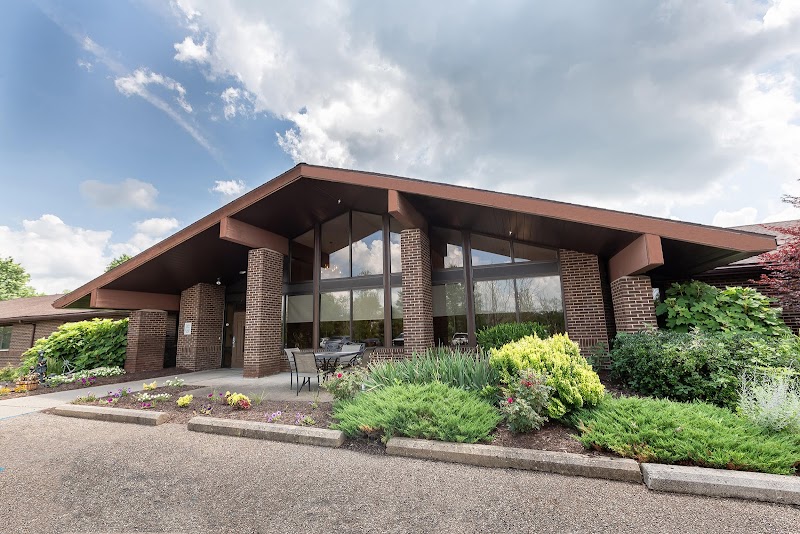
How is Continuing Healthcare At Forest Hill Staffed?

CMS rates CONTINUING HEALTHCARE AT FOREST HILL's staffing level at 2 out of 5 stars, which is below average compared to other nursing homes. Staff turnover is 56%, which is 10 percentage points above the Ohio average of 46%. High turnover can affect care consistency as new staff learn residents' individual needs. RN turnover specifically is 56%, which is notably high. RNs provide skilled clinical oversight, so turnover in this role can affect medical care quality.

What Have Inspectors Found at Continuing Healthcare At Forest Hill?

State health inspectors documented 54 deficiencies at CONTINUING HEALTHCARE AT FOREST HILL during 2021 to 2025. These included: 3 that caused actual resident harm, 49 with potential for harm, and 2 minor or isolated issues. Deficiencies causing actual harm indicate documented cases where residents experienced negative health consequences.
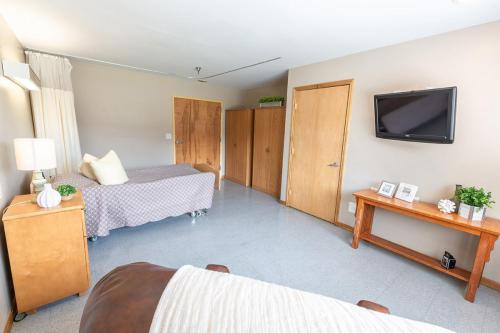
Who Owns and Operates Continuing Healthcare At Forest Hill?

CONTINUING HEALTHCARE AT FOREST HILL is owned by a for-profit company. For-profit facilities operate as businesses with obligations to shareholders or private owners. The facility is operated by CERTUS HEALTHCARE, a chain that manages multiple nursing homes. With 88 certified beds and approximately 67 residents (about 76% occupancy), it is a smaller facility located in ST CLAIRSVILLE, Ohio.
How Does Continuing Healthcare At Forest Hill Compare to Other Ohio Nursing Homes?

Compared to the 100 nursing homes in Ohio, CONTINUING HEALTHCARE AT FOREST HILL's overall rating (1 stars) is below the state average of 3.2, staff turnover (56%) is near the state average of 46%, and health inspection rating (1 stars) is much below the national benchmark.

What Should Families Ask When Visiting Continuing Healthcare At Forest Hill?

Based on this facility's data, families visiting should ask: "How do you ensure continuity of care given staff turnover, and what is your staff retention strategy?" "Can you walk me through typical staffing levels on day, evening, and night shifts?" "Can I visit during a mealtime to observe dining assistance and food quality?" "How do you handle medical emergencies, and what is your hospital transfer rate?" These questions are particularly relevant given the facility's high staff turnover rate and the below-average staffing rating.

Is Continuing Healthcare At Forest Hill Safe?

Based on CMS inspection data, CONTINUING HEALTHCARE AT FOREST HILL has a clean safety record: no substantiated abuse findings (meaning no confirmed cases of resident harm), no Immediate Jeopardy citations (the most serious violation level indicating risk of serious injury or death), and is not on the Special Focus Facility watch list (a federal program monitoring the lowest-performing 1% of nursing homes). The facility has a 1-star overall rating and ranks #100 of 100 nursing homes in Ohio. While no facility is perfect, families should still ask about staff-to-resident ratios and recent inspection results during their visit.

Do Nurses at Continuing Healthcare At Forest Hill Stick Around?

Staff turnover at CONTINUING HEALTHCARE AT FOREST HILL is high. At 56%, the facility is 10 percentage points above the Ohio average of 46%. Registered Nurse turnover is particularly concerning at 56%. RNs handle complex medical decisions and coordinate care — frequent RN changes can directly impact care quality. High turnover means new staff may not know residents' individual needs, medications, or preferences. It can also be disorienting for residents, especially those with dementia who rely on familiar faces. Families should ask: What is causing the turnover? What retention programs are in place? How do you ensure care continuity during staff transitions?

Was Continuing Healthcare At Forest Hill Ever Fined?

CONTINUING HEALTHCARE AT FOREST HILL has no federal fines on record. CMS issues fines when nursing homes fail to meet care standards or don't correct problems found during inspections. The absence of fines suggests the facility has either maintained compliance or corrected any issues before penalties were assessed. This is a positive indicator, though families should still review recent inspection reports for the full picture.

Is Continuing Healthcare At Forest Hill on Any Federal Watch List?

CONTINUING HEALTHCARE AT FOREST HILL is not on any federal watch list. The most significant is the Special Focus Facility (SFF) program, which identifies the bottom 1% of nursing homes nationally based on persistent, serious quality problems. Not being on this list means the facility has avoided the pattern of deficiencies that triggers enhanced federal oversight. This is a positive indicator, though families should still review the facility's inspection history directly.