

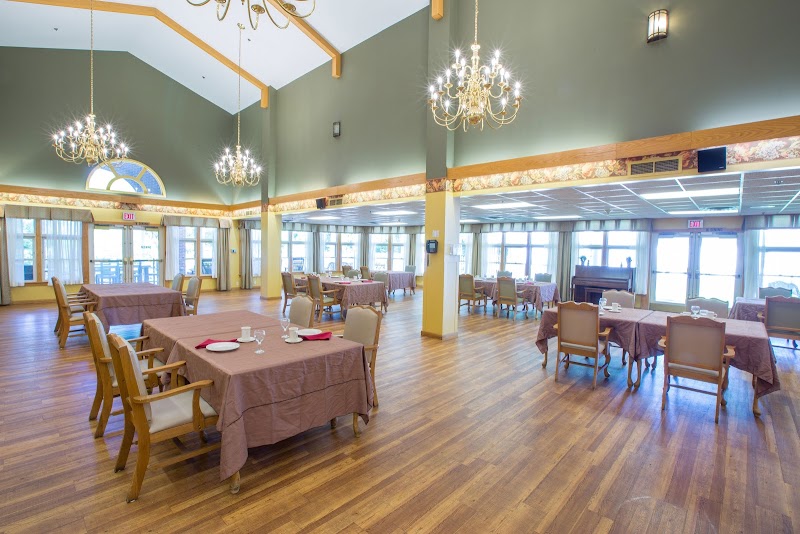

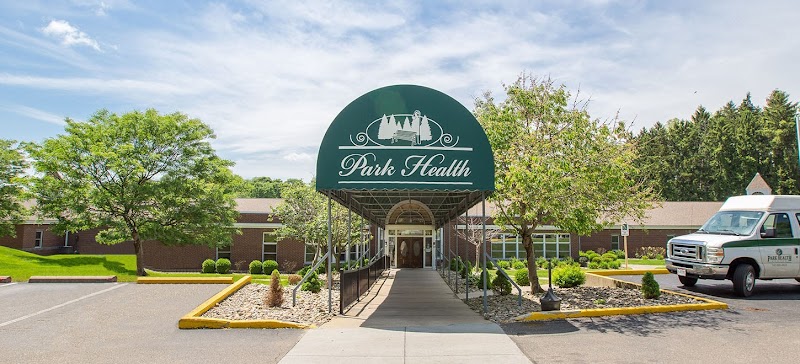
PARK HEALTH CENTER

100 PINE AVENUE, ST CLAIRSVILLE, OH 43950 (740) 695-4925
For profit - Corporation 87 Beds FOUNDATIONS HEALTH SOLUTIONS Data: November 2025 1 Immediate Jeopardy citation
Trust Grade
41/100
#758 of 913 in OH
Last Inspection: March 2025

Within standard 12-15 month inspection cycle. Federal law requires annual inspections.

Overview

Park Health Center has received a Trust Grade of D, indicating below-average performance with notable concerns. Ranked #758 out of 913 facilities in Ohio, they are in the bottom half of all nursing homes in the state, and #7 out of 10 in Belmont County, meaning there are only a few local options that are better. The facility is worsening, with issues increasing from 1 in 2024 to 13 in 2025, which raises alarms about their standards. Staffing is a relative strength, with a 3/5 star rating and a turnover rate of 27%, significantly lower than the Ohio average, indicating stable staff who are familiar with the residents. While there are no fines to report, a critical incident was noted where a resident with a dislocated hip was not properly assessed, leading to immediate jeopardy, alongside concerns about food safety and sanitation practices. Overall, while there are some positives, families should carefully consider the recent trends and specific incidents when researching this facility.

Trust Score
D
41/100
In Ohio
#758/913
Bottom 17%
Safety Record
High Risk
Review needed
Inspections
Getting Worse
1 → 13 violations
Staff Stability
✓ Good
27% annual turnover. Excellent stability, 21 points below Ohio's 48% average. Staff who stay learn residents' needs.
Penalties
✓ Good
No fines on record. Clean compliance history, better than most Ohio facilities.
Skilled Nurses
✓ Good
Each resident gets 55 minutes of Registered Nurse (RN) attention daily — more than average for Ohio. RNs are trained to catch health problems early.
Violations
⚠ Watch
33 deficiencies on record. Higher than average. Multiple issues found across inspections.
★★☆☆☆
2.0
Overall Rating
★★★☆☆
3.0
Staff Levels
★★★☆☆
3.0
Care Quality
★★☆☆☆
2.0
Inspection Score
Stable
2024: 1 issues
2025: 13 issues

The Good

  • Low Staff Turnover (27%) · Staff stability means consistent care
  • Full Sprinkler Coverage · Fire safety systems throughout facility
  • No fines on record
  • Staff turnover is low (27%)

    21 points below Ohio average of 48%

Facility shows strength in staff retention, fire safety.

The Bad

2-Star Overall Rating

Below Ohio average (3.2)

Below average - review inspection findings carefully

Chain: FOUNDATIONS HEALTH SOLUTIONS

Part of a multi-facility chain

Ask about local staffing decisions and management

The Ugly 33 deficiencies on record

1 life-threatening
Aug 2025 3 deficiencies 1 IJ
CRITICAL (J) 📢 Someone Reported This

A family member, employee, or ombudsman was alarmed enough to file a formal complaint

Immediate Jeopardy (IJ) - the most serious Medicare violation

Quality of Care (Tag F0684)

Someone could have died · This affected 1 resident

**NOTE- TERMS IN BRACKETS HAVE BEEN EDITED TO PROTECT CONFIDENTIALITY** THE FOLLOWING DEFICIENCY REPRESENTS AN INCIDENT OF PAST NON-COMPLIANCE THAT WAS SUBSEQUENTLY CORRECTED PRIOR TO THIS SURVEY. Bas...

Read full inspector narrative →
**NOTE- TERMS IN BRACKETS HAVE BEEN EDITED TO PROTECT CONFIDENTIALITY** THE FOLLOWING DEFICIENCY REPRESENTS AN INCIDENT OF PAST NON-COMPLIANCE THAT WAS SUBSEQUENTLY CORRECTED PRIOR TO THIS SURVEY. Based on closed record review, hospital documentation review, review of a facility investigation, review of video footage, policy review and interviews, the facility failed to timely and comprehensively assess, notify a physician, and provide timely and necessary care and services to Resident #22 after she complained of hip pain as a result of a dislocated right hip. This resulted in Immediate Jeopardy and Actual Harm beginning on 07/21/25 at 1:10 A.M. when Resident #22 voiced complaints of pain and staff continued to provide personal care, assisting the resident into her bathroom and transferred the resident to bed without first assessing the resident. Licensed Practical Nurse (LPN) #113 administered a dose of as needed narcotic pain medication but failed to comprehensively assess the resident related to the pain. On 07/21/25 at 2:01 A.M. review of video footage revealed staff entered Resident #22's room to attempt to place a hip abductor wedge at which time the resident yelled out in pain upon movement of her leg. Staff exited the room and per video footage they did not return until 5:05 A.M. Video footage revealed Resident #22 was yelling out and at 5:11 A.M., Certified Nursing Assistant (CNA) #168 removed blankets from Resident #22, who had a visibly severe internal rotation to her leg, and began to undress the resident as the resident was screaming in pain. CNA #168 did not stop undressing Resident #22 and proceeded to re-dress her as Resident #22 was observed on video screaming in pain. At 5:18 A.M., CNA #169 and LPN #113 entered Resident #22's room and assisted CNA #168 to stand-pivot Resident #22 to her wheelchair as the resident was screaming. Resident #22 remained out of her room in the wheelchair until 10:56 A.M., when CNA #145, Physical Therapist (PT) #260, and Certified Occupational Therapy Assistant (COTA) #250 transferred Resident #22 from her wheelchair into her bed using a gait belt and attempted a stand/pivot transfer. Resident #22 was briefly seated at the edge of bed while crying out. An x-ray was subsequently ordered. On 07/21/25 at 1:51 P.M. Radiology Technician (RT) #400 expressed concern about the image captured (noting the dislocation of the resident's hip). Emergency Medical Transportation (EMT) was called and arrived at 2:58 P.M. Resident #22 left the facility at 3:16 P.M. to be taken to the hospital where she was diagnosed with a dislocated right hip requiring surgical intervention. This affected one resident (#22) of four residents reviewed for falls. The facility census was 86. On 08/19/25 at 3:03 P.M., the Administrator, Director of Nursing (DON) #141 and #185, Regional Clinician (RC) #300 were notified Immediate Jeopardy began on 07/21/25 at 1:10 A.M. when Resident #22 voiced complaints of hip pain that was not comprehensively or adequately assessed and treated. Between 1:10 A.M. and 10:56 A.M. Resident #22 continued to complain of severe pain to the hip area captured on video footage of the resident screaming and crying out due to the pain while staff proceeded to manipulate/move the leg providing routine care. An x-ray was not obtained until 1:51 P.M. which confirmed the hip dislocation. The resident was not transferred to the hospital until 07/21/25 at 3:16 P.M. The Immediate Jeopardy was removed on 07/21/25 and the deficiency subsequently corrected on 07/26/25 when the facility implemented the following corrective actions. On 07/21/25 at 2:40 P.M., preliminary results of Resident #22's x-ray were reported to Physician #230 by Registered Nurse (RN) #127. Physician #230 ordered Resident #22 to be transferred to the hospital for evaluation and treatment. Physician #225 was updated by RN # 127. The resident was transferred to the hospital on [DATE] at 3:16 P.M. and did not return to the facility following the hospitalization. On 07/21/25 at 2:40 P.M. Resident #22's family/responsible party was notified by RN #127. On 07/22/25 at 4:00 P.M. CNA #168 was immediately re-educated by the Administrator and DON #141 regarding performing activity of daily living (ADL) care to residents with increased pain or signs of distress ensuring stopping ADL care and notifying nursing staff with s/s of pain, distress or changes in functioning. On 07/22/25 at 4:30 P.M. (via phone) LPN #113 was immediately re-educated by the Administrator and DON #141 regarding conducting timely and thorough assessments with change in condition and notification to physician. On 07/22/25 at 6:00 P.M. (via phone) CNA #169 was immediately re-educated by the Administrator and DON #141 regarding performing ADL care to residents with increased pain or signs of distress ensuring stopping ADL care and notifying nursing staff with s/s of pain, distress or changes in functioning. On 07/22/25 at 10:00 P.M. a skin sweep was completed by DON #185 and facility wound nurse for possible injuries and changes in condition for current residents unable to be interviewed and all other current residents were interviewed for potential changes in condition warranting interventions. 82 residents were assessed. On 07/22/25 the facility Change in Condition Policy was reviewed by the Administrator, DON #185, and DON #141. No changes were made to the policy. By 7/25/25, 18 RN's, 13 LPN's and 40 CNAs were re-educated by the DON and Administrator on ensuring proper identification and assessment (e.g. vital signs, ROM, visual alignment and or deformity, palpation of joint/area and verbal interview, etc.) of residents with any changes in condition following injuries, complaints of severe pain, or suspected fractures/dislocations; on ensuring notification to physician of findings and prompt notification to responsible party; and on following the proper chain of command if a nurse fails to respond promptly, staff will escalate notifications to the DON/Administrator. On 07/22/25, the Administrator, DON#185, and DON #141 reviewed the Pain Management Policy. No changes were made to the policy. By 7/25/25, 18 RN's, 13 LPN's and 40 CNAs were re-educated by DON #141, DON #225 and the Administrator on ensuring nursing staff were assessing pain as needed and assessing for possible causes; on providing non-pharmacological pain remedies and pain medications and monitoring for effectiveness; and on ensuring new complaints or worsening complaints of pain are reported to physician and updating family. On 07/23/25 at 1:00 P.M. DON #141 reviewed current residents with an orthopedic surgical intervention or injury within last 14 days who were at risk for complications, ensuring orders were in place for assessing area every shift for two weeks or as directed by the physician. One (1) resident was identified, and an order was put in place for monitoring on 07/23/25 to monitor right hip/femur surgical site for signs and symptoms (s/s) of infection, proper alignment, or s/s of displacement and notify physician with any abnormalities. On 07/24/25 at 2:00 P.M. an Ad hoc quality assurance (QA) committee meeting was held to review investigation and findings of initial audits, as well as, the ongoing audit plan and education action plan. Meeting consisted of Administrator, DON # 185, DON # 141, RN # 204, RN # 170, HR # 153 and Physician #153. By 07/25/25, 18 RNs, 13 LPNs and 40 CNAs were re-educated by DON #141, DON # 185, and the Administrator on ensuring direct care staff stop ADL care and notify nursing staff when a resident was showing signs of discomfort, distress or increased pain (e.g., yelling out, crying, grimacing guarding, restlessness, decreased ROM or functioning etc.); ensuring nursing staff perform an assessment to identify cause of pain (e.g., vital signs, ROM, interview, palpation of site, and visualize location of pain identified ) before proceeding with care; and ensuring notification of the physician and the responsible parties as indicated. By 0/25/25, 18 RNs, 13 LPNs and 40 CNAs were re-educated by DON #141, DON # 185, and the Administrator on expectations for monitoring new surgical sites. This re-education included that nursing would assess for signs/symptoms of dislocation, increased pain, deformity, and/or misalignment and notify the physician of relative abnormalities; and that a resident with suspected fracture/dislocation must be assessed immediately by a nurse and physician notified without delay. Beginning on 07/26/25, five (5) residents were reviewed weekly for two (2) weeks by DON #141 and or LPN #132, on ensuring proper identification and assessment (e.g. vital signs, ROM, verbal interview, etc.) of residents with any changes in condition following injuries, complaints of severe pain, or suspected fractures/dislocations; on ensuring notification to physician of findings and prompt notification to responsible party; and on following the proper chain of command if a nurse failed to respond promptly. No irregularities were noted and the results were reported to the QA committee for review and recommendations on 8/13/25. QA committee recommended to continue with monthly random interviews, ongoing, until further direction from the committee and ongoing education for new hires of facility policy on change in condition and proper identification and assessment of the change in condition. Beginning on 07/26/25, five (5) residents were interviewed weekly for two (2) weeks by DON # 141 and or LPN # 132, to ensure pain is being controlled and interventions are in place to manage pain levels. No irregularities were noted and the results were reported to the QA committee for review and recommendations on 08/13/25. QA committee recommended to continue with ongoing education to new hires ensuring understanding of facility policy for pain management and intervening with signs of increased pain, and to continue monthly random interviews, until further direction from the committee. Beginning on 07/26/25, three (3) CNAs were interviewed weekly for two (2) weeks by DON #141 and or LPN #132 to ensure verbal understanding of stopping ADL care and notify nursing staff when resident is showing signs of discomfort, distress or increased pain (e.g., yelling out, crying, guarding, etc.). No irregularities were noted and the results were reported to the QA committee for review and recommendations on 8/13/25. QA committee recommended to continue with ongoing education with new hires on ensuring understanding of stopping ADL care and notifying nursing staff with s/s of pain, and continuing ongoing monthly interviews, until further direction from the committee. Beginning on 07/26/25, audits were conducted weekly for two (2) weeks by DON #141 and or DON # 185, on process for assessing new orthopedic surgical procedures ensuring order to monitor site q shift is in place and that the nurse assessed for s/s of dislocation, increased pain, deformity, and or misalignment and that relative abnormalities were reported to the physician. No irregularities were noted, and the results were reported to the QA committee for review and recommendations on 8/13/25. QA committee recommended to continue with ongoing education of new nursing hires ensuring understanding for new facility process for assessing new orthopedic surgical procedures and continuing monthly audits, until further direction from the committee. DON #185 was identified as being responsible for implementation and monitoring of this plan. Nurse Managers RN # 204 and LPN #132 were responsible to ensure staff adherence on their units. Findings include:Closed record review revealed Resident #22 originally was admitted to the facility on [DATE] and was re-admitted to the facility on [DATE] with diagnoses including unspecified intracapsular fracture of right femur, muscle wasting and atrophy, and need for assistance with personal care. Review of a care plan dated 05/07/25 revealed Resident #22 was at risk for alteration in comfort related to disease process, generalized pain, impaired mobility, diagnosis of osteoarthritis, low back pain, and fracture with surgical intervention. The goal was to decrease Resident #22's pain to an acceptable level for the resident which would allow for participate in activities of daily living (ADLs), activities, therapy, treatment, and etcetera. Interventions included administer medications as ordered, maintain proper body alignment, monitor for effectiveness of interventions, notify physician for review or for change in pain medications if needed, pain assessment per facility policy, and therapy referral as needed. Review of an order by Medical Director/Physician (MD) #225 dated 06/06/25 revealed Resident #22 was on hip precautions each shift. Review of an order by MD #225 dated 06/11/25 revealed Resident #22 was to have an abductor pillow between legs which could be removed for care and transfers. Skin integrity to be checked each shift and physician to be notified of any decline every shift for hip precautions. Review of the Minimum Data Set (MDS) assessment dated [DATE] revealed Resident #22 had impaired cognition, no behaviors, was dependent on staff for transfers, and had occasional pain of five. Review of an order by MD #225 dated 06/30/25 revealed Resident #22 was to receive cyclobenzaprine oral tablet give milligrams (mg) one tablet by mouth every 12 hours as needed (PRN) for muscle spasms. The resident also had an order on this date for tramadol 50 mg one tablet by mouth every 12 hours as needed (PRN) for pain level of four to six (on a scale of one to 10). Review of an occupational therapy note dated 07/18/25 at 1:35 P.M. by Certified Occupational Therapy Assistant (COTA) #250 revealed Resident #22 completed dynamic stand balance activities with reaching and bending forward while engaging core, maintaining forward flexion attention to task and safety cues with fair balance until resident became fatigued. Functional sit to stand with hand placement upright posture completed with an engaged core, maintained balance with minimum assist and multimodal cues to perform the task. Resident #22 tolerated well and required minimum assistance to perform. Resident #22 was able to stand and pivot to and from the toilet utilizing a walker with minimum assistance and multimodal cues to complete the task. Review of a physical therapy note dated 07/18/25 at 2:22 P.M. by Physical Therapy Assistant (PTA) #240 revealed Resident #22 performed sit to stand transfers with verbal and tactile cues given on hand placement, done for seven reps to increase in bilateral lower extremity strength and activity tolerance, done with minimum assistance for safety, pivot transfers with minimum assistance with cues given on walker placement with understanding demonstrated, ambulation done for 35 feet two times to increase mobility and activity tolerance, and postural cues given to keep center of gravity over base of support with understanding demonstrated. Once fatigued, posterior lean noted. Review of a nursing note dated 07/21/25 at 12:25 A.M. by LPN #113 revealed Resident #22 had no cognitive impairment, a skin assessment was completed with no changes noted, and observation of neuro musculoskeletal status was completed with no new changes. Review of video footage provided by Resident #22's family revealed the following on 07/21/25:- 1:10 A.M. to 1:12 A.M.: Resident #22 was brought into her room in a standard wheelchair by CNA #168 and CNA #169. Resident #22 began to cry in pain and staff asked where it hurt at. CNAs #168 and #169 then took Resident #22 into the bathroom and LPN #113 entered to assist. (There was no evidence Resident #22 was assessed in regard to her complaints of pain). - 1:18 A.M. to 1:23 A.M.: Resident #22 was taken out of her bathroom while still in a standard wheelchair by CNA #168 and CNA #169. LPN #113 entered the room again and CNA #169 stated, she keeps saying it hurts. LPN #113 went to speak with Resident #22 who requested as needed pain medication. LPN #113 exited the room to retrieve the medication. CNAs #168 and #169 stand/pivot assisted Resident #22 into bed while she was observed whimpering in pain. CNA #168 attempted to place a hip abductor wedge between Resident #22's legs and she began to cry out in pain. CNAs #168 and #169 asked Resident #22 where she was hurting but Resident #22 provided no clear answer. Resident #22 was in bed with a pillow propping her up in a seated position with her legs out in front of her; her left leg was bent at the knee with her foot flat on the bed and her right leg was flat on the bed with an inward rotation. Resident #22 repeatedly stated, Oh it hurts. LPN #113 entered the room to administer medication. (There was no evidence Resident #22 was assessed in regard to her continued complaints of pain). - 1:25 A.M.: LPN #113 had administered medication and was talking to Resident #22 while CNAs #168 and #169 were still present in the room. LPN #113 attempted to have Resident #22 describe where the pain was located by instructing her to place her hand where she was hurting. Resident #22 was noted to be grabbing the back of her right leg. CNA #168 approached the bed to place covers over Resident #22 as resident was repeatedly stating, don't. CNA #168 reassured Resident #22 they weren't going to touch her and she could go to sleep. CNA #168 adjusted the bed position and Resident #22 cried stating, Oh it's burning. CNA #168 stated Resident #22 had been grabbing her hip but hadn't really been paying attention to how the hip looked. CNA #168 could be heard stating, I wanted to check that hip but she started whining that it was hurting. Resident #22 was trying to go to sleep so staff exited the room and turned off the lights. (There was no evidence Resident #22 was assessed in regard to her continued complaints of pain). - 2:00 A.M.: CNA #168 entered the room and attempted to place a hip abductor wedge between Resident #22's legs after asking if she felt better. When CNA #168 went to separate the resident's left leg from her right, Resident #22 stated, Oh, no, no, no. CNA #168 covered Resident #22 back up and left the room. (There was no evidence Resident #22 was assessed in regard to her continued complaints of pain). - 5:05 A.M.: CNA #169 was observed on video footage standing next to Resident #22's bed, Resident #22's blanket was slightly removed from her right side. Resident #22 stated, go away, go away, go away now, I can't, I can't, no, no, no. CNA #169 left the room. - 5:11 A.M. to 5:13 A.M.: CNA #168 entered the room to change Resident #22. Resident #22 was still crying and stated something undecipherable. CNA #168 got Resident #22's clothing ready and began to lift the bed for care. Resident #22 stated, Oh my God, and CNA #168 replied, what? - 5:14 A.M. to 5:18 P.M.: CNA #168 removed bolsters from the right side of the bed. Resident #22 was visibly leaning away from the right side, grabbing her right hip and sobbing. Resident #22 had a pained facial expression, appeared to be in pain and was visibly crying. CNA #168 proceeded to remove the covers from Resident #22 revealing her left leg was bent at the knee and her right leg had a severe inward rotation, bent at the knee and tucked under the left leg. CNA #168 removed Resident #22's brief from her while the resident continued to cry in pain. Resident #22's right leg was still bent at the knee and tucked under her left leg to the point where her right knee was touching the bed. Resident #22 was laying on her back with a pillow tucked under her and leaning to the left slightly. CNA #168 grabbed Resident #22's knees and pulled them apart to try to separate her legs while Resident #22 screamed in pain. CNA #168 attempted to separate the resident's legs multiple times to apply a new brief, but Resident #22 kept pulling her legs back together while screaming out in pain, with her head thrown back and visibly in pain. CNA #168 proceeded with care and applied a new brief and pants as Resident #22 continued crying out. Once Resident #22's pants were up to the top of her legs below her buttocks, CNA #168 used a walkie talkie to request assistance to transfer Resident #22 from her bed into her wheelchair. CNA #168 attempted again to pull Resident #22's right leg from below her left leg to place her knees together for better alignment. Resident #22 screamed in pain. CNA #169 walked into the room while Resident #22 was still crying and stated, I told you she's complaining of pain in here, while gesturing to her own inner right thigh because that's where she was grabbing a minute ago. LPN #113 entered the room and CNA #169 asked Resident #22 multiple times where she was hurting, Resident #22 stated everywhere, and CNA #169 stated, where does your leg hurt at? (There was no evidence the LPN assessed the resident in regard to her continued complaints of pain). - 5:19 A.M. to 5:27 A.M.: Resident #22 was observed on video still lying in bed grabbing her right hip while CNAs #168 and #169 and LPN #113 stood in the room to prepare to transfer her from bed to her wheelchair. LPN #113 stated, do you think if I braced her hips and then we sat her up that would help? LPN #113 applied gloves than approached Resident #22 stating, (insert name), I'm going to grab right here, and we are going to sit you up. (There was no evidence Resident #22 was assessed in regard to her continued complaints of pain or prior to attempting to move her). - 5:28 A.M. to 5:34 A.M.: LPN 113 had a hold of Resident #22's hips while CNAs #168 and #169 worked on sitting her up in bed. Resident #22 immediately began screaming. Staff got the resident seated at the edge of the bed while the resident was screaming, then proceeded to stand her to finish pulling up her pants. Resident #22 was unable to bear weight so CNA #168 and LPN #113 lifted her off the ground while CNA #169 moved the wheelchair into place. While in the air, Resident #22's legs were turned in at abnormal angles. Once seated in wheelchair, Resident #22 stopped crying. CNA #168 took Resident #22's shirt off to help her finish getting ready and redressed her. (There was no evidence Resident #22 was assessed in regard to her continued complaints of pain). Review of a Medication Administration Record (MAR) for July 2025 revealed Resident #22 received a dose of as needed tramadol 50 mg at 1:22 A.M. on 07/21/25 which was documented as effective. However, there was no evidence a comprehensive assessment of the resident's pain to include location, quality, intensity, onset, duration, aggravating/alleviating factor was completed related to the use of the as needed narcotic pain medication was completed at that time. Review of an Occupational Therapy note dated 07/21/25 at 10:44 A.M. by COTA #250 revealed nursing reported Resident #22 had complaints of right hip pain, therapy staff attempted to stand Resident #22 three times with resistance and complaints of hip pain with pulling hip up and holding up and they were unable to get her to stand completely upright. Resident #22 completed motor activities with strengthening tasks to improve ADLs and balance with bilateral upper extremity strengthening and core strengthening. CNA staff asked for help to lay Resident #22 down, transfer completed with max pain, Resident #22 laid in bed and nurse was aware of the pain. (There was no evidence Resident #22 was assessed in regard to her continued complaints of pain). Review of a nursing note dated 07/21/25 at 10:44 A.M. by RN #127 revealed Resident #22 was yelling out complaining of pain to right hip. Resident #22 was refusing to stand and having difficulties with transfers due to increased pain. Medical Director (MD) #225 was notified and new orders were received. Review of a video on 07/21/25 revealed from 10:56 A.M. to 11:01 A.M. CNA #145, PT #260 and COTA #250 were in Resident #22's room to transfer her from her wheelchair to the bed. Resident #22 can be heard repeatedly saying, oh my land. PT #260 and COTA #250 used a gait belt to stand/pivot transfer Resident #22 into bed, as the resident was crying out. Resident #22 was seated at the edge of bed and crying in pain. The staff moved the resident to a position laying down and CNA #145 attempted to place a pillow between Resident #22's legs which did cause her to cry in pain, however once she was no longer moving, was not crying out in pain. Resident #22 was saying oh my goodness. Review of physician orders revealed an order dated 07/21/25 for Resident #22 to receive a right hip x-ray with two views stat for right hip pain, previous fracture. The x-ray was to be portable due to physical limitations. Review of a MAR for July 2025 revealed Resident #22 received a dose of as needed tramadol 50 mg at 11:00 A.M. on 07/21/25 which was documented to be effective. However, there was no evidence a comprehensive assessment of the resident's pain to include location, quality, intensity, onset, duration, aggravating/alleviating factor was completed related to the use of the as needed narcotic pain medication was completed at that time. Review of continued video footage from 07/21/25 between 11:03 A.M. and 11:04 A.M. revealed Resident #22 was resting in her bed repeatedly stating, I don't wanna die. Review of video dated 07/21/25 at 11:08 A.M. revealed RN #127 entered Resident #22's room and attempted to lay down the head of the resident's bed. Resident #22 stated, oh, no, no, no, don't do that. Resident #22 indicated she wanted the head of the bed back up and RN #127 placed the bed in a more comfortable position for Resident #22. (There was no evidence Resident #22 was assessed in regard to her continued complaints of pain at this time). Review of a physical therapy note dated 07/21/25 at 12:54 P.M. by Physical Therapy Assistant (PTA) #240 revealed Resident #22 completed sit to stand transfers with maximum assistance of two staff and moderate cueing for correct sequencing and attention to task. Resident #22 performed standing at walker with maximum assistance of one to two staff and maximum cueing up to one minute with poor balance with posterior and lateral loss of balance (LOB). Patient performed lower extremity exercises seated in a chair including marching, hip adduction, hip abduction, ankle pumps, heels raises, and glute sets 15 reps each with maximum cueing for correct sequencing and attention to task. Resident #22 complained of right hip pain and discomfort during session, reported to nursing, nursing stated Resident #22 had complained of pain since midnight and had gotten medication several times. (However, there was no evidence Resident #22 was actually assessed in regard to her continued complaints of pain). Review of video footage dated 07/21/25 from 1:51 P.M. to 1:56 P.M. revealed Radiology Technician (RT) #401 entered the resident's room to perform x-rays. RT #401 gently slid an x-ray plate under Resident #22 between her pelvis and the bed. Resident #22 was heard saying, they hurt like the dickens. Resident #22 was positioned on her back with a tilt to the left, her left leg was bent at the knee with her foot resting flat on the bed and her right leg was also bent at the knee, completely rotated inward and tucked under her left leg with her right knee touching the bed. RT #401 requested an aide to help reposition the bed once she took one x-ray, she stated she would not be moving the resident to get other views. RT #401 showed RN #127 the image of the first x-ray. CNA #145 was in the room with RT #401 and stated Resident #22 had not allowed them to put a pillow between her knees and RT #401 responded she wanted her right leg tucked under her left leg because it made it feel better. CNA #145 then stated, when I got here this morning, she was in her chair. RT #401 bewildered, responded, How? and CNA #145 stated, I have no idea. Review of a nursing note dated 07/21/25 at 2:40 P.M. by RN #127 revealed Orthopedic Surgeon (OS) #230's office was notified of Resident #22's severe pain and possible displacement of right hip. OS #230 recommended Resident #22 be transferred to the emergency department. MD #225 was notified and gave new orders to transfer Resident #22 to the emergency department for evaluation and treatment. Resident #22 and her family were made aware. Review of an order dated 07/21/25 revealed it was medically necessary to send Resident #22 to the emergency room. Review of a nursing note dated 07/21/25 at 2:55 P.M. by RN #127 revealed 911 had been called to transport Resident #22 to the emergency department. A follow-up note at 3:16 P.M. revealed Resident #22 had left the facility via stretcher enroute to the emergency department. Resident #22's family was made aware. Review of video footage dated 07/21/25 from 2:58 P.M. to 3:03 P.M. revealed EMTs arrived to take Resident #22 to the emergency department. RN #127 told the EMTs Resident #22 had been in severe pain all day. When Resident #22 was uncovered and her legs were visible, one EMT says a surprised, Oh! Once loaded on the cot, Resident #22 left the building. Review of an x-ray dated 07/21/25 at 4:28 P.M. revealed Resident #22 had a single view of the pelvis with legs crossed. The right hip arthroplasty was dislocated; the femoral head component was projecting six to seven centimeters superolateral to the acetabular component. Review of a nursing note dated 07/21/25 at 9:15 P.M. by RN #127 revealed Resident #22 was admitted to the hospital. Review of a Brief Operative Note dated 07/22/25 by OS #130 revealed Resident #22 had a right hip dislocation status post total hip arthroplasty and would require a closed reduction under anesthesia. The note included the closed reduction was completed with some difficulty. Interview on 08/14/25 at 12:05 P.M. with Resident #22's responsible party (RP) revealed she had concerns about the complete disregard of Resident #22's pain while the resident could be observed on video screaming and her leg was bent at an odd angle. RP brought footage from a camera located in Resident #22's room to show the incident. RP had a hard time listening to the footage and would not look at the camera (due to the pain the resident was in and demonstrated). RP stated her mother was screaming in pain and felt staff neglected her. RP stated she spoke with OS #230 who stated it would have taken a lot of effort to dislocate the hip. Interview on 08/15/25 at 12:44 P.M. with OS #230 revealed Resident #22 already had a broken hip with a partial, then full replacement. OS #230 stated he was not sure of the mechanism that would've caused the dislocation. OS #230 stated it was fairly hard to dislocate a hip because you had to really twist the leg around somehow to get it to come out. OS #230 stated Resident #22 does have dementia, so she could've had an unwitnessed event which was the cause of the dislocation (however, the exact circumstance of how the dislocation had occurred could not be determined). OS #230 stated people with dementia express their pain in different ways or sometimes can't at all, but it would be a painful injury for most people to have. Interview on 08/18/25 at 1:20 P.M. with RN #127 revealed she worked with Resident #22 often during the resident's stay in the facility. Resident #22's baseline was confused and did not have a lot of behaviors. RN #127 stated she recalled 07/21/25 and when she came in that morning, nightshift staff were reporting the resident had yelled out in pain all night and pain medication had been administered but did not seem to be effective. RN #127 stated she asked about the right hip and the nurse (LPN #113) had stated she thought it looked aligned to her, but it had taken three staff to get her out of bed (which was not the resident's normal). RN #127 inquired about how therapy went and was told Resident #22 would scream and had to be sat down. RN #127 stated while Resident #22 was sitting in her wheelchair, she was fine and did not have signs of distress. The only time Resident #22 was transferred during RN #127's shift was to lay her down for the x-ray. RN #127 stated she called the resident's RP and let her know Resident #22 was having pain and did not do well in therapy. RN #127 stated when the x-ray tech was present, she asked her to come to Resident #22's room to see the picture and they were able to tell the right hip was out. RN #127 stated she obtained orders to send Resident #22 to the emergency [TRUNCATED]
CONCERN (D) 📢 Someone Reported This

A family member, employee, or ombudsman was alarmed enough to file a formal complaint

Potential for Harm - no one hurt, but risky conditions existed

Resident Rights (Tag F0550)

Could have caused harm · This affected 1 resident

**NOTE- TERMS IN BRACKETS HAVE BEEN EDITED TO PROTECT CONFIDENTIALITY** Based on record review, policy review, review of video footage, and interview the facility failed to ensure a resident was treat...

Read full inspector narrative →
**NOTE- TERMS IN BRACKETS HAVE BEEN EDITED TO PROTECT CONFIDENTIALITY** Based on record review, policy review, review of video footage, and interview the facility failed to ensure a resident was treated with respect and dignity. This affected one resident (#22) of four residents reviewed for change in condition. The facility census was 86.Findings include:Record review revealed Resident #22 was re-admitted to the facility on [DATE] with diagnoses including unspecified intracapsular fracture of right femur, muscle wasting and atrophy, and need for assistance with personal care. Review of a minimum data set (MDS) dated [DATE] revealed Resident #22 had impaired cognition, no behaviors, was dependent on staff for transfers, and had occasional pain of five.Review of an Authorization for Electronic Monitoring in Resident Room form dated 05/12/25 revealed Resident #22's power of attorney installed a fixed position video camera with recording in her room.Review of a video provided by Resident #22's family dated 07/04/25 at 10:51 A.M. revealed Registered Nurse (RN) #162 exiting Resident #22's bathroom, raise her hand to block her face from the camera, walk over to the camera and stand in front of it, obscuring the view of Resident #22 when she was brought out of the bathroom. The camera was motion activated and due to being blocked, had stopped recording.Review of an education training document dated 07/11/25 revealed RN #162 received education on Electronic Monitoring policy and stated I put my hand up because the light turns color when it starts recording and it was a reaction to that because I hate cameras.Interview on 08/19/25 at 10:15 A.M. with Director of Nursing (DON) #141 confirmed the video of RN #162 blocking Resident #22's camera. Review of a policy titled Electronic Monitoring in Resident Rooms dated 03/23/22 revealed the facility will not intentionally obstruct, tamper with, or destroy any electronic monitoring device or any recording made by an electronic monitoring device.This deficiency represents an incidental finding of non-compliance investigated under Complaint Number 2583102.
CONCERN (D) 📢 Someone Reported This

A family member, employee, or ombudsman was alarmed enough to file a formal complaint

Potential for Harm - no one hurt, but risky conditions existed

Deficiency F0676 (Tag F0676)

Could have caused harm · This affected 1 resident

**NOTE- TERMS IN BRACKETS HAVE BEEN EDITED TO PROTECT CONFIDENTIALITY** Based on record review, policy review, review of video footage, and interview, the facility failed to ensure a resident was prov...

Read full inspector narrative →
**NOTE- TERMS IN BRACKETS HAVE BEEN EDITED TO PROTECT CONFIDENTIALITY** Based on record review, policy review, review of video footage, and interview, the facility failed to ensure a resident was provided the opportunity for urination in the bathroom versus being told to urinate in her incontinence brief. This affected one resident (#22) of four residents reviewed for change in condition. The facility census was 86.Findings include:Closed record review revealed Resident #22 re-admitted to the facility on [DATE] with diagnoses including unspecified intracapsular fracture of right femur, muscle wasting and atrophy, and need for assistance with personal care. Review of a minimum data set (MDS) assessment dated [DATE] revealed Resident #22 had impaired cognition, no behaviors, required moderate assistance for transfers, and was frequently incontinent of bladder and bowel.Review of a care plan dated 04/28/25 revealed Resident #22 had an alteration in elimination related to hip fracture and revision, back pain, dementia, stroke, diabetes, overall decline in mobility, falls, and bowel and bladder incontinence. The goal was for Resident #22 to be clean, dry and odor free. Interventions included but were not limited to toileting program, monitor and provide hydration as needed, monitor and record bowel movements every shift, provide incontinence care as needed, and monitor for signs and symptoms of a urinary tract infection.Review of video footage (provided by Resident #22's family and shared with the Administrator and Director of Nursing) dated 06/18/25 at 9:38 P.M. revealed Resident #22 was in her room and asked Certified Nursing Assistant (CNA) #189 if she could go to the bathroom. CNA #189 responded, we'll get you cleaned up. Resident #22 was then being transferred to her bed and stated, I need to go to the bathroom. CNA #189 stated, it's hard to go on the toilet when your leg's been busted up. CNA #189 did not assist Resident #22 to the bathroom.Interview on 08/20/25 at 3:40 P.M. with CNA #189 revealed he had received education on incontinence care recently. CNA #189 stated Resident #22 was forgetful and he did not redirect the resident appropriately, instead opting to instruct her to go (urinate) in her (incontinence) brief because he was about to change her anyway and would get her cleaned up. Interview on 08/20/25 at 4:00 P.M. with the Administrator revealed he personally educated CNA #189 about incontinence care after being made aware of the footage of him declining to take Resident #22 to the bathroom. This deficiency represents non-compliance investigated under Complaint Number 2583102.
Mar 2025 10 deficiencies
CONCERN (D)

Potential for Harm - no one hurt, but risky conditions existed

Deficiency F0578 (Tag F0578)

Could have caused harm · This affected 1 resident

Based on medical record review, policy review and interview, the facility failed to ensure advanced directives were accurate. This affected one resident (#2) of 24 residents reviewed for advanced dire...

Read full inspector narrative →
Based on medical record review, policy review and interview, the facility failed to ensure advanced directives were accurate. This affected one resident (#2) of 24 residents reviewed for advanced directives. The census was 85. Findings include: Review of Resident #2's medical record revealed an admission date of 02/25/25 with diagnoses including epilepsy, atherosclerotic heart disease, cerebrovascular disease, hyperlipidemia, chronic obstructive pulmonary disease, schizoaffective disorder, angina, Parkinson's disease, and adult failure to thrive. Review of the electronic medical record revealed on admission, the resident had Do Not Resuscitate Comfort Care Arrest (DNRCCA) orders (this status means that while full medical care is provided before a cardiac or respiratory arrest, cardiopulmonary resuscitation and advanced life support measures are not initiated upon arrest. Instead the focus shifts to comfort measures). On 03/03/25 the physician orders included an order for the code status to be changed to a Do Not Resuscitate Comfort Care (DNRCC) (only comfort measures will be provided). Review of the paper chart revealed advance directives were the first document when opening the record. Resident #2's paper chart contained a signed DNRCCA form. Interview 03/25/25 at 11:53 A.M. with Registered Nurse (RN) #40 verified there was a discrepancy between the electronic record and paper chart. RN #40 verified the advance directives did not match. Review of the facility's Resident Rights, Treatment and Advance Directive policy dated 11/22/26 included copies of Advance Directives will be placed on the chart.
CONCERN (D)

Potential for Harm - no one hurt, but risky conditions existed

Deficiency F0657 (Tag F0657)

Could have caused harm · This affected 1 resident

**NOTE- TERMS IN BRACKETS HAVE BEEN EDITED TO PROTECT CONFIDENTIALITY** Based on record review, observation and interview, the facility failed to ensure plans of care were updated to reflect the resid...

Read full inspector narrative →
**NOTE- TERMS IN BRACKETS HAVE BEEN EDITED TO PROTECT CONFIDENTIALITY** Based on record review, observation and interview, the facility failed to ensure plans of care were updated to reflect the residents' preferences and medical needs. This affected two Residents (#26 and #133) of 22 residents reviewed. The census was 85 Findings include: 1. Review of Resident #26's medical record revealed an admission date 06/29/23 and readmission date of 05/02/24 with diagnoses including morbid severe obesity. chronic atrial fibrillation, dependence on renal dialysis, type 2 diabetes with diabetic neuropathy, chronic peripheral insufficiency, acquired absence of right great toe and other right toes. osteoporosis, hypothyroidism, gastro esophageal reflux disease. lymphedema, anemia, hyperlipidemia, insomnia, absence of other left toes, chronic kidney disease Stage 4 (severe), angina pectoris, hypoxemia, glaucoma and hypertension. Review of the resident's dialysis plan of care initiated 01/18/24 revealed the care plan not individualized and did not identify the resident having a fistula (a surgically created connection between an artery and a vein, typically in the arm, to facilitate hemodialysis by providing a large accessible blood vessel for needle access). Review of the 03/06/25 Annual Minimum Data Set Assessment (MDS) included the resident was independent for daily decision making, with no behaviors, no weight gain or loss, and received dialysis. Interview 03/24/25 at 6:56 P.M. with Resident #26 included he had a fistula in his right arm for dialysis. Interview 03/26/25 at 3:32 P.M. with Registered Nurse (RN) #64 verified the plan of care was not updated to reflect the resident had a fistula. RN #64 verified the dialysis plan of care did not include the specific type of dialysis access the resident had and was not specific to what services the resident would need. 2. Review of Resident #133 revealed an admission date of 12/14/21 and readmitted [DATE] with diagnoses including metabolic encephalopathy, anemia, type 2 diabetes and rheumatoid arthritis. Care Plans initiated on 12/16/21 included resident does not engage in group activities. Resident preferred doing activities their room including watching TV and socializing on the phone with family and staff and resident preferences for daily life and person-centered care that are important or somewhat important include: Choosing own bedtime , Choosing what clothes to wear. Having family or significant other involved in care discussions. Neither plan of care was revised between 12/16/21 and 03/25/25 to reflect the residents significant changes or preferences. Review of the 12/24/24 Significant Change MDS included the resident was moderately impaired for daily decision making, found little interest or pleasure in doing things and feeling tired or having little energy. There were no delusions. The resident had verbal behaviors four to six days of the look back period. It was somewhat important to him to take care of his personal belongings or things, very important to choose bath type, bed time, very important to have family and close friends involved in care, very important to listen to music, enjoy favorite activity, go outside when the weather is good and very important to participate in religious activities. The resident was readmitted from the hospital 03/22/25 on continuous tube feeding. Observations 03/24/25 at 11:03 A.M. Resident #133 refused to be turned was screaming and the aide went to tell the nurse of refusal. On 03/25/25 at 11:53 A.M. Certified Nurse Aide #88 said he refused his catheter care. On 03/25/25 at 11:54 A.M. Licensed Practical Nurse #12 said he would not let her flush his gastrostomy tube. On 03/26/25 at 08:39 A.M. the resident was in bed sleeping. Interview 03/26/25 at 9:18 A.M. with CNA #90 revealed the resident usually refuses the carrots to contractured hands and was ongoing her. There were no observations of music, television, family, activities or clergy in the room. There were no observations of the resident out of bed. interview 03/25/25 03:06 P.M. with Activities #100 revealed the resident was a religious person. He use to get in the wheelchair and go to activities. He has not done much since he came back from the hospital. He had declined and doesn't seem to hold a conversation with them. Activities verified religion was important to the resident but had not been added to the resident's care plan until 03/25/25. Further interview revealed the care plan was not updated to reflect the resident was not getting out of bed and going to activities was not occurring.
CONCERN (D) 📢 Someone Reported This

A family member, employee, or ombudsman was alarmed enough to file a formal complaint

Potential for Harm - no one hurt, but risky conditions existed

ADL Care (Tag F0677)

Could have caused harm · This affected 1 resident

Based on observations, interview, and medical record review the facility failed to ensure residents were assisted with routine nail care and showers. This affected two (Resident #9 and #70) of three r...

Read full inspector narrative →
Based on observations, interview, and medical record review the facility failed to ensure residents were assisted with routine nail care and showers. This affected two (Resident #9 and #70) of three residents reviewed for Activities of Daily Living. The facility census was 85. Findings include: 1. Review of Resident #9's medical record revealed an admission date of 02/01/20 with diagnoses that includes chronic obstructive pulmonary disease, hypertension and diabetes mellitus. Further review of Resident #9's medical record including the Minimum Data Set (MDS) 3.0 quarterly assessment with a reference date of 12/19/24 revealed Resident #9 had a moderately impaired cognition level, was dependent for bathing and set up assistance with personal hygiene. Review of the Certified Nurse Aide (CNA) Activities of Daily Living (ADL) Tasks revealed Resident #9 was provided a shower and nail care on 02/24/25, 03/01/25, 03/03/25, 03/06/25, 03/08/25, 03/13/25, 03/15/25, 03/19/25, 03/24/25 and 03/25/25. Review of Resident #9's plan of care revealed the resident required assistance with ADLs. Observation of Resident #9 on 03/24/25 at 9:28 A.M. revealed long, dirty and untrimmed fingernails. Interview with Resident #9 on 03/24/25 at 3:17 P.M. revealed staff do not cut or clean her fingernails. Additional observations of Resident #9's fingernails on 03/25/25 10:02 A.M. again revealed long, untrimmed and unclean fingernails. Interview with Resident #9 on 03/25/25 at 10:02 A.M. revealed it had been awhile since she last had any nail care completed. On 03/25/25 at 10:05 A.M. interview and observation of Resident #9's fingernails with CNA #80 verified the fingernails were long, untrimmed and unclean. CNA #80 indicated fingernails are to be trimmed and clean with each resident shower. 2. Review of Resident #70 revealed a 07/29/25 admission with diagnoses including Parkinson's disease, psychotic disorder with delusions, vitamin D deficiency, type 2 diabetes, and anxiety disorder. The admission shower preference sheet dated 07/29/24 indicated a preference for three to four showers a week. Review of the 01/27/25 Quarterly MDS revealed the resident was severely impaired for daily decision making, had hallucinations, delusions, rejection of care, physical and verbal behaviors, He had upper and lower functional impairment on both sides and dependent for bathing. Interview 03/24/25 at 11:47 A.M. with Resident #70's wife revealed the facility was not brushing his teeth, showering and completing dressing changes. He was supposed to be getting showers three times a week and he sometimes doesn't get two a week. They have been better since she brought it to their attention but still doesn't get enough. Review of the shower schedule revealed the resident was a Sunday, Wednesday, and Friday dayshift shower. Review of the Certified Nurse Aide TASK in the electronic record revealed for the last 30 days there was no evidence of the resident receiving a shower between 03/16/25 and 03/23/25 or on 03/12/25. The facility brought a baths for the day sheet from 03/21/25 that indicated the resident received a bed bath on 03/21/25 not a shower as preferred. There was no explanation as he received a bed bath instead of a shower as preferred. Interview 03/26/25 at 8:59 A.M. with Certified Nurse Aide #80 revealed they leave it up to his wife to say if she wants him to be showered. Interview 03/27/25 at 12:19 P.M. with Registered Nurse #37 verified the resident did not receive a shower three times a week as preferred. This deficiency represents non-compliance investigated under Complaint Number OH00164054.
CONCERN (D)

Potential for Harm - no one hurt, but risky conditions existed

Quality of Care (Tag F0684)

Could have caused harm · This affected 1 resident

**NOTE- TERMS IN BRACKETS HAVE BEEN EDITED TO PROTECT CONFIDENTIALITY** Based on medical record review and interview the facility failed to ensure an anticoagulant (Eliquis) medication was administere...

Read full inspector narrative →
**NOTE- TERMS IN BRACKETS HAVE BEEN EDITED TO PROTECT CONFIDENTIALITY** Based on medical record review and interview the facility failed to ensure an anticoagulant (Eliquis) medication was administered per orders after the resident received a new diagnoses of pulmonary embolism (blockage of the main artery to the lung or one of its branches). This affected one (Resident #76) of six reviewed for unnecessary medication review. Findings included: Medical record review revealed Resident #76 was admitted to the facility on [DATE] with diagnoses including chronic atrial fibrillation, heart failure, cerebrovascular disease, and chronic obstructive pulmonary disease. On 03/18/25 pulmonary embolism was added to the diagnosis list. Review of Resident #76's progress note dated 03/16/25 revealed the nurse at the emergency room reported the resident was being admitted for a diagnosis of pulmonary embolism. Review of Resident #76's hospital record dated 03/16/25 revealed the cardiologist was called due to the resident having bilateral pulmonary embolism and potential right heart strain for consideration of thrombectomy. The resident and family decided not to further procedure with aggressive measures and wished to attempt conservative management. At this time recommended Eliquis if tolerated due to resident had significant hematuria on Eliquis in the past. Review of Resident #76's progress note dated 03/17/25 revealed the resident had returned to the facility via stretcher. Review of Resident #76 orders/Medication Administration Record dated 03/17/25 revealed Eliquis 5 milligrams (mg) one tablet two times daily (upon rise and bedtime). The bedtime dose was marked 9 (see nursing note). Review of Resident #76's medication administration progress note revealed on 03/17/25 at 10:44 P.M., Eliquis was not administered due to the medication was not available and on the way from pharmacy. Interview on 03/27/25 at 12:16 P.M., with Director of Nursing (DON) #70 confirmed Eliquis was not administer at bedtime on 03/17/24 and was available in the facility's contingency medication box, however the nurse never pulled the medication. The DON confirmed the resident was recently diagnosed on [DATE] with a pulmonary embolism.
CONCERN (D)

Potential for Harm - no one hurt, but risky conditions existed

Pressure Ulcer Prevention (Tag F0686)

Could have caused harm · This affected 1 resident

**NOTE- TERMS IN BRACKETS HAVE BEEN EDITED TO PROTECT CONFIDENTIALITY** Based on medical record review, review of operational manual, review of policy, review of statement, observation and interview t...

Read full inspector narrative →
**NOTE- TERMS IN BRACKETS HAVE BEEN EDITED TO PROTECT CONFIDENTIALITY** Based on medical record review, review of operational manual, review of policy, review of statement, observation and interview the facility failed to ensure low air loss mattress was functioning properly. This affected one (Resident #240) of four residents reviewed for pressure ulcers. Findings include: Medical record review revealed Resident #240 was admitted to the facility on [DATE] with diagnoses including pressure ulcers, peripheral vascular disease (PVD), metabolic encephalopathy, muscle weakness, anemia, and spondylolisthesis of lumbar region. Review of Resident #240's five-day Minimum Date Set (MDS) dated [DATE] revealed the resident was at risk for pressure and currently had two stage I pressure ulcers (skin intact with non-blanchable erythema) . The resident was substantial/maximal assist with rolling left to right, sit to lying and lying to sitting. Review of Resident #240's pressure ulcer assessment dated [DATE] revealed the resident was at high risk for pressure due to PVD and currently had pressure ulcers and moderate risk related to non-compliance, fracture, renal disease, edema, anemia, infection, low hemoglobin, head of bed elevated the majority of the time. Review of Resident #240 at risk for alteration in skin integrity related to edema, fragile skin, anemia, history of skin impairment, incontinence, mobility impairment, fracture, bruise, brain bleed, colon cancer, peripheral vascular disease, and history of redness under breast dated 03/13/25 revealed the intervention was a low air loss mattress with perimeters. Set according to weight, alternating pressure. Check functions every shift. Review of Resident #240's orders dated 03/13/25 revealed low air loss mattress with perimeters. Set according to weight, alternating pressure. Check functions every shift. Review of Resident #240's treatment administration record (TAR) dated 03/2025 revealed on 03/24/25 and 03/25/25 staff had signed off that the low air loss mattress was functioning. Observation on 03/24/25 at 10:17 A.M., and 12:46 P.M., revealed the residents low air loss mattress panel was blinking red indicating low pressure. The alarm was muted. The resident was lying in bed. Further observation at 12:46 P.M., revealed the facility's Wound Nurse #21 and visiting wound Nurse Practitioner #500 had entered the resident's room. Review of Resident #240's progress note dated 03/24/25 revealed the wound nurse practitioner was in house and assessed Resident #240. The was a new skin tear partial thickness wound to right arm. Wound care completed with autolytic debridement. Resident reported she must have bumped arm. Additional observation on 03/25/25 at 12:54 P.M. and 3:18 P.M., revealed Resident #240 was lying in bed. The panel was till flashing low pressure and the alarm was muted. Interview and observation of Resident #240's mattress on 03/25/25 at 3:18 P.M., with Registered Nurse (RN) #35 reported she was not aware of any concerns with Resident #240 mattress. The RN confirmed the resident panel was blinking low pressure and the alarm had been silenced. The RN unmuted the alarm and the alarm started sounding. The RN reported she would have Medical Record #60 look at the mattress because he was the one that responsible for the mattress. The mattress was covered in a blue zipped cover and the resident was in bed therefore the RN nor the surveyor was not able to be visualized the cells to ensure all the cells were inflated or if there were any leaks in the mattress. The RN and Surveyor pressed on the mattress to ensure there was some air in the mattress. Interview on 03/25/25 at 3:39 P.M., with Medical Record #60 confirmed he was not aware Resident #240 low air low mattress was not functioning properly until now. MR #60 reported he just ordered a new mattress and it should be here tomorrow or Thursday. Interview on 03/25/25 at 3:57 P.M., with Wound Nurse (Licensed Practical Nurse (LPN)) #21 confirmed she had rounded with the Wound Nurse Practitioner yesterday 03/24/25 and didn't notice the low-pressure light was activated. The Wound Nurse confirmed the bed was not alarming. The resident had stage one pressure ulcers on her heels that were resolved yesterday. Interview on 03/25/25 at 4:27 P.M., with Director of Nursing (DON) #37 revealed the Administrator checked the mattress and changed out the malfunctioning pump. The DON reported the mattress did have some air in it and the new pump was working properly. Interview on 03/25/25 at 4:33 P.M., with the Administrator revealed he had switched out the pump and the resident reported she was not uncomfortable. Review of statement undated signed by the Wound Nurse Practitioner #500 confirmed she had evaluated the resident on 03/24/25 and did not detect the resident bottoming out in bed and the air mattress was inflated and the resident immersed properly. There was no evidence the Wound NP had noted the pump flashing/malfunctioning. Review of the Med Aire Plus 8 alternating pressure and low air loss mattress operator's manual undated revealed the mattress was designed to redistribute pressure, these systems offer a solution for the prevention and treatment of pressure ulcers and offers an optimal solution for pressure redistribution and microclimate control. The mattress redistribution mattress provided includes cell-on-cell design constructed of a base and air inflation cells. The air cells are eight inches in height and a static four inches air cell base. 10-inch-deep static perimeters surround the length of the mattress. The cover provided is a four-way stretch, low shear, vapor permeable, quilted cover easily zipped for removal and cleaning. The low-pressure indicator flickers when the pressure is below the pre-defined level. The audible/visible alarms turn on either when the pressure is low or the system fails to alternate. Press the mute button to mute the audible alarm. The alarm indicator will continue flickering. Re-press the Mute button to re-activate the audible alarm and to extinguish the Mute indicator. If low pressure examine if there is air leakage between the control unit and the mattress connection or from the air mattress tubes. Check the valves. Check the air-connecting tubes. Be sure no single cell was broken. DO NOT use any other control unit with this mattress system than the one provided by Drive. DO NOT change any components by yourself. If there was need for replacement or repair, always contact your authorized Drive dealer or service center. Review of the facility's policy titled Skin Assessment dated 12/02/15 and revised on 03/15/24 revealed the resident's response to preventative efforts and treatment interventions shall be monitored and approaches revised as appropriate.
CONCERN (D)

Potential for Harm - no one hurt, but risky conditions existed

Deficiency F0698 (Tag F0698)

Could have caused harm · This affected 1 resident

**NOTE- TERMS IN BRACKETS HAVE BEEN EDITED TO PROTECT CONFIDENTIALITY** Based on record review, and interview, the facility failed to ensure care was appropriate for a resident receiving dialysis serv...

Read full inspector narrative →
**NOTE- TERMS IN BRACKETS HAVE BEEN EDITED TO PROTECT CONFIDENTIALITY** Based on record review, and interview, the facility failed to ensure care was appropriate for a resident receiving dialysis services. This affected one (Resident #26) of one resident reviewed for dialysis. Findings include: Review of Resident #26 revealed a 06/29/23 admission and readmission [DATE] with diagnoses including morbid severe obesity. chronic atrial fibrillation, dependence on renal dialysis, type 2 diabetes with diabetic neuropathy, chronic peripheral insufficiency, acquired absence of right great toe and other right toes. osteoporosis, hypothyroidism, gastro esophageal reflux disease. lymphedema, anemia, hyperlipidemia, insomnia, absence of other left toes, chronic kidney disease Stage 4 (severe), angina pectoris, hypoxemia, glaucoma and hypertension. Review of the resident's dialysis plan of care initiated 01/18/24 revealed the care plan was generic and did not identify the resident having a fistula. Review of the physician orders included 02/11/25 1200 milliliter (ml) fluid restriction dietary 550 ml and nursing 650 ml, enhanced barrier precautions every shift for vascath, keep dressing to right arm from fistula clean and dry. change every 12 hours as needed for wound care AND every shift for wound care, Dialysis every Monday-Wednesday-Friday at 5:15 A.M. Review of the physician orders revealed there were no orders to check right arm fistula for bruit and thrill and not to take blood pressures in the right arm. The resident did not have a vascath. Review of the 03/06/25 Annual Minimum Data Set Assessment (MDS) included the resident was independent for daily decision making, with no behaviors, no weight gain or loss, and received dialysis. Review of the March treatment record revealed staff were signing daily a dressing to right arm fistula. Interview 03/24/25 at 6:56 P.M. with Resident #26 included he had a fistula in his right arm for dialysis. There was not a dressing covering the fistula. He revealed the nurses do not check the site. Interview 03/26/25 at 3:32 P.M. with Registered Nurse (RN) #64 verified the plan of care was not updated to reflect the resident had a fistula. RN #64 verified the dialysis plan of care indicated a vas cath/or fistula and was not specific to what services the resident would need. Observation 03/25/25 at 06:15 P.M. revealed the resident did not have a dressing over the fistula in his right arm. The resident said he takes the dressing off the morning after dialysis. Interview 03/26/25 at 04:12 P.M. with Registered Nurse #37 verified the standard dialysis orders to check thrill and bruise and not to take blood pressure in right arm should have been ordered when the fistula was inserted in March 2024. Interview 03/26/25 04:16 P.M. with Registered Nurse #25 verified there was not an order to check thrill and bruise or for the blood pressure not to be taken on affected arm, She said she takes the dressing off the day after dialysis and verified they are signing off on the treatment sheet the dressing is always on.
CONCERN (D)

Potential for Harm - no one hurt, but risky conditions existed

Pharmacy Services (Tag F0755)

Could have caused harm · This affected 1 resident

**NOTE- TERMS IN BRACKETS HAVE BEEN EDITED TO PROTECT CONFIDENTIALITY** Based on medical record review, observation, interview, and policy review the pharmacy failed to ensure medication were availabl...

Read full inspector narrative →
**NOTE- TERMS IN BRACKETS HAVE BEEN EDITED TO PROTECT CONFIDENTIALITY** Based on medical record review, observation, interview, and policy review the pharmacy failed to ensure medication were available timely for administration. This affected one (Resident #64) of three observed for medication administration, one (Resident #236) of two reviewed for urinary tract infections, and one (Resident #238) of one reviewed for respiratory infection. Findings included: 1. Medical record review revealed Resident #64 was admitted to the facility on [DATE] with diagnoses including type 2 diabetes mellitus and chronic kidney disease. Review of Resident #64's current orders revealed Ozempic subcutaneous solution pen-injector two milligrams (mg)/1.5 milliliters (ml) subcutaneously one time a day every Wednesday for diabetes. Observation on 03/26/25 at 7:38 A.M., of Resident #64 medication administration with Registered Nurse (RN) #92 revealed the resident Ozempic was not available to administer. The RN confirmed the Ozempic was only administered once a week on Wednesday and the medication should have been re-ordered last week and should have been available to administered today. Review of Resident #64's progress note dated 03/26/25 revealed pharmacy stated the Ozempic was re-ordered on 03/19/25 was too early to fill and did not send it. The physician was notified the scheduled dose today was unavailable and okay to give when available without ill effect. The pharmacy will ship stat today. Interview on 03/26/25 at 10:25 A.M., via email with the Director of Nursing (DON) #70 revealed there was an error with pharmacy stating it was too soon to fill when the nurse re-ordered it on 03/19/25. The DON reported she had spoken with the pharmacist who clarified that it was not too early to send and it would be sent stat today. The physician was notified and it was okay to administer when it arrives. 2. Medical record review revealed Resident #238 was admitted to the facility on [DATE] with diagnoses including obesity, diabetes, heart disease, and overactive bladder. Review of Resident #238's pneumococcal vaccine informed consent form dated 03/11/25 revealed the resident had consented for Prevnar 20. Review of Resident #238's medical record dated 03/11/25 to 03/27/25 revealed no evidence Resident had received the Prevnar 20. Review of Resident #238's orders and Medication Administration Record (MAR) dated 03/17/25, 03/22/25, 02/24/25, 03/25/26, and 03/26/25 revealed new orders were entered for Prevnar 20; however, it was never received from the pharmacy for administration. Interview on 03/26/25 at 10:31 A.M. with Director of Nursing (DON) #37 and #70 revealed the resident had tested positive for the flu, however finished treatment on 03/15/25. The DON's reported they were not aware why the resident had not received the Prevnar 20 yet and would have to look into it. Interview on 03/26/25 at 2:21 P.M., with DON #37 confirmed the Prevnar 20 had not been administered yet due to there was an issue with pharmacy, however pharmacy was to send tonight. Review of Resident #238's progress note dated 03/26/25 revealed DON #37 spoke to pharmacy and they would send Prevnar 20 in tonight's delivery. Review of Resident #238's progress note dated 03/27/25 revealed pharmacy did not send Prevnar 20. Pharmacy notified and would send stat today. Interview on 03/27/25 at 8:27 A.M., with DON #37 revealed she would spoke to pharmacy and the Prevnar was supposed to be delivered last night. She would have to follow up to see why it was not delivered last night. Review of the facility's policy titled Immunization for Pneumonia, Influenza, and COVID-19 dated 07/03/23 revealed each resident would be offered the pneumococcal immunization. 3. Medical record review revealed Resident #236 was admitted to the facility on [DATE] at 2:22 P.M., with diagnoses including urinary tract infection, low back pain, muscle weakness, dementia, and depression. Review of Resident #236's admission orders dated 03/08/25 revealed the resident was ordered Cefpodoxime (antibiotic) 200 milligrams (mg) two tablets by mouth twice daily for three days for a urinary tract infection. Review of Resident #236' Medication Administration records revealed no evidence Cefpodoxime was administered on 03/08/24 at bedtime. On 03/09/25 the rise dose was marked as administered, however the Director of Nursing (DON) #70 confirmed on 03/27/25 at 10:22 A.M., the Cefpodoxime was not administered uprise on 03/09/25 due to the medication was not available. The bedtime dose was not administered on 03/09/25. On 03/10/25 the rise and bedtime dose was not administered. The resident received the first dose on 03/11/25 and completed the three-day order on 03/13/25. Review of Resident #236 progress notes dated 03/08/25 revealed the physician was notified the Cefpodoxime was not available and ordered from pharmacy. There was no documented evidence the physician was notified the medication was not available on 03/09/25 or 03/10/24. Review of Resident #236's infection note dated 03/11/25 revealed the resident was started on Cefpodoxime for urinary tract infection this morning. Interview on 03/27/25 at 9:01 A.M., with DON #70 originally reported she didn't know why the Cefpodoxime was not administered from 03/08/25 till 03/11/25. The surveyor requested evidence when the pharmacy sent the Cefpodoxime. The DON confirmed the Cefpodoxime was not in the facility's contingency medication box. Additional interview on 03/27/25 at 10:22 A.M., with DON #70 confirmed pharmacy did not send the Cefpodoxime until night of 03/10/25 and staff started the medication on 03/11/25. The DON confirmed the resident had missed one dose of Cefpodoxime on 03/08/25 and two doses on 03/09/25 and 03/10/25. The DON confirmed there was not documented evidence the physician was notified on 03/09/25 or 03/10/25 the antibiotic was not available or administered.
CONCERN (D)

Potential for Harm - no one hurt, but risky conditions existed

Deficiency F0757 (Tag F0757)

Could have caused harm · This affected 1 resident

**NOTE- TERMS IN BRACKETS HAVE BEEN EDITED TO PROTECT CONFIDENTIALITY** Based on medical record review and interview the facility failed to ensure medication were administered per parameters. This aff...

Read full inspector narrative →
**NOTE- TERMS IN BRACKETS HAVE BEEN EDITED TO PROTECT CONFIDENTIALITY** Based on medical record review and interview the facility failed to ensure medication were administered per parameters. This affected one (Resident #76) of six reviewed for unnecessary medication review. Findings included: Medical record review revealed Resident #76 was admitted to the facility on [DATE] with diagnoses including chronic atrial fibrillation, heart failure, cerebrovascular disease, and chronic obstructive pulmonary disease. On 03/18/25 pulmonary embolism was added to the diagnosis list. Review of Resident #76's cardiac plan of care dated 11/19/24 revealed to administer medication as ordered. Review of Resident #76's orders dated 03/2025 revealed the resident was ordered Midodrine 10 milligrams (mg) three times daily (rise, lunch, and bedtime) for hypotension. If the systolic greater than 110 do not give. Review of Resident #76's Medication Administration Record (MAR) dated 03/2025 revealed nurse had administered Midodrine on 03/02/25 at lunch and bedtime when the resident blood pressure was 114/70. On 03/03/25 the nurse had administered Midodrine upon rise when the resident blood pressure was 112/62 and lunch and bedtime when the residents blood pressure was 114/78 for both doses. On 03/04/25 staff administered Midodrine at lunch and bedtime when the residents blood pressure was 120/68 for both doses. On 03/23/25 the resident received rise, lunch, and bedtime dose of Midodrine when the resident blood pressure was 120/84 for all three doses. Interview on 03/27/25 at 12:16 P.M., with the Director of Nursing (DON) #70 confirmed the Midodrine was administered outside the parameters (systolic greater than 110) on 03/02/25 twice, 03/03/25 three times, 03/04/25 twice, and 03/23/25 three times. The DON confirmed she had reached out to the nurse and she had reported that she must have administered the medication if she had signed it off as administered.
CONCERN (D)

Potential for Harm - no one hurt, but risky conditions existed

Antibiotic Stewardship (Tag F0881)

Could have caused harm · This affected 1 resident

**NOTE- TERMS IN BRACKETS HAVE BEEN EDITED TO PROTECT CONFIDENTIALITY** Based on medical record review, review of the Center for Disease Control (CDC), review of infection control log, interview, and ...

Read full inspector narrative →
**NOTE- TERMS IN BRACKETS HAVE BEEN EDITED TO PROTECT CONFIDENTIALITY** Based on medical record review, review of the Center for Disease Control (CDC), review of infection control log, interview, and policy review the facility failed to ensure resident's meet criteria for antibiotics treatment. This affected one (Resident #238) of one reviewed for respiratory infection. Findings included: 1. Medical record review revealed Resident #238 was admitted to the facility on [DATE] with diagnoses including obesity, diabetes, heart disease, and overactive bladder. Review of Resident #238's respiratory care plan dated 03/07/25 revealed diagnostic studies as ordered. Review of Resident #238's progress note dated 03/07/25 revealed the resident stated she had been coughing since yesterday, with worsening today and new symptom of slight dizziness. New order had been obtained for cough syrup and flu swab. Review of Resident #238's laboratory testing dated 03/08/25 revealed Resident #238 tested positive for Influenza A. Review of Resident #238's progress note dated 03/08/25 revealed the resident had tested positive for Influenza A. The nurse practitioner was notified. New orders for doxycycline 100 mg twice a day for 7 days and Prednisone 5 mg one time a day for five days. Review of Resident #238's provider note dated 03/09/25 revealed Resident #238 was an [AGE] year-old female who was not feeling well per staff. Staff advised she had a low-grade temperature and had flu testing. The testing returned and the resident was positive for influenza A but no high fever. Resident will be started on doxycycline 100 milligrams (mg) twice daily for seven days and prednisone. The resident was congested and chest Xray was ordered to rule out pneumonia. Staff advised she had no body aches. Continue Tylenol and ibuprofen as needed for temperatures, body aches, influenza A, and low-grade fever. Review of the Resident #238's Medication Administration Record dated 03/2025 revealed Resident #238 had received doxycycline 100 mg twice a day for seven days for Influenza A from 03/09/25 to 03/15/25 and Prednisone 5 mg once a day for influenza A from 03/09/25 to 03/13/25. Review of Resident #238's paper and electronic medical record revealed no evidence a chest x-ray was obtained. Review of Resident #238's McGeer criteria for respiratory tract infection for influenza undated revealed staff had checked the resident met criteria as evidence by fever and new or increased cough. Per the criteria the resident must have a fever and at least three of the following to meet criteria (chills, new headache or eye pain, myalgias or body aches, malaise or loss of appetite, and sore throat. There was no evidence the resident had at least three additional criteria. Review of Resident #238's medical record dated 02/28/25 to 03/08/25 the resident had (chills, new headache or eye pain, myalgias or body aches, malaise or loss of appetite, and sore throat. Review of Resident #238's temperatures dated 02/28/25 to 03/08/25 revealed the resident had one elevated temperature of 100.4 on 03/08/25. Review of the infection control log dated 03/2025 revealed Resident #238's date of onset of symptoms was 03/07/25. The resident had an upper respiratory infection and tested positive for Flu A and had congestion. The resident met criteria for antibiotic treatment. Review of the CDC flu guidelines dated 09/04/24 revealed the flu should not be treated with antibiotics. Antiviral drugs such as Tamiflu, Retenzas, Parivar, and Xofluza should be used and use precaution to protect others (hand hygiene, etc.) Review of the facility's policy titled Antibiotic Stewardship Program dated 11/28/27 revealed nursing staff shall assess residents who are suspected to have infection for symptoms. Laboratory testing shall be done in accordance with current standards of practice. McGeer criteria are sued to define infections and the Loeb minimum criteria are used to determine whether or not to treat an infection with antibiotics. Prescriptions for antibiotics shall specify the dose, duration, and indication for use. Reassessment of empiric antibiotics was conducted for appropriateness and necessity, factoring in results of diagnostic testing, laboratory reports, and/or changes in the clinical status of the resident.
CONCERN (F)

Potential for Harm - no one hurt, but risky conditions existed

Food Safety (Tag F0812)

Could have caused harm · This affected most or all residents

**NOTE- TERMS IN BRACKETS HAVE BEEN EDITED TO PROTECT CONFIDENTIALITY** Based on observation, policy and interview, the facility failed to ensure food was stored, and prepared under sanitary condition...

Read full inspector narrative →
**NOTE- TERMS IN BRACKETS HAVE BEEN EDITED TO PROTECT CONFIDENTIALITY** Based on observation, policy and interview, the facility failed to ensure food was stored, and prepared under sanitary conditions. This affected all the resident's in the facility except Residents #8, #63, #133, #183, #185 and #189 who do not receive nutrition from the kitchen. The facility census was 83. Findings include: Initial tour of the kitchen 03/24/25 at 08:10 A.M. with [NAME] #18 revealed: - The walk in freezer had a bag of mixed vegetables and Charbroil burgers that had been entered and not resealed exposing the contents to the freezing air. - The walk in refrigerator had 58 individual cartons of [NAME] whole milk with a sell by date of 03/12/25. - There was leftover chili in the walk in refrigerator not dated. - The walk in refrigerator had a five pound carton of [NAME] Choice sour cream that expired 03/17/25. - The scoop was on the lid of a thickener container not contained in a case or bag. - There was dust on all four pipes over the stove cooktop on the ansel system. - The shelf over the cooktop was dusty and greasy Interview 03/24/25 at 8:32 A.M. with [NAME] #18 verified the outdated, unsealed, undated food as well as the scoup not contained in a sanitary manner and dusty shelf and ansel system. Review of the Food Storage-Labeling and Dating policy revised July 2018 included all food must have a date that includes the month, day and year on the package indicating the date in which it entered the facility. Items must be dated after opening with a open date and a use by date. The use by date will be seven days unless the original manufacturer expiration date is before seven days. Leftovers can be held for seven days.
Apr 2024 1 deficiency
CONCERN (D) 📢 Someone Reported This

A family member, employee, or ombudsman was alarmed enough to file a formal complaint

Potential for Harm - no one hurt, but risky conditions existed

Accident Prevention (Tag F0689)

Could have caused harm · This affected 1 resident

**NOTE- TERMS IN BRACKETS HAVE BEEN EDITED TO PROTECT CONFIDENTIALITY** THE FOLLOWING DEFICIENCY REPRESENTS AN INCIDENT OF PAST NON-COMPLIANCE THAT WAS SUBSEQUENTLY CORRECTED PRIOR TO THIS SURVEY. Bas...

Read full inspector narrative →
**NOTE- TERMS IN BRACKETS HAVE BEEN EDITED TO PROTECT CONFIDENTIALITY** THE FOLLOWING DEFICIENCY REPRESENTS AN INCIDENT OF PAST NON-COMPLIANCE THAT WAS SUBSEQUENTLY CORRECTED PRIOR TO THIS SURVEY. Based on observation, record review, review of equipment manufacturer guidelines, policy review and interview, the facility failed to ensure Resident #1 was provided adequate and proper assistance, following manufacturer's guidelines to reposition in a geriatric (geri) chair to prevent an accident with injury. This affected one resident (#1) of three residents reviewed for accidents. The facility identified seven additional residents (Resident #11, #13, #15, #17, #18, #20, and #21) who utilized reclining assistive devices for mobility. The facility census was 71. Findings include: Review of Resident #1's medical record revealed the resident was admitted to the facility on [DATE] with diagnoses including heart failure, diabetes mellitus, chronic kidney disease, and osteoarthritis. Review of the care plan with an initiation date of 07/14/22, revealed Resident #1 required (staff) assistance with activities of daily living (ADLs) related to diagnoses including generalized weakness and limited mobility with interventions including to turn and reposition as needed. An additional care plan dated 07/14/22, revealed the resident had an alteration in comfort related to impaired mobility, generalized weakness and osteoarthritis with interventions including to maintain proper body alignment and to reposition the resident for comfort. Review of the quarterly Minimum Data Set (MDS) 3.0 assessment dated [DATE] revealed the resident's Brief Interview for Mental Status (BIMS) score was 07, which indicated severe cognitive impairment. The resident required physical assistance with activities of daily living (ADLs). The assessment indicated the resident's mobility device was a wheelchair. The assessment further indicated the resident had functional impairment of range of motion of the upper and lower extremities. Review of a nursing progress note, authored by Licensed Practical Nurse (LPN) #76 dated 04/03/24 at 6:30 P.M. revealed the nurses were called to the dining room stat. Resident #1 was observed in the wheelchair with a deep laceration noted to the right, inner leg, extending from the knee to the ankle. A gross amount of blood and serous fluid was noted on the floor below the resident. 911 was notified and a second nurse applied pressure to the wound. The resident was transferred to the emergency room. The nursing progress note did not contain any information as to the cause of the leg injury. Review of the emergency department (ED) provider notes, dated 04/03/24, revealed Resident #1 presented to the ED for a right, lower leg laceration. Per Emergency Medical Service (EMS), the nursing facility staff were moving the resident while in a chair and she caught herself on the side of the chair. Essentially there was an eight-inch-long laceration with fatty tissue exposed, but bleeding was controlled when the resident arrived at the ED. The resident was unsure how she had suffered the injury. The resident stated she was in some pain. There was a 20-21 cm laceration, curved with fatty tissue exposed on the right, lower leg medial aspect, and was oozing blood. Resident #1 was given a Tdap vaccine and was administered Fentanyl 50 micrograms (mcg) for pain, Ancef antibiotic prophylactically, and lidocaine for the procedure for the closing of the laceration. An x-ray of the tibia-fibula was obtained to confirm there was no fracture. Resident #1 received 17 interrupted sutures with nine vertical mattress sutures to the laceration. There was some minimal oozing at the lower distal end of the wound. Resident #1 was ordered an antibiotic, Keflex for ten days and the sutures were to be removed in seven to ten days. Review of a nursing progress note dated 04/03/24 at 11:01 P.M. revealed Resident #1 returned from the hospital. The note revealed the resident required 28 sutures to the right, lower leg; a scant amount of bloody drainage was noted. The antibiotic Keflex 500 mg twice daily for ten days was ordered. Review of a General Investigation of Incident form, dated 04/03/24, completed by Director of Nursing (DON) #2, revealed the incident was due to State Tested Nursing Assistant (STNA) #74 attempting to change Resident #1's position from reclining to sitting, while in the dining room for meal, when a latch lock gave out (on the chair). The chair went forward and Resident #1's leg fell to (the) side, catching on the chair. The investigation document was signed by the Administrator, DON #1 and DON #2. The incident form failed to contain any additional information related to how the facility determined the latch lock gave out on the chair or to determine that even if the latch lock gave out on the chair, that it would have resulted in the laceration/injury to the resident's leg. In addition, there was no evidence the facility investigated and/or concluded STNA #74 had ensured the resident was properly positioned in the chair prior to attempting to change the resident's position from reclining to sitting or that the STNA provided safe, adequate and necessary care to the resident to prevent the leg injury from occurring. Review of the Quarterly Interdisciplinary Team Plan of Care Review Summary dated 04/04/24 and signed by Social Services #800, the Administrator, DON#1 and DON #2 with two family members (by phone) revealed an incident occurred on 04/03/24. The note indicated the resident's chair had been provided by hospice. The review summary indicated a chair malfunction, causing the laceration, ER visit and sutures. The resident would be seen by wound care and sutures removed in seven to ten days. Review of the 3-Position Recliner Standard and Extra Wide Guidelines booklet ([NAME].B.4.23), provided to the surveyor by the DON as the procedure guidelines used by facility staff when operating the geri chair, revealed in order to place unit in the reclining position, the attendant should: ensure that the recliner lock bar is in stored position; stand at either side of the recliner; grasp armrest with one hand, and PVC push bar with the other; push down on push bar to recline the back to the first recline position; and to achieve second recline position: push on push bar again; and to raise upright: pull forward on push bar; and set recliner lock bar. Avoid placing hands or legs in creases near recliner mechanism. On 04/24/24 during the onsite investigation, the surveyor observed video camera footage with the Administrator, timed and dated 04/03/24 at 4:06:56 P.M. In the video, Resident #1 was seated in a geriatric chair, in a reclined position with her lower extremities covered with a white blanket, and being transported by STNA #74 into the dining room. The camera footage revealed upon entering the dining room, STNA #74 struck a dining room chair with the left side of the geri chair prior to reaching a dining table. STNA #74 positioned the geri chair with the footrest section under the table and then quickly proceeded to place the resident from a reclined position to an upright position while the STNA was standing behind the geri chair. STNA #74 was next observed stepping to the right side of the geriatric chair and looking down at the resident, and then immediately stepping back behind the geri chair and quickly lowering the resident back into a reclining position. Another staff member, STNA #70 was observed walking toward Resident #1 and then looking beneath the geri chair. STNA #70 and STNA #74 were observed looking at the floor beneath Resident #1. Nursing staff began arriving and provided care to Resident #1's right, lower extremity until emergency medical services (EMS) arrived and transported the resident to the ED. Interview on 04/24/24 at 2:06 P.M. with Ombudsman #400 revealed she was aware of the incident/injury that occurred involving Resident #1 on 04/03/24. Ombudsman #400 revealed she had reviewed the case involving Resident #1 and identified the chair used at the time of the incident had not been approved by facility therapy staff for the resident prior to use. Interview on 04/24/24 at 3:11 P.M. with Family Member #20 revealed she had received a call following an incident on 04/03/24. She stated the nurse who called was fumbling over her words, said there was a lot of blood and the resident was bad. The resident was transported to the emergency room and the hospital determined nothing was broken but that the resident had a bad gash. The resident required 28 stitches. Family Member #20 revealed she was told by the Administrator the cause of the incident was due to a wheelchair malfunction. Interview on 04/24/24 at 3:35 P.M., with the Administrator revealed STNA #74 was transporting Resident #1 to the dining room and in the process of moving the resident from the reclined position to an upright position, the back of the chair quickly went forward and the leg rest went down, resulting in Resident #1's leg moving off of the leg rest and getting caught between the leg rest and the frame of the chair. The Administrator was unable to provide any additional information as to the cause of the chair going quickly forward and/or evidence the STNA had ensured the proper positioning of the resident prior to attempting to move the chair to a seated position from a reclined position or that the STNA was providing adequate and necessary care at the time of the incident. Interview on 04/24/24 at 4:27 P.M. with STNA #70 revealed staff were moving people into the dining room and he heard a click and then saw Resident #1's geri chair slam forward. STNA #70 stated the geri chair was blue and white and they didn't use geri chairs in this facility. STNA #70 stated he saw blood coming from Resident #1's right leg and could see her leg was pinched between the side of the chair and the mechanism. Interview on 04/25/24 at 9:50 A.M. with Rehabilitation Director #3 revealed on 03/29/24 an STNA asked her to look at Resident #1's chair as there was a concern with it. Rehabilitation Director #3 stated she removed this chair from service and searched the facility for a temporary replacement; however, there was not another similar chair in the facility. Rehabilitation Director #3 stated she then contacted the resident's hospice provider to replace the resident's chair. A new chair was provided, however the resident was not assessed by therapy or facility staff for proper fit/positioning in the new chair prior to use. Rehabilitation Director #3 revealed she was unaware of the new chair being in use until after the incident that occurred on 04/03/24. Interview on 04/25/24 at 11:16 A.M. with STNA #74 revealed she was not assigned to care for Resident #1 on the day of the incident (04/03/24). STNA #74 stated she was working as a shower aide on 04/03/24 but was helping move residents to the dining room for dinner. STNA #74 stated she took Resident #1, who was sitting in her geri chair in the south hallway, near the nursing station, to the dining room for dinner. STNA #74 stated the resident's lower legs were covered with a blanket and stated she did not reposition the resident in the chair or check the resident's positioning prior to transporting her to the dining room or prior to putting the legs of the geri chair down so the resident would be sitting upright to eat. STNA #74 stated she pushed the resident to the dining room in the geri chair in a reclined position and when she got to the dining table, she was going to place the resident in a forward, upright position. STNA #74 stated, when I grabbed the latch, it wouldn't release, and then the chair slammed forward. STNA #74 stated she heard what sounded like a rush of water and she immediately knew something was wrong and she noticed some blood on the blanket and quickly moved the chair from the upright position back into the reclined position. STNA #74 confirmed she did not lift the blanket or observe Resident #1's legs or lower extremities after observing blood on the blanket. STNA #74 stated after positioning the resident back into the reclined position, she saw the resident's right lower, leg hanging over the side of the leg rest with blood dripping from it. The STNA stated she had been educated in the past regarding geri chair use, but stated she was unable to recall when. Interview on 04/25/24 at 12:14 P.M., with the Administrator and DON revealed there was no evidence Resident #1 had been assessed for proper fit/positioning at the time the geriatric chair was provided for use. When asked if STNA #74 had used the geri chair on 04/03/24 according to the manufacturer's guidelines, neither the Administrator of DON provided an answer. Review of STNA #74's employee file revealed a hire date of 02/08/16. An STNA orientation checklist for Transferring Residents dated 06/17 was included in the employee's file. However, there was no additional training related to specific types of wheeled chairs (including geri chairs) and/or resident safety/positioning. The facility was unable to provide any additional documented evidence of employee training for STNA #74 related to resident safety/positioning. On 04/26/24 at 6:13 P.M. the Administrator emailed information to the surveyor not contained in the original investigative information and after the survey had been completed. The emailed information included: The Resident Handling/Transfers Policy and Procedure dated 10/18/01, revised on 07/2006 (that had previously been requested by the surveyor during the survey) and the following statements: An undated typed statement from the Administrator that indicated the durable medical equipment (DME) provider confirmed that the geri chair used during the incident with Resident #1 on 04/03/24 was cleaned and tested with no mechanical issues. A typed statement dated 04/04/24 and signed by Social Services #800 revealed she observed and participated in trialing of geri chair. She being of similar weight to Resident #1, sat in the chair while staff member (unidentified) operated chair with no malfunctioning of chair. A typed statement dated 04/04/24 signed by DON #1 revealed trial geri chair with other staff member (not identified) while having staff member of similar weight as resident. Chair did not malfunction and worked properly during trial. A typed statement dated 04/04/24 and signed by the Administrator revealed geri chair was operating and functioning correctly when reviewed by myself on 04/04/24. I also trialed the chair with a staff member (unidentified) in the chair with a similar height and weight of Resident #1. Chair functioned as it should and did not malfunction. A typed statement signed by Administrative LPN #805 and dated 04/04/24 revealed this nurse observed staff members (unidentified) operating geri chair with similar height and weight of Resident #1. Chair appeared to function as it should with no abnormal findings. Review of the facility's policy titled, Resident Handling/Transfers, with a revision date of July 2006, revealed it was the policy of the facility to ensure residents were handled and transferred safely to prevent or minimize risks for injury and provide and promote a safe, secure and comfortable experience for the resident while keeping the employees safe in accordance with current standards and guidelines. The resident's mobility needs would be reviewed quarterly and as needed based on observations or recommendations. The staff inspect the equipment prior to use and would alert maintenance or other designee if the equipment was not functioning properly. The deficient practice was corrected on 04/08/24 when the facility implemented the following corrective actions: • On 04/03/24, all wheelchairs/specialty chairs were audited by the Director of Nursing for safety and functioning with no concerns noted. • On 04/03/24, resident audits were initiated on 04/03/24 by the DON or designee weekly, for four weeks to assess and ensure residents were in the proper wheelchair and the wheelchair was functioning properly. • On 04/05/24, a Quality Assurance meeting was held with all department managers and the medical director to discuss the incident on 04/03/24 and to develop an action plan to prevent future occurrences. The QA committee decided going forward, the facility would provide wheelchairs from their DME provider only to ensure safety and oversight. However, if DME was used from a Hospice provider, Rehabilitation Director #3 would inspect the DME prior to use. Hospice would notify the Administrator of the anticipated delivery date if DME was ordered through Hospice. • On 04/08/24 an in-person staff meeting was held with education of the following topics: wheelchair/specialty chair safety and maintenance, wheelchair education, Hospice wheelchairs/specialty chairs, [NAME] interventions, skin interventions and having DME inspected before use. For staff unable to attend, the education was provided by phone. Eighty-one staff members were educated. • Results of all audits would be reviewed at all monthly Quality Assurance and Performance Improvement meetings held monthly and any concerns will be addressed. • No transfer or equipment injuries have occurred since 04/08/24 and the time of the onsite complaint investigation. This deficiency represents non-compliance investigated under Complaint Number OH00152972.
Oct 2023 7 deficiencies
CONCERN (D)

Potential for Harm - no one hurt, but risky conditions existed

PASARR Coordination (Tag F0644)

Could have caused harm · This affected 1 resident

**NOTE- TERMS IN BRACKETS HAVE BEEN EDITED TO PROTECT CONFIDENTIALITY** Based on record review, review of a list of psychotropic medications provided by the facility and interview, the facility failed...

Read full inspector narrative →
**NOTE- TERMS IN BRACKETS HAVE BEEN EDITED TO PROTECT CONFIDENTIALITY** Based on record review, review of a list of psychotropic medications provided by the facility and interview, the facility failed to ensure Preadmission Screening and Resident Reviews (PASARRs) were up to date and accurate. This affected two residents (#30 and #37) of two residents reviewed for PASARR. The facility census was 76. Findings include: 1. Review of Resident #30's medical record revealed she was admitted to the facility on [DATE] with diagnoses including major depressive disordered (entered 02/18/22), bipolar disorder (entered 02/22/22), insomnia (entered 02/22/22), and generalized anxiety disorder (entered 11/08/22). Review of Resident #30's quarterly Minimum Data Set (MDS) 3.0 assessment, dated 09/18/23, revealed she was cognitively intact. Further review revealed she had active diagnoses of anxiety disorder, depression, and bipolar disorder. Review of Resident #30's physician order, dated 07/05/23, revealed she was prescribed clonazepam (an antianxiety agent) 0.5 milligrams (mg) to be administered one tablet by mouth two times a day for mood; a physician order, dated 07/05/23, revealed she was prescribed Paxil (an antidepressant agent) 20 mg to be administered one tablet by mouth one time a day for mood; and a physician order, dated 07/05/23, revealed she was prescribed lamotrigine (bipolar therapy agent for mood stability) 100 mg to be administered by mouth two times a day for mood. Further review of her physician orders revealed she had been on the lamotrigine since her admission on [DATE]. Review of Resident #30's October 2023 Medication Administration Record (MAR) revealed she had received the clonazepam, Paxil, and lamotrigine as ordered during the month of October. Review of Resident #30's most recent PASARR, dated 04/04/23, revealed under Section E: Indications of Serious Mental Illness, the boxes beside mood disorder and panic or other severe anxiety disorder was marked with an X. Further review of the same section revealed the boxes beside anti-depressant and an anti-anxiety medication. was marked with an X. However, the box beside mood stabilizers was not marked with an X. Review of Resident #30's Preadmission Screening and Resident Review Result Notice, dated 04/04/23, revealed she had no indication of serious mental illness and/or developmental disability. Interview on 10/16/23 at 1:09 P.M. with Social Services Designee #553 revealed the PASARR dated 04/04/23 was Resident #30's most recent and up to date PASARR. Interview on 10/17/23 at 10:18 A.M. with SSD #553 verified the most recent PASARR dated 04/04/23 was not accurate and up to date based on the current mental health medications of Resident #30 due to her being on the mood stabilizer lamotrigine. She also verified the PASARR should be updated whenever there is a diagnosis or mental health medication change. Further discussion revealed SSD #553 was provided a list of antianxiety, antidepressant, antipsychotics, and sedative-hypnotic medications, but not a list of mood stabilizer. Review of the medication list titled, Psychotropic Agents by Drug Class, dated 12/17, revealed antianxiety agents, antidepressants, antipsychotics, and sedative-hypnotics were listed. However, medications used for mood stabilization were not provided. 2. Review of Resident #37's medical record revealed he was initially admitted to the facility on [DATE] and readmitted on [DATE] with diagnoses including dementia in other diseases classified elsewhere (entered 10/23/18), insomnia (entered 01/18/19), bipolar disorder (entered 10/20/22), and major depressive disorder (entered 09/25/23). Review of Resident #37's quarterly MDS 3.0 assessment, dated 09/25/23, revealed he was cognitively impaired. Further review revealed he had active diagnoses of depression, bipolar disorder, and non-Alzheimer's dementia. Review of Resident #37's most recent PASARR, dated 10/08/19, revealed under Section D: Indications of Serious Mental Illness, the box beside schizophrenia was marked with a check mark. Further review revealed bipolar, insomnia and dementia were typed in. The box beside of mood disorder was not check marked. Review of Resident #37's Notice of PASARR Level II Outcome, dated 10/10/19 revealed he was ruled out from further PASARR review. Interview on 10/17/23 at 10:13 A.M. with Social Services Designee #553 verified the most recent PASARR dated 10/08/19 was not accurate and up to date based on the active mental health diagnoses of Resident #37. She verified Resident #37 did not have an active diagnosis of schizophrenia and did have active diagnoses of bipolar disorder (entered 10/20/22) and depression (entered 09/25/23) which were both mood disorders. She also verified the PASARR should be updated whenever there is a diagnosis or mental health medication change.
CONCERN (D)

Potential for Harm - no one hurt, but risky conditions existed

Respiratory Care (Tag F0695)

Could have caused harm · This affected 1 resident

**NOTE- TERMS IN BRACKETS HAVE BEEN EDITED TO PROTECT CONFIDENTIALITY** Based on observation, record review, facility policy review and interview the facility failed to ensure residents' masks and tub...

Read full inspector narrative →
**NOTE- TERMS IN BRACKETS HAVE BEEN EDITED TO PROTECT CONFIDENTIALITY** Based on observation, record review, facility policy review and interview the facility failed to ensure residents' masks and tubing for their noninvasive ventilation were cleaned every morning as ordered and failed to ensure documentation regarding cleaning was accurate. This affected two residents (#9 and #66) of five residents reviewed for respiratory care. The facility census was 76. Findings included: 1. Review of Resident #9's medical record revealed she was admitted to the facility on [DATE] with diagnoses including chronic respiratory failure with hypoxia, type two diabetes, dependence on respirator, atherosclerotic heart disease, and morbid obesity with alveolar hypoventilation. Review of Resident #9's quarterly Minimum Data Set (MDS) 3.0 assessment, dated 07/20/23, revealed she was cognitively intact, had an active diagnosis of debility, cardiorespiratory condition, and received oxygen. Review of Resident #9's physician order, dated 07/22/22, identified she was to have her trilogy mask and all tubing cleaned with warm soapy water every morning and allowed to air dry. Review of Resident #9's respiratory Treatment Administration Record (TAR), dated October 2023, revealed Respiratory Therapy (RT) #600 documented she cleaned the trilogy mask and all tubing with warm soapy water on 10/16/23 and 10/17/23. Observation on 10/16/23 at 11:15 A.M. of Resident #9's trilogy mask revealed it was still connected to the tubing and the mask in a bag hanging above the trilogy machine. An interview at the time with Resident #9 revealed the mask and tubing was not washed that morning. She reported that when it was washed by the respiratory therapist only the mask was washed and not the tubing. Resident #9 revealed the mask was then left on a towel to air dry during the day. Resident #9 reported the evening respiratory therapist would then reassemble the mask and tubing prior to applying it for bed. Resident #9 verified her mask was not washed daily. Observation on 10/17/23 at 7:15 A.M. of Resident #9 lying in bed with the trilogy mask on and the machine operating. Observation on 10/17/23 at 10:45 A.M. of Resident #9's trilogy mask lying on a paper towel, drying after being washed, and the tubing was hanging in a bag on a shelf above her machine. Interview on 10/17/23 at 11:00 A.M. with RT #600 revealed she washed Resident #9's trilogy mask this morning. She revealed she did not clean Resident #9's mask on 10/16/23 because it was off when she came on duty and assumed the midnight shift respiratory therapist did it. She revealed she did not clean the tubing and did not realize the order included the cleaning of the tubing also. Interview on 10/18/23 at 10:55 A.M. with RT #600 verified she documented on Resident #9's respiratory TAR that she cleaned the trilogy mask and all tubing with warm soapy water on 10/16/23, but she didn't. She revealed the facility is looking to change the TAR system because it is set up for only day shift to document the cleaning of the trilogy mask and tubing and not night shift. She reported if the resident takes the mask off during the end of the night shift, there was no way for the night shift respiratory therapist to document cleaning of the mask and tubing. 2. Review of Resident #66's medical record revealed she was initially admitted to the facility on [DATE] and readmitted on [DATE] with diagnoses including heart failure, chronic obstructive pulmonary disease, shortness of breath, dependence on supplemental oxygen, and chronic respiratory failure. Review of Resident #66's quarterly MDS 3.0 assessment, dated 09/21/23, revealed she was cognitively intact. Further review revealed she had active diseases of asthma or chronic lung disease and respiratory failure and received oxygen therapy while a resident. Review of Resident #66's physician order, dated 08/17/23, revealed her trilogy mask and all tubing was to be cleaned with warm soapy water every morning and as needed. The items were to be allowed to air dry. Review of Resident #66's respiratory TAR, dated October 23, revealed RT #600 documented she cleaned the trilogy mask and all tubing with warm soapy water on 10/16/23 and 10/17/23. Observation on 10/16/23 at 2:54 P.M. of Resident #66's trilogy mask connected to the trilogy machine and sitting on top of the oxygen concentrator. The mask was not in the bag and the mask and tubing had no signs of being cleaned. An interview at the time with Resident #66's revealed the trilogy mask and tubing was not washed that morning. Observation on 10/17/23 at 7:08 A.M. of Resident #66's trilogy mask connected to the trilogy machine and sitting on top of the oxygen concentrator. The mask was not in the bag and the mask and tubing had no signs of being cleaned. Observation on 10/17/23 at 10:38 A.M. of Resident #66's trilogy mask connected to the trilogy machine and sitting on top of the oxygen concentrator. The mask was not in the bag and had no signs of being cleaned. An interview at the time with Resident #66 revealed no staff had cleaned her mask or tubing on 10/16/23 or 10/17/23. Interview on 10/17/23 at 11:00 A.M. with RT #600 revealed she did not clean Resident #66's mask on 10/16/23 or 10/17/23 because it was off when she came on duty and assumed the midnight shift respiratory therapist did it. She revealed she did not clean the tubing and did not realize the order included the cleaning of the tubing also. Interview on 10/17/23 at 11:28 A.M. with RT #600 verified she documented on Resident #66's respiratory TAR that she cleaned the Trilogy mask and all tubing with warm soapy water on 10/16/23 and 10/17/23, but she didn't. Review of the facility policy titled, Non-Invasive Ventilation, revised 04/17/23, revealed the facility will properly provide non-invasive ventilation per the physician's order for residents that suffer from chronic respiratory failure, severe COVID, restrictive thoracic disorder, and neuromuscular disorders.
CONCERN (D)

Potential for Harm - no one hurt, but risky conditions existed

Deficiency F0757 (Tag F0757)

Could have caused harm · This affected 1 resident

**NOTE- TERMS IN BRACKETS HAVE BEEN EDITED TO PROTECT CONFIDENTIALITY** Based on record review and interview, the facility failed to ensure medication orders were followed. This affected one resident ...

Read full inspector narrative →
**NOTE- TERMS IN BRACKETS HAVE BEEN EDITED TO PROTECT CONFIDENTIALITY** Based on record review and interview, the facility failed to ensure medication orders were followed. This affected one resident (#20) of six residents reviewed for unnecessary medications. The facility census was 76. Findings included: Review of Resident #20's medical record revealed he was admitted to the facility on [DATE] with diagnosis including chronic respiratory failure with hypoxia, essential hypertension, other specified peripheral vascular diseases, shortness of breath, and heart failure. Review of Resident #20's quarterly Minimum Data Set (MDS) 3.0 assessment, dated 08/22/23, revealed he was rarely/never understood and had short-term and long-term memory problems. Further review revealed he had active diagnoses of debility, cardiorespiratory conditions, coronary artery disease, heart failure and hypertension. Review of Resident #20's physician order, dated 09/27/23, identified he was to receive Midodrine HCL (an anti-low blood pressure agent used to raise the blood pressure) oral tablet three times a day for vasopressor. The medication was to be held for a systolic blood pressure (the top number of a blood pressure) above 100. Review of Resident #20's September Medication Administration Record (MAR) revealed the Midodrine HCL was administered on 09/28/23 at 6:00 A.M. with a systolic blood pressure of 101; on 09/29/23 at 6:00 A.M. when his systolic blood pressure was 120, and on 09/30/23 at 2:00 P.M. when his systolic blood pressure was 112. Review of Resident #20's October MAR revealed the Midodrine HCL was administered on 10/02/23 at 2:00 P.M. when his systolic blood pressure was 145, on 10/04/23 at 2:00 P.M. when his systolic blood pressure was 115, on 10/05/23 at 6:00 A.M. when his systolic blood pressure was 106, on 10/05/23 at 10:00 P.M. when his systolic blood pressure was 120,on 10/06/23 at 2:00 P.M. when his systolic blood pressure was 116, on 10/07/23 at 2:00 P.M. when his systolic blood pressure was 112, on 10/07/23 at 10:00 P.M. when his systolic blood pressure was 118, on 10/08/23 at 2:00 P.M. when his systolic blood pressure was 120, on 10/09/23 at 2:00 P.M. when his systolic blood pressure was 114, on 10/15/23 at 10:00 P.M. when his systolic blood pressure was 116, on 10/16/23 at 2:00 P.M. when his systolic blood pressure was 108, and on 10/17/23 at 2:00 P.M. when his systolic blood pressure was 120. Interview on 10/18/23 at 11:55 A.M. with Director of Nursing #543 verified Resident #20 had received the medication when his systolic blood pressure was above 100 and he should not have received the medication based on the order. Interview on 10/18/23 at 12:00 P.M. with Regional Clinical Manager #552 verified that since Resident #20 had a history of essential hypertension, he could have experienced complications if his blood pressure was above 100 and he received the vasopressor to raise his blood pressure even higher. Review of the facility policy titled, Unnecessary Drugs, dated 06/27/15, revealed unnecessary drugs are any drugs when used in excessive dose (including duplicate drug therapy); for excessive duration; without adequate monitoring; without adequate indications for use; or in the presence of adverse consequences which indicate the dose should be reduced or discontinued.
CONCERN (D)

Potential for Harm - no one hurt, but risky conditions existed

Deficiency F0849 (Tag F0849)

Could have caused harm · This affected 1 resident

Based on record review and interview, the facility failed to ensure hospice visitation notes, assessments and communication were maintained in Resident #16's medical record. This affected one resident...

Read full inspector narrative →
Based on record review and interview, the facility failed to ensure hospice visitation notes, assessments and communication were maintained in Resident #16's medical record. This affected one resident (#16) of one resident reviewed for hospice services. The facility census was 76. Findings include: Review of Resident #16's medical record revealed an admission date of 11/29/17 with diagnoses that included dementia, chronic obstructive pulmonary disease and congestive heart failure. Further review of the medical record including physician's orders revealed Resident #16 was admitted to hospice on 04/25/19. Review of the hospice records including visitation notes and assessments revealed the last visitation note and assessment in the medical record was from 07/05/23. On 10/18/23 at 8:25 A.M. interview with medical records (MR) #571 revealed she had not received any documentation from Resident #16's hospice provider for several months. MR #571 indicated she assumed Resident #16 was no longer on hospice services and did not ask or inform anyone of not receiving any hospice documentation. On 10/18/23 at 8:28 A.M. interview with Registered Nurse (RN) #610 verified Resident #16 remains on hospice services and staff members sign hospice staff members' electronic tablet to verify they were in the building with the resident for visitation services. On 10/18/23 at 8:33 A.M., interview with RN #543 verified no evidence of any hospice documentation including visits and assessments in the electronic medical record for Resident #16 since 07/05/23.
CONCERN (E)

Potential for Harm - no one hurt, but risky conditions existed

Deficiency F0805 (Tag F0805)

Could have caused harm · This affected multiple residents

Based on observation and interview, the facility failed to ensure food was prepared to the ordered consistency. This had the potential to affect five residents (#20, #26, #37,#42, and #130) of five re...

Read full inspector narrative →
Based on observation and interview, the facility failed to ensure food was prepared to the ordered consistency. This had the potential to affect five residents (#20, #26, #37,#42, and #130) of five residents who were ordered pureed meals. The facility census was 76. Findings included: On 10/17/23 at 11:30 A.M. Dietary #561 was observed preparing pureed (smooth consistency) chicken cordon bleu. Dietary #561 placed six chicken cordon bleu in the robot coup (industrial blender) and added chicken gravy. Dietary #561 pureed the chicken and after pureeing for approximately 60 seconds, tasted the puree, and reported it was ready to be served. This surveyor then tasted the chicken puree and had to chew pieces of the chicken, not providing a puree consistency. Dietary Manager #525 then tasted the chicken puree and verified she had to chew some. Dietary #561 continued to puree the chicken for an additional 30 seconds before the chicken reached a smooth consistency.
CONCERN (E)

Potential for Harm - no one hurt, but risky conditions existed

Infection Control (Tag F0880)

Could have caused harm · This affected multiple residents

**NOTE- TERMS IN BRACKETS HAVE BEEN EDITED TO PROTECT CONFIDENTIALITY** Based on observation, interview, resident record review, facility policy review and review Center for Disease Control (CDC) Guid...

Read full inspector narrative →
**NOTE- TERMS IN BRACKETS HAVE BEEN EDITED TO PROTECT CONFIDENTIALITY** Based on observation, interview, resident record review, facility policy review and review Center for Disease Control (CDC) Guidelines, the facility failed to ensure proper personal protective equipment (PPE) was worn when care was provided to Resident #130 who was diagnosed with COVID-19. This had the potential to affect 39 (Resident #2, #3, #4, #5, #8, #9, #10, #11, #14, #15, #20, #21, #23, #24, #25, #26, #28, #30, #32, #33, #36, #37, #42, #45, #51, #53, #55, #56, #62, #63, #66, #67, #129, #130, #131, #132, #230, #229, and #231) of 39 residents residing on south wing without active COVID-19. The facility census was 76. Findings included: Review of Resident #130's medical record revealed she was initially admitted to the facility on [DATE] and readmitted on [DATE] with diagnoses including pneumonia, dependence on supplemental oxygen, and chronic obstructive pulmonary disease. Review of Resident #130's physician order, dated 10/14/23, identified she was to be in droplet precautions every shift for COVID until 10/18/23. Observation on 10/16/23 at 9:05 A.M. of State Tested Nursing Assistant (STNA) #546 in the doorway of Resident #130 room with her N-95 mask top strap broken. She reported she was getting a new N-95 mask since one of the straps on hers had broken. STNA #546 was wearing an N-95 mask, an isolation gown, and gloves at the time. She did not have any eye protection on. There was signage on the wall outside of Resident #130's door which revealed she was in droplet isolation. The signage revealed to make sure eyes, nose and mouth were fully covered. STNA #546 donned (put on) a new N-95 mask and stepped back into Resident #130's room to continue with care. Observation on 10/16/23 at 9:06 A.M. of the isolation cart outside of Resident #130's room revealed surgical masks, N-95 masks, isolation gowns, gloves, shoe covers, hand sanitizer and biohazard trash bags. There was no eye protection or disinfectant/cleaner to use on non-disposable eye protection. Interview on 10/16/23 at 9:11 A.M. with DON #543 verified there was no eye protection or disinfectant/cleaner for non-disposable eye protection in the isolation cart outside of Resident #130's room and there should be. She verified staff should be wearing eye protection when entering a room of a resident on droplet isolation. Interview on 10/16/23 at 9:12 A.M. with STNA #546, after exiting Resident #130's room, verified she was not wearing any eye protection while caring for Resident #130 who was on droplet isolation secondary to COVID-19 infection. She reported she was not aware she needed to wear eye protection because there was not any in the isolation cart. Interview on 10/16/23 at 4:45 P.M. with DON #543 revealed the facility did not have a specific policy on what to wear for droplet isolation. She revealed the facility followed the CDC recommendations. Review of the facility policy titled, Standard and Transmission-based Precautions, revised 11/28/17, revealed it was the facility policy to take appropriate precautions, including isolation, to prevent transmission of infectious agents. Further review revealed droplet precautions refer to actions designed to reduce/prevent the transmission of pathogens spreading through close respiratory or mucous membrane contact with respiratory secretions. Review of the CDC documentation provided by the facility titled, Use of Personal Protective Equipment (PPE) When Caring for Patients with Confirmed or Suspected COVID-19, dated 03/30/20, revealed PPE must be donned correctly before entering the patient area (e.g., isolation room). Further review revealed donning (putting on the gear) included a face shield or goggles.
CONCERN (F)

Potential for Harm - no one hurt, but risky conditions existed

Food Safety (Tag F0812)

Could have caused harm · This affected most or all residents

Based on observation, record review and interview the facility failed to store food properly, check temperatures on cold items prior to serving them, and ensure the oven was clean. This had the potent...

Read full inspector narrative →
Based on observation, record review and interview the facility failed to store food properly, check temperatures on cold items prior to serving them, and ensure the oven was clean. This had the potential to affect 72 of 72 residents who received meals from the kitchen. The facility identified four residents, Resident #5, #29, #63, and #68 who received nothing by mouth and did not receive food from the kitchen. The facility census was 76. Findings included: 1. Observation on 10/16/23 at 8:05 A.M. of the facility walk-in refrigerator revealed the following: One large foil pan of cubed potatoes not labeled or dated. A prepared side salad not dated. A two and one half pound bag of salad which had been opened, not dated when opened and it had a best by date of 10/08/23. A one pound bag of shredded lettuce which had been opened, not dated when opened and it had a best by date of 10/14/23. A container of sliced tomatoes not dated. Approximately one third of a tomato in a sandwich size zip lock bag not labeled or dated. Approximately four ounces of pepperoni in a one gallon size zip lock bag not labeled or dated. One large bag of cheddar cheese opened and not dated. One large bag of mozzarella cheese opened and not dated. One individual serving size of pureed brownie not sealed, labeled or dated. A one quart container of cherry pie filling dated 10/06/23. A 10 pound container of macaroni salad dated 09/27/23. A 10 pound container of southern style potato salad dated 10/09/23. A one gallon container of lemon pudding prepared on 09/29/23. A one half gallon container of vanilla pudding prepared on 10/05/23 and dated to be discarded on 10/11/23. Six hard boiled eggs in a sandwich size zip lock bag dated 09/30/23. One case of hot dogs dated 09/29/23 and dated to be discarded on 10/06/23. Interview on 10/16/23 at 8:20 A.M. with Dietary Manager (DM) #525 verified all of the food items noted above should not have been in the refrigerator. She verified items that were not labeled or dated should have been labeled and dated. She also verified items should have been sealed properly and items which had been opened or prepared were only good for six days from the open/preparation date and should have been discarded prior to today. Review of the facility policy titled, Food Storage - Labeling and Dating, revised 07/18, revealed items must be dated after opening with an Open date and a Use by Date, unless specified in the table. The use-by-date will be seven days, (today +six), unless the original manufacturer expiration date is before the seven days (meaning, the food service operation may not exceed a manufacturer's use-by-date). All foods should be discarded prior to or on day seven. Further review revealed all items considered to be Leftovers shall be properly dated and labeled. The leftovers shall be cooled to 41 degrees and can be held up to seven days. The date of production is counted as Day one. All food should be properly labeled with the food name unless it is unmistakably recognized. All food should be securely closed to avoid being exposed to air. 2. Observation on 10/17/23 at 11:35 A.M. of the left oven revealed it was dirty with two large, charred food item areas. Interview on 10/17/23 at 12:00 P.M. with Dietary #561 verified the left oven was dirty with charred food items. Review of the Cleaning Check List, provided by DM #525 revealed the A.M. and P.M. cooks were to wipe down the ovens daily. Interview on 10/17/23 at 12:10 P.M. with DM #525 revealed the ovens were on the cleaning schedule for the kitchen, but the kitchen had been short staffed, and the ovens had not been cleaned for about six weeks. 3. Observation on 10/17/23 at 11:44 A.M. of food items being temperature checked prior to service revealed the facility temperature checked hot items but did not temperature the cold items. The review of food temperature logs, dated 08/06/23 to 10/17/23, revealed no documentation to support the cold food items, like milk, were temperature checked prior to service. Interview on 10/17/23 at 11:58 A.M. with DM #525 revealed the facility did not temperature check cold items. She verified cold items, especially dairy products, should be temperature checked prior to serving.
Jan 2022 12 deficiencies
CONCERN (D)

Potential for Harm - no one hurt, but risky conditions existed

Deficiency F0567 (Tag F0567)

Could have caused harm · This affected 1 resident

Based on resident funds review and interview the facility failed to ensure Resident #3's funds were safeguarded, properly managed and not returned to the Treasurer of Ohio following stimulus money rec...

Read full inspector narrative →
Based on resident funds review and interview the facility failed to ensure Resident #3's funds were safeguarded, properly managed and not returned to the Treasurer of Ohio following stimulus money received by the resident. This affected one resident (#3) of 43 residents identified to have personal funds managed by the facility. Findings include: On 01/20/22 at 5:20 P.M. review of the resident personal fund accounts with the Administrator, who was onsite at the facility and Business Office Manager (BOM) #149 via phone revealed the following: Resident #3 was reviewed for spend down notice. Record review revealed the resident's representative, her sister was sent a spend down letter on 11/12/21. The letter indicated Resident #3's personal funds exceeded the $2000.00 Medicaid allowance. The resident trust had a balance of $3957.52. The letter advised that if the account was over the $2000.00 limit, the resident would no longer qualify for Medicaid and indicated due to the fact this balance was over the $2000.00 limit, please take the necessary steps to spend down the money immediately on anything the resident might need. Otherwise the money would have to be lump sum returned to the State Medicaid office. Review of the account revealed on 12/31/21 there was $3981.66 in the account. On the same date a lump sum of $2481.29 was returned to the State Treasurer of Ohio drawing the account down to $1500.37. On 01/20/22 at 5:20 P.M. interview with BOM #149 revealed she believed there was a law requiring residents to spend their stimulus money within a year of getting the money so she sent $2481.29 from Resident #3 to the State Treasurer of Ohio on 12/31/21 which gave the resident a remaining balance of $1500.00. She said since she usually sends a spend down letter at $1500.00 she drew the account down to $1500.00 instead of the allowed $2000.00. BOM #149 indicated the resident received $600.00 of stimulus money on 01/28/21, so the year to spend it would be up 01/28/22. On 04/07/21 the resident received $1400.00 in stimulus which would have needed spent by 04/07/22. BOM #149 then realized the resident could have kept the money since a year had not lapsed. BOM #149 revealed she had spoken to the residents' sister last summer and asked her what the money could be spent on. She told her if it was not spent by December 2021 she would need to send it back to the State. On 06/30/21 $805.44 was spent for resident personal needs from Senior Shopping Service (a quilt, sheets, blankets and clothes were purchased). On 08/11/21 $198.41 was spent on resident personal needs (toiletries, decorations and a lamp). BOM #149 revealed Resident #3's sister sent an estimate for bracelets for Resident #3 to purchase to give the grandchildren as a memory from her. BOM #149 said she called the county and they said this was too extravagant and she couldn't spend her money on bracelets for the grandchildren. BOM #149 revealed she did not follow up with the resident's sister in December 2021 before sending the money back. The BOM again verified the money did not need sent back yet and the resident's account did not need to be drawn down to $1500.00. In addition, the BOM was not aware the one year timeline to spend the money did not start until the federal emergency was lifted. BOM #149 indicated she was following instructions from the corporate office. On 01/20/22 at 5:57 P.M. interview with Resident #3's sister revealed she had spoken to the lady who handled the resident's money last summer but had not spoken to her since. Resident #3's sister revealed she was aware the money would have to be sent back to the State if it wasn't spent. Resident #3's sister revealed she wanted to use the money to purchase gifts for the resident's grandchildren since they could not think of what else to buy for the resident, but had been told this was not an allowable purchase. The resident's sister said she did purchase some items for the resident for Christmas and had sent receipts to the BOM the end of November or beginning of December but had not been reimbursed as of this time. The facility identified 43 residents, Resident #1, #2, #3 #4, #5, #7, #8, #10, #12, #13, #14, #17, #20, #22, #23, #25, #26, #28, #29, #35, #36, #37, #38, #40, #41, #42, #43, #44, #51, #52, #53, #56, #57, #58, #60, #63 #64, #70, #71, #72, #73, #74 and #475 who had personal fund accounts managed by the facility. The facility did not provide a spend down policy during the annual survey process for review.
CONCERN (D)

Potential for Harm - no one hurt, but risky conditions existed

Deficiency F0625 (Tag F0625)

Could have caused harm · This affected 1 resident

**NOTE- TERMS IN BRACKETS HAVE BEEN EDITED TO PROTECT CONFIDENTIALITY** Based on record review, facility policy and procedure review and interview the facility failed to ensure residents and/or reside...

Read full inspector narrative →
**NOTE- TERMS IN BRACKETS HAVE BEEN EDITED TO PROTECT CONFIDENTIALITY** Based on record review, facility policy and procedure review and interview the facility failed to ensure residents and/or resident representatives received bed hold notification prior to transfer to the hospital. This affected two residents (#74 and #76) of two residents reviewed for hospitalization. Findings include: 1. Review of Resident #76's medical record revealed an admission date of 09/30/21 with diagnoses including diabetes, congestive heart failure and hypertension. Further review of the medical record revealed the resident was hospitalized from [DATE] through 11/11/21. The resident returned to the facility on [DATE]. The medical record did not contain evidence the resident or resident representative were notified of the facility bed hold procedure. Further review of the medical record revealed the resident was hospitalized on [DATE] and did not return to the facility. The medical record did not contain evidence the resident or resident representative were notified of the facility bed hold policy and procedure. On 01/20/22 at 2:09 P.M. interview with the Administrator verified the facility did not provide the resident or resident representative notification of the facility bed hold procedures. Review of the facility Bed Hold Policy and Procedure, dated 08/24/18 revealed bed hold notices should be provided at the time of the transfer, or in the case of an emergency, within 24 hours of the transfer. If sending the bed hold notice by mail to a resident representative, a progress note should be written documenting verbal notification of the transfer and the bed hold should notice should be sent via certified mail. 2. Review of Resident #74's medical record revealed the resident had diagnoses including sepsis, chronic respiratory failure with hypoxia, neuromuscular dysfunction of the bladder, tracheostomy, gastrostomy, hypothyroidism, cerebral palsy, spina bifida, scoliosis, Type 2 diabetes, anemia, hypertension, constipation, dependence on oxygen, ileus, mild protein calorie malnutrition, esophagitis, and dependence on ventilator. Review of resident hospitalizations revealed the resident had been transferred to the hospital eight times since August 2021, on 08/30/21, 09/14/21, 09/23/21, 09/29/21, 10/06/21, 10/13/21, 10/27/21 and 11/26/21. There was no evidence the facility provided a written notice which specifies the duration of the bed-hold policy upon transfer from the facility. On 01/20/22 at 1:45 P.M. interview with the Administrator revealed there were no bed hold letters provided/sent out from the business office after September 2021. The Administrator verified the bed hold notices had not been provided for Resident #74. Review of the facility Bed Hold Policy and Procedure, dated 08/24/18 revealed bed hold notices should be provided at the time of the transfer, or in the case of an emergency, within 24 hours of the transfer. If sending the bed hold notice by mail to a resident representative, a progress note should be written documenting verbal notification of the transfer and the bed hold should notice should be sent via certified mail.
CONCERN (D)

Potential for Harm - no one hurt, but risky conditions existed

ADL Care (Tag F0677)

Could have caused harm · This affected 1 resident

**NOTE- TERMS IN BRACKETS HAVE BEEN EDITED TO PROTECT CONFIDENTIALITY** 2. Review of the medical record for Resident #69 revealed an admission date on 12/20/21 with diagnoses including muscle weakness...

Read full inspector narrative →
**NOTE- TERMS IN BRACKETS HAVE BEEN EDITED TO PROTECT CONFIDENTIALITY** 2. Review of the medical record for Resident #69 revealed an admission date on 12/20/21 with diagnoses including muscle weakness, contractors, needs for assistance with personal care, spinal muscular atrophy and morbid obesity. Review of the quarterly MDS 3.0 assessment, dated 12/21/21 revealed Resident #69 required total physical assistance from two persons for bathing. Review of the facility provided shower schedule revealed Resident #69 was to receive showers on Sunday, Wednesday and Friday during day shift. Review of the facility provided shower/bath skin sheets revealed from 12/20/21 through 01/20/22 Resident #69 only received showers or bed baths on 12/22/21, 12/26/21, 12/31/21, 1/07/22, 01/09/22 and 01/12/22. On 01/18/22 at 4:32 P.M. interview with Resident #69 revealed she does not always receive showers or baths on her scheduled days. During a follow up interview on 01/19/22 at 12:36 P.M. Resident #69 revealed she asked for a shower today but the staff had not yet provided her one. On 01/20/22 at 9:35 A.M. interview with Resident #69 revealed STNA #155 told her she did not have time to give her a shower yesterday after she requested one. On 01/20/22 at 9:39 A.M. interview with STNA #155 confirmed she was not able to complete Resident #69's shower on her scheduled day (01/19/22) due to being very busy that day and Resident #69 requiring a two person physical assist to complete the shower. On 01/20/22 at 9:51 A.M. interview with Director of Nursing (DON) #103 confirmed Resident #69 had not been getting her showers as scheduled. DON #103 revealed the facility does not have a policy addressing showers. Based on observation, record review and interview the facility failed to ensure Resident #65 and Resident #69, who required staff assistance for activities of daily living received timely and adequate assistance with oral care and/or showers. This affected two residents (#65 and #69) of two residents reviewed for activities of daily living. Findings include: 1. Review of Resident #65's medical record revealed the resident was admitted to the facility on [DATE] with diagnoses including constipation, cognitive communication disorder, dysphagia, unexpected lack of expected normal physiological development in childhood, hypertension, oxygen dependent, anemia, diverticulosis, scoliosis, angina pectoris, bilateral cataracts, Alzheimer's disease, and Type 2 diabetes. Review of the 01/18/21 Activity of Daily Living (ADL) plan of care revealed the resident may require assistance with ADL's and may be at risk of developing complications associated with decreased ADL self-performance. Interventions included I can perform oral care with assist. The 02/05/21 plan of care for dentition revealed the resident had impaired dentition and was at risk for oral problems related to natural teeth. Interventions included to provide resident with all necessary items to perform adequate oral care (i.e. toothbrush, toothettes, toothpaste, denture holder and cleansers, mouthwash, and mouth moisturizers as needed). Review of the 12/24/21 quarterly Minimum Data Set (MDS) 3.0 assessment revealed the resident was severely impaired for daily decision making with short and long term memory problems, disorganized thinking, and inattention. The resident was not assessed to have hallucinations or delusions. The assessment revealed the resident required extensive assistance from two staff for bed mobility, was totally dependent from two staff for transfers and did not ambulate. The assessment revealed the resident was totally dependent from one staff for locomotion on the unit and dressing, required staff supervision set up assistance for eating, extensive assistance from two staff for toilet use, was totally dependent from one staff for personal hygiene and totally dependent from one staff for bathing. The assessment revealed the resident had no upper or lower extremity functional impairment and utilized a wheelchair. On 01/18/22 at 3:00 P.M. observation of Resident #65 revealed the resident's teeth had white debris around gum line and a large area of white debris on her upper right teeth. On 01/19/22 at 8:40 A.M. observation of Resident #65 revealed the white debris remained around the resident's teeth, appeared as they were yesterday between the top right teeth. Review of the STNA TASK in point click care revealed the resident was to have oral care provided each shift. In the last 30 days documentation, staff documented once a day either the resident self provided, staff provided or resident refused oral care on 12/22/21/ 12/23/21, 12/24/21, 12/25/21, 12/28/21, 12/29/21, 12/30/21, 12/31/21, 01/01/22, 01/02/22, 01/05/22, 01/06/22, 01/07/22, 01/11/22, 01/12/22, 01/13/22 and 01/15/22. There was no documentation of oral care being provided twice a day. There was no evidence of oral care being provided or offered on 12/27/21, 01/08/22, 01/09/22, 01/10/22, 01/16/22, 01/17/22 or 01/18/22. On 01/19/22 at 3:20 P.M. interview with State Tested Nursing Assistant (STNA) #111 revealed midnight shift said they bathed the resident last night and oral care was to be part of a bath or shower. The STNA revealed she had not ever provided oral care on day shift to the resident because the resident was a night shift bath. STNA #111 looked in the resident's bedside table, bathroom and closet and could not find any toothbrush, emesis basin or toothpaste for the resident. STNA #111 verified the resident's teeth had debris around them.
CONCERN (D)

Potential for Harm - no one hurt, but risky conditions existed

Incontinence Care (Tag F0690)

Could have caused harm · This affected 1 resident

**NOTE- TERMS IN BRACKETS HAVE BEEN EDITED TO PROTECT CONFIDENTIALITY** 2. Record review for Resident #60 revealed the resident was admitted to the facility on [DATE] with diagnoses including acute ki...

Read full inspector narrative →
**NOTE- TERMS IN BRACKETS HAVE BEEN EDITED TO PROTECT CONFIDENTIALITY** 2. Record review for Resident #60 revealed the resident was admitted to the facility on [DATE] with diagnoses including acute kidney failure, essential hypertension, chronic pain altered, type 2 diabetes, altered mental status and chronic atrial fibrillation. Review of the care plan, dated 01/07/21 revealed the resident was at risk for infection due to urinary tract infection 11/10/2021-abscess indwelling Foley catheter, loose stool Methicillin-resistant Staphylococcus aureus (MRSA), Vancomycin-Resistant Enterococci (VRE) IV site-midline pulled 01/05/2022. Interventions included report signs and symptoms of infection and administer medication as ordered. Review of the significant change MDS 3.0 assessment, dated 12/17/21 revealed Resident #60 had had mild impaired cognition evidenced by a Brief Interview for Mental Status (BIMS) score of 12. The resident was assessed to require two persons assist with mobility, transfers and toileting. The resident had an indwelling catheter. She received antibiotics three days during the review period. Review of the care plan, dated 12/03/21 revealed the resident had alteration in elimination, diagnoses of diabetes mellitus, hypertension, diuretic therapy, dementia, bowel and bladder incontinence. Interventions included a Foley catheter, Foley catheter care every shift and as needed, secure Foley catheter tubing to prevent accidental dislodgement Foley bag in place. On 01/18/22 at 2:25 P.M. during an interview with Resident #60, the resident's Foley catheter bag was observed hanging under her wheelchair directly touching the floor. On 01/19/22 at 8:23 A.M. Resident # 60 was observed sitting in her wheelchair with her Foley catheter bag directly touching the floor. On 01/19/22 at 8:38 A.M. staff were observed wheeling Resident #60 in the hallway toward the main entrance. The resident's Foley catheter bag was observed dragging on the floor. On 01/19/22 at 8:39 A.M. interview with Activity Staff (AS) #124 confirmed Resident #60's Foley catheter bag was dragging on the floor. AS #124 revealed the resident had a doctor's appointment and she was trying to get her out and did notice the bag was being dragged on the floor. However, AS #124 revealed she did not know where to place the bag as she was not trained to provide direct care. Following the interview, AS #124 was observed to seek assistance from one of the nursing assistants. On 01/19/22 at 8:47 A.M. interview with State Tested Nursing Assistant (STNA) #155 confirmed the resident's Foley bag should not be dragging or touching the floor. STNA #155 then covered the Foley catheter bag and hung it underneath Resident #60's wheelchair where it wasn't touching or dragging on the floor. On 01/20/22 at 11:00 A.M. interview with a facility DON revealed the facility expectation on placing Foley Catheter bags was to keep them off the floor to prevent infection. The DON revealed there was a cover staff were required to put the Foley bag inside before securing it on the chair or bed. She further revealed the Foley catheter bag should always be off the ground. Review of the facility policy titled Use of Indwelling Urinary Catheters/Foley Catheters, dated 03/07/15 revealed for a resident with an indwelling catheter, use appropriate infection control practices regarding hand washing, catheter care, tubing and the collection bags. Based on observation, record review, facility policy and procedure review and interview the facility failed to ensure urinary drainage bags were maintained without potential for contamination to decrease the risk of urinary tract infections and/or failed to ensure resident catheter orders were comprehensive and implemented as written. This affected two residents (#7 and #60) of two residents reviewed for urinary/indwelling catheters. The facility identified six residents with urinary catheters. Findings include: 1. Review of Resident #7's medical record revealed an admission date of 08/09/19 with diagnoses including hypertension, benign prostate hyperplasia (enlarged prostate gland), obstructive and reflux uropathy (a blockage in the urinary tract). Review of the alteration in elimination due to a urinary catheter related to obstructive uropathy and urinary retention plan of care initiated 08/14/19 revealed interventions including change urinary catheter as ordered and as needed. Review of the non-compliance related to resistant to personal care, personally places catheter bag on the floor, close to himself, so that he can visualize the amount of urine in the bag easily plan of care implemented 09/20/19 revealed interventions including document educational attempts made with resident in relation to compliance, educate resident on negative outcomes related to non-compliance and notify the physician of non-compliance. Review of the physician orders dated 08/10/21 revealed to change the #16 french urinary catheter (no balloon size indicated) and urinary/catheter drainage bag as needed for signs and symptoms of infection, system compromise or blockage due to urinary retention due to obstructive uropathy and provide catheter care every shift. Review of the quarterly Minimum Data Set (MDS) 3.0 assessment, dated 09/22/21 revealed the resident was cognitively intact and was independent or required supervision with activities of daily living. The resident had an indwelling catheter and was continent of bowel. Lastly, the resident did not have any rejection of care during the assessment period. Review of the progress note, dated 10/17/21 at 1:04 P.M. revealed Foley (indwelling) catheter was changed per resident request with immediate urine return. A scant amount of bright red blood was noted and the resident tolerated well. A #16 french Foley catheter with a 30 cubic centimeter (cc) balloon was inserted. Review of the progress note revealed on 10/17/21 at 3:00 P.M. the resident complained of severe abdominal pain and the nurse withdrew 30 cc from the balloon of the Foley catheter and attempted to manipulate the Foley for comfort. At that time a profuse amount of blood was noted to be flowing from the resident's penis. Pressure was held by the nurse and 911 was called. The resident left the facility with Emergency Medical Transport at 3:07 P.M. Further review of the progress note, dated 10/17/21 at 6:48 P.M. revealed the emergency room was able to get the bleeding to stop and a new Foley catheter was inserted with a scant amount of bleeding noted. The urine was flowing freely and the resident was awaiting transport back to the facility. On 10/17/21 at 9:05 P.M. the resident returned from the hospital with a new Foley catheter in and no new orders. The note did not indicate the size of the Foley catheter inserted in the emergency room. Review of the hospital discharge instructions dated 10/17/21 revealed the resident was seen for a Foley catheter insertion, hematuria (blood in the urine) and a urinary tract infection. The resident received one dose of intravenous Rocephin (antibiotic) in the emergency room (ER) with no additional antibiotic orders upon discharge. The discharge instructions did not indicate the size of the Foley catheter inserted while in the ER. Review of the progress notes revealed no evidence of the resident's non-compliance related to the indwelling catheter laying on the floor in December 2021 or January 2022. On 01/18/22 at 2:00 P.M. observation of Resident #7 revealed the resident's catheter bag was lying directly on the resident's floor without a barrier noted. The resident's catheter bag was also not covered for privacy. Interview with the resident at the time of the observation revealed he did not want a privacy bag over the catheter as he wanted to monitor the urine in the drainage bag. When asked if his bag always laid on the floor without a barrier, the resident stated yes, this was his preference so he could monitor the catheter draining. On 01/20/22 at 9:30 A.M. observation of Resident #7 revealed he was resting quietly in bed with his eyes closed. The catheter bag continued to lay on the resident's floor without a barrier. On 01/20/22 at 10:05 A.M. interview with Director of Nursing (DON) #103 verified the resident's catheter order did not address a balloon size and the order was to contain a balloon size as nurses could not make the determination of catheter size or balloon size and must have a physician's order for a change in catheter and/or balloon size. The DON #103 verified the current order from August of 2021 should have been clarified and clarification should have been documented. On 01/20/22 at 11:05 A.M. observation of Resident #7 with DON #103 and DON #104 revealed the resident was laying in bed with the catheter bag laying directly on the floor. The resident gave permission for DON #104 and the surveyor to assess the size of the catheter and balloon currently inserted in the resident. A #18 french Foley catheter with a 10 cc balloon was in place and verified by DON #104. On 01/20/22 at 11:07 A.M. DON #103 verified the resident's catheter was laying directly on the floor without a barrier and the expectation would be for staff to utilize a barrier and not place the resident's catheter bag on the floor. DON #104 asked the resident if a barrier could be applied between the resident's catheter drainage bag and the floor to which the resident answered yes. DON #104 then placed a towel on the floor as a barrier. Review of the facility policy titled Use of Indwelling Urinary Catheters/Foley Catheters, dated 03/07/15 revealed for a resident with an indwelling catheter, use appropriate infection control practices regarding hand washing, catheter care, tubing and the collection bags.
CONCERN (D)

Potential for Harm - no one hurt, but risky conditions existed

Deficiency F0692 (Tag F0692)

Could have caused harm · This affected 1 resident

Based on observation, record review, review of nutritional formula information and interview the facility failed to provide the appropriate tube feeding to meet nutritional needs for one resident (Res...

Read full inspector narrative →
Based on observation, record review, review of nutritional formula information and interview the facility failed to provide the appropriate tube feeding to meet nutritional needs for one resident (Resident #475) and failed to timely address a significant weight loss for one resident (Resident #53). This affected two residents (#53 and #475) of four residents reviewed for nutrition. The facility identified four residents with feeding tubes and ten residents with unplanned significant weight changes. Findings include: 1. Review of Resident #53's open medical record revealed diagnoses including Alzheimer's disease, anemia, and type 2 diabetes mellitus. A weight of 195 was recorded 11/05/21 and a weight of 184 pounds was recorded on 12/07/21. A dietary assessment narrative, dated 12/15/21 at 6:00 P.M. indicated Resident #53 had a significant weight loss of 5.6% of his body weight in one month. However, Resident #53 had a significant weight gain of 10.8% in six months. The weight loss occurred post COVID-19 as the resident became more mobile. The note indicated Resident #53 was eating well and Registered Diet Tech (DTR) #183 recommended changing whole milk on trays to 2% for less kilocalories. Goals included for Resident #53 to have no more unplanned significant weight change. On 12/17/21 at 1:45 P.M., Dietitian #200 documented she agreed with the current interventions and plan of care. The dietitian and diet tech would continue to monitor. On 01/12/22, a weight of 164 pounds was recorded and there was no evidence the weight loss had been addressed. On 01/19/22 at 2:04 P.M., DTR #201 was asked if she could provide any input into Resident #53's recorded weight loss from December 2021 to January 2022 as there was no evidence it had been addressed. DTR #201 stated she would have to review the record because the facility's normal diet tech was off work. On 01/19/22 at 3:30 P.M., DTR #201 indicated she was covering for DTR #183 who was off work. DTR #201 stated she had Resident #53 re-weighed on 01/19/22 and he weighed 166 pounds which was still a significant weight loss. The family and physician were notified at that time. DTR #201 stated either the diet tech or the dietitian put weights in the computer. Dependent upon the view they used, they may or may not have seen previous weights when the last weight was entered. DTR #201 stated the diet tech and/or dietitian had seven days to document on weight changes. DTR #201 stated she understood the concern of waiting an additional seven days to address a significant weight loss that was identified due to the risk of further weight loss without intervention. DTR #201 stated after reviewing Resident #53's record she started a house supplement. Review of a dietary note dated 01/19/22 at 2:23 P.M. revealed Diet Tech #201 documented a recommendation for 120 milliliters of house supplement twice a day and weekly weights for four weeks. On 01/20/22 at 10:53 A.M., DTR #201 revealed the facility did not have a policy regarding significant weight loss but used the Medical Nutrition Therapy Best Practices which indicated significant weight loss or trending insidious weight loss should be documented timely, within seven days. DTR #201 reported residents should be reweighed within 72 hours if a variance of two to three pounds was identified and the diet tech should be notified. 2. Review of Resident #475's medical record revealed diagnoses including dysphagia (difficulty swallowing), gastrostomy status, protein-calorie malnutrition and Alzheimer's disease. On 01/04/22 an order was received for the resident to receive nothing by mouth (NPO). On 01/13/22 a physician's order was noted for the resident to receive the enteral tube feeding product, Nutren 2.0 at 55 milliliters per hour (ml//hr) via feeding tube. No significant weight changes were recorded over the previous six months for the resident. On 01/18/22 at 12:23 P.M. Resident #475 was observed receiving Isosource 1.5 through a feeding tube via pump at a rate of 55 milliliters per hour (ml/hr). Additional observations at 1:34 P.M., 2:15 P.M., 3:08 P.M. and 4:44 P.M. revealed no change in the solution or rate. On 01/19/22 at 8:42 A.M. Resident #475 was observed receiving Novasource renal at 55 ml/hr. There was no date, time or initials of who initiated the bag of nutrition. On 01/19/22 at 8:50 A.M. Licensed Practical Nurse (LPN) #173 verified Resident #475 had Novasource renal running instead of Nutren 2.0 that was ordered. LPN #173 revealed the facility had an interchange paper for alternate products that could be used which had similar nutritional value. However, at this time LPN #173 stopped the tube feed until she had the opportunity to verify the Novasource renal was an appropriate interchange to Nutren 2.0. Review of the nutrition interchange information revealed one alternative was listed for Nutren 2.0. The alternative was TwoCal HN. Review of Nutren 2.0 nutritional information revealed it provided two calories per milliliter. Calorie distribution (percentage of calories) revealed protein was 17%, carbohydrate was 43% and fat was 40%. Review of Isosource 1.5 nutritional information revealed it provided 1.5 calories per milliliter. Caloric distribution was 19% protein, 45% carbohydrate and 36% fat. Review of Novasource renal nutritional information revealed it provided two calories per milliliter. The caloric distribution was 18% protein, 37% carbohydrate and 45% fat. On 01/19/22 at 9:28 A.M., DTR #201 verified the Isosource 1.5 was lower in calories than the ordered Nutren 2.0. The Novasource renal had less potassium and sodium but the same calories. The products were not an appropriate interchange for each other.
CONCERN (D)

Potential for Harm - no one hurt, but risky conditions existed

Respiratory Care (Tag F0695)

Could have caused harm · This affected 1 resident

**NOTE- TERMS IN BRACKETS HAVE BEEN EDITED TO PROTECT CONFIDENTIALITY** Based on observation, record review and interview the facility failed to ensure Resident #19's oxygen was delivered at the rate ...

Read full inspector narrative →
**NOTE- TERMS IN BRACKETS HAVE BEEN EDITED TO PROTECT CONFIDENTIALITY** Based on observation, record review and interview the facility failed to ensure Resident #19's oxygen was delivered at the rate ordered and failed to notify the physician when the resident's rate of oxygen was increased. This affected one resident (#19) of two residents reviewed for respiratory care. Findings include: Record review for Resident #19 revealed the resident was admitted to the facility on [DATE] with diagnoses including chronic respiratory failure, type 2 diabetes, dysphagia, atherosclerotic heart disease of native coronary artery and Barrette's esophagus. Review of the care plan, dated 10/22/21 revealed Resident #19 required oxygen due to diagnoses of chronic obstructive pulmonary disease, pneumonia, tracheostomy, and respiratory failure . Interventions included administer oxygen as ordered, medication as ordered, monitor lung sounds as ordered, monitor oxygen saturation as ordered, respiratory assessment/monitoring (by nurse), observe for signs of dyspnea that was labored respirations, low oxygen saturation and use of accessory muscles. Review of the quarterly Minimum Data Set (MDS) 3.0 assessment, dated 11/09/21 revealed Resident #19 had no impaired cognition evidenced by a Brief Interview for Mental Status (BIMS) score of 14. The resident was assessed to require two persons assist with transfers, mobility and toileting. Review of the MDS revealed resident was on oxygen, suctioning, mechanical ventilation and received tracheostomy care. Record review revealed Resident #19 was transferred to the hospital on [DATE] and diagnosed with pneumonia. The resident returned to the facility on [DATE]. re-admission orders included: ventilator settings: Tidal Volume (VT):400, mode: Synchronized Intermittent Mandatory Ventilation (SIMV), Rate:14, Positive end-expiratory pressure (PEEP):15, Pressure support ventilation (PSV):15 oxygen bleed in : four every shift related to acute and chronic respiratory failure with hypoxia. The 01/16/22 physician's orders included orders for respiratory therapy: respiratory system observation, monitoring, and data collection of current respiratory deficiencies or abnormalities of pulmonary function: (COPD)/Ventilator Status three times a day and notify physician as needed. The 01/16/22 physician's orders also included to check oxygen saturation every shift while on oxygen. On 01/18/22 at 5:50 P.M. Resident#19's ventilator was set 16 breaths per minute, 400 tidal volume, PEEP 15 and oxygen was set at seven liters per minute. Review of the nurse's progress note, dated 01/19/22, revealed Resident #19 was on the ventilator on SIMV 400, 16 breaths per minute, 5 peep, 15 pressure sensitivity with an eight liter bleed in and saturation was 95% with bilateral breath sound (BBS) decreased throughout. The note revealed the resident had been off the ventilator for meals, then returned back to the ventilator. While off the ventilator the resident's oxygen saturations were low 92-90%. The resident took scheduled breathing treatments and had laboratory testing done this A.M. with results pending. Ventilator checks every six hours and as needed every six hours for tracheostomy care. On 01/19/22 at 8:58 A.M. Resident #19 was observed off the ventilator and had oxygen to her tracheostomy. The resident revealed she switched back and forth between the ventilator and oxygen to the tracheostomy. On 01/19/22 at 9:04 A.M. Resident #19's oxygen was observed to be set at seven liters per minutes via tracheostomy mask with the ventilator off. On 01/19/22 at 1:45 P.M. Resident #19 was observed to have oxygen set at eight liters per minutes via tracheostomy mask with the ventilator off. Review of the respiratory Ventilator Check Sheet revealed oxygen should be set at five liters. Review of the check sheet revealed the resident's oxygen was increased on 01/19/22 at 9:15 A.M. to eight liters and at 12:50 P.M. to 10 liters. Interview on 01/19/22 at 3:30 P.M. with Respiratory Therapy (RT) #189 verified Resident's #19 oxygen was set higher than five liters per minutes as ordered. RT #189 revealed the resident's oxygen saturation was low so she increased resident oxygen to eight liters. She confirmed there was no order for the resident's oxygen level to be increased. She said she thought they had an order to increase resident's oxygen level, but verified there wasn't any order.
CONCERN (D)

Potential for Harm - no one hurt, but risky conditions existed

Deficiency F0772 (Tag F0772)

Could have caused harm · This affected 1 resident

**NOTE- TERMS IN BRACKETS HAVE BEEN EDITED TO PROTECT CONFIDENTIALITY** Based on record review, facility guidance review and interview the facility failed to ensure laboratory testing for Resident #33...

Read full inspector narrative →
**NOTE- TERMS IN BRACKETS HAVE BEEN EDITED TO PROTECT CONFIDENTIALITY** Based on record review, facility guidance review and interview the facility failed to ensure laboratory testing for Resident #33 was obtained as ordered. This affected one resident (#33) of five residents reviewed for unnecessary medication use. Findings include: Medical record review revealed Resident #33 was admitted to the facility on [DATE] with diagnoses including Parkinson's Disease, major depressive disorder, dementia and Alzheimer's disease. Review of Resident #33's current physician's orders revealed an order for Seroquel 25 milligrams (antipsychotic) with directions to give half a tablet by mouth two times a day for dementia and an order (initiated 09/15/20) to obtain a fasting lipid panel annually in September due to the anti-psychotic medication use. Review of Resident #33's laboratory testing revealed Resident #33's last had a fasting lipid panel completed on 09/16/20. On 01/20/22 at 3:59 P.M. interview with Director of Nursing #103 confirmed Resident #33's fasting lipid panel was last done on 09/16/20 and it was missed for 2021. Review of the facility undated and untitled guidance for diagnostic and laboratory testing revealed the facility would provide or obtain, receive, review and communicate the results of diagnostic tests (laboratory and radiology) in accordance with the orders from a physician, physician assistant, nurse practitioner or clinical nurse specialist in accordance with regulatory requirements.
CONCERN (D)

Potential for Harm - no one hurt, but risky conditions existed

Antibiotic Stewardship (Tag F0881)

Could have caused harm · This affected 1 resident

Based on record review, review of Loeb Minimum Criteria for Initiating Antibiotic Therapy, review of the facility policy and procedure and interview the facility failed to ensure antibiotic use was ap...

Read full inspector narrative →
Based on record review, review of Loeb Minimum Criteria for Initiating Antibiotic Therapy, review of the facility policy and procedure and interview the facility failed to ensure antibiotic use was appropriate to treat an infection for Resident #60. This affected one resident (#60) of five residents reviewed for unnecessary medication use. Findings include: Review of Resident #60's medical record revealed an admission date of 03/19/19 with diagnoses including acute kidney failure, diabetes and dementia. Review of the alteration in elimination due to diagnoses of diabetes, dementia, wound to buttocks and indwelling catheter plan of care initiated 03/26/19 revealed interventions included to monitor for signs and symptoms such as elevated temperature, dysuria (painful urination), flank pain, hematuria (blood in urine) and/or foul smelling urine, report to the physician and seek diagnosis and treatment promptly. Review of the resident was at risk for infection related to urinary tract infection plan of care initiated 04/08/21 revealed interventions included give antibiotic therapy as ordered, monitor for signs and symptoms of urinary tract infection (UTI) including foul smelling urine, cloudy urine, sediment and decreased urinary output; labs as ordered and inform the physician or nurse practitioner of abnormal labs. Review of the physician's orders, dated 12/10/21 revealed an order for a #16 french urinary catheter with a 30 milliliter balloon due to the resident having a wound vacuum. Review of the significant change Minimum Data Set (MDS) 3.0 assessment, dated 12/17/21 revealed the resident had moderate cognitive impairment and required extensive assistance of two staff with bed mobility, transfers, dressing, toilet use and personal hygiene. The resident had a urinary catheter and was frequently incontinent of bowel. Review of the progress notes dated 01/07/22 at 4:04 P.M. revealed the resident's catheter was draining thick, yellow urine. The nurse practitioner was notified and an antibiotic order was received. The resident and the resident's daughter were notified. The resident's catheter was also changed due to leaking. Review of the physician's order, dated 01/07/22 revealed an order for the antibiotic, Augmentin 875-125 milligrams one tablet by mouth two times a day for ten days due to a urinary tract infection. Review of the medication administration record (MAR) for January 2022 revealed Resident #60 received Augmentin from 01/08/22 through 01/17/22. Review of the January 2022 Infection Control Log revealed Resident #60 started on Augmentin for cloudy urine on 01/08/22 despite not meeting criteria for antibiotic use. A urinalysis was completed on 01/12/22 and contained less than 10,000 units of bacteria which was not generally considered significant. The medical record contained no evidence the physician was notified of the finding or the resident not meeting criteria for antibiotic use. Review of the Appendix 9 Loeb's Minimum Criteria for Initiating Antibiotic Therapy Flowsheet, dated 01/20/22 for Resident #60 revealed the minimum criteria for starting antibiotic therapy for a resident with a urinary catheter revealed at least one of the criteria needed to be present: rigors, new onset delirium, temperature greater than 100 degrees Fahrenheit or 2.4 degrees Fahrenheit above baseline and/or new costovertebral angle tenderness. Further review of the flow sheet revealed the resident did not meet criteria for the use of Augmentin. On 01/20/22 at 6:54 P.M. interview with Director of Nursing (DON) #103 verified the resident did not meet the facility's antibiotic use criteria with thick, yellow urine and the use of Augmentin was not warranted due to the resident's lack of symptoms. The DON verified additional criteria should have been met or the physician notified regarding the resident not meeting the criteria for antibiotic use. Review of the Antibiotic Stewardship Program Policy, dated 11/28/17 revealed it was the policy of the facility to implement an Antibiotic Stewardship Program as part of the facility's overall infection prevention and control program. The purpose of the program was to optimize the treatment of infections while reducing the adverse effects associated with antibiotic use. The Loeb Minimum Criteria were used to determine whether or not to treat an infection with antibiotics.
CONCERN (E)

Potential for Harm - no one hurt, but risky conditions existed

Safe Environment (Tag F0584)

Could have caused harm · This affected multiple residents

Based on observation, record review and interview the facility failed to ensure all resident rooms were in good repair and properly cleaned. This affected four residents (#60, #35, #19 and #74) of 77 ...

Read full inspector narrative →
Based on observation, record review and interview the facility failed to ensure all resident rooms were in good repair and properly cleaned. This affected four residents (#60, #35, #19 and #74) of 77 residents residing in the facility. Findings include: 1. On 01/18/22 at 1:23 P.M. observation of Resident #35 and #60's shared room revealed a large gouge in the wall approximately three inches by one foot. On 01/18/22 at 2:01 P.M. interview with Resident #60 revealed concerns her room was dirty. Observation during the interview revealed dust around the base board, a piece of paper and wrappers among other dirt on the floor near the resident's television. On 01/19/22 at 8:23 A.M. observation of Resident #60 and Resident #35's room revealed the floor had not been cleaned and the same dirt as previously observed on 01/18/22 was still present. Interview with Resident #60 at the time of the observation confirmed the room had not been swept since yesterday. On 01/19/22 at 2:04 P.M. the condition of the resident's room remained the same. There was dust, pieces of rubber and papers on the floor. Interview with both Resident #60 and Resident #35 confirmed the observation. On 01/19/22 at 3:09 P.M. interview with Housekeeper #108 revealed she had completed her assignment for the day. During the interview, Housekeeper #108 revealed she was able to clean all the resident's room with no concerns/issues. On 01/19/22 at 3:11 P.M. observation of Resident #60 and resident #35's room with Housekeeper #108 verified the room was dirty. No additional information was provided as to why the room had not been properly cleaned. On 01/19/22 at 3:22 P.M. interview with Maintenance #184 revealed he did a walk through and identified areas of the facility in resident rooms where walls needed repaired. Maintenance #184 indicated Resident #60 and Resident #35's bathroom wall needed repaired but stated this had not yet been completed. The facility provided Room to Room Inspection Sheets, dated 11/17/21 that identified Resident #60 and Resident #35's room had walls that needed patched and painted in the bathroom and door jams that needed touched up. On 01/19/22 at 3:45 P.M. interview with Maintenance #184 revealed on 11/17/21 the maintenance men from two sister facilities went with him through the building and identified things that needed repaired. However, as of this time he had not gotten to all the rooms (including Resident #60 and Resident #35's room). Maintenance #184 verified the paint and plaster damage in the rooms was noted over two months ago and had not been addressed. 2. On 01/18/22 at 5:44 P.M. observation of Resident #19 and Resident #74's room revealed the wall to the right side of bed B near the bedside table had an area where the drywall was out an approximately three inch by one inch space. There was a six inch by six inch area behind the bed where the drywall and paint were off. There was a three inch by four inch piece of dry wall cut out between the two beds in the room. On 01/19/22 at 3:22 P.M. interview with Maintenance #184 revealed he did a walk through and identified areas of the facility in resident rooms that needed repaired. Maintenance #184 indicated he was aware of damage in Resident #19 and Resident #74's room but had not been able to fix it. The facility provided Room to Room Inspection Sheets, dated 11/17/21 that identified Resident #19 and Resident #74's room required patching by the night stand and by Bed B and touch up door jams On 01/19/22 at 3:45 P.M. interview with Maintenance #184 revealed on 11/17/21 the maintenance men from two sister facilities went with him through the building and identified things that needed repaired. However, as of this time he had not gotten to all the rooms (including Resident #19 and Resident #74's room). Maintenance #184 verified the paint and plaster damage in the rooms was noted over two months ago and had not been addressed.
CONCERN (E)

Potential for Harm - no one hurt, but risky conditions existed

Deficiency F0761 (Tag F0761)

Could have caused harm · This affected multiple residents

Based on observation, record review, facility policy and procedure review and interview the facility failed to ensure insulin and tuberculin solution were labeled appropriately after opening. This aff...

Read full inspector narrative →
Based on observation, record review, facility policy and procedure review and interview the facility failed to ensure insulin and tuberculin solution were labeled appropriately after opening. This affected eight residents (#4, #479, #1, #22, #52, #175, #65 and #39 and had the potential to affect all 77 residents residing in the facility. Findings include: 1. Review of Resident #4's medical record revealed an admission date of 05/05/20 with diagnosis of diabetes mellitus type two. Review of Resident #4's physician's orders revealed an order for Novolog insulin solution and Basaglar insulin solution for daily use. On 01/19/22 at 8:32 A.M. observation with Registered Nurse (RN) #177 revealed Resident #4's Novolog insulin solution and Basaglar solution were opened and had been used but did not include a date as to when they had been opened. Interview on 01/19/22 at 8:32 A.M. with RN #177 confirmed the medications were open, used and undated. 2. Review of Resident #479's medical record revealed an admission date of 01/15/22 with diagnosis of diabetes mellitus type two. Review of Resident #479's physician's orders revealed an order for a Humalog insulin pen. On 01/19/22 at 8:32 A.M. observation with RN #177 revealed Resident #479's Humalog insulin pen was opened, used and undated as to when it had been opened. Interview on 01/19/22 at 8:32 A.M. with RN #177 confirmed the medication was open, used and undated. 3. Review of Resident #1's medical record revealed an admission date of 10/27/16 with diagnosis of diabetes mellitus type two. Review of Resident #1's physician's orders revealed an order for Tresiba insulin pen. On 01/19/22 at 8:32 A.M. observation with RN #177 revealed Resident #1's Tresiba insulin pen was opened, used and undated as to when it had been opened. Interview on 01/19/22 at 8:32 A.M. with RN #177 confirmed the medication was open, used and undated. 4. Review of Resident #22's medical record revealed an admission date of 04/13/20 with diagnosis of diabetes mellitus. Review of Resident #22's physician's orders revealed orders for Novolog insulin solution and Tresiba insulin pen. On 01/19/22 at 8:32 A.M. observation with RN #177 revealed Resident #22's Novolog insulin and Tresiba insulin pen were opened, used and undated as to when they had been opened. Interview on 01/19/22 at 8:32 A.M. with RN #177 confirmed the medication was open, used and undated. 5. Review of Resident #52's medical record revealed an admission date of 10/22/20 with diagnosis of diabetes mellitus. Review of Resident #52's physician's orders revealed orders for Humalog and Lantus insulin pens. On 01/19/22 at 8:48 A.M. observation with RN #175 revealed Resident #52's Humalog and Lantus insulin pens were opened, used and undated as to when they had been opened. Interview on 01/19/22 at 8:48 A.M. with RN #175 confirmed the medications were open, used and undated. 6. Review of Resident #175's medical record revealed an admission date of 01/15/22 with diagnosis of diabetes mellitus. Review of Resident #175 physician's orders revealed an order for a Humalog insulin pen. On 01/19/22 at 8:48 A.M. observation with RN #175 revealed Resident #175's Humalog insulin pen was opened, used and undated as to when it had been opened. Interview on 01/19/22 at 8:48 A.M. with RN #175 confirmed the medication was open, used and undated. 7. Review of Resident #65's medical record revealed an admission date of 01/18/21 with diagnosis of diabetes mellitus. Review of Resident #65's physician's orders revealed an order for Lantus insulin solution. On 01/19/22 at 8:48 A.M. observation with RN #175 revealed Resident #65's Lantus insulin pen was opened, used and undated as to when it had been opened. Interview on 01/19/22 at 8:48 A.M. with RN #175 confirmed the the medication was open, used and undated. 8. Review of Resident #39's medical record revealed an admission date of 03/16/21 with diagnosis of diabetes mellitus. Review of Resident #39's physician's orders revealed an order for Levemir insulin solution. On 01/19/22 at 8:48 A.M. observation with RN #175 revealed Resident #39's Levemir insulin solution was opened, used and undated as to when it had been opened. Interview on 01/19/22 at 8:48 A.M. with RN #175 confirmed the medication was open, used and undated. 9. Observation on 01/19/22 at 8:59 A.M. of the 100 hall medication room with RN #175 revealed a tuberculin purified protein derivative tubersol solution that was opened, used and undated as to when it had been opened. Interview on 01/19/22 at 9:07 AM with RN #175 confirmed that the tuberculin solution was opened, used and undated. On 01/19/22 at 10:54 A.M. interview with Director of Nursing (DON) #103 revealed her expectation for staff would be to date insulin and tuberculin solutions when they were opened. DON #103 confirmed the insulin solutions for the residents identified above (#4, #479, #1, #22, #52, #175, #65 and #39) and tuberculin solution on the 100 hall medication cart were not labeled correctly. Review of the facility policy titled, Medication Administration, dated 06/21/17 revealed after multi-dose vials were initially used they were to be labeled with the date opened and initialed. Opened vials were to be discarded within 28 days of opening unless otherwise specified by the manufacturer.
CONCERN (E)

Potential for Harm - no one hurt, but risky conditions existed

Safe Environment (Tag F0921)

Could have caused harm · This affected multiple residents

**NOTE- TERMS IN BRACKETS HAVE BEEN EDITED TO PROTECT CONFIDENTIALITY** Based on record review and interview the facility failed to ensure resident room repairs and issues were addressed timely after ...

Read full inspector narrative →
**NOTE- TERMS IN BRACKETS HAVE BEEN EDITED TO PROTECT CONFIDENTIALITY** Based on record review and interview the facility failed to ensure resident room repairs and issues were addressed timely after identification from staff. This affected 36 rooms of 52 rooms in the facility. The facility census was 77. Findings include: On 01/19/22 at 3:22 P.M. interview with Maintenance #184 revealed he did a walk through the facility and had identified areas of resident rooms including walls that needed repaired. Maintenance #184 revealed he had started on the North end of the facility but had only fixed one room as of this date. Review of the Room to Room Inspection Sheets, dated 11/17/21 revealed the following environmental issues were identified that needed repaired/addressed: room [ROOM NUMBER] needed painted behind bed. room [ROOM NUMBER] needed painting in the bathroom and the toilet was leaking. room [ROOM NUMBER] the door jams needed painted and minor touch up on the walls. room [ROOM NUMBER] the paint needed touched up behind bed B and the bathroom. The door jams need touched up. room [ROOM NUMBER] the wall needed patched and painted by the television and touched up in the bathroom. room [ROOM NUMBER] the wall needed patched and painted by the television and touched up in the bathroom. The door jams need touched up. room [ROOM NUMBER] needed painting in the bathroom and the door jams need touched up. room [ROOM NUMBER] the wall needed patched and painted by the clock and the door jams need touched up. room [ROOM NUMBER] required patching by the night stand and by Bed B and touch up door jams. room [ROOM NUMBER] the wall needed patched and painted by bed A and the door jams touched up. room [ROOM NUMBER] the wall needed patched and painted in the bathroom and door jams need touched up. room [ROOM NUMBER] needed paint on the alls in the bathroom and the door jams touched up. room [ROOM NUMBER] the door jams needed touched up. room [ROOM NUMBER] the wall needed patched and painted behind bed B and the door jams need touched up. room [ROOM NUMBER] The lower right wall in the bathroom needed painted. room [ROOM NUMBER] the wall needed painted and the bathroom patched and painted. The door jams needed touched up. room [ROOM NUMBER] the bathroom needed patched and painted and the door jams touched up. room [ROOM NUMBER] the right lower wall needed painted. room [ROOM NUMBER] the door jams needed touched up. room [ROOM NUMBER] the drywall by the corner of the bathroom needed repaired and the door jams needed touched up. room [ROOM NUMBER] the walls needed patched an painted and the door jams by the bathroom door needed painted. room [ROOM NUMBER] the walls needed patched and painted. room [ROOM NUMBER] the walls needed a touch up. room [ROOM NUMBER] the walls needed touched up in the bathroom. room [ROOM NUMBER] the ceiling had a crack in it. room [ROOM NUMBER] the walls needed patched and painted. room [ROOM NUMBER] the walls needed patched and painted. room [ROOM NUMBER] the walls needed touched up room [ROOM NUMBER] the walls in the bathroom needed touched up room [ROOM NUMBER] the walls needed touched up. room [ROOM NUMBER] the walls needed a touch up and there was a crack in the ceiling. room [ROOM NUMBER] the walls needed patched and painted. There was a crack in the ceiling. room [ROOM NUMBER] the walls needed patched and painted. room [ROOM NUMBER] the walls needed patched and painted in the bathroom. room [ROOM NUMBER] the walls needed touched up in the bathroom. room [ROOM NUMBER] the ceiling needed finish work. On 01/19/22 at 3:45 P.M. interview with Maintenance #184 revealed on 11/17/21 the maintenance men from two sister facilities went with him through the building and identified things that needed repaired. room [ROOM NUMBER] was the only room he had gotten to as he had been helping at a sister facility doing the maintenance. Maintenance #184 verified the paint and plaster damaged was noted over two months ago and only one room had been repaired as of this time.
CONCERN (F)

Potential for Harm - no one hurt, but risky conditions existed

Food Safety (Tag F0812)

Could have caused harm · This affected most or all residents

Based on observation, review of an end of shift checklist, facility policy and procedure review and interview the facility failed to ensure food was stored and prepared under sanitary conditions to pr...

Read full inspector narrative →
Based on observation, review of an end of shift checklist, facility policy and procedure review and interview the facility failed to ensure food was stored and prepared under sanitary conditions to prevent contamination spoilage and/or food borne illness. This had the potential to affect 74 of 74 residents who received meal trays from the kitchen. The facility identified three residents (#58, #74 and #475) who received nothing by mouth. Findings include: On 01/19/22 beginning at 10:37 A.M. an initial tour of the kitchen with Dietary Supervisor #106 revealed the following concerns: A container of Barolta Pasta was opened, not sealed or dated when open. A container of Barolta elbow macaroni pasta was opened and not dated when opened. The walk-in freezer had beef burgers opened to air. The box was opened and the plastic bag the burgers were in was also opened and not sealed. A box of grilled chicken breast fillets was opened, the plastic bag was opened to the freezer air and not sealed. The reach in refrigerator had four rusty shelves. The reach in refrigerator had seals deteriorating on the bottom left and bottom right corners of the inside door frames. There were two individual servings of pureed cookies date 01/11/22. There were 18 single serve servings of beets dated 01/10/22. The scoop for the thickener was on the lid of the container. It was not contained in a scoop holder or bag. The ansul system above the cook top had dust on the piping over the curry chicken and rice soup and pot of pasta cooking below. The shelf above the cook top was dusty and grimy. There were two handled cups stored on the shelf. The metal back splash behind the cook top had dried yellow and white steams of liquid down it. The cook top and oven controls on the front of the cook top and oven had large amounts of dried debris caked on the controls. There was a bag of Klosteran wheat bread on a shelf under the toaster with a use by date of 01/03/22. The top of the convection oven was heavily dusty with a wet grimy grease look. Review of the AM Aide end of shift check list and AM/PM [NAME] end of shift checklist revealed there were no cleaning sheets filled out from 01/01/22 through 01/09/22. There was only one AM/PM [NAME] end of shift checklist filled out for the month. Review of the facility Food Storage-Labeling and Dating policy, revised 07/2018 revealed leftovers were to be discarded after seven days. On 01/19/22 at 11:33 A.M. interview with Dietary Supervisor (DS) #106 verified there were opened food packages in the dry storage and freezer, undated opened packages and out dated leftovers and bread. DS #106 further verified the refrigerator had rusty shelves, the scoop for the thickener was not contained in a sanitary manner and the kitchen surfaces were not clean. Dietary Supervisor #106 verified dietary staff were not consistently completing the end of shift task documentation to ensure the kitchen area was being properly maintained.
Understanding Severity Codes (click to expand)
Life-Threatening (Immediate Jeopardy)
J - Isolated K - Pattern L - Widespread
Actual Harm
G - Isolated H - Pattern I - Widespread
Potential for Harm
D - Isolated E - Pattern F - Widespread
No Harm (Minor)
A - Isolated B - Pattern C - Widespread

Questions to Ask on Your Visit

  • "What changes have you made since the serious inspection findings?"
  • "Can I speak with families of current residents?"
  • "What's your RN coverage like on weekends and overnight?"

Our Honest Assessment

Strengths
  • • No fines on record. Clean compliance history, better than most Ohio facilities.
  • • 27% annual turnover. Excellent stability, 21 points below Ohio's 48% average. Staff who stay learn residents' needs.
Concerns
  • • Multiple safety concerns identified: 1 life-threatening violation(s). Review inspection reports carefully.
  • • 33 deficiencies on record, including 1 critical (life-threatening) violation. These warrant careful review before choosing this facility.
  • • Grade D (41/100). Below average facility with significant concerns.
Bottom line: Trust Score of 41/100 indicates significant concerns. Thoroughly evaluate alternatives.

About This Facility

What is Park's CMS Rating?

CMS assigns PARK HEALTH CENTER an overall rating of 2 out of 5 stars, which is considered below average nationally. Within Ohio, this rating places the facility higher than 0% of the state's 100 nursing homes. A rating at this level reflects concerns identified through health inspections, staffing assessments, or quality measures that families should carefully consider.

How is Park Staffed?

CMS rates PARK HEALTH CENTER's staffing level at 3 out of 5 stars, which is average compared to other nursing homes. Staff turnover is 27%, compared to the Ohio average of 46%. This relatively stable workforce can support continuity of care.

What Have Inspectors Found at Park?

State health inspectors documented 33 deficiencies at PARK HEALTH CENTER during 2022 to 2025. These included: 1 Immediate Jeopardy (the most serious level, indicating potential for serious harm or death) and 32 with potential for harm. Immediate Jeopardy findings are rare and represent the most serious regulatory concerns. They require immediate corrective action.

Who Owns and Operates Park?

PARK HEALTH CENTER is owned by a for-profit company. For-profit facilities operate as businesses with obligations to shareholders or private owners. The facility is operated by FOUNDATIONS HEALTH SOLUTIONS, a chain that manages multiple nursing homes. With 87 certified beds and approximately 81 residents (about 93% occupancy), it is a smaller facility located in ST CLAIRSVILLE, Ohio.

How Does Park Compare to Other Ohio Nursing Homes?

Compared to the 100 nursing homes in Ohio, PARK HEALTH CENTER's overall rating (2 stars) is below the state average of 3.2, staff turnover (27%) is significantly lower than the state average of 46%, and health inspection rating (2 stars) is below the national benchmark.

What Should Families Ask When Visiting Park?

Based on this facility's data, families visiting should ask: "What changes have been made since the serious inspection findings, and how are you preventing similar issues?" "Can I visit during a mealtime to observe dining assistance and food quality?" "How do you handle medical emergencies, and what is your hospital transfer rate?" "Can I speak with family members of current residents about their experience?" These questions are particularly relevant given the facility's Immediate Jeopardy citations.

Is Park Safe?

Based on CMS inspection data, PARK HEALTH CENTER has documented safety concerns. Inspectors have issued 1 Immediate Jeopardy citation (the most serious violation level indicating risk of serious injury or death). The facility has a 2-star overall rating and ranks #100 of 100 nursing homes in Ohio. Families considering this facility should ask detailed questions about what corrective actions have been taken since these incidents.

Do Nurses at Park Stick Around?

Staff at PARK HEALTH CENTER tend to stick around. With a turnover rate of 27%, the facility is 19 percentage points below the Ohio average of 46%. Low turnover is a positive sign. It means caregivers have time to learn each resident's needs, medications, and personal preferences. Consistent staff also notice subtle changes in a resident's condition more quickly. Registered Nurse turnover is also low at 7%, meaning experienced RNs are available to handle complex medical needs.

Was Park Ever Fined?

PARK HEALTH CENTER has no federal fines on record. CMS issues fines when nursing homes fail to meet care standards or don't correct problems found during inspections. The absence of fines suggests the facility has either maintained compliance or corrected any issues before penalties were assessed. This is a positive indicator, though families should still review recent inspection reports for the full picture.

Is Park on Any Federal Watch List?

PARK HEALTH CENTER is not on any federal watch list. The most significant is the Special Focus Facility (SFF) program, which identifies the bottom 1% of nursing homes nationally based on persistent, serious quality problems. Not being on this list means the facility has avoided the pattern of deficiencies that triggers enhanced federal oversight. This is a positive indicator, though families should still review the facility's inspection history directly.