TALLMADGE HEALTH & REHAB CENTER
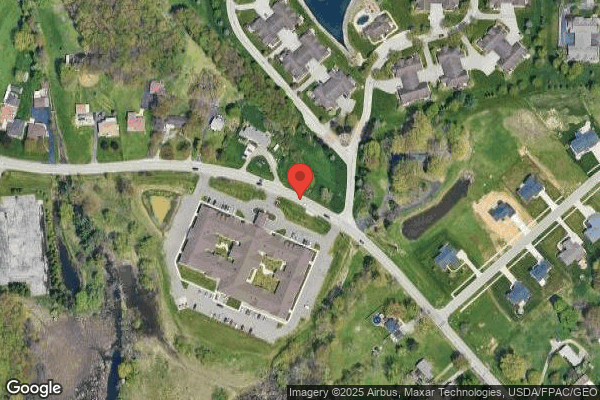
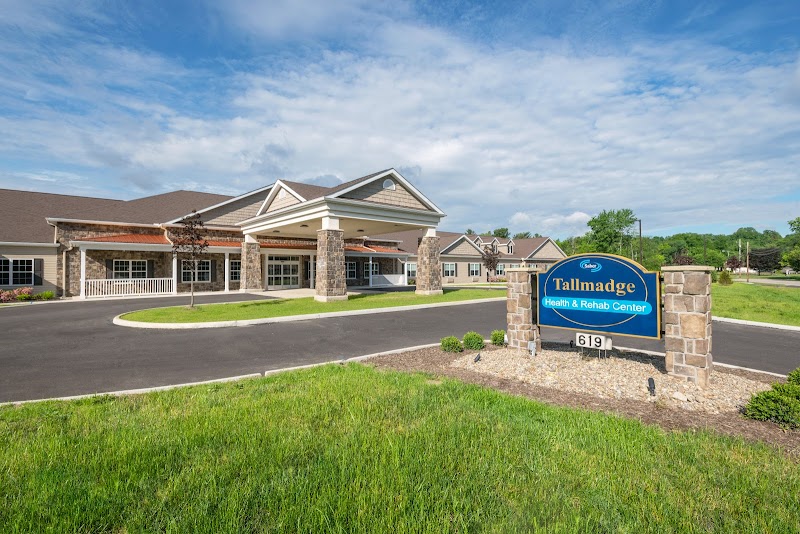
619 NORTHWEST AVENUE, TALLMADGE, OH 44278 (216) 292-5706
For profit - Corporation 90 Beds SABER HEALTHCARE GROUP Data: November 2025
Trust Grade
43/100
#554 of 913 in OH
Last Inspection: April 2025

Within standard 12-15 month inspection cycle. Federal law requires annual inspections.

Overview

Tallmadge Health & Rehab Center has a Trust Grade of D, indicating below average performance with some concerning issues. They rank #554 out of 913 facilities in Ohio, placing them in the bottom half, and #23 out of 42 in Summit County, meaning only 22 local options are better. The facility is worsening, with reported issues increasing from 8 in 2024 to 17 in 2025. Staffing is a concern, rated 2 out of 5 stars with a high turnover rate of 64%, significantly above the state average. Notably, there have been serious incidents, such as a resident experiencing severe pain without timely medication, leading to a hospital re-admission, and another resident receiving wound care without pain management, causing them significant distress. While the facility has strengths in quality measures, the combination of staffing issues, rising incidents, and serious care deficiencies may raise red flags for families considering this option.

Trust Score
D
43/100
In Ohio
#554/913
Bottom 40%
Safety Record
Moderate
Needs review
Inspections
Getting Worse
8 → 17 violations
Staff Stability
⚠ Watch
64% turnover. Above average. Higher turnover means staff may not know residents' routines.
Penalties
⚠ Watch
$10,839 in fines. Higher than 98% of Ohio facilities. Major compliance failures.
Skilled Nurses
✓ Good
Each resident gets 43 minutes of Registered Nurse (RN) attention daily — more than average for Ohio. RNs are trained to catch health problems early.
Violations
⚠ Watch
40 deficiencies on record. Higher than average. Multiple issues found across inspections.
★★★☆☆
3.0
Overall Rating
★★☆☆☆
2.0
Staff Levels
★★★★★
5.0
Care Quality
★★☆☆☆
2.0
Inspection Score
Stable
2024: 8 issues
2025: 17 issues

The Good

  • 5-Star Quality Measures · Strong clinical quality outcomes
  • Full Sprinkler Coverage · Fire safety systems throughout facility
  • No fines on record

Facility shows strength in quality measures, fire safety.

The Bad

3-Star Overall Rating

Near Ohio average (3.2)

Meets federal standards, typical of most facilities

Staff Turnover: 64%

18pts above Ohio avg (46%)

Frequent staff changes - ask about care continuity

Federal Fines: $10,839

Below median ($33,413)

Minor penalties assessed

Chain: SABER HEALTHCARE GROUP

Part of a multi-facility chain

Ask about local staffing decisions and management

Staff turnover is elevated (64%)

16 points above Ohio average of 48%

The Ugly 40 deficiencies on record

2 actual harm
Apr 2025 17 deficiencies
CONCERN (D) 📢 Someone Reported This

A family member, employee, or ombudsman was alarmed enough to file a formal complaint

Potential for Harm - no one hurt, but risky conditions existed

Deficiency F0565 (Tag F0565)

Could have caused harm · This affected 1 resident

Based on interview, record review, and review of email correspondence, the facility failed to ensure resident concerns were addressed in manner that provided a resolution to their concerns. This affec...

Read full inspector narrative →
Based on interview, record review, and review of email correspondence, the facility failed to ensure resident concerns were addressed in manner that provided a resolution to their concerns. This affected two residents (#10 and #21) of four residents reviewed for concerns. The facility census was 85. Findings include: Interview on 03/20/25 at 9:23 A.M. with Resident #21 revealed he was the president of resident council and stated he had many residents who had expressed concerns related to their care. Resident #21 stated he had shared those concerns with the Administrator and the Director of Nursing (DON), however, their concerns had not been addressed and they had not seen any changes. Resident #21 stated he had sent his letter of concerns to the corporate office, and stated he had not received or seen any resolution or effort to address the residents' numerous concerns. Resident #21 further stated when he had brought issues to the Administrator, she would then go to the staff members he had complained about and then those staff members would ignore him and not assist him with care. An observation on 03/20/25 at 1:26 P.M. of the resident council meeting revealed several residents, including Residents #10 and #21, were present for the meeting. Residents had expressed various concerns that included laundry, maintenance, nursing, and administration and stated their concerns have been ongoing with no resolution. Interview on 03/24/25 at 11:09 A.M. with Administrator revealed she had spoken with Resident#10 and Resident #21 regarding their concerns and stated she had been aware of a letter that was sent to the corporate office. Administrator stated she had addressed their concerns, however they had continued to make complaints. Interview on 03/26/25 at 2:07 P.M. with Licensed Practical Nurse (LPN) #514 revealed she had spoken with Resident #10 on occasions regarding her concerns. LPN #514 stated she had advised Resident #10 to discuss her concerns further with the Administrator and the DON. LPN #514 stated she was unaware of the outcome of the residents concerns. Review of submitted letter to the corporate office authored by Residents #10 and #21, and signed by numerous other residents, revealed several concerns that included staff treatment, housekeeping, poor food quality, and nursing concerns. Review of email received by the corporate office dated 11/25/24 and timed 10:37 A.M. revealed the corporation had confirmed they had received resident concerns that stated management at the facility isn't taking the issues seriously. This deficiency represents non-compliance investigated under Complaint Number OH00162488.
CONCERN (D) 📢 Someone Reported This

A family member, employee, or ombudsman was alarmed enough to file a formal complaint

Potential for Harm - no one hurt, but risky conditions existed

Abuse Prevention Policies (Tag F0607)

Could have caused harm · This affected 1 resident

Based on interviews, medical record review, personnel file review, and policy review, the facility failed to implement their abuse policy by failing to immediately remove a staff member accused of emo...

Read full inspector narrative →
Based on interviews, medical record review, personnel file review, and policy review, the facility failed to implement their abuse policy by failing to immediately remove a staff member accused of emotional abuse during the investigation. This affected one resident (#3) of four residents reviewed for abuse and neglect. A second example of no actual harm with the potential for minimal harm occurred when the facility failed to ensure reference checks were completed on new employees upon hire. This had the potential to affect all residents residing in the facility. The facility census was 85. Findings include: 1. Review of the medical record for Resident #3 revealed an admission date of 11/13/24. Diagnoses included type one diabetes mellitus with diabetic polyneuropathy, obesity, Aspergers syndrome, and post-traumatic stress disorder, and needs assistance with personal care. Continued review revealed she was cognitively intact. Review of Resident #3's nursing progress note dated 02/23/25 at 8:30 P.M. revealed Licensed Practical Nurse (LPN) #543 stated Resident #3's brother came to the nurse and stated Certified Nursing Assistant (CNA) #584 was mean to Resident #3. The nurse and the resident's brother went to Resident #3's room, and found the resident crying due to fear that CNA #584 would be mean to her again. Resident #3 stated CNA #584 had been mean to her a few times when she wanted to go to the bathroom. The note indicated LPN #543 had explained to Resident #3 and her brother that the nurse would switch CNA #584's assignment with another CNA, so Resident #3 would feel safe and not worry about care that night. The resident and her brother agreed and stated they wanted to speak with management about the situation. The note indicated the Director of Nursing (DON) was notified and explained what happened, and the note indicated the DON stated she would speak with Resident #3 the next day. Interview on 03/19/25 at 10:45 A.M. with Resident #3 revealed the last five or so times, that CNA #584 cared for her, she was not nice to her. Resident #3 reported when she put on her call light, CNA# 584 would come in and say she was short-staffed and had 16 other residents to take care of. CNA #584 would tell Resident #3 she didn't have time to run down to her room and take her to the bathroom. CNA #584 would continuously tell her to squeeze it all out because she could not keep running down to take her to the bathroom. Resident #3 stated at times she would urinate herself because she was fearful of how CNA #584 would treat her. Resident #3 stated one day she finally had enough and called her brother hysterically because she knew she would be working with CNA #584 that night. Resident #3 stated her brother had to come in and settle her down. She stated the Administrator was aware and ensured her that CNA #584 would not be working with her anymore. When asked how CNA #584 made her feel, Resident #3 reported that she thought CNA #584 was mentally abusive to her. Telephone interview on 03/25/25 at 6:10 P.M. with Family Member #630 reported he had heard CNA #584 say inappropriate things to Resident #3, including telling her that she [CNA #584] did not have time to keep coming to Resident #3's room and taking her to the bathroom as the facility was short staffed. Family Member #630 reported he heard CNA #584 state to Resident #3 to push all her urine out now because she was too busy to keep coming to the resident's room. Family Member #630 would then see CNA #584 seated at the nurse's station on her phone. He reported Resident #3 had called him crying over the treatment she received from CNA #584. His sister was afraid to voice concerns due to staff retaliation, and instead, let it all build up and she would eventually break down. He requested CNA #584 to not work with her anymore. He reported the Administrator told him if his sister kept complaining, then no one would be left to take care of her. Family Member #630 reported he thought that was a rude comment. Review of the Disciplinary Action Form initially dated 02/24/25 revealed CNA #584 was disciplined on 03/06/25 due to a resident and her brother stating CNA #584 used poor customer service skills when caring for the resident, the CNA was said to have stated on several evenings she was busy, she was short staffed, and told the resident to urinate completely because she could not toilet the resident over and over during the shift. Counseling included not rushing residents or telling them you were busy or understaffed. Review of schedules showed the shifts were not understaffed. Residents do not want to feel like they are a burden to staff. Review of the staffing schedules revealed on Sunday 02/23/25 CNA #584 was scheduled to work on the 100 and 200 halls from 7:00 P.M. to 7:00 A.M (Resident #3 resided on the 100 hall) Review of staff time punches for this day revealed she clocked in at 7:00 P.M. and out at 7:30 A.M. on 02/24/25. Interview on 03/24/25 at 4:46 P.M. the facility Administrator verified that the facility did not follow their abuse policy. She revealed that had it been reported in the way that was relayed in the nurses note, or reported that the resident felt she was emotionally abused, CNA #584 would have been removed and not allowed to remain working in the facility while an investigation was conducted. Review of the facility policy, Ohio Resident Abuse Policy dated 07/11/24 revealed the facility will not tolerate abuse, neglect, mistreatment, exploration of residents, and misappropriation of resident property by anyone. Facility staff must immediately report all such allegations to the administrator/abuse coordinator. The facility administrator/abuse coordinator will immediately begin an investigation and notify the applicable local and state agencies in accordance with procedures in this policy. If a staff member is accused or suspected of abuse, neglect, mistreatment, or exploration, the facility immediately remove the staff member from the resident care area and requests a written statement from accused staff member. The accused staff members will remain under direct supervision until the statement is complete and or law enforcement arrives if applicable. The accused staff member will then be removed from the facility and the schedule pending the outcome of the investigation. 2. Review of the personal files for facility staff revealed eight sampled staff members did not receive references checks before being employed by the facility and having resident contact. These included: 1. Certified Nursing Assistant (CNA) #584 hired on 02/16/22. 2. CNA #546 hired on 03/25/24. 3. CNA #574 hired on 04/15/24. 4. CNA #557 hired on 06/28/23. 5. Admissions Coordinator #524 hired on 09/03/24. 6. Registered Nurse #512 hired on 06/26/24. 7. Laundry aide #612 hired on 03/21/24. 8. Respiratory Director #513 hired on 09/12/24. Interview on 03/26/25 at 10:33 A.M. with Human Resource Coordinator #517 confirmed the facility did not obtain reference checks prior to employing the above staff members. Review of the facility policy, Ohio Resident Abuse Policy dated 07/11/24 revealed as part of the facility screening procedure included that the facility will generally attempt to obtain references from two prior employers for each applicant. This deficiency represents non-compliance investigated under Complaint Number OH00162488.
CONCERN (D)

Potential for Harm - no one hurt, but risky conditions existed

Deficiency F0645 (Tag F0645)

Could have caused harm · This affected 1 resident

Based on interview and record review the facility failed to ensure a Preadmission Screening and Resident Review (PASARR) for Resident #56 was accurately completed upon the resident's admission to the ...

Read full inspector narrative →
Based on interview and record review the facility failed to ensure a Preadmission Screening and Resident Review (PASARR) for Resident #56 was accurately completed upon the resident's admission to the facility. This affected one resident (#56) of one resident reviewed for PASARR. The facility census was 85. Findings include: Review of the medical record for Resident #56 revealed an admission date of 12/12/24. Diagnoses included traumatic subdural hemorrhage without loss of consciousness, Post Traumatic Stress Disorder (PTSD), anxiety, and dementia. The record indicated the residents had moderate cognitive impairment. Review of Resident #56's PASARR dated 12/13/24, the day after admission to the facility, revealed the PASARR was completed due to no previous PASARR records. The PASARR did not include the residents' diagnoses of PTSD, anxiety, or dementia. Interview on 03/19/25 at 1:25 P.M. Social Service Designee #579 verified when Resident #56 was admitted to the facility she did not have a PASARR. She stated she completed the PASARR but not include the resident diagnoses of PTSD, anxiety, or dementia.
CONCERN (D) 📢 Someone Reported This

A family member, employee, or ombudsman was alarmed enough to file a formal complaint

Potential for Harm - no one hurt, but risky conditions existed

Quality of Care (Tag F0684)

Could have caused harm · This affected 1 resident

**NOTE- TERMS IN BRACKETS HAVE BEEN EDITED TO PROTECT CONFIDENTIALITY** Based on record review, observation, interview, and facility policy review, the facility failed to ensure Resident #23's Thrombo...

Read full inspector narrative →
**NOTE- TERMS IN BRACKETS HAVE BEEN EDITED TO PROTECT CONFIDENTIALITY** Based on record review, observation, interview, and facility policy review, the facility failed to ensure Resident #23's Thrombo-Embolic Deterrent (TED) hose (compression stockings) were in place as ordered and failed to ensure monitoring was completed for Resident #63's biliary drain. This affected two residents (#23 and #63) out of six residents reviewed for skin conditions. The facility census was 85. Findings include: 1. Review of the medical record for Resident #63 revealed an admission date of 01/11/25. Diagnoses included metabolic encephalopathy, acute kidney failure with tubular necrosis, dependence on renal dialysis, and hypertensive heart and chronic kidney disease without heart failure. The resident was admitted with a right biliary drain (a medical device used to drain bile from the liver or gallbladder. It consists of a thin, flexible tube that is inserted into the bile duct to collect and remove bile). Review of Resident #63's care plan dated 02/05/25 revealed she did not have a care plan addressing her biliary drain. Review of Resident #63's progress notes revealed she was admitted to the hospital from [DATE] to 03/01/25 with influenza type A. Review of Resident #63's January 2025 physician orders revealed orders to document biliary drain output twice a day, and to monitor the residents biliary drain site for signs and symptoms of infection. The orders were received on 01/11/25 and were discontinued by 02/24/25. Continued review of the March 2025 physician orders revealed the resident did not have any orders related to monitoring the biliary drain site or recording its output. Review of Resident #63's Medication Administration Record, skin assessments, and progress notes revealed no evidence that the facility was monitoring the resident biliary drain site or output after 02/21/25. Review of Resident #63's nursing progress note dated 03/21/25 at 7:54 P.M. revealed the resident's family reported that the resident was having pain at the site of her drain. Upon assessment, the area around resident's drain was slightly swollen, tender to touch with slight redness around the area. Vitals were obtained and the resident was noted with a temperature of 100.2 degrees Fahrenheit (F). The family was at bedside and wanted the resident to be sent to the emergency room. A call was placed to the Nurse Practitioner who recommended the resident be sent out. Emergency medical services came to transport resident to the hospital. The family was at bedside and aware. Review of Resident #63's hospital paperwork dated 03/21/25 revealed she was admitted with clostridium difficile (c-diff) and cholecystitis. Phone interview on 03/20/25 at 1:55 P.M. with Family Member #632 revealed Resident #63 had a biliary drain since November 2024. Yesterday, (03/19/25) the family member noticed it appeared that the tubing did not appear to be clean, the drainage appeared chunky, did not appear to have been flushed, and the amount in the bag did not appear to be different from several days prior. She asked the CNA if she had dumped it, and the CNA stated there had not been a reason since the amount had not changed. Family Member #632 stated the resident had gotten sick yesterday, and last night she complained of pain in that area, and she reported her pain was a seven (indicating seven on a scale of zero to 10, zero indicating no pain and 10 the worst pain). The family member spoke with the nurse last night, the nurse assessed the resident and stated her abdomen was in pain. She stated the resident went out to the hospital in February 2025 for Influenza A and since coming back, it was discovered upon discussion with the nurse last night that there were no orders for cleaning, draining, or documenting the amount of drainage for the biliary drain following the residents readmission from hospital. The nurse contacted the Nurse Practitioner, and orders were received and an order for an ultrasound was ordered. Interview on 03/24/25 at 5:19 P.M. the Director of Nursing revealed Resident #63 went to the hospital in February 2025 and when she came back to the facility, the hospital paperwork did not provide orders for her biliary drain. She stated because of this, the nurse did not initiate the residents' previous drain orders. She confirmed the facility did not have any documented evidence where the residents drain was monitored since her admission back to the facility on [DATE]. She stated that her expectation would be for the nurses to monitor the drain twice daily and monitor the resident's output twice a day. 2. Review of the medical record for Resident #23 revealed an admission date of 12/30/21. Diagnoses included but were not limited to chronic obstructive pulmonary disease, epileptic seizures, congestive heart failure, peripheral vascular disease, and abnormalities of gait and mobility. Review of the 01/17/25 quarterly Minimum Data Set (MDS) 3.0 for Resident #23 revealed he was cognitively intact and required moderate assistance for dressing, toileting and transfers. Review of the 11/01/24 physician order for Resident #23 revealed an order to put on Thrombo-Embolic Deterrent (TED) hose (compression stockings) every morning and they were to be taken off at night. Review of the physician order dated 01/22/24 for Resident #23 revealed an order for weekly skin checks and as needed. Review of the care plan last reviewed on 01/29/25 for Resident #23 revealed an alteration in cardiovascular status related to congestive heart failure, cardiomyopathy, presence of a pacemaker, hypertension, and hyperlipidemia. Interventions listed were TED hose on in the morning and off at night. Review of the March 2025 Medication Administration Record (MAR) and Treatment Administration Record (TAR) for Resident #23 revealed each day in March 2025 indicated the residents TED hose were on as ordered, including on 03/18/25. Review of the nursing progress notes from 12/01/24 to 03/18/25 did not reveal any TED hose refusals. Review of the weekly skin assessments from December 2024 to March 2025 for Resident #23 revealed skin assessments were completed on 12/08/24, 12/15/24, 01/26/25, 02/09/25, 02/23/25, and 03/23/25. Interview on 03/17/25 at 1:06 P.M. with Resident #23 revealed both feet were swollen and he did not feel the staff monitored his edema. Observation on 03/18/25 at 2:31 P.M. of Resident #23 revealed his TED hose were not on. Interview at the time of the observation with Resident #23 revealed staff did not offer to put TED hose on the resident this morning and had not offered to put them on in a long time. Interview on 03/18/25 at 2:46 P.M. with Licensed Practical Nurse (LPN) #586 confirmed Resident #23 did not have his TED hose on and stated it was an accident that the 03/18/25 MAR/TAR indicated them as being on and that it shouldn't have been checked off as completed. Interview on 03/24/25 at 2:47 P.M. with LPN #586 also confirmed weekly skin checks for Resident #23 were not completed weekly as physician ordered. Review of the 02/08/21 revised facility policy titled Application of Anti-Emboli Stockings/TED Hose revealed anti-embolic stocking will be applied according to providers orders. The policy revealed if possible, anti-emboli stoking should be applied in the morning, prior to the resident getting out of bed, and to remove and reapply stockings according to providers orders (usually left off at night).
CONCERN (D)

Potential for Harm - no one hurt, but risky conditions existed

Accident Prevention (Tag F0689)

Could have caused harm · This affected 1 resident

Based on observation, interview, record review, and policy review, the facility failed to ensure Resident #7 was safely transferred using a mechanical lift. This affected one resident (#7) of three re...

Read full inspector narrative →
Based on observation, interview, record review, and policy review, the facility failed to ensure Resident #7 was safely transferred using a mechanical lift. This affected one resident (#7) of three residents reviewed for accidents. The facility census was 85. Findings include: Review of the medical record for Resident #7 revealed an admission date of 08/11/2022. Diagnoses included chronic obstructive pulmonary disease (COPD), Alzheimer's disease, unspecified, and type two diabetes mellitus with hyperglycemia. The resident was noted to have a severe cognitive impairment. Review of Resident #7's March 2025 physician orders revealed an order dated 05/15/24 for Hoyer (mechanical) lift (a mobile, wheeled device used to safely lift and transfer individuals with limited mobility) with assist of two staff for all transfers. Review of Resident #7's comprehensive care plan date 02/27/25 revealed the resident had self care deficits related to COPD, Alzheimer's, dementia, diabetics, atherosclerotic heart disease, and cognitive communication deficit. One intervention stated the resident was dependent on two staff with the use of a mechanical lift for all transfers. Observation of video recordings submitted anonymously to the Ohio Department of Health via email revealed a video clip dated 01/27/25 starting at 4:39 P.M. lasting one minute and 50 seconds showing Certified Nursing Assistant (CNA) #633 using a mechanical lift to transfer Resident #7 from her wheelchair into the bed independently. There was not a second staff member present in the video. Interview on 03/25/25 at 2:14 P.M. the Administrator confirmed the facility staff member was observed on video unsafely transferring Resident #7 independently. Review of the facility policy titled Mechanical Lift Policy dated 01/07/22 revealed two staff persons were required for total body lifts.
CONCERN (D)

Potential for Harm - no one hurt, but risky conditions existed

Deficiency F0692 (Tag F0692)

Could have caused harm · This affected 1 resident

**NOTE- TERMS IN BRACKETS HAVE BEEN EDITED TO PROTECT CONFIDENTIALITY** Based on interview, medical record review, and policy review, the facility failed to establish a baseline weight for Resident #7...

Read full inspector narrative →
**NOTE- TERMS IN BRACKETS HAVE BEEN EDITED TO PROTECT CONFIDENTIALITY** Based on interview, medical record review, and policy review, the facility failed to establish a baseline weight for Resident #73. This affected one resident (#73) of four residents reviewed for nutrition. The facility census was 85. Findings include: Review of the medical record for Resident #73 revealed an admission date of 11/29/24. Diagnoses included hemiplegia and hemiparesis following cerebral infarction affecting right dominant side, unspecified fracture of third thoracic vertebra, subsequent encounter for fracture with routine healing, and dysphagia following cerebral infarction. Review of Resident #73's physician orders revealed an order dated 11/30/24 to 01/03/25 to obtain weight upon admission, then weekly for four weeks. Additional orders dated 03/03/25 called for Resident #73 to receive a magic cup (fortified ice-cream type supplement) four ounces (oz) daily with lunch and dinner, and for a regular diet, pureed texture, with a 1500 milliliter (ml) daily fluid restriction. Review of Resident #73's admission nutrition assessment dated [DATE] revealed the resident was on a pureed diet with a 1500 ml daily fluid restriction. His weight was listed as 164 pounds (lbs), a BMI of 23.5, and his ideal body weight was noted to be 164 lbs. The assessment stated to monitor weekly weights, intakes, skin, and labs. Review of Resident #73's care plan revised 03/03/25 revealed the resident had increased nutrition/hydration risk related to hemiplegia, fracture right clavicle, fracture of vertebra, hypertension, alcohol abuse, aphasia, dysarthria, dysphagia, and significant weight loss of one month. A listed goal stated the resident will be free of significant weight changes every month. Interventions included provide diet per order,monitor weight per protocol, monitor need for increased nutritional intervention related to diagnosis, medications and listed problems, monitor dietary intake Review of Resident #73's weights revealed the following weights: - 12/16/24 a weight of 163.4 lbs - 01/06/25 a weight of 163.4 lbs - 01/30/25 a weight of 145.5 lbs - 02/06/25 a weight of 145.5 lbs - 03/03/25 a weight of 144.8 lbs The recorded weights indicated Resident #73 had a 10.95 percent weight loss from December 2024 to January 2025. Interview on 03/18/25 at 9:55 A.M. with Resident #73 revealed the resident reported he had lost a lot of weight recently and was unsure why. Interview on 03/19/25 at 9:45 A.M. with Dietitian #610 revealed all residents are ordered weekly weights upon admission to establish a baseline weight. Dietician #610 stated weights were not always consistently obtained due to staffing, but the issue was improving. Interview on 03/27/25 at 10:38 A.M. with Regional Registered Dietitian #627 verified the facility failed to establish a baseline weight for Resident #73 by obtaining an initial weight and weekly weights following. She stated it is her expectation that a baseline weight should be obtained within 48 hours of admission. She reported without the facility obtaining a baseline weight she is unable to determine if the resident had a true weight loss. Review of the policy Resident Weight Policy last revised on 12/12/23 revealed weights will be obtained routinely in order to monitor nutritional health over time. Each residents weight will be determined upon admission/readmission to the facility, weekly for the first four weeks after admission/readmission and monthly or more often if risk is identified or as ordered. Nursing is responsible for obtaining weights. Review of the facility policy, Resident Change in Condition Policy last revised 06/27/24 revealed the physician, provider and resident/family/responsible party will be notified when there has been a significant weight loss of five percent in 30 days, or 10 percent in 180 days.
CONCERN (D) 📢 Someone Reported This

A family member, employee, or ombudsman was alarmed enough to file a formal complaint

Potential for Harm - no one hurt, but risky conditions existed

Deficiency F0694 (Tag F0694)

Could have caused harm · This affected 1 resident

**NOTE- TERMS IN BRACKETS HAVE BEEN EDITED TO PROTECT CONFIDENTIALITY** Based on medical record review, observation, and interview, the facility failed to ensure Resident #287's midline intravenous ac...

Read full inspector narrative →
**NOTE- TERMS IN BRACKETS HAVE BEEN EDITED TO PROTECT CONFIDENTIALITY** Based on medical record review, observation, and interview, the facility failed to ensure Resident #287's midline intravenous access site dressing changes were completed per physician order. This affected one resident (#287) out of one residents reviewed for intravenous therapy. The facility identified four residents receiving intravenous therapy. The facility census was 85. Findings include: Review of Resident #287's medical record revealed an admission date of 06/28/23. Diagnoses included osteomyelitis (bone infection), respiratory failure and quadriplegia. Review of the Minimum Data Set (MDS) assessment dated [DATE] revealed Resident #287 had intact cognition. Resident #287 was dependent for toileting, bathing and personal hygiene. Review of physician orders for March 2025 revealed orders dated 03/07/25 to observe Resident #287's midline intravenous access site every shift and change the transparent dressing and securement device every seven days and also as needed (PRN). Review of Resident #287's care plan revealed no documented evidence of a care plan related to the residents midline. Review of Medication Administration Record (MAR) and Treatment Administration Record (TAR) for March 2025 revealed documentation that Resident #287's midline dressing change had been completed on 03/09/25, 03/10/25, 03/11/25, 03/12/25, 03/13/25, 03/14/25, 03/15/25, 03/17/25, 03/23/25, 03/24/25, 03/25/25 and 03/26/25. Observation on 03/26/25 at 10:39 A.M. with Licensed Practical Nurse (LPN) #587 revealed Resident #287's midline dressing to her left upper arm had a date of 03/05/25 and there was dried blood around the insertion site. LPN #587 confirmed the date of 03/05/25 and stated midline dressings were to be changed every seven days and also PRN. Interview on 03/26/25 at 3:08 P.M. with Director of Nursing (DON) confirmed Resident #287's MAR and TAR for March 2025 had included inaccurate documentation of Resident #287's midline dressing being changed and stated nurses should not document treatments they had not completed. The DON further revealed the facility had not updated the residents care plan since the midline was placed.
CONCERN (D)

Potential for Harm - no one hurt, but risky conditions existed

Deficiency F0698 (Tag F0698)

Could have caused harm · This affected 1 resident

**NOTE- TERMS IN BRACKETS HAVE BEEN EDITED TO PROTECT CONFIDENTIALITY** Based on interview and record review the facility failed to ensure dialysis communication forms had been completed before and af...

Read full inspector narrative →
**NOTE- TERMS IN BRACKETS HAVE BEEN EDITED TO PROTECT CONFIDENTIALITY** Based on interview and record review the facility failed to ensure dialysis communication forms had been completed before and after dialysis treatments. This affected one resident (#10) of two residents reviewed for dialysis communication. The facility census was 85. Findings include: Review of Resident #10's medical records revealed an admission date of 09/14/22. Diagnoses included end stage renal disease (ESRD) and dialysis dependent. Review of Minimum Data Set (MDS) assessment dated [DATE] revealed Resident #10 had intact cognition. Review of Resident #10's care plan dated 01/30/25 had ESRD and required dialysis Monday through Friday. Review of Resident #10's physician orders for March 2025 revealed to obtain Resident #10's weight post-dialysis and notify the physician of weight or losses of three pounds. Review of Resident #10's dialysis communication forms for February 2025 and March 2025 revealed dialysis communication forms were only completed for 02/04/25, 02/07/25, 02/10/25, 02/13/25, 02/20/25, 02/21/25, 02/24/24, 02/25/25, 02/27/25, 03/03/25, 03/04/25, 03/06/25, 03/11/25, 03/14/24, 03/17/25 and 03/21/25. Review of progress note dated 03/05/25 timed 2:24 P.M. authored by Licensed Practical Nurse (LPN) #587 revealed Resident #10 had refused dialysis. Progress note did not include notification to the physician of refusal. Interview on 03/25/25 at 12:23 P.M. with Director of Nursing (DON) confirmed missing dialysis communication forms and stated dialysis communication forms were to be filled out before and after dialysis treatments. The DON stated if a resident refused dialysis treatments, a progress note was to be written.
CONCERN (D) 📢 Someone Reported This

A family member, employee, or ombudsman was alarmed enough to file a formal complaint

Potential for Harm - no one hurt, but risky conditions existed

Pharmacy Services (Tag F0755)

Could have caused harm · This affected 1 resident

**NOTE- TERMS IN BRACKETS HAVE BEEN EDITED TO PROTECT CONFIDENTIALITY** Based on interviews, observation, record review, facility policy review, review of pharmacy destruction logs, review of facility...

Read full inspector narrative →
**NOTE- TERMS IN BRACKETS HAVE BEEN EDITED TO PROTECT CONFIDENTIALITY** Based on interviews, observation, record review, facility policy review, review of pharmacy destruction logs, review of facility policy, and review of Ohio Revised Code, the facility failed to ensure medications were returned to the pharmacy timely following discharge and narcotics were destroyed in a timely manner. In addition, the facility failed to ensure Resident #21 received routine medications per physician orders. This affected Resident #21 and had the potential to affect all residents residing in the facility. The facility census was 85. Findings include: 1. Review of Resident #800's closed medical records revealed an admission date of [DATE] and a deceased date of [DATE]. Review of Resident #801's closed medical records revealed an admission date of [DATE] and a deceased date of [DATE]. Review of Resident #802's closed medical records revealed an admission date of [DATE] and deceased date of [DATE]. Review of Resident #803's closed medical records revealed an admission date of [DATE] and a discharge date of [DATE]. Review of Resident #804's closed medical records revealed an admission date of [DATE] and a deceased date of [DATE]. Resident #804 was ordered oxycodone (narcotic pain medication) 5 milligrams (mg). Review of Resident #805's closed medical records revealed an admission date of [DATE] and a discharge date of [DATE]. Resident #805 was ordered oxycodone 5 mg. Review of Resident #806's closed medical records revealed an admission date of [DATE] and a discharge date of [DATE]. Resident #806 was ordered lorazepam (controlled substance to treat anxiety) 0.5 mg. Review of Resident #807's closed medical records revealed an admission date of [DATE] and deceased date of [DATE]. Resident #807 was ordered oxycodone 5 mg, morphine (narcotic pain medication) 20 mg and lorazepam 0.5 mg. Observation and interview on [DATE] at 8:33 A.M. with the Director of Nursing (DON) of the facility medication rooms revealed no excess medications present. The DON stated unused medications were sent back to the pharmacy twice weekly. The DON denied she had any narcotics in the facility that were not being used and stated that narcotics had been destroyed. The DON stated there were some medications in the nursing office that were in the process of being sent back to the pharmacy. Observation of the nursing office on [DATE] at 9:12 A.M. with the Assistant Director of Nursing (ADON) revealed four boxes of several cards of unused medications. ADON stated she was assisting with getting the medications sent back to the pharmacy. Observation revealed several medication cards in the bins for Residents #800, #801, #802 and #803, and ADON stated those residents no longer resided in the facility. Interview on [DATE] at 1:30 P.M. with Regional Registered Nurse (RRN) #628 revealed the DON had stated she had unused narcotics in the facility that should have been destroyed. RRN #628 stated she had wasted the unused narcotics with the DON on [DATE] after she had been informed the narcotics had not been destroyed previously. RRN #628 stated unused narcotics should be destroyed as soon as possible after a resident is discharged or the medication is not longer being used. Review of controlled substance inventory form revealed Resident #804, #805, #806 and #807's controlled substance medications were destroyed on [DATE]. Review of facility policy titled Discontinued Medication Procedure revised [DATE] revealed items eligible for return were to be returned to the pharmacy within 48 hours or as soon as practicably possible. Review of facility policy titled Disposal/Destruction of Expired or Discontinued Medication revised [DATE] revealed facility should dispose of discontinued medication after a residents discharge or death in a timely fashion, no longer than 90 days after the medication was discontinued. Review of Ohio Revised Code 4729:5 effective date [DATE]: (6) Controlled substances shall be destroyed pursuant to this paragraph no later than ten days from the date the patient's controlled substance medication is removed from the medication cart or storage area. 2. Review of Resident #21's medical record revealed an admission date of [DATE] with the diagnosis including diabetes. Review of the Minimum Data Set (MDS) assessment dated [DATE] revealed Resident #21 had intact cognition. Review of the physician orders for [DATE] revealed Resident #21 was ordered Ozempic (diabetic/weight loss injection) 2 milligrams (mg), once daily on Mondays. Review of Resident #21's Medication Administration Record (MAR) for [DATE] revealed a dose of Ozempic was given on [DATE] and [DATE]. Review of the pharmacy delivery slip dated [DATE] revealed Resident #21 had an Ozempic injection pen which contained 8 milligrams/3 milliliters of medication (4 doses of the ordered medication). Review of the progress note dated [DATE] timed 5:16 P.M. revealed they were awaiting a pharmacy delivery for Resident #21's Ozempic and to place the medication on hold until medication was delivered which was scheduled for [DATE]. Review of the progress note dated [DATE] time 3:59 P.M. revealed the facility had agreed to pay for Resident #21's Ozempic. Interview on [DATE] at 9:23 A.M. with Resident #21 revealed he had not received his ordered Ozempic once a week as he was supposed to. Resident #21 stated the medication was supposed to be administered on Saturdays, however he had not received it and stated he had been told he would need to change the day it was administered because the medication was unavailable and stated he had been told the medication could not be reordered until [DATE]. Resident #21 stated he believed someone had taken the medication for their own personal use for weight loss because the facility was having a weight loss contest. Interview on [DATE] at 12:33 P.M. with the Director of Nursing (DON) confirmed the pharmacy delivery slip dated [DATE] revealed Resident #21 had an Ozempic pen that contained 8 mg/3 mL. The DON further confirmed Resident #21's physician orders were for 2 mg once daily on Mondays and that the injection pen contained a total of 4 doses. She stated she was unsure why the medication was not available to be given on [DATE] and further confirmed the dose documented on [DATE] was prior to the medication being delivered on [DATE]. This deficiency represents non-compliance investigated under Complaint Numbers OH00162488 and OH00162160.
CONCERN (D)

Potential for Harm - no one hurt, but risky conditions existed

Drug Regimen Review (Tag F0756)

Could have caused harm · This affected 1 resident

**NOTE- TERMS IN BRACKETS HAVE BEEN EDITED TO PROTECT CONFIDENTIALITY** 2. Review of the medical record for Resident #30 revealed an admission date of 03/27/23. Diagnoses included end stage renal dise...

Read full inspector narrative →
**NOTE- TERMS IN BRACKETS HAVE BEEN EDITED TO PROTECT CONFIDENTIALITY** 2. Review of the medical record for Resident #30 revealed an admission date of 03/27/23. Diagnoses included end stage renal disease, generalized anxiety disorder, and major depressive disorder. Review of Resident #30's quarterly Minimum Data Set, dated [DATE] revealed the resident was cognitively intact and had no symptoms of depression. Review of Resident #30's physician ordered revealed an active order dated 12/18/23 for sertraline 50 mg by mouth one time a day for depression and an active order for mirtazapine 7.5 mg by mouth every night at bedtime for depression. Review of Resident #30's pharmacy recommendation dated 09/25/24 revealed the resident received two antidepressants for depression: mirtazapine 7.5 mg at bedtime and sertraline 50 mg in the morning. The recommendation stated to please reduce one of these medications, if possible, with the end goal of discontinuation. Continued reviewed revealed the physician did not address the recommendation. Interview on 03/27/25 at 2:47 P.M. with the Administrator confirmed there was no evidence where the physician addressed the pharmacy recommendation. Based on record review and staff interview, the facility failed to ensure pharmacy recommendations were timely reviewed and addressed by the provider. This affected two residents (#30 and #67) of five residents reviewed for unnecessary medications. The facility census was 85. Findings include: Review of Resident #67's medical records revealed an admission date of 09/16/24. Diagnoses included diabetes and congestive heart failure. Review of Minimum Data Set (MDS) assessment dated [DATE] revealed Resident #67 had impaired cognition. Review of physician orders for March 2025 revealed Resident #67 was ordered metformin (oral diabetic medication) 500 milligrams (mg) once daily. Review of pharmacy recommendation dated 01/23/25 revealed a recommendation to monitor blood work to assess for kidney function on the next convenient lab day, and every six months thereafter. Review of Resident #67's medical records revealed lab work was not completed until 03/11/25. Interview on 03/26/25 at 3:08 P.M. with the Director of Nursing (DON) confirmed Resident #67's pharmacy recommendation was dated 01/23/25 and confirmed Resident #67's lab work was not completed until 03/11/25.
CONCERN (D) 📢 Someone Reported This

A family member, employee, or ombudsman was alarmed enough to file a formal complaint

Potential for Harm - no one hurt, but risky conditions existed

Deficiency F0757 (Tag F0757)

Could have caused harm · This affected 1 resident

**NOTE- TERMS IN BRACKETS HAVE BEEN EDITED TO PROTECT CONFIDENTIALITY** Based on medical record review and staff interview, the facility failed to ensure appropriate follow up with a specialty physici...

Read full inspector narrative →
**NOTE- TERMS IN BRACKETS HAVE BEEN EDITED TO PROTECT CONFIDENTIALITY** Based on medical record review and staff interview, the facility failed to ensure appropriate follow up with a specialty physician related to an antibiotic medication. This affected one resident (#296) out of two residents reviewed for death. The facility census was 85. Findings include: Review of Resident #296's closed medical records revealed an admission date of 01/31/25 and a discharge date of 02/24/25, with the diagnosis of bladder cancer. Review of the care plan dated 01/31/25 revealed Resident #296 had a diagnoses of cancer and was receiving chemotherapy. Review of the Minimum Data Set (MDS) assessment dated [DATE] revealed Resident #296 had impaired cognition. It also noted that Resident #296 was independent with self care and had received antibiotics in the previous seven days. Review of Resident #296's physician orders for February 2025 revealed to follow up with infectious disease regarding antibiotic orders and to fax laboratory results every week, Cefazolin (intravenous antibiotic) 2 grams every eight hours from (02/03/25 to 02/19/25), Cefazolin 1 gram twice a day was ordered from 02/20/25 to 02/20/25 and Cefazolin 2 grams was ordered three times a day from 02/20/25 to 02/28/25. Review of Medication Administration Record (MAR) for February 2025 revealed the resident received Cefazolin 2 grams three times per day (12:00 A.M., 8:00 A.M., and 4:00 P.M.) from 02/04/25 until 02/19/25, besides during the 8:00 A.M. shift on 02/06/25, 02/13/25, 02/15/25, 02/17/25, and 02/18/25 when the medications were not signed off as received. On 02/19/25 at 4:00 P.M. and 02/20/25 at 12:00 A.M., the medication was documented as being on hold. On 02/20/25 at 8:00 A.M. Cefazolin 1 gm was documented as given. On 02/20/25 at 4:00 P.M., the Cefazolin 2 gm three times per day resumed until 02/24/25 when the resident received the last dose at 12:00 A.M. Review of Resident #296's laboratory (lab) results dated 02/14/25 revealed the residents kidney labs were high. The Blood Urea Nitrogen (BUN) level was 74 milligrams per deciliter (mg/dL)(normal ranges from 7 to 25 mg/dL), the Creatinine level was 2.4 mg/dL (normal ranges from 0.6 to 1.2 mg/dL), and the GFR was 32 milliliters (ml) per minute (normal range was to be greater than 60 mL/min). The lab results indicated the kidney function was worsening from the previous labs received on 02/11/25. The lab results from 02/11/25 revealed BUN level was 67 mg/dL, the Creatinine level was 2.1 mg/dL, and the GFR was 37 ml per minute. Review of Resident #296's progress note dated 02/19/25 timed 1:15 P.M. authored by LPN #518 revealed she had received a call from the pharmacy regarding Resident #296's lab work related to his kidney function. The pharmacy had advised to change Resident #296's antibiotic dosages due to decreased kidney function. The progress note stated the nurse practitioner had been called and she advised staff to follow the pharmacy recommendations. The progress note also stated the orders had not been changed and the information had been relayed to the oncoming nurse. Review of Resident #296's progress note dated 02/19/25 timed 11:00 P.M. authored by LPN #535 revealed she had been informed that Resident #296's antibiotic had been placed on hold due to abnormal kidney function. LPN #535 had contacted the pharmacy who had recommended a lower dose of antibiotic which was 1 gram every 12 hours, instead of 2 grams every eight hours. The progress note stated the nurse practitioner had been notified and stated Resident #296's laboratory results were supposed to have been faxed to infectious disease because they were to handle Resident #296's antibiotics. The progress note stated the nurse practitioner informed them to go ahead with the pharmacy recommendations until infectious disease had placed orders. Review of progress note dated 02/20/25 timed 11:19 A.M. authored by LPN #514 revealed she had spoken with the nurse practitioner to clarify Resident #296's antibiotic orders and Resident #296 was to continue with 2 grams Cefazolin until they received clarification from infectious disease. There were no further notes indicating if the infectious disease physician was contacted or notified. Interview on 03/27/25 at 12:16 P.M. with LPN #518 revealed she recalled the pharmacy calling and had made recommendations to decrease Resident #296's antibiotics due to his decrease kidney function. LPN #518 stated she had informed the DON and stated the DON was supposed to have contacted infectious disease and stated she had passed the information on to the oncoming nurse. Interview on 03/27/25 at 3:14 P.M. with Administrator revealed she was unable to locate orders from infectious disease regarding Resident #296's antibiotic orders. Telephone interview on 03/27/25 at 3:21 P.M. with Nurse Practitioner (NP) #629 revealed she could not recall if she had given orders for Resident #296's antibiotics, however she had advised the nurses to contact infectious disease for orders. This deficiency represents non-compliance investigated under Complaint Number OH00162160.
CONCERN (D)

Potential for Harm - no one hurt, but risky conditions existed

Medical Records (Tag F0842)

Could have caused harm · This affected 1 resident

**NOTE- TERMS IN BRACKETS HAVE BEEN EDITED TO PROTECT CONFIDENTIALITY** Based on observation, interview and record review, the facility failed to ensure accurate documentation was recorded regarding R...

Read full inspector narrative →
**NOTE- TERMS IN BRACKETS HAVE BEEN EDITED TO PROTECT CONFIDENTIALITY** Based on observation, interview and record review, the facility failed to ensure accurate documentation was recorded regarding Resident #287's midline intravenous (IV) dressing changes. This affected one resident (#287) of four residents reviewed for documentation. The facility census was 85. Findings include: Review of Resident #287's medical records revealed an admission date of 06/28/23. Diagnoses included osteomyelitis (bone infection), respiratory failure, and quadriplegia. Review of Minimum Data Set (MDS) assessment dated [DATE] revealed Resident #287 had intact cognition. Resident #287 was dependent for toileting, bathing and personal hygiene. Review of physician orders for March 2025 revealed to observe Resident #287's IV site every shift and to change the mideline IV site dressing and securement device every seven days and as needed (PRN). Review of Medication Administration Record (MAR) for March 2025 revealed documentation Resident #287's IV dressing change had been completed on 03/09/25, 03/10/25, 03/11/25, 03/12/25, 03/13/25, 03/14/25, 03/15/25, 03/17/25, 03/23/25, 03/24/25, 03/25/25 and 03/26/25. Observation on 03/26/25 at 10:39 A.M. with Licensed Practical Nurse (LPN) #587 revealed Resident #287's IV dressing to her left upper arm was dated 03/05/25. There was dried blood around the insertion site. LPN #587 confirmed the date of 03/05/25 and stated IV dressing were to be changed every seven days and also PRN. Interview on 03/26/25 at 3:08 P.M. with Director of Nursing (DON) confirmed Resident #287's MAR for March 2025 had included documentation of Resident #287's IV dressing being changed and stated nurses should not document treatments they had not completed.
CONCERN (D)

Potential for Harm - no one hurt, but risky conditions existed

Infection Control (Tag F0880)

Could have caused harm · This affected 1 resident

**NOTE- TERMS IN BRACKETS HAVE BEEN EDITED TO PROTECT CONFIDENTIALITY** Based on observation, interview, medical record review, and review of facility policy, the facility failed to ensure effective i...

Read full inspector narrative →
**NOTE- TERMS IN BRACKETS HAVE BEEN EDITED TO PROTECT CONFIDENTIALITY** Based on observation, interview, medical record review, and review of facility policy, the facility failed to ensure effective infection control measures were maintained during wound dressing changes. This affected one resident (#287) of six residents reviewed for skin conditions. The facility census was 85. Findings include: Review of Resident #287's medical records revealed an admission date of 06/28/23. Diagnoses included osteomyelitis (bone infection), respiratory failure and quadriplegia. Review of Minimum Data Set (MDS) assessment dated [DATE] revealed Resident #287 had intact cognition. Resident #287 was dependent for toileting, bathing and personal hygiene. Review of physician orders for March 2025 revealed Resident #287 had an order to cleanse the right and left ischium (hip) and sacrum (tailbone) wounds with Dakins (antiseptic solution) and apply calcium alginate (wound dressing) and cover with a foam dressing daily and as needed and cleanse right calf with wound cleaner, apply xeroform (wound dressing) and cover with an absorbent dressing three times a week and as needed. Observation of wound care on 03/26/25 at 10:39 A.M. with Licensed Practical Nurse (LPN) #587 revealed she had entered Resident #287's room with the required wound supplies. LPN #587 had proceeded to place foam dressings and calcium alginate directly onto Resident #587's soiled bed linens. LPN #587 proceeded to cleanse Resident #287's buttocks and sacrum. LPN #587 retrieved a pair of scissors from her pocket, cut Resident #287's foam dressings and calcium alginate, and then replaced the scissors back into her pocket. LPN #587 had not disinfected scissors prior to cutting Resident #287 foam dressings or calcium alginate. LPN #587 had then proceeded to cleanse Resident #287's right leg and had obtained the same scissors she had used previously to cut open Resident #287's xeroform packaging and then placed the xeroform dressing onto Resident #287's soiled bed linens. LPN #587 had not changed her gloves or performed hand hygiene after cleansing Resident #287's leg wound or prior to applying a clean dressing. LPN #587 had then placed Resident #287's right leg onto the soiled bed linens. Interview with LPN #587 on 03/26/25 at the conclusion of the observation confirmed the above observations. Review of the Clean Dressing Change Policy dated 03/10/24 revealed when sterile technique is not ordered or indicated, wounds will be dressed using clean technique which avoids direct contamination of material and supplies.
CONCERN (D)

Potential for Harm - no one hurt, but risky conditions existed

Antibiotic Stewardship (Tag F0881)

Could have caused harm · This affected 1 resident

**NOTE- TERMS IN BRACKETS HAVE BEEN EDITED TO PROTECT CONFIDENTIALITY** Based on medical record review and interview, the facility failed to ensure Resident #56 received appropriate treatment followin...

Read full inspector narrative →
**NOTE- TERMS IN BRACKETS HAVE BEEN EDITED TO PROTECT CONFIDENTIALITY** Based on medical record review and interview, the facility failed to ensure Resident #56 received appropriate treatment following an Urinary Tract Infection (UTI). This affected one resident (#56) of two residents reviewed for treatment of UTIs. The facility census was 85. Findings include: Review of the medical record for Resident #56 revealed an admission date of 12/12/24. Diagnoses included traumatic subdural hemorrhage without loss of consciousness, type two diabetes mellitus without complications, urinary tract infection, and chronic kidney disease, stage three unspecified. The record indicated the resident had moderately impaired cognition. Review of Resident #56's January 2025 progress notes revealed the resident was hospitalized from [DATE] to 01/28/25. Review of Resident #56's hospital After Visit Summary (AVS) dated 01/28/25 revealed the resident was ordered Macrobid (an antibiotic) 100 milligram (mg) capsule with instructions to take one capsule by mouth two times a day with meals for one day for treatment of a UTI. Review of Resident #56's physician orders revealed an order dated 01/29/25 for Macrobid 100 mg to be given twice daily and to be repeated every day. On 02/19/25 the order was updated to add it was to be used as prophylactic. Review of Resident #56's Medication Administration Record (MAR) revealed the resident received Macrobid 100 mg from 01/30/25 through 03/19/25. Review of progress notes from 01/21/25 to 03/18/25 revealed no evidence as to why the antibiotic was being given prophylactic. Interview on 03/20/25 at 10:39 A.M. with the Director of Nursing (DON) revealed Resident #56 returned from the hospital on [DATE]. The resident came back with orders for Macrobid 100 mg to be given twice a day for one day. When it was ordered, the facility did not put an end date on the medication. During reviews of the medication, because there was not an end date, the infection preventionist assumed it was ordered prophylactic and updated the order to say so. The DON reported she contacted the doctor who signed off on it and she could not remember ordering it. The DON confirmed Resident #56 received the antibiotic incorrectly. Telephone interview on 03/28/25 at 8:38 A.M. with Physician #269 revealed she was not aware the hospital had ordered the antibiotic to be given for one day only. She stated she would have only ordered it prophylactic if nursing would have reported that is what the hospital recommended.
CONCERN (E) 📢 Someone Reported This

A family member, employee, or ombudsman was alarmed enough to file a formal complaint

Potential for Harm - no one hurt, but risky conditions existed

Resident Rights (Tag F0550)

Could have caused harm · This affected multiple residents

Based on observation, interview, medical record review, observation of resident council, review of resident rights, and review of the formal complaint from residents at the facility, the facility fail...

Read full inspector narrative →
Based on observation, interview, medical record review, observation of resident council, review of resident rights, and review of the formal complaint from residents at the facility, the facility failed to ensure residents were treated with dignity and respect. This affected four residents (#3, #69, #285, #28) of four residents reviewed for dignity. The facility census was 85. Findings include: Review of the formal complaint filed by several residents on 11/24/24 revealed the residents felt like staff members were immature, untrained, lacked common sense, and were not compassionate, yet were hired to care for the elderly. The resident questioned why can't staff be friendly or smile, and noted small talk would be nice. The residents further noted they wanted staff to quit being uncaring and unfriendly, and wanted staff to stop talking down to residents and family members. The written complaint revealed some residents in wheelchairs feel belittled by staff. The complaint went on to say the facility staff, especially nursing and Certified Nursing Assistants (CNA), were very intimidating. The complaint also noted staff wear ear buds, and they feel like this could be considered a privacy violation. Observation of a resident council meeting on 03/20/25 at 1:26 P.M. with 15 residents present revealed resident concerns included staff were still wearing ear buds while working, staff would enter their rooms and would say what do you want. The residents noted there was a lack of respect towards residents, and nurses sat at the desk and would not answer the call lights. 1. Review of the medical record for Resident #3 revealed an admission date of 11/13/24. Diagnoses included type one diabetes mellitus with diabetic polyneuropathy, obesity, Aspergers syndrome, and post-traumatic stress disorder, and needs assistance with personal care. Continued review revealed she was cognitively intact. Interview on 03/18/25 at 9:52 A.M. Resident #3 reported CNA #557 does not assist with undoing brief and pulling brief up/down, does not assist with ambulation to the bathroom and stands off to the side telling her she should be able to do more for herself. The resident stated CNA #557 made negative comments to her about not doing more for herself. Resident #3 stated she felt like CNA #557 neglected to provide care, and felt the negative comments were hurtful. Interview on 03/24/25 at 4:46 P.M. with the Administrator revealed CNA#557 was suspended on 03/18/25. The Administrator reported CNA #557 does not normally take care of Resident #3, but did care for her one day last week. She continued the CNA wanted her to walk to the bathroom, and would sometimes take the wheelchair out of the bathroom as she wanted the resident to walk back out. The CNA reported she knew the resident walks back, but sometimes she did not want to. The Administrator revealed CNA #557 would receive a teachable moment related to if resident doesn't want to walk, she has the right to use her wheelchair. 2. Review of the medical record for Resident #69 revealed admission date of 10/28/2024. Diagnoses included acute and chronic respiratory failure with hypercapnia, congenital central alveolar hypoventilation syndrome, and tracheotomy status. The record indicated the resident was cognitively intact. Review of Resident #69's care plan dated 10/28/24 revealed the resident had self-care deficits and was limited in ability to transfer self-related to acute on chronic respiratory failure with hypercapnia, ventilator associated pneumonia, congenital central alveolar hypoventilation, bilateral knee pain, tracheostomy, dependence of respirator, chronic respiratory failure with hypercapnia and hypoxia, oxygen tubing and anemia. Interventions include providing assistance of one staff for transfers and ambulation with platform walker and wheelchair follow and praise resident for efforts. Interview on 03/18/25 at 9:04 A.M. with Resident #69 revealed the resident reported CNA #574 did not speak kindly to her and was rude while she provided care. Interview on 03/25/25 at 11:25 A.M. with CNA #574 revealed the she was a fast-paced worker, and when they are pulled into a split assignment, it was hard to get everything done. She stated she does have to tell residents that she will come back at a later time. CNA #574 stated residents say they feel like a burden or feel like she is rushing them because they are short-staffed. CNA #574 went on to say Resident #69 had been sick recently and needed more assistance. She stated that now that she is better, CNA #574 was trying to get Resident #69 to be more independent, but she was used to the extra assistance. Interview on 03/24/25 at 4:02 P.M. with the Administrator revealed after speaking with Resident #69, the resident wanted CNA #574 to spend more time during care with her. She stated she spoke with CNA #574 and provided her a teachable moment about slowing down, not appearing rushed, and to spend extra time with residents who desire it. 3. Review of the medical record for Resident #285 revealed an admission date of 03/12/25. Diagnoses included nondisplaced trimalleolar fracture of right lower leg, subsequent encounter for closed fracture with routine healing, Type two diabetes mellitus with hyperglycemia, chronic obstructive pulmonary disease, unspecified, and major depressive disorder, recurrent, unspecified. Her record indicated she was cognitively intact. Interview on 03/17/25 at 9:33 A.M. with Resident #285 revealed the resident was tearful when she reported on her first night in the facility, a (unnamed) CNA on second shift belittled her. She feels as if it was mental abuse. Resident #285 stated she reported the incident to someone but did not know it was. The resident went on to say when she came to the facility, she was sick with bad diarrhea and the (unnamed) CNA got upset with her. She stated the (unnamed) CNA told her to stop going to the bathroom because she was going to be at lunch. She rolled her eyes and threw something against the wall. The resident reported this scared her. The resident stated she never wanted that (unnamed) CNA to come into her room again. Resident #285 stated she was afraid of her coming in again. Interview on 03/24/25 at 4:23 P.M. with the Administrator revealed she determined that CNA #546 was the CNA that was assigned to the resident and met the description given to her. The CNA was placed on administrative leave on 03/17/25 while they investigated the complaint. She stated after speaking with CNA #546, it was revealed that CNA #546 did tell the residents that if she went to the bathroom again, she wouldn't be able to change her until after she was back from lunch. The CNA denied throwing anything. The Administrator revealed CNA #546 would be provided a teachable moment related to not offering medical options to residents. Telephone interview on 03/25/25 at 2:46 P.M. with CNA #546 reported that when she worked a split assignment between two halls it was hard to get all the work done. She reported that the nurses usually do not answer call lights at night. She went on to say residents felt rushed because the hall is full. She stated when Resident #285 was newly admitted , she hit her call light five times between 7:00 P.M. and 8:00 P.M. The resident kept saying she needed changed, and she told Resident #285 I'm changing people it'll be a minute. CNA #546 stated later that night, she was about to go on her lunch break, when Resident #285 called again. CNA #546 told her that she wouldn't be back in for approximately 30 minutes, and she would come in after her lunch. 4. Observation on 03/17/25 at 7:25 A.M. revealed CNA #556 delivered a meal tray to a resident with ear buds in her ears. Observation on 03/17/25 at 10:00 A.M. revealed Registered Nurse (RN) #641 had an ear bud in their ear. Observation on 03/17/25 at 2:10 P.M. revealed LPN #546 had an ear bud present in her ear. Interview on 03/17/25 at 1:51 P.M. with Resident #28 reported that sometimes staff come in with their ear pods on while they are talking on the phone. Resident #28 stated she was not okay with that. Resident #28 stated staff wearing ear buds were rude and believed it was a privacy issue. Interview on 03/24/25 at 5:07 P.M. with the Administrator revealed staff are not allowed to wear ear buds while at work. The Administrator stated she would pull staff aside and tell them to remove the ear buds when she sees them doing this. Review of the Ohio Revised Code, Resident Right effective October 03, 2023 revealed the rights of residents of a home shall include, but are not limited to, the following: the right to be free from physical, verbal, mental, and emotional abuse and to be treated at all times with courtesy, respect, and full recognition of dignity and individuality; The right to have all reasonable requests and inquiries responded to promptly. This deficiency represents non-compliance investigated under Complaint Number OH00162488.
CONCERN (F) 📢 Someone Reported This

A family member, employee, or ombudsman was alarmed enough to file a formal complaint

Potential for Harm - no one hurt, but risky conditions existed

Deficiency F0804 (Tag F0804)

Could have caused harm · This affected most or all residents

Based on observation, interview, tasting of meal test tray, and facility policy review, the facility failed to ensure meals provided were palatable and served at an appetizing temperature. This affect...

Read full inspector narrative →
Based on observation, interview, tasting of meal test tray, and facility policy review, the facility failed to ensure meals provided were palatable and served at an appetizing temperature. This affected seven residents (Resident #10, #21, #26, #28, #30, #41, and #69) and had the potential to affect all 82 residents receiving meals from the facility. The facility identified three residents (#25, #65, and #281) who received nothing by mouth and did not receive food from the facility kitchen. The facility census was 85. Findings include: Interview on 03/17/25 at 10:44 A.M. with Resident #21 revealed the food is frequently cold and the coffee is cold. Interview on 03/17/25 at 1:16 P.M. with Resident #10 revealed the food tasted horrible and stated other residents have said they can't eat it as the food made them nauseous. Interview on 03/17/25 at 1:37 P.M. with Resident #28 revealed the facility frequently served cold food, especially on the weekends, and the food tasted terrible. Resident #28 stated staff do not use the plate warmer, instead they place food on the plate and cover it. Resident #28 stated she had brought her concerns to management about the food and meals being repetitive during past care conferences, but no changes had been made. Interview on 03/17/25 at 2:03 P.M. with Resident #30 revealed meals are frequently cold. Interview on 03/17/25 at 3:09 P.M. with Resident #26 revealed the breakfast tray is usually cold. Interview on 03/18/25 at 9:27 A.M. with Resident #69 revealed she did not eat breakfast as it was cold and really did not taste good. Resident #69 stated the food frequently tasted bad and the resident is not really interested in eating the facility's food. Interview on 03/19/25 at 9:36 A.M. with a family member of Resident #41 revealed sometimes her food is not served hot and does not look appealing. Observation on 03/18/25 at 7:42 A.M. with [NAME] #542 revealed the following food temperatures prior to the start of tray line: oatmeal 190 degrees Fahrenheit (F), pureed eggs 158 degrees F, pureed oatmeal 166 degrees F, egg spinach frittata 190 degrees F, egg and cheese omelet 152 degrees F and bacon 140 degrees F. Continued observation revealed the tray line started at 7:50 A.M. No sanitation concerns were observed. Observation of the egg spinach frittata revealed it was not firm and did not hold shape upon being plated. Tray line ended at 8:27 A.M. A test tray went with the 300 resident hall cart. The last tray was passed on the 300 hall at 8:42 A.M. Observation of test tray with Food Service Manager #542 on 03/18/25 at 8:42 A.M. revealed the following temperatures: coffee 154 degrees F, milk 40 degrees F, oatmeal 114 degrees F, egg spinach frittata 115 degrees F, pureed eggs 111 degrees F, pureed oatmeal 106 degrees F, egg and cheese omelet 105 degrees F. Appearance of the test trays food items revealed the egg spinach frittata appeared mushy and had moisture around it. Upon tasting the egg spinach frittata, pureed oatmeal, and egg and cheese omelet, the items were not warm enough for preference. Interview with Food Service Manager #542 at the time of the tasting confirmed the items were not as warm as she would have preferred, and the spinach frittata was not as firm as it could have been. Review of the facility food committee meeting minutes dated 01/23/25 revealed a concern related to cold coffee. Review of the 12/31/24 revised facility policy called; Dining Experience at Mealtimes Policy revealed the facility will provide attractive, nourishing, and palatable meals that minimize negative health outcomes. Foods will be served at a palatable temperature.
CONCERN (F) 📢 Someone Reported This

A family member, employee, or ombudsman was alarmed enough to file a formal complaint

Potential for Harm - no one hurt, but risky conditions existed

Food Safety (Tag F0812)

Could have caused harm · This affected most or all residents

Based on observation, interview and facility policy review, the facility failed to ensure resident refrigerators were maintained in a safe and sanitary condition, free from expired food. This affected...

Read full inspector narrative →
Based on observation, interview and facility policy review, the facility failed to ensure resident refrigerators were maintained in a safe and sanitary condition, free from expired food. This affected one (Resident #10) of three resident refrigerators observed. The facility identified 29 residents with refrigerators in their rooms. The facility census was 85. Findings include: Review of the facility resident council meeting minutes dated 01/23/25 revealed a concern related to resident refrigerator having items that are not being labeled or dated and should only be kept for three days and then discarded. Observation and interview on 03/19/25 at 12:36 P.M. with the Administrator of Resident #10's room refrigerator revealed the following concerns: - A 16-ounce (oz.) bottle of Italian dressing with an expiration date of 02/11/25. - A 16-oz. bottle of honey mustard dressing with an expiration date of 02/13/25. - A 16-oz. bottle of ranch dressing with an expiration date of 12/14/24. - A 32-oz. bottle of strawberry jam with an expiration date of 06/20/24. -A 16-oz. opened bag of mild cheddar shredded cheese that appeared moldy and had some liquid in it with an expiration date of 04/13/24. - An open and undated saran-wrapped chunk of Swiss cheese that had visible mold. At the time of the observation, the Administrator confirmed the findings. The Administrator stated facility management and nursing staff are to be checking the resident room refrigerators to ensure they are cleaned and expired items are discarded. Interview on 03/24/25 at 12:36 P.M. with the Administrator confirmed facility leadership talked with residents at the 01/23/25 resident council meeting about staff-identified concerns with residents having food in their room refrigerators. The Administrator stated staff would be monitoring resident refrigerators to ensure items were labeled, dated, and discarded timely for resident safety. Administrator confirmed more monitoring was needed. Review of the facility policy called; Food Brought in from outside the facility dated 06/10/22 revealed resident room refrigerator foods must be labeled and dated to ensure proper rotation by expiration dates. Designated employees will check food labels and date marking daily. Resident refrigerators and freezers will be kept clean and in working order.
Dec 2024 1 deficiency 1 Harm
SERIOUS (G) 📢 Someone Reported This

A family member, employee, or ombudsman was alarmed enough to file a formal complaint

Actual Harm - a resident was hurt due to facility failures

Deficiency F0697 (Tag F0697)

A resident was harmed · This affected 1 resident

**NOTE- TERMS IN BRACKETS HAVE BEEN EDITED TO PROTECT CONFIDENTIALITY** Based on record review, review of hospital documentation, review of staff schedules, staff interview and policy review, the faci...

Read full inspector narrative →
**NOTE- TERMS IN BRACKETS HAVE BEEN EDITED TO PROTECT CONFIDENTIALITY** Based on record review, review of hospital documentation, review of staff schedules, staff interview and policy review, the facility failed to develop and implement a comprehensive and effective pain management program for Resident #90, at the time of admission including adequate and accurate assessment and administration of physician ordered pain medication resulting in a re-hospitalization for the resident due to unrelieved pain. Actual harm occurred on 08/16/24 following Resident #90's admission to the facility for post-operative care when the resident experienced excruciating pain, was yelling out in pain and requesting pain medication that was not timely addressed. The resident was subsequently transferred to the hospital and re-admitted due to abdominal pain. This affected one resident (#90) of three residents reviewed for pain management. The facility census was 75. Findings include: Review of the medical record for Resident #90 revealed and admission date of 08/16/24 and a discharge date of 08/17/24. Diagnoses included diverticulitis of large intestine with perforation and abscess without bleeding, unspecified abdominal pain, need for assistance with personal care, and chronic obstructive pulmonary disease (COPD). Review of Resident #90's hospital Discharge summary dated [DATE] revealed the resident was discharged from the hospital after having perforated diverticulitis, an exploratory laparotomy (a surgical incision into the abdominal cavity for diagnosis or in preparation for surgery) was completed as well as a sigmoid colectomy (a surgical procedure to remove the sigmoid colon, the lower part of the large intestine that connects to the rectum) and an end sigmoid colostomy (a surgical procedure that creates an opening in the abdominal wall for stool to drain through). The procedures were completed on 07/23/24 and a wound vacuum (a treatment used to help wounds heal) was removed on 08/14/24. The resident had a wound in his abdomen that required wet to dry dressing changes twice daily. He was discharged with an order for pain medication, Oxycodone immediate release (IR) 5 milligram (mg) tablet with instructions to take a half tablet or a whole tablet by mouth every six hours as needed for up to five days. The prescription was sent to the facility. Review of the admission assessment dated [DATE] revealed Resident #90 was alert and generally oriented to person, place, and time. His memory was intact and his thinking was clean and organized. Review of Resident #90's physician's orders revealed an order dated 08/16/24 for Oxycodone five mg with instructions to take one tablet by mouth every six hours as needed for pain for up to five days and an order to cleanse the residents midline abdomen with normal saline, pat dry, pack the wound bed, apply normal saline moistened gauze, and cover with an abdominal (ABD) pad twice a day and as needed. Review of Resident #90's Medication Administration Record (MAR) revealed he did not receive any pain medications while at the facility (08/16/24 and 08/17/24). The record documented on dayshift (7:00 A.M. to 7:00 P.M.) his pain was rated a four and nightshift (7:00 P.M. to 7:00 A.M.) pain was a 0. Review of Resident #90's Physical Therapy (PT) evaluation and plan of treatment dated 08/16/24 revealed the resident's pain level was determined based upon behaviors exhibited by the patient and behaviors were exhibited; The note revealed the resident reported abdominal discomfort and the nurse was aware. Review of Resident #90's progress notes revealed a Nurse Practitioner note dated 08/16/24 at 1:56 P.M. indicating the resident was being admitted due to a perforated sigmoid colon, he was colostomy status, and had an abdominal wound. The note revealed to continue wound care, colostomy care, and to give Oxycodone for pain. The note indicated the resident was being seen and examined in his room, he was alert and oriented times two to three, and he was very frail and cachectic looking. The resident had just arrived from the hospital with his wife, he reported pain and discomfort in the belly, denied nausea and vomiting, and stated he could tolerate regular food. Continued review of notes revealed the next progress note on 08/17/24 at 9:05 A.M. indicated the resident was sent to the hospital via ambulance per patient and family request. Review of Resident #90's emergency room and admission paperwork dated 08/17/24 at 9:40 A.M. and discharge on [DATE] revealed the resident was re-admitted with abdominal pain. The emergency room report revealed Resident #90 had abdominal pain and a wound dressing and kept calling 911. He presented to the emergency department for evaluation of abdominal pain and requesting a new nursing/rehabilitation facility. He was recently admitted (to the hospital) for perforated viscus and was discharged (to the nursing home) with instructions to do wet-to-dry dressings twice a day. According to the resident, the rehabilitation facility did not change his dressing since he had been there. He was also endorsing abdominal pain all over his abdomen. The report revealed the resident received Hydromorphone 0.5 mg intravenous on 08/17/24 at 10:29 A.M. and the follow up pain assessment at 10:51 A.M. was a three out of ten (a pain scale from zero to 10 with a zero being no pain and a 10 being the worst pain). Review of the staffing schedule for 08/16/24 revealed Licensed Practical Nurse (LPN) #110, Certified Nursing Assistant (CNA) #112, and Registered Nurse (RN) #113 were all assigned to the 300 hall where Resident #90's room was located between the hours of 7:00 P.M. until 7:00 A.M. Interview on 12/18/24 at 11:56 A.M. with RN #113 (the nurse assigned to Resident #90 on 08/16/24 from the hours of 2:00 P.M. until 7:00 P.M.) reported she could not recall the resident or being told of his pain. Interview on 12/18/24 at 2:00 P.M. with Clinical Quality Specialist Registered Nurse (CQSRN) #107 reported Resident #90 was admitted to the facility around 2:00 P.M. on 08/16/24. She stated he came with a prescription for Oxycodone 5 mg. She stated they faxed the prescription and got an authorization for the medication a little after 7:00 P.M. that night. She stated that only one nurse had accesses to their Omnicell (a machine where the medication is kept onsite) so she was unable to pull the medication for the resident (as two nurses accesses were needed to access the medication). She revealed she spoke with LPN #110 who stated she gave the resident Tylenol at some point that night, but confirmed it was not documented. CQSRN #107 reported Resident #90 contacted EMS services during the night and eventually in the morning he was transported to the hospital due to complaints of pain. She verified the resident was not properly assessed for pain, documentation was not completed regarding the incident, and he was not given as ordered pain medication after experiencing pain throughout the night due to issues with the onsite emergency medication access. She reported it would be her expectation that the Director of Nursing (DON) would come into the facility and pull the medication for the resident. On 12/18/24 at 2:47 P.M. a telephone interview with LPN #110 reported she was assigned to Resident #90 on the night of 08/16/24 from 7:00 P.M. until 7:00 A.M. She reported she was told the resident had an abdominal wound and had been medicated (for pain) shortly before his arrival to the facility. LPN #110 stated shortly after she arrived at work, the resident began to request pain medication and had rated his pain at a five or six (on a scale of one to 10). She went on to say she told him she was unable to access the medication, and he would need to wait until the shipment of medications came in. The LPN stated the resident's vital signs were stable so she did not feel the situation was urgent. She stated although they had the medication at the facility and an authorization from the pharmacy to pull the medication, only one nurse in the building had access to the supply and two nurses were needed to pull the medication together. The nurse went on to say throughout the night the resident's pain increased, he ripped off his dressing and yelled out requesting medication for pain and to be transported to the emergency department. The nurse stated the resident called EMS several times throughout the night and eventually he was transferred and admitted to the hospital in the morning. She went on to say she contacted the DON after the resident's wife became upset at the facility for not treating the resident's pain and the DON relayed that if the resident's wife had pain medication, she could bring it in. LPN #110 stated before the resident's wife could get to the facility with the pain medication, EMS was already there to transport the resident back to the hospital. She stated the next day the DON and Assistant Director of Nursing (ADON) #102 asked her to come in and make a statement regarding the incident, which she did. When asked why she documented the resident's pain at a zero for her shift she stated she did not know why and she thought she made a detailed progress note regarding the situation. On 12/18/24 at 3:18 P.M. a telephone interview with Certified Nursing Assistant (CNA) #112 revealed she was assigned to Resident #90 on 08/16/24 from 7:00 P.M. until 7:00 A.M. She reported when she arrived for her shift, the resident was agitated because his pain medication was not at the facility. She reported the resident was pushing his call light throughout the night stating he was in pain, he was yelling out and looked pretty sickly. CNA #112 reported she kept telling LPN #110 the resident was in pain and LPN #110 reported to the resident that the medication would not be available until the morning. CNA #112 reported the resident called 911 several times due to pain and wanted to be transported to the hospital. She stated EMS did eventually take the resident to the hospital in the morning. On 12/19/24 at 9:10 A.M. a telephone interview with Assistant Director of Nursing (ADON) #102 revealed she recalled having LPN #110 come back into the facility to make a statement after speaking to Resident #90's wife in relation to the above incident. ADON #102 reported the resident's wife was very upset regarding her husband not receiving any pain medication throughout the night. ADON #102 reported after the statement was collected it would have been up to the DON to complete the investigation into the concerns. Additionally, ADON #102 reported the the facility did have an issue with getting their nurses into the system so they could pull from the emergency medication supply (Omnicell). Interview on 12/19/24 at 9:20 A.M. with the Administrator revealed there were no statements regarding the situation with Resident #90 and she could not recall the incident. Information obtained from Resident #90 as part of the complaint investigation revealed Resident #90 was transported from the hospital to the facility on [DATE] with a large open (abdominal) wound. The resident arrived at the facility at approximately 2:00 P.M. and stated he had last received pain medication around 12:00 P.M. the same day while at the hospital. Upon arrival, the resident was informed the facility did not have a pharmacy on site and the medication would need to come from an outside pharmacy. The resident revealed on 08/16/24 by 11:00 P.M. he was in excruciating pain and he called emergency services to see if they could transfer him out of the facility. The resident's wife was able to contact the on-call doctor and was told to arrange transportation back to the ER immediately. The resident was transported to the Emergency Department (ED) on 08/17/24 at around 10:00 A.M. The resident revealed the first thing the emergency department did was medicate him for pain. The resident stated he was hospitalized for another five days following this admission. Review of the facility policy, Pain Management, revision date 08/01/24 revealed it was the policy of the community to ensure any resident admitted to the facility was assessed for pain and or potential for pain, for the resident to reach and maintain his/her highest practicable level of physical, mental, and psychosocial well being in accordance with the comprehensive assessment and plan of care. A pain evaluation would occur on admission to the facility, at each quarterly review, with significant change in condition, and with any onset of new pain. This deficiency represents non-compliance investigated under Complaint Number OH00160260.
Oct 2024 1 deficiency
CONCERN (D) 📢 Someone Reported This

A family member, employee, or ombudsman was alarmed enough to file a formal complaint

Potential for Harm - no one hurt, but risky conditions existed

Infection Control (Tag F0880)

Could have caused harm · This affected 1 resident

Based on medical record review, resident representative interview, review of video footage,staff interview, observation, and review of the facility policy, the facility failed to ensure staff performe...

Read full inspector narrative →
Based on medical record review, resident representative interview, review of video footage,staff interview, observation, and review of the facility policy, the facility failed to ensure staff performed proper hand hygiene and follow appropriate infection control practices for discarding soiled items when providing incontinence care. This affected two (Residents #51 and #81) of three residents reviewed for incontinence care. The facility census was 85 residents. Findings include: 1.Review of the medical record for Resident #81 revealed an admission date of 11/22 with diagnoses including chronic obstructive pulmonary disease, Alzheimer's disease, diabetes mellitus, obstructive uropathy, and hypertension. Review of the Minimum Data Set (MDS) assessment for Resident #81 dated 08/16/24 revealed the resident had severely impaired cognition, had an indwelling urinary catheter, was incontinent of bowel, and needed assistance with toileting. Interview on 10/15/24 at 8:05 A.M. with Resident #81's representative confirmed she had installed a camera in the resident's room to ensure Resident #81's care needs were met. Resident #81's representative further confirmed she had multiple video recordings of facility staff failing to perform hand hygiene during incontinence care to the resident and the representative provided the video footage of the improper hand hygiene practices. Review of the video footage dated 08/16/24 at 4:13 P.M. with the Administrator and the Director of Nursing (DON) revealed State Tested Nursing Assistant (STNA) #90 performed Resident #81's incontinence care with gloved hands. STNA #90 removed Resident #81's incontinence brief and cleaned the perineal area, applied powder and cream to the resident's perineum, and placed a clean incontinence brief on the resident. Using the same gloved hands used for incontinence care STNA #90 arranged the resident's bed linens and touched various items in the resident's room including the bed remote, the over-the-bed table and cups of water on the table. STNA #90 also wiped Resident #81's face with the same soiled gloved hand and then opened a straw and placed the straw in a cup located on the over-the-bed table and assisted the resident with drinking the beverage. STNA #90 then gathered the soiled linen and trash bag and left the room still wearing her soiled gloves and did not perform hand hygiene. Review of the video footage dated 08/22/24 at 11:54 P.M. with the Administrator and the DON revealed STNA #92 performed Resident #81's incontinence care with gloved hands, and then used the soiled gloved hands to handle the resident's bed linens, the bed remote, the over-the-bed table, and a package of incontinence wipes. STNA #92 then gathered the soiled trash bag and left Resident #81's room without performing hand hygiene or removing his gloves. Review of the video footage dated 08/31/24 at 5:24 P.M. with the Administrator and the DON revealed STNA # 98 performed Resident #81's incontinence care with gloved hands. During the task STNA #98 placed the soiled incontinence brief and soiled wipes on the floor. STNA #98 did not remove her gloves or perform hand hygiene and then repositioned Resident #81's legs on a pillow, covered her with clean linens, and used the bed remote to adjust the position and height. The video ended before STNA #98 exited the room. Review of the video footage dated 09/01/24 at 8:45 P.M. with the Administrator and the DON revealed STNA #91 performed incontinence care for Resident #81 with gloved hands. STNA #91 adjusted Resident #81's bed linens with the same soiled gloved hands and also handled a package of incontinence wipes. STNA #91 then removed the soiled gloves, donned a second pair of gloves without washing her hands, and then gathered the soiled trash and left the room without performing hand hygiene. Review of the video footage dated 09/02/24 at 4:38 P.M. with the Administrator and the DON revealed STNA #95 performed Resident #81's incontinence care with gloved hands. During the task STNA #95 placed the soiled incontinence brief and soiled incontinence wipes on the floor. STNA #95 then touched Resident #81's bed linens, the bed remote, placed a package of incontinence wipes in the drawer, and assisted the resident with drinking water using the same soiled gloved hands. Review of the video footage dated 09/10/24 at 5:06 A.M. with the Administrator and the DON revealed STNA #96 performed incontinence care for Resident #81 with gloved hands. During incontinence care STNA #96 placed the soiled incontinence brief on the floor. Upon completion of incontinence care STNA #96 used the same soiled gloved hands to reposition the resident's head and pillow and covered the resident with clean linens. STNA #96 then picked up the soiled incontinence brief from the floor and placed it on the floor outside of doorway to Resident #81's room. STNA #96 then placed the package of incontinence wipes in the resident's drawer and exited the room without removing the soiled gloves or performing hand hygiene. Review of the video footage dated 09/12/24 at 2:28 P.M. with the Administrator and the DON revealed STNA #94 performed incontinence care for Resident #81 with gloved hands. During the incontinence care STNA #94 placed the soiled linens and soiled incontinence brief directly on the floor. Upon completion of the task STNA #94 continued to use the same soiled gloved hands to apply lotion to Resident #81's back and buttocks and placed the lotion container on Resident #81's bedside table. STNA #94 then assisted Resident #94 with donning a gown and covered the resident with the clean linens. STNA #94 then exited the room wearing the same soiled gloves used for the incontinence care. Review of the video footage dated 09/19/24 at 10:57 A.M. with the Administrator and the DON revealed STNA #93 performed incontinence care for Resident #81 using gloved hands. STNA #93 completed the task and then used the same gloved hands soiled from incontinence care to place the package of incontinence wipes in Resident #81's drawer with her other personal items and assisted the resident with dressing and adjusted the resident's bed linens. Review of the video footage dated 09/20/24 at 5:06 A.M. with the Administrator and the DON revealed STNA #97 performed incontinence care for Resident #81 using gloved hands. Upon completion of the task STNA #97 used the same soiled gloved hands to reposition the resident, adjust the bed linens, and handled the bed remote to adjust the height of the bed. The video ended before STNA #97 exited the room. Interview on 10/15/24 at 10:55 A.M. with the Director of Nursing (DON) and the Administrator confirmed Resident #81's representative had installed a video camera in the resident's room to monitor care. Interview with the Administrator and DON confirmed the nine videos viewed with the Surveyor which ranged in dates from 08/16/24 to 09/20/24 showed STNAs #90, # 91, 92, #93, #94, #95, #96, #97, and #98 providing incontinence care to Resident #81. Further interview confirmed none of the STNAs observed in the video performed appropriate hand hygiene following the provision of incontinence care. Interview confirmed all nine STNAs touched the resident and/or resident items using soiled gloves. Interview confirmed STNAs #94, #95, #96, and #98 did not properly dispose of soiled linen and infectious waste but instead dropped the soiled items on the floor. 2. Review of the medical record for Resident #52 revealed an admission date of 04/25/24 with diagnoses including diabetes mellitus, hypertensive heart disease with heart failure, urinary retention, and post-traumatic stress disorder. Review of the functional assessment for Resident #52 dated 08/27/24 revealed the resident needed staff assistance with toileting and hygiene. Observation on 10/15/24 at 10:05 A.M. of incontinence care for Resident #52 per STNA #98 revealed staff performed incontinence care with gloved hands. Resident #52 had a large bowel movement and STNA #98 assisted the resident onto her side and cleaned the resident's perineal area using disposable incontinence wipes and applied moisture barrier cream. Using the same gloved hands STNA #98 adjusted Resident #52's bed remote, cover the resident with bed linens, and placed the resident's call light within reach, and then exited the room. Interview on 10/15/24 at 10:15 A.M. with STNA #98 confirmed she failed to remove her soiled gloves and perform hand hygiene following incontinence care for Resident #52. STNA #98 confirmed following incontinence care she then handled Resident #52's items with soiled gloved hands. Review of the facility policy titled Hand Hygiene/Handwashing dated 02/21/24 revealed hand hygiene was the most important component for preventing the spread of infection. Use of gloves did not replace the need for hand cleaning by either hand rubbing or hand washing. The procedure indicated alcohol-based hand sanitizer was the preferred method of hand hygiene unless the hands were visibly soiled. Hand hygiene should be performed in the following clinical indications: immediately before touching a resident, before performing an aseptic techniques or handling invasive devices, before moving from a soiled body site to a clean body site on the same resident, after touching a resident or the resident's immediate environment, after contact with blood, body fluids, or contaminated surfaces, immediately after glove removal. This deficiency represents noncompliance investigated under Complaint Number OH00158188.
Aug 2024 1 deficiency
CONCERN (D) 📢 Someone Reported This

A family member, employee, or ombudsman was alarmed enough to file a formal complaint

Potential for Harm - no one hurt, but risky conditions existed

Dental Services (Tag F0791)

Could have caused harm · This affected 1 resident

**NOTE- TERMS IN BRACKETS HAVE BEEN EDITED TO PROTECT CONFIDENTIALITY** Based on medical record review, resident and staff interview, and review of a facility policy, the facility failed to timely ref...

Read full inspector narrative →
**NOTE- TERMS IN BRACKETS HAVE BEEN EDITED TO PROTECT CONFIDENTIALITY** Based on medical record review, resident and staff interview, and review of a facility policy, the facility failed to timely refer a resident for dental services when dentures went missing. This affected one (#51) of 16 residents identified by the facility who wore dentures. The census was 82. Findings include: Review of Resident #51's medical record revealed the resident was admitted on [DATE]. Diagnoses include morbid (severe) obesity due to excess calories, Alzheimer's disease, and gastro-esophageal reflux disease without esophagitis. Review of the annual Minimum Data Set (MDS) 3.0 assessment dated [DATE] revealed Resident #51 was severely impaired cognitively and was assessed with no natural teeth or tooth fragments and was edentulous. Review of a nursing progress note dated 07/21/24 revealed Resident #51 indicated her teeth (dentures) were missing. The resident stated she had them in a plastic cup in her chair last night. The room was searched by several staff and family, and the teeth were not found. A laundry aide verified no teeth were found in any clothing or linen. Interview on 08/01/24 at 8:07 A.M. with the Director of Nursing (DON) revealed she was not aware of any dentures missing for Resident #51. Interview on 08/01/24 at 9:01 A.M. with Resident #51 verified she was missing her dentures. Resident #51 stated the facility looked, but did not find them and no emergency dental care was set up for her. Interview on 08/01/24 at 8:56 A.M. with the Assistant Director of Nursing (ADON) revealed she heard about Resident #51's missing dentures and stated the social worker would handle the issue. Interview on 08/05/24 at 8:15 A.M. with the Director of Social Services (DSS) revealed 08/01/24 was the first she was made aware about Resident #51's missing dentures. DSS stated she would begin the process of getting Resident #51 referred to dental services. Interview on 08/05/24 at 1:30 P.M. with the Administrator and ADON revealed they looked in Resident #51's room again for the missing dentures and did not find them. Interview with the Administrator on 08/05/24 at 11:30 A.M. revealed she did not know Resident #51's dentures were missing and dental services were in the morning of 08/05/24 to begin the replacement process for the missing dentures. Review of the facility policy titled, Dental Services Policy, dated 04/02/24, revealed the facility will promptly, within three days, refer residents with lost or damaged dentures for dental services. The Director of Nursing Services, or his/her designee, or any clinical staff member is responsible for notifying Social Services of a resident's need for dental services. This deficiency represents non-compliance investigated under Master Complaint Number OH00156123.
May 2024 1 deficiency
CONCERN (D) 📢 Someone Reported This

A family member, employee, or ombudsman was alarmed enough to file a formal complaint

Potential for Harm - no one hurt, but risky conditions existed

Accident Prevention (Tag F0689)

Could have caused harm · This affected 1 resident

**NOTE- TERMS IN BRACKETS HAVE BEEN EDITED TO PROTECT CONFIDENTIALITY** THE FOLLOWING DEFICIENCY REPRESENTS AN INCIDENT OF PAST NON-COMPLIANCE THAT WAS SUBSEQUENTLY CORRECTED PRIOR TO THIS SURVEY. Bas...

Read full inspector narrative →
**NOTE- TERMS IN BRACKETS HAVE BEEN EDITED TO PROTECT CONFIDENTIALITY** THE FOLLOWING DEFICIENCY REPRESENTS AN INCIDENT OF PAST NON-COMPLIANCE THAT WAS SUBSEQUENTLY CORRECTED PRIOR TO THIS SURVEY. Based on medical record review, review of a self-reported incident (SRI) investigation and staff interviews, the facility failed to ensure Resident #81 was appropriately secured during a wheelchair transport resulting an unsafe transfer of the resident. This finding affected one (Resident #81) of three residents reviewed for falls. Findings include: Review of Resident #81's closed medical record revealed the resident was admitted on [DATE] with diagnoses including muscle weakness, essential hypertension and acute kidney failure. Review of Resident #81's quarterly Minimum Data Set (MDS) 3.0 assessment dated [DATE] revealed the resident exhibited intact cognition. Review of Resident #81's Neglect SRI tracking #241553 dated 11/27/23 revealed the resident was transported to her dentist appointment via a facility van and hit her head during the transport. She denied injuries. The SRI was unsubstantiated. Review of Resident #81's progress note dated 11/27/23 at 7:00 P.M. authored by Licensed Practical Nurse (LPN) #819 indicated the resident was admitted to the hospital due to a head injury which happened during transport to an appointment. Review of Resident #81's Cat Scan (imaging technique that uses X-rays and a computer to create detailed images of the inside of the body) of the head without contrast dated 11/27/23 at 2:57 P.M. revealed no evidence of an acute intracranial process and no evidence of an acute intracranial hemorrhage. Review of Resident #81's progress note dated 11/28/23 at 9:21 A.M. authored by Registered Nurse (RN) #820 indicated the resident was admitted with a diagnoses of acute kidney injury. The cat scan of the head was unremarkable. Review of Resident #81's progress note dated 12/07/23 at 6:10 P.M. revealed the resident was discharged from the hospital and arrived at the facility at 6:10 P.M. via a stretcher. Interview on 05/15/24 at 11:38 A.M. with Transport Driver #821 revealed he was scheduled to take Resident #81 to the dentist's office and the son was to meet him there. He stated he secured the resident in her wheelchair in the transport van and drove to the dentist's office. He stated he pulled into the driveway and opened the van door and unsecured the resident to remove her from the van. The resident's son came up to him and stated he was in the wrong driveway. Transport Driver #821 indicated he shut the door and drove to the other driveway about ten feet from his original position without securing the resident in the transport van. Transport Driver #821 revealed Resident #81's wheelchair tipped backward and she reported she hit her head on the van door. He stated he was terminated because of the incident, and he did not have a reason why he did not secure the resident during the transport from one driveway to the adjacent driveway. He confirmed he was educated on transporting residents. Interview on 05/15/24 at 12:55 P.M. with the Medical Director revealed he was aware Resident #81 hit her head during a transport to the dentist's office. The Medical Director indicated he reviewed the emergency room paperwork which did not mention anything about injuries to the resident's head. Interview on 05/15/24 at 2:00 P.M. with RN Clinical Specialist #816 stated the facility fired the transport driver, completed an SRI investigation on the incident, educated staff members on safe transports. did an inspection on securement devices on van, interviewed all residents who utilized van in last month to make sure was secured, stopped using van for a short time and used outside contractors due to this incident and conducted audits on safe securement during resident transport. Review of the Transport policy revised 03/13/24 revealed all drivers would aid in the safe entry and exit of residents from the facility vehicles and provide a safe journey to and from their destination. The deficiency was corrected on 11/28/23 when the facility implemented the following corrective actions: • On 11/27/23, the facility suspended Transport Driver #821 and subsequently issued a termination on 12/05/23 following the improper transport of Resident #81. • On 11/27/23, the facility filed a Neglect SRI tracking #241553 and conducted an investigation regarding the transport incident involving Resident #81 which the facility unsubstantiated. • On 11/27/23, Activity Director #806 (the remaining facility transport driver) was re-educated on safe driving techniques including resident securement. • On 11/28/23, an inspection was completed of the transport van to make sure the equipment to secure residents was intact. • On 11/28/23, Residents #11, #30, #39, #41, #44, #82 and #83 were interviewed to ensure they were secured during transport. Outside transportation was utilized from 11/28/23 to 01/31/24 due to a lack of a transportation driver. • Audits were conducted weekly times four weeks and then monthly times two months to ensure safe resident transport. This deficiency represents non-compliance investigated under Complaint Number OH00153648.
Apr 2024 2 deficiencies 1 Harm
SERIOUS (G) 📢 Someone Reported This

A family member, employee, or ombudsman was alarmed enough to file a formal complaint

Actual Harm - a resident was hurt due to facility failures

Deficiency F0697 (Tag F0697)

A resident was harmed · This affected 1 resident

**NOTE- TERMS IN BRACKETS HAVE BEEN EDITED TO PROTECT CONFIDENTIALITY** Based on observation, interview, medical record review and policy review the facility failed to provide Resident #83 requested p...

Read full inspector narrative →
**NOTE- TERMS IN BRACKETS HAVE BEEN EDITED TO PROTECT CONFIDENTIALITY** Based on observation, interview, medical record review and policy review the facility failed to provide Resident #83 requested pain medication prior to pressure ulcer/injury wound care. Actual harm occurred on 04/12/24 at 10:11 A.M. when Registered Nurse #100 was observed to provide Stage IV (full thickness tissue loss with exposed bone, tendon, or muscle) pressure ulcer/injury wound care to Resident #83, who had a physician order for narcotic pain medication as needed, despite the resident reporting pain and inquiring if she received pain medication prior to the wound care. Resident #83 voiced multiple complaints of pain during the procedure, rated her pain a level eight on a scale of one to 10, and was observed to have facial grimacing (due to the increased pain). This affected one resident (#83) of three residents reviewed for pain management. The facility census was 85. Findings include: Review of Resident #83's medical record revealed an admission date of 08/17/2023 with diagnoses including a pressure ulcer of sacral region (Stage IV), end stage renal disease, type 2 diabetes mellitus with other diabetic kidney complications, and acquired absence of right and left legs below the knee. Review of Resident #83's Minimum Data Set 3.0 (MDS) dated [DATE] revealed the resident was mildly cognitively impaired and was admitted with a pressure injury. Review of Resident #83's care plan dated 02/14/24 revealed the resident had potential to have complaints of acute pain related to diabetes, end stage renal disease/dialysis catheter in place, and a wound. Interventions included administer medications per physician orders, encourage resident to request pain medication before pain becomes unbearable, monitor, and record any complaints of pain: location, frequency, intensity, effect on function, alleviating factors, aggravating factors, and monitor and record any non-verbal signs of pain or discomfort and notify physician of pain interventions that are not effective. Review of Resident #83 April 2024 physician's orders revealed an order to cleanse the resident's coccyx with Dakins (wound treatment bleach solution) half strength, apply Anasept gel, apply calcium alginate, and cover with a foam dressing. The dressing was scheduled to be completed twice daily. The resident also had an order for Oxycodone 5 milligrams (mg) tablet every four hours as needed for pain. Review of Resident #83's Wound Management Report dated 04/10/24 revealed the resident had a 7.5 centimeters (cm) length by 9.0 cm (width) by 1.0 cm deep sacrum injury that was present on admission. The wound was classified as a Stage IV pressure injury. Observation on 04/12/24 at 10:11 A.M. revealed Registered Nurse (RN) #100 and RN #200 prepared to complete Resident #83's wound care for the resident's Stage IV pressure injury to the resident's sacrum. RN #100 asked the resident if she was having any pain and the resident replied yes, her bottom is really hurting. The resident then asked if the nurse had given her any pain medication. RN #100 replied I believe I already did and proceeded with care. The resident rolled onto her side, with RN #200's assistance, while RN #100 removed the old pressure dressing, cleansed the wound, and applied a new dressing. During the wound care, the resident stated several times that her bottom was hurting and displayed facial grimacing. The wound was observed to be approximately palm sized in diameter and approximately one cm deep. After the wound care, the resident stated she wished to have her pain medication prior to her dressing changes from now on. Interview on 04/12/24 at 10:35 A.M. with Resident #83 revealed she did not believe she was medicated with pain medication prior to her dressing change and stated that her pain was an eight out of ten during the dressing change. Interview on 04/12/24 at 10:45 A.M. with RN #100 revealed she was unsure if the resident had received her pain medication prior to her dressing change. The RN reviewed the resident's Medication Administration Record (MAR) and confirmed she had not been given the ordered Oxycodone 5 milligrams as needed for pain medication at all on 04/12/24. The RN confirmed she continued with the dressing change, despite the resident requesting pain medication and not verifying if the resident's pain medication had been administered. Interview on 04/12/24 at 4:50 P.M. with the Director of Nursing revealed it would have been her expectation for either RN #100 or RN #200 to have checked to see of Resident #83 had received the as needed pain medication before continuing with the wound care once Resident #83 expressed she was in pain. She continued the staff should have waited until the medication was effective and then completed the wound treatment as ordered. Review of the policy titled Pain Management Protocol revised 10/24/22 revealed it was the policy of this community to ensure any resident who was admitted to the facility was assessed for pain and/or the potential for pain in order for the resident to reach and maintain his/her highest practicable level of physical, mental and psychosocial well-being in accordance with the comprehensive assessment and plan of care. This deficiency represents non-compliance investigated under Complaint Number OH00152546 and Complaint Number OH00152320.
CONCERN (D) 📢 Someone Reported This

A family member, employee, or ombudsman was alarmed enough to file a formal complaint

Potential for Harm - no one hurt, but risky conditions existed

Incontinence Care (Tag F0690)

Could have caused harm · This affected 1 resident

**NOTE- TERMS IN BRACKETS HAVE BEEN EDITED TO PROTECT CONFIDENTIALITY** Based on closed medical record review and interview the facility failed to timely treat a urinary tract infection (UTI). This af...

Read full inspector narrative →
**NOTE- TERMS IN BRACKETS HAVE BEEN EDITED TO PROTECT CONFIDENTIALITY** Based on closed medical record review and interview the facility failed to timely treat a urinary tract infection (UTI). This affected one resident (Resident #86) of three residents reviewed for timely care and treatment. The facility census was 85. Findings include: Review of Resident #86's closed medical record revealed an admission date on 02/09/2024. Diagnosis included severe sepsis with septic shock, bacteremia, diabetes mellitus type two, and stage four chronic kidney disease. Review of Resident #86's admission [NAME] Data Set assessment dated [DATE] revealed the resident was cognitively intact. Review of Resident #86 care plan dated 02/19/24 revealed the resident was at risk for dehydration related to the use of intravenous antibiotics, a diagnoses of UTI, bacteremia, and kidney failure. Interventions included monitoring lab work as ordered. Review of Resident #86's lab work revealed he received a urinalysis on 03/12/24. On 03/16/24 the culture was reported to the facility. The culture revealed the resident had Escherichia Coli growth greater than 100,000 colony count. The culture indicated that the organism would be sensitive to ciprofloxacin (an antibiotic). Review of Resident #86 physician orders revealed an order dated 03/18/24 for ciprofloxacin 500 milligrams (mg) twice a day until 03/25/24 for a UTI. The orders were not obtained until two days after the resident's positive culture was reported to the facility. Review of Resident #86's Medication Administration Record revealed the resident received his antibiotic from 03/18/24 through 03/25/24. Review of Resident #86's UTI Observation Detail Report dated 03/18/24 revealed the resident had a UTI, symptoms included acute dysuria or pain, swelling, or tenderness of the testes, epididymis, or prostate and foul-smelling urine. Review of Resident #86's progress notes from 03/12/24 through 03/25/24 did not address the residents UTI, symptoms, testing, or antibiotic use. Interview on 04/12/24 at 4:50 P.M. the Director of Nursing confirmed the facility received Resident #86's positive urine culture on 03/16/24 but did not initiate antibiotic treatment until 03/18/24. She was unable to clarify why the delay in treatment occurred. This deficiency represents non-compliance investigated under Complaint Number OH00152563.
Jan 2024 2 deficiencies
CONCERN (D) 📢 Someone Reported This

A family member, employee, or ombudsman was alarmed enough to file a formal complaint

Potential for Harm - no one hurt, but risky conditions existed

Deficiency F0774 (Tag F0774)

Could have caused harm · This affected 1 resident

**NOTE- TERMS IN BRACKETS HAVE BEEN EDITED TO PROTECT CONFIDENTIALITY** Based on observation, medical record review, hospital record review and interview the facility failed to ensure Resident #74 was...

Read full inspector narrative →
**NOTE- TERMS IN BRACKETS HAVE BEEN EDITED TO PROTECT CONFIDENTIALITY** Based on observation, medical record review, hospital record review and interview the facility failed to ensure Resident #74 was provided transportation services to attend a follow-up urology consultation appointment as necessary to meet the resident's total care needs and as scheduled. This affected one resident (#74) of three residents reviewed for medical appointments. The facility census was 84. Findings include: Review of Resident #74's Hospital After Care Summary, dated 11/16/23 through 11/22/23, revealed the resident was in the hospital for a complicated urinary tract infection (UTI) prior to his admission to the facility. The resident was treated with intravenous antibiotics during his hospitalization and had discharge orders to follow-up with the university urology department on 11/28/23 at 9:00 A.M. Review of Resident #74's medical record revealed a facility admission date of 11/22/23 with diagnoses including cervical spinal cord injury, functional quadriplegia, neuromuscular dysfunction of the bladder and UTI. The medical record indicated the resident was cognitively intact and dependent for eating, oral hygiene, toileting, showering, dressing, and personal hygiene. Review of the Resident #74's November and December 2023 physician's orders revealed an order dated 11/28/23 at 9:00 A.M. for the resident to be seen by Urology and an order for the resident to be seen on 12/12/23 at 2:00 P.M. for a urology appointment. The orders did not indicate any other urology appointments. Review of Resident #74's nursing progress notes, from November and December 2023, revealed no mention of missed appointments, appointments being rescheduled, transportation issues, or physician notification of missed appointments. On 01/02/24 at 11:30 A.M. Resident #74 was observed laying in his bed. The resident was wearing a medical collar around his neck, and a urinary drainage bag was secured to the side of his bed. The resident had a motorized wheelchair located in his room. Interview on 01/02/24 at 11:30 A.M. with Resident #74 revealed he was recently in the hospital for a UTI and was to be seen by his urologist. He stated the facility had canceled his appointment twice because they did not have a way to transport him, and his wife was unable to transport him. He went on to say he was excited about these appointments because he was told he could possibly have his urinary catheter removed after he was seen by his urologist. Interview on 01/02/24 at 3:45 P.M. with the Director of Nursing (DON) verified the facility had to cancel Resident #74's urology appointments on 11/28/23 and 12/12/23 due to not having a transport driver. Further interview revealed the facility scheduler reached out to a transportation company, but was not able to find anyone to take him and the facility called the urology office today (01/02/24) and were able to get him an appointment for tomorrow (01/03/24). Interview on 01/03/24 at 9:15 A.M. with Scheduler #100 revealed she scheduled all of the resident doctor appointments for the facility. She shared the facility had been without a transport driver since 11/28/23 and someone had been hired but had not started in the position as of this time. She went on to say Resident #74's Urology appointment had to be rescheduled twice due to the inability to find transportation for him. Scheduler #100 stated she called and attempted to reschedule his 12/12/23 appointment, but due to the urology office being closed for the holidays, she was unable to reach the urology office and left messages. She verified she does not keep a record or documentation indicating when she contacts transportation companies to arrange transport. A phone interview on 01/03/24 at 11:27 A.M. with Urology Office Receptionist #200 revealed she works at and schedules appointments for Resident #74's urologist. She stated the facility rescheduled the resident's appointment on 11/28/23 for 12/12/23 and then the resident did not show up to his 12/12/23 appointment. She went on to say, per the urology notes, the facility called in yesterday (01/02/24) and made an appointment for Resident #74 to be seen today (01/03/24). She indicated the urology office was not closed last week and was only closed on Christmas Day and New Year's Day. Review of Resident #74's Urology Office Visit note, dated 01/03/24, revealed the resident was recently admitted on [DATE] for a complicated UTI. The plan stated the urologist recommended a voiding trial with instructions to remove the Foley catheter tonight at midnight (01/04/24). A follow up interview on 01/03/24 at 1:55 P.M. with Resident #74 revealed he had just returned from the urologist. He stated they (the facility) were going to complete a trail removal of his Foley catheter tonight at midnight. He stated he was looking forward to the trial and hoped it was successful. This deficiency represents non-compliance investigated under Complaint Number OH00149169.
CONCERN (D) 📢 Someone Reported This

A family member, employee, or ombudsman was alarmed enough to file a formal complaint

Potential for Harm - no one hurt, but risky conditions existed

Infection Control (Tag F0880)

Could have caused harm · This affected 1 resident

Based on observation, record review, facility policy review and interview the facility failed to maintain adequate infection control practices to prevent the spread of infection during incontinence ca...

Read full inspector narrative →
Based on observation, record review, facility policy review and interview the facility failed to maintain adequate infection control practices to prevent the spread of infection during incontinence care for Resident #30. This affected one resident (#30) of one resident observed for incontinence care. The facility census was 84. Findings include: Review of Resident #30's medical record revealed an admission date of 05/06/22. Diagnoses included Alzheimer's Disease, polyarthritis, benign prostatic hyperplasia (enlarged prostate), and diabetes mellitus type two. The record indicated the resident was cognitively impaired and required physical assistance from staff for toileting and personal hygiene. On 01/02/24 at 2:55 P.M. State Tested Nursing Assistant (STNA) #169 was observed performing incontinence care for Resident #30. The STNA gathered supplies and prepared to complete care. STNA #165 also entered the room and assisted with positioning the resident. STNA #165 and STNA #169 washed their hands and applied gloves. The resident was wearing a brief that was soiled. The soiled brief was removed by both STNAs and STNA #169 used a basin of water, peri wash, and clean wash cloth to cleanse Resident #30's perineal area. The resident was assisted to his side and STNA #169 used another washcloth and cleansed Resident #30 buttocks. She then dried the area. While wearing the same soiled gloves, STNA #169 opened a container of barrier cream and squeezed a large amount into her hand. She applied a generous amount to the resident's buttocks. With some cream still present in her hand, she then assisted the resident onto his back and applied the rest of the cream to the resident's penis, scrotum, and perineum. STNA #165 secured a new brief and both STNAs then removed their soiled gloves and washed their hands before repositing the resident. Interview on 01/02/24 at 3:15 P.M. with STNA #169 confirmed she did not remove her gloves and wash her hands after providing incontinence care to Resident #30 and coming in contact with soiled items. She confirmed she did not follow proper technique by applying barrier cream to the resident's buttocks and then using the same soiled gloved hand with the remaining cream still present to then apply the cream to the resident's frontal peri-region. Review of the facility policy, Hand Hygiene/Handwashing Policy dated 05/03/23 revealed facility staff should perform hand hygiene if moving from a contaminated body site to a clean body site during resident care. This deficiency represents non-compliance investigated under Complaint Number OH00149222 and is an example of continued non-compliance from the surveys dated 12/12/23 and 11/08/23.
Dec 2023 3 deficiencies
CONCERN (D) 📢 Someone Reported This

A family member, employee, or ombudsman was alarmed enough to file a formal complaint

Potential for Harm - no one hurt, but risky conditions existed

Pressure Ulcer Prevention (Tag F0686)

Could have caused harm · This affected 1 resident

**NOTE- TERMS IN BRACKETS HAVE BEEN EDITED TO PROTECT CONFIDENTIALITY** Based on observation, record review and interview the facility failed to ensure Resident #27's and Resident #9's wound treatment...

Read full inspector narrative →
**NOTE- TERMS IN BRACKETS HAVE BEEN EDITED TO PROTECT CONFIDENTIALITY** Based on observation, record review and interview the facility failed to ensure Resident #27's and Resident #9's wound treatments were maintained for Resident #27's perineal pressure ulcer and Resident #9's unstageable coccyx pressure ulcer. This affected one out of three residents reviewed for pressure ulcers. The facility census was 82. Findings include: 1. Resident #27 was admitted on [DATE] with diagnoses including Alzheimer's disease, cognitive communication deficit, diabetes mellitus, malnutrition, bipolar disorder, anxiety, depression, schizophrenia with schizoeffective disorder, heart disease, high blood pressure, and venous insufficiency. Resident #27 had medical conditions including the need for assistance with personal care, muscle weakness, insomnia, and abnormal gait and mobility requiring a wheelchair for mobility. Resident #27 required two staff members to assist him out of bed using a mechanical lift (Hoyer lift). Resident #27 was able to propel himself in the wheelchair. Resident #27's Minimum Data Set (MDS) assessment dated [DATE] indicated he was always incontinent of bowel and bladder. An review of Resident #27's wound assessment dated [DATE] indicated a wound located on the gluteal folds measuring 1 centimeter (cm) long by 0.5 cm wide by 0.1 cm deep. The skin impairment was draining serosanguinous drainage and had no odor. The assessment indicated the wound was community acquired. Resident #27's physician order dated 12/08/23 indicated to clean the skin tear to the gluteal folds with wound cleanser, apply xeroform, secure with bordered foam dressing three times a week every night shift on Monday, Wednesday and Friday and as needed. An interview with Licensed Practical Nurse (LPN) on 12/11/23 at 8:50 A.M. revealed she didn't usually care for Resident #27 and indicated she was unsure if he had a wound. LPN #144 proceeded to review Resident #27 electronic record and stated Resident #27 had a wound present on his gluteal fold with a wound treatment scheduled to be performed during the night shift. An interview with State Tested Nursing Assistant (STNA) #143 on 12/11/23 at 8:57 A.M. revealed she had provided incontinence care for Resident #27 earlier in the day at 8:00 A.M. STNA #142 stated there was no wound treatment present on Resident #27 buttocks or perineal area. STNA #143 stated she would again check Resident #27 at 10:00 A.M. for incontinence. STNA #143 stated she didn't know that Resident #27 was supposed to have a wound treatment to cover his wound and she did not inform LPN #144 of the need to apply the wound treatment, but did tell LPN #144 the wounds were present on Resident #27's perineum. An observation of Resident #27's wound with STNA #143 on 12/11/23 at 10:05 A.M. revealed there was no wound treatment covering Resident #27's perineal wound. Resident #27 had a bowel movement with feces covering Resident #27's wound on the perineum and STNA #143 provided incontinence care. After completion of the incontinence care an inspection of Resident #27's perineum revealed there were three small open areas on Resident #27's perineum. The open wounds were red, draining serosanguinous fluid, each measuring approximately the size of a dime. An interview with LPN #144 on 12/11/23 at 1:46 P.M. revealed STNA #143 had informed her of Resident #27's wounds. LPN #144 stated STNA #143 also indicated she had cared for Resident #27 several times and there was never a wound treatment covering Resident #27's wound located on the perineum. LPN #144 informed STNA #143 that Resident #27's wound treatment was provided by the night shift nurse. LPN #144 checked Resident #27's physician order and found there was an order for the wound treatment to be provided as needed. When asked why she didn't apply Resident #27's wound treatment earlier in the day LPN #144 responded she had been busy and didn't perform Resident #27's wound treatment. An interview with Wound Registered Nurse (WRN) #145 on 12/11/23 at 1:57 P.M. revealed he was responsible for assessing the resident's wounds in the facility. WRN #145 stated Resident #27 had skin tear located under the gluteal fold in the middle of the perineal area. WRN #145 stated he was unable to accurately describe where the wound was located in Resident #27's electronic record because there was no appropriate option available in the electronic software to accurately describe where the wound was located. LPN #145 stated he described Resident #27's wound as a skin tear, but the wound was actually caused by friction and fragile skin due to Resident #27's incontinence. WRN #145 agreed the wound on Resident #27's perineum was a stage II pressure ulcer and he would ensure the documentation was changed to accurately classify Resident #27's wound. An observation of WRN #145 provide the wound treatment for Resident #27 on 12/11/23 at 2:30 P.M. revealed Resident #27 again had a bowel movement and the wound was covered with feces. WRN #145 provided incontinence care and found an additional open area the approximate size of bar of soap on Resident #27's right buttock. The right buttock wound was draining serosanguinous fluid, had a deep red wound bed with excoriated tissue surrounding the wound. WRN #145 provided the wound treatments for the perineum and left buttock wounds at the time of the observation. WRN #145 verified there was no wound treatment present on Resident #27's perineal wound at the time of the wound treatment task. 2. Resident #9 was admitted on [DATE] and readmitted on [DATE] with diagnoses including anemia, heart failure, high blood pressure, heart arrhythmia, morbid obesity, venous insufficiency, lymphedema, stage 3 pressure ulcer of the sacrum, contact dermatitis, osteoarthritis, pulmonary hypertension, ovarian cancer, and urinary tract infection. A review of Resident #9's Minimum Data Set (MDS) assessment dated [DATE] indicated the presence of one unstageable pressure ulcer. Resident #9's wound assessment dated [DATE] indicated an unstageable pressure ulcer was located on the coccyx measuring 5 cm long by 5 cm wide by 2.4 cm deep. The wound was draining serosanguinous fluid. Resident #9's physician order dated 12/01/23 to 12/31/23 indicated to apply silvadene external cream (silver sulfadiazine) to the coccyx/sacral area topically every shift for wound care. The physician order indicated to clean the wound with normal saline, apply a thin layer of silvadene cream, apply mesalt and cover the wound with a foam dressing twice a day and as needed. On 12/11/23 at 11:08 A.M. and interview with LPN #146 indicated Resident #9 was a newer resident and she was not sure if she had a wound. LPN #146 proceeded to check Resident #9's electronic record and indicated Resident #9 had a wound treatment order to be provided twice a day. LPN #146 stated she would apply Resident #9's wound treatment at 2:00 P.M. on 12/11/23. On 12/11/23 at 11:20 A.M. an interview with WRN #145 indicated he needed to assess Resident #9's wound and asked LPN #146 to perform the wound treatment at the same time. On 12/11/23 at 11:26 A.M. WRN #145 assisted Resident #9 to her bed to assess her coccyx wound. WRN #145 rolled Resident #9 on her side and there was no wound treatment covering Resident #9's coccyx wound. WRN #145 measured the coccyx wound at 5 cm long by 3 cm wide by 0.5 cm deep with yellow slough. LPN #146 entered the room and stated Resident #9 had received her shower earlier in the day and needed the wound treatment reapplied. LPN #146 stated Resident #9 had received her shower at approximately 9:30 A.M. LPN #146 proceeded to perform the wound treatment at 11:45 A.M. on 12/11/23. An interview with WRN #145 on 12/11/23 at 1:30 P.M. verified LPN #146 had not reapplied Resident #9's wound treatment in a timely manner. WRN #145 agreed the wound treatment should have been reapplied as soon as Resident #9 completed her shower and agreed LPN #146 had planned to reapply the wound treatment at 2:00 P.M. on 12/11/23. WRN #145 agreed the reason that LPN #146 applied the wound treatment earlier was because he was performing the wound assessment at that time. An interview with Administrator on 12/11/23 at 4:00 P.M. verified the above findings. A review of the facility policy and procedure titled Pressure Injury Prevention and Treatment Policy: effective 07/17/13 and revised on 09/18/23 indicated the policy was residents would receive necessary treatment and services, consistent with professional standards of practice, to promote healing and prevent infection. The facility policy titled Skin and Wound Care Best Practices effective 07/01/12 and revised on 06/10/22 indicated pressure injuries and wounds would be treated with evidenced-based interventions as ordered by the physician. This deficiency represents non-compliance investigated under Complaint Number OH00148972.
CONCERN (D) 📢 Someone Reported This

A family member, employee, or ombudsman was alarmed enough to file a formal complaint

Potential for Harm - no one hurt, but risky conditions existed

Pharmacy Services (Tag F0755)

Could have caused harm · This affected 1 resident

Based on medical record review, review of audit forms, and interview, the facility failed to ensure medications were available for administration in accordance with physician orders. This affected two...

Read full inspector narrative →
Based on medical record review, review of audit forms, and interview, the facility failed to ensure medications were available for administration in accordance with physician orders. This affected two (Residents #54 and #83) of three residents reviewed for pharmaceutical services. Findings include: 1. Review of Resident #83's closed medical record revealed diagnoses including acute kidney failure, chronic kidney disease, hypertensive heart disease, congestive heart failure, and depression. Resident #83 was admitted with orders to start lyrica 25 milligrams (mg) every morning for pain to be started 11/10/23. Review of the November Medication Administration Records (MARs) and electronic MAR Medication Administration Notes revealed lyrica was not administered the mornings of 11/10/23, 11/11/23, 11/12/23 or 11/15/23 but it was on order. During an interview of the Director of Nursing (DON) on 12/07/23 at 9:33 A.M., she indicated lyrica 25 mg was not available in the facility's drug dispensing system and the ordered lyrica had never been sent from pharmacy. The DON verified she was unable to locate any documentation indicating the nurses contacted pharmacy. The DON stated the two doses that were signed off on 11/13/23 and 11/14/23 were signed erroneously and she had the nurses correct the record. During an interview of Pharmacist #135 on 12/07/23 at 12:37 P.M., she indicated she did not see an order for lyrica in Resident #83's medication profile. Pharmacist #135 was unable to provide an explanation as to why the order could be viewed by the facility but not in the pharmacy profile. The lyrica would have been available to send for administration if the pharmacy had been made aware of the order. During a subsequent interview with the DON on 12/07/23 at 1:06 P.M., the DON acknowledged if the facility had not received ordered medications they should have contacted the pharmacist to determine why and the physician to determine if an alternate treatment was needed. On 12/07/23 at 5:10 P.M., Pharmacist #135 stated the pharmacy delivered medications to the facility twice a day. If a medication wasn't received by the second day the facility should reach out to pharmacy. 2. Review of Resident #54's open medical record revealed diagnoses including low back pain, polyneuropathy and chronic peripheral venous insufficiency. A physician order dated 11/29/23 (day after admission) indicated medications could be initiated upon arrival from the pharmacy. On 11/29/23 an order was written for gabapentin (medication used to treat neuropathic pain) 100 mg three times a day for nerve pain. Review of the October Medication Administration Record (MAR) revealed no documentation of the gabapentin being administered on 11/29/23 or 11/30/23. There were no progress notes indicating the reason the gabapentin was not administered. Electronic MAR Medication Administration Notes dated 12/01/23 at 11:56 A.M. and 1:31 P.M. indicated the gabapentin was on order. During interviews of the Director of Nursing (DON) on 12/07/23 at 9:36 A.M. and 11:51 A.M. she indicated an audit of the Omnicell system (drug dispensing system) had been completed 11/29//23 and four doses of the 100 mg of gabapentin were identified as missing. The DON assumed staff had pulled the four doses and administered them to Resident #54. However, staff had not signed the pills out under a resident's name so she could not state with certainty the missing pills were used for Resident #54. The audit results provided by the DON indicated there were four remaining gabapentin 100 mg available at the time of the audit. The DON did not provide an explanation as to why the December MAR indicated the first two doses of gabapentin scheduled 12/01/23 were not administered if there were four doses remaining in the drug dispensing system. During an interview of Pharmacist #135 on 12/07/23 at 12:41 P.M., she indicated the pharmacy had not received the order for Resident #54's gabapentin until 12/01/23 and the medication was sent the same afternoon. The pharmacist verified the Omnicell had eight total doses of gabapentin and even if four had been removed/used there still should have been sufficient supply to administer the first two doses on 12/01/23. Pharmacist #135 stated she had no record of the facility reporting gabapentin had been removed from the drug dispensing system for Resident #54. During a follow up interview at 5:10 P.M. on 12/07/23, Pharmacist #135 stated her investigation indicated the facility had two of the gabapentin 100 mg doses in the drug dispensing machine when the audit was completed on 11/29/23 and two of the doses were replaced in the machine by pharmacy. There was no evidence of the administration of gabapentin to Resident #54 prior to 12/01/23. During a follow up interview of the DON on 12/07/23 at 1:06 P.M., the DON stated once a medication order was placed into the computer it was added to a queue and went through acknowledgments and was automatically sent to the pharmacy. If an order was received late in the evening nurses were responsible for contacting the pharmacist to ensure they were aware of the new order. The DON stated she was uncertain why the pharmacy would not be able to view orders entered by the nurses but nurses should follow up when medications were not available. This deficiency represents non-compliance investigated under Complaint Number OH00148546.
CONCERN (D) 📢 Someone Reported This

A family member, employee, or ombudsman was alarmed enough to file a formal complaint

Potential for Harm - no one hurt, but risky conditions existed

Infection Control (Tag F0880)

Could have caused harm · This affected 1 resident

**NOTE- TERMS IN BRACKETS HAVE BEEN EDITED TO PROTECT CONFIDENTIALITY** Based on observation, review of the facility Hand Hygiene/Handwashing policy and interview the facility failed to ensure staff p...

Read full inspector narrative →
**NOTE- TERMS IN BRACKETS HAVE BEEN EDITED TO PROTECT CONFIDENTIALITY** Based on observation, review of the facility Hand Hygiene/Handwashing policy and interview the facility failed to ensure staff performed hand hygiene during Resident #27's incontinence care and Resident #9's wound treatment procedure to prevent cross contamination of germs and failed to ensure staff sanitized/disinfected scissors before use during the wound treatment for Resident #9. This affected one out of three residents reviewed for incontinence care and two out of three residents reviewed for wounds. The facility census was 82. Findings include: 1. Resident #27 was admitted on [DATE] with diagnoses including Alzheimer's disease, cognitive communication deficit, diabetes mellitus, malnutrition, bipolar disorder, anxiety, depression, schizophrenia with schizoeffective disorder, heart disease, high blood pressure, and venous insufficiency. Resident #27 had medical conditions including the need for assistance with personal care, muscle weakness, insomnia, and abnormal gait and mobility requiring a wheelchair for mobility. Resident #27 required two staff members to assist him out of bed using a mechanical lift (Hoyer lift). Resident #27 was able to propel himself in the wheelchair for mobility. Resident #27's Minimum Data Set (MDS) assessment dated [DATE] indicated he was always incontinent of bowel and bladder. A review of Resident #27's physician ordered dated 12/08/23 indicated to cleanse Resident #27's skin tear located on the gluteal folds with normal saline, apply xeroform dressing and cover the wound with bordered foam dressing three times and week and as needed. An observation on 12/11/23 at 10:05 A.M. of State Tested Nursing Assistant (STNA) #143 and STNA #147 assist Resident #27 with incontinence care revealed a concern with hand hygiene. STNA #143 and STNA #146 assisted Resident #27 to bed using a mechanical lift. STNA #143 gathered the supplies for the incontinence care and donned a pair of disposable gloves. STNA #143 proceeded to clean feces and urine from Resident #27's perineal area and applied moisture barrier cream to Resident #27 perineal area including Resident #27's open perineal wounds STNA #143 removed her gloves and donned a second pair of gloves. STNA #143 did not wash/sanitize her hands after removing her gloves and proceeded to place Resident #27's personal care items in his bedside drawer, touching other items in Resident #27's room including his bed remote and over-the-bed table. An interview with STNA #143 on 12/11/23 immediately following the observation at 10:20 A.M. verified she should have washed/sanitized her hands after removal of her gloves prior to donning the second pair of gloves. 2. Resident #9 was admitted on [DATE] and readmitted on [DATE] with diagnoses including anemia, heart failure, high blood pressure, heart arrhythmia, morbid obesity, venous insufficiency, lymphedema, pressure ulcer of the sacrum, contact dermatitis, osteoarthritis, pulmonary hypertension, ovarian cancer and urinary tract infection. Resident #9's physician order dated 12/01/23 to 12/31/23 indicated to apply silvadene external cream (silver sulfadiazine) to the coccyx/sacral area topically every shift for wound care. Clean the wound with normal saline, apply a thin layer of silvadene cream, apply mesalt and cover the wound with a foam dressing twice a day and as needed. An observation on 12/11/23 at 11:45 A.M. of Licensed Practical Nurse (LPN) #148 perform Resident #9's wound treatment revealed a concern with handwashing/hand hygiene. LPN #148 gathered the wound treatment supplies and entered Resident #9's room. LPN #148 donned a pair of disposable gloves and proceeded the clean Resident #9's unstageable coccyx wound and apply the silvadene cream to the wound bed and edges of the wound. LPN #148 then removed her glove on her right hand and donned a second glove for her right hand. LPN #148 did not wash/sanitize her hands after removing her glove. LPN #148 proceeded to obtain a pair of scissors from her pocket and used the scissors to cut the mesalt gauze and packed the mesalt gauze in Resident #9's coccyx wound bed. LPN #148 did not disinfect/sanitize the scissors before using the scissors to cut the mesalt dressing. LPN #148 proceeded to cover the entire wound with a foam dressing. LPN #148 then removed her gloves and donned another pair of gloves without washing her hands and proceeded the assist Resident #9 with donning her socks and assisted her to sit on the side of the bed. LPN #148 placed the scissors she used during the wound treatment in her pocket without disinfecting/sanitizing the scissors prior to placing them in her pocket and then exited the room. An interview with LPN #148 on 12/11/23 at 11:55 A.M. verified she did not wash/sanitize her hands between glove changes and did not sanitize/disinfect her scissors before and after using them during Resident #9's wound treatment task. A review of the facility policy titled Hand Hygiene/Handwashing Policy effective 09/2011 and revised on 05/03/23 indicated handwashing if the most important component for preventing the spread of infection. Use of gloves does not replace the need for hand cleaning either with hand rubbing or hand washing. The policy indicated to perform hygiene before and after direct contact with residents, after removing gloves, before handling and invasive device, after contact with body fluids or excretions, mucus membranes, non-intact skin and/or wound dressings, when moving from a contaminated body site to a clean body site during resident care, after contact with inanimate objects in the immediate vicinity of the resident. This deficiency is continued non-compliance from the annual survey 11/08/23.
Nov 2023 3 deficiencies
CONCERN (D)

Potential for Harm - no one hurt, but risky conditions existed

ADL Care (Tag F0677)

Could have caused harm · This affected 1 resident

**NOTE- TERMS IN BRACKETS HAVE BEEN EDITED TO PROTECT CONFIDENTIALITY** Based on observation, interview, record review and review of the facility policy, the facility failed to provide scheduled showe...

Read full inspector narrative →
**NOTE- TERMS IN BRACKETS HAVE BEEN EDITED TO PROTECT CONFIDENTIALITY** Based on observation, interview, record review and review of the facility policy, the facility failed to provide scheduled showers for three of three residents reviewed, Resident #397, #395, and #392, failed to provide shaving for two of two residents reviewed, Resident #397 and #392, and failed to provide nail care for two of two resident reviewed, Residents #395 and #392. The facility census was 86. Findings include: 1. Record review for Resident #397 revealed an admission date of 10/31/23. Diagnosis included fracture of one rib unspecified side, unilateral primary osteoarthritis, and rhabdomyolysis (a breakdown of skeletal muscle due to direct or indirect muscle injury). Record review of the Functional Abilities admission dated 10/31/23 competed by Licensed Practical Nurse (LPN) #689 revealed Resident #397 required substantial/maximum assistants with personal hygiene and showers. Record review of the Brief Interview of Mental Status (BIMS) for Resident #397 dated 11/01/23 revealed Resident #397 had moderately impaired cognition. Record review of the care plan dated 11/01/23 for Resident #397 revealed Resident #397 had activity of daily living (ADL)/self-care deficit related to rib fracture, osteoarthritis, anemia, hyperparathyroidism, chronic kidney disease (CKD), pulmonary fibrosis, metabolic encephalopathy, and rhabdomyolysis. Interventions included to assist with activities of daily living, dressing, grooming, toileting, feeding, and oral care. Record review of the physician orders revealed no order for showers. Record review of the shower schedule revealed Resident #397 was scheduled for showers on Wednesdays and Saturdays. Record review of the shower sheet revealed Resident #397 received a shower on 11/01/23. No shower sheet was provided for 11/04/23 as scheduled. Observation on 11/06/23 at 9:50 A.M. revealed Resident #397 was lying in bed. Resident #397 had long, unkept whiskers. Resident #397 revealed he use to shave daily, no one helps him now, and he can't do it on his own. Resident #397's hands were dirty. Resident #397 verified he had not received his showers as scheduled. Observation on 11/07/23 at 9:32 A.M. revealed Resident #397 was in activities. Resident #397 continued to be unshaved. Interview on 11/07/23 at 9:36 A.M. with Director of Nursing (DON) revealed residents received two or more showers/baths a week and were shaved when they asked and on shower days. Interview on 11/07/23 at 11:55 A.M. with LPN #753 confirmed Resident #397's showers were scheduled to be given on Wednesdays and Saturdays. LPN #753 stated she was unsure if Resident #397 received a shower or was shaven. Interview on 11/07/23 at 11:58 AM with State Tested Nursing Assistant (STNA) #710 revealed Resident #397 never refused care. STNA #710 revealed Resident #397 asked her to shave him a few times the previous week but his skin was fragile and she did not want to rip it. STNA #710 revealed this was the previous Thursday and Friday when he asked and she told her nurse and asked for suggestions. The nurse, LPN #753, did not answer her. Interview on 11/07/23 at 12:08 P.M. with LPN #753 revealed she did not recall if STNA #710 spoke to her regarding Resident #397 wanting shaved. Interview on 11/07/23 at 3:45 P.M. with the Administrator revealed when a resident was admitted , they are expected to begin their shower schedule in 24-48 hours. They can be shaved when requested, they do not need to wait for a shower. Interview on 11/08/23 at 12:39 PM with Regional Corporate Nurse #755 verified if shower sheets were not done, showers were not done. Regional Corporate Nurse #755 verified the documentation completed by STNA's in the electronically medical system was not consistent or confirmation of residents receiving a bath or shower. Regional Corporate Nurse #755 verified Resident #397 did not have a shower sheet for 11/04/23. 2. Record review for Resident #395 revealed an admitting date of 10/21/23. Diagnosis included severe sepsis with septic shock and acquired absence of left leg above knee. Record review of the care plan dated 10/21/23 for Resident #395 included Resident #395 had an activity of daily living (ADL)/self-care deficit related to sepsis. Interventions included to assist with activities of daily living to include dressing, grooming, bathing and hygiene with assistants of one. Review of the Medicare five day Minimum Data Set (MDS) dated [DATE] revealed Resident #395 was cognitively intact. Resident #395 required partial moderate assistance with bathing, and was dependent for transfers. Record review of the shower schedule revealed Resident #395 was scheduled to receive a shower every Wednesday and Saturday. Resident #395 was to receive a shower 10/25/23, 10/28/23, 11/01/23, and 11/04/23. Review of the shower sheets from 10/21/23 through 11/06/23 revealed Resident #395 received a shower on 11/01/23 only. Interview on 11/06/23 at 9:16 A.M. with Resident #395 revealed she was admitted to the facility in October 2023 and only received one shower. Resident #395 revealed she never refused but was never offered any additional showers. Resident #395 revealed she needed assistance with care including bathing and would like to receive her two showers a week. Resident #395's fingernails were long, jagged, uneven and dirty and were needing trimmed and cleaned. Observation on 11/07/23 at 9:40 A.M. revealed Resident #395 was sitting up in her chair in her room. Resident #395's nails continued to be long, jagged, uneven, dirty. 3. Record review of the medical record for Resident #392 revealed an admission date of 10/18/23. Resident #392 was transferred to the hospital on [DATE] (for scheduled clitoris) and returned 10/24/23. Diagnosis included renal calculus status post stent placement, malnutrition, and weakness. Record review of the care plan dated 10/18/23 revealed Resident #392 had an ADL/self-care deficit related to dizziness, renal calculus s/p stent placement on 10/20, malnutrition, and weakness. Interventions included to assist with activities of daily living including dressing and grooming. Record review of the Medicare five day MDS dated [DATE] revealed Resident #392 was cognitively intact. Resident #392 required substantial/maximal assistance with shower/bath. Record review of the shower schedule revealed Resident #392 had showers scheduled Tuesdays and Fridays. Review of the shower sheet provided was undated. Per Regional Nurse #755 revealed she believed it was for 11/07/23. Resident #392 did not have documentation of receiving a shower 10/20/23, 10/24/23, 10/27/23, 10/31/23, or 11/03/23. Observation and interview on 11/06/23 at 1:57 P.M. with Resident #392 revealed he had overgrown, uneven facial hair. Resident #392 had multiple finger nails on the right hand that were long, uneven and embedded with a black substance. Resident #392 revealed he requested someone shave him, and had been asking for several days. Observation and interview on 11/06/23 at 2:00 P.M. with Registered Nurse (RN) #685 confirmed Resident #392 had overgrown, uneven facial hair and multiple finger nails on the right hand that were long, uneven and embedded with a black substance. RN #685 revealed she would look at the last skin assessment and residents nails were cleaned on shower days. Observation on 11/07/23 at 9:45 A.M. revealed Resident #392 was in bed and continued to be unshaven. Resident #392 revealed the last time he was shaved was at the hospital. Resident #392's nails on his right hand continued to be impacted with a dark substance. Resident #392 revealed no one ever washed his hands for him. Interview on 11/07/23 at 3:34 P.M. with Resident #392 who stated, They still didn't shave me yet, they were supposed to three or four times, they told me today they would do it and didn't. Resident #392 revealed he never refused a shower or shaving. Observation and interview on 11/07/23 at 3:36 P.M. with LPN #644 verified Resident #392 had overgrown, uneven facial hair and multiple finger nails on the right hand that were long, uneven and embedded with a black substance. LPN #644 revealed to Resident #392 they would do it today. Resident #392 revealed they keep telling me that but no one assisted him. Interview with 11/08/23 10:33 A.M. with STNA #652 revealed Resident #392 was a floor STNA shower and she never showered him. Interview on 11/08/23 at 1:20 P.M. with STNA #711 revealed at times she was unable to complete her scheduled showers. Interview on 11/08/23 at 2:32 P.M. with STNA #679 revealed Resident #392 never refused care. Interview on 11/08/23 at 1:22 P.M. with LPN #800 revealed at times there was not enough staff to complete showers, especially on the weekends. Review of the facility policy titled, Resident Bath/Showering/Scheduling Policy revised 09/09/22, revealed Residents will be bathed or showered according to their preference in order to maintain healthy hygiene and skin condition. Each resident will be scheduled to receive a bathing a minimum of two times per week. The facility will develop and maintain a bathing shower schedule on each unit.
CONCERN (D)

Potential for Harm - no one hurt, but risky conditions existed

Quality of Care (Tag F0684)

Could have caused harm · This affected 1 resident

**NOTE- TERMS IN BRACKETS HAVE BEEN EDITED TO PROTECT CONFIDENTIALITY** Based on observation, interview, and record review, the facility failed to address and treat a wound timely. This affected one r...

Read full inspector narrative →
**NOTE- TERMS IN BRACKETS HAVE BEEN EDITED TO PROTECT CONFIDENTIALITY** Based on observation, interview, and record review, the facility failed to address and treat a wound timely. This affected one resident (Resident #392) of three residents reviewed for wounds. The facility census was 86. Findings include: Record review of the medical record for Resident #392 revealed an admission date of 10/18/23. Diagnosis included urinary tract infection, unspecified severe protein calorie malnutrition, and muscle weakness. Record review of the care plan dated 10/18/23 revealed Resident #392 had potential for skin breakdown related to a history of skin issues, decreased mobility, and malnutrition. Interventions included to complete a skin assessment per protocol. Assess and document the status of the area (healing vs declining). Monitor, document and report to Physician changes in color, temperature, sensation, pain or presence of drainage and/or odor. Record review of the Medicare five day Minimum Data Set (MDS) dated [DATE] revealed Resident #392 was cognitively intact. Resident #392 required set up or clean up assistance with eating, substantial/maximum assistance with shower/bathe, and bed mobility. Resident #392 had skin tears, and application of nonsurgical dressings. Observation on 11/06/23 at 1:57 P.M. revealed Resident #392's left ear had an open area at the top inner portion of the ear. There was dried red blood on the ear from the wound to the upper portion of the ear canal. Resident #392's fingernails on his right hand were long, uneven and embedded with a black substance. Observation and interview on 11/06/23 at 2:00 P.M. with Registered Nurse (RN) #685 verified Resident #392 had an open area at the top inner portion of the ear. RN #685 verified there was dried red blood on the ear from the wound to the upper portion of the ear canal. Resident #392 informed RN #685 he scratched his ear causing the wound. Observation on 11/07/23 at 9:45 A.M. revealed Resident #392 was lying in bed. Resident #392 continued to have the open area on the left ear and dried blood from the wound to the upper portion of the ear canal. Resident #392 confirmed no one cleaned or treated the wound. Observation on 11/07/23 at 03:34 P.M. revealed Resident #392 was lying in bed. Resident #392 continued to have the open area on the left ear and dried blood from the wound to the upper portion of the ear canal. Resident #392 confirmed no one cleaned or treated the wound. Record review of the nursing progress notes for Resident #392 and physician orders for 11/06/23 and 11/07/23 revealed no documentation or order for Resident #392's wound to the left ear. Observation and interview on 11/07/23 at 3:36 P.M. with Licensed Practical Nurse (LPN) #644 confirmed the open wound to Resident #392's left ear and dried blood. LPN #644 revealed she was unaware of the wound and she wound address it today. Record review of the nursing progress notes for Resident #392 and physician orders for Resident #392 for 11/06/23 and 11/07/23 revealed no documentation or order for Resident #392's wound to the left ear. There was no documentation in the nurse progress notes until 11/08/22 when a new order was received (dated 11/08/23) to cleanse the wound with cleanser, apply adaptic and cover with a dressing every other day. Observation on 11/08/23 at 11:15 A.M. with Regional Nurse #755 confirmed the open wound to Resident #392's left ear and dried blood from the wound to the upper portion of the ear canal.
CONCERN (F)

Potential for Harm - no one hurt, but risky conditions existed

Infection Control (Tag F0880)

Could have caused harm · This affected most or all residents

Based on interviews and review of manufacturer instructions the facility failed to ensure staff were educated on proper use of the Sani-Cloth Bleach wipes used to sanitize multi use items including th...

Read full inspector narrative →
Based on interviews and review of manufacturer instructions the facility failed to ensure staff were educated on proper use of the Sani-Cloth Bleach wipes used to sanitize multi use items including the pulse oximeter. This had the potential to affect all 86 residents residing in the facility. Findings included: Interview conducted on 11/07/23 at 1:38 P.M. with Licensed Practical Nurse (LPN) #753 revealed she uses her own pulse oximeter to check all the residents oxygen levels, including residents in isolation rooms, she then stated she used the Sani-Cloth bleach wipes to clean the pulse oximeter in between each resident. When asked how long the pulse oximeter needed to remain wet, she stated she lets it sit wrapped in the Sani-cloth for approximately three minutes. This surveyor then showed the packaging information for the Sani-Cloth bleach wipe which states items must remain visibly wet for a full four (4) minutes and to let air dry for adequate cleaning. LPN #753 confirmed she was unaware of this information. Interview conducted on 11/07/23 at 1:47 P.M. with LPN #644 regarding use of Sani-cloth bleach wipes revealed LPN #644 stated she did not know how long to leave items such as a pulse oximeter wet to accurately sanitize it after use. She stated she does not usually clean the pulse oximeter in-between each resident use. She stated she just wipes it off at the end of her shift. Review of the manufacturer's instructions for the Sani-cloth Bleach wipes revealed under Directions for use to clean, disinfect, and deodorize the treated surface must remain visibly wet for a full four (4) minutes, and to let air dry.
Feb 2023 4 deficiencies
CONCERN (D) 📢 Someone Reported This

A family member, employee, or ombudsman was alarmed enough to file a formal complaint

Potential for Harm - no one hurt, but risky conditions existed

Investigate Abuse (Tag F0610)

Could have caused harm · This affected 1 resident

**NOTE- TERMS IN BRACKETS HAVE BEEN EDITED TO PROTECT CONFIDENTIALITY** Based on review of the medical record, staff interviews and review of the facility's Abuse policy the facility failed to investi...

Read full inspector narrative →
**NOTE- TERMS IN BRACKETS HAVE BEEN EDITED TO PROTECT CONFIDENTIALITY** Based on review of the medical record, staff interviews and review of the facility's Abuse policy the facility failed to investigate the missing electric razor for Resident #30 after being notified it was missing. This affected one resident (Resident #30) of three reviewed for missing items. The census was 81. Findings included: Review of the medical record revealed Resident #30 was admitted to the facility on [DATE]. Diagnoses included diabetes, moderate protein-calorie malnutrition, bipolar disorder, major depressive disorder, cognitive communication deficit, anxiety disorder, venous insufficiency schizophrenia, insomnia, right lower extremity cellulitis, obstructive sleep apnea, benign prostatic hyperplasia, COVID-19, and Alzheimer's dementia. Review of the quarterly Minimum Data Set 3.0 assessment dated [DATE] revealed Resident #30 had severely impaired cognition and required extensive assistance for bed mobility, transfers, dressing, toilet use and personal hygiene. He was supervision for eating and was frequently incontinent of bladder and bowel. Further review of medical records for Resident #30 revealed a document called Inventory of Personal Effects, undated, and listed Resident #30 had a shaving kit with an electric razor. Review of the concern log from 11/01/22 to 01/31/23 revealed no documentation of Resident #30 missing any items. Review of the progress notes from 11/01/22 to 01/31/23 revealed no documentation Resident #30 was missing any personal items. Interview on 01/31/23 at 9:22 A.M. the Director of Nursing indicated the daughter of Resident #30 stated he was missing a brown chair pad. She stated she asked the housekeeper to look for it but she never followed up. She stated she also told her his razor was missing however she never looked for it or followed up on it. She indicated the daughter told her about a month ago. Review of the facility policy titled, Ohio Resident Abuse Policy, dated 07/14/20, revealed the facility would not tolerate abuse, neglect, mistreatment, exploitation of residents, and misappropriation of property. The facility would investigate all allegation, suspicions and incidents of abuse, neglect, involuntary seclusion, exploitation of resident, misappropriation of resident property and injuries of unknown source. This deficiency represents non-compliance investigated under Complaint Number OH00139156.
CONCERN (D) 📢 Someone Reported This

A family member, employee, or ombudsman was alarmed enough to file a formal complaint

Potential for Harm - no one hurt, but risky conditions existed

ADL Care (Tag F0677)

Could have caused harm · This affected 1 resident

**NOTE- TERMS IN BRACKETS HAVE BEEN EDITED TO PROTECT CONFIDENTIALITY** Based on observation, review of the medical record , staff and resident interviews and facility policy the facility failed to en...

Read full inspector narrative →
**NOTE- TERMS IN BRACKETS HAVE BEEN EDITED TO PROTECT CONFIDENTIALITY** Based on observation, review of the medical record , staff and resident interviews and facility policy the facility failed to ensure dependent Resident #30 was free from facial hair per his preference. This affected one resident (Resident #30) of three reviewed for shaving. The facility census was 81. Findings included: Review of the medical record revealed Resident #30 was admitted to the facility on [DATE]. Diagnoses included diabetes, moderate protein-calorie malnutrition, bipolar disorder, major depressive disorder, cognitive communication deficit, anxiety disorder, venous insufficiency schizophrenia, insomnia, right lower extremity cellulitis, obstructive sleep apnea, benign prostatic hyperplasia, COVID-19, and Alzheimer's dementia. Review of the quarterly Minimum Data Set 3.0 assessment dated [DATE] revealed Resident #30 had severely impaired cognition and required extensive assistance for bed mobility, transfers, dressing, toilet use and personal hygiene. He was supervision for eating and was frequently incontinent of bladder and bowel. Review of the January 2023 physician's orders revealed Resident #30 received a blood thinner Eliquis daily. Observations on 01/30/23 at 10:15 A.M., 12:40 P.M. and 3:15 P.M. revealed Resident #30 needed shaved. Interview on 01/30/23 at 10:15 A.M. Resident #30 indicated he needed shaved but no one has shaved him and he cannot do it himself. Interview on 01/30/23 at 3:17 P.M. Licensed Practical Nurse #101 verified Resident #30 needed shaved. Interview on 01/31/23 at 9:22 A.M. the Director of Nursing indicated the male residents were to be shaved daily or per their preference. Interview on 01/31/23 at 11:15 A.M. State Tested Nursing Assistant (STNA) #106 indicated the residents were shaved if they had supplies. She stated if a resident was on a blood thinner and did not have an electric razor then they did not get shaved because the facility did not have electric razors for the residents. Interview on 01/31/23 at 11:19 A.M. STNA #107 indicated the resident were shaved if the had the supplies for them. She stated the facility does not have supplies for shaving the residents. She stated if a resident was on blood thinners and did not have an electric razor they would not get shaved. Review of the facility policy titled, Shaving a Male Resident, dated 01/14 revealed male resident would be shaved or beard trimmed by self or nursing personnel to ensure personal hygiene. This deficiency represents non-compliance investigated under Complaint Number OH 00139156
CONCERN (D) 📢 Someone Reported This

A family member, employee, or ombudsman was alarmed enough to file a formal complaint

Potential for Harm - no one hurt, but risky conditions existed

Deficiency F0806 (Tag F0806)

Could have caused harm · This affected 1 resident

**NOTE- TERMS IN BRACKETS HAVE BEEN EDITED TO PROTECT CONFIDENTIALITY** Based on observation, review of the medical record, and staff interview the facility failed to ensure Resident #30 received his ...

Read full inspector narrative →
**NOTE- TERMS IN BRACKETS HAVE BEEN EDITED TO PROTECT CONFIDENTIALITY** Based on observation, review of the medical record, and staff interview the facility failed to ensure Resident #30 received his physician's order diet. This affected one resident (Resident #30) of three residents reviewed for diet orders. The facility census was 81. Findings included: Review of the medical record revealed Resident #30 was admitted to the facility on [DATE]. Diagnoses included diabetes, moderate protein-calorie malnutrition, bipolar disorder, major depressive disorder, cognitive communication deficit, anxiety disorder, venous insufficiency schizophrenia, insomnia, right lower extremity cellulitis, obstructive sleep apnea, benign prostatic hyperplasia, COVID-19, and Alzheimer's dementia. Review of the quarterly Minimum Data Set 3.0 assessment dated [DATE] revealed Resident #30 had severely impaired cognition and required extensive assistance for bed mobility, transfers, dressing, toilet use and personal hygiene. He was supervision for eating and was frequently incontinent of bladder and bowel. Further review revealed he weighed 237 pounds and received a therapeutic diet. Review of the meal intakes for December 2022 revealed Resident #30 ate 51 to 100 percent of all meals. Review of the weights revealed on 12/01/22 Resident #30 weighed 236.6 pounds. Review of the January 2023 physician's orders revealed Resident #30 had an order for low concentrated sweets (LCS) no added salt (NAS) diet with double vegetables and no side bread. Review of the meal ticket for Resident #30 revealed he was on a regular LCS/NAS diet with double vegetable and no side bread. Review of the weights revealed on 01/03/23 he weighed 227.4 for a 9.2-pound weight loss or 3.9 percent in one month. Review of the dietary note dated 01/06/23 at 2:01 P.M. revealed Resident #30 triggered for a 9.2-pound, 3.9 percent in one month. He was ordered an LCS/NAS diet. His order was for double vegetables and no side bread. He had average intakes of 87 percent over the last seven days and his weight loss was viewed as desirable. Observation of room trays on 01/31/23 at 12:16 P.M. revealed Resident #30 received a scoop of cut up cheese ravioli (the ravioli fell apart and was just a scoop of pasta), single portion of Italian green beans, no bread, and a container of sherbet. Interview at this time, Dietician #108 verified Resident #30 had not received double portion of vegetables as order and she stated the ravioli had fallen apart from soaking in the sauce when cooking. This deficiency represents non-compliance investigated under Complaint Number OH00139156.
CONCERN (F) 📢 Someone Reported This

A family member, employee, or ombudsman was alarmed enough to file a formal complaint

Potential for Harm - no one hurt, but risky conditions existed

Food Safety (Tag F0812)

Could have caused harm · This affected most or all residents

Based on observation, staff interviews, and review of the facility policy revealed the facility failed to ensure food was dated when opened/prepared, ensure trash cans were emptied when full, ensure t...

Read full inspector narrative →
Based on observation, staff interviews, and review of the facility policy revealed the facility failed to ensure food was dated when opened/prepared, ensure trash cans were emptied when full, ensure the trash cans had lids, ensure construction workers were not working in the kitchen food preparation area during meal service, and ensure the kitchen tables and meal carts were cleaned appropriately after use. This affected all the residents who ate out of the kitchen except the seven residents (Resident #14, #28, #37, #42, #45, and #77) who ate nothing by mouth. The facility census was 81. Findings included: Observations of the kitchen on 01/30/23 at 9:23 A.M. with Dietary Manager #100 revealed eight ceiling tiles were missing over the food preparation and steam table area. The trash can by the handwashing sink was overflowing with trash and the lid would not close. There was a pan of dinner rolls covered with plastic wrap on a cart with no date indicating when they were made or opened. In the refrigerator there was a sheet pan of Jell-O with fruit with no date as to when it was made, a sheet pan of apple crispy with no date as to when it was made, and a plate of salad with no date as to when it was made. An interview at this time Dietary Manager #100 verified these concerns. Observation on 01/30/23 at 11:48 A.M. revealed three construction workers came through the kitchen and started to work on replacing the ceiling tiles during meal service. They were working right at the end of the tray line and Dietary Manager #100 never told them to stop. They were cutting tile and drilling creating dust while the food was being plated. On 01/30/23 at 12:40 P.M. an interview with the Administrator revealed she was unaware the construction crew was in the dining room during the meal service. She verified the kitchen staff should have stop them for working while they were serving the food. Observations of the kitchen on 01/30/23 at 12:30 P.M. with Dietary Manager #100 revealed four meal carts the staff were using to serve the food to the resident were dirty with spilled dried on food and drink on the outside and inside of the carts, there was a black three tiered cart which had dried on food debris build up on the cart, and the three stainless steel kitchen preparation tables were dusty and had dried on food debris on the lower shelf of all three, and the tilt grill had stuck on and spilt food on the sides of it. An interview at this time the Dietary Manager #100 verified these concerns. She stated the meal carts were to be clean after each meal. Observation on 01/31/23 at 10:45 A.M. of the servery with Dietary Manager #100 revealed a note on the outside of the door indicating all items were to be labeled with the name and dated before placing in the refrigerator. However, there were several items in the refrigerator without a name or date on them; two large bowls with an unidentifiable food substance, in them, a Ziploc bag with pizza and a Ziploc bag with tortillas, and a half full Wendy's frosty. Further observation at this time revealed the small upright freezer was dirty on the inside with food spilled on the inside. The freezer had ice cream and sherbet for the residents. On 01/31/23 at 10:50 A.M. an interview with the Dietary Manager #100 revealed she verified all these concerns. Review of the facility policy titled, Freezers and Refrigerator's, dated 06/09/21 revealed all refrigerated and frozen food must be appropriately dated to ensure proper rotation by expiration date. Review of the facility policy titled, Kitchen Sanitation and Cleaning Schedules, dated 05/24/18 revealed the food and nutritional services staff would maintain the sanitation of the kitchen through compliance with a written comprehensive cleaning schedule. This deficiency represents non-compliance investigated under Complaint Number OH00139156.
Dec 2022 4 deficiencies
CONCERN (D) 📢 Someone Reported This

A family member, employee, or ombudsman was alarmed enough to file a formal complaint

Potential for Harm - no one hurt, but risky conditions existed

Tube Feeding (Tag F0693)

Could have caused harm · This affected 1 resident

**NOTE- TERMS IN BRACKETS HAVE BEEN EDITED TO PROTECT CONFIDENTIALITY** Based on video surveillance, record review and interview, the facility failed to ensure Resident #99's percutaneous endoscopic g...

Read full inspector narrative →
**NOTE- TERMS IN BRACKETS HAVE BEEN EDITED TO PROTECT CONFIDENTIALITY** Based on video surveillance, record review and interview, the facility failed to ensure Resident #99's percutaneous endoscopic gastrostomy (PEG) tube care was completed as ordered by the physician. This affected one of three residents reviewed for PEG tube care. Findings include: Review of Resident #99's closed medical record revealed she was admitted on [DATE] and discharged when she died in the facility on [DATE]. Resident #99's diagnoses included aphasia, COVID-19, tracheostomy and gastrostomy (a PEG tube which is a flexible tube placed into the stomach through the abdominal wall for feeding solutions, hydration and/or medication administration). Review of Resident #99's Minimum Data Set (MDS) 3.0 assessment dated [DATE] indicated she was not interviewable and staff were unable to complete a brief interview for assessment of her mental status. Review of Resident #99's physician orders revealed an order dated [DATE] for nursing staff to check her PEG tube residual every four hours. The nutritional solution was to be held if the residual was greater than 200 cc (cubic centimeters) and nursing staff was to call and notify the certified nurse practitioner (CNP). Review of Resident #99's medication administration records (MARS) from [DATE] to [DATE] indicated the PEG tube residual checks were to be completed at 1:00 A.M., 5:00 A.M., 9:00 A.M., 1:00 P.M., 5:00 P.M., and 9:00 P.M. Review of video surveillance obtained of Resident #99's room revealed on [DATE] from 10:07 P.M. to 10:14 P.M., Licensed Practical Nurse (LPN) #985 brought in new container of nutritional tube feeding solution for Resident #99. Review of Resident #99's MARS from [DATE] to [DATE] revealed LPN #985 documented she checked the PEG tube residual at 1:00 A.M. and received 10 cc's of tube feed and she checked the PEG tube residual at 5:00 A.M. and did not receive any residual. Review of the video surveillance of Resident #99's room from [DATE] to [DATE] confirmed LPN #985 was not observed in Resident #99's room from 10:14 P.M. to 6:00 A.M. and did perform PEG tube residual checks as ordered and documented. Observation of this video recording and interview with the Administrator on [DATE] at 8:36 A.M. confirmed LPN #985 did not come into Resident #99's room from 10:14 P.M. on [DATE] until 6:00 A.M. on [DATE] to provide care to her PEG tube residual as ordered by the physician at 1:00 A.M. and 5:00 A.M. Review of the Continuous or Non-Bolus Timed Tube Feeding Procedure, revised [DATE], indicated licensed nurses with demonstrated competence will administer enteral feeding as ordered by the physician. This deficiency represents noncompliance investigated under Complaint Number OH00137815.
CONCERN (D) 📢 Someone Reported This

A family member, employee, or ombudsman was alarmed enough to file a formal complaint

Potential for Harm - no one hurt, but risky conditions existed

Respiratory Care (Tag F0695)

Could have caused harm · This affected 1 resident

**NOTE- TERMS IN BRACKETS HAVE BEEN EDITED TO PROTECT CONFIDENTIALITY** Based on video surveillance, record review and interview, the facility failed to ensure Resident #99 was provided tracheostomy c...

Read full inspector narrative →
**NOTE- TERMS IN BRACKETS HAVE BEEN EDITED TO PROTECT CONFIDENTIALITY** Based on video surveillance, record review and interview, the facility failed to ensure Resident #99 was provided tracheostomy care as ordered. This finding affected one (Resident #99) of three residents reviewed for tracheostomy care. Findings include: Review of Resident #99's closed medical record revealed she was admitted on [DATE] and discharged when she died in the facility on [DATE]. Resident #99's diagnoses included aphasia, COVID-19, tracheostomy (an opening with a tube placed in the front of the neck into the windpipe for breathing) and gastrostomy (feeding) tube. Review of Resident #99's Minimum Data Set (MDS) 3.0 assessment dated [DATE] indicated she was not interviewable and staff were unable to complete a brief interview for assessment of her mental status. Review of the progress note dated [DATE] at 6:57 P.M. indicated Resident #99's daughter was informed she tested positive for COVID-19. The physician was notified and a chest X-ray was requested for increased secretions and the need for suctioning of mucous/secretions. Review of video surveillance obtained revealed on [DATE] at 8:09 P.M., Registered Respiratory Therapist (RRT) #950 arrived in the room and suctioned Resident #99. RRT #950 had a sealed box of medication in her pocket, which she was observed to remove from her pocket. RRT #950 did not administer this medication to Resident #99 and then was observed to put the medication back in her pocket. RRT #950 left the room on [DATE] at 8:14 P.M. Review of the progress note authored by RRT #950 dated [DATE] at 12:15 A.M. indicated she suctioned Resident #99 on [DATE] at 12:00 A.M. and her secretions were moderate in amount and tan in color. RRT #950 indicated oral care was provided to Resident #99. Review of the progress note authored by RRT #950 dated [DATE] at 5:52 A.M. indicated a tracheostomy dressing was applied and the stoma site (skin area around the opening) was intact. An ambu bag and trach [equipment for emergency care] were at the bedside. RRT #950 documented Resident #99's breath sounds were diminished and she was suctioned. There were a small amount of secretions which were tan in color. RRT #950 documented oral care was provided to Resident #99 and no changes were observed. Review of the video surveillance obtained revealed RRT #950 was not in Resident #99's room providing any care from 8:15 P.M. on [DATE] to 6:00 A.M. on [DATE]. Observation of the video surveillance and subsequent interview with the Administrator on [DATE] at 8:36 A.M. confirmed the respiratory staff did not come in to assess Resident #99 and did not provide any tracheostomy care on [DATE] to [DATE] from 8:15 P.M. to 6:00 A.M. The administrator verified RRT #950 documented she provided care on [DATE] at 12:15 A.M. and again on [DATE] at 5:52 A.M. This deficiency represents noncompliance investigated under Complaint Number OH00137815.
CONCERN (D) 📢 Someone Reported This

A family member, employee, or ombudsman was alarmed enough to file a formal complaint

Potential for Harm - no one hurt, but risky conditions existed

Medical Records (Tag F0842)

Could have caused harm · This affected 1 resident

**NOTE- TERMS IN BRACKETS HAVE BEEN EDITED TO PROTECT CONFIDENTIALITY** Based on video surveillance, record review and interview, the facility failed failed to maintain accurate medical records for Re...

Read full inspector narrative →
**NOTE- TERMS IN BRACKETS HAVE BEEN EDITED TO PROTECT CONFIDENTIALITY** Based on video surveillance, record review and interview, the facility failed failed to maintain accurate medical records for Resident #99. This finding affected one of three resident medical records reviewed for accuracy. Findings include: 1. Review of Resident #99's closed medical record revealed she was admitted on [DATE] and discharged when she died in the facility on [DATE]. Resident #99's diagnoses included aphasia, COVID-19, tracheostomy and gastrostomy (a PEG tube which is a flexible tube placed into the stomach through the abdominal wall for feeding solutions, hydration and/or medication administration). Review of Resident #99's Minimum Data Set (MDS) 3.0 assessment dated [DATE] indicated she was not interviewable and staff were unable to complete a brief interview for assessment of her mental status. Review of Resident #99's physician orders revealed an order dated [DATE] for nursing staff to check her PEG tube residual every four hours. The nutritional solution was to be held if the residual was greater than 200 cc (cubic centimeters) and nursing staff was to call and notify the certified nurse practitioner (CNP). Review of Resident #99's medication administration records (MARS) from [DATE] to [DATE] indicated the PEG tube residual checks were to be completed at 1:00 A.M., 5:00 A.M., 9:00 A.M., 1:00 P.M., 5:00 P.M., and 9:00 P.M. Review of video surveillance obtained of Resident #99's room revealed on [DATE] from 10:07 P.M. to 10:14 P.M., Licensed Practical Nurse (LPN) #985 brought in new container of nutritional tube feeding solution for Resident #99. Review of Resident #99's MARS from [DATE] to [DATE] revealed LPN #985 documented she checked the PEG tube residual at 1:00 A.M. and received 10 cc's of tube feed and she checked the PEG tube residual at 5:00 A.M. and did not receive any residual. Review of the video surveillance of Resident #99's room from [DATE] to [DATE] confirmed LPN #985 was not observed in Resident #99's room from 10:14 P.M. to 6:00 A.M. and did perform PEG tube residual checks as ordered and documented. Observation of this video surveillance and interview with the Administrator on [DATE] at 8:36 A.M. confirmed the medical record was inaccurate as LPN #985 did not come into Resident #99's room from 10:14 P.M. on [DATE] until 6:00 A.M. on [DATE] to provide care to her PEG tube as she had documented. 2. Review of Resident #99's closed medical record revealed she was admitted on [DATE] and discharged when she died in the facility on [DATE]. Resident #99's diagnoses included aphasia, COVID-19, tracheostomy (an opening with a tube placed in the front of the neck into the windpipe for breathing) and gastrostomy (feeding) tube. Review of Resident #99's Minimum Data Set (MDS) 3.0 assessment dated [DATE] indicated she was not interviewable and staff were unable to complete a brief interview for assessment of her mental status. Review of the progress note dated [DATE] at 6:57 P.M. indicated Resident #99's daughter was informed she tested positive for COVID-19. The physician was notified and a chest X-ray was requested for increased secretions and the need for suctioning of mucous/secretions. Review of video surveillance obtained revealed on [DATE] at 8:09 P.M., Registered Respiratory Therapist (RRT) #950 arrived in the room and suctioned Resident #99. RRT #950 had a sealed box of medication in her pocket, which she was observed to remove from her pocket. RRT #950 did not administer this medication to Resident #99 and then was observed to put the medication back in her pocket. RRT #950 left the room on [DATE] at 8:14 P.M. Review of the progress note authored by RRT #950 dated [DATE] at 12:15 A.M. indicated she suctioned Resident #99 on [DATE] at 12:00 A.M. and her secretions were moderate in amount and tan in color. RRT #950 indicated oral care was provided to Resident #99. Review of the progress note authored by RRT #950 dated [DATE] at 5:52 A.M. indicated a tracheostomy dressing was applied and the stoma site (skin area around the opening) was intact. An ambu bag and trach [equipment for emergency care] were at the bedside. RRT #950 documented Resident #99's breath sounds were diminished and she was suctioned. There were a small amount of secretions which were tan in color. RRT #950 documented oral care was provided to Resident #99 and no changes were observed. Review of the video surveillance obtained revealed RRT #950 was not in Resident #99's room providing any care from 8:15 P.M. on [DATE] to 6:00 A.M. on [DATE]. Observation of the video surveillance and subsequent interview with the Administrator on [DATE] at 8:36 A.M. confirmed the respiratory staff did not assess Resident #99 and did not provide any tracheostomy care on [DATE] to [DATE] from 8:15 P.M. to 6:00 A.M. The Administrator confirmed Resident #99's medical record had inaccurate documentation completed by RRT #950 for care provided to the resident which did not occur including respiratory assessments and suctioning.
CONCERN (E) 📢 Someone Reported This

A family member, employee, or ombudsman was alarmed enough to file a formal complaint

Potential for Harm - no one hurt, but risky conditions existed

Infection Control (Tag F0880)

Could have caused harm · This affected multiple residents

**NOTE- TERMS IN BRACKETS HAVE BEEN EDITED TO PROTECT CONFIDENTIALITY** Based on video surveillance, record review and interview, the facility failed to ensure staff utilized appropriate personal prot...

Read full inspector narrative →
**NOTE- TERMS IN BRACKETS HAVE BEEN EDITED TO PROTECT CONFIDENTIALITY** Based on video surveillance, record review and interview, the facility failed to ensure staff utilized appropriate personal protective equipment (PPE) when providing care for Resident #99, who was COVID-19 positive. This affected Resident #99, one of three residents reviewed for care and treatment, and had the potential to affect 10 additional residents residing on the 300 unit including Residents #8, #20, #26, #27, #33, #40, #42, #47, #56 and #75. The facility census was 80. Findings include: Review of Resident #99's closed medical record revealed she was admitted on [DATE] and discharged when she died in the facility on [DATE]. Resident #99's diagnoses included aphasia, COVID-19, tracheostomy and gastrostomy. Review of Resident #99's Minimum Data Set (MDS) 3.0 assessment dated [DATE] indicated she was not interviewable and staff were unable to complete a brief interview for her mental status. Review of the progress note dated [DATE] at 6:57 P.M. indicated Resident #99's daughter was informed she tested positive for COVID-19. The physician was notified and a chest X-ray was requested for increased secretions and the need for suctioning. Review of physician orders revealed an order dated [DATE] for Resident #99 to be on combined droplet and isolation based precautions due to her COVID-19 positive diagnosis. Review of video surveillance obtained of Resident #99's room/care revealed on [DATE] at 8:09 P.M., Registered Respiratory Therapist (RRT) #950 arrived in the room and suctioned Resident #99. RRT #950 had a sealed box of medication in her pocket, she removed it from her pocket but did not administer it and then put it back in her pocket. RRT #950 left the room on [DATE] at 8:14 A.M. The video revealed RRT #950 was only wearing a surgical mask with her prescription glasses. RRT #950 did not utilize an isolation gown or eye protection including goggles or a face shield. Review of the video surveillance on [DATE] from 9:50 A.M. to 9:53 P.M. revealed State Tested Nursing Assistant (STNA) #975 was observed to provide incontinence care for Resident #99. STNA #975 was observed wearing a plastic isolation gown and an N95 respirator mask. STNA #975 did not utilize proper eye protection including goggles or a face shield. Review of the video surveillance on [DATE] from 10:07 P.M. to 10:14 P.M., Licensed Practical Nurse (LPN) #985 brought in a new container of Resident #99's tube feeding solution into the room. LPN #985 utilized a purple surgical mask and did not wear an isolation gown or proper eye protection including a goggles or a face shield. Review of the video surveillance on [DATE] from 1:21 A.M. to 1:28 A.M., Resident #99 was provided incontinence care again by STNA #975. STNA #975 was observed wearing a plastic isolation gown and an N95 respirator mask. STNA #975 did not utilize proper eye protection including goggles or a face shield. Review of the video surveillance on [DATE] at 6:12 A.M., STNA #975 provided Resident #99 incontinence care. STNA #975 was observed again wearing a plastic isolation gown and an N95 respirator mask. STNA #975 did not utilize proper eye protection including goggles or a face shield. Review of the video surveillance on [DATE] from 8:07 A.M. to 8:21 A.M. revealed a person from a laboratory service, Lab #960, attempted to obtain blood from Resident #99. Lab #960 was observed wearing only a surgical mask which was worn below his nose. Lab #960 did not utilize an isolation gown or proper eye protection including goggles or a face shield. Observation of the above noted video surveillance and subsequent interview with the Administrator on [DATE] at 8:36 A.M. confirmed Lab #960, STNA #975, RRT #950 and LPN #985 had not implemented appropriate PPE while in Resident #99's room providing care/services to her while in isolation due to her diagnosis of COVID-19. Review of the policy, Recommended Use of Personal Protective Equipment for Health Care Settings for Coronavirus Disease, dated [DATE], indicated all staff caring for residents who are COVID-19 positive would required to wear full PPE including N95 respirator masks, eye protection, gown and gloves and those residents would be placed on full respiratory droplet precautions.
Nov 2022 1 deficiency
CONCERN (D) 📢 Someone Reported This

A family member, employee, or ombudsman was alarmed enough to file a formal complaint

Potential for Harm - no one hurt, but risky conditions existed

Accident Prevention (Tag F0689)

Could have caused harm · This affected 1 resident

**NOTE- TERMS IN BRACKETS HAVE BEEN EDITED TO PROTECT CONFIDENTIALITY** Based on record review and interview, the facility failed to provide care to prevent a fall for Resident #101 when he was left u...

Read full inspector narrative →
**NOTE- TERMS IN BRACKETS HAVE BEEN EDITED TO PROTECT CONFIDENTIALITY** Based on record review and interview, the facility failed to provide care to prevent a fall for Resident #101 when he was left unattended on the bed side commode. This affected one resident (Resident #101) of three residents reviewed for falls. The census was 74. Findings include: Review of the closed medical record for the Resident #101 revealed an admission date of 09/23/22 with diagnoses included personal history of malignant neoplasm of brain, hemiplegia, severe protein-calorie malnutrition, need for assistance with personal care and epileptic seizures. He was discharged home on [DATE] under hospice care. Review of the admission/readmission evaluation dated 09/23/22 revealed the resident was at a high risk for falls. Review of the plan of care dated 09/24/22 and revised on 10/06/22 revealed Resident #101 was at risk for falls due to multiple risk factors. Interventions included putting in preventive fall interventions in place and educating staff and family on them. Resident #101 also had a care plan for the need for activities of daily living care. Intervention included providing extensive assistance of two for toileting assistance. Review of the nurses' notes dated 09/30/22 at 9:07 A.M. revealed a stated tested nursing assistant (STNA) had placed Resident #101 on bed side commode (BSC) and gave him call light to push when he was ready. Resident #101 had pushed the button after he fell. He was sent to the emergency room. Review of the fall investigation dated 09/30/22 revealed two STNAs placed Resident #101 on the BSC and gave him call light to use when done. The STNA answered the call light and found him on the floor. The STNA was educated with a teachable moment form by the supervisor on 09/30/22 stating, Resident not to be left alone while on commode due to physical disabilities. Staff will work on better communication. Interviews on 11/07/22 from 9:46 A.M. through 11:11 A.M. with Licensed Practical Nurse (LPN) #227, LPN #238, LPN #241, Registered Nurse (RN) #307, STNA #248, STNA #256, STNA #273 and STNA #290 stated they looked at the chart ([NAME]) or got report in order to know what kind of supervision a resident needed especially while toileting. They stated certain diagnoses such as hemiplegia or seizures, or if they were a fall risk, would indicate the resident needed someone to stay with them. RN #307 stated if a resident had difficulty sitting up or needed help transferring, staff typically stayed with them when using the toilet. STNA #248 and STNA #256 stated if a resident was a fall risk they should not be left alone to use the toilet. STNA #290 stated she was not on Resident #101's hall the day he fell but she stated she would not have left him alone. Interview on 11/07/22 at 4:14 P.M. with Administrator and Director of Nursing verified the STNA who left Resident #101 alone on the BSC on 09/30/22 was educated to stay with him. This deficiency represents non-compliance investigated under Complaint Number OH00137099.
Understanding Severity Codes (click to expand)
Life-Threatening (Immediate Jeopardy)
J - Isolated K - Pattern L - Widespread
Actual Harm
G - Isolated H - Pattern I - Widespread
Potential for Harm
D - Isolated E - Pattern F - Widespread
No Harm (Minor)
A - Isolated B - Pattern C - Widespread

Questions to Ask on Your Visit

  • "Why is there high staff turnover? How do you retain staff?"
  • "Can I speak with families of current residents?"
  • "What's your RN coverage like on weekends and overnight?"

Our Honest Assessment

Strengths
  • • Licensed and certified facility. Meets minimum state requirements.
Concerns
  • • 40 deficiencies on record, including 2 serious (caused harm) violations. Ask about corrective actions taken.
  • • $10,839 in fines. Above average for Ohio. Some compliance problems on record.
  • • Grade D (43/100). Below average facility with significant concerns.
  • • 64% turnover. Above average. Higher turnover means staff may not know residents' routines.
Bottom line: Trust Score of 43/100 indicates significant concerns. Thoroughly evaluate alternatives.

About This Facility

What is Tallmadge Health & Rehab Center's CMS Rating?

CMS assigns TALLMADGE HEALTH & REHAB CENTER an overall rating of 3 out of 5 stars, which is considered average nationally. Within Ohio, this rating places the facility higher than 0% of the state's 100 nursing homes. This mid-range rating indicates the facility meets federal standards but may have areas for improvement.
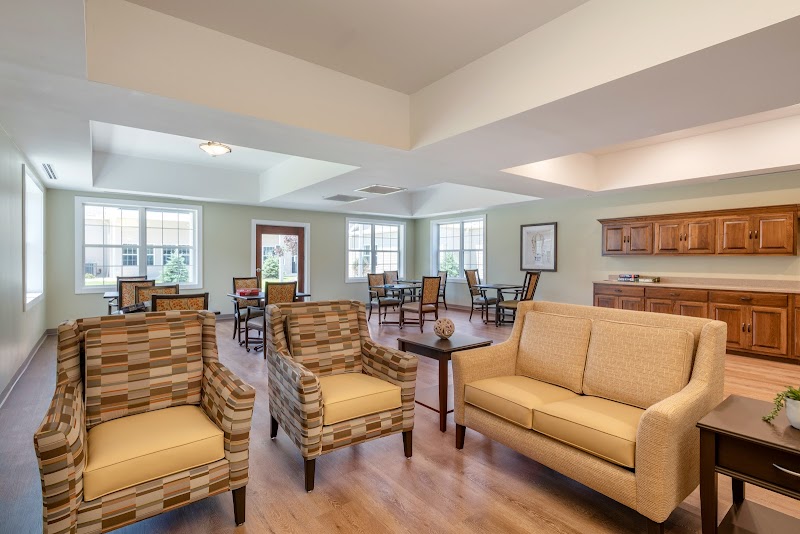
How is Tallmadge Health & Rehab Center Staffed?

CMS rates TALLMADGE HEALTH & REHAB CENTER's staffing level at 2 out of 5 stars, which is below average compared to other nursing homes. Staff turnover is 64%, which is 18 percentage points above the Ohio average of 46%. High turnover can affect care consistency as new staff learn residents' individual needs. RN turnover specifically is 65%, which is notably high. RNs provide skilled clinical oversight, so turnover in this role can affect medical care quality.

What Have Inspectors Found at Tallmadge Health & Rehab Center?

State health inspectors documented 40 deficiencies at TALLMADGE HEALTH & REHAB CENTER during 2022 to 2025. These included: 2 that caused actual resident harm and 38 with potential for harm. Deficiencies causing actual harm indicate documented cases where residents experienced negative health consequences.
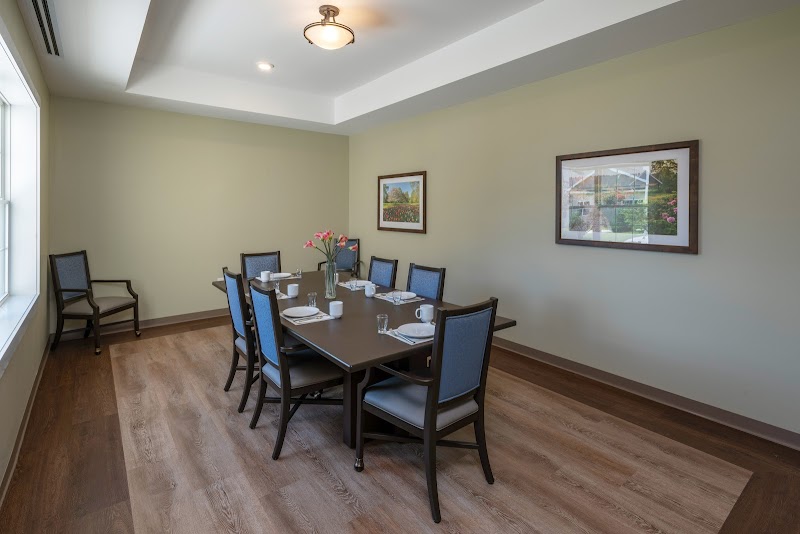
Who Owns and Operates Tallmadge Health & Rehab Center?

TALLMADGE HEALTH & REHAB CENTER is owned by a for-profit company. For-profit facilities operate as businesses with obligations to shareholders or private owners. The facility is operated by SABER HEALTHCARE GROUP, a chain that manages multiple nursing homes. With 90 certified beds and approximately 81 residents (about 90% occupancy), it is a smaller facility located in TALLMADGE, Ohio.
How Does Tallmadge Health & Rehab Center Compare to Other Ohio Nursing Homes?

Compared to the 100 nursing homes in Ohio, TALLMADGE HEALTH & REHAB CENTER's overall rating (3 stars) is below the state average of 3.2, staff turnover (64%) is significantly higher than the state average of 46%, and health inspection rating (2 stars) is below the national benchmark.

What Should Families Ask When Visiting Tallmadge Health & Rehab Center?

Based on this facility's data, families visiting should ask: "How do you ensure continuity of care given staff turnover, and what is your staff retention strategy?" "Can you walk me through typical staffing levels on day, evening, and night shifts?" "Can I visit during a mealtime to observe dining assistance and food quality?" "How do you handle medical emergencies, and what is your hospital transfer rate?" These questions are particularly relevant given the facility's high staff turnover rate and the below-average staffing rating.

Is Tallmadge Health & Rehab Center Safe?

Based on CMS inspection data, TALLMADGE HEALTH & REHAB CENTER has a clean safety record: no substantiated abuse findings (meaning no confirmed cases of resident harm), no Immediate Jeopardy citations (the most serious violation level indicating risk of serious injury or death), and is not on the Special Focus Facility watch list (a federal program monitoring the lowest-performing 1% of nursing homes). The facility has a 3-star overall rating and ranks #100 of 100 nursing homes in Ohio. While no facility is perfect, families should still ask about staff-to-resident ratios and recent inspection results during their visit.

Do Nurses at Tallmadge Health & Rehab Center Stick Around?

Staff turnover at TALLMADGE HEALTH & REHAB CENTER is high. At 64%, the facility is 18 percentage points above the Ohio average of 46%. Registered Nurse turnover is particularly concerning at 65%. RNs handle complex medical decisions and coordinate care — frequent RN changes can directly impact care quality. High turnover means new staff may not know residents' individual needs, medications, or preferences. It can also be disorienting for residents, especially those with dementia who rely on familiar faces. Families should ask: What is causing the turnover? What retention programs are in place? How do you ensure care continuity during staff transitions?

Was Tallmadge Health & Rehab Center Ever Fined?

TALLMADGE HEALTH & REHAB CENTER has been fined $10,839 across 1 penalty action. This is below the Ohio average of $33,187. While any fine indicates a compliance issue, fines under $50,000 are relatively common and typically reflect isolated problems that were subsequently corrected. Families should ask what specific issues led to these fines and confirm they've been resolved.

Is Tallmadge Health & Rehab Center on Any Federal Watch List?

TALLMADGE HEALTH & REHAB CENTER is not on any federal watch list. The most significant is the Special Focus Facility (SFF) program, which identifies the bottom 1% of nursing homes nationally based on persistent, serious quality problems. Not being on this list means the facility has avoided the pattern of deficiencies that triggers enhanced federal oversight. This is a positive indicator, though families should still review the facility's inspection history directly.