CANTERBURY OF TWINSBURG

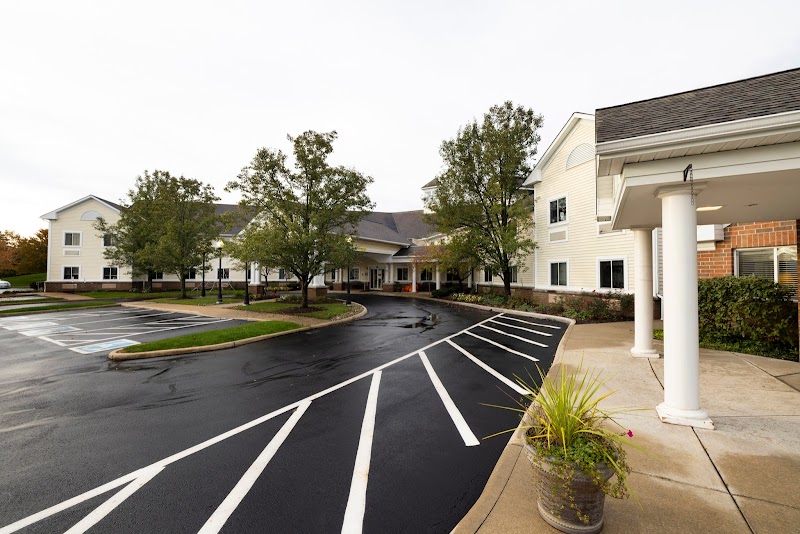
9928 VAIL DRIVE, TWINSBURG, OH 44087 (330) 405-6040
For profit - Limited Liability company 56 Beds Independent Data: November 2025
Trust Grade
35/100
#431 of 913 in OH
Last Inspection: November 2024

Within standard 12-15 month inspection cycle. Federal law requires annual inspections.

Overview

Canterbury of Twinsburg has received a Trust Grade of F, indicating significant concerns about the quality of care provided. Ranking #431 out of 913 facilities in Ohio places it in the top half, but its county rank of #20 out of 42 suggests that there are better options nearby. The facility's trend appears to be improving, with issues decreasing from 6 in 2024 to just 1 in 2025. Staffing is a relative strength with a rating of 4 out of 5 stars, although a 63% turnover rate is worrisome, as it exceeds the state average of 49%. However, the facility has been fined $25,488, which is higher than 82% of Ohio facilities and may indicate ongoing compliance issues. Positive aspects include good RN coverage, which is higher than 76% of state facilities and ensures better oversight. However, there are serious concerns as well; for example, a resident suffered a fractured arm during a transfer that did not follow safety protocols, and there have been multiple incidents where residents fell, resulting in serious injuries, including a fractured hip and a scalp laceration. Additionally, one resident developed avoidable pressure injuries, highlighting potential shortcomings in care.

Trust Score
F
35/100
In Ohio
#431/913
Top 47%
Safety Record
High Risk
Review needed
Inspections
Getting Better
6 → 1 violations
Staff Stability
⚠ Watch
63% turnover. Above average. Higher turnover means staff may not know residents' routines.
Penalties
⚠ Watch
$25,488 in fines. Higher than 88% of Ohio facilities, suggesting repeated compliance issues.
Skilled Nurses
✓ Good
Each resident gets 67 minutes of Registered Nurse (RN) attention daily — more than 97% of Ohio nursing homes. RNs are the most trained staff who catch health problems before they become serious.
Violations
⚠ Watch
29 deficiencies on record. Higher than average. Multiple issues found across inspections.
★★★☆☆
3.0
Overall Rating
★★★★☆
4.0
Staff Levels
★★★★★
5.0
Care Quality
★★☆☆☆
2.0
Inspection Score
Stable
2024: 6 issues
2025: 1 issues

The Good

  • 4-Star Staffing Rating · Above-average nurse staffing levels
  • 5-Star Quality Measures · Strong clinical quality outcomes
  • Full Sprinkler Coverage · Fire safety systems throughout facility
  • No fines on record

Facility shows strength in staffing levels, quality measures, fire safety.

The Bad

3-Star Overall Rating

Near Ohio average (3.2)

Meets federal standards, typical of most facilities

Staff Turnover: 63%

17pts above Ohio avg (46%)

Frequent staff changes - ask about care continuity

Federal Fines: $25,488

Below median ($33,413)

Moderate penalties - review what triggered them

Staff turnover is elevated (63%)

15 points above Ohio average of 48%

The Ugly 29 deficiencies on record

3 actual harm
Jun 2025 1 deficiency 1 Harm
SERIOUS (G) 📢 Someone Reported This

A family member, employee, or ombudsman was alarmed enough to file a formal complaint

Actual Harm - a resident was hurt due to facility failures

Accident Prevention (Tag F0689)

A resident was harmed · This affected 1 resident

**NOTE- TERMS IN BRACKETS HAVE BEEN EDITED TO PROTECT CONFIDENTIALITY** THE FOLLOWING DEFICIENCY REPRESENTS AN INCIDENT OF PAST NON-COMPLIANCE THAT WAS SUBSEQUENTLY CORRECTED PRIOR TO THIS SURVEY. Bas...

Read full inspector narrative →
**NOTE- TERMS IN BRACKETS HAVE BEEN EDITED TO PROTECT CONFIDENTIALITY** THE FOLLOWING DEFICIENCY REPRESENTS AN INCIDENT OF PAST NON-COMPLIANCE THAT WAS SUBSEQUENTLY CORRECTED PRIOR TO THIS SURVEY. Based on observation, staff and resident interviews, review of video footage, review of facility investigation, and facility policy review, the facility failed to ensure residents were safely transferred using a Hoyer lift. Actual Harm occurred on 05/08/25 at approximately 2:15 P.M. when Hospice Nurse Aide (HNA) #869 completed a Hoyer lift (a type of mechanical lift used to safely transfer individuals with limited mobility from one surface to another) transfer of Resident #21 without the assistance of a second person, resulting in Resident #21's arm becoming fractured. Resident #21 required an x-ray examination which revealed a displaced (a bone fracture where the broken bone fragments are no longer in normal alignment), separated (the bone is broken in two or more places creating a separate segment of bone between breaks), overriding (the broken ends of a bone overlap causing shortening) oblique (a type of bone fracture where the break occurs at an angle to the bone's long axis) fracture of the midshaft of the right humerus. Resident #21 was sent to the emergency room for evaluation and treatment. Resident #21 required surgical intervention on 05/14/25 for the fracture to her right arm. Resident #21 had an open reduction and internal fixation (ORIF) (a surgical procedure to repair a fracture which includes realigning of bone fragments and stabilizing with plates, screws or wires) of the right humerus with insertion of an intramedullary implant (a medical device used to stabilize fractures). This affected one Resident (#21) of three residents reviewed for transfers with a Hoyer lift. The facility identified 20 residents (#2, #3, #4, #5, #10, #11, #12, #13, #17, #21, #24, #28, #31, #32, #40, #41, #42, #43, #44, and #45) who required a Hoyer lift for transfers. The facility census was 45. Findings include: Review of the medical record for Resident #21 revealed an admission date of 03/13/25 and diagnoses including multiple myeloma in relapse, generalized muscle weakness, paraplegia, spinal stenosis of cervical region, severe protein calorie malnutrition, and anxiety disorder. Review of Resident #21's physician's orders revealed an order dated 03/14/25 for a Hoyer lift for all transfers. The order further specified that two staff members were needed to assist with the Hoyer lift. Resident #21 additionally had an order dated 03/17/25 noting that the resident was receiving hospice services for a diagnosis of multiple myeloma (a cancer of the plasma cells). Review of the Minimum Data Set (MDS) quarterly assessment dated [DATE] revealed Resident #21 had intact cognition. Resident #21 required total staff assistance for toileting hygiene, showering/bathing self, dressing, personal hygiene, bed mobility, and transfers. Review of the plan of care, revised 03/17/25, revealed Resident #21 required assistance with a majority of activities of daily living (ADLs) related to multiple myeloma. Interventions included using a Hoyer lift for all transfers with two staff member assistance, use one to two staff to assist with bed mobility and dressing, and bilateral upper grab bars to the bed to assist with bed mobility and repositioning. Review of the Hospice Nurse Aide (HNA) Plan of Care report dated 05/08/25 at 12:37 P.M. revealed Resident #21 was the client, and HNA #869 was the hospice staff assigned for care. The report indicated Resident #21 was paralyzed in her lower extremities from spinal cord compression and could be anxious at times. The report noted on 05/08/25, various personal care tasks were completed including a bath, oral hygiene, and transferring. The report included an entry by HNA #869 which noted she had to wait on staff to bring the Hoyer lift and shower chair, then a shower was given. The HNA indicated Resident #21 stated her right arm was broken. There was no additional information related to the incident or actions taken identified on HNA report. The bottom of the report in the section titled observations reported to the nurse listed there was nothing unusual to report. Review of a nursing progress note dated 05/08/25 at 2:29 P.M. revealed Resident #21 believed she broke her arm after a visit with the hospice aide during a Hoyer transfer into bed. The nurse was notified by the facility nurse aide. Resident #21 was assessed lying in bed with notable swelling and discoloration to her right arm. Resident #21 complained of pain and was unable to move her right arm. The nurse practitioner (NP) was notified and ordered a status immediate (STAT) x-ray. The nurse administered pain medication and immobilized Resident #21's right arm. Review of the physician's order dated 05/08/25 revealed an order for an x-ray of Resident #21's right humerus. Review of the Radiology Results Report dated 05/08/25 at 3:09 P.M. revealed Resident #21 had a displaced, separated, and overriding oblique fracture of the midshaft of her right humerus. Review of a nursing progress note dated 05/08/25 at 3:51 P.M. revealed the resident's x-ray resulted in the identification of a displaced, separated and overriding oblique fracture of the midshaft of the right humerus. The NP was notified of the results and gave an order to send Resident #21 to the emergency room for evaluation and treatment. Resident #21 was transported via non-emergent transport service. Review of the physician's order dated 05/08/25 revealed an order to send Resident #21 to the emergency room for treatment and evaluation of a right humerus fracture. Review of the hospital After Visit Summary dated 05/08/25 revealed Resident #21 was seen in a local emergency department for an arm injury and diagnosed with closed displaced oblique fracture of the shaft of the right humerus. A splint was applied, and pain medication was administered. Review of a nursing progress note dated 05/09/25 at 12:54 A.M. revealed Resident #21 returned to the facility. Review of the Physicians Medical Visit assessment dated [DATE] revealed Resident #21 was seen following an incident with a Hoyer lift and a hospice caregiver. Resident #21 insisted her arm was broken and an x-ray was completed revealing a right humerus fracture. Resident #21 was sent back from the emergency room with surgery scheduled for the following week. Review of an incident note dated 05/09/25 at 3:18 P.M. revealed Resident #21 was being transferred via Hoyer lift on 05/08/25 by a hospice aide and got scared during the transfer. Resident #21 stated she grabbed onto the grab bar on the bed during the transfer and felt like her arm was broken. Resident #21 stated she immediately notified the hospice aide and was told to stop being dramatic. The hospice aide did not request nor did she wait for a second person to assist during the Hoyer transfer. It was noted that Resident #21's daughter had a camera in the resident's room and was able to view video footage. Review of an order note dated 05/11/25 at 12:13 P.M. revealed the NP gave a new order to start 30 milligrams (mg) of Morphine Sulfate (an opioid analgesic used to treat moderate to severe pain) controlled-release every eight hours, 15 mg Oxycodone (an opioid used to treat moderate to severe pain) every three hours, and 650 mg Tylenol three times per day for severe pain. Review of the physician's order dated 05/12/25 revealed an order for Resident #21 to direct admit to the hospital for surgical intervention of a right upper extremity fracture. Review of the Transfer Form assessment dated [DATE] revealed Resident #21 had a planned transfer to the hospital for a scheduled surgical procedure. Review of a nursing progress note dated 05/12/25 at 11:10 A.M. revealed Resident #21 was transferred to the hospital. Resident #21 was given as needed (PRN) Oxycodone prior to the transfer. Review of an incident note dated 05/16/25 at 12:43 P.M. revealed the facility Administrator received camera footage from Resident #21's daughter related to Resident #21's right arm fracture. The Administrator initiated a self-reported incident (SRI) after reviewing the video footage. The Administrator met with Resident #21's daughter who confirmed Resident #21's surgery went well. Review of the SRI Form Initial Report dated 05/16/25 revealed the facility had reported allegations of physical abuse and neglect for Resident #21 to the State Agency. On 05/08/25, the facility was notified that Resident #21 complained of pain and the inability to move right arm. It was found that Resident #21 had a fracture of her right arm sustained during a Hoyer lift transfer by a hospice aide. On 05/14/25, Resident #21 had surgical repair of her right arm fracture. On 05/16/25, camera footage was received from Resident #21's daughter and was reviewed with suspicion of abuse and/or neglect. Review of the SRI Form Follow-up Investigation Report dated 05/22/25 revealed Resident #21 stated she was returned to her room after receiving a shower and the hospice aide was in the room stated she needed to leave. Resident #21 reported feeling rushed by the hospice aide. Resident #21 reported the hospice aide transferred her via Hoyer lift without getting assistance from another caregiver. Resident #21 stated she got scared during the transfer and put her arm out to hold onto the grab bar. Resident #21 stated she told the hospice aide she broke her arm, and the hospice aide told her to stop being dramatic. Resident #21 stated she felt pain and discomfort. It was confirmed the hospice aide did not request assistance for a Hoyer transfer and had been trained that the Hoyer lift required two people for use. The facility unsubstantiated physical abuse and neglect. It was noted that the hospice company also filed an SRI related to the situation. Review of the hospital Patient Discharge Instructions dated 05/23/25 revealed Resident #21 admitted to the hospital on [DATE]. Resident #21 had an open reduction and internal fixation (ORIF) of the right humerus with insertion of an intramedullary implant (a medical device used to stabilize fractures). Review of a nursing progress note dated 05/23/25 at 4:43 P.M. revealed Resident #21 returned from the hospital. Resident #21 had sutures present on her right shoulder and down her arm. Review of a physician's order dated 05/23/25 revealed an order to monitor the 34 staples on Resident #21's right arm for signs and symptoms of infection. An observation on 06/05/25 at 10:40 A.M. revealed Resident #21 was sitting up in bed with her right arm propped on a pillow. There was a healing surgical area to Resident #21's right arm. There were no bruising or visible signs of infection noted. An interview on 06/05/25 at 10:40 A.M. with Resident #21 confirmed there had been an incident with a Hoyer lift resulting in a broken arm. Resident #21 stated she had received a shower from a hospice aide and needed to be transferred back to bed. Resident #21 stated she was fearful of the Hoyer lift. Resident #21 stated she asked HNA #869 if two people were required for the Hoyer transfer and HNA #869 told her she did not have time to wait for another staff member. Resident #21 stated during the transfer she had grabbed onto the grab bar and when HNA #869 pushed her in the lift she heard a loud pow. Resident #21 stated her arm went completely limp and she knew it was broken. Resident #21 stated she informed HNA #869 her arm was broken and HNA #869 told her to stop being so dramatic. Resident #21 stated she continued to state her arm was broken, however HNA #869 did not report to anyone what had happened and made no attempts to comfort her. Resident #21 described the event as traumatic and depressing. Resident #21 stated she had to have surgery on her right arm. An interview on 06/05/25 at 11:28 A.M. with the daughter of Resident #21 revealed on 05/08/25 at 2:42 P.M. she had received a call from her mother. Resident #21's daughter reported her mother was hysterical and she could not understand her. She indicated at the same time, the facility called to report there had been an incident involving her mother, and they would be obtaining an x-ray for suspicion of a broken arm. The nurse reported there was an incident involving a Hoyer lift operated by a hospice staff member. Resident #21's daughter stated she had a camera in Resident #21's room and she had reviewed the footage. The daughter reported HNA #869 had completed a Hoyer lift transfer alone and HNA #869 did not attempt to obtain assistance or call for help. The daughter stated the video had audio and visual of when Resident #21's arm was broken mid-transfer. An interview on 06/05/25 at 1:08 P.M. with Hospice Director of Quality #868 and the Administrator confirmed HNA #869 had transferred Resident #21 using a Hoyer lift by herself rather than with two staff as required. Hospice Director of Quality #868 and the Administrator confirmed at no time did HNA #869 seek assistance from the facility for the Hoyer lift transfer of Resident #21 back into bed. Hospice Director of Quality #868 and the Administrator confirmed upon review of the camera footage there was a very obvious break with disfigurement at Resident #21's shoulder. An interview on 06/05/25 at 1:58 P.M. with Licensed Practical Nurse (LPN) #806 revealed she was the assigned nurse to Resident #21 on 05/08/25. LPN #806 stated Certified Nursing Assistant (CNA) #816 had alerted her that Resident #21 thought her arm was broken. LPN #806 stated during her assessment, Resident #21 was in pain and her arm was visibly swollen. Resident #21 reported the injury occurred during a Hoyer transfer into bed. LPN #806 confirmed she had not been notified by HNA #869 that there had been an injury to Resident #21's arm. LPN #806 indicated HNA #869 had not requested assistance for the Hoyer transfer back to bed nor had she utilized the call light to attempt to call for other staff to assist. LPN #806 stated she had gotten into contact via phone with HNA #869. LPN #806 indicated she was able to confirm with HNA #869 that she had operated the Hoyer alone. HNA #869 indicated she did not have time to wait around and HNA #869 stated I don't know how dramatic she (Resident #21) is. LPN #806 stated she was very upset that HNA #869 was calling Resident #21 dramatic for being in pain. LPN #806 stated there were plenty of staff available at the facility to assist hospice caregivers with Hoyer lift transfers or other care. An interview on 06/05/25 at 2:57 P.M. with CNA #816 revealed she was the assigned nurse aide for Resident #21 on 05/08/25. CNA #816 indicated she had assisted HNA #869 with Hoyer lift transfer into a shower chair. CNA #816 indicated she set up supplies for HNA #869 and changed the bed sheets for Resident #21. CNA #816 indicated she told HNA #869 to use the call light when she was ready to get Resident #21 back into bed. CNA #816 indicated another resident's call light was activated so she answered the light. CNA #816 indicated she saw the call light on for Resident #21 and figured they were done with the shower. CNA #816 indicated when she entered the room, she found Resident #21 back in bed and she was alone in the room. Resident #21 stated her arm was broken and she was in pain. CNA #816 indicated she reported it to the nurse immediately. CNA #816 confirmed HNA #869 did not request assistance after the shower to Hoyer transfer Resident #21 back to bed. CNA #816 confirmed Hoyer lift transfers required two staff assistance. An interview on 06/06/25 at 1:43 P.M. with HNA #869 confirmed she had been to the facility to care for Resident #21 on 05/08/25. HNA #869 confirmed the hospice policy was to transfer a patient via Hoyer lift with two people. HNA #869 indicated this was the first time she had cared for Resident #21. HNA #869 stated Resident #21 requested a shower, so she rang the call light for the facility nurse aide. HNA #869 stated several times she had to wait on facility staff. HNA #869 stated Resident #21 was able to assist with bathing her upper body and able to hold herself forward in the shower chair to wash her back. HNA #869 stated she brought Resident #21 back to her room after the shower. HNA #869 stated I cannot sit and wait more time for someone to come help her get Resident #21 back into bed. HNA #869 stated Resident #21 was small, and she felt she could certainly do it herself. HNA #869 stated during the Hoyer transfer Resident #21 had put her hand on the grab bar then stated her hand was broken. HNA #869 stated I didn't want her to get too excited or overly dramatize. HNA #869 stated Resident #21 was able to move her fingers, so she did not think anything was broken. HNA #869 stated she finished care on Resident #21 and left the facility. HNA #869 stated she normally worked as a home health aide and did not operate a Hoyer lift on a day-to-day basis. HNA #869 confirmed she did not call for assistance from another staff member for a Hoyer transfer. HNA #869 indicated she had already had to wait on the facility staff and indicated if they knew Resident #21 needed a Hoyer transfer then they should have just come back to the room. Review of the camera footage from the camera in Resident #21's room dated 05/08/25 (provided to the surveyor on 06/06/25) revealed: a. Review of the one minute and 30 second video dated 05/08/25 at 1:56 P.M. revealed CNA #816 and HNA #869 were in Resident #21's room. Resident #21 was in bed with HNA #869 standing on the right side at the foot of the bed and CNA #816 was standing on the left side of bed. The nurse aides were talking with Resident #21 while getting her ready to get into shower chair. Resident #21 began assisting with the removal of her clothing for the shower. Resident #21 was noted to be able to remove her own shirt with the use of both hands and arms. Resident #21 was able to help turn onto her right side using both arms while removing her pants. Resident #21 was not complaining of any pain at this time. b. Review of the 18 second video dated 05/08/25 at 2:12 P.M. revealed HNA #869 wheeling the shower chair back into Resident #21's room backwards. HNA #869 could be heard saying You ain't fitting to sit here because I am about to put you in this bed baby. Resident #21 asked You can do this on your own? HNA #869 indicated I am going to have to because I don't have all day to sit here. At no time was the call light visibly activated. c. Review of the 16 second video dated 05/08/25 at 2:13 P.M. revealed HNA #869 could be seen in the corner of the video attaching the Hoyer straps to the Hoyer lift. Resident #21 was instructing HNA #869 on which straps to use for the Hoyer sling. d. Review of the 16 second video dated 05/08/25 at 2:14 P.M. revealed HNA #869 continuing to try to attach Resident #21's Hoyer sling straps to the Hoyer lift. e. Review of the one minute and 43 second video dated 05/08/25 at 2:15 P.M. revealed Resident #21 was no longer seen in the shower chair. From out of frame, the shower chair was pushed further into the room by the foot of Resident #21's bed then Resident #21 comes into frame suspended in the Hoyer lift. HNA #869 was the only caregiver present in Resident #21's room. HNA #869 was seen pushing Resident #21 towards the right side of the bed in the Hoyer lift. Resident #21 was seen swinging back and forth in the Hoyer sling uncontrolled. Resident #21 tells HNA #869 to watch out for the cords on the floor. HNA #869 indicated Oh they have got the bed down low, [expletive], and she walks to the left side of the bed after moving the shower chair out of the way. At this time, HNA #869 had no hands on the Hoyer lift or Resident #21. Resident #21 was still suspended in the air and seen swinging back and forth in the Hoyer lift. Resident #21 could be seen with both hands holding onto the Hoyer sling. HNA #869 began raising the bed height and came back around to push Resident #21 over the right side of the bed. HNA #869 pushed the Hoyer lift over a bump and Resident #21 stated You are running into a cord. HNA #869 positioned Resident #21 with her bottom over the bed and Resident #21's legs remained hanging over the side of the bed. HNA #869 walked back around to the left side of the bed. Resident #21 had her left hand holding the Hoyer sling and her right hand reached out and grabbed the grab bar attached to the bed. Resident #21 was facing the base of Hoyer lift and HNA #869 grabbed ahold of the sling to turn Resident #21 over the bed. Resident #21 had visible bolsters on each side of the bed and her legs remained hanging over the side of the bed. HNA #869 pulled on the Hoyer sling and tried to turn Resident #21 unsuccessfully, then used a hand to grab Resident #21's legs. HNA #869 pulled one leg at a time over the bed. When HNA #869 pulled Resident #21's right leg over the bed, a loud popping noise could be heard and Resident #21 called out. Resident #21's right arm immediately went limp, and Resident #21 loudly says Ow I just broke my arm, I just broke my arm. HNA #869 walked back around to the right side of the bed. Resident #21 could be heard making a grunting and moaning sound, and her face was seen with a painful grimace. HNA #869 did not respond to Resident #21 in any way at this time. HNA #869 began pushing the Hoyer lift further over the bed with Resident #21 swinging in the sling and her right arm limp at her side. HNA #869 said Oh, your dressing is coming off and Resident #21 said Get me in the bed. HNA #869 said You are on the bed, honey; Just relax while lowering Resident #21 to the bed. Resident #21 said I think it is broken, I don't know then stated, No, I didn't, I can move my hand, as she wiggled the fingers on her right hand. HNA #869 said Yeah, stop being so dramatic. It's alright. You are fine. Relax. Chill out. HNA #869 began to unhook the straps from the Hoyer lift at the end of the video. f. Review of the 46 second video dated 05/08/25 at 2:17 P.M. revealed Resident #21's right arm remained limp at her side and Resident #21 could be heard grunting and moaning. HNA #869 was still removing the Hoyer straps from the Hoyer lift then removed the Hoyer lift from over the bed. Resident #21 could be seen grimacing. g. Review of the 17 second video dated 05/08/25 at 2:18 P.M. revealed Resident #21 lying on her back with her right arm remaining limp at her side. Resident #21 was looking up at the ceiling and making grunting and moaning noises. HNA #869 approached the right side of the bed and grabbed Resident #21's right arm by the wrist and lifted her arm. Resident #21 said No, don't move it. HNA #869 said No, you got to move it to get it out of the way. You are going to have to roll over so we can get this wet pad from under you. h. Review of the 51 second video dated 05/08/25 at 2:18 P.M. revealed HNA #869 said Just try to relax, okay? Don't be so dramatic that makes it worse. HNA #869 uncovered Resident #21's lower half of her body. Resident #21 was wiggling and writhing in the bed and continued to grimace and make groaning and moaning noises. HNA #869 was standing on the right side of bed then said, Come this way and reaches over Resident #21 for her left leg and arm. HNA #869 said You think you broke your arm come this way then pulled Resident #21 towards her right side. Resident #21 was unable to provide much assistance in rolling. HNA #869 tucked the Hoyer pad under Resident #21 then said, Okay now we have to go the other way. Resident #21 attempted to help turn onto her left side and reached with her left hand towards the grab bar. Resident #21's right arm was completely limp hanging by her side. Visible to the camera there was obvious deformity to the arm under Resident #21's right shoulder. Resident #21 was grimacing and yelled out Ow, ow. Resident #21 can be seen trying to lift her right arm, but it slipped further down, and the deformity can be seen further. Resident #21 appeared to be crying. HNA #869 continued to try to get the Hoyer sling out from under Resident #21. HNA #869 walked away from Resident #21 who remained rolled onto her left side and said, Relax a minute let me get you a diaper. Resident #21 laid back down and was still grimacing, and as she rolled back unassisted it appeared her right arm was partially under her. i. Review of the 17 second video dated 05/08/25 at 2:19 P.M. revealed Resident #21 was seen lying on her back grimacing and moving her left arm around. HNA #869 exited the bathroom with a brief. j. Review of the 30 second video dated 05/08/25 at 2:19 P.M. revealed HNA #869 had returned to the right side of the bed with a brief. Resident #21 was lying on her back. HNA #869 said Okay go that way again, then HNA #869 pushed Resident #21 over onto her left side by her right hip and right shoulder. The deformity on Resident #21's right arm could be seen again from the camera angle. Resident #21 was grimacing. HNA #869 tucked the brief under Resident #21 then turned her onto her right side by grabbing her left knee and hip. k. Review of the 41 second video dated 05/08/25 at 2:19 P.M. revealed Resident #21 was seen on her back with the brief under her. Resident #21 appeared to be opening and closing her mouth without saying anything. HNA #869 attempted to secure the brief and realized it was backwards. HNA #869 said Oh [expletive], it is [expletive] backwards. No wonder. Alright, roll back over to me. HNA #869, again, rolled Resident #21 onto her right side and said That is ridiculous as she forcefully grabbed Resident #21 by the back of her left hip pulling her over onto her right side. Resident #21's buttock wound could be seen with HNA #869's gloved fingertips pressing onto it as she pulled the brief out. Resident #21 could be heard saying Ow. HNA #869 said Hold on. Hold on. Sorry, then rolled her back to the left side. Resident #21's right arm was completely hanging behind her and Resident #21 was grimacing and crying. HNA #869 then said Alright, move that arm up there and grabs her by the right hand. Resident #21's head drops back to the bed. l. Review of the 28 second video dated 05/08/25 at 2:20 P.M. revealed HNA #869 again rolled Resident #21 back onto her right side. Resident #21 continued to grimace and make grunting and moaning noises. m. Review of the one minute and 40 second video dated 05/08/25 at 2:21 P.M. revealed HNA #869 removed the wound dressing from under Resident #21's bottom. Resident #21 continued to grimace and was observed to rub her left hand over her face in clear distress. Resident #21's right arm remained limp by her side. HNA #869 said they do this twice a week for you? I can't believe it. That's too much for you. It's too much. Once a week. The way you are carrying on. No way you should be doing this twice a week. It's too much. Hmm, it's too much. HNA #869 got the brief secured and re-attached Resident #21's catheter bag to the bed, then grabbed a gown. HNA #869 sprayed Resident #21 with an unidentified spray from bedside table then applied lotion to her legs. HNA #869 began to rub lotion on Resident #21's limp right arm and Resident #21 gasped out as the HNA reached her upper arm. HNA #869 stopped momentarily and appeared to be looking at Resident #21's right arm then said, Does it hurt that bad? Resident #21 said Yeah. HNA #869 then picked up Resident #21's right arm by the elbow. Resident #21 reached down and touched her right arm saying, It is broken right here. As HNA #869 lifted Resident #21's right arm, the arm appeared unstable in the mid to upper arm region. n. Review of the 27 second video dated 05/08/25 at 2:22 P.M. revealed Resident #21 was heard saying I am already sensitive because of my multiple myeloma. HNA #869 said Yeah well you are supposed to keep your hands inside [the Hoyer lift]. Resident #21 said I know, I know. HNA #869 said and you just did the opposite then starts putting a gown on Resident #21. Resident #21 was still grunting and moaning. HNA #869 lifted Resident #21's right arm by the wrist saying, I am going to raise it up a little bit and Resident #21 gasps in a painful manner. o. Review of the 26 second video dated 05/08/25 at 2:23 P.M. revealed Resident #21 grunting and moaning and she had a pained facial expression. HNA #869 covered Resident #21 with a gown. p. Review of the 14 second video dated 05/08/25 at 2:23 P.M. revealed Resident #21 continued grunting and moaning and had a pained facial expression. HNA #869 was placing a catheter leg strap on her right leg. q. Review of the 22 second video dated 05/08/25 at 2:23 P.M. revealed HNA #869 placed a pillow behind Resident #21's head. r. Review of the 25 second video dated 05/08/25 at 2:24 P.M. revealed HNA #869 said Okay when I came in here your pillow was on this side indicating to her left side. I am going to put it on that side while indicating to her right side. HNA #869 grabbed a body pillow and while standing on Resident #21's left side, HNA #869 grabbed the bed pad and pulled Resident #21 over from the right to the left. HNA #869 said You just relax, honey. Resident #21 could be heard yelling loudly Ow. HNA #869 said Just relax and tucked the body pillow under Resident #21 who could be heard crying. HNA #869 said Hold on. Hold on. s. Review of the 51 second video dated 05/08/25 at 2:24 P.M. revealed Resident #21 could be heard crying and HNA #869 said You got to try to relax and know we know what we are doing. You know what I mean? I mean some of us know what we are doing, I don't know if everybody knows, but I know I know what I am doing, and I wouldn't do it if I didn't know. You know? HNA #869 tucked a pillow under Resident #21's feet and Resident #21 continued to grimace. HNA #869 asked You okay? and Resident #21 asked for another pillow under her head. HNA #869 tucked another pillow under her head. t. Review of the one minute and 40 second video dated 05/08/25 at 2:26 P.M. revealed HNA #869 raised the head of the bed. Resident #21's right arm remained limp and was laying on her right hip area. HNA #869 adjusted the tray table and covered Resident #21 with a blanket. Resident #21 reached out with her left hand to grab her folded glasses and was only able to open them with one hand. HNA #869 lowered the bed. u. Review of the 28 second video dated 05/08/25 at 2:27 P.M. revealed HNA #869 walked out of the video frame. v. Review of the 18 second video dated 05/08/25 at 2:29 P.M. revealed Resident #21 asked for her call light and pointed at it with her left hand. Resident #21's right arm was covered by the blanket. HNA #869 put the call light in Resident #21's left hand. It was observed to be a pad style call light. Resident #21 said I need pain pills. HNA #869 said Yeah, I'm sure you do at this point. Alright. Resident #21 immediately turned the call light on, and a small red light could be seen on the wall by call light cord. HNA #869 turned to leave and walked out of frame. Resident #21 reached for her cell phone. At no time during the video review was it evident that HNA #869 requested additional assistance with getting Resident #21 back into bed via the Hoyer lift. There was no activation of the call light until Resident #21 activated the call light at 2:29 P.M. There was no evidence HNA #869 addressed Resident #21's clear signs of pain or that she addressed the residents' concerns that her arm was broken. Review of the facility policy titled, Lifting Machine, Using a Portable, dated December 2013, revealed two nursing assistants were required to perform this procedure. Any problems or complaints made by the resident related to the procedure should be docume[TRUNCATED]
Nov 2024 3 deficiencies
CONCERN (D)

Potential for Harm - no one hurt, but risky conditions existed

Deficiency F0558 (Tag F0558)

Could have caused harm · This affected 1 resident

**NOTE- TERMS IN BRACKETS HAVE BEEN EDITED TO PROTECT CONFIDENTIALITY** Based on record review and interview the facility failed to ensure Resident #27's call light was responded to in a reasonable am...

Read full inspector narrative →
**NOTE- TERMS IN BRACKETS HAVE BEEN EDITED TO PROTECT CONFIDENTIALITY** Based on record review and interview the facility failed to ensure Resident #27's call light was responded to in a reasonable amount of time. This affected one resident (#27) of three residents reviewed for call light response times. The facility census was 37. Findings include: Review of the medical record for Resident #27 revealed an admission date of 06/09/24 with diagnoses including difficulty walking, anxiety, obsessive compulsive disorder, and urinary incontinence. Review of the quarterly Minimum Data Set (MDS) 3.0 assessment dated [DATE] revealed the resident had intact cognition and required partial to moderate assistance from staff for toileting hygiene and substantial to maximum assistance for transfers. The assessment also indicated Resident #27 was frequently incontinent of bowel and bladder. Review of the alarm event report dated 11/07/24 through 11/14/24 revealed Resident #27's call light was pulled at 4:00 P.M. and cleared at 4:26 P.M. with the response time being 25 minutes and 35 seconds. On 11/09/24 Resident #27 pulled her call light at 6:30 P.M. and it was cleared at 7:28 P.M. with the response time being 58 minutes. Interview on 11/12/24 at 10:46 A.M. with Resident #27 revealed she often had to wait one to two hours for assistance after activating her call light. Interview on 11/14/24 at 1:11 P.M. with the Administrator verified the call light response times on the alarm event report for Resident #27 and stated when she reviewed the camera footage outside of Resident #27's room, no one entered Resident #27's room until the times the call lights were cleared on 11/07/24 and 11/09/24. The Administrator stated there were three aides working on those days and all were assisting other residents, and the nurse was passing medication. Review of the facility policy titled Answering the Call Light, undated, revealed the staff should answer the resident's call as soon as possible.
CONCERN (D)

Potential for Harm - no one hurt, but risky conditions existed

Accident Prevention (Tag F0689)

Could have caused harm · This affected 1 resident

**NOTE- TERMS IN BRACKETS HAVE BEEN EDITED TO PROTECT CONFIDENTIALITY** Based on observation, interview and record review the facility failed to prevent a fall for Resident #8 who was completely depen...

Read full inspector narrative →
**NOTE- TERMS IN BRACKETS HAVE BEEN EDITED TO PROTECT CONFIDENTIALITY** Based on observation, interview and record review the facility failed to prevent a fall for Resident #8 who was completely dependent on staff for fall prevention. This affected one resident (Resident #8) of three residents reviewed for falls. The facility census was 37. Findings include: Record review revealed Resident #8 was admitted to the facility on [DATE] with diagnoses including persistent vegetative state, brain damage, lack of coordination, abnormal posture, and dementia. Review of physician order dated 12/05/19 revealed Resident #8's head of bed was to be up at a 30 degree angle. Review of physician orders dated 11/15/23 revealed Resident #8 had a camera in the room at the request of the Power of Attorney (POA). Review of a physician order dated 11/28/23 revealed Resident #8 was to be out of bed at 11 A.M. and back in bed at 5:00 P.M. Review of a physician order dated 08/05/24 revealed Resident #8 was a hospice resident due to anoxic brain damage. Review of the Minimum Data Set (MDS) 3.0 assessment dated [DATE] revealed Resident #8 was comatose. Resident #8 had impaired range of motion on both sides and was dependent for oral hygiene, bathing, dressing, personal hygiene, roll left to right in bed. She did not sit up in bed or lie back in bed or attempt to stand. Resident was dependent on staff to transfer out of bed. Did not attempt to walk ten feet. Resident had no falls since admission. Review of the Plan of Care dated 08/12/24 revealed Resident #8 was totally dependent on staff for all activities of daily (ADL). She was in a persistent vegetative state, did not make eye contact or communicate due to anoxic brain injury. Resident #8 was dependent for transfers and mobility. Interventions included bolsters to bed for boundaries, check and change every two hours for incontinence, custom wheelchair with custom cushion to chair when out of bed, resident was to wear regular socks when out of bed, resident was to be out of bed after 11 A.M. and back in bed before 5:00 P.M. per father's request; shower bed for all showers; transfer with Hoyer lift assist of two people; assist of one to two people for bed mobility; bed in lowest position at all times except when staff present during personal care; monitor for pattern of risk or tendency to fall; fall risk assessment quarterly and padded side rails up for boundaries. Review of Fall Risk Evaluation dated 08/07/24 at 2:58 P.M. revealed Resident #8 had no history of falls, was comatose, on anticonvulsant medication, antihistamine medication, anxiolytics, laxatives, and narcotics analgesics medication. Resident #8 was a fall risk due to medication use and change in medication from the past 30 days and ambulated with staff assistance and needed help with transfers. Review of a Nursing Note dated 08/08/24 at 1:34 A.M. revealed at approximately 12:15 A.M. a staff member walked past Resident #8's room and noticed Resident #8 was on the floor. Resident #8 was laying on her back on the floor of the left side of the bed. Vials were assessed. Two staff members helped Resident #8 back to bed by using the Hoyer lift. Skin assessment revealed a reddened area on the left side of the abdomen and left lower extremity. All parties were made aware, and Hospice was to evaluate the resident. Review of the fall investigation was conducted on 11/13/24 at 1:59 P.M. with Corporate Infection Control Registered Nurse (CICRN) #503 and revealed an incident report was done on 08/08/24 at 1:34 A.M The incident report indicated at approximately 12:15 A.M. on 08/08/24 a staff member walked past Resident #8's room and noticed the resident on the floor. Upon entering the room, the nurse observed the resident lying on her back on the floor on the left side of the bed. Vials were assessed, skin assessment was done, and a reddened area was noted on the left side of the abdomen and left lower extremity. Resident #8 was put on every 15-minute checks. Review of fall investigation witness statement from the Director of Nursing (DON) revealed Resident #8 was found on the floor by the left side of the bed. Redness was observed to the abdomen and left lower extremity, no other apparent injuries. The facility implemented fall mats placed on both sides of the bed and the bed would have bolsters . Review of the witness statement provided by RN Unit Manager #504 revealed the staff was unable to determine Resident #8's orientation due to vegetative state. Resident #8 had little body movement and extremities were ridged. Review of the witness statement report dated 08/08/24 written by Certified Nurse Assistant (CNA) #328 revealed he did rounds that night. Resident #8's body was ridged, and level of conscience was stupor. Review of a Hospice note dated 08/08/24 written by Hospice Nurse #508 revealed a post-fall visit was made for Resident #8. Hospice received a concerning message regarding Resident #8's fall out of bed since she was immobile other than involuntary movements of her head intermittently. Hospice team immediately ordered bolsters for the bed. After review of the POA's video from the surveillance camera in Resident #8's room revealed the resident shifted little by little over several hours until she tumbled out of bed. No injuries were noted. Hospice did initiate scheduled morphine due to possible discomfort from the fall. Interview on 11/13/24 at 2:56 P.M. with Resident #8's POA #505 and father revealed he had camera footage of the night Resident #8 fell out of bed. The POA stated Resident #8 was sitting up in the bed at a high angle and slipped out of the bed. A nurse walked in the room and did not reposition the resident therefore Resident #8 continued to slip down the bed on the left side until she fell out of the bed. POA #505 stated he denied X-rays to be done because he did not want Resident #8 to miss her hospital appointment the next day at 9:00 A.M. for her feeding tube. Interview on 11/13/24 at 3:05 P.M. with Licensed Practical Nurse (LPN) #312 revealed she walked past Resident #8's room after receiving report and noticed Resident #8 was not in her bed. LPN #312 stated Resident #8's bed was at a high angle to prevent her from aspiration, but was unable to say if the resident was in the bed at a high angle. Interview on 11/13/24 at 3:44 P.M. with CNA #324 revealed Resident #8 had her bed at a 30-to-45-degree angle. CNA #324 stated she helped place Resident #8 in bed around 5:30 P.M. on 08/07/24. Observation on 11/13/24 at 3:50 P.M. of facility owned video footage of the 100 hall the night on 08/07/24 with Regional Administrator/Corporate MDS RN ( RA/CMDSRN) #506 revealed a staff member entered Resident #8's room at 11:54 P.M. and was viewed to have left Resident #8's room at 11:54 P.M. RA/CMDS RN #506 confirmed a staff member entered Resident #8's room at 11:54 P.M. and remained in the room for less than one minute. Interview on 11/14/24 at 7:23 A.M. with CNA #328 revealed a nurse found Resident #8 on the floor. CNA #328 stated he saw Resident #8 at 9:30 P.M. that night. CNA #328 stated Resident #8 was sitting up at about a 40-degree angle. CNA #328 stated he was not sure which CNA was caring for Resident #8 the night she fell out of bed so he assisted getting Resident #8 back into bed with additional staff. Interview on 11/14/24 at 9:16 A.M. with CNA #507 revealed Resident #8 fell because gravity brought her down to the floor, the head of the bed was too high, and she tipped over. CNA #507 was not Resident #8's assigned CNA that night. CNA #507 stated at no timed did she touch Resident #8 prior to the fall. Observation on 11/14/24 at 12:05 P.M. of date and time stamped photos provided by Resident #8's POA from the room video surveillance revealed Resident #8 became uncentered in the bed starting around 6:15 P.M. on 08/07/24. Resident #8 was observed leaning to the left at 6:30 P.M. and at 7:00 P.M. resident was observed to lean against the left bed rail. At 11:41 P.M. it was observed resident's head was leaning against the left bed rail. At 11:50 P.M. observation of Resident's head slid off the left bed rail. Resident #8 fell out of her bed at 12:09 A.M. on 08/08/24. Resident #8 was on the floor for three minutes before staff entered the room to observe resident on the floor. Further review of the photos revealed on 08/07/24 at 11:53 P.M. Resident #8 was not centered in her bed and was visibly leaning to the left side of the bed. No staff was observed in the room to reposition the resident. On 11/14/24 at 12:38 P.M. an interview with RA/CMDS RN #506 and CIC RN #503 verified the date and time stamped photos provided by the POA showed when staff checked on the resident at 11:54 P.M. on 08/07/24 the resident was not repositioned to prevent her from falling out of bed, and verified a person in a vegetative state should not have sustained a fall out of bed. Review of facility policy titled Falls and Fall Risk, Managing, undated, revealed the staff would identify interventions related to the resident's specific risks and try to prevent the resident from falling.
CONCERN (D)

Potential for Harm - no one hurt, but risky conditions existed

Infection Control (Tag F0880)

Could have caused harm · This affected 1 resident

**NOTE- TERMS IN BRACKETS HAVE BEEN EDITED TO PROTECT CONFIDENTIALITY** Based on observation, interview, record review and review of the facility policy the facility failed to ensure appropriate infec...

Read full inspector narrative →
**NOTE- TERMS IN BRACKETS HAVE BEEN EDITED TO PROTECT CONFIDENTIALITY** Based on observation, interview, record review and review of the facility policy the facility failed to ensure appropriate infection control practices were implemented when Resident #10 was provided incontinence care. This affected one resident (Resident #10) of 37 residents observed for infection control. The facility identified 11 residents (Resident's #10, #12, #13, #14, #15, #17, #18, #25, #26, #30 and #40) as incontinent and residing on the nursing unit of Resident #10. The facility census was 37. Findings include: Review of Resident #10's medical record revealed an admission date of 06/23/23 and diagnoses included unilateral primary osteoarthritis right hip, muscle weakness, and chronic kidney disease. Review of Resident #10's quarterly Minimum Data Set (MDS) 3.0 assessment dated [DATE] revealed Resident #10 was cognitively intact. Resident #10 required substantial to maximal assistance with toileting hygiene and bathing. Resident #10 was always incontinent of urine and frequently incontinent of bowel. Review of Resident #10's care plan revised 11/13/24 included Resident #10 required maximal assistance with majority of ADL's due to osteoarthritis in the right hip. Resident #10 was incontinent of bladder and continent of bowel and was able to make need to toilet known to staff the majority of time. Resident #10 would present with no further decline in bowel and bladder continence through the next review date. Interventions included to check every two hours and change as needed for incontinence; Enhanced Barrier Precautions for CRE (carbapenem-resistant enterobacteriaceae) in urine, use gown and gloves for all hands on care (dressing, bathing, showering, transfers, providing hygiene, toileting assistance, changing linens, device care use, wound care requiring a dressing). Observation on 11/13/24 at 4:03 P.M. of Certified Nursing Assistant (CNA) #370 revealed CNA #370 was preparing to enter Resident #10's room to provide incontinence care. CNA #370 gathered supplies for Resident #10's incontinence care, entered Resident #10's room, donned an isolation gown and gloves and proceeded to provide incontinence care. CNA #370 started Resident #10's incontinence care, removed her soiled brief, used wash cloths to clean the perineal area, realized she had not prepared plastic bags for the soiled wash cloths and the soiled disposable incontinence brief so she stopped the incontinence care while she prepared the plastic bags and placed the soiled items in the bags. CNA #370 continued with Resident #10's incontinence care without changing her gloves. Resident #10 was incontinent of urine and bowel and had a small to moderate amount of formed stool during the observation. When CNA #370 was finished providing incontinence care she did not change or remove her soiled disposable gloves and adjusted Resident #10's gown, her sheets and bed linens, using the bed control raised the head of Resident #10's bed to a forty five degree angle, using the TV control turned the television volume up, and touching the light switch by Resident #10's bed, turned the light in the room off. CNA #370 picked up the plastic bags with the soiled items, opened the door to Resident #10's room with the same soiled gloves and left the room. Interview on 11/13/24 at 4:08 P.M. of CNA #370 confirmed she did not change her soiled gloves after providing Resident #10's incontinence care for urine and bowel, and confirmed she touched Resident #10's sheets, bed linens, light switch, and bed and television remotes with her contaminated gloves. CNA #370 stated she should have changed her gloves after providing Resident #10's incontinence care. Review of the facility policy titled Policy for Incontinent/Perineal Care undated included incontinence care was important because moisture and soiling of skin contributes to skin breakdown. The perineal area also was the primary portal of entry for bacteria into the urinary tract, potentially causing infection. Therefore it was important that this area be kept as clean as possible. If gloves become grossly contaminated with feces etcetera, gloves should be changed before continuing. Return resident to clean, comfortable position. Clean resident's unit, provide clean linen as needed, and return items to the appropriate place.
Jun 2024 1 deficiency
CONCERN (D) 📢 Someone Reported This

A family member, employee, or ombudsman was alarmed enough to file a formal complaint

Potential for Harm - no one hurt, but risky conditions existed

Resident Rights (Tag F0550)

Could have caused harm · This affected 1 resident

Based on staff interview, review of facility policy, review of the employee handbook, and review of photographs taken on a staff member's cell phone, the facility failed to ensure Resident #5 was trea...

Read full inspector narrative →
Based on staff interview, review of facility policy, review of the employee handbook, and review of photographs taken on a staff member's cell phone, the facility failed to ensure Resident #5 was treated with dignity and respect at all times. This affected one resident (#5) of four residents reviewed for dignity. The facility census was 41. Findings include: Review of the medical record for Resident #5 revealed an admission date of 05/11/21 with diagnoses including schizoaffective disorder bipolar type, morbid obesity, muscle weakness, hypertension, adult failure to thrive, muscle spasm, chronic pain, hypothyroidism, and diabetes mellitus. Review of the annual Minimum Data Set (MDS) assessment, dated 04/17/24, revealed Resident #5 was cognitively intact. On 06/14/24 at 12:16 P.M., review of a unprompted text message after a telephone interview sent from State Tested Nurse Aide (STNA) #105's cell phone to the surveyor revealed she had taken a photograph of Resident #5 wearing a pink shirt, a brief, and no pants to show the surveyor she got the resident cleaned up. On 06/14/24 at 12:23 P.M., an interview with STNA #105 verified she had taken the photograph of Resident #5 in the facility after providing care to Resident #5. On 06/14/24 at 12:58 P.M., an interview with the Administrator verified the person in the photograph was Resident #5. She stated she would re-educate staff on use of cell phones and taking photographs. Review of the facility policy titled Quality of Life - Dignity, revised August 2009, indicated residents should be treated with dignity and respect at all times. Review of page 18 of the Inspira Health Group Employee Handbook, revised 04/01/23, revealed under no circumstances may any employee use their mobile phone to record voices or images of the facility, any resident, or any staff or management personnel at or on Inspira property. This deficiency was an incidental finding identified during the investigation of Complaint Number OH00153758.
Feb 2024 2 deficiencies
CONCERN (D) 📢 Someone Reported This

A family member, employee, or ombudsman was alarmed enough to file a formal complaint

Potential for Harm - no one hurt, but risky conditions existed

Resident Rights (Tag F0550)

Could have caused harm · This affected 1 resident

THE FOLLOWING DEFICIENCY REPRESENTS AN INCIDENT OF PAST NON-COMPLIANCE THAT WAS SUBSEQUENTLY CORRECTED PRIOR TO THIS SURVEY. Based on record review, staff interview, resident interview, review of the ...

Read full inspector narrative →
THE FOLLOWING DEFICIENCY REPRESENTS AN INCIDENT OF PAST NON-COMPLIANCE THAT WAS SUBSEQUENTLY CORRECTED PRIOR TO THIS SURVEY. Based on record review, staff interview, resident interview, review of the facility's Self-Reported Incident (SRI) 243880 and related investigation materials, the facility failed to ensure Resident #39 was treated with respect and dignity. This affected one (#39) of three residents reviewed. The facility census was 44. Findings Include: Review of the medical record for Resident #39 revealed an admission date of 01/05/23 with diagnoses including heart failure, muscle weakness, scoliosis, spondylosis with myelopathy, atrial fibrillation, hypertension, cerebral infarction, and age-related osteoporosis. Review of the care plan, revised 08/01/23, revealed Resident #39 required assistance with activities of daily living (ADLs). Interventions included cushion to wheelchair while out of bed, pendant call light which resident prefers to keep at bedside instead of wearing it, camera in room per Power of Attorney (POA) request, do not leave unattended in shower, and keep call light in reach. Further review of the care plan revealed Resident #39 had a behavior problem and would refuse care if staff deviated from her preferred timeline. Review of the quarterly Minimum Data Set (MDS) Assessment, dated 01/01/24, revealed Resident #39 had no cognitive impairment and required substantial assistance with ADLs. Review of the physician's orders for February 2024 identified orders for a camera in the room at the request of the POA, pads applied under both breasts, and cushion to wheelchair when out of bed. Review of the facility's self-reported incident (SRI) reference number 243773 and subsequent investigation, dated 02/03/24, revealed the facility determined State Tested Nurse Aide (STNA) #200 was unprofessional and verbally inappropriate with Resident #39. Review of the progress note, dated 02/07/24 at 3:37 P.M., revealed there was an incident over the weekend of Resident #39 being left unattended in her bathroom. Resident #39 stated the incident with the agency nurse was upsetting at the time, but Resident #39 did not feel that safety was an issue and stated her care was generally good as provided by facility staff. Interview on 02/28/24 at 12:00 P.M. with Resident #39 stated STNA #200 yelled at her after STNA #200 left her in her shower chair for a long time. Interview on 02/28/24 at 12:15 P.M. with the Administrator stated Resident #39's family sent the facility video snippets from the in-room camera regarding the incident. The Administrator stated the video files verified STNA #200 was verbally inappropriate toward Resident #39. The deficient practice was corrected on 02/20/24 when the facility implemented the following corrective actions: • On 02/03/24, STNA #200 was added to the do not return list for agency staffing. • On 02/03/24, a police report was filed regarding the incident. • On 02/03/24, the facility opened a SRI and the incident was thoroughly investigated. • On 02/07/24, all staff were in-serviced on abuse and dignity via the facility's electronic education portal. • On 02/07/24, Resident #39 was offered counseling services related to the incident and she declined such services. • On 02/07/24, agency staff orientation packets were implemented to include a copy of the resident rights and the facility's abuse policy. • Beginning 02/07/24, ongoing weekly audits began to ensure agency staff received orientation packets. • On 02/09/24, Resident #39 was assessed by a physician. This deficiency represents non-compliance investigated under Complaint Number OH00150857.
CONCERN (D) 📢 Someone Reported This

A family member, employee, or ombudsman was alarmed enough to file a formal complaint

Potential for Harm - no one hurt, but risky conditions existed

Free from Abuse/Neglect (Tag F0600)

Could have caused harm · This affected 1 resident

THE FOLLOWING DEFICIENCY REPRESENTS AN INCIDENT OF PAST NON-COMPLIANCE THAT WAS SUBSEQUENTLY CORRECTED PRIOR TO THIS SURVEY. Based on record review, staff interview, resident interview, review of the ...

Read full inspector narrative →
THE FOLLOWING DEFICIENCY REPRESENTS AN INCIDENT OF PAST NON-COMPLIANCE THAT WAS SUBSEQUENTLY CORRECTED PRIOR TO THIS SURVEY. Based on record review, staff interview, resident interview, review of the facility's Self-Reported Incident (SRI) 243880 and related investigation materials, the facility failed to protect Resident #18 from abuse by a person who was impersonating a scheduled staffing agency worker. This affected one (#18) of three residents reviewed for abuse. The facility census was 44. Findings Include: Review of the medical record for Resident #18 revealed an admission date of 09/18/23 with diagnoses including congestive heart failure, anxiety disorder, major depressive disorder, and unspecified psychosis. Review of the quarterly Minimum Data Set (MDS) Assessment, dated 12/19/23, revealed Resident #18 was cognitively intact and required substantial assistance or total dependence on staff for activities of daily living (ADLs). Review of the behavior care plan, revised on 12/22/23, revealed Resident #18's son reported Resident #18 made up stories and had beliefs in false realities, Resident #18 would not use the call light for assistance, experienced hallucinations and delusions at times, and was accusatory toward staff. Interventions included administer medications as ordered, monitor for medication side effects, explain all procedures prior to starting, discuss behavior and reinforce why behavior was inappropriate, monitor behaviors, and anticipate and meet the resident's needs. Review of the psychiatry note, dated 01/15/24, revealed Resident #18 believed the year to be 1943 and had confusion. The note indicated Resident #18 was evaluated for new onset hallucinations. Review of the nurse aide tasks revealed Resident #18 needed two staff present with all care effective 02/06/24. Review of the progress note, dated 02/06/24 at 7:07 A.M., revealed Resident #18 reported to nursing staff that the STNA was rough during care and a skin tear to the right elbow was identified. Review of the skin evaluation, dated 02/06/24, revealed Resident #18 had a skin tear to the right elbow that was in-house acquired on 02/06/24. Review of the progress note, dated 02/06/24 at 8:29 A.M., revealed Resident #18 told the unit manager that she had been experiencing night terrors and that she had been assaulted by the aide which resulted in a blood bath in the room. Resident #18 accused an aide of beating her on her hands and knees. Resident #18 was unable to state how the skin tear to the right elbow occurred. Review of the progress note, dated 02/07/24 at 3:54 P.M., revealed Resident #18's allegation of abuse had been reported to the police. Review of the psychiatry note, dated 02/20/24, revealed Resident #18 stated she got into it with an aide the previous day and the aide dragged her and kept hitting her, and further stated that staff beat her up. The note indicated Resident #18 had skin discoloration consistent with blood thinner use. Resident #18 believed year to be 1944 and had confusion. The note indicated Resident #18 was delusional at times and accusatory toward staff. Review of the facility's self-reported incident (SRI) reference number 243880, dated 02/06/24, revealed Resident #18 alleged an agency aide was rough with her. Resident #18 was assessed at the time of the allegation and a skin tear to the right elbow was identified. Through the course of the facility's investigation, the facility realized that the person (later identified as STNA #201) had impersonated the scheduled agency aide (STNA #202) and worked a shift in the facility. The facility further identified that STNA #201 had recorded Resident #18 on their personal device while providing resident care. As a result of this incident, the facility implemented a policy that all agency aides were required to provide photo identification upon arriving for their scheduled shift. Audits were completed to ensure compliance and the agency staff orientation packet was updated. Both STNA #201 and STNA #202 were added to the facility's do not return list for agency staffing. The facility concluded that abuse had occurred. Interview on 02/28/24 at 12:15 P.M. with the Administrator verified STNA #201 presented herself to the facility as STNA #202 and worked the scheduled agency staffing shift. During the shift, STNA #201 provided incontinence care to Resident #18 which resulted in a skin tear. Through the course of their investigation, the facility identified that STNA #201 had recorded the incontinence care provided to Resident #18 on their personal device. The Administrator stated the facility realized STNA #201 had impersonated STNA #202 when they were shown a picture of STNA #202 and it was not the same person who had worked the shift in their facility. The Administrator said the person who showed up for the shift was an actual STNA, just not the one that was scheduled to be there. She said they later found out that STNA #201 and STNA #202 had planned the switch and they were going to split the money earned for working the shift. Interview on 02/28/24 at 4:03 P.M. with the Administrator stated STNA #201 showed facility staff the video recorded on their personal device, the video was viewed, and the video was promptly deleted from the device and from the cloud storage associated with the device. The Administrator said STNA #201 reported she took the recording to protect herself. The Administrator also reported that was the first time that aide had been scheduled for a shift in the facility. Interview on 02/29/24 at 11:39 A.M. with STNA #204 stated STNA #201 was providing care to Resident #18 and yelled down the hall about audio and video recording. STNA #204 said when she entered Resident #18's room to answer the call light a few minutes later, STNA #201 was recording the resident care she was providing to Resident #18 and Resident #18 accused STNA #201 of assault and tearing her skin. She stated STNA #201 left the room at that time and STNA #204 and Licensed Practical Nurse (LPN) #205 finished resident care for Resident #18. Interview on 02/29/24 at 12:34 P.M. with LPN #205 stated she was at the nurses station with another staff member when she saw STNA #201 enter Resident #18's room to provide resident care. While STNA #201 was in the room, the call light came on and STNA #204 went to provide assistance. She stated STNA #204 came back out and said a nurse was needed in Resident #18's room. She said Resident #18 accused STNA #201 of assaulting her and hitting her, and a skin tear was identified while assessing Resident #18 for injury. LPN #205 said she was aware there was a video recording, but her main priority was caring for Resident #18 at the time of the incident. LPN #205 said she later watched the video STNA #201 had recorded and Resident #18 was crying out in the video and accusing STNA #201 of hurting her. On 02/29/24 at 1:04 P.M., an attempt was made to interview Resident #18 regarding the incident that occurred on 02/06/24, however, Resident #18's story about what happened kept changing and there was no consistency. Resident #18 also stated that she sometimes experienced hallucinations. Review of the staff schedules for 02/06/24 revealed STNA #202 was scheduled for the shift that was worked by STNA #201. Review of facility policy titled Abuse, Mistreatment, Neglect, Exploitation and Misappropriation of Resident Property, dated 2016, revealed the facility would ensure the safety of all residents in their facility. The deficient practice was corrected on 02/20/24 when the facility implemented the following corrective actions: • On 02/06/24, Resident #18 was assessed for injury and received treatments as needed. • On 02/06/24, all residents who received care from STNA #201 were interviewed and assessed. • On 02/06/24, a police report was filed for the incident. • From 02/06/24 to 02/07/24, hourly rounds were initiated for Resident #18 for increased supervision. • On 02/07/24, all facility staff were educated on abuse, audio and video recording, resident rights, and resident dignity via the facility's electronic training system. • Both STNA #201 and STNA #202 were added to the do no return list for agency staffing. • Beginning on 02/07/24, all agency staff were required to provide photo identification prior to working their shift at the facility. On-going audits were completed daily to ensure facility staff verified the identity of all agency staff prior to allowing them to work in the facility. • On 02/12/24 the facility checked the nurse aide registry, abuse registry, state sex offender registry, and national sex offender registry for STNA #201. This deficiency represents non-compliance investigated under Complaint Number OH00150857.
Dec 2023 6 deficiencies
CONCERN (D) 📢 Someone Reported This

A family member, employee, or ombudsman was alarmed enough to file a formal complaint

Potential for Harm - no one hurt, but risky conditions existed

Abuse Prevention Policies (Tag F0607)

Could have caused harm · This affected 1 resident

**NOTE- TERMS IN BRACKETS HAVE BEEN EDITED TO PROTECT CONFIDENTIALITY** Based on interview, record review, and review of the facility policy the facility failed to ensure a State Tested Nursing Assist...

Read full inspector narrative →
**NOTE- TERMS IN BRACKETS HAVE BEEN EDITED TO PROTECT CONFIDENTIALITY** Based on interview, record review, and review of the facility policy the facility failed to ensure a State Tested Nursing Assistant (STNA) #374 accused of staff to resident abuse towards Resident #43 was not immediately suspended pending the outcome of an investigation. This affected one resident (#43) out of three residents reviewed for abuse. The facility census was 44. Findings include: Review of Resident #43's medical record revealed an admission date of 07/24/23 with diagnoses including chronic respiratory failure with hypoxia, heart failure, dementia, right and left lumbago with sciatica and dependence on supplemental oxygen. Review of Resident #43's progress notes dated 08/13/23 at 9:09 P.M. included this nurse, Licensed Practical Nurse (LPN) #328, went in Resident #43's room with her aide (STNA #374) to find out why Resident #43 did not want STNA #374 to care for her. Resident #43 stated she did not want STNA #374 because she was [expletive] to her when she took care of her previously. LPN #328 told Resident #43 she was the nurse in the room when STNA #374 expressed that she needed Resident #43 to assist with turning because she was falling backwards and STNA #374 stated she would find someone to assist her to change Resident #43's incontinence brief. LPN #328 stated she assisted STNA #374 to change Resident #43's incontinence brief. LPN #328 told Resident #43 it was her right to refuse to have STNA #374 care for her, but it was not a legitimate reason for Resident #43 to refuse to have STNA #374 care for her because STNA #374 was allowed to ask Resident #43 to assist her and STNA's job was to assist as much as possible. LPN #328 told Resident #43 it was her right to refuse to have STNA #374 care for her, but she might have to wait a little longer for another aide or nurse to help her when she required assistance. STNA #374 apologized to Resident #43 if she made her feel any type of way she was trying to use proper body mechanics so she would not hurt herself or Resident #43, and each way Resident #43 complained. Review of Resident #43's progress notes dated 08/13/23 at 10:26 P.M. revealed LPN #328 informed the Director of Nursing (DON) of the conversation with Resident #43. The notes further stated Family Member (FM) #370 arrived to the facility and stayed in Resident #43's room. FM #370 did not speak to facility staff or LPN #328 about the situation. Review of a text message on 08/14/23 at 2:13 A.M. between FM #370 and the DON revealed FM #370 received a call from Resident #43 stating she was afraid to be in the facility tonight. Review of Resident #43's progress notes dated 08/14/23 at 2:42 A.M. revealed the LNHA (Licensed Nursing Home Administrator) received a call from the nurse regarding the concern with patient care reported by her daughter (FM #370). FM #370 reported mom (Resident #43) felt unsafe. After a nurse interview with second party present, Resident #43 stated she felt unsafe because of how staff repositioned and turned her during care. Resident #43 was educated by the nurse that she had to be turned and repositioned when her care was provided and Resident #43 was unable to assist. FM #370 stated Resident #43 had a cervical fracture and the nurse educated Resident #43 that this might contribute to why Resident #43 feels this when staff were providing care. The LNHA would continue to monitor as needed. Review of Resident #43's progress notes dated 08/14/23 at 3:01 A.M. included Resident #43 was interviewed, and FM #370 was present in the room during the interview. Resident #43 stated she felt unsafe when staff were providing personal care because she felt she's being pushed and pulled on when being changed. FM #370 stated Resident #43 had a cervical injury and LPN #328 said she was not aware of that and would look into it. The notes stated LPN #328 made the Administrator aware of the conversation. Review of Resident #43's progress notes dated 08/14/23 at 1:33 P.M. revealed this nurse (DON) and the LNHA met with Resident #43 and FM #370 due to concerns related to weekend staff. Resident #43 stated staff hurt her when they turned and repositioned her. Resident #43 stated she was in pain all the time and aide was pushing and pulling on her. Resident #43 described pain as shooting pain in her legs and she had it all the time related to neuropathy. FM #370 stated Resident #43 had pain all the time because of neuropathy and a cervical injury she obtained prior to admission to the facility. The Administrator confirmed Resident #43's pain was chronic and increased by moving and repositioning. All present in the room agreed Resident #43 would be a two person change and reposition to minimize discomfort. FM #370 requested STNA #374 not be assigned to Resident #43's care and was told the facility would do everything they could to honor the request, but it could increase call light response time, and it could take longer for care because two staff were needed. FM #370 and Resident #43 were informed STNA #374 was a regular on the nursing unit Resident #43 resided on, and they expressed understanding. Resident #43 and FM #370 were advised to make the DON and LNHA aware if they had other concerns. Review of Resident #43's Quarterly Minimum Data Set (MDS) 3.0 assessment dated [DATE] revealed Resident #43 was cognitively intact. Resident #43 had upper extremity impairment and lower extremity impairment on both sides. Resident #43 was always incontinent of urine and bowel. Resident #43 used oxygen. Review of Resident #43's care plan revised 10/31/23 included Resident #43 required assistance with majority of activities of daily living (ADL) due to respiratory failure, congestive heart failure (CHF), and dementia. Resident #43 was incontinent of bowel and bladder and was able to make toileting needs known the majority of the time. Resident #43 will experience no significant decline in ADL performance through the next review date. Resident #43 would present with no further decline in bowel and bladder continence through the next review date. Interventions included checking and changing every two hours for incontinence; Resident #43 required enhanced barrier isolation for CRE (carbapenem-resistant enterobacterales); Resident #43 was a two person assist for all personal care. Interview on 12/13/23 at 7:09 A.M. of FM #370 revealed LPN #328 and STNA #374 screamed at Resident #43 when they provided care for her. FM #370 stated Resident #43 was afraid of black people because she was screamed at. FM #370 stated STNA #374 pushed her mom really hard while turning her when providing care, and when Resident #43 cried out, STNA #374 stated Resident #43 was so large and she was so tiny it was hard for STNA #374 to turn Resident #43 by herself. FM #370 stated STNA #374 would not get help to assist with turning Resident #43 so she could change her incontinence brief. FM #370 indicated on 08/12/23 and 08/13/23 Resident #43 called her and was terrified because LPN #328 and STNA #374 were assigned to care for her. FM #370 stated she contacted the DON by phone, she did not answer so she went to the facility to be with Resident #43. FM #370 indicated when she walked into the building LPN #328 screamed at her. Interview on 12/14/23 at 2:23 P.M. of the Administrator revealed FM #370 never told her LPN #328 was verbally abusive to Resident #43. The Administrator stated on 08/2023 there was a meeting with Resident #43, FM #370, and Resident #43's hospice nurse and there was no mention in the meeting by Resident #43 or FM #370 that LPN #328 was verbally abusive to Resident #43. The Administrator stated there was an incident when STNA #374 required assistance to turn Resident #43 so she could change her incontinence brief and LPN #328 told Resident #43 she was a plus sized woman and the staff had to use proper body mechanics to turn her properly. The Administrator indicated she did not think Resident #43 liked LPN #328 saying she was a plus sized woman. The Administrator stated LPN #328 was a heavier woman and referred to herself as a plus sized woman. The Administrator stated Resident #43 could assist with turning when she was first admitted but told LPN #328, she could no longer assist. The Administrator stated she did not think she had to report this incident to the State Agency because it was mostly about turning Resident #43 for care, and Resident #43 did not say she felt afraid or unsafe. Interview on 12/19/23 at 9:31 A.M. of LPN #328 and the Administrator revealed when the incident happened, Resident #43 was talking to someone on her phone when STNA #374 entered her room to change her incontinence brief. LPN #328 stated when STNA #374 tried to turn Resident #43 to change her incontinence brief, Resident #43 pushed back against STNA #374, and STNA #374 told Resident #43 she had to assist with the turning and if she was not able to assist then STNA #374 would need to find someone to help her. LPN #328 stated when this happened, she was standing outside Resident #43's room preparing her medications for administration, and she did not hear Resident #43 say she was afraid or felt unsafe. LPN #328 stated after this happened, FM #370 came to the facility around 2:00 A.M. and told her Resident #43 felt unsafe. LPN #328 stated she called the Administrator when FM #370 told her Resident #43 felt unsafe. LPN #328 stated the Administrator asked her to interview Resident #43 to find out why she felt unsafe, and LPN #328 asked Nurse #375 to go into Resident #43's room with her. LPN #328 stated Nurse #375 talked to Resident #43, and Resident #43 did not say she felt unsafe, but FM #370 stated Resident #43 felt unsafe. LPN #328 indicated FM #370 did not want to leave the room while Resident #43 was interviewed. LPN #328 indicated Resident #43 did not say she felt unsafe, only that she was being pulled by STNA #374. LPN #328 stated she told Resident #43 and FM #370 it was not really abuse because they needed to turn Resident #43 to change her incontinence brief. LPN #328 stated up to this point Resident #43 assisted with turning when she needed changed, and after this incident happened Resident #43 became a two staff assist with ADL. LPN #328 stated at no time was Resident #43 screamed at by the staff. Review of the facility policy titled Abuse, Mistreatment, Neglect, Exploitation, and Misappropriation of Resident Property dated 12/2017 included facility staff should immediately report all allegations involving abuse, neglect, misappropriation of resident property, exploitation, or mistreatment, including injuries of unknown source to the Administrator and to the State Agency in accordance with the procedures in the policy. If a staff member was accused or suspected of abuse, neglect, exploitation, mistreatment, or misappropriation of resident property the facility should immediately remove that staff member from the facility and the scheduled pending the outcome of the investigation. If the event that caused the allegation involved an allegation of abuse or bodily injury, it should be reported to the State Agency immediately but not later than two hours after the allegation was made. This deficiency represents noncompliance investigated under Complaint Number OH00148618 and Complaint Number OH00148607.
CONCERN (D) 📢 Someone Reported This

A family member, employee, or ombudsman was alarmed enough to file a formal complaint

Potential for Harm - no one hurt, but risky conditions existed

Report Alleged Abuse (Tag F0609)

Could have caused harm · This affected 1 resident

**NOTE- TERMS IN BRACKETS HAVE BEEN EDITED TO PROTECT CONFIDENTIALITY** Based on interview, record review, and review of the facility policy the facility failed to ensure Resident #43's allegation of ...

Read full inspector narrative →
**NOTE- TERMS IN BRACKETS HAVE BEEN EDITED TO PROTECT CONFIDENTIALITY** Based on interview, record review, and review of the facility policy the facility failed to ensure Resident #43's allegation of staff-to-resident abuse was reported to the State Agency timely. This affected one resident (#43) out of three residents reviewed for abuse. The facility census was 44. Findings include: Review of Resident #43's medical record revealed an admission date of 07/24/23 with diagnoses including chronic respiratory failure with hypoxia, heart failure, dementia, right and left lumbago with sciatica, and dependence on supplemental oxygen. Review of Resident #43's progress notes dated 08/13/23 at 9:09 P.M. included this nurse, Licensed Practical Nurse (LPN) #328, went in Resident #43's room with her aide, STNA #374, to find out why Resident #43 did not want STNA #374 to care for her. Resident #43 stated she did not want STNA #374 because she was [expletive] to her when she took care of her previously. LPN #328 told Resident #43 she was the nurse in the room when STNA #374 expressed that she needed Resident #43 to assist with turning because she was falling backwards and STNA #374 stated she would find someone to assist her to change Resident #43's incontinence brief. LPN #328 stated she assisted STNA #374 to change Resident #43's incontinence brief. LPN #328 told Resident #43 it was her right to refuse to have STNA #374 care for her, but it was not a legitimate reason for Resident #43 to refuse to have STNA #374 care for her because STNA #374 was allowed to ask Resident #43 to assist her and STNA's job was to assist as much as possible. LPN #328 told Resident #43 it was her right to refuse to have STNA #374 care for her, but she might have to wait a little longer for another aide or nurse to help her when she required assistance. STNA #374 apologized to Resident #43 if she made her feel any type of way she was trying to use proper body mechanics so she would not hurt herself or Resident #43, and each way Resident #43 complained. Review of Resident #43's progress notes dated 08/13/23 at 10:26 P.M. revealed LPN #328 informed the Director of Nursing (DON) of the conversation with Resident #43. The notes further stated Family Member (FM) #370 arrived to the facility and stayed in Resident #43's room. FM #370 did not speak to facility staff or LPN #328 about the situation. Review of a text message on 08/14/23 at 2:13 A.M. between FM #370 and the DON revealed FM #370 received a call from Resident #43 stating she was afraid to be in the facility tonight. Review of Resident #43's progress notes dated 08/14/23 at 2:42 A.M. revealed the LNHA (Licensed Nursing Home Administrator) received a call from the nurse regarding the concern with patient care reported by her daughter (FM #370). FM #370 reported mom (Resident #43) felt unsafe. After a nurse interview with second party present, Resident #43 stated she felt unsafe because of how staff repositioned and turned her during care. Resident #43 was educated by the nurse that she had to be turned and repositioned when her care was provided and Resident #43 was unable to assist. FM #370 stated Resident #43 had a cervical fracture and the nurse educated Resident #43 that this might contribute to why Resident #43 feels this when staff were providing care. The LNHA would continue to monitor as needed. Review of Resident #43's progress notes dated 08/14/23 at 3:01 A.M. included Resident #43 was interviewed, and FM #370 was present in the room during the interview. Resident #43 stated she felt unsafe when staff were providing personal care because she felt she's being pushed and pulled on when being changed. FM #370 stated Resident #43 had a cervical injury and LPN #328 said she was not aware of that and would look into it. The notes stated LPN #328 made the Administrator aware of the conversation. Review of Resident #43's progress notes dated 08/14/23 at 1:33 P.M. revealed this nurse (DON) and the LNHA met with Resident #43 and FM #370 due to concerns related to weekend staff. Resident #43 stated staff hurt her when they turned and repositioned her. Resident #43 stated she was in pain all the time and aide was pushing and pulling on her. Resident #43 described pain as shooting pain in her legs and she had it all the time related to neuropathy. FM #370 stated Resident #43 had pain all the time because of neuropathy and a cervical injury she obtained prior to admission to the facility. The Administrator confirmed Resident #43's pain was chronic and increased by moving and repositioning. All present in the room agreed Resident #43 would be a two person change and reposition to minimize discomfort. FM #370 requested STNA #374 not be assigned to Resident #43's care and was told the facility would do everything they could to honor the request, but it could increase call light response time, and it could take longer for care because two staff were needed. FM #370 and Resident #43 were informed STNA #374 was a regular on the nursing unit Resident #43 resided on, and they expressed understanding. Resident #43 and FM #370 were advised to make the DON and LNHA aware if they had other concerns. Review of Resident #43's Quarterly Minimum Data Set (MDS) 3.0 assessment dated [DATE] revealed Resident #43 was cognitively intact. Resident #43 had upper extremity impairment and lower extremity impairment on both sides. Resident #43 was always incontinent of urine and bowel. Resident #43 used oxygen. Review of Resident #43's care plan revised 10/31/23 included Resident #43 required assistance with majority of activities of daily living (ADL) due to respiratory failure, congestive heart failure (CHF), and dementia. Resident #43 was incontinent of bowel and bladder and was able to make toileting needs known the majority of the time. Resident #43 will experience no significant decline in ADL performance through the next review date. Resident #43 would present with no further decline in bowel and bladder continence through the next review date. Interventions included checking and changing every two hours for incontinence; Resident #43 required enhanced barrier isolation for CRE (carbapenem-resistant enterobacterales); Resident #43 was a two person assist for all personal care. Interview on 12/13/23 at 7:09 A.M. of FM #370 revealed LPN #328 and STNA #374 screamed at Resident #43 when they provided care for her. FM #370 stated Resident #43 was afraid of black people because she was screamed at. FM #370 stated STNA #374 pushed her mom really hard while turning her when providing care, and when Resident #43 cried out, STNA #374 stated Resident #43 was so large and she was so tiny it was hard for STNA #374 to turn Resident #43 by herself. FM #370 stated STNA #374 would not get help to assist with turning Resident #43 so she could change her incontinence brief. FM #370 indicated on 08/12/23 and 08/13/23 Resident #43 called her and was terrified because LPN #328 and STNA #374 were assigned to care for her. FM #370 stated she contacted the DON by phone, she did not answer so she went to the facility to be with Resident #43. FM #370 indicated when she walked into the building LPN #328 screamed at her. Interview on 12/14/23 at 2:23 P.M. of the Administrator revealed FM #370 never told her LPN #328 was verbally abusive to Resident #43. The Administrator stated on 08/2023 there was a meeting with Resident #43, FM #370, and Resident #43's hospice nurse and there was no mention in the meeting by Resident #43 or FM #370 that LPN #328 was verbally abusive to Resident #43. The Administrator stated there was an incident when STNA #374 required assistance to turn Resident #43 so she could change her incontinence brief and LPN #328 told Resident #43 she was a plus sized woman and the staff had to use proper body mechanics to turn her properly. The Administrator indicated she did not think Resident #43 liked LPN #328 saying she was a plus sized woman. The Administrator stated LPN #328 was a heavier woman and referred to herself as a plus sized woman. The Administrator stated Resident #43 could assist with turning when she was first admitted but told LPN #328, she could no longer assist. The Administrator stated she did not think she had to report this incident to the State Agency because it was mostly about turning Resident #43 for care, and Resident #43 did not say she felt afraid or unsafe. Interview on 12/19/23 at 9:31 A.M. of LPN #328 and the Administrator revealed when the incident happened, Resident #43 was talking to someone on her phone when STNA #374 entered her room to change her incontinence brief. LPN #328 stated when STNA #374 tried to turn Resident #43 to change her incontinence brief, Resident #43 pushed back against STNA #374, and STNA #374 told Resident #43 she had to assist with the turning and if she was not able to assist then STNA #374 would need to find someone to help her. LPN #328 stated when this happened, she was standing outside Resident #43's room preparing her medications for administration, and she did not hear Resident #43 say she was afraid or felt unsafe. LPN #328 stated after this happened, FM #370 came to the facility around 2:00 A.M. and told her Resident #43 felt unsafe. LPN #328 stated she called the Administrator when FM #370 told her Resident #43 felt unsafe. LPN #328 stated the Administrator asked her to interview Resident #43 to find out why she felt unsafe, and LPN #328 asked Nurse #375 to go into Resident #43's room with her. LPN #328 stated Nurse #375 talked to Resident #43, and Resident #43 did not say she felt unsafe, but FM #370 stated Resident #43 felt unsafe. LPN #328 indicated FM #370 did not want to leave the room while Resident #43 was interviewed. LPN #328 indicated Resident #43 did not say she felt unsafe, only that she was being pulled by STNA #374. LPN #328 stated she told Resident #43 and FM #370 it was not really abuse because they needed to turn Resident #43 to change her incontinence brief. LPN #328 stated up to this point Resident #43 assisted with turning when she needed changed, and after this incident happened Resident #43 became a two staff assist with ADL. LPN #328 stated at no time was Resident #43 screamed at by the staff. Review of the facility policy titled Abuse, Mistreatment, Neglect, Exploitation and Misappropriation of Resident Property dated 12/2017 included facility staff should immediately report all allegations involving abuse, neglect, misappropriation of resident property, exploitation, or mistreatment, including injuries of unknown source to the Administrator and to the State Agency in accordance with the procedures in the policy. If a staff member was accused or suspected of abuse, neglect, exploitation, mistreatment, or misappropriation of resident property the facility should immediately remove that staff member from the facility and the scheduled pending the outcome of the investigation. If the event that caused the allegation involved an allegation of abuse or bodily injury, it should be reported to the State Agency immediately but not later than two hours after the allegation was made. This deficiency represents noncompliance investigated under Complaint Number OH00148618 and Complaint Number OH00148607.
CONCERN (D) 📢 Someone Reported This

A family member, employee, or ombudsman was alarmed enough to file a formal complaint

Potential for Harm - no one hurt, but risky conditions existed

Quality of Care (Tag F0684)

Could have caused harm · This affected 1 resident

**NOTE- TERMS IN BRACKETS HAVE BEEN EDITED TO PROTECT CONFIDENTIALITY** Based on interview, record review, and review of the facility policy the facility failed to ensure Resident #43's weights were c...

Read full inspector narrative →
**NOTE- TERMS IN BRACKETS HAVE BEEN EDITED TO PROTECT CONFIDENTIALITY** Based on interview, record review, and review of the facility policy the facility failed to ensure Resident #43's weights were checked daily according to the physician's orders. This affected one resident (#43) out of three residents reviewed for weights. The facility census was 44. Findings include: Review of Resident #43's medical record revealed an admission date of 07/24/23 with diagnoses including chronic respiratory failure with hypoxia, heart failure, dementia, right and left lumbago with sciatica, and dependence on supplemental oxygen. Review of Resident #43's physician's orders dated 07/25/23 revealed daily weight, one time a day for CHF (congestive heart failure). Review of Resident #43's weights dated 10/01/23 through 12/19/23 revealed there were eight daily weights (10/01/23, 10/21/23, 11/20/23, 11/23/23, 11/24/23, 11/30/23, 12/03/23 and 12/09/23) which were not documented as obtained according to the physician's orders. Review of Resident #43's Quarterly Minimum Data Set (MDS) 3.0 assessment dated [DATE] revealed Resident #43 was cognitively intact. Resident #43 had upper extremity impairment and lower extremity impairment on both sides. Resident #43 was always incontinent of urine and bowel. Resident #43 used oxygen. Review of Resident #43's care plan dated 08/02/23 revealed Resident #43 had edema in the bilateral lower extremities and left upper arm and was at risk for weight fluctuations with edema resolution. The goal included Resident #43 would have reduced edema and prevent recurrence through the next review date. Interventions included monitoring her weight per physician orders. Interview on 12/13/23 at 7:09 A.M. of Family Member (FM) #370 revealed Resident #43 did not get her weight checked daily as ordered by the physician. FM #370 stated it was important for Resident #43's weight to be checked because she had CHF. Interview on 12/19/23 at 3:46 P.M. of Interim Director of Nursing/Vice President of Operations (IDON/VPO) #371 confirmed Resident #43 did not have daily weights documented on 10/01/23, 10/21/23, 11/20/23, 11/23/23, 11/24/23, 11/30/23, 12/03/23, and 12/09/23. Review of the facility policy titled Resident Weights dated 11/11/19 included physician's orders for daily weights would be monitored by the IDT (interdisciplinary team) and daily weights should be recorded on the MAR (Medication Administration Record) by the licensed Registered Nurse or Licensed Practical Nurse. Daily weights should also be communicated to the IDT for proper evaluation and follow-up. This deficiency represents noncompliance investigated under Complaint Number OH00148618.
CONCERN (D) 📢 Someone Reported This

A family member, employee, or ombudsman was alarmed enough to file a formal complaint

Potential for Harm - no one hurt, but risky conditions existed

Deficiency F0688 (Tag F0688)

Could have caused harm · This affected 1 resident

**NOTE- TERMS IN BRACKETS HAVE BEEN EDITED TO PROTECT CONFIDENTIALITY** Based on interview, record review, and review of the facility policy the facility failed to ensure Resident #43's physical thera...

Read full inspector narrative →
**NOTE- TERMS IN BRACKETS HAVE BEEN EDITED TO PROTECT CONFIDENTIALITY** Based on interview, record review, and review of the facility policy the facility failed to ensure Resident #43's physical therapy discharge recommendations were implemented. This affected one resident (#43) out of three residents reviewed for therapy recommendations. The facility census was 44. Findings include: Review of Resident #43's medical record revealed an admission date of 07/24/23 with diagnoses including chronic respiratory failure with hypoxia, heart failure, dementia, right and left lumbago with sciatica, and dependence on supplemental oxygen. Review of Resident #43's Quarterly Minimum Data Set (MDS) 3.0 assessment dated [DATE] revealed Resident #43 was cognitively intact. Resident #43 had upper extremity impairment and lower extremity impairment on both sides. Resident #43 was always incontinent of urine and bowel. Resident #43 used oxygen. Review of Resident #43's progress notes dated 10/25/23 at 11:14 A.M. included the goal was not met for Resident #43's restorative programs due to Resident #43 was dependent on staff for completion of active ROM (range of motion). Resident #43's restorative programs were discontinued, and therapy was notified of the decline. Resident #43 would be evaluated by therapy. Resident #43 declined to be placed on a toileting schedule. Review of Resident #43's care plan revised 10/31/23 included Resident #43 required assistance with majority of ADL (activities of daily living) due to respiratory failure, CHF (congestive heart failure), and dementia. Resident #43 was incontinent of bowel, bladder, and was able to make toileting needs known the majority of the time. The goal indicated Resident #43 would experience no significant decline in ADL performance through the next review date. Resident #43 would present with no further decline in bowel and bladder continence through the next review date. Interventions included to arrange skilled occupational therapy and physical therapy as indicated and as ordered by the physician; restorative nursing screen quarterly and programs as indicated; Resident #43 was a two person assist for all personal care. Review of Resident #43's physical therapy Discharge summary dated [DATE] through 12/04/23 included 24-hour care, non-ambulatory, Hoyer (mechanical) lift for transfers, caregivers perform ROM with Resident #43 during ADL as tolerated. Interview on 12/13/23 at 7:09 A.M. of Family Member (FM) #370 revealed Resident #43's was discharged from therapy and was supposed to be put on a restorative program, but it was never completed. Interview on 12/19/23 at 10:08 A.M. of Corporate Infection Preventionist (CPI) #373 and Registered Nurse/Unit Manager (RN/UM) #313 revealed when Resident #43 was admitted she had physical therapy services, was discharged from therapy, and on 09/22/23 was started on a restorative program. RN/UM #313 stated toward the end of 10/2023, Resident #43 was evaluated and had a decline in all areas in her level of function. RN/UM #313 stated when he evaluated her, she stated she was not able to do her exercises by herself and was not able to maintain her level of function, so he referred her back to physical therapy. RN/UM #313 stated Resident #43 received therapy services until 12/04/23. RN/UM #313 indicated Resident #43 was not started on a restorative program on 12/04/23 because he did not receive a restorative form from Director of Rehab (DOR) #376, and he did not know why. CPI #373 stated DOR #376 was not available for interview. CPI #373 indicated Physical Therapist #377 gave DOR #376 her recommendations, and DOR #376 did not follow through and give the recommendations to RN/UM #313. CPI #373 confirmed Resident #43 did not receive restorative services from 12/04/23 through 12/19/23. Review of the facility policy titled Restorative Programs Policy reviewed 10/10/18 included the intent of the facility was to promote optimal wellness and prevent a decline in functional status for all residents. All residents would be screened and referred to restorative for appropriate treatment. The Unit Manager would monitor all of the programs as programs were initiated and changed. This deficiency represents noncompliance investigated under Complaint Number OH00148618.
CONCERN (D) 📢 Someone Reported This

A family member, employee, or ombudsman was alarmed enough to file a formal complaint

Potential for Harm - no one hurt, but risky conditions existed

Incontinence Care (Tag F0690)

Could have caused harm · This affected 1 resident

**NOTE- TERMS IN BRACKETS HAVE BEEN EDITED TO PROTECT CONFIDENTIALITY** Based on observation, interview, record review, and review of the facility policy the facility failed to ensure Resident #43's i...

Read full inspector narrative →
**NOTE- TERMS IN BRACKETS HAVE BEEN EDITED TO PROTECT CONFIDENTIALITY** Based on observation, interview, record review, and review of the facility policy the facility failed to ensure Resident #43's incontinence care was completed timely. This affected one resident (#43) out of three residents reviewed for incontinence. The facility census was 44. Findings include: Review of Resident #43's medical record revealed an admission date of 07/24/23 with diagnoses including chronic respiratory failure with hypoxia, heart failure, dementia, right and left lumbago with sciatica, and dependence on supplemental oxygen. Review of Resident #43's Quarterly Minimum Data Set (MDS) 3.0 assessment dated [DATE] revealed Resident #43 was cognitively intact. Resident #43 had upper extremity impairment and lower extremity impairment on both sides. Resident #43 was always incontinent of urine and bowel. Resident #43 used oxygen. Review of Resident #43's care plan revised 10/31/23 included Resident #43 required assistance with majority of ADL (activity of daily living) due to respiratory failure, CHF (congestive heart failure), and dementia. Resident #43 was incontinent of bowel, bladder, and was able to make toileting needs known the majority of the time. Resident #43 would experience no significant decline in ADL performance through the next review date. Resident #43 would present with no further decline in bowel and bladder continence through the next review date. Interventions included checking and changing every two hours for incontinence; Resident #43 required enhanced barrier isolation for CRE (carbapenem-resistant enterobacterales); Resident #43 was a two person assist for all personal care. Observation on 12/18/23 at 7:39 A.M. of Resident #43's room revealed a Centers for Disease Control and Prevention (CDC) sign on Resident #43's door for enhanced barrier precautions and to wear a gown and gloves for the following high-contact resident care activities including changing briefs and assisting with toileting, dressing, bathing, showering, and providing hygiene. Review of Resident #43's Point of Care (POC) documentation completed by the State Tested Nurse Aides (STNAs) revealed Resident #43 was incontinent of urine and her incontinence brief was changed on 12/18/23 at 6:59 P.M. and on 12/19/23 at 5:30 A.M. There was no further documented evidence from 6:59 P.M. through 5:30 A.M. Resident #43 had her incontinence brief changed. Review of Resident #43's progress notes dated 12/18/23 through 12/19/23 did not reveal documented evidence Resident #43 was checked for incontinence or she refused to have her incontinence brief changed. Interview on 12/18/23 at 8:35 A.M. of Family Member (FM) #370 revealed she watched Resident #43's camera footage during the night shift and Resident #43 did not have her incontinence brief changed from 12/18/23 around 7:00 P.M. until 12/19/23 around 6:00 A.M. FM #370 stated twelve hours passed and Resident #43 was not changed. FM #370 stated Resident #43 told STNA #338 she needed changed, but STNA #338 did not change her incontinence brief or apply cream to her perineal area. Observation on 12/19/23 at 1:50 P.M. of Resident #43's camera footage revealed on 12/19/23 at 6:05 A.M. Registered Nurse (RN) #300 entered Resident #43's room, was not wearing an isolation gown, and asked Resident #43 if she was weighed and had her incontinence brief changed. Resident #43 stated she was weighed but her incontinence brief needed changed. RN #300 left the room and returned at 6:07 A.M. with STNA #338. STNA #338 and RN #300 did not don an isolation gown before entering Resident #43's room and proceeded to provide Resident #43's incontinence care. After Resident #43's incontinence care was complete RN #300 and STNA #338 left the room. Interview on 12/19/23 at 1:50 P.M. of Resident #43 revealed her incontinence brief was not changed all night long. Interview on 12/19/23 at 2:43 P.M. of RN #300 revealed on 12/18/23 she was assigned to the nursing unit Resident #43 resided on and worked through the night until the morning of 12/19/23. RN #300 stated she entered Resident #43's room on 12/19/23 around 6:00 A.M. for her 6:00 A.M. BiPAP (bilevel positive airway pressure) check and asked Resident #43 if she had her weight checked and her incontinence brief changed. RN #300 stated Resident #43 told her she was weighed but she did not get her incontinence brief changed and she was wet. RN #300 stated she found STNA #338 right away and together they changed Resident #43's incontinence brief. RN #300 stated she did not know why STNA #338 did not change her when she weighed her. RN #300 indicated Resident #43 was alert and oriented and could notify staff when she needed changed. RN #300 stated Resident #43's incontinence brief was wet, but there was no evidence she was sitting in it for a while, her linens were dry and did not need changed, the color of the urine in the brief did not indicate it was there a significant amount of time. RN #300 stated she did not see STNA #338 change Resident #43 during her shift, but she did see her go in and out of the room multiple times. RN #300 stated she was in Resident #43's room several times during her shift, and Resident #43 did not tell her she needed changed. RN #300 stated she made sure Resident #43's call pendant was always within her reach. Review of the facility policy titled Urinary Incontinence-Clinical Protocol revised 09/2012 included for incontinent individuals, the nursing staff would identify, and document circumstances related to incontinence; for example frequency, nocturia, dysuria, or relationship to coughing or sneezing. This deficiency represents noncompliance investigated under Complaint Number OH00148618.
CONCERN (E) 📢 Someone Reported This

A family member, employee, or ombudsman was alarmed enough to file a formal complaint

Potential for Harm - no one hurt, but risky conditions existed

Infection Control (Tag F0880)

Could have caused harm · This affected multiple residents

**NOTE- TERMS IN BRACKETS HAVE BEEN EDITED TO PROTECT CONFIDENTIALITY** Based on observation, interview, record review, review of facility policy, and review of Centers for Disease Control and Prevent...

Read full inspector narrative →
**NOTE- TERMS IN BRACKETS HAVE BEEN EDITED TO PROTECT CONFIDENTIALITY** Based on observation, interview, record review, review of facility policy, and review of Centers for Disease Control and Prevention (CDC) guidance the facility failed to maintain and implement an effective infection prevention and control program to prevent the transmission of CRE (carbapenem-resistant enterobacterales), including proper personal protective equipment (PPE) was worn by staff when entering Resident #43's room who was on enhanced barrier isolation for CRE and failed to ensure staff discarded and changed soiled gloves appropriately after providing Resident #43's incontinence care. This had the potential to affect 19 residents (#2, #4, #5, #8, #11, #13, #14, #17, #21, #23, #24, #27, #30, #31, #32, #35, #36, #40, #41) residing on the nursing unit. The facility census was 44. Findings include: Review of Resident #43's medical record revealed an admission date of 07/24/23 with diagnoses including chronic respiratory failure with hypoxia, heart failure, dementia, right and left lumbago with sciatica, and dependence on supplemental oxygen. Review of an email titled CP-CRE (carbapenems-producing carbapenem-resistant enterobacterales, when enterobacterales develop resistance to the group of antibiotics called carbapenems the germs are called CRE) screening and enhanced barrier precautions from the local health department to Registered Nurse/Infection Preventionist (RN/IP) #302 dated 09/19/23 revealed Resident #43 had the OXA-48 gene detected (represents the main enzymatic resistance mechanism, carbapenems gene). Review of Resident #43's physician orders dated 10/05/23 revealed enhanced barrier isolation for CRE, every day and night shift for isolation required per local health department, use gown and gloves for all hands-on care, private room or cohort with like organism. Review of Resident #43's Quarterly Minimum Data Set (MDS) 3.0 assessment dated [DATE] revealed Resident #43 was cognitively intact. Resident #43 had upper extremity impairment and lower extremity impairment on both sides. Resident #43 was always incontinent of urine and bowel. Resident #43 used oxygen. Review of Resident #43's care plan revised 10/31/23 included Resident #43 required assistance with majority of ADL (activities of daily living) due to respiratory failure, CHF (congestive heart failure), and dementia. Resident #43 was incontinent of bowel, bladder, and was able to make toileting needs known the majority of the time. Resident #43 would experience no significant decline in ADL performance through the next review date. Resident #43 would present with no further decline in bowel and bladder continence through the next review date. Interventions included checking and changing every two hours for incontinence; Resident #43 required enhanced barrier isolation for CRE; Resident #43 was a two person assist for all personal care. Observation on 12/18/23 at 7:39 A.M. of Resident #43's room revealed a CDC sign on Resident #43's door for enhanced barrier precautions, and instructions were to clean hands before entering and when leaving the room, and to wear a gown and gloves for the following high-contact resident care activities including changing briefs and assisting with toileting, dressing, bathing, showering and providing hygiene. Observation on 12/18/23 at 7:39 A.M. of State Tested Nursing Assistants (STNAs) #337 and #342 revealed they donned gloves, surgical masks, and isolation gowns, entered Resident #43's room and provided incontinence care for Resident #43. During incontinence care, STNA #337 stated Resident #43 had a little bit of redness in the crease of her thighs and he would put barrier cream in those areas. Without removing his soiled gloves, STNA #337 picked up an empty tube of barrier cream from the top of Resident #43's bedside table, noticed it was empty and using his soiled gloves opened the drawer of Resident #43's bedside table and searched the drawer looking for another tube of barrier cream which he did not find. STNA #337 closed the drawer and said he would have the nurse get more barrier cream when he was finished. STNA #337 did not remove his soiled gloves and fluffed Resident #43's pillow, picked up her PRAFO (pressure relief ankle foot orthosis) boots and put them on her feet, picked up her blankets from her chair, and covered her with the blankets. STNA #337 confirmed he did not remove his soiled gloves before touching Resident #43's drawer, pillow, PRAFO boots, and blankets. Interview on 12/18/23 at 8:30 A.M. of Corporate Infection Preventionist (CPI) #373 revealed STNA #337 told her he did not remove his soiled gloves prior to touching Resident #43's drawer, pillow, PRAFO boots, and blankets. Interview on 12/18/23 at 8:35 A.M. of Family Member (FM) #370 revealed she watched Resident #43's night shift camera footage from 12/18/23 through the morning of 12/19/23 and when Resident #43 incontinence care was completed on 12/19/23 around 6:00 A.M. Registered Nurse (RN) #300 and STNA #338 did not wear isolation gowns. FM #370 stated Resident #43 was on precautions, and staff was supposed to wear a gown when they provided care for her. Observation on 12/19/23 at 1:50 P.M. of Resident #43's camera footage revealed on 12/19/23 at 6:05 A.M. RN #300 entered Resident #43's room, was not wearing an isolation gown and asked Resident #43 if she was weighed and had her incontinence brief changed. Resident #43 stated she was weighed, but her incontinence brief needed changed. RN #300 left the room and returned at 6:07 A.M. with STNA #338. STNA #338 and RN #300 did not don an isolation gown before entering Resident #43's room and proceeded to provide Resident #43's incontinence care. During Resident #43's incontinence care both RN #300 and STNA #338's clothes touched Resident #43's gown and the bed linens. After Resident #43's incontinence care was complete, RN #300 and STNA #338 left the room. Interview on 12/19/23 at 2:43 P.M. of RN #300 revealed on 12/18/23 she was assigned to the nursing unit Resident #43 resided on and worked through the night until the morning of 12/19/23. RN #300 stated she entered Resident #43's room around 6:00 A.M. for her 6:00 A.M. BiPAP (bilevel positive airway pressure) check and asked Resident #43 if she had her weight checked and her incontinence brief changed. RN #300 stated Resident #43 told her she was weighed but she did not get her incontinence brief changed, and she was wet. RN #300 stated she found STNA #338 right away, and Resident #43's incontinence brief was changed. RN #300 confirmed Resident #43 was on enhanced barrier precautions and she did not don an isolation gown, and STNA #338 did not don an isolation gown before entering Resident #43's room and providing incontinence care. Interview on 12/19/23 at 3:46 P.M. of Interim Director of Nursing/Vice President of Operations (IDON/VPO) #371 revealed she was aware RN #300 and STNA #338 did not don isolation gowns when they provided Resident #43's incontinence care on 12/19/23 at 6:07 A.M. Review of the facility policy titled Isolation-Categories of Transmission-Based Precautions updated 10/17/23 included in addition to Standard Precautions, implement Enhanced Barrier Precautions for residents known or have been infected with MDRO's (multidrug resistant organisms) that may be indirectly transferred from resident-to-resident during high contact care activities. Examples of MDRO that might require Enhanced Barrier Precautions included CRE, and residents with CRE would automatically be placed on Enhanced Barrier Precautions. Use gloves, gown and handwashing during high-contact resident care activities that provide opportunities for transfer of MDRO's to staff hands and clothing. MDRO's might be indirectly transferred from resident-to-resident during these high-contact care activities. Examples of high-contact resident care activities requiring gown and glove use for Enhanced Barrier Precautions included dressing, bathing, showering, providing hygiene, changing linens, changing briefs, or assisting with toileting. This deficiency represents noncompliance investigated under Complaint Number OH00148618.
Aug 2023 2 deficiencies
CONCERN (F) 📢 Someone Reported This

A family member, employee, or ombudsman was alarmed enough to file a formal complaint

Potential for Harm - no one hurt, but risky conditions existed

Deficiency F0804 (Tag F0804)

Could have caused harm · This affected most or all residents

Based on observation and interview, the facility failed to ensure meals were served at a palatable temperature at point of service. This had the potential to affect all 39 residents who received meals...

Read full inspector narrative →
Based on observation and interview, the facility failed to ensure meals were served at a palatable temperature at point of service. This had the potential to affect all 39 residents who received meals from the kitchen. The facility identified eight residents (#1, #3, #4, #10, #16, #21, #22 and #23) as not receiving meals from the kitchen. The facility census was 47. Findings include: Observation of tray line on 08/11/23 at 12:11 P.M. revealed Dietary [NAME] #147 was asked by the state surveyor for a test tray at the end of the 100-unit tray cart. At 12:11 P.M. Dietary [NAME] #147 plated a test tray. The test plate was enclosed by an insulated plate cover and base and placed in a covered uninsulated meal cart. Dietary [NAME] #147 proceeded to cook special order items for the remaining four meal trays for the cart where the test tray was sitting. At 12:22 P.M., the meal cart was delivered to the 100-unit by dietary staff, and state tested nursing staff began serving the meal trays to residents residing on the 100 unit at 12:27 P.M. At 12:45 P.M., all the residents had received their room meal trays. The test tray was taken out of the uninsulated cart at 12:45 P.M. by the Registered Dietitian (RD)#141 and taken the conference room. RD #141 proceeded to take food temperatures of the test tray using the facility's digital thermometer. The fish was 130.8 degrees Fahrenheit (F) and tasted warm and had good flavor; the cabbage and noodles was 118.3 degrees F had a good flavor, but was barely warm; the coffee was 133.4 degrees F and tasted warm; and the milk was 57.6 degrees F and tasted barely chilled. Interview was conducted during the completion of the test tray with RD # 141 who verified the temperature of the milk and cabbage and noodles were unsatisfactory. RD #141 felt the time it took for Dietary [NAME] #147 to cook special order items while meal trays were sitting in the cart, and the time it took for staff to pass trays had negatively impacted the test tray temperatures. This deficiency resulted from incidental findings during the investigation of Complaint Number OH00145184.
CONCERN (F) 📢 Someone Reported This

A family member, employee, or ombudsman was alarmed enough to file a formal complaint

Potential for Harm - no one hurt, but risky conditions existed

Food Safety (Tag F0812)

Could have caused harm · This affected most or all residents

Based on observation, interview, and facility policy review, the facility failed to ensure all foods in cooler and freezer units were properly labeled and dated. This had the potential to affect 39 re...

Read full inspector narrative →
Based on observation, interview, and facility policy review, the facility failed to ensure all foods in cooler and freezer units were properly labeled and dated. This had the potential to affect 39 residents who received food from the kitchen. The facility identified eight residents (#1, #3, #4, #10, #16, #21, #22 and #23) as receiving nothing by mouth. The facility census was 47. Findings include: Observation of the kitchen on 08/11/23 from 10:00 A.M. to 10:25 A.M. with Registered Dietitian (RD) # 141, Manager in Training #142, and Corporate Dietitian #164 revealed the following concerns: Observation of the three-door reach in freezer located in the dry storage area revealed one opened, resealed half-full bag of peas and carrots that had no date on it. Observation of the two-door reach in freezer in the dry storage area revealed one opened, resealed half-full bag of tater tots without a date on it, and one opened one-fourth full bag of French fries without a date on it. Observation of the tray line reach in cooler revealed one opened, resealed bag of parmesan cheese and one opened, resealed three-fourth of a log of sliced American cheese both having no date on them. An interview was conducted at the time of observation with RD #141 who confirmed the open food items should have been dated. Review of facility policy Food Receiving and Storage, revised July 2014, revealed all foods stored in the refrigerator and freezer would be covered, labeled, and dated. This deficiency resulted from incidental findings during the investigation of Complaint Number OH00145184
Jun 2023 1 deficiency 1 Harm
SERIOUS (G) 📢 Someone Reported This

A family member, employee, or ombudsman was alarmed enough to file a formal complaint

Actual Harm - a resident was hurt due to facility failures

Accident Prevention (Tag F0689)

A resident was harmed · This affected 1 resident

**NOTE- TERMS IN BRACKETS HAVE BEEN EDITED TO PROTECT CONFIDENTIALITY** Based on medical record review, interview, review of the fall investigations, and policy review the facility failed to ensure fa...

Read full inspector narrative →
**NOTE- TERMS IN BRACKETS HAVE BEEN EDITED TO PROTECT CONFIDENTIALITY** Based on medical record review, interview, review of the fall investigations, and policy review the facility failed to ensure fall prevention interventions were in place to prevent falls for Residents #5, #38, and #50. This resulted in Actual Harm on 04/07/23 when Resident #38 had a fall which resulted in her being sent to the hospital for a laceration to the posterior scalp requiring three staples. In addition, Actual Harm occurred 04/25/23 when Resident #50 had a fall which resulted in a nondisplaced, fractured hip. This affected three residents (#5, #38, and #50) of five residents reviewed for falls. The facility census was 49. Findings include: 1. Review of the medical record for Resident #38 revealed an admission date of 08/29/18 with diagnoses including muscle weakness, epilepsy, osteoarthritis, and dementia. Review of the fall risk assessment dated [DATE] revealed Resident #38 was at high risk for falls. Review of the fall risk plan of care dated 11/07/22 revealed Resident #38 had interventions for a low bed, cue to assist and toilet before meals (AC), after meals (PC), at bedtime (HS) and early morning (AM), toilet at 7:00 A.M. every morning, bed in low position, call in reach, monitor for pattern of risk or tendency to fall. Review of the quarterly Minimum Data Set (MDS) assessment dated [DATE] revealed Resident #38 had severe cognitive impairment and required supervision with one staff assist for bed mobility, supervision with two staff assist for transfers, supervision for walking, and was occasionally incontinent of bowel and bladder. Review of the nursing progress note dated 03/11/23 at 12:30 P.M. revealed Resident #38 was found on the floor in her bathroom lying on her right side by the housekeeping staff. She was assessed by nursing staff for injury and assisted back to her wheelchair by two staff members. She had a green and purple area on the left side of her forehead. Neurological checks were negative, pupils equal and reactive to light, and hand grasps equal and strong. She complained of left sided rib pain while being assisted to the wheelchair after the assessment. Certified Nurse Practitioner (CNP) #203 was notified and gave orders to continue neurological checks and get a chest x-ray. The residents Power of Attorney (POA) was notified. Review of the fall investigation dated 03/11/23 did not indicate if the call light was within reach and/or if the call light was activated and did not indicate when Resident #38 was last toileted as she was to be toileted AC, PC, HS and early AM, toilet at 7:00 A.M. every morning per the fall risk plan of care. A new intervention was initiated to place a sign on the resident's bathroom door to ask for assistance. Interview on 06/12/23 at 1:19 P.M. with the Director of Nursing (DON) verified the fall investigation was not thorough and did not include if care planned interventions were in place at the time of the fall on 03/11/23. Review of the nurses note dated 03/16/23 at 11:10 A.M. stated Resident #38 was found by housekeeping staff on the floor on her left side in front of the heating unit. A purple bruise was noted above her left eye. The resident was assessed by nursing staff, and no injuries were noted. Neurological checks were initiated and within normal limits, pupils were equal and reactive, hand grasps were equal and strong, push pulls with feet were also equal and strong. The resident was assisted to the wheelchair by two staff. The resident stated she was trying to go around the side of the bed and lost her balance and fell. CNP #203 was notified with no new orders, and the residents POA was notified. The resident was taken to the nurse's station for observation and would be served lunch in the dining room today. Review of the fall investigation dated 03/16/23 did not indicate if the call light was within reach and/or if the call light was activated and did not indicate when Resident #38 was last toileted as she was to be toileted AC, PC, HS and early AM, toilet at 7:00 A.M. every morning per the fall risk plan of care. A new intervention was a referral to physical therapy (PT) and speech therapy (ST). Interview on 06/12/23 at 1:19 P.M. with the DON verified the fall investigation was not thorough and did not include if care planned interventions were in place at the time of the fall on 03/16/23. Review of the nurse's note dated 03/20/23 at 10:35 A.M. revealed Resident #38 was evaluated and picked up by PT for strengthening related to the fall on 03/16/23. Resident #38 also continued to work with ST for cognitive decline. Review of the nurse's note dated 03/22/23 at 3:17 P.M. revealed Resident #38 complained of left lower back and left upper hip pain. CNP #203 was notified and ordered an x-ray of lumbosacral (LS) spine, left hip, and left pelvis- two views. The resident's POA was present during the assessment and notified of the orders for the x-rays. Review of the nurse's note dated 03/25/23 at 11:10 A.M. (three days after the x-ray was ordered) revealed the x-ray results revealed an acute nondisplaced fracture of the inferior sacrum is not excluded. CNP #203 was notified and stated to continue to monitor for pain levels with no new orders. Resident #38's POA was notified and requested a consult for hospice. Review of the nurse's note dated 03/30/23 at 1:10 P.M. revealed Resident #38 was admitted to hospice today. Review of the significant change in status MDS assessment dated [DATE] revealed Resident #38 had severe cognitive impairment and now required minimal assistance of one staff for bed mobility and walking and limited two staff assistance for transfers. She was now frequently incontinent of bowel and bladder. Review of Resident #38's fall risk care plan dated 04/03/23 stated the resident had a potential risk for falls related to decreased mobility, weakness, impaired safety awareness. Resident #38 was educated regarding wearing proper footwear during transfers/ambulation and utilize call light for assistance but was still impulsive despite one on one (1:1) education, Dycem (non-slip material) to the seat of the wheelchair, cue to assist and toilet AC, PC, HS and early AM, toileting every two hours, low bed, call light in reach, monitor for pattern of risk or tendency to fall. A fall assessment for significant change was completed on 04/04/23, and the resident was high risk. Review of the nurse's note dated 04/07/23 at 4:47 P.M. the laundry aide came to this nurse and stated, The aide is back there with resident on the floor, he is asking for a nurse. Upon entering, Resident #38 was lying on the floor, head lying beside armoire, under the window with feet pointed toward the floor. Resident #38 stated I was trying to come around here (the bed) and fell. The resident had a diagnosis of dementia and was alert and oriented times two. Pressure was enforced to the head wound, 911 was called, vital signs were obtained, and the resident was sent to the local emergency room. The resident's POA, the physician, and hospice were notified. Review of the nurse's note dated 04/07/23 at 9:45 P.M. revealed Resident #38 returned from the local emergency room with stitches (staples) in the back of her head. Review of the fall investigation dated 04/07/23 stated Resident #38 was incontinent at the time of the fall but did not indicate if the call light was within reach and/or if the call light was activated and did not indicate when the resident was last toileted as she was to be toileted AC, PC, HS and early AM, toilet at 7:00 A.M., every morning per the fall risk plan of care. The investigation also did not indicate what footwear the resident was wearing at the time of the fall or if Dycem was on the wheelchair. Interview on 06/12/23 at 1:19 P.M. with the DON verified the fall investigation was not thorough and did not include if care planned interventions were in place at the time of the fall on 04/07/23. Review of the medical record revealed Resident #38's bed was moved against the wall on 04/08/23 at 9:10 A.M. Review of the nurse's notes dated 04/09/23 revealed the nurse heard Resident #38 yelling from inside her room. Upon entering the room, Resident #38 was found sitting on the floor on her bottom in front of her dresser. Her wheelchair was to the left side with the extra seat cushion on the floor next to the chair. Resident #38 was assessed for injury and vitals were obtained; no injuries were noted. Resident #38 was moved to the 300-hall dining room. Review of the fall investigation dated 04/09/23 stated Resident #38 was heard yelling from room, sitting on bottom on the floor on front of dresser, wheelchair at her side. The extra cushion for the wheelchair seat was beside her on the floor. The resident stated she was trying to get out of the wheelchair. Dycem was added as on immediate intervention. (Dycem was to be on the wheelchair before the fall per the 04/03/23 care plan). The resident was not incontinent. The fall investigation did not indicate if the call light was within reach and/or if the call light was activated and did not indicate when the resident was last toileted as she was to be toileted AC, PC, HS and early AM, toilet at 7:00 A.M. every morning and every two hours per the fall risk plan of care. The investigation also did not indicate what footwear the resident was wearing at the time of the fall. Interview on 06/12/23 at 1:19 P.M. with the DON verified the fall investigation was not thorough and did not include if care planned interventions were in place at the time of the fall on 04/09/23. Review of the nurse's note dated 04/14/23 at 6:51 P.M. stated the nurse and caregiver heard Resident #38 yelling out for help. Upon entering the room, the nurse observed the resident lying on her back on the floor in front of the bathroom door. Vital signs were obtained, and skin assessment performed with no injuries were noted. The resident complaint of back pain, and the as needed Tylenol (analgesic) was administered. CNP #204 was notified and advised to monitor. Hospice and the resident's POA were notified. The note included the resident was to be up in the 300-hall dining room for all meals. Review of the fall investigation dated 04/14/23 stated the nurse and aide heard Resident #38 yelling out for help. Upon entering Resident #38's room, she was observed by the nurse lying on her back on the floor in front of the bathroom door. Vital signs were obtained, and she was assessed for injuries; none were found. An immediate intervention of to be up in the 300-hall dining room for all meals was implemented. The resident was not incontinent. The fall investigation did not indicate if the call light was within reach and/or if the call light was activated and did not indicate when the resident was last toileted as she was to be toileted AC, PC, HS and early AM, toilet at 7:00 A.M. every morning and every two hours per the fall risk plan of care. The investigation also did not indicate what footwear the resident was wearing at the time of the fall. Interview on 06/12/23 at 1:19 P.M. with the DON verified the fall investigation was not thorough and did not include if care planned interventions were in place at the time of the fall on 04/14/23. 2. Review of the medical record for the Resident #50 revealed an admission date of 04/21/23 and a discharge date of 05/07/23. Diagnoses included kidney disease, osteoarthritis, dementia, and right femur fracture. Review of the comprehensive MDS assessment dated [DATE] revealed Resident #50 had impaired cognition and required limited assistance of one staff for bed mobility, transfers, and ambulation. Review of the fall risk assessment dated [DATE] revealed Resident #50 was at moderate risk for falls. Review of the plan of care dated 04/21/23 revealed Resident #50 was at risk for falls due to deconditioning. Interventions included bed in lowest position, use and accessibility of call light, non-skid socks at all times when not wearing shoes, assisting and toileting each morning, afternoon, evening and as needed (prn), and ensure frequently used items within reach at all times. Review of physician orders for June 2023 identified orders for a low bed at all times unless providing personal care and assisting and toileting each morning, afternoon, evening prn. Review of the nurse's note dated 04/25/23 at 9:59 A.M. revealed Resident #50 was found on the floor on her right side. The nurse completed an assessment and reported Resident #50 had pain to the right buttock, hip, and leg. Review of the fall investigation dated 04/25/23 revealed Resident #50 was to be checked for incontinence at 11:00 P.M., 1:00 A.M., 3:00 A.M., 5:00 A.M. and 7:00 A.M. She was last incontinent and changed at 2:55 A.M. At 4:29 A.M., Resident #50 was witnessed on the floor by the STNA who notified the nurse immediately. The nurse observed Resident #50 lying on her bedroom floor on her right side. Resident #50 reported pain in her buttock, hip, and right leg. An assessment was completed, and the physician was notified. An order for an x-ray of the right hip and leg was obtained. Resident #50 was noted to be clean and dry. The bed was placed against the wall with a fall mat to the exit side of the bed. The x-ray results reported at 1:58 P.M. revealed no fracture. During an assist in transferring Resident #50 at 2:00 P.M., the resident complained of pain and was not able to bear weight on her right leg. The physician ordered another x-ray which was reported at 7:00 P.M. to show a nondisplaced right hip fracture. The fall investigation revealed no documented evidence the bed was in the lowest position or Resident #50 was wearing non-skid socks at the time of the fall. Interview on 06/12/23 at 1:19 P.M. with the DON verified the fall investigation was not thorough and did not include if care planned interventions were in place at the time of the fall on 04/25/23. 3. Review of the medical record for Resident #5 revealed an admission date of 04/27/21 with diagnoses including bilateral above the knee amputation ([NAME]), cardiac pacemaker, atrial fibrillation, and heart failure. Review of the quarterly MDS assessment dated [DATE] revealed Resident #5 had moderate cognitive impairment, required extensive assistance of one staff for bed mobility, was dependent on two staff for transfers, was non-ambulatory, and always incontinent of bowel and bladder. Review of the fall risk assessment date 01/12/23 revealed Resident #5 was at high risk for falls. Review of the fall risk care plan for Resident #5 revealed interventions including bed to be in the lowest position at all times except during personal care (04/27/21), Dycem to the bottom of the cushion in the chair when out of bed (11/25/21), Dycem to the top of the cushion in the chair when out of bed (04/02/22), Broda (tilt-in-space positioning wheelchair) chair when out of bed (04/04/22), bed against the wall with fall mat to the exit side of the bed (04/12/23). Review of the nurse's note dated 03/07/23 at 5:15 A.M. revealed Resident #5 was found undressed on the floor mat lying next to the bed. No injuries were noted, and the resident denied any pain. The resident was on Warfarin (blood thinning medication). The physician and emergency contact were notified, and the physician ordered the resident be sent to the local emergency room for evaluation. The resident was sent out the hospital, and the bed was placed against the wall with a mattress to the open side of the floor to maintain safety. Review of the fall investigation dated 03/07/23 stated Resident #5 was observed lying on her back on the floor mat next to her bed by the State Tested Nurse Aide (STNA) answering the call light. The fall investigation did not indicate how long the call light had been on or if the bed was in the lowest position at the time of the fall. Interview on 06/12/23 at 1:19 P.M. with the DON verified the investigation was not thorough and did not include if all fall prevention interventions were in place at the time of the fall on 03/07/23. Review of the nurse's note dated 05/19/23 at 4:30 P.M. stated the nurse was called to the room by the STNA. Resident #5 was observed lying on her back on the floor next to her Broda chair. The call bell was within reach but not utilized. The resident denied pain and denied bumping her head. No injuries were noted. She was transferred back to bed with two staff assist. The bed was placed in the lowest position with the mat to the right of the bed and call bell within reach and the physician and the resident's son were notified. The resident stated, I did not fall, I slid out of the chair because I had something to do. Therapy to evaluate the resident. There was no documented evidence Dycem was in place per the plan of care at the time the resident slid out of the Broda chair. Review of the fall investigation dated 05/19/23 stated Resident #5 was observed lying on her back on the floor next to her Broda chair. The call light was in reach and not utilized. The fall investigation did not indicate how long the call light had been on or if the bed was in the lowest position at the time of the fall. There was no documented evidence Dycem was in place per the plan of care at the time the resident slid out of the Broda chair. Interview on 06/12/23 at 1:19 P.M. with the DON verified fall interventions were not in place at the time of Resident #5's fall on 05/19/23 and verified there was no documented evidence the Dycem was in place to the Broda chair at the time of the fall on 05/19/23. Review of the incident note dated 05/30/23 at 5:33 P.M. stated Resident #5 was observed lying on floor next to the bed. Resident #5 stated she got herself on the floor because she needed to be changed. No injuries were noted. Fall mat was not in place at the time of the fall. The STNA was disciplined for not maintaining fall interventions. Interview on 06/08/23 at 1:17 P.M. with Resident #5's POA/ friend revealed Resident #5 had fallen multiple times in a one-week period. Interview on 06/12/23 at 1:19 P.M. with the DON verified fall interventions were not in place at the time of Resident #5's fall on 05/30/23. Review of the facility policy titled Fall Prevention and Protocol Policy, dated 12/10/22, revealed fall interventions would be initiated as appropriate. This deficiency represents non-compliance investigated under Complaint Number OH00143246.
Jun 2022 7 deficiencies 1 Harm
SERIOUS (G)

Actual Harm - a resident was hurt due to facility failures

Pressure Ulcer Prevention (Tag F0686)

A resident was harmed · This affected 1 resident

**NOTE- TERMS IN BRACKETS HAVE BEEN EDITED TO PROTECT CONFIDENTIALITY** Based on observation, interview, record review, and review of facility policy the facility failed to ensure Resident #36 did not...

Read full inspector narrative →
**NOTE- TERMS IN BRACKETS HAVE BEEN EDITED TO PROTECT CONFIDENTIALITY** Based on observation, interview, record review, and review of facility policy the facility failed to ensure Resident #36 did not develop avoidable pressure injuries of the knees. Actual harm occurred when Resident #36 developed a right knee deep tissue injury (Persistent non-blanchable deep red, maroon or purple discoloration intact skin with localized area of persistent non-blanchable deep red, maroon, purple discoloration due to damage of underlying soft tissue.) and a left knee Stage 3 pressure ulcer (Full-thickness loss of skin, in which subcutaneous fat may be visible in the ulcer and granulation tissue and rolled wound edges are often present. Slough and/or eschar may be visible but do not obscure the depth of tissue loss.). This affected one resident (Resident #36) of three residents reviewed for pressure injuries. The census was 49. Findings include: Review of Resident #36's medical record revealed an admission date of 07/30/21 and diagnoses including senile degeneration of the brain, multiple fracture of ribs on the left side, acute respiratory failure with hypoxia, dementia, and generalized muscle weakness. Review of Resident #36's physician orders dated 07/30/21 revealed turn and reposition every two hours right, back, left every shift. Review of Resident #36's Braden Scale For Predicting Pressure Sore Risk dated 02/14/22 revealed Resident #36 was at risk for developing a pressure ulcer, injury. Review of Resident #36's progress notes dated 05/07/22 at 2:55 P.M. revealed Resident #36 was sitting in her Broda chair, tipped it over head first and fell on the floor. The fall was witnessed by Registered Nurse (RN) #376, but she could not reach Resident #36 quickly enough to stop the chair from tipping over. No injuries were noted, neuro checks were initiated, and the responsible party and physician were notified. Review of Resident #36's Quarterly Minimum Data Set (MDS) 3.0 assessment dated [DATE] revealed a Brief Interview for Mental Status (BIMS) was not completed due to resident was rarely or never understood. Resident #36 required extensive assistance of one staff member for bed mobility and toilet use, was always incontinent of urine and bowel, and was totally dependent on two staff members for transfers. Resident #36 did not have a pressure ulcer or injury. Review of Resident #36's Braden Scale For Predicting Pressure Sore Risk dated 05/10/22 revealed Resident #36 was at risk for developing a pressure ulcer, injury. Review of Resident #36's Physical Therapy Plan of Treatment dated 05/10/22 revealed diagnoses of senile degeneration of the brain, abnormal posture, and unsteadiness on feet. The plan stated clinical impressions were Resident #36 was a high fall risk due to impulsive behaviors in Broda chair and getting a new chair with increased depth and seat belt would help mitigate the fall risk. The plan also included level of skilled services were not applicable at this time and this was an evaluation only for chair assessment. Review of Resident #36's physician orders dated 05/10/22 revealed Resident #36 would benefit from an improved Broda chair with increased seat depth and arm rest height as well as self-releasing seat belt to help reduce fall risk and improve safety in the facility. Review of Resident #36's progress notes dated 05/10/22 revealed the Director of Nursing (DON) contacted Hospice Representative (HR) #382 regarding recommendations for seating to see if hospice was able to accommodate the recommendations. The DON would follow up with the Director of Rehab (DOR) after speaking with hospice for confirmation. Review of Resident #36's progress notes dated 05/11/22 revealed therapy evaluated Resident #36 and made recommendation for a Broda chair with a seat depth of 20 inches and adjustable arm rests. The noted indicated currently awaiting a return call from hospice to confirm. Review of Resident #36's care plan dated 05/23/22 revealed Resident #36 had a potential for alteration in skin integrity related to decreased physical mobility, and bowel and bladder incontinence. Resident #36's skin was fragile and bruised and tore easily. The goal indicated Resident #36 would have decreased risk of alteration in skin integrity through next review date. Interventions included to monitor for new bruising when present every shift and report changes promptly to nurse in charge; turn and reposition per schedule; monitor for changes in skin and notify physician as needed; skin care protocol per state tested nursing assistants (STNA). Review of Resident #36's progress notes dated 05/26/22 at 12:32 P.M. revealed the DON spoke with HR #383 regarding a new chair for Resident #36. HR #383 stated chair would not be provided through hospice due to resident being discharged from hospice in two weeks. Review of hospice notes from 05/10/22 through 06/10/22 did not reveal a reason Resident #36 was discharged from hospice services. The notes did not reveal documentation hospice evaluated Resident #36's position in the rental Broda chair with tray. Review of Resident #36's progress notes dated 05/27/22 at 8:25 A.M. revealed the DON and DOR spoke to determine new seating for resident. A new Broda chair was ordered for Resident #36 with a 20 inch seat depth and a tray table to facilitate easy access to her snacks and personal items due to inability to place Resident #36 at table related to injuries from Resident #36 kicking tables. While awaiting new Broda chair a Broda chair with an 18 inch seat and tray table were being rented from the facility supply company. Review of Resident #36's progress notes from 05/27/22 through 06/16/22 did not reveal documentation Resident #36 had redness or sores on her right or left knee. Review of a delivery order revealed an 18 inch Broda Midline Chair and an 18 inch Broda Tray were delivered to the facility on [DATE] for Resident #36. Review of Resident #36's progress notes dated 06/17/22 at 12:58 P.M. written by Registered Nurse (RN)/Wound Nurse (WN) #365 revealed an unidentified State Tested Nursing Assistant (STNA) reported Resident #36 had new areas of skin impairment to her knees. Observation revealed Resident #36 had a new deep tissue injury (DTI) to right knee, and a new Stage 3 pressure ulcer to the left knee. The areas were caused by Resident #36's tray table being too low and causing continuous pressure to areas. Application of skin prep and foam dressing to right knee. Cleansed area to the left knee with normal saline solution, applied calcium alginate, and covered with foam dressing. Therapy was consulted to evaluate chair to see if tray table could be raised or seat could be lowered to relieve pressure from knees. The physician and power of attorney (POA) were notified. Review of Resident #36's Skin and Wound Evaluation dated 06/17/22 at 12:17 P.M. revealed Resident #36 had a right knee DTI and the injury was a medical device related pressure injury. The DTI was new, in-house acquired and measured a length of 1.7 centimeters (cm), width of 1.5 cm, and depth was unable to be determined. The edges were attached, the skin was intact with unbroken skin, and no swelling noted. Resident #36 experienced pain when the area was touched and pulled her knees up to her chest. The Evaluation further indicated Resident #36 had a new DTI due to pressure from tray on the chair. Skin prep was applied and the area was covered with a foam dressing. Therapy to evaluate chair to see if tray can be raised or seat lowered to relieve pressure from the area. Review of Resident #36's Skin and Wound Evaluation dated 06/17/22 at 12:18 P.M. revealed Resident #36 had a Stage 3 medical device related pressure injury to the left knee. The left knee Stage 3 pressure injury was new, in-house acquired and measured a length of 2.0 cm, width of 1.9 cm and depth was unable to be determined. The wound bed was 70 percent epithelial tissue, 30 percent granulation tissue, was red in color, and had a light amount of serosanguinous (pink colored) drainage. The surrounding tissue had redness of the skin. Resident #36 experienced pain when the area was touched or cleansed and pulled knees up to her chest. The Evaluation indicated Resident #36's new Stage 3 pressure ulcer to the left knee was due to pressure from the tray on the chair. The wound was cleansed with normal saline solution, calcium alginate applied, and covered with a foam dressing. Therapy to evaluate the chair to see if tray can be raised or seat lowered to relieve pressure from the area. Observation on 06/22/22 at 12:00 P.M. revealed Resident #36 was sitting in a Broda chair in her room and there was no tray attached to the chair. RN/WN #365 and RN/Infection Control Prevention Officer (ICPO) #390 were preparing to change Resident #36's dressings. During observation of the dressing change on 06/22/22 at 12:00 P.M., RN/WN #365 stated Resident #36's Broda chair tray was too tight on her knees and caused the wounds. RN/WN #365 stated the dressings were changed daily by the nurses assigned to take care of Resident #36, and RN/WN #365 changed them once a week when she made rounds with the wound physician. RN/WN #365 stated the left knee pressure ulcer wound bed had 80 percent eschar (dead) tissue, and 20 percent epithelial tissue with redness around edges, and the peri-wound had reddened, dry flaky skin. RN/WN #365 stated the measurements were length 3.0 cm, width 1.6 cm, and depth was unable to be determined. RN/WN #365 cleaned the wound with normal saline soaked gauze, applied calcium alginate and a border dressing. RN/WN #365 stated Resident #36's right knee pressure ulcer wound bed had 80 percent very dark colored eschar, redness around the edges with dry flaky skin, 10 percent granulation tissue and 10 percent slough (dead tissue). The measurements were length 1.4 cm, width 1.5 cm, and depth unable to be determined. RN/WN #365 cleaned the right knee pressure ulcer with normal saline, applied skin prep and a border dressing. RN/WN #365 revealed Resident #36 was not evaluated by the wound physician today because RN/WN #365 did not get approval from Resident #36's POA. RN/WN #365 did not request the approval because she wanted to wait a week after finding the pressure ulcers to see if the wounds improved. RN/WN #365 stated Resident #36's knee pressure ulcers had not improved and she would get approval from the POA to have the wounds evaluated by the wound physician. Review of Resident #36's Skin and Wound Evaluation dated 06/22/22 revealed Resident #36's left knee Stage 3 pressure ulcer acquired in-house on 06/17/22 measured a length of 1.9 cm, width of 1.9 cm and depth unable to be determined. The wound bed was 20 percent epithelial tissue, 80 percent slough with light amount serosanguinous drainage. The wound was red around the edges and had dry flaky skin. The Evaluation stated the wound had little to no improvement from the previous week. The wound physician was to be consulted, and an attempt to contact the POA was made with no answer. Review of Resident #36's Skin and Wound Evaluation dated 06/22/22 revealed Resident #36's right knee deep tissue pressure injury acquired in-house on 06/17/22 measured a length of 1.1 cm, width of 1.2 cm and depth was unable to be determined. The wound bed had 10 percent granulation tissue, 10 percent slough, and 80 percent eschar. The wound had light serous drainage, and the edges were red with dry flaky skin. The Evaluation indicated the wound had little to no improvement from the previous week and the wound physician was to be consulted. An attempt to contact the POA was made with no answer. A message was sent to Resident #36's physician to change the treatment to cleanse with normal saline solution, apply calcium alginate and cover with foam dressing. Interview on 06/22/22 at 4:30 P.M. with DOR #391 revealed she was not allowed to work with Resident #36 while she was receiving hospice services, and these were hospice rules. Resident #36 came off hospice on 06/10/22 but DOR #391 was not notified until 06/17/22. DOR #391 had no input fitting Resident #36 in her rented Broda chair; hospice fitted Resident #36 to the Broda chair. DOR #391 indicated the DON told her Resident #36 was off hospice and she evaluated Resident #36 around 06/21/22. The DON told DOR #391 there were problems feeding Resident #36 because her legs bent so much and the tray was causing pressure. DOR #391 stated Resident #36 was not positioned great in the Broda chair, and she observed bruises the tray table made. The therapy department tried to make recommendations for a deeper Broda to help elongate Resident #36 but that did not happen. The therapy department wanted a deeper Broda chair. DOR #391 did not know why hospice did not follow the recommendations. The Broda chair was lowered to give Resident #36's legs more length and flexion. DOR #391 stated a different chair specific to the resident needed ordered, and the chair she had was a standard Broda chair and not fit to Resident #36. Interview on 06/23/22 at 2:46 P.M. with STNA #325 revealed he found the Broda chair tray on Resident #36's knees. STNA #325 had not worked for a few days and noticed the tray attached to Resident #36's Broda chair. STNA #325 stated Resident #36 looked like she was uncomfortable with the tray on the chair and the tray should not have been on the chair. STNA #325 immediately repositioned Resident #36 in her chair. STNA #325 indicated Resident #36 was wearing capri pants (longer than shorts but not as long as trousers), and when he readjusted the pants he noticed spots on her knees, reddened circular areas with skin breakdown which looked like rug burn. STNA #325 stated he had not taken care of Resident #36 for awhile and she probably slid in her chair and her knees pressed up against the tray. STNA #325 stated he made the observation around the time of the lunch meal and he told RN/WN #365 right away; RN/WN #365 was walking past and he called her over to look at the wounds. STNA #325 stated the tray was removed from the chair and had not been on it since. STNA #325 stated Resident #36's legs were contracted and he asked the nurse why Resident #36 had a tray table on her chair but could not remember which nurse he talked to or what she said. Interview on 06/23/22 at 3:59 P.M. with the DON and RN/ICPO #390 revealed Resident #36 was using a standard Broda chair ordered on 08/03/21, and had numerous falls. The DON and RN/ICPO #390 felt the standard chair did not fit Resident #36 appropriately and they wanted to find a way to keep her from getting severely injured from falling and requested recommendations from the therapy department. The DON stated therapy gave recommendations on 05/10/22 for Resident #36 to have a custom Broda chair with a lower seat and a seat belt. The DON indicated Resident #36 received hospice services and she reached out to hospice to facilitate obtaining the custom Broda chair recommended by therapy. The hospice representative told her hospice was planning to have an interdisciplinary team meeting and would get back to her regarding the Broda chair. The hospice representative did not call back, and the DON followed up with hospice on 05/26/22. The hospice representative told the DON they were not going to buy the Broda chair and Resident #36 was going to be dropped from hospice services in two weeks. The DON stated after she found out Resident #36 was going to be dropped from hospice she placed an order on 05/27/22 for a custom Broda chair from the facility supply company. After the DON ordered the custom Broda chair she contacted the supply company to order a rental chair with a tray that was similar to the Broda chair ordered to use until the custom Broda chair arrived. The DON stated the supply company did not have a rental chair similar to the chair ordered but sent a rental chair with a tray around 06/16/22. The DON stated she wanted therapy to re-evaluate Resident #36 but therapy stated they could not be involved because Resident #36 was on hospice. The DON indicated the rental Broda chair with the tray arrived around 06/16/22 and the Broda chair should have stayed in the front of the facility until therapy could fit Resident #36 in the chair. The DON stated if the Broda chair was used before therapy fit Resident #36 to the chair the tray should not have been used until they had physician orders to use the tray. The DON and RN/ICPO #390 stated they did not know which staff member took the chair and tray from the front of the facility and placed Resident #36 in the chair for the first time. The DON was not aware the rental Broda chair and tray were being used until RN/WN #365 was called to check Resident #36's knees and the tray was taken off the chair immediately. The DON stated STNA #363 who worked night shift, told RN/WN #365 on 06/17/22 Resident #36's knees were red and sores were noted. The DON stated RN/WN #365 did not evaluate Resident #36's knees immediately because she was busy doing something else. The DON and RN/ICPO #390 indicated they wanted to have a tray on the Broda chair to keep Resident #36 away from the tables in the common area because she kicked at the tables when she got close to them. Interview on 06/23/22 at 4:15 P.M. with RN/WN #365 confirmed STNA #363 told her Resident #36 had sores on her knees in the morning and she did not evaluate the sores until later in the day because she was taking care of issues for other residents. Interview on 06/24/22 at 5:56 P.M. with STNA #363 revealed she worked night shift, took care of Resident #36 on 06/17/22 and noticed she had nickel size sores on both knees. The sores had scabs on them and did not have drainage. STNA #363 had taken care of Resident #36 before 06/17/22 and Resident #36 did not have sores on her knees. STNA #363 indicated Resident #36 was lying in bed when she noticed the sores on her knees, and immediately told RN/WN #365 about the sores. STNA #363 stated she assisted Resident #36 from her bed into the Broda chair which had the tray attached. STNA #363 stated she was not in the facility when the Broda chair with the tray arrived and did not put Resident #36 in it for the first time. STNA #363 stated Resident #36 was using the Broda chair with the tray at least a couple weeks and maybe longer. STNA #363 thought the Broda chair with the tray caused the sores on Resident #36's knees because Resident #36's legs were contracted and her knees pushed and bumped against the tray table. Interview on 06/27/22 at 8:50 A.M. with RN/WN #365 confirmed the measurements on the Skin and Wound Evaluations dated 06/22/22 were different from the measurements taken manually during the dressing changes on 06/22/22. RN/WN #365 stated the facility used an electronic wound application and the wound application did not measure the same as the manual measurements. RN/WN #365 stated the wound nurse practitioner called the company recently about the wound application inaccuracy. RN/WN #365 stated the wound physician and nurse practitioner wanted manual measurements, but she was instructed by the facility to use the electronic wound application for the Skin and Wound Evaluations. Review of the facility policy titled Wound Care Management Protocol dated, 04/14/16 included it was the facility policy to screen, assess, and monitor the residents for pressure ulcers as follows. The wound care nurse designee was to be notified as soon as possible. The wound care nurse designee would obtain a consult for the wound nurse practitioner as soon as possible for all in-house pressure areas and other wounds deemed appropriate.
CONCERN (D)

Potential for Harm - no one hurt, but risky conditions existed

Deficiency F0676 (Tag F0676)

Could have caused harm · This affected 1 resident

**NOTE- TERMS IN BRACKETS HAVE BEEN EDITED TO PROTECT CONFIDENTIALITY** Based on observation, interview, record review and review of the facility policy the facility failed to ensure a communication b...

Read full inspector narrative →
**NOTE- TERMS IN BRACKETS HAVE BEEN EDITED TO PROTECT CONFIDENTIALITY** Based on observation, interview, record review and review of the facility policy the facility failed to ensure a communication book was used for one resident (Resident #48) to communicate in a language the resident understood. This affected one resident (Resident #48) out of three residents reviewed for communication. The facility census was 49. Findings include: Review of Resident #48's medical record revealed an admission date of 08/19/16 and diagnoses included malignant neoplasm of the pelvis, dysphasia following cerebral infarction, acute heart failure, anxiety and major depressive disorder. Review of Resident #48's Quarterly Minimum Data Set (MDS) 3.0 assessment dated [DATE] revealed Resident #48 had moderate cognitive impairment and required extensive assistance of one staff member for bed mobility and toilet use. Resident #48 required extensive assistance of two staff members for transfers, required supervision for eating and was frequently incontinent of urine and bowel. Review of Resident #48's care plan dated 06/06/22 revealed Resident #48 had a communication problem related to dysphasia and language barrier. Resident #48 understood and read English but did not speak English. Resident #48's daughter interpreted for Resident #48 as needed. Resident #48 could make her needs and wants known to staff. Resident #48 could become agitated and aggressive with staff due to communication barrier. Resident #48 spoke Russian. The goal indicated Resident #48's needs would be met in a timely manner through staff intervention through next review date. Interventions included to observe for signs of frustration and anxiety and change activity if observed; Occupational Therapy/Physical Therapy/Nurse to evaluate resident dexterity and ability to use communication board, writing, or use of computer as alternate communication for speech as needed; use simple commands, one word commands if possible Interview on 06/21/22 at 12:58 P.M. with Family Member (FM) #395 revealed Resident #48 lost her ability to speak English and that caused problems because staff did not speak Russian. FM #395 stated if the staff was patient with Resident #48 she was happy, and her mother was very particular about her care and how the linens should be arranged. FM #395 stated her mother did not prefer male State Tested Nursing Assistants (STNA) to take care of her. FM #395 stated a communication book in Russian was made but no one looked at it. FM #395 stated she had not seen anyone use the book which was located on her bedside table. Observation on 06/21/22 at 12:58 P.M. revealed a communication binder sitting on Resident #48's bedside table. The binder consisted of multiple pages which contained pictures and Russian words next to the pictures. Interview on 06/23/22 at 9:24 A.M. with STNA #396 revealed she was from a staffing agency and had not worked in the facility previously. STNA #396 stated STNA #324 gave her a walk through orientation regarding residents who required assistance with transfers, feeding, and the type of care needed. STNA #396 stated STNA #324 did not tell her about a communication book in Russian for Resident #48. Interview on 06/23/22 at 11:43 A.M. with STNA #324 revealed she communicated with Resident #48 using hand signals and an example would be holding up an incontinence brief to ask if she needed changed. STNA #324 stated she did not use a communication book to communicate with Resident #48, did not know where the communication book was and thought it was misplaced. STNA #324 stated she sometimes called FM #395 if she could not communicate with Resident #48 and did not know what she wanted. STNA #324 confirmed she did not know there was a communication book in Resident #48's room on her bedside table. Observation on 06/23/22 at 11:43 A.M. of Resident #48's room revealed a communication binder with pictures and Russian words next to the pictures was on the bedside tray table within plain site. Interview on 06/23/22 at 2:56 P.M. with STNA #325 revealed he took care of Resident #48 sometimes and a couple times he had trouble communicating with her. STNA #325 stated he felt bad because he did not know what she wanted. STNA #325 stated there was no communication book, he thought the facility tried to make a communication book at one time, but that was before he started working at the facility. Interview on 06/23/22 at 3:14 P.M. with Registered Nurse (RN) #376 stated she was often assigned to take care of Resident #48 and there were times she had trouble communicating with her. RN #376 stated she learned how to use non-verbal signs for different things both of them could understand. RN #376 stated there were times when there was miscommunication with Resident #48, she could not understand what she wanted, and Resident #48 got very frustrated. RN #376 stated Resident #48 did not have a communication board or book to communicate more effectively. RN #376 stated Resident #48's grandson was making a communication board but he was in pharmacy school and she did not know if the board was ever finished. RN #376 indicated she called FM #395 when she could not understand what Resident #48 wanted and Resident #48 was very upset. Interview on 06/27/22 at 12:33 P.M. with Occupational Therapy Assistant (OTA) #397 revealed Resident #48's last evaluation for Occupational Therapy was 05/2021. OTA #397 stated the therapy notes included Resident #48 was evaluated for hemiplegia, and abnormal posture and there were no notes regarding Resident #48's ability to use a communication book or board. OTA #397 stated there was an electronic program change a couple years ago she did not have access to and it was possible Resident #48 was evaluated for use of a communication book or board before the program change. Review of facility policy titled Resident Rights and Facility Responsibilities undated, included the resident had the right to be informed of, and participate in, his or her treatment, including information regarding health status. The right to be fully informed in language that he or she could understand of his or her total health status, including but not limited to, his or her medical condition. The right to participate in the development and implementation of his or her person-centered plan of care, including but not limited to the right to receive the services and or items included in the plan of care.
CONCERN (D)

Potential for Harm - no one hurt, but risky conditions existed

Quality of Care (Tag F0684)

Could have caused harm · This affected 1 resident

**NOTE- TERMS IN BRACKETS HAVE BEEN EDITED TO PROTECT CONFIDENTIALITY** Based on observation, interview, record review and review of the facility policy the facility failed to ensure one resident's (R...

Read full inspector narrative →
**NOTE- TERMS IN BRACKETS HAVE BEEN EDITED TO PROTECT CONFIDENTIALITY** Based on observation, interview, record review and review of the facility policy the facility failed to ensure one resident's (Resident #22) physician order for a hematology physician appointment was completed. This affected one resident (Resident #22) out of three residents reviewed for physician orders. The census was 49. Findings include: Review of Resident #22's medical record revealed an admission date of 03/19/20 and diagnoses included immune thrombocytopenic purpura (low levels of the blood cells that prevent bleeding, platelets), abnormal findings of blood chemistry, and acute kidney failure. Resident #22 was discharged from the facility on 06/21/22. Review of Resident #22's care plan dated 05/11/20 revealed Resident #22 had potential risk for abnormal bleeding secondary to anticoagulant therapy, and immune thrombocytopenic purpura. The goal indicated Resident #22 would not present with signs and symptoms of abnormal bleeding through next review date. Interventions included handle carefully when assisting resident with bed mobility and transfers due to risk for bleeding related to blood thinner; medications per physician orders, monitor for side effects or adverse reactions and report to physician; monitor for signs of abnormal bleeding such as bruising, black tarry stools, and hypotension; monitor labs as indicted and report abnormal results to physician; notify physician if changes in condition. Another goal indicated Resident #22 would experience no further decline in Hemoglobin and Hematacrit through next review. Interventions included to give medications per physician orders; monitor for signs and symptoms of acute anemia, paleness of skin, nails, or mucosa, weakness, shortness of breath, low grade temperature; monitor labs as indicated and as ordered per physician, report abnormal results to physician; notify physician with change in condition. Review of Resident #22's physician orders written by Medical Doctor (MD) #393 dated 11/03/21 revealed follow up with MD #392 (Hematology) on 01/19/22 at 1:40 P.M. Review of State Tested Nursing Assistant (STNA) #354's appointment calendar dated 01/19/22 at 1:40 P.M. revealed Resident #22 was transported to his appointment with MD #392, but the office location had moved and Resident #22 was not seen or evaluated by MD #392. Review of Resident #22's progress notes from 01/19/22 through 06/22/22 did not reveal documentation Resident #22 was seen and evaluated by MD #392 or that the appointment was rescheduled. There was no documentation related to Resident #22 being taken to the wrong address on 01/19/22 and not being seen or evaluated by MD #392. Review of Resident #22's physician orders and progress notes from 01/19/22 through 06/22/22 did not reveal documentation Resident #22 had a televisit with MD #392. Review of Resident #22's progress notes written by MD #393 on 01/27/22 at 7:54 P.M. revealed Resident #22 was advised to see hematologist for thrombocytopenia. Review of Resident #22's Quarterly Minimum Data Set (MDS) 3.0 assessment dated [DATE] revealed Resident #22 was cognitively intact and required extensive assistance of one staff member for bed mobility, and limited assistance of one staff member for toilet use and transfers. Resident #22 had medically complex conditions. Observation on 06/21/22 at 9:42 A.M. of Resident #22 revealed he was sitting in a wheelchair in his room. Interview on 06/21/22 at 9:42 A.M. with Resident #22 revealed he was supposed to have an appointment to see MD #392, but the appointment to see the blood doctor never was made and that was six months ago. Observation on 06/22/22 at 12:05 P.M. of Resident #22 revealed he was sitting in a wheelchair in his room. Interview on 06/22/22 at 12:05 P.M. with Registered Nurse (RN) #336 revealed RN #336 thought the location for Resident #22's appointment was closed down but the facility was not aware the location was not open. RN #336 stated there might have been a miscommunication about the location of MD #392's office, the appointment was canceled and Resident #22 returned to the facility. RN #336 stated she thought the appointment was rescheduled by STNA #354 but could not remember for sure. Interview on 06/22/22 at 2:25 P.M. with STNA #354 revealed she scheduled resident appointments and also transported residents to their appointments. STNA #354 stated she made Resident #22's appointment on 01/19/22 at 1:40 P.M. to visit MD #392 and drove him to MD #392's office address, but the office was closed, and a sign was on the door stating the office moved to a new address. STNA #354 stated Resident #22 never went to a physician visit with MD #392 because he had other appointments, and it slipped her mind. STNA #354 stated she recently made an appointment for Resident #22 to visit MD #392 in 09/2022 because Resident #22 told her he never went to the appointment. STNA #354 indicated she did not write a note in Resident #22's medical record about the missed appointment on 01/19/22 because she was an STNA and STNAs don't chart in the electronic record. Interview with the Director of Nursing (DON) on 06/22/22 at 3:35 P.M. confirmed Resident #22 was taken to an appointment with MD #392 on 01/19/22, the office moved to a new address and Resident #22 did not see MD #392 on 01/19/22. The DON stated someone at the facility should have followed up about the address and rescheduled Resident #22's appointment with MD #392. The DON stated both MD #392 and MD #394 were located at the main campus office and specialized in blood disorders. The order was written for Resident #22 to have an appointment with MD #392 because he would be closer to Resident #22, and MD #394 was moving to a further away location. The DON stated Resident #22 was discharged from the facility to home on [DATE]. The DON stated Resident #22 had a televisit with MD #394 in 03/2022 and would send the progress notes from the visit. The DON stated labs from 04/05/22 were faxed to MD #394. Interview on 06/27/22 at 1:00 P.M. with the DON revealed she was unable to provide the progress notes from Resident #22's televisit in 03/2022 with MD #394. The DON also confirmed there was no documentation in Resident #22's medical record about a televisit with MD #394. Review of the facility policy titled Transportation and Appointments revised 12/2008, include appointments would be scheduled through the transportation department. The facility would contact the providers. The facility would work with the provider offices to schedule all appointments as ordered, or as soon as available with the provider. Transportation would be arranged through the transportation department as needed based on resident's clinical status/family availability.
CONCERN (D)

Potential for Harm - no one hurt, but risky conditions existed

Deficiency F0688 (Tag F0688)

Could have caused harm · This affected 1 resident

**NOTE- TERMS IN BRACKETS HAVE BEEN EDITED TO PROTECT CONFIDENTIALITY** Based on interview and record review the facility failed to initiate restorative nursing programs per therapy recommendations af...

Read full inspector narrative →
**NOTE- TERMS IN BRACKETS HAVE BEEN EDITED TO PROTECT CONFIDENTIALITY** Based on interview and record review the facility failed to initiate restorative nursing programs per therapy recommendations affecting two residents (Resident #28 and #31) out of two residents (Residents #28 and #31) reviewed for decline in activities of daily living. This had the potential to affect 17 residents (Residents #2, #4, #6, #7, #10, #14, #15, #16, #19, #20, #23, #25, #26, #28, #31, #33, #47) that were recommended to be on a restorative nursing program. Findings include: 1. Review of the medical record for Resident #28 revealed an admission date of 11/25/19 and diagnoses included chronic respiratory failure with hypoxia, morbid obesity, dependence on a ventilator, hypertension, and anxiety. Review of care plan dated 02/15/21 revealed Resident #28 required assistance with most of her activities of daily living. Interventions included assist with one to two people with bed mobility and dressing, transfer bed to chair with a mechanical lift with a two person staff assist, restorative nursing screening to be completed quarterly and programs as indicated. Review of the Therapy Discharge summary dated [DATE] completed by Physical Therapist #901 revealed Resident #28 achieved her highest practical level and was discontinued from physical therapy. The summary revealed she was to maintain her functional abilities and her prognosis was excellent with consistent staff support. She was discharged on a restorative nursing program. Review of Occupational Therapy Discharge summary dated [DATE] completed by Occupational Therapist #902 revealed Resident #28 achieved her highest practical level and was discontinued from occupational therapy. The summary revealed she was to maintain her functional abilities and her prognosis was excellent with consistent staff support. She was discharged on a restorative nursing program. Review of undated facility form labeled, Staff Education completed per Physical Therapy Assistant (PTA) #903 revealed Resident #28 had the following restorative nursing program recommendations that included staff were to follow the Marching, Ankles, Reaching and Kicks (M.A.R.K.) program five times a week once a day. The instructions revealed Resident #28 was to be seated in a locked wheelchair and instructed to complete 20 times each exercise that was listed on the handout. The handout revealed Resident #28 was to march 20 times with each leg while sitting in her wheelchair, bend her ankles up and down 20 times, reach over her head as high as possible 20 times with each arm complete kicks to the side 20 times on each leg. Review of quarterly Minimum Data Set (MDS) 3.0 dated 04/29/22 revealed Resident #28 had intact cognition and no behaviors. She required extensive assist of two people with bed mobility, personal hygiene, and she required total dependence of two people with transfers and toileting. She required extensive assist of one person with dressing. She was unable to ambulate. The MDS indicated she had not received any restorative nursing during the assessment period. Review of task bar per electronic medical record from 06/01/22 to 06/21/22 revealed Resident #28 did not have any restorative programs ordered or completed. Review of physician orders for June 2022 revealed Resident #28 did not have an order for a restorative nursing program. Interview on 06/21/22 at 9:56 A.M. with Resident #28 revealed when she completed therapy, the therapist had stated she would continue to receive exercises by the staff on her arms and legs to maintain her functional ability, but she had not received any exercises since her therapy had ended. She revealed she felt she was declining since she did not have therapy or exercises provided. Interview on 06/23/22 at 8:35 A.M. with Rehabilitation Director #387 revealed Resident #28 was discharged from physical therapy on 03/17/22 and Occupation Therapy on 03/22/22 and therapy had recommended to continue a M.A.R.K. restorative nursing program to maintain her functional ability five times a week once a day. She revealed Resident #28 should have been receiving this program since discharge from therapy and should still be receiving the program. She revealed anytime a resident was discontinued from therapy and referred to restorative, a program was given to nursing to input an order into the medical record and complete the program. Interview on 06/23/22 at 10:35 A.M. with State Tested Nursing Assistant (STNA) #325 revealed to his knowledge Resident #28 did not have a restorative nursing program. STNA #325 said any resident on a restorative program showed up on the task bar on the computer system including the type and frequency of the program he was to complete when he was on the floor. He revealed Resident #28 did not have any restorative program under the tasks he was assigned. Interview on 06/23/22 at 12:18 P.M. with the Director of Nursing (DON) revealed she had no documentation from 03/17/22 to current (06/23/22) that Resident #28 was to be on a restorative nursing program as the staff had not completed any restorative program for Resident #28. The DON said the facility had an issue with the Previous Rehabilitation Director #900 forwarding the programs to nursing. The rehabilitation director was to forward any restorative recommendations to Registered Nurse (RN)/ Unit Manager #327 who would then input the restorative program into the task bar on the computer so the floor STNAs would know and complete the program. She revealed there was a breakdown in the facility system as Resident #28 should have been receiving restorative nursing based on the therapy recommendation, but that nursing had never received the referral for the program. Review of facility policy labeled, Restorative Programs Policy dated 10/ 10/18 revealed the purpose of the policy was to promote optimal wellness and prevent a decline in functional status of a resident. The policy revealed all residents would be screened quarterly, the program would be written up per the nursing unit manager and performed by the STNA. The policy revealed the nurse would place the program that was to be initiated into the medical record and the unit manager would monitor the program. The policy revealed physician orders would be written to reflect the restorative nursing program. 2. Medical record review revealed Resident #31 was admitted on [DATE] with diagnoses including acute kidney failure, major depressive disorder, unspecified dementia, without behavior, protein calorie malnutrition and Alzheimer's disease. Review of the quarterly Minimum Data Set (MDS) 3.0 assessment of 5/03/22 revealed the resident was severely cognitively impaired and required total dependence of two for activities of daily living (ADLs). Review of the care plan of 05/26/22 revealed a care area for needs related to Alzheimer's disease with interventions including assist with majority of ADLs, arrange physical/occupational therapies as indicated and as ordered per physician (05/27/21) and completion of restorative nursing screens quarterly. Review of the physical therapy (PT) discharge of 06/29/21 revealed Resident #31 was referred for restorative range of motion (ROM) for functional maintenance. Review of the occupational therapy (OT) discharge of 06/18/21 revealed Resident #31 was referred for restorative ROM for bilateral upper extremities. Interview with the Director of Nursing (DON) on 06/23/22 12:18 P.M. revealed there was a problem with the former Director of Rehab and nursing did not receive the referrals for restorative services. Interview with the DON on 06/23/22 at 12:58 P.M. verified quarterly restorative assessments should have been completed upon her admission and quarterly and Resident #31 should have received restorative services per the discharges from PT and OT. Review of Restorative program polices dated of 10/10/18 revealed all residents were screened and referred for restorative for appropriate treatment, upon admission and quarterly.
CONCERN (D)

Potential for Harm - no one hurt, but risky conditions existed

Accident Prevention (Tag F0689)

Could have caused harm · This affected 1 resident

**NOTE- TERMS IN BRACKETS HAVE BEEN EDITED TO PROTECT CONFIDENTIALITY** 2. Review of the medical record for Resident #43 revealed an admission date of 12/22/20 and diagnoses including major depressive...

Read full inspector narrative →
**NOTE- TERMS IN BRACKETS HAVE BEEN EDITED TO PROTECT CONFIDENTIALITY** 2. Review of the medical record for Resident #43 revealed an admission date of 12/22/20 and diagnoses including major depressive disorder, essential hypertension, hyperlipidemia, and anxiety disorder. Review of the quarterly Minimum Data Set (MDS) 3.0 assessment dated [DATE] revealed Resident #43 was cognitively intact. Review of Resident #43's physician orders for June 2022 revealed an order for Fluticasone Propionate Suspension 50 micrograms (improves breathing and controls symptoms of asthma) two sprays in both nostrils in the morning for nasal congestion. There was no order to leave medications at bedside. Observation on 06/21/22 at 10:25 A.M. of Resident #43 revealed Fluticasone Propionate Suspension sitting on the bedside table and the nurse was not in the room. Interview at the time of the observation with Resident #43 revealed she did not administer her own medications and stated the nurse must have forgotten to take the medication with them before leaving her room. Interview on 06/21/22 at 10:38 A.M. with Registered Nurse (RN) #386 verified the Fluticasone Propionate Suspension was sitting on the bedside table in Resident #43's room. RN #386 verified Resident #43 did not have orders to self-administer medications, or that any medications could be left at the bedside. Review of facility policy labeled, Administering Medications dated December 2012 revealed medications shall be administered in a safe, timely and as prescribed manner. The policy revealed only persons licensed or permitted by this state to prepare, administer, and document the administration of medications may do so. The policy revealed residents may self-administer their own medications only if the attending physician and interdisciplinary care team had determined that the resident had the decision-making capacity to do so safely. This deficiency substantiates Complaint Number OH00133681. Based on interview, observation and record review the facility failed to ensure medications were maintained in a safe and secure manner. This affected two residents (Residents #12 and #43) out of four residents (Residents #3, #12, #18, and #43) reviewed for unsecured medications and had the potential to affect all 49 residents residing at the facility. Findings include: 1. Review of the medical record for Resident #12 revealed an admission date of 06/24/20 and diagnoses included chronic obstructive pulmonary disease (COPD) with acute exacerbation, chronic respiratory failure with hypoxia, solitary pulmonary nodule, adult failure to thrive, dependence of oxygen, and Alzheimer's disease. There was no medication self-administration assessment in her medical record. Review of care plan dated 07/13/20 revealed Resident #12 had Alzheimer's disease and a decline in cognition, mobility and activities of daily living was expected due to disease process. Interventions included explain all procedures prior to implementation, anticipate and meet needs to avoid frustration, medication per physician orders, and monitor for changes in mental status and cognition. Review of care plan dated 11/23/20 revealed Resident #12 had impaired air exchange due to COPD and chronic respiratory failure. Interventions included oxygen as ordered, keep head of bed elevated, monitor for increased shortness of breath, and respiratory distress. The care plan did not include anything regarding maintaining inhalers at bedside. Review of the annual Minimum Data Set (MDS) 3.0 assessment dated [DATE] revealed Resident #12 had intact cognition. Review of June 2022 physician orders revealed Resident #12 had a physician order for Breo Ellipta Aerosol powder breath activated 100-25 microgram per inhalation to administer one inhalation orally in the morning for COPD and to rinse her mouth after inhalation with four to eight ounces of water or juice. There were no physician orders regarding keeping her inhaler at bedside or that Resident #12 was able to self-administer her medications including her inhaler. Observation on 06/ 27/22 at 9:59 A.M. revealed Resident #12 was laying in her bed and there was one Breo Ellipta 100- 25 mcg inhaler laying on her bedside table. Interview on 06/27/22 at 10 :00 A.M. with Resident #12 revealed the nurse had left the inhaler on her bedside table so that she would administer later after she got up. Upon interview Resident #12 stated she was not sure of the name of the medication, dose of the medication, how many inhalations she was to take, when she was to take the inhaler, the frequency of when she was to take her inhaler and if there were any special instructions such as rinsing her mouth out after use of the inhaler. She revealed she usually took one or two inhalations when she was having trouble breathing. Interview on 06/27/22 at 10:05 A.M. with the Administrator and Director of Nursing verified there was one Breo Ellipta 100- 25 mcg inhaler laying on Resident #12's bedside table. The Director of Nursing verified Resident #12 was not able to self-administer medications as she had intermittent confusion and was unable to know medication, dose of inhalation, frequency, time of when to take her inhaler, and any special instructions such as rinsing out her mouth after use. The Director of Nursing verified the nurse was to administer the inhaler per physician order and not leave the inhaler on her bedside table. The Director of Nursing verified there was no self-administration assessments per Resident #12's medical record.
CONCERN (D)

Potential for Harm - no one hurt, but risky conditions existed

Medical Records (Tag F0842)

Could have caused harm · This affected 1 resident

**NOTE- TERMS IN BRACKETS HAVE BEEN EDITED TO PROTECT CONFIDENTIALITY** 2. Review of the medical record revealed Resident #43 was admitted on [DATE] with diagnoses including major depressive disorder,...

Read full inspector narrative →
**NOTE- TERMS IN BRACKETS HAVE BEEN EDITED TO PROTECT CONFIDENTIALITY** 2. Review of the medical record revealed Resident #43 was admitted on [DATE] with diagnoses including major depressive disorder, essential hypertension, hyperlipidemia, and anxiety disorder. Review of the quarterly Minimum Data Set (MDS) 3.0 assessment dated [DATE] revealed the resident was cognitively intact. Review of Resident #43's medical record revealed a weight of 168.6 pounds on 05/04/22 and 144.8 pounds on 06/14/22 for a weight loss of 14.12 percent. Review of Resident #43's medical record revealed no documentation of the facility's attempt to reweigh Resident #43 and review of the nursing progress notes from 06/14/22 through 06/22/22 revealed no documentation regarding the weight loss or attempt to reweigh. Interview on 06/23/22 at 9:48 A.M. with Corporate Dietician #385 revealed the facility's policy was to place the resident on weekly weights and reweigh when there was a new weight loss trigger to determine the weight loss was true. Interview on 06/23/22 at 10:45 A.M. with Corporate Dietician #385 revealed Resident #43 refused to be reweighed on 06/20/22. Interview on 06/23/22 at 3:16 P.M. with Corporate Dietician #385 and the Director of Nursing verified the facility had no documentation in Resident #43's medical record regarding Resident #43's refusal to be reweighed. Review of the facility's policy, Resident Weights, dated 11/11/19 stated, all resident refusals to be weighed shall be documented in the resident's medical record. Based on interview and record review, the facility failed to ensure medical records were complete and accurate for Residents #31 and #43. This affected two residents of six residents (Residents #5, #12, #28, #31, #43 and #250) reviewed for nutrition and Activities of Daily Living (ADL). Findings include: 1. Review of the medical record revealed Resident #31 was admitted on [DATE] with diagnoses including acute kidney failure, major depressive disorder, unspecified dementia without behavior, protein calorie malnutrition and Alzheimer's disease. Review of the quarterly Minimum Data (MDS) 3.0 assessment of 05/03/22 revealed the resident was severely cognitively impaired and required total dependence of two for ADLs. Review of the care plan of 05/26/22 revealed a care area for hospice services (added 08/09/21) for a terminal diagnosis of Alzheimer's disease. Review of the electronic and paper charts for Resident #31 revealed no documentation from hospice beyond their contact information. Interview on 06/23/22 at 12:00 P.M. with the Director of Nursing (DON) verified the facility had no documentation from hospice for Resident #31 despite the resident receiving hospice services since 08/09/21.
CONCERN (E)

Potential for Harm - no one hurt, but risky conditions existed

Infection Control (Tag F0880)

Could have caused harm · This affected multiple residents

Based on observation, interview and review of facility policy the facility failed to ensure appropriate hand hygiene was implemented during the medication pass for three residents (Residents #13, #14,...

Read full inspector narrative →
Based on observation, interview and review of facility policy the facility failed to ensure appropriate hand hygiene was implemented during the medication pass for three residents (Residents #13, #14, #47), during meal time for six residents (Residents #13, #24, #26, #36, #42, #44) and failed to ensure the glucometer for Resident #33 was disinfected after it was used to check a blood sugar. This affected nine out of nine residents reviewed for infection control and had the potential to affect all 28 residents residing on the 300 nursing unit. The facility census was 49. Findings include: Observation on 06/21/22 at 12:06 P.M. revealed State Tested Nursing Assistant (STNA) #344 was passing out meal trays and assisting residents with their meals in the dining area. STNA #344 gave Resident #24 her meal tray and assisted her with the tray set up prior to her eating. After STNA #344 assisted Resident #24 he walked to the meal cart and picked up Resident #42's meal tray. STNA #344 walked over to Resident #42, set her tray on the table and assisted her with her tray set up prior to her eating. STNA #344 did not use hand sanitizer or wash his hands before or after assisting Resident's #24 and #42 with their meal trays. STNA #344 did not use hand sanitizer or wash his hands, walked to the meal cart and picked up Resident #44's meal tray, carried it over to him, and set the tray down on the table in front of Resident #44. STNA #344 walked to the meal tray without using hand sanitizer or washing his hands, picked up Resident #13's meal tray walked over and set the meal tray on the table in front of Resident #13. STNA #344 sat down in a chair placed between Resident #13 and Resident #44 and began to feed Resident #13. STNA #344 fed Resident #13 a spoonful of his food, turned to Resident #44 and fed him a spoonful of food, turned back to Resident #13 and fed him a couple spoonfuls of food and adjusted Resident #13's clothing protector, turned back to Resident #44 and fed him some food. STNA #344 continued to feed Resident #13 and Resident #44 in this manner until they were finished with their meal. At no time during the meal did STNA #344 use hand sanitizer or wash his hands. STNA #344 stood up and did not use hand sanitizer or wash his hands, walked past Resident #26, patted Resident #26 reassuringly on his arm, walked to the meal cart and pushed the cart into the dining area. STNA #344 proceeded to pick up the residents' used meal trays and placed them in the meal cart. STNA #344 walked to Resident #13, took his clothing protector off of him, went in the dirty utility room to place the used bib in a linen hamper and walked out of the dirty utility room over to Resident #26 and #36. STNA #344 did not use hand sanitizer or wash his hands before removing Resident #26's and #36's protective bibs from them and walk to the dirty utility room to place them in the linen hamper. Interview on 06/21/22 at 12:30 P.M. with STNA #344 confirmed he did not use hand sanitizer or wash his hands at any time during the observation. Observation on 06/22/22 at 7:46 A.M. revealed Licensed Practical Nurse (LPN) #384 standing at the medication cart preparing medications for administration to Resident #47. LPN #384 walked into Resident #47's room, administered the medications and walked back to the medication cart without using hand sanitizer or washing her hands. Observation on 06/22/22 at 7:52 A.M. revealed LPN #384 preparing medications for administration to Resident #14 without using hand sanitizer or washing her hands. LPN #384 walked into Resident #14's room, administered the medications and returned to the medication without using hand sanitizer or washing her hands. Observation on 06/22/22 at 8:05 A.M. revealed LPN #384 preparing medications for administration to Resident #13 without using hand sanitizer or washing her hands. LPN #384 walked into Resident #13's room, administered the medications and walked back to the medication cart without using hand sanitizer or washing her hands. Observation on 06/22/22 at 8:25 A.M. revealed LPN #384 taking a glucometer from the medication cart and walking into Resident #33's room to check her blood sugar. LPN #384 did not use hand sanitizer or wash her hands before checking Resident #33's blood sugar. After she checked the blood sugar LPN #384 returned to the medication cart and placed the glucometer on the top of the cart. There was no observation of LPN #384 disinfecting the glucometer or using hand sanitizer or washing her hands. Interview on 06/22/22 at 8:25 A.M. with LPN #384 confirmed she did not used hand sanitizer or wash her hands during the observation of medication administration. LPN #384 confirmed she did not disinfect the glucometer used to check Resident #33's blood sugar before or after placing the glucometer on top of the medication cart. Interview on 06/22/22 at 8:45 A.M. with Registered Nurse (RN) #336 revealed RN #336 opened the bottom drawer of the medication cart for bleach wipes to disinfect the glucometer after surveyor informing her LPN #384 did not disinfect the glucometer used for Resident #33's blood sugar. RN #336 stated there were no bleach wipes in the medication cart and she would need to get some. Observation on 06/22/22 at 8:45 A.M. confirmed there were no bleach wipes in the medication cart used by RN #336. Review of the policy titled Handwashing/Hand Hygiene undated, revealed the facility considered hand hygiene the primary means to prevent the spread of infection. All personnel should follow the handwashing, hand hygiene procedures to help prevent the spread of infections to other personnel, residents, and visitors. Use an alcohol-based hand rub containing at least 62 percent alcohol, or soap and water for the following situations including before and after direct contact with residents, before preparing or handling medications, after contact with a resident's intact skin, before and after assisting a resident with meals. The use of gloves did not replace hand washing, hand hygiene. Integration of glove use along with routine hand hygiene was recognized as the best practice for preventing healthcare-associated infections. Review of the policy titled Administering Medications revised, 12/2012 revealed staff would follow established infection control procedures (for example, handwashing, antiseptic technique, gloves, isolation precautions et cetera) for administration of medications, as applicable.
Jun 2019 6 deficiencies
CONCERN (D)

Potential for Harm - no one hurt, but risky conditions existed

Resident Rights (Tag F0550)

Could have caused harm · This affected 1 resident

**NOTE- TERMS IN BRACKETS HAVE BEEN EDITED TO PROTECT CONFIDENTIALITY** Based on observation, interview and record review the facility failed to ensure residents were treated with respect and dignity ...

Read full inspector narrative →
**NOTE- TERMS IN BRACKETS HAVE BEEN EDITED TO PROTECT CONFIDENTIALITY** Based on observation, interview and record review the facility failed to ensure residents were treated with respect and dignity during care. This affected one resident (Resident #6) of four residents reviewed for dignity. The facility census was 48 residents. Findings include: Review of Resident #6's medical record revealed the resident was admitted to the facility on [DATE] with diagnoses including polymyalgia rheumatica, polyosteoarthritis, diverticulosis of intestine, without perforation or abscess, depressive disorder, anxiety disorder and transient cerebral ischemic attack. Review of Resident #6's quarterly Minimum data set 3.0 assessment dated [DATE] revealed the resident required and extensive assist of two persons for bed mobility and transfers and one person assist for dressing, toilet use and personal hygiene. Resident #6 Brief Individual Mental Status score was 15 which identified the resident as cognitively intact. Further review of Resident #6 plan of care revealed the resident did not have a documented history of non-compliance with care, making false allegation or attempting to get staff in trouble. Review of Resident #6's nurses notes dated 6/24/2019 at 12:47 P.M. revealed an unidentified STNA reported to nurse that resident refused am care. Nurse went to speak with resident. Resident #6 stated that STNA was short with her. Nurse went to this nurse supervisor and did reported concern. Resident #6 interviewed with administrator present. Incident to be investigated per policy. Resident #6 stated she feels safe in facility. Joking with this nurse after interview completed. Physician and power of attorney (POA) aware of concern. Interview with Resident #6 on 06/24/19 at 12:20 P.M. revealed STNA # 507 who worked third shift, wanted her to complete morning care. Resident #6 stated she told STNA #507 her legs hurt, and she wanted to talk to the nurse before she did the care. Resident #6 stated STNA #507 displayed agitation, was rude, short with her, and frustrated with the resident and told her she would not get her care if she did not do it now. Resident #6 stated she told STNA #507 she wanted to talk to the nurse. According to Resident #6, STNA #507 rolled her eyes, left the room and did not come back to provide her with her morning care. Resident #6 stated this happened all the time on third shift and she had reported it to the third shift nurse with no action taken to ensure STNA #507 did not provide care to the resident.
CONCERN (D)

Potential for Harm - no one hurt, but risky conditions existed

Deficiency F0655 (Tag F0655)

Could have caused harm · This affected 1 resident

**NOTE- TERMS IN BRACKETS HAVE BEEN EDITED TO PROTECT CONFIDENTIALITY** Based on interview and record review, the facility failed to provide Resident #195 a copy of her baseline plan of care. This aff...

Read full inspector narrative →
**NOTE- TERMS IN BRACKETS HAVE BEEN EDITED TO PROTECT CONFIDENTIALITY** Based on interview and record review, the facility failed to provide Resident #195 a copy of her baseline plan of care. This affected one of three new admission residents reviewed. The facility census was 48. Findings include: Review of Resident #195 medical record revealed the resident was admitted on [DATE] with diagnoses of sock sinus syndrome, anxiety disorder atrial fibrillation, and cardiac pacemaker Review of Resident #195 Minimum Data Set, dated 06/21 /19 revealed and admission assessment had been started and was in the process of completion. Resident #195's Baseline Plan of Care was located at the nurse's station. The Baseline Plan of Care had an area for resident and family signatures on receipt of the baseline plan of care. Resident #195's Baseline Plan of Care did not have the residents signature or a family member's signature as receiving the baseline plan of care. Interview with Resident #195 on 06/25/19 at 1:30 P.M. revealed she did not receive a copy of her baseline plan of care. Resident #195 stated she was told there would be a meeting in a few days but has not been told what goals for therapy were would be, when she would receive therapy and for how long. Resident #195 stated she was only given a welcome packet to the facility. As of 06/27/19 she has not been provided a copy of her baseline plan of care. Interview with the Director of Nursing (DON) on 06/27/19 at 8:30 A.M. verified she could not find any documented evidence the resident was provided a copy of her baseline plan of care.
CONCERN (D)

Potential for Harm - no one hurt, but risky conditions existed

Comprehensive Care Plan (Tag F0656)

Could have caused harm · This affected 1 resident

Based on observation, interview and record review, the facility did not ensure Resident #35's comprehensive assessment was implemented to ensure the resident used her call light prior to unassisted am...

Read full inspector narrative →
Based on observation, interview and record review, the facility did not ensure Resident #35's comprehensive assessment was implemented to ensure the resident used her call light prior to unassisted ambulation. This affected one of 12 residents reviewed for implementation of comprehensive care plans. The facility census was 48. Findings include: Review of Resident #35's medical record revealed the resident was admitted to the facility 10/11/18 with diagnoses of chronic obstructive pulmonary disease, fracture of unspecified part of right clavicle, initial encounter for closed fracture, dissection of thoracic aorta, anxiety disorder, and insomnia. Review of Resident #35's quarterly Minimum Data set 3.0 dated 05/28/19 revealed the resident required an extensive assist of two persons for bed mobility and extensive assist of one person for transfers, dressing, toilet use and personal hygiene. Review of Resident #35's plan of care dated 05/10/19 revealed the resident was at risk for falls characterized by impaired balance, impaired mobility, pain, psychoactive drug use, noncompliance with asking for assistance. Attempt to wean oxygen. shorten existing oxygen tubing. Bed in lowest position while in bed. Call light within reach when in room. Encourage assist with all transfers, locomotion, mobility. Grab bars to bed. Observe for adverse effects of medications, including dizziness, drowsiness, sedation. If symptoms observed, assist with ADLs and notify physician/nurse practitioner. Remove clutter from environment. Therapy to screen and treat as necessary per physician's order. Review of Resident #35's nurses notes dated 2/25/2019 at 2:15 A.M. revealed the resident was ambulating with walker to chair. Resident #35 fell attempting to turn and sit in chair resident tripped and lost her balance and went down onto her side buttocks. This nurse assessed patient, did not hit head, denies pain from fall, able to move all extremities without difficulty. Patient is currently in chair; call light within reach. Patient re-educated to use call light for assistance. Will continue to monitor. neuro checks in place. Vital signs blood pressure,128/78, respirations 18, pulse 62, temperature 97.7, and oxygen saturation 97%. Resident #25 was educated to use her call light to obtain assistance prior to unassisted ambulation. Observation of Resident #35 on 06/26/19 at 12:46 P.M. revealed the resident was in her chair near the window in her room. Resident # 35's walker was by the chair. The call light on the floor and a second call light was attached to her bed approximately 10 feet away from the resident and out of reach. Observation verified with the Director of Nursing (DON) at 12:46 P.M. Observation verified with DON and Administrator 06/26/19 at 12:46 P.M. Interview with the DON on 06/26/19 at 12:50 P.M. verified Resident #35 had a history of non-compliance with use of the call light. The DON stated the resident's plan of care was not implemented to ensure the resident's call light was always within reach.
CONCERN (D)

Potential for Harm - no one hurt, but risky conditions existed

Infection Control (Tag F0880)

Could have caused harm · This affected 1 resident

**NOTE- TERMS IN BRACKETS HAVE BEEN EDITED TO PROTECT CONFIDENTIALITY** Based on observation, interview and record review, the facility failed to ensure Resident #197 catheter tubing was not in contac...

Read full inspector narrative →
**NOTE- TERMS IN BRACKETS HAVE BEEN EDITED TO PROTECT CONFIDENTIALITY** Based on observation, interview and record review, the facility failed to ensure Resident #197 catheter tubing was not in contact with floor. This affected one of three residents reviewed for catheter care. The facility census was 48. Findings include: Review of Resident #197's medical record revealed the resident was admitted to the facility on [DATE] with diagnoses including dementia without behavioral disturbance, dyspnea, cerebral infarction and cardiac arrest. Resident #197 Minimum Data Set had not been completed. Review of Resident #197's Baseline Plan of Care dated 06/23/19 documented the resident had the use of a catheter for incontinence. Observation of Resident #197 on 06/24/19 at 11:20 A.M., 06/24/19 at 1:50 P.M. revealed the resident's catheter tubing was dragging on the floor in direct contact with floor. The observation was verified with Licensed Practical Nurse (LPN) #508 on 06/24/19 at 1:50 P.M. On 06/26/19 at 7:13 A.M. Resident #197 in bed. on her right with the catheter [NAME] on the left side of the bed frame. Resident #197's catheter was underneath her buttocks blocking urine flow to the catheter bag. The observation verified with LPN #508 on 06/26/19 at 7:14 A.M. Interview with LPN #508 on 06/26/19 at 7:16 A.M. verified the resident's catheter was not correctly placed and secured to the residents leg. LPN #508 stated on 06/24/19 she educated the staff on placement of the catheter off the floor and securing it properly to the resident leg. LPN #508 verified the catheter was not to be positioned under the residents buttocks. .
CONCERN (F)

Potential for Harm - no one hurt, but risky conditions existed

Food Safety (Tag F0812)

Could have caused harm · This affected most or all residents

**NOTE- TERMS IN BRACKETS HAVE BEEN EDITED TO PROTECT CONFIDENTIALITY** Based on observation, interview and record review the facility failed to ensure safe and sanitary food storage, meal service and...

Read full inspector narrative →
**NOTE- TERMS IN BRACKETS HAVE BEEN EDITED TO PROTECT CONFIDENTIALITY** Based on observation, interview and record review the facility failed to ensure safe and sanitary food storage, meal service and equipment. These deficient practices affected 45 residents receiving food from the kitchen (Resident #10, Resident #15 and Resident #18 were identified by the facility as receiving nothing by mouth and did not receive meals from the kitchen). The facility census was 48 residents. Findings include: 1. Tour on 06/24/19 from 9:24 A.M. to 9:50 A.M. with Food Service Director (FSD) #500 revealed a refrigerator used for resident food storage. A sign on the refrigerator directed visitors and staff to please label and date all items and stated that anything inside six days past the original date on the food item would be discarded. The facility policy regarding food brought in from outside visitors was also posted on the refrigerator. A piece of cake, bowl of spaghetti, block of cream cheese, a cup of yogurt dated 06/11/19 and three containers were noted to be unlabeled and undated in this refrigerator. A blank temperature log dated June 2019 was posted on the right side of the refrigerator. Inside the dairy cooler in the main kitchen, three bags of shredded or grated cheese were not labeled or dated. Two blower fans were noted to be covered with small bright green fuzzy patches. The line cooler contained macaroni salad dated 06/16/19. Interview with FSD #500 at the time of the above observations revealed dietary management was to check the resident food storage refrigerator daily and that food products were to be labeled and dated. FSD #500 verified the June 2019 temperature log had been blank at the time of observation and moved the log to the front of the refrigerator so it was visible to staff. FSD #500 identified the green patches on the blower fans as mold and stated these were cleaned once a month. An additional observation with Assistant Food Service Director (AFSD) #501 on 06/24/19 at 9:55 A.M. revealed the resident food storage refrigerator now had a complete June 2019 temperature log after FSD #500 had verified daily temperatures and monitoring had not been completed. Review of the facility policy on food receiving and storage dated July 2014 revealed food service staff were to maintain clean food storage areas at all times and all foods stored in the refrigerator or freezer were to be covered, labeled and dated with a use by date. Food items and snacks kept on the nursing units were to be maintained including all foods labeled by a use by date; all foods belonging to residents were to be labeled with the resident's name, the item and the use by date; refrigerators were to be monitored for temperature and partially eaten food was to not be kept in the refrigerator. Review of an undated sign revealed all items were to be labeled and dated and the refrigerator was to be cleaned out once a week. Any items not dated or with dates older than six days from the original date on the item were to be discarded. Review of the facility policy for food brought in by family and visitors revised December 2008 revealed nursing staff were responsible for discarding perishable foods on or before the use by date. 2. Review of Resident #3's medical record revealed an admission date of 11/23/15 and diagnoses including celiac disease (an immune reaction where the body cannot tolerate gluten which is part of wheat, barely and rye products), Down's syndrome, anxiety and intellectual disabilities. Review of a quarterly minimum data set (MDS) assessment dated [DATE] revealed the resident was moderately cognitively impaired and had a gluten allergy. A physician's order revised 02/05/19 revealed Resident #3 received a gluten free diet. Observation of the lunch meal on 06/25/19 from 12:21 P.M. to 12:46 P.M. revealed a meal consisting of shrimp or chicken over pasta with [NAME] (cheese) sauce and various alternates and consistencies available. Two small pans were located at the top of the steam table, one filled with rice and one filled with gluten free chicken tenders. Large pans of chicken, pasta and garlic bread were also in the steam table, but each pan did not have a designated serving utensil available for use. Dietary Staff #503 used the same set of tongs to serve the regular chicken and then placed the tongs in the garlic bread pan. This set of tongs was then used to serve Resident #3's gluten free chicken tenders at 12:35 P.M.; Resident #3's meal ticket was observed at this time and confirmed the resident received a gluten free diet. At no time were gloves changed during the plating of Resident #3's meal. At 12:37 P.M. Dietary Staff #503 then used the same set of tongs to serve the garlic bread and then the regular chicken. At 12:43 P.M. Dietary Staff #503 used the same set of tongs to serve the pasta and the regular chicken. Interview with Dietary Staff #503 at the time of the above observation revealed Resident #3 filled out a special menu to meet her dietary needs. Dietary Staff #503 denied any training on food allergies or cross-contamination and verified he did not use a new utensil or don new gloves to prepare the gluten free meal. Interview on 06/25/19 starting at 12:38 P.M. with FSD #500 revealed the facility provided special gluten free chicken tenders for Resident #3. FSD #500 stated training had been done on food allergies at the facility and shared he expected staff to change gloves and use new utensils when preparing the gluten free meal. Interview on 06/25/19 at 1:09 P.M. with Corporate Chef #502 verified Dietary Staff #503 had received training on food allergies. Review of an in-service dated 06/18/19 revealed facility education on food allergies and confirmed Dietary Staff #503 had participated in this training. Food handlers were to wash and sanitize all equipment, utensils and surfaces; clearly identify allergens (parts of foods that would cause someone to have a reaction) in recipes or foods served; and use assigned equipment for allergens and use separate utensils for allergen orders. Food was to be stored and handled carefully when a resident had a food allergen.
MINOR (C)

Minor Issue - procedural, no safety impact

Deficiency F0577 (Tag F0577)

Minor procedural issue · This affected most or all residents

Based on record review and staff interview the facility failed to have three years of state survey results, including complaint investigations, readily accessible to residents and the general public. ...

Read full inspector narrative →
Based on record review and staff interview the facility failed to have three years of state survey results, including complaint investigations, readily accessible to residents and the general public. This had the potential to affect all 48 residents residing in the building. Findings include: Review of the facility survey book on 06/25/19 at 6:15 P.M. revealed the last recorded survey results were from the annual survey dated 08/09/18. The Ohio Department of Health conducted complaint investigations at the facility on 01/11/19, 03/13/19, 03/26/19, 04/05/19 and 05/20/19. The results of these surveys were not in the survey book at the time of observation. Interview with the Administrator on 06/25/19 at 6:17 P.M. verified that the listed surveys were not present in the book at the time of observation.
Understanding Severity Codes (click to expand)
Life-Threatening (Immediate Jeopardy)
J - Isolated K - Pattern L - Widespread
Actual Harm
G - Isolated H - Pattern I - Widespread
Potential for Harm
D - Isolated E - Pattern F - Widespread
No Harm (Minor)
A - Isolated B - Pattern C - Widespread

Questions to Ask on Your Visit

  • "Why is there high staff turnover? How do you retain staff?"
  • "Can I speak with families of current residents?"
  • "What's your RN coverage like on weekends and overnight?"

Our Honest Assessment

Strengths
  • • Licensed and certified facility. Meets minimum state requirements.
Concerns
  • • Multiple safety concerns identified: 3 harm violation(s), $25,488 in fines. Review inspection reports carefully.
  • • 29 deficiencies on record, including 3 serious (caused harm) violations. Ask about corrective actions taken.
  • • $25,488 in fines. Higher than 94% of Ohio facilities, suggesting repeated compliance issues.
  • • Grade F (35/100). Below average facility with significant concerns.
Bottom line: Trust Score of 35/100 indicates significant concerns. Thoroughly evaluate alternatives.

About This Facility

What is Canterbury Of Twinsburg's CMS Rating?

CMS assigns CANTERBURY OF TWINSBURG an overall rating of 3 out of 5 stars, which is considered average nationally. Within Ohio, this rating places the facility higher than 0% of the state's 100 nursing homes. This mid-range rating indicates the facility meets federal standards but may have areas for improvement.
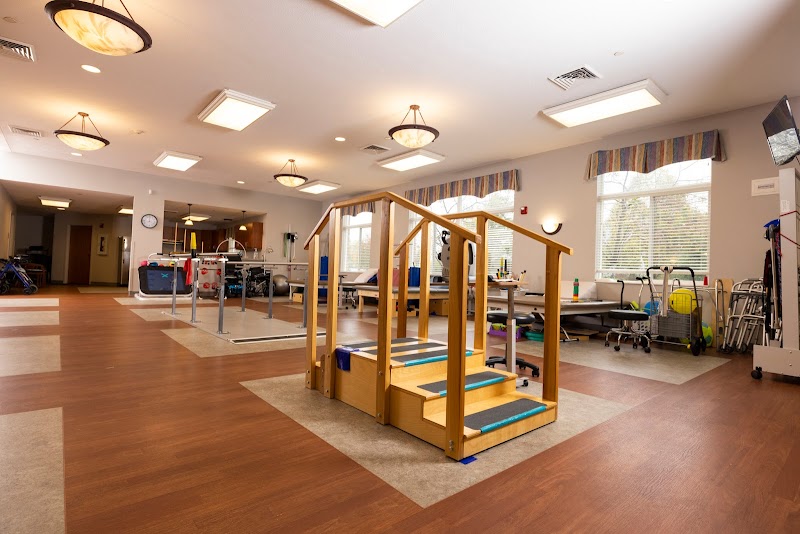
How is Canterbury Of Twinsburg Staffed?

CMS rates CANTERBURY OF TWINSBURG's staffing level at 4 out of 5 stars, which is above average compared to other nursing homes. Staff turnover is 63%, which is 17 percentage points above the Ohio average of 46%. High turnover can affect care consistency as new staff learn residents' individual needs.

What Have Inspectors Found at Canterbury Of Twinsburg?

State health inspectors documented 29 deficiencies at CANTERBURY OF TWINSBURG during 2019 to 2025. These included: 3 that caused actual resident harm, 25 with potential for harm, and 1 minor or isolated issues. Deficiencies causing actual harm indicate documented cases where residents experienced negative health consequences.
Who Owns and Operates Canterbury Of Twinsburg?

CANTERBURY OF TWINSBURG is owned by a for-profit company. For-profit facilities operate as businesses with obligations to shareholders or private owners. The facility operates independently rather than as part of a larger chain. With 56 certified beds and approximately 41 residents (about 73% occupancy), it is a smaller facility located in TWINSBURG, Ohio.
How Does Canterbury Of Twinsburg Compare to Other Ohio Nursing Homes?

Compared to the 100 nursing homes in Ohio, CANTERBURY OF TWINSBURG's overall rating (3 stars) is below the state average of 3.2, staff turnover (63%) is significantly higher than the state average of 46%, and health inspection rating (2 stars) is below the national benchmark.

What Should Families Ask When Visiting Canterbury Of Twinsburg?

Based on this facility's data, families visiting should ask: "How do you ensure continuity of care given staff turnover, and what is your staff retention strategy?" "Can I visit during a mealtime to observe dining assistance and food quality?" "How do you handle medical emergencies, and what is your hospital transfer rate?" "Can I speak with family members of current residents about their experience?" These questions are particularly relevant given the facility's high staff turnover rate.

Is Canterbury Of Twinsburg Safe?

Based on CMS inspection data, CANTERBURY OF TWINSBURG has a clean safety record: no substantiated abuse findings (meaning no confirmed cases of resident harm), no Immediate Jeopardy citations (the most serious violation level indicating risk of serious injury or death), and is not on the Special Focus Facility watch list (a federal program monitoring the lowest-performing 1% of nursing homes). The facility has a 3-star overall rating and ranks #100 of 100 nursing homes in Ohio. While no facility is perfect, families should still ask about staff-to-resident ratios and recent inspection results during their visit.

Do Nurses at Canterbury Of Twinsburg Stick Around?

Staff turnover at CANTERBURY OF TWINSBURG is high. At 63%, the facility is 17 percentage points above the Ohio average of 46%. High turnover means new staff may not know residents' individual needs, medications, or preferences. It can also be disorienting for residents, especially those with dementia who rely on familiar faces. Families should ask: What is causing the turnover? What retention programs are in place? How do you ensure care continuity during staff transitions?

Was Canterbury Of Twinsburg Ever Fined?

CANTERBURY OF TWINSBURG has been fined $25,488 across 1 penalty action. This is below the Ohio average of $33,334. While any fine indicates a compliance issue, fines under $50,000 are relatively common and typically reflect isolated problems that were subsequently corrected. Families should ask what specific issues led to these fines and confirm they've been resolved.

Is Canterbury Of Twinsburg on Any Federal Watch List?

CANTERBURY OF TWINSBURG is not on any federal watch list. The most significant is the Special Focus Facility (SFF) program, which identifies the bottom 1% of nursing homes nationally based on persistent, serious quality problems. Not being on this list means the facility has avoided the pattern of deficiencies that triggers enhanced federal oversight. This is a positive indicator, though families should still review the facility's inspection history directly.