Twinsburg Post Acute
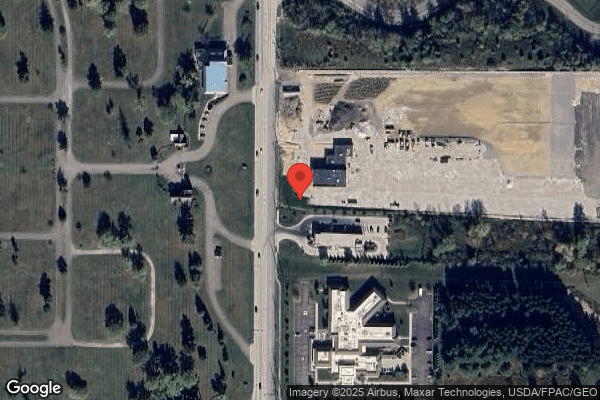
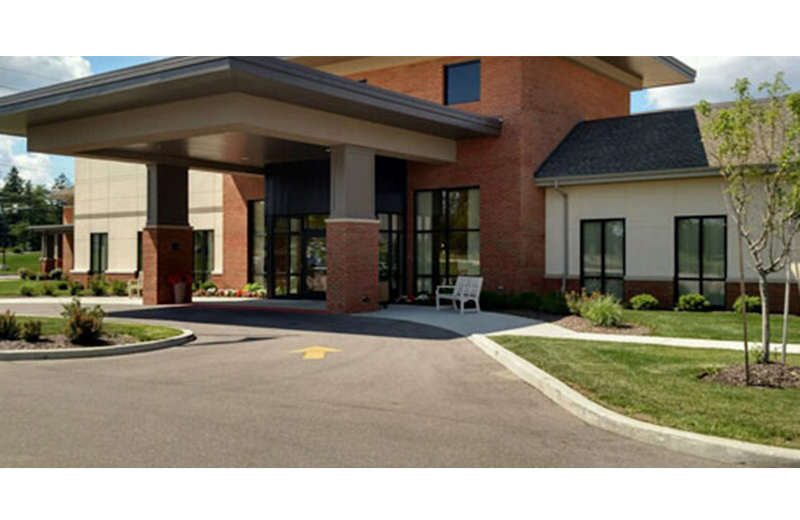
8551 DARROW ROAD, TWINSBURG, OH 44087 (330) 486-9402
For profit - Corporation 114 Beds PACS GROUP Data: November 2025
Trust Grade
5/100
#907 of 913 in OH
Last Inspection: March 2024

Within standard 12-15 month inspection cycle. Federal law requires annual inspections.

Overview

Families considering Twinsburg Post Acute should be aware that the facility has received a Trust Grade of F, indicating poor quality and significant concerns. It ranks #907 out of 913 facilities in Ohio, placing it in the bottom half statewide and #42 out of 42 in Summit County, meaning there are no better local options. While the facility is trending toward improvement, with issues decreasing from 26 to 19, the staffing rating is concerning, with a turnover rate of 81%, far exceeding the state average. Specific incidents include a failure to provide timely medical treatment after a resident's fall, resulting in a fractured femur, and a lack of proper catheterization for another resident, leading to severe pain and hospitalization. Although there have been no fines reported, the overall rating of 1 out of 5 stars for health inspections and staffing raises significant red flags for families evaluating care options.

Trust Score
F
5/100
In Ohio
#907/913
Bottom 1%
Safety Record
High Risk
Review needed
Inspections
Getting Better
26 → 19 violations
Staff Stability
⚠ Watch
81% turnover. Very high, 33 points above average. Constant new faces learning your loved one's needs.
Penalties
✓ Good
No fines on record. Clean compliance history, better than most Ohio facilities.
Skilled Nurses
○ Average
Each resident gets 33 minutes of Registered Nurse (RN) attention daily — about average for Ohio. RNs are the most trained staff who monitor for health changes.
Violations
⚠ Watch
65 deficiencies on record. Higher than average. Multiple issues found across inspections.
★☆☆☆☆
1.0
Overall Rating
★☆☆☆☆
1.0
Staff Levels
★★☆☆☆
2.0
Care Quality
★☆☆☆☆
1.0
Inspection Score
Stable
2024: 26 issues
2025: 19 issues

The Good

  • Full Sprinkler Coverage · Fire safety systems throughout facility
  • No fines on record

Facility shows strength in fire safety.

The Bad

1-Star Overall Rating

Below Ohio average (3.2)

Significant quality concerns identified by CMS

Staff Turnover: 81%

35pts above Ohio avg (46%)

Frequent staff changes - ask about care continuity

Chain: PACS GROUP

Part of a multi-facility chain

Ask about local staffing decisions and management

Staff turnover is very high (81%)

33 points above Ohio average of 48%

The Ugly 65 deficiencies on record

5 actual harm
Aug 2025 9 deficiencies 2 Harm
SERIOUS (G) 📢 Someone Reported This

A family member, employee, or ombudsman was alarmed enough to file a formal complaint

Actual Harm - a resident was hurt due to facility failures

Quality of Care (Tag F0684)

A resident was harmed · This affected 1 resident

**NOTE- TERMS IN BRACKETS HAVE BEEN EDITED TO PROTECT CONFIDENTIALITY** Based on record review, facility policy review and interview the facility failed to ensure Resident #2 received adequate, necess...

Read full inspector narrative →
**NOTE- TERMS IN BRACKETS HAVE BEEN EDITED TO PROTECT CONFIDENTIALITY** Based on record review, facility policy review and interview the facility failed to ensure Resident #2 received adequate, necessary and timely treatment following a fall with major injury. Actual Harm occurred on 05/20/25 when the facility failed to ensure Resident #2 was provided timely and necessary medical intervention/treatment following a fall. Approximately 12.5 hours after the fall occurred, Resident #2's daughter identified the resident was in excruciating pain. The resident was subsequently transported to the hospital where she was diagnosed with a fractured femur (as a result of the fall) requiring surgical repair. This affected one resident (#2) of three residents reviewed for incidents. The facility census was 70. Findings include: Record review revealed Resident #2 was admitted to the facility on [DATE] with diagnoses including dementia and senile degeneration of the brain. A plan of care for Resident #2 dated 06/19/23 revealed the resident tended to wander due to cognitive impairment and restlessness. The care plan also identified Resident #2 would hide in closets, wander into other resident's room, would attempt to use their restroom or lay in their bed and/or would attempt to get on the elevator looking for her ride. Interventions included to provide assistance in locating own room and an additional intervention was noted to provide one on one. Review of the quarterly Minimum Data Set (MDS) assessment dated [DATE] revealed Resident #2 was severely cognitively impairment. The assessment revealed Resident #2 had no impairment of the upper or lower extremities, was dependent on staff for toileting hygiene, required substantial/maximal staff assistance with chair/bed to chair transfer and required staff supervision or touching assistance for ambulation. A Nursing - Fall Risk Observation/assessment dated [DATE] revealed Resident #2 was at moderate risk for falls. The assessment revealed Resident #2's vision was highly or severely impaired and Resident #2 ambulated without problem and without devices. Review of an Interdisciplinary Team (IDT) note dated 05/20/25 at 5:21 P.M. completed by Unit Manager (UM) #293 revealed the IDT team reviewed Resident #2's fall which occurred on 05/20/25. Resident #2's daughter notified UM #293 Resident #2 was in bed when she arrived, and she attempted to assist the resident out of bed when the resident screamed in pain. The physician was notified, and a verbal order was given to transfer Resident #2 to the emergency department (ED). Upon investigation, UM #293 was notified from Resident #24 that on 05/20/25 at approximately (blank) Resident #24 witnessed Resident #2 lying on the floor in her room at the foot of her bed attempting to pull herself up from the floor using the footboard. Resident #24 [Resident #36 was the actual witness to Resident #2 falling and this was confirmed with the Administrator on 07/09/25 at 3:29 P.M. The facility incorrectly documented the wrong resident in their fall investigation.] Resident [#36] stated she pulled the call light for help and as Resident #2 stood up the Certified Nursing Assistant (CNA) entered the room and escorted Resident #2 back to her room. Review of Resident #2's medical record revealed there was no documentation or assessment on 05/20/25 during night shift. There were no vital signs obtained or a physical assessment at the time of the resident's fall. There was no documentation of any injuries sustained status post fall including an injury to Resident #2's left arm (the daughter identified a treatment on left arm on 05/20/25). Review of the documentation survey report for 05/20/25 revealed Resident #2 was turned and repositioned each shift, but the report did not state how many times Resident #2 was turned and repositioned or provided incontinence care. An interview on 08/07/25 at 8:45 A.M., with CNA #211 revealed she provided Resident #2 incontinence care once in the morning during her day shift and explained she didn't need to reposition the resident, so she was not aware of any pain or injuries. There were no as needed pain medications administered and no pain assessment completed on 05/20/25. Review of the facility Investigation Report for Resident #2 dated 05/20/25 completed by the Director of Nursing (DON) revealed on 05/20/25, Resident #2 had a witnessed fall with major injury. The report included on 05/20/25 UM #293 revealed Resident #24 reported Resident #2 wandered into her room at 2:30 A.M. Resident #24 yelled out for help and put on her call light when she noticed Resident #2 on the floor. When Resident #2 finally got up, CNA #246 entered the room and took Resident #2 away. CNA #246 reported he escorted Resident #2 back to her room and he did not notice anything unusual. Review of a typed statement completed by the Director of Nursing (DON) dated 05/20/25 revealed CNA #246 reported he answered Resident [#36]'s call light and noticed Resident #2 was in her room. CNA #246 reported he escorted Resident #2 back to her room. CNA #246 reported that he did not notice anything unusual at that time. CNA #246 reported it was not unusual for Resident #2 to wander. The typed report included Resident [#36] reported to UM #293 that she observed Resident #2 lying on the floor at the foot of the bed around 2:30 A.M.; Resident #[#36] reported she yelled out for help and put on her call light when she noticed resident on the floor. Resident [#36] reported Resident #2 was attempting to get up off the floor using the footboard of the bed. Resident [#36] reported when she finally got up, CNA #246 entered the room and took her away. Review of Hospital #401's after visit summary for Resident #2 dated 05/20/25 at 4:42 P.M. revealed Attending Physician #403 the resident had been seen in a freestanding emergency department with no inpatient services. Resident #2 came from the nursing home after an unwitnessed fall overnight last night. Documentation included Resident #2 provided no history here but had significant pain in her left hip when she moved around in bed. Resident #2 was evaluated emergently. X-ray imaging showed a femoral neck fracture. Resident #2 was then transferred to Hospital #402's emergency department for further evaluation and care. Hospital #402's after visit summary for Resident #2 from a hospitalization 05/20/25 to 05/23/25 revealed a principal diagnosis of left displaced femoral neck fracture. The resident underwent surgical intervention; an open treatment of femoral fracture proximal end neck internal fixation or prosthetic replacement (left). Review of a physician progress note dated 07/04/25 completed by Physician #352 revealed Resident #2 fell at the facility on 05/20/25. The resident was found lying on the floor of her room at the foot of the bed attempting to pull herself up by the footboard. A Certified Nursing Assistant (CNA) was able to assist Resident #2 back to bed. When Resident #2's daughter came to the facility to visit, the daughter tried to assist Resident #2 up out of bed, but Resident #2 screamed out in pain with facial grimacing and refused to move. Resident #2 was sent to the emergency department for a workup. The hospital determined Resident #2 suffered a displaced fracture at the base of the neck of the left femur. She underwent left hemiarthroplasty on 05/21/25. Interview on 07/09/25 at 1:41 P.M. with UM #293 revealed on 05/20/25 when UM #293 began in the morning, Resident #2's daughter was already at the facility and said something was wrong with Resident #2. The daughter reported when she moved the resident, Resident #2 yelled. UM #293 went into the room to assess Resident #2, and Resident #2 was lying on her right side in the fetal position. UM #293 turned her on her left side, Resident #2 cried out in pain. UM #293 called the nurse practitioner (NP) who said to transfer the resident to the hospital. Resident #2 was transported to the hospital around 10:00 A.M. Interview on 07/09/25 at 2:30 P.M. with the DON confirmed there was no documentation when Resident #2 left the facility and/or evidence an investigation was completed to determine how Resident #2 had a fractured femur. Interview on 08/06/25 at 2:10 P.M. with Resident #2's daughter who was Resident #2's responsible party, revealed she visited her mom daily in the afternoon and prior to visiting her mom, she would sign in at the front desk on the visitor log. When she arrived, her routine included first taking her mom to the bathroom. The daughter revealed on 05/20/25 when she arrived to visit, Resident #2 was lying in bed. When she attempted to assist her mom, her mom began screaming in pain. Resident #2's daughter reported she went to the nurse and reported her mom was unable to get up and walk and just moving made her scream in pain. Resident #2's daughter reported she insisted her mom be sent to the hospital and reported she thought her mom must have had a fall because there was also a dressing on her left arm dated 05/20/25 (There was no documentation of a dressing). Resident #2's daughter revealed the staff told her later (unable to recall when) that her mom had wandered into someone's room, fell down, broke her hip, walked on it, and then they assisted her back to bed. Resident #2's daughter revealed There was no way my mom could have walked on it, just moving it made her scream in pain. The resident's daughter revealed it was then another 45 minutes to an hour before the facility transferred the resident to the hospital. Review of the sign in visitor log dated 05/20/25 revealed Resident #2's daughter arrived on 05/20/25 at 2:55 P.M. This shows evidence of the time the daughter arrived, she was sent to the hospital after that. A telephone interview on 08/06/25 at 6:33 P.M. with LPN #277 revealed she was Resident #2's primary charge nurse on 05/20/25 during the day shift. LPN #277 revealed she was on her lunch break (did not recall the time) when she received a call from UM #293 indicating Resident 2's daughter was there and Resident #2 was in pain. LPN #277 stated she gave Resident #2 her medications that morning when the resident was in bed. LPN #277 didn't know how CNA #211 changed her, but Resident #2 did not get out of the bed. UM #293 wanted LPN #277 to write a statement saying she fell on her day shift and the LPN refused to write one. LPN #277 revealed Resident #2 did not appear to be in pain that morning, but she did not have to move her. Interview on 08/07/25 at 8:22 A.M. with Resident #36 revealed she recalled a resident coming into her room. Resident #36 stated a female resident fell, didn't know who the female resident was, it had occurred a couple months ago around twilight time, before morning. Resident #36 stated it looked like the resident was dancing, fell, the man picked her up, she walked out, then she didn't know what happened. Resident #36 confirmed when she saw the resident in her room, she turned her call light on and yelled for help. The man that came in was staff. Interview on 08/07/25 at 8:45 A.M. with CNA #211 revealed she was Resident #2's primary CNA on 05/20/25. CNA #211 stated on the morning of 05/20/25, CNA #211 fed Resident #2 in bed. Resident #2 was usually up wandering but did lay down for naps throughout the day. However, Resident #2 did not get up at all on that day. CNA #211 stated she was on lunch break when Resident #2 was transferred to the hospital. CNA #211 stated she changed Resident #2 that morning, and she did not seem like she was in pain, she was lying in a fetal position, which was not her usual as she would wander typically, and was on her side. CNA #211 stated she didn't have to straighten Resident #2's legs out to provide incontinence care. CNA #211 confirmed she provided incontinence care that morning only and confirmed she was Resident #2's primary CNA on that day. CNA #211 revealed Resident #2 didn't scream until her daughter straightened her legs out. Resident #2 did not get up at all that day. CNA #211 stated Resident #2 did usually get up on night shift and walked around during the day but didn't on 05/20/25. Review of the facility policy titled, Change in a Resident's Condition or Status revised February 2021 revealed the facility promptly notified the resident, his or her attending physician, and the resident representative of changes in the resident's medical/mental condition and or status. The nurse would notify the resident's attending physician or physician on call when there had been a (an) accident or incident involving the resident; discovery of injuries of an unknown source; significant change in the resident's physical/emotional/mental condition. This deficiency represents non-compliance investigated under Complaint Number 2581344. This is an example of continued non-compliance from the survey dated 06/25/25.
SERIOUS (G) 📢 Someone Reported This

A family member, employee, or ombudsman was alarmed enough to file a formal complaint

Actual Harm - a resident was hurt due to facility failures

Incontinence Care (Tag F0690)

A resident was harmed · This affected 1 resident

**NOTE- TERMS IN BRACKETS HAVE BEEN EDITED TO PROTECT CONFIDENTIALITY** Based on observation, record review, facility policy review and interview with resident, facility staff, pharmacy staff and nurs...

Read full inspector narrative →
**NOTE- TERMS IN BRACKETS HAVE BEEN EDITED TO PROTECT CONFIDENTIALITY** Based on observation, record review, facility policy review and interview with resident, facility staff, pharmacy staff and nurse practitioner the facility failed to implement a comprehensive and individualized plan of treatment for Resident #20 to ensure the resident was catheterized timely and as ordered for urinary retention and provided timely and necessary treatment for a urinary tract infection (UTI). Actual harm occurred on 07/28/25 when Resident #20 demanded to be transferred to the emergency room for uncontrolled pain. The resident was subsequently treated for urinary retention and a UTI. Prior to the hospitalization, the resident had physician orders to be straight catheterized for urine retention every six hours; however, this was not being completed as ordered. Following the hospital treatment the facility failed to administer Resident #20's oral antibiotics per the physician orders and continued not to straight catheterize as ordered resulting in the need for intravenous medications. This affected one resident (#20) of three residents reviewed for UTIs. The census was 70. Findings include: Record review revealed Resident #20 was admitted to the facility on [DATE] with diagnoses including Parkinson's disease, UTI, and retention of urine. Review of the quarterly Minimum Data Set (MDS) assessment dated [DATE] revealed Resident #20 was cognitively intact. The assessment revealed Resident #20 required supervision or touch assistance with toileting hygiene. Resident #20 had no indwelling catheter or intermittent catheter noted on the MDS assessment. Record review revealed the facility had not developed/implemented a plan of care for Resident #20 for the care and treatment for urinary retention or history of urinary tract infections. Review of the physician's orders revealed an order dated 03/31/25 to straight catheterize every six hours for urinary retention four times a day. The procedure was scheduled to be completed at 5:00 A.M., 11:00 A.M., 5:00 P.M. and 11:00 P.M. Review of the progress note for Resident #20 dated 07/21/25 at 2:32 A.M. revealed Licensed Practical Nurse (LPN) #275 documented completed straight catheterization two times with no visible output. The note included the resident was able to urinate on her own and does it every time she was straight catheterized. The note also included this had been a recurrent issue with Resident #20 and her straight catheterization ordered may need to be revised. However, there was no evidence the physician or certified nurse practitioner (CNP) were contacted to report this or discuss the ongoing care needs of the resident related to her urinary status/urinary retention and/or straight catheterization order. A progress note dated 07/27/25 at 10:42 A.M. completed by LPN #511 revealed Resident #20 was to be straight catheterized every six hours for urinary retention. The procedure was not completed; the supplies were pending order. There was no documentation of notification to the physician/CNP the nurse was unable to complete the procedure, and no documentation Resident #20 requested to speak to the CNP on this date (07/27/25) A progress note dated 07/28/25 at 8:44 P.M. completed by Unit Manager (UM) #293 revealed UM #293 was informed by staff the resident placed call to 911 demanding to be sent to the emergency room (ER) related to uncontrolled pain. The note included Resident #20 was assessed by floor nurse, and all vital signs were within normal limits and no other areas of concern noted. Resident #20 continued to demand to go to ER for further evaluation. Call placed to the CNP making the CNP aware and a verbal order was given to transfer Resident #20 to ER for further evaluation. Review of the hospital After Visit Summary dated 07/28/25 revealed the reason for visit was urinary problem. Diagnosis was urinary retention. The summary included: You had an indwelling urinary catheter placed to drain your urine. A basic metabolic panel, complete blood count, urinalysis with microscopic, reflex culture and urine culture were completed. (Results not provided in record). Review of the progress note for Resident #20 dated 07/29/25 at 2:02 A.M. completed by Registered Nurse (RN) #512 revealed Resident #20 returned from the hospital. Resident #20 had a new indwelling urinary catheter 16 French (16fr)/10cc balloon placed by the hospital for urinary retention. On 08/01/25 there was a physician order for Cipro (antibiotic) oral tablet 500 milligrams (mg) give one tablet by mouth two times a day for a UTI for seven days. A progress note dated 08/02/25 at 3:07 P.M. completed by RN #333 revealed an alert from the pharmacy regarding the new order entered for Cipro 500 mg give one tablet by mouth two times a day for UTI for seven days had triggered possible drug to drug interactions. Review of the medication administration record from 08/01/25 to 08/06/25 revealed Cipro was to be administered at 9:00 P.M. and 9:00 A.M. for seven days and it was to start on 08/02/25 at 9:00 P.M. On 08/02/25 at 9:00 P.M., the number nine was documented in the timeframe, which indicated to see the nurses' notes. From 08/02/25 through 08/06/25 for the scheduled dose at 9:00 P.M. the boxes all documented a number nine. The MAR indicated Resident #20 received the Cipro on 08/03/25, 08/04/25, and 08/06/25 at 9:00 A.M. only (three of 10 doses documented as administered). However, review of the pharmacy delivery manifest with the Director of Nursing (DON) on 08/06/25 revealed Resident #20's Cipro had never been delivered to the facility (indicating the three doses documented as administered were not actually administered to Resident #20). On 08/04/25 an order was obtained to remove indwelling catheter today (08/04/25) and straight catheterize every four to six hours. An order was also provided for Enhanced Barrier Precautions - use gown and gloves for high contact resident care including dressing, bathing, showering, transfers, hygiene care, changing linens, changing briefs, assisting with toileting, dressing changes, and care for any device including trach, central line, tube feeding and catheter. Interview on 08/06/25 at 1:39 P.M. with Resident #20 revealed staff were supposed to straight catheterize her every four to six hours, but they did not do this. Resident #20 stated staff make excuses and tell her she doesn't need to be straight catheterized because she does urinate. Resident #20 stated sometimes she does urinate and sometimes she doesn't. Resident #20 stated staff provide straight catheterization about three times a day, but she was scheduled four times a day. Resident #20 stated the previous Monday (07/28/25) she had chills, back and abdominal pain, she requested to see the CNP, but she never came. That night she was supposed to be catheterized at 11:00 P.M. but the nurse did not come until 3:00 A.M. She requested several times to see the nurse, but she never came. Resident #20 revealed she was shivering and the abdominal pain continued, she was yelling and still no one came. She called the facility, and no one answered the telephone. Resident #20 stated she became nauseous, needed help, so she called 911. She was then taken to the hospital. Resident #20 stated the ER nurses had to clean her up, and they placed a (urinary) catheter and got 700 cubic centimeters (cc) urine return. The ER physician said she was correct to come to the ER as that was too much urine. Resident #20 stated she received an order for Cipro because she had a UTI that was found from her hospital visit. Resident #20 stated her concern was that she was catheterized last this morning between 4:00 A.M. and 4:30 A.M. and staff have not been in yet to do the next one. Interview on 08/06/25 at 3:15 P.M. with LPN #275 revealed she was Resident #20's primary care nurse. LPN #275 stated she has not straight catheterized her at all today (08/06/25) and was not aware of how frequent Resident #20 need to be straight catharized. LPN #275 referred to the physician orders at the time of the interview and confirmed Resident #20 should be straight catheterized every six hours. Observation on 08/06/25 at 3:35 P.M. revealed LPN #275 was walking down the hall. LPN #275 stated Resident #20 was just straight catheterized and got 500 cc of urine out. UM #293 was present and stated LPN #275 went in Resident #20's room at 11:00 A.M. to straight catheterized her and Resident #20 was not in her room so the next catheter would not be due until 5:00 P.M. anyway. Interview on 08/06/25 at 3:40 P.M. with the DON revealed if a resident had treatment due and was not in their room, the nurse would go back when the resident returned to do the treatment. The DON stated Resident #20 had been getting straight catheterized prior to the hospital visit. The hospital placed an indwelling urinary catheter in. The indwelling urinary catheter was discontinued due to Resident #20 did not have the appropriate diagnosis for an indwelling catheter and the straight catheterize order was continued. Review of Resident #20's Medication Administration Record (MAR) with the DON confirmed Cipro was ordered on 08/01/25 and was scheduled to start on 08/02/25 at 9:00 P.M. The DON confirmed from 08/02/25 through 08/06/25 for the scheduled doses at 9:00 P.M. the boxes all had a number nine; and documented Resident #20 received Cipro three of 10 doses on 08/03/25, 08/04/25, and 08/06/25 at 9:00 A.M. only. Interview on 08/06/25 at 4:32 P.M. with Resident #20 and with the DON present revealed LPN #275 never offered to straight catheterization her today (08/06/25) until a few minutes ago and she got over 500 cc out. Resident #20 stated to the DON she was upset she had not been getting her Cipro like she was supposed to, and it started later than it was supposed to. Interview on 08/06/25 at 4:34 P.M. with LPN #275 with the DON present confirmed she administered Resident #20 her Cipro this morning and the Cipro was prepackaged by the pharmacy in the medication cart. Observation revealed the DON checked the medication cart with Resident #20's prepackaged medications, and confirmed Resident #20 did not have any Cipro present in any of the prepackaged medications or any other location of the medication cart. Telephone interview on 08/06/25 at 4:55 P.M. with Certified Pharmacy Technician (CPHT) #515 with the DON present revealed the Cipro for Resident #20 was never sent because the pharmacist reached out for a drug interaction. CPHT #515 revealed the note stated an RN would clarify. The pharmacy never received the response, so they never sent the Cipro. The DON verified LPN #275 documented on the MAR she gave Resident #20 the Cipro from the prepackaged medications this A.M. Interview and observation on 08/07/25 at 10:14 A.M. with Resident #20 revealed the resident was lying in bed crying. Resident #20 stated she hurt, CNP #514 was just in to see her a few minutes ago and gave new orders. Interview on 08/07/25 at 10:16 A.M. with CNP #514 revealed she was not made aware until just a couple minutes ago that Resident #20 was not receiving the Cipro as ordered. CNP #514 stated, the facility never told her that Resident #20 not getting straight catheterized as physician ordered. And when they do straight catheterization, the staff were obtaining more than 250 cc of urine left in the bladder and this was retention. CNP #514 confirmed retention (a condition in which a person is unable to empty their bladder completely) can cause a UTI. CNP #514 stated she was going to order an intravenous (IV) antibiotic now and more laboratory values including a urinalysis because Resident #20 did not receive the Cipro that was ordered. CNP #514 stated she was not happy with the facility and stated she had received a call from the hospital, and the urinalysis results returned from when she went to the ER on [DATE] and showed she had a UTI, that was why the Cipro was ordered. On 08/07/25 there was an order by CNP #514 to hold Cipro and start Ceftriaxone sodium solution reconstituted two grams use 2.0 grams intravenously in the morning for infection for three days. Flush peripherally inserted central catheter (PICC) line/midline/central line with 10 cubic centimeters (cc) normal saline (NS) before and after medication administration. Interview on 08/07/25 at 10:39 A.M. with the DON and record review of the Pharmacy Communication request received 08/04/25 at 11:54 A.M. revealed the request stated to Please Respond. Medication Cipro had a drug interaction with (medication) tizanidine. Please consider changing the antibiotic to something else or hold all tizanidine while on this antibiotic. The DON revealed she also gets emails from the pharmacy, but the recommendations also come through the fax. The pharmacy also calls the nurses who need to update the physician with the pharmacy information. The DON confirmed the pharmacy recommendation was not completed and revealed any nurse could do it. Interview on 08/07/25 at 11:04 A.M. with LPN #518 confirmed CNP #514 requested a urinalysis be obtained for Resident #20. Observation on 08/07/25 at 11:38 A.M. revealed Licensed Practical Nurse (LPN) #518 and Unit Manager (UM) #350 straight catheterized Resident #20. LPN #518 straight catheterized Resident #20 for a residual of 1,300 cubic centimeters (cc) during the second attempt. Record review and interview on 08/11/25 at 3:00 P.M. with DON confirmed there were no urinalysis results in the medical record for Resident #20 for the urinalysis ordered 08/07/25. The DON confirmed the urine was obtained on 08/07/25 and the urine was never sent to the laboratory. The DON stated she did not know why the urine was never sent and confirmed it should have been obtained and sent per the CNP orders. Telephone interview on 08/11/25 at 3:30 P.M. with CNP #514 confirmed she ordered a urinalysis on 08/07/25 for Resident #20 and revealed she was never notified the urinalysis was not completed as ordered. Review of the facility policy titled, Catheter Care Urinary revised August 2022 revealed the purpose of this procedure is to prevent urinary catheter associated complications, including urinary tract infections. Observe the resident for complications associated with urinary catheters. Report unusual findings to the physician. This deficiency represents non-compliance investigated under Complaint Number 2581344 and Complaint Number 2574277.
CONCERN (D) 📢 Someone Reported This

A family member, employee, or ombudsman was alarmed enough to file a formal complaint

Potential for Harm - no one hurt, but risky conditions existed

Notification of Changes (Tag F0580)

Could have caused harm · This affected 1 resident

**NOTE- TERMS IN BRACKETS HAVE BEEN EDITED TO PROTECT CONFIDENTIALITY** Based on resident, family, staff and certified nurse practitioner (CNP) interviews, record review, and review of the facility po...

Read full inspector narrative →
**NOTE- TERMS IN BRACKETS HAVE BEEN EDITED TO PROTECT CONFIDENTIALITY** Based on resident, family, staff and certified nurse practitioner (CNP) interviews, record review, and review of the facility policy, the facility failed to timely notify the physician/CNP when physician orders were not completed and pharmacy irregularities on a antibiotic and notify a resident's representative of an incident and a room change involving the resident. This affected two (Residents #1 and #20) of three residents reviewed for notification of change. The facility census was 70. 1. Record review revealed Resident #20 was admitted to the facility on [DATE] with diagnoses including urinary tract infection (UTI) and retention of urine. Review of the quarterly Minimum Data Set (MDS) assessment dated [DATE] revealed Resident #20 was cognitively intact. Resident #20 had no indwelling catheter or intermittent catheter noted on the MDS assessment.Review of the physician's orders revealed an order dated 03/31/25 to straight catheterize every six hours for urinary retention four times a day. The procedure was scheduled to be completed at 5:00 A.M., 11:00 A.M., 5:00 P.M. and 11:00 P.M.Review of the progress note for Resident #20 dated 07/21/25 at 2:32 A.M. revealed Licensed Practical Nurse (LPN) #275 documented completed straight catheterization two times with no visible output. The note included the resident was able to urinate on her own and does it every time she was straight catheterized. The note also included this had been a recurrent issue with Resident #20 and her straight catheterization ordered may need to be revised. However, there was no evidence the physician or certified nurse practitioner (CNP) were contacted to report this or discuss the ongoing care needs of the resident related to her urinary status/urinary retention and/or straight catheterization order. A progress note dated 07/27/25 at 10:42 A.M. completed by LPN #511 revealed Resident #20 was to be straight catheterized every six hours for urinary retention. The procedure was not completed; the supplies were pending order. There was no documentation of notification to the physician/CNP the nurse was unable to complete the procedure, and no documentation Resident #20 requested to speak to the CNP on this date (07/27/25)A progress note dated 07/28/25 at 8:44 P.M. completed by Unit Manager (UM) #293 revealed UM #293 was informed by staff the resident placed call to 911 demanding to be sent to the emergency room (ER) related to uncontrolled pain. The note included Resident #20 was assessed by floor nurse, and all vital signs were within normal limits and no other areas of concern noted. Resident #20 continued to demand to go to ER for further evaluation. Call placed to the CNP making the CNP aware and a verbal order was given to transfer Resident #20 to ER for further evaluation. Review of the hospital After Visit Summary dated 07/28/25 revealed the reason for visit was urinary problem. Diagnosis was urinary retention. The summary included: You had an indwelling urinary catheter placed to drain your urine. A basic metabolic panel, complete blood count, urinalysis with microscopic, reflex culture and urine culture were completed. (Results not provided in record).Review of the progress note for Resident #20 dated 07/29/25 at 2:02 A.M. completed by Registered Nurse (RN) #512 revealed Resident #20 returned from the hospital. Resident #20 had a new indwelling urinary catheter 16 French (16fr)/10cc balloon placed by the hospital for urinary retention. On 08/01/25 there was a physician order for Cipro (antibiotic) oral tablet 500 milligrams (mg) give one tablet by mouth two times a day for a UTI for seven days.A progress note dated 08/02/25 at 3:07 P.M. completed by RN #333 revealed an alert from the pharmacy regarding the new order entered for Cipro 500 mg give one tablet by mouth two times a day for UTI for seven days had triggered possible drug to drug interactions.Interview on 08/06/25 at 1:39 P.M. with Resident #20 revealed staff were supposed to straight catheterize her every four to six hours, but they did not do this. Resident #20 stated staff make excuses and tell her she doesn't need to be straight catheterized because she does urinate. Resident #20 stated sometimes she does urinate and sometimes she doesn't. Resident #20 stated staff provide straight catheterization about three times a day, but she was scheduled four times a day. Resident #20 stated the previous Monday (07/28/25) she had chills, back and abdominal pain, she requested to see the CNP, but she never came. That night she was supposed to be catheterized at 11:00 P.M. but the nurse did not come until 3:00 A.M. She requested several times to see the nurse, but she never came. Resident #20 revealed she was shivering and the abdominal pain continued, she was yelling and still no one came. She called the facility, and no one answered the telephone. Resident #20 stated she became nauseous, needed help, so she called 911. She was then taken to the hospital. Resident #20 stated the ER nurses had to clean her up, and they placed a (urinary) catheter and got 700 cubic centimeters (cc) urine return. The ER physician said she was correct to come to the ER as that was too much urine. Resident #20 stated she received an order for Cipro because she had a UTI that was found from her hospital visit. Resident #20 stated her concern was that she was catheterized last this morning between 4:00 A.M. and 4:30 A.M. and staff have not been in yet to do the next one.Interview on 08/06/25 at 3:15 P.M. with LPN #275 revealed she was Resident #20's primary care nurse. LPN #275 stated she has not straight catheterized her at all today (08/06/25) and was not aware of how frequent Resident #20 need to be straight catharized. LPN #275 referred to the physician orders at the time of the interview and confirmed Resident #20 should be straight catheterized every six hours. Interview on 08/06/25 at 3:40 P.M. with the Director of Nursing (DON) confirmed Cipro was ordered on 08/01/25 and was scheduled to start on 08/02/25 at 9:00 P.M. The DON confirmed from 08/02/25 through 08/06/25 for the scheduled doses at 9:00 P.M. the boxes all had a number nine; and documented Resident #20 received Cipro three of 10 doses on 08/03/25, 08/04/25, and 08/06/25 at 9:00 A.M. only. Telephone interview on 08/06/25 at 4:55 P.M. with Certified Pharmacy Technician (CPHT) #515 with the DON present revealed the Cipro for Resident #20 was never sent because the pharmacist reached out for a drug interaction. CPHT #515 revealed the note stated an RN would clarify. The pharmacy never received the response, so they never sent the Cipro. Interview on 08/07/25 at 10:16 A.M. with CNP #514 revealed she was not made aware until just a couple minutes ago that Resident #20 was not receiving the Cipro as ordered. CNP #514 stated, the facility never told her that Resident #20 not getting straight catheterized as physician ordered. And when they do straight catheterization, the staff were obtaining more than 250 cc of urine left in the bladder and this was retention. CNP #514 confirmed retention (a condition in which a person is unable to empty their bladder completely) can cause a UTI. CNP #514 stated she was going to order an intravenous (IV) antibiotic now and more laboratory values including a urinalysis because Resident #20 did not receive the Cipro that was ordered. CNP #514 stated she was not happy with the facility and stated she had received a call from the hospital, and the urinalysis results returned from when she went to the ER on [DATE] and showed she had a UTI, that was why the Cipro was ordered.On 08/07/25 there was an order by CNP #514 to hold Cipro and start Ceftriaxone sodium solution reconstituted two grams use 2.0 grams intravenously in the morning for infection for three days. Flush peripherally inserted central catheter (PICC) line/midline/central line with 10 cubic centimeters (cc) normal saline (NS) before and after medication administration.Interview on 08/07/25 at 10:39 A.M. with the DON and record review of the Pharmacy Communication request received 08/04/25 at 11:54 A.M. revealed the request stated to Please Respond. Medication Cipro had a drug interaction with (medication) tizanidine. Please consider changing the antibiotic to something else or hold all tizanidine while on this antibiotic. The DON revealed she also gets emails from the pharmacy, but the recommendations also come through the fax. The pharmacy also calls the nurses who need to update the physician with the pharmacy information. The DON confirmed the pharmacy recommendation was not completed and revealed any nurse could do it.Interview on 08/07/25 at 11:04 A.M. with LPN #518 confirmed CNP #514 requested a urinalysis be obtained for Resident #20.Record review and interview on 08/11/25 at 3:00 P.M. with DON confirmed there were no urinalysis results in the medical record for Resident #20 for the urinalysis ordered 08/07/25. The DON confirmed the urine was obtained on 08/07/25 and the urine was never sent to the laboratory. The DON stated she did not know why the urine was never sent and confirmed it should have been obtained and sent per the CNP orders.Telephone interview on 08/11/25 at 3:30 P.M. with CNP #514 confirmed she ordered a urinalysis on 08/07/25 for Resident #20 and revealed she was never notified the urinalysis was not completed as ordered. 2. Record review for Resident #1 revealed a re-admission date of 02/17/16. Diagnosis included vascular dementia with unspecified severity without behavioral disturbances. Review of the quarterly Minimum Data Set (MDS) assessment dated [DATE] revealed Resident #1 was severely cognitively impaired. Review of the medical record for Resident #1 face sheet revealed Resident #1 had a representative who was his daughter. The face sheet in the electronic medical record did not have a telephone number available for Resident #1's representative. The medical record revealed Resident #1's representative's telephone number was provided in the hospital record. On 09/11/23, a social services progress note documented the resident representative's telephone number. The progress note dated 04/17/25 completed by Unit Manager #293 revealed Resident #1 received new orders and a telephone call was placed to Resident #1's daughter making her aware of the new orders. Review of the facilities Self-Reported Incident (SRI) revealed on 07/06/25 at 10:38 A.M., a SRI was created by Administrator in Training (AIT) #351. The SRI had allegation of sexual abuse involving Resident #1 and it was witnessed by a staff member. Review of the resident census in Resident #1's electronic medical record revealed Resident #1 resided on the second floor in the same room from 12/14/21 through 07/06/25. On 07/026/25, Resident #1 was transferred to a room on the first floor of the facility. Resident #1's medical record did not have any documentation that Resident #1's responsible party was notified of a sexual abuse incident involving Resident #1 and Resident #1's room change on 07/06/25. Interview on 07/08/25 at 11:59 A.M. with Social Service Designee (SSD) #334 revealed she spoke Resident #1's representative on the telephone about two months ago. SSD #334 stated the telephone number was there on Resident #1's face sheet in the medical record and she was unaware of who took the telephone number off the face sheet. SSD #334 confirmed an incident occurred regarding sexual touching and Resident #1's room was changed on 07/06/25. SSD #334 confirmed Resident #1 did not have any documentation of Resident #1's representative being notified of any occurrence on 07/06/25 and SSD #334 confirmed Resident #1 had a representative in place and Resident #1 was not his own person. Telephone interview on 07/08/25 at 12:16 P.M. with Resident #1's representative revealed the facility staff did not contact her for any incident involving Resident #1 on 07/06/25. Resident #1's representative was unaware Resident #1 moved to the first floor on 07/06/25. Resident #1's representative stated she wanted to be notified of any changes involving Resident #1 and stated she was coming straight to the facility to obtain additional information about the incident involving Resident #1 on 07/06/25. Interview on 07/08/25 at 3:11 P.M. with Administrator confirmed Resident #1's representative was never notified of the incident on 07/06/25 due to there was no telephone number for her. Review of the facility policy titled Change in a Resident's Condition or Status revised February 2021 revealed the facility promptly notifies the resident, his or her attending physician, and the resident's representative of changes in the resident's medical/mental condition and/or status. This deficiency represents non-compliance investigated under Complaint Number 2574277 and Complaint Number OH00167210 (138517).
CONCERN (D) 📢 Someone Reported This

A family member, employee, or ombudsman was alarmed enough to file a formal complaint

Potential for Harm - no one hurt, but risky conditions existed

Pressure Ulcer Prevention (Tag F0686)

Could have caused harm · This affected 1 resident

**NOTE- TERMS IN BRACKETS HAVE BEEN EDITED TO PROTECT CONFIDENTIALITY** Based on observation, interview, record review, and review of the facility policy, the facility failed to ensure wound care was ...

Read full inspector narrative →
**NOTE- TERMS IN BRACKETS HAVE BEEN EDITED TO PROTECT CONFIDENTIALITY** Based on observation, interview, record review, and review of the facility policy, the facility failed to ensure wound care was completed as per the physician orders for one resident, Resident #57 of three residents reviewed for wound care. The facility census was 70.Findings include:Record review for Resident #57 revealed an admission date of 10/23/23. Diagnoses included multiple sclerosis, sepsis, chronic osteomyelitis, colostomy, neuromuscular disfunction of the bladder, pressure ulcer stage IV (Full thickness loss with exposed bone, tendon or muscle), and paraplegia. Review of the quarterly Minimum Data Set (MDS) assessment dated [DATE] revealed Resident #57 was severely cognitively impaired. Resident #57 had impairment on one side of the upper extremity and both sides of the lower. Resident #57 was dependent on staff for all activities of daily living (ADL). Resident #57 was at risk for pressure ulcers, had one stage IV pressure ulcer and one unstageable pressure ulcer (slough and/or eschar: known but not stageable due to coverage of wound bed by slough and/or eschar). Review of the physician orders for Resident #57 revealed on 05/23/25, an order for the right dorsum foot to cleanse right dorsum foot with Dakin's 0.25% solution, blot dry, apply calcium alginate with silver, ABD and kerlix. Change daily and as needed every day shift for wound management. Observation 07/08/25 at 4:30 P.M. revealed Wound Care Nurse (WCN) #292 and Unit Manager (UM) #293 were going to provide wound care for Resident #57. WCN #292 and UM #293 confirmed the date on the dressing to Resident #57's wound on the right foot was dated 07/06/25 the initials were [Licensed Practical Nurse (LPN) #283]. Observation after removal of the dressing revealed the old dressing had a heavy drainage and foul odor. The tissue surrounding the edges of the wound bed was white/emaciated. The appearance and odor was verified by WCN #292. Record review of the nursing staff assignment sheets and timecards and interview on 07/09/25 at 9:00 A.M. with the Administrator and UM #293 confirmed LPN #283 worked at the facility on 07/06/25. LPN #283 did not work on 07/07/25 or 07/08/25. The Administrator and UM #293 confirmed LPN #283 completed the dressing change on 07/06/25 and the dressing change was not completed again until 07/08/25. Review of the facility's undated policy titled Wound Care revealed the purpose of the procedure was to provide guidelines for the care of wounds to promote healing. Dress the wound and mark tape with initials, time, and date and apply to dressing. This deficiency represents non-compliance investigated under Complaint Number OH00167210 (1381513).
CONCERN (D) 📢 Someone Reported This

A family member, employee, or ombudsman was alarmed enough to file a formal complaint

Potential for Harm - no one hurt, but risky conditions existed

Drug Regimen Review (Tag F0756)

Could have caused harm · This affected 1 resident

**NOTE- TERMS IN BRACKETS HAVE BEEN EDITED TO PROTECT CONFIDENTIALITY** Based on record review and interviews with staff and pharmacy, the facility failed timely respond and act upon the pharmacy's no...

Read full inspector narrative →
**NOTE- TERMS IN BRACKETS HAVE BEEN EDITED TO PROTECT CONFIDENTIALITY** Based on record review and interviews with staff and pharmacy, the facility failed timely respond and act upon the pharmacy's notification regarding irregularity with a new order to start an antibiotic. This affected one (#20) of one resident reviewed for pharmacy services.Findings included: Record review revealed Resident #20 was admitted to the facility on [DATE] with diagnoses including urinary tract infection (UTI) and retention of urine. Review of the quarterly Minimum Data Set (MDS) assessment dated [DATE] revealed Resident #20 was cognitively intact. On 08/01/25 there was a physician order for Cipro (antibiotic) oral tablet 500 milligrams (mg) give one tablet by mouth two times a day for a UTI for seven days. A progress note dated 08/02/25 at 3:07 P.M. completed by RN #333 revealed an alert from the pharmacy regarding the new order entered for Cipro 500 mg give one tablet by mouth two times a day for UTI for seven days had triggered possible drug to drug interactions. Interview on 08/06/25 at 3:40 P.M. with the Director of Nursing (DON) revealed the DON reviewed Resident #20's Medication Administration Record (MAR) and confirmed Cipro was ordered on 08/01/25 and was scheduled to start on 08/02/25 at 9:00 P.M. The DON confirmed from 08/02/25 through 08/06/25 for the scheduled doses at 9:00 P.M. the boxes all had a number nine; and documented Resident #20 received Cipro three of 10 doses on 08/03/25, 08/04/25, and 08/06/25 at 9:00 A.M. only. Telephone interview on 08/06/25 at 4:55 P.M. with Certified Pharmacy Technician (CPHT) #515 with the DON present revealed the Cipro for Resident #20 was never sent because the pharmacist reached out for a drug interaction. CPHT #515 revealed the note stated an RN would clarify. The pharmacy never received the response, so they never sent the Cipro. The DON verified LPN #275 documented on the MAR she gave Resident #20 the Cipro from the prepackaged medications this A.M. Interview on 08/07/25 at 10:16 A.M. with CNP #514 revealed she was not made aware until just a couple minutes ago that Resident #20 was not receiving the Cipro as ordered. On 08/07/25 there was an order by CNP #514 to hold Cipro and start Ceftriaxone sodium solution reconstituted two grams use 2.0 grams intravenously in the morning for infection for three days. Flush peripherally inserted central catheter (PICC) line/midline/central line with 10 cubic centimeters (cc) normal saline (NS) before and after medication administration. Interview on 08/07/25 at 10:39 A.M. with the DON and record review of the Pharmacy Communication request received 08/04/25 at 11:54 A.M. revealed the request stated to Please Respond. Medication Cipro had a drug interaction with (medication) tizanidine. Please consider changing the antibiotic to something else or hold all tizanidine while on this antibiotic. The DON revealed she also gets emails from the pharmacy, but the recommendations also come through the fax. The pharmacy also calls the nurses who need to update the physician with the pharmacy information. The DON confirmed the pharmacy recommendation was not completed and revealed any nurse could do it. This was an incidental finding discovered during the course of the complaint investigation.
CONCERN (D) 📢 Someone Reported This

A family member, employee, or ombudsman was alarmed enough to file a formal complaint

Potential for Harm - no one hurt, but risky conditions existed

Laboratory Services (Tag F0770)

Could have caused harm · This affected 1 resident

**NOTE- TERMS IN BRACKETS HAVE BEEN EDITED TO PROTECT CONFIDENTIALITY** Based on record review and interviews with staff, the facility failed to timely obtain a urinalysis ordered by the physician/cer...

Read full inspector narrative →
**NOTE- TERMS IN BRACKETS HAVE BEEN EDITED TO PROTECT CONFIDENTIALITY** Based on record review and interviews with staff, the facility failed to timely obtain a urinalysis ordered by the physician/certified nurse practitioner (CNP). This affected one (#20) of one resident reviewed for laboratory services.Findings included: Record review revealed Resident #20 was admitted to the facility on [DATE] with diagnoses including urinary tract infection (UTI) during stay, and retention of urine. Review of the quarterly Minimum Data Set (MDS) assessment dated [DATE] revealed Resident #20 was cognitively intact. The assessment revealed Resident #20 required supervision or touch assistance with toileting hygiene. Resident #20 had no indwelling catheter or intermittent catheter noted on the MDS assessment. On 08/04/25 an order was obtained to remove indwelling catheter today (08/04/25) and straight catheterize every four to six hours. On 08/07/25 there was an order by Certified Nurse Practitioner (CNP) #514 to hold Cipro and start Ceftriaxone sodium solution reconstituted two grams use 2.0 grams intravenously in the morning for infection for three days and a urinalysis. Interview on 08/07/25 at 10:16 A.M. with CNP #514 revealed she was not made aware until just a couple minutes ago that Resident #20 was not receiving the Cipro as ordered. CNP #514 stated, the facility never told her that Resident #20 not getting straight catheterized as physician ordered. And when they do straight catheterization, the staff were obtaining more than 250 cc of urine left in the bladder and this was retention. CNP #514 confirmed retention (a condition in which a person is unable to empty their bladder completely) can cause a UTI. CNP #514 stated she was going to order an intravenous (IV) antibiotic now and more laboratory values including a urinalysis because Resident #20 did not receive the Cipro that was ordered. CNP #514 stated she was not happy with the facility and stated she had received a call from the hospital, and the urinalysis results returned from when she went to the ER on [DATE] and showed she had a UTI, that was why the Cipro was ordered. Interview on 08/07/25 at 11:04 A.M. with Licensed Practical Nurse (LPN) #518 confirmed CNP #514 requested a urinalysis be obtained for Resident #20. Record review and interview on 08/11/25 at 3:00 P.M. with Director of Nursing (DON) confirmed there were no urinalysis results in the medical record for Resident #20 for the urinalysis ordered 08/07/25. The DON confirmed the urine was obtained on 08/07/25 and the urine was never sent to the laboratory. The DON stated she did not know why the urine was never sent and confirmed it should have been obtained and sent per the CNP orders. Telephone interview on 08/11/25 at 3:30 P.M. with CNP #514 confirmed she ordered a urinalysis on 08/07/25 for Resident #20 and revealed she was never notified the urinalysis was not completed as ordered. This was an incidental finding discovered during the course of the complaint investigation.
CONCERN (D) 📢 Someone Reported This

A family member, employee, or ombudsman was alarmed enough to file a formal complaint

Potential for Harm - no one hurt, but risky conditions existed

Infection Control (Tag F0880)

Could have caused harm · This affected 1 resident

**NOTE- TERMS IN BRACKETS HAVE BEEN EDITED TO PROTECT CONFIDENTIALITY** Based on observation, resident and staff interview, record review, review of Centers for Disease Control and Prevention (CDC) gu...

Read full inspector narrative →
**NOTE- TERMS IN BRACKETS HAVE BEEN EDITED TO PROTECT CONFIDENTIALITY** Based on observation, resident and staff interview, record review, review of Centers for Disease Control and Prevention (CDC) guidance, and review of the facility policy, the facility failed to ensure staff wore personal protective equipment (PPE) for a resident on Enhanced Barrier Protection (EBP). This affected one (#20) of one resident reviewed for infection control. The facility census was 70. Findings include: Record review for Resident #20 revealed an admission date of 07/20/24. Diagnoses included Parkinson's disease and retention of urine. Review of the quarterly Minimum Data Set (MDS) assessment dated [DATE] revealed Resident #20 was cognitively intact. Resident #20 had no indwelling catheter or intermittent catheter. Review of the physician orders for Resident #20 revealed an order dated 03/31/25 to straight catheterize every six hours or urinary retention four times a day for urinary retention; an order dated 08/01/25 for Cipro (antibiotic) oral tablet 500 milligrams (mg) give one tablet by mouth two times a day for a urinary tract infection (UTI) for seven days; and an order dated 08/04/25 for EBP use gown and gloves for high contact resident care including dressing,, bathing, showering, transfers, hygiene care, changing linens, changing briefs, assisting with toileting, dressing changes and care of any device including trach, central line, tube feeding and catheter. Observation on 08/07/25 at 11:38 A.M. revealed Licensed Practical Nurse (LPN) #518 and Unit Manager (UM) #350 straight catheterized Resident #20. UM #350 assisted Resident #20 back to bed and repositioned her legs. Neither LPN #518 nor UM #350 donned an isolation gown. LPN #518 straight catheterized Resident #20 for a residual of 1,300 cubic centimeters (cc) during the second attempt. LPN #518 then provided peri care for Resident #20. Resident #20 stated when staff straight catheterized her, they never wear isolation gowns. UM #350 stated nurses would only wear an isolation gown if the resident had an infection Interview on 08/07/25 at 12:21 P.M. with DON revealed staff should wear Personal Protective Equipment (PPE) for wound care, peri care, indwelling catheter, or when providing care for a specific reason. DON confirmed staff should wear an isolation gown when providing hands on care for Resident #20. Review of the facility policy titled, Enhanced Barrier Precautions (EBP) revised February 2021 revealed EBP are utilized to prevent the spread of multi-drug resistant organisms (MDRO's) to residents. EBP refers to an infection control intervention designed to reduce the transmission of MDRO's during high contact resident care activities. EBP apply when a resident is not known to be infected or colonized with any MDRO, has a wound or indwelling medical device, and has secretions or excretions that are unable to be covered or contained. Indwelling medical devices include urinary catheters. EBP's employ targeted gown and glove use in addition to standard precautions during high contact resident care activities. Review of CDC guidance titled Implementation of PPE Use in Nursing Homes to Prevent Spread of Multidrug-resistant Organisms (MDROs) found at https://www.cdc.gov/long-term-care-facilities/hcp/prevent-mdro/PPE.html and dated 04/02/24 revealed MDRO transmission is common in skilled nursing facilities, contributing to substantial resident morbidity and mortality and increased healthcare costs. EBP are an infection control intervention designed to reduce transmission of resistant organisms that employs targeted gown and glove use during high contact resident care activities. EBP may be indicated for residents with any of the following: wounds or indwelling medical devices, regardless of MDRO colonization status. This was an incidental finding discovered during the course of the complaint investigation.
CONCERN (E) 📢 Someone Reported This

A family member, employee, or ombudsman was alarmed enough to file a formal complaint

Potential for Harm - no one hurt, but risky conditions existed

Accident Prevention (Tag F0689)

Could have caused harm · This affected multiple residents

**NOTE- TERMS IN BRACKETS HAVE BEEN EDITED TO PROTECT CONFIDENTIALITY** Based on observation, record review, review of a facility Self-Reported Incident (SRI) report, facility policy review and interv...

Read full inspector narrative →
**NOTE- TERMS IN BRACKETS HAVE BEEN EDITED TO PROTECT CONFIDENTIALITY** Based on observation, record review, review of a facility Self-Reported Incident (SRI) report, facility policy review and interview, the facility failed to provide residents who have wandering and/or sexual aggressive behaviors with adequate supervision. This affected two residents (#1 and #2) and the potential to affect three residents (#23, #41, and #70) who the facility identified to be independently mobile, confused and residing in the same hall as Resident #1. Findings included:Record review for Resident #2 revealed an admission date of 06/11/19 with diagnoses including dementia and senile degeneration of the brain. Review of the Medicare five-day Minimum Data Set (MDS) assessment dated [DATE] revealed Resident #2 had a Brief Interview for Mental Status Score (BIMS) of one indicating Resident #2 was severely cognitively impaired. Resident #2 required the use of a wheelchair for mobility and stated Resident #2 did not wander during the review period.A care plan dated 06/11/19 and revised 07/07/25 revealed Resident #2 was at risk for falls due to impaired mobility, impaired balance, unsteady gait at times, fracture of unspecified part of neck of left femur. Interventions included physical therapy to evaluate and treat dated 05/23/25 and to offer the resident to lay in bed after all meals dated 06/06/25. A care plan dated 05/02/23 revealed Resident #2 had potential for impaired vision as evidenced by diagnosis of glaucoma. Interventions included to encourage to wear glasses. A care plan dated 06/19/23 included Resident #2 tended to wander due to cognitive impairment and restlessness. The care plan included Resident #2 may wander into other resident's room, will attempt to use their restroom or lay in their bed. Interventions included aid in locating own room (last revised 04/12/23) and to provide one-on-one as needed (last revised 07/31/25).Review of Resident #2 progress notes and medical record from 01/01/25 through 07/29/25 revealed no written evidence that the resident exhibited any type of sexual behaviors. Review of a facility SRI created 07/06/25 revealed an allegation of sexual abuse involving Resident #1 and #2 was reported to the State Survey Agency. Resident #1 with Resident #1's penis out and Resident #2 sucking on it. Review of a facility Witness Statement dated 07/06/25 (untimed) and signed by Certified Nursing Assistant (CNA) #217 revealed CNA #217 was taking Resident #1's roommate into his room from the dining room. When CNA #217 entered Resident #1's room, Resident #1 was lying in bed with just a shirt on and Resident #2 had her head down near Resident #1's private area. Resident #1 had his hand on her (Resident #2's) arm and head as Resident #2's mouth was on his (Resident #1's) private area. The statement included CNA #217 immediately secured each resident and informed the nurse. Review of a facility Witness Statement dated 07/06/25 (untimed) and signed by Licensed Practical Nurse (LPN) #283 revealed she was called down to the room and saw Resident #1 with his hand over his private part looking shocked. LPN #283 observed CNA #217 attempting to move Resident #2 who was being combative at the time. LPN #283 assisted CNA #217 removing Resident #2 from the room. Observation on 07/08/25 at 9:23 A.M. revealed Resident #2 was eating breakfast in the dining room using her fingers only. An attempt to interview Resident #2, revealed the resident rambled incoherently unrelated to the conversation. An interview with Unit Manager #293 at the time of the observation revealed Resident #2 was unable to answer questions appropriately or make independent decisions. The unit manager revealed Resident #2 had dementia, could walk but also used a wheelchair. Resident #2 had poor vision and ate all her meals in the dining room. Interview on 07/08/25 at 3:51 P.M. with CNA #211 stated Resident #2 can walk, the staff try to keep her in her wheelchair, but she walks. CNA #211 stated when she arrived at work in the morning on 07/06/25, Resident #2 was wandering the hallway, and she used her hands to feel around. CNA #211 denied trying to redirect Resident #2 to sit in a chair or go to her own room on 07/06/25 and the reason provided was that this was her usual behavior. Interview on 07/08/25 between 3:52 P.M. and 4:00 P.M. with CNA #216 and CNA #238 revealed Resident #2 was able to ambulate and frequently wandered in other residents' rooms.Interview on 07/09/25 at 1:10 P.M. with Physical Therapy Assistant (PTA) #501 confirmed she worked with Resident #2 in therapy. PTA #501 revealed Resident #2 was not safe to ambulate independently.Interview with MDS Nurse #510 on 07/31/25 at 12:49 P.M. stated the resident's plan of care interventions were considered active if the intervention was still listed on the care plan after the revision date. MDS Nurse #510 verified Resident #2's care plan stated to provide Resident #2 1:1 supervision. Interview on 08/12/25 at 4:15 P.M. with Administrator revealed the care plan with 1:1 supervision for Resident #2 was from a previous incident and should have been removed, it was no longer active and discontinued out of the care plan today.2. Record review revealed Resident #1 had a re-admission date of 02/17/16 with diagnoses including vascular dementia with unspecified severity without behavioral disturbances, psychotic disturbances, mood disturbances and urinary incontinence. Review of a care plan dated 05/15/23 revealed Resident #1 had a history of inappropriate sexual behavior at times related to cognitive impairment. Interventions included to provide supervision in social gatherings/recreation programs and staff to minimize any close interaction with female residents. An additional care plan initiated 07/19/24 revealed Resident #1 demonstrated socially inappropriate behaviors: inappropriately touching staff. Interventions included psychological counseling for psych/behavior management.Interview on 07/08/25 at 12:22 P.M. with CNA #233 revealed she worked with Resident #1. CNA #233 stated Resident #1 was sexually inappropriate, especially when staff changed him. Resident #1 would grab at staff; CNA #233 stated they tried to re-direct Resident #1, move his hand but he would not listen. Interview with the Administrator on 07/08/25 between 1:35 P.M. and 3:11 P.M. stated the incident occurred in Resident #1's room while he was in bed. During the interview, the Administrator stated Resident #2 was the perpetrator, not Resident #1. However, no additional information was provided as to how this conclusion was reached. Interview on 07/08/25 at 5:07 P.M. with CNA #233 revealed at the end of May (2025), she was cleaning Resident #1's buttocks due to him being incontinent. CNA #233 turned him over on his side and while she was washing him, Resident #1 began masturbating. CNA #233 also reported Resident #1 tries to touch CNA #233 inappropriately. The CNA stated other CNAs had also reported Resident #1's sexual inappropriateness, but the facility had done nothing to address Resident #1's behavior. A telephone interview on 07/09/25 at 9:26 A.M. with CNA #217 revealed on 07/06/25, she was bringing Resident #1's roommate from the dining room to his room. As CNA #217 walked through the door, CNA #217 saw Resident #1 was lying in bed, Resident #1 had Resident #2 by the arm and had his hand on Resident #2's head/back of her neck making it go up and down on his penis. The CNA stated she observed Resident #1 being forceful with Resident #2 and Resident #2 was trying to move to leave, as she was not sexual at all. CNA #217 told Resident #1 to let Resident #2 go, he was still holding her, then he let her go. The CNA stated Resident #2 was blind, but she moved right away from Resident #1 once Resident #1 released his hands from her. CNA #217 stated she yelled, and LPN #283 came into Resident #1's room. Interview on 07/09/25 at 10:07 A.M. with LPN #283 revealed on 07/06/25 in the morning, she was down the hall coming out of a different room when she heard CNA #217 call for her. LPN #283 entered Resident #1's room and saw CNA #217 moving Resident #2 away from Resident #1. Resident #2 was confused. When LPN #283 walked into Resident #1's room, Resident #1 was in bed sitting straight up with a hospital gown on and his hand over his private part. LPN #283 stated Resident #2 would not be forceful with anyone if she walked into a resident room. Interviews on 07/08/25 between 12:48 P.M. and 12:55 P.M. with CNA #238, CNA #216, and Activity Director #203 revealed Resident #1 participated in activities and frequently sat in the dining room. CNA #238, #216 and Activity Director #203 revealed Resident #1 never required supervision. The facility identified Residents #23, #41, and #70 who resided on the same hall as Resident #1 and were independently mobile and had cognitive impairments. This deficiency represents non-compliance investigated under Control Number OH00167346 (1381517). This is an example of continued non-compliance from the survey dated 06/25/25.
CONCERN (E) 📢 Someone Reported This

A family member, employee, or ombudsman was alarmed enough to file a formal complaint

Potential for Harm - no one hurt, but risky conditions existed

Deficiency F0760 (Tag F0760)

Could have caused harm · This affected multiple residents

**NOTE- TERMS IN BRACKETS HAVE BEEN EDITED TO PROTECT CONFIDENTIALITY** Based on observation, interviews with resident, staff and Certified Nurse Practitioner (CNP), record review, review of insulin a...

Read full inspector narrative →
**NOTE- TERMS IN BRACKETS HAVE BEEN EDITED TO PROTECT CONFIDENTIALITY** Based on observation, interviews with resident, staff and Certified Nurse Practitioner (CNP), record review, review of insulin administration guidelines, and review of the facility policy, the facility failed to ensure residents were free from significant medication errors. This affected four (#7, #11, #20, and #68) of six residents reviewed for medication administration. The facility census was 70.Findings included: 1. Record review revealed Resident #20 was admitted to the facility on [DATE] with diagnoses including urinary tract infection (UTI) and retention of urine. Review of the quarterly Minimum Data Set (MDS) assessment dated [DATE] revealed Resident #20 was cognitively intact. On 08/01/25 there was a physician order for Cipro (antibiotic) oral tablet 500 milligrams (mg) give one tablet by mouth two times a day for a UTI for seven days. A progress note dated 08/02/25 at 3:07 P.M. completed by RN #333 revealed an alert from the pharmacy regarding the new order entered for Cipro 500 mg give one tablet by mouth two times a day for UTI for seven days had triggered possible drug to drug interactions. Review of the medication administration record from 08/01/25 to 08/06/25 revealed Cipro was to be administered at 9:00 P.M. and 9:00 A.M. for seven days and it was to start on 08/02/25 at 9:00 P.M. On 08/02/25 at 9:00 P.M., the number nine was documented in the timeframe, which indicated to see the nurses' notes. From 08/02/25 through 08/06/25 for the scheduled dose at 9:00 P.M. the boxes all documented a number nine. The MAR indicated Resident #20 received the Cipro on 08/03/25, 08/04/25, and 08/06/25 at 9:00 A.M. only (three of 10 doses documented as administered). However, review of the pharmacy delivery manifest with the Director of Nursing (DON) on 08/06/25 revealed Resident #20's Cipro had never been delivered to the facility (indicating the three doses documented as administered were not actually administered to Resident #20). Interview on 08/06/25 at 3:40 P.M. with the Director of Nursing (DON) revealed the DON reviewed Resident #20's Medication Administration Record (MAR) and confirmed Cipro was ordered on 08/01/25 and was scheduled to start on 08/02/25 at 9:00 P.M. The DON confirmed from 08/02/25 through 08/06/25 for the scheduled doses at 9:00 P.M. the boxes all had a number nine; and documented Resident #20 received Cipro three of 10 doses on 08/03/25, 08/04/25, and 08/06/25 at 9:00 A.M. only. Interview on 08/06/25 at 4:32 P.M. with Resident #20 and with the DON present revealed Resident #20 stated to the DON she was upset she had not been getting her Cipro like she was supposed to, and it started later than it was supposed to. Interview on 08/06/25 at 4:34 P.M. with LPN #275 with the DON present confirmed she administered Resident #20 her Cipro this morning and the Cipro was prepackaged by the pharmacy in the medication cart. Observation revealed the DON checked the medication cart with Resident #20's prepackaged medications, and confirmed Resident #20 did not have any Cipro present in any of the prepackaged medications or any other location of the medication cart. Telephone interview on 08/06/25 at 4:55 P.M. with Certified Pharmacy Technician (CPHT) #515 with the DON present revealed the Cipro for Resident #20 was never sent because the pharmacist reached out for a drug interaction. CPHT #515 revealed the note stated an RN would clarify. The pharmacy never received the response, so they never sent the Cipro. The DON verified LPN #275 documented on the MAR she gave Resident #20 the Cipro from the prepackaged medications this A.M. Interview on 08/07/25 at 10:16 A.M. with CNP #514 revealed she was not made aware until just a couple minutes ago that Resident #20 was not receiving the Cipro as ordered. CNP #514 stated she was going to order an intravenous (IV) antibiotic now and more laboratory values including a urinalysis because Resident #20 did not receive the Cipro that was ordered. CNP #514 stated she was not happy with the facility and stated she had received a call from the hospital, and the urinalysis results returned from when she went to the ER on [DATE] and showed she had a UTI, that was why the Cipro was ordered. On 08/07/25 there was an order by CNP #514 to hold Cipro and start Ceftriaxone sodium solution reconstituted two grams use 2.0 grams intravenously in the morning for infection for three days. Flush peripherally inserted central catheter (PICC) line/midline/central line with 10 cubic centimeters (cc) normal saline (NS) before and after medication administration. 2. Record review for Resident #11 revealed an admission date of 02/02/24. Diagnosis included type two diabetes mellitus (DM) with unspecified complications. Review of the quarterly Minimum Data Set (MDS) assessment dated [DATE] revealed Resident #11 was cognitively intact, and had medically complex conditions including type two DM with unspecified complications. Resident #11 received injections daily. Review of the care plan for Resident #11 dated 01/11/25 revealed Resident #11 required hypoglycemic medication related to diabetes/hyperglycemia. Interventions included to administer medications as ordered. Review of the physician's orders for Resident #11 included Lantus Solostar subcutaneous solution pen-injector 100 units per milliliter (ml) (Insulin Glargine) inject 15 units subcutaneously two times a day for DM type two. Observation on 08/06/25 at 8:31 A.M. of medication administration with Licensed Practical Nurse (LPN) #275 revealed LPN #275 administered Lantus Solostar to Resident #11 via pen injector. LPN #275 did not prime the pen injector prior to dialing up 15 units and administering the insulin. Interview on 08/06/25 at 8:44 A.M. with LPN #275 stated she did not know what priming the insulin pen meant and confirmed she did not prime the insulin pen. Review of the undated pamphlet for Lantus insulin titled Using the Solostar Pen revealed insulin pens contain multiple doses of insulin; a new needle will be used for each injection; insulin pens will be primed prior to each use to avoid collection of air in the insulin reservoir; Screw the pen needle onto the insulin pen; Dial two units by turning the dose selector clockwise, push the plunger and watch to see that at least one drop appears; then turn the dose selector to ordered dose. 3. Record review for Resident #7 revealed an admission date of 11/11/24. Diagnosis included type two diabetes mellitus (DM) with hyperglycemia and diabetic autonomic polyneuropathy. Review of the quarterly Minimum Data Set (MDS) assessment dated [DATE] revealed Resident #7 was cognitively intact, and had medically complex conditions, DM and required injections daily. Review of the care plan dated 04/21/25 revealed Resident #7 had a diagnosis of DM and was at risk for complications. Interventions included blood glucose checks as ordered. Report to physician if blood glucose is outside of set parameters. Review of the physician orders for Resident #7 revealed an order dated 08/05/25 for Humalog injection solution inject as per sliding scale. If 71-150 = zero units, 151-200 = two units, 201 - 250 = four units, 251 - 300 = six units, 301 - 350 = eight units, 351 to 400 =10 units subcutaneously three times a day for DM. Inject zero to 10 units subcutaneously with meals per sliding scale. Observation and interview on 08/06/25 at 9:32 A.M. revealed Licensed Practical Nurse (LPN) #275 assessed Resident #7's blood sugar via fingerstick while Resident #7 was lying in bed. The breakfast tray next to Resident #7 was empty and all the food was consumed. Resident #7 confirmed she ate all her breakfast about an hour ago. Resident #7's blood sugar results was 460. LPN #275 confirmed she should have checked the blood sugar before Resident #7 ate her meal and verified she did not because she was on another hall passing medications. Unit Manager (UM) #293 instructed LPN #275 to hold the insulin until CNP was notified. UM #293 called the CNP for insulin orders, told CNP blood sugar results but never told the CNP the results were obtained after Resident #7 ate 100% of breakfast. UM #293 confirmed she never told CNP that the results were obtained after breakfast and stated the CNP knows what time breakfast was. Interview on 08/06/25 at 9:50 A.M. with Certified Nursing Assistant (CNA) #220 revealed she served the breakfast trays to residents on Resident #7's hall at 8:00 A.M. Interview on 08/06/25 at 9:44 A.M. with CNP #514 revealed blood sugars should be check before meals. CNP #514 stated she wants to know the blood sugar before the resident's eat and staff should have let me Resident #7 already ate her breakfast and said that was important information to know. CNP #514 verified UM #293 never notified her Resident #7 ate her breakfast prior to the blood sugar results. CNP 3514 stated she didn't want a hypoglycemic reaction so she needed to know information to give correct orders. 4. Record review for Resident #68 revealed an admission date of 04/10/23. Diagnoses included chronic atrial fibrillation and hypertension (HTN). Review of the quarterly Minimum Data Set (MDS) assessment dated [DATE] revealed Resident #68 was cognitively intact and had hypertension. Review of the physician orders for Resident #68 revealed an order dated 07/28/25 for metoprolol succinate extended release 24 hour 25 milligrams (mg) give one tablet by mouth one time a day for HTN hold for a heart rate of less than 60 beats per minute or a systolic blood pressure of less than 100. The order under status revealed pending order signature. Review of the Medication Administration Record (MAR) for Resident #68 revealed the metoprolol was not administered in July 2025 or 08/01/25 to 08/11/25. Resident #68's last blood pressure documented in the medical record was dated 07/28/25 at 9:54 A.M. and was 140/88. The last pulse documented was 06/03/25 and was 72. Interview with the Director of Nursing (DON) on 08/11/25 at 3:25 P.M. confirmed staff did not monitor Resident #68's blood pressure or pulse and she was also unable to find the documentation for the pulse and blood pressure daily for Resident #68. DON confirmed the medication metoprolol was not administered to Resident #68 per the order. Telephone interview on 08/11/25 at 3:30 P.M. with CNP #514 confirmed she wrote the order on 07/28/25 for Resident #68 to receive metoprolol succinate extended release 25 mg one time a day. CNP #514 revealed the medication should have started after she ordered it and she was never notified by any staff the medication was never initiated. The medication had a dual purpose for the blood pressure and the heart rate so both the heart rate and blood pressure needed monitored prior to medication administration. Review of the facility policy titled Medication Administration dated 11/2017 revealed to administer the medications as ordered; the physician shall be notified of held medications. This deficiency represents non-compliance investigated under Complaint Number 2574277 and Complaint Number 1381508 (OH00167560).
Jun 2025 2 deficiencies 1 Harm
SERIOUS (G) 📢 Someone Reported This

A family member, employee, or ombudsman was alarmed enough to file a formal complaint

Actual Harm - a resident was hurt due to facility failures

Quality of Care (Tag F0684)

A resident was harmed · This affected 1 resident

Based on record review and interview, the facility failed to ensure a Nurse Practitioner (NP) or physician was contacted when Resident #8's family requested several times to speak with one of them. No...

Read full inspector narrative →
Based on record review and interview, the facility failed to ensure a Nurse Practitioner (NP) or physician was contacted when Resident #8's family requested several times to speak with one of them. No explanation was provided for the family. This affected one (Resident #8) of three residents reviewed for ability to speak with the NP and physician. The census was 70. Findings Include: Review of the medical record for Resident #8 revealed an admission date of 06/10/25. Diagnoses included sepsis, acute respiratory failure, diabetes, dementia, cerebral infarction acute embolism and thrombosis of deep veins of unspecified upper extremity, and acute postprocedural pain. The resident was discharged to the hospital 06/15/25. Review of the Medicare 5-Day Minimum Data Set (MDS) assessment, dated 06/14/25, revealed Resident #8 had severely impaired cognition. Review of the nurse's note, authored by Agency Nurse #211 dated 06/15/25 at 12:54 P.M. revealed the daughter of Resident #8 stated her mom was crying and miserable and she would like to talk to the Nurse Practitioner (NP). The Resident's temperature was 100.1 degrees Fahrenheit (F), Tylenol (pain reliever and fever reducer) was given. Review of the nurse's note, authored by Agency Nurse #211, dated 06/15/25 at 6:38 P.M. revealed the daughter of Resident #8 stated the resident was not herself and something was wrong. The nurse took the residents' vital signs: Temperature 98.6 degrees F, Pulse 78, and Blood Pressure (BP) 172/86. The daughter stated she wanted the nurse to call the NP and asked the NP to call her. She stated the resident was confused but had a urinary tract infection (UTI). The resident had sepsis three times, and the daughter was afraid of the resident had sepsis again. The nurse educated the daughter that confusion was a symptom of a UTI. Review of the nurse's note, authored by Assistant Director of Nursing (ADON) #209, dated 06/15/25 at 10:43 P.M. revealed the daughter of Resident #8 came to the nurse's station and complained that the resident had an elevated temperature, and that she needed to be sent out to the hospital. Vital signs were checked. Temperature was 98.9 degrees F, Pulse 80, BP 170/86, oxygen saturation (SpO2) 96% on room air. A call was placed to the NP on call, and an order was obtained to send resident out to the emergency room (ER) for evaluation. Resident #8 was sent out to the hospital via 911. Review of the Change in Condition evaluation revealed the clinician was notified on 06/15/25 at 8:45 P.M. and order was obtained to send Resident #8 to the hospital. The daughter was present at the facility at the time of the transfer. Review of the Ambulance Run report revealed emergency medical services (EMS) was called on 06/15/25 at 8:59 P.M. Resident #8 left the facility at 9:27 P.M. Comments: The nurse on scene states that the patient was stable and did not need transport, her vital signs were stable, and fever was reduced with Tylenol. Interview on 06/30/35 at 4:25 PM. with the daughter of Resident #8 revealed she had asked several times to have the on-call NP or physician call her. The agency nurse responded aggressively, saying she wasn't the only person that wanted to speak to a NP or doctor, and I'd have to wait my turn. Later in the evening, the resident's daughter told the nurse she felt Resident #8 should be sent to the hospital. Agency Nurse #211 tried to deter the family numerous times, telling them that it wasn't medically necessary for her mother to go to the ER. An interview on 07/01/25 at 12:34 P.M. with Registered Nurse (RN)/ADON #209 revealed as soon as the ADON walked to the hall she heard Resident #8's family talking. The ADON went and asked the nurse what was going on, then went to talk to the family. The family said they wanted the resident sent out; she had experienced a change in mental status and wasn't acting like herself. The ADON told Agency Nurse #211 to call 911 and get Resident #8 sent out right away. ADON #209 revealed the family stated they had previously asked the nurse to send Resident #8 to the hospital. The facility has a NP and physician on call, it was not a problem to get ahold of them on the weekends. Interview on 07/01/25 at 12:01 P.M. the Director of Nursing (DON) and Regional Nurse Manager #201 verified the daughter of Resident #8 had requested to speak with an NP or physician, and there was no documented evidence that the NP or doctor were contacted. This deficiency represents non-compliance investigated under Complaint Number OH00166802.
CONCERN (E) 📢 Someone Reported This

A family member, employee, or ombudsman was alarmed enough to file a formal complaint

Potential for Harm - no one hurt, but risky conditions existed

Accident Prevention (Tag F0689)

Could have caused harm · This affected multiple residents

**NOTE- TERMS IN BRACKETS HAVE BEEN EDITED TO PROTECT CONFIDENTIALITY** Based on record review and interview, the facility failed to ensure adequate supervision was provided to prevent Resident #7 fro...

Read full inspector narrative →
**NOTE- TERMS IN BRACKETS HAVE BEEN EDITED TO PROTECT CONFIDENTIALITY** Based on record review and interview, the facility failed to ensure adequate supervision was provided to prevent Resident #7 from leaving the facility property unsupervised. This affected one (Resident #7) of four residents reviewed for leave of absence (LOA). The facility census was 70. Findings include: Review of the medical record for Resident #7 revealed an admission date of 06/09/25. Diagnoses included paranoid personality disorder, bipolar disorder, and schizophrenia. Review of the Medicare 5-Day Minimum Data Set (MDS) assessment, dated 06/16/25, revealed Resident #7 had moderately impaired cognition. The assessment did not identify the resident to have behaviors, including the behavior of wandering. The resident was independent with ambulation. Review of the physician's orders for June 2025 identified orders for Wanderguard (a bracelet that helps prevents residents with cognitive impairment from leaving the facility unsupervised and potentially getting lost or injured); Provide a reminder to resident to call for staff assistance prior to going outside by self dated 06/19/25; May go on supervised LOA dated 06/19/25; and Resident may go on LOA to smoke dated 06/19/25. Review of the nurse's notes from 06/19/25 revealed Resident #7 had a period of confusion and exit seeking. Upon assessment, it was found the resident just wanted to check on a family member. The Nurse Practitioner (NP) was called, and an order was given to apply a Wanderguard to ensure the resident's safety, and supervised LOA. The guardian was notified and was in agreement with the plan. Review of the nurse's note on 06/20/25 at 3:40 P.M. Resident #7 went on LOA to smoke, facility later received call that the resident was observed walking in the street against the flow of traffic by local police. As police attempted to escort Resident #7, the resident became combative, and the officers took the resident to the emergency room (ER). Review of the incident investigation dated 06/20/25 revealed Nurse Manager #206 reported on an assessment dated [DATE] that Resident #7 was exit seeking, but it was discovered that the resident just wanted to go on LOA to check on her family members. At that time, Resident #7 expressed the need to smoke to help decrease her anxiety. Nurse Manager #206 reported she spoke with the resident's guardian and the NP. The guardian stated the resident could go home on LOA for smoking and may go on LOA with family as long as a family member was present. Nurse Manager #206 obtained LOA order from the NP. Nurse Manager #206 reported that there were no further behaviors noted. On 06/20/25, Licensed Practical Nurse (LPN) #210 reported at approximately 1:00 P.M. she saw Resident #7 standing by the back parking lot area. At that time the resident did not appear to be smoking. LPN #210 asked another nurse around 1:45 P.M. if Resident #7 had come in to get more cigarettes. LPN #210 was told the resident had not come back. A search of the facility and the outside parameter was immediately conducted. The Director of Nursing (DON) was alerted that the resident had not been seen since the last time she was observed outside by the smoke area. On 06/20/25 at around 2:12 P.M. the DON received a call from the local police department that Resident #7 was found and was being taken to the hospital for combative behavior. Interview on 06/30/25 at 11:55 P.M. With Nurse Manager/Registered Nurse (RN) #201 revealed Resident #7 was alert and able to make basic decisions. When the resident arrived at the facility, she said she didn't smoke anymore. Later the resident decided she wanted to smoke. The facility was non-smoking, so the resident had to go on LOA. Residents had to be off the property when they smoked. Resident #7 would sign out, and staff would let her out the door to smoke at the edge of the facility property. Interview on 06/30/25 at 2:51 P.M. with Social Service Designee (SSD) #204 revealed Resident #7 had a Brief Interview for Mental Status (BIMS) between 11 and 15 depending on the day tested, indicating moderate cognitive impairment (11) to cognitively intact (15). The resident had some good days and some not as good, mostly good days. She appeared able to go outside and smoke safely. The resident never mentioned any exit seeking intentions. Interview on 06/30/25 at 3:15 P.M. with Nurse Manager #206 revealed Resident #7 had an order for LOA with supervision and had left the facility property unsupervised on 06/20/25. Interview on 07/01/25 at 12:01 P.M. with Nurse Manager #201 and the DON verified Resident #7 had an order for LOA with supervision and left the facility property unsupervised on 06/20/25. This deficiency represents non-compliance investigated under Master Complaint Number OH00166986.
Jan 2025 8 deficiencies
CONCERN (D) 📢 Someone Reported This

A family member, employee, or ombudsman was alarmed enough to file a formal complaint

Potential for Harm - no one hurt, but risky conditions existed

Notification of Changes (Tag F0580)

Could have caused harm · This affected 1 resident

**NOTE- TERMS IN BRACKETS HAVE BEEN EDITED TO PROTECT CONFIDENTIALITY** Based on medical record review, interview and review of the facility policy, the facility failed to ensure Resident #22's reside...

Read full inspector narrative →
**NOTE- TERMS IN BRACKETS HAVE BEEN EDITED TO PROTECT CONFIDENTIALITY** Based on medical record review, interview and review of the facility policy, the facility failed to ensure Resident #22's resident representative was informed of a medication change and a fall. This affected one resident (#22) of three residents reviewed for changes in condition. The facility census was 65. Findings include: Review of the medical record for Resident #22 revealed he was admitted to the facility on [DATE] with diagnoses including fracture of the nasal bone with routine healing, fracture of the distal phalanx of the right little finger with routine healing, emphysema, encounter after fall, repeated falls, severe protein-calorie malnutrition, muscle weakness, laceration of unspecified cheek and temporomandibular area, ischemic cardiomyopathy, presence of a cardiac pacemaker, and type two diabetes mellitus. Review of the resident profile and contact information revealed the daughter of Resident #22 was listed as his emergency contact and responsible party. Review of the admission Minimum Data Set (MDS) 3.0 assessment completed on 12/29/24 revealed Resident #22 had intact cognition, no behaviors, received insulin injections and hypoglycemic medication. Further review of the MDS revealed Resident #22 had sustained falls within one month of admission, within two to six months of admission, and since being admitted to the facility. Review of the physician orders dated 12/26/25 revealed Resident #22 had an order to increase Insulin Glargine-yfgn 100 units per milliliter (ml) to 13 unit subcutaneously daily. Review of the electronic and paper progress notes from 12/16/24 through 01/31/25 revealed no documented evidence that Resident #22's responsible party was notified of his medication dosage change. Review of the facility incident log revealed Resident #22 sustained an unwitnessed fall on 01/13/25. Review of the progress notes and the fall investigation revealed no documented evidence that Resident #22's responsible party was notified of his fall. Interview on 01/31/25 at 5:19 P.M. with the Director of Nursing (DON) confirmed the medical record contained no evidence of family/responsible party notification of Resident #22's insulin dose change on 12/26/24 or his fall on 01/13/25. Review of the policy titled Change in Resident's Condition or Status, dated February 2021, revealed the facility was to promptly notify the resident representative of any changes in the resident's medical condition, mental condition, or status, including incidents or injuries and changes involving the need to alter clinical interventions. This deficiency represents non-compliance investigated under Complaint Number OH00161190.
CONCERN (D) 📢 Someone Reported This

A family member, employee, or ombudsman was alarmed enough to file a formal complaint

Potential for Harm - no one hurt, but risky conditions existed

Deficiency F0655 (Tag F0655)

Could have caused harm · This affected 1 resident

**NOTE- TERMS IN BRACKETS HAVE BEEN EDITED TO PROTECT CONFIDENTIALITY** Based on record reviews, interviews and facility policy review, the facility failed to implement baseline care plans within 48 h...

Read full inspector narrative →
**NOTE- TERMS IN BRACKETS HAVE BEEN EDITED TO PROTECT CONFIDENTIALITY** Based on record reviews, interviews and facility policy review, the facility failed to implement baseline care plans within 48 hours after admission for Resident #22, Resident #38 and Resident #62. This affected three residents (#22, #38, and #62) of three residents reviewed for baseline care plans. The facility census was 65. Findings include: 1. Review of the medical record for Resident #22 revealed an admission date of 12/18/24 with diagnoses including fracture of nasal bones, displaced fracture of distal phalanx of the right little finger, diabetes, and emphysema. Initial review of the of the electronic medical record (EMR) and the hard chart on 01/28/25 revealed there was no baseline care plan in place. Review of the binders containing paper documentation from 12/22/24 through 12/31/24 provided by the Director of Nursing (DON) revealed there was no baseline care plan in place. A subsequent review of the EMR (days after survey entrance) revealed a written baseline care plan dated 12/19/24 was uploaded into the EMR the evening of 01/28/25 for Resident #22. Further review of the baseline care plan revealed it was incomplete, as it contained the functional and medical history assessment criteria but listed no goals or care plan interventions. Interview on 01/30/25 at 5:19 P.M. with the DON confirmed Resident #22 had no interventions or goals listed on his baseline care plan. 2. Review of the medical record for Resident #38 revealed an admission date of 01/13/25 and readmission on [DATE]. Diagnoses included diabetes, hypertensive heart and chronic kidney disease with heart failure, and chronic diastolic congestive heart failure. Review of the EMR, the hard chart and binders provided by DON revealed there were no baseline care plan in place for Resident #38. 3. Review of the medical record for Resident #62 revealed an admission date of 01/16/25 with diagnoses including congestive heart failure, atrial fibrillation, and dementia. Review of the EMR, the hard chart and binders provided by DON revealed there was no baseline care plan in place for Resident #62. Interview on 01/29/25 at 3:45 P.M. with Social Service Designee (SSD) #334 verified Resident #22 only had a nutritional goal in the system and no other care plan (including baseline) was in place. Interviews on 01/30/25 at 10:00 A.M. with DON and Administrator revealed they gave surveyors all the resident chart information they had verifying there were no baseline care plans for Residents #22, Resident #38, and Resident #62. Review of the facility policy titled Care Plans-Baseline, revised 03/2022, revealed baseline care plans should be developed for each resident within forty-eight hours of admission. This deficiency was an incidental finding identified during the complaint investigation.
CONCERN (D) 📢 Someone Reported This

A family member, employee, or ombudsman was alarmed enough to file a formal complaint

Potential for Harm - no one hurt, but risky conditions existed

Comprehensive Care Plan (Tag F0656)

Could have caused harm · This affected 1 resident

**NOTE- TERMS IN BRACKETS HAVE BEEN EDITED TO PROTECT CONFIDENTIALITY** Based on medical record review, interview, and review of facility policy the facility failed to ensure a comprehensive care plan...

Read full inspector narrative →
**NOTE- TERMS IN BRACKETS HAVE BEEN EDITED TO PROTECT CONFIDENTIALITY** Based on medical record review, interview, and review of facility policy the facility failed to ensure a comprehensive care plan was developed and implemented for Resident #22. This affected one resident (#22) of three residents reviewed for care plans. The facility census was 65. Findings include: Review of the medical record for Resident #22 revealed he was admitted to the facility on [DATE] with diagnoses including fracture of the nasal bone with routine healing, fracture of the distal phalanx of the right little finger with routine healing, emphysema, encounter after fall, repeated falls, severe protein-calorie malnutrition, muscle weakness, laceration of unspecified cheek and temporomandibular area, ischemic cardiomyopathy, and presence of a cardiac pacemaker, and type two diabetes mellitus. Review of the admission Minimum Data Set (MDS) 3.0 assessment completed on 12/29/24 revealed Resident #22 had intact cognition. Further review of the MDS revealed Resident #22 had sustained falls within one month of admission, within two to six months of admission, and since being admitted to the facility. Review of Resident #22's comprehensive care plan dated 12/23/24 revealed a nutritional care plan focus only. Interview on 01/30/25 at 5:19 P.M. with the Director of Nursing (DON) confirmed Resident #22's comprehensive care plan only contained one nutritional focus and did not reflect the complete and accurate care planning needs for Resident #22. Review of the undated policy titled Care Plans, Comprehensive Person-Centered revealed a comprehensive care plan was to be developed within seven days of completion of the required comprehensive MDS which included the services, goals and objectives needed for the resident to attain or maintain their physical, mental, and psychosocial well-being. This deficiency was an incidental finding identified during the complaint investigation.
CONCERN (D) 📢 Someone Reported This

A family member, employee, or ombudsman was alarmed enough to file a formal complaint

Potential for Harm - no one hurt, but risky conditions existed

Accident Prevention (Tag F0689)

Could have caused harm · This affected 1 resident

**NOTE- TERMS IN BRACKETS HAVE BEEN EDITED TO PROTECT CONFIDENTIALITY** Based on medical record review, interview and review of the facility policy, the facility failed to ensure Resident #22's fall w...

Read full inspector narrative →
**NOTE- TERMS IN BRACKETS HAVE BEEN EDITED TO PROTECT CONFIDENTIALITY** Based on medical record review, interview and review of the facility policy, the facility failed to ensure Resident #22's fall was thoroughly investigated and failed to ensure fall interventions were in place to prevent a subsequent fall. This affected one resident (#22) of three residents reviewed for falls. The facility census was 65. Findings include: Review of the medical record for Resident #22 revealed he was admitted to the facility on [DATE] with diagnoses including fracture of the nasal bone with routine healing, fracture of the distal phalanx of the right little finger with routine healing, emphysema, encounter after fall, repeated falls, severe protein-calorie malnutrition, muscle weakness, laceration of unspecified cheek and temporomandibular area, ischemic cardiomyopathy, and presence of a cardiac pacemaker, and type two diabetes mellitus. Review of the baseline care plan completed on 12/19/24 revealed Resident #22 was a fall risk and was admitted for a previous fall. Further review of the baseline care plan revealed there were no goals or interventions related to falls or fall prevention. Review of the progress notes revealed a note dated 12/22/24 at 12:00 A.M. that Resident #22 was found on his bed holding a napkin to a previous facial laceration that was re-bleeding. The note further revealed Resident #22 reported to the nurse that he had fallen when he was in his bathroom and hit his head on the rail in the bathroom. Review of the comprehensive care plan dated 12/23/24 revealed there was no care plan focus related to falls and no intervention in place to prevent falls. Review of the admission Minimum Data Set (MDS) 3.0 assessment completed on 12/29/24 revealed Resident #22 had intact cognition, no behaviors, and no rejection of care. Further review of the MDS revealed Resident #22 had sustained falls within one month of admission, within two to six months of admission, and since being admitted to the facility. Review of the facility incident logs from 11/01/24 through 01/27/25 revealed Resident #22 sustained only one fall while in the facility, an unwitnessed fall on 01/13/25. There was no incident logged for a fall that Resident #22 sustained on 12/22/24. Interview on 01/30/25 at 2:15 P.M. with the Director of Nursing (DON) confirmed only two incidents were logged on paper during their scheduled electronic medical record (EMR) downtime between 12/22/24 and 12/31/24, and Resident #22 was not one of them. A follow-up interview on 01/30/25 at 5:19 P.M. confirmed the facility was to conduct an investigation into falls to try to find the root cause of the fall and a way to prevent future falls. She also confirmed there was no fall investigation, just an initial Fall Review assessment completed by the floor nurse at the time of the incident, and no evidence an interdisciplinary team (IDT) meeting was held to review Resident #22's fall, interventions, or the need to alter or add new interventions. During this interview, the DON confirmed Resident #22 had no interventions for falls in his baseline care plan (dated 12/19/24) or his comprehensive care plan (dated 12/23/24). Review of the policy titled Fall Risk Assessment, dated March 2018, revealed that an interdisciplinary care team, including the physician and nursing staff, was to identify and document fall risk factors and develop and implement a resident-centered fall prevention plan based on the assessment information to mitigate the risk of falls. This deficiency represents non-compliance investigated under Master Complint Number OH00161407 and Complaint Number OH00161190.
CONCERN (D) 📢 Someone Reported This

A family member, employee, or ombudsman was alarmed enough to file a formal complaint

Potential for Harm - no one hurt, but risky conditions existed

Unnecessary Medications (Tag F0759)

Could have caused harm · This affected 1 resident

**NOTE- TERMS IN BRACKETS HAVE BEEN EDITED TO PROTECT CONFIDENTIALITY** Based on record review, observation, interview, manufacturer's instructions for use of Insulin Glargine - yfgn and review of the...

Read full inspector narrative →
**NOTE- TERMS IN BRACKETS HAVE BEEN EDITED TO PROTECT CONFIDENTIALITY** Based on record review, observation, interview, manufacturer's instructions for use of Insulin Glargine - yfgn and review of the facility policy, the facility failed to ensure a medication error rate of less than five percent. This affected three residents (#4, #38, and #54) of five residents observed for medication administration and yielded a 13.79 percent medication error rate. The facility census was 65. Findings include: 1. Review of the medical record for Resident #38 revealed an admission date of 01/13/25 and a re-entry date of 01/18/25. Admitting diagnoses included type two diabetes mellitus, hypertensive heart and chronic kidney disease with heart failure, chronic diastolic congestive heart failure (CHF), stage three chronic kidney disease, morbid obesity, gastroesophageal reflux disease (GERD), hyperglycemia, obstructive sleep apnea, chronic pain, hypothyroidism, and long-term use of insulin. Review of the admission Minimum Data Set (MDS) 3.0 assessment completed on 01/23/25 revealed the Brief Interview for Mental Status (BIMS) was not completed and her cognition was not assessed; however, the BIMS completed on 11/28/24 during a previous admission to the facility revealed Resident #38 had severely impaired cognition. Further review of the admission MDS revealed Resident #38's primary medical condition was type two diabetes mellitus with chronic kidney disease, and she received insulin daily, as well as medications from other high-risk categories which included antidepressants, diuretic, antiplatelet, and hypoglycemic medications. Review of the January 2025 physician orders revealed an order dated 01/18/25 for Insulin Glargine-yfgn 100 units per milliliter (ml) solution pen-injector, 27 units subcutaneously two times a day for glucose. Further review of the orders dated 01/18/25 revealed an order for Omeprazole oral capsule delayed release (DR) 40 milligrams (mg) by mouth one time a day for GERD. Review of the medication administration record (MAR) revealed the Omeprazole was scheduled to be administered at 7:00 A.M. Observation of medication preparation and administration on 01/28/25 from 9:30 A.M. to 9:46 A.M. revealed Registered Nurse (RN) #310 did not prime the insulin needle by dialing and wasting two units prior to setting the dose in the insulin pen to the ordered 27 units when preparing Resident #38's medications. Further observation revealed the ordered Omeprazole was not placed in the medicine cup for administration. Interview on 01/28/25 at 9:40 A.M. with RN #310 confirmed the Omeprazole was not in stock, and she would have to order more from the pharmacy after she completed the medication pass. Another interview with RN #310 on 01/28/25 at 11:45 A.M. revealed she learned the facility had Omeprazole in stock and planned to administer the medication to Resident #38 shortly and would notify the surveyor when ready to give this medication. RN #310 did not notify the surveyor that the Omeprazole was administered. A follow-up interview with RN #310 at 3:44 P.M. confirmed she did administer Resident #38's Omeprazole, but not until around 2:00 P.M. Interview on 01/28/25 at 3:22 P.M. with Resident #38 confirmed she received the Omeprazole (scheduled for 7:00 A.M.) that afternoon when she stated, The nurse just came a little bit ago to give me that stomach pill. Further interview with Resident #38 revealed she typically received her morning insulin after breakfast and that her blood sugar was sometimes high in the morning because the nurses do not check it until after she eats. Interview on 01/28/25 at 5:00 P.M. with RN #310 confirmed she did not prime Resident #38's insulin needle with two units prior to setting the ordered dose of 27 units on the insulin glargine - yfgn pen and administering the medication. RN #310 further confirmed she was unaware of the manufacturer's instructions to prime the needle with two units prior to administration. Review of the manufacturer's instructions for use of Insulin Glargine - yfgn prefilled pen revealed Step three required the needle to be primed to make sure the needle was working properly, and the resident received the correct dose of the insulin. Further review of the instructions revealed the user was to dial two units on the dose selector and then press the injection button all the way in, causing the insulin to come out of the tip of the pen prior to turning the dial on the dose selector to the ordered number of units. The instructions further cautioned the pen should not be used unless insulin was seen coming from the needle prior to preparing and administering the proper dose. Review of the facility policy titled Administering Medications, dated April 2019, revealed medications were to be administered in accordance with prescriber orders, including any required timeframes, and medications were to be administered within one hour of their prescribed time, unless otherwise specified, such as before and after meal orders. 2. Review of the medical record for Resident #4 revealed he was admitted to the facility on [DATE] with diagnoses including hemiplegia and hemiparesis following a cerebral infarction affecting the left non-dominant side, polyneuropathy, toxic encephalopathy, muscle weakness, major depressive disorder, localized edema, dysphagia, chronic pain, unspecified convulsions, age-related cognitive decline, and glaucoma. Review of the quarterly MDS 3.0 assessment completed on 10/12/24 revealed Resident #4 had impaired vision and intact cognition. Further review of the MDS revealed Resident #4 had impaired range of motion (ROM) of the upper and lower extremities on one side of his body and required substantial to maximal assistance with personal care and transfers. Review of the January 2025 physician orders revealed an order dated 09/08/24 for brimonidine tartrate ophthalmic solution 0.2 % (a medication used to lower intraocular pressure), one drop in both eyes two times a day. Further review revealed an order dated 09/09/24 for dorzolamide HCl-timolol solution 22.3-6.8 mg per ml, one drop in both eyes two times a day for glaucoma. Review of the medication administration record (MAR) revealed the dorzolamide/timolol eye drops were scheduled for 7:00 A.M. and 7:00 P.M. and the brimonidine tartrate drops were scheduled to be administered at 9:00 A.M. and 9:00 P.M. Observation on 01/28/25 from 9:10 A.M. to 9:15 A.M. revealed Resident #4 sitting in his wheelchair in the dining hall during morning medication administration. During the observation, RN #310 administered one drop of the dorzolamide/timolol solution into each eye of Resident #4 and informed him she would return in approximately five minutes to administer the other ordered eye drops (the brimonidine tartrate). Observation on 01/28/25 at 9:50 A.M. revealed RN #310 returned to the dining hall to administer Resident #4 his brimonidine tartrate ophthalmic solution 0.2 %, but Resident #4 was unable to lean his head back and she was unable to successfully administer the prescribed drops. At this time, RN #310 informed Resident #4 she would try again later after the Certified Nurse Aides (CNAs) laid him down in bed. Review of the MAR on 01/28/25 at 2:29 P.M. still revealed no documentation the brimonidine tartrate ophthalmic solution 0.2 %, timed for 9:00 A.M., was administered. Interview on 01/28/2 at 3:44 P.M. revealed RN #310 had just exited the room of Resident #4 and confirmed she just administered his scheduled morning dose of brimonidine tartrate drops. Review of the Medication Administration Audit Report (MAAR) for brimonidine tartrate ophthalmic Solution 0.2 % administration on 01/28/25 revealed the eye drops were scheduled to be given at 9:00 A.M. and 9:00 P.M. and the 9:00 A.M. dose was not documented as given until 3:47 P.M. (the evening dose was then administered at 8:22 P.M. on 01/28/25). Review of the facility policy titled Administering Medications, dated April 2019, revealed medications were to be administered in accordance with prescriber orders, including any required timeframes, and medications were to be administered within one hour of their prescribed time, unless otherwise specified. 3. Review of the medical record for Resident #54 revealed he was admitted on [DATE] with diagnoses including type two diabetes mellitus with diabetic chronic kidney disease, unspecified severe dementia with agitation, epilepsy, moderate protein-calorie malnutrition, anxiety disorder, mental disorder not otherwise specified, anemia, hyperlipidemia, alcohol dependence (in remission), and long-term (current) use of insulin. Review of the January 2025 physician orders revealed Resident #54 had an order dated 10/17/24 for insulin lispro 100 units per milliliter (units/ml) per sliding scale subcutaneously two times a day as follows: notify physician or nurse practitioner of blood sugar less than 70 or greater than 400; three units for blood sugar 181 to 250; six units for blood sugar 21 to 300; 12 units for blood sugar 301 to 400; and 15 units for blood sugar greater than 401. Review of the MAR revealed the insulin lispro was scheduled to be administered at 7:00 A.M. and 1:00 P.M. Further review of the physician orders revealed an order dated 11/26/24 for insulin glargine subcutaneous solution 100 units/ml, 14 units subcutaneously once daily for diabetes mellitus. Review of the MAR revealed the insulin glargine was scheduled for 7:00 A.M. Observation on 01/28/25 at 10:11 A.M. revealed RN #310 performed a fingerstick blood sugar (FSBS) test on Resident #54, which confirmed the FSBS result at that time was 297. During the FSBS test, Resident #54 was noted to be agitated and had bilateral hand tremors. RN #310 then exited Resident #54's room and began preparing medications for another resident. When asked what time the surveyor should return to watch insulin administration for Resident #54, RN #310 stated she would do it later when he called down. This surveyor instructed RN #310 to notify the surveyor when she was ready to prepare the insulin injection for Resident #54 and informed RN #310 that the surveyor would remain in her sight at the nurse's station. Interview on 01/28/25 at 11:45 A.M. with RN #310 confirmed she had not notified the surveyor when she was ready to administer Resident #54's scheduled 7:00 A.M. insulin but revealed she had given Resident #54 his insulin around eleven (11:00 A.M.) with the assistance of another floor nurse. Review of the facility policy titled Administering Medications, dated April 2019, revealed medications were to be administered in accordance with prescriber orders, including any required timeframes, and medications were to be administered within one hour of their prescribed time, unless otherwise specified. This deficiency represents non-compliance investigated under Complaint Number OH00161190.
CONCERN (D) 📢 Someone Reported This

A family member, employee, or ombudsman was alarmed enough to file a formal complaint

Potential for Harm - no one hurt, but risky conditions existed

Infection Control (Tag F0880)

Could have caused harm · This affected 1 resident

**NOTE- TERMS IN BRACKETS HAVE BEEN EDITED TO PROTECT CONFIDENTIALITY** Based on observation, interview, review of the facility policy and review of the Centers for Disease Control and Prevention (CDC...

Read full inspector narrative →
**NOTE- TERMS IN BRACKETS HAVE BEEN EDITED TO PROTECT CONFIDENTIALITY** Based on observation, interview, review of the facility policy and review of the Centers for Disease Control and Prevention (CDC) website's Considerations for Blood Glucose Monitoring and Insulin Administration summary of recommendations for blood glucose monitoring, the facility failed to properly clean and disinfect the blood glucose monitor (BGM) between resident use. This affected one resident (Resident #54) of five residents observed during medication administration and had the potential to affect three additional residents (#5, #12 and #38) who receive blood sugar monitoring in the 200 Mid Hall. The facility census was 65. Findings include: Review of the medical record for Resident #54 revealed he was admitted on [DATE] with diagnoses including type two diabetes mellitus with diabetic chronic kidney disease, unspecified severe dementia with agitation, epilepsy, moderate protein-calorie malnutrition, anxiety disorder, mental disorder not otherwise specified, anemia, hyperlipidemia, alcohol dependence (in remission), and long-term (current) use of insulin. Review of the physician orders revealed Resident #54 had an order dated 10/17/24 for insulin lispro 100 units per milliliter (units/ml) per sliding scale subcutaneously two times a day as follows: notify physician or nurse practitioner of blood sugar less than 70 or greater than 400; three units for blood sugar 181 to 250; six units for blood sugar 21 to 300; 12 units for blood sugar 301 to 400; and 15 units for blood sugar greater than 401. Observation on 01/28/25 at 9:30 A.M. revealed Registered Nurse (RN) #310 performed a fingerstick blood sugar (FSBS) test on Resident #38. Further observation on 01/28/25 revealed RN #310 exited the resident's room and placed the BGM in the top drawer of the medication cart at 9:32 A.M. without cleaning it. Observation on 01/28/25 at 10:11 A.M. revealed RN #310 performed a fingerstick blood sugar FSBS test on Resident #54, after pulling the same BGM used to check Resident #38's blood sugar out of the top drawer of the medication cart. RN #310 then exited Resident #54's room at 10:14 A.M. and placed the BGM in the top drawer of the medication cart without cleaning it. Interview on 01/28/25 at 10:18 A.M. with RN #310 confirmed the same BGM was used for both Resident #38 and Resident #54 and that it had been stored in the top drawer of her medication cart without being clean or properly disinfected in between uses. During the interview, RN #310 also confirmed she typically had two BGMs in her medication cart but checked all the drawers at that time and found she only had the one BGM. RN #310 further revealed she knew she was to use the disinfecting wipes on her cart and allow for a five-minute dry time prior to reusing the BGM, but she was rushing to pass medications timely and forgot. Review of the CDC website's Considerations for Blood Glucose Monitoring and Insulin Administration summary of recommendations for blood glucose monitoring revealed BGM's were to be cleaned and disinfected per the manufacturer's recommendations after every use to prevent the spread of bloodborne pathogens and infectious agents. Review of the undated policy titled Twinsburg Post Acute Glucometer Cleaning/Disinfecting revealed multi-resident use glucometers (BGMs) were to be cleaned after each use and disinfected with a wipe that was pre-saturated with an EPA (Environmental Protection Agency) registered disinfectant that was effective against Human Immunodeficiency Virus (HIV), Hepatitis C, and Hepatitis B viruses. This deficiency was an incidental finding identified during the complaint investigation.
CONCERN (E) 📢 Someone Reported This

A family member, employee, or ombudsman was alarmed enough to file a formal complaint

Potential for Harm - no one hurt, but risky conditions existed

Deficiency F0760 (Tag F0760)

Could have caused harm · This affected multiple residents

**NOTE- TERMS IN BRACKETS HAVE BEEN EDITED TO PROTECT CONFIDENTIALITY** Based on observation, interview, review of the manufacturer's instructions for use of Insulin Glargine - yfgn and review of faci...

Read full inspector narrative →
**NOTE- TERMS IN BRACKETS HAVE BEEN EDITED TO PROTECT CONFIDENTIALITY** Based on observation, interview, review of the manufacturer's instructions for use of Insulin Glargine - yfgn and review of facility policy, the facility failed to ensure medications were administered according to physician's orders for Residents #22, #38, and #54. This affected three residents (#22, #38 and #54) of three residents reviewed for insulin administration and had the potential to affect ten additional residents (#2, #3, #5, #12, #16, #25, #26, #34, #44 and #45) identified by the facility with physician's orders for insulin. The facility census was 65. Findings include: 1. Review of the medical record for Resident #38 revealed an admission date of 01/13/25 and a re-entry date of 01/18/25. Admitting diagnoses included type two diabetes mellitus, hypertensive heart and chronic kidney disease with heart failure, chronic diastolic congestive heart failure (CHF), stage three chronic kidney disease, morbid obesity, gastroesophageal reflux disease (GERD), hyperglycemia, obstructive sleep apnea, chronic pain, hypothyroidism, and long-term use of insulin. Review of the admission Minimum Data Set (MDS) 3.0 assessment completed on 01/23/25 revealed the Brief Interview for Mental Status (BIMS) was not completed and Resident #38's cognition was not assessed; however, the BIMS completed on 11/28/24 during a previous admission to the facility revealed Resident #38 had severely impaired cognition. Further review of the admission MDS revealed Resident #38's primary medical condition was type two diabetes mellitus with chronic kidney disease, and she received insulin daily, as well as medications from other high-risk categories which included antidepressants, diuretic, antiplatelet, and hypoglycemic medications. Review of the physician orders revealed an order dated 01/18/25 for Insulin Glargine-yfgn 100 units per milliliter (ml) solution pen-injector, 27 unit subcutaneously two times a day for glucose. Further review of the orders revealed orders dated 01/18/24 for insulin lispro 100 units per milliliter (units/ml), 10 units subcutaneously with meals for diabetes and per sliding scale to be administered before meals and at bedtime subcutaneously as follows: notify physician if blood sugar was greater than 400; give zero units for blood sugar 0 to 150; one unit for blood sugar 151 to 200; two units for blood sugar 201 to 250; three units for blood sugar 251 to 300. Observation of medication preparation and administration on 01/28/25 from 9:30 A.M. to 9:46 A.M. revealed Registered Nurse (RN) #310 did not prime the insulin needle by dialing and wasting two units prior to setting the dose in the insulin pen to the ordered 27 units when preparing Resident #38's medications. Further observation revealed the ordered Omeprazole was not placed in the medicine cup for administration. During the observation, Resident #38 was informed by RN #310 how much insulin lispro coverage she would receive per the sliding scale and Resident #38 replied, well, that's because I already ate. Interview on 01/28/25 at 5:00 P.M. with RN #310 confirmed she did not prime Resident #58's insulin needle with two units prior to setting the ordered dose of 27 units on the insulin glargine - yfgn pen and administering the medication. RN #310 further confirmed she was unaware of the manufacturer's instructions to prime the needle with two units prior to administration. Review of the medication administration record (MAR) revealed no documentation of the administration of insulin lispro 10 units/ml subcutaneously with meals on 01/18/25, no documented blood sugar results or insulin administered or held on 01/18/25 for breakfast, lunch or dinner, at bedtime on 01/21/25 and 01/22/25, and overlapping orders for insulin glargine - yfgn pen injector 100 units/ml subcutaneously twice per day. Of the overlapping orders, two were ordered to start on 01/18/25 at 9:00 A.M., for which there was no documentation. One of the orders was discontinued on 01/19/25, the other remined active as of the date of the survey, with doses scheduled for 9:00 A.M. and 8:00 P.M. The other was dated 01/20/25 through 01/24/25 with a supplemental order to hold from 8:05 P.M. on 01/21/25 through 7:29 P.M. on 01/22/25. Further review of the MAR revealed documentation that Resident #38 received the morning dose of 27 units of insulin glargine on 01/22/25. Review of the Medication Administration Audit Report (MAAR) for times of administration and the MAR for blood sugar readings with insulin administration from 01/18/25 through the morning of 01/30/25 revealed the following: For insulin glargine-yfgn 100 units/ml solution pen-injector, 27 unit subcutaneously two times a day for glucose (scheduled for 9:00 A.M. and 9:00 P.M.): • 01/18/25 - 9:00 A.M., when there were two overlapping orders for this medication, dose and time, doses were noted as given at 10:11 A.M. and 12:11 P.M • 01/19/25, the 9:00 A.M. dose was given at 12:28 P.M. • 01/20/25, the 9:00 A.M. dose was given at 10:59 A.M. • 01/22/25, the 9:00 A.M. dose given at 10:43 A.M. • 01/25/25, the 9:00 A.M. dose given at 11:07 A.M. • 01/28/25, the 9:00 A.M. dose was given at 9:50 A.M. (the pen was not primed prior to administration as observed above). For insulin lispro injection solution 100 units/ml, 10 unit subcutaneously with meals for diabetes: • 01/19/25, the breakfast dose was given at 12:28 P.M. (blood sugar 285) • 01/20/25, the breakfast dose was given at 10:58 A.M. (blood sugar 167) • 01/20/25, the dinner dose was administered at 6:33 P.M. (blood sugar 17) • 01/22/25, the dinner was dose was given at 7:31 P.M. (blood sugar 170) • 01/25/25, the breakfast dose was given at 11:07 A.M. (blood sugar 159) • 01/26/25, the lunch dose was given at 2:33 P.M. (blood sugar 132) • 01/26/25, the dinner dose given at 7:23 P.M. (blood sugar 208) • 01/28/25, the breakfast dose was given at 9:50 A.M (blood sugar 183) • 01/29/25, the breakfast dose was given at 9:44 A.M. For insulin lispro subcutaneous Solution Pen-injector 100 units/ml per sliding scale before meals and at bedtime subcutaneously as follows - give zero units for blood sugar 0 to 150; one unit for blood sugar 151 to 200; two units for blood sugar 201 to 250; three units for blood sugar 251 to 300: • 01/21/25, the dose due before breakfast was given at 9:21 A.M. (blood sugar 168) • 01/21/25, the dose due before dinner was given at 6:32 P.M. (blood sugar 213) • 01/22/25, the dose due before dinner was administered at 7:31 P.M. (blood sugar 15) • 01/21/25 and 01/22/25, there was no documented evidence of blood sugar or insulin lispro administration per sliding scale at bedtime. • 01/25/25, the dose due before breakfast was administered at 11:06 A.M. (blood sugar 159) • 01/28/25, the dose due before breakfast was given at 9:50 A.M. (blood sugar 183. (The resident told nurse, Well, I already ate.). • 01/29/25, the dose due before breakfast was given at 9:44 A.M. Interview on 01/30/25 at 5:19 P.M. with the Director of Nursing (DON) confirmed insulin that was ordered before meals or with meals should be administered as ordered and long-acting insulins should be given around the same time each day. Review of the manufacturer's instructions for use of Insulin Glargine - yfgn prefilled pen revealed Step three required the needle to be primed to make sure the needle was working properly, and the resident received the correct dose of the insulin. Further review of the instructions revealed the user was to dial two units on the dose selector and then press the injection button all the way in, causing the insulin to come out of the tip of the pen prior to turning the dial on the dose selector to the ordered number of units. The instructions further cautioned the pen should not be used unless insulin was seen coming from the needle prior to preparing and administering the proper dose. Further review of the manufacturer's instructions revealed insulin glargine should be given the same time each day. Review of the facility policy titled Administering Medications, dated April 2019, revealed medications were to be administered in accordance with prescriber orders, including any required timeframes, and medications were to be administered within one hour of their prescribed time, unless otherwise specified, such as before and after meal orders. 2. Review of the medical record for Resident #54 revealed he was admitted on [DATE] with diagnoses including type two diabetes mellitus with diabetic chronic kidney disease, unspecified severe dementia with agitation, epilepsy, moderate protein-calorie malnutrition, anxiety disorder, mental disorder not otherwise specified, anemia, hyperlipidemia, alcohol dependence (in remission), and long-term (current) use of insulin. Review of the physician orders revealed Resident #54 had an order dated 10/17/24 for insulin lispro 100 units per milliliter (units/ml) per sliding scale subcutaneously two times a day as follows: notify physician or nurse practitioner of blood sugar less than 70 or greater than 400; three units for blood sugar 181 to 250; six units for blood sugar 21 to 300; 12 units for blood sugar 301 to 400; and 15 units for blood sugar greater than 401. Review of the medication administration record (MAR) revealed the insulin lispro was scheduled to be administered at 7:00 A.M. and 1:00 P.M. Further review of the physician orders revealed an order dated 11/26/24 for insulin glargine subcutaneous solution 100 units/ml, 14 units subcutaneously once daily for diabetes mellitus. Review of the MAR revealed the insulin glargine was scheduled for 7:00 A.M. Observation on 01/28/25 at 10:11 A.M. revealed RN #310 performed a fingerstick blood sugar (FSBS) test on Resident #54, which confirmed the FSBS result at that time was 297. During the FSBS test, Resident #54 was noted to be agitated and had bilateral hand tremors. RN #310 then exited Resident #54's room and began preparing medications for another resident. When asked what time the surveyor should return to watch insulin administration for Resident #54, RN #310 stated she would do it later when he called down. This surveyor instructed RN #310 to notify the surveyor when she was ready to prepare the insulin injection for Resident #54 and informed RN #310 that the surveyor would remain in her sight at the nurse's station. Interview on 01/28/25 at 11:45 A.M. with RN #310 confirmed she had not notified the surveyor when she was ready to administer Resident #54's scheduled 7:00 A.M. insulin and revealed she had given Resident #54 his insulin around eleven (11:00 A.M.) with the assistance of another nurse. Review of the MAAR for times of medication administration and the MAR for blood sugar readings with insulin administration from 01/01/25 through 9:25 A.M. on 01/30/25 revealed the following: For insulin glargine subcutaneous solution 100 units/ml, 14 unit subcutaneously daily (scheduled for 7:00 A.M.): • 01/01/25 it was given at 11:17 A.M (blood sugar was 322) • 01/06/25 it was given at 7:34 P.M. (blood sugar 331) • 01/11/25 it was given at 11:54 A.M. (blood sugar was 81) • 01/13/25 it was given at 10:58 A.M. (blood sugar 285) • 01/14/25 it was given at 1:25 P.M. (blood sugar 170) • 01/16/25 it was given at 11:13 A.M. (blood sugar 136) • 01/17/25 it was given at 1:11 P.M. (blood sugar 160) • 01/19/25 it was given at 11:49 A.M. (blood sugar 111) • 01/22/25 it was given at 12:11 P.M. (blood sugar 208) • 01/28/25 it was given at 11:01 A.M. (blood sugar 132) • 01/28/25 it was logged as given at 10:27 A.M. (logged blood sugar as 293, observed it was 297 at 10:11 A.M.) For insulin lispro100 units/ml per sliding scale subcutaneously twice a day (scheduled for 7:00 A.M. and 1:00 P.M.): • 01/03/25, the 1:00 P.M. dose on was given at 4:28 P.M. (blood sugar 215) • 01/06/25, the 7:00 A.M. dose was given at 7:33 P.M. (blood sugar 331) • 01/13/25, the 7:00 A.M. dose was given at 10:59 A.M. (blood sugar 185) • 01/14/25, the 7:00 A.M. dose was not given in the morning and held at 1:16 P.M. for blood sugar of 170. • 01/14/25, the 1:00 P.M. dose was given at 7:23 P.M. (blood sugar 213) • 01/17/25, the 1:00 P.M. dose was given at 6:40 P.M. (blood sugar 200) • 01/18/25, the 1:00 P.M. dose was given at 5:44 P.M. (blood sugar 215) • 01/20/25, the 7:00 A.M. dose was given at 6:07 P.M. while the 1:00 P.M. dose was documented as given at 11:07 A.M. • 01/21/25, the 1:00 P.M. dose was given at 6:40 P.M. (blood sugar 285) • 01/28/25, the 7:00 A.M. dose was given at 10:24 A.M. and the 1:00 P.M. dose was given at 12:27 P.M., which was two hours after the morning dose was given (blood sugar had risen to 399 at that time). • 01/29/25, the 1:00 P.M dose was given at 5:01 P.M. (blood sugar 193) Interview on 01/30/25 at 5:19 P.M. with the DON confirmed insulin that was ordered before meals or with meals should be administered as ordered, and long-acting insulins should be given around the same time each day. Review of the manufacturer's instructions for use of Insulin Glargine - yfgn prefilled pen revealed insulin glargine should be given the same time each day. Review of the policy titled Administering Medications, dated April 2019, revealed medications were to be administered in accordance with prescriber orders, including any required timeframes, and medications were to be administered within one hour of their prescribed time, unless otherwise specified, such as before or after meals. 3. Review of the medical record for Resident #22 revealed he was admitted to the facility on [DATE] with diagnoses including fracture of the nasal bone with routine healing, fracture of the distal phalanx of the right little finger with routine healing, emphysema, encounter after fall, repeated falls, severe protein-calorie malnutrition, muscle weakness, laceration of unspecified cheek and temporomandibular area, ischemic cardiomyopathy, and presence of a cardiac pacemaker, and type two diabetes mellitus. Review of the admission MDS 3.0 assessment completed on 12/29/24 revealed Resident #22 had intact cognition, no behaviors, and received insulin injections and hypoglycemic medication. Review of the physician orders dated 12/26/25 revealed Resident #22 had an order to increase insulin glargine-yfgn 100 units per ml to 13 units subcutaneously daily. Further review of the orders revealed that Resident #22's insulin glargine-yfgn 100 units per ml was increased to 15 units subcutaneously daily on 01/08/25. An order dated 12/19/24 revealed Resident #22 was to receive insulin lispro 100 units/ml per sliding scale subcutaneously with meals. The sliding scale was as follows: give one unit for blood sugar 111 to 150; three units for blood sugar 151 to 200; six units for blood sugar 201 to 250; nine units for blood sugar 251 to 300; 12 units for blood sugar 301 to 350; 15 units for blood sugar 351 to 400; and give 15 units and call the provider for blood sugar over 400. Review of the MAAR for times of medication administration and the MAR for blood sugar readings with insulin administration from 01/01/25 through 9:25 A.M. on 01/14/25 revealed the following: For the insulin lispro 110 units/ml per sliding scale order: • 01/03/25, the 8:00 A.M. breakfast dose was given at 10:39 A.M. (blood sugar was 364) • 01/03/25, the noon lunch dose was given at 2:38 P.M. (blood sugar was 288) • 01/05/25, the 8:00 A.M. breakfast dose was given at 11:06 A.M. (blood sugar was 321) and the 01/05/25 noon scheduled lunch dose was documented as given at 12:31 P.M., less than one hour after the morning dose (blood sugar logged as 295). • 01/09/25, the 8:00 A.M. breakfast dose was given at 10:23 A.M. (blood sugar 111) • 01/09/25, the 5:00 P.M. scheduled dinner dose was given at 8:07 P.M. (blood sugar 111) • 01/12/25 the scheduled 5:00 P.M. dinner dose was given at 7:27 P.M. (blood sugar was 222) • 01/13/25 the scheduled 8:00 A.M. breakfast dose was given at 10:20 A.M. (blood sugar 292) • 01/13/25, the 5:00 P.M. scheduled dinner dose was given at 7:30 P.M. (blood sugar 111) • 01/14/25, the 5:00 P.M. dinner dose was given at 8:12 P.M. (blood sugar 160) For the insulin glargine-yfgn 100 units/ml,13 unit subcutaneously one time a day for diabetes mellitus (scheduled for 7:00 A.M.) order: • 01/01/25, the dose was given at 12:15 P.M. (blood sugar 255) • 01/02/15, the dose was given at 12:53 P.M. (blood sugar 233) • 01/03/25, the dose was given at 10:38 A.M. (blood sugar 364) • 01/04/25, the dose was given at 10:51 A.M. (blood sugar was 295) • 01/05/25, the dose was given at 11:07 A.M. (blood sugar 321) • 01/06/25, the dose was given at 10:19 A.M. (blood sugar 270) • 01/07/25, the dose was given at 12:22 P.M. (blood sugar 224) For the insulin glargine-yfgn 100 units/ml,13 unit subcutaneously one time a day for DM (scheduled for 7:00 A.M.) order: • 01/08/25, the dose was given at 10:36 A.M. (blood sugar 301) • 01/09/25, the dose was given at 10:26 A.M. (blood sugar 120) • 01/12/25, the dose was given at 11:18 A.M. (blood sugar 349) • 01/13/25, the dose was given at 10:19 A.M. (blood sugar 120) • 01/14/24, the dose was given at 10:16 A.M. (blood sugar was 120) Interview on 01/30/25 at 5:19 P.M. with the DON confirmed insulin that was ordered before meals or with meals should be administered as ordered. and long-acting insulins should be given around the same time each day. Review of the manufacturer's instructions for use of Insulin Glargine - yfgn prefilled pen revealed insulin glargine should be given the same time each day. Review of the facility policy titled Administering Medications, dated April 2019, revealed medications were to be administered in accordance with prescriber orders, including any required timeframes, and medications were to be administered within one hour of their prescribed time, unless otherwise specified, such as before or after meals. This deficiency represents non-compliance investigated under Complaint Number OH00161190.
CONCERN (E) 📢 Someone Reported This

A family member, employee, or ombudsman was alarmed enough to file a formal complaint

Potential for Harm - no one hurt, but risky conditions existed

Medical Records (Tag F0842)

Could have caused harm · This affected multiple residents

**NOTE- TERMS IN BRACKETS HAVE BEEN EDITED TO PROTECT CONFIDENTIALITY** Based on review of electronic medical records (EMR), hard charts and binders (utilized during transition of EMR) and interviews ...

Read full inspector narrative →
**NOTE- TERMS IN BRACKETS HAVE BEEN EDITED TO PROTECT CONFIDENTIALITY** Based on review of electronic medical records (EMR), hard charts and binders (utilized during transition of EMR) and interviews with staff, the facility failed to maintain complete, accurate, and readily accessible records for Residents #6, #17, #22, #51 and #53. This affected five (#6, #17, #22, #51 and #53) of seven resident records reviewed for complete and accurate medical records. The facility census was 65. Findings include: 1. Review of the medical record for Resident #6 revealed an admission date of 3/01/24 with a readmission date of 07/05/24. Diagnoses included dementia with agitation, chronic kidney disease, and history of falls. Review of the annual Minimum Data Set (MDS) 3.0 assessment dated [DATE] revealed Resident #6 was cognitively impaired. Review of the care plan initiated on 03/29/24 revealed a problem for resistive behaviors indicating Resident #6 became easily agitated. Review of a progress note dated 12/29/24 revealed Resident #6 was combative prior to a fall; however, it did not specify the resident choked CNA #303 during a transfer (per interview below). Review of Resident #6's Fall Risk assessment dated [DATE] revealed it was incomplete, missing the prior number of falls, vision status, cognitive and behavioral symptoms, health conditions, medications and score so the Fall Risk Assessment did not accurately reflect Resident #6's risk factors for falls. Review of the Treatment Administration Record (TAR) for December 2024 revealed no evidence of behavior tracking dated 12/29/24 when Resident #6 became combative and choked an aide. The TAR, on 12/30/24, had a checkmark which indicated administered but no description on whether or not Resident #6 had a behavior and what type of behavior was specified. No other dates indicated behaviors. There was no other documented evidence that was provided regarding behavior tracking. Further review of Resident #6's care plan revealed the new behavior of choking staff that occurred on 12/29/24 was not added to the care plan and there were no updated interventions. Further review of the EMR, hard chart and binder for certified nursing assistant (CNA) documentation from 12/22/24 to 12/31/24 revealed no meal intake records for Resident #6, and no CNA documentation related to incontinence care. Interview on 01/28/25 at 9:30 A.M. with Administrator revealed she was unaware Resident #6 choked CNA #303 on 12/29/24. The Administrator took a statement from CNA #303 on 01/28/25. Interview on 01/28/25 at 9:45 A.M. with CNA #303 revealed Resident #6 had choked her while she was trying to transfer him. She was unsure of the date but indicated it was at the end of December 2024. She stated she reported Resident #6's behavior to the nurse. The nurse wrote a note stating, Resident #6 was combative and completed a fall assessment on 12/29/24 as he fell off the bed during this same episode. CNA #6 had never displayed choking behavior before. 2. Review of the medical record for Resident #17 revealed an admission date of 11/26/23 with diagnoses including cerebrovascular disease, asthma, cirrhosis of liver, and history of falls. Review of the quarterly MDS 3.0 assessment dated [DATE] revealed Resident #17 was cognitively intact. Review of the binder for CNA documentation from 12/22/24 to 12/31/24 revealed no BM record and no documentation related to incontinence care for Resident #17. 3. Review of the medical record for Resident #22 revealed an admission date of 12/18/24 with diagnoses including fracture of nasal bones, displaced fracture of distal phalanx of right little finger, diabetes, and emphysema. Review of the MDS 3.0 assessment dated [DATE] revealed Resident #22 was cognitively intact. Review of the care plan dated 12/23/24 revealed Resident #22 had a nutritional care plan only. Review of the binder with CNA documentation from 12/22/24 to 12/31/24 revealed two of 21 entries for meal intakes. There was no bowel movement (BM) record. There was no other point of care (POC) aide documentation. Review of the facility incident/accident log dated December 2024 revealed no logged incident regarding Resident #22 sustaining a fall on 12/22/24; however, review of the progress note dated 12/22/24 at 12:00 A.M. revealed Resident #22 was found on his bed holding a napkin to a previous facial laceration that was re-bleeding and reported to the nurse he had fallen when he was in his bathroom and hit his head. Review of the progress notes in the EMR, the hard chart, and the binder throughout facility admission revealed no follow-up investigation or review of fall interventions related to the fall Resident #22 had on 12/22/24. 4. Review of the medical record for Resident #51 revealed an admission date of 03/03/24 with the diagnoses including epilepsy, respiratory failure and schizoaffective disorder. Review of the binder for CNA documentation from 12/22/24 to 12/31/24 revealed two of 21 entries for meal intake. Review of the BM record revealed no entries on 12/22/24, 12/25/24, 12/26/24, 12/27/24, 12/28/24, 12/29/24, 12/30/24 and 12/31/24. 5. Review of the medical record for Resident #53 revealed she was admitted on [DATE] with diagnoses including Meckel's Diverticulum, mild protein calorie malnutrition, dysphasia, dysarthria, major depressive disorder, difficulty walking, and need for assistance with personal care. Review of the quarterly MDS 3.0 assessment completed on 11/17/24 revealed Resident #53 had intact cognition, required substantial assistance with toileting hygiene, and was incontinent of bowel and bladder. Review of the CNA POC documentation of the bladder continence task in the last 30 days revealed only one entry in the medical record at 6:54 A.M. on 01/28/25. Review of the POC aide paper documentation binder revealed from 12/22/24 through 12/31/24 revealed the only aide documentation of POC tasks included BM and meal intake tracking, and no documentation of incontinence care. Interview on 01/29/25 at 3:59 P.M. with the DON regarding not receiving the documentation requested beginning on 01/27/25 for Residents #6, #17, #22, #51 and #53, and the DON revealed she created binders for each unit to use during the EMR transition from 12/22/24 to 12/31/24. Surveyors requested the binders, and the DON was gone for 45 minutes. Surveyors then requested the binders from the Administrator at 4:45 P.M. The DON brought them at 4:50 P.M. There were binders for the medication administration records (MARs) and TARs for each medication cart, progress notes for each unit, and four binders for the CNAs to document bowel and bladder information and meal intakes. There were 15 binders. These were not provided to the surveyors until 01/29/25 at 4:50 P.M. despite asking for all resident documentation throughout the survey beginning 01/27/25. Interview on 01/29/25 at 4:50 P.M. with the DON and Administrator revealed the DON felt she had to dumb it down for nursing regarding documentation during the EMR transition. She chose to create binders for written documentation rather than have the staff document in the residents' hard charts. She stated any completed handwritten documentation was to be given to the Assistant Directors of Nursing (ADONs) who would then manage. Review of the progress notes and CNA binders with DON and Administrator verified there was little to no documentation for Residents #6, #17, #22, #51 and #53. Review of the undated facility policy titled Documentation and Communication revealed information recorded should include all assessment data and reason for resident refusal of procedure and interventions taken. This deficiency was an incidental finding identified during the complaint investigation.
Nov 2024 2 deficiencies
CONCERN (D) 📢 Someone Reported This

A family member, employee, or ombudsman was alarmed enough to file a formal complaint

Potential for Harm - no one hurt, but risky conditions existed

Resident Rights (Tag F0550)

Could have caused harm · This affected 1 resident

**NOTE- TERMS IN BRACKETS HAVE BEEN EDITED TO PROTECT CONFIDENTIALITY** Based on review of a video recording, staff interview, record review, and review of the facility policy, the facility failed to ...

Read full inspector narrative →
**NOTE- TERMS IN BRACKETS HAVE BEEN EDITED TO PROTECT CONFIDENTIALITY** Based on review of a video recording, staff interview, record review, and review of the facility policy, the facility failed to treat a resident with respect and dignity. This affected one (Resident #72) of three residents reviewed for dignity and respect. The facility census was 69. Findings include: Record review for Resident #72 revealed an admission date of 08/02/24 and a discharge date of 11/02/24. Diagnoses included dementia, diaphragmatic hernia, and muscle weakness. Review of the Medicare five-day Minimum Data Set (MDS) assessment dated [DATE] revealed Resident #72 was severely cognitively impaired. Resident #72 had clear speech, was able to understand others and was able to make self-understood. Resident #72 had impairment on both sides of lower extremities, was dependent on staff for toileting, bed mobility, moving from a sitting to standing position, and transfers. Review of the video footage provided by the family, dated 10/11/24 at 9:30 A.M., revealed the family had a video camera in Resident #72's room. The video footage showed State Tested Nursing Assistant (STNA) #243 entered Resident #72's room and did not say anything upon entering. Resident #72 was lying in bed with her eyes closed, STNA #243 did not say anything to Resident #72, and pulled Resident #72's blanket down. Then STNA #243 stated to Resident #72 it was time to get up. Resident #72 stated No. After STNA #243 repeated the request for Resident #72 to get up, STNA #243 left the room and immediately returned to the room (time stamp was one second). STNA #243 did not talk to Resident #72, raised Resident #72's bed, removed the blanket covering Resident #72 and began removing her gown. Then STNA #243 stated Hey, you got to get up. The response from Resident #72 was not clear in the video. STNA #243 then removed Resident #72's brief and threw it on the floor. STNA #243 did not provide peri care after removing the old brief or prior to placing a new brief on her. STNA #243 did not talk to Resident #72 and proceed to dress Resident #72 while in bed, pulling at Resident #72's shoulder, arms and legs multiple times to reposition her while dressing her. Resident #72 made moaning sounds during the procedure. After placing Resident #72's pants on, STNA #243 placed Resident #72 on her side to pull the back of her pants up. Resident #72 grabbed the side rail with her right arm. STNA #243 then pulled at Resident #72 right arm and right leg until she released the rail placing her back on her back side. After placing Resident #72's shirt on, STNA #243 lowered the bed, positioned Resident #72's legs over the side of the bed. Resident #72 was viewed stating something to STNA #243 that was not audible. STNA #243 grabbed Resident #72's hands, Resident #72 pulled her hands back towards her chest, away from STNA #243. STNA #243 then grabbed Resident #72's shoulders and quickly pulled her to an upright position. (Resident #72 appeared to be flaccid and not actively participating with the positioning or transfer). Resident #72 was lowered to the floor after an attempt to transfer her to a bedside chair was unsuccessful. Interview on 11/07/24 at 8:37 A.M. with Unit Manager #206 stated Resident #72's family was insistent that she get out of bed every day. Resident #72 was becoming weaker due to the progression of her disease process. The family was aware but continued to insist she be made to get out of bed anyway. Unit Manager #206 confirmed Resident #72 had the right to refuse and those rights should have been respected. Interview on 11/07/24 at 12:25 P.M. with STNA #243 confirmed on 10/11/24 at 9:30 A.M. she went into Resident #72's room to get her up. Resident #72 refused; she did not want to get out of bed. STNA #243 revealed she left the room to tell the nurse and was told by an administrative staff member (couldn't remember who) that she needed to get Resident #72 up anyway. When she went back in the room, Resident #72 continued to refuse and be resistant to getting up but she got her up anyway but then had to lower her to the floor. STNA #243 confirmed she did not clean resident or provide peri care prior to placing a new brief on and getting her dressed. STNA #243 confirmed she transferred Resident #72 out of her bed against her will. Interview on 11/12/24 at 10:42 A.M. with the Administrator and Regional Clinical Service Manager #304 confirmed Resident #72 had the right to refuse to get out of bed and staff were expected to honor residents rights. The Administrator and Regional Clinical Services Manager #304 confirmed the staff should be talking and explaining the care they were going to provide. Review of the facility policy titled, Ohio Resident Rights and Facility Responsibilities dated as reviewed 10/24/23 revealed it is the facilities policy to abide by all residents rights, and to communicate these rights to residents and their designated representatives in a language that they can understand. The resident has the right to be free from physical, verbal, mental and emotional abuse and to be treated at all times with courtesy, respect, and full recognition of dignity and individuality. The resident rights included the right to have all reasonable requests and inquiries responded to promptly. The right to participate in decisions that affect the residents life. The right for self-determination including the right to choose activities and schedules including waking times and the right to refuse treatment. This deficiency represents non-compliance investigated under Complaint Number OH00159090.
CONCERN (D) 📢 Someone Reported This

A family member, employee, or ombudsman was alarmed enough to file a formal complaint

Potential for Harm - no one hurt, but risky conditions existed

Accident Prevention (Tag F0689)

Could have caused harm · This affected 1 resident

**NOTE- TERMS IN BRACKETS HAVE BEEN EDITED TO PROTECT CONFIDENTIALITY** Based on review of a video recording, staff interviews, record review, and review of the facility policy, the facility failed to...

Read full inspector narrative →
**NOTE- TERMS IN BRACKETS HAVE BEEN EDITED TO PROTECT CONFIDENTIALITY** Based on review of a video recording, staff interviews, record review, and review of the facility policy, the facility failed to safely transfer a resident per the care plan, failed to timely assess the resident status post fall, and document the fall in the medical record. This affected one (Resident #72) of three residents reviewed for falls. The facility census was 69. Findings include: Record review for Resident #72 revealed an admission date of 08/02/24 and a discharge date of 11/02/24. Diagnoses included dementia, calculous of the gallbladder, diaphragmatic hernia, and muscle weakness. Review of the Medicare five-day Minimum Data Set (MDS) assessment dated [DATE] revealed Resident #72 was severely cognitively impaired. Resident #72 had impairment on both sides of lower extremities and was dependent on staff for bed mobility, moving from a sitting to standing position, and transferring. Review of the care plan dated 08/05/24 revealed Resident #72 was a fall risk characterized by impaired balance and impaired mobility. Interventions included to assist with transfers, locomotion, and mobility. Resident #72 was safe to transfer with two assists per nursing judgement if Resident #72 assisted with weight bearing. In periods of non-weight bearing, Resident #72 was to be transferred via mechanical lift. Review of the video footage provided by the family, dated 10/11/24 at 9:30 A.M. revealed there was a camera in Resident #72's room. The footage provided revealed State Tested Nursing Assistant (STNA) #243 entered Resident #72's room. Resident #72 was lying in bed with her eyes closed. STNA #243 dressed Resident #72 while Resident #72 was lying in bed. STNA #243 then positioned Resident #72 to the edge of the bed. Resident #72 appeared to be flaccid and not actively participating with the positioning or transfer. Resident #72 had white socks on and no shoes. STNA #243 placed her right hand/forearm under Resident #72's right armpit, then positioned herself behind Resident #72 and placed her left hand under Resident #72's left armpit while attempting to lift Resident #72 up from the bed. Resident #72 continued to be flaccid, her legs were positioned forward, (not downward as in a standing position). STNA #243 was positioned behind Resident #72 and lifted Resident #72 from the bed. Resident #72's feet slid forward as STNA #243 was lifting her from behind. Resident #72's feet bumped into the bedside table and positioned the right foot under the bottom leg of the table. STNA #243 unsuccessfully attempted to lift Resident #72's back to the edge of the bed, the bedside table moved with her due to the right foot being still located under the lower bar of the table. STNA #243 then lowered Resident #72 to the floor. Two additional staff members (identified by Administrator as Licensed Practical Nurse (LPN) #209 and STNA #243) entered the room. The three staff members picked Resident #72 up off the floor by her shoulders and arms. Resident #72 was heard stating owe loudly. The staff members placed Resident #72 in a chair located near the bed. LPN #209 and STNA #243 then turned and left the room. LPN #209 was observed to leave the room and did not complete an assessment on Resident #72 for a potential injury prior to leaving the room. Resident #72's medical record, including the progress notes and assessments, revealed no documentation of Resident #72 being lowered to the floor or Resident #72 being assessed for injuries by a licensed nurse after being lowered to the floor. Interview on 11/07/24 at 12:25 P.M. with STNA #243 stated she was attempting to get Resident #72 out of bed and Resident #72 refused to get out of bed. STNA #243 stated she was told to get Resident #72 up anyway by administrative staff. STNA #243 stated she had prior training on transferring residents but she was not given a verbal report on how to transfer Resident #72. There was nothing available in writing on how to transfer the resident, so she attempted to transfer her by herself. STNA #243 confirmed she lowered Resident #72 to the floor then two staff members came in and assisted her with picking Resident #72 up off the floor and placing her in a chair. Interviews on 11/07/24 between 1:50 P.M. and 2:10 P.M. with STNA #297 and #305 confirmed they do not have any written information including in the electronic medical record to determine how to transfer residents. STNA #297 and #305 stated they usually just ask someone. Interview on 11/12/24 at 10:42 A.M. with the Administrator and Regional Clinical Service Manager #304 confirmed the Administrator previously viewed the video of Resident #72 dated 10/11/24 at 9:30 A.M. The Administrator stated there was confusion by STNA #243 on how to transfer Resident #72. The Administrator confirmed the transfer for Resident #72 should have involved two staff members to assist with the transfer. Regional Clinical Service Manager #304 stated if any resident was lowered to the floor, it was considered a fall, and the resident should be assessed at that time and confirmed the assessment should be documented. Review of the facility policy titled, Falls - Clinical Protocol dated 11/30/23 revealed the staff will evaluate and document falls that occur while the individual is in the facility, for example when and where they happen, any observations of the events, etc. An additional form provided with the policy untitled included the procedure for falls. The procedure for after a fall included: Resident assessment, includes head - to- toe, vital signs, pain assessment, and active and passive range of motion assessment and document in the progress notes. Initiate every shift follow up documentation for 72 hours. This deficiency represents non-compliance investigated under Complaint Number OH00159090.
Sept 2024 2 deficiencies
CONCERN (D) 📢 Someone Reported This

A family member, employee, or ombudsman was alarmed enough to file a formal complaint

Potential for Harm - no one hurt, but risky conditions existed

Quality of Care (Tag F0684)

Could have caused harm · This affected 1 resident

**NOTE- TERMS IN BRACKETS HAVE BEEN EDITED TO PROTECT CONFIDENTIALITY** Based on record review, interview, and review of the facility policy the facility failed to ensure physician orders were followe...

Read full inspector narrative →
**NOTE- TERMS IN BRACKETS HAVE BEEN EDITED TO PROTECT CONFIDENTIALITY** Based on record review, interview, and review of the facility policy the facility failed to ensure physician orders were followed to obtain blood pressure reading prior to medication administration for Resident #70. This affected one resident (#70) of four residents reviewed for medication administration. The facility census was 71. Findings include: Review of the medical record for Resident #70 revealed an admission date of 06/21/23. Medical diagnoses included chronic obstructive pulmonary disease, paraplegia, anxiety, major depressive disease, essential hypertension, neuromuscular dysfunction of bladder, and personal history of urinary tract infection. Review of the quarterly Minimum Data Set (MDS) assessment dated [DATE] revealed Resident #70 was cognitively intact. Resident #70 required setup or clean-up assistance with eating and oral hygiene, partial to moderate assistance with toileting, upper body dressing, and personal hygiene, substantial to maximal assistance with shower/bathing and lower body dressing and was dependent on staff for putting on/taking off footwear. Resident #70 was frequently incontinent of bladder and always incontinent of bowel. Review of the care plan dated 06/22/23 revealed Resident #70 was at risk for decreased cardiac output and abnormal lab values related to hypertension. Interventions included to give medications per physician order, monitor endurance, provide frequent rest periods, and to monitor for signs and symptoms of elevated blood pressure. Review of the physician orders revealed an order dated 08/31/24 for hydralazine (anti-hypertensive) tablet 25 milligrams (mg) to give one tablet by mouth one time a day for hypertension, and to hold for systolic blood pressure less than 120. Physician order did not include a spot to document the blood pressure reading. Review of the medication administration record (MAR) for August 2024 and September 2024 revealed when hydralazine was administered there was no associated blood pressure reading documented. Review of vital signs for August 2024 and September 2024 revealed last documented blood pressure was 137/88 millimeters of mercury (mmHg) on 09/05/24. Interview on 09/25/24 at 12:57 P.M. with Nurse Practitioner (NP) #376 stated facility nurses were communicating with her when Resident #70's blood pressure was low, but there was no documentation for her to see what Resident #70's blood pressures were prior to administration of hydralazine. Interview on 09/25/24 at 4:30 P.M. with the Director of Nursing confirmed when Resident #70 was administered hydralazine there was no associated blood pressure documented to ensure residents blood pressure was above the parameter set by the nurse practitioner. Review of the facility policy Medication Administration - General Guidelines, dated 11/21, revealed medications are administered in accordance with written orders of the prescriber. This deficiency represents non-compliance investigated under Master Complaint Number OH00157568 and Complaint Number OH00157321.
CONCERN (D) 📢 Someone Reported This

A family member, employee, or ombudsman was alarmed enough to file a formal complaint

Potential for Harm - no one hurt, but risky conditions existed

Incontinence Care (Tag F0690)

Could have caused harm · This affected 1 resident

**NOTE- TERMS IN BRACKETS HAVE BEEN EDITED TO PROTECT CONFIDENTIALITY** Based on observation, interview, review of the medical record and facility policy the facility failed to ensure timely incontine...

Read full inspector narrative →
**NOTE- TERMS IN BRACKETS HAVE BEEN EDITED TO PROTECT CONFIDENTIALITY** Based on observation, interview, review of the medical record and facility policy the facility failed to ensure timely incontinence care was provided for Resident #70. This affected one resident (#70) of three residents reviewed for incontinence care. The facility census was 71. Findings include: Review of the medical record for Resident #70 revealed an admission date of 06/21/23. Medical diagnoses included chronic obstructive pulmonary disease, paraplegia, anxiety, major depressive disease, essential hypertension, neuromuscular dysfunction of bladder, and personal history of urinary tract infection. Review of the quarterly Minimum Data Set (MDS) assessment dated [DATE] revealed Resident #70 was cognitively intact. Resident #70 required setup or clean-up assistance with eating and oral hygiene, partial to moderate assistance with toileting, upper body dressing, and personal hygiene, substantial to maximal assistance with shower/bathing and lower body dressing and was dependent on staff for putting on/taking off footwear. Resident #70 was frequently incontinent of bladder and always incontinent of bowel. Review of the care plan dated 6/22/23 revealed Resident #70 was incontinent of bowel related to paraplegia. Interventions included to check resident to see if continent, offer to assist with toileting, and provide incontinence care after each episode. Further review of care plan revealed Resident #70 had bladder incontinence related to neuromuscular dysfunction of bladder and limited mobility with interventions that included to assess bladder continence quarterly and as needed and provide incontinence care after each episode. Interview on 09/25/24 at 9:52 A.M. with Resident #70 stated she was not sure when she was last changed, and she had asked a state tested nurse aide (STNA) to be changed earlier and was told that they would be back after they got people up for the day. Observation on 09/25/24 at 10:10 A.M. with STNA #367 and STNA #362 of Resident #70's incontinence care revealed after STNA #362 uncovered Resident #70, the draw sheet under the resident was soaked with urine and had a large dried brown ring, and the resident's incontinence brief was also filled with urine and bowel movement. Interview on 09/25/24 at 11:51 A.M. with STNA #362 confirmed Resident #70's brief and draw sheet under her was soaked with urine when incontinence care was provided during observation and stated that Resident #70 had not been provided timely incontinence care. Interview on 09/25/24 at 11:20 A.M. with STNA #333 confirmed Resident #70 was on their assignment had had not checked to see if Resident #70 needed changed yet for the day due to midnight shift reported all the residents in their assignment had been changed and dry at the start of their shift. STNA #333 stated his shift started at 7:00 A.M. and by 10:10 A.M. he had not provided incontinence care. STNA #333 stated that Resident #70 had asked to be changed when he went around to collect breakfast trays, and he told the resident that they would be back after they finished collecting breakfast trays. Review of the facility policy titled Incontinence Care, dated 11/30/23, revealed the purpose of incontinence care was to keep residents' skin clean, dry and free from irritation and odor and to prevent skin breakdown and prevent infection. This deficiency represents non-compliance investigated under Master Complaint Number OH00157568 and Complaint Number OH00157321.
Jul 2024 3 deficiencies
CONCERN (D) 📢 Someone Reported This

A family member, employee, or ombudsman was alarmed enough to file a formal complaint

Potential for Harm - no one hurt, but risky conditions existed

Notification of Changes (Tag F0580)

Could have caused harm · This affected 1 resident

**NOTE- TERMS IN BRACKETS HAVE BEEN EDITED TO PROTECT CONFIDENTIALITY** Based on record review and interview, the facility failed to ensure Resident #28's physician, power-of-attorney (POA) and hospic...

Read full inspector narrative →
**NOTE- TERMS IN BRACKETS HAVE BEEN EDITED TO PROTECT CONFIDENTIALITY** Based on record review and interview, the facility failed to ensure Resident #28's physician, power-of-attorney (POA) and hospice service were notified in a reasonable timely manner for a change of condition, and failed to ensure Resident #28's POA was notified of new physician's orders as well as radiology results. This affected one (Resident #28) of three residents reviewed for a change in condition and notification. The facility census was 78. Findings include: Review of the medical record for Resident #28 revealed an admission date of 11/01/16 with diagnoses including chronic obstructive pulmonary disease, chronic respiratory failure and dementia. She was admitted to hospice on 05/22/24. Resident #28's son was listed as her POA. Review of the nursing progress note dated 06/18/24 at 6:55 P.M. revealed Resident #28 had a new order for an X-ray to her right hip. There was no documentation of the POA being updated on the new order or the results of the X-ray. Review of the nursing progress note dated 06/22/24 at 5:04 P.M. by Licensed Practical Nurse (LPN) #207 revealed at 4:40 P.M. Resident #28 was on the floor by the side of her bed. She was responsive and alert and oriented to herself which was her baseline. LPN #207 observed a small cut on the resident's left arm that was bleeding. The note stated Resident #28 thought she hit her head but denied pain. Vital signs were obtained and were stable. LPN #207 stated due to the resident not remembering if she hit her head, emergency medical services were called so she could go to the emergency room and get scans of her brain. Review of the nursing progress note dated 06/22/24 at 5:12 P.M., Nurse Practitioner (NP) #206 stated Resident #28 had an unwitnessed fall and was sent to the hospital prior to the staff calling her. NP #206 noted nursing was unsure of what hospital the resident was sent to. Review of the fall investigation dated 06/22/24 at 5:35 P.M. by LPN #207 revealed Resident #28 fell over the side of her bed. LPN #207 assessed her and noted she had a scratch on her left forearm that was bleeding. Resident #28 was responsive, oriented to person (which was her baseline) and vital signs were stable. Resident #28 stated she was not sure if she hit her head. LPN #207 stated she chose to send the resident to the emergency room as she was unsure if the resident had hit her head. The investigation stated family and the on-call nurse practitioner were notified after Resident #28 was sent to the emergency room due to the need for an emergent transfer. Review of the facility form titled, 72 Hour Neuro-Checks Assessment Flow Sheet, dated from 06/22/24 through 06/25/24 revealed Resident #28 had neuro-checks performed on 06/22/24 at 4:45 P.M. She was noted to be alert, have equal hand grasps, could move all her extremities, responded to pressure and pain and had equal pupils that were reactive to light and brisk. Her vital signs were stable. Interview on 07/09/24 at 11:09 A.M. with Resident #28's son (POA) revealed he was not notified prior to the facility sending his mother to the hospital on [DATE]. He stated when he was updated the nurse stated she had performed an initial exam and did not find anything visibly wrong with his mother. He stated the nurse sent her to the emergency room to be examined because she did not know if Resident #28 had hit her head. He stated he would not have sent her out to the hospital and he believed the trip to the emergency room was worse on his mother than the fall itself. Resident #28's son also stated he was not updated on the X-ray order on 06/18/24 nor when the results were received. Interview on 07/09/24 at 12:29 P.M. with NP #206 verified she was the on-call nurse practitioner on 06/22/24. She stated the nurse on duty, LPN #207, called her after she had sent Resident #28 to the hospital. She stated she wouldn't have sent Resident #28 to the hospital had she been notified prior. She stated Resident #28 should not have been sent to the hospital as it was not an emergent situation. She stated Resident #28's vitals were stable, neurological checks were within normal limits and she only had a skin tear to her left forearm. She stated LPN #207 should have contacted hospice prior to sending her out to the hospital as well. Interview on 07/09/24 at 1:40 P.M. with the Director of Nursing (DON) verified Resident #28 was a hospice resident. He stated he did not know why LPN #207 sent her to the emergency room prior to calling hospice or her POA. He verified her vital signs were stable. DON also verified there was no documentation as to the POA being notified of the X-ray order on 06/18/24 or the results. Interview on 07/09/24 at 4:41 P.M. with LPN #207 verified she was the nurse on duty on 06/22/24 when Resident #28 fell. She stated it was the first and last day she had worked at the facility as she was an agency nurse. She stated she did not know Resident #28 and due to the resident having dementia and being unable to tell her if she hit her head, she decided it was an emergent situation. She verified Resident #28 had stable vital signs, was able to state her name and had no pain. She verified Resident #28 stated she did not know if she hit her head. LPN #207 stated after she sent Resident #28 to the hospital, she then called NP #206 and the resident's son. Review of the facility policy titled, Change in a Resident's Condition, dated 11/30/23, revealed the facility nurse was to notify the resident's attending physician or on-call physician when there was a change in the resident's condition. The nurse was also to notify the resident's family or representative on changes in the resident's medical/mental condition. This deficiency represents non-compliance investigated under Complaint Number OH00155258.
CONCERN (D) 📢 Someone Reported This

A family member, employee, or ombudsman was alarmed enough to file a formal complaint

Potential for Harm - no one hurt, but risky conditions existed

Deficiency F0697 (Tag F0697)

Could have caused harm · This affected 1 resident

Based on record review and interview, the facility failed to ensure Resident #28's pain medications were administered as ordered. This affected one (Resident #28) of five residents reviewed for medica...

Read full inspector narrative →
Based on record review and interview, the facility failed to ensure Resident #28's pain medications were administered as ordered. This affected one (Resident #28) of five residents reviewed for medication administration. The facility census was 78. Findings include: Review of the medical record for Resident #28 revealed an admission date of 11/01/16 with diagnoses including chronic obstructive pulmonary disease, chronic respiratory failure, dementia and osteoarthritis. Review of Resident #28's physician's orders for June 2024 and July 2024 revealed she had an order for Tramadol 50 milligrams (mg) three times a day for pain dated 06/14/24. Review of the Medication Administration Record (MAR) for June 2024 and July 2024 revealed Resident #28 received her Tramadol as ordered. Review of Resident #28's narcotic count sheet dated from 06/24/24 through 07/04/24 for Tramadol 50 mg revealed she received only one dose on 06/25/24, two doses on 06/30/24 and two doses on 07/01/24. Resident #28 was to receive three doses each day per the physician's order. Interview on 07/09/24 at 1:40 P.M. with the Director of Nursing (DON) revealed Resident #28 only had one card of Tramadol 50 mg medication and one narcotic count sheet for 06/25/24 through 07/04/24. He verified Resident #28's pain medication was not given as scheduled on 06/25/24, 06/30/24 and 07/01/24 and nursing staff had documented incorrectly on Resident #28's MAR stating that she had received all three doses on 06/25/24, 06/30/24 and 07/01/24. Review of the facility policy titled, Medication Administration-General Guidelines, dated November 2021, stated medications should be administered as prescribed. This deficiency represents non-compliance investigated under Complaint Number OH00155258 and Complaint Number OH00155569.
CONCERN (D) 📢 Someone Reported This

A family member, employee, or ombudsman was alarmed enough to file a formal complaint

Potential for Harm - no one hurt, but risky conditions existed

Medical Records (Tag F0842)

Could have caused harm · This affected 1 resident

Based on record review and interviews, the facility failed to ensure documentation in the medical record was complete and accurate. This affected two (Residents #28 and #55) of eight residents reviewe...

Read full inspector narrative →
Based on record review and interviews, the facility failed to ensure documentation in the medical record was complete and accurate. This affected two (Residents #28 and #55) of eight residents reviewed for documentation of medication and treatment administration. The facility census was 78. Findings include: 1. Review of the medical record for Resident #28 revealed an admission date of 11/01/16 with diagnoses including chronic obstructive pulmonary disease, chronic respiratory failure, dementia and osteoarthritis. Review of Resident #28's physician's orders for June 2024 and July 2024 revealed she had an order for Tramadol 50 milligrams (mg) three times a day for pain dated 06/14/24; treatment to her right fifth toe every night shift dated 07/04/24; treatment to her right heel with applying skin prep and covering with abdominal (ABD) pad every night shift dated 07/04/24; treatment to her bilateral buttocks/coccyx with cleansing with soap and water, patting dry and applying Zinc every shift and as needed dated 07/06/24; dycem under the cushion of her wheel chair for safety every shift dated 12/12/23; oxygen at two liters to maintain oxygen saturation above 92% dated 05/18/22; and turning every two hours for bony prominence support dated 05/13/24. Review of the Medication Administration Record (MAR) and Treatment Administration Record (TAR) for June 2024 and July 2024 revealed Resident #28 received her Tramadol as ordered. However, the facility staff did not document Resident #28 received the treatments to her fifth toe and right heel on 07/05/24 and 07/07/24 on night shift; the treatment to her buttocks on evening and night shift on 07/07/24; dycem to her wheel chair on the evening shift of 07/01/24, 07/02/24 and 07/04/24 and on night shift on 07/03/24; that oxygen saturation was checked on the evening shift on 07/01/24, 07/02/24 and 07/04/24 and on night shift on 07/01/24 and 07/03/24; and turning every two hours was performed on 07/01/24 at 4:00 P.M., 6:00 P.M., 8:00 P.M. and 10:00 P.M., on 07/02/24 at 6:00 A.M., 4:00 P.M., 6:00 P.M., 8:00 P.M., and 10:00 P.M., on 07/03/24 at 10:00 A.M., 12:00 P.M. and 2:00 P.M., on 07/04/24 at 12:00 A.M., 2:00 A.M., 4:00 A.M., 6:00 A.M., 8:00 P.M. and 10:00 P.M. and on 07/05/24 at 4:00 P.M. and 6:00 P.M. Review of Resident #28's narcotic count sheet dated from 06/24/24 through 07/04/24 for Tramadol 50 mg revealed she received only one dose on 06/25/24, two doses on 06/30/24 and two doses on 07/01/24. Resident #28 was to receive three doses each day per the physician's order. Interview on 07/09/24 at 1:40 P.M. with the Director of Nursing (DON) revealed Resident #28 only had one card of Tramadol 50 mg medication and one narcotic count sheet for 06/25/24 through 07/04/24. He verified Resident #28's pain medication was not given as scheduled on 06/25/24, 06/30/24 and 07/01/24 and nursing staff had documented incorrectly on Resident #28's MAR stating that she had received all three doses on 06/25/24, 06/30/24 and 07/01/24. He also verified staff had not documented completed on Resident #28's MAR and TAR for the treatments listed above. Review of the facility policy titled, Medication Administration-General Guidelines, dated November 2021, stated medications should be administered as prescribed. The individual who administers the medication/treatment should document the administration on the resident's MAR directly after it is completed. 2. Review of the medical record for Resident #55 revealed an admission date of 04/16/24 with diagnoses including difficulty walking, history of falling and altered mental status. Review of the physician's orders for July 2024 for Resident #55 revealed she had orders for oxygen at two liters as needed to maintain oxygen saturation of at least 92% dated 04/16/24; offload heels while in bed dated 04/16/24; pressure redistribution mattress to bed every shift dated 04/16/24; protective moisture barrier topically to perianal area every shift for protection dated 04/16/24; and turn and reposition as tolerated every shift and as needed dated 04/16/24. Review of the Treatment Administration Record (TAR) for July 2024 for Resident #55 revealed staff had not documented as completed the oxygen saturation assessment on 07/03/24, 07/04/24 and 07/07/24 on night shift as well as offloading her heels, ensuring mattress was to bed, moisture barrier cream was applied and turning and repositioning on 07/03/24, 07/04/24 and 07/07/24 on night shift. Interview on 07/09/24 at 1:40 P.M. with the Director of Nursing (DON) verified nursing staff had not documented completed on Resident #55's TAR for the treatments listed above. Review of the facility policy titled, Medication Administration-General Guidelines, dated November 2021, stated medications should be administered as prescribed. The individual who administers the medication (treatment) should document the administration on the resident's MAR directly after it is completed.
Jun 2024 1 deficiency 1 Harm
SERIOUS (G) 📢 Someone Reported This

A family member, employee, or ombudsman was alarmed enough to file a formal complaint

Actual Harm - a resident was hurt due to facility failures

Deficiency F0760 (Tag F0760)

A resident was harmed · This affected 1 resident

**NOTE- TERMS IN BRACKETS HAVE BEEN EDITED TO PROTECT CONFIDENTIALITY** Based on closed record review and interview, the facility failed to prevent a significant medication error for Resident #50 resu...

Read full inspector narrative →
**NOTE- TERMS IN BRACKETS HAVE BEEN EDITED TO PROTECT CONFIDENTIALITY** Based on closed record review and interview, the facility failed to prevent a significant medication error for Resident #50 resulting in an acute change in condition requiring hospitalization. Actual Harm occurred on 05/17/24 when Resident #50, who had diagnoses of heart failure and chronic bilateral lower extremity lymphedema, was transferred to the hospital due to significant shortness of breath after not receiving the physician ordered diuretic medication, Torsemide following his admission to the facility on [DATE]. Findings include: Review of Resident #50's Hospital After Visit Summary form dated 05/15/24 revealed the resident was admitted (to the hospital) for a past medical history of medication non-compliance, heart failure, chronic bilateral lower extremity lymphedema and sarcoidosis. Aggressive diuresis was performed. Medications included Torsemide (diuretic) 20 mg (milligrams) two tablets by mouth twice daily with his last dose administered on 05/15/24 at 10:22 A.M. Review of Resident #50's closed medical record revealed the resident was admitted to the facility on [DATE] and discharged on 05/17/24. The resident was transferred/discharged to the hospital on [DATE] and did not return to the facility. Resident #50 had diagnoses including pulmonary hypertension, lymphedema and obesity. Review of Resident #50's physician orders revealed an order dated 05/15/24 for Torsemide (oral tablet) 20 mg; give two tablets by mouth twice daily for swelling. The resident also had an order (dated 05/16/24) for Albuterol inhalation 108 mcg (micrograms) two puffs orally every four hours as needed for shortness of breath while awake. Review of Resident #50's Pharmacy packing slip dated 05/15/24 revealed the resident's Torsemide medication was not signed for until 05/17/24 by Registered Nurse (RN) #812. Review of Resident #50's Nurse Practitioner (NP) progress note, authored by NP #811 dated 05/16/24 at 11:03 A.M. revealed the resident had cellulitis of the lower extremity and venous ulcer. The resident was discharged (from the hospital) on oral Torsemide 40 mg twice daily and had chronic pain. Review of Resident #50's medication administration records (MAR) and treatment administration records (TAR) from 05/15/24 to 05/17/24 revealed the resident was not administered Torsemide during his stay. In addition, there was no evidence the resident was administered the Albuterol inhaler during his stay. Review of Resident #50's Minimum Data Set (MDS) 3.0 assessment dated [DATE] revealed the resident exhibited intact cognition. Review of Resident #50's undated Quality Improvement Tool for Review of Acute Care Transfers form dated 05/17/24 revealed the resident had a change in condition with complaints of increased epigastric pain. The nurse medicated the resident for pain but (the resident) insisted on going to the hospital. The physician was notified. Review of Resident #50's emergency medical service (EMS) squad report dated 05/17/24 revealed at 5:03 A.M. the squad was called to dispatch to the facility, and they arrived at 5:10 A.M. The report revealed Resident #50 had a hard time breathing. Upon squad arrival, the resident was in his room sitting up and could not breathe. The resident stated that the place was trying to kill him. The resident stated the concern had been going on for over an hour. The staff stated the resident had a breathing treatment and it did absolutely nothing for him. The report included the resident's room was 80 degrees, and he was over 600 pounds. The resident was placed on a CPAP machine and transferred to the hospital. Interview on 06/07/24 at 4:37 P.M. with RN #812 revealed Resident #50 was stable when she cared for him on 05/16/24. She stated she did not have medications to give the resident as they were ordered from pharmacy. She stated she removed what she could from the Pyxis starter system but was not able to administer his Torsemide because it was not available. Telephone interview on 06/07/24 at 6:40 P.M. with NP #811 revealed she was aware the resident's medications were on order from the pharmacy, including his Torsemide. Interview on 06/07/24 at 6:45 P.M. with RN #813 revealed she sent Resident #50 to the hospital on [DATE] around 1:00 A.M. to 1:30 A.M. for increased complaints of pain. She stated she had completed Resident #50's leg dressing around 12:00 A.M. and mediated the resident for pain with Oxycodone narcotic pain medication at that time. She stated the resident denied complaints of chest pain or shortness of breath. Telephone interview on 06/10/24 at 8:06 A.M. with Resident #50's insurance representative revealed they received a call from the resident's family member who reported the resident went two days without his prescription medication, being told the facility had not received the medication yet. On 05/18/24 the resident was having difficulty breathing, lost consciousness, and was sent to the emergency department. The resident was treated for having fluid on his lungs and was hospitalized . The insurance representative reached out to Resident #50 who further reported not receiving his prescription medication including Torsemide (following his admission to the nursing facility). Resident #50 indicated he would remain at the hospital until a bed became available at a different skilled rehabilitation facility. Telephone interview on 06/10/24 at 9:33 A.M. with Fire Department #815 revealed they were called to the facility for a male resident with complaints of the resident having a hard time breathing. Staff stated a breathing treatment was implemented. The resident's room was approximately 80 degrees. A CPAP was placed on the resident and the resident's oxygen level was at 100%. The resident was transported to the hospital. Review of the Medication Administration policy dated 11/2021 revealed medications should be administered as prescribed in accordance with good nursing principles and practices and only by persons legally authorized to do so. This deficiency represents non-compliance investigated under Master Complaint Number OH00154196 and Complaint Number OH00154137.
May 2024 3 deficiencies
CONCERN (D) 📢 Someone Reported This

A family member, employee, or ombudsman was alarmed enough to file a formal complaint

Potential for Harm - no one hurt, but risky conditions existed

Unnecessary Medications (Tag F0759)

Could have caused harm · This affected 1 resident

**NOTE- TERMS IN BRACKETS HAVE BEEN EDITED TO PROTECT CONFIDENTIALITY** Based on observation, medical record review, policy review and interview, the facility failed to ensure medications were adminis...

Read full inspector narrative →
**NOTE- TERMS IN BRACKETS HAVE BEEN EDITED TO PROTECT CONFIDENTIALITY** Based on observation, medical record review, policy review and interview, the facility failed to ensure medications were administered without error. This affected two residents (#32 and #79) of four residents observed during 29 medication opportunities with seven medication errors. The medication administration error rate was 24.13 %. The facility census was 80. Findings include: 1. Resident #32 was admitted [DATE] with diagnoses including Alzheimer's disease, dementia, anxiety, high blood pressure, pulmonary embolism, constipation, and hyperlipidemia. A review of Resident #32's physician orders dated 03/02/24 indicated to administer ethylene glycol 17 grams once a day for constipation. (The bottle cap is a measuring cap marked to contain 17 grams of powder when filled to the indicated line inside the cap). An observation of LPN #82 on 05/14/24 at 8:30 A.M. revealed an inaccurate dose of ethylene glycol was administered to Resident #32. LPN #82 obtained a medication cup and measured 17 milliliters (ml) of ethylene glycol powder by pouring the powdered medication into the medication cup. LPN #82 poured the ethylene glycol powder in a cup of water, stirring the mixture until the powder was dissolved. LPN #82 entered Resident #32's room and administered the ethylene glycol/water medication including five additional medications (docusate sodium, D-Mannose, vitamin D3, fluoxetine, donepezil) to Resident #32. LPN #82 handed Resident #32 the ethylene glycol medication/water mixture and exited the room without observing to ensure Resident #32 drank the full cup of ethylene glycol/water mixture. An interview with LPN #82 on 05/14/24 at 8:55 A.M. verified she had failed to measure the ethylene glycol powder accurately (using the provided cap) and did not observe Resident #32 to ensure she consumed the full cup of ethylene glycol/water mixture. 2. Resident #79 was admitted on [DATE] with diagnoses including diabetes mellitus, multiple sclerosis, heart failure with high blood pressure, glaucoma, paranoid personality disorder, psychosis, cerebral vascular disease with a history of transient ischemic attack (TIA) and stroke. Resident #79's physician order dated 05/05/24 indicated to administer Humalog insulin three units subcutaneously before meals, Novolog solution 100 units/ml per sliding scale. The siding scale indicated if the blood sugar was 151 to 200 mg/deciliter (dL), administer two units of Novolog insulin before meals. Further review revealed the resident was to also receive the following medications: Brimonidine Tartrate Ophthalmic eye drops 0.2 percent, Timolol Maleate 0.5 percent ophthalmic drops, Aspirin 81 milligrams (mg) orally, Jardiance 25 mg orally, losartan 25 mg orally, methocarbam 500 mg orally, Torsemide 20 mg orally, Trospium Chloride 20 mg orally, Lidocaine patch 4 percent topically, carvedilol 12.5 mg orally, potassium 20 milliequivalent (mEq) orally, colace 100 milligrams (mg) orally, senna 8.6 mg orally, and vitamin B12 1000 mg orally. An observation of medication administration on 05/14/24 at 9:10 A.M. revealed RN #83 prepared the following medications for Resident #79: RN #83 obtained the Humalog insulin pen and measured six units to administer to Resident #79. RN #83 stated she was administering three units of Humalog as the scheduled dose and three units of Humalog as the sliding scale dose (RN #83 stated Resident #79's blood sugar was 191 mg/dL) for a total of six units of Humalog insulin; Brimonidine Tartrate Ophthalmic eye drops 0.2 percent (for glaucoma), Timolol Maleate 0.5 percent ophthalmic drops (for glaucoma), Aspirin 81 milligrams (mg) orally, Jardiance (for diabetes) 25 mg orally, losartan (for high blood pressure) 25 mg orally, methocarbam (muscle relaxant) 500 mg orally, Torsemide (diuretic) 20 mg orally, trospium chloride (to treat overactive bladder) 20 mg orally, Lidocaine patch four percent topically, RN #83 proceeded to dispense carvedilol (used to treat high blood pressure and heart failure) 12.5 mg in a medication cup and failed to transfer the carvedilol to the medication cup with the six other oral medications. RN #83 left the medication cup with the carvedilol tablet sitting on the medication cart and proceeded to enter Resident #79's room to administer her other medications. RN #83 administered Resident #79 Humalog six units subcutaneously, the six prepared oral medications and two different types of eye drops. RN #83 failed to administer the medications potassium 20 milliequivalent (mEq) orally, colace 100 milligrams (mg) orally, senna 8.6 mg orally, and vitamin B12 1000 mg orally. RN #83 returned to the medication cart after administering Resident #79's medications and found the carvedilol still sitting in the medication cup on the top of the medication cart. RN #83 proceeded to discard the carvedilol medication in the trash receptacle. An interview with RN #83 on 05/14/24 at 9:25 A.M. verified she discarded the carvedilol medication she had left on the medication cart in the trash receptacle and was unsure which one of Resident #79's medications she had left in the cup. RN #83 was unable to locate the medication in the trash receptacle until the Director of Nursing (DON) emptied the trash receptacle later in the day and was able to verify the discarded medication was a carvedilol 12.5 mg tablet. At 1:20 P.M. RN #83 verified she had failed to administer the accurate dose and ordered insulin (Humalog versus Novolog) and failed to administer five oral medications (carvedilol, colace, potassium, senna and vitamin B12), but had documented on Resident #79's Medication Administration Record that she had administered the five oral medications. The facility policy and procedure titled Medication Administration -General Guidelines dated November 2021 indicated staff were to use the Five Rights for the three step process when preparing medications for administration. The five rights included: 1. The right resident. 2. The right drug. 3. The right dose. 4. The right route. 5. The right time. A triple check of the five rights would be performed when the medication was selected, when the dose was removed from the packaging, and just after the dose was prepared and the medication was put away. The staff member would select the medication and inspect the label on the packaging and compare against the medication administration record (MAR) by reviewing the five rights. Next, the medication dose was removed from the packaging and verified against the label and MAR by reviewing the five rights. Lastly, complete the preparation of the dose and re-verify the label against the MAR by reviewing the five rights. This deficiency represents non-compliance investigated under Complaint Number OH00153682 and Complaint Number OH00153544.
CONCERN (D) 📢 Someone Reported This

A family member, employee, or ombudsman was alarmed enough to file a formal complaint

Potential for Harm - no one hurt, but risky conditions existed

Medical Records (Tag F0842)

Could have caused harm · This affected 1 resident

**NOTE- TERMS IN BRACKETS HAVE BEEN EDITED TO PROTECT CONFIDENTIALITY** Based on record review and interview the facility failed to ensure staff documented Resident #32's shower/bath accurately. This ...

Read full inspector narrative →
**NOTE- TERMS IN BRACKETS HAVE BEEN EDITED TO PROTECT CONFIDENTIALITY** Based on record review and interview the facility failed to ensure staff documented Resident #32's shower/bath accurately. This affected one out of three residents reviewed for activity of daily living needs. The facility census was 80. Findings include: Resident #32 was admitted [DATE] with diagnoses including Alzheimer's disease, dementia, anxiety, high blood pressure, pulmonary embolism, constipation, and hyperlipidemia. A review of Resident #32's plan of care dated 11/09/23 indicated Resident #32 preferred to receive a shower or bed bath in the evening or sometime during the morning. A review of the facility shower schedule indicated Resident #32 should receive a shower on Tuesdays and Saturdays during the night shift hours. A review of Resident #32's Minimum Data Set (MDS) assessment dated [DATE] indicated a shower/bath was not attempted due to medical condition or safety concerns. The MDS assessment indicated she had impairment of both upper/lower body extremities and needed substantial/maximal staff's assistance with upper body dressing, personal hygiene and bed mobility, was dependent on staff for lower body dressing and toileting. Resident 32's MDS assessment dated [DATE] indicated she had severe cognitive impairment. On 05/14/24 between 3:30 P.M. and 4:30 P.M. an observation with Registered Nurse Unit Manager (RNUM) #84 and Director of Nursing (DON) revealed a search was conducted for the shower sheet documentation of Resident #32's showers for the month of May 2024. RNUM #84 searched the nursing station and her office and stated she would have to check the administrative office file to see if Resident #32's shower sheet documentation was located in the file. RNUM #84 traveled down to the administrative office and asked DON to assist in finding the shower sheet documentation for Resident #32. DON entered an administrative office and checked the shower sheet file for May 2024 and was unable to locate the shower sheet documentation in the file. An interview at the time of the observation with DON verified there was no documentation found for Resident #32's showers for the month of May 2024. Immediately after completing the interview with the DON, the DON left the area and then returned with five shower sheets for Resident #32. Two of the shower sheets were dated 05/01/24 and the documentation indicated a bed bath was completed and Resident #32 had refused her shower. Resident #32's shower sheet dated 05/04/24 indicated Resident #32 refused a shower and received a bed bath. Resident #32's shower sheet dated 05/08/24 indicated Resident #32 received a shower and on 05/11/24 the shower sheet indicated Resident #32 refused a shower and received a bed bath. The signature of the nurse who co-signed Resident #32's shower sheets for each date listed above was not legible and the state tested nursing assistant (stna) signatures had only the first name of the stna who had signed the shower sheets. An interview with RNUM #84 on 05/15/24 at 9:00 A.M. revealed she was unable to remember which stna had found Resident #32's shower sheets and had given the shower sheets to her. RNUM #84 stated she gave the shower sheets to the DON after the stna (unnamed) had found them somewhere on the second floor nursing unit. An interview with STNA #85 on 05/16/24 at 6:25 A.M. verified she did not complete the shower sheet on 05/11/24. STNA #85 stated she wasn't aware she was supposed to complete the shower sheets when a resident received a shower/bed bath. STNA #85 verified Resident #32's shower sheet was falsified and verified Resident #32 did not refuse a shower on 05/11/24 during the night shift hours. STNA #85 stated she did provide a bed bath for Resident #32 during the night shift hours from 11:00 P.M. to 7:00 A.M. on 05/11/24 but did not know who had completed the shower sheet and agreed she was unable to decipher the nurse's signature on Resident #32's shower sheet dated 05/11/24. An interview with Administrator and DON on 05/16/24 at 9:51 A.M. agreed it was impossible to read the nurse's name on the five shower sheets with documentation of Resident #32's shower/bath that the facility had provided on 05/14/24. DON verified the above findings at the time of the interview.
CONCERN (D) 📢 Someone Reported This

A family member, employee, or ombudsman was alarmed enough to file a formal complaint

Potential for Harm - no one hurt, but risky conditions existed

Infection Control (Tag F0880)

Could have caused harm · This affected 1 resident

**NOTE- TERMS IN BRACKETS HAVE BEEN EDITED TO PROTECT CONFIDENTIALITY** Based on observation and interview the facility failed to ensure staff washed their hands appropriately to prevent possible cros...

Read full inspector narrative →
**NOTE- TERMS IN BRACKETS HAVE BEEN EDITED TO PROTECT CONFIDENTIALITY** Based on observation and interview the facility failed to ensure staff washed their hands appropriately to prevent possible cross contamination of germs during Resident #32's and Resident #79's medication administration, failed to ensure staff wore appropriate personal protective equipment (ppe) prior to administering insulin subcutaneously and eye drops to Resident #79, and failed to ensure Resident #79's eye drops were not contaminated prior to administering the eye drops to Resident #79. This affected two out of four residents observed for medication administration. The facility census was 80. Findings include: 1. Resident #32 was admitted [DATE] with diagnoses including Alzheimer's disease, dementia, anxiety, high blood pressure, pulmonary embolism, constipation, and hyperlipidemia. A review of Resident #32's physician orders dated 03/02/24 indicated to administer ethylene glycol 17 grams once a day for constipation. An observation of Licensed Practical Nurse (LPN) #82 revealed preparation to administer medications to Resident #32 on 05/14/24 at 8:21 A.M. The LPN did not wash/sanitize her hands to prevent possible cross contamination of germs. LPN #82 dispensed Resident #32's medications she obtained from the medication cart and found Resident #79's ethylene glycol medication was not in the medication cart. LPN #82 locked her cart and left the nursing unit to obtain the ethylene glycol medication from the storage area on a different floor ot the facility. LPN #82 used the elevator and traveled to the medication storage area and obtained the ethylene glycol medication and returned to the medication cart. LPN #82 proceeded to dispense the medication in a medication cup without washing/sanitizing her hands prior to dispensing the ethylene glycol medication. LPN #82 gathered Resident #32's medications and entered Resident #32's room and handed the medication to Resident #32. LPN then exited Resident #32's room and did not wash/sanitize her hands before starting to obtain medications from the medication cart to administer to another resident. LPN #82 was stopped and asked to wash her hands prior to obtaining and administering medications to another resident. An interview with LPN #82 on 05/14/24 at 8:55 A.M. verified the above findings and agreed she did not wash/sanitize her hands appropriately to prevent possible cross contamination of germs during Resident #32's medication administration task. 2. Resident #79 was admitted on [DATE] with diagnoses including diabetes mellitus, multiple sclerosis, heart failure with high blood pressure, glaucoma, spinal stenosis, paranoid personality disorder, psychosis, adult failure to thrive, cerebral vascular disease with a history of transient ischemic attack (TIA) and stroke, obstructive sleep apnea, and gastroesophageal reflux disease. Resident #79's physician order dated 05/05/24 indicated to administer Humalog insulin 3 units subcutaneously before meals, Novolog solution 100 units/ml subcutaneously per sliding scale before meals. The siding scale indicated if the blood sugar was 151 to 200 mg/deciliter (dL) administer 2 units of Novolog insulin before meals, and carvedilol 12.5 mg orally, potassium 20 milliequivalent (mEq) orally, colace 100 milligrams (mg) orally, and senna 8.6 mg orally, vitamin B12 1000 mg orally, aspirin 81 mg orally, Jardiance 25 mg orally, Trospium chloride 20 mg orally, losartan 25 mg orally, methocarban 500 mg orally, and torsemide 20 mg orally in the morning. An observation of Registered Nurse (RN) #83 on 05/14/24 at 9:10 A.M. revealed a failure to wash/sanitized her hands, wear appropriate ppe prior to administering insulin medication subcutaneously and eye drops to Resident #79 and contaminated the tip of Resident #79's eye drop containers during Resident #79's medication administration task. RN #83 obtained two types of eye drops (Timolol Maleate 0.5 percent eye drops and Brimonidine Tartrate 0.2 percent eye drops) from the medication cart. RN #83 then removed the cap from both of the eye drop containers and set the opened eye drop containers on the medication cart. RN #83 proceeded to obtain additional medications from the medication cart inadvertently touching the tips of the eye drop containers with her bare lower right arm. After obtaining all the medications to administer to Resident #79, RN #83 entered Resident #79's room and administered the oral medications to Resident #79. RN #83 proceeded to administer the two types of eye drops and insulin subcutaneously without washing/sanitizing her hands and donning a pair of gloves prior to administering the eye drops and insulin medication An interview with RN #83 on 05/14/24 at 9:25 A.M. verified the above findings and she did not follow infection control standards during Resident #79's medication administration to prevent possible cross contamination of germs. The facility policy and procedure titled Handwashing - Hand Hygiene dated 06/08/2022 indicated hand hygiene should be performed when coming on duty, before and after direct resident contact, before and after handling food trays and assisting resident with eating their meal, before and after handling medications, before and after donning/doffing gloves, after personal use of the toilet, after blowing or wiping nose, after handling soiled or used linens, supplies, equipment or utensils, and when getting off duty. The facility policy titled Medication Administration - General Guidelines dated November 2021 indicated The person administering medications adheres to good hand hygiene, which includes washing hand thoroughly before beginning medication administration, prior to handling medication (gloves are worn with direct contact), after coming in direct contact with a resident, before and after administration of ophthalmic, topical, vaginal, rectal, and parental preparations, and before and after administration of medications via enteral tubes. Examination gloves were worn when necessary.
Mar 2024 11 deficiencies
CONCERN (D)

Potential for Harm - no one hurt, but risky conditions existed

Deficiency F0578 (Tag F0578)

Could have caused harm · This affected 1 resident

Based on record review and interview, the facility failed to ensure residents had advanced directives in their medical records. This affected two residents (#53 and #396) of two reviewed for advance d...

Read full inspector narrative →
Based on record review and interview, the facility failed to ensure residents had advanced directives in their medical records. This affected two residents (#53 and #396) of two reviewed for advance directives. The facility census was 86. Findings include: 1. Review of the medical record for Resident #53 revealed an admission date of 02/15/24 with diagnoses of chronic obstructive pulmonary disease, urinary tract infection, anxiety, and dementia. Review of the physician's orders, both in the electronic medical record and paper medical record, for March 2024 identified no advanced directives were ordered for Resident #53. On 03/19/24 at 11:58 A.M., interview with the Director of Nursing confirmed Resident #53 did not have any orders for advanced directives in either the electronic or paper medical records. 2. Review of the medical record for Resident #396 revealed an admission date of 03/18/24 with diagnoses including syncope and collapse, open wound of the lower left leg, hyperlipidemia, hypothyroidism, transient ischemic attack and cerebral infarction, hypertension, depression, osteoarthritis, insomnia, and glaucoma. Review of the physician's orders, both in the electronic medical record and paper medical record, for March 2024 identified no advanced directives were ordered for Resident #396. On 03/19/24 at 11:58 A.M., interview with the Director of Nursing confirmed Resident #396 did not have any orders for advanced directives in either the electronic or paper medical records.
CONCERN (D)

Potential for Harm - no one hurt, but risky conditions existed

Deficiency F0582 (Tag F0582)

Could have caused harm · This affected 1 resident

Based on record review and interview the facility failed to provide evidence they notified the resident or representative of non-coverage in writing on the Notice of Medicare Non-Coverage (NOMNC) for ...

Read full inspector narrative →
Based on record review and interview the facility failed to provide evidence they notified the resident or representative of non-coverage in writing on the Notice of Medicare Non-Coverage (NOMNC) for Residents #9, #28, and #239. This affected three residents (#9, #28, and #239) of three residents reviewed for liability notices. The facility census was 86. Findings include: Review of the NOMNC for Resident #9 revealed the last covered day of Medicare was 02/26/24. Telephone notification was made on 02/22/24 at 4:30 P.M. and the letter was signed by the Director of Nursing. There was no signature from the resident or the responsible party. Review of the NOMNC for Resident #28 revealed the last covered day of Medicare was 01/17/24. Telephone notification was made on 01/15/24, no specified time, and was signed by Social Service Designee (SSD) #302. There was no signature from the resident or the responsible party. Review of the NOMNC for Resident #239 revealed the last covered day of Medicare was 02/19/24. Telephone notification was made on 02/14/24 and was signed by SSD #302. There was no signature from the resident or the responsible party. Review of an email dated 02/14/24 at 5:01P.M. from SSD #302 to Resident # 239's responsible party revealed she was notifying them of the last covered day. There was no response from the responsible party acknowledging she received it. Interview on 03/21/24 at 11:00 A.M. with the Administrator revealed the residents selected for review had families who visited regularly so the NOMNCs were probably left at the receptionist's desk for them to sign or in the resident's room. Interview on 03/21/24 at 1:13 P.M. with SSD #302 revealed she placed the call to the responsible party but did not obtain a signature. She stated a copy of the NOMNC was made for the responsible party. She stated she did not use certified mail. SSD #302 stated she was not aware she had to do more than place a phone call.
CONCERN (D)

Potential for Harm - no one hurt, but risky conditions existed

Deficiency F0657 (Tag F0657)

Could have caused harm · This affected 1 resident

**NOTE- TERMS IN BRACKETS HAVE BEEN EDITED TO PROTECT CONFIDENTIALITY** Based on interview, record review, and review of the facility policy, the facility failed to have a quarterly care conference wi...

Read full inspector narrative →
**NOTE- TERMS IN BRACKETS HAVE BEEN EDITED TO PROTECT CONFIDENTIALITY** Based on interview, record review, and review of the facility policy, the facility failed to have a quarterly care conference with Resident #66 and his family. This affected one resident (#66) of three residents reviewed for care plan meetings. The facility census was 86. Findings include: Record review for Resident #66 revealed an admission date of date 07/25/23. Diagnoses included pressure ulcer of sacral region, post laminectomy syndrome, type two diabetes mellitus with diabetic neuropathy and peripheral angiopathy, obstructive sleep apnea, chronic embolism, and thrombosis of deep veins of right and left proximal lower extremities, acquired absence of left great toe and right leg below the knee, muscle weakness and need for assistants with personal care. Review of the quarterly Minimum Data Set (MDS) assessment dated [DATE] for Resident #66 revealed Resident #66 required substantial/maximum assistance with toileting and partial moderate assistance with personal hygiene. Review of the weekly wound note completed by Licensed Practical Nurse (LPN) #313 dated 03/19/24 at 2:41 P.M. revealed Resident #66 was alert and oriented to person, place, and time and was able to make needs known. Interview on 03/18/24 at 7:12 P.M. with Resident #66 revealed he had never been invited to or attended a care plan meeting. Interview and record review on 03/19/24 at 3:43 P.M. of the Interdisciplinary Team (IDT) notes and the progress notes for Resident #66 (from 07/25/24 through 03/19/24) with Social Services Designee (SSD) #302 revealed she never had a care plan meeting with Resident #66 or his family. SSD #302 revealed all care plan meetings were documented in the IDT notes. SSD #302 confirmed there was no documented evidence in the IDT notes or the progress notes revealing Resident #66 had a quarterly care plan meeting. SSD #302 revealed there was a Social Service note dated 11/14/23 at 5:22 P.M. but that was not due to a care plan/conference with the resident or his family. Review of the facility policy titled Care Planning-Interdisciplinary Team, dated 11/30/23, included a comprehensive care plan for each resident is developed within seven days of completion of the resident assessment (MDS). The resident's family and or the resident's legal representative/guardian or surrogate should participate in the development of the residents care plan and where not applicable, the facility will document the reasons why in the medical record. Every effort will be made to schedule care plan meetings at the best time of the day for the resident and family.
CONCERN (D)

Potential for Harm - no one hurt, but risky conditions existed

ADL Care (Tag F0677)

Could have caused harm · This affected 1 resident

**NOTE- TERMS IN BRACKETS HAVE BEEN EDITED TO PROTECT CONFIDENTIALITY** Based on observation, interview, record review, and review of the facility policies, the facility failed to assist Resident #66 ...

Read full inspector narrative →
**NOTE- TERMS IN BRACKETS HAVE BEEN EDITED TO PROTECT CONFIDENTIALITY** Based on observation, interview, record review, and review of the facility policies, the facility failed to assist Resident #66 with showers or bed baths as preferred and failed to provide timely incontinence care to Resident #390. This affected two residents (#66 and #390) of five residents reviewed for activities of daily living. The facility census was 86. Findings include: 1. Record review for Resident #66 revealed an admission date of 07/25/23. Diagnoses included pressure ulcer of sacral region, diabetes mellitus, and post laminectomy syndrome. Review of the admission Minimum Data Set (MDS) assessment dated [DATE] revealed Resident #66 was cognitively intact. Resident #66 required assistance with bathing. Review of the plan of care dated 10/31/23 for Resident #66 revealed preferences were identified. The resident preferred to choose how often to bathe. Resident #66 was satisfied with the current schedule. Review of the shower schedule for Resident #66 revealed showers were scheduled for Wednesdays and Saturdays on second shift. Observation and 03/18/24 at 7:15 P.M. revealed Resident #66's hair was oily and disheveled. Resident #66's face was oily in areas and dry and flaky in other areas. Resident #66 had a body odor present. Interview with Resident #66 revealed he was only offered one bed bath a week. Resident #66 revealed he preferred two, but since the state tested nursing assistant (STNA) that used to give him his second bath left, no one had been giving it to him. Interview with the Director of Nursing (DON) on 03/19/24 at 1:00 P.M. revealed when showers/baths were completed, the staff documented them on a shower sheet. The shower sheet would also be completed if the resident refused, and documentation of refusal would be placed on the shower sheet. Review of the shower sheets provided by the DON revealed Resident #66 only was offered/received one bed bath a week. The DON revealed if he found any additional evidence of showers or bed baths he would provide them. No further shower sheets were provided. 2. Record review for Resident #390 revealed an admission date of 03/15/24. Diagnosis included encephalopathy. Review of the admission assessment dated [DATE] completed by Licensed Practical Nurse (LPN) #308 revealed Resident #390 had short- and long-term memory problems. Resident #390 required one-person physical assistance for bed mobility and ambulation. Resident #390 was continent of bowel and bladder. Observation on 03/20/24 at 8:46 A.M. during medication administration revealed Resident #390 reported to Registered Nurse (RN) #309 that she needed changed, she was soaking wet. Resident #390 revealed she was always incontinent at night; she just didn't wake up. Observation revealed RN #309 said okay and left the room and did not assist the resident with incontinence care and did not report to any other staff member Resident #390 required assistance with incontinence care. RN #309 returned to her medication cart and continued with her medication pass. Observation on 03/20/24 at 8:48 A.M. revealed a staff member delivered Resident #390's breakfast tray to her room. Interview on 03/20/24 at 9:47 A.M. with STNA #312 confirmed she was Resident #390's aide. STNA #312 revealed she had not touched Resident #390 yet, had not had time to even go in to Resident #390's room yet. STNA #312 revealed she had to get someone ready for an appointment, get someone else ready, feed someone and just had not had time. Observation of incontinence care for Resident #390 revealed Resident #390 stated to STNA #312 she was soaking wet. STNA #312 assisted Resident #390 out of bed and to a standing position. Resident #390's back of her gown was wet, her brief was saturated including the outside of the brief, her sheet on her bed was saturated with urine, and her mattress was wet. STNA #312 revealed she felt bad, but she just had too much to do. Resident #390 confirmed she ate her breakfast while saturated with urine and revealed it was okay, she was used to it. Interview on 03/20/24 at 11:30 A.M. with the DON revealed a resident should be assisted with incontinence care as soon as possible after reporting the need for assistance. Review of the facility policy titled, Bed Bath/Shower, dated 06/30/16, included to cleanse, refresh, and soothe the resident; to stimulate circulation, the STNA will complete the bath/shower as scheduled. Review of the facility policy titled, Incontinence Care, dated 10/20/22, included the purpose was to keep skin clean, dry, free of irritation and odor, to identify skin problems as soon as possible and to prevent skin breakdown and infection.
CONCERN (D)

Potential for Harm - no one hurt, but risky conditions existed

Deficiency F0804 (Tag F0804)

Could have caused harm · This affected 1 resident

**NOTE- TERMS IN BRACKETS HAVE BEEN EDITED TO PROTECT CONFIDENTIALITY** Based on record review, observation, interview, and facility policy review the facility failed to serve meals at an appropriate ...

Read full inspector narrative →
**NOTE- TERMS IN BRACKETS HAVE BEEN EDITED TO PROTECT CONFIDENTIALITY** Based on record review, observation, interview, and facility policy review the facility failed to serve meals at an appropriate temperature. This affected one resident (#49) of five residents observed for meals. The facility census was 86. Findings include: Review of the medical record for Resident #49 revealed an admission date of 02/23/24. Diagnoses included fusion of spine, cervical region, quadriplegia, cervical five through seven, and neuromuscular dysfunction of the bladder. Review of the quarterly Minimum Data Set (MDS) 3.0 assessment dated [DATE] revealed Resident #49 had intact cognition. Resident #49 was dependent for activities of daily living, including feeding. Observations on 03/19/24 at 5:19 P.M., State Tested Nursing Assistant (STNA) #300 delivered Resident #49's dinner tray. The meal consisted of stuffed cabbage, mashed potatoes, and green beans. Resident #49's main complaint during the survey was that his food was always cold. Resident #49 agreed to having temperatures of his food checked. The temperatures indicated the stuffed cabbage was at 119 degrees Fahrenheit, the mashed potatoes were at 115 degrees Fahrenheit, and the green beans were at 80 degrees Fahrenheit. STNA #300 verified the temperatures and stated the temperatures should be 165 degrees Fahrenheit. STNA #300 reheated the food. Review of the facility policy titled Food Temperatures at Point of Service, dated 2022, revealed food should be served at 135 degrees Fahrenheit.
CONCERN (D)

Potential for Harm - no one hurt, but risky conditions existed

Deficiency F0805 (Tag F0805)

Could have caused harm · This affected 1 resident

Based on observation, record review, interview, and facility policy review the facility failed to follow Resident #396's diet orders. This affected one resident (#396) of three residents reviewed for ...

Read full inspector narrative →
Based on observation, record review, interview, and facility policy review the facility failed to follow Resident #396's diet orders. This affected one resident (#396) of three residents reviewed for nutrition. The facility census was 86. Findings include: Review of the medical record for Resident #396 revealed an admission date of 03/18/24 with diagnoses including syncope and collapse, open wound of the lower left leg, hyperlipidemia, hypothyroidism, transient ischemic attack and cerebral infarction, hypertension, depression, osteoarthritis, insomnia, and glaucoma. Review of the physician's orders for March 2024 identified orders for a gluten free diet with mechanical soft texture. Review of the nutrition care plan, dated 03/20/24, revealed Resident #396 had altered nutritional status related to gluten and lactose intolerance, wound, history of edema, hypertension, transient ischemic attack, osteoarthritis, and depression. Interventions included alert dietitian if consumption is poor for more than 72 hours, diet provided per dietitian recommendation and physician's orders, encourage adequate fluid intake, give supplements as ordered and alert dietitian if not consuming on a regular basis, and monitor weight weekly for one month after admission or re-admission or as needed and then monthly thereafter. On 03/18/24 at 8:05 P.M., interview with Resident #396 stated she was supposed to get a gluten free diet and the facility provided her with two sandwiches that were not gluten free when she arrived. Observation of the sandwiches at the time of interview revealed two peanut butter and jelly sandwiches in baggies. On 03/18/24 at 8:09 P.M., interview with Registered Nurse (RN) #306 verified Resident #396 was on a gluten free and lactose free diet, and she verified the sandwiches provided to Resident #396 were not gluten free. On 03/20/24 at 6:25 P.M., observation of the dinner meal revealed Resident #396 received chopped chicken and her tray card indicated she should have ground meat. Interview at the time of observation with Registered Dietitian (RD) #304 verified the chicken was small and bite size not mechanical soft. RD #304 stated mechanical soft should have been ground meat. Review of the undated facility policy titled Policy: Therapeutic Diets indicated foods would be planned and served that meet residents' nutritional and/or texture modified needs.
CONCERN (D)

Potential for Harm - no one hurt, but risky conditions existed

Infection Control (Tag F0880)

Could have caused harm · This affected 1 resident

**NOTE- TERMS IN BRACKETS HAVE BEEN EDITED TO PROTECT CONFIDENTIALITY** Based on observation, interview, record review, and review of the facility policy the facility failed to maintain infection cont...

Read full inspector narrative →
**NOTE- TERMS IN BRACKETS HAVE BEEN EDITED TO PROTECT CONFIDENTIALITY** Based on observation, interview, record review, and review of the facility policy the facility failed to maintain infection control practices and encourage fluids for Resident #66. This affected one resident (#66) of three residents reviewed for infection control. The facility census was 86. Findings include: Record review for Resident #66 revealed an admission date of 07/25/23. Diagnosis included neuromuscular dysfunction of the bladder. Review of the quarterly Minimum Data Set (MDS) assessment dated [DATE] revealed Resident #66 was cognitively intact. Resident #66 had an indwelling Foley catheter. Review of the care plan dated 07/28/23 revealed Resident #66 was at risk for infection and or trauma related to the use of a Foley catheter, neurogenic bladder. Interventions included Foley catheter care every shift. Interview on 03/18/24 at 7:16 P.M. with Resident #66 revealed staff were not providing routine Foley catheter care. Observation of the catheter bag revealed Resident #66's urine was dark yellow. Resident #66 revealed he had two urinary tract infections (UTIs)since admission to the facility. Review of the physician order dated 12/20/23 for Resident #66 revealed Foley catheter due to neurogenic bladder 10 cubic centimeter (cc) balloon to continuous drainage bag; change per nursing facility policy; provide catheter care; Size #16; Review of the physician order dated 02/14/24 included to encourage 250 milliliters (ml) of fluid every shift. Review of the physician orders dated 03/19/24 revealed Resident #66 received amoxicillin -Pot clavulanate 875-125 milligrams (mg) (antibiotic) by mouth two times a day for a UTI for seven days. Record review of the Medication Administration Record (MAR) and the Treatment Administration record (TAR) February and March 2024 revealed no documentation of fluids being encouraged every shift. Observation on 03/21/24 at 9:48 A.M. with State Tested Nursing Assistant (STNA) #312 provide catheter care for Resident #66 revealed STNA #312 used a washcloth and started cleansing Resident #66's catheter tubing from approximately eight inches away from the insertion site (meatus) down to the insertion site (meatus). STNA #312 then used the same area on the same washcloth and washed the entire groin area including the creases between the legs and scrotal area. STNA #312 then continued using the same area of the same washcloth (did not rinse the washcloth) and cleaned the meatus of the penis circling around the catheter tubing at the insertion site. STNA #312 then took a second wet washcloth and repeated the exact procedure starting with the distal end of the catheter tubing moving to the insertion site (meatus) of the tubing, then used the same (unrinsed) cloth to clean the groin, creases of the thighs, and scrotum then lastly (without rinsing the washcloth or using a different section of the cloth) wiped the meatus of the penis circling around the catheter tubing at the insertion site with the soiled washcloth. Interview on 03/21/24 at 9:58 A.M. with STNA #312 confirmed the catheter care procedure as observed. STNA #312 revealed she was trained 20 years ago in catheter care and had no training since. Interview on 03/21/24 at 9:58 A.M. with Registered Nurse (RN) #314 revealed the STNA's do all the catheter care daily. Interview on 03/21/24 at 11:00 A.M. with Infection Preventionist (IP) #315 revealed Resident #66 was in the hospital from [DATE] to 12/19/23 due to a urinary tract infection/hematuria. Resident #66 was treated with an antibiotic and on 01/06/24 Resident #66 again was diagnosed with a UTI and treated with an antibiotic. IP #315 confirmed Resident #66 had a physician order to encourage fluids. IP #315 confirmed the order was placed in the electronic medical record but was not given a schedule to allow the nurses to view the order on the MAR or TAR. IP #315 confirmed the nurses would not see the order to encourage 250 ml of fluids every shift on the MAR or TAR. IP #315 confirmed there was no documentation on the MAR or TAR of fluids being encouraged every shift. IP #315 revealed the correct procedure for catheter care would be to clean the catheter away from the resident, not towards the resident. Record review of the Meal Intake Record for Resident #66 with the Director of Nursing (DON) dated 02/21/24 through 03/20/24 completed by STNA's provided by the DON revealed fluid intake amounts. Record review of the 27 days reviewed; 18 days had no documented evidence that included fluids for each shift. There was no documented evidence on the entire meal intake record of fluids encouraged or refused. Interview on 03/21/24 at 12:01 P.M. with Licensed Practical Nurse (LPN) #317 confirmed he was Resident #66's charge nurse for the entire shift. LPN #317 reviewed Resident #66's MAR and TAR which he confirmed he used for providing care per the physician orders. LPN #66 confirmed there was nothing showing him on the MAR or TAR to encourage fluids for Resident #66 and he was not aware he was supposed to. Interview on 03/21/24 at 12:05 P.M. with Resident #66 revealed nurses nor STNA's ever encouraged him to drink fluids. Review of the facility policy titled, Skill Checklist - Catheter Care and Measuring Urinary Output, updated 11/13/19, included grasp catheter close to meatus, cleanse around meatus and down catheter at least four inches from meatus. Change to clean area of washcloth and cleanse penis moving away from meatus and changing to clean area of washcloth with each stroke.
CONCERN (E)

Potential for Harm - no one hurt, but risky conditions existed

Deficiency F0726 (Tag F0726)

Could have caused harm · This affected multiple residents

**NOTE- TERMS IN BRACKETS HAVE BEEN EDITED TO PROTECT CONFIDENTIALITY** Based on observation, interview, record review, and facility policy review the facility failed to assure staff were competent an...

Read full inspector narrative →
**NOTE- TERMS IN BRACKETS HAVE BEEN EDITED TO PROTECT CONFIDENTIALITY** Based on observation, interview, record review, and facility policy review the facility failed to assure staff were competent and compliant with medication administration documentation, physician notification, and use of a glucometer. This affected four residents (#390, #17, #45, and #64) of six residents reviewed during medication administration. The facility census was 86. Findings include: 1. Record review for Resident #390 revealed an admission date of 03/15/24. Diagnosis included encephalopathy. Review of the admission assessment dated [DATE] completed by Licensed Practical Nurse (LPN) #308 revealed Resident #390 had short- and long-term memory problems. Record review of the physician orders for Resident #390 revealed an order dated 03/15/24 for Valacyclovir (antiviral) give one gram by mouth one time a day for virus. Observation of medication administration on 03/20/24 at 8:25 A.M. with Registered Nurse (RN) #309 for Resident #390 revealed Valacyclovir one gram was not available for administration. RN #309 revealed the medication was not available in stock and they were waiting on the pharmacy to deliver the medication. Review of the Medication Administration Record (MAR) for March 2024 revealed Valacyclovir was not administered on 03/16/24, 03/17/24, 03/19/24 or 03/20/24. The MAR revealed on 03/18/24 the medication was administered by LPN #310. Review of the progress notes for Resident #390 from 03/15/24 through 03/20/24 at 8:25 A.M. revealed no documented evidence the physician or certified nurse practitioner (CNP) were notified of the medication not being available for administration. Interview on 03/20/24 at 3:40 P.M. with the Director of Nursing (DON) verified the Valacyclovir was never delivered from the pharmacy and was not available in the starter box. The DON verified the Valacyclovir was not administered on 03/18/24 because it was not available and confirmed there was no documented evidence of physician notification regarding the medication not being available for administration. The DON revealed if a medication was not available, the physician should be notified at that time. 2. Record review for Resident #17 revealed an admission date of 12/02/23. Diagnosis included diabetes mellitus. Review of the quarterly Minimum Data Set (MDS) assessment dated [DATE] revealed Resident #17 had diabetes mellitus. Review of the physician orders revealed an order for Empagliflozin (medication used to treat diabetes) oral tablet 10 milligrams (mg) give one tablet by mouth one time a day for diabetes mellitus. Observation of medication administration on 03/20/24 at 10:37 A.M. with LPN #307 revealed Resident #17's Empagliflozin oral tablet 10 mg was not available. LPN #307 confirmed the Empagliflozin oral tablet 10 mg was not available for administration. Review of the MAR for 03/20/24 revealed LPN #307 documented she administered Resident #17's Empagliflozin oral tablet 10 mg on 03/20/24 with the A.M. medication administration. Interview on 03/20/24 at 4:18 P.M. with LPN #307 revealed she called the pharmacy and they said she needed a new prescription before they could refill Resident #17's Empagliflozin oral tablet 10 mg. LPN #307 confirmed she did not give Resident #17's Empagliflozin oral tablet 10 mg on 03/20/24 because it was not available. Observation of the MAR with LPN #307 confirmed she documented she gave Resident #17 the Empagliflozin oral tablet 10 mg on 03/20/24 with the A.M. medication administration. 3. Record review for Resident #45 revealed an admission date of 02/02/24. Diagnosis included type two diabetes mellitus. Review of the quarterly MDS assessment dated [DATE] revealed Resident #45 was cognitively intact. Review of the care plan dated 02/05/24 revealed Resident #45 was at risk for hyper/hypoglycemic reactions and abnormal lab values related to diabetes. Interventions included giving medications per the physician's orders and monitoring for signs and symptoms of hyper/hypoglycemia. Review of the physician orders for March 2024 for Resident #45 revealed orders for: • Metformin HCL 1000 mg (medication to treat diabetes) by mouth one time a day for blood sugar. • Humalog injection solution 100 units per milliliter (ml) (insulin) inject per sliding scale subcutaneously before meals and at bedtime for blood sugars. Observation on 03/20/24 at 10:56 A.M. of medication administration for Resident #45 with LPN #307 revealed metformin 1000 mg was scheduled to be administered at 9:00 A.M. The metformin was not documented as given. LPN #307 stated she was not late administering the medication; she administered the medication earlier that morning but just never signed it off. Observation on 03/20/24 at 11:00 A.M. of LPN #307 assess Resident #45's blood sugar via a fingerstick and glucometer revealed LPN #307 wrapped the glucometer with two bleach wipes, one over the other covering the entire glucometer except the tip, the glucometer screen was not visible. LPN #307 then placed the glucometer in a plastic cup and entered Resident #45's room. She placed the strip in the glucometer still wrapped with the bleach wipes and in the plastic cup, used a lancet to poke Resident #45's finger to obtain blood, placed the blood on the strip. She removed the glucometer from the cup, unwrapped the bleach wipes and found the glucometer was not on. LPN #307 then rewrapped the glucometer with the bleach wipes, only exposing the tip of the glucometer, again the screen was not visible, placed the glucometer back in the plastic cup, placed a new strip in the glucometer and again used a new lancet to obtain blood from Resident #45's finger and placed the blood on the strip. She removed the glucometer from the cup, unwrapped the bleach wipes and found the glucometer was not on again. She rewrapped the glucometer with the bleach wipes, only exposing the tip, placed it back in the plastic cup, to obtain a third attempt when the surveyor questioned why she was wrapping the glucometer and placing it in a cup., she stated that was how she was told to do it. On the third attempt, LPN #307 did not cover the screen of the glucometer assuring it was on before poking Resident #45's finger and obtaining Resident #45's blood sugar. Interview on 03/20/24 at 11:11 A.M. with Unit Manager RN #301 revealed the glucometer should not be covered with any item while assessing a resident's blood sugar. Interview on 03/20/24 at 11:14 A.M. with Resident #45 revealed he did not receive his metformin that morning from LPN #307 or from any nurse. Interview on 03/20/24 at 11:40 A.M. with LPN #307 confirmed Resident #45 was alert and oriented and knew what medications he took. 4. Record review for Resident #64 revealed an admission date of 12/02/22. Diagnoses included heart failure, atrial fibrillation, and essential primary hypertension. Review of the physician orders for Resident #64 revealed an order dated 02/21/24 for hydralazine HCL 25 mg (blood pressure medication) give one tablet by mouth three times a day for hypertension. Observation on 03/20/24 at 11:24 A.M. during medication administration of LPN #307 administer medications to Resident #64 revealed hydralazine HCL 25 mg was not available in the medication cart for administration. LPN #307 confirmed Resident #64's hydralazine was not available. Record review of the MAR for 03/20/24 revealed LPN #307 administered Resident #64's hydralazine HCL 25 mg on 03/20/24 as scheduled. Interview on 03/21/24 at 2:40 P.M. with the DON revealed hydralazine HCL 25 mg's was available in the facility stock. The DON confirmed the stock medications were kept in an electronic system that the nurse must sign in, identify the medication to be removed and for who before the system would unlock and release the medication. The DON revealed he reviewed the transaction by employee to identify medications pulled from the stock system for 03/20/24. Review of the transaction by employee data for 03/20/24 with the DON confirmed the hydralazine HCL 25 mg was not pulled from the stock system for Resident #64 on 03/20/24. The DON confirmed LPN #307 documented Resident #64 received hydralazine HCL 25 mg on 03/20/24 but the medication was not available to administer. Review of the facility policy titled, Medication Administration - General Guidelines, dated November 2021, revealed the individual who administered the medication dose records the administration on the resident's MAR directly after the medication is given. If a dose of regularly scheduled medication is withheld, refused, or not available, or given at a time other than the regularly scheduled time, documentation of the unadministered dose is done as instructed by the procedures for use of the electronic medication administration record (eMAR) system. An explanatory note is entered on the reverse side of the record. If three consecutive doses, or per facility protocol, of a vital medication are withheld, refused or not available the physician is notified. Nursing documents the notification and the physician response. Review of the facility policy titled, Blood Glucose Testing dated 06/08/22 included ensure meter is working, gather supplies, use lancet to obtain sufficient drop of blood, obtain results, disinfect with bleach wipes.
CONCERN (E)

Potential for Harm - no one hurt, but risky conditions existed

Unnecessary Medications (Tag F0759)

Could have caused harm · This affected multiple residents

**NOTE- TERMS IN BRACKETS HAVE BEEN EDITED TO PROTECT CONFIDENTIALITY** Based on observation, interview and record review, the facility failed to provide medication per the physician order for four re...

Read full inspector narrative →
**NOTE- TERMS IN BRACKETS HAVE BEEN EDITED TO PROTECT CONFIDENTIALITY** Based on observation, interview and record review, the facility failed to provide medication per the physician order for four residents, Resident #7, #390, #17, and #64 of six residents reviewed for medication administration. The facility census was 86. Findings include: 1. Record review for Resident #7 revealed an admission date of 01/18/24. Diagnosis included pneumonia, anxiety, and other symptoms involving the musculoskeletal system. Review of the physician orders for March 2024 revealed an order for benadryl allergy oral tablet 25 milligrams (mg) by mouth every six hours for itching. Observation of medication administration on 03/19/24 at 11:26 A.M. with Licensed Practical Nurse (LPN) #311 administer medications to Resident #7 revealed LPN #311 placed benadryl allergy oral tablet 50 mg's in the medication cup to administer to Resident #7. LPN #311 picked up the cup for administration when the surveyor clarified the dosage. LPN #311 confirmed the dose she placed in the cup was 50 mg. LPN #311 confirmed Resident #7's physician order was 25 mg and confirmed 25 mg's was not available for administration in the medication cart or the stock supply. LPN #311 confirmed Resident #7 would not receive the medication as ordered. 2. Record review for Resident #390 revealed an admission date of 03/15/24. Diagnosis included encephalopathy. Review of the admission assessment dated [DATE] completed by LPN #308 revealed Resident #390 had short and long term memory problems. Record review of the physician orders for Resident #390 revealed an order dated 03/15/24 for valacyclovir give one gram by mouth one time a day for virus. Observation of medication administration on 03/20/24 at 8:25 A.M. with Registered Nurse (RN) #309 for Resident #390 revealed valacyclovir one gram was not available for administration. RN #309 revealed the medication was not available in stock and they were waiting on the pharmacy to deliver the medication. Review of the Medication Administration Record (MAR) for March 2024 revealed valacyclovir give one gram was not administered the 03/16/24, 03/17/24, 03/19/24 or 03/20/24. The MAR revealed on 03/18/24 the medication was administered by LPN #310. Interview on 03/20/24 at 3:40 P.M. with DON verified the valacyclovir was never delivered from the pharmacy and was not available in the starter box. DON verified the valacyclovir was not administered on 03/18/24 because it was not available. 3. Record review for Resident #17 revealed an admission date of 12/02/23. Diagnosis included diabetes mellitus. Review of the quarterly MDS dated [DATE] revealed Resident #17 had diabetes mellitus. Review of the physician orders revealed an order for empagliflozin oral tablet 10 mg give one tablet by mouth one time a day for diabetes mellitus. Observation of medication administration on 03/20/24 at 10:37 A.M. with LPN #307 revealed Resident #17's empagliflozin oral tablet 10 mg was not available. LPN #307 confirmed the empagliflozin oral tablet 10 mg was not available for administration. 4. Record review for Resident #64 revealed an admission date of 12/02/22. Diagnosis included heart failure, atrial fibrillation, and essential primary hypertension. Review of the physician orders for Resident #64 revealed an order dated 02/21/24 for hydralazine HCL 25 mg give one tablet by mouth three times a day for hypertension. Observation on 03/20/24 at 11:24 A.M. during medication administration of LPN #307 administer medications to Resident #64 revealed hydralazine HCL 25 mg was not available in the medication cart for administration. LPN #307 confirmed Resident #64's hydralazine was not available. Review of the facility policy titled, Medication Administration - General Guidelines dated November 2021 included medications are administered as prescribed in accordance with good nursing principals and practices; A triple check is recommended at three steps in the process of preparation of medication for administration, 1) when the medication is selected, 2) when the dose is removed from the container, and finally 3) just before the dose is prepared and the medication is put away. Based on observation, interview, record review, and policy review the facility failed to ensure a medication error rate of less than five percent. Four errors occurred within 27 opportunities for error resulting in a medication error rate of 14.81 percent. This affected four residents (#7, #390, #17, and #64) of six residents observed for medication administration. The facility census was 86. Findings include: 1. Record review for Resident #7 revealed an admission date of 01/18/24 with diagnoses including pneumonia, anxiety, and other symptoms involving the musculoskeletal system. Review of the physician orders for March 2024 revealed an order for Benadryl allergy oral tablet 25 milligrams (mg) (antihistamine) by mouth every six hours for itching. Observation of medication administration on 03/19/24 at 11:26 A.M. of Licensed Practical Nurse (LPN) #311 administer medications to Resident #7 revealed LPN #311 placed the Benadryl allergy oral tablet 50 mg in the medication cup to administer to Resident #7. LPN #311 picked up the cup for administration when the surveyor clarified the dosage. LPN #311 confirmed the dose she placed in the cup was 50 mg. LPN #311 confirmed Resident #7's physician order was 25 mg and confirmed 25 mg was not available for administration in the medication cart or the stock supply. LPN #311 confirmed Resident #7 would not receive the medication as ordered. 2. Record review for Resident #390 revealed an admission date of 03/15/24 with diagnosis including encephalopathy. Review of the admission assessment dated [DATE] completed by LPN #308 revealed Resident #390 had short-and long-term memory problems. Record review of the physician orders for Resident #390 revealed an order dated 03/15/24 for Valacyclovir (antiviral) give one gram by mouth one time a day for virus. Observation of medication administration on 03/20/24 at 8:25 A.M. with Registered Nurse (RN) #309 for Resident #390 revealed Valacyclovir one gram was not available for administration. RN #309 revealed the medication was not available in stock and they were waiting on the pharmacy to deliver the medication. 3. Record review for Resident #17 revealed an admission date of 12/02/23 with diagnosis including diabetes mellitus. Review of the quarterly Minimum Data Set (MDS) assessment dated [DATE] revealed Resident #17 had diabetes mellitus. Review of the physician orders revealed an order dated 12/03/23 for empagliflozin oral tablet 10 mg (medication to treat diabetes mellitus) give one tablet by mouth one time a day for diabetes mellitus. Observation of medication administration on 03/20/24 at 10:37 A.M. with LPN #307 revealed Resident #17's empagliflozin oral tablet 10 mg was not available. LPN #307 confirmed the empagliflozin oral tablet 10 mg was not available for administration. 4. Record review for Resident #64 revealed an admission date of 12/02/22 with diagnoses including heart failure, atrial fibrillation, and essential primary hypertension. Review of the physician orders for Resident #64 revealed an order dated 02/21/24 for hydralazine HCL 25 mg (blood pressure medication) give one tablet by mouth three times a day for hypertension. Observation on 03/20/24 at 11:24 A.M. during medication administration of LPN #307 administer medications to Resident #64 revealed hydralazine HCL 25 mg was not available in the medication cart for administration. LPN #307 confirmed Resident #64's hydralazine was not available. Review of the facility policy titled, Medication Administration - General Guidelines, dated November 2021, included medications are administered as prescribed in accordance with good nursing principles and practices; A triple check is recommended at three steps in the process of preparation of medication for administration, 1) when the medication is selected, 2) when the dose is removed from the container, and finally 3) just before the dose is prepared and the medication is put away.
CONCERN (E)

Potential for Harm - no one hurt, but risky conditions existed

Deficiency F0761 (Tag F0761)

Could have caused harm · This affected multiple residents

2. Review of the medical record for Resident #238 revealed an admission date of 03/15/24 with diagnoses including type two diabetes mellitus, malignant neoplasm of bladder, hypokalemia, dementia with ...

Read full inspector narrative →
2. Review of the medical record for Resident #238 revealed an admission date of 03/15/24 with diagnoses including type two diabetes mellitus, malignant neoplasm of bladder, hypokalemia, dementia with behavioral disturbance, hyperlipidemia, anemia, heart disease, diverticulitis, hernia, and personal history of malignant carcinoid tumor of the rectum. Review of the physician's orders for March 2024 identified orders for Trazadone Hydrochloride (HCl) tablet 100 milligrams (mg) once daily at bedtime for antidepressant (started 03/16/24) and Trazadone HCl tablet 50 mg once daily at bedtime to be taken with the 100 mg tablet for antidepressant (started 03/16/24). Review of the Medication Administration Record (MAR) for Resident #238 revealed Trazadone HCl 50 mg was marked as administered on 03/16/24, 03/17/24, 03/18/24, and 03/19/24. On 03/20/24 at 9:45 A.M., observation of the second-floor nurses station revealed a medication card lying on top of the desk at the open-air nurse's station in between three resident halls. The medication card was lying face down and had a visible label indicating it was Trazadone HCl 50 mg tablets and two of the 30 pill pockets were unsealed. On 03/20/24 at 9:50 A.M., observation of the nurse's station revealed there were no staff present on the side of the nurse's station where the Trazadone HCl medication card was lying on the desk. On 03/20/24 between 9:54 A.M. and 10:08 A.M., observation revealed four family members walked past the nurse's station within reaching distance of the unsecured Trazadone HCl medication card. On 03/20/24 at 10:13 A.M., interview with Registered Nurse (RN) #301 verified the medication card was left at the open-air nurse's station and stated it had been delivered to the wrong unit accidentally. RN #301 further stated the medication was ordered for Resident #238, who resided on the first floor of the facility. On 03/20/24 at 10:42 A.M., interview with the Director of Nursing (DON) stated if medications were delivered to the wrong unit, those medications should be securely stored until they could be delivered to the appropriate unit. Based on observation, medical record review, interview, and facility policy review, the facility failed to ensure medications for Residents #66, #384, and #389 were properly prepared for administration and failed to ensure medications for Resident #238 were stored as required. This affected four residents (#66, #384, #389, and #238) of nine residents reviewed medication storage. The facility census was 86. Findings include: 1. Observation on 03/19/24 at 11:11 A.M. revealed Licensed Practical Nurse (LPN) #311 had pre-poured medications for Residents #66, #384, and #389 in individual medication cups. LPN #311 stacked the three medication cups on top each other in one hand and carried three cups of water in the other. Observation revealed LPN #311 walked down the hall, entered each of the three resident's rooms one at a time and administered one medication cup to each resident. LPN #311 confirmed she pre-poured Residents #66, #384, and #389's medications. Review of the facility policy titled Medication Administration-General Guidelines, dated November 2021, revealed medications are administered at the time they are prepared. Medications are not pre-poured either in advance of the med pass or for more than one resident at a time.
CONCERN (F)

Potential for Harm - no one hurt, but risky conditions existed

Food Safety (Tag F0812)

Could have caused harm · This affected most or all residents

Based on observation, interview, and facility policy review the facility failed to serve foods in a sanitary manner to prevent contamination. This had the potential to affect all 83 residents who rece...

Read full inspector narrative →
Based on observation, interview, and facility policy review the facility failed to serve foods in a sanitary manner to prevent contamination. This had the potential to affect all 83 residents who received food from the kitchen, except Residents #37, #59, and #387 who had orders for nothing-by-mouth (NPO). The facility census was 86. Findings include: On 03/20/24 from 4:56 P.M. to 6:03 P.M., observation of the dinner tray line revealed Dietary Manager (DM) #303 dropped the entire serving scoop in the pan of chicken and dumplings while serving. DM #303 then removed the scoop from the chicken and dumplings with his gloved hand, gave the scoop a shake to remove excess sauce from the handle, and continued serving the meal without removing or replacing any foods or utensils on the food line. This was verified by DM #303 at the time of observation. Review of the undated facility policy titled Food Preparation and Storage not indicated staff would handle utensils in a way to avoid touching any surfaces that would come into contact with food.
Feb 2024 3 deficiencies
CONCERN (D) 📢 Someone Reported This

A family member, employee, or ombudsman was alarmed enough to file a formal complaint

Potential for Harm - no one hurt, but risky conditions existed

Deficiency F0805 (Tag F0805)

Could have caused harm · This affected 1 resident

**NOTE- TERMS IN BRACKETS HAVE BEEN EDITED TO PROTECT CONFIDENTIALITY** Based on observation, menu extension review, diet order report review and interview, the facility failed to ensure Resident #8 w...

Read full inspector narrative →
**NOTE- TERMS IN BRACKETS HAVE BEEN EDITED TO PROTECT CONFIDENTIALITY** Based on observation, menu extension review, diet order report review and interview, the facility failed to ensure Resident #8 was served nectar-thickened liquids according to the physician order. This affected one resident (Resident #8) and had the potential to affect two additional residents (Residents #65 and #82) who were ordered thickened liquids. The census was 82. Findings include: Review of the medical record for Resident #8 revealed an admission date of 01/27/22 with diagnoses of malignant neoplasm of the brain, acute and chronic respiratory failure with hypoxia, altered mental status, and dysphagia. Review of the February 2024 physician orders revealed Resident #8 was ordered a mechanical soft diet with nectar-thickened liquids. The order began on 01/05/24. Review of the nutrition progress note dated 02/05/24 revealed speech therapy (ST) updated the author of the progress note that she recommended a new Modified Barium Swallow (MBS) for Resident #8 to confirm need for thickened liquids. The ST was not able to obtain the MBS performed at hospital. Resident #8 had no overt signs or symptoms of swallowing difficulties with thin liquids but per resident had history of aspiration pneumonia. The recommendation was to continuing with current diet/texture and coordinate care with ST. Review of the nutrition care plan updated 02/05/24 revealed Resident #8 was at risk for nutritional status as evidenced by diabetes, advanced age, and dementia. A care planned intervention was to provide diet as ordered. Review of the Minimum Data Set (MDS) 3.0 quarterly assessment dated [DATE] revealed Resident #8's cognition was not assessed, and the resident needed set-up or clean up-assistance with eating. Review of the Menu Extension dated 02/20/24 revealed residents who were ordered mildly, moderately or extensively thickened liquids were to be served ½ cup of peaches instead of Jello. Observation on 02/20/24 at 5:13 P.M. revealed Registered Nurse (RN) #7 taking Resident #8's meal tray off the meal cart to be served. A carton of milk and pre-packaged Jello was on the resident's meal tray. State Tested Nurse Aide (STNA) #4 alerted RN #7 of Resident #8's need for thickened liquids and the carton of milk was removed from the resident's meal tray however the pre-packaged Jello stayed on the meal tray. Resident #8 was served the meal tray. At 5:16 P.M., Resident #8 was feeding herself with the pre-packaged Jello remaining on the meal tray. At 5:20 P.M., Resident #8 was attempting to open the pre-packaged Jello. Interview, during the observation, with Traveling Dietary Manager (TDM) #6 verified Jello was not a nectar-consistency liquid. Interview on 02/21/24 at 5:29 P.M. with Registered Dietitian (RD) #8 verified residents who were ordered thickened liquids were supposed to be substituted peaches for Jello. This deficiency represents non-compliance investigated under Complaint Number OH00150740.
CONCERN (F) 📢 Someone Reported This

A family member, employee, or ombudsman was alarmed enough to file a formal complaint

Potential for Harm - no one hurt, but risky conditions existed

Menu Adequacy (Tag F0803)

Could have caused harm · This affected most or all residents

Based on observation, menu extension review and interview, the facility failed to follow the menu. This had the potential to affect all residents who received meals from the kitchen except Residents #...

Read full inspector narrative →
Based on observation, menu extension review and interview, the facility failed to follow the menu. This had the potential to affect all residents who received meals from the kitchen except Residents #18, #26 and #50 who were ordered nothing-by-mouth (NPO). The census was 82. Findings include: Review of the Menu Extension dated 02/20/24 revealed ½ cup of peppers and onions to be served for residents ordered a regular and mechanical soft diet, combined three ounces of pureed beef /cheese with two ounces of gravy and two ounces of pureed bread for resident's ordered a pureed diet, ½ cup of pureed peppers and onions for residents ordered a pureed diet, and ½ cup of peaches (instead of Jello) for residents who were ordered mildly, moderately, or extensively thickened liquids. Observation on 02/20/24 at 4:38 P.M. revealed Dietary Manager (DM) #1 and Dietary Aide (DA) #5 beginning to serve food for dinner from the steam table in the kitchen. DM #1 was using unmeasured tongs to serve the peppers and onions which were placed on top of the beef for the Philly cheese beef sandwich. Interview, during the observation, with DM #1 revealed pureed chicken was served instead of pureed beef Philly cheese sandwich and pureed mixed vegetables of green beans, carrots and corn were served instead of peppers and onions. Observation on 02/20/24 at 5:13 P.M. revealed Registered Nurse (RN) #7 taking Resident #8's meal tray off the meal cart to be served; a carton of milk and prepackaged Jello was on the meal tray. State Tested Nurse Aide (STNA) #4 alerted RN #7 of Resident #8's need for thickened liquids and the carton of milk was removed from the resident's meal tray however the pre-packaged Jello stayed on the meal tray. Resident #8 was served the meal tray. At 5:16 P.M., Resident #8 was feeding herself with the pre-packaged Jello remaining on the meal tray. At 5:20 P.M., Resident #8 was attempting to open the pre-packaged Jello. Interview, during the observation, with Traveling Dietary Manager (TDM) #6 verified Jello was not a nectar-consistency liquid. Interview on 02/20/24 at 5:29 P.M. with Registered Dietitian (RD) #8 verified residents who were ordered thickened liquids were supposed to be substituted peaches for Jello. Interview on 02/21/24 at 1:04 P.M. with DM #1 revealed when the pureed chicken was prepared, gravy was added (not cheese) for the dinner on 02/20/24. Interview on 02/21/24 at 1:05 P.M. and 4:05 P.M. with Regional Registered Dietitian (RRD) #15 verified the kitchen did not follow the menu for measured peppers and onions, pureed peppers and onions, pureed beef Philly cheese sandwich and peaches. RRD #15 revealed it was his expectation that the menu was followed. Review of the diet order report dated 02/21/24 revealed Residents #18, #26 and #50 were ordered nothing-by-mouth (NPO). This deficiency represents non-compliance investigated under Complaint Number OH00150740.
CONCERN (F) 📢 Someone Reported This

A family member, employee, or ombudsman was alarmed enough to file a formal complaint

Potential for Harm - no one hurt, but risky conditions existed

Deficiency F0804 (Tag F0804)

Could have caused harm · This affected most or all residents

Based on observation, policy review, diet order report review, and interview the facility failed to ensure meals were served at a palatable temperature. This affected five residents (Residents #29, #6...

Read full inspector narrative →
Based on observation, policy review, diet order report review, and interview the facility failed to ensure meals were served at a palatable temperature. This affected five residents (Residents #29, #67, #51 and one anonymous resident) and had the potential to affect all residents who received meals from the kitchen except Residents #18, #26 and #50 who were ordered nothing-by-mouth (NPO). The census was 82. Findings include: Interview on 02/20/24 at 3:13 P.M. with Resident #29 revealed she preferred to eat meals in her room and hot food was served cold. Interview on 02/20/24 at 3:55 P.M. with a resident who requested to remain anonymous revealed hot food was served cold. Observation on 02/20/24 at 4:15 P.M. revealed Dietary Manager (DM) #1 was taking food temperatures for dinner from the steam table in the kitchen. The Philly steak beef was 144.1 degrees Fahrenheit (F) and French fries were 152 degrees F. At 5:00 P.M. a test tray was placed on the meal cart. At 5:05 P.M. the meal cart was delivered to the low 200's hall and State Tested Nurse Aide (STNA) #4 and Registered Nurse (RN) #7 immediately began serving the meal trays to residents. At 5:27 P.M., all residents on the low 200's hall had been served their dinner. At 5:29 P.M. the food on the test tray was tasted with Traveling DM (TDM) #6 taking food temperatures. The Philly cheese steak sandwich was 99.1 degrees F, French fries were 91 degrees F and the Jello was 68 degrees F. The slice of cheese on the Philly cheese steak had not melted. The Philly cheese steak sandwich, the French fries and Jello all tasted room temperature. TDM #6 tasted the Philly cheese steak sandwich as well and verified the sandwich was not warm. Interview, during the test tray, with TDM #6 verified the food items were not served at an acceptable temperature and it was the expectation that warm food was served at 145 degrees F or above. TDM #6 also verified it took almost 30 minutes to serve meal trays to all the residents on the low 200's hall. Interview on 02/20/24 at 5:40 P.M. with Resident #67 revealed hot food was served cold. Interview on 02/21/24 at 8:47 A.M. with Resident #51 revealed the food was never hot or cold rather the food was always served at room temperature. Review of the facility's Food Temperature at Point of Service policy dated 06/08/22 revealed foods should be transported as quickly as possible to maintain temperatures for delivery. Tray line and meal preparation and service areas would avoid holding food in the danger zone (41 degrees F to 135 degrees F). Review of the diet order report dated 02/21/24 revealed Residents #18, #26 and #50 were ordered nothing-by-mouth (NPO). This deficiency represents non-compliance investigated under Complaint Number OH00150740.
Jan 2024 1 deficiency
CONCERN (D) 📢 Someone Reported This

A family member, employee, or ombudsman was alarmed enough to file a formal complaint

Potential for Harm - no one hurt, but risky conditions existed

Accident Prevention (Tag F0689)

Could have caused harm · This affected 1 resident

**NOTE- TERMS IN BRACKETS HAVE BEEN EDITED TO PROTECT CONFIDENTIALITY** Based on observation, interview and record review, the facility did not ensure fall prevention interventions were implemented fo...

Read full inspector narrative →
**NOTE- TERMS IN BRACKETS HAVE BEEN EDITED TO PROTECT CONFIDENTIALITY** Based on observation, interview and record review, the facility did not ensure fall prevention interventions were implemented for Resident #14. This affected one resident (Resident #14) of three residents reviewed for falls. The facility census was 86. Findings include: Review of the medical records for Resident #14 revealed an admission date of 01/09/19 with diagnoses including hemiplegia, cerebral infarction, chronic kidney disease, type two diabetes, aphasia and gastroparesis. Review of the Minimum Data Set ( MDS) 3.0 assessment dated [DATE] revealed Resident #14 had a Behavior Interview Mental Score ( BIMS) of 10 revealing moderate cognitive impairment. Resident #14 needed two-person assistance for bed mobility, two-person assistance for transfers, and needed set up for eating. Review of the Fall Risk assessment dated [DATE] revealed a score of 17 indicating Resident #14 was at high risk for falls. Review of Plan of Care initiated 12/08/22 revealed a goal to minimize risk for falls. Interventions included administer medication per physician order, bed in low position as tolerated, educate resident on importance of using call light, encourage and assist resident to the toilet prior to dinner, encourage resident to utilize urinal if needed, have commonly used articles within easy reach and offer to assist to lay down in the afternoon. Review of physician orders revealed on 01/05/24 and order was written for bed in low position for Resident #14. Observation on 01/30/24 at 4:21 P.M. revealed Resident #14's bed was not in low position while resident was in bed. Interview with Registered Nurse (RN) #333 at the time of the observation verified the bed was not in low position. Interview was conducted on 01/31/24 at 11:04 A.M. with State Tested Nursing Assistant (STNA) #310 who revealed she was unsure what position Resident #14's bed should be in while Resident #14 was in bed. Observation on 01/31/24 at 3:04 P.M. revealed Resident #14's bed was not in low position while resident was in bed. Interview with RN #345 at the time of the observation verified the bed was not in low position with Resident #14 in the bed. When asked to describe the position of the bed, RN #345 revealed the resident was in the bed in high position. Review of facility policy titled Falls-Clinical Protocol, review date of 11/13/19, revealed the staff and physician will identify pertinent interventions to try to prevent subsequent falls and to address risks of serious consequences of falling. This deficiency represents non-compliance investigated under Complaint Number OH00150418.
Dec 2023 1 deficiency 1 Harm
SERIOUS (G) 📢 Someone Reported This

A family member, employee, or ombudsman was alarmed enough to file a formal complaint

Actual Harm - a resident was hurt due to facility failures

Deficiency F0760 (Tag F0760)

A resident was harmed · This affected 1 resident

THE FOLLOWING DEFICIENCY REPRESENTS AN INCIDENT OF PAST NON-COMPLIANCE THAT WAS SUBSEQUENTLY CORRECTED PRIOR TO THIS SURVEY. Based on closed record review, emergency room documentation, emergency medi...

Read full inspector narrative →
THE FOLLOWING DEFICIENCY REPRESENTS AN INCIDENT OF PAST NON-COMPLIANCE THAT WAS SUBSEQUENTLY CORRECTED PRIOR TO THIS SURVEY. Based on closed record review, emergency room documentation, emergency medical services (EMS) run sheet and interviews, the facility failed to prevent significant medication errors when medications prescribed for Resident #35 were administered to Resident #74 in error. This affected one resident (#74) of three residents reviewed for medication administration. The census was 73. Actual harm occurred on 11/03/23 at approximately 7:15 P.M. when Resident #74 was administered medications ordered for Resident #35 which included atorvastatin calcium (lowers cholesterol) 80 mg, insulin glargine (long acting insulin) 27 units, melatonin (for sleep) five mg, senna-docusate sodium (stool softener) 8.6 mg, carvedilol (beta blocker used to treat high blood pressure and heart failure) 25 mg, clonidine (lowers blood pressure) 0.3 mg, docusate sodium (stool softener) 100 mg, hydralazine (vasodilator used to treat high blood pressure) 100 mg, hydroxyzine (antihistamine can be used to treat anxiety) 25 mg and Flomax (for urinary retention) 0.4 mg. Resident #74 was transferred to the hospital and admitted to the Intensive Care Unit (ICU) for risk of hypotension (low blood pressure) and hypoglycemia (low blood sugar) as a result of the medication errors. Review of the hospital emergency room report revealed Resident #74 was hypotensive with a blood pressure of 72/50 millimeters of mercury (mm Hg) and she was bradycardic (with her heart rate averaging in the 40's beats per minute range). The emergency room documentation indicated Resident #74 had a high probability of sudden, clinical deterioration, which required the highest level of physician preparedness to intervene urgently. Findings Include: Review of the closed medical record for Resident #74 revealed an admission date of 08/03/23 and discharge date of 11/03/23 with diagnoses including unspecified dementia with agitation, atrial fibrillation, anxiety disorder, hypertension, and displaced fracture of the humerus. Review of the quarterly Minimum Data Set (MDS) assessment, dated 10/03/23, revealed Resident #74 had impaired cognition. Review of the November 2023 Medication Administration Record (MAR) for Resident #74 revealed Resident #74 was ordered atorvastatin calcium (lowers cholesterol) 40 milligrams (mg), ergocalciferol (Vitamin D2) 1.25 mg, ferrous sulfate (iron) 325 mg, furosemide (diuretic) 20 mg, melatonin three mg (for sleep), sertraline (increases levels of serotonin in brain) 50 mg, Depakote 125 mg (anticonvulsant and also used to decrease behaviors), Eliquis (anticoagulant) five mg, and metoprolol (used to treat high blood pressure) 25 mg. Review of the nurse's progress note dated 11/03/23 timed 9:25 P.M. revealed Resident #74 was sent to the hospital, a physician (Resident #74's son) was at the bedside. Resident #74 was awake, alert, and had a blood pressure of 88/50 mm Hg. Review of emergency room progress notes dated 11/04/23 timed 4:03 A.M. revealed Resident #74 was admitted to the ICU for risk of hypotension and hypoglycemia. Resident #74 received another resident's (Resident #35's) medications which included atorvastatin calcium 80 mg, insulin glargine 27 units, melatonin five mg, senna-docusate sodium 8.6 mg, carvedilol 25 mg, clonidine 0.3 mg, docusate sodium 100 mg, hydralazine 100 mg, hydroxyzine 25 mg and Flomax 0.4 mg. Resident #74's blood pressure measured 72/50 mm Hg and the resident's heart rate was averaging 40-49 beats per minute. Resident #74 had a high probability of sudden, clinical deterioration, which required the highest level of physician preparedness to intervene urgently. Review of the November 2023 MAR for Resident #35 revealed Resident #35 was scheduled to receive atorvastatin calcium 80 mg, insulin glargine 27 units, melatonin five mg, senna-docusate sodium 8.6 mg, carvedilol 25 mg, clonidine 0.3 mg, docusate sodium 100 mg, hydralazine 100 mg, hydroxyzine 25 mg and Flomax (for urinary retention) 0.4 mg at 7:00 P.M. Interview on 12/08/23 at 8:41 A.M. with the Administrator revealed an agency nurse administered the wrong medications to Resident #74. The agency nurse contacted the physician, family, and the Director of Nursing (DON). Interview on 12/08/23 at 10:14 A.M. with the Unit Manager, for the unit where Resident #74 resided, revealed she received a call on 11/03/23 at 7:40 P.M. indicating Resident#74 was given the wrong medications. The physician, family and the DON were contacted. The physician ordered staff to monitor Resident #74 every two hours and report any abnormal findings. Resident #74 received the medications at approximately 8:00 P.M. and was sent to the hospital at approximately 9:25 P.M. with a (decreased) blood pressure of 88/50 mm Hg. Interview on 12/18/23 at 8:53 A.M. with Resident #74's son, (who was a physician) revealed he received a call from the facility on the evening of 11/03/23 informing him Resident #74 received another resident's medications. The son went to the facility and was at Resident #74's bedside until EMS arrived. Resident #74 was awake and alert, but he was concerned about her blood glucose levels and blood pressure. The son fed Resident #74 ice cream sandwiches, peanut butter and jelly and cookies to keep her blood glucose level from dropping too low. After a period of time (not sure of exact time) Resident #74 became confused and EMS was called to transport Resident #74 for treatment. Resident #74 was admitted to the hospital and received intravenous infusions to maintain appropriate blood pressure and blood glucose levels. Resident #74 was in the hospital for five days and remained stable throughout the admission. Upon discharge from hospital, she was transferred to another facility. Interview on 12/18/23 at 9:08 A.M. with Registered Nurse (RN) #103 revealed she was administering medications the evening of 11/03/23. RN #103 explained after finishing the administration of medication for another resident, she pulled up Resident #35's MAR on the computer. Resident #74 began to scream loudly, and RN #103 left the medication cart to assess Resident #74 who was very upset and hearing voices. RN #103 took Resident #74's vitals and told her she would give her medications. RN #103 returned to the medication cart, prepared and administered the medications which were on the computer screen to Resident #74, forgetting she had previously pulled up Resident's #35 MAR. Upon returning to the medication cart and looking at the MAR she immediately realized she administered Resident 35's medications to Resident #74. RN #103 contacted the physician at approximately 7:39 P.M. The physician gave an order to obtain vital signs and blood glucose levels every two hours for 12 hours and to report any negative findings. RN #103 contacted the family and the Assistant Director of Nursing (ADON) at approximately 7:45 P.M. Resident #74's son, who was a physician, came in and fed Resident #74 ice cream, cookies and peanut butter and jelly. The DON called at approximately 8:30 P.M. indicating she felt Resident #74 should be sent to the hospital for observations. RN #103 contacted Resident #74's physician at approximately 8:40 P.M. and obtained an order to send Resident #74 to the hospital for observation. Review of physician orders dated 11/03/23 confirmed orders to obtain vital signs and blood glucose levels every two hours for 12 hours and report any negative findings timed 7:36 P.M., and an order to send Resident #74 to the hospital for observation timed 8:40 P.M. Review of the EMS run report dated 11/03/23 revealed EMS was called at 8:46 P.M. and arrived at 8:53 P.M. EMS transported Resident #74 at 9:27 P.M. Resident #74 was alert oriented to person and place (her baseline), her blood pressure was (hypotensive) 80/53 mm Hg, pulse was 76 beats per minute, respirations were 20 breaths per minute, and blood glucose level was 142. The deficient practice was corrected on 11/04/23 when the facility implemented the following corrective actions: • On 11/03/23 at 7:24 P.M., RN #103 self-identified incorrect medication given to Resident #74. • On 11/03/23 at 7:39 P.M., RN #103 contacted the on-call physician and reported the medication error. The physician gave an order to monitor Resident #74's blood glucose levels every two hours for 12 hours. • On 11/03/23 at 7:40 P.M., the ADON was contacted and notified of the medication error. • On 11/03/23 at 7:41 P.M., Resident #74's son was notified of the medication error. • On 11/03/23 at 8:30 P.M., the DON contacted the facility and requested Resident #74 be sent to the hospital. The DON provided education to RN #103 via phone which included the five rights of medication administration. RN #103 verbalized understanding. • On 11/03/23 at 8:40 P.M., RN #103 contacted the physician regarding the DON's request to send Resident #74 to the hospital. The physician provided an order to transfer the resident to the hospital for observation. • On 11/03/23 at 8:46 P.M., EMS was contacted and Resident #74 was transferred to the hospital at 9:23 P.M. • On 11/04/23 an ad hoc Quality Assurance Performance Improvement (QAPI) meeting was held with the administrator, all department heads and the medical director. The medication policies and procedures were reviewed and determined to be appropriate. A corrective action plan was developed and initiated for medication administration. The meeting was confirmed by review of attendance sign in sheet. • On 11/04/23 the DON provided a 60 minute in-service to all staff responsible for medication administration including medication technicians, LPNs, RNs, and working agency staff on the medication administration policy and five rights of medication administration. Attendance of the staff was verified by review of attendance sign in sheet. • On 11/04/23, the DON/designee reviewed all residents' MARs for accuracy and potential errors. • On 11/04/23 the administrator/designee began weekly audits of medication administration which included observations to determine medications were administered without error and audits of the medication administration staff's knowledge and use of the five rights during medication administration. The weekly audits would continue for four weeks and then monthly for two months. • On 11/20/23, the weekly medication administration audits and corrective action plan were reviewed by the facility's Quality Assurance Performance Improvement Committee/interdisciplinary team which deemed the corrective action was effective. Review of the medication audits through 12/18/23 revealed there had been no medication errors after 11/03/23 and staff were knowledgeable of and used the five rights during medication administration. This deficiency represents non-compliance investigated under Complaint Number OH00148304.
Nov 2023 1 deficiency
CONCERN (F) 📢 Someone Reported This

A family member, employee, or ombudsman was alarmed enough to file a formal complaint

Potential for Harm - no one hurt, but risky conditions existed

Deficiency F0804 (Tag F0804)

Could have caused harm · This affected most or all residents

Based on observation, interview, and facility policy review the facility failed to serve food at a safe/palatable temperature. This had the potential to affect 71 out of 73 residents who ate meals fro...

Read full inspector narrative →
Based on observation, interview, and facility policy review the facility failed to serve food at a safe/palatable temperature. This had the potential to affect 71 out of 73 residents who ate meals from the facility's kitchen. Resident #43 and #45 were identified as receiving nothing by mouth. The facility census was 73. Findings Include: Observation of the tray line on 11/02/23 from 11:50 A.M. through 12:50 P.M. revealed the orange chicken was 150 degrees Fahrenheit (F) and the egg roll was 141 degrees (F). Completion of a test tray and interview on 11/02/23 at 1:00 P.M. with Registered Dietitian, Licensed Dietitian (RD, LD) #280 revealed the orange chicken was 107 degrees F, the egg rolls were 116 degrees F, Lo Mein noodles were 121 degrees F, and the cold drink was 57 degrees F. The orange chicken, egg rolls and Lo Mein noodles were lukewarm and unsavory. RD, LD #280 verified the food temperatures did not meet temperature guidelines and indicated the reason was the excessive amount of time if took to plate the meals during tray line. Interview on 11/02/23 at 2:33 P.M. with Resident #74 revealed her lunch meal was cold. Interview with Dietary Manager #279 on 11/07/23 at 8:30 A.M. revealed Residents #43 and #45 did not receive food from the kitchen. Review of the facility policy Food Serving Temperatures at Point of Service dated 06/08/22 revealed food items must be cooked to appropriate internal temperatures, held, and served at a temperature of at least 135 degrees F. The policy indicated to take temperatures often to monitor for safe food holding temperature at or below 41 degrees F for cold foods; and at or above 135 degrees F for hot foods. This deficiency represents non-compliance investigated under Complaint Number OH00147672.
Jun 2023 1 deficiency
CONCERN (D) 📢 Someone Reported This

A family member, employee, or ombudsman was alarmed enough to file a formal complaint

Potential for Harm - no one hurt, but risky conditions existed

Accident Prevention (Tag F0689)

Could have caused harm · This affected 1 resident

**NOTE- TERMS IN BRACKETS HAVE BEEN EDITED TO PROTECT CONFIDENTIALITY** Based on record review and interview, the facility failed to ensure Resident #16 was provided a safe transfer per the medical re...

Read full inspector narrative →
**NOTE- TERMS IN BRACKETS HAVE BEEN EDITED TO PROTECT CONFIDENTIALITY** Based on record review and interview, the facility failed to ensure Resident #16 was provided a safe transfer per the medical record and care planned interventions. This finding affected one (Resident #16) of three residents reviewed for falls. Findings include: Review of Resident #16's medical record revealed she was admitted on [DATE] with diagnoses including hemiplegia, dysphagia and diabetes. Review of Resident #16's Activities of Daily Living (ADL) care plan revealed an intervention dated 01/11/22 for an extensive one person with a gait belt and dependent transfers with a mechanical lift. On 03/10/22 it was changed to extensive one person assist for transfers (no mention of a gait belt) and on 05/25/22 it was changed to extensive one person assist using a gait belt. Review of Resident #16's Minimum Data Set (MDS) 3.0 assessment dated [DATE] revealed she exhibited intact cognition and required extensive one person assist for bed mobility, transfers, dressing, toilet use and personal hygiene. Review of Resident #16's [NAME] Report form dated 05/18/23 indicated she was an extensive assist of one staff member with a gait belt. Review of Resident #16's progress note dated 05/18/23 at 10:15 P.M. authored by Licensed Practical Nurse (LPN) #801 indicated the nurse was alerted by State Tested Nursing Assistant (STNA) #811 that the resident was on the floor. The nurse went in and the resident was found lying parallel to her bed on the left side. Resident #16's side table was broken and she stated she hit her head and that her left hip was hurting. The nurse decided against moving her to refrain from causing further injury and placed a pillow under her head to keep her comfortable while obtaining vital signs. No visible injuries were noted but she could have a possible injury to her left hip. She was sent out to the emergency room for evaluation. Review of Resident #16's progress note dated 05/19/23 at 3:33 A.M. indicated she arrived back to the facility at 3:30 A.M. and had an ace wrap on her left ankle due to a sprain of her left ankle. Review of Resident #16's After Visit Summary Note (hospital form) dated 05/19/23 indicated she had an left ankle sprain and an ace wrap was applied. Interview on 06/09/23 at 9:48 A.M. with STNA #811 revealed on 05/18/23, during shift to shift report, she was informed Resident #16 was a one person assist with transfers. She stated she attempted to transfer Resident #16 from the wheelchair to the bed when the resident's leg gave out and both of them fell. She denied she had used a gait belt when transferring Resident #16 from the wheelchair to the bed and stated staff did not tell her in report that she was required to do so. Interview on 06/09/23 at 10:13 A.M. with LPN #801 revealed she worked on 05/18/23 with STNA #811 when Resident #16 sustained her fall. She stated she heard a loud sound when she was passing medications and then STNA #811 reported Resident #16 was on the floor. She stated when she assessed Resident #16 she reported pain so she did not move her and obtained vital signs. She stated she did not observe a gait belt on Resident #16 while she was lying on the floor and STNA #811 should have known the resident required a gait belt using the resident's [NAME] which clearly stated the transfer status. LPN #801 indicated gait belts were available on the units for staff use and STNA #811 did not ask for assistance at any point when transferring Resident #16. Interview on 06/09/23 at 10:16 A.M. with the Director of Nursing (DON) confirmed STNA #811 would use Resident #16's [NAME] to identify her transfer status and it was listed on the [NAME] that she required a gait belt and extensive one person assist. The DON stated STNA #811 and LPN #801 were interviewed during the investigation of the fall and neither of them reported a gait belt was not used during the transfer of Resident #16 from the wheelchair to the bed. This deficiency represents non-compliance investigated under Complaint Number OH00143106.
Feb 2023 1 deficiency
CONCERN (D) 📢 Someone Reported This

A family member, employee, or ombudsman was alarmed enough to file a formal complaint

Potential for Harm - no one hurt, but risky conditions existed

Accident Prevention (Tag F0689)

Could have caused harm · This affected 1 resident

**NOTE- TERMS IN BRACKETS HAVE BEEN EDITED TO PROTECT CONFIDENTIALITY** Based on interview, closed record review, review of the facility's fall investigation and policy review the facility failed to e...

Read full inspector narrative →
**NOTE- TERMS IN BRACKETS HAVE BEEN EDITED TO PROTECT CONFIDENTIALITY** Based on interview, closed record review, review of the facility's fall investigation and policy review the facility failed to ensure two staff were present during a mechanical lift transfer to provide appropriate support to prevent a fall. This affected one resident (Resident #1) of three residents reviewed for falls. The facility census was 84 residents. Findings include: Review of Resident #1's closed medical record revealed an admission date of 02/28/22 and diagnoses including heart failure, history of transient ischemic attack, mild protein-calorie malnutrition and malignant neoplasm of unspecified part of bronchus/lung. Resident #1 discharged from the facility to the hospital on [DATE]. Review of an annual minimum data set (MDS) 3.0 assessment dated [DATE] revealed Resident #1 was cognitively impaired, required the extensive assistance of one staff for bed mobility, required the extensive assistance of two staff for transfers and required the extensive assistance of one staff for eating, dressing, toileting and hygiene. Resident #1 utilized a wheelchair. No falls were recorded since the last MDS assessment. Review of Resident #1's care plan for activities of daily living revised 04/13/22 revealed she required assistance related to weakness and a history of a stroke. Interventions listed revealed Resident #1 required the mechanical lift for transfers with the assistance of two staff. Resident #1's plan of care for falls revised 04/13/22 revealed she was at the risk of falls due to impaired mobility, epileptic seizures and a history of syncope and collapse. Review of a fall assessment dated [DATE] revealed Resident #1 had a fall on 02/09/23 at 8:05 A.M. Resident #1 fell from her wheelchair after being transferred. Resident #1's wheelchair back was sitting straight up and she fell forward out of the wheelchair. The fall was witnessed. Resident #1 did hit her head and had a small bump on the left side of her forehead. Neurological checks were initiated and vitals were stable. Resident #1 was assessed and assisted off of the floor to her wheelchair and brought out to the common area for supervision. The family and physician were notified. A new order was obtained to send Resident #1 for a computed tomography (CT) scan. A new intervention was initiated for therapy to evaluate the wheelchair for positioning. Review of a nurses' note dated 02/09/23 at 8:20 A.M. and written by Registered Nurse (RN) #103 revealed she was called down the hall by another nurse to Resident #1's room at 8:05 A.M. RN #103 opened the door to find Resident #1 on the floor and State Tested Nursing Assistant (STNA) (not named) standing next to the mechanical lift and Resident #1's wheelchair. RN #103 asked the STNA what happened and she said ,Resident #1 fell out of the chair after I put her in it. Resident #1 was assessed, vitals were taken and Resident #1 was placed in the wheelchair properly and safely. Neurological checks were in place. Review of the fall investigation dated 02/09/23 at 8:05 A.M. regarding Resident #1's fall completed by RN/Unit Manager (UM) #108 revealed Resident #1 was transferred into the wheelchair and after being unhooked from the mechanical lift the STNA attempted to recline the wheelchair back into a reclined position. The handles on the chair were difficult to engage for a reclined position. Resident #1 fell forward while the STNA was trying to recline the chair. The STNA attempted to stop the fall and had her arms around Resident #1 but she still fell out of the wheelchair onto the floor. Assessments were completed and neurological checks were initiated. Resident #1 had a raised bump to the left side of her forehead and verbalized pain but could not describe the pain. Resident #1 was provided with an ice pack and brought out to the nurses' station for supervision. The investigation indicated appropriate notifications were made. Resident #1 was sent to the hospital on [DATE] for a CT scan due to being on a blood thinner. Witness statements were provided for STNA #104 and RN #103. Review of a witness statement for STNA #104 dated 02/09/23 revealed she put the mechanical lift sling under Resident #1 who was already dressed. STNA #104 got Resident #1 up and transferred her to the wheelchair. Once transferred in the wheelchair STNA #104 removed the mechanical lift sling from the lift and pushed the mechanical lift away. STNA #104 tried to recline the high back wheelchair and had difficulties engaging the chair into the reclined position. Resident #1 started to lean forward in her chair and STNA #104 tried to prevent her from leaning all the way forward and she had her arms around Resident #1 but the resident fell and her head did hit the floor. STNA #104 began to call out for help and the nurse (not named) at the nurses' station heard her call and came to assist. The nurse then got the primary nurse (not named) who came in to take vitals and complete an assessment. The statement did not mention any other staff being present in the room during the transfer. Review of a witness statement for RN #103 dated 02/09/23 revealed she was called to Resident #1's room by another nurse (not named). When the door was opened Resident #1 was observed on the floor in front of the wheelchair and STNA (not named) was in the room during the fall standing next to Resident #1. STNA stated Resident #1 fell out of the chair onto the floor. RN #103 assisted with transferring Resident #1 back into her wheelchair and completed assessment. The statement did not mention any other staff being present in the room during the transfer. Review of the schedule for 02/09/23 revealed day shift on the high 200's assignment listed STNA #102, STNA #104 and RN #103 as assigned to that area. Interview on 02/10/23 at 8:25 A.M. with Family Member (FM) #100 revealed Resident #1 left the faciity on [DATE] and was currently at the hospital with a brain bleed. Interview on 02/10/23 at 9:23 A.M. with RN #103 revealed she was Resident #1's nurse on 02/09/23. The night shift nurse was still there and RN #103 was passing medications when she was summoned to Resident #1's room. The door was closed; when RN #103 opened the door, Resident #1 was on the floor on her back and the only other staff in the room was an agency STNA (name not known). The STNA stated Resident #1 leaned forward and fell out of her chair. RN #103 verified her written statement and indicated other staff came in the room to help get Resident #1 up. Resident #1 began to have a lump on her forehead maybe the size of a fifty-cent piece. The doctor was contacted but did not reply so the nurse practitioner was contacted and she got an order to send Resident #1 to the hospital for a CT scan due to her being on a blood thinner and having a fall. Interviews were attempted on 02/10/23 at 11:11 A.M. and 1:42 P.M. with STNA #104 but were unsuccessful. Interview on 02/10/23 at 12:45 P.M. with RN/UM #108 revealed she was on the first floor when STNA #109 notified her Resident #1 fell. RN/UM #108 stated Resident #1 was already up in her wheelchair at the nurses' station when she arrived to the unit [on the second floor]. RN/UM #108 assessed Resident #1 again and stated Resident #1 was at her baseline cognition of being confused and her neurological checks were within normal limits. RN/UM #108 was questioned regarding the facility's fall investigation and stated STNA #104 did not verify she was alone during the transfer but just said the transfer had been completed then Resident #1 fell. RN/UM #108 indicated the staff involved for the fall investigation were herself, the Director of Nursing (DON), RN #103 and STNA #104. RN/UM #108 denied looking further into how many staff were present for the mechanical lift transfer. Interview on 02/10/23 at 1:07 P.M. with STNA #102 revealed she worked on 02/09/23 and helped get Resident #1 off of the floor after the fall had occurred. STNA #102 denied being asked by STNA #104 to assist with transferring Resident #1 and indicated most of the floor staff worked together to get transfers and care done but STNA #104 had a know-it-all attitude. Interview on 02/10/23 at 1:36 P.M. with STNA #109 revealed she worked on 02/09/23 but STNA #104 had been assigned to care for Resident #1. STNA #109 indicated STNA #104 did not ask her to assist with transferring Resident #1. STNA #109 verified Resident #1 required the mechanical lift which needed two people for the transfer. Interview on 02/10/23 at 1:43 P.M. with RN #110 revealed she worked on 02/09/23 but was not assigned to care for Resident #1. RN #110 denied being asked to assist with transferring Resident #1 and stated her only interaction with STNA #104 was being asked where the mechanical lift slings were kept. Interview on 02/10/23 at 2:23 P.M. with the DON verified the surveyor had been provided a complete fall investigation regarding Resident #1's fall on 02/09/23 which included statements from the assigned staff, STNA #104 and RN #103. The DON verified that a transfer with the mechanical lift required two staff to complete. The DON indicated he did not look at the transfer as part of Resident #1's fall as the fall occurred after the transfer. The DON did state there was a question about how many staff were present during the transfer and was shown the investigation and statements that only captured one STNA being observed and interviewed about the incident during the interview. Review of the policy, Lifts and Injury-Reducing Devices Program, dated October 2017 revealed a two person lift was required when using lift equipment. Review of the facility policy, Fall Management, revised 02/18/22 revealed after a fall, complete a detailed incident report .make sure that the incident report documents where and when the fall occurred, how the patient was found and what position the patient was in. Include the events that preceded the fall, witnesses names, the patient's reaction to the fall and a detailed description of the patients condition based on the assessment findings. Include the patients statement of the event. This deficiency represents non-compliance investigated under Complaint Number OH00139755.
Apr 2022 8 deficiencies
CONCERN (D)

Potential for Harm - no one hurt, but risky conditions existed

Comprehensive Care Plan (Tag F0656)

Could have caused harm · This affected 1 resident

**NOTE- TERMS IN BRACKETS HAVE BEEN EDITED TO PROTECT CONFIDENTIALITY** Based on observation, interview and medical record review, the facility failed to develop and implement a dental plan of care fo...

Read full inspector narrative →
**NOTE- TERMS IN BRACKETS HAVE BEEN EDITED TO PROTECT CONFIDENTIALITY** Based on observation, interview and medical record review, the facility failed to develop and implement a dental plan of care for Resident #103 and failed to develop a plan of care related to safe positioning for Resident #15. This affected two of four residents reviewed for care plans. The facility census was 88. Findings Include: 1. Review of the medical record for Resident #103 revealed an admission date of 04/13/17 and a readmission date of 02/07/18. Diagnoses included malignant neoplasm of prostate (cancer), obstructive and reflux uropathy (a blockage in the urinary tract), morbid obesity, secondary unspecified malignant neoplasm of intrapelvic lymph nodes, essential primary hypertension, atherosclerotic heart disease, chronic diastolic heart failure, type 2 diabetes, schizophrenia, and other recurrent depressive disorders. Review of the care plan dated 02/10/22 revealed the care plan did not address Resident #103's poor oral health and need for teeth extraction for denture placement. Review of the social service progress notes dated 05/27/21 timed 1:06 P.M. revealed an outside contracted dental service sent over recommendations for Resident #103 to have tooth extractions. The resident agreed to have one tooth extracted and the consent was signed. There were no further progress notes addressing Resident #103's oral health. Review of the dental consultation notes dated 12/14/18, 05/28/21, 06/25/21, 08/30/21, 11/05/21, and 11/18/21 revealed Resident #103 had appointments scheduled for tooth extraction, and partial dentures impressions. The dental consultation note date 01/19/22 revealed Resident #103 had a dental visit with a referral to an oral surgeon for remaining teeth to be pulled and impressions made for a full set of upper and lower dentures. Interview on 04/06/22 at 9:00 A.M. with Social service designee (SSD) #406 revealed a referral was sent to the oral surgeon on 04/04/22 for x-rays and tooth extractions. Interview on 04/06/22 at 1:25 P.M. with the Director of Nursing (DON) verified the lack of a comprehensive person-centered care plan for Resident #103 regarding his on-going oral health issues. 2. Medical record review revealed Resident #15 was admitted to the facility on [DATE] with diagnoses including dementia without behavioral disturbance, right knee contracture, arthritis, high blood pressure, and depression. Observation of Resident #15 on 04/04/22 at 8:06 P.M. revealed Resident #15 lying on her back with the head of bed elevated. Resident #15 was leaning to the left and her head was off the edge of the bed. The bed was in high position. Interview with State Tested Nursing Assistant (STNA) #414 on 04/04/22 at 8:10 P.M. revealed Resident #15 always laid in the observed position when in bed. Observation of Resident #15 on 04/04/22 at 8:26 A.M. revealed Resident #15 in bed leaning to the left. The bed was in high position. Review of Resident #15's current care plans revealed a care plan had not been developed for the safe positioning of Resident #15 when in bed. Review of the most recent therapy evaluations for Resident #15 revealed the last time she was evaluated by Occupational Therapy was January 2020. Interview with the Director of Nursing (DON) on 04/06/22 at 5:50 P.M. revealed Resident #15 always laid in bed leaning to the left for as long as she had been a resident at the facility. The DON said she had repositioned Resident #15 earlier when she was in the room due to her leaning to the left. Upon reviewing the last Occupational Therapy evaluation from January 2020, the DON said she would have therapy screen Resident #15 in the morning.
CONCERN (D)

Potential for Harm - no one hurt, but risky conditions existed

Quality of Care (Tag F0684)

Could have caused harm · This affected 1 resident

**NOTE- TERMS IN BRACKETS HAVE BEEN EDITED TO PROTECT CONFIDENTIALITY** Based on interview, record review, and policy review the facility failed to ensure neurological checks were completed for Reside...

Read full inspector narrative →
**NOTE- TERMS IN BRACKETS HAVE BEEN EDITED TO PROTECT CONFIDENTIALITY** Based on interview, record review, and policy review the facility failed to ensure neurological checks were completed for Resident #62 post fall. This affected one of five residents reviewed for falls. The facility census was 88. Findings Include: Review of Resident #62's medical record revealed an admission date of 02/28/22 and diagnoses including heart failure, sarcoidosis, malignant neoplasm of lung, syncope and collapse, transient cerebral ischemic attack, dysphagia, cognitive communication deficit, cardiac arrest, elliptic seizures and mild-protein calorie malnutrition. Review of an admission minimum data set (MDS) assessment dated [DATE] revealed Resident #62 was cognitively impaired, had inattention, disorganized thinking and altered level of consciousness. Resident #62 required extensive assistance of two staff for bed mobility, was totally dependent on one staff for eating, required the extensive assistance of two staff for toileting, and required the extensive assistance of two staff for personal hygiene. Resident #62 had one fall in the last two to six months prior to admission. Review of a fall assessment dated [DATE] at 12:00 P.M. revealed Resident #62 was observed on the floor. The nurse (not identified) had last been in Resident #62's room for medication administration and had repositioned Resident #62 to the center of the bed. Resident #62 had ataxia causing continuous spastic movements of her extremities and trunk. Upon evaluation no visible injuries were noted and Resident #62 had no complaints of pain or discomfort. Resident #62 was able to perform range of motion and Resident #62 was assisted via mechanical lift back to bed and pillows were placed around Resident #62 to help maintain her position. The physician and family of Resident #62 was made aware of the incident. Review of a nurses' note dated 03/27/22 at 12:00 P.M. revealed Resident #62 was observed on the floor next to the bed; vitals were completed and Resident #62 was assessed. Resident #62 did not have any injuries and was lifted back into the bed by mechanical lift and three staff. Pillows were applied along Resident #62's mattress and the bed was in the lowest position. Review of a fall investigation dated 03/27/22 and written by Licensed Practical Nurse (LPN) #408 revealed Resident #62 had been wiggling around and fell out of the bed on 03/27/22 at 12:00 P.M. The nurse had provided medications and repositioning at 10:30 A.M. Resident #62 had ataxia causing continuous spastic movements of extremities and trunk. Upon evaluation no visible injuries were noted and Resident #62 had no complaints of pain or discomfort. Appropriate notifications were made. The investigation included a statement by Admissions Coordinator (AC) #407 on 03/28/22 which matched the content of Resident #62's nurses' notes. Neurological (neuro) checks were included with the fall investigation. Neuro checks were started on 03/27/22 at 12:00 P.M. The neuro check sheet was filled out with dates and times at the top of the sheet and noted to be incomplete for 03/27/22 at 3:30 P.M., 03/27/22 at 4:30 P.M., 03/27/22 at 5:30 P.M., 03/27/22 at 6:30 P.M., 03/28/22 at 9:30 A.M., 03/28/22 (no time specified), 03/29/22 (three columns in a row blank with no time specified), 03/30/22 at 10:30 A.M. and 03/30/22 at 6:30 P.M. Interview on 04/06/22 at 5:59 P.M. with the Director of Nursing (DON) verified the neuro checks for Resident #62's fall on 03/27/22 were not completed as required. Review of staff training for falls dated 03/23/22 and 03/24/22 reviewed the facility falls practice guide flow chart. This education did not address neurological checks. Review of a facility policy, Post-Fall Evaluation, revised November 2021 revealed neurological evaluation (neuro check) was completed when there was a witnessed fall when a patient hit their head; following an unwitnessed fall when a head injury was suspected and following non-fall patient events which resulted in known or suspected head injury such as a suspected hemorrhagic stroke. The licensed nurses' evaluation of a patients' condition after a fall, identification of changes in condition and recognition of emergent situations was critical to achieving positive patient outcomes. The licensed nurse was responsible for completing this evaluation and reporting changes in condition to the attending physician whenever any symptom, sign or apparent discomfort was sudden in onset, a marked change in relation to usual symptoms or unrelieved by initial interventions. This deficiency is an example of continued noncompliance from the survey dated 03/17/22.
CONCERN (D)

Potential for Harm - no one hurt, but risky conditions existed

Accident Prevention (Tag F0689)

Could have caused harm · This affected 1 resident

**NOTE- TERMS IN BRACKETS HAVE BEEN EDITED TO PROTECT CONFIDENTIALITY** Based on observation, staff interview, and record review, the facility failed to ensure fall interventions were in place for Res...

Read full inspector narrative →
**NOTE- TERMS IN BRACKETS HAVE BEEN EDITED TO PROTECT CONFIDENTIALITY** Based on observation, staff interview, and record review, the facility failed to ensure fall interventions were in place for Resident #15. This affected one of five residents reviewed for falls. The facility census was 88. Findings Include: Medical record review revealed Resident #15 was admitted to the facility on [DATE] with diagnoses including dementia without behavioral disturbance, right knee contracture, arthritis, high blood pressure, and depression. Review of the resident's care plans revealed she was at risk for falls due to impaired mobility, impaired balance, and a history of falls. Interventions to prevent falls included to use body pillows in bed and therapy evaluation and treatment per orders. Further review of the medical record revealed on 09/04/21 at 10:31 A.M. Resident #15 had a fall. Review of the fall investigation revealed Resident #15 was found on the floor after staff heard what sounded like a tray falling on the floor. State Tested Nursing Assistant (STNA) #415 went to investigate and found Resident #15 sitting on the floor next to her bed which was in the low position. STNA #415 notified Registered Nurse (RN) #409 of the fall and RN #409 assessed the resident. RN #409 noted Resident #15 had pain on palpation to her right hip. No external injuries were observed. Physician (MD) #416 was notified and bilateral hip x-rays were ordered. Resident #15 sustained a right hip fracture and MD #416 had Resident #15 transferred to a local emergency room (ER) for evaluation and she was subsequently admitted . Upon readmission to the facility the interventions put in place to prevent future falls were to discontinue the use of a scoop mattress (a mattress higher on the sides and lower in the middle) and implement the use of body pillows. Observation of Resident #15 on 04/04/22 at 8:06 P.M. revealed Resident #15 was in bed lying on her back with the head of her bed elevated. Resident #15 was leaning to the left and her head was off the edge of the bed. The bed was in a high position. There were no body pillows observed. Interview with STNA #414 on 04/04/22 at 8:10 P.M. revealed Resident #15 always laid in bed like that. Observation of Resident #15 on 04/04/22 at 8:26 A.M. revealed the resident was in bed leaning to the left. The bed was in a high position. Review of the most recent therapy evaluations for Resident #15 revealed the last time she was evaluated by Occupational Therapy was January 2020. Interview with the Director of Nursing (DON) on 04/06/22 at 5:50 P.M. revealed Resident #15 had always laid in bed leaning to the left for as long as she had been there. The DON said she assumed the body pillows to be used to prevent falls were to be placed under the sheet. The DON was unaware there were no body pillows in use for Resident #15 and the bed was in high position. Upon reviewing the last Occupational Therapy evaluation from January 2020, the DON said she would have therapy screen Resident #15 in the morning. This deficiency substantiates Complaint number OH00131417
CONCERN (D)

Potential for Harm - no one hurt, but risky conditions existed

Drug Regimen Review (Tag F0756)

Could have caused harm · This affected 1 resident

**NOTE- TERMS IN BRACKETS HAVE BEEN EDITED TO PROTECT CONFIDENTIALITY** Based on interview and medical record review, the facility failed to ensure Resident #55's medications were reviewed monthly by ...

Read full inspector narrative →
**NOTE- TERMS IN BRACKETS HAVE BEEN EDITED TO PROTECT CONFIDENTIALITY** Based on interview and medical record review, the facility failed to ensure Resident #55's medications were reviewed monthly by a licensed pharmacist. This affected one of four residents reviewed for unnecessary medications. The facility census was 88. Findings include: Review of the medical record for Resident #55 revealed an admission date of 09/01/21 and a readmission date of 10/13/21. Diagnoses included heart failure, difficulty walking, muscle weakness, acute on chronic diastolic congestive heart failure, pleural effusions, dementia without behavioral disturbance, localized swelling, mass and lump in bilateral lower limbs, psychotic disorder with delusions due to known physiological condition, type 2 diabetes, malignant neoplasm of breast (cancer), chronic kidney disease, and encephalopathy (brain disease). Review of the care plan dated 02/23/22 revealed Resident #55 was at risk for behavior symptoms as she was experiencing auditory and visual hallucinations, removed clothing, refused medications and meals, refused to respond to staff and was not easily redirected. Interventions included administering medications per physician orders, attempting psychotropic drug reduction per physician, and observing for mental status and behavioral changes when new medication was started or with changes in dosage. Review of the quarterly minimum data set (MDS) 3.0 assessment dated [DATE] revealed Resident #55 had moderately impaired cognition with a brief interview for mental status (BIMS) of 10. Resident #55 exhibited no behaviors; received antipsychotics six days during the seven day look back period; antidepressants were received seven days, and diuretics were received seven days. The assessment indicated Resident #55 received routine antipsychotics and a gradual dose reduction (GDR) was not performed as it was contraindicated by the physician as of 10/25/21. Review of the physician orders for March 2022 and April 2022 identified orders for Quetiapine Fumarate tablet 25 milligrams (mg) by mouth daily at bedtime for psychotic disorder with delusions due to known physiological condition until 03/28/22, then give 12.5 mg by mouth at bedtime. Further orders included Zoloft 25 mg by mouth daily for psychotic disorder with delusions due to known physiological condition for three days, then give 50 mg by mouth daily. Interview on 04/06/22 at 1:43 P.M. with the Director of Nursing (DON) verified there was not a monthly pharmacist medication regimen review (MRR) completed for Resident #55. The pharmacist came to the facility on [DATE] and 03/16/22, but Resident #55 was out of the facility. The DON verified the pharmacist had not made reviewed Resident #55's medications before or after the specified dates. The DON also stated the pharmacist did not review every resident's medication every month. Review of the facility policy titled Medication Regimen Review dated 10/2017, revealed consultant pharmacists would perform MMR for patients and would generate recommendations with the overall goal of promoting positive outcomes and minimizing adverse consequences. Concurrent MMRs would be conducted as medication orders were processed. The pharmacy would generate patient specific reports and send to the center via fax or with medication delivery. Prior months MMRs that have not been addressed would be reviewed by the consultant pharmacist during the following month's center visit and noted on a quality assurance performance improvement (QAPI) consultant pharmacist activity report to be reviewed by the medical director.
CONCERN (E)

Potential for Harm - no one hurt, but risky conditions existed

Pharmacy Services (Tag F0755)

Could have caused harm · This affected multiple residents

**NOTE- TERMS IN BRACKETS HAVE BEEN EDITED TO PROTECT CONFIDENTIALITY** Based on observation and interview, the facility failed to ensure medications in the medication storage room were not expired. T...

Read full inspector narrative →
**NOTE- TERMS IN BRACKETS HAVE BEEN EDITED TO PROTECT CONFIDENTIALITY** Based on observation and interview, the facility failed to ensure medications in the medication storage room were not expired. This had the potential to affect all 69 residents residing on the second floor. The facility census was 88. Findings Include: Observation on [DATE] at 4:43 P.M. of the medication storage room on the second floor revealed six bottles of multivitamins with an expiration date of 01/2022, four bottles of enteric coated aspirin 81 milligram (mg) with an expiration date of 01/2022, and two bottles of Enulose 10 mg per 15 milliliters (ml) with an expiration date of 12/2021 Interview on [DATE] at 4:43 P.M. with Registered Nurse (RN) #419 verified the above observations.
CONCERN (E)

Potential for Harm - no one hurt, but risky conditions existed

Infection Control (Tag F0880)

Could have caused harm · This affected multiple residents

Based on observation and interview the facility failed to clean the glucometer after testing the blood sugar of diabetic residents. This affected five residents (Residents #12, #25, #26, #41, and #51)...

Read full inspector narrative →
Based on observation and interview the facility failed to clean the glucometer after testing the blood sugar of diabetic residents. This affected five residents (Residents #12, #25, #26, #41, and #51) of 17 residents receiving medications from the medication cart. The facility census was 88. Findings Include: Review of the medical record for Residents #12, #25, #26, #41, and #51 revealed all five residents were insulin dependent diabetics. Observation on 04/06/22 at 8:47 A.M. revealed Registered Nurse (RN) #409 entered Resident #25's room to check her blood sugar. After obtaining the blood sugar RN #409 returned to the medication cart and placed the glucometer (an instrument used to determine a resident's blood sugar) on top of the medication cart. RN #409 then administered Resident #25's insulin and continued down the hall to administer medications to the other 17 residents residing on the hall. Interview with RN #409 on 04/05/22 at 8:55 A.M. revealed after use the glucometer was to be cleaned with bleach wipes and left to dry. RN #409 confirmed she did not clean the glucometer after each use because she was unable to find any bleach wipes. Review of standard Infection Control practices revealed the glucometer was to be cleaned after each use before checking another resident's blood sugar. This deficiency is an example of continued noncompliance from the survey dated 03/17/22.
CONCERN (F)

Potential for Harm - no one hurt, but risky conditions existed

Menu Adequacy (Tag F0803)

Could have caused harm · This affected most or all residents

Based on observation, interview and menu spreadsheet review, the facility failed to follow the menu as written. This affected 85 residents receiving meals from the kitchen as three residents (Resident...

Read full inspector narrative →
Based on observation, interview and menu spreadsheet review, the facility failed to follow the menu as written. This affected 85 residents receiving meals from the kitchen as three residents (Residents #16, #77 and #89) were ordered nothing-by-mouth. The facility census was 88 residents. Findings include: Review of the spreadsheet for Week Two, Day 11 corresponding to 04/06/22 revealed a lunch meal consisting of chicken paprikash, mashed potatoes, gravy, brussels sprouts, bread with margarine, pudding and beverage. Portions for the meal included three ounces chicken paprikash; four ounces of mashed potatoes; four ounces of Brussels sprouts; one slice of bread; four ounces pudding and beverage of choice. The menu also crossed over to mechanical soft and pureed consistencies. Observations on 04/06/22 starting at 11:36 A.M. revealed [NAME] #400 was serving the meal. Utensils in use at the time of service included a three ounce spoodle for Brussels sprouts, four ounce spoodle for pork cubes and chicken paprikash, #8-scoop of mashed potatoes, two ounce ladle for both gravies, three ounce ladle for soup, #10-scoop for enhanced mashed potatoes and a #12-scoop for mechanically-altered chicken. Tray service started at 11:47 A.M. A pureed plate that was made during the observation was noted not to have pureed bread and no pureed bread was observed on the steamtable. Interview on 04/06/22 starting at 12:26 P.M. with [NAME] #400 verified there was no pureed bread. [NAME] #400 was made aware the facility did not follow the spreadsheet as written as three ounces of Brussels sprouts were served and four ounces was the portion specified on the spreadsheet. [NAME] #400 stated there was not an additional four-ounce spoodle to use and indicated the facility needed more utensils. Review of the diet order census as of 04/06/22 revealed Residents #16, #77 and #89 were NPO and Resident #58 received a pureed diet.
CONCERN (F)

Potential for Harm - no one hurt, but risky conditions existed

Deficiency F0804 (Tag F0804)

Could have caused harm · This affected most or all residents

Based on observation, interview and menu spreadsheet review, the facility failed to serve palatable meals at appetizing temperatures. This affected 85 residents receiving meals from the kitchen as thr...

Read full inspector narrative →
Based on observation, interview and menu spreadsheet review, the facility failed to serve palatable meals at appetizing temperatures. This affected 85 residents receiving meals from the kitchen as three residents (Residents #16, #77 and #89) received nothing-by-mouth. The facility census was 88 residents. Findings include: Review of the spreadsheet for Week Two, Day 11 corresponding to 04/06/22 revealed a lunch meal consisting of chicken paprikash, mashed potatoes, gravy, brussels sprouts, bread with margarine, pudding and beverage. Portions for the meal included three ounces chicken paprikash; four ounces of mashed potatoes; four ounces of Brussels sprouts; one slice of bread; four ounces pudding and beverage of choice. Observations on 04/06/22 starting at 11:36 A.M. revealed [NAME] #400 was serving the meal. Temperatures of the foods on the steamwell were taken with the facility's self-calibrating thermometer and were as follows: chicken paprikash, 146 degrees Fahrenheit (F); pork cubes, 170 degrees F; mashed potatoes, 156 degrees F; Brussels sprouts, 145 degrees F; hot dog, 175 degrees F; hamburger, 188 degrees F; brown gravy, 182 degrees F: chicken gravy, 166 degrees F; soup, 160 degrees F; fortified mashed potatoes, 176 degrees F; mechanically altered chicken, 162 degrees F and milk, 35.4 degrees F. The plate warmer was not on during meal service; interview with [NAME] #400 during the observation indicated the plate warmer had been broken for six months and no one was doing anything about it. Meal tray service started at 11:47 A.M. A test tray was requested for the last cart to leave the kitchen; trays for this cart started at 12:15 P.M. The test tray was made at 12:20 P.M., the tray was on the cart at 12:21 P.M. and the cart left the kitchen at 12:21 P.M. The cart arrived to the unit at 12:22 P.M. Tray pass started at 12:23 P.M. The tray was sampled with [NAME] #400 using the facility's self-calibrating thermometer at 12:36 P.M. and temperatures were as follows: pork cubes, 124 degrees F; chicken paprikash, 124 degrees F; fortified mashed potatoes, 122 degrees F and Brussels sprouts, 120 degrees F. The food was lukewarm and did not taste palatable at these temperatures. A follow-up interview on 04/06/22 starting at 12:26 P.M. with [NAME] #400 verified the temperatures of the foods served during the lunch meal were not appropriate for eating as food was warm but not hot. [NAME] #400 stated she liked to see hot foods in the steamtable have a temperature around 180 degrees F prior to the start of service but did not have a specific minimum temperature in mind for point of service. Interview on 04/06/22 at 1:15 P.M. with the Administrator revealed the plate warmer was functional but it had not been turned on during the lunch meal. The Administrator was made aware of the above concerns with food temperature during the interview. No facility policy regarding temperatures at point of service was provided during the survey.
Apr 2019 8 deficiencies
CONCERN (D)

Potential for Harm - no one hurt, but risky conditions existed

Safe Environment (Tag F0584)

Could have caused harm · This affected 1 resident

**NOTE- TERMS IN BRACKETS HAVE BEEN EDITED TO PROTECT CONFIDENTIALITY** Based on observation, interview, and record review, the facility failed to maintain comfortable sound levels for Resident #65. T...

Read full inspector narrative →
**NOTE- TERMS IN BRACKETS HAVE BEEN EDITED TO PROTECT CONFIDENTIALITY** Based on observation, interview, and record review, the facility failed to maintain comfortable sound levels for Resident #65. This affected two (Residents #65 and #39) of six residents reviewed for comfortable environment. Findings include: Record review revealed Resident #65 was admitted on [DATE] and readmitted on [DATE] with diagnoses including but not limited to Charcot's left ankle foot joint, chronic kidney disease, heart failure, and atrial fibrillation. Resident #65's 01/05/19 quarterly minimum date set (MDS) revealed her cognition was intact. Interview with Resident #65 on 04/01/19 at 1:37 P.M. with Resident #65, in the resident's room, revealed the resident next door (Resident #39) yells all night and she is worried about not getting enough sleep with chemotherapy treatments starting. Observation at this time revealed Resident #39 was yelling which could be heard in Resident #65's room. Interview on 04/03/19 at 2:48 P.M. with Licensed Practical Nurse (LPN) #815 revealed Resident #39 does yell at night, and Resident #65 has complained about the yelling. Interview on 04/03/19 at 3:53 P.M. with Activities Director #810 revealed Resident #65 has complained about Resident #39 keeping her up at night. Review of Resident #39's General Progress Notes dated 02/14/19, 02/17/19, and 02/27/19 revealed Resident #39 does yell at night. .
CONCERN (D)

Potential for Harm - no one hurt, but risky conditions existed

ADL Care (Tag F0677)

Could have caused harm · This affected 1 resident

**NOTE- TERMS IN BRACKETS HAVE BEEN EDITED TO PROTECT CONFIDENTIALITY** Based on observation, interview, and record review, the facility failed to ensure nail care was provided to a resident dependent...

Read full inspector narrative →
**NOTE- TERMS IN BRACKETS HAVE BEEN EDITED TO PROTECT CONFIDENTIALITY** Based on observation, interview, and record review, the facility failed to ensure nail care was provided to a resident dependent for activities of daily living (ADLs). This affected one (Resident #12) of three residents reviewed for activities of daily living. The facility identified 47 residents as being dependent for ADLs. Findings include: Review of the record revealed Resident #12 was admitted on [DATE] with diagnoses including chronic respiratory failure and cerebral infarction. Review of the significant change Minimum Data Set (MDS) 3.0 dated 02/22/19 indicated the resident was severely cognitively impaired and was totally dependent for bed mobility, dressing, toileting, eating, and personal hygiene. The resident was on hospice care. Resident #12 had a care plan initiated 02/28/19 for ADL self care deficit. The plan included staff to provide total assistance with ADLs. During an observation on 04/01/19 at 10:20 A.M., Resident #12's fingernails on the right hand were noted to be long with a brown colored substance underneath the nails. Observations on 04/01/19 at 1:13 P.M. and 04/02/19 at 8:59 A.M. and 9:22 A.M. revealed Resident #12's hands were covered by a blanket. On 04/02/19 at 3:42 P.M., an observation accompanied by Registered Nurse (RN) #822 revealed all Resident #12's fingernails on her right hand were long with a brown colored substance underneath the nails. RN #822 indicated the resident's nails were about a half an inch long with a brown colored substance under the nails. This deficiency substantiates Complaint Number OH00103611.
CONCERN (D)

Potential for Harm - no one hurt, but risky conditions existed

Pharmacy Services (Tag F0755)

Could have caused harm · This affected 1 resident

**NOTE- TERMS IN BRACKETS HAVE BEEN EDITED TO PROTECT CONFIDENTIALITY** Based on record review and interview, the facility failed to ensure medication was administered as ordered for one resident (Res...

Read full inspector narrative →
**NOTE- TERMS IN BRACKETS HAVE BEEN EDITED TO PROTECT CONFIDENTIALITY** Based on record review and interview, the facility failed to ensure medication was administered as ordered for one resident (Resident #79) out of five residents reviewed for unnecessary medications. Findings include: Record review revealed Resident #79 was admitted to the facility on [DATE] with diagnoses including respiratory failure, neuromuscular dysfunction, hypertension, acute tracheitis, and type two diabetes. Resident #79's admission Minimum Data Set (MDS) 3.0 assessment revealed Resident #79 to have intact cognition scoring a fifteen on the Brief Interview for Mental Status (BIMS). Review of Resident #79's medical record revealed an order for Heparin Sodium (an anticoagulant medication) to inject 7500 units subcutaneously every eight hours. Review of Resident #79's Medication Administration Record (MAR) for the month of March, 2019 revealed Resident #79 did not receive the ordered Heparin doses for the four following times: 1. 2:00 P.M. dose on 03/04/19 2. 10:00 P.M. dose on 03/18/19 3. 6:00 A.M. dose on 03/19/19 4. 2:00 P.M. dose on 03/19/19 Further medical record review of Resident #79's medical record revealed nursing documentation for all four missed Heparin doses which stated the medication was not available at the facility, was not available in the facility emergency kit, was being sent in the next shipment by the pharmacy, and the physician was notified with no new orders identified. Staff interview on 04/04/19 at 1:58 P.M. with the Director of Nursing (DON) verified Resident #79 did not receive the four doses of Heparin identified on the March, 2019 MAR.
CONCERN (D)

Potential for Harm - no one hurt, but risky conditions existed

Deficiency F0761 (Tag F0761)

Could have caused harm · This affected 1 resident

**NOTE- TERMS IN BRACKETS HAVE BEEN EDITED TO PROTECT CONFIDENTIALITY** Based on observation, interview, and record review, the facility failed to ensure labeling and storage of medication. This affec...

Read full inspector narrative →
**NOTE- TERMS IN BRACKETS HAVE BEEN EDITED TO PROTECT CONFIDENTIALITY** Based on observation, interview, and record review, the facility failed to ensure labeling and storage of medication. This affected seven of 102 residents residing in the facility (Residents #1, #202, #203 #14, #70, #81, and #92). Findings include: 1. Review of the record revealed Resident #1 was admitted on [DATE]. He had a physician order dated 02/27/19 for insulin lispro solution inject as per sliding scale: if blood sugar 70-150=0 units, 141-200=1 unit, 201-250=2 units, 251--300=3 units, 301-350=4 units, 351-400=5 units, greater than 400 give 5 units then call MD, subcutaneously before meals and at bedtime for diabetes. During a medication administration observation on 04/02/19 at 4:38 P.M., Licensed Practical Nurse (LPN) #804 administered insulin to Resident #1. The resident's blood sugar was 235. The LPN prepared lispro insulin (Humalog) 2 units. Review of the 10 milliliter insulin vial revealed no indication which resident it belonged to. On 04/02/19 at 4:49 P.M., LPN #804 confirmed there was no name on the vial. She indicated there was no box for the insulin. It was pulled from stock medication. The nurse agreed the insulin had no label to indicate which resident it belonged to. 2. During an observation on 04/03/19 at 8:01 A.M., a box containing an inhaler, fluticasone propionate/salmetrol 250/50 micrograms (Advair Diskus), belonging to Resident #203 was noted propped on top of a handrail outside a room [ROOM NUMBER]. room [ROOM NUMBER] was not Resident #203's room. Registered Nurse (RN) #824 was inside a resident's room. Residents were observed propelling their wheelchairs down the hallway independently. On 04/03/19 at 8:02 A.M., the surveyor intervened. RN #824 confirmed the observation. He agreed the inhaler medication should not be in the hallway. 3. Review of the record revealed Resident #202 was admitted on [DATE]. She had a physician order dated 03/29/19 for lidocaine patch 5 percent (%) apply to lower back topically one time a day for chronic pain. During a medication administration observation on 04/03/19 at 8:05 A.M., RN #824 administered medications to Resident #202. The medications included a lidocaine patch. There was no box or package and no label to indicate which resident the patch belonged to. On 04/03/19 at 8:09 A.M., RN #824 indicated the lidocaine patch did not come in a box. It was the only one in the cart. He agreed there was no label to identify the patch belonged to Resident #202. 4. During observation accompanied by LPN #809 on 04/04/19 at 8:19 A.M., the Low 200 Hall medication cart contained: - timolol maleate 0.5% eye drops belonging to Resident #81. The eye drops were prepared at the pharmacy on 03/22/19. There was no date on the box or the bottle to indicate when the eye drops were first opened. Review of the record revealed Resident #81 had a physician order dated 12/18/18 for timolol maleate solution 0.5% instill one drop in both eyes two times a day for leg blindness. - atropine sulfate 1% eye drops belonging to Resident #70. The eye drops were prepared at a pharmacy on 11/27/18. There was no date on the box or the bottle to indicate when the eye drops were first opened. Review of the record revealed Resident #70 had a physician order dated 12/28/18 for atropine sulfate solution 1% instill one drop in left eye one time a day for redness/swelling. - Tobrex 0.3% eye drops belonging to Resident #92. The eye drops were prepared at the pharmacy on 03/28/19. There was no date on the box or the bottle to indicate when the eye drops were first opened. Review of the record revealed Resident #92 had a physician order dated 03/28/19 for Tobrex solution 0.3% one drop in right eye three times a day for redness/pain for 10 days. - brimodine tartrate 0.2% belonging to Resident #14. The eye drops were prepared at the pharmacy on 03/18/18. There was no date on the box or the bottle to indicate when the eye drops were first opened. Review of the record revealed Resident #14 had a physician order dated 02/08/19 for brimonidine tartrate solution 0.2% instill one drop in both eyes three times a day for glaucoma. -Flovent HFA 220mcg (microgram) inhaler belonging to Resident #14. The inhaler was prepared at the pharmacy on 03/03/19. There was no date on the box or the inhaler to indicated when the inhaler was first opened. Review of the record revealed Resident #14 had a physician order dated 02/08/19 for Flovent HFA aerosol 220mcg/activation two puffs inhale orally two times a day for asthma. On 04/04/19 at 8:28 A.M., LPN #809 confirmed the eye drops for Residents #14, #70, #81, and #92 and the inhaler for Resident #14 were not dated to indicate when they were first opened.
CONCERN (D)

Potential for Harm - no one hurt, but risky conditions existed

Infection Control (Tag F0880)

Could have caused harm · This affected 1 resident

**NOTE- TERMS IN BRACKETS HAVE BEEN EDITED TO PROTECT CONFIDENTIALITY** 2. Review of Resident #64's medical record revealed the resident was re-admitted to the facility on [DATE] with diagnoses includ...

Read full inspector narrative →
**NOTE- TERMS IN BRACKETS HAVE BEEN EDITED TO PROTECT CONFIDENTIALITY** 2. Review of Resident #64's medical record revealed the resident was re-admitted to the facility on [DATE] with diagnoses including heart failure, obesity, chronic kidney disease and type two diabetes mellitus without complications. Review of Resident #64's Minimum Data Set (MDS) 3.0 assessment dated [DATE] revealed the resident exhibited intact cognition and required extensive two staff assist for toilet use. Observation on 04/02/19 at 2:26 P.M. with State Tested Nursing Assistant (STNA) #816 revealed the staff provided incontinence care to Resident #64. STNA #816 did not change her gloves and wash her hands after providing urinary and bowel incontinence care and prior to administering barrier cream to the resident's coccyx and upper posterior thighs. Interview on 04/02/19 at 2:40 P.M. with STNA #816 indicated she usually double gloved and removed one pair of gloves and confirmed she did not remove the soiled gloves and wash her hands prior to administering barrier cream to Resident #64's coccyx and posterior thighs. Based on observation, interview, record review, and review of facility policies, the facility failed to ensure staff provided care in a manner to prevent the spread of infection. This affected one (Resident #28) for maintenance of a urinary catheter and during catheter care of one resident reviewed for urinary catheters and one (Resident #64) during incontinence care of one resident reviewed for urinary tract infections. Findings include: 1. Review of the record revealed Resident #28 was admitted on [DATE] with diagnoses including paraplegia, pressure ulcer sacral region, pressure ulcer buttock, and neuromuscular dysfunction of bladder. The resident had a physician order dated 01/22/19 to maintain Foley (urinary) catheter for neurogenic bladder. Review of the quarterly Minimum Data Set (MDS) 3.0 dated 02/08/19 indicated Resident #28 was cognitively intact, needed extensive assistance with activities of daily living, and had functional limitations in range of motion to both upper and lower extremities. She had an indwelling urinary catheter. Review of a physician order indicated on 03/19/19 the physician ordered Cipro 500 milligrams one tablet two times a daily for urinary tract infection until 03/26/19. An observation on 04/02/19 at 9:42 A.M., revealed Registered Nurse (RN) #823 was pushing Resident #28 down hallway and past the nursing station. The resident's urinary catheter tubing was dragging along the floor. The surveyor intervened. On 04/02/19 at 9:43 A.M., RN #823 confirmed the observation. On 04/03/19 at 2:23 P.M., an observation of urinary catheter care was completed. State Tested Nursing Assistant (STNA) #816 provided catheter care to Resident #28. STNA #816 washed her hands, donned gloves, and placed care items on the resident's overbed table. She first cleansed both groin areas then turned over the washcloth and cleansed the urinary catheter insertion site. With the same washcloth, STNA #816 cleansed the catheter using a back and forth motion, toward and away from the insertion site. She then patted the areas dry, first the right groin, then the urinary meatus around the catheter insertion site, then the left groin. After completion, STNA #816 washed her hands and cleaned up her supplies. During an interview on 04/03/19 at 2:35 P.M., STNA #816 agreed she cleaned both groin areas prior to cleaning the catheter insertion site then cleaned the catheter by rubbing back and forth toward and away from the insertion site. The STNA agreed she should not have cleaned the catheter by cleaning toward the insertion site. Review of the facility's Catheter Care: Indwelling Catheter Policy (revised 04/16) indicated staff should gently separate labia and cleanse area around catheter using downward stroke from pubic to rectal area. Use alternate sites on wipe or washcloth with each downward stroke. Using washcloth or pre-moistened perineal wipe, staff should wipe in circular motion along length of catheter for about four inches. Cleanse downward from insertion site with one stroke and repeat as needed with clean area of washcloth, wipe, or new washcloth. The policy indicated to check that tubing is not positioned above the level of the bladder and is off the floor.
CONCERN (E)

Potential for Harm - no one hurt, but risky conditions existed

Resident Rights (Tag F0550)

Could have caused harm · This affected multiple residents

Based on observation and interview, the facility failed to ensure Resident #18, Resident #56, and Resident #58 had clothing protectors during all meals. This affected three (Resident #18, Resident #56...

Read full inspector narrative →
Based on observation and interview, the facility failed to ensure Resident #18, Resident #56, and Resident #58 had clothing protectors during all meals. This affected three (Resident #18, Resident #56, and Resident #58) of four residents observed requiring a clothing protector during meal service. Findings include: 1. Observation on 04/01/19 at 8:15 A.M. revealed residents were in the dining room eating breakfast. Resident #18, Resident #56, and Resident #58 were originally using a paper napkin as a clothing protector and then the napkin was replaced with a hand towel laying over their chest. Interview on 04/01/19 at 9:00 A.M. with State Tested Nursing Assistant (STNA) #817 verified they did not have clothing protectors during the observed breakfast meal. STNA #817 revealed laundry was supposed to restock the clothing protectors, and since there were none, they resorted to using towels. Interview on 04/01/19 at 9:08 A.M. with STNA #813 confirmed they were using towels instead of clothing protectors during the breakfast meal service. 2. Observation on 04/04/19 at 12:40 P.M. revealed Resident #18 and Resident #58 were eating lunch. Resident #18 was feeding himself. Resident #58 was being fed by a staff member. Resident #18 and Resident #58 both had food on their shirts. Interview on 04/01/19 at 12:40 P.M. with STNA #817 revealed they did not have clothing protectors for the residents.
CONCERN (E)

Potential for Harm - no one hurt, but risky conditions existed

Accident Prevention (Tag F0689)

Could have caused harm · This affected multiple residents

Based on observations and interview, the facility failed to ensure Resident #30, Resident #53, Resident #60, and Resident #92 were supervised while eating during meal services. This affected all four ...

Read full inspector narrative →
Based on observations and interview, the facility failed to ensure Resident #30, Resident #53, Resident #60, and Resident #92 were supervised while eating during meal services. This affected all four (Resident #30, Resident #53, Resident #60, and Resident #92) of four residents observed eating without supervision in the dining room. Findings include: Observation on 04/01/19 at 8:44 A.M. revealed State Tested Nursing Assistant (STNA) #816 and STNA #813 left the dining room during breakfast meal service. Observation on 04/01/19 from 8:44 A.M. to 8:46 A.M. revealed the dining room was left unattended. STNA #817 entered the dining room at 8:46 A.M. Resident #30, Resident #53, Resident #60, and Resident #92 were still eating when no staff were in the dining room. Interview on 04/01/19 at 8:55 A.M. with STNA #813 revealed she did not realized STNA #816 was leaving the dining room when she left, and revealed the dining room should not be left unattended. Interview on 04/01/19 at 9:08 A.M. with STNA #813 revealed when she left the dining room she sent STNA #817 into the dining room. Interview on 04/04/019 at 3:38 P.M. with Director of Nursing confirmed the dining room should be supervised at all times during meals.
CONCERN (E)

Potential for Harm - no one hurt, but risky conditions existed

Menu Adequacy (Tag F0803)

Could have caused harm · This affected multiple residents

Based on observation, interview, and record review, the facility failed to ensure residents were served the correct portion size of pureed dinner roll. This affected all five (Resident #86, Resident #...

Read full inspector narrative →
Based on observation, interview, and record review, the facility failed to ensure residents were served the correct portion size of pureed dinner roll. This affected all five (Resident #86, Resident #59, Resident #37, Resident #66, and Resident #309) of five residents that were on a dysphagia or pureed textured diet. Findings include: Review of the diet spreadsheet for lunch on 04/03/19 revealed residents on a dysphagia and pureed diet should be served a number 12 scoop size pureed wheat roll. Review of the facility Diet Order Census list revealed Resident #86 and Resident #59 were ordered a dysphagia mechanically altered textured diet. Resident #37, Resident #66, and Resident #309 were ordered a pureed textured diet. Review of the Basis at a Glance information guide, revised 2002 revealed at number 16 scoop size is a fourth of a cup and a number 12 scoop size is a third of a cup. Observation on 04/03/19 at 12:05 P.M. revealed [NAME] #814 used a number 16 scoop size instead of a number 12 scoop size to serve pureed wheat roll. Interview on 04/03/19 at 12:05 P.M. with [NAME] #814 confirmed she was using a number 16 scoop instead of a number 12 scoop for the pureed bread. [NAME] #814 revealed residents who are on a dysphagia diet receive the pureed bread and confirmed a resident who was ordered a dysphagia diet had been served the pureed bread using the number 16 scoop. After surveyor intervention, [NAME] #814 replaced the number 16 scoop with a number 12 scoop.
Understanding Severity Codes (click to expand)
Life-Threatening (Immediate Jeopardy)
J - Isolated K - Pattern L - Widespread
Actual Harm
G - Isolated H - Pattern I - Widespread
Potential for Harm
D - Isolated E - Pattern F - Widespread
No Harm (Minor)
A - Isolated B - Pattern C - Widespread

Questions to Ask on Your Visit

  • "Why is there high staff turnover? How do you retain staff?"
  • "Can I speak with families of current residents?"
  • "What's your RN coverage like on weekends and overnight?"

Our Honest Assessment

Strengths
  • • No fines on record. Clean compliance history, better than most Ohio facilities.
Concerns
  • • Multiple safety concerns identified: 5 harm violation(s), Payment denial on record. Review inspection reports carefully.
  • • 65 deficiencies on record, including 5 serious (caused harm) violations. Ask about corrective actions taken.
  • • Grade F (5/100). Below average facility with significant concerns.
  • • 81% turnover. Very high, 33 points above average. Constant new faces learning your loved one's needs.
Bottom line: Trust Score of 5/100 indicates significant concerns. Thoroughly evaluate alternatives.

About This Facility

What is Twinsburg Post Acute's CMS Rating?

CMS assigns Twinsburg Post Acute an overall rating of 1 out of 5 stars, which is considered much below average nationally. Within Ohio, this rating places the facility higher than 0% of the state's 100 nursing homes. A rating at this level reflects concerns identified through health inspections, staffing assessments, or quality measures that families should carefully consider.

How is Twinsburg Post Acute Staffed?

CMS rates Twinsburg Post Acute's staffing level at 1 out of 5 stars, which is much below average compared to other nursing homes. Staff turnover is 81%, which is 35 percentage points above the Ohio average of 46%. High turnover can affect care consistency as new staff learn residents' individual needs. RN turnover specifically is 92%, which is notably high. RNs provide skilled clinical oversight, so turnover in this role can affect medical care quality.

What Have Inspectors Found at Twinsburg Post Acute?

State health inspectors documented 65 deficiencies at Twinsburg Post Acute during 2019 to 2025. These included: 5 that caused actual resident harm and 60 with potential for harm. Deficiencies causing actual harm indicate documented cases where residents experienced negative health consequences.

Who Owns and Operates Twinsburg Post Acute?

Twinsburg Post Acute is owned by a for-profit company. For-profit facilities operate as businesses with obligations to shareholders or private owners. The facility is operated by PACS GROUP, a chain that manages multiple nursing homes. With 114 certified beds and approximately 66 residents (about 58% occupancy), it is a mid-sized facility located in TWINSBURG, Ohio.

How Does Twinsburg Post Acute Compare to Other Ohio Nursing Homes?

Compared to the 100 nursing homes in Ohio, Twinsburg Post Acute's overall rating (1 stars) is below the state average of 3.2, staff turnover (81%) is significantly higher than the state average of 46%, and health inspection rating (1 stars) is much below the national benchmark.

What Should Families Ask When Visiting Twinsburg Post Acute?

Based on this facility's data, families visiting should ask: "How do you ensure continuity of care given staff turnover, and what is your staff retention strategy?" "Can you walk me through typical staffing levels on day, evening, and night shifts?" "Can I visit during a mealtime to observe dining assistance and food quality?" "How do you handle medical emergencies, and what is your hospital transfer rate?" These questions are particularly relevant given the facility's high staff turnover rate and the below-average staffing rating.

Is Twinsburg Post Acute Safe?

Based on CMS inspection data, Twinsburg Post Acute has a clean safety record: no substantiated abuse findings (meaning no confirmed cases of resident harm), no Immediate Jeopardy citations (the most serious violation level indicating risk of serious injury or death), and is not on the Special Focus Facility watch list (a federal program monitoring the lowest-performing 1% of nursing homes). The facility has a 1-star overall rating and ranks #100 of 100 nursing homes in Ohio. While no facility is perfect, families should still ask about staff-to-resident ratios and recent inspection results during their visit.

Do Nurses at Twinsburg Post Acute Stick Around?

Staff turnover at Twinsburg Post Acute is high. At 81%, the facility is 35 percentage points above the Ohio average of 46%. Registered Nurse turnover is particularly concerning at 92%. RNs handle complex medical decisions and coordinate care — frequent RN changes can directly impact care quality. High turnover means new staff may not know residents' individual needs, medications, or preferences. It can also be disorienting for residents, especially those with dementia who rely on familiar faces. Families should ask: What is causing the turnover? What retention programs are in place? How do you ensure care continuity during staff transitions?

Was Twinsburg Post Acute Ever Fined?

Twinsburg Post Acute has no federal fines on record. CMS issues fines when nursing homes fail to meet care standards or don't correct problems found during inspections. The absence of fines suggests the facility has either maintained compliance or corrected any issues before penalties were assessed. This is a positive indicator, though families should still review recent inspection reports for the full picture.

Is Twinsburg Post Acute on Any Federal Watch List?

Twinsburg Post Acute is not on any federal watch list. The most significant is the Special Focus Facility (SFF) program, which identifies the bottom 1% of nursing homes nationally based on persistent, serious quality problems. Not being on this list means the facility has avoided the pattern of deficiencies that triggers enhanced federal oversight. This is a positive indicator, though families should still review the facility's inspection history directly.