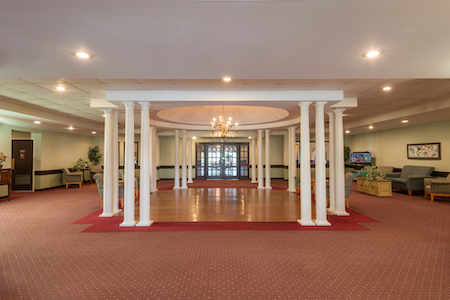
WADSWORTH POINTE

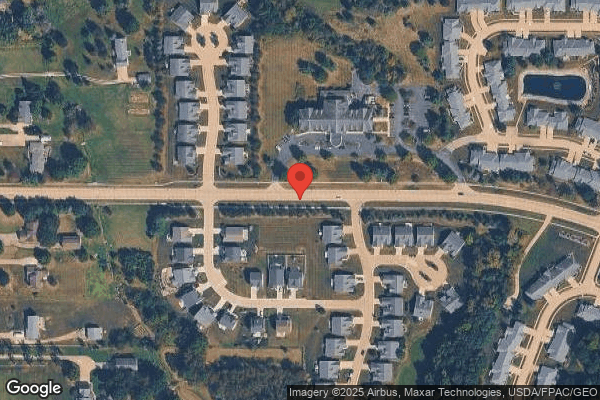
540 GREAT OAKS TRAIL, WADSWORTH, OH 44281 (330) 336-1141
For profit - Corporation 64 Beds SABER HEALTHCARE GROUP Data: November 2025
Trust Grade
85/100
#191 of 913 in OH
Last Inspection: January 2025

Within standard 12-15 month inspection cycle. Federal law requires annual inspections.

Overview

Wadsworth Pointe has received a Trust Grade of B+, indicating it is above average and recommended for families considering care options. It ranks #191 out of 913 facilities in Ohio, placing it in the top half, and #2 out of 12 in Medina County, suggesting it is one of the better local choices. The facility is improving, with a decrease in issues from 2 in 2024 to 1 in 2025, which is a positive sign for potential residents. Staffing is average, rated 3 out of 5 stars, with a turnover rate of 56%, slightly above the state average. Notably, there have been no fines, indicating good compliance with regulations. However, there are some concerns. Recent inspections found issues such as staff failing to properly wear personal protective equipment while caring for a resident in isolation for COVID-19, which could have impacted others. Additionally, there was a failure to accurately account for controlled narcotics, affecting several residents, and an incomplete screening for a resident's mental health needs. These findings highlight areas where the facility must improve to ensure resident safety and care quality. Overall, while Wadsworth Pointe demonstrates several strengths, families should be aware of these specific weaknesses.

Trust Score
B+
85/100
In Ohio
#191/913
Top 20%
Safety Record
Low Risk
No red flags
Inspections
Getting Better
2 → 1 violations
Staff Stability
⚠ Watch
56% turnover. Above average. Higher turnover means staff may not know residents' routines.
Penalties
✓ Good
No fines on record. Clean compliance history, better than most Ohio facilities.
Skilled Nurses
✓ Good
Each resident gets 42 minutes of Registered Nurse (RN) attention daily — more than average for Ohio. RNs are trained to catch health problems early.
Violations
○ Average
6 deficiencies on record. Average for a facility this size. Mostly minor or procedural issues.
★★★★★
5.0
Overall Rating
★★★☆☆
3.0
Staff Levels
★★★★★
5.0
Care Quality
★★★★★
5.0
Inspection Score
Stable
2024: 2 issues
2025: 1 issues

The Good

  • 5-Star Quality Measures · Strong clinical quality outcomes
  • Full Sprinkler Coverage · Fire safety systems throughout facility
  • No fines on record

Facility shows strength in quality measures, fire safety.

The Bad

Staff Turnover: 56%

Near Ohio avg (46%)

Frequent staff changes - ask about care continuity

Chain: SABER HEALTHCARE GROUP

Part of a multi-facility chain

Ask about local staffing decisions and management

Staff turnover is elevated (56%)

8 points above Ohio average of 48%

The Ugly 6 deficiencies on record

Jan 2025 1 deficiency
CONCERN (D)

Potential for Harm - no one hurt, but risky conditions existed

Deficiency F0645 (Tag F0645)

Could have caused harm · This affected 1 resident

Based on interview, record review, and facility policy review, the facility failed to submit an accurate Preadmission Screening and Resident Review (PASRR) Level I for one (Resident #7) of three sampl...

Read full inspector narrative →
Based on interview, record review, and facility policy review, the facility failed to submit an accurate Preadmission Screening and Resident Review (PASRR) Level I for one (Resident #7) of three sampled residents reviewed for PASRR requirements. Specifically, Resident #7's PASRR Level I did not reflect the presence of diagnosed mental illness or the use of psychotropic medications. Findings included: Review of the facility policy titled, Ohio Non-Licensed PASRR Designation Process, revised 01/12/2022, indicated, 3. He/She [individual responsible for completing PASRRs] will complete the PASRR screenings in accordance with OAC [Ohio Administrative Code] 5160-3-15.1 and 15.2. Review of the Resident Face Sheet indicated the facility admitted Resident #7 on 07/30/2024. According to the Resident Face Sheet, the resident had a medical history that included diagnoses of Parkinson's disease; bipolar disorder (BPD), unspecified; major depressive disorder (MDD) single episode, unspecified; and alcohol abuse, uncomplicated. Review of Resident #7's Preadmission Screening and Resident Review (PASRR) Identification Screen, signed by the Social Services Designee (SSD) on 07/31/2024, revealed the screening type was a Resident Review due to Expiring Hospital Exemption. Section E: Indications of Serious Mental Illness indicated the resident did not have mental illness diagnoses of schizophrenia, mood disorders, delusional disorders, panic or severe anxiety disorders, somatic symptom disorders, personality disorders, other psychotic disorders, or another mental disorder that may lead to a chronic disability. The resident's diagnoses of BPD, MDD, and alcohol abuse were not reflected. The PASRR Identification Screen also indicated Resident #7 had not received psychotropic medications, including antidepressant and anti-psychotic medications, in the past six months and had no indicators of serious mental illness. Review of the Preadmission Screening and Resident Review Result Notice, dated 07/31/2024, indicated there were no indicators of serious mental illness and/or developmental disability for Resident #7, so a Level II evaluation was not required. Review of an admission Minimum Data Set (MDS), with an Assessment Reference Date (ARD) of 08/06/2024, revealed Resident #7 had a Brief Interview for Mental Status (BIMS) score of 12, which indicated the resident had moderate cognitive impairment. The MDS indicated Resident #7 had active diagnoses including depression and BPD. The MDS indicated Resident #7 received antipsychotic and antidepressant medications during the seven-day assessment look-back period. During an interview on 01/23/2025 at 1:22 P.M., the social service designee (SSD) stated she had been with the facility since 2022 as a state trained nurse aide and had accepted the social services position six months prior. The SSD stated she completed PASSRs in the facility if they were not completed at the hospital. The SSD stated that when she was completing a PASRR she reviewed diagnoses, medications, and would contact the family. The SSD stated the mental health section of the PASRR form asked about mental illness history, the illness's effect on the resident's life and personal care, psychiatric medications, and addiction history. The SSD reviewed Resident #7's PASRR, dated 07/31/2024, confirmed she completed it, and stated she saw no indication of serious mental illness reflected on the PASRR. The SSD stated Resident #7 received psychotropic medications, including antidepressant and antipsychotic medications, and had diagnoses of BPD, MDD, and alcohol abuse that were present upon admission and should have been reflected on the resident's PASRR. The SSD stated she must have overlooked those diagnoses while completing Resident #7's initial PASRR. During an interview on 01/23/2025 at 3:27 P.M., the Interim Administrator reviewed Resident #7's diagnoses list and their PASRR Level I. The Interim Administrator stated the resident's diagnoses of BPD and MDD should have been reflected.
Jan 2024 2 deficiencies
CONCERN (D) 📢 Someone Reported This

A family member, employee, or ombudsman was alarmed enough to file a formal complaint

Potential for Harm - no one hurt, but risky conditions existed

Resident Rights (Tag F0550)

Could have caused harm · This affected 1 resident

**NOTE- TERMS IN BRACKETS HAVE BEEN EDITED TO PROTECT CONFIDENTIALITY** Based on observation, staff interview, and medical record review, the facility failed to ensure urinary catheter bags were cover...

Read full inspector narrative →
**NOTE- TERMS IN BRACKETS HAVE BEEN EDITED TO PROTECT CONFIDENTIALITY** Based on observation, staff interview, and medical record review, the facility failed to ensure urinary catheter bags were covered to maintain resident dignity. This affected one (#49) of two residents reviewed for urinary catheters. The census was 56. Findings include: Review of the medical record for Resident #49 revealed an admission date of 08/09/23. Diagnoses included severe intellectual disabilities, acute kidney failure, retention of urine, chronic obstructive pyelonephritis, unspecified hydronephrosis, and benign prostatic hyperplasia with lower urinary tract symptoms. Review of the quarterly Minimum Data Set (MDS) assessment dated [DATE] revealed Resident #49 was assessed with moderately impaired cognition. Observation on 01/02/24 at 8:23 A.M. revealed Resident #49 was sitting in the common dining room awaiting breakfast and his urinary catheter (Foley) bag was not covered. Interview with State Tested Nurse Aide (STNA) #135 and STNA #140 verified Resident #49's urinary privacy bag was not covered in the common dining area. This deficiency represents an incidental finding investigated under Complaint Number OH00149334.
CONCERN (D) 📢 Someone Reported This

A family member, employee, or ombudsman was alarmed enough to file a formal complaint

Potential for Harm - no one hurt, but risky conditions existed

Infection Control (Tag F0880)

Could have caused harm · This affected 1 resident

**NOTE- TERMS IN BRACKETS HAVE BEEN EDITED TO PROTECT CONFIDENTIALITY** Based on observation, medical record review, staff interview, review of a facility policy, and review of the Centers for Disease...

Read full inspector narrative →
**NOTE- TERMS IN BRACKETS HAVE BEEN EDITED TO PROTECT CONFIDENTIALITY** Based on observation, medical record review, staff interview, review of a facility policy, and review of the Centers for Disease Control and Prevention (CDC) website, the facility failed to ensure urinary catheters were maintained in a manner to prevent infection. This affected one (#49) of two residents reviewed for urinary catheters. The census was 56. Findings include: Review of the medical record for Resident #49 revealed an admission date of 08/09/23. Diagnoses included severe intellectual disabilities, acute kidney failure, retention of urine, chronic obstructive pyelonephritis, unspecified hydronephrosis, and benign prostatic hyperplasia with lower urinary tract symptoms. Review of the quarterly Minimum Data Set (MDS) assessment dated [DATE] revealed Resident #49 was assessed with moderately impaired cognition and used a manual wheelchair for mobility around the facility. Review of the plan of care dated 08/16/23, last reviewed 12/04/23, revealed Resident #49 required an external catheter and nephron tube due to acute kidney failure and urinary retention. Review of a progress note dated 10/11/23 revealed Resident #49's a urinary catheter (Foley) that was intact and draining clear yellow. The resident also had a right nephrostomy tube with a dressing that was clean, dry, intact, and draining clear yellow. Observation on 01/02/24 at 8:23 A.M. revealed Resident #49 sitting in the dining room awaiting breakfast. The resident's Foley catheter bag was hooked on the cross bar under his manual wheelchair and there was not enough space for the Foley catheter bag to be up off the floor. Further observation revealed approximately one-third of the Foley bag was resting directly on the floor uncovered. Interview with State Tested Nurse Aide (STNA) #135 and STNA #140 at 8:35 A.M. on 01/02/24 stated Resident #49 could transfer himself and also could reach where the Foley bag was hooked on the wheelchair. STNA #135 and STNA #140 verified Resident #49's Foley bag was resting on the floor uncovered, and the resident dragged the bag around the facility under the wheelchair and in and out of the elevator when the resident to different floors of the facility. Review of the infection control policy, dated 08/19/20, revealed employees are to support resident safety by adhering to all policies and procedures related to infection prevention. Review of the CDC website at, https://www.cdc.gov/infectioncontrol/guidelines/cauti/index.html, last reviewed 11/05/15, and titled, Catheter-Associated Urinary Tract Infections (CAUTI), revealed under proper techniques for urinary catheter maintenance to keep the collecting bag below the level of the bladder at all times. Do not rest the bag on the floor. This deficiency represents non-compliance investigated under Complaint Number OH00149334.
Dec 2023 1 deficiency
CONCERN (E) 📢 Someone Reported This

A family member, employee, or ombudsman was alarmed enough to file a formal complaint

Potential for Harm - no one hurt, but risky conditions existed

Pharmacy Services (Tag F0755)

Could have caused harm · This affected multiple residents

Based on record review and interview, the facility failed to reconcile controlled narcotics to ensure medications were accounted for. This finding had the potential to affect four residents (Residents...

Read full inspector narrative →
Based on record review and interview, the facility failed to reconcile controlled narcotics to ensure medications were accounted for. This finding had the potential to affect four residents (Residents #29, #45, #58 and #59) of four residents who reside on the 2nd floor and receive narcotic medications. Findings include: Review of an email from Registered Nurse (RN) #913 to the Director of Nursing (DON) on 11/17/23 at 6:49 P.M. indicated the nurse decided to amend the original resignation letter because of the medication count issue that occurred during the week. The resignation date was to be effective immediately on 11/17/23. Interview on 12/12/23 at 7:40 A.M. with Human Resources (HR) Director #712 indicated RN #913 reported to her that she had a doctor's appointment on 11/14/23 and the DON refused to conduct a narcotic count with her when handing over the narcotic medication keys to the second floor drug administration cart. Interview on 12/12/23 at 8:11 A.M. with the DON indicated RN #913 worked the second floor on 11/14/23 and she worked on a cart on the third floor on dayshift. The DON stated she was passing medications around 10:30 A.M. to 11:00 A.M. when RN #913 asked her to count the narcotics drawer on the second floor so she could leave for a doctor's appointment. The DON confirmed she did not count the narcotic's drawer with the nurse but did accept the narcotic keys because RN #913 left the building. The DON confirmed the second floor medication administration cart and narcotic count was not completed with two nursing staff to ensure misappropriation of narcotics did not occur. The facility identified four residents who received narcotics from the locked narcotic drawer in the second floor medication administration cart including Residents #29, #45, #58 and #59. Review of the undated Narcotic Documentation Overview policy indicated the lack of appropriate documentation of narcotics can lead to suspicion of drug diversion, Drug Enforcement Agency (DEA) investigations and/or disciplinary action against the nursing license. This deficiency represents non-compliance investigated under Complaint Number OH00148527.
Apr 2023 1 deficiency
CONCERN (F) 📢 Someone Reported This

A family member, employee, or ombudsman was alarmed enough to file a formal complaint

Potential for Harm - no one hurt, but risky conditions existed

Infection Control (Tag F0880)

Could have caused harm · This affected most or all residents

**NOTE- TERMS IN BRACKETS HAVE BEEN EDITED TO PROTECT CONFIDENTIALITY** Based on review of the medical record, review of facility policy, observation and interview with staff, the facility failed to e...

Read full inspector narrative →
**NOTE- TERMS IN BRACKETS HAVE BEEN EDITED TO PROTECT CONFIDENTIALITY** Based on review of the medical record, review of facility policy, observation and interview with staff, the facility failed to ensure staff appropriately donned personal protective equipment (PPE)while providing care to Resident #2 who was in isolation for COVID-19 precautions. This had the potential to affect all residents residing in the facility. The facility census was 57. Findings included: Review of the medical record revealed Resident#2 was admitted to the facility on [DATE]. Diagnoses included dementia, thyrotoxicosis, chronic obstructive pulmonary disease, COVID-19, hypertension, Crohn's disease, obstructive sleep apnea, and diabetes. Review of the quarterly Minimum Data Set 3.0 assessment dated [DATE] revealed Resident #2 had moderately impaired cognition. Review of the physician's order revealed Resident #2 had an order to maintain combined droplet/contact precautions and isolation per transmission-based precautions (TBP). All care and services are provided in the resident's room. Do not discontinue isolation until resident has met the criteria for discontinuation of isolation per Centers for Disease Control guidelines using either symptom-based or testing based strategy dated 04/26/23 with an end date of 05/06/23. Review of the progress note dated 04/25/23 at 1:30 P.M. revealed the resident was notified her roommate had teste positive for COVID-19, resident and husband voiced their understanding. The resident will stay in the same room and be placed on precautions due to exposure. Review of the progress note dated 04/28/23 at 1:42 P.M. revealed Resident #2 was in contact/droplet isolation due to being in close proximity to individual who tested positive for COVID. A rapid COVID test was done at bedside and the results were negative. Observations on 04/29/23 at 10:58 A.M. Certified Occupational Therapist Assistant #200 went into room [ROOM NUMBER] with only a surgical mask on to perform occupation therapy exercises on Resident #2 who was in droplet isolation for close contact with her roommate who tested positive for COVID-19. He left the door open to the room so he could be seen in the room without personal protective equipment (PPE) on. At 11:00 A.M. COTA #200 came out of the room of Resident #2 without washing his hands. He verified he had not donned all required (gown, gloves, mask and eye protection) PPE while he was in the room or washed his hands before he exited the room of Resident #2. He stated he was not aware Resident #2 was on isolation. He verified at this time Resident #2 had signage on her door and an isolation cart outside her room indicating she was on isolation. He proceeded to don PPE in the hallway, walk down the hallway to the linen closet, retrieve towels and washcloths out of the linen closet with his PPE on. At 11:05 A.M. Marketing Director #201 approached him in the hallway and explained to him he could not have PPE on in the hallways and he needed to remove it and discard it immediately. Review of the facility policy titled, Transmission-Based Precautions(TBP), revision date of 02/03/23 revealed TBP would be used when a route of transmission was not completely interrupted using standard precautions alone. Droplet precautions were intended to prevent transmission of pathogens spread through close respiratory or mucous membrane contact with respiratory secretions. Because these pathogens do not remain infectious over long distances, special air handling and ventilation are not required to prevent droplet transmission. A single room was preferred, a mask was worn for close contact with infectious residents, gloves, gown and eye protection were worn adhering to standard precaution guidelines. This deficiency resulted from incidental findings during the investigation of Complaint Number OH00142174.
Oct 2019 1 deficiency
CONCERN (D)

Potential for Harm - no one hurt, but risky conditions existed

Deficiency F0625 (Tag F0625)

Could have caused harm · This affected 1 resident

**NOTE- TERMS IN BRACKETS HAVE BEEN EDITED TO PROTECT CONFIDENTIALITY** Based on interview and record review the facility failed to ensure bed hold notices were provided to all residents regardless of...

Read full inspector narrative →
**NOTE- TERMS IN BRACKETS HAVE BEEN EDITED TO PROTECT CONFIDENTIALITY** Based on interview and record review the facility failed to ensure bed hold notices were provided to all residents regardless of payment source. This affected one (Resident #55) of two residents reviewed for hospitalizations. Findings include: Review of Resident #55's closed medical record revealed an admission date of 06/04/19 and discharged date of 07/02/19. Diagnoses included morbid obesity, acute kidney failure unspecified, and congestive heart failure. The admission Minimum Data Set (MDS) assessment dated [DATE] revealed the resident had intact cognition and required total dependence of two staff for toilet use and transfers, extensive assistance of two staff for bed mobility, received oxygen and was on dialysis. Review of the nursing notes dated 07/02/19 at 6:30 A.M. revealed at 5:55 A.M. a state tested nurse aide yelled down the hall to the nurse that the resident was unresponsive. The nurse responded immediately with crash cart. Emergency Medical Services (EMS) was called. EMS arrived and transported the resident to the emergency room (ER). The resident's Power of Attorney was updated. Report was called in to the ER. The resident's physician was updated. Review of a nursing note dated 07/02/19 at 10:05 A.M. revealed Resident #55 was transferred to the local hospital for admission. Further review of the medical record revealed no evidence the resident or representative was provided with a bed-hold notice. Interview on 10/02/19 at 12:31 P.M. with the Administrator and Corporate Director of Nursing #501 revealed Resident #55 did not get a bed hold notice because he was not on Medicaid. The Administrator stated they only gave bed hold notices to residents that received Medicaid but everyone received the policy in their admission packet. Review of the facility policy titled Bed Hold Letter Policy (Ohio) revised October 2015 revealed it was the policy of the facility to track Medicaid bed hold days and notify appropriate parties via the Medicaid Bed Hold Letter.
Understanding Severity Codes (click to expand)
Life-Threatening (Immediate Jeopardy)
J - Isolated K - Pattern L - Widespread
Actual Harm
G - Isolated H - Pattern I - Widespread
Potential for Harm
D - Isolated E - Pattern F - Widespread
No Harm (Minor)
A - Isolated B - Pattern C - Widespread

Questions to Ask on Your Visit

  • "Why is there high staff turnover? How do you retain staff?"
  • "Can I speak with families of current residents?"
  • "What's your RN coverage like on weekends and overnight?"

Our Honest Assessment

Strengths
  • • Grade B+ (85/100). Above average facility, better than most options in Ohio.
  • • No major safety red flags. No abuse findings, life-threatening violations, or SFF status.
  • • No fines on record. Clean compliance history, better than most Ohio facilities.
Concerns
  • • 56% turnover. Above average. Higher turnover means staff may not know residents' routines.
Bottom line: Generally positive indicators. Standard due diligence and a personal visit recommended.

About This Facility

What is Wadsworth Pointe's CMS Rating?

CMS assigns WADSWORTH POINTE an overall rating of 5 out of 5 stars, which is considered much above average nationally. Within Ohio, this rating places the facility higher than 99% of the state's 100 nursing homes. This rating reflects solid performance across the metrics CMS uses to evaluate nursing home quality.

How is Wadsworth Pointe Staffed?

CMS rates WADSWORTH POINTE's staffing level at 3 out of 5 stars, which is average compared to other nursing homes. Staff turnover is 56%, which is 10 percentage points above the Ohio average of 46%. High turnover can affect care consistency as new staff learn residents' individual needs.

What Have Inspectors Found at Wadsworth Pointe?

State health inspectors documented 6 deficiencies at WADSWORTH POINTE during 2019 to 2025. These included: 6 with potential for harm.

Who Owns and Operates Wadsworth Pointe?

WADSWORTH POINTE is owned by a for-profit company. For-profit facilities operate as businesses with obligations to shareholders or private owners. The facility is operated by SABER HEALTHCARE GROUP, a chain that manages multiple nursing homes. With 64 certified beds and approximately 47 residents (about 73% occupancy), it is a smaller facility located in WADSWORTH, Ohio.

How Does Wadsworth Pointe Compare to Other Ohio Nursing Homes?

Compared to the 100 nursing homes in Ohio, WADSWORTH POINTE's overall rating (5 stars) is above the state average of 3.2, staff turnover (56%) is near the state average of 46%, and health inspection rating (5 stars) is much above the national benchmark.

What Should Families Ask When Visiting Wadsworth Pointe?

Based on this facility's data, families visiting should ask: "How do you ensure continuity of care given staff turnover, and what is your staff retention strategy?" "Can I visit during a mealtime to observe dining assistance and food quality?" "How do you handle medical emergencies, and what is your hospital transfer rate?" "Can I speak with family members of current residents about their experience?" These questions are particularly relevant given the facility's high staff turnover rate.

Is Wadsworth Pointe Safe?

Based on CMS inspection data, WADSWORTH POINTE has a clean safety record: no substantiated abuse findings (meaning no confirmed cases of resident harm), no Immediate Jeopardy citations (the most serious violation level indicating risk of serious injury or death), and is not on the Special Focus Facility watch list (a federal program monitoring the lowest-performing 1% of nursing homes). The facility has a 5-star overall rating and ranks #1 of 100 nursing homes in Ohio. While no facility is perfect, families should still ask about staff-to-resident ratios and recent inspection results during their visit.

Do Nurses at Wadsworth Pointe Stick Around?

Staff turnover at WADSWORTH POINTE is high. At 56%, the facility is 10 percentage points above the Ohio average of 46%. High turnover means new staff may not know residents' individual needs, medications, or preferences. It can also be disorienting for residents, especially those with dementia who rely on familiar faces. Families should ask: What is causing the turnover? What retention programs are in place? How do you ensure care continuity during staff transitions?

Was Wadsworth Pointe Ever Fined?

WADSWORTH POINTE has no federal fines on record. CMS issues fines when nursing homes fail to meet care standards or don't correct problems found during inspections. The absence of fines suggests the facility has either maintained compliance or corrected any issues before penalties were assessed. This is a positive indicator, though families should still review recent inspection reports for the full picture.

Is Wadsworth Pointe on Any Federal Watch List?

WADSWORTH POINTE is not on any federal watch list. The most significant is the Special Focus Facility (SFF) program, which identifies the bottom 1% of nursing homes nationally based on persistent, serious quality problems. Not being on this list means the facility has avoided the pattern of deficiencies that triggers enhanced federal oversight. This is a positive indicator, though families should still review the facility's inspection history directly.