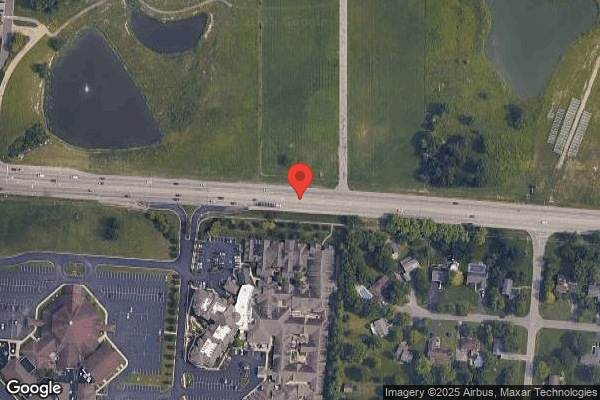
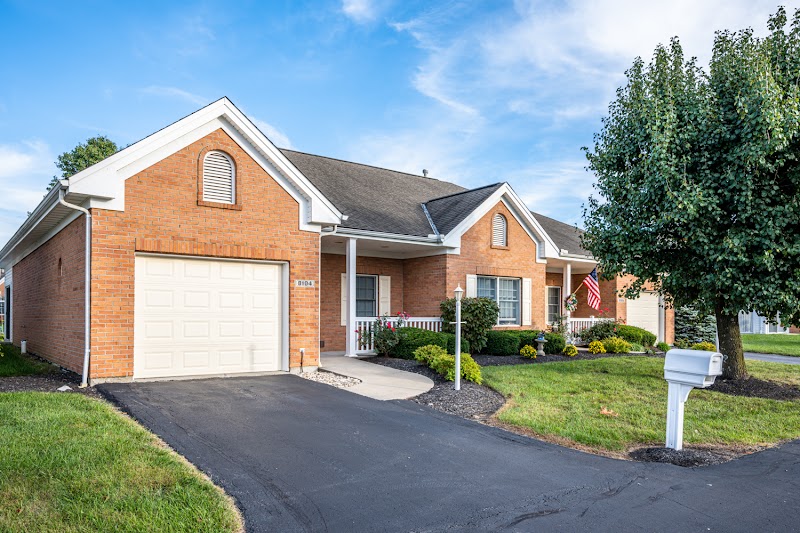


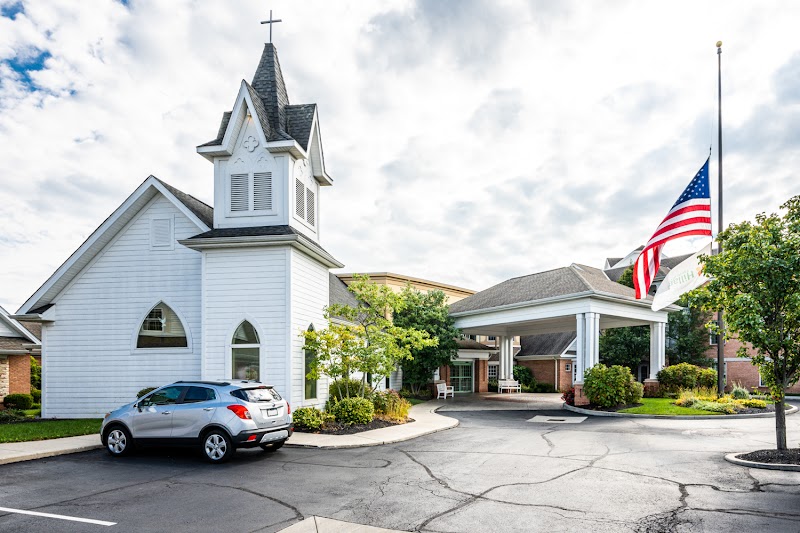
CHESTERWOOD VILLAGE

8073 TYLERSVILLE ROAD, WEST CHESTER, OH 45069 (513) 777-1400
For profit - Corporation 125 Beds CARESPRING Data: November 2025
Trust Grade
80/100
#41 of 913 in OH
Last Inspection: February 2025

Within standard 12-15 month inspection cycle. Federal law requires annual inspections.

Overview

Chesterwood Village, located in West Chester, Ohio, has a Trust Grade of B+, indicating it is above average and generally recommended for families seeking care. It ranks #41 out of 913 facilities in Ohio, placing it in the top half, and #2 out of 24 in Butler County, suggesting only one local option is superior. However, the facility's trend is concerning as it has worsened, with issues rising from 1 in 2024 to 7 in 2025. Staffing is a notable weakness, rated at 2 out of 5 stars, with a high turnover rate of 69%, significantly above the state average of 49%. On a positive note, the facility has no fines on record, which reflects good compliance, yet it has less RN coverage than 83% of Ohio facilities, which may impact the quality of care. Specific incidents noted by inspectors include failures in infection control during a COVID-19 outbreak, where signage was not displayed, and timely notifications were not made to health authorities. Additionally, sanitation issues were reported at multiple hydration stations, potentially affecting many residents. Lastly, there was an incident where staff did not wear the proper protective equipment when entering the room of a resident with COVID-19, posing a risk to others. Overall, while Chesterwood Village has strengths in its rating and lack of fines, the staffing challenges and specific concerns highlighted need careful consideration by prospective residents and their families.

Trust Score
B+
80/100
In Ohio
#41/913
Top 4%
Safety Record
Low Risk
No red flags
Inspections
Getting Worse
1 → 7 violations
Staff Stability
⚠ Watch
69% turnover. Above average. Higher turnover means staff may not know residents' routines.
Penalties
✓ Good
No fines on record. Clean compliance history, better than most Ohio facilities.
Skilled Nurses
○ Average
Each resident gets 33 minutes of Registered Nurse (RN) attention daily — about average for Ohio. RNs are the most trained staff who monitor for health changes.
Violations
⚠ Watch
16 deficiencies on record. Higher than average. Multiple issues found across inspections.
★★★★★
5.0
Overall Rating
★★☆☆☆
2.0
Staff Levels
★★★★★
5.0
Care Quality
★★★★☆
4.0
Inspection Score
Stable
2024: 1 issues
2025: 7 issues

The Good

  • 5-Star Quality Measures · Strong clinical quality outcomes
  • Full Sprinkler Coverage · Fire safety systems throughout facility
  • No fines on record

Facility shows strength in quality measures, fire safety.

The Bad

Staff Turnover: 69%

23pts above Ohio avg (46%)

Frequent staff changes - ask about care continuity

Chain: CARESPRING

Part of a multi-facility chain

Ask about local staffing decisions and management

Staff turnover is elevated (69%)

21 points above Ohio average of 48%

The Ugly 16 deficiencies on record

Feb 2025 7 deficiencies
CONCERN (D)

Potential for Harm - no one hurt, but risky conditions existed

PASARR Coordination (Tag F0644)

Could have caused harm · This affected 1 resident

Based on staff interview, record review, and policy review, the facility failed to refer a resident to the appropriate state-designated mental health or intellectual disability authority when the resi...

Read full inspector narrative →
Based on staff interview, record review, and policy review, the facility failed to refer a resident to the appropriate state-designated mental health or intellectual disability authority when the resident had a new diagnosis of a mental disorder. This affected one (#34) of two residents reviewed for preadmission screening and resident review (PASARR) requirements. The facility census was 113. Findings included: Review of Resident #34's admission record indicated the facility admitted Resident #34 on 03/06/24. According to the admission Record, the resident had a medical history that included diagnoses of unspecified psychosis (onset 07/19/2024), major depressive disorder (onset 03/06/2024), post-traumatic stress disorder (PTSD) (onset 03/06/2024), conversion disorder with motor symptom or deficit (onset 03/06/2024), and disassociation and conversion disorder (onset 03/06/2024). Review of Resident #34's quarterly Minimum Data Set (MDS) assessment, with an Assessment Reference Date (ARD) of 12/11/24, revealed the resident had a Brief Interview for Mental Status (BIMS) score of 11, which indicated the resident had moderate cognitive impairment. According to the MDS, Resident #34 had active diagnoses of depression, psychotic disorder, and post traumatic stress disorder (PTSD). Review of Resident #34's undated care plan included a problem area indicating the resident had major depressive disorder, PTSD, conversion disorder with motor symptom or deficit, and disassociation and conversion disorder. According to the care plan, the resident was diagnosed with the mental disorders over 30 years prior and received psychiatric services. Review of Resident #34's Preadmission Screening and Resident Review Result Notice, dated 02/11/15, revealed the resident had no indications of serious mental illness and/or developmental disability. Review of Resident #34's Preadmission Screening and Resident Review (PASARR) Identification Screen, dated 03/07/24 and signed by Licensed Social Worker (LSW) #26, revealed the resident had mental disorders including mood disorder and disassociation and conversion disorder. The PASARR did not indicate that the resident had psychotic disorder. Review of Resident #34's Preadmission Screening and Resident Review Result Notice, dated 03/07/24, revealed the resident had no indications of serious mental illness and/or developmental disability. Review of Resident #34's Preadmission Screening and Resident Review (PASRR) Identification Screen, dated 02/11/25, and signed by LSW #26, revealed the resident had a significant change in condition. Per the screening, the resident had mental disorders including PTSD, mood disorder, and disassociation and conversion disorder. The PASARR did not indicate that the resident had psychotic disorder. Interview on 02/14/25 at 11:22 A.M., with LSW #26 stated social services staff tracked PASARR screenings and ensured their accuracy. She stated a diagnosis of psychosis was added for the resident on 07/19/24, but when the facility completed the significant change PASARR screening, that diagnosis must have been overlooked. Interview on 02/14/25 at 4:54 P.M., with the Director of Nursing stated she could not answer questions on PASARR screenings or how they were completed. Interview on 02/14/2025 at 5:08 P.M., with the Administrator stated he did not know about PASARR screenings, and he deferred to the social worker. Review of the policy titled, PASARR [PASRR] (MI [mental illness]/MR [mental retardation]) Identification Screen ([State]), revised November 2016, indicated, 5. A Resident Review is required for any individual who: exceeds the 30 day time limit for a hospital exemption; is transferring between nursing facilities without evidence of a prior PAS/RR being completed; experiences a significant change of condition; has exceeded the time limit for a previously issued categorical determination; or is exceeding the time frame for a previously issued resident review determination. 6. Social Services will initiate the Resident Review (PAS/RR-ID [intellectual disability] form 3622) when an individual meets the above circumstances.
CONCERN (D)

Potential for Harm - no one hurt, but risky conditions existed

Deficiency F0645 (Tag F0645)

Could have caused harm · This affected 1 resident

Based on staff interview, record review, and policy review, the facility failed to ensure the accuracy of a Preadmission Screening and Resident Review (PASARR). This affected one (#34) of two resident...

Read full inspector narrative →
Based on staff interview, record review, and policy review, the facility failed to ensure the accuracy of a Preadmission Screening and Resident Review (PASARR). This affected one (#34) of two residents reviewed for PASARR requirements. The facility census was 113. Findings included: Review of Resident #34's admission record indicated the facility admitted Resident #34 on 03/06/24. According to the admission Record, the resident had a medical history that included diagnoses of unspecified psychosis (onset 07/19/2024), major depressive disorder (onset 03/06/2024), post-traumatic stress disorder (PTSD) (onset 03/06/2024), conversion disorder with motor symptom or deficit (onset 03/06/2024), and disassociation and conversion disorder (onset 03/06/2024). Review of Resident #34's quarterly Minimum Data Set (MDS) assessment, with an Assessment Reference Date (ARD) of 12/11/24, revealed the resident had a Brief Interview for Mental Status (BIMS) score of 11, which indicated the resident had moderate cognitive impairment. According to the MDS, Resident #34 had active diagnoses of depression, psychotic disorder, and post traumatic stress disorder (PTSD). Review of Resident #34's undated care plan included a problem area indicating the resident had major depressive disorder, PTSD, conversion disorder with motor symptom or deficit, and disassociation and conversion disorder. According to the care plan, the resident was diagnosed with the mental disorders over 30 years prior and received psychiatric services. Review of Resident #34's Preadmission Screening and Resident Review (PASRR) Identification Screen, dated 02/11/25, and signed by LSW #26, revealed the resident had a significant change in condition. Per the screening, the resident had mental disorders including PTSD, mood disorder, and disassociation and conversion disorder. The PASARR did not indicate that the resident had psychotic disorder. Review of Resident #34's Preadmission Screening and Resident Review (PASARR) Identification Screen, dated 03/07/24 and signed by Licensed Social Worker (LSW) #26, revealed the resident had mental disorders including mood disorder and disassociation and conversion disorder. The PASARR did not indicate that the resident had psychotic disorder. Review of Resident #34's Preadmission Screening and Resident Review Result Notice, dated 03/07/24, revealed the resident had no indications of serious mental illness and/or developmental disability. Interview on 02/14/25 at 11:22 A.M., with LSW #26 stated social services staff tracked PASARR screenings and ensured their accuracy. She stated the new PASARR for Resident #34 captured the resident's diagnosis of PTSD. Interview on 02/14/25 at 4:54 P.M., with the Director of Nursing stated she could not answer questions on PASARR screenings or how they were completed. Interview on 02/14/2025 at 5:08 P.M., with the Administrator stated he did not know about PASARR screenings, and he deferred to the social worker. Review of the policy titled, PASARR [PASRR] (MI [mental illness]/MR [mental retardation]) Identification Screen ([State]), revised November 2016, indicated, 5. A Resident Review is required for any individual who: exceeds the 30 day time limit for a hospital exemption; is transferring between nursing facilities without evidence of a prior PAS/RR being completed; experiences a significant change of condition; has exceeded the time limit for a previously issued categorical determination; or is exceeding the time frame for a previously issued resident review determination. 6. Social Services will initiate the Resident Review (PAS/RR-ID [intellectual disability] form 3622) when an individual meets the above circumstances.
CONCERN (D)

Potential for Harm - no one hurt, but risky conditions existed

ADL Care (Tag F0677)

Could have caused harm · This affected 1 resident

2. Review of the admission record indicated the facility admitted Resident #55 on 04/20/24. The resident had a medical history that included diagnoses of atherosclerotic heart disease, type 2 diabetes...

Read full inspector narrative →
2. Review of the admission record indicated the facility admitted Resident #55 on 04/20/24. The resident had a medical history that included diagnoses of atherosclerotic heart disease, type 2 diabetes mellitus, and muscle weakness. Review of the quarterly Minimum Data Set (MDS) assesment, with an Assessment Reference Date (ARD) of 11/23/24, revealed Resident #55 had a Brief Interview for Mental Status (BIMS) score of 12, which indicated the resident had moderate cognitive impairment. The MDS indicated the resident required total assistance with personal hygiene, substantial assistance for bathing, and setup assistance with eating. Review of Resident #55's undated care plan included a focus area that indicated the resident had an ADL self-care performance deficit related to impaired mobility and musculoskeletal impairment. Interventions directed staff to trim/clean the resident's fingernails on bath day and as necessary. Observation and interview on 02/10/25 at 10:42 P.M., with Resident #55 had long fingernails on all fingers, with a brown substance visible under most of the fingernails. The resident stated their fingernails had not been cut in a long time and that they were dirty. The resident stated they had asked for their fingernails to be cut, and a staff member wrote it down, but they did not do it. Resident #55 stated the fingernails were too long for them to be able to clean them independently. Resident #55 stated they had a shower the other day and thought staff might do it (clean and trim their nails) then, but they did not. Observation and interview on 02/12/25 at 7:51 P.M., with Resident #55's fingernails remained long with a brown substance underneath them. The resident stated they really wanted their fingernails cleaned and cut. Interview on 02/12/25 at 7:55 P.M., with Certified Nurse Aide (CNA) #1 stated nurse aides were responsible for providing fingernail care. STNA #1 stated she always checked with the nurse before cutting fingernails. She stated fingernails should be cleaned during a resident's bath or as needed. She stated residents received two baths per week, on a rotation schedule to be provided every two to three days. Observation and interview on 02/14/25 at 9:00 P.M., with Resident #55 was in bed and said to Nurse Aide (NA) #2 that they wanted their nails cut, as the NA was observing the fingernails. The resident stated their hands were too weak to cut them and that the nails were too long for the resident to clean. The resident stated the fingernails needed to be cut and cleaned. NA #2 stated Resident #55's fingernails were not clean. NA #2 stated the resident ate finger foods, so their fingernails needed to be clean for hygiene purposes. Interview on 02/14/25 at 9:17 P.M., with NA #3 stated that she was the preceptor for the NA class that was currently in the facility. NA #3 stated nail care was provided as needed. NA #3 observed Resident #55's fingernails and stated they were long and dirty with a brown substance. NA #3 stated that it was an infection control issue, especially since the resident ate a lot of finger foods. Interview on 02/14/25 at 4:46 P.M., with the Director of Nursing (DON) stated she expected the staff to provide nail care on shower days or daily to make sure they were clean. She stated they should be clean for infection control purposes. The DON stated the nurses and NAs were trained to complete those tasks as part of their daily duties Interview on 02/14/25 at 4:12 P.M., with the Administrator stated he expected staff to clean, file, and trim fingernails as needed. He stated having clean nails was important for infection control purposes. The Administrator stated Resident #55's fingernails should have been clean. Review of the policy titled, Activities of Daily Living (ADL Care), revised August 2024, indicated, Staff will ensure residents who are unable to carry out activities of daily living receive the necessary services to maintain good nutrition, grooming, and personal and oral hygiene. The policy specified ADLs included, Hygiene - bathing, dressing, grooming, and oral care. Review of a facility document titled, Nurse Aide and Nurse Aide in Training (NAT) Job Description, revised January 2025, revealed the Responsibilities included, 1. Provides/assists as needed with personal hygiene care daily, such as shampoos, general grooming, shaves male residents, and sees that nails are clean and manicured. Based on observation, record review, resident interview, staff interview, facility document review, and policy review, the facility failed to ensure residents' fingernails were clean and trimmed. This affected two (#18 and #55) of four residents reviewed for activities of daily living (ADLs). The facility census was 113. Findings included: 1. Review of Resident #18's admission record indicated the facility admitted Resident #18 on 12/26/21. The resident had a medical history that included diagnoses of type 2 diabetes mellitus, muscle weakness, Alzheimer's disease, and dementia. Review of the annual Minimum Data Set (MDS) assessment, with an Assessment Reference Date (ARD) of 11/25/24, revealed Resident #18 had a Brief Interview for Mental Status (BIMS) score of 0, which indicated the resident had severe cognitive impairment. The MDS indicated Resident #18 required substantial/maximal assistance from staff for personal hygiene. Review of Resident #18's undated care plan included a focus area that indicated Resident #18 had an ADL self-care performance deficit related to dementia. Interventions directed staff to assist the resident with ADLs as needed. Observation on 02/10/25 at 11:29 A.M., revealed Resident #18 had dirty fingernails. Interview on 02/12/25 at 9:02 A.M., with Resident #18 stated they wanted the staff to keep their (Resident #18's) fingernails clean. Interview on 02/12/25 at 9:08 A.M., with Nurse Aide (NA) #19 stated staff should keep residents' fingernails clean. NA #19 stated that Resident #18 did not refuse any personal hygiene care. Interview on 02/12/25 at 9:25 A.M., with NA #3 stated that when giving a resident a shower or bath, the task also included cleaning their fingernails. NA #3 stated that NAs should make sure residents' nails were clean. Interview on 02/12/25 at 9:15 A.M., with Registered Nurse (RN) #20 stated nurses or NAs could keep the residents' nails clean. Observation on 02/13/25 at 10:42 A.M., revealed Resident #18' fingernails were dirty. Interview on 02/13/25 at 11:03 A.M., with Licensed Practical Nurse (LPN) #13 stated the NAs were to offer to clean the residents' fingernails. LPN #13 stated she was unaware that Resident #18's fingernails were dirty. Observation on 02/14/25 at 8:36 A.M., revealed Resident #18's fingernails were dirty. Interview on 02/14/25 at 8:46 A.M., with LPN #18 observed Resident #18 and stated Resident #18's fingernails were dirty and needed to be cleaned. She stated that she was not aware of the resident refusing nail care, and if they did refuse, the staff would notify a nurse. Interview on 02/14/25 at 8:48 A.M., with NA #25 stated that residents' nails were cleaned when they received their showers. NA #25 stated that Resident #18 had not refused to have their nails cleaned in the past. Interview on 02/14/25 at 9:03 A.M., with NA #25 observed Resident #18's nails and stated Resident #18's fingernails were not clean. She stated that the resident may eat with their hands and that it was important to keep their hands and nails clean. NA #25 stated Resident #18's fingernails would need to be soaked to get them clean. Interview on 02/14/25 at 9:05 A.M., with LPN #18 observed Resident #18's nails and stated that Resident #18's fingernails needed to be cleaned. LPN #18 stated that staff were to make sure the resident's fingernails stayed clean. She stated that Resident #18 did sometimes eat with their hands, so it was important that they keep the resident's hands clean. She stated that it looked like the resident's hands had not been cleaned for a few days. Interview on 02/14/25 at 4:46 P.M., with the Director of Nursing (DON) stated she expected the staff to provide nail care on shower days or daily to make sure they were clean. She stated they should be clean for infection control purposes. The DON stated the nurses and NAs were trained to complete those tasks as part of their daily duties Interview on 02/14/25 at 4:12 P.M., with the Administrator stated he expected staff to clean, file, and trim fingernails as needed. He stated having clean nails was important for infection control purposes.
CONCERN (D) 📢 Someone Reported This

A family member, employee, or ombudsman was alarmed enough to file a formal complaint

Potential for Harm - no one hurt, but risky conditions existed

Deficiency F0697 (Tag F0697)

Could have caused harm · This affected 1 resident

Based on staff interview, resident interview, record review, and policy review, the facility failed to ensure pain medication was administered promptly. This affected one (#325) of six residents revie...

Read full inspector narrative →
Based on staff interview, resident interview, record review, and policy review, the facility failed to ensure pain medication was administered promptly. This affected one (#325) of six residents reviewed for pain management. The facility census was 113. Findings included: Review of the admission record indicated the facility admitted Resident #325 on 02/01/25. The resident had a medical history that included diagnoses of other osteomyelitis (bone infection) in ankle and foot; osteomyelitis, unspecified; and peripheral vascular disease (narrowing or blockage of blood vessels that carry blood from the heart to other parts of the body), unspecified. Review of the admission Minimum Data Set (MDS) assessment, with an Assessment Reference Date (ARD) of 02/07/25, revealed Resident #325 had a Brief Interview for Mental Status (BIMS) score of 15, which indicated the resident had intact cognition. The MDS indicated the resident received scheduled pain medication and received or was offered and declined as needed (PRN) pain medication during a five-day look back period. Per the MDS, the resident experienced pain frequently. The MDS indicated the resident rated their pain level during the five-day look back period at an 8, on a scale of 0-10, with 10 being the worst possible pain. Review of Resident #325's undated care plan included a focus area that indicated the resident was at risk for alteration in comfort related to wounds and osteomyelitis of the ankle and foot. Interventions directed staff to administer pain medication and other non-pharmacological interventions as indicated, encourage the resident to ask for pain medication before the pain became more severe, and evaluate the effectiveness of pain interventions. Interview on 02/10/25 at 11:38 A.M., with Resident #325 stated their pain medications were not administered as ordered during the evening of 02/08/25. Review of Resident #325's medication administration record (MAR), for the timeframe from 02/01/25 through 02/13/25, revealed transcription of an order for oxycodone hydrochloride (HCl) (an opioid) oral tablet 10 milligrams (mg), one tablet every four hours PRN for severe pain, with an order date of 02/02/25. The MAR also included transcription of an order for acetaminophen (an analgesic) 325 mg, two tablets every six hours PRN for pain related to osteomyelitis of the foot and ankle. The MAR revealed staff documented on 02/08/25 that Resident #325 was given acetaminophen one time, at 11:18 A.M. for a pain level of 5, with effective results. The MAR revealed staff documented on 02/08/25, that Resident #325 was given oxycodone at 4:45 P.M. for a pain level of 7, with effective results. The next dose was documented to have been administered on 02/09/25 at 12:03 A.M. (seven hours and 18 minutes after the previous dose) for a pain level of 2, with effective results. Interview on 02/13/25 at 2:50 P.M., with Licensed Practical Nurse (LPN) #13 stated she worked on 02/08/25, clocking in at 7:00 A.M. and clocking out at 1:30 A.M. on 02/09/25. She stated she was the person administering narcotic medications that night. She stated that the staffing over the weekend was terrible. She stated a nurse did not show up for her shift. Per LPN #13, the night shift had been struggling with staffing problems for the rehabilitation unit (100 Hall), where Resident #325 resided. She stated she was all over the building in all the units trying to help. LPN #13 stated that she remembered a nurse responsible for 100 Hall telling her that there were residents who needed pain medication. She stated she responded within 15 minutes after she was notified and that the residents did not have to wait long. Interview on 02/14/25 at 7:18 P.M., with Nurse Aide (NA) #14 stated there was not enough nursing staff for the night shift on 02/08/25. She stated there was a nurse who did not show up for work and the other nurse had been in training for two days and left after deciding she should not be working. NA #14 stated when she arrived for her shift at 7:00 P.M., Resident #325 was asking for pain medications, but one nurse did not show up and the other nurse did not provide the medication. NA #14 stated she tried to calm and comfort the resident, but the resident was upset. She stated she remembered the resident waited a long time for their medication. (Based on review of the MAR referenced above, the resident, who was asking for pain medication at 7:00 P.M., did not receive the medication until 12:03 A.M ) Interview on 02/14/25 at 5:22 P.M., with the Assistant Director of Nursing (ADON) stated the biggest concern she had from the previous weekend was a nurse not showing up for work, which made it hard. She stated the staff were to work together to get their tasks completed. She stated nurses were still responsible to administer PRN medications. Interview on 02/14/25 at 4:54 P.M., with the Administrator stated his expectation was for staff to follow the physician orders and ensure the effectiveness of the medication and to contact the physician as needed. Review of the policy titled, Pain Management, revised June 2015, indicated, The facility will evaluate, identify and put interventions in place for patients with pain based on nursing and clinician assessments. The policy specified that the procedures included, 6. Administer pain medication as prescribed by the physician/clinician. 7. Patient will be assessed for relief of pain after administration of pain medication. (Documentation in EMR [electronic medical record]) 8. If relief is determined to be inadequate, the physician may need to be contacted for changes in treatment. The physician/clinician can evaluate treatment plan or create a new treatment plan. This deficiency represents the noncompliance investigated under Complaint Number OH00161332.
CONCERN (D)

Potential for Harm - no one hurt, but risky conditions existed

Deficiency F0698 (Tag F0698)

Could have caused harm · This affected 1 resident

**NOTE- TERMS IN BRACKETS HAVE BEEN EDITED TO PROTECT CONFIDENTIALITY** Based on staff interview, resident interview, record review, agreement review, and policy review, the facility failed to maintai...

Read full inspector narrative →
**NOTE- TERMS IN BRACKETS HAVE BEEN EDITED TO PROTECT CONFIDENTIALITY** Based on staff interview, resident interview, record review, agreement review, and policy review, the facility failed to maintain ongoing communication with a dialysis center. This affected one (#92) of one resident reviewed for dialysis. The facility census was 113. Findings included: Review of Resident #92's admission record revealed the facility admitted Resident #92 on 05/31/24. The resident had a medical history that included diagnoses of end stage renal disease (ESRD), major depressive disorder, and essential hypertension. Review of Resident #92's quarterly Minimum Data Set (MDS) assessment, with an Assessment Reference Date (ARD) of 12/06/24, revealed the resident had a Brief Interview for Mental Status (BIMS) score of 15, which indicated the resident had intact cognition. The MDS indicated the resident received hemodialysis while a resident. Review of Resident #92's undated care plan revealed a focus area that indicated the resident needed hemodialysis and had a potential for complications/infection related to ESRD. The care plan indicated the resident received dialysis at the corporation operating outpatient dialysis clinics on Mondays, Wednesdays, and Fridays. Review of Resident #92's Order Summary Report, with active orders as of 02/12/25, revealed an order dated 07/19/24 regarding the resident being transported by their family on Mondays, Wednesdays, and Fridays for dialysis. Interview on 02/13/25 at 9:53 A.M., with Resident #92 stated the facility staff had never sent them to the dialysis center with a communication form. Review of Resident #92's medical record revealed no communication sheet from the dialysis center for the following timeframes: - Between 07/19/24 and 07/24/24. - Between 07/24/24 and 07/31/24. - Between 07/31/24 and 08/05/24. - Between 08/09/24 and 08/14/24. - Between 08/16/24 and 08/28/24. - Between 08/28/24 and 09/11/24. - Between 09/13/24 and 09/20/24. - Between 09/20/24 and 09/25/24. - Between 10/09/24 and 10/25/24. - Between 10/25/24 and 11/01/24. - Between 11/01/24 and 11/06/24. - Between 11/08/24 and 11/29/24. - Between 11/29/24 and 12/22/24. - Between 12/24/24 and 01/08/25. - Between 01/10/25 and 01/15/25. - Between 01/15/25 and 01/22/25. - Between 01/24/25 and 01/29/25. - Between 01/29/25 and 02/07/25 . Review of the Patient Communication Sheet from the dialysis center, dated 02/07/25, indicated information on the form included date of treatment, an assessment of the resident's vital signs pre-and post-treatment, medications administered, and a treatment summary indicating stable/unstable condition, narrative of the treatment, and any new orders. Interview on 02/13/25 at 8:53 A.M., with Licensed Social Worker #26 stated the most recent dialysis communication form she could find in the resident's record was from 02/07/25. Interview on 02/13/25 at 9:24 A.M., with the Director of Nursing (DON) stated the dialysis center usually sent to the facility via facsimile (fax) or sent back their patient communication form to the facility. She stated that she did not know if the facility staff sent a form to the dialysis center for communication. She stated the clinic where Resident #92 received dialysis sent dialysis information back as a fax, which would then go in the hard copy health record. She stated if, for whatever reason, the facility did not receive this fax, staff could call the dialysis center and request it. The DON stated she did not know what happened to the previous two dialysis communication forms, which were not in the resident's hard copy health record. She stated she would have to investigate to see if the facility staff failed to contact to the dialysis center about the forms. Review of the Resident #92's [the corporation operating outpatient dialysis clinics] Patient Communication Sheet, dated 02/12/25, indicated that it was faxed to the facility on [DATE] at 9:24 P.M Review of the Resident #92's [the corporation operating outpatient dialysis clinics] Patient Communication Sheet, dated 02/10/25, indicated that it was faxed to the facility on [DATE] at 9:26 P.M Interview on 02/13/25 at 10:28 A.M., with Licensed Practical Nurse (LPN) #16 stated Resident #92 did not go out to the dialysis center with communication forms or return with communication forms. She stated the facility was not faxed by the dialysis center, and she did not know she was to follow up with the dialysis center, so she did not do so. Interview on 02/13/25 at 11:08 A.M., with the Administrator stated he had provided all the dialysis communication forms that were found in Resident #92's chart. He stated that some communication forms were missing, but he stated the facility policy indicated they only needed to communicate with the dialysis center as needed. Interview on 02/14/25 at 4:54 P.M., with the Director of Nursing (DON) stated the facility expectation was to send out dialysis patients with their paperwork and they would return with paperwork. She stated Resident #92 was provided paperwork to be taken with them to dialysis and the dialysis center faxed communication forms back. She stated if they did not receive a fax back, then the nurse should reach out to the dialysis center. She stated nursing staff knew to do this. She stated that a nurse who did not know, Licensed Practical Nurse (LPN) #16, was new to the unit when she worked. She stated she should have been informed of that practice when she reported into work that day. Review of the undated policy titled, Hemodialysis Coordination and Resident Monitoring, indicated, Residents ordered to receive hemodialysis will be monitored on-going for signs and symptoms of adverse effects. The coordination of the program. will be maintained by facility staff in conjunction with the dialysis center and the Physician(s) involved. The policy revealed the Procedure included 8. The Hemodialysis Center, Nursing Facility, Dietician, and Physician will consult and [sic] needed, and 10. The facility will maintain a written agreement with the specific dialysis center. Review of a Memorandum of Agreement, dated 01/21/25, indicated an agreement between the facility and [a corporation operating outpatient dialysis clinics]. The document revealed, 1. Responsibilities of LTCF [long-term care facility], included c. If is a skilled nursing facility ('SNF') or a sub-acute unit, appropriate LTCF healthcare staff will make an assessment of each patient's physical condition and determine whether the patient is stable enough to be dialyzed on an outpatient basis. If it is determined that a patient is sufficiently stable, this assessment will be communicated to the Facilities' nurse manager or his or her designee. This assessment and communication will occur prior to each and every transfer of a patient to [the corporation operating outpatient dialysis clinics] for hemodialysis on an outpatient basis regardless of the number of times any particular patient may be transferred and dialyzed . Additionally, a patient's nephrologist or attending physician at LTCF will make an assessment of the patient's physical condition on a routine, medically appropriate basis (but no less than every thirty (30) days). The results of this assessment will be communicated with [the corporation operating outpatient dialysis clinics]'s nurse or his or her designee. The agreement revealed, 2. Responsibilities of [The corporation operating outpatient dialysis clinics], included b. [The corporation operating outpatient dialysis clinics] shall provide relevant information regarding each patients' dialysis treatment which may require follow-up care or observation by LTCF's staff, and d. [The corporation operating outpatient dialysis clinics] shall provide to LTCF: i. information which may be utilized in the development and maintenance of LTCF patient care plans; and ii. Information about how care should be rendered to a patient in emergency and non-emergency situation.
CONCERN (D)

Potential for Harm - no one hurt, but risky conditions existed

Medical Records (Tag F0842)

Could have caused harm · This affected 1 resident

Based on resident interview, staff interview, record review, and policy review, the facility failed to ensure complete and accurate records for dialysis assessments marking the incorrect access site f...

Read full inspector narrative →
Based on resident interview, staff interview, record review, and policy review, the facility failed to ensure complete and accurate records for dialysis assessments marking the incorrect access site for those assessments. This affected one( #92) of one resident reviewed for dialysis. The facility census was 113. Findings included: Review of Resident #92's admission record revealed the facility admitted Resident #92 on 05/31/24. The resident had a medical history that included diagnoses of end stage renal disease (ESRD), major depressive disorder, and essential hypertension. Review of Resident #92's quarterly Minimum Data Set (MDS) assessment, with an Assessment Reference Date (ARD) of 12/06/24, revealed the resident had a Brief Interview for Mental Status (BIMS) score of 15, which indicated the resident had intact cognition. The MDS indicated the resident received hemodialysis while a resident. Review of Resident #92's undated care plan revealed a focus area that indicated the resident needed hemodialysis and had a potential for complications/infection related to ESRD. The care plan indicated the resident received dialysis at the corporation operating outpatient dialysis clinics on Mondays, Wednesdays, and Fridays. Review of Resident #92's [facility's corporation's name] Dialysis assessment, dated 01/28/25, indicated the resident had a hemodialysis port. The assessment indicated the port was in the resident's right lower quadrant. Review of Resident #92's [facility's corporation's name] Dialysis assessment, dated 01/29/25 at 2:54 P.M., indicated the resident had a hemodialysis port. The assessment indicated the port was in the right upper quadrant. Review of Resident #92's [facility's corporation's name] Dialysis assessment, dated 01/29/25 at 7:45 P.M., indicated the resident had a hemodialysis shunt. The assessment indicated the shunt was in the left upper extremity. Review of Resident #92's [facility's corporation's name] Dialysis assessment, dated 02/02/25, indicated the resident had a hemodialysis port. The assessment indicated the port was in the right upper quadrant. Review of Resident #92's [facility's corporation's name] Dialysis assessment, dated 02/06/25, indicated the resident had a hemodialysis port. The assessment indicated the port was in the right upper quadrant. Review of Resident #92's [facility's corporation's name] Dialysis assessment, dated 02/07/25, indicated the resident had a hemodialysis port. The assessment indicated the port was in the right upper quadrant. Review of Resident #92's [facility's corporation's name] Dialysis assessment, dated 02/11/25, indicated the resident had a hemodialysis port. The assessment indicated the port was in the right upper quadrant. Interview on 02/12/25 at 9:20 A.M., with Resident #92 stated a dialysis access site on their chest was removed a month prior and their current access site was in their arm. Interview on 02/14/25 at 2:57 P.M., with Licensed Practical Nurse (LPN) #17 stated Resident #92's access site was on the resident's left arm. Interview on 02/14/25 at 4:54 P.M., with the Director of Nursing (DON) stated nursing staff should document their assessments on the dialysis access sites. The DON stated she was unfamiliar with Resident #92's access site. Review of the policy titled, Medical Record System, revised October 2023, indicated It is the policy of the facility that medical/clinical records are maintained on each resident, in accordance with accepted professional standards and practices, that are complete, accurately documented, readily accessible, and systemically organized. The policy also specified the Procedure included, 1. A complete medical record contains an accurate and functional representation of the actual experience of the resident in the health care center. The medical record should contain enough information to show that the health care center knows the status of the resident; has adequate plans of care; and provides sufficient evidence of the effects of the care provided.
CONCERN (F)

Potential for Harm - no one hurt, but risky conditions existed

Infection Control (Tag F0880)

Could have caused harm · This affected most or all residents

Based on observation, staff interview, local health department staff interview, record review, facility document review, and policy review, the facility failed to consistently implement policies and p...

Read full inspector narrative →
Based on observation, staff interview, local health department staff interview, record review, facility document review, and policy review, the facility failed to consistently implement policies and procedures related to infection control when they failed to ensure COVID-19 outbreak signage was posted at facility entrances during an outbreak, failed to ensure the county health department was promptly notified of a positive COVID-19 test result, and failed to ensure all staff were fit-tested for N95 masks. The failed practices had the potential to affect all 113 residents. The facility census was 113. Findings included: 1. Review of Resident #100's admission Minimum Data Set (MDS) assessment, with an Assessment Reference Date (ARD) of 12/13/24, revealed the facility admitted Resident #100 on 12/07/24. Review of an undated facility document titled, Resident Testing - For the Month, indicated, A single positive employee or resident triggers the initiation of Outbreak Investigation Protocol. The document indicated Resident #100 was symptomatic and tested positive for COVID-19 on 02/03/25. Observation on 02/10/25 at 9:00 A.M., revealed signage referencing COVID-19 symptoms and recommending visitors to not enter if symptoms were present was visible to visitors upon entrance to the facility. There was no signage at either facility entrance to alert visitors of the presence of COVID-positive residents residing in the facility. Interview on 02/11/25 at 2:24 P.M., with the Director of Nursing (DON) stated that on 02/10/25 there were two COVID-19 positive residents in the facility, and as of 02/11/25, there were two more COVID-positive residents. Interview on 02/11/25 at 4:05 P.M., with the DON stated she had received a call from the local health department, and it was recommended for staff to wear masks. The DON stated the facility reported to the local health department, and all staff were to wear masks until the outbreak area was determined. The DON stated outbreak status was when someone tested positive and stated that signage indicating an outbreak would be posted at the entrances. Interview on 02/12/25 at 11:09 A.M., with the Assistant DON (ADON), who was the Infection Preventionist, stated the facility's outbreak investigation started on 02/03/25 when a resident tested positive for COVID-19. The ADON stated she was not sure when the local health department was notified of the positive COVID-19 test result. Interview on 02/12/25 at 11:55 A.M., with the ADON stated a corporate staff member notified the local health department of the positive COVID test results. Interview on 02/12/25 at 11:59 A.M., with the Regional COVID Coordinator (RCC) stated she was the one who notified the National Healthcare Safety Network (NHSN) and the local health department. During a telephone interview on 02/13/25 at 2:50 P.M., with the Director of Epidemiology (DOE) for the local county district stated the DON had sent an email on 02/11/25 regarding COVID-19 positive residents in the building. The DOE stated that when he was notified, he told the DON to place outbreak signs at entrances and make masks available, and that staff needed to start wearing masks. The DOE stated the required notification timeframe of a positive test was by the end of the following business day. The DOE stated he had no record of notification prior to 02/11/25 for the COVID-19 positive results on 02/03/24. Interview on 02/14/25 at 1:35 P.M., with the Assistant Director of Nursing (ADON), who was the Infection Preventionist, stated she had been reporting positive cases of COVID-19 to the RCC and the RCC had been reporting to the health department, but she would be reporting the cases to the health department moving forward. She stated she knew COVID-19 positive residents should be reported to the health department within 24 hours. The ADON stated she did not know if the health department had been notified within 24 hours of the first COVID-19 positive resident. Interview on 02/14/25 at 4:12 P.M., with the Administrator stated he expected the health department to be notified of a COVID-19 outbreak as soon as the facility became aware. Interview on 02/14/25 at 4:45 P.M., with the DON stated that she had been educated that week that after one positive COVID-19 case, the health department had to be notified. The DON stated she expected timely notification to the health department moving forward. The DON stated she first spoke with the DOE on 02/11/25 about the positive test result from 02/03/25. Interview on 02/14/25 at 6:20 P.M., with the Administrator stated that if one COVID-19 positive test result was considered an outbreak, then the signage should have been placed in the entrances upon knowledge of the positive test. 2. Interview on 02/13/25 at 3:51 P.M., with the Administrator stated the facility only used one type of N95 mask. Interview on 02/13/25 at 4:14 P.M., with Pre-Trained Nurse Aide (Pre-T NA) #4 stated she started working at the facility in January of 2025 and she had not been fit tested for an N95 mask. Interview on 02/13/25 at 4:15 P.M., with Nurse Aide (NA) #5 stated she had not been fit tested for a N95 mask. NA #5 stated no one had asked her to be fit tested. Interview on 02/13/25 at 4:15 P.M., with Registered Nurse (RN) #6 stated she had not been fitted for a mask but did wear an N95 the facility provided. Interview on 02/13/25 at 4:17 P.M., with Licensed Practical Nurse (LPN) #7 stated she had not been fit tested. Interview on 02/13/25 at 4:17 P.M., with NA #2 stated she had been hired one month prior and had not been fit tested for a N95 mask. NA #2 also stated she had not been fit tested for an N95. Interview on 02/13/25 at 4:23 P.M., with NA #8 stated she had been working at the facility for four months. STNA #8 she was not fit tested for an N95 when she was hired. NA #8 stated she worked with one of the COVID-19 positive residents on 02/12/25 and had used an N95 mask but stated she had not been fit tested for that mask. During a follow-up interview on 02/13/25 at 5:50 P.M., with NA #8 stated she had not been fit tested at a different facility prior to her current employment. NA #8 stated she did not know what fit testing was and thought fit testing involved measuring the face. Interview on 02/14/25 at 1:35 P.M., with the Assistant Director of Nursing (ADON), who was the Infection Preventionist, stated N95 fit testing was last completed at the end of September 24. She stated fit testing was also completed at the time of hire. The ADON stated she believed that staff who were not fit tested for a N95 mask were not supposed to work. The ADON stated NA #8 should have been fit tested, and she assumed she had been. The ADON stated they never knew when they might need to start wearing N95 masks to prevent the spread of COVID-19 through the building. Interview on 02/14/25 at 4:12 P.M., with the Administrator stated he expected N95 fit testing to be completed upon hire and annually. The Administrator stated N95 fit testing was important to protect the employees and the residents. The Administrator stated he was not aware that the facility had staff who had not been N95 fit tested. Interview on 02/14/25 at 4:45 P.M., with the DON stated she expected N95 fit testing to be completed upon hire and annually. The DON stated N95 fit testing was important to help protect the residents. She stated she did not know the facility had staff who had not been fit tested. Interview on 02/14/25 at 6:20 P.M., with the Administrator stated the facility had three regional nurse educators who were certified and had done N95 fit testing for staff. The Administrator stated the nurse educators should be notified once the medical evaluation for the staff was completed. The Administrator stated he did not know why the N95 fit testing was not completed. Review of policy titled, COVID-19 Facility Staff and Resident Testing, revised September 2024, indicated, Facility will educate staff and post signs to make sure everyone entering the facility is aware recommended actions to prevent transmission to others if they have any of the following three criteria: 1) A positive viral test for SARS-CoV-2. The policy indicated, An outbreak investigation is initiated when a single new case of COVID-19 occurs among residents or staff to determine if others have been exposed. The policy revealed, [State] Reporting Process: included 2. Reporting of All Positive Cases- Positive COVID-19 results for all types of COVID tests performed on [State] residents should be reported to the local health department where the person resides within 24 hours of case identification. Review of policy titled, Infection Control Transmission Based Precautions, revised September 2024, indicated, Basic PPE [personal protective equipment] Requirements for Droplet Precautions revealed COVID-19- requires N95 mask.
Mar 2024 1 deficiency
CONCERN (D) 📢 Someone Reported This

A family member, employee, or ombudsman was alarmed enough to file a formal complaint

Potential for Harm - no one hurt, but risky conditions existed

Medication Errors (Tag F0758)

Could have caused harm · This affected 1 resident

Based on medical record review, staff interview and review of medication information from Medscape, the facility failed to ensure a medication used to treat anxiety which was ordered on an as needed (...

Read full inspector narrative →
Based on medical record review, staff interview and review of medication information from Medscape, the facility failed to ensure a medication used to treat anxiety which was ordered on an as needed (PRN) basis had a stop date that limited its use to 14 days. This affected one (#48) out of three residents reviewed for behavioral health services. The facility census was 111. Findings included: Review of the medical record for Resident #48 revealed an admission date of 12/21/23 with medical diagnoses of dementia with behavioral disturbances, subdural hemorrhage, metabolic encephalopathy, restlessness and agitation, and depression. Review of the medical record for Resident #48 revealed an admission Minimum Data Set (MDS) assessment, dated 12/27/23, which indicated Resident #48 had severe cognitive impairment and required supervision with eating, moderate staff assistance with bed mobility, transfers, and oral hygiene, and maximum staff assistance with toilet hygiene. The MDS did not indicate any behaviors were noted. Review of the medical for Resident #48 revealed a physician order dated 01/26/24 for hydroxyzine 25 milligram (mg) by mouth every eight hours as needed (PRN) for anxiety. The order did not include a stop date. Review of the medical record for Resident #48 revealed the February and March 2024 Medication Administration Records (MAR) for indicated Resident #48 received the hydroxyzine 25 mg by mouth 15 times in February 2024 and 15 times in March 2024. Interview on 03/28/24 at 1:30 P.M. with Director of Nursing (DON) confirmed Resident #48 received hydroxyzine PRN for anxiety and the medical record for Resident #48 did not contain documentation to support the use of hydroxyzine PRN for greater than 14 days by the ordering physician. Review of medication information from Medscape at https://reference.medscape.com/drug/atarax-vistaril-hydroxyzine-343395 revealed hydroxyzine is classified as a Antiemetic Agents; Antihistamines, 1st Generation; and Antihistamines, Piperazine Derivatives. Hydroxyzine can be used for anxiety and may cause central nervous system depression resulting in drowsiness. May also cause oversedation and confusion in elderly patients. This deficiency represents non-compliance investigated under Complaint Number OH00152014.
Jul 2023 1 deficiency
CONCERN (E) 📢 Someone Reported This

A family member, employee, or ombudsman was alarmed enough to file a formal complaint

Potential for Harm - no one hurt, but risky conditions existed

Safe Environment (Tag F0584)

Could have caused harm · This affected multiple residents

Based on observation, staff interview, and policy review, the facility failed to ensure ice machines, microwaves, and refrigerators were maintained in a sanitary manner. This affected five of seven hy...

Read full inspector narrative →
Based on observation, staff interview, and policy review, the facility failed to ensure ice machines, microwaves, and refrigerators were maintained in a sanitary manner. This affected five of seven hydration stations, with a potential to affect 88 of the 102 residents in the facility. The census was 102. Findings included: Interview on 06/29/23 at approximately 10:30 A.M., the Director of Housekeeping and Laundry #111 revealed there were seven hydration stations in the facility, but only six were in use. Observation on tour with the Director of Housekeeping and Laundry #111 on 06/29/23 at approximately 10:35 A.M., of all the hydration stations, found the following: The hydration station on the 700 and 800 hall was observed to have a microwave that appeared brown with food crumbs and the fridge had something dried on the bottom. The 600-hall hydration station had a small amount of dark brown substance on the water dispenser. The 100-hall hydration station had a small amount of brown biofilm where the water came out. At 10:55 A.M., there was an observation of the 200-hall hydration station. The ice and water dispenser had a slimy substance on the water dispenser and a black substance on the plastic ice dispenser. The fridge had some crumbs on the bottom and door shelves. The 300-hall hydration station was observed on 06/29/23 at 11:00 A.M. The ice and water dispenser had large amounts of black and green substance around the outside of the plastic dispenser and inside the ice dispenser and the refrigerator had brown liquid spilled on the door and bottom. Each ice machine appeared to have hard water calcification on the dispenser. Interview with the Director of Housekeeping and Laundry #111, during the observation, verified the observations and stated she would expect the ice machines, microwaves, and refrigerators would not look like that, and she would expect they be kept clean. Review of the policy titled Ice Machines revised on 04/08/03 stated the maintenance staff is responsible for maintaining the ice machines. This citation represents the noncompliance discovered during the investigation of Complaint Number OH00144027.
May 2023 2 deficiencies
CONCERN (D) 📢 Someone Reported This

A family member, employee, or ombudsman was alarmed enough to file a formal complaint

Potential for Harm - no one hurt, but risky conditions existed

Pharmacy Services (Tag F0755)

Could have caused harm · This affected 1 resident

Based on record review, observation, resident and staff interview, and review of policy, the facility failed to ensure resident medications were available for administered as ordered by the physician....

Read full inspector narrative →
Based on record review, observation, resident and staff interview, and review of policy, the facility failed to ensure resident medications were available for administered as ordered by the physician. This affected one (#104) of four residents observed for medications. The census was 112. Findings include: Review of the medical record for Resident #104 revealed an admission date of 12/09/22, with a diagnoses including chronic obstructive pulmonary disease (COPD), asthma, and chronic respiratory failure. Review of the Minimum Data Set (MDS) assessment for Resident #104 dated 04/19/23 revealed resident's cognitive status was not assessed, and resident required extensive assistance with activities of daily living (ADLs). Review of the May 2023 monthly physician orders for Resident #104 revealed an order dated 03/03/23 for resident to receive Flonase nasal spray two sprays in each nostril once daily for nasal congestion. Observation of medication administration on 05/10/23 at 7:56 A.M., with Licensed Practical Nurse (LPN) #470 revealed Flonase was not available for administration as ordered for Resident #104. LPN #470 checked resident's room with resident's permission to see if the Flonase had been left in the room by mistake, but did not find the Flonase. Interview on 05/10/23 at 7:58 A.M., with Resident #104 confirmed she had not received the Flonase nasal spray for the past several days and she was unsure where it was, and she was not sure why she hadn't gotten it. Interview on 05/10/23 at 8:10 A.M., with LPN #470 confirmed according to Resident #104's electronic medical record (EMR) the only time resident's Flonase had been dispensed by the pharmacy was 03/03/23, and it had not been reordered. LPN #470 confirmed she would reorder the Flonase. Interview on 05/10/23 at 3:28 P.M., with LPN #470 confirmed Resident #104's Flonase had not arrived from the pharmacy, and she was not able to administer the medication as ordered for 05/10/23. Review of the policy titled Administration Oral Medications dated December 2021 revealed facility would ensure staff administered medications per physician's orders. This deficiency represents the noncompliance discovered during the investigation of Complaint Number OH00142323.
MINOR (C) 📢 Someone Reported This

A family member, employee, or ombudsman was alarmed enough to file a formal complaint

Minor Issue - procedural, no safety impact

Deficiency F0727 (Tag F0727)

Minor procedural issue · This affected most or all residents

Based on review of staffing schedules, staff interview, and review of the policy, the facility failed to ensure there was a Registered Nurse (RN) physically present in the facility for at least eight ...

Read full inspector narrative →
Based on review of staffing schedules, staff interview, and review of the policy, the facility failed to ensure there was a Registered Nurse (RN) physically present in the facility for at least eight consecutive hours daily. This had the potential to affect 112 of 112 residents residing in the facility. The facility census was 112. Findings include: Review of facility staffing schedules revealed an RN was not scheduled on 04/15/23. Interview on 05/10/23 at 3:02 P.M., with the Administrator confirmed the facility did not have an RN working on 04/15/23. Review of the policy titled Nursing Staffing Protocol dated March 2013 revealed the facility would ensure sufficient staffing on a 24-hour basis and the facility would have an RN for at least eight consecutive hours a day seven days a week. This deficiency is based on incidental findings discovered during the course of this complaint investigation.
Jul 2022 1 deficiency
CONCERN (E)

Potential for Harm - no one hurt, but risky conditions existed

Infection Control (Tag F0880)

Could have caused harm · This affected multiple residents

Based on medical record review, observations, staff interviews, and review of information from the Centers for Disease Control and Prevention (CDC), the facility failed to ensure staff wore the proper...

Read full inspector narrative →
Based on medical record review, observations, staff interviews, and review of information from the Centers for Disease Control and Prevention (CDC), the facility failed to ensure staff wore the proper Personal Protective Equipment when entering the room of a resident who was positive for COVID-19. This affected one (#46) and had the potential to to affect 13 (#23, #53, #55, #56, #66, #90, #247, #248, #249, #250, #251, #252, and #253) residents residing on the 100 Hall. The facility census was 104. Findings include: Review of Resident #46 medical record revealed an admission date of 06/25/22. Diagnoses including COVID-19, repeated falls, fractured ribs and osteoarthritis. Review of the admission assessment, dated 06/25/22, revealed the resident was moderately cognitively impaired and required assistance of one with care. Review of the admission quick COVID-19 test dated 06/25/22 revealed the resident was positive for COVID-19. The resident was placed in droplet precautions to prevent the spread of COVID. Observations on 06/28/22 at 4:25 P.M. revealed Resident #46's call light was on. State Tested Nursing Assistant (STNA) #130 went in the room wearing a surgical mask and a face shield. Interview with Licensed Practical Nurse (LPN) #88 on 06/28/22 at 4:28 P.M. verified Resident #46 was positive for COVID-19 infection and the STNA did not wear the correct PPE to care for the resident. LPN# 88 went to Resident # 46 room and told STNA #130 he was not wearing the proper PPE and he could not go in any other residents rooms due to possible exposure to COVID-19. Interview on 06/28/22 at 4:35 P.M., STNA #130 verified the proper PPE was not acquired before entering Resident #46's room. Review of the CDC guidelines at https://www.cdc.gov/coronavirus/2019-ncov/hcp/long-term-care.html titled Interim Infection Prevention and Control Recommendations to Prevent SARS-CoV-2 Spread in Nursing Homes, dated 02/02/22, revealed healthcare professionals who enter the room of a patient with suspected or confirmed SARS-CoV-2 infection should adhere to Standard Precautions and use a NIOSH-approved N95 or equivalent or higher-level respirator, gown, gloves, and eye protection (i.e., goggles or a face shield that covers the front and sides of the face). Resident #23, #53, #55, #56, #66, #90, #247, #248, #249, #250, #251, #252, and #253 resided on the 100 Hall where Resident #46 resided.
Oct 2019 4 deficiencies
CONCERN (D)

Potential for Harm - no one hurt, but risky conditions existed

Pharmacy Services (Tag F0755)

Could have caused harm · This affected 1 resident

**NOTE- TERMS IN BRACKETS HAVE BEEN EDITED TO PROTECT CONFIDENTIALITY** Based on record review, hospital discharge instructions review, staff interview, review of Medscape drug information and review ...

Read full inspector narrative →
**NOTE- TERMS IN BRACKETS HAVE BEEN EDITED TO PROTECT CONFIDENTIALITY** Based on record review, hospital discharge instructions review, staff interview, review of Medscape drug information and review of facility policy, the facility failed to administer a resident's medication per the physician orders. This affected one resident (Resident #344) of six residents reviewed for unnecessary medications. The facility census was 92. Findings include: Review of Resident #344's medical record revealed the resident was admitted on [DATE] with diagnoses of cellulitis of the groin and buttock, orthostatic hypotension and dementia. Review of Resident #344's hospital discharge orders dated 09/16/19 revealed Midodrine five milligrams (mg) was ordered for hypotension. Review of Resident #344's minimum data set (MDS) dated [DATE] revealed the resident had intact cognition. The resident required one person limited assistance for bed mobility, transfer, dressing, toileting and personal hygiene. The resident was independent with eating. Review of Resident #344's plan of care dated 09/17/19 revealed interventions related to falls and the resident's orthostatic hypotension. Review of Resident #344's physician order dated 09/17/19 revealed Midodrine five mg, give one tablet by mouth three times a day related to essential (primary) hypertension. This did not match the hospital discharge orders which indicated the medication was for hypotension. The physician order additionally included directions to hold for systolic blood pressure greater than 130. Review of Resident #344's Medication Administration Record (MAR) revealed the Midodrine was administered on the following dates and times: on 09/17/19 at 5:00 P.M. , systolic blood pressure (BP) was 133, on 09/18/19 at 5:00 P.M., the systolic BP was 132, on 09/21/19 at 9:00 P.M., the systolic BP was 152, on 09/23/19 at 5:00 P.M., the systolic BP was 160, on 09/24/19 at 9:00 P.M., the systolic BP was 146, on 09/26/19 at 9:00 A.M. and at 5:00 P.M., the systolic BP was 149, on 09/28/19 at 9:00 A.M., the systolic BP was 132 and on 09/29/19 at 9:00 P.M., the systolic BP was 137. Interview with the Director of Nursing (DON) on 10/10/19 at 1:12 P.M. confirmed inaccurate transcription for the Midodrine. The DON stated the indication or diagnosis should have been hypotension and not hypertension. The DON additionally confirmed, per review of the resident's MAR, that the resident was administered Midodrine on fifteen occasions when the Midodrine should have been held. Review of Medscape drug information revealed Midodrine was a medication used for symptomatic orthostatic hypotension. Review of the facility's policy titled, Administering Oral Medications and dated October of 2010, revealed perform any pre-administration assessments and to review the physician's order.
CONCERN (D)

Potential for Harm - no one hurt, but risky conditions existed

Infection Control (Tag F0880)

Could have caused harm · This affected 1 resident

Based on observation, staff interview and facility policy review the facility failed to ensure proper infection control with the use of glucose monitors. This affected one resident (Resident #84) and ...

Read full inspector narrative →
Based on observation, staff interview and facility policy review the facility failed to ensure proper infection control with the use of glucose monitors. This affected one resident (Resident #84) and had the potential to affect two residents (Resident #84 and #345) on the 500 hall who received glucose monitoring. The facility census was 92. Findings include: Observation on 10/08/19 at 8:05 A.M. of Resident #84's glucose monitoring provided by Licensed Practical Nurse (LPN) #243 revealed after the resident testing was completed, the nurse brought the glucometer back to the medication cart and placed the glucometer on the cart's surface with no protective barrier. LPN #243 opened the medication cart and removed alcohol preps and cleansed the glucometer with the alcohol prep. Interview on 10/08/19 at 8:10 A.M. with LPN #243 revealed after using the glucometer, she always cleanses the glucometer with alcohol preps. When asked about disinfecting wipe or bleach wipes, LPN #243 stated there were some disinfecting wipes in the nurse's medication room. The LPN locked the cart and returned with the disinfecting wipes and proceeded to clean the glucometer. Interview on 10/08/19 at 11:10 A.M. with the Director of Nursing (DON) revealed the facility's expectation was glucometers should be cleansed with disinfecting wipes. The DON stated each medication cart was stocked with individualized disinfecting wipes. The DON verified there were two only two residents (#84 and #345) who received glucose monitoring and resided on the 500 hall. Review of the undated policy titled, Cleaning and Disinfection of Glucose Testing Monitors revealed glucose monitors will be cleaned and disinfected by the use of appropriate disinfectant. Glucometer cleaning and disinfecting will be performed after each use.
CONCERN (E)

Potential for Harm - no one hurt, but risky conditions existed

Menu Adequacy (Tag F0803)

Could have caused harm · This affected multiple residents

**NOTE- TERMS IN BRACKETS HAVE BEEN EDITED TO PROTECT CONFIDENTIALITY** Based on observation, staff interview, and review of the planned menus, the facility failed to ensure the planned menu approved ...

Read full inspector narrative →
**NOTE- TERMS IN BRACKETS HAVE BEEN EDITED TO PROTECT CONFIDENTIALITY** Based on observation, staff interview, and review of the planned menus, the facility failed to ensure the planned menu approved by a Registered Dietitian (RD) was followed regarding portion sizes, and preparation of all menus items specified for mechanically soft diets. This directly affected nine (#2, #18, #31, #343, #34, #304, #71, #24, #13) residents on mechanical soft diets, and had the potential to affect all residents of the facility with the exception of residents #81 and #65 who received all food and fluids via gastrostomy tube. The facility census was 92. Findings include: Food preparation and service was observed on 10/08/19 for the evening meal beginning at 3:57 P.M., in the central kitchen and in each of the two dining room serverys; Birch and [NAME]. The planned menu included turkey cacciatore, egg noodles, crumb topped Brussels sprouts, biscuit, gingersnap cookie, and assorted beverages. The alternative entrée menu items included salmon burger and pickled Asian slaw. Review of the planned menu for the 10/08/19 evening meal, approved by a Registered Dietician (RD), revealed that residents with orders for a mechanical soft diet were to receive soft chopped Brussels sprouts instead of the regular whole crumbed topped Brussels sprouts. In addition, review of the planned menu, approved by a RD, revealed that residents on a regular diet were to receive a 6 ounce ladle/spoodle of the turkey cacciatore. The Birch dining room servery was observed on 10/08/19 at 5:00 P.M., with Corporate Food Service Director (FSD) #116. The steam table was set for service, and Diet Aide (DA) #143 begun plating food. Observations of the menu items and portions sizes of the food being served revealed that DA #143 was using a #10 scoop, the equivalent of 3.2 ounces, to serve residents the turkey cacciatore instead of the planned 6 ounce portion. In addition, there were no soft chopped Brussels sprouts prepared for service to residents with orders for a mechanical soft diet. FSD #116 affirmed at the time of the observation the portion size being served to residents was not consistent with the planned menu, and no soft chopped Brussels sprouts had been prepared. He confirmed the whole Brussels sprouts were not appropriate to serve to residents on a mechanical soft diet. FSD #114 who was also present was asked if any soft chopped Brussels sprouts were prepared for any residents on mechanical soft diets, he communicated that no chopped Brussels sprouts had been prepared. At 5:15 P.M., FSD #114 then removed several portions of the whole Brussels sprouts into a pan to return to the kitchen to chop. The [NAME] dining room servery was observed on 10/08/19 at 5:27 P.M., with Corporate FSD #116. The steam table was set for service, and DA #139 begun plating food. Observations of the menu items and portions sizes of the food being served revealed that DA #139 was using an 8 ounce serving of turkey cacciatore versus the planned 6 ounce portion. In addition, there were no soft chopped Brussels sprouts prepared for service to residents with orders for a mechanically soft diet. FSD #116 affirmed at the time of the observation the portion size being served to residents was not consistent with the planned menu, and no soft chopped Brussels sprouts had been prepared.
CONCERN (E)

Potential for Harm - no one hurt, but risky conditions existed

Food Safety (Tag F0812)

Could have caused harm · This affected multiple residents

**NOTE- TERMS IN BRACKETS HAVE BEEN EDITED TO PROTECT CONFIDENTIALITY** Based on observation, staff interview, and review of facility policy, the facility failed to ensure that food was prepared and s...

Read full inspector narrative →
**NOTE- TERMS IN BRACKETS HAVE BEEN EDITED TO PROTECT CONFIDENTIALITY** Based on observation, staff interview, and review of facility policy, the facility failed to ensure that food was prepared and served in accordance with professional standards for food safety to prevent the food borne illness. This had the potential to affect five Residents (#5, #35, #65, #14, #21) with physician orders for a pureed diet, as well as all the residents of the facility except for Residents #81 and #65 who received all food and fluids via gastrostomy tube. The facility census was 92. Findings include: Food preparation and service was observed on 10/08/19 for the evening meal from 3:57 P.M. through 5:30 P.M. Observations were made in the central kitchen and in each of the two-dining room serverys; Birch and [NAME]. The planned menu included turkey cacciatore, egg noodles, crumb topped brussels sprouts, biscuit, gingersnap cookie, and assorted beverages. The alternative entrée menu items included salmon burger and pickled asian slaw. Observation of the central kitchen with Chef #125 and [NAME] #124 on 10/08/19 at 3:57 P.M. revealed that all menu items for the evening meal were prepared and were either in the central kitchen steam table, or in the heated food holding cabinets for delivery to the dining room serverys. The temperatures of the hot food on the steam table were taken by Chef #125 at 4:00 P.M. and were found to be greater then 135 degrees Fahrenheit (F), and less than 160 F. He stated that service of the food on the steam table would begin until about 4:40 P.M. [NAME] #124 then stated he liked the hot food to be about 165 F or more, and that the food should be about that temperature by 5:00 P.M. after being heated up on the steam table for about an hour. Chef #125 was then asked to take the temperature of the food in the heated food holding cabinets. The food going to the [NAME] dining room servery, and the mechanically altered food going to the Birch dining room servery, was selected for temperature sampling. The temperature of the pureed turkey cacciatore was 123 F. The temperature of the chicken gumbo soup (a left over from the lunch time meal) was 125 F. [NAME] #124 who was present while taking the food temperatures stated that the temperature of the chicken gumbo soup was not at the right temperature as it came off the stove and he didn't actually heat it up. He verbalized the food in the heated cabinets would heat up to the right temperature by serving time. The temperature of the mechanical soft turkey cacciatore was 137 F. Chef #125 recognized and stated the temperature of the pureed turkey cacciatore and the chicken gumbo soup was below acceptable safe holding temperature and returned the food to the oven/steamer. He also commented the mechanically soft turkey cacciatore was marginally acceptable and also returned that menu item to the oven/steamer. On 10/08/19 the temperatures of the hot food in the steam table in the Birch dining room servery were taken by Corporate Food Service Director (FSD) #116 at 5:00 P.M. The temperature of the egg noodles was 117 F. The egg noodles were served at this temperature to residents. On 10/08/19 at 5:20 P.M. FSD #116 left the Birch servery and returned with a tureen of the chicken gumbo soup. FSD #116 then took the temperature of the gumbos soup which had previously been 125 F. the temperature of the soup ranged from 159 F to 164 F after being stirred. FSD #116 stated the temperature of the soup needed to be at least 165 F before serving as it was a left over from the lunch time meal. FSD #116 left the servery and then returned with the soup which was then 173 F. FSD #116 was interviewed after the meal observation at 5:30 P.M. and the concerns with dietary staff using hot food holding equipment as a means for cooking or heating food that had not been initially cooked or heated to a safe temperature. He affirmed that the steam tables and heated food holding cabinets were not for cooking or re-heating food. The facility policy and procedure titled Food Temperatures was reviewed. The policy specified that hot foods shall not be cooked or reheated for service in a steamtable, crock pot, or similar equipment. The procedure specified that hot food was to be held at 135 F or greater throughout the service process.
Understanding Severity Codes (click to expand)
Life-Threatening (Immediate Jeopardy)
J - Isolated K - Pattern L - Widespread
Actual Harm
G - Isolated H - Pattern I - Widespread
Potential for Harm
D - Isolated E - Pattern F - Widespread
No Harm (Minor)
A - Isolated B - Pattern C - Widespread

Questions to Ask on Your Visit

  • "Why is there high staff turnover? How do you retain staff?"
  • "Can I speak with families of current residents?"
  • "What's your RN coverage like on weekends and overnight?"

Our Honest Assessment

Strengths
  • • Grade B+ (80/100). Above average facility, better than most options in Ohio.
  • • No major safety red flags. No abuse findings, life-threatening violations, or SFF status.
  • • No fines on record. Clean compliance history, better than most Ohio facilities.
Concerns
  • • 16 deficiencies on record. Higher than average. Multiple issues found across inspections.
  • • 69% turnover. Above average. Higher turnover means staff may not know residents' routines.
Bottom line: Generally positive indicators. Standard due diligence and a personal visit recommended.

About This Facility

What is Chesterwood Village's CMS Rating?

CMS assigns CHESTERWOOD VILLAGE an overall rating of 5 out of 5 stars, which is considered much above average nationally. Within Ohio, this rating places the facility higher than 99% of the state's 100 nursing homes. This rating reflects solid performance across the metrics CMS uses to evaluate nursing home quality.

How is Chesterwood Village Staffed?

CMS rates CHESTERWOOD VILLAGE's staffing level at 2 out of 5 stars, which is below average compared to other nursing homes. Staff turnover is 69%, which is 23 percentage points above the Ohio average of 46%. High turnover can affect care consistency as new staff learn residents' individual needs. RN turnover specifically is 62%, which is notably high. RNs provide skilled clinical oversight, so turnover in this role can affect medical care quality.

What Have Inspectors Found at Chesterwood Village?

State health inspectors documented 16 deficiencies at CHESTERWOOD VILLAGE during 2019 to 2025. These included: 15 with potential for harm and 1 minor or isolated issues.

Who Owns and Operates Chesterwood Village?

CHESTERWOOD VILLAGE is owned by a for-profit company. For-profit facilities operate as businesses with obligations to shareholders or private owners. The facility is operated by CARESPRING, a chain that manages multiple nursing homes. With 125 certified beds and approximately 113 residents (about 90% occupancy), it is a mid-sized facility located in WEST CHESTER, Ohio.

How Does Chesterwood Village Compare to Other Ohio Nursing Homes?

Compared to the 100 nursing homes in Ohio, CHESTERWOOD VILLAGE's overall rating (5 stars) is above the state average of 3.2, staff turnover (69%) is significantly higher than the state average of 46%, and health inspection rating (4 stars) is above the national benchmark.

What Should Families Ask When Visiting Chesterwood Village?

Based on this facility's data, families visiting should ask: "How do you ensure continuity of care given staff turnover, and what is your staff retention strategy?" "Can you walk me through typical staffing levels on day, evening, and night shifts?" "Can I visit during a mealtime to observe dining assistance and food quality?" "How do you handle medical emergencies, and what is your hospital transfer rate?" These questions are particularly relevant given the facility's high staff turnover rate and the below-average staffing rating.

Is Chesterwood Village Safe?

Based on CMS inspection data, CHESTERWOOD VILLAGE has a clean safety record: no substantiated abuse findings (meaning no confirmed cases of resident harm), no Immediate Jeopardy citations (the most serious violation level indicating risk of serious injury or death), and is not on the Special Focus Facility watch list (a federal program monitoring the lowest-performing 1% of nursing homes). The facility has a 5-star overall rating and ranks #1 of 100 nursing homes in Ohio. While no facility is perfect, families should still ask about staff-to-resident ratios and recent inspection results during their visit.

Do Nurses at Chesterwood Village Stick Around?

Staff turnover at CHESTERWOOD VILLAGE is high. At 69%, the facility is 23 percentage points above the Ohio average of 46%. Registered Nurse turnover is particularly concerning at 62%. RNs handle complex medical decisions and coordinate care — frequent RN changes can directly impact care quality. High turnover means new staff may not know residents' individual needs, medications, or preferences. It can also be disorienting for residents, especially those with dementia who rely on familiar faces. Families should ask: What is causing the turnover? What retention programs are in place? How do you ensure care continuity during staff transitions?

Was Chesterwood Village Ever Fined?

CHESTERWOOD VILLAGE has no federal fines on record. CMS issues fines when nursing homes fail to meet care standards or don't correct problems found during inspections. The absence of fines suggests the facility has either maintained compliance or corrected any issues before penalties were assessed. This is a positive indicator, though families should still review recent inspection reports for the full picture.

Is Chesterwood Village on Any Federal Watch List?

CHESTERWOOD VILLAGE is not on any federal watch list. The most significant is the Special Focus Facility (SFF) program, which identifies the bottom 1% of nursing homes nationally based on persistent, serious quality problems. Not being on this list means the facility has avoided the pattern of deficiencies that triggers enhanced federal oversight. This is a positive indicator, though families should still review the facility's inspection history directly.