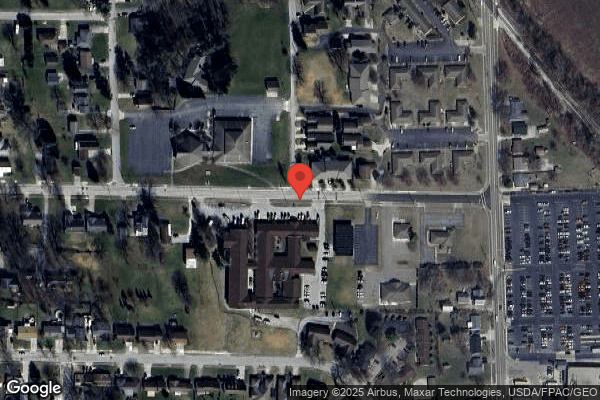

EMBASSY OF WILLARD

370 E HOWARD ST, WILLARD, OH 44890 (419) 935-0148
For profit - Corporation 59 Beds EMBASSY HEALTHCARE Data: November 2025 1 Immediate Jeopardy citation
Trust Grade
28/100
#673 of 913 in OH
Last Inspection: April 2024

Within standard 12-15 month inspection cycle. Federal law requires annual inspections.

Overview

Embassy of Willard has received a Trust Grade of F, indicating significant concerns about the quality of care provided, which places it in the bottom tier of facilities. It ranks #673 out of 913 nursing homes in Ohio, meaning it's in the bottom half of all facilities, and #6 out of 6 in Huron County, signifying that only one other local option is better. While the facility has shown improvement in recent years, reducing issues from 6 in 2024 to just 1 in 2025, it still faces serious challenges. Staffing is a weakness, with a poor rating of 1 out of 5 stars, but the turnover rate is impressively low at 0%, suggesting that the few staff members that are present remain for a long time. However, concerning incidents include a critical failure to secure a resident in a wheelchair during transport, resulting in a serious injury, as well as a serious issue where a resident did not receive appropriate bowel care, leading to severe health complications.

Trust Score
F
28/100
In Ohio
#673/913
Bottom 27%
Safety Record
High Risk
Review needed
Inspections
Getting Better
6 → 1 violations
Staff Stability
○ Average
Turnover data not reported for this facility.
Penalties
✓ Good
$26,685 in fines. Lower than most Ohio facilities. Relatively clean record.
Skilled Nurses
⚠ Watch
Each resident gets only 26 minutes of Registered Nurse (RN) attention daily — below average for Ohio. Fewer RN minutes means fewer trained eyes watching for problems.
Violations
⚠ Watch
36 deficiencies on record. Higher than average. Multiple issues found across inspections.
★★☆☆☆
2.0
Overall Rating
★☆☆☆☆
1.0
Staff Levels
★★★★★
5.0
Care Quality
★★☆☆☆
2.0
Inspection Score
Stable
2024: 6 issues
2025: 1 issues

The Good

  • 5-Star Quality Measures · Strong clinical quality outcomes
  • Full Sprinkler Coverage · Fire safety systems throughout facility
  • No fines on record

Facility shows strength in quality measures, fire safety.

The Bad

2-Star Overall Rating

Below Ohio average (3.2)

Below average - review inspection findings carefully

Federal Fines: $26,685

Below median ($33,413)

Moderate penalties - review what triggered them

Chain: EMBASSY HEALTHCARE

Part of a multi-facility chain

Ask about local staffing decisions and management

The Ugly 36 deficiencies on record

1 life-threatening 1 actual harm
Apr 2025 1 deficiency 1 IJ
CRITICAL (J) 📢 Someone Reported This

A family member, employee, or ombudsman was alarmed enough to file a formal complaint

Immediate Jeopardy (IJ) - the most serious Medicare violation

Accident Prevention (Tag F0689)

Someone could have died · This affected 1 resident

**NOTE- TERMS IN BRACKETS HAVE BEEN EDITED TO PROTECT CONFIDENTIALITY** Based on facility bus observation, staff interviews, medical record review, review of the incident log, review of the facility i...

Read full inspector narrative →
**NOTE- TERMS IN BRACKETS HAVE BEEN EDITED TO PROTECT CONFIDENTIALITY** Based on facility bus observation, staff interviews, medical record review, review of the incident log, review of the facility internal investigation, review of facility provided photographs, review of hospital records, review of facility bus safety manual, review of facility bus wheelchair restraint user manual, review of wheelchair manual, and review of facility policy, the facility failed to ensure Resident #11, who was identified to be dependent on staff for all aspects of care, was safely secured with a seat belt and positioned properly in a wheelchair during a transport on the facility bus. This resulted in Immediate Jeopardy and the potential for serious life-threatening injuries when Resident #11 fell out of her wheelchair mid-transport and landed on the floor, sustaining a subdural hematoma and subarachnoid hemorrhage to the left side of her head, requiring admission to the intensive care unit (ICU) for monitoring. This affected one (#11) of three residents reviewed for use of assisted device during transportation. The facility identified a total of 47 residents who utilized a wheelchair. The facility census was 56. On 04/17/25 at 11:55 A.M., the Administrator, Director of Nursing (DON), Regional Director of Clinical Services (RDCS) #884 were informed that Immediate Jeopardy began on 03/26/25 when Transportation Driver #830 failed to safely secure and position Resident #11's wheelchair appropriately. During the trip, Resident #11's left wheelchair arm broke and Resident #11 fell out of her wheelchair and onto the floor of the bus. Resident #11 hit her head and Transportation Driver #830 drove her to a local emergency room (ER) for evaluation. A computed tomography (CT) scan of Resident #11's head revealed a left subdural hematoma and subarachnoid hemorrhage, and Resident #11 was subsequently admitted to the ICU. The Immediate Jeopardy was removed on 03/28/25 when the facility implemented the following corrective actions: o On 3/26/25 at 5:10 P.M., the DON was notified of Resident #11's fall in the facility's bus and subsequent injury by Transportation Driver #830. o On 03/26/25 at 5:10 P.M., Resident #11's son was present at the appointment and was notified of the incident by Transportation Driver #830. o On 03/26/25 at 5:15 P.M., the facility initiated an incident report following the DON's notification of the incident. The incident report was completed on 03/28/25 after the resident's return to the facility. o On 03/26/25 at 5:43 P.M., Resident #11's provider, Certified Nurse Practitioner (CNP) #885, was notified of Resident #11's injury on the facility transport bus. This notification was completed by the DON. o On 03/26/25 at approximately 6:00 P.M., a written statement was obtained by Transportation Driver #830 following the incident upon his return to the facility. o On 03/27/25, all in-house wheelchairs were assessed by Maintenance Supervisor #880, Therapy Director #824, ADON #848, and Minimum Data Set (MDS) Nurse #835 for proper functioning. Any issues or concerns were corrected at the time of the assessments. All assessments were completed on 03/27/25. o Transportation Driver #830's personnel file was reviewed by the Administrator on 03/27/25. Transportation Driver #830 had no previous disciplinary action. Disciplinary action was given by the Administrator on 03/27/25. o On 03/27/25, Maintenance Supervisor #880 completed an inspection of the facility bus, including the lift, seatbelts and restraint mechanisms to assess for any malfunctioning or fraying of belts. There were no abnormalities identified; the bus was in good working order. o The facility identified three additional staff members, Certified Nurse Aide (CNA) #854, CNA #853, and Housekeeping Aide #866, approved to drive the facility bus. The additional bus drivers' personnel files were reviewed by the Administrator on 3/27/25 for bus safety and training. The personnel files were complete with no negative findings. o All facility bus drivers were re-educated by Maintenance Supervisor #880 on 3/27/25 with emphasis on proper securement of residents, proper positioning of residents in wheelchairs, and proper use of the bus's lifting mechanism. This included a step-by-step instruction on proper technique, and a return demonstration by each driver. o On 03/27/25, the bus driver re-education records were reviewed by the Administrator. All driver re-education was complete with no negative findings. o All staff education was provided on the facility's abuse and neglect policy by the DON on 03/27/25. o On 03/27/25, Resident #11's family requested a new wheelchair for Resident #11. Resident #11 was provided a new Broda (specialty wheelchair) upon her return from the hospital on [DATE]. This was completed by the Administrator. Beginning on 03/27/25, Maintenance Supervisor #880 began weekly observational audits of bus drivers for proper lift use, proper securement of residents using four-point base restraints and proper use of seat belt restraints. These audits will be completed three times weekly for four weeks. The results of the audits will be reviewed in the facility's Quality Assurance Performance Improvement (QAPI) meeting. Beginning on 03/27/25, Maintenance Supervisor #880 began weekly re-education with the facility bus drivers regarding return demonstration. This re-education will be completed for four weeks. The results of the audits will be reviewed in the facility's QAPI meeting. Beginning on 03/27/25, Maintenance Supervisor #880 and Therapy Director #824 began monthly wheelchair audits. Concerns with proper functioning of equipment were corrected at the time of the audit. The audits will be completed monthly for three months duration. The results of the audits will be reviewed in the facility's QAPI meeting. o On 03/28/25, an Ad Hoc QAPI meeting was held. In attendance were the Administrator, Medical Director (MD) #886, DON, RDCS #884, Dietary Manager #836, MDS Nurse #835, ADON #848, Human Resources Manager #863, Therapy Manager #824, Maintenance Supervisor #880, Social Service Director/Activity Director (SSD/AD) #812, Activity Aide #801, and CNP #885. o On 3/28/25 at 10:58 P.M., upon her return to the facility, Resident #11 was comprehensively assessed. This included a head-to-toe assessment and pain assessment. This was completed by Registered Nurse (RN) #857. o On 3/28/25, upon return to the facility, neurological checks for Resident #11 were initiated by RN #857 for a duration of 72 hours. The series of neurological checks were completed on 04/01/25 by a staff nurse. This was completed on 03/31/25. There were no identified physical or psychosocial changes. Resident #11 remained at her baseline. o On 03/28/25, the facility began 72-hour monitoring. Resident #11 was comprehensively assessed every shift by the direct care nursing staff. This was completed on 03/31/25, with the documentation overseen by the DON. There were no identified physical or psychosocial changes. Resident #11 remained at her baseline. o On 03/31/25, the facility began a daily comprehensive assessment of Resident #11, with the documentation overseen by the DON. There have been no negative findings or declines in condition. Although the Immediate Jeopardy was removed on 03/28/25, the facility remained out of compliance at Severity Level 2 (no actual harm with potential for more than minimal harm that is not Immediate Jeopardy) as the facility was still in the process of implementing their corrective actions and monitoring to ensure on-going compliance. Findings include: Review of the medical record for Resident #11 revealed an admission date of 01/09/25 and diagnoses including left non-dominant side hemiplegia (paralysis) and hemiparesis (muscle weakness), dysphagia following cerebral infarction (stroke), dysarthria (difficulty speaking) following cerebral infarction, diabetes mellitus with diabetic polyneuropathy, generalized muscle weakness, and lack of coordination. Review of the MDS quarterly assessment dated [DATE] revealed Resident #11 had unclear speech and rarely/never understands others or was understood by others. Resident #11 had short- and long-term memory deficits. Resident #11 had impairment of upper and lower extremity on one side and was dependent on staff for activities of daily living (ADLs). Resident #11 was unable to ambulate or stand on her own. Resident #11 utilized a wheelchair for mobility. Review of the care plan revised 04/15/25 revealed Resident #11 required assistance for ADLs due to hemiparesis and history of a cerebrovascular accident (stroke). Listed interventions included utilizing a wheelchair for mobility and transferring Resident #11 by using two staff and a Hoyer lift (a mechanical lift used by caregivers to safely transfer those with limited mobility). An additional care plan focus, revised 04/16/25, revealed Resident #11 had the potential for bleeding or hemorrhage related to previous use of blood thinning medications. Interventions included to protect Resident #11 from falls or injury as much as possible. Review of physician's order dated 02/14/25 revealed Resident #11 had an order for one tablet of Aspirin 81 milligram (mg) tablets every morning for anticoagulation therapy and an order for one tablet of Plavix (antiplatelet medication) 75 mg once daily for a history of a cerebrovascular accident. Review of a nursing note dated 03/19/25 revealed Resident #11 had an appointment scheduled with a pulmonologist on 03/26/25 at 2:00 P.M. The facility was to transport Resident #11 to her appointment with her son to accompany. Review of incident logs from February 2025 to April 2025 revealed on 03/26/25 Resident #11 had an unwitnessed fall on the facility transport van and sustained a bruise. Review of an incident report dated 03/26/25 timed at 5:15 P.M. revealed Resident #11 had an unwitnessed fall during transportation outside of the facility. Transportation Driver #830 reported Resident #11 fell out of the wheelchair during a transport to an outside appointment and Transportation Driver #830 drove her to a nearby hospital to assist with getting Resident #11 off the floor of bus. Resident #11 was taken into the emergency room (ER) for evaluation and admitted . Resident #11 was noted to have a bruise to the top of her scalp. Resident #11 was alert to person and unable to give a description of what had happened. The DON, Resident #11's son, and Resident #11's provider (CNP #885), were notified of the incident. Review of a witness statement dated 03/26/25 for Transportation Driver #830 revealed he had gotten Resident #11 onto the bus at approximately 12:50 P.M. Transportation Driver #830 stated when he loaded Resident #11 in her wheelchair into the bus, she was tilted back so she was hooked up long ways, facing the passenger side of the bus, so she could be comfortably tilted back. Transportation Driver #830 stated he felt the seat belt was in the way and Resident #11's upper body was not going to move anywhere. Transportation Driver #830 applied the four-point wheelchair securing hooks onto the base of her wheelchair. Transportation Driver #830 stated when they arrived at the first appointment, the doctor wanted an x-ray examination completed so they were sent to a local hospital. Transportation Driver #830 stated Resident #11 was re-loaded onto the transportation bus and during transport he heard a noise. Transportation Driver #830 stated he checked his mirrors and observed Resident #11 on the floor of the bus. Transportation Driver #830 stated the hospital was about three minutes away, so he kept driving to the hospital to get help. Upon arrival, Resident #11 was taken into the ER for assessment. Transportation Driver #830 stated he waited at the hospital for approximately one hour until a nurse dismissed him. Review of the hospital trauma and surgical history and physical assessment dated [DATE] timed at 8:54 P.M. revealed Resident #11 presented to the hospital post-fall out of a wheelchair. Resident #11 was traveling on a bus to the doctor's office when she fell out of her wheelchair, striking her face on the floor of the bus. There was no loss of consciousness. A CT scan was completed with findings of 0.4 centimeter (cm) subdural hematoma with trace subarachnoid hemorrhage within the left temporal sulci (groove located on the outer surface of temporal [NAME]). There were noted abrasions to Resident #11's left forehead and nose. Resident #11 had noted history of cerebrovascular incident with noted flaccidity of left upper extremity and left lower extremity. Resident #11 was noted to be on aspirin and Plavix. Resident #11 was admitted to the intensive care unit (ICU) and would have a neurosurgery consultation. Review of hospital imaging results of a CT scan of Resident #11's head dated 03/27/25 at 12:41 A.M. revealed a stable appearance of the left-sided subdural hematoma measuring 2.48 millimeters (mm) in thickness. No new hemorrhage was seen, and an area of chronic infarction was noted. Review of a general note dated 03/27/25 timed at 2:36 A.M. revealed Resident #11 had fallen out of wheelchair during transport to or from an appointment and had hit her head. Resident #11 was noted to be on blood thinners and was sent to the emergency room for evaluation. There had not been an update since shift change. Review of the hospital neurosurgery consult dated 03/27/25 timed at 9:49 A.M. revealed Resident #11 presented with a left middle cranial fossa acute subdural hematoma after fall with face strike. It was noted upon repeat CT scan; Resident #11 was stable with no new neurological deficits. It was noted that Resident #11's wheelchair arm broke and Resident #11 fell onto her face in a transport bus. Review of the undated facility investigative documentation revealed Resident #11 was being transported to an appointment on the facility transportation bus. Resident #11 left the faciity on [DATE] and was placed in a tilt-and-space wheelchair she had obtained prior to admission. The wheelchair was inspected by the therapy department on 03/25/25 and found to be in good working order. It was noted Resident #11 was not secured with a lap belt due to being tilted back in the wheelchair. While Transportation Driver #830 was driving the bus, he looked back and observed Resident #11 on the floor of the bus. Transportation Driver #830 was approximately three minutes' drive from a local hospital and drove directly to the hospital ER with Resident #11 remaining on the floor of the bus. Resident #11 was taken into the ER for evaluation. Resident #11 had a CT scan of her head, and a brain bleed was noted. Resident #11 was admitted to a local hospital and returned to the facility on [DATE]. Review of Disciplinary Action Form dated 03/27/25 revealed Transport Driver #830 was given a final written warning for a bus competency violation. The form listed Transportation Driver #830 failed to follow proper procedure when securing residents in wheelchairs in the facility transport bus. It was noted that Transportation Driver #830 had previously been trained on proper techniques for securing residents on the transport bus. Review of a social services note dated 03/28/25 timed at 11:02 A.M. revealed Resident #11 was expected to return to facility on 03/28/25. Review of the hospital Discharge summary dated [DATE] at 11:06 A.M. revealed Resident #11 had fallen out of her wheelchair while traveling on a transport bus to her doctor's office and had stuck her face on the floor of the bus. Resident #11 sustained a subdural hematoma and subarachnoid hemorrhage and was treated in the ICU. Resident #11 demonstrated stability of intracranial hemorrhage and was discharged back to the facility on [DATE]. Outpatient neurosurgery follow-up was recommended. Review of a general note dated 03/28/25 timed at 8:41 P.M. revealed Resident #11 returned to facility with all blood thinners discontinued. Resident #11 was not responsive to stimulation upon return. Review of Ad Hoc QAPI Notes dated 03/28/25 revealed Resident #11 was on the facility transportation bus on 03/26/25 and was being transported to hospital for a scan after a doctor's appointment. Resident #11 was in a tilt-in-space wheelchair. During secondary transport for scan, a bolt on Resident #11's wheelchair broke causing the side of the wheelchair to bend off. This resulted in Resident #11 coming out of the wheelchair onto the floor of the transportation bus. It was noted Resident #11's wheelchair was secured using four-point floor latches; however, Resident #11 was not secured using a lap belt due to being in a tilted back position in the wheelchair. Interview on 04/16/25 at 11:15 A.M. with Transportation Driver #830 revealed he had worked at the facility for the last five years. Transportation Driver #830 indicated he had never driven a transport bus prior. Transportation Driver #830 stated he had limited training which included driving a former administrator around the block and verbal instruction on how to load a wheelchair. Transportation Driver #830 indicated he did approximately two resident transports per day. Transportation Driver #830 stated on 03/26/25 he had loaded Resident #11 into the transport bus wrong. Transportation Driver #830 stated he had loaded Resident #11 in her wheelchair facing the passenger side windows of the bus. Transportation Driver #830 stated he felt Resident #11 was in pain while sitting upright in the wheelchair, so he had kept her tilted backwards. Transportation Driver #830 stated he was unable to use the seat belt due to Resident #11's wheelchair being in the tilted back position and positioned facing the passenger side of the bus (instead of forward facing). Transportation Driver #830 stated Resident #11 does not really move anyways so he felt she was secure in the chair despite not using the seat belt. Transportation Driver #830 stated he had applied Resident #11's wheelchair brake and applied four-point hooks to the wheelchair. Transportation Driver #830 indicated while driving to the hospital he heard a noise. He stated Resident #11 was not in her wheelchair when he checked the mirrors, and he saw her lying on the ground of the transport bus. Transportation Driver #830 stated they were approximately two minutes from the hospital, so he kept driving to the ER. Transportation Driver #830 stated the bolt on Resident #11's wheelchair had broken, and Resident #11 was leaning to the left side. Transportation Driver #830 stated the arm of the wheelchair completely bent off and caused Resident #11 to roll out onto the floor of the bus. Transportation Driver #830 stated he had gotten help from EMTs at the hospital and they were able to help her off the floor. Transportation Driver #830 stated Resident #11 did not have any bleeding, and she was not making any noises. Transportation Driver #830 stated Resident #11 just laid on the floor looking uncomfortable and embarrassed until she could be assisted up. Transportation Driver #830 denied any hard braking, speeding, or hard turns when Resident #11 had fallen from her wheelchair. Transportation Driver #830 stated the speed limit was 35 miles per hour and there was traffic near the hospital. Observation on 04/16/25 at 11:20 A.M. with Transportation Driver #830 of the facility transportation bus revealed the bus had three rows of seats with two seats on each side of the bus. There was a space at the back of the bus to secure two residents with wheelchairs. There were four straps with hooks to secure wheelchairs and a shoulder/lap seat belt for each wheelchair space. The equipment was in working order with no frays or tears in the straps. Transportation Driver #830 demonstrated the use of the wheelchair lift located at the back passenger side of the bus. The bus appeared in good working order. Interview on 04/16/25 at 2:16 P.M. with Therapy Director #824 revealed he had done a visual inspection of Resident #11's tilt-in-space wheelchair prior to the transport with no abnormal findings. Therapy Director #824 indicated he had also shown Transportation Driver #830 how to use the tilt-in-space wheelchair. Therapy Director #824 stated Resident #11 had not used the tilt-in-space wheelchair while admitted to the facility as they had been working on her trunk control and strengthening with a standard wheelchair. Therapy Director #824 indicated Resident #11 had not been progressing with a standard wheelchair and the tilt-in-space wheelchair was appropriate for use during transport to her appointment. Interview on 04/16/25 at 2:34 P.M. with the Administrator and RDCS #884 revealed Resident #11's tilt-in-space wheelchair did not return to the facility with her from the hospital. The Administrator indicated there were pictures of the wheelchair. Review of a series of three facility provided photographs, undated, revealed a wheelchair identified by the facility as Resident #11's tilt-in-space wheelchair. In the photographs it was seen the left side arm of the wheelchair was bent towards the back of the wheelchair and the front securing bracket had broken from the frame of the wheelchair. There were two noted brackets to secure the arm to the wheelchair frame. Review of Q'Straint Installation Instructions for Four-Point Wheelchair Securement System undated revealed tiedowns should only be installed so wheelchair passengers were facing forward. Lap belts must always lie against the bony structure of the passenger's body and never infringe on any component of the wheelchair such as armrests, wheels, or frames. Shoulder belts should always be positioned so the belt lies across the center of the passenger's shoulder and extends upward and rearward of the passenger's shoulder. Review of the safety manual for transport van wheelchair secure restraint system titled Doing It Right: A guide to the Proper Use of Sure-Lok Wheelchair Securement and Occupant Restraint Systems undated revealed the correct securement of a wheelchair was extremely important for safety and comfort of the passenger and injury or death could occur due to improper securement. The passenger should be facing the front of the vehicle with the wheelchair centered between the floor tracks or plates. Four straps should secure the wheelchair. A lap belt with a shoulder belt should be used to secure the passenger. The lap belt should be secured across the passenger's pelvic area near hips. The shoulder belt should be secured diagonally across the passenger's upper chest. Review of Invacare Solara 3G Wheelchair User Manual dated 2018 revealed always make sure the wheelchair was stable and engage wheel locks before using reclining option. The wheelchair must be operated by a healthcare professional or assistant when in any tilt position. It was not recommended to transport a wheelchair user in any kind of vehicle while in a wheelchair. It was recommended to complete regular cleaning and inspection of the wheelchair. Review of the facility policy Regularly Scheduled Transportation dated July 2018 revealed the facility would provide transportation using a facility vehicle for medically necessary appointments, activities, and outings. A third-party transportation service could be utilized when indicated. This deficiency represents noncompliance investigated under Complaint Number OH00164661.
Apr 2024 6 deficiencies
CONCERN (D)

Potential for Harm - no one hurt, but risky conditions existed

Safe Environment (Tag F0584)

Could have caused harm · This affected 1 resident

**NOTE- TERMS IN BRACKETS HAVE BEEN EDITED TO PROTECT CONFIDENTIALITY** Based on medical record review, observations, resident and staff interviews, and review of the facility policy, the facility fai...

Read full inspector narrative →
**NOTE- TERMS IN BRACKETS HAVE BEEN EDITED TO PROTECT CONFIDENTIALITY** Based on medical record review, observations, resident and staff interviews, and review of the facility policy, the facility failed to ensure the resident's sheets were maintained in a clean condition. This affected one (Resident #39) of 50 residents reviewed for clean linens. The facility census was 50. Findings include: Review of the medical record for Resident #39 revealed an admission date of 06/17/21 with a diagnosis of psoriasis. Review of the comprehensive Minimum Data Set (MDS) assessment dated [DATE] revealed Resident #39 had intact cognition and was independent for bed mobility, lying to sitting, sitting to standing, and transferring from the bed to the chair. Review of the current physician orders for April 2024 revealed Resident #39 was scheduled for showers on Fridays and Tuesdays. Interview and observation on 04/22/24 at 12:08 P.M. with Resident #39 revealed his sheets were stained along the edge of the mattress near the head of his bed, and his pillow case had several spots that appeared to be dried blood. Resident #39 stated he had asked for his sheets to be changed since his previous shower (04/19/24). Interview and observation on 04/23/24 at 3:57 P.M. with Resident #39 revealed he was in bed relaxing. His sheets and pillow remained stained. Resident #39 stated he was scheduled for a shower that night and he would insist staff change his bedding. Interview and observation on 04/24/24 at 10:23 A.M. with State Tested Nurse Aide (STNA) #370 confirmed Resident #39's sheet was stained near the head of the bed and his pillowcase was stained with dark drops. STNA #370 stated Resident #39 refused his shower the previous evening. STNA #370 confirmed bedding was normally changed on shower days, and also confirmed bedding should be changed when obviously soiled. Interview on 04/24/24 at approximately 10:26 A.M. with Resident #39 confirmed he refused his shower the previous evening and expected to have a shower on night shift 04/24/24. Review of the facility policy titled Safe and Homelike Environment, revised 10/01/22, revealed the facility would provide and maintain bed and bath linens that are clean and in good condition.
CONCERN (D)

Potential for Harm - no one hurt, but risky conditions existed

Incontinence Care (Tag F0690)

Could have caused harm · This affected 1 resident

**NOTE- TERMS IN BRACKETS HAVE BEEN EDITED TO PROTECT CONFIDENTIALITY** Based on observation, medical record review, staff interview, and review of the facility incontinence policy, the facility faile...

Read full inspector narrative →
**NOTE- TERMS IN BRACKETS HAVE BEEN EDITED TO PROTECT CONFIDENTIALITY** Based on observation, medical record review, staff interview, and review of the facility incontinence policy, the facility failed to ensure timely incontinence care was provided to a resident who was incontinent and dependent on staff for toileting This affected one (Resident #30) of two residents reviewed for incontinence care. The facility census was 50. Findings include: Review of the medical record revealed Resident #30 admitted to the facility on [DATE]. Diagnoses included metabolic encephalopathy, mood disorder, seizure disorder, chronic obstructive pulmonary disease, dementia, anxiety disorder, and major depression. Review of the Minimum Data Set (MDS) assessment dated [DATE] assessed Resident #30 had severely impaired cognition, dependent on staff for the completion of activities of daily living, always incontinent of bowel and bladder, and at risk for pressure ulcer development. Review of the nursing plans of care dated 01/09/24 revealed Resident #30's plan addressed an actual area of skin impairment related to moisture associated skin damage (MASD) to bilateral buttocks with interventions including: lay resident down and offload after every meal. Reposition every two hours when in bed. Pressure relieving cushion to wheelchair. On 05/24/23, a nursing plan of care was revised to address the resident has bowel incontinence related to rule out decreased mobility and memory impairment. Interventions included to assist the resident to the bathroom as needed. Provide peri care after each incontinence episode. Check the resident for incontinence as needed. Review of the bowel and bladder evaluation dated 02/08/24 revealed Resident #30 was noted to have the diagnosis of Alzheimer's disease of dementia, completely immobile, unable to ambulate, and incontinent of bowel and bladder. Review of the skin risk assessment dated [DATE] revealed Resident #30 was at moderate risk of developing skin breakdown. Continuous observations and interview on 04/23/24 starting at 9:37 A.M. revealed Resident #30 was placed in a reclining geriatric chair (Geri-chair) in the dining room. Resident #30 was positioned on his back with feet elevated. At 10:37 A.M., State Tested Nurse Aide (STNA) #341 approached Resident #30 and wheeled the resident in the chair to his room. Interview with STNA #341 at 10:37 A.M. revealed she last checked the resident for incontinence and repositioning at 7:15 A.M. Continued observation noted STNA #341 and STNA #531 transferred Resident #30 to his bed utilizing a mechanical lift. Resident #30 was soiled with urine soaking through an adult incontinence brief, shorts, lift sling and onto the seat cushion. Urine was also observed on the back of the resident's shirt. STNA #341 removed the soiled clothing and brief and discovered Resident #30 was incontinent of a medium amount of stool, which was contained in the brief. STNA #341 and #531 cleansed the resident, placed a clean adult brief with clean clothing on the resident. On 04/23/24 at 11:12 A.M., an interview with STNA #341 verified Resident #30 was incontinent of bowel and bladder, was dependent on staff for all care, and required frequent checks with repositioning. On 04/23/24 at 11:13 A.M., an interview with Registered Nurse (RN) #502 verified Resident #30 required incontinence checks and repositioning every two hours due to the resident being unable to inform staff of need to utilize restroom or reposition self. On 04/23/24 at 1:20 P.M., an interview with the Director of Nursing (DON) verified Resident #30 was assessed as incontinent. The DON confirmed no interventions were implemented to determine Resident #30's bowel of bladder habits including frequency of incontinence checks to prevent heavy soiling. Review of the facility's incontinence policy dated 10/01/22 revealed residents that are incontinent of bladder or bowel will receive appropriate treatment to prevent infections and to restore continence to the extent possible.
CONCERN (D)

Potential for Harm - no one hurt, but risky conditions existed

Pharmacy Services (Tag F0755)

Could have caused harm · This affected 1 resident

Based on medical record review, observation, resident interview, staff interview, and review of facility policy, the facility failed to ensure medications were administered and were not left at the re...

Read full inspector narrative →
Based on medical record review, observation, resident interview, staff interview, and review of facility policy, the facility failed to ensure medications were administered and were not left at the resident bedside. This affected one (#40) of one resident reviewed for pharmaceutical services. The facility census was 50. Findings include: Review of Resident #40's medical record revealed an admission date of 11/05/21. Diagnoses included chronic gout, type II diabetes mellitus, malignant melanoma of skin, hypokalemia, hydronephrosis, hypertension, hyperlipidemia, lymphedema, muscle weakness, and supraventricular tachycardia. Observation on 04/22/24 at 10:21 A.M. revealed Resident #40 had a medication cup containing eight unidentified pills located on a table in the resident's room. During an interview on 04/22/24 at 10:25 A.M., Resident #40 reported the medications were their morning medications. Resident #40 reported staff were not supposed to leave medications in the room but they always did because they trusted Resident #40 and because Resident #40 took approximately 15 minutes to consume all of their morning medications. During an interview on 04/22/24 at 10:45 A.M., Licensed Practical Nurse (LPN) #807 verified they had taken Resident #40's morning medications into Resident #40's room and left them there without observing the resident consume them. LPN #807 reported Resident #40 always administered their own medications. During an interview on 04/24/24 at 7:09 A.M., LPN #801 reported there were no residents in the building who administered their own medications and the nurses were required to observe all residents swallow their medications. During an interview on 04/24/24 at 9:06 A.M., the Director of Nursing (DON) verified Resident #40 should have been observed while taking their medications. Review of the facility policy titled Medication Administration, dated 08/22/22, revealed medications are administered by licensed nurses, or other staff who are legally authorized to do so in this state, as ordered by the physician and in accordance with professional standards of practice. The policy explanation and compliance guidelines contained in the policy stated to observe resident consumption of medication.
CONCERN (D)

Potential for Harm - no one hurt, but risky conditions existed

Food Safety (Tag F0812)

Could have caused harm · This affected 1 resident

Based on observations, staff interview, and review of the facility policy, the facility failed to ensure staff used appropriate hand hygiene during meal services. This affected three (#17, #21, and #2...

Read full inspector narrative →
Based on observations, staff interview, and review of the facility policy, the facility failed to ensure staff used appropriate hand hygiene during meal services. This affected three (#17, #21, and #22) of four residents observed during meal service on the 400-hall. The facility census was 50. Findings include: Observation on 04/22/24 at 7:57 A.M. revealed State Tested Nurse Aide (STNA) #301 passing breakfast trays to residents eating in their rooms. STNA #301 entered Resident #13's room and provided her breakfast tray and removed the lids from the food items. Resident #13 requested some assistance and STNA #310 adjusted the socks on Resident #13's feet. STNA #301 exited Resident #13's room, did not perform hand hygiene, and picked up the tray for Resident #22. STNA entered Resident #22's room, picked up her computer tablet and placed the breakfast tray on the overbed table. STNA #301 then removed the lids from Resident #22's meal items and exited her room without performing hand hygiene. Interview on 04/22/24 at 8:00 A.M. with STNA #301 confirmed she touched Resident #13's socks and did not perform hand hygiene before providing Resident #22 her breakfast tray. STNA #301 stated she performed hand hygiene before passing the first tray on the hall, then performed hand hygiene after she finished passing all trays for the hall. Observation on 04/22/24 at approximately 8:01 A.M. revealed STNA #301 did not perform hand hygiene and picked up the breakfast tray for Resident #21 and placed it on her overbed table, then returned to the tray cart, without performing hand hygiene, and picked up the tray for Resident #17 and delivered it to her room. Continued observation revealed STNA #301 was called by staff to assist with care in another resident's room and STNA #301 stopped passing meal trays to assist with care. Review of the policy titled Hand Hygiene, copyright 2023, revealed hand hygiene is indicated and will be performed under the conditions listed in the attached hand hygiene table. Review of the undated Hand Hygiene Table revealed hand hygiene should occur between resident contacts.
CONCERN (D)

Potential for Harm - no one hurt, but risky conditions existed

Infection Control (Tag F0880)

Could have caused harm · This affected 1 resident

**NOTE- TERMS IN BRACKETS HAVE BEEN EDITED TO PROTECT CONFIDENTIALITY** Based on record review, observations, staff interviews, review of the facility policy and review of staff in-service, the facili...

Read full inspector narrative →
**NOTE- TERMS IN BRACKETS HAVE BEEN EDITED TO PROTECT CONFIDENTIALITY** Based on record review, observations, staff interviews, review of the facility policy and review of staff in-service, the facility failed to ensure staff wore personal protective equipment (PPE) when providing care to residents in enhanced barrier precautions (EBP). This affected one resident (#26) of two residents observed in EBP. The facility census was 50. Findings include: Review of the medical record for Resident #26 revealed an admission date of 03/12/24 with a diagnosis of acquired absence of right toe. Review of the quarterly Minimum Data Set (MDS) assessment dated [DATE] revealed Resident #26 had intact cognition and required limited assistance of one person for transfers. Review of the current physician order dated 04/05/24 revealed Resident #26 was in EBP precautions for a chronic wound. The order stated gloves and gown should be worn when transferring the resident. Review of the current care plan for Resident #26 revealed he had an area of skin impairment related to a right foot stump wound. Interventions included EBP as ordered. Observations on 04/22/24 at 7:47 A.M. revealed a sign posted on Resident #26's door indicating he was in EBP and PPE was required while providing care. There was a plastic cart outside Resident #26's room with gowns and gloves. State Tested Nurse Aide (STNA) #408 opened Resident #26's door from inside the room and asked STNA #404 to come into the room to assist with a transfer for Resident #26. STNA #408 was not wearing PPE inside the room. STNA #404 donned PPE before entering Resident #26's room. During this observation, interview with STNA #404 confirmed STNA #408 was not wearing PPE inside Resident #26's room. Interview on 04/22/24 at 7:52 A.M. with STNA #301, who came out of Resident #26's room after providing care with a transfer alongside STNA #404 and STNA #408 confirmed she also did not wear PPE while providing care to Resident #26. Interview on 04/22/24 at 7:53 A.M. with STNA #404 confirmed staff were required to wear PPE (gown and gloves) while transferring residents who were in EBP. Interview on 04/25/24 at 10:21 A.M. with Regional Director of Clinical Services #802 revealed all staff were educated in March 2024 regarding EBP and donning and doffing PPE when providing care for residents in EBP. Review of the undated staff in-service sign-in sheet revealed the topics of EBP and donning and doffing PPE were provided. STNA #301 and STNA #408 signed the sign-in sheet for the education. Review of the policy Enhanced Barrier Precautions, revised 03/20/24, revealed EBP referred to the use of gown and gloves during high-contact resident care activities. It defined high-contact resident care activities included transfers.
CONCERN (E)

Potential for Harm - no one hurt, but risky conditions existed

Menu Adequacy (Tag F0803)

Could have caused harm · This affected multiple residents

Based on observation, record review, and staff interview, the facility failed to ensure the menu was followed for residents receiving pureed diets. This affected six residents (#3, #27, #30, #37, #45,...

Read full inspector narrative →
Based on observation, record review, and staff interview, the facility failed to ensure the menu was followed for residents receiving pureed diets. This affected six residents (#3, #27, #30, #37, #45, and #50) who were prescribed a pureed diet. The facility census was 50. Findings include: Review of the lunch meal spreadsheet for 04/23/24 revealed residents on a pureed diet should include pureed dinner rolls using one #20 scoop (equivalent to 3.5 tablespoons). Observation of tray line on 04/23/24 from approximately 12:15 P.M. to 12:45 P.M. revealed the facility did not include the pureed dinner rolls and/or an appropriate substitution to residents receiving pureed food items. Interview on 04/23/24 at 12:45 P.M. with [NAME] #405 verified pureed dinner rolls were available on the tray service line but were not served to residents receiving pureed meals at the time of observation. Review of the facility's list of residents on a pureed diet revealed Residents #3, #27, #30, #37, #45, and #50 were on a pureed diet. Review of the facility policy titled Accuracy and Quality of Tray Line Service, dated 2019, revealed tray line positions and set up procedures will be planned for efficient and orderly delivery. All meals will be checked for accuracy by the food and nutrition services staff, and by the service staff prior to serving the meal to the individual. Individuals will receive the appropriate portions of food as outlined on the menu. Control at the point of service is necessary to assure that accurate portion sizes are served.
Nov 2023 1 deficiency
CONCERN (D) 📢 Someone Reported This

A family member, employee, or ombudsman was alarmed enough to file a formal complaint

Potential for Harm - no one hurt, but risky conditions existed

Quality of Care (Tag F0684)

Could have caused harm · This affected 1 resident

**NOTE- TERMS IN BRACKETS HAVE BEEN EDITED TO PROTECT CONFIDENTIALITY** Based on observation, record review, and facility staff interview the facility failed to provide wound care as ordered for one (...

Read full inspector narrative →
**NOTE- TERMS IN BRACKETS HAVE BEEN EDITED TO PROTECT CONFIDENTIALITY** Based on observation, record review, and facility staff interview the facility failed to provide wound care as ordered for one (#30) of three residents reviewed for wound care. The facility census was 52. Findings Include: Review of Resident #30's medical record revealed the resident was admitted on [DATE], diagnoses included basal cell carcinoma of face, heart disease, type two diabetes, history of falls and myocardial infarction. Review of the quarterly Minimum Data Set (MDS) 3.0 assessment dated [DATE] for Resident #30, revealed the resident was cognitively intact, had no behaviors and required extensive assistance with dressing and toileting. Review of the active physician orders for Resident #30, revealed the resident had a daily wound care order for her basal cell carcinoma wound to her chin that stated to wash hands prior to changing the dressing, cleanse the wound once daily gently with soap and water or normal saline, pat dry, do not rub the wound, apply Aquaphor (healing ointment), Cerave (healing ointment) or pure Vaseline (skin protectant) to the wound, and cover with new bandage until healed. Observation of wound care for Resident #30 on 11/06/23 at 12:23 P.M. performed by Licensed Practical Nurse (LPN) #300 revealed the nurse washed her hands with soap and water, donned her gloves while Resident #30 was observed to remove the bandage off her chin. LPN #300 was observed to put a washcloth under the flow of water from the room sink and provided the wet washcloth to the resident to cleanse the wound. The resident gently dabbed the wound with the wet washcloth and then gave the cloth back to the nurse. LPN #300 placed Vaseline on two Q-tips and placed the Vaseline in the wound bed on Resident #30's chin. LPN #300 then placed a bandage over the wound, removed her gloves and washed her hands. Interview with LPN #300 on 11/06/23 at 4:31 P.M., verified Resident #30's wound care to her chin was only cleaned with tap water and not soap and water or normal saline per the physician orders. This deficiency represents non-compliance investigated under Complaint Number OH00147738.
Nov 2021 7 deficiencies
CONCERN (D)

Potential for Harm - no one hurt, but risky conditions existed

Comprehensive Care Plan (Tag F0656)

Could have caused harm · This affected 1 resident

**NOTE- TERMS IN BRACKETS HAVE BEEN EDITED TO PROTECT CONFIDENTIALITY** Based on medical record review, observation, staff interview, and review of the facility's policy, the facility failed to ensure...

Read full inspector narrative →
**NOTE- TERMS IN BRACKETS HAVE BEEN EDITED TO PROTECT CONFIDENTIALITY** Based on medical record review, observation, staff interview, and review of the facility's policy, the facility failed to ensure comprehensive care plans were developed and the facility failed to implement fall interventions in the resident's care plan. This affected three (#2, #14 and #25) of 16 residents reviewed for care plans. The facility census was 37. Findings include: 1. Review of the medical record for Resident #2 revealed an admission date of 06/28/19 and a readmission date of 11/07/21. Diagnoses included infection pressure ulcer of sacral (bony area at the base of the spine) region, cellulitis (bacterial skin infection) of left lower limb, end stage renal disease, type II diabetes mellitus, hypotension, and morbid (severe) obesity due to excess calories. Review of the quarterly Minimum Data Set (MDS) assessment, dated 10/16/21, revealed Resident #2 was cognitively intact and had one stage IV pressure ulcer (Full thickness tissue loss with exposed bone, tendon or muscle. Slough or eschar may be present on some parts of the wound bed). Review of a skin grid from 10/02/21 revealed a new wound was identified on 10/02/21. Resident #2 was referred to wound care. Review of the wound care notes from 10/14/21 through 11/03/21, revealed Resident #2 had a stage IV pressure injury of the sacrum. Resident #2 also had a history of stage IV pressure injury of the sacrum. Review of the plan of care, initiated 06/30/19, revealed there were no goals or interventions related to preventative skin care or the treatment of pressure ulcers for Resident #2. Interview on 11/09/21 at 8:31 A.M. with the Director of Nursing (DON) verified preventative skin care and pressure ulcer care should be care planned. The DON stated Resident #2 had a history of reoccurring pressure ulcers at an old surgical site. The DON verified Resident #2 should have preventative skin care in her plan of care, pressure ulcer care should have also been included in the plan of care, and Resident #2's plan of care did not include either. Review of the facility's policy titled Wound Care, revised November 2018, revealed wound care should be reviewed and/or revised in the resident's individualized care plan for skin treatment and prevention. Review of the faciliy's policy titled Skin Care, revised November 2018, revealed preventative care plans will be developed and implemented for each resident. 2. Review of the medical record for Resident #25 revealed an admission date of 08/11/21. Diagnoses included anxiety disorder, liver disorders in diseases classified elsewhere; alcohol abuse with intoxication, chronic obstructive pulmonary disease (COPD). Review of the admission MDS assessment, dated 08/24/21, revealed Resident #25 was moderately cognitively impaired and received oxygen therapy. Review of the plan of care, initiated 08/14/21, revealed oxygen use and interventions were not identified. Interview on 11/09/21 at 8:31 A.M. with the Director of Nursing (DON) verified Resident #25's plan of care did not include goals or interventions related to oxygen use. The DON stated she noticed it was not care planned when she reviewed the resident's plan of care yesterday. The DON verified Resident #25 had been on oxygen as needed since his admission and it was not care planned. 3. Review of the medical record for Resident #14 revealed the resident was admitted on [DATE]. Diagnoses included dementia without behavioral disturbance, cognitive communication deficit, benign prostatic hyperplasia, history of cerebral infarction (stroke), transient ischemic attacks (brief episodes where brain does not receive enough blood flow), and a history of repeated falls. Review of the annual Minimum Data Set (MDS) 3.0 assessment for Resident #14, dated 10/02/21, revealed the resident had severe cognitive deficit and fluctuating disorganized thinking. Resident #14 required extensive assistance by one person for toileting. Resident #14 was not steady when moving on and off the toilet and was only able to stabilize with human assistance. Resident #14 had two or more falls since the prior assessment and used a walker and wheelchair for mobility. Review of the Fall Risk Assessment for Resident #14, dated 10/23/21, revealed the resident was at high risk for falls. Further review of the medical record for Resident #14 revealed that over the past eight months, the resident experienced falls on 10/19/21, 09/04/21, 05/01/21, and 02/21/21. Review of the care plan for Resident #14 revealed it identified a risk for unpreventable falls related to progressive neurocognitive disorder with poor insight, poor safety awareness, false sense of independence, and progressive decline in strength, gait, and balance secondary to dementia. The plan listed a goal to be free from falls. The care plan listed an intervention, dated 06/03/20, to place a sign on the bathroom door to remind the resident to call for assistance to the use the bathroom. Observation on 11/09/21 at 3:23 P.M. revealed there was no sign on Resident #14's bathroom door to remind the resident to call staff for assistance. Interview on 11/09/21 at 3:24 P.M. with Registered Nurse (RN) #222 confirmed there was no sign on Resident #14's bathroom door reminding the resident to call staff for assistance. Interview on 11/09/21 at 3:26 P.M. with the Administrator revealed Resident #14 was moved into his current room on 11/05/21. The Administrator confirmed Resident #14's care plan included an intervention to ensure the aforementioned reminder was posted on the resident's door. Review of a policy titled Fall Policy, last revised October 2018, revealed the facility shall implement appropriate interventions to prevent or reduce falls. Review of the facility's policy titled Care Plan Policy And Procedure, revised December 2019, revealed the comprehensive care plan must be person centered, have measurable goals with appropriate interventions to assist with obtaining those goals and contain all necessary information to allow the resident to receive care while maintaining their highest practicable well-being and the comprehensive care plan must be updated quarterly and as necessary to ensure accuracy.
CONCERN (D)

Potential for Harm - no one hurt, but risky conditions existed

Deficiency F0685 (Tag F0685)

Could have caused harm · This affected 1 resident

Based on medical record review, resident and staff interview, and review of the facility's policy, the facility failed to ensure residents received vision services. This affected one (#4) of one resid...

Read full inspector narrative →
Based on medical record review, resident and staff interview, and review of the facility's policy, the facility failed to ensure residents received vision services. This affected one (#4) of one resident reviewed for vision services. The facility census was 37. Findings include: Review of the medical record for Resident #4 revealed an admission date of 05/14/21 and a readmission date of 09/14/21. Diagnoses included type II diabetes mellitus with diabetic polyneuropathy. Review of the quarterly Minimum Data Set (MDS) assessment, dated 10/14/21, revealed Resident #4 was cognitively intact and did not wear corrective lenses. Interview on 11/07/21 at 9:49 A.M. with Resident #4 revealed he was unaware if vision services were available at the facility. Resident #4 stated he wore eyeglasses but had not had any since his admission because he had broken them and was not able to get out to see his eye doctor. Interview on 11/09/21 at 12:11 P.M. with Social Services Director (SSD) #246 verified Resident #4 had not been seen by the eye doctor since his admission to the facility. SSD #246 stated Resident #4 was out of the facility on 09/13/21 when the eye doctor was last onsite. SSD #246 verified Resident #4 was not identified to be seen by the eye doctor on 09/13/21 and would not have been seen if he was in the facility at the time. SSD #246 stated she was aware Resident #246 needed to be on the rotation for vision services but arrangements had not been made for the resident to be seen. Review of the facility's policy titled Ancillary Services, revised September 2019, revealed the facility will assist residents in obtaining routine and prompt vision care.
CONCERN (D)

Potential for Harm - no one hurt, but risky conditions existed

Accident Prevention (Tag F0689)

Could have caused harm · This affected 1 resident

Based on medical record review, observation, staff interview, and review of the facility policy, the facility failed to ensure the resident's fall interventions were implemented to reduce the risk of ...

Read full inspector narrative →
Based on medical record review, observation, staff interview, and review of the facility policy, the facility failed to ensure the resident's fall interventions were implemented to reduce the risk of injury. This affected one (#5) of one resident reviewed for falls. The facility census was 37. Findings include: Review of the medical record for Resident #5 revealed an admission date of 07/09/21. Diagnoses included type II diabetes mellitus with diabetic chronic kidney disease, cerebral infarction (stroke) without residual deficits, altered mental status, chronic kidney disease, stage III, vascular dementia without behavioral disturbance, and muscle weakness. Review of the quarterly Minimum Data Set (MDS) assessment, dated 10/14/21, revealed Resident #5 was severely cognitively impaired and required extensive two person assist with bed mobility, transfers, dressing, toilet use, and personal hygiene. In addition, Resident #5 had two or more falls since admission. Review of the plan of care, initiated 07/20/21, revealed Resident #5 was at risk for falls and potential injury. Interventions included a mat on the floor next to the bed. Review of the Fall Risk Assessment, dated 09/26/21, revealed Resident #5 was at moderate risk for falls. Observations on 11/07/21 from 10:44 A.M. through 12:15 P.M. revealed Resident #5 was in bed. A wheelchair was at the side of the bed, facing the bed. A fall mat was observed folded and leaning against the wall opposite the resident's bed, under a television mounted to the wall. Interview on 11/07/21 at 12:15 P.M. with State Tested Nurse Aide (STNA) #217 verified Resident #5 was in bed and the fall mat was not placed next to his bed as it should be. Interview on 11/09/21 at 10:14 A.M. with the Director of Nursing (DON) revealed Resident #5 believed he could walk, but he was unable to do so unassisted. The DON stated Resident #5 would attempt to get up on his own, resulting in falls, and the facility had implemented various interventions to decrease risk of falls and injury, including a fall mat next to his bed. Review of the facility's policy titled Fall Policy, revised October 2018, revealed it was the policy of the facility to implement appropriate interventions to attempt to reduce falls, accidents, and injuries related to falls.
CONCERN (D)

Potential for Harm - no one hurt, but risky conditions existed

Respiratory Care (Tag F0695)

Could have caused harm · This affected 1 resident

Based on medical record review, observation, staff interview, and review of the facility's policy, the facility failed to ensure a physician order was obtained for oxygen administration and failed to ...

Read full inspector narrative →
Based on medical record review, observation, staff interview, and review of the facility's policy, the facility failed to ensure a physician order was obtained for oxygen administration and failed to date oxygen tubing per physician order. This affected one (#25) of one resident reviewed for oxygen administration. The facility identified eight residents receiving oxygen therapy. The facility census was 37. Findings include: Review of the medical record for Resident #25 revealed an admission date of 08/11/21. Diagnoses included anxiety disorder and chronic obstructive pulmonary disease (COPD). Review of the admission Minimum Data Set (MDS) assessment, dated 08/24/21, revealed Resident #25 was moderately cognitively impaired and received oxygen therapy. Review of the physician's orders for Resident #25, dated 08/18/21, revealed an order to change and date oxygen tubing every Wednesday on night shift. There was no order for oxygen administration. Observation on 11/07/21 at 10:10 A.M. of Resident #25's oxygen tubing revealed the tubing was not labeled with the date it was changed. Interview on 11/08/21 at 9:29 A.M. with Assistant Director of Nursing (ADON) #207 revealed oxygen tubing was to be changed weekly and labeled with the date the tubing was changed. ADON #207 verified Resident #25's oxygen tubing was not dated per physician order. Interview on 11/08/21 at 2:53 P.M. with the Director of Nursing (DON) revealed oxygen administration required a physician's order. The DON verified there was no physician's order for Resident #25's oxygen administration and stated he had been on oxygen since admission to the facility. Review of the facility's policy titled Oxygen Administration, revised October 2010, revealed preparation for oxygen administration included verifying there was a physician's order.
CONCERN (D)

Potential for Harm - no one hurt, but risky conditions existed

Deficiency F0744 (Tag F0744)

Could have caused harm · This affected 1 resident

Based on medical record review, staff interview, and review of the facility's policy, the facility failed to ensure a resident with dementia was adequately assessed and an individualized plan of care ...

Read full inspector narrative →
Based on medical record review, staff interview, and review of the facility's policy, the facility failed to ensure a resident with dementia was adequately assessed and an individualized plan of care was developed to meet the resident's needs. This affected one (Resident #5) of three residents reviewed for dementia care. The facility census was 37. Findings include: Review of the medical record for Resident #5 revealed an admission date of 07/09/21. Diagnoses included altered mental status and vascular dementia without behavioral disturbance. Review of the quarterly Minimum Data Set (MDS) assessment, dated 10/14/21, revealed Resident #5 was severely cognitively impaired and had a diagnosis of non-Alzheimer's dementia. Review of the plan of care initiated on 07/20/21 revealed no goals or interventions related to dementia care were identified for Resident #5. Interview on 11/09/21 at 10:14 A.M. with the Director of Nursing (DON) revealed Resident #5 had significant behavior concerns upon admission and was admitted to the facility after another facility refused to accept him back due to behavior. The DON stated Resident #14's behaviors had improved but he would become combative, resist care, and yell out. The DON verified Resident #5's plan of care did not address Resident #5's dementia care needs, including any interventions to assist the resident. The DON stated staff did provide redirection, supervision, snacks, and other interventions to address any behavioral concerns, but this was not addressed in the resident's plan of care. The DON verified there was no behavior tracking being completed for Resident #5 to determine the frequency of any behaviors, triggers to the behaviors, or the resident's response to any interventions implemented by the staff. Review of the facility's policy titled Behavioral Assessment, Intervention and Monitoring, revised March 2019, revealed current guidelines recommend the use of non-pharmacological interventions for behavioral or psychological symptoms of dementia. The interdisciplinary team will evaluate behavioral symptoms in residents to determine the degree of severity, distress and potential safety risk to the resident, and develop a plan of care accordingly. Interventions will be individualized and part of an overall care environment that supports physical, functional and psychosocial needs, and strives to understand, prevent or relieve the resident's distress or loss of abilities. The care plan will include, at a minimum: a description of the behavioral symptoms, including: frequency, intensity, duration, outcomes, location, environment, and precipitating factors or situations. Targeted and individualized interventions for the behavioral and/or psychosocial symptoms, the rationale for the interventions and approaches, specific and measurable goals for targeted behaviors and how the staff will monitor for effectiveness of the interventions. Non-pharmacologic approaches will be utilized to the extent possible to avoid or reduce the use of antipsychotic medications.
CONCERN (D)

Potential for Harm - no one hurt, but risky conditions existed

Safe Environment (Tag F0921)

Could have caused harm · This affected 1 resident

Based on observation, resident and staff interview, and review of the facility's policy, the facility failed to ensure resident rooms were maintained in good repair and resident room equipment was in ...

Read full inspector narrative →
Based on observation, resident and staff interview, and review of the facility's policy, the facility failed to ensure resident rooms were maintained in good repair and resident room equipment was in operable condition. This affected two residents (#4 and #25) of two residents reviewed for physical environment. The facility census was 37. Findings include: 1. Observation on 11/07/21 at 9:35 A.M. of Resident #4's room revealed the corner of the wall near the sink and the bathroom door was damaged, exposing cracked and crumbling drywall and the baseboard was broken and pulled away from the wall. On the wall to the right of the bathroom door was an area, approximately two inches above the baseboard, approximately seven inches in length of exposed drywall. Observation of an area to the right of the window revealed seven smaller areas of exposed drywall. In addition, the left closet door handle was broken in half, exposing sharp metal edges. Interview with Resident #4 at the time of the observation revealed the walls had been damaged for some time. Resident #4 stated he believed the damage was the result of him hitting the wall with his wheelchair. Resident #4 denied any concerns with moving around his room and stated he was a bad driver. Resident #4 stated he had not had working heat in his room for approximately one week. Resident #4 denied being uncomfortable with the room temperature but stated it was getting colder outside and he was going to need heat. Observation at the time of the interview of the heating unit in Resident #4's room revealed the temperature was set at 88 degrees Fahrenheit (F) and was blowing cool air. After several minutes, the unit continued to blow cool air. Interview on 11/07/21 at 9:46 A.M. with State Tested Nurse Aide (STNA) #231 verified the damage to Resident #4's room walls, the broken baseboard, and the broken closet door. STNA #231 stated a maintenance request had been completed but she was unsure of the status. Interview on 11/07/21 at 11:43 A.M. with Maintenance Supervisor (MS) #249 verified the damage to Resident #4's room walls, baseboard, closet door handle, and the heat was not working in the Resident #14's room. MS #249 verified the unit located in Resident #4's room was the only source of heat for the room. Interview on 11/08/21 at 8:16 A.M. with MS #249 revealed he had changed the heating unit in Resident #4's room after the surveyor brought it to his attention that Resident #14 did not have heat. MS #249 stated he had been called the night of 11/06/21 at approximately 10:00 P.M. by nursing staff and was informed the unit was not working. He instructed nursing staff to reset the unit because that generally worked. MD #249 stated he did not hear back from anyone at the facility and assumed resetting the unit had resolved the issue and Resident #14 had heat. MD #249 verified he had not followed up to ensure Resident #4 had heat in his room. 2. Observation on 11/07/21 at 10:10 A.M. of Resident #25's room revealed the wall opposite the bathroom had an area approximately six inches wide by 12 inches long of cracked, crumbling, and exposed drywall. Interview on 11/07/21 at 11:47 A.M. with Maintenance Supervisor (MS) #249 verified the damage to the wall. MS #249 stated Resident #25 was having a behavior and kept running his wheelchair into the wall, causing the damage. MS #249 stated the wall had been damaged approximately one week ago, he was made aware of the damage, but had not gotten to it yet because there were more important things to take care of at the facility. Review of the facility's policy titled Maintenance Service, revised December 2009, revealed the maintenance department was responsible for maintaining the buildings, grounds, and equipment in a safe and operable manner at all times.
CONCERN (E)

Potential for Harm - no one hurt, but risky conditions existed

Infection Control (Tag F0880)

Could have caused harm · This affected multiple residents

Based on medical record review, observation, resident and staff interview, review of the Centers for Disease Control and Prevention's guidance, and review of the facility's policy, the facility failed...

Read full inspector narrative →
Based on medical record review, observation, resident and staff interview, review of the Centers for Disease Control and Prevention's guidance, and review of the facility's policy, the facility failed to ensure newly admitted residents, who were unvaccinated for COVID-19, were placed on transmission-based precautions and staff wore appropriate personal protective equipment (PPE) to potentially limit the spread of COVID-19. This had the potential to affect 12 residents who were unvaccinated and residing in the facility. Findings include: Review of the medical record for Resident #134 revealed an admission date of 11/01/21 and a readmission date of 11/05/21. Diagnoses included acute cystitis with hematuria and urinary tract infection (UTI). Review of the Medicare five-day Minimum Data Set (MDS) assessment, dated 11/02/21, revealed Resident #134 was cognitively intact. Review of the physician orders for November 2021 revealed no orders related to transmission-based precautions. Observation on 11/07/21 at 10:13 A.M. of Resident #134's room revealed a sign on the door stating Resident #134 must stay in the room for 14 days with Standard transmission based precautions. There was no personal protective equipment (PPE) cart observed by the resident's room. Interview at the time of the observation with Licensed Practical Nurse (LPN) #243 verified Resident #134 was a new admission to the facility. LPN #243 verified Resident #134 had to remain in her room to quarantine because she was a new admission and the only PPE required when entering the Resident's room was a surgical facemask and eye protection, and this PPE was required throughout the facility. LPN #243 verified there was no additional PPE was required, such as an N95 respirator, gown, or gloves. LPN #243 stated she was not sure if Resident #134 had been vaccinated for COVID-19. Observation on 11/07/21 at 11:56 A.M. revealed State Tested Nurse Aide (STNA) #232 exit Resident #134's room. STNA #232 was wearing goggles and surgical facemask. Interview at the time of the observation with STNA #232 revealed she had assisted Resident #134 with bed pan use. STNA #232 verified she wore a surgical facemask and goggles while assisting Resident #134 with care. In addition, STNA #232 stated she did wear gloves as part of standard precautions. STNA #232 stated she was not aware of any additional PPE needs when working with Resident #134, such as an N95 respirator and gown or the need to disinfect eye protection after providing care to the resident. Observation on 11/07/21 at 12:04 P.M. revealed Social Services Director (SSD) #246 enter Resident #134's room with a lunch tray. SSD #246 was wearing goggles and a surgical facemask. SSD #246 was observed at Resident #134's bedside, within six feet of the resident, and assisted with lunch set up. SSD #246 exited Resident #134's room and performed hand hygiene. SSD #246 did not disinfect her goggles upon exiting Resident #134's room. SSD #246 proceeded to deliver meal trays to Residents #25, #9, #133, and #22. Interview of SSD #246 at the time of the observation verified she wore a surgical facemask and goggles when she entered Resident #134's room and did not disinfect her goggles upon exiting the room. SSD #246 stated she was unaware if any additional PPE was needed when entering Resident #134's room and stated she guessed a gown and gloves would be needed if providing direct care. Interview on 11/07/21 at 1:51 P.M. with Resident #134 revealed she was not vaccinated for COVID-19. Resident #134 stated she had received information on the vaccine but was uncertain about getting it. Interview on 11/08/21 at 9:57 A.M. with the Director of Nursing (DON) verified Resident #134 was a new admission to the facility, had not been vaccinated for COVID-19, and was not on droplet or contact precautions. The DON verified the only PPE staff had been required to wear when providing care to Resident #134 was a surgical facemask and eye protection, both of which were required throughout the facility. The DON stated all new admissions were tested for COVID-19 prior to admission and she had not considered new admissions could potentially be exposed after COVID-19 test specimens had been collected or that the viral load may not have been sufficient at the time of testing to result in an accurate test result. The DON stated she would follow up with the physician to obtain orders for the correct transmission-based precautions for Resident #134. Review of the facility's policy titled Coronavirus (COVID-19) Prevention and Management, revised 06/18/21, revealed newly admitted or readmitted residents will be quarantined and placed on contact isolation and droplet isolation with a private room and bathroom as available and quarantined in their room except for medically necessary purposes for 14 days, unless they have been fully vaccinated and have no know direct exposure to a person diagnosed with COVID-19 in the past 14 days. The facility will ensure an adequate supply of personal protective equipment (PPE) is readily available in isolation carts. In addition, eye protection, N95, gown, and gloves will be donned prior to entry of a quarantine or isolation room. Review of the Centers for Disease Control and Prevention's guidance titled Interim Infection Prevention and Control Recommendations to Prevent SARS-CoV-2 Spread in Nursing Homes, dated 09/10/21, revealed in general, all unvaccinated residents who are new admissions and readmissions should be placed in a 14-day quarantine, even if they have a negative test upon admission.
May 2019 21 deficiencies 1 Harm
SERIOUS (G)

Actual Harm - a resident was hurt due to facility failures

Incontinence Care (Tag F0690)

A resident was harmed · This affected 1 resident

**NOTE- TERMS IN BRACKETS HAVE BEEN EDITED TO PROTECT CONFIDENTIALITY** Based on interview and record review, the facility failed to ensure a resident with a known history of small bowel obstruction, ...

Read full inspector narrative →
**NOTE- TERMS IN BRACKETS HAVE BEEN EDITED TO PROTECT CONFIDENTIALITY** Based on interview and record review, the facility failed to ensure a resident with a known history of small bowel obstruction, received appropriate bowel care. This resulted in actual harm when Resident #38 experienced severe abdominal pain, loose stools, nausea and vomiting with abdominal distention on 09/26/18, 02/03/19 and 03/17/19, resulting in hospitalizations with nasogastric suctioning and resolution of the small bowel obstruction. This affected one of three residents sampled for bowel continence. The facility census was 45. Findings include: Review of Resident #38's medical record revealed the resident was admitted to the facility on [DATE] with diagnoses of dysphagia, urinary tract infections, abnormal posture, muscle weakness and Parkinson's Disease. Review of Resident #38's significant change of condition Minimum Data Set 3.0 (MDS) assessment dated [DATE] revealed the resident required an extensive assist of one person for bed mobility, transfers and toilet use. The MDS assessments dated 01/04/19, 02/03/19 and 03/17/19 documented the resident was not on a bowel program and was frequently incontinent of stool. Review of Resident #38's medical record revealed the resident did not have a plan of care for bowel incontinence or a care plan to monitor the resident for signs and symptoms of a bowel obstruction. Review of Resident #38's nursing notes dated 09/25/18 at 10:00 P.M. revealed a call was placed to the physician informing the physician the resident had a large liquid emesis and continued to feel bad. The physician said to send resident to hospital for evaluation and treatment, due to abdominal distention, guarding left side, and vomiting. A call was placed to the local police department for 911 to transport the resident to the emergency department, an order was faxed to the primary care associate, spouse was made aware of transport as she was at the facility with resident. A call was placed to the hospital and spoke with the nurse, gave report on resident's condition, and that he was being sent to them. Resident #38 was admitted to the hospital on [DATE] for a small bowel obstruction. Review of Resident #38's hospital discharge record dated 09/26/18 revealed the resident was admitted with severe abdominal pain, abdominal distention and diagnosed with a small bowel obstruction Review of Resident #38 nursing notes dated 02/03/19 at 1:15 P.M. revealed the resident was having loose stools and complained of severe abdominal pain. His abdomen was very distended with hypoactive bowel sounds. Vital signs were obtained. The physician was notified, and an order was received to send Resident #38 to the emergency roomvia 911 for evaluation. The spouse was notified. Report was given to the nurse at the hospital. The hospital discharge for the second small bowel obstruction dated 02/03/19 was not provided by the facility Review of Resident #38's hospital discharge records dated 03/17/19 revealed the resident was admitted to the hospital for complaints of abdominal pain with nausea and vomiting. A CT scan had been done which showed a small bowel obstruction with transition in the medium ileum. A nasogastric tube was placed. Surgery was consulted, and the resident was seen. The rsident was managed conservatively, nausea and abdominal pain resolved and the nasogastric tube was discontinued. Nursing notes dated 03/29/19 at 5:20 P.M. revealed a late entry documenting the resident was readmitted from the hospital at 5:20 P.M. via squad on a cart, accompanied only by the two squad personnel. Review of Resident #38's bowel tracking record from 01/01/19 to 05/23/19 revealed some dates had been changed on some of the tracking forms, other dates had been scribbled and state tested nursing assistant's (STNA) documentation at the time of review was difficult to decipher. Interview with STNA #29 on 05/23/19 at 4:00 P.M. revealed STNAs are to document daily on the incontinence tracking form if the resident were incontinent of urine and stool. STNA #29 stated staff were to report any changes in the resident's condition, especially urine, if confusion, color change or odor. STNA # 29 stated as for documenting bowel movements, they mark if it is small, medium, large or loose. STNA #29 stated the bowel movements and urinary incontinency tracking are marked two times a day, once on day shift and once on night shift. STNA #29 stated aides worked 12-hour shifts. STNA #29 was not sure of the accuracy of the tracking because of the difference of opinions for the size and shape of the bowel movement. STNA #29 stated Resident #38 required help to transfer from the wheelchair to the toilet. Other times he was independent and would go to the toilet on his own and not tell staff if he had a bowel movement. STNA #29 stated she had not been educated on what to report to the nurse regarding how to monitor the resident for signs and symptoms of constipation or a bowel obstruction. Interview with the Director of Nursing (DON) on 05/23/19 at 4:45 P.M. revealed there was no documentation from the March 2019 hospital visit that documented when or why Resident #38 was transferred from the facility to the hospital. The DON verified the resident was sent to the hospital for a small bowel obstruction. The DON revealed the facility had a policy and procedure for Bowel and Bladder Assessment to identify individuals with reversible causes of incontinence and to institute the appropriate interventions to meet the resident's needs. The DON stated the facility had no written bowel protocol in place. Nurses were to monitor resident's bowel movements. If no bowel movement after three days, the resident was administered milk of magnesia. It not effective, the resident would be administered a suppository, if no results the resident was administered an enema. If no results from the enema, the physician was notified for further instructions. The DON verified the facility did not have standing orders to ensure this unwritten protocol was initiated. The DON verified as of 05/23/19 at 5:20 P.M. Resident #38 did not have a plan of care in place for monitoring bowel movements to prevent bowel obstruction.
CONCERN (D)

Potential for Harm - no one hurt, but risky conditions existed

Resident Rights (Tag F0550)

Could have caused harm · This affected 1 resident

**NOTE- TERMS IN BRACKETS HAVE BEEN EDITED TO PROTECT CONFIDENTIALITY** Based on observation and interview, the facility failed to ensure residents were dressed appropriately to maintain their dignity...

Read full inspector narrative →
**NOTE- TERMS IN BRACKETS HAVE BEEN EDITED TO PROTECT CONFIDENTIALITY** Based on observation and interview, the facility failed to ensure residents were dressed appropriately to maintain their dignity. This affected one (Resident #40) of four residents reviewed for dignity. The facility census was 45. Findings include: Review of Resident #40's medical record revealed an admission date of 04/30/18 with diagnoses including weakness, mild cognitive impairment, major depressive disorder anxiety and weakness. An annual minimum data set (MDS) assessment dated [DATE] indicated the resident had mild cognitive impairment and needed the extensive supervision of one person for dressing. Observation on 05/20/19 at 12:18 P.M. revealed Resident #40 seated on her bed. Resident #40 was wearing white socks that each had her initials largely written on each sock in black permanent marker. The initials were roughly two inches by two inches in size. Observation on 05/20/19 at 3:43 P.M. revealed Resident #40 seated next to two other residents. While she had shoes on at this time, the initials were still plainly visible to those passing by. Interview on 05/20/19 at 3:43 P.M. with the Director of Nursing (DON) verified Resident #40's socks did not promote dignity. A follow-up interview on 05/22/19 at 12:53 P.M. with Medical Records/Social Services Staff #61 revealed if families did not label a resident's laundry then the facility was to write the resident's initials on the garment really small with black permanent marker.
CONCERN (D)

Potential for Harm - no one hurt, but risky conditions existed

Deficiency F0569 (Tag F0569)

Could have caused harm · This affected 1 resident

Based on record review and interview, the facility failed to ensure a notice was given to residents when their account balance reached within $200 of the resource limit. This affected one (Resident #5...

Read full inspector narrative →
Based on record review and interview, the facility failed to ensure a notice was given to residents when their account balance reached within $200 of the resource limit. This affected one (Resident #5) of 24 residents. The census was 45. Findings include: Review of the resident fund accounts on 05/21/19 revealed Resident #5 was receiving Medicaid benefits. The account revealed a balance of $2,004.04 on 03/31/18 and on 04/30/19 a balance $2,064.44. A notification letter was issued to the Power of Attorney on 05/08/19 revealing an account balance of $2,064.44. Interview on 05/21/19 at 5:12 P.M. with Business Office Manager #64 revealed the spend down notice was not provided when the resident's balance came within $200 of Social Security resource limit.
CONCERN (D)

Potential for Harm - no one hurt, but risky conditions existed

Deficiency F0582 (Tag F0582)

Could have caused harm · This affected 1 resident

Based on record review and staff interview, the facility failed to ensure appropriate beneficiary notification for residents discharged from Part A services. This affected two residents (Resident #10 ...

Read full inspector narrative →
Based on record review and staff interview, the facility failed to ensure appropriate beneficiary notification for residents discharged from Part A services. This affected two residents (Resident #10 and Resident # 92) of three reviewed for beneficiary notices. The census was 45. Finding include: 1. Review of Resident #10's beneficiary notice revealed a discharged notice from Part A services with remaining benefit days left. The resident remained living in the facility. A Notice of Medicare Non-Coverage (NOMNC) was signed on 02/21/19 for services ending on 02/25/19. There was no evidence Resident #10 received the Skilled Nursing Advanced Beneficiary Notice (SNF-ABN). 2. Review of Resident #92's beneficiary notice revealed a discharge notice from Part A services with remaining benefit days left. The resident remained in the facility. A NOMNC was signed on 05/06/19 for services ending 05/08/19. There was no evidence Resident #92 received the SNF-ABN. Interview on 05/21/19 04:42 P.M. with Medical Records Clerk #61 revealed she only provided residents with Part A coverage a Notice of Medicare Non-Coverage and was unaware an SNF-ABN was required for residents who remained in the facility with skilled days left.
CONCERN (D)

Potential for Harm - no one hurt, but risky conditions existed

Safe Environment (Tag F0584)

Could have caused harm · This affected 1 resident

**NOTE- TERMS IN BRACKETS HAVE BEEN EDITED TO PROTECT CONFIDENTIALITY** Based on observation and interview, the facility failed to provide a safe, clean comfortable environment. This affected two room...

Read full inspector narrative →
**NOTE- TERMS IN BRACKETS HAVE BEEN EDITED TO PROTECT CONFIDENTIALITY** Based on observation and interview, the facility failed to provide a safe, clean comfortable environment. This affected two rooms in the facility. The census was 45. Finding include: Observation on 05/24/19 at 2:49 P.M. with the Maintenance Direct #37 and Maintenance Assistant #48 revealed the door frame on room [ROOM NUMBER] was broken off on the right side from the door handle down to the floor, leaving a jagged wooden edge exposed near the door handle. The door to room [ROOM NUMBER] had a large scrape about three inches wide running straight across the lower section. The brown finish was scraped off exposing a white base coat. The tray table in room [ROOM NUMBER] had a half inch thick stiff rubber facing that wrapped along the side of tray table. The rubber tubing was broken and was hanging of the side of the table leaving a rough edge. The night stand had a facing along the right side of the dresser that had pulled away and was sticking out. Interview on 05/24/19 at 3:10 P.M. with Maintenance Director #37 verified findings.
CONCERN (D)

Potential for Harm - no one hurt, but risky conditions existed

Comprehensive Care Plan (Tag F0656)

Could have caused harm · This affected 1 resident

**NOTE- TERMS IN BRACKETS HAVE BEEN EDITED TO PROTECT CONFIDENTIALITY** 5. Review of Resident #10's medical record revealed an admission date of 04/20/17 and diagnoses including diabetes, end stage re...

Read full inspector narrative →
**NOTE- TERMS IN BRACKETS HAVE BEEN EDITED TO PROTECT CONFIDENTIALITY** 5. Review of Resident #10's medical record revealed an admission date of 04/20/17 and diagnoses including diabetes, end stage renal disease (ESRD), peripheral vascular disease and hypertension (high blood pressure). An MDS assessment dated [DATE] revealed Resident #10 was cognitively intact, needed supervision with eating, received a therapeutic diet and was on dialysis services. Review of the May 2019 physician orders revealed Resident #10 received dialysis on Monday, Wednesday and Fridays. Review of a care plan for nutritional risk dated 11/05/18 revealed Resident #10 was at nutritional risk due to ESRD, diabetes, and hypertension. The only listed nutritional goal was for Resident #10 to maintain current body weight (CBW), to consume greater than 75 percent of meals and have skin healed by the review date of 08/10/19. Listed interventions included to administer medications as ordered; monitor/document/report to physician signs and symptoms of dysphagia (difficulty swallowing); monitor/document/report to physician signs and symptoms of malnutrition; obtain and monitor labwork as ordered; provide and serve diet as ordered - Resident #10 prefers to eat in the dining room; dietitian to evaluate and make diet change recommendations as needed. Interview on 05/23/19 at 2:47 P.M. with the DON verified Resident #10's nutrition care plan did not address dialysis services and coordination of nutritional care with the dialysis center. 4. Record Review for Resident #19 revealed and admission date of 08/16/19 with diagnoses including anxiety, depression, dementia and heart disease. The MDS quarterly assessment dated [DATE] revealed Resident #19 was cognitively impaired and had mild depression. Review of the care plan dated 01/24/19 revealed Resident #19 had impaired thought process related to dementia and anxiety. The interventions included to communicate with resident, family and caregivers on resident's capabilities and to keep resident's routine consistent. Interview on 05/24/19 at 8:45 A.M. with Licensed Practical Nurse #7 and STNA #50 revealed Resident #19 was redirectable and effective interventions for his dementia included redirecting by playing music from his compact disc player, spending one on one time, walking, encouraging with snacks and pop from the vending machine. Interview with the DON on 05/22/19 at 5:15 P.M. verified the care plan was not person centered Based on observation, interview and record review, the facility failed to develop and implement care plans for which involved pressure areas, bowel care, dementia care, hydration and dialysis services. This affected five (Residents #10, #17, #19, #29 and #38) of 13 residents reviewed for the development and implementation of care plans. The facility census was 45 . Findings include: 1. Review of Resident #29's medical record revealed the resident was admitted to the facility on [DATE] with diagnoses including insomnia, transient ischemic attack and cerebral infarction without residual deficits, disorientation, Type II diabetes, depression, Dementia in other diseases classified elsewhere without behavioral disturbance, and anxiety. Review of Resident #29's significant change of condition assessment dated [DATE] revealed the resident was an extensive assist of one person for bed mobility, transfers and toilet use. Review of Resident #29's nursing notes from 05/01/19 to 05/23/19 revealed no evidence of documentation the resident had an open wound to his right buttock either pressure or non-pressure related or developed a plan of care for the wound. Review of Resident #29's plan of care dated 03/10/19 revealed the following notations with two different residents as being assessed with the same potential for pressure ulcers. First Notation documented Resident #29 had the potential for pressure ulcer development. (03/10/19) Second Notation also dated 03/10/19 indicated the name of a resident (unknown to the Director of Nursing) as having the potential for pressure ulcer development. The electronic plan of care addressed the potential for Resident #29 and indicated interventions were developed for the (name of the unknown) resident. Interventions for the unknown resident indicated the unknown resident and not Resident #29 will have intact skin, free of redness, blisters or discoloration. An additional intervention which matched Resident #29 medical condition indicated staff were to ensure the pressure adjusting cushion in chair when up. Nurse to do complete skin assessment at least weekly. Staff to inspect skin daily when giving care. Test pressure adjusting cushion weekly Resident #29 did not have a plan of care for any type of open wound. On 05/22/19 12;10 P.M. observation of Resident #29's incontinence care and mechanical transfer with State Tested Nursing Assistant (STNA) #29 and STNA #54 revealed the resident had a Stage II pressure ulcer (characterized by partial-thickness skin loss into but no deeper than the dermis) on his right buttock with the appearance of a small light brown crusted area in the middle with open area surrounding the crusty area. No drainage or odors to the area. The area was left uncovered and STNA #29 placed barrier cream over the area and placed a new incontinence brief. Resident #29 was a two-person mechanical lift from his bed to a recliner chair without incident. Resident #29 refused to be transferred to the wheelchair with the ROHO cushion. Interview with STNA #29 and STNA #54 on 05/22/19 at 12:15 P.M. revealed the area had healed but would open back up. The area had been open for a couple of weeks and the area may have been caused by the cushion on the wheelchair. STNA #29 and STNA #54 stated the nurse was aware of the area they were told to continue the barrier cream. STNA #29 and STNA #54 stated both the resident and the family member stated the open area was caused by the cushion. STNA #29 and STNA #54 stated they were not sure if the nurses observed the area. STNA #29 and STNA #54 stated Resident #29 would not get up into his wheelchair because the cushion was too hard for him to sit comfortably on it. Neither STNA #29 or STNA #54 knew the identity of the resident who was listed on the same plan of care as Resident #29 with a potential for a pressure ulcer. Interview with the Director of Nursing (DON) on 05/23/19 at 9:30 A.M. verified new nurses were completing the the plans of care. The nurses were using a pre-printed plan for the potential for pressure ulcers and did not develop a plan for the actual pressure ulcer the resident now had. The DON verified Resident #29 did not have a plan of care for the open area to the resident's right buttock. 2. Review of Resident #38's medical record revealed the resident was admitted to the facility on [DATE] with diagnoses including dysphagia, urinary tract infections, abnormal posture, muscle weakness and Parkinson's Disease. Review of Resident #38's significant change of condition Minimum Data Set (MDS) assessment dated [DATE] revealed the resident required the extensive assistance of one person for bed mobility, transfers, toilet use. The MDS assessments dated 01/04/19, 02/03/19 and 03/17/19 documented the resident was not on a bowel program, was frequently incontinent of stool and the areas which indicated constipation were neither marked yes or no. Resident #38 had been admitted to the hospital for bowel obstructions on 09/26/18, 02/03/19 and 03/17/19. Review of Resident #38's medical record revealed no plan of care had been developed to prevent Resident #38 from experiencing further bowel obstructions. This was verified through interview with the Director of Nursing on 05/23/19 at 3:10 PM 3. Review of Resident #17's medical record revealed the resident was admitted to the facility on [DATE] with diagnoses which included diabetes type II, chronic kidney disease, chronic obstructive pulmonary disease (COPD), history of cerebral vascular accident (CVA), and paroxysmal atrial fibrillation. Resident #17 received hemodialysis three times a week on Monday, Wednesday and Friday. Review of Resident #17's quarterly MDS assessment dated [DATE] revealed the resident was an extensive assist of two persons for bed mobility, dressing. Resident #17 required total dependence of two persons for transfers and toilet use; and an extensive assist of one person for personal hygiene. Review of Resident #17's diet order dated 04/30/19 revealed the resident was ordered a double portion except in protein, no added salt, low concentrated sweets, avoid high calcium and high phosphorous foods. No potatoes. Review of Resident #17's physician's order monthly summary dated 05/01/19 to 05/31/19 revealed the resident was on a fluid restriction of 1500 milliliters (ml) of fluid per day, 720 ml for dietary needs and 780 ml for nursing needs. Review of Resident #17's plan of care (no date) completed by the dietitian, revealed the resident had nutritional problems or potential nutritional problem related to the resident received a therapeutic diet. Due to the diagnose of chronic kidney disease (CKD) Resident #17 received dialysis treatment and was not being followed by the dietitian currently for his dialysis. Fluids not ensured and monitored. Interventions included resident will maintain current body weight (CBW) without significant weight changes and will complete greater than 75 percent of meals. Resident will have intact skin. Administer medications as ordered. Monitor/Document for side effects and effectiveness. Monitor/record/report to physician as needed signs and symptom of malnutrition: Emaciation (Cachexia), muscle wasting, significant weight loss, three pounds s in 1 week, greater than five percent in one month, greater than 7.5 percent in three months and greater than ten percent in six months. Provide, serve diet as ordered. Monitor intake and record every meal. Registered Dietitian (RD) to evaluate and make diet change recommendations as needed. There was no plan of care addressing the daily fluid restriction. Interview with Registered Dietitian (RD) #69 on 05/21/19 at 2: 40 P.M. with the Director of Nursing (DON) and Regional Nurse present revealed RD #69 was new and more interested in reviewing the clinical records than monitoring the resident's fluid intake. RD #69 verified Resident #17 did not have a plan of care to monitor his 1500 ml fluid restriction.
CONCERN (D)

Potential for Harm - no one hurt, but risky conditions existed

Deficiency F0657 (Tag F0657)

Could have caused harm · This affected 1 resident

**NOTE- TERMS IN BRACKETS HAVE BEEN EDITED TO PROTECT CONFIDENTIALITY** 2. Review of Resident #10's medical record revealed an admission date of 04/20/17 and diagnoses including diabetes, end stage re...

Read full inspector narrative →
**NOTE- TERMS IN BRACKETS HAVE BEEN EDITED TO PROTECT CONFIDENTIALITY** 2. Review of Resident #10's medical record revealed an admission date of 04/20/17 and diagnoses including diabetes, end stage renal disease (ESRD), peripheral vascular disease and hypertension (high blood pressure). Review of a care plan dated 09/27/18 revealed Resident #10 had potential for pressure ulcer development due to dialysis and incontinence. A listed goal included maintaining intact skin free of redness, blisters or discoloration through the review date of 08/21/19. Listed interventions included administering medications as ordered; administering treatments as ordered and monitoring for effectiveness; assess/record/monitor wound healing weekly; follow facility policies/protocols for the prevention/treatment of skin breakdown; inform resident/family of any new areas of skin breakdown; Resident #10 required nutritional supplements as ordered to promote wound healing and maintain good skin health; monitor nutritional status; monitor/document/report to physician changes in skin status; obtain and monitor lab/diagnostic work as ordered; pressure relieving device to bed and wheelchair; Resident #10 required assistance to turn/reposition frequently. An MDS assessment dated [DATE] revealed Resident #10 was cognitively intact, needed supervision with eating, received a therapeutic diet and was receiving hemodialysis. Review of a skin grid dated 05/19/19 revealed Resident #10 had a sacral wound measuring three centimeters (cm) by three cm by 0.5 cm that was tan, odorless and did not have undermining. Interview on 05/23/19 at 2:47 P.M. with the DON verified Resident #10's pressure ulcer care plan had not been updated to reflect his current wound. Based on observation, interview and record review, the facility failed to ensure revisions were made to plans of care for hydration and supervision during meals. This affected two (Resident #10 and Resident #38) of 13 residents reviewed for care plan revision to ensure coordination of care. The facility census was 45. Findings include: 1. Review of Resident #38's medical record revealed the resident was admitted to the facility on [DATE] with diagnoses of dysphagia, urinary tract infections, abnormal posture, muscle weakness and Parkinson's Disease. Review of Resident #38's plan of care revealed the resident had an activities of daily living (ADL) Self Care Performance Deficit. Interventions included for eating, that the resident was able to feed self after set up. Observation of Resident #38 at the lunch meal on 05/20/19 at 12:43 P.M. revealed his meal was placed in front of him by State Tested Nursing Assistant (STNA) #17. STNA #17 removed the lid to the plate and did not offer to cut up the chicken and dumplings, which was in a small high rim dessert bowl. Resident #38 picked up the large handle weight spoon and attempted to cut the chicken dumpling. Resident #38 was unable to cut the dumpling and he stabbed it with the spoon. When Resident #38 lifted the dumpling out of the dessert bowl it was the size of a small orange. Although staff were in the dining room, STNA # 7 did not assist the resident to cut the food up into smaller pieces. Resident #38 attempted to stick the dumpling into his mouth without the dumpling being cut up. When this did not work, he put it back into the dessert bowl and started to eat small bites off it without it being cut into smaller bites. No staff intervened to redirect the resident to take smaller bites or provide assistance when the resident was unable to cut the dumpling into smaller bites to prevent choking. Interview with the Director of Nursing (DON) on 05/20/19 at 2:50 P.M. verified Resident #38 plan of care was not revised to include the speech therapist recommendation for the resident to safely consume his meal. Interview with Speech Therapist (ST) #71 on 05/2/419 t 9:30 A.M. revealed the resident had been on speech therapy since 05/13/19 due to dysphagia, oropharyngeal phase. ST #71 stated goals were to improve swallowing ability to safely and efficiently swallow the least restrictive diet. ST #71 stated the resident's current diet was a regular diet with nectar tick liquids. The speech therapist stated the resident was to have close supervision and be reminded to slow his rate of eating or take smaller bites. ST #71 stated the resident required and assist for set up of his meal and cutting up his foods. The speech therapist verified the chicken dumpling should have been cut up into smaller pieces to prevent the potential of resident choking. The plan of care was not revised to ensure staff provided supervision and cueing to allow the resident to safely consume his meal
CONCERN (D)

Potential for Harm - no one hurt, but risky conditions existed

Deficiency F0676 (Tag F0676)

Could have caused harm · This affected 1 resident

**NOTE- TERMS IN BRACKETS HAVE BEEN EDITED TO PROTECT CONFIDENTIALITY** Based on observation, interview and record review, the facility failed to ensure a resident was provided assistance with dining....

Read full inspector narrative →
**NOTE- TERMS IN BRACKETS HAVE BEEN EDITED TO PROTECT CONFIDENTIALITY** Based on observation, interview and record review, the facility failed to ensure a resident was provided assistance with dining. This affected one (Resident #38) of five residents observed for assistance during meals. The facility census was 45. Findings include: Review of Resident #38's medical record revealed the resident was admitted to the facility on [DATE] with diagnoses of dysphagia, urinary tract infections, abnormal posture, muscle weakness and Parkinson's Disease. Review of Resident #38's plan of care revealed the resident had an activities of daily living (ADL) Self Care Performance Deficit. Interventions included for eating, that the resident was able to feed self after set up Observation of Resident #38 at the lunch meal on 05/20/19 at 12:43 P.M. revealed his meal was placed in front of him by State Tested Nursing Assistant (STNA) #17. STNA #17 removed the lid to the plate and did not offer to cut up the chicken and dumplings, which was in a small high rim dessert bowl. Resident #38 picked up the large handle weight spoon and attempted to cut the chicken dumpling. Resident #38 was unable to cut the dumpling and he stabbed it with the spoon. When Resident #38 lifted the dumpling out of the dessert bowl it was the size of a small orange. Although staff were in the dining room, STNA # 7 did not assist the resident to cut the food up into smaller pieces. Resident #38 attempted to stick the dumpling into his mouth without the dumpling being cut up. When this did not work, he put it back into the dessert bowl and started to eat small bites off it without it being cut into smaller bites. No staff intervened to redirect the resident to take smaller bites or provide assistance when the resident was unable to cut the dumpling into smaller bites to prevent choking. Interview with the Director of Nursing (DON) on 05/20/19 at 2:50 P.M. verified Resident #38 required supervision and assistance to ensure the resident ate his meals safely. Interview with Speech therapist (ST) #71 on 05/2/419 t 9:30 A.M. revealed the resident had been on speech therapy since 05/13/19 due to dysphagia, oropharyngeal phase. ST #71 stated goals were to improve swallowing ability to safely and efficiently swallow the least restrictive diet. ST #71 stated the resident's current diet was a regular diet with nectar tick liquids. The speech therapist stated the resident was to have close supervision and be reminded to slow his rate of eating or take smaller bites. ST #71 stated the resident required and assist for set up of his meal and cutting up his foods. The speech therapist verified the chicken dumpling should have been cut up into smaller pieces to prevent the potential of resident choking.
CONCERN (D)

Potential for Harm - no one hurt, but risky conditions existed

Pressure Ulcer Prevention (Tag F0686)

Could have caused harm · This affected 1 resident

**NOTE- TERMS IN BRACKETS HAVE BEEN EDITED TO PROTECT CONFIDENTIALITY** Based on observation. interview and record review, the facility failed to ensure a resident received appropriate pressure ulcer ...

Read full inspector narrative →
**NOTE- TERMS IN BRACKETS HAVE BEEN EDITED TO PROTECT CONFIDENTIALITY** Based on observation. interview and record review, the facility failed to ensure a resident received appropriate pressure ulcer care to prevent the development of an avoidable Stage II pressure ulcer (characterized by partial-thickness skin loss into but no deeper than the dermis) from a pressure relieving cushion on his adaptive wheelchair. This affected one (Resident #29) of two residents observed with a pressure ulcer. The facility census was 45. Findings include: Review of Resident #29's medical record revealed the resident was admitted to the facility on [DATE] with diagnoses of insomnia, transient ischemic attack and cerebral infarction without residual deficits, disorientation, type II diabetes, depression, dementia in other diseases classified elsewhere without behavioral disturbance, and anxiety. Review of Resident #29's significant change of condition Minimum Data Set (MDS) assessment dated [DATE] revealed the resident was an extensive assist of one person for bed mobility, transfers and toilet use. Review of Resident #29 weekly skin assessment dated [DATE] to 05/20/19 revealed no pressure or non-pressure area with the resident's skin intact. Review of Resident #29's nursing notes from 05/01/19 to 05/23/19 revealed no evidence of nurses documented the resident had an open area to his right buttock. Nursing notes did not document any monitoring to the open area to the right buttocks except for the weekly skin grids which indicated no pressure or non-pressure open areas. Review of Resident #29's Medication Administration Record (MAR) dated 03/01/19 to 05/23/19 revealed documentation that zinc oxide was applied to buttocks twice a day until healed. The MAR nor physician order sheet reflected any change in treatment to the open area to the right buttock except for the zinc oxide nor had the pressure adjusting cushion been tested as indicated on the resident's plan of care. Review of Resident #29's plan of care dated 03/10/19 revealed the following notations with two different residents as being assessed with the same potential for pressure ulcers. First Notation documented Resident #29 had the potential for pressure ulcer development. (03/10/19) Second Notation also dated 03/10/19 indicated the name of a resident (unknown to the Director of Nursing) as had the potential for pressure ulcer development. The electronic plan of care addressed the potential for Resident #29 be then indicated interventions were developed for the unknown resident. Interventions for the unknown resident indicated the unknown resident and not Resident #29 will have intact skin, free of redness, blisters or discoloration. An additional intervention which matched Resident #29 medical condition indicated staff were to ensure the pressure adjusting cushion in chair when up. Nurse to do complete skin assessment at least weekly. Staff to inspect skin daily when giving care. Test pressure adjusting cushion weekly Resident #29 did not have a plan of care for any type of open area. Review of Resident#29's physician progress notes from January 2019 to May of 2019 revealed the facility provided no documented evidence the physician had been notified of the pressure or non-pressure open area on Resident #29's right buttock. On 05/22/19 12;10 P.M. observation of Resident #29's incontinence care and mechanical transfer with State Tested Nursing Assistant (STNA) #29 and STNA #54 revealed Resident #29 had a Stage II pressure ulcer on his right buttock. STNA #29 identified the area as a Stage II pressure area caused by the cushion on the resident's wheelchair. The right buttock open area was circular in nature and had a small light brown crusted area in the middle with open area surrounding the crust. No drainage or odors was noted to the area. The area did not have the appearance of a skin tear, rash or excoriation. The open area was left uncovered and STNA #54 placed barrier cream over the area, placed a new brief and pulled the residents shorts up over the area. No dressing was placed on the area as a protective cover. Resident #29 was a two-person mechanical lift from his bed to a recliner chair without incident. Resident #29 refused to be transferred to the wheelchair the cushion caused pain and kept the open area on his buttock open. Interview with STNA #29 and STNA #54 on 05/22/19 at 12:15 P.M. revealed the area had healed but would open back up. The area had been open for a couple of weeks and the area may have been caused by the cushion on the wheelchair. STNA #29 and STNA # 54 stated the nurse was aware of the area they were told to continue the barrier cream. STNA #29 and STNA #54 stated both the resident and the family member stated the open area was caused by the cushion. STNA #29 and STNA #54 stated they were not sure if the nurses observed the area. STNA #29 and STNA #54 stated Resident #29 would not get up into his custom chair because the cushion was too hard for his to sit comfortably on it. Nether STNA #29 of STNA #54 knew the resident who was listed on Resident #29 plan of care as also having the potential for a pressure ulcer. Interview with Resident #29's family member on 05/22/19 at 12:30 P.M. revealed the resident had the open area for at least two weeks and could not use his adaptive wheelchair because the chair did not fit the resident properly. The family member stated the cushion on the chair caused the open area on his buttock and when seated on the cushion the area remains open. The family member stated the resident had to use the recliner chair because it would cause pain and keep the area open. The family member stated physical therapy staff were here on Monday to look at the chair because the custom seat was the cause of his discomfort while resident was seated in the chair. This area opens, then heals, then re-opens because of the pressure of the wheelchair. The family member was concerned because staff were only putting a barrier cream in the area and not putting a dressing on top of it to protect the area. The family member felt the area had decline and became larger because the resident was seated in the wheelchair he could not get the pressure off the area. The family member was adamant the pressure adjusting cushion caused the area about two weeks ago and the pressure needed to be adjusted in the cushion. Therapy looked at the chair on Monday and still as of today nothing had been done to reduce the pressure to allow Resident #29 to get up his custom wheelchair. On 05/23/19 at 9:20 A.M. a second observation of Resident #29's right buttock was conducted with the Director of Nursing and Physical Therapist Assistant (PTA) # 75. The observation revealed a Stage II pressure ulcer, circular in nature and without jagged edges. The ulcer had been cleaned and was without the crusted area in the middle of the surrounding open area. No measurements were taken by the DON. Interview with Resident #29 with the DON and PTA #75 present on 05//23/19 at 9:25 A.M. revealed the resident stated again he had the open area for two weeks. Resident #29 stated the area was caused by his adaptive wheelchair, the cushion was too hard and hurt his buttocks. Resident #29 told the DON and PTA #75 the pressure in the ROHO cushion caused the open area and could not tolerate it and the cushion caused the area to become larger. When asked by PTA #75 why he did not get up in the adaptive wheelchair, Resident #29 stated the seat is too hard and hurts the open area, so he chooses to sit in his recliner because that does not cause pain to the area. Further interview with PTA #75 revealed he would have the cushion assessed and since it was a pressure cushion he would release some of the air in the cushion to reduce the pressure to the resident's buttocks. Interview with the Director of Nursing on 05/23/19 at 9:40 A.M. revealed she would contact the wound doctor and see if the resident would be assessed by the wound doctor to determine the type and care of the wound. The DON verified the resident did not have a plan of care for the wound. The DON verified it was undetermined if the open area improved or declined because she was unaware of the open area to Resident #29 right buttock. Review of the facility's policy and procedure Skin Care and Wound Prevention dated April 2008, revealed: Facility staff strive to prevent resident skin impairment and to promote the healing of existing wounds. The interdisciplinary team works with the resident and family to identify and implement interventions to prevent and tract skin impairment. The interdisciplinary team evaluate and documents skin impairment and preexisting signs to determine the type of skin impairment, underlying contributing conditions and treatment plan. The facility provides care for residents with different types of wounds which include but are not limited to: pressure ulcers, venous insufficiency ulcers, arterial ulcers, diabetic neuropathic ulcers, surgical wounds and skin tears. Prevention: 1. On admission, complete a head to toe skin assessment on all residents and document findings under in the EMR (Electronic Medical Record) system. 2. Complete the Braden Risk Assessment Scale in EMR to identify the resident's pressure ulcer risk indicators. 3. Assess skin weekly and document findings. Ongoing management: 1. Develop a skin and wound management plan of care. 2. Assess and document findings weekly.
CONCERN (D)

Potential for Harm - no one hurt, but risky conditions existed

Accident Prevention (Tag F0689)

Could have caused harm · This affected 1 resident

**NOTE- TERMS IN BRACKETS HAVE BEEN EDITED TO PROTECT CONFIDENTIALITY** 2. Review of Resident #10's medical record revealed an admission date of 04/20/17 and diagnoses including diabetes, end stage re...

Read full inspector narrative →
**NOTE- TERMS IN BRACKETS HAVE BEEN EDITED TO PROTECT CONFIDENTIALITY** 2. Review of Resident #10's medical record revealed an admission date of 04/20/17 and diagnoses including diabetes, end stage renal disease (ESRD), peripheral vascular disease and hypertension (high blood pressure). An MDS assessment dated [DATE] revealed Resident #10 was cognitively intact, needed supervision with eating, received a therapeutic diet and was on dialysis. Review of a smoking assessment dated [DATE] revealed Resident #10 could not light his own cigarette, needed a smoking apron, needed the facility to store his lighter and cigarettes and the plan of care was used to assure Resident #10 was safe while smoking. A prior smoking assessment dated [DATE] indicated Resident #10 needed a smoking apron, required supervision while smoking and the facility was to store his smoking materials. Review of Resident #10's plan of care dated 02/04/19 revealed risk for injury due to refusing to dress appropriately when going outside to smoke. A listed goal included smoking to not cause harm to self or put others at risk through 08/21/19. Listed interventions included educate Resident #10 to dress appropriately for the weather when going outside to smoke, validate resident concerns, smoking items to be kept at nurses' station, monitor when smoking to assure Resident #10's safety and arrange family meetings to elicit support as needed. No mention of a smoking apron was noted throughout Resident #10's entire care plan. Observation on 05/20/19 at 3:20 P.M. revealed Resident #10 in his wheelchair in his room with a pack of cigarettes on the counter. When asked how many cigarettes he had available, Resident #10 opened the pack and showed a lighter and 10 cigarettes that were inside the pack. Interview on 05/20/19 at 3:32 P.M. with Licensed Practical Nurse (LPN) #23 verified Resident #10 was a supervised smoker and should not have had access to the lighter or cigarettes in his room. Observation on 05/24/19 from 9:54 A.M. to 10:11 A.M. revealed five residents including Resident #10 in the interior courtyard of the facility for supervised smoking. Housekeeping Assistant (HA) #58 lit resident's cigarettes and a fire blanket as proper cigarette receptacle were on the premises. A locked box containing cigarettes was on the table. During the observation, Resident #10 was not wearing a smoking apron and no smoking aprons were available in the courtyard. Interview on 05/24/19 at 10:11 A.M. with HA #58 revealed she was unsure if the facility had smoking aprons and verified Resident #10 used to wear one. HA #58 indicated smoking materials were kept in a locked box which was then locked in the medication room on the unit. HA #58 also stated there was no documentation for her to refer to regarding what levels of assistance residents needed when smoking. Interview on 05/23/19 at 10:33 A.M. with the Director of Nursing (DON) revealed no residents at the facility currently needed a smoking apron. On 05/23/19 at 10:47 A.M. the Administrator showed the surveyor the utility closet, where there were two smoking aprons packed in boxes. A follow-up interview with the DON on 05/23/19 at 2:47 P.M. verified Resident #10's plan of care did not include a smoking apron. Review of the facility smoking policy revised 01/01/16 revealed residents were assessed for smoking upon admission, quarterly and with a significant change. Staff were to supervise residents who required assistance smoking, light all smoking products and provide other assistance and protective devices as needed. All smoking materials were to be kept in a secured area and distributed by facility staff for residents who need supervision. Visitors were required to give all resident smoking materials to facility staff for proper storage when indicated. Based on record review and interview, the facility failed to ensure one resident's (Resident #17) facility owned wheelchair was an appropriate size for safe transport to the dialysis center Additionally, the facility failed to ensure Resident #10 wore a smoking apron as assessed to need while smoking. This affected two of three residents reviewed for accidents. The facility census was 45. Findings include: 1. Review of Resident #17's medical record revealed the resident was admitted to the facility on [DATE] with diagnoses including diabetes type II, hypertension, anemia, gout, chronic kidney disease, Chronic Obstructive Pulmonary Disease (COPD), history of cerebral vascular accident (CVA), and paroxysmal atrial fibrillation. Resident #17 was transported to dialysis three times a week on Monday, Wednesday and Friday by the facility's transport van. Review of Resident #17's plan of care dated 08/16/18 revealed the resident had limited physical mobility. Interventions included an electric wheelchair for mobility in the community. Provide gentle range of motion as tolerated with daily care. Physical Therapy and Occupational Therapy referrals as ordered when necessary. Review of Resident #17's quarterly Minimum Data Set 3.0 (MDS) assessment dated [DATE] revealed the resident was an extensive assist of two persons for bed mobility and dressing. Resident #17 required total dependence of two persons for transfers and toilet use and an extensive assist of one person for personal hygiene. Review of Resident #17's nursing notes dated 04/03/19 at 12:30 P.M. revealed a nurse was called to the facility transport van. The driver said the resident had slid down in his wheelchair and assistance was needed. On arrival the nurse found Resident #17 had slid down so far in his chair that his seatbelt was up underneath his arm pits. The chair was fully locked in. His legs were resting on the floor of the bus not on the footrests. When the resident was asked what happened, he said his butt hurt so I slid down off of it. The driver said they were only a short distance away from the facility on the way back from his dialysis appointment. Resident #17 was repositioned back up onto his chair by five staff and three gait belts, then taken in the building to his room. Once in bed via the mechanical lift, the nurse assessed for injuries and noted a 2.5 centimeter (cm) by 0.5 cm skin tear to the right lateral lower extremity. Vital signs were taken and were within normal limits. The doctor was notified and orders were obtained for treatment to the skin tear. The resident's spouse was notified as was the Assistant Director of Nursing (ADON) The nurse's note indicated Resient #17 said this would not have happened if she (the driver) would not slam on the brakes when she drives An interview conducted with Resident #17 on 05/21/19 at 1:10 P.M. and 05/24/19 at 10:30 P.M. revealed the resident's own power wheelchair was too big to fit into the facility's 20 passenger transport van. Resident #17 stated on days he was transported to the dialysis center by the facility, he was placed in a smaller blue tilt in space wheelchair which was too small for his body and his feet did not fit on the wheelchair footrests. Resident #17 stated because he was too tall, the wheelchair back was tilted back to allow him to fit in the spot for the wheelchair to be hooked to the floor. Resident #17 stated this caused the shoulder seatbelt to be loose. Resident #17 stated he was on his way back from dialysis to the facility and was trying to adjust his position on the wheelchair. Resident #17 stated the blue tilt in space wheelchair was a smaller wheelchair than his power wheelchair and the seat caused pain on his excoriated buttocks. Resident #17 stated on the day the incident occurred, he attempted to change his seating position and the van driver slammed on the brakes which caused him to slide under the shoulder seatbelt. Resident #17 stated the shoulder seatbelt was loose, he slid under it and he stopped sliding when the seal belt became wedged under his arms pits and across his chest. Resident #17 stated he did not experience any respiratory distress but could not get himself free because he was hanging out the bottom of the wheelchair. Resident #17 stated the van driver drove to the facility and went into the facility to get help. Resident #17 stated it took five people to get him loose from the seatbelt and take him into the facility. Resident #17 stated the incident happened not too far from the facility and the van driver finished driving to the facility and obtained help. Resident #17 stated his chest and underarms were sore and he received a skin tear on his right lower leg. Resident #17 was adamant he was adjusting his position and did not slid down under the seatbelt on purpose. Resident #17 stated this was not the first time the van driver slammed on the brakes. Resident #17 stated the van driver had a habit of hitting the brakes hard and slamming the brakes on when she was driving the van. Resident #17 stated if the van driver had not slammed on the brakes this would not have happened. Interview with the Director of Nursing on 05/21/19 at 5:20 P.M. revealed Resident #17 was involved in an incident resulting in the resident becoming entrapped under the shoulder seat belt when the van driver slammed on the brakes. This caused the resident to slide under the shoulder seat belt up to his chest and under both arm pits entrapping the resident in the wheelchair. The DON stated when interviewing the van driver, a reason was not provided by the van driver as to why she slammed on the brakes. The DON verified the resident was too big for the facility's blue tilt in space transport chair. The DON verified through her investigation, the van driver had slammed on the brakes with other residents during transport. The DON verified the van driver was terminated from the facility due to this incident and two new van drivers now complete the transfers to appointments and dialysis. The DON verified Resident #17 had not been provided a wheelchair of proper size and the two new van drivers had not been in serviced on how to properly transport Resident #17. The DON further verified as of 05/24/19, Resident #17 continued to use the same blue tilt in space wheelchair for transport. Interview with Certified Occupational Therapy Assistant (COTA )#72 on 05/24/19 at 9:20 A.M. revealed on 04/03/19 (time unknown) she received a call to come to the transport van. COTA #72 stated she went to the van which was parked at the facility and discovered Resident #17 had slid out of the blue tilt in space wheelchair and was entrapped with the shoulder seatbelt around his chest and under both arm pits. COTA #72 stated because of his size, height of six feet seven inches and weight of 231 pounds, it took five staff to physically lift him to prevent further entrapment and injury. COTA #72 stated one person was pulling him up in the wheelchair by his shoulders to relieve pressure on his chest and underarms and four staff were using three gait belts on his legs and chest to lift the resident back in the chair. COTA #72 stated it was all five people could do was to lift him back in the chair and release the shoulder seatbelt. COTA #72 verified Resident #17's personal power wheelchair was too big for the facility van to transport the resident to the dialysis center. COTA #72 verified Resident #17 was transported in the smaller blue tilt in space wheelchair which does not fit him properly. COTA #72 stated because of his height, the blue title in space backrest had to be titled back to allow the wheelchair to fit into the van. This may have caused the shoulder seatbelt to be loose which allowed the resident to slide underneath it when the van driver slammed on the brakes. COTA #72 stated the to the best of her knowledge, Resident #17 had not been reassessed for a different transport wheelchair and the resident continued to be transported in the same blue tilt in space wheelchair which was too small for the resident's size.
CONCERN (D)

Potential for Harm - no one hurt, but risky conditions existed

Deficiency F0692 (Tag F0692)

Could have caused harm · This affected 1 resident

**NOTE- TERMS IN BRACKETS HAVE BEEN EDITED TO PROTECT CONFIDENTIALITY** Based on record review and interview, the facility failed to ensure nutritional oversight and monitoring of high risk residents....

Read full inspector narrative →
**NOTE- TERMS IN BRACKETS HAVE BEEN EDITED TO PROTECT CONFIDENTIALITY** Based on record review and interview, the facility failed to ensure nutritional oversight and monitoring of high risk residents. This affected two (Resident #10 and Resident #17) of three residents reviewed for nutrition. Findings include: 1. Review of Resident #10's medical record revealed an admission date of 04/20/17 and diagnoses including diabetes, end stage renal disease (ESRD), peripheral vascular disease and hypertension (high blood pressure). A minimum data set (MDS) assessment dated [DATE] revealed Resident #10 was cognitively intact, needed supervision with eating, received a therapeutic diet and was on dialysis services. Review of May 2019 physician's orders revealed Resident #10 attended dialysis on Mondays, Wednesdays and Fridays. Resident #10's diet order was listed as a no added salt, potassium restricted diet with large meat portions and diet desserts/condiments. Resident #10's supplement orders were listed as a 1.5 liter fluid restriction per day and a no added sugar supplement drink twice daily. Review of a dietary progress note written by Diet Technician Registered (DTR) #67 and dated 02/12/19 revealed will have Registered Dietitian (RD) follow for wounds and dialysis. No notes written by the facility's dietitian (RD #69) were available in the medical record. Review of a care plan for nutritional risk dated 11/05/18 revealed Resident #10 was at nutritional risk due to end stage renal disease (ESRD), diabetes, and hypertension (high blood pressure). The only listed nutritional goal was for Resident #10 to maintain current body weight (CBW), to consume greater than 75 percent of meals and have skin healed by review date of 08/10/19. Listed interventions included administer medications as ordered; monitor/document/report to physician signs and symptoms of dysphagia (difficulty swallowing); monitor/document/report to physician signs and symptoms of malnutrition; obtain and monitor labwork as ordered; provide and serve diet as ordered - Resident #10 prefers to eat in the dining room; dietitian to evaluate and make diet change recommendations as needed. Review of Resident #10's tray card diet ticket revealed an order in place for a regular, carbohydrate-controlled/no added salt, 1500 milliliter (mL) liberalized renal reduced concentrated sweets diet. Review of fluid restriction flow sheets from 03/01/19 through 05/12/19 revealed missing data on the following dates: 03/02/19 evening; 03/11/19 evening and night; 03/13/19 evening and night; 03/18/19 evening and night; 04/04/19 evening and night; 04/05/19 evening and night; 05/06/19 evening; 05/07/19 evening and night; 05/08/19 evening; 05/09/19 evening; 05/10/19 evening; 05/11/19 evening; 05/12/19 evening. Interview on 05/22/19 at 2:10 P.M. with RD #69, Corporate Director of Nursing (CDON) #70 and the Director of Nursing (DON) revealed RD #69 visited the facility once a month for clinical duties and the facility had DTR #67 at the facility weekly to assist her work. RD #69 admitted she did not oversee DTR #67's work at the facility and focused on completing MDS assessments and talking to residents at high nutritional risk, which she defined as residents with tube-feedings, total parenteral nutrition (TPN), wounds and hemodialysis. RD #69 described her workload as census-dependent and she was only allowed a certain amount of hours on site per her contract. When asked if she had seen Resident #10 or communicated with the dietitian at dialysis, RD #69 verified she had not and stated she would look at renal dialysis labs at the next MDS assessment for that resident. RD #69 had no additional knowledge to share regarding Resident #10's nutritional status. Phone interview on 05/22/19 at 2:59 P.M. with DTR #67 confirmed he did not monitor Resident #10's nutritional labs and he was not aware of Resident #10 having a fluid restriction. Interview on 05/22/19 at 3:02 P.M. with the DON verified the facility's expectation was that the Registered Dietitian would monitor labwork and collaborate with dialysis regarding any changes needed to the plan of care. A follow-up interview on 05/23/19 at 3:51 P.M. with the DON revealed fluid restriction sheets were completed by nursing staff and if concerns arose, both dietary and dialysis were to be notified if Resident #10 was noncompliant with his fluid restriction. 2. Review of Resident # 17's medical record review the resident was admitted to the facility on [DATE] with diagnoses which included diabetes type II, chronic kidney disease, COPD, history of CVA, and paroxysmal atrial fibrillation. Resident #17 received hemodialysis three times a week on Monday, Wednesday and Friday. Review of Resident #17's quarterly MDS assessment dated [DATE] revealed the resident was an extensive assist of two persons for bed mobility, dressing; total dependence of two persons for transfers and toilet use; and an extensive assist of one person for personal hygiene. Review of Resident #17's diet order dated 04/30/19 revealed the resident was ordered a double portion except in protein, no added salt, low concentrated sweets, avoid high calcium and high phosphorous foods. No potatoes. Review of Resident #17's monthly physician order summary sheet dated 05/01/19 to 05/31/19 revealed the resident was on a fluid restriction of 1500 ml of fluid per day, with dietary allotted 720 ml and nursing allotted 780 ml. Observation of Resident #17 during the survey from 05/20/19 to 05/23/19 revealed the resident had a large Styrofoam glass filled with water setting on his bedside table. During the observations, the glass was always full. Interview with Resident #17 on 05/23/19 at 1:00 P.M. revealed he was on a 1500 ml fluid restriction. Resident #17 stated the fluid was split between his meals and his medication. Resident #17 stated he was not interviewed by the dietary department on how the fluid restriction would be monitored. Resident #17 stated neither the dietary department or the nursing department monitored his intake. Resident #17 stated when his glass was empty he would go the ice machine near the Assisted Living area, fill it and bring it back to his room. Resident #17 stated no staff asked him if he was following the 1500 ml fluid restriction. The glass was always full, and the resident stated staff thought he was not drinking the fluid, when in fact he was filling it. Interview with Registered Nurse (RN) #33 on 05/24/19 at 10:00 A.M. revealed nursing was to provide 780 ml per day of fluid. RN #33 stated the resident was non-complaint with care, but she was unaware he was not following the 1500 ml fluid restriction. Interview with RD #69 on 05/21/19 at 2: 40 PM with the DON and Regional Nurse present revealed RD #69 was new and more interested in reviewing the clinical records than monitoring the resident's fluid intake. RD #69 verified she had not interviewed or assessed Resident #17 to determine if the resident followed the 1500 ml fluid restriction required for dialysis.
CONCERN (D)

Potential for Harm - no one hurt, but risky conditions existed

Deficiency F0744 (Tag F0744)

Could have caused harm · This affected 1 resident

**NOTE- TERMS IN BRACKETS HAVE BEEN EDITED TO PROTECT CONFIDENTIALITY** Based on observation, interview and record review, the facility failed to provide individualized dementia care for a resident. T...

Read full inspector narrative →
**NOTE- TERMS IN BRACKETS HAVE BEEN EDITED TO PROTECT CONFIDENTIALITY** Based on observation, interview and record review, the facility failed to provide individualized dementia care for a resident. This affected one (Resident #29) of two residents reviewed for dementia care. The facility census was 45. Findings include: Review of Resident #29's medical record revealed the resident was admitted to the facility on [DATE] with diagnoses of insomnia, transient ischemic attack, cerebral infarction without residual deficits, disorientation, type II diabetes, and dementia in other disease is classified elsewhere without behavioral disturbance, and anxiety. Review of Resident #29's significant change of condition Minimum Data Set (MDS) assessment dated [DATE] revealed the resident was an extensive assist of one person for bed mobility, transfers and toilet use. Review of Resident #29's plan of care dated 04/13/19 revealed the resident had chronic/progressive impaired thought processes characterized by: deficit in memory, judgement, decision making related to Anxiety and Dementia. Interventions include will be able to communicate basic needs daily through the review date. Will be able to communicate basic needs daily through the review date. Under cognition, the resident can remember simple basic 1-2 step instructions i.e. find room, read, sit for an hour, do puzzles etc. Communicate with the resident/family/caregivers regarding residents' capabilities and needs as needed. Observation of Resident #29 on 05/21/19 from 1:00 P.M. to 3:00 P.M., 05/22/19 from 10:30 A.M. to 2:30 P.M. and 05/23/19 from 11:10 A.M. to 2:30 P.M. revealed the resident sat in his recliner in his room, the room dark, with his wife visiting. Interview with the Director of Nursing (DON) on 05/23/19 at 2:38 P.M. verified Resident #38 had dementia and the facility had new nurses developing plans of care. The DON verified the nurse used a pre-printed plan of care for the resident's progressive cognitive impairment. The DON verified the plan of care was not individualized with the resident's preferences, goals individualized interventions to decrease periods of frustration and combativeness.
CONCERN (D)

Potential for Harm - no one hurt, but risky conditions existed

Medical Records (Tag F0842)

Could have caused harm · This affected 1 resident

**NOTE- TERMS IN BRACKETS HAVE BEEN EDITED TO PROTECT CONFIDENTIALITY** Based on record review and interview, the facility failed to accurately document a transfer to the emergency room. This affect o...

Read full inspector narrative →
**NOTE- TERMS IN BRACKETS HAVE BEEN EDITED TO PROTECT CONFIDENTIALITY** Based on record review and interview, the facility failed to accurately document a transfer to the emergency room. This affect one (Resident #28) of one reviewed for hospitalizations. The census was 45. Findings include: Record review for Resident #28 revealed an admission date of 05/14/19 with diagnoses including anxiety, bipolar disorder and right shoulder pain. The quarterly Minimum Data (MDS) assessment dated [DATE] revealed Resident #28 was cognitively intact and had pain. Review of hospital Discharge summary dated [DATE] revealed resident came to emergency room for concerns of a possible urinary tact infection and the physician at the facility would not repeat the labs. Results for the urinalysis were negative indicating no infection. Discharge instructions recommended following up with primary care physician. Review of progress note dated 12/21/19 revealed resident returned from the emergency room and had urinalysis and laboratory blood work. The medical record contained no documentation or information on the initial transfer to the emergency room. Interview on 05/22/19 at 11:07 A.M. with Resident # 28 revealed she did not trust her physician and requested to the emergency room. The facility transported her to emergency room. Interview on 05/23/19 at 2:13 P.M. with the Director of Nursing verified the findings.
CONCERN (E)

Potential for Harm - no one hurt, but risky conditions existed

Deficiency F0570 (Tag F0570)

Could have caused harm · This affected multiple residents

Based on record review and staff interview, the facility failed to ensure the surety bond was sufficient to cover the total amount of all the resident's personal funds held in the facility account. Th...

Read full inspector narrative →
Based on record review and staff interview, the facility failed to ensure the surety bond was sufficient to cover the total amount of all the resident's personal funds held in the facility account. This had the potential to affect 24 residents with personal funds managed by the facility. The facility census was 45. Findings include: Record review of the facility's surety bond revealed coverage of $10,000.00. Review of the trust account balance dated 05/24/19 revealed a balance of $10,662.02. Interview with on 05/24/19 at 9:20 A.M. with Business Manager #64 verified the resident funds exceed the surety bond.
CONCERN (E)

Potential for Harm - no one hurt, but risky conditions existed

Menu Adequacy (Tag F0803)

Could have caused harm · This affected multiple residents

Based on observation, menu spreadsheet review and interview, the facility failed to ensure dietary staff followed spreadsheets as written. This affected four residents (Resident #5, Resident #14, Resi...

Read full inspector narrative →
Based on observation, menu spreadsheet review and interview, the facility failed to ensure dietary staff followed spreadsheets as written. This affected four residents (Resident #5, Resident #14, Resident #19 and Resident #31) of four residents identified by the facility as receiving mechanical soft diets. The facility census was 45 residents. Findings include: Review of the menu spreadsheet for Week 1, Day 3 corresponding to 05/21/19 revealed a lunch meal consisting of maple glazed fish, rosemary roasted potatoes, asparagus, fresh baked roll, chocolate satin pound cake, margarine and coffee or tea. Residents receiving a mechanical soft diet were to have a #6 scoop of ground fish with two ounces of gravy and asparagus had an x next to it on the spreadsheet. No alternate vegetables were listed. Observation of lunch meal service on 05/21/19 starting at 12:18 P.M. revealed [NAME] #41 collecting food temperatures with [NAME] #24 assisting. Portions for the food to be served were as follows: one filet glazed fish; one #8 scoop mashed potatoes; one #4 scoop baby carrots; one #4 spoodle asparagus; one roll; sloppy joe meat (ground meat consistency) and macaroni and cheese bites. The asparagus pieces and baby carrots were at least two inches in length. On 05/21/19 at 12:43 P.M. Resident #19's meal was plated and revealed a fish filet, one scoop of mashed potatoes with gravy, a roll and asparagus pieces. At 12:53 P.M. Resident #31's meal was plated and revealed mashed potatoes with gravy, a fish filet and asparagus pieces. At 12:56 P.M. observation of Resident # 5's tray revealed ground sloppy joe meat not on a bun, baby carrots and mashed potatoes with gravy. Interview with [NAME] #41 on 05/21/19 at 12:26 P.M. revealed baby carrots were an alternate for the meal and verified no other meats had been made. [NAME] #41 stated alternate food items were chosen by the cooks on a daily basis. Interview on 05/21/19 at 1:01 P.M. with Dietary Manager (DM) #2 verified staff did not follow the spreadsheet for residents receiving a mechanical soft diet. DM #2 confirmed the facility practice was for cooks to choose what meal alternates to prepare for the day's meals (i.e. cook's choice). DM #2 defined mechanical soft as being able to smash the food item with a fork and was not sure when asked about a facility diet manual. Interview on 05/22/19 at 2:10 P.M. with Registered Dietitian (RD) #69, Corporate Director of Nursing (CDON) #70 and the DON revealed RD #69 came to the facility one a day a month and did not have any culinary responsibilities. RD #69 verified baby carrots were not appropriate for residents receiving a mechanical soft diet and upon review of the provided menu spreadsheet for 05/21/19, RD #69 stated the x indicated it meant the food item should not be served and thus the asparagus should have not been served to residents on a mechanical diet as well.
CONCERN (E)

Potential for Harm - no one hurt, but risky conditions existed

Deficiency F0805 (Tag F0805)

Could have caused harm · This affected multiple residents

Based on observation, policy review, menu spreadsheet review and interview, the facility failed to ensure dietary staff provided appropriate mechanically altered food. This affected four residents (Re...

Read full inspector narrative →
Based on observation, policy review, menu spreadsheet review and interview, the facility failed to ensure dietary staff provided appropriate mechanically altered food. This affected four residents (Resident #5, Resident #14, Resident #19 and Resident #31) of four residents identified by the facility as receiving mechanical soft diets. The facility census was 45 residents. Findings include: Review of the menu spreadsheet for Week 1, Day 3 corresponding to 05/21/19 revealed a lunch meal consisting of maple glazed fish, rosemary roasted potatoes, asparagus, fresh baked roll, chocolate satin pound cake, margarine and coffee or tea. Residents receiving a mechanical soft diet were to have a #6 scoop of ground fish with two ounces of gravy and asparagus had an x next to it on the spreadsheet. No alternate vegetables were listed. Observation of lunch meal service on 05/21/19 starting at 12:18 P.M. revealed [NAME] #41 collecting food temperatures with [NAME] #24 assisting. Portions for the food to be served were as follows: one filet glazed fish; one #8 scoop mashed potatoes; one #4 scoop baby carrots; one #4 spoodle asparagus; one roll; sloppy joe meat (ground meat consistency) and macaroni and cheese bites. The asparagus pieces and baby carrots were at least two inches in length and appeared to be a choking hazard. On 05/21/19 at 12:43 P.M. Resident #19 's meal was plated and revealed a fish filet, one scoop of mashed potatoes with gravy, a roll and asparagus pieces. At 12:53 P.M. Resident #31's meal was plated and revealed mashed potatoes with gravy, a fish filet and asparagus pieces. At 12:56 P.M. observation of Resident # 5's tray revealed ground sloppy joe meat not on a bun, baby carrots and mashed potatoes with gravy. Interview with [NAME] #41 on 05/21/19 at 12:26 P.M. revealed baby carrots were an alternate for the meal and verified no other meats had been made. [NAME] #41 stated alternate food items were chosen by the cooks on a daily basis. Interview on 05/21/19 at 1:01 P.M. with Dietary Manager (DM) #2 verified staff did not follow the spreadsheet for residents receiving a mechanical soft diet. DM #2 confirmed the facility practice was for cooks to choose what meal alternates to prepare for the day's meals (i.e. cook's choice). DM #2 defined mechanical soft as being able to smash the food item with a fork and was not sure when asked about a facility diet manual. Interview on 05/22/19 at 2:10 P.M. with Registered Dietitian (RD) #69, Corporate Director of Nursing (CDON) #70 and the DON revealed RD #69 came to the facility one a day a month and did not have any culinary responsibilities. RD #69 verified baby carrots were not appropriate for residents receiving a mechanical soft diet and upon review of the provided menu spreadsheet for 05/21/19, RD #69 stated the x indicated it meant the food item should not be served and thus the asparagus should have not been served to residents on a mechanical diet as well. Interview on 05/24/19 at 4:08 P.M. with Speech Language Pathologist (SLP) #71 revealed the dietary department had not consulted with her regarding modified diet consistencies. Review of a handout titled Consistency Modified Diets (no date) revealed mechanical soft diets were for residents with limited chewing ability and included ground, moist meats, poultry and fish without bones, canned fruits and vegetables, well cooked soft vegetables, finely chopped fresh fruits and vegetables as tolerated and soft breads and desserts.
CONCERN (F)

Potential for Harm - no one hurt, but risky conditions existed

Deficiency F0574 (Tag F0574)

Could have caused harm · This affected most or all residents

Based on observation and interview, the facility failed to provide information regarding contact information for State Survey Agency and State Long term Care Ombudsman in a written form the resident c...

Read full inspector narrative →
Based on observation and interview, the facility failed to provide information regarding contact information for State Survey Agency and State Long term Care Ombudsman in a written form the resident could understand. This had the potential to affect 45 residents residing in the facility. Findings include: Observation of the posting of the State Survey Agency and State Long Term Care Ombudsman Agency contact information on 05/20/19 at 8:30 A.M., 1:20 P.M., 05/21/19 at 10:30 A.M. and 05/23/19 at 3:10 P.M. revealed the postings were in a glass case across from the nurse's station near the conference room. The posting was high in the upper left-hand corner of the glass case. The State Agency's information was written in a font so small it was barely readable to a person or normal height, but a resident attempting to read it from a wheelchair would be unable to read and understand the information. Interview with Resident Council President #21 on 05/21/19 at 12;30 P.M. revealed he had concerns because he could not read and understand the contact information posted in the glass case from his seated position in his wheelchair. Resident Council President # 21 stated the writing was too small and could not read and understand the information. A Group Meeting was held on 05/21/19 at 1:45 P.M. Resident #7 Resident # 8, Resident #16 and Resident #38 attended the meeting and expressed concerns they could not read or understand the State Survey Agency or the Long Term Ombudsman contact information. Each resident indicated the writing was in a glass case, and posting was too high and the writing too small; they could not read or understand the information. Interview with the Director of Nursing on 05/21/19 at 5:30 P.M. verified she checked the information for reading and understanding the contact information for State Survey Agency and The Long-Term Care Ombudsman in the glass case. The DON verified the printing of the information and the information hard to read and understand. The DON stated the information print needed to be enlarged and the information probably needed to be placed at a height where resident could read and understand the information.
CONCERN (F)

Potential for Harm - no one hurt, but risky conditions existed

Deficiency F0577 (Tag F0577)

Could have caused harm · This affected most or all residents

Based on observation and interview, the facility failed to post the survey results for the past three years in a location that was readily accessible. This had the potential to affect 45 residents res...

Read full inspector narrative →
Based on observation and interview, the facility failed to post the survey results for the past three years in a location that was readily accessible. This had the potential to affect 45 residents residing in the facility. Findings include: Tour of the facility on 05/20/19 at 8:30 A.M. and 05/21/19 at 3:30 P.M. revealed the survey results for annual and complaint surveys within the last three years were not available for review by residents, visitors or staff. The observation was verified with the DON on 05/21/19 at 4:10 P.M. Interview with Resident Council President #21 on 05/21/19 at 12;30 P.M. revealed he could not find the survey results to review. A Group Meeting was held on 05/21/19 at 1:45 P.M. Resident #7 Resident # 8, Resident #16 and Resident #38 each of the residents voiced they did not know where the survey results for the past three years were located and did not know where to find them. Interview with the Director of Nursing (DON) on 05/21/19 at 5:30 P.M. verified she checked all the facility nurses' station and both lobby on the skilled and Assisted Living Areas and could not find the survey results. The DON stated she went to the Administrator's office and found the survey results in the office and not available to resident, visitors, or staff.
CONCERN (F)

Potential for Harm - no one hurt, but risky conditions existed

Deficiency F0809 (Tag F0809)

Could have caused harm · This affected most or all residents

Based on observation and interview, the facility failed to ensure adequate supplies of snack were available for residents. This had the potential to affect all 45 residents residing in the facility. F...

Read full inspector narrative →
Based on observation and interview, the facility failed to ensure adequate supplies of snack were available for residents. This had the potential to affect all 45 residents residing in the facility. Findings include: Observation of the snack refrigerator on 05/20/19 at 9:00 A.M. revealed the refrigerator contained 14 fruits cups from the previous night, 05/19/19. Interview with Resident Council President #21 on 05/21/19 at 12;30 P.M. revealed the council had concerns staff did not pass snacks at night on a consistent basis or there was an adequate amount/variety of snacks to choose from. Resident Council President #21 stated staff started at one end of the hall and when staff came to his room he chooses from packs of crackers. Resident #21 stated he choice would be a sandwich or something different than cheese or peanut butter crackers. A Group Meeting was held on 05/21/19 at 1:45 P.M. Resident #7 Resident # 8, Resident #16 and Resident #38 attended the meeting and expressed concerns they did not get snacks consistently or had a choice of snacks. Each resident stated they would prefer something different that crackers. Each resident stated staff did not consistently offer snacks. Review of the items the Dietary department places of the HS Snack Cart included the following: 45 sweets (cookies, fig bars) 45 fruits (oranges, apples, grapes) 45 salty snacks (peanut butter crackers, chips, pretzels) (8 half) sandwiches of lunch meat (4 half) sandwiches of peanut butter and jelly) Drinks: 2 pitchers of juice 1 pitcher of milk Thicken drinks (labeled) Cups Sippy cups A notation included: Be sure to have Mechanical soft options on snack cart. Examples: pudding, applesauce, custards, purred fruit, bananas, cottage cheese, yogurt, diced soft cookies moistened with milk, ice cream, and V8 juice; sandwiches with ground meat, chicken salad, and egg salad. Interview with the Director of Nursing (DON) on 05/21/19 at 5:30 P.M. stated there had been complaints from Resident Council concerning staff not consistently passing snacks. The DON stated staff now must sign when they start passing snacks and when they end passing snacks. The DON stated she was unaware the dietary department was not making an adequate amount and a variety of snacks to choose from.
CONCERN (F)

Potential for Harm - no one hurt, but risky conditions existed

Food Safety (Tag F0812)

Could have caused harm · This affected most or all residents

Based on observation, interview and policy review, the facility failed to ensure a safe and sanitary kitchen environment. This affected all 45 residents receiving meals from the kitchen. The facility ...

Read full inspector narrative →
Based on observation, interview and policy review, the facility failed to ensure a safe and sanitary kitchen environment. This affected all 45 residents receiving meals from the kitchen. The facility census was 45 residents. Findings include: 1. Observation and tour of the kitchen on 05/20/19 from 8:58 A.M. to 9:30 A.M. with Dietary Manager (DM) #2 revealed in the freezer there was an ice-covered plastic bag containing hot dogs that appeared to be freezer-burnt and in the reach-in cooler there was a bag of shredded cheddar cheese not sealed. At 9:06 A.M. observation of the interior of the ice machine revealed a pink-brown substance on the plastic lip that was palpable to touch and removable when a finger was swiped across it. At 9:08 A.M., observation of the dish machine and three compartment sink area revealed no test strips available to test the sanitizer and no evidence of logs to suggest monitoring of the sanitizer's strength and efficiency. At 9:16 A.M. while on tour of nourishment areas, 14 undated cups of fruit were observed on the assisted living (AL) wing's refrigerator. DM #2 verified the above findings at the time of observation. DM #2 stated the maintenance department was responsible for cleaning the ice machine but she was not sure how often that was completed. DM #2 stated an employee had dropped the sanitizer test strips into the sink and replacement strips were not yet available and verified no logs or other monitoring was done in regard to the sanitizer. Review of the facility's undated policy on ice machine sanitation revealed the dietary department was to clean the storage bin quarterly. Review of the facility's undated labeling and dating policy revealed all opened and leftover items need to be labeled with the date of opening/date stored and a discard/use by date. 2. Observation of lunch trayline on 05/21/19 starting at 12:18 P.M. revealed [NAME] #41 responsible for assembling meal trays with [NAME] #24 assisting. Both staff had gloves on. At 12:34 P.M. [NAME] #41 picked up her walkie-talkie to announce that hall's food was ready, then touched the door to the hallway and then touched another food cart. [NAME] #41 never changed her gloves or washed her hands during meal service until 12:58 P.M. Interview with DM #2 on 05/21/19 at 1:01 P.M. verified [NAME] #41's gloves should have been changed between tasks. Review of the facility's handwashing policy dated 2009 revealed guidelines for glove use included changing gloves frequently as they became soiled or between each task performed. Gloves did not replace the need for frequent hand washing.
CONCERN (F)

Potential for Harm - no one hurt, but risky conditions existed

Infection Control (Tag F0880)

Could have caused harm · This affected most or all residents

**NOTE- TERMS IN BRACKETS HAVE BEEN EDITED TO PROTECT CONFIDENTIALITY** Based on observation, interview and record review, the facility failed to ensure hair was appropriately contained during meal se...

Read full inspector narrative →
**NOTE- TERMS IN BRACKETS HAVE BEEN EDITED TO PROTECT CONFIDENTIALITY** Based on observation, interview and record review, the facility failed to ensure hair was appropriately contained during meal service and failed to implement a facility-wide Legionella plan. This had the potential to affect all 45 residents residing in the facility. Findings include: 1. Review of the facility's Legionella risk assessment dated [DATE] revealed recommendations including maintaining a documented Legionella management program and conducting an annual risk assessment. No further monitoring or testing in regard to Legionella was available for review. An interview with Maintenance Director (MD) #37 on 05/24/19 at 12:47 P.M. verified the facility's Legionella plan was not fully implemented. Review of the facility's Legionella testing policy, dated July 2018, revealed the maintenance director or designee was to perform a visual inspection of all water sources in the facility on a quarterly basis. Inspections were to be performed and documented as follows: flushing of little used outlets was to be done weekly; hot and cold water temperatures were to be done monthly; showerhead descaling and disinfection was to be completed quarterly; potable water tank was to be inspected every six months; water softener was to be cleaned and disinfected annually; Legionella risk assessment and water testing was to be done every two years. 2. Observation of the lunch meal on 05/20/19 at 12:43 P.M. revealed the Administrator sanitized her hands with alcohol based hand rub prior to passing trays. The Administrator had long black hair extending from below her shoulder, resting on her chest. Her hair was not restrained. At 12:47 P.M. the Administrator obtained Resident #23's lunch tray. As the Administrator bent down to give Resident #23's lunch tray, her hair fell from the left side rested on the top cover of the entree. The Administrator flipped the hair back, removed the cover to the entree and served the resident his lunch. Interview with the Administrator on 05/20/19 at 12:50 P.M. verified her hair was not contained and was not to touch any food item.
Understanding Severity Codes (click to expand)
Life-Threatening (Immediate Jeopardy)
J - Isolated K - Pattern L - Widespread
Actual Harm
G - Isolated H - Pattern I - Widespread
Potential for Harm
D - Isolated E - Pattern F - Widespread
No Harm (Minor)
A - Isolated B - Pattern C - Widespread

Questions to Ask on Your Visit

  • "What changes have you made since the serious inspection findings?"
  • "Can I speak with families of current residents?"
  • "What's your RN coverage like on weekends and overnight?"

Our Honest Assessment

Strengths
  • • Licensed and certified facility. Meets minimum state requirements.
Concerns
  • • Multiple safety concerns identified: 1 life-threatening violation(s), 1 harm violation(s), $26,685 in fines. Review inspection reports carefully.
  • • 36 deficiencies on record, including 1 critical (life-threatening) violation. These warrant careful review before choosing this facility.
  • • $26,685 in fines. Higher than 94% of Ohio facilities, suggesting repeated compliance issues.
  • • Grade F (28/100). Below average facility with significant concerns.
Bottom line: Trust Score of 28/100 indicates significant concerns. Thoroughly evaluate alternatives.

About This Facility

What is Embassy Of Willard's CMS Rating?

CMS assigns EMBASSY OF WILLARD an overall rating of 2 out of 5 stars, which is considered below average nationally. Within Ohio, this rating places the facility higher than 0% of the state's 100 nursing homes. A rating at this level reflects concerns identified through health inspections, staffing assessments, or quality measures that families should carefully consider.

How is Embassy Of Willard Staffed?

CMS rates EMBASSY OF WILLARD's staffing level at 1 out of 5 stars, which is much below average compared to other nursing homes.

What Have Inspectors Found at Embassy Of Willard?

State health inspectors documented 36 deficiencies at EMBASSY OF WILLARD during 2019 to 2025. These included: 1 Immediate Jeopardy (the most serious level, indicating potential for serious harm or death), 1 that caused actual resident harm, and 34 with potential for harm. Immediate Jeopardy findings are rare and represent the most serious regulatory concerns. They require immediate corrective action.

Who Owns and Operates Embassy Of Willard?

EMBASSY OF WILLARD is owned by a for-profit company. For-profit facilities operate as businesses with obligations to shareholders or private owners. The facility is operated by EMBASSY HEALTHCARE, a chain that manages multiple nursing homes. With 59 certified beds and approximately 55 residents (about 93% occupancy), it is a smaller facility located in WILLARD, Ohio.

How Does Embassy Of Willard Compare to Other Ohio Nursing Homes?

Compared to the 100 nursing homes in Ohio, EMBASSY OF WILLARD's overall rating (2 stars) is below the state average of 3.2 and health inspection rating (2 stars) is below the national benchmark.

What Should Families Ask When Visiting Embassy Of Willard?

Based on this facility's data, families visiting should ask: "What changes have been made since the serious inspection findings, and how are you preventing similar issues?" "Can you walk me through typical staffing levels on day, evening, and night shifts?" "Can I visit during a mealtime to observe dining assistance and food quality?" "How do you handle medical emergencies, and what is your hospital transfer rate?" These questions are particularly relevant given the facility's Immediate Jeopardy citations and the below-average staffing rating.

Is Embassy Of Willard Safe?

Based on CMS inspection data, EMBASSY OF WILLARD has documented safety concerns. Inspectors have issued 1 Immediate Jeopardy citation (the most serious violation level indicating risk of serious injury or death). The facility has a 2-star overall rating and ranks #100 of 100 nursing homes in Ohio. Families considering this facility should ask detailed questions about what corrective actions have been taken since these incidents.

Do Nurses at Embassy Of Willard Stick Around?

EMBASSY OF WILLARD has not reported staff turnover data to CMS. Staff turnover matters because consistent caregivers learn residents' individual needs, medications, and preferences. When staff frequently change, this institutional knowledge is lost. Families should ask the facility directly about their staff retention rates and average employee tenure.

Was Embassy Of Willard Ever Fined?

EMBASSY OF WILLARD has been fined $26,685 across 1 penalty action. This is below the Ohio average of $33,346. While any fine indicates a compliance issue, fines under $50,000 are relatively common and typically reflect isolated problems that were subsequently corrected. Families should ask what specific issues led to these fines and confirm they've been resolved.

Is Embassy Of Willard on Any Federal Watch List?

EMBASSY OF WILLARD is not on any federal watch list. The most significant is the Special Focus Facility (SFF) program, which identifies the bottom 1% of nursing homes nationally based on persistent, serious quality problems. Not being on this list means the facility has avoided the pattern of deficiencies that triggers enhanced federal oversight. This is a positive indicator, though families should still review the facility's inspection history directly.