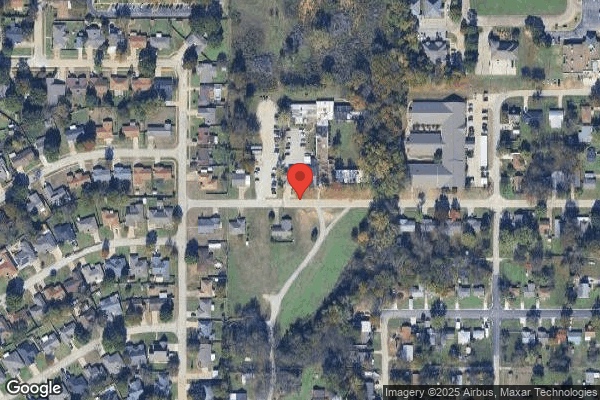
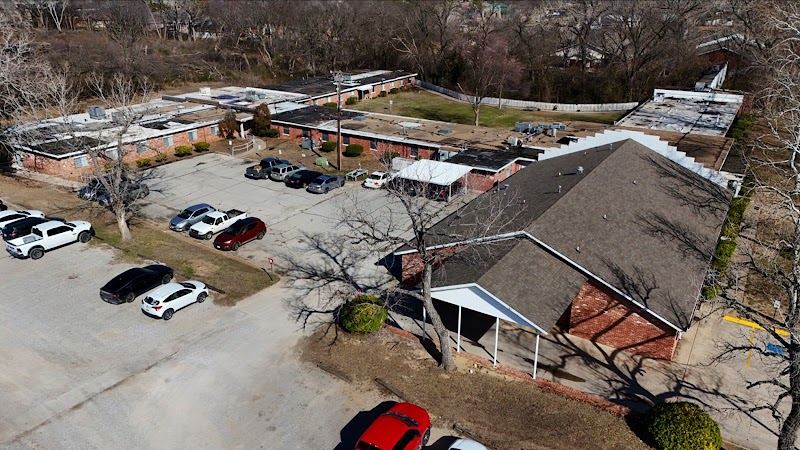
ELMBROOK HOME

1811 9TH AVENUE NW, ARDMORE, OK 73401 (580) 223-3303
For profit - Individual 126 Beds ELMBROOK MANAGEMENT COMPANY Data: November 2025
Trust Grade
70/100
#102 of 282 in OK
Last Inspection: January 2025

Within standard 12-15 month inspection cycle. Federal law requires annual inspections.

Overview

Elmbrook Home in Ardmore, Oklahoma has a Trust Grade of B, indicating it is a good choice, though not among the best. It ranks #102 out of 282 facilities in Oklahoma, placing it in the top half, but it is the lowest-ranked option in Carter County. The facility is experiencing a worsening trend, with reported issues increasing from 1 in 2024 to 9 in 2025. Staffing is a strength, earning 4 out of 5 stars with a turnover rate of 46%, which is below the state average, and there is more RN coverage than 76% of Oklahoma facilities. Notably, there have been concerns about not referring a resident for a necessary mental health evaluation and failing to schedule a timely mammogram, as well as issues ensuring a safe environment for residents who smoke, highlighting areas that need improvement despite the facility's strengths.

Trust Score
B
70/100
In Oklahoma
#102/282
Top 36%
Safety Record
Low Risk
No red flags
Inspections
Getting Worse
1 → 9 violations
Staff Stability
⚠ Watch
46% turnover. Above average. Higher turnover means staff may not know residents' routines.
Penalties
✓ Good
No fines on record. Clean compliance history, better than most Oklahoma facilities.
Skilled Nurses
⚠ Watch
Each resident gets only 25 minutes of Registered Nurse (RN) attention daily — below average for Oklahoma. Fewer RN minutes means fewer trained eyes watching for problems.
Violations
○ Average
10 deficiencies on record. Average for a facility this size. Mostly minor or procedural issues.
★★★☆☆
3.0
Overall Rating
★★★★☆
4.0
Staff Levels
★★★☆☆
3.0
Care Quality
★★★☆☆
3.0
Inspection Score
Stable
2024: 1 issues
2025: 9 issues

The Good

  • 4-Star Staffing Rating · Above-average nurse staffing levels
  • Full Sprinkler Coverage · Fire safety systems throughout facility
  • No fines on record

Facility shows strength in staffing levels, fire safety.

The Bad

3-Star Overall Rating

Near Oklahoma average (2.6)

Meets federal standards, typical of most facilities

Staff Turnover: 46%

Near Oklahoma avg (46%)

Higher turnover may affect care consistency

Chain: ELMBROOK MANAGEMENT COMPANY

Part of a multi-facility chain

Ask about local staffing decisions and management

The Ugly 10 deficiencies on record

Aug 2025 2 deficiencies
CONCERN (D) 📢 Someone Reported This

A family member, employee, or ombudsman was alarmed enough to file a formal complaint

Potential for Harm - no one hurt, but risky conditions existed

Notification of Changes (Tag F0580)

Could have caused harm · This affected 1 resident

**NOTE- TERMS IN BRACKETS HAVE BEEN EDITED TO PROTECT CONFIDENTIALITY** Based on record review and interview, the facility failed to ensure responsible parties were notified of a change in condition f...

Read full inspector narrative →
**NOTE- TERMS IN BRACKETS HAVE BEEN EDITED TO PROTECT CONFIDENTIALITY** Based on record review and interview, the facility failed to ensure responsible parties were notified of a change in condition for 1 (#1) of 3 sampled residents reviewed for notifying responsible parties of a change in condition. The administrator identified 68 resided in the facility. Findings:A facility policy titled Change in a Resident's Condition or Status, dated 02/2021, read in part, Unless otherwise instructed by the resident, a nurse will notify the representative when: .it is necessary to transfer the resident to a hospital/treatment center.Except in Medical emergencies, notifications will be made within twenty-four (24) hours of a change occurring in the residents' medical/mental condition or status.Resident #1's admission health record, dated 11/15/24, showed they were admitted with diagnoses which included atrial flutter, epilepsy, nutritional disorder, and chronic kidney disease. An annual assessment for Resident #1, dated 01/07/25, showed Resident #1's cognition was moderately impaired with a BIMS score of 12.A progress note for Resident #1, dated 01/31/25, showed Resident #1's physician ordered them to be sent to the emergency room. A hospital record for Resident #1, dated 01/31/25 though 02/07/25, showed Resident #1 was admitted to the hospital on [DATE] with a diagnosis of acute CVA (cerebrovascular accident). A facility form titled Corrective Action Notice, dated 02/07/25, showed LPN #3 was suspended and received a written notice for failing to notify family representatives when sending Resident #1 to the hospital.A facility document titled Performance Improvement Plan: Privileged Work Document, dated 02/19/25, showed in-service training was conducted on timely notifying family representatives of change in condition and hospital transfers. The document showed auditing events and hospital transfers to ensure timely notification of transfers and change in condition were completed daily for two weeks, weekly for four weeks, and periodically.A facility document titled Inservice Training Report, dated 02/19/25 through 02/20/25, showed 22 staff received in-service training over notification to family representatives after a change in condition. A facility document titled Daily Stand-up Rounds report, dated 02/19/25 through 03/28/25, showed the facility was monitoring for notification to family representatives in the event of a hospital transfer daily for two weeks from 02/19/25 through 03/05/25. The document showed notification of family representatives in the event of a change in condition was monitored weekly from 03/05/25 through 03/28/25.A facility document titled Monthly QA/PI Committee Meeting, dated 03/11/25, showed notification to family representatives after a change in condition was reviewed in the meeting QA/PI meeting. On 08/25/25 at 2:50 p.m., family representative #1 stated Resident #1 was sent to the hospital on [DATE]. Family representative #1 stated they were not notified that Resident #1 was being sent to the hospital on [DATE] by the facility staff. Family Representative #1 stated they were notified of Resident #1's transfer when the medical flight transport pilot contacted them. On 08/25/25 at 8:58 a.m., LPN #3 stated notification to family representatives should be documented in the progress notes. LPN #3 stated there was no documentation in Resident #1's progress notes, dated 01/31/25, the family was notified when Resident #1 was sent to the hospital. LPN #3 stated they received a written warning for not notifying Resident #1's family representative on 01/31/25. LPN #3 stated they had an in-service training on notification to family representatives after a change in condition. On 08/26/25 at 8:30 a.m., the DON stated LPN #3 did not notify the family representative of Resident #1 on 01/31/25 when the resident was sent to the hospital. The DON stated the family representative was notified by the medical flight pilot. The DON stated they did a PIP and in-service over notifying family representatives after a change in condition. The DON stated LPN #3 received a written corrective action on 02/07/25 for not notifying the family representative of Resident #1.
CONCERN (D) 📢 Someone Reported This

A family member, employee, or ombudsman was alarmed enough to file a formal complaint

Potential for Harm - no one hurt, but risky conditions existed

Pharmacy Services (Tag F0755)

Could have caused harm · This affected 1 resident

**NOTE- TERMS IN BRACKETS HAVE BEEN EDITED TO PROTECT CONFIDENTIALITY** Based on observation, record review, and interview, the facility failed to ensure medications were administered according to phy...

Read full inspector narrative →
**NOTE- TERMS IN BRACKETS HAVE BEEN EDITED TO PROTECT CONFIDENTIALITY** Based on observation, record review, and interview, the facility failed to ensure medications were administered according to physicians' orders for 1 (#2) of 6 residents sampled for medications administered according to physician orders. The administrator identified 68 resident received medication from the facility. Findings:On 08/25/25 at 2:10 p.m., the medication room was observed. The room was locked and secured with a camera for monitoring. The room was clean, and all medications were labeled. RN #1 showed the e-kit (emergency medication kit) and the process for accessing the emergency medications. The e-kit was locked with a control log process when accessing medications. There was an inventory sheet attached which showed all the medications in the e-kit. The e-kit was labeled with medications set to expire on 10/2025. Macrobid antibiotic in capsules were observed in the e-kit. A facility policy titled Pharmacy Services Overview, dated 04/2019, read in part, The facility shall accurately and safely provide or obtain pharmaceutical services, including the provision of routine and emergency medications and biologicals, and the service of a licensed pharmacist.Residents have sufficient supply of their personal medications and receive medications (routine, emergency or as needed) in a timely manner.Resident #2's admission record, dated 04/30/21, showed they were admitted with diagnoses which included malignant neoplasm of the right kidney, Alzheimer disease, dementia, malignant neoplasm of the left lung, and stage 3 chronic kidney disease.Resident #2's quarterly assessment, dated 04/02/25, showed their cognition was moderately impaired with a BIMS score of 13.Resident #2's physician order, dated 05/20/25, showed to send Resident #2's urine out for culture and cytology. Resident #2's lab results, dated 05/23/25, showed Resident #2's urine was positive for Escherichia coli greater than 100,000 cells/ml. Resident #2's nursing note, dated 05/23/25, read in part, 1400-2200 [2:00 p.m. - 10:00 p.m.] N/O [new order] per [name of physician withheld] Macrobid 100 mg x 14 days for E. coli.Resident #2's physician orders, dated 05/24/25, read in part, Macrobid (antibiotic) (nitrofurantoin monohyd/m-cryst) capsule; 100 mg; amt (amount) 1 tab; oral twice a day.A facility document titled Grievance/Complaint Report, dated 05/24/25, showed Resident #2's family representative was concerned Resident #2 did not receive their antibiotic on 05/24/25. The document showed the medications were in the building and nursing staff were in-serviced on use of the e-kit. Resident #2's MAR (medication administration record), dated 05/23/25 through 05/25/25, did not document Resident #2 received the antibiotic Macrobid 100 mg two times a day. Resident #2's nursing note, dated 05/25/25, showed Resident #2s family was present and Resident #2 was confused. The note showed Resident #2's physician was notified and ordered Resident #2 to be sent to the hospital for IV fluids. The note showed Resident #2 left the facility by ambulance to be transported to the hospital.Resident #2's hospital record, dated 05/25/25, showed Resident #2 was admitted to the hospital for a complicated UTI and was not septic. A facility document titled Performance Improvement Plan: Privileged Work Document, dated 05/25/25, showed LPNs, RNs, and CMAs were in-serviced on 05/25/25 regarding the use of the e-kit for medications and utilizing the emergency pharmacy phone number. The document showed the facility was going to conduct medication audits weekly for two weeks, then weekly thereafter. A facility document with no title, dated 05/25/25 through 06/07/25, showed daily monitoring was in place to ensure residents received their medications as ordered. The document showed weekly monitoring was conducted from 06/09/25 through 08/13/25. The daily/weekly monitoring document included the following key points:a. MAR matches current provider,b. medications given in 1-hour window, c. PRNs include indication, effectiveness documentation, and d. Any omitted or missed doses.The document showed medications were available in the facility and proper medication protocols were being followed.A facility handwritten statement from CMA #1, dated 05/26/25, read in part, Saturday 05/24/25, I was med (medication) aide on 2 p.m. to 10 p.m., I was supposed to give Macrobid around [3:00 p.m.] but it wasn't there, and I let [LPN #5] know it wasn't there and that I put it down as not given. [They] said OK and went to working on getting it from the pharmacy.A facility document titled Corrective Action Notice, dated 05/26/25, read in part, [LPN #5] displayed unprofessionalism toward family members. [LPN#5] did not ensure medications were in the building in a timely manner and did not follow the facility protocols on ensuring meds were given, and the emergency kit was utilized. The note showed LPN #5 was suspended for 4 days. The note was signed by the DON on 05/27/25.A facility document titled Resident Concern Form, dated 05/26/25, showed Resident #2 did not receive their scheduled antibiotics on 05/24/25 and 05/25/25. The note showed actions taken included internal investigation, corrective action, implement a PIP on medication adherence, and audits. A facility document titled In-service Training Report, dated 05/26/25, showed the DON in-serviced 16 nurses and CMAs on the following topics:a. e-Kit,b. ensuring medications were in the building, andc. the emergency phone number for the pharmacy. Resident #2's urine culture lab results, dated 05/28/25, showed Resident #2's urine was positive for Escherichia coli with [NAME] 10,000-50,000 cfu/ml (colony forming unit per milliliter). A facility document titled Monthly QA/PI Committee Meeting, dated 06/16/25, showed a QAPI meeting was held. The QAPI meeting addressed the e-kit for medications, medications being available, and regulatory compliance. On 08/25/25 at 8:00 a.m., physician #1 stated Resident #2 was very ill with kidney cancer and they had UTI's consistently due to their disease process. Physician #1 stated based upon the lab values from the urine sample taken at the hospital on [DATE], they would have discontinued the antibiotic Macrobid prescribed on 05/23/25. Physician #1 stated Resident #2 was not harmed as a result of not getting the prescribed antibiotic for two days. On 08/25/25 at 11:28 a.m., CMA #1 was asked about Resident #2's medication administration. CMA #1 stated on 05/24/25, they were passing medications when they realized Resident #2's Macrobid antibiotic was not available. CMA #1 stated they notified LPN #5 the medication was not available and marked on the MAR the antibiotic was not given to the resident. CMA #1 stated they were in-serviced on ensuring medications were available and given following physician orders.On 08/25/25 at 11:53 a.m., NP #1 stated they prescribed the Macrobid antibiotic on 05/23/25 for Resident #2. NP #1 stated Resident #2 would not have been harmed as a result of not receiving the antibiotic because Resident #2 has bleeding from the kidneys related to their diagnosed illness of kidney cancer. On 08/26/25 at 8:30 a.m., the DON stated Resident #2 not receiving their prescribed antibiotic on 05/24/25 and 05/25/25 was a failure on the staff for not utilizing the e-kit. The DON stated they did a PIP, in-serviced all CMAs and nurses on medication policy and procedure, did corrective action on involved staff, and QA/PI the event on 06/16/25.
Jan 2025 7 deficiencies
CONCERN (D)

Potential for Harm - no one hurt, but risky conditions existed

Resident Rights (Tag F0550)

Could have caused harm · This affected 1 resident

Based on observation, record review, and interview, the facility failed to treat a resident with dignity and respect while providing assistance with eating for one (#33) of one resident sampled for re...

Read full inspector narrative →
Based on observation, record review, and interview, the facility failed to treat a resident with dignity and respect while providing assistance with eating for one (#33) of one resident sampled for resident rights. The administrator reported 67 residents resided in the facility. A Telephones, Employees Use of policy, dated July 2010, read in part, cellular phones may be used for personal calls and text messaging ONLY when the employee was on authorized meal and break periods. Employee cell phones will remain off and/or silent during all other work hours. Failure to comply with cellular phone policies may result in disciplinary action. Resident #33 had diagnoses which included Alzheimer's disease, depression, and seizure disorder. An MDS assessment for Resident #33, dated 11/18/24, documented the resident had severely impaired decision making. A care plan for Resident #33, dated 11/18/24, documented the resident required assistance with activities of daily living. On 01/14/25 at 1:02 p.m., during the noon meal, CNA #2 was observed to be watching a video on their personal cell phone while feeding Resident #33 a pureed meal. On 01/14/25 at 1:20 p.m., LPN #3 reported the use of cell phones while providing resident care was not allowed and stated they would address the situation with CNA #2. On 01/14/25 at 2:10 p.m., CNA #1 reported CNA #2 used their cell phone on a daily basis while feeding the residents. CNA #1 was asked if they were allowed to use their cell phone while providing care and the CNA stated it was not recommended. On 01/16/25 at 9:57 a.m., the DON reported they expected no cell phone use from staff while providing care to residents. The DON reported cell phone use had been an ongoing problem and staff were reminded frequently to put their phones away except during breaks.
CONCERN (D) 📢 Someone Reported This

A family member, employee, or ombudsman was alarmed enough to file a formal complaint

Potential for Harm - no one hurt, but risky conditions existed

Safe Environment (Tag F0584)

Could have caused harm · This affected 1 resident

Based on observation, record review, and interview, the facility failed to maintain a comfortable room temperature for one (#16) of four residents sampled for the environment. The administrator repor...

Read full inspector narrative →
Based on observation, record review, and interview, the facility failed to maintain a comfortable room temperature for one (#16) of four residents sampled for the environment. The administrator reported 67 residents resided in the facility. Findings: An undated Resident Rights policy, read in parts, The facility must provide a safe, clean, comfortable, home-like environment .The facility will provide housekeeping and maintenance services .The facility will provide you with comfortable and safe temperature levels. Resident #16 had diagnoses which included atrial fibrillation, Alzheimer's dementia, muscle weakness, anxiety, coronary artery disease, iron deficiency anemia, chronic pain, and diabetes. An MDS assessment, dated 11/02/24, documented Resident #16 was moderately impaired with cognition. The assessment documented the resident used a wheelchair for mobility. On 01/14/25 at 2:40 p.m., Resident #16 was observed lying in bed covered up with blankets. The resident reported they were cold and was noted to have blankets on the windowsill underneath the blinds. The resident reported they had put the blankets on the windowsill because they were always cold. On 01/14/25 at 2:49 p.m., RN #2 reported Resident #16's room was always cold. The RN reported they had told maintenance about the room being cold the previous week. The RN reported they remembered maintenance saying there were blankets on the vent and those had been removed to get some heat flowing. The RN stated they did not think the room had gotten any warmer and maintenance had not done anything further as far as they were aware. The RN reported sometimes Resident #16's hands were so cold it was hard to get a pulse oximetry reading when doing the resident's assessment. On 01/14/25 at 3:40 p.m., a room temperature was obtained in Resident #16's room, using a digital thermometer, which read 67.6 degrees Fahrenheit. On 01/16/25 at 10:25 a.m., Resident #16 reported their room was still cold. A room temperature was obtained and the temperature was 71.4 degrees Fahrenheit. The administrator and maintenance staff obtained a similar temperature reading using their own thermometer. The resident was observed sitting in their wheelchair wearing a jacket. The surveyor asked the resident if they had been asked about possibly changing rooms. The administrator then asked the resident if they would want to change rooms and the resident stated, Yes, I would. On 01/16/25 at 10:37 a.m., the administrator reported they had just learned the previous day the resident had complained of their room being too cold and they had started a grievance report related to the resident's complaint. The administrator was informed the resident had complained to the charge nurse the previous week and the charge nurse had reported the complaint to maintenance. The administrator reported they would check into finding a different room for the resident.
CONCERN (D)

Potential for Harm - no one hurt, but risky conditions existed

Comprehensive Assessments (Tag F0636)

Could have caused harm · This affected 1 resident

**NOTE- TERMS IN BRACKETS HAVE BEEN EDITED TO PROTECT CONFIDENTIALITY** Based on record review and interview, the facility failed to complete a MDS discharge assessment when the resident was discharge...

Read full inspector narrative →
**NOTE- TERMS IN BRACKETS HAVE BEEN EDITED TO PROTECT CONFIDENTIALITY** Based on record review and interview, the facility failed to complete a MDS discharge assessment when the resident was discharged from the facility for one (#63) of one sampled resident reviewed for comprehensive assessments. The administrator reported 67 residents resided in the facility. Findings: The regional nurse consultant reported the facilty had no policy for comprehensive assessments. Resident #63 was admitted to the facility on [DATE] with a diagnosis of right femur fracture. A progress note, dated 09/07/24, documented the resident discharged from the facility. On 01/15/25 at 11:10 a.m., the MDS coordinator reported the discharge assessment was missed for Resident #63. The MDS coordinator reported the discharge assessment would be completed and submitted.
CONCERN (E)

Potential for Harm - no one hurt, but risky conditions existed

PASARR Coordination (Tag F0644)

Could have caused harm · This affected multiple residents

**NOTE- TERMS IN BRACKETS HAVE BEEN EDITED TO PROTECT CONFIDENTIALITY** Based on record review and interview, the facility failed to refer a resident with newly diagnosed mental illness diagnoses to t...

Read full inspector narrative →
**NOTE- TERMS IN BRACKETS HAVE BEEN EDITED TO PROTECT CONFIDENTIALITY** Based on record review and interview, the facility failed to refer a resident with newly diagnosed mental illness diagnoses to the OHCA for a level II PASARR evaluation for one (#40) of two sampled residents reviewed for PASARR. The administrator reported 67 residents resided in the facility. Findings: Resident #40 was admitted to the facility on [DATE]. A level I PASARR, dated 02/09/21, documented no level II PASARR was required. Resident #40 had diagnoses added since admission which included mood disorder, date diagnosed 10/14/23, and unspecified psychosis, date diagnosed 11/10/23. On 01/14/25 at 4:33 p.m., the regional nurse consultant reported the resident's PASARR had not been reevaluated after the new mental illness diagnoses. The regional nurse consultant reported the facility had no policy for PASARR.
CONCERN (E)

Potential for Harm - no one hurt, but risky conditions existed

Quality of Care (Tag F0684)

Could have caused harm · This affected multiple residents

Based on observation, record review, and interview, the facility failed to transcribe a physician order and schedule a mammography in a timely manner as requested for one (#41) of one resident reviewe...

Read full inspector narrative →
Based on observation, record review, and interview, the facility failed to transcribe a physician order and schedule a mammography in a timely manner as requested for one (#41) of one resident reviewed for a physician ordered mammography. The administrator reported 67 residents resided in the facility. Findings: A Transportation, Diagnostic Services policy, dated December 2008, read in parts, Should it become necessary for the facility to provide transportation, the Social Service Designee will be responsible for arranging the transportation through the business office .A member of the Nursing Staff, or Social Services, will accompany the resident to the diagnostic center when the resident's family is not available. An Acute Condition Changes-Clinical Protocol policy, dated March 2018, read in parts, Before contacting a physician about someone with an acute change of condition, the nursing staff will collect pertinent details to report to the physician, for example, the history of present illness and previous and recent test results for comparison .The attending physician (or a practitioner providing backup coverage) will respond in a timely manner to notification of problems or changes in condition and status .The nursing staff will contact the medical director for additional guidance and consultation if they do not receive timely or appropriate response. A Resident's Council Meeting minutes, dated 08/08/24, documented an elder stated doctor appointments were taking too long to set up. Progress notes for Resident #41, dated 11/13/24, documented past surgical history, partial mastectomy left. A nurse's note for Resident #41, dated 12/26/24, read in parts, resident has a lump in breast tissue under the left arm .[physician name withheld] notified. New orders .Schedule mammogram for resident as soon as possible. The note was documented by RN #3. Resident #41's Physician Order, dated 01/16/25, read in part, diagnostic mammogram due to lump on the left side [DX: Unspecified lump in the left breast, upper outer quadrant]. LPN #1 presented the physician's order on the day of the survey. On 01/16/25 at 8:29 a.m., LPN #4 performed a skin assessment with Resident #41. A lump to the left breast area was noted and Resident #41 reported they were supposed to schedule them for a mammogram. The resident reported a history of breast cancer. On 01/16/25 at 11:08 a.m., LPN #1 was asked when Resident #41 was scheduled for a mammography. They reported the referral was sent this morning to the hospital. They were asked when they received notification to schedule the mammography. They stated they were notified around the end of December 2024 and the physician order was received this morning. They were asked about the nurse's note stating to schedule as soon as possible. LPN #1 stated that meant, As soon as we can get it done. The nurse was asked if it had been arranged as soon as possible. They stated, No. They stated it had been 16 or 17 days and they hoped they would have an appointment scheduled this afternoon or in the morning. They were asked about Resident #41's breast cancer history. The nurse reviewed records and reported the resident had a partial mastectomy on the left side dated 05/22/24. On 01/16/25 at 11:38 a.m., the DON was asked about the facility policy related to referrals for testing. The DON reported the doctor would put in the order and they would get it scheduled in a timely manner. The DON was asked about the scheduling for the mammography for Resident #41. They stated it sounded like it had taken a couple of weeks to get it scheduled. On 01/16/25 at 12:15 p.m., RN #3 was asked if they wrote the physician order related to the nurse's note dated 12/26/24. They stated they thought they had, but did not see the order when the record was reviewed today. The RN reported they were aware of the residents' history of breast cancer. The RN reported there had been a scheduling issue in getting the resident's mammography scheduled. On 01/16/25 at 2:30 p.m., LPN #1 reported they had called the hospital to get Resident #41's mammography scheduled. The LPN reported the hospital staff stated since the resident had a lump and would need a 3-D mammography, so the process was started with receiving a physician order for a 3-D mammography.
CONCERN (E)

Potential for Harm - no one hurt, but risky conditions existed

Accident Prevention (Tag F0689)

Could have caused harm · This affected multiple residents

Based on observation, record review, and interview, the facility failed to follow their policy to ensure a safe environment for smokers for two (#45 and #55) of two residents sampled for accident haza...

Read full inspector narrative →
Based on observation, record review, and interview, the facility failed to follow their policy to ensure a safe environment for smokers for two (#45 and #55) of two residents sampled for accident hazards. The administrator reported 10 residents who smoked, seven of which were unsupervised smokers. Findings: A Smoking Policy - Residents policy, dated July 2017, read in parts, A resident's ability to smoke safely will be re-evaluated quarterly, upon a significant change (physical or cognitive) and as determined by the staff .Residents shall have the supervision of a staff member, family member, visitor or volunteer worker at all times while smoking .Residents may not have or keep any smoking articles, including cigarettes, tobacco, etc., except when they are under supervision. 1. Resident #45 had diagnoses which included Alzheimer's dementia, diabetes, asthma, chronic kidney disease, visual loss, muscle spasm, anxiety, depression, psychosis, and a history of falls. A smoking assessment for Resident #45, dated 12/19/24, documented the resident was a safe smoker with a smoking risk of 0. The assessment documented the resident could smoke independently. An MDS assessment, dated 12/20/24, documented the resident was cognitively intact and independent with activities of daily living. A care plan for Resident #45, dated 12/24/24, documented the resident was at risk for injury related to being a smoker. The care plan documented the resident would smoke in designated areas. The care plan documented the resident required oxygen as needed. On 01/15/25 at 10:47 a.m., Resident #45 reported they smoked independently. The resident was asked if staff kept their cigarettes and they stated, No. They stated that was only for residents who got caught smoking in their room. The resident was noted to have oxygen in place per nasal cannula. The resident reported they used oxygen most of the time. On 01/15/25 at 10:58 a.m., CNA #2 reported Resident #45 was fairly independent and was allowed to keep their cigarettes in their room. On 01/15/25 at 11:03 a.m., LPN #3 reported they only kept cigarettes for one resident on the hall. The LPN reported Resident #45 and all other unsupervised smokers kept their own cigarettes in their rooms. On 01/15/25 at 4:51 p.m., RN #2 confirmed Resident #45 kept their cigarettes and lighter in their room. The RN reported the resident smoked independently. The RN reported the resident normally only went out to smoke two or three times a day because the resident usually did not feel like going out. 2. Resident #55 had diagnoses which included Alzheimer's disease, pain, depression, anxiety, essential tremor, and a history of falls. A progress note, dated 11/24/24 at 6:47 p.m., documented Resident #55 was outside smoking with family members. The note documented the family reported the resident got up to walk over and get a cigarette when they tripped and fell. The note documented the resident was assessed for injury. A smoking assessment for Resident #55, dated 01/07/25, documented the resident smoked every few hours. The assessment documented a smoking risk of 0. The assessment documented the resident was a safe smoker and could smoke independently. An MDS assessment, dated 01/07/25, documented the resident was severely impaired with cognition. A care plan for Resident #55, dated 01/09/25, documented the resident was at risk for injury related to smoking. The care plan documented the resident would smoke in designated areas. The care plan documented the resident had cognitive impairment related to Alzheimer's disease. On 01/14/25 at 11:17 a.m., the social services director reported Resident #55 frequently walked the halls often looking for someone to take them outside to smoke. On 01/14/25 at 11:25 a.m., Resident #55 was observed to walk to the outside door near the designated smoking area. An unidentified staff member was observed to open the door for the resident and the resident was observed to smoke with three staff members. On 01/15/25 at 11:05 a.m., LPN #3 reported they kept Resident #55's cigarettes at the nurse's station. The nurse reported the resident did not typically request to go smoke, but staff would take the resident out a couple of times a day. The nurse reported the resident was always supervised with a staff member. On 01/15/25 at 4:06 p.m., CNA #3 reported Resident #55 did not actually get staff to take them out, but would often go to the door to see if anyone else was smoking. The CNA reported staff usually took the resident out a couple of times a day and the resident was always supervised. On 01/16/25 at 9:45 a.m., the DON reported Resident #55's smoking assessment was correct. The DON reported they would normally keep cigarettes for a resident with dementia, so the nurses kept the resident's cigarettes at the nurse's station. The DON reported Resident #55 could smoke safely with no concern related to how they held a cigarette and no concern with lighting a cigarette. On 01/16/25 at 9:50 a.m., the DON reported the MDS nurse usually completed the resident smoking assessments. The DON reported if residents were considered unsupervised, they could go outside and smoke independently without supervision. The DON reported they had some residents who kept their cigarettes and lighter in their room, and were free to go out and smoke whenever they wanted without notifying staff. The DON reported a resident with dementia usually required staff to keep their cigarettes and required supervision while smoking. On 01/16/25 at 9:58 a.m., the DON was asked about the facility's policy for all smokers to be supervised at all times and that residents would not keep any smoking articles except under supervision. The DON reported often residents wanted to keep their own cigarettes, so it was a nursing judgement as to who would be allowed to keep their cigarettes and lighter with them. The DON stated the facility policy probably needed to be re-worded to reflect their process more accurately.
CONCERN (E)

Potential for Harm - no one hurt, but risky conditions existed

Infection Control (Tag F0880)

Could have caused harm · This affected multiple residents

Based on observation, record review, and interview, the facility failed to ensure proper disposal of blood contaminated glucometer strips for one (#52) of two sampled residents reviewed for finger sti...

Read full inspector narrative →
Based on observation, record review, and interview, the facility failed to ensure proper disposal of blood contaminated glucometer strips for one (#52) of two sampled residents reviewed for finger stick blood sugar levels. The DON reported 25 residents received finger stick blood sugar levels. Findings: A policy for Blood Sampling, dated 09/14/14, read in parts, The purpose of this procedure is to guide the safe handling of capillary-blood sampling devices to prevent transmission of bloodborne diseases to residents and employees .Equipment and supplies, sharps container .Discard lancet and platform into the sharps container. Resident #52's Physician Order, dated 04/28/24, documented FSBS BID notify provider if over 300 and below 60. Resident #52's Care Plan, dated 05/13/24, documented nutritional status, resident has a diagnosis of diabetes mellitus. On 01/14/25 at 5:10 p.m., RN #2 was observed to gather supplies for a FSBS, which included a glucometer, gauze, lancet, and glucometer strip. The RN obtained a blood sample from Resident #52 and the glucometer had timed out. The RN removed the bloody strip and disposed of it in the resident's trashcan in their room. The RN was then observed to repeat the procedure and again disposed of the bloody test strip in the resident's trashcan. The RN reported they were nervous and normally would have disposed of the contaminated strip in the sharps container. On 01/16/25 at 2:25 p.m., the DON reported their policy was to dispose of contaminated supplies in the sharps container.
Apr 2024 1 deficiency
CONCERN (D) 📢 Someone Reported This

A family member, employee, or ombudsman was alarmed enough to file a formal complaint

Potential for Harm - no one hurt, but risky conditions existed

Deficiency F0761 (Tag F0761)

Could have caused harm · This affected 1 resident

Based on observation and interview, the facility failed to ensure medications were stored properly and according to facility policy. The Administrator reported 66 residents resided in the facility. Fi...

Read full inspector narrative →
Based on observation and interview, the facility failed to ensure medications were stored properly and according to facility policy. The Administrator reported 66 residents resided in the facility. Findings: The Storage and Medications policy, revised, April 2019, read in part .Policy Statement The facility stores all drugs and biologicals in a safe , secure, and orderly manner . On 04/25/24 at 4:29 p.m., it was observed that resident #8's medications were laying on the top of the counter, at the north hall nurses station. No staff was in sight. On 04/25/24 at 4:30 p.m., RN#1 reported resident #8's medications should be locked in a medication cart. On 04/25/24 at 4:31p.m., ADON reported resident #8's medications are supposed to be locked and stored in the medication cart.
Understanding Severity Codes (click to expand)
Life-Threatening (Immediate Jeopardy)
J - Isolated K - Pattern L - Widespread
Actual Harm
G - Isolated H - Pattern I - Widespread
Potential for Harm
D - Isolated E - Pattern F - Widespread
No Harm (Minor)
A - Isolated B - Pattern C - Widespread

Questions to Ask on Your Visit

  • "Can I speak with families of current residents?"
  • "What's your RN coverage like on weekends and overnight?"

Our Honest Assessment

Strengths
  • • No major safety red flags. No abuse findings, life-threatening violations, or SFF status.
  • • No fines on record. Clean compliance history, better than most Oklahoma facilities.
Concerns
  • • No major red flags. Standard due diligence and a personal visit recommended.
Bottom line: Mixed indicators with Trust Score of 70/100. Visit in person and ask pointed questions.

About This Facility

What is Elmbrook Home's CMS Rating?

CMS assigns ELMBROOK HOME an overall rating of 3 out of 5 stars, which is considered average nationally. Within Oklahoma, this rating places the facility higher than 99% of the state's 100 nursing homes. This mid-range rating indicates the facility meets federal standards but may have areas for improvement.

How is Elmbrook Home Staffed?

CMS rates ELMBROOK HOME's staffing level at 4 out of 5 stars, which is above average compared to other nursing homes. Staff turnover is 46%, compared to the Oklahoma average of 46%. This relatively stable workforce can support continuity of care.

What Have Inspectors Found at Elmbrook Home?

State health inspectors documented 10 deficiencies at ELMBROOK HOME during 2024 to 2025. These included: 10 with potential for harm.

Who Owns and Operates Elmbrook Home?

ELMBROOK HOME is owned by a for-profit company. For-profit facilities operate as businesses with obligations to shareholders or private owners. The facility is operated by ELMBROOK MANAGEMENT COMPANY, a chain that manages multiple nursing homes. With 126 certified beds and approximately 65 residents (about 52% occupancy), it is a mid-sized facility located in ARDMORE, Oklahoma.

How Does Elmbrook Home Compare to Other Oklahoma Nursing Homes?

Compared to the 100 nursing homes in Oklahoma, ELMBROOK HOME's overall rating (3 stars) is above the state average of 2.6, staff turnover (46%) is near the state average of 46%, and health inspection rating (3 stars) is at the national benchmark.

What Should Families Ask When Visiting Elmbrook Home?

Based on this facility's data, families visiting should ask: "Can I visit during a mealtime to observe dining assistance and food quality?" "How do you handle medical emergencies, and what is your hospital transfer rate?" "Can I speak with family members of current residents about their experience?"

Is Elmbrook Home Safe?

Based on CMS inspection data, ELMBROOK HOME has a clean safety record: no substantiated abuse findings (meaning no confirmed cases of resident harm), no Immediate Jeopardy citations (the most serious violation level indicating risk of serious injury or death), and is not on the Special Focus Facility watch list (a federal program monitoring the lowest-performing 1% of nursing homes). The facility has a 3-star overall rating and ranks #1 of 100 nursing homes in Oklahoma. While no facility is perfect, families should still ask about staff-to-resident ratios and recent inspection results during their visit.

Do Nurses at Elmbrook Home Stick Around?

ELMBROOK HOME has a staff turnover rate of 46%, which is about average for Oklahoma nursing homes (state average: 46%). Moderate turnover is common in nursing homes, but families should still ask about staff tenure and how the facility maintains care continuity when employees leave.

Was Elmbrook Home Ever Fined?

ELMBROOK HOME has no federal fines on record. CMS issues fines when nursing homes fail to meet care standards or don't correct problems found during inspections. The absence of fines suggests the facility has either maintained compliance or corrected any issues before penalties were assessed. This is a positive indicator, though families should still review recent inspection reports for the full picture.

Is Elmbrook Home on Any Federal Watch List?

ELMBROOK HOME is not on any federal watch list. The most significant is the Special Focus Facility (SFF) program, which identifies the bottom 1% of nursing homes nationally based on persistent, serious quality problems. Not being on this list means the facility has avoided the pattern of deficiencies that triggers enhanced federal oversight. This is a positive indicator, though families should still review the facility's inspection history directly.