MARQUIS FOREST GROVE POST ACUTE REHAB
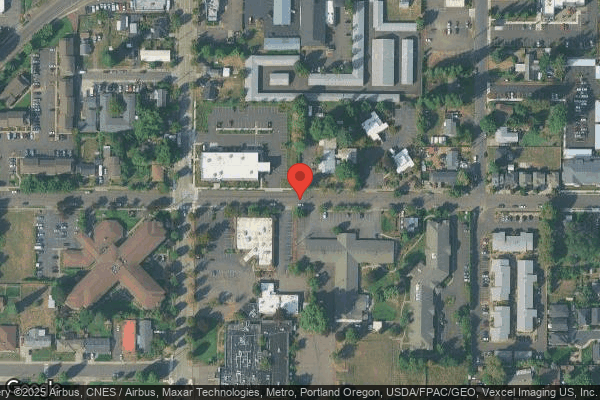
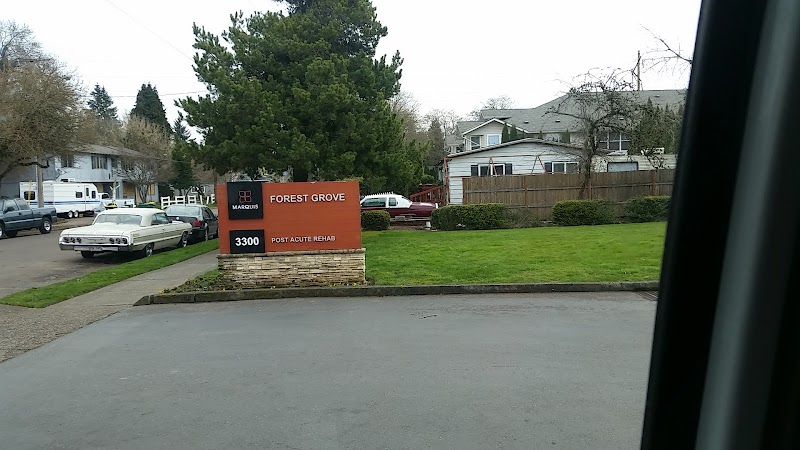
3300 19TH AVENUE, FOREST GROVE, OR 97116 (503) 357-7119
For profit - Corporation 63 Beds MARQUIS COMPANIES Data: November 2025
Trust Grade
90/100
#13 of 127 in OR
Last Inspection: November 2024

Within standard 12-15 month inspection cycle. Federal law requires annual inspections.

Overview

Marquis Forest Grove Post Acute Rehab has received an excellent Trust Grade of A, indicating a high-quality facility that is highly recommended. They rank #13 out of 127 nursing homes in Oregon, putting them in the top half of the state, and #2 out of 9 in Washington County, meaning only one local option is better. However, the facility's trend is worsening, with the number of issues increasing from 1 in 2023 to 3 in 2024. Staffing is a strong point, with a perfect 5-star rating and a turnover rate of 47%, which is slightly below the Oregon average. Notably, there have been no fines reported, and the facility has more RN coverage than 84% of Oregon facilities, ensuring that nursing staff are well-equipped to catch potential issues. On the downside, recent inspections revealed some concerning incidents, including improper medication storage, which could affect medication efficacy, and failure to process laundry properly, risking the spread of infection. Additionally, there was a case where a staff member used gloved hands to handle food instead of utensils, highlighting lapses in hygiene practices. While the facility has many strengths, these issues need to be addressed to ensure the continued safety and well-being of residents.

Trust Score
A
90/100
In Oregon
#13/127
Top 10%
Safety Record
Low Risk
No red flags
Inspections
Getting Worse
1 → 3 violations
Staff Stability
⚠ Watch
47% turnover. Above average. Higher turnover means staff may not know residents' routines.
Penalties
✓ Good
No fines on record. Clean compliance history, better than most Oregon facilities.
Skilled Nurses
✓ Good
Each resident gets 62 minutes of Registered Nurse (RN) attention daily — more than 97% of Oregon nursing homes. RNs are the most trained staff who catch health problems before they become serious.
Violations
○ Average
8 deficiencies on record. Average for a facility this size. Mostly minor or procedural issues.
★★★★★
5.0
Overall Rating
★★★★★
5.0
Staff Levels
★★★★☆
4.0
Care Quality
★★★★★
5.0
Inspection Score
Stable
2023: 1 issues
2024: 3 issues

The Good

  • 5-Star Staffing Rating · Excellent nurse staffing levels
  • 4-Star Quality Measures · Strong clinical quality outcomes
  • Full Sprinkler Coverage · Fire safety systems throughout facility
  • No fines on record

Facility shows strength in staffing levels, quality measures, fire safety.

The Bad

Staff Turnover: 47%

Near Oregon avg (46%)

Higher turnover may affect care consistency

Chain: MARQUIS COMPANIES

Part of a multi-facility chain

Ask about local staffing decisions and management

The Ugly 8 deficiencies on record

Nov 2024 3 deficiencies
CONCERN (D) 📢 Someone Reported This

A family member, employee, or ombudsman was alarmed enough to file a formal complaint

Potential for Harm - no one hurt, but risky conditions existed

Respiratory Care (Tag F0695)

Could have caused harm · This affected 1 resident

Based on observation, interview, and record review it was determined the facility failed to ensure resident respiratory equipment was maintained for 1 of 1 sampled resident (#12) reviewed for respirat...

Read full inspector narrative →
Based on observation, interview, and record review it was determined the facility failed to ensure resident respiratory equipment was maintained for 1 of 1 sampled resident (#12) reviewed for respiratory care. This placed residents at risk for increased respiratory concerns. Findings include: A 3/2015 Oxygen Administration facility policy indicated oxygen concentrator filters were to be cleaned weekly. Resident 12 was admitted to the facility in 10/2023 with diagnoses including Chronic Obstructive Pulmonary Disorder (a lung disease causing restricted airflow and breathing problems) and depression. The 10/19/24 Annual MDS indicated Resident 12 was cognitively intact. Resident 12's physician order dated 11/1/24 revealed she/he required oxygen nightly and as needed. The 11/2024 Task log to Replace oxygen tubing and filter every seven days indicated it was last completed on 11/17/24 by Staff 3 (RN). On 11/18/24 at 10:47 AM the oxygen concentrator was observed to have two foam external filters. The right-side foam filter appeared clean, and the left-side foam filter had a thick layer of dust. Resident 12 stated she/he used the oxygen concentrator nightly and as needed during the day. On 11/19/24 at 4:59 PM Staff 3 stated Resident 12's oxygen concentrator had one external foam filter that she cleaned every Sunday and last cleaned on 11/17/24. Staff 3 stated she was unaware the oxygen concentrator had two external foam filters. On 11/20/24 at 8:57 AM Staff 2 observed Resident 12's oxygen concentrator filters and acknowledged the left-side foam filter appeared dirty.
CONCERN (E) 📢 Someone Reported This

A family member, employee, or ombudsman was alarmed enough to file a formal complaint

Potential for Harm - no one hurt, but risky conditions existed

Deficiency F0761 (Tag F0761)

Could have caused harm · This affected multiple residents

Based on observation, interview, and record review it was determined the facility failed to ensure appropriate medication storage temperatures were logged and maintained and failed to ensure proper la...

Read full inspector narrative →
Based on observation, interview, and record review it was determined the facility failed to ensure appropriate medication storage temperatures were logged and maintained and failed to ensure proper labeling of biologicals for 1 of 1 medication storage refrigerator and 1 of 3 treatment carts reviewed for safe medication storage. This placed residents at risk for receiving medications with reduced efficacy. Findings include: 1. On 11/21/24 at 11:18 AM one open, undated vial of tuberculin (used for the testing in the diagnosis of Tuberculosis) was observed in the medication room refrigerator. The manufacturer's instructions indicated to discard the medication 30 days after opening. On 11/21/24 at 11:18 AM Staff 4 (LPN) acknowledged the vial of tuberculin was open and not labeled with the date opened. On 11/21/24 at 12:38 PM Staff 2 (DNS) stated the expectation was for staff to label tuberculin with an open date. 2. On 11/21/24 at 11:32 AM one open insulin lispro pen was open with no open date in the East Hall treatment cart. The manufacturer's instructions indicated to discard the medication 28 days after opening. On 11/21/24 at 11:32 AM Staff 13 (LPN) acknowledged the insulin lispro pen was open with no open date. On 11/21/24 at 12:38 PM Staff 2 (DNS) stated the expectation was for staff to label insulin with open dates. 3. On 11/21/24 at 11:54 AM the medication room refrigerator temperature logs were reviewed for 10/2024 and 11/2024 and revealed no temperatures were recorded for 10/6, 10/26, 10/28 and 11/16. On 11/21/24 at 12:38 PM Staff 2 (DNS) acknowledged the medication refrigerator logs had no temperatures recorded on the identified dates and the expectation was for staff to log temperatures twice daily. 4. On 11/21/24 at 11:54 AM the 10/2024 and 11/2024 medication room refrigerator temperature logs were reviewed and indicated the following: -Temperatures were to be kept within 36 F to 46 F. -On 10/2, 10/5, 10/8, and 10/9 the medication refrigerator was 48 F. On 11/21/24 at 12:38 PM Staff 2 (DNS) stated the expectation was for the medication room refrigerator to be kept between 36 F and 46 F. Staff 2 acknowledged the medication room refrigerator temperature logs indicated temperatures exceeded 46 F on the identified dates and the refrigerator contained vaccines and insulin.
CONCERN (E) 📢 Someone Reported This

A family member, employee, or ombudsman was alarmed enough to file a formal complaint

Potential for Harm - no one hurt, but risky conditions existed

Infection Control (Tag F0880)

Could have caused harm · This affected multiple residents

Based on observation, interview, and record review it was determined the facility failed to process laundry to produce hygienically clean laundry and prevent the spread of infection for 1 of 1 laundry...

Read full inspector narrative →
Based on observation, interview, and record review it was determined the facility failed to process laundry to produce hygienically clean laundry and prevent the spread of infection for 1 of 1 laundry room reviewed for infection control. This placed residents at risk for contaminated laundry. Findings include: According to the Center for Disease Control and Prevention: Guidelines for Environmental Control in Healthcare Facilities (2003); Laundry and Bedding Section G.II.D, damp laundry was not to be left in machines overnight. On 11/21/24 at 1:48 PM Staff 11 (Housekeeping) stated her shift ended at 2:30 PM and she had the last shift of the day. Staff 11 stated when wet laundry was not completed in the washing machine at the end of her shift, she left the wet laundry in the washing machine overnight. Staff 11 stated the next morning she or other housekeeping staff transferred the wet laundry to the dryer and did not rewash the laundry. On 11/21/24 at 2:45 PM the washing machine was observed to contain damp clothing protectors after housekeeping staff left the facility for the day. On 11/21/24 at 2:46 PM 1 (Administrator) stated she was unaware of a laundry policy regarding damp laundry left in the washing machine overnight.
Jan 2023 1 deficiency
CONCERN (D) 📢 Someone Reported This

A family member, employee, or ombudsman was alarmed enough to file a formal complaint

Potential for Harm - no one hurt, but risky conditions existed

Accident Prevention (Tag F0689)

Could have caused harm · This affected 1 resident

**NOTE- TERMS IN BRACKETS HAVE BEEN EDITED TO PROTECT CONFIDENTIALITY** Based on interview and record review it was determined the facility failed to provide the necessary care and services to prevent...

Read full inspector narrative →
**NOTE- TERMS IN BRACKETS HAVE BEEN EDITED TO PROTECT CONFIDENTIALITY** Based on interview and record review it was determined the facility failed to provide the necessary care and services to prevent resident falls for 1 of 3 sampled residents (#2) reviewed for falls. This placed residents at risk for increased falls and injury. Findings include: Resident 2 admitted to the facility on [DATE] with diagnoses including traumatic brain injury, dementia and seizures. A review of Resident 2's medical record revealed Resident 2 fell on the following dates: *December 2020: 5, 8, 9, 11, 13 (twice), 15, 17, 22 and 23 *January 2021: 9 1. The 12/23/20 Post Fall Assessment revealed Resident 2 wore slippers without non-skid soles when she/he fell. The 12/2/20 Fall Care Plan revealed a revised intervention on 1/6/21 which indicated the resident was to wear non-skid shoes and slippers. [The care plan did not have the intervention to wear non-skid footwear in place upon admission which is considered a standard fall prevention practice.] On 1/31/23 at 12:35 PM Staff 2 (DNS) stated non-skid footwear was the standard of practice and generally put on care plans. Staff 2 verified Resident 2 wore shoes that did not have non-skid soles on 12/23/20. 2. A review of Resident 2's medical record revealed she/he had four prior unwitnessed falls between 12/2/20 through 12/12/20, was impulsive, had decreased cognition and experienced both hallucinations and delusions. The 12/13/20 Post Fall Assessment revealed Resident 2 fell when she/he attempted to self-transfer off the toilet. The resident was observed by staff one minute prior to the fall. The 12/2/20 Urinary Incontinence Care Plan revealed no supervision requirements prior to the resident's fall. A revised intervention dated 1/14/21 for the resident to have one person constant supervision and physical assist for safety. On 1/31/22 at 12:35 PM Staff 2 (DNS) stated Resident 2 should have been under constant supervision in the bathroom.
Sept 2019 1 deficiency
CONCERN (D)

Potential for Harm - no one hurt, but risky conditions existed

Deficiency F0700 (Tag F0700)

Could have caused harm · This affected 1 resident

**NOTE- TERMS IN BRACKETS HAVE BEEN EDITED TO PROTECT CONFIDENTIALITY** Based on interview and record review it was determined the facility failed to ensure residents were safe from accidents related ...

Read full inspector narrative →
**NOTE- TERMS IN BRACKETS HAVE BEEN EDITED TO PROTECT CONFIDENTIALITY** Based on interview and record review it was determined the facility failed to ensure residents were safe from accidents related to the use of bed rails (adjustable bars attached to bed and can range in size, used as an assistive device) and assessed the safety of grab bars (small cane shaped bar used as an assistive device) for 1 of 1 sampled resident (#43) reviewed for accidents. This placed residents at risk for continued accidents and possible injury. Findings include: Resident 43 admitted to the facility in 12/2018 with diagnoses including diabetes and obesity. Resident 43's 12/28/18 care plan for falls indicated she/he was at risk for falls. Interventions included to encourage the resident to use assistive devices properly. The care plan did not indicate if the resident used bed rails or grab bars. The 1/9/2019 MDS assessment indicated the resident was cognitively intact. The assessment further indicated she/he received extensive assist by two staff people for bed mobility and transfers. The 1/10/19 Falls Assessment for Resident 43 indicated she/he had a history of falls and expected continued falls due to her/his lack of using her/his call light for staff assistance. The assessment did not indicate if the resident used assistive devices on her/his bed. The 2/7/19 revised care plan for mobility and falls indicated she/he used the assistance of bilateral grab bars. The care plan further indicated the resident frequently attempted to self-transfer. Resident 43's current [NAME] (CNA Care Plan) indicated she/he was a fall risk and used the assistance of bilateral grab bars. The resident was also noted to have a catheter in place. Review of Resident 43's clinical record revealed no safety assessment related to the use of either bed rails or grab bars. The 3/8/19 Assistive Device Assessment indicated Resident 43 read and agreed to the use of bed rails at the head of and foot of her/his bed. The resident was noted to be independent with bed mobility, required supervision for transfers and had a history of falls. The resident was also noted to have poor safety insight. The device was noted to not restrict Resident 43's mobility and noted she/he used the upper bed rails to assist her/himself to re-position in bed. The assessment indicated the lower side rails were kept down and were not in use. Risks discussed with the resident included the potential she/he could get stuck in the open area of [the] handle. The resident was noted to have brought in her/his own bed with bed rails from her/his home. The assessment did not indicate when the resident brought in her/his own bed with bed rails. The 9/4/19 Fall Assessment indicated Resident 43 was found on the floor in her/his room after being in her/his bed. The assessment further indicated she/he was found suspended between her/his bed and the floor at 4:05 PM. The resident's right leg was caught on the bed rail. Resident 43 was noted to be confused and unable to describe the events of the fall, and was last seen by staff at 4:00 PM. The assistive/restrictive devises in use were noted to include bed canes to the foot and [head of bed]). The Prevention Plans Detail portion of the assessment included the following, Staff continue to anticipate transfer needs, [r]found on [her/him] frequently. [Ensure] safety measures [are] in place during each assessment [and] rounds. Assess bed cane placement and need for bed cane mobility. 9/4/19 Post-Fall Staff Questionnaire indicated Staff 5 (CNA) found the resident after her/his unwitnessed fall. Staff 5 noted Resident 43 was found suspended from her/his bed. She noted the resident's head was dangling above the ground, and her/his leg was entrapped in the bed rail. It was noted that her/his catheter was attached to the far rail. Staff 5 further indicated the resident's call light was not within reach, and had a suspected UTI with increased confusion. A 9/6/19 maintenance request from Staff 8 (RCM) indicated the grab bar on the resident's left side of the bed, appeared to be pushed out. The work order further indicated if the grab bar could not be fixed, could it be removed. A 9/9/19 maintenance request indicated Resident 43 had a mattress that was too small for her/his bedframe and to replace it if necessary. A 9/9/19 progress note indicated a larger mattress was placed on the bed and further indicated there was no longer a gap between the grab bars and the mattress. On 9/25/19 at 1:45 PM and 2:40 PM Staff 3 (Maintenance Manger) stated at one point in time, Resident 43 had a 42 inch wide bed with a 36 inch standard sized mattress on it. Staff 3 acknowledged there was a gap between the bed rails and the mattress that could have caused the resident to become entrapped. Staff 3 stated the resident had her/his own bed rails on both the head and the foot of the bed, and administrative staff requested those to be removed and replaced with facility approved grab bars. Review of Resident 43's clinical record on 9/25/19 revealed no safety assessment related to the placement of grab bars. On 9/25/19 at 2:45 PM Staff 6 (LPN) stated when the resident fell her/his foot became caught in the bed rail, but did not have any pain or injury from the incident. Staff 6 also stated the resident had a catheter that was attached to the opposite side of the bed that was pulling on the resident's genital area. On 9/25/19 at 3:14 PM Staff 5 (CNA) stated she could not remember how the resident's leg or foot looked, but stated she had to dislodge it from the side rail. On 9/27/19 at 9:15 PM Staff 2 (DNS) acknowledged Resident 43's use of side rails at the time of her/his fall, and acknowledged the resident's clinical record did not indicate when the side rails were first placed on the bed. Staff 2 acknowledged the resident's care plan did not accurately reflect the use of her/his side rails. Staff 2 also acknowledged the 9/4/19 Fall Assessment inaccurately used the term bed canes (grab bars) in place of the correct terminology of side rails. Staff 2 acknowledged the resident's clinical record indicated the resident had a mattress that was too small for the bed frame. Staff 2 additionally acknowledged the residents care plan was not updated to reflect new interventions put into place following Resident 43's accident on 9/4/19, and a safety assessment of the placement of grab bars was not completed until 9/27/19.
Feb 2018 3 deficiencies
CONCERN (D)

Potential for Harm - no one hurt, but risky conditions existed

Quality of Care (Tag F0684)

Could have caused harm · This affected 1 resident

2. Resident 39 was admitted to the facility in 1/2018 with diagnoses including diabetes and coronary artery disease. The 1/14/18 Physicians orders directed staff to administer Lasix 40 mg (an anti-di...

Read full inspector narrative →
2. Resident 39 was admitted to the facility in 1/2018 with diagnoses including diabetes and coronary artery disease. The 1/14/18 Physicians orders directed staff to administer Lasix 40 mg (an anti-diuretic) one tablet three times a week as needed for swelling. The order was transcribed to the 1/2018 and 2/2018 MAR. The 1/14/18 Nursing admission Assessment revealed the resident had edema present and had a pacemaker. The 1/14/18 Care Plan revealed: -The resident required assistance with mobility related to impairment and weakness. -The resident was at risk for dehydration related to the use of Lasix. -The resident was at risk for skin impairment related to decreased mobility and staff were to notify the charge nurse of impairments. The 1/14/18 through 2/15/18 TASK for Edema monitoring was blank. On 1/30/18 the Nurse Practitioner Progress Note revealed the resident had bilateral lower extremity two plus edema (moderate swelling) and to continue current orders. The 1/2018 MAR revealed the PRN Lasix was not administered. On 2/7/18 the Progress Note revealed the resident had bilateral lower extremity edema. The 2/2018 MAR revealed the PRN Lasix was not administered. An observation on 2/12/18 at 10:32 am revealed the resident was wearing oxygen and had swelling in her/his bilateral feet and lower extremities. On 2/13/18 Nurse Practitioner Progress Note revealed the resident had bilateral lower extremity two plus edema. The 2/2018 MAR revealed the PRN Lasix was not administered. An observation on 2/15/18 at 9:41 am revealed therapy staff wheeled the resident to a medication cart and asked Staff 5 (RN) about Resident 39's lower extremity edema. Staff 5 indicated he would have to check and see if there was an assessment. On 2/15/18 at 9:51 am, Staff 3 (RNCM) acknowledged there was swelling and tenderness in the resident's bilateral lower extremities and stated a PRN Lasix would be administered. Staff 3 acknowledged the daily Task for Edema monitoring was blank and the staff should have monitored Resident 39's edema. Based on observation, interview and record review it was determined the facility failed to monitor, follow physician orders and to initiate and change skin treatment for 2 of 5 sampled residents (#s 34 & 39) who were reviewed for edema and skin non-pressure. This placed residents at risk for delayed treatment and increased risk for complications related to care. Findings include: 1. Resident 34 was admitted to the facility in 1/2018 with diagnoses including traumatic subdural hemorrhage (bleeding in the brain), pacemaker and spinal stenosis. The resident's 1/2018 Pressure Ulcer CAA indicated Resident 34 was admitted with moisture-associated skin damage to the resident's buttocks and sacrum. The resident was at risk for skin breakdown due to the resident's incontinence and decreased mobility due to weakness, poor balance and recent hospitalization. The resident's 1/13/18 Skin and Wound Assessment identified she/he admitted with a blister to her/his left buttock which measured 24.8 x 5.3 x 6.7 cm. Subsequent Skin and Wound Assessment's assessed the resident's left buttock blister as follows: - On 1/17/18 the resident's blister measured 4.8 x 2.8 x 2.4 cm and her/his wound was improving. - On 1/24/18 the resident's blister measure 6.5 x 3.4 x 2.3 cm and her/his wound was improving. - On 1/31/18 the resident's blister measured 1.4 x 1.5 x 1.4 cm and her/his wound was improving. - On 2/7/18 the resident's wound measured 17.7 x 7.7 x 4.8 cm and her/his wound was improving. The resident's wound bed had 70% of epithelial (wound coverage) and 30% of granulation (new tissue). On 2/16/18 at 9:30 am, Resident 34 was observed to have a wound on top of her/his coccyx, the wound was open and had pale and pink tissue with macerated (soft) skin around the wound. Resident 34's 1/2018 TAR indicated to apply Butt Paste to the resident's sacrum/coccyx every day and evening shift for skin impairment started on 1/24/18, 11 days after the resident's blister was identified. In addition, the resident's Skin and Wound Assessment forms did not assess when the resident's blister opened nor was a treatment change considered despite an increase in the resident's wound measurements on 2/7/18. In an interview on 2/14/18 at 12:37 pm, Staff 5 (RN) stated Resident 34 had an open area/wound to her/his left buttock which was a blister when first discovered. Staff 5 stated the resident's only treatment was butt paste to the resident's left buttock area, which had been in place since 1/24/18. In an interview on 2/15/18 at 12:44 pm, Staff 3 (RNCM) confirmed there had been no treatment initiated until 1/24/18. Staff 3 also acknowledged she had not regularly monitored Resident 34's wound as the wound was not a pressure area. In an interview on 1/25/18 at 1:22 pm, Staff 2 (DNS) confirmed there had been a delay in initiating treatment and a delay in implementing new treatment orders. After reviewing the resident's skin and wound assessments, Staff 2 stated she agreed the resident's wound had worsened as of 2/7/18.
CONCERN (D)

Potential for Harm - no one hurt, but risky conditions existed

Accident Prevention (Tag F0689)

Could have caused harm · This affected 1 resident

Based on observation, interview and record review the facility failed to implement care planned fall interventions for 1 of 2 sampled residents (#5) reviewed for accidents. This placed residents at ri...

Read full inspector narrative →
Based on observation, interview and record review the facility failed to implement care planned fall interventions for 1 of 2 sampled residents (#5) reviewed for accidents. This placed residents at risk for injury. Findings include: Resident 5 was admitted to the facility in 9/2014 with diagnoses including stroke. The 12/7/17 care plan indicated Resident 5 was at risk for falls related to weakness, impaired mobility with right sided weakness, a history of falls and stroke. Fall interventions included a non-skid material on Resident 5's wheelchair seat. A Progress Note dated 2/4/18 indicated Resident 5 had an unwitnessed fall with injury. The investigation to the incident dated 2/4/18 indicated Resident 5 was found on the floor in her/his room after falling from her/his wheelchair. Resident 5 reported she/he was attempting to re-arrange some things on her/his dresser and fell forward. Resident 5 struck the right side of her/his head and face resulting in a hematoma (a solid swelling of clotted blood within the tissues). The investigation concluded the fall occurred due to the resident leaning forward to reach objects on the dresser without placing herself/himself in close enough proximity and her/his non-skid material was not on the wheelchair seat. On 2/12/18 at 11:45 am, Resident 45 was observed sitting in her/his wheelchair. A non-skid mat was observed on the seat of the wheelchair. Resident 45 had bruising under both eyes and stated it was from a fall. Resident 45 was unable to recall how she/he fell. On 2/14/18 at 11:55 am and 2/15/18 at 11:07 am, Staff 9 (CNA) stated Resident 5 was a fall risk and sometimes leaned forward to pick things up off the floor. Staff 9 stated Resident 5 used to slide in her/his wheelchair so a non-skid mat was used to prevent the resident from sliding down and out. On 2/15/18 at 12:35 pm, Staff 11 (RNCM) stated Resident 5 fell out of her/his wheelchair while reaching for something and slid out of the wheelchair. Staff 11 stated the non-skid mat intervention was not put into place and likely contributed to Resident 5's fall. On 2/15/18 at 1:00 pm, Staff 2 (DNS) acknowledged Resident 5's care planned fall intervention was not followed.
CONCERN (E)

Potential for Harm - no one hurt, but risky conditions existed

Food Safety (Tag F0812)

Could have caused harm · This affected multiple residents

Based on observation and interview it was determined the facility failed to ensure proper food handling during meal service was conducted for 1 of 1 kitchens reviewed for food sanitation. This placed ...

Read full inspector narrative →
Based on observation and interview it was determined the facility failed to ensure proper food handling during meal service was conducted for 1 of 1 kitchens reviewed for food sanitation. This placed residents at risk for cross contamination. Findings include: Observations of the tray line service on 2/15/18 at 11:44 am, revealed Staff 6 (Cook) wore gloves and was observed to use her gloved hands to pick up meal tickets, touch the shelves on the serving station, touch the plate and lids and then with the same gloves pick up the garlic bread and place it on the residents plates. Staff 6 was stopped during the tray service to use a serving utensil for the garlic bread. Staff 6 acknowledged she should have used a utensil instead of her gloved hands. On 2/15/18 at 2:04 pm, Staff 7 (Dietary Manger) acknowledged Staff 6 should have used a utensil to handle the bread instead of her gloved hands.
Understanding Severity Codes (click to expand)
Life-Threatening (Immediate Jeopardy)
J - Isolated K - Pattern L - Widespread
Actual Harm
G - Isolated H - Pattern I - Widespread
Potential for Harm
D - Isolated E - Pattern F - Widespread
No Harm (Minor)
A - Isolated B - Pattern C - Widespread

Questions to Ask on Your Visit

  • "Can I speak with families of current residents?"
  • "What's your RN coverage like on weekends and overnight?"

Our Honest Assessment

Strengths
  • • Grade A (90/100). Above average facility, better than most options in Oregon.
  • • No major safety red flags. No abuse findings, life-threatening violations, or SFF status.
  • • No fines on record. Clean compliance history, better than most Oregon facilities.
Concerns
  • • No significant concerns identified. This facility shows no red flags across CMS ratings, staff turnover, or federal penalties.
Bottom line: Generally positive indicators. Standard due diligence and a personal visit recommended.

About This Facility

What is Marquis Forest Grove Post Acute Rehab's CMS Rating?

CMS assigns MARQUIS FOREST GROVE POST ACUTE REHAB an overall rating of 5 out of 5 stars, which is considered much above average nationally. Within Oregon, this rating places the facility higher than 99% of the state's 100 nursing homes. This rating reflects solid performance across the metrics CMS uses to evaluate nursing home quality.

How is Marquis Forest Grove Post Acute Rehab Staffed?

CMS rates MARQUIS FOREST GROVE POST ACUTE REHAB's staffing level at 5 out of 5 stars, which is much above average compared to other nursing homes. Staff turnover is 47%, compared to the Oregon average of 46%.

What Have Inspectors Found at Marquis Forest Grove Post Acute Rehab?

State health inspectors documented 8 deficiencies at MARQUIS FOREST GROVE POST ACUTE REHAB during 2018 to 2024. These included: 8 with potential for harm.

Who Owns and Operates Marquis Forest Grove Post Acute Rehab?

MARQUIS FOREST GROVE POST ACUTE REHAB is owned by a for-profit company. For-profit facilities operate as businesses with obligations to shareholders or private owners. The facility is operated by MARQUIS COMPANIES, a chain that manages multiple nursing homes. With 63 certified beds and approximately 39 residents (about 62% occupancy), it is a smaller facility located in FOREST GROVE, Oregon.

How Does Marquis Forest Grove Post Acute Rehab Compare to Other Oregon Nursing Homes?

Compared to the 100 nursing homes in Oregon, MARQUIS FOREST GROVE POST ACUTE REHAB's overall rating (5 stars) is above the state average of 3.0, staff turnover (47%) is near the state average of 46%, and health inspection rating (5 stars) is much above the national benchmark.

What Should Families Ask When Visiting Marquis Forest Grove Post Acute Rehab?

Based on this facility's data, families visiting should ask: "Can I visit during a mealtime to observe dining assistance and food quality?" "How do you handle medical emergencies, and what is your hospital transfer rate?" "Can I speak with family members of current residents about their experience?"

Is Marquis Forest Grove Post Acute Rehab Safe?

Based on CMS inspection data, MARQUIS FOREST GROVE POST ACUTE REHAB has a clean safety record: no substantiated abuse findings (meaning no confirmed cases of resident harm), no Immediate Jeopardy citations (the most serious violation level indicating risk of serious injury or death), and is not on the Special Focus Facility watch list (a federal program monitoring the lowest-performing 1% of nursing homes). The facility has a 5-star overall rating and ranks #1 of 100 nursing homes in Oregon. While no facility is perfect, families should still ask about staff-to-resident ratios and recent inspection results during their visit.

Do Nurses at Marquis Forest Grove Post Acute Rehab Stick Around?

MARQUIS FOREST GROVE POST ACUTE REHAB has a staff turnover rate of 47%, which is about average for Oregon nursing homes (state average: 46%). Moderate turnover is common in nursing homes, but families should still ask about staff tenure and how the facility maintains care continuity when employees leave.

Was Marquis Forest Grove Post Acute Rehab Ever Fined?

MARQUIS FOREST GROVE POST ACUTE REHAB has no federal fines on record. CMS issues fines when nursing homes fail to meet care standards or don't correct problems found during inspections. The absence of fines suggests the facility has either maintained compliance or corrected any issues before penalties were assessed. This is a positive indicator, though families should still review recent inspection reports for the full picture.

Is Marquis Forest Grove Post Acute Rehab on Any Federal Watch List?

MARQUIS FOREST GROVE POST ACUTE REHAB is not on any federal watch list. The most significant is the Special Focus Facility (SFF) program, which identifies the bottom 1% of nursing homes nationally based on persistent, serious quality problems. Not being on this list means the facility has avoided the pattern of deficiencies that triggers enhanced federal oversight. This is a positive indicator, though families should still review the facility's inspection history directly.