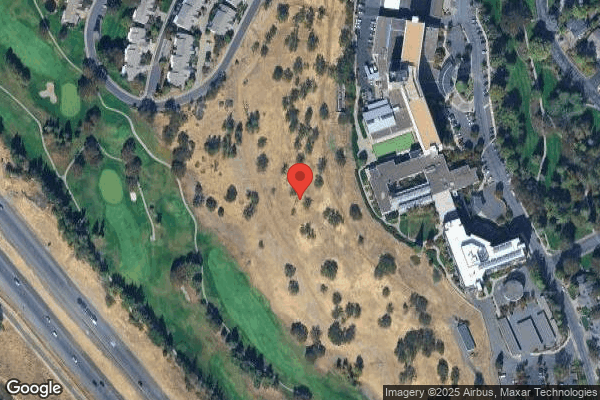




ROGUE VALLEY MANOR

1200 MIRA MAR AVENUE, MEDFORD, OR 97504 (541) 857-7777
Non profit - Corporation 68 Beds PACIFIC RETIREMENT SERVICES Data: November 2025
Trust Grade
80/100
#27 of 127 in OR
Last Inspection: April 2025

Within standard 12-15 month inspection cycle. Federal law requires annual inspections.

Overview

Rogue Valley Manor in Medford, Oregon has a Trust Grade of B+, indicating it is above average and recommended for families seeking care for their loved ones. It ranks #27 out of 127 facilities in the state and #2 out of 4 in Jackson County, placing it in the top half locally. However, the facility's trend is worsening, with issues increasing from 4 in 2024 to 6 in 2025. Staffing is rated 4 out of 5 stars, but the turnover rate is 57%, which is average for Oregon, so while staff are experienced, there is some instability. On a positive note, there have been no fines, and the facility boasts excellent RN coverage, better than 96% of Oregon facilities, which is crucial for resident care. However, there are notable concerns. Recent inspections revealed issues such as outdated food in the kitchen, with items like expired sauces and cooked rice, which risks foodborne illnesses. Additionally, staff were observed not properly wearing hair restraints while handling food, and there have been instances of minimal interaction between staff and residents during meals, which can affect the dining experience and overall well-being. These strengths and weaknesses should be carefully considered when researching this nursing home.

Trust Score
B+
80/100
In Oregon
#27/127
Top 21%
Safety Record
Low Risk
No red flags
Inspections
Getting Worse
4 → 6 violations
Staff Stability
⚠ Watch
57% turnover. Above average. Higher turnover means staff may not know residents' routines.
Penalties
✓ Good
No fines on record. Clean compliance history, better than most Oregon facilities.
Skilled Nurses
✓ Good
Each resident gets 103 minutes of Registered Nurse (RN) attention daily — more than 97% of Oregon nursing homes. RNs are the most trained staff who catch health problems before they become serious.
Violations
⚠ Watch
19 deficiencies on record. Higher than average. Multiple issues found across inspections.
★★★★★
5.0
Overall Rating
★★★★☆
4.0
Staff Levels
★★★★★
5.0
Care Quality
★★★★☆
4.0
Inspection Score
Stable
2024: 4 issues
2025: 6 issues

The Good

  • 4-Star Staffing Rating · Above-average nurse staffing levels
  • 5-Star Quality Measures · Strong clinical quality outcomes
  • Full Sprinkler Coverage · Fire safety systems throughout facility
  • No fines on record

Facility shows strength in staffing levels, quality measures, fire safety.

The Bad

Staff Turnover: 57%

10pts above Oregon avg (46%)

Frequent staff changes - ask about care continuity

Chain: PACIFIC RETIREMENT SERVICES

Part of a multi-facility chain

Ask about local staffing decisions and management

Staff turnover is elevated (57%)

9 points above Oregon average of 48%

The Ugly 19 deficiencies on record

Apr 2025 6 deficiencies
CONCERN (D)

Potential for Harm - no one hurt, but risky conditions existed

Deficiency F0553 (Tag F0553)

Could have caused harm · This affected 1 resident

Based on interview and record review it was determined the facility failed to offer residents the opportunity to participate in the care planning process for 1 of 5 sampled residents (#6) reviewed for...

Read full inspector narrative →
Based on interview and record review it was determined the facility failed to offer residents the opportunity to participate in the care planning process for 1 of 5 sampled residents (#6) reviewed for unnecessary medications. This placed residents at risk for unmet needs. Findings include: Resident 6 was admitted to the facility in 11/2022 with diagnoses including diabetes. A review of the 2/16/25 BIMS assessment indicated a score of 13 (cognitively intact). On 4/21/25 at 5:16 PM Resident 6 stated she/he could not remember her/his last care conference. An 4/22/25 review of Resident 6's clincial record revealed a care conference was completed on 11/20/24. There was no indication any care conference was held between 11/20/24 and 4/22/25. On 4/24/25 at 10:49 AM Staff 2 (DNS) acknowledged a care conference had not been completed for Resident 6 since 11/2024 and stated the expectation was for care conferences to be completed quarterly for every resident.
CONCERN (D)

Potential for Harm - no one hurt, but risky conditions existed

Deficiency F0565 (Tag F0565)

Could have caused harm · This affected 1 resident

Based on interview and record review, it was determined the facility failed to effectively respond to resident council concerns expressed at 3 of 4 resident council meetings reviewed. This placed resi...

Read full inspector narrative →
Based on interview and record review, it was determined the facility failed to effectively respond to resident council concerns expressed at 3 of 4 resident council meetings reviewed. This placed residents at risk for unaddressed concerns related to resident care and quality of life. Findings include: Resident 6 was admitted to the facility in 11/2022 with diagnoses including diabetes. A review of the 2/16/25 BIMS assessment for Resident 6 indicated a score of 13 (cognitively intact). Resident 7 was admitted to the facility in 6/2024 with diagnoses including history of falling. A review of the 3/20/25 BIMS assessment for Resident 7 indicated a score of 13 (cognitively intact). A 4/22/25 review of the 1/20/25, 2/28/25, 3/28/25, and 4/21/25 Resident Council Minutes revealed the following: - The 1/20/25 notes indicated Resident 7 requested more activities on the weekends because they were really boring and was acknowledged by Staff 1 (Administrator) and Staff 3 (Activities Director). - The 2/28/25 notes indicated Resident 6 stated she/he did not know what medications she/he was taking and requested a copy of her/his medication list. The notes did not contain follow up for Resident 7's request from 1/20/25 and were acknowledged by Staff 1 and Staff 3. - The 3/28/25 notes indicated Resident 7 stated weekends were so dead and needed activities. The notes did not contain follow up for Resident 6 and Resident 7's previous concerns or requests and were acknowledged by Staff 1, Staff 3, and Staff 21 (Social Services Director). - The 4/21/25 notes indicated Resident 6 stated she/he did not know what pills she/he was taking. The notes did not contain follow up for Resident 6 and Resident 7's previous concerns or requests and were acknowledged by Staff 1, Staff 3, and Staff 21. During a Resident Council meeting on 4/23/25 at 11:11 AM Resident 7 stated there were still no activities on the weekends. On 4/23/25 at 3:32 PM Staff 1 stated she received the information about weekend activity requests last week. She stated the follow up and resolution for Resident Council concerns and requests were handled in an email between staff members and the department head was expected to follow up with the resident. On 4/23/25 at 3:34 PM Staff 2 (DNS) stated she did not know about Resident 6's request for a copy of her/his medication list. A 4/24/25 review of an email sent by Staff 3 on 1/20/25 indicated the 1/20/25 Resident Council notes were emailed to Staff 1, Staff 2, and Staff 21. There was no indication of follow up regarding Resident 7's request for more weekend activities. A 4/24/25 review of an email sent by Staff 3 on 3/28/25 indicated the 3/28/25 Resident Council notes were emailed to Staff 1, Staff 2, and Staff 21. There was no indication of follow up regarding Resident 7's second request for weekend activities. On 4/24/25 at 9:39 AM Resident 6 stated she/he still did not have a copy of her/his medication list. On 4/24/25 at 10:03 AM Staff 1 acknowledged Resident 6 had not received her/his medication list and the Resident Council notes did not contain follow up regarding resident concerns and requests.
CONCERN (D)

Potential for Harm - no one hurt, but risky conditions existed

Deficiency F0578 (Tag F0578)

Could have caused harm · This affected 1 resident

Based on interview and record review, it was determined the facility failed to obtain information related to advance directives and health care decisions for 1 of 3 sampled residents (#177) reviewed f...

Read full inspector narrative →
Based on interview and record review, it was determined the facility failed to obtain information related to advance directives and health care decisions for 1 of 3 sampled residents (#177) reviewed for advance directives. This placed residents at risk for not having their health care decisions honored. Findings include: Resident 177 was admitted to the facility in 4/2025 with diagnoses including aftercare following surgery. Assembly Clinical Records policy dated 10/2022 indicated: Clinical records needing to be readily available for emergencies such as the POLST (Physician Orders for Life-Sustaining Treatment) and Advance Directive are maintained as hard copies. These records will be transported with the resident upon transfer to the emergency room and or hospital as required. A 4/4/25 Health Care admission Questionnaire indicated Resident 177 did not have an Advance Directive or a POLST. On 4/23/25 at 11:57 AM Staff 4 (RCM) stated upon admission to the facility she prepared a POLST in the admission paperwork so when the physician visits the resident they can review the POLST and Advance Directive together. Staff 4 acknowledged she did not place a POLST or Advance Directive in the admission paperwork for the physician to discuss with the resident. On 4/23/25 at 3:33 PM Resident 177 and Witness 2 (Family) stated Resident 177 did not complete a POLST or Advance Directive with the physician. Witness 2 stated they were offered an Advance Directive in the hospital but nothing was offered from the facility. Witness 2 stated Resident 177 needed to complete a POLST or Advance Directive. On 4/24/25 at 10:26 AM Staff 1 (Administrator) and Staff 2 (DNS) stated a questionnaire was given to residents upon admission to see if they have a POLST or an Advance Directive, and Resident 177 had neither. Staff 1 stated the Advance Directive was not part of the admission packet, but if a resident would like an Advance Directive they could ask for one. Staff 1 and Staff 2 stated their expectation was for all residents to have a POLST or an Advance Directive.
CONCERN (D)

Potential for Harm - no one hurt, but risky conditions existed

Deficiency F0679 (Tag F0679)

Could have caused harm · This affected 1 resident

Based on observation, interview, and record review it was determined the facility failed to provide meaningful activities for dependent residents for 1 of 1 sampled resident (#3) reviewed for activiti...

Read full inspector narrative →
Based on observation, interview, and record review it was determined the facility failed to provide meaningful activities for dependent residents for 1 of 1 sampled resident (#3) reviewed for activities. This placed residents at risk for lack of social interaction and isolation. Findings include: Resident 3 was admitted to the facility in 6/2012 with diagnoses including dementia and anxiety disorder. An 10/2023 facility Activity Program policy indicated a resident's activity plan was to be updated as the resident's needs changed, but no less than quarterly. The 7/5/24 Annual MDS revealed Resident 3 had a BIMS score of 2 (severe cognitive impairment). Resident 3 was dependent on staff for all cares and staff indicated she/he liked to listen to music, be around animals, and participate in group activities. An 10/4/24 revised care plan for activities indicated staff were to help Resident 3 listen to music and encourage observation of the bird feeder outside the resident's window. Staff were to provide one-on-one visits or activities if Resident 3 was unable to attend group events. An 10/10/24 Care Conference Review indicated Staff 3 (Activities Coordinator) was not present during the meeting and no information related to the resident's activites during the last quarter was found. The 4/4/25 Quarterly MDS revealed Resident 3 had pleasure in doing things. On 4/21/25 from 12:35 PM to 1:31 PM Resident 3 was observed in her/his bed with the news on her/his television. No music was heard in the resident's room and the bird feeder outside her/his window was empty. On 4/22/25 at 8:07 AM Staff 5 (CNA) stated Resident 3 routinely remained in bed during the day and no family came to visit the resident. On 4/22/25 at 2:28 PM Resident 3 was observed sleeping in her/his bed. On 4/22/25 at 2:36 PM Staff 7 (CNA) stated Resident 3 attended group music activities when they were offered, once each month. She was not aware who was responsible to turn on the music in Resident 3's room. On 4/22/25 at 4:30 PM Staff 3 stated she kept no written documentation of resident participation in activities. On 4/23/25 Staff 3 provided a recently created list of Resident 3's participation in activities from 2/2025 through 4/2025: -In 2/2025, Resident 3 attended one music activity. -In 3/2025, Resident 3 attended one nail and one music activity. -In 4/2025, Resident 3 attended one Tavelogue (a lecture about travel) activity. On 4/23/25 at 8:45 AM Staff 3 stated Resident 3's group activities were limited due to her/his inability to participate appropriately and Resident 3 was often in bed when activities were offered. Staff 3 expected residents to participate in activities three to five times each week and acknowledged Resident 3's activity needs were not met. On 4/23/25 at 3:51 PM Staff 4 (RNCM) was aware Resident 3 had a decrease in her/his activity participation and expected the resident's activity needs to be addressed at each care conference. On 4/24/25 at 8:08 AM Staff 1 (Administrator) and Staff 2 (DNS) acknowledged the facility needed to work collaboratively to provide meaningful activities for Resident 3. Staff 1 expected more one-on-one activities for Resident 3. Staff 2 expected discussions about the resident's activity needs during quarterly care conferences.
CONCERN (D)

Potential for Harm - no one hurt, but risky conditions existed

Medication Errors (Tag F0758)

Could have caused harm · This affected 1 resident

Based on observation, interview, and record review it was determined the facility failed to ensure residents were free from unnecessary psychotropic medication for 1 of 5 sampled residents (#177) revi...

Read full inspector narrative →
Based on observation, interview, and record review it was determined the facility failed to ensure residents were free from unnecessary psychotropic medication for 1 of 5 sampled residents (#177) reviewed for unnecessary medication. This placed residents at risk for adverse side effects. Findings include: Resident 177 was admitted to the facility in 4/2025 with diagnoses including anxiety and sleep apnea (pause in breathing during sleep). Review of the clinical record on 4/22/25 revealed Resident 177 was ordered PRN Lorazepam (for anxiety) every six hours starting on 4/4/25. The Lorazepam was discontinued and restarted on 4/17/25 with no end date. Resident 177's 4/4/25 pharmacy review revealed the provider was advised PRN Lorazepam required the prescriber to provide a direct examination and rationale for continuing the medication beyond 14 days. An undated response from the physician indicated: Ensure above documentation requirements are met and on file for the medication to continue beyond 14 days. No other information was provided. On 4/24/25 at 10:31 AM Staff 1 (Administrator) and Staff 2 (DNS) stated they expected the physician to assess the resident and write a clinical rationale to continue the Lorazepam beyond 14 days.
CONCERN (E)

Potential for Harm - no one hurt, but risky conditions existed

Food Safety (Tag F0812)

Could have caused harm · This affected multiple residents

Based on observation, interview and record review the facility failed to ensure food was properly stored and discarded in a timely manner, kitchen staff wore appropriate hair and beard restraints, and...

Read full inspector narrative →
Based on observation, interview and record review the facility failed to ensure food was properly stored and discarded in a timely manner, kitchen staff wore appropriate hair and beard restraints, and equipment was sanitized for 1 of 1 kitchen. This placed residents at risk for cross-contamination and food-borne illnesses. Findings include: 1. On 4/21/25 at approximately 12:25 PM an observation of the walk-in cooler revealed the following outdated food items: hoisin sauce expired 3/30/25, cooked peppers expired 4/20/25, cooked rice expired 4/13/25, beef base opened with no remove by date, and shredded cheese expired 4/18/25. On 4/24/25 at 8:20 AM Staff 20 (Cook) inspected the walk-in cooler and confirmed the out-dated items. 2. A review of the facility Dress Code effective 11/2024 revealed staff handling food shall wear hair restraints such as hats, hair covering, hair restraints, or clothing that covers body hair. On 4/21/25 at 3:59 PM two unidentified staff were observed working on the tray line and in the kitchen area without hair restraints. Additional staff were seen with facial hair without beard restraints. On 4/23/25 at 1:00 PM Staff 18 (Nutritional Aide) was observed in the kitchen area with a beard without a beard restraint. Staff 18 stated he was not required to wear a beard restraint unless his beard was long. On 4/24/25 at 8:34 AM Staff 14 (Sous Chef) was observed with a beard not wearing a beard restraint. Staff 14 stated beard restraints were only required for longer beards. On 4/24/25 at 10:44 AM Staff 10 (Dining Director) stated his expectation was for staff to wear caps or hair restraints at all times and beard restraints should always be worn when staff had beards. 3. A review of the dishwasher temperature log revealed no entries from the current year. On 4/24/25 at 8:20 AM Staff 20 (Cook) acknowledged no current temperature log for the dishwasher existed. On 4/24/25 at 8:34 AM Staff 14 (Sous Chef) confirmed the dishwasher unit was heat-sanitizing but was not certain whose responsibility it was to record temperatures of the unit. On 4/24/25 at 11:35 AM Staff 11 (Director of Facility Services) reviewed the temperature log for the dishwasher and noted it was not current. Staff 11 verified the dishwasher was heat sanitizing and stated dishwashing staff were to check and record the water temperatures of the dishwasher. Staff 11 stated the temperature of the dishwasher was clearly not being recorded.
Apr 2024 4 deficiencies
CONCERN (D)

Potential for Harm - no one hurt, but risky conditions existed

Investigate Abuse (Tag F0610)

Could have caused harm · This affected 1 resident

Based on observation, interview and record review it was determined the facility failed to investigate an injury of unknown source for 1 of 4 sampled residents (#20) reviewed for pressure ulcers. This...

Read full inspector narrative →
Based on observation, interview and record review it was determined the facility failed to investigate an injury of unknown source for 1 of 4 sampled residents (#20) reviewed for pressure ulcers. This placed residents at risk for injury. Findings include: Resident 20 was admitted to the facility in 2023 with diagnoses including dementia and stroke. A 3/25/24 hospice note identified new large bruises to both shins, greater on the right leg. A 3/25/24 Skin and Wound Evaluation noted a new skin tear to Resident 20's right shin in the same area as the large bruise. The wound was measured to be approximately 25 cm long by six cm wide, there was missing skin and the wound was bleeding. The conclusion included in the evaluation indicated Resident 20 attempted to get out of bed and got her/his leg caught between the bed and the side rail. A 3/27/24 hospice note acknowledged the new skin tear to Resident 20's right shin, and very fragile bruised skin. On 4/2/24 at 4:14 PM Resident 20 was observed in bed with her/his feet elevated off the mattress and the bed was in a low position. There were side rails/grab bars on both sides of the bed approximately seven inches wide toward the upper part of the bed, about waist high. On 4/4/24 at 11:54 AM a risk management note dated 4/1/24 was provided by Staff 2 (DNS). The note described the skin tear to the right shin and indicated Resident 20's shins were previously bruised from unknown causes. The note further indicated the skin tear appeared to be from her/him rolling over and hitting her/his legs on the bedside table and abuse and neglect was ruled out. On 4/5/24 at 9:44 AM Staff 9 (LPN) was asked about the injury to Resident 20's right shin and Staff 9 stated she heard it was from the lift or hitting the rail. Staff 9 added Resident 20 used to try to get up often unassisted for the last few months. On 4/5/24 at 11:22 AM Staff 1 (Administrator) and Staff 2 were asked about Resident 20's leg wound. Staff 2 stated Resident 20 sustained a bruise to her/his right shin and then later the same day a skin tear was caused by Resident 20 spinning her/himself in bed and bumping the leg. Staff 1 and Staff 2 were asked about the cause of the bruise. No additional information was provided.
CONCERN (D)

Potential for Harm - no one hurt, but risky conditions existed

Deficiency F0657 (Tag F0657)

Could have caused harm · This affected 1 resident

**NOTE- TERMS IN BRACKETS HAVE BEEN EDITED TO PROTECT CONFIDENTIALITY** Based on observation, interview and record review it was determined the facility failed to revise a care plan timely related to ...

Read full inspector narrative →
**NOTE- TERMS IN BRACKETS HAVE BEEN EDITED TO PROTECT CONFIDENTIALITY** Based on observation, interview and record review it was determined the facility failed to revise a care plan timely related to catheter use for 1 of 4 sampled residents (#20) reviewed for pressure ulcers. This placed residents at risk for unmet catheter needs. Findings include: Resident 20 was admitted to the facility in 2023 with diagnoses including dementia and stroke. An admission MDS dated [DATE] indicated Resident 20 was occasionally incontinent of bowel and bladder. On 12/7/23 resident records indicated Resident 20 was unable to empty her/his bladder and a catheter was placed. Resident 20's care plan was revised on 4/2/24 to include the catheter use. On 4/5/24 at 10:40 AM Staff 5 (LPN/MDS Coordinator) acknowledged Resident 20's care plan was not revised timely.
CONCERN (D)

Potential for Harm - no one hurt, but risky conditions existed

Pressure Ulcer Prevention (Tag F0686)

Could have caused harm · This affected 1 resident

**NOTE- TERMS IN BRACKETS HAVE BEEN EDITED TO PROTECT CONFIDENTIALITY** Based on observation, interview and record review it was determined the facility failed to thoroughly assess pressure ulcers for...

Read full inspector narrative →
**NOTE- TERMS IN BRACKETS HAVE BEEN EDITED TO PROTECT CONFIDENTIALITY** Based on observation, interview and record review it was determined the facility failed to thoroughly assess pressure ulcers for 2 of 4 sampled residents (#s 20 and 88) reviewed for pressure ulcers. This placed residents at risk for unmanaged wounds. Findings include: 1. Resident 20 was admitted to the facility in 2023 with diagnoses including dementia, stroke and on hospice services. A hospice note dated 3/21/24 indicated Resident 20 had a closed purple pressure injury/ulcer on her/his right heel. A hospice note dated 3/25/24 indicated Resident 20 had new right heel eschar (dead tissue that is usually dark, dry and hard) with a closed blister in the middle. The note added a facility nurse took a picture of the wound. A Skin and Wound Evaluation dated 3/25/24 identified a new blister to Resident 20's right heel. The wound was described as intact and black/blue in color. There were no measurements of the wound. An Incident Report dated 3/25/24 indicated the facility nurse was notified by hospice of a new DTI (deep tissue injury) to Resident 20's right heel. The area was described as dark purple in color and slightly painful. The report did not identify a cause or reasonable explanation for the development of the pressure ulcer or information from other staff who had knowledge of the cause of the pressure ulcer. The comprehensive care plan, last revised on 4/2/24 did not include information related to Resident 20's risk for pressure ulcers or actual pressure ulcer. The [NAME] (CNA care directive) did not include information indicating Resident 20 had a pressure ulcer or interventions in place for her/his pressure ulcer. A wound observation on 4/5/24 at 9:44 AM noted an approximately two cm by two cm dried, hard dark colored area on Resident 20's right heel. On 4/5/24 at 11:22 AM Resident 20's pressure ulcer was discussed with Staff 1 (Administrator) and Staff 2 (DNS). Staff 1 and Staff 2 were unaware Resident 20's pressure ulcer was initially identified on 3/21/24. Staff 1 and Staff 2 were asked about the investigation into the cause of the wound, the thoroughness of the skin evaluation and the lack of care planning. No additional information was provided. 2. Resident 88 was admitted to the facility in 2024 with diagnoses including a hip fracture and surgical repair. An admission assessment dated [DATE] did not identify a pressure ulcer for Resident 88. An admission MDS dated [DATE] indicated Resident 88 was cognitively intact. On 3/25/24 a Skin and Wound Evaluation identified an open lesion to Resident 88's left heel. There were no measurements or further description of the pressure ulcer. A 4/1/24 Skin Only Evaluation identified various bruises and a surgical wound for Resident 88. The evaluation did not include the left heel pressure ulcer. A 4/1/24 provider note stated Resident 88 developed a new wound on 3/31/24. No further description was noted. On 4/2/24 at 9:58 AM Resident 88 was asked about her/his heel ulcer. Resident 88 stated she/he had the wound since coming to the facility. Resident 88 added she/he believed it was related to the footrests on the wheelchair. The care plan, last revised on 4/2/24, identified Resident 88 had a Stage 2 pressure ulcer to her/his left heel. There was no information on the [NAME] (CNA care directive) or the white board in the resident's room (used to communicate care needs to staff) about the heel ulcer or interventions in place. On 4/3/24 at 12:04 PM Staff 8 (LPN) was asked about Resident 88's heel ulcer. Staff 8 stated the facility usually did an incident report to determine the cause. Staff 8 stated because Resident 88 was cognitively intact, she just asked her/him about the cause of the pressure ulcer. Resident 88 believed it was related to rubbing her/his foot on the wheelchair. Staff 8 added the wound looked like a popped blister and she encouraged Resident 88 to wear shoes. On 4/5/24 at 11:53 AM Resident 88's heel wound was discussed with Staff 1 (Administrator), Staff 2 (DNS) and Staff 3 (RN/Assistant DNS). Staff 1 stated Resident 88 stated she/he hit it on the wheelchair. Staff 2 was asked to explain how hitting the wheelchair resulted in a blister. No additional information was provided.
CONCERN (E)

Potential for Harm - no one hurt, but risky conditions existed

Food Safety (Tag F0812)

Could have caused harm · This affected multiple residents

Based on observation and interview it was determined the facility failed to ensure refrigerators were free of expired and/or unlabeled foods for 1 of 2 refrigerators reviewed for food safety and sanit...

Read full inspector narrative →
Based on observation and interview it was determined the facility failed to ensure refrigerators were free of expired and/or unlabeled foods for 1 of 2 refrigerators reviewed for food safety and sanitation. This placed residents at risk for food-borne illness. Findings include: On 4/4/24 at 2:07 PM the following was observed in refrigerator number two: - cooked eggs in a clear container dated 3/31/24. - cut strawberries in a disposable plastic container with no date. - 13 Thirster grape concentrate 100% grape juice containers marked, Best by 10/14/23. On 4/04/24 at 2:17 PM Staff 10 (Dietary manager) confirmed the thirster, strawberries, and prepped eggs were not appropriately labeled or discarded.
Jan 2023 9 deficiencies
CONCERN (D) 📢 Someone Reported This

A family member, employee, or ombudsman was alarmed enough to file a formal complaint

Potential for Harm - no one hurt, but risky conditions existed

Deficiency F0602 (Tag F0602)

Could have caused harm · This affected 1 resident

Based on interview and record review it was determined the facility failed to ensure residents were free from misappropriation of property for 2 of 2 sampled residents (#s 129 and 130) reviewed for mi...

Read full inspector narrative →
Based on interview and record review it was determined the facility failed to ensure residents were free from misappropriation of property for 2 of 2 sampled residents (#s 129 and 130) reviewed for misappropriation of property. This placed residents at risk for abuse. Findings include: A public complaint was received on 12/21/21 which alleged there were two residents (#s 129 and 130) with missing narcotic medications. Resident 129 was discharged from the facility on 12/2/21 but chose not to take any of her/his narcotic pain medications home. Resident 129's medications (three cards) should have been in the locked medication cart but they were not located. Staff 20 (CMA) also found a missing narcotic pain medication card for Resident 130 and reported it to the DNS. On 1/24/23 at 10:55 AM Staff 21 (RN) indicated she processed the discharge for Resident 129 on 12/2/21. She did not send the narcotic pain medication cards home with the resident. The resident said she/he did not need the narcotics. There were three narcotic medication cards and she returned them to the locked narcotic cart (in the discontinued section) and the count was correct when she left for the day. Staff 21 went on vacation and returned to work on 12/17/21. During a medication count with another nurse, Staff 21 stated she saw in the narcotics book that Staff 22 (former DNS) and Staff 23 (RN) signed in the narcotic book the medications went home with the resident. Staff 21 again stated the medications did not go home with Resident 129. Facility investigation documentation dated 1/25/22 included a brief description of the incidents. On 12/20/21 the facility was notified of an allegation of inaccurate documentation of the disposition of a discharged resident's medications by the Interim DNS. The investigation identified a discrepancy in the controlled drug count involving medications awaiting destruction due to discharge or discontinuation of orders including: Oxycodone (narcotic pain medication): two cards containing a total of 48 tablets for Resident 129. Oxycodone: one card containing 30 (½ tablets) for Resident 130. The facility identified a failure to document drug disposition upon discharge by a licensed nurse on 12/3/21. The facility also identified inconsistency in the method for completing the controlled drug count by several nursing staff members during the period from 12/3/21 through 12/13/21. The facility was unable to identify a suspect. The investigation report documented the medications remained unaccounted for at this time. Local law enforcement Incident Tracking indicated the facility reported the missing narcotic medications on 1/26/22 at 1:06 PM. The Police were not notified of the crime until 35 days after the DNS was informed on 12/12/21 of the missing medications. On 1/27/23 at 8:45 AM Staff 1 (Administrator) indicated the facility confirmed 63 tablets of narcotic medication were missing, 48 tablets of oxycodone for Resident 129 and 30 (1/2 tablets) of oxycodone for Resident 130. The facility was not able to identify a suspect but identified significant gaps in their processes as well as areas where they needed improvement.
CONCERN (D)

Potential for Harm - no one hurt, but risky conditions existed

Deficiency F0657 (Tag F0657)

Could have caused harm · This affected 1 resident

Based on observation, interview and record review it was determined the facility failed to revise care plans for 1 of 2 sampled resident (#24) reviewed for ADLs. This placed residents at risk for unme...

Read full inspector narrative →
Based on observation, interview and record review it was determined the facility failed to revise care plans for 1 of 2 sampled resident (#24) reviewed for ADLs. This placed residents at risk for unmet needs. Findings include: Resident 24 admitted to facility in 12/2022 with diagnoses including malnutrition and dehydration. A 1/9/23 Significant Change MDS revealed Resident 24 required limited assistance with eating. A review of Resident 24's physician orders revealed: - 12/21/22 orders for SLP evaluation and treatment due to coughing with food and fluids - 12/26/22 orders for a mechanical soft diet (chopped and ground foods) with nectar thick fluids (fluid with the consistency comparable to heavy syrup found in canned fruit) per SLP recommendations - 12/29/22 orders for one-to-one feeding On 1/24/23 at 12:20 PM Resident 24 was observed eating lunch in the assisted dining room with staff present but without staff cues for safe eating. A 1/24/23 Speech Therapy progress note revealed the speech therapist created a Swallow Recommendation sign for Resident 24. A review of Resident 24's care plan revealed a 1/25/23 intervention for limited assist with eating and a 1/3/23 intervention to monitor for signs of dysphagia (difficulty swallowing). On 1/25/23 at 8:06 AM Resident 24 was observed eating breakfast in the assisted dining room with staff present but without staff cues for safe eating. On 1/25/23 at 2:20 PM a Swallow Recommendation sheet was observed on Resident 24's dresser with Staff 7 (LPN). Staff 7 stated she was not aware Resident 24 had recommendations. The Swallow Recommendation sheet indicated the following: - Sit upright for all meals - Allow self-feed as much as tolerated - Remind to pause talking while eating - Remind to sweep food from cheeks if pocketing - Wait until finished chewing before taking a drink - Slow rate of eating - Encourage small sips - Encourage to clear throat if changes in vocal quality is noted (wet/rattling voice quality) - Remain upright for greater than 30 minutes after the meal. On 1/25/23 at 12:17 PM Staff 15 (CNA) was observed feeding Resident 24 in her/his room. Resident 24 coughed some after taking a drink. Staff 15 gave Resident time to recover which took approximately fifteen seconds and continued to feed her/him. On 1/25/23 at 4:01 PM Staff 12 (CNA) stated resident information regarding diet texture, fluid consistency and assistance needed for feeding was on the care plan and on the FYI Sheet CNAs received at the beginning of the shift. On 1/25/23 at 4:14 PM Staff 8 (CNA) stated resident information regarding diet texture, fluid consistency and assistance needed for feeding was in the chart and a sign was placed in the resident's room. Staff 8 pointed to a handwritten sign in Resident 24's room which said the resident was on thickened fluids and to check with the nurse before giving fluids. On 1/26/23 at 9:28 AM Staff 18 (SLP) confirmed she wrote swallowing guidelines for Resident 24 on 1/24/23. Staff 18 stated when a resident had swallowing precautions she documented in therapy progress notes, informed RA if the resident went to RA dining in the assisted dining room, informed the resident's CNA and sometimes she printed a tabletop reminder which was placed on the dining room table where the resident ate or in the resident's room. Staff 18 was not aware Resident 24 dined in the assisted dining room and stated the swallowing guidelines for Resident 24 were placed on her/his dresser on 1/24/23. Staff 18 stated she did not give a copy of the swallowing guideline to the charge nurse. On 1/26/23 at 11:58 AM Staff 3 (LPN Resident Care Manager) stated SLP swallowing precaution guidelines for residents were on the care plan, a copy was placed in the resident's room, and a copy was given to the charge nurse and Resident Care Manager. Staff 3 stated she was not aware Resident 24 had swallowing precautions and did not receive a copy of the Swallow Recommendations from SLP. Staff 3 confirmed Resident 24's care plan was not revised with her/his swallowing precautions.
CONCERN (D)

Potential for Harm - no one hurt, but risky conditions existed

Quality of Care (Tag F0684)

Could have caused harm · This affected 1 resident

Based on observation, interview and record review it was determined the facility failed to follow the baseline care plan for 1 of 1 sampled resident (#179) reviewed for nutrition. This placed resident...

Read full inspector narrative →
Based on observation, interview and record review it was determined the facility failed to follow the baseline care plan for 1 of 1 sampled resident (#179) reviewed for nutrition. This placed residents at risk for unmet needs. Findings include: Resident 179 was admitted to the facility in 1/2023 with diagnoses including dysphagia (swallowing difficulties). A 1/16/23 baseline care plan revealed Resident 179 had a swallowing problem and required supervision for meals. On 1/25/23 Staff 5 (CNA) set up Resident 179's meal in her/his room on the overbed table, encouraged Resident 179 to eat and left the room. On 1/25/23 at 8:00 AM Staff 5 stated she was not sure about Resident 179's needs, but mainly she/he ate alone when her/his spouse was not there. Staff 5 stated Resident 179 did not want to go to the dining room for breakfast. Staff 5 stated she checked on Resident 179 frequently. On 1/25/23 at 8:07 AM Resident 179 was alone in her/his room, the breakfast food tray was on the overbed table in front of her/him and she/he was chewing food. On 1/25/23 at 8:14 AM Staff 4 (RNCM) stated Resident 179 was care planned to eat in the assisted dining room due to not eating enough and she/he required a lot of prompting for meals. Staff 4 confirmed the care plan indicated Resident 179 was to eat with supervision and the staff did not follow the care plan.
CONCERN (D) 📢 Someone Reported This

A family member, employee, or ombudsman was alarmed enough to file a formal complaint

Potential for Harm - no one hurt, but risky conditions existed

Pharmacy Services (Tag F0755)

Could have caused harm · This affected 1 resident

Based on interview and record review it was determined the facility failed to ensure controlled medication records were in order for 1 of 1 sampled resident (#129) reviewed for misappropriation of pro...

Read full inspector narrative →
Based on interview and record review it was determined the facility failed to ensure controlled medication records were in order for 1 of 1 sampled resident (#129) reviewed for misappropriation of property. This placed residents at risk for inaccurate medication records. Findings include: Resident 129 was admitted to the facility in 11/2021 with diagnoses including back pain and a compression fracture of the spine. A public complaint was received on 12/21/21 which alleged Resident 129 had missing narcotic medications and there was concern related to the accuracy of the resident's medical records related to the missing medications. In an investigation document completed by Staff 22 (former DNS) dated 12/13/21 Staff 22 indicated she was investigating the missing narcotic medications. Staff 22 stated she thought the resident discharged with the medications, but that was an error on her part. She thought the discharging nurse sent the medications home with the resident and did not sign the narcotic log sheet. Staff 22 acknowledged she signed the sheets as medication sent home with the resident which was in error. On 1/24/23 at 10:55 AM Staff 21 (RN) indicated she discharged Resident 129 on 12/2/21. She did not send the oxycodone (narcotic pain medication) home with the resident. The resident said she/he did not need the narcotics. There were three medication cards and Staff 21 locked them in the narcotic cart on the discontinued section of the cart and the narcotic medication count was correct when she left for the day. Staff 21 went on vacation and returned to work on 12/17/21. During a medication count she observed in the narcotic book Staff 22 and Staff 23 (RN) signed in the narcotic book indicating the medications went home with the resident but they did not. Staff 21 stated That was false. Also there was a problem with the signatures on the page and the date when it was signed. One page was signed and dated on 12/2/21 by Staff 23 but Staff 23 did not work on that date. A 12/2021 Staffing Schedule indicated Staff 23 did not work on 12/2/22 so could not have signed the page on that date. An Investigative Timeline with an interview with Staff 22 on 12/23/22 indicated Staff 22 acknowledged she signed the pages on 12/13/21 and put the date of 12/2/21 on a page because the resident discharged on that date. The date was not accurate. On 1/27/23 at 2:22 PM Staff 1 (Administrator) provided documentation which verified the inaccurate documentation in Resident 129's medical record.
CONCERN (D)

Potential for Harm - no one hurt, but risky conditions existed

Drug Regimen Review (Tag F0756)

Could have caused harm · This affected 1 resident

**NOTE- TERMS IN BRACKETS HAVE BEEN EDITED TO PROTECT CONFIDENTIALITY** Based on interview and record review it was determined the facility failed to follow up on pharmacy recommendations for 1 of 6 s...

Read full inspector narrative →
**NOTE- TERMS IN BRACKETS HAVE BEEN EDITED TO PROTECT CONFIDENTIALITY** Based on interview and record review it was determined the facility failed to follow up on pharmacy recommendations for 1 of 6 sampled residents (#12) reviewed for medications. This place residents at risk for unnecessary medications. Findings include: Resident 12 was admitted to the facility in 2022 with diagnoses including stroke. Medical records indicated Resident 12 had an order for mirtazepine (antidepressant) for insomnia. The admission MDS dated [DATE] indicated Resident 12 was taking mirtazepine for depression. A 12/17/22 Consultant Pharmacist's Medication Regimen Review noted the use of mirtazepine for insomnia. The review also indicated facility staff did not feel Resident 12 had trouble with insomnia. The Consultant Pharmacist recommended discontinuation of mirtazepine. A 1/16/23 Consultant Pharmacist's Medication Regimen Review indicated Resident 12 started mirtazepine originally as an appetite stimulant. Resident 12 currently had a feeding tube and was not having insomnia. The Consultant Pharmacist recommended discontinuation of the mirtazepine for a second time. There was no indication in the medical record the facility evaluated the appropriateness of mirtazepine or followed up on pharmacist's recommendations. On 1/26/23 at 4:09 PM Staff 3 (LPN/Resident Care Manager) stated she could not see evidence the pharmacy recommendations were addressed by the facility.
CONCERN (E)

Potential for Harm - no one hurt, but risky conditions existed

Safe Environment (Tag F0584)

Could have caused harm · This affected multiple residents

Based on observation and interview it was determined the facility failed to provide a homelike dining experience for 1 of 2 dining rooms reviewed for dining. This placed residents at risk for a non-ho...

Read full inspector narrative →
Based on observation and interview it was determined the facility failed to provide a homelike dining experience for 1 of 2 dining rooms reviewed for dining. This placed residents at risk for a non-homelike environment. Findings include: On 1/24/23 at 10:43 AM Resident 24 stated she/he did not like to go to the assisted dining room for meals because the dining room was sad. On 1/24/23 at 12:20 PM lunch was observed in the assisted dining room. In the middle of the dining room there was a long table without linen, a centerpiece or decorations on it. The walls were bare except for a large projection screen on one wall with nothing projected on it. Multiple chairs were observed against the same wall. The plates were served on the trays. There were four residents observed eating lunch in silence, a CNA sat between two residents assisting with their meals. The CNA did not talk to the residents. On 1/25/23 at 8:06 AM breakfast was observed in the assisted dining room. A CNA was observed to be looking at her phone. Breakfast was served to the residents with their plates on the trays and plate covers were stacked on the table. On 1/25/23 at 11:40 AM five residents were observed in the assisted dining room at the dining room table with their covered lunch trays positioned in front of them. At 11:44 AM Staff 6 (CNA) entered the dining room and set up the residents' meals. Staff 6 stated meals were always served on trays and it was normal for residents to be in the dining room for approximately fifteen minutes before staff arrived. On 1/27/23 at 8:00 AM breakfast was observed with Staff 1 (Administrator) in the assisted dining room. Staff 1 confirmed the assisted dining room was not homelike, staff were expected to serve meals off the trays and to be engaged with the residents.
CONCERN (E) 📢 Someone Reported This

A family member, employee, or ombudsman was alarmed enough to file a formal complaint

Potential for Harm - no one hurt, but risky conditions existed

Report Alleged Abuse (Tag F0609)

Could have caused harm · This affected multiple residents

Based on interview and record review it was determined the facility failed to report allegations of abuse and misappropriation of property for 3 of 3 sampled residents (#s 12, 129 and 130) reviewed fo...

Read full inspector narrative →
Based on interview and record review it was determined the facility failed to report allegations of abuse and misappropriation of property for 3 of 3 sampled residents (#s 12, 129 and 130) reviewed for injuries of unknown origin and misappropriation of personal property. This placed residents at risk for abuse. Findings include: 1. A public Complaint was received on 12/21/21 which alleged there were at least two residents (#s 129 and 130) with missing narcotic medications. On 1/27/23 at 8:45 AM Staff 1 (Administrator) indicated the facility confirmed 63 tablets of narcotic medication were missing, 48 tablets of oxycodone for Resident 129 and 30 (1/2 tablets) of oxycodone for Resident 130. The facility was not able to identify a suspect but identified significant gaps in their processes as well as areas where they needed improvement. Staff 1 indicated she did not receive information on the missing medication until 12/20/21 although the DNS was notified on 12/12/21. A copy of a FRI Report dated 1/25/22 at 9:00 AM was provided by Staff 1. In a description of the incidents of missing medications the document indicated the facility identified a failure to document drug disposition upon discharge by a licensed nurse on 12/3/21. Medications remained unaccounted for at that time. The incident was listed as a crime and law enforcement was notified on 1/26/22 at 8:30 AM. The state agency did not receive a copy of the FRI report and the facility was unable to present the automatic confirmation of receipt from the state agency. The FRI did not include the information the DNS was aware of the incident as of 12/12/21 and started an investigation. Local law enforcement Incident Tracking indicated the facility reported the missing narcotic medications on 1/26/22 at 1:06 PM. The Police were not notified of the crime until 35 days after the DNS was informed on 12/12/21 of the missing medications. On 1/27/23 at 8:45 AM Staff 1 indicated she thought she notified the state agency and she notified the police. However, the state agency and the police were not notified within the required timeframe. If the state agency received the FRI report it was still not completed within the timeframes for reporting this type of incident. 2. Resident 12 was admitted to the facility in 2022 with diagnoses including stroke. On 12/31/22 an incident investigation indicated Resident 12 had a large bruise measuring 10.5 cm by 5.2 cm on her/his forearm. There were no witness statements or findings related to the bruise noted in the investigation. There was no evidence the facility reported a bruise of unknown origin to the State Agency. On 1/27/23 at 8:38 AM Staff 2 (DNS) was asked about the bruise and stated the facility could not determine the cause of the bruise.
CONCERN (E)

Potential for Harm - no one hurt, but risky conditions existed

Medication Errors (Tag F0758)

Could have caused harm · This affected multiple residents

**NOTE- TERMS IN BRACKETS HAVE BEEN EDITED TO PROTECT CONFIDENTIALITY** 5. Resident 16 was admitted to the facility in 2020 with diagnoses including pain and dementia. The medication reference site ep...

Read full inspector narrative →
**NOTE- TERMS IN BRACKETS HAVE BEEN EDITED TO PROTECT CONFIDENTIALITY** 5. Resident 16 was admitted to the facility in 2020 with diagnoses including pain and dementia. The medication reference site epocrates.com indicated hydroxyzine (an antihistamine medication) may be used for anxiety or itching on a PRN basis. Allergies were not listed as an indication for use. A review of Resident 16's 8/11/22 care plan revealed she/he was not care planned for anxiety or signs and symptoms of anxiety. A 12/21/22 physician order revealed orders for hydroxyzine three times a day for allergies and anxiety. A 1/3/23 physician order revealed the hydroxyzine dosage was increased to 50 mg three times a day for allergies and anxiety symptoms. Random observations from 1/24/23 through 1/25/23 revealed Resident 16 had no signs or symptoms of anxiety and no signs of Resident 16 grinding her/his teeth. On 1/25/23 at 4:14 PM Staff 8 (CNA) stated Resident 16 would grind her/his teeth while eating, when incontinence care was provided and during transfers. Staff 8 stated she felt Resident 16 would grind her/his teeth due to pain or anxiety and her/his behaviors had not changed in the last month. On 1/26/23 at 3:51 PM Staff 3 (LPN Resident Care Manager) stated Resident 16 started hydroxyzine for allergies manifested by postnasal drip and anxiety symptoms manifested by teeth grinding. Staff 3 stated the hydroxyzine was not used for anxiety but for anxiety symptoms and therefore was not a psychotropic medication. A review of Resident 16's medical record from 1/1/22 through 1/25/23 revealed no evidence of prior allergy or anxiety medication use, no documentation to indicate Resident 16 had non-pharmocological interventions implemented and no monitoring for anxiety symptoms and side effects related to the new order for hydroxyzine. On 1/26/23 at 10:10 AM Staff 1 (Administrator) and Staff 2 (DNS) confirmed Resident 16's order for hydroxyzine was used to treat anxiety symptoms and acknowledged non-pharmacological interventions were not placed on the care plan and Resident 16 was not monitored for her/his anxiety symptoms. 3. Resident 14 was admitted to the facility in 2020 with diagnoses including dementia. Resident 14's physician orders revealed a 9/9/22 order for PRN Seroquel (an antipsychotic medication). A 12/16/22 Hospice Clinical Note revealed Resident 14 was to receive psychoactive medications beyond 14 days for patient comfort for six months. A review of Resident 14's medical record revealed Resident 14 was not re-evaluated every 14 days for the continued use of Seroquel PRN. On 1/26/23 at 11:05 AM Staff 3 (LPN Resident Care Manager) stated Resident 14's hospice provider gave an order for Seroquel PRN and it was a standard order from hospice to have a PRN antipsychotic order. Staff 3 stated she was aware the facility needed to have the PRN antipsychotic re-evaluated every 14 days and this was not done. On 1/26/23 at 3:50 PM Staff 2 (DNS) stated she was aware the facility was not following the regulation regarding PRN antipsychotic medication for Resident 14. 4. Resident 23 was admitted to the facility in 2022 with diagnoses including cancer. A review of physician orders revealed an 10/22/22 order for PRN Haldol (an antipsychotic medication) to be given for agitation or nausea. A 11/7/22 Behavioral/Psychopharmacological Assessment for Resident 23 stated she/he was on hospice and the facility let hospice control the medications. A 11/14/22 Hospice Note directed facility staff to use Haldol as the first choice when Resident 23 was upset or belligerent. A review of the medical record revealed no documentation the order for PRN Haldol was re-evaluated every 14 days. On 1/26/23 at 10:40 AM Staff 3 (LPN Resident Care Manager) stated Resident 23 was angry when she/he first arrived in the facility and threw a meal tray once but did not really have many behaviors since that time. Staff 3 stated Resident 23 was on hospice, the hospice providers determined Resident 23's medications and the facility just followed what hospice ordered. On 1/26/23 at 2:30 PM Staff 3 stated Resident 23 was to receive Haldol for agitation or nausea, however it was not clear how those indications presented themselves. Staff 3 stated there was not a physician renewal of the order for Resident 23's Haldol every 14 days but there should have been. On 1/26/23 at 3:50 PM Staff 2 (DNS) stated she was aware the facility was not following the regulation regarding PRN antipsychotic medications. Based on observation, interview and record review it was determined the facility failed to ensure residents were free of unnecessary psychotropic (affects brain activities) medications for 5 of 7 sampled residents (#s 12, 14, 16, 21 and 23) reviewed for hospice, medications and mood and behavior. This placed residents at risk for receiving unnecessary psychotropic medications. Findings include: 1. Resident 21 was readmitted to the facility in 2022 for end of life care and dementia. A Hospice Provider note dated 8/3/22 indicated prescribed psychotropic medication was required for more than 14 days for resident comfort in a hospice setting. The note further indicated Resident 21 required the medication on a PRN basis for optimal symptom management and safety. Additionally, anxiety, agitation or trouble breathing could be anticipated and the resident would suffer unnecessarily if a new order and face to face visit were required once end of life symptoms acutely developed. The 1/2022 MAR indicated Resident 21 had orders for Haldol (antipsychotic) twice a day routinely and every 4 hours PRN for agitation or nausea originally started 7/6/22. On 1/25/23 at 7:53 AM Resident 21 was observed in bed, appeared to be asleep with her/his mouth open and a breakfast tray was on the overbed table. There were no provider notes indicating Resident 21 was re-evaluated for the use of PRN Haldol. On 1/26/23 at 12:56 PM Staff 4 (Resident Care Manager) stated Resident 21 readmitted to the facility on hospice services. Staff 4 stated there was no evidence the hospice provider re-evaluated the PRN Haldol. Staff 4 added the provider gave an extension past the 14 days of the order. On 1/27/23 at 8:38 AM Staff 2 (DNS) was asked about PRN antipsychotic medications and stated the facility asked hospice to reassess and reorder the medication. Staff 2 added the facility needed to follow up with hospice. 2. Resident 12 was admitted to the facility in 2022 with diagnoses including stroke. A 11/21/22 order indicated Resident 12 received mirtazepine 7.5 mg (antidepressant) for insomnia. An admission MDS dated [DATE] indicated Resident 12 was taking mirtazepine for depression. The assessment further indicated Resident 12 was not able to discuss the mirtazepine use, Resident 12 had no history of depression and the family did not know why the medication was used. Consultant Pharmacist's Medication Regimen Reviews dated 12/17/22 and 1/16/23 indicated diagnoses of insomnia and then appetite stimulant for the use of mirtazepine. There was no indication in the medical record the facility determined the accurate use for mirtazepine for Resident 12. On 1/26/23 at 2:04 PM Staff 3 (LPN/Resident Care Manager) stated Resident 12 was admitted with the order for mirtazepine. Staff 3 added the diagnoses for insomnia and appetite stimulant did not make sense and she figured the medication was used for depression.
CONCERN (E)

Potential for Harm - no one hurt, but risky conditions existed

Deficiency F0883 (Tag F0883)

Could have caused harm · This affected multiple residents

Based on interview and record review it was determined the facility failed to ensure influenza vaccinations were administered for 3 of 5 sampled residents (#s 10, 13 and 17) reviewed for immunizations...

Read full inspector narrative →
Based on interview and record review it was determined the facility failed to ensure influenza vaccinations were administered for 3 of 5 sampled residents (#s 10, 13 and 17) reviewed for immunizations. This placed residents at risk for influenza. Findings include: The 2022 CDC Recommended Adult Immunization Schedule recommended administration of the influenza vaccine annually. Resident 17 was admitted to the facility in 2020. A review of Resident 17's immunizations revealed no documentation the 2022 influenza vaccination was offered, refused or administered. Resident 10 was admitted to the facility in 2018. A review of Resident 10's immunizations revealed no documentation the 2022 influenza vaccination was offered, refused or administered. Resident 13 was admitted to the facility in 2021. A review of Resident 13's immunizations revealed no documentation the 2022 influenza vaccination was offered, refused or administered. On 1/26/23 at 12:07 PM Staff 2 (DNS) confirmed Resident 17, Resident 10, and Resident 13 were not offered and did not refuse or receive the influenza vaccine.
Understanding Severity Codes (click to expand)
Life-Threatening (Immediate Jeopardy)
J - Isolated K - Pattern L - Widespread
Actual Harm
G - Isolated H - Pattern I - Widespread
Potential for Harm
D - Isolated E - Pattern F - Widespread
No Harm (Minor)
A - Isolated B - Pattern C - Widespread

Questions to Ask on Your Visit

  • "Why is there high staff turnover? How do you retain staff?"
  • "Can I speak with families of current residents?"
  • "What's your RN coverage like on weekends and overnight?"

Our Honest Assessment

Strengths
  • • Grade B+ (80/100). Above average facility, better than most options in Oregon.
  • • No major safety red flags. No abuse findings, life-threatening violations, or SFF status.
  • • No fines on record. Clean compliance history, better than most Oregon facilities.
Concerns
  • • 19 deficiencies on record. Higher than average. Multiple issues found across inspections.
  • • 57% turnover. Above average. Higher turnover means staff may not know residents' routines.
Bottom line: Generally positive indicators. Standard due diligence and a personal visit recommended.

About This Facility

What is Rogue Valley Manor's CMS Rating?

CMS assigns ROGUE VALLEY MANOR an overall rating of 5 out of 5 stars, which is considered much above average nationally. Within Oregon, this rating places the facility higher than 99% of the state's 100 nursing homes. This rating reflects solid performance across the metrics CMS uses to evaluate nursing home quality.

How is Rogue Valley Manor Staffed?

CMS rates ROGUE VALLEY MANOR's staffing level at 4 out of 5 stars, which is above average compared to other nursing homes. Staff turnover is 57%, which is 10 percentage points above the Oregon average of 46%. High turnover can affect care consistency as new staff learn residents' individual needs. RN turnover specifically is 60%, which is notably high. RNs provide skilled clinical oversight, so turnover in this role can affect medical care quality.

What Have Inspectors Found at Rogue Valley Manor?

State health inspectors documented 19 deficiencies at ROGUE VALLEY MANOR during 2023 to 2025. These included: 19 with potential for harm.

Who Owns and Operates Rogue Valley Manor?

ROGUE VALLEY MANOR is owned by a non-profit organization. Non-profit facilities reinvest revenue into operations rather than distributing to shareholders. The facility is operated by PACIFIC RETIREMENT SERVICES, a chain that manages multiple nursing homes. With 68 certified beds and approximately 26 residents (about 38% occupancy), it is a smaller facility located in MEDFORD, Oregon.

How Does Rogue Valley Manor Compare to Other Oregon Nursing Homes?

Compared to the 100 nursing homes in Oregon, ROGUE VALLEY MANOR's overall rating (5 stars) is above the state average of 3.0, staff turnover (57%) is significantly higher than the state average of 46%, and health inspection rating (4 stars) is above the national benchmark.

What Should Families Ask When Visiting Rogue Valley Manor?

Based on this facility's data, families visiting should ask: "How do you ensure continuity of care given staff turnover, and what is your staff retention strategy?" "Can I visit during a mealtime to observe dining assistance and food quality?" "How do you handle medical emergencies, and what is your hospital transfer rate?" "Can I speak with family members of current residents about their experience?" These questions are particularly relevant given the facility's high staff turnover rate.

Is Rogue Valley Manor Safe?

Based on CMS inspection data, ROGUE VALLEY MANOR has a clean safety record: no substantiated abuse findings (meaning no confirmed cases of resident harm), no Immediate Jeopardy citations (the most serious violation level indicating risk of serious injury or death), and is not on the Special Focus Facility watch list (a federal program monitoring the lowest-performing 1% of nursing homes). The facility has a 5-star overall rating and ranks #1 of 100 nursing homes in Oregon. While no facility is perfect, families should still ask about staff-to-resident ratios and recent inspection results during their visit.

Do Nurses at Rogue Valley Manor Stick Around?

Staff turnover at ROGUE VALLEY MANOR is high. At 57%, the facility is 10 percentage points above the Oregon average of 46%. Registered Nurse turnover is particularly concerning at 60%. RNs handle complex medical decisions and coordinate care — frequent RN changes can directly impact care quality. High turnover means new staff may not know residents' individual needs, medications, or preferences. It can also be disorienting for residents, especially those with dementia who rely on familiar faces. Families should ask: What is causing the turnover? What retention programs are in place? How do you ensure care continuity during staff transitions?

Was Rogue Valley Manor Ever Fined?

ROGUE VALLEY MANOR has no federal fines on record. CMS issues fines when nursing homes fail to meet care standards or don't correct problems found during inspections. The absence of fines suggests the facility has either maintained compliance or corrected any issues before penalties were assessed. This is a positive indicator, though families should still review recent inspection reports for the full picture.

Is Rogue Valley Manor on Any Federal Watch List?

ROGUE VALLEY MANOR is not on any federal watch list. The most significant is the Special Focus Facility (SFF) program, which identifies the bottom 1% of nursing homes nationally based on persistent, serious quality problems. Not being on this list means the facility has avoided the pattern of deficiencies that triggers enhanced federal oversight. This is a positive indicator, though families should still review the facility's inspection history directly.