MAYBROOK HILLS REHABILITATION AND HEALTHCARE CENTE

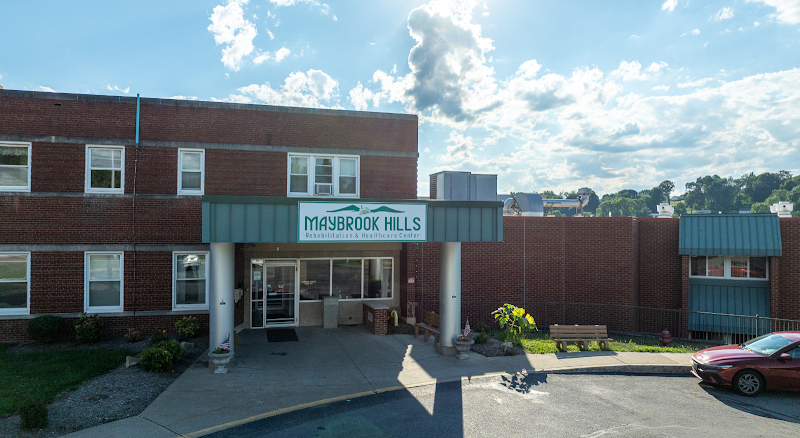
301 VALLEY VIEW BOULEVARD, ALTOONA, PA 16602 (814) 944-0845
For profit - Limited Liability company 240 Beds MB HEALTHCARE Data: November 2025
Trust Grade
50/100
#459 of 653 in PA
Last Inspection: August 2025

Inspected within the last 6 months. Data reflects current conditions.

Overview

Maybrook Hills Rehabilitation and Healthcare Center has a Trust Grade of C, which means it is average and in the middle of the pack compared to other facilities in Pennsylvania. It ranks #459 out of 653 statewide and #8 out of 9 in Blair County, indicating it is in the bottom half of options available. However, the facility is showing improvement, with issues decreasing from 30 in 2024 to 10 in 2025. Staffing is rated average at 3 out of 5 stars, with a turnover rate of 41%, which is better than the state average, suggesting that staff are relatively stable and familiar with residents. There have been no fines, which is a positive sign, but there are concerns about the timely completion of resident assessments, with 11 residents not having their initial assessments done on time and quarterly assessments missing deadlines for 15 residents.

Trust Score
C
50/100
In Pennsylvania
#459/653
Bottom 30%
Safety Record
Low Risk
No red flags
Inspections
Getting Better
30 → 10 violations
Staff Stability
○ Average
41% turnover. Near Pennsylvania's 48% average. Typical for the industry.
Penalties
✓ Good
No fines on record. Clean compliance history, better than most Pennsylvania facilities.
Skilled Nurses
○ Average
Each resident gets 33 minutes of Registered Nurse (RN) attention daily — about average for Pennsylvania. RNs are the most trained staff who monitor for health changes.
Violations
⚠ Watch
58 deficiencies on record. Higher than average. Multiple issues found across inspections.
★★☆☆☆
2.0
Overall Rating
★★★☆☆
3.0
Staff Levels
★★★★☆
4.0
Care Quality
★★☆☆☆
2.0
Inspection Score
Stable
2024: 30 issues
2025: 10 issues

The Good

  • 4-Star Quality Measures · Strong clinical quality outcomes
  • Full Sprinkler Coverage · Fire safety systems throughout facility
  • No fines on record
  • Staff turnover below average (41%)

    7 points below Pennsylvania average of 48%

Facility shows strength in quality measures, fire safety.

The Bad

2-Star Overall Rating

Below Pennsylvania average (3.0)

Below average - review inspection findings carefully

Staff Turnover: 41%

Near Pennsylvania avg (46%)

Typical for the industry

Chain: MB HEALTHCARE

Part of a multi-facility chain

Ask about local staffing decisions and management

The Ugly 58 deficiencies on record

Aug 2025 8 deficiencies
CONCERN (D)

Potential for Harm - no one hurt, but risky conditions existed

Comprehensive Care Plan (Tag F0656)

Could have caused harm · This affected 1 resident

Based on review of clinical records and staff interviews, it was determined that the facility failed to develop a comprehensive care plan that included specific and individualized interventions to add...

Read full inspector narrative →
Based on review of clinical records and staff interviews, it was determined that the facility failed to develop a comprehensive care plan that included specific and individualized interventions to address the care needs of residents for one of 65 residents reviewed (Resident 83).Findings include: A quarterly Minimum Data Set (MDS) assessment (a federally-mandated assessment of a resident's abilities and care needs) for Resident 83, dated July 24, 2025, revealed that the resident was cognitively intact, required substantial assistance from staff with daily care tasks. Physician's orders for Resident 83, dated February 23, 2023, included an order for the resident to receive 500 milligram (mg) of amoxicillin (antibiotic) by mouth daily for prophylaxis for urinary tract infection (UTI) and an order with a start date of January 24, 2023, for one gram (gm) of Methenamine Hippurate (antibiotic) by mouth every morning and at bedtime for UTI prevention due to a history of urinary tract infections with sepsis. There was no documented evidence that a care plan was developed to address Resident 83's individual care and treatment needs related to her use of antibiotic medications. Interview with the Director of Nursing on August 7, 2025, at 2:55 p.m. confirmed that a care plan to address the care needs related to Resident 83's need for antibiotic medication use was not developed and should have been. 28 Pa. Code 211.12(d)(1)(5) Nursing Services.
CONCERN (D)

Potential for Harm - no one hurt, but risky conditions existed

Deficiency F0761 (Tag F0761)

Could have caused harm · This affected 1 resident

Based on review of manufacturer's instructions and clinical records, as well as observations and staff interviews, it was determined that the facility failed to date an opened multidose vial of tuberc...

Read full inspector narrative →
Based on review of manufacturer's instructions and clinical records, as well as observations and staff interviews, it was determined that the facility failed to date an opened multidose vial of tuberculin solution (used to detect tuberculosis infection) in one of two medication storage area refrigerators reviewed (Unit D2). The facility's policy regarding medication storage, dated July 17, 2025, indicated that it is the policy of this facility to ensure all medications housed on their premises will be stored in the pharmacy and/or medication rooms according to the manufacturer's recommendations.Manufacturer's instructions for Aplisol solution, dated November 2013, indicated that vials in use more than 30 days should be discarded due to possible oxidation and degradation which may affect potency.Observations of the facility's medication storage area refrigerator on D2 unit, on August 5, 2025, at 1:45 p.m. revealed an opened and undated vial of Aplisol solution for TB skin testing (to test for tuberculosis).Interview with Licensed Practical Nurse 1 at the time of the observation confirmed that the vial of Aplisol solution was not dated when it was opened and that it should have been.Interview with the Director of Nursing on August 5, 2025, at 3:51 p.m. confirmed that the vial of Aplisol solution should have been dated when opened. 28 Pa. Code 211.9(a)(1) Pharmacy services.28 Pa. Code 211.12(d)(1) Nursing services.
CONCERN (D)

Potential for Harm - no one hurt, but risky conditions existed

Infection Control (Tag F0880)

Could have caused harm · This affected 1 resident

Based on review of established infection control guidelines, facility policy, and residents' clinical records, as well as observations and staff interviews, it was determined that the facility failed ...

Read full inspector narrative →
Based on review of established infection control guidelines, facility policy, and residents' clinical records, as well as observations and staff interviews, it was determined that the facility failed to follow infection control guidelines from the Centers for Medicare/Medicaid Services (CMS) and the Centers for Disease Control (CDC) to reduce the spread of infections and prevent cross-contamination for one of 65 residents reviewed (Resident 5). Findings include:CDC guidance on isolation precautions and Implementation of Personal Protective Equipment (PPE) use in Nursing Homes to Prevent Spread of Multidrug-Resistant Organisms (MDRO's - bacteria that have become resistant to certain antibiotics, and these antibiotics can no longer be used to control or kill the bacteria), dated July 12, 2022, indicates that MDRO transmission is common in skilled nursing facilities, contributing to substantial resident morbidity and mortality and increased healthcare costs. Enhanced Barrier Precautions (EBP) are an infection control intervention designed to reduce transmission of resistant organisms that employs targeted gown and glove use during high contact resident care activities. CMS updated its infection prevention and control guidance effective April 1, 2024. The recommendations now include the use of EBP during high-contact care activities for residents with chronic wounds or indwelling medical devices, regardless of their MDRO status, in addition to residents who have an infection or colonization with a CDC-targeted or other epidemiologically important MDRO when contact precautions do not apply.The facility's policy regarding EBP, dated January 13, 2025, indicated that the facility will have the discretion in using EBP for residents who do not have a chronic wound or indwelling medical device and are infected or colonized with an MDRO that is currently targeted by CDC may be considered epidemiologically important. An order for enhanced barrier precautions will be obtained for residents with any of the following: Wounds (e.g. chronic wounds such as pressure ulcers, diabetic foot ulcers, unhealed surgical wounds, and chronic venous stasis ulcers) and/or indwelling medical devices (e.g. central lines, urinary catheters, feeding tubes, tracheostomy/ventilator tubes, hemodialysis catheters, PICC lines, midline catheters) even if the resident is not known to be infected or colonized with a MDRO.A significant change Minimum Data Set (MDS) assessment (a mandated assessment of a resident's abilities and care needs) for Resident 6, dated June 11, 2025, revealed that the resident was cognitively impaired and was at risk for developing pressure sores.Physician's orders for Resident 5, dated July 30, 2025, included orders for the resident to have 0.125% Dakin's Solution (antiseptic used for cleaning wounds and preventing infection) applied to the pressure ulcer on her left heel topically every day and evening shift.A wound note, dated July 31, 2025, revealed the resident had an unstageable pressure ulcer (wound bed cannot be visualized) on her left lateral heel that measured 6.8 x 8.4 x 0.2 centimeters (cm) and was covered 70% by eschar (a layer of dead tissue, that forms on the skin's surface, often as a scab-like covering over a wound or burn).A wound note, dated August 5, 2025, revealed the resident had an unstageable pressure ulcer on her left lateral foot that measured 1.2 x 1.5 x 0.0 centimeters (cm) and was covered 100% by eschar , and had an unstageable pressure ulcer on her left heel that measured 6.2 x 8.1 x 0.2 cm and was covered 70% by eschar.Observations of Resident 5 on August 4, 2025, at 12:00 p.m., revealed that the resident was in her room, and there was no signage or notification of the resident being on EBP posted at the resident's room, and there was no PPE observed in or around the resident's room. There was no documented evidence that EBP was ordered and care planned for Resident 5 until August 6, 2025.Interview with the Nursing Home Administrator on August 7, 2025, at 4:31 p.m. confirmed that Resident 5's EBP was missed and she should have been in place due to the resident having pressure ulcers.28 Pa. Code 201.14(a) Responsibility of Licensee.28 Pa. Code 201.18(e)(1) Management.28 Pa. Code 211.12(d)(1)(5) Nursing Services.
CONCERN (E)

Potential for Harm - no one hurt, but risky conditions existed

Comprehensive Assessments (Tag F0636)

Could have caused harm · This affected multiple residents

Based on review of the Resident Assessment Instrument User's Manual and clinical records, the Centers for Medicare & Medicaid Services (CMS) Minimum Data Set (MDS) validation report, as well as staff ...

Read full inspector narrative →
Based on review of the Resident Assessment Instrument User's Manual and clinical records, the Centers for Medicare & Medicaid Services (CMS) Minimum Data Set (MDS) validation report, as well as staff interviews, it was determined that the facility failed to ensure that the Care Area Assessment Process of comprehensive Minimum Data Set assessments and comprehensive assessments were completed in the required time frame for 11 of 65 residents reviewed (Residents 1, 9, 30, 39, 51, 85, 108, 115, 180, 222, 238). Findings include:The Long-Term Care Facility Resident Assessment Instrument (RAI) User's Manual, which provides instructions and guidelines for completing required Minimum Data Set (MDS) assessments (mandated assessments of a resident's abilities and care needs), dated October 2024, indicated that for admission MDS assessments, the assessment completion date, and the Care Area Assessment (CAA - the process of completing an in-depth assessment of triggered, potentially problematic care areas) completion date (Item V0200B2) were to be no later than the resident's admission date plus 13 calendar days and there must be an MDS every 92 days. A comprehensive MDS assessment for Resident 1 revealed that the ARD was June 26, 2025. The MDS assessment was dated as completed on July 18, 2023, which was nine days late.A comprehensive MDS assessment for Resident 9 revealed that the ARD was July 8, 2025. The MDS assessment was dated as completed on July 22, 2023, which was 1 day late.A comprehensive MDS assessment for Resident 30 revealed that the ARD was May 6, 2025. The MDS assessment was dated as completed on May 21, 2023, which was 2 days late.A comprehensive MDS assessment for Resident 39 revealed that the ARD was June 29, 2025. The MDS assessment was dated as completed on July 18, 2023, which was 6 days late.A comprehensive MDS assessment for Resident 51 revealed that the ARD was May 19, 2025. The MDS assessment was dated as completed on June 3, 2023, which was 2 days late.A comprehensive MDS assessment for Resident 85 revealed that the ARD was June 24, 2025. The MDS assessment was dated as completed on July 17, 2023, which was 10 days late.A comprehensive MDS assessment for Resident 108 revealed that the ARD was July 4, 2025. The MDS assessment was dated as completed on July 22, 2023, which was 5 days late.A comprehensive MDS assessment for Resident 115 revealed that the ARD was April 19, 2025. The MDS assessment was dated as completed on May 6, 2023, which was 4 days late.A comprehensive MDS assessment for Resident 180 revealed that the ARD was June 10, 2025. The MDS assessment was dated as completed on July 8, 2023, which was 15 days late.A comprehensive MDS assessment for Resident 222 revealed that the ARD was June 20, 2025. The MDS assessment was dated as completed on July 11, 2023, which was 8 days late.A comprehensive MDS assessment for Resident 238 revealed that the ARD was March 7, 2025. The MDS assessment was dated as completed on April 4, 2023, which was 15 days late.Interview with the Registered Nurse Assessment Coordinator (RNAC - a registered nurse who is responsible for the completion of MDS assessments) on August 7, 2025 at 8:32 a.m. confirmed that the above comprehensive MDS assessments were not completed in the required time frames.28 Pa. Code 211.5(f) Clinical records.
CONCERN (E)

Potential for Harm - no one hurt, but risky conditions existed

Deficiency F0638 (Tag F0638)

Could have caused harm · This affected multiple residents

Based on review of the Resident Assessment Instrument Manual and clinical records, as well as staff interviews, it was determined that the facility failed to ensure that quarterly Minimum Data Set ass...

Read full inspector narrative →
Based on review of the Resident Assessment Instrument Manual and clinical records, as well as staff interviews, it was determined that the facility failed to ensure that quarterly Minimum Data Set assessments were completed within the required time frame for 15 of 65 residents reviewed (Residents 10, 22, 43, 71, 72, 75, 77, 83, 108, 112, 115, 124, 150, 190, 199).Findings include:The Long-Term Care Facility Resident Assessment Instrument (RAI) User's Manual, which provides instructions and guidelines for completing required Minimum Data Set (MDS) assessments (mandated assessments of a resident's abilities and care needs), dated October 2024, indicated that the assessment reference date (ARD - the last day of the assessment's look-back period) of a quarterly MDS assessment must be no more than 92 days after the ARD of the most recent assessment of any type, and the assessment was to have a completion date (Section Z0500B) that was no later than the ARD plus 14 calendar days.A quarterly MDS assessment for Resident 10 had an ARD of May 2, 2025. There was no previous quarterly or comprehensive MDS assessment in the prior 92 days.A quarterly MDS assessment for Resident 22 had an ARD of June 29, 2025, but it was not completed (Section Z0500B) until July 14, 2025.A quarterly MDS assessment for Resident 43 had an ARD of July 8, 2025, but it was not completed (Section Z0500B) until July 23, 2025.A quarterly MDS assessment for Resident 71 had an ARD of June 26, 2025, but it was not completed (Section Z0500B) until July 11, 2025. A quarterly MDS assessment for Resident 71 had an ARD of July 15, 2025, but it was not completed (Section Z0500B) until July 30, 2025.A quarterly MDS assessment for Resident 72 had an ARD of July 2, 2025, but it was not completed (Section Z0500B) until July 21, 2025.A quarterly MDS assessment for Resident 75 had an ARD of May 5, 2025, but it was not completed (Section Z0500B) until May 21, 2025. A quarterly MDS assessment for Resident 75 had an ARD of May 15, 2025, but it was not completed (Section Z0500B) until May 30, 2025.A quarterly MDS assessment for Resident 77 had an ARD of July 5, 2025, but it was not completed (Section Z0500B) until July 23, 2025.A quarterly MDS assessment for Resident 83 had an ARD of Jun 30, 2025, but it was not completed (Section Z0500B) until July 16, 2025.A quarterly MDS assessment for Resident 108 had an ARD of June 30, 2025, but it was not completed (Section Z0500B) until July 16, 2025.A quarterly MDS assessment for Resident 112 had an ARD of June 30, 2025, but it was not completed (Section Z0500B) until July 15, 2025.A quarterly MDS assessment for Resident 115 had an ARD of June 11, 2025, but it was not completed (Section Z0500B) until June 30, 2025.A quarterly MDS assessment for Resident 124 had an ARD of June 18, 2025, but it was not completed (Section Z0500B) until July 7, 2025.A quarterly MDS assessment for Resident 150 had an ARD of June 30, 2025, but it was not completed (Section Z0500B) until July 15, 2025.A quarterly MDS assessment for Resident 190 had an ARD of June 29, 2025, but it was not completed (Section Z0500B) until July 14, 2025.A quarterly MDS assessment for Resident 199 had an ARD of June 18, 2025, but it was not completed (Section Z0500B) until July 7, 2025.Interview with the Registered Nurse Assessment Coordinator (RNAC - a registered nurse who is responsible for the completion of MDS assessments) on August 7, 2025 at 8:32 a.m. confirmed that the above comprehensive MDS assessments were not completed in the required time frames.28 Pa. Code 211.5(f) Clinical records.
CONCERN (E)

Potential for Harm - no one hurt, but risky conditions existed

MDS Data Transmission (Tag F0640)

Could have caused harm · This affected multiple residents

Based on review of the Resident Assessment Instrument, clinical records, and the Minimum Data Set validation report, as well as staff interviews, it was determined that the facility failed to transmit...

Read full inspector narrative →
Based on review of the Resident Assessment Instrument, clinical records, and the Minimum Data Set validation report, as well as staff interviews, it was determined that the facility failed to transmit Minimum Data Set (MDS) assessments to the required electronic system, the Centers for Medicare and Medicaid Services (CMS) Quality Improvement and Evaluation System (QIES) Assessment Submission and Processing (ASAP) System, within 14 days of completion for 3 of 65 residents reviewed (Residents 26, 83, 218). Findings include:The Long-Term Care Facility Resident Assessment Instrument (RAI) User's Manual, which provides instructions and guidelines for completing required Minimum Data Set (MDS) assessments (federally-mandated assessments of a resident's abilities and care needs), dated October 2024, indicated that comprehensive MDS assessments must be transmitted electronically within 14 days of the Care Plan Completion Date (V0200C2 + 14 days). All other MDS assessments must be submitted within 14 days of the MDS Completion Date (Z0500B + 14 days). The MDS assessment validation report from iQIES (a federal government website for the Centers for Medicare and Medicaid), dated May 1, 2025 - August 1, 2023, revealed that the following MDS assessments were submitted late:Resident 26 had a quarterly MDS assessment with a completion date of January 21, 2025, however, was not submitted until July 25, 2025. Resident 83 had a quarterly MDS assessment with a completion date of May 11, 2025, however, was not submitted until June 2, 2025.Resident 218 had a quarterly MDS assessment with a completion date of June 21, 2025, however, was not submitted until July 16, 2025. Interview with the Registered Nurse Assessment Coordinator (RNAC - a registered nurse who is responsible for the completion of MDS assessments) on August 7, 2025 at 8:32 a.m. confirmed that the above comprehensive MDS assessments were not completed in the required time frames.28 Pa. Code 211.5(f) Clinical records.
CONCERN (E)

Potential for Harm - no one hurt, but risky conditions existed

Assessment Accuracy (Tag F0641)

Could have caused harm · This affected multiple residents

Based on review of the Resident Assessment Instrument User's Manual and residents' clinical records, as well as staff interviews, it was determined that the facility failed to complete accurate Minimu...

Read full inspector narrative →
Based on review of the Resident Assessment Instrument User's Manual and residents' clinical records, as well as staff interviews, it was determined that the facility failed to complete accurate Minimum Data Set assessments for six of 65 residents reviewed (Residents 3, 5, 8, 75, 112, 186). Findings include:The Resident Assessment Instrument (RAI) User's Manual, which gives instructions for completing Minimum Data Set (MDS) assessments (mandated assessments of a resident's abilities and care needs), dated October 2024, revealed that Section N0350A (insulin) was to be coded with the number of days that insulin injections were received during the seven-day assessment period, Section N0415C1 (antidepressant medication) was to be checked if the resident received an antidepressant medication during the seven-day assessment period, Section N0415F1 (antibiotic medication) was to be checked if the resident received an antibiotic medication during the seven-day assessment period, Section N0415G1 (diuretic medication) was to be checked if the resident received an diuretic medication during the seven-day assessment period, Section N0415H1 (opioid medication) was to be checked if the resident received an opioid medication during the seven-day assessment period, and Section N0415K1 (anticonvulsant medication) was to be checked if the resident received an anticonvulsant medication during the seven-day assessment period.Physician's orders for Resident 3 dated July 2, 2025, included an order for the resident to receive 75 milligrams (mg) of Venlafaxine HCl daily for depression. The resident's Medication Administration Record (MAR) for July 2025 revealed that the resident received Venlafaxine daily from July 3 through 31, 2025.A significant change MDS assessment for Resident 3, dated July 24, 2025, revealed that Section N0415C1 was not checked, indicating that the resident did not receive any antidepressant medications during the seven days of the assessment period. Physician's orders for Resident 5 dated December 5, 2022, included an order for the resident to receive 10 mg of Escitalopram daily for depression. The resident's MAR for June 2025 revealed that the resident received Escitalopram daily from June 1 through 30, 2025.A significant change MDS assessment for Resident 5, dated June 11, 2025, revealed that Section N0415C1 was not checked, indicating that the resident did not receive any antidepressant medications during the seven days of the assessment period. Physician's orders for Resident 8 dated July 30, 2024 and May 7, 2025, included orders for the resident to receive 500 mg of Keppra two times a day for adjustment disorder and 8 units of Insulin Glargine subcutaneously (beneath the skin) daily for diabetes mellitus. The resident's MAR for June 2025 revealed that the resident received Keppra two times a day and Insulin Glargine daily from June 1 through 30, 2025.A quarterly MDS assessment for Resident 8, dated June 6, 2025, revealed that Section N0350A and N0415FK1 was not checked, indicating that the resident did not receive any inulin or anticonvulsant medications during the seven days of the assessment period. Physician's orders for Resident 75 dated October 7, 2024, included orders for the resident to receive 7.5 mg of Mirtazapine (antidepressant) at bedtime for an appetite stimulant, 40 mg of Lasix (diuretic) daily for edema (swelling), 200mg of Gabapentin three times a day for neuropathy (nerve pain), and 50 mg of Tramadol every six hours as needed for moderate to severe pain. The resident's MAR for May 2025 revealed that the resident received Mirtazapin, Lasix, and Gabapentin May 1 through 31, 2025, and received Tramadol as needed may 2 through 31, 2025.A quarterly MDS assessment for Resident 75, dated May 15, 2025, revealed that Sections N0415C1, N0415G1, N0415H1, and N0415K1 were not checked, indicating that the resident did not receive any antidepressant, diuretic, opioid, and anticonvulsant medications during the seven days of the assessment period. Physician's orders for Resident 112 dated July 8, 2025, included an order for the resident to receive 50 mg of Tramadol every eight hours as needed for moderate to severe pain. The resident's MAR for July 2025 revealed that the resident received Tramadol as needed on July 11, 14, 15, and 16, 2025. A quarterly MDS assessment for Resident 112, dated July 17, 2025, revealed that Section N0415H1 was not checked, indicating that the resident did not receive any opioid medications during the seven days of the assessment period. Physician's orders for Resident 186 dated June 9, 2025, included an order for the resident to have Bacitracin-Polymixin B ointment applied to her right third finger topically every shift for wound care until it was healed. The resident's MAR for July 2025 revealed that the resident had Bacitracin-Polymixin B applied to her right third finger July 1 through 9, 2025.A quarterly MDS assessment for Resident 186, dated July 5, 2025, revealed that Section N0415F1 was not checked, indicating that the resident did not receive any antibiotic medications during the seven days of the assessment period. An interview with the Registered Nurse Assessment Coordinator on August 6, 2025, at 11:30 a.m. confirmed that assessments for Residents 3, 5, 8, 75, 112, and 186 were coded incorrectly.28 Pa. Code 211.5(f) Medical records.
CONCERN (E)

Potential for Harm - no one hurt, but risky conditions existed

Quality of Care (Tag F0684)

Could have caused harm · This affected multiple residents

Based on review of clinical records, as well as staff interviews, it was determined that the facility failed to ensure that physician's orders for medications were followed for three of 65 residents r...

Read full inspector narrative →
Based on review of clinical records, as well as staff interviews, it was determined that the facility failed to ensure that physician's orders for medications were followed for three of 65 residents reviewed (Residents 51, 72, 180). Findings include:A comprehensive Minimum Data Set (MDS) assessment (a mandated assessment of a resident's abilities and care needs) for Resident 51, dated May 20, 2025, indicated that the resident was cognitively impaired, was incontinent of bowel, and that she required extensive assistance from staff for daily care needs. Physician's order for Resident 51, dated May 19, 2025, included an order for the resident to receive 8.6 mg Senna Oral, give 4 tablets as needed for constipation if no bowel movement in three days. Physician's order, dated May 19, 2025, was for the resident to receive 10 milligrams (mg) of Bisacodyl Suppository (treats constipation) as needed for constipation if no bowel movement in four days. Review of Resident 51's task record, dated July 2025, revealed that the resident had no bowel movement from July 11-17, 2025 (7 days). Review of Resident 51's Medication Administration Record (MAR), dated July, 2025, revealed no documented evidence that the resident was medicated for constipation until July 16, 2025 (on the 6th day). Review of Resident 51's task record, dated July 2025, revealed that the resident had no bowel movement from July 18-24, 2025. Review of Resident 51's MAR, dated July 2025, revealed no documented evidence that the resident was medicated for constipation until July 23, 2025 (on the 6th day).Interview with Director of Nursing on August 7, 2025 at 11:59 a.m. confirmed that staff were not medicating Resident 51 for constipation per physician's orders and they should have been.A quarterly MDS assessment for Resident 72, dated July 2, 2025, revealed that the resident was cognitively impaired and had diagnoses that included hypertension.Physician's orders for Resident 72, dated June 14, 2025 included an order for the resident to receive 40 mg Propranolol extended release capsule once daily and to hold if the heart rate was less than 60 or the systolic blood pressure (top number) was less than 100.A review of Resident 72's MAR, dated July 2025, revealed that the staff were not assessing the resident's heart rate or blood pressure prior to administering the Propranolol. Interview with the Director of Nursing on August 7, 2025 at 1:34 p.m. revealed that the staff should have been assessing Resident 72's heart rate and blood pressure and documenting the results prior to administering the propranolol and they were not.A comprehensive MDS assessment for Resident 180, dated June 17, 2025, revealed that the resident was cognitively intact and had diagnoses that included renal insufficiency and received dialysis (process to clean the blood of toxins when the kidneys fail).Physician's orders for Resident 180, dated June 10, 2025, included an order for the resident to receive 5 mg Midodrine (treats low blood pressure) and to hold if the systolic blood pressure (SBP) is greater than 130. A review of Resident 180's MAR, dated July and August 2025, revealed that the resident received Midodrine on July 3 with a BP of 140/82, July 6 with a BP of 132/74, July 8 with a BP of 136/70, July 9 with a BP of 132/72, July 18 with a BP of 130/74, July 22 with a BP of 136/84, July 31 with a BP of 132/82, August 1 at 8:00 a.m. with a BP of 134/74 and 3:00 p.m. with a BP of 134/74.Interview with the Director of Nursing on August 7, 2025 at 1:48 p.m. revealed that Resident 180's Midodrine should have been held on the above dates and it was not.28 Pa. Code 211.12(d)(1)(5) Nursing Services.
Jun 2025 1 deficiency
CONCERN (D) 📢 Someone Reported This

A family member, employee, or ombudsman was alarmed enough to file a formal complaint

Potential for Harm - no one hurt, but risky conditions existed

Quality of Care (Tag F0684)

Could have caused harm · This affected 1 resident

Based on review of clinical records, as well as staff interviews, it was determined that the facility failed to ensure that physician's orders were followed for one of 11 residents reviewed (Resident ...

Read full inspector narrative →
Based on review of clinical records, as well as staff interviews, it was determined that the facility failed to ensure that physician's orders were followed for one of 11 residents reviewed (Resident 2). Findings include: The facility's policy regarding as needed (prn) pain medications, dated May 8, 2025, revealed that prn medications would be administered according to the physician-ordered parameters. An admission Minimum Data Set (MDS) assessment (a mandated assessment of a resident's abilities and care needs) for Resident 2, dated April 14, 2025, revealed that the resident was cognitively intact, understood and able to understand others, required supervision with daily care needs, and had diagnoses that included right arm fracture, osteoporosis and a pathological fracture of the lumbar spine. Physician's orders for Resident 2, dated April 9, 2025, included an order for the resident to have acetaminophen (Tylenol) 325 mg, two tablets by mouth every six hours as needed for mild pain with a level of (1-3), and oxycodone 5 mg, one tablet by mouth every six hours as needed for moderate to severe pain, at a level of (4-10). Review of the Medication Administration Record (MAR) for Resident 2, dated June 2025, revealed that on June 8 and 13 oxycodone was given for a pain level of 3, when the pain parameter for oxycodone was a pain level 4-10, and on June 15 Tylenol was given for a pain level of 5, when the pain parameter for Tylenol was pain level 1-3. Interview with the Director of Nursing on June 24, 2025, at 13:29 p.m. confirmed that Resident 2's pain medications were not given as per physician-ordered parameters, and they should have been. 28 Pa. Code 211.12(d)(1)(5) Nursing Services.
Mar 2025 1 deficiency
CONCERN (D) 📢 Someone Reported This

A family member, employee, or ombudsman was alarmed enough to file a formal complaint

Potential for Harm - no one hurt, but risky conditions existed

Infection Control (Tag F0880)

Could have caused harm · This affected 1 resident

Based on review of established infection control guidelines, facility policy, and residents' clinical records, as well as observations and staff interviews, it was determined that the facility failed ...

Read full inspector narrative →
Based on review of established infection control guidelines, facility policy, and residents' clinical records, as well as observations and staff interviews, it was determined that the facility failed to follow infection control guidelines from the Centers for Medicare/Medicaid Services (CMS) and the Centers for Disease Control (CDC) to reduce the spread of infections and prevent cross-contamination for one of five residents reviewed (Resident 1). Findings include: CDC guidance on isolation precautions and Implementation of Personal Protective Equipment (PPE) use in Nursing Homes to Prevent Spread of Multidrug-Resistant Organisms (MDRO's - bacteria that have become resistant to certain antibiotics, and these antibiotics can no longer be used to control or kill the bacteria), dated July 12, 2022, indicates that MDRO transmission is common in skilled nursing facilities, contributing to substantial resident morbidity and mortality and increased healthcare costs. Enhanced Barrier Precautions (EBP) are an infection control intervention designed to reduce transmission of resistant organisms that employs targeted gown and glove use during high contact resident care activities. CMS updated its infection prevention and control guidance effective April 1, 2024. The recommendations now include the use of EBP during high-contact care activities for residents with chronic wounds or indwelling medical devices, regardless of their MDRO status, in addition to residents who have an infection or colonization with a CDC-targeted or other epidemiologically important MDRO when contact precautions do not apply. The facility's policy regarding EBP, dated May 8, 2024, indicated that EBP's would be indicated for residents with wounds or indwelling medical devices, and infection or colonization with an MDRO. Healthcare personnel were to wear appropriate PPE, including gloves and gowns, when providing care to residents requiring EBP's. The facility's pharmacy policy regarding medication administration, dated May 8, 2024, indicated that staff were not to touch tablets or capsules with their fingers. An admission Minimum Data Set (MDS) assessment (a mandated assessment of a resident's abilities and care needs) for Resident 2, dated February 26, 2025, indicated that the resident was cognitively impaired, required assistance with care needs, had an indwelling catheter (a thin, flexible tube inserted into the bladder to drain urine from the bladder), received insulin injections, and had diagnoses that included diabetes and neurogenic bladder (bladder lacks control due to nerve or muscle problems). A physician's order and care plan for Resident 1, dated February 19, 2025, included an order for the resident to have a urinary (foley) catheter (an indwelling catheter) and EBP's for the use of the indwelling catheter. The physician's orders also included orders for the resident to receive 27 units of Insulin Glargine subcutaneously (beneath the skin) one time a day for diabetes, 4 percent Lidocaine External Patch to be applied to the lower back topically one time a day for pain, and 0.4 milligrams/hour Nitroglycerin Transdermal Patch to be applied one time a day for angina (chest pain). Observations of medication pass on March 5, 2025, at 9:40 a.m. and 10:04 a.m. revealed that Licensed Practical Nurse 1, while not wearing gloves, spilled a cup of prepared medications onto the top of the medication cart, picked them up and put them back into the cup, and administered them to Resident 1. She continued to feel Resident 1's lower back and applied the Lidocaine patch, cleaned the resident's abdomen with alcohol and administered his Insulin Glargine, and removed the Nitroglycerin patch from his right upper chest. During the medication pass Licensed Practical Nurse 1 dropped the Lisinopril pill onto the floor and returned to the medication cart to prepare another dose. While preparing the dose of Lisinopril, without gloves on, she spilled the pill onto the top of the medication cart and picked it up with her fingers, put it back into the medication cup and administered it to the resident. She then applied the Nitroglycerin patch to the resident's left upper chest. Licensed Practical Nurse 1 did not wear any PPE during the administration of medications to Resident 1. Interview with Licensed Practical Nurse 1 on March 5, 2025, at 10:12 a.m. revealed that she did not think that Resident 1 was on EBP and that she never wears gloves when administering insulin pens or applying medicated patches, and confirmed that she did not use gloves when touching the resident's spilled medication, since her hands had been washed prior. Interview with the Director of Nursing on March 5, 2025, at 1:55 p.m. confirmed that Resident 1 was on EBP, and that Licensed Practical Nurse 1 should have been wearing a gown and gloves while providing direct care to the resident. 28 Pa. Code 201.14(a) Responsibility of Licensee. 28 Pa. Code 201.18(e)(1) Management. 28 Pa. Code 211.12(d)(1)(5) Nursing Services.
Nov 2024 1 deficiency
CONCERN (D) 📢 Someone Reported This

A family member, employee, or ombudsman was alarmed enough to file a formal complaint

Potential for Harm - no one hurt, but risky conditions existed

Infection Control (Tag F0880)

Could have caused harm · This affected 1 resident

Based on review of facility policies and clinical records, as well as observations and staff interviews, it was determined that the facility failed to use proper infection control practices for handli...

Read full inspector narrative →
Based on review of facility policies and clinical records, as well as observations and staff interviews, it was determined that the facility failed to use proper infection control practices for handling linen while providing care for two of 11 residents reviewed (Residents 10, 11). Findings include: The facility's infection control policy concerning handling of linen, dated May 8, 2024, revealed that staff is to handle soiled linen using standard precautions, such as wearing gloves. Observations on November 18, 2024, at 10:17 a.m. revealed that Nurse Aide 1 exited the room of Resident 11 carrying soiled laundry with her bare hands and placed them in the dirty linen bin in the hallway. Interview with Nurse Aide 1 on November 18, 2024, at 10:18 a.m. confirmed that she should wear gloves while handling soiled laundry. An admission Minimum Data Set (MDS) assessment (a mandated assessment of a resident's abilities and care needs) for Resident 10, dated November 2, 2024, revealed that the resident was cognitively intact and required assistance from staff for daily care needs. Observations on November 18, 2024, at 10:43 a.m. revealed that Nurse Aide 2 and Nurse Aide 3 were providing a bed bath to Resident 10 and threw a soiled gown, a soiled brief, and soiled bed linen on the floor while providing the care. Interview with Nurse Aide 2 and Nurse Aide 3 on November 8, 2023, at 10:44 a.m. confirmed that they should not throw soiled gowns, briefs and bed linens on the floor while providing care and that the soiled items should be placed in bags and taken to the dirty linen bins. Interview with the Nursing Home Administrator on November 18, 2024, at 1:05 p.m. confirmed that gloves should be worn when carrying soiled laundry out of resident rooms; soiled gowns, briefs and bed linens should not be thrown on the floor; and staff should place all laundry in bags and it should be taken to the dirty utility room. 28 Pa. Code 211.12(d)(1)(5) Nursing Services.
Aug 2024 20 deficiencies
CONCERN (D)

Potential for Harm - no one hurt, but risky conditions existed

Deficiency F0561 (Tag F0561)

Could have caused harm · This affected 1 resident

Based on interviews with residents and staff, as well as observations, it was determined that the facility failed to ensure that residents could make choices about aspects of their lives that were sig...

Read full inspector narrative →
Based on interviews with residents and staff, as well as observations, it was determined that the facility failed to ensure that residents could make choices about aspects of their lives that were significant to them, such as eating in the dining room with other residents, for nine of 57 residents reviewed (Residents 70, 72, 79, 125, 149, 151, 157, 162, 164). Findings include: Interview with Resident 72 on August 25, 2024, at 11:21 a.m. revealed that she likes to eat in the main dining room but has been unable to do so because the air conditioner is broken and the facility said that it would be too hot in there to have the dining room open. She indicated that the facility is waiting on a part to come to fix the air conditioner. During an group interview with Residents 70, 72, 79, 125, 149, 151, 157, 162, and 164 on August 26, 2024, at 2:04 p.m. the residents reported that they would like to eat in the main dining room, but they were told that they are unable to do so because the air conditioner is broken and the facility said that it would be too hot in there to have the dining room open. They indicated that the facility is waiting on a part to come to fix the air conditioner. The dietary's meal cart order, dated July 11, 2012, revealed that the main dining room's cart was to be delivered to the main dining room for the lunch meal at 12:12 p.m. An email, dated April 5, 2024, sent to the facility's ownership/management team by the Nursing Home Administrator revealed a Weekly Nursing Home Administrator report, dated March 29, 2024, to April 5, 2024. I forgot to include in my report that we have started soft opening of the main dining room and S2 unit dining room this week on Tuesdays and Thursdays. It has been a huge hit, and we will continue twice weekly throughout this month, then it will move to daily next month. This is for lunch only. Observations on August 25, 26, 27, and 28, 2024, during the lunch meal revealed that there were no residents eating in the main dining room during the meal and the doors were closed and locked. Interview with the Nursing Home Administrator on August 28, 2024, at 11:35 a.m. revealed that they had started with residents eating in the main dining room on Tuesdays and Thursdays, and shortly after that the air conditioning units went down. With the high temperatures outside it was decided to close the main dining room until they got quotes from vendors to decide if they were going with replacement parts or buying new units. Interview with the Maintenance Director on August 28, 2024, at 12:57 p.m. confirmed that he was advised by staff that the air conditioning units were not working in the main dining room. He indicated that on August 5, 2024, he had a vendor come to the facility to look at the air conditioning units. He received a quote on fixing the air conditioning units on August 23, 2024. He indicated that he is currently waiting for a quote to see if replacing the air conditioning units would be more cost effective than just repairing them. He indicated that they did not attempt any other interventions to try and keep the dining room open so that the residents could still eat in the main dining room and that it was decided to just close the main dining room down. Interview with the Nursing Home Administrator on August 28, 2024, at 2:33 p.m. confirmed that they did not monitor temperatures in the main dining room, they just closed it on the side of caution. 28 Pa. Code 201.29(j) Resident Rights.
CONCERN (D)

Potential for Harm - no one hurt, but risky conditions existed

Deficiency F0582 (Tag F0582)

Could have caused harm · This affected 1 resident

Based on clinical record reviews and staff interviews, it was determined that the facility failed to provide the required notice to the resident or the resident's representative following the end of t...

Read full inspector narrative →
Based on clinical record reviews and staff interviews, it was determined that the facility failed to provide the required notice to the resident or the resident's representative following the end of their Medicare coverage, or failed to provide 48-hour advanced notice, for two 57 residents reviewed (Residents 201, 228). Findings include: Resident 201's medical record revealed that he began Medicare A services on March 1, 2024, and his last covered day was April 22, 2024. The medical record indicated that the facility initiated discontinuation from Medicare Part A coverage and that the resident's benefit days were not exhausted. The facility had no documented evidence that the resident was issued a Skilled Nursing Facility (SNF) Beneficiary Protection Notification Review form, or an Advance Beneficiary Notice (ABN) as required. A verbal notification was provided to the resident's responsible party on May 1, 2024, which was not 48 hours in advance. The ABN notice provided to the resident's responsible party did not include the items and services that are/are not covered under Medicaid or by the facility's per diem rate and did not include the cost of those items and services. Resident 228's medical record revealed that he began Medicare A services on February 7, 2024, and his last covered day was April 1, 2024. The medical record indicated that the facility initiated discontinuation from Medicare Part A coverage and that the resident's benefit days were not exhausted. A Skilled Nursing Facility (SNF) Beneficiary Protection Notification Review form and an Advance Beneficiary Notice (ABN) were signed on March 29, 2024; however, the ABN notice provided to the resident did not include the items and services that are/are not covered under Medicaid or by the facility's per diem rate and did not include the cost of those items and services. Interview with the Nursing Home Administrator on August 26, 2024, at 2:22 p.m. confirmed that Resident 201 was not issued a SNF Beneficiary Protection Notification Review form or an ABN timely and that the ABN forms for Residents 201 and 228 were not completed accurately and should have been. 28 Pa. Code 201.18(e)(1) Management.
CONCERN (D)

Potential for Harm - no one hurt, but risky conditions existed

Transfer Notice (Tag F0623)

Could have caused harm · This affected 1 resident

Based on clinical record reviews and staff interviews, it was determined that the facility failed to notify the resident and resident's representative, in writing, regarding the reason for hospitaliza...

Read full inspector narrative →
Based on clinical record reviews and staff interviews, it was determined that the facility failed to notify the resident and resident's representative, in writing, regarding the reason for hospitalization for six of 57 residents reviewed (Residents 85, 96, 157, 171, 192, 218). Findings include: An annual Minimum Data Set (MDS) assessment (a mandated assessment of a resident's abilities and care needs) for Resident 85 revealed the resident was cognitively intact, was dependent on staff for personal care needs, had an indwelling catheter (thin tube inserted into the bladder to drain urine), and had diagnoses that included hemiplegia (paralysis of one side of the body) following a stroke. Nurses' notes for Resident 85, dated August 16, 2024, revealed that the resident was not looking good, was visibly shaking, and stated he felt cold. He required oxygen and had bleeding at his indwelling catheter site. The physician was notified, and the resident was sent to the emergency room for evaluation. The resident was admitted to the hospital with an elevated troponin level (blood test that signifies damage to the heart muscle) and sepsis (condition in which the body responds improperly to an infection). There was no documented evidence that a written notice of Resident 85's transfer to the hospital on August 16, 2024, was provided to the resident or that the resident's responsible party regarding the reason for transfer. A quarterly MDS assessment for Resident 96, dated August 6, 2024, revealed that the resident was understood, could understand others, and had diagnoses that included cancer and dementia. A nursing note for Resident 96, dated December 17, 2023, revealed that the resident stated that her chest pain was not going away and she would like to go to the emergency room. The resident was admitted with a diagnosis of chest pain. A nursing note for Resident 96, dated January 20, 2024, revealed that the resident was noted to continue to have a fever with a current temp of 104.3 degrees Fahrenheit (F). The physician was aware and orders were received to send the resident to emergency department for evaluation and treatment. A nursing note for Resident 96, dated January 21, 2024, revealed that the resident was admitted with sepsis (a life-threatening medical emergency that occurs when the body has an extreme response to an infection) and hypotension (low blood pressure). A nursing note for Resident 96, dated March 29, 2024, revealed that the resident had increased confusion and lethargy (a state of feeling tired, sluggish, or lacking energy), continued with an elevated temperature of 102.2 degrees F after receiving Tylenol (a pain reliever and a fever reducer) suppository. The resident continued to be weak, nauseated and trembling/shaking. The resident repeated several times, I'm cold, and was unable to make clear of wants and needs. Laboratory results were reviewed with the physician, and a new order was received to send the resident to emergency department for evaluation and treatment. A nursing note for Resident 96, dated March 30, 2024, revealed that the resident was admitted to the intensive care unit with septic shock (a life-threatening condition that happens when blood pressure drops to a dangerously low level after an infection) and uncontrollable hypotension. A nursing note for Resident 96, dated April 23, 2024, revealed that the resident was complaining of suprapubic (region of the abdomen located below the umbilical region) pain and small blood clots were noted in her brief. The resident requested to go to hospital and the physician was agreeable. A nursing note for Resident 96, dated April 24, 2024, revealed that the resident was admitted with a diagnosis of sepsis. There was no documented evidence that a written notice of Resident 96's transfers to the hospital on December 17, 2023; January 20, 2024; March 29, 2024; and April 23, 2024, were provided to the resident/resident's responsible party regarding the reason for transfer. A quarterly MDS assessment for Resident 157 revealed that the resident was cognitively intact, was independent with his personal care needs, and had diagnoses that included osteomyelitis (a serious bone infection). A nursing' note for Resident 157, dated March 6, 2024, revealed that the resident's white blood cell (protects your body from infection) count was elevated. This was reviewed with the physician and the resident was ordered to be transferred to the emergency room for evaluation. The resident was admitted to the hospital with sepsis. A nursing note for Resident 157, dated May 24, 2024, revealed that the resident was diaphoretic (had excessive sweating), pale and reported having the chills. His right lower extremity remained swollen, and he had complaints of pain. The certified registered nurse practitioner (CRNP) was notified, and the resident was transferred to the emergency room for evaluation. There was no documented evidence that a written notice of Resident 157's transfer to the hospital on March 26, 2024, and May 24, 2024, was provided to the resident or the resident's responsible party regarding the reason for transfer. A quarterly MDS assessment for Resident 171, dated June 3, 2024, revealed that the resident was understood, could understand others, and had diagnoses that included cancer, end-stage renal disease (ESRD - a permanent condition where the kidneys stop working and require dialysis or a kidney transplant to stay alive), and chronic obstructive pulmonary disease (COPD - a progressive lung disease that causes breathing problems and restricted airflow). A nursing note for Resident 171, dated April 1, 2024, revealed that the resident stated she wanted dialysis (a procedure to remove waste products and excess fluid from the blood when the kidneys stop working properly), and per dialysis, the resident will need to go the hospital, get labs and receive dialysis there since the resident has not had dialysis since last Monday. The resident was admitted with ESRD, pneumonia, and hypoglycemia (low blood sugar). A nursing note for Resident 171, dated May 22, 2024, revealed that the writer received an order from the CRNP to send the resident to the emergency department for a low hemoglobin and hematocrit (blood tests that measure different aspects of red blood cells and are important for oxygenation and blood loss assessment). A nursing note for Resident 171, dated May 23, 2024, revealed that the resident was admitted for a low hemoglobin and hematocrit. A nursing note for Resident 171, dated June 13, 2024, revealed that the writer received an order from the CRNP to send the resident to the emergency department a low hemoglobin and hematocrit. The resident was admitted with a diagnosis of gastrointestinal bleed (bleeding from anywhere in your digestive tract), anemia (a problem of not having enough healthy red blood cells or hemoglobin to carry oxygen to the body's tissues), and ESRD. A nursing note for Resident 171, dated July 19, 2024, revealed that a critical hemoglobin and hematocrit was called to the CRNP. The resident complained of mild fatigue, weakness, and shortness of breath. A nursing note for Resident 171, dated July 20, 2024, revealed that the resident was admitted with a diagnosis of anemia, weakness, and the need for a blood transfusion. There was no documented evidence that written notices of Resident 171's transfer to the hospital on April 1, 2024; May 22, 2024; June 13, 2024; and July 19, 2024, were provided to the resident/resident's responsible party regarding the reason for transfer. A quarterly MDS assessment for Resident 192, dated March 24, 2024, indicated that the resident was moderately cognitively impaired and had a suprapubic catheter (a flexible tube that drains urine from the bladder through a small incision in the lower abdomen). A nursing note for Resident 192, dated March 11, 2024, revealed that the resident had no urinary output and physician's orders were received to send the resident to the hospital for further evaluation. The resident was admitted to the hospital with a urinary tract infection and suprapubic catheter issues. A nursing note for Resident 192, dated May 28, 2024, revealed that the resident's brief was soaked with urine and the suprapubic catheter looked out of place with a suture out. The physician was notified and orders were received to transfer the resident to the hospital to have the suprapubic catheter replaced. The resident was admitted to the hospital with a complicated urinary tract infection and suprapubic catheter malfunction There was no documented evidence that written notices of Resident 192's transfers to the hospital on March 11 and May 28, 2024, were provided to the resident's responsible party regarding the reason for transfer. A nursing note for Resident 218, dated August 2, 2024, revealed that the writer reviewed lab results with the physician, and new orders were received to send the resident to the emergency department for evaluation and treatment. A nursing note for Resident 218, dated August 3, 2024, revealed that the resident was admitted with a diagnosis of acute kidney injury and new onset of tremors. There was no documented evidence that a written notice of Resident 218's transfer to the hospital on August 2, 2024, was provided to the resident/resident's responsible party regarding the reason for transfer. Interview with the Nursing Home Administrator on August 27, 2024, at 3:00 p.m. indicated that she was not aware that she was to be providing letters to the resident/resident's responsible party regarding the reason for transfer. Interview with the Assistant Director of Nursing on August 28, 2024, confirmed that the facility did not provide a written notice to the residents or their representatives when a resident was transferred to the hospital. 28 Pa. Code 201.25 Discharge Policy. 28 Pa. Code 201.29(f)(g) Resident Rights.
CONCERN (D)

Potential for Harm - no one hurt, but risky conditions existed

Deficiency F0637 (Tag F0637)

Could have caused harm · This affected 1 resident

Based on review of the Resident Assessment Instrument User's Manual and clinical records, as well as staff interviews, it was determined that the facility failed to ensure that comprehensive significa...

Read full inspector narrative →
Based on review of the Resident Assessment Instrument User's Manual and clinical records, as well as staff interviews, it was determined that the facility failed to ensure that comprehensive significant change Minimum Data Set assessments were completed in the required time frame for two of 57 residents reviewed (Residents 96, 171). Findings include: The Long-Term Care Facility Resident Assessment Instrument (RAI) User's Manual, which provides instructions and guidelines for completing required Minimum Data Set (MDS) assessments (mandated assessments of a resident's abilities and care needs), dated October 20243, indicated that the Assessment Reference Date (ARD) was to be no later than the 14th calendar day after determination that a significant change in the resident's status occurred (determination date + 14 calendar days) and the significant change comprehensive MDS assessment was to be completed no later than the 14th calendar day after determination that significant a change in the resident's status occurred (determination date + 14 calendar days). A care plan for Resident 96, dated July 26, 2024, revealed that the resident required hospice care (medical care to help someone with a terminal illness) related to an end-stage illness. Physician's orders for Resident 96, dated July 26, 2024, included an order for the resident to be admitted to hospice. However, there was no documented evidence that a significant change in status MDS assessment was completed for Resident 96 after being admitted to hospice care on July 26, 2024. Interview with the Nursing Home Administrator on August 27, 2024, at 2:21 p.m. confirmed that the significant change comprehensive MDS assessment for Resident 96 was not completed within the required time frame. A social services note for Resident 171, dated January 31, 2024, revealed that the resident was admitted to hospice care with a terminal diagnosis of chronic obstructive pulmonary disease (COPD - a progressive lung disease that causes breathing problems and restricted airflow). Physician's orders for Resident 171, dated February 1, 2024, included an order for the resident to be admitted to hospice. However, there was no documented evidence that a significant change in status MDS assessment was completed for Resident 171 after being admitted to hospice care on January 31, 2024. Interview with the Nursing Home Administrator on August 26, 2024, at 4:00 p.m. confirmed that the significant change comprehensive MDS assessment for Resident 171 was not completed within the required time frame. 28 Pa. Code 211.5(f) Clinical Records.
CONCERN (D)

Potential for Harm - no one hurt, but risky conditions existed

Comprehensive Care Plan (Tag F0656)

Could have caused harm · This affected 1 resident

Based on review of policies and clinical records, as well as staff interviews, it was determined that the facility failed to develop care plans to address individualized resident care needs for one of...

Read full inspector narrative →
Based on review of policies and clinical records, as well as staff interviews, it was determined that the facility failed to develop care plans to address individualized resident care needs for one of 57 residents reviewed (Resident 182). Findings include: The facility's policy regarding care plans, dated January 22, 2019, indicated that the facility would develop a written care plan that was individualized for each resident and address goals, actual and potential problems, needs, strengths, and individual preferences of the resident. An admission MDS assessment for Resident 182, dated June 30, 2024, revealed that the resident was cognitively impaired and required assistance from staff for daily care needs. Physician's orders for Resident 182, dated June 25, 2024, included an order for the resident to use a CPAP (continuous positive airway pressure) at bedtime for sleep apnea (disorder that causes breathing to stop or become shallow during sleep). Review of the Medication Administration Record (MAR) for Resident 182, dated August 2024, revealed that the resident used a CPAP device at bedtime from August 1 through 26, 2024. As of August 26, 2024, there was no documented evidence that a care plan was developed that included individualized interventions to address Resident 182's care needs related to the use of a CPAP machine. Interview with the Assistant Director of Nursing on August 27, 2024, at 2:40 p.m. confirmed that Resident 182 did not have a care plan in place to address the use of a CPAP machine at bedtime and a care plan should have been developed. 28 Pa. Code 211.10(d) Resident Care Plans.
CONCERN (D)

Potential for Harm - no one hurt, but risky conditions existed

Deficiency F0657 (Tag F0657)

Could have caused harm · This affected 1 resident

Based on review of policies and clinical records, as well as staff interviews, it was determined that the facility failed to ensure that care plans were updated to reflect changes in residents' care n...

Read full inspector narrative →
Based on review of policies and clinical records, as well as staff interviews, it was determined that the facility failed to ensure that care plans were updated to reflect changes in residents' care needs for two of 57 residents reviewed (Residents 125, 191). Findings include: The facility's policy regarding care plans, dated May 8, 2024, indicated that the facility would develop a written care plan that was individualized for each resident and address goals, actual and potential problems, needs, strengths, and individual preferences of the resident. A significant change Minimum Data Set (MDS) assessment (a mandated assessment of a resident's abilities and care needs) for Resident 125, dated June 2, 2024, revealed that she was cognitively intact, was dependent on staff for personal hygiene needs, and had diagnosis that included having a left hip fracture. The care plan for Resident 125, dated July 12, 2024, indicated that the resident was receiving anticoagulant (blood thinner) therapy for a diagnosis of atrial fibrillation (irregular heartbeat). Review of the Medication Administration Record (MAR) for Resident 125, dated August 2024, revealed no documented evidence that the resident received any anticoagulant medication. Interview with the Assistant Director of Nursing on August 28, 2024, at 12:40 p.m. revealed that Resident 125 was no longer taking an anticoagulant and her care plan should have been revised to reflect that; however, it was not. An admission MDS assessment for Resident 191, dated July 23, 2024, revealed that the resident was cognitively impaired, was dependent on staff for all care needs, had diagnosis that included dementia, and had feeding tube (flexible plastic tube placed into the stomach or bowel to help provide nutrition). Physician's orders for Resident 191, dated August 10, 2024, included for the resident to receive a 260 milliliter (ml) bolus (a method of tube feeding that involves delivering large amounts of formula over a short period of time) feeding of Jevity 1.2 (type of nutritional tube feeding) every four hours for nutrition. The care plan for Resident 191, dated July 17, 2024, indicated that the resident was at risk for malnutrition and received tube feedings, and staff were to administer Jevity 1.2 tube feeding at 65 ml per hour. Interview with the Assistant Director of Nursing on August 28, 2024, at 12:20 p.m. revealed that Resident 191's care plan was not updated when her tube feeding orders were changed and it should have been. 28 Pa. Code 201.24(e)(4) admission Policy. 28 Pa. Code 211.12(d)(5) Nursing Services.
CONCERN (D)

Potential for Harm - no one hurt, but risky conditions existed

Accident Prevention (Tag F0689)

Could have caused harm · This affected 1 resident

Based on review of clinical records and the facility's investigation documents, as well as staff interviews, it was determined that the facility failed to ensure that the residents' environment remain...

Read full inspector narrative →
Based on review of clinical records and the facility's investigation documents, as well as staff interviews, it was determined that the facility failed to ensure that the residents' environment remained as free from falls as possible and failed to develop and implement interventions to prevent falls for one of 57 residents reviewed (Resident 165) who had a history of falling. Findings include: A quarterly Minimum Data Set (MDS) assessment (a mandated assessment of a resident's abilities and care needs) for Resident 165, dated August 6, 2024, revealed that the resident was cognitively impaired, required extensive assistance for daily care needs and assistance for transfers, had a history of falls, and had diagnoses that included lower back pain, difficulty walking, and dementia. A nursing note for Resident 165, dated August 22, 2024, at 8:20 p.m., revealed that the resident had a fall out of her wheelchair to the side of her bed. Resident 165 was assessed and had a red, swollen right wrist with no injuries as evidenced by an X-ray on August 22, 2024. An incident report for Resident 165, dated August 22, 2024, revealed that after Resident 165 was assessed she was assisted to her wheelchair and taken to the nurses' station. There was no documented evidence that a new intervention was put in place to prevent future falls. A nursing note for Resident 165, dated August 25, 2024, at 8:30 a.m., revealed that the resident had a fall to the right side of her bed. Resident 165 was assessed and had no injuries. An incident report for Resident 165, dated August 25, 2024, revealed that the bed alarm was sounding at the time of the fall. Resident 165 was assessed, assisted to her wheelchair, and taken in the hall for close observation. There was no documented evidence that a new intervention was put in place to prevent future falls. An interview with the Assistant Director of Nursing on August 28, 2024, at 12:19 a.m. confirmed that there were no new interventions put in place to prevent future falls on the above mentioned dates and there should have been. An interview with the Nursing Home Administrator on August 28, 2024, at 3:48 p.m. confirmed that new interventions were not put in place to prevent future falls for Resident 165 on the above mentioned dates and there should have been. 28 Pa. Code 211.12(d)(3)(5) Nursing Services.
CONCERN (D)

Potential for Harm - no one hurt, but risky conditions existed

Deficiency F0699 (Tag F0699)

Could have caused harm · This affected 1 resident

Based on clinical record review and staff interview, it was determined that the facility failed to ensure that residents were assessed and received trauma-informed care to eliminate or mitigate trigge...

Read full inspector narrative →
Based on clinical record review and staff interview, it was determined that the facility failed to ensure that residents were assessed and received trauma-informed care to eliminate or mitigate triggers for residents with the diagnosis of Post Traumatic Stress Disorder (PTSD) (a mental and behavioral disorder that develops related to a terrifying event) for one of 57 residents reviewed (Resident 46). Findings include: A quarterly Minimum Data Set (MDS) assessment (a mandated assessment of a resident's abilities and care needs) for Resident 46, dated July 3, 2024, indicated that the resident was moderately cognitively impaired, required assistance from staff for daily care needs, and had diagnoses that included depression and PTSD. A review of Resident 43's care plan, dated July 9, 2024, indicated that the resident had PTSD and depression. There was no documented evidence the facility identified Resident 46's specific triggers that could re-traumatize the resident or implement measures as to how facility staff could prevent or minimize triggers from occurring. Interview with the Assistant Director of Nursing on August 28, 2024, at 1:28 p.m. revealed that the facility was not completing trauma informed care assessments. 28 Pa Code 201.24(e)(4) admission Policy. 28 Pa Code 211.12(a)(d)(3)(5) Nursing Services. 28 Pa. Code 211.16(a) Social Services.
CONCERN (D)

Potential for Harm - no one hurt, but risky conditions existed

Deficiency F0730 (Tag F0730)

Could have caused harm · This affected 1 resident

Based on a list of nurse aides provided by the facility and their personnel files, as well as staff interviews, it was determined that the facility failed to ensure that nurse aide performance evaluat...

Read full inspector narrative →
Based on a list of nurse aides provided by the facility and their personnel files, as well as staff interviews, it was determined that the facility failed to ensure that nurse aide performance evaluations were completed annually based on the hire dates for three of three nurse aides reviewed (Nurse Aide 1, Nurse Aide 2, Nurse Aide 3). Findings include: A review of the personnel file for Nurse Aide 1 revealed a hire date of August 11, 1998, with a performance evaluation completed on August 12, 2024. However, there was no documented evidence that her annual performance evaluation was completed as required in August 2023. A review of the personnel file for Nurse Aide 2 revealed a hire date of July 2, 2008, with a performance evaluation completed on June 28, 2024. However, there was no documented evidence that his annual performance evaluation was completed as required in July 2023. A review of the personnel file for Nurse Aide 3 revealed a hire date of August 12, 2018, with a performance evaluation completed on August 12, 2024. However, there was no documented evidence that her annual performance evaluation was completed as required in August 2023. Interview with the Nursing Home Administrator on August 28, 2024, at 4:32 p.m. confirmed that there was no documented evidence that Nurse Aide 1, Nurse Aide 2, and Nurse Aide 3 had annual performance evaluations completed as required. 28 Pa. Code 201.14(a) Responsibility of Licensee. 28 Pa. Code 201.18(b)(1)(3)(e)(1) Management. 28 Pa. Code 201.20(a)(c) Staff Development.
CONCERN (D)

Potential for Harm - no one hurt, but risky conditions existed

Deficiency F0761 (Tag F0761)

Could have caused harm · This affected 1 resident

Based on review of policies, as well as observations and staff interviews, it was determined that the facility failed to ensure that controlled medications (drugs with the potential to be abused) were...

Read full inspector narrative →
Based on review of policies, as well as observations and staff interviews, it was determined that the facility failed to ensure that controlled medications (drugs with the potential to be abused) were properly secured in the medication cart for one of 57 residents reviewed (Resident 14) and failed to ensure that medications were appropriately labeled for one of 57 residents reviewed (Resident 47). The facility's policy for medication storage dated May 8, 2024, included that all controlled drugs are stored under double-lock and key. Physician's orders for Resident 14, dated August 25, 2024, included an order to give the resident 0.5 milligrams (mg) of Clonazepam every eight hours for anxiety. Observations of the [NAME] Hall medication cart on August 27, 2024, at 8:39 a.m. revealed that the second drawer from the top of the medication cart had one medicine cup in it containing one round yellow pill. There was no name or label attached to the medication or cup. An interview with Licensed Practical Nurse 4 at the time of the observation revealed that the medication was a controlled medication called Clonazepam (controlled medication that can be used to treat anxiety) that was already signed out of a different medication cart and intended to be given to a Resident 14 during the morning medication pass. The medication cart she was using was not used on all shifts; therefore, it did not contain its own controlled medication drawer. Interview with the Nursing Home Administrator on August 27, 2024, at 2:35 p.m. confirmed that medications should not be prepared ahead of time and stored unlabeled in a medication cart and that narcotic medication should be stored behind a double lock. The facility's policy regarding medication labeling, dated May 8, 2024, indicated that it is the policy and procedure of this facility to ensure that all medications maintained in the facility are properly labeled and in accordance with current state and federal regulations. Labels for individual drug containers must include directions for use. Only the issuing pharmacy may place a drug label on a medication container. The pharmacy must be informed of any changes in directions for the use of a drug. Drugs dispensed by physicians must be labeled in accordance with established procedures. Only physicians or pharmacists may change medication labels. Physician's orders for Resident 47, dated March 9, 2024, included an order for the resident to receive 17 grams (gms) of Miralax (a gentle laxative designed to relieve occasional constipation) in eight ounces (oz) of water daily via peg tube (a tube inserted through the skin and the stomach wall). Observations during the medication administration on August 27, 2024, at 8:43 a.m. revealed that Licensed Practical Nurse 5 prepared Resident 47's Miralax and administered the Miralax via mouth. The label on the Miralax indicated that the resident was to receive 17 gms of Miralax in eight oz of water daily via peg tube. Interview with Licensed Practical Nurse 5 on August 27, 2024, at 8:41 a.m. indicated that Resident 47 does not have a peg tube anymore, and there should have been a change of direction sticker on the label for the Miralax. Interview with the Assistant Director of Nursing on August 27, 2024, at 1:46 p.m. confirmed that there should have been a change in direction label Resident 47's Miralax. 28 Pa. Code 211.9(a)(1) Pharmacy Services. 28 Pa. Code 211.12(d)(1) Nursing Services.
CONCERN (D)

Potential for Harm - no one hurt, but risky conditions existed

Food Safety (Tag F0812)

Could have caused harm · This affected 1 resident

Based on review of policies, as well as observations and staff interviews, it was determined that the facility failed to ensure that food was served under sanitary conditions and failed to ensure that...

Read full inspector narrative →
Based on review of policies, as well as observations and staff interviews, it was determined that the facility failed to ensure that food was served under sanitary conditions and failed to ensure that dietary staff wore appropriate hair and beard coverings in the kitchen. Findings include: The facility's policy regarding hair net policy for nursing home kitchen staff, dated May 8, 2024, revealed that kitchen staff should maintain personal hygiene. Hair should be clean and neatly tied or pinned back under a hair net. Facial hair, such as beards, must also be covered with a beard net. Observations in the main kitchen during the lunch meal tray line on August 27, 2024, at 11:45 a.m. revealed that Dietary Worker 6, Dietary Worker 7, Dietary Worker 8, Dietary Worker 9, Dietary Worker 10, and Dietary Worker 11 had beards that were not covered with beard nets/covers during tray line. Dietary Worker 12 and Dietary Worker 13 did not have their hair completely under a hair net during food preparation. Interview with the Dietary Manager on August 27, 2024, at 11:47 a.m. confirmed that dietary workers should have beards covered with a beard net and hair should be completely under a hair net while in the kitchen. Interview with the Nursing Home Administrator on August 27, 2024, at 2:49 p.m. confirmed that dietary workers who have beards should be wearing beard covers and that all hair should be covered with a hair net while in the kitchen. 28 Pa. Code 211.6(f) Dietary Services.
CONCERN (D)

Potential for Harm - no one hurt, but risky conditions existed

Medical Records (Tag F0842)

Could have caused harm · This affected 1 resident

Based on review of clinical records and investigation documents, as well as staff interviews, it was determined that the facility failed to ensure that clinical records were complete and accurately do...

Read full inspector narrative →
Based on review of clinical records and investigation documents, as well as staff interviews, it was determined that the facility failed to ensure that clinical records were complete and accurately documented for one of 57 residents reviewed (Resident 225). Findings include: An admission Minimum Data Set (MDS) assessment (a mandated assessment of a resident's abilities and care needs) for Resident 225, dated August 15, 2024, indicated that the resident was understood, could understand, was cognitively intact, required assistance with daily care tasks, and required hemodialysis treatments (procedure that removes waste and excess fluid from the blood when the kidneys are unable to do so). A care plan for Resident 225, dated August 9, 2024, indicated that she was at nutritional risk due to the need for more protein due to end-stage renal disease and hemodialysis. Resident 225 had an intervention to monitor, record, and report any muscle wasting or significant weight loss to the physician. Physician's order for Resident 225, dated August 9, 2024 indicated that the resident was ordered daily weights for health monitoring and to notify the physician if there was a four-pound or greater weight gain. There was no documentation in Resident 225's clinical record to indicate that daily weights were documented for August 10, 11, 17, and 18, 2024. Interview with the Assistant Director of Nursing on August 28, 2024, at 5:30 p.m. confirmed that there was no documented evidence in Resident 225's clinical record to indicate that daily weights were documented for the dates listed above. Facility staff were obtaining the weight, but there was no area in the clinical record to chart the weight, nor did staff enter the daily weights into the vitals section. 28 Pa. Code 211.5(f) Clinical Records. 28 Pa. Code 211.12(d)(1) Nursing Services.
CONCERN (D)

Potential for Harm - no one hurt, but risky conditions existed

Deficiency F0849 (Tag F0849)

Could have caused harm · This affected 1 resident

Based on review of clinical records, as well as staff interviews, it was determined that the facility failed to obtain the required information from the contracted hospice provider for one of 57 resid...

Read full inspector narrative →
Based on review of clinical records, as well as staff interviews, it was determined that the facility failed to obtain the required information from the contracted hospice provider for one of 57 residents reviewed (Resident 128). Findings include: The hospice contract for Family Hospice dated, January 1, 2020, revealed that the agency shall provide the facility with a copy for each hospice patient of the most recent plan of care specific to each patient, the physician certification and recertification of the terminal illness specific to each patient. An admission Minimum Data Set (MDS) assessment (a mandated assessment of a resident's abilities and care needs)for Resident 128, dated July 10, 2024, revealed that the resident was rarely understood and had a memory problem, was dependent on staff for her daily care needs, and had a diagnosis of dementia. A care plan for Resident 128, dated August 2, 2024, indicated that the resident was receiving hospice care. A hospice Election of Benefit document (a form signed to indicate that the individual waives all rights to traditional Medicare Part A payments for treatment related to the terminal illness) for Resident 128, dated September 9, 2022, revealed that the resident was receiving hospice services effective September 9, 2022. As of August 27, 2024, there was no documented evidence in the resident's clinical record, or in the hospice provider's clinical record, that the facility obtained the current hospice recertification of terminal illness or plan of care from the hospice provider for the certification period. Interview with the Nursing Home Administrator on August 27, 2024, at 2:18 p.m. confirmed that there was no documented evidence in Resident 128's clinical record, or in the hospice provider's clinical record, that the facility obtained the hospice recertification of terminal illness and plan of care from the hospice provider for the certification period of June 30, 2024, through August 28, 2024. 28 Pa. Code 211.12(d)(3)(5) Nursing Services.
CONCERN (D)

Potential for Harm - no one hurt, but risky conditions existed

QAPI Program (Tag F0867)

Could have caused harm · This affected 1 resident

Based on review of the facility's plans of correction for previous surveys, and the results of the current survey, it was determined that the facility's Quality Assurance Performance Improvement (QAPI...

Read full inspector narrative →
Based on review of the facility's plans of correction for previous surveys, and the results of the current survey, it was determined that the facility's Quality Assurance Performance Improvement (QAPI) committee failed to maintain compliance with nursing home regulations and ensure that plans to improve the delivery of care and services effectively addressed recurring deficiencies. Findings include: The facility's deficiencies and plans of correction for State Survey and Certification (Department of Health) survey ending October 26, 2023, and a complaint investigation survey ending April 16, 2024, revealed that the facility developed plans of correction that included quality assurance systems with audits to ensure that the facility maintained compliance with cited nursing home regulations. The results of the audits were to be reported to the QAPI committee for review. The results of the current survey, ending August 28, 2024, identified repeated deficiencies regarding timely completion of comprehensive assessments, accuracy of assessments, development of comprehensive care plans, care plan revision, labeling and storage of drugs, quality of care, ensuring that food was properly prepared and served, and complete and accurate resident records. The facility's plan of correction for a deficiency regarding timely completion of comprehensive assessments, cited during the survey ending October 26, 2023, and April 16, 2024, revealed that the facility would complete audits and report the results of the audits to the QAPI committee for review. The results of the current survey, cited under F636, revealed that the facility's QAPI committee failed to successfully implement their plan to ensure ongoing compliance with regulations regarding timely completion of comprehensive assessments. The facility's plan of correction for a deficiency regarding completing accurate MDS assessments, cited during the surveys ending October 26, 2023, and April 16, 2024, revealed that the facility would complete audits and report the results of the audits to the QAPI committee for review. The results of the current survey, cited under F641, revealed that the facility's QAPI committee failed to successfully implement their plan to ensure ongoing compliance with regulations regarding completing accurate MDS assessments. The facility's plan of correction for a deficiency regarding developing comprehensive care plans, cited during the surveys ending October 26, 2023, and April 16, 2024, revealed that the facility developed a plan of correction that included completing audits and reporting the results of the audits to the QAPI committee for review. The results of the current survey, cited under F656, revealed that the facility's QAPI committee failed to successfully implement their plan to ensure ongoing compliance with regulations regarding the development of comprehensive care plans. The facility's plan of correction for a deficiency regarding a failure to update residents' care plans, cited during the survey ending October 26, 2023, revealed that the facility developed a plan of correction that included completing audits and reporting the results of the audits to the QAPI committee for review. The results of the current survey, cited under F657, revealed that the facility's QAPI committee failed to successfully implement their plan to ensure ongoing compliance with regulations regarding updating residents' care plans. The facility's plan of correction for a deficiency regarding quality of care, cited during the surveys ending October 26, 2023, and April 16, 2024, revealed that the facility developed a plan of correction that included completing audits and reporting the results of the audits to the QAPI committee for review. The results of the current survey, cited under F684, revealed that the facility's QAPI committee failed to successfully implement their plan to ensure ongoing compliance with regulations regarding quality of care. The facility's plan of correction for a deficiency regarding proper storage and/or labeling of medications, cited during the survey ending October 26, 2023, revealed that the facility developed a plan of correction that included completing audits and reporting the results of the audits to the QAPI committee for review. The results of the current survey, cited under F761, revealed that the facility's QAPI committee failed to maintain compliance with the regulation regarding storing and labeling residents medications properly. The facility's plan of correction for a deficiency regarding appropriate food preparation and serving, cited during the survey ending October 26, 2023, revealed that the facility would complete audits and the results would be reviewed as part of quality assurance. The results of the current survey, cited under F812, revealed that the facility's QAPI committee was ineffective in maintaining compliance with the regulation regarding food preparation and serving. The facility's plans of correction for deficiencies regarding complete medical record documentation, cited during the surveys ending on October 26, 2023, and April 16, 2024, revealed that audits would be conducted, and the results of the audits would be brought before the QAPI committee for further monitoring. The results of the current survey, cited under F842, revealed that the QAPI committee was ineffective in maintaining compliance with the regulation regarding complete and accurate resident medical records. Refer to F636, F641, F656, F657, F684, F761, F812, F842. 28 Pa. Code 201.14(a) Responsibility of Licensee. 28 Pa. Code 201.18(e)(1) Management.
CONCERN (E)

Potential for Harm - no one hurt, but risky conditions existed

Comprehensive Assessments (Tag F0636)

Could have caused harm · This affected multiple residents

**NOTE- TERMS IN BRACKETS HAVE BEEN EDITED TO PROTECT CONFIDENTIALITY** Based on review of the Resident Assessment Instrument User's Manual and clinical records, as well as staff interviews, it was de...

Read full inspector narrative →
**NOTE- TERMS IN BRACKETS HAVE BEEN EDITED TO PROTECT CONFIDENTIALITY** Based on review of the Resident Assessment Instrument User's Manual and clinical records, as well as staff interviews, it was determined that the facility failed to ensure that comprehensive admission and annual Minimum Data Set assessments were completed in the required time frame for four of 57 residents reviewed (Residents 32, 128, 204, 225). Findings include: The Long-Term Care Facility Resident Assessment Instrument (RAI) User's Manual, which provides instructions and guidelines for completing required Minimum Data Set (MDS) assessments (mandated assessments of a resident's abilities and care needs), dated October 2023, indicated that an admission MDS assessment was to be completed no later than 14 days following admission, that the Assessment Reference Date (ARD - the last day of an assessment's look-back period) must be set within 366 days after the ARD of the previous comprehensive assessment, and that the assessment was to be completed no later than the ARD plus 14 calendar days. An admission MDS assessment for Resident 32 revealed that the resident was admitted to the facility on [DATE], and the resident's admission MDS assessment was dated as completed on August 2, 2024, which was 15 days after admission. An admission MDS assessment for Resident 128 revealed that the resident was admitted to the facility on [DATE], and the resident's admission MDS assessment was dated as completed on July 22, 2024, which was 18 days after admission. An admission MDS assessment for Resident 204 revealed that the resident was admitted to the facility on [DATE], and the resident's admission MDS assessment was dated as completed on July 9, 2024, which was 21 days after admission. An admission MDS assessment for Resident 225 revealed that the resident was admitted to the facility on [DATE], and the resident's admission MDS assessment was dated as completed on August 27, 2024 which was 19 days after admission. An interview with Nursing Home Administrator on August 27, 2024, at 9:53 a.m. confirmed that MDS assessments were not completed timely. An interview with Assistant Director of Nursing on August 28, 2024, at 1:30 and 2:27 p.m. confirmed that Residents 32, 128, 204, and 225's comprehensive admission MDS assessments were completed late. 28 Pa. Code 211.5(f) Clinical Records.
CONCERN (E)

Potential for Harm - no one hurt, but risky conditions existed

Deficiency F0638 (Tag F0638)

Could have caused harm · This affected multiple residents

Based on review of the Resident Assessment Instrument Manual and clinical records, as well as staff interviews, it was determined that the facility failed to ensure that quarterly Minimum Data Set ass...

Read full inspector narrative →
Based on review of the Resident Assessment Instrument Manual and clinical records, as well as staff interviews, it was determined that the facility failed to ensure that quarterly Minimum Data Set assessments were completed within the required timeframe for four of 57 residents reviewed (Residents 33, 147, 157, 159). Findings include: The Long-Term Care Facility Resident Assessment Instrument (RAI) User's Manual, which provides instructions and guidelines for completing Minimum Data Set (MDS) assessments (mandated assessments of a resident's abilities and care needs), dated October 2023, indicated that the assessment reference date (ARD - the last day of the assessment's look-back period) of a quarterly MDS assessment must be no more than 92 days after the ARD of the most recent assessment of any type, and the assessment was to be completed no later than the ARD plus 14 calendar days. A quarterly MDS assessment for Resident 33, with an ARD of June 12, 2024, was due to be completed by June 26, 2024, but was not signed as completed until June 27, 2024, which was 15 days from the ARD until completion. A quarterly MDS assessment for Resident 147, with an ARD of June 12, 2024, was due to be completed by June 26, 2024, but was not signed as completed until June 27, 2024, which was 15 days from the ARD until completion. A quarterly MDS assessment for Resident 157, with an ARD of June 8, 2024, was due to be completed by June 22, 2024, but was not signed as completed until June 27, 2024, which was 19 days from the ARD until completion. A quarterly MDS assessment for Resident 159, with an ARD of June 6, 2024, was due to be completed by June 20, 2024, but was not signed as completed until June 23, 2024, which was 17 days from the ARD until completion. An interview with the Nursing Home Administrator on August 27, 2024, at 9:53 a.m. confirmed that quarterly MDS assessments were not completed on time. 28 Pa. Code 211.5(f) Clinical Records.
CONCERN (E)

Potential for Harm - no one hurt, but risky conditions existed

Assessment Accuracy (Tag F0641)

Could have caused harm · This affected multiple residents

Based on a review of the Resident Assessment Instrument User's Manual and clinical records, as well as staff interviews, it was determined that the facility failed to complete accurate Minimum Data Se...

Read full inspector narrative →
Based on a review of the Resident Assessment Instrument User's Manual and clinical records, as well as staff interviews, it was determined that the facility failed to complete accurate Minimum Data Set assessments for eight of 57 residents reviewed (Residents 1, 3, 143, 148, 171, 182, 192, 194). Findings include: The Long Term Care Facility Resident Assessment Instrument (RAI) User's Manual, which gives instructions for completing Minimum Data Set (MDS) assessments (mandated assessments of a resident's abilities and care needs), dated October 2023, revealed that Section N0415F was to be coded (1) if an antibiotic medication was administered while a resident at the facility during the seven-day assessment period. Physician's orders for Resident 1, dated April 28, 2023, included an order for the resident to receive 1 gram of Hiprex (an antibiotic) twice a day for recurrent urinary tract infections. Review of the Medication Administration Record (MAR) for Resident 1, dated August 2024, revealed that the resident was administered 1 gram of Hiprex from August 1 through 28, 2024. An annual MDS assessment for Resident 1, dated August 10, 2024, revealed that Section N0415 was not coded (1), indicating that the resident did not receive an antibiotic during the seven-day assessment period. Physician's orders for Resident 192, dated May 31, 2024, included an order for the resident to receive 300 mg of Cefdinir (an antibiotic) twice a day for a urinary tract infection. Review of the MAR for Resident 192, dated June 2024, revealed that the resident was administered 300 mg of Cefdinir from June 1 through 7, 2024. A quarterly MDS assessment for Resident 192, dated June 10, 2024, revealed that Section N0415 was not coded (1), indicating that the resident did not receive an antibiotic during the seven-day assessment period. The RAI User's Manual, dated October 2023, revealed that if a wander/elopement alarm was used, then Section P0200E was to be coded as (0) not used, (1) used less than daily, or (2) used daily. Physician's orders for Resident 3, dated April 4, 2024, included orders for the resident to use a wanderguard (alarm that sounds when approaching exits) and to check for proper function every evening and to check for placement every shift. The resident's Treatment Administration Record (TAR) for August 2024 revealed that a wander/elopement alarm was used from August 1 through 25, 2024. However, an annual MDS assessment for Resident 3, dated August 3, 2024, revealed that Section P0200E was coded with a (0), indicating that the resident did not use a wander/elopement alarm. The RAI User's Manual, dated October 2023, revealed that Section O0110G1b (non-invasive mechanical ventilator) was to be checked if a CPAP/BIPAP device (respiratory support devices that prevent airways from closing by delivering slightly pressurized air through a mask or other device continuously or via electronic cycling throughout the breathing cycle) was used while a resident within the last 14 days and Section O0110J1b was to be checked if the resident was receiving dialysis treatment while a resident within the last 14 days. Physician's orders for Resident 143, dated March 16, 2024, included an order for the resident to use a BIPAP (bilevel positive airway pressure) at bedtime and physician orders, dated May 1, 2024, included an order for the resident to receive dialysis three times a week. Review of the TAR for Resident 143, dated June 2024, revealed that the resident used a BIPAP device from June 1 through 30, 2024. Dialysis progress notes revealed Resident 143 received dialysis on June 14, 17, 19 and 21, 2024. An annual MDS for Resident 143, dated June 22, 2024, revealed that Section O0110G1b was not checked, indicating that the resident did not use a BIPAP device within the last 14 days while a resident and Section O0110J1b was not checked, indicating that the resident did not receive dialysis treatment within the last 14 days while a resident. Physician's orders for Resident 182, dated June 25, 2024, included an order for the resident to use a CPAP (continuous positive airway pressure) at bedtime for sleep apnea (disorder that causes breathing to stop or become shallow during sleep). An admission MDS assessment for Resident 182, dated June 30, 2024, revealed that Section O0110G1b was not checked, indicating that the resident did not use a CPAP device within the last 14 days while a resident. Review of the MAR for Resident 182, dated June 2024, revealed that the resident used a CPAP device from June 25 through 30, 2024. The RAI User's Manual, dated October 2023, revealed that Section N0415 (high risk drug classes) A (antipsychotic) was to be coded (1) if an antipsychotic (drugs used to treat psychosis-related conditions and symptoms) medication was administered while a resident at the facility during the seven-day assessment period. Physician's orders for Resident 148, dated November 30, 2023, included for the resident to receive 15 milligrams (mg) of olanzapine (an antipsychotic) one time a day for schizophrenia (mental illness that affects how a person thinks, feels, and behaves). Review of the MAR for Resident 148, dated August 2024, revealed that the resident was administered 15 mg of olanzapine all seven days of the seven-day assessment period. A quarterly MDS for Resident 148, dated August 14, 2024, revealed that Section N0415A was not coded (1), indicating that the resident did not receive an antipsychotic during the seven-day assessment period. The RAI User's Manual, dated October 2023, revealed that the intent of Section O Special treatments, Procedures, and Programs was to identify any special treatments, procedures, and programs that the resident received or performed during the specified time periods. Section O0110 K1 (Hospice Care) was to be checked if the services were received while as a resident. A social services note for Resident 171, dated January 31, 2024, revealed that the resident was admitted to hospice care with a terminal diagnosis of chronic obstructive pulmonary disease (COPD - a progressive lung disease that causes breathing problems and restricted airflow). Physician's orders for Resident 171, dated February 1, 2024, included an order for the resident to be admitted to hospice. A quarterly MDS assessment for Resident 171, dated March 2, 2024, revealed that Section O0110 K1 (Hospice Care) was not checked, indicating that the resident did not receive hospice care while a resident. The RAI User's Manual, dated October 2023, revealed that Section O0110C1b (oxygen) was to be checked if oxygen was used while a resident within the last 14 days. Physician's orders for Resident 194, dated July 1, 2024, included an order for the resident to receive 2 liters per minute of oxygen. An admission MDS assessment for Resident 194, dated July 5, 2024, revealed that Section O0110C1b was not checked, indicating that the resident did not use oxygen within the last 14 days while a resident. Review of the MAR for Resident 194, dated July 2024, revealed that the resident used oxygen from July 1 through 31, 2024. Interview with the Nursing Home Administrator on August 28, 2024, at 10:23 a.m. confirmed that the MDS assessments on the dates mentioned above were coded incorrectly. 28 Pa. Code 211.5(f) Clinical Records.
CONCERN (E)

Potential for Harm - no one hurt, but risky conditions existed

Quality of Care (Tag F0684)

Could have caused harm · This affected multiple residents

Based on clinical record reviews and staff interviews, it was determined that the facility failed to ensure that medications were provided as ordered by the physician for two of 57 residents reviewed ...

Read full inspector narrative →
Based on clinical record reviews and staff interviews, it was determined that the facility failed to ensure that medications were provided as ordered by the physician for two of 57 residents reviewed (Residents 2, 143). Findings include: A quarterly Minimum Data Set (MDS) assessment (a mandated assessment of a resident's abilities and care needs) for Resident 2, dated May 26, 2024, revealed that the resident was understood, could understand others, and had a diagnosis which included heart failure (a serious condition that occurs when the heart cannot pump enough blood and oxygen to the body's organs). A care plan for the resident, dated June 3, 2024, revealed that the resident was on an as needed diuretic (a drug that increases urine production, which helps the body get rid of extra salt and fluid) related to edema (swelling caused by fluid trapped in the body's tissues). Staff was to administer her medications as ordered. Physician's orders for Resident 2, dated June 1, 2024, included an order for staff to weigh the resident daily, and if the resident's weight was up two pounds or five pounds in one week staff was to administer 40 milligrams (mg) of Lasix (used to treat edema due to heart failure) along with 20 milliequivalent (mEq) of Potassium (a mineral that your body needs to work properly) A review of Resident 143's Medication Administration Record (MAR) for July 2024 revealed that the resident's weight on July 10, 2024, was 182.8 pounds; on July 11, 2024, the resident's weight was 186.4 pounds (3.6 pound increase); on July 28, 2024, the resident's weight was 181.8 pounds; and on July 29, 2024, the resident's weight was 185.2 pounds (3.4 pound increase). However, there was no documented evidence that staff had administered the Lasix and Potassium as ordered. Physician's orders for Resident 2, dated May 22, 2024, included an order for the resident to receive two 5-mg tablets of Midodrine (a medication that treats low blood pressure) every eight hours for hypotension (low blood pressure) and was to be held if the systolic blood pressure (the top number in a blood pressure reading) was greater than 130 millimeters of mercury (MmHg). A review of Resident 143's MAR for July and August 2024 revealed that staff administered the two 5-mg tablets of Midodrine when the resident's blood pressure was 136/82 MmHg at 6:00 a.m. on July 15, 2024; 134/78 MmHg at 2:00 p.m. on July 23, 2024; 132/72 MmHg at 10:00 p.m. on July 12, 2024; 132/76 MmHg at 10:00 pm. on July 16, 2024; 132/84 MmHg at 10:00 p.m. on July 22, 2024; 132/80 MmHg at 6:00 a.m. on August 13, 2024; and 136/80 MmHg at 10:00 p.m. on August 20, 2024. Interview with the Assistant Director of Nursing on August 27, 2024, at 12:33 p.m. confirmed that Resident 2 did not receive the Lasix and Potassium as ordered on the above dates, and also confirmed that the resident received the Midodrine on the above dates and that staff should have held the medication as ordered. An annual MDS for Resident 143, dated June 22, 2024, revealed the resident was cognitively intact and had diagnoses of diabetes and renal failure. Physician's orders, dated May 1, 2024, included an order for the resident to receive dialysis three times a week. Physician's orders for Resident 143, dated December 28, 2023, included orders for the resident to receive 36 units of Insulin Aspart (fast acting insulin) subcutaneously (SQ-beneath the skin) with meals for diabetes; orders dated January 16, 2024 for the resident to receive two tablets of 800 milligrams (mg) of Renvela (used to control phosphorous levels) with meals for dialysis; and orders dated February 6, 2024, for the resident to receive 36 units Insulin Glargine SQ one time a day with lunch. A review of Resident 143's MAR for August 2024 revealed that the resident did not receive 36 units of Insulin Aspart, 1600 mg of Renvela, and 36 units of Insulin Glargine on August 2 at 12:46 p.m., August 19 at 2:56 p.m., and August 21, 2024, at 12:47 p.m. due to being at dialysis. Interview with the Assistant Director of Nursing on August 28, 2024, at 12:52 p.m. confirmed that Resident 143 did not receive Insulin Aspart, Renvela, and Insulin Glargine on the mentioned dates and times due to being at dialysis, and that the medications should have been administered upon his return. 28 Pa. Code 211.12(d)(3)(5) Nursing Services.
CONCERN (E)

Potential for Harm - no one hurt, but risky conditions existed

Tube Feeding (Tag F0693)

Could have caused harm · This affected multiple residents

Based on review of facility policies and clinical records, as well as staff interviews, it was determined that the facility failed to ensure that enteral feedings (feeding through a tube inserted dire...

Read full inspector narrative →
Based on review of facility policies and clinical records, as well as staff interviews, it was determined that the facility failed to ensure that enteral feedings (feeding through a tube inserted directly into the stomach) were administered in accordance with physician's orders and failed to ensure that residents who were receiving enteral feedings received appropriate treatment and services to prevent complications for two of 57 residents reviewed (Residents 20, 56). A facility policy for tube feeding, dated May 8, 2024, revealed that it is the policy and procedure to provide nourishment to the resident who is unable to obtain nourishment orally. The procedure for administering tube feeding includes to check for residual (the amount of gastric fluid in the stomach between feedings) by pulling back no more than 150 cubic centimeters (cc). Note the amount of residual if any. Return the gastric contents back into the stomach and clamp the gastric tube. A quarterly Minimum Data Set (MDS) assessment (a mandated assessment of a resident's abilities and care needs) for Resident 20, dated August 3, 2024, revealed that the resident was usually understood, could usually understand others, and had a feeding tube. A care plan for the resident, dated July 18, 2022, revealed that the resident was at risk for malnutrition due to need for tube feeding, thickened fluids, mechanically altered diet, and poor intake at times. Staff was to provide the resident with her tube feed as ordered. The resident was to receive Jevity 1.5 (a type of nutritional tube feeding) if she consumed less than 50 percent of her meal. Physician's orders for Resident 20, dated November 24, 2023, included an order for the resident to receive 237 milliliters (ml) of Jevity 1.5 if the resident ate less than 50 percent of each meal. Review of the Medication Administration Record (MAR) for Resident 20, dated July and August 2024, revealed that staff did not administer the 237 ml of Jevity 1.5 to the resident on July 6, 2024, at 1:00 p.m. after consuming 0 to 25 percent of her meal; staff administered the 237 ml of Jevity 1.5 on July 14, 2024, at 1:00 p.m. after consuming 76 to 100 percent of her meal; July 23, 2024, at 6:00 p.m. after consuming 51 to 75 percent of her meal; August 7, 2024, at 6:00 p.m. after consuming 51 to 75 percent of her meal; and on August 8, 2024, at 8:00 a.m. after consuming 76 to 100 percent of her meal. Interview with the Assistant Director of Nursing on August 28, 2024, at 12:50 p.m. confirmed that Resident 20 was not receiving her tube feedings as ordered by the physician A quarterly MDS for Resident 56, dated May 15, 2024, revealed that the resident was cognitively impaired, was dependent on staff for eating and personal hygiene needs, had diagnoses that included dementia, and had a feeding tube. Physician's orders for Resident 56, dated July 3, 2024, included an order for the resident to receive a 240-milliliter (ml) bolus (a method of tube feeding that involves delivering large amounts of formula over a short period of time) of Isosource 1.5 (a type of nutritional tube feeding) through her feeding tube after meals if she consumed less than 50 percent of her meal by mouth. A care plan for Resident 56, dated June 7, 2022, indicated that the resident needed assistance in maintaining or improving her nutritional status. Staff were to check residual and positioning of her feeding tube prior to administering a bolus of 250 ml of Isosource 1.5 if she consumed less than 50 percent of each meal daily. Review of meal intake records for Resident 56, dated July 2024 and August 2024, revealed that on July 5, 2024, at 9:00 a.m. and 1:00 p.m.; July 6, 2024, at 9:00 a.m. and 1:00 p.m.; July 7, 2024, at 9:00 a.m. and 6:00 p.m.; July 8, 2024, at 9:00 a.m.; August 4, 2024, at 1:00 p.m.; August 17, 2024, at 1:00 p.m.; and August 18, 2024, at 1:00 p.m., the resident consumed less than 50 percent of her meal. Review of the Medication Administration Record (MAR) for Resident 56, dated July and August 2024, revealed no documented evidence that the resident was provided a 240 ml bolus of Isosource 1.5 on the above-mentioned dates and times when the resident consumed less than 50 percent of her meal by mouth. Review of meal intake records for Resident 56, dated July and August 2024 revealed that on July 12, 2024, at 6:00 p.m.; July 15, 2024, at 1:00 p.m.; July 18, 2024, at 6:00 p.m.; July 19, 2024, at 6:00 p.m.; August 3, 2024, at 1:00 p.m.; and August 4, 2024, at 9:00 a.m. revealed that the resident consumed greater than 50 percent of her meal. Review of the MAR for July and August revealed that the resident was provided a 240 ml bolus of Isosource 1.5 on these dates and times. There was no documented evidence that staff were checking residual and documenting the amounts of residual prior to administering the tube feeding per facility policy. Interview with the Assistant Director of Nursing on August 28, 2024, at 2:47 p.m. confirmed that Resident 56 was not receiving her tube feedings as ordered by the physician and that staff were not checking and documenting residual per the facility's policy and the resident's care plan. 28 Pa. Code 211.12(d)(3)(5) Nursing Services.
CONCERN (E)

Potential for Harm - no one hurt, but risky conditions existed

Infection Control (Tag F0880)

Could have caused harm · This affected multiple residents

Based on review facility policies and clinical records, as well as observations and staff interviews, it was determined that the facility failed to use proper infection control practices for cleaning ...

Read full inspector narrative →
Based on review facility policies and clinical records, as well as observations and staff interviews, it was determined that the facility failed to use proper infection control practices for cleaning durable medical equipment for two of 57 residents reviewed (Residents 47, 133), and for providing care for five of 57 residents reviewed (Residents 101, 152, 163, 184, 204). Findings include: Observations during the medication administration on August 27, 2024, at 8:37 a.m. revealed that Licensed Practical Nurse 5 obtained Resident 47's blood pressure prior to preparing the resident's medications. After Licensed Practical Nurse 5 administered Resident 47 her medications, she then went to Resident 133's room. Without cleaning the blood pressure cuff, she then obtained Resident 133's blood pressure prior to preparing his medications for administration. Interview with Licensed Practical Nurse 5 on August 27, 2024, at 9:03 a.m. confirmed that the blood pressure cuff should have been cleaned prior to obtaining Resident 133's blood pressure. Interview with the Assistant Director of Nursing on August 27, 2024, at 2:41 p.m. confirmed that the blood pressure cuff should have been cleaned between residents. The facility's policy concerning handling of linen, dated May 8, 2024, revealed that staff is to handle soiled linen to minimize the risk of infection and illness by using standard precautions, such as wearing gloves. CDC guidance on isolation precautions and Implementation of Personal Protective Equipment (PPE) use in Nursing Homes to Prevent Spread of Multidrug-resistant Organisms (MDROs), dated July 12, 2022, indicates that multidrug-resistant organism (MDRO) transmission is common in skilled nursing facilities, contributing to substantial resident morbidity and mortality and increased healthcare costs. Enhanced Barrier Precautions (EBP) are an infection control intervention designed to reduce transmission of resistant organisms that employs targeted gown and glove use during high contact resident care activities. CMS updated its infection prevention and control guidance effective April 1, 2024. The recommendations now include the use of EBP during high-contact care activities for residents with chronic wounds or indwelling medical devices, regardless of their MDRO status, in addition to residents who have an infection or colonization with a CDC-targeted or other epidemiologically important MDRO when contact precautions do not apply. An admission Minimum Data Set (MDS) assessment (a mandated assessment of a resident's abilities and care needs) for Resident 152, dated August 2, 2024, revealed that he was understood, could understand, was cognitively intact, was dependent on staff for care, and had a urinary catheter (a soft flexible plastic tube inserted in the bladder to drain urine). A care plan for Resident 152, dated July 28, 2024, indicated that the resident had a catheter with an intervention to monitor for signs and symptoms of infection. Physician's orders for Resident 152, dated July 28, 2024, included an order for Foley catheter care to be completed every shift. Observations and interview with Resident 152 on August 25, 2024, at 1:30 p.m. revealed that he was admitted to the facility because he had an urinary tract infection and needed antibiotics. He was sitting in his wheelchair and there was a urine collection bag secured under his wheelchair. There was no visible signage of EBP around or near the doorway, no personal protection equipment (PPE) available outside of the room, and no designated receptacle for PPE removal. Interview with Licensed Practical Nurse Manager 14 on August 25, 2024, at 2:31 p.m. confirmed that Resident 152 should have appropriate signs posted outside of the room and necessary items for residents with EBP. Interview with the Licensed Practical Nurse Manager and Infection Preventionist 15 on August 28, 2024, at 9:43 a.m. confirmed that Resident 152 should have appropriate signs posted outside of the room and necessary items for residents with EBP. The facility's policy regarding EBP, dated May 8, 2024, indicated that gloves and a gown are used during high contact resident care which includes indwelling medical devices, such as a feeding tube or tracheostomy. Observations on August 27, 2024, at 9:19 a.m. revealed that Nurse Aide 16 exited the room of Resident's 101 and 163 carrying soiled linen with her bare hands and placed them in the dirty linen bin in the hallway. Interview with Nurse Aide 16 on August 27, 2024, at 9:20 a.m. confirmed that she should wear gloves while handling soiled laundry. Interview with the Nursing Home Administrator on August 26, 2024, at 2:49 p.m. confirmed that staff should be wearing gloves when handling soiled linen and place it in linen bins to be taken to the dirty utility room. A admission quarterly MDS assessment for Resident 184, dated June 21, 2024, revealed that the resident was cognitively intact, required extensive assistance from staff for daily care needs, and had a feeding tube (a soft flexible plastic tube inserted in the gastrointestinal tract to provide nutrition) and a tracheostomy (a surgical opening through the neck into the trachea). A care plan for Resident 184 regarding enhanced barrier precautions, dated June 20, 2024, revealed that the resident had EBP related to a feeding tube and tracheostomy. Observations on August 28, 2024, at 1:38 p.m. revealed that Nurse Aide 17 was providing incontinence care to Resident 184 without PPE. Interview with Nurse Aide 17 on August 28, 2024, at 1:40 p.m. confirmed that she should wear gloves and a gown while providing incontinence care for residents with EBP. Interview with the Nursing Home Administrator on August 28, 2024, at 3:48 p.m. confirmed that staff should be wearing a gown and gloves when providing care for residents with EBP. An admission MDS assessment for Resident 204, dated August 2, 2024, revealed that the resident was understood, could understand, was cognitively impaired, was dependent on staff for eating, and had a feeding tube (a soft flexible plastic tube inserted in the gastrointestinal tract to provide nutrition). A care plan for Resident 204, dated June 20, 2024, indicated the resident had EBP for a percutaneous endoscopic gastrostomy tube (PEG - type of feeding tube). Physician's orders for Resident 204, dated June 22, 2024, included an order for the resident to be administered a bolus of 237 milliliters (ml) of Jevity 1.5 calorie six times a day for enteral feedings. Observations on August 27, 2024, at 2:53 p.m. revealed that Licensed Practical Nurse 18 was providing a bolus feeding to Resident 204 only wearing gloves. Interview with Licensed Practical Nurse 18 on August 28, 2024, at 3:40 p.m. confirmed that she should have worn a gown while providing a feeding tube feedings for residents with EBP. Interview with the Licensed Practical Nurse Manager and Infection Preventionist 15 on August 28, 2024, at 9:43 a.m. confirmed that staff should be wearing a gown when providing care for residents with EBP. 28 Pa. Code 211.12(d)(1)(5) Nursing Services.
Aug 2024 3 deficiencies
CONCERN (D) 📢 Someone Reported This

A family member, employee, or ombudsman was alarmed enough to file a formal complaint

Potential for Harm - no one hurt, but risky conditions existed

Deficiency F0658 (Tag F0658)

Could have caused harm · This affected 1 resident

Based on review of Pennsylvania's Nursing Practice Act, job descriptions, and clinical records, as well as staff interviews, it was determined that the facility failed to correctly transcribe physicia...

Read full inspector narrative →
Based on review of Pennsylvania's Nursing Practice Act, job descriptions, and clinical records, as well as staff interviews, it was determined that the facility failed to correctly transcribe physician's orders for one of five residents reviewed (Resident 2). Findings include: The Pennsylvania Code, Title 49, Professional and Vocational Standards, State Board of Nursing, 21.11 (a)(1)(2)(4) indicated that the registered nurse was to collect complete and ongoing data to determine nursing care needs, analyze the health status of individuals and compare the data with the norm when determining nursing care needs, and carry out nursing care actions that promote, maintain and restore the well-being of individuals. A job description for registered nurses, undated, indicated that the registered nurse was to ensure that the highest degree of quality care was maintained at all times and was to provide direct nursing care as needed. An admission Minimum Data Set (MDS) assessment (a mandated assessment of a resident's abilities and care needs) for Resident 2, dated April 3, 2024, indicated that the resident was cognitively impaired, received a diuretic (water pill), and had diagnoses that included heart failure. A nursing note, dated May 22, 2024, revealed laboratory results were reviewed with the Certified Registered Nurse Practitioner (CRNP - a registered nurse who has advanced education and clinical training in a health care specialty area), and new orders were received for 40 milligrams (mg) of Torsemide (water pill) twice a day for two days and 20 milliequivalents of potassium chloride (supplement) daily for three days and obtain a basic metabolic panel (BMP-blood test that checks the levels of different substances in your blood) on May 24, 2024. A laboratory result, dated May 24, 2024, was reviewed by the physician, and new orders were received to continue the 40 mg of Torsemide twice a day. A nursing note written by Registered Nurse 2, dated May 24, 2024, at 3:05 p.m. revealed that the laboratory results were reviewed with the physician, new orders were received to continue 40 mg of Torsemide twice a day indefinitely, and that the orders were updated. A CRNP note, dated May 29, 2024, at 8:21 a.m., revealed that Resident 2 was fluid overloaded with 4+ pitting edema (severe swelling) of the lower extremities and that she was currently receiving 40 mg of Torsemide twice a day. The plan was to add 50 mg of Spironolactone daily to the already ordered 40 mg of Torsemide twice a day. Resident 2's Medication Administration Record (MAR) for May and June 2024 revealed that the resident did not receive 40 mg of Torsemide twice day from May 25 through June 7, 2024. Interview with the Director of Nursing on August 7, 2024, at 3:32 p.m. confirmed that the registered nurse who reviewed the laboratory results with the physician did not transcribe the new order for Torsemide into the medical record; therefore, the 40 mg of Torsemide twice a day was not administered according to the order. 28 Pa. Code 211.12(d)(1)(3)(5) Nursing Services.
CONCERN (D) 📢 Someone Reported This

A family member, employee, or ombudsman was alarmed enough to file a formal complaint

Potential for Harm - no one hurt, but risky conditions existed

Respiratory Care (Tag F0695)

Could have caused harm · This affected 1 resident

Based on review of policies and clinical records, as well as observations and staff interviews, it was determined that the facility failed to ensure that oxygen was provided as ordered by the physicia...

Read full inspector narrative →
Based on review of policies and clinical records, as well as observations and staff interviews, it was determined that the facility failed to ensure that oxygen was provided as ordered by the physician for one of five residents reviewed (Resident 1). Findings include: The facility's policy regarding oxygen use, dated May 8, 2024, indicated that the facility was to provide oxygen as ordered by the physician. A quarterly Minimum Data Set (MDS) assessment (a federally-mandated assessment of a resident's abilities and care needs) for Resident 1, dated July 4, 2024, revealed that the resident was cognitively intact and received oxygen. A care plan for the resident, dated February 22, 2024, revealed that the resident received oxygen therapy. Physician's orders, dated July 10, 2024, included an order for the resident to receive oxygen at two liters per minute (lpm) every shift for hypoxia (low levels of oxygen in your body tissues). Observations of Resident 1 on August 7, 2024, at 3:11 p.m. and 3:15 p.m. revealed that the resident had oxygen in use via a concentrator (electrical machine that concentrates the oxygen from the air) at a flow rate of five (5) lpm via nasal cannula (tube that delivers oxygen through the nose). Interview with Licensed Practical Nurse 1 at the time of the second observation confirmed that Resident 1's oxygen flow rate was set at five lpm and should have been set at two lpm as ordered. 28 Pa. Code 211.12(d)(1)(5) Nursing Services.
CONCERN (E) 📢 Someone Reported This

A family member, employee, or ombudsman was alarmed enough to file a formal complaint

Potential for Harm - no one hurt, but risky conditions existed

Deficiency F0760 (Tag F0760)

Could have caused harm · This affected multiple residents

Based on review of clinical records and staff interviews, it was determined that the facility failed to provide medication as ordered by the physician, resulting in a significant medication error for ...

Read full inspector narrative →
Based on review of clinical records and staff interviews, it was determined that the facility failed to provide medication as ordered by the physician, resulting in a significant medication error for one of five residents reviewed (Resident 2). Findings include: An admission Minimum Data Set (MDS) assessment (a mandated assessment of a resident's abilities and care needs) for Resident 2, dated April 3, 2024, indicated that the resident was cognitively impaired, received a diuretic (water pill), and had diagnoses that included heart failure. A nursing note, dated May 22, 2024, revealed that laboratory results were reviewed with the Certified Registered Nurse Practitioner (CRNP - a registered nurse who has advanced education and clinical training in a health care specialty area), and new orders were received for 40 milligrams (mg) of Torsemide (water pill) twice a day for two days and 20 milliequivalents of potassium chloride (supplement) daily for three days and obtain a basic metabolic panel (BMP - blood test that checks the levels of different substances in your blood) on May 24, 2024. A laboratory result, dated May 24, 2024, was reviewed by the physician, and new orders were received to continue the 40 mg of Torsemide twice a day. A nursing note written by Registered Nurse 2, dated May 24, 2024, at 3:05 p.m. revealed that the laboratory results were reviewed with the physician, new orders were received to continue 40 mg of Torsemide twice a day indefinitely, and that the orders were updated. A CRNP note, dated May 29, 2024, at 8:21 a.m., revealed that Resident 2 was fluid overloaded with 4+ pitting edema (severe swelling) of the lower extremities and that she was currently receiving 40 mg of Torsemide twice a day. The plan was to add 50 mg of Spironolactone daily to the already ordered 40 mg of Torsemide twice a day. Resident 2's Medication Administration Record (MAR) for May and June 2024 revealed that the resident did not receive 40 mg of Torsemide twice day from May 25 through June 7, 2024. Interview with the Director of Nursing on August 7, 2024, at 3:32 p.m. confirmed that the registered nurse who reviewed the laboratory results with the physician did not transcribe the order for the Torsemide into the medical record; therefore, the 40 mg of Torsemide twice a day was not administered according to the order. 28 Pa. Code 211.12(d)(1)(3)(5) Nursing Services.
May 2024 1 deficiency
CONCERN (D) 📢 Someone Reported This

A family member, employee, or ombudsman was alarmed enough to file a formal complaint

Potential for Harm - no one hurt, but risky conditions existed

Report Alleged Abuse (Tag F0609)

Could have caused harm · This affected 1 resident

Based on review of policies, clinical records, and investigation documents, as well as staff interviews, it was determined that the facility failed to ensure that staff reported an allegation of verba...

Read full inspector narrative →
Based on review of policies, clinical records, and investigation documents, as well as staff interviews, it was determined that the facility failed to ensure that staff reported an allegation of verbal abuse in a timely manner for one of six residents reviewed (Resident 2). Findings include: The facility's policy regarding abuse, dated May 8, 2024, indicated that each resident had the right to be free from mistreatment, neglect, and misappropriation of property. No one may subject residents to abuse including, but not limited to facility staff, other residents, consultants, volunteers, staff or other agencies serving the residents, family members or legal guardians, friends and other individuals. Observances, complaints or evidence of alleged abuse, neglect and/or mistreatment are thoroughly investigated and reported to the appropriate parties. The definition of verbal abuse meant the use of oral, written or gestured language that willfully included disparaging and derogatory terms to residents or their families or within hearing distance regardless of their age, ability to comprehend, or disability. Language that can be interpreted as threatening, malicious, inappropriate language, name calling, angry or hostile tone. Verbal abuse was considered inappropriate and detrimental to the resident's emotional health and well being. An admission Minimum Data Set (MDS) assessment (a mandated assessment of a resident's abilities and care needs) for Resident 2, dated April 3, 2024, indicated that the resident could make herself understood and understood others and was cognitively impaired. A care plan, dated April 4, 2024, revealed that the resident's daughter was permitted to visit but was not permitted to take the resident out of the facility. A nursing note for Resident 2, dated April 26, 2024, at 12:40 p.m., revealed that the Director of Nursing received concerns from the Area Agency on Aging that the resident had stated that Family Member 1 has been mean to her lately, called her a bitch, and was mad at her because she didn't get the farm. An attempt was made to reach Family Member 1 and a voicemail was left. A nursing note, dated April 29, 2024, at 7:20 p.m. and 9:00 p.m., revealed that Resident 2 was tearful, requesting that Family Member 1 leave, and stated I'm afraid of Family Member 1. The Director of Nursing was notified of Family Member 1 upsetting the resident and refusing to leave. The resident was in the dining hall and did not want to be in the room with Family Member 1. Two police officers arrived at the facility and removed Family Member 1. A witness statement from Licensed Practical Nurse 1, dated April 29, 2024, revealed that the nurse aide reported that Resident 2 was visibly upset and shaking, stating that Family Member 1, who was in visiting, was being very mean to her, trying to take her farm. The resident stated that she did not want to be in the room with Family Member 1 and was taken to the dining room. The facility's investigation, dated April 30, 2024, revealed that Resident 2 was asked if she had concerns for her safety while Family Member 1 was visiting, and she stated that Family Member 1 has never hit her since she has been there; however, Family Member 1 will frequently call her names and get mad at her about the farm. A nursing note, dated April 30, 2024, at 10:46 a.m. revealed that Family Member 1 was informed that she was no longer permitted to visit. If Family Member 1 arrived at the facility, she would be asked to leave, and if she did not leave, the police would be contacted to have her escorted from the building. As of May 15, 2024, there was no documented evidence that the facility reported the allegation of verbal abuse to the Department of Health. Interview with the Director of Nursing on May 15, 2024, at 11:10 a.m. confirmed that the facility did not report the allegation of verbal abuse regarding Resident 2 and Family Member 1 to the Department of Health. He indicated that they did not have much to go on since they did not witness any verbal abuse to Resident 2 from Family Member 1, and that Resident 2 was cognitively impaired. 28 Pa. Code 201.18(e)(1) Management. 28 Pa. Code 211.12(d)(5) Nursing Services.
Apr 2024 5 deficiencies
CONCERN (D) 📢 Someone Reported This

A family member, employee, or ombudsman was alarmed enough to file a formal complaint

Potential for Harm - no one hurt, but risky conditions existed

Assessment Accuracy (Tag F0641)

Could have caused harm · This affected 1 resident

Based on review of the Resident Assessment Instrument User's Manual and residents' clinical records, as well as staff interviews, it was determined that the facility failed to complete accurate Minimu...

Read full inspector narrative →
Based on review of the Resident Assessment Instrument User's Manual and residents' clinical records, as well as staff interviews, it was determined that the facility failed to complete accurate Minimum Data Set assessments for two of nine residents reviewed (Residents 3, 7). Findings include: The Long Term Care Facility Resident Assessment Instrument (RAI) User's Manual, which gives instructions for completing Minimum Data Set (MDS) assessments (mandated assessments of a resident's abilities and care needs), dated October 2023, revealed that Section N0415J (Hypoglycemic Medications - medications that lower blood sugars) was to be checked if the resident was taking any medications by pharmalogical classification, not how it was used, during the last seven days, or since admission/entry or reentry if less than seven days. Physician's orders for Resident 3, dated February 23, 2024, included orders for the resident to receive 1000 milligrams (mg) of Metformin HCl (hypoglycemic medication) with meals for diabetes and 2 mg of Glimepiride (hypoglycemic medication) with meals for diabetes. Physician's orders, dated February 26, 2024, included orders for the resident to receive 25 mg of Nesina (hypoglycemic medication) daily for diabetes. Medication Administration Record's (MAR's) for Resident 3, dated February and March, revealed that the resident received hypoglycemic medications from February 24 to March 1, 2024. However, Section N0415J of Resident 3's admission MDS assessment, dated March 1, 2024, was coded to indicate that the resident did not receive hypoglycemic medications during the seven days of the assessment period (daily). Interview with Registered Nurse Assessment Coordinator (RNAC - a registered nurse who is responsible for the completion of MDS assessments) on April 16, 2024, at 3:11 p.m. revealed that Resident 1 did not receive any medications classified as hypoglycemic medications during this time period and that Section N0415J of Resident 1's admission MDS was coded correctly. The Long-Term Care Facility RAI User's Manual, dated October 2023, revealed that Section O0110 (Special Treatments, Procedures, and Programs) was to be checked with all treatments, procedures, and programs that the resident received or performed after admission/entry or reentry to the facility, and within the last 14 days. Physician's orders for Resident 7, dated March 20, 2024, included an order for the resident to receive oxygen at three liters per minute (LPM) via nasal cannula (a device used to deliver supplemental oxygen through the nose). Physician's orders for Resident 7, dated March 20, 2024, included an order for staff to apply a Bilevel positive airway pressure (BiPAP - a form of non-invasive ventilation therapy used to help you breathe) machine at bedtime, and take off in morning. Review of Resident 7's Treatment Administration Record (TARs), dated March 2024, revealed that staff documented 3 LPM of oxygen via nasal cannula being administered to the resident on March 20 through 31, 2024, and that staff applied the BiPAP at bedtime March 20 through 26, and 28 through 31, 2024. Dialysis (mechanical cleansing of the blood for a person whose kidneys are not functioning normally) communication sheets for Resident 7 revealed that the resident received dialysis March 22, 25, and 27, 2024. However, Section O0110 C1 (Oxygen Therapy), Section O0110 G2 (Non-Invasive Mechanical Ventilator - involves the delivery of oxygen into the lungs via positive pressure without the need for endotracheal intubation - the placement of a tube into the lungs), and Section O0110 J1 (Dialysis) of an admission MDS assessment for Resident 7, dated March 27, 2024, revealed that the sections were not checked, indicating that the resident did not receive oxygen therapy, non-invasive mechanical ventilation, and dialysis during the assessment's 14-day look-back period. Interview with the RNAC on April 17, 2024, at 5:36 p.m. confirmed that Section O0110 C1, Section O0110G2, and Section O0110 J1 of Resident 7's admission assessment of March 27, 2024, should have been coded to reflect that the resident received oxygen therapy, non-invasive mechanical ventilation, and dialysis during the assessment period. 28 Pa. Code 211.5(f) Clinical Records.
CONCERN (D) 📢 Someone Reported This

A family member, employee, or ombudsman was alarmed enough to file a formal complaint

Potential for Harm - no one hurt, but risky conditions existed

Quality of Care (Tag F0684)

Could have caused harm · This affected 1 resident

Based on review of facility policies and clinical records, as well as staff interviews, it was determined that the facility failed to provide care for wounds in accordance with professional standards ...

Read full inspector narrative →
Based on review of facility policies and clinical records, as well as staff interviews, it was determined that the facility failed to provide care for wounds in accordance with professional standards of practice by failing to follow recommendations from wound consultations for one of nine residents reviewed (Resident 3), and failed to ensure that the physician was notified about elevated blood sugar results as ordered for one of nine residents reviewed (Resident 7). Findings include: The facility's policy regarding wound care, dated March 14, 2024, indicated that the facility was to promote wound healing and prevent infections. An admission Minimum Data Set (MDS) assessment (a federally-mandated assessment of a resident's abilities and care needs) for Resident 3, dated March 1, 2024, indicated that he was cognitively intact and had ointments/medications applied to areas other than his feet. An admission nursing assessment, dated February 23, 2024, revealed Resident 3 had an open area on his left shin that measured 2.0 x 2.0 centimeters (cm). Physician's orders, dated February 23, 2024, included orders for the wound be cleansed with normal saline solution (mixture of sodium chloride and water), Xeroform (absorbent dressing that prevents infection) be applied to the wound base, and secured with bordered gauze every day. A wound clinic note, dated March 1, 2024, revealed that Resident 3 had a skin tear/laceration to the left shin that measured 2.0 x 1.7 x 0.2 centimeters (cm) and it was recommended that the wound be cleansed with normal saline solution (mixture of sodium chloride and water), Xeroform be applied to the wound base, and secured with bordered gauze every other day. Resident 3's Treatment Administration Record (TAR) for March 2024 revealed that the application of Xeroform to the resident's left shin was not changed every other day as recommended by the wound clinic on March 1, 2024. A wound clinic note, dated March 7, 2024, revealed that Resident 3 continued to have a skin tear/laceration to his left shin, and it was recommended that the wound be cleansed with normal saline solution, medical grade honey applied to the base of the wound, and secured with bordered gauze every other day. Resident 3's TAR for March 2024 revealed that the application of medical grade honey was applied to the resident's left shin every other day as recommended by the wound clinic on March 7, 2024; however the Xeroform treatment to the resident's left shin was not discontinued and was continued to be applied to the resident's left shin. Interview with the Director of Nursing on April 16, 2024, at 3:28 p.m. confirmed that the dressing changes to Resident 3's left shin were not completed as recommended by the wound clinic on March 1 and 7, 2024. Physician's orders for Resident 7, dated March 20, 2024, included an order for staff to obtain the resident's blood sugar before meals and at bedtime. Staff was to notify the physician if the resident's blood sugar was less than 70 milligrams/deciliter (mg/dL) or greater than 400 mg/dL. The Medication Administration Record (MARs) for Resident 7, dated March and April 2024, revealed that on March 29, 2024, at 4:30 p.m. the resident's blood sugar was 449 mg/dL; on April 1, 2024, at 7:30 a.m. the resident's blood sugar was 490 mg/dL; on April 1, 2024, at 11:30 a.m. the resident's blood sugar was 417 mg/dL; and on April 4, 2024, at 7:30 a.m. the resident's blood sugar was 439 mg/dL. However, there was no documented evidence that the physician was notified about the resident's elevated blood sugars. Physician's orders for Resident 7, dated April 4, 2024, included an order for the resident to receive Insulin Lispro (fast-acting insulin) as per a sliding scale (the amount of insulin given is determine by what the resident's blood sugar level is) before meals and at bedtime. Staff was to administer six units of the Insulin Lispro and notify the physician if the resident's blood sugar was greater than 341 mg/dL. The MAR's for Resident 7, dated April 2024, revealed that on April 8, 2024, at 8:00 p.m. the resident's blood sugar was 413 mg/dL and staff administered the six units of the Insulin Lispro; on April 10, 2024, at 4:30 p.m. the resident's blood sugar was 389 mg/dL and staff the six units of the Insulin Lispro; on April 10, 2024, at 8:00 p.m. the resident's blood sugar was 381 mg/dL and staff the six units of the Insulin Lispro; and on April 11, 2024, at 8:00 p.m. the resident's blood sugar was 360 mg/dL and staff administered the six units of the Insulin Lispro. However, there was no documented evidence that the physician was notified about the resident's elevated blood sugars. Interview with the Director of Nursing on April 16, 2024, at 3:40 p.m. confirmed that there was no documented evidence that the physician was notified about Resident 7's elevated blood sugars on the above dates. 28 Pa. Code 211.12(d)(1)(3)(5) Nursing Services.
CONCERN (D) 📢 Someone Reported This

A family member, employee, or ombudsman was alarmed enough to file a formal complaint

Potential for Harm - no one hurt, but risky conditions existed

Medical Records (Tag F0842)

Could have caused harm · This affected 1 resident

Based on review of facility policy, clinical records, and investigation documents, as well as staff interviews, it was determined that the facility failed to ensure that clinical records were complete...

Read full inspector narrative →
Based on review of facility policy, clinical records, and investigation documents, as well as staff interviews, it was determined that the facility failed to ensure that clinical records were complete and accurately documented for two of nine residents reviewed (Residents 2, 9). Findings include: A facility policy regarding nursing documentation, dated February 21, 2024, revealed that the facility documents by exception and all documentation confirms that care was provided. Staff were responsible for documenting acts as proof care was provided. All documentation was to be completed in the electronic record Point Click Care (PCC). All events such as falls, skin abnormalities, etc. should be documented. A quarterly Minimum Data Set (MDS) assessment (a mandated assessment of a resident's abilities and care needs) for Resident 2, dated February 15, 2024, indicated that the resident was understood, could understand, was cognitively impaired, required assistance with daily care tasks, and had a history of falls. A fall care plan for Resident 2, dated November 15, 2021, revealed that she had potential for falls related to her fall history, impaired mobility, and occasional incontinence. A Licensed Practical nurse (LPN) note for Resident 2, dated February 7, 2024, at 10:56 a.m. revealed that she was post fall and her neurological checks where within normal limits Facility investigation documents for Resident 2 revealed that the resident had an unwitnessed fall on February 7, 2024, at 3:15 a.m. when she was found on the floor next to her bed. The investigation document included an assessment of the resident's fall; however, there was no documentation of the assessment in the resident's clinical record. Interview with the Director of Nursing on April 16, 2024, at 2:25 p.m. confirmed that although a registered nurse assessed Resident 2 on February 7, 2024, at 3:15 a.m. and documented the assessment on the investigation documents, those documents were not part of the resident's clinical record. The assessment was not documented in the resident's clinical record and should have been. An admission MDS assessment for Resident 9, dated March 13, 2024, revealed that the resident was understood, could understand, and had diagnoses that included schizophrenia (a mental illness that affects how a person thinks, feels, and behaves), and Parkinson's disease. Statements by staff revealed that Resident 9 had a history of constantly ringing his call bell. A family concern for Resident 1, dated March 27, 2024, revealed that the resident's roommate (Resident 9) was screaming help me! An aide came in and put Resident 1's bed flat, threw his call bell behind the bed, then gave him a non-working call bell. After the nurse aide walked out Resident 1 got up and found the working call bell. This was supposed to be directed at Resident 9. The next morning, Resident 1 went to therapy and he talked about the call bell ordeal. The Nursing Home Administrator and the head nurse came in and spoke with the resident. They checked it out and found that someone had non-working call bells and was giving them to patients when they did not want to answer call bells. A statement by the Director of Nursing, (undated) revealed that he met with Resident 1 in regard to the call bell incident and the resident was in good spirits. Resident 1 immediately stated, I know they meant to give it to him (pointing towards Resident 9). When asked how he knew that, and he stated He pushes his button all of the time and sometimes they come in here so much that I can't sleep. A statement completed by Nurse Aide 1, dated March 25, 2024, revealed that when she was on the floor, Resident 9 kept ringing his bell. Nurse Aide 1 kept going back to the resident to answer his call bell and he did not want anything. Nurse Aide 1 stated that the resident rings every 10 to 15 minutes, so he was given the other bell (non-functioning) so she could answer the other bells. Resident 1 said he knew that Resident 9 was constantly ringing it. There was no documention in Resident 9's clinical record to indicate that he would constantly ring his call bell. Interview with the Director of Nursing on April 16, 2024, at 5:30 p.m. confirmed that there was no documented evidence in Resident 9's clinical record to indicate that he would constantly ring his call bell. 28 Pa. Code 211.5(f) Clinical Records. 28 Pa. Code 211.12(d)(1) Nursing Services.
CONCERN (E) 📢 Someone Reported This

A family member, employee, or ombudsman was alarmed enough to file a formal complaint

Potential for Harm - no one hurt, but risky conditions existed

Comprehensive Care Plan (Tag F0656)

Could have caused harm · This affected multiple residents

Based on review of policies and clinical records, as well as staff interviews, it was determined that the facility failed to develop comprehensive care plans that included specific and individualized ...

Read full inspector narrative →
Based on review of policies and clinical records, as well as staff interviews, it was determined that the facility failed to develop comprehensive care plans that included specific and individualized interventions to address resident care needs for two of nine residents reviewed (Residents 3, 7). Findings include: The facility's policy regarding care plans, dated February 21, 2024, revealed that the interdisciplinary team will develop and implement the comprehensive care plan within 21 days of admission. The comprehensive care plan will address resident goals, actual and potential problems, needs, strengths, and individual preferences of the resident. An admission Minimum Data Set (MDS) assessment (a federally-mandated assessment of a resident's abilities and care needs) for Resident 3, dated March 1, 2024, indicated that he was cognitively intact and had ointments/medications applied to areas other than his feet. An admission nursing assessment, dated February 23, 2024, revealed that Resident 3 had an open area on his left shin that measured 2.0 x 2.0 centimeters (cm). Physician's orders, dated February 23, 2024, included orders for the wound be cleansed with normal saline solution (mixture of sodium chloride and water), Xeroform (absorbent dressing that prevents infection) be applied to the wound base, and secured with bordered gauze every day. A wound clinic note, dated March 1, 2024, revealed that Resident 3 had a skin tear/laceration to the left shin that measured 2.0 x 1.7 x 0.2 centimeters (cm) and it was recommended that the wound be cleansed with normal saline solution (mixture of sodium chloride and water), Xeroform be applied to the wound base, and secured with bordered gauze every other day. Resident 3's Treatment Administration Record (TAR) for March 2024 revealed that the application of Xeroform to the resident's left shin was not changed to every other day as recommended by the wound clinic on March 1, 2024. A wound clinic note, dated March 7, 2024, revealed that Resident 3 continued to have a skin tear/laceration to his left shin, and it was recommended that the wound be cleansed with normal saline solution, medical grade honey applied to the base of the wound, and secured with bordered gauze every other day. There was no documented evidence that a comprehensive care plan that included specific and individualized interventions was developed regarding the wound to Resident 3's left shin. Interview with the Director of Nursing on April 16, 2024, at 5:08 p.m. confirmed that there was no documented evidence that a comprehensive care plan that included specific and individualized interventions was developed for Resident 3 regarding his left shin wound. A nursing note for Resident 7, dated March 20, 2024, revealed that the resident was admitted to the facility from the hospital with a diagnosis of End Stage Renal Disease (ESRD - permanent kidney failure that requires a regular course of dialysis or a kidney transplant) requiring dialysis (mechanical cleansing of the blood for a person whose kidneys are not functioning normally) and that the resident had a right subclavian dialysis catheter (a tube inserted into a vein in the chest to provide access for dialysis). Dialysis communication sheets for Resident 7 revealed that the resident received dialysis March 22, 25, and 27, 2024, and April 1, 3, 5, 8, and 12, 2024. There was no documented evidence that a comprehensive care plan that included specific and individualized interventions was developed for Resident 7 regarding her right subclavian dialysis catheter and dialysis. Interview with the Director of Nursing on April 16, 2024, at 4:13 p.m. confirmed that there was no documented evidence that a comprehensive care plan that included specific and individualized interventions was developed for Resident 7 regarding her right subclavian dialysis catheter and dialysis. 28 Pa. Code 211.12(d)(5) Nursing Services.
CONCERN (E) 📢 Someone Reported This

A family member, employee, or ombudsman was alarmed enough to file a formal complaint

Potential for Harm - no one hurt, but risky conditions existed

Deficiency F0698 (Tag F0698)

Could have caused harm · This affected multiple residents

Based on clinical record reviews and staff interviews, it was determined that the facility failed to ensure that dialysis residents had an active physician's order to attend dialysis and failed to obt...

Read full inspector narrative →
Based on clinical record reviews and staff interviews, it was determined that the facility failed to ensure that dialysis residents had an active physician's order to attend dialysis and failed to obtain physician's orders for the care and monitoring of dialysis sites for one of nine residents reviewed (Resident 7). Findings include: A nursing note for Resident 7, dated March 20, 2024, revealed that the resident was admitted to the facility from the hospital with a diagnosis of End Stage Renal Disease (ESRD - permanent kidney failure that requires a regular course of dialysis or a kidney transplant) requiring dialysis (mechanical cleansing of the blood for a person whose kidneys are not functioning normally) and had a right subclavian dialysis catheter (a tube inserted into a vein in the chest to provide access for dialysis). Dialysis communication sheets for Resident 7 revealed that the resident received dialysis March 22, 25, and 27, 2024, and April 1, 3, 5, 8, and 12, 2024. However, there was no documented evidence in Resident 7's clinical record that physician's orders were obtained for the resident to attend dialysis treatments, and there was no documented evidence that physician's orders were obtained for the care and monitoring of the resident's right subclavian dialysis catheter and insertion site, or the emergency equipment to be available at the resident's bedside in the event of an emergency with the resident's right subclavian dialysis catheter. Interview with the Director of Nursing on April 16, 2024, at 4:13 p.m. confirmed that Resident 7 did not have an active physician's order for the resident to attend dialysis treatments, for the care and monitoring of the resident's right subclavian dialysis catheter and insertion site, or the emergency equipment to be available at the resident's bedside in the event of an emergency with the resident's right subclavian dialysis catheter. 28 Pa. Code 211.12(d)(1)(3)(5) Nursing Services.
Dec 2023 1 deficiency
CONCERN (D) 📢 Someone Reported This

A family member, employee, or ombudsman was alarmed enough to file a formal complaint

Potential for Harm - no one hurt, but risky conditions existed

Laboratory Services (Tag F0770)

Could have caused harm · This affected 1 resident

Based on clinical record reviews and staff interviews, it was determined that the facility failed to ensure that laboratory specimens were obtained as ordered by the physician for one of nine resident...

Read full inspector narrative →
Based on clinical record reviews and staff interviews, it was determined that the facility failed to ensure that laboratory specimens were obtained as ordered by the physician for one of nine residents reviewed (Resident 2). Findings include: Physician's orders for Resident 2, dated November 18, 2023, included an order for the resident to have a urinalysis and culture and sensitivity obtained (urine tests to check for an infection). A nursing note for Resident 2, dated November 18, 2023, revealed that the resident refused to have a catheter placed (an invasive procedure to collect urine from the bladder) for a urine specimen and would urinate using the toilet. A nursing note, dated November 25, 2023, indicated that Resident 2's family was still requesting that the resident have her urine checked for infection as per the physician's order from November 18, 2023. A nursing note for Resident 2, dated December 8, 2023, indicated that the family continued to request that the urinalysis and culture and sensitivity be completed. Physician's orders for Resident 2, dated December 8, 2023, included another order for the resident to have a urinalysis, culture and sensitivity obtained (which was 21 days after the original order). Results for Resident 2's urinalysis, culture and sensitivity, dated December 9, 2023, revealed that the resident had a urinary tract infection. A nursing note for Resident 2, dated December 10, 2023, revealed that the resident was ordered an antibiotic due to results of the urine culture and sensitivity. Interview with the Director of Nursing on December 14, 2023, 4:02 p.m. confirmed that a urine specimen was not obtained for Resident 2 when ordered on November 18, 2023. 28 Pa. Code 211.12(d)(3)(5) Nursing services.
Oct 2023 14 deficiencies
CONCERN (D)

Potential for Harm - no one hurt, but risky conditions existed

Deficiency F0655 (Tag F0655)

Could have caused harm · This affected 1 resident

**NOTE- TERMS IN BRACKETS HAVE BEEN EDITED TO PROTECT CONFIDENTIALITY** Based on clinical record reviews and staff interviews, it was determined that the facility failed to ensure that residents' base...

Read full inspector narrative →
**NOTE- TERMS IN BRACKETS HAVE BEEN EDITED TO PROTECT CONFIDENTIALITY** Based on clinical record reviews and staff interviews, it was determined that the facility failed to ensure that residents' baseline care plans included information regarding their immediate care needs for one of 58 residents reviewed (Resident 195). Findings include: An entry tracking form for Resident 195, dated October 16, 2023, revealed that the resident was admitted on [DATE]. Physician's orders for Resident 195, dated October 16, 2023, included orders for the resident to receive 800-160 milligrams (mg) of sulfamethoxazole-trimethoprim (antibiotic) twice a day for seven days for a urinary tract infection, and 30 mg of duloxetine HCl (antidepressant) twice a day for nerve pain. There was no documented evidence that a baseline care plan (developed within 48 hours of a resident's admission and must include the minimum healthcare information necessary to properly care for each resident immediately upon their admission) included information regarding the resident's care needs related to receiving an antibiotic medication for a urinary tract infection or an antidepressant medication to treat nerve pain. Interview with the Director of Nursing on October 26, 2023, at 3:05 p.m. confirmed that Resident 195's baseline care plan did not include receiving antibiotic or antidepressant medications. 28 Pa. Code 211.12(d)(1) Nursing services.
CONCERN (D)

Potential for Harm - no one hurt, but risky conditions existed

Deficiency F0657 (Tag F0657)

Could have caused harm · This affected 1 resident

Based on review of policies and clinical records, as well as observations and staff interviews, it was determined that the facility failed to ensure that care plans were updated to reflect changes in ...

Read full inspector narrative →
Based on review of policies and clinical records, as well as observations and staff interviews, it was determined that the facility failed to ensure that care plans were updated to reflect changes in residents' care needs for three of 58 residents reviewed (Residents 31, 145, 152). Findings include: The facility's policy regarding care planning, dated June 26, 2023, indicated that a resident's care plan was to be reviewed and revised as needed. A diagnosis record for Resident 31, dated June 24, 2022, revealed that the resident had diagnoses that included hypertension and myocardial infarcation. A quarterly Minimum Data Set (MDS) assessment (a mandated assessment of a resident's abilities and care needs), dated August 12, 2023, indicated that the resident was cognitively intact and required extensive assistance from staff for bed mobility and transfers. Physician's orders for Resident 31, dated July 4, 2023, included an order for the resident to receive acyclovir (a medication to treat infections) 200 mg two times a day for five days for a rash. Nursing clinical notes, dated July 10, 2023, at 10:51 a.m. indicated that the acyclovir had been completed. Resident 31's current care plan, dated October 23, 2023, indicated that the resident was receiving acyclovir for a rash. Interview with the Director of Nursing on October 25, 2023, at 11:05 a.m. confirmed that Resident 31's care plan should have been updated to discontinue the use of the acyclovir. A diagnosis record for Resident 145, dated August 20, 2022, revealed that the resident had diagnoses that included diabetes and right lower leg fracture. A quarterly annual MDS assessment for Resident 145, dated August 23, 2023, revealed that the resident was cognitively intact, required supervision with bed mobility and transfers, and had a history of MRSA (methicillin resistant staphylococcus-an infection that is difficult to treat) in a right lower leg wound. Resident 145's current care plan, dated October 4, 2022, indicated that the resident was on contact precautions for MRSA. Observations from October 23 through the 26, 2023, revealed that the resident was not on contact isolation for MRSA. A diagnosis record for Resident 152, dated February 7, 2023, revealed that the resident had diagnoses that included diabetes and necrotizing fasciitis (a serious infection that destroys tissue under the skin). A quarterly annual MDS assessment for Resident 152, dated September 21, 2023, revealed that the resident was cognitively intact, required supervision with bed mobility and transfers, and had a history of MRSA in a wound. Resident 152's current care plan, dated September 5, 2023, indicated that the resident was on contact precautions for MRSA. Observations from October 23 through the 26, 2023, revealed that the resident was not on contact isolation for MRSA. Interview with Registered Nurse 1 on October 25, 2023, at 12:10 p.m. confirmed that Resident 145 and 152 do not have active infections of MRSA and are not on contact precautions. Interview with the Director of Nursing on October 26, 2023, at 9:16 a.m. confirmed that Resident 145 and 152's care plans were not updated to reflect that the contact precautions were discontinued, and they should have been.
CONCERN (D)

Potential for Harm - no one hurt, but risky conditions existed

Deficiency F0685 (Tag F0685)

Could have caused harm · This affected 1 resident

Based on review of manufacturer's instructions and clinical records, as well as resident, family, and staff interviews, it was determined that the facility failed to ensure that residents had proper a...

Read full inspector narrative →
Based on review of manufacturer's instructions and clinical records, as well as resident, family, and staff interviews, it was determined that the facility failed to ensure that residents had proper assistive devices to maintain adequate hearing for one of 58 residents reviewed (Resident 92). Findings include: Manufacturer's instructions for the hearing aides, dated May 2023, indicated that if the battery door of the hearing aide was difficult to close, check that the battery was inserted correctly and that the flat side was facing upwards. If the battery was not inserted correctly, the hearing aide would not work and the battery door could be damaged. The flat side was marked with a + symbol either on the sticker or on the battery. A quarterly Minimum Data Set (MDS) assessment (a mandated assessment of a resident's abilities and care needs) for Resident 92, dated September 14, 2023, revealed that the resident was cognitively intact, required minimal assistance with daily care needs, and had minimal difficulty with hearing. Resident 92's care plan, dated May 17, 2022, revealed that she had a hearing deficit, which required her to wear bilateral hearing aides. Staff were to ensure that the hearing aides were in place and functioning properly. An audiology consult for Resident 92, dated January 12, 2023, revealed that the right hearing aide was not functioning when the resident arrived for the appointment because the battery had been inserted upside down. Interview with Resident 92 on October 23, 2023, at 11:53 a.m. revealed the hearing aides were not working and she could not hear. Interview with Resident 92 again on October 24, 2023, at 3:17 p.m. revealed that her hearing aides were still not working and that she could not hear. Interview with Registered Nurse 2, who checked the function of the hearing aides at that time, indicated that the batteries were changed that morning and were inserted backwards but were functioning properly now. Interview with Resident 92 on October 25, 2023, at 11:15 a.m. revealed that her hearing aides were functioning and that she could hear, and she answered questions appropriately. Interview with the Assistant Director of Nursing on October 26, 2023, at 1:26 p.m. confirmed that Resident 92's hearing aides should have been functional with the batteries inserted correctly. 28 Pa. Code 201.29(j) Residents rights. 28 Pa. Code 211.12(d)(3)(5) Nursing services.
CONCERN (D)

Potential for Harm - no one hurt, but risky conditions existed

Unnecessary Medications (Tag F0759)

Could have caused harm · This affected 1 resident

Based on review of clinical records, as well as observations and staff interviews, it was determined that the facility failed to maintain a medication administration error rate that was less than five...

Read full inspector narrative →
Based on review of clinical records, as well as observations and staff interviews, it was determined that the facility failed to maintain a medication administration error rate that was less than five percent. Findings include: Observations during medication administration on October 25, 2023, revealed that two medication administration errors were made during 30 opportunities for error, resulting in a medication administration error rate of 6.66 percent. Physician's orders for Resident 165, dated October 27, 2022, included an order for the resident to receive one 2.5 milligram (mg) tablet of Midodrine (used to treat low blood pressure) three times per day. Staff was to monitor the resident's blood pressure one hour prior to administration and one hour after administration. Staff was to hold the medication if the resident's blood pressure was 160/90 millimeters of mercury (mmHg) or above. Physician's orders for Resident 165, dated July 17, 2023, included an order for staff to check the resident's blood pressure one hour prior to the administration of the Midodrine and one hour after the administration of the Midodrine. Observations during medication administration on October 25, 2023, at 8:12 a.m. revealed that Licensed Practical Nurse 3 obtained Resident 165's blood pressure, which was 114/62 mmHg. Licensed Practical Nurse 3 then returned to the medication cart and prepared Resident 165's medications including the 2.5 mg tablet of Midodrine. Licensed Practical Nurse 3 then returned to Resident 165 and administered the resident his medications including the 2.5 mg tablet of Midodrine at 8:18 a.m. Interview with Licensed Practical Nurse 3 on October 25, 2023, at 9:15 a.m. confirmed that she obtained Resident 165's blood pressure and did not wait one hour to administer the resident's 2.5 mg tablet of Midodrine. Interview with the Director of Nursing on October 26, 2023, at 9:47 a.m. confirmed that Licensed Practical Nurse 3 should have obtained Resident 165's blood pressure and administered the one 2.5 mg tablet of Midodrine one hour later as ordered by the physician. Physician's orders for Resident 198, dated October 24, 2023, included an order for the resident to receive 25 micrograms (mcg) of cholecalciferol (Vitamin D) one time a day for a supplement. Observations during medication administration on October 25, 2023, at 8:24 a.m. revealed that Licensed Practical Nurse 4 prepared Resident 198's medications, and prior to administering the medications she reviewed each medication with her. Licensed Practical Nurse 4 informed Resident 198 that one of the medications that she was receiving was Vitamin D. However, during medication preparation there was no observation made of Licensed Practical Nurse 4 removing Vitamin D from the medication package. Interview with Licensed Practical Nurse 4 on October 25, 2023, at 8:39 a.m. confirmed that she did not remove Vitamin D from the medication package to give to Resident 198. 28 Pa. Code 211.12(d)(1)(5) Nursing services.
CONCERN (D)

Potential for Harm - no one hurt, but risky conditions existed

Medical Records (Tag F0842)

Could have caused harm · This affected 1 resident

Based on review of clinical records, as well as resident and staff interviews, it was determined that the facility failed to maintain clinical records that were complete and accurately documented for ...

Read full inspector narrative →
Based on review of clinical records, as well as resident and staff interviews, it was determined that the facility failed to maintain clinical records that were complete and accurately documented for one of 58 residents reviewed (Resident 45). Findings include: An annual Minimum Data Set (MDS) assessment (a mandated assessment of a resident's abilities and care needs) for Resident 45, dated August 6, 2023, revealed that the resident was cognitively impaired, required extensive assist for daily care needs, and had diagnoses that included Alzheimer's dementia. Physician's orders for Resident 45, dated September 28, 2023, included an order to change and date oxygen tubing and set-up including foam ear protectors, remove concentrator filter, cleanse with soap and water, rinse, towel dry and replace on night shift every Wednesday. Review of the Treatment Administration Record (TAR) for Resident 45 revealed no documented evidence that the oxygen tubing, ear protectors, and concentrator filter was changed per physician orders. An interview with the Director of Nursing on October 26, 2023, at 2:10 p.m. confirmed that there was no documented evidence in Resident 45's clinical record that the oxygen tubing, ear protectors, and concentrator filter were changed per physician orders. 28 Pa. Code 211.5(f) Clinical records. 28 Pa. Code 211.12(d)(5) Nursing services.
CONCERN (E)

Potential for Harm - no one hurt, but risky conditions existed

Comprehensive Assessments (Tag F0636)

Could have caused harm · This affected multiple residents

**NOTE- TERMS IN BRACKETS HAVE BEEN EDITED TO PROTECT CONFIDENTIALITY** Based on review of the Resident Assessment Instrument User's Manual and clinical records, as well as staff interviews, it was de...

Read full inspector narrative →
**NOTE- TERMS IN BRACKETS HAVE BEEN EDITED TO PROTECT CONFIDENTIALITY** Based on review of the Resident Assessment Instrument User's Manual and clinical records, as well as staff interviews, it was determined that the facility failed to ensure that comprehensive admission and annual Minimum Data Set assessments were completed in the required timeframe for seven of 58 residents reviewed (Residents 51, 80, 156, 168, 170, 183, 191 ). Findings include: The Long-Term Care Facility Resident Assessment Instrument (RAI) User's Manual, which provides instructions and guidelines for completing required Minimum Data Set (MDS) assessments (mandated assessments of a resident's abilities and care needs), dated October 2019, indicated that an admission MDS assessment was to be completed no later than 14 days following admission. An admission MDS assessment for Resident 51 revealed that the resident was admitted to the facility on [DATE], and the resident's admission MDS assessment was dated as completed on September 15, 2023, which was 16 days after admission. An admission MDS assessment for Resident 80 revealed that the resident was admitted to the facility on [DATE], and the resident's admission MDS assessment was dated as completed on August 17, 2023, which was 20 days after admission. An admission MDS assessment for Resident 156 revealed that the resident was admitted to the facility on [DATE], and the resident's admission MDS assessment was dated as completed on September 15, 2023, which was 15 days after admission. An admission MDS assessment for Resident 168 revealed that the resident was admitted to the facility on [DATE], and the resident's admission MDS assessment was dated as completed on August 11, 2023, which was 16 days after admission. An admission MDS assessment for Resident 170 revealed that the resident was admitted to the facility on [DATE], and the resident's admission MDS assessment was dated as completed on August 11, 2023, which was 18 days after admission. An admission MDS assessment for Resident 183 revealed that the resident was admitted to the facility on [DATE], and the resident's admission MDS assessment was dated as completed on August 11, 2023, which was 19 days after admission. An admission MDS assessment for Resident 191 revealed that the resident was admitted to the facility on [DATE], and the resident's admission MDS assessment was dated as completed on September 15, 2023, which was 15 days after admission. An interview with the Director of Nursing on October 26, 2023, at 3:05 p.m. confirmed that the above admission MDS assessments were completed late. 28 Pa. Code 211.5(f) Medical records.
CONCERN (E)

Potential for Harm - no one hurt, but risky conditions existed

Assessment Accuracy (Tag F0641)

Could have caused harm · This affected multiple residents

**NOTE- TERMS IN BRACKETS HAVE BEEN EDITED TO PROTECT CONFIDENTIALITY** Based on review of the Resident Assessment Instrument User's Manual and residents' clinical records, as well as staff interviews...

Read full inspector narrative →
**NOTE- TERMS IN BRACKETS HAVE BEEN EDITED TO PROTECT CONFIDENTIALITY** Based on review of the Resident Assessment Instrument User's Manual and residents' clinical records, as well as staff interviews, it was determined that the facility failed to complete accurate Minimum Data Set assessments for nine of 58 residents reviewed (Residents 48, 57, 79, 113, 117, 126, 148, 155, 192). Findings include: The Resident Assessment Instrument (RAI) User's Manual, which gives instructions for completing Minimum Data Set (MDS) assessments (mandated assessments of a resident's abilities and care needs), dated October 2019, revealed that Section N0410D (hypnotic medication) was to be coded with the number of days the resident received a hypnotic medication during the seven-day assessment period. Physician's orders for Resident 48, dated September 5, 2023, included an order for the resident to receive 15 milligrams (mg) of Restoril every 24 hours at bedtime as needed for insomnia. The resident's Medication Administration Record (MAR) for September 2023 revealed that the resident received Restoril at bedtime on September 5, 2023. A quarterly MDS assessment for Resident 48, dated September 11, 2023, revealed that Section N0410D was coded (0), indicating that the resident did not receive any hypnotic medications during the seven days of the assessment period. The RAI User's Manual, dated October 2019, revealed that Section N0410F (antibiotic medication) was to be coded with the number of days the resident received an antibiotic medication during the seven-day assessment period. Physician's orders for Resident 48, dated September 7, 2023, included an order for the resident to have her right hip wound cleaned with Dakin's solution (antiseptic) and 2 percent mupirocin ointment (topical antibiotic) applied to the wound every day shift. The resident's Treatment Administration Records (TAR's) for September 2023 revealed that the resident received mupirocin daily from September 7 through 14, 2023. A quarterly MDS assessment for Resident 48, dated September 11, 2023, revealed that Section N0410F was coded (0), indicating that the resident did not receive any antibiotic medications during the seven days of the assessment period. The RAI User's Manual, dated October 2019, revealed that Section O0100J (1) was to be checked if the resident received dialysis within the last 14 days while not a resident and (2) was to be checked if the resident received dialysis within the last 14 days while a resident. Physician's orders for Resident 48, dated September 5, 2023, included an order for the resident to receive hemodialysis on Monday, Wednesday and Fridays. Dialysis communication sheets, dated September 8 and 11, 2023, revealed Resident 48 received dialysis. A quarterly MDS assessment for Resident 48, dated September 11, 2023, revealed that Section O0100J(2) was not checked, indicating that the resident did not receive any dialysis during the 14 days of the assessment period. Interview with the Director of Nursing on October 26, 2023, at 3:05 p.m. confirmed that Sections N0410D, N0410F, and O0100J(2) for Resident 48's quarterly MDS assessments were coded incorrectly. The Long Term Care Facility RAI User's Manual, dated October 2019, revealed that if the resident received hospice (end-of-life) services during the assessment period, then Section O0100K2 was to be checked. Physician's orders for Resident 57, dated August 24, 2022, included an order for the resident to receive hospice services. However, an annual MDS assessment dated [DATE], revealed that Section O0100K2 was not checked, indicating that the resident did not receive hospice services. Interview with the Director of Nursing on October 26, 2023, at 3:05 p.m. confirmed that Section O0100K2 of Resident 57's MDS assessment of August 13, 2023, was not accurate and should have been checked to indicate that the resident received hospice services. The RAI User's Manual, dated October 2019, revealed that Section N0410A (antipsychotic medication) and Section N0410B (antianxiety medication) was to be was to be coded with the number of days the resident received an antipsychotic and antianxiety medication during the seven-day assessment period. Physician's orders for Resident 79, dated September 12 and 13, 2023, included orders for the resident to receive 25 mg of quetiapine fumarate (antipsychotic medication) at bedtime for depression and 0.5 mg of Ativan (antianxiety medication) every eight hours as needed for anxiety/restlessness for 14 days. The resident's MAR for September 2023 revealed that the resident received quetiapine fumarate at bedtime from September 12 through September 30, 2023, and Ativan on September 17 and 18, 2023. An admission MDS assessment for Resident 79, dated September 19, 2023, revealed that Sections N0410A and N0410B were coded (0), indicating that the resident did not receive any antipsychotic or antianxiety medications during the seven days of the assessment period. Interview with the Director of Nursing on October 26, 2023, at 3:05 p.m. confirmed that Sections N0410A and N0410B for Resident 79's MDS admission assessment were coded incorrectly. The Long Term Care Facility RAI User's Manual, dated October 2019, revealed that Section N0410E (Anticoagulant Medications - medications that thin the blood) was to be coded with the number of days the resident received an anticoagulant medication during the seven-day assessment period. The manual's instructions included that medications were to be coded based on their pharmacological classification and not based on what they were being used for, and medications such as clopidogrel, aspirin, or diapyridamole (anti-platelet medications that prevent blood from clotting) were not to be coded as an anticoagulant medication in Section N0410E. Physician's orders for Resident 113, dated November 7, 2020, and discontinued August 15, 2023, included an order for the resident to receive 75 milligrams (mg) of clopidogrel bisulfate (an anti-platelet medication) one time a day. Physician's orders for Resident 113, dated August 19, 2023, included an order for the resident to receive 75 mg of clopidogrel bisulfate one time a day. There was no documented evidence that Resident 113 received an anticoagulant medication. However, Section N0410E of a quarterly MDS assessment, dated August 25, 2023, was coded to indicate that the resident received anticoagulant medication during seven days of the assessment period (daily). Interview with the Director of Nursing on October 26, 2023, at 3:05 p.m. confirmed that Section N0401E for Resident 113's quarterly MDS assessments was coded incorrectly. The Long-Term Care Facility RAI User's Manual, dated October 2019, indicated that section N0410A was to be coded with the number of days the resident received an antipsychotic medication (drugs that treat psychotic disorders) during the seven-day assessment period, and Section N0450A was to be coded Yes (1) if the resident received an antipsychotic medication since admission/entry or reentry, or since the prior MDS assessment, whichever was more recent. A quarterly MDS assessment for Resident 117, dated August 10, 2023, revealed that Section N0410A (Antipsychotic Medication) was coded 0 (zero), indicating that the resident received no antipsychotic medication during the seven-day assessment period, and Section N0450A was coded No (0), indicating that the resident did not receive antipsychotic medication since admission/entry or re-entry, or since the prior MDS assessment. Physician's orders for Resident 117, dated June 12, 2023, included an order for the resident to receive 0.25 milliliters (ml) of ABHR gel Ativan-Bendaryl-Haldol-Reglan (an antipsychotic medication) every eight hours for agitation and anxiety. The resident's Medication Administration Record (MAR) for August 2023 revealed that the resident received 0.25 ml of ABHR gel every eight hours daily during the look-back period. An interview with the Director of Nursing on October 26, 2023, at 2:10 p.m. confirmed that Sections N0410A and N0450A were inaccurately coded and should have been coded to reflect that Resident 117 received antipsychotic medication. The Long-Term Care Facility RAI User's Manual, dated October 2019, revealed that Section K00510 was to be checked to indicate that the resident used a feeding tube (a tube surgically inserted into the gastrointestinal system to provide nutrition) while a resident of the facility and within the last seven days. Physician's orders for Resident 126, dated August 30, 2023, included an order for the resident to receive a no-salt-added, low-fat, low-cholesterol diet of regular textures. A nutritional risk assessment for Resident 126, dated August 7, 2023, revealed that the resident did not have a feeding tube while a resident. A quarterly MDS assessment for Resident 126, dated August 5, 2023, revealed that Section K00510 was checked to indicate that the resident used a feeding tube in the past seven days. There is no documented evidence that Resident 126 ever had a feeding tube. Interview with the Assistant Director of Nursing on October 26, 2023, at 2:30 p.m. confirmed that Section K00510 for Resident 126's quarterly MDS assessments was coded incorrectly. The RAI User's Manual, dated October 2023, revealed that Section N0415I (Antiplatelet Medications) was to be checked if the resident received an antiplatelet medication during the seven-day assessment period. Physician's orders for Resident 148, dated September 26, 2023, included an order for the resident to receive 75 mg of clopidogrel bisulfate one time a day related to congestive heart failure (a heart condition that causes a backup of fluids). The resident's MAR's for September and October 2023 revealed that the resident received clopidogrel bisulfate every day from September 26 through October 25, 2023. An admission MDS assessment for Resident 148, dated October 2, 2023, revealed that Section N0415I was not checked, indicating that the resident did not receive any antiplatelet medications during the seven days of the assessment period. Interview with the Director of Nursing on October 26, 2023, at 3:05 p.m. confirmed that Section N0415I for Resident 148's MDS admission assessments was coded incorrectly. The Long Term Care Facility RAI User's Manual, dated October 2019, revealed that Section N0410E was to be coded with the number of days the resident received an anticoagulant medication during the seven-day assessment period. The manual's instructions included that medications were to be coded based on their pharmacological classification and not based on what they were being used for, and medications such as clopidogrel, aspirin, or diapyridamole were not to be coded as an anticoagulant medication in Section N0410E. Physician's orders for Resident 155, dated August 18, 2023, included an order for the resident to receive 75 milligrams (mg) of clopidogrel bisulfate one time a day, and 81 mg of aspirin (anti-platelet medication) one time a day. There was no documented evidence that Resident 155 received an anticoagulant medication. However, Section N0410E of an annual MDS assessment, dated August 24, 2023, was coded to indicate that the resident received anticoagulant medication during seven days of the assessment period (daily). Interview with the Director of Nursing on October 26, 2023, at 3:05 p.m. confirmed that Section N0401E for Resident 155's quarterly MDS assessments was coded incorrectly. The Long-Term Care Facility RAI User's Manual, dated October 2019, indicated that the intent of Section A was to record the discharge status of the resident. Section A2100 was to be coded with the location of the resident's discharge. A nursing note for Resident 192, dated September 29, 2023, indicated that the resident was discharged to home. However, a discharge tracking MDS for Resident 192, dated September 29, 2023, indicated that Resident 192 was discharged to the hospital. An interview with the Director of Nursing on October 26, 2023, at 2:10 p.m. confirmed that Resident 192's discharge tracking MDS was coded incorrectly. 28 Pa. Code 211.5(f) Medical records.
CONCERN (E)

Potential for Harm - no one hurt, but risky conditions existed

Comprehensive Care Plan (Tag F0656)

Could have caused harm · This affected multiple residents

Based on review of clinical records and staff interviews, it was determined that the facility failed to develop a comprehensive care plan that included specific and individualized interventions to add...

Read full inspector narrative →
Based on review of clinical records and staff interviews, it was determined that the facility failed to develop a comprehensive care plan that included specific and individualized interventions to address care needs for four of 58 residents reviewed (Resident 5, 45, 67, 150). Findings include: The facility's policy regarding care plan development, dated June 26, 2023, revealed that it is the policy of this facility to develop and review an interdisciplinary care plan to meet resident care and educational needs. An admission Minimum Data Set (MDS) assessment (a mandated assessment of a resident's abilities and care needs) for Resident 5, dated July 6, 2023, revealed that the resident was cognitively intact and required minimal to moderate assistance with daily care needs. Physician's orders, dated October 9, 2023, for Resident 5, included an order for contact precautions. A nursing note, dated September 13, 2023, at 2:05 p.m., revealed that Resident 5 had a biopsy (skin sample for testing) of a rash, and there was a new order of contact precautions until the rash was resolved. A nursing note, dated September 23, 2023, at 10:51 p.m., revealed that Resident 5 was ordered a new medication to treat the Methicillin-resistant Staphylococcus aureus (MRSA - difficult to treat infection) and ringworm (fungal infection). A nursing note, dated October 15, 2023, 12:32 p.m., revealed that Resident 5 remains on contact isolation for MRSA. Observations of Resident 5's room on October 23, 2023, at 12:32 p.m. revealed that there was contact isolation signs posted around the doorway and transmission-based precautions supplies were available in the bin in the hallway. Observations and interview of Resident 5 on October 26, 2023, at 10:56 a.m., revealed that she had reddened areas on her arms and legs in various stages of healing that she continues to scratch at times. Resident 5 believes that there is some improvement, as the areas are smaller. There were red bins in the room for disposal of contaminated items. There was no documented evidence that a care plan was developed for Resident 5 individual care needs related to contact isolation precautions. An interview with the Licenced Practical Nurse/Infection Preventionist on October 26, 2023, at 2:25 p.m. confirmed that a care plan to address Resident 5's care and needs regarding transmission-based precautions was not developed and should have been. An annual MDS assessment for Resident 45, dated August 6, 2023, revealed that the resident was cognitively impaired, required extensive assist for daily care needs, and had diagnoses that included Alzheimer's dementia. Physician's orders for Resident 45 included an order for oxygen at two liters per minute via nasal cannula for shortness of breath and comfort every shift. There was no documented evidence that a care plan was developed for Resident 45's individual care needs related to the use of oxygen. An interview with the Director of Nursing on October 26, 2023, at 2:10 p.m. confirmed that a care plan to address Resident 45's use and care of oxygen was not developed and should have been. An annual MDS assessment for Resident 67, dated August 4, 2023, revealed that the resident was cognitively impaired, required extensive assist for daily care needs, and had diagnoses that included dementia. Physician's order for Resident 67, included an order for calmoseptine ointment (cream used to treat pressure ulcers) to be applied to the coccyx (buttock) every shift for a Stage 2 pressure ulcer and cleanse with normal saline, pat dry, and apply calmoseptine. There was no documented evidence that a care plan was developed for Resident 67's individual care needs related pressure ulcer healing. An interview with the Director of Nursing on October 26, 2023, at 2:10 p.m. confirmed that a care plan to address Resident 67's Stage 2 pressure ulcer was not developed and should have been. An admission MDS assessment for Resident 150, dated July 23, 2023, revealed that the resident was cognitively intact, received an anticoagulant medication, and had diagnoses that included heart failure. Physician's orders for Resident 150, dated July 16, 2023 included orders for the resident to receive 1 milliliter (mL) of 5000 units/mL of Heparin Sodium (blood thinner) subcutaneously (beneath the skin) every eight hours for deep vein thrombosis (DVT-blood clot) prevention. Resident 150's MAR for October 2023 revealed that the resident received Heparin Sodium every eight hours. There was no documented evidence that a care plan was developed for Resident 150's individual care needs related to the resident receiving an anticoagulant. An interview with the Director of Nursing on October 26, 2023, at 3:05 p.m. confirmed that a care plan to address Resident 150 receiving an anticoagulant was not developed and should have been. 28 Pa. Code 211.12(d)(1)(5) Nursing services.
CONCERN (E)

Potential for Harm - no one hurt, but risky conditions existed

Quality of Care (Tag F0684)

Could have caused harm · This affected multiple residents

Based on review of clinical records and staff interviews, it was determined that the facility failed to ensure that physician's orders regarding notification of the physician for blood sugar results w...

Read full inspector narrative →
Based on review of clinical records and staff interviews, it was determined that the facility failed to ensure that physician's orders regarding notification of the physician for blood sugar results were followed for one of 58 residents reviewed (Resident 48). Findings include: A quarterly Minimum Data Set (MDS) assessment (a federally-mandated assessment of a resident's abilities and care needs) for Resident 48, dated September 11, 2023, revealed that the resident was cognitively intact, received insulin (medication that lowers blood sugar levels), and had diagnoses that included diabetes. Physician's orders for Resident 48, dated September 5, 2023, included an order for the resident to have his blood sugar checked before meals and at bedtime, and the physician was to be notified if the blood sugar was less than 70 milligrams/deciliter (mg/dL) or greater than 400 (mg/dL). Resident 48's Medication Administration Record (MAR's) for September and October 2023 revealed that the residents blood sugar results were less than 70 mg/dL at 6:00 a.m. on September 16 and October 21 and 29, 2023; at 11:30 a.m. on September 14 and October 12, 2023; and greater than 400 mg/dL at 6:00 a.m. on September 11, 2023; at 11:30 a.m. on September 8, 2023; and at 8:00 p.m. on September 6, and 7, 2023. There was no documented evidence that the physician was notified at these dates and times. Physician's orders for Resident 48, dated September 6, 2023, included an order for the resident to receive Lispro Insulin according to a sliding scale (the amount of insulin is based on the result of a fingerstick blood sugar test) before meals (scheduled for 7:00 a.m., 11:00 a.m., 4:00 p.m.). The sliding scale included giving 1 unit of insulin for a blood sugar of 141-180 milligrams/deciliter (mg/dL), 2 units for a blood sugar of 181-220 mg/dL, 3 units for a blood sugar of 221-260 mg/dL, 4 units for a blood sugar of 261-300 mg/dL, 5 units for a blood sugar of 301-340 mg/dL, and 6 units for a blood sugar of 341 mg/dL or greater, and to notify the physician for further orders. Resident 48's Medication Administration Record (MAR's) for September 2023 revealed that the resident's blood sugar results were greater than 341 mg/dL at 7:00 a.m. on September 9, 10, and 11, 2023; at 11:00 a.m. on September 8, 2023; and at 4:00 p.m. on September 24, 2023. There was no documented evidence that the physician was notified that the resident's sliding scale blood sugar results were greater than 341 mg/dL on the dates and times mentioned. Interview with the Director of Nursing on October 26, 2023, at 3:05 p.m. confirmed that the physician should have been notified when Resident 48's blood sugar results were less than 70 mg/dL and greater than 400 mg/dL, and when the resident's sliding scale results were 341 mg/dL or greater. 28 Pa. Code 211.12(d)(1)(5) Nursing services.
CONCERN (E)

Potential for Harm - no one hurt, but risky conditions existed

Deficiency F0761 (Tag F0761)

Could have caused harm · This affected multiple residents

**NOTE- TERMS IN BRACKETS HAVE BEEN EDITED TO PROTECT CONFIDENTIALITY** Based on review of package inserts, as well as observations and staff interviews, it was determined that the facility failed to ...

Read full inspector narrative →
**NOTE- TERMS IN BRACKETS HAVE BEEN EDITED TO PROTECT CONFIDENTIALITY** Based on review of package inserts, as well as observations and staff interviews, it was determined that the facility failed to discard expired medical supplies in one out of three medication rooms reviewed (D1) and one out of one treatment rooms reviewed. Findings include: The facility had no policy relating to the use of outdated medical supplies. Per the package insert for the blood collection tubes, they expire on the last day of the month and year indicated. Observations in the phlebotomy basket (basket holding blood collection tubing and tubes) in the D1 medication room on [DATE], at 1:28 p.m. revealed that there were 33 blood collection tubes that were expired. There were nine gold-top tubes that expired [DATE]; 11 blue-top tubes that expired [DATE]; six red-top tubes that expired [DATE]; two green-top tubes that expired [DATE]; two lavender-top tubes that expired [DATE]; and three dark purple-top tubes that expired [DATE]. Interview with Licensed Practical Nurse 5 and Registered Nurse 6 on [DATE], at 1:35 p.m. confirmed that the phlebotomy basket is routinely used and should not have expired blood collection tubes in it. Licensed Practical Nurse 5 and Registered Nurse 6 revealed that blood collection tubes were also stored in the treatment room. Observations in the treatment room on [DATE], at 2:09 p.m. revealed that there were five grey-top blood collection tubes with an expiration date of [DATE]. Interview at that time with Registered Nurse 6 confirmed that the blood collection tubes were expired and that they should have been discarded. Interview with the Director of Nursing on [DATE], at 2:10 p.m. confirmed that the 38 expired blood collection tubes found in the D1 medication room and the treatment room should have been discarded. 28 Pa. Code 211.9(a)(1) Pharmacy services.
CONCERN (E) 📢 Someone Reported This

A family member, employee, or ombudsman was alarmed enough to file a formal complaint

Potential for Harm - no one hurt, but risky conditions existed

Deficiency F0804 (Tag F0804)

Could have caused harm · This affected multiple residents

Based on review of facility's policies, observations, and resident and staff interviews, it was determined that the facility failed to serve food items that were palatable and at proper temperatures. ...

Read full inspector narrative →
Based on review of facility's policies, observations, and resident and staff interviews, it was determined that the facility failed to serve food items that were palatable and at proper temperatures. Findings include: The facility's policy regarding dietary food temperatures, dated June 26, 2023, indicated that temperatures are to be recorded and taken randomly throughout the meal service. Hot foods shall be held at 140 degrees Fahrenheit (F) or above until served and cold foods should be held at 41 degrees F or below. Interviews with Residents 42, 106, 127, 148, and 195 on October 23, 2023, during the initial survey sampling process, revealed that the food served by the facility at meal times was not served hot enough, and that their meals arrive with food being cold. Interview with Residents 8, 42, 48, 73, 85, 157, and 160 during a group meeting on October 24, 2023, at 1:15 p.m. revealed that the food served by the facility at meal times was not served hot enough, and that their meals arrive in styrofoam containers and the food is cold. Observations of the lunch meal service in the main kitchen on October 25, 2023, revealed that the Wisteria (S2) cart contained a test tray that left the main kitchen at 12:22 p.m. and arrived on Wisteria (S2) Hall at 12:25 p.m. Trays were passed to the residents in their rooms at 12:25 p.m. and the last resident was served at 12:32 p.m. The test tray was removed from the cart at 12:33 p.m. and the temperature of the white milk was 45.7 degrees Fahrenheit F, the jello was 63 degrees F, the tossed salad was 57.4 degrees F, the coffee was 126 degrees F, the meat lasagna was 143.6 degrees F, the boost mashed potatoes were 116.6 degrees F, and the Italian blend vegetable was 114.8 degrees F. The meat lasagna, boost mashed potatoes, and the Italian blend vegetables were lukewarm and not appetizing to taste. Interview with the Dietary Manager at the time of observation revealed that the temperature of the lunch meal served to the residents on this date was below what the facility expected for palatable hot foods and that she likes to have her hot food temperatures between 163 and 165 degrees F and her cold food below 41 degrees F. 28 Pa. Code 201.18(b)(1)(2)(e) Management. 28 Pa. Code 211.6(c) Dietary services.
CONCERN (E)

Potential for Harm - no one hurt, but risky conditions existed

Food Safety (Tag F0812)

Could have caused harm · This affected multiple residents

Based on observations and staff interviews, it was determined that the facility failed to ensure that food was served under sanitary conditions. Findings include: Observations in the main kitchen on ...

Read full inspector narrative →
Based on observations and staff interviews, it was determined that the facility failed to ensure that food was served under sanitary conditions. Findings include: Observations in the main kitchen on October 23, 2023, at 9:30 a.m. revealed a large air vent in the ceiling between a prep table, the walk-in-cooler, and walk-in-freezer that had an accumulation of dust that extended out onto the ceiling tiles surrounding the air vent. There was a large air vent in the ceiling between the steam tables and ovens that had an accumulation of dust that extended out onto the ceiling tiles surrounding the air vent, and there was a large air vent in the ceiling between the Dietary Director's office and the end of tray line that had an accumulation of dust that extended out onto the ceiling tiles surrounding the air vent. Observations in the main kitchen on October 24, 2023, at 11:10 a.m. revealed that the large air vent in the ceiling between a prep table, the walk-in-cooler, and walk-in-freezer had the same accumulation of dust that extended out onto the ceiling tiles surrounding the air vent. The large air vent in the ceiling between the steam tables and ovens had the same accumulation of dust that extended out onto the ceiling tiles surrounding the air vent, and the large air vent in the ceiling between the Dietary Director's office and the end of tray line had the same accumulation of dust that extended out onto the ceiling tiles surrounding the air vent. During this observation staff were at the prep table near the walk-in-cooler and walk-in-freezer preparing food for the day. Staff were also plating food for the lunch meal from the steam table and placing the plated food into carts at the end of the tray line. Interview with the Dietary Manager on October 24, 2023, at 11:20 p.m. confirmed that there was an accumulation of dust on the air vents that extended out onto the surrounding ceiling tiles of the above mentioned areas. 28 Pa. Code 211.6(f) Dietary services.
CONCERN (E)

Potential for Harm - no one hurt, but risky conditions existed

QAPI Program (Tag F0867)

Could have caused harm · This affected multiple residents

Based on review of the facility's plans of correction and the results of the current survey, it was determined that the facility's Quality Assurance Performance Improvement (QAPI) committee failed to ...

Read full inspector narrative →
Based on review of the facility's plans of correction and the results of the current survey, it was determined that the facility's Quality Assurance Performance Improvement (QAPI) committee failed to correct quality deficiencies and ensure that plans to improve the delivery of care and services effectively addressed recurring deficiencies. Findings include: The facility's deficiencies and plans of corrections for State Survey and Certification (Department of Health) surveys ending October 20, 2022, and May 8, 2023, revealed that the facility developed plans of correction that included quality assurance systems to ensure that the facility maintained compliance with cited nursing home regulations. The results of the current survey, ending October 26, 2023, identified repeated deficiencies related to a failure to complete MDS assessments accurately, failure to revise a resident's care plan to include current interventions, failure to maintain compliance with the regulation regarding proper storage and labeling of medications, and failure to serve palatable food at appropriate temperatures. The facility's plan of correction for a deficiency regarding completing accurate MDS assessments, cited during the survey ending October 20, 2022, revealed that the facility would complete audits and report the results of the audits to the QAPI committee for review. The results of the current survey, cited under F641, revealed that the facility's QAPI committee failed to successfully implement their plan to ensure ongoing compliance with regulations regarding completing accurate MDS assessments. The facility's plan of correction for a deficiency regarding revising care plans, cited during the surveys ending October 20, 2022, and May 8, 2023, revealed that the facility developed a plan of correction that included completing audits and reporting the results of the audits to the QAPI committee for review. The results of the current survey, cited under F657, revealed that the QAPI committee was ineffective in correcting deficient practices related to revising care plans. The facility's plan of correction for a deficiency regarding proper storage and labeling of medications, cited during the survey ending October 20, 2022, revealed that the facility would complete audits and report the results of the audits to the QAPI committee for review. The results of the current survey, cited under F761, revealed that the facility's QAPI committee was ineffective in maintaining compliance with the regulation regarding proper storage and labeling of medications. The facility's plan of correction for a deficiency for not serving palatable food at appropriate temperatures, cited during the survey ending October 20, 2022, revealed that the facility developed a plan of correction that included completing audits and reporting the results of the audits to the QAPI committee for review. The results of the current survey, cited under F804, revealed that the facility's QAPI committee failed to maintain compliance with the regulation regarding palatable food and food temperatures. Refer to F641, F657, F761, F804. 28 Pa. Code 201.14(a) Responsibility of licensee. 28 Pa. Code 201.18(e)(1) Management.
CONCERN (E) 📢 Someone Reported This

A family member, employee, or ombudsman was alarmed enough to file a formal complaint

Potential for Harm - no one hurt, but risky conditions existed

Room Equipment (Tag F0908)

Could have caused harm · This affected multiple residents

**NOTE- TERMS IN BRACKETS HAVE BEEN EDITED TO PROTECT CONFIDENTIALITY** Based on review of manufacturer's instructions and information provided by the facility, as well as observations and resident an...

Read full inspector narrative →
**NOTE- TERMS IN BRACKETS HAVE BEEN EDITED TO PROTECT CONFIDENTIALITY** Based on review of manufacturer's instructions and information provided by the facility, as well as observations and resident and staff interviews, it was determined that the facility failed to maintain an effective preventative maintenance program for the walk-in-freezer and failed to maintain the dish machine in proper working condition in the Main Kitchen, taking away the residents' right to have a homelike environment. Findings include: Manufacturer's directions for use for the [NAME] Duracool walk-in-freezer, dated February 5, 1997, revealed that the owner/user is responsible for the proper upkeep of a [NAME] walk-in. Simple procedures of cleanliness and preventative maintenance will ensure many years of trouble-free service. The owner was to maintain unrestricted air flow across the condensing unit and be sure the condenser coil was kept free of dirt at inlet (behind usually) and outlet (in front usually). Periodically check the heater cable in the freezer door for function. Periodically check the function of the heated pressure relief port in freezer section. Periodically check that drain line heater in the freezer for function. Periodically check to be sure drain lines run free and clear. Protect your investment and prolong structure usefulness with scheduled maintenance inspections and constant supervision of proper sanitary practices. Observations of the walk-in-freezer in the Main Kitchen on October 23, 2023, at 9:18 a.m. and October 24, 2023, at 11:10 a.m. revealed that there was an accumulation of ice on the ceiling extending out from the condenser to the other side of the walk-in-freezer, as well as multiple areas on the floor with an accumulation of ice. Interview with the Dietary Manager on October 24, 2023, at 11:20 a.m. confirmed that there was an accumulation of ice on the ceiling extending out from the condenser to the other side of the of the walk-in-freezer, as well as multiple areas on the floor with an accumulation of ice. Interview with a Service Technician from the facility's contracted service provider on October 26, 2023, at 9:35 a.m revealed the most likely cause for the accummulation of ice was that the drain line was most likely blocked and when the freezer starts to run again after its defrost cycle, it is spraying water out from the condenser unit. Interview with the Director of Maintenance on October 26, 2023, at 11:00 a.m. revealed that he has not received a work order for the walk-in-freezer for almost a year now. He indicated that the last one he received was regarding an accumulation of ice on the floor. He indicated he does not perform routine maintenance because it does not require any type of preventative maintenance. Observations in the Main Kitchen's dish room on October 23, 2023, at 9:35 a.m. revealed that the dietary staff were using the three-compartment sink to wash the trays that were returned from the breakfast meal. Interview with the Dietary Manager at the time of the observation revealed that approximately one month ago they installed a new dish machine and a couple of weeks after it was installed it went down and they are currently waiting for parts to fix it. She indicated that ever since the dish machine went down they have been serving the residents on Styrofoam containers and bowls with lids. Observations during preparations and delivery for the lunch meal on October 24, 2023, at 11:20 a.m. and October 25, 2023, at 12:10 p.m. revealed that dietary staff in the kitchen were preparing the meal for residents by placing the food into Styrofoam containers and bowls with lids, and providing disposable plastic eating utensils on the meal trays. Information provided by the facility revealed that the facility's resident council and food committee was notified on August 9, 2023, that the dish machine was being replaced in the Main Kitchen and received permission for the use of Styrofoam. On August 9 through 11, 2023, the tear down of the old dish machine was completed. On August 28, 2023, the new dish machine was installed by the facility's maintenance staff and was in service. On September 11, 2023, an issue with the new dish machine occurred in the evening. On September 12, 2023, a work order was placed and the facility's resident council president was notified of the issue with the new dish machine. Consent was received to return to the use of Styrofoam. On September 13, 2023, the facility's contracted service vendor was in and ordered the needed parts. On October 23, 2023, the facility's contracted service vendor was in the facility to perform a trial run of the dish machine and noted that a thermostat needed to be ordered. A invoice from the facility's contracted service vendor, dated September 29, 2023, revealed that on September 13, 2023, the service technician arrived at the facility and found that the dish machine was not level and was raised up on six by six and four by four's that were painted rubber black. The technician noticed that there was no cold line to the machine and that there was too much pressure. They also found multiple leaks. Parts that should have come with the dish machine were not there and now the owner wants them to install the dish machine properly. Interview with a Service Technician from the facility's contracted service provider on October 26, 2023, at 9:35 a.m confirmed that the dish machine was not installed properly when he came in on September 13, 2023. 28 Pa. Code 201.18(e)(6) Management. 28 Pa. Code 211.6(c) Dietary services.
May 2023 1 deficiency
CONCERN (D) 📢 Someone Reported This

A family member, employee, or ombudsman was alarmed enough to file a formal complaint

Potential for Harm - no one hurt, but risky conditions existed

Deficiency F0657 (Tag F0657)

Could have caused harm · This affected 1 resident

Based on review of policies and clinical records, as well as observations and staff interviews, it was determined that the facility failed to review and revise residents' care plans for two of 10 resi...

Read full inspector narrative →
Based on review of policies and clinical records, as well as observations and staff interviews, it was determined that the facility failed to review and revise residents' care plans for two of 10 residents reviewed (Residents 2, 8). Findings include: The facility's policy regarding care plans, dated January 25, 2023, revealed that assessments of residents are ongoing and care plan's are revised as information about the resident and the resident's condition change. Care plans are reviewed and updated on admission, readmission, with a significant change in condition per physician's orders, quarterly, and as deemed appropriate. A quarterly Minimum Data Set (MDS) assessment (a mandated assessment of a resident's abilities and care needs) for Resident 2, dated March 2, 2023, revealed that the resident was understood and could understand, and required supervision to limited assistance from staff for his daily care tasks. The resident had diagnoses that included Multidrug-Resistant Organism (MDRO - are bacteria that have become resistant to certain antibiotics), and Methicillin-resistant Staphylococcus aureus (MRSA - an infection caused by a type of staph bacteria that's become resistant to many of the antibiotics). A care plan for the resident, dated February 8, 2023, revealed that the resident required isolation/precautionary measures depending on the COVID zone in which he resided. A nursing note for Resident 2, dated March 8, 2023, revealed that the resident was on doxycycline (an antibiotic) and Cefdnir (an antibiotic) for left foot osteomyelitis (an infection in a bone). The resident is on contact isolation (steps that healthcare facility visitors and staff need to follow before going into a patient's room) for MRSA to his left foot. Observations of Resident 2 on May 8, 2023, at 9:35 a.m. revealed that there was a sign posted outside of his room indicating that the resident was on contact precautions. However, there was no documented evidence that Resident 2's care plan was updated/revised to include that the resident was on contact isolation related to having MRSA to his left foot. Interview with the Director of Nursing on May 8, 2023, at 2:10 p.m. confirmed that there was no documented evidence that Resident 2's care plan was updated/revised to included that the resident had MRSA to his left foot. A quarterly MDS assessment for Resident 8, dated February 2, 2023, revealed that the resident was usually understood, could usually understand, and required extensive assistance from staff for her daily care tasks. A care plan for the resident, dated April 22, 2021, revealed that the resident required isolation/precautionary measures depending on the COVID zone in which she resided. A Certified Registered Nurse Practitioner's (CRNP - is a registered nurse (RN) who has advanced education and clinical training in a health care specialty area) note for Resident 8, dated April 22, 2023, revealed that the resident was seen today because a stool test was taken for reports of diarrhea and the results of the test showed that the resident was positive for Clostridium difficile (C-Diff - a germ that causes serious diarrhea and other problems). A nursing note for Resident 8, dated April 22, 2023, revealed that the resident was started on Flagyl (an antibiotic) for the treatment of C-Diff. Contact precautions on the resident were maintained. Observations of Resident 8 on May 8, 2023, at 9:25 a.m. revealed that there was a sign posted outside of her room indicating that the resident was on contact precautions. However, there was no documented evidence that Resident 8's care plan was updated/revised to include that the resident was on contact isolation related to having C-Diff until May 8, 2023. Interview with the Director of Nursing on May 8, 2023, at 1:35 p.m. confirmed that Resident 8's care plan for C-Diff was not updated/revised until May 8, 2023. 28 Pa. Code 211.11(d) Resident care plan 28 Pa. Code 211.12(d)(5) Nursing services.
Dec 2022 2 deficiencies
CONCERN (D) 📢 Someone Reported This

A family member, employee, or ombudsman was alarmed enough to file a formal complaint

Potential for Harm - no one hurt, but risky conditions existed

Report Alleged Abuse (Tag F0609)

Could have caused harm · This affected 1 resident

Based on review of policies, information provided by the facility, and clinical records, as well as staff interviews, it was determined that the facility failed to report an allegation of neglect for ...

Read full inspector narrative →
Based on review of policies, information provided by the facility, and clinical records, as well as staff interviews, it was determined that the facility failed to report an allegation of neglect for one of eight residents reviewed (Resident 2). Findings include: The facility's policy regarding abuse, dated January 25, 2022, indicated that events were to be reported no later than two hours after the allegation was made, if the events that cause the allegation involved abuse or resulted in serious bodily injury, or not later than 24 hours if the events that cause the allegation do not involve abuse and do not result in serious bodily injury. The state Department of Health, Adult Protective Services, the Ombudsman, and the local police department would also be notified in accordance with state law. Neglect was defined as a failure to provide goods and services necessary to avoid physical harm, mental anguish, or mental illness. It may include failure to assist in personal hygiene, or in the provision of food, clothing, or shelter; failure to provide medical care for physical and mental health needs; or failure to protect from health and safety hazards. The administrator or designee reports to the Pennsylvania Department of Health, as well as to the Pennsylvania State Office of the Ombudsman, immediately any occurrences of suspected abuse, neglect or mistreatment. A quarterly Minimum Data Set (MDS) assessment (a mandated assessment of a resident's abilities and care needs) for Resident 2, dated November 3, 2022, revealed that the resident was sometimes understood, could sometimes understand, exhibited no behaviors, and required extensive assistance from staff for her daily care tasks including with personal hygiene. A care plan for the resident, dated June 29, 2020, revealed that the resident required assistance with dressing, personal hygiene, transferring, toileting, and changing position in bed and eating, related to a decrease in functional ability and recent hospitalization. The resident required an assist of one staff for dressing, grooming, and oral care. A nursing note for Resident 2, dated December 2, 2022, revealed that the resident was transported by the facility's transport van to the local hospital's same-day surgery. A grievance report for Resident 2, dated December 5, 2022, revealed that a representative from the Area Agency on Aging came to the facility and asked to speak with the Director of Nursing regarding concerns related to oral hygiene and a wound on the resident's buttocks. The resident went to an outpatient procedure on December 2, 2022, for fistulagram (a fistula is a passage from your kidney that allows kidney dialysis. A fistulagram is an x-ray procedure to look at the blood flow and check for blood clots or other blockages in your fistula). Per report from the Area Agency on Aging, when staff at the outpatient procedure removed the resident's dentures, staff reported a black liquid substance in the resident's mouth. It was foul smelling and was possibly medications/food that was pocketed in the back of her mouth/gums. There was no documented evidence that the Department of Health was notified about the allegation of possible neglect for Resident 2 on December 5, 2022. Interview with the Director of Nursing on December 19, 2022, at 4:30 p.m. confirmed that the Department of Health was not notified about the allegation of possible neglect of Resident 2 because when the Area Agency on Aging came to the facility, they never mentioned anything about the incident being neglect. 42 CFR 483.13 - Resident Behavior and Facility Practices, 10-1-1998 edition. 28 Pa. Code 201.14(c) Responsibility of licensee. 28 Pa. Code 201.18(e)(1) Management. 28 Pa. Code 211.12(d)(5) Nursing services. Chapter 51.3(f) Notification.
CONCERN (D) 📢 Someone Reported This

A family member, employee, or ombudsman was alarmed enough to file a formal complaint

Potential for Harm - no one hurt, but risky conditions existed

Investigate Abuse (Tag F0610)

Could have caused harm · This affected 1 resident

Based on review of policies, clinical records and investigation documents, as well as staff interviews, it was determined that the facility failed to thoroughly investigate potential neglect in a time...

Read full inspector narrative →
Based on review of policies, clinical records and investigation documents, as well as staff interviews, it was determined that the facility failed to thoroughly investigate potential neglect in a timely manner for one of eight residents reviewed (Resident 2). Findings include: The facility's policy regarding abuse, dated January 25, 2022, indicated that it is the policy of this facility that every resident has the right to be free from mistreatment, neglect, abuse, exploitation, and misappropriation of property. This is a ZERO TOLERANCE policy and will be strictly enforced. Statements from those allegedly involved in the mistreatment, neglect, abuse, exploitation, and misappropriation of property will be obtained. Witness statements will be obtained. The Director of Nursing/designee conducts the investigation and obtains written statements from staff assigned to the resident for the shift during which the allegation is noted and 24 hours prior, if indicated, interviews witnesses, if any, and obtains statements. A quarterly Minimum Data Set (MDS) assessment (a mandated assessment of a resident's abilities and care needs) for Resident 2, dated November 3, 2022, revealed that the resident was sometimes understood, could sometimes understand, exhibited no behaviors, and required extensive assistance from staff for her daily care tasks including with personal hygiene. A care plan for the resident, dated June 29, 2020, revealed that she required assistance with dressing, personal hygiene, transferring, toileting, and changing position in bed and eating, related to a decrease in functional ability and recent hospitalization. The resident requires an assist of one staff for dressing, grooming, and oral care. A grievance report for Resident 2, dated December 5, 2022, revealed that a representative from the Area Agency on Aging came to the facility and asked to speak with the Director of Nursing regarding concerns related to oral hygiene and a wound on the resident's buttocks. The resident went to an outpatient procedure on December 2, 2022, for a fistulagram (a fistula is a passage from the kidney that allows kidney dialysis. A fistulagram is an x-ray procedure to look at the blood flow and check for blood clots or other blockages in the fistula). Per the report from the Area Agency on Aging, when staff at the outpatient procedure removed the resident's dentures, they reported a black liquid substance in the resident's mouth that was foul smelling and was possibly medications/food that was pocketed in the back of her mouth/gums. An interview between the Director of Nursing and Nurse Aide 1, dated December 6, 2022, revealed that the nurse aide did not personally provide oral hygiene and denture care. She reported that when she came on shift the night shift nurse aide was finishing a.m. care due to Resident 2 being scheduled for the procedure that morning. She did not receive a report that the resident had refused a.m. care. Nurse Aide 1 reported that when night shift completes a.m. denture care, day shift staff has to document dentures in and clean due to the denture task being scheduled for day shift only. She observed the resident's mouth/dentures to be clean and odor free. She tried to encourage the resident to rinse her mouth out and spit in a cup because she said her mouth was dry, but the resident was not willing. Night shift typically provides Resident 2's care because she goes to dialysis and typically has her breakfast tray when we arrive for our shift at 7:00 a.m. She is able to make her needs known, but does have periods of confusion. As of December 19, 2022, there was no documented evidence that the night shift aide who was assigned to Resident 2 was interviewed as a part of the facility's investigation to rule out possible neglect. Interview with the Director of Nursing on December 19, 2022, at 3:45 p.m. and on December 27, 2022, at 12:35 p.m. confirmed that as of December 19, 2022, there was no documented evidence that the night shift nurse aide was interviewed and/or provided a witness statement. 42 CFR 483.13 - Resident Behavior and Facility Practices, 10-1-1998 edition 28 Pa. Code 201.14(a) Responsibility of licensee. 28 Pa. Code 201.18(e)(1) Management. 28 Pa. Code 211.12(d)(5) Nursing services.
Understanding Severity Codes (click to expand)
Life-Threatening (Immediate Jeopardy)
J - Isolated K - Pattern L - Widespread
Actual Harm
G - Isolated H - Pattern I - Widespread
Potential for Harm
D - Isolated E - Pattern F - Widespread
No Harm (Minor)
A - Isolated B - Pattern C - Widespread

Questions to Ask on Your Visit

  • "Can I speak with families of current residents?"
  • "What's your RN coverage like on weekends and overnight?"

Our Honest Assessment

Strengths
  • • No major safety red flags. No abuse findings, life-threatening violations, or SFF status.
  • • No fines on record. Clean compliance history, better than most Pennsylvania facilities.
  • • 41% turnover. Below Pennsylvania's 48% average. Good staff retention means consistent care.
Concerns
  • • 58 deficiencies on record. Higher than average. Multiple issues found across inspections.
  • • Grade C (50/100). Below average facility with significant concerns.
Bottom line: Mixed indicators with Trust Score of 50/100. Visit in person and ask pointed questions.

About This Facility

What is Maybrook Hills Rehabilitation And Healthcare Cente's CMS Rating?

CMS assigns MAYBROOK HILLS REHABILITATION AND HEALTHCARE CENTE an overall rating of 2 out of 5 stars, which is considered below average nationally. Within Pennsylvania, this rating places the facility higher than 0% of the state's 100 nursing homes. A rating at this level reflects concerns identified through health inspections, staffing assessments, or quality measures that families should carefully consider.
How is Maybrook Hills Rehabilitation And Healthcare Cente Staffed?

CMS rates MAYBROOK HILLS REHABILITATION AND HEALTHCARE CENTE's staffing level at 3 out of 5 stars, which is average compared to other nursing homes. Staff turnover is 41%, compared to the Pennsylvania average of 46%. This relatively stable workforce can support continuity of care.

What Have Inspectors Found at Maybrook Hills Rehabilitation And Healthcare Cente?

State health inspectors documented 58 deficiencies at MAYBROOK HILLS REHABILITATION AND HEALTHCARE CENTE during 2022 to 2025. These included: 58 with potential for harm. While no single deficiency reached the most serious levels, the total volume warrants attention from prospective families.

Who Owns and Operates Maybrook Hills Rehabilitation And Healthcare Cente?

MAYBROOK HILLS REHABILITATION AND HEALTHCARE CENTE is owned by a for-profit company. For-profit facilities operate as businesses with obligations to shareholders or private owners. The facility is operated by MB HEALTHCARE, a chain that manages multiple nursing homes. With 240 certified beds and approximately 212 residents (about 88% occupancy), it is a large facility located in ALTOONA, Pennsylvania.

How Does Maybrook Hills Rehabilitation And Healthcare Cente Compare to Other Pennsylvania Nursing Homes?

Compared to the 100 nursing homes in Pennsylvania, MAYBROOK HILLS REHABILITATION AND HEALTHCARE CENTE's overall rating (2 stars) is below the state average of 3.0, staff turnover (41%) is near the state average of 46%, and health inspection rating (2 stars) is below the national benchmark.

What Should Families Ask When Visiting Maybrook Hills Rehabilitation And Healthcare Cente?

Based on this facility's data, families visiting should ask: "Can I visit during a mealtime to observe dining assistance and food quality?" "How do you handle medical emergencies, and what is your hospital transfer rate?" "Can I speak with family members of current residents about their experience?"

Is Maybrook Hills Rehabilitation And Healthcare Cente Safe?

Based on CMS inspection data, MAYBROOK HILLS REHABILITATION AND HEALTHCARE CENTE has a clean safety record: no substantiated abuse findings (meaning no confirmed cases of resident harm), no Immediate Jeopardy citations (the most serious violation level indicating risk of serious injury or death), and is not on the Special Focus Facility watch list (a federal program monitoring the lowest-performing 1% of nursing homes). The facility has a 2-star overall rating and ranks #100 of 100 nursing homes in Pennsylvania. While no facility is perfect, families should still ask about staff-to-resident ratios and recent inspection results during their visit.

Do Nurses at Maybrook Hills Rehabilitation And Healthcare Cente Stick Around?

MAYBROOK HILLS REHABILITATION AND HEALTHCARE CENTE has a staff turnover rate of 41%, which is about average for Pennsylvania nursing homes (state average: 46%). Moderate turnover is common in nursing homes, but families should still ask about staff tenure and how the facility maintains care continuity when employees leave.

Was Maybrook Hills Rehabilitation And Healthcare Cente Ever Fined?

MAYBROOK HILLS REHABILITATION AND HEALTHCARE CENTE has no federal fines on record. CMS issues fines when nursing homes fail to meet care standards or don't correct problems found during inspections. The absence of fines suggests the facility has either maintained compliance or corrected any issues before penalties were assessed. This is a positive indicator, though families should still review recent inspection reports for the full picture.

Is Maybrook Hills Rehabilitation And Healthcare Cente on Any Federal Watch List?

MAYBROOK HILLS REHABILITATION AND HEALTHCARE CENTE is not on any federal watch list. The most significant is the Special Focus Facility (SFF) program, which identifies the bottom 1% of nursing homes nationally based on persistent, serious quality problems. Not being on this list means the facility has avoided the pattern of deficiencies that triggers enhanced federal oversight. This is a positive indicator, though families should still review the facility's inspection history directly.