REHAB AT SHANNONDELL
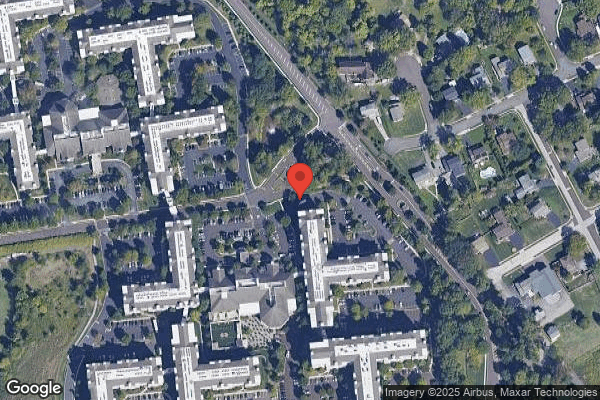

5000 SHANNONDELL DRIVE, AUDUBON, PA 19403 (610) 728-5400
For profit - Corporation 120 Beds Independent Data: November 2025
Trust Grade
85/100
#108 of 653 in PA
Last Inspection: May 2025

Inspected within the last 6 months. Data reflects current conditions.

Overview

Rehab at Shannondell has a Trust Grade of B+, which means it is recommended and above average in quality. It ranks #108 out of 653 nursing homes in Pennsylvania, placing it in the top half of facilities in the state, and #13 out of 58 in Montgomery County, indicating only a few local options are better. The facility is improving, having reduced its issues from four in 2024 to two in 2025. Staffing is a strong point with a perfect 5/5 star rating, a turnover rate of 34% that is lower than the state average, and better RN coverage than 84% of state facilities, ensuring that residents receive attentive care. However, there have been some concerning incidents, such as failing to inform a physician promptly after a resident's fall and not properly supervising a resident during transfers, which could pose risks for safety. Overall, while there are notable strengths, families should be aware of these weaknesses when considering this facility.

Trust Score
B+
85/100
In Pennsylvania
#108/653
Top 16%
Safety Record
Low Risk
No red flags
Inspections
Getting Better
4 → 2 violations
Staff Stability
○ Average
34% turnover. Near Pennsylvania's 48% average. Typical for the industry.
Penalties
✓ Good
No fines on record. Clean compliance history, better than most Pennsylvania facilities.
Skilled Nurses
✓ Good
Each resident gets 64 minutes of Registered Nurse (RN) attention daily — more than 97% of Pennsylvania nursing homes. RNs are the most trained staff who catch health problems before they become serious.
Violations
⚠ Watch
13 deficiencies on record. Higher than average. Multiple issues found across inspections.
★★★★★
5.0
Overall Rating
★★★★★
5.0
Staff Levels
★★★★☆
4.0
Care Quality
★★★★☆
4.0
Inspection Score
Stable
2024: 4 issues
2025: 2 issues

The Good

  • 5-Star Staffing Rating · Excellent nurse staffing levels
  • 4-Star Quality Measures · Strong clinical quality outcomes
  • Full Sprinkler Coverage · Fire safety systems throughout facility
  • No fines on record
  • Staff turnover below average (34%)

    14 points below Pennsylvania average of 48%

Facility shows strength in staffing levels, quality measures, fire safety.

The Bad

Staff Turnover: 34%

12pts below Pennsylvania avg (46%)

Typical for the industry

The Ugly 13 deficiencies on record

Jun 2025 2 deficiencies
CONCERN (D) 📢 Someone Reported This

A family member, employee, or ombudsman was alarmed enough to file a formal complaint

Potential for Harm - no one hurt, but risky conditions existed

Notification of Changes (Tag F0580)

Could have caused harm · This affected 1 resident

Based on clinical record, hospital record and policy and procedure review and interviews with staff, it was determined that the facility failed to immediately inform the physician of an accident that ...

Read full inspector narrative →
Based on clinical record, hospital record and policy and procedure review and interviews with staff, it was determined that the facility failed to immediately inform the physician of an accident that resulted in injury for one of five residents reviewed. (Resident R1)Findings include:A review of the policy titled physician notification dated November, 2019 revealed that it was the responsibility of the facility to notify the resident's attending physician of changes in the resident's medical condition or status. The policy indicated that the charge nurse was responsible to notify the resident's attending physician when there had been an accident or incident involving the resident. The nurse was also responsible for documenting the details and observations pertinent for the physician notification. The nurse was responsible for recording any instructions given to the nurse by the physician related to the incident or accident. Clinical record review revealed that Resident R1 had fallen at 5:00 a.m., on April 28, 2025. The nursing note at 7: 39 a.m., on April 28, 2025 indicated that the licensed nurse, Employee E5, went into Resident R1's room during morning rounds and found Resident R1 in bed, eyes closed. Resident R1 was awakened with verbal stimuli and reported to the licensed nurse, Employee E5 that she fell while ambulating to the bathroom at about 5:00 a.m., on April 28, 2025. The licensed nurse, Employee E5, called the nurse aide and requested information about Resident R1's care during the time he was responsible for the resident on the overnight shift. The nurse aide, Employee E7, confirmed that the resident fell at 5:00 a.m., on the 11:00 pm to 7:00 am shift. Nurse aide, Employee E5 said that he picked the resident up off the floor and placed her in the wheelchair and took her to the bathroom, then returned the resident to the bed. The nursing aide, Employee E7, reported that he did not notify anyone of the fall for Resident R1, that occurred at 5:00 a.m., during the 11:00 pm to 7:00 am shift. Review of physician's notes dated April 28, 2025 revealed that the reason for the visit was that the resident had a fall over night and the resident was complaining of pain of the left elbow, hip and knee. The resident stated that she fell over her walker and landed on the left side. She reported to the physician that she also hit her head. The physician ordered x-rays of the left elbow, hip and knee and pain medication as needed. The physician noted that the Resident had a left shin skin tear. The physician also ordered treatment for Resident R1's skin alteration. Interview with the Director of Nursing, Employee E2, at 10:30 a.m., on June 30, 2025 confirmed that Employee E7, nurse aide, failed to immediately report to nursing staff the fall incident that took place at 5:00 a.m., on April 28, 2025 for Resident R1. The Director of Nursing also confirmed that Resident R1 self reported the incident (fall) to the licensed nurse during the 7:00 am to 3:00 pm nursing shift on April 28, 2025.28 PA. Code 211.10(c)(d) Resident care policies28 PA. Code 211.12(d)(1) Nursing services
CONCERN (D) 📢 Someone Reported This

A family member, employee, or ombudsman was alarmed enough to file a formal complaint

Potential for Harm - no one hurt, but risky conditions existed

Accident Prevention (Tag F0689)

Could have caused harm · This affected 1 resident

**NOTE- TERMS IN BRACKETS HAVE BEEN EDITED TO PROTECT CONFIDENTIALITY** Based on review of clinical record, review of policy and procedures, interviews with staff, and review of hospital records, it w...

Read full inspector narrative →
**NOTE- TERMS IN BRACKETS HAVE BEEN EDITED TO PROTECT CONFIDENTIALITY** Based on review of clinical record, review of policy and procedures, interviews with staff, and review of hospital records, it was determined that the nursing staff failed to properly supervise one of five residents reviewed during transfer and ambulation. (Resident R1) Findings include:A review of the facility policy titled fall management dated February, 2023 revealed that it was the responsibility of the facility staff to assess residents who were at risk for falls and identify the reason for the fall to prepare a care plan to reduce the potential for future falls. This policy indicated that a plan of care would be developed and initiated to address fall risk factors and measures to prevent falls. A facility incident report will be completed post fall and witness statements/information would be documented and used to develop care plan approaches to prevent falls.A review of the facility's policy titled incident and accident investigation dated January, 2022 revealed that the purpose of the investigation of an incident was to complete a prompt and thorough review and report of all falls to promote resident safety and quality of care. The policy indicated that the registered nurse (ADON- Assistant Director of Nursing) was responsible for the investigation and obtaining employee statements of the circumstances surrounding the fall. The ADON was also responsible for determining new interventions that would be effective to prevent falls. The ADON was also responsible for conducting interviews with the resident involved in the fall. The ADON was responsible for training of tasks to staff to prevent further falls. The ADON was responsible for providing a summary of the investigation into the fall/incident. Review of Resident R1's clinical record revealed that the resident was admitted to the facility on [DATE] with the diagnosis of Anemia, Atrial Fibrillation (irregular heart beat) and generalized weakness. Review of physical therapist's assessment dated [DATE] indicated Resident R1 had a diagnosis of BPPV (vertigo or sudden onset of asensation of spinning or moving). The therapist's assessment also indicated that Resident R1 had kyphosis (an excessive forward curve of the spine) and inadequate hip extension, unsteadiness on the feet and inadequate toe clearance; which was associated with muscle weakness in the resident's gait. The therapist assessed Resident R1 to be at risk for falls; because of the resident reduced balance. The physical therapy care plan for Resident R1 was to provide Resident R1 with partial/moderate assistance with walking to prevent falls. Review of the occupational therapist assessment dated [DATE] indicated Resident R1 required care giver assist to walk with cues from staff to perform proper/safe walking techniques for a distance of 15 feet with a roller walker. The occupational therapist indicated that Resident R1 required the support of a staff member to stand from a seated position.Clinical record review revealed a physicial therapy progress note dated April 24, 2025 that indicated Resident R1 had decreased cadence (balance or movement), decreased step/stride length and decreased toe clearance and flexed posture. The progress indicated that Resident R1 was ambulating with a roller walker and care giver assist with a wheelchair following. Review of Resident R1's admission comprehensive assessment (MDS-an assessment of care needs) dated April 28, 2025 indicated that this resident was cognitively intact. Resident R1 was assessed with bilateral lower extremity impairments on both sides of the body. The assessment indicated for toileting hygiene Resident R1 required supervision or touching assistance in which the staff provides verbal cues and/or touching and/or contact guard assistance as resident completes the activity. The resident had functional mobility impairments from chair/bed to chair transfers; required supervision or touching assistance provided by staff. Resident R1 required partial/moderate assistance from staff for ambulation. The staff member was required to lifted, hold or support the trunk or limbs of the resident for ambulation or transfers. The resident was dependent for walking 50 feet with assist of two for ambulation 50 feet. The comprehensive assessment identified Resident R1 as occasionally incontinent of urine. Review of Resident R1's care plan dated April 22, 2025 revealed that the resident was care planned for falls. Interventions included to assist with transfers as needed and resident is supervision.Review for Resident R1's nursing notes dated April 24, 2025 at 10:25 a.m. indicated This nurse was called by therapy and was notified that this patient had fallen with therapy out of the balcony. This nurse went to the balcony right away. The patient was found lying face down with her head towards the ceiling. She was immediately assessed for injuries by this nurse .This nurse notice bleeding form her right hand and right knee .CRNP noticed. Continued review of nursing notes dated April 24, 2025 at 11:04 a.m. revealed that the resident reported discomfort of bilateral knees and left side.Nursing note dated April 25, 2025 indicated that continued care from the occupational and physical therapy departments were necessary for gait training, transfer training and dynamic balance to help prevent further falls for Resident R1.Interview with the physical therapist, Employee E6, at 1:00 p.m., on June 30, 2025 confirmed that in order to promote safe transfers and ambulation, Resident R1 required moderate supervised assistance of a staff member to use a rolling walker for transfers as demonstrated for 15 feet. The physical therapist also confirmed that Resident R1 required cueing and physical support from staff to go from a seated position to standing position and standing position to seated position for safety reasons. Review of nursing note dated April 26, 2025 indicated Resident R1 required assist of one staff member for transfers. The nursing note also indicated that this resident required assist of one staff person to use a rolling walker for ambulation. Review of nursing note dated April 28, 2025 revealed that the resident self reported to a licensed nurse, Employee E5, that she had a fall at 5:00 a.m., while standing to walk to the bathroom. The nursing assistant, Employee E7, responsible for the care of Resident R1 at 5:00 a.m., was contacted and reported that walker was placed in front of Resident R1. The nursing assistant, Employee E7 reported that during this transfer with Resident R1, he turned away from the resident to grab her trash to empty it, as it was full. The nursing assistant, Employee E7, reported that Resident R1 fell, when he turned away from her to empty the trash, as it was full. Clinical record review for April 28, 2025 indicated that Resident R1 was found to have a weeping open area on the left shin, that required treatment as ordered by the physician.Interview with the Director of Nursing, Employee E2, on June 30, 2025 at 10:45 a.m., confirmed that there was no documentation to indicate a written statement had been obtained from the nursing assistant, Employee E7 that indicated he turned his head for a split second to empty her trash can, on April 28, 2025. Review of the incident documentation indicated that Resident R1 was walking to the bathroom with her walker when she fell. There was no documentation to indicate that the nursing assistant provided contact guard, moderate supervised assistance and cueing to keep both hands on the walker as required for safe transfers for Resident R1 at 5:00 a.m., on April 28, 2025.28 PA. Code 211.10(d) Resident care policies28 PA. Code 211.12(d)(1) Nursing services
Dec 2024 1 deficiency
CONCERN (D) 📢 Someone Reported This

A family member, employee, or ombudsman was alarmed enough to file a formal complaint

Potential for Harm - no one hurt, but risky conditions existed

Deficiency F0578 (Tag F0578)

Could have caused harm · This affected 1 resident

**NOTE- TERMS IN BRACKETS HAVE BEEN EDITED TO PROTECT CONFIDENTIALITY** Based on staff interviews, review of faciltiy policy and review of clinical records, it was determined that the facility failed ...

Read full inspector narrative →
**NOTE- TERMS IN BRACKETS HAVE BEEN EDITED TO PROTECT CONFIDENTIALITY** Based on staff interviews, review of faciltiy policy and review of clinical records, it was determined that the facility failed to inform the resident and/or her responsible party of their right to formulate an advanced directive upon admission, and failed to clarify the resident's code status upon admission to ensure that the resident's wishes regarding end of life care would be honored for 1 out of 2 residents reviewed (Resident R1). Findings include: Review of the facility policy, Patient Code Status, with a revision date of [DATE], indicted that the purpose of the policy was to ensure that patients are able to choose their code status and to ensure that all necessary documentation is included in patient's chart. The policy also indicated that social services will verify the patient's code status choice (DNR or Full Code) with their admission assessment within 1 business day of a resident's admission. Continued review of the policy indicated that a physician's order for DNR will be contained in the electronic medical record, and that if a patient is not DNR, the patient is considered to be Full Code, and that if a patient is unable to express these wishes, the social services department will consult with the appropriate decision makers for the resident as part of their admission assessment. Review of the resident's hospital discharge summary indicated that the resident was admitted into the hospital's intensive care unit on [DATE] after a fall in her home, and subsequently transferred to the facility for rehabilitation services on [DATE]. Review of a nursing notes dated [DATE] at 2:00 p.m. by the licensed nurse (Employee E3) who completed the resident's nursing admission assesssment indicated that the resident was admitted into the facility on the referenced date with diagnoses of fall, traumatic, subdural hematoma (bleeding in the brain that can happen after a head injury; subarachnoid hemorrhage (a type of stroke); intraparenchymal Hematoma (a type of stroke that occurs when blood accumulates in the brain tissues), intraventricular Hemorrhage (a type of bleeding that occurs within the ventricles of the brain, which are fluid-filled spaces that help cushion and protect the brain). Continued review of the resident's nursing note indicated that the resident was assessed by Employee E3 as being Alert and Oriented x 2 (a term used in healthcare to describe a patient's mental status, and indicates that the person may be aware of their own identity and current time, but may not be oriented to place or situation). Review of information received by State Survey Agency on [DATE] reported that the resident had a fall on [DATE], and subsequently passed away on the same day. Review of documentation provided by the facility, and completed by the charge nurse who was assigned to Resident R1 on [DATE] from 7:00 a.m. through 7:00 p.m., indicated that the resident had a fall on [DATE]. Review of the documentation indicated that the resident's nurse aide found her on the floor lying on her back in front of the recliner chair where she was last seen sitting. The documentation indicated that the nurse aide alerted Licensed nurse, Employee E4 of the incident, was assesssed by Employee E4 and placed back on bed. Facility documentation reviewed on the event indicated that when assessed after the fall, the resident was awake and conscious, but unable to follow verbal commands, or tell the staff what happened. Continued review of the resident's fall incident documentation also indicated that the nurse practitioner was notified of the fall, and ordered that the resident to be sent out to the emergency room. The resident's husband was also contacted and notified of her fall and the nurse practitioner's order to send the resident out to the hospital Continued review of the documentation provided on the incident revealed that while completing addition assessments on the resident (neurological checks), the resident's blood oxygen level (the amount of blood that an individual has circulating in their blood) began to decrease into the 80's (a blood oxygen level that would require immediate medical attention), and a pulse could not be read for the resident when attempts were made to obtain one. Facility documentation indicated that cardiopulmonary resuscitation (CPR-an emergency life saving procedure when an individual's heart stops breathing) was started at 4:30 p.m. Documentation also indicated that emergency medical technicians arrived and called the resident's son to obtain the resident's code status, and that the son verbalized to the emergency medical technicians that he wanted CPR to continue on his mother. Continued review of he documentation on the incident revealed that CPR continued for 40 minutes, and that the resident was pronounced as deceased at 5:08 p.m. Review of information from the hospital indicated that on [DATE] (date of the resident's hospital admission), the physician reviewed that resident's code status and indicated Code status goals of care discussed: full code. Review of hospital documentation sent over to the facility with the resident's hospital discharge summary by the hospital was a form with Physician Care Manager document that indicated that the resident's code status was DO NOT RESUSITATE/DO NOT INTUBATE (a medical order issued by a physician or other authorized non-physician practitioner that directs healthcare providers not to administer CPR in the event of cardiac or respiratory arrest), in addition to information related to the resident's discharge orders, follow up appointments, and the resident's prescriptions. Review of the resident's clinical record at the facility did not show evidence that upon the resident's admission on [DATE] at approximately 2:00 p.m. that any attempt was made by the facility to determine from the resident and/or her family/responsible party, if the resident had an advanced directive or wanted to develop an advanced directive if she did not have one. Continued review of the clinical record also did not show evidence that upon admission the facility made any attempts to obtain the resident's code status (the level of medical interventions a person wishes to have started if their heart or breathing stops) to ensure that the resident and/or her responsible party's request regarding this decision would be honored by the facility, and that staff would know how to correctly proceed in a medical event involving the resident. During an interview with Employee E4 (licensed nurse) on [DATE] at 12:30 p.m. Employee E4' statement was reviewed and confirmed regarding her account of the incident on [DATE]. Employee E4 reported that the resident was Full Code when a resident is admitted on the weekend. It was verified with her that Resident R1 was admitted on a Friday at or before 2:00 p.m. Employee E4 reported that when the EMT arrived at the facility, they saw where the resident was a DNR, so an EMT called the resident's son and asked if he wanted EMT to continue providing CPR to the resident. During an interview with Employee E3 (licensed nurse) on [DATE] at 1:04 p.m. the nurse reported that the resident came in at approximately 2:00 p.m. and that the resident's family came on [DATE], but after he completed the resident's admission. Employee E3 reported that he obtained the medical report from the sending hospital which included information on her history and physical. Employee E3 reported that there was no information discussed about the resident's code status, and that obtaining the resident's code status is part of the social services assessment. During an interview with Employee E5 (licensed nurse/case manager supervisor to the social workers) Employee E5 reported that she was notified of the incident regarding Resident R1 and assisted staff with providing CPR to the resident. Employee E5 reported that when the EMT'S arrived, one EMT called the resident' son to confirm the resident's code status, and the son instructed the EMT that he can continue CPR on his mother. Employee E5 reported that she remained in the room with the EMT'S, who eventually pronounced the resident dead. Continued interview with Employee E5 confirmed that by default she (Resident R1) was a Full Code when she was admitted into the facility. Employee E5 reported that social workers see new admissions within the next business day after a resident is admitted to confirm the resident's code status, and to complete the social services admission assessment. Employee E5 reported that if the resident is not awake, alert or oriented, the social worker will contact the family for the admission assessment and the code status information. The facility failed to inform Resident R1 and/or her responsible party of their right to formulate an advanced directive, upon admission, and failed to clarify Resident R1's code status upon admission to ensure that the resident's wishes regarding end of life care would be honored. 28 Pa. Code 201.29 (a) Resident Rights
Jul 2024 3 deficiencies
CONCERN (D)

Potential for Harm - no one hurt, but risky conditions existed

Pharmacy Services (Tag F0755)

Could have caused harm · This affected 1 resident

Based on observation, review of clinical records and staff interview, it was determined that the facility failed to implement a system of records of receipt and disposition of all controlled drugs bet...

Read full inspector narrative →
Based on observation, review of clinical records and staff interview, it was determined that the facility failed to implement a system of records of receipt and disposition of all controlled drugs between shifts to enable an accurate reconciliation and accountability for two of three medication carts observed. (Medication Cart 3rd Floor B Front and Medication cart 3rd Floor B Back) Findings: Review of facility narcotic book for Medication Cart 3rd Floor B Front conducted on July 10, 2024, at 8:52 p.m., during medication administration observation with licensed nurse, Employee E5 revealed an entry for July 10, 2024, with time written 1900 (7:00 p.m.). Further, the column for Nurse going off duty for July 10, 2024, with time written for 1900 had a signature. Interview with licensed nurseEmployee E5 conducted at the time of the observation, revealed that licensed nurses work a 12-hour shift and that between shifts, the outgoing and incoming nurses count the narcotics together and that the once they are done counting the controlled substances in the cart, the outgoing nurse signs the outgoing column of the narcotic book for that date and the incoming nurse also signs the incoming column of the narcotic book for that date. Further interview with Employee E5 revealed that licensed nurse Employee E5 was the one who counted the narcotics at the beginning of the day shift on July 10, 2024. Interviewed with Employee E6 conducted at the time of the observation, confirmed that at the beginning of the day shift for July 10, 2024, he pre signed the column for Nurse going off duty for July 10, 2024, for which the time 19:00 was written. Further Employee E6 also revealed that he pre signed it because he was going to be the one to sign it at the end of his shift anyway. Further review of the narcotic book for Medication Cart 3rd Floor B Front revealed that on: June 6, 2024 at 7:00 (1.m.), the column Nurse going off duty did not have a signature. June 22, 2024, at 11:00 p.m., the column Nurse coming on duty did not have a signature. June 23, 2024, at 7:00 a.m., the column Nurse going off duty did not have a signature. June 25, 2024, at 7:00 a.m., the column Nurse going off duty did not have a signature. June 30, 2024, at 5:45 a.m., the column Nurse coming on duty did not have a signature. Further review of the facility narcotic book for Medication Cart 3rd Floor B Back revealed that on: June 6, 2024, at 7:15 a.m., the column Nurse going off duty did not have a signature. June 19, 2024, at 7:00 a.m., the column Nurse going off duty did not have a signature. June 22, 2024, at 5:00 a.m., the column Nurse coming on duty did not have a signature. June 22, 2024, at 7:00 a.m., the column Nurse going off duty did not have a signature. June 29, 2024, at 7:00 p.m., the column Nurse coming on duty did not have a signature. July 4, 2024, at 7:00 p.m., the column Nurse coming on duty did not have a signature. July 10, 2024, at 7:00 a.m., the column Nurse coming on duty did not have a signature. Review of the facility narcotic book for Medication cart 3rd Floor B Back conducted during medication administration on the 3rd floor unit on July 10, 2024, at 9:12 a.m. with Employee E6 and Employee E8 revealed that the on July 10, 2024, at 7:00 a.m. the incoming column did not have a signature. Interview with licensed nurse Employee E8 conducted by Employee E6 at the time of the observation in the presence of the surveyor, confirmed that Employee E8 did not sign the column for Nurse coming on duty at the beginning of her shift for July 10, 2024 28 Pa. Code 201.18(b)(2) Management 29 Pa. Code 211.9(a)(1)(k) Pharmacy services 28 Pa. Code 211.12(d)(1)(3)(5) Nursing services
CONCERN (D)

Potential for Harm - no one hurt, but risky conditions existed

Unnecessary Medications (Tag F0759)

Could have caused harm · This affected 1 resident

Based on observation, interviews with staff, review of clinical records and facility policy, it was determined that the facility failed to have a medication error rate less than five percent (Resident...

Read full inspector narrative →
Based on observation, interviews with staff, review of clinical records and facility policy, it was determined that the facility failed to have a medication error rate less than five percent (Residents R9 and R244). Findings include: Review of the facility's medication policy dated 2/2017 states, All medications are administered safely and appropriately to all residents and to follow 6 Rights of Medication Administration during medication pass (right resident, right medication, right dose, right route, right time, right documentation). The facility's medication error rate was 8 % based on 25 medication opportunities with two medication errors. Review of Resident R9's physician orders instructed to take Cyanocobalamin (Vitamin B-12) 1,000 mcg sublingual route (placed under your tongue to dissolve) once daily. Observation of a medication administration pass on July 11, 2024, at 9:08 a.m. with Registered Nurse, Employee E3 revealed the nurse administered Cyanocobalamin by mouth to Resident R9. Review of Resident R244's physician orders instructed to take Cyanocobalamin 1,000 mcg sublingual route once daily. Observation of a medication administration pass on July 11, 2024, at 9:38 a.m. with Licensed Practical Nurse, Employee E4 revealed the nurse administered the Cyanocobalamin by mouth to Resident R244. Interview with the Director of Nursing on July 11, 2024, at 12:30 p.m. confirmed the nurses did not follow the physician's order for Cyanocobalamin and did not administer the medication sublingually. 28 Pa. Code 211.12(d)(1)(5) Nursing services
CONCERN (D)

Potential for Harm - no one hurt, but risky conditions existed

Deficiency F0761 (Tag F0761)

Could have caused harm · This affected 1 resident

**NOTE- TERMS IN BRACKETS HAVE BEEN EDITED TO PROTECT CONFIDENTIALITY** Based on review of clinical records, reviewof facility policy, observation, and staff interview, it was determined that the faci...

Read full inspector narrative →
**NOTE- TERMS IN BRACKETS HAVE BEEN EDITED TO PROTECT CONFIDENTIALITY** Based on review of clinical records, reviewof facility policy, observation, and staff interview, it was determined that the facility failed to ensure that all drugs and biologicals are stored and labeled in accordance with professional standards for one of three medication carts observed (Med cart 3rd B back) and one of two medication rooms observed (Third-floor medication room). Findings include: Review of facility policy for medication administration dated February 2017, revealed that under section Policy: all medications are administered safely and appropriately to all residents. Under section Process: Check medication for expiration date and discard if indicated and check multi dose vials for date when opened and discard if indicated. Observation of med cart 3rd B back conducted during medication administration on the 3rd floor unit on [DATE], at 9:12 a.m. with Licensed nurses, Employee E6 and Employee E8 revealed a Glucagon injection (an emergency medication used to treat severe hypoglycemia (low blood sugar) in diabetes patients) in the top drawer of the medication cart. Further observation revealed that the Glucagon injection had an expiry date of [DATE]. Interview with Licensed nurse, Employee E6 conducted at the time of the observation confirmed that an expired Glucagon injection in the top drawer of the medication cart had an expiration date of [DATE]. Observation of the third-floor medication room conducted on [DATE], at 10:09 a.m. with Licensed nurse, Employee E7 revealed an open vial of Tuberculin PPD 5TU/0.1ml (used in a skin test to help diagnose tuberculosis) in the refrigerator did not have a date opened affixed to the vial or the box. Interview with Licensed nurse, Employee E7 conducted at the time of the observation confirmed that an open vial of tuberculin PPD 5TU/0.1ml in the refrigerator did not have a date opened affixed to the vial or the box. 28 Pa. Code 201.18(b)(l) Management 28 Pa. Code 211.12(d) Nursing services 28 Pa. Code 211.9(i) Pharmacy services
Sept 2023 6 deficiencies
CONCERN (D)

Potential for Harm - no one hurt, but risky conditions existed

Safe Environment (Tag F0584)

Could have caused harm · This affected 1 resident

Based on observations and interviews with residents and staff, it was determined that the facility failed to ensure a homelike atmosphere during mealtime for two of two floors (Second and Third floor)...

Read full inspector narrative →
Based on observations and interviews with residents and staff, it was determined that the facility failed to ensure a homelike atmosphere during mealtime for two of two floors (Second and Third floor). Findings include: Observations conducted of Resident R75 revealed that the resident was served lunch in his room on September 5, 2023, at approximately 12:00 p.m. The resident stated,There's no other place to eat. On September 6, 2023, at 11:15 a.m. Resident R3's son stated, Ever since Covid the residents are confined to their rooms for dining. I'd think they would have them opened for social interaction. They say that helps with healing. During the same time Resident R277 stated, I was here five years ago, and you would eat in the dining room next to the courtyard. It's a shame because it's such a beautiful room but we eat in our rooms now. On September 6, 2023 at 1:16 p.m. Resident R60's wife stated, Residents aren't served meals in the dining room they eat in their rooms. I would think they would want the residents to get out of their rooms. It's a holistic (comprehensive) approach to healing. On September 5, 2023, at 2:30 p.m., the Nursing Home Administrator confirmed the facility no longer serves meals in the dining room and all residents are served meals in their room. 28 Pa. Code 201.14(a) Responsibility of licensee
CONCERN (D)

Potential for Harm - no one hurt, but risky conditions existed

Grievances (Tag F0585)

Could have caused harm · This affected 1 resident

Based on observation, review of facility policy, and interview with residents and staff, it was determined that the facility failed to ensure that grievance/concern forms were available for residents,...

Read full inspector narrative →
Based on observation, review of facility policy, and interview with residents and staff, it was determined that the facility failed to ensure that grievance/concern forms were available for residents, family or guests for two of two floors (Second and Third floors). Findings include: Review of the facility's Grievance Policy revised on December 2021 states the facility will respond to grievances in a timely manner and seeks resolution that is satisfactory to the resident and prioritizes ongoing communication (phone calls, text messaging, emails, meetings, patient portal) to keep the residents/families informed. Further review of the grievance policy did not indicate nor provide the procedure necessary for submitting an anonymous compliant. September 5, 2023, at approximately 12:00 p.m. Resident R75 indicated he was not aware he could submit an anonymous complaint. September 6. 2023 at 1:16 p.m. Resident R60's wife indicated she was not aware she could submit an anonymous complaint. On September 8, 2023, at 9:30 a.m., the Nursing Home Administrator confirmed the facility failed to ensure methods of submitting an anonymous grievance was obtainable for the residents and/or the process of submission. 28 Pa. Code 201.29(a) Resident Rights
CONCERN (D)

Potential for Harm - no one hurt, but risky conditions existed

Deficiency F0655 (Tag F0655)

Could have caused harm · This affected 1 resident

Based on clinical record review, review of faciltiy policy and interviews with the staff, it was determined that the facility failed to develop and implement a baseline care plan for one of 25 residen...

Read full inspector narrative →
Based on clinical record review, review of faciltiy policy and interviews with the staff, it was determined that the facility failed to develop and implement a baseline care plan for one of 25 residents reviewed (Resident R210). Findings include: Review of the facility's policy titled, Care Plan, revised on March 2023, stated that the resident's care plan shall be used in developing the resident's daily care routine and will be available to staff personnel, who have responsibility for providing care or services to the residents. It is required that a baseline care plan to meet the residents' immediate needs should be developed within forty-eight hours of the residents' admission. Review of the admission record indicated, Resident R210 was admitted to the facility, on September 1, 2023, with the diagnoses of Acute Respiratory Failure (Respiratory Failure is a serious condition that makes it difficult to breathe), Chronic Obstructive Pulmonary Disease (COPD)(COPD, refers to a group of diseases that cause airflow blockage and breathing-related problems), and Malignant Neoplasm of Right Kidney (Cancerous Tumor of Right Kidney). Review of Resident R210's care plan indicated that it was initiated only on September 5, 2023, beyond the forty-eight-hour requirement. Interview on September 7, 2023, at 12:23 p.m., with the charge Nurse of 3 C Unit, Licensed nurse, Employee E10, confirmed that the baseline care plan for Resident R210, was not developed in 48 hours of Resident R210's admission to the facility, to address his immediate care needs. 28 Pa. Code 211.11(a)(b)(c) Resident care plan 28 Pa. Code 211.12(d)(3)(5) Nursing services
CONCERN (D)

Potential for Harm - no one hurt, but risky conditions existed

Deficiency F0657 (Tag F0657)

Could have caused harm · This affected 1 resident

**NOTE- TERMS IN BRACKETS HAVE BEEN EDITED TO PROTECT CONFIDENTIALITY** Based on review of clinical records and review of facility policy, it was determined the facility failed to ensure a resident's ...

Read full inspector narrative →
**NOTE- TERMS IN BRACKETS HAVE BEEN EDITED TO PROTECT CONFIDENTIALITY** Based on review of clinical records and review of facility policy, it was determined the facility failed to ensure a resident's care plan was updated and revised to reflect the resident's specific care needs after a change in condition for one of 25 resident records reviewed (Resident R60). Findings include: Review of the facility's policy titled, Care Plan revised on March 2023 stated the resident's care plan shall be used in developing the resident's daily care routine and will be available to staff personnel who have responsibility for providing care or services to the resident. Review of Resident R60's clinical record revealed the resident was admitted on [DATE], with the diagnoses of heart diseases and atrial fibrillation (abnormal heartbeat). Review of physician note dated August 16, 2023, stated that orthostatic blood pressure (a sudden drop in blood pressure upon standing from a sitting or supine position) and TED stockings (compression stockings) were added to Resident R60's regimen. Review of Resident R60's physician orders dated August 16, 2023, instructed to take orthostatic blood pressures for three days and to notify the physician of a 10 point drop in the resident's blood pressure and to apply [NAME] Stockings to the resident's bilateral lower extremities daily. Review of Resident R60's care plan failed to include his diagnosis of orthostatic blood pressure and the intervention of compression stockings. 28 Pa. Code 211.12(d)(3) Nursing services
CONCERN (D)

Potential for Harm - no one hurt, but risky conditions existed

Pharmacy Services (Tag F0755)

Could have caused harm · This affected 1 resident

Based on a review of facility policy, observation, review of incident report, review of manufacture guidelines, and interview staff , it was determined that the facility failed to ensure that a medica...

Read full inspector narrative →
Based on a review of facility policy, observation, review of incident report, review of manufacture guidelines, and interview staff , it was determined that the facility failed to ensure that a medication was administered in accordance with profession standards for one of 8 residents reviewed. (Resident R262) Findings include: Review of facility policy titled Medication Administration dated February 2017, revealed the employee administrating the medication must stay with the resident/ patient until the resident is finished taking the medication. Review of manufacture Glenmark Pharmaceuticals Limited guidelines dated October 2022 package insert, revealed that the medication Pravastatin instructed the medication to be taken at the same time each day with or without food. If a dose is missed, take the medication as soon as you can but skip the missed dose if close to time for next dose. Do not take two doses at one time. Observation on the second floor, on September 5, 2023, at 10:05 a.m. revealed that Resident R262's daughter reported that there was a medication found on the resident's tray table. Surveyor observed Llicensed nurse, Employee E13 took the medication from resident's daughter and said she would call the doctor for further instruction. Review of Resident R262's physician orders revealed an order for Pravastatin (a medication used to lower cholesterol) a 40 milligrams (mg) tablet to be given daily at bedtime. Further review of Resident R262's September 2023 Medication Administration Record revealed that the medication Pravastatin was administered to Resident R262 on September 4, 2023, at 8:30 p.m., the evening before the medication was found. Interview with the Director of nursing (DON) on September 6, 2023, revealed that the medication was identified as Pravastatin 40 mg ordered to be given daily at bedtime. The DON stated that the found pill was administered to the resident the previous evening. Review of facility incident report revealed that it is unknown how the pill ended up on the resident's tray. A staff message was sent to all staff reminding them to stay with remain with residents when administering medication to ensure that the medications are swallowed without difficulty and taken as prescribed. Pa Code 211.9(a)(1) Pharmacy Services Pa Code 211.10(c) Resident care policies Pa Code 211.12 (d)(1) Nursing Services
CONCERN (D)

Potential for Harm - no one hurt, but risky conditions existed

Deficiency F0761 (Tag F0761)

Could have caused harm · This affected 1 resident

Based of a review of facility policies and procedures, observation, review of manufactures' guidelines, interview with staff, it was determined that the facility failed to store and label medication i...

Read full inspector narrative →
Based of a review of facility policies and procedures, observation, review of manufactures' guidelines, interview with staff, it was determined that the facility failed to store and label medication in accordance with acceptable professional standards for one of three medications carts reviewed. (second floor Cart B) Findings include: Review of facility policy titled dated Medication Storage dated July 2021 revealed that medications that require refrigeration will be stored in the medication room refrigerator when not in use or as soon as possible after use. Further review of the facility's policy revealed that all medications with current physician orders will be store in the medication cart that is designated for the unit that the resident is residing. Review of manufacture of Tubersol, Sanofi Pasteur's guidelines, revealed that this drug must be stored at 2°C to 8°C (35°F to 46°F). Do not freeze. Discard product if exposed to freezing. Observation on September 5, 2023, at 11:20 a.m. on the Second-floor nursing station cart B, revealed that there were 2 vials of Tubersol (Tuberculin, purified Derivative used to aid in the diagnosis of tuberculosis infection), were found in the opened an at room temperature. Further observation of Cart B revealed a bubble pack medication card containing five yellow pills. This package of medication was not labeled with prescribing information (US Food and Drug Administration requirement to identify information containing propriety name, the brand name, generic name, dosage, strength, and route of administration. Further observation of the package of medication had a handwritten identifier labeling it Zofran (a medication used to prevent nausea and vomiting). Interview with Licensed nurse, Employee E14 on September 5, 2023, at 11:31a.m. confirmed that the 2 vials of Tubersol should not have been stored in refrigeration. Further interview with Employee E14 revealed that the medication Zofran was not acceptable without labeling information. 28 Pa. Code 211.9(k) Pharmacy services 28 Pa. Code 211.12(c) Nursing services
Mar 2023 1 deficiency
CONCERN (D) 📢 Someone Reported This

A family member, employee, or ombudsman was alarmed enough to file a formal complaint

Potential for Harm - no one hurt, but risky conditions existed

Deficiency F0572 (Tag F0572)

Could have caused harm · This affected 1 resident

Based on interviews with staff, review of clinical records, review of admission records and review of facility policies and procedures, it was determined that the facility failed to ensure that reside...

Read full inspector narrative →
Based on interviews with staff, review of clinical records, review of admission records and review of facility policies and procedures, it was determined that the facility failed to ensure that residents and/or responsible party were informed of all his or her rights, rules, regulations and responsibilities, prior to and/or upon the resident's admission for one out of five residents reviewed (Resident R1). Findings include: Review of the facility's admission Agreement, Skilled Nursing and Rehabilitation, with a revision date of September 2021, stated that the purpose of the policy is to ensure that documentation is shared with all admitting patients of their representatives. Review of the Resident R1's nursing notes indicated that the resident has received intermittent rehabilitation services from the facility from July 2022 through November 3, 2022, when the resident was subsequently discharged from the facility, and returned to her home with the continuation of hospice services. Review of the resident's November 2022 physician orders listed the diagnoses of hypertension (high blood pressure); heart failure (when the heart muscle doesn't pump blood as well as it should); Chronic Obstruction Pulmonary Disorder (COPD- a disease that damages your lungs over time, making it difficult to breath); chronic respiratory failure (difficulty breathing), heart failure (and diabetes (disease that causes high blood sugar). Review of Resident R1's nursing notes for October 5, 2022 at 1:37 p.m. stated that the resident was sent out to the hospital for a change in condition, and was admitted into the hospital for hypoxia (low level of oxygen in your blood tissues), and hypertension. Review of a nursing note dated October 19, 2022 dated 12:22 p.m. indicated that the resident was admitted back into the facility from the hospital with an admitting diagnosis of hospice, end stage COPD, and heart failure. Review of the admission records for Resident R1's October 19, 2022 admission provided no evidence that information including, but not limited to the following was reviewed, signed/acknowledge by the resident's and his/or her responsible party prior to and/or upon the resident's admission into the facility: resident rights related to photo release authorization, consent for treatment, facility behold policy information, services provided by the facility, payment for services provided by the facility, information regarding personal funds, the facility's admission agreement. Continued review of the resident's admission records also did not show evidence that any information regarding the payment amount that the resident would be responsible for during her stay at the facility, with the implementation of hospice services, was provided to the resident and/or her responsible party at any time prior to or during her admission into the facility in October 19, 2022. Review of documentation from the facility also indicated that the resident's daily rate that the resident and/or her responsible party would be responsible for paying upon her readmission to the facility with hospice care on October 19, 2022, was $585 a day. This was confirmed by the Nursing Home Administrator (NHA) on March 22, 2023 at 1:13 p.m. Review of the resident's financial statement provided by the facility indicated that the resident still had an unpaid balance of $8,950.00 for her cost of care at the facility. During an interview with the Director of admission (Employee E3) on March 22, 2023 at 1:58 p.m. it was confirmed that there was no documentation that could be produced to show evidence that the facility provided the resident and/or her responsible party with information related to the resident's admission into the facility, including, but not limited to the cost of care prior to and/or upon her admission into the facility on October 19, 2022 when the resident returned from the hospital with hospice services. 28 Pa. Code 201.29(e) Resident rights
Understanding Severity Codes (click to expand)
Life-Threatening (Immediate Jeopardy)
J - Isolated K - Pattern L - Widespread
Actual Harm
G - Isolated H - Pattern I - Widespread
Potential for Harm
D - Isolated E - Pattern F - Widespread
No Harm (Minor)
A - Isolated B - Pattern C - Widespread

Questions to Ask on Your Visit

  • "Can I speak with families of current residents?"
  • "What's your RN coverage like on weekends and overnight?"

Our Honest Assessment

Strengths
  • • Grade B+ (85/100). Above average facility, better than most options in Pennsylvania.
  • • No major safety red flags. No abuse findings, life-threatening violations, or SFF status.
  • • No fines on record. Clean compliance history, better than most Pennsylvania facilities.
  • • 34% turnover. Below Pennsylvania's 48% average. Good staff retention means consistent care.
Concerns
  • • 13 deficiencies on record. Higher than average. Multiple issues found across inspections.
Bottom line: Generally positive indicators. Standard due diligence and a personal visit recommended.

About This Facility

What is Rehab At Shannondell's CMS Rating?

CMS assigns REHAB AT SHANNONDELL an overall rating of 5 out of 5 stars, which is considered much above average nationally. Within Pennsylvania, this rating places the facility higher than 99% of the state's 100 nursing homes. This rating reflects solid performance across the metrics CMS uses to evaluate nursing home quality.
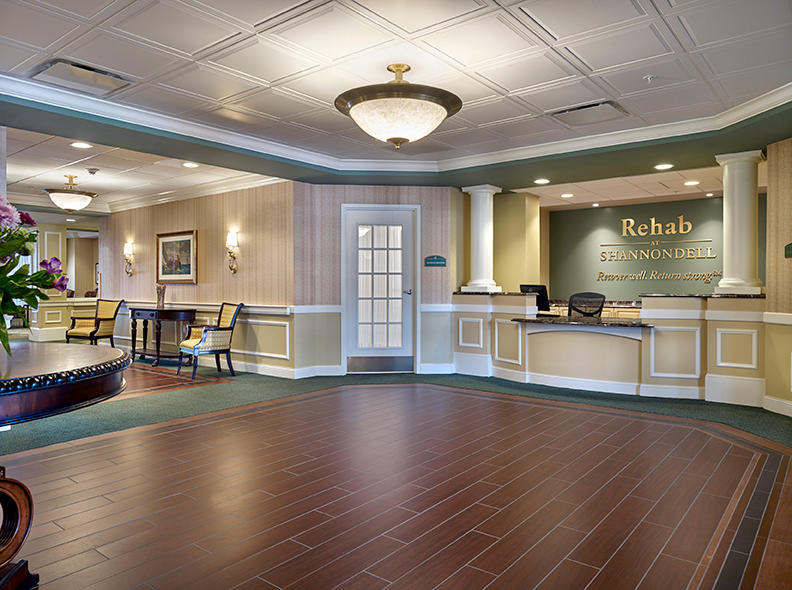
How is Rehab At Shannondell Staffed?

CMS rates REHAB AT SHANNONDELL's staffing level at 5 out of 5 stars, which is much above average compared to other nursing homes. Staff turnover is 34%, compared to the Pennsylvania average of 46%. This relatively stable workforce can support continuity of care.

What Have Inspectors Found at Rehab At Shannondell?

State health inspectors documented 13 deficiencies at REHAB AT SHANNONDELL during 2023 to 2025. These included: 13 with potential for harm.

Who Owns and Operates Rehab At Shannondell?

REHAB AT SHANNONDELL is owned by a for-profit company. For-profit facilities operate as businesses with obligations to shareholders or private owners. The facility operates independently rather than as part of a larger chain. With 120 certified beds and approximately 114 residents (about 95% occupancy), it is a mid-sized facility located in AUDUBON, Pennsylvania.
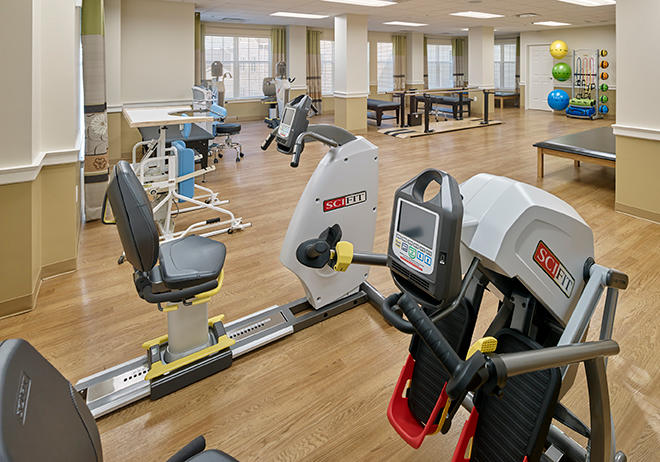
How Does Rehab At Shannondell Compare to Other Pennsylvania Nursing Homes?

Compared to the 100 nursing homes in Pennsylvania, REHAB AT SHANNONDELL's overall rating (5 stars) is above the state average of 3.0, staff turnover (34%) is significantly lower than the state average of 46%, and health inspection rating (4 stars) is above the national benchmark.

What Should Families Ask When Visiting Rehab At Shannondell?

Based on this facility's data, families visiting should ask: "Can I visit during a mealtime to observe dining assistance and food quality?" "How do you handle medical emergencies, and what is your hospital transfer rate?" "Can I speak with family members of current residents about their experience?"

Is Rehab At Shannondell Safe?

Based on CMS inspection data, REHAB AT SHANNONDELL has a clean safety record: no substantiated abuse findings (meaning no confirmed cases of resident harm), no Immediate Jeopardy citations (the most serious violation level indicating risk of serious injury or death), and is not on the Special Focus Facility watch list (a federal program monitoring the lowest-performing 1% of nursing homes). The facility has a 5-star overall rating and ranks #1 of 100 nursing homes in Pennsylvania. While no facility is perfect, families should still ask about staff-to-resident ratios and recent inspection results during their visit.

Do Nurses at Rehab At Shannondell Stick Around?

REHAB AT SHANNONDELL has a staff turnover rate of 34%, which is about average for Pennsylvania nursing homes (state average: 46%). Moderate turnover is common in nursing homes, but families should still ask about staff tenure and how the facility maintains care continuity when employees leave.

Was Rehab At Shannondell Ever Fined?

REHAB AT SHANNONDELL has no federal fines on record. CMS issues fines when nursing homes fail to meet care standards or don't correct problems found during inspections. The absence of fines suggests the facility has either maintained compliance or corrected any issues before penalties were assessed. This is a positive indicator, though families should still review recent inspection reports for the full picture.

Is Rehab At Shannondell on Any Federal Watch List?

REHAB AT SHANNONDELL is not on any federal watch list. The most significant is the Special Focus Facility (SFF) program, which identifies the bottom 1% of nursing homes nationally based on persistent, serious quality problems. Not being on this list means the facility has avoided the pattern of deficiencies that triggers enhanced federal oversight. This is a positive indicator, though families should still review the facility's inspection history directly.