PROVIDENCE HEALTH & REHAB CENTER
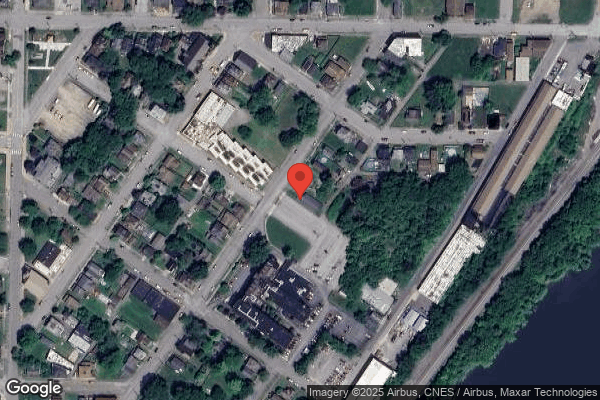

900 THIRD AVE, BEAVER FALLS, PA 15010 (724) 846-8504
For profit - Limited Liability company 180 Beds SABER HEALTHCARE GROUP Data: November 2025
Trust Grade
10/100
#622 of 653 in PA
Last Inspection: August 2025

Inspected within the last 6 months. Data reflects current conditions.

Overview

Providence Health & Rehab Center has received a Trust Grade of F, indicating significant concerns and a poor overall score. It ranks #622 out of 653 facilities in Pennsylvania, placing it in the bottom half of nursing homes in the state, and is the lowest-ranked option in Beaver County. While the facility's trend shows improvement, reducing the number of issues from 39 in 2024 to 26 in 2025, it still has serious deficiencies, including a failure to prevent neglect that resulted in a resident suffering a fracture and inadequate supervision during transfers. Staffing is average with a turnover rate of 51%, and while the fines of $45,593 are concerning, they are lower than many other facilities in the state. On a positive note, the facility has average RN coverage, which can help catch potential problems that other staff members might overlook.

Trust Score
F
10/100
In Pennsylvania
#622/653
Bottom 5%
Safety Record
High Risk
Review needed
Inspections
Getting Better
39 → 26 violations
Staff Stability
⚠ Watch
51% turnover. Above average. Higher turnover means staff may not know residents' routines.
Penalties
○ Average
$45,593 in fines. Higher than 59% of Pennsylvania facilities. Some compliance issues.
Skilled Nurses
✓ Good
Each resident gets 43 minutes of Registered Nurse (RN) attention daily — more than average for Pennsylvania. RNs are trained to catch health problems early.
Violations
⚠ Watch
84 deficiencies on record. Higher than average. Multiple issues found across inspections.
★☆☆☆☆
1.0
Overall Rating
★★★☆☆
3.0
Staff Levels
★★☆☆☆
2.0
Care Quality
★☆☆☆☆
1.0
Inspection Score
Stable
2024: 39 issues
2025: 26 issues

The Good

  • Full Sprinkler Coverage · Fire safety systems throughout facility
  • No fines on record

Facility shows strength in fire safety.

The Bad

1-Star Overall Rating

Below Pennsylvania average (3.0)

Significant quality concerns identified by CMS

Staff Turnover: 51%

Near Pennsylvania avg (46%)

Higher turnover may affect care consistency

Federal Fines: $45,593

Above median ($33,413)

Moderate penalties - review what triggered them

Chain: SABER HEALTHCARE GROUP

Part of a multi-facility chain

Ask about local staffing decisions and management

The Ugly 84 deficiencies on record

2 actual harm
Aug 2025 21 deficiencies
CONCERN (D)

Potential for Harm - no one hurt, but risky conditions existed

Resident Rights (Tag F0550)

Could have caused harm · This affected 1 resident

**NOTE- TERMS IN BRACKETS HAVE BEEN EDITED TO PROTECT CONFIDENTIALITY** Based on facility policy, observation and staff interview, it was determined that the facility failed to ensure that care was pr...

Read full inspector narrative →
**NOTE- TERMS IN BRACKETS HAVE BEEN EDITED TO PROTECT CONFIDENTIALITY** Based on facility policy, observation and staff interview, it was determined that the facility failed to ensure that care was provided in a manner which maintained resident dignity for one of three residents (Resident R82).Findings include: Review of a booklet titled Know Your Rights as a Nursing Home Resident provided to residents upon admission to the facility indicated residents have the right to privacy and to be treated with dignity and respect. Review of the clinical record indicated Resident R82 was admitted to the facility on [DATE]. Review of Resident R82's [NAME] Data Set (MDS - a periodic assessment of care needs) dated 6/4/25, indicated diagnoses of high blood pressure, chronic obstructive pulmonary disease (COPD, a group of progressive lung disorders characterized by increasing breathlessness), and hypothyroidism (when the thyroid gland does not produce enough thyroid hormone). Review of the facility provided pressure ulcer list indicated Resident R82 developed a pressure ulcer (injury to skin and underlying tissue resulting from prolonged pressure on the skin) to their outer right ankle on 3/13/25. During an observation of wound care on 8/21/25, from 1:58 p.m., through 2:10 p.m., Licensed Practical Nurse (LPN) Employee E3 wrote on the dressing after it was placed on Resident R82's right outer ankle. During an interview on 8/21/25, at 2:11 p.m. LPN Employee E3 confirmed the facility failed to maintain Resident R82's dignity when writing on the dressing after placement on the resident. 28 Pa. Code: 201.14(a) Responsibility of licensee.28 Pa. Code: 201.29(a) Resident rights.
CONCERN (D)

Potential for Harm - no one hurt, but risky conditions existed

Deficiency F0565 (Tag F0565)

Could have caused harm · This affected 1 resident

Based on review of resident and staff interview it was determined that the facility failed to respond to resident concerns and grievances identified during resident council meeting. Findings include: ...

Read full inspector narrative →
Based on review of resident and staff interview it was determined that the facility failed to respond to resident concerns and grievances identified during resident council meeting. Findings include: Federal Regulation includes:S483.10(f)(5) The resident has a right to organize and participate in resident groups in the facility.(i)The facility must provide a resident or family group, if one exists, with private space; and take reasonable steps, with the approval of the group, to make residents and family members aware of upcoming meetings in a timely manner.(ii)Staff, visitors, or other guests may attend resident group or family group meetings only at the respective group's invitation.(iii)The facility must provide a designated staff person who is approved by the resident or family group and the facility and who is responsible for providing assistance and responding to written requests that result from group meetings.(iv)The facility must consider the views of a resident or family group and act promptly upon the grievances and recommendations of such groups concerning issues of resident care and life in the facility.(A)The facility must be able to demonstrate their response and rationale for such response. Resident group meeting on 8/20/25, at 11:45 a.m. Residents indicated that they discuss the same concerns every meeting - specifically call bells, food and staffing. Resident indicated that they do not get feedback on their concerns. During an interview on 8/22/25, at 12:11 p.m. Activities Director Employee E22 confirmed that call bells, food and staffing are discussed every meeting, without resolution and the facility failed to respond to resident groups on-going concerns. 28 Pa. Code 201.14 (a ) Responsibility of licensee.28 Pa. Code 201.18 (b) (1) Management.
CONCERN (D)

Potential for Harm - no one hurt, but risky conditions existed

Deficiency F0604 (Tag F0604)

Could have caused harm · This affected 1 resident

**NOTE- TERMS IN BRACKETS HAVE BEEN EDITED TO PROTECT CONFIDENTIALITY** Based on review of facility policies and clinical records, observations and staff interviews it was determined that the facility...

Read full inspector narrative →
**NOTE- TERMS IN BRACKETS HAVE BEEN EDITED TO PROTECT CONFIDENTIALITY** Based on review of facility policies and clinical records, observations and staff interviews it was determined that the facility failed to identify a bolster (a long, thick cushion) as a possible restraint, and failed to assess the functional status of the individual resident to determine if the use of a bolster is a restraint for one of four residents (Resident R76).Findings include: Review of facility policy Restraint Policy dated 7/3/25, last dated 1/19/24, indicated physical and/or chemical restraints will be initiated only after a comprehensive review determines that they are necessary to treat the resident's medical symptoms that warrant their use. Use the Enabler Restraint Observation to determine if the device restricts the resident's freedom of movement. Before proceeding with the device identified as a restraint, the interdisciplinary team evaluates factors leading to the consideration of the device, determines that all the resident's needs are being met and the need to restraint is not due to unmet needs, determines that all alternative measures have been attempted and found to be unsuccessful, weighs the risks versus benefits of the restraints being considered, involves resident and family in decision making and educates them regarding risks and benefits, analyzes all information and decides which devices is most appropriate, and develops measures to minimize risk and resident decline as a result of use. Physical Restraint is defined as any manual method or physical or mechanical device, material, or equipment attached or adjacent to the resident's body that the individual cannot remove easily which restricts freedom of movement or normal access to one's body. Review of the clinical record indicated Resident R79 was admitted to the facility on [DATE]. Review of Resident R79's Minimum Data Set (MDS - a periodic assessment of care needs) dated 7/29/25, indicated diagnoses of high blood pressure, muscle weakness, and other lack of coordination. During an observation on 8/18/25, at 10:33 a.m. Resident R76 was observed lying in bed with bolsters between her their body on both sides of the bed. Review of a physician order dated 11/29/23, indicated resident to use bilateral (both sides) bolsters while in bed as tolerated. Review of Resident R76's care plan dated 2/10/25, indicated the resident has a history of falling related to decreased safety awareness, alteration in cognition, and impulsivity. Interventions include keep bed in lowest position with brakes locked. Floor mat to door side of bed, contour mattress with bolsters overlay, bilateral foam wedges for positioning, every shift, as tolerated. Review of Resident R76's clinical record failed to identify any assessments or ongoing evaluations for the use of bolsters. During an interview on 8/22/25, at 11:36 a.m. information was disseminated to the Director of Nursing that the facility failed to assess Resident R76 for a restraint, and failed to have any ongoing evaluation of a possible restraint related to the use of bolsters. 28 Pa. Code: 211.8(e) Use of restraints.28 Pa. Code: 211.10(d) Resident care policies.28 Pa. Code: 211.12(d)(1)(5) Nursing services.
CONCERN (D)

Potential for Harm - no one hurt, but risky conditions existed

Deficiency F0605 (Tag F0605)

Could have caused harm · This affected 1 resident

**NOTE- TERMS IN BRACKETS HAVE BEEN EDITED TO PROTECT CONFIDENTIALITY** Based on facility policy, clinical record review and staff interviews, it was determined that the facility failed to ensure that...

Read full inspector narrative →
**NOTE- TERMS IN BRACKETS HAVE BEEN EDITED TO PROTECT CONFIDENTIALITY** Based on facility policy, clinical record review and staff interviews, it was determined that the facility failed to ensure that residents medication regime was free from unnecessary psychotropic medication for two of three residents (Resident R8 and Resident R63).Findings include: Review of facility policy Psychoactive Medication Policy dated 7/3/25, indicated all residents receiving psychoactive medication(s) will have their behaviors, effectiveness of interventions (pharmacological and non-pharmacological) and potential for a gradual dose reduction of psychoactive medications monitored and documented. Review of the clinical record indicated Resident R8 was admitted to the facility on [DATE]. Review of Resident R8's Minimum Data Set (MDS - a periodic assessment of care needs) dated 6/19/25, indicated diagnoses of left hip fracture, diabetes mellitus (group of diseases that affect how the body uses blood sugar (glucose)), and chronic kidney disease. Review of Resident R8's physician orders dated 1/10/25, indicated Lorazepam (antianxiety medication) tablet; 0.5 mg (milligram): amount: 1 tab; oral. Special instructions: give one tab every 8 hours, hold for sedation. Review of Resident R8's physician order dated 7/23/25, indicated Olanzapine (Zyprexa - antipsychotic medication) tablet; 10 mg; amount: 1 tab; oral. Special instructions: give between 6:00 - 8:00 p.m. Within the order, the associated diagnosis was not defined. Review of Resident R8's physician order 4/17/25, indicated Sertraline (antidepressant) tablet; 100 mg; amount: 1 tablet; oral. Once a day. Review of Resident R8's current care plan on 8/20/25, indicated approaches to psychotropic drug use were to administer medication as per physician orders, observe for effectiveness of drug treatment and side effects. Monitor and report signs of sedation, hypotension, or anticholinergic symptoms. Notify MD if needed. Access/record effectiveness of drug treatment. Monitor and report signs of sedation, anticholinergic and/or extrapyramidal symptoms. Attempt non pharmacological interventions. Observe for effectiveness. Quantitatively and objectively document the resident's behavior. Review of Resident R8's clinical record failed to indicate any documented non-pharmacological interventions or effectiveness of pharmacological interventions; clinical record also failed to indicate evidence that the facility had implement side effect or behavior monitoring for psychotropic medication use. Review of the clinical record indicated Resident R63 was admitted to the facility on [DATE]. Review of Resident R63's Minimum Data Set (MDS - a periodic assessment of care needs) dated 6/3/25, indicated diagnoses of dementia (a syndrome associated with many neurodegenerative diseases, characterized by a general decline in cognitive abilities that affects a person's ability to perform everyday activities), history of falls, and dysphagia (difficulty swallowing solids and/or liquids). Review of Resident R63's physician order dated 2/28/25, indicated Alprazolam (Xanax - antianxiety medication) tablet; 0.5 mg; amount: 1 tab; oral. Special instructions: Hold for sedation. Twice a day. Review of Resident R63's physician order dated 2/14/25, indicated Alprazolam tablet; 1.0 mg; amount: 1 tab; oral. Special instructions: 30 minutes before shower on Tuesday and Friday. Once a day on Tuesday and Friday. Review of Resident R63's physician order dated 6/12/25, indicated Seroquel (antipsychotic) tablet: 25 mg; amount: 1 tab; oral. Once a day. Review of Resident R63's physician order dated 6/11/25, indicated Seroquel tablet; 50 mg; amount: 1 tab; oral. At bedtime. Review of Resident R63's current care plan on 8/20/25, indicated approaches to psychotropic drug use were to administer medication as per physician orders, observe for effectiveness of drug treatment and side effects. Monitor and report signs of sedation, hypotension, or anticholinergic symptoms. Notify MD if needed. Access/record effectiveness of drug treatment. Monitor and report signs of sedation, anticholinergic and/or extrapyramidal symptoms. Monitor resident's behavior and response to medication. Quantitatively and objectively document the resident's behavior. Review of Resident R63's clinical record failed to indicate any documented non-pharmacological interventions or effectiveness of pharmacological interventions; clinical record also failed to indicate evidence that the facility had implement side effect or behavior monitoring for psychotropic medication use. During an interview on 8/21/25, at 9:25 a.m., Registered Nurse Assessment Coordinator (RNAC) Employee E18 confirmed that within Resident R8's antipsychotic medication's (Olanzapine) physician order failed to have a diagnosis, and confirmed that Resident R8 and R63 did not have proper clinical documentation reflective of psychotropic medication usage and monitoring, acknowledging that the facility failed to ensure that residents medication regime was free from unnecessary psychotropic medication for two of three residents (Resident R8 and Resident R63). 28 Pa. Code 211.2(d)(3) Medical director28 Pa. Code 211.10(a) Resident care policies
CONCERN (D)

Potential for Harm - no one hurt, but risky conditions existed

Report Alleged Abuse (Tag F0609)

Could have caused harm · This affected 1 resident

**NOTE- TERMS IN BRACKETS HAVE BEEN EDITED TO PROTECT CONFIDENTIALITY** Based on review of clinical records, facility documents, and staff interviews, it was determined that the facility failed to rep...

Read full inspector narrative →
**NOTE- TERMS IN BRACKETS HAVE BEEN EDITED TO PROTECT CONFIDENTIALITY** Based on review of clinical records, facility documents, and staff interviews, it was determined that the facility failed to report an allegation of neglect within 24 hours to the local state field office for two of three residents (Resident R2 and Resident R33).Findings include: Review of facility policy Abuse, Neglect, and Exploitation dated 7/3/25, indicated that the facility will not tolerate abuse, neglect, mistreatment, exploitation of resident, and misappropriation of resident property by anyone. It is the facility's policy to investigate all allegations, suspicions and incidents of abuse, neglect, involuntary seclusion, intimidation, exploitation of residents, misappropriation of resident property and injuries of unknown source. Facility staff must immediately report all such allegations to the Administrator/Abuse Coordinator. The Administrator/Abuse Coordinator will immediately begin an investigation and notify the applicable local and state agencies in accordance with the procedures in this policy. Review of admission Record indicated Resident R2 was admitted to the facility on [DATE] and re-admitted on [DATE]. Review of Resident R2 MDS (minimum data set - a periodic assessment of resident needs) dated 5/2/25, indicated diagnosis of epilepsy (also known as seizure disorders a brain condition that causes recurring seizures) and anxiety disorder (are a group of mental health conditions that cause fear, dread, and other symptoms that are out of proportion to the situation) . During an interview on 5/18/25, with Resident R2 Family member indicated the following: Resident R2 has history of seizures, he had a grand mal seizure. Resident R2 was taken at the hospital where the family was told that he needed Keppra (an anti-epileptic drug - used to treat different types of seizures). Family discussed with the hospital that he should have been on Keppra consistently due to having seizures. The hospital informed the family that he was not on Keppra. The family indicated that Resident R2 went out to the hospital in April and was sent back with a 30-day order for Keppra. Resident R2 family Member informed the DON (Director of Nursing) of the incident. The family believes that the facility failed to continue the order for Keppra past the 30 days from April. Review of Resident R2 clinical record - physician orders for May (finished the 30-day order from April), June, July and August failed to include on-going Keppra as an order. Review of Resident R2 clinical record MAR's (medication administration record - a record that documents residents medication) review of May - showed the Keppra ending from the hospital order of Keppra for 30 days, with no on-going orders for Keppra for June July and August - until the resident was sent out to the hospital and returned with a new order for Keppra for 30 days. During an interview on 8/21/25, 11:13 a.m. DON (Director of Nursing) and ADON (Assistant Director of Nursing) confirmed that Resident R2 was on Keppra prior to be sent out in April, was sent out to the hospital and had an order for Keppra for 30 days, and the facility did not continue the Keppra and was unaware of the incident until Resident R2 Family member brought it to their attention on Monday and the facility failed to report the incident to the department within 24 hours. Review of admission record for indicated Resident R33 was admitted to facility 5/31/24. Review of Resident R33's Minimum Data Set (MDS - a periodic assessment of care needs) dated 7/1/25, indicated the diagnoses of dementia (a syndrome associated with many neurodegenerative diseases, characterized by a general decline in cognitive abilities that affects a person's ability to perform everyday activities), anxiety disorder, and hypothyroidism (underactive thyroid, occurs when the thyroid gland does not produce enough thyroid hormone). Review of Resident R33's clinical physician progress note dated 8/15/25, at 6:21 p.m., revealed Clinical concern: Medication given in error. This female (Resident R33) being seen after wrong medications were administered. She received Trazodone (antidepressant) 50 mg (milligrams), Senna (laxative) 8.2 mg, Zyprexa (antipsychotic) and Tramadol (opioid) 50 mg. No s/s (sign/symptoms) of any acute distress. She is A/O (alert/oriented) at baseline. VSS (vital signs stable). Condition is stable. Further review of Resident R33's clinical progress note dated 8/19/25, at 5:38 p.m., recorded as a late entry for 8/15/25 - medication error by Registered Nurse (RN) Employee E17 revealed on 8/15/25, during evening medication pass this resident (R33) was medicated with medications that were ordered for another resident. LPN (Licensed Practical Nurse) did call supervisor. This resident was not medicated with her routine HS (hour of sleep) medications on 8/15/25. Education provided to LPN on the checks to be made prior to administering medications. Resident did not exhibit any adverse effects from these medications. Review of documentation provided to the local state field office from 8/1/15, through 8/21/25, did not include Resident R33's incident of neglect. During an interview on 8/21/25, at 9:45 a.m., the Director of Nursing (DON) confirmed that the facility failed to report an allegation of neglect within 24 hours to the local state field office for one of three residents (Resident R33). 28 Pa. Code: 201.14(a) Responsibility of licensee. 28 Pa. Code: 201.18 (b)(1) Management. 28 Pa. Code: 211.10 (c)(d) Resident Care policies. 28 Pa. Code: 211.12 (d)(1)(2)(3)(5) Nursing services.
CONCERN (D)

Potential for Harm - no one hurt, but risky conditions existed

Investigate Abuse (Tag F0610)

Could have caused harm · This affected 1 resident

**NOTE- TERMS IN BRACKETS HAVE BEEN EDITED TO PROTECT CONFIDENTIALITY** Based on review of facility policy, facility documents, clinical record reviews and staff interviews, it was determined that the...

Read full inspector narrative →
**NOTE- TERMS IN BRACKETS HAVE BEEN EDITED TO PROTECT CONFIDENTIALITY** Based on review of facility policy, facility documents, clinical record reviews and staff interviews, it was determined that the facility failed to initiate a thorough investigation for allegations of neglect for two of three residents (Residents R2 and Resident R33). Findings include: Review of facility policy Abuse, Neglect, and Exploitation dated 7/3/25, indicated that the facility will not tolerate abuse, neglect, mistreatment, exploitation of resident, and misappropriation of resident property by anyone. It is the facility's policy to investigate all allegations, suspicions and incidents of abuse, neglect, involuntary seclusion, intimidation, exploitation of residents, misappropriation of resident property and injuries of unknown source. Facility staff must immediately report all such allegations to the Administrator/Abuse Coordinator. The Administrator/Abuse Coordinator will immediately begin an investigation and notify the applicable local and state agencies in accordance with the procedures in this policy. Review of admission record for Resident R2 indicated was admitted to the facility on [DATE] and re-admitted on [DATE]. Review of Resident R2 MDS (minimum data set - a periodic assessment of resident needs) dated 5/2/25, indicated diagnosis of epilepsy (also known as seizure disorders a brain condition that causes recurring seizures) and anxiety disorder (are a group of mental health conditions that cause fear, dread, and other symptoms that are out of proportion to the situation) . During an interview on 5/18/25, with Resident R2 Family member indicated the following: Resident R2 has history of seizures, he had a grand mal seizure. Resident R2 was taken at the hospital where the family was told that he needed Keppra (an anti-epileptic drug - used to treat different types of seizures). Family discussed with the hospital that he should have been on Keppra consistently due to having seizures. The hospital informed the family that he was not on Keppra. The family indicated that Resident R2 went out to the hospital in April and was sent back with a 30-day order for Keppra. Resident R2 family Member informed the DON (Director of Nursing) of the incident. The family believes that the facility failed to continue the order for Keppra past the 30 days from April. Review of Resident R2 clinical record - physician orders for May (finished the 30-day order from April), June, July and August failed to include on-going Keppra as an order. Review of Resident R2 clinical record MAR's (medication administration record - a record that documents residents medication) review of May - showed the Keppra ending from the hospital order of Keppra for 30 days, with no on-going orders for Keppra for June July and August - until the resident was sent out to the hospital and returned with a new order for Keppra for 30 days. Review of Resident R2 facility investigation 8/21/25, failed to include: a summary of the investigation/findings, any witness statements, the discharge summary from 8/18/25, did not include a witness statement from the family member, or documentation stating how the medication error occurred, why it went on from May, June, July and August, and wasn't identified until the family member brought it to the facility's attention. During an interview on 8/21/25, 11:13 a.m. DON (Director of Nursing) and ADON (Assistant Director of Nursing) confirmed that Resident R2 was on Keppra prior to be sent out in April, was sent out to the hospital and had an order for Keppra for 30 days, and the facility did not continue the Keppra and was unaware of the issue until Resident R2 family member brought it to their attention. The DON and ADON were informed that the facility failed to do a thorough and complete investigation into the medication error for Resident R2. Review of admission record for indicated Resident R33 was admitted to facility 5/31/24. Review of Resident R33's Minimum Data Set (MDS - a periodic assessment of care needs) dated 7/1/25, indicated the diagnoses of dementia (a syndrome associated with many neurodegenerative diseases, characterized by a general decline in cognitive abilities that affects a person's ability to perform everyday activities), anxiety disorder, and hypothyroidism (underactive thyroid, occurs when the thyroid gland does not produce enough thyroid hormone). Review of Resident R33's clinical physician progress note dated 8/15/25, at 6:21 p.m., revealed Clinical concern: Medication given in error. This female (Resident R33) being seen after wrong medications were administered. She received Trazodone (antidepressant) 50 mg (milligrams), Senna (laxative) 8.2 mg, Zyprexa (antipsychotic) and Tramadol (opioid) 50 mg. No s/s (sign/symptoms) of any acute distress. She is A/O (alert/oriented) at baseline. VSS (vital signs stable). Condition is stable. Further review of Resident R33's clinical progress note dated 8/19/25, at 5:38 p.m., recorded as a late entry for 8/15/25 - medication error by Registered Nurse (RN) Employee E17 revealed on 8/15/25, during evening medication pass this resident (R33) was medicated with medications that were ordered for another resident. LPN (Licensed Practical Nurse) did call supervisor. This resident was not medicated with her routine HS (hour of sleep) medications on 8/15/25. Education provided to LPN on the checks to be made prior to administering medications. Resident did not exhibit any adverse effects from these medications. Review of documentation provided by the facility on 8/20/25, at 9:30 a.m., revealed an incident report completed by RN Employee E17 identifying Resident R33, and that a medication error occurred on 8/15/25, at 6:24 p.m. Further review revealed no additional information about the event was documented on this report. Further review of documentation provided by the facility on 8/20/25, at 9:30 a.m., failed to reveal a witness statement by staff LPN responsible for medication error or Resident R33 interview; failed to identify whose medication were provided to Resident R33; failed to identify any other residents who may have also been provided incorrect medications; and failed to identify corrective action or root cause analysis as to why medication error occurred. During an interview on 8/21/25, at 9:45 a.m., the Director of Nursing (DON) confirmed that the facility failed to initiate a thorough investigation for allegations of neglect for one of three residents (Resident R33). 28 Pa. Code: 201.14(a) Responsibility of licensee. 28 Pa. Code: 201.18 (b)(1) Management. 28 Pa. Code: 211.10 (c)(d) Resident Care policies. 28 Pa. Code: 211.12 (d)(1)(2)(3)(5) Nursing services.
CONCERN (D)

Potential for Harm - no one hurt, but risky conditions existed

Deficiency F0628 (Tag F0628)

Could have caused harm · This affected 1 resident

**NOTE- TERMS IN BRACKETS HAVE BEEN EDITED TO PROTECT CONFIDENTIALITY** Based on review of facility policy, clinical record review, and staff interview, it was determined that the facility failed to m...

Read full inspector narrative →
**NOTE- TERMS IN BRACKETS HAVE BEEN EDITED TO PROTECT CONFIDENTIALITY** Based on review of facility policy, clinical record review, and staff interview, it was determined that the facility failed to make certain that the necessary resident information was communicated to the receiving health care provider for two of two residents sampled with facility-initiated transfers (Residents R4 and R114), and failed to notify the resident or resident's representative of the facility bed-hold policy (an agreement for the facility to hold a bed for an agreed upon rate during a hospitalization) for two of two resident hospital transfers (Residents R4, and R114).Findings include: Review of facility policy Resident Discharge/Transfer Letter Policy dated 7/3/25, and previously reviewed 1/19/24, indicated that the resident or responsible party will receive a bed hold notice along with the discharge/transfer letter. A copy of the completed bed hold notice will be scanned into the electronic chart and filed in business file with certified receipt attached if applicable, with copy of the discharge/transfer letter. Review of the clinical record indicated Resident R4 was admitted to the facility on [DATE]. Review of Resident R4's Minimum Data Set (MDS - a periodic assessment of care needs) dated 5/14/25, indicated diagnoses of high blood pressure, hemiplegia (paralysis on one side of the body), and depression. Review of the clinical record indicated Resident R4 was transferred to the hospital 3/1/25, and returned to the facility on 3/6/25. Review of Resident R4's clinical record revealed no documented evidence that the facility had communicated specific information to the receiving health care provider for the residents transferred and expected to return, which included the resident's care plan goals, advanced directive information, specific instructions for ongoing care, resident representative information, and all information necessary to meet the resident's specific needs at the receiving facility. Review of Resident R4's clinical record failed to include documented evidence that the resident or the resident's representative were provided with written information about the facility's bed hold policy at the time of the transfer to the hospital on 3/1/25. Review of the clinical record indicated Resident R114 was admitted to the facility on [DATE]. Review of Resident R114's MDS dated [DATE], indicated diagnoses of dementia (a group of symptoms that affects memory, thinking and interferes with daily life), urinary tract infection, and chronic kidney disease. Review of the clinical record indicated Resident R114 was transferred to the hospital on 7/19/25, and returned to the facility on 7/23/25. Review of Resident R114's clinical record revealed no documented evidence that the facility had communicated specific information to the receiving health care provider for the residents transferred and expected to return, which included the resident's care plan goals, advanced directive information, specific instructions for ongoing care, resident representative information, and all information necessary to meet the resident's specific needs at the receiving facility. Review of Resident R114's clinical record failed to include documented evidence that the resident or the resident's representative were provided with written information about the facility's bed hold policy at the time of the transfer to the hospital on 7/19/25. During an interview on 8/21/25, at 12:48 p.m. the Assistant Director of Nursing (ADON) confirmed that there was no evidence that the necessary information was communicated to the receiving health care institution or provider upon transfer for Residents R4 and R114. During an interview on 8/21/25, at 1:31 p.m. Regional Operations Manager Employee E6 confirmed that the facility failed to notify the resident or resident representative of the facility bed-hold policy for Residents R4 and R114. 28 Pa. Code: 201.29 (a) (c.3) (2) Resident rights.
CONCERN (D)

Potential for Harm - no one hurt, but risky conditions existed

Assessment Accuracy (Tag F0641)

Could have caused harm · This affected 1 resident

**NOTE- TERMS IN BRACKETS HAVE BEEN EDITED TO PROTECT CONFIDENTIALITY** Based on a review of facility policy, Resident Assessment Instrument (RAI) User's Manual, clinical records, and staff interviews...

Read full inspector narrative →
**NOTE- TERMS IN BRACKETS HAVE BEEN EDITED TO PROTECT CONFIDENTIALITY** Based on a review of facility policy, Resident Assessment Instrument (RAI) User's Manual, clinical records, and staff interviews, it was determined that the facility failed to ensure Minimum Data Set (MDS - a periodic assessment of care needs) assessments accurately reflected the resident's status for two of five residents (Residents R79 and R95).Findings include: The Resident Assessment Instrument (RAI) User's Manual, which gives instructions for completing Minimum Data Set (MDS) assessments (mandated assessments of a resident's abilities and care needs), dated October 2024, indicated the following instructions:N0350, Insulin: enter in Item N0350A, the number of days during the 7-day look-back period (or since admission/entry or reentry if less than 7 days) that insulin injections were received.O0110K1, Hospice care: code residents identified as being in a hospice program for terminally ill persons where an array of services is provided for the palliation and management of terminal illness and related conditions. Review of the clinical record indicated Resident R79 was admitted to the facility on [DATE]. Review of Resident R79's MDS dated [DATE], indicated diagnoses of high blood pressure, muscle weakness, and other lack of coordination. Question N0350A was coded 7 to indicate Resident R79 received insulin injections for seven days during the look-back period. Review of Resident R79's clinical record failed to include a physician order for insulin injections. Review of the clinical record indicated Resident R95 was admitted to the facility on [DATE].Review of Resident R95's quarterly MDS dated [DATE], indicated diagnoses of high blood pressure, dementia (a group of symptoms that affects memory, thinking and interferes with daily life), and anxiety. Review of a physician order dated 7/17/24, indicated to admit to hospice services routine level of care with terminal diagnosis of neurocognitive disorder with Lewy bodies (a type of dementia). Review of Resident R95's annual MDS dated [DATE], revealed that Section O0110K1 (Hospice care) was coded no, indicating that the resident did not receive any hospice care during the 14-day assessment period. During an interview on 8/21/25, at 1:47 p.m. Registered Nurse Assessment Coordinator Employee E5 confirmed that the facility failed to ensure MDS assessments accurately reflected the resident's status for Residents R79 and R95. 28 Pa. Code 201.14(a) Responsibility of licensee.28 Pa. Code 211.5(f) Medical records.
CONCERN (D)

Potential for Harm - no one hurt, but risky conditions existed

Deficiency F0679 (Tag F0679)

Could have caused harm · This affected 1 resident

Based on observations, staff interviews, and review of facility activities calendars, it was determined that the facility failed to provide sufficient activities to meet their interests and support th...

Read full inspector narrative →
Based on observations, staff interviews, and review of facility activities calendars, it was determined that the facility failed to provide sufficient activities to meet their interests and support the physical, mental, and psychosocial well-being of each resident on two out of five days observed on the Third Floor Memory Impaired unit (8/18/25 and 8/19/25).Based on facility policy, observations, review of facility activities calendars, and staff interviews, it was determined that the facility failed to provide sufficient activities to meet the interests of resident on two out five days observed on the Third Floor Memory impaired unit (8/18/25 and 8/19/25). Findings include: The facility Life enrichment program policy dated 5/4/23, last reviewed 7/3/25, indicated that an ongoing resident-centered life program, based on comprehensive assessments and care plans. The program will be designed to meet the interest (hobbies, cultural preferences) and the abilities of each resident. Programs will be scheduled and offered seven days a week, including evenings and weekends.During observations on 8/18/25, at 2:01 p.m. the Third floor common area was found with seven residents (Residents R155, R148, R100, R71, R37, R111, and Resident R94). The Activity calendar was posted and the scheduled activity stated, Silly songs. Observations found no activities taking place involving singing.During observations on 8/19/25, at 10:07 a.m. the Third floor common area was observed with no activities taking place. Ten residents were observed at that time in the common area (Resident R66, R137, R138, R155, R148, R100, R71, R37, R111, and Resident R94). The Activity calendar was posted and the scheduled activity stated, movement group.During observations on 8/19/25, at 2:05 p.m. the Third floor common area was observed with no activities taking place. Ten residents were observed at that time in the common area (Resident R66, R137, R138, R155, R148, R100, R71, R37, R111, and Resident R94). The Activity calendar was posted and the scheduled activity stated, crafts.During an interview on 8/19/25, at 2:07 p.m. interview with Nurse aide Employee E23 stated: the calendar may be wrong. They have music activity arriving at 3:00 p.m.During an interview on 8/19/25, at 2:23 p.m. the Activity Director Employee E22 stated: the crafts activity may have changed. When there is one activity person, she does the activity later. When asked if there is enough activity staff, Activity Director Employee E22 stated: no we are short on activity staff. During an interview on 8/20/25, at 1:08 p.m. information was disseminated to the Nursing Home Administrator (NHA) that the facility failed to provide sufficient activities to meet the interests of residents on the Third floor for two days. 28 Pa. Code: 211.10(d) Resident care policies.
CONCERN (D)

Potential for Harm - no one hurt, but risky conditions existed

Deficiency F0692 (Tag F0692)

Could have caused harm · This affected 1 resident

**NOTE- TERMS IN BRACKETS HAVE BEEN EDITED TO PROTECT CONFIDENTIALITY** Based on review of facility policy, clinical records, observations, and staff interview, it was determined that the facility fai...

Read full inspector narrative →
**NOTE- TERMS IN BRACKETS HAVE BEEN EDITED TO PROTECT CONFIDENTIALITY** Based on review of facility policy, clinical records, observations, and staff interview, it was determined that the facility failed to individualize care plans to address the resident specific nutritional concerns for two of six residents (Resident R10, and R76) and, failed to properly monitor weight and nutrition status by failing to obtain weights for one of three residents (Residents R10). Findings include: Review of the facility, Resident Weight Policy dated 7/3/25, and previously dated 1/19/24, indicated that weights will be obtained routinely in order to monitor nutritional health over time. Each resident's weight will be determined upon admission/readmission to the facility, weekly for the first four weeks after admission/readmission, and monthly or more often if risk is identified, or as ordered. Review of facility policy Comprehensive Care Planning dated 7/3/25, previously dated 1/19/24, indicated the care plan is reviewed on an ongoing basis and revised as indicated by the resident's needs, wishes, or a change in condition. At a minimum, this will occur with each comprehensive and quarterly assessment in accordance with Resident Assessment Instrument (RAI) requirements. Review of Resident R10's admission record indicated she was initially admitted to the facility on [DATE]. Review of Resident R10's Minimum Data Set (MDS- periodic assessment of care needs) assessment dated [DATE], included diagnoses of anemia (too little iron in the body causing fatigue), dementia (a group of symptoms that affects memory, thinking and interferes with daily life), and dysphagia (difficulty swallowing). Section K0100 indicated that resident had loss of liquids/solids from mouth when eating or drinking, holding food in mouth/cheeks or residual food in mouth after meals, coughing of choking during meals or when swallowing medications, and complaints of difficulty or pain with swallowing. Section K0300 indicated that resident had weight loss of 5% or more in the last month or loss of 10% or more in last 6 months and was not on a physician-prescribed weight loss program. Review of Resident R10's current plan of care, failed to reveal goals or interventions related to dysphagia. Review of Resident R10's weight record from 1/9/25, through 8/20/25, revealed the following: 1/9/25: 146 pounds 4/3/25: 130.9 pounds 4/8/25: 114.7 pounds 5/7/25: 112 pounds 7/8/25 114.5 pounds 8/6/25 104.6 pounds Review of Resident R10's clinical record failed to include documentation that weight was obtained in February 2025, March 2025, or June 2025. During an interview on 8/20/25, at 2:23 p.m. Registered Dietitian (RD) Employee E13 confirmed that the facility failed to include dysphagia interventions in plan of care, and failed to properly monitor weight and nutrition status by failing to obtain weights for Resident R10. Review of the clinical record indicated Resident R76 was admitted to the facility on [DATE].Review of Resident R76's MDS dated [DATE], indicated diagnoses of Traumatic Brain Injury (TBI - a disruption in the normal function of the brain), hemiplegia (paralysis on one side of the body) unspecified affecting right dominant side, and anxiety. Review of a physician order dated 1/29/25, indicated to administer free water 200 mL (milliliters) Q6hr (every six hours) 4 times per day. Administer 200 mL 4x/day to equal 800 mL/day. Review of Resident R76's current care plan indicated the resident requires enteral feeding (a method of providing nutrition directly into the gastrointestinal tract, typically through a feeding tube) related to dysphagia following TBI. Interventions included flush 175 mL H20 (water) q4hrs (every four hours) to total 1050 mL/d (milliliters per day) via PEG (a tube inserted in the stomach through the abdomen used to provide enteral nutrition and medications) every 6 hours. During an interview on 8/22/25, at 11:36 a.m. information was disseminated to the Director of Nursing that the facility failed to update and individualize Resident R76's care plan to reflect the resident's specific nutritional concerns. 28 Pa. Code: 211.10(c)(d) Resident care policies.28 Pa. Code: 211.12(d)(1)(3)(5) Nursing services.
CONCERN (D)

Potential for Harm - no one hurt, but risky conditions existed

Deficiency F0698 (Tag F0698)

Could have caused harm · This affected 1 resident

**NOTE- TERMS IN BRACKETS HAVE BEEN EDITED TO PROTECT CONFIDENTIALITY** Based on review of resident clinical records, facility policy and staff interview it was determined the facility failed to provi...

Read full inspector narrative →
**NOTE- TERMS IN BRACKETS HAVE BEEN EDITED TO PROTECT CONFIDENTIALITY** Based on review of resident clinical records, facility policy and staff interview it was determined the facility failed to provide consistent and complete communication with the dialysis (a machine that filters wastes, salts, and fluid from your blood when your kidneys are no longer healthy enough to do this work adequately) center for one of two residents (Resident R110), and failed to develop a comprehensive person-centered care plan to address resident needs for one of two residents (Resident R110).Findings include: Review of facility policy Hemodialysis Care dated 7/3/25, previously dated 1/19/24, indicated communication between the dialysis provider and facility staff will occur before and after each hemodialysis treatment and as needed. Review of the clinical record indicated Resident R110 was admitted to the facility on [DATE]. Review of Resident R110's MDS dated [DATE], indicated diagnoses of high blood pressure, End-Stage Renal Disease (ESRD, an inability of the kidneys to filter the blood), and muscle weakness. Review of a physician order dated 7/29/25, indicated the resident receives dialysis every Monday, Wednesday, and Friday. The order failed to include information regarding the dialysis center name, address, phone number, or scheduled chair time. Review of Resident R110's clinical record did not include complete communication forms for seven days during the period of 7/29/25, through 8/19/25. The incomplete forms were on the following dates: 7/30/25, 8/4/25, and 8/18/25. One communication form did not have a date written on it and no communication forms were located for 8/1/25, 8/8/25, and 8/13/25. Review of Resident R110's care plan dated 8/18/25, indicated the resident receives dialysis treatments. The care plan failed include Resident R110's scheduled dialysis days and dialysis facility information.During an interview on 8/20/25, at 2:15 p.m. information was disseminated to the Director of Nursing that the facility failed to provide consistent and complete communication with the dialysis center and failed to develop a comprehensive person-centered care plan to address resident needs for Resident R110. 28 Pa. Code: 201.14(a) Responsibility of licensee.28 Pa. Code: 211.10(c) Resident care policies.28 Pa. Code: 211.12(d)(1)(3)(5) Nursing services.
CONCERN (D)

Potential for Harm - no one hurt, but risky conditions existed

Deficiency F0760 (Tag F0760)

Could have caused harm · This affected 1 resident

**NOTE- TERMS IN BRACKETS HAVE BEEN EDITED TO PROTECT CONFIDENTIALITY** Based on review of facility policy and clinical records, family and staff interviews it was determined that the facility failed ...

Read full inspector narrative →
**NOTE- TERMS IN BRACKETS HAVE BEEN EDITED TO PROTECT CONFIDENTIALITY** Based on review of facility policy and clinical records, family and staff interviews it was determined that the facility failed to make certain that residents are free of significant medication errors for two of two residents (Resident R2 and Resident R33). Findings include: Review of facility policy General Dose Preparation and Mediation Administration, dated 7/3/25, indicated prior to the administration of medication, facility staff should take all measures required, including, but not limited to the following: - verify each time a medication is administered that it is the correct mediation, at the correct dose, at the correct route, at the correct rate, and the correct time, for the correct resident, - confirm that the MAR (medication administration record) reflects the most recent medication order, - Check the expiration date of the mediation, - Check for allergies to the medication; and - if necessary, obtain vital signs. During medication administration, facility staff should take all measures required including, but not limited to the following: - verify resident identification per facility policy (e.g., picture, armband, name). - Facility staff should verify that the medication name and dose are correct when compared to the medication order on the medication administration record (MAR). - Administer medication within timeframes specified by facility policy and manufacturer's information. Review of admission record indicated Resident R2 was admitted to the facility on [DATE] and re-admitted on [DATE]. Review of Resident R2 MDS (minimum data set - a periodic assessment of resident needs) dated 5/2/25, indicated diagnosis of epilepsy (also known as seizure disorders a brain condition that causes recurring seizures) and anxiety disorder (are a group of mental health conditions that cause fear, dread, and other symptoms that are out of proportion to the situation) . During an interview on 8/18/25, with Resident R2 Family member indicated the following: Resident R2 has history of seizures, he had a grand mal seizure on 8/18/25. Resident R2 was taken to the hospital where the family was told that he needed Keppra (an anti-epileptic drug - used to treat different types of seizures). Family discussed with the hospital that he should have been on Keppra consistently due to having seizures. The hospital informed the family that he was not on Keppra. The family indicated that Resident R2 went out to the hospital in April and was sent back with a 30-day order for Keppra. Resident R2 family member expressed concerns that after the hospital visit in April and after the 30-day order from April to May the facility failed to re-order Keppra , and they believe the Resident has not been on Keppra since that 30-day order ended (May 2025).Resident R2 family Member informed the DON (Director of Nursing ) of the incident. The family believes that the facility failed to continue the order for Keppra past the 30 days from April till August when he received it in the hospital. Review of Resident R2 clinical record - physician orders indicated the following: Keppra (levetiracetam tablet; 500mg; amount: 1 tablet; Oral Special Instructions: Give 1 tablet by mouth twice a daily for seizure activity dated 3/30/2025 thru 4/16/2025. Keppra (levetiracetam tablet; 500mg; amount: 1 tablet; Oral Special Instructions: Give 1 tablet by mouth twice a daily for seizure activity dated 4/17/2025 thru 4/17/2025. Keppra (levetiracetam tablet; 500mg; amount: 1 tablet; Oral Special Instructions: Give 1 tablet by mouth twice a daily for seizure activity dated 4/17/2025 thru 5/16/2025. Keppra (levetiracetam tablet; 500mg; amount: 1 tablet; Oral Special Instructions: Give 1 tablet by mouth twice a daily for seizure activity dated 8/18/2025 thru 9/ 18/2025. Review of MAR (medication administration record - records medications given to residents) for May, June, July and August of 2025 failed to indicate Keppra was given from May 16, 2025, until 8/18/25 when Resident R2 returned from the hospital. Review of the hospital documents indicated seizure adults, indicated clinical impression - breakthrough seizure. During an interview on 8/21/25, 11:13 a.m. DON (Director of Nursing) and ADON (Assistant Director of Nursing) confirmed that Resident R2 was on Keppra prior to be sent out in April, had an order for Keppra for 30 days, and the facility did not continue the Keppra after the 30 days and was unaware of Resident R2 not being on Keppra as previously ordered. DON and ADON confirmed that they did not become aware of the issue until Resident R2 family member brought it to their attention. They confirmed that Resident R2 should have been on the Keppra as previously ordered or a physician note should have been documented explaining why the Resident was not on the medication. DON and ADON confirmed that the facility failed to give significant medication as needed and this resulted in a significant medication error leading to Resident R2 being sent to the hospital. Review of admission record indicated Resident R33 was admitted to facility 5/31/24. Review of Resident R33's Minimum Data Set (MDS - a periodic assessment of care needs) dated 7/1/25, indicated the diagnoses of dementia (a syndrome associated with many neurodegenerative diseases, characterized by a general decline in cognitive abilities that affects a person's ability to perform everyday activities), anxiety disorder, and hypothyroidism (underactive thyroid, occurs when the thyroid gland does not produce enough thyroid hormone). Review of Resident R33's clinical physician progress note dated 8/15/25, at 6:21 p.m., revealed Clinical concern: Medication given in error. This female (Resident R33) being seen after wrong medications were administered. She received Trazodone (antidepressant) 50 mg (milligrams), Senna (laxative) 8.2 mg, Zyprexa (antipsychotic) and Tramadol (opioid) 50 mg. No s/s (sign/symptoms) of any acute distress. She is A/O (alert/oriented) at baseline. VSS (vital signs stable). Condition is stable. Further review of Resident R33's clinical progress note dated 8/19/25, at 5:38 p.m., recorded as a late entry for 8/15/25 - medication error by Registered Nurse (RN) Employee E17 revealed on 8/15/25, during evening medication pass this resident (R33) was medicated with medications that were ordered for another resident. LPN (Licensed Practical Nurse) did call supervisor. This resident was not medicated with her routine HS (hour of sleep) medications on 8/15/25. Education provided to LPN on the checks to be made prior to administering medications. Resident did not exhibit any adverse effects from these medications. During an interview on 8/21/25, at 9:45 a.m., the Director of Nursing (DON) confirmed that the facility failed to make certain that residents are free of significant medication errors for two of two residents (Resident R2 and Resident R33). 28 Pa. Code: 201.14(a) Responsibility of licensee. 28 Pa. Code: 201.18 (b)(1) Management. 28 Pa. Code: 211.10 (c)(d) Resident Care policies. 28 Pa. Code: 211.12 (d)(1)(2)(3)(5) Nursing services.
CONCERN (D)

Potential for Harm - no one hurt, but risky conditions existed

Deficiency F0849 (Tag F0849)

Could have caused harm · This affected 1 resident

**NOTE- TERMS IN BRACKETS HAVE BEEN EDITED TO PROTECT CONFIDENTIALITY** Based on a review of facility policy, resident clinical records, and staff interview, it was determined the facility failed to e...

Read full inspector narrative →
**NOTE- TERMS IN BRACKETS HAVE BEEN EDITED TO PROTECT CONFIDENTIALITY** Based on a review of facility policy, resident clinical records, and staff interview, it was determined the facility failed to ensure the coordination of hospice services with facility services to meet the needs of each resident for end of life care for two of three residents (Resident R10, and R95). Findings include: Review of the facility policy Hospice Care Policy dated 7/3/25, and previously dated 1/19/24, indicated that the facility will ensure that the resident's written plan of care includes both the most recent hospice plan of care and a description of the services furnished by the facility to attain or maintain the resident's highest practicable physical, mental, and psychosocial wellbeing. Review of Resident R10's admission record indicated she was initially admitted to the facility on [DATE]. Review of Resident R10's Minimum Data Set (MDS- periodic assessment of care needs) assessment dated [DATE], included diagnoses of anemia (too little iron in the body causing fatigue), dementia (a group of symptoms that affects memory, thinking and interferes with daily life), and dysphagia (difficulty swallowing). Review of Resident R10's medical record included a physician order to admit to hospice services dated 7/18/25. Review of Resident R10's current comprehensive care plan failed to indicate a plan of care by the facility that displayed the coordination of hospice services by failing to include contact information for the hospice agency and how to access the hospice's 24 hour on-call system. Review of the clinical record indicated Resident R95 was admitted to the facility on [DATE].Review of Resident R95's quarterly MDS dated [DATE], indicated diagnoses of high blood pressure, dementia (a group of symptoms that affects memory, thinking and interferes with daily life), and anxiety. Review of a physician order dated 7/17/24, indicated to admit to hospice services routine level of care with terminal diagnosis of neurocognitive disorder with Lewy bodies (a type of dementia).Review of Resident R95's current comprehensive care plan failed to indicate a plan of care by the facility that displayed the coordination of hospice services by failing to include contact information for the hospice agency and how to access the hospice's 24 hour on-call system. During an interview on 8/21/25, at 10:34 a.m. Social Worker Employee E14 confirmed that the facility failed to include contact information for the hospice agency and how to access the hospice's 24 hour on-call system and that the facility failed to ensure the coordination of hospice services with facility services to meet the needs of Residents R10 and R5. 28 Pa. Code: 201.14(a) Responsibility of licensee.28 Pa. Code: 211.10(d) Resident care policies28 Pa. Code: 211.12(d)(3)(5) Nursing services.
CONCERN (D)

Potential for Harm - no one hurt, but risky conditions existed

Deficiency F0887 (Tag F0887)

Could have caused harm · This affected 1 resident

**NOTE- TERMS IN BRACKETS HAVE BEEN EDITED TO PROTECT CONFIDENTIALITY** Based on review of facility policy, clinical record review, and staff interview, it was determined that the facility failed to p...

Read full inspector narrative →
**NOTE- TERMS IN BRACKETS HAVE BEEN EDITED TO PROTECT CONFIDENTIALITY** Based on review of facility policy, clinical record review, and staff interview, it was determined that the facility failed to provide accurate and timely documentation related to offering the COVID-19 vaccination for two of five residents (Residents R5 and R33).Findings include: Review of facility policy Resident Vaccination Policy dated 7/3/25, and previously dated 1/19/24, indicated influenza, pneumococcal, and COVID vaccination will be administered per provided orders. Consents/refusals/medical ineligibility will be documented in the electronic health record. Review of the clinical record indicated Resident R5 was admitted to the facility on [DATE]. Review of Resident R5's Minimum Data Set (MDS - a periodic assessment of care needs) dated 8/2/25, indicated diagnoses of high blood pressure, depression, and anxiety. Question O0350 was coded no for Resident's COVID-19 vaccination is up to date. Review of Resident R5's clinical record failed to include documentation that the COVID-19 vaccination was offered and administered or declined. Review of the clinical record indicated Resident R33 was admitted to the facility on [DATE]. Review of Resident R33's MDS dated [DATE], indicated diagnoses of dementia (a group of symptoms that affects memory, thinking and interferes with daily life), high blood pressure, and hyperlipidemia (high levels of fat in the blood). Question O0350 was coded no for Resident's COVID-19 vaccination is up to date. Review of Resident R33's clinical record indicated the resident last received a COVID-19 vaccination on 5/20/22. Review of Resident R33's clinical record failed to include documentation that the COVID-19 vaccination was offered and administered or declined since 5/20/22. During an interview on 8/21/25, at 12:15 p.m. Infection Preventionist Employee E2 confirmed that the facility failed to provide accurate and timely documentation related to offering the COVID-19 vaccination for two of five residents as required. 28 Pa. Code 211.5(f) Clinical records
CONCERN (E)

Potential for Harm - no one hurt, but risky conditions existed

Comprehensive Care Plan (Tag F0656)

Could have caused harm · This affected multiple residents

**NOTE- TERMS IN BRACKETS HAVE BEEN EDITED TO PROTECT CONFIDENTIALITY** Based on a review of facility policy, clinical records, and staff interview, it was determined that the facility failed to devel...

Read full inspector narrative →
**NOTE- TERMS IN BRACKETS HAVE BEEN EDITED TO PROTECT CONFIDENTIALITY** Based on a review of facility policy, clinical records, and staff interview, it was determined that the facility failed to develop care plans that included instructions to provide person centered care for six of 34 residents (Resident R3, Resident R8, Resident R55, Resident R63, Resident R148, and Resident R151).Findings include: Review of facility policy Comprehensive Care Planning dated 7/3/25, indicated an interdisciplinary plan of care will be established and updated as indicated for every resident in accordance with state and federal regulatory requirements. The facility will develop comprehensive person-centered care plan for each resident that includes measurable goals and timetables to meet the resident's medical, nursing, mental and psychosocial needs identified in the comprehensive assessment. These plans will be focused on resident choice and abilities with the intact of maintaining or improving resident functional abilities and quality of life. The comprehensive care plan will be developed within seven (7) days after completion of the comprehensive assessment (MDS). Review of facility policy Dementia Care Service dated 7/3/25, indicated residents who are diagnosed with Alzheimer's/other forms of dementia or who display such symptoms will receive the appropriate treatment and services to attain or maintain his/her highest practicable physical/mental/psychosocial wellbeing. Staff will demonstrate the competencies and skills to support residents through the implementation of individualized approaches to care (including direct care and activities) that are focused on understanding, preventing, relieving and/or accommodating a resident's distress or loss of abilities. Review of the clinical record indicated Resident R3 was admitted to the facility on [DATE]. Review of Resident R3's Minimum Data Set (MDS - a periodic assessment of care needs) dated 8/6/25, indicated diagnoses of dementia (a syndrome associated with many neurodegenerative diseases, characterized by a general decline in cognitive abilities that affects a person's ability to perform everyday activities), history of falls, and protein-calorie malnutrition. Review of Resident R3's clinical psychiatry progress note date 8/13/25, revealed past medical history of unspecified dementia. Review of the clinical record indicated Resident R8 was admitted to the facility on [DATE]. Review of Resident R8's MDS dated [DATE], indicated diagnoses of vascular dementia (type of dementia caused by a reduced blood flow to the brain), diabetes mellitus (group of diseases that affect how the body uses blood sugar (glucose)), and chronic kidney disease. Review of Resident R8's clinical psychiatry progress note dated 8/6/25, revealed Chief complaint: Dementia/Depression/Agitation. Further review indicated a past medical history of dementia. Review of Resident R3's, Resident R8's, and Resident R63's current plan of care on 8/21/25, failed to reveal comprehensive person-centered care plans for residents who are diagnosed with Alzheimer's/other forms of dementia or who display such symptoms, to include the appropriate treatment and services to attain or maintain his/her highest practicable physical/mental/psychosocial wellbeing. During an interview on 8/21/25, at 9:20 a.m., Registered Nurse Assessment Coordinator (RNAC) Employee E5 confirmed that the facility failed to develop care plans that included instructions to provide person centered care for three of 34 residents (Resident R3, Resident R8, and Resident R63) with diagnosis of dementia. Resident R55 was admitted to the facility on [DATE] and readmitted on [DATE]. Review of Resident R55 MDS (minimum data set a periodic assessment of resident needs) indicated diagnosis of depression. Review of Resident R55 clinical records indicated they were seen by psychiatry on 6/27/25, for anxiety disorder and depression (common and serious mental disorder that negatively affects how you feel, think, and act). Review of the clinical file indicated that Resident R55 saw psychiatry two additional times 7/14/25, and 8/4/25, for on-going psychotherapy issues with anxiety and depression. Review of the 8/4/25, psychotherapy notes indicated assessment and plan - please monitor for depressive symptoms or change in emotional living. Review of the care plans for Resident R55 failed to include any care plan for psychotherapy. During an interview on 8/22/25, at 3:56p.m. DON was informed that the facility failed to complete a care plan for Resident R55 on-going psychosocial concerns. Review of the clinical record indicated Resident R63 was admitted to the facility on [DATE]. Review of Resident R63's MDS dated [DATE], indicated diagnoses of dementia, history of falls, and dysphagia (difficulty swallowing solids and/or liquids). Review of Resident R63's clinical psychiatry progress note dated 8/6/25, revealed Chief complaint: Follow-up Dementia with agitation. Review of Resident R63's current plan of care on 8/21/25, failed to reveal comprehensive person-centered care plans for residents who are diagnosed with Alzheimer's/other forms of dementia or who display such symptoms, to include the appropriate treatment and services to attain or maintain his/her highest practicable physical/mental/psychosocial wellbeing. During an interview on 8/21/25, at 9:20 a.m., Registered Nurse Assessment Coordinator (RNAC) Employee E5 confirmed that the facility failed to develop care plans that included instructions to provide person centered care for three of 34 residents (Resident R3, Resident R8, and Resident R63) with diagnosis of dementia. Review of Resident R148’s indicated she was admitted on [DATE]. Review of Resident R148’s MDS assessment dated [DATE], indicated she had diagnoses that included Alzheimer’s disease (a chronic or persistent disorder of the mental processes caused by brain disease or injury and marked by memory disorders, personality changes, and impaired reasoning), hypertension (a condition impacting blood circulation through the heart related to poor pressure) and diabetes (metabolic disorder impacting organ function related to glucose levels in the human body). Review of Resident R148’s physician orders dated 10/29/24, indicated to administer Humalog (insulin) subcutaneously with blood glucose monitoring, provide medication when meal is in front of resident, and provide insulin three times per the following protocol: 0-75= call doctor 76-150 = 0 units 151-200 = 3 units 201-250 =4 units 251-300 = 5 units 301-400 = 6 units 400-450 = 7 units if greater than 450= call MD, Physician Assistant, or Nurse Practitioner Review of Resident R148’s August Medication Administration Record (MAR) for 2025 indicated she was still receiving insulin for diabetes. Review of Resident R148’s care plans did not include the use of insulin and diabetes protocols related to hyperglycemia and hypoglycemia. During an interview on 8/21/25, at 1:25 p.m. Registered Nurse Assessment Coordinator (RNAC) Employee E18 confirmed that the facility failed to develop care plans that included the use of insulin and diabetes protocols related to hyperglycemia and hypoglycemia. Review of Resident R151’s admission record indicated he was admitted on [DATE]. Review of Resident R151’s MDS assessment dated [DATE], indicated that he had diagnoses that included chronic kidney disease, hypertension, and neurocognitive disorder with Lewy bodies (a condition characterized by protein deposits in the brain leading to cognitive decline, memory disorders, personality changes, and impaired reasoning). Review of Resident R151’s physician orders dated 8/6/25, indicated he was ordered Seroquel 25 mg once a day as needed due to the diagnoses of neurocognitive disorder with Lewy bodies. Review of Resident R151’s progress note dated 7/21/25, indicated a nurse aide informed staff that Resident R151 was verbally aggressive, getting into another resident's face (female) and accusing her of stealing. Review of Resident R151’s care plans dated 6/12/25 to 8/17/25, did not include the resident’s neurocognitive decline disorder, behavioral issues related to cognitive disorders, or behavior interventions to assist Resident R151. During an interview on 8/22/25, at 11:36 a.m. information was disseminated to the Director of Nursing (DON) that the facility failed to develop care plans that included Resident R151’s cognitive disorder, behavioral issues and pertinent behavioral interventions. 28 Pa. Code: 211.10(d) Resident care policies. 28 Pa. Code: 211.12 (d)(5) Nursing Services.
CONCERN (E)

Potential for Harm - no one hurt, but risky conditions existed

Quality of Care (Tag F0684)

Could have caused harm · This affected multiple residents

**NOTE- TERMS IN BRACKETS HAVE BEEN EDITED TO PROTECT CONFIDENTIALITY** Based on review of facility policy, clinical records, and staff interviews, it was determined that the facility failed to notify...

Read full inspector narrative →
**NOTE- TERMS IN BRACKETS HAVE BEEN EDITED TO PROTECT CONFIDENTIALITY** Based on review of facility policy, clinical records, and staff interviews, it was determined that the facility failed to notify physicians of abnormal Capillary Blood Glucose (CBG) readings as per physician's order for one of three sampled residents (Residents R148) and failed to provide comprehensive skin assessments and provide appropriate care and treatment for two of five residents (Resident R31 and Residents R38) reviewed with skin condition concerns and failed to follow physician orders for vitals for one of five resident (Resident R2). Findings include: § 483.25 Quality of care Quality of care is a fundamental principle that applies to all treatment and care provided to facility residents. Based on the comprehensive assessment of a resident, the facility must ensure that residents receive treatment and care in accordance with professional standards of practice, the comprehensive person-centered care plan, and the residents’ choices. Review of facility policy Skin and Wound Care Best Practices dated 7/3/25, indicated the purpose is to provide evidence based preventative skin care and wound treatment to prevent unavoidable skin complications. Review of facility policy Pressure Injury Prevention and Treatment Policy darted 7/3/25, indicated that residents will be assessed for pressure injury risk on admission, quarterly, and with significant change in condition using the Braden Scale for Predicting Pressure Ulcer Risk. Pressure injuries identified will be assessed initially and at least weekly thereafter, until closed. Other wound types will be assessed every shift to determine presence of any ordered dressings and wound characteristics if observable. All assessments will include the following elements: - Location and stage *if pressure injury); - Size, depth and the presence, location and extent of any undermining or tunneling/sinus tract; - Exudate, if present: type, color, odor and appropriate amount; - Pain, if present: nature and frequency - Wound bed: color and type of tissue/character including evidence of healing as appropriate; - Appearance of surrounding tissue; - Any evidence of infection. The facility Hypoglycemia” policy dated 3/12/24, last reviewed 7/3/25, indicated that nursing g personnel are responsible for recognizing signs and symptoms of hypoglycemia (low blood sugar) and responding accordingly. Treatment of hypoglycemia will be at the direction of the attending provider. The Centers for Disease Control defines diabetes as: Diabetes Mellitus is a chronic (long-lasting) health condition that affects how your body turns food into energy. Most of the food you eat is broken down into sugar (also called glucose) and released into your bloodstream. When your blood sugar goes up, it signals your pancreas to release insulin. Insulin acts like a key to let the blood sugar into your body's cells for use as energy. If you have diabetes, your body either doesn't make enough insulin or can't use the insulin it makes as well as it should. When there isn't enough insulin or cells stop responding to insulin, too much blood sugar stays in your bloodstream. Over time, that can cause serious health problems, such as heart disease, vision loss, and kidney disease. Hypoglycemia is a condition that occurs when blood glucose is lower than normal, usually below 70 milligrams per deciliter (mg/dl). If left untreated, hypoglycemia may lead to weakness, confusion, unconsciousness, arrhythmias and even death. People with Diabetes Mellitus may be prescribed injectable insulin to assist in maintaining acceptable levels of CBG's. Hyperglycemia, or high blood glucose, occurs when there is too much sugar in the blood. This happens when your body has too little insulin. Hyperglycemia is blood glucose greater than 125 mg/dL while fasting (not eating for at least eight hours, or a blood glucose greater than 180 mg/dL one to two hours after eating. If you have hyperglycemia and it's untreated for long periods of time, you can damage your nerves, blood vessels, tissues, and organs. Damage to blood vessels can increase your risk of heart attack and stroke, and nerve damage may also lead to eye damage, kidney damage and non-healing wounds. Review of admission record for Resident R2 indicated was admitted to the facility on [DATE], and re-admitted on [DATE]. Review of Resident R2 MDS (minimum data set - a periodic assessment of resident needs) dated 5/2/25, indicated diagnosis of epilepsy (also known as seizure disorders a brain condition that causes recurring seizures) and anxiety disorder (are a group of mental health conditions that cause fear, dread, and other symptoms that are out of proportion to the situation) . During an interview on 5/18/25, with Resident R2 Family member indicated the following: Resident R2 has history of seizures, he had a grand mal seizure. Resident R2 was taken at the hospital where the family was told that he needed Keppra (an anti-epileptic drug - used to treat different types of seizures). Family discussed with the hospital that he should have been on Keppra consistently due to having seizures. The hospital informed the family that he was not on Keppra. The family indicated that Resident R2 went out to the hospital in April and was sent back with a 30 day order for Keppra. Resident R2 family Member informed the DON (Director of Nursing ) of the incident. The family believes that the facility failed to continue the order for Keppra past the 30 days from April. Review of Resident R2 clinical record - physician orders for May ( finished the 30 day order from April), June, July and August failed to include on-going Keppra as an order. Review of Resident R2 clinical record after discharge instructions from the hospital indicated residents vitals were to take place q 4 hours. Review of Resident R2 clinical record vitals failed to include vitals completed q4 hours. During an interview on 8/21/25, 11:13 a.m. DON (Director of Nursing) and ADON (Assistant Director of Nursing) were informed that the facility failed to follow the hospital discharge orders failed to include a reason why the orders should not be followed and did not complete Resident R2 vitals q 4 hours as ordered. Review of Resident R31 admission sheet indicated they were admitted on [DATE], and re-admitted on [DATE]. Resident R31 MDS (minimum data set a periodic assessment of resident needs) dated 4/16/25, indicated diagnosis of unspecified protein - calorie malnutrition ( condition caused by not getting enough calories or the right amount of key nutrients) , and unspecified dementia ( group of symptoms affecting memory, thinking and social abilities). Review of Resident R31 clinical record progress notes dated 8/17/25, wound consultant saw Resident R31 and placed a dressing on skin wounds. Review of Resident R31 clinical record failed to include any further information on the skin wound until 8/21/25, when the wound consultant indicates that the dressing had not been changed, since 8/17/25, when they placed it on the resident and the wound sized increase. During an interview on 8/22/25, at approximately 10:15 a.m. Wound nurse LPN Employee E24 indicated the following: that Resident R31 had wounds and needed dressing, was given a dressing but wound need it to be changed as needed, the wound when they came back on 8/21/25, should have been changed prior to 8/22/25, an no documentation was noted in the clinical record of any nurse other than the wound consultant addressing the wound. During an interview on 8/22/25, at 11:23 a.m. DON (Director of Nursing) and ADON (Assistant Director of Nursing) confirmed that Resident R31 had wounds on their right lower extremity that had dressings applied on 8/17/25, and were not looked at until 8/21/25, by the wound nurse, the wounds did increase in size and got worse. The DON and ADON were informed that the facility failed to provide quality of care for Resident R31 with wounds. Review of admission record indicated Resident R38 was admitted to facility 12/26/23. Review of Resident R38's Minimum Data Set (MDS - a periodic assessment of care needs) dated 7/30/25, indicated the diagnoses dementia (a syndrome associated with many neurodegenerative diseases, characterized by a general decline in cognitive abilities that affects a person's ability to perform everyday activities), history of falls, and weakness. Review of Resident R38's current care plan revealed that resident is at risk for pressure ulcers. Review of Resident R38's clinical record revealed that a Braden Scale for Predicting Pressure Ulcer Risk assessment had not be completed since January 2024. Review of Resident R38's clinical progress note dated 7/4/25, at 1:56 p.m., revealed that resident has a line of red fluid filled blisters on left upper buttocks. Review of Resident R38's Point of Care History documentation (area of clinical record documentation by Nurse Aides care every shift) from 7/1/25, through 8/21/2025, failed to indicate any skin problem for the resident. Review of the clinical record failed to reveal a comprehensive skin assessment and/or care and treatment provided to left upper buttocks of Resident R38. Clinical record also failed to indicate that appropriate parties were notified of fluid filled blisters on left upper buttocks found 7/4/25. During an interview on 8/21/25, at 1:10 p.m., the Director of Nursing (DON) confirmed that the facility failed to provide a comprehensive skin assessment and provide appropriate care and treatment for Residents R38's skin condition concern found 7/3/25. Review of Resident R148’s indicated she was admitted on [DATE]. Review of Resident R148’s MDS assessment dated [DATE], indicated she had diagnoses that included Alzheimer’s disease (a chronic or persistent disorder of the mental processes caused by brain disease or injury and marked by memory disorders, personality changes, and impaired reasoning), hypertension (a condition impacting blood circulation through the heart related to poor pressure) and diabetes (metabolic disorder impacting organ function related to glucose levels in the human body). Review of Resident R148’s physician orders dated 10/29/24, indicated to administer Humalog (insulin) subcutaneously with blood glucose monitoring, provide medication when meal is in front of resident, and provide insulin three times per the following protocol: 0-75= call doctor 76-150 = 0 units 151-200 = 3 units 201-250 =4 units 251-300 = 5 units 301-400 = 6 units 400-450 = 7 units if greater than 450= call MD, Physician Assistant, or Nurse Practitioner Review of Resident R148’s August Medication Administration Record (MAR) for 2025 indicated she was still receiving insulin for diabetes. Review of Resident R148's vital records from October 2024 to August 2025, indicated the following Capillary Blood Glucose (CBG) readings: 10/26/24= 462 mg/dl 11/27/24= 460 mg/dl 8/16/25= 70 mg/dl Review of Resident R148's clinical records and physician documents did not include notifications to the physician as ordered related to the abnormal blood glucose levels on 10/26/24, 11/27/24, and 8/16/25. Review of Resident R148's clinical records, nurse notes and physician documents did not include interventions for the 8/16/25 hypoglycemia reading. During an interview on 8/20/25, at 10:37 a.m. License Practical Nurse (LPN) Employee E1 was asked about order for hypoglycemia and actions to take: “most of the residents have orders for hypoglycemia.” She was asked when to notify a doctor: “usually it’s in the order. Notify if symptomatic and give prn (as needed). You have to check the sugar first. For Lantus (insulin), we would get a hold of a doctor if they were hyperglycemic. After hours, we have a video chat service.” During an interview on 8/20/25, at 10:45 a.m. Registered Nurse (RN) Employee E20 was asked about hypoglycemia orders and she stated: “yes. They are on record.” She was asked actions if glucose is to high: “a nurse rechecks the glucose and calls the physician. There should be an order there depending on what the glucose level reads.” During an interview on 8/20/25, at 1:08 p.m. information disseminated to the Nursing Home Administrator (NHA) that the facility failed to notify physicians of abnormal Capillary Blood Glucose (CBG) readings as per physician's order for Resident R148 as required. 28 Pa. Code: 201.29(a) Resident rights. 28 Pa. Code: 201.10(c)(d) Resident care policies. 28 Pa. Code: 211.12(d)(1)(3)(5) Nursing services.
CONCERN (E)

Potential for Harm - no one hurt, but risky conditions existed

Accident Prevention (Tag F0689)

Could have caused harm · This affected multiple residents

**NOTE- TERMS IN BRACKETS HAVE BEEN EDITED TO PROTECT CONFIDENTIALITY** Based on review of facility policy, review of facility documentation, review of clinical records, and staff interview, it was de...

Read full inspector narrative →
**NOTE- TERMS IN BRACKETS HAVE BEEN EDITED TO PROTECT CONFIDENTIALITY** Based on review of facility policy, review of facility documentation, review of clinical records, and staff interview, it was determined that the facility failed to identify and assess a resident for smoking safety in a timely manner for two of two residents (Residents R79 and R98), failed to reassess a resident after an elopement (resident exits to an unsupervised or unauthorized area without the facility's knowledge), and failed to develop a comprehensive care plan with interventions to address the potential for elopement for one of three residents (Resident R110).Findings include: Review of the facility policy Resident Smoking Policy dated 7/3/25, and previously dated 1/19/24, indicated that during the admission process, nursing will ask residents if they smoke or have a desire/intent to smoke while in the facility. Anyone answering yes is further assessed for smoking safety awareness and the need for reasonable physical or safety accommodations. The assessment is completed thereafter on readmission, quarterly, and with significant change in the resident's condition. Review of facility policy Elopement/Unauthorized Absence dated 7/3/25, previously dated 1/19/24, indicated the facility will identify residents with potential and/or actual risk factors for elopement and protect the resident through development and implementation of safety interventions. All residents will be assessed for the risk of elopement using the Elopement Observation on admission, quarterly, and as needed. Residents identified at risk will have interventions promptly implemented to reduce the risk of elopement. Residents identified at risk will have their picture and face sheet or demographic form placed in a binder that is kept in an area accessible by staff. Review of the Resident Assessment Instrument 3.0 User's Manual, effective October 2024, indicated that a Brief Interview for Mental Status (“BIMS”) is a screening test that aides in detecting cognitive impairment. The BIMS total score suggests the following distributions: 13-15: cognitively intact 8-12: moderately impaired 0-7: severe impairment Facility provided a list of current smokers at the facility at survey entrance. Review of the clinical record indicated Resident R79 was admitted to the facility on [DATE]. Review of Resident R79's Minimum Data Set (MDS - a periodic assessment of care needs) dated 7/29/25, indicated diagnoses of high blood pressure, muscle weakness, and other lack of coordination. Review of the facility provided list of current smokers did reveal Resident R79 as a smoker. Review of Resident R79's clinical record revealed an Admission/readmission Observation dated 7/22/25. The observation did not identify Resident R79 as a smoker. Review of Resident R79's clinical record did not reveal a completed Smoking Risk Assessment. Review of Resident R79's current comprehensive care plan failed to include goals and interventions related to safe smoking. During an interview on 8/18/25, at 12:42 p.m. Resident R79 was observed smoking in the facility designated smoking area. Resident R79 stated, I come out to smoke when they [facility staff] can push me out in my chair. During an interview on 8/21/25, at 9:37 a.m. the Director of Nursing (DON) was disseminated information that the facility failed to identify and assess Resident R79 for smoking safety in a timely manner and failed to develop a comprehensive care plan for safe smoking. Review of clinical record revealed that Resident R98 was admitted to the facility on [DATE]. Review of Resident R98's MDS dated [DATE], indicated diagnoses of high blood pressure, nicotine dependence (an addiction to tobacco products), and chronic obstructive pulmonary disease (COPD, a group of progressive lung disorders characterized by increasing breathlessness). During an interview on 8/19/25, at 9:39 a.m. Nurse Aide (NA) Employee E7 was asked to identify any residents who smoke on her unit. NA Employee E7 stated that Resident R98 smoked daily. Review of the facility provided list of current smokers did not reveal Resident R98 as a smoker. Review of Resident R98's clinical record revealed a Smoking Risk assessment dated [DATE], that identified Resident R98 as a safe smoker. Further review of Resident R98's clinical record failed to include a Smoking Risk Assessments completed after 2/18/24. During an interview on 8/21/25, at 9:34 a.m. Registered Nurse Assessment Coordinator (RNAC) Employee E5 confirmed that the facility failed to implement quarterly Smoking Risk Assessments after 2/18/24, as required. During an interview on 8/21/25, at 9:43 a.m. the DON was presented with the above information and confirmed that the facility failed to identify Resident R98 as a smoker, and failed to implement quarterly Smoking Risk Assessments on an ongoing basis. Review of the clinical record indicated Resident R110 was admitted to the facility on [DATE]. Review of Resident R110's MDS dated [DATE], indicated diagnoses of high blood pressure, End-Stage Renal Disease (ESRD, an inability of the kidneys to filter the blood), and muscle weakness. Question C0500 BIMS Summary Score indicated the resident scored a 15, cognitively intact. Review of Resident R110's clinical record revealed an Admission/readmission Observation dated 7/29/25. The resident was not identified as at risk for elopement. Review of a nursing progress note dated 8/2/25, stated, Pt (patient) found outside on her motorized scooter and residents from this facility told the nurse that was outside, that she had left. That nurse came and got me as she could not get a hold of the supervisor, she was on another call. One of the employees went up and brought the resident back in. Pt told the supervisor and myself that the OT (Occupational Therapist) told her if she signed a paper and had the staff informed that she was going out that it was ok. Education provided to this pt about this because this doesn't mean that she can ride around the neighborhood in her scooter unattended that we are liable for her as long as she is a resident here. Furthermore she did not sign a paper nor did any of the staff including me know of any such plans. Will continue to monitor as I am not sure she will be compliant as she has been non-compliant with just about everything since she has been admitted . Review of a physician order dated 8/3/25, indicated the resident has a safety/wanderguard (a wearable electronic monitoring device) and to check bracelet placement every shift (wheelchair). Review of Resident R110's care plan dated 8/18/25, indicated Resident R110 displays the following behaviors: rejection of care and wandering. The care plan failed to include interventions related to Resident R110's wanderguard or address the potential for elopement. Review of Resident R110's clinical record failed to reveal that an elopement re-assessment had been completed after the resident was found outside on 8/2/25. During an interview on 8/18/25, at 12:32 p.m. Licensed Practical Nurse (LPN) Employee E21 stated, Resident R110 has a wanderguard. She is alert and oriented, I think she just took her powerchair out one day and left the building. I'm not sure if she knew she couldn't leave on her own. She does go out with family now and has been good about letting staff know when she's leaving. Her wanderguard is on her power wheelchair. During an interview on 8/19/25, at 9:56 a.m. Resident R110 stated, They [facility staff] didn't tell me I wasn't allowed to leave the building on my own. I know that now. During an observation on 8/19/25, at 10:00 a.m. of the Elopement Binder located at the 1B Nurses Station failed to include Resident R110's picture or demographic form. During an interview on 8/22/25, at 11:36 a.m. information was disseminated to the DON that the facility failed to reassess Resident R110 after an elopement, failed to develop a comprehensive care plan with interventions to address the potential for elopement, and failed to timely update an elopement binder to include Resident R110. 28 Pa. Code 201.14(a) Responsibility of licensee.28 Pa. Code 201.18(b)(1)(e)(1) Management.28 Pa. Code 211.12(d)(1)(5) Nursing services.
CONCERN (E)

Potential for Harm - no one hurt, but risky conditions existed

Deficiency F0700 (Tag F0700)

Could have caused harm · This affected multiple residents

**NOTE- TERMS IN BRACKETS HAVE BEEN EDITED TO PROTECT CONFIDENTIALITY** Based on observations, review of facility policy, clinical record review, and staff interview, it was determined that the facili...

Read full inspector narrative →
**NOTE- TERMS IN BRACKETS HAVE BEEN EDITED TO PROTECT CONFIDENTIALITY** Based on observations, review of facility policy, clinical record review, and staff interview, it was determined that the facility failed to maintain accurate resident care plans and conduct ongoing accurate assessments to ensure that bedrails were used to meet residents' needs and the risks associated with bedrail usage for three of three residents (Residents R4, R54, and R95).Findings include: Review of facility policy Bed Rail dated 7/3/25, and previously dated 1/19/24, indicated if a bed or side rail or bar is used, the facility will evaluate the potential risks associated with the use of bed rails including entrapment, prior to bed rail installation using the Bed and Bed Rail Safety Inspection Checklist. Review of the clinical record indicated Resident R4 was admitted to the facility on [DATE]. Review of Resident R4's Minimum Data Set (MDS - a periodic assessment of care needs) dated 5/14/25, indicated diagnoses of high blood pressure, hemiplegia (paralysis on one side of the body), and depression. During an observation on 8/18/25, at 10:49 a.m. two top enabler bars were present on Resident R4's bed. Review of Resident R4's active physician orders on 8/19/25, failed to reveal an order for enabler bar usage. Review of Resident R4's clinical record on 8/19/25, failed to include an ongoing assessment for the resident's enabler bar usage, and failed to include the development of goals and interventions related to the resident's enable bar usage in the care plan. Review of the clinical record indicated Resident R54 was admitted to the facility on [DATE].Review of Resident R54's MDS dated [DATE], indicated diagnoses of cancer (a disease in which abnormal cells divide uncontrollably and destroy body tissue), high blood pressure, and anxiety. Review of a physician order dated 6/29/23, indicated bilateral (both sides) assistive handrail to aide with positioning. Check placement every shift. Review of Resident R54's clinical record on 8/19/25, failed to include an ongoing assessment for the resident's enabler bar usage, and failed to include the development of goals and interventions related to the resident's enable bar usage in the care plan. Review of the clinical record indicated Resident R95 was admitted to the facility on [DATE].Review of Resident R95's MDS dated [DATE], indicated diagnoses of high blood pressure, dementia (a group of symptoms that affects memory, thinking and interferes with daily life), and anxiety. Review of a physician order dated 6/28/23, indicated the resident has an electric bed, pressure redistribution mattress, with bilateral assistive handrails. Review of Resident R95's clinical record on 8/19/25, failed to include an ongoing assessment for the resident's enabler bar usage, and failed to include the development of goals and interventions related to the resident's enable bar usage in the care plan. During an interview on 8/22/25, at 9:50 a.m. information was disseminated to the Director that the facility failed to maintain accurate resident care plans and conduct ongoing accurate assessments to ensure that bedrails were used to meet residents' needs and the risks associated with bedrail usage for three of three residents as required. 28 Pa. Code: 201.14 (a) Responsibility of licensee.28 Pa. Code 211.10 (d) Resident care policies.28 Pa. Code: 211.12 (d)(1)(5) Nursing services.
CONCERN (E)

Potential for Harm - no one hurt, but risky conditions existed

Deficiency F0761 (Tag F0761)

Could have caused harm · This affected multiple residents

**NOTE- TERMS IN BRACKETS HAVE BEEN EDITED TO PROTECT CONFIDENTIALITY** Based on review of facility policies, observations, and staff interviews, it was determined that the facility failed to properly...

Read full inspector narrative →
**NOTE- TERMS IN BRACKETS HAVE BEEN EDITED TO PROTECT CONFIDENTIALITY** Based on review of facility policies, observations, and staff interviews, it was determined that the facility failed to properly store medications in three of three medications rooms (2A, ), and one of four medication carts (3A Medication Cart).Findings include: Review of facility policy Storage and Expiration Dating of Medications and Biologicals dated 7/3/25, and previously dated 1/19/24, indicated that the facility should ensure that only authorized facility staff should have possession of the keys, access cards, electronic codes, or combinations which open medication storage areas. Facility should ensure all medications and biologicals, including treatment items, are securely stored in a locked cabinet/cart or locked medication room that is inaccessible by residents and visitors. Facility should ensure medications and biologicals that 1) have an expired date on the label; 2) have been retained longer than recommended by manufacturer or supplier guidelines; or 3) have been contaminated or deteriorated, are stored separate from other medications until destroyed or returned to the pharmacy or supplier. Once any medication or biological package is opened, facility should follow manufacturer/supplier guidelines with respect to expiration dates for opened medications. Facility staff should record the date opened on the primary medication container (i.e. vial, bottle, inhaler) when the medication has a shortened expiration date once opened. Facility should ensure the medications and biologicals are stored at their appropriate temperatures according to the United States Pharmacopeia guidelines for temperature ranges and manufacturer guidance. Refrigeration: 36-46 degrees Fahrenheit (F). During an observation on 8/19/25, at 1:42 p.m. on 2B Nurses Station medication storage cabinet, a bottle of stool softener was observed with an expiration date of December 2024, and a bottle of niacin (a B-vitamin) was observed with an expiration date of 7/19/25. During an observation on 8/19/25, at 1:46 p.m. on 2B Nurses Station the medication refrigerator was observed to be unlocked and the thermometer stated that the refrigerator was 50 degrees F. During an interview on 8/19/25, at 1:46 p.m. Licensed Practical Nurse (LPN) Employee E11 confirmed that the facility failed to remove expired medications, failed to ensure that the refrigerator was locked, and failed to ensure that the refrigerator was in acceptable range. During an interview on 8/19/25, at 2:01 p.m. Unit Manager Employee E15 confirmed that the facility also failed to maintain temperature logs for the 2B medication refrigerator during July and August 2025. During observations on 8/19/25, at 2:08 p.m. the Third floor Medication room was observed with LPN Employee E19, and the following was found: -observations of the temperature log for the medication room refrigerator was found with four days without temperatures (8/4/25, 8/5/25, 8/6/25, and 8/18/25). During an interview on 8/19/25, at 2:34 p.m. information was disseminated to Director of Nursing (DON) that Third floor Medication room refrigerator was missing temperatures and the facility failed to ensure medications are stored and monitored at appropriate temperatures. During an observation and interview on 8/20/25, 10:46 a.m. on 2A Medication Room, Registered Nurse (RN) Employee E16 confirmed that the medication refrigerator was noted to be at 28 degrees F. During an observation on 8/20/25, at 9:35 a.m. of the 3A Medication Cart revealed the following outdated medications and medications not dated upon opening: Resident R8's Lantus insulin pen (a prefilled pen to inject long-acting insulin under the skin), open date 7/8/25, expiration date 8/5/25. Resident R123's [NAME] pen, open date 7/8/25, expiration date 8/5/25. Resident R152's Lantus pen, no open date. During an interview on 8/20/25, at 9:36 a.m. LPN Employee E1 confirmed the above observations and that the facility failed to properly store medications in the 3A Medication Cart. 28 Pa. Code: 201(a) Responsibility of licensee.28 Pa. Code: 211.9(a)(1)(k) Pharmacy services.28 Pa. Code: 211.12(d)(1)(2)(3)(5) Nursing services.
CONCERN (E)

Potential for Harm - no one hurt, but risky conditions existed

Infection Control (Tag F0880)

Could have caused harm · This affected multiple residents

**NOTE- TERMS IN BRACKETS HAVE BEEN EDITED TO PROTECT CONFIDENTIALITY** Based on review of facility policy, observations, and staff interviews, it was determined that the facility failed to prevent po...

Read full inspector narrative →
**NOTE- TERMS IN BRACKETS HAVE BEEN EDITED TO PROTECT CONFIDENTIALITY** Based on review of facility policy, observations, and staff interviews, it was determined that the facility failed to prevent potential of cross contamination in one of three medication refrigerators (2B medication refrigerator), failed to implement infection control practices to prevent cross contamination during a dressing change for one of three residents (Resident R82), and failed to implement an infection control program that included a system of surveillance to identify possible communicable diseases or infections for four of 11 months (September 2024, October 2024, November 2024, and December 2024).Findings include: Review of facility policy Storage and Expiration Dating of Medications and Biologicals dated 7/3/25, and previously dated 1/19/24, indicated that the facility should ensure food is not to be stored in the refrigerator, freezer, or general storage areas where medications and biologicals are stored. Review of facility policy Clean Dry Dressing Change dated 7/3/25, indicated where sterile technique is not ordered or indicated, wounds will be dressed using clean technique which avoids direct contamination of material and supplies.Procedure: Perform hand hygiene Introduce self to patient/resident Confirm patient/resident ID Explain procedure to patient/resident, offer bathroom, analgesia Ensure privacy Set up clean field using a barrier, towel, chux, etc Position patient to visualize area to be dressed Perform hand hygiene Don clean gloves Check any dressing present, remove and wrap in gloves as you take gloves off, discard in trash bag Assess wound (if you need to touch the area perform hand hygiene and don new clean gloves) Perform hand hygiene Prepare supplies on field on field including any cleansing solution Don clean gloves Cleanse with ordered solution or normal saline soaked gauze pads Remove gloves and discard Perform hand hygiene and don clean gloves Apply new dressing(s) as ordered Assist patient/resident back to comfortable position Remove and discard gloves Perform hand hygiene Document procedure and update findings Notify provider if necessary Review of facility policy Infection Prevention and Control Program dated 7/3/25, previously dated 1/19/24, indicated the Infection Preventionist conducts surveillance of staff and residents for facility-associated or community associated infections and/or communicable diseases. During an observation and interview on 8/19/25, at 1:46 p.m. Licensed Practical Nurse (LPN) Employee E11 confirmed that there was an eight-ounce container of milk in the 2B Nurses Station medication refrigerator and that the facility failed to prevent potential cross contamination in one of three medication refrigerators. Review of the clinical record indicated Resident R82 was admitted to the facility on [DATE]. Review of Resident R82's [NAME] Data Set (MDS - a periodic assessment of care needs) dated 6/4/25, indicated diagnoses of high blood pressure, chronic obstructive pulmonary disease (COPD, a group of progressive lung disorders characterized by increasing breathlessness), and hypothyroidism (when the thyroid gland does not produce enough thyroid hormone). Review of a physician order dated 8/1/25, indicated to cleanse right lateral malleolus (the outside portion of the ankle) with NSS (normal sterile saline), pat dry, apply moistened Triple Helix Collagen powder (used to aide in wound drainage absorption) to wound base, cover with silicone foam dressing and wrap ankle with conforming roll gauze every Monday, Wednesday, and Friday and as needed for loosening/soiling. During a dressing change observation on 8/21/25, from 1:58 p.m. to 2:10 p.m. LPN Employee E3 did not cleanse the resident's bedside table before setting up the clean field for the dressing change. After performing hand hygiene, LPN Employee E3 removed a pair of gloves from the front pocket of her scrub top and donned the gloves before removing the old dressing from Resident R82's ankle. Once the dressing was removed, Resident R82's ankle was placed on their bed linen with no clean field between the linens and Resident R82's uncovered wound. LPN Employee E3 performed hand hygiene and removed a pair of gloves form the front pocket of her scrub top and donned the gloves before opening the dressing supplies over the clean field. LPN Employee E3 did not perform hand hygiene or don clean gloves between opening the dressing supplies, cleansing the wound, and applying the new dressing. LPN Employee E3 did not cleanse Resident R82's bedside table after the procedure was completed and the clean field was discarded. During an interview on 8/21/25, at 2:11 p.m. LPN Employee E3 confirmed the above observations and that the facility failed to implement infection control practices to prevent cross contamination during a dressing change. Review of the facility's Infection Control documentation for the previous 11 months (September 2024 - July 2025) failed to reveal surveillance for tracking infections for residents for four of ten 11 (September 2024, October 2024, November 2024, and December 2024). During an interview on 8/22/25, at 11:34 a.m. Infection Preventionist Employee E2 confirmed that the facility failed to implement an infection control program that included a system of surveillance to identify possible communicable diseases for September 2024, October 2024, November 2024, and December 2024. 28 Pa. Code: 201.14(a) Responsibility of licensee.28 Pa. Code: 201.18(b)(1)(e)(1) Management.28 Pa. Code: 211.10(c)(d) Resident care policies.28 Pa. Code: 211.12(d)(1)(2)(5) Nursing services.
CONCERN (E)

Potential for Harm - no one hurt, but risky conditions existed

Deficiency F0883 (Tag F0883)

Could have caused harm · This affected multiple residents

**NOTE- TERMS IN BRACKETS HAVE BEEN EDITED TO PROTECT CONFIDENTIALITY** Based on review of facility policy, clinical record review, and staff interview, it was determined that the facility failed to m...

Read full inspector narrative →
**NOTE- TERMS IN BRACKETS HAVE BEEN EDITED TO PROTECT CONFIDENTIALITY** Based on review of facility policy, clinical record review, and staff interview, it was determined that the facility failed to make certain that an influenza immunization was offered to one of five residents (Resident R33), and failed to make certain that a pneumococcal immunization was offered to two of five residents (Residents R5 and R118).Findings include: Review of facility policy Resident Vaccination Policy dated 7/3/25, and previously dated 1/19/24, indicated influenza, pneumococcal, and COVID vaccination will be administered per provided orders. Consents/refusals/medical ineligibility will be documented in the electronic health record. Review of the clinical record indicated Resident R5 was admitted to the facility on [DATE]. Review of Resident R5's Minimum Data Set (MDS - a periodic assessment of care needs) dated 8/2/25, indicated diagnoses of high blood pressure, depression, and anxiety. Question O0300 Pneumococcal Vaccine indicated Resident R5's Pneumococcal vaccination is not up to date. The reason for not receiving the Pneumococcal vaccine was coded with a dash (-) indicating the question was not answered. Review of Resident R5's clinical record failed to include documentation that the pneumococcal vaccination was offered and administered or declined. Review of the clinical record indicated Resident R33 was admitted to the facility on [DATE]. Review of Resident R33's MDS dated [DATE], indicated diagnoses of dementia (a group of symptoms that affects memory, thinking and interferes with daily life), high blood pressure, and hyperlipidemia (high levels of fats in the blood). Question O0250: Influenza Vaccine indicated Resident R33 did not receive the influenza vaccine in the facility for this year's influenza vaccination season. The reason for not receiving the vaccination was coded as 5 not offered. Review of Resident R33's clinical record failed to include documentation that the influenza vaccination was offered and administered or declined. Review of the clinical record indicated Resident R118 was admitted to the facility on [DATE]. Review of Resident R118's MDS dated [DATE], indicated diagnoses of high blood pressure, hemiplegia (paralysis on one side of the body), and history of falling. Review of Resident R118's clinical record failed to include documentation that the pneumococcal vaccination was offered and administered or declined. During an interview on 8/21/25, at 12:15 p.m. Infection Preventionist Employee E2 confirmed that the facility failed to make certain that an influenza immunization was offered to one of five residents and an pneumococcal immunization was offered to two of five residents as required. 28 Pa. Code 211.5(f) Clinical records
Jun 2025 3 deficiencies
CONCERN (D) 📢 Someone Reported This

A family member, employee, or ombudsman was alarmed enough to file a formal complaint

Potential for Harm - no one hurt, but risky conditions existed

Abuse Prevention Policies (Tag F0607)

Could have caused harm · This affected 1 resident

Based on review of facility documentation, the facility failed to train an employee in abuse for one of three employees (LPN Employee E1). Findings include: Review of facility training documentation f...

Read full inspector narrative →
Based on review of facility documentation, the facility failed to train an employee in abuse for one of three employees (LPN Employee E1). Findings include: Review of facility training documentation for LPN Employee E1 failed to include a current (completed within the year ) abuse, neglect misappropriation training. The most recent training provided was from 2022. During an interview on 6/18/25, at approximately 3:45 p.m. the Nursing Home Administrator confirmed that the facility failed to ensure abuse training for LPN Employee E1. 28 Pa. Code 201.20 a(5)b Staff development 28 Pa. Code 201.29 (c) Resident rights
CONCERN (D) 📢 Someone Reported This

A family member, employee, or ombudsman was alarmed enough to file a formal complaint

Potential for Harm - no one hurt, but risky conditions existed

Report Alleged Abuse (Tag F0609)

Could have caused harm · This affected 1 resident

Based on review of facility documentation, and staff interview it was determined that the facility failed to report an allegation of misappropriation. Findings include: Review of facility policy Abuse...

Read full inspector narrative →
Based on review of facility documentation, and staff interview it was determined that the facility failed to report an allegation of misappropriation. Findings include: Review of facility policy Abuse, Neglect, and Exploitation dated 3/10/25, indicated: The facility will not tolerate abuse, neglect, mistreatment, exploitation of residents, and misappropriation of resident property by anyone. Misappropriation the deliberate, exploitation, or wrongful, temporary, or permanent use of a resident's belongings or money without consent. Review of facility documentation investigation witness statement (from Licensed Practical Nurse Employee E2 ), dated 5/15/25, indicated the following: I went to count with the LPN Employee E1 from the daylight shift. When we walked into the med room she popped 2 Xanax (alprazolam ) out of a residents card, I asked what they were doing because the Residents Xanax is prn and they only get one. LPN Employee E1 stated, I was going to give them one earlier, I'll give it to them now and you can give them one later. I counted with LPN Employee E1 and the count was right but when I went through the narcotic book several meds were given twice in a very small time frame. I immediately notified the ADON and Staff Educator. Review of facility documentation investigation witness statements, dated 5/15/25, indicated the following: LPN Employee E2 came up to the office with the units narcotics book and notified ADON (assistant director of nursing) and RN Employee E3 that the nurse they took over for had several suspicious entries in the log and was still in the building. After looking at the log and the MARS (medication administration record) of several residents it was concluded that there was probable diversion had occurred. After notifying the NHA and DON (Nursing Home Administrator and Director of Nursing) the police were called. Upon arrival the police officers and myself escorted LPN Employee E1 to interview them in private. LPN Employee E1 appeared intoxicated/impaired as evidenced by slow slurred speech, unsteady gait while ambulating, difficulty keeping eyes open while conversing . LPN Employee E1 refused to provide urine test. After the police interview was concluded they escorted LPN Employee E1 out of the facility. LPN Employee E1 was instructed by the police to have someone pick them up and that they were not to drive impaired. During an interview on 6/16/25, at approximately 10:30 a.m. Nursing Home Administrator (NHA) confirmed that the facility had an incident with LPN Employee E1 and that they did not report the incident to the State Survey Agency , because their corporate office stated they did not have to. During an interview on 6/18/25, at approximately 3:45 p.m. the NHA, and Director of Nursing were informed that the facility failed to report an allegation of misappropriation to the State Survey Agency as required. 28 Pa. Code 201.20 a(5)b Staff development 28 Pa. Code 201.29 (c) Resident rights
CONCERN (E) 📢 Someone Reported This

A family member, employee, or ombudsman was alarmed enough to file a formal complaint

Potential for Harm - no one hurt, but risky conditions existed

Deficiency F0602 (Tag F0602)

Could have caused harm · This affected multiple residents

Based on review of facility policy, facility documentation, clinical record review, and staff interview it was determined that the facility failed to ensure that residents are free from misappropriati...

Read full inspector narrative →
Based on review of facility policy, facility documentation, clinical record review, and staff interview it was determined that the facility failed to ensure that residents are free from misappropriation of resident property for 15 of 15 resident (Resident R1, R2, R3, R4, R5, R6, R7, R8, R9, R10, R11, R12, R13, R14, R15 and R16). Findings include: Review of facility policy Abuse, Neglect, and Exploitation dated 3/10/25, indicated: The facility will not tolerate abuse, neglect, mistreatment, exploitation of residents, and misappropriation of resident property by anyone. Misappropriation the deliberate, exploitation, or wrongful, temporary, or permanent use of a resident's belongings or money without consent. Review of facility documentation investigation witness statement dated 5/15/25, Licensed Practical Nurse Employee E2, indicated the following: I went to count with LPN Employee E1 from the daylight shift. When we walked into the med room she popped 2 Xanax (alprazolam ) out of a residents card, I asked what they were doing because the Residents Xanax is prn and they only get one. LPN Employee E1 stated, I was going to give them one earlier, I'll give it to them now and you can give them one later. I counted with AP LPN Employee E1 and the count was right but when I went through the narcotic book several meds were given twice in a very small time frame. I immediately notified the ADON and Staff Educator. Review of facility documentation investigation witness statements, dated 5/15/25, indicated the following: LPN Employee E2 came up to the office with the units narcotics book and notified ADON (assistant director of nursing) and RN Employee E3 that the nurse they had several suspicious entries in the log and [the employee] was still in the building. After looking at the log and the MARS (medication administration record) of several residents it was concluded that there was probable diversion had occurred. After notifying the NHA and DON (Nursing Home Administrator and Director of Nursing) the police were called. Upon arrival the police officers and myself escorted the LPN Employee E1 to interview them in private. LPN Employee E1 appeared intoxicated/impaired as evidenced by slow slurred speech, unsteady gait while ambulating, difficulty keeping eyes open while conversing . LPN Employee E1 refused to provide urine test. After the police interview was concluded they escorted LPN Employee E1 out of the facility. LPN Employee E1 was instructed by the police to have someone pick them up and that they were not to drive impaired. Review of facility documentation for Residents R1, R2, R3, R4, R5, R6, R7, R8, R9, R10, R11, R12, R13, R14, R15, and R16 Controlled Medication Utilization Record (Narcotic Count Sheet) and MAR's (Medication Administration Record- form used by facilities to document medication administration) showed discrepancies between what was ordered and what was given by LPN Employee E1. Review of Resident R1 clinical record physician orders indicated: tramadol Schedule IV tablet 50 mg; amount to administer 0.5 tab oral, 1/2 tablet q8 hours prn for moderate pain. Further review indicates medication was signed out on narcotics count sheet (2 taken out) but was not indicated on the MAR. Review of Resident R2 clinical record Narcotic Count Sheet indicated: oxycodone immediate 5mg tablet take 1 tablet by mouth every six hours as needed for pain, review of facility documentation indicated two of the doses were not signed off for appropriately by RN Employee E1, with review of the MAR indicated a count sheet was not located during the investigation for Resident R2's oxycodone. Review of Resident R3's MD orders indicated: Review of Resident R3 clinical record physician orders indicated: oxycodone immediate 5mg tablet Give 0.5 tab by mouth as needed for moderate pain. Further review of the clinical record and facility documentation indicated: 2 were signed out but 1 was given. Review of Resident R4 clinical record and Narcotic Count Sheet indicated: alprazolam (Xanax) 0.25 mg tablet 1 tab by mouth every 8 hours as needed. Further review of the clinical record indicated 2 tablets were removed by review of the MAR and the facility documentation indicated 0 were given. Review of Resident R5 clinical record and Narcotic Count Sheet indicated: oxycodone -acet 5 mg - 325mg tablet Give 1 tablet every 8 hours as needed for pain. Review of the MAR indicated that on 5/12/25, 2 were given and 3 were signed out and on 5/14/25, 3 signed out 1 was given. Review of Resident R6 clinical record and Narcotic Count Sheet indicated: alprazolam 1mg tablet give 1 tab by mouth 30 minutes before showers on Thursday and Sunday. Review of the MAR and facility documentation indicated that 2 tablets were signed out but 0 were given. Review of Resident R6 clinical record and Narcotic Count Sheet indicated: alprazolam 0.5mg tablet give 1 tablet by mouth twice daily (hold for sedation), review of facility documentation MAR indicated that 2 were signed out but only 1 was given. Review of Resident R7 clinical record and Narcotic Count Sheet indicated: alprazolam 0.25mg tablet give 1 tablet by mouth every 8 hours as needed. Further review indicated 1 wasted and 0 on the MAR. Review of Resident R7 clinical record and Narcotic Count Sheet indicated: an additional order of alprazolam 0.25mg tablet give 1 tablet by mouth every 8 hours as needed - 2 documented on narcotic sheet but only 1 given. Review of Resident R8 clinical record and Narcotic Count Sheet indicated: alprazolam tablet 0.25mg, 1 tablet once a day, 2 documented on narcotic count sheet 0 given on MAR. Review of Resident R9 clinical record and Narcotic Count Sheet indicated: lorazepam 0.5mg tablet give 1 tablet by mouth every 8 hours, review of facility documentation narcotic sheet and MAR had two different times for medication being given. Review of Resident R10 clinical record and Narcotic Count Sheet indicated: lorazepam 0.5mg tablet give 1 tab by mouth twice daily 1 pill was signed out by LPN Employee E1 but documented on MAR as another employee giving medication. Review of Resident R11 clinical record and Narcotic Count Sheet indicated: oxycodone 5mg tablet take 1 tablet by mouth every 6 hours as needed. Review of narcotic count sheet indicated 4 tablets were given but 1 was documented as given and the times they were supposedly given did not meet the every 6 hours. Review of Resident R12 clinical record and Narcotic Count Sheet indicated: lorazepam 0.5mg tablet give 1 tablet by mouth every day. Review of facility documentation indicated LPN Employee E1 took out 2 were documented as being given with 1 noted on the MAR and a conflicting time discrepancy between MAR and narcotic sheet. Review of Resident R13 clinical record and Narcotic Count Sheet indicated: lorazepam 0.5mg tablet 1 tablet by mouth every 2 hours as needed. Review of narcotic sheet indicated 6 tabs were documented as given review of MAR failed to identify/include that the medications were given, Review of Resident R14 clinical record and Narcotic Count Sheet indicated: oxycodone 30mg tablet, give 1 table by mouth twice a day. Review of the narcotic sheet showed a discrepancy between the two. Narcotic sheet indicated one dose was given but not document on MAR. Review of Resident R15 clinical record and Narcotic Count Sheet indicated: lorazepam 0.5mg tablet give 1 tab by mouth three times a day. Review of Narcotic sheet indicated 1 tablet given, but medication was not indicated on the MAR. Review of Resident R16 clinical record and Narcotic Count Sheet indicated: oxycodone 5mg tablet, give 1 tab by mouth every 6 hours as needed. Review of the Narcotic sheet indicated 6 tablets were given over 3 days (5/12,5/14,5/15) and 2 days were not documented as given on the MAR. During an interview on 6/18/25, at approximately 3:40 p.m. Nursing Home Administrator, Director of Nursing, were informed that the facility failed to ensure that residents are free from misappropriation of resident property for 15 of 15 resident (Resident R1, R2, R3, R4, R5, R6, R7, R8, R9, R10, R11, R12, R13, R14, and R15). 28 Pa. Code 201.20 a(5)b Staff development 28 Pa. Code 201.29 (c) Resident rights
May 2025 2 deficiencies
CONCERN (D) 📢 Someone Reported This

A family member, employee, or ombudsman was alarmed enough to file a formal complaint

Potential for Harm - no one hurt, but risky conditions existed

Grievances (Tag F0585)

Could have caused harm · This affected 1 resident

Based on review of facility policy, and facility documents and staff interviews it was determined that the facility failed to document, resolve, and provide response to resident and/or their responsib...

Read full inspector narrative →
Based on review of facility policy, and facility documents and staff interviews it was determined that the facility failed to document, resolve, and provide response to resident and/or their responsible party regarding concerns for ten of 13 grievances in March 2025. Findings include: Review of the facility Resident Grievances and Concerns Policy dated 3/10/25, indicated Time Frame: the grievance review will be completed in a reasonable time frame consistent with the type of grievance, but in no event will the review exceed thirty days. Review of March 2025, facility provided Grievance log indicated there were a total of 13 resident entries and as of 5/15/25, at 2:00 p.m. ten had no date of parties informed of findings or disposition completed. Interview on 5/15/25, at 2:00 p.m. the Nursing Home Administrator confirmed that the facility provided grievance logs indicated the facility failed to document, resolve, and provide response to resident and/or their responsible party regarding concerns for ten of 13 grievances in March 2025. 28 Pa. Code 201.14(b) Responsibility of licensee. 28 Pa. Code 201.18(b)(1)(e)(1) Management. 28 PA Code: 201.29(a) Resident rights.
CONCERN (D) 📢 Someone Reported This

A family member, employee, or ombudsman was alarmed enough to file a formal complaint

Potential for Harm - no one hurt, but risky conditions existed

Accident Prevention (Tag F0689)

Could have caused harm · This affected 1 resident

**NOTE- TERMS IN BRACKETS HAVE BEEN EDITED TO PROTECT CONFIDENTIALITY** Based on review of facility policy, record review, and resident and staff interviews, and observations it was determined that th...

Read full inspector narrative →
**NOTE- TERMS IN BRACKETS HAVE BEEN EDITED TO PROTECT CONFIDENTIALITY** Based on review of facility policy, record review, and resident and staff interviews, and observations it was determined that the facility failed to provide a resident environment free of potential accidental hazards for two of six hallways (2A and 2B). Findings include. Review of the Code of Federal Regulations (CFR) §483.25(d) Accidents. The facility must ensure that - §483.25(d)(1) The resident environment remains as free of accident hazards as is possible. Review of the facility Hot Beverage Policy dated 3/10/25, indicated hot beverages have the potential to cause an injury, and will be handled carefully. Personal beverage heating devices are not permitted due to the ongoing risk of scalding and for those who may inadvertently gain access to such devices. Hot beverages will not be left unattended for resident self-service. Appropriate supervision will be provided for residents with decreased safety awareness, physical limitation and or self-feeding deficits that could place them at risk for burns/scalds. Review of the facility provided CMS-802 form (provides clinical details regarding residents) on 5/15/25, indicated the 2A and the 2B hallways had 24 residents with a diagnosis of Alzheimer's/Dementia (a progressive disease that destroys memory and other important mental functions/(a general term for loss of memory, language, problem solving and other thinking abilities that are severe enough to interfere with daily life). Observation on 5/15/25, at 10:23 a.m. of the 2B hallway indicated a three tier silver cart with three large carafes of hot beverages(coffee and hot water) and one smaller carafe of regular coffee. Condiments, disposable lids, plastic coffee mugs, and disposable lids also on the cart. The cart was positioned just outside room [ROOM NUMBER]. There were no staff in view or supervising the cart. Interview on 5/15/25, at 10:30 a.m. Nurse Aide (NA) Employee E1 indicated recently the meal carts were being delivered to the floor and the NA's had to take them to the dish room once trays were picked up after meals. Dietary brings a coffee cart up, (pointed to the coffee cart in the hallway outside room [ROOM NUMBER]) and they refurbish it. Observation on 5/15/25, at 1:05 p.m. of the 2B hallway indicated the coffee cart, unsupervised outside room [ROOM NUMBER]. Interview on 5/15/25, at 1:15 p.m. NA Employee E2 indicated residents help themselves to the cart all day. Observation on 5/15/25, at 10:35 a.m. of the 2A hallway indicated the coffee cart unsupervised in the hallway outside room [ROOM NUMBER]. Interview on 5/15/25, at 10:40 a.m. NA Employee E3 confirmed the unsupervised cart in the hallway and indicated some residents pour their own, and residents get into it. Interview on 5/15/25, at 10:42 a.m. NA Employee E4 indicated the coffee cart needs a secure place for it because the residents access it themselves. Interview on 5/15/25, at 11:25 a.m. NA Employee E5 indicated the coffee carts were awful. Someone may get burned and residents will go floor to floor and help themselves. The coffee carts started a few weeks ago. Interview on 5/15/25, at 1:18 p.m. Registered Nurse (RN) Employee E6 indicated staff are supposed to keep the carts behind the nurses station so residents don't get hurt or for ones who have fluid restrictions, etc. Interview on 5/15/25, at 2:00 p.m. the Director of Nursing confirmed the facility failed to provide a resident environment free of potential accidental hazards for two of six hallways (2A and 2B). 28 Pa. Code 201.14(b) Responsibility of licensee. 28 Pa. Code 201.18(b)(1)(e)(1) Management. 28 PA Code: 201.29(a) Resident rights.
Sept 2024 1 deficiency
CONCERN (D) 📢 Someone Reported This

A family member, employee, or ombudsman was alarmed enough to file a formal complaint

Potential for Harm - no one hurt, but risky conditions existed

Deficiency F0865 (Tag F0865)

Could have caused harm · This affected 1 resident

Based on review of facility documentation and interviews with staff it was determined that the facility failed to maintain and implement an effective, quality assurance and performance improvement pro...

Read full inspector narrative →
Based on review of facility documentation and interviews with staff it was determined that the facility failed to maintain and implement an effective, quality assurance and performance improvement program that focuses on outcome as required by failing to implement a QAPI for staffing for LPN's. Finding include: Review of Plan of Correction for PA State tag 5530 indicated: Facility Administration will ensure a minimum of one license practical nurse per 25 residents during day shift and 30 residents during the evening shift. The facility staffing schedule was reviewed to ensure that it provided the necessary coverage of License practical nurses per regulation. To prevent this from happening again the facility Administrator, Director of Nursing and Scheduler will conduct a staffing meeting to review staffing ratios weekly times four weeks then monthly times two month. Regional Director of Clinical Services will educate the facility Administrator, Director of Nursing and scheduler on the LPN staffing ratios implemented on 07/01/2023. The Nursing Home Administrator or designee will educate the licensed staff on the facility call off policy. To monitor and maintain ongoing compliance the Director of Nursing/designee will audit staffing weekly times four weeks then monthly times two months. Results will be taken to the QAPI for review and revision as needed. Review of the Plan of correction dated 9/12/24, and accepted by the state survey agency on 9/20/24, indicated that the facility would monitor and maintain ongoing compliance the Director of Nursing/designee will audit staffing weekly times four weeks then monthly time two months. Results will be taken to the QAPI for review and revision as needed. Review of staffing sheets from 9/21/24, indicated the following: 9/21/24 - census 127 needed 5.08 had 3.00. Day shift. 09/21/24 - census 128 needed 4.27 had 4.00. Evening shift 9/22/24- census 128 needed 5.12 had 4.00. Day shift. 9/22/24- census- 128 needed 4.27 had 4.00. Evening shift. 9/23/24 - census 128 needed 5.12 had 5.00. Day shift. During an interview on 9/25/24, at 1:59 pm Assistant Director of Nursing confirmed that the facility failed to maintain and implement an effective, quality assurance and performance improvement program by failing to implement a QAPI plan for LPN's. 28 Pa. Code 201.14(a)Responsibility of licensee. 28 Pa. Code 201.18(a)(b)(3)e(1)(3)(4)Management.
Sept 2024 20 deficiencies
CONCERN (D) 📢 Someone Reported This

A family member, employee, or ombudsman was alarmed enough to file a formal complaint

Potential for Harm - no one hurt, but risky conditions existed

Deficiency F0569 (Tag F0569)

Could have caused harm · This affected 1 resident

**NOTE- TERMS IN BRACKETS HAVE BEEN EDITED TO PROTECT CONFIDENTIALITY** Based on review of facility policy, closed clinical records, resident fund account statements and staff interview it was determi...

Read full inspector narrative →
**NOTE- TERMS IN BRACKETS HAVE BEEN EDITED TO PROTECT CONFIDENTIALITY** Based on review of facility policy, closed clinical records, resident fund account statements and staff interview it was determined that the facility failed to convey resident funds in accordance with State law and closed accounts upon death in a timely manner for one of four closed resident records (Closed Resident Records CR1). Findings include: The facility admission Assessment policy dated last reviewed 6/1/24, indicated that available funds in the account will be distributed within 60 days of death. Review of Closed Resident Records CR1's admission record indicated she was admitted on [DATE], with diagnoses that included congestive heart failure, gastro-esophageal reflux disease, and constipation. Review of Closed Resident Records CR1's MDS assessment (Minimum Data Set--MDS assessment: a periodic assessment of resident care needs) dated 4/26/24, indicated that the diagnoses were the most recent upon review. Review of Closed Resident Records CR1's nurse progress notes dated 5/12/24, indicated that staff was called to her room at 5:35 p.m. resident noted to have no spontaneous respirations, no auscultated or palpable heart rate, no palpated or auscultated heart rate, x 60 seconds, no response to verbal or tactile stimuli, resident has CTB, family aware, hospice notified. Review of resident account indicated that Closed Resident Records CR1 had a balance of $8480. During an interview on 9/11/24, at 9:15 a.m. the Business Office Manager Employee E9 was asked about Closed Resident Records CR1's account and why it was still open It has to go to corporate for approval and that was new, in the position about 3 months. During an interview on 9/11/24, at 11:45 a.m. the Business Office Manager Employee E9 confirmed that the facility failed to convey resident funds in accordance with State law and closed accounts upon death in a timely manner as required. 28 Pa. Code 211.5(d) Clinical records. 28 Pa Code: 201.18(e)(1) Management.
CONCERN (D)

Potential for Harm - no one hurt, but risky conditions existed

Notification of Changes (Tag F0580)

Could have caused harm · This affected 1 resident

**NOTE- TERMS IN BRACKETS HAVE BEEN EDITED TO PROTECT CONFIDENTIALITY** Based on review of facility policy, clinical records, and staff interview, it was determined that the facility failed to notify ...

Read full inspector narrative →
**NOTE- TERMS IN BRACKETS HAVE BEEN EDITED TO PROTECT CONFIDENTIALITY** Based on review of facility policy, clinical records, and staff interview, it was determined that the facility failed to notify a medical provider of a change in condition for one out of four residents (Resident R111). Findings include: Review of facility policy Change in Condition dated 6/1/24, indicated the Physician/Provider and Resident/Family/Responsible Party will be notified when there has been an accident or incident involving the resident. Review of the admission record indicated Resident R111 was admitted to the facility on [DATE]. Review of Resident R111's Minimum Data Set (MDS- a periodic assessment of care needs) dated 8/13/24, indicated the diagnoses of dementia (a general term for loss of memory, language, problem solving and other thinking abilities that are severe enough to interfere with daily life), stroke (damage to the brain from an interruption of blood supply), and high blood pressure. Review of Resident R111's event report dated 8/23/24, at 12:46 p.m. indicated on 8/22/24, medications from 7:00 a.m. were found at the resident's bedside in a medicine cup. Meds not taken. The daughter of the resident found the medications at the bedside to include five pills, Lopressor (heart pill), Plavix (blood thinner), Lexapro (antidepressant), Norvasc (blood pressure pill), and a pink pill. Attending faxed: No. Physician Notified: No. Resident representative notified: No. Review of Resident R111's progress notes failed to include an entry relating to notification of the physician regarding the incident of a medication error. Interview on 9/13/24, at 11:00 a.m. the Director of Nursing confirmed the facility failed to notify a medical provider of a change in condition for one out of four residents (Resident R111). 28 Pa. Code: 201.29(j) Resident rights. 28 Pa. Code: 211.10(d) Resident care policies. 28 Pa. Code: 211.12(d)(3)(5) Nursing services.
CONCERN (D)

Potential for Harm - no one hurt, but risky conditions existed

Deficiency F0582 (Tag F0582)

Could have caused harm · This affected 1 resident

Based on a review of facility admission documents and staff interview, it was determined that the facility failed to ensure resident rights to make informed decisions and choices about important aspec...

Read full inspector narrative →
Based on a review of facility admission documents and staff interview, it was determined that the facility failed to ensure resident rights to make informed decisions and choices about important aspects of residents' health, safety and welfare by making certain residents understand the Notice of Medicare Non-Coverage (NOMNC) form and failed to ensure the agreement is explained to the resident and his or her representative in a form and manner that he or she understands for one of three residents (Resident R14). Findings include: Review of the Resident Assessment Instrument 3.0 User's Manual effective October 2019 indicated that a Brief Interview for Mental Status (BIMS), is a screening test that aides in detecting cognitive impairment. The BIMS total score suggests the following distributions: 13-15: cognitively intact 8-12: moderately impaired 0-7: severe impairment Review of Resident R14's admission record indicated the resident was admitted to the facility 3/20/24. Review of Resident R14's demographic information available in the electronic medical record indicated that Resident R14's son was the emergency and primary financial contact. Review of facility document, Observation Detail Report: Brief Interview for Mental Status (BIMS) 2023, dated 4/1/24, indicated BIMS summary score of 10, moderately impaired. Review of the Minimum Data Set (MDS - periodic assessment of care needs) dated 4/5/24, included diagnoses of colon cancer, and heart failure (a progressive heart disease that affects pumping action of the heart muscles). Review of Section C: Cognitive Patterns, Questions C0500 BIMS Summary Score revealed Resident R14's score to be 10, moderately impairment. Review of Resident R14's clinical progress note date 4/19/24, indicated that Resident R14 was alert with confusion. Review of Resident R14's clinical progress note dated 4/22/24, recorded as a late entry on 4/23/24, indicated that Resident R14 stated that she feels she is in need of more therapy and that she would like to appeal but to call her son and have him do it and signed the NOMNC. Note further stated that a call was placed to the responsible party (son) and left a message about the details on the NOMNC, and a phone number to appeal by 4/23/24, at noon. Review of the NOMNC form dated 4/22/24, revealed that it was signed by Resident R14. During an interview on 9/13/24, at 9:54 a.m., the Nursing Home Administrator (NHA) confirmed the facility failed to ensure the NOMNC is explained to the resident and his or her representative in a form and manner that he or she understands for one of four residents (Resident R14). 28 Pa. Code 201.24 (b) admission Policy. 28 Pa. Code 201.14(a) Responsibility of Licensee. 28 Pa. Code 201.18(b)(2) Management. 28 Pa. Code 201.29(a) Resident Rights.
CONCERN (D)

Potential for Harm - no one hurt, but risky conditions existed

Assessment Accuracy (Tag F0641)

Could have caused harm · This affected 1 resident

**NOTE- TERMS IN BRACKETS HAVE BEEN EDITED TO PROTECT CONFIDENTIALITY** Based on a review of the RAI (Resident Assessment Instrument), clinical records, and staff interviews it was determined that the...

Read full inspector narrative →
**NOTE- TERMS IN BRACKETS HAVE BEEN EDITED TO PROTECT CONFIDENTIALITY** Based on a review of the RAI (Resident Assessment Instrument), clinical records, and staff interviews it was determined that the facility failed to make certain that resident assessments were accurate for two of twelve residents (Residents R52, and R111). Findings include: The Resident Assessment Instrument (RAI) User's Manual, which gives instructions for completing Minimum Data Set (MDS) assessments (periodic assessments of resident care needs), dated September 2024, indicated the following: Section I Active Diagnoses in the last seven days - Check all that apply. Section O Special Treatments, Procedures and Programs. While a resident of this facility and within the last 14 days. C1. Oxygen therapy. Review of the admission record indicated Resident R52 admitted to the facility on [DATE]. Review of Resident R52's MDS dated [DATE], indicated the diagnoses of Alzheimer's Disease (a progressive disease that destroys memory and other important mental functions), heart failure (heart doesn't pump blood as well as it should), and respiratory failure (a serious condition that makes it difficult to breathe on your own). Review of Resident R52's physician orders dated 6/28/24, indicated oxygen at five liters per minute (lpm) continuously. Review of Resident R52's care plan dated 7/31/24, indicated Oxygen at 5 lpm continuously. Review of Resident R52's Administration Record for July 2024, indicated oxygen was in use every shift for the entire month. Review of the MDS dated [DATE], Section O Special treatments failed to reflect the use of oxygen for Resident R52. Review of the admission record indicated Resident R111 admitted to the facility on [DATE], with the diagnoses of dementia (a general term for loss of memory, language, problem solving and other thinking abilities that are severe enough to interfere with daily life), anxiety, depression, cerebral infarction, unspecified mental disorder, reflux disease, epilepsy, cluster headaches, high blood pressure, coronary artery disease and atrial fibrillation. Review of Resident R111's MDS, Section I dated 8/13/24, indicated the diagnoses of non-traumatic brain dysfunction. All other diagnoses were not coded as indicated. Interview with Registered Nurse (RN) Employee E11 on 9/12/24, at 10:17 a.m., confirmed the omissions on Resident R52's and R111's MDS assessments. Interview with the Nursing Home Administrator (NHA) on 9/13/24, at 1:30 p.m., confirmed the facility failed to make certain that resident assessments were accurate for two of twelve residents (Residents R52, and R111). 28 Pa. Code: 211.12(d)(1)(2)(3)(5) Nursing Services.
CONCERN (D)

Potential for Harm - no one hurt, but risky conditions existed

Quality of Care (Tag F0684)

Could have caused harm · This affected 1 resident

**NOTE- TERMS IN BRACKETS HAVE BEEN EDITED TO PROTECT CONFIDENTIALITY** Based on observation, clinical record review, and staff interviews, it was determined that the facility failed to notify a physi...

Read full inspector narrative →
**NOTE- TERMS IN BRACKETS HAVE BEEN EDITED TO PROTECT CONFIDENTIALITY** Based on observation, clinical record review, and staff interviews, it was determined that the facility failed to notify a physician of abnormal glucose readings as per physician's order for one out of three sampled residents (Resident R21), and failed to make certain that residents were provided appropriate treatment and service for non-pressure wound dressing orders for one of twelve residents (Resident R66). Findings include: Review of Resident R21's admission record indicated he was admitted on [DATE], with diagnoses that included diabetes (metabolic disorder impacting organ function related to glucose levels in the human body), Hemiplegia and hemiparesis following other cerebrovascular disease, and protein-calorie malnutrition. Review of Resident R21's quarterly MDS assessment (MDS-Minimum Data Set assessment: periodic assessment of resident care needs) dated 8/21/24 , indicated that the diagnoses were current upon review. Review of Resident R21's care plan indicated to administer medication as per medical provider order and to monitor for signs and symptoms of hypoglycemia and hyperglycemia. Review of Resident R21's physician order's dated 7/28/24, indicated to Lantus Solostar U-100 Insulin(insulin glargine) Special Instructions: Hold dose if blood glucose <75. Notify MD if glucose is less than 70 or greater than 400. Review of Resident R21's blood glucose monitoring documentation from July 2024 to September 2024, indicated the following abnormal glucose levels: 7/4/24 low, off scale 7/14/24 low, off scale 7/22/24 high, off scale 8/25/24 low, off scale 9/3/24 55 Review of Resident R21's clinical nurse notes, physician notes, and Certified Registered Nurse Practitioner (CRNP) documentation did not include a notification to the physician about the abnormal glucose levels on 7/4/24, 7/14/24, 7/22/24, 8/25/24 and 9/3/24. During an interview on 9/10/24, at 2:25 p.m., the Director of Nursing (DON) confirmed that the failed to notify a physician of Resident R21's abnormal glucose readings as per physician's order. Review of admission record indicated Resident R66 admitted to facility 6/26/24, with the diagnoses of cerebral infarction (also called ischemic stroke, occurs when the blood supply to part of the brain is blocked or reduced), aphasia (disorder resulting from damage to the language area of the brain, usually from a stroke), and dysphagia (condition with difficulty in swallowing food or liquid). Review of Resident R66's MDS, Section I dated 8/14/24, indicated the diagnoses were current upon review. Review of Resident R66's clinical wound and vascular progress note dated 9/5/24, indicated a right plantar foot has a chronic callus, not healed, measuring 0.6 cm (centimeter) length by 0.7 cm width. Noted to have no change in wound progression. Continued review indicated that Resident R66 also has a left second toe abrasion, not healed, measuring 0.4 cm length, by 0.2 cm width. Noted that wound is improving. Further review of Resident R66's clinical wound and vascular progress note dated 9/5/24, indicated wound orders: left second toe, cleanse/protect wound, Cleanse wound with warm soap and water - pat dry, apply betadine daily and PRN (as needed). Leave open to air. Review of Resident R66's clinical wound and vascular progress note dated 8/29/24, indicated wound orders: left second toe, cleanse/protect wound, Cleanse wound with warm soap and water - pat dry, apply betadine daily and PRN (as needed). Leave open to air. Review of Resident R66's current physician orders on 9/11/24, at 1:45 p.m., failed to indicate an order to treat resident's left second toe abrasion. Review of Resident R66's Medication Administration Record (MAR) and Treatment Administration Record (TAR) for September 2024, failed to indicate that a wound treatment was provided for resident's left second toe abrasion from 9/1/24, through 9/10/24. During an interview on 9/11/24, at 1:52 p.m., Resident Nursing Assessment Coordinator (RNAC) Employee E5 confirmed that the facility failed to provide appropriate treatment and service for non-pressure wound orders for one of twelve residents (Resident R66). 28 Pa. Code: 211.10(c)(d) Resident care policies. 28 Pa. Code: 211.12(d)(1)(2)(3)(5) Nursing services.
CONCERN (D)

Potential for Harm - no one hurt, but risky conditions existed

Pressure Ulcer Prevention (Tag F0686)

Could have caused harm · This affected 1 resident

**NOTE- TERMS IN BRACKETS HAVE BEEN EDITED TO PROTECT CONFIDENTIALITY** Based on a review of Resident Assessment Instrument (RAI) User's Manual, clinical records, and staff interviews, it was determin...

Read full inspector narrative →
**NOTE- TERMS IN BRACKETS HAVE BEEN EDITED TO PROTECT CONFIDENTIALITY** Based on a review of Resident Assessment Instrument (RAI) User's Manual, clinical records, and staff interviews, it was determined that the facility failed to ensure that MDS assessments accurately reflected the resident's status and failed to ensure that a comprehensive resident care plan was developed related to pressure wounds for one of four residents (Residents R2). Findings include: The Resident Assessment Instrument (RAI) User's Manual, which gives instructions for completing Minimum Data Set (MDS) assessments (mandated assessments of a resident's abilities and care needs), dated October 2023, indicated the following instructions: -Section M: Skin Conditions, Document the risk, presence, appearance, and change of pressure ulcer as well as other skin ulcers, wounds, or lesions. Also includes treatment categories related to skin injury or avoiding injury. Review of the clinical record revealed that Resident R2 was admitted to the facility on [DATE]. Review of Resident R2's MDS (Minimum Data Set, periodic assessment of resident care needs) dated 8/5/24, indicated diagnoses of high blood pressure, anxiety, and Alzheimer's disease (a type of brain disorder that causes problems with memory, thinking and behavior). Review of Resident R2's clinical record revealed resident has a current pressure ulcer and is being followed by Hospice and Wound management. Review of Resident R2's physician orders dated 8/29/24, indicated to cleanse wound with normal saline (a mixture of sodium chloride and water), pat dry, apply Medi honey (a wound gel) to wound bed, cover with foam dressing every day. Review of Resident R2's MDS dated [DATE], did not include current pressure ulcer. Review of Resident R2's care plan failed to include current pressure ulcer and the plan of care for treatment. During an interview on 9/11/24, at 1:28 p.m., Registered Nurse Assessment Coordinator (RNAC) Employee R5 stated, I don't see a care plan for Resident R2's pressure ulcer, and I don't see it captured on the MDS. During an interview on 9/11/24, at 1:40 p.m. Director of Nursing (DON) confirmed that the facility failed to ensure that MDS assessments accurately reflected the resident's status and failed to ensure that a comprehensive resident care plan was developed related to pressure wounds for one of four residents (Residents R2). 28 Pa. Code: 211.12(d)(1)(2)(3)(5) Nursing Services. 28 Pa. Code: 211.11(a) Resident care plan.
CONCERN (D)

Potential for Harm - no one hurt, but risky conditions existed

Incontinence Care (Tag F0690)

Could have caused harm · This affected 1 resident

**NOTE- TERMS IN BRACKETS HAVE BEEN EDITED TO PROTECT CONFIDENTIALITY** Based on facility policy, clinical record review, and interview, the facility failed to ensure that appropriate treatment and se...

Read full inspector narrative →
**NOTE- TERMS IN BRACKETS HAVE BEEN EDITED TO PROTECT CONFIDENTIALITY** Based on facility policy, clinical record review, and interview, the facility failed to ensure that appropriate treatment and services were provided for two of three residents with an indwelling urinary catheter (Residents R49 and R107). Findings include: Review of facility policy Indwelling Urinary Catheter Care Procedure dated 6/1/24, indicated to check drainage tubing and bag to ensure that the catheter is draining properly, and no kinks are present. The urinary drainage bag must be placed below the bladder level but not on the floor. Ensure drainage bag is covered with privacy/dignity cover. Resident R49 was admitted to the facility on [DATE]. Review of the Minimum Data Set (MDS - a periodic assessment of care needs) dated 7/17/24, indicated diagnoses of obstructive uropathy (structural hindrance of normal urine flow), diabetes (a long-term condition in which the body has trouble controlling blood sugar and using it for energy), and heart failure (heart doesn't pump blood as well as it should). Section H indicated an indwelling catheter was present. Review of Resident R49's physician order dated 7/13/24, indicated to provide a privacy cover for drainage bag. Review of Resident R49's care plan dated 8/14/24, indicated to store collection bag inside a protective dignity pouch. During an observation on 9/10/24, at 8:45 a.m., Resident R49 was out of bed in the wheelchair with the drainage bag attached to the bottom of the chair without a protective dignity pouch. Interview on 9/10/24, at 8:46 a.m., Licensed Practical Nurse (LPN) Employee E14 confirmed the drainage bag was not covered as required. Resident R107 was admitted to the facility on [DATE], with the diagnoses of obstructive uropathy, Alzheimer's Disease (a progressive disease that destroys memory and other important mental functions), and sepsis (a life-threatening complication of an infection). Review of Resident R107's physician order dated 7/13/24, indicated to provide a privacy cover for drainage bag. Review of Resident R107's care plan dated 6/29/24, indicated resident requires an indwelling urinary catheter. During an observation on 9/9/24, at 12:12 p.m., Resident R107 was in bed. The catheter drainage bag was on the floor under the bed and did not have a protective dignity pouch. Interview on 9/9/24, at 12:12 p.m., Nurse Aide (NA) Employee E15 confirmed the drainage bag was on the floor and not covered as required. Interview with the Director of Nursing on 9/13/24, at 1:30 p.m., confirmed the facility failed to ensure that appropriate treatment and services were provided for two of three residents with an indwelling urinary catheter (Residents R49 and R107). 28 Pa. Code: 201.14(a) Responsibility of licensee. 28 Pa. Code: 201.18(b)(1)(e)(1) Management. 28 Pa. Code: 201.20(a)(b)(c)(d) Staff development. 28 Pa. Code: 201.29(j) Resident rights. 28 Pa. Code: 211.10(c)(d) Resident care policies. 28 Pa. Code: 211.12(d)(1)(2)(3)(5) Nursing services.
CONCERN (D)

Potential for Harm - no one hurt, but risky conditions existed

Respiratory Care (Tag F0695)

Could have caused harm · This affected 1 resident

**NOTE- TERMS IN BRACKETS HAVE BEEN EDITED TO PROTECT CONFIDENTIALITY** Based on observation, clinical record review and interview, the facility failed to provide specialized care needs for the provis...

Read full inspector narrative →
**NOTE- TERMS IN BRACKETS HAVE BEEN EDITED TO PROTECT CONFIDENTIALITY** Based on observation, clinical record review and interview, the facility failed to provide specialized care needs for the provision of respiratory care in accordance with professional standards of practice for three of four residents (Residents R52, R60, and R101). Findings include: Review of facility policy Oxygen Administration (all routes) Policy dated 6/1/24, indicated the staff are to change tubing, mask, cannula (small tubes in nose to administer oxygen) weekly and document according to facility policy. When oxygen not in use, store dry oxygen tubing, nasal cannula, or mask in a plastic bag. Review of admission record indicated Resident R52 was admitted to the facility on [DATE]. Review of Resident R52's Minimum Data Set (MDS - a periodic assessment of care needs) dated 7/19/24, indicated the diagnoses of Alzheimer's Disease (a progressive disease that destroys memory and other important mental functions), heart failure (heart doesn't pump blood as well as it should), and respiratory failure (a serious condition that makes it difficult to breathe on your own). Section O-oxygen usage failed to indicate oxygen was in use as required. Review of Resident R52's physician order dated 6/28/24, indicated oxygen at five lpm (liters per minute) continuously every shift. Review of Resident R52's care plan dated 7/31/24, indicated oxygen at 5 lpm continuously every shift. Observation on 9/10/24, at 1:33 p.m., Resident R52's oxygen cannula was not attached to the concentrator, was on the floor, the filter tube was not connected to the concentrator, and the cannula was dated 9/2/24. Interview on 9/10/24, at 1:34 p.m., Licensed Practical Nurse (LPN) Employee E16 confirmed Resident R52's oxygen cannula was not attached to the concentrator, was on the floor, the filter tube was not connected to the concentrator and that the cannula was outdated at 9/2/24. Review of the admission record indicated Resident R60 was admitted to the facility on [DATE]. Review of Resident R60's MDS dated [DATE], indicated the diagnoses of high blood pressure, Non-Alzheimer's Dementia (dementia caused by other diseases with symptoms forgetfulness, limited social skills, and impaired thinking abilities that interfere with daily functioning), and anxiety (intense, excessive, and persistent worry and fear about everyday situations). Review of Resident R60's physician order dated 8/27/24, indicated oxygen at 2 lpm via nasal cannula. Observation on 9/11/24, at 12:45 p.m., Resident R60's oxygen concentrator was noted to have the cannula laying on top of the machine, not in a plastic bag, and without a date. Interview on 9/11/24, at 12:45 p.m., Nurse Aide (NA) Employee E13 confirmed the cannula was not bagged and that it did not have a date as required. Review of the admission record indicated Resident R101 was admitted to the facility on [DATE]. Review of Resident R101's MDS dated [DATE], indicated the diagnoses of high blood pressure, Alzheimer's Dementia, and respiratory failure. Review of Resident R101's physician order dated 5/2/24, indicated albuterol solution (breathing medication) for nebulization (a small machine that turns liquid medication into a mist that can be easily inhaled) twice daily. Observation on 9/11/24, at 12:50 p.m., Resident R101's nebulizer tubing and mask were sitting on top of the machine, not in a bag, and without a date. Interview on 9/11/24, at 12:50 p.m., Nurse Aide (NA) Employee E13 confirmed the nebulizer tubing was not bagged and that it did not have a date as required. Interview on 9/13/24, at 1:30 p.m. the Nursing Home Administrator (NHA) confirmed the facility failed to provide specialized care needs for the provision of respiratory care in accordance with professional standards of practice for three of four residents (Residents R52, R60, and R101). 28 Pa. Code 211.12(d)(1)(3)(5) Nursing services 28 Pa. Code 211.10(d) Resident care policies.
CONCERN (D)

Potential for Harm - no one hurt, but risky conditions existed

Deficiency F0725 (Tag F0725)

Could have caused harm · This affected 1 resident

Based on observations, clinical record review, resident and staff interviews, it was determined that the facility failed to have sufficient nursing staff to provide nursing and related services to att...

Read full inspector narrative →
Based on observations, clinical record review, resident and staff interviews, it was determined that the facility failed to have sufficient nursing staff to provide nursing and related services to attain or maintain the highest practicable physical, mental, and psychosocial well-being of 29 of 29 residents on the Memory Impaired Unit (Residents R16, R27, R29, R30, R32, R54, R55, R60, R71, R72, R73, R75, R76, R83, R84, R89, R90, R91, R93, R97, R100, R101, R103, R107, R110, R116, R117, R118, and R121). Findings Include: Review of the facility policy Dayforce Scheduling Policy dated 6/1/24, indicated Administrators, department leaders and all staff members are to be proficient in the use of Dayforce and use all its scheduling capabilities to ensure adequate staffing levels are maintained. Review of the facility Registered Nurse Supervisor job description dated 6/1/24, indicated essential functions to include accurately administer medications and treatment to residents per Physician orders. Follows all required protocols, policies, and regulations related to medication administration. Review of facility provided documentation dated 8/6/24, indicated it was reported to the Nursing Home Administrator and the Director of Nursing that medications from the previous evening shift of 8/5/24, were found at the bedside in multiple rooms by the 11:00 p.m. to 7:00 a.m. nurse, not administered to the residents residing on the 3A hallway of the Memory Impaired Unit which included rooms 301 - 315. Review of Registered Nurse (RN) Employee E12's statement dated 8/7/24, indicated I do recall the mixture of crushed meds and 2Cal for the residents who were not available in their room during med pass. My assignment consists of 45 patients, and I did not have time to look for the residents and still be able to finish when my shift ended. I have to also wait for them to take their pills (one at a time sometimes) and accommodate any questions or concerns. I was the only nurse on the floor. Staffing made my mob almost impossible to adequately provide safe and quality care. Interview on 9/12/24, at 11:30 a.m., Nurse Aide (NA) Employee E18 indicated we only had three aides for 45 residents this morning, until about an hour ago, and since 10:00 a.m., we only have one nurse on the floor. I wasn't able to get to my heavy showers today. We were rushing through trying to feed everyone and pass trays. Interview on 9/12/24, at 1:03 p.m., NA Employee E15 indicated I still have two people to take care of, I mean they're dry, but they aren't washed up for the day yet. Interview on 9/12/24, at 1:12 p.m., NA Employee E19 indicated I still have care to give on my assignment and we're still trying to feed lunch and collect trays. Interview on 9/12/24, at 1:18 p.m., RN Employee E20 indicated we had two nurses this morning until 10:00 a.m. now there is just me for 45 residents. Interview on 9/13/24, at 1:30 p.m., the Director of Nursing confirmed the facility failed to have sufficient nursing staff to provide nursing and related services to attain or maintain the highest practicable physical, mental, and psychosocial well-being of 29 of 29 residents on the Memory Impaired Unit (Residents R16, R27, R29, R30, R32, R54, R55, R60, R71, R72, R73, R75, R76, R83, R84, R89, R90, R91, R93, R97, R100, R101, R103, R107, R110, R116, R117, R118, and R121). 28 Pa Code: 201.14(a) Responsibility of licensee 28 Pa Code:201.18(a)(3) Management 28 Pa. Code: 201.29(j) Resident rights. 28 Pa. Code: 211.10(d) Resident care policies. 28 Pa. Code: 211.12(d)(3)(5) Nursing services.
CONCERN (D)

Potential for Harm - no one hurt, but risky conditions existed

Deficiency F0761 (Tag F0761)

Could have caused harm · This affected 1 resident

Based on review of facility policy, observations and staff interview it was determined that the facility failed to date opened medications and properly store medications in one of three medication car...

Read full inspector narrative →
Based on review of facility policy, observations and staff interview it was determined that the facility failed to date opened medications and properly store medications in one of three medication carts observed (Cart 2A and 2C). Findings include: Review of facility policy Storage and Expiration Dating of Medications and Biologicals dated 6/1/24, indicated once any medication or biological package is opened, facility should follow manufacturer/supplier guidelines with respect to expiration dates for opened medications. Facility staff should record the date opened on the primary medication container (vial, bottle, inhaler) when the medication has a shortened expiration date once opened. Observation on 9/9/24, at 11:02 a.m. the medication cart for 2A and 2C indicated the following medications stored in the drawer without a date and time indicating date opened as required: -Resident R120's Lantus Pen (prefilled pen to inject long-acting insulin under the skin) and Lispro Pen (a short acting, manmade version of human insulin) , -Resident R231's Lispro Pen, -Resident R8's timolol eye drops (glaucoma medication) two bottles, latanoprost eye drops (glaucoma medication) two bottles, -Resident R77's latanoprost eye drops. Interview on 9/9/24, at 11:02 a.m., Registered Nurse (RN) Employee E21 verified the findings noted above. Interview on 9/9/24, at 12:09 p.m. the Director of Nursing confirmed that the facility failed to date opened medications and properly store medications in one of three medication carts observed (Cart 2A and 2C). 28 Pa. Code: 211.12(d)(1)(2)(3)(5) Nursing services. 28. Pa. Code: 211.10(a)(c)(d) Resident care policies.
CONCERN (D)

Potential for Harm - no one hurt, but risky conditions existed

Antibiotic Stewardship (Tag F0881)

Could have caused harm · This affected 1 resident

Based on review of the facility's infection control policies and procedures and staff interview, it was determined that the facility failed to implement an antibiotic stewardship program for ten of te...

Read full inspector narrative →
Based on review of the facility's infection control policies and procedures and staff interview, it was determined that the facility failed to implement an antibiotic stewardship program for ten of ten months (November 2023 through August 2024). Findings include: Review of facility policy Antimicrobial Stewardship Program Policy dated 6/1/24, indicated antimicrobial stewardship will focus on improving antibiotic/antimicrobial use by avoiding unnecessary or inappropriate antibiotics. The antimicrobial stewardship program will be reviewed annually and as needed. The antimicrobial stewardship process will be overseen and managed by the Infection Preventionist (IP) who works collaboratively with the medical director, consulting pharmacist, nursing, and administrative leadership. Review of the facility's Infection Control surveillance for November 2023 through August 2024, failed to include documentation to indicate that antibiotic monitoring was completed. During an interview on 9/12/24, at 9:30 a.m., the IP Employee E9 was unable to locate and provide documentation to indicate that antibiotic monitoring was completed and stated, I am new in this role, I'm pretty sure we work with the pharmacist. During an interview on 9/12/24, at 10:05 a.m., Director of Nursing (DON) confirmed that the facility failed to implement an antibiotic stewardship program for ten of ten months (November 2023 through August 2024). 28 Pa. Code: 211.10(c)(d) Resident care policies. 28 Pa. Code: 211.12(d)(1)(2)(3)(5) Nursing services.
CONCERN (E)

Potential for Harm - no one hurt, but risky conditions existed

Free from Abuse/Neglect (Tag F0600)

Could have caused harm · This affected multiple residents

**NOTE- TERMS IN BRACKETS HAVE BEEN EDITED TO PROTECT CONFIDENTIALITY** Based on review of facility policies, job descriptions, documents, clinical records, and staff interviews, it was determined tha...

Read full inspector narrative →
**NOTE- TERMS IN BRACKETS HAVE BEEN EDITED TO PROTECT CONFIDENTIALITY** Based on review of facility policies, job descriptions, documents, clinical records, and staff interviews, it was determined that the facility failed to protect residents from verbal abuse and mental anguish for one of five residents reviewed (Resident CR2), and failed to provide necessary services of medication administration for 29 of 29 residents on the Memory Impaired Unit (Residents R16, R27, R29, R30, R32, R54, R55, R60, R71, R72, R73, R75, R76, R83, R84, R89, R90, R91, R93, R97, R100, R101, R103, R107, R110, R116, R117, R118, and R121. Findings include: Review of facility policy entitled Pennsylvania Resident Abuse, dated 6/1/24, indicated that the facility will not tolerate abuse, neglect, mistreatment, exploitation of residents, and misappropriation of resident property by anyone. It is the facilities policy to investigate all allegations, suspicions and incidents of abuse, neglect, involuntary seclusion, intimidation, exploitation of residents, misappropriation of resident property and injuries of unknown source. Neglect is the failure of the facility, its employees or service providers to provide goods and services to a resident that are necessary to avoid physical harm, pain, mental anguish, or emotional distress. Review of facility policy entitled Medication-Related Errors, dated 6/1/24, indicated an example of dispensing error includes omission error - facility fails to administer an ordered dose to the resident. Review of the facility policy Medication Administration dated 6/1/24, indicated facility staff should not leave medications or chemicals unattended. Review of the facility Registered Nurse Supervisor job description dated 6/1/24, indicated essential functions to include accurately administer medications and treatment to residents per Physician orders. Follows all required protocols, policies, and regulations related to medication administration. Review of the admission record indicated Resident CR2 was admitted to the facility on [DATE]. Review of Resident CR2's Minimum Data Set (MDS- a periodic assessment of care needs) dated 4/11/24, indicated the diagnoses of atrial fibrillation (irregular heart rhythm), heart failure (heart doesn't pump blood as well as it should), and high blood pressure. Section GG indicated resident is dependent for toileting needs. Review of CR2's care plan dated 4/21/24, indicated resident experiences bladder incontinence related to diuretic (water pill) use. Provide assistance for toileting upon request. Review of facility provided documentation dated 4/9/24, indicated Nurse Aide (NA) Employee E10 has been verbally abusive over the course of the last two days. Resident CR2 indicated she needed to use the restroom, when NA Employee E10 entered her room and criticized me, that I peed myself. NA Employee E10 told the resident You should know when you have to go to the bathroom. I don't know how your daughter can stand taking care of you. Your daughter fights your battles. Resident indicated NA Employee E10 has always had a smart mouth and is short and curt with her responses. Resident is tearful, during interview. Reports feeling ashamed having experienced incontinence and being spoken to in this manner. Review of Registered Nurse (RN) Employee E11's statement dated 4/9/24, indicated During interview with NA Employee E10 regarding a witness statement, NA responded, at one point that I know I was not kind to her. I was not pleasant, in reference to allegations of verbal abuse. Review of NA Employee E10's disciplinary action form dated 4/9/24, indicated termination of employment regarding substantiated allegation of abuse, Critical Offence #1. Physical or verbal abuse of residents. This includes neglect of responsibilities or duties which result in physical or psychological harm to residents. Review of facility provided documentation dated 8/6/24, indicated it was reported to the Nursing Home Administrator and the Director of Nursing that medications from the previous evening shift of 8/5/24, were found at the bedside in multiple rooms by the 11:00 p.m. to 7:00 a.m. nurse, not administered to the residents residing on the 3A hallway of the Memory Impaired Unit which included rooms 301 - 315. Registered Nurse (RN) Employee E12's witness statement dated 8/7/24, indicated she was the only nurse for 45 residents and was not able to stop and watch each resident take their medications, sometimes one pill at a time. Interview on 9/13/24, at 12:00 p.m. the Nursing Home Administrator confirmed that the facility failed to protect residents from verbal abuse and mental anguish for one of five residents reviewed (Resident CR2), and failed to provide necessary services of medication administration for 29 of 29 residents on the Memory Impaired Unit (Residents R16, R27, R29, R30, R32, R54, R55, R60, R71, R72, R73, R75, R76, R83, R84, R89, R90, R91, R93, R97, R100, R101, R103, R107, R110, R116, R117, R118, and R121). 28 Pa Code: 201.14(a) Responsibility of licensee 28 Pa Code:201.18(a)(3) Management 28 Pa. Code: 201.29(j) Resident rights. 28 Pa. Code: 211.10(d) Resident care policies. 28 Pa. Code: 211.12(d)(3)(5) Nursing services.
CONCERN (E)

Potential for Harm - no one hurt, but risky conditions existed

Investigate Abuse (Tag F0610)

Could have caused harm · This affected multiple residents

**NOTE- TERMS IN BRACKETS HAVE BEEN EDITED TO PROTECT CONFIDENTIALITY** Based on review of facility policy, clinical records, facility documents, and staff interview, it was determined that the facili...

Read full inspector narrative →
**NOTE- TERMS IN BRACKETS HAVE BEEN EDITED TO PROTECT CONFIDENTIALITY** Based on review of facility policy, clinical records, facility documents, and staff interview, it was determined that the facility failed to fully investigate alleged allegation of abuse/neglect for 30 of 30 residents (Residents R16, R20, R27, R29, R30, R32, R54, R55, R60, R71, R72, R73, R75, R76, R83, R84, R89, R90, R91, R93, R97, R100, R101, R103, R107, R110, R116, R117, R118, and R121). Findings include: Review of the facility policy Pennsylvania Resident Abuse, dated 6/1/24, indicated that the facility will not tolerate abuse, neglect, mistreatment, exploitation of residents, and misappropriation of resident property by anyone. It is the facilities policy to investigate all allegations, suspicions and incidents of abuse, neglect, involuntary seclusion, intimidation, exploitation of residents, misappropriation of resident property and injuries of unknown source. Review of the clinical record indicated Resident R20 was admitted to the facility on [DATE]. Review of Resident R20's MDS dated [DATE], indicated diagnoses of dementia (range of conditions that cause a loss of cognitive function, such as thinking, remembering, and reasoning, that interferes with daily life), diabetes, and hypertension. Review of clinical nurse notes dated 6/23/24, indicated Resident R20's leg got injured on the hoyer lift. Interview with Director of Nursing on 9/12/24, at 12:43 p.m. revealed no investagation with the injury. Review of facility provided documentation dated 8/6/24, indicated it was reported to the Nursing Home Administrator and the Director of Nursing that medications from the previous evening shift of 8/5/24, were found at the bedside in multiple rooms by the 11:00 p.m. to 7:00 a.m. nurse, not administered to the residents residing on the 3A hallway of the Memory Impaired Unit which included rooms 301 - 315. Registered Nurse (RN) Employee E12's witness statement dated 8/6/24, indicated she was the only nurse for 45 residents and was not able to stop and watch each resident take their medications, sometimes one pill at a time. Further review of the facility provided documentation failed to include witness statements from the Nurse Aide who found the medications at bedside. Failed to document which medications were found at which resident's bedside. How long the medications were unattended prior to discovery and whether the medications were held or re-administered once discovered and physician was notified. Interview with the Director of Nursing on 9/12/24, at 12:10 p.m. indicated there was not a thorough investigation completed, and the only witness statements obtained were from staff involved at the time, that the facility failed to fully investigate (interviewing all potential witnesses and to interview other staff members who had contact with residents), alleged allegation of abuse/neglect for 30 of 30 residents (Residents R16, R20, R27, R29, R30, R32, R54, R55, R60, R71, R72, R73, R75, R76, R83, R84, R89, R90, R91, R93, R97, R100, R101, R103, R107, R110, R116, R117, R118, and R121). 28 Pa Code: 201.14(a) Responsibility of licensee 28 Pa Code:201.18(a)(3) Management 28 Pa. Code: 201.29(j) Resident rights. 28 Pa. Code: 211.10(d) Resident care policies. 28 Pa. Code: 211.12(d)(3)(5) Nursing services.
CONCERN (E)

Potential for Harm - no one hurt, but risky conditions existed

Transfer Requirements (Tag F0622)

Could have caused harm · This affected multiple residents

**NOTE- TERMS IN BRACKETS HAVE BEEN EDITED TO PROTECT CONFIDENTIALITY** Based on review of facility policy, clinical record review, and staff interview, it was determined that the facility failed to m...

Read full inspector narrative →
**NOTE- TERMS IN BRACKETS HAVE BEEN EDITED TO PROTECT CONFIDENTIALITY** Based on review of facility policy, clinical record review, and staff interview, it was determined that the facility failed to make certain that the necessary resident information was communicated to the receiving health care provider for five of six residents sampled with facility-initiated transfers (Residents R7, R9, R21, R56 and R58). Findings include: Review of facility policy Resident Discharge/Transfer Letter Policy dated 6/1/24, indicated the designee will complete the appropriate forms. Review of the clinical record indicated Resident R7 was admitted to the facility on [DATE]. Review of Resident R7's MDS (Minimum Data Set, periodic assessment of resident care needs) dated 8/6/24, indicated diagnoses of diabetes (a metabolic disorder in which the body has high sugar levels for prolonged periods of time), and major depressive disorder. Review of the clinical record indicated Resident R7 was transferred to the hospital on 5/13/24, and returned to the facility on 5/18/24. Review of Resident R7's clinical record revealed no documented evidence that the facility had communicated specific information to the receiving health care provider for the residents transferred and expected to return, which included the resident's care plan goals, advanced directive information, specific instructions for ongoing care, resident representative information, and all information necessary to meet the resident's specific needs at the receiving facility. Review of the clinical record indicated Resident R9 was admitted to the facility on [DATE]. Review of Resident R9's MDS dated [DATE], indicated diagnoses of myelodysplastic syndrome (group of disorders caused when something disrupts the production of blood cells), acute respiratory failure with hypoxia and hypertension. Review of the clinical record indicated Resident R9 was transferred to the hospital on 6/20/24 and returned to the facility on 6/23/24 and also 7/8/24 and returned to the facility on 7/11/24. Review of Resident R9's clinical record revealed no documented evidence that the facility had communicated specific information to the receiving health care provider for the residents transferred and expected to return, which included the resident's care plan goals, advanced directive information, specific instructions for ongoing care, resident representative information, and all information necessary to meet the resident's specific needs at the receiving facility. Review of the clinical record indicated Resident R21 was admitted to the facility on [DATE]. Review of Resident R21's MDS dated [DATE], indicated diagnoses of depression, diabetes (a metabolic disorder in which the body has high sugar levels for prolonged periods of time), severe protein-calorie malnutrition and cerebral infarction . Review of the clinical record indicated Resident R21 was transferred to the hospital on 4/2/24 and returned to the facility on 4/5/24. Review of Resident R21's clinical record revealed no documented evidence that the facility had communicated specific information to the receiving health care provider for the residents transferred and expected to return, which included the resident's care plan goals, advanced directive information, specific instructions for ongoing care, resident representative information, and all information necessary to meet the resident's specific needs at the receiving facility. Review of the clinical record indicated Resident R56 was admitted to the facility on [DATE]. Review of Resident R56's MDS dated [DATE], indicated diagnoses of cerebral palsy (group of disorders that affect a person's ability to move and maintain balance and posture), aphasia (language disorder that affects communication), and epilepsy (disorder of the brain characterized by repeated seizures). Review of the clinical record indicated Resident R56 was transferred to the hospital on [DATE], and returned to the facility on [DATE]. Review of Resident R56's clinical record revealed no documented evidence that the facility had communicated specific information to the receiving health care provider for the residents transferred and expected to return, which included the resident's care plan goals, advanced directive information, specific instructions for ongoing care, resident representative information, and all information necessary to meet the resident's specific needs at the receiving facility. Review of the clinical record indicated Resident R58 was admitted to the facility on [DATE]. Review of Resident R58's MDS dated [DATE], indicated diagnoses of depression, diabetes (a metabolic disorder in which the body has high sugar levels for prolonged periods of time), and end stage renal disease (ESRD, an inability of the kidneys to filter the blood). Review of the clinical record indicated Resident R58 was transferred to the hospital on 6/3/24, and returned to the facility on 6/5/24. Review of Resident R58's clinical record revealed no documented evidence that the facility had communicated specific information to the receiving health care provider for the residents transferred and expected to return, which included the resident's care plan goals, advanced directive information, specific instructions for ongoing care, resident representative information, and all information necessary to meet the resident's specific needs at the receiving facility. During an interview on 9/11/24, at 10:59 a.m. the Director of Nursing confirmed that the facility failed to make certain that the necessary resident information was communicated to the receiving health care provider for five of six residents sampled with facility-initiated transfers (Residents R7, R9, R21, R56 and R58). 28 Pa. Code 201.29 (a) (c.3) (2) Resident rights.
CONCERN (E)

Potential for Harm - no one hurt, but risky conditions existed

Transfer Notice (Tag F0623)

Could have caused harm · This affected multiple residents

**NOTE- TERMS IN BRACKETS HAVE BEEN EDITED TO PROTECT CONFIDENTIALITY** Based on review of facility policy, clinical record review, and staff interviews, it was determined that the facility failed to ...

Read full inspector narrative →
**NOTE- TERMS IN BRACKETS HAVE BEEN EDITED TO PROTECT CONFIDENTIALITY** Based on review of facility policy, clinical record review, and staff interviews, it was determined that the facility failed to provide a transfer notice to a representative of the Office of the Long-Term Care Ombudsman Division for five of six residents (Residents R7, R9, R21, R56, and R58). Findings include: Review of facility policy Resident Discharge-Transfer Letter Policy dated 6/1/24, indicated staff designee will assure original discharge-transfer letter is given to resident or guardian. Copies will be sent to Ombudsman Office and scanned into the electronic chart. For emergency transfers, one list can be sent to the Ombudsman at the end of the month. Review of the clinical record indicated Resident R7 was admitted to the facility on [DATE]. Review of Resident R7's MDS (Minimum Data Set, periodic assessment of resident care needs) dated 8/6/24, indicated diagnoses of diabetes (a metabolic disorder in which the body has high sugar levels for prolonged periods of time), and major depressive disorder. Review of the clinical record indicated Resident R7 was transferred to the hospital on 5/13/24, and returned to the facility on 5/18/24. Review of Resident R7's clinical record indicated the facility failed to include documented evidence that the facility provided a written transportation notification to the Office of Long-Term Care Ombudsman for the hospitalization on 5/13/24. Review of the clinical record indicated Resident R9 was admitted to the facility on [DATE]. Review of Resident R9's MDS dated [DATE], indicated diagnoses of myelodysplastic syndrome (group of disorders caused when something disrupts the production of blood cells), acute respiratory failure with hypoxia, and hypertension. Review of the clinical record indicated Resident R9 was transferred to the hospital on 6/20/24, and returned to the facility on 6/23/24, and also 7/8/24, and returned to the facility on 7/11/24. Review of Resident R9's clinical record indicated the facility failed to include documented evidence that the facility provided a written transportation notification to the Office of Long-Term Care Ombudsman for the hospitalization on 6/20/24, and 7/8/24. Review of the clinical record indicated Resident R21 was admitted to the facility on [DATE]. Review of Resident R21's MDS dated [DATE], indicated diagnoses of depression, diabetes (a metabolic disorder in which the body has high sugar levels for prolonged periods of time), severe protein-calorie malnutrition, and cerebral infarction . Review of the clinical record indicated Resident R21 was transferred to the hospital on 4/2/24, and returned to the facility on 4/5/24. Review of Resident R21's clinical record indicated the facility failed to include documented evidence that the facility provided a written transportation notification to the Office of Long-Term Care Ombudsman for the hospitalization on 4/2/24. Review of the clinical record indicated Resident R56 was admitted to the facility on [DATE]. Review of Resident R56's MDS dated [DATE], indicated diagnoses of cerebral palsy (group of disorders that affect a person's ability to move and maintain balance and posture), aphasia (language disorder that affects communication), and epilepsy (disorder of the brain characterized by repeated seizures). Review of the clinical record indicated Resident R56 was transferred to the hospital on [DATE], and returned to the facility on [DATE]. Review of Resident R56's clinical record indicated the facility failed to include documented evidence that the facility provided a written transportation notification to the Office of Long-Term Care Ombudsman for the hospitalization on 11/23/23. Review of the clinical record indicated Resident R58 was admitted to the facility on [DATE]. Review of Resident R58's MDS dated [DATE], indicated diagnoses of depression, diabetes (a metabolic disorder in which the body has high sugar levels for prolonged periods of time), and end stage renal disease (ESRD, an inability of the kidneys to filter the blood). Review of the clinical record indicated Resident R58 was transferred to the hospital on 6/3/24, and returned to the facility on 6/5/24. Review of Resident R58's clinical record indicated the facility failed to include documented evidence that the facility provided a written transportation notification to the Office of Long-Term Care Ombudsman for the hospitalization on 6/3/24. During an interview on 9/11/24, at 10:59 a.m. the Director of Nursing confirmed that the facility failed to provide a transfer notice to a representative of the Office of the Long-Term Care Ombudsman Division for five of six residents (Residents R7, R9, R21,R56 and R58). 28 Pa. Code 201.29 (a) (c.3) (2) Resident rights.
CONCERN (E)

Potential for Harm - no one hurt, but risky conditions existed

Deficiency F0625 (Tag F0625)

Could have caused harm · This affected multiple residents

**NOTE- TERMS IN BRACKETS HAVE BEEN EDITED TO PROTECT CONFIDENTIALITY** Based on review of facility policy, clinical record review, and staff interviews, it was determined that the facility failed to ...

Read full inspector narrative →
**NOTE- TERMS IN BRACKETS HAVE BEEN EDITED TO PROTECT CONFIDENTIALITY** Based on review of facility policy, clinical record review, and staff interviews, it was determined that the facility failed to notify the resident or resident's representative of the facility bed-hold policy (an agreement for the facility to hold a bed for an agreed upon rate during a hospitalization) for five of six resident hospital transfers (Resident R7, R9, R21, R56, and R58). Findings Include: Review of facility policy Resident Discharge-Transfer Letter Policy dated 6/1/24, indicated the resident or responsible party will receive a bed hold notice along with the discharge-transfer letter. Bed hold notices can be found in the electronic records. Review of the clinical record indicated Resident R7 was admitted to the facility on [DATE]. Review of Resident R7's MDS (Minimum Data Set, periodic assessment of resident care needs) dated 8/6/24, indicated diagnoses of diabetes (a metabolic disorder in which the body has high sugar levels for prolonged periods of time), and major depressive disorder. Review of the clinical record indicated Resident R7 was transferred to the hospital on 5/13/24, and returned to the facility on 5/18/24. Review of Resident R7s clinical record failed to include documented evidence that the resident or the resident's representative were provided with written information about the facility's bed hold policy at the time of the transfer to the hospital on 5/13/24. Review of the clinical record indicated Resident R9 was admitted to the facility on [DATE]. Review of Resident R9's MDS dated [DATE], indicated diagnoses of myelodysplastic syndrome (group of disorders caused when something disrupts the production of blood cells), acute respiratory failure with hypoxia and hypertension. Review of the clinical record indicated Resident R9 was transferred to the hospital on 6/20/24, and returned to the facility on 6/23/24 and also 7/8/24 and returned to the facility on 7/11/24. Review of Resident R9's clinical record failed to include documented evidence that the resident or the resident's representative were provided with written information about the facility's bed hold policy at the time of the transfer to the hospital on 6/20/24 and 7/8/24. Review of the clinical record indicated Resident R21 was admitted to the facility on [DATE]. Review of Resident R21's MDS dated [DATE], indicated diagnoses of depression, diabetes (a metabolic disorder in which the body has high sugar levels for prolonged periods of time), severe protein-calorie malnutrition and cerebral infarction . Review of the clinical record indicated Resident R21 was transferred to the hospital on 4/2/24, and returned to the facility on 4/5/24. Review of Resident R21's clinical record failed to include documented evidence that the resident or the resident's representative were provided with written information about the facility's bed hold policy at the time of the transfer to the hospital on 4/2/24. Review of the clinical record indicated Resident R56 was admitted to the facility on [DATE]. Review of Resident R56's MDS dated [DATE], indicated diagnoses of cerebral palsy (group of disorders that affect a person's ability to move and maintain balance and posture), aphasia (language disorder that affects communication), and epilepsy (disorder of the brain characterized by repeated seizures). Review of the clinical record indicated Resident R56 was transferred to the hospital on [DATE], and returned to the facility on [DATE]. Review of Resident R56's clinical record failed to include documented evidence that the resident or the resident's representative were provided with written information about the facility's bed hold policy at the time of the transfer to the hospital on [DATE]. Review of the clinical record indicated Resident R58 was admitted to the facility on [DATE]. Review of Resident R58's MDS dated [DATE], indicated diagnoses of depression, diabetes (a metabolic disorder in which the body has high sugar levels for prolonged periods of time), and end stage renal disease (ESRD, an inability of the kidneys to filter the blood). Review of the clinical record indicated Resident R58 was transferred to the hospital on 6/3/24 and returned to the facility on 6/5/24. Review of Resident R58's clinical record failed to include documented evidence that the resident or the resident's representative were provided with written information about the facility's bed hold policy at the time of the transfer to the hospital on [DATE]. During an interview on 9/11/24, at 10:59 a.m. the Director of Nursing confirmed that the facility failed to notify the resident or resident's representative of the facility bed-hold policy (an agreement for the facility to hold a bed for an agreed upon rate during a hospitalization) for five of six resident hospital transfers (Resident R7, R9, R21, R56, and R58). 28 Pa. Code: 201.29(b)(d)(j) Resident rights.
CONCERN (E)

Potential for Harm - no one hurt, but risky conditions existed

Deficiency F0657 (Tag F0657)

Could have caused harm · This affected multiple residents

**NOTE- TERMS IN BRACKETS HAVE BEEN EDITED TO PROTECT CONFIDENTIALITY** Based on review of facility policy, clinical records, and staff interview, it was determined the facility failed to update a car...

Read full inspector narrative →
**NOTE- TERMS IN BRACKETS HAVE BEEN EDITED TO PROTECT CONFIDENTIALITY** Based on review of facility policy, clinical records, and staff interview, it was determined the facility failed to update a care plan for four of eighteen residents (Residents R63, R66, R98, and R111) to accurately reflect the current status of the resident and care needs. Findings include: Review of the facility policy Comprehensive Care Planning Policy indicates the facility must develop a comprehensive Person-Centered Care Plan for each resident that includes measurable objectives and timetables to meet the resident's medical, nursing, and mental/psychosocial needs. Review of the admission record indicated Resident R63 admitted to the facility on [DATE], with the diagnoses of type 2 diabetes mellitus, chronic kidney disease, and major depressive disorder. Review of Resident R63's MDS (Minimum Data Set (MDS) assessments - periodic assessments of resident care needs), Section I dated 6/18/24, indicated the diagnoses were current. Review of Resident R63's physician orders indicated wander guard bracelet for safety. Review of Resident R63's current care plan on 6/4/24, failed to include wanderguard. Review of admission record indicated Resident R66 admitted to facility 6/26/24, with the diagnoses of cerebral infarction (also called ischemic stroke, occurs when the blood supply to part of the brain is blocked or reduced), aphasia (disorder resulting from damage to the language area of the brain, usually from a stroke), and dysphagia (condition with difficulty in swallowing food or liquid). Review of Resident R66's MDS, Section I dated 8/14/24, indicated the diagnoses were current. Review of Resident R66's physician orders indicated Regular, Mech (Mechanical) Soft, Special Instructions: Low Fiber, GI (Gastrointestinal) Soft; Full Feed diet, initiated 8/21/24. Further review of physician orders also indicated supplement: Pro-Stat (protein modular oral nutritional supplement), Special Instructions: Administer Pro-Stat 30 cc (cubic centimeters) 2 times per day. Review of Resident R66's current care plan, failed to indicate that the nutritional plan of care was updated to include Resident R66's current diet order and use of protein modular supplement. During an interview on 9/11/24, at 10:25 a.m., Registered Dietitian (RD) Employee E17 confirmed that Resident R66's current nutritional plan of care did not reflect current physician orders for diet and nutritional supplement use as interventions to meet resident's current care needs. Review of Resident R66's clinical wound and vascular progress note dated 9/5/24, indicated a right plantar foot has a chronic callus, not healed, measuring 0.6 cm (centimeter) length by 0.7 cm width. Noted to have no change in wound progression. Continued review indicated that Resident R66 also has a left second toe abrasion, not healed, measuring 0.4 cm length, by 0.2 width. Noted that wound is improving. Review of Resident R66's current care plan on 9/11/24, at 1:50 p.m., failed to include a plan of care for current impaired skin integrity to meet the care needs for right plantar foot and left second toe abrasion. During an interview on 9/11/24, at 1:52 p.m., Resident Nurse Assessment Coordinator (RNAC) Employee E5 confirmed that the current care plan did not include a plan of care for current impaired skin integrity for Resident R66's right plantar foot and left second toe abrasion. Review of the admission record indicated Resident R98 admitted to the facility on [DATE], with the diagnoses of type 2 diabetes mellitus, cerebral infarction (when the blood supply to part of the brain is blocked or reduced), and vitamin B12 deficiency. Review of Resident R98's MDS, Section I dated 8/9/24, indicated the diagnoses were current. Review of Resident R98's physician orders indicated 1.5L (liter) fluid restriction. Review of Resident R98's current care plan on 6/5/24, failed to include fluid restriction. Review of the admission record indicated Resident R111 admitted to the facility on [DATE], with the diagnoses of dementia (a general term for loss of memory, language, problem solving and other thinking abilities that are severe enough to interfere with daily life), anxiety, depression, cerebral infarction, unspecified mental disorder, reflux disease, epilepsy, cluster headaches, high blood pressure, coronary artery disease and atrial fibrillation. Review of Resident R111's MDS, Section I dated 8/13/24, indicated the diagnoses of non-traumatic brain dysfunction. Review of Resident R111's physician orders indicated the following cardiac medications were in use: amlodipine and metoprolol (blood pressure), Plavix (blood thinner), and rosuvastatin (cholesterol). Review of Resident R111's current care plan on 9/13/24, at 9:00 a.m., failed to include a cardiac care plan and management of medications. Interview on 9/13/24, at 11:00 a.m. the Director of Nursing (DON) confirmed the facility failed to update a care plan relating to cardiac care and management for Resident R111. Interview on 9/13/24, at 1:30 p.m., the Director of Nursing (DON) confirmed the facility failed to update a care plan for four of eighteen residents (Residents R63, R66, R98, and R111) to accurately reflect the current status of the resident and care needs. 28 Pa. Code: 211.10(d) Resident care policies. 28 Pa. Code 211.11(d) Resident Care Plan. 28 Pa. Code: 211.12(d)(3)(5) Nursing services.
CONCERN (E)

Potential for Harm - no one hurt, but risky conditions existed

Accident Prevention (Tag F0689)

Could have caused harm · This affected multiple residents

**NOTE- TERMS IN BRACKETS HAVE BEEN EDITED TO PROTECT CONFIDENTIALITY** Based on review of facility policy, observations, and staff interview, it was determined that the facility failed to provide nec...

Read full inspector narrative →
**NOTE- TERMS IN BRACKETS HAVE BEEN EDITED TO PROTECT CONFIDENTIALITY** Based on review of facility policy, observations, and staff interview, it was determined that the facility failed to provide necessary supervision and monitoring of potential resident accidents for 29 of 29 residents on the Memory Impaired Unit (Residents R16, R27, R29, R30, R32, R54, R55, R60, R71, R72, R73, R75, R76, R83, R84, R89, R90, R91, R93, R97, R100, R101, R103, R107, R110, R116, R117, R118, and R121), and failed to assess and implement interventions to prevent the potential for elopement for one of two resident (Resident R233) reviewed. Findings include: Review of the facility policy Incident/Accident Policy dated 6/1/24, indicated an incident/accident is any occurrence which is not consistent with the routine care of a particular resident. Review of facility policy Elopement/Unauthorized Absence Policy dated 6/1/24, indicated that the facility will identify residents with the potential and/or actual risk factors for elopement and protect the resident through development and implementation of safety interventions. Review of the Resident Assessment Instrument 3.0 User's Manual effective October 2023, indicated that a Brief Interview for Mental Status (BIMS) is a screening test that aides in detecting cognitive impairment. The BIMS total score suggests the following distributions: 13-15: cognitively intact 8-12: moderately impaired 0-7: severe impairment Review of facility provided documentation dated 8/6/24, indicated it was reported to the Nursing Home Administrator and the Director of Nursing that medications from the previous evening shift of 8/5/24, were found at the bedside in multiple rooms by the 11:00 p.m. to 7:00 a.m. nurse, not administered to the residents residing on the 3A hallway of the Memory Impaired Unit which included rooms 301 - 315. Review of clinical records dated 8/6/24, indicated medications were found at the bedside in multiple rooms by the 11:00 p.m. to 7:00 a.m. nurse, not administered to the residents residing on the 3A hallway of the Memory Impaired Unit which included rooms 301 - 315. Daily observations of the Memory Impaired Unit (MIU) indicated residents freely wandering about the unit. Several residents noted to unknowingly be lying in another resident's bed. Residents observed grabbing items off the tables and trays at lunchtime. Clinical Record review indicated that the BIMS scores on the unit ranged from 0-9. Indicating severe cognitive impairment to moderate cognitive impairment. Interview on 9/10/24, Nurse Aide (NA) Employee E13 indicated The residents on this unit wander aimlessly about. They go in and out of each other's rooms, take each other's clothing, and take any item they believe is theirs. We have to protect them because they can get into anything. Interview with the Nursing Home Administrator on 9/12/24, at 10:00 a.m., confirmed the medications were left at bedside and the facility failed to provide necessary supervision and monitoring of potential resident accidents for 29 of 29 residents on the Memory Impaired Unit (Residents R16, R27, R29, R30, R32, R54, R55, R60, R71, R72, R73, R75, R76, R83, R84, R89, R90, R91, R93, R97, R100, R101, R103, R107, R110, R116, R117, R118, and R121). Review of Resident R233's admission record indicated that she was admitted to the facility 9/3/24, with the diagnoses left hip joint disorder, muscle weakness, and age-related cognitive decline. Review of Resident R233's clinical progress note dated 9/3/24, at 10:18 p.m., revealed resident kept wandering, multiple attempts to get resident to stay in room. Wander guard was placed on left wrist and pt was moved to room [ROOM NUMBER] bed A to be directly across from nurse's station. Patient has been pleasant, but very confused. During an observation made on 9/12/24, at 1:21 p.m., with the Director of Nursing (DON), who confirmed that Resident R233 had a wander guard bracelet on her left wrist, which was functioning properly. Review of Resident R233's clinical record failed to indicate that she was assessed for elopement risk on admission. Review of Resident R233's current physician orders failed to indicate an order for a wander guard. Review of Resident R233's plan of care failed to indicate goals or interventions to identify risk and/or prevent elopement. During an interview on 9/12/24, at 2:50 p.m., the DON confirmed that the facility failed to assess and implement interventions to prevent the potential for elopement for one of two residents (Resident 233) reviewed. 28 Pa Code: 201.14(a) Responsibility of licensee 28 Pa Code:201.18(a)(3) Management 28 Pa. Code: 201.29(j) Resident rights. 28 Pa. Code: 211.10(d) Resident care policies. 28 Pa. Code: 211.12(d)(3)(5) Nursing services.
CONCERN (E)

Potential for Harm - no one hurt, but risky conditions existed

Deficiency F0868 (Tag F0868)

Could have caused harm · This affected multiple residents

Based on review of facility documents and staff interview, it was determined that the facility failed to conduct Quality Assessment and Assurance (QAA) meetings at least quarterly with all of the requ...

Read full inspector narrative →
Based on review of facility documents and staff interview, it was determined that the facility failed to conduct Quality Assessment and Assurance (QAA) meetings at least quarterly with all of the required committee members for three of four quarterly meetings (October 2023, February 2024, and April 2024). Findings include: Review of the CFR (Code of Federal Regulations) §483.75(g) Quality assessment and assurance. §483.75(g) Quality assessment and assurance. §483.75(g)(1) A facility must maintain a quality assessment and assurance committee consisting at a minimum of: (i) The director of nursing services; (ii) The Medical Director or his/her designee; (iii) At least three other members of the facility's staff, at least one of who must be the administrator, owner, a board member or other individual in a leadership role; and (iv) The infection Preventionist. Review of Quality Assurance and Performance Improvement (QAPI) sign-in sheets and attendance records for quarterly meetings held 10/20/23, 2/22/23, and 4/25/24, did not indicate that the facility's Medical Director attended these quarterly meetings. During an interview on 9/13/24, at 12:10 p.m., the Nursing Home Administrator (NHA) confirmed that the facility failed to conduct Quality Assessment and Assurance (QAA) meetings at least quarterly with all of the required committee members as required. 28 Pa Code: 201.18(e)(1)(2)(3) Management.
CONCERN (E)

Potential for Harm - no one hurt, but risky conditions existed

Infection Control (Tag F0880)

Could have caused harm · This affected multiple residents

**NOTE- TERMS IN BRACKETS HAVE BEEN EDITED TO PROTECT CONFIDENTIALITY** Based on facility policies, clinical record review, observation, and staff interview, it was determined the facility failed to i...

Read full inspector narrative →
**NOTE- TERMS IN BRACKETS HAVE BEEN EDITED TO PROTECT CONFIDENTIALITY** Based on facility policies, clinical record review, observation, and staff interview, it was determined the facility failed to implement measures to prevent the potential for cross contamination during a dressing change for one of two residents (Resident R12), failed to track Enhanced Barrier Precaution (EBP, a type of precautions used to take care of residents) for four of four residents (R53, R64, R81, and R109), failed to follow proper use of personal protective equipment (PPE) for one of three units (Unit one), failed to implement an infection control program that included a system of surveillance to identify possible communicable diseases or infections for ten of ten months (November 2023 - August 2024), and failed to ensure that a comprehensive resident care plan was developed related to infection precautions for 5 of 5 residents (R2, R56, R58, R64, and R81). Findings include: Review of facility policy Clean Dressing Change Policy dated 6/1/24, indicated wounds will be dressed using clean technique which avoids direct contamination of material and supplies. Review of Title 42 Code of Federal Regulations (CFR) §483.80 - Infection Control defines hand hygiene as hand washing with soap and water and/or alcohol-based hand rub (ABHR). Staff involved in direct resident contact must perform hand hygiene (even if gloves are used): - Before and after contact with the resident - Before performing an aseptic (preventing infection) task - After contact with blood, body fluids, visibly contaminated surfaces or after contact with objects in the resident's room - After removing personal protective equipment (PPE - e.g., gloves, gown, facemask) Appropriate use of PPE includes, but is not limited to, the following: - Gloves worn before and removed after contact with blood or body fluid, mucous membranes, or non-intact skin - Gloves changed and hand hygiene performed before moving from a contaminated-body site to a clean-body site during resident care The facility must prevent infections through indirect contact transmission. This requires the decontamination (i.e., cleaning and/or disinfecting an object to render it safe for handling) of resident equipment, medical devices, and the environment. Equipment or items in the resident environment likely to have been contaminated with infectious fluids or other potentially infectious matter must be handled in a manner so as to prevent transmission of infectious agents (e.g., wear gloves for handling soiled equipment and properly clean and disinfect or sterilize reusable equipment before use on another resident). Review of facility policy Infection Prevention and Control Program Policy dated 6/1/24, indicated it is facility policy to maintain an organized, effective facility-wide program designed to systematically prevent, identify, control, and reduce the risk of acquiring and transmitting infections; to conduct surveillance of communicable disease and infectious outbreaks. Particular focus of the program will be conducting risk assessments, surveillance, reducing healthcare associated infections, limiting transmission of disease, promoting antibiotic stewardship, and report as necessary. Review of facility policy Comprehensive Care Planning Policy dated 6/1/24, indicated a plan of care will be established for every resident and updated on an as needed basis. Review of the clinical record indicated that Resident R12 was admitted to the facility on [DATE]. Review of Resident R12's MDS (MDS - a periodic assessment of care needs) dated 7/11/24, indicated diagnoses of anemia (too little iron in the body causing fatigue), gastroesophageal reflux disease (a digestive disease in which stomach acid irritates the food pipe lining), and artificial left hip joint. Review of a physician order dated 9/11/24, indicated to cleanse sacral (a triangular shaped bone at the base of the spine) wound with wound wash, pat dry, loosely fill wound depth and undermining (tunneling underneath the skin) with moistened gauze, cover with foam dressing twice a day. Review of physician order dated 9/4/24, indicated resident was on contact precaution (use of gowns and gloves required prior to entering room). During an observation of a dressing change on 9/11/24, at 11:30 a.m., Licensed Practical Nurse (LPN) Employee E4 entered Resident R12's room without donning (putting on) isolation equipment prior to entering room. Once in room, LPN Employee E4 touched objects without gloves on. She then washed her hands, put on a gown and a pair of gloves. Observation of Resident R12 revealed the resident to be lying in bed and incontinence care needed prior to dressing change. LPN Employee E4 provided care, removed gloves, washed hands, and put on another pair of gloves. LPN Employee E4 set supplies for the dressing change on Resident R12's bedside table without cleaning the surface. She then laid a clean chux (a pad) down on the bedside table, opened and prepared the supplies, and dated the dressing. LPN Employee E4 cleansed the wound with the physician ordered wound cleanser and disposed of dirty supplies. LPN Employee E4 failed to change her gloves after cleaning the wound. LPN Employee E4 used a cotton tip applicator to assist in inserting moistened gauze into the wound, and then covered with foam gauze. LPN Employee E4 then disposed of all the dirty supplies, took off her gloves, washed her hands, and took off her gown. She then pushed the bedside table in front of Resident R12 without cleaning the table or with gloves on. LPN Employee E4 then washed hands. During an interview on 9/11/24, at 12:00 p.m. LPN Employee E4 confirmed the above observations during the dressing change for Resident R12 and that the facility failed to implement measures to prevent the potential for cross contamination during a dressing change. Review of the clinical record indicated that Resident R53 was admitted to the facility on [DATE]. Review of Resident R53's MDS dated [DATE], indicated diagnoses of high blood pressure, cerebral infarction (necrotic tissue in the brain resulting loss of blood and oxygen to the brain), and coronary artery disease (damage or disease in the heart's major blood vessels). During an observation on 9/10/24, at 12:05 p.m. Resident R53 had personal protective equipment (PPE) hanging on the door with signage for EBP. During review of facility provided isolation-precaution list on 9/10/24, at 2:03 p.m., Resident R53 was not listed on the tracking list. Review of the clinical record indicated that Resident R64 was admitted to the facility on [DATE]. Review of Resident R64's MDS dated [DATE], indicated diagnoses of high blood pressure, depression, and cancer (abnormal cells grow and spread uncontrollably in the body). During an observation on 9/10/24, at 12:09 p. m., Resident R64 had personal protective equipment (PPE) hanging on door with signage for EBP. During review of facility provided isolation-precaution list on 9/10/24, at 2:03 p.m. Resident R64 was not listed on the tracking list. Review of the clinical record indicated that Resident R81 was admitted to the facility on [DATE]. Review of Resident R81's MDS dated [DATE], indicated diagnoses of high blood pressure, coronary artery disease (damage or disease in the heart's major blood vessels), and chronic obstructive pulmonary disease (COPD, a group of progressive lung disorders characterized by increasing breathlessness). During an observation on 9/10/24, at 12:14 p. m., Resident R81 had personal protective equipment (PPE) hanging on door with signage for EBP. During review of facility provided isolation-precaution list on 9/10/24, at 2:03 p.m. Resident R81 was not listed on the tracking list. Review of the clinical record indicated that Resident R109 was admitted to the facility on [DATE]. Review of Resident R109's MDS dated [DATE], indicated diagnoses of high blood pressure, Alzheimer' disease (a type of brain disorder that causes problems with memory, thinking and behavior), and anemia (too little iron in the body causing fatigue). During an observation on 9/10/24, at 12:20pm. Resident R109 had personal protective equipment (PPE) hanging on door with signage for EBP. During review of facility provided isolation-precaution list on 9/10/24, at 2:03 p.m. Resident R109 was not listed on the tracking list. During an interview on 9/10/24, at 2:15 p.m. Infection Preventionist (IP) Employee E9 confirmed that the facility failed to track R53, R64, R81, and R109 precautions on the facilities infection line list. During an observation on 9/10/24, at 8:37 a.m., there were blue isolation gowns hanging on three resident doorways that appeared to be used on unit one. During an interview on 9/10/24, at 8:40 a.m., Nurse Aide (NA) Employee E7 stated I took resident to the bathroom and hung up the gown to reuse it later. During an interview on 9/10/24, at 8:45 a.m., NA Employee E6 stated The gowns are used, we were told by the nurse to reuse them this morning. During an interview on 9/10/24, at 8:49 a.m., LPN Employee E4 stated It's my fault. I remember during the covid pandemic we could reuse them. I guess they shouldn't now. During an interview on 9/10/24, at 8:53 a.m., Registered Nurse (RN) Employee E1 stated The gowns are contaminated and should be thrown away after each use. We have plenty of supplies. During an interview on 9/10/24, at 12:05 p.m., Director of Nursing (DON) confirmed that the facility failed to follow proper use of PPE for one of three units (Unit one). Review of infection control documentation for the previous ten months (November 2023 through August 2024) failed to reveal surveillance for tracking infections for residents and staff ten of ten months (November 2023 - August 2024). During an interview on 9/12/24, at 9:01 a.m., Infection Preventionist (IP) Employee E9 stated I am new to this role and haven't plotted out infections monthly to see if infections spread or stayed together. I will start to do that. During an interview on 9/12/24, at 9:15 a.m., the IP Employee E9 confirmed that the facility failed to implement an effective infection control plan as required for the months of November 2023 through August 2024. Review of the clinical record indicated that Resident R2 was admitted to the facility on [DATE]. Review of Resident R2's MDS dated [DATE], indicated diagnoses of high blood pressure, anxiety, and Alzheimer's disease. Review of Resident R2's plan of care revealed that no care plan was developed to address Resident R2's contact isolation. Review of the clinical record indicated Resident R56 was admitted to the facility on [DATE]. Review of Resident R56's MDS dated [DATE], indicated diagnoses of cerebral palsy (group of disorders that affect a person's ability to move and maintain balance and posture), aphasia (language disorder that affects communication), and epilepsy (disorder of the brain characterized by repeated seizures). Review of Resident R56's plan of care revealed that no care plan was developed to address Resident R56's EBP's. Review of the clinical record indicated Resident R58 was admitted to the facility on [DATE]. Review of Resident R58's MDS dated [DATE], indicated diagnoses of depression, diabetes (a metabolic disorder in which the body has high sugar levels for prolonged periods of time), and end stage renal disease (ESRD, an inability of the kidneys to filter the blood). Review of Resident R58's plan of care revealed that no care plan was developed to address Resident R58's EBP's. Review of the clinical record indicated that Resident R64 was admitted to the facility on [DATE]. Review of Resident R64's MDS dated [DATE], indicated diagnoses of high blood pressure, depression, and cancer (abnormal cells grow and spread uncontrollably in the body). Review of Resident R64's plan of care revealed that no care plan was developed to address Resident R64's EBP's. Review of the clinical record indicated that Resident R81 was admitted to the facility on [DATE]. Review of Resident R81's MDS dated [DATE], indicated diagnoses of high blood pressure, coronary artery disease (damage or disease in the heart's major blood vessels), and chronic obstructive pulmonary disease (COPD, a group of progressive lung disorders characterized by increasing breathlessness). Review of Resident R81's plan of care revealed that no care plan was developed to address Resident R81's EBP's. During an interview on 9/11/24, at 1:28 p.m., Registered Nurse (RN) Employee E5 stated she did not see care plans for isolation precautions for Resident R2, R56, R58, R64, and R81. During an interview on 9/11/24, at 1:49 p.m., the Director of Nursing (DON) confirmed that the facility failed to ensure that a comprehensive resident care plan was developed related to infection precautions for 5 of 5 residents (R2, R56, R58, R64, and R81). 28 Pa. code: 201.14 (a) Responsibility of licensee. 28 Pa. Code: 201.18 (b) (1) (e) (1) Management. 28 Pa. Code: 211.10 (d) Resident care policies. 28 Pa. Code: 211.12 (d) (1) (2) (5) Nursing services. 28 Pa. Code: 211.11(a) Resident care plan.
Jun 2024 1 deficiency
CONCERN (D) 📢 Someone Reported This

A family member, employee, or ombudsman was alarmed enough to file a formal complaint

Potential for Harm - no one hurt, but risky conditions existed

Accident Prevention (Tag F0689)

Could have caused harm · This affected 1 resident

**NOTE- TERMS IN BRACKETS HAVE BEEN EDITED TO PROTECT CONFIDENTIALITY** Based on facility policy review, clinical and facility record review, facility submitted documents, and staff interviews, it was...

Read full inspector narrative →
**NOTE- TERMS IN BRACKETS HAVE BEEN EDITED TO PROTECT CONFIDENTIALITY** Based on facility policy review, clinical and facility record review, facility submitted documents, and staff interviews, it was determined that the facility failed to provide adequate supervision to prevent elopement for one of five residents (Resident R1). This was identified as past non-compliance. Findings include: Review of the facility policy Elopement/Unauthorized Absence Policy dated 6/1/24, indicated the facility will identify residents with potentiation and/or actual risk factors for elopement and protect the resident through development and implementation of safety interventions. Review of the Resident Assessment Instrument 3.0 User's Manual effective October 2019, indicated that a Brief Interview for Mental Status (BIMS), is a screening test that aides in detecting cognitive impairment). The BIMS total score suggests the following distributions: 13-15: cognitively intact 8-12: moderately impaired 0-7: severe impairment Review of the clinical record revealed Resident R1 was originally admitted to the facility on [DATE]. Review of the Minimum Data Set (MDS - periodic assessment of resident care needs) dated 5/29/24, included diagnoses of diabetes (a metabolic disorder in which the body has high sugar levels for prolonged periods of time) and dementia (a group of symptoms that affects memory, thinking and interferes with daily life). Review of Section C: Cognitive Patterns indicated Resident R1 had severe cognitive impairment. Review of an Elopement Observation assessment completed on 5/30/24, indicated Resident R1 was not at risk for elopement. Review of Resident R1's plan of care initiated 5/23/24, did not include goals and interventions related to possible elopement. Review of facility submitted information dated 6/25/24, indicated that on 6/21/24, at 7:17 p.m. Resident [R1], experienced elopement from facility. RN (registered nurse) supervisor received call from neighbor stating a man was outside in a motorized wheelchair saying his name was (Resident R1's last name). Local law enforcement had been notified by neighbors and were on the scene with facility staff arrived to retrieve resident, RN x2 and one CNA (nurse aide). Resident returned to facility without injury. Alert and confused at baseline. Follow-up Action: Resident placed in supervised area for resident safety. Elopement risk observation completed. Electronic bracelet device applied. Elopement risk observation completed for all like residents. Audit of secure locks to exit doors. Audit of current resident with Wanderguard (security bracelet that alerts when an identified resident approaches a monitored door) devices for placement and function. Review in QAPI (Quality Assurance/Performance Improvement). Elopement Observation dated 5/30/24 documents that resident is not a risk for elopement. Documented BIMS of 4.0 on 5/23/24. PIDA (power-mobility indoor driving assessment, assesses indoor mobility of person who use power chairs and who live in institutions) was performed by occupational therapy on 6/12/24, related to resident use of power wheelchair, with a score of 85%, determining he could safely operate his powered wheelchair. Resident was discovered approximately one block from the facility. Weather was clear, with a temperature of around 83 degrees F (Fahrenheit). Resident was and is routinely dressed in a t-shirt, sweatpants, and tennis shoes. He was last seen by staff between 6:30 p.m. and 7:00 p.m., just prior to the elopement. Review of facility investigation information indicated that Resident R1 exited the building via the ambulance entrance hallway. This door is alarmed, and the alarm did sound. Staff member reset the door alarm looked outdoor and saw ambulance with crew members and assumed it was the crew who set the door off and did not see the resident. Per video footage, (Resident R1) went out the door, around the dumpsters, down the back-end parking lot to the street, resident has steady gate and was quick in pace while walking. The receptionist did not see the resident. On 6/22/24, the facility initiated a plan of correction that included: To identify like residents that have the potential to be affected: -The DON (Director of Nursing)/Designee updated elopement assessments on all residents. -A resident headcount was conducted, and all residents were accounted for. -Plans of care were updated as appropriate, logs verified to be updated and accurate, at each appropriate area period all residents. -All facility exit doors were audited to validate proper functioning, and all doors are functioning appropriately. -All facility windows were audited to ensure there is not an opening greater than six inches. To prevent this from happening again, -The DON/Designee will educate all staff on the elopement policy, reporting policy, and response time. -All facility exit doors were audited to validate proper functioning and all doors are functioning appropriate. -All facility windows were audited to ensure there is not an opening greater than sex inches. -Elopement drills were conducted on all three shifts and an ad hoc QAPI meeting was conducted on 6/21/24). -The medical director was contacted via phone. To monitor and maintain ongoing compliance: -The DON/Designee will conduct elopement drills every, daily until each shift has two drills with no errors, every shift weekly for three weeks and every shift monthly for two months. -The social worker will be auditing the elopement books to ensure that the book contains all current residents required information for residents who have elopement risk scores greater than 4.0 daily for 2 weeks, weekly for 2 weeks, and monthly for two months. -The DON/Designee will conduct additional audits of residents with Wanderguards for placement and function weekly for two months. -The Director of Maintenance or Designee will audit function of doors weekly for two months. -The results of these audits will be forwarded to the facility QAPI committee for further review and recommendations. Review of Resident R1's clinical record on 6/25/24, revealed the elopement assessment and care plan were updated to include information on his elopement, risk for further elopement, and interventions. During five interviews on 6/25/24, staff confirmed they received education on elopement prevention and procedures if an elopement occurs. During an interview on 6/25/24, at approximately 11:00 a.m. the Nursing Home Administrator confirmed that the facility failed to provide adequate supervision to prevent elopement for one of five residents. 28 Pa. Code 201.14(a) Responsibility of licensee. 28 Pa. Code 201.18(b)(e)(1) Management. 28 Pa. Code 201.20(b)(1) Staff Development. 28 Pa. Code 201.29(a) Resident rights. 28 Pa. Code 211.10(c)(d) Resident care policies. 28 Pa. Code 211.11(d) Resident care plan. 28 Pa Code 211.12(d)(1)(2)(5) Nursing services.
May 2024 7 deficiencies
CONCERN (D) 📢 Someone Reported This

A family member, employee, or ombudsman was alarmed enough to file a formal complaint

Potential for Harm - no one hurt, but risky conditions existed

Investigate Abuse (Tag F0610)

Could have caused harm · This affected 1 resident

Based on a review of facility policies, facility documents and staff interviews it was determined that the facility failed to timely report an alleged incident and properly investigate allegations of ...

Read full inspector narrative →
Based on a review of facility policies, facility documents and staff interviews it was determined that the facility failed to timely report an alleged incident and properly investigate allegations of misappropriation of resident property which failed to prevent reoccurrence of similar events for one of three incidents. (Resident R2) Finding include: A review of facility policy Abuse, Neglect and Exploitation dated 8/31/23, indicated that the facility does not tolerate misappropriation of resident property by anyone. The facility investigates all allegations and incidents of misappropriation. Facility staff immediately reports allegations to the Administrator/Abuse coordinator. A review of facility policy Resident Leave of Absence dated 8/31/23, indicated that for leave of absences (LOA) extending beyond a midnight period the resident will be provided all necessary medications. They will only be given the amounts and dosages needed for the length of the absence. A review of facility documents revealed that the facility had three incidents of alleged medication diversion since 11/2023. A review of facility documents revealed that on 11/15/23, Resident R2 left the faciity on a Leave of Absence (LOA). The resident was provided medication to be used while on the LOA. The medications included medications obtained from the pharmacy that were stored in medication bottles, and medication cards from the facility medication cart. On 11/15/23, Resident R2 signed the controlled medication accountability receipt indicating that she received 28 pills of oxycodone (pain medication). A review of facility statements revealed that on 11/29/23, Resident R2 returned to the facility from her LOA and Nurse Assistant (NA) Employee E10 assisted her with unpacking her belongings, that included a zip lock bag of unused medications. NA Employee E10 indicated in her statement that she gave an unidentified Licensed Practical Nurse (LPN) the zip lock bag. There is no evidence that Resident R2 , NA Employee E10 or the unidentified LPN inventoried the returned medication to document and verify the amount and type of medication returned, thus breaking the chain of control for the medications. On 12/11/23, the Director of Nursing was notified that Resident R2's medication card for oxycodone was missing. Due to the lack of evidence of medication returned to the facility upon Resident R2's return to the facility from her LOA ending on 11/29/23, the facility concluded the medication was diverted during this time period. The facility implemented an investigation into the allegation but failed to complete the investigation. The facility submitted documents to the State Agency identifying the alleged perpetrators as all family members and all staff members, which was returned to the facility for corrections. On 5/28/24, a review of the facility's investigation regarding this incident revealed that facility staff failed to report the missing medication in a timely manner, complete the investigation, identify alleged perpetrators, complete require reporting of the facility's findings to the require agencies, and develop a plan of correction to prevent reoccurrence of similar incidents. During an interview of 5/28/24, at 3:05 pm the Director of Nursing confirmed that the facility failed to report allegations of misappropriation of resident property in a timely manner, complete the investigation, identify alleged perpetrators and complete a plan of correction to prevent reoccurrence. PA. Code: 201.14(a) Responsibility of Licensee PA Code: 201.18(e)(1) Management
CONCERN (D) 📢 Someone Reported This

A family member, employee, or ombudsman was alarmed enough to file a formal complaint

Potential for Harm - no one hurt, but risky conditions existed

Assessment Accuracy (Tag F0641)

Could have caused harm · This affected 1 resident

**NOTE- TERMS IN BRACKETS HAVE BEEN EDITED TO PROTECT CONFIDENTIALITY** Based on a review of facility policies, documents, observations, and staff interviews, it was determined that the facility faile...

Read full inspector narrative →
**NOTE- TERMS IN BRACKETS HAVE BEEN EDITED TO PROTECT CONFIDENTIALITY** Based on a review of facility policies, documents, observations, and staff interviews, it was determined that the facility failed to accurately document resident activities of daily living (ADL) for one of three residents. (Resident R6). Findings include: A review of facility policy Clinical Documentation dated 8/31/23, and 1/19/24, indicated that provisions of ADL care will be documented each shift by staff providing the care. This shall include but not limited to, documention of food intake, toileting, ambulation, bathing, dressing and transferring. During a review of Resident R6's medical record it was revealed that the resident was readmitted to the facility on [DATE], with diagnosis of hemiplegia and hemiparesis following a stroke (Hemiplegia is a symptom that involves one-sided paralysis. Hemiplegia affects either the right or left side of your body), diabetes, heart disease and chronic pain. During a review of Resident R6's Physical Therapy Plan of Treatment Record dated 8/24/23, it was revealed that Resident R6 required the use of a hoyer lift for transfers. During an observation on 5/28/24, at 12:00 pm it was revealed that Resident R6 was out of bed and sitting in his motorized wheelchair indicating that he had been transferred to his wheelchair. During a review of Resident R6's Point of Care History Record for the daylight shift on 5/28/24, revealed the following documentation of the resident's ADLs: * How did the resident move in bed? - unanswered * Staff support for bed mobility - no evidence of any documentation * How did the resident transfer? - unanswered * Staff support provided for transfer? no evidence of any documentation * What appliance or assistive devices were used during transfer? - no evidence of any documentation * Staff support for eating - no evidence of any documentation * How was the resident assisted during eating? - unanswered * How did the resident use the toilet? - unanswered * Staff support for toileting - no evidence of any documentation Further review of Resident R6's Point of Care History record revealed inaccurate and incomplete documentation of Resident R6's ADL. During an interview on 5/28/24, at 3:05 pm the Director of Nursing confirmed that the facility failed to accurately and completely document Resident R6's ADL. PA Code: 211.12(d)(1)(2)(5) Nursing Services
CONCERN (D) 📢 Someone Reported This

A family member, employee, or ombudsman was alarmed enough to file a formal complaint

Potential for Harm - no one hurt, but risky conditions existed

Accident Prevention (Tag F0689)

Could have caused harm · This affected 1 resident

**NOTE- TERMS IN BRACKETS HAVE BEEN EDITED TO PROTECT CONFIDENTIALITY** Based on observations, review of resident medical records and staff interviews it was determined that the facility failed to pro...

Read full inspector narrative →
**NOTE- TERMS IN BRACKETS HAVE BEEN EDITED TO PROTECT CONFIDENTIALITY** Based on observations, review of resident medical records and staff interviews it was determined that the facility failed to properly transfer one of three residents. (Resident R6) Findings include: During a review of Resident R6's medical record (Face Sheet) it was revealed that the resident was readmitted to the facility on [DATE], with diagnosis of hemiplegia and hemiparesis following a stroke.( Hemiplegia is a symptom that involves one-sided paralysis. Hemiplegia affects either the right or left side of your body.), diabetes, heart disease, and chronic pain. During a review of Resident R6's Physical Therapy Plan of Treatment Record date 8/24/23, it was revealed that Resident R6 required the use of a hoyer lift for transfers. During a review Resident R6's Point of Care History Record for the time period of 5/1/24, through 5/28/24, it was revealed that the facility provided one nurse staff member support for transfers on the following dates: 5/2/24, 5/7/24, 5/21/24, 5/23/24, and 5/26/24. During a staff interview on 5/28/24, at 3:05 pm the Director of Nursing confirmed that documentation of the nurse staff support provided Resident R6 during transfers indicated that the facility provided one staff person and failed to provide the required two nurse staff support as required on the following dates 5/2/24, 5/7/24, 5/21/24, 5/23/24, and 5/26/24. During a staff interview on 5/29/24, at 10:40 am Licensed Practical Nurse Employee E4 confirmed that mechanical lifts are often completed by one staff member for support when the facility is short staffed. PA. Code: 211.12(d)(1)(2)(3) Nursing Services
CONCERN (E) 📢 Someone Reported This

A family member, employee, or ombudsman was alarmed enough to file a formal complaint

Potential for Harm - no one hurt, but risky conditions existed

Pharmacy Services (Tag F0755)

Could have caused harm · This affected multiple residents

During a review of facility documents and staff interviews it was determined that the facility failed to develop and implement a policy and procedure for dispensing medication to residents who were le...

Read full inspector narrative →
During a review of facility documents and staff interviews it was determined that the facility failed to develop and implement a policy and procedure for dispensing medication to residents who were leaving the facility on an extended Leave of Absence (LOA) and a method to monitor and reconcile the administration of narcotics for two of three alleged misappropriation of two resident's property (Resident R2 and Resident R6) Findings include: A review of the facility documents revealed that the facility had three incidents of alleged medication diversion since 11/2023. During the investigation of alleged misappropriation of resident property (medication diversion) it was determined that the facility failed to provide documented evidence of a procedure for the dispersing of medication to a resident that was leaving the facility on an extended LOA and the required medication during their period away from the facility. During the investigation of alleged medication diversion on 11/29/23, documented on 12/11/23, regarding Resident R2 it was determined that the facility had not completed an inventory of medications that included the name of the medication, dosage and amount dispensed that was provided to the resident upon her leaving the facility on 11/15/23. The facility failed to complete an inventory of medications that included the name of the medication, dosage and amount of medication that was returned to the facility upon her return on 11/29/23. There is no procedure as to the disposition of returned medication which resulted in the facility failure to provide evidence of the medication being returned to stock or destroyed. During an interview on 5/28/24, at 3:10 pm the Director of Nursing confirmed that the facility had no protocol or procedure for the inventory and documented chain of control of dispensed and returned medications provided to a resident when a resident leaves the facility on a LOA. During an investigation of an alleged medication diversion incident on 5/20/24, regarding Resident R6 it was revealed that there were 12 possible diversions due to the facility failing to implement a procedure to reconcile administration control logs for narcotics and the administration record (EMAR) that the medication was actually administered to the resident. During an interview on 5/29/24, at 2:30 pm the Nursing Home Administrator confirmed that the facility failed to reconcile administration control logs against EMAR records of narcotic administration to prevent the potential for medication diversion. PA Code: 201.14(a) Responsibility of Licensee PA Code: 211.9(a)(1)(5)(k)Pharmacy Services
CONCERN (E) 📢 Someone Reported This

A family member, employee, or ombudsman was alarmed enough to file a formal complaint

Potential for Harm - no one hurt, but risky conditions existed

Deficiency F0806 (Tag F0806)

Could have caused harm · This affected multiple residents

Based on a review of facility four week cycle menu, Resident Council Minutes, and Staff interviews, it was determined that the facility failed to provide alternative menu selections of equal or greate...

Read full inspector narrative →
Based on a review of facility four week cycle menu, Resident Council Minutes, and Staff interviews, it was determined that the facility failed to provide alternative menu selections of equal or greater nutrient value and appeal to the residents for the lunch and dinner meals for the four week cycle menu. (Four Week Cycle Menu) Findings include: During an observation of the displayed Four week cycle menu it was revealed that the facility failed to offer alternative menu selections of equal or greater nutrient value and appeal to the residents for the lunch and dinner meals as required. A review of Resident Council Minutes revealed the following: * On 2/28/24, Resident R5 stated she wants regular food, there are too many sandwiches, would like soup, there is not much variety. Resident R4 stated would like the old menu back and would like to choose. * On 3/28/24, Resident R2 stated the food sucks, she wants the old menu back and she doesn't get what she wants. * On 4/24/24, Resident R4 stated that she gets the same thing every day, she never gets anything different. Resident R7 stated she does not like sandwiches and she doesn't eat what she doesn't like. During an interview on 5/28/24, at 12:05 pm the Food Service Director Employee E6 confirmed that the facility does not offer an alternative menu selection and confirmed that the facility's alternative menu selections are food items from the Always Offered Menu. PA Code: 211.6(a) Dietary Services
CONCERN (F) 📢 Someone Reported This

A family member, employee, or ombudsman was alarmed enough to file a formal complaint

Potential for Harm - no one hurt, but risky conditions existed

Deficiency F0725 (Tag F0725)

Could have caused harm · This affected most or all residents

Based on a review of facility Resident Council Minutes and staff interviews, it was determined that the facility failed to provide adequate staffing for the number and acuity of the residents for five...

Read full inspector narrative →
Based on a review of facility Resident Council Minutes and staff interviews, it was determined that the facility failed to provide adequate staffing for the number and acuity of the residents for five of seven months (11/23, 12/23, 2/24, 4/24, and 5/24) and failed to meet the potential needs of all residents. Findings include: During an observation on 5/28/24, at 11:00 am it was revealed that the facility provided staffing for the Third Floor Nursing Unit (Memory Impaired Unit/MIU) for the time period of 7:00 am to 11:00 am as follows, unit census was 41 residents, staffing consisted of two Licenseed Practical Nurses (LPN), and 3 Nursing Assistants (NA). The MIU is a secured unit that residents require close supervision and assistance. A review of facility list for residents requiring feeding assistance residing on the MIU revealed that 14 of the 41 residents required assistance or monitoring during meal service. During an interview on 5/28/24, at 3:05 pm the Director of Nursing confirmed that the facility does not provide nurse staffing based on nursing units and the acuity level of the residents residing on each nursing unit. A review of the facility's resident council minutes from 10/23, through 4/24, revealed the following: *On 11/28/23, Resident R 1 stated that she sometimes does not have enough help, Other comments by residents (unidentified in meeting minutes) include call lights are turned off and staff say they will be right back and they don't come back. Call bells will be ringing and you hear staff sitting , talking and laughing and they will not attend to the residents. *On 12/19/23, Resident R2 stated that the facility is short staffed and agency staff do not know the resident's medications. *On 2/28/24, Resident R4 stated that her water is not getting emptied after she washes herself and that her bed is not getting made. Resident R5 stated that her bed is not getting made and she can not do it herself. *On 4/30/24, Resident R4 stated she has to make her own bed and empty her own bath water there are times she has to get her own bath water that means they don't take care of me. She wants to get up and ready right after breakfast so she can come to morning activities. During an interview on 5/29/24, at 10:05 am NA Employee E1 stated that when the facility is short staffed the resident's needs are not met by the lack of timely response to call lights. She stated that resident's may have to wait 10 minutes or more for assistance in the bathroom. NA Employee E1 confirmed that the facility is frequently short staffed. During an interview on 5/29/204, at 10:25 am LPN Employee E2 stated that when the facility is short staffed the resident's needs are not being met when the staff fails to provide proper overall care, meal trays are delayed in being passed, incontency care is not timely as residents are not checked every two hours, and a delay in call bell response. LPN Employee E2 confirmed that the facility is frequently short staffed. During an interview on 5/29/24, at 10:30 am NA Employee E3 (this NA works on the MIU) stated when the facility is short staffed the resident's needs are not met when residents are not gotten up and out of bed for the day, grooming such as shaving and showered fail to be completed, meal tray pass is delayed, assistance with feeding is often completed utilizing improper technique, resident's are often urine soaked resulting in bed linen and mattresses to also be urine soaked. NA Employee E3 confirmed that the facility is frequently short staffed. During an interview on 5/29/24, at 10:40 am LPN Employee E4 stated that when the facility is short staffed the resident's need are not met when residents do not receive showers, meal tray pass is delayed resulting in cold food, lack of proper incontency care, residents are left soiled for extended periods of time, delayed call bell response. improper wound care, improper use of mechanical lifts, and residents are not provided overall proper care. LPN Employee E4 confirmed that the facility is frequently short staffed. During an interview on 5/29/24, at 12:02 pm NA Employee E5 stated that when the facility is short staffed the resident's needs are not met when residents remain in bed, residents do not receive showers, and it is a longer period of time that the residents remain soiled. NA Employee E5 confirmed that the facility is frequently short staffed. During an interview on 5/29/24, at 2:40 pm the information regarding the facility failing to meet the resident's needs as evidenced by information provided by review of Resident Council Minutes and staff interviews was reviewed with the Nursing Home Administrator, Director of Nursing and Assistant Director of Nursing Employee E11. PA Code: 201.14(a) Responsibility of Licensee PA Code: 201.18(e)(6) Management
CONCERN (F) 📢 Someone Reported This

A family member, employee, or ombudsman was alarmed enough to file a formal complaint

Potential for Harm - no one hurt, but risky conditions existed

Food Safety (Tag F0812)

Could have caused harm · This affected most or all residents

Based on a review of facility policies, observations and staff interviews, it was determined that the facility failed to make certain that two of two Food and Nutrition Staff members with facial hair ...

Read full inspector narrative →
Based on a review of facility policies, observations and staff interviews, it was determined that the facility failed to make certain that two of two Food and Nutrition Staff members with facial hair properly restrain facial hair in the Main Kitchen. (Main Kitchen) Findings include: A review of facility policy Employee Sanitary Practices dated 1/19/24, indicated that Food and Nutrition Staff members are required to properly restrain their hair including facial hair. During an observation of the lunch meal service on 5/28/24, at 11:50 am it was observed that Assistant Food Service Director Employee E7 and Food Service Aide Employee E8 failed to properly restrain hair by wearing a beard guard. During an interview on 5/28/24, at 12:00 pm Food Service Director Employee E6 confirmed that Assistant Food Service Director Employee E7 and Food Service Aide Employee E8 failed to properly restrain their facial hair while working in the Main Kitchen. PA Code: 211.6(c)(d)(f) Dietary Services
Apr 2024 2 deficiencies
CONCERN (D) 📢 Someone Reported This

A family member, employee, or ombudsman was alarmed enough to file a formal complaint

Potential for Harm - no one hurt, but risky conditions existed

Free from Abuse/Neglect (Tag F0600)

Could have caused harm · This affected 1 resident

**NOTE- TERMS IN BRACKETS HAVE BEEN EDITED TO PROTECT CONFIDENTIALITY** Based on review of facility policy, clinical records, facility investigation documentation, and staff interviews, it was determi...

Read full inspector narrative →
**NOTE- TERMS IN BRACKETS HAVE BEEN EDITED TO PROTECT CONFIDENTIALITY** Based on review of facility policy, clinical records, facility investigation documentation, and staff interviews, it was determined that the facility failed to ensure that a resident was free of neglect during transportation in a wheelchair for one out two sampled residents (Resident R5). This deficiency is cited as past non-compliance. Findings include: Review of facility policy entitled Pennsylvania Resident Abuse, dated 1/19/24, indicated that the facility will not tolerate abuse, neglect, mistreatment, exploitation of residents, and misappropriation of resident property by anyone. It is the facilities policy to investigate all allegations, suspicions and incidents of abuse, neglect, involuntary seclusion, intimidation, exploitation of residents, misappropriation of resident property and injuries of unknown source. Neglect is the failure of the facility, its employees or service providers to provide goods and services to a resident that are necessary to avoid physical harm, pain, mental anguish or emotional distress. Review of Resident R5's admission record indicated she was admitted on [DATE], readmitted on [DATE]. Review of Resident R5's MDS assessment (Minimum Data Set assessment: MDS -a periodic assessment of resident care needs) 2/8/24, indicated she had diagnoses that included multiple sclerosis (disruption in the central nervous system causing inflammation and impacting communication with the nervous system), hyperlipidemia (elevated lipid levels within the blood), diabetes (metabolic disorder impacting organ function related to glucose levels in the human body), and hypertension (a condition impacting blood circulation through the heart related to poor pressure). The assessment indicated the diagnoses were still current upon review. Review of Resident R5's care plan dated 3/21/24, indicated she was at risk of skin breakdown and to avoid shearing Resident R5's skin during positioning, transferring, and turning. Review of Resident R5's incident form dated 3/27/24, indicated she had her right great toe bumped during trip to shower room. Review of Resident R5's nurse clinical note dated 3/27/24, indicated she was requested by staff to evaluate Resident R5's right great toe. Upon examination, noted edema to right lower extremity. Pain 10 out of 10 with palpitation. Review of Resident R5's physician orders dated 3/27/24, indicated to X-ray right foot. Review of Resident R5's X-ray report dated 3/28/24, indicated mild displaced fracture to right great toe. Review of Resident R5's physician orders dated 3/28/24, indicated to have orthopedic evaluation, ice pack to right great toe for three days, apply ice with ten minutes applications. Review of Resident R5's incident statement dated 3/28/24, indicated that during transportation on wheelchair on 3/22/24, her blanket slipped and her foot struck the pillar. It was a legitimate accident. Review of Nurse Aide Employee E4's statement dated 3/28/24, indicated the following: I was taking Resident R5 to the shower room when I bumped into the support column. I thought I bumped into the foot rest. Resident R5 said 'ouch'. Resident R5 was showered and she never said anything about the pain. On 3/28/24, the facility initiated plan of correction actions. The facility plan of correction actions included: 1) Re-education on abuse with nursing staff starting 3/28/24. 2) Re-education on transporting residents in wheelchairs with nursing staff. 3) Skin checks on all residents starting 3/28/24 4) Review of skin checks to rule out neglect of care. 5) Resident interviews to ensure safety during staff wheelchair assistance. Review of education, audits and resident interviews on 4/24/24, indicated that the facility has demonstrated compliance with the regulation as of 3/29/24. During an interview on 4/25/24, at 11:42 a.m. , information was disseminated to the Nursing Home Administrator (NHA) that neglect was identified involving Resident R5, the facility had implemented a plan of correction and achieved compliance on 3/29/24 after implementing corrective actions. 28 Pa. Code 201.14(a) Responsibility of licensee 28 Pa. Code 201.18(b)(1)(e)(1) Management 28 Pa. Code 211.12(c)(d)(1)(3)(5) Nursing services
CONCERN (D) 📢 Someone Reported This

A family member, employee, or ombudsman was alarmed enough to file a formal complaint

Potential for Harm - no one hurt, but risky conditions existed

Accident Prevention (Tag F0689)

Could have caused harm · This affected 1 resident

**NOTE- TERMS IN BRACKETS HAVE BEEN EDITED TO PROTECT CONFIDENTIALITY** Based on review of facility policy, clinical records, observations and staff interviews it was determined that the facility fail...

Read full inspector narrative →
**NOTE- TERMS IN BRACKETS HAVE BEEN EDITED TO PROTECT CONFIDENTIALITY** Based on review of facility policy, clinical records, observations and staff interviews it was determined that the facility failed to ensure that residents received neurological assessments after an incident involving an unwitnessed fall for two of four sampled residents (Residents R1 and Resident R2). Findings include: The facility Incident and accident policy dated 11/7/22, last reviewed 1/19/24, indicated that any accident is any occurrence which is not consistent with the routine care of a resident. Following all unusual occurrences, a complete set of vitals will be taken every 72-hours. Documentation regarding post-incident response and symptoms will be completed every shift for 72-hours post occurrence. Review of Residents R1's admission record indicated she was admitted on [DATE], and last re-admitted on [DATE]. Review of Residents R1's MDS assessment (Minimum Data Set assessment: MDS -a periodic assessment of resident care needs) dated 2/14/24, indicated she had diagnoses that included a history of chronic respiratory failure, chronic obstructive pulmonary disease (COPD: a disease characterized by persistent respiratory symptoms involving breathlessness, coughing, and obstructed airflow to the lungs), hyperlipidemia (elevated lipid levels within the blood), and hypertension (a condition impacting blood circulation through the heart related to poor pressure). The assessment indicated that the diagnoses were still current upon review. Review of Residents R1's care plan dated 3/21/24, indicated she was at risk of falls. Review of Residents R1's clinical nurse note dated 4/24/24 at 4:49 a.m. indicated she was observed sitting on a blanket on her buttocks at beside bed. Resident R1 stated she was trying to get up to go to bathroom and slid out of bed. No injuries noted. Vitals obtained. Room was free of clutter. Slipper socks noted to feet. Hoyer lifted Resident R1 to bed with assist of two staff. Supervisor and doctor notified. Will notify family in morning. Wedges placed in bed for safety, reinforced to ring for assistance to bathroom. Call light within reach. Review of Residents R1's clinical record and assessments did not include a neurological assessment (Post incident assessment of resident's response and symptoms) during the end of the overnight shift or the beginning of the daylight shift on 4/24/24. During observations on 4/24/24, at 9:17 a.m. Resident R1 was observed being assessed by nursing staff. She was holding her left arm stating she was in pain. Review of Residents R2's admission record indicated he was admitted on [DATE], and readmitted on [DATE]. Review of Residents R2's MDS assessment dated [DATE], indicated he had diagnoses that included hypertension, history of femur fracture, and dementia (a condition characterized by memory loss and progressive or persistent loss of intellectual functioning). Review of Residents R2's care plan dated 4/11/24, indicated he was at risk of falls. Review of Residents R2's clinical record dated 4/21/24, indicated that staff were called to Resident R2's room at 11:30 p.m. and he was observed laying on his back at the end of the bed. Resident R2 had a skin tear on his right elbow. No other injuries. Resident R2 was hoyered back to bed. Bed in low position and floor mats in place. Review of Residents R2's clinical records and documents did not include a neurological assessment related to the 4/21/24 fall. During an interview on 4/24/24, at 11:28 a.m. Licensed Practical Nurse (LPN) Employee E1 stated: when there is a fall, we notify the supervisor to get vitals. Neurochecks are done and they are put in on the computer. During an interview on 4/24/24, at 11:31 a.m. Licensed Practical Nurse (LPN) Employee E2 stated: if we find a resident after a fall, staff report it to the supervisor and assess the resident. We do the neurochecks and they are kept in the computer. They are completed for three days. During an interview on 4/24/24, at 12:14 p.m. the Director of Nursing (DON) confirmed that the facility failed to ensure that Resident R1 and Resident R2 received neurological assessments after an incident involving unwitnessed falls as required. 28 Pa. Code: 201.14(a) Responsibility of licensee. 28 Pa. Code: 201.18(e)(1) Management. 28 Pa. Code: 207.2(a) Administrator's responsibility. 28 Pa. Code: 211.10(d) Resident care policies.
Mar 2024 2 deficiencies 2 Harm
SERIOUS (G) 📢 Someone Reported This

A family member, employee, or ombudsman was alarmed enough to file a formal complaint

Actual Harm - a resident was hurt due to facility failures

Free from Abuse/Neglect (Tag F0600)

A resident was harmed · This affected 1 resident

**NOTE- TERMS IN BRACKETS HAVE BEEN EDITED TO PROTECT CONFIDENTIALITY** Based on review of facility policy, facility documentation and clinical record, and resident and staff interviews, it was determ...

Read full inspector narrative →
**NOTE- TERMS IN BRACKETS HAVE BEEN EDITED TO PROTECT CONFIDENTIALITY** Based on review of facility policy, facility documentation and clinical record, and resident and staff interviews, it was determined that the facility failed to ensure that one of two residents reviewed (Resident R1) was free of neglect during care which resulted in actual harm of a fracture of the distal right tibia (fracture of the shin bone near the ankle). This deficiency is cited as past non-compliance. Findings include: Review of facility policy entitled Pennsylvania Resident Abuse, dated 1/19/24, indicated that the facility will not tolerate abuse, neglect, mistreatment, exploitation of residents, and misappropriation of resident property by anyone. It is the facilities policy to investigate all allegations, suspicions and incidents of abuse, neglect, involuntary seclusion, intimidation, exploitation of residents, misappropriation of resident property and injuries of unknown source. Neglect is the failure of the facility, its employees or service providers to provide goods and services to a resident that are necessary to avoid physical harm, pain, mental anguish or emotional distress. A review of the Resident Assessment Instrument 3.0 User's Manual effective October 2019 indicated that a Brief Interview for Mental Status (BIMS, a screening test that aides in detecting cognitive impairment). The BIMS total score suggests the following distributions: 13-15: cognitively intact 8-12: moderately impaired 0-7: severe impairment Review of Resident R1's admission record indicated that Resident R1 was admitted to the facility 4/5/23. Review of Resident R1's Minimum Data Set (MDS - an assessment tool used to facilitate the management of care) assessment dated [DATE], indicated diagnoses of hypertensive heart and chronic kidney disease with heart failure, and atrial fibrillation (disease of the heart characterized by irregular or often faster heartbeat). Further review of MDS indicated that Resident R1 is dependent for chair/bed-to-chair transfers in which helper does all of the effort; resident does none of the effort to complete the activity; Or the assistance of two or more helpers is required for the resident to complete the activity. Further review of MDS indicated BIMS score of 15 cognitively intact. Review of active physician orders indicated that on date 6/28/23, Resident R1 was ordered a Transfer status: full body mechanical lift every shift. Review of Resident R1's care plan with an identified Problem focus category ADL's Functional Status/Rehabilitation Potential, with an initiated date of 10/19/23, indicated under approach, Resident R1 is to be provided full body mechanical lift assistance for transfers. An additional approach initiated 11/29/23, indicated Resident R1's transfer status hoyer lift (a device that helps caregivers transfer patients with limited mobility from one place to another). Review of current Resident Profile (an easy reference of resident care needs for the nursing assistants to reference), indicated that on 10/19/23, Resident R1 is to be provided full body mechanical lift assistance for transfers; further indicated that on 11/29/23, Resident R1's transfer status hoyer lift. Review of Resident R1's clinical record revealed a nursing note dated 3/13/24, at 12:29 p.m., which revealed her complaining about her right leg and how it was hurting. Right shin was found to be shiny, red, edematous (swelling) and warm to touch. Patient (Resident R1) states it was hit last night being put to bed. Review of Resident R1 nursing note dated 3/13/24, at 4:15 p.m., revealed resident was assessed by a Registered Nurse (RN) Employee E1 due to complaints of right lower extremity pain. Resident R1 was found to have a 10x6 cm (centimeter) raised area that was firm to touch and painful to palpitation and movement. Per note, physician was made aware with new order for stat x-ray (diagnostic test that captures images of the structures inside the body). Review of Resident R1 nursing note dated 3/14/24, at 12:28 a.m., revealed that x-ray results received identified a comminuted nondisplaced fracture of the distal right tibia. Per note, new order by physician to make appointment with Orthopedics (branch of medicine dealing with the correction of deformities of bones or muscles) as soon as possible for 3/14/24. Review of Resident R1 nursing note dated 3/15/24, at 12:51 p.m., Resident R1 consulted with Orthopedic physician, follow-up in one week, and that short leg cast applied at visit. Review of facilities investigation revealed that on 3/14/24, at 4:00 p.m., Resident R1 was interviewed by the Director of Nursing stating that one lady lifted her from her wheelchair to the bed mangled my leg hit it on something done there as she motioned to the bed frame below her. An additional interview was conducted with Resident R1 at 9:45 p.m., by the DON, who stated a women was putting her (Resident R1) to bed. She (NA Employee E2) just grabbed me up and she (Resident R1) told her (NA Employee E2) she couldn't walk. She (NA Employee E2) put my (Resident R1) feet on top of hers and moved me. Then she (NA Employee E2) bumped her (Resident R1) right leg off of the bed. Review of the facility's investigation revealed that on 3/15/24, at 2:45 p. m., the Nursing Home Administrator (NHA) interviewed Resident R1 who stated that a woman (Employee E2) tried to put me in bed without a hoyer. She (NA Employee E2) got in front of her (Resident R1), picked her up, and told her (Resident R1) to hold her (NA Employee E2) around the neck. Resident R1 further stated that the bed was not at the right height and my leg hit the bed. Review of the facility's investigation revealed an interview with Employee E2 was conducted on 3/14/24, at 9:01 p.m., by the NHA and DON, indicated which unit she (NA Employee E2) was working on (1B), was using the sit-to-stand (a type of mobility device) with Resident R1, without assistance, and that she (Resident R1) complained of her legs hurting. NA Employee E2 further stated in interview that who she took report from said she (Resident R1) was a sit-to-stand, and that her (Resident R1) transfers change all the time, and that she (NA Employee R2) doesn't think she bumped her (Resident R1) leg at all. Review of the facility's investigation witness statement dated 3/15/24, NA Employee E3 stated that she did give NA Employee E2 report, but doesn't recall giving report of specific transfer status for Resident R1, and that she (NA Employee E3) has always only transferred Resident R1 with a hoyer lift. Review of documentation submitted by the facility dated 3/14/24, revealed that the facility initiated an investigation, regarding resident abuse on 3/13/24. The investigation revealed that NA Employee E2 was terminated. Interview conducted with NHA on 3/20/24, at 3:40 p.m., confirmed that NA Employee E1 failed to transfer a resident properly who required full body mechanical lift assistance with a hoyer lift. The facility failed to ensure that Resident R1 was free from neglect resulting in actual harm of a fracture of the distal right tibia from the improper transfer which required the use of a hoyer lift. This deficiency is cited as past non-compliance. On 3/15/24, the facility initiated education for all nursing staff including Registered Nurse's (RN's), Licensed Practical Nurses (LPN's), and NA's to ensure that resident transfers are performed per resident care plans. This plan included the following: Termination of Employee E2 on 3/15/24. Immediate education regarding abuse, neglect, and exploitation, in addition to following proper transfer protocol was provided to nursing staff which included RN's, LPN's, and NA's, which occurred on 3/14/24, through 3/15/24. Education included how to access Care plan and Resident Profile to review transfer status prior to transfers. Immediate NA competency questionnaire was obtained and re-education was provided for those NA's who were identified as having concerns related to location of residents transfer status, or concerns regarding their level of comfort with transfers protocols, which occurred 3/14/24, through 3/15/24. Review of all resident transfer status compared with resident care plan and Resident Profiles was completed on 3/15/24. Interview questionnaire with alert and oriented residents was conducted regarding abuse, care needs being met, witnessing and reporting abuse, and how transferred from bed to chair, which occurred 3/14/24. Facility conducted whole house skin checks/audits to determine any other injuries due to improper transfers, which occurred 3/14/24. Interviews with LPN Employees E4, E5, and E6 and Na Employees E3, E7, E8, E9, E10, and E11 on 3/20/24, confirmed that the facility initiated education on 3/14/24, which included reporting abuse, neglect, and exploitation timely, following proper transfer protocols, and how to check a residents current transfer status. Audits were conducted to ensure residents are transferred per their care plan/Resident Profile which occurred on 3/15/24, through 3/20/24. Per interview with the NHA these audits will be reviewed by the Quality Assurance Performance Improvement (QAPI) Committee meeting and will continue until determined otherwise by the QAPI committee. During an interview with the NHA 3/21/2024 at 1:15 p.m. and review of the facility's immediate actions, education, audits, and QAPI monitoring process to sustain solutions, it was verified that the facility had implemented a plan of correction to ensure residents are free from neglect regarding transfer status of residents and had achieved substantial compliance as of 3/16/24. 28 Pa. Code 201.14(a) Responsibility of licensee 28 Pa. Code 201.18(b)(1)(e)(1) Management 28 Pa. Code 211.12(c) Nursing services 28 Pa. Code 211.12(d)(3) Nursing services 28 Pa. Code 211.12(d)(1)(5) Nursing services
SERIOUS (G) 📢 Someone Reported This

A family member, employee, or ombudsman was alarmed enough to file a formal complaint

Actual Harm - a resident was hurt due to facility failures

Accident Prevention (Tag F0689)

A resident was harmed · This affected 1 resident

**NOTE- TERMS IN BRACKETS HAVE BEEN EDITED TO PROTECT CONFIDENTIALITY** Based on review of facility policy, clinical records, facility documentation, and resident and staff interviews, it was determin...

Read full inspector narrative →
**NOTE- TERMS IN BRACKETS HAVE BEEN EDITED TO PROTECT CONFIDENTIALITY** Based on review of facility policy, clinical records, facility documentation, and resident and staff interviews, it was determined that the facility failed to provide adequate supervision and implement effective transfer interventions as per physician order to promote resident safety, resulting in a preventable accident and actual harm when the resident received a fracture of the distal right tibia, one of two residents reviewed (Resident R1). This deficiency is cited as past non-compliance. Findings include: Review of facility policy entitled Incident/Accident Policy, dated 1/19/24, indicated an incident/accident is any occurrence which is not consistent with the routine care of a particular resident. An incident/accident can occur anywhere and be discovered by anyone (resident, visitor, employee or volunteer). All incident/accidents involving residents will be analyzed and reported. Review of facility policy entitled Mechanical Lift Policy, dated 1/19/24, indicated a mechanical lift may be used for transferring residents that cannot be safely transferred by themselves or with staff assistance. Lift devices are available for general nursing care units and may be utilized by staff that have demonstrated competency. Residents ' transfer status will be assessed on admission, quarterly and as needed with any change in the resident ' s transfer ability. It will be determined if a mechanical lift and which type of lift is required. The decision will be based on nursing judgement and/or therapy evaluation and recommendation. Two staff person assist/oversight is required for total body lifts while one person assist is satisfactory for sit-to-stand lifts. A review of the Resident Assessment Instrument 3.0 User's Manual effective October 2019 indicated that a Brief Interview for Mental Status (BIMS, a screening test that aides in detecting cognitive impairment ). The BIMS total score suggests the following distributions: 13-15: cognitively intact 8-12: moderately impaired 0-7: severe impairment Review of Resident R1's admission record indicated that Resident R1 was admitted to the facility 4/5/23. Review of Resident R1's Minimum Data Set (MDS - an assessment tool used to facilitate the management of care) assessment dated [DATE], indicated diagnoses of hypertensive heart and chronic kidney disease with heart failure, and atrial fibrillation (disease of the heart characterized by irregular or often faster heartbeat). Further review of MDS indicated that Resident R1 is dependent for chair/bed-to-chair transfers in which helper does all of the effort; resident does none of the effort to complete the activity; Or, the assistance of two or more helpers is required for the resident to complete the activity. Further review of MDS indicated BIMS score of 15 cognitively intact. Review of active physician orders indicated that on date 6/28/23, Resident R1 was ordered a Transfer status: full body mechanical lift every shift. Review of Resident R1's care plan with an identified Problem focus category ADL's Functional Status/Rehabilitation Potential, with an initiated date of 10/19/23, indicated under approach, Resident R1 is to be provided full body mechanical lift assistance for transfers. An additional approach initiated 11/29/23, indicated Resident R1's transfer status hoyer lift (a device that helps caregivers transfer patients with limited mobility from one place to another). Review of current Resident Profile (an easy reference of resident care needs for the nursing assistants to reference), indicated that on 10/19/23, Resident R1 is to be provided full body mechanical lift assistance for transfers; further indicated that on 11/29/23, Resident R1's transfer status hoyer lift. Review of Resident R1's clinical record revealed a nursing note dated 3/13/24, at 12:29 p.m., which revealed her complaining about her right leg and how it was hurting. Right shin was found to be shiny, red, edematous (swelling) and warm to touch. Patient (Resident R1) states it was hit last night being put to bed. Review of nursing notes dated 3/13/24, at 4:15 p.m., revealed Resident R1 was assessed by a Registered Nurse (RN) Employee E1 due to complaints of right lower extremity pain. Resident R1 was found to have a 10x6 cm (centimeter) raised area that was firm to touch and painful to palpitation and movement. Per note, physician was made aware with new order for stat x-ray (diagnostic test that captures images of the structures inside the body). Review of nursing notes dated 3/14/24, at 12:28 a.m., revealed that x-ray results received identified a comminuted nondisplaced fracture of the distal right tibia. Per note, new order by physician to make appointment with Orthopedics (branch of medicine dealing with the correction of deformities of bones or muscles) as soon as possible for 3/14/24. Review of nursing note dated 3/15/24, at 12:51 p.m., Resident R1 consulted with Orthopedic physician, follow-up in one week, and that short leg cast applied at visit. Review of the facility's investigation revealed that on 3/14/24, at 4:00 p.m., Resident R1 was interviewed by the Director of Nursing stating that one lady lifted her from her wheelchair to the bed mangled my leg hit it on something done there as she motioned to the bed frame below her. An additional interview was conducted with Resident R1 at 9:45 p.m., by the DON, who stated a women was putting her (Resident R1) to bed. She (NA Employee E2) just grabbed me up and she (Resident R1) told her (NA Employee E2) she couldn't walk. She (NA Employee E2) put my (Resident R1) feet on top of hers and moved me. Then she (NA Employee E2) bumped her (Resident R1) right leg off of the bed. Review of the facility's investigation revealed that on 3/15/24, at 2:45 p.m., the Nursing Home Administrator (NHA) interviewed Resident R1 who stated that a women (Employee E2) tried to put me in bed without a hoyer. She (NA Employee E2) got in front of her (Resident R1), picked her up, and told her (Resident R1) to hold her (NA Employee E2) around the neck. Resident R1 further stated that the bed was not at the right height and my leg hit the bed. Review of the facility's investigation revealed an interview with Employee E2 was conducted on 3/14/24, at 9:01 p.m., by the NHA and DON, indicated which unit she (NA Employee E2) was working on (1B), was using the sit-to-stand (a type of mobility device) with Resident R1, without assistance, and that she (Resident R1) complained of her legs hurting. NA Employee E2 further stated in interview that who she took report from said she (Resident R1) was a sit-to-stand, and that her (Resident R1) transfers change all the time, and that she (NA Employee R2) doesn't think she bumped her (Resident R1) leg at all. Review of the facility's investigation witness statement dated 3/15/24, NA Employee E3 stated that she did give NA Employee E2 report, but doesn't recall giving report of specific transfer status for Resident R1, and that she (NA Employee E3) has always only transferred Resident R1 with a hoyer lift. Review of documentation submitted by the facility dated 3/14/24, revealed that the facility initiated an investigation, regarding resident abuse on 3/13/24. The investigation revealed that NA Employee E2 was terminated. Interview conducted with NHA on 3/20/24, at 3:40 p.m., confirmed that NA Employee E1 failed to transfer a resident properly who required a total/full body mechanical lift assistance with a hoyer lift, which requires assistance of 2 staff members. The facility failed to ensure that Resident R1 was provided adequate supervision and implement effective transfer interventions and was free from an avoidable accident/injury resulting in actual harm of a fracture of the distal right tibia from the improper transfer which required the use of a hoyer lift, with assistance of 2 staff members. This deficiency is cited as past non-compliance. On 3/15/24, the facility initiated education for all nursing staff including Registered Nurse's (RN's), Licensed Practical Nurses (LPN's), and NA's to ensure that resident transfers are performed per resident care plans. This plan included the following: Termination of Employee E2 on 3/15/24. Immediate education regarding abuse, neglect, and exploitation, in addition to following proper transfer protocol was provided to nursing staff which included RN's, LPN's, and NA's, which occurred on 3/14/24, through 3/15/24. Education included how to access Care plan and Resident Profile to review transfer status prior to transfers. Immediate NA competency questionnaire was obtained and re-education was provided for those NA's who were identified as having concerns related to location of residents transfer status, or concerns regarding their level of comfort with transfers protocols, which occurred 3/14/24, through 3/15/24. Review of all resident transfer status compared with resident care plan and Resident Profiles was completed on 3/15/24. Interview questionnaire with alert and oriented residents was conducted regarding abuse, care needs being met, witnessing and reporting abuse, and how transferred from bed to chair, which occurred 3/14/24. Facility conducted whole house skin checks/audits to determine any other injuries due to improper transfers, which occurred 3/14/24. Interviews with LPN Employees E4, E5, and E6 and Na Employees E3, E7, E8, E9, E10, and E11 on 3/20/24, confirmed that the facility initiated education on 3/14/24, which included reporting abuse, neglect, and exploitation timely, following proper transfer protocols, and how to check a residents current transfer status. Audits were conducted to ensure residents are transferred per their care plan/Resident Profile which occurred on 3/15/24, through 3/20/24. Per interview with the NHA these audits will be reviewed by the Quality Assurance Performance Improvement (QAPI) Committee meeting and will continue until determined otherwise by the QAPI committee. During an interview with the NHA 3/21/24 at 1:15 p.m. and review of the facility's immediate actions, education, audits, and QAPI monitoring process to sustain solutions, it was verified that the facility had implemented a plan of correction to ensure residents are free from accidents/incidents regarding transfer status of residents and had achieved substantial compliance as of 3/16/24. 28 Pa. Code 201.14(a) Responsibility of licensee 28 Pa. Code 201.18(b)(1)(e)(1) Management 28 Pa. Code 211.12(c) Nursing services 28 Pa. Code 211.12(d)(3) Nursing services 28 Pa. Code 211.12(d)(1)(5) Nursing services
Feb 2024 1 deficiency
CONCERN (D) 📢 Someone Reported This

A family member, employee, or ombudsman was alarmed enough to file a formal complaint

Potential for Harm - no one hurt, but risky conditions existed

Infection Control (Tag F0880)

Could have caused harm · This affected 1 resident

**NOTE- TERMS IN BRACKETS HAVE BEEN EDITED TO PROTECT CONFIDENTIALITY** Based on facility documents, observations, and staff interview, it was determined that the facility failed to have appropriate p...

Read full inspector narrative →
**NOTE- TERMS IN BRACKETS HAVE BEEN EDITED TO PROTECT CONFIDENTIALITY** Based on facility documents, observations, and staff interview, it was determined that the facility failed to have appropriate personal protective equipment (PPE) to prevent cross-contamination for one of four residents with respiratory infection. Findings include: Review of facility policy Guidance in Managing Respiratory Illness & Outbreaks dated 8/31/23, indicated preadmission (referrals with known illness) obtain any testing results Respiratory Syncytial Virus (RSV), and determine room availability. Ensure transmission based precautions isolation is in place. Use combined contact/droplet precautions sign for respiratory illnesses - RSV until 24 hours after resolution of symptoms. Review of facility policy Transmission Based Precautions dated 8/31/23, indicated: -Transmission based precautions are always used in addition to Standard Precautions. -Contact precautions intended to prevent transmission of infectious agents which are spread by direct or indirect contact with the patient or the patient's environment. Protective equipment recommended: gloves, and gowns. -Droplet precautions intended to prevent transmission of pathogens spread through close respiratory or mucous membrane contact with respiratory secretions. Protective equipment recommended: a mask for close contact with infectious resident, gloves, gown, eye protection are worn adhering to Standard Precaution guidelines. Review of the admission record indicated Resident R1 was admitted to the facility on [DATE]. Review of Resident R1's Continuity of Care Document dated 2/5/24, indicated admission diagnoses of RSV, heart failure (the heart doesn't pump blood as well as it should), and atrial fibrillation (irregular heart rhythm). Review of Resident R1's physician order dated 2/3/24, indicated elevate the head of the bed to avoid shortness of breath related to RSV every shift. Review of Resident R1's progress note dated 2/3/24, at 2:34 p.m. indicated expiratory wheezes noted with a moist frequent cough. Breathing treatment provided. Observation on 2/5/24, at 2:20 p.m. Resident R1's room had the door closed with a sign to see nurse and a PPE (personal protective equipment) holder that failed to offer masks, gowns, and protective eye wear as required. Interview with Nurse Aide (NA) Employee E1 on 2/5/24, at 2:21 p.m. indicated that Resident R1 is in isolation for RSV and Survey Agency (SA) needed to wear mask, gown and gloves to enter the room. NA Employee E1 indicated of course the holder is empty right now. Interview with the Interim Director of Nursing on 2/5/24, at 2:30 p.m. confirmed the facility failed to have appropriate personal protective equipment (PPE) to prevent cross-contamination for one of four residents with respiratory infection. 28 Pa. Code 201.14(a) Responsibility of Licensee. 28 Pa. Code 201.18(b)(1)(3) 28 Pa. Code 201.29(a)(c)(d)(j) Resident Rights 28 Pa. Code 211.10(c)(d) Resident Care Policies. 28 Pa. Code 211.12(d)(1)(3)(5) Nursing services.
Jan 2024 5 deficiencies
CONCERN (D) 📢 Someone Reported This

A family member, employee, or ombudsman was alarmed enough to file a formal complaint

Potential for Harm - no one hurt, but risky conditions existed

Deficiency F0558 (Tag F0558)

Could have caused harm · This affected 1 resident

**NOTE- TERMS IN BRACKETS HAVE BEEN EDITED TO PROTECT CONFIDENTIALITY** Based on review of facility policy, observations, resident council group meeting, resident and staff interview it was determined...

Read full inspector narrative →
**NOTE- TERMS IN BRACKETS HAVE BEEN EDITED TO PROTECT CONFIDENTIALITY** Based on review of facility policy, observations, resident council group meeting, resident and staff interview it was determined that the facility failed to answer call bells in a timely manner for one of four residents observed on the first floor nursing unit (Residents R1). Findings include: Review of the facility Resident Communication System and Call Light Policy dated 8/31/23, indicated staff will respond to call lights promptly. If staff have promised the resident they will return with an item or information, they should do so promptly. Review of Resident Council Group Minutes dated 12/19/23, indicated call lights get turned off and then they never come back and that they are short staffed. Review of Resident Council Group Minutes dated 11/28/23, indicated: - Staffing is poor. -Daylight is always staffed and evening is not. -Staff are always running from room to room. -Sometimes they do not have enough help. -Call lights are being turned off. -Staff will say I'll be right back with you and then they don't come back. -Call bells are ringing and you can hear staff sitting and talking and laughing at nurses station and not attending to residents who need help. Review of the admission record indicated Resident R1 was admitted to the facility on [DATE]. Review of the Minimum Data Set (MDS- a periodic assessment of care needs) dated 12/29/23, indicated the diagnoses of diabetes (too much sugar), heart failure (heart doesn't pump as well as it should), and anxiety. Review of Resident R1's care plan dated 12/26/23, indicated the resident will receive necessary assistance for activities of daily living (ADL- dressing, eating, hygiene, toileting), and to keep call light within reach. During observations on 1/11/24, at 10:06 a.m. the first floor nursing unit call bell monitor was observed on nursing unit with room [ROOM NUMBER] illuminated (indicating the call bell was pressed to request assistance) Resident R1. Interview with Resident R1 on 1/11/24, at 10:13 a.m. indicated she'd been waiting a while for assistance. During the interview, an unidentified therapy employee entered the room asked what Resident R1 needed and turned off her call bell. The therapy employee indicated she would let the nurse aide know. Observation on 1/11/24, at approximately 10:14 a.m. Resident R1 reactivated her call bell and stated I guess they turn it off so they can't tell how long it takes. Observation on 1/11/24, at 10:29 a.m. Registered Nurse (RN) Employee E1 entered the room and was informed of the time allotted to receive assistance was greater than 23 minutes. RN Employee E1 apologized and indicated she would get some help. Interview on 1/11/24, at 1:12 p.m. the Nursing Home Administrator confirmed the facility failed to answer call bells in a timely manner for one of four residents observed on the first floor nursing unit (Residents R1). 28 Pa. Code: 201.29(j) Resident rights. 28 Pa. Code: 211.10(d) Resident care policies. 28 Pa. Code: 211.12(d)(3)(5) Nursing services.
CONCERN (D) 📢 Someone Reported This

A family member, employee, or ombudsman was alarmed enough to file a formal complaint

Potential for Harm - no one hurt, but risky conditions existed

Abuse Prevention Policies (Tag F0607)

Could have caused harm · This affected 1 resident

**NOTE- TERMS IN BRACKETS HAVE BEEN EDITED TO PROTECT CONFIDENTIALITY** Based on review of facility policy and clinical records and staff interview, it was determined that the facility failed to imple...

Read full inspector narrative →
**NOTE- TERMS IN BRACKETS HAVE BEEN EDITED TO PROTECT CONFIDENTIALITY** Based on review of facility policy and clinical records and staff interview, it was determined that the facility failed to implement written policies and procedures to prohibit and prevent abuse, neglect, and exploitation of residents for one of three incidents reviewed (Resident R2). Findings include: A review of the facility policy Pennsylvania Resident Abuse dated 8/31/23, indicated the facility's policy to investigate all allegations, suspicions and incidents of abuse, neglect, involuntary seclusion, intimidation, exploitation of residents, misappropriation of resident property and injuries of unknown source. If the event that caused the allegation involves an allegation of abuse or serious bodily injury, it should be reported to the Department of Health immediately, but no later than two hours after the allegation is made. Review of admission record indicated Resident R2 admitted to the facility on [DATE]. Review of Resident R2's Minimum Data Set (MDS- a periodic assessment of care needs) dated 10/10/23, indicated the diagnoses of arthritis, high blood pressure, and Dementia (a group of symptoms that affects memory, thinking and interferes with daily life). Review of facility document Event Details dated 1/4/23, at 4:00 p.m. indicated that Resident R2 stated a Nurse Aide (NA) Employee E2 was rough when providing care to her. She was being assisted with a transfer and the NA squeezed her arms too tightly. Review of facility document Event Details further indicated that the date first submitted by the facility was 1/5/24, at 9:31 p.m. Interview with Nursing Home Administrator on 1/11/24, at 1:12 p.m. indicated Resident R2 was just stating the Nurse Aide (NA) Employee E2 was rough with transfer and squeezed her arms tight. I didn't realize that as being physical abuse and needing to be reported within two hours. Interview on 1/12/23, at 12:15 p.m. the Nursing Home Administrator confirmed that the facility failed to implement written policies and procedures to prohibit and prevent abuse, neglect, and exploitation of residents for one of three incidents reviewed (Resident R2). 28 Pa Code: 201.18 (e)(1)(2) Management 28 Pa Code: 201.29 (a )(c)(d) Resident Rights 28 Pa Code: 211.12 (a)(c)(d)(1)(3)(5) Nursing services
CONCERN (D) 📢 Someone Reported This

A family member, employee, or ombudsman was alarmed enough to file a formal complaint

Potential for Harm - no one hurt, but risky conditions existed

Report Alleged Abuse (Tag F0609)

Could have caused harm · This affected 1 resident

**NOTE- TERMS IN BRACKETS HAVE BEEN EDITED TO PROTECT CONFIDENTIALITY** Based on review of facility policy, clinical records, facility incident documents, resident, and staff interviews, it was determ...

Read full inspector narrative →
**NOTE- TERMS IN BRACKETS HAVE BEEN EDITED TO PROTECT CONFIDENTIALITY** Based on review of facility policy, clinical records, facility incident documents, resident, and staff interviews, it was determined that the facility failed to report an allegation of abuse within two hours for one of three residents (Resident R2). Findings include: A review of the facility policy Pennsylvania Resident Abuse dated 8/31/23, indicated the facility's policy to investigate all allegations, suspicions and incidents of abuse, neglect, involuntary seclusion, intimidation, exploitation of residents, misappropriation of resident property and injuries of unknown source. If the event that caused the allegation involves an allegation of abuse or serious bodily injury, it should be reported to the Department of Health immediately, but no later than two hours after the allegation is made. Review of admission record indicated Resident R2 admitted to the facility on [DATE]. Review of Resident R2's Minimum Data Set (MDS- a periodic assessment of care needs) dated 10/10/23, indicated the diagnoses of arthritis, high blood pressure, and Dementia (a group of symptoms that affects memory, thinking and interferes with daily life). Review of facility document Event Details dated 1/4/23, at 4:00 p.m. indicated that Resident R2 stated a Nurse Aide (NA) was rough when providing care to her. She was being assisted with a transfer and the NA squeezed her arms too tightly. Review of facility document Event Details further indicated that the date first submitted by the facility was 1/5/24, at 9:31 p.m. Interview with Nursing Home Administrator on 1/11/24, at 1:12 p.m. confirmed that the facility failed to report an allegation of abuse within two hours for one of three residents (Resident R2) as required. 28 Pa Code: 201.18 (e)(1)(2) Management 28 Pa Code: 201.29 (a )(c)(d) Resident Rights 28 Pa Code: 211.12 (a)(c)(d)(1)(3)(5) Nursing services
CONCERN (D) 📢 Someone Reported This

A family member, employee, or ombudsman was alarmed enough to file a formal complaint

Potential for Harm - no one hurt, but risky conditions existed

Investigate Abuse (Tag F0610)

Could have caused harm · This affected 1 resident

**NOTE- TERMS IN BRACKETS HAVE BEEN EDITED TO PROTECT CONFIDENTIALITY** Based on review of facility policy, clinical records, facility documents, and staff interview, it was determined that the facili...

Read full inspector narrative →
**NOTE- TERMS IN BRACKETS HAVE BEEN EDITED TO PROTECT CONFIDENTIALITY** Based on review of facility policy, clinical records, facility documents, and staff interview, it was determined that the facility failed to fully investigate an allegation of abuse for one of three residents (Resident R2). Findings include: Review of the facility policy Pennsylvania Resident Abuse dated 8/31/23, indicated the person investigating should generally take the following actions: interview the resident, the accused, all witnesses, and employees who worked closely with the accused employee and/or alleged victim. Obtain written statements from the resident, if possible, the accused and each witness. Evidence of the investigation should be documented. Review of admission record indicated Resident R2 admitted to the facility on [DATE]. Review of Resident R2's Minimum Data Set (MDS- a periodic assessment of care needs) dated 10/10/23, indicated the diagnoses of arthritis, high blood pressure, and Dementia (a group of symptoms that affects memory, thinking and interferes with daily life). Review of facility document Event Details dated 1/4/23, at 4:00 p.m. indicated that Resident R2 stated a Nurse Aide (NA) was rough when providing care to her. She was being assisted with a transfer and the NA squeezed her arms too tightly. Review of the facility's investigation documents failed to indicate an interview with the accused was conducted regarding this situation as Nurse Aide (NA) Employee E2 was already off the schedule due to an unrelated matter. Review of the facility document Event Details dated 1/8/24, at 4:30 p.m. indicated that Resident R2's representative inquired about Resident R2's new diagnoses of herpes viral infection (a sexually transmitted disease, that can be latent). The facility indicated that the physician ordered the tests after assessing the lesions on 12/21/23 to determine proper treatment. Resident R2 also indicated that someone was bare naked in the shower room with her but was unable to give a definitive date. Resident R2 stated she felt unsafe because when someone follows you up a flight of stairs and locks the door. Resident R2 did not elaborate further except to indicate the man is tall, thin, almost bald, and very rude. Further review of the facility investigation indicated the investigation was concluded an allegation was unsubstantiated. A witness statement or interview with the alleged perpetrator NA Employee E2 was not available on 1/16/24, at 12:10 p.m. Interview on 1/16/24, at 12:10 p.m. the Interim Director of Nursing indicated that NA Employee E2 was not present in the facility and is no longer employed by the facility. NA Employee E2 was terminated for not using the Hoyer lift (a machine that moves residents from point A to point B) correctly. Further interview on 1/16/24, at 12:10 p.m. the Interim Director of Nursing was asked when this occurred she indicated that she, the Nursing Home Administrator, and Human Resource Director Employee E3, telephoned NA Employee E2 on 1/12/24 and asked how to transfer Resident R2, NA Employee E2 indicated the resident requires a Hoyer lift and stated I'm not going to sugar coat it, nobody helped me with the Hoyer transfer because I couldn't find anyone. Interview with the Nursing Home Administrator on 1/16/24, at 3:45p.m. confirmed that the allegation of roughness was on 1/4/23, and NA Employee E2 was not interviewed about it until 1/12/24. The NHA also confirmed that NA Employee E2 was never questioned about the allegations in the 1/8/24, Event Detail. Interview with the Interim Director of Nursing and the Nursing Home Administrator on 1/16/24, at 3:50 p.m. confirmed the facility failed to thoroughly investigate an allegation of abuse for one of three residents (Resident R2). 28 Pa Code: 201.18 (e)(1)(2) Management 28 Pa Code: 201.29 (a )(c)(d) Resident Rights 28 Pa Code: 211.12 (a)(c)(d)(1)(3)(5) Nursing services
CONCERN (E) 📢 Someone Reported This

A family member, employee, or ombudsman was alarmed enough to file a formal complaint

Potential for Harm - no one hurt, but risky conditions existed

Pressure Ulcer Prevention (Tag F0686)

Could have caused harm · This affected multiple residents

**NOTE- TERMS IN BRACKETS HAVE BEEN EDITED TO PROTECT CONFIDENTIALITY** Based on review of facility policy, clinical records, observation and interviews with staff, it was determined that the facility...

Read full inspector narrative →
**NOTE- TERMS IN BRACKETS HAVE BEEN EDITED TO PROTECT CONFIDENTIALITY** Based on review of facility policy, clinical records, observation and interviews with staff, it was determined that the facility failed to make certain that residents were monitored, assessed, and received the necessary services to prevent pressure ulcers/wounds from developing or worsening for three of six residents (Residents R2, R3, and R4). Findings include: Review of facility policy Skin and Wound Care Best Practices dated 8/31/23, indicated on admission the nurse will conduct a full body assessment. A second full body assessment will be scheduled within the first 24 hours of admission. The licensed nurse will complete a weekly skin check. Review of admission record indicated Resident R1 admitted to the facility on [DATE]. Review of Resident R1's Minimum Data Set (MDS- a periodic assessment of care needs) dated 10/10/23, indicated the diagnoses of arthritis, high blood pressure, and Dementia (a group of symptoms that affects memory, thinking and interferes with daily life). Review of Resident R1's care plan dated 12/10/23 indicated resident is at risk for pressure ulcer due to moisture. Review of Resident R1's observation dated 12/12/23, indicated no skin issues. Further review indicated that on 12/19/23, and 12/26/23, weekly observations were not completed per policy. Review of physician progress note dated 12/21/23, indicated lesions were present. Review of the admission record indicated Resident R3 was re-admitted to the facility on [DATE]. Review of Resident R3's MDS dated [DATE], indicated the diagnoses of high blood pressure, diabetes (too much sugar in the blood) and Dementia. Review of Resident R3's physician order dated 12/14/23, indicated to complete Skin Checks Weekly and as needed. Review of Resident R3's admission observation dated 12/7/23, indicated no skin issues. Review of wound list provided by the facility dated 12/10/23, indicated Resident R3 developed a pressure ulcer to her left heel on 12/8/23. Review of Resident R3's observations for 12/14/23, 12/21/23, and 12/28/23, were not completed as ordered. Review of admission record indicated Resident R4 was admitted to the facility on [DATE]. Review of Resident R4's MDS dated [DATE], indicated the diagnoses of heart failure (heart doesn't pump as well as it should), high blood pressure, and Dementia. Review of Resident R4's physician order dated 12/20/23, indicated to complete Skin Checks Weekly and as needed. Review of Resident R4's observations for 12/20/23, and 12/27/23, were not completed as ordered. Review of wound list provided by the facility dated 12/31/23, indicated Resident R4 developed a pressure ulcer to the coccyx on 12/30/23. Interview on 1/12/24, at 12:10 a.m. the Interim Director of Nursing confirmed the weekly observations were not completed as required and the facility failed to make certain that residents were monitored, assessed, and received the necessary services to prevent pressure ulcers/wounds from developing or worsening for three of six residents (Residents R2, R3, and R4). 28 Pa. Code 201.14(a) Responsibility of Licensee. 28 Pa. Code 201.29(a)(c)(d)(j) Resident Rights 28 Pa. Code 211.10(c)(d) Resident Care Policies. 28 Pa. Code 211.12(d)(1)(3)(5) Nursing services.
Oct 2023 16 deficiencies
CONCERN (D)

Potential for Harm - no one hurt, but risky conditions existed

Deficiency F0558 (Tag F0558)

Could have caused harm · This affected 1 resident

**NOTE- TERMS IN BRACKETS HAVE BEEN EDITED TO PROTECT CONFIDENTIALITY** Based on observations and resident and staff interviews, it was determined that the facility failed to accommodate the call bell...

Read full inspector narrative →
**NOTE- TERMS IN BRACKETS HAVE BEEN EDITED TO PROTECT CONFIDENTIALITY** Based on observations and resident and staff interviews, it was determined that the facility failed to accommodate the call bell needs of two of eight residents (Resident R5 and R63). Findings include: Review of Resident R5's admission record indicated he was admitted to the facility on [DATE]. Review of the Minimum Data Set (MDS - periodic assessment of care needs) dated 8/2/23, included diagnoses of dementia (a group of symptoms that affects memory, thinking and interferes with daily life) and a heart failure (a progressive heart disease that affects pumping action of the heart muscles). Review of Section G: Function Status indicated Resident R5 required extensive assistance with bed mobility, transfers, dressing, toilet use, and personal hygiene. Review of Resident R63's admission record indicated he was admitted to the facility on [DATE]. Review of the MDS dated [DATE], included diagnoses of Alzheimer's disease (a type of brain disorder that causes problems with memory, thinking and behavior) and a aphasia (language disorder that affects communication and difficulty speaking). Review of Section G: Function Status indicated Resident R5 required extensive assistance with bed mobility, dressing, toilet use, and personal hygiene. During an interview and observation on 10/2/23, at 10:05 a.m. Resident R5 stated his legs were all locked up asked the surveyor if he could have assistance uncrossing his legs. When the surveyor attempted to locate Resident R5's call light, it was found to be wrapped tightly around the call light wall receptacle. Observation at this time confirmed that Resident R5's roommate, Resident R63) also had his call light tightly wrapped around the wall receptacle. During an interview on 10/2/23, at 10:09 a.m. Licensed Practical Nurse Employee E8 confirmed the call lights were wrapped were unavailable for use to the residents. LPN Employee E8 stated, Well I know they were cleaning in here yesterday. LPN Employee E8 then confirmed that Residents R5 and R63 probably had not had their call lights available to them since the previous day. During an interview on 10/5/23, at 2:20 p.m. the Nursing Home Administrator confirmed the facility failed to accommodate the call bell needs of two of eight residents. 28 Pa. Code: 201.29(j) Resident rights. 28 Pa. Code: 211.10(d) Resident care policies. 28 Pa. Code: 211.12(d)(3)(5) Nursing services.
CONCERN (D)

Potential for Harm - no one hurt, but risky conditions existed

Investigate Abuse (Tag F0610)

Could have caused harm · This affected 1 resident

**NOTE- TERMS IN BRACKETS HAVE BEEN EDITED TO PROTECT CONFIDENTIALITY** Based on review of facility policy, clinical records, and staff interviews, it was determined that the facility failed to implem...

Read full inspector narrative →
**NOTE- TERMS IN BRACKETS HAVE BEEN EDITED TO PROTECT CONFIDENTIALITY** Based on review of facility policy, clinical records, and staff interviews, it was determined that the facility failed to implement policies and procedures to investigate an injury of unknown origin for two of six residents reviewed (Resident R37 and R65). Findings include: Review of the facility's Abuse Policy dated 8/31/23, indicated it is the facility's policy to investigate allegations, suspicions and incidents of abuse, neglect, involuntary seclusion, intimidation, exploitation of residents, misappropriation of resident property and injuries of unknown source. Review of the clinical record revealed that Resident R37 was admitted to the facility on [DATE]. Review of the Minimum Data Set (MDS, periodic assessment of resident care needs) dated 8/2/23, indicated diagnoses of Alzheimer's disease (a type of brain disorder that causes problems with memory, thinking and behavior) and chronic kidney disease (gradual loss of kidney function). Review of the clinical record revealed that Resident R65 was admitted to the facility on [DATE]. Review of the MDS dated [DATE], indicated diagnoses of dementia (a group of symptoms that affects memory, thinking and interferes with daily life) and heart failure (a progressive heart disease that affects pumping action of the heart muscles). Review of a progress note written by License Practical Nurse (LPN) Employee E6, dated 9/24/23, at 1:59 p.m. stated, Small bruise noted on left shoulder area. Unsure what happened. On 10/4/23, at approximately 5:00 p.m. a request was made to facility administration for the incident report associated with Resident R37's injury of unknown origin. During an interview on 10/5/23, at 10:00 a.m. the Nursing Home Administrator (NHA) confirmed that LPN Employee E6 was interviewed about this note, and she indicated that she had written the note on the wrong resident. LPN Employee E6 stated the note should have been documented on Resident R65. At this time, the investigation was requested for Resident R65's injury of unknown origin. During an interview on 10/4/23, at 2:30 p.m. the Nursing Home Administrator and the Director of Nursing confirmed that the facility did not initiate an investigation for the the originally documented bruise on Resident R37, which would have confirmed at the time the error of documentation, confirmed no investigation was made at the time of Resident R65's bruise, and further confirmed that the facility failed to investigate an injury of unknown origin for two of four residents. 28 Pa Code: 201.18 (e)(1)(2) Management 28 Pa Code: 201.29 (a )(c)(d) Resident Rights 28 Pa Code: 211.12 (a)(c)(d)(1)(3)(5) Nursing services
CONCERN (D)

Potential for Harm - no one hurt, but risky conditions existed

Quality of Care (Tag F0684)

Could have caused harm · This affected 1 resident

Based on review of facility policy, clinical records and staff interview, it was determined that the facility failed to make certain that residents were provided appropriate treatment and services to ...

Read full inspector narrative →
Based on review of facility policy, clinical records and staff interview, it was determined that the facility failed to make certain that residents were provided appropriate treatment and services to maintain bowel function for one of six residents (Resident R33). Findings include: Review of the Resident Assessment Instrument 3.0 User's Manual effective October 2019, indicated that a Brief Interview for Mental Status (BIMS) is a screening test that aides in detecting cognitive impairment. The BIMS total score suggests the following distributions: 13-15: cognitively intact 8-12: moderately impaired 0-7: severe impairment Review of the facility policy, Bowel Tracking Policy, reviewed 8/31/23, previously reviewed 5/12/23, indicated the facility will record and monitor bowel activity or residents each shift and address issues identified. The Director of Nursing will be responsible for ensure in a daily auditing process is in place to identify residents who have not had a bowel movement in three days (72 hours). If the resident has not had a bowel movement for three full days (72 hours), the nurse will initiate the facility bowel protocol. During an interview on 10/5/23, at 1:15 p.m. the Director of Nursing confirmed the following as the facility standard bowel protocol: Step One: Milk of Magnesia (medication to treat constipation), give 30 milliliters by mouth as needed for constipation on Day 3 if no BM (bowel movement), unless contraindicated/resident receives dialysis. Step Two: Bisacodyl (medication to treat constipation) suppository (a solid medical preparation designed to be inserted into the rectum or vagina to dissolve), insert one suppository rectally as needed constipation on Day 4 if no BM and no results from Milk of Magnesia. Step Three: Enema (solution introduced into the rectum to promote evacuation of feces), insert one application rectally as needed for constipation on Day 5 if suppository ineffective. Review of the physician orders active in September 2023, indicated that Resident R33 had the facility standard bowel protocol, and an additional order dated 6/21/23, for docusate sodium (stool softener) 100 milligrams, two be given twice daily. Review of Resident R33's care plan dated 7/14/23, failed to include a plan of care developed related to bowel management or constipation. Review of Resident R33's care plan dated 7/31/23, related to diuretic medication (medicine that helps reduce fluid buildup in the body) included in the interventions/approaches to assess/report dehydration, with constipation being listed as a possible indication of dehydration. Review of Resident R33's bowel record, dated 9/7/23, through hospitalization on 9/16/23, 9 days. The September 2023, medication administration record indicated the following: -Milk of magnesia was not administered. -Bisacodyl suppository was not administered. -Fleets enema was not administered. Review of a progress note dated 9/20/23, Resident R33 returned to the facility. Review of Resident R33's bowel record, dated 9/20/23, through hospitalization on 9/26/23, revealed Resident R33 had bowel movements only on 9/23/23. Review of a progress note dated 9/26/23, at 3:38 p.m. indicated that Resident R33 was noted to have a very distended abdomen, area very hard to touch and resident states he is in a lot of pain, resident stating he feels like he is going to explode, bowel sounds hypoactive (less active than normally expected). Review of a progress note dated 9/26/23, at 4:25 p.m. indicated Resident R33 was transferred to the hospital for evaluation. Review of hospital documentation dated 9/26/23, at 6:50 p.m. indicated that Resident R33 received a CT scan (computed tomography scan, a medical imaging technique used to obtain detailed internal images of the body) of the abdomen and pelvis. This report indicated fecal stasis (non-moving stool) is noted throughout the colon. During an interview on 10/5/23, at 2:20 p.m. the Nursing Home Adminstrator and the Director of Nursing confirmed that the facility failed to administer medications to maintain bowel function for one of six residents. 28 Pa. Code 201.14(a) Responsibility of Licensee. 28 Pa. Code 201.18(b)(1)(3) 28 Pa. Code 201.29(a)(c)(d)(j) Resident Rights 28 Pa. Code 211.10(c)(d) Resident Care Policies. 28 Pa. Code 211.12(d)(1)(3)(5) Nursing services.
CONCERN (D)

Potential for Harm - no one hurt, but risky conditions existed

Incontinence Care (Tag F0690)

Could have caused harm · This affected 1 resident

**NOTE- TERMS IN BRACKETS HAVE BEEN EDITED TO PROTECT CONFIDENTIALITY** Based on review of facility policy and clinical records and staff interview, it was determined that the facility failed to obtai...

Read full inspector narrative →
**NOTE- TERMS IN BRACKETS HAVE BEEN EDITED TO PROTECT CONFIDENTIALITY** Based on review of facility policy and clinical records and staff interview, it was determined that the facility failed to obtain a valid medical diagnosis for a urinary catheter (insertion of a tube into the bladder to remove urine) for two of three residents (Resident R11, R41). Findings include: The facility policy entitled Indwelling (Foley) Catheter dated 8/31/23, indicated use of indwelling catheters to manage output will be limited to the degree possible and will only be used with an appropriate condition. A review of Resident R11 admission record indicates he was admitted on [DATE]. A review of the Minimum Data Set (MDS- periodic assessment of care needs) dated 7/19/23, indicated that Resident R11 had diagnoses that included type 2 diabetes mellitus, absence of right leg below knee and neuromuscular dysfunction of bladder (when a person lacks bladder control due to nerves and muscle not working together). Review of Resident R44 Section HO100A (Bladder and Bowel-appliances) indicated a X for the use of an indwelling catheter. A review of a physicians orders dated 6/28/23, indicated Resident R44 order's did not valid medical diagnosis for the catheter. A review of Resident R41 admission record indicates he was admitted on [DATE]. A review of the Minimum Data Set (MDS- periodic assessment of care needs) dated 8/8/23, indicated that Resident R41 had diagnoses that included pressure ulcer, cerebral infarction and benign prostatic hyperplasia (enlarged prostate). Review of Resident R41 Section HO100A (Bladder and Bowel-appliances) indicated a X for the use of an indwelling catheter. A review of a physicians orders dated 6/19/23, indicated Resident R41 order's did not valid medical diagnosis for the catheter. During an interview on 10/5/23, at 12:08 p.m. the Nursing Home Administrator confirmed that the physician order for Resident R11, R41's urinary catheter's did not include a valid medical diagnosis as required. 28 Pa. Code 211.12(d)(1)(5) Nursing services.
CONCERN (D)

Potential for Harm - no one hurt, but risky conditions existed

Deficiency F0698 (Tag F0698)

Could have caused harm · This affected 1 resident

**NOTE- TERMS IN BRACKETS HAVE BEEN EDITED TO PROTECT CONFIDENTIALITY** Based on review of facility policy and clinical record and staff interview it was determined that the facility failed to make ce...

Read full inspector narrative →
**NOTE- TERMS IN BRACKETS HAVE BEEN EDITED TO PROTECT CONFIDENTIALITY** Based on review of facility policy and clinical record and staff interview it was determined that the facility failed to make certain consistent dialysis communication forms were completed per visit for one of two residents (Resident R67). Findings include: The facility hemodialysis care policy dated 6/16/17, and last reviewed on 8/31/23, indicated that licensed staff with demonstrated competence will care for residents who require hemodialysis. Communication between the dialysis provider and the facility staff will occur before and after each dialysis treatment and as needed. Pre-dialysis process includes assessing resident's condition and document the assessment on the dialysis communication tool. Post-dialysis process includes receiving report from dialysis provider and review the dialysis communication tool documentation. Review of Resident R67's admission record indicated she was originally admitted on [DATE], with diagnoses that included diabetes (metabolic disorder impacting organ function related to glucose levels in the human body), history of falling, end stage renal disease (gradual loss of kidney function), and anxiety disorder (a medical condition creating a sense of acute fear, restlessness, and worry). Review of Resident R67's MDS assessment (Minimum Data Set assessment: MDS -a periodic assessment of resident care needs) dated 7/19/23, indicated that the diagnoses were current upon review. Review of Resident R67's care plan dated 7/11/23, indicated that she is to have dialysis on Monday, Wednesday, and Friday and to ensure medications are administered before dialysis treatment. Review of Resident R67's physician orders dated 9/15/22, and updated on 6/29/23, indicated to send to dialysis on Monday, Wednesday, and Friday and pick up time is 10:00 a.m. Review of Resident R67's dialysis communication documentation did not include completed communications for the following dates: 8/9/23, 8/11/23, 8/14/23, 8/16/23, 8/18/23, 8/21/23, 8/23/23, 8/25/23, 8/28/23, 8/30/23, 9/1/23, 9/4/23, 9/6/23, 9/8/23, 9/15/23, 9/18/23, 9/20/23, 9/22/23, 9/25/23, 9/27/23, 9/29/23, 10/2/23, and 10/4/23. During an interview on 10/5/23, at 10:40 a.m. the Director of Nursing (DON) confirmed that the facility failed to make certain consistent dialysis communication forms were completed per visit for Resident R67 as required. 28 Pa. Code: §211.5(f)(g)(h) Clinical records. 28 Pa. Code: §201.14(a)(b)(3)(e)(1) Management. 28 Pa. Code: §211.10(c) Resident care policies. 28 Pa. Code: §211.12(c)(d)(1)(3)(5) Nursing services.
CONCERN (D)

Potential for Harm - no one hurt, but risky conditions existed

Deficiency F0726 (Tag F0726)

Could have caused harm · This affected 1 resident

Based on a review of nursing job description, facility policy, clinical record, and staff interview, it was determined that the facility failed to assure that licensed nurses displayed competencies an...

Read full inspector narrative →
Based on a review of nursing job description, facility policy, clinical record, and staff interview, it was determined that the facility failed to assure that licensed nurses displayed competencies and skills necessary to perform medication administration prescribed for the treatment of one of six residents reviewed (Resident R45). Findings include: Review of the facility :Charge Nurse Registered Nurse/Licensed Practical Nurse, Licensed Vocational Nurse job description dated 8/31/23, indicated the staff member will prepare and administer medications as ordered by the physician. Review of the facility policy General Dose Preparation and Medication Administration dated 8/31/23, indicated facility staff should verify that the medication name and dose are correct when compared to the medication. During an medication administration observation on 10/3/23, at 9:04 a.m. Licensed Practical Nurse (LPN) Employee E8 removed olopatadine 0.1% eye drops (eye drops to treat itchy eyes), from the drawer. The eye drops were documented as opened on 9/26/23. LPN Employee E8 confirmed that the order was for olopatadine 0.2% eye drops, and did not provide the medication. Review of a physician's order dated 6/22/23, indicated Resident R45 was to receive olopatadine 0.2%, one drop into each eye, once daily. Review of the Medication Administration Record from 9/26/23, through 10/2/23, revealed the following: -LPN Employee E4 documented as having provided olopatadine 0.2% eye drops, two times. -LPN Employee E9 documented as having provided olopatadine 0.2% eye drops, three times. -LPN Employee E10 documented as having provided olopatadine 0.2% eye drops, one time. -LPN Employee E11 documented as having provided olopatadine 0.2% eye drops, one time. During an interview on 10/5/23, at 2:20 p.m. the Nursing Home Administrator and the Director of Nursing confirmed that the incorrect dosage of medication was provided from 9/26/23, through 10/2/23, and further confirmed the facility failed to assure that licensed nurses displayed competencies and skills necessary to perform medication administration prescribed for the treatment of one of six residents. 28 Pa Code: 201.14(a) Responsibility of licensee 28 Pa Code:201.18(a)(3) Management
CONCERN (D)

Potential for Harm - no one hurt, but risky conditions existed

Deficiency F0745 (Tag F0745)

Could have caused harm · This affected 1 resident

**NOTE- TERMS IN BRACKETS HAVE BEEN EDITED TO PROTECT CONFIDENTIALITY** Based on review of clinical records and staff interviews, it was determined that the facility failed to schedule ordered appoint...

Read full inspector narrative →
**NOTE- TERMS IN BRACKETS HAVE BEEN EDITED TO PROTECT CONFIDENTIALITY** Based on review of clinical records and staff interviews, it was determined that the facility failed to schedule ordered appointments for one of four residents (Resident R34). Findings include: Review of the Resident Assessment Instrument 3.0 User's Manual effective October 2019, indicated that a Brief Interview for Mental Status (BIMS) is a screening test that aides in detecting cognitive impairment. The BIMS total score suggests the following distributions: 13-15: cognitively intact 8-12: moderately impaired 0-7: severe impairment Review of the clinical record indicated that Resident R34 was admitted to the facility on [DATE]. Review of the Minimum Data Set (MDS - periodic assessment of resident care needs) dated 9/13/23, indicated diagnoses of Alzheimer ' s disease (a type of brain disorder that causes problems with memory, thinking, and behavior), chronic obstructive pulmonary disease (COPD, a group of progressive lung disorders characterized by increasing breathlessness), and a fracture of the first cervical vertebra (break in the uppermost neck bone). Review of Section C: Cognitive Patterns indicated a BIMS score of 05, severe impairment. Review of a consultation report dated 8/23/23, indicated that Resident R34 was to follow-up in four weeks (approximately 9/20/23) with an x-ray. The report further indicated that Son may decide to have her follow-up as needed. Review of Resident R34's electronic and paper chart failed to reveal any documentation that indicated Resident R34 attended any out-of-facility appointments after 8/23/23. During an interview on 10/5/23, at 12:54 p.m. the Director of Nursing confirmed that a follow-up appointment was not made for Resident R34 and was unable to provide documentation that Resident R34 ' s son chose to have her follow-up only as needed. During an interview on 10/5/23, at 2:20 p.m. the Nursing Home Administrator confirmed that the facility failed to schedule ordered appointments for one of four residents. 28 Pa. Code: 211.16(a) Social services.
CONCERN (D)

Potential for Harm - no one hurt, but risky conditions existed

Drug Regimen Review (Tag F0756)

Could have caused harm · This affected 1 resident

Based on review of the pharmacy recommendations, clinical record, and staff interview, it was determined that the facility failed to act on the pharmacy recommendations in a timely way for one of five...

Read full inspector narrative →
Based on review of the pharmacy recommendations, clinical record, and staff interview, it was determined that the facility failed to act on the pharmacy recommendations in a timely way for one of five residents (Resident R55). Findings include: Review of the consultant pharmacist's review and recommendations for Resident R55 dated 9/13/23, showed a recommendation: Please consider changing nebulizer Ipratropium - Albuterol (combination medication is used to help control the symptoms of lung diseases to a MDI or DPI (metered dose inhale or dry powder inhaler). Review of the physician's response section of the form failed to indicate a response. During an interview on 10/4/23, at approximately 2:00 p.m. the Director of Nursing returned the form to the survey team, stating they called the provider for a response. During an interview on 10/5/23, at 2:20 p.m. the Nursing Home Administrator confirmed that the facility failed to act on the pharmacy recommendations for one of five residents. 28 Pa. Code 211.12(d)(1)(3)(5) Nursing services.
CONCERN (D)

Potential for Harm - no one hurt, but risky conditions existed

Deficiency F0761 (Tag F0761)

Could have caused harm · This affected 1 resident

**NOTE- TERMS IN BRACKETS HAVE BEEN EDITED TO PROTECT CONFIDENTIALITY** Based on review of facility policy, manufacturer ' s instructions, observations, and staff interviews, it was determined that th...

Read full inspector narrative →
**NOTE- TERMS IN BRACKETS HAVE BEEN EDITED TO PROTECT CONFIDENTIALITY** Based on review of facility policy, manufacturer ' s instructions, observations, and staff interviews, it was determined that the facility failed to make certain that out-of-date medications and medical supplies were disposed of on two of three nursing units (Second Floor and Third Floor). Findings include: Review of facility policy Storage and Expiration Dating of Medications, Biologicals dated [DATE], stated that medications and biologicals that have an expired date on the label, have been retained longer than recommended by manufacturer or supplier guidelines are stored separate from other medications until destroyed or returned to the pharmacy or supplier. During an observation on the Third Floor medication room on [DATE], at 10:30 a.m. the following was observed: -One urinary retention device, with an expiration date of [DATE]. -Five 22 gauge hypodermic needles with an expiration date of [DATE]. -Two 25 gauge hypodermic needles with an expiration date of [DATE]. -One vacutainer with an expiration date of [DATE]. -One urinary collection tube date with an expiration date of 7/2022. During an interview on [DATE], at 10:40 a.m. Licensed Practical Nurse Employee E4 confirmed the above observation. During an observation of the Second Floor 2B medication cart on [DATE], at 11:50 a.m. the following was observed: -One Humalog flex pen, opened, partially used, and undated. -Two Lantus flex pens, opened, partially used, and undated. During an interview on [DATE], at 11:53 a.m. Licensed Practical Nurse Employee E5 confirmed the above observation. During an interview on [DATE], at 2:20 p.m. the Nursing Home Administrator and the Director of Nursing confirmed that the facility failed to make certain that out-of-date medications and medical supplies were disposed of on two of three nursing units. 28 Pa. Code: 201.14 (a) Responsibility of licensee. 28 Pa. Code: 201.18 (b)(1)(e)(1) Management. 28 Pa. Code: 211.9 (a)(1) Pharmacy services. 28 Pa. Code: 211.12 (d)(1)(3)(5) Nursing services.
CONCERN (D)

Potential for Harm - no one hurt, but risky conditions existed

Deficiency F0883 (Tag F0883)

Could have caused harm · This affected 1 resident

**NOTE- TERMS IN BRACKETS HAVE BEEN EDITED TO PROTECT CONFIDENTIALITY** Based on facility policy, clinical record review and staff interview, it was determined that the facility failed to make certain...

Read full inspector narrative →
**NOTE- TERMS IN BRACKETS HAVE BEEN EDITED TO PROTECT CONFIDENTIALITY** Based on facility policy, clinical record review and staff interview, it was determined that the facility failed to make certain that a pneumococcal immunization was offered to three of five residents (Resident R66, R105, and R254). Findings include: Review of the facility policy dated 8/31/23, previously reviewed 5/12/23, indicated the pneumococcal vaccination will be offered to all residents. Review of the Centers for Disease Control (CDC) document, Pneumococcal Vaccination: Summary of Who and When to Vaccinate last reviewed 1/24/22, indicated that CDC recommends pneumococcal vaccination for all adults 65 years or older, and for adults 19 through [AGE] years old who have certain chronic medical conditions or other risk factors. Included in this list were: alcoholism, chronic liver disease, chronic lung disease, chronic renal failure, cigarette smoking, diabetes, and heart failure. Review of the admission Record indicated that Resident R66 was admitted to the facility on [DATE]. At the time of the survey, Resident R66 was less than [AGE] years old. Review of Minimum Data Set (MDS-periodic assessment of care needs) dated 8/23/23, included diagnoses of a seizure disorder, history of a traumatic brain injury. Section O0300 Pneumococcal Vaccine indicated Resident R66 declined the pneumonia vaccination. Review of the clinical record failed to include documentation of education provided to Resident R66 and/or their representative of the risks and benefits of the pneumonia vaccination. When requested, the facility was unable to provide documentation that the vaccination education was provided. Review of the admission Record indicated that Resident R105 was admitted to the facility on [DATE]. At the time of the survey, Resident R105 was less than [AGE] years old. Review of Resident R105 ' s facility diagnosis list included diagnoses of diabetes (a metabolic disorder in which the body has high sugar levels for prolonged periods of time), heart disease, and malnutrition. Review of the clinical record failed to include documentation of Resident R105 being offered the pneumonia vaccination. Review of the admission Record indicated that Resident R254 was admitted to the facility on [DATE]. At the time of the survey, Resident R254 was less than [AGE] years old. Review of MDS dated [DATE], included diagnoses of alcoholic cirrhosis of liver with ascites (advanced stage of alcoholic liver disease that causes the liver to become stiff, swollen, and less functional, with an accumulation of fluid in the abdomen). Section O0300 Pneumococcal Vaccine indicated Resident R101 was not offered the pneumonia vaccine. During an interview on 10/5/23, at 2:20 p.m. the Nursing Home Administrator and the Director of Nursing confirmed that the facility failed to make certain that a pneumococcal immunization was offered to three of five residents. 28 Pa. Code 211.5(f) Clinical records
CONCERN (D)

Potential for Harm - no one hurt, but risky conditions existed

Deficiency F0925 (Tag F0925)

Could have caused harm · This affected 1 resident

Based on facility policy and documents and clinical records it was determined that the facility failed to maintain an effective pest control program related to bed bugs on one of four nursing unit (th...

Read full inspector narrative →
Based on facility policy and documents and clinical records it was determined that the facility failed to maintain an effective pest control program related to bed bugs on one of four nursing unit (third floor nursing unit). Findings include: Review of the Bed Bug Management Policy dated 8/31/23, indicated it is the responsibility of the Nurse Supervisor or floor nurse for the resident[s] (and roommate if applicable) of concern to initiate the following order of events if a bed bug infestation is suspected: Nursing: Staff will remove all clothing from the residents[s] and promptly shower the residents[s]. All resident clothing is to be double bagged and taken to the laundry department. -The bag[s] will be labeled with the resident ' s names. -Staff will alert the laundry staff to possible presence of bed bugs. -Laundry will wash the clothes. -If the room is infested the clothes will stay in laundry until the room is cleared by the pesticide company. -The resident will wear gowns while the clothes are being washed unless family can provide additional clothing in the interim. Housekeeping: The room will be terminally cleaned using the following steps: -Housekeeper gowns up and also places disposable booties on feet. -Remove all trash and double bag it. -Remove bed linens and double bag. -Remove curtain and double bag. -Room is to be terminally cleaned as usual. -The room will be closed to others with do not enter signage indicating such until the exterminator can evaluate. Review of facility submitted documentation on 9/22/23, indicated on 9/22/23, Resident R39 had bed bugs in her and in her bed. Resident and roommate (Resident R36) were removed from room, showered, and relocated to other sections of the unit. Rooms will be properly fumigated per policy. On 10/2/23, all information related to the bed bun incident was requested from facility management. Review of provided documentation included a pest-control invoice dated 9/25/23. On the invoice was listed a quantity of (3) bed bug treatments were provided. Listed in the rooms treated were rooms for (R79/R47), (R39/R36), (R89/R99) and (R5/R63). No documentation was provided to show any further rooms were observed or any other residents had skin-checks completed to determine the extent of the bed bug spread. Review of the facility provided Infection Risk Tool completed in relation to Resident R39, the section that indicated Like residents / other residents that have the potential to be affected by and what corrective action. Date all completed: 9/22/23. No information was provided on what actions were taken to ensure no other residents had bed bugs in their rooms. Review of facility census data indicated that only rooms for (R79/R47) and (R39/R36) had residents relocated. Review of a progress note dated 9/23/23, at 1:33 a.m. indicated that Resident R65 had a fine, patchy, light red macular rash across her lower abdomen. Review of all remaining progress notes failed to reveal any indication that Resident R65 was assessed in relation to possible bed bugs. Review of a progress note dated 9/23/23, at 6:10 a.m. indicated that Resident R5 had a bug noted on him, during morning care. Review of a progress note dated 9/24/23, at 11:26 a.m. indicated that Resident R51 had a reddish discoloration from ankles to lower calf on both legs. Review of all remaining progress notes failed to reveal any indication that Resident R51 was assessed in relation to possible bed bugs. During an interview on 10/5/23, at 2:20 p.m. the Nursing Home Administrator and the Director of Nursing confirmed that the facility failed to maintain an effective pest control program related to bed bugs on one of four nursing unit. 28 Pa. Code 201.14(a) Responsibility of licensee 28 Pa. Code 201.18(a)(b)(3) Management 28 Pa. Code 207.2(a) Administrator's responsibility
CONCERN (E)

Potential for Harm - no one hurt, but risky conditions existed

Assessment Accuracy (Tag F0641)

Could have caused harm · This affected multiple residents

**NOTE- TERMS IN BRACKETS HAVE BEEN EDITED TO PROTECT CONFIDENTIALITY** Based on a review of Resident Assessment Instrument (RAI) User's Manual, clinical records and staff interviews, it was determine...

Read full inspector narrative →
**NOTE- TERMS IN BRACKETS HAVE BEEN EDITED TO PROTECT CONFIDENTIALITY** Based on a review of Resident Assessment Instrument (RAI) User's Manual, clinical records and staff interviews, it was determined that the facility failed to ensure that MDS assessments accurately reflected the resident's status for ten of 21 residents (Resident R90, R55, R39, R40, R89, R7, R8, R77, R36, and R22). Findings include: The Resident Assessment Instrument (RAI) User's Manual, which gives instructions for completing Minimum Data Set (MDS) assessments (mandated assessments of a resident's abilities and care needs), dated October 2023, indicated the following instructions: -Section C: Resident interview should be conducted because the resident is at least sometimes understood verbally, in writing, or using another method, and if an interpreter is needed, one is available. -Section I: Active Diagnoses, that a diagnosis should be checked if they had had an active diagnosis for a disease or condition in the last seven days. -Section O: Special Treatments, Procedures, and Programs: Check all of the following treatments, procedures, and programs that were performed during the last 14 days. Review of the admission record indicated Resident R90 was admitted to the facility on [DATE]. Review of Resident R90's MDS dated [DATE], Section I: Active Diagnoses, Question 16100, indicated that Resident R90 had an active diagnosis of Post Traumatic Stress Disorder (PTSD, a disorder in which a person has difficulty recovering after experiencing or witnessing a traumatic event). Review of Resident R90's clinical record failed to include documentation related to the care and treatment of PTSD. Review of the admission record indicated Resident R55 was admitted to the facility on [DATE]. Review of Resident R55's MDS dated [DATE], Section I: Active Diagnoses, Question 16100, included diagnoses of heart failure (a progressive heart disease that affects pumping action of the heart muscles) and diabetes (a metabolic disorder in which the body has high sugar levels for prolonged periods of time). This section failed to include a diagnosis of schizoaffective disorder (a mental disorder in which a person experiences a combination of schizophrenia and mood disorder symptoms) or bipolar disorder (a mental condition marked by alternating periods of elation and depression). Review of a physician's order dated 9/8/23, indicated Resident R55 received Abilify Maintena (an injectable antipsychotic medication), ordered for schizoaffective disorder, bipolar type. Review of the admission record indicated Resident R39 was admitted to the facility on [DATE]. Review of Resident R39's MDS dated [DATE], included diagnoses of Alzheimer's disease (a type of brain disorder that causes problems with memory, thinking and behavior) and encounter for palliative care (specialized medical care for people living with a serious illness). Review of Section O: Special Treatments, Procedures, and Programs, Question 0100K, indicated that Resident R39 did not receive hospice services while a resident at the facility. Review of a physician's order dated 6/29/23, indicated Resident R39 was admitted to hospice services on 2/3/22, and continued on hospice services. Review of Section B: Hearing, Speech, and Vision, Question B0700 indicated that Resident R39 is sometimes understood. Review of Section C: Cognitive Patterns, Question C0100 indicated that the BIMS assessment should be completed; No further questions on the assessment were completed. Review of Section D: Mood, Question D0100 indicated that the BIMS assessment should be completed; No further questions on the assessment were completed. Review of the admission record indicated Resident R40 was admitted to the facility on [DATE]. Review of Resident R40's MDS dated [DATE], included diagnoses of chronic kidney disease (gradual loss of kidney function) and osteoarthritis (degeneration of the joint causing pain and stiffness). Review of Section B: Hearing, Speech, and Vision, Question B0700 indicated that Resident R40 is understood. Review of Section C: Cognitive Patterns, revealed this section was not completed. Review of Section D: Mood, revealed this section was not completed. Review of the admission record indicated Resident R89 was admitted to the facility on [DATE]. Review of Resident R89's MDS dated [DATE], included diagnoses of Alzheimer's disease and anemia (too little iron in the body causing fatigue). Review of Section B: Hearing, Speech, and Vision, Question B0700 indicated that Resident R89 is sometimes understood. Review of Section C: Cognitive Patterns, Question C0100 indicated that Resident R89 is rarely understood. Review of Section D: Mood, Question D0100 indicated that Resident R89 is rarely understood. Review of the admission record indicated Resident R7 was admitted to the facility on [DATE]. Review of Resident R7's MDS dated [DATE], included diagnoses of Alzheimer's disease (a type of brain disorder that causes problems with memory, thinking and behavior) and chronic kidney disease. Review of Section B: Hearing, Speech, and Vision, Question B0700 indicated that Resident R7 is usually understood. Review of Section C: Cognitive Patterns, Question C0100 indicated that the BIMS assessment should be completed. No further questions on the assessment were completed. Review of Section D: Mood, Question D0100 indicated that the BIMS assessment should be completed. No further questions on the assessment were completed. Review of the admission record indicated Resident R8 was admitted to the facility on [DATE]. Review of Resident R8's MDS dated [DATE], included diagnoses of diabetes and chronic kidney disease. Review of Section B: Hearing, Speech, and Vision, Question B0700 indicated that Resident R8 is understood. Review of Section C: Cognitive Patterns, Question C0100 indicated that the BIMS assessment should be completed. No further questions on the assessment were completed. Review of Section D: Mood, Question D0100 indicated that the BIMS assessment should be completed. No further questions on the assessment were completed. Review of the admission record indicated Resident R77 was admitted to the facility on [DATE]. Review of Resident R77's MDS dated [DATE], included diagnoses of dementia (a group of symptoms that affects memory, thinking and interferes with daily life) and anemia. Review of Section B: Hearing, Speech, and Vision, Question B0700 indicated that Resident R77 is understood. Review of Section C: Cognitive Patterns, Question C0100 indicated that Resident R77 is rarely understood. Review of Section D: Mood, Question D0100 indicated that Resident R77 is rarely understood. Review of the admission record indicated Resident R36 was admitted to the facility on [DATE]. Review of Resident R36's MDS dated [DATE], included diagnoses of Alzheimer's disease and high blood pressure. Review of Section B: Hearing, Speech, and Vision, Question B0700 indicated that Resident R36 is sometimes understood. Review of Section C: Cognitive Patterns, Question C0100 indicated that Resident R36 is rarely understood. Review of Section D: Mood, Question D0100 indicated that Resident R77 is rarely understood. Review of the admission record indicated Resident R22 was admitted to the facility on [DATE]. Review of Resident R22's MDS dated [DATE], included diagnoses of dementia and heart failure. Review of Section B: Hearing, Speech, and Vision, Question B0700 indicated that Resident R36 is usually understood. Review of Section C: Cognitive Patterns, Question C0100 indicated that Resident R36 is rarely understood. Review of Section D: Mood, Question D0100 indicated that Resident R77 is rarely understood. Review of Section C: Cognitive Patterns, revealed this section was not completed. Review of Section D: Mood, revealed this section was not completed. During an interview on 10/5/23, at 1:32 p.m. the Registered Nurse Assessment Coordinator Employee E7 confirmed that the MDS assessments were not completed accurately. During an interview on 10/5/23, at 2:20 pm. Nursing Home Administrator confirmed that the facility failed to ensure that MDS assessments accurately reflected the resident's status for ten of 21 residents. 28 Pa. Code: 211.12(d)(1)(2)(3)(5) Nursing Services.
CONCERN (E)

Potential for Harm - no one hurt, but risky conditions existed

Comprehensive Care Plan (Tag F0656)

Could have caused harm · This affected multiple residents

**NOTE- TERMS IN BRACKETS HAVE BEEN EDITED TO PROTECT CONFIDENTIALITY** Based on review of Resident Assessment Instrument (RAI) User's Manual, facility policies, clinical records, and staff interviews...

Read full inspector narrative →
**NOTE- TERMS IN BRACKETS HAVE BEEN EDITED TO PROTECT CONFIDENTIALITY** Based on review of Resident Assessment Instrument (RAI) User's Manual, facility policies, clinical records, and staff interviews, it was determined that the facility failed to develop comprehensive care plans to meet resident care needs for two of eight residents (Residents R5 and R33). Findings include: The Resident Assessment Instrument (RAI) User's Manual, which gives instructions for completing Minimum Data Set (MDS) assessments (mandated assessments of a resident's abilities and care needs), dated October 2023, indicated the following instructions for Section V Care Area Assessment (CAA) Summary, Questions V0200: For each triggered Care Area, indicate whether a new care plan, care plan revision, or continuation of current care plan is necessary to address the problem(s) identified in your assessment of the care area. The Care Planning Decision column must be completed within 7 days of completing the RAI (MDS and CAA(s)). Check column B if the triggered care area is addressed in the care plan. Review of the facility Comprehensive Care Planning Policy dated 8/31/23, previously reviewed 5/12/23, indicated the facility must develop a comprehensive, person-centered care plan for each resident that includes measurable objectives and timetables to meet the resident's medical, nursing, and mental and psychosocial needs that are identified in the comprehensive assessments. Review of Resident R5's admission record indicated he was admitted to the facility on [DATE]. Review of the MDS dated [DATE], included diagnoses of dementia (a group of symptoms that affects memory, thinking and interferes with daily life) and a heart failure (a progressive heart disease that affects pumping action of the heart muscles). Review of the MDS dated [DATE], Section V Care Area Assessment (CAA) Summary, Question V0200 revealed the Cognitive Loss/Dementia care area was triggered, and the care decision was made to include it on Resident R5's care plan. Review of the Resident R5's care plan dated 7/11/23, failed to include goals and interventions related to dementia. Review of Resident R33's admission record indicated he was admitted to the facility on [DATE]. Review of the MDS dated [DATE], included diagnoses of dementia and a heart failure. Review of Resident R5's bowel record indicated a lack of a bowel movement from 9/7/23, through 9/23/23. Review of hospital documentation dated 9/26/23, indicated Resident R5 had a history of a bowel obstruction. Review of the Resident R33's care plan dated 7/14/23, failed to include goals and interventions related to bowel management or constipation. During an interview on 10/5/23, at 2:20 p.m. the Nursing Home Administrator and the Director of Nursing confirmed the facility failed to develop and implement comprehensive care plans to meet resident care needs for two of eight residents. 28 Pa. Code 211.11(d) Resident Care Plan.
CONCERN (F)

Potential for Harm - no one hurt, but risky conditions existed

Deficiency F0801 (Tag F0801)

Could have caused harm · This affected most or all residents

Based on a review of facility documents, and staff interviews, it was determined that the facility failed to employ staff with the required skills and competencies to carry out the daily functions of ...

Read full inspector narrative →
Based on a review of facility documents, and staff interviews, it was determined that the facility failed to employ staff with the required skills and competencies to carry out the daily functions of the Dietary Department (Director of Dining Employee E1). Findings include: A review of facility document Dietary Manager Job Description indicated that a qualified candidate must hold certificates required by state. During an interview on 10/2/23, at 9:55 a.m. Director of Dining Employee E1 stated that she had started the position in August 2023 after having been employed in the kitchen in various positions for 10 years and did not possess a Certified Dietary Manager certificate. A review of the Director of Dining Employee E1's Personnel File revealed that Director of Dining Employee E1 did not possess a Certified Dietary Manager/Certified Food Protection Professional Certificate from the certifying board for dietary managers. During an interview on 10/3/23, at 2:22 p.m. Nursing Home Administrator (NHA) confirmed that Director of Dining Employee E1 failed to meet the state agency requirements for a food service manager. 28Pa. Code: 211.6(c)(d) Dietary services.
CONCERN (F)

Potential for Harm - no one hurt, but risky conditions existed

Food Safety (Tag F0812)

Could have caused harm · This affected most or all residents

Based on a review of facility policies, observations, and staff interviews, it was determined that the facility failed to properly monitor food temperatures, and food expiration dates in the Main Kitc...

Read full inspector narrative →
Based on a review of facility policies, observations, and staff interviews, it was determined that the facility failed to properly monitor food temperatures, and food expiration dates in the Main Kitchen and food expiration dates on two of three nursing unit food pantries (Second Floor, and Third Floor Nursing Unit food pantries), creating the potential for food-borne illness. Findings include: Review of facility policy Storage of Dry Food Policy, dated 8/31/23, indicated that foods should be dated upon delivery when it is placed on the shelves. Review of facility policy Food Temperature. Dated 8/31/32, indicated that temperatures of food will be taken prior to meal service, and that hot food items must be cooked to appropriate internal temperatures according to regulations, laws, and standardized recipes. Review of facility policy Food Brought in from Outside the Facility, indicated that food dated by facility staff will be discarded within seven days from the marked date, and that food brought in from an outside source will be labeled with the name food item, resident name, and dated. During an observation on 10/2/23, at 10:10 a.m. in the dry storage area of the Main Kitchen, the following boxes were observed to be opened and without a date: Cheese curls Potato chips Cookies Crackers Pretzels During an interview on 10/2/32, at 10:10 a.m., Director of Dining Employee E1 confirmed that the facility failed to monitor food expiration dates. During an observation on 10/3/23, at 11:20 a.m. in the Main Kitchen, tray line service began for the lunch meal. During an observation on 10/3/23, at 11:25 a.m., Food Temperature Log for breakfast and lunch foods was not completed. During an interview on 10/3/23, at 11:25 a.m., [NAME] Employee E2 stated that The temps are in my head, regarding both breakfast and lunch meal food items. During an interview on 10/3/23, at 11:25 a.m., Assistant Director of Dining Employee E3 confirmed that the facility failed to monitor food temperatures. During an observation on 10/5/23, at 7:30 a.m., the Third Floor Unit Pantry refrigerator revealed two ham sandwiches from the Main Kitchen, that had no date on them, two pieces of pizza wrapped in plastic wrap that had no name or date, a plastic bag that contained a foul-smelling plastic container of chicken and green beans, and a plastic container of cabbage and rice with no name or date. During an interview on 10/5/23, at 7:35 a.m., Licensed Practical Nurse (LPN) Employee E4 confirmed that the facility failed to properly monitor food expiration dates in the Third Floor Unit pantry refrigerator. During an observation on 10/5/23, at 7:40 a.m., in the Second Floor Unit Pantry, a plastic container covered with foil was noted to contain pasta and garlic bread, and had no date marked. A cheesecake was also noted to be in the refrigerator with a use by date of 9/27/23. During an interview on 10/5/23, at 7:42 a.m., LPN Employee E5 confirmed that the facility failed to properly monitor food expiration dates. During an interview on 10/5/22, at 11:28 p.m., Nursing Home Administrator confirmed that the facility failed to properly monitor food temperatures, and food expiration dates creating the potential for food-borne illness. 28 Pa. Code: 201.14(a) Responsibility of licensee 28 Pa. Code: 201.18(b)(1) Management. 28 Pa. Code: 211.6(c) Dietary services.
CONCERN (F)

Potential for Harm - no one hurt, but risky conditions existed

Garbage Disposal (Tag F0814)

Could have caused harm · This affected most or all residents

Based on facility policy, observation, and staff interview it was determined that the facility failed to properly contain and dispose of garbage in three of four outside dumpsters to prevent the poten...

Read full inspector narrative →
Based on facility policy, observation, and staff interview it was determined that the facility failed to properly contain and dispose of garbage in three of four outside dumpsters to prevent the potential for rodent and insect infestation (dumpster one, dumpster two, and dumpster three). Findings include: Review of facility policy Waste Disposal Policy, date 8/31/23, indicated that outside dumpster lids and doors will remain closed and secure when not in use. During an observation of the facility's outdoor trash receptacles on 10/2/23, at 10:05 a.m. revealed the lids/covers were not closed on dumpster one, dumpster two, and dumpster three. During an interview on 10/2/23, at 10:05 a.m. Director of Dining Employee E1 confirmed that the facility failed to properly contain and dispose of garbage in the outside trash receptacles to prevent the potential for rodent and insect infestation. 28 Pa. Code 201.18(b)(3) Management. 28 Pa. Code 207.2(a) Administrator's responsibility.
Aug 2023 1 deficiency
CONCERN (E) 📢 Someone Reported This

A family member, employee, or ombudsman was alarmed enough to file a formal complaint

Potential for Harm - no one hurt, but risky conditions existed

ADL Care (Tag F0677)

Could have caused harm · This affected multiple residents

**NOTE- TERMS IN BRACKETS HAVE BEEN EDITED TO PROTECT CONFIDENTIALITY** Based on review of clinical records and observations, as well as staff and resident interviews, it was determined that the facil...

Read full inspector narrative →
**NOTE- TERMS IN BRACKETS HAVE BEEN EDITED TO PROTECT CONFIDENTIALITY** Based on review of clinical records and observations, as well as staff and resident interviews, it was determined that the facility failed to provide Activity of Daily Living (ADL) assistance for seven of twelve residents reviewed (Resident R1, R2, R3, R4, R5, R6, and R7). Findings Include: Review of the facility's Resident Bath/Showering/Scheduling Policy dated 5/12/23, indicated each resident will be asked about his/her bathing preferences upon admission (type of bath, preferred day and times), and that each resident will be scheduled to receive bathing a minimum of two times per week unless they prefer less frequent baths. Review of the facility Resident Communication System and Call Light Policy dated 12/8/21, indicated staff will respond to call lights promptly. Review of the second-floor shower schedule on 8/3/23, at 10:49 a.m. revealed that each resident on the unit was scheduled one shower per week, with the notation not to shower the resident if hospice does so. Review of Resident R1's admission record indicated she was readmitted to the facility on [DATE]. Review of the Minimum Data Set (MDS - periodic assessment of care needs) dated 5/10/23, included diagnoses of heart failure (a progressive heart disease that affects pumping action of the heart muscles), arthritis (inflammation of one or more joints, causing pain and stiffness), and history of cancer. Review of Section G - Functional Status indicated that Resident R1 required extensive physical assistance with personal hygiene. During an observation on 8/3/23, at 10:47 a.m. Resident R1 was observed with unbrushed hair. Review of Resident R2's admission record indicated she was readmitted to the facility on [DATE]. Review of the MDS dated [DATE], included diagnoses of dementia (a group of symptoms that affects memory, thinking and interferes with daily life), arthritis (inflammation of one or more joints, causing pain and stiffness), and history of cancer. Review of Section G - Functional Status indicated that Resident R2 required physical assistance with walking in her room. During an interview on 8/3/23, at 10:51 a.m. Resident R2 stated that she would like a little more assistance when she goes to the bathroom. Review of Resident R3's admission record indicated she was readmitted to the facility on [DATE]. Review of the MDS dated [DATE], included diagnoses of diabetes (a metabolic disorder in which the body has high sugar levels for prolonged periods of time), high blood pressure, and depression. Review of Section G - Functional Status indicated that Resident R3 required assistance with personal hygiene and bathing. During an interview on 8/3/23, at 10:55 a.m. Resident R3 stated that she would like a shower more than one time per week. Observation at this time revealed facial hair on Resident R3. Review of Resident R4's admission record indicated she was readmitted to the facility on [DATE]. Review of the MDS dated [DATE], included diagnoses of anemia (too little iron in the body causing fatigue), diabetes, dementia. Review of Section G - Functional Status indicated that Resident R4 required extensive assistance with personal hygiene and total dependence on staff for bathing. During an observation on 8/3/23, at 10:59 a.m. Resident R4 was noted to have matted hair and fingernails with a brown substance under them. Review of Resident R5's admission record indicated he was readmitted to the facility on [DATE]. Review of the MDS dated [DATE], included diagnoses of diabetes, hemiplegia (paralysis on one side of the body), and history of a stroke. Review of Section G - Functional Status indicated that Resident R5 required physical assistance with personal hygiene and bathing. Review of Resident R5 ' s shower record from 7/1/23, through 8/3/23, indicated he received showers on 7/11/23, 7/18/23, 7/25/23, and 8/1/23. During an interview on 8/3/23, at 12:30 p.m. Resident R5 stated that he wanted showers twice per week, and dislikes having a bed bath. Resident R5 stated that he is not rinsed with clean water after being washed, and the residue irritates his skin. Resident R5 stated he has waited up to an hour for call light assistance, I can wait an hour so I get up and toilet myself. They holler at me for doing that. But I am a grown man, I am not going to soil my diaper. Review of Resident R6's admission record indicated she was readmitted to the facility on [DATE]. Review of the MDS dated [DATE], included diagnoses of chronic kidney disease (gradual loss of kidney function), and chronic obstructive pulmonary disease (COPD, a group of progressive lung disorders characterized by increasing breathlessness). Review of Section G - Functional Status indicated that Resident R6 required physical assistance with bathing. Review of Resident R6 ' s bathing record from 7/1/23, through 8/3/23, indicated that only bed baths were provided to Resident R6. During an interview on 8/3/23, at 12:42, Resident R6 confirmed that sometimes she would like showers, and that she would like more bathing in general. Review of Resident R7's admission record indicated she was readmitted to the facility on [DATE]. Review of the MDS dated [DATE], included diagnoses of COPD and rheumatoid arthritis (an autoimmune disease causing inflammation (painful swelling) in the affected parts of the body). Review of Section G - Functional Status indicated that Resident R7 required physical assistance with bathing. Review of Resident R7 ' s bathing record from 7/1/23, through 8/3/23, indicated Resident R7 received showers on 7/21/23, 7/22/23, and 7/28/23. During an interview on 8/3/23, at 12:42, Resident R7 confirmed that she wants more than one shower per week, and further stated, We used to get two showers a week. They changed it without even asking us. During an interview on 8/3/23, at 1:30 p.m. the Interim Nursing Home Administrator and the Director of Nursing confirmed the facility failed to provide Activity of Daily Living assistance for seven of twelve residents. 28 Pa. Code: 201.14(a) Responsibility of licensee. 28 Pa. Code: 201.18(e)(6) Management. 28 Pa. Code: 211.12(a)(c)(d)(1)(2)(3)(4) Nursing services. 28 Pa. Code: 201.20 Staff development.
May 2023 2 deficiencies
CONCERN (D) 📢 Someone Reported This

A family member, employee, or ombudsman was alarmed enough to file a formal complaint

Potential for Harm - no one hurt, but risky conditions existed

Safe Environment (Tag F0584)

Could have caused harm · This affected 1 resident

**NOTE- TERMS IN BRACKETS HAVE BEEN EDITED TO PROTECT CONFIDENTIALITY** Based on review of facility policy, observations and staff interviews it was determined that the facility failed to provide a cl...

Read full inspector narrative →
**NOTE- TERMS IN BRACKETS HAVE BEEN EDITED TO PROTECT CONFIDENTIALITY** Based on review of facility policy, observations and staff interviews it was determined that the facility failed to provide a clean, safe, comfortable, and homelike environment for two of two resident areas room [ROOM NUMBER] and the Dining Room on the 6th floor. Findings include: On 5/3/23, at 2:00 p.m. the Nursing Home Administrator indicated the facility does not have a policy for safe, clean and homelike environment. Observation on 5/3/23, at 11:34 a.m. of unoccupied Resident room [ROOM NUMBER] on the Memory Impaired Unit (MIU), revealed two maintenance carts in the bathroom area with hand held drills, scraping tools, and caulk gun supplies. The ceiling tiles were removed and a large wire was hanging down into the resident room space. Interview on 5/3/23, at 11:36 a.m. Housekeeping Employee E1 confirmed the above observation and that the room was unlocked and unattended. Interview on 5/3/23, at 12:00 p.m. the Nursing Home Administrator confirmed the facility failed to provide a clean, comfortable homelike environment for one of two resident areas room [ROOM NUMBER]. 28 Pa. Code: 201.14(a) Responsibility of licensee 28 Pa. Code 201.18(b)(1)(e)(1) Management
CONCERN (F) 📢 Someone Reported This

A family member, employee, or ombudsman was alarmed enough to file a formal complaint

Potential for Harm - no one hurt, but risky conditions existed

Deficiency F0680 (Tag F0680)

Could have caused harm · This affected most or all residents

Based on staff interview, it was determined that the facility failed to ensure that the Activities department had a qualified director to oversee the Activities Program. Findings include: During an in...

Read full inspector narrative →
Based on staff interview, it was determined that the facility failed to ensure that the Activities department had a qualified director to oversee the Activities Program. Findings include: During an interview on 5/4/23, at 12:30 p.m. with Activities Director Employee E2 indicated that he had been the Director for approximately one year and did not complete a state approved program to be qualified to oversee the Activity Program. During an interview on 5/4/23, at 1:00 p.m. the Nursing Home Administrator confirmed that the facility failed to have a qualified Activity Professional as Director. 28 Pa. Code: 201.18(b)(3)Management.
Understanding Severity Codes (click to expand)
Life-Threatening (Immediate Jeopardy)
J - Isolated K - Pattern L - Widespread
Actual Harm
G - Isolated H - Pattern I - Widespread
Potential for Harm
D - Isolated E - Pattern F - Widespread
No Harm (Minor)
A - Isolated B - Pattern C - Widespread

Questions to Ask on Your Visit

  • "What safeguards are in place to prevent abuse and neglect?"
  • "Can I speak with families of current residents?"
  • "What's your RN coverage like on weekends and overnight?"

Our Honest Assessment

Strengths
  • • Licensed and certified facility. Meets minimum state requirements.
Concerns
  • • Multiple safety concerns identified: Federal abuse finding, 2 harm violation(s), $45,593 in fines. Review inspection reports carefully.
  • • 84 deficiencies on record, including 2 serious (caused harm) violations. Ask about corrective actions taken.
  • • $45,593 in fines. Higher than 94% of Pennsylvania facilities, suggesting repeated compliance issues.
  • • Grade F (10/100). Below average facility with significant concerns.
Bottom line: This facility has a substantiated abuse finding. Extreme caution advised. Explore alternatives.

About This Facility

What is Providence Health & Rehab Center's CMS Rating?

CMS assigns PROVIDENCE HEALTH & REHAB CENTER an overall rating of 1 out of 5 stars, which is considered much below average nationally. Within Pennsylvania, this rating places the facility higher than 0% of the state's 100 nursing homes. A rating at this level reflects concerns identified through health inspections, staffing assessments, or quality measures that families should carefully consider.
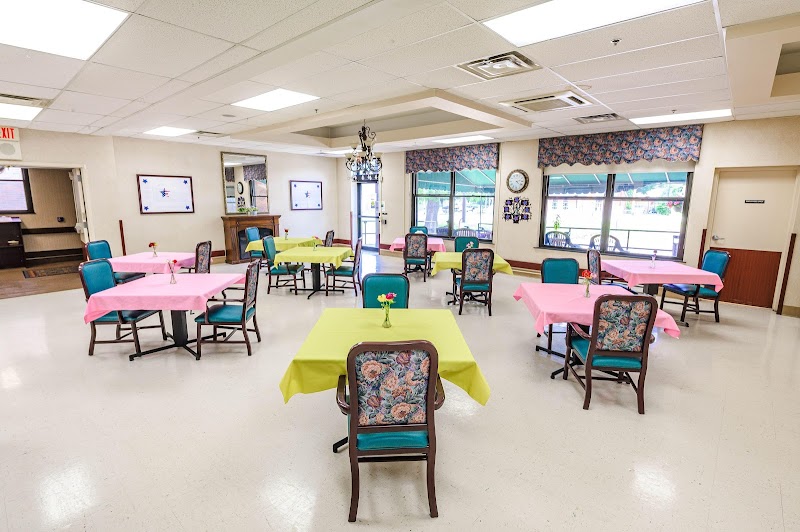
How is Providence Health & Rehab Center Staffed?

CMS rates PROVIDENCE HEALTH & REHAB CENTER's staffing level at 3 out of 5 stars, which is average compared to other nursing homes. Staff turnover is 51%, compared to the Pennsylvania average of 46%. RN turnover specifically is 55%, which is notably high. RNs provide skilled clinical oversight, so turnover in this role can affect medical care quality.

What Have Inspectors Found at Providence Health & Rehab Center?

State health inspectors documented 84 deficiencies at PROVIDENCE HEALTH & REHAB CENTER during 2023 to 2025. These included: 2 that caused actual resident harm and 82 with potential for harm. Deficiencies causing actual harm indicate documented cases where residents experienced negative health consequences.
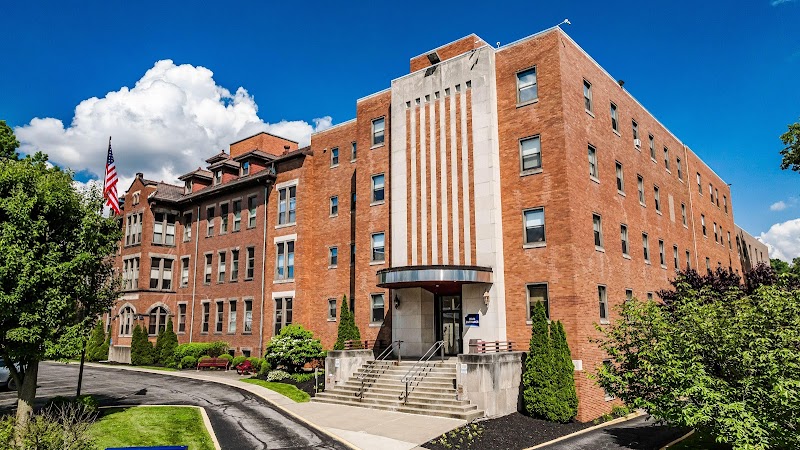
Who Owns and Operates Providence Health & Rehab Center?

PROVIDENCE HEALTH & REHAB CENTER is owned by a for-profit company. For-profit facilities operate as businesses with obligations to shareholders or private owners. The facility is operated by SABER HEALTHCARE GROUP, a chain that manages multiple nursing homes. With 180 certified beds and approximately 146 residents (about 81% occupancy), it is a mid-sized facility located in BEAVER FALLS, Pennsylvania.
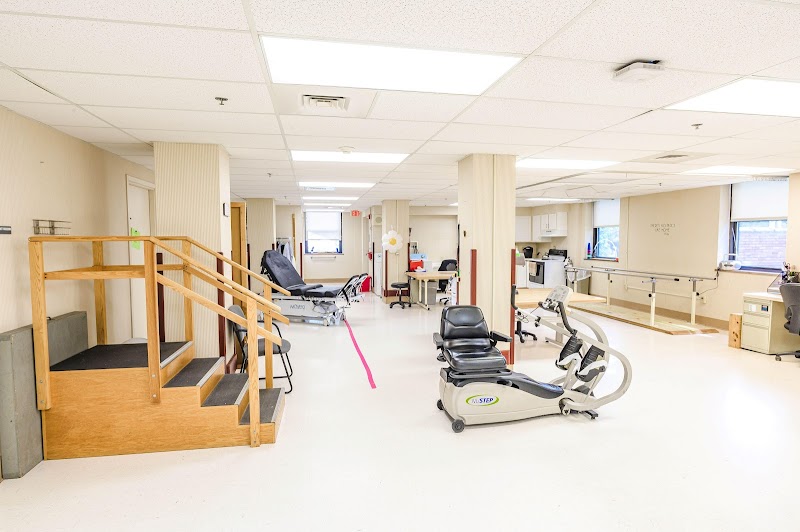
How Does Providence Health & Rehab Center Compare to Other Pennsylvania Nursing Homes?

Compared to the 100 nursing homes in Pennsylvania, PROVIDENCE HEALTH & REHAB CENTER's overall rating (1 stars) is below the state average of 3.0, staff turnover (51%) is near the state average of 46%, and health inspection rating (1 stars) is much below the national benchmark.

What Should Families Ask When Visiting Providence Health & Rehab Center?

Based on this facility's data, families visiting should ask: "What safeguards and monitoring systems are in place to protect residents from abuse or neglect?" "Can I visit during a mealtime to observe dining assistance and food quality?" "How do you handle medical emergencies, and what is your hospital transfer rate?" "Can I speak with family members of current residents about their experience?" These questions are particularly relevant given the substantiated abuse finding on record.

Is Providence Health & Rehab Center Safe?

Based on CMS inspection data, PROVIDENCE HEALTH & REHAB CENTER has documented safety concerns. The facility has 1 substantiated abuse finding (meaning confirmed case of resident harm by staff or other residents). The facility has a 1-star overall rating and ranks #100 of 100 nursing homes in Pennsylvania. Families considering this facility should ask detailed questions about what corrective actions have been taken since these incidents.

Do Nurses at Providence Health & Rehab Center Stick Around?

PROVIDENCE HEALTH & REHAB CENTER has a staff turnover rate of 51%, which is 5 percentage points above the Pennsylvania average of 46%. Moderate turnover is common in nursing homes, but families should still ask about staff tenure and how the facility maintains care continuity when employees leave.

Was Providence Health & Rehab Center Ever Fined?

PROVIDENCE HEALTH & REHAB CENTER has been fined $45,593 across 11 penalty actions. The Pennsylvania average is $33,535. While any fine indicates a compliance issue, fines under $50,000 are relatively common and typically reflect isolated problems that were subsequently corrected. Families should ask what specific issues led to these fines and confirm they've been resolved.

Is Providence Health & Rehab Center on Any Federal Watch List?

PROVIDENCE HEALTH & REHAB CENTER is not on any federal watch list. The most significant is the Special Focus Facility (SFF) program, which identifies the bottom 1% of nursing homes nationally based on persistent, serious quality problems. Not being on this list means the facility has avoided the pattern of deficiencies that triggers enhanced federal oversight. This is a positive indicator, though families should still review the facility's inspection history directly.