

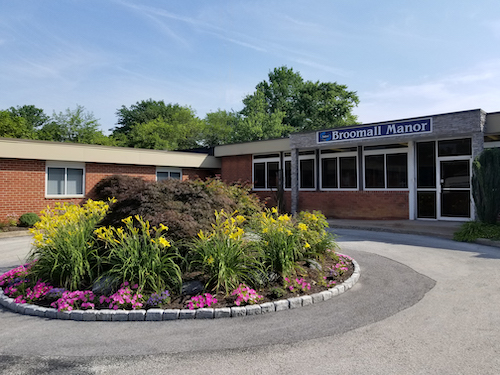
BROOMALL MANOR

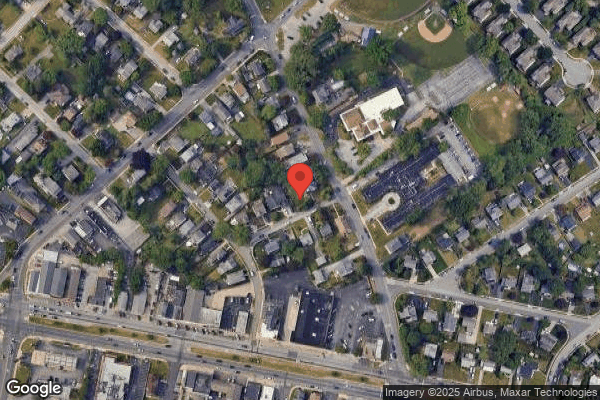
43 CHURCH LANE, BROOMALL, PA 19008 (610) 356-3003
For profit - Corporation 114 Beds SABER HEALTHCARE GROUP Data: November 2025
Trust Grade
95/100
#11 of 653 in PA
Last Inspection: October 2024

Within standard 12-15 month inspection cycle. Federal law requires annual inspections.

Overview

Broomall Manor has received a Trust Grade of A+, indicating it is an elite facility that excels in quality care. It ranks #11 out of 653 nursing homes in Pennsylvania, placing it in the top tier, and is #2 out of 28 in Delaware County, suggesting only one nearby option is better. The facility is on an improving trend, reducing issues from three in 2023 to one in 2024, which is a positive sign. Staffing is generally strong, with a 4/5 star rating and a low turnover rate of 22%, much better than the state average of 46%. However, there are concerns regarding RN coverage, which is lower than 82% of facilities in Pennsylvania, potentially impacting the level of care. Specific incidents noted during inspections include a failure to provide proper treatment for a resident's skin tear, a lack of care planning for a resident's incontinence issues, and a delay in notifying a physician about a resident's seizure, which may have led to a delay in necessary hospitalization. While these findings highlight areas for improvement, the absence of fines and a solid staffing rating are strengths of the facility. Overall, Broomall Manor shows promise, but families should consider both its strengths and weaknesses when making a decision.

Trust Score
A+
95/100
In Pennsylvania
#11/653
Top 1%
Safety Record
Low Risk
No red flags
Inspections
Getting Better
3 → 1 violations
Staff Stability
✓ Good
22% annual turnover. Excellent stability, 26 points below Pennsylvania's 48% average. Staff who stay learn residents' needs.
Penalties
✓ Good
No fines on record. Clean compliance history, better than most Pennsylvania facilities.
Skilled Nurses
⚠ Watch
Each resident gets only 27 minutes of Registered Nurse (RN) attention daily — below average for Pennsylvania. Fewer RN minutes means fewer trained eyes watching for problems.
Violations
○ Average
8 deficiencies on record. Average for a facility this size. Mostly minor or procedural issues.
★★★★★
5.0
Overall Rating
★★★★☆
4.0
Staff Levels
★★★☆☆
3.0
Care Quality
★★★★★
5.0
Inspection Score
Stable
2023: 3 issues
2024: 1 issues

The Good

  • 4-Star Staffing Rating · Above-average nurse staffing levels
  • Low Staff Turnover (22%) · Staff stability means consistent care
  • Full Sprinkler Coverage · Fire safety systems throughout facility
  • No fines on record
  • Staff turnover is low (22%)

    26 points below Pennsylvania average of 48%

Facility shows strength in staffing levels, staff retention, fire safety.

The Bad

Chain: SABER HEALTHCARE GROUP

Part of a multi-facility chain

Ask about local staffing decisions and management

The Ugly 8 deficiencies on record

Oct 2024 1 deficiency
CONCERN (D)

Potential for Harm - no one hurt, but risky conditions existed

Quality of Care (Tag F0684)

Could have caused harm · This affected 1 resident

Based on review of clinical records, facility documentation, and staff interview, it was determined the facility failed to provide appropriate and consistent treatment for a skin tear for one of the 2...

Read full inspector narrative →
Based on review of clinical records, facility documentation, and staff interview, it was determined the facility failed to provide appropriate and consistent treatment for a skin tear for one of the 24 residents reviewed (Resident 54). Findings include: Review of Resident 54's nursing progress notes dated October 8, 2024, at 8:34 p.m., revealed while changing and repositioning Resident 54, a circular skin tear to the left elbow, approximately 2.5 cm. in size, was observed. The physician and the responsible party were notified. Review of the facility's documentation titled, Skin Integrity Events, dated October 8, 2024, at 8:31 p.m., revealed the resident had a 2.5 x 2.5 cm skin tear to the left elbow. The same report revealed the physician was notified, and under interventions, document revealed treatment ordered. Review of Resident 54's October 2024 Medication/Treatment Administration Record failed to reveal a treatment order for Resident 52's left elbow skin tear identified on October 8, 2024. Review of Resident 54's nursing progress notes dated October 9, 2024, at 6:43 p.m., revealed Skin tear to left elbow. No reported pain this shift. Treatment done. Review of Resident 54's clinical records failed to reveal type of treatment provided to Resident 54's left elbow skin tear on October 9, 2024, since there was no documented wound treatment order to the left elbow despite documents indicating a treatment was ordered. Review of Resident 54's clinical records failed to reveal Resident 54's left elbow skin tear identified on October 8, 2024, was provided with wound treatment on October 10, 11, 12, 13, and 14. The above information was conveyed to the Director of Nursing on October 31, 2024. The facility failed to ensure Resident 54's left elbow skin tear was appropriately and consistently provided with treatment. 28 Pa. Code 201.18(b)(1) Management 28 Pa. 211.12(d)(1)(3)(5) Nursing services 28 Pa. Code 211.5(f) Clinical records
Oct 2023 3 deficiencies
CONCERN (D)

Potential for Harm - no one hurt, but risky conditions existed

Comprehensive Care Plan (Tag F0656)

Could have caused harm · This affected 1 resident

Based on clinical record review and staff interview it was determined the facility failed to develop comprehensive care plans for one of 24 residents reviewed. Findings Include: Review of Resident 43'...

Read full inspector narrative →
Based on clinical record review and staff interview it was determined the facility failed to develop comprehensive care plans for one of 24 residents reviewed. Findings Include: Review of Resident 43's Bladder Continence documentation from September 27, 2023 to October 26, 2023 revealed the resident had 10 episodes of bladder incontinence and 7 episodes of bowel incomitance. Review of Resident 43's Quarterly Minimum Data Set (MDS- periodic assessment of resident needs), dated September 22, 2023 revealed the resident was occasionally incontinent of bladder and frequently incontinent of bowel and was not on a toileting program. Review of Resident 43's care plan revealed there was no developed for Resident 43's incontinence of bowel and bladder. Interview with the Nursing Home Administrator and the Director of Nursing on August 28, 2023 at 9:30 a.m. confirmed there was no care plan for bowel and bladder incontinence developed for Resident 43. 28 PA Code 211.11(d) Resident care plan 28 Pa. Code 211.12(d)(1)(3)(5) Nursing Services
CONCERN (D)

Potential for Harm - no one hurt, but risky conditions existed

Quality of Care (Tag F0684)

Could have caused harm · This affected 1 resident

Based on review of facility policy and clinical record review, it was determined that the facility failed to notify the physician of a change in condition in a timely manner resulting in a delay in ho...

Read full inspector narrative →
Based on review of facility policy and clinical record review, it was determined that the facility failed to notify the physician of a change in condition in a timely manner resulting in a delay in hospitalization for one of 21 residents reviewed (Resident 39). Findings include: Review of facility policy, Seizure Management Policy, last revised July 19, 2023, revealed that if a resident has convulsions that last longer than five minutes or has subsequent seizures, the provider should be notified, or if not immediately available, emergency transfer should be initiated. Review of Resident 39's clinical record revealed a diagnosis of epilepsy (brain disorder that causes recurring, unprovoked seizures). Review of Resident 39's progress notes revealed a nurse's note on September 17, 2023, at 6:36 a.m. which stated: Resident had a mild seizure x1 @ 0415 am and stopped at 0430 am. Per staff it was her normal baseline seizure activity. Further review of Resident 39's progress notes revealed a nurse's note on September 17, 2023, at 6:43 p.m., which stated that the resident was noted to have a seizure this afternoon at 4:30. She was laying on her back on her bed, snoring very loudly. She was unresponsive until I sternal rubbed her. Her eyes opened and then looked at me then closed again. After about 20 minutes she was responding to her name and eating her dinner. [Her] only complaint was a headache to which she received tylenol which was effective. Nursing staff will continue to monitor the resident's status. Further review of Resident 39's progress notes revealed a nurse's note on September 17, 2023, at 10:08 p.m. which stated, Resident sent to [hospital] at [9:55 p.m. status post] epilepsy episode. Resident exhibited seizure activity which entailed uncontrollable jerk movement & decreased [level of consciousness] x 3 lasting more than 5 minutes. Review of Resident 39's history and physical from the emergency room revealed that the resident was noted by nursing home staff to have a total of 8 seizures today which prompted [emergency medical services] to be called. Clinical record review failed to reveal evidence that the physician was notified of Resident 39's seizures until the three seizures noted in the 10:08 p.m. progress note. The above findings were conveyed to the Nursing Home Administrator and Director of Nursing on October 27, 2023, at 11:05 a.m. 28 Pa. Code 201.18(b)(1) Management 28 Pa. 211.12(d)(1)(3)(5) Nursing services 28 Pa. Code 211.5(f) Clinical records
CONCERN (D)

Potential for Harm - no one hurt, but risky conditions existed

Incontinence Care (Tag F0690)

Could have caused harm · This affected 1 resident

Based on facility policy and procedure review, clinical record review and staff interview it was determined the facility failed to provide care and service for residents to attain and maintain highest...

Read full inspector narrative →
Based on facility policy and procedure review, clinical record review and staff interview it was determined the facility failed to provide care and service for residents to attain and maintain highest practicable bowel and bladder continence and provide care for a foley catheter for two of four residents reviewed. (Residents 43 and 76) Findings Include: Review of facility policy and procedure titled Continence Management Program, last revised on June 7, 2023, revealed the purpose of the Continence Management Program is to establish and maintain a pattern for control of bladder or bowel function. The following residents should be considered for a bladder or bowel incontinence program, those who: are usually continent but have episodes of incontinence, have recently had a Foley catheter removed, requires limited to extensive assistance in toilet use, could benefit from a prompted or scheduled toileting plan. Review of Resident 43's Bladder Continence documentation from September 27, 2023 to October 26, 2023 revealed the resident had 10 episodes of bladder incontinence and 7 episodes of bowel incomitance. Review of Resident 43's Quarterly Minimum Data Set (MDS- periodic assessment of resident needs), dated September 22, 2023 revealed the resident was occasionally incontinent of bladder and frequently incontinent of bowel and was not on a toileting program. Resident 43 was also coded as needing only supervision for transfers and the limited assistance of one person for toileting. Review of Resident 43's entire clinical record revealed the resident had not been assessed for continence or appropriateness of a training program since admission to the facility on August 30, 2023 at which time Resident 43 as documented as having a Foley catheter (tube inserted into the bladder to allow drainage) and had orders for a foley catheter and care. Interview with the Nursing Home Administrator and the Director of Nursing on August 28, 2023 at 9:30 a.m. confirmed there was no assessment to determine the cause of Resident 43's incontinence or the appropriateness of a training program. Review of Resident 76's physician orders revealed an order dated October 3, 2023 to document Foley output every shift. Review of Resident 76's Medication Administration Record revealed the nursing staff were signed off they were completing this order but there was no amount of output documented. Review of Resident 76's entire clinical record failed to reveal documentation of the Foley output as ordered. Interview with the Nursing Home Administrator and the Director of Nursing on August 28, 2023 at 9:30 a.m. confirmed Resident 76's Foley output was not documented as ordered on October 3, 2023. 28 Pa. Code 211.5 (f) Clinical record 28 Pa. Code 211.10 (d) Resident care policies 28 Pa. Code 211.12 (c)(d)(1)(3) Nursing services
Dec 2022 4 deficiencies
CONCERN (D)

Potential for Harm - no one hurt, but risky conditions existed

Assessment Accuracy (Tag F0641)

Could have caused harm · This affected 1 resident

**NOTE- TERMS IN BRACKETS HAVE BEEN EDITED TO PROTECT CONFIDENTIALITY** Based on clinical record review and staff interview it was determined the facility failed to accurately document the resident's ...

Read full inspector narrative →
**NOTE- TERMS IN BRACKETS HAVE BEEN EDITED TO PROTECT CONFIDENTIALITY** Based on clinical record review and staff interview it was determined the facility failed to accurately document the resident's status for three of 24 residents reviewed. (Residents 1, 49, 56, and Resident 66) Findings Include: Review of Resident 1's clinical record revealed the resident expired at the facility on [DATE]. Review of Resident 1's Minimum Data Set (MDS- periodic assessment of resident needs) revealed the last MDS completed for Resident 1 was a Quarterly assessment dated [DATE]. There was no assessment completed when Resident 1 expired. Interview with Licensed Nursing Employee E3 on [DATE] at 12:15 p.m. confirmed there was no MDS completed when Resident 1 expired. Review of Resident 49's clinical record revealed an order for hospice services dated [DATE]. Review of Resident 49's quarterly MDS assessments dated [DATE] and [DATE] revealed the resident was not coded as receiving hospice services. Interview with Licensed Nursing Employee E3 on [DATE] at 12:15 p.m. confirmed Resident 49 was under hospice services and the quarterly MDS assessment of [DATE] and [DATE] were coded incorrectly. Review of Resident 56's clinical record revealed an order for hospice services dated [DATE]. Review of Resident 56's comprehensive MDS assessment dated [DATE] revealed the resident was not coded as receiving hospice services. Review of Resident 66's clinical record revealed an order for hospice services dated [DATE]. Review of Resident 66's quarterly MDS assessment dated [DATE] revealed the resident was not coded as receiving hospice services. Interview with Director of Nursing on [DATE] at 9:15 a.m. confirmed that the MDS for Resident 56 and Resident 66 were coded incorrectly for the MDS's indicated. 28 Pa. Code: 211.5(f) Clinical records 28 Pa. Code: 211.12(d)(1)(5) Nursing services
CONCERN (D)

Potential for Harm - no one hurt, but risky conditions existed

Pressure Ulcer Prevention (Tag F0686)

Could have caused harm · This affected 1 resident

**NOTE- TERMS IN BRACKETS HAVE BEEN EDITED TO PROTECT CONFIDENTIALITY** Based on clinical record review and staff interview it was determined the facility failed to accurately document a pressure ulce...

Read full inspector narrative →
**NOTE- TERMS IN BRACKETS HAVE BEEN EDITED TO PROTECT CONFIDENTIALITY** Based on clinical record review and staff interview it was determined the facility failed to accurately document a pressure ulcer for three of 8 residents reviewed. (Residents 42, 46, and 84) Findings Include: Review of Resident 42's clinical record revealed the resident was admitted to the facility on [DATE]. Review of Resident 42's weekly Skin evaluation, dated July 8, 2022 revealed the resident had a pressure ulcer (injury to skin and underlying tissue resulting from prolonged pressure on the skin) on the sacrum (large, flat triangular shaped bone nested between the hip bones and positioned below the last lumbar vertebra bone) but there was no further documentation of the size, or description of the wound including staging. Further review of resident 42's clinical record revealed a Weekly Wound Assessment, dated July 12, 2022 indicating the resident had a stage 4 (the pressure injury is very deep, reaching into muscle and bone and causing extensive damage) community acquired pressure ulcer to the sacrum. Interview with the Director of Nursing and the Nursing Home Administrator on December 22, 2022 at 9:30 a.m. revealed wounds should be fully documented upon admission of a resident with a wound and confirmed there was no full documentation of Resident 42 sacral pressure ulcer until 4 days after admission. Review of Resident 46's clinical record dated March 16, 2022 revealed the resident had a stage 3 (full-thickness developed into the soft tissue underneath the skin) pressure ulcer on the sacrum measuring 2x2x0.3 cm. There are no measurements of the pressure ulcer after this date until December 6, 2022 when a sacral wound is noted as a stage 4 pressure ulcer measuring 1.5x 1x 0.9 cm. An interview with the Director of Nursing on December 22, 2022 at 11:30 a.m. revealed that the pressure ulcer never healed and this remains the same pressure ulcer as in March. Further confirmation that there is no further documentation in the clinical record of the wound healing process from March 16, 2022 until December 6, 2022. Review of resident 84's clinical record revealed a weekly wound assessment completed on December 5, 2022 indicating the resident had a stage 2 (partial-thickness skin loss into but no deeper than the tissue layer under the skin) pressure ulcer to the sacrum. Further review of the clinical record on December 21, 2022 revealed there were no further weekly wound assessments completed after December 5, 2022. Observation of resident 84's sacrum on December 22, 2022 at 10:00 a.m. confirmed the resident had a current stage 2 pressure ulcer to his sacrum. Interview with the Director of Nursing and the Nursing Home Administrator on December 22, 2022 at 9:30 a.m. revealed wound's should be fully documented weekly and confirmed there was no further documentation of resident 84's sacral pressure ulcer on the clinical record since December 5, 2022. 28 Pa. Code 201.14(a) Responsibility of licensee 28 Pa. Code 201.18(b)(1)(3)(e)(1) Management 28 Pa. Code 211.5(f) Clinical records 28. Pa. Code 211.12(c)(d)(1)(1)(3)(5) Nursing services
CONCERN (D)

Potential for Harm - no one hurt, but risky conditions existed

Accident Prevention (Tag F0689)

Could have caused harm · This affected 1 resident

Based on clinical record review and staff interviews it was determined that the facility did not ensure a resident's safety with supervision for one resident out of 32 reviewed (Resident 82) which res...

Read full inspector narrative →
Based on clinical record review and staff interviews it was determined that the facility did not ensure a resident's safety with supervision for one resident out of 32 reviewed (Resident 82) which resulted in harm (facial fractures) requiring a transfer to emergency room and two sutures (row of stitches holding together the edges of a wound). Findings include: Review of Resident 81's clinical record revealed an admission date of June 22, 2021 with the following diagnoses: general Anxiety Disorder, Alzheimer's disease, Dementia, encounter for other orthopedic aftercare and history of falls. Further review of the clinical record revealed a Quarterly Minimum Data Set (MDS- assessment of resident care needs) dated September 5, 2022, stating her cognition is 5 out of 15 (severly impaired). Review of the clinical record revealed a progress note dated October 19, 2022, indicating Resident 81 was found sitting on [resident] floor in front of [resident] walker in [resident] room facing the bed. Review of facility documentation dated October 19, 2022 indicates the patient with poor safety awareness due to dementia. Safety educating provded to utilize walker and call bell as need, but poor carryover to degree of cognition. Review of care plan provided no further interventions but stated that the resident is impulsive. Further review revealed, a nursing note dated October 24, 2022, Resident 81, fell trying to get into bed, hitting her head on ground causing large hematoma (bruising) with open laceration (cut). Moderate amount of bleeding, hematoma and laceration noted to right eyebrow. Bleeding controlled. Resident complained of head pain. Resident was picked up from floor by two staff members and placed in the bed in comfortable position. Resident was transferred to the ER dept (department) to be evaluated. On October 26, 2022, the resident was readmitted to the facility with the diagnosis of right maxillary sinus fracture (mid-face) and R inferior orbital wall fracture (eye socket) and two sutures placed above the left eye. A physician note dated November 2, 2022, revealed (Resident 81) with two recent falls, one resulting in facial fractures. Resident 81 continues with bruising to right side of face following fractures. Discussed recent falls with family, feel it is related to room set up. Interview with the Director of Nursing on December 21, 2022, confirmed that Resident 81, has dementia and short term memory is impaired and may be impulsive indicating education was not an appropriate intervention for the resident. 28 Pa Code 201.18(b)(1)(b)(3)(e)(1) Management 28 Pa Code 201.29(a)(c) Resident Rights 28 Pa. Code 211.10(d) Resident care policies 28 Pa Code 211.5(f) clinical Records 28 Pa Code 211.12(c)(d)(1)(5) Nursing services
CONCERN (D)

Potential for Harm - no one hurt, but risky conditions existed

Deficiency F0886 (Tag F0886)

Could have caused harm · This affected 1 resident

Based on the Centers for Disease Control (CDC) guidance, review of facility policy, and clinical record review, it was determined that the facility failed to follow the COVID-19 testing guidelines for...

Read full inspector narrative →
Based on the Centers for Disease Control (CDC) guidance, review of facility policy, and clinical record review, it was determined that the facility failed to follow the COVID-19 testing guidelines for symptomatic residents for one of 21 residents reviewed (Resident 58). Findings include: Review of the CDC guidelines Interim Infection Prevention and Control Recommendations for Healthcare Personnel During the Coronavirus Disease 2019 (COVID-19) Pandemic, last updated September 23, 2022, revealed: Anyone with even mild symptoms of COVID-19, regardless of vaccination status, should receive a viral test for SARS-CoV-2 as soon as possible. Review of facility policy, COVID Testing Guidance, last updated September 26, 2022, revealed: Residents, regardless of vaccination status, with signs or symptoms must be tested ASAP. If negative, test again 48 hours later, and, if negative, 48 hours after the second test. Review of Resident 58's physician's orders revealed a PRN (as needed) order dated May 31, 2022, for May test for Covid-19 per protocol. Review of Resident 58's progress notes revealed a nursing progress note dated October 19, 2022, which stated: Resident [complained of] cough that kept her up all night. Did note occasional cough, non productive. Temp 98.2 temporal [(forehead temperature)]. Lungs clear bilaterally. Order obtained for Tussin cough syrup, given as ordered at [10:00 a.m.] - effective. Daughter also updated via phone call. Will continue to monitor. Review of Resident 58's laboratory tests and October 2022 Medication Administration Record (MAR) and Treatment Administration Record (TAR) failed to reveal evidence that a COVID-19 test was administered to Resident 58 following the resident's complaints of a cough. Review of Resident 58's progress notes revealed a monthly nurse's note dated November 1, 2022, which stated: Cough present. Resident has a non productive cough. Further review of Resident 58's progress notes revealed a physician's progress note dated November 4, 2022, which stated that the resident says that she has been having a cough for two months. She says she got some cough medicine the other day, but that did not help. The physician ordered a chest x-ray. Review of Resident 58's chest x-ray results from November 7, 2022 revealed complete opacification (cloudiness) and atelectasis (lung collapse) of the right lung. Further review of Resident 58's progress notes revealed a nursing progress note dated November 8, 2022 at 9:42 a.m., which stated: Reside had [chest x-ray] due to chronic cough with results faxed to facility. Called & scanned results to [physician] who requested resident be sent out for further evaluation. A follow up nursing progress note at 2:51 p.m. stated that the resident was admitted with COVID [infection] & large right pleural effusion [(fluid in the lung.)] Review of Resident 58's laboratory tests and November 2022 MAR and TAR failed to reveal evidence that a COVID-19 test was administered to Resident 58 following the resident's continued complaints of a cough. Interview with the Director of Nursing on December 22, 2022, at 10:09 a.m. confirmed there was no documented evidence in Resident 58's clinical record that the resident was tested for COVID-19 even though the resident was symptomatic of COVID-19. 28 Pa. Code: 201.14(a) Responsibility of licensee. 28 Pa. Code: 201.18(b)(1)(e)(1) Management. 28 Pa. Code: 211.12 (c) Nursing services.
Understanding Severity Codes (click to expand)
Life-Threatening (Immediate Jeopardy)
J - Isolated K - Pattern L - Widespread
Actual Harm
G - Isolated H - Pattern I - Widespread
Potential for Harm
D - Isolated E - Pattern F - Widespread
No Harm (Minor)
A - Isolated B - Pattern C - Widespread

Questions to Ask on Your Visit

  • "Can I speak with families of current residents?"
  • "What's your RN coverage like on weekends and overnight?"

Our Honest Assessment

Strengths
  • • Grade A+ (95/100). Above average facility, better than most options in Pennsylvania.
  • • No major safety red flags. No abuse findings, life-threatening violations, or SFF status.
  • • No fines on record. Clean compliance history, better than most Pennsylvania facilities.
  • • 22% annual turnover. Excellent stability, 26 points below Pennsylvania's 48% average. Staff who stay learn residents' needs.
Concerns
  • • No significant concerns identified. This facility shows no red flags across CMS ratings, staff turnover, or federal penalties.
Bottom line: Generally positive indicators. Standard due diligence and a personal visit recommended.

About This Facility

What is Broomall Manor's CMS Rating?

CMS assigns BROOMALL MANOR an overall rating of 5 out of 5 stars, which is considered much above average nationally. Within Pennsylvania, this rating places the facility higher than 99% of the state's 100 nursing homes. This rating reflects solid performance across the metrics CMS uses to evaluate nursing home quality.

How is Broomall Manor Staffed?

CMS rates BROOMALL MANOR's staffing level at 4 out of 5 stars, which is above average compared to other nursing homes. Staff turnover is 22%, compared to the Pennsylvania average of 46%. This relatively stable workforce can support continuity of care.

What Have Inspectors Found at Broomall Manor?

State health inspectors documented 8 deficiencies at BROOMALL MANOR during 2022 to 2024. These included: 8 with potential for harm.

Who Owns and Operates Broomall Manor?

BROOMALL MANOR is owned by a for-profit company. For-profit facilities operate as businesses with obligations to shareholders or private owners. The facility is operated by SABER HEALTHCARE GROUP, a chain that manages multiple nursing homes. With 114 certified beds and approximately 105 residents (about 92% occupancy), it is a mid-sized facility located in BROOMALL, Pennsylvania.

How Does Broomall Manor Compare to Other Pennsylvania Nursing Homes?

Compared to the 100 nursing homes in Pennsylvania, BROOMALL MANOR's overall rating (5 stars) is above the state average of 3.0, staff turnover (22%) is significantly lower than the state average of 46%, and health inspection rating (5 stars) is much above the national benchmark.

What Should Families Ask When Visiting Broomall Manor?

Based on this facility's data, families visiting should ask: "Can I visit during a mealtime to observe dining assistance and food quality?" "How do you handle medical emergencies, and what is your hospital transfer rate?" "Can I speak with family members of current residents about their experience?"

Is Broomall Manor Safe?

Based on CMS inspection data, BROOMALL MANOR has a clean safety record: no substantiated abuse findings (meaning no confirmed cases of resident harm), no Immediate Jeopardy citations (the most serious violation level indicating risk of serious injury or death), and is not on the Special Focus Facility watch list (a federal program monitoring the lowest-performing 1% of nursing homes). The facility has a 5-star overall rating and ranks #1 of 100 nursing homes in Pennsylvania. While no facility is perfect, families should still ask about staff-to-resident ratios and recent inspection results during their visit.

Do Nurses at Broomall Manor Stick Around?

Staff at BROOMALL MANOR tend to stick around. With a turnover rate of 22%, the facility is 24 percentage points below the Pennsylvania average of 46%. Low turnover is a positive sign. It means caregivers have time to learn each resident's needs, medications, and personal preferences. Consistent staff also notice subtle changes in a resident's condition more quickly. Registered Nurse turnover is also low at 25%, meaning experienced RNs are available to handle complex medical needs.

Was Broomall Manor Ever Fined?

BROOMALL MANOR has no federal fines on record. CMS issues fines when nursing homes fail to meet care standards or don't correct problems found during inspections. The absence of fines suggests the facility has either maintained compliance or corrected any issues before penalties were assessed. This is a positive indicator, though families should still review recent inspection reports for the full picture.

Is Broomall Manor on Any Federal Watch List?

BROOMALL MANOR is not on any federal watch list. The most significant is the Special Focus Facility (SFF) program, which identifies the bottom 1% of nursing homes nationally based on persistent, serious quality problems. Not being on this list means the facility has avoided the pattern of deficiencies that triggers enhanced federal oversight. This is a positive indicator, though families should still review the facility's inspection history directly.