WILLIAM HOOD DUNWOODY CARE CTR
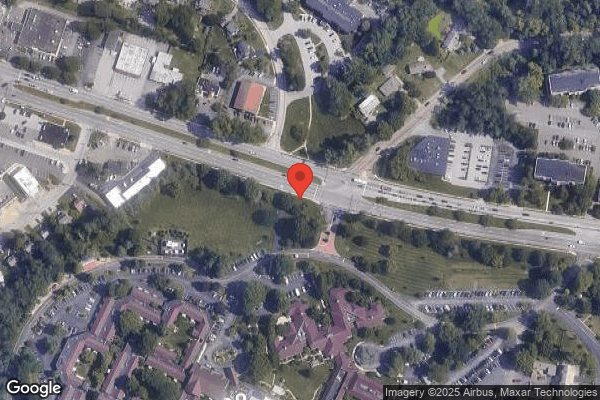
3500 WEST CHESTER PIKE, NEWTOWN SQUARE, PA 19073 (215) 359-4401
Non profit - Corporation 81 Beds Independent Data: November 2025
Trust Grade
90/100
#141 of 653 in PA
Last Inspection: April 2025

Within standard 12-15 month inspection cycle. Federal law requires annual inspections.

Overview

William Hood Dunwoody Care Center has received a Trust Grade of A, indicating that it is considered excellent and highly recommended for families seeking care. With a state ranking of #141 out of 653, they are in the top half of Pennsylvania facilities, and at #8 of 28 in Delaware County, they are among the better local options. However, the facility is experiencing a worsening trend, with issues increasing from 2 in 2024 to 3 in 2025. Staffing is a strong point, boasting a 5-star rating and a turnover rate of 33%, which is below the state average, meaning that staff members are likely to be familiar with the residents. Notably, the facility has no fines on record, which is a positive sign, and they provide more RN coverage than 94% of facilities in Pennsylvania, ensuring better oversight of resident care. Still, there are some concerns; for instance, staff failed to notify a physician of a resident's change in urinary status and did not provide timely wound treatment for a pressure ulcer. Additionally, a significant weight change for another resident was not addressed promptly, highlighting areas that need improvement despite the overall strong performance of the facility.

Trust Score
A
90/100
In Pennsylvania
#141/653
Top 21%
Safety Record
Low Risk
No red flags
Inspections
Getting Worse
2 → 3 violations
Staff Stability
○ Average
33% turnover. Near Pennsylvania's 48% average. Typical for the industry.
Penalties
✓ Good
No fines on record. Clean compliance history, better than most Pennsylvania facilities.
Skilled Nurses
✓ Good
Each resident gets 111 minutes of Registered Nurse (RN) attention daily — more than 97% of Pennsylvania nursing homes. RNs are the most trained staff who catch health problems before they become serious.
Violations
✓ Good
Only 5 deficiencies on record. Cleaner than most facilities. Minor issues only.
★★★★★
5.0
Overall Rating
★★★★★
5.0
Staff Levels
★★★★★
5.0
Care Quality
★★★★☆
4.0
Inspection Score
Stable
2024: 2 issues
2025: 3 issues

The Good

  • 5-Star Staffing Rating · Excellent nurse staffing levels
  • 5-Star Quality Measures · Strong clinical quality outcomes
  • Full Sprinkler Coverage · Fire safety systems throughout facility
  • No fines on record
  • Staff turnover below average (33%)

    15 points below Pennsylvania average of 48%

Facility shows strength in staffing levels, quality measures, fire safety.

The Bad

Staff Turnover: 33%

13pts below Pennsylvania avg (46%)

Typical for the industry

The Ugly 5 deficiencies on record

Apr 2025 3 deficiencies
CONCERN (D)

Potential for Harm - no one hurt, but risky conditions existed

Notification of Changes (Tag F0580)

Could have caused harm · This affected 1 resident

Based on a review of the facility's policy, clinical records review, and staff interview, it was determined that the facility failed to notify the physician of a change in the condition of a resident'...

Read full inspector narrative →
Based on a review of the facility's policy, clinical records review, and staff interview, it was determined that the facility failed to notify the physician of a change in the condition of a resident's urinary status for one of the three residents reviewed (Resident 39). Findings include: A review of the facility's policy titled Change in Resident status Notification, revised on May 17, 2023, revealed that the charge nurse will notify the resident's physician or on-call physician when there has been a significant change in the resident physical/mental/emotional condition, and a need to alter the resident's medical treatment. Notification will be made promptly with the exemption of non-emergency incidents on the 11-7 shift. Notification of non-emergent incidents on the 11-7 shift may be passed on to the 7-3 shift for a morning notification. Clinical record review revealed Resident 39 had an Indwelling Urethral Catheter (A thin, flexible tube inserted into the bladder through the urethra to collect and drain urine) for diagnosis of urinary retention and neuromuscular dysfunction of the bladder. A review of the Resident laboratory report dated March 5, 2025, revealed a normal WBC (White Blood Cell count) result (Normal range 4.8-10.8). (a blood test that measures the number of white blood cells in your blood, helping to identify infections, inflammation, and other conditions.) A review of the nursing progress notes dated March 9, 2025, at 1:47 a.m., revealed that during the start of the shift, resident's family member reported feeling something was off with the resident. Further assessment revealed no urine output in the urine drainage bag, but the resident's brief was wet twice. The same note revealed that the catheter (tube) was outside the body more than normally should be. The same note revealed the following, Indwelling cath (catheter) removed and new 18Fr/10cc (size of the tube) placed with immediate frank red bloody urine, then odorous amber colored urine, ending with tan sludge - 1700 cc. The responsible party was notified. The review of the clinical records failed to reveal that the physician was notified of the significant change in the resident's urinary status and change in the condition of urine. A review of the physician's note dated March 13, 2025, at 4:55 p.m., revealed that during the visit, the resident was noted to be somnolent (sleepy, lethargic, drowsy), not as vocal as his baseline. The condition was discussed with the wife and nursing, urine, and blood work was ordered. A review of Resident 39's blood work dated March 15, 2025, revealed WBC was 21.6 and the urine had (+) 3 Leucocytes (indicative of a urinary tract infection). Urine culture and sensitivity (test to determine the kind of bacteria causing the infection and the antibiotics that are effective against the bacteria) were pending. Clinical records review revealed that the physician was notified of the laboratory result and ordered to start the Resident with Macrobid (antibiotic) 100mg twice daily for seven days while waiting for the culture and sensitivity. The physician's order was followed. An interview was conducted with the Director of Nursing on April 4, 2025, at 10:00 a.m. The DON confirmed that there was no documented evidence that the physician was notified when Resident 39 had 1700 cc of bloody, with tan sludge and odorous urine output on March 9, 2025. The facility failed to ensure physician was notified of Resident 39's significant change in urinary status resulting in a delay in treatment. 28 Pa Code 211.10(c) Patient care policies Previously cited 5/3/24 28 Pa. Code 211.12(c)(d)(1)(3)(5) Nursing services Previously cited 5/3/24
CONCERN (D)

Potential for Harm - no one hurt, but risky conditions existed

Pressure Ulcer Prevention (Tag F0686)

Could have caused harm · This affected 1 resident

**NOTE- TERMS IN BRACKETS HAVE BEEN EDITED TO PROTECT CONFIDENTIALITY** Based on clinical records review and staff interview, it was determined that the facility failed to ensure wound treatment for a...

Read full inspector narrative →
**NOTE- TERMS IN BRACKETS HAVE BEEN EDITED TO PROTECT CONFIDENTIALITY** Based on clinical records review and staff interview, it was determined that the facility failed to ensure wound treatment for a pressure ulcer was provided for one of five residents reviewed (Resident 39). Findings include: A review of the nursing progress notes dated March 13, 2025, at 7:40 a.m., revealed that a new DTI (Deep Tissue Pressure Injury (DTPI): Persistent non-blanchable deep red, maroon, or purple discoloration) was observed on the resident's left lower back. The wound was cleansed with a wound cleanser and Desitin (An ointment used to treat and prevent a rash) was applied. The Nurse practitioner was notified. A review of the skin assessment dated [DATE], revealed a DTI to the left lower back measuring 8.9 x 4.5 cm (centimeters). A review of Resident 39's March TAR (Treatment Administration Record) failed to reveal a wound treatment was done for the identified DTI on the resident's left lower back from March 14, 2025, until the time the resident was sent to the hospital for an abnormal laboratory result on March 17, 2025. An interview with the DON (Director of Nursing) conducted on April 4, 2025, at 10:00 a.m., confirmed that there was no documented evidence that the Resident's identified DTI to the left lower back on March 13, 2025, was treated from March 14, 2025, until March 17, 2025. The facility failed to ensure wound treatment was provided for Resident 39's DTI to the left lower back. 28 Pa Code 211.10(c) Patient care policies Previously cited 5/3/24 28 Pa. Code 211.12(c)(d)(1)(3)(5) Nursing services Previously cited 5/3/24
CONCERN (D)

Potential for Harm - no one hurt, but risky conditions existed

Deficiency F0692 (Tag F0692)

Could have caused harm · This affected 1 resident

**NOTE- TERMS IN BRACKETS HAVE BEEN EDITED TO PROTECT CONFIDENTIALITY** Based on a review of the facility's policy, clinical records review, and staff interview, it was determined that the facility fa...

Read full inspector narrative →
**NOTE- TERMS IN BRACKETS HAVE BEEN EDITED TO PROTECT CONFIDENTIALITY** Based on a review of the facility's policy, clinical records review, and staff interview, it was determined that the facility failed to ensure a significant weight change was timely addressed for one 10 residents (Resident 42). Findings include: A review of the facility's policy titled Weights, last revised on October 11, 2024, revealed the facility will have the residents' weights monitored as an indicator of their health and wellness. Residents will be weighed weekly for a total of four weeks to monitor health status. Weights will be reviewed by the nurse and dietitian. Weights that are three pounds greater than or less than the resident's prior weight will be reweighed within 24 hours to verify accuracy. Weights that are less than 5% of the previous weight will be reported to the physician and noted on the resident record. A plan of care will be developed to address residents with weight concerns. Clinical records review revealed resident was admitted to the facility on [DATE], with a diagnosis of Dementia (A term used to describe a group of symptoms affecting memory, thinking, and social abilities severely enough to interfere with daily life), and Dysphagia (Difficulty in swallowing). A review of the resident nutritional care plan initiated on December 30, 2024, revealed: Screening Score 7-Malnourished (Resident 42) have the potential for continued alteration in nutrition r/t (relate to) history of dysphagia. Interventions include monitoring the need for the addition of appropriate high-calorie/protein house supplements within the limits of the therapeutic diet order. A review of Resident 42's weights revealed an admission weight of 122.6 pounds on December 27, 2024. Weekly weights were done with the following result: 124.3 pounds on December 31, 2024, 124 pounds on January 1, 2025, and 116.8 pounds on January 10, 2025, an 8.8 pounds (5.81%) weight loss in five days. Clinical record review failed to reveal that the resident was reweighed within the 24-hour period to verify the significant weight loss. There was no documented evidence that a nurse and/or the dietitian reviewed the resident's identified weight loss. There were no interventions put in place to prevent further weight loss. There was no documented evidence that the physician was notified of the significant weight loss until January 30, 2025. A review of Resident 42's weight and vitals revealed a weight of 113.6 on March 24, 2025, a 7.34 % weight loss from admission. There were no interventions put in place upon identifying further weight loss within tthree-month period from December 27, 2024, until March 24, 2025. An interview with the Dietitian and the DON (Director of Nursing) conducted on April 4, 2025, at 11:00 a.m., confirmed that there were no interventions put in place for the significant weight loss identified on January 10, 2025, and further weight loss from admission identified on March 24, 2025. The facility failed to ensure Resident 42's significant weight loss was addressed. 28 Pa Code 211.10(c) Patient care policies Previously cited 5/3/24 28 Pa. Code 211.12(c)(d)(1)(3)(5) Nursing services Previously cited 5/3/24
May 2024 2 deficiencies
CONCERN (D)

Potential for Harm - no one hurt, but risky conditions existed

Quality of Care (Tag F0684)

Could have caused harm · This affected 1 resident

Based on review of facility policy and clinical record review, it was determined that the facility failed to ensure one of 18 residents was treated for constipation in a timely manner (Resident 12). F...

Read full inspector narrative →
Based on review of facility policy and clinical record review, it was determined that the facility failed to ensure one of 18 residents was treated for constipation in a timely manner (Resident 12). Findings include: Review of facility policy, Bowel Protocol, last reviewed/revised June 2, 2022, revealed: If a resident has not moved their bowels for 6 shifts .the 3-11 charge nurse is to give Milk of Magnesia at [bedtime] to the resident with an order. Review of Resident 18's physician's orders revealed an order dated April 4, 2024, for Milk of Magnesia 400mg/5ml - give 30ml by mouth every 24 hours as needed for constipation. Review of Resident 18's bowel records revealed the resident had no recorded bowel movement from April 22, 2024, through April 26, 2024, for a total of 15 shifts. Review of Resident 18's April 2024 Medication Administration Record revealed the resident was not given Milk of Magnesia until April 27, 2024. Interview with Licensed Nurse Employee E3 confirmed the facility failed to administer Resident 12's Milk of Magnesia after 6 shifts with no bowel movement. 28 Pa. Code 201.18(b)(1) Management 28 Pa. Code 211.5(f) Clinical records 28 Pa. Code 211.12(d)(1)(3)(5) Nursing services
CONCERN (D)

Potential for Harm - no one hurt, but risky conditions existed

Accident Prevention (Tag F0689)

Could have caused harm · This affected 1 resident

**NOTE- TERMS IN BRACKETS HAVE BEEN EDITED TO PROTECT CONFIDENTIALITY** Based on review of clinical records, facility documentation and interviews with staff, it was determined that the facility faile...

Read full inspector narrative →
**NOTE- TERMS IN BRACKETS HAVE BEEN EDITED TO PROTECT CONFIDENTIALITY** Based on review of clinical records, facility documentation and interviews with staff, it was determined that the facility failed to ensure that one of 24 residents reviewed was free of accidents related to activities of daily living care. (Resident 44). Findings include: Review of information dated March 20, 2024 submitted by the facility on March 20, 2024; revealed Resident 44 was receiving morning care from non licensed staff, Employee E1. Employee E1 was performing a morning care with Resident 44 when Employee E1 rolled Resident 44 over, subsequently Resident 44 rolled out of the bed and fell onto the floor. Review of clinical record for Resident 44 revealed the resident was admitted to the facility on [DATE], with diagnoses including Dementia (loss of cognitive functioning - thinking, remembering, and reasoning - to such an extent that it interferes with a person's daily life and activities), Anemia (deficiency of healthy red blood cells in blood), and Anxiety Disorder (intense, excessive and persistent worry and fear about everyday situations). Review of Resident 44's clinical record including his/her care plan (provides direction on the type of nursing care the individual needs) revealed an intervention dated January 20, 2023, stating Nursing staff are to provide paired care (2 staff members). Review of facility investigation dated, March 20, 2024, revealed Resident 44 While receiving AM care by (Employee) E4, resident rolled out of bed onto the floor onto [his/her] left side, Small abrasion 1.5 x 1.0 cm (centimeters) noted on left upper forehead, Resident 44 reported no pain. Review of written statement from non licensed, Employee E4 dated March 20, 2024, states the following I [Employee E4] was giving care to [Resident 44] and I didn't get any report that [Resident 44] was a two assist and giving [his/her] care [Resident] rolled out of bed. Interview conducted with Nursing Home Administrator (NHA) on May 2, 2024, at 11:20 a.m. confirmed Resident 44 rolled out of bed due to Employee E4 not following the care instructions indicated on care plan of Resident 44. NHA also reported that Employee E4 was reeducated on following resident care plans. 28 Pa Code 211.10(c) Patient care policies 28 Pa. Code 211.12(c)(d)(1)(3)(5) Nursing services
Understanding Severity Codes (click to expand)
Life-Threatening (Immediate Jeopardy)
J - Isolated K - Pattern L - Widespread
Actual Harm
G - Isolated H - Pattern I - Widespread
Potential for Harm
D - Isolated E - Pattern F - Widespread
No Harm (Minor)
A - Isolated B - Pattern C - Widespread

Questions to Ask on Your Visit

  • "Can I speak with families of current residents?"
  • "What's your RN coverage like on weekends and overnight?"

Our Honest Assessment

Strengths
  • • Grade A (90/100). Above average facility, better than most options in Pennsylvania.
  • • No major safety red flags. No abuse findings, life-threatening violations, or SFF status.
  • • No fines on record. Clean compliance history, better than most Pennsylvania facilities.
  • • Only 5 deficiencies on record. Cleaner than most facilities. Minor issues only.
Concerns
  • • No significant concerns identified. This facility shows no red flags across CMS ratings, staff turnover, or federal penalties.
Bottom line: Generally positive indicators. Standard due diligence and a personal visit recommended.

About This Facility

What is William Hood Dunwoody Care Ctr's CMS Rating?

CMS assigns WILLIAM HOOD DUNWOODY CARE CTR an overall rating of 5 out of 5 stars, which is considered much above average nationally. Within Pennsylvania, this rating places the facility higher than 99% of the state's 100 nursing homes. This rating reflects solid performance across the metrics CMS uses to evaluate nursing home quality.

How is William Hood Dunwoody Care Ctr Staffed?

CMS rates WILLIAM HOOD DUNWOODY CARE CTR's staffing level at 5 out of 5 stars, which is much above average compared to other nursing homes. Staff turnover is 33%, compared to the Pennsylvania average of 46%. This relatively stable workforce can support continuity of care.

What Have Inspectors Found at William Hood Dunwoody Care Ctr?

State health inspectors documented 5 deficiencies at WILLIAM HOOD DUNWOODY CARE CTR during 2024 to 2025. These included: 5 with potential for harm.

Who Owns and Operates William Hood Dunwoody Care Ctr?

WILLIAM HOOD DUNWOODY CARE CTR is owned by a non-profit organization. Non-profit facilities reinvest revenue into operations rather than distributing to shareholders. The facility operates independently rather than as part of a larger chain. With 81 certified beds and approximately 68 residents (about 84% occupancy), it is a smaller facility located in NEWTOWN SQUARE, Pennsylvania.
How Does William Hood Dunwoody Care Ctr Compare to Other Pennsylvania Nursing Homes?

Compared to the 100 nursing homes in Pennsylvania, WILLIAM HOOD DUNWOODY CARE CTR's overall rating (5 stars) is above the state average of 3.0, staff turnover (33%) is significantly lower than the state average of 46%, and health inspection rating (4 stars) is above the national benchmark.

What Should Families Ask When Visiting William Hood Dunwoody Care Ctr?

Based on this facility's data, families visiting should ask: "Can I visit during a mealtime to observe dining assistance and food quality?" "How do you handle medical emergencies, and what is your hospital transfer rate?" "Can I speak with family members of current residents about their experience?"

Is William Hood Dunwoody Care Ctr Safe?

Based on CMS inspection data, WILLIAM HOOD DUNWOODY CARE CTR has a clean safety record: no substantiated abuse findings (meaning no confirmed cases of resident harm), no Immediate Jeopardy citations (the most serious violation level indicating risk of serious injury or death), and is not on the Special Focus Facility watch list (a federal program monitoring the lowest-performing 1% of nursing homes). The facility has a 5-star overall rating and ranks #1 of 100 nursing homes in Pennsylvania. While no facility is perfect, families should still ask about staff-to-resident ratios and recent inspection results during their visit.

Do Nurses at William Hood Dunwoody Care Ctr Stick Around?

WILLIAM HOOD DUNWOODY CARE CTR has a staff turnover rate of 33%, which is about average for Pennsylvania nursing homes (state average: 46%). Moderate turnover is common in nursing homes, but families should still ask about staff tenure and how the facility maintains care continuity when employees leave.

Was William Hood Dunwoody Care Ctr Ever Fined?

WILLIAM HOOD DUNWOODY CARE CTR has no federal fines on record. CMS issues fines when nursing homes fail to meet care standards or don't correct problems found during inspections. The absence of fines suggests the facility has either maintained compliance or corrected any issues before penalties were assessed. This is a positive indicator, though families should still review recent inspection reports for the full picture.

Is William Hood Dunwoody Care Ctr on Any Federal Watch List?

WILLIAM HOOD DUNWOODY CARE CTR is not on any federal watch list. The most significant is the Special Focus Facility (SFF) program, which identifies the bottom 1% of nursing homes nationally based on persistent, serious quality problems. Not being on this list means the facility has avoided the pattern of deficiencies that triggers enhanced federal oversight. This is a positive indicator, though families should still review the facility's inspection history directly.