SUNNYVIEW NURSING AND REHABILITATION CENTER
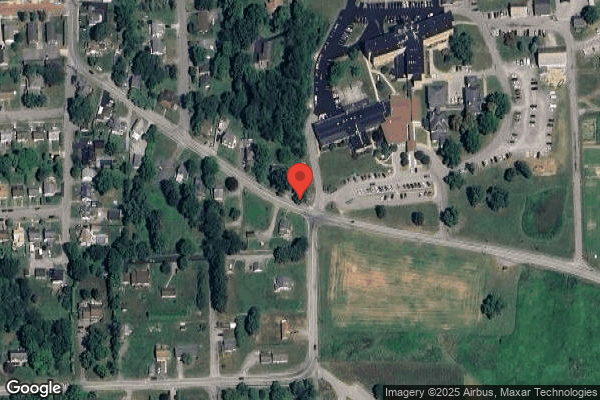

107 SUNNYVIEW CIRCLE, BUTLER, PA 16001 (724) 282-1800
For profit - Limited Liability company 220 Beds JONATHAN BLEIER Data: November 2025 1 Immediate Jeopardy citation
Trust Grade
0/100
#636 of 653 in PA
Last Inspection: July 2025

Inspected within the last 6 months. Data reflects current conditions.

Overview

Sunnyview Nursing and Rehabilitation Center currently holds a Trust Grade of F, indicating significant concerns about the quality of care, which is poor and below average. In Pennsylvania, they rank #636 out of 653 facilities, placing them in the bottom half and at #11 out of 11 in Butler County, suggesting there are no better local options available. The facility is worsening, with issues increasing from 26 in 2024 to 42 in 2025, reflecting a troubling trend. Staffing is a relative strength with a rating of 4 out of 5 stars and a turnover rate of 42%, which is better than the state average, meaning that staff are relatively stable and familiar with the residents. However, there are serious issues, including a critical finding where the facility failed to provide adequate supervision, leading to residents eloping, and serious allegations of abuse related to insulin administration that resulted in harm to multiple residents. Overall, while there are some strengths in staffing, the serious deficiencies and poor trust grade raise significant red flags for families considering this facility.

Trust Score
F
0/100
In Pennsylvania
#636/653
Bottom 3%
Safety Record
High Risk
Review needed
Inspections
Getting Worse
26 → 42 violations
Staff Stability
○ Average
42% turnover. Near Pennsylvania's 48% average. Typical for the industry.
Penalties
○ Average
$17,570 in fines. Higher than 70% of Pennsylvania facilities. Some compliance issues.
Skilled Nurses
⚠ Watch
Each resident gets only 27 minutes of Registered Nurse (RN) attention daily — below average for Pennsylvania. Fewer RN minutes means fewer trained eyes watching for problems.
Violations
⚠ Watch
87 deficiencies on record. Higher than average. Multiple issues found across inspections.
★☆☆☆☆
1.0
Overall Rating
★★★★☆
4.0
Staff Levels
★★★★☆
4.0
Care Quality
★☆☆☆☆
1.0
Inspection Score
Stable
2024: 26 issues
2025: 42 issues

The Good

  • 4-Star Staffing Rating · Above-average nurse staffing levels
  • 4-Star Quality Measures · Strong clinical quality outcomes
  • Full Sprinkler Coverage · Fire safety systems throughout facility
  • No fines on record
  • Staff turnover below average (42%)

    6 points below Pennsylvania average of 48%

Facility shows strength in staffing levels, quality measures, fire safety.

The Bad

1-Star Overall Rating

Below Pennsylvania average (3.0)

Significant quality concerns identified by CMS

Staff Turnover: 42%

Near Pennsylvania avg (46%)

Typical for the industry

Federal Fines: $17,570

Below median ($33,413)

Minor penalties assessed

Chain: JONATHAN BLEIER

Part of a multi-facility chain

Ask about local staffing decisions and management

The Ugly 87 deficiencies on record

1 life-threatening 3 actual harm
Aug 2025 1 deficiency
CONCERN (D) 📢 Someone Reported This

A family member, employee, or ombudsman was alarmed enough to file a formal complaint

Potential for Harm - no one hurt, but risky conditions existed

Abuse Prevention Policies (Tag F0607)

Could have caused harm · This affected 1 resident

Based on review of facility documents, facility policy, and staff interviews, it was determined that the facility failed to implement written policies and procedures to ensure an employee received abu...

Read full inspector narrative →
Based on review of facility documents, facility policy, and staff interviews, it was determined that the facility failed to implement written policies and procedures to ensure an employee received abuse training for one of three employees (Nurse Aide (NA) Employee E1).Findings include: Review of facility policy Abuse Policy - Prevention and Management dated 4/1/25, indicated Abuse, Neglect and Misappropriation/Exploitation of Resident Funds and Property education is completed upon hire and at least annually for all employees. Review of facility training documentation for NA Employee E1 failed to include abuse, neglect, and misappropriation training that had been completed upon hire 9/9/24. During an interview on 8/13/25, at 12:11 p.m. the Director of Nursing (DON) stated, NA Employee E1 has been re-hired at least three times, we think 9/9/24 is their most recent re-hire date. We are unable to locate documentation to indicate they received abuse training at that time. During an interview on 8/13/25, at 12:11 p.m. the DON confirmed that the facility failed to implement written policies and procedures to ensure an employee received abuse training for one of three employees (Nurse Aide (NA) Employee E1). 28 Pa. Code: 201.14(a) Responsibility of licensee.28 Pa. Code: 201.18(b)(1)(e)(1) Management.28 Pa. Code: 201.20(b) Staff development.
Jul 2025 36 deficiencies 1 IJ
CRITICAL (J) 📢 Someone Reported This

A family member, employee, or ombudsman was alarmed enough to file a formal complaint

Immediate Jeopardy (IJ) - the most serious Medicare violation

Accident Prevention (Tag F0689)

Someone could have died · This affected 1 resident

**NOTE- TERMS IN BRACKETS HAVE BEEN EDITED TO PROTECT CONFIDENTIALITY** Based on review of facility policy and documents, clinical records, and staff interviews, it was determined that the facility fa...

Read full inspector narrative →
**NOTE- TERMS IN BRACKETS HAVE BEEN EDITED TO PROTECT CONFIDENTIALITY** Based on review of facility policy and documents, clinical records, and staff interviews, it was determined that the facility failed to make certain each resident received adequate supervision, which resulted in an elopement for two of 36 residents (Resident R12 and R37). This failure created an immediate jeopardy situation.Findings include: Review of the facility Elopement Prevention policy last revised 3/26/25, and reviewed 5/25, indicated it is the facility's policy to strive to prevent resident elopement. The facility strives to provide an environment that is free from hazards over which the facility has control and provide supervision and assistance to each resident to prevent avoidable accidents. The facility strives to reduce the risks for elopement while optimizing residents independence to safely attain or maintain their highest practicable physical, mental, and psychosocial well-being. The facility will identify residents at risk for unsafe wandering and exit seeking behavior and develop individualized prevention and management interventions based on exit seeking/elopement evaluation. Elopement represents a risk to the resident's health and safety and places the resident at risk of heat or cold exposure, dehydration, and/or other medical complications, drowning, or being struck by a motor vehicle. The facility will define mechanisms and procedures for assessing or identifying, monitoring, and managing residents at risk for elopement to minimize the risk of the resident leaving a safe area without the staff awareness and/or supervision. Elopement is defined when a resident leaves the physical structure of the facility unattended and without staff knowledge and when a resident leaves the premises or a safe area without the facility's knowledge and supervision. Risk factors must be assessed and interventions implemented. Maintain door alarms and wander control systems in proper working order according to the manufacturer's recommendation. Monitor residents whereabouts of the at-risk residents during rounds. Check, through observation that the resident is wearing an electronic monitoring device as indicated. Electronic monitoring devices will be checked for placement each shift and documented on the TAR (Treatment Administration Record) or MAR (Medication Administration Record) by a licensed nurse and/or by the nursing assistant in their documentation. Electronic monitoring devices will be checked daily for function and documented on the TAR or MAR. If the electronic monitoring device is not found on resident or not working, staff will notify the charge nurse/supervisor to obtain a replacement. If a replacement is not readily available, other supervised monitoring processes will be implemented until a replacement is available. Review of the facility's Elopement-Management policy last reviewed 4/1/25, indicated the interdisciplinary team will reevaluate cognitively impaired residents who have attempted, unsuccessfully or successfully, to leave the facility without staff knowledge. With the assistance of the resident and/or resident representative, individualized intervention will be developed and initiated to manage the elopement behavior. Review and revise individualized interventions that may prevent further elopement attempts. Review of Resident R12's admission record indicated he was admitted on [DATE], with diagnoses of dementia (loss of cognitive functioning- thinking remembering, and reasoning, to such an extent that it interferes with a person's daily life and activities), anxiety, and age-cognitive decline. Review of Resident R12's active physician order dated 1/25/25, revealed the resident required an assist of one person and a front wheeled walker. Review of Resident R12's Exit Seeking/Elopement Evaluation/Wandering assessment dated [DATE], revealed the resident was not an elopement risk. The first question asked if the resident was ambulatory or able to self-propel in a wheelchair and if no, may stop evaluation. It was documented the resident was not ambulatory and the resident's elopement assessment was not completed. Review of Resident R12's Exit Seeking/Elopement Evaluation/Wandering assessment dated [DATE], revealed the resident was an elopement risk. It was revealed the resident had exit-seeking behaviors and expressed a desire to leave. The summary and plan stated to utilize wander detection system and care plan for risk of elopement. Review of Resident R12's care plan dated 2/12/25, revealed the resident has a memory problem and tend to wander which may get me into situations where I am lost or could be injured. Interventions included I have problems with my memory. I am always asking for someone to help me and wander aimlessly. Please remind me to not go on elevator or leave the unit unless supervised by staff/family. I now wear a wander guard bracelet to keep me safe. Please make sure it is in working order. If not, please have it replaced immediately. If I do get off the unit unsupervised, please make sure the staff and family are aware. Review of Resident R12's MDS (Minimum Data Set a periodic assessment of care needs) dated 4/23/25, indicated the diagnoses were current. Section C-Cognitive Patterns revealed the resident BIMS (Brief Interview for Mental Status) was 4, severe cognitive impairment. Review of Resident R12's clinical record on 5/7/25, 5/8/25, 5/9/25, 5/12/25, and 5/27/25, revealed Resident R12 displayed exit-seeking behaviors. The facility failed to update Resident R12's care plan. Resident R12's care plan was not revised until 5/30/25, for the resident chewing off wander guard. No new interventions were added. Review of Resident R12's May 2025 TAR revealed on 5/28/25, and 5/29/25, Resident R12's electronic monitoring device was not checked on night shift. It was documented to see nurses note. Review of Resident R12's progress note dated 5/28/25, revealed wander guard not on person. Review of Resident R12's progress note dated 5/29/25, revealed Resident removed device. Review of Resident R12's clinical record revealed the resident had exit-seeking behaviors on 5/30/25. Review of Resident R12's care plan dated 5/30/25, revealed Resident R12 was an elopement risk and had been witnessed attempting to chew off band. No new interventions were implemented to prevent the resident from eloping. Review of Resident R12's progress note dated 6/1/25, at 10:27 a.m. entered by Licensed Practical Nurse, Employee E12 stated Resident found by staff in basement trying to exit outside. Resident brought back to unit and 15-minute checks started. No wander guard on. Review of Resident R12's progress note dated 6/1/25, at 10:37 a.m. entered by Registered Nurse (RN), Employee E5 stated this RN found Resident R12 in the basement. Resident R12 was wandering around. When RN, Employee E5 questioned Resident R12, Resident R12 stated I'm stretching my legs I need to walk around. When Resident R12 was asked what unit they resided on, Resident R12 replied one, and would not tell this RN what unit they were from nor would the resident tell this RN their name. Resident R12 was escorted to the elevator and taken to the second floor where staff indicated the resident was from the third floor. Review of Resident R12's progress note dated 6/1/25, at 11:15 a.m. entered by LPN, Employee E12 revealed the wander guard was placed underneath the resident's wheelchair, due to the resident continuing to remove from self. Review of Resident R12's progress note dated 6/1/25, at 3:30 p.m. revealed the resident's daughter was notified of the resident's elopement and the resident will be moving to another unit for safety reasons and this unit being more secure. Review of information submitted to the Department of Health on 6/2/25, stated on 6/1/25, at approximately 10:00 a.m. Resident R12 was found in the basement by staff ambulating with the use of their wheelchair. The resident was last seen by staff 10-15 minutes prior. A room change was completed, and the resident was moved to the secure Dementia unit. The resident stated to staff I wanted to go outside, and I will do it again. Review of Resident R12's investigation on 7/21/25, revealed Resident R12 eloped on 6/1/25, and was found in the basement trying to exit out of a door by RN, Employee E5. Resident R12 stated I wanted to go outside, and I will do it again. It was indicated the Resident did not have their wander guard on when found. A review of the facility's documentation for checking the operation of door monitors and patient wandering systems failed to reveal the Resident Monitoring System was checked on 5/30/25. It was written I was off 5/30/25. Number 2 elevator down was documented under the remarks section. A further review revealed a work order was entered on 5/30/25, at 8:17 a.m. by Maintenance Director, Employee E17 for the #2 elevator wander control. The room/area was listed as the basement. The priority was assigned medium. Service for elevator called was documented in the comment section. Review of RN, Employee E5's witness statement dated 6/1/25, revealed around 9:30 to 9:45 a.m. RN, Employee E5 went downstairs to look for supplies. Resident R12 initially was seen coming from the intermediate side towards the skilled side of the building. RN, Employee E5 was unfamiliar with Resident R12, so I didn't think much of it then. Shortly after RN Employee E5 went back towards the skilled side and went into the cage for supplies, while in there, RN, Employee E5 heard the door open and close. RN, Employee E5 heard feet shuffling. Once RN, Employee E5 came out from the cage, Resident R12 was observed looking for something and was asked what they were doing. Resident R12 stated they were exercising and needed to walk around, then Resident R12 went over to the exit door just to the left of the dock door and attempted to push on the door, which didn't open. While walking back to the elevator Resident R12 looked at RN, Employee E5's badge and said, I'm not sure I want to tell you my name. When RN, Employee E5 and Resident R12 got on the elevator, the electronic monitoring system didn't alarm at that time, and went to the 2nd floor. The door opened, still no alarm. RN, Unit Manager, Employee E18 was at the nursing station and thought the resident was a resident from the third floor who continues to take their monitor off. RN, Unit Manager, Employee E18, RN, Employee E5, and Resident R12 went to the third floor, and once there, again the alarm did not go off. LPN, Employee E12 recognized Resident R12 and was notified the resident was found in the basement. Review LPN, Employee E5's witness statement dated 6/2/25, revealed around 10:00 a.m. on 6/1/25, they were made aware Resident R12 was found in the basement trying to exit a door outside. No wander guard was on the resident due to her removing days prior. Resident was last seen in room during breakfast and medication pass around 10 minutes prior to staff bringing the resident back to the unit. Resident R12's wander guard was placed under their wheelchair, due to resident stating If you put that thing on me I will throw it in the garbage. Review of Nurse Aide (NA), Employee E15's witness statement dated 6/3/25, stated Resident R12 was last seen around at 9:15 a.m. During an interview on 7/21/25, at 10:20 a.m. NA, Employee E21 was asked how does the facility prevent residents from eloping and replied, We have wander guard, ones who wander the alarm goes off, elevator locks, and we have to put a code in. When asked if the facility has enough staff to supervise residents, NA, Employee E21 replied We have our days, some days residents can have their moments, act up, on those days we can always use more people. During an interview on 7/21/25, at 10:24 a.m. LPN, Employee E7 was asked how to prevent resident's from eloping and response They have wander guards. It was indicated they are checked daily. LPN, Employee E7 indicated they were not working when Resident R12 eloped on 6/1/25, however they were reeducated to make sure the resident's wander guards work. LPN, Employee E7 stated Resident R12 has one, I am not sure what happened, I know they turned up the sensitivity. During an interview on 7/21/25, at 1:50 p.m. Maintenance Director, Employee E17 stated there are wander guard monitoring systems in each elevator and they are checked Monday through Friday. If Maintenance Director, Employee E17 is not working, then staff would be assigned to complete the checks. In order for the wander guard system to pass a test, it must alarm, and the elevator car cannot travel. Staff must enter in a code. Maintenance Director, Employee E17 confirmed elevator #2 wander guard system was not working on 5/30/25. During an interview on 7/22/25, at 9:22 a.m. RN, Employee E5 stated if residents are identified as an elopement risk, then a wander guard bracelet is applied to the residents. The bracelets are supposed to be checked every shift that they are on, the night shift checks the function. RN, Employee E5 stated I recall all elevators were functioning when asked if any elevators were out of service on 6/1/25, the day Resident R12 was found in the basement. RN, Employee E5 stated I originally was coming down looking for supplies and walked passed Resident R12 in the basement. I didn't think a whole lot of it. Then as I was near the maintenance part of the basement, I heard feet shuffling, the resident came pass the maintenance door, trying to push it open and get out. RN, Employee E5 seen Resident R12 was looking for a way out and approached the resident. RN, Employee E5 then proceeded to take Resident R12 back onto the elevator to find out where the resident belonged. The nurse on the second floor told RN, Employee E5 maybe Resident R12 was the resident who cuts their wander guard off. Once on the third floor, LPN, Employee E12 identified the resident. It was indicated the elevator alarm did not sound on the second or third floor. RN, Employee E5 confirmed they are the nurse educator and stated, informal education was done, I don't remember doing a whole formal education. Hey, make sure you keep track of people. RN Employee E5 confirmed that the facility failed to reeducate staff on elopement. During an interview on 7/22/25, at 9:55 a.m. RN, Employee E18 stated Resident R12 had a wander guard on their chair when asked how the facility prevents residents from eloping. RN, Employee E18 stated the wander guard system did not go off. During an interview on 7/22/25, at 10:49 a.m. LPN, Employee E12 stated Resident R12 continuously tries to elope. LPN, Employee E12 stated when Resident R12 eloped on 6/1/25, the resident did not have a wander guard on. LPN, Employee E12 stated I do not recall any elevators out of service. LPN, Employee E12 stated what I believe Resident R12 took the elevator that is next to the dining room area. LPN, Employee E12 saw Resident R12 enter the dining room. The elevator must open, and Resident R12 got on. LPN, Employee E12 stated we didn't even know Resident R12 made it onto the elevator, I did not realize the wander guard was not on the resident, I assumed the resident was in the dining room. Review of Resident R37 admission record indicated they were admitted on [DATE] and readmitted on [DATE], with diagnosis of paranoid schizophrenia (mental health condition that affects how people think, feel and behave. It may result in a mix of hallucinations, delusions, and disorganized thinking and behavior) and muscle weakness. Review of Resident R37 physician orders indicated: Place electronic monitoring device dated 7/1/25. Review of Resident R37 elopement assessment dated [DATE], indicated resident was a risk for elopement, and there was a history of wandering, and the wandering placed the resident at significant risk of getting to a potentially dangerous place. Resident R37 MDS dated [DATE], indicated the diagnosis were current. Section C cognitive patterns revealed the resident BIMS was an 8, which indicated moderately impaired. Review of MAR/TAR indicated: Check electronic monitoring device functioning every night shift. Every night shift -Start Date-07/14/2025. Review of progress note dated 7/20/25, indicated Resident R37 made 2 attempts to elope this afternoon. Staff spoke with him and was able to get him off elevator and back to his room. Resident delusional and insist he can't stay here anymore and does not have a room. Alarming device is on as ordered. Review of Resident R37's progress notes dated 7/20/25, indicated: was on the unit when a staff ran up to this writer and stated that she saw resident walking down the street with his foley catheter in hand. This writer and other staff went to where resident was seen when he was noted to be laying down on the side of the road with other passengers after they state they witnessed resident fall and hit his head. resident was noted to have a large hematoma to his forehead and several abrasions to his face and hands. Resident was assisted to a wheelchair and 911 was called and resident was taken to the hospital. Review of witness statements indicated: Nurse Aide trainee Employee E28 stated I was on the porch visiting with family member when Resident I knew had begun walking outside along with three other people. I first thought it could have been family that he was with, so I gave it a moment until they started talking about how they didn't know him. I then went inside and told the front desk, the lady at the desk ran outside to get him and I slowly followed. She then turned around and said he fell on his face. At that point she went inside to grab help and a wheelchair. I ran down to Resident R37 where two civilians driving by had stopped as I arrived. We kept Resident R37 still and a civilian caller had called 911 for medical help. Soon after a family member, and a nurse and two staff members ran down. Review of witness statement indicated: LPN Employee E29 Stated Resident R37 was seen in room at 19:37 p.m. during medication pass. Before medication pass was complete Resident R86 stated that there was a commotion downstairs concerning a black gentleman from nursing unit shortly after this LPN heard overhead call at approximately 20:25 pm after speaking with caller on the phone, this LPN sought out RN supervisors and asked about incident. RN said Resident R37 found outside and sent to hospital. Resident R86 stated to LPN Employee E29 mentioned at 22:00 p.m. he saw Resident R37 get into elevator and leave Resident R86 stated no one put code in for elevator to move, after speaking to other staff, all state alarm for elevator did not go off. Review of witness statement indicated: Front desk employee E30 stated: A gentleman came downstairs; no wander guard went off. I did not recognize him, and he walked out with a group of people. A girl from the porch came in and said a resident was out and I ran out to try to get him. As soon as he heard me yell, he sped up. I was not able to keep up with him. Review of witness statement indicated: Resident R86 stated: I saw a white gentleman get in the elevator, with Resident R37. Resident R86 saw gentleman push the elevator button. The door closed and Resident R86 Didn't think anything of it. During an interview on 7/22/25, at 10:37 a.m. the Director of Nursing and Assistant Director of Nursing (ADON), Employee E10 confirmed the facility's elopement risk assessment tool failed to include a comprehensive scoring system. ADON, Employee E10 stated if you feel a resident is at risk, then you can proceed to implement interventions such as an electronic monitoring device or locked unit. The DON confirmed the facility does not have a locked unit. The DON stated, we don't trust it either, we are looking at everyone's charting every morning. On 7/22/25, at 11:57 a.m. the NHA and DON were notified that Immediate Jeopardy was called due to the elopement of Resident R12 on 6/1/25, and Resident R37 on 7/20/25, and facility staff were provided an Immediate Jeopardy template, and a corrective action plan was requested. On 7/22/25, at 2:30 p.m. the NHA confirmed the facility's plan of correction failed to reveal a designee and timeframe for when the elopement tool, resident-specific care plans will be completed, and that staff will be reeducated after the time the IJ was called. On 7/22/25, at 4:06 p.m. the NHA provided the facility's fourth plan of correction. On 7/22/25, at 5:21 p.m. an immediate action plan was received and accepted which included the following interventions: -The Facility is obligated to provide adequate supervision which does not rely on the Wander guard System and is based on the individual resident's assessed needs and the risks identified in the Exit Seeking Elopement Evaluation/ Wandering Tool, which does not replace an electronic monitoring device. (Wander guard System) -Will review and revise the elopement evaluation/wandering assessment to include comprehensive scoring system. To be completed by the Director of Nursing/designee within 24 hours, 7/23/25. -Current residents in-house will be reassessed for exit seeking / elopement by the Director of Nursing/designee within 24 hours, 7/23/25. -Residents will be assessed for exit seeking/elopement by the admitting RN upon admission. -Elopement binder will be revised upon completion of all assessments by the Director of Nursing/designee within 24 hours, 7/23/25. -Per results of assessments, care plans will be updated and implemented with resident-specific interventions by Director of Nursing/designee as warranted. -Elopement policies will be reviewed and revised as necessary by Nursing Home Administrator/designee within 24 hours, 7/23/25. -Wander guard system will continue to be audited by Environmental Director/designee daily. -Education of all facility staff will be conducted by Director of Nursing/designee on Elopement Risk and Supervision of residents within 24 hours, 7/23/25. -QA/QAPI was conducted 7/21 and 7/22/2025 related to plan of correction for F689. Meetings will be conducted 5 days/week until 8/5, 2x/week until 9/2, and monthly thereafter. The Elopement Risk assessment was revised on 7/22/25, to include a comprehensive scoring system. Residents with a risk greater than 12 are considered an elopement risk. Residents identified as elopement risk will have care plan updated to include individualized care interventions. On 7/23/25, 215/215 Residents were reassessed for an elopement risk, using the new Elopement. 27/215 residents were identified as an elopement risk. 4 residents were newly admitted to the facility since 7/22/25. 0/4 residents were identified as an elopement risk. Review of elopement binder on 7/23/25, included 27/27 identified elopement risks. 27/27 Residents that were identified as an elopement risk had care plans that were updated and implemented with resident-specific care interventions on 7/23/25. On 7/22/25, the Nursing Home Administrator reviewed the facility's Elopement policies. No changes were made. Review of facility documents revealed Wander guard system transmission box and all wander guards present on residents were audited on 7/23/25. Daily checks will be completed by Environmental Director Monday through Friday and the designees on the weekends. 234/255 educated Both in-person and phone. During in-person interviews on 7/23/25, from 10:36 a.m. to 11:17 a.m. 49 of 49 staff members verified education was completed on elopement risks and supervision. During phone interviews 8/8 staff members confirmed they were educated via phone. Facility conducted a QAPI meeting on 7/22/25. Meetings will be conducted 5 days/week until 8/5/25, 2x/week until 9/2/25, and monthly thereafter. Verification of the facility's Corrective Action Plan revealed all elements of plan were met. The Immediate Jeopardy was lifted on 7/23/25, at 1:45 p.m. During an interview on 7/25/25, at 3:45 p.m., the NHA and DON confirmed that the facility failed to make certain each resident received adequate supervision, which resulted in an elopement for two of 36 residents (Resident R12 and R37), resulting in Immediate Jeopardy. 28 Pa. Code§ 201.14(a) Responsibility of Licensee. 28 Pa. Code § 211.10(d) Resident care policies. 28 Pa. Code § 211.12(d)(5) Nursing Services.
CONCERN (D)

Potential for Harm - no one hurt, but risky conditions existed

Deficiency F0558 (Tag F0558)

Could have caused harm · This affected 1 resident

**NOTE- TERMS IN BRACKETS HAVE BEEN EDITED TO PROTECT CONFIDENTIALITY** Based on review of facility policy, observations, and staff interview, it was determined that the facility failed to accommodate...

Read full inspector narrative →
**NOTE- TERMS IN BRACKETS HAVE BEEN EDITED TO PROTECT CONFIDENTIALITY** Based on review of facility policy, observations, and staff interview, it was determined that the facility failed to accommodate the call bell needs for one of five residents (Resident R110).Findings include: Review of facility policy Call Light Resident Response/Monitoring/Reporting dated 4/1/25, indicated the call system must be accessible to residents while in their bed or other sleeping accommodations within the resident's room. Review of the clinical record indicated Resident R110 was admitted to the facility on [DATE]. Review of Resident R110's Minimum Data Set (MDS - a periodic assessment of care needs) dated 6/1/25, indicated diagnoses of anemia (too little iron in the blood), muscle weakness, and need for assistance with personal care. During an observation on 7/21/25, at 10:22 a.m. Resident R110's call bell was observed hanging from the wall unit at the head of the bed, out of the resident's reach. During an interview on 7/21/25, at 10:26 a.m. Registered Nurse Employee E1 confirmed Resident R110's call bell was not accessible and unavailable for use to the resident and that the facility failed to accommodate Resident R110's call bell needs. 28 Pa. Code: 201.14(a) Responsibility of licensee.28 Pa. Code: 211.10(d) Resident care policies.28 Pa. Code: 211.12(d)(1)(5) Nursing services.
CONCERN (D) 📢 Someone Reported This

A family member, employee, or ombudsman was alarmed enough to file a formal complaint

Potential for Harm - no one hurt, but risky conditions existed

Deficiency F0559 (Tag F0559)

Could have caused harm · This affected 1 resident

**NOTE- TERMS IN BRACKETS HAVE BEEN EDITED TO PROTECT CONFIDENTIALITY** Based on review of clinical record and staff interview it was determined that the facility failed to ensure that in preparation ...

Read full inspector narrative →
**NOTE- TERMS IN BRACKETS HAVE BEEN EDITED TO PROTECT CONFIDENTIALITY** Based on review of clinical record and staff interview it was determined that the facility failed to ensure that in preparation for a room change each resident/responsible party received written notice, including the reason for the change before the resident room was changed for one of ten (Resident R153).Findings include: Federal regulatory guidance under 483.10( e)(6) notes that moving to a new room or changing roommates is challenging for residents. A resident's preferences should be taken into account when considering such changes. When a resident is being moved at the request of facility staff, the resident, family, and/or resident representative must receive an explanation in writing of why the move is required. The resident should be provided the opportunity to see the new location, meet the new roommate, and ask questions about the move. Review of Resident R153 was admitted to the facility on [DATE]. Review of Resident R153 clinical record MDS (minimum data set a periodic assessment of resident needs) dated 6/28/25, indicated diagnosis of schizophrenia (mental health condition that affects how people think, feel and behave. It may result in a mix of hallucinations, delusions, and disorganized thinking and behavior) , anxiety disorder (are a group of mental health conditions that cause fear, dread and other symptoms that are out of proportion to the situation) and seizure disorder (a sudden burst of electrical activity in the brain. It can cause changes in behavior, movements, feelings and levels of consciousness). Review of Resident R153 clinical record progress notes indicated: 7/9/25: Resident R153 and/or responsible party was notified of room change on 07/09/2025, 10:00 AM. 7/9/25: Resident R153 not adjusting well to room change. Resident keeps returning to previous room refusing to leave. Staff explained to resident that she was in a different room, but resident continued to refuse to leave. When staff attempted to assist resident into her w/c resident was yelling no, no, I'm not leaving. Social Worker, and Supervisor, notified. 7/9/25: Resident R153 yelling and calling roommate vulgar names. Staff assisted resident to a quiet area where she could calm down. Resident continued behavior. Social worker and Supervisor aware. 7/9/25: Resident R153 is demanding her old room be given back to her. Yelling and swearing at staff. Demanding they stop toileting Residents to go get her pop and cookies. Putting call light on incessantly. Attempts to redirect unsuccessful most times. Upset her roommate is swearing at her and calling her names like fat retard for one. 7/10/25: Reported to this nurse that resident was up in her chair all night d/t roommate being rude. Resident would not return to her room, she was sleeping in the dining room in her chair. Resident kept attempting to go back into her previous room that is now occupied. Resident was in another resident's bathroom refusing to leave because she wanted her room back. Staff assisted resident to Dogwood unit at approximately 11am. Medication given to nurse. Resident then proceeded to ride the elevator back down to Cardinal unit twice insisting she wanted her room back. Aide assisted resident upstairs each time. 7/10/25: Resident R153 went to roommates side of the room and took her glasses and attempted to hide them on her side of the room. NA told resident that it was inappropriate to steal things and to stay on her side of the room. 7/11/25: Resident R153 and/or responsible party was notified of room change on 07/11/2025, 11:00 AM. 7/11/25: On Friday afternoon, I spoke multiple times with the Resident R153 about her room changes. She had recently moved into a semi-private room and began using abuse language with the new roommate. She was subsequently moved to another semi-private room and was in this room when I spoke with her.She refused to stay in the current room because it smells (the room did not have a bad odor in my opinion). I asked her if we clean the room and remove the odor, then would you live there? After a long pause, she said that couldn't live there because she doesn't like the roommate. When I asked what the resident specifically disliked about the roommate, she refused to answer the question.I explained to her that Medicaid only pays for a semi-private room and that there is no medical reason for her to have a private room. I emphasized that a single room is not an option.She then said that she would agree to move closer to the nurse's station. I explained that there were no open rooms, but once one opens, that we would move her there. I asked that, in the meantime, she seek a peaceful relationship with her new roommate. 7/11/25: Resident R153 has been moved from her private room due to the need for another resident to have a private room for safety reasons. Resident R153 is very upset and refused to move. We got her into another room on Cardinal but she then parked herself in her old room and refused to leave. We eventually got her moved upstairs to Dogwood and she was stealing from her roommate. Final move to another room per roommate's daughter's request. Resident R153 is not happy and wishes to be back on Cardinal where she knows residents and staff. States she is willing to share a room if she can be back on Cardinal where she has been since 2022. As of now, there are no beds available except where she was moved the first time and verbally abused her roommate. During an interview on 7/24/25, at 12:05 p.m. Social Worker Employee E23 Indicated that resident R153 was in a private room due to not being able to get along with other roommates/behavioral concerns. Social Worker Employee E23 told Resident R153 that she had to move and did not ask/give options to the Resident or her responsible party prior to move. Social Worker Employee E23 indicated that the reason for the room change was for another resident who had behaviors with roommates to have the room. Social Worker Employee E23 During an interview on 7/24/25, at 12:07 p.m. Social Worker Employee E23 Confirmed that the facility failed to ensure that in preparation for a room change each resident/responsible party received written notice, including the reason for the change before the resident room was changed for one of ten ( Resident R153). 28 Pa. Code 201.29(a)( c.3)(1) resident rights
CONCERN (D) 📢 Someone Reported This

A family member, employee, or ombudsman was alarmed enough to file a formal complaint

Potential for Harm - no one hurt, but risky conditions existed

Deficiency F0560 (Tag F0560)

Could have caused harm · This affected 1 resident

**NOTE- TERMS IN BRACKETS HAVE BEEN EDITED TO PROTECT CONFIDENTIALITY** Based on review of clinical records and staff interview it was determined that the facility to ensure that a room change was not...

Read full inspector narrative →
**NOTE- TERMS IN BRACKETS HAVE BEEN EDITED TO PROTECT CONFIDENTIALITY** Based on review of clinical records and staff interview it was determined that the facility to ensure that a room change was not completed for staff convenience for one of ten residents (Resident R153).Findings include: Review of Resident R153 was admitted to the facility on [DATE]. Review of Resident R153 clinical record MDS (minimum data set a periodic assessment of resident needs) dated 6/28/25, indicated diagnosis of schizophrenia (mental health condition that affects how people think, feel and behave. It may result in a mix of hallucinations, delusions, and disorganized thinking and behavior), anxiety disorder (are a group of mental health conditions that cause fear, dread and other symptoms that are out of proportion to the situation) and seizure disorder (a sudden burst of electrical activity in the brain. It can cause changes in behavior, movements, feelings and levels of consciousness). Review of Resident R153 clinical record - Census indicated she had been in a private room from 6/21/24 till 7/10/25. During an interview on 7/24/25, at 12: 05 p.m. Social Worker Employee E23 indicated that Resident R153 was moved to allow for another resident had a private room due to behavioral reasons. SW Employee E23 also indicated that they were aware that resident R153 was in a private room due to the same reasons, but they were under the impression that since Resident R153 only needed the room for behavioral reasons and was not able to pay for the private room it was ok to move her. During an interview on 7/24/25, at 12:10 p.m. SW Employee E23 confirmed that Resident R153 was moved so another resident could take her room due to the same type of concerns Resident R153 experienced, and SW Employee E23 confirmed that this was done to facility needs versus Resident needs for Resident R153 and the facility failed to ensure that a room change was not completed for staff convenience for one of ten residents (Resident R153). 28 Pa. Code 201.29(a)( c.3)(1) resident rights
CONCERN (D)

Potential for Harm - no one hurt, but risky conditions existed

Grievances (Tag F0585)

Could have caused harm · This affected 1 resident

**NOTE- TERMS IN BRACKETS HAVE BEEN EDITED TO PROTECT CONFIDENTIALITY** Based on review of facility documentation, clinical records and staff interviews it was determined that the facility failed to f...

Read full inspector narrative →
**NOTE- TERMS IN BRACKETS HAVE BEEN EDITED TO PROTECT CONFIDENTIALITY** Based on review of facility documentation, clinical records and staff interviews it was determined that the facility failed to follow up on a concern/grievance for a resident (Resident R106).Findings include: Federal Regulation 483.10(i)(1) The resident has the right to voice grievances to the facility or other agency or entity that hears grievances without discrimination or reprisal and without fear of discrimination or reprisal. Such grievances include those with respect to care and treatment which has been furnished as well as that which has not been furnished, the behavior of staff and of other residents, and other concerns regarding their LTC facility stay. Review of Resident R106 was admitted on [DATE]. Review of Resident R106 MDS dated [DATE], anemia, and need for personal assistance. Review of the clinical record progress notes dated 7/4/25, indicated that Resident R106 family member requested for Resident R106 to receive assistance with eating due to recent weight loss. Review of Resident R106 clinical record failed to include documentation for response to this concern. During an interview on 7/25/25, Nursing Home Administrator confirmed that the facility failed to address concern for Resident R106. 28 Pa. Code 201.29(a) resident rights
CONCERN (D)

Potential for Harm - no one hurt, but risky conditions existed

Free from Abuse/Neglect (Tag F0600)

Could have caused harm · This affected 1 resident

**NOTE- TERMS IN BRACKETS HAVE BEEN EDITED TO PROTECT CONFIDENTIALITY** Based on review of facility policies, clinical records, and staff and resident interviews it was determined was determined that ...

Read full inspector narrative →
**NOTE- TERMS IN BRACKETS HAVE BEEN EDITED TO PROTECT CONFIDENTIALITY** Based on review of facility policies, clinical records, and staff and resident interviews it was determined was determined that the facility failed to protect resident from neglect for one of three residents (Residents R54).Findings include: Review of the facility Abuse Policy-Prevention and Management last reviewed 4/1/25, stated it is the facility prohibits the mistreatment, neglect, and abuse of residents. Neglect is the failure of the facility, it's employees or service providers to provide goods and services that a resident requires but the facility fails to provide them to the resident. Review of the facility policy Resident Transfer Protocol last reviewed 3/19/25, stated appropriate transfer techniques shall be used according to each resident's strength, stamina, and ability to assist with the residents. Necessity for the amount and type of assistance shall be assessed upon admission and on an ongoing basis. Review of Residents R54's admission record indicated the resident was admitted on [DATE], and readmitted [DATE]. Review of Residents R54's care plan dated 11/11/22, revised 10/28/24, revealed the resident had an activity of daily living (ADL-the basic self-care tasks essential for independent living, including bathing, dressing, transferring, and toileting) self -care deficit due left below the knee amputation. It was revealed Resident R54 required assistance from staff for toilet use. Review of Residents R54's Minimum Data Set (MDS - a periodic assessment of care needs) dated 4/22/25, revealed diagnoses of dementia (loss of cognitive functioning- thinking remembering, and reasoning, to such an extent that it interferes with a person's daily life and activities), acquired absence of left leg below the knee, and anxiety. Review of Resident R54's clinical record revealed Nurse Aide (NA), Employee E27 documented the resident was incontinent at 10:24 a.m. on 7/24/25. Review of Resident R54's clinical record revealed NA, Employee E27 documented the resident was provided assistance with toileting hygiene at 10:25 a.m. on 7/24/25. During an observation on 7/24/25, at 11:31 a.m. Resident R54 was observed lying in bed with a soiled gown saturated in urine. The resident's bed sheet was soiled with brown and yellow discoloration. A noticeable odor of urine was present. Review of the facility's assignment sheet on 7/24/25, at 11:34 a.m. revealed NA, Employee E27 was assigned to Resident R54. During an interview on 7/24/25, at 11:38 a.m. NA, Employee E54 confirmed Resident R54 was included in their assignment. NA, Employee E27 confirmed Resident R54 was saturated in urine and the resident's sheets needed to be changed. NA, Employee E27 confirmed they did not assist Resident R54 with toileting. During an interview on 7/24/25, at 11:47 a.m. information was disseminated to the Nursing Home Administrator that the facility failed to protect residents from neglect for one of three residents (Residents R54). 28 Pa. Code: 201.14(a) Responsibility of licensee. 28 Pa. Code: 201.18(e)(1) Management. 28 Pa. Code: 211.10(d) Resident care policies.
CONCERN (D)

Potential for Harm - no one hurt, but risky conditions existed

Deficiency F0628 (Tag F0628)

Could have caused harm · This affected 1 resident

**NOTE- TERMS IN BRACKETS HAVE BEEN EDITED TO PROTECT CONFIDENTIALITY** Based on review of facility policy, clinical record review, and staff interview, it was determined that the facility failed to m...

Read full inspector narrative →
**NOTE- TERMS IN BRACKETS HAVE BEEN EDITED TO PROTECT CONFIDENTIALITY** Based on review of facility policy, clinical record review, and staff interview, it was determined that the facility failed to make certain that the necessary resident information was communicated to the receiving health care provider for two of three residents sampled with facility-initiated transfers (Residents R113 and R164).Findings include:Review of the clinical record indicated Resident R113 was admitted to the facility on [DATE]. Review of Resident R113's Minimum Data Set (MDS - a periodic assessment of care needs) dated 6/11/25, indicated diagnoses of high blood pressure, hyperlipidemia (high levels of fat in the blood), and need for assistance with personal care. Review of the clinical record indicated Resident R113 was transferred to the hospital on 4/16/25, and returned to the facility on 4/18/25. Review of Resident R113's clinical record revealed no documented evidence that the facility had communicated specific information to the receiving health care provider for the residents transferred and expected to return, which included the resident's care plan goals, advanced directive information, specific instructions for ongoing care, resident representative information, and all information necessary to meet the resident's specific needs at the receiving facility. Review of the clinical record indicated Resident R164 was admitted to the facility on [DATE]. Review of Resident R164's MDS dated [DATE], indicated diagnoses of high blood pressure, hyperlipidemia, and muscle weakness. Review of the clinical record indicated Resident R164 was transferred to the hospital on 2/28/25, and returned to the facility on 2/28/25. Review of Resident R164's clinical record revealed no documented evidence that the facility had communicated specific information to the receiving health care provider for the residents transferred and expected to return, which included the resident's care plan goals, advanced directive information, specific instructions for ongoing care, resident representative information, and all information necessary to meet the resident's specific needs at the receiving facility. During an interview on 7/25/25, at 12:22 p.m. the Director of Nursing confirmed that the facility failed to make certain that the necessary resident information was communicated to the receiving health care provider for two of three residents sampled with facility-initiated transfers (Residents R113 and R164). 28 Pa. Code: 201.29 (a)(c.3)(2) Resident rights.
CONCERN (D)

Potential for Harm - no one hurt, but risky conditions existed

Comprehensive Care Plan (Tag F0656)

Could have caused harm · This affected 1 resident

**NOTE- TERMS IN BRACKETS HAVE BEEN EDITED TO PROTECT CONFIDENTIALITY** Based on review of facility policy, observation, and staff interviews, it was determined that the facility failed to ensure the ...

Read full inspector narrative →
**NOTE- TERMS IN BRACKETS HAVE BEEN EDITED TO PROTECT CONFIDENTIALITY** Based on review of facility policy, observation, and staff interviews, it was determined that the facility failed to ensure the comprehensive care plan was implemented related to safety interventions for safe smoking for one of 11 residents (Resident R16).Findings include: Review of facility policy Care Planning Process and Care Conference dated 4/1/25, indicated the care plan is a working tool that provides a profile of the needs of the individual resident/patient; the resident/patient care plan will be available for use by staff caring for the resident. All resident/patient care and interventions must be carried out per the care plan. Review of the clinical record indicated Resident R16 was admitted to the facility on [DATE]. Review of Resident R16's Minimum Data Set (MDS - a periodic assessment of care needs) dated 6/4/25, indicated diagnoses of high blood pressure, hemiplegia (paralysis on one side of the body), and muscle weakness. Review of Resident R16's care plan dated 6/20/23, indicated Resident R16 will be able to go out with staff and visitors to smoke during stay at the facility. Interventions included Resident R16 will wear a smoking apron while smoking.Review of Resident R16's quarterly Smoking assessment dated [DATE], indicated Resident R16 required a smoking apron for safe smoking. During an observation on 7/24/25, at 1:06 p.m. Resident R16 was observed smoking in the designated smoking area without a smoking apron. Receptionist Employee E13 was supervising smoking during this observation. During an interview on 7/24/25, at 1:14 p.m. Receptionist Employee E13 stated, I've never been informed before that Resident R16 is supposed to wear a smoking apron. During this interview, Receptionist Employee E13 confirmed Resident R16 was not wearing a smoking apron as indicated during smoking. During an interview on 7/25/25, at 11:09 a.m. information was disseminated to the Director of Nursing that the facility failed to ensure the comprehensive care plan was implemented related to safety interventions for safe smoking for Resident R16. 28 Pa. Code 211.10(c)(d) Resident care policies.28 Pa. Code 211.12(d)(1)(3)(5) Nursing services.
CONCERN (D)

Potential for Harm - no one hurt, but risky conditions existed

ADL Care (Tag F0677)

Could have caused harm · This affected 1 resident

**NOTE- TERMS IN BRACKETS HAVE BEEN EDITED TO PROTECT CONFIDENTIALITY** Based on review of facility policy, clinical records, and staff interviews, it was determined that the facility failed to provid...

Read full inspector narrative →
**NOTE- TERMS IN BRACKETS HAVE BEEN EDITED TO PROTECT CONFIDENTIALITY** Based on review of facility policy, clinical records, and staff interviews, it was determined that the facility failed to provide a assistance with toileting for one out of four residents (Resident R54).Findings include: Review of the facility ADL Care, Toileting-Bowel and Bladder Incontinence Care last reviewed 4/1/25, stated for a resident with urinary incontinence, based on resident's comprehensive assessment, the facility will ensure that a resident who is incontinent of bladder receives appropriate treatment and services to prevent urinary tract infections and to restore continence and services to restore to the extent as possible. ADL documentation will be completed by the nurse aides and any refusals must be reported to the supervisor. Review of Residents R54's admission record indicated the resident was admitted on [DATE], and readmitted [DATE]. Review of Residents R54's care plan dated 11/11/22, revised 10/28/24, revealed the resident had an activity of daily living (ADL-the basic self-care tasks essential for independent living, including bathing, dressing, transferring, and toileting) self -care deficit due left below the knee amputation. It was revealed Resident R54 required assistance from staff for toilet use. Review of Residents R54's Minimum Data Set (MDS - a periodic assessment of care needs) dated 4/22/25, revealed diagnoses of dementia (loss of cognitive functioning- thinking remembering, and reasoning, to such an extent that it interferes with a person's daily life and activities), acquired absence of left leg below the knee, and anxiety. Review of Resident R54's clinical record revealed Nurse Aide (NA), Employee E27 documented the resident was incontinent at 10:24 a.m. on 7/24/25. Review of Resident R54's clinical record revealed NA, Employee E27 documented the resident was provided assistance with toileting hygiene at 10:25 a.m. on 7/24/25. During an observation on 7/24/25, at 11:31 a.m. Resident R54 was observed lying in bed with a soiled gown saturated in urine. The resident's bed sheet was soiled with brown and yellow discoloration. A noticeable odor of urine was present. Review of the facility's assignment sheet on 7/24/25, at 11:34 a.m. revealed NA, Employee E27 was assigned to Resident R54. During an interview on 7/24/25, at 11:38 a.m. NA, Employee E54 confirmed Resident R54 was included in their assignment. NA, Employee E27 confirmed Resident R54 was saturated in urine and the resident's sheets needed to be changed. NA, Employee E27 confirmed they did not assist Resident R54 with toileting. During an interview on 7/24/25, at 11:47 a.m. the Nursing Home Administrator confirmed the facility failed to provide a assistance with toileting for one out of four residents (Resident R54). 28 Pa. Code: 211.12(d)(1)(5) Nursing services. 28 Pa. Code: 201.14(a) Responsibility of licensee. 28 Pa. Code: 201.18(e)(2.1) Management.
CONCERN (D)

Potential for Harm - no one hurt, but risky conditions existed

Quality of Care (Tag F0684)

Could have caused harm · This affected 1 resident

**NOTE- TERMS IN BRACKETS HAVE BEEN EDITED TO PROTECT CONFIDENTIALITY** Based on review of facility policy, clinical record review, and staff interview, it was determined that the facility failed to n...

Read full inspector narrative →
**NOTE- TERMS IN BRACKETS HAVE BEEN EDITED TO PROTECT CONFIDENTIALITY** Based on review of facility policy, clinical record review, and staff interview, it was determined that the facility failed to notify the physician of medication refusal and increased Capillary Blood Glucose (CBG) levels per physician order and for two of three residents (Residents R153 and R203).Findings include: The Centers for Disease Control defines diabetes as: Diabetes Mellitus (DM) is a chronic (long-lasting) health condition that affects how your body turns food into energy. Most of the food you eat is broken down into sugar (also called glucose) and released into your bloodstream. When your blood sugar goes up, it signals your pancreas to release insulin. Insulin acts like a key to let the blood sugar into your body's cells for use as energy. If you have diabetes, your body either doesn't make enough insulin or can't use the insulin it makes as well as it should. When there isn't enough insulin or cells stop responding to insulin, too much blood sugar stays in your bloodstream. Over time, that can cause serious health problems, such as heart disease, vision loss, and kidney disease. Hypoglycemia is a condition that occurs when blood glucose is lower than normal, usually below 70 mg/dL (milligrams per deciliter). If left untreated, hypoglycemia may lead to weakness, confusion, unconsciousness, arrhythmias and even death. People with Diabetes Mellitus may be prescribed injectable insulin to assist in maintaining acceptable levels of CBG's. Hyperglycemia, or high blood glucose, occurs when there is too much sugar in the blood. This happens when your body has too little insulin. Hyperglycemia is blood glucose greater than 125 mg/dL while fasting (not eating for at least eight hours, or a blood glucose greater than 180 mg/dL one to two hours after eating. If you have hyperglycemia and it's untreated for long periods of time, you can damage your nerves, blood vessels, tissues and organs. Damage to blood vessels can increase your risk of heart attack and stroke, and nerve damage may also lead to eye damage, kidney damage and non-healing wounds. Review of facility policy Hyperglycemia Management - Diabetes Management dated 4/1/25, indicated the facility will manage the resident's diabetes to prevent hyperglycemia based on physicians orders and monitoring. The Charge Nurse/Unit Manager will contact the physician if blood glucose is greater than 350 (if not on sliding scale coverage) or other specific blood glucose parameters identified by the physician order or if signs and symptoms noted. Resident R153 was admitted to the facility on [DATE]. Review of Resident R153 clinical record MDS (minimum data set a periodic assessment of resident needs) dated 6/28/25, indicated diagnosis of schizophrenia (mental health condition that affects how people think, feel and behave. It may result in a mix of hallucinations, delusions, and disorganized thinking and behavior), anxiety disorder (are a group of mental health conditions that cause fear, dread and other symptoms that are out of proportion to the situation) and seizure disorder (a sudden burst of electrical activity in the brain. It can cause changes in behavior, movements, feelings and levels of consciousness). Review of Resident R153 physician orders indicated: Humalog Injection Solution 100 unit/ml Inject 21 unit subcutaneously before meals and at bedtime related to Type 2 Diabetes Mellitus without complications. Review of Resident R153 clinical progress notes indicated refusal of Humalog Injection on the following days and times: 7/23/25: 20:51p.m. 7/23/25: 16:13 p.m. 7/21/25: 19:18 p.m. 7/16/25: 12:16 p.m. 7/15/25: 20:22 p.m. Review of the clinical notes failed to include that physician was notified of Resident R153 refusal of Humalog. During an interview on 7/25/25, at approximately 2:00 p.m. Nursing Home Administrator and Director of Nursing were informed that the facility failed to inform physician of Resident R153 refusal of Humalog. Review of the clinical record indicated Resident R203 was admitted to the facility on [DATE]. Review of Resident R203's MDS dated [DATE], indicated diagnoses of diabetes mellitus, hyperlipidemia (high levels of fat in the blood), and Post Traumatic Stress Disorder (PTSD – a disorder in which a person has difficulty recovering after experiencing or witnessing a terrifying event and may have triggers that can bring back memories of trauma accompanied by intense emotional and physical reactions).Review of a physician order dated 3/13/25, indicated to administer insulin lispro 100 units/mL, inject as per sliding scale subcutaneously (beneath the skin into the fatty tissue layer) before meals and at bedtime for DM: 70 - 140 = 0 units 141 - 200 = 3 units 201 - 250 = 6 units 251 - 300 = 9 units 301 - 350 = 12 units 351 - 400 = 15 units 401 - 999 = 18 units and call MD (physician) Review of Resident R203's July 2025, vitals record indicated the following blood glucose measurements: 7/8/25 at 8:28 p.m. = 455 mg/dL 7/10/25 at 9:33 a.m. = 477 mg/dL 7/15/25 at 7:53 p.m. = 455 mg/dL 7/16/25 at 9:32 a.m. = 539 mg/dL 7/20/25 at 7:37 p.m. = 419 mg/dL 7/21/25 at 11:51 a.m. = 459 mg/dL 7/21/25 at 9:19 p.m. = 470 mg/dL 7/22/25 at 8:59 p.m. = 459 mg/dL Review of Resident R203's progress notes from 7/1/25, through 7/23/25, failed to include documentation that the physician was notified of the resident's increased blood glucose levels on the dates listed above as per physician order. During an interview on 7/24/25, at 10:54 a.m. the Director of Nursing (DON) stated, They [nursing staff] print the blood sugars out and the nurse practitioner reviews them. During an interview on 7/24/25, information was disseminated to the DON that the facility failed to notify the physician of increased Capillary Blood Glucose levels per physician order for Resident R203. 28 Pa. Code: 201.14(a) Responsibility of licensee. 28 Pa. Code: 201.18 (b)(1) Management. 28 Pa. Code: 211.10 (c)(d) Resident Care policies. 28 Pa. Code: 211.12 (d)(1)(2)(3)(5) Nursing services.
CONCERN (D)

Potential for Harm - no one hurt, but risky conditions existed

Incontinence Care (Tag F0690)

Could have caused harm · This affected 1 resident

**NOTE- TERMS IN BRACKETS HAVE BEEN EDITED TO PROTECT CONFIDENTIALITY** Based on review of facility policy, clinical records and staff interview, it was determined that the facility failed to obtain a...

Read full inspector narrative →
**NOTE- TERMS IN BRACKETS HAVE BEEN EDITED TO PROTECT CONFIDENTIALITY** Based on review of facility policy, clinical records and staff interview, it was determined that the facility failed to obtain appropriate physician orders for a urinary catheter (insertion of a tube into the bladder to remove urine) for one out of five sampled residents (Resident R218). Findings include: The facility Catheter-foley policy reviewed 4/1/25, indicated that a resident who enters the facility with an indwelling catheter or subsequently receives on is assessed for removal unless the resident's clinical condition demonstrates that catheterization was necessary. Review of Resident R218's admission record indicated she was admitted on [DATE] and readmitted on [DATE]. Review of Resident R218's nursing initial assessment (assessment done upon admission by nursing related to resident care needs) dated 7/18/25, indicated she had diagnoses that included diabetes (a metabolic disorder impacting organ function related to glucose levels in the human body), hyperlipidemia (an elevated lipid levels within the blood), and chronic kidney disease (a loss of kidney function resulting in the swelling of feet, fatigue, high blood pressure and changes in urination). Section I-Bladder/Bowel indicated she had a catheter. Review of Resident R218's care plans dated 7/18/25, indicated to monitor for incontinence. Review of Resident R218's physician orders dated 7/21/25 did not include an order for a foley catheter. During an observation on 7/21/2025, at 10:03 a.m. Resident R218 was found with a catheter in use. During an interview on 7/22/25, at 10:37 a.m. Registered Nurse (RN) Employee E9 stated: the discharge of catheter was last evening. No specific order for the foley catheter on file; only the one from the hospital. During an interview on 7/22/25, at 11:02 a.m. the Assistant Director of Nursing (ADON) Employee E10 confirmed that the facility failed to obtain appropriate physician orders for Resident R218's urinary catheter as required. 28 Pa. Code: 211.5(f) Clinical records 28 Pa. Code: 211.12(c)(d)(1)(3)(5) Nursing services
CONCERN (D)

Potential for Harm - no one hurt, but risky conditions existed

Deficiency F0698 (Tag F0698)

Could have caused harm · This affected 1 resident

**NOTE- TERMS IN BRACKETS HAVE BEEN EDITED TO PROTECT CONFIDENTIALITY** Based on review of resident clinical records, facility policy and staff interview it was determined the facility failed to provi...

Read full inspector narrative →
**NOTE- TERMS IN BRACKETS HAVE BEEN EDITED TO PROTECT CONFIDENTIALITY** Based on review of resident clinical records, facility policy and staff interview it was determined the facility failed to provide consistent and complete communication with the dialysis (a machine that filters wastes, salts, and fluid from your blood when your kidneys are no longer healthy enough to do this work adequately) center for two of three residents (Resident R6, and R182).Findings include: Review of facility policy Dialysis Management (Hemodialysis) dated 4/1/25, indicated the facility will develop a resident binder/folder to send to dialysis with the resident. Communication form is placed in the binder after completion of the pre dialysis assessment. Facility to compete Pre-Dialysis information on the communication form and send with resident to dialysis on treatment days, to ensure communication of resident information and coordinate care between Dialysis Center and facility. Dialysis center personnel to complete Dialysis communication form and return to facility. Upon return from Dialysis Center, review information provided on Dialysis communication form. Facility to complete post-dialysis information/data. Review of the clinical record indicated Resident R6 was admitted to the facility on [DATE]. Review of Resident R6's Minimum Data Set (MDS - a periodic assessment of care needs) dated 5/5/25, indicated diagnoses of high blood pressure, End Stage Renal Disease (ESRD, an inability of the kidneys to filter the blood), and dependence on dialysis. Review of Resident R6's clinical record revealed a physician's order dated 7/15/25, that indicated the resident receives hemodialysis at an outside facility every Monday, Wednesday, and Friday. Review of Resident R6's clinical record revealed a physician's order dated 7/15/25, indicated the dialysis communication form must be sent with resident to dialysis and reviewed upon return every Monday, Wednesday, and Friday. Review of Resident R6's clinical record did not include complete communication forms for three days during the period of 7/1/25, through 7/23/25. The incomplete forms were on the following dates: 7/4/25, 7/16/25, and 7/18/25. During an interview on 7/22/25, at 2:17 p.m. Registered Nurse Unit Manager Employee E24 confirmed the above dates did not include complete dialysis communication forms, and that the facility failed to provide consistent and complete communication with the dialysis center for Resident R6. Review of the clinical record indicated Resident R182 was admitted to the facility on [DATE]. Review of Resident R182's MDS dated [DATE], indicated diagnoses of high blood pressure, End-Stage Renal Disease, and muscle weakness. Review of a physician order dated 6/25/25, indicated the resident receives hemodialysis at an outside facility every Tuesday, Thursday, and Saturday. Review of Resident R182's clinical record did not include complete communication forms for eight days during the period of 6/21/25, through 7/21/25. The incomplete forms were on the following dates: 6/26/25, 6/28/25, 7/1/25, 7/3/25, and 7/5/25. Two communication forms did not have a date written on them and no communication form was observed for 7/12/25. During an interview on 7/21/25, at 11:19 a.m. Registered Nurse Employee E1 confirmed the above dates did not include complete dialysis communication forms and that the facility failed to provide consistent and complete communication with the dialysis center for Resident R182. 28 Pa. Code: 201.14(a) Responsibility of licensee.28 Pa. Code: 211.10(c) Resident care policies.28 Pa. Code: 211.12(d)(1)(3)(5) Nursing services.
CONCERN (D)

Potential for Harm - no one hurt, but risky conditions existed

Deficiency F0699 (Tag F0699)

Could have caused harm · This affected 1 resident

**NOTE- TERMS IN BRACKETS HAVE BEEN EDITED TO PROTECT CONFIDENTIALITY** Based on review of facility policy, resident record review, and staff interviews, it was determined that the facility failed to ...

Read full inspector narrative →
**NOTE- TERMS IN BRACKETS HAVE BEEN EDITED TO PROTECT CONFIDENTIALITY** Based on review of facility policy, resident record review, and staff interviews, it was determined that the facility failed to provide a trauma survivor with trauma informed care to eliminate or mitigate triggers that may cause re-traumatization of the resident for two of two residents (Residents R8 and R203).Findings include: Review of facility policy Trauma Informed Care dated 4/1/25, indicated facilities must identify triggers which may re-traumatize residents with a history of trauma. A trigger is a psychological stimulus that prompts recall of a previous traumatic event, even if the stimulus itself is not traumatic or frightening. Review of the clinical record indicated Resident R8 was admitted to the facility on [DATE], with diagnoses of post-traumatic stress disorder (PTSD), depression, and insomnia (difficulty staying or falling asleep). Review of Resident R8's Social Service Quarterly Review dated 4/16/25, revealed when agitated, Resident R8 will yell profanities and can be aggressive. Review of Resident R8's Minimum Data Set (MDS - a periodic assessment of care needs) dated 5/5/25, indicated diagnoses were current. Review of Resident R8's clinical record on 7/25/25, failed to include a PTSD care plan with triggers identified. Review of the clinical record indicated Resident R203 was admitted to the facility on [DATE]. Review of Resident R203's MDS dated [DATE], indicated diagnoses of diabetes mellitus, hyperlipidemia (high levels of fat in the blood), and Post Traumatic Stress Disorder (PTSD). Review of Resident R203's care plan on 7/22/25, did not include a plan of care developed with goals and interventions related to post-traumatic stress disorder. During an interview on 7/25/25, at 10:29 a.m. Registered Nurse Assessment Coordinator Employee E20 confirmed that the facility failed to provide a trauma survivor with trauma informed care to eliminate or mitigate triggers that may cause re-traumatization of the resident for Resident R8 and R203. 28 Pa. Code: 201.14(a) Responsibility of licensee.28 Pa. Code: 201.18(b)(1) Management.
CONCERN (D)

Potential for Harm - no one hurt, but risky conditions existed

Deficiency F0742 (Tag F0742)

Could have caused harm · This affected 1 resident

**NOTE- TERMS IN BRACKETS HAVE BEEN EDITED TO PROTECT CONFIDENTIALITY** Based on clinical records and facility policy review, and staff interview, it was determined that the facility failed to ensure ...

Read full inspector narrative →
**NOTE- TERMS IN BRACKETS HAVE BEEN EDITED TO PROTECT CONFIDENTIALITY** Based on clinical records and facility policy review, and staff interview, it was determined that the facility failed to ensure that a resident who displayed mental or psychosocial adjustment difficulties received appropriate treatment and services for one of three residents (Resident R12).Findings include: Review of the facility policy Suicide Prevention dated 4/1/25, stated it is the policy of the facility to ensure that residents who voice and/or display suicidal ideation actions receive services and interventions to help them manage feelings and maintain their psychosocial wellbeing. Review of Resident R12's admission record indicated he was admitted on [DATE], with diagnoses of dementia (loss of cognitive functioning- thinking remembering, and reasoning, to such an extent that it interferes with a person's daily life and activities), anxiety, and age-cognitive decline. Review of Resident R12's MDS (Minimum Data Set a periodic assessment of care needs) dated 4/23/25, indicated the diagnoses were current. Section C-Cognitive Patterns revealed the resident BIMS (Brief Interview for Mental Status) was 4, severe cognitive impairment. Review of Resident R12's care plan dated 6/3/25, revealed the resident is grieving the loss of their husband. Interventions included to encourage resident to form peer to peer relationships, spend time with resident when feeling down and console resident, establish a rapport with resident to gain trust by providing consistent, positive, and honest environment. Review of Registered Nurse, Employee E5's witness statement dated 7/13/25, stated once on unit staff removed all objects that Resident R12 could harm themselves with. It was indicated another staff member called the resident's family member and the family expressed that Resident R12 was suicidal and they wouldn't past Resident R12 to harm themselves. Resident R12 became agitated with staff for removing the items and then started slamming the bedroom door. Resident R12's roommate was removed from the room to the common area for their safety. Resident R12 was commenting that they were going to bash their head in, and will fall on the floor so they can die. Review of Resident R12's 24 Hour Resident Observation Flow Record dated 7/13/25, revealed the resident was ordered every 15 minute checks for suicide prevention. A further review revealed the resident was started on every 15 minute checks on 7/13/25, at 12:45 p.m. until the resident was transferred to hospital at 4:00 p.m. It was documented Resident R12 was in their room from 1:00 p.m. to 2:15 p.m. During an interview and observation on 7/21/25, Resident R12 was observed sitting at the nursing station in a wheelchair, tearful, with a box of tissues. Resident R12 stated I have Alzheimer's and am not clear all the time, because of that they sent me to a hospital on a 302. It was indicated the 302 was denied, and the facility wanted the resident to go back and commit themselves. Resident R12 stated I still got a feeling I killed my husband. During an interview on 7/24/25, at 12:47 p.m. the Nursing Home Administrator confirmed the facility failed to implement a one-to-one observation for Resident R12 when the resident was suicidal on 7/13/25, prior to being sent to the hospital. During an interview on 7/25/25, at 11:36 p.m. Nurse Practitioner, Employee E31 stated if a resident has suicidal ideations, it is expected staff eliminate any danger items from the room, including any cords, call bells, and the resident is not to be left alone. Usually we put them on one to one for certain periods then every 15 minutes for another period of time until they are seen by a provider to ensure the resident has no plan in place. Nurse Practitioner, Employee E31 confirmed the facility failed to ensure that a resident who displayed mental or psychosocial adjustment difficulties received appropriate treatment and services for one of three residents (Resident R12). 28 Pa. Code 201.18(b)(1) Management. 28 Pa. Code 211.12(d)(3)(5) Nursing services.
CONCERN (D)

Potential for Harm - no one hurt, but risky conditions existed

Deficiency F0744 (Tag F0744)

Could have caused harm · This affected 1 resident

**NOTE- TERMS IN BRACKETS HAVE BEEN EDITED TO PROTECT CONFIDENTIALITY** Based on clinical record review and staff interview, it was determined that the facility failed to ensure a resident with dement...

Read full inspector narrative →
**NOTE- TERMS IN BRACKETS HAVE BEEN EDITED TO PROTECT CONFIDENTIALITY** Based on clinical record review and staff interview, it was determined that the facility failed to ensure a resident with dementia, receives the appropriate treatment and services to attain or maintain his or her highest practicable physical, mental, and psychosocial well-being for two of six residents reviewed (Resident R12 and R54). Based on clinical record review and staff interview, it was determined that the facility failed to ensure a resident with dementia, receives the appropriate treatment and services to attain or maintain his or her highest practicable physical, mental, and psychosocial well-being for two of six residents reviewed (Resident R12 and R54). Findings include: Review of the facility Dementia Care policy last reviewed 4/1/25, indicated it is the policy of the facility to improve resident's function regardless of the individual's physical and mental diagnosis. It is the responsibility of each staff member to have a sound, general knowledge of what is pathologically happening to the resident and how medications and treatments affect them. It is the facility policy to provide care with dignity, understanding, and acceptance. Symptoms include the decline in the ability to perform routine tasks, impaired judgement, disorientation, and behavior problems. Review of Resident R12's admission record indicated he was admitted on [DATE], with diagnoses of dementia (loss of cognitive functioning- thinking remembering, and reasoning, to such an extent that it interferes with a person's daily life and activities), anxiety, and age-cognitive decline. Review of Resident R12's care plan dated 1/27/25, revised 3/12/25, revealed the resident has short term memory impairments and mildly impaired decision making. Review of Resident R12's MDS (Minimum Data Set a periodic assessment of care needs) dated 4/23/25, indicated the diagnoses were current. Section C-Cognitive Patterns revealed the resident BIMS (Brief Interview for Mental Status) was 4, severe cognitive impairment. Review of Resident R12's progress note dated 5/10/25, entered by Nurse Practitioner (NP), Employee E31 revealed the resident had increase anxiety, tearfulness, increased behaviors, and was unable to be redirected. The plan was to obtain labs including a urinalysis, and to adjust Ativan (antianxiety medication) to twice a day. Review of Resident R12's physician order dated 5/9/25, indicated to administer one tablet of 0.5 milligram (mg) Ativan two times a day for anxiety. Review of Resident R12's progress note dated 5/13/25, entered by Nurse Practitioner (NP), Employee E31 revealed the resident was seen for acute urinary tract infection and recent episodes of anxiety. It was indicated the resident was also seen by psychiatry on 5/12/25, and started on a low dose of Seroquel due to increased episodes of paranoia. The resident was ordered an antibiotic for seven days, and to monitor closely for compliance and encourage increase oral intake. Review of Resident R12's physician order dated 5/13/25, indicated to administer 500 milligrams (mg) of Ciprofloxacin (antibiotic used to treat different types of bacterial infections) for seven days for urinary tract infection. During an interview on 7/25/25, at 11:36 a.m. Nurse Practitioner, Employee E31 stated if a resident with dementia has increased or new behaviors first I would rule out any infections to make sure it's not contributing. Nurse Practitioner, Employee E31 stated I don't like to jump to antipsychotics at all. Nurse Practitioner, Employee E31 confirmed Resident R12 was started on an antipsychotic and had their Ativan increased prior to treating their urinary tract infection. Review of Residents R54's admission record indicated the resident was admitted on [DATE], and readmitted [DATE]. Review of Residents R54's care plan dated 4/18/25, revealed the resident had a cognitive and communication deficit due to dementia. It was documented the resident has confusion due to dementia and short term memory loss. Interventions included to remind the resident of care, repeat as needed to facilitate comprehension, anticipate my needs and wants whenever possible. Review of Residents R54's Minimum Data Set (MDS - a periodic assessment of care needs) dated 4/22/25, revealed diagnoses of dementia (loss of cognitive functioning- thinking remembering, and reasoning, to such an extent that it interferes with a person's daily life and activities), acquired absence of left leg below the knee, and anxiety. During an observation on 7/21/25, at 12:41 p.m. Resident R54 was observed sitting in their room. Resident R54 was odorous of urine. During an interview on 7/21/25, at 1:01 p.m. Licensed Practical Nurse (LPN), Employee E7 confirmed Resident R54 smelled of urine and stated the nurse aide did tell me she refused. When asked what LPN, Employee E7 did to follow up on the resident's refusal to being changed, LPN, Employee E7 stated the resident can be very resistant at changing. LPN, Employee E7 stated Resident R54 toilets themselves and when their bed is soiled Resident R54 strips it and does it all. Review of Resident R54's clinical record revealed Nurse Aide (NA), Employee E27 documented the resident was incontinent at 10:24 a.m. on 7/24/25. Review of Resident R54's clinical record revealed NA, Employee E27 documented the resident was provided assistance with toileting hygiene at 10:25 a.m. on 7/24/25. During an observation on 7/24/25, at 11:31 a.m. Resident R54 was observed lying in bed with a soiled gown saturated in urine. The resident's bed sheet was soiled with brown and yellow discoloration. A noticeable odor of urine was present. Review of the facility's assignment sheet on 7/24/25, at 11:34 a.m. revealed NA, Employee E27 was assigned to Resident R54. During an interview on 7/24/25, at 11:38 a.m. NA, Employee E54 confirmed Resident R54 was included in their assignment. NA, Employee E27 confirmed Resident R54 was saturated in urine and the resident's sheets needed to be changed. NA, Employee E27 confirmed they did not assist Resident R54 with toileting. NA, Employee E27 stated she toilets herself, if you tell her, she gets mad and angry. During an interview on 7/24/25, at 11:47 a.m. information was disseminated to the Nursing Home Administrator that the facility failed to ensure a resident with dementia, receives the appropriate treatment and services to attain or maintain his or her highest practicable physical, mental, and psychosocial well-being for two of six residents reviewed (Resident R12 and R54). 28 Pa. Code: 211.10 (c)(d) Resident care policies. 28 Pa. Code: 211.12 (d)(1)(2)(3)(5) Nursing services.
CONCERN (D)

Potential for Harm - no one hurt, but risky conditions existed

Pharmacy Services (Tag F0755)

Could have caused harm · This affected 1 resident

Based on review of facility policy, review of controlled medication reconciliation records and staff interviews, it was determined that the facility failed to implement procedures to promote accurate ...

Read full inspector narrative →
Based on review of facility policy, review of controlled medication reconciliation records and staff interviews, it was determined that the facility failed to implement procedures to promote accurate accounting of controlled medications on two out of seven medication carts (Cardinal East medication cart and Cardinal South-west medication cart). Findings include: The facility Drug diversion prevention and narcotic management policy dated 4/1/25, indicated that control medications will be counted with two professional nurses at the beginning and end of each shift. Documentation that a count was completed and done accurately will be completed at the beginning and end of each shift. These medications are to be counted each shift until the medications are removed. The controlled substance received will be logged as an addition with a witness on the front of the log. During a review of the Narcotic count record log for the Cardinal East Medication Cart on 7/24/25, at 9:47 a.m. revealed the nursing staff failed to sign the record during shift change to verify counts of controlled drugs on the following dates:- 7/6/25, outgoing nurse for 11 p.m. shift- 7/7/25, outgoing nurse for 11 p.m. shift- 7/8/25, outgoing nurse for 11 p.m. shift- 7/17/25, outgoing nurse for 7 a.m. shift and 3 p.m. shift During an interview on 7/24/25, at 9:49 a.m. Licensed Practical Nurse (LPN) Employee E19 was asked if there was any other way to verify narcotic count and she stated: there is no other form to count narcotics. During a review of the Narcotic count record log for the Cardinal Southwest Medication Cart on 7/24/25, at 9:56 a.m. revealed the nursing staff failed to sign the record during shift change to verify counts of controlled drugs on the following dates:- 7/6/25, outgoing nurse for 3 p.m. shift- 7/7/25, outgoing nurse for 11 p.m. shift, 7 a.m. shift and 3 p.m. shift.- 7/8/25, outgoing nurse for 3 p.m. shift During an interview on 7/24/25, at 9:58 a.m. Licensed Practical Nurse (LPN) Employee E12 was asked if there was any other way to verify narcotic count and she stated: no. just this paper. During an interview on 7/24/25, at 1:55 p.m. information disseminated to the Nursing Home Administrator (NHA) that the facility failed to implement procedures to promote accurate accounting of controlled medications on the Cardinal East medication cart and Cardinal Southwest medication cart as required. 28 Pa. Code 211.12 (d)(3)(5) Nursing services 28 Pa. Code 211.9(a)(1)(k) Pharmacy services
CONCERN (D)

Potential for Harm - no one hurt, but risky conditions existed

Deficiency F0761 (Tag F0761)

Could have caused harm · This affected 1 resident

Based on review of facility policies, observations, and staff interviews, it was determined that the facility failed to properly store medications in one of seven medication carts (Dogwood [NAME] Medi...

Read full inspector narrative →
Based on review of facility policies, observations, and staff interviews, it was determined that the facility failed to properly store medications in one of seven medication carts (Dogwood [NAME] Medication Cart).Findings include: Review of facility policy Medication Storge dated 4/1/25, indicated the facility shall not use discontinued, outdated, or deteriorated drugs or biologicals. All such drugs shall be returned to the dispensing pharmacy or destroyed. During an observation on 7/24/25, at 9:14 a.m. of the Dogwood [NAME] Medication Cart revealed the following outdated medications:Resident R183's Humalog insulin pen (a prefilled pen to inject rapid-acting insulin under the skin), open date 6/17/25, expiration date 7/14/25. During an interview on 7/24/25, at 9:15 a.m. Licensed Practical Nurse Employee E2 confirmed the above observation and that the facility failed to properly store medications in the Dogwood [NAME] Medication Cart. 28 Pa. Code: 201(a) Responsibility of licensee.28 Pa. Code: 211.9(a)(1)(k) Pharmacy services.28 Pa. Code: 211.12(d)(1)(2)(3)(5) Nursing services.
CONCERN (D)

Potential for Harm - no one hurt, but risky conditions existed

Deficiency F0810 (Tag F0810)

Could have caused harm · This affected 1 resident

**NOTE- TERMS IN BRACKETS HAVE BEEN EDITED TO PROTECT CONFIDENTIALITY** Based on observations, and staff interviews it was determined that the facility failed to provide a resident special eating equi...

Read full inspector narrative →
**NOTE- TERMS IN BRACKETS HAVE BEEN EDITED TO PROTECT CONFIDENTIALITY** Based on observations, and staff interviews it was determined that the facility failed to provide a resident special eating equipment and utensils for one out of five residents (Resident R54).Findings Include: Review of Residents R54's admission record indicated the resident was admitted on [DATE], and readmitted [DATE]. Review of Residents R54's care plan dated 12/16/24, revealed the resident is to receive all disposable items from dietary due to my hoarding for safety/sanitary purposes as my hoarding is an infection control concern. Review of Residents R54's Minimum Data Set (MDS - a periodic assessment of care needs) dated 4/22/25, revealed diagnoses of dementia (loss of cognitive functioning- thinking remembering, and reasoning, to such an extent that it interferes with a person's daily life and activities), acquired absence of left leg below the knee, and anxiety. During an observation on 7/21/25, at 12:59 p.m. Resident R54 was observed with reusable plate and silverware. The facility failed to provide all Styrofoam as ordered. During an interview on 7/21/25, at 1:01 p.m. Licensed Practical Nurse (LPN), Employee E7 confirmed the facility failed to provide a resident special eating equipment and utensils for one out of five residents (Resident R54). LPN, Employee E7 stated Resident R54 will hoard items. Pa Code: 201.14(a) Responsibility of licensee.
CONCERN (D)

Potential for Harm - no one hurt, but risky conditions existed

Garbage Disposal (Tag F0814)

Could have caused harm · This affected 1 resident

Based on review of facility policy, observation and staff interview it was determined that the facility failed to properly contain and dispose of garbage in one of three outside dumpsters to prevent t...

Read full inspector narrative →
Based on review of facility policy, observation and staff interview it was determined that the facility failed to properly contain and dispose of garbage in one of three outside dumpsters to prevent the potential for rodent and insect infestation (Middle dumpster).Findings include: Review of facility policy Garbage and Rubbish Disposal dated 4/1/25 indicated that outside dumpsters provided by garbage pick-up services must be closed and free of litter around the dumpster area. During an observation and interview of the facility's outdoor trash receptacles on 7/21/25, at 10:45 a.m. Food Service Director Employee E14 confirmed that the lid/cover was not closed on the middle dumpster in the disposal area. 28 Pa. Code 201.18(b)(3) Management.
CONCERN (D)

Potential for Harm - no one hurt, but risky conditions existed

Infection Control (Tag F0880)

Could have caused harm · This affected 1 resident

**NOTE- TERMS IN BRACKETS HAVE BEEN EDITED TO PROTECT CONFIDENTIALITY** Based on review of facility policy, resident records, observations, and staff interview it was determined that the facility fail...

Read full inspector narrative →
**NOTE- TERMS IN BRACKETS HAVE BEEN EDITED TO PROTECT CONFIDENTIALITY** Based on review of facility policy, resident records, observations, and staff interview it was determined that the facility failed to ensure enhanced barrier precautions (EBP) were implemented during a dressing change which a created the potential for cross contamination for one out of four sampled residents (Residents R140).Findings include: The facility Transmission Based Precautions policy dated 4/1/25, indicated that enhanced barrier precautions are an infection control intervention designed to reduce transmission of multi-drug resistance organisms (MDRO) in nursing homes. Enhanced barrier precautions involve gown and glove use during high-contact resident care activities for residents known to be colonized or infected with MDRO as well as those with increased risk such as residents with wounds or indwelling medical devices. Indwelling medical devices include central lines, urinary catheters, feeding tubes and tracheostomies. Review of Resident R140's admission record indicated the resident was admitted to the facility on [DATE]. Review of Resident R140's physician order dated 6/5/24, revealed the resident was ordered enhanced barrier precautions. During an observation on 7/24/25, at 1:40 p.m. Licensed Practical Nurse, Employee E2 and LPN, Employee E32 failed to don a gown and gloves prior to performing wound care. Resident R140 stated you never wear those gowns. During an interview on 7/24/25, at 1:58 p.m. information was disseminated to the Director of Nursing (DON) that the facility failed to follow transmission-based precautions and utilize enhanced barrier precautions (EBP) creating the potential for cross contamination for Residents R140. 28 Pa Code: 201.14 (a) Responsibility of licensee. 28 Pa Code: 201.18 (b)(1)(e )(1) Management. 28 Pa Code: 211.10 (d ) Resident care policies.
CONCERN (D)

Potential for Harm - no one hurt, but risky conditions existed

Deficiency F0941 (Tag F0941)

Could have caused harm · This affected 1 resident

Based on review of facility policy and documents, and staff interview, it was determined that the facility failed to provide training on Effective Communication for one of five staff members (Nurse Ai...

Read full inspector narrative →
Based on review of facility policy and documents, and staff interview, it was determined that the facility failed to provide training on Effective Communication for one of five staff members (Nurse Aide (NA) Employee E6).Findings include: Review of facility policy Staff Development Training Program dated 4/1/25, indicated the following in-service orientation/training classes are mandatory (i.e., each employee must attend a training class on each of the following topics upon hire and at least annually): Accident Prevention and Management, Dementia Training, Infection Control, Resident Rights, Resident Abuse, Fire Safety and Disaster Preparedness, Hazard Communication Plan, Corporate Compliance, QAPI (quality assessment and performance improvement), Communication, Behavior Health, Restorative Nursing, training needs identified through a facility assessment, and training needs identified for job specific skills. Review of NA Employee E6's personnel file indicated a hire date of 12/2/14, and failed to include Effective Communication training between 12/2/23 and 12/2/24. During an interview on 7/25/25, at 11:14 a.m. the Registered Nurse Educator Employee E5 confirmed that the facility failed to provide training on Effective Communication for one of five staff members as required. 28 Pa. Code: 201.14(a) Responsibility of licensee.28 Pa. Code: 201.20(a) Staff Development.
CONCERN (D)

Potential for Harm - no one hurt, but risky conditions existed

Deficiency F0942 (Tag F0942)

Could have caused harm · This affected 1 resident

Based on review of facility policy and documents, and staff interview, it was determined that the facility failed to provide training on Resident Rights for one of five staff members (Nurse Aide (NA) ...

Read full inspector narrative →
Based on review of facility policy and documents, and staff interview, it was determined that the facility failed to provide training on Resident Rights for one of five staff members (Nurse Aide (NA) Employee E6).Findings include: Review of facility policy Staff Development Training Program dated 4/1/25, indicated the following in-service orientation/training classes are mandatory (i.e., each employee must attend a training class on each of the following topics upon hire and at least annually): Accident Prevention and Management, Dementia Training, Infection Control, Resident Rights, Resident Abuse, Fire Safety and Disaster Preparedness, Hazard Communication Plan, Corporate Compliance, QAPI (quality assessment and performance improvement), Communication, Behavior Health, Restorative Nursing, training needs identified through a facility assessment, and training needs identified for job specific skills. Review of NA Employee E6's personnel file indicated a hire date of 12/2/14, and failed to include Resident Rights training between 12/2/23 and 12/2/24. During an interview on 7/25/25, at 11:14 a.m. the Registered Nurse Educator Employee E5 confirmed that the facility failed to provide training on Resident Rights for one of five staff members as required. 28 Pa. Code: 201.14(a) Responsibility of licensee.28 Pa. Code: 201.20(a) Staff development.
CONCERN (D)

Potential for Harm - no one hurt, but risky conditions existed

Deficiency F0943 (Tag F0943)

Could have caused harm · This affected 1 resident

Based on review of facility policy and documents, and staff interview, it was determined that the facility failed to provide training on Abuse, Neglect, and Exploitation for one of five staff members ...

Read full inspector narrative →
Based on review of facility policy and documents, and staff interview, it was determined that the facility failed to provide training on Abuse, Neglect, and Exploitation for one of five staff members (Nurse Aide (NA) Employee E6).Findings include: Review of facility policy Staff Development Training Program dated 4/1/25, indicated the following in-service orientation/training classes are mandatory (i.e., each employee must attend a training class on each of the following topics upon hire and at least annually): Accident Prevention and Management, Dementia Training, Infection Control, Resident Rights, Resident Abuse, Fire Safety and Disaster Preparedness, Hazard Communication Plan, Corporate Compliance, QAPI (quality assessment and performance improvement), Communication, Behavior Health, Restorative Nursing, training needs identified through a facility assessment, and training needs identified for job specific skills. Review of NA Employee E6's personnel file indicated a hire date of 12/2/14, and failed to include Abuse, Neglect, and Exploitation training between 12/2/23 and 12/2/24. During an interview on 7/25/25, at 11:14 a.m. the Registered Nurse Educator Employee E5 confirmed that the facility failed to provide training on Abuse, Neglect, and Exploitation for one of five staff members as required. 28 Pa. Code: 201.14(a) Responsibility of licensee.28 Pa. Code: 201.20(a) Staff development.
CONCERN (D)

Potential for Harm - no one hurt, but risky conditions existed

Deficiency F0944 (Tag F0944)

Could have caused harm · This affected 1 resident

Based on review of facility policy and documents, and staff interview, it was determined that the facility failed to provide training on the Quality Assurance and Performance Improvement (QAPI) progra...

Read full inspector narrative →
Based on review of facility policy and documents, and staff interview, it was determined that the facility failed to provide training on the Quality Assurance and Performance Improvement (QAPI) program for one of five staff members (Nurse Aide (NA) Employee E6). Findings include: Review of facility policy Staff Development Training Program dated 4/1/25, indicated the following in-service orientation/training classes are mandatory (i.e., each employee must attend a training class on each of the following topics upon hire and at least annually): Accident Prevention and Management, Dementia Training, Infection Control, Resident Rights, Resident Abuse, Fire Safety and Disaster Preparedness, Hazard Communication Plan, Corporate Compliance, QAPI (quality assessment and performance improvement), Communication, Behavior Health, Restorative Nursing, training needs identified through a facility assessment, and training needs identified for job specific skills. Review of NA Employee E6's personnel file indicated a hire date of 12/2/14, and failed to include QAPI program training between 12/2/23 and 12/2/24. During an interview on 7/25/25, at 11:14 a.m. the Registered Nurse Educator Employee E5 confirmed that the facility failed to provide training on the QAPI program for one of five staff members as required. 28 Pa. Code: 201.14(a) Responsibility of licensee.28 Pa. Code: 201.20(a) Staff development.
CONCERN (D)

Potential for Harm - no one hurt, but risky conditions existed

Deficiency F0945 (Tag F0945)

Could have caused harm · This affected 1 resident

Based on review of facility policy and documents, and staff interview, it was determined that the facility failed to provide training on Infection Control for one of five staff members (Nurse Aide (NA...

Read full inspector narrative →
Based on review of facility policy and documents, and staff interview, it was determined that the facility failed to provide training on Infection Control for one of five staff members (Nurse Aide (NA) Employee E6).Findings include: Review of facility policy Staff Development Training Program dated 4/1/25, indicated the following in-service orientation/training classes are mandatory (i.e., each employee must attend a training class on each of the following topics upon hire and at least annually): Accident Prevention and Management, Dementia Training, Infection Control, Resident Rights, Resident Abuse, Fire Safety and Disaster Preparedness, Hazard Communication Plan, Corporate Compliance, QAPI (quality assessment and performance improvement), Communication, Behavior Health, Restorative Nursing, training needs identified through a facility assessment, and training needs identified for job specific skills. Review of NA Employee E6's personnel file indicated a hire date of 12/2/14, and failed to include Infection Control training between 12/2/23 and 12/2/24. During an interview on 7/25/25, at 11:14 a.m. the Registered Nurse Educator Employee E5 confirmed that the facility failed to provide training on Infection Control for one of five staff members as required. 28 Pa. Code: 201.14(a) Responsibility of licensee.28 Pa. Code: 201.20(a) Staff development.
CONCERN (D)

Potential for Harm - no one hurt, but risky conditions existed

Deficiency F0946 (Tag F0946)

Could have caused harm · This affected 1 resident

Based on review of facility policy and documents, and staff interview, it was determined that the facility failed to provide training on Compliance and Ethics for one of five staff members (Nurse Aide...

Read full inspector narrative →
Based on review of facility policy and documents, and staff interview, it was determined that the facility failed to provide training on Compliance and Ethics for one of five staff members (Nurse Aide (NA) Employee E6).Findings include: Review of facility policy Staff Development Training Program dated 4/1/25, indicated the following in-service orientation/training classes are mandatory (i.e., each employee must attend a training class on each of the following topics upon hire and at least annually): Accident Prevention and Management, Dementia Training, Infection Control, Resident Rights, Resident Abuse, Fire Safety and Disaster Preparedness, Hazard Communication Plan, Corporate Compliance, QAPI (quality assessment and performance improvement), Communication, Behavior Health, Restorative Nursing, training needs identified through a facility assessment, and training needs identified for job specific skills. Review of NA Employee E6's personnel file indicated a hire date of 12/2/14, and failed to include Compliance and Ethics training between 12/2/23 and 12/2/24. During an interview on 7/25/25, at 11:14 a.m. the Registered Nurse Educator Employee E5 confirmed that the facility failed to provide training on Compliance and Ethics for one of five staff members as required. 28 Pa. Code: 201.14(a) Responsibility of licensee.28 Pa. Code: 201.20(a) Staff development.
CONCERN (D)

Potential for Harm - no one hurt, but risky conditions existed

Deficiency F0947 (Tag F0947)

Could have caused harm · This affected 1 resident

Based on review of facility policy, personnel files and staff interview it was determined that the facility failed to conduct the minimum 12 hours of nurse aide (NA) training per year for one of five ...

Read full inspector narrative →
Based on review of facility policy, personnel files and staff interview it was determined that the facility failed to conduct the minimum 12 hours of nurse aide (NA) training per year for one of five NA personnel files (NA Employee E6) and failed to complete annual training on Dementia Management for two of six personnel files (NA Employee E6 and Licensed Practical Nurse (LPN) Employee E7).Findings include: Review of facility policy Staff Development Training Program dated 4/1/25, indicated the following in-service orientation/training classes are mandatory (i.e., each employee must attend a training class on each of the following topics upon hire and at least annually): Accident Prevention and Management, Dementia Training, Infection Control, Resident Rights, Resident Abuse, Fire Safety and Disaster Preparedness, Hazard Communication Plan, Corporate Compliance, QAPI (quality assessment and performance improvement), Communication, Behavior Health, Restorative Nursing, training needs identified through a facility assessment, and training needs identified for job specific skills. Review of NA Employee E6's personnel file indicated a hire date of 12/2/14, and failed to include Dementia Management training between 12/2/23 and 12/2/24. Review of NA Employee E6's personnel record revealed zero hours of in-service education from 12/3/23 through 12/2/24. During an interview on 7/25/25, at 11:14 a.m. the Registered Nurse Educator Employee E5 confirmed that the facility failed to provide training on Dementia Management for NA Employee E6. Review of LPN Employee E7's personnel file indicated a hire date of 6/9/21, and failed to include Dementia Management training between 6/9/24 and 6/9/25. During an interview on 7/25/25, at 1:49 p.m. the Registered Nurse Educator Employee E5 confirmed that the facility failed to provide training on Dementia Management for LPN Employee E7. 28 Pa. Code: 201.14(a) Responsibility of licensee.28 Pa. Code: 201.20(a) Staff development.
CONCERN (D)

Potential for Harm - no one hurt, but risky conditions existed

Deficiency F0949 (Tag F0949)

Could have caused harm · This affected 1 resident

Based on review of facility policy and documents, and staff interview, it was determined that the facility failed to provide training on Behavioral Health for one of five staff members (Nurse Aide (NA...

Read full inspector narrative →
Based on review of facility policy and documents, and staff interview, it was determined that the facility failed to provide training on Behavioral Health for one of five staff members (Nurse Aide (NA) Employee E6).Findings include: Review of facility policy Staff Development Training Program dated 4/1/25, indicated the following in-service orientation/training classes are mandatory (i.e., each employee must attend a training class on each of the following topics upon hire and at least annually): Accident Prevention and Management, Dementia Training, Infection Control, Resident Rights, Resident Abuse, Fire Safety and Disaster Preparedness, Hazard Communication Plan, Corporate Compliance, QAPI (quality assessment and performance improvement), Communication, Behavior Health, Restorative Nursing, training needs identified through a facility assessment, and training needs identified for job specific skills. Review of NA Employee E6's personnel file indicated a hire date of 12/2/14, and failed to include Behavioral Health training between 12/2/23 and 12/2/24. During an interview on 7/25/25, at 11:14 a.m. the Registered Nurse Educator Employee E5 confirmed that the facility failed to provide training on Behavioral Health for one of five staff members as required. 28 Pa. Code: 201.14(a) Responsibility of licensee.28 Pa. Code: 201.20(a) Staff development.
CONCERN (E)

Potential for Harm - no one hurt, but risky conditions existed

Deficiency F0745 (Tag F0745)

Could have caused harm · This affected multiple residents

**NOTE- TERMS IN BRACKETS HAVE BEEN EDITED TO PROTECT CONFIDENTIALITY** Based on review of facility documentation, clinical record review, and staff interview it was determined that the facility faile...

Read full inspector narrative →
**NOTE- TERMS IN BRACKETS HAVE BEEN EDITED TO PROTECT CONFIDENTIALITY** Based on review of facility documentation, clinical record review, and staff interview it was determined that the facility failed to provide medically related social services for four of four residents reviewed (Resident R2, R13, R153 and R205).Findings include: Review of facility policy Social Services Responsibilities and Medically Related Practices dated 4/1/25, indicated: The facility will provide, based on comprehensive assessment and care plan and the preferences of each resident, medically - related social services to assure that each resident can attain or maintain his/her highest practicable physical, mental, or psychosocial well-being. Social Services will act as a Liaison with the residents, the resident's family, the staff of the Facility, and the Community. Medically related social services are provided to maintain or improve each resident's ability to control everyday physical needs and working with individual and groups in developing supportive services for residents according to their individual needs and interest. Resident R2 was admitted on [DATE]. Resident R2 has diagnosis of paranoid schizophrenia and major depressive disorder.Review of Resident R2 MDS (minimum data set a periodic dated 5/2/25, indicated that the diagnosis remained current. Review of Resident R2 clinical record progress notes, and miscellaneous section and paper chart review failed to include current psychosocial support for mental health needs of schizophrenia (mental health condition that affects how people think, feel and behave. It may result in a mix of hallucinations, delusions, and disorganized thinking and behavior) and major depressive disorder (mood disorder that causes a persistent feeling of sadness and loss of interest). Review of Resident R13 was admitted on [DATE]. Resident R13 has diagnosis of unspecified mood disorder (mental health condition that primarily affects your emotional state), paranoid schizophrenia (mental health condition that affects how people think, feel and behave. It may result in a mix of hallucinations, delusions, and disorganized thinking and behavior), and anxiety disorder (group of mental health conditions that cause fear, dread and other symptoms that are out of proportion to the situation). Review of Resident R13 clinical record indicated a physician appointment dated 10/8/24, for an outside provider and no follow up from the physician recommendations.Additional review of Resident R13 clinical record failed to indicate psychosocial reviews or follow up for mental health diagnosis on a consistent basis. Resident R153 was admitted to the facility on [DATE]. Review of Resident R153 clinical record MDS (minimum data set a periodic assessment of resident needs) dated 6/28/25, indicated diagnosis of schizophrenia (mental health condition that affects how people think, feel and behave. It may result in a mix of hallucinations, delusions, and disorganized thinking and behavior), anxiety disorder (are a group of mental health conditions that cause fear, dread and other symptoms that are out of proportion to the situation) and seizure disorder (a sudden burst of electrical activity in the brain. It can cause changes in behavior, movements, feelings and levels of consciousness). Review of Resident R153 clinical record indicated the following:Resident R153 was seen in - house by a psychiatric group with recommendations to be seen weekly in 6/2024.Resident R153 had documented behaviors in July 2025. Review of the clinical record failed to include any interventions for Residents R153. Resident R205 was admitted to the facility on [DATE]. Review of Resident R205 MDS indicated diagnosis of anxiety disorder (are a group of mental health conditions that cause fear, dread and other symptoms that are out of proportion to the situation), poisoning by other psychotropic drugs, and major depressive disorder (mood disorder that causes a persistent feeling of sadness and loss of interest). Review of Resident R205 clinical record computer and paper indicated that resident was last seen for psych - social support in 4/10/25 with recommendations: continue weekly therapy to work on depression. No other clinical documentation for psych social needs was included in the clinical records. During an interview on 7/24/25, at 2:00 p.m. Social Worker Employee E28 confirmed that the facility did not have a process for identifying who needed to be seen by additional psychiatric social services, that there was not a list or residents who need to be seen or were identified as being seen on a regular basis. SW Employee E28 indicated that they keep a list of residents that the see however the documentation was not noted in the clinical records of Resident R2, R13, R153 and R205, and was not provided, even after being requested. During an interview on 7/24/25, at 2:02 p.m. SW Employee E28 confirmed that the facility failed to provide medically related social services for four of four residents reviewed (Resident R2, R13, R153 and R205). 28 Pa. Code 211.10(a)Resident care policies
CONCERN (E)

Potential for Harm - no one hurt, but risky conditions existed

Drug Regimen Review (Tag F0756)

Could have caused harm · This affected multiple residents

**NOTE- TERMS IN BRACKETS HAVE BEEN EDITED TO PROTECT CONFIDENTIALITY** Based on review of facility policy, clinical records and staff interviews, it was determined that the facility failed to provide...

Read full inspector narrative →
**NOTE- TERMS IN BRACKETS HAVE BEEN EDITED TO PROTECT CONFIDENTIALITY** Based on review of facility policy, clinical records and staff interviews, it was determined that the facility failed to provide evidence medication regimen reviews (MRR) were reviewed by the resident's attending physician monthly for three of three residents (Resident R12, R14 and R166).Finding include: Review of the clinical record indicated Resident R12 was admitted to the facility on [DATE], and readmitted [DATE], with diagnoses of dementia (loss of cognitive functioning- thinking remembering, and reasoning, to such an extent that it interferes with a person's daily life and activities), anxiety, and age-cognitive decline. Review of Resident R12's Minimum Data Set (MDS - a period assessment of care needs) dated 4/23/25, indicated diagnoses were current. Review of Resident R12's Medication Review Regimen dated 6/23/25, failed to include a response from the resident's attending physician. A Certified Registered Nurse Practitioner (CRNP) signed the note to the attending physician on 6/30/25, and the decision was made to not complete a gradual dose reduction (GDR) for the following medications:-12.5 milligram (mg) Quetiapine (antipsychotic medication), twice daily-75mg Sertraline (antidepressant medication), daily-Lorazepam (a benzodiazepine medication used to treat anxiety, insomnia, and certain medical conditions) 0.25 mg twice daily Review of the clinical record indicated Resident R14 was admitted to the facility on [DATE], with diagnoses of adult failure to thrive, high blood pressure, and dementia (loss of cognitive functioning- thinking remembering, and reasoning, to such an extent that it interferes with a person's daily life and activities). Review of Resident R14's Minimum Data Set (MDS - a period assessment of care needs) dated 4/10/25, indicated diagnoses were current. Review of Resident R14's Medication Review Regimen dated 6/24/25, failed to include a response from the resident's attending physician.A CRNP signed the note to the attending physician on 7/11/25, and the decision was made to discontinue the following medications:-100mg Tesslon [NAME] (used to relieve coughing) Review of the clinical record indicated Resident R166 was admitted to the facility on [DATE], and readmitted [DATE], with diagnoses of dementia (loss of cognitive functioning- thinking remembering, and reasoning, to such an extent that it interferes with a person's daily life and activities), anxiety, and age-cognitive decline Review of Resident R166's Minimum Data Set (MDS - a period assessment of care needs) dated 5/3/25, indicated diagnoses of depression, anxiety, and Alzheimer's disease (a loss of thinking, remembering, and reasoning skills.) Review of Resident R166's Medication Review Regimen dated 4/23/25, failed to include a response from the resident's attending physician.A CRNP signed the note to the attending physician on 4/29/25, and the decision was made to not complete a gradual dose reduction (GDR) for the following medications:-20 mg Aripiprazole (antipsychotic medication), at bedtime-200mg Gabapentin (anticonvulsant medication used to treat seizures, nerve pain, and restless leg syndrome), at bedtime-30mg Paroxetine (antidepressant medication), daily-25mg Hydroxyzine (used to treat anxiety), twice daily During an interview on 7/25/25, at 11:36 a.m. Nurse Practitioner, Employee E31 confirmed facility failed to ensure resident's medication regimen reviews (MRR) were reviewed by the resident's attending physician monthly for three of three residents (Resident R12, R14 and R166). Certified Registered Nurse Practitioner, Employee E31 confirmed Resident R12, R14, and R166's medication review regimen were reviewed by Nurse Practitioners. 28 Pa. Code: 201.14 (a) Responsibility of licensee. 28 Pa. Code 211.5(f) Medical records. 28 Pa. Code: 211.12(d)(1)(3)(5) Nursing services.
CONCERN (E)

Potential for Harm - no one hurt, but risky conditions existed

Deficiency F0801 (Tag F0801)

Could have caused harm · This affected multiple residents

Based on staff interviews it was determined that the facility failed to employ a qualified Food Service Director to manage the daily operations of the Dietary Department for nine out of 12 months (Nov...

Read full inspector narrative →
Based on staff interviews it was determined that the facility failed to employ a qualified Food Service Director to manage the daily operations of the Dietary Department for nine out of 12 months (November through December 2024, and January through July of 2025.Findings include: During an interview on 7/21/25, at 10:25 a.m. Food Service Director (FSD) Employee E14 stated that she had been employed as the Food Service Director since November of 2024, and that she was not a Certified Dietary Manager. When FSD was asked what education she possessed that qualified her as a FSD, she replied none. During an interview on 7/21/25, at 10:25 a.m. Registered Dietitian (RD) Employee E22 stated that she was employed full time. When RD Employee E22 was asked what her role was for the facility she indicated that it was all clinical and did not manage the daily operations of the Main Kitchen. During an interview on 7/21/24, at 3:00 p.m., the Nursing Home Administrator (NHA) confirmed that the facility failed to provide documented evidence that FSD Employee E14 met the qualifications for the position of Food Service Director. Pa Code: 201.18(e)(6) Management.
CONCERN (F)

Potential for Harm - no one hurt, but risky conditions existed

Deficiency F0575 (Tag F0575)

Could have caused harm · This affected most or all residents

Based on observations, resident interview, and staff interview it was determined that the facility failed to have complete contact information for State Long-Term Care Ombudsman program posted at the ...

Read full inspector narrative →
Based on observations, resident interview, and staff interview it was determined that the facility failed to have complete contact information for State Long-Term Care Ombudsman program posted at the facility.During an observation on 7/25/25, at 11:17 p.m. on Roseview Hallway there was a poster with Ombudsman contact information which only consisted of the phone number, and did not have name, address, or email address listed. During an interview on 7/25/25, at 12507 p.m. The Nursing Home Administrator confirmed that the facility failed post the Ombudsman's name, address, and email address as required. 28 Pa. Code: 201.14(a)Responsibility of licensee.28 Pa. Code: 201.18(b)(3) Management.
CONCERN (F) 📢 Someone Reported This

A family member, employee, or ombudsman was alarmed enough to file a formal complaint

Potential for Harm - no one hurt, but risky conditions existed

Deficiency F0725 (Tag F0725)

Could have caused harm · This affected most or all residents

Based on resident observations, resident and staff interviews, it was determined that the facility failed to have sufficient nursing staff to provide nursing and related services to attain or maintain...

Read full inspector narrative →
Based on resident observations, resident and staff interviews, it was determined that the facility failed to have sufficient nursing staff to provide nursing and related services to attain or maintain the highest practicable physical, mental, and psychosocial well-being of eleven of 13 residents (Group Resident (GR)1, GR2, GR3, GR4, GR5, GR6, GR7, Resident R16, R64, R113, and R203). Findings Include: During an interview on 7/21/25, at 10:20 a.m. Nurse Aide (NA), Employee E21 was asked how does the facility prevent residents from eloping (leaving a safe area without permission) and replied: We have Wanderguard (a device that alerts staff when a resident leaves a safe area), ones who wander the alarm goes off, elevator locks, and we have to put a code in. When asked if the facility has enough staff to supervise residents, NA Employee E21 replied We have our days, some days residents can have their moments, act up, on those days we can always use more people. During an interview on 7/21/25, at 10:34 a.m. Resident R203 stated the following: All the meals are cold because they're always late. They sit out there in the hallway before anyone passes them out. During an interview on 7/21/25, at 10:58 a.m. Resident R16 stated the following: When I get washed up, I have to argue with them to wash me. I'm supposed to have showers on Tuesdays. They don't offer to shower me, it rarely happens. During an interview on 7/21/25, at 1:33 p.m. Resident R64 stated the following: I don't get a bath on the weekend. I have to wash myself on the weekend. No one else will give one. I go to church; I have to get myself washed up and ready. We ask staff but they won't do it. They told me they don't shower people on weekends. They don't really care about us. During an interview on 7/21/25, at 1:38 p.m. Resident R113 stated the following: When you ring the buzzer you have to wait so long for an answer. My roommate and I both ring at the same time, it takes at least 15-20 minutes for someone to answer it. During a group interview on 7/22/25, at 2:00 p.m. seven out of seven residents voiced concerns with the facility being short on staff. During an observation on 7/24/25, at 3:09 p.m. State Agency was working in the conference room when two unidentified nurse aides entered the room unannounced to voice an anonymous concern over the facility's staffing. Anonymous NA Employee E25 stated We can have three aides for 60 residents. When asked what they are not able to do when they are short staffed, NA Employee E25 replied We can't answer lights timely, and we barely get showers done. They are always short help, and they never fix it. They don't care. During an interview on 7/25/25, at 11:29 a.m. NA Employee E26 stated the following: I don't feel safe with staffing. There isn't enough staff to do everything you need. Especially if they (residents) need more supervision. During an interview on 7/25/25, at 12:50 p.m. the Nursing Home Administrator confirmed that the facility failed to have sufficient nursing staff to provide nursing and related services to attain or maintain the highest practicable physical, mental, and psychosocial well-being for eleven of 13 residents. 28 Pa. Code: 201.14(a) Responsibility of licensee.28 Pa. Code 201.18(e)(6) Management.28 Pa. Code: 211.12(d)(1)(4) Nursing services.
CONCERN (F)

Potential for Harm - no one hurt, but risky conditions existed

Deficiency F0728 (Tag F0728)

Could have caused harm · This affected most or all residents

Based on review of facility documentation and staff interview it was determined that the facility failed to ensure nurse aides who failed to ensure nurse aides who failed to become certified within fo...

Read full inspector narrative →
Based on review of facility documentation and staff interview it was determined that the facility failed to ensure nurse aides who failed to ensure nurse aides who failed to become certified within four months were not working in the facility for one of four nurse aides ( Nurse Aide trainee Employee E28). Findings include: Review of Title 42 Code of Federal Regulations 483.35(d) Requirement for facility hiring and use of nurse aides -483.35(d)(1) General Rule. A facility must not use any individual working in the facility as a nurse aide for more than 4 months, on a full-time basis unless -(i)that individual is competent to provide nursing and nursing related services; and(ii)(A) That individual has completed a training and competency evaluation program, or a competency evaluation program approved by the State as meeting the requirements of 483.151 through 483.154. Review of facility documentation, witness statement indicated NA trainee Employee E28 was a nurse aide trainee (refer to F689). Review of facility documentation personnel records indicated NA Employee E28 was hired 7/8/24 and completed the facility nurse aide training program 7/29/24. Review of facility documentation Timecards indicated NA trainee Employee E28 worked from July 2024 to July 2025 as a Nurse Aide Trainee. During an interview on 7/25/25, at approximately 2:06 p.m. Human Resource Director Employee E32, confirmed that NA Trainee Employee E28 worked past their 120 days, and the facility failed to become certified within four months were not working in the facility for one of four nurse aides (Nurse Aide trainee Employee E28). 28 Pa. Code 201.14(a) Responsibility of licensee
CONCERN (F)

Potential for Harm - no one hurt, but risky conditions existed

Food Safety (Tag F0812)

Could have caused harm · This affected most or all residents

Based on facility policy, observations, and staff interviews, it was determined that the facility failed to properly label and date food products, failed to ensure hand washing stations were equipped ...

Read full inspector narrative →
Based on facility policy, observations, and staff interviews, it was determined that the facility failed to properly label and date food products, failed to ensure hand washing stations were equipped with essential supplies, and failed to maintain the cleanliness and sanitation of equipment in the Main Kitchen. (Main Kitchen).Findings include: Review of the facility policy Food Storage in Refrigerators and Freezers dated 4/12/25, indicated that all foods must be properly labeled and dated. Keep refrigerator clean. Food must be kept 6 inches off of the floor and 12 inches from the ceiling. Review of the facility policy Food Storage Dry Goods: dated 4/1/25, indicated that all food must be dated, labeled and sealed. Keep the floors, walls, ceilings, and shelving clean. During an observation and interview with Food Service Director Employee E14 in the Main Kitchen on 7/21/25, at 10:28 a.m. the following was observed:Refrigerator Number 1 contained a rag with brown and black substances.Refrigerator Number 1 contained a Meat and Cheese Stick Snack that did not have a label with a name or date.Meat slicer was observed to not be in use and did not have a cover in place to protect from contamination.Floor Mixer was observed to not be in use and did not have a cover in place to protect from contamination. During an observation and interview with Food Service Director Employee E14 in Walk-in Freezer Number 2 on 7/21/25, at 10:40 a.m. the following was observed:Large icicles were laying on the floor on the front right-hand corner. Meat was being stored on the top shelf and was touching the ceiling of the freezer. During an observation and interview with Food Service Director Employee E14 in the Dry Storage Area on 7/21/25, at 10:42 a.m. the following was observed:Loose sugar scattered on the floor beneath the shelf.An opened box of Grits with no date. During an observation and interview with Food Service Director Employee E14 in the Main Kitchen on 7/21/25, at 10:43 a.m. the hand washing sink was noted to not have any towels to dry hands. During an observation and interview with Food Service Director Employee E14 in Reach-in Freezer NUmber5 on 7/21/25, at 10:44 a.m. the following was observed:An opened box of chicken tenders with no dateAn opened box of soft pretzels with no date. During an interview on 7/21/25, at 10:50 am the Food Service Director Employee E14 confirmed that the facility failed to properly label and date food products, failed to ensure hand washing stations were equipped with essential supplies, and failed to maintain the cleanliness and sanitation of equipment in the Main Kitchen. Pa Code 201.14(a) Responsibility of licensee.Pa Code 201.18(b)(3) Management.
CONCERN (F)

Potential for Harm - no one hurt, but risky conditions existed

Administration (Tag F0835)

Could have caused harm · This affected most or all residents

Based on review of job descriptions, clinical records and staff interviews, it was determined that the Nursing Home Administrator (NHA) and the Director of Nursing (DON) failed to effectively manage t...

Read full inspector narrative →
Based on review of job descriptions, clinical records and staff interviews, it was determined that the Nursing Home Administrator (NHA) and the Director of Nursing (DON) failed to effectively manage the facility to prevent the elopement of two resident (Resident R12, and R37), which created an immediate jeopardy situation for two of 36 residents. Findings include: The job description for the Nursing Home Administrator dated 10/1/18, and revised 6/15/23, stated that the NHA is responsible to establish and maintain systems that are efficient and effective to operate the nursing home in a manner to safely meets residents' needs in accordance with federal, state, and local regulations. The job description for the Director of Nursing dated 10/3/18, specified it is the responsibility of the DON for the organization and oversight of all nursing operations and for the supervision of care for all residents at the facility. Must be knowledgeable of all regulations, guidelines, and best practices that pertain to long-term care. Based on findings identified in this report, the facility failed to prevent the elopement of two residents (Resident R12, and R37), which placed the residents in Immediate Jeopardy. The NHA and the DON failed to fulfill their essential job duties to ensure the federal and state guidelines and regulations were followed. During an interview on 7/22/25, at 11:57 a.m. the NHA and DON were notified that they failed to effectively manage the facility to prevent the elopement of a resident, which created an immediate jeopardy situation for two of 36 residents. 28 Pa. Code 201.14(a) Responsibility of licensee.28 Pa. Code 201.18(b)(1)(3)(e)(1) Management.28 Pa. Code 211.12(d)(1)(2)(3)(5) Nursing services.
May 2025 4 deficiencies
CONCERN (E) 📢 Someone Reported This

A family member, employee, or ombudsman was alarmed enough to file a formal complaint

Potential for Harm - no one hurt, but risky conditions existed

Deficiency F0804 (Tag F0804)

Could have caused harm · This affected multiple residents

Based on a review of facility policies, standardized recipes, observations, test tray audits, and resident and staff interviews it was determined that the facility failed to follow standardized recipe...

Read full inspector narrative →
Based on a review of facility policies, standardized recipes, observations, test tray audits, and resident and staff interviews it was determined that the facility failed to follow standardized recipes, and serve food products at palatable temperatures for the lunch meal served on May 13, 2025. ( Lunch meal 5/13/25). Findings include: A review of facility Food Temperatures and Test Tray Audits policy dated 4/1/25, indicated trays will be audited for food temperature, food quality and overall dining experience. Minimum temperatures at the time of service are defined as: soups > (greater than) 135 ° F (Farenheit), milk and milk products <(less than) 45°F, cold entrees<55°F, hot entrees >135°F, starches>135°F, hot vegetables >135°F, cold desserts <55°F, cold beverages <55°F and hot beverages >142°F. During an interview on 5/13/25, at 11:30 am Resident R1 voiced concerns regarding food being served cold and that the food was not good at all. During a review of the facility's grievance log for 4/3/25, Resident R2 voiced a concern regarding the temperature of food products. A review of the facility's Cycle Menu Recipe Book Sunnyview Fall Winter 2024 - 2025 Day 17 standardized recipes revealed the following: * Coffee was to be held at 185°F for service * Apple bread stuffing ingredients included brown sugar, cinnamon applesauce, celery, white bread. * Beef and [NAME] Stuffed Pepper Casserole ingredients included white rice, red and green pepper strips, onions, ground beef . Method for preparation included steaming the rice until cooked, cook peppers and onions with ground beef. Mix rice and beef mixture together and place in a greased 2 inch hotel pan packing firmly. Bake. * Broccoli method instructions indicated that if steamed the product is to be steamed no longer than 9 minutes to maintain color and texture. * Carrots method instructions state to slice carrots or purchase slice carrots add melted margarine after steaming. * Herb Rubbed Pork method incudes seasoning pork loin with spices before roasting, after roasting slice and shingle in hotel pan, pour broth over to maintain temperature. During a test tray audit on 5/13/25, the following temperatures were taken by the Food Service Manager utilizing a facility thermometer: * Herb rubbed pork 92.8° F * Beef and rice stuffed pepper casserole 110.8° F * Mashed Potatoes 110.4° F * Apple bread stuffing 94.1° F * Broccoli 108.6 ° F * Carrots 108.5 ° F * Fruit Cup 66.3° F * Milk 59.3° F * Coffee 133.5° F During an interview on 5/16/25 at 2:00 pm the Food Service manager Employee E1 confirmed that the temperatures recorded of food products sampled during the test tray audit failed to meet point of service temperatures which created the potential for unpalatable food products. During a test tray audit on 5/13/25, food products being served for the lunch meal were evaluated for appearance and taste by the state agency surveyor revealing the following: * Herb rubbed pork failed to have the appearance of being oven roasted and seasoned with herbs. The pork sliced were pale in color and curled indicating that it was boiled or steamed during the cooking process. * Apple bread stuffing failed to have the flavor of apples, brown sugar and cinnamon * Beef and rice stuffed casserole was scooped portion was present on the plate. The product failed to contain green peppers and minimal ground meat. The presentation of this product failed to represent a casserole product * Broccoli failed to maintain a green color and was overcooked and mushy. During an interview on 5/16/25, at 2:00 pm the Food Service Manager Employee E 1 confirmed that the food products sampled for appearance and palatability failed to meet acceptable standards which created the potential for residents to be served unpalatable food products. PA Code: 201.14 (a) Responsibility of licensee
CONCERN (E) 📢 Someone Reported This

A family member, employee, or ombudsman was alarmed enough to file a formal complaint

Potential for Harm - no one hurt, but risky conditions existed

Deficiency F0806 (Tag F0806)

Could have caused harm · This affected multiple residents

Based on a review of facility policies, observations and resident and staff interviews it was determined that the facility failed to provide residents food products based on their preferences for four...

Read full inspector narrative →
Based on a review of facility policies, observations and resident and staff interviews it was determined that the facility failed to provide residents food products based on their preferences for four out of four residents (Resident R1, R3, R4, and R5). Findings include: A review of facility Accuracy and Quality of Tray Line Service dated 4/1/25, indicated that trays are checked for accuracy and resident dislikes. During an interview on 5/13/25, at 11:30 am Resident R1 voiced a concern that she does not receive food products that she requests on her menu. During an observation of tray line services on 5/13/25, it was revealed that Resident R3 and R4 tray cards indicated that the resident was to be served pureed broccoli, the facility failed to provide the resident the vegetable of their choice by serving pureed carrots. Following the tray being checked for accuracy it was placed into the tray delivery cart for delivery. During an interview on 5/13/25, Resident R5 voiced a concern that she prefers not to receive gravy on her food products and always receives gravy on her food. A review of Resident R5's tray card for the lunch meal indicated NO GRAVY. An observation of the food products served Resident R5 revealed that the facility served food products with gravy failing to follow Resident R5's food preferences by providing an inaccurate meal tray to Resident R5. During an interview of 5/16/25, at 2:30 pm the information regarding inaccurate meal service and failure to follow and provide food products of resident's choice was addressed with Food Service Manager Employee E1. Pa Code: 201.14(a) Responsibility of licensee
CONCERN (E) 📢 Someone Reported This

A family member, employee, or ombudsman was alarmed enough to file a formal complaint

Potential for Harm - no one hurt, but risky conditions existed

Deficiency F0809 (Tag F0809)

Could have caused harm · This affected multiple residents

**NOTE- TERMS IN BRACKETS HAVE BEEN EDITED TO PROTECT CONFIDENTIALITY** Based on a review of facility policies, observations and resident and staff interviews it was determined that the facility faile...

Read full inspector narrative →
**NOTE- TERMS IN BRACKETS HAVE BEEN EDITED TO PROTECT CONFIDENTIALITY** Based on a review of facility policies, observations and resident and staff interviews it was determined that the facility failed to provide the lunch meal on 5/13/25, in a timely manner which created an undignified dining experience for the residents of five of five nursing units (Roseview, Dogwood, Sunflower, Rehab Unit, and Cardinal Nursing units) Findings include: A review of facility policy Meal Times and Frequency dated 4/1/25 indicate that meals are served in a timely manner. During an interview on 5/13/15, at 11:30 am Resident R1 voiced a concern that her meal tray is always late and that her meal is not delivered until around 1:00 pm which is often a hour after the other residents on the unit are served there tray. A review of the facility's Meal Delivery Log revised on 1/4/24, indicated a lapse in time of approximately 50 minutes from when the first delivery cart arrives on the unit until the second cart arrives. During an observation of the Roseview Nursing unit on 5/13/25, at 11:50 am it was revealed that the first tray delivery cart for the lunch meal had arrived on the unit and residents were being served their lunch meal. At 1:26 pm the second cart arrived on the unit. The last resident was served their meal tray at 1:47 pm. This was approximately two hours later. During an interview on 5/13/25, Resident R5 voiced a concern that her meals are always late. During an interview on 5/13/25, at 2:00 pm the Food Service Manager Employee E1 confirmed that the facility failed to deliver the tray delivery carts to the nursing units [NAME] timely manner which created an undignified dining experience for the residents. PA Code: 201.14(a) Responsibility of licensee.
CONCERN (F) 📢 Someone Reported This

A family member, employee, or ombudsman was alarmed enough to file a formal complaint

Potential for Harm - no one hurt, but risky conditions existed

Food Safety (Tag F0812)

Could have caused harm · This affected most or all residents

Based on a review of facility policies, observations and staff interviews it was determined that the facility failed to make certain that dietary employees properly restrained hair their hair by weari...

Read full inspector narrative →
Based on a review of facility policies, observations and staff interviews it was determined that the facility failed to make certain that dietary employees properly restrained hair their hair by wearing hair nets and beard guards which created the potential for food borne illness in the Main Kitchen. (Main Kitchen/Cook Employee E2) Findings include: A review of facility policy Personal Hygeine dated 4/1/25, indicated that dietary staff is to properly restrain their hair by wearing hair nets and beard guards. During an observation on 5/13/25, at 12:30 pm [NAME] Employee E2 was observed failing to properly restrain his facial hair (beard) by wearing a beard guard as required. During an interview on 5/13/25, at 2:30 pm Food Service Manager Employee E1 confirmed that [NAME] Employee E2 failed to properly restrain his facial hair which created the potential for food borne illness. Pa Code: 211.6(f) Dietary services
Feb 2025 1 deficiency
CONCERN (D) 📢 Someone Reported This

A family member, employee, or ombudsman was alarmed enough to file a formal complaint

Potential for Harm - no one hurt, but risky conditions existed

Transfer Notice (Tag F0623)

Could have caused harm · This affected 1 resident

Based on a review of facility documents, an audit conducted by the State Ombudsman Office and staff interviews, it was determined that the facility failed to notify the State Ombudsman Office of resid...

Read full inspector narrative →
Based on a review of facility documents, an audit conducted by the State Ombudsman Office and staff interviews, it was determined that the facility failed to notify the State Ombudsman Office of resident transfers and discharges for eight of eight months (a review period of from the facility's completed Medicare/Medicaid Recertification and State Licensure Survey completed on 6/21/24) (6/24, 7/24, 8/24, 9/24, 10/24, 11/24, 12/24, and 1/25) as required. Findings include: A request to review facility documents on 2/12/25, of the facility's compliance in notifying the State Ombudsman Office revealed the facility failed to provide documented evidence of notifying the State Ombudsman Office of residents transfers and discharges for the time period of 6/24, through 1/25. A review of an audit conducted 2/3/25, by the State Ombudsman Office revealed that the facility failed to notify the State Ombudsman Office of resident transfers and discharges. During an interview on 2/12/25, at 11:55 am the Director of Nursing confirmed that the facility failed to report resident transfers and discharges to the State Ombudsman Office for eight months from 6/24, through 1/25, as required. PA Code: 201.29(f)(g) Resident rights
Oct 2024 3 deficiencies
CONCERN (D) 📢 Someone Reported This

A family member, employee, or ombudsman was alarmed enough to file a formal complaint

Potential for Harm - no one hurt, but risky conditions existed

Quality of Care (Tag F0684)

Could have caused harm · This affected 1 resident

**NOTE- TERMS IN BRACKETS HAVE BEEN EDITED TO PROTECT CONFIDENTIALITY** Based on a review of facility policy, clinical record, and staff interview, it was determined that the facility staff failed to ...

Read full inspector narrative →
**NOTE- TERMS IN BRACKETS HAVE BEEN EDITED TO PROTECT CONFIDENTIALITY** Based on a review of facility policy, clinical record, and staff interview, it was determined that the facility staff failed to provide medications and treatments as ordered by the physician for two of five residents (Resident R1 and Resident R2). Findings include: Review of facility policy Medication Administration/Disposition dated 4/1/24, indicated medications shall be administered in a safe and timely manner, and as prescribed. Medications, both prescription and non-prescription, shall be administered under the orders of the attending physician, or the physician's designee. For residents not in their rooms or otherwise unavailable to receive medication on the pass, the MAR (Medication Administration Record) may be flagged. After completing the medication pass, the nurse will return to the missed resident to administer the medication. The individual administering the medication must initial the resident's MAR on the appropriate line after giving each medication and before administering the next ones. Topical medications used in treatments must be recorded on the resident's treatment administration record (TAR). Review of the clinical record indicated Resident R1 was admitted to the facility on [DATE]. Review of Resident R1's Minimum Data Set (MDS - a periodic assessment of care needs) dated 7/31/24, indicated diagnoses of orthostatic hypotension (low blood pressure when standing after sitting or lying down), Cerebral Palsy (a group of conditions that affect movement and posture), and aphasia (language disorder that affects communication). Review of a physician order dated 8/8/21, indicated to administer Metoclopramide (a medication used to treat acid reflux) 2.5 mg (milligrams) every 8 hours. Review of Resident R1's August 2024 MAR indicated Registered Nurse (RN) Employee E1 documented a 6 indicating Resident R1 was hospitalized on [DATE], during the scheduled 6 a.m. dose. Review of Resident R1's October 2024 MAR indicated RN Employee E1 documented a 6 indicating Resident R1 was hospitalized on [DATE], during the scheduled 10 p.m. dose, on 10/14/24, during the scheduled 10 p.m. dose, and 10/15/24, during the scheduled 6 a.m. dose. Review of a physician order dated 9/26/23, indicated to administer Viokace one tablet every 36 hours for clogged tube, dissolve with Sodium Bicarbonate in 10 mL of water/mix in feeding bag every 36 hours. Review of Resident R1's October 2024 MAR indicated RN Employee E1 documented a 6 indicating Resident R1 was hospitalized on [DATE], during the scheduled administration time. Review of a physician order dated 9/26/23, indicated to administer Sennosides Oral Syrup 8.8 mg at bedtime for constipation. Review of Resident R1's October 2024 MAR indicated RN Employee E1 documented a 6 indicating Resident R1 was hospitalized on [DATE], during the scheduled 9 p.m. dose and on 10/14/24, during the scheduled 9 p.m. dose. Review of a physician order dated 9/27/23, indicated to administer Esomeprazole Magnesium 20 mg two times a day related to peptic ulcer. Review of Resident R1's October 2024 MAR indicated RN Employee E1 documented a 6 indicating Resident R1 was hospitalized on [DATE] the second flex scheduled dose, and on 10/14/24, during the second flex scheduled dose. Review of a physician order dated 9/27/23, indicated to administer Sucralfate 1 gram every 6 hours for gastroesophageal reflux. Review of Resident R1's August 2024 MAR indicated RN Employee E1 documented a 6 indicating Resident R1 was hospitalized on [DATE], during the scheduled midnight and 6 a.m. doses. Review of Resident R1's October 2024 MAR indicated RN Employee E1 documented a 6 indicating Resident R1 was hospitalized on [DATE], during the scheduled 6 p.m. dose, on 10/14/24, during the scheduled 6 p.m. dose, and 10/15/24, during the scheduled midnight and 6 a.m. doses. Review of a physician order dated 9/27/23, indicated to administer Midodrine (a medication used to treat low blood pressure) 5 mg three times a day related to hypotension. Review of Resident R1's October 2024 MAR indicated RN Employee E1 documented a 6 indicating Resident R1 was hospitalized on [DATE], during the third scheduled flex time, and 10/14/24, during the third scheduled flex time. Review of a physician order dated 11/29/23, indicated to administer Hyoscyamine Sulfate 0.125 mg two times a day for increased secretions. Review of Resident R1's October 2024 MAR indicated RN Employee E1 documented a 6 indicating Resident R1 was hospitalized on [DATE], during the scheduled 4 p.m. dose. Review of a physician order dated 4/23/24, indicated to apply Zinc paste to the bilateral (both sides) buttocks and coccyx (base of spine) three times a day and as needed every shift for skin protection. Review of Resident R1's August 2024 MAR indicated RN Employee E1 documented a 6 indicating Resident R1 was hospitalized on [DATE], during the 11 p.m. to 7 a.m. shift and on 8/29/24, during the 11 p.m. to 7 a.m. shift. Review of Resident R1's September 2024 MAR indicated RN Employee E1 documented a 6 indicating Resident R1 was hospitalized on the 11 p.m. to 7 a.m. shift on 9/2/24, 9/3/24, 9/10/24, 9/18/24, 9/20/24, and 9/24/24. RN Employee E1 documented a 1 indicating Resident R1 was away from the facility with medications on 9/16/24, during the 11 p.m. to 7 a.m. shift. Review of Resident R1's October 2024 MAR indicated RN Employee E1 documented a 6 indicating Resident R1 was hospitalized on the 11 p.m. to 7 a.m. shift on 10/2/24, 10/12/24, 10/14/14, 10/15/24, and on 10/20/24, during the 3 p.m. to 11 p.m. shift. Review of a physician order dated 5/30/24, indicated to administer Sodium Bicarbonate 650 mg and Viokace one tablet (dissolved in 10 mL of water) in each feeding bag and mix before hanging up every 36 hours one time a day every 3 days for anti-clogging. Review of Resident R1's October 2024 MAR indicated RN Employee E1 documented a 6 indicating Resident R1 was hospitalized on [DATE], during the scheduled 9 p.m. dose. Review of a physician order dated 9/27/24, indicated to administer Baclofen 10 mg three times a day for muscle spasms. Review of Resident R1's October 2024 MAR indicated RN Employee E1 documented a 6 indicating Resident R1 was hospitalized on [DATE], during the third scheduled flex time and on 10/14/24, during the third scheduled flex time. Review of a physician order dated 10/4/24, indicated to administer Hyoscyamine Sulfate 0.125 mg three times a day for increased secretions. Review of Resident R1's October 2024 MAR indicated RN Employee E1 documented a 6 indicating Resident R1 was hospitalized on [DATE], during the third scheduled flex time. Review of Resident R1's clinical record failed to indicate that she was away from the facility or hospitalized on [DATE], 8/20/24, 8/29/24, 9/2/24, 9/3/24, 9/10/24, 9/16/24, 9/18/24, 9/20/24, 9/24/24, 10/2/24, 10/3/24, 10/12/24, 10/14/24, 10/15/24, and 10/20/24. Review of the clinical record indicated Resident R2 was admitted to the facility on [DATE]. Review of Resident R2's MDS dated [DATE], indicated diagnoses of high blood pressure, hyponatremia (low sodium levels in the blood), and paraplegia (paralysis of the legs and lower body). Review of a physician order dated 5/11/24, indicated to apply bilateral hand braces, on/off every two hours every shift for contraction prevention. Review of Resident R2's September 2024 TAR indicated RN Employee E1 documented a 6 indicating Resident R2 was hospitalized during the 11 p.m. to 7 a.m. shift on 9/11/24, 9/16/24, and 9/28/24, and on the 3 p.m. to 11 p.m. shift on 9/13/24. Review of Resident R2's October 2024 TAR indicated RN Employee E1 documented a 6 indicating Resident R2 was hospitalized on [DATE], during the 11 p.m. to 7 a.m. shift. Review of a physician order dated 5/12/24, indicated to use padding under tubes every shift for wound prevention. Review of Resident R2's September 2024 TAR indicated RN Employee E1 documented a 6 indicating Resident R2 was hospitalized during the 11 p.m. to 7 a.m. shift on 9/11/24, 9/16/24, and 9/28/24, and during the 3 p.m. to 11 p.m. shift on 9/13/24. Review of Resident R2's October 2024 TAR indicated RN Employee E1 documented a 6 indicating Resident R2 was hospitalized on [DATE], during the 11 p.m. to 7 a.m. shift. Review of a physician order dated 5/28/24, indicated to cleanse around PEG tube insertion site with soap and water daily, pat dry, apply split gauze around tube and secure with tape every evening shift and as needed for skin protection. Review of Resident R2's September 2024 TAR indicated RN Employee E1 documented a 6 indicating Resident R2 was hospitalized on [DATE], during the 3 p.m. to 11 p.m. shift. Review of a physician order dated 5/14/24, indicated to apply Zinc paste to bilateral buttocks and coccyx twice a day every day and evening shift for skin protection. Review of Resident R2's September 2024 TAR indicated RN Employee E1 documented a 6 indicating Resident R2 was hospitalized on [DATE], during the 3 p.m. to 11 p.m. shift. Review of a physician order dated 5/14/24, indicated to apply skin prep to bilateral heels and boney prominences on ankles twice a day every day and evening shift for skin prevention. Review of Resident R2's September 2024 TAR indicated RN Employee E1 documented a 6 indicating Resident R2 was hospitalized on [DATE], during the 3 p.m. to 11 p.m. shift. Review of a physician order dated 5/14/24, indicated to apply offloading boots to bilateral feet when in bed to protect soft/fragile heels on every shift and as needed for skin protection. Review of Resident R2's September 2024 TAR indicated RN Employee E1 documented a 6 indicating Resident R2 was hospitalized during the 11 p.m. to 7 a.m. shift on 9/11/24, 9/16/24, and 9/28/24, and on the 3 p.m. to 11 p.m. shift on 9/13/24. Review of Resident R2's October 2024 TAR indicated RN Employee E1 documented a 6 indicating Resident R2 was hospitalized on [DATE], during the 11 p.m. to 7 a.m. shift. Review of a physician order dated 5/16/24, indicated to complete one hour checks related to Resident R2 being non-verbal and unable to move. Review of Resident R2's September 2024 TAR indicated RN Employee E1 documented a 6 indicating Resident R2 was hospitalized during the 11 p.m. to 7 a.m. shift on 9/11/24, 9/16/24, and 9/28/24, and during the 3 p.m. to 11 p.m. shift on 9/13/24. Review of Resident R2's October 2024 TAR indicated RN Employee E1 documented a 6 indicating Resident R2 was hospitalized on [DATE], during the 11 p.m. to 7 a.m. shift. Review of a physician order dated 6/10/24, indicated to continue to monitor for decreased bowel movements and increased abdominal distention every shift. Review of Resident R2's September 2024 MAR indicated RN Employee E1 documented a 6 indicating Resident R2 was hospitalized on [DATE], during the 11 p.m. to 7 a.m. shift. RN Employee E1 documented a 1 indicating Resident R2 was away from the home with medications on 10/12/24, during the 11 p.m. to 7 a.m. shift. Review of a physician order dated 6/20/24, indicated to cleanse left eye with warm water washcloth then apply warm compress for 5 minutes, pat dry twice a day and as needed every day and evening shift for resident comfort and skin protection. Review of Resident R2's September 2024 TAR indicated RN Employee E1 documented a 6 indicating Resident R2 was hospitalized on [DATE], during the 3 p.m. to 11 p.m. shift. Review of a physician order dated 7/20/24, indicated to administer Magnesium Gluconate 500 mg give two tablets every 8 hours for supplement. Review of Resident R2's August 2024 MAR indicated RN Employee E1 documented a 6 indicating Resident R2 was hospitalized on [DATE], during the scheduled 6 a.m. dose. Review of Resident R2's October 2024 MAR indicated RN Employee E1 documented a 6 indicating Resident R2 was hospitalized on [DATE], during the scheduled 10 p.m. dose and on 10/15/24, during the scheduled 6 a.m. dose. RN Employee E1 documented a 1 indicating Resident R2 was away from the home with medications on 10/13/24, during the scheduled 6 a.m. dose. Review of a physician order dated 9/13/24, indicated to apply Ciprofloxacin (an antibiotic) Otic solution 0.2%, apply to all fingernails topically two times a day for 14 days. Review of Resident R2's September 2024 TAR indicated RN Employee E1 documented a 6 indicating Resident R2 was hospitalized on [DATE], during the second scheduled flex time and on 9/16/24, during the second scheduled flex time. Review of a physician order dated 9/13/24, indicated to apply Sulfacetamide Sodium-Sulfur External Foam, apply to nails topically three times a day for suppression of bacterial growth. Review of Resident R2's September 2024 TAR indicated RN Employee E1 documented a 6 indicating Resident R2 was hospitalized on the third scheduled flex time on 9/13/24, and 9/16/24. Review of a physician order dated 9/24/24, indicated to apply foot drop boots bilaterally while in bed to prevent foot drop every shift. Review of Resident R2's September 2024 TAR indicated RN Employee E1 documented a 6 indicating Resident R2 was hospitalized on [DATE], during the 11 p.m. to 7 a.m. shift. Review of Resident R2's October 2024 TAR indicated RN Employee E1 documented a 6 indicating Resident R2 was hospitalized on [DATE], during the 11 p.m. to 7 a.m. shift. Review of a physician order dated 9/26/24, indicated to monitor vital signs every shift during antibiotic therapy for 7 days. Review of Resident R2's September 2024 MAR indicated RN Employee E1 documented a 6 indicating Resident R2 was hospitalized on [DATE], during the 11 p.m. to 7 a.m. shift. Review of Resident R2's clinical record indicated she was out of the facility for appointments on 8/14/24, 8/19/24, 8/28/24, 9/5/24, 9/9/24, 9/18/24, 9/19/24, 10/2/24, and 10/14/24. Review of Resident R2's clinical record also indicated she was sent to the emergency room on 9/29/24, at 9:15 p.m. Review of Resident R2's clinical record failed to indicate she was out of the facility for an appointment or hospitalized on [DATE], 9/11/24, 9/13/24, 9/16/24, 9/28/24, 10/12/24, 10/13/24, and 10/15/24. During an interview on 10/22/24, at 2:30 p.m. the Director of Nursing confirmed that the facility staff failed to provide medications and treatments as ordered by the physician as required for two of five residents (Resident R1 and Resident R2). 28 Pa. Code 201.14(a) Responsibility of Licensee. 28 Pa. Code 201.18(b)(1)(3) Management. 28 Pa. Code 201.29(a)(c)(d)(j) Resident Rights. 28 Pa. Code 211.10(c)(d) Resident Care Policies. 28 Pa. Code 211.12(d)(1)(3)(5) Nursing services.
CONCERN (D) 📢 Someone Reported This

A family member, employee, or ombudsman was alarmed enough to file a formal complaint

Potential for Harm - no one hurt, but risky conditions existed

Tube Feeding (Tag F0693)

Could have caused harm · This affected 1 resident

**NOTE- TERMS IN BRACKETS HAVE BEEN EDITED TO PROTECT CONFIDENTIALITY** Based on review of facility policy, clinical record review, and staff interview, it was determined that the facility failed to e...

Read full inspector narrative →
**NOTE- TERMS IN BRACKETS HAVE BEEN EDITED TO PROTECT CONFIDENTIALITY** Based on review of facility policy, clinical record review, and staff interview, it was determined that the facility failed to ensure that residents with an enteral feeding tube (a tube inserted in the stomach through the abdomen) received appropriate treatment and services to prevent potential complications for two of three residents (Residents R1 and R2). Findings include: Review of facility policy Enteral Nutrition Therapy - General dated April 2024, indicated the facility will provide adequate nutritional support for the resident who is fed by enteral (the delivery of nutrients through a feeding tube directly into the stomach, duodenum, or jejunum) means. Licensed nurse will administer the tube feeding formula per physician's orders. In the event that a resident does not receive the prescribed amount of enteral feeding (milliliters - mL) per shift, the licensed nurse would notify the physician for further guidance. Review of facility policy Medication Administration/Disposition dated 4/1/24, indicated medications shall be administered in a safe and timely manner, and as prescribed. Medications, both prescription and non-prescription, shall be administered under the orders of the attending physician, or the physician's designee. For residents not in their rooms or otherwise unavailable to receive medication on the pass, the MAR (Medication Administration Record) may be flagged. After completing the medication pass, the nurse will return to the missed resident to administer the medication. The individual administering the medication must initial the resident's MAR on the appropriate line after giving each medication and before administering the next ones. Topical medications used in treatments must be recorded on the resident's treatment administration record (TAR). Review of the clinical record indicated Resident R1 was admitted to the facility on [DATE]. Review of Resident R1's Minimum Data Set (MDS - a periodic assessment of care needs) dated 7/31/24, indicated diagnoses of orthostatic hypotension (low blood pressure when standing after sitting or lying down), Cerebral Palsy (a group of conditions that affect movement and posture), and aphasia (language disorder that affects communication). Section K - Swallowing/Nutritional Status, K0520B indicated Resident R1 had a feeding tube. Review of a physician order dated 8/8/21, indicated to document intake every shift J-tube feed and flushes. Review of Resident R1's August 2024 MAR indicated RN Employee E1 documented a 6 indicating Resident R1 was hospitalized on [DATE], during the 11 p.m. to 7 a.m. shift. Review of Resident R1's October 2024 MAR indicated RN Employee E1 documented a 6 indicating Resident R1 was hospitalized on [DATE], during the 3 p.m. to 11 p.m. shift and 10/14/24, during the 11 p.m. to 7 a.m. shift. Review of a physician order dated 4/24/21 indicated to apply an abdominal binder at all times to hold feeding tube in an upright position to keep from kinking. Please check every shift. Review of Resident R1's August 2024 TAR indicated RN Employee E1 documented a 6 indicating Resident R1 was hospitalized on [DATE], during the 11 p.m. to 7 a.m. shift and 8/29/24, on the 11 p.m. to 7 a.m. shift. Review of Resident R1's September 2024 TAR indicated RN Employee E1 documented a 6 indicating Resident R1 was hospitalized on the 11 p.m. to 7 a.m. shift on 9/2/24, 9/3/24, 9/10/24, 9/18/24, 9/20/24, and 9/23/24. RN Employee E1 documented a 1 indicating Resident R1 was away from the home with meds on 8/16/24, during the 11 p.m. to 7 a.m. shift. Review of Resident R1's October 2024 TAR indicated RN Employee E1 documented a 6 indicating Resident R1 was hospitalized on the 11 p.m. to 7 a.m. shift on 10/2/24, 10/12/24, 10/14/24, and 10/15/24. Review of a physician order dated 3/15/22, indicated to administer 235 mL free water flush every shift. Review of Resident R1's August 2024 MAR indicated RN Employee E1 documented a 6 indicating Resident R1 was hospitalized on [DATE], during the 11 p.m. to 7 a.m. shift. Review of Resident R1's October 2024 MAR indicated RN Employee E1 documented a 6 indicating Resident R1 was hospitalized on [DATE], during the 3 p.m. to 11 p.m. shift and 10/14/24, during the 11 p.m. to 7 a.m. shift. Review of a physician order dated 6/13/24, indicated to change feeding syringe daily, label with name and date every night shift. Review of Resident R1's August 2024 MAR indicated Registered Nurse (RN) Employee E1 documented a 6 indicating Resident R1 was hospitalized on [DATE], during the 11 p.m. to 7 a.m. shift. Review of Resident R1's October 2024 MAR indicated RN Employee E1 documented a 6 indicating Resident R1 was hospitalized on [DATE], during the 11 p.m. to 7 a.m. shift. Review of a physician order dated 6/17/24, indicated to check G/J tube (a feeding tube that is placed through the stomach into the jejunum and that has dual ports to access both the stomach and the small intestine) placement prior to medication administration and tube feeding. Review of Resident R1's August 2024 MAR indicated RN Employee E1 documented a 6 indicating Resident R1 was hospitalized on [DATE], during the 11 p.m. to 7 a.m. shift. Review of Resident R1's October 2024 MAR indicated RN Employee E1 documented a 6 indicating Resident R1 was hospitalized on [DATE], and 10/14/24. Review of a physician order dated 7/28/24, indicated to check J-tube for residual prior to each use. Review of Resident R1's August 2024 MAR indicated RN Employee E1 documented a 6 indicating Resident R1 was hospitalized on [DATE], during the 11 p.m. to 7 a.m. shift. Review of Resident R1's October 2024 MAR indicated RN Employee E1 documented a 6 indicating Resident R1 was hospitalized on [DATE], during the 3 p.m. to 11 p.m. shift and 10/14/24, during the 11 p.m. to 7 a.m. shift. Review of a physician order dated 8/8/24, indicated to administer Peptamen 1.5 cal (a type of tube feed formula) at 30 mL/hour continuous. Review of Resident R1's August 2024 MAR indicated RN Employee E1 documented a 6 indicating Resident R1 was hospitalized on [DATE], during the 11 p.m. to 7 a.m. shift. Review of Resident R1's October 2024 MAR indicated RN Employee E1 documented a 6 indicating Resident R1 was hospitalized on [DATE], during the 3 p.m. to 11 p.m. shift. Review of a physician order dated 10/11/24, indicated to administer Peptamen 1.5 cal at 32 mL/hour continuously. Review of Resident R1's October 2024 MAR indicated RN Employee E1 documented a 6 indicating Resident R1 was hospitalized on [DATE], during the 11 p.m. to 7 a.m. shift. Review of Resident R1's clinical record failed to indicate that she was hospitalized on [DATE], 9/2/24, 9/3/24, 9/10/24, 9/18/24, 9/20/24, 10/2/24, 10/12/24, 10/14/24, and 10/15/24. Review of the clinical record indicated Resident R2 was admitted to the facility on [DATE]. Review of Resident R2's MDS dated [DATE], indicated diagnoses of high blood pressure, hyponatremia (low sodium levels in the blood), and paraplegia (paralysis of the legs and lower body). Section K - Swallowing/Nutritional Status, K0520B indicated Resident R1 had a feeding tube. Review of a physician order dated 6/6/24, indicated to administer 150 mL free water flush via PEG (a tube that is placed directly into the stomach through an abdominal wall incision for administration of food, fluids, and medications) tube every four hours. Review of Resident R2's August 2024 MAR indicated RN Employee E1 documented a 6 indicating Resident R2 was hospitalized on [DATE] during the scheduled midnight and 4 a.m. doses. Review of Resident R2's September 2024 MAR indicated RN Employee E1 documented a 6 indicating Resident R2 was hospitalized on [DATE], during the scheduled midnight dose of 9/28/24, into 9/29/24. Review of Resident R2's October 2024 MAR indicated RN employee E1 documented a 1 indicating Resident R2 was away from the home with medications on 10/3/24, during the scheduled midnight and 4 a.m. doses, and 10/13/24, during the scheduled midnight and 4 a.m. doses. Review of Resident R2's October 2024 MAR indicated RN Employee E1 documented a 6 indicating Resident R2 was hospitalized on [DATE], during the midnight and 4 a.m. doses. Review of a physician order dated 6/7/24, indicated to change feeding syringe daily, label with name and date every night shift. Review of Resident R2's October 2024 MAR indicated RN Employee E1 documented a 1 indicating Resident R2 was away from the home with medications on 10/12/24, during the 11 p.m. to 7 a.m. shift. Review of Resident R2's clinical record indicated she was out of the facility for appointments on 8/14/24, 8/19/24, 8/28/24, 9/5/24, 9/9/24, 9/18/24, 9/19/24, 10/2/24, and 10/14/24. Review of Resident R2's clinical record also indicated she was sent to the emergency room on 9/29/24, at 9:15 p.m. Review of Resident R2's clinical record failed to indicate she was out of the facility for an appointment or hospitalized on [DATE], 9/28/24, 10/3/24, 10/13/24, and 10/15/24. During an interview on 10/22/24, at 2:30 p.m. the Director of Nursing confirmed that the facility failed to ensure that residents with an enteral feeding tube received appropriate treatment and services to prevent potential complications as required for two of three residents (Residents R1 and R2). 28 Pa. Code: 201.18(b)(1) Management. 28 Pa. Code: 211.10(c) Resident care policies. 28 Pa. Code: 211.12(d)(1) Nursing services.
CONCERN (D) 📢 Someone Reported This

A family member, employee, or ombudsman was alarmed enough to file a formal complaint

Potential for Harm - no one hurt, but risky conditions existed

Deficiency F0760 (Tag F0760)

Could have caused harm · This affected 1 resident

**NOTE- TERMS IN BRACKETS HAVE BEEN EDITED TO PROTECT CONFIDENTIALITY** Based on review of facility policy, clinical record review, and interviews with staff, it was determined that the facility faile...

Read full inspector narrative →
**NOTE- TERMS IN BRACKETS HAVE BEEN EDITED TO PROTECT CONFIDENTIALITY** Based on review of facility policy, clinical record review, and interviews with staff, it was determined that the facility failed to ensure that residents are free of significant medication errors for one of five residents reviewed (Resident R1). Findings include: Review of facility policy Medication Administration/Disposition dated 4/1/24, indicated medications shall be administered in a safe and timely manner, and as prescribed. Medications, both prescription and non-prescription, shall be administered under the orders of the attending physician, or the physician's designee. For residents not in their rooms or otherwise unavailable to receive medication on the pass, the MAR (Medication Administration Record) may be flagged. After completing the medication pass, the nurse will return to the missed resident to administer the medication. The individual administering the medication must initial the resident's MAR on the appropriate line after giving each medication and before administering the next ones. Review of the clinical record indicated Resident R1 was admitted to the facility on [DATE]. Review of Resident R1's Minimum Data Set (MDS - a periodic assessment of care needs) dated 7/31/24, indicated diagnoses of orthostatic hypotension (low blood pressure when standing after sitting or lying down), Cerebral Palsy (a group of conditions that affect movement and posture), and aphasia (language disorder that affects communication). Review of a physician order dated 9/27/23, indicated to administer Midodrine (a medication used to treat low blood pressure) 5 mg three times a day related to hypotension. Review of Resident R1's October 2024 MAR indicated RN Employee E1 documented a 6 indicating Resident R1 was hospitalized on [DATE], during the third scheduled flex time, and 10/14/24, during the third scheduled flex time. Review of Resident R1's clinical record failed to indicate that she was away from the facility or hospitalized on [DATE], and 10/14/24. During an interview on 10/22/24, at 2:30 p.m. the Director of Nursing confirmed that the facility failed to ensure that residents are free of significant medication errors as required for one of five residents (Resident R1). 28 Pa. Code: 211.12(d)(1)(3)(5)Nursing services. 28 Pa. Code: 201.29(b)(d)(j) Resident rights. 28 Pa. Code 211.10(c)(d) Resident care policies. 28 Pa. Code 211.9 (k)(l)(1)(2) Pharmacy services.
Jun 2024 16 deficiencies
CONCERN (D)

Potential for Harm - no one hurt, but risky conditions existed

Resident Rights (Tag F0550)

Could have caused harm · This affected 1 resident

**NOTE- TERMS IN BRACKETS HAVE BEEN EDITED TO PROTECT CONFIDENTIALITY** Based on observation and staff interview, it was determined that the facility failed to maintain resident dignity for two of two...

Read full inspector narrative →
**NOTE- TERMS IN BRACKETS HAVE BEEN EDITED TO PROTECT CONFIDENTIALITY** Based on observation and staff interview, it was determined that the facility failed to maintain resident dignity for two of two residents (Resident R6 and R45). Findings include: Review of facility policy Dignity and Respect dated 4/1/24, indicated each resident shall be treated with dignity and respect at all times. Staff shall speak respectfully to residents at all times, including addressing the resident by his or her name of choice, and protect resident privacy during treatment procedures. Review of the admission record indicated Resident R6 admitted to the facility on [DATE]. Review of Resident R6's Minimum Data Set (MDS- a periodic assessment of care needs) dated 4/2/24, indicated the diagnoses of traumatic brain injury (brain dysfunction caused by an outside force. Usually, a violent blow to the head), scoliosis (a sideways curvature of the spine), and high blood pressure. Observation on 6/20/24, at 8:28 a.m. outside vendor phlebotomist asked Nurse Aide (NA) Employee E15 where Resident R6 was, as she was not in her room. NA Employee E15 directed the phlebotomist to the dining area, surrounded with glass windows, where Resident R6 was sitting in her wheelchair. Observation on 6/20/24, at 8:30 a.m. phlebotomist proceeded to draw blood from the right arm of Resident R6, in plain sight in the dining room and not providing privacy during treatment procedures. Interview on 6/20/24, at 8:31 a.m. Speech Therapy Employee E19 confirmed Resident R6 was having her blood drawn in plain sight in the dining room and was not provided privacy during treatment procedures. Review of the admission record indicated Resident R45 admitted to the facility on [DATE]. Review of Resident R45's MDS dated [DATE], indicated the diagnoses of renal insufficiency (condition where the kidneys lose the ability to remove waste and balance fluids), schizophrenia (characterized by thoughts or experiences that seem out of touch with reality, disorganized speech or behaviors, and decreased participation in activities of daily living), and anxiety (intense, excessive, and persistent worry and fear about everyday situations). During a medication observation on 6/18/24, at 1:10 p.m. Licensed Practical Nurse (LPN) Employee E13 indicated we were going to Resident R45's room and stated the resident's first name. Survey Agency (SA) approached Resident R45 to request permission to watch medication administration and called them by the first name provided by the LPN. During an interview on 6/18/24, at 1:11 p.m. Resident R45 became offended by the SA calling them by the name provided by the LPN and on the resident's outside door label. Interview on 6/18/24, at 1:11 p.m. LPN Employee E13 indicated Oh, I'm so sorry. I forgot to tell you they like to be called by confidential name preference not what I told you or what it says on the door. Interview on 6/18/24, at 2:30 p.m. the Director of Nursing confirmed the facility failed to maintain resident dignity for two of two residents (Resident R6 and R45). 28 Pa. Code 201.29 (j) Resident Rights
CONCERN (D)

Potential for Harm - no one hurt, but risky conditions existed

Safe Environment (Tag F0584)

Could have caused harm · This affected 1 resident

**NOTE- TERMS IN BRACKETS HAVE BEEN EDITED TO PROTECT CONFIDENTIALITY** Based on review of facility policy, observations, resident council group interview, and staff interviews, it was determined that...

Read full inspector narrative →
**NOTE- TERMS IN BRACKETS HAVE BEEN EDITED TO PROTECT CONFIDENTIALITY** Based on review of facility policy, observations, resident council group interview, and staff interviews, it was determined that the facility failed to maintain a clean, safe, homelike environment for one of four residents (Resident R21). Findings include: The facility Resident Rights policy dated 4/1/24, indicated it is the facility policy to provide a safe, and home-like environment. Review of the admission record indicated Resident R21 was admitted to the facility on [DATE]. Review of Resident R21's MDS dated [DATE], indicated the diagnosis of anemia (low iron in the blood), hypertension (high blood pressure), and diabetes (a long-term condition in which the body has trouble controlling blood sugar and using it for energy). Review of Resident R21's physician orders did not include oxygen. During an observation on 6/17/24, at 9:47 a.m. Resident R21's room an oxygen tank, was in the corner of the room next to the bed and another oxygen tank was noted to be on the back of a wheelchair placed next to the bed. During an interview 6/17/24, at 10:54 a.m. Registered Nurse (RN) Employee E1 stated the oxygen was used prior to Resident R21 being transferred out and should have been removed and confirmed the facility failed to provide a safe, and home-like environment. 28 Pa. Code:207.2(a) Administrator's responsibility. 28 Pa. Code: 201.29(j) Resident rights.
CONCERN (D)

Potential for Harm - no one hurt, but risky conditions existed

Free from Abuse/Neglect (Tag F0600)

Could have caused harm · This affected 1 resident

**NOTE- TERMS IN BRACKETS HAVE BEEN EDITED TO PROTECT CONFIDENTIALITY** Based on review of facility policies, clinical records, incident reports, employee statements and staff interview, it was determ...

Read full inspector narrative →
**NOTE- TERMS IN BRACKETS HAVE BEEN EDITED TO PROTECT CONFIDENTIALITY** Based on review of facility policies, clinical records, incident reports, employee statements and staff interview, it was determined that the facility failed to ensure that residents were free from neglect by not providing the necessary services, which resulted in skin tears for two of five residents (Resident R31 and R50). Findings include: Review of the facility policy Abuse Policy - Prevention and Management dated 4/1/24, indicated the facility prohibits the mistreatment, neglect, and abuse of residents by anyone including staff, family, friends, visitors, etc. Deprivation of goods and/or services that are necessary to attain or maintain physical, mental, and psychosocial well-being is a definition of abuse. Review of the facility policy ADL Care- Resident Transfers- Mechanical Lifts dated 4/1/24, indicated a mechanical lift (a machine that moves residents from point A to point B) is used by trained staff for lifting/transferring residents when assessed as safe and appropriate. At least two nurse aides are needed to safely move a resident with a mechanical lift. Prepare the environment - clear an unobstructed path for the lift machine; when the transfer destination is reached, slowly lower the resident to the receiving surface. Review of the admission record indicated Resident R31 admitted to the facility on [DATE]. Review of Resident R31's Minimum Data Set (MDS- a periodic assessment of care needs) dated 5/22/24, indicated the diagnoses of renal insufficiency (condition where the kidneys lose the ability to remove waste and balance fluids), heart failure (heart doesn't pump blood as well as it should), and high blood pressure. Review of Resident R31's physician order dated 8/12/23, indicated transfers using Hoyer lift and assistance of two. Review of Resident R31's care plan dated 8/9/23, indicated transfer using Hoyer lift. Review of an incident report dated 11/17/23, indicated Resident R31, who transfers with total assistance of two and a mechanical lift was transferred with only staff assist of two. During transfer resident sustained two skin tears to the right lower extremity. Review of Resident R31's skin/wound note dated 11/17/23, at 3:41 p.m. indicated superior shin skin tear cleansed and affixed with three steri strips (thin adhesive bandages). Inferior shin skin tear cleansed and affixed with five steri strips. Review of Nurse Aide (NA) Employee E20's Resident Event Worksheet dated 11/17/23, indicated she asked the resident's regular aide to help get resident out of bed. The aide was unsure if Therapy had changed the order to a Hoyer because she had a Hoyer pad underneath her. Therapy had not communicated to the regular staff that patients order has been changed since August 2023, the lack of communication has caused the resident to have a skin tear. All staff have been transferring the resident the wrong way for months now. Unfortunately, because the order wasn't pulled up, the resident got hurt. Review of NA Employee E21's Resident Event Worksheet dated 11/17/23, indicated resident was being transferred at the time of the injury. Review of Licensed Practical Nurse (LPN) Employee E22's Resident Event Worksheet dated 11/17/23, indicated Were all safety interventions in place - No- improper transfer. Interview on 6/20/24, at 2:30 p.m. the Director of Nursing (DON) confirmed the facility's investigation of the incident found that it involved a substantiated neglect of service against NA Employees E20 and E21 as they did not use a mechanical lift as ordered to transfer Resident R31. Review of the admission record indicated Resident R50 admitted to the facility on [DATE]. Review of Resident R50's MDS dated [DATE], indicated the diagnoses of hip fractures, osteoporosis (a condition in which bones become weak and brittle), and altered mental status (comprises a group of clinical symptoms including cognitive disorders, attention disorders, arousal disorders, and decreased level of consciousness). Review of Resident R50's physician order dated 3/27/24, indicated transfers with assist of two and front wheeled walker. Review of Resident R50's care plan dated 4/1/24, indicated transfers with assist of two and front wheeled walker. Review of an incident report dated 4/13/24, indicated Resident R50 was in shower room, found with a large skin tear bleeding to the right shin measuring 5 x 4 cm (centimeters). Nurse aide was unable to remove leg rest from wheelchair and resident's leg bumped it during transfer causing the skin tear. Review of Resident R50's progress note dated 4/13/24, indicated skin pulled back and staff were able cleanse wound and pull the skin back over, and affixed with steri strips. Review of NA Employee E23's Resident Event Worksheet dated 4/13/24, indicated NA was taking Resident R50 to the bathroom. Review of Resident R50's Report form for Investigation of Alleged Abuse, Neglect, Misappropriation of Property dated, 4/15/24, indicated findings of facility investigation as NA transferred resident by herself as she thought resident was an assist of one for transfers. NA failed to check transfer orders prior to transfer and was made aware that not following a physician order is considered neglect. Interview on 6/20/24, at 2:35 p.m. the DON confirmed the facility's investigation of the incident found that it involved a substantiated neglect of service against NA Employees E23 as she did not follow physician order for transfer of two staff, and that the facility failed to ensure that residents were free from neglect by not providing the necessary services, which resulted in skin tears for two of five residents (Resident R31 and R50). 28 Pa. Code 201.14 (a) Responsibility of licensee 28 Pa. Code 201.8 (b)(1) Management. 28 Pa. Code 201.29 (4) Resident rights. 28 Pa. Code 211.12(d)(1)(3)(5) Nursing services
CONCERN (D)

Potential for Harm - no one hurt, but risky conditions existed

Deficiency F0657 (Tag F0657)

Could have caused harm · This affected 1 resident

**NOTE- TERMS IN BRACKETS HAVE BEEN EDITED TO PROTECT CONFIDENTIALITY** Based on review of facility policy, clinical records, and staff interview, it was determined that the facility failed to revise/...

Read full inspector narrative →
**NOTE- TERMS IN BRACKETS HAVE BEEN EDITED TO PROTECT CONFIDENTIALITY** Based on review of facility policy, clinical records, and staff interview, it was determined that the facility failed to revise/update care plans for two of eight residents to accurately reflect the current status of the resident (Residents R108 and R115). Findings include: Review of facility policy Care Planning dated 4/1/24, indicated that care plan development, renewal, and revision will be based upon the results of the resident assessment. The interdisciplinary team will meet when a change in condition occurs to develop the comprehensive, resident centered plan of care for each resident. Review of the admission record indicated Resident R108 was admitted to the facility on [DATE]. Review of Resident R108's Minimum Data Set (MDS- a periodic assessment of care needs) dated 3/13/24, indicated the diagnoses of diabetes (a long-term condition in which the body has trouble controlling blood sugar and using it for energy), anxiety (intense, excessive, and persistent worry and fear about everyday situations), and depression. Review of Resident R108's physician order dated 1/3/24, indicated to provide a glucometer to bedside for personal use to check sugars as needed. The orders failed to include use and care of the Dexcacom device (a continuous glucose monitoring system that sends glucose numbers to a smart device every five minutes without fingerstick) and when to change it. Review of Resident R108's care plan dated 5/25/22, indicated monitor my blood sugars as ordered. Care plan failed to include care and management of the Dexacom device. Observation on 6/17/24, at 11:38 a.m. Resident R108 was noted to have a Dexacom device on her right upper arm. Interview with resident R108 on 6/17/24, indicated This is a Dexacom, I usually get it changed on Sundays, but I didn't yesterday because it didn't beep yet. The nurses check this gadget instead of having to fingerstick me. Interview on 6/20/24, at 8:55 a.m. Registered Nurse (RN) Unit Manager Employee E24 confirmed the facility did not have a care plan for care and management of the Dexacom device for Resident R108. Review of the admission record indicated Resident R115 admitted to the facility on [DATE]. Review of Resident R115's MDS dated [DATE], indicated the diagnoses of coronary artery disease (narrow arteries decreasing blood flow to heart), heart failure (heart doesn't pump blood as well as it should), and depression. Review of Resident R115's Smoking Assessment dated 5/15/24, indicated Resident R115 requires supervision and staff to light the cigarette and remain with resident while cigarette is burning. Review of Resident R115's care plan dated 4/11/24, indicated Resident R115 will remain independent in his ability to smoke. Interview on 6/20/24, at 8:59 a.m. RN Unit Manager Employee E24 confirmed the care plan was conflicting and that the plan of care did not include supervision and staff to remain with resident while cigarette is burning. Interview on 6/20/24, at 11:00 a.m. the Director of Nursing confirmed the facility failed to revise/update care plans for two of eight residents to accurately reflect the current status of the resident (Residents R108 and R115). 28 Pa. Code 211.12(d)(1)(3)(5) Nursing services 28 Pa. Code 211.11(e) Resident care plan.
CONCERN (D)

Potential for Harm - no one hurt, but risky conditions existed

Quality of Care (Tag F0684)

Could have caused harm · This affected 1 resident

**NOTE- TERMS IN BRACKETS HAVE BEEN EDITED TO PROTECT CONFIDENTIALITY** Based on observation, clinical record review, and staff interviews, it was determined that the facility failed to provide weekly...

Read full inspector narrative →
**NOTE- TERMS IN BRACKETS HAVE BEEN EDITED TO PROTECT CONFIDENTIALITY** Based on observation, clinical record review, and staff interviews, it was determined that the facility failed to provide weekly wound assessments for one of two sampled residents with non-pressure skin areas (Resident R46) and the facility failed to ensure that residents received treatment and care in accordance with standards of practice and physician orders regarding glucose devices for one of five residents (Resident R108). Findings Include: Review of the facility policy Accommodation of Needs dated 4/1/24, indicated the resident's individual needs and preferences shall be accommodated. The facility Assessment and management of wounds policy dated 1/2024 and last reviewed 4/1/24, indicated that the wound team will conduct weekly wound rounds on residents with full thickness loss wounds (arterial wounds, venous wounds, diabetic wounds and surgical wounds) in order to determine a appropriate treatments regiment, promote healing and assess wounds for progress. The wound care nurse will assess wounds weekly and document the findings. Review of Resident R46's admission record indicated she was originally admitted [DATE]. Review of Resident R46's MDS (MDS-Minimum Data Set assessment: periodic assessment of resident care needs) dated 12/27/23, indicated she had diagnoses that included non-pressure chronic ulcer ( injuries to the skin and underlying tissue), (a condition impacting blood circulation through the heart related to poor pressure), diabetes (metabolic disorder impacting organ function related to glucose levels in the human body), and peripheral vascular disease (PVD- a narrowing of the blood vessels in the legs). The MDS assessment Section M1040-Skin conditions indicated an x for diabetic foot ulcers. Review of Resident R46's care plans dated 12/22/23, indicated a non-pressure arterial wound (wound caused by poor blood circulation) to the right foot and to monitor open areas for signs of infection. Review of Resident R46's physician orders dated 12/22/23, indicated to cleanse right medial (inner foot)/ right metatarsal with Dakins 0.125%. Apply Santyl nickel thick (wound treatment) to right medial forefoot vascular ulcer. Cover with Dakins moist 2x2 gauze and cover with ABD, secure with roll gauze daily and PRN every evening shift for wound care. Review of Resident R46's skin evaluation dated 1/4/24, indicated she had an area to her right medial foot that started 12/21/23, and it was measured as Length: 6.00 c.m. , Width: 7.00 c.m. , and Depth: 0.50 c.m. Review of Resident R46's review of wound assessments from 12/21/23 to 1/4/24, did not include wound assessments the week of 12/24/23. During an interview on 6/20/24, at 2:46 p.m. the Registered Nurse (RN) wound nurse confirmed that the facility failed to provide weekly wound assessments for Resident R46's non-pressure area wound as required. Review of the admission record indicated Resident R108 was admitted to the facility on [DATE]. Review of Resident R108's Minimum Data Set (MDS- a periodic assessment of care needs) dated 3/13/24, indicated the diagnoses of diabetes (a long-term condition in which the body has trouble controlling blood sugar and using it for energy), anxiety (intense, excessive, and persistent worry and fear about everyday situations), and depression. Review of Resident R108's physician order dated 1/3/24, indicated to provide a glucometer to bedside for personal use to check sugars as needed. The orders failed to include use and care of the Dexcacom device (a continuous glucose monitoring system that sends glucose numbers to a smart device every five minutes without fingerstick) and when to change it. Review of Resident R108's care plan dated 5/25/22, indicated monitor my blood sugars as ordered. Review of Resident R108's Medication Administration Record (MAR) dated June 2024 indicated blood sugar results documented three times daily from 6/1/24, through 6/20/24. Observation on 6/17/24, at 11:38 a.m. Resident R108 was noted to have a Dexacom device on her right upper arm. Interview with resident R108 on 6/17/24, indicated This is a Dexacom, I usually get it changed on Sundays, but I didn't yesterday because it didn't beep yet. The nurses check this gadget instead of having to fingerstick me. Interview on 6/20/24, at 8:55 a.m. Registered Nurse (RN) Unit Manager Employee E24 confirmed the facility did not have physician order for care and management of the Dexacom device for Resident R108. Interview on 6/20/24, at 2:00 p.m. the Director of Nursing indicated the facility does not have a policy regarding Quality of Care. Interview on 6/20/24, at 2:10 p.m. the Director of Nursing confirmed that the facility failed to ensure that residents received treatment and care in accordance with standards of practice and physician orders regarding glucose devices for one of five residents (Resident R108). 28 Pa. Code 211.12(d)(1)(3)(5) Nursing services 28 Pa. Code 201.8 (b)(1) Management. 28 Pa Code: 201.20 (a)(c) Staff development.
CONCERN (D)

Potential for Harm - no one hurt, but risky conditions existed

Pressure Ulcer Prevention (Tag F0686)

Could have caused harm · This affected 1 resident

**NOTE- TERMS IN BRACKETS HAVE BEEN EDITED TO PROTECT CONFIDENTIALITY** Based on review of facility policy and records, and staff interviews, it was determined that the facility failed to accurately m...

Read full inspector narrative →
**NOTE- TERMS IN BRACKETS HAVE BEEN EDITED TO PROTECT CONFIDENTIALITY** Based on review of facility policy and records, and staff interviews, it was determined that the facility failed to accurately monitor and assess for changes in skin condition for one of eight residents reviewed (Resident R179). Findings include: Review of the facility policy Risk Assessment and Prevention dated 4/1/24, indicated the facility will strive to ensure that a resident entering the facility without pressure ulcers/injuries does not develop pressure ulcers/injuries unless the resident's condition demonstrates unavoidable skin breakdown. Review of the admission record indicated Resident R179 was admitted to the facility on [DATE]. Review of the Minimum Data Set (MDS- a periodic assessment of care needs) dated 5/30/24, indicated the diagnoses of respiratory failure (a serious condition that makes it difficult to breathe on your own), arthritis (swelling and tenderness in one or more joints, causing joint pain or stiffness), and Down Syndrome (a genetic chromosome 21 disorder causing developmental and intellectual delays). Section M indicated Does this resident have one or more unhealed pressure ulcers/injuries? Answer - No. During a tour of Resident R179's nursing unit, on 6/17/24, at 12:00 p.m. Registered Nurse (RN) Employee E4 indicated recently they took away access to the bigger briefs and Resident R179 is breaking down from it now. Interview on 6/17/24, at 12:10 p.m. Nurse Aide (NA) Employee E15 indicated Resident R179 used to have a white brief that fit him well and now he has this other size and it's causing blisters on his skin. Interview on 6/17/24, at 1:46 p.m. Licensed Practical Nurse (LPN) E12 indicated he has blisters on the right and left side of his thighs and a big line where the brief was in his groin. He usually wears a white brief but then Supply told me they're on a budget and he was measured for the green smaller size. Review of Practitioner's Progress note dated 5/29/24, at 12:00 p.m. indicated dermatologic - no rashes or open wounds. Review of Resident R179's skin eval dated 6/18/24, at 10:14 a.m. indicated small blisters around buttock and groin, treatment in place per wound team. Review of Resident R179's care plan dated 5/28/24, indicated resident will have intact skin, free of redness, blisters, or discoloration and avoid complications related to incontinence through the next review date. Observation on 6/18/24, at 9:30 a.m. LPN Employee E12 escorted Survey Agency (SA) to Resident R179's room, pulled back his clothing with his permission, and revealed multiple open blisters to the upper thighs and groin. Interview on 6/18/24, at 9:42 a.m. Supply Employee E25 indicated wound care went around and measured everyone with briefs for the appropriate size. They gave me a list and we had to adjust the briefs to the appropriate sizes. We were using too many of the bigger briefs. The residents who were 3XL were cut out, we're not allowed to give them the larger sizes. We used to go through 30 cases, now we go through about half of that. Interview with Wound Registered Nurse (RN) on 6/18/24, at 9:59 a.m. confirmed the wound team did re-size residents to the appropriate size per measurements for briefs and would re-assess the resident today. Interview with the Director of Nursing on 6/20/24, at 1:00 p.m. confirmed the facility failed to accurately monitor and assess for changes in skin condition for one of eight residents reviewed (Resident R179). 28 Pa. Code: 201.20(c) Staff development. 28 Pa. Code: 211.10(d) Resident care policies. 28 Pa. Code: 211.12(d)(1)(2)(3)(5) Nursing services.
CONCERN (D)

Potential for Harm - no one hurt, but risky conditions existed

Accident Prevention (Tag F0689)

Could have caused harm · This affected 1 resident

**NOTE- TERMS IN BRACKETS HAVE BEEN EDITED TO PROTECT CONFIDENTIALITY** Based on a review of clinical records, facility documents, and resident and staff interviews, it was determined that the facilit...

Read full inspector narrative →
**NOTE- TERMS IN BRACKETS HAVE BEEN EDITED TO PROTECT CONFIDENTIALITY** Based on a review of clinical records, facility documents, and resident and staff interviews, it was determined that the facility failed to follow appropriate interventions for one of three residents (Resident R39) who were at risk for falls. Findings include: Review of the facility policy Incident Reporting and Investigation of Accident Hazards, Supervision, Assistive Devices dated 4/1/24 indicates it is the policy of the facility to monitor and evaluate any adverse occurrence which in not consistent with the routine operation of the facility or care of a resident. Assistive Device refers to any item that is used by, or in the care of a resident to promote, supplement, or enhance the resident ' s function and/or safety. Review of the clinical record indicated Resident R39 was admitted to the facility on [DATE]. Review of Resident R39's Minimum Data Set (MDS - periodic assessment of resident's care needs) dated 5/14/24, revealed diagnoses of heart failure (a progressive heart disease that affects pumping action of the heart muscles), anemia (low iron in the blood), and hypertension (high blood pressure). Review of Resident R39's physician orders dated 5/12/23 indicated place fall mats bilateral bedside while resident is sleeping and in bed. Review of Resident R39's plan of care, revised on 5/3/24, focus my falls indicated Resident R39 is at risk for falls related to generalized muscle weakness, interventions in place include bilateral fall mats at bedside. Review of Resident R39's progress note 6/18/24, resident was found by CNA who was rounding, laying to her left side with her clothes and brief off, call bell attached to the gown, on the floor she was unable to tell me why she was naked or OOB, her roommate states that she was moving around when she fell. Her brief was dry at the time of fall. Residents bed was in a low position, small scratch noted to L arm and resident appears to have a small bump on the back of her head, CRNP notified of fall, and left message for emergency contact 1 to call back with update on status, Neuro checks initiated and educated staff on placing fall mats, fall mats were placed for safety, will continue to monitor. Review of facility provided information/documentation dated 6/18/24, indicated On 6/17/24 at approx. 11:45 p.m. Resident R39 was found lying on floor beside bed with no clothing on. Call bell attached to gown on bed. Bed in low position, winged mattress in place. Complaining of right hip, leg, and pelvic pain. Fall mats were not in place. X-rays obtained and negative for fractures, pain medication adjusted. Review of a statement written by Nurse Aide (NA) Employee E29 dated 6/18/24, revealed I (NA Employee E29) was working 3p.m. to 11:00 p.m. on 6/17/24, on unit 3 Dogwood. I was assigned to the east side of the unit. And was taking care of Resident R39 during my shift. Around 10:30 p.m. I took her to her room to lay her down for the night. I transferred her out of her wheelchair and placed her into bed. When I entered her room the fall mat that belongs on the right side of her bed was already on the floor in the proper place. The fall mat that belongs on the left side of her bed was against her wall at the top of her bed. I proceeded to give her personal care and put a gown on her. Looking back, I forgot to put the left side fall mat down on the floor beside the bed. During an interview on 6/18/24, at 10:52 p.m. Registered Nurse (RN) Employee E1 confirmed that Resident R39's left fall mat was not placed on the floor during the 3-11 shift on 6/17/24. During an interview on 6/18/24, at 12:15 p.m. the Director of Nursing confirmed that the facility failed to follow appropriate interventions for one of three residents (Resident R39) who were at risk for falls. 28 Pa. Code 201.18(e)(1) Management 28 Pa. Code 201.20(a)(b) Staff development 28 Pa. Code 201.29(a)(c)(d) Resident rights
CONCERN (D) 📢 Someone Reported This

A family member, employee, or ombudsman was alarmed enough to file a formal complaint

Potential for Harm - no one hurt, but risky conditions existed

Deficiency F0692 (Tag F0692)

Could have caused harm · This affected 1 resident

**NOTE- TERMS IN BRACKETS HAVE BEEN EDITED TO PROTECT CONFIDENTIALITY** Based on review of facility policies and clinical records, as well as staff interviews, it was determined that the facility fail...

Read full inspector narrative →
**NOTE- TERMS IN BRACKETS HAVE BEEN EDITED TO PROTECT CONFIDENTIALITY** Based on review of facility policies and clinical records, as well as staff interviews, it was determined that the facility failed to develop an individualized care plan to address the resident's specific nutritional concerns and preferences for three of seven (Resident R29, R104, and R192) records reviewed. Findings include: Review of facility policy Care Planning dated 4/1/24, indicated that care plan development, renewal, and revision will be based upon the results of the resident assessment. The interdisciplinary team will meet when a change in condition occurs to develop the comprehensive, resident centered plan of care for each resident. Review of the admission record indicated Resident R29 was admitted to the facility on [DATE]. Review of Resident R29's Minimum Data Set (MDS- a periodic assessment of care needs) dated 5/8/24, indicated the diagnoses of myocardial infarction, COPD (Chronic Obstructive Pulmonary Disease - preventable and treatable disease that is characterized by persistent respiratory symptoms like progressive breathlessness and cough), and polyneuropathy (damage to multiple peripheral nerves). Review of Resident R29's care plan initiated 7/7/23, last revised on 5/15/24, indicated nutritional interventions with oral nutritional supplements Arginaid BID (twice a day) and prostat 30 ml (milliliter) BID. Review of current active physician orders on 6/19/24, failed to indicate an order for Arginaid BID. Review of physician order recapitalization from 5/1/24, to 6/19/24, indicated a discontinue date of 5/24/24, for Arginaid BID. Review of admission record indicated Resident R104 was admitted to the facility on [DATE]. Review of Resident 104's Minimum Data Set (MDS- a periodic assessment of care needs) dated 3/22/24, indicated the diagnoses of acute cholecystitis (inflammation of the gall bladder), metabolic encephalopathy (brain dysfunctions due to problems with metabolism), and neuromuscular dysfunction of bladder (condition where a person lacks bladder control due to brain, spinal cord, or nerve problems). Review of Resident R104's care plan initiated 12/26/23, last revised 5/27/24, indicated nutritional interventions with oral nutritional supplements Hical 120 ml (milliliters) BID (twice a day) and Magic cup BID. Review of current active physician orders on 6/19/24, failed to indicate an order for Hical 120 ml BID or Magic Cup BID. Current active physician orders did indicate an enhanced supplement with lunch and dinner was initiated 4/19/24. Review of physician order recapitalization from 1/1/24, to 6/19/24, indicated a discontinue date of 4/19/24, for House supplement two times a day Hical 120 ml, and failed to indicate any order for Magic cup BID. During an interview on 6/20/24, at 9:30 a.m., the Assistant Director of Nursing (ADON) Employee E27 confirmed that the care plans were not updated and revised to address the specific nutritional interventions for oral nutritional supplement use for Resident R19 and R104. Review of admission record indicated Resident R192 was admitted to the facility on [DATE]. Review of Resident 192's Minimum Data Set (MDS- a periodic assessment of care needs) dated 5/16/24, indicated the diagnoses of Locked-in state (a paralytic condition in which a person is conscious but unable Review of facility provided Pressure Sore Report, dated 6/17/24, indicated that Resident R192 has a stage II (partial-thickness skin loss into, but no deeper than the dermis) pressure sore, developed in-house on 5/28/24, on her coccyx. Review of Resident R192's Wound Assessment Report, dated 6/17/24, indicated the following: Measurements: Length 0.30 cm (centimeters), Width 0.30 cm, Depth 0.01 cm Location: sacrum Etiology: Pressure Stage/Severity: Stage 2 Acquired in House: Yes Wound Status: Improving without complications Review of Resident R192's current care plan initiated 5/15/24. revised 5/23/24, failed to indicate an individualized care plan to address specific nutritional focus, goals, and interventions related to her stage II pressure sore. During an interview on 6/21/24, at 9:06 a.m., Registered Dietitian (RD) Employee E28 confirmed that Resident R192's care plan was not updated and revised to address specific nutritional interventions for a stage II pressure sore. During an interview on 6/21/24, at 10:30 a.m., the Director of Nursing (DON) confirmed that the facility failed to develop an individualized care plan to address the resident's specific nutritional concerns and preferences for three of seven (Resident R29, R104, and R192) records reviewed. 28 Pa. Code: 201.18(b)(1)(e)(2) Management. 28 Pa. Code: 211.12(d)(3)(5)Nursing services.
CONCERN (D)

Potential for Harm - no one hurt, but risky conditions existed

Tube Feeding (Tag F0693)

Could have caused harm · This affected 1 resident

**NOTE- TERMS IN BRACKETS HAVE BEEN EDITED TO PROTECT CONFIDENTIALITY** Based on clinical record review, observations, and staff interview, it was determined the facility failed to provide to provide ...

Read full inspector narrative →
**NOTE- TERMS IN BRACKETS HAVE BEEN EDITED TO PROTECT CONFIDENTIALITY** Based on clinical record review, observations, and staff interview, it was determined the facility failed to provide to provide appropriate care and services to residents receiving tube feedings for one of three residents reviewed (Residents R172). Findings include: The facility policy entitled Enteral Nutritional Therapy last reviewed 4/1/24, indicates if closed delivery system is used (ready to hang), licensed nurse will follow manufacturer recommendations for set ups, delivery, and maximum hang time. Licensed nurse will change equipment as recommended by manufacture, usually not to exceed forty-eight hours. Review of admission record indicated Resident R172 admitted to the facility on [DATE]. Review of Resident R172's Minimum Data Set (MDS- periodic assessment of care needs) dated 4/13/24, indicated diagnoses of anemia (low iron in the blood) atrial fibrillation (heart doesn't pump the way it should) and hypertension (high blood pressure). Section K- Swallowing/Nutritional Status indicated the resident had a feeding tube while a resident. Review of a physician order dated 4/8/24, indicated that Resident R172 was to receive Osmolite 1.2 via G-tube (a tube inserted through the stomach that brings nutrition directly to the stomach) at a rate of 65 ml (milliliters) per hour, every shift with a 275 cc (cubic centimeter) water flushes every eight hours. During an observation on 6/17/24, at 9:51 a.m. Resident R172 was observed lying in bed with his Osmolite tube feed formula and water flush infusing, the formula and water flush failed to be labeled with the date and time. During an interview on 6/17/24, at 10:01 a.m. Licensed Practical Nurse (LPN) Employee E3 confirmed Resident 172's Osmolite tube feed formula and water flush were not labeled with the date or time. 28 Pa. Code: 201.18(b)(1) Management. 28 Pa. Code: 211.12(d)(1) Nursing services. 28 Pa. Code: 211.10(c) Resident care policies.
CONCERN (D)

Potential for Harm - no one hurt, but risky conditions existed

Unnecessary Medications (Tag F0759)

Could have caused harm · This affected 1 resident

**NOTE- TERMS IN BRACKETS HAVE BEEN EDITED TO PROTECT CONFIDENTIALITY** Based on review of facility policies and clinical records, observations, and staff interviews, it was determined that the facili...

Read full inspector narrative →
**NOTE- TERMS IN BRACKETS HAVE BEEN EDITED TO PROTECT CONFIDENTIALITY** Based on review of facility policies and clinical records, observations, and staff interviews, it was determined that the facility failed to maintain a medication error rate of less than five percent for one of three residents (Resident 144). Findings include: The observations listed below revealed two medication errors out of 28 opportunities resulting in a medication error rate of 7.14 percent. Review of the facility policy Medication Administration/Disposition dated 4/1/24, indicated medications shall be administered in a safe and timely manner, and as prescribed. Review of manufacturers guidelines for the Glargine Kwik Pen 100unit/ml (insulin injector that treats diabetes with long-acting insulin that decrease blood sugar) indicated that after attaching a new needle, to Prime your pen. Turn the dose select two units. Press and hold the dose button. Make sure a drop appears. Review of manufacturers guidelines for the Insulin Lispro (fast acting medication treats diabetes) Injection Kwik pen (injects insulin just under the skin to treat high blood sugar) indicated to prime pen with two units before each injection. Priming your pen means removing the air from the needle and cartridge that may collect from normal use and ensures that the pen is working correctly. If you do not prime the pen before each injection you may get to much or too little insulin. Review of the admission record indicated Resident R144 was admitted to the facility on [DATE]. Review of Resident R144's Minimum Data Set (MDS - a periodic assessment of care needs) indicated the diagnoses of atrial fibrillation (irregular heart rhythm), heart failure (heart doesn't pump blood as well as it should), and diabetes (a long-term condition in which the body has trouble controlling blood sugar and using it for energy). Review of Resident R144's physician orders dated 6/13/24, indicated insulin glargine inject 26 units subcutaneously (in the fat layer) daily, and order dated 6/14/24, indicated insulin lispro inject 6 units subcutaneously before meals. Observation on 6/20/24, at 9:10 a.m. of medication observation for Resident R144's, Licensed Practical Nurse (LPN) Employee E8 failed to prime either of the insulin pens as required by the manufacturer instructions. Interview on 6/20/24, at 9:11 a.m. LPN Employee E8 admitted she was unaware the pens needed to be primed. Interview on 6/20/24, at 11:00 a.m. the Director of Nursing confirmed the insulin pens required priming and that the facility failed to maintain a medication error rate of less than five percent for one of three residents (Resident 144). 28 Pa. Code:211.12(d)(1)(2)(3)(5) Nursing services. 28 Pa Code: 201.20 (a)(c) Staff development.
CONCERN (D)

Potential for Harm - no one hurt, but risky conditions existed

Deficiency F0760 (Tag F0760)

Could have caused harm · This affected 1 resident

**NOTE- TERMS IN BRACKETS HAVE BEEN EDITED TO PROTECT CONFIDENTIALITY** Based on facility policy, manufacturers recommendations, observation, and clinical record and staff interview, it was determined...

Read full inspector narrative →
**NOTE- TERMS IN BRACKETS HAVE BEEN EDITED TO PROTECT CONFIDENTIALITY** Based on facility policy, manufacturers recommendations, observation, and clinical record and staff interview, it was determined that the facility failed to make certain that residents are free of significant medication errors for one of five residents reviewed (Residents R144). Findings include: Review of facility policy, Insulin Pen Administration dated 4/1/24, indicated to select a dose of two units by turning the dosage selector, take off the outer needle cap, hold the pen with the needle facing upwards, and tap the insulin reservoir so that any air bubbles rise up towards the needle. Press the injection button all the way in. Check if insulin comes out of the needle tip. A review of manufacturers guidelines for the Glargine Kwik Pen 100unit/ml (insulin injector that treats diabetes with long-acting insulin that decrease blood sugar) indicated that after attaching a new needle, to Prime your pen. Turn the dose select two units. Press and hold the dose button. Make sure a drop appears. A review of manufacturers guidelines for the Insulin Lispro (fast acting medication treats diabetes) Injection Kwik pen (injects insulin just under the skin to treat high blood sugar) indicated to prime pen with two units before each injection. Priming your pen means removing the air from the needle and cartridge that may collect from normal use and ensures that the pen is working correctly. If you do not prime the pen before each injection you may get to much or too little insulin. Review of the admission record indicated Resident R144 was admitted to the facility on [DATE]. Review of Resident R144's Minimum Data Set (MDS - a periodic assessment of care needs) indicated the diagnoses of atrial fibrillation (irregular heart rhythm), heart failure (heart doesn't pump blood as well as it should), and diabetes (a long-term condition in which the body has trouble controlling blood sugar and using it for energy). Review of Resident R144's physician orders dated 6/13/24, indicated insulin glargine inject 26 units subcutaneously (in the fat layer) daily, and order dated 6/14/24, indicated insulin lispro inject 6 units subcutaneously before meals. Observation on 6/20/24, at 9:10 a.m. of medication observation for Resident R144's, Licensed Practical Nurse (LPN) Employee E8 failed to prime either of the insulin pens as required by the manufacturer instructions. Interview on 6/20/24, at 9:11 a.m. Licensed Practical Nurse (LPN) Employee E8 indicated she was not aware of the practice to prime the needle prior to administration. Interview with the Director of Nursing on 6/20/24, at 2:00 p.m. confirmed the facility failed to make certain that residents are free of significant medication errors for one of five residents reviewed (Residents R144). 28 Pa. Code: 211.12(d)(5) Nursing services. 28 Pa. Code 201.29 (4) Resident rights.
CONCERN (D)

Potential for Harm - no one hurt, but risky conditions existed

Deficiency F0761 (Tag F0761)

Could have caused harm · This affected 1 resident

Based on review of facility policies, observations and staff interview it was determined that the facility failed to store all drugs and biologicals in a safe, secure and orderly manner for two of fiv...

Read full inspector narrative →
Based on review of facility policies, observations and staff interview it was determined that the facility failed to store all drugs and biologicals in a safe, secure and orderly manner for two of five units (Roseview and Sunflower). Findings include: Review of the facility policy Storage of Medications dated 4/1/24, indicated medications and biologicals are stored safely, securely, and properly, following manufacturer's recommendation or those of the supplier. Medication Room observation of Roseview Unit on 6/18/24, at 9:05 a.m. two vials of tuberculin solution were noted to be opened and without a date in the refrigerator. Interview on 6/18/24, at 9:05 a.m. Licensed Practical Nurse (LPN) Employee E8 confirmed the two vials were not dated when opened as required. Medication Room observation of Sunflower Unit on 6/18/24, at 9:45 a.m. one vial of tuberculin solution was opened and without a date in the refrigerator. Interview on 6/18/24, at 9:45 a.m. LPN Employee E11 confirmed the vial was not dated when opened as required. Interview on 6/18/24, at 9:50 a.m. LPN Employee E8 confirmed the facility failed to store all drugs and biologicals in a safe, secure and orderly manner for two of five units (Roseview and Sunflower). 28 Pa Code: 211.9 (a) Pharmacy services. 28 Pa. Code:211.12(d)(1)(2)(3)(5) Nursing services.
CONCERN (D)

Potential for Harm - no one hurt, but risky conditions existed

Deficiency F0809 (Tag F0809)

Could have caused harm · This affected 1 resident

**NOTE- TERMS IN BRACKETS HAVE BEEN EDITED TO PROTECT CONFIDENTIALITY** Based on review of facility policy, facility scheduled mealtimes, meal delivery observations, resident council group interviews,...

Read full inspector narrative →
**NOTE- TERMS IN BRACKETS HAVE BEEN EDITED TO PROTECT CONFIDENTIALITY** Based on review of facility policy, facility scheduled mealtimes, meal delivery observations, resident council group interviews, resident and staff interviews it was determined that the facility failed to ensure the provision of a nourishing (satisfying to the resident) evening snack when greater than 14 hours elapsed from the supper meal to breakfast the next day for residents including two of five residents sampled (Residents R29 and R104), and failed to ensure that meals were served at regularly scheduled times on two of five units meals were observed (Roseview and Cardinal). Findings include: Review of the facility policy Food and Nutritional Services dated 4/1/24, indicated the facility will serve at least three meals or their equivalent daily at scheduled times. There will not be more than a fourteen-hour span between the evening meal and breakfast. A review of facility's Meal Delivery Schedule revealed greater than 14 hours between dinner and breakfast: Sunflower Nursing Unit dinner meal at 4:30 p.m., and breakfast the next day at 7:10 a.m. for total of 14 hours and 40 minutes. Roseview Nursing Unit dinner meal at 4:50 p.m., and breakfast the next day at 7:18 a.m. for total of 14 hours and 28 minutes. Dogwood Nursing Unit dinner meal at 5:05 p.m., and breakfast the next day at 7:30 a.m. for total of 14 hours and 25 minutes. Cardinal Nursing Unit dinner meal at 5:20 p.m., and breakfast the next day at 7:33 a.m. for total of 14 hours and 13 minutes. Rehab Nursing Unit dinner meal at 5:25 p.m., and breakfast the next day at 7:46 a.m. for total of 14 hours and 21 minutes. During an interview on 6/21/24, at 9:30 a.m., Food Service Director (FSD) Employee E29 confirmed that more than 14 hours elapse from the supper meal to breakfast the next day per the facility's scheduled mealtimes. Review of the admission record indicated Resident R29 was admitted to the facility on [DATE]. Review of Resident R29's Minimum Data Set (MDS- a periodic assessment of care needs) dated 5/8/24, indicated the diagnoses of myocardial infarction, COPD (Chronic Obstructive Pulmonary Disease - preventable and treatable disease that is characterized by persistent respiratory symptoms like progressive breathlessness and cough), and polyneuropathy (damage to multiple peripheral nerves). During an interview on 6/17/24, at approximately 1:30 p.m., Resident R29 stated that there have been a few days recently where she has not received an evening snack. Review of Resident R29's clinical record failed to indicate documentation that a nourishing evening was offered or provided. Review of admission record indicated Resident R104 was admitted to the facility on [DATE]. Review of Resident 104's Minimum Data Set (MDS- a periodic assessment of care needs) dated 3/22/24, indicated the diagnoses of acute cholecystitis (inflammation of the gall bladder), metabolic encephalopathy (brain dysfunctions due to problems with metabolism), and neuromuscular dysfunction of bladder (condition where a person lacks bladder control due to brain, spinal cord, or nerve problems). Review of Resident R104's clinical record failed to indicate documentation that a nourishing evening was offered or provided. During an interview on 6/20/24, at 10:00 a.m., the Assistant Director of Nursing (ADON) Employee E27 confirmed that Resident R29 and Resident R104's clinical record failed to indicate documentation that a nourishing evening snack was offered or provided. Review of the Meal Delivery Schedule provided by the facility indicated the following: Roseview Unit -Breakfast - Cart 1 at 7:18 a.m., and Cart 2 at 8:27 a.m. -Lunch- Cart 1 at 11:46 a.m., and Cart 2 at 12:44 p.m. Cardinal Unit -Breakfast - Cart 1 at 7:33 a.m., Cart 2 at 8:16 a.m., and Cart 3 at 8:40 a.m. -Lunch - Cart 1 at 11:57 a.m., Cart 2 at 12:38 p.m., and Cart 3 at 12:55 p.m. Interview on 6/17/24, at 10:25 a.m. Resident R124 indicated the food comes at all different times. Interview on 6/17/24, at 1:40 p.m. Resident R115 indicated I always get a salad because the trays are always late and I'm down smoking by the time it finally comes. Observations on 6/18/24, at 9:11 a.m. indicated the Roseview Unit had not received its second cart as scheduled. Interview on 6/18/24, at 9:12 a.m. Nurse Aide (NA) Employee E14 indicated they are supposed to be here by 8:27a.m. During a resident council group interview on 6/18/24, at 10:30 a.m. three out of six residents stated that the food is served late. Interview on 6/18/24, at 12:05 p.m. Resident R83 indicated the trays are always late. Observation on 6/18/24, at 1:18 p.m. the second cart arrived to Roseview late according to schedule. Observation on 6/18/24, at 9:33 a.m. indicated the Cardinal Unit received the third cart from dietary. Interview on 6/18/24, at 9:34 a.m. Licensed Practical Nurse (LPN) Employee E12 indicated it's supposed to come between 8:30 and 9:00 a.m. I always wait until I see the carts before my insulins and blood sugars because you never know when they'll be here. Observation on 6/18/24, at 12:36 p.m. the Cardinal Unit received its first lunch cart at 12:36 p.m. and the second lunch cart at 1:10 p.m. Interview with NA Employee E17 indicated both times were late according to the schedule. During an interview on 6/18/24, at 2:00 p.m. the Director of Nursing confirmed that the facility failed to ensure that meals were served at regularly scheduled times in two of five units (Roseview and Cardinal). During an interview on 6/21/24, at 1:30 p.m., the Nursing Home Administrator (NHA) and Director of Nursing (DON) confirmed that the facility failed to ensure the provision of a nourishing (satisfying to the resident) evening snack when greater than 14 hours elapsed from the supper meal to breakfast the next day for residents including two of five residents sampled (Residents R29 and R104), and failed to ensure that meals were served at regularly scheduled times on two of five units meals were observed (Roseview and Cardinal). 28 Pa code 211.6(a) - Dietary Services 28 Pa. Code: 201.14(a) Responsibility of licensee. 28 Pa. Code: 201.18(b)(1) Management.
CONCERN (D)

Potential for Harm - no one hurt, but risky conditions existed

Food Safety (Tag F0812)

Could have caused harm · This affected 1 resident

Based on a review of facility policies, observations and staff interviews it was determined that the facility failed to properly monitor refrigerator temperatures on one of five nursing unit pantries ...

Read full inspector narrative →
Based on a review of facility policies, observations and staff interviews it was determined that the facility failed to properly monitor refrigerator temperatures on one of five nursing unit pantries (Roseview) which created the potential for food borne illness. Findings Include: Review of facility policy Pantry Refrigerators, dated 4/1/24, indicated pantry refrigerators will be monitored on a routine basis to ensure food safety. Refrigerator temperatures will be maintained at 36-46 degrees F. Freezer temps at 0 </= 10 degrees F (zero degrees or less than zero and up to 10 degrees F). Temperatures will be monitored and logged on a daily basis. A thermometer will be placed in the refrigerator and freezer. During an observation on the Roseview Nursing Unit Pantry on 6/20/24, at 12:00 p.m., revealed that the freezer was missing a thermometer in order to document the temperature. Further observation revealed a Temperature Log for Refrigerator and Freezer, dated June 2024, was missing recorded freezer temperatures from 6/1/24, through 6/20/24. During an interview on 6/20/24, at 12:03 p.m., Licensed Practical Nurse (LPN) Supervisor Employee E8 confirmed that the facility failed to properly monitor freezer temperatures on one of five nursing unit pantries (Roseview) which created the potential for food borne illness. 28 Pa. Code 201.14(a)Responsibility of licensee. 28 Pa. Code 201.18(b)(1) Management.
CONCERN (D)

Potential for Harm - no one hurt, but risky conditions existed

Deficiency F0849 (Tag F0849)

Could have caused harm · This affected 1 resident

**NOTE- TERMS IN BRACKETS HAVE BEEN EDITED TO PROTECT CONFIDENTIALITY** Based on review of facility policy, resident clinical record and staff interviews, it was determined that the facility failed to...

Read full inspector narrative →
**NOTE- TERMS IN BRACKETS HAVE BEEN EDITED TO PROTECT CONFIDENTIALITY** Based on review of facility policy, resident clinical record and staff interviews, it was determined that the facility failed to maintain hospice records for one out of three resident Records (Resident R159). Findings include: The facility Hospice policy dated 4/1/24, indicated that the facility will participate in hospice care as an approach for terminally ill residents. The facility must ensure that the hospice services meet professional standards and principles that apply to individuals providing services in the facility. Review of Resident R159's admission record indicated she was admitted on [DATE]. Review of Resident R159's MDS assessment (MDS-Minimum Data Set assessment: periodic assessment of resident care needs) dated 4/23/24, indicated she had diagnoses that included Alzheimer's disease (a chronic or persistent disorder of the mental processes caused by brain disease or injury and marked by memory disorders, personality changes, and impaired reasoning), chronic kidney disease (a loss of kidney function resulting in the swelling of feet, fatigue, high blood pressure and changes in urination), hyperlipidemia (elevated lipid levels within the blood), and hypertension (a condition impacting blood circulation through the heart related to poor pressure). The MDS assessment Section O-0110 Special treatments indicated an x for hospice services. Review of Resident R159's care plan dated 6/12/24, indicated she had hospice services. Review of Resident R159's physician order dated 1/20/24, indicated to admit to hospice with diagnoses of Alzheimer's dementia. Review of Resident R159's hospice records did not include the hospice election documentation signed by Resident R159's Representative, hospice visit documents after 4/1/24, and hospice plan of care documents dated after 4/1/24. During an interview on 6/20/24, at 8:35 a.m. the License Practical Nurse (LPN) Employee E7 stated: hospice still come here and do evaluations. Her nurse aide from hospice arrives at 3 p.m. she gives Resident R159 a shower three times a week. I have not seen the hospice nurse. During an interview on 6/20/24, at 10:49 a.m. the License Practical Nurse (LPN) Supervisor Employee E8 stated: I do not see Resident R159's hospice documentation after April 2024 or her election form. During an interview on 6/20/24, at 10:54 a.m. the Registered Nurse (RN) Supervisor Employee E9 confirmed that the facility failed to maintain hospice records for Resident R159 as required. 28 Pa Code: 211.5(f)(h) Clinical records 28 Pa Code: 211.12 (d)(3)(5) Nursing services
CONCERN (D)

Potential for Harm - no one hurt, but risky conditions existed

Infection Control (Tag F0880)

Could have caused harm · This affected 1 resident

**NOTE- TERMS IN BRACKETS HAVE BEEN EDITED TO PROTECT CONFIDENTIALITY** Based on facility policy, clinical record review, observation, and staff interview, it was determined that the facility failed t...

Read full inspector narrative →
**NOTE- TERMS IN BRACKETS HAVE BEEN EDITED TO PROTECT CONFIDENTIALITY** Based on facility policy, clinical record review, observation, and staff interview, it was determined that the facility failed to follow enhanced barrier precautions for two of eleven residents (Residents R21 and R144) failed to prevent cross contamination during a dressing change for one of three residents (Resident R21) and failed to provide a safe and sanitary environment to help prevent the potential for cross contamination for one of five medication rooms (Dogwood Medication Room) Findings include: Review of the facility policy Transmission Based Precautions dated 4/1/24, indicated enhanced barrier precautions (EBP) are in place for residents with an infection or colonization of a multi-drug resistant organism (MDRO), wounds and/or indwelling medical devices, such as an indwelling catheter, trach/vent, central line, and feeding tube. Gowns and gloves are to be on before entering residents' rooms and used when providing high contact care with a resident who is in EBP. Review of facility policy Clean-Non-Sterile Dressing change dated 4/1/24 indicated facility nurses will use non-sterile dressing technique for dressing changes. Clean aseptic should be used. Steps in the procedure include but not inclusive to: 1. Clean bedside stand, establish a clean field. 2. Place the clean equipment on the clean field. 3. Position resident and adjust to provide access to affected area. 4. Wash and dry hands thoroughly 5. Put on clean gloves, loosen tape and remove soiled dressing. 6. Pull glove over dressing and discard into plastic or biohazard bag. 7. Wash and dry hands 8. Open dry clean dressings by pulling corners touching only the exterior surface. 9. Label tape or dressing with date time and initials. Place on clean field 10. Using clean technique, open other products 11. Wash and dry hands 12. Put on clean gloves. 13. Cleanse the wound with ordered cleanser, apply the ordered dressing and secure per order. 14. Discard items into designated container. 15. Clean the bedside stand. 16. Wash and dry hands Review of the facility policy Medication Storage dated 4/1/24, indicate medications and biologicals are stored safely, securely, and properly, following manufacturers recommendations. The nursing staff shall be responsible for maintaining medication storage in a clean, safe, and sanitary manner. Review of the admission record indicated Resident R144 was admitted to the facility on [DATE]. Review of Resident R144's Minimum Data Set (MDS - a periodic assessment of care needs) indicated the diagnoses of atrial fibrillation (irregular heart rhythm), heart failure (heart doesn't pump blood as well as it should), and diabetes (a long-term condition in which the body has trouble controlling blood sugar and using it for energy). Review of Resident R144's physician orders dated 5/14/24, indicated Enhanced Barrier Precautions for foley catheter (tube in bladder to drain urine), and Stage four sacral ulcer. Review of Resident R144's care plan dated 6/19/24, indicated to maintain enhanced barrier precautions. Observation on 6/20/24, at 9:10 a.m. of medication observation for Resident R144, Licensed Practical Nurse (LPN) Employee E8 failed to don a gown prior to directly caring and administering two separate insulin injections. Review of the admission record indicated Resident 21 was admitted to the facility on [DATE]. Review of Resident R21's MDS dated [DATE], indicated the diagnosis of anemia (low iron in the blood), hypertension (high blood pressure), and diabetes (a long-term condition in which the body has trouble controlling blood sugar and using it for energy). Review of Resident R21's physician order dated 4/29/24, indicated enhanced barrier precautions stage three right gluteal wound. Review of Resident R21's physician orders dated 5/31/24, indicated cleanse stage 3 pressure wound to the right buttock to sacrum with normal saline solution, pat dry. Apply Medi-honey to wound base, zinc to peri wound and cover with calcium alginate followed by bordered foam daily and PRN. Observation 6/18/24, at 1:04 p.m. Licensed Practical Nurse (LPN) Employee E2 and Nurse Aid (NA) Employee E26 entered Resident R 21's room to complete dressing change. LPN Employee E2 and NA Employee E26 failed to don a gown prior to care. LPN Employee E2 had Resident R21's treatment supplies on top of treatment cart and proceeded to bring the treatment cart into Resident R21's room. NA Employee E26 assisted LPN Employee E2 to complete incontinent care on Resident R21. LPN Employee E2 continued to complete the treatment without any hand hygiene. Employee E2 placed soiled items into a plastic bag and placed into the side receptacle on treatment cart, exited the room with the treatment cart and placed into a storage room next to a clean ice machine. During an interview on 6/18/24, at 1:29 p.m. LPN Employee E2 confirmed not establishing a clean barrier field prior to dressing change, LPN Employee E2 stated I used the dressing package for the barrier. LPN Employee E2 stated enhanced barrier would indicate gloves to be worn. LPN Employee E2 confirmed taking the treatment cart into Resident R21's room and returning to a storage room, placing next to a clean ice machine without cleansing cart. LPN Employee E2 confirmed not completing hand hygiene at any time during dressing change. Interview on 6/20/24, at 9:29 a.m. Infection Preventionist Employee E18 confirmed LPN Employee E8 should have worn a gown while providing direct care (insulin injections) to Resident R144, and that the facility failed to follow enhanced barrier precautions for two of eleven residents (Residents R21 and R144) and failed to prevent cross contamination during a dressing change for one of three residents (Resident R21). Observation 6/17/24, at 11:30 a.m. of the third floor Dogwood medication room revealed the following: The medication refrigerator was unlocked, the freezer had ice buildup, black mold around the top of the refrigerator door and greyish/black staining on the top section of the refrigerator door. Interview 6/17/24, at 11:35 a.m. Registered Nurse (RN) Employee E1 confirmed the medication refrigerator was unlocked, the freezer had ice buildup, black mold around the top of the door and greyish/black staining on the top section of the refrigerator door. 28 Pa Code: 201.14 (a) Responsibility of licensee. 28 Pa Code: 201.18 (b)(1) Management. 28 Pa Code: 201.20 (a)(c) Staff development.
Mar 2024 1 deficiency
CONCERN (D) 📢 Someone Reported This

A family member, employee, or ombudsman was alarmed enough to file a formal complaint

Potential for Harm - no one hurt, but risky conditions existed

Accident Prevention (Tag F0689)

Could have caused harm · This affected 1 resident

**NOTE- TERMS IN BRACKETS HAVE BEEN EDITED TO PROTECT CONFIDENTIALITY** Based on review of facility documents, facility policy, clinical records, and staff interviews, it was determined that the facil...

Read full inspector narrative →
**NOTE- TERMS IN BRACKETS HAVE BEEN EDITED TO PROTECT CONFIDENTIALITY** Based on review of facility documents, facility policy, clinical records, and staff interviews, it was determined that the facility failed to make certain each resident received adequate supervision that resulted in an elopement for two of two residents (Resident R1, and Resident R2). Findings include: Review of facility policy Elopement Prevention and Management last reviewed August 2023, indicated that the facility will strive to identify residents at risk for unsafe wandering and exit seeking behavior and to develop individualized prevention and management interventions based on Exit Seeking/Elopement Evaluation. Elopement is identified as when a resident leaves the premises or a safe area without the facility's knowledge and supervision. Review of facility policy Elopement- Facility Practices, last reviewed August 2023 indicated that the facility will assess the security of potential internal environmental risk factors including elevators, exit doors, screens, stairwells, and windows. Also, maintain door alarms and wander control systems in proper working order. The facility will monitor the whereabouts of the at risk resident during rounds. Review of facility policy Elopement- Management, last reviewed August 2023, indicated that individualized interventions will be developed and initiated to manage the elopement behavior. The policy also indicated that individualized interventions that may prevent further elopement attempts include but are not limited to the following: · Re-evaluate effectiveness of activities · Redirect and reassure · Increased supervision based on resident safety Review of the clinical record revealed that Resident R1 was admitted to the facility on [DATE]. Review of Resident 1's MDS (Minimum Data Set, periodic assessment of resident care needs) dated 3/7/24, indicated diagnoses of psychotic disorder (a mental disorder characterized by a disconnection from reality), stroke (damage to the brain from interruption of its blood supply), and muscle weakness. Review of Resident R1's clinical record revealed an Exit Seeking/Elopement Evaluation/Wandering, dated 1/22/24, identified Resident R1 to not be at risk for elopement. Review of Resident R1's clinical record revealed a nursing progress note dated 2/5/24, at 5:17 a.m. that Resident R1 wasn't in rehab common area and was found through doors in hallway outside of rehab self-propelling wheelchair towards the doors, 'I don ' t know why I went out those doors'. Assisted back to rehab common area, doors shut. Review of Resident R1's clinical record revealed an additional nursing progress noted dated 2/5/24, at 6:18 a.m. that stated About an hour later resident at end of east hall attempting to open door, brought back to common area. Wander Guard (a monitoring device worn on the wrist or ankle that alerts staff when the resident leaves a safe area) applied. Resident states 'We are in Colorado. I need to go to the porch so I can smoke a cigarette'. Stated his cigarettes are in his truck outside. Review of Resident R1's clinical record revealed an additional nursing progress noted dated 2/5/2, at 1:07 p.m. that stated Due to wandering behaviors, resident will be moved to Sunflower (a locked unit on the second floor that prevents residents from leaving the safe area). Review of Resident R1's clinical record revealed a physician's order dated 2/5/24 that a Wander Guard is to be on at all times, and that placement should be verified every shift. Notify the RN (registered nurse) immediately for placement if unable to locate on the resident. Nurse is to check function of Wander Guard every day on daylight shift and as needed. Replace immediately if malfunctioning. Review of Resident R1's clinical record revealed an Exit Seeking/Elopement Evaluation/Wandering, dated 2/6/24, that indicated that Resident R1 was considered at risk for wandering/exit seeking and that the facility should utilize a wander detection system (Wander Guard). Review of Resident R1's clinical record revealed a nursing progress note dated 2/15/24, at 2:03 p.m. that stated This nurse applied new Wander Guard to wheelchair due to resident taking off Wander Guard. Review of Resident R1's clinical record revealed a nursing progress note dated 3/17/24, at 5:30 p.m. that stated Housekeeper found resident in the basement hallway and brought him to Roseview (another nursing unit on the first floor of the building). Roseview staff brought him back to unit. He had last been seen on (locked) unit approximately ten minutes prior in his room. Wander Guard applied. Review of written statement dated 3/17/24, at 5:38 a.m. from Nurse Aide Employee E1 stated Resident was in room prior to incident eating dinner. We were passing trays when an aide from Roseview brought resident up and said housekeeper found him in basement and brought him to them. We/I saw him about ten minutes before he got out. Resident transfers self into other wheelchair so Wander Guard was not on wheelchair. Resident also doesn't keep guard (Wander Guard) on person. Review of a written statement dated 3/20/24, at 2:38 a.m. from Housekeeper Employee E2 stated I found resident in basement by Laundry Room area. Review of the clinical record revealed that Resident R2 was admitted to the facility on [DATE]. Review of Resident 2's MDS dated [DATE], indicated diagnoses of anxiety, stroke, and muscle weakness. Review of Resident R2's clinical record revealed an Exit Seeking/Elopement Evaluation/Wandering, dated 1/10/24, identified Resident R2 to not be at risk for elopement. Review of Resident R2's care plan dated 1/23/24, indicated that Resident R2 tends to wander into other resident's rooms which increases risk for falls, and been placed on frequent visual checks every shift to help decrease this risk. Review of Resident R2's care plan dated 1/25/24, indicated that resident now wears a Wander Guard bracelet to keep safe, and that staff should make sure it is in working order. If not please have it replaced immediately. Review of Resident R2's clinical record revealed a nursing progress note dated 3/4/24, at 5:18 a.m. that stated Resident R2 Very confused up all night, up to nurse station numerous times wanting drinks and snacks. Wanting his truck keys so he can leave. Upset when redirected'. Review of Resident R2's clinical record revealed a nursing progress note dated 3/4/24, at 3:14 p.m. that stated Resident R2 was exit seeking all shift and pacing up down each hall. Patient was difficult to redirect. Patient kept stating he had to leave, he had his shoes, coat, and gloves. Made several attempts to get on elevator, alarm would sound when he entered elevator. Review of Resident R2's clinical record revealed a nursing progress note dated 3/4/24, at 9:16 p.m. that stated Resident R2 has been pacing and wandering all shift, exit seeking on the elevator and exit doors. Patient is difficult to redirect, kept stating he had to go to the first floor. Patient had his coat, gloves and shoes when exit seeking. Review of Resident R2's clinical record revealed a nursing progress note dated 3/5/24, at 2:06 p.m. that stated Resident R2 is pacing around the nurses station. He is fully dresses with shoes and hat on. When asked what he was looking for (Resident R2) stated he was looking for an elevator to go down. Said he needed to go to the lobby. This RN explained that he needed to stay here so his mom know where to find him. Stated she doesn't come anyway and I need to go to lobby to leave. Has made several attempt to open stairwell door to west hall. Attempts to redirect have been made and unsuccessful. Review of Resident R2's clinical record revealed a nursing progress note dated 3/20/24, at 6:21 p.m. that stated Resident R2 was found in basement at 15:15 (3:15 p.m.) by one of the housekeeping staff members who brought him back to the unit. Writer was told by nursing staff that resident was last seen at 15:00 (3:00 p.m.) during shift change. Resident has a Wander Guard on. When asked how resident got to the basement resident stated 'I used the stair doors, the door was opened'. Review of a written statement dated 3/20/24,from RNAC (registered nurse assessment coordinator) Employee E3 stated Resident was found on ground floor coming out of stairwell. I immediately retrieved resident and took him back to Sunflower unit via elevator. His Wander Guard did go off on elevator. Informed nursing on floor of incident. Review of a written statement dated 3/20/24, from ADON (Assistant Director of Nursing) Employee E4 stated At 3:15 p.m. I was informed by RN that (Resident R2) had eloped from floor and was brought back to unit. I watched video with maintenance and observed the following: At 3:00 p.m. (Resident R2) was at the nurse's station with CRNP (certified registered nurse practitioner). At 3:03 p.m. he (Resident R2) walked down east hallway and pushed on stairwell door, Door opened and he went downstairs. At 3:08 p.m. he was returned to unit by RNAC using elevator. We watched east stairwell doorway for 15 minutes prior to (Resident R2) pushing on the door. No one went down or came up that stairwell for 10 minutes prior. Maintenance aware and trying to find out what happened with door. During an interview on 3/27/24, at 9:53 a.m. Maintenance Director Employee E5 stated that the exit doors to the stairwell on the locked unit do not have a Wander Guard alarm, and that the stairwells require staff to enter a numerical code to gain access to the stairwell. However, the elevators are equipped with a Wander Guard alarm. Maintenance Director Employee E5 stated that the morning of the incident on 3/20/24, a test of the emergency generator was conducted first thing in the morning, and that the magnet on the door to the east stairwell did not reengage after this test was performed, which left the door to the east stairwell accessible without a numerical code. During an interview on 3/27/24, at 2:06 p.m. Nurse Aide Employee E6 stated that there are multiple residents on the Sunflower unit who are exit seeking, and that You have to redirect them, and Sometimes we distract them with snacks or activities. During an interview on 3/27/24, at 3:20 p.m. Director of Nursing (DON) confirmed that the facility failed to provide adequate supervision when Resident R1 was able to get on the elevator without a Wander Guard on his person or his wheelchair and leave the locked unit via the elevator unsupervised and go to the basement without supervision, and that the facility failed to provide adequate supervision when Resident R2 was able to exit the locked unit via an unsecured stairwell unsupervised and go the basement without supervision. 28 Pa. Code 201.14(a) Responsibility of licensee. 28 Pa. Code 201.18(b)(1)(3) Management. 28 Pa. Code 211.12(d)(1)(3)(5) Nursing services.
Mar 2024 1 deficiency
CONCERN (D) 📢 Someone Reported This

A family member, employee, or ombudsman was alarmed enough to file a formal complaint

Potential for Harm - no one hurt, but risky conditions existed

Notification of Changes (Tag F0580)

Could have caused harm · This affected 1 resident

Based on clinical records and staff interview, it was determined that the facility failed to notify the resident's responsible party of change in condition for one of eight residents (Resident R1). Fi...

Read full inspector narrative →
Based on clinical records and staff interview, it was determined that the facility failed to notify the resident's responsible party of change in condition for one of eight residents (Resident R1). Findings include: Review of the clinical face sheet indicated that Resident R1 was admitted to the facility 1/17/23, with diagnoses that included malignant neoplasm of the brain, bone and lung, type 2 diabetes mellitus and anxiety. Review of Resident R1 annual MDS assessment (MDS-Minimum Data Set Assessment. Periodic assessment of resident care needs) dated 12/20/23, indicated that the resident diagnoses were current. Review of Resident R1 medical records indicated that the resident's son was the Power of Attorney (POA). Review of Resident R1 nurse progress dated 1/15/2024 indicated Wound care RN called and spoke with residents daughter r/t bilateral upper thigh wounds being resolved and informed her of the current treatment plan. Review of Resident R1 nurse progress dated 2/1/2024 indicated that a message wound update given to daughter r/t current and new pressure wounds. Review of Resident R1 nurse progress dated 2/11/2024 indicated that that daughter made aware of Resident R1 sliding out of wheelchair. Review of Resident R1 nurse progress dated 2/13/2024 indicated that wound care called and spoke with daughter for wound update. Review of Resident R1 nurse progress dated 3/3/2024 indicated daughter was made aware of Resident R1's med error. During an interview on 3/11/24 at 2:00 p.m., the Nursing Home Administrator confirmed the POA was not notified in the above changes in condition as required. 28 Pa. Code 211.12(d)(1)(5) Nursing Services.
Jan 2024 1 deficiency
CONCERN (D) 📢 Someone Reported This

A family member, employee, or ombudsman was alarmed enough to file a formal complaint

Potential for Harm - no one hurt, but risky conditions existed

Infection Control (Tag F0880)

Could have caused harm · This affected 1 resident

Based on review of facility policy, observation, and staff interviews, it was determined that the facility failed to implement infection prevention and control monitoring policies for one of three res...

Read full inspector narrative →
Based on review of facility policy, observation, and staff interviews, it was determined that the facility failed to implement infection prevention and control monitoring policies for one of three residents (Resident R1). Review of facility policy Transmission Based Precautions 4/28/2023, indicated transmission-based precautions will be initiated when there is reason to believe that a resident has a communicable infectious disease. When transmission-based precautions are implemented the infection preventionist or designee shall post the appropriate notice on the room entrance door so that all personnel will be aware of precautions or be aware that they must see nurse to obtain additional information about the situation before entering the room. The facility will implement a system to alert staff to the type of precautions resident requires. Review of the Facility's system for identification of contact precautions for staff and visitors. Place signage that includes instructions for the identification of contact precautions for staff and visitors. Place signage that includes instructions for the use of a specific personal protective equipment (PPE) in a conspicuous location outside the resident's room. The facility will implement a system to alert staff to the type of precaution resident requires. Contact precautions require use of gown and gloves on every entry into a resident's room, regardless of the level of care. Residents are restricted to their rooms and/or restricted for participation in group activities. In addition, implement droplet precautions (large particle droplets that can be generated by the individual coughing, sneezing, talking) for an individual documented or suspected to be infected with microorganisms transmitted by droplets. Place the resident in private room if possible. When a private room is not available, residents with the same infection with the same microorganism but with no other infection may be cohorted. When a private room is not available and cohorting is not achievable, use a curtain and maintain at least 3 feet of space between the infected resident and other residents and visitors. Observation on 1/24/24 at 10:00 a.m. on sunflower unit indicated a door with yellow partitioned storage bin, items available were N95 mask, face shields, gloves, and gowns. No sign identifying contact precautions, or to see nurse prior to entering was present. During an observation 1/24/24 at 10:41 a.m. Resident was noted to be sitting in her room with a visitor, neither utilizing personal protective equipment, not maintaining 3 feet of space between. Interview 1/24/24 10:42 a.m. Resident R1 and visitor indicated unaware of usage for items in yellow storage bin on door. Review of Resident R1's nursing progress notes 1/18/24, 2:48 p.m. indicated admitted to facility Covid positive. Review of Resident R1's diagnosis indicated Covid 19, dementia, hypertension (high blood pressure). Review of Resident R1's physician orders 1/18/24, indicated Covid isolation for 10 days every shift for Covid positive. Review of Resident R1's care plan 1/18/24, indicated active diagnosis of Covid 19. Review of Resident R1's treatment record 1/18/24, indicates documentation for Covid isolation for 10 days. Interview on 1/24/24, 11:06 a.m. with RN Employee E5 indicated that resident R1 was in contact and droplet precautions with a diagnosis of Covid 19. RN Employee E5 confirmed that no signage was on door. Interview on 1/24/24, at 1:30 p.m. with RN Employee E1confirmed that resident was in contact and droplet precautions and that no signage was on door. Interview on 1/24/24, at 2:30 p.m. the Director of Nursing confirmed the facility failed to implement infection prevention and control monitoring policies for one of two residents (Resident R1). 28 Pa. Code: 201.14(a) Responsibility of licensee. 28 Pa. Code 211.12(d)(1)(2)(5) Nursing services 28 Pa. Code: 211.12(d)(3) Nursing services.
Jan 2024 4 deficiencies 3 Harm
SERIOUS (H) 📢 Someone Reported This

A family member, employee, or ombudsman was alarmed enough to file a formal complaint

Actual Harm - a resident was hurt due to facility failures

Free from Abuse/Neglect (Tag F0600)

A resident was harmed · This affected multiple residents

**NOTE- TERMS IN BRACKETS HAVE BEEN EDITED TO PROTECT CONFIDENTIALITY** Based on review of facility policies, clinical records, and a Commonwealth of Pennsylvania Police Criminal Complaint, as well as...

Read full inspector narrative →
**NOTE- TERMS IN BRACKETS HAVE BEEN EDITED TO PROTECT CONFIDENTIALITY** Based on review of facility policies, clinical records, and a Commonwealth of Pennsylvania Police Criminal Complaint, as well as staff interviews, it was determined that the facility failed to ensure that residents were free from abuse and neglect for six of 40 residents reviewed (Residents 1, 2, 3, 4, 5, 6) after a noted change in their condition, including a low blood sugar after receiving large doses of insulin by a registered nurse, who later confessed that she intentionally administered the insulin and/or an air bolus to harm the residents, resulting in the residents being transferred to the hospital and/or ceasing to breathe. This deficiency was cited as past non-compliance. Findings include: The facility's abuse policy, dated [DATE], indicated that the facility prohibited the mistreatment, neglect, and abuse of residents and misappropriation of resident property by anyone including staff, family, friends, visitors, etc. The facility was to provide a safe resident environment and protect residents from abuse. A review of the personnel file for Registered Nurse 1 revealed that she was hired on [DATE], as a Registered Nurse/Unit Manager and worked in that position until she quit on [DATE]. A quarterly Minimum Data Set (MDS) assessment (a mandated assessment of a resident's abilities and care needs) for Resident 1, dated [DATE], revealed that the resident was moderately cognitively impaired, required limited assistance from staff for her daily care tasks, had diagnoses that included diabetes, and did not receive insulin. A review of Resident 1's clinical record revealed that the resident was not ordered to receive any insulin. A nursing note, dated [DATE], at 12:50 p.m., revealed that Registered Nurse 1 called Resident 1's family about a fever and apnea (breathing stops). A nursing note, dated [DATE], at 1:55 p.m., revealed that Resident 1 had a fever of 100.8 degrees Fahrenheit (F), was given a bed bath, and her family was at her bedside. A nursing note, dated [DATE], at 3:17 p.m., revealed that Resident 1 had no respirations or heart beat for one minute and was pronounced dead at 3:15 p.m by Registered Nurse 1. A Commonwealth of Pennsylvania Police Criminal Complaint, dated [DATE], revealed that on or about [DATE] to 21, 2023, Registered Nurse 1, while acting as a caretaker did intentionally, knowingly or recklessly cause serious bodily injury and/or death by failing to provide treatment, care, goods, or services necessary to preserve the health, safety or welfare of a care-dependent person for whom she was responsible to provide care. Registered Nurse 1 did intentionally, knowingly or recklessly cause serious bodily injury and/or death to a care-dependent person, Resident 1, by failing to provide treatment, care, goods or services necessary to preserve her health when she administered medication (insulin) to Resident 1 without medical justification. An interview with Registered Nurse 1 on [DATE], revealed that she admitted she administered 60 units of short-acting to Resident 1 while she was employed at the facility. A review of Resident 2's clinical record revealed that the resident was admitted to the facility on [DATE], and died at the facility on [DATE]. Additionally, the resident was not diagnosed with diabetes and was not ordered to receive any insulin. Review of activity notes for Resident 2, dated [DATE], indicated that the resident was independent to do self-directed leisure activities in the comfort of her room such as resting, listening to the TV, and naps. The resident had family who would call and send her items. She accepted one-on-one visits from staff and activities for conversation and current events. Review of nursing notes for Resident 2 from February 20, 2023, through [DATE], did not indicate that the resident had any significant change in condition or onset of acute (new) illness. Nursing notes for Resident 2, dated [DATE], indicated that at 8:45 a.m. staff reported the resident was not responding to them and her respirations were shallow (drawing minimal breath into the lungs). Resident 2 did not respond to tactile (touch) or verbal stimuli, radial pulse not able to be palpated (heartbeat could not be felt in the wrist), and heartbeat faint to auscultation (difficult to hear when listening with a stethoscope). Staff spoke with the resident's daughter and explained that due to the faint heartbeat and the short, shallow respirations, the resident was expected to pass in the near future. A nursing note at 9:30 a.m. indicated that staff was called to the resident's room due to it being questionable if Resident 2 had any respirations (was breathing). At 9:25 a.m. the resident was without heartbeat, without respirations, and without blood pressure (deceased ). A Commonwealth of Pennsylvania Police Criminal Complaint, dated [DATE], revealed neglect of a care dependent person: That on or about [DATE] to 21, 2023, Registered Nurse 1, while acting as a caretaker, did intentionally, knowingly or recklessly cause serious bodily injury and/or death by failing to provide treatment, care, goods, or services necessary to preserve the health, safety or welfare of a care-dependent person for whom she was responsible to provide care. Registered Nurse 1 did intentionally, knowingly or recklessly cause serious bodily injury and/or death to a care-dependent person, Resident 2, by failing to provide treatment, care, goods or services necessary to preserve her health when she administered medication (insulin) to Resident 2 without medical justification. Interview with Registered Nurse 1 revealed that she admitted to administering insulin to Resident 2. Resident 3's clinical record indicated that the resident was admitted to the facility on [DATE], and died on [DATE]. A nursing note for Resident 3, dated February 10, 2023, revealed that the resident was a [AGE] year old female re-admitted to the facility after a hospitalization where she developed pneumonia. A nursing note, authored by Registered Nurse 1, dated February 25, 2023, revealed that the resident was anxious, ringing her call bell every 5 to 10 minutes, and that she could not sleep. A nursing note for Resident 3, dated [DATE], at 10:11 a.m., authored by Registered Nurse 1, revealed that the nurse talked to the resident about hospice services for her difficulty breathing and that she could be medicated for her shortness of breath. A nursing note, dated [DATE], at 4:02 p.m., authored by Registered Nurse 1, revealed that the resident was having chest pain and wanted to go to the emergency room. A nursing note, dated [DATE], at 12:31 a.m., revealed that the resident returned from the hospital and that her family had chose for her to receive hospice services. A nursing note for Resident 3, dated [DATE], at 7:35 p.m., authored by Registered Nurse 1, indicated that the resident was resting with multiple family members at the bedside. A nursing note, dated [DATE], at 8:23 p.m., and authored by Registered Nurse 1 revealed that the resident was found without a pulse or respiratory rate at 8:00 p.m. A police criminal complaint, dated [DATE], revealed that Registered Nurse 1 admitted that she administered 120 units of short-acting insulin to Resident 3 with the intent of killing her. A quarterly MDS assessment for Resident 4, dated [DATE], revealed that the resident was understood, could understand, required extensive assistance from staff for her daily care needs, had diagnoses that included cancer and diabetes, and did not receive any insulin during the review period. Physician's orders for Resident 4, dated [DATE], included an order for staff to flush the resident's midline (a long, thin, flexible tube that is inserted into a large vein in the upper arm to administer medications) with 10 milliliters (ml) of Normal Saline Flush Solution 0.9 percent (to help prevent intravenous (IV) catheters from becoming blocked) intravenously every shift. Review of Resident 4's clinical record revealed that the resident was not ordered insulin. A nursing note for Resident 4, dated [DATE], at 12:33 p.m., completed by Registered Nurse 1 revealed that the resident had a left midline that is patent (an IV access port). The resident has been medicated as needed this shift. Will continue to monitor. A nursing note for Resident 4, dated [DATE], at 7:48 a.m., completed by Registered Nurse 1, revealed that she attempted to call the resident's family four times this a.m. The resident was found not breathing and with a heart rate of 30 beats per minute (a normal resting heart rate should be between 60 to 100 beats per minute). A nursing note at 8:01 a.m. completed by Registered Nurse 1 revealed that the resident had no pulse and no respiratory rate at 7:55 a.m. The time of death was called at 7:55 a.m. The resident's daughter was called back. A Commonwealth of Pennsylvania Police Criminal Complaint, dated [DATE], revealed neglect of a care dependent person: That on or about [DATE], Registered Nurse 1, while acting as a caretaker, did intentionally, knowingly or recklessly cause serious bodily injury and/or death by failing to provide treatment, care, goods, or services necessary to preserve the health, safety or welfare of a care-dependent person for whom she was responsible to provide care. Registered Nurse 1 did intentionally, knowingly or recklessly cause serious bodily injury and/or death to a care-dependent person, Resident 4, by failing to provide treatment, care, goods or services necessary to preserve her health when she administered medication (insulin) and an air embolus (when one or more air bubbles enter a vein or artery and block it) to Resident 4 without medical justification. Interview with Registered Nurse 1 revealed that she admitted to administering insulin to Resident 4. Registered Nurse 1 indicated that when this did not work, she administered one syringe of air into Resident 4's midline in an effort to create an air embolism. Per Registered Nurse 1, Resident 4 ceased to breathe once the air was administered. Resident 5's clinical record revealed that he was an [AGE] year old male and that he was admitted to the facility on [DATE], with Parkinson's disease (neurological disorder which causes uncontrollable moments of the limbs and memory loss). He died at the facility on [DATE]. A Certified Registered Nurse Practioner (advanced practice nurse) note for Resident 5, dated [DATE], at 2:59 p.m., revealed that the resident was alert and resting in bed comfortably. A nursing note, dated [DATE], at 5:00 a.m., revealed that the resident was found unresponsive and that his blood sugar was 55 (normal range 70-100). He was medicated with Glucagon (medication that treats very low blood sugar); however, his blood sugar decreased to 37. He then received a second dose of Glucagon and the nurse inserted an intravenous (IV) catheter to provide sugar water. At 5:30 a.m. his blood sugar was 77. At 6:45 a.m. his blood sugar was 147. A nursing note for Resident 5, dated [DATE], at 7:34 a.m., authored by Registered Nurse 1, revealed that the nurse phoned the resident's family and they did not want him sent to the hospital. At 7:05 a.m. Registered Nurse 1 phoned his daughters using her own personal cell phone to allow the resident's daughters to say goodbye to the resident. Registered Nurse 1 then pronounced Resident 5 dead at 7:10 a.m. A police criminal complaint, dated [DATE], revealed that Registered Nurse 1 admitted to administering excess long-acting insulin to Resident 5. When the resident did not die, she then administered two 10 milliliter (mL) air bolus into the resident's IV, which she believed would cause an air embolism (air entered into the blood vessels to intentionally cause a blockage), with the intent to kill the resident. A quarterly MDS assessment for Resident 6, dated [DATE], revealed that the resident was cognitively impaired, required assistance from staff for his daily care tasks, had diagnoses that included diabetes, and received insulin. A care plan, dated [DATE], indicated that the resident's insulin was to be administered as ordered. A physician's order, dated [DATE], included an order for Resident 6 to receive 7 units of insulin Lispro (fast acting insulin) subcutaneously (beneath the skin) before meals for diabetes. A nursing note, dated [DATE], at 9:45 a.m., revealed that Resident 6 only ate 25 percent of his breakfast, Registered Nurse 1 checked his blood sugar and it was 380 milligrams per deciliter (mg/dL) at 7:36 a.m., and his insulin was administered. At 8:10 a.m. his blood sugar was 320 mg/dL, at 8:30 a.m. it was 310 mg/dL, at 8:45 a.m. it was 200 mg/dL, at 8:55 a.m. it was 120 mg/dL, at 9:00 a.m. it was 90, and at 9:15 a.m. was LOW. Registered Nurse 1 administered IM (intramuscular) Glucagon (used to increase blood sugar) and his blood sugar increased to 54 mg/dL at 9:30 a.m. and 120 mg/ dL at 9:45 a.m. A nursing note, dated [DATE], at 10:13 a.m. and 11:28 a.m., revealed that Resident 6's blood sugar dropped to 76 mg/dL and another dose of IM Glucagon was adminstered by Registered Nurse 1, and at 11:00 a.m. the resident's blood sugar was back down to 70 and then 55 mg/dL, and then dropped to LOW and unreadable. The resident was then transferred to the hospital. A nursing note, dated [DATE], at 12:13 p.m., revealed that the hospital called and reported that the resident was unresponsive and his blood sugar was 36 mg/dL. A nursing note, dated [DATE], at 11:32 a.m., revealed that Resident 6 returned from the hospital. On [DATE], at 4:39 a.m. Resident 6 was frothing at the mouth and very ashen in color, and CPR (cardio-pulmonary resuscitation) was started. His blood sugar was checked and was 23 mg/dL, and Glucagon was administered. His blood sugar was re-checked and was 23 mg/dL. The resident was pronounced dead at 4:30 a.m. A Commonwealth of Pennsylvania Police Criminal Complaint, dated [DATE], revealed that on or about [DATE] to [DATE], Registered Nurse 1, while acting as a caretaker did intentionally, knowingly or recklessly cause serious bodily injury and/or death by failing to provide treatment, care, goods, or services necessary to preserve the health, safety or welfare of a care-dependent person for whom she was responsible to provide care. Registered Nurse 1 did intentionally, knowingly or recklessly cause serious bodily injury and/or death to a care-dependent person, Resident 1, by failing to provide treatment, care, goods or services necessary to preserve her health when she administered medication (insulin) to Resident 1 without medical justification. An interview with Registered Nurse 1 on [DATE], revealed that she admitted to administering more insulin to Resident 6 than he he should have been given, and as soon as she did, she knew she killed him. In subsequent interviews she stated that she gave Resident 6 too much insulin: he was ordered to receive 7 units of insulin and she intentionally administered 60 units. She stated that Resident 6 crashed faster than expected, which is why she provided the Glucagon and sent him to the hospital. She did not expect Resident 6 to recover and return to the facility. Following a review of the Police Criminal Complaint on [DATE], the facility's actions included: A review of the clinical records of all residents included in the indictment. The facility obtained newly run criminal background checks, Office of the Inspector General checks, and licensure/certification verification on current employees. Phone interviews were conducted with employees who had statements regarding Registered Nurse 1's conduct. Education was provided on signs and symptoms of hypo/hyperglycemia and abuse. The pharmacy initiated reports on usage and counts of insulin reorders during Registered nurse 1's employment. Medication room audits were conducted and on-site insulin was reviewed. The facility continues to educate on abuse/neglect upon hire, annually, and as necessary. Incidents of abuse and medication errors were reviewed by Quality Assurance. The facility indicated that the review was completed on [DATE]. 28 Pa. Code 211.10(c)(d) Resident care policies. 28 Pa. Code 211.11(d) Resident care plan. 28 Pa. Code 211.12(d)(1)(5) Nursing services.
SERIOUS (H) 📢 Someone Reported This

A family member, employee, or ombudsman was alarmed enough to file a formal complaint

Actual Harm - a resident was hurt due to facility failures

Deficiency F0658 (Tag F0658)

A resident was harmed · This affected multiple residents

**NOTE- TERMS IN BRACKETS HAVE BEEN EDITED TO PROTECT CONFIDENTIALITY** Based on review of Pennsylvania's Nursing Practice Act, clinical records, and a Commonwealth of Pennsylvania Police Criminal Com...

Read full inspector narrative →
**NOTE- TERMS IN BRACKETS HAVE BEEN EDITED TO PROTECT CONFIDENTIALITY** Based on review of Pennsylvania's Nursing Practice Act, clinical records, and a Commonwealth of Pennsylvania Police Criminal Complaint, it was determined that the facility failed to ensure that a registered nurse followed professional standards regarding care and the administration of medications, after the registered nurse confessed to administering large doses of insulin to residents and/or injecting an air bolus into venous access lines, which caused a change in their conditions and/or death for six of 40 residents reviewed (Residents 1, 2, 3, 4, 5, 6). This deficiency was cited as past non-compliance. Findings include: The Pennsylvania Code, Title 49, Professional and Vocational Standards, State Board of Nursing 21.11 (a)(1)(2)(4) indicated that the registered nurse was responsible for assessing human responses and plans, implementing nursing care, analyzing/comparing data with the norm in determining care needs, and carrying out nursing care actions that promote, maintain and restore the well-being of individuals. A job description for a registered nurse, undated, revealed that the registered nurse was responsible for the management of an assigned unit on a specific tour of duty. The duties included collaborating, communicating, and cooperating as appropriate with other health care providers to ensure quality care, continually observing/monitoring and evaluating the quality, quantity, and timeliness of nursing care, and administering medications and treatments according to physician's orders and established policies and procedures. A review of the personnel file for Registered Nurse 1 revealed that she was hired on [DATE], as a Registered Nurse/Unit Manager and worked in that position until she quit on [DATE]. A quarterly Minimum Data Set (MDS) assessment (a mandated assessment of a resident's abilities and care needs) for Resident 1, dated [DATE], revealed that the resident was moderately cognitively impaired, required limited assistance from staff for her daily care tasks, had diagnoses that included diabetes, and did not receive insulin. A review of Resident 1's clinical record revealed that the resident was not ordered to receive any insulin. A nursing note, dated [DATE], at 12:50 p.m. revealed that Registered Nurse 1 called Resident 1's family about a fever and apnea (breathing stops). A nursing note, dated [DATE], at 1:55 p.m. revealed that Resident 1 had a fever of 100.8 degrees Fahrenheit (F), was given a bed bath, and her family was at her bedside. A nursing note, dated [DATE], at 3:17 p.m. revealed that Resident 1 had no respirations or heart beat for one minute and was pronounced dead at 3:15 p.m by Registered Nurse 1. A Commonwealth of Pennsylvania Police Criminal Complaint, dated [DATE], revealed that on or about [DATE] to 21, 2023, Registered Nurse 1, while acting as a caretaker, did intentionally, knowingly or recklessly cause serious bodily injury and/or death by failing to provide treatment, care, goods, or services necessary to preserve the health, safety or welfare of a care-dependent person for whom she was responsible to provide care. Registered Nurse 1 did intentionally, knowingly or recklessly cause serious bodily injury and/or death to a care-dependent person, Resident 1, by failing to provide treatment, care, goods or services necessary to preserve her health when she administered medication (insulin) to Resident 1 without medical justification. An interview with Registered Nurse 1 on [DATE], revealed that she admitted she administered 60 units of short-acting to Resident 1 while she was employed at the facility. A review of Resident 2's clinical record revealed that the resident was admitted to the facility on [DATE], and died at the facility on [DATE]. Additionally, the resident was not diagnosed with diabetes and was not ordered to receive any insulin. Review of activity notes for Resident 2, dated [DATE], indicated that the resident was independent to do self-directed leisure activities in the comfort of her room such as resting, listening to the TV, and naps. The resident had family who would call and send her items. She accepted one-on-one visits from staff and activities for conversation and current events. Review of nursing notes for Resident 2 from February 20, 2023, through [DATE], did not indicate that the resident had any significant change in condition or onset of acute (new) illness. Nursing notes for Resident 2, dated [DATE], indicated that at 8:45 a.m. staff reported the resident was not responding to them and her respirations were shallow (drawing minimal breath into the lungs). Resident 2 did not respond to tactile (touch) or verbal stimuli, radial pulse not able to be palpated (heartbeat could not be felt in the wrist), and heartbeat faint to auscultation (difficult to hear when listening with a stethoscope). Staff spoke with the resident's daughter and explained that due to the faint heartbeat and the short, shallow respirations, the resident was expected to pass in the near future. A nursing note at 9:30 a.m. indicated that staff was called to the resident's room due to it being questionable if Resident 2 had any respirations (was breathing). At 9:25 a.m. the resident was without heartbeat, without respirations, and without blood pressure (deceased ). A Commonwealth of Pennsylvania Police Criminal Complaint, dated [DATE], revealed neglect of a care dependent person: That on or about [DATE] to 21, 2023, Registered Nurse 1, while acting as a caretaker, did intentionally, knowingly or recklessly cause serious bodily injury and/or death by failing to provide treatment, care, goods, or services necessary to preserve the health, safety or welfare of a care-dependent person for whom she was responsible to provide care. Registered Nurse 1 did intentionally, knowingly or recklessly cause serious bodily injury and/or death to a care-dependent person, Resident 2, by failing to provide treatment, care, goods or services necessary to preserve her health when she administered medication (insulin) to Resident 2 without medical justification. Interview with Registered Nurse 1 revealed that she admitted to administering insulin to Resident 2. Resident 3's clinical record indicated that the resident was admitted to the facility on [DATE], and died on [DATE]. A nursing note for Resident 3, dated February 10, 2023, revealed that the resident was a [AGE] year old female re-admitted to the facility after a hospitalization where she developed pneumonia. A nursing note, authored by Registered Nurse 1, dated February 25, 2023, revealed that the resident was anxious, ringing her call bell every 5 to 10 minutes, and that she could not sleep. A nursing note for Resident 3, dated [DATE], at 10:11 a.m., authored by Registered Nurse 1, revealed that the nurse talked to the resident about hospice services for her difficulty breathing and that she could be medicated for her shortness of breath. A nursing note, dated [DATE], at 4:02 p.m., authored by Registered Nurse 1 revealed that the resident was having chest pain and wanted to go to the emergency room. A nursing note, dated [DATE], at 12:31 a.m. revealed that the resident returned from the hospital and that her family had chose for her to receive hospice services. Nursing note for Resident 3, dated [DATE], at 7:35 p.m., authored by Registered Nurse 1, indicated that the resident was resting with multiple family members at the bedside. A nursing note, dated [DATE], at 8:23 p.m. and authored by Registered Nurse 1, revealed that the resident was found without a pulse or respiratory rate at 8:00 p.m. A police criminal complaint, dated [DATE], revealed that Registered Nurse 1 admitted that she administered 120 units of short-acting insulin to Resident 3 with the intent of killing her. A quarterly MDS assessment for Resident 4, dated [DATE], revealed that the resident was understood, understands, required extensive assistance from staff for her daily care needs, had a diagnosis which included cancer and diabetes, and did not receive any insulin during the review period. Physician's orders for Resident 4, dated [DATE], included an order for staff to flush the resident's midline (a long, thin, flexible tube that is inserted into a large vein in the upper arm to administer medications) with 10 milliliters (ml) of Normal Saline Flush Solution 0.9 percent (to help prevent intravenous (IV) catheters from becoming blocked) intravenously every shift. Review of Resident 4's clinical record revealed that the resident was not ordered insulin. A nursing note for Resident 4, dated [DATE], at 12:33 p.m., completed by Registered Nurse 1, revealed that the resident has a left midline that is patent (open, unobstructed, affording free passage). The resident has been medicated as needed this shift. Will continue to monitor. A nursing note for Resident 4, dated [DATE], at 7:48 a.m., completed by Registered Nurse 1, revealed that she attempted to call the resident's family four times this a.m. The resident was found not breathing and with a heart rate of 30 beats per minute (a normal resting heart rate should be between 60 to 100 beats per minute). A nursing note at 8:01 a.m., completed by Registered Nurse 1, revealed that the resident had no pulse and no respiratory rate at 7:55 a.m. The time of death was called at 7:55 a.m. The resident's daughter was called back. A Commonwealth of Pennsylvania Police Criminal Complaint, dated [DATE], revealed neglect of a care dependent person: That on or about [DATE], Registered Nurse 1, while acting as a caretaker did intentionally, knowingly or recklessly cause serious bodily injury and/or death by failing to provide treatment, care, goods, or services necessary to preserve the health, safety or welfare of a care-dependent person for whom she was responsible to provide care. Registered Nurse 1 did intentionally, knowingly or recklessly cause serious bodily injury and/or death to a care-dependent person, Resident 4, by failing to provide treatment, care, goods or services necessary to preserve her health when she administered medication (insulin) and an air embolus (when one or more air bubbles enter a vein or artery and block it) to Resident 4 without medical justification. Interview with Registered Nurse 1 revealed that she admitted to administering insulin to Resident 4. Registered Nurse 1 indicated that when that did not work, she administered one syringe of air into Resident 4's midline in an effort to create an air embolism. Per Registered Nurse 1, Resident 4 ceased to breathe once the air was administered. Resident 5's clinical record revealed that he was a [AGE] year old male and that he was admitted to the facility on [DATE], with Parkinson's disease (neurological disorder which causes uncontrollable moments of the limbs and memory loss). He died at the facility on [DATE]. A Certified Registered Nurse Practioner (advanced practice nurse) note for Resident 5, dated [DATE], at 2:59 p.m., revealed that the resident was alert and resting in bed comfortably. A nursing note, dated [DATE], at 5:00 a.m., revealed that the resident was found unresponsive and that his blood sugar was 55 (normal range 70-100). He was medicated with Glucagon (medication that treats very low blood sugar); however, his blood sugar decreased to 37. He then received a second dose of Glucagon and the nurse inserted an intravenous (IV) catheter to provide sugar water. At 5:30 a.m. his blood sugar was 77 mg/dl, and at 6:45 a.m. his blood sugar was 147 mg/dl. A nursing note for Resident 5, dated [DATE], at 7:34 a.m., authored by Registered Nurse 1 revealed that the nurse phoned the resident's family and they did not want him sent to the hospital. At 7:05 a.m. Registered Nurse 1 phoned his daughters using her own personal cell phone to allow the resident's daughters to say goodbye to the resident. Registered Nurse 1 then pronounced Resident 5 dead at 7:10 a.m. A police criminal complaint, dated [DATE], revealed that Registered Nurse 1 admitted to administering excess long-acting insulin to Resident 5. When the resident did not die, she then administered two 10 milliliter (mL) air bolus into the resident's IV, which she believed would cause an air embolism (air entered into the blood vessels to intentionally cause a blockage), with the intent to kill the resident. A quarterly MDS assessment for Resident 6, dated [DATE], revealed that the resident was cognitively impaired, required assistance from staff for his daily care tasks, had diagnoses that included diabetes, and received insulin. A care plan, dated [DATE], indicated that the resident's insulin was to be administered as ordered. A physician's order, dated [DATE], included an order for Resident 6 to receive 7 units of insulin Lispro (fast-acting insulin) subcutaneously (beneath the skin) before meals for diabetes. A nursing note, dated [DATE], at 9:45 a.m., revealed that Resident 6 only ate 25 percent of his breakfast, Registered Nurse 1 checked his blood sugar and it was 380 milligrams per deciliter (mg/dL) at 7:36 a.m., and his insulin was administered. At 8:10 a.m. his blood sugar was 320 mg/dL, at 8:30 a.m. it was 310 mg/dL, at 8:45 a.m. it was 200 mg/dL, at 8:55 a.m. it was 120 mg/dL, at 9:00 a.m. it was 90, and at 9:15 a.m. was LOW. Registered Nurse 1 administered IM (intramuscular) Glucagon (used to increase blood sugar) and his blood sugar increased to 54 mg/dL at 9:30 a.m. and 120 mg/ dL at 9:45 a.m. A nursing note, dated [DATE], at 10:13 a.m. and 11:28 a.m., revealed that Resident 6's blood sugar dropped to 76 mg/dL and another dose of IM Glucagon was adminstered by Registered Nurse 1 and at 11:00 a.m. the resident's blood sugar was back down to 70 and then 55 mg/dL, and then dropped to LOW and unreadable. The resident was then transferred to the hospital. A nursing note, dated [DATE], at 12:13 p.m. revealed that the hospital called and reported that the resident was unresponsive and his blood sugar was 36 mg/dL. A nursing note, dated [DATE], at 11:32 a.m., revealed that Resident 6 returned from the hospital. On [DATE], at 4:39 a.m. Resident 6 was frothing at the mouth and very ashen in color, and CPR (cardio-pulmonary resuscitation) was started. His blood sugar was checked and was 23 mg/dL, and Glucagon was administered. His blood sugar was re-checked and was 23 mg/dL. The resident was pronounced dead at 4:30 a.m. A Commonwealth of Pennsylvania Police Criminal Complaint, dated [DATE], revealed that on or about [DATE] to [DATE], Registered Nurse 1, while acting as a caretaker did intentionally, knowingly or recklessly cause serious bodily injury and/or death by failing to provide treatment, care, goods, or services necessary to preserve the health, safety or welfare of a care-dependent person for whom she was responsible to provide care. Registered Nurse 1 did intentionally, knowingly or recklessly cause serious bodily injury and/or death to a care-dependent person, Resident 1, by failing to provide treatment, care, goods or services necessary to preserve her health when she administered medication (insulin) to Resident 1 without medical justification. An interview with Registered Nurse 1 on [DATE], revealed that she admitted to administering more insulin to Resident 6 than he he should have been given, and as soon as she did, she knew she killed him. In subsequent interviews she stated that she gave Resident 6 too much insulin: he was ordered to receive 7 units of insulin and she intentionally administered 60 units. She stated that Resident 6 crashed faster than expected, which is why she provided the Glucagon and sent him to the hospital. She did not expect Resident 6 to recover and return to the facility. Following a review of the Police Criminal Complaint on [DATE], the facility's actions included: A review of the clinical records of all residents included in the indictment. The facility obtained newly run criminal background checks, Office of the Inspector General checks, and licensure/certification verification on current employees. Phone interviews were conducted with employees who had statements regarding Registered Nurse 1's conduct. Education was provided on signs and symptoms of hypo/hyperglycemia and abuse. The pharmacy initiated reports on usage and counts of insulin reorders during Registered nurse 1's employment. Medication room audits were conducted and on-site insulin was reviewed. The facility continues to educate on abuse/neglect upon hire, annually, and as necessary. Incidents of abuse and medication errors were reviewed by Quality Assurance. The facility indicated that the reivew was completed on [DATE]. 28 Pa. Code 211.12(d)(1)(5) Nursing services.
SERIOUS (H) 📢 Someone Reported This

A family member, employee, or ombudsman was alarmed enough to file a formal complaint

Actual Harm - a resident was hurt due to facility failures

Deficiency F0760 (Tag F0760)

A resident was harmed · This affected multiple residents

**NOTE- TERMS IN BRACKETS HAVE BEEN EDITED TO PROTECT CONFIDENTIALITY** Based on review of facility policies, clinical records, and a Commonwealth of Pennsylvania Police Criminal Complaint, it was det...

Read full inspector narrative →
**NOTE- TERMS IN BRACKETS HAVE BEEN EDITED TO PROTECT CONFIDENTIALITY** Based on review of facility policies, clinical records, and a Commonwealth of Pennsylvania Police Criminal Complaint, it was determined that the facility failed to provide medication as ordered by the physician, resulting in significant medication errors after a registered nurse confessed to administering large doses of insulin, which caused a change in their conditions and/or death for six of 40 residents reviewed (Residents 1, 2, 3, 4, 5, 6). This deficiency was cited as past non-compliance. Findings include: The facility's policy regarding medication administration, dated [DATE], revealed that medications shall be administered in a safe and timely manner, and as prescribed. Medications must be administered in accordance with the orders, including any required timeframe. Medications must be administered within one hour of their prescribed time, unless otherwise specified (for example, before and after meal orders). The individual administering the medication must check the label three times to verify the right resident, right medication, right dose, right time, and right method of administration before giving the medication. A review of the personnel file for Registered Nurse 1 revealed that she was hired on [DATE], as a Registered Nurse/Unit Manager and worked in that position until she quit on [DATE]. A quarterly Minimum Data Set (MDS) assessment (a mandated assessment of a resident's abilities and care needs) for Resident 1, dated [DATE], revealed that the resident was moderately cognitively impaired, required limited assistance from staff for her daily care tasks, had diagnoses that included diabetes, and did not receive insulin. A review of Resident 1's clinical record revealed that the resident was not ordered to receive any insulin. A nursing note, dated [DATE], at 12:50 p.m. revealed that Registered Nurse 1 called Resident 1's family about a fever and apnea (breathing stops). A nursing note, dated [DATE], at 1:55 p.m. revealed that Resident 1 had a fever of 100.8 degrees Fahrenheit (F), was given a bed bath, and her family was at her bedside. A nursing note, dated [DATE], at 3:17 p.m. revealed that Resident 1 had no respirations or heart beat for one minute and was pronounced dead at 3:15 p.m by Registered Nurse 1. A Commonwealth of Pennsylvania Police Criminal Complaint, dated [DATE], revealed that on or about [DATE] to 21, 2023, Registered Nurse 1, while acting as a caretaker, did intentionally, knowingly or recklessly cause serious bodily injury and/or death by failing to provide treatment, care, goods, or services necessary to preserve the health, safety or welfare of a care-dependent person for whom she was responsible to provide care. Registered Nurse 1 did intentionally, knowingly or recklessly cause serious bodily injury and/or death to a care-dependent person, Resident 1, by failing to provide treatment, care, goods or services necessary to preserve her health when she administered medication (insulin) to Resident 1 without medical justification. An interview with Registered Nurse 1 on [DATE], revealed that she admitted she administered 60 units of short-acting insulin to Resident 1 while she was employed at the facility. A review of Resident 2's clinical record revealed that the resident was admitted to the facility on [DATE], and died at the facility on [DATE]. Additionally, the resident was not diagnosed with diabetes and was not ordered to receive any insulin. Nursing notes for Resident 2, dated [DATE], indicated that at 8:45 a.m. staff reported that the resident was not responding to them and respirations were shallow (drawing minimal breath into the lungs). Resident 2 did not respond to tactile (touch) or verbal stimuli, a radial pulse was not able to be palpated (heartbeat could not be felt in the wrist), and the heartbeat was faint to auscultation (difficult to hear when listening with a stethoscope). Staff spoke with the resident's daughter and explained that due to the faint heartbeat and the short, shallow respirations, the resident was expected to pass in the near future. A nursing note at 9:30 a.m. indicated that staff was called to the resident's room due to it being questionable if resident had any respirations (was breathing). At 9:25 a.m. the resident was without heartbeat, without respirations, and without blood pressure (deceased ). A Commonwealth of Pennsylvania Police Criminal Complaint, dated [DATE], revealed neglect of a care dependent person: That on or about [DATE] to [DATE], Registered Nurse 1, while acting as a caretaker, did intentionally, knowingly or recklessly cause serious bodily injury and/or death by failing to provide treatment, care, goods, or services necessary to preserve the health, safety or welfare of a care-dependent person for whom she was responsible to provide care. Registered Nurse 1 did intentionally, knowingly or recklessly cause serious bodily injury and/or death to a care-dependent person, Resident 2, by failing to provide treatment, care, goods or services necessary to preserve her health when she administered medication (insulin) to Resident 2 without medical justification. Interview with Registered Nurse 1 revealed that she admitted to administering insulin to Resident 2 with the intent to kill the resident. Resident 3's clinical record indicated that the resident was admitted to the facility on [DATE], and died on [DATE]. A nursing note for Resident 3, dated February 10, 2023, revealed that the resident was a [AGE] year old female re-admitted to the facility after a hospitalization where she developed pneumonia. A nursing note, authored by Registered Nurse 1, dated February 25, 2023, revealed that the resident was anxious, ringing her call bell every 5 to 10 minutes, and that she could not sleep. A nursing note for Resident 3, dated [DATE], at 10:11 a.m., authored by Registered Nurse 1, revealed that the nurse talked to the resident about hospice services for her difficulty breathing and that she could be medicated for her shortness of breath. A nursing note, dated [DATE], at 4:02 p.m., authored by Registered Nurse 1, revealed that the resident was having chest pain and wanted to go to the emergency room. A nursing note, dated [DATE], at 12:31 a.m., revealed that the resident returned from the hospital and that her family had chose for her to receive hospice services. A nursing note for Resident 3, dated [DATE], at 7:35 p.m., authored by Registered Nurse 1, indicated that the resident was resting with multiple family members at the bedside. A nursing note, dated [DATE], at 8:23 p.m. and authored by Registered Nurse 1, revealed that the resident was found without a pulse or respiratory rate at 8:00 p.m. A police criminal complaint, dated [DATE], revealed that Registered Nurse 1 admitted that she administered 120 units of short-acting insulin to Resident 3 with the intent of killing her. A quarterly MDS assessment for Resident 4, dated [DATE], revealed that the resident was understood, and could understand, required extensive assistance from staff for her daily care needs, had diagnoses that included cancer and diabetes, and did not receive any insulin during the review period. Review of Resident 4's clinical record revealed that the resident was not ordered insulin. A nursing note for Resident 4, dated [DATE], at 7:48 a.m., by Registered Nurse 1 revealed that she attempted to call the resident's family four times this morning. The resident was found not breathing and with a heart rate of 30 beats per minute (a normal resting heart rate should be between 60 to 100 beats per minute). A nursing note at 8:01 a.m. by Registered Nurse 1 revealed that the resident had no pulse and no respirations at 7:55 a.m. Resident 4's time of death was called at 7:55 a.m. The resident's daughter was called back. A Commonwealth of Pennsylvania Police Criminal Complaint, dated [DATE], revealed neglect of a care dependent person: That on or about [DATE], Registered Nurse 1, while acting as a caretaker, did intentionally, knowingly or recklessly cause serious bodily injury and/or death by failing to provide treatment, care, goods, or services necessary to preserve the health, safety or welfare of a care-dependent person for whom she was responsible to provide care. Registered Nurse 1 did intentionally, knowingly or recklessly cause serious bodily injury and/or death to a care-dependent person, Resident 4, by failing to provide treatment, care, goods or services necessary to preserve her health when she administered medication (insulin) and an air embolus (when air enters a vein or artery) to Resident 4 without medical justification. Interview with Registered Nurse 1 revealed that she admitted to administering insulin to Resident 4. Registered Nurse 1 indicated that when this did not work, she administered one syringe of air into Resident 4's midline (a long, thin, flexible tube that is inserted into a large vein in the upper arm to administer medications) in an effort to create an air embolism. Per Registered Nurse 1, Resident 4 ceased to breathe once the air was administered. Resident 5's clinical record revealed that the resident was an [AGE] year old male who was admitted to the facility on [DATE], with Parkinson's disease (neurological disorder which causes uncontrollable moments of the limbs and memory loss). He died at the facility on [DATE]. A Certified Registered Nurse Practioner (advanced practice nurse) note for Resident 5, dated [DATE], at 2:59 p.m., revealed that the resident was alert and resting in bed comfortably. A nursing note, dated [DATE] at 5:00 a.m., revealed that the resident was found unresponsive and that his blood sugar was 55 mg/dL (normal range 70-100 mg/dL). He was medicated with Glucagon (glucose medication that treats very low blood sugar); however, his blood sugar decreased to 37. He then received a second dose of Glucagon and the nurse inserted an intravenous (IV) catheter to provide sugar water. At 5:30 a.m. his blood sugar was 77 mg/dL, and at 6:45 a.m. his blood sugar was 147 mg/dL. A nursing note for Resident 5, dated [DATE], at 7:34 a.m., authored by Registered Nurse 1, revealed that the nurse phoned the resident's family and they did not want him sent to the hospital. At 7:05 a.m. Registered Nurse 1 phoned his daughters using her own personal cell phone to allow the resident's daughters to say goodbye to the resident. Registered Nurse 1 then pronounced Resident 5 dead at 7:10 a.m. A police criminal complaint, dated [DATE], revealed that Registered Nurse 1 admitted to administering excess long-acting insulin to Resident 5. When the resident did not die, she then administered two 10 milliliter (mL) air bolus into the resident's IV, which she believed would cause an air embolism (air entered into the blood vessels to intentionally cause a blockage), with the intent to kill the resident. A quarterly MDS assessment for Resident 6, dated [DATE], revealed that the resident was cognitively impaired, required assistance from staff for his daily care tasks, had diagnoses that included diabetes, and received insulin. A care plan, dated [DATE], indicated that the resident's insulin was to be administered as ordered. A physician's order, dated [DATE], included an order for Resident 6 to receive 7 units of insulin Lispro (fast-acting insulin) subcutaneously (beneath the skin) before meals for diabetes. A nursing note, dated [DATE], at 9:45 a.m. revealed that Resident 6 only ate 25 percent of his breakfast, Registered Nurse 1 checked his blood sugar and it was 380 milligrams per deciliter (mg/dL) at 7:36 a.m., and his insulin was administered. At 8:10 a.m. his blood sugar was 320 mg/dL, at 8:30 a.m. it was 310 mg/dL, at 8:45 a.m. it was 200 mg/dL, at 8:55 a.m. it was 120 mg/dL, at 9:00 a.m. it was 90, and at 9:15 a.m. was LOW. Registered Nurse 1 administered IM (intramuscular) Glucagon (used to increase blood sugar) and his blood sugar increased to 54 mg/dL at 9:30 a.m. and 120 mg/ dL at 9:45 a.m. A nursing note, dated [DATE], at 10:13 a.m. and 11:28 a.m., revealed that Resident 6's blood sugar dropped to 76 mg/dL and another dose of IM Glucagon was adminstered by Registered Nurse 1 and at 11:00 a.m. the resident's blood sugar was back down to 70 and then 55 mg/dL, and then dropped to LOW and unreadable. The resident was then transferred to the hospital. A nursing note, dated [DATE], at 12:13 p.m., revealed that the hospital called and reported that the resident was unresponsive and his blood sugar was 36 mg/dL. A nursing note, dated [DATE], at 11:32 a.m. revealed that Resident 6 returned from the hospital. On [DATE], at 4:39 a.m., Resident 6 was frothing at the mouth and was very ashen in color, and CPR (cardio-pulmonary resuscitation) was started. His blood sugar was checked and was 23 mg/dL, and Glucagon was administered. His blood sugar was re-checked and was 23 mg/dL. The resident was pronounced dead at 4:30 a.m. A Commonwealth of Pennsylvania Police Criminal Complaint, dated [DATE], revealed that on or about [DATE] to [DATE], Registered Nurse 1, while acting as a caretaker, did intentionally, knowingly or recklessly cause serious bodily injury and/or death by failing to provide treatment, care, goods, or services necessary to preserve the health, safety or welfare of a care-dependent person for whom she was responsible to provide care. Registered Nurse 1 did intentionally, knowingly or recklessly cause serious bodily injury and/or death to a care-dependent person, Resident 1, by failing to provide treatment, care, goods or services necessary to preserve her health when she administered medication (insulin) to Resident 1 without medical justification. An interview with Registered Nurse 1 on [DATE], revealed that she admitted to administering more insulin to Resident 6 than he he should have been given, and as soon as she did, she knew she killed him. In subsequent interviews she stated that she gave Resident 6 too much insulin: he was ordered to receive 7 units of insulin and she intentionally administered 60 units. She stated that Resident 6 crashed faster than expected, which is why she provided the Glucagon and sent him to the hospital. She did not expect Resident 6 to recover and return to the facility. Following a review of the Police Criminal Complaint on [DATE], the facility's actions included: A review of the clinical records of all residents included in the indictment. The facility obtained newly run criminal background checks, Office of the Inspector General checks, and licensure/certification verification on current employees. Phone interviews were conducted with employees who had statements regarding Registered Nurse 1's conduct. Education was provided on signs and symptoms of hypo/hyperglycemia and abuse. The pharmacy initiated reports on usage and counts of insulin reorders during Registered nurse 1's employment. Medication room audits were conducted and on-site insulin was reviewed. The facility continues to educate on abuse/neglect upon hire, annually, and as necessary. Incidents of abuse and medication errors were reviewed by Quality Assurance. The facility indicated that the reivew was completed on [DATE]. 28 Pa. Code 211.12(d)(1)(5) Nursing services.
CONCERN (D) 📢 Someone Reported This

A family member, employee, or ombudsman was alarmed enough to file a formal complaint

Potential for Harm - no one hurt, but risky conditions existed

Quality of Care (Tag F0684)

Could have caused harm · This affected 1 resident

Based on review of clinical records, as well as staff interviews, it was determined that the facility failed to ensure that residents received care and treatment in accordance with professional standa...

Read full inspector narrative →
Based on review of clinical records, as well as staff interviews, it was determined that the facility failed to ensure that residents received care and treatment in accordance with professional standards of practice, by failing to ensure that physician's orders were followed for one of 40 residents reviewed (Resident 22). This deficiency was cited as past non-compliance. Findings included: The facility's policy regarding medication administration, dated April 28, 2023, revealed that medications should be administered in a safe and timely manner, and as prescribed. Medications must be administered in accordance with the orders, including any required time frame. Medications must be administered within one hour of their prescribed time, unless otherwise specified (for example, before and after meal orders). The individual administering the medication must check the label three times to verify the right resident, right medication, right dose, right time, and right method of administration before giving the medication. If a drug is withheld, refused, or given at a time other than the scheduled time, the individual administering the medication shall initial and use the corresponding code on the electronic Medication Administration Record (eMAR's) to indicate the medication was not given and the reason for not administering. The facility's policy regarding flexible medication administration, dated April 28, 2023, revealed that medications ordered every a.m. daily will be given between 7:00 a.m. and 11:45 a.m. Medications ordered twice a day will be given with a six hour time span between doses. Morning dose will be administered between 7:00 a.m. and 11:45 a.m. and the bedtime dose will be given between 6:00 p.m. and 11:45 p.m. Physician's orders for Resident 22, dated February 6, 2023, included an order for staff to apply OcuSoft Eyelid Cleansing External Pad (eyelid cleanser) to the resident's eye lids two times a day, and one 8.6-50 milligram (mg) tablet of Senna Plus (used to treat constipation) two times a day. Physician's orders for Resident 22, dated February 7, 2023, included an order for the resident to receive one drop of Brimonidine Tartrate Solution 0.1 percent (used to treat high fluid pressure in the eye) to her right eye one time a day, eights units of Lantus Insulin (a long acting Insulin) one time a day, and 17 grams (gm) of Polyethylene Glycol 3350 Powder (used to treat occasional constipation) in eight ounces of water daily. Review of Resident 22's eMAR's for February 2023 revealed that Registered Nurse 1 administered the resident the one drop of Brimonidine Tartrate Solution 0.1 percent, the eights units of Lantus Insulin, the 17 gm of Polyethylene Glycol 3350 Powder, the one 8.6-50 mg tablet of Senna Plus, and applied the OcuSoft Eyelid Cleansing External Pad on February 10, 2023, at 1:17 p.m. (which was one hour 32 minutes late). Interview with the Nursing Home Adminstrator on January 3, 2024, at 1:06 p.m. confirmed that Resident 22's medications were not administered as ordered and per facility policy, and that their was no documented evidence as to why they would have been administered late. Following a review of the Police Criminal Complaint on November 2, 2023, the facility's actions included: A review of the clinical records of all residents included in the indictment. The facility obtained newly run criminal background checks, Office of the Inspector General checks, and licensure/certification verification on current employees. Phone interviews were conducted with employees who had statements regarding Registered Nurse 1's conduct. Education was provided on signs and symptoms of hypo/hyperglycemia and abuse. The pharmacy initiated reports on usage and counts of insulin reorders during Registered nurse 1's employment. Medication room audits were conducted and on-site insulin was reviewed. The facility continues to educate on abuse/neglect upon hire, annually, and as necessary. Incidents of abuse and medication errors were reviewed by Quality Assurance. The facility indicated that the reivew was completed on November 3, 2023. 28 Pa. Code 211.12(d)(1)(5) Nursing services.
Aug 2023 17 deficiencies
CONCERN (D)

Potential for Harm - no one hurt, but risky conditions existed

Deficiency F0576 (Tag F0576)

Could have caused harm · This affected 1 resident

**NOTE- TERMS IN BRACKETS HAVE BEEN EDITED TO PROTECT CONFIDENTIALITY** Based on facility policy and procedure review, resident council interview, observations, resident interview, and staff interview...

Read full inspector narrative →
**NOTE- TERMS IN BRACKETS HAVE BEEN EDITED TO PROTECT CONFIDENTIALITY** Based on facility policy and procedure review, resident council interview, observations, resident interview, and staff interviews it was determined the facility failed to ensure the privacy of resident's mail for one of eight residents reviewed (Resident R19). Findings include: The facility Resident rights communication policy dated 6/2023, indicated that the facility must protect and facility resident right to communicate with individuals and entities and includes reasonable access to : a telephone, internet, postage and writing implements. The resident has the right to send and receive mail, letters, packages and other materials. Review of Resident R19's admission record indicated she was admitted on [DATE], with diagnoses that included chronic obstructive pulmonary disease (COPD-a disease characterized by persistent respiratory symptoms involving breathlessness, coughing, and obstructed airflow to the lungs), diabetes (metabolic disorder impacting organ function related to glucose levels in the human body) and anxiety disorder (a medical condition creating a sense of acute fear, restlessness, and worry). Review of Resident R19's MDS assessment (Minimum Data Set assessment: MDS -a periodic assessment of resident care needs) dated 7/4/23, indicated that the diagnoses were current upon review. During a resident council group interview on 8/22/23, starting at 10:00 a.m. two out of ten residents voiced concerns with staff delivering resident mail that was already opened. During observations on 8/23/23, at 11:46 a.m. Resident R19 was in her room with two packages (one brown box and one white postage bag) both addressed to Resident R192. During an interview on 8/23/23, at 11:46 a.m. Resident R19 stated: I've got packages and they are not mine. I have had issues with staff opening my mail. During an interview on 8/23/23, at 11:48 a.m. Central supply staff Employee E3 stated: My apologies. I delivered that mail. During an interview on 8/23/23, at 1:46 p.m. Central supply staff Employee E3 stated that: The mail comes through the back dock. I usually receive it and deliver it. I have opened residents' mail in the past. During an interview on 8/24/23, at 9:28 a.m. the Nursing Home Administrator confirmed that the facility failed to ensure the privacy of resident's mail for Resident R19 as required. 28 Pa. Code 201.29 (j) Resident Rights
CONCERN (D)

Potential for Harm - no one hurt, but risky conditions existed

Free from Abuse/Neglect (Tag F0600)

Could have caused harm · This affected 1 resident

**NOTE- TERMS IN BRACKETS HAVE BEEN EDITED TO PROTECT CONFIDENTIALITY** Based on review of facility policy, resident interview, resident family interview and staff interview it was determined that the...

Read full inspector narrative →
**NOTE- TERMS IN BRACKETS HAVE BEEN EDITED TO PROTECT CONFIDENTIALITY** Based on review of facility policy, resident interview, resident family interview and staff interview it was determined that the facility failed to make certain a resident (Resident R102) was protected from abuse and neglect for one of four residents reviewed (Resident R102). The facility also failed to identify Resident R102's concerns as abuse and neglect to prevent future incidents. Findings include: The facility's policy Abuse Policy -Prevention and Management dated 4/28/23, indicated, The facility prohibits the mistreatment, neglect, abuse, of residents/patients and misappropriation/exploitation of resident patient/property by anyone including staff, family, friends, and visitors. The facility has designed and implemented process, which strive to ensure the prevention and reporting of suspected or alleged resident/patient abuse, neglect, mistreatment, and/or misappropriation/exploitation of property. The facility must provide a safe resident environment and protect residents from abuse. When a facility has identified abuse, the facility must take all appropriate steps to remediate the Noncompliance and protect residents from additional abuse immediately. Verbal Abuse -Oral written, or gestured language, that willfully includes disparaging and derogatory terms, to the resident/patient or their families, or within hearing distance, to describe resident/patient, regardless of their age, ability to comprehend or disability. Examples of verbal abuse include, but are to limited to : mocking, insulting or ridiculing a resident, threatening residents, including but not limited to, depriving residents of care. Review of Resident R102 clinical record indicated resident admitted on [DATE]. Review of Resident R102 MDS (minimum data set - a brief periodic review of resident needs) indicated the diagnosis of type 2 Diabetes Mellitus (a chronic condition that affects the way the body processes blood sugar), osteoarthritis (type of arthritis that occurs when flexible tissue at the ends of bones wear down), and obesity (abnormal or excessive fat accumulation that presents a risk to health). Review of the MDS dated [DATE], indicated Resident R102 has a BIMS (brief interview mental status) score of 15 meaning cognitively intact. During an interview on 8/29/23, at 9:40 a.m. Resident R102 Family Member indicated the following: On the weekend of 7/28/23, Resident R102 requested from two Nurse Aides, to turn the air conditioner off in the Residents room. The Nurse Aides indicated they did not know how, but they would tell the Nurse. The resident waited for several hours and the Nurse nor the nurse Aide's came back in to turn off the air conditioner. Resident R102's family member left work and drove 45 minutes to the facility to turn off the air conditioner. On 7/29/23, Resident R102 was waiting for care and Nurse Aide staff did not know how to work the Hoyer lift. Resident R102 was waiting for care for two hours, while Nurse Aides attempted to get assistance from other staff. On 7/29/23, a nurse came in to assist with care, and while receiving care the Nurse stated that she couldn't roll Resident R102 from side to side (to provide care) due to Resident R102 being fatter than her. The nurse went on to say that she was 200 pounds and that Resident R102 was fatter than her. On 7/30/23, Resident R102 Family member spoke with the Registered Nurse Unit Manager Employee E22 who per Resident R102 family member did not take the concerns seriously and walked away from the family member. Resident R102 family shared that on 8/25/23, the family had to wait to take Resident R102 out for a 2:30 p.m. planned early dinner event that the facility staff was aware of. Per the family member Resident R102 attempted to get assistance multiple times but staff did not assist. Resident R102 family indicated that they gave a hand written letter to the Assistant Nursing Home Administrator (ANHA) Employee E21 And did not get resolution to the concerns. Resident R102 family saw ANHA Employee E21, in the hallway and asked about the concerns and was told that the unit manager was re-educated on customer service. During an interview on 8/29/23, Resident R102 indicated the following: Resident R102 indicated that they had asked for the air conditioner to be turned off, and two nurse aides stated they did not know how, but would ask the nurse. The nurse Aides did not come back in to turn the air conditioner off, and Resident R102 son left work to come in and turn the air conditioner off (visible switch located on the air conditioner unit). Resident R102 was left in a Hoyer while a Nurse Aide called for assistance due to not knowing how to work the Hoyer lift. Resident R102 stated that during care a Nurse was assisting with care and stated Resident R102 was fatter than her, and Resident R102 weighed more than her, and must weigh more than 170's. Resident R102 was waiting for assistance to get changed and cleaned up to attend Resident R102 son birthday dinner, Resident R102 requested to get assistance prior to the time the family was supposed to up Resident R102. Resident R102 did not receive assistance till after 2:30 p.m. Resident R102 stated that no staff member has been in talk with him/her about any of the above. Resident R102 stated that she expected to be spoken to that way by staff when discussing the weight comment made by the nursing staff. Throughout the interview Resident R102 stated that they don't like to speak up and often the roommate and their son will speak up for them. During an interview on 8/25/23, at 10:18 a.m. ANHA Employee E21 and Assistant Director of Nursing (ADON) Employee E2 stated the following: AHNA Employee E21 received the written concerns from Resident R102 family member. AHNA Employee E1 shared the concerns with the administrative team. Nurse Employee E22 was re-trained on customer sensitivity. The facility did not submit a neglect investigation for any of the written concerns from Resident R102 family. ANHA Employee E21 and ADON Employee E2 could not provide an investigation, for the concerns from Resident R102. Interview on 8/25/23, at 11:44 a.m. ANHA Employee E21 and ADON Employee E2 confirmed that the facility failed to identify, address, and protect Resident R102 from abuse and neglect. 28 Pa. Code 201.14 (a) Responsibility of licensee 28 Pa. Code 201.8 (b)(1) Management. 28 Pa. Code 201.29 (4) Resident rights.
CONCERN (D)

Potential for Harm - no one hurt, but risky conditions existed

Abuse Prevention Policies (Tag F0607)

Could have caused harm · This affected 1 resident

Based on review of facility policy, personnel records and staff interview, it was determined that the facility failed to conduct an FBI background check on agency personnel prior to working on the nur...

Read full inspector narrative →
Based on review of facility policy, personnel records and staff interview, it was determined that the facility failed to conduct an FBI background check on agency personnel prior to working on the nursing unit for one out of five personnel records (Agency nurse aide Employee E4). Findings include: The facility Abuse policy: prevention and management policy dated 4/28/23, indicated that the facility prohibits the mistreatment, neglect and abuse of residents and misappropriation of resident property. The facility has designated processes which strive to ensure the prevention and reporting of suspected allege resident abuse. All potential employees will be screened for a history of abuse, neglect or mistreating residents during the hiring process. Screening consist of the following: inquiries to the State licensing authority, criminal background checks, and fingerprinting as required by law. Review of Agency Nurse Aide Employee E4's personnel record indicated she was hired to the facility on 7/21/23. Review of Agency Nurse Aide Employee E4's personnel record driver's license information indicated a home address that was out of the state. Pennsylvania Department of Health Registry information (nurse aide certification information held by the Department of Health) indicated that her nurse aide status in Pennsylvania was not active unit 6/21/23. Review of Agency Nurse Aide Employee E4's personnel record did not include an FBI background and fingerprint check of Agency nurse aide Employee E4 prior to her start date. During an interview on 8/24/23, at 1:46 p.m. the Human Resource Coordinator Employee E5 confirmed that the facility failed to conduct an FBI background check on Agency nurse aide Employee E4 prior to her working on the nursing unit as required. 28 Pa Code: 201.14(c )(d)(e ) Responsibility of licensee 28 Pa Code: 201.19 Personnel policies and procedures 28 Pa Code: 201.20 (a)(b)(c)(d) Staff development 28 Pa Code: 201.29 (d) Resident Rights
CONCERN (D)

Potential for Harm - no one hurt, but risky conditions existed

Deficiency F0657 (Tag F0657)

Could have caused harm · This affected 1 resident

Based on review of facility policy, clinical records, and staff interview, it was determined that the facility failed to revise/update care plans for two of nine residents to accurately reflect the cu...

Read full inspector narrative →
Based on review of facility policy, clinical records, and staff interview, it was determined that the facility failed to revise/update care plans for two of nine residents to accurately reflect the current status of the resident (Resident R109 and R187). Findings include: A review of facility policy Care Planning dated 4/28/23, indicated that care plan development, renewal, and revision will be based upon the results of the resident assessment. The interdisciplinary team will meet when a change in condition occurs to develop the comprehensive, resident centered plan of care for each resident. Review of the admission record indicated that Resident R109 was admitted to the facility 5/5/20, with diagnoses that included cerebral infarction (a type of stroke caused by impaired blood flow to the brain, resulting in an area necrotic tissue), diabetes mellitus (a metabolic disorder in which the body has high sugar levels for prolonged periods of time), and peripheral vascular disease (systemic disorder of narrowed peripheral blood vessels resulting from a buildup of plaque). A review of Resident 109's Quarterly MDS assessment (MDS-Minimum Data Set assessment: periodic assessment of resident care needs) dated 8/2/23, indicated that diagnoses remain current upon review. A review of clinical record form, Wound Documentation Form, dated 8/21/23, indicated that Resident R109 was assessed for site: Right heel; Type: pressure; Length 0.5 cm (centimeters); Width: 0.5 cm (centimeters); Depth: 0.1 cm (centimeters); Stage: IV. Further review indicated Yes to a pressure reduction device, and Treatment orders as follows - Cleanse affected area with wound cleanser; Cover with silver alginate and border foam dressing qd (every day) and PRN (as needed). A review of Resident R109's physician order dated 8/7/23, indicated a pressure reduction winged mattress to be used for wound care. A review of Resident R109's physician order dated 8/11/23, indicated to cleanse stage 4 pressure wound to right heel wound with wound cleanser, apply silver alginate sheet (highly absorbent, antimicrobial pad) to wound base, Calazime (skin protectant) to peri wound, then border gauze, daily one time a day for wound care. A review of Resident R109's current care plan failed to reveal the revision or update of the current plan of care for wound interventions to include the winged mattress and current/accurate wound care treatment orders. Review of the admission record indicated that Resident R187 was admitted to the facility 5/25/23, with diagnoses that included cerebral infarction (a type of stroke caused by impaired blood flow to the brain, resulting in an area necrotic tissue), diabetes mellitus (a metabolic disorder in which the body has high sugar levels for prolonged periods of time), and dementia (a decline in cognitive abilities that impacts a person's ability to do everyday activities). A review of Resident 187's admission MDS assessment (MDS-Minimum Data Set assessment: periodic assessment of resident care needs) dated 5/30/23, indicated that diagnoses remain current upon review. A review of facility provided document, Pressure Sore Report, dated 8/18/23, indicated that Resident R187 had Left gluteus stage III pressure area that was acquired in-house on 6/19/23. A review of clinical record form, Wound Documentation Form, dated 8/21/23, indicated that Resident R187 was assessed for site: Left glut (gluteus); Type: pressure; Length: 5.5 cm (centimeters); Width: 4.5 cm (centimeters); Depth: 0.5 cm (centimeters); Stage: III. A review of facility provided documents, Wound Healing Solutions Visit Record, dated 8/21/23, indicated that Resident R187 is currently receiving follow-up for wound management for wound to the left gluteus extending to sacrum. During an interview on 8/25/23, at 12:06 p.m., Wound Care Nurse Employee E20 confirmed that Resident R187 has only a left gluteal pressure area that is currently being treated by wound care. During a review of Resident R187's current care plan, initiated 5/25/23, revised on 6/12/23, failed to reveal a revision or development of a plan of care related to the treatment and service of current pressure wound on left gluteus. During an interview conducted on 8/24/23, at 10:50 a.m., Director of Clinical Reimbursement Employee E19 confirmed that the facility failed to revise/update care plans for two of nine residents to accurately reflect the current status of the resident (Resident R109 and R187) regarding wound care. 28 Pa. Code 211.12(d)(1)(3)(5) Nursing services
CONCERN (D)

Potential for Harm - no one hurt, but risky conditions existed

Incontinence Care (Tag F0690)

Could have caused harm · This affected 1 resident

**NOTE- TERMS IN BRACKETS HAVE BEEN EDITED TO PROTECT CONFIDENTIALITY** Based on review of facility policy, clinical records, and staff interview, it was determined that the facility failed to make ce...

Read full inspector narrative →
**NOTE- TERMS IN BRACKETS HAVE BEEN EDITED TO PROTECT CONFIDENTIALITY** Based on review of facility policy, clinical records, and staff interview, it was determined that the facility failed to make certain that residents were provided appropriate treatment and services to maintain bowel function for one of five residents (Resident R124). Findings include: Review of the facility policy, Bowel Protocol, dated 1/28/23, indicated that resident ' s bowel movements will be monitored daily by 11-7 supervisor, residents who have not had a bowel movement for two days are identified and considered to be at risk for constipation, nursing staff will encourage the resident to increase the ingestion of fluids, and residents will continue to be monitored by nursing for bowel movements following each step of the protocol, and document results as appropriate. Review of the addendum to the Bowel Protocol policy, Constipation Management indicated that constipation is three or more days without defecation. This document further stated that a contributing factor for constipation is the use of opioids. Step One: four ounces of prune juice (three doses), or two ounces of bran mixture. Some residents may be exempt from the first step due to contraindication. Document abdominal inspection by palpation (using the hands to check the body) as well as bowel sounds with each administration on the MAR (medication administration record). RN (registered nurse) Supervisor and MD (doctor of medicine) will be notified of abnormal findings. Step Two: If prune juice ineffective, administer MOM (milk of magnesia, a medication to treat constipation) on day three. Document abdominal inspection by palpation as well as bowel sounds with prior to administration on the MAR. RN Supervisor and MD will be notified of abnormal findings. Step Three: If no results from the MOM within 24 hours of administration: RN supervisor will document in a progress note an abdominal assessment and report any abnormalities to MD. Administer a Dulcolax (bisacodyl, a medication to treat constipation) suppository (a solid medical preparation designed to be inserted into the rectum or vagina to dissolve) rectally at bedtime of day four. Document abdominal inspection by palpation as well as bowel sounds with prior to administration on the MAR. RN Supervisor and MD will be notified of abnormal findings. Step Four: If no results from the Dulcolax suppository after 12 hours (morning of day 5): RN supervisor will document in a progress note an abdominal assessment and report any abnormalities to MD. Administer a Fleets enema (solution introduced into the rectum to promote evacuation of feces) rectally. Document abdominal inspection by palpation as well as bowel sounds with prior to administration on the MAR. RN Supervisor and MD will be notified of abnormal findings. Step Five: If no results from enema, identification of pain, or absence of bowel sounds, notify RN Supervisor and physician. Review of information provided by the United States Food and Drug Administration, last revised 11/2014, indicated morphine sulfate is an opiate medication used to relieve moderate to severe, or chronic pain. The medication information revealed constipation listed as one of the most common adverse reactions. Review of the Resident Assessment Instrument 3.0 User's Manual effective October 2019, indicated that a Brief Interview for Mental Status (BIMS) is a screening test that aides in detecting cognitive impairment). The BIMS total score suggests the following distributions: 13-15: cognitively intact 8-12: moderately impaired 0-7: severe impairment Review of the clinical record revealed that Resident R124 was admitted to the facility on [DATE]. Review of the Minimum Data Set (MDS - periodic assessment of care needs) dated 8/15/23, included diagnoses of Alzheimer ' s disease (a type of brain disorder that causes problems with memory, thinking and behavior), coronary artery disease (damage or disease in the heart's major blood vessels), muscle weakness, and difficulty walking. -Review of Section C: Cognitive Patterns, Questions C0500 BIMS Summary Score revealed Resident R124 ' s score to be 03. -Section G Function Status, Question G0110 I, Activities of Daily Living (ADL) Assistance, Toilet Use indicated Resident R124 required extensive assistance of two or more persons physical assistance. -Section H Bladder and Bowel, Question H0400 Bowel Incontinence indicated that Resident R124 was always incontinent of bowel. Review of Resident R124's facility diagnosis list failed to include a diagnosis of constipation. Review of Resident R124's plan of care for incontinent of bowel and bladder initiated 3/9/22, did not include any goals and interventions related to constipation. Review of Resident R124's plan of care for self-care deficit initiated 3/13/22, indicated that Resident R124 was continent of bowel, and required one person assist. Review of Resident R124's plan of care for potential for pain initiated 5/19/23, indicated for staff to monitor for the side effects of pain medication, which included constipation. Review of the physician orders active in 8/1/23, through 8/24/23, indicated that Resident R124 had orders for: -Lactulose (a liquid oral medication used to treat constipation and high ammonia levels) give 15 ml one time per day, every other day. -Milk of magnesia, give 30 milliliters as needed for constipation. Give on third day of no bowel movement. -Bisacodyl suppository 10mg, insert one suppository rectally as needed for constipation at bedtime of third day with no bowel movement. -Senna S Tablet (combination medicine used to treat occasional constipation) give one tablet, one time per day for constipation. -Morphine sulfate, give 0.25 ml (5mg) three times per day for pain. -Morphine sulfate, give 0.25 ml (5mg) every two hours as needed for pain. -Contact MD on fourth day with no bowel movement. Review of Resident R124 ' s bowel record for August 2023 revealed: -No bowel movement from 7/27/23, night shift until 8/2/23, evening shift; Five days, 16 shifts with no bowel movement. -No bowel movement from 8/2/23, night shift until 8/8/23, day shift; Five days, 16 shifts with no bowel movement. -One small bowel movement (8/19/23) from 8/13/23, evening shift until 8/24/23, day shift; Ten days, 31 shifts with no bowel movement. The August 2023, medication administration record indicated the following: -Scheduled lactulose and Senna-S received. -Milk of magnesia administered: 8/2/23, at 11:21 a.m. (Day Six without a bowel movement). 8/19/23, at 12:08 p.m. (Day Five without a bowel movement). 8/24/23, at 2:37 p.m. (Day Five without a bowel movement). -Bisacodyl suppository administered: 8/19/23, at 10:51 p.m. (Day Five without a bowel movement). 8/24/23, at 9:57 a.m. (Day Five without a bowel movement). -Morphine sulfate, administered three times per day, on each day. Two additional doses were provided on 8/6/23, at 12:40 p.m., 8/13/23, at 2:15 a.m. Review of a progress note dated 8/19/23, at 12:59 p.m. indicated that Resident R124 received milk of magnesia per order for no bowel movement x3 days. At the time of this note, per the bowel record, Resident had gone five and a half days without a bowel movement. Review of a progress note dated 8/24/23, at 2:34 p.m. indicated this nurse had to digitally unimpact resident due to constipation. This nurse did give resident a rectal suppository prior to event. Resident had an extra large solid/formed bm (bowel movement). Resident thanked nurse immediately after stating she feels so much better. Resident was observed crying due to constipation prior to this event. During an interview on 8/25/23, at 2:30 p.m. the Nursing Home Administrator and the Assistance Director of Nursing confirmed that the facility failed to make certain that residents were provided appropriate treatment and services to maintain bowel function for one of five residents 28 Pa. Code 201.14(a) Responsibility of Licensee. 28 Pa. Code 201.18(b)(1)(3) 28 Pa. Code 201.29(a)(c)(d)(j) Resident Rights 28 Pa. Code 211.10(c)(d) Resident Care Policies. 28 Pa. Code 211.12(d)(1)(3)(5) Nursing services.
CONCERN (D)

Potential for Harm - no one hurt, but risky conditions existed

Deficiency F0761 (Tag F0761)

Could have caused harm · This affected 1 resident

Based on review of facility policies, observations, and staff interviews, it was determined that the facility failed to properly and securely store medications in one out of eight medications carts (S...

Read full inspector narrative →
Based on review of facility policies, observations, and staff interviews, it was determined that the facility failed to properly and securely store medications in one out of eight medications carts (Southeast/B-hall medication cart). Findings include: The facility Medication storage policy dated 4/28/23, indicated that medications and biologicals are stored safely, securely and properly, following manufacturer's recommendation. During observations on 8/22/23, at 12:09 p.m. observations of Dogwood unit medication cart named Southeast /B-hall medication cart with Licensed Practical Nurse (LPN) Employee E1, observations found two insulin pens, open and without an open date belonging to Resident R101. During an interview on 8/22/23, at 12:09 p.m. with LPN Employee E1 stated that the insulin pens were open and without an open date. During an interview on 8/25/23, at 2:08 p.m. the Assistant Director of Nursing Employee E2 confirmed that the facility failed to properly and securely store medications in the Southeast/B-hall medication cart as required. 28 Pa. Code: 211.9(a)(1)(h)(k)(l)(1) Pharmacy services. 28 Pa. Code:211.12(d)(1)(2)(3)(5) Nursing services.
CONCERN (E)

Potential for Harm - no one hurt, but risky conditions existed

Deficiency F0943 (Tag F0943)

Could have caused harm · This affected multiple residents

Based on review of facility documents and staff interview, it was determined that the facility failed to provide training on abuse, neglect, and exploitation for four of ten staff members (Employees E...

Read full inspector narrative →
Based on review of facility documents and staff interview, it was determined that the facility failed to provide training on abuse, neglect, and exploitation for four of ten staff members (Employees E9, E12, E14, and E15). Findings include: Review of the Facility Assessment dated 4/21/23, indicated staff training/education and competencies will be completed during general orientation upon hire, annually, and as needed. Educations listed included: -Communication -Resident Rights and Facility Responsibilities -Abuse, Neglect, and Exploitation -Infection Control Review of the Activity Employee E9's facility provided staff list indicated he was hired on 7/10/00. Review of Activity Employee E9's training record for 7/10/22, through 7/10/23, did not include training on abuse, neglect, and exploitation. Review of the Nurse Aide (NA) Employee E12's facility provided staff list indicated she was hired on 5/19/97. Review of NA Employee E12's training record for 5/19/22, through 5/19/23, did not include training on abuse, neglect, and exploitation. Review of NA Employee E14's facility provided staff list indicated she was hired on 6/8/18. Review of NA Employee E14's training record for 6/8/22, through 6/8/23, did not include training on abuse, neglect, and exploitation. Review of NA Employee E15's facility provided staff list indicated she was hired on 6/23/14. Review of NA Employee E15's training record for 6/23/22, through 6/23/23, did not include training on abuse, neglect, and exploitation. During an interview on 8/25/23, at 10:23 a.m. Registered Nurse Educator Employee E16 confirmed that the facility failed to provide training on abuse, neglect, and exploitation for four of ten staff members. 28 Pa Code: 201.14 (a) Responsibility of licensee. 28 Pa Code: 201.18 (b)(1) Management. 28 Pa Code: 201.20 (a)(c) Staff development.
CONCERN (E)

Potential for Harm - no one hurt, but risky conditions existed

Deficiency F0945 (Tag F0945)

Could have caused harm · This affected multiple residents

Based on review of facility documents and staff interview, it was determined that the facility failed to provide training on infection control for three of ten staff members (Employees E12, E14, and E...

Read full inspector narrative →
Based on review of facility documents and staff interview, it was determined that the facility failed to provide training on infection control for three of ten staff members (Employees E12, E14, and E15). Findings include: Review of the Facility Assessment dated 4/21/23, indicated staff training/education and competencies will be completed during general orientation upon hire, annually, and as needed. Educations listed included: -Communication -Resident Rights and Facility Responsibilities -Abuse, Neglect, and Exploitation -Infection Control Review of the Nurse Aide (NA) Employee E12's facility provided staff list indicated she was hired on 5/19/97. Review of NA Employee E12's training record for 5/19/22, through 5/19/23, did not include training on infection control. Review of NA Employee E14's facility provided staff list indicated she was hired on 6/8/18. Review of NA Employee E14's training record for 6/8/22, through 6/8/23, did not include training on infection control. Review of NA Employee E15's facility provided staff list indicated she was hired on 6/23/14. Review of NA Employee E15's training record for 6/23/22, through 6/23/23, did not include training on infection control. During an interview on 8/25/23, at 10:23 a.m.Registered Nurse Educator Employee E16 confirmed that the facility failed to provide training on infection control for three of ten staff members. 28 Pa Code: 201.14 (a) Responsibility of licensee. 28 Pa Code: 201.18 (b)(1) Management. 28 Pa Code: 201.20 (a)(c) Staff development.
CONCERN (E)

Potential for Harm - no one hurt, but risky conditions existed

Deficiency F0947 (Tag F0947)

Could have caused harm · This affected multiple residents

Based on review of facility policy, staff education records, and staff interviews, it was determined that the facility failed to conduct at least 12 hours of in-service education, within 12 months of ...

Read full inspector narrative →
Based on review of facility policy, staff education records, and staff interviews, it was determined that the facility failed to conduct at least 12 hours of in-service education, within 12 months of their hire date anniversary, for nurse aides as required for three of five nurse aides (Employees E12, E14 and E15). Finding include: A review of the facility policy In-Service Training Records dated 4/28/23, indicated the facility will have an ongoing coordinated education program. Review of Nurse Aide (NA) Employees E12, E6, E14, and E15's education records with hire date greater than 12 months revealed the following: NA Employee E12 had a hire date of 5/19/97, with 9.25 hours in-service education between 5/19/22, and 5/19/23. NA Employee E14 had a hire date of 6/18/18, with 9.25 hours in-service education between 6/18/22 and 6/18/23. NA Employee E15 had a hire date of 6/23/14, with 0.00 hours in-service education between 6/23/22, and 6/23/23. During an interview on 8/25/23, at 1:33 p.m. the Registered Nurse Educator Employee E16 confirmed that the facility failed to provide the required 12 hours annual in-service education within 12 months of their hire date anniversary for three of five nurse aides. 28 Pa. Code: 201.14(a) Responsibility of Licensee. 28 Pa. Code: 201.20(c) Staff Development.
CONCERN (F)

Potential for Harm - no one hurt, but risky conditions existed

Grievances (Tag F0585)

Could have caused harm · This affected most or all residents

Based on observations, resident, family and staff interviews it was determined that the facility failed to provide residents with the opportunity to file grievances, file grievances anonymously, and f...

Read full inspector narrative →
Based on observations, resident, family and staff interviews it was determined that the facility failed to provide residents with the opportunity to file grievances, file grievances anonymously, and failed to ensure grievances were addressed by the facility and that all grievances were processed through the facility system and that the facility policy met the regulation. Findings include: Review of facility policy Grievances, dated 4/28/23, indicated the following: Our facility will assist residents, there representatives, family members or resident advocates in filing a grievance/concern form or completing a review on the customer service kiosk when concerns are expressed, which may not be able to be handled immediately by the facility staff, requires further investigation or requires consultation with other facility staff, the attending physicians or outside service providers. The policy also stated Grievance/concern forms may be submitted orally or in writing to any facility staff member or Anonymously Staff receiving the concern will immediately report the issue to the Unit Manager on Duty. The Unit Manager or Registared Nurse Supervisor will resolve the issue or assist the resident, resident Representative or concerned person to complete a Grievance/Concern or complete the form, if accepting an oral complaint which cannot be immediately resolved. If the facility has a customer Service kiosk, a designated administrative person will assume responsibility for following the Grievance/concern after receiving the review via the kiosk. The above was not placed prominently throughout the facility and this part of the policy failed to include how the facility documents grievances/concerns that are brought to the unit manager attention but do not go to administration. During a resident group the following was stated: Residents were unaware of a grievance officer, a grievance policy, forms for grievances, or places to put grievances. Residents stated they had multiple concerns that they address during resident council that are never addressed. Examples of the resident concerns are receiving assistance timely, call bells being answered timely, and food concerns. During an interview on 8/22/23, at with Licensed Practical Nurse Unit Manager Employee E23 indicated the following: residents and families come to LPN Unit Manager Employee E23 with concerns, resident concerns are addressed when residents come to the unit manager. During an interview on 8/22/23, at 11:14 a.m. with Registared Nurse Employee E22 Unit Manager indicated he/she attempts to handle grievances/concerns first and if they can't then they would send the concerns to administration. During observations on 8/22/23, between 3:33 p.m. and 4:05 p.m. a posting of the grievance policy stated the following: Grievance or Concerns Sunnyview has established a mandatory corporate compliance and grievance program to monitor compliance for billing, resident care, fraud and abuse, standards of conduct, etc. It is our intent to make sure all employees have sufficient information to comply with the laws, regulations and policies. If any resident , family, or representative would like to file a grievance in person or anonymously please direct it to Corporate Compliance/Grievance Officer at Sunnyview. This posting did not include, concern forms or state where the concern forms were located, this did not include where someone could submit an anonymous grievance/concern, this policy was did not include the above statement regarding the unit manager and failed to identify how that information was delegated to administration or the resolution was shared with the person submit the grievance/concern. During observations throughout the facility on nursing units on the first, second and third floors no concern forms were noted, no box labeled where grievance forms could be placed were observed. During an interview on 8/25/23, at 9:40 a.m. Resident R102 Family Member indicated that they were unaware of any type of grievance policy or procedure or any forms that could be submitted for concerns/grievances. During the interview Resident RF102 confirmed that his response to the concerns did not come to this week, and failed to address the complete concern he submitted in writing. During an interview on 8/25/23, at 8:32 a.m. Nursing Home Administrator (NHA) confirmed that the grievance policy and procedure should be posted prominently and throughout the facility and the concern forms should be accessible to all and a place where a person can submit the grievance form anonymously should be accessible. The NHA confirmed that the policy should address how all grievances/concerns are brought to the attention of the grievance officer and the facility failed to prominently and throughout the facility have grievance/concern forms a posting informing where the forms were located, an anonymous place to put the concern forms and the policy failed to meet the regulation by concerns first being addressed by the unit manager and not being forwarded to the Grievance/Concern officer. 28 Pa. Code 201.14 (a)Responsibility of licensee. 28 Pa. Code 201.18 (d) Management. 28 Pa. Code 201.29 Resident rights.
CONCERN (F)

Potential for Harm - no one hurt, but risky conditions existed

Deficiency F0730 (Tag F0730)

Could have caused harm · This affected most or all residents

Based on review of facility policy, personnel records and staff interview it was determined that the facility failed to provide nursing staff annual performance evaluations based on the date of hire f...

Read full inspector narrative →
Based on review of facility policy, personnel records and staff interview it was determined that the facility failed to provide nursing staff annual performance evaluations based on the date of hire for five of five nurse aides (NA Employee E4, E5, E6, E7, and E8) Findings include: During an interview on 8/25/23, at 10:43 a.m. the Regional Nurse Consultant Employee E17 confirmed that the most recent performance reviews on file were from the year 2020. During an interview on 8/25/23, at 2:30 p.m. the Nursing Home Administrator confirmed the facility failed to provide nursing staff annual performance evaluations based on the date of hire for five of five nurse aides. 28 Pa Code: 201.20 (a)(b)(c)(d) Staff development 28 Pa Code: 201.14 (a) Responsibility of licensee
CONCERN (F)

Potential for Harm - no one hurt, but risky conditions existed

Food Safety (Tag F0812)

Could have caused harm · This affected most or all residents

Based on a review of policy, observation and staff interview, it was determined that the facility failed to properly maintain kitchen equipment in a sanitary condition creating the potential for cross...

Read full inspector narrative →
Based on a review of policy, observation and staff interview, it was determined that the facility failed to properly maintain kitchen equipment in a sanitary condition creating the potential for cross contamination in the main kitchen of the facility. Findings include: A review of facility policy General Kitchen Cleaning Policy dated, 4/28/23, indicated that staff shall maintain the sanitation of the kitchen through compliance with a written, comprehensive cleaning schedule. During an observation made on 8/21/23, at 10:50 a.m., of the walk-in dairy cooler in the designated main kitchen of the facility revealed that cold air condenser fan covers and the ceiling immediately forward of these cooler fans had a build-up of dust, grime, and debris. During an interview made on 8/21/23, at 10:55 a.m., Food Service Director (FSD) Employee E18 confirmed that the walk-in cooler fan covers and the ceiling immediately forward of the cooler fans had a built-up of dust, grime, and debris as observed with surveyor. During an interview made on 8/21/23, at 10:56 a.m., Food Service Director (FSD) Employee E18 confirmed that the facility failed to maintain clean and sanitary equipment creating the potential for cross contamination in the Main Kitchen. 28 Pa. Code: 201.14(a) Responsibility of licensee. 28 Pa. Code: 201.18(b)(1) Management.
MINOR (B)

Minor Issue - procedural, no safety impact

Deficiency F0941 (Tag F0941)

Minor procedural issue · This affected multiple residents

Based on review of facility documents and staff interview, it was determined that the facility failed to provide training on effective communication for three of nine direct care staff members (Employ...

Read full inspector narrative →
Based on review of facility documents and staff interview, it was determined that the facility failed to provide training on effective communication for three of nine direct care staff members (Employees E7, E9, and E15). Findings include: Review of the Facility Assessment dated 4/21/23, indicated staff training/education and competencies will be completed during general orientation upon hire, annually, and as needed. Educations listed included: -Communication -Resident Rights and Facility Responsibilities -Abuse, Neglect, and Exploitation -Infection Control Review of Registered Nurse (RN) Employee E7's facility provided staff list indicated she was hired on 1/15/07. Review of RN Employee E7's training record for 1/15/22, through 1/15/23, did not include training on effective communication. Review of the Activity Employee E9's facility provided staff list indicated he was hired on 7/10/00. Review of Activity Employee E9's training record for 7/10/22, through 7/10/23, did not include training on effective communication. Review of Nurse Aide (NA) Employee E15's facility provided staff list indicated she was hired on 6/23/14. Review of NA Employee E15's training record for 6/23/22, through 6/23/23, did not include training on effective communication. During an interview on 8/25/23, at 1:33 p.m. Registered Nurse Educator Employee E16 confirmed that the facility failed to provide training on effective communication for three of nine staff members. 28 Pa Code: 201.14 (a) Responsibility of licensee. 28 Pa Code: 201.18 (b)(1) Management. 28 Pa Code: 201.20 (a)(c) Staff development.
MINOR (B)

Minor Issue - procedural, no safety impact

Deficiency F0942 (Tag F0942)

Minor procedural issue · This affected multiple residents

Based on review of facility documents and staff interview, it was determined that the facility failed to provide training on resident rights for three of ten staff members (Employees E9, E14, and E15)...

Read full inspector narrative →
Based on review of facility documents and staff interview, it was determined that the facility failed to provide training on resident rights for three of ten staff members (Employees E9, E14, and E15). Findings include: Review of the Facility Assessment dated 4/21/23, indicated staff training/education and competencies will be completed during general orientation upon hire, annually, and as needed. Educations listed included: -Communication -Resident Rights and Facility Responsibilities -Abuse, Neglect, and Exploitation -Infection Control Review of the Activity Employee E9's facility provided staff list indicated he was hired on 7/10/00. Review of Activity Employee E9's training record for 7/10/22, through 7/10/23, did not include training on resident rights. Review of Nurse Aide (NA) Employee E14's facility provided staff list indicated she was hired on 6/8/18. Review of NA Employee E14's training record for 6/8/22, through 6/8/23, did not include training on resident rights. Review of NA Employee E15's facility provided staff list indicated she was hired on 6/23/14. Review of NA Employee E15's training record for 6/23/22, through 6/23/23, did not include training on resident rights. During an interview on 8/25/23, at 1:33 p.m. Registered Nurse Educator Employee E16 confirmed that the facility failed to provide training on resident rights for three of ten staff members. 28 Pa Code: 201.14 (a) Responsibility of licensee. 28 Pa Code: 201.18 (b)(1) Management. 28 Pa Code: 201.20 (a)(c) Staff development.
MINOR (B)

Minor Issue - procedural, no safety impact

Deficiency F0946 (Tag F0946)

Minor procedural issue · This affected multiple residents

Based on review of facility documents and staff interview, it was determined that the facility failed to provide training on compliance and ethics for five of ten staff members (Employees E8, E19, E5,...

Read full inspector narrative →
Based on review of facility documents and staff interview, it was determined that the facility failed to provide training on compliance and ethics for five of ten staff members (Employees E8, E19, E5, E7, and E8). Findings include: Review of the Facility Assessment dated 4/21/23, indicated staff training/education and competencies will be completed during general orientation upon hire, annually, and as needed. Educations listed included: -Communication -Resident Rights and Facility Responsibilities -Abuse, Neglect, and Exploitation -Infection Control Review of Therapy Employee E8's facility provided staff list indicated she was hired on 1/19/21. Review of RN Employee E8's training record for 1/19/22, through 1/19/23, did not include training on compliance and ethics. Review of the Activity Employee E19's facility provided staff list indicated he was hired on 7/10/00. Review of Activity Employee E19's training record for 7/10/22, through 7/10/23, did not include training on compliance and ethics. Review of the Nurse Aide (NA) Employee E5's facility provided staff list indicated she was hired on 5/19/97. Review of NA Employee E5's training record for 5/19/22, through 5/19/23, did not include training on compliance and ethics. Review of NA Employee E14's facility provided staff list indicated she was hired on 6/8/18. Review of NA Employee E14's training record for 6/8/22, through 6/8/23, did not include training on compliance and ethics. Review of NA Employee E8's facility provided staff list indicated she was hired on 6/23/14. Review of NA Employee E8's training record for 6/23/22, through 6/23/23, did not include training on compliance and ethics. During an interview on 8/25/23, at 10:23 a.m. Registered Nurse Educator Employee E16 confirmed that the facility failed to provide training on compliance and ethics for ten of ten staff members. 28 Pa Code: 201.14 (a) Responsibility of licensee. 28 Pa Code: 201.18 (b)(1) Management. 28 Pa Code: 201.20 (a)(c) Staff development.
MINOR (B)

Minor Issue - procedural, no safety impact

Deficiency F0949 (Tag F0949)

Minor procedural issue · This affected multiple residents

Based on review of facility documents and staff interview, it was determined that the facility failed to provide training on behavioral health for three of ten staff members (Employees E7, E14, and E1...

Read full inspector narrative →
Based on review of facility documents and staff interview, it was determined that the facility failed to provide training on behavioral health for three of ten staff members (Employees E7, E14, and E12). Findings include: Review of the Facility Assessment dated 4/21/23, indicated staff training/education and competencies will be completed during general orientation upon hire, annually, and as needed. Educations listed included: -Communication -Resident Rights and Facility Responsibilities -Abuse, Neglect, and Exploitation -Infection Control Review of Registered Nurse (RN) Employee E7's facility provided staff list indicated she was hired on 1/15/07. Review of RN Employee E7's training record for 1/15/22, through 1/15/23, did not include training on QAPI. Review of Nurse Aide (NA) Employee E14's facility provided staff list indicated she was hired on 6/8/18. Review of NA Employee E14's training record for 6/8/22, through 6/8/23, did not include training on behavioral health. Review of NA Employee E12's facility provided staff list indicated she was hired on 6/23/14. Review of NA Employee E12's training record for 6/23/22, through 6/23/23, did not include training on behavioral health. During an interview on 8/25/23, at 10:23 a.m. Registered Nurse Educator Employee E16 confirmed that the facility failed to provide training on behavioral health for ten of ten staff members. 28 Pa Code: 201.14 (a) Responsibility of licensee. 28 Pa Code: 201.18 (b)(1) Management. 28 Pa Code: 201.20 (a)(c) Staff development.
MINOR (C)

Minor Issue - procedural, no safety impact

Deficiency F0944 (Tag F0944)

Minor procedural issue · This affected most or all residents

Based on review of facility documents and staff interview, it was determined that the facility failed to provide training on QAPI (Quality Assurance and Performance Improvement) for ten of ten staff m...

Read full inspector narrative →
Based on review of facility documents and staff interview, it was determined that the facility failed to provide training on QAPI (Quality Assurance and Performance Improvement) for ten of ten staff members (Employees E6, E7, E8, E9, E10, E11, E12, E13, E14, and E15). Findings include: Review of the Facility Assessment dated 4/21/23, indicated staff training/education and competencies will be completed during general orientation upon hire, annually, and as needed. Educations listed included: -Communication -Resident Rights and Facility Responsibilities -Abuse, Neglect, and Exploitation -Infection Control Review of the Licensed Practical Nurse (LPN) Employee E6's facility provided staff list indicated she was hired on 6/1/10. Review of Activity Employee E6's training record for 6/1/22, through 6/1/23, did not include training on QAPI. Review of Registered Nurse (RN) Employee E7's facility provided staff list indicated she was hired on 1/15/07. Review of RN Employee E7's training record for 1/15/22, through 1/15/23, did not include training on QAPI. Review of Therapy Employee E8's facility provided staff list indicated she was hired on 1/19/21. Review of RN Employee E8's training record for 1/19/22, through 1/19/23, did not include training on QAPI. Review of the Activity Employee E9's facility provided staff list indicated he was hired on 7/10/00. Review of Activity Employee E9's training record for 7/10/22, through 7/10/23, did not include training on QAPI. Review of the Admissions Director Employee E10's facility provided staff list indicated she was hired on 1/23/95. Review of Activity Employee E10's training record for 1/23/22, through 1/23/23, did not include training on QAPI. Review of the Nurse Aide (NA) Employee E11's facility provided staff list indicated she was hired on 4/4/16. Review of NA Employee E11's training record for 4/4/22, through 4/4/23, did not include training on QAPI. Review of the NA Employee E12's facility provided staff list indicated she was hired on 5/19/97. Review of NA Employee E12's training record for 5/19/22, through 5/19/23, did not include training on QAPI. Review of the NA Employee E13's facility provided staff list indicated she was hired on 6/6/94. Review of NA Employee E13's training record for 6/6/22, through 6/6/23, did not include training on QAPI. Review of NA Employee E14's facility provided staff list indicated she was hired on 6/8/18. Review of NA Employee E14's training record for 6/8/22, through 6/8/23, did not include training on QAPI. Review of NA Employee E15's facility provided staff list indicated she was hired on 6/23/14. Review of NA Employee E15's training record for 6/23/22, through 6/23/23, did not include training on QAPI. During an interview on 8/25/23, at 10:23 a.m. Registered Nurse Educator Employee E16 confirmed that the facility failed to provide training on QAPI for ten of ten staff members. 28 Pa Code: 201.14 (a) Responsibility of licensee. 28 Pa Code: 201.18 (b)(1) Management. 28 Pa Code: 201.20 (a)(c) Staff development.
Jun 2023 2 deficiencies
CONCERN (D) 📢 Someone Reported This

A family member, employee, or ombudsman was alarmed enough to file a formal complaint

Potential for Harm - no one hurt, but risky conditions existed

Resident Rights (Tag F0550)

Could have caused harm · This affected 1 resident

**NOTE- TERMS IN BRACKETS HAVE BEEN EDITED TO PROTECT CONFIDENTIALITY** Based on clinical record review, staff interview, and observation, it was determined that the facility failed to provide an envi...

Read full inspector narrative →
**NOTE- TERMS IN BRACKETS HAVE BEEN EDITED TO PROTECT CONFIDENTIALITY** Based on clinical record review, staff interview, and observation, it was determined that the facility failed to provide an environment and care to promote dignity for a resident's quality of life for one of 32 sampled residents (Resident R2). Findings include: A review of the facility policy Abuse Policy - Prevention and Management reviewed 4/28/22 and 4/28/23, defines neglect as the failure of the facility, its employees, or service providers to provide goods and services to a resident necessary to avoid physical harm, pain, mental anguish, or emotional distress. Neglect occurs when the facility is aware of, or should have been aware of, goods and services that a resident requires but the facility failed to provide them to the resident, that has resulted in or may result in physical harm, pain, mental anguish, or emotional distress. A review of the facility's policy Resident Rights reviewed 4/28/22 and 4/28/23, indicated each resident shall be treated with consideration, respect, and full recognition of their dignity including treatment of personal and social needs, and each resident shall be free from mental, and emotional abuse or neglect. A review of the facility policy Dignity and Respect reviewed 4/28/22 and 4/28/23, indicated residents shall be treated with dignity and repect at all times. Treated with dignity means the resident will be assisted in maintaining and enhancing his or her self-esteem and self-worth. Residents shall be groomed as they wish to be groomed (hair styles, nails, facial hair, etc). Review of the clinical record indicated Resident R2 was admitted to the facility on [DATE], with diagnoses that included Alzheimer's Disease (type of gradually progressive brain disorder that causes problems with memory, thinking and behavior), Transient Ischemic Attack (TIA- brief stroke-like attack wherein symptoms resolve within 24 hours), and depression. Review of the MDS dated [DATE], indicated the diagnoses remain current. Further review of Section C: Cognitive Patterns, Question C0500 BIMS Summary Score indicated Resident R2's BIMS score was 99, indicating she was unable to complete the interview. Review of a progress note 5/22/23, at 3:30 p.m. revealed staff noted a large chuck of Resident R2's hair was missing from both sides and front of her head around her face. Review of facility records dated 5/22/23, at 3:30 p.m. indicated Resident R2's hair was cut without permission by a staff member without prior consent from the resident or resident's representative. During an observation on 6/8/23, at 3:10 p.m. Resident R2 was seen on unit walking around with a headband covering the front of her hair. When staff removed the headband, Resident R2's hair across her forehead and approximately 1.5 inches back towards the crown of her head was noted to be approximately 0.5 inches long in length. During an interview on 6/8/23, at 3:40 p.m. Nurse Aide (NA) Employee E7 stated, the poor little woman walked with her down and her hair in her face, and she hovers over the mean residents. I was hoping the family would get it cut. Her hair is thick and always looks greasy because it's hard to get all the shampoo out. I started on one side, then noticed it was uneven, so I had to cut the other side, then I noticed that it was still uneven, and it just went up her face from there. She didn ' t have bangs before I cut her hair. I 've never cut hair before, I was just trying to help her, I didn't mean any harm. I got the scissors from the nurse's station and returned them when I was done. NA Employee E7 stated she just cut Resident R2's hair without thinking to ask permission, she went and got the scissors, cut her hair, replaced the scissors, threw the hair away in the trash, then went on break. NA Employee E7 confessed to staff that she was the person that cut Resident R2's hair when she returned from break. The facility offers salon services to residents by a licensed hairdresser on Mondays and Tuesdays from 9:00 a.m. to 4:00 p.m. every week. During an interview on 6/9/23, at 3:00 p.m. the Director of Nursing confirmed the facility failed to provide an environment that promoted a dignified quality of life for Resident R2. 28 Pa. Code 201.29(j) Resident rights.
CONCERN (D) 📢 Someone Reported This

A family member, employee, or ombudsman was alarmed enough to file a formal complaint

Potential for Harm - no one hurt, but risky conditions existed

Free from Abuse/Neglect (Tag F0600)

Could have caused harm · This affected 1 resident

**NOTE- TERMS IN BRACKETS HAVE BEEN EDITED TO PROTECT CONFIDENTIALITY** Based on review of facility policies, clinical records, incident reports, and staff interview, it was determined that the facili...

Read full inspector narrative →
**NOTE- TERMS IN BRACKETS HAVE BEEN EDITED TO PROTECT CONFIDENTIALITY** Based on review of facility policies, clinical records, incident reports, and staff interview, it was determined that the facility failed to provide services to create an environment free from abuse/neglect by failing to ensure proper licensed staff preform haircuts for a resident for one of five residents (Resident R2). A review of the facility policy Abuse Policy - Prevention and Management reviewed 4/28/22 and 4/28/23, defines neglect as the failure of the facility, its employees, or service providers to provide goods and services to a resident necessary to avoid physical harm, pain, mental anguish, or emotional distress. Neglect occurs when the facility is aware of, or should have been aware of, goods and services that a resident requires but the facility failed to provide them to the resident, that has resulted in or may result in physical harm, pain, mental anguish, or emotional distress. Review of the clinical record indicated Resident R2 was admitted to the facility on [DATE], with diagnoses that included Alzheimer's Disease (type of gradually progressive brain disorder that causes problems with memory, thinking and behavior), Transient Ischemic Attack (TIA- brief stroke-like attack wherein symptoms resolve within 24 hours), and depression. Review of the MDS dated [DATE], indicated the diagnoses remain current. Further review of Section C: Cognitive Patterns, Question C0500 BIMS Summary Score indicated Resident R2's BIMS score was 99, indicating she was unable to complete the interview. Review of a progress note 5/22/23, at 3:30 p.m. revealed staff noted a large chuck of Resident R2's hair was missing from both sides and front of her head around her face. Review of facility records dated 5/22/23, at 3:30 p.m. indicated Resident R2's hair was cut without permission by a staff member without prior consent from the resident or resident's representative. During an observation on 6/8/23, at 3:10 p.m. Resident R2 was seen on unit walking around with a headband covering the front of her hair. When staff removed the headband, Resident R2's hair across her forehead and approximately 1.5 inches back towards the crown of her head was noted to be approximately 0.5 inches long in length. During an interview on 6/8/23, at 3:40 p.m. Nurse Aide (NA) Employee E7 stated, the poor little woman walked with her down and her hair in her face, and she hovers with the mean residents. I was hoping the family would get it cut. Her hair is thick and always looks greasy because its hard to get all the shampoo out. I started on one side, then noticed it was uneven, so I had to cut the other side, then I noticed that it was still uneven, and it just went up her face from there. She didn't have bangs. I've never cut hair before, I was just trying to help her, I didn't mean any harm. I got the scissors from the nurse's station and returned them when I was done. NA Employee E7 stated she just cut Resident R2's hair without thinking to ask permission, she went and got the scissors, cut her hair, replaced the scissors, threw the hair away in the trash, then went on break. NA Employee E7 confessed to staff that she was the person that cut Resident R2's hair. A review of facility documents indicated NA Employee E2 completed abuse/neglect training on 11/14/22. The facility offers salon services to residents by a licensed hairdresser on Mondays and Tuesdays from 9:00 a.m. to 4:00 p.m. every week. During an interview on 6/9/23, a 3:00 p.m. the Director of Nursing confirmed the facility failed to create an environment free from abuse/neglect for Resident R2. 483.13 - Resident Behavior and Facility Practices, 10-1-1998 edition 28 Pa Code: 201.14 (a) Responsibility of licensee. 28 Pa Code: 201.18 (e)(1) Management. 28 Pa Code: 211.10 (c)(d) Resident care policies. 28 Pa Code: 211.11 Resident care plan.
Understanding Severity Codes (click to expand)
Life-Threatening (Immediate Jeopardy)
J - Isolated K - Pattern L - Widespread
Actual Harm
G - Isolated H - Pattern I - Widespread
Potential for Harm
D - Isolated E - Pattern F - Widespread
No Harm (Minor)
A - Isolated B - Pattern C - Widespread

Questions to Ask on Your Visit

  • "What changes have you made since the serious inspection findings?"
  • "What safeguards are in place to prevent abuse and neglect?"
  • "Can I speak with families of current residents?"
  • "What's your RN coverage like on weekends and overnight?"

Our Honest Assessment

Strengths
  • • 42% turnover. Below Pennsylvania's 48% average. Good staff retention means consistent care.
Concerns
  • • Multiple safety concerns identified: Federal abuse finding, 1 life-threatening violation(s), Special Focus Facility, 3 harm violation(s). Review inspection reports carefully.
  • • 87 deficiencies on record, including 1 critical (life-threatening) violation. These warrant careful review before choosing this facility.
  • • $17,570 in fines. Above average for Pennsylvania. Some compliance problems on record.
  • • Grade F (0/100). Below average facility with significant concerns.
Bottom line: This facility has a substantiated abuse finding. Extreme caution advised. Explore alternatives.

About This Facility

What is Sunnyview's CMS Rating?

CMS assigns SUNNYVIEW NURSING AND REHABILITATION CENTER an overall rating of 1 out of 5 stars, which is considered much below average nationally. Within Pennsylvania, this rating places the facility higher than 0% of the state's 100 nursing homes. A rating at this level reflects concerns identified through health inspections, staffing assessments, or quality measures that families should carefully consider.

How is Sunnyview Staffed?

CMS rates SUNNYVIEW NURSING AND REHABILITATION CENTER's staffing level at 4 out of 5 stars, which is above average compared to other nursing homes. Staff turnover is 42%, compared to the Pennsylvania average of 46%. This relatively stable workforce can support continuity of care.

What Have Inspectors Found at Sunnyview?

State health inspectors documented 87 deficiencies at SUNNYVIEW NURSING AND REHABILITATION CENTER during 2023 to 2025. These included: 1 Immediate Jeopardy (the most serious level, indicating potential for serious harm or death), 3 that caused actual resident harm, 78 with potential for harm, and 5 minor or isolated issues. Immediate Jeopardy findings are rare and represent the most serious regulatory concerns. They require immediate corrective action.

Who Owns and Operates Sunnyview?

SUNNYVIEW NURSING AND REHABILITATION CENTER is owned by a for-profit company. For-profit facilities operate as businesses with obligations to shareholders or private owners. The facility is operated by JONATHAN BLEIER, a chain that manages multiple nursing homes. With 220 certified beds and approximately 210 residents (about 95% occupancy), it is a large facility located in BUTLER, Pennsylvania.

How Does Sunnyview Compare to Other Pennsylvania Nursing Homes?

Compared to the 100 nursing homes in Pennsylvania, SUNNYVIEW NURSING AND REHABILITATION CENTER's overall rating (1 stars) is below the state average of 3.0, staff turnover (42%) is near the state average of 46%, and health inspection rating (1 stars) is much below the national benchmark.

What Should Families Ask When Visiting Sunnyview?

Based on this facility's data, families visiting should ask: "What changes have been made since the serious inspection findings, and how are you preventing similar issues?" "What safeguards and monitoring systems are in place to protect residents from abuse or neglect?" "Can I visit during a mealtime to observe dining assistance and food quality?" "How do you handle medical emergencies, and what is your hospital transfer rate?" These questions are particularly relevant given the facility's Immediate Jeopardy citations and the substantiated abuse finding on record.

Is Sunnyview Safe?

Based on CMS inspection data, SUNNYVIEW NURSING AND REHABILITATION CENTER has documented safety concerns. The facility has 1 substantiated abuse finding (meaning confirmed case of resident harm by staff or other residents). Inspectors have issued 1 Immediate Jeopardy citation (the most serious violation level indicating risk of serious injury or death). The facility is currently on the Special Focus Facility watch list (a federal program monitoring the lowest-performing 1% of nursing homes nationwide). The facility has a 1-star overall rating and ranks #100 of 100 nursing homes in Pennsylvania. Families considering this facility should ask detailed questions about what corrective actions have been taken since these incidents.

Do Nurses at Sunnyview Stick Around?

SUNNYVIEW NURSING AND REHABILITATION CENTER has a staff turnover rate of 42%, which is about average for Pennsylvania nursing homes (state average: 46%). Moderate turnover is common in nursing homes, but families should still ask about staff tenure and how the facility maintains care continuity when employees leave.

Was Sunnyview Ever Fined?

SUNNYVIEW NURSING AND REHABILITATION CENTER has been fined $17,570 across 1 penalty action. This is below the Pennsylvania average of $33,255. While any fine indicates a compliance issue, fines under $50,000 are relatively common and typically reflect isolated problems that were subsequently corrected. Families should ask what specific issues led to these fines and confirm they've been resolved.

Is Sunnyview on Any Federal Watch List?

SUNNYVIEW NURSING AND REHABILITATION CENTER is currently an SFF Candidate, meaning CMS has identified it as potentially qualifying for the Special Focus Facility watch list. SFF Candidates have a history of serious deficiencies but haven't yet reached the threshold for full SFF designation. The facility is being monitored more closely — if problems continue, it may be added to the official watch list. Families should ask what the facility is doing to address the issues that led to this status.