Maple Heights Health & Rehab Center, LLC


429 MANOR DRIVE, EBENSBURG, PA 15931 (814) 472-8100
For profit - Corporation 301 Beds SABER HEALTHCARE GROUP Data: November 2025 1 Immediate Jeopardy citation
Trust Grade
0/100
#612 of 653 in PA
Last Inspection: January 2025

Within standard 12-15 month inspection cycle. Federal law requires annual inspections.

Overview

Maple Heights Health & Rehab Center, LLC has received a Trust Grade of F, which indicates significant concerns about the facility's overall care and safety. It ranks #612 out of 653 nursing homes in Pennsylvania, placing it in the bottom half of facilities in the state, and #8 out of 9 in Cambria County, meaning there is only one local option that performs worse. The situation appears to be worsening, with issues increasing from 29 in 2024 to 38 in 2025. Staffing is average, rated 3 out of 5 stars, but the turnover rate of 51% is concerning, as it is higher than the state average. Additionally, the facility has accumulated $65,231 in fines, indicating serious compliance issues; this is higher than 76% of other Pennsylvania facilities. Residents have faced critical incidents, including a failure to maintain a safe environment for memory-impaired residents, which put their safety in immediate jeopardy. There was also a serious medication error where one resident received another's medications, resulting in an ICU admission. Furthermore, there was an incident of abuse that led to facial bruising for one resident, demonstrating troubling lapses in care. Overall, while there may be some strengths in staffing, the facility has significant weaknesses that families should carefully consider.
Trust Score
F
0/100
In Pennsylvania
#612/653
Bottom 7%
Safety Record
High Risk
Review needed
Inspections
Getting Worse
29 → 38 violations
Staff Stability
⚠ Watch
51% turnover. Above average. Higher turnover means staff may not know residents' routines.
Penalties
○ Average
$65,231 in fines. Higher than 74% of Pennsylvania facilities. Some compliance issues.
Skilled Nurses
⚠ Watch
Each resident gets only 26 minutes of Registered Nurse (RN) attention daily — below average for Pennsylvania. Fewer RN minutes means fewer trained eyes watching for problems.
Violations
⚠ Watch
126 deficiencies on record. Higher than average. Multiple issues found across inspections.
★☆☆☆☆
1.0
Overall Rating
★★★☆☆
3.0
Staff Levels
★★☆☆☆
2.0
Care Quality
★☆☆☆☆
1.0
Inspection Score
Stable
2024: 29 issues
2025: 38 issues

The Good

  • Full Sprinkler Coverage · Fire safety systems throughout facility
  • No fines on record

Facility shows strength in fire safety.

The Bad

1-Star Overall Rating

Below Pennsylvania average (3.0)

Significant quality concerns identified by CMS

Staff Turnover: 51%

Near Pennsylvania avg (46%)

Higher turnover may affect care consistency

Federal Fines: $65,231

Above median ($33,413)

Moderate penalties - review what triggered them

Chain: SABER HEALTHCARE GROUP

Part of a multi-facility chain

Ask about local staffing decisions and management

The Ugly 126 deficiencies on record

1 life-threatening 3 actual harm
Aug 2025 3 deficiencies
CONCERN (D) 📢 Someone Reported This

A family member, employee, or ombudsman was alarmed enough to file a formal complaint

Potential for Harm - no one hurt, but risky conditions existed

Free from Abuse/Neglect (Tag F0600)

Could have caused harm · This affected 1 resident

Based on review of policies, clinical records and investigation documents, as well as staff interviews, it was determined that the facility failed to ensure that residents were free from abuse for one...

Read full inspector narrative →
Based on review of policies, clinical records and investigation documents, as well as staff interviews, it was determined that the facility failed to ensure that residents were free from abuse for one of 10 residents reviewed (Resident 1).Findings include:The facility's abuse policy, dated December 30, 2024, indicated that the facility will not tolerate abuse, neglect, mistreatment, exploitation of residents, and misappropriation of resident property by anyone. It is the facility's policy to investigate all allegations, suspicions and incidents of abuse, neglect, involuntary seclusion, intimidation, exploitation of residents, misappropriation of resident property and injuries of unknown source.A quarterly Minimum Data Set (MDS) assessment (a mandated assessment of a resident's abilities and care needs) for Resident 1, dated June 10, 2025, indicated that the resident was cognitively intact, required assistance from staff with daily care needs, had recent falls, and had diagnoses that included diabetes mellitus, atrial fibrillation (irregular heartbeat) and seizures.Facility investigation documents dated August 21, 2025, at 4:00 a.m. revealed that Resident 1 had a witnessed fall, nursing reports that resident was observed stumbling in bathroom and lost his balance and was assisted to the floor.A witness statement dated August 22, 2025 from Nurse Aide 1 revealed that she heard Licensed Practical Nurse 2 tell the resident You can f******g stay on the floor.A statement from Resident 1 dated August 22, 2025, revealed that he fell in the bathroom and Licensed Practical Nurse 2 stated that she should leave me on the f*****g floor. He stated that he did not want her to care for him anymore.During an interview with Resident 1 on August 27, 2025, at 11:55 a.m. he stated that he had fallen a couple night ago in his bathroom and that agency nurse Licensed Practical Nurse 2 told him that he could lay on the f*****g floor all night.Interview with the Interim Administrator on August 27, 2025, at 2:34 p.m. confirmed that Resident 1 had fallen and that it was substantiated that Licensed Practical Nurse 2 told the resident he could stay on the f******g floor.28 Pa. Code 201.14(a) Responsibility of licensee28 Pa. Code 201.18(b)(1) Management28 Pa. Code 201.18(e)(1) Management28 Pa. Code 201.29(a) Resident rights28 Pa. Code 201.29(j) Resident rights28 Pa. Code 211.12(d)(5) Nursing services
CONCERN (D) 📢 Someone Reported This

A family member, employee, or ombudsman was alarmed enough to file a formal complaint

Potential for Harm - no one hurt, but risky conditions existed

Report Alleged Abuse (Tag F0609)

Could have caused harm · This affected 1 resident

Based on review of state laws, facility policies and residents' clinical records, as well as staff interviews, it was determined that the facility failed to ensure that all alleged violations involvin...

Read full inspector narrative →
Based on review of state laws, facility policies and residents' clinical records, as well as staff interviews, it was determined that the facility failed to ensure that all alleged violations involving abuse were reported to the State Survey Agency (Department of Health) and to other state agencies in accordance with state law for one of 10 residents reviewed (Resident 1). Findings include: The Older Adult Protective Services Act of November 6, 1987, amended by Act 1997-13, Chapter 7, Section 701, requires that all administrators or employees who have reasonable cause to suspect that a resident was a victim of sexual abuse, that abuse/neglect resulted in serious physical injury and/or serious bodily injury, or that a death was suspicious, were to make an immediate report to the Protective Services Agency, the Pennsylvania Department of Aging (PDA), and to law enforcement officials. The facility's policy regarding abuse, dated December 30, 2024, revealed that facility staff all allegations of abuse, neglect, involuntary seclusion, injuries of unknown source, and misappropriation of resident property must be reported immediately to the Administrator, Director of Nursing and to the applicable state agency. The facility will notify the department of health within two hours when the facility receives a complaint of alleged abuse, neglect or misappropriation of resident property. The administrator or designee will provide a written report for employees, using the PB22 (a form for reporting abuse), to the department of health within five calendar days of the incident. A quarterly Minimum Data Set (MDS) assessment (a mandated assessment of a resident's abilities and care needs) for Resident 1, dated June 10, 2025, indicated that the resident was cognitively intact, required assistance from staff with daily care needs, had recent falls, and had diagnoses that included diabetes mellitus, atrial fibrillation (irregular heartbeat) and seizures. Facility investigation documents dated August 21, 2025, at 4:00 a.m. revealed that Resident 1 had a witnessed fall, nursing reports that resident was observed stumbling in bathroom and lost his balance and was assisted to the floor. A witness statement dated August 22, 2025 from Nurse Aide 1 revealed that she heard Licensed Practical Nurse 2 tell the resident You can f*****g stay on the floor. A statement from Resident 1 dated August 22, 2025, revealed that he fell in the bathroom and Licensed Practical Nurse 2 stated that she should leave me on the f*****g floor. He stated that he did not want her to care for him anymore. During an interview with Resident 1 on August 27, 2025, at 11:55 a.m. he stated that he had fallen a couple night ago in his bathroom and agency nurse Licensed Practical Nurse 2 told him that he could lay on the f*****g floor all night. The allegation of abuse by Licensed Practical Nurse 2 was not reported to the Department of Health, the Ombudsman, Protective Services, the resident's representative, or law enforcement. Interview with the Director of Nursing on August 27, 2025, at 1:28 p.m. revealed that she was not aware that she was required to report the allegation of abuse to the agencies. Interview with the Interim Administrator on August 27, 2025, at 2:34 p.m. confirmed that Resident 1 had fallen and it was substantiated that Licensed Practical Nurse 2 told the resident he could stay on the f*****g floor. 28 Pa. Code 201.18(b)(1) Management. 28 Pa. Code 201.18(e)(1) Management.
CONCERN (D) 📢 Someone Reported This

A family member, employee, or ombudsman was alarmed enough to file a formal complaint

Potential for Harm - no one hurt, but risky conditions existed

Accident Prevention (Tag F0689)

Could have caused harm · This affected 1 resident

Based on clinical record reviews, observations, and staff interviews, it was determined that the facility failed to ensure that each resident received assistance devices to prevent accidents for one o...

Read full inspector narrative →
Based on clinical record reviews, observations, and staff interviews, it was determined that the facility failed to ensure that each resident received assistance devices to prevent accidents for one of ten residents reviewed (Resident 8). Findings include:A quarterly Minimum Data Set (MDS) assessment (a mandated assessment of a resident's abilities and care needs) for Resident 8, dated May 16, 2025, revealed that the resident was cognitively impaired, required assistance from staff for personal care needs, and had diagnoses that included dementia ( a group of conditions that cause a decline in cognitive abilities sever enough to interfere with daily life).Physician's orders for Resident 8, dated May 15, 2025, included an order for the resident to be out of bed to a high back wheelchair with bilateral elevating leg rests for transport and outside. Observations of Resident 8 on August 27, 2025, at 11:50 a.m. revealed that the resident was transported in his chair by Nurse Aide 3 from a common area near the nurse's station to his bedroom for lunch with no leg rests on his chair. An interview with Nurse Aide 3 at that time confirmed that she did not apply leg rests to Resident 8's chair prior to transporting the resident and she should have. An interview with the Nursing Home Administrator on August 27, 2025, at 2:21 p.m. confirmed that leg rests should have been used as ordered when transporting Resident 8 and they were not.28 Pa. Code 211.10(c)(d) Resident Care Policies.28 Pa. Code 211.12(d)(5) Nursing Services.
Jul 2025 2 deficiencies
CONCERN (E) 📢 Someone Reported This

A family member, employee, or ombudsman was alarmed enough to file a formal complaint

Potential for Harm - no one hurt, but risky conditions existed

Free from Abuse/Neglect (Tag F0600)

Could have caused harm · This affected multiple residents

Based on review of facility policies, investigation reports, and clinical records, as well as staff interviews, it was determined that the facility failed to ensure that residents were free from abuse...

Read full inspector narrative →
Based on review of facility policies, investigation reports, and clinical records, as well as staff interviews, it was determined that the facility failed to ensure that residents were free from abuse or neglect for 14 of 14 residents reviewed (Residents 1,2,3,4,5,6,7,8,9,10,11,12,13 and 14). This deficiency is being cited as past non-compliance. Findings include:The facility's policy regarding abuse, neglect, and exploitation, dated December 30, 2024, indicated that the facility will not tolerate abuse, neglect, mistreatment, exploitation of residents, or misappropriation of resident property by anyone. Abuse was defined as the willful infliction of injury, unreasonable confinement, intimidation, or punishment with resulting physical harm, pain, or mental anguish. Abuse also includes the deprivation by an individual including a caretaker of goods or services that are necessary to attain or maintain physical, mental, and psychological well-being. Neglect was defined as the failure of the facility, its employees, or services providers to provide goods and services to a resident that are necessary to avoid physical harm, pain, mental anguish, or emotional distress.Facility investigation documents, dated June 18, 2025, revealed that Agency Licensed Practical Nurse 1, did not give multiple residents on the 3rd floor their medications between the hours of 7:00 p.m. and 3:00 a.m. The facility's Electronic Medication Administration Record (EMAR) went down, causing a short system outage. Registered Nurse 2 called the nursing units and there were no reported issues except for the system being down. Registered Nurse 2 placed a ticket in for IT to let them know of the outage. Licensed Practical Nurse 1 told Registered Nurse 2 that she did not give any of the medications because the system was down and stated, what else was she supposed to do. The Director of Nursing arrived at the facility around 5:00 a.m. and spoke with Licensed Practical Nurse 2 about the incident. Licensed Practical Nurse 2 said the system went down and did not know what else could be done. The Director of Nursing told Licensed Practical Nurse 2 that she should have notified the RN supervisor as soon as she realized she was unable to pass the medications so a plan could have been put into place to address the issue instead of just neglecting to give them. A whole house audit with medication compliance was checked to identify which residents did not receive medications. The whole house audit revealed that 14 residents identified on 3rd floor did not receive physician ordered medications between 7:00 p.m. and 3:00 a.m. The medical director was notified, as well as Certified Registered Nurse Practitioners (CRNP-a registered nurse (RN) who has advanced education and clinical training in a health care specialty area) 3 and 4. Nursing assessments were completed on all of the residents with no adverse reactions noted. All responsible parties were notified of medication omissions. Local Township Police and Adult Protective Services were notified, and documentation was completed on each resident. The agency that Licensed Practical Nurse 1 was employed by was made aware of the incident and were made aware that she will no longer be permitted to work at the facility. The Pennsylvania State Licensing Board of Nursing was also notified of the incident, and a Provider Bulletin 22 report was completed.Physician's orders for Resident 1, dated October 24, 2024, included an order for the resident to receive 20 milligrams (mg) of Oxycodone (a controlled opioid pain medication) every six hours for pain. The Medication Administration Record (MAR) for June 2025, revealed that on June 18, 2025, Licensed Practical Nurse 1 documented that due to the system being down she did not administer the 2:00 a.m. dose of Oxycodone.Current physician's orders for Resident 2 included orders for the resident to receive one application of ammonium lactate lotion 12% twice a day for dry skin; 1 drop of artificial tears 1.4% in each eye three times a day for dry eyes; 40 mg of atorvastatin at bedtime for hyperlipidemia (elevated lipids in the blood); 1 drop of brimonidine 0.2% to right eye three times a day for glaucoma (an eye condition that damages the optic nerve); one application of calmoseptine ointment 0.44-20.6% to both sides of the buttocks twice a day for skin protection; 1 drop of dorzolamide 2% drops to the right eye twice a day for glaucoma; 5 mg of Eliquis (blood thinner) twice a day for blood clot prevention; 300 mg of gabapentin three times a day for pain; 5-325 mg of Norco (controlled opioid pain medication) twice a day for pain; 250 mg of Keppra twice a day for seizure prevention; and 8.6 mg of senna twice a day for constipation. The MAR for June 2025 revealed that Licensed Practical Nurse 1 documented that due to the system being down she did not give the 7:00-11:00 p.m. doses of ammonium lactate lotion, artificial tears, atorvastatin, brimonidine, calmoseptine, dorzolamide, Eliquis, gabapentin, Norco, Keppra and senna.Current physician's orders for Resident 3 included orders to receive 10 mg of cyclobenzaprine twice a day for muscle spasms; 500 mg of levetiracetam twice a day for seizures; 45 mg of mirtazapine at bedtime for depression; 8 mg of ramelteon at bedtime for insomnia (difficulty sleeping); and 1 gram (gm) of sucralfate for GERD (gastroesophageal reflux disease). The MAR for June 2025 revealed that on June 17, 2025, Licensed Practical Nurse 1 documented that due to the system being down she did not give the 7:00-11:00 p.m. doses of cyclobenzaprine, levetiracetam, mirtazapine, ramelteon and sucralfate.Current physician's orders for Resident 4 included orders for the resident to receive 20 mg of baclofen three times a day for muscle spasms; 650 mg of Tylenol every 6 hours for pain; 1 drop of alphagan 0.1 % in both eyes for glaucoma; 5 mg of diazepam at bedtime for anxiety; and 25 mg of promethazine every 6 hours for allergies. The MAR for June 2025 revealed that on June 17, 2025, Licensed Practical Nurse 1 documented that due to the system being down she did not give the 8:00 p.m. to 12:00 a.m. doses of baclofen, Tylenol, alphagan, diazepam and promethazine.Current hysician's orders for resident 5 included orders for the resident to receive 500 mg of cipro (antibiotic) twice a day for a skin infection; one application of hydrocortisone 1% cream twice a day for skin care; 5 mg of memantine twice a day for Alzheimer's disease (a progressive neurodegenerative disorder that gradually impairs memory and thinking); a probiotic (supplement) twice daily for preventative measures related to antibiotics usage; and one application of zinc oxide paste 1% for skin care. The MAR for June 2025 revealed that on June 17, 2025, Licensed Practical Nurse 1 documented that due to the system being down she did not give the 7:00 p.m. to 11:30 p.m. doses of cipro, hydrocortisone crem, memantine, probiotic and zinc oxide paste.Current physician's orders for Resident 6 included orders for the resident to receive 50 mg of tramadol every 6 hours for pain and 325 mg of Tylenol every 6 hours for pain. The MAR for June 2025 revealed that on June 17, 2025, Licensed Practical Nurse 1 documented that due to the system being down she did not give the 12:00 a.m. doses of tramadol and Tylenol.Current physician's orders for Resident 7 included orders for the resident to receive one application of A & D ointment twice a day for skin care; 500 mg of Tylenol every 8 hours for pain ; one puff of Advair 250-50 micrograms (mcg)/dose twice a day for difficulty breathing; 40 mg of atorvastatin at bedtime for heart disease; 5 mg of baclofen three times a day for muscle spasms; 260 mg calcium carbonate twice a day for supplement; 12.5-50-200 mg of carbidopa-levodopa-entacapone three times a day for Parkinson's disease; 200 mg of entacapone three times a day for Parkinson's disease; 25 mg of hydroxyzine HCL at bedtime for anxiety; 20 units of Insulin glargine 100 units/1 milliliter (ml) subcutaneously (injected just under the skin into the fatty layer) at bedtime for type 2 diabetes mellitus; 50 mg of lamotrigine at bedtime for bipolar disorder; 15 mg of mirtazapine at bedtime for depression; Novolin insulin (an intermediate-acting insulin) subcutaneously per sliding scale (the amount of insulin is based on the result of a fingerstick blood sugar test) that included calling the MD if the blood sugar is below 60, giving 0 units for a blood sugar of 1-150 mg/dL, 2 units of insulin for a blood sugar of 151-180 mg/dL, 4 units for a blood sugar of 181-220 mg/dL, 6 units for a blood sugar of 221-260 mg/dL, 8 units for a blood sugar of 261-300 mg/dL, 10 units for a blood sugar of 301-350 mg/dL, 12 units for blood sugar of 351-400 mg/dL, 14 units for a blood sugar of 401-450 mg/dL, 16 units for a blood sugar of 451-500 mg/dL and if blood sugar is greater than 500, call MD before meals and at bedtime for type 2 diabetes; 40 mg of paroxetine at bedtime for depression; 10 mg of propranolol three times a day for coronary artery disease; 8.6-50 mg of Senna at bedtime for constipation; and 100 mg topiramate at bedtime for bipolar disorder. The MAR for June 2025 revealed that on June 17, 2025, Licensed Practical Nurse 1 documented that due to the system being down she did not give the 7:00 p.m. to 11:00 p.m. doses of A&D ointment, Tylenol, Advair, baclofen, calcium carbonate, carbidopa-levodopa-entacapone, entacapone, hydroxyzine, insulin glargine, lamotrigine, mirtazapine, Novolin insulin, paroxetine, propranolol, senna and topiramate.Current physician's orders for Resident 8 included an order for the resident to receive 5 mg of Oxycodone every six hours for pain. The MAR for June 2025 revealed that on June 17, 2025, Licensed Practical Nurse 1 documented that due to the system being down she did not give the 12:00 a.m. dose of Oxycodone.Current physician's orders for Resident 9 included orders for the resident to receive 20 mf of atorvastatin at bedtime for hyperlipidemia (elevated lipids in the blood); 25-100 mg of carbidopa-levodopa three times a day for Parkinson's disease; 0.5 mg of clonazepam three times a day for anxiety; 325 mg of ferrous sulfate twice a day for anemia; and 1 gm of icosapent twice a day for hyperlipidemia (elevated lipids in the blood). The MAR for June 2025 revealed that on June 17, 2025, Licensed Practical Nurse 1 documented that due to the system being down she did not give the 7:00 p.m. to 11:00 p.m. doses of atorvastatin, carbidopa-levodopa, clonazepam, ferrous sulfate and icosapent.Current physician's orders for Resident 10 included orders for the resident to receive one application of calmoseptine ointment 0.44-20.6% four times a day for skin care. The MAR for June 2025 revealed that on June 17, 2025, Licensed Practical Nurse 1 documented that due to the system being down she did not give the 8:00 p.m. dose of calmoseptine.Current physician's orders for Resident 11 included an order for the resident to receive 5 mg of Oxycodone every 6 hours for pain. The MAR for June 2025 revealed that on June 17, 2025, Licensed Practical Nurse1 documented that due to the system being down she did not give the 12:00 a.m. dose of oxycodone.Current physician's orders for Resident 12 included an order for the resident to receive 25 mg of pregabalin every 8 hours for nerve pain. The MAR for June 2025 revealed that on June 17, 2025, Licensed Practical Nurse 1 documented that due to the system being down she did not give the 12:00 a.m. dose of pregabalin.Current physician's orders for Resident 13 included an order for the resident to receive 10 mg of Oxycodone every 6 hours for pain. The MAR for June 2025 revealed that on June 17, 2025, Licensed Practical Nurse 1 documented that due to the system being down she did not give the 12:00 a.m. dose of oxycodone.Current physician's orders for Resident 14 included an order for the resident to receive 3 ml of albuterol 0.5 mg-3 mg every 4 hours for COPD (chronic obstructive pulmonary disease); 80 mg of atorvastatin at bedtime for hyperlipidemia; 5 mg of Eliquis twice a day for atrial fibrillation (a type of irregular heartbeat); 600 mg of guaifenesin twice a day for congestion; 25 mg of metoprolol twice a day for elevated blood pressure; and 500 mg of calcium carbonate at bedtime for GERD. The MAR for June 2025 revealed that on June 17, 2025, Licensed Practical Nurse 1 documented that due to the system being down she did not give the 8:00 p.m. to 12:00 a.m. doses of albuterol, atorvastatin, Eliquis, guaifenesin, metoprolol and calcium carbonate.An interview with the Director of Nursing on July 2, 2025, at 1:00 p.m. confirmed that the facility's investigation was completed on June 19, 2025, and that neglect was substantiated.Following the incident/investigation on June 18, 2025, the facility's corrective actions included:Nursing staff were educated on abuse and neglect, medication administration and how to access the backup electronic medical record system. All education was completed June 19, 2025.Audits to monitor and maintain ongoing compliance with abuse and neglect prevention, medication administration and the function of the electronic medical record system and were conducted weekly for four weeks then monthly for two months.The results of these audits will be brought to Quality Assurance Performance Improvement committee for further analysis and corrective actions if necessary.A review of the facility's corrective actions revealed that they were in compliance with F600 on June 19, 2025.Interview with the Director of Nursing on July 2, 2025 at 1:00 p.m. revealed staff education was completed and ongoing audits are to be discussed during the monthly Quality Assurance (QA) meeting.28 Pa. Code 201.14(a) Responsibility of licensee.28 Pa. Code 201.18(b)(1)(e)(1) Management.28 Pa. Code 211.10(c)(d) Resident care policies.28 Pa. Code 211.12(d)(1)(5) Nursing services
CONCERN (E) 📢 Someone Reported This

A family member, employee, or ombudsman was alarmed enough to file a formal complaint

Potential for Harm - no one hurt, but risky conditions existed

Deficiency F0760 (Tag F0760)

Could have caused harm · This affected multiple residents

Based on review of policies and clinical records, as well as staff and resident interviews, it was determined that the facility failed to provide medication as ordered by the physician, resulting in s...

Read full inspector narrative →
Based on review of policies and clinical records, as well as staff and resident interviews, it was determined that the facility failed to provide medication as ordered by the physician, resulting in significant medication errors for three of 14 residents reviewed (Residents 2, 7 and 14). This deficiency is being cited as past non-compliance. Findings include:The facility's policy for medication administration, dated December 30, 2024, indicated that medication would be administered according to physician orders.Facility investigation documents, dated June 18, 2025, revealed that Agency Licensed Practical Nurse 1, did not give multiple residents on the 3rd floor their medications between the hours of 7:00 p.m. and 3:00 a.m. The facility's Electronic Medication Administration Record (EMAR) went down, causing a short system outage. Registered Nurse 2 called the nursing units and there were no reported issues except for the system being down. Registered Nurse 2 placed a ticket in for IT to let them know of the outage. Licensed Practical Nurse 1 told Registered Nurse 2 that she did not give any of the medications because the system was down and stated, what else was she supposed to do. The Director of Nursing arrived at the facility around 5:00 a.m. and spoke with Licensed Practical Nurse 2 about the incident. Licensed Practical Nurse 2 said the system went down and did not know what else could be done. The Director of Nursing told Licensed Practical Nurse 2 that she should have notified the RN supervisor as soon as she realized she was unable to pass the medications so a plan could have been put into place to address the issue instead of just neglecting to give them. A whole house audit with medication compliance was checked to identify which residents did not receive medications. The whole house audit revealed that 14 residents identified on 3rd floor did not receive physician ordered medications between 7:00 p.m. and 3:00 a.m. The medical director was notified, as well as Certified Registered Nurse Practitioners (CRNP-a registered nurse (RN) who has advanced education and clinical training in a health care specialty area) 3 and 4. Nursing assessments were completed on all of the residents with no adverse reactions noted. All responsible parties were notified of medication omissions. Local Township Police and Adult Protective Services were notified, and documentation was completed on each resident. The agency that Licensed Practical Nurse 1 was employed by was made aware of the incident and were made aware that she will no longer be permitted to work at the facility. The Pennsylvania State Licensing Board of Nursing was also notified of the incident, and a Provider Bulletin 22 report was completed. The omission of medications resulted in significant medication errors for Residents 2, 7 and 14.Current physician's orders for Resident 2 included orders for the resident to receive 5 mg of Eliquis (blood thinner) twice a day for blood clot prevention; 300 mg of gabapentin three times a day for pain; 5-325 mg of Norco (controlled opioid pain medication) twice a day for pain; and 250 mg of Keppra twice a day for seizure prevention. The MAR for June 2025 revealed that Licensed Practical Nurse 1 documented that due to the system being down she did not give the 7:00-11:00 p.m. doses of Eliquis, gabapentin, Norco, and Keppra Current physician's orders for Resident 7 included orders for the resident to receive 12.5-50-200 mg of carbidopa-levodopa-entacapone three times a day for Parkinson's disease; 200 mg of entacapone three times a day for Parkinson's disease; 20 units of Insulin glargine 100 units/1 milliliter (ml) subcutaneously (injected just under the skin into the fatty layer) at bedtime for type 2 diabetes mellitus; and Novolin insulin (an intermediate-acting insulin) subcutaneously per sliding scale (the amount of insulin is based on the result of a fingerstick blood sugar test) that included calling the MD if the blood sugar is below 60, giving 0 units for a blood sugar of 1-150 mg/dL, 2 units of insulin for a blood sugar of 151-180 mg/dL, 4 units for a blood sugar of 181-220 mg/dL, 6 units for a blood sugar of 221-260 mg/dL, 8 units for a blood sugar of 261-300 mg/dL, 10 units for a blood sugar of 301-350 mg/dL, 12 units for blood sugar of 351-400 mg/dL, 14 units for a blood sugar of 401-450 mg/dL, 16 units for a blood sugar of 451-500 mg/dL and if blood sugar is greater than 500, call MD before meals and at bedtime for type 2 diabetes. The MAR for June 2025 revealed that on June 17, 2025, Licensed Practical Nurse 1 documented that due to the system being down she did not give the 7:00 p.m. to 11:00 p.m. doses of carbidopa-levodopa-entacapone, entacapone, insulin glargine and Novolin insulin.Current physician's orders for Resident 14 included an order for the resident to receive 5 mg of Eliquis twice a day for atrial fibrillation (a type of irregular heartbeat). The MAR for June 2025 revealed that on June 17, 2025, Licensed Practical Nurse 1 documented that due to the system being down she did not give the 7:00 p.m. to 11:30 a.m. dose Eliquis.An interview with the Director of Nursing on July 2, 2025, at 1:00 p.m. confirmed that the facility's investigation was completed on June 19, 2025, and that significant medication errors did occur.Following the incident/investigation on June 18, 2025, the facility's corrective actions included:Nursing staff were educated on abuse and neglect, medication administration and how to access the backup electronic medical record system. All education was completed June 19, 2025.Audits to monitor and maintain ongoing compliance with abuse and neglect prevention, medication administration and the function of the electronic medical record system and were conducted weekly for four weeks then monthly for two months.The results of these audits will be brought to Quality Assurance Performance Improvement committee for further analysis and corrective actions if necessary.A review of the facility's corrective actions revealed that they were in compliance with F600 on June 19, 2025.Interview with the Director of Nursing on July 2, 2025 at 1:00 p.m. revealed staff education was completed, and ongoing audits are to be discussed during the monthly Quality Assurance (QA) meeting.28 Pa. Code 211.12(d)(1)(5) Nursing services.
Jun 2025 2 deficiencies
CONCERN (D) 📢 Someone Reported This

A family member, employee, or ombudsman was alarmed enough to file a formal complaint

Potential for Harm - no one hurt, but risky conditions existed

Quality of Care (Tag F0684)

Could have caused harm · This affected 1 resident

Based on review of facility policies and clinical records, as well as staff interviews, it was determined that the facility failed to ensure that physician-ordered 15-minute safety checks were complet...

Read full inspector narrative →
Based on review of facility policies and clinical records, as well as staff interviews, it was determined that the facility failed to ensure that physician-ordered 15-minute safety checks were completed for one of 10 resident's reviewed (Resident 5). Findings include: The facility's policy for safety checks dated, December 30, 2024, revealed that if a resident is on 15 or 30-minute safety checks, the staff member much have visual of the resident during each timeframe and utilize the observation/monitoring tool to document completing the observation and the status of the resident to ensure the resident is safe. The facility's policy for change of shift report, dated December 30, 2024, revealed that report is to be given in a clear and concise manner that may include observations that would be helpful to personnel caring for the resident. A quarterly Minimum Data Set (MDS) assessment (a mandated assessment of a resident's abilities and care needs) assessment for Resident 5, dated June 5, 2025, revealed that the resident was usually understood and sometimes could understand others, was cognitively impaired, was independent with daily care needs, and had a diagnosis of anxiety. A psychiatry note for Resident 5, dated June 5, 2025, revealed that the resident was on one-on-one observation for behaviors that included attempting to get women to go into his room and following women on the unit. A nursing note for Resident 5, dated June 9, 2025, at 6:55 p.m., revealed that the resident remained on 15-minute checks. Physician's orders for Resident 5, dated June 7, 2025, included an order for the resident to be placed on 15-minute checks. Observation of Resident 5 on June 16, 2025, at 10:23 a.m. until 11:07 a.m. revealed that the resident was in his room resting on his bed and no staff conducted 15-minute safety checks on the resident. Interview with Nurse Aide 1 at 11:08 a.m. revealed that she just walked into his room to drop something off for his roommate and was unaware that the resident was on 15-minute safety checks and that it was not provided to her during shift report. It was her first day as an agency nurse and she was unable to log into the computer all day. Interview with the Director of Nursing on June 16, 2025, at 12:07 p.m. indicated that staff should provide a thorough change of shift report that included the fact that Resident 5 was on 15-minute checks, and confirmed that staff should have been visualizing the resident every 15 minutes to ensure safety per physician's orders. 28 Pa. Code 211.12(d)(1)(5) Nursing Services.
CONCERN (D) 📢 Someone Reported This

A family member, employee, or ombudsman was alarmed enough to file a formal complaint

Potential for Harm - no one hurt, but risky conditions existed

Infection Control (Tag F0880)

Could have caused harm · This affected 1 resident

Based on review of facility , as well as observations and staff interviews, it was determined that the facility failed to use proper infection control practices for handling linen. Findings include: ...

Read full inspector narrative →
Based on review of facility , as well as observations and staff interviews, it was determined that the facility failed to use proper infection control practices for handling linen. Findings include: The facility's environmental services policy for laundry, dated December, 30, 2024, indicated that linens will be handled, transported, and processed in a manner which reduces the risk of contamination or cross-contamination in a safe sanitary manner. facility will handle all used linen as potentially contaminated and use standard precautions when handling, sorting or rinsing. Soiled linens will be bagged at point of care and placed in a soiled linen container in the soiled utility room or deposited into a laundry chute. Observations on June 16, 2025, at 10:17 a.m. revealed that there was soiled linen and a soiled brief lying on the floor inside a resident room. There was no staff in the room or in the hallway. Interview with Registered Nurse 2 on June 16, 2025, at 10:30 a.m. confirmed that the soiled linen and brief should not be on the floor, it should have been bagged and placed in the soiled linen container and taken to the dirty utility room. Interview with the Director of Nursing on June 16, 2025, at 12:06 p.m. confirmed that the soiled linen and brief should not have been on the floor and that staff should place all laundry in bags and take them to the dirty utility room. 28 Pa. Code 211.12(d)(1)(5) Nursing Services.
May 2025 2 deficiencies
CONCERN (D) 📢 Someone Reported This

A family member, employee, or ombudsman was alarmed enough to file a formal complaint

Potential for Harm - no one hurt, but risky conditions existed

Pressure Ulcer Prevention (Tag F0686)

Could have caused harm · This affected 1 resident

Based on review of clinical records, as well as staff interviews, it was determined that the facility failed to ensure that pressure ulcer treatments were provided to prevent infection for one of eigh...

Read full inspector narrative →
Based on review of clinical records, as well as staff interviews, it was determined that the facility failed to ensure that pressure ulcer treatments were provided to prevent infection for one of eight residents reviewed (Resident 2). Findings include: A quarterly Minimum Data Set (MDS) assessment (a mandated assessment of a resident's abilities and care needs) for Resident 2, dated April 2, 2025, revealed that the resident was cognitively impaired, required assistance with care, had diagnoses that included quadriplegia (condition that causes a complete or severe loss of motor function in all four limbs), a traumatic brain injury, had no unhealed pressure ulcers (wounds caused by pressure), and had moisture-associated skin damage. A nursing note for Resident 2, dated March 29, 2025, at 10:42 p.m. revealed that the registered nurse was called to assess the resident for a reported new open area measuring 1.0 centimeters (cm) x 0.5 cm. Intervention to prevent further occurrences was to place blue incontinent pads and to cleanse wound with wound cleanser and apply Thera honey topically to lower right buttock wound and cover with adhesive Opti foam (an absorptive dressing bordered with adhesive) daily and as needed for soilage and displacement. The Certified Registered Nurse Practitioner (CRNP) was notified of a new open area to right lower inner buttock. A Wound Healing consult note for Resident 2, dated April 2, 2025, revealed that the right buttock area was moisture-associated skin damage (inflammation or skin erosion caused by prolonged exposure to a source of moisture such as urine, stool, sweat, wound drainage, saliva, or mucus). The provider's plan was to continue the medihoney at this time as the area was progressing fairly well. Physician's orders for Resident 2, dated April 2, 2025, included an order to cleanse the right buttocks with wound cleanser, pat dry then apply medihoney to the area, apply cover with adhesive border foam dressing (an absorptive dressing bordered with adhesive) once a day and as needed. A weekly CRNP Wound Healing consult note for Resident 2, dated April 8, 2025, indicated that the right buttock area appeared worse. The provider's plan was to change the treatment. Cleanse the wound, pat dry, apply Hydrofera blue (a wound treatment), and cover with foam dressing daily and as needed. There was no documented evidence in Resident 2's clinical record to indicate that the new treatment of Hydrofera blue was intiated. A nursing progress note for Resident 2, dated April 10, 2025, indicated that the resident was seen at bedside for wound rounds. The area to the right buttock has worsened. New orders were given and the resident's responsible party was informed of the worsening wound and new orders. Physician's orders for Resident 2, dated April 10, 2025, included an order to cleanse the right buttocks with wound cleanser, pat dry then apply Hydrofera blue, apply cover with a foam dressing once a day and as needed. The April, 2025 Treatment Administration Record (TAR) for Resident 2 indicated that the wound treatment orders from April 8, 2025, were not changed until April 10, 2025. Interview with the Director of Nursing and Registered Nurse 1 (a unit manager that usually rounds with the wound consultant) on May 13, 2025, at 3:08 p.m. confirmed that she did not update the orders for Resident 2's worsening wound in a timely manner, and the resident received the wrong treatment. 28 Pa. Code 211.12(d)(5) Nursing Services.
CONCERN (E) 📢 Someone Reported This

A family member, employee, or ombudsman was alarmed enough to file a formal complaint

Potential for Harm - no one hurt, but risky conditions existed

Deficiency F0802 (Tag F0802)

Could have caused harm · This affected multiple residents

Based on resident and staff interviews, it was determined that the facility failed to have sufficient dietary staff to perform essential kitchen duties. Findings include: Interview with Resident 3 on ...

Read full inspector narrative →
Based on resident and staff interviews, it was determined that the facility failed to have sufficient dietary staff to perform essential kitchen duties. Findings include: Interview with Resident 3 on May 13, 2025, at 12:24 p.m. revealed that there are times when their meals were served on styrofoam plates with plastic silverware. This occurs on random days with no explanation. Interview with Resident 5 on May 13, 2025, at 12:26 p.m. revealed that there were times when they get their food on styrofoam plates with plastic silverware only it happens randomly with no explanation. Interview with Resident 7 on May 13, 2025, at 11:40 a.m. revealed that there were times when they get their food on styrofoam plates with plastic silverware, about fifty percent of the time, due to staffing. Resident 7 revealed that they had plastic silverware just this morning for breakfast. Interview with the Assistant Nursing Home Administrator on May 13, 2025, at 3:12 p.m. confirmed that plastic silverware was provided to the residents this morning for the breakfast meal due to low staffing in the kitchen. 28 Pa. Code 201.18(e)(6) Management. 28 Pa. Code 201.20(b) Staff Development.
Apr 2025 3 deficiencies
CONCERN (D) 📢 Someone Reported This

A family member, employee, or ombudsman was alarmed enough to file a formal complaint

Potential for Harm - no one hurt, but risky conditions existed

Deficiency F0554 (Tag F0554)

Could have caused harm · This affected 1 resident

Based on review of policies and clinical records, as well as observations and staff interviews, it was determined that facility failed to determine if residents were safe to self-administer medication...

Read full inspector narrative →
Based on review of policies and clinical records, as well as observations and staff interviews, it was determined that facility failed to determine if residents were safe to self-administer medications for one of 11 residents reviewed (Resident 1). Findings include: The facility's policy regarding the self-administration of medications, dated December 20, 2024, indicated that residents who desired to self-administer medications would have a physician's order to do so. An quarterly Minimum Data Set (MDS) assessment (a mandated assessment of a resident's abilities and care needs) for Resident 1, dated January 31, 2025, indicated that the resident was understood and could understand. Current physician's orders did not include orders for self-administration of medication, the resident's record contained no documented evidence that an evaluation was completed to determine if the resident was capable of self-administering medications, and the resident did not have a care plan in place regarding the self-administration of medication. Observations on April 8, 2025, at 9:40 a.m. revealed that Resident 1 had medications sitting at her bedside without any staff in attendance. The resident was taking the medications as the surveyor entered the room. The medications included one round orange tablet, one large oval white tablet, one small tan oval tablet and one medium size white round tablet. Interview with Licensed Practical Nurse 5 and Registered Nurse 6 on April 8, 2025, at 9:46 a.m. indicated that Resident 1 was not evaluated for nor does she have a physician's order to self-administer medications, and should not have had medications at her bedside. Interview with the Nursing Home Administrator on April 7, 2025, at 10:20 a.m. confirmed that Resident 1 was not evaluated and did not have a physician's order to self-administer medications and should not have had medications at her bedside. 28 Pa. Code 211.12(d)(1)(5) Nursing Services.
CONCERN (D) 📢 Someone Reported This

A family member, employee, or ombudsman was alarmed enough to file a formal complaint

Potential for Harm - no one hurt, but risky conditions existed

Accident Prevention (Tag F0689)

Could have caused harm · This affected 1 resident

Based on review of clinical records and employee records, as well as staff interviews, it was determined that the facility failed to maintain an environment free of potential safety hazards related to...

Read full inspector narrative →
Based on review of clinical records and employee records, as well as staff interviews, it was determined that the facility failed to maintain an environment free of potential safety hazards related to resident transportation to appointments for one of 11 residents (Resident 6). Findings include: A quarterly Minimum Data Set (MDS) assessment (a mandated assessment of a resident's abilities and care needs) for Resident 6, dated March 16, 2025, indicated that the resident was cognitively impaired, was usually understood, and sometimes understood others. A nursing note for Resident 6, dated March 20, 2025, at 5:41 p.m., revealed that the resident was unable to go to her orthopedic appointment on the above date due to transportation issues. Interviews with Nurse Aide 2 on April 8, 2025, at 11:09 a.m. revealed that she was escorting Resident 6 to her orthopedic appointment on March 20, 2024. She waited for 45 minutes on the floor for Van Driver 1 to arrive and help escort Resident 6 to the van. When Van Driver 1 arrived he was just making statements that he was hungry. When he started to drive the van, he was going excessively slow, around 20 miles per hour, and a mile down the road he started to fall asleep behind the wheel and swerve off the road. As soon as she realized and felt unsafe, she faked a call to the orthopedic office and told the driver that the appointment was canceled because they were 45 minutes late. Upon returning to the facility, she immediately told the Registered Nurse Supervisor, the Director of Nursing, and the Nursing Home Administrator. A reasonable suspicion report for Van Driver 1, dated March 20, 2025, revealed that the employee was sleepy, drowsy, had blood shot and droopy eyes, had to lean against a chair while standing, was slurring his speech, and while driving Resident 6 to her orthopedic appointment, appeared to fall asleep while driving the van, swerving and driving off the road. The employee was taken to a MedExpress for a blood alcohol test, and the results revealed the employee had a blood alcohol level of 0.122 percent. Interview with the Nursing Home Administrator on April 8, 2025, at 11:03 a.m. confirmed that Van Driver 1 should not have been driving under the influence, and when it was brought to his attention, he immediately did a urine test, and he took him to MedExpress for a blood alcohol test. He fired Van Driver 1 the next day due to failed alcohol test after reasonable suspicion. 28 Pa. Code 201.14(a) Responsibility of Licensee. 28 Pa. Code 201.18(b)(1)(e)(1) Management. 28 Pa. Code 211.12(d)(1)(5) Nursing Services.
CONCERN (E) 📢 Someone Reported This

A family member, employee, or ombudsman was alarmed enough to file a formal complaint

Potential for Harm - no one hurt, but risky conditions existed

Safe Environment (Tag F0584)

Could have caused harm · This affected multiple residents

Based on observations and staff interviews, it was determined that the facility failed to provide a clean and homelike environment for five of 11 residents reviewed (Residents 7, 8, 9, 10, 11). Findin...

Read full inspector narrative →
Based on observations and staff interviews, it was determined that the facility failed to provide a clean and homelike environment for five of 11 residents reviewed (Residents 7, 8, 9, 10, 11). Findings include: Observations of Resident 7's wheelchair on April 8, 2025, at 11:42 a.m. revealed that the resident's wheelchair was beside her bed and it had a moderate accumulation of removable, dried-on debris on the metal supports of the chair. Observations of Resident 8's wheelchair April 8, 2025, at 11:47 a.m. revealed that the resident's wheelchair had a moderate to large amount of thick, removable dust/debris on the metal supports under the seat. Observations of Resident 9's wheelchair on April 8, 2025, at 11:55 a.m. revealed that there was a large amount of removable dust/debris on the wheels and the metal supports under the chair, as well as removable dirt on the seat cushion. Observations of Resident 10's wheelchair on April 8, 2025, at 12:10 p.m. revealed that the wheels of the wheelchair had an accumulation of removable, dried-on debris. Interview with Licensed Practical Nurse 4 and Nurse Aide 7 on April 8, 2025, at 12:18 p.m. revealed that in the past the facility had staff that would deep clean the wheelchairs on a routine rotating basis, but that staff no longer exists. Interview with Housekeeper 3 on April 8, 2025, at 12:25 p.m. confirmed that Resident 7's, 8's, 9's, and 10's wheelchairs should have been clean. She revealed that since they decreased the amount of staff it has been difficult to keep up with cleaning the wheelchairs. Observations of Resident 11's wheelchair on April 8, 2025, at 12:30 p.m. revealed that the wheels of the wheelchair and all metal parts of the chair had an accumulation of very thick removable, dried-on grime and debris. Interview with the Housekeeper 8 on April 8, 2025, at 12:34 p.m. confirmed that Resident 11's wheelchairs should have been clean. She indicated that it was the job of housekeeping to clean the residents' wheelchairs. The housekeeper then got a cleaning rag and cleaned the wheelchair. Interview with the Nursing Home Administrator on April 8, 2025, at 1:22 p.m. confirmed that the removable dust, dirt, grime and debris on Resident 7's, 8's, 9's, 10's, and 11's wheelchairs should not have been there, and should have been cleaned. 28 Pa. Code 201.29(j) Resident Rights. 28 Pa. Code 207.2(a) Administrator's Responsibility.
Feb 2025 1 deficiency 1 Harm
SERIOUS (G) 📢 Someone Reported This

A family member, employee, or ombudsman was alarmed enough to file a formal complaint

Actual Harm - a resident was hurt due to facility failures

Deficiency F0760 (Tag F0760)

A resident was harmed · This affected 1 resident

Based on review of facility policies, clinical records, and facility investigation reports, as well as staff interviews, it was determined that the facility failed to ensure that residents were free f...

Read full inspector narrative →
Based on review of facility policies, clinical records, and facility investigation reports, as well as staff interviews, it was determined that the facility failed to ensure that residents were free from significant medication errors due to receiving another resident's medications for one of five residents reviewed (Resident 5) resulting in an admission to the intensive care unit. Findings include: The facility's policy for medication administration, dated December 30, 2024, indicated that medication would be administered according to physician orders. admission diagnoses for Resident 5, dated February 7, 2025, included non-ischemic myocardial injury (damage to the heart muscle), dementia, encephalopathy (a medical condition where brain functioning is impaired), atrial fibrillation (an irregular heartbeat), and heart failure. A facility incident report for Resident 5, dated February 8, 2025, revealed that the resident received the wrong medications on February 8, 2025, at 9:02 a.m. Licensed Practical Nurse (LPN) 1 confused Resident 5 for another resident and administered 81 milligrams (mg) of aspirin; 0.4 mg of tamsulosin (a medication used to treat an enlarged prostate); 1.5 mcg of vitamin-b; 500 mg of depakote (a medication used to treat seizures); 10 mg of buspar (a medication used to treat anxiety); 75 mg of Plavix (an antiplatelet medication); 60 mg of Cymbalta (a medication used to treat depression); folic acid; docusate (a stool softener); 800 mg of gabapentin (a medication used to treat seizures); 20 mg of lisinopril (a medication used to treat high blood pressure); 5 mg of memantine (a medication used to treat depression); 40 mg of ingrezza (a medication used to treat involuntary movements also known as tardive dyskinesia); 25 mg of Seroquel (an anti-psychotic medication); and 25 mg of lopressor (a medication used to treat high blood pressure). The physician was notified and new orders were received to assess the resident's vital signs hourly for the next six hours and to report any changes to baseline. A nursing note for Resident 5, dated February 8, 2025, at 2:30 p.m., revealed that the resident's blood pressure was 78/44 mm/Hg (normal range is 120/80 mm/Hg) with a pulse of 46 beats per minute (normal range is 60-100 beats per minute). The physician was notified and new orders were received to send the resident to the emergency department for evaluation. A nursing note for Resident 5, dated February 8, 2025, at 9:01 p.m., revealed that the resident was admitted to the intensive care unit in the hospital for low blood pressure and was placed on vasopressors (medications to increase blood pressure). Interview with hospital Medical Doctor 2 on February 26, 2025, at 1:20 p.m. confirmed that Resident 5 was admitted to the intensive care unit as a result of receiving the wrong medications. Interview with the Nursing Home Administrator on February 26, 2025, at 2:57 p.m. confirmed that Resident 5 received the wrong medications as a result of LPN 1 not identifying the correct resident prior to medication administration. 28 Pa. Code 211.9(a)(1)(h) Pharmacy Services. 28 Pa. Code 211.12(d)(1)(5) Nursing Services.
Jan 2025 23 deficiencies
CONCERN (D)

Potential for Harm - no one hurt, but risky conditions existed

Resident Rights (Tag F0550)

Could have caused harm · This affected 1 resident

Based on clinical record reviews, observations, and staff interviews, it was determined that the facility failed to ensure that assistance with hygiene was given in a manner that maintained dignity fo...

Read full inspector narrative →
Based on clinical record reviews, observations, and staff interviews, it was determined that the facility failed to ensure that assistance with hygiene was given in a manner that maintained dignity for one of 66 residents reviewed (Resident 84). Findings include: A quarterly Minimum Data Set (MDS) assessment (a mandated assessment of a resident's abilities and care needs) for Resident 84, dated December 17, 2024, revealed that the resident was understood and could understand others. A care plan for the resident, dated January 20, 2025, revealed that the resident had an activity of daily living (ADL - refer to basic tasks necessary for self-care and independent living) self-care performance deficit and staff was to help with morning and evening care. The facility's bath schedule indicated that Resident 84 was to receive a shower during the evening shift on Tuesdays and Fridays. The resident's clinical record revealed that the resident refused the shower and accepted a bed bath on January 24, 2025. However, there was no documented evidence that staff had asked the resident and/or that the resident had refused to have her facial hair removed. Observations of Resident 84 on January 27, 2025, at 1:24 p.m. and on January 28, 2025, at 11:51 a.m. revealed that the resident was lying in bed and she had multiple visible hairs on her chin approximately one-half to three-quarters of an inch long. Interview with the Director of Nursing on January 29, 2025, at 8:29 a.m. revealed that she had the staff go back to Resident 84 during the evening shift on January 28, 2025, and the resident allowed the staff to shave her facial hair. She indicated that they do not have a policy regarding facial hair preferences for females. She indicated that staff are to ask at the time of their shower, and that it would depend on the resident's response at that time if the staff would or would not remove the facial hair. 28 Pa. Code 211.12(d)(5) Nursing Services.
CONCERN (D)

Potential for Harm - no one hurt, but risky conditions existed

Deficiency F0552 (Tag F0552)

Could have caused harm · This affected 1 resident

Based on review of residents' clinical records and facility's grievance/complaint logs, as well as staff interviews, it was determined that the facility failed to honor the resident's right to make in...

Read full inspector narrative →
Based on review of residents' clinical records and facility's grievance/complaint logs, as well as staff interviews, it was determined that the facility failed to honor the resident's right to make informed choices and participate in his/her treatment for one of 66 residents reviewed (Resident 79). Findings include: A quarterly Minimum Data Set (MDS) assessment (a mandated assessment of a resident's abilities and care needs) for Resident 79, dated November 21, 2024, revealed that the resident was understood and could understand others. Physician's orders for Resident 79, dated November 14, 2024, included an order to inform the resident of his treatment plan. A concern form for Resident 79, dated September 4, 2024, revealed that the resident presented a concern that he is not being informed of when his appointments are, and he wants to know his appointments in advance. The results of the action that were taken after the investigation indicated that the resident would be given at least a week's notice. Interview with Resident 79 on January 27, 2025, at 11:46 a.m. revealed that he was sent out to a procedure last Thursday and was never notified prior to the person transporting him to the procedure showed up in his room. Nursing notes for Resident 79, dated January 16, 2025, at 8:00 a.m. revealed that the resident left at this time via power wheelchair. A nursing note, dated January 16, 2025, at 7:12 p.m., revealed that the resident went to a vascular appointment this morning and was awaiting transport back to facility. A nursing note, dated January 16, 2025, at 7:58 p.m., revealed that the resident returned from the hospital via stretcher after having his suprapubic catheter (a thin, flexible tube inserted into the bladder through a small incision in the lower abdomen to drain urine) reinserted. A nursing note for Resident 79, dated January 28, 2025, revealed that the writer spoke with the resident's sister at this time and explained to her about an appointment he had on January 16, 2025, as well as informed her that he had an appointment this Thursday at 1:45 p.m. There was no documented evidence in Resident 79's clinical record to indicate that the resident was notified of his appointments on January 16 and January 30, 2025. Interview with Resident 79 on January 29, 2025, at 12:30 p.m. revealed that he was looking on his patient portal (online access to your medical records) for his physician and found out that he has an appointment for this coming Thursday and that he was never informed from the facility staff that he had this appointment. Interview with the Director of Nursing on January 30, 2025, at 11:10 a.m. confirmed that there was no documented evidence that Resident 79 was informed of the January 16 and 30, 2025, appointments. She indicated that she notified the resident's sister because she wanted to be notified. She indicated that she would have to check with the resident and the resident's sister again to see what they want regarding the notification process. 28 Pa. Code 201.29(a) Resident Rights.
CONCERN (D)

Potential for Harm - no one hurt, but risky conditions existed

Grievances (Tag F0585)

Could have caused harm · This affected 1 resident

Based on review of policies, clinical records, and facility grievance forms, as well as resident and staff interviews, it was determined that the facility failed to make ongoing efforts to resolve the...

Read full inspector narrative →
Based on review of policies, clinical records, and facility grievance forms, as well as resident and staff interviews, it was determined that the facility failed to make ongoing efforts to resolve the grievances of residents for one of 66 residents reviewed (Resident 18). Findings include: The facility's grievance policy, revised October 19, 2018, indicated that the facility's grievance review would be completed in a reasonable time frame consistent with the type of grievance, but in no event would the review exceed 30 days. If the Grievance Committee/Grievance Official determined that a resident rights violation had occurred, the violation was to be corrected within 10 days. Upon completion of the review, the Grievance Official would complete a written grievance decision that included the following: the date the grievance was received, a summary of the statement of the resident's grievance, the steps taken to investigate the grievance, a summary of the pertinent findings or conclusions regarding the resident's concerns, a statement as to whether the grievance was confirmed or not confirmed, whether any corrective action was or would be taken, and if the corrective action was or would be taken, and a summary of the corrective action. If corrective actions would not be taken, then an explanation of why such action was not necessary. The Grievance Official would meet with the resident and inform the resident of the results of the investigation and how the resident's grievance was resolved or would be resolved, if applicable. A copy of the written grievance decision would be provided to the resident upon request. A quarterly Minimum Data Set (MDS) assessment (a federally-mandated assessment of a resident's abilities and care needs) for Resident 18, dated December 16, 2024, revealed that the resident could make her needs known, was cognitively intact, and required assistance from staff for care. An interview with Resident 18 on January 27, 2025, at 10:26 a.m. revealed that she filed a grievance on December 25, 2024 and did not hear anything about it. A grievance form for Resident 18, dated December 25, 2024, revealed that the resident had concerns about not receiving her gas pill and that she was still not washed up for the day. She asked a nurse aide and licensed practical nurse at 1:00 p.m. to help her, and after she called the desk, she was washed up by 3:00 p.m. by two unknown nurse aides. The grievance was assigned on January 7, 2025, and the results of the action taken was that nursing was to review medication changes with Resident 18. There was no documented evidence that the resident's complaint/grievance was thoroughly investigated, including interviews and/or written statements from the staff who worked during the shift in question, whether or not there was proper care provided at that time or not, and did not include a statement as to whether the grievance was confirmed or not confirmed. There was also no documented evidence regarding ongoing efforts to resolve Resident 18's concerns until January 28, 2025, when the Nursing Home Administrator met with Resident 18, and it was decided that he would review in the morning clinical meeting changes to Resident 18's care regarding medication changes, including pharmacy delivery of her medications that were changed, outstanding laboratory tests, and other pertinent care issues. The Nursing Home Administrator would confirm with nursing that Resident 18 was made aware of those changes and would follow up with Resident 18 weekly with room visits to see how the mentioned issues were being addressed and discuss any other needs or questions she may have. There was no documented evidence that Resident 18 signed that she was informed of the grievance resolution until January 29, 2025. Interview with the Nursing Home Administrator on January 29, 2025, at 12:44 p.m. confirmed that there was no documented evidence that ongoing efforts were made to resolve Resident 18's grievance from December 25, 2024, and that the resident was not informed of the resolution until January 29, 2025. 28 Pa. Code 201.29(i) Resident Rights.
CONCERN (D)

Potential for Harm - no one hurt, but risky conditions existed

Transfer Notice (Tag F0623)

Could have caused harm · This affected 1 resident

Based on clinical record reviews and staff interviews, it was determined that the facility failed to ensure that a written notice was provided to the resident's responsible party regarding the reason ...

Read full inspector narrative →
Based on clinical record reviews and staff interviews, it was determined that the facility failed to ensure that a written notice was provided to the resident's responsible party regarding the reason for transfer to the hospital for three of 66 residents reviewed (Residents 12, 32, 84). Findings include: A quarterly Minimum Data Set (MDS) assessment (a mandated assessment of a resident's abilities and care needs) for Resident 12, dated December 10, 2024, indicated that the resident was understood, could understand others, and was cognitively intact. A nursing note, dated November 2, 2024, at 11:50 a.m., revealed that Resident 12 was observed lying on her left side on the floor between her bed and wheelchair. The resident was confused, had a tremor to her right hand, and stated that she had pain in her lower extremities. She was observed to be hyperventilating, staring blankly into the corner of the room, and had a nonproductive, moist cough. The resident's responsible party was notified and requested she be transferred to the hospital. Interview with the Social Service Director on January 30, 2025, at 2:37 p.m. confirmed that there was no documented evidence that a written notice of Resident 12's transfer to the hospital was provided to the resident's responsible party regarding the reason for transfer to the hospital on November 2, 2024. An annual MDS assessment for Resident 32, dated December 2, 2024, revealed that the resident was understood and could understand others. Nursing notes for Resident 32, dated December 29, 2024, at 7:05 a.m. revealed that the resident was checked at the bedside at the request of a licensed practical nurse due to change in the resident's condition. The resident was lying in bed awake but disoriented. The resident was lethargic (feeling tired, sluggish, or lacking in energy) and nodding head to answer some questions. The physician was contacted and a order was obtained to send the resident to the emergency department for further evaluation. A nursing note at 11:59 a.m. revealed that the resident was admitted with a diagnosis of septic shock (a life-threatening condition that occurs when an infection spreads throughout the body and causes a dangerously low blood pressure). Nursing notes for Resident 32, dated January 9, 2025, at 12:51 a.m. revealed that the resident was requesting to go to the emergency department for a complaint of shortness of breath. Verbal orders were obtained from the physician to send resident to emergency department for further treatment and evaluation. A nursing note at 5:48 p.m. revealed that the resident was admitted with a diagnosis of shortness of breath. There was no documented evidence that a written notice of Resident 32's transfer to the hospital was provided to the resident's responsible party regarding the reason for transfer to the hospital on December 29, 2024, and on January 9, 2025. Interview with the Nursing Home Administrator on January 29, 2025, at 12:08 p.m. confirmed that there was no documented evidence that a written notice of Resident 32's transfers to the hospital was provided to the resident's responsible party regarding the reason for transfer to the hospital on December 29, 2024, and on January 9, 2025. A quarterly MDS assessment for Resident 84, dated December 17, 2024, revealed that the resident was understood and could understand others. A nursing note for Resident 84, dated January 16, 2025, revealed that a roommate's family member approached the nurses' station stating that this resident was on the floor. Upon entering the resident's room, the resident was observed on the floor next to the bed on her right side. Blood was noted on the resident's face, upper body, and floor next to the resident. A large laceration was noted above her left eyebrow. The left nostril was noted to have blood coming from it, and a large blood clot was noted. The resident was unable to state what she was doing prior to the fall. The Certified Registered Nurse Practitioner (CRNP - a registered nurse (RN) who has obtained advanced education and training allowing them to diagnose illnesses, prescribe medication, and provide patient care in a specialized area of healthcare) was updated, and orders were received to send the resident to the hospital for evaluation. A nursing note for Resident 84, dated January 17, 2025, revealed that the resident was admitted to the hospital at this time. There was no documented evidence that a written notice of Resident 84's transfer to the hospital was provided to the resident's responsible party regarding the reason for transfer to the hospital on January 16, 2025. Interview with the Director of Nursing on January 29, 2025, at 10:15 a.m. confirmed that there was no documented evidence that a written notice of Resident 84's transfers to the hospital was provided to the resident's responsible party regarding the reason for transfer to the hospital on January 16, 2025. 28 Pa. Code 201.14(a) Responsibility of Licensee.
CONCERN (D)

Potential for Harm - no one hurt, but risky conditions existed

Comprehensive Assessments (Tag F0636)

Could have caused harm · This affected 1 resident

**NOTE- TERMS IN BRACKETS HAVE BEEN EDITED TO PROTECT CONFIDENTIALITY** Based on review of the Resident Assessment Instrument User's Manual and clinical records, as well as staff interviews, it was de...

Read full inspector narrative →
**NOTE- TERMS IN BRACKETS HAVE BEEN EDITED TO PROTECT CONFIDENTIALITY** Based on review of the Resident Assessment Instrument User's Manual and clinical records, as well as staff interviews, it was determined that the facility failed to ensure that comprehensive admission Minimum Data Set assessments were completed in the required time frame for five of 66 residents reviewed (Residents 141, 143, 147, 152, 165). Findings include: The Long-Term Care Facility Resident Assessment Instrument (RAI) User's Manual, which provides instructions and guidelines for completing required Minimum Data Set (MDS) assessments (mandated assessments of a resident's abilities and care needs), dated October 2023, indicated that an admission MDS assessment was to be completed no later than 14 days (admission date + 13 calendar days) following admission. A comprehensive admission MDS assessment for Resident 141, dated October 28, 2024, revealed that the resident was admitted to the facility on [DATE], and the resident's admission MDS assessment was dated as completed on November 5, 2024, which was 16 days after admission. A comprehensive admission MDS assessment for Resident 143, dated November 13, 2024, revealed that the resident was admitted to the facility on [DATE], and the resident's admission MDS assessment was dated as completed on November 26, 2024, which was 20 days after admission. A comprehensive admission MDS assessment for Resident 147, dated November 7, 2024, revealed that the resident was admitted to the facility on [DATE], and the resident's admission MDS assessment was dated as completed on November 15, 2024, which was 15 days after admission. A comprehensive admission MDS assessment for Resident 152, dated November 25, 2024, revealed that the resident was admitted to the facility on [DATE], and the resident's admission MDS assessment was dated as completed on December 4, 2024, which was 16 days after admission. A comprehensive admission MDS assessment for Resident 165, dated January 2, 2025, revealed that the resident was admitted to the facility on [DATE], and the resident's admission MDS assessment was dated as completed on January 10, 2025, which was 15 days after admission. An interview with Nursing Home Administrator on January 30, 2025, at 3:10 p.m. confirmed that the admission MDS assessments listed above were not completed within the required time frames. 28 Pa. Code 211.5(f) Clinical Records.
CONCERN (D)

Potential for Harm - no one hurt, but risky conditions existed

Deficiency F0655 (Tag F0655)

Could have caused harm · This affected 1 resident

Based on a review of facility policies, clinical record reviews, and staff interviews, it was determined that the facility failed to ensure that a resident's baseline care plan included information re...

Read full inspector narrative →
Based on a review of facility policies, clinical record reviews, and staff interviews, it was determined that the facility failed to ensure that a resident's baseline care plan included information regarding the resident's immediate care needs for one of 66 residents reviewed (Resident 94). Findings include: A facility policy for interim/baseline care plans, dated December 30, 2024, revealed that within 48 hours of admission, the facility will develop and implement an interim/baseline care plan for each resident that includes the instructions needed to provide effective and person-centered care of the resident until a comprehensive assessment can be completed, leading to a comprehensive care plan. The base line care plan will be used until the comprehensive assessment and care plan is developed by the interdisciplinary team. The base line care plan will include the minimum healthcare information necessary to care for a resident. A nursing note for Resident 94, dated December 14, 2024, revealed that the resident was a new admission to the facility from the hospital; that the resident receives hemodialysis services (mechanical cleansing of the blood for a person whose kidneys are not functioning normally) three time per week on Tuesday, Thursday, and Saturday; and the resident has an arteriovenous (AV) fistula (a procedure that connects an artery to a vein in preparation for dialysis). Physician's orders for Resident 94, dated December 15, 2024, included orders for staff to check the AV fistula site daily for bleeding; notify provider as needed; if bleeding occurs from the AV fistula site, apply pressure and if bleeding does not stop, call 911, and notify provider; and to check for a bruit (an audible vascular sound associated with turbulent blood flow) and thrill (a palpable vibration or sensation felt on the skin overlying a blood vessel) to the resident's left upper arm AV fistula site. There was no documented evidence that a baseline care plan was developed for Resident 25's care and treatment needs related to hemodialysis. Interview with the Licensed Practical Nurse Assessment Coordinator 4 (LPNAC - a licensed practical nurse who assists the Registered Nurse Assessment Coordinator with the completion of MDS assessments) on January 30, 2025, at 2:16 p.m. confirmed that a baseline care plan was not developed for Resident 25's care and treatment needs related to hemodialysis. 28 Pa. Code 211.12(d)(1) Nursing Services.
CONCERN (D)

Potential for Harm - no one hurt, but risky conditions existed

Comprehensive Care Plan (Tag F0656)

Could have caused harm · This affected 1 resident

Based on review of policies and clinical records, as well as staff interviews, it was determined that the facility failed to develop and implement a comprehensive person-centered care plan for each re...

Read full inspector narrative →
Based on review of policies and clinical records, as well as staff interviews, it was determined that the facility failed to develop and implement a comprehensive person-centered care plan for each resident that included specific and individualized interventions for one of 66 residents reviewed (Resident 44). Findings include: The facility's policy regarding care plans, dated December 30, 2024, revealed that the facility was to develop a comprehensive, person-centered care plan for each resident that included measurable objectives and timetables to meet the resident's medical, nursing, and mental and psychosocial needs that were identified in the comprehensive assessments. The comprehensive care plan was to be reviewed and updated at least every 90 days by the interdisciplinary team, and in cases of significant changes in the resident's condition, the care plan was to be updated within seven days of the new full assessment. A quarterly Minimum Data Set (MDS) assessment (a mandated assessment of a resident's abilities and care needs) for Resident 44, dated November 20, 2024 revealed that the resident was cognitively impaired, received an anti-convulsant medication, and had diagnoses that included a seizure disorder. Physician's orders for Resident 44, dated November 14 and December 30, 2024, included orders for the resident to receive 500 milligrams (mg) of valproic acid (anticonvulsant) two times a day for seizures and 1500 mg of levetiracetam (anticonvulsant) twice a day for seizures. The Medication Administration Record (MAR) for January 2025 revealed that Resident 44 was receiving valproic acid and levetiracetam two times a day. Review of the resident's current care plan revealed that there was no documented evidence that a care plan was developed to address Resident 44's care needs related to receiving anticonvulsant medications or having a seizure disorder. Interview with the Director of Nursing on January 28, 2025, at 1:32 p.m. confirmed that Resident 44's care plan did not include the use of anticonvulsant medications or a seizure disorder and should have. 28 Pa. Code 211.12(d)(5) Nursing Services.
CONCERN (D)

Potential for Harm - no one hurt, but risky conditions existed

Deficiency F0658 (Tag F0658)

Could have caused harm · This affected 1 resident

Based on review of Pennsylvania's Nursing Practice Act and clinical records, as well as staff interviews, it was determined that the facility failed to clarify an order for treatment for one of 66 res...

Read full inspector narrative →
Based on review of Pennsylvania's Nursing Practice Act and clinical records, as well as staff interviews, it was determined that the facility failed to clarify an order for treatment for one of 66 residents reviewed (Resident 69). Findings include: The Pennsylvania Code, Title 49, Professional and Vocational Standards, State Board of Nursing, 21.11 (a)(1)(2)(4) indicated that the registered nurse was to collect complete and ongoing data to determine nursing care needs, analyze the health status of individuals and compare the data with the norm when determining nursing care needs, and carry out nursing care actions that promote, maintain and restore the well-being of individuals. A quarterly Minimum Data Set (MDS) assessment (a mandated assessment of a resident's abilities and care needs), dated November 2, 2024, indicated that Resident 69 was alert and oriented, required assistance from staff with care, and had a non-healing surgical wound. A wound consult report for Resident 69, dated December 24, 2024, recommended that the resident's wound was to be cleansed with VASHE (a wound cleanser intended for cleansing, irrigating, moistening, debridement and removal of foreign material), medi-honey applied to alginate that was cut to fit the wound and covered with a foam dressing. However, the resident's Treatment Administration Record (TAR), dated December 2024, revealed that the staff were not using VASHE wound cleanser and were not applying alginate to the wound. A wound consult report for Resident 69, dated December 31, 2024, and January 7, 2025, recommended that the resident's wound was to soak in VASHE for 15 minutes, then be cleansed with VASHE, and to apply medihoney with biofilm dressing. However, the resident's TAR, dated December 2024 and January 2025, indicated that staff were not soaking the resident's wound with VASHE and were not using VASHE cleanser. Interview with the Director of Nursing on January 29, 2025, at 3:00 p.m. revealed that the Wound Nurse Practitioner wrote orders that did not match the wound consultant's recommendations and nursing staff did not read the wound consultant's notes in order to compare his dictation with the orders. 28 Pa. Code 211.12(d)(1)(3)(5) Nursing Services.
CONCERN (D)

Potential for Harm - no one hurt, but risky conditions existed

Deficiency F0661 (Tag F0661)

Could have caused harm · This affected 1 resident

Based on clinical record reviews and staff interviews, it was determined that the facility failed to ensure that discharge instructions that included post-discharge medications and a post-discharge pl...

Read full inspector narrative →
Based on clinical record reviews and staff interviews, it was determined that the facility failed to ensure that discharge instructions that included post-discharge medications and a post-discharge plan of care was completed for one of three discharged residents reviewed (Resident 149). Findings include: A nursing note for Resident 149, dated October 31, 2024, at 7:31 p.m. revealed that the resident was picked up by a transport company to discharge to another facility. As of October 30, 2024, there was no documented evidence that Resident 149 was provided discharge instructions that included post-discharge medications or a post-discharge plan of care. Interview with the Assistant Nursing Home Administrator on January 30, 2025, at 3:25 p.m. confirmed that there was no documented evidence that Resident 149 was provided discharge instructions that included post-discharge medications or a post-discharge plan of care. 28 Pa. Code 211.5(d) Clinical Records. 28 Pa. Code 211.9(j.1)(4) Pharmacy Services.
CONCERN (D)

Potential for Harm - no one hurt, but risky conditions existed

Quality of Care (Tag F0684)

Could have caused harm · This affected 1 resident

Based on review of clinical records and personnel files, as well as staff interviews, it was determined that the facility failed to ensure that physician's orders were followed for one of 66 residents...

Read full inspector narrative →
Based on review of clinical records and personnel files, as well as staff interviews, it was determined that the facility failed to ensure that physician's orders were followed for one of 66 residents reviewed (Resident 44), and failed to follow recommendations from a interventional radiology consultation for one of 66 residents reviewed (Resident 79). Findings include: A quarterly Minimum Data Set (MDS) assessment (a mandated assessment of a resident's abilities and care needs) for Resident 44, dated November 20, 2024, indicated that the resident was cognitively impaired, received pain medication routinely, and received an opioid. Physician's orders, dated November 25, 2024, included an order for the resident to receive 12 micrograms per hour (mcg/hr) of fentanyl (a narcotic pain patch) patch to be applied every 72 hours for pain. A physician's order, dated December 19, 2024, included an order to hold the fentanyl patch until December 20, 2024. A controlled drug accountability record (tracks each dose of a controlled medication) for Resident 44's 12 mcg/hr fentanyl patches revealed that one patch was signed out on the controlled drug log as being applied on December 20, 2024, at 8:00 a.m. and the next patch was applied on December 22, 2024, at 8:00 a.m. (48 hours). Interview with the Director of Nursing on January 29, 2025, at 1:16 p.m. confirmed that staff applied the resident's fentanyl patch in 48 hours, instead of the ordered 72 hours. The date the fentanyl patch should have been applied after December 20, 2024, was on December 23, 2024. Physician's orders for Resident 79, dated November 15, 2024, included an order for the resident to receive one 75 milligram (mg) tablet of clopidogrel (Plavix - an antiplatelet drug to prevent blood clots) once a day. An Interventional Radiology (a medical specialty that uses minimally invasive procedures to diagnose and treat patients) Consult for Resident 79, dated December 30, 2024, revealed that the resident was scheduled for a procedure on January 16, 2025, at 9:00 a.m. for a suprapubic catheter (a thin, flexible tube that is inserted through the abdominal wall into the bladder to drain urine) exchange. The resident was to stop the Plavix five days before the procedure on January 16, 2025. Review of Resident 79's MAR's, dated January 2025, revealed that the resident was administered the 75 mg tablet of clopidogrel (Plavix) on January 11 through 16, 2025. Interview with the Director of Nursing on January 30, 2025, at 11:10 a.m. confirmed that the clopidogrel (Plavix) was not stopped five days before the procedure on January 16, 2025. 28 Pa. Code 211.12(d)(1)(5) Nursing Services.
CONCERN (D)

Potential for Harm - no one hurt, but risky conditions existed

Accident Prevention (Tag F0689)

Could have caused harm · This affected 1 resident

Based on clinical record reviews, observations, and staff interviews, it was determined that the facility failed to ensure that each resident received assistance devices to prevent accidents for two o...

Read full inspector narrative →
Based on clinical record reviews, observations, and staff interviews, it was determined that the facility failed to ensure that each resident received assistance devices to prevent accidents for two of 66 residents reviewed (Residents 64, 120). Findings include: A quarterly Minimum Data Set (MDS) assessment (a mandated assessment of a resident's abilities and care needs) for Resident 64, dated November 6, 2024, revealed that the resident was cognitively impaired, required assistance from staff for personal care needs, and had diagnoses that included dementia. Physician's orders for Resident 64, dated January 20, 2025, included an order for the resident to be out of bed to an evolution chair in the upright position with bilateral standard leg rests for transport and outside only. Review of the care plan for Resident 64, dated July 11, 2023, revealed that the resident was at risk for falls and that bilateral leg rests were to be used for transport only and outside. Observations of Resident 64 on January 27, 2025, at 10:35 a.m. revealed that the resident was transported in her chair by Nurse Aide 8 from her bedroom to the small activity room on the fourth floor with no footrests on her chair. An interview with Nurse Aide 8 at the time of the observation revealed that she did not apply leg rests to Resident 64's chair prior to transporting the resident and she should have. A quarterly MDS assessment for Resident 120, dated November 13, 2024, revealed that the resident was cognitively impaired, required assistance from staff for personal care needs, and had diagnoses that included dementia. Physician's orders for Resident 120, dated October 11, 2024, included for the resident to be out of bed in a scoot chair with standard leg rests for transport and outside. Review of the care plan for Resident 120, dated September 23, 2023, revealed that the resident was at risk for falls and that standard leg rests were to be used for transport and outside. Observations of Resident 120 on January 27, 2025, at 10:05 a.m. revealed that the resident was transported on her chair from the activity room at the end of the hall to the area in front of the nurses' station by Licensed Practical Nurse 9 with no leg rests on her chair. An interview with Licensed Practical Nurse 9 at the time of the observation revealed that she transported the resident because she was being disruptive to other residents and that she did not apply leg rests prior to transporting her. An interview with the Director of Nursing on January 28, 2025, at 1:37 p.m. confirmed that footrests should have been used as ordered when transporting Residents 64 and 120. 28 Pa. Code 211.10(c)(d) Resident Care Policies. 28 Pa. Code 211.12(d)(5) Nursing Services.
CONCERN (D)

Potential for Harm - no one hurt, but risky conditions existed

Deficiency F0711 (Tag F0711)

Could have caused harm · This affected 1 resident

Based on clinical record reviews and staff interviews, it was determined that the facility failed to ensure that the physician and the Certified Registered Nurse Practitioner (CRNP - a registered nurs...

Read full inspector narrative →
Based on clinical record reviews and staff interviews, it was determined that the facility failed to ensure that the physician and the Certified Registered Nurse Practitioner (CRNP - a registered nurse with advanced training) wrote, signed, and dated progress notes with each visit for two of 66 residents reviewed (Residents 79, 84). Findings include: A nursing note for Resident 79, dated December 31, 2024, revealed that the resident was seen at the bedside by the physician. New verbal orders were received. As of January 30, 2025, there was no documented evidence in Resident 79's clinical record that the physician completed a progress note for his visit on December 31, 2024. Interview with the Director of Nursing on January 30, 2025, 11:10 a.m. confirmed that there was no documented evidence in Resident 79's clinical record that the physician completed a progress note for his visit on December 31, 2024, until today when he faxed the progress note to the facility. A nursing note for Resident 84, dated November 2, 2024, revealed that the resident was a new admit to the facility from the hospital. As of January 29, 2025, there was no documented evidence in Resident 84's clinical record that the physician completed a progress note for his initial admission visit for the resident's admission to the facility. Interview with the Director of Nursing on January 29, 2024, at 8:29 a.m. confirmed that there was no documented evidence in Resident 84's clinical record that the physician completed a progress note for his initial admission visit for the resident's admission to the facility. She indicated that she spoke with the physician, and he recalls seeing the resident, but she is unable to locate a progress note for the resident. Hospital discharge instructions for Resident 84, dated January 18, 2025, revealed that the resident was to have the sutures removed from her left eyebrow on January 23, 2025. As of January 28, 2025, there was no documented evidence in Resident 84's clinical record that the CRNP completed a progress note regarding the removal of the resident's sutures to her left eyebrow. Interview with Licensed Practical Nurse/Infection Control Preventionist on January 28, 2025, at 12:29 p.m. confirmed that there was no documented evidence in Resident 84's clinical record that the CRNP completed a progress note regarding the removal of the resident's sutures to her left eyebrow. She indicated that she spoke with the CRNP, and she advised her that she was only able to remove a few of the sutures at that time and that she was behind putting her progress notes in the residents' clinical records. 28 Pa. Code 211.5(f) Clinical Records.
CONCERN (D)

Potential for Harm - no one hurt, but risky conditions existed

Deficiency F0761 (Tag F0761)

Could have caused harm · This affected 1 resident

Based on a review of facility policies, manufacturer's instructions, and clinical records, as well as observations and staff interviews, it was determined that the facility failed to label multi-dose ...

Read full inspector narrative →
Based on a review of facility policies, manufacturer's instructions, and clinical records, as well as observations and staff interviews, it was determined that the facility failed to label multi-dose containers of medications with the date they were opened in one of four medication carts observed (First-Floor Southeast medication cart). Findings include: The facility's policy regarding storage and expiration dating of medications, dated December 30, 2024, revealed that once any medication or biological package is opened, the facility should follow manufacture/supplier guidelines with respect expiration dates for opened medications. Facility staff should record the date opened on the primary medication container when the medication has a shortened expiration date once opened. Manufacturer's directions on the container for use of fluticasone propion-salmeterol (used to control and prevent symptoms (wheezing and shortness of breath) caused by asthma or ongoing lung disease) inhaler revealed that the inhaler was to be discarded one month after being removed from the foil pouch. Physician's orders for Resident 32, dated January 12, 2025, included an order for the resident to receive one 250-50 microgram (mcg) puff from the fluticasone propion-salmeterol inhaler twice a day. Physician's orders for Resident 135, dated December 31, 2024, included an order for the resident to receive one 500-50 mcg puff from the fluticasone propion-salmeterol inhaler twice a day. Manufacturer's directions on the container for use of umeclidinium-vilanterol (used to treat chronic obstructive pulmonary disease (COPD), a condition that causes inflammation and narrowing of the airways) inhaler revealed that the inhaler was to be discarded six weeks after being removed from the foil pouch. Physician's orders for Resident 48, dated December 31, 2024, included an order for the resident to receive one 62.5-25 mcg puff from the umeclidinium-vilanterol inhaler once a day. Manufacturer's directions on the container for use of fluticasone-umeclidinium-vilanterol (a combination medication used to treat COPD and asthma) inhaler revealed that the inhaler was to be discarded six weeks after being removed from the foil pouch. Physician's orders for Resident 95, dated June 26, 2024, included an order for the resident to receive one 200-62.5-25 mcg puff from the fluticasone-umeclidinium-vilanterol inhaler once a day. Observations of the First-Floor Southeast medication cart on January 29, 2025, at 1:35 p.m. revealed that the 250-50 mcg fluticasone propion-salmeterol inhaler for Resident 32, the 62.5-25 mcg umeclidinium-vilanterol inhaler for Resident 48, the 200-62.5-25 mcg fluticasone-umeclidinium-vilanterol inhaler for Resident 95, and the 500-50 mcg puff from the fluticasone propion-salmeterol inhaler for Resident 135 were opened and not dated with the dates that they were opened. Interview with Licensed Practical Nurse 10 at the time of observation confirmed that the inhalers for Residents 32, 48, 95, and 135's were opened and not dated with the date they were opened, and they should have been dated. 28 Pa. Code 211.9(h) Pharmacy Services. 28 Pa. Code 211.12(d)(1) Nursing Services.
CONCERN (D)

Potential for Harm - no one hurt, but risky conditions existed

Laboratory Services (Tag F0770)

Could have caused harm · This affected 1 resident

Based on clinical record review and staff interview, it was determined the facility failed to ensure timely completion of prescribed laboratory services for two of 66 residents reviewed (Residents 58,...

Read full inspector narrative →
Based on clinical record review and staff interview, it was determined the facility failed to ensure timely completion of prescribed laboratory services for two of 66 residents reviewed (Residents 58, 120). Findings include: A quarterly Minimum Data Set (MDS) assessment (a mandated assessment of a resident's abilities and care needs) for Resident 58, dated October 25, 2024, revealed that the resident was understood and could understand others, required assistance from staff for daily care needs, and had a diagnosis of dementia. Physician's orders for Resident 58, dated October 8, 2024, included an order for staff to obtain a urinalysis (lab test that can detect a urinary tract infection) and culture and sensitivity (identifies the specific microorganism causing an infection). May straight catherize (use a small, flexible tube to drain urine from the bladder) the resident to obtain. Once obtained, place specimen in laboratory refrigerator and call the lab for pick up. A nurse's note for Resident 58, dated October 8, 2024, at 2:05 p.m., revealed that a urine for a urinalysis was obtained via straight cath. The lab did not pick up the specimen. Physician's orders for Resident 58, dated October 10, 2024, included an order for staff to obtain a urinalysis and culture and sensitivity. May straight cath the resident to obtain. Once obtained, place specimen in laboratory refrigerator and call the lab for pick up. A nurse's note for Resident 58, dated October 10, 2024, at 2:56 p.m., revealed that a urine for a urinalysis was obtained via straight cath, and that the lab was called and made aware of specimen. A nurse's note for Resident 58, dated October 11, 2024, at 3:57 p.m., revealed that the preliminary results of the urinalysis were reviewed by the Certified Registered Nurse Practitioner (registered nurse with additional education and training that allows them to work under a wider scope of practice) and new orders were received for Keflex (an antibiotic) twice a day for five days. A quarterly MDS assessment for Resident 120, dated November 13, 2024, revealed that the resident was cognitively impaired, required assistance from staff for personal care needs, and had diagnoses that included dementia. A nurse's note for Resident 120, dated January 22, 2025, at 4:10 p.m. revealed that orders were received to obtain a urinalysis related recent falls and agitation. A nurse's note, dated January 23, 2025, at 4:05 p.m. revealed that a urinalysis sample was obtained that morning and the lab was notified to pick it up. A nurse's note for Resident 120, dated January 24, 2025, at 12:18 p.m. revealed that the resident's urine sample was found in the refrigerator and was not picked up by the lab. The Certified Registered Nurse Practitioner ordered to prophylactically treat the resident for a urinary tract infection. Review of urinalysis results for Resident 120, dated January 25, 2025, indicated that the resident did not have a urinary infection. Interview with the Director of Nursing on January 30, 2025, at 8:43 a.m. revealed that Resident 58 was straight catherized twice for a urinalysis two days apart because the lab never picked up the urine that was obtained on October 8, 2024. The Director of Nursing further revealed that the hospital lab is responsible for picking up lab specimens and that staff were unaware when labs were not picked up timely. 28 Pa. Code 211.12(d)(1)(3)(5) Nursing Services.
CONCERN (D)

Potential for Harm - no one hurt, but risky conditions existed

Deficiency F0773 (Tag F0773)

Could have caused harm · This affected 1 resident

Based on clinical record reviews and staff interviews, it was determined that the facility failed to obtain laboratory studies as ordered by the physician for one of 66 residents reviewed (Resident 18...

Read full inspector narrative →
Based on clinical record reviews and staff interviews, it was determined that the facility failed to obtain laboratory studies as ordered by the physician for one of 66 residents reviewed (Resident 18) and failed to obtain a physician's order for an invasive procedure to collect a specimen for a laboratory test for one of 66 residents reviewed (Resident 84). Findings include: A quarterly Minimum Data Set (MDS) assessment (a mandated assessment of a resident's abilities and care needs) for Resident 18, dated December 16, 2024, revealed that the resident was cognitively intact and had diagnoses that included hypothyroidism (a condition in which the thyroid gland does not produce enough thyroid hormone). Physician's orders for Resident 44, dated June 2, 2024, included an order for staff to obtain a TSH (Thyroid Stimulating Hormone - test used to identify the amount of hormones secreted by the thyroid) on the first Monday of March, June, September, and December. There was no documented evidence that staff obtained Resident 18's TSH for September and December 2024. Interview with Director of Nursing on January 29, 2025, at 4:36 p.m. confirmed that there was no evidence that Resident 18's TSH was obtained for September and December 2024. A quarterly MDS assessment for Resident 84, dated December 17, 2024, revealed that the resident was understood, could understand others, and had diagnoses that included End-Stage Renal Disease (ESRD - a severe and permanent condition where the kidneys have lost most of their function and can no longer adequately filter waste products and excess fluid from the blood) with dependence on hemodialysis (mechanical cleansing of the blood for a person whose kidneys are not functioning normally). Physician's orders for Resident 84, dated January 16, 2025, included an order for staff to obtain a urine specimen and call the hospital's laboratory when obtained. A progress note for Resident 84, dated January 16, 2025, revealed that the writer attempted to straight cath (the insertion of a plastic tube into the bladder) the resident at this time to obtain a urinalysis and culture and sensitivity (UA C&S - urine tests to check for the presence of bacteria and determine which antibiotics the bacteria is sensitive to). There was no documented evidence that staff obtained a physician's order to obtain Resident 84's urine specimen via catheterization. Interview with the Licensed Practical Nurse/Infection Control Preventionist on January 28, 2025, at 12:29 p.m. confirmed that there was no evidence that a physician's order was obtained for Resident 84 to be catheterized to obtain the urine specimen on January 16, 2025. 28 Pa. Code 211.12(d)(1)(3)(5) Nursing Services.
CONCERN (D)

Potential for Harm - no one hurt, but risky conditions existed

Infection Control (Tag F0880)

Could have caused harm · This affected 1 resident

Based on review of established infection control guidelines, facility policy, and residents' clinical records, as well as observations and staff interviews, it was determined that the facility failed ...

Read full inspector narrative →
Based on review of established infection control guidelines, facility policy, and residents' clinical records, as well as observations and staff interviews, it was determined that the facility failed to follow infection control guidelines from the Centers for Medicare/Medicaid Services (CMS) and the Centers for Disease Control (CDC) to reduce the spread of infections and prevent cross-contamination for one of 66 residents reviewed (Resident 79). Findings include: CDC guidance on isolation precautions and Implementation of Personal Protective Equipment (PPE) use in Nursing Homes to Prevent Spread of Multidrug-Resistant Organisms (MDRO's - bacteria that have become resistant to certain antibiotics, and these antibiotics can no longer be used to control or kill the bacteria), dated July 12, 2022, indicates that MDRO transmission is common in skilled nursing facilities, contributing to substantial resident morbidity and mortality and increased healthcare costs. Enhanced Barrier Precautions (EBP's) are an infection control intervention designed to reduce transmission of resistant organisms that employs targeted gown and glove use during high contact resident care activities. CMS updated its infection prevention and control guidance effective April 1, 2024. The recommendations now include the use of EBP's during high-contact care activities for residents with chronic wounds or indwelling medical devices, regardless of their MDRO status, in addition to residents who have an infection or colonization with a CDC-targeted or other epidemiologically important MDRO when contact precautions do not apply. The facility's policy regarding EBP's, dated December 30, 2024, indicated that EBP's are infection control interventions designed to reduce the transmission of MDRO's through gown and glove use by HCP in the long-term care settings in accordance with CDC's consideration for use of EBP in skilled nursing facilities. EBP are recommended during high contact care (e.g. dressing, bathing, transferring, changing brief or assisting with toileting, device care, wound care, ect.) activities with residents who are at high risk of acquiring or spreading an MDRO (e.g. residents with indwelling medical devices or wounds). A quarterly Minimum Data Set (MDS) assessment (a mandated assessment of a resident's abilities and care needs) for Resident 79, dated November 21, 2024, revealed that the resident was understood, could understand others, had a indwelling catheter (a thin, flexible tube inserted into the urinary bladder to collect and drain urine), and had a diagnosis of quadriplegia (a condition characterized by the partial or complete loss of motor function, sensation, and autonomic control in all four limbs (arms and legs)). Physician's orders for Resident 79, dated December 29, 2024, included an order for the resident to be on EBP's. Observations of Resident 79's room on January 27, 2025, at 10:29 a.m. revealed that there was signage on the resident's door indicating that the resident was on EBP's and that staff was to wear gloves and gown for the following high contact resident care activities: dressing, bathing showering, transferring, changing linens, changing briefs or assisting with toileting, direct care or use central line (a flexible tube inserted into a large vein near the heart), urinary catheter, feeding tube, tracheostomy (a surgical procedure that creates an opening (stoma) in the front of the neck into the trachea (windpipe)), wound care, and any skin opening requiring a dressing. Observations on January 28, 2025, at 11:54 a.m. revealed that Nurse Aide 11 was at Resident 79's bedside emptying the resident's indwelling catheter drainage bag into a clear plastic container. However, while emptying the resident's indwelling catheter drainage bag, she only wore gloves and did not wear a gown. She then performed hand hygiene, placed gloves on, and then assisted the resident to reposition in bed. Interview with Licensed Practical Nurse/Infection Control Preventionist on January 28, 2025, at 12:17 p.m. confirmed that Resident 79 was on EBP, and that Nurse Aide 11 should have been wearing a gown and gloves while emptying the resident's indwelling catheter drainage bag and while assisting the resident to reposition in bed. 28 Pa. Code 201.14(a) Responsibility of Licensee. 28 Pa. Code 201.18(e)(1) Management. 28 Pa. Code 211.12(d)(1)(5) Nursing Services.
CONCERN (E)

Potential for Harm - no one hurt, but risky conditions existed

Free from Abuse/Neglect (Tag F0600)

Could have caused harm · This affected multiple residents

**NOTE- TERMS IN BRACKETS HAVE BEEN EDITED TO PROTECT CONFIDENTIALITY** Based on review of facility policies, investigation reports, and clinical records, as well as staff interviews, it was determine...

Read full inspector narrative →
**NOTE- TERMS IN BRACKETS HAVE BEEN EDITED TO PROTECT CONFIDENTIALITY** Based on review of facility policies, investigation reports, and clinical records, as well as staff interviews, it was determined that the facility failed to ensure that residents were free from abuse or neglect for three of 66 residents reviewed (Residents 58, 130, 134). This deficiency is being cited as past non-compliance. Findings include: The facility's policy regarding abuse, neglect, and exploitation, dated December 30, 2024, indicated that the facility will not tolerate abuse, neglect, mistreatment, exploitation of residents, or misappropriation of resident property by anyone. Abuse was defined as the willful infliction of injury, unreasonable confinement, intimidation, or punishment with resulting physical harm, pain, or mental anguish. Abuse also includes the deprivation by an individual including a caretaker of goods or services that are necessary to attain or maintain physical, mental, and psychological well-being. Neglect was defined as the failure of the facility, its employees, or services providers to provide goods and services to a resident that are necessary to avoid physical harm, pain, mental anguish, or emotional distress. A quarterly Minimum Data Set (MDS) assessment (a mandated assessment of a resident's abilities and care needs) for Resident 58, dated October 25, 2024, revealed that the resident was understood and could understand others, was dependent on staff for toileting needs, was occasionally incontinent of urine, and had a diagnosis of dementia. A nursing note for Resident 58, dated November 21, 2024, revealed that Licensed Practical Nurse 2 reported to Registered Nurse 1 that Resident 58 was crying and stated, she pulled my call bell out. Licensed Practical Nurse 2 observed the call bell on the floor, plugged it back into the wall, and alerted the registered nurse. The resident reported to Registered Nurse 1 that she had her call bell on last night to use the bed pan, the girl came in, pulled her call bell out and left, shutting the door without assisting her to the bedpan. A witness statement from Licensed Practical Nurse 2, dated November 21, 2024, revealed that when she went into Resident 58's room at 8:30 a.m. to administer the resident's medication, she observed the resident crying. When she asked the resident what was wrong, Resident 58 stated she pulled my call bell out. Licensed Practical Nurse 2 observed the call bell lying on the floor and immediately plugged it back into the wall and notified the registered nurse. The facility's investigation, completed on November 22, 2024, revealed that the nurse aide accused of abuse/neglect by Resident 58 was identified as Nurse Aide 3. The allegation of abuse/neglect made by Resident 58 of Nurse Aide 3 was substantiated and Nurse Aide 3 was terminated. An interview with the Director of Nursing on January 29, 2025, at 11:10 a.m. confirmed that Resident 58's allegation of abuse/neglect was substantiated. A quarterly MDS assessment for Resident 130, dated August 7, 2024, revealed that the resident was cognitively impaired, required extensive assistance for daily care needs, and had a diagnosis of severe dementia with anxiety. A care plan for Resident 130, dated May 31, 2024, revealed that the resident had physical and behavioral symptoms toward others and has tried to push and hit staff when attempting to redirect. The resident can become aggressive with other residents. Approach and interventions included maintaining a calm environment; promptly provide incontinence care after bowel movements; provide care, activities, and a daily schedule that resembles the resident's prior lifestyle; and remove the resident from other resident rooms and unsafe situations. Resident 130 is currently being followed by psychiatry services since June 12, 2024, for behavior, mood and medication management. A nursing note for Resident 130, dated October 21, 2024, at 4:50 p.m., revealed that Registered Nurse 5 was called to room [ROOM NUMBER], where Resident 28 resides. Resident 130 entered the room and flipped Resident 28's supper tray on her from the bedside table while she was seated in her wheelchair. Resident 28 picked up the tray and hit Resident 130 on the top of the head. The residents were immediately separated and assessed, and no injuries were noted. Resident 130 was placed on one-on-one observation. Resident representatives, providers, and local police were notified of the incident. Resident 130 had no recollection of the incident and was placed on 15-minute checks. A statement from Resident 28, dated October 21, 2024, revealed that a lady came in my room while I was eating supper and said that I was with her man. I said something back to her and she threw food all over me. I tried to scare her out by using my tray, I hit her on the head, but not hard I just wanted to scare her. A statement from Registered Nurse 5, dated October 21, 2024, revealed that she was called to Resident 28's room by her roommate stating that something is wrong. Upon entering the room Resident 28 was observed sitting in her wheelchair with food on her and holding her dietary tray over Resident 130's head. Resident 28 was hitting resident 130 on the head with the tray. Resident 130 was removed from the room and Resident 28 stated that Resident 130 came in to her room and flipped the tray on her and she was hitting her with the tray to scare her out of the room. A psychiatry note for Resident 130, dated October 22, 2024, revealed that the visit was an emergent televisit (a visit via telecommunication) requested by the facility after a resident-to-resident altercation. Resident 130's mood was improved but continues to have intermittent episodes of agitation. Medications were reviewed and changes were 0.5 mg Ativan three times a day for five days then 0.25 mg Ativan at bedtime for 5 days then discontinue, 5 mg Hydroxyzine four times a day for 5 days then 10 mg Hydroxyzine four times a day, 5 mg Hydroxyzine 5 mg/0.1 ml gel topically every eight hours for 10 days. Resident to be followed up on October 25, 2024. An interview with the Director of Nursing on January 28, 2025, at 1:35 p.m. confirmed that the facility's investigation was completed on October 22, 2024, and resident-to-resident abuse was substantiated. A nursing note for Resident 130, dated October 25, 2024, at 2:15 p.m. revealed that Nurse Aide 6 was walking down the South shoe hall and when she turned the corner, she witnessed an altercation with Resident 130 and Resident 350. Resident 130 was wandering in the hall and was attempting to enter the room of Resident 350 when Resident 350 kicked her in the groin and leg. The residents were redirected away from each other and safety was maintained. An assessment was attempted on Resident 130 and she refused repeatedly. She was agitated and was yelling and swearing. She was uncooperative and unable to be redirected. There were no visible signs of trauma or injury. The provider was notified of the resident-to-resident altercation, increased behaviors, and altered mental status. The order to transfer Resident 130 to the hospital was given and family was agreeable. Resident 130 was admitted to the Behavioral Health Unit at the hospital. A nursing note for Resident 130, dated October 28, 2024, at 11:42 a.m. revealed that a hearing was held regarding a 302 petition (an involuntary commitment process to provide immediate emergency treatment for individuals experiencing a mental health crisis). An interview with the Director of Nursing on January 28, 2025, at 1:35 p.m. confirmed that the facility's investigation was completed on October 25, 2024, and the resident-to-resident abuse was substantiated. A quarterly MDS assessment for Resident 134, dated November 4, 2024, revealed that the resident was cognitively impaired, required assistance for daily care needs, and had a diagnoses of Rhabdomyolysis (the breakdown of muscle tissue) and Parkinsonism (a brain condition that causes slowed movements, stiffness and tremors). A care plan for Resident 134, dated June 10, 2024, revealed that the resident had physical behavioral symptoms toward others, hitting, kicking, pushing, scratching and abusing other sexually. Approach and interventions included avoiding over stimulation, noise, crowding and aggressive residents, avoid power struggles with resident, offer one-step instructions and allow resident time to process information, when resident becomes aggressive keep distance between resident and others, leg rests for wheelchair during transport only. When not in use leg rests were to be placed in the bag on the back of the wheelchair. Resident 134 was currently being followed by psychiatry services since June 12, 2024 for behavior, mood, and medication management. A nursing note for Resident 134, dated December 17, 2024, at 1:50 p.m., revealed that the resident was involved in a resident-to-resident altercation after an activity. Resident 134 was propelling in the hallway in his wheelchair and was trying to get past Resident 92. When Resident 92 stated, hang on a minute, Resident 134 took the footrest off of his wheelchair and hit Resident 92 in the head with it. The residents were immediately separated and Resident 92 was assessed and was noted to have a small laceration on the top of his head. Resident 92 stated, it's not a big deal. Resident 92 was also assessed by the nurse practitioner on the unit. Responsible parties and local police were notified of the incident. Resident 134 was interviewed by social services and revealed that he did remember hitting someone and he did it because the man was going to unlock the main line and shut off all the power to the building. Resident 134 was to be evaluated by psychology the following day. A statement from Nurse Aide 7, dated December 17, 2024, revealed that she was pushing Resident 134 through a door that Resident 92 was holding open, and Resident 134 took the footrest off of his wheelchair and hit Resident 92 on the top of the when he bent over. A psychiatry note for Resident 134, dated December 18, 2024, revealed that the resident was involved in a resident -to-resident altercation and the facility requested a visit. The altercation appears to be a misunderstanding due to the resident's mentation. Resident 134 thought that the other resident was going to cause harm. No medication changes were made and staff was to monitor mood and behavior. An interview with the Director of Nursing on January 30, 2025, at 12:30 p.m. confirmed that the facility's investigation was completed on December 17, 2024, an that resident-to-resident abuse was substantiated. Following the incident/investigation on December 17, 2024, the facility's corrective actions included: Nursing staff were educated on abuse and education was completed December 17, 2024. Audits to monitor and maintain ongoing compliance with abuse prevention were conducted weekly for four weeks then monthly for two months. The results of these audits will be brought to Quality Assurance Performance Improvement committee for further analysis and corrective actions if necessary. A review of the facility's corrective actions revealed that they were in compliance with F600 on December 18, 2024. Interview with the Director of Nursing on January 30, 2025, at 12:30 p.m. revealed staff education was completed and ongoing audits are to be discussed during the monthly Quality Assurance (QA) meeting. 28 Pa. Code 201.14(a) Responsibility of Licensee. 28 Pa. Code 201.18(b)(1)(e)(1) Management. 28 Pa. Code 211.10(c)(d) Resident Care Policies. 28 Pa. Code 211.12(d)(1)(5) Nursing Services.
CONCERN (E)

Potential for Harm - no one hurt, but risky conditions existed

Assessment Accuracy (Tag F0641)

Could have caused harm · This affected multiple residents

**NOTE- TERMS IN BRACKETS HAVE BEEN EDITED TO PROTECT CONFIDENTIALITY** Based on a review of the Resident Assessment Instrument User's Manual and clinical records, as well as staff interviews, it was ...

Read full inspector narrative →
**NOTE- TERMS IN BRACKETS HAVE BEEN EDITED TO PROTECT CONFIDENTIALITY** Based on a review of the Resident Assessment Instrument User's Manual and clinical records, as well as staff interviews, it was determined that the facility failed to complete accurate Minimum Data Set assessments for seven of 66 residents reviewed (Residents 12, 17, 18, 25, 41, 93, 122). Findings include: The Long-Term Care Facility Resident Assessment Instrument (RAI) User's Manual, which provides guidance and instructions for the completion of MDS assessments, dated October 2024, indicated that the intent of Section N was to record the number of days, during the seven-day assessment period, that any type of injection, insulin, and/or select medications were received by the resident. Section N0415B was to be coded if the resident received an antianxiety medication during the seven-day assessment period, Section N0415G1 Diuretic Medications (medications that promote the excretion of urine by the kidneys) was to be coded if the resident took the medication during the seven-day assessment period, Section N0451H was to be coded if the resident received an opioid (narcotic) medication during the seven-day assessment period, and Section N0451K was to be coded if the resident received an anti-convulsant during the seven-day assessment period. Section O0100J2 was to be coded for residents who received hemodialysis services (mechanical cleansing of the blood for a person whose kidneys are not functioning normally) while a resident within a 14-day look-back period. Section O0250A (Influenza Vaccine) was to be coded (0) if the resident did not receive the influenza vaccine, and (1) if the resident did receive the influenza vaccine, Section O0250B was to be completed with the date the influenza vaccine was received, and Section O0250C was to be coded with the reason why the influenza vaccine was not received; (1) if the resident was not in the facility during the flu season; (2) if received outside the facility; (3) if not eligible; (4) if offered and declined; (5) if not offered; (6) inability to obtain influenza vaccine due to a declared shortage; and (9) none of the above. A quarterly MDS assessment for Resident 12, dated December 10, 2024, revealed that the resident was not offered the influenza vaccine. However, a nursing note, dated September 26, 2024, revealed that Resident 12 refused the influenza vaccine despite education. Physician's orders for Resident 17, dated June 10, 2024, included an order for the resident to receive 300 milligrams (mg) of gabapentin (anticonvulsant medication) twice a day for neuropathy (weakness, numbness, and pain from nerve damage, usually in the hands and feet). Medication Administration Records (MAR's) for Resident 17, dated December 2024, revealed that staff administered 300 mg of gabapentin twice a day from November 1 through 30, 2024. However, Section N0415K1 of Resident 17's quarterly MDS assessment, dated November 20, 2024, was coded to indicate that the resident did not receive an anti-convulsant medication during the seven-day assessment. Physician's orders for Resident 18, dated May 30, 2024, included an order for the resident to receive 2 mg of bumetanide (a diuretic medication) daily for lymphedema (chronic condition that causes swelling in the body's tissues, typically in the arms or legs) of the lower extremities. Medication Administration Records (MAR's) for Resident 18, dated December 2024, revealed that staff administered 2 mg of bumetanide daily from December 1 through 16, 2024. However, Section N0415G1 of Resident 18's quarterly MDS assessment, dated December 16, 2024, was coded to indicate that the resident did not receive a diuretic medication during the seven-day assessment. A care plan for Resident 25, dated January 3, 2025, revealed diagnoses that included kidney failure and required hemodialysis treatments three times a week. A nursing note for Resident 25, dated January 4, 2025, revealed that she was out of the facility for hemodialysis treatment. However, Section O0100J2 of Resident 25's admission MDS, dated [DATE], revealed that the section was not checked, indicating that the resident did not receive dialysis treatments during the assessment's 14-day look-back period. Interview with the Licensed Practical Nurse Assessment Coordinator 4 on January 30, 2025, at 2:10 p.m. confirmed that Section O0100J2 of Resident 25's admission MDS assessment of January 6, 2025, should have been coded to reflect that the resident received hemodialysis treatments during the assessment period. Physician's orders for Resident 41, dated December 26, 2024, included an order for the resident to receive 5 milligrams (mg) diazepam (anti-anxiety medication) every day. Review of the MAR for Resident 41, for December 2024 and January 2025 revealed that the resident received 5 mg of diazepam daily as ordered. However, a quarterly MDS assessment for Resident 41, dated January 8, 2025, revealed that Section N0415B was coded to indicate that the resident had not received an anti-anxiety medication. An influenza declination form for Resident 93, dated September 26, 2024, indicated that the resident refused the influenza vaccine. A pneumococcal vaccine declination form for Resident 93, dated March 12, 2024, indicated that the resident refused the pneumococcal vaccine. However, a quarterly MDS assessment for Resident 93, dated November 28, 2024, revealed that Section O0250C was coded 5 indicating that the flu vaccine was not offered and Section O0300B was coded 3 indicating that the pneumococcal vaccine was not offered. Physician's orders for Resident 122, dated June 25, 2024, included orders for the resident to receive 50 mg Tramadol (opioid) every six hours as needed for pain. Physician's orders dated August 9, 2024, included an order for the resident to receive 75 mg Topiramate (anti-convulsant) at bedtime and 50 mg twice a day. Review of the October and November 2024 MAR for Resident 122 revealed that the resident received Tramadol and Topiramate during the assessment period. However, a quarterly MDS assessment for Resident 122, dated November 4, 2024, revealed that Sections N0415H and N0415K were coded to indicate that the resident had not received the opioid and the anti-convulsant. Interview with the Licensed Practical Nurse Assessment Coordinator 4 (LPNAC - a licensed practical nurse who assists the Registered Nurse Assessment Coordinator with the completion of MDS assessments) on January 30, 2025, at 11:35 a.m. confirmed that MDS assessments for Residents 12, 17, 18, 41, 93, and 122 were coded inaccurately. 28 Pa. Code 211.5(f) Clinical Records.
CONCERN (E)

Potential for Harm - no one hurt, but risky conditions existed

Deficiency F0657 (Tag F0657)

Could have caused harm · This affected multiple residents

**NOTE- TERMS IN BRACKETS HAVE BEEN EDITED TO PROTECT CONFIDENTIALITY** Based on review of policies and clinical records, as well as observations and staff interviews, it was determined that the facil...

Read full inspector narrative →
**NOTE- TERMS IN BRACKETS HAVE BEEN EDITED TO PROTECT CONFIDENTIALITY** Based on review of policies and clinical records, as well as observations and staff interviews, it was determined that the facility failed to ensure that care plans were updated to reflect changes in residents' care needs for seven of 66 residents reviewed (Residents 2, 25, 41, 64, 79, 106, 130). Findings include: The facility's policy regarding care plans, dated [DATE], revealed that the facility was to develop a comprehensive, person-centered care plan for each resident that included measurable objectives and timetables to meet the resident's medical, nursing, mental and psychosocial needs that were identified in the comprehensive assessments. The comprehensive care plan was to be reviewed and updated at least every 90 days by the interdisciplinary team, and in cases of significant changes in the resident's condition, the care plan was to be updated within seven days of the new full assessment. An annual Minimum Data Set (MDS) assessment (a mandated assessment of a resident's abilities and care needs) for Resident 2, dated [DATE], indicated that the resident was cognitively intact and that she required assistance from staff for her daily care needs. Physician's order for Resident 2, dated [DATE], indicated that the resident was a Do Not Resuscitate (DNR - do not provide Cardio-Pulmonary Resuscitation - CPR). Resident 2's care plan, most recently updated [DATE], revealed that the resident was a full code (wanted CPR). There was no documented evidence that Resident 2's care plan was updated to reflect her change in code status to reflect that she no longer wanted CPR. Interview with the Director of Nursing on [DATE], at 1:35 p.m. confirmed that Resident 2's care plan was not updated to reflect the change in her code status and that it should have been. Physician's orders for Resident 25, dated [DATE], included an order for the resident to be on Enhanced Barrier Precautions (EBP - a set of infection control measures that use personal protective equipment (PPE) to reduce the spread of multidrug-resistant organisms (MDROs). Observations of Resident 25's room on [DATE], at 12:32 p.m. revealed that there was signage on the resident's door indicating that the resident was on contact isolation (a set of precautions that healthcare workers and visitors take to prevent the spread of germs from a patient to others) and droplet precautions (a set of guidelines for caring for patients with respiratory infections). As of [DATE], there was no documented evidence that Resident 25's care plan was revised/updated to include the EBP/Contact/Droplet precautions. Interview with the Licensed Practical Nurse Assessment Coordinator 4 (LPNAC - a licensed practical nurse who assists the Registered Nurse Assessment Coordinator with the completion of MDS assessments) on [DATE], at 2:16 p.m. confirmed that there was no documented evidence that Resident 25's care plan was revised/updated to include the EBP/Contact/Droplet precautions. A quarterly MDS assessment for Resident 41, dated [DATE], indicated that the resident was cognitively intact and that she required assistance from staff with daily care needs. Physician's orders for Resident 41, dated [DATE], included an order for the resident to receive 500 milligrams (mg) Levaquin (antibiotic) daily for five days, after which time the medication would be discontinued. Resident 41's care plan, dated [DATE], revealed that the resident had an active infection and was medicated with an antibiotic. There was no documented evidence that Resident 41's care plan was updated to reflect the discontinuation of the antibiotic. Interview with the Director of Nursing on [DATE], at 1:47 p.m. confirmed that Resident 41's care plan was not updated after the discontinuation of the antibiotic and it should have been. A quarterly MDS assessment for Resident 64, dated [DATE], indicated that the resident was cognitively impaired, required assistance from staff with daily care needs, and had diagnosis that included dementia. Physician's orders for Resident 64, dated [DATE], included an order for the resident to be out of bed to an evolution chair in upright position with pressure redistribution cushion and bilateral standard leg rests for transport and outside only. Resident 64's care plan, dated [DATE], revealed that the resident was a fall risk and included an intervention, dated [DATE], that the resident be out of bed in a wheelchair with an Equagel seat cushion (used to distribute weight across a seat evenly) with antisling (helps prevent sliding and provides support) under the Equagel cushion, Dycem (Non-slip material keeps objects from sliding or rolling) under and on top of the antisling, a Posey pad (designed to alert caregivers when a fall-risk patient attempts to get up from a chair unassisted) on the back rest with lumbar (lower back) support behind the Posey pad, and lamb's wool on the armrests and leg rests for transport only. There was no documented evidence that Resident 64's care plan was updated to reflect that the resident was to be in an evolution chair as ordered. Interview with the Director of Nursing on [DATE], at 11:10 a.m. confirmed that Resident 64's care plan was not updated when her out-of-bed to chair orders were changed. Physician's orders for Resident 79, dated [DATE], included an order for the resident to be on EBP's. Observations of Resident 79's room on [DATE], at 10:29 a.m. revealed that there was signage on the resident's door indicating that the resident was on EBP's. As of [DATE], there was no documented evidence that the resident's care plan was revised/updated to include the EBP. Interview with Licensed Practical Nurse/Infection Control Preventionist on [DATE], at 1:27 p.m. confirmed that there was no documented evidence to indicate that Resident 79's care plan was revised/updated to include the EBP's. A significant change MDS assessment for Resident 106, dated [DATE], indicated that the resident was cognitively impaired, required assistance from staff with daily care needs, and had diagnosis that included Alzheimer's disease. Physician's orders for Resident 106, dated [DATE], included an order for the resident to be admitted to hospice services with a diagnosis of Alzheimer's disease; however, Resident 106's care plan, dated [DATE], indicated that the resident required comfort care. There was no documented evidence that Resident 106's care plan was updated to reflect that the resident was receiving hospice services. Interview with the Director of Nursing on [DATE], at 8:43 a.m. confirmed that Resident 106's care plan was not updated when she started receiving hospice services. A quarterly MDS assessment for Resident 130, dated [DATE], indicated that the resident was cognitively impaired, required assistance from staff with daily care needs, and had diagnoses that included respiratory failure. Physician's orders for Resident 130, dated [DATE], included an order for the resident to receive 20 mg of Furosemide (diuretic) one time a day. An order to discontinue the Furosemide 20 mg was obtained on [DATE]; however, Resident 130's care plan, dated [DATE], included the use of a diuretic. There was no documented evidence that Resident 130's care plan was updated to reflect the discontinuation of the diuretic. Interview with the Director of Nursing on [DATE], at 1:35 p.m. confirmed that Resident 130's care plan was not updated after the discontinuation of the diuretic, and it should have been. 28 Pa. Code 211.12(d)(5) Nursing Services.
CONCERN (E)

Potential for Harm - no one hurt, but risky conditions existed

Deficiency F0679 (Tag F0679)

Could have caused harm · This affected multiple residents

Based on a review of facility policies and clinical records, as well as resident family and staff interviews, it was determined that the facility failed to provide adequate, ongoing activities designe...

Read full inspector narrative →
Based on a review of facility policies and clinical records, as well as resident family and staff interviews, it was determined that the facility failed to provide adequate, ongoing activities designed to meet the needs of residents for one of 66 residents reviewed (Resident 9). Findings include: The facility's life enrichment programming policy, dated December 30, 2024, indicated that an ongoing resident-centered life enrichment program, based on comprehensive assessments and care plans, will be provided. The program will be designed to meet the interests (including hobbies and cultural preferences) and the abilities of each resident including their physical, mental, emotional, social, spiritual, psychological, and leisure needs. Programs will be scheduled and offered seven days a week, including evening and weekend programs. Adaptations will be made as necessary to enhance the resident's enjoyment of, or participation in, programming. A quarterly Minimum Data Set (MDS) assessment (a mandated assessment of a resident's abilities and care needs) for Resident 9, dated November 4, 2024, revealed that the resident was understood, could understand others, and had a diagnosis which included hemiplegia (paralysis to one side of the body) and dysphagia (swallowing difficulties) following a cerebral vascular accident (CVA - commonly known as a stroke). A care plan for the resident, dated February 20, 2024, revealed that the resident may be at risk for reduced activity involvement related to his diagnosis, and that the resident needs one-to-one bedside/in-room visits and activities if he is unable to attend out-of-room events. Review of Resident 9's activity documentation, dated November and December 2024 and January 2025, revealed that there was no documented evidence that the resident was involved in or refused involvement in an activity or one-to-one during the week of November 10 through 16, 2024; during the week of November 17 through 23, 2024; during the week of November 24 through 30, 2024; during the week of December 1 through 7, 2024; during the week of January 5 through 11, 2025; during the week of January 12 through 18, 2025; and during the week of January 19 through 25, 2025. Interview with Resident 9's spouse/POA on January 27, 2025, at 10:10 a.m. revealed that Resident 9 does not like to get out of bed and that the facility does not provide the resident with any in-room activities. She indicated that all he has to do is watch TV. Interview with the Activities Director on January 30, 2025, at 2:45 p.m. revealed that they will assess residents' activities preferences at least quarterly. If there is a noted change that is brought to her attention, she will also assess the resident. She indicated that Resident 9 was scheduled to have one-to-one bedside/in-room visits and activities weekly and confirmed that there was no documented evidence that the resident received one-to-one bedside/in-room visits and activities weekly on the above weeks. 28 Pa. Code 211.12(d)(3)(5) Nursing Services.
CONCERN (E)

Potential for Harm - no one hurt, but risky conditions existed

Pharmacy Services (Tag F0755)

Could have caused harm · This affected multiple residents

Based on review of facility policies and clinical records, as well as staff interviews, it was determined that the facility failed to maintain accountability for controlled medications (drugs with the...

Read full inspector narrative →
Based on review of facility policies and clinical records, as well as staff interviews, it was determined that the facility failed to maintain accountability for controlled medications (drugs with the potential to be abused) for two of 66 residents reviewed (Residents 44, 149). Findings include: The facility's policy/procedure regarding fentanyl patch destruction, dated December 30, 2024, indicated that licensed nurses would remove fentanyl patches, when appropriate, using gloved hands and fold the patch in half so that the adhesive side adhered to itself. With a witness, the patch would be disposed of in the sharps container (a puncture-resistant container used to safely dispose of sharp objects like needles and syringes). Two licensed nurses were to witness and document the disposal of all fentanyl patches. A quarterly Minimum Data Set (MDS) assessment (a mandated assessment of a resident's abilities and care needs) for Resident 44, dated November 20, 2024, indicated that the resident was cognitively impaired, received pain medication routinely, and received an opioid. Physician's orders, dated November 25, 2024, included an order for the resident to receive 12 micrograms per hour (mcg/hr) of fentanyl (a narcotic pain patch) patch to be applied every 72 hours for pain. A controlled drug accountability record (tracks each dose of a controlled medication) for Resident 44's 12 mcg/hr fentanyl patches revealed that one patch was signed out on the controlled drug log on December 31, 2024, at 8:00 a.m.; January 3, 2025, at 8:00 a.m.; January 6, 2025, at 8:00 a.m.; January 9, 2025, at 8:00 a.m.; January 12, 2025, at 8:00 a.m.; and January 27, 2025, at 8:00 a.m. However, there was no documented evidence that two staff members signed that the old patch was destroyed after removal. Interview with the Director of Nursing on January 29, 2025, at 1:16 p.m. revealed that two nurses were to sign when a fentanyl patch was removed and destroyed, and confirmed that there was no documented evidence that two nurses destroyed Resident 44's old fentanyl patch on the dates above. A discharge Minimum Data Set (MDS) assessment (a mandated assessment of a resident's abilities and care needs) for Resident 149, dated October 31, 2024, revealed that the resident was discharged to a nursing facility on October 31, 2024, with a return not anticipated. Current physician's orders for Resident 149 included an order for the resident to receive one milligram (mg) of Ativan (a controlled drug used to treat anxiety) every six hours. A nursing note for Resident 149, dated October 31, 2024, at 1:47 p.m. revealed that the family was updated on new orders for Ativan prior to departure and for discharge. A nursing note, dated October 31, 2024, at 7:31 p.m., revealed that Resident 149 was picked up by a transport company for her discharge to a nursing facility in another state. There was no documented evidence that the disposition of Ativan was completed for Resident 149 on discharge. Interview with the Assistant Nursing Home Administrator on January 20, 2025, confirmed that there was no documented evidence of the medication disposition of Resident 149's Ativan upon discharge. 28 Pa. Code 211.9(a)(j.1)(4) Pharmacy Services. 28 Pa. Code 211.12(d)(1)(5) Nursing Services.
CONCERN (E)

Potential for Harm - no one hurt, but risky conditions existed

QAPI Program (Tag F0867)

Could have caused harm · This affected multiple residents

Based on review of the facility's plans of correction for previous surveys, and the results of the current survey, it was determined that the facility's Quality Assurance Performance Improvement (QAPI...

Read full inspector narrative →
Based on review of the facility's plans of correction for previous surveys, and the results of the current survey, it was determined that the facility's Quality Assurance Performance Improvement (QAPI) committee failed to maintain compliance with nursing home regulations and ensure that plans to improve the delivery of care and services effectively addressed recurring deficiencies. Findings include: The facility's deficiencies and plans of corrections for State Survey and Certification (Department of Health) surveys ending February 14, 2024; June 4, 2024; June 20, 2024; and August 1, 2024, revealed that the facility developed plans of correction that included quality assurance systems to ensure that the facility maintained compliance with cited nursing home regulations. The results of the current survey, ending January 30, 2025, identified repeated deficiencies related to a failure to prevent resident abuse/neglect; timely completion of comprehensive assessments; accuracy of Minimum Data Set (MDS) assessments (mandated assessment of a resident's abilities and care needs); development of comprehensive care plans; failure to provide professional nursing services; failure to provide safety/prevent accidents; failure to ensure the physician and the certified registered nurse practitioner wrote, signed, and dated progress notes with each visit; preventing issues with the accountability of controlled medications (drugs with the potential to be abused); properly store and label medications; and to ensure proper infection control practices were followed. The facility's plan of correction for a deficiency regarding compliance with preventing resident abuse/neglect, cited during the survey ending June 4, 2024, revealed that the facility would complete audits and report the results of the audits to the QAPI committee for review. The results of the current survey, cited under F600, revealed that the facility's QAPI committee was ineffective in maintaining compliance with preventing resident abuse/neglect. The facility's plan of correction for a deficiency regarding timely completion of comprehensive assessments, cited during the survey ending February 14, 2024, revealed that the facility would complete audits and report the results of the audits to the QAPI committee for review. The results of the current survey, cited under F636, revealed that the facility's QAPI committee failed to successfully implement their plan to ensure ongoing compliance with regulations regarding timely completion of comprehensive assessments. The facility's plan of correction for a deficiency regarding a failure to ensure that MDS assessments were accurate upon submission, cited during the survey ending February 14, 2024, revealed that the facility developed a plan of correction that included completing audits and reporting the results of the audits to the QAPI committee for review. The results of the current survey, cited under F641, revealed that the facility's QAPI committee was ineffective in correcting deficient practices related to accurate MDS assessments. The facility's plan of correction for a deficiency regarding the development of a comprehensive person-centered care plan, cited during a survey ending February 14, 2024, revealed that audits would be completed. The results of the current survey, cited under F656, revealed that the QAPI committee was ineffective in correcting deficient practices related to the development of a comprehensive person-centered care plan. The facility's plan of correction for a deficiency regarding professional nursing services, cited during the survey ending February 14, 2024, revealed that the facility would complete audits and report the results of the audits to the QAPI committee for review. The results of the current survey, cited under F658, revealed that the facility's QAPI committee failed to successfully implement their plan to ensure ongoing compliance with regulations regarding professional nursing services. The facility's plans of correction for deficiencies regarding providing a safe environment free of accident hazards, cited during the surveys ending February 14 and August 1, 2024 revealed that the facility developed plans of correction that included completing audits and reporting the results of the audits to the QAPI committee for review. The results of the current survey, cited under F689, revealed that the facility's QAPI committee was ineffective in correcting deficient practices related to safety and accident-free environments. The facility's plans of correction for deficiencies regarding the failure to account for the physician and certified registered nurse practitioner (CRNP) writing progress notes with each visit, cited during the surveys ending February 14, 2024, revealed that the facility would complete audits and the results would be reviewed as part of quality assurance. The results of the current survey, cited under F711, revealed that the facility's QAPI committee was ineffective in correcting deficient practices related to the physician and the CRNP writing progress notes with each visit. The facility's plans of correction for deficiencies regarding the failure to account for controlled medications, cited during the surveys ending February 14, 2024, revealed that the facility would complete audits and the results would be reviewed as part of quality assurance. The results of the current survey, cited under F755, revealed that the facility's QAPI committee was ineffective in correcting deficient practices related to the accountability of controlled medications. The facility's plan of correction for a deficiency regarding storing/labeling medications properly, cited during the survey ending February 14, 2024, revealed that the facility developed a plan of correction that included completing audits and reporting the results of the audits to the QAPI committee for review. The results of the current survey, cited under F761, revealed that the facility's QAPI committee was ineffective in correcting deficient practices related to storing/labeling medications properly. The facility's plans of correction for deficiencies regarding infection control practices, cited during the surveys ending February 14 and June 20, 2024, revealed that the facility would complete audits and the results would be reviewed as part of quality assurance. The results of the current survey, cited under F880, revealed that the facility's QAPI committee was ineffective in correcting deficient practices related to infection control. Refer to F600, F636, F641, F656, F658, F689, F711, F755, F761, F880. 28 Pa. Code 201.14(a) Responsibility of Licensee. 28 Pa. Code 201.18(e)(1) Management.
CONCERN (E)

Potential for Harm - no one hurt, but risky conditions existed

Room Equipment (Tag F0908)

Could have caused harm · This affected multiple residents

Based on observations and staff interviews, it was determined that the facility failed to ensure that essential equipment was in safe operating condition in the facility's kitchen. Findings include: ...

Read full inspector narrative →
Based on observations and staff interviews, it was determined that the facility failed to ensure that essential equipment was in safe operating condition in the facility's kitchen. Findings include: Observations in the facility's kitchen on January 29, 2025, at 9:38 a.m. revealed that the first rinse cycle on the dishwashing machine was not registering a temperature during dishwashing and that water was leaking onto the floor from underneath the dishwasher. A steam kettle with a plastic bucket underneath it was catching water that was leaking. Interview with the Dietary Manager on January 30, 2024, at 11:15 a.m. revealed that the dishwasher was washing dishes correctly and providing the final sanitizing rinse that was required; however, it had been leaking water and not properly functioning to full capacity since September 2024. The Dietary Manager also revealed that the steam kettle has been broken since June 2024 and needs a new seal; an upright cooler has been out of service since May 2024; the garbage disposal was not being used because it was making a loud noise when turning it on; one oven was not in use since March 2024 because the door pin snapped off; the second oven had a broken on/off switch but was able to be used; one of the two pressure cookers has been out of service because of a bad element since August 2024; and the second pressure cooker has been broken and unable to be repaired since September 2024. Alternate cooking equipment was being used in place of the steamers, and there has been no adverse effects on the meal service related to the broken equipment. Interview with the Nursing Home Administrator on January 30, 2025, at 12:36 p.m. confirmed that the above-mentioned kitchen equipment was not operating properly or not operating at all, and that the facility was in the process of repairing or replacing the kitchen equipment that was not operating correctly. 28 Pa. Code 201.18(b)(3) Administrator's Responsibility.
Jan 2025 2 deficiencies
CONCERN (D) 📢 Someone Reported This

A family member, employee, or ombudsman was alarmed enough to file a formal complaint

Potential for Harm - no one hurt, but risky conditions existed

Deficiency F0809 (Tag F0809)

Could have caused harm · This affected 1 resident

Based on a review of the facility's meal schedule, and resident and staff interview, it was determined that the facility failed to ensure that meals were served at regularly scheduled times on the nur...

Read full inspector narrative →
Based on a review of the facility's meal schedule, and resident and staff interview, it was determined that the facility failed to ensure that meals were served at regularly scheduled times on the nursing unit. Findings include: Review of the facility's tray delivery logs revealed that meals are expected to be delivered within 10 minutes before or after scheduled time for meal delivery. On January 6, 2025, the breakfast meal for 300 North hall was to be delivered at 7:15 a.m. Review of the tray delivery log provided by the facility revealed that the tray was delivered to the unit at 7:37 a.m., 22 minutes late. The breakfast meal delivery for rooms 417-424 and 425-433 was scheduled for 7:20 a.m.; however, review of the tray delivery log revealed that the tray was delivered to the unit at 7:48 a.m., 28 minutes late. On January 5, 2025, the breakfast meal for 300 East and [NAME] halls was scheduled for 6:45 a.m.; however, review of the tray delivery log revealed that the breakfast meal trays were delivered to the unit at 7:06 a.m., 21 minutes late. The breakfast meal for 100 East and North halls was scheduled for 6:55 a.m.; however, review of the tray delivery log revealed that the breakfast meal trays were delivered to the unit at 7:18 a.m., 23 minutes late. The breakfast meal for 300 North hall was scheduled for 7:15 a.m.; however, review of the tray delivery log revealed that the breakfast meal trays were delivered to the unit at 7:41 a.m., 26 minutes late. The breakfast meal for rooms 417-424 was scheduled for 7:20 a.m.; however, review of the tray delivery log revealed that the breakfast meal trays were delivered to the unit at 7:51 a.m., 31 minutes late. The breakfast meal for 300 South hall was scheduled for 7:50 a.m.; however, review of the tray delivery log revealed that the breakfast meal trays were delivered to the unit at 8:13 a.m., 23 minutes late. On January 3, 2025, the breakfast meal for 300 North hall was to be delivered at 7:15 a.m.; however, review of the tray delivery log revealed that the breakfast meal trays were delivered to the unit at 7:42 a.m., 27 minutes late. The breakfast meal for rooms 417-424 was to be delivered at 7:20 a.m.; however, review of the tray delivery log revealed that the breakfast meal trays were delivered to the unit at 7:49 a.m., 29 minutes late. The breakfast meal for 300 South hall was to be delivered at 7:50 a.m.; however, review of the tray delivery log revealed that the breakfast meal trays were delivered to the unit at 8:19 a.m., 29 minutes late. On January 2, 2025, the breakfast meal for rooms 417-424 and 425-433 was to be delivered at 7:20 a.m.; however, review of the tray delivery log revealed that the breakfast meal trays were delivered to the unit at 7:44 a.m., 24 minutes late. The breakfast meal for rooms 308-316 was to be delivered at 7:50 a.m.; however, review of the tray delivery log revealed that the breakfast meal trays were delivered to the unit at 8:10 a.m., 20 minutes late. The dinner meal for rooms 417-424 was to be delivered at 5:20 p.m.; however, review of the tray delivery log revealed that the dinner meal trays were delivered to the unit at 5:43 p.m., 23 minutes late. The dinner meal for rooms 308-316 was to be delivered at 5:50 p.m.; however, review of the tray delivery log revealed that the dinner meal trays were delivered to the unit at 6:07 p.m., 17 minutes late. On December 30, 2024, the dinner meal for rooms 325-333 was to be delivered at 5:15 p.m.; however, review of the tray delivery log revealed that the breakfast meal trays were delivered to the unit at 5:36 p.m., 21 minutes late. The dinner meal for rooms 417-424 was to be delivered at 5:20 p.m.; however, review of the tray delivery log revealed that the breakfast meal trays were delivered to the unit at 5:46 p.m., 26 minutes late. The dinner meal for rooms 308-316 was to be delivered at 5:50 p.m.; however, review of the tray delivery log revealed that the dinner meal trays were delivered to the unit at 6:16 p.m., 26 minutes late. Interview with Resident 4 on January 7, 2025, at approximately 10:15 a.m. revealed that meals are sometimes delivered late. Interview with Resident 5 on January 7, 2025, at approximately 10:30 a.m. revealed that meals are frequently not delivered on time. Interview with the Nursing Home Administrator on January 7, 2025, at 2:26 p.m. revealed that the tray delivery logs confirmed that meals were not being delivered to the units within 10 minutes of the resident's scheduled mealtimes. 28 Pa. Code 201.14 (a) Responsibility of Licensee.
CONCERN (D) 📢 Someone Reported This

A family member, employee, or ombudsman was alarmed enough to file a formal complaint

Potential for Harm - no one hurt, but risky conditions existed

Food Safety (Tag F0812)

Could have caused harm · This affected 1 resident

Based on observations and staff interviews, it was determined that the facility failed to ensure that food was served under sanitary conditions. Findings include: Observations in the main kitchen coo...

Read full inspector narrative →
Based on observations and staff interviews, it was determined that the facility failed to ensure that food was served under sanitary conditions. Findings include: Observations in the main kitchen cooking area on January 7, 2025, at 9:25 a.m. revealed an area where two steam kettles had a large amount of water accumulated on the floor underneath them, running out to an area where staff can walk. Observations in dishwashing area on January 7, 2025, at 9:30 a.m. revealed a significant amount of water accumulated on the floor under and around the sides of the dishwasher. A noticeable leak of water was observed coming from a pipe on the side of the dishwasher and running underneath it. Condensation was noted on the ceiling and water was observed dripping onto the floor from the ceiling. Observations on January 7, 2025, at 9:35 a.m. of the walk-in freezer on the lower level of the dietary department revealed that there was a buildup of ice on the floor in front of the racks against the back wall. Interview with the Dietary Manager on January 7, 2025, at 9:40 a.m. revealed that one steam kettle had a seal that was broken causing water to leak from it but was still usable, confirmed that the dishwasher had a leak but was functioning properly, and confirmed that there was an accumulation of ice on the floor in the walk-in freezer that should not have been there. 28 Pa. Code 211.6(f) Dietary Services.
Aug 2024 2 deficiencies 1 IJ
CRITICAL (J) 📢 Someone Reported This

A family member, employee, or ombudsman was alarmed enough to file a formal complaint

Immediate Jeopardy (IJ) - the most serious Medicare violation

Accident Prevention (Tag F0689)

Someone could have died · This affected 1 resident

**NOTE- TERMS IN BRACKETS HAVE BEEN EDITED TO PROTECT CONFIDENTIALITY** Based on review of policies, clinical records, and facility reports, as well as observations and staff interviews, it was determ...

Read full inspector narrative →
**NOTE- TERMS IN BRACKETS HAVE BEEN EDITED TO PROTECT CONFIDENTIALITY** Based on review of policies, clinical records, and facility reports, as well as observations and staff interviews, it was determined that the facility failed to ensure that the residents' environment remained free of accident hazards for residents residing on the secured memory impaired unit for one of 15 residents reviewed (Resident 14), placing the safety of current residents in Immediate Jeopardy. Findings include: The facility's policy regarding elopement, dated December 12, 2023, indicated that the facility will identify residents with potential and/or actual risk factors for elopement and protect the resident through development and implementation of safety interventions. In the event of a resident elopement the facility will implement its policies and procedures promptly to locate the resident in a timely manner. Elopement occurs when a resident leaves the premises or a safe area without authorization (i.e., an order for discharge or leave of absence) and/or any necessary supervision to do so. An admission Minimum Data Set (MDS) assessment (a mandated assessment of a resident's abilities and care needs) for Resident 14, dated July 16, 2024, indicated that the resident was admitted to the facility on [DATE], was confused, was independent with ambulation, and she had diagnoses that included dementia. A progress note for Resident 14, dated July 11, 2024, revealed that the resident had an increase in behaviors prior to admission, including wandering outside the house in the night time, and that she had paranoia and believed that men were following her. A nursing note for Resident 14, dated July 12, 2024, revealed that the resident was wandering on the unit and that staff placed a wanderguard (device used to cause an alarm to sound when the resident attempts to exit through an area that has the wanderguard security system in place) on the resident for safety. A nursing note for Resident 14, dated July 12, 2024, revealed that the resident ripped her wanderguard off and handed it to staff, and that staff were able to place a new wanderguard later that day. A Certified Registered Nurse Practioner (CRNP - advanced practice nurse) note for Resident 14, dated July 12, 2024, revealed that staff asked the CRNP to see the resident for increased agitation and elopement attempts. The resident made multiple attempts to leave by punching in numbers to the door codes. A nursing note for Resident 14, dated July 13, 2024, revealed that while performing a check on the resident, the staff found her wanderguard in the trash can, and the resident stated that if the staff put it on her again she would take it off. A nursing note for Resident 14, dated July 21, 2024, revealed that she was agitated and going in and out of other residents' rooms stating she was hiding from staff. She was also trying to remove her wanderguard. A nursing note for Resident 14, dated July 21, 2024, revealed that staff started one-on-one observation with the resident for her safety and the safety of other residents. A nursing note for Resident 14, dated July 22, 2024, revealed that the resident had been hiding in abnormal areas like the floor between chairs or under a table and that she was on 30-minute checks by the staff. A nursing note for Resident 14, dated July 26, 2024, revealed that the resident was intrusively wandering in and out of other resident's rooms and putting their clothing on over top of her own. A nursing note for Resident 14, dated July 31, 2024, revealed that the resident was found lying under another resident's bed. A nursing note for Resident 14, dated August 1, 2024, revealed that at 12:30 a.m. the resident was not able to be located during her 30-minute check. Staff began to look for the resident and noted that she wandered out the dialysis door. The dialysis door required a code to be entered for the door to open, but the resident stated that a man let her out the door. She stated she was on her way to her hometown. She was again placed on one-to-one observations at that time. Observations on July 31, 2024, revealed that Resident 14 was not able to be found by staff and that the facility staff were searching the building inside and out for her. The search lasted approximately a half hour before the resident was located hiding under another resident's bed. Observations on August 1, 2024, at 3:18 p.m. revealed that the dialysis door is in the rear of the hall on the memory impaired unit. It had a key code pad for entry and was secured. The door enters into an alcove that houses the elevators to the other three floors. The door could not be opened to return into the nursing unit without knowing the code to return into the building. Interview with Unit Clerk/Nurse Aide 1 on August 1, 2024, revealed that he was sitting with Resident 14 for one-to-one observation. He stated that when he returned from his lunch on July 31, 2024, he was told the resident could not be located and everyone was searching for her. He said that he located her under a resident's bed when he was looking behind the curtains and saw her hand come out from under the bed. He said that she was afraid the police were searching for her as she could hear them yelling for her. Interview with Registered Nurse 2 on August 1, 2024, revealed that she was working in another resident's room around 12:30 a.m. when she heard the staff say that they could not locate Resident 14. She said that the staff were doing their 30-minute check on her and she was not in her bed where she was on the previous check. The staff began to search for her and Registered Nurse 2 called the other floors to help in the search. She said that staff found the resident behind the coded dialysis door. She said that she believed the resident was able to watch the dietary staff use the door and was able to learn the code from them. That door does not have a wanderguard system and therefore no alarm was sounding when the resident went through the door. Registered Nurse 2 stated that the resident was located when the staff heard her pounding on the glass of the door. Interview with the Director of Nursing on August 1, 2024, at 1:15 p.m. revealed that they did not consider the incident an elopement since the resident did not actually get off the floor or leave the building. She stated that the resident was behind the coded door on the fourth floor. The Immediate Jeopardy Template was provided to the Nursing Home Administrator and Director of Nursing on August 1, 2024, at 4:22 p.m. and informed that the health and safety of current residents were in Immediate Jeopardy due to the wandering residents having the ability to wander through a secured door and get trapped in that area without staff awareness. The facility submitted and implemented an immediate action plan that included ensuring that the coded door was functioning properly and that the code to the door was immediately changed. The resident was provided one-to-one observations to ensure her safety. The facility staff will complete half-hour door checks on the coded door to ensure the door is secured. The Immediate Jeopardy was lifted on August 1, 2024, at 7:29 p.m. when it was confirmed that the facility had team members monitoring the coded door and providing one-to-one observation of Resident 14. The facility provided education to 100 percent of the memory-impaired unit staff and the majority of the remainder of the staff from other units, and developed and implemented a plan for remaining staff to receive the education prior to the start of their next work shift. 28 Pa. Code 201.14(a) Responsibility of Licensee. 28 Pa. Code 201.18(b)(1)(e)(1) Management. 28 Pa. Code 211.10(d) Resident Care Policies. 28 Pa. Code 211.12(d)(5) Nursing Services.
CONCERN (D) 📢 Someone Reported This

A family member, employee, or ombudsman was alarmed enough to file a formal complaint

Potential for Harm - no one hurt, but risky conditions existed

Administration (Tag F0835)

Could have caused harm · This affected 1 resident

Based on review of job descriptions and the deficiencies cited during the current survey, it was determined that the Nursing Home Administrator (NHA) and the Director of Nursing (DON) failed to assume...

Read full inspector narrative →
Based on review of job descriptions and the deficiencies cited during the current survey, it was determined that the Nursing Home Administrator (NHA) and the Director of Nursing (DON) failed to assume responsibility for effective management of the facility to ensure that the residents' environment remained free of accident hazards. Findings include: The job description for the NHA, dated July 19, 2024, indicated that the NHA is to lead, direct, and manage the overall operations of the community in accordance with policies and procedures and current federal, state and local standards, guidelines and regulations that govern the community. As the NHA, it is their responsibility to organize, develop and direct resources to maintain the highest degree of quality care for each resident at all times. The job description for the DON, July 27, 2021, indicated that the DON was responsible for managing all nursing functions, including planning, organizing, directing and controlling nursing services. Coordinates related services to ensure total quality care of geriatric residents and residents of various ages. The deficiencies cited under the Code of Federal Regulatory Groups for Long-Term Care, 483.25(d)(1)(2) Free of Accident Hazards/Supervision/Devices (F689), revealed that the NHA and DON failed to fulfill their essential job duties for ensuring that the residents' environment remained free of accident hazards. Refer to F689. 28 Pa. Code 201.14(a) Responsibility of Licensee. 28 Pa. Code 201.18(b)(1)(e)(1) Management. 28 Pa. Code 211.12(d)(1)(5) Nursing Services.
Jun 2024 3 deficiencies
CONCERN (E) 📢 Someone Reported This

A family member, employee, or ombudsman was alarmed enough to file a formal complaint

Potential for Harm - no one hurt, but risky conditions existed

ADL Care (Tag F0677)

Could have caused harm · This affected multiple residents

Based on review of facility policies, clinical records, and shower schedules, as well as staff interviews, it was determined that the facility failed to ensure that residents were provided with shower...

Read full inspector narrative →
Based on review of facility policies, clinical records, and shower schedules, as well as staff interviews, it was determined that the facility failed to ensure that residents were provided with showers as scheduled for two of six residents reviewed (Residents 2, 4). Findings include: A facility policy for bath and shower scheduling, dated December 12, 2023, included that each resident will be scheduled to receive bathing at a minimum of two times per week unless they prefer less frequent baths. When the bath or shower is complete, the nursing assistant will document the activity on the shower sheet or in the point of care section of the electronic record. An admission Minimum Data Set (MDS) assessment (a mandated assessment of a resident's abilities and care needs) for Resident 2, dated April 12, 2024, revealed that the resident was cognitively impaired, required partial to moderate assistance from staff for showering, and had diagnoses that included dementia. Physician's orders for Resident 2, dated December 30, 2023, included an order for the resident to receive a shower every Monday and Friday. Review of nurse aide documentation for Resident 2 from April 2024 through June 2024 revealed no documented evidence that a shower was provided on April 22 and 26, May 17 and 24, and June 7 and 10. There was no documented evidence in the clinical record that the resident was offered and refused a shower on these dates. An admission MDS assessment for Resident 4, dated May 9, 2024, revealed that the resident was cognitively intact, was dependent on staff for personal hygiene care, and had diagnoses that included dementia. Physician's orders for Resident 4, dated January 8, 2024, included an order for the resident to receive a shower every Thursday and Sunday on day shift. Review of nurse aide documentation for Resident 4 from April 2024 through June 2024 revealed no documented evidence that a shower was provided on April 15, 19, and 22; May 2, 3, 17, and 26; and June 9. There was no documented evidence in the clinical record that the resident was offered and refused a shower on these dates. Interview with the Director of Nursing on June 20, 2024, at 3:50 p.m. confirmed that there was no documented evidence that Residents 2 and 4 received and/or refused showers as scheduled during the months of April, May and June 2024. 28 Pa. Code 211.12(d)(5) Nursing Services.
CONCERN (E) 📢 Someone Reported This

A family member, employee, or ombudsman was alarmed enough to file a formal complaint

Potential for Harm - no one hurt, but risky conditions existed

Food Safety (Tag F0812)

Could have caused harm · This affected multiple residents

Based on review of policies, as well as observations and staff interviews, it was determined that the facility failed to store food in accordance with professional standards of food service safety by ...

Read full inspector narrative →
Based on review of policies, as well as observations and staff interviews, it was determined that the facility failed to store food in accordance with professional standards of food service safety by failing to properly label and date frozen and refrigerated foods. Findings include: The facility's policy regarding preparation and handling, dated December 12, 2023, revealed that foods were to be properly labeled and dated. Observations in the kitchen on June 20, 2024, at 11:44 a.m. revealed that the reach-in freezer had a metal container of frozen macaroni and cheese that was not labeled and dated, and the walk-in refrigerator had a plastic container of diced tomatoes, a metal pan of sliced tomatoes, and multiple plates containing lettuce and tomato that were not labeled or dated. Interview with [NAME] 2 on June 20, 2024, at 11:50 a.m. confirmed that all food in the freezers and refrigerators were to be labeled and dated. 28 Pa. Code 211.6(f) Dietary Services.
CONCERN (E) 📢 Someone Reported This

A family member, employee, or ombudsman was alarmed enough to file a formal complaint

Potential for Harm - no one hurt, but risky conditions existed

Infection Control (Tag F0880)

Could have caused harm · This affected multiple residents

**NOTE- TERMS IN BRACKETS HAVE BEEN EDITED TO PROTECT CONFIDENTIALITY** Based on review of policies and clinical records, as well as observations and staff interviews, it was determined that the facil...

Read full inspector narrative →
**NOTE- TERMS IN BRACKETS HAVE BEEN EDITED TO PROTECT CONFIDENTIALITY** Based on review of policies and clinical records, as well as observations and staff interviews, it was determined that the facility failed to ensure that staff used proper infection control techniques during incontinent care for two of six residents reviewed (Residents 5, 6). Findings include: The facility's policy regarding hand hygiene, dated December 12, 2023, indicated that unless hands were visibly soiled, an alcohol-based hand rub was preferred over soap and water in most clinical situations due to evidence of better compliance compared to soap and water. Healthcare personnel were to use an alcohol-based hand rub or wash with soap and water for the following clinical indications: immediately before touching a resident, before performing an aseptic task (free from contamination) or handling invasive medical devices; before moving from work on a soiled body site to a clean body site on the same resident; after touching a resident or the resident's immediate environment; after contact with blood, body fluids, or contaminated surfaces; and immediately after glove removal. A quarterly minimum data set (MDS) assessment (mandated to assess the resident abilities and care needs) for Resident 5, dated April 25, 2024, indicated that she was cognitively intact, was dependent on staff for toileting hygiene, was always incontinent of bowel and bladder, and had diagnosis that included osteoarthritis. Observations of Resident 5 on June 20, 2024, at 2:22 p.m. revealed that the resident had been incontinent of urine and bowel. With gloves on, Nurse Aide 3 cleaned the resident's peri-area with a washcloth and without removing the now contaminated gloves and washing her hands, the nurse aide applied barrier cream (a skin protectant cream) to the resident's groin area. With the assistance of another nurse aide, Nurse Aide 3 rolled the resident on her left side and removed bowel movement from the resident's buttocks with a washcloth, then removed soiled blue absorbent pads from the resident's bed. Without removing the still contaminated gloves and washing her hands, she then applied clean blue absorbent pads, handed the resident her remote control, and positioned a pillow under the resident's right arm. An interview with Nurse Aide 3 following the incontinent care confirmed that she should have removed her gloves, washed her hands, and put on new gloves after cleaning stool from the resident's skin and handling soiled blue absorbent pads. A review of Resident 6's clinical record revealed that she was admitted to the facility on [DATE]. The resident's current care plan revealed that the resident's ability to complete activities of daily living (transfer, walk, dress, eat, toilet, maintain personal hygiene) had deteriorated due to diabetes, respiratory failure, chronic obstructive pulmonary disease (COPD- lung disease that causes difficulty breathing), and anxiety. Observations of Resident 6 on June 20, 2024, at 2:14 p.m. revealed that the resident had been incontinent of urine and bowel. With gloves on, Nurse Aide 1 cleaned the resident's peri-area and removed stool from the resident's buttocks using a wash cloth. Without removing the now contaminated gloves and washing her hands, the nurse aide obtained a tube of incontinence barrier cream and applied the cream to the resident's buttocks, removed soiled sheets from the resident's bed, cleaned urine off the mattress then applied clean sheets, and placed a new incontinent brief on the resident. An interview with Nurse Aide 1 following the incontinent care confirmed that she should have removed her gloves, washed her hands, and put on new gloves after cleaning stool from the resident's skin, handling soiled linens, and cleaning urine off the resident's mattress. Interview with the Director of Nursing on June 20, 2024, at 4:50 p.m. confirmed that staff were to change gloves and wash their hands after providing incontinent care and prior to touching clean items. 28 Pa. Code 211.12(d)(1)(5) Nursing Services.
Jun 2024 3 deficiencies 1 Harm
SERIOUS (G) 📢 Someone Reported This

A family member, employee, or ombudsman was alarmed enough to file a formal complaint

Actual Harm - a resident was hurt due to facility failures

Free from Abuse/Neglect (Tag F0600)

A resident was harmed · This affected 1 resident

**NOTE- TERMS IN BRACKETS HAVE BEEN EDITED TO PROTECT CONFIDENTIALITY** Based on a review of policies and clinical records, as well as staff interviews, it was determined that the facility failed to e...

Read full inspector narrative →
**NOTE- TERMS IN BRACKETS HAVE BEEN EDITED TO PROTECT CONFIDENTIALITY** Based on a review of policies and clinical records, as well as staff interviews, it was determined that the facility failed to ensure that residents were free from abuse for one of 10 residents reviewed (Resident 2) that resulted in facial bruising from being kicked repeatedly. Findings include: The facility's abuse policy, dated December 12, 2023, revealed that the facility will not tolerate abuse and that facility staff must immediately report all such allegations to the Nursing Home Administrator/Abuse Coordinator. An admission Minimum Data Set (MDS) assessment (a federally-mandated assessment of the resident's abilities and care needs) for Resident 1, dated April 18, 2024, revealed that the resident was admitted to the facility on [DATE], was able to make himself understood, was sometimes able to understand others, and required supervision for personal hygiene, transfers and ambulation. An annual MDS assessment for Resident 2, dated May 17, 2024, revealed that the resident was sometimes understood, could usually understand others, required substantial or maximum assistance with personal hygiene, was independent with ambulation, and had a diagnosis of dementia with behaviors that included wandering. Physician's orders for Resident 2, dated May 13, 2024, included an order that if the resident was in his room sleeping, he was to be checked on every 15 minutes, and staff were to ensure that his door alarm was active to alert them when he began to wander. When he was awake and wandering, staff were to be present with him at all times. A nurse's note for Resident 2, dated May 27, 2024, at 7:35 a.m., revealed that the resident had purple bruising noted to both inner and outer corners of his upper eyelids. A nurse's note, dated May 27, 2024, at 1:00 p.m., revealed that upon further investigation, a housekeeper had heard residents yelling on May 26, 2024, and witnessed Resident 2 in Resident 1's room. Resident 1 was observed kicking at Resident 2 and being physically aggressive. Resident 2 did not hit back. The facility's event report, dated May 27, 2024, at 5:00 p.m., indicated that on May 26, 2024, at 1:30 p.m. the fourth-floor housekeeper heard Resident 1 yelling. She went to his room and observed Resident 2 in the room and Resident 1 was kicking at Resident 2 and being physically aggressive to get him out of his room. Staff were able to separate and redirect both residents at the time. Resident 2's door alarm did not activate to alert staff that he was out of his room and wandering, and there was no documented evidence to determine why it did not function. A witness statement from Housekeeping Aide 1, dated May 29, 2024, revealed that she heard Resident 1 yelling and witnessed Resident 2 leaving Resident 1's room. While Resident 2 was walking down the hallway, Resident 1 was kicking him. Resident 2 went and sat in a chair and Resident 1 walked over and kicked him again. A witness statement from Nurse Aide (NA) 2, dated May 28, 2024, revealed that she was told by the housekeeper that Resident 2 was in Resident 1's room and Resident 1 was kicking him. She witnessed Resident 2 sitting at the nurse's station with his eyes closed and Resident 1 walked up the hall stating, I'm going to fucking kill him, and then started to kick the resident's legs. She was able to separate the two residents and informed Registered Nurse (RN) 5 and Registered Nurse Supervisor (RNS) 6. Resident 1 continued to yell out that he was going to kill Resident 2 and RNS 6 gave Resident 1 some ice cream to redirect him. An undated witness statement from NA 3 revealed that on May 26, 2024, she had informed RN 5 at the beginning of her afternoon shift that Resident 2 had a red area to his right inner eye. RN 5 told her that she was already aware of it. An undated witness statement from NA 4 revealed that he overheard NA 2 telling RN 5 and RNS 6 that Resident 1 was following and kicking Resident 2. RNS 6 responded by giving Resident 1 ice cream and saying, There is nothing I can do, keep an eye on them. Review of Resident 2's clinical record revealed no documented evidence of the resident-to-resident altercation at the time it occurred, and no documented evidence that a RN assessment was completed until approximately eighteen hours later when bruising was noted. Interview with the Director of Nursing on May 31, 2024, at 1:30 p.m. revealed that she has no concerns related to resident safety because Resident 2's room was moved further away from Resident 1's, and Resident 2 is now on constant one-to-one observation. 28 Pa. Code 201.14(a) Responsibility of Licensee. 28 Pa. Code 201.18(b)(1)(e)(1) Management. 28 Pa. Code 201.29(j) Resident Rights. 28 Pa. Code 211.12 (d)(5) Nursing Services.
CONCERN (D) 📢 Someone Reported This

A family member, employee, or ombudsman was alarmed enough to file a formal complaint

Potential for Harm - no one hurt, but risky conditions existed

Report Alleged Abuse (Tag F0609)

Could have caused harm · This affected 1 resident

Based on review of policies, clinical records, and investigation documents, as well as staff interviews, it was determined that the facility failed to ensure that allegations of physical abuse were re...

Read full inspector narrative →
Based on review of policies, clinical records, and investigation documents, as well as staff interviews, it was determined that the facility failed to ensure that allegations of physical abuse were reported in a timely manner for one of 10 residents reviewed (Resident 2). Findings include: The facility's abuse policy, dated December 12, 2023, indicated that it is the facility's policy to investigate all allegations, suspicions, and incidents of abuse. Staff must immediately report all such allegations to the Nursing Home Administrator/Abuse Coordinator. The Nursing Home Administrator/Abuse Coordinator would immediately begin an investigation and notify the applicable local and state agencies in accordance with the procedures in the policy. If the event that caused the allegation involves an alleged abuse, it should be reported to the Department of Health immediately, but no later than two hours after the allegation is made. An annual MDS assessment for Resident 2, dated May 17, 2024, revealed that the resident was sometimes understood, could usually understand others, required substantial or maximum assistance with personal hygiene, was independent with ambulation, and had diagnosis that included dementia. A nurse's note for Resident 2, dated May 27, 2024, at 7:35 a.m., revealed that the resident had purple bruising noted to the bilateral inner and outer corners of his upper eyelids. A note, dated May 27, 2024, at 1:00 p.m., revealed that upon further investigation it was noted that on May 26, 2024, a housekeeper heard residents yelling and witnessed Resident 2 in Resident 1's room. Resident 1 was observed kicking at Resident 2 and being physically aggressive. Resident 2 did not hit back. Review of the facility's event report, dated May 27, 2024, at 5:00 p.m., revealed that on May 26, 2024, at 1:30 p.m. the fourth-floor housekeeper heard Resident 1 yelling out. She went to Resident 1's room and observed Resident 2 in the room, with Resident 1 kicking at Resident 2 and being physically aggressive to get him out of his room. Staff were able to separate and redirect both residents at the time. There was no documented evidence that the physical abuse by Resident 1 toward Resident 2 was documented or reported to the Nursing Home Administrator/Abuse Coordinator or Director of Nursing at the time the incident occurred and no documented evidence that the incident was reported to the Pennsylvania Department of Health within two hours of the occurrence. Interview with the Director of Nursing on May 31, 2024, at 1:30 p.m. confirmed that the resident-to-resident physical abuse by Resident 1 to Resident 2 occurred on May 26, 2024, and that it was not reported by staff when it occurred and should have been. Interview with the Nursing Home Administrator on June 6, 2024, at 8:10 p.m. confirmed that staff did not report the allegation of physical abuse by Resident 1 to Resident 2 on May 26, 2024, and administration did not report the allegation of physical abuse to the Department of Health within two hours of the incident occurring per facility policy. 28 Pa. Code 201.14(c) Responsibility of Licensee. 28 Pa. Code 201.18(b)(1) Management. 28 Pa. Code 211.12(d)(1) Nursing Services. Chapter 51.3(f) Notification.
CONCERN (D) 📢 Someone Reported This

A family member, employee, or ombudsman was alarmed enough to file a formal complaint

Potential for Harm - no one hurt, but risky conditions existed

Deficiency F0658 (Tag F0658)

Could have caused harm · This affected 1 resident

Based on review of Pennsylvania's Nursing Practice Act and clinical records, as well as staff interviews it was determined that the facility failed to ensure that an assessment was completed by a prof...

Read full inspector narrative →
Based on review of Pennsylvania's Nursing Practice Act and clinical records, as well as staff interviews it was determined that the facility failed to ensure that an assessment was completed by a professional (registered) nurse after an injury occurred for one of 10 residents reviewed (Resident 2). Findings include: The Pennsylvania Code, Title 49, Professional and Vocational Standards, State Board of Nursing, 21.11 (a)(1)(2)(4) indicated that the registered nurse was to collect complete and ongoing data to determine nursing care needs, analyze the health status of individuals and compare the data with the norm when determining nursing care needs, and carry out nursing care actions that promote, maintain, and restore the well-being of individuals. An annual minimum data set (MDS) assessment (mandated to assess the resident abilities and care needs) for Resident 2, dated May 17, 2024, revealed that the resident was sometimes understood and could usually understand others, required substantial or maximum assistance with personal hygiene, was independent with ambulation, and had diagnoses that included dementia. An undated witness statement from Nurse Aide 3 that was part of an incident investigation, dated May 26, 2024, revealed that she had informed Registered Nurse 5 at the beginning of her afternoon shift on May 26, 2024, that Resident 2 had a red area to his right inner eye and that Registered Nurse 5 informed her that she was already aware of it. There was no documented evidence in Resident 2's clinical record that a registered nurse assessment was conducted of Resident 2's right eye after the red area was reported. An interview with Registered Nurse Supervisor 7 on June 4, 2024, at 8:05 p.m. confirmed that there was no documented evidence that a registered nurse assessment of Resident 2's right eye was completed after the injury was reported to a registered nurse on May 26, 2024, and there should have been. 28 Pa. Code 211.12(d)(1)(3)(5) Nursing Services.
Feb 2024 18 deficiencies
CONCERN (D) 📢 Someone Reported This

A family member, employee, or ombudsman was alarmed enough to file a formal complaint

Potential for Harm - no one hurt, but risky conditions existed

Notification of Changes (Tag F0580)

Could have caused harm · This affected 1 resident

Based on review of facility policies and clinical records, as well as staff interviews, it was determined that the facility failed to ensure that a resident's physician was notified about the need to ...

Read full inspector narrative →
Based on review of facility policies and clinical records, as well as staff interviews, it was determined that the facility failed to ensure that a resident's physician was notified about the need to alter treatment for one of 65 residents reviewed (Resident 51). Findings include: The facility's policy regarding Diabetic Protocol, dated December 12, 2023, indicated that the provider and staff will work together give appropriate treatments to manage diabetes. An annual Minimum Data Set (MDS) assessment (a mandated assessment of a resident's abilities and care needs) for Resident 51, dated November 10, 2023, indicated that the resident was cognitively intact, required assistance with daily care needs, and had diagnoses that included diabetes (a disease that interferes with blood sugar control). Physician's orders for Resident 51, dated January 22, 2024, included an order to check the resident's blood sugar before meals and at bedtime and notify the physician if the blood sugar was greater than 400 milligrams per deciliter (mg/dL). A review of Resident 51's Medication Administration Record (MAR) for January and February 2024 revealed that the resident's blood sugar on January 24, 2024, at 11:00 a.m. was 530 mg/dl and at 4:00 p.m. it was 438 mg/dl; on January 31, 2024, at 7:00 a.m. it was 460 mg/dl; on February 1, 2024, at 11:00 a.m. it was 478 mg/dl; on February 2, 2024, at 4:00 p.m. it was 418 mg/dl; and on February 4, 2024, at 7:00 a.m. it was 471 mg/dl. There was no documented evidence that the physician was notified of these elevated blood sugars as ordered. An interview with the Director of Nursing on February 12, 2024, at 3:19 p.m. confirmed there was no documented evidence that the physician was notified of Resident 51's elevated blood sugars and that he should have been. 28 Pa. Code 211.12(d)(3)(5) Nursing Services.
CONCERN (D) 📢 Someone Reported This

A family member, employee, or ombudsman was alarmed enough to file a formal complaint

Potential for Harm - no one hurt, but risky conditions existed

Safe Environment (Tag F0584)

Could have caused harm · This affected 1 resident

Based on review of policies, as well as observations and staff interviews, it was determined that the facility failed to maintain a clean and homelike environment for one of 65 residents reviewed (Res...

Read full inspector narrative →
Based on review of policies, as well as observations and staff interviews, it was determined that the facility failed to maintain a clean and homelike environment for one of 65 residents reviewed (Resident 33). Findings include: The facility's policy regarding cleaning and disinfecting, dated December 12, 2023, indicated that housekeeping was to remove visible debris from surfaces and that proper cleaning was necessary to reduce infection. A quarterly Minimum data Set (MDS) assessment (a mandated assessment of a resident's abilities and care needs) for Resident 33, dated January 17, 2024, revealed that the resident was cognitively impaired and had diagnoses that included acute respiratory disease (a serious blood condition that causes low blood oxygen) and a history of atrial fibrillation (irregular heart rhythm). The resident was receiving continuous oxygen via nasal cannula (tubes that deliver oxygen into the nostrils). Observations on February 11, 2024, at 12:20 p.m. and 2:27 p.m. revealed that the resident was lying in her bed with a stand-up fan blowing directly on her. The fan was noted to have a large amount of visible dirt and debris accumulated on the blade cover. Interviews with Housekeeper 1 and Registered Nurse Supervisor 2 on February 11, 2024, at 2:30 p.m. revealed that the fan belonged to the resident. They confirmed that the fan was blowing directly on the resident with a large amount of dirt and debris accumulated on the blade cover, and that it should have been clean and it was not. Interview with Director of Nursing on February 12, 2024, at 4:10 p.m. confirmed that Resident 33's fan cover should be clean, and it was not.
CONCERN (D) 📢 Someone Reported This

A family member, employee, or ombudsman was alarmed enough to file a formal complaint

Potential for Harm - no one hurt, but risky conditions existed

Deficiency F0638 (Tag F0638)

Could have caused harm · This affected 1 resident

Based on review of the Resident Assessment Instrument Manual and clinical records, as well as staff interviews, it was determined that the facility failed to ensure that quarterly Minimum Data Set ass...

Read full inspector narrative →
Based on review of the Resident Assessment Instrument Manual and clinical records, as well as staff interviews, it was determined that the facility failed to ensure that quarterly Minimum Data Set assessments were completed within the required timeframe for three of 65 residents reviewed (Residents 45, 47, 77). Findings include: The Long-Term Care Facility Resident Assessment Instrument (RAI) User's Manual, which provides instructions and guidelines for completing Minimum Data Set (MDS) assessments (mandated assessments of a resident's abilities and care needs), dated October 2023, indicated that the assessment reference date (ARD - the last day of the assessment's look-back period) of a quarterly MDS assessment must be no more than 92 days after the ARD of the most recent assessment of any type, and the assessment was to be completed no later than the ARD plus 14 calendar days. A quarterly MDS assessment for Resident 45, with an ARD of January 16, 2024, was due to be completed by January 30, 2024, but was not signed as completed until February 8, 2024, which was 23 days from the ARD until completion. A quarterly MDS assessment for Resident 47, with an ARD of January 17, 2024, was due to be completed by January 31, 2024, but was not signed as completed until February 8, 2024, which was 22 days from the ARD until completion. A quarterly MDS assessment for Resident 77, with an ARD of November 8, 2023, was due to be completed by November 22, 2023, but was not signed as completed until February 1, 2024, which was 85 days from the ARD until completion. An interview with Director of Nursing on February 14, 2024, at 11:50 a.m. confirmed that Resident 45, 47, and 77's quarterly MDS assessments were completed late. 28 Pa. Code 211.5(f) Clinical Records.
CONCERN (D) 📢 Someone Reported This

A family member, employee, or ombudsman was alarmed enough to file a formal complaint

Potential for Harm - no one hurt, but risky conditions existed

Comprehensive Care Plan (Tag F0656)

Could have caused harm · This affected 1 resident

Based on review of facility policies and clinical record reviews, as well as staff interviews, it was determined that the facility failed to develop comprehensive care plans that included specific and...

Read full inspector narrative →
Based on review of facility policies and clinical record reviews, as well as staff interviews, it was determined that the facility failed to develop comprehensive care plans that included specific and individualized interventions to address the care needs of two of 65 residents reviewed (Residents 57, 109). Findings include: A policy regarding care plans, dated December 12, 2023, indicated that the facility was to develop a comprehensive person-centered care plan for each resident that included measurable objectives and timetables to meet the resident's medical, nursing, and mental and psychosocial needs that were identified in the comprehensive assessments. A quarterly Minimum Data Set (MDS) assessment (a mandated assessment of a resident's abilities and care needs) for Resident 57, dated November 13, 2023, revealed that the resident was cognitively intact, and was receiving an anti-depressant and an anti-psychotic medication. Physician's orders for Resident 57, dated November 7, 2023, included an order for the resident to receive 40 milligrams (mg) of Celexa (anti-depressant) once a day, and an order, dated November 6, 2023, for the resident to receive 1 mg of Haldol (anti-psychotic) twice a day. There was no documented evidence that a care plan was developed to address Resident 57's care needs related to the use of an anti-depressant or an anti-psychotic medication. Interview with Nursing Home Administrator on February 14, 2024, at 10:41 a.m. confirmed that Resident 57 did not have a care plan to address his anti-depressant or anti-psychotic medication use and that he should. An annual MDS assessment for Resident 109, dated December 30, 2023, revealed that the resident received an anticoagulant medication (a medication that thins the blood to prevent clots). Physician's orders, dated December 14, 2023, included orders for the resident to receive 5 milligrams (mg) of Eliquis (an anticoagulant medication) twice a day, and the resident's Medication Administration Records for January 2024 revealed that the resident received Eliquis on January 1 through 14, 2024. There was no documented evidence that a care plan was developed to address Resident 109's specific and individualized care needs related to receiving an anticoagulant medication. Interview with the Director of Nursing on February 13, 2024, at 1:14 p.m. confirmed that an individualized care plan and interventions were not developed related to Resident 109 receiving anticoagulant medication. 28 Pa. Code 211.12(d)(5) Nursing Services.
CONCERN (D) 📢 Someone Reported This

A family member, employee, or ombudsman was alarmed enough to file a formal complaint

Potential for Harm - no one hurt, but risky conditions existed

Accident Prevention (Tag F0689)

Could have caused harm · This affected 1 resident

Based on review of clinical records, as well as observations and staff interviews, it was determined that the facility failed to provide an environment that was free of accident hazards by failing to ...

Read full inspector narrative →
Based on review of clinical records, as well as observations and staff interviews, it was determined that the facility failed to provide an environment that was free of accident hazards by failing to follow physician's orders and care-planned interventions for one of 65 residents reviewed (Resident 119) who was at risk for skin breakdown. Findings include: A quarterly Minimum data Set (MDS) assessment (a mandated assessment of a resident's abilities and care needs) for Resident 119, dated November 10, 2023, revealed that the resident was cognitively impaired and had diagnoses that included Alzheimer's disease. A care plan, dated November 14, 2023, revealed that the resident was at risk for skin breakdown. Physician's orders for Resident 119, dated June 30, 2023, included orders for the resident to have a wedge seat cushion on her wheelchair, a red foam cover on the right brake handle, palm guards (guards worn on the hands to protect the fingers from injuring the palms) around both leg rest brackets of the wheelchair frame, and geri-sleeves (material sleeves that provide protection for sensitive skin) on both lower legs. Observations of Resident 119 on February 12, 2024, at 1:24 p.m. and February 13, 2024, at 10:03 a.m. revealed that the resident was sitting in her wheelchair on a wedge seat cushion and palm guards were noted around both leg rest brackets and geri-sleeves were on both lower legs. However, there was no red foam cover on the right brake handle. Interview with Occupational Therapist 7 on February 13, 2024, at 11:09 p.m. revealed that, due to resident's history of bumping her leg on the metal wheelchair brake handle, a red foam cover was ordered to be placed over the metal handle. She confirmed that the foam cover was there to protect her skin from injury, and it should have been in place per the physician's order, and it was not. Interview with the Director of Nursing on February 13, 2024, at 12:21 p. m. confirmed that Resident 119's metal wheelchair brake handle should have had a protective foam cover as per physician's order, and it did not. 28 Pa. Code 211.12(d)(1)(5) Nursing Services.
CONCERN (D) 📢 Someone Reported This

A family member, employee, or ombudsman was alarmed enough to file a formal complaint

Potential for Harm - no one hurt, but risky conditions existed

Respiratory Care (Tag F0695)

Could have caused harm · This affected 1 resident

Based on review of policies and clinical records, as well as observations and staff interviews, it was determined that the facility failed to ensure that residents received oxygen as ordered by the ph...

Read full inspector narrative →
Based on review of policies and clinical records, as well as observations and staff interviews, it was determined that the facility failed to ensure that residents received oxygen as ordered by the physician for one of 65 residents reviewed (Resident 33). Findings include: The facility's policy regarding oxygen therapy, dated December 12, 2023, indicated that oxygen was to be administered by licensed staff and in accordance with physician's orders. A quarterly Minimum data Set (MDS) assessment (a mandated assessment of a resident's abilities and care needs) for Resident 33, dated January 17, 2024, revealed that the resident was cognitively impaired and had diagnoses that included acute respiratory disease (a serious condition that causes low blood oxygen) and a history of atrial fibrillation (irregular heart rhythm). A care plan, dated January 25, 2022, indicated that Resident 33 was to receive continuous oxygen at 2 liters per minute via nasal cannula (tube that delivers oxygen into the nostrils). Physician's orders for Resident 33, dated June 19, 2023, included an order for the resident to receive continuous oxygen at a flow rate of 2 liters per minute via nasal cannula. Observations of Resident 33 in her room on February 11, 2024, at 1:10 p.m. and February 12, 2023, at 12:28 p.m. and 3:35 p.m. revealed that she was receiving oxygen at 3 liters per minute. Interview with Registered Nurse Supervisor 2 on February 12, 2024, at 3:35 p.m. confirmed that Resident 33's oxygen flow rate was set at 3 liters per minute, not 2 liters per minute as ordered by the physician. Interview with the Director of Nursing on February 12, 2024, at 4:10 p. m. confirmed that Resident 33's oxygen flow rate should be set at 2 liters continuously as per physician order, and it was not. 28 Pa. Code 211.12(d)(3)(5) Nursing Services.
CONCERN (D) 📢 Someone Reported This

A family member, employee, or ombudsman was alarmed enough to file a formal complaint

Potential for Harm - no one hurt, but risky conditions existed

Deficiency F0712 (Tag F0712)

Could have caused harm · This affected 1 resident

**NOTE- TERMS IN BRACKETS HAVE BEEN EDITED TO PROTECT CONFIDENTIALITY** Based on review of clinical records, as well as staff interviews, it was determined that the facility failed to ensure that a ph...

Read full inspector narrative →
**NOTE- TERMS IN BRACKETS HAVE BEEN EDITED TO PROTECT CONFIDENTIALITY** Based on review of clinical records, as well as staff interviews, it was determined that the facility failed to ensure that a physician performed the initial comprehensive visit with the resident for one of 65 residents reviewed (Resident 96). Findings include: Resident 96's clinical record revealed that the resident was admitted to the facility on [DATE]. A Certified Registered Nurse Practitioner's (CRNP, a registered nurse who has advanced education and clinical training in a health care specialty area) note for Resident 96, dated September 18, 2023, revealed that the resident was seen by the CRNP. Additional CRNP notes, dated October 26, 2023; November 8, 2023; and November 20, 2023, revealed that all visits were completed by the CRNP and not the attending physician. There was no documented evidence in Resident 96's clinical record to indicate that the physician saw the resident until January 9, 2024, which was four months after the resident was admitted to the facility. Interview with the Director of Nursing on February 14, 2024, at 3:34 p.m. confirmed that the physician did not complete the initial physician's visit for Resident 96 and had not seen Resident 96 from his initial admission on [DATE], until January 9, 2024. 28 Pa. Code 211.2(a) Physician Services.
CONCERN (D) 📢 Someone Reported This

A family member, employee, or ombudsman was alarmed enough to file a formal complaint

Potential for Harm - no one hurt, but risky conditions existed

Pharmacy Services (Tag F0755)

Could have caused harm · This affected 1 resident

Based on review of policies and clinical records, as well as staff interviews, it was determined that the facility failed to ensure the accountability of controlled medications for one of 65 residents...

Read full inspector narrative →
Based on review of policies and clinical records, as well as staff interviews, it was determined that the facility failed to ensure the accountability of controlled medications for one of 65 residents reviewed (Resident 113). Findings include: The facility's policy regarding medication administration, dated December 12, 2023, indicated that during medication administration, facility staff should take all measures required by facility policy and applicable law, document the administration of controlled substances in accordance with applicable law and observe the resident's consumption of the medication(s), and document necessary medication administration/treatment information on appropriate forms. A quarterly Minimum Data Set (MDS) assessment (a mandated assessment of a resident's abilities and care needs) for Resident 113, dated January 3, 2024, revealed that the resident was alert and oriented, received an antianxiety medication, and had diagnoses that included anxiety (a feeling of fear, dread, and uneasiness). Physician's orders for Resident 113, dated November 16, 2023, and January 9 and 12, 2024, included an order for the resident to receive 1 milligram (mg)/0.5 milliliters (mL) of Ativan intensol (schedule IV-controlled anti-anxiety medication) every eight hours for anxiety. Controlled drug records and Medication Administration Records (MAR's) for Resident 113 for December 2023 and January 2024 indicated that a dose of 0.5 mL of Ativan was signed out for administration to the resident on December 8, 2023, at 4:00 p.m.; however, the amount documented prior to the administration on December 8 at 4:00 p.m. was 24.0 mL and after the dose was administered, the remaining amount was documented as 24.5 mL. A 0.5 mL dose of Ativan was signed out for administration to the resident on January 4, 2024, at 5:00 p.m.; however, the amount documented prior to the administration on January 4 at 5:00 p.m. was 12.0 mL and after the dose was administered, the remaining amount was documented as 11.0 mL. A 0.5 mL dose of Ativan was signed out for administration to the resident on January 19, 2024, at 10:00 a.m.; however, the amount documented prior to the administration on January 4 at 5:00 p.m. was 22.5 mL and after the dose was administered, the remaining count was documented as 21.5 mL. Staff continued to sign out Ativan from the inaccurate remaining amounts without question. Interview with the Director of Nursing on February 14, 2024, at 12:39 p.m. confirmed that the signed-out doses of Ativan were administered to Resident 113, but the staff counted the remaining amounts inaccurately and continued to sign out Ativan doses without question. 28 Pa. Code 211.9(a)(h) Pharmacy Services. 28 Pa. Code 211.12(d)(1)(3)(5) Nursing Services.
CONCERN (D) 📢 Someone Reported This

A family member, employee, or ombudsman was alarmed enough to file a formal complaint

Potential for Harm - no one hurt, but risky conditions existed

Deficiency F0761 (Tag F0761)

Could have caused harm · This affected 1 resident

Based on review of manufacturer's instructions and facility policy, as well as observations and staff interviews, it was determined that the facility failed to label medication when opened for one of ...

Read full inspector narrative →
Based on review of manufacturer's instructions and facility policy, as well as observations and staff interviews, it was determined that the facility failed to label medication when opened for one of two medication storage rooms reviewed. Findings include: The manufacturer's instructions for Aplisol (an injectable medication used to detect exposure to the bacteria that causes tuberculosis), dated March 2016, indicated that opened and in-use vials of Aplisol were to be discarded in 30 days. The facility policy regarding storage and expiration dating of medications, biologicals, dated December 12, 2023, indicated that if a multi-dose vial of an injectable medication had been opened or accessed, the vial should be dated and discarded within 28 days unless the manufacturer specifies a different date for that opened vial. Observations in the first floor medication refrigerator on February 14, 2024, at 9:57 a.m. revealed that there were two 1.0 milliliter (ml) vials of Aplisol, each in its own box. The safety cap (a plastic cap put on by the manufacturer and that is removed prior to withdrawing the medication) was missing on both vials, and neither of the vials of Aplisol, nor the boxes they were stored in, were labeled with the date they were opened, or with a use by date. Interview with Licensed Practical Nurse 9 on February 14, 2024, at 9:57 a.m. confirmed that neither vial of Aplisol had a plastic safety cap, and neither of the vials nor the boxes were labeled with a date opened or a use by date. Interview with the Director of Nursing on February 14, 2024, at 2:55 p.m. confirmed that at the time they were opened, vials of Aplisol were to labeled with the month, day and year, and were only good for 30 days once opened. 28 Pa. Code 211.9(a)(1) Pharmacy Services.
CONCERN (D) 📢 Someone Reported This

A family member, employee, or ombudsman was alarmed enough to file a formal complaint

Potential for Harm - no one hurt, but risky conditions existed

Infection Control (Tag F0880)

Could have caused harm · This affected 1 resident

Based on review of policies and clinical records, as well as observations and staff interviews, it was determined that the facility failed to ensure that proper infection control practices and techniq...

Read full inspector narrative →
Based on review of policies and clinical records, as well as observations and staff interviews, it was determined that the facility failed to ensure that proper infection control practices and techniques were followed during the administration of medications. Findings include: The facility's policy regarding medication and administration through certain routes, dated December 12, 2023, indicated that staff were to cleanse their hands and wear gloves, draw up the medication dose, and select the appropriate injection site. After the injection, staff were to dispose of equipment according to facility policy and cleanse hands. Physician's orders for Resident 82, dated November 29, 2023, included an order for the resident to receive 32 units of Lantus Insulin (a long-acting Insulin) once a day in the a.m. Physician's orders for Resident 82, dated July 6, 2023, included an order for the resident to receive Humulin R regular insulin (a fast-acting Insulin) via a sliding scale (varies the dose of insulin based on blood glucose level). If the blood sugar is less than 60 milligram/deciliter (mg/dL), call the physician. 0 to 150 mg/dL = 0 units, 151 to 200 mg/dL = 2 units, 201 to 250 mg/dL = 4 units, 251 to 300 mg/dL = 6 units, 301 to 350 mg/dL = 8 units, 351 to 400 mg/dL = 10 units, 401 to 450 mg/dL = 12 units, and if greater than 450 mg/dL call the physician. Observations during medication administration on February 13, 2024, at 8:47 a.m. revealed that Registered Nurse 11 prepared Resident 82's 32 units of Lantus insulin and 2 units of Humulin R insulin, then entered the resident's room and administered the 32 units of Lantus insulin and the 2 units of Humulin R in the resident's right arm without wearing gloves. Then without performing hand hygiene she administered the resident his medications. Interview with Registered Nurse 11 on February 13, 2024, at 8:50 a.m. confirmed that she should have been wearing gloves when administering Resident 82 his insulin and should have performed hand hygiene prior to administering his medications. Interview with the Director of Nursing on February 13, 2024, at 10:48 a.m. confirmed that Registered Nurse 11 should have been wearing gloves when administering insulin to Resident 82. 28 Pa. Code 211.12(d)(1) Nursing Services.
CONCERN (E) 📢 Someone Reported This

A family member, employee, or ombudsman was alarmed enough to file a formal complaint

Potential for Harm - no one hurt, but risky conditions existed

Abuse Prevention Policies (Tag F0607)

Could have caused harm · This affected multiple residents

Based on review of facility policies and personnel records, as well as staff interviews, it was determined that the facility failed to ensure that reference checks were obtained prior to hire for four...

Read full inspector narrative →
Based on review of facility policies and personnel records, as well as staff interviews, it was determined that the facility failed to ensure that reference checks were obtained prior to hire for four of five new employees reviewed (Nurse Aides 3 and 4, Licensed Practical Nurse 5, Registered Nurse 6). Findings include: The facility's policy regarding abuse, dated December 12, 2023, indicated that prior to hiring a new employee the facility would generally attempt to obtain references from two prior employers for an applicant. The personnel file for Nurse Aide 3 revealed that she was hired on October 22, 2023, and there was no documented evidence that reference checks from previous employers were obtained prior to the staff's start date. The personnel file for Nurse Aide 4 revealed that she was hired on December 7, 2023, and there was no documented evidence that reference checks from previous employers were obtained prior to the staff's start date. The personnel file for Licensed Practical Nurse 5 revealed that she was hired on December 18, 2023, and there was no documented evidence that reference checks from previous employers were obtained prior to the staff's start date. The personnel file for Registered Nurse 6 revealed that she was hired on January 8, 2024, and there was no documented evidence that reference checks from previous employers were obtained prior to the staff's start date. Interview with the Human Resource Director on February 13, 2024, at 3:23 p.m. confirmed that there was no documented evidence of reference checks for Nurse Aides 3 and 4, Licensed Practical Nurse 5, and Registered Nurse 6 prior to their start date. 28 Pa. Code 201.18(e)(1) Management.
CONCERN (E) 📢 Someone Reported This

A family member, employee, or ombudsman was alarmed enough to file a formal complaint

Potential for Harm - no one hurt, but risky conditions existed

Comprehensive Assessments (Tag F0636)

Could have caused harm · This affected multiple residents

**NOTE- TERMS IN BRACKETS HAVE BEEN EDITED TO PROTECT CONFIDENTIALITY** Based on review of the Resident Assessment Instrument User's Manual and clinical records, as well as staff interviews, it was de...

Read full inspector narrative →
**NOTE- TERMS IN BRACKETS HAVE BEEN EDITED TO PROTECT CONFIDENTIALITY** Based on review of the Resident Assessment Instrument User's Manual and clinical records, as well as staff interviews, it was determined that the facility failed to ensure that comprehensive admission and annual Minimum Data Set assessments were completed in the required time frame for six of 65 residents reviewed (Residents 16, 55, 118, 123, 129, 130). Findings include: The Long-Term Care Facility Resident Assessment Instrument (RAI) User's Manual, which provides instructions and guidelines for completing required Minimum Data Set (MDS) assessments (mandated assessments of a resident's abilities and care needs), dated October 2023, indicated that an admission MDS assessment was to be completed no later than 14 days following admission, that the Assessment Reference Date (ARD - the last day of an assessment's look-back period) must be set within 366 days after the ARD of the previous comprehensive assessment, and that the assessment was to be completed no later than the ARD plus 14 calendar days. An admission MDS assessment for Resident 16 revealed that the resident was admitted to the facility on [DATE], and the resident's admission MDS assessment was dated as completed on January 30, 2024, which was 21 days after admission. An admission MDS assessment for Resident 55 revealed that the resident was admitted to the facility on [DATE], and the resident's admission MDS assessment was dated as completed on January 19, 2024, which was 23 days after admission. An admission MDS assessment for Resident 123 revealed that the resident was admitted to the facility on [DATE], and the resident's admission MDS assessment was dated as completed on February 6, 2024, which was 20 days after admission. An admission MDS assessment for Resident 129 revealed that the resident was admitted to the facility on [DATE], and the resident's admission MDS assessment was dated as completed on January 30, 2024, which was 20 days after admission. An admission MDS assessment for Resident 130 revealed that the resident was admitted to the facility on [DATE], and the resident's admission MDS assessment was dated as completed on February 6, 2024, which was 21 days after admission. An annual comprehensive MDS assessment for Resident 118, with an ARD of January 15, 2024, was due to be completed by January 29, 2024, but was not signed as completed until February 2, 2024, which was four days from the ARD until completion. Interview with the Nursing Home Administrator on February 14, 2024, at 11:50 a.m. confirmed that the admission MDS assessments for Residents 16, 55, 123, 129, and 130, and the annual MDS assessment for Resident 118 were completed late. 28 Pa. Code 211.5(f) Clinical records.
CONCERN (E) 📢 Someone Reported This

A family member, employee, or ombudsman was alarmed enough to file a formal complaint

Potential for Harm - no one hurt, but risky conditions existed

Assessment Accuracy (Tag F0641)

Could have caused harm · This affected multiple residents

Based on a review of the Resident Assessment Instrument User's Manual and clinical records, as well as staff interviews, it was determined that the facility failed to complete accurate Minimum Data Se...

Read full inspector narrative →
Based on a review of the Resident Assessment Instrument User's Manual and clinical records, as well as staff interviews, it was determined that the facility failed to complete accurate Minimum Data Set assessments for five of 65 residents reviewed (Residents 21, 41, 51, 90, 113). Findings include: The Resident Assessment Instrument (RAI) User's Manual, which gives instructions for completing Minimum Data Set (MDS) assessments (required assessments of a resident's abilities and care needs), dated October 2023, revealed that Section N0415E1 Anticoagulant (medicines that help prevent blood clots) Medications was to be coded if an anticoagulant medication was taken by the resident at any time during the seven-day look-back period. Physician's orders for Resident 21, dated January 9, 2024, included an order for the resident to receive one 3 milligram (mg) tablet of Warfarin (an anticoagulant) at bedtime. Review of the Medication Administration Record (MAR) for Resident 21, dated January 2024, revealed that staff had administered the 3 mg tablet of Warfarin to the resident on January 9 through 23, 2024. A quarterly MDS assessment for Resident 21, dated, January 17, 2024, revealed that Section NO415E1 was not coded, indicating that the resident to did not receive an anticoagulant medication during the seven-day look-back assessment period. Interview with a Licensed Practical Nurse Assessment Coordinator on February 14, 2024, at 9:10 a.m. confirmed that Resident 21 received an anticoagulant medication during the seven-day look-back period and should have been coded for an anticoagulant medication. The RAI User's Manual, dated October 2023, revealed that Section N0415F Antibiotic Medications was to be coded if the resident took the medication during the seven-day look-back period. Physician's orders for Resident 41, dated January 25, 2024, included an order for the resident to receive 2 percent of Bactroban (an antibiotic) one application to right thumb nail every eight hours for five days. Review of the MAR for Resident 41, dated January 2024, revealed that staff had administered the 2 percent Bactroban ointment to the resident on January 26 through January 29, 2024. A quarterly MDS for Resident 41, dated January 29, 2024, revealed that section N0415F was not coded, indicating that the resident to did not receive antibiotic medication during the seven-day look-back assessment period. Physician's orders for Resident 51, dated September 30, 2023, included an order for the resident to receive 0.5 percent of Moxifloxacin (an antibiotic) one drop to bilateral eye twice a day. Review of the MAR for Resident 51, dated November 2023, revealed that staff had administered the 0.5 percent Moxifloxacin eye drops to the resident on November 4 through November 9, 2023. An annual MDS for Resident 51, dated November 10, 2023, revealed that section N0415F was not coded, indicating that the resident did not receive antibiotic medication during the seven-day look-back assessment period. Interview with a Licensed Practical Nurse Assessment Coordinator on February 13, 2024, at 12:15 p.m. confirmed that Resident 41 and 51 received antibiotics during the seven-day look-back period and should have been coded for antibiotics. The RAI User's Manual, dated October 2023, revealed that Section N0415G Diuretic Medications (medication used to remove excess fluid) was to be coded if the resident took the medication during the seven-day look-back period. Physician's orders for Resident 90, dated June 22, 2023, included an order for the resident to receive 20 mg of Furosemide (diuretic medication) daily. Review of the MAR for Resident 90, dated January 2024, revealed that staff had administered 20 mg Furosemide to the resident on January 19 through January 25, 2024. A quarterly MDS for Resident 90, dated January 25, 2024, revealed that section N0415G was not coded, indicating that the resident did not receive diuretic medication during the seven-day look-back assessment period. Interview with a Licensed Practical Nurse Assessment Coordinator on February 13, 2024, at 12:15 p.m. confirmed that Resident 90 received diuretic medication during the seven-day look-back period and should have been coded for diuretic medication. The RAI User's Manual, dated October 2023, revealed that Section N0415F Antibiotic Medications was to be coded if the resident took the medication during the seven-day lookback period, Section N0415G Diuretic Medications was to be coded if the resident took the medication during the seven-day lookback period, and Section N0415I Antiplatelet Medications was to be coded if the resident took the medication during the seven-day look-back period. Physician's orders for Resident 113, dated October 6, 2023, included orders for the resident to receive 800/160 mg of Bactrim DS (antibiotic) daily on Monday, Wednesday, and Friday, and 81 mg of aspirin (antiplatelet) once a day. Physician's orders, dated December 30, 2023, included an order for the resident to receive 40 mg of Lasix (diuretic) once a day. The resident's MAR's for December 2023 and January 2024 revealed that the resident received Bactrim DS on December 29, 2023, and January 1 and 3, 2024; Lasix on December 30 and 31, 2023, and January 1 and 2, 2024; and aspirin on December 28 to 31, 2023, and January 1 and 2, 2024. A quarterly MDS for Resident 113, dated January 3, 2024, revealed that sections N0415F, N0415G, and N0415I were not coded, indicating that the resident to did not receive antibiotic, diuretic, and antiplatelet medications during the seven-day look-back assessment period. Interview with the Director of Nursing on February 14, 2024, at 3:50 p.m. confirmed the resident's MDS assessments listed above were coded incorrectly. 28 Pa. Code 211.5(f) Clinical Records.
CONCERN (E) 📢 Someone Reported This

A family member, employee, or ombudsman was alarmed enough to file a formal complaint

Potential for Harm - no one hurt, but risky conditions existed

Deficiency F0711 (Tag F0711)

Could have caused harm · This affected multiple residents

Based on clinical record reviews and staff interviews, it was determined that the facility failed to ensure that the Certified Registered Nurse Practitioner/physician wrote, signed, and dated progress...

Read full inspector narrative →
Based on clinical record reviews and staff interviews, it was determined that the facility failed to ensure that the Certified Registered Nurse Practitioner/physician wrote, signed, and dated progress notes with each visit for one of 65 residents reviewed (Resident 8). Findings include: Nursing notes for Resident 8, dated July 21 and 28, 2023; August 2, 7, and 29, 2023; September 18, 2023; October 9, 2023; November 1, 2023; December 13, and 28, 2023; and February 5, 2024, revealed that the resident was seen by Certified Registered Nurse Practitioner 8 (CRNP - a registered nurse with advanced training). As of February 13, 2024, there was no documented evidence in Resident 8's clinical record that CRNP 8 had completed a progress note for her visits to the resident on the above dates. A nursing note for Resident 8, dated December 14, 2023, revealed that the resident was seen by the physician for a regulatory visit. As of February 13, 2024, there was no documented evidence in Resident 8's clinical record that the physician had completed a progress note for his visit to the resident on December 14, 2023. Interview with the Director of Nursing on February 13, 2024, at 1:00 p.m. confirmed that she could not find any documented evidence of the notes from CRNP 8 and the physician that matched the nursing notes on the above dates for Resident 8. 28 Pa. Code 211.5(f) Clinical Records.
CONCERN (E) 📢 Someone Reported This

A family member, employee, or ombudsman was alarmed enough to file a formal complaint

Potential for Harm - no one hurt, but risky conditions existed

Deficiency F0804 (Tag F0804)

Could have caused harm · This affected multiple residents

Based on review of facility policies and observations, as well as resident and staff interviews, it was determined that the facility failed to serve food items at appetizing temperatures. Findings inc...

Read full inspector narrative →
Based on review of facility policies and observations, as well as resident and staff interviews, it was determined that the facility failed to serve food items at appetizing temperatures. Findings include: The facility's policy regarding food temperatures, dated December 12, 2023, revealed that hot food items may not fall below 135 degrees Fahrenheit (F) while holding after cooking. Hot food should be at least 135 degrees F when plated. Hot food should be palatable at point of delivery. Interview with Resident 41 on February 11, 2024, at 10:00 a.m. revealed that she does not like the taste of the food. Interview with Resident 143 on February 11, 2024, at 10:08 a.m. revealed that the meat is dry, there is no flavor, and the meals are sometimes cold when she gets her tray. Interview with Resident 26 on February 11, 2024, at 10:20 a.m. revealed that the food is awful, never tastes good, and is not warm when he gets his tray. Observations in the main kitchen on February 13, 2024, revealed that the Third Floor South Shoe cart left the main kitchen at 12:37 p.m. and arrived on the Third Floor at 12:39 p.m. Trays were passed to the residents in their rooms at 12:40 p.m. and the last resident was served at 12:46 p.m. At 12:47 p.m. the temperature of the Ravioli was 131.5 degrees F, the temperature of the Cauliflower was 147 degrees F, the temperature of the soup was 154 degrees F, the temperature of the coffee was 152 degrees F, and the temperature of the milk was 33.3 degrees F. The Ravioli was lukewarm and not appetizing. The Cauliflower was mushy and not appetizing. Interview with the Dietary Manager at the time of observation revealed that he would like to see his hot foods to be at a minimum of 140 degrees F.
CONCERN (E) 📢 Someone Reported This

A family member, employee, or ombudsman was alarmed enough to file a formal complaint

Potential for Harm - no one hurt, but risky conditions existed

Deficiency F0807 (Tag F0807)

Could have caused harm · This affected multiple residents

Based on clinical record reviews and observations, as well as resident and staff interviews, it was determined that the facility failed to ensure that residents' drink preferences were honored for 16 ...

Read full inspector narrative →
Based on clinical record reviews and observations, as well as resident and staff interviews, it was determined that the facility failed to ensure that residents' drink preferences were honored for 16 of 65 residents reviewed (Residents 3, 10, 25, 38, 41, 45, 51, 65, 67, 87, 98, 102, 105, 106, 112, 117). Findings include: Interview with a group of residents on February 12, 2024, at 3:00 p.m. revealed that they wanted to have soda as a drink choice, either for meals or for a snack. They stated that there was no soda available for them at all. The residents stated that they were told that they could purchase their own soda from the vending machines in the building, or they could have someone bring in soda for them, but it would no longer be supplied for them by the facility. Interview with the Dietary Manager on February 13, 2024, at 11:59 a.m. revealed that the facility has some soda that he will use for special occasions; however, he is not permitted to order soda for the residents on a regular basis. He indicated that the decision came from his corporate office that they could no longer order soda. Interview with the Dietician and Nursing Home Administrator on Feburary 13, 2024, at 2:41 p.m. revealed that the facility prefers to give the residents drinks with nutritional value and not soda. They stated that the residents may purchase their own soda, but that they would not provide it for them because it was not a good choice for them. They were aware that the residents continue to request soda as a drink choice for some meals and for their snacks. 28 Pa. Code 201.29(j) Resident Rights.
CONCERN (E) 📢 Someone Reported This

A family member, employee, or ombudsman was alarmed enough to file a formal complaint

Potential for Harm - no one hurt, but risky conditions existed

Food Safety (Tag F0812)

Could have caused harm · This affected multiple residents

Based on review of facility policies, as well as observations and staff interviews, it was determined that the facility failed to ensure that food was stored and served under sanitary conditions, in a...

Read full inspector narrative →
Based on review of facility policies, as well as observations and staff interviews, it was determined that the facility failed to ensure that food was stored and served under sanitary conditions, in accordance with professional standards for food service safety, and failed to ensure that food items were stored in accordance with professional standards for food service safety in three of three nursing unit pantry refrigerators (first, third, fourth floor pantries). Findings include: The facility's policy regarding food storage, dated December 12, 2023, indicated that dented cans shall be stored separately or immediately returned to the food supplier. If dented cans are stored in the storeroom, they are to be clearly marked to prevent usage. Observations in the main kitchen in the dishwashing area on February 11, 2024, at 8:51 a.m. and February 13, 2024, at 11:55 a.m. revealed that the ceiling and wall by the door exiting the dish room into the hallway had large areas where the paint was cracked, peeling, and hanging down. The ceiling that leads from the dish room to the tray line area and the food prep area had multiple areas where the paint was cracked, peeling, and hanging down. Over the prep area there was a ceiling tile that was broken and missing exposing the area above the ceiling tiles. Observations in the corner of the prep area near walk-in cooler 10 on February 11, 2024, at 8:58 a.m. revealed that there were three metal racks that had two-gallon cans of baked beans and one-gallon can of spaghetti sauce that were dented. Interview with [NAME] 10 on February 11, 2024, at 9:09 a.m. confirmed that the cans were dented and that they should not have been stored on metal racks. Interview with the Dietary Manager on February 13, 2024, at 11:59 a.m. confirmed that the ceilings needed repair and indicated that it was not that long ago that those areas were painted. He confirmed that the ceiling tile was broken exposing the area above the ceiling tile. He confirmed that the dented cans should have been removed to the area that they have for them to go back to the food supplier. The facility's policy regarding storage of refrigerated foods, dated December 12, 2023, indicated that refrigerators will be maintained at temperatures of 41 degrees Fahrenheit (F) or below. Thermometers should be checked at least two times each day. Staff was to report unacceptable temperatures to the food and nutrition services manager or designee immediately. Maintenance staff must also be notified of unacceptable temperatures. All refrigerated and frozen items must be appropriately dated to ensure proper rotation by expiration dates. Use by dates will be completed with expiration dates on all prepared food in refrigerators. Observations in the first-floor pantry on February 14, 2024, at 11:18 a.m. revealed that the refrigerator contained two glasses of Almond milk that was prepared by the dietary department with a use by date of February 13, 2024. Interview with Licensed Practical Nurse 9 on February 14, 2024, at 11:30 a.m. confirmed that the two glasses of Almond milk should have been discarded. Review of the first floor, third floor, and fourth floor's temperature logs, dated December 2023, January 2024, and February 2024, revealed that the refrigerator temperatures were only obtained once a day January 1 through 31, 2024, and February 1 through 13, 2024. There was no documented evidence that the freezer temperatures were obtained twice a day December 1 through 31, 2023; January 1 through 31, 2024; and February 1 through 13, 2024. Interview with the Nursing Home Administrator on February 14, 2024, at 2:05 p.m. confirmed that the refrigerator temperatures were not completed twice a day as per the facility's policy on the dates listed above and that there was no documented evidence that the freezer temperatures were obtained on the above listed dates. 28 Pa. Code 211.6(f) Dietary Services.
CONCERN (E) 📢 Someone Reported This

A family member, employee, or ombudsman was alarmed enough to file a formal complaint

Potential for Harm - no one hurt, but risky conditions existed

QAPI Program (Tag F0867)

Could have caused harm · This affected multiple residents

Based on review of the facility's plans of correction for previous surveys, and the results of the current survey, it was determined that the facility's Quality Assurance Performance Improvement (QAPI...

Read full inspector narrative →
Based on review of the facility's plans of correction for previous surveys, and the results of the current survey, it was determined that the facility's Quality Assurance Performance Improvement (QAPI) committee failed to maintain compliance with nursing home regulations and ensure that plans to improve the delivery of care and services effectively addressed recurring deficiencies. Findings include: The facility's deficiencies and plans of corrections for State Survey and Certification (Department of Health) surveys ending February 16, 2023; March 9, 2023; March 29, 2023; June 6, 2023; July 13, 2023; August 23, 2023; September 15, 2023; October 18, 2023; and November 6, 2023, revealed that the facility developed plans of correction that included quality assurance systems to ensure that the facility maintained compliance with cited nursing home regulations. The results of the current survey, ending February 14, 2024, identified repeated deficiencies related to a failure to notify residents' physician/responsible parties regarding changes in condition, to provide a clean and homelike environment, to ensure that Minimum Data Sets (MDS, a mandated assessment of a resident's abilities and care needs) assessments were accurate upon submission, develop individualized care plans, to prevent accident hazards, to prevent issues with oxygen therapy, to prevent issues with the accountability of controlled medications (drugs with the potential to be abused), properly store and label medications, to serve palatable food at appropriate temperatures, store and prepare food under sanitary conditions, and to ensure proper infection control practices were followed. The facility's plan of correction for a deficiency regarding notifying the physician/responsible party about changes in condition, cited during the survey ending February 16 and August 25, 2023, revealed that the facility would complete audits and report the results of the audits to the QAPI committee for review. The results of the current survey, cited under F580, revealed that the facility's QAPI committee was ineffective in maintaining compliance with the regulation regarding physician/responsible party notification. The facility's plans of correction for deficiencies regarding providing a clean and homelike environment, cited during the surveys ending February 16, 2023 revealed that the facility would complete audits and the results would be reviewed as part of quality assurance. The results of the current survey, cited under F584, revealed that the facility's QAPI committee was ineffective in correcting deficient practices related to maintaining a clean and homelike environment. The facility's plan of correction for a deficiency regarding a failure to ensure that MDS's were accurate upon submission, cited during the survey ending February 16, 2023, revealed that the facility developed a plan of correction that included completing audits and reporting the results of the audits to the QAPI committee for review. The results of the current survey, cited under F641, revealed that the facility's QAPI committee was ineffective in correcting deficient practices related to accurate MDS assessments. The facility's plan of correction for a deficiency regarding the development of a comprehensive person-centered care plan, cited during a survey ending February 16, 2023, revealed that audits would be completed. The results of the current survey, cited under F656, revealed that the QAPI committee was ineffective in correcting deficient practices related to the development of a comprehensive person-centered care plan. The facility's plans of correction for deficiencies regarding providing a safe environment free of accident hazards, cited during the surveys ending February 16, March 9, and October 18, 2023, revealed that the facility developed plans of correction that included completing audits and reporting the results of the audits to the QAPI committee for review. The results of the current survey, cited under F689, revealed that the facility's QAPI committee was ineffective in correcting deficient practices related to safety and accident-free enviornment's. The facility's plan of correction for a deficiency regarding failure to provide respiratory care and treatment as ordered by the physician, cited during the survey ending July 13, 2023, revealed that the facility would complete audits and report the results of the audits to the QAPI committee for review. The results of the current survey, cited under F695, revealed that the facility's QAPI committee was ineffective in correcting deficient practices related to administering oxygen as ordered. The facility's plans of correction for deficiencies regarding the failure to account for controlled medications, cited during the surveys ending February 16 and October 18, 2023, revealed that the facility would complete audits and the results would be reviewed as part of quality assurance. The results of the current survey, cited under F755, revealed that the facility's QAPI committee was ineffective in correcting deficient practices related to the accountability of controlled medications. The facility's plan of correction for a deficiency regarding storing/labeling medications properly, cited during the survey ending February 16, 2023, revealed that the facility developed a plan of correction that included completing audits and reporting the results of the audits to the QAPI committee for review. The results of the current survey, cited under F761, revealed that the facility's QAPI committee was ineffective in correcting deficient practices related to storing/labeling medications properly. The facility's plan of correction for a deficiency regarding food palatability, cited during the survey ending March 29 and September 15, 2023, revealed that audits would be conducted and the results of the audits would be brought before the QAPI committee for further monitoring. The results of the current survey, cited under F804, revealed that the QAPI committee was ineffective in maintaining compliance with the regulation regarding food palatability. The facility's plan of correction for a deficiency regarding food storage and labeling, cited during the survey ending February 16 and November 6, 2023, revealed that audits would be conducted and the results of the audits would be brought before the QAPI committee for further monitoring. The results of the current survey, cited under F812, revealed that the QAPI committee was ineffective in maintaining compliance with the regulation regarding food storage and labeling. The facility's plans of correction for deficiencies regarding infection control practices, cited during the surveys ending February 16 and June 6, 2023, revealed that the facility would complete audits and the results would be reviewed as part of quality assurance. The results of the current survey, cited under F880, revealed that the facility's QAPI committee was ineffective in correcting deficient practices related to infection control. Refer to F580, F584, F641, F656, F689, F695, F755, F761, F804, F812, F880. 28 Pa. Code 201.14(a) Responsibility of Licensee. 28 Pa. Code 201.18(e)(1) Management.
Jan 2024 3 deficiencies
CONCERN (D) 📢 Someone Reported This

A family member, employee, or ombudsman was alarmed enough to file a formal complaint

Potential for Harm - no one hurt, but risky conditions existed

Investigate Abuse (Tag F0610)

Could have caused harm · This affected 1 resident

**NOTE- TERMS IN BRACKETS HAVE BEEN EDITED TO PROTECT CONFIDENTIALITY** Based on review of policies and clinical records, as well as staff interviews, it was determined that the facility failed to inv...

Read full inspector narrative →
**NOTE- TERMS IN BRACKETS HAVE BEEN EDITED TO PROTECT CONFIDENTIALITY** Based on review of policies and clinical records, as well as staff interviews, it was determined that the facility failed to investigate injuries of unknown origin to rule out abuse or neglect for one of five residents reviewed (Resident 2) who suffered a fracture of the wrist. Findings include: The facility's abuse policy, dated October 9, 2023, indicated that all incidents or accidents, including injuries of unknown origin, involving residents were to be reported to administration and that an investigation would be conducted immediately. An annual Minimum Data Set (MDS) assessment (a mandated assessment of a resident's abilities and care needs) for Resident 2, dated November 30, 2023, indicated that the resident was severely confused, unable to verbally communicate, was dependent on staff for all her daily care needs, and had diagnoses that included intellectual disabilities (a limited ability to learn at an expected level and function in daily life). A note by Certified Registered Nurse Practioner 1 (CRNP - advanced practice nurse who works independently from a physician), dated December 21, 2023, indicated that Resident 2 was grimacing and holding her right wrist/forearm with the left hand while rocking back and forth. CRNP 1 did not notify nursing staff regarding the resident's grimacing or that she was holding her wrist and rocking herself back and forth. A nursing note for Resident 2, dated December 22, 2023, indicated that the resident was seen by CRNP 1 and that the resident's right wrist was red, bruised and swollen and that the resident grimaced when it was touched. CRNP 2 noted that the resident was immobile and had no recent trauma or injuries. CRNP 2 ordered an x-ray of the wrist and for the resident to receive Tylenol for pain. Resident 2's x-ray results, dated December 22, 2023, revealed that the resident had a slightly impacted acute or subacute intra-articular fracture of the distal radius (new wrist fracture). A review of Resident 2's clinical record for the month of December 2023 revealed that the resident was participating in occupational therapy during the month of December. An occupational therapy Discharge summary, dated [DATE], revealed that the resident was able to hold a cup with her hands during therapy with no difficulties. The resident's clinical record further revealed that on December 21, 2023, the resident had blood work drawn and she had a chest x-ray. There was no documented evidence that a thorough investigation was completed into Resident 2's injury of unknown origin in order to rule out that abuse or neglect were involved in the possible cause(s). Interview with Nurse Aide 3 on January 11, 2024, at 12:50 p.m. revealed that she was Resident 2's regular nurse aide and that she did not remember seeing the resident hold onto her wrist and rock herself back and forth prior to the wrist fracture. She further stated that the resident did not participate in care and that she did not know how the resident could have possibly broken her own arm. She stated that the resident does not hold onto a side rail while rolling or grab onto the staff. She said that the resident basically lies totally still during care and staff have to physically move her for all her care needs. Interview with the Director of Nursing on January 11, 2024, at 1:18 p.m. revealed that she did not do a thorough investigation into Resident 2's wrist fracture because CRNP 1 stated that the resident most likely caused the wrist fracture herself by grabbing on to it tightly. She stated that CRNP 1 was certain that is how the fracture happened and therefore, she did not investigate further. She further stated that she did not interview the staff that worked with Resident 2 prior to the wrist fracture. Interview with CRNP 1 on January 11, 2024, at 3:45 p.m. revealed that she thought she ordered Tylenol for Resident 2 on December 21, 2023, when she saw that she was grimacing and holding on to her wrist. She further stated that she believed the resident chronically held onto her wrist tightly and therefore could have possibly had an injury that worsened into a fracture. 28 Pa. Code 201.18(e)(1) Management. 28 Pa. Code 211.12(d)(2) Nursing Services.
CONCERN (E) 📢 Someone Reported This

A family member, employee, or ombudsman was alarmed enough to file a formal complaint

Potential for Harm - no one hurt, but risky conditions existed

Deficiency F0658 (Tag F0658)

Could have caused harm · This affected multiple residents

Based on review of Pennsylvania's Nursing Practice Act and clinical records, as well as staff interviews, it was determined that the facility failed to ensure that nursing services provided met profes...

Read full inspector narrative →
Based on review of Pennsylvania's Nursing Practice Act and clinical records, as well as staff interviews, it was determined that the facility failed to ensure that nursing services provided met professional quality of standards for one of 14 residents reviewed (Resident 6). This deficiency was cited as past non-compliance. Findings include: The Pennsylvania Code, Title 49, Professional and Vocational Standards, State Board of Nursing 21.11 (a)(1)(2)(4) indicated that the registered nurse was responsible for assessing human responses and plans, implementing nursing care, analyzing/comparing data with the norm in determining care needs, and carrying out nursing care actions that promote, maintain, and restore the well-being of individuals. A nursing note for Resident 6, dated November 22, 2023, at 6:00 p.m. revealed that this nurse was called to the unit for the resident being on the floor. The resident was sitting on the floor with multiple staff members present. The unit nurse was wiping blood from the resident's hands where he touched the skin tear on his nose/above his nose. A nursing note at 7:16 p.m. revealed that the resident was still bleeding from a large gash on his forehead that happened at 6:00 p.m. A nursing note at 7:42 p.m. revealed that the writer checked the resident at the nurses' station. The laceration to his upper left/center forehead was oozing blood. The physician updated and orders were received to send the resident to the hospital for sutures. A nursing note for Resident 6, dated November 23, 2023, at 12:10 a.m. revealed that the resident returned from the hospital at this time. The resident received eight sutures to his forehead. The resident was placed in bed at this time due to him stating that he was tired. A nursing note for Resident 6, dated December 12, 2023, revealed that the resident was discharged at 3:30 p.m. He was given scripts, medications, and personal items. However, there was no documented evidence that the nurse had obtained orders for the treatment to Resident 6's forehead laceration and when the sutures were to be removed. A Hospital History and Physical for Resident 6, dated December 13, 2023, revealed that the resident presented to the emergency department with complaints of altered mental status. The family stated that the patient was recently at Maple Heights Health and Rehab Center and that he was discharged on Monday with sutures on the forehead. The wound underneath was completely healed and he has scar formation. The sutures were in place from a wound repair on November 22, 2023, and is well over the period of time that they should have been removed. They were therefore removed today. Interview with the Director of Nursing on January 25, 2024, at 2:35 p.m. revealed that the facility was advised by the Regional Director of Clinical Services that Resident 6 was sent to the hospital shortly after his discharge from the facility and that the hospital found that the resident still had sutures in his forehead. She indicated that they began an investigation and found that the resident's sutures were not addressed. Following the notification and investigation on December 15, 2023, the facility's corrective actions included: A whole-house skin assessment was completed on residents to identify any issues. Staff education on the facility's wound policy and other skin conditions was completed. Staff educator began wound competencies. The Interdisciplinary Team (IDT) met with the Certified Registered Nurse Practitioner (a registered nurse who has advanced education and clinical training in a health care specialty area) who determined she would add any residents with sutures/staples to her daily emails, to ensure that orders were in place and when they were to be removed, as well as where they were to be removed, either in the facility or out of the facility. Weekly skin check observations are being completed on all residents. Weekly wound measurements are being completed on Monday and Tuesday. Audits are being completed to identify any new skin areas or issues. The results of these audits will be brought to Quality Assurance Performance Improvement committee for further analysis and corrective actions if necessary. Interviews with the facility's nursing staff revealed that they received re-education on identification of elopement risk resident process, on emergency procedure process that included checking exit doors as a response to a fire alarm, and on the additional alarms placed on the exit doors. Interviews with the facility's receptionists revealed that they received re-education on the facility's wound policy and other skin conditions. Review of the facility's corrective actions revealed that they were in compliance with F658 on December 21, 2023. 28 Pa. Code 211.12(d)(1)(3)(5) Nursing Services.
CONCERN (E) 📢 Someone Reported This

A family member, employee, or ombudsman was alarmed enough to file a formal complaint

Potential for Harm - no one hurt, but risky conditions existed

Quality of Care (Tag F0684)

Could have caused harm · This affected multiple residents

Based on review of clinical records, as well as staff interviews, it was determined that the facility failed to follow recommendations from a gastroenterologist (a medical doctor who specializes in co...

Read full inspector narrative →
Based on review of clinical records, as well as staff interviews, it was determined that the facility failed to follow recommendations from a gastroenterologist (a medical doctor who specializes in conditions affecting your digestive system) for one of 14 residents reviewed (Resident 8). Findings include: A nursing note for Resident 8, dated December 21, 2023, revealed that the registered nurse received a call from the gastroenterologist's representative regarding the results from an Esophagogastroduodenoscopy (EGD - a test to examine the lining of the esophagus, stomach, and first part of the small intestine) that was done in October 2023. The resident was scheduled to return for follow-up appointment and discussion of the results on December 15, 2023, but the appointment was rescheduled to January 29, 2024, at 1:00 p.m. They were going to fax the results to the facility but provided the results over the phone. The results showed inflammation and Barrett's Esophagus (damage to the lower portion of the tube that connects the mouth and stomach). The gastroenterologist recommended an increase in the resident's Pantoprazole (Protonix - is used to treat erosive esophagitis and other conditions involving excess stomach acid). The registered nurse phoned the physician two times and was unable to leave a message and will attempt to phone the physician again this afternoon. A nursing note for Resident 8, dated January 11, 2024, at 12:25 p.m. revealed that the writer received a call from the gastroenterologist's office and was instructed to increase the resident's Pantoprazole dose to 40 milligram (mg) per day, and that the resident had an appointment there on January 29, 2024, at 1:00 p.m. The physician's assistant (PA-C) was notified via email. A nursing note at 2:31 p.m. revealed that the PA-C was informed of the request to increase the resident's Pantoprazole and a new order was received to increase it. However, there was no documented evidence that the registered nurse spoke to the physician regarding Resident 8 on December 21, 2023, to determine if the physician agreed or disagreed with the gastroenterologist's recommendation to increase the resident's Pantoprazole. Interview with the Director of Nursing (DON) on January 25, 2024, at 2:35 p.m. revealed that she spoke with the physician, and he advised that he has spoke with the registered nurse on many occasions about many items when he worked, but that he cannot be sure if he spoke with the registered nurse regarding Resident 8 on December 21, 2023. The DON also indicated that she spoke with the registered nurse as well and he could not recall if he spoke with the physician on December 21, 2023, regarding the gastroenterologist's recommendation for Resident 8. The DON confirmed that the registered nurse should have documented the physician's response. 28 Pa. Code 211.12(d)(3)(5) Nursing Services.
Nov 2023 3 deficiencies
CONCERN (D) 📢 Someone Reported This

A family member, employee, or ombudsman was alarmed enough to file a formal complaint

Potential for Harm - no one hurt, but risky conditions existed

Grievances (Tag F0585)

Could have caused harm · This affected 1 resident

Based on review of policies, clinical records, and information provided by the facility, as well as family and staff interviews, it was determined that the facility failed to make ongoing efforts to r...

Read full inspector narrative →
Based on review of policies, clinical records, and information provided by the facility, as well as family and staff interviews, it was determined that the facility failed to make ongoing efforts to resolve the grievances of residents and/or their legal representatives and ensuring that a written copy of the grievance/complaint decision was provided to the resident and/or resident representative for one of 11 residents reviewed (Resident 4). Findings include: The facility's policy regarding grievances and concerns, dated October 9, 2023, revealed that the facility recognizes that residents have the right to voice grievances to the facility, or other agencies or entities that hear grievances, without discrimination or reprisal and without fear of discrimination or reprisal. Upon receipt of an oral, written, or anonymous grievance submitted by a resident, the grievance official will take immediate action to prevent further potential violations of any resident right while the alleged violation is being investigated, if indicated. The grievance committee/grievance official shall complete an investigation of the resident's grievance. This may include a review of facility processes, programs, and policies, as well as interviews with staff, residents, and visitors, as indicated, and any other review deemed necessary by the grievance committee. The grievance will be completed in a reasonable time-frame consistent with the type of grievance, but in no event will the review exceed thirty (30) days. Upon completion of the review, the grievance official will complete a written grievance decision that includes the following: The date the grievance was received; a summary of the statement of the resident's grievance; the steps taken to investigate the grievance; a summary of the pertinent findings or conclusions regarding the resident's concern(s); a statement as to whether the grievance was confirmed or not confirmed; whether any corrective action will be taken; if corrective action was or will be taken, a summary of the corrective action. If corrective action will not be taken, then an explanation of why such action is not necessary, and the date the written decision was issued. Interview with Family Member 1 on November 6, 2023, at 9:45 a.m. revealed that she had filed a grievance with the facility's corporate office back in October and as of today she has not received a response back from them regarding the grievances she had filed. Information provided by the facility revealed that Family Member 1 filed a grievance via the facility's hotline phone number on October 22, 2023, with concerns that there had been issues with orders and delivery times, not enough staff, and that in October an order for Wet Wipes was placed and still had not arrived. The resident's representative had no idea when the Wet Wipes would come in and she was wondering if she needed to buy some for him. She also had concerns that on October 18 red ants were discovered in his room on his television remote control, and on October 20 more ants were in his room. He was showered and bites were noted to his left elbow and left knee cap. Employees told the resident's representative that there were ants from the ground floor up to the 4th floor and that the alleged incident took place on October 18, 2023, and that the doors were locked at 8:00 p.m., but there was no security on site with a prison being in the area. A summary of the grievance investigation revealed that there were ants discovered in Resident 4's room. The resident's room was deep cleaned and the resident was moved while cleaning was performed. Pest Control was called and did an overall room and facility evaluation for ants and had started a control/removal process and future mitigation program The resident was evaluated for ant bites and adverse reactions were explored with no findings. The facility had fixed the problem of having no employee at the front desk and now had coverage until 8:00 p.m. The facility had no current plan to have 24-hour security. The facility's investigation revealed no documented evidence that Family Member 1's concerns regarding her issues with orders and delivery times, not enough staff, and not receiving Wet Wipes were investigated and/or addressed. The grievance report, initiated on October 22, 2023, revealed that the Nursing Home Administrator and the Regional Corporate Nurse were assigned the grievance investigation. Documentation revealed that the grievance investigation was closed on October 30, 2023; however, there was no documented evidence that a written copy of the grievance/complaint decision was provided to the resident and/or Family Member 1. Interview with the Nursing Home Administrator on November 6, 2023, at 4:20 p.m. confirmed that there was no documented evidence that Family Member 1's concerns regarding orders and delivery times, not enough staff, and not receiving Wet Wipes were investigated and/or addressed, and that there was no documented evidence that a written copy of the grievance/complaint decision was provided to the resident and/or Family Member 1. 28 Pa. Code 201.29(i) Resident rights.
CONCERN (D) 📢 Someone Reported This

A family member, employee, or ombudsman was alarmed enough to file a formal complaint

Potential for Harm - no one hurt, but risky conditions existed

Deficiency F0658 (Tag F0658)

Could have caused harm · This affected 1 resident

Based on review of Pennsylvania's Nurse Practice Act, policies, and clinical records, as well as staff interviews, it was determined that the facility failed to ensure that the physician's orders were...

Read full inspector narrative →
Based on review of Pennsylvania's Nurse Practice Act, policies, and clinical records, as well as staff interviews, it was determined that the facility failed to ensure that the physician's orders were clarified for tracheostomy care for one of the 11 residents reviewed (Resident 2). Findings include: The Pennsylvania Code, Title 49, Professional and Vocational Standards, State Board of Nursing, 21.11 (a)(1)(2)(4) indicated that the registered nurse was to collect complete and ongoing data to determine nursing care needs, analyze the health status of individuals and compare the data with the norm when determining nursing care needs, and carry out nursing care actions that promote, maintain and restore the well-being of individuals. The facility policy for physician's orders, dated October 9, 2023, indicated that the charge nurse was to review all physician's orders. An admission Minimum Data Set (MDS) assessment (a mandated assessment of a resident's abilities and care needs) for Resident 2, dated October 9, 2023, revealed that the resident had a tracheostomy (an opening into the trachea from outside of the neck). Physician's orders for Resident 2, dated October 2, 2023, included an order for the tracheostomy tube (main device placed into the opening to maintain oxygen flow access) to be changed every two months routinely by the respiratory therapist (RT). There was no documented evidence that the physician's order was clarified regarding the size and type of tracheostomy tube to be used or who was to change it, since the facility did not have a respiratory therapist. Interview with the Director of Nursing on November 6, 2023, at 3:30 p.m. confirmed that the physician's order for Resident 2 should have been clarified regarding the size and type of tracheostomy tube to be used, and who was to change the tracheostomy tube, since the facility did not have a respiratory therapist. 28 Pa. Code 211.12(d)(1)(3)(5) Nursing services.
CONCERN (D) 📢 Someone Reported This

A family member, employee, or ombudsman was alarmed enough to file a formal complaint

Potential for Harm - no one hurt, but risky conditions existed

Food Safety (Tag F0812)

Could have caused harm · This affected 1 resident

Based on review of facility policies, observations, and staff interviews, it was determined that the facility failed to ensure that food was served under sanitary conditions. Findings include: The fa...

Read full inspector narrative →
Based on review of facility policies, observations, and staff interviews, it was determined that the facility failed to ensure that food was served under sanitary conditions. Findings include: The facility's policy for the use of disposable gloves, dated October 9, 2023, indicated that single-use gloves were to be worn when handling food directly with hands to prevent cross contamination. Bare-hand contact with ready-to-eat foods was prohibited. Observations of Resident 9 on November 6, 2023, at 1:14 p.m. revealed that Nurse Aide 1 prepared the resident's meal and directly touched two sandwich buns with his bare hands while making the resident's pulled pork sandwiches. Observations of Resident 10 on November 6, 2023 at 1:21 p.m. revealed that Nurse Aide 1 prepared the resident's meal and directly touched the sandwich bun with his bare hands while making the resident his pulled pork sandwich. Interview with Nurse Aide 1 on November 6, 2023 at 1:24 p.m. confirmed that he should have had gloves on while handling the sandwich buns. Interview with the Director of Nusing on November 6, 2023, at 2:32 p.m. confirmed that Nurse Aide 1 should not have touched the sandwich buns with his bare hands and should have worn gloves. 28 Pa. Code 211.6(f) Dietary services.
Oct 2023 3 deficiencies 1 Harm
SERIOUS (G) 📢 Someone Reported This

A family member, employee, or ombudsman was alarmed enough to file a formal complaint

Actual Harm - a resident was hurt due to facility failures

Accident Prevention (Tag F0689)

A resident was harmed · This affected 1 resident

Based on a review of clinical records, as well as staff interviews, it was determined that the facility failed to ensure that a resident's plan of care was followed for fall prevention and transfers f...

Read full inspector narrative →
Based on a review of clinical records, as well as staff interviews, it was determined that the facility failed to ensure that a resident's plan of care was followed for fall prevention and transfers for one of 14 residents reviewed (Resident 2) resulting in a fracture. This deficiency was cited as past non-compliance. Findings include: The facility's policy for safe patient handling and body mechanics, dated October 9, 2023, indicated that the facility promotes enhanced employee worker safety by implementing and maintaining safe patient handling processes. These processes include recognition and elimination of hazards, and engineering and administrative controls. A quarterly Minimum Data Set (MDS) assessment (a mandated assessment of a resident's abilities and care needs) for Resident 2, dated August 24, 2023, revealed that the resident was cognitively impaired, required extensive assist with daily care needs including transfers, and had diagnoses that included heart failure and osteoarthritis. A fall care plan, dated September 21, 2023, revealed that the resident was to be transferred by two staff. A nursing note for Resident 2, dated September 18, 2023, at 6:30 p.m., revealed that the resident was being transferred from her wheelchair by a nurse aide when the resident began to yell about her leg. The resident stated that she thought she hit her leg off the bed frame. The licensed practical nurse assessed the resident and no areas of swelling were noted. A nursing note for Resident 2, dated September 19, 2023, at 1:50 a.m., revealed that the licensed practical nurse was called to the resident's room to assess a bruise on her right lower leg with slight swelling. New orders were obtained to get an x-ray in the morning. X-ray results for Resident 2, dated September 20, 2023, revealed a nondisplaced fracture of the tibia (a bone located in the lower leg). A witness statement by Nurse Aide 1, dated September 21, 2023, revealed that she put Resident 2 into bed by herself at 6:45 p.m. At that time, the resident stated that she thought her leg was broken so the nurse aide reported it to the licensed practical nurse. Interview with the Director of Nursing on October 17, 2023, at 1:19 p.m. confirmed that Resident 2 was transferred with one assist and not a two-person assist for transfers as care planned. The facility's plan of correction included: A facility audit of the transfer status for all residents was done to ensure that their transfer orders were correct. Residents were interviewed to determine if they felt safe during staff transfers. Education was provided to all staff on the abuse policy, reporting incidents, caregiver review of residents' transfer statuses, following residents' care plans, and registered nurse assessments, and was completed September 26, 2023. Facility audits were conducted on September 26, 2023, to ensure the residents were being transferred correctly. Interviews with staff throughout the facility during the on-site investigation on October 17, 2023, revealed that they were knowledgeable about the facility's policy regarding abuse, proper transfers, reporting incidents, following residents care plans, and registered nurse assessments. Attempts to interview Resident 2 during the on-site investigation were unsuccessful due to cognitive impairment. A review of the facility's corrective actions revealed that they were in compliance with F689 on September 26, 2023. Interview with the Director of Nursing on October 17, 2023, at 1:19 p.m. revealed staff education was completed, and ongoing audits are to be discussed during the monthly Quality Assurance (QA) meeting. 28 Pa. Code 211.10(a) Resident care policies. 28 Pa. Code 211.12(d)(3)(5) Nursing services.
CONCERN (D) 📢 Someone Reported This

A family member, employee, or ombudsman was alarmed enough to file a formal complaint

Potential for Harm - no one hurt, but risky conditions existed

Pharmacy Services (Tag F0755)

Could have caused harm · This affected 1 resident

Based on review of policies and clinical records, as well as staff interviews, it was determined that the facility failed to maintain accountability for controlled medications (drugs with the potentia...

Read full inspector narrative →
Based on review of policies and clinical records, as well as staff interviews, it was determined that the facility failed to maintain accountability for controlled medications (drugs with the potential to be abused) for one of 14 residents reviewed (Resident 5). Findings include: The facility's current policy regarding the administration of oral medications, indicated that the nurse will document on the Medication Administration Record (MAR) with their initials, at the appropriate date and time for the medication administered, after witnessing the ingestion of the medication. An admission Minimum Data Set (MDS) assessment (a mandated assessment of a resident's abilities and care needs) for Resident 5, dated September 25, 2023, revealed that the resident could understand others and was able to make himself understood, required extensive assist of two staff for daily care needs, had diagnoses of end-stage renal disease and diabetic neuropathy, and was receiving routine and as-needed pain medications. Physician's orders for Resident 5, dated September 22, 2023, included an order for the resident to receive half of a 5 milligram (mg) tablet (2.5 milligrams) of Oxycodone (a controlled pain medication) every six hours as needed for moderate to severe pain. A review of the controlled drug record (a form that accounts for each tablet/pill/dose of a controlled drug) for Resident 5, dated September 22, 2023, indicated that one-half of a 5 mg tablet of Oxycodone was signed-out for administration to the resident on October 5, 2023, at 10:30 a.m. However, the resident's clinical record, including the Medication Administration Record (MAR) and nursing notes, contained no documented evidence that the signed-out dose of Oxycodone was administered to the resident. Physician's orders for Resident 5, dated October 9, 2022, included an order for the resident to receive 5 milligrams (mg) of Oxycodone (a controlled pain medication) every eight hours for routine for pain. A review of the controlled drug record (a form that accounts for each tablet/pill/dose of a controlled drug) for Resident 5, dated October 9, 2023, indicated that a 5 mg tablet of Oxycodone was signed-out for administration to the resident on October 10, 2023, at 10:00 a.m. and 6:00 p.m. However, the resident's clinical record, including the MAR and nursing notes, contained no documented evidence that the signed-out tablets of Oxycodone were administered to the resident on these dates and times. An interview with the Director of Nursing on October 17, 2023, at 2:47 p.m. confirmed that there was no documented evidence that staff administered the controlled drugs to Residents 5 on the dates and times mentioned above. 28 Pa. Code 211.9(h) Pharmacy services. 28 Pa. Code 211.12(d)(1)(5) Nursing services.
CONCERN (E) 📢 Someone Reported This

A family member, employee, or ombudsman was alarmed enough to file a formal complaint

Potential for Harm - no one hurt, but risky conditions existed

Deficiency F0742 (Tag F0742)

Could have caused harm · This affected multiple residents

**NOTE- TERMS IN BRACKETS HAVE BEEN EDITED TO PROTECT CONFIDENTIALITY** Based on review of policies and clinical records, as well as staff interviews, it was determined that the facility failed to ens...

Read full inspector narrative →
**NOTE- TERMS IN BRACKETS HAVE BEEN EDITED TO PROTECT CONFIDENTIALITY** Based on review of policies and clinical records, as well as staff interviews, it was determined that the facility failed to ensure that a resident who displayed mental or psychosocial adjustment difficulties received appropriate treatment and services to correct the problem for one of 15 residents reviewed (Resident 4). Findings include: The facility's behavior management policy, dated October 9, 2023, revealed that the facility was to improve the management of behaviors and move closer to the goal of ending any inappropriate or unnecessary use of antipsychotic medications. The facility would assess and track a behavior that negatively impacted each resident in regards to their quality of life. The interdisciplinary team (IDT) would review newly identified behaviors during risk rounds to ensure appropriate documentation was in place for new behaviors and/or different behaviors for a resident. The IDT would complete the behaviors/psychotropic review form and identify the root cause for the behavior utilizing the behavioral management care paths. Upon review of data and analysis the IDT would develop a resident-specific care plan to include non-pharmalogical interventions with any prn (as needed) antipsychotic medications. Non-pharmalogical interventions would be placed on the resident care card/[NAME] via paper or electronically. An admission Minimum Data Set (MDS) assessment (a mandated assessment of a resident's abilities and care needs) for Resident 4, dated May 30, 2023, revealed that the resident was cognitively impaired, had physical and verbal behaviors, rejected care, wandered, could ambulate (walk) with supervision, and had diagnoses that included dementia and depression. A care plan, dated July 27 and August 1, 2023, indicated that when Resident 4 began to wander staff were to provide comfort measures for basic needs (pain, hunger, toileting, too hot/ cold, etc.) and remove the resident from other resident rooms and unsafe situations. Staff were also to redirect Resident 4 from other resident's rooms and from taking other resident's belongings, and were to use velcro stop signs as appropriate to deter him from other resident rooms. A nursing note, dated July 4 at 5:21 p.m. and July 5, 2023 at 3:47 a.m. revealed Resident 4 had to be redirected out of other resident rooms, he was taking items that did not belong to him, and was carrying them around. Interventions of giving food and fluids, and speaking calmly to him, were not effective. A nursing note, dated July 25, 2023, at 8:00 p.m. revealed that Resident 4 punched a nurse aide in the abdomen, ambulated frequently throughout the unit gathering items, and wandered into other resident rooms. A nursing note, dated August 5, 2023, at 9:16 p.m. revealed that Resident 4 was wandering, taking things off the nurse aide carts, and going in and out of other residents' rooms. A nursing note, dated August 17, 2023, at 5:08 p.m. revealed that Resident 4 was aggressive with the nurse during medication pass, while she was trying to remove him from a female resident's room. The resident pushed the nurse, grabbed the medication cart and swiped his arm across the top. The female resident was scared and the nurse tried to console her while cleaning up the mess. A nursing note, dated August 16, 2023, at 4:12 p.m. revealed that Resident 4 was having increased behaviors, going in and out of other resident's rooms, and attempting to take their personal belongings. He had aggression and agitation when re-directed. A nursing note, dated August 27, 2023, at 1:44 a.m. and August 28, 2023, at 6:02 a.m. revealed that Resident 4 was wandering continuously during the shift, redirected out of rooms, destroyed doors/bed frame, drank from other resident's drinks, and took other resident's items. He was re-directed by the nurse and educated on the importance of not wandering into other residents rooms, picking the door apart, taking the bed apart, drinking other residents drinks, and taking other residents' items. A nursing note dated, September 7, 2023, at 12:22 p.m. revealed that Resident 4 had aggressive behaviors, was wandering, hitting, and kicking at staff, refused medications, went into resident rooms and was re-directed, and took other residents' belongings. The nurse attempted to give Resident 4 medications and he knocked the medications out of her hand and grabbed her arm. The Certified Registered Nurse Practitioner (CRNP- nurse with advanced training) was notified and ordered the resident be sent to the hospital. A nursing note, dated September 11, 2023, at 12:03 a.m. revealed that Resident 4 wandered around the unit, was going in and out of resident rooms, gathered papers from the nurse's station, and voided in the corner of the hallway. A nursing note, dated September 16, 2023, at 5:30 p.m. revealed that Resident 4 was wandering uncontrollably and gathered up linens. He went into Resident 15's room and picked up his book. Resident 15 told him to stop and went to take his book from Resident 4, when Resident 4 hit Resident 15 on his left cheek and left arm. He was removed and re-directed from the room. A nursing note, dated September 18, 2023, at 10:00 a.m. revealed that Resident 4 was ambulating around the unit and going in and out of resident rooms. Staff attempted to re-direct him to the lounge or common area for activites or one-to-one time, but it was only effective for a short period. There was no documented evidence that any effective interventions were put into place to prevent Resident 4 from going into other residents' rooms and taking their belongings. A nursing note, dated September 19, 2023, at 9:16 a.m. revealed one-to-one staff were put in place to monitor the resident for increased behaviors. A review of the resident observation tool, dated September 18 through October 17, 2023, revelaed that there was no one-to-one monitoring of Resident 4 for the entire shift each shift on September 19-22 and 24-28, and October 2, 3, 6, and 9-17, 2023. Interview with Unit Clerk 2 on October 18, 2023, at 1:45 p.m. and 2:01 p.m. revealed that he would tell Resident 4 to get out of rooms and verbally re-direct him, but nothing prevented him from going into rooms other than barriers that did not work, and one-to-one observation of the resident started on September 19, 2023; however, the one-to-one did not cover the entire shift. Interview with Nurse Aide 3 on October 18, 2023, at 1:57 p.m. revealed that Resident 4 would walk down the halls, pee on the walls, and would go into resident rooms and try to take their things. They would re-direct him and tried barriers across resident rooms, but he would rip them down. There were no other interventions attempted to prevent him from going into other resident rooms. Interview with the Director of Nursing on October 18, 2023, at 3:59 p.m. revealed that the facility tried everything they could with Resident 4 but nothing worked and they implemented one-to-one observation on September 18, 2023, after he hit Resident 15. She confirmed that there was no one-to-one monitoring of Resident 4 for the entire shift each shift on September 19-22 and 24-28, and October 2, 3, 6, and 9-17, 2023. 28 Pa. Code 201.18(b)(1) Management. 28 Pa. Code 211.12(d)(3)(5) Nursing services.
Sept 2023 9 deficiencies
CONCERN (D) 📢 Someone Reported This

A family member, employee, or ombudsman was alarmed enough to file a formal complaint

Potential for Harm - no one hurt, but risky conditions existed

ADL Care (Tag F0677)

Could have caused harm · This affected 1 resident

Based on review of clinical records, as well as observations and staff interviews, it was determined that the facility failed to ensure that dependent residents were given proper nail care for one of ...

Read full inspector narrative →
Based on review of clinical records, as well as observations and staff interviews, it was determined that the facility failed to ensure that dependent residents were given proper nail care for one of nine residents reviewed (Resident 6). Findings include: An admission Minimum Data Set (MDS) assessment (a mandated assessment of a resident's abilities and care needs) for Resident 6, dated May 29, 2023, revealed that the resident was cognitively impaired and required extensive assistance from staff for daily care needs. Observations of Resident 6 during wound care on his neck September 12, 2023, at 1:10 p.m. revealed that the resident's fingernails were one-quarter inch long, dirty and had a dried, removable substance under them. Interview with Registered Nurse 2 on September 12, 2023, at 1:15 p.m. confirmed that Resident 6's fingernails were long and dirty. Registered Nurse 2 revealed that Resident 6 scratches the wound on his neck and that there is dried blood under his fingernails. Interview with Nursing Home Administrator on September 12, 2023, at 4:25 p.m. confirmed that Resident 6's fingernails should be cleaned and trimmed as needed to minimize scratching of the neck wound and as part of routine care. 28 Pa. Code 211.12(d)(5) Nursing services.
CONCERN (D) 📢 Someone Reported This

A family member, employee, or ombudsman was alarmed enough to file a formal complaint

Potential for Harm - no one hurt, but risky conditions existed

Deficiency F0687 (Tag F0687)

Could have caused harm · This affected 1 resident

Based on clinical record reviews, observations, and interviews with residents and staff, it was determined that the facility failed to provide foot care for one of nine residents reviewed (Resident 1)...

Read full inspector narrative →
Based on clinical record reviews, observations, and interviews with residents and staff, it was determined that the facility failed to provide foot care for one of nine residents reviewed (Resident 1). Findings include: An annual Minimum Data Set (MDS) assessment (a mandated assessment of a resident's abilities and care needs) for Resident 1, dated June 15, 2023, revealed that the resident was alert and oriented; required extensive assistance with bed mobility, dressing, toileting, and hygiene; was dependent on staff for bathing; and has a current diagnosis of Type 2 Diabetes (problem in the way the body regulates and uses sugar as a fuel). Physician's orders for Resident 1, dated July 5, 2023, indicated that she may see a podiatrist as needed. An interview with Resident 1 on September 12, 2023, at 12:24 p.m. revealed that she has not had podiatry care for months. Observations of Resident 1's toe nails revealed that the toe nails were yellow and over grown, with some of the nails curling over the top of the toes on both feet. A podiatry consult for Resident 1, dated February 21, 2023, indicated that all 10 toe nails were trimmed. Nails were thickened, elongated, painful and dystrophic (deformed, thickened, or discolored). Interview with the Nursing Home Administrator on September 12, 2023, at 5:15 p.m. revealed that the consultant podiatrist provided services for residents every two or three months. Interview with the Director of Nursing on September 12, 2023, at 5:33 p.m. confirmed that Resident 1 was a Type 2 Diabetic and required the facility's consultant podiatrist, and that her nails needed to be trimmed. 28 Pa. Code 211.12(d)(3)(5) Nursing services.
CONCERN (D) 📢 Someone Reported This

A family member, employee, or ombudsman was alarmed enough to file a formal complaint

Potential for Harm - no one hurt, but risky conditions existed

Deficiency F0692 (Tag F0692)

Could have caused harm · This affected 1 resident

**NOTE- TERMS IN BRACKETS HAVE BEEN EDITED TO PROTECT CONFIDENTIALITY** Based on review of facility policies and clinical records, as well as staff interviews, it was determined that the facility fail...

Read full inspector narrative →
**NOTE- TERMS IN BRACKETS HAVE BEEN EDITED TO PROTECT CONFIDENTIALITY** Based on review of facility policies and clinical records, as well as staff interviews, it was determined that the facility failed to ensure that residents maintained acceptable parameters of nutritional status, by failing to ensure timely notification of the physician for one of nine residents reviewed (Resident 4). Findings include: A facility policy for food and nutrition anthropometrics (measurements), dated November 8, 2022, indicated that any resident with a new significant weight change (five percent or more in one month) will be weighed weekly until stable or unless the provider orders otherwise. All significant weight changes must be communicated to the resident, the attending physician, and responsible party. An admission Minimum Data Set (MDS) assessment (a mandated assessment of a resident's abilities and care needs) for Resident 4, dated August 25, 2023, revealed that the resident could make himself understood and could understand others, required extensive assistance for personal care needs, and had diagnoses that includes cellulitis (a bacterial skin infection) and diabetes. A review of the weight record for Resident 4 for August and September 2023 revealed that the resident's weight on admission on [DATE], was 229.6 pounds (lbs); on August 22, 2023, the resident's weight was 228.4 lbs; on August 25, 2023, the resident's weight was 170 lbs; on August 29, 2023, his weight was 170.6 lbs; on September 1, 2023, his weight was 150 lbs; and on September 4, 2023, his weight was 155 lbs. A review of the medical nutritional therapy observation report for Resident 4, completed August 28, 2023, at 10:07 a.m., revealed that the resident's weight of 170 lb. showed a 58 lb. weight loss from two previous weights and that a reweigh was requested. There was no documented evidence that Resident 4's physician was notified of his significant weight loss or that the resident's nutritional status was reviewed after the resident was reweighed and continued to show weight loss. Interview with Resident 4 on September 12, 2023, at 10:11 a.m. revealed that he does believe he lost weight since admission because all his clothes were fitting a little loose. Interview with the Nutrition and Dietetics Technician on September 12, 2023, at 1:36 p.m. confirmed that her medical nutritional therapy observation identified that the resident had a significant weight loss. She requested that the resident be reweighed, and she was waiting to review the reweigh results before further assessing the resident. The interview with the Nutrition and Dietetics Technician also revealed that the physician was not notified of the resident's significant weight loss because she did not feel it was significant because the resident did not appear to have lost that much weight. An interview with the Director of Nursing on September 12, 2023, at 2:05 p.m. confirmed that Resident 4 had a significant weight loss that should have been reported to the physician; however, it was not. 28 Pa. Code 211.12(d)(3) Nursing services.
CONCERN (D) 📢 Someone Reported This

A family member, employee, or ombudsman was alarmed enough to file a formal complaint

Potential for Harm - no one hurt, but risky conditions existed

Deficiency F0694 (Tag F0694)

Could have caused harm · This affected 1 resident

Based on review of clinical records, as well as staff interviews, it was determined that the facility failed to ensure that physician's orders were obtained to flush long-term intravenous catheters (s...

Read full inspector narrative →
Based on review of clinical records, as well as staff interviews, it was determined that the facility failed to ensure that physician's orders were obtained to flush long-term intravenous catheters (small tube inserted into a vein to deliver fluids or medication) for one of nine residents reviewed (Resident 4). Findings include: An admission minimum data set (MDS) assessment (mandated to assess the resident abilities and care needs) for Resident 4, dated August 25, 2023, revealed that the resident could make himself understood and could understand others, required extensive assistance for personal care needs, received intravenous medication, and had diagnoses that includes cellulitis (a bacterial skin infection) and diabetes. Physician's orders for Resident 4, dated September 1, 2023, included an order for the resident's single lumen midline (a type of intravenous catheter) to his right upper arm to be checked for patency and signs and symptoms of infection every shift. Physician's orders, dated August 19 and 21, 2023, and September 1 and 5, 2023, included an order for the resident to receive 3.375 grams in 50 milliliters of Zosyn every six hours intravenously for cellulitis. There was no documented evidence that physician's orders were obtained to flush the midline before and after medication administration. Interview with the Director of Nursing on September 13, 2023, at 2:05 p.m. revealed that the midlines should be flushed routinely for maintenance and before and after medication administration. Interview with the Nursing Home Administrator on September 13, 2023, at 6:02 p.m. confirmed there was no documented evidence of physician's orders to flush Resident 4's midline for maintenance or before and after medication administration. 28 Pa. Code 211.12(d)(1)(3)(5) Nursing services.
CONCERN (D) 📢 Someone Reported This

A family member, employee, or ombudsman was alarmed enough to file a formal complaint

Potential for Harm - no one hurt, but risky conditions existed

Deficiency F0805 (Tag F0805)

Could have caused harm · This affected 1 resident

Based on clinical record reviews, and resident and staff interviews, it was determined that the facility failed to provide food consistency in accordance with each resident's needs for one of nine res...

Read full inspector narrative →
Based on clinical record reviews, and resident and staff interviews, it was determined that the facility failed to provide food consistency in accordance with each resident's needs for one of nine residents reviewed (Resident 5). Findings include: A quarterly Minimum Data Set (MDS) assessment (a mandated assessment of a resident's abilities and care needs) for Resident 5, dated August 4, 2023, revealed that the resident was cognitively impaired and needed extensive assistance of one staff for eating. Physician's orders, dated June 28, 2023, included and order for the resident to receive a regular, pureed diet (for people who have trouble chewing and swallowing). Observations of Resident 5 during the lunch meal on September 12, 2023, at 1:17 p.m. revealed that she was in her room and her daughter was feeding her. There was a bowl of fruit on the lunch tray and Resident 5's daughter gave her a bite of it. Resident 5 began to spit out chunks of fruit. The resident's meal ticket indicated that the resident was to receive a pureed fruit cup with her lunch meal. Interview with Registered Nurse 2 on September 12, 2023, at 1:32 p.m. confirmed that Resident 5's fruit cup was not pureed and had visible chunks of fruit in it. Interview with the Nursing Home Administrator on September 12, 2023, at 4:25 p.m. confirmed that Resident 5 was to receive a pureed diet for all meals and that a fruit cup with chunks of fruit in it was not a pureed consistency and should have been. 28 Pa. Code 211.6(b) Dietary services
CONCERN (D) 📢 Someone Reported This

A family member, employee, or ombudsman was alarmed enough to file a formal complaint

Potential for Harm - no one hurt, but risky conditions existed

Deficiency F0806 (Tag F0806)

Could have caused harm · This affected 1 resident

Based on review of clinical records and dietary records, as well as observations and staff interviews, it was determined that the facility failed to ensure that residents were served food in accordanc...

Read full inspector narrative →
Based on review of clinical records and dietary records, as well as observations and staff interviews, it was determined that the facility failed to ensure that residents were served food in accordance with their preferences and requests for one of nine residents reviewed (Resident 5). Findings include: A quarterly Minimum Data Set (MDS) assessment (a mandated assessment of a resident's abilities and care needs) for Resident 5, dated August 4, 2023, revealed that the resident was cognitively impaired and needed extensive assistance of one for eating. Physician's orders, dated June 28, 2023, included an order for the resident to receive a regular, pureed diet (for people who have trouble chewing and swallowing) with special instructions for double portion of gravy. Observations of Resident 5 during the lunch meal on September 12, 2023, at 1:17 p.m. revealed that she was in her room and her daughter was feeding her. The dietary ticket on her lunch tray indicated that she was to receive a double portion of gravy in a bowl. However, her lunch tray did not have a bowl of gravy on it. Interview with Nursing Home Administrator on September 12, 2023, at 4:25 p.m. confirmed that Resident 5 was to receive a double portion of gravy on her lunch tray and that she did not. 28 Pa. Code 201.29(j) Resident rights.
CONCERN (E) 📢 Someone Reported This

A family member, employee, or ombudsman was alarmed enough to file a formal complaint

Potential for Harm - no one hurt, but risky conditions existed

Deficiency F0658 (Tag F0658)

Could have caused harm · This affected multiple residents

Based on review of Pennsylvania's Nursing Practice Act and clinical records, as well as staff interviews, it was determined that the facility failed to correctly transcribe physician's orders for one ...

Read full inspector narrative →
Based on review of Pennsylvania's Nursing Practice Act and clinical records, as well as staff interviews, it was determined that the facility failed to correctly transcribe physician's orders for one of nine residents reviewed (Resident 2) and failed to clarify a physician's order for one of nine residents reviewed (Resident 4). Findings include: The Pennsylvania Code, Title 49, Professional and Vocational Standards, State Board of Nursing, 21.11 (a)(1)(2)(4) indicated that the registered nurse was to collect complete and ongoing data to determine nursing care needs, analyze the health status of individuals and compare the data with the norm when determining nursing care needs, and carry out nursing care actions that promote, maintain and restore the well-being of individuals. A quarterly Minimum Data Set (MDS) assessment (a mandated assessment of a resident's abilities and care needs) for Resident 2, dated July 26, 2023, revealed that the resident was able to make himself understood and could understand others, required extensive assistance from staff for his daily care tasks, and had a diagnosis which included dementia. Physician's orders for Resident 2, dated June 27, 2023, included an order that the resident was to receive two drops of Refresh 1.4/0.6 percent (eye drops to relieve eye dryness) to both eyes twice a day for dry eyes. Physician's orders in the Matrix electronic record for Resident 2, dated June 20, 2023, included an order that the resident was to receive two drops of polyvinyl alcohol 1.4 percent (used to relieve dry, irritated eyes) to both eyes every six hours as needed for dry eyes. Interview with the Director of Nursing on September 12, 2023, at 4:25 p.m. confirmed that when the physician's orders were transcribed into the Matrix electronic record, they were transcribed incorrectly causing Resident 2 to not receive the two drops of Refresh 1.4/0.6 percent to both eyes twice a day for dry eyes. An admission MDS for Resident 4, dated August 25, 2023, revealed that the resident is able to understand others and make himself understood, requires extensive assistance for personal care needs, and has diagnoses that includes cellulitis (a bacterial skin infection) and diabetes. Physician's orders for Resident 4, dated August 18, 2023, and September 1, 2023, included an order for the resident to wear a right hand splint and for nursing to check its placement every shift. Review of the Medication Administration Record (MAR) for Resident 4, dated August and September 2023, revealed documentation that placement of the right hand splint was being checked every day, evening, and night shift and that the right hand splint was on. Interview with Resident 4 on September 12, 2023, at 10:11 a.m. revealed the resident has never had a right hand splint and has never been offered one. Observations of the resident at that time revealed his right hand was wrapped in gauze from his knuckles to his wrist, and no splint was being used on his right hand. Interview with Graduate Practical Nurse 1 on September 12, 2023, 12:05 p.m. revealed that Resident 4 did not have a splint on his right hand, and she has never seen a right hand splint in his room or on his right hand. She revealed that she did document his right hand splint was worn today because he had a gauze dressing on his hand; however, she confirmed that a gauze dressing and a splint are not the same treatment. Graduate Practical Nurse 1 was unable to find a right hand splint in the resident's room upon searching for one. Interview with the Director of Nursing on September 12, 2023, at 12:43 p.m. confirmed that Resident 4 was never given a splint to wear, and the order for the splint should have been clarified with the physician. The Director of Nursing confirmed that staff had been incorrectly documenting that the right hand splint was in place. 28 Pa. Code 211.12(d)(1)(3)(5) Nursing services.
CONCERN (E) 📢 Someone Reported This

A family member, employee, or ombudsman was alarmed enough to file a formal complaint

Potential for Harm - no one hurt, but risky conditions existed

Quality of Care (Tag F0684)

Could have caused harm · This affected multiple residents

Based on facility policy and clinical record reviews, as well as staff interviews, it was determined that the facility failed to provide care and treatment in accordance with professional standards of...

Read full inspector narrative →
Based on facility policy and clinical record reviews, as well as staff interviews, it was determined that the facility failed to provide care and treatment in accordance with professional standards of practice, by failing to follow physician's orders for one of nine residents reviewed (Resident 2) and failing to monitor skin and wound conditions for one of nine residents reviewed (Resident 4). Findings include: A quarterly Minimum Data Set (MDS) assessment (a mandated assessment of a resident's abilities and care needs) for Resident 2, dated July 26, 2023, revealed that the resident was able to make himself understood and could understand others, required extensive assistance from staff for his daily care tasks, and had a diagnosis which included dementia. Physician's orders for Resident 2, dated July 17, 2023, included an order for the resident to wear Geri-Sleeves (knitted arm protectors to help prevent skin tears, bruises and abrasions) to both arms at all times. Observations of Resident 2 on September 12, 2023, at 9:31 a.m. revealed that he was sitting in his wheelchair in the hallway outside of his room. Observations at 9:37 a.m. revealed that a male staff member entered the resident's room then returned to the resident and placed a Geri-Sleeve on his right arm. Observations at 10:39 a.m. and 11:30 a.m. revealed that the resident remained in his wheelchair in the hallway outside of his room. The resident only had a Geri- Sleeve on his right arm. Observations at 11:41 a.m. revealed that staff took the resident into his room and set up a lunch tray for him to eat lunch. The resident only had a Geri-Sleeve on his right arm. Observations at 12:06 p.m. revealed that a hospice staff member took the resident to the bathroom in his room and the resident only had a Geri-Sleeve on his right arm. Observations and interview with Registered Nurse 3 at 12:15 p.m. confirmed that the resident only had a Geri-Sleeve on his right arm and that he should have had a Geri-Sleeve on his left arm as well. Interview with the Director of Nursing on September 12, 2023, at 4:25 p.m. confirmed that Resident 2 should have had Geri-Sleeves on both arms as ordered. A facility policy related to skin and wound best care practices, dated November 8, 2022, included that the facility is to provide evidence-based preventative skin care and wound treatment to prevent unavoidable skin complications. Licensed nurses will complete a weekly skin check. An admission MDS for Resident 4, dated August 25, 2023, revealed that the resident was able to make himself understood and could understand others, required extensive assistance for personal care needs, and had diagnosis that included cellulitis (a bacterial skin infection) and diabetes. Physician's orders for Resident 4, dated September 2, 2023, included for the resident to have his right hand wounds irrigated with saline (mixture of salt and water), packed with one-half inch iodoform (narrow gauze containing iodine for the treatment of wounds), covered with Opticell (absorbent wound covering), and secured with gauze once daily. Review of Resident 4's clinical record, including nurse's notes and wound management reports, dated August 2023 and September 2023, revealed no documented evidence that weekly skin checks or wound assessments were being completed. Interview with the Director of Nursing on September 12, 2023, at 4:28 p.m. revealed that there was no documented evidence that weekly skin checks were being completed per the facility policy. 28 Pa. Code 211.12(d)(1)(5) Nursing services.
CONCERN (E) 📢 Someone Reported This

A family member, employee, or ombudsman was alarmed enough to file a formal complaint

Potential for Harm - no one hurt, but risky conditions existed

Deficiency F0804 (Tag F0804)

Could have caused harm · This affected multiple residents

Based on observations and staff interviews, it was determined that the facility failed to serve food items that were palatable and at proper temperatures. Findings include: The facility's policy regar...

Read full inspector narrative →
Based on observations and staff interviews, it was determined that the facility failed to serve food items that were palatable and at proper temperatures. Findings include: The facility's policy regarding food temperatures, dated November 8, 2022, indicated that cold foods must be served at temperatures of 41 degrees Fahrenheit (F) or below. Observations in the kitchen on September 12, 2023, at 11:37 a.m. revealed that a lunch test tray left the kitchen and arrived on the third floor nursing unit at 11:43 a.m. Trays were passed to the residents in their rooms, and the last resident was served and eating at 12:00 p.m. The temperature of the macaroni salad on the test tray at 12:03 p.m. was 61 degrees F and the marinated green beans (which are to be served cold) was 71 degrees F. Both of the food items were not cold or palatable. Interview with the Dietary Director on September 12, 2023, at 12:03 p.m. confirmed that foods should be served to residents at proper temperatures, and that cold foods should be served at 41 degrees F or below. 28 Pa. Code 201.18(b)(1)(2)(e) Management. 28 Pa. Code 211.6(c) Dietary services.
Aug 2023 5 deficiencies
CONCERN (D) 📢 Someone Reported This

A family member, employee, or ombudsman was alarmed enough to file a formal complaint

Potential for Harm - no one hurt, but risky conditions existed

Notification of Changes (Tag F0580)

Could have caused harm · This affected 1 resident

Based on clinical record reviews and pharmacy proof of delivery slips, as well as staff interviews, it was determined that the facility failed to ensure that the resident's physician was notified time...

Read full inspector narrative →
Based on clinical record reviews and pharmacy proof of delivery slips, as well as staff interviews, it was determined that the facility failed to ensure that the resident's physician was notified timely about the unavailability of a medication for one of nine residents reviewed (Resident 7). This deficiency was cited as past non-compliance. Findings include: Physician's orders for Resident 7, dated July 2, 2023, included an order for the resident to receive one 250 milligram (mg) tablet of erythromycin (used to prevent and treat infections in many different parts of the body) twice a day. A pharmacy proof of delivery for Resident 7, dated July 5, 2023, revealed that the resident's erythromycin was not filled due to being out of stock and being on a manufacturer's back order. However, there was no documented evidence that Resident 7's physician was contacted on July 5, 2023, regarding the resident's erythromycin not being filled due to being out of stock and on a manufacturer's back order. Interview with the Director of Nursing on August 25, 2023, at 5:55 p.m. confirmed that there was no documented evidence that Resident 7's physician was contacted regarding the unavailability of her erythromycin. A nursing note for Resident 7, dated July 12, 2023, revealed that resident was noted to have missed several medications from July 8 through 11, 2023. The resident was evaluated and no adverse reactions were noted from the missed doses of medication. The resident is alert and verbal with no complaints of discomfort. The resident's responsible party and the physician were notified. No new orders were received. Following the identification of missed doses of medication on July 11, 2023, the facility's corrective actions included: On July 11, 2023, an audit of the facility's new medication carts from the facility's new contracted pharmacy was conducted to document any medications that were not in the medication carts to inform the pharmacy representatives that were in the facility. Education was initiated on July 11, 2023, with facility care staff that if a medication was not available, the resident needs assessed for adverse reactions, and the physician, resident's responsible party, pharmacy and Director of Nursing need to be notified. Most of the education was completed on August 8, 2023. On August 7, 2023, medication administration compliance reports would be printed at 6:00 a.m., 2:00 p.m., and 10:00 p.m. to ensure all medications are administered. The results of the audits were to be discussed during the monthly QA meeting. The date of compliance was August 21, 2023. 28 Pa. Code 211.12(d)(3)(5) Nursing services.
CONCERN (D) 📢 Someone Reported This

A family member, employee, or ombudsman was alarmed enough to file a formal complaint

Potential for Harm - no one hurt, but risky conditions existed

Deficiency F0655 (Tag F0655)

Could have caused harm · This affected 1 resident

Based on review of facility policies and clinical records, as well as staff interviews, it was determined that the facility failed to ensure that a baseline care plan included instructions regarding f...

Read full inspector narrative →
Based on review of facility policies and clinical records, as well as staff interviews, it was determined that the facility failed to ensure that a baseline care plan included instructions regarding fall precautions for one of nine residents reviewed (Resident 3). Findings include: The facility's policy for baseline care plans, dated November 8, 2022, indicated that the facility would develop a baseline care plan within 48 hours of admission. The baseline care plan will include the instructions needed to provide effective and person-centered care of the resident. A nursing note for Resident 3, dated August 11, 2023, at 4:45 p.m. indicated that the resident was admitted to the facility at that time. A nursing note for Resident 3, dated August 11, 2023, at 5:17 p.m. indicated that the nurse aide who was passing dinner trays entered the resident's room and observed the resident on the floor. The resident was noted to be lying on the floor in front of her wheelchair on her left side, and the resident had a hematoma (caused by injury, blood collects and pools under the skin) to the left forehead. A nursing note for the resident, dated August 11, 2023, at 6:30 p.m. revealed that the family reported the resident had a history of falling. A nursing note for Resident 3, dated August 12, 2023, at 5:25 a.m. indicated that the resident was on the floor at the nursing station. She had stood up from her broda chair (special reclining chair) and fell forward. A nursing note for Resident 3, dated August 22, 2023, at 1:32 a.m. indicated that she was found on the floor by her bed, lying on a fall mat. There was no baseline plan of care with individualized interventions related to the resident's fall prevention needs. Interview with the Assistant Director of Nursing on August 25, 2023, at 11:29 a.m. confirmed that Resident 3's baseline care plan should have included fall prevention due to the resident's history of falls. 28 Pa. Code 211.11(e) Resident care plan.
CONCERN (D) 📢 Someone Reported This

A family member, employee, or ombudsman was alarmed enough to file a formal complaint

Potential for Harm - no one hurt, but risky conditions existed

Quality of Care (Tag F0684)

Could have caused harm · This affected 1 resident

Based on review of facility policies and clinical records, as well as staff interviews, it was determined that the facility failed to provide medications as ordered by the physician for two of nine re...

Read full inspector narrative →
Based on review of facility policies and clinical records, as well as staff interviews, it was determined that the facility failed to provide medications as ordered by the physician for two of nine residents reviewed (Residents 2, 4). This deficiency was cited as past non-compliance. Findings include: The facility's medication administration observation form, undated, indicated that the nurse was to properly verify the medication, dose, route and labeled directions for use against the medication administration record, and the resident was to be identified prior to giving the medication. A significant change Minimum Data Set (MDS) assessment (a mandated assessment of a resident's abilities and care needs) for Resident 2, dated July 17, 2023, revealed that the resident was cognitively intact, required extensive assist from staff for personal care needs, had a colostomy (an opening for the colon, or large intestine, through the stomach) and had diagnoses that included obstructive uropathy (condition in which the flow of urine is blocked) and diabetes. Physician's orders for Resident 2, dated July 12, 2023, included an order for the resident to receive one 12 microgram (mcg) per hour (hr) Fentanyl (narcotic pain medication) patch every 72 hours. Review of the Medication Administration Record (MAR) for Resident 2, dated August, 2023, revealed that on August 5, 2023, a 12 mcg/hr Fentanyl patch was to be administered to the resident; however, there was no documented evidence that the Fentanyl patch was administered as ordered. Interview with the Assistant Director of Nursing on August 25, 2023, at 6:15 p.m. confirmed that a 12 mcg/hr Fentanyl patch was not administered to Resident 2 on August 5, 2023, as ordered and it should have been. Physician's order for Resident 4, dated July 11, 2023, included an order for one 5-325 milligram (mg) tablet of hydrocodone-acetaminophen (Vicodin) every 4 hours as needed for pain. The controlled medication log for Resident 4, dated July 24, 2023, indicated that the medication sent at this time was oxycodone-acetaminophen (Percocet) 5-325 mg one every 4 hours as needed for pain. The medication was signed out to be provided to the resident on July 25, 2023, at 5:00 p.m.; July 26 at 1:00 a.m. and 8:40 a.m.; July 27 at 5:44 a.m.; and July 28 at 2:00 a.m. and 12:41 p.m. However, the MAR indicated that the resident was provided hydrocodone-acetaminophen (Vicodin) 5-325 mg as needed for pain on these dates and times. Interview with the Assistant Director of Nursing on August 25, 2023, at 2:00 p.m. indicated that the nurse should be checking the resident identification, medication, dosage, and route of a medication prior to administration and confirmed that the incorrect medication was provided. Following the facility's identification of missed doses of medication on July 11, 2023, the facility's corrective actions included: On July 11, 2023, an audit of the facility's new medication carts from the facility's new contracted pharmacy was conducted to document any medications that were not in the medication carts to inform the pharmacy representatives that were in the facility. Education was initiated on July 11, 2023, with facility care staff that if a medication was not available the resident needs assessed for adverse reactions, and the physician, resident's responsible party, pharmacy and Director of Nursing need to be notified. Most of the education was completed on August 8, 2023. The education included to properly verify medication, dose, route and labeled direction for use against the MAR and resident identification. On August 7, 2023, medication administration compliance reports would be printed at 6:00 a.m., 2:00 p.m., and 10:00 p.m. to ensure all medications were administered. The results of the audits were to be discussed during the monthly QA meeting. The date of compliance was August 21, 2023. The facility has ongoing audits to monitor compliance. Interview with the Nursing Home Administrator on August 25, 2023, at 2:26 p.m. revealed that staff education completion was currently at 93 percent, which was 100 percent of the facility's licensed nurses. Agency staff will be educated when they come to work. 28 Pa. Code 211.12(d)(3) Nursing services.
CONCERN (D) 📢 Someone Reported This

A family member, employee, or ombudsman was alarmed enough to file a formal complaint

Potential for Harm - no one hurt, but risky conditions existed

Deficiency F0691 (Tag F0691)

Could have caused harm · This affected 1 resident

Based on review of facility policies and clinical record reviews, as well as resident and staff interviews, it was determined that the facility failed to provide colostomy care for two of nine residen...

Read full inspector narrative →
Based on review of facility policies and clinical record reviews, as well as resident and staff interviews, it was determined that the facility failed to provide colostomy care for two of nine residents reviewed (Resident 2). Findings include: The facility's policy for Ostomy Care Procedures, dated November 8, 2023, revealed that nursing personnel with demonstrated competence may provide routine ostomy site care including colostomy. A significant change Minimum Data Set (MDS) assessment (a mandated assessment of a resident's abilities and care needs) for Resident 2, dated July 17, 2023, revealed that the resident was cognitively intact, required extensive assist from staff or personal care needs, had a colostomy (an opening for the colon, or large intestine, through the stomach), and had diagnosis that included obstructive uropathy (condition in which the flow of urine is blocked) and diabetes. Review of the Medication Administration Record (MAR) for Resident 2, dated July 2023 and August 2023, revealed that the resident had no orders for routine colostomy care and that there was no documented evidence of colostomy care being provided in July or August 2023. Review of the log for Resident 2's ostomy care, dated July 26, 2023, through August 25, 2023, revealed no documented evidence that routine colostomy care was provided. Interview with Resident 2 on August 24, 2023, at 7:29 p.m. revealed that he felt his colostomy care was only 50/50. Interview with the Assistant Director of Nursing on August 25, 2023, at 1:55 p.m. confirmed that there was no documented evidence that colostomy care was provided to the resident for the months of July or August 2023. 28 Pa. Code 211.10(c) Resident care policies. 28 Pa. Code 211.12(d)(1) Nursing services. 28 Pa. Code 211.12(d)(5) Nursing services.
CONCERN (E) 📢 Someone Reported This

A family member, employee, or ombudsman was alarmed enough to file a formal complaint

Potential for Harm - no one hurt, but risky conditions existed

Medical Records (Tag F0842)

Could have caused harm · This affected multiple residents

Based on clinical record reviews and staff interviews, it was determined that the facility failed to ensure that residents' clinical records were complete and accurately documented for one of nine res...

Read full inspector narrative →
Based on clinical record reviews and staff interviews, it was determined that the facility failed to ensure that residents' clinical records were complete and accurately documented for one of nine residents reviewed (Resident 7). Findings include: Physician's orders for Resident 7, dated July 7, 2023, included an order for the resident to receive 30 cubic centimeter (cc) of Prostat (a protein supplement) twice a day. Physician's orders for Resident 7, dated June 23, 2023, included an order for the resident to receive one 81 milligram (mg) tablet of aspirin every day. Physician's orders for Resident 7, dated July 1, 2023, included an order for the resident to receive one 5 mg tablet of Eliquis (a blood thinner) twice a day. Physician's orders for Resident 7, dated July 2, 2023, included an order for the resident to receive one 250 mg tablet of erythromycin (used to prevent and treat infections in many different parts of the body) twice a day. Physician's orders for Resident 7, dated July 1, 2023, included an order for the resident to receive one 250 mg capsule of Florastor (a probiotic supplement) twice a day. Physician's orders for Resident 7, dated July 6, 2023, included an order for the resident to receive one 100 mg capsule of gabapentin (used to treat seizures) twice a day. Physician's orders for Resident 7, dated June 23, 2023, included an order for the resident to receive one 400 mg tablet of magnesium oxide (a supplement) every day. Physician's orders for Resident 7, dated June 23, 2023, included an order for the resident to receive one 5 mg tablet of metoclopramide (used to treat nausea and vomiting) three times per day. Physician's orders for Resident 7, dated July 2, 2023, included an order for the resident to receive two drops into each eye of polyvinyl alcohol 1.4 percent (used for dry eyes) twice a day. Physician's orders for Resident 7, dated June 23, 2023, included an order for the resident to receive one 1 mg capsule of Virt-Caps (a multi vitamin) every day. Review of the Medication Administration Record for Resident 7, dated July 2023, revealed that the staff documented as the 30 cc of Prostat being administered to the resident on on July 8 and 11, 2023; the 81 mg of aspirin on July, 8 and 11, 2023; the 5 mg of Eliquis on July 8 and 11, 2023; the 250 mg of erythromycin on July 8, 10, and 11, 2023; the 250 mg of Florastor on July 11, 2023, during the 7:00 p.m. to 11:45 p.m. medication pass; the 100 mg of gabapentin on July 28, 2023, during the 6:00 p.m. to 8:00 p.m. medication pass; the 400 mg of magnesium oxide on July 8 and 11, 2023; the 5 mg of metoclopramide on July 8, 2023, during the 8:00 a.m. medication pass; the two drops of polyvinyl alcohol 1.4 percent on July 8 and 11, 2023, and the 1 mg of Virt-Caps on July 8 and 11, 2023. However, staff were also documenting on the MARs during the above medication administrations that the resident was not available. Interview with the Director of Nursing on August 25, 2023, at 3:15 p.m. confirmed that Resident 7's MARs, dated July 2023, was not accurately documented to reflect how staff administered the above medications to the resident when they also were documenting that the resident was unavailable at the time of administration. She revealed that the resident receives dialysis (a procedure to remove waste products and excess fluid from the blood when the kidneys stop working properly) and that staff should have documented that the medications were administered to the resident after returning from dialysis if that was the reason. 28 Pa. Code 211.5(f) Clinical records.
Jul 2023 3 deficiencies
CONCERN (D) 📢 Someone Reported This

A family member, employee, or ombudsman was alarmed enough to file a formal complaint

Potential for Harm - no one hurt, but risky conditions existed

ADL Care (Tag F0677)

Could have caused harm · This affected 1 resident

Based on review of clinical records and shower schedules, as well as staff interviews, it was determined that the facility failed to ensure that residents were provided with showers as scheduled for o...

Read full inspector narrative →
Based on review of clinical records and shower schedules, as well as staff interviews, it was determined that the facility failed to ensure that residents were provided with showers as scheduled for one of nine residents reviewed (Resident 5). Findings include: An admission Minimum Data Set (MDS) assessment (a mandated assessment of a resident's abilities and care needs) for Resident 5, dated June 3, 2023, revealed that the resident was understood and could understand others, required extensive assistance from staff for her personal hygiene needs, was dependent on staff for bathing, and had diagnoses that included a stoke. A care plan for Resident 5, dated May 28, 2023, revealed that she had a self-care deficit related to a cerebral vascular accident (stroke), hypertension (high blood pressure), anxiety and depression, and included that the resident preferred a shower and her hair washed on Thursdays on the 7:00 a.m. to 3:00 p.m. shift. Nurse aide documentation for Resident 5 for June 2023 revealed showers were to be provided every Thursday on the 7:00 a.m. to 3:00 p.m. shift; however, there was no documented evidence that a shower was provided during the month of June. There was no documented evidence that the resident was offered and refused a shower during the month of June 2023. Interview with the Director of Nursing on July 13, 2023, at 3:40 p.m. confirmed that there was no documented evidence that Resident 5 received and/or refused showers as scheduled during the month of June 2023. 28 Pa. Code 201.14(a) Responsibility of licensee. 28 Pa. Code 211.12(d)(5) Nursing services.
CONCERN (D) 📢 Someone Reported This

A family member, employee, or ombudsman was alarmed enough to file a formal complaint

Potential for Harm - no one hurt, but risky conditions existed

Respiratory Care (Tag F0695)

Could have caused harm · This affected 1 resident

Based on review of policies and clinical records, as well as resident and staff interviews, it was determined that the facility failed to ensure that proper tracheostomy (surgically created airway) ca...

Read full inspector narrative →
Based on review of policies and clinical records, as well as resident and staff interviews, it was determined that the facility failed to ensure that proper tracheostomy (surgically created airway) care was provided for one of nine residents reviewed (Resident 6). Findings include: The facility's policy regarding tracheostomy care, dated October 31, 2022, indicated that tracheostomy care included changing the inner cannula and would be performed daily and as needed. A quarterly Minimum Data Set (MDS) assessment (a mandated assessment of a resident's abilities and care needs) for Resident 6, dated May 4, 2023, indicated that the resident was cognitively intact, required assistance from staff for her daily care needs, had a diagnoses that included respiratory failure, and had a tracheostomy. An interview with Resident 6 on July 13, 2023, at 12:15 p.m. revealed that she has not had her inner cannula (acts as a liner for the tracheostomy and should be removed and replaced or cleaned at least once daily) changed for at least three days. She stated that when the facility employed a respiratory therapist (a person that specializes in tracheostomy care) her inner cannula was changed at least once a day every day without having to ask. However, the facility has not employed a respiratory therapist since the end of June 2023 and her inner cannula is not getting changed. She said that it feels like the inner cannula gets clogged with phlegm and needs changed at least daily. She stated that she does ask for it to be changed everyday but that some nurses tell her they are not sure how to do it. An interview with Registered Nurse 1 on July 13, 2023, at 12:28 p.m. revealed that she had not changed Resident 6's inner cannula on this day. She stated that she did not see a physician's order stating that it needed to be changed and did not realize that it should be changed. She stated she did know how to do it because she was trained recently, but that she did not see an order for it to be changed. Interview with the Director of Nursing on July 13, 2023, at 12:45 p.m. revealed that the respiratory therapists were no longer employed by the facility and that the nurses were now responsible for the residents respiratory care, including the residents with tracheostomy care. She stated that she did not see a specific order for the inner cannula to be changed and that respiratory therapy must have done that as part of tracheostomy care without a specific order to change it. She stated that the nurses will start to include changing or cleaning the inner cannula for the residents with tracheostomy care. 28 Pa. Code 211.12(d)(3) Nursing services. 28 Pa. Code 211.12(d)(5) Nursing services.
CONCERN (D) 📢 Someone Reported This

A family member, employee, or ombudsman was alarmed enough to file a formal complaint

Potential for Harm - no one hurt, but risky conditions existed

Medical Records (Tag F0842)

Could have caused harm · This affected 1 resident

Based on review of clinical records, observations, and staff interviews, it was determined that the facility failed to maintain clinical records that were accurately documented for one of nine residen...

Read full inspector narrative →
Based on review of clinical records, observations, and staff interviews, it was determined that the facility failed to maintain clinical records that were accurately documented for one of nine residents reviewed (Resident 4). Findings include: A quarterly Minimum Data Set (MDS) assessment (a mandated assessment of a resident's abilities and care needs) for Resident 4, dated May 5, 2023, indicated that the resident was cognitively impaired and required staff assistance for daily care needs. Observations on July 13, 2023, at 9:04 a.m. revealed that Licensed Practical Nurse 2 prepared and administered Resident 4's medications to her and then documented that the medications were administered in the resident's medical record. A review of Resident 4's Medication Administration Record on July 13, 2023, at 11:08 a.m. revealed that Licensed Practical Nurse 2 did not sign the medications as administered, but Registered Nurse 3 had signed them off as administered. Interview with Licensed Practical Nurse 2 on July 13, 2023, at 11:30 a.m. revealed that she could not log on to the new charting system so Registered Nurse 3 gave her log-on information to her to use. Interview with the Director of Nursing on July 13, 2023, at 1:48 p.m. revealed that Licensed Practical Nurse 2 should not have been charting under another nurse and that Registered Nurse 3 should not have given anyone else her log-on information. 28 Pa. Code 211.5(f) Clinical records.
Jun 2023 8 deficiencies
CONCERN (D) 📢 Someone Reported This

A family member, employee, or ombudsman was alarmed enough to file a formal complaint

Potential for Harm - no one hurt, but risky conditions existed

Deficiency F0557 (Tag F0557)

Could have caused harm · This affected 1 resident

Based on review of facility policies and clinical records, as well as observations and staff interviews, it was determined that the facility failed to enhance each resident's dignity by answering call...

Read full inspector narrative →
Based on review of facility policies and clinical records, as well as observations and staff interviews, it was determined that the facility failed to enhance each resident's dignity by answering call bells timely for one of 15 residents reviewed (Resident 5). Findings include: The facility's policy regarding call lights, dated October 31, 2022, revealed that it is the facility's policy to respond to the residents' needs through a call light system. That it is the responsibility of all facility staff to respond to the residents' call light. Non-nursing staff will respond to the resident's call lights and notify appropriate staff of any nursing needs. An admission Minimum Data Set (MDS) assessment (a federally-mandated assessment of the resident's abilities and care needs) for Resident 5, dated May 31, 2023, revealed that the resident was understood and could understand, and required extensive assistance from staff for his daily care tasks. A care plan for the resident, dated May 25, 2023, revealed that the resident had an activities of daily living self-care performance deficit related to morbid obesity (considered if their weight is more than 80 to 100 pounds above their ideal body weight), respiratory failure, and chronic obstructive pulmonary disease (COPD - a group of diseases that cause airflow blockage and breathing-related problems). Staff was to encourage the resident to use his call bell to call for assistance. A care plan, dated May 25, 2023, revealed that he had limited physical mobility related to morbid obesity, respiratory failure, and COPD. Observations on June 6, 2023, at 11:22 a.m. revealed that Resident 5's door to his room was closed and his call light was on. At 11:37 a.m. Nurse Aide 1 and Nurse Aide 2 entered Resident 5's room and answered his call light at that time. At 11:42 a.m. Nurse Aide 1 and Nurse Aide 2 exited the resident's room. Interview with Nurse Aide 1 at that time revealed that they had provided incontinent care and changed his bed pad due to being wet. Observations on June 6, 2023, at 1:52 p.m. revealed that Resident 5's door to his room was closed and his call light was on. At 2:10 p.m. Housekeeper/Nurse Aide 3 entered and answered Resident 5's call light at that time. Housekeeper/Nurse Aide 3 then exited the room at 2:23 p.m.; at that time she indicated that the resident needed his bed pad changed due to being wet, as well as a urinal. Interview with the Director of Nursing on June 6, 2023, at 3:45 p.m. revealed that per the Nursing Home Administrator they would like to see the residents' call lights being answered by staff within ten minutes. She confirmed that staff were to answer residents' call bells as soon as possible. 28 Pa. Code 201.29(j) Resident rights. 28 Pa. Code 211.12(d)(5) Nursing services.
CONCERN (D) 📢 Someone Reported This

A family member, employee, or ombudsman was alarmed enough to file a formal complaint

Potential for Harm - no one hurt, but risky conditions existed

Grievances (Tag F0585)

Could have caused harm · This affected 1 resident

Based on review of policies, clinical records, and facility grievance forms, as well as staff interviews, it was determined that the facility failed to make ongoing efforts to resolve the grievances o...

Read full inspector narrative →
Based on review of policies, clinical records, and facility grievance forms, as well as staff interviews, it was determined that the facility failed to make ongoing efforts to resolve the grievances of residents and/or their legal representatives, and ensuring that a written copy of the grievance/complaint decision was provided to the resident and/or resident representative for one of 15 residents reviewed (Resident 1). Findings include: The facility's policy regarding grievances and compliants, dated October 31, 2022, revealed that the facility will investigate all grievances and complaints filed with the facility. The administrator has assigned the grievance official responsibility of investigating grievances and complaints to the social worker director and/or the civil rights coordinator. Upon receipt of a grievance and complaint report, the grievance official will determine the status of the investigation and either begin or continue the investigation into the allegations. The investigation and report will include, as each may apply: The date and time the incident took place, the circumstances surrounding the incident, where the incident took place, the names of any witnesses and their accounts of the incident, the resident's account of the incident, accounts of any other individuals involved, and recommendations for corrective action. The resident or person filing the grievance and/or complaint on behalf of the residents will be informed of the findings of the investigation and the actions that will be taken to correct any identified problems. A nursing note for Resident 1, dated May 19, 2023, revealed that the resident arrived to the facility at 2:45 p.m. from the hospital. The resident was alert and oriented to the unit, unit staff, and the call bell system. The call bell was placed within reach of the resident. A grievance report for Resident 1, dated May 23, 2023, revealed that when she was admitted on Friday her bell rang for 20 minutes, waiting to use the bathroom. On Saturday morning the resident was told that she was a full body lift and was not allowed out of bed. However on Friday, staff had allowed her to transfer. She further indicated that her pain medication has been very late (hour and half) and the times vary. Resident 1 was also concerned with why her physical therapy was on hold and that she has not been informed of why it is was held. Her meals when delivered are meant to be hot but are often cold. The transport that was supposed to take her to two appointments left after one and then got her to the second appointment over an hour late. Also, there is a lack of communication between nursing and her regarding when her medications are due. A interview note with Resident 1 (undated) revealed that she felt staff did not answer her call bell in a timely manner. She also wanted to know why she was allowed out of bed one day and not the next. She also feels that her pain medication was not given as soon as she asked for them. The resident stated that her pain medications should be given every four hours even though they are as needed. She stated that if she asks for the medication and it was not given for 30 minutes that it would throw the next dose off. She also went on to state that the food should be sent hot, but was cold. She felt the food was not that good either. The facility's investigation revealed no documented evidence that Resident 1's concern regarding her call bells being answered in a timely manner were investigated and/or addressed. Interview with the Assistant Director of Nursing on June 6, 2023, at 12:55 p.m. revealed that she went and re-educated staff to respond to the residents' call light in a timely manner, as she always does when she receives concerns from residents' regarding the answering of their call lights in a timely fashion. She indicated that she went back to discuss the nursing-related concerns and findings with Resident 1; however, there was no documented evidence that she had provided the findings to the resident. The grievance report, initiated on May 23, 2023, revealed that the Director of Nursing and the Social Worker reviewed the grievance investigation on May 26, 2023, and the Nursing Home Administrator reviewed the grievance investigation on June 1, 2023. However, there was no documented evidence that a written copy of the grievance/complaint decision was provided to the resident. Interview with the Director of Nursing on June 6, 2023, at 3:45 p.m. confirmed that there was no documented evidence that Resident 1's concern regarding her call lights being answered timely was investigated and that there was no documented evidence that a written copy of the grievance/complaint decision was provided to the resident. 28 Pa. Code 201.29(i) Resident rights.
CONCERN (D) 📢 Someone Reported This

A family member, employee, or ombudsman was alarmed enough to file a formal complaint

Potential for Harm - no one hurt, but risky conditions existed

Infection Control (Tag F0880)

Could have caused harm · This affected 1 resident

Based on review of policies and clinical records, as well as observations and staff interviews, it was determined that the facility failed to ensure that proper infection control practices were used d...

Read full inspector narrative →
Based on review of policies and clinical records, as well as observations and staff interviews, it was determined that the facility failed to ensure that proper infection control practices were used during care for one of 15 residents reviewed (Resident 5) who required special infection control procedures due to an infection. Findings include: The facility's policy regarding transmission-based precautions (used to help stop the spread of germs from one person to another), dated October 31, 2022, indicated that in addition to standard precautions (the basic level of infection control practices used to prevent transmission of diseases), use droplet precautions (infection control practice used with pathogens transmitted by respiratory droplets) for residents known or suspected to have a serious illness transmitted by droplets that can be generated by the resident during coughing, sneezing, talking, or the performance of procedures. Staff were to wear a mask when working within three feet of the resident and to wear gowns to protect skin and prevent soiling of clothing during procedures and resident care activities that are likely to generate splashes or sprays of blood, body fluids, secretions, and excretions. An admission Minimum Data Set (MDS) assessment (a federally-mandated assessment of the resident's abilities and care needs) for Resident 5, dated May 31, 2023, revealed that the resident was understood, understands, and required extensive assistance from staff for his daily care tasks. Physician's orders for Resident 5, dated May 26, 2023, included an order for the resident to be on droplet precautions related to Extended Spectrum Beta-Lactamase (ESBL - an enzyme found in some strains of bacteria and cannot be killed by many of the antibiotics that doctors use to treat infections) in his sputum every shift. Observations on June 6, 2023, at 11:22 a.m revealed that Resident 5's door to his room was closed and his call light was activated. There was a sign outside his room indicating that the resident was on droplet precautions. The sign indicated that in addition to standard precautions staff were to don (put on) a mask upon entry into the patient's room or cubicle. At 11:37 a.m. Nurse Aide 1 and Nurse 2 entered Resident 5's room without donning a face mask and/or gown. At 11:42 a.m. Nurse Aide 1 and Nurse Aide 2 exited the resident's room. Interview with Nurse 1 at that time confirmed that she should have donned a mask and gown prior to entering the resident's room to provide care to the resident. Interview with Nurse Aide 2 on June 6, 2023, at 11:45 p.m. confirmed that she should have donned a mask and gown prior to entering Resident 5's room to provide care to the resident. Interview with the Director of Nursing on June 6, 2023, at 3:18 p.m. confirmed that Nurse Aide 1 and Nurse Aide 2 should have placed a mask and gown on prior to entering Resident 5's room to provide care for a resident in droplet precautions. 28 Pa. Code 211.12(d)(1)(5) Nursing services.
CONCERN (E) 📢 Someone Reported This

A family member, employee, or ombudsman was alarmed enough to file a formal complaint

Potential for Harm - no one hurt, but risky conditions existed

Free from Abuse/Neglect (Tag F0600)

Could have caused harm · This affected multiple residents

Based on review of facility policies, employee records, and clinical records, as well as staff interviews, it was determined that the facility failed to ensure that residents were free from neglect ca...

Read full inspector narrative →
Based on review of facility policies, employee records, and clinical records, as well as staff interviews, it was determined that the facility failed to ensure that residents were free from neglect caused by a failure to administer medications as ordered by the physician for 10 of 15 residents reviewed (Residents 6, 7, 8, 9, 10, 11, 12, 13, 14, 15). Findings include: The facility's policy regarding abuse and neglect, dated October 31, 2022, indicated that each resident had the right to be free from abuse, neglect, misappropriation of property and exploitation. An employee counseling form, dated April 18, 2023, revealed that on April 13, 2023, Licensed Practical Nurse 4 documented that medications were administered to 10 residents, but they were not administered. A witness statement from Licensed Practical Nurse 5, dated April 13, 2023, revealed that when she went into the medication room to count with Licensed Practical Nurse 4 she asked her if she did any of the evening medication pass, and she stated, Yeah, I marked them off. Once Licensed Practical Nurse 5 started her medication pass she noticed that there were medications signed off at 4:00 to 5:00 p.m. for Resident 9; however, the medications were in the cart. When Licensed Practical Nurse 5 questioned Licensed Practical Nurse 4 about it, she said that she signed them off but did not give them. Shortly after that, Licensed Practical Nurse 4 stated that Resident 14 did not get any medications all day because she went to dialysis and was asleep. Licensed Practical Nurse 4 took Resident 14's medication packs, opened them up, poured the medications into the sharp's container (plastic container to place used needles and unused medications). As Licensed Practical Nurse 5 continued with her medication pass she found several afternoon medications that were not administered to several residents. The registered nurse supervisor was then notified. Physician's orders for Resident 6, dated December 21, 2021, and February 11, 2022, included orders for the resident to receive 100 milligrams (mg) of gabapentin daily for neuropathy (weakness, numbness, and pain from nerve damage) and 5 mg of Baclofen three a times day for muscle spasms. The Medication Administration Record (MAR) for April 2023 revealed that Licensed Practical Nurse 4 signed that the gabapentin and Baclofen were administered for the afternoon dose; however, a packet of medications that contained 100 mg of gabapentin and a half a tablet of 10 mg of Baclofen, dated for April 13, 2023, for the afternoon, was found in the medication cart and not administered to the resident. Physician's orders for Resident 7, dated December 9, 2018, included orders for the resident to receive 5 mg of Baclofen three a times day for multiple sclerosis (disease in which the immune system eats away at the protective covering of nerves). The MAR for April 2023 revealed that Licensed Practical Nurse 4 signed that Baclofen was administered for the afternoon dose; however, a packet of medications that contained 20 mg of Baclofen, dated for April 13, 2023, for the afternoon, was found in the medication cart and not administered to the resident. Physician's orders for Resident 8, dated July 7, 2020, included orders for the resident to receive 650 mg of acetaminophen three times a day for pain. The MAR for April 2023 revealed that Licensed Practical Nurse 4 signed that the acetaminophen was administered for the afternoon dose; however, a packet of medications that contained two tablets of 325 mg of acetaminophen, dated for April 13, 2023, for the afternoon, was found in the medication cart and not administered to the resident. Physician's orders for Resident 9, dated May 19, 2023, included orders for the resident to receive 100 mg of hydralazine HCl three times a day for hypertension (high blood pressure). The MAR for April 2023 revealed that Licensed Practical Nurse 4 signed that hydralazine was administered for the afternoon dose; however, a packet of medications that contained four tablets of 25 mg of hydralazine HCl, dated for April 13, 2023, for the afternoon, was found in the medication cart and not administered to the resident. Physician's orders for Resident 10, dated February 28, 2023, included orders for the resident to receive 100 milligrams (mg) of gabapentin daily for pain. The MAR for April 2023 revealed that Licensed Practical Nurse 4 signed that gabapentin was administered for the afternoon dose; however, a packet of medications that contained 100 mg of gabapentin, dated for April 13, 2023, for the afternoon, was found in the medication cart and not administered to the resident. Physician's orders for Resident 11, dated January 2, 2022, included orders for the resident to receive 325 mg of ferrous sulfate three times a day for a supplement. The MAR for April 2023 revealed that Licensed Practical Nurse 4 signed that ferrous sulfate was administered for the afternoon dose; however, a packet of medications that contained 325 mg of ferrous sulfate, dated for April 13, 2023, for the afternoon, was found in the medication cart and not administered to the resident. Physician's orders for Resident 12, dated June 13, 2019, included orders for the resident to receive 10-100 mg of carbidopa-levodopa Tablet 10-100 mg with meals for Parkinson's disease (a brain disorder that causes unintended or uncontrollable movements) and 0.125 mg of Mirapex three times a day for restless leg syndrome (condition that causes an uncontrollable urge to move the legs). The MAR for April 2023 revealed that Licensed Practical Nurse 4 signed that carbidopa-levodopa and Mirapex were administered for the lunch and afternoon dose; however, packets of medications that contained 10/100 mg of carbidopa/levodopa, dated for April 13, 2023, for lunch and 0.125 mg of Mirapex for the afternoon, were found in the medication cart and not administered to the resident. Physician's orders for Resident 13, dated July 14, 2020, included orders for the resident to receive 24000-76000 units of Creon with meals for pancreatitis (inflammation of the pancreas) and 1000 mg of acetaminophen three times a day for pain. The MAR for April 2023 revealed that Licensed Practical Nurse 4 signed that Creon and acetaminophen were administered for the lunch and afternoon dose; however, packets of medications that contained 2400 units of Creon, dated for April 13, 2023, for lunch and two tablets of 500 mg of acetaminophen for the afternoon, were found in the medication cart and not administered to the resident. Physician's orders for Resident 14, dated September 9 and December 6, 2022, and March 24 and May 2, 2023, included orders for the resident to receive 75 mg of Plavix daily for heart failure, 1 gram of sodium chloride twice a day for hyponatremia (low sodium level), 10 milliequivalents of potassium chloride daily for hypokalemia (low potassium level), 125 micrograms of Synthroid daily for hypothyroidism (when the thyroid gland does not make enough thyroid hormones), and 40 mg of Protonix daily for GERD (gastro-esophageal reflux disease - when stomach acid irritates the food pipe lining). The MAR for April 2023 revealed that Licensed Practical Nurse 4 signed that Plavix, sodium chloride, potassium chloride, Synthroid, and Protonix were administered for the lunch and afternoon dose; however, packets of medications that contained 2400 units of Creon, dated for April 13, 2023, for lunch and two tablets of 500 mg of acetaminophen for the afternoon, were found in the medication cart and not administered to the resident. Physician's orders for Resident 15, dated September 7, 2021, included orders for the resident to receive two tablets of 500 mg of acetaminophen every eight hours for chronic pain. The MAR for April 2023 revealed that Licensed Practical Nurse 4 signed that acetaminophen was administered for the 2:00 p.m. dose; however, a packet of medications that contained two tablets of 500 mg of acetaminophen, dated for April 13, 2023, for 2:00 p.m., was found in the medication cart and not administered to the resident. Interview with the Director of Nursing on June 6, 2023, at 12:21 p.m. and 3:22 p.m. confirmed that Licensed Practical Nurse 4 signed that the medications were administered to the 10 residents but did not administer them to the residents. She indicated that Licensed Practical Nurse 4 said that she was not feeling well that day and left early without giving the residents their medications or reporting to her supervisor that she did not administer the medications to the residents. She stated that Licensed Practical Nurse 4 told her that there was no excuse for not giving the residents their medications. The Director of Nursing stated that she did not consider the incident as neglect and did not report it. 42 CFR 483.13 - Resident Behavior and Facility Practices, 10-1-1998 edition. 28 Pa. Code 201.14(a) Responsibility of licensee. 28 Pa. Code 201.18(b)(1)(e)(1) Management. 28 Pa. Code 211.10(c)(d) Resident care policies. 28 Pa. Code 211.12(d)(1)(5) Nursing services.
CONCERN (E) 📢 Someone Reported This

A family member, employee, or ombudsman was alarmed enough to file a formal complaint

Potential for Harm - no one hurt, but risky conditions existed

Report Alleged Abuse (Tag F0609)

Could have caused harm · This affected multiple residents

Based on review of state laws, facility policies, and residents' clinical records, as well as staff interviews, it was determined that the facility failed to ensure that all possible violations involv...

Read full inspector narrative →
Based on review of state laws, facility policies, and residents' clinical records, as well as staff interviews, it was determined that the facility failed to ensure that all possible violations involving neglect were reported to the State Survey Agency (Department of Health) and to other state agencies in accordance with state law for 10 of 15 residents reviewed (Residents 6, 7, 8, 9, 10, 11, 12, 13, 14, 15). Findings include: The facility's policy regarding abuse and neglect, dated October 31, 2022, indicated that the facility would report all alleged violations involving abuse, neglect, exploitation, or mistreatment, including injuries of unknown source and misappropriation of resident property, following federal and state regulations. Notification within twenty-four hours to the facility Administrator; the Department of Health, Division of Nursing Facilities; and Area Agency on Aging, Division of Protective Services if the events that cause the allegation do not involve abuse and do not result in serious bodily injury. An employee counseling form, dated April 18, 2023, revealed that on April 13, 2023, Licensed Practical Nurse 4 documented that medications were administered to 10 residents, but they were not administered. A witness statement from Licensed Practical Nurse 5, dated April 13, 2023, revealed that when she went into the medication room to count with Licensed Practical Nurse 4 she asked her if she did any of the evening medication pass, and she stated, Yeah, I marked them off. Once Licensed Practical Nurse 5 started her medication pass she noticed that there were medications signed off at 4:00 to 5:00 p.m. for Resident 9; however, the medications were in the cart. When Licensed Practical Nurse 5 questioned Licensed Practical Nurse 4 about it, she said that she signed them off but did not give them. Shortly after that, Licensed Practical Nurse 4 stated that Resident 14 did not get any medications all day because she went to dialysis and was asleep. Licensed Practical Nurse 4 took Resident 14's medication packs, opened them up, poured the medications into the sharp's container (plastic container to place used needles and unused medications). As Licensed Practical Nurse 5 continued with her medication pass she found several afternoon medications that were not administered to several residents. The registered nurse supervisor was then notified. Physician's orders for Resident 6, dated December 21, 2021 and February 11, 2022, included orders for the resident to receive 100 milligrams (mg) of gabapentin daily for neuropathy (weakness, numbness, and pain from nerve damage) and 5 mg of Baclofen three a times day for muscle spasms. The Medication Administration Record (MAR) for April 2023 revealed that Licensed Practical Nurse 4 signed that the gabapentin and Baclofen were administered for the afternoon dose; however, a packet of medications that contained 100 mg of gabapentin and a half a tablet of 10 mg of Baclofen, dated for April 13, 2023, for the afternoon, was found in the medication cart and not administered to the resident. Physician's orders for Resident 7, dated December 9, 2018, included orders for the resident to receive 5 mg of Baclofen three a times day for multiple sclerosis (disease in which the immune system eats away at the protective covering of nerves). The MAR for April 2023 revealed that Licensed Practical Nurse 4 signed that Baclofen was administered for the afternoon dose; however, a packet of medications that contained 20 mg of Baclofen, dated for April 13, 2023, for the afternoon, was found in the medication cart and not administered to the resident. Physician's orders for Resident 8, dated July 7, 2020, included orders for the resident to receive 650 mg of acetaminophen three times a day for pain. The MAR for April 2023 revealed that Licensed Practical Nurse 4 signed that the acetaminophen was administered for the afternoon dose; however, a packet of medications that contained two tablets of 325 mg of acetaminophen, dated for April 13, 2023, for the afternoon, was found in the medication cart and not administered to the resident. Physician's orders for Resident 9, dated May 19, 2023, included orders for the resident to receive 100 mg of hydralazine HCl three times a day for hypertension (high blood pressure). The MAR for April 2023 revealed that Licensed Practical Nurse 4 signed that hydralazine was administered for the afternoon dose; however, a packet of medications that contained four tablets of 25 mg of hydralazine HCl, dated for April 13, 2023, for the afternoon, was found in the medication cart and not administered to the resident. Physician's orders for Resident 10, dated February 28, 2023, included orders for the resident to receive 100 milligrams (mg) of gabapentin daily for pain. The MAR for April 2023 revealed that Licensed Practical Nurse 4 signed that gabapentin was administered for the afternoon dose; however, a packet of medications that contained 100 mg of gabapentin, dated for April 13, 2023, for the afternoon, was found in the medication cart and not administered to the resident. Physician's orders for Resident 11, dated January 2, 2022, included orders for the resident to receive 325 mg of ferrous sulfate three times a day for a supplement. The MAR for April 2023 revealed that Licensed Practical Nurse 4 signed that ferrous sulfate was administered for the afternoon dose; however, a packet of medications that contained 325 mg of ferrous sulfate, dated for April 13, 2023, for the afternoon, was found in the medication cart and not administered to the resident. Physician's orders for Resident 12, dated June 13, 2019, included orders for the resident to receive 10-100 mg of carbidopa-levodopa Tablet 10-100 mg with meals for Parkinson's disease (a brain disorder that causes unintended or uncontrollable movements) and 0.125 mg of Mirapex three times a day for restless leg syndrome (condition that causes an uncontrollable urge to move the legs). The MAR for April 2023 revealed that Licensed Practical Nurse 4 signed that carbidopa-levodopa and Mirapex were administered for the lunch and afternoon dose; however, packets of medications that contained 10/100 mg of carbidopa/levodopa, dated for April 13, 2023, for lunch and 0.125 mg of Mirapex for the afternoon, were found in the medication cart and not administered to the resident. Physician's orders for Resident 13, dated July 14, 2020, included orders for the resident to receive 24000-76000 units of Creon with meals for pancreatitis (inflammation of the pancreas) and 1000 mg of acetaminophen three times a day for pain. The MAR for April 2023 revealed that Licensed Practical Nurse 4 signed that Creon and acetaminophen were administered for the lunch and afternoon dose; however, packets of medications that contained 2400 units of Creon, dated for April 13, 2023, for lunch and two tablets of 500 mg of acetaminophen for the afternoon, were found in the medication cart and not administered to the resident. Physician's orders for Resident 14, dated September 9 and December 6, 2022, and March 24 and May 2, 2023, included orders for the resident to receive 75 mg of Plavix daily for heart failure, 1 gram of sodium chloride twice a day for hyponatremia (low sodium level), 10 milliequivalents of potassium chloride daily for hypokalemia (low potassium level), 125 micrograms of Synthroid daily for hypothyroidism (when the thyroid gland does not make enough thyroid hormones), and 40 mg of Protonix daily for GERD (gastro-esophageal reflux disease - when stomach acid irritates the food pipe lining). The MAR for April 2023 revealed that Licensed Practical Nurse 4 signed that Plavix, sodium chloride, potassium chloride, Synthroid, and Protonix were administered for the lunch and afternoon dose; however, packets of medications that contained 2400 units of Creon, dated for April 13, 2023, for lunch and two tablets of 500 mg of acetaminophen for the afternoon, were found in the medication cart and not administered to the resident. Physician's orders for Resident 15, dated September 7, 2021, included orders for the resident to receive two tablets of 500 mg of acetaminophen every eight hours for chronic pain. The MAR for April 2023 revealed that Licensed Practical Nurse 4 signed that acetaminophen was administered for the 2:00 p.m. dose; however, a packet of medications that contained two tablets of 500 mg of acetaminophen, dated for April 13, 2023, for 2:00 p.m., was found in the medication cart and not administered to the resident. There was no documented evidence that the Department of Health and other state agencies were notified of possible neglect, and that Residents 6, 7, 8, 9, 10, 11, 12, 13, 14, and 15 did not receive their medications as ordered by the physician. Interview with the Director of Nursing on June 6, 2023, at 3:22 p.m. confirmed that she did not report the incident of neglect to the Department of Health or other agencies. 42 CFR 483.13 - Resident Behavior and Facility Practices, 10-1-1998 edition. 28 Pa. Code 201.18(e)(1) Management. 28 Pa. Code 211.12(d)(5) Nursing services.
CONCERN (E) 📢 Someone Reported This

A family member, employee, or ombudsman was alarmed enough to file a formal complaint

Potential for Harm - no one hurt, but risky conditions existed

Deficiency F0658 (Tag F0658)

Could have caused harm · This affected multiple residents

Based on review of Pennsylvania's Nursing Practice Act, policies, job descriptions, and clinical records, as well as staff interviews, it was determined that the facility failed to ensure that a licen...

Read full inspector narrative →
Based on review of Pennsylvania's Nursing Practice Act, policies, job descriptions, and clinical records, as well as staff interviews, it was determined that the facility failed to ensure that a licensed practical nurse administered medications as ordered by the physician for 10 of 15 residents reviewed (Residents 6, 7, 8, 9, 10, 11, 12, 13, 14, 15). Findings include: The Pennsylvania Code, Title 49, Professional and Vocational Standards, State Board of Nursing, 21.45(a) indicated that the Licensed Practical Nurse (LPN) was prepared to function as a member of the health-care team by exercising sound nursing judgment based on preparation, knowledge, experience in nursing and competency. The LPN participates in the planning, implementation and evaluation of nursing care using focused assessment in settings where nursing takes place, (b) the LPN administers medication and carries out the therapeutic treatment ordered for the patient in accordance with the following: (1) The LPN may accept a written order for medication and therapeutic treatment from a practitioner authorized by law and by facility policy to issue orders for medical and therapeutic measures. The facility's policy regarding the administration of oral medications, dated October 31, 2022, indicated that the nurse will document on the Medication Administration Record (MAR) with their initials, at the appropriate date and time for the medication administered, after witnessing the ingestion of the medication. The current LPN job description indicated that the LPN was expected to deliver quality care to assigned residents under the direction of a professional registered nurse in accordance with policies, procedures, and state and federal regulations. The functions of the LPN included administering medications and treatments accurately, and observing resident responses, as evidenced by documentation in the medical record and lack of negative outcomes. An employee counseling form, dated April 18, 2023, revealed that on April 13, 2023, Licensed Practical Nurse 4 documented that medications were administered to 10 residents, but they were not administered. A witness statement from Licensed Practical Nurse 5, dated April 13, 2023, revealed that when she went into the medication room to count with Licensed Practical Nurse 4 she asked her if she did any of the evening medication pass, and she stated, Yeah, I marked them off. Once Licensed Practical Nurse 5 started her medication pass she noticed that there were medications signed off at 4:00 to 5:00 p.m. for Resident 9; however, the medications were in the cart. When Licensed Practical Nurse 5 questioned Licensed Practical Nurse 4 about it, she said that she signed them off but did not give them. Shortly after that, Licensed Practical Nurse 4 stated that Resident 14 did not get any medications all day because she went to dialysis and was asleep. Licensed Practical Nurse 4 took Resident 14's medication packs, opened them up, poured the medications into the sharp's container (plastic container to place used needles and unused medications). As Licensed Practical Nurse 5 continued with her medication pass she found several afternoon medications that were not administered to several residents. The registered nurse supervisor was then notified. Physician's orders for Resident 6, dated December 21, 2021, and February 11, 2022, included orders for the resident to receive 100 milligrams (mg) of gabapentin daily for neuropathy (weakness, numbness, and pain from nerve damage) and 5 mg of Baclofen three a times day for muscle spasms. The Medication Administration Record (MAR) for April 2023 revealed that Licensed Practical Nurse 4 signed that the gabapentin and Baclofen were administered for the afternoon dose; however, a packet of medications that contained 100 mg of gabapentin and a half a tablet of 10 mg of Baclofen, dated for April 13, 2023, for the afternoon, was found in the medication cart and not administered to the resident. Physician's orders for Resident 7, dated December 9, 2018, included orders for the resident to receive 5 mg of Baclofen three a times day for multiple sclerosis (disease in which the immune system eats away at the protective covering of nerves). The MAR for April 2023 revealed that Licensed Practical Nurse 4 signed that Baclofen was administered for the afternoon dose; however, a packet of medications that contained 20 mg of Baclofen, dated for April 13, 2023, for the afternoon, was found in the medication cart and not administered to the resident. Physician's orders for Resident 8, dated July 7, 2020, included orders for the resident to receive 650 mg of acetaminophen three times a day for pain. The MAR for April 2023 revealed that Licensed Practical Nurse 4 signed that the acetaminophen was administered for the afternoon dose; however, a packet of medications that contained two tablets of 325 mg of acetaminophen, dated for April 13, 2023, for the afternoon, was found in the medication cart and not administered to the resident. Physician's orders for Resident 9, dated May 19, 2023, included orders for the resident to receive 100 mg of hydralazine HCl three times a day for hypertension (high blood pressure). The MAR for April 2023 revealed that Licensed Practical Nurse 4 signed that hydralazine was administered for the afternoon dose; however, a packet of medications that contained four tablets of 25 mg of hydralazine HCl, dated for April 13, 2023, for the afternoon, was found in the medication cart and not administered to the resident. Physician's orders for Resident 10, dated February 28, 2023, included orders for the resident to receive 100 milligrams (mg) of gabapentin daily for pain. The MAR for April 2023 revealed that Licensed Practical Nurse 4 signed that gabapentin was administered for the afternoon dose; however, a packet of medications that contained 100 mg of gabapentin, dated for April 13, 2023, for the afternoon, was found in the medication cart and not administered to the resident. Physician's orders for Resident 11, dated January 2, 2022, included orders for the resident to receive 325 mg of ferrous sulfate three times a day for a supplement. The MAR for April 2023 revealed that Licensed Practical Nurse 4 signed that ferrous sulfate was administered for the afternoon dose; however, a packet of medications that contained 325 mg of ferrous sulfate, dated for April 13, 2023, for the afternoon, was found in the medication cart and not administered to the resident. Physician's orders for Resident 12, dated June 13, 2019, included orders for the resident to receive 10-100 mg of carbidopa-levodopa Tablet 10-100 mg with meals for Parkinson's disease (a brain disorder that causes unintended or uncontrollable movements) and 0.125 mg of Mirapex three times a day for restless leg syndrome (condition that causes an uncontrollable urge to move the legs). The MAR for April 2023 revealed that Licensed Practical Nurse 4 signed that carbidopa-levodopa and Mirapex were administered for the lunch and afternoon dose; however, packets of medications that contained 10/100 mg of carbidopa/levodopa, dated for April 13, 2023, for lunch and 0.125 mg of Mirapex for the afternoon, were found in the medication cart and not administered to the resident. Physician's orders for Resident 13, dated July 14, 2020, included orders for the resident to receive 24000-76000 units of Creon with meals for pancreatitis (inflammation of the pancreas) and 1000 mg of acetaminophen three times a day for pain. The MAR for April 2023 revealed that Licensed Practical Nurse 4 signed that Creon and acetaminophen were administered for the lunch and afternoon dose; however, packets of medications that contained 2400 units of Creon, dated for April 13, 2023, for lunch and two tablets of 500 mg of acetaminophen for the afternoon, were found in the medication cart and not administered to the resident. Physician's orders for Resident 14, dated September 9 and December 6, 2022, and March 24 and May 2, 2023, included orders for the resident to receive 75 mg of Plavix daily for heart failure, 1 gram of sodium chloride twice a day for hyponatremia (low sodium level), 10 milliequivalents of potassium chloride daily for hypokalemia (low potassium level), 125 micrograms of Synthroid daily for hypothyroidism (when the thyroid gland does not make enough thyroid hormones), and 40 mg of Protonix daily for GERD (gastro-esophageal reflux disease - when stomach acid irritates the food pipe lining). The MAR for April 2023 revealed that Licensed Practical Nurse 4 signed that Plavix, sodium chloride, potassium chloride, Synthroid, and Protonix were administered for the lunch and afternoon dose; however, packets of medications that contained 2400 units of Creon, dated for April 13, 2023, for lunch and two tablets of 500 mg of acetaminophen for the afternoon, were found in the medication cart and not administered to the resident. Physician's orders for Resident 15, dated September 7, 2021, included orders for the resident to receive two tablets of 500 mg of acetaminophen every eight hours for chronic pain. The MAR for April 2023 revealed that Licensed Practical Nurse 4 signed that acetaminophen was administered for the 2:00 p.m. dose; however, a packet of medications that contained two tablets of 500 mg of acetaminophen, dated for April 13, 2023, for 2:00 p.m., was found in the medication cart and not administered to the resident. Interview with the Director of Nursing on June 6, 2023, at 12:21 p.m. and 3:22 p.m. confirmed that Licensed Practical Nurse 4 signed that the medications were administered to the 10 residents but did not administer them to the residents as ordered by the physician. She stated that Licensed Practical Nurse 4 told her that there was no excuse for not giving the residents their medications. 28 Pa. Code 211.12(d)(1)(5) Nursing services.
CONCERN (E) 📢 Someone Reported This

A family member, employee, or ombudsman was alarmed enough to file a formal complaint

Potential for Harm - no one hurt, but risky conditions existed

Quality of Care (Tag F0684)

Could have caused harm · This affected multiple residents

Based on review of facility policies, employee records, and clinical records, as well as staff interviews, it was determined that the facility failed to administer medications as ordered by the physic...

Read full inspector narrative →
Based on review of facility policies, employee records, and clinical records, as well as staff interviews, it was determined that the facility failed to administer medications as ordered by the physician for 10 of 15 residents reviewed (Residents 6, 7, 8, 9, 10, 11, 12, 13, 14, 15). Findings include: The facility's policy regarding the administration of oral medications, dated October 31, 2022, indicated that the nurse will document on the Medication Administration Record (MAR) with their initials, at the appropriate date and time for the medication administered, after witnessing the ingestion of the medication. An employee counseling form, dated April 18, 2023, revealed that on April 13, 2023, Licensed Practical Nurse 4 documented that medications were administered to 10 residents, but they were not administered. A witness statement from Licensed Practical Nurse 5, dated April 13, 2023, revealed that when she went into the medication room to count with Licensed Practical Nurse 4 she asked her if she did any of the evening medication pass, and she stated, Yeah, I marked them off. Once Licensed Practical Nurse 5 started her medication pass she noticed that there were medications signed off at 4:00 to 5:00 p.m. for Resident 9; however, the medications were in the cart. When Licensed Practical Nurse 5 questioned Licensed Practical Nurse 4 about it, she said that she signed them off but did not give them. Shortly after that, Licensed Practical Nurse 4 stated that Resident 14 did not get any medications all day because she went to dialysis and was asleep. Licensed Practical Nurse 4 took Resident 14's medication packs, opened them up, poured the medications into the sharp's container (plastic container to place used needles and unused medications). As Licensed Practical Nurse 5 continued with her medication pass she found several afternoon medications that were not administered to several residents. The registered nurse supervisor was then notified. Physician's orders for Resident 6, dated December 21, 2021, and February 11, 2022, included orders for the resident to receive 100 milligrams (mg) of gabapentin daily for neuropathy (weakness, numbness, and pain from nerve damage) and 5 mg of Baclofen three a times day for muscle spasms. The Medication Administration Record (MAR) for April 2023 revealed that Licensed Practical Nurse 4 signed that the gabapentin and Baclofen were administered for the afternoon dose; however, a packet of medications that contained 100 mg of gabapentin and a half a tablet of 10 mg of Baclofen, dated for April 13, 2023, for the afternoon, was found in the medication cart and not administered to the resident. Physician's orders for Resident 7, dated December 9, 2018, included orders for the resident to receive 5 mg of Baclofen three a times day for multiple sclerosis (disease in which the immune system eats away at the protective covering of nerves). The MAR for April, 2023 revealed that Licensed Practical Nurse 4 signed that Baclofen was administered for the afternoon dose; however, a packet of medications that contained 20 mg of Baclofen, dated for April 13, 2023, for the afternoon, was found in the medication cart and not administered to the resident. Physician's orders for Resident 8, dated July 7, 2020, included orders for the resident to receive 650 mg of acetaminophen three times a day for pain. The MAR for April 2023 revealed that Licensed Practical Nurse 4 signed that the acetaminophen was administered for the afternoon dose; however, a packet of medications that contained two tablets of 325 mg of acetaminophen, dated for April 13, 2023, for the afternoon, was found in the medication cart and not administered to the resident. Physician's orders for Resident 9, dated May 19, 2023, included orders for the resident to receive 100 mg of hydralazine HCl three times a day for hypertension (high blood pressure). The MAR for April 2023 revealed that Licensed Practical Nurse 4 signed that hydralazine was administered for the afternoon dose; however, a packet of medications that contained four tablets of 25 mg of hydralazine HCl, dated for April 13, 2023, for the afternoon, was found in the medication cart and not administered to the resident. Physician's orders for Resident 10, dated February 28, 2023, included orders for the resident to receive 100 milligrams (mg) of gabapentin daily for pain. The MAR for April 2023 revealed that Licensed Practical Nurse 4 signed that gabapentin was administered for the afternoon dose; however, a packet of medications that contained 100 mg of gabapentin, dated for April 13, 2023, for the afternoon, was found in the medication cart and not administered to the resident. Physician's orders for Resident 11, dated January 2, 2022, included orders for the resident to receive 325 mg of ferrous sulfate three times a day for a supplement. The MAR for April 2023 revealed that Licensed Practical Nurse 4 signed that ferrous sulfate was administered for the afternoon dose; however, a packet of medications that contained 325 mg of ferrous sulfate, dated for April 13, 2023, for the afternoon, was found in the medication cart and not administered to the resident. Physician's orders for Resident 12, dated June 13, 2019, included orders for the resident to receive 10-100 mg of carbidopa-levodopa Tablet 10-100 mg with meals for Parkinson's disease (a brain disorder that causes unintended or uncontrollable movements) and 0.125 mg of Mirapex three times a day for restless leg syndrome (condition that causes an uncontrollable urge to move the legs). The MAR for April 2023 revealed that Licensed Practical Nurse 4 signed that carbidopa-levodopa and Mirapex were administered for the lunch and afternoon dose; however, packets of medications that contained 10/100 mg of carbidopa/levodopa, dated for April 13, 2023, for lunch and 0.125 mg of Mirapex for the afternoon, were found in the medication cart and not administered to the resident. Physician's orders for Resident 13, dated July 14, 2020, included orders for the resident to receive 24000-76000 units of Creon with meals for pancreatitis (inflammation of the pancreas) and 1000 mg of acetaminophen three times a day for pain. The MAR for April 2023 revealed that Licensed Practical Nurse 4 signed that Creon and acetaminophen were administered for the lunch and afternoon dose; however, packets of medications that contained 2400 units of Creon, dated for April 13, 2023, for lunch and two tablets of 500 mg of acetaminophen for the afternoon, were found in the medication cart and not administered to the resident. Physician's orders for Resident 14, dated September 9 and December 6, 2022, and March 24 and May 2, 2023, included orders for the resident to receive 75 mg of Plavix daily for heart failure, 1 gram of sodium chloride twice a day for hyponatremia (low sodium level), 10 milliequivalents of potassium chloride daily for hypokalemia (low potassium level), 125 micrograms of Synthroid daily for hypothyroidism (when the thyroid gland does not make enough thyroid hormones), and 40 mg of Protonix daily for GERD (gastro-esophageal reflux disease - when stomach acid irritates the food pipe lining). The MAR for April 2023 revealed that Licensed Practical Nurse 4 signed that Plavix, sodium chloride, potassium chloride, Synthroid, and Protonix were administered for the lunch and afternoon dose; however, packets of medications that contained 2400 units of Creon, dated for April 13, 2023 for lunch and two tablets of 500 mg of acetaminophen for the afternoon, were found in the medication cart and not administered to the resident. Physician's orders for Resident 15, dated September 7, 2021, included orders for the resident to receive two tablets of 500 mg of acetaminophen every eight hours for chronic pain. The MAR for April 2023 revealed that Licensed Practical Nurse 4 signed that acetaminophen was administered for the 2:00 p.m. dose; however, a packet of medications that contained two tablets of 500 mg of acetaminophen, dated for April 13, 2023, for 2:00 p.m., was found in the medication cart and not administered to the resident. Interview with the Director of Nursing on June 6, 2023, at 12:21 p.m. and 3:22 p.m. confirmed that Licensed Practical Nurse 4 signed that the medications were administered to the 10 residents but did not administer them to the residents as ordered by the physician. 28 Pa. Code 211.12(d)(1)(5) Nursing services.
CONCERN (E) 📢 Someone Reported This

A family member, employee, or ombudsman was alarmed enough to file a formal complaint

Potential for Harm - no one hurt, but risky conditions existed

Medical Records (Tag F0842)

Could have caused harm · This affected multiple residents

Based on review of policies and clinical records, as well as staff interviews, it was determined that the facility failed to ensure that clinical records were complete and accurately documented for 10...

Read full inspector narrative →
Based on review of policies and clinical records, as well as staff interviews, it was determined that the facility failed to ensure that clinical records were complete and accurately documented for 10 of 15 residents reviewed (Residents 6, 7, 8, 9, 10, 11, 12, 13 ,14, 15). Findings include: The facility's policy regarding the administration of oral medications, dated October 31, 2022, indicated that the nurse will document on the Medication Administration Record (MAR) with their initials, at the appropriate date and time for the medication administered, after witnessing the ingestion of the medication. An employee counseling form, dated April 18, 2023, revealed that on April 13, 2023, Licensed Practical Nurse 4 documented that medications were administered to 10 residents, but they were not administered. A witness statement from Licensed Practical Nurse 5, dated April 13, 2023, revealed that when she went into the medication room to count with Licensed Practical Nurse 4 she asked her if she did any of the evening medication pass, and she stated, Yeah, I marked them off. Once Licensed Practical Nurse 5 started her medication pass she noticed that there were medications signed off at 4:00 to 5:00 p.m. for Resident 9; however, the medications were in the cart. When Licensed Practical Nurse 5 questioned Licensed Practical Nurse 4 about it, she said that she signed them off but did not give them. Shortly after that, Licensed Practical Nurse 4 stated that Resident 14 did not get any medications all day because she went to dialysis and was asleep. Licensed Practical Nurse 4 took Resident 14's medication packs, opened them up, poured the medications into the sharp's container (plastic container to place used needles and unused medications). As Licensed Practical Nurse 5 continued with her medication pass she found several afternoon medications that were not administered to several residents. The registered nurse supervisor was then notified. Physician's orders for Resident 6, dated December 21, 2021, and February 11, 2022, included orders for the resident to receive 100 milligrams (mg) of gabapentin daily for neuropathy (weakness, numbness, and pain from nerve damage) and 5 mg of Baclofen three a times day for muscle spasms. The Medication Administration Record (MAR) for April 2023 revealed that Licensed Practical Nurse 4 signed that the gabapentin and Baclofen were administered for the afternoon dose; however, a packet of medications that contained 100 mg of gabapentin and a half a tablet of 10 mg of Baclofen, dated for April 13, 2023, for the afternoon, was found in the medication cart and not administered to the resident. Physician's orders for Resident 7, dated December 9, 2018, included orders for the resident to receive 5 mg of Baclofen three a times day for multiple sclerosis (disease in which the immune system eats away at the protective covering of nerves). The MAR for April 2023 revealed that Licensed Practical Nurse 4 signed that Baclofen was administered for the afternoon dose; however, a packet of medications that contained 20 mg of Baclofen, dated for April 13, 2023, for the afternoon, was found in the medication cart and not administered to the resident. Physician's orders for Resident 8, dated July 7, 2020, included orders for the resident to receive 650 mg of acetaminophen three times a day for pain. The MAR for April 2023 revealed that Licensed Practical Nurse 4 signed that the acetaminophen was administered for the afternoon dose; however, a packet of medications that contained two tablets of 325 mg of acetaminophen, dated for April 13, 2023, for the afternoon, was found in the medication cart and not administered to the resident. Physician's orders for Resident 9, dated May 19, 2023, included orders for the resident to receive 100 mg of hydralazine HCl three times a day for hypertension (high blood pressure). The MAR for April 2023 revealed that Licensed Practical Nurse 4 signed that hydralazine was administered for the afternoon dose; however, a packet of medications that contained four tablets of 25 mg of hydralazine HCl, dated for April 13, 2023, for the afternoon, was found in the medication cart and not administered to the resident. Physician's orders for Resident 10, dated February 28, 2023, included orders for the resident to receive 100 milligrams (mg) of gabapentin daily for pain. The MAR for April 2023 revealed that Licensed Practical Nurse 4 signed that gabapentin was administered for the afternoon dose; however, a packet of medications that contained 100 mg of gabapentin, dated for April 13, 2023, for the afternoon, was found in the medication cart and not administered to the resident. Physician's orders for Resident 11, dated January 2, 2022, included orders for the resident to receive 325 mg of ferrous sulfate three times a day for a supplement. The MAR for April 2023 revealed that Licensed Practical Nurse 4 signed that ferrous sulfate was administered for the afternoon dose; however, a packet of medications that contained 325 mg of ferrous sulfate, dated for April 13, 2023, for the afternoon, was found in the medication cart and not administered to the resident. Physician's orders for Resident 12, dated June 13, 2019, included orders for the resident to receive 10-100 mg of carbidopa-levodopa Tablet 10-100 mg with meals for Parkinson's disease (a brain disorder that causes unintended or uncontrollable movements) and 0.125 mg of Mirapex three times a day for restless leg syndrome (condition that causes an uncontrollable urge to move the legs). The MAR for April 2023 revealed that Licensed Practical Nurse 4 signed that carbidopa-levodopa and Mirapex were administered for the lunch and afternoon dose; however, packets of medications that contained 10/100 mg of carbidopa/levodopa, dated for April 13, 2023, for lunch and 0.125 mg of Mirapex for the afternoon, were found in the medication cart and not administered to the resident. Physician's orders for Resident 13, dated July 14, 2020, included orders for the resident to receive 24000-76000 units of Creon with meals for pancreatitis (inflammation of the pancreas) and 1000 mg of acetaminophen three times a day for pain. The MAR for April 2023 revealed that Licensed Practical Nurse 4 signed that Creon and acetaminophen were administered for the lunch and afternoon dose; however, packets of medications that contained 2400 units of Creon, dated for April 13, 2023, for lunch and two tablets of 500 mg of acetaminophen for the afternoon, were found in the medication cart and not administered to the resident. Physician's orders for Resident 14, dated September 9 and December 6, 2022, and March 24 and May 2, 2023, included orders for the resident to receive 75 mg of Plavix daily for heart failure, 1 gram of sodium chloride twice a day for hyponatremia (low sodium level), 10 milliequivalents of potassium chloride daily for hypokalemia (low potassium level), 125 micrograms of Synthroid daily for hypothyroidism (when the thyroid gland does not make enough thyroid hormones), and 40 mg of Protonix daily for GERD (gastro-esophageal reflux disease - when stomach acid irritates the food pipe lining). The MAR for April 2023 revealed that Licensed Practical Nurse 4 signed that Plavix, sodium chloride, potassium chloride, Synthroid, and Protonix were administered for the lunch and afternoon dose; however, packets of medications that contained 2400 units of Creon, dated for April 13, 2023, for lunch and two tablets of 500 mg of acetaminophen for the afternoon, were found in the medication cart and not administered to the resident. Physician's orders for Resident 15, dated September 7, 2021, included orders for the resident to receive two tablets of 500 mg of acetaminophen every eight hours for chronic pain. The MAR for April 2023 revealed that Licensed Practical Nurse 4 signed that acetaminophen was administered for the 2:00 p.m. dose; however, a packet of medications that contained two tablets of 500 mg of acetaminophen, dated for April 13, 2023 for 2:00 p.m., was found in the medication cart and not administered to the resident. Interview with the Director of Nursing on June 6, 2023, at 12:21 p.m. and 3:22 p.m. confirmed that Licensed Practical Nurse 4 signed that the medications were administered to the 10 residents but did not administer them to the residents. She confirmed that she should have not signed the medications as being given. 28 Pa. Code 211.5(f) Clinical records. 28 Pa. Code 211.12(d)(5) Nursing services.
Mar 2023 10 deficiencies
CONCERN (D) 📢 Someone Reported This

A family member, employee, or ombudsman was alarmed enough to file a formal complaint

Potential for Harm - no one hurt, but risky conditions existed

Resident Rights (Tag F0550)

Could have caused harm · This affected 1 resident

Based on a review of facility policies and clinical records, as well as observations and staff interviews, it was determined that the facility failed to ensure that a resident's dignity was maintained...

Read full inspector narrative →
Based on a review of facility policies and clinical records, as well as observations and staff interviews, it was determined that the facility failed to ensure that a resident's dignity was maintained for three of 15 residents reviewed (Residents 7, 12, 13). Findings include: The facility's policy regarding resident rights, dated October 31, 2022, revealed that all staff would help ensure quality of care and quality of life for residents through upholding resident's rights. An admission Minimum Data Set (MDS) assessment (a federally-mandated assessment of a resident's abilities and care needs) for Resident 7, dated March 14, 2023, revealed that the resident was alert and oriented, able to make his needs known, required extensive assistance from staff for daily care needs including toileting and hygiene, was dependent for transfers, and was occasionally incontinent of bowel and bladder. Interview with Resident 7 on March 28, 2023, at 1:01 p.m. revealed that on March 21, 2023, at 7:30 a.m. he rang his bell to use the bed pan and when no one came at 8:00 a.m. he had an accident in his bed and was incontinent of a bowel movement. He reported that the wound nurse came in and attended to his roommate, and then asked him if he needed anything. She said she would go get someone to help change him and left the room but no one ever came back. He rang the call bell when she left the room and no one came back to help him until 9:00 a.m., when Certified Occupational Therapy Assistance 1 came and cleaned him up prior to taking him to therapy. He was very upset and reported that he sat in his own s**t for two hours. Interview with Medicaid Specialist 2 on March 29, 2023, at 9:01 a.m. revealed that he went up to the floor to speak to Resident 7 about his Medical Assistance application, and when he asked him how he was doing, the resident had concerns regarding the length of time it took for someone to answer his call bell and assist him with being cleaned up. He reported that he rang the call bell and no one came and he was soiled, then after the wound nurse came in and he explained the situation to her, she said that she would get somebody and turned call bell off and left. He turned the call bell back on, and it took more time for someone to come back and clean him up. He was very upset about the situation. Interview with Certified Occupational Therapy Assistant 1 on March 29, 2023, at 9:51 a.m. confirmed that Resident 7 reported to her that he had been lying in feces for a couple hours and she did clean him up prior to taking him to therapy. Interview with Registered Nurse 3 on March 29, 2023, at 9:55 a.m. revealed that Resident 7 told the incident to her, the Director of Nursing, and the Nursing Home Administrator. He reported his call bell was ringing and he was soiled, and no one answered his call bell in a timely manner. He reported he rang his bell and no one came, which resulted in him being incontinent and then he lay in his feces for an extended period of time. Interview with the Director of Nursing on March 28, 2023, at 3:55 p.m. revealed that they did speak to Resident 7 about lying in feces for a period of time. A quarterly MDS assessment for Resident 12, dated December 7, 2022, indicated that the resident was cognitively impaired, required assistance from staff for daily care needs including dressing, and had diagnoses that included intellectual disabilities. Observations on March 28, 2023, at 12:48 p.m. revealed that Resident 12 was in the dining room where other residents were seated waiting for their meals. Resident 23 stood up from his chair and was attempting to pull up his grey jogging pants. The jogging pants were long and went down over his feet and the waist appeared too large for him. When he attempted to pull each foot through the pants the pants fell down from the waist and were down around his ankles leaving his brief exposed to the residents in the dining room. There were no staff in the dining room to assist him. The resident was having a difficult time pulling his pants up while standing on them. At 12:51 p.m. Nurse Aide 4 entered the dining room to assist the resident and help to pull his pants up. Interview with Nurse Aide 4 on March 28, 2023 at 12:53 p.m. confirmed that Resident 12's clothing was too big for him and that he should not have been exposed to the residents in the dining room. Interview with the Director of Nursing on March 29, 2023, at 9:40 a.m. confirmed that staff should ensure that residents are dressed appropriately in their own clothing that fits them well. A significant change Minimum Data Set (MDS) assessment (a mandated assessment of a resident's abilities and care needs) for Resident 13, dated January 23, 2023, indicated that the resident had severe cognitive impairment and was dependent on staff for daily care needs including eating. Observations on March 28, 2023, at 11:19 a.m. revealed that Resident 13 was sitting in her chair in the dining room as lunch trays were being passed and prepared by staff to all residents in the dining room. At 11:32 a.m., all residents in the dining room had lunch trays and were eating except for Resident 13, who was sitting in her chair facing the center of the dining room. The meal cart was then taken down the hall and trays were passed to residents who ate in their rooms. No one was available to feed resident 13, resulting in her sitting in the dining room watching everyone else eat. At 11:42 a.m., Resident 13 was provided a lunch tray in the dining room and was fed by Nurse Aide 5. Interview with Nurse Aide 5 on March 29, 2023, at 12:35 p.m. revealed that during the lunch tray service on March 28, 2023, on the fourth floor, Resident 13 was sitting in the dining room for approximately twenty-three minutes with no meal being fed to her while all other residents in the dining room at the time were eating their meals. Nurse Aide 5 confirmed that staff were needed to pass lunch trays to resident's that ate in their rooms, leaving no one available to feed Resident 13 at that time. 28 Pa. Code 201.29(j) Resident rights.
CONCERN (D) 📢 Someone Reported This

A family member, employee, or ombudsman was alarmed enough to file a formal complaint

Potential for Harm - no one hurt, but risky conditions existed

Grievances (Tag F0585)

Could have caused harm · This affected 1 resident

Based on review of policies, clinical records, and facility grievance forms, as well as staff interviews, it was determined that the facility failed to make ongoing efforts to resolve grievances for o...

Read full inspector narrative →
Based on review of policies, clinical records, and facility grievance forms, as well as staff interviews, it was determined that the facility failed to make ongoing efforts to resolve grievances for one of 15 residents reviewed (Resident 7). Findings include: The facility's grievance policy, dated October 31, 2022, indicated that the facility would investigate all grievances and complaints filed with the facility. The facility would have postings in prominent locations throughout the facility of the right to file grievance orally or in writing, right to file a grievance anonymously, contact information of the grievance official with whom grievances can be filed, and a reasonable expected time frame for completing the review of the grievance. Upon receipt of the grievance and complaint report, the grievance official would determine the status of the investigation and either begin or continue an investigation into the allegations. The grievance official would be notified on the nature of the complaint and that an investigation was underway. The investigation and report would include the date and time the incident took place, the circumstances surrounding the incident, where the incident took place, the names of any witnesses and their account of the incident, the resident's account of the incident, the accounts of other individuals involved, and recommendations for corrective action. The investigation portion of the grievance/complaint form must be filed with the Nursing Home Administrator within five business days of receiving a grievance and/or complaint. An admission Minimum Data Set (MDS) assessment (a federally-mandated assessment of a resident's abilities and care needs) for Resident 7, dated March 14, 2023, revealed that the resident was alert and oriented, able to make his needs known, required extensive assistance from staff for daily care needs including toileting and hygiene, was dependent for transfers, and was occasionally incontinent of bowel and bladder. Interview with Resident 7 on March 28, 2023, at 1:01 p.m. revealed that on March 21, 2023, at 7:30 a.m. he rang his bell to use the bed pan and when no one came at 8:00 a.m. he had an accident in his bed and was incontinent of a bowel movement. He reported that the wound nurse came in and attended to his roommate and then asked him if he needed anything. She said she would go get someone to help change him and left the room but no one ever came back. He rang the call bell when she left the room and no one came back to help him until 9:00 a.m., when Certified Occupational Therapy Assistance 1 came and cleaned him up prior to taking him to therapy. He was very upset and reported that he sat in his own s**t for two hours. Interview with Medicaid Specialist 2 on March 29, 2023, at 9:01 a.m. revealed that he went up to the floor to speak to Resident 7 about is Medical Assistance application, and when he asked him how he was doing he had concerns regarding the length of time it took for someone to answer his call bell and assist him with being cleaned up. He reported that he rang the call bell and no one came and he was soiled, then after the wound nurse came in and he explained the situation to her, she said that she would get somebody and turned call bell off and left. He turned the call bell back on, and it took more time for someone to come back and clean him up. He was very upset about the situation. Interview with Certified Occupational Therapy Assistant 1 on March 29, 2023, at 9:51 a.m. confirmed that Resident 7 reported to her that he had been lying in feces for a couple hours and she did clean him up prior to taking him to therapy. Interview with Registered Nurse 3 on March 29, 2023, at 9:55 a.m. revealed that Resident 7 told the incident to her, the Director of Nursing, and the Nursing Home Administrator. He reported that his call bell was ringing and he was soiled, and no one answered his call bell in a timely manner. He reported that he rang his bell and no one came, which resulted in him being incontinent and then he lay in his feces for an extended period of time. There was no documented evidence that the resident's complaint/grievance was thoroughly investigated, including interviews and/or written statements from the staff who worked during the shifts in question, and whether or not there was proper care regarding the call bell being answered and staff not cleaning him up when he was lying in feces for hours. There was also no documented evidence of a summary of the findings or conclusion regarding the resident's concerns or corrective actions taken to be taken by the facility as a result of the grievance. Interview with the Director of Nursing on March 28, 2023, at 3:55 p.m. revealed that they did speak to Resident 7 about lying in feces for a period of time, but had not completed an investigation into the resident's concern. 28 Pa. Code 201.29(i) Resident rights.
CONCERN (D) 📢 Someone Reported This

A family member, employee, or ombudsman was alarmed enough to file a formal complaint

Potential for Harm - no one hurt, but risky conditions existed

Free from Abuse/Neglect (Tag F0600)

Could have caused harm · This affected 1 resident

Based on a review of policies and clinical records, as well as observations and staff interviews, it was determined that the facility failed to ensure that residents were free from abuse for one of 15...

Read full inspector narrative →
Based on a review of policies and clinical records, as well as observations and staff interviews, it was determined that the facility failed to ensure that residents were free from abuse for one of 15 residents reviewed (Resident 1). Findings include: The facility's policy regarding abuse, dated October 31, 2022, revealed that residents will be free from abuse or neglect. A quarterly Minimum Data Set (MDS) assessment (a federally-mandated assessment of the resident's abilities and care needs) for Resident 1, dated February 2, 2023, revealed that the resident was admitted to the facility in April 2014, that she usually understood others, was usually understood by others, was dependent on staff to transfer out of bed, was able to self-propel wheelchair on the unit independently, and had diagnoses that included schizophrenia (serious mental illness that affects how a person thinks, feels, and behaves), anxiety and depression. Resident 1's care plan, reviewed December 19, 2022, revealed that the resident had behaviors, required assistance with care, had difficulty communicating, and that she was at risk for falls. Interventions for Resident 1 included that she would have a tap bell and that it would be within her reach at all times. Staff were to encourage her to use her call bell for assistance. Observations on March 29, 2023, at 8:05 a.m. revealed that Resident 1 was lying in her bed with a soft gray tap bell within her reach and her call bell light was on. She could be heard crying from the hallway. An activity aide entered the room, and Resident 1 informed her that she wanted out of bed. The activity aide left the room, leaving the call light on. At 8:15 a.m. the resident was heard yelling from her room. At this time Occupational Therapist Assistant 6 entered Resident 1's room. Resident 1 informed Occupational Therapist Assistant 6 that she wanted out of bed and Occupational Therapist Assistant 6 informed Resident 1 that she would go find her some help. Resident 1's call bell was turned off at that time. Occupational Therapy Assistant 6 went and spoke to the unit clerk, who began to try to find staff to assist Resident 1. Continued monitoring of Resident 1's room revealed no other staff entering the room. At 8:23 a.m. Resident 1 was yelling out, the resident was lying in bed, and no call bell was within her reach. Resident 1 pointed to the wall when asked where her call bell was as it was no longer with her. At 8:42 a.m., Nurse Aide 7 entered the room to provide care to Resident 1. When asked where the resident's call bell was, Nurse Aide 7 had to search for it and found it unplugged from the wall, coiled up neatly and lying on top of the oxygen concentrator beside the resident's bed. Nurse Aide 7 stated at that time that her call bell should not have been unplugged and that it should have been within her reach. She further stated that other resident's call bells have been unplugged and removed from their reach when she arrives for her shift. An interview with Occupational Therapist Assistant 6 on March 29, 2023, at 9:45 a.m. revealed that she entered Resident 1's room because the call light was on, and the resident was yelling out. Occupational Therapist Assistant 6 reported that she turned the call light out but did not remember unplugging the call bell from the wall. She reported that sometimes the resident will swing the call bell around causing it to tangle but confirmed that the resident was incapable of neatly coiling the bell and cord and placing it on top of the oxygen concentrator away from her bed, as it was found. Interview with the Maintenance Director on March 29, 2023, at 12:20 p.m. revealed that it is possible to unplug a call bell from the wall causing the call bell to be inactivated, without an alarm sounding to alert staff that the call bell had been unplugged from the wall. An interview with the Director of Nursing on March 29, 2023, at 2:25 p.m. revealed that call bells should not be unplugged from the walls or removed from the resident's reach at any time. 42 CFR 483.13 Resident Behavior and Facility Practices, 10-1-1998 Edition. 28 Pa. Code 201.14(a) Responsibility of licensee. 28 Pa. Code 201.18(b)(1)(e)(1) Management. 28 Pa. Code 201.29(j) Resident rights. 28 Pa. Code 211.12(d)(5) Nursing services.
CONCERN (D) 📢 Someone Reported This

A family member, employee, or ombudsman was alarmed enough to file a formal complaint

Potential for Harm - no one hurt, but risky conditions existed

Investigate Abuse (Tag F0610)

Could have caused harm · This affected 1 resident

Based on clinical record reviews and staff interviews, it was determined that the facility failed to conduct a thorough investigation to rule out abuse or neglect for one of 15 residents reviewed (Res...

Read full inspector narrative →
Based on clinical record reviews and staff interviews, it was determined that the facility failed to conduct a thorough investigation to rule out abuse or neglect for one of 15 residents reviewed (Resident 7). Findings include: The facility's policy regarding abuse, dated October 31, 2022, indicated that all allegations of abuse, neglect, exploitation or mistreatment of residents, including injuries of unknown source, would be thoroughly investigated by the Nursing Home Administrator and support staff. An admission Minimum Data Set (MDS) assessment (a federally-mandated assessment of a resident's abilities and care needs) for Resident 7, dated March 14, 2023, revealed that the resident was alert and oriented, able to make his needs known, required extensive assistance from staff for daily care needs including toileting and hygiene, was dependent for transfers, and was occasionally incontinent of bowel and bladder. Interview with Resident 7 on March 28, 2023, at 1:01 p.m. revealed that on March 21, 2023, at 7:30 a.m. he rang his bell to use the bed pan and when no one came at 8:00 a.m. he had an accident in his bed and was incontinent of a bowel movement. He reported that the wound nurse came in and attended to his roommate, and then asked him if he needed anything. She said she would go get someone to help change him and left the room, but no one ever came back. He rang the call bell when she left the room and no one came back to help him until 9:00 a.m., when Certified Occupational Therapy Assistance 1 came and cleaned him up prior to taking him to therapy. He was very upset and reported that he sat in his own s**t for two hours. Interview with Medicaid Specialist 2 on March 29, 2023, at 9:01 a.m. revealed that he went up to the floor to speak to Resident 7 about his Medical Assistance application, and when he asked him how he was doing he had concerns regarding the length of time it took for someone to answer his call bell and assist him with being cleaned up. He reported that he rang the call bell and no one came and he was soiled, then after the wound nurse came in and he explained the situation to her, she said that she would get somebody and turned call bell off and left. He turned the call bell back on, and it took more time for someone to come back and clean him up. He was very upset about the situation. Interview with Certified Occupational Therapy Assistant 1 on March 29, 2023, at 9:51 a.m. confirmed that Resident 7 reported to her that he had been lying in feces for a couple hours and she did clean him up prior to taking him to therapy. Interview with Registered Nurse 3 on March 29, 2023, at 9:55 a.m. revealed that Resident 7 told the incident to her, the Director of Nursing, and the Nursing Home Administrator. He reported that his call bell was ringing and he was soiled, and no one answered his call bell in a timely manner. He reported that he rang his bell and no one came, which resulted in him being incontinent and then he lay in his feces for an extended period of time. There was no documented evidence that the resident's allegations were thoroughly investigated to rule out possible neglect. Interview with the Director of Nursing on March 28, 2023, at 3:55 p.m. revealed that they did speak to Resident 7 about lying in feces for a period of time but had not completed an investigation into the resident's concern. Interview with the Nursing Home Administrator on March 28, 2023, at 4:29 p.m. revealed that he had not done anything yet with Resident 7's concern of lying in feces for a period of time. 42 CFR 483.13 Resident Behavior and Facility Practices, 10-1-1998 Edition. 28 Pa. Code 201.18(e)(1) Management. 28 Pa. Code 211.12(d)(5) Nursing services.
CONCERN (D) 📢 Someone Reported This

A family member, employee, or ombudsman was alarmed enough to file a formal complaint

Potential for Harm - no one hurt, but risky conditions existed

Deficiency F0776 (Tag F0776)

Could have caused harm · This affected 1 resident

Based on clinical record reviews and staff interviews, it was determined that physician's orders were not followed for one of 15 residents reviewed (Resident 2). Findings include: An admission Minimu...

Read full inspector narrative →
Based on clinical record reviews and staff interviews, it was determined that physician's orders were not followed for one of 15 residents reviewed (Resident 2). Findings include: An admission Minimum Data Set (MDS) assessment (a federally-mandated assessment of the resident's abilities and care needs) for Resident 2, dated December 23, 2022, indicated that the resident was moderately cognitively impaired, required extensive assistance from staff with most daily care tasks, had one unstageable wound, and had diagnoses that included peripheral vascular disease (poor circulation). Physician's orders for Resident 2, dated February 16, 2023, included orders for the resident to be NPO (nothing by mouth) after midnight on March 8, 2023, and to have an angiogram (scan that shows blood flow through arteries or veins) completed on March 8, 2023, at the hospital. A nursing note, dated March 8, 2021, at 11:21 a.m. revealed that a call was received from the hospital out-patient surgery, and they reported that they were unable to do the procedure due to the resident eating breakfast. Interview with Director of Nursing on March 28, 2023, at 3:55 p.m. confirmed that the physician's order to be NPO before the angiogram on March 8, 2023, was not followed. She indicated that dietary did not send a breakfast tray up for Resident 2 due to being NPO, but nursing thought his tray was missed, called down to dietary to have one sent to the unit, and the resident ate breakfast. 28 Pa. Code 211.12(d)(1)(3)(5) Nursing services.
CONCERN (D) 📢 Someone Reported This

A family member, employee, or ombudsman was alarmed enough to file a formal complaint

Potential for Harm - no one hurt, but risky conditions existed

Administration (Tag F0835)

Could have caused harm · This affected 1 resident

Based on review of job descriptions and the deficiencies cited during the current survey, it was determined that the Nursing Home Administrator (NHA) and the Director of Nursing (DON) failed to assume...

Read full inspector narrative →
Based on review of job descriptions and the deficiencies cited during the current survey, it was determined that the Nursing Home Administrator (NHA) and the Director of Nursing (DON) failed to assume responsibility for effective management of the facility to ensure the residents of the facility would be provided with quality nursing services. Findings include: The job description for the NHA, undated, indicated that the NHA would be responsible for planning, organizing, directing, and controlling the activities of the facility and providing leadership, staff development, budgeting, and management of key services in accordance with policies and procedures and current federal, state, and local standards, guidelines, and regulations that govern long-term care facilities to assure each resident receives the necessary nursing, medical, and psycho-social services to attain and maintain the highest possible mental and physical functional status. The job description for the DON, undated, indicated that the DON would manage all nursing functions, including planning, organizing, directing and controlling nursing services. Coordinates related services to ensure total quality care of geriatric residents and resident of various ages. The deficiencies cited under the Code of Federal Regulatory Groups for Long Term Care, 483.35 (a)(1)(2) Sufficient Nursing Staff (F725), revealed that the NHA and DON failed to fulfill their essential job duties for ensuring that residents received quality nursing care. Refer to F725. 28 Pa. Code 201.14(a) Responsibility of licensee. 28 Pa. Code 201.18(b)(1) Management. 28 Pa. Code 201.18(e)(1) Management. 28 Pa. Code 211.12(d)(1)(5) Nursing services.
CONCERN (E) 📢 Someone Reported This

A family member, employee, or ombudsman was alarmed enough to file a formal complaint

Potential for Harm - no one hurt, but risky conditions existed

ADL Care (Tag F0677)

Could have caused harm · This affected multiple residents

Based on review of policies and clinical records, as well as staff interviews, it was determined that the facility failed to ensure that dependent residents were provided with the necessary services t...

Read full inspector narrative →
Based on review of policies and clinical records, as well as staff interviews, it was determined that the facility failed to ensure that dependent residents were provided with the necessary services to maintain personal hygiene by failing to provide showers as scheduled for three of 15 residents reviewed (Residents 1, 5, 15). Findings include: The facility's policy regarding bathing/showering, dated October 31, 2022, indicated that all residents will be provided a shower at least one time weekly. A quarterly Minimum Data Set (MDS) assessment (a federally-mandated assessment of the resident's abilities and care needs) for Resident 1, dated February 2, 2023, revealed that the resident was cognitively impaired and required extensive assistance from staff for personal care needs. Resident 1's care plan, revised March 17, 2021, revealed that the resident preferred showering one time per week on Tuesday evening shift. Review of Resident 1's bathing records for March 2023 revealed that the resident did not receive any showers during the month of March and that she had her hair washed once. There was one documented report of Resident 1 refusing a shower. A comprehensive MDS for Resident 5, dated February 7, 2023, revealed that the resident was cognitively impaired and required extensive assistance from staff for personal hygiene and bathing. Resident 5's care plan, dated March 16, 2022, revealed that the resident preferred showering two times per week on Tuesday and Friday dayshift. Review of Resident 5's bathing records for March 2023 revealed that the resident received four showers and four bed baths. He had not refused any showers. An annual MDS for Resident 15, dated February 2, 2023, revealed that the resident was cognitively impaired and required extensive assistance from staff for personal care needs. Resident 15's care plan, revised February 10, 2021, revealed that the resident preferred showering one time per week on Friday dayshift. Review of Resident 15's bathing records for March 2023 revealed that Resident 15 was showered once in the month of March on March 3, 2023. There was no documented evidence that the resident refused showers. Interview with the Director of Nursing on March 29, 2023, at 10:00 a.m. confirmed that Residents 1, 5, and 15 did not get their showers per the facility policy or resident preference. 28 Pa. Code 211.12(d)(5) Nursing services.
CONCERN (E) 📢 Someone Reported This

A family member, employee, or ombudsman was alarmed enough to file a formal complaint

Potential for Harm - no one hurt, but risky conditions existed

Incontinence Care (Tag F0690)

Could have caused harm · This affected multiple residents

Based on a review of facility policies and clinical record reviews, as well as observations and resident and staff interviews, it was determined that the facility failed to answer call bells timely, l...

Read full inspector narrative →
Based on a review of facility policies and clinical record reviews, as well as observations and resident and staff interviews, it was determined that the facility failed to answer call bells timely, leading to incontinent episodes for four of 15 residents reviewed (Residents 4, 7, 8, 9). Findings include: The facility's policy for incontinence, dated October 31, 2022, indicated that residents that are incontinent of bladder or bowel will receive appropriate treatment to prevent infections and to restore continence to the extent possible. A comprehensive Minimum Data Set (MDS) assessment (a federally-mandated assessment of the resident's abilities and care needs) for Resident 4, dated January 25, 2023, indicated that the resident was cognitively impaired, and required extensive assistance with daily care tasks including toileting. Resident 4's care plan, dated June 28, 2020, indicated that the resident was to use her call bell for assistance. Observations of Resident 4 on March 28, 2023, at 8:32 a.m. revealed that her call bell was on and she was yelling for help. She was yelling that she had to go to the bathroom. At 8:53 a.m. a residential aide (not able to provide care) entered Resident 4's room and told her that someone would come to help her soon. At 8:53 a.m. Resident 4 yelled please help me, I have to go to the bathroom and her call bell was still ringing. The resident continued to yell out that she needed help to get to the bathroom and that she was afraid of falling and could not take herself to the bathroom. At 8:55 a.m. another staff member entered Resident 4's room and told her that her nurse aide would be with her shortly. At 8:55 a.m. Nurse Aide 5 entered Resident 4's room and asked her what she needed. Resident 4 stated she had to go to the bathroom and Nurse Aide 5 stated she would have to go get help and would return. At 9:00 a.m. Nurse Aide 5 returned with Nurse Aide 8 because Resident 4 required two people for a transfer. They assisted Resident 4 out of bed and into her wheelchair, pushed her to the bathroom, and assisted her to sit on the toilet to go to the bathroom. Resident 4 was incontinent and stated she tried to wait, but she could not hold it. An interview with Nurse Aide 5 and Nurse Aide 8 revealed that there were three aides for 47 residents and that they were trying to feed other residents breakfast. Nurse Aide 8 had to stop feeding a resident in order to assist Nurse Aide 5. There were no other nurse aides available to help. An admission MDS assessment for Resident 7, dated March 14, 2023, revealed that the resident was alert and oriented, able to make his needs known, required extensive assistance from staff for daily care needs including toileting and hygiene, was dependent for transfers, and was occasionally incontinent of bowel and bladder. Interview with Resident 7 on March 28, 2023, at 1:01 p.m. revealed that on March 21, 2023, at 7:30 a.m. he rang his bell to use the bed pan and when no one came at 8:00 a.m. he had an accident in his bed and was incontinent of a bowel movement. He reported that the wound nurse came in and attended to his roommate, and then asked him if he needed anything. She said she would go get someone to help change him and left the room but no one ever came back. He rang the call bell when she left the room and no one came back to help him until 9:00 a.m., when Certified Occupational Therapy Assistance 1 came and cleaned him up prior to taking him to therapy. He was very upset and reported that he sat in his own s**t for two hours. Interview with Medicaid Specialist 2 on March 29, 2023, at 9:01 a.m. revealed that he went up to the floor to speak to Resident 7 about is Medical Assistance application, and when he asked him how he was doing he had concerns regarding the length of time it took for someone to answer his call bell and assist him with being cleaned up. He reported that he rang the call bell and no one came and he was soiled, then after the wound nurse came in and he explained the situation to her, she said that she would get somebody and turned call bell off and left. He turned the call bell back on, and it took more time for someone to come back and clean him up. He was very upset about the situation. Interview with Certified Occupational Therapy Assistant 1 on March 29, 2023, at 9:51 a.m. confirmed that Resident 7 reported to her that he had been lying in feces for a couple hours and she did clean him up prior to taking him to therapy. Interview with the Director of Nursing on March 28, 2023, at 3:55 p.m. revealed that they did speak to Resident 7 about lying in feces for a period of time, but had not completed an investigation into the resident's concern. A nursing note for Resident 8, dated March 23, 2023, at 12:30 p.m. revealed that the resident arrived from the hospital and was oriented to his room and call bell. A nursing note, dated March 24, 2023, at 4:05 p.m. revealed that Resident 8 was alert and oriented, had shaking from Parkinson's disease (brain disorder that causes unintended or uncontrollable movements), and was able to ambulate to the bathroom with moderate assistance. Observations on March 28, 2023, at 12:28 p.m. revealed that the call bell was ringing to Resident 8's room. At 12:45 p.m. (17 minutes later) Nurse Aide 9 responded to Resident 8's room and reported that he needed changed. At 12:51 p.m., Nurse Aide 9 returned to Resident 8's room and changed his brief, which was wet with urine. Interview with Licensed Practical Nurse 10 on March 28, 2023, at 12:58 p.m. revealed that call bells should be answered within five minutes and that the floor was heavy with residents that used their call bells. An admission comprehensive MDS for Resident 9, dated February 10, 2023, indicated that the resident was cognitively impaired and required extensive assistance from staff for daily care needs including toileting. Resident 9's care plan, dated February 7, 2023, indicated that the resident was at risk for falls and that staff should anticipate and meet his needs. Observations of Resident 9 on March 28, 2023, at 12:10 p.m. revealed that his call bell was on. Resident 9 stated he could not get help to the bathroom and he was soaked with urine and needed cleaned up. He pulled his sheet back and showed that his pants and his bed were wet with urine. At 12:14 p.m. a staff member entered the resident's room and turned off his call bell, then left the room. The resident stated she did not change him but she turned his call bell off and told him someone would come in shortly to change him. He was not able to put his call bell back on because it was now lying across his dresser out of his reach. At 12:16 p.m. Nurse Aide 5 entered Resident 9's room and provided incontinence care for him. Nurse Aide 5 changed the resident and his bed as both were saturated with urine. At 12:32 p.m. Nurse Aide 5 completed care on Resident 9. Interview with the Director of Nursing on March 28, 2023, at 11:12 a.m. confirmed that there were three nurse aides for 47 residents until 12:00 p.m., at which time one nurse aide left for the day, leaving two nurse aides to care for the residents on the floor. She stated that the two licensed practical nurses were expected to help with the residents care, even while they are passing the resident's medications. 28 Pa. Code 211.12(d)(3)(5) Nursing services.
CONCERN (E) 📢 Someone Reported This

A family member, employee, or ombudsman was alarmed enough to file a formal complaint

Potential for Harm - no one hurt, but risky conditions existed

Deficiency F0725 (Tag F0725)

Could have caused harm · This affected multiple residents

Based on clinical record reviews, observations, and staff interviews, it was determined that the facility failed to have sufficient nursing staff to provide nursing and related services for five of 15...

Read full inspector narrative →
Based on clinical record reviews, observations, and staff interviews, it was determined that the facility failed to have sufficient nursing staff to provide nursing and related services for five of 15 residents reviewed (Residents 1, 4, 5, 9, 13). Findings Include: A quarterly Minimum Data Set (MDS) assessment (a federally-mandated assessment of the resident's abilities and care needs) for Resident 1, dated February 2, 2023, revealed that the resident was cognitively impaired, required extensive assistance from staff for daily care needs, and was dependent on staff to transfer out of bed. A comprehensive MDS for Resident 5, dated February 7, 2023, indicated that the resident was cognitively impaired and required extensive assistance from staff for daily care needs and that staff fed the resident his meals. A comprehensive MDS for Resident 4, dated January 25, 2023, indicated that the resident was cognitively impaired, and required extensive assistance with daily care tasks including toileting. Resident 4's care plan, dated June 28, 2020, indicated that the resident was to use her call bell for assistance. An admission comprehensive MDS for Resident 9, dated February 10, 2023, indicated that the resident was cognitively impaired and required extensive assistance from staff for daily care needs including toileting. Resident 9's care plan, dated February 7, 2023, indicated that the resident was at risk for falls and that staff should anticipate and meet his needs. A significant change Minimum Data Set (MDS) assessment (a mandated assessment of a resident's abilities and care needs) for Resident 13, dated January 23, 2023, indicated that the resident had severe cognitive impairment and was dependent on staff for daily care needs including eating. Observations of Resident 4 on March 28, 2023, at 8:32 a.m. revealed that her call bell was on and she was yelling for help. She was yelling that she had to go to the bathroom. At 8:53 a.m. a residential aide (not able to provide care) entered Resident 4's room and told her that someone would come to help her soon. At 8:53 a.m. Resident 4 yelled please help me, I have to go to the bathroom and her call bell was still ringing. The resident continued to yell out that she needed help to get to the bathroom and that she was afraid of falling and could not take herself to the bathroom. At 8:55 a.m. another staff member entered Resident 4's room and told her that her nurse aide would be with her shortly. At 8:55 a.m. Nurse Aide 5 entered Resident 4's room and asked her what she needed. Resident 4 stated she had to go to the bathroom and Nurse Aide 5 stated she would have to go get help and would return. At 9:00 a.m. Nurse Aide 5 returned with Nurse Aide 8 because Resident 4 required two people for a transfer. They assisted Resident 4 out of bed and into her wheelchair, pushed her to the bathroom and assisted her to sit on the toilet to go to the bathroom. Resident 4 was incontinent and stated she tried to wait, but she could not hold it. Observations on March 28, 2023 at 8:32 a.m. revealed that Resident 5 was lying in bed with his eyes closed and his breakfast tray was sitting on the over-bed table. Nurse Aide 8 entered Resident 5's room at 9:03 a.m. and stated she was going to feed Resident 5 at that time. Resident 5's breakfast tray consisted of pureed sausage, pureed scone, pureed eggs, oatmeal, and milk. Just prior to Nurse Aide 8 feeding the resident she was asked to obtain the temperatures of the food. The pureed sausage was 90 degrees Fahrenheit, pureed eggs were 100 degrees Fahrenheit, pureed scone was 100 degrees Fahrenheit, and oatmeal was 98 degrees Fahrenheit. Nurse Aide 8 stated that they were not acceptable temperatures and that she was not able to feed the resident when his tray arrived because she had several residents that needed to be fed and she had to help the other nurse aide with care and transfers. She stated that there were two more residents after Resident 5 that had to be fed yet. Observations of Resident 9 on March 28, 2023, at 12:10 p.m. revealed that his call bell was on. Resident 9 stated he could not get help to the bathroom and he was soaked with urine and needed cleaned up. He pulled his sheet back and showed that his pants and his bed were wet with urine. At 12:14 p.m. a staff member entered the resident's room and turned off his call bell, then left the room. The resident stated she did not change him but she turned his call bell off and told him someone would come in shortly to change him. He was not able to put his call bell back on because it was now lying across his dresser out of his reach. At 12:16 p.m. Nurse Aide 5 entered Resident 9's room and provided incontinence care for him. Nurse Aide 5 changed the resident and his bed as both were saturated with urine. At 12:32 p.m. Nurse Aide 5 completed care on Resident 9. Observations on March 29, 2023, at 8:05 a.m. revealed that Resident 1 was lying in her bed with a soft gray tap bell within reach and her call bell light was on. She could be heard crying from the hallway. An activity aid entered the room, and Resident 1 informed her that she wanted out of bed. The activity aid left the room, leaving the call light on. At 8:15 a.m. the resident was heard yelling from her room. At this time Occupational Therapist Assistant 6 entered Resident 1's room. Resident 1's call bell was turned off at that time, without any care being provided. At 8:23 a.m. Resident 1 was yelling out and the resident was lying in bed, no call bell was within her reach. At 8:42 a.m., Nurse Aide 7 entered the room to provide care to Resident 1 and assist her in getting out of bed. An interview on March 28, 2023, at 9:10 a.m. with Nurse Aide 5, Nurse Aide 8, and Nurse Aide 11 revealed that there were three aides for 47 residents and that they were trying to feed other residents breakfast, answer call bells, toilet residents, provide incontinence care, get residents dressed and out of bed for the day, and take care of other things that needed done for the residents. Nurse Aide 8 stated she had to stop feeding residents in order to assist Nurse Aide 5. There were no other nurse aides available to help. Nurse Aide 11 stated that there were two licensed practical nurses and that they would help feed when they were not passing their medications, but that their medication pass was their main priority. They stated that most of the residents on the fourth floor required two staff for care or transfers and that meant they were constantly getting pulled from what they were doing to go help the other nurse aide. Observations on March 28, 2023, at 11:19 a.m. revealed that Resident 13 was sitting in her chair in the dining room as lunch trays were being passed and prepared by staff to all residents in the dining room. At 11:32 a.m., all residents in the dining room had lunch trays and were eating except for Resident 13, who was sitting in her chair facing the center of the dining room. The meal cart was then taken down the hall and trays were passed to residents who ate in their rooms. No one was available to feed resident 13, resulting in her sitting in the dining room watching everyone else eat. At 11:42 a.m. Resident 13 was provided a lunch tray in the dining room and was fed by Nurse Aide 5. Interview with Nurse Aide 5 on March 29, 2023, at 12:35 p.m. revealed that during the lunch tray service on March 28, 2023, on the fourth floor, Resident 13 was sitting in the dining room for approximately twenty-three minutes with no meal being fed to her while all other residents in the dining room at the time were eating their meals. Nurse Aide 5 confirmed that staff were needed to pass lunch trays to residents who ate in their rooms, leaving no one available to feed Resident 13 at that time. Interview with the Nursing Home Administrator on March 28, 2023, at 3:25 p.m. revealed that the facility was meeting their staffing requirements and that the staff should be able to get their work done. 28 Pa. Code 201.18(e)(1) Management. 28 Pa. Code 201.18(e)(2)(3)(6) Management. 28 Pa. Code 211.12(a)(c)(d)(4) Nursing services. 28 Pa. Code 211.12(d)(5) Nursing services.
CONCERN (E) 📢 Someone Reported This

A family member, employee, or ombudsman was alarmed enough to file a formal complaint

Potential for Harm - no one hurt, but risky conditions existed

Deficiency F0804 (Tag F0804)

Could have caused harm · This affected multiple residents

Based on review of the facility's policies, observations, and resident and staff interviews, it was determined that the facility failed to serve food items that were palatable and at proper temperatur...

Read full inspector narrative →
Based on review of the facility's policies, observations, and resident and staff interviews, it was determined that the facility failed to serve food items that were palatable and at proper temperatures. Findings include: The facility's policy regarding food temperatures, dated October 31, 2022, indicated that foods will be served at acceptable temperature to ensure food safety and palatability. Hot foods shall be held at a temperature of 135 degrees Fahrenheit until served. A comprehensive Minimum Data Set (MDS) assessment (a mandated assessment of a resident's abilities and care needs) for Resident 2, dated February 2, 2023, indicated that the resident was cognitively impaired and required extensive assistance from staff for daily care needs and that staff fed the resident his meals. Observations on March 28, 2023, at 8:32 a.m. revealed that Resident 2 was lying in bed with his eyes closed and his breakfast tray was sitting on the over-bed table. Observations on March 28, 2023, at 8:32 a.m. revealed that Resident 5 was lying in bed with his eyes closed and his breakfast tray was sitting on the over bed table. Nurse Aide 8 entered Resident 5's room at 9:03 a.m. and stated she was going to feed Resident 5 at that time. Resident 5's breakfast tray consisted of pureed sausage, pureed scone, pureed eggs, oatmeal, and milk. Just prior to Nurse Aide 8 feeding the resident she was asked to obtain the temperatures of the food. Pureed sausage was 90 degrees Fahrenheit, pureed eggs were 100 degrees Fahrenheit, pureed scone was 100 degrees Fahrenheit, and oatmeal was 98 degrees Fahrenheit. Nurse Aide 8 stated that they were not acceptable temperatures and that she was not able to feed the resident when his tray arrived because she had several residents that needed to be fed and she had to help the other nurse aide with care and transfers. She stated that there were two more residents after Resident 5 that had to be fed yet. Interview with the Director of Nursing on March 29, 2023, at 10:00 a.m. revealed that Resident 2's food should have been heated up so that it was warm when the nurse aide fed him. She stated that the food should not have sat in his room for so long prior to him being fed.
Feb 2023 17 deficiencies
CONCERN (D)

Potential for Harm - no one hurt, but risky conditions existed

Notification of Changes (Tag F0580)

Could have caused harm · This affected 1 resident

Based on clinical record reviews and staff interviews, it was determined that the facility failed to ensure that a resident's physician and representative were notified about the need to alter treatme...

Read full inspector narrative →
Based on clinical record reviews and staff interviews, it was determined that the facility failed to ensure that a resident's physician and representative were notified about the need to alter treatment and new physician's orders for two of 49 residents reviewed (Residents 4, 117). Findings include: An annual Minimum Data Set (MDS) assessment (a mandated assessment of a resident's abilities and care needs) for Resident 4, dated December 7, 2022, indicated that the resident was alert and oriented, required extensive assistance with daily care needs, was always incontinent of bowel, and had diagnosis that included diabetes (a disease that interferes with blood sugar control). A care plan, dated January 3, 2023, indicated that the resident's husband was to be called with all updates on the resident. A nursing note, dated October 4, 2022, at 10:59 a.m. revealed new orders were received for two tablets of 250 milligrams (mg) of calcium citrate twice a day with meals and to re-check laboratory studies in six weeks. However, there was no documented evidence that Resident 4's interested family member/representative was notified about the resident's new orders. A nursing note for Resident 4, dated November 17, 2022, at 9:49 a.m. revealed that the resident was in need of a medication to relieve her constipation and physician's orders were received for 5 mg of Bisacodyl (used to treat constipation) daily. However, there was no documented evidence that Resident 4's interested family member/representative was notified about the resident's new orders. A nursing note for Resident 4, dated December 20, 2022, at 3:58 p.m. revealed that the pharmacy recommendation was reviewed and an order was received to discontinue fluticasone (used to treat lung disorders). However, there was no documented evidence that Resident 4's interested family member/representative was notified about the resident's new orders. A nursing note, dated January 9, 2023, at 9:45 p.m. and 9:50 p.m., revealed that Resident 4 was lethargic (drowsy), diaphoretic (sweaty), and had a blood sugar of 72 milligrams/deciliter. The physician was notified and an order was received for 1 mg of Glucagon (used to treat low blood sugar and administered in the muscle). However, there was no documented evidence that Resident 4's interested family member/representative was notified about the resident's new orders. A nursing note, dated January 10, 2023, at 2:38 p.m. revealed that Resident 4 no longer needed artificial tears and they were discontinued. However, there was no documented evidence that Resident 4's interested family member/representative was notified about the resident's new orders. An interview with the Director of Nursing on February 16, 2023, at 9:00 a.m. confirmed that there was no documented evidence that Resident 4's husband was notified of the physcian's orders and should have been. A quarterly MDS assessment for Resident 117, dated December 21, 2022, indicated that the resident was cognitively intact, required extensive assistance with daily care needs, and had diagnosis that included diabetes (a disease that interferes with blood sugar control). A physician's order for Resident 11, dated February 7, 2023, included to check the resident's blood sugar twice a day and notify the physician if the resident's blood sugar is greater than 300 milligrams per deciliter (mg/dL). A review of Resident 117's Medication Administration Record (MAR) for February 2023 revealed that the resident's blood sugar at bedtime on February 7, 2023, was 358 mg/dl and in the morning on February 9, 2023, the blood sugar was 364 mg/dl. There was no documented evidence that the physician was notified of these elevated blood sugars as ordered. An interview with the Director of Nursing on February 15, 2023, at 12:57 p.m. confirmed that there was no documented evidence that the physician was notified of Resident 117's elevated blood sugars and that he should have been. 28 Pa. Code 211.12(d)(3)(5) Nursing services.
CONCERN (D)

Potential for Harm - no one hurt, but risky conditions existed

Safe Environment (Tag F0584)

Could have caused harm · This affected 1 resident

Based on observations and staff interviews, it was determined that the facility failed to ensure that residents had a clean and homelike environment, by failing to ensure that residents' cushions and ...

Read full inspector narrative →
Based on observations and staff interviews, it was determined that the facility failed to ensure that residents had a clean and homelike environment, by failing to ensure that residents' cushions and side rail foam padding were in good condition for three of 49 residents reviewed (Residents 13, 39, 136). Findings include: Observations on February 13, 2023, at 11:17 a.m.; February 14, 2023, at 10:16 a.m.; February 15, 2023, at 2:15 p.m.; and February 16, 2023, at 9:53 a.m. revealed that Resident 13's pummel cushion (cushion with a built-up front to prevent falling out of a chair) was torn and had a large hole in it. Interview with the Rehab Program Manager on February 16, 2023, at 10:02 a.m. revealed that the therapy department replaces the cushions as needed and that the nursing staff is to alert them of the need for replacement. She stated that therapy may replace them when they do their quarterly assessments as well. She further stated she was not aware that Resident 13's cushion needed replaced. A quarterly MDS assessment for Resident 39, dated November 23, 2022, revealed that the resident was alert and oriented and required extensive assistance from staff with bed mobility. Physician's orders, dated June 21, 2021, included an order for the resident to have padded assistive handrails to aid in repositioning. A care plan, dated May 3, 2021, indicated that the resident was to have padded assistive hand rails to aid with positioning and placement was to be checked every shift. Observations on February 14, 2023, at 8:06 a.m. and February 16, 2023, at 8:37 a.m. revealed that Resident 39 was in bed and both assist rails were ripped and was missing foam padding. Interview with Licensed Practical Nurse 10 on February 16, 2023, at 8:51 a.m. confirmed that Resident 39's foam padding was ripped and missing, and that they usually put in a work order when that occurs. Observations on February 13, 2023, at 11:17 a.m.; February 14, 2023, at 10:16 a.m.; February 15, 2023, at 2:15 p.m.; and February 16, 2023, at 9:53 a.m. revealed that Resident 136 had side rails on both sides of his bed and the side rails were padded with a black foam. The black foam was ripped and torn, and a section of the black foam padding was missing on both side rails. Interview with the Director of Maintenance on February 16, 2023, at 9:53 a.m. confirmed that the black foam padding should be replaced and that nursing staff are to alert maintenance when it needs replaced. He stated that he was not made aware that Resident 136's black foam padding was in need of repair. Interview with the Director of Nursing on February 16, 2023, at 10:36 a.m. confirmed that the residents' cushions and padded side rails should be in solid condition and should be replaced when necessary. 28 Pa. Code 201.29(j) Resident rights. 28 Pa. Code 207.2(a) Administrator's responsibility.
CONCERN (D)

Potential for Harm - no one hurt, but risky conditions existed

Assessment Accuracy (Tag F0641)

Could have caused harm · This affected 1 resident

Based on review of the Resident Assessment Instrument User's Manual and clinical records, as well as staff interviews, it was determined that the facility failed to complete accurate comprehensive Min...

Read full inspector narrative →
Based on review of the Resident Assessment Instrument User's Manual and clinical records, as well as staff interviews, it was determined that the facility failed to complete accurate comprehensive Minimum Data Set assessments for two of 49 residents reviewed (Residents 43, 93). Findings include: The Long-Term Care Facility Resident Assessment Instrument (RAI) User's Manual, which gives instructions for completing Minimum Data Set (MDS) assessments (mandated assessments of a resident's abilities and care needs), dated October 2019, revealed that Section N was to record the number of days during the last seven days (or since admission/entry or reentry if less than seven days) that specific types of medications were received by the resident. Section N0410B was to indicate how many days the resident received an antianxiety during the seven-day review period and Section N0410D was to indicate how many days the resident received a hypnotic during the seven-day review period . Physician's orders for Resident 43, dated January 6, 2023, included an order for the resident to receive 0.5 milligrams (mg) of clonazepam (an antianxiety) three times a day for an anxiety disorder, and the resident's Medication Administration Record (MAR) for January 2023 revealed that the resident received clonazepam three times a day from January 6 to 31, 2023. However, a quarterly MDS assessment, with an Assessment Reference Date (ARD - the last day of the assessment's review period) of January 13, 2023, revealed that Section N0410B was coded with a zero (0), indicating that the resident did not receive an anticoagulant during the review period. Interview with the Registered Nurse Assessment Coordinator (RNAC - a registered nurse who is responsible for the completion of MDS assessments) on February 16, 2023, at 1:31 p.m. confirmed that Section N0410B for Resident 43's quarterly MDS assessment was coded incorrectly. Physician's orders for Resident 93, dated March 8, 2022, included an order for the resident to receive 64.8 mg of phenobarbital (seizure medication classified as a barbiturate) at bedtime for seizures, and the resident's MAR for January 2023 revealed that the resident received phenobarbital at bedtime from January 1 to 31, 2023. However, an annual MDS assessment, with an ARD of January 13, 2023, revealed that Section N0410D was coded with a one (1), indicating that the resident received a hypnotic during the review period. Interview with the RNAC on February 16, 2023, at 1:31 p.m. revealed that she thought phenobarbital was classified as a hypnotic and coded Section N0410D for Resident 93's annual MDS assessment as receiving a hypnotic. 28 Pa. Code 211.5(f) Clinical records.
CONCERN (D)

Potential for Harm - no one hurt, but risky conditions existed

Deficiency F0655 (Tag F0655)

Could have caused harm · This affected 1 resident

Based on a review of facility policies and clinical records, as well as staff interviews, it was determined that the facility failed to ensure that a baseline care plan was developed and implemented f...

Read full inspector narrative →
Based on a review of facility policies and clinical records, as well as staff interviews, it was determined that the facility failed to ensure that a baseline care plan was developed and implemented for one of 49 residents reviewed (Resident 90). Findings include: The facility's policy regarding care plans, dated November 8, 2022, revealed that it is the policy of the facility to develop and implement an individualized comprehensive person-centered plan of care based on preferences, goals, needs, and strengths of the resident. All residents will have an initial care plan developed within 48 hours of admission based on information gathered from the admission data collection form. Care plans will consist of measurable goals, target dates, and interventions based on the residents' needs, preferences, and strengths. An admission progress note for Resident 90, dated September 7, 2022, revealed that the resident was awake, alert, pleasant, and cooperative with the assessment. The resident wears a life vest (a wearable defibrillator that can stop an abnormal heart rhythm without anyone's help). A Physician/Provider note for Resident 90, dated September 8, 2022, revealed that the resident was examined today due to a recent admission to the facility. The resident was also noted to have a life vest on at the time of the exam. He was unable to tell this provider why he had the life vest, how long he needs the life vest, or if his plan is to eventually have a pacemaker placed. Physician's orders for Resident 90, dated September 8, 2022, included an order for the resident to have the life vest on at all times and to keep the spare battery and charger in the resident's room. The battery must be changed daily. The used battery was to be placed in the charger until the next battery change. The battery is to be kept fully charged. There was no documented evidence that any individualized interventions were developed to meet Resident 90's immediate care needs for the life vest within 48 hours of admission. Interview with the Director of Nursing on February 16, 2023, at 1:05 p.m. confirmed that there was no documented evidence that any individualized interventions were developed to meet Resident 90's immediate care needs for the life vest within 48 hours of admission. 28 Pa. Code 211.11(e) Resident care plan.
CONCERN (D)

Potential for Harm - no one hurt, but risky conditions existed

Comprehensive Care Plan (Tag F0656)

Could have caused harm · This affected 1 resident

Based on review of clinical records, as well as staff interviews, it was determined that the facility failed to ensure that resident-centered care plans were developed and implemented for one of 49 re...

Read full inspector narrative →
Based on review of clinical records, as well as staff interviews, it was determined that the facility failed to ensure that resident-centered care plans were developed and implemented for one of 49 residents reviewed (Resident 44) who developed a Stage II pressure ulcer (pressure wound with skin loss). Findings include: A quarterly Minimum Data Set (MDS) assessment (a mandated assessment of a resident's abilities and care needs) for Resident 44, dated February 2, 2023, revealed that the resident was cognitively impaired, dependent on staff for daily care tasks, and had a Stage II pressure ulcer. A nursing note for Resident 44, dated January 30, 2023, at 3:00 p.m. revealed that the resident had a Stage II pressure ulcer to her left buttock measuring 0.6 centimeter (cm) x 0.5 cm x 0.1 cm and that barrier ointment with zinc would be applied. There was no documented evidence that a care plan was developed to address Resident 44's care needs related to a Stage II pressure injury. Interview with Director of Nursing on February 15, 2023, at 12:51 p.m. confirmed that Resident 44's care plan did not address her care needs related to her Stage II pressure injury and it should have. 28 Pa. Code 211.11(d) Resident care plan.
CONCERN (D)

Potential for Harm - no one hurt, but risky conditions existed

Deficiency F0657 (Tag F0657)

Could have caused harm · This affected 1 resident

Based on review of clinical records, as well as staff interviews, it was determined that the facility failed to ensure that care plans were revised to reflect a resident's specific care needs for one ...

Read full inspector narrative →
Based on review of clinical records, as well as staff interviews, it was determined that the facility failed to ensure that care plans were revised to reflect a resident's specific care needs for one of 49 residents reviewed (Resident 58). Findings include: A quarterly Minimum Data Set (MDS) assessment (a mandated assessment of a resident's abilities and care needs) for Resident 58, dated December 2, 2022, indicated that the resident was cognitively impaired, required staff assistance for daily care needs, and required assistance with eating. Resident 58's care plan, dated March 4, 2021, included that the resident required physical assistance from staff for feeding. Observations of Resident 58 during the lunch meal on February 14, 2023, at 1:23 p.m. revealed that the resident needed staff to set up his lunch tray, but was able to feed himself his meal, which included beef shepherds pie, green beans, buttered bread, and jello cake. Interview with Nurse Aide 2 on February 15, 2023, at 11:46 a.m. revealed that Resident 58 was able to feed himself after his tray was set up and that staff did not need to feed him. Interview with Director of Nursing on February 15, 2023, at 12:30 p.m. revealed that Resident 58's care plan should have been revised to reflect his current care needs. 28 Pa. Code 211.11(d) Resident care plan. 28 Pa. Code 211.12(d)(5) Nursing services.
CONCERN (D)

Potential for Harm - no one hurt, but risky conditions existed

Deficiency F0658 (Tag F0658)

Could have caused harm · This affected 1 resident

Based on review of Pennsylvania's Nursing Practice Act and clinical records, as well as staff interviews, it was determined that the facility failed to clarify a questionable physician's order for one...

Read full inspector narrative →
Based on review of Pennsylvania's Nursing Practice Act and clinical records, as well as staff interviews, it was determined that the facility failed to clarify a questionable physician's order for one of 49 residents reviewed (Resident 144). Findings include: The Pennsylvania Code, Title 49, Professional and Vocational Standards, State Board of Nursing, 21.11 (a)(1)(2)(4) indicated that the registered nurse was to collect complete and ongoing data to determine nursing care needs, analyze the health status of individuals and compare the data with the norm when determining nursing care needs, and carry out nursing care actions that promote, maintain and restore the well-being of individuals. A quarterly Minimum Data Set (MDS) assessment (a federally mandated assessment of a resident's abilities and care needs) for Resident 144, dated January 15, 2023, revealed that the resident was cognitively intact, required extensive assist from staff for daily care needs, had an indwelling catheter (tube that drains urine from the bladder), and had diagnoses that included neurogenic bladder (condition in which a person lacks bladder control due to a brain, spinal cord, or nerve condition). Physician's orders for Resident 144, dated November 17, 2022, and January 8, 2023, included orders to change the resident's indwelling catheter every 17th day of the month. The order did not include what size catheter was to be inserted. There was no documented evidence that the physician was contacted for a clarification of the order. An interview with the Director of Nursing on February 16, 2022, at 10:31 a.m. confirmed that the order to change Resident 144's catheter did not include the size of catheter that should be used and should have. 28 Pa. Code 211.12(d)(3)(5) Nursing services.
CONCERN (D)

Potential for Harm - no one hurt, but risky conditions existed

Pressure Ulcer Prevention (Tag F0686)

Could have caused harm · This affected 1 resident

**NOTE- TERMS IN BRACKETS HAVE BEEN EDITED TO PROTECT CONFIDENTIALITY** Based on a review of policies, manufacturer's directions, and clinical records, as well as staff interviews, it was determined t...

Read full inspector narrative →
**NOTE- TERMS IN BRACKETS HAVE BEEN EDITED TO PROTECT CONFIDENTIALITY** Based on a review of policies, manufacturer's directions, and clinical records, as well as staff interviews, it was determined the facility failed to provide pressure ulcer treatments as recommended by the wound nurse for one of 49 residents reviewed (Resident 44) and failed to monitor the resident's skin integrity for the development of a pressure ulcer for one of 49 residents reviewed (Resident 90). Findings include: A quarterly Minimum Data Set (MDS) assessment (a mandated assessment of a resident's abilities and care needs) for Resident 44, dated February 2, 2023, revealed that the resident was cognitively impaired, dependent on staff for daily care tasks, and had a Stage II pressure ulcer. A nursing note for Resident 44, dated January 30, 2023, at 3:00 p.m. revealed that the resident had a Stage II pressure ulcer to her left buttock measuring 0.6 centimeter (cm) by 0.5 cm by 0.1 cm and that barrier ointment with zinc would be applied. A nursing note for Resident 44, dated February 6, 2023, at 11:00 a.m. revealed that the resident was to continue receiving barrier ointment with zinc to the Stage II pressure injury. A nursing note for Resident 44, dated February 15, 2023, at 9:30 a.m. revealed that the resident's Stage II pressure injury increased in size to a 1.5 cm by 0.4 cm by 0.1 cm and that the physician ordered a hydrocolloid (provides a moist healing environment) and occlusive (sealed) dressing due to lack of healing of the wound. Resident 44's Treatment Administration Records (TAR's) for January and February 2023 revealed that there was no documented evidence that the barrier ointment with zinc was applied to the left buttock pressure ulcer. An interview with the Director of Nursing on February 16, 2023, at 8:21 a.m. confirmed that there was no documented evidence that Resident 44's wound treatments were completed. She stated the order for the barrier ointment with zinc was missed. An interview with the Wound Nurse on February 16, 2023, at 1:47 p.m. confirmed that she wanted the resident to have barrier ointment with zinc applied to her Stage II pressure injury and it was not. Current manufacturer's directions for the use of a [NAME] life vest (a wearable defibrillator that can stop an abnormal heart rhythm without anyone's help) Model 4000 revealed that the daily routine for using the life vest was to completely remove the life vest when you shower or bathe and change and wash the garment every one or two days. A daily patient check list for the [NAME] life vest Model 4000 revealed that the garment is to be changed every day, and if desired, put lotion on round electrodes, check electrode placement, ensure that all electrodes are against the skin, and that the ends of the belt are fastened together and centered in front. The facility's policy regarding pressure ulcers (skin impairment caused by prolonged, unrelieved pressure) management, dated November 8, 2022, revealed that it is the policy of the facility to identify residents at risk of pressure injury development and to implement interventions that are available and clinically appropriate to minimize the incidence of facility-acquired pressure ulcers. An admission MDS assessment for Resident 90, dated September 14, 2022, revealed that the resident was understood, could understand, and required extensive assistance from staff for his daily care tasks, including with his personal hygiene. Physician's orders for Resident 90, dated September 8, 2022, included an order for the resident to have the life vest on at all times and that the battery must be changed daily. The spare battery and charger are to be kept in the resident's room and the battery is to be kept fully charged. The used battery was to be placed in the charger until next the battery change. An admission progress note for Resident 90, dated September 7, 2022, revealed that he was awake, alert, pleasant, and cooperative with the assessment. and the resident was wearing a life vest. An admission Skin assessment for Resident 90, dated September 7, 2022, revealed that the resident had a dialysis catheter (a hollow tube used for exchanging blood to and from the hemodialysis machine) to an area in front of his right shoulder, his coccyx (tail bone area) was red and irritated, and he had a skin tear (a wound that happens when the layers of skin separate or peel back) to the front of his left lower leg. A progress note for Resident 90, dated September 12, 2022, at 3:02 p.m. revealed that the resident was newly admitted , and the resident was noted to have a pressure injury from his life vest. The area was a small, unable to stage wound to his right chest/rib area. Exuderm thin (a type of wound dressing) was applied and the life vest was loosened. The goal was to avoid any bulky dressing that would interfere with the functionality of the life vest. A wound note for Resident 90, dated September 12, 2022, revealed that the area to the resident's right chest/rib area measured 0.95 cm by 0.58 cm. There was no documented evidence in Resident 90's clinical record of skin assessments being completed under the life vest until September 12, 2022, when the pressure injury was identified. Interview with the Director of Nursing on February 16, 2023, at 1:05 p.m. confirmed that Resident 90's pressure injury was identified on September 12, 2022, and that it was caused by the life vest. 28 Pa. Code 211.12(d)(1)(5) Nursing services.
CONCERN (D)

Potential for Harm - no one hurt, but risky conditions existed

Accident Prevention (Tag F0689)

Could have caused harm · This affected 1 resident

Based on review of clinical records and observations, as well as staff interviews, it was determined that the facility failed to ensure a safe environment for two of 49 residents reviewed (Residents 5...

Read full inspector narrative →
Based on review of clinical records and observations, as well as staff interviews, it was determined that the facility failed to ensure a safe environment for two of 49 residents reviewed (Residents 58, 93). Findings include: A quarterly Minimum Data Set (MDS) assessment (a mandated assessment of a resident's abilities and care needs) for Resident 58, dated December 2, 2023, revealed that the resident was cognitively impaired, required assistance from staff with daily care needs including ambulation, and had diagnoses that included dementia with behavioral disturbance. Physician's orders for Resident 58, dated April 10, 2019, included an order for the resident to have nonskid strips to both sides of the bed and in front of the sink. Resident 58's care plan, dated October 25, 2019, indicated that he was a moderate fall risk related to impaired cognition and had decreased safety awareness and weakness. A fall intervention, dated March 15, 2019, indicated that the resident was to have nonskid strips to both sides of the bed and in front of the sink. Observations on February 13, 2023, at 11:35 revealed that Resident 58 did not have nonskid strips on both sides of his bed or in front of the sink. An interview with Nurse Aide 2 on February 15, 2023, at 11:46 a.m. confirmed that Resident 58 did not have nonskid strips on both sides of the bed or in front of the sink, and that he could not remember the last time he saw them in place. An interview with the Maintenance Director 3 on February 16, 2023, at 9:53 a.m. confirmed the nonskid strips were not in place on each side of Resident 58's bed or in front of the sink. An interview with the Director of Nursing on February 16, 2023, at 10:31 a.m. confirmed that Resident 58 should have had the nonskid strips in place at the bedside and sink. An annual MDS assessment for Resident 93, dated January 13, 2023, revealed that the resident was cognitively impaired, required assistance from staff with daily care needs, and had diagnoses that included Alzheimer's disease (a progressive disease that destroys memory and other important mental functions). Resident 93's care plan, dated April 25, 2022, indicated that she was at risk for impaired skin integrity and was to have a geri-sleeve (protects the skin) on her left arm and her bedside table padded. Observations on February 16, 2023, at 8:20 a.m and 12:26 p.m. revealed that Resident 93 did not have a geri-sleeve on her left arm and her over-bed table did not have padding. Interview with Nurse Aide 11 on February 16, 2023, at 12:28 p.m. revealed that she never saw Resident 93 with a geri-sleeve on her left arm and was not sure if she should have had her over-bed table padded because she did not get a print out of the resident's ADL (activities of daily living) sheet. An interview with the Director of Nursing on February 16, 2023, at 1:50 p.m. confirmed that Resident 93 should have had a geri-sleeve on her left arm and her over-bed table should have had padding on it. 28 Pa. Code 211.12(d)(5) Nursing services.
CONCERN (D)

Potential for Harm - no one hurt, but risky conditions existed

Incontinence Care (Tag F0690)

Could have caused harm · This affected 1 resident

Based on a review of facility policies and clinical record reviews, as well as observations and staff interviews, it was determined that the facility failed to provide appropriate care to prevent urin...

Read full inspector narrative →
Based on a review of facility policies and clinical record reviews, as well as observations and staff interviews, it was determined that the facility failed to provide appropriate care to prevent urinary tract infections for one of 49 residents reviewed (Resident 115) who had a suprapubic urinary catheter. Findings include: The facility's policy regarding urinary catheters, dated November 8, 2022, indicated that catheter drainage bags will be positioned lower than the level of the bladder and off the floor. A quarterly Minimum Data Set (MDS) assessment (a mandated assessment of a resident's abilities and care needs) for Resident 115, dated January 31, 2023, revealed that the resident was cognitively impaired, required total assistance from staff for daily care needs, and had a suprapubic urinary catheter (a catheter that is inserted into the bladder from a small cut just above the pubic bone). Review of the clinical record for Resident 64 revealed a history of Methicillin resistant Staphylococcus aureus (an infection that becomes resistant to many antibiotics used to treat staph infections) and Vancomycin resistant Enterococci (an infection with bacteria that are resistant to the antibiotic called vancomycin) in his urine. Physician's orders for Resident 115, dated January 25, 2023, included an order to ensure that the suprapubic catheter drainage bag and tubing are off the floor and to check it every shift. Observations of Resident 115 on February 15, 2023, at 8:45 a.m. revealed that the resident was lying in his low-to-the-floor bed and his urinary catheter tubing was in direct contact with the floor. Interview with Licensed Practical Nurse 4 on February 15, 2023, at 8:49 a.m. confirmed that Resident 115's urinary catheter tubing should not be in direct contact with the floor. Interview with the Director of Nursing on February 12, 2023, at 12:08 p.m. confirmed that Resident 115's urinary catheter tubing should not have been in direct contact with the floor. 28 Pa. Code 211.12(d)(5) Nursing services.
CONCERN (D)

Potential for Harm - no one hurt, but risky conditions existed

Pharmacy Services (Tag F0755)

Could have caused harm · This affected 1 resident

Based on review of policies and clinical records, as well as staff interviews, it was determined that the facility failed to maintain accountability for controlled medications (drugs with the potentia...

Read full inspector narrative →
Based on review of policies and clinical records, as well as staff interviews, it was determined that the facility failed to maintain accountability for controlled medications (drugs with the potential to be abused) for three of 49 residents reviewed (Residents 110, 144, 146). Findings include: The facility's policy regarding the administration of oral medications, dated November 8, 2022, indicated that the nurse will document on the Medication Administration Record (MAR) with their initials, at the appropriate date and time for the medication administered, after witnessing the ingestion of the medication. An admission Minimum Data Set (MDS) assessment (a mandated assessment of a resident's abilities and care needs) for Resident 110, dated November 28, 2022, revealed that the resident could understand others and was able to make himself understood, required extensive assist of staff for daily care needs, had diagnoses that included having open wounds, and was receiving scheduled and as-needed pain medications. Physician's orders for Resident 110, dated December 2, 2022, included an order for the resident to receive 5 milligrams (mg) of Oxycodone (a controlled pain medication) every six hours as needed for moderate pain and 10 mg of Oxycodone every six hours as needed for severe pain. A review of the controlled drug record (a form that accounts for each tablet/pill/dose of a controlled drug) for Resident 110, dated November 29, 2022, indicated that one 5 mg tablet of Oxycodone was signed-out for administration to the resident on January 14, 2023, at 9:00 p.m. However, the resident's clinical record, including the MAR and nursing notes, contained no documented evidence that the signed-out tablet of Oxycodone was administered to the resident on this date and time. A quarterly MDS assessment for Resident 144, dated January 15, 2023, revealed that the resident was cognitively intact, required extensive assist from staff for daily care needs, had diagnoses that included quadriplegia (a partial of complete loss of function of both arms and legs) and received-as needed pain medication. Current physician's orders for Resident 144, included an order for the resident to receive 5 mg of Oxycodone every six hours as needed for pain. A review of the controlled drug record for Resident 144, dated December 27, 2022, indicated that one 5 mg tablet of Oxycodone was signed-out for administration to the resident on January 11, 2023, at 5:30 p.m. and on January 26, 2023, at 2:15 p.m. However, the resident's clinical record, including the MAR and nursing notes, contained no documented evidence that the signed-out tablets of Oxycodone were administered to the resident on these dates and times. An admission MDS assessment for Resident 146, dated November 26, 2023, revealed that the resident was cognitively intact, required extensive assist from staff for daily care needs, had diagnoses that included traumatic spinal cord injury, and received scheduled and as-needed pain medication. Physician's orders for Resident 146, dated December 15, 2022, included an order for the resident to receive one 5-325 mg tablet of Norco (a controlled pain medication) every six hours as needed for pain. A review of the controlled drug record for Resident 146, dated December 27, 2022, indicated that one tablet of Norco 5-325 mg was signed-out for administration to the resident on January 9, 2023, at 9:25 p.m. However, the resident's clinical record, including the MAR and nursing notes, contained no documented evidence that the signed-out tablet of Norco was administered to the resident on this date and time. An interview with the Director of Nursing on February 16, 2023, at 10:02 a.m. confirmed that there was no documented evidence that staff administered the controlled drugs to Residents 110, 144, and 146 on the dates and times mentioned above. 28 Pa. Code 211.9(h) Pharmacy services. 28 Pa. Code 211.12(d)(1) Nursing services. 28 Pa. Code 211.12(d)(5) Nursing services.
CONCERN (D)

Potential for Harm - no one hurt, but risky conditions existed

Deficiency F0761 (Tag F0761)

Could have caused harm · This affected 1 resident

Based on review of manufacturer's instructions, facility policies, and clinical records, as well as observations and staff interviews, it was determined that the facility failed to label multi-dose co...

Read full inspector narrative →
Based on review of manufacturer's instructions, facility policies, and clinical records, as well as observations and staff interviews, it was determined that the facility failed to label multi-dose containers of insulin with the date they were opened, failed to store medications in accordance with currently accepted professional principles for one of three medication carts reviewed (1st Floor South/West Medication Cart), and failed to store medications in accordance with currently accepted professional principles for one of three medication carts reviewed that were not maintained in a clean and sanitary manner (1st Floor South/West Medication Cart). Findings include: Manufacturer's directions for Lantus Insulin (a type of Insulin to treat diabetes), dated May 2019, revealed that not in-use (unopened) Lantus could be stored refrigerated at 36 degrees Fahrenheit (F) to 46 degrees F until the Insulin's expiration date. Not in-use (unopened) could be stored at room temperature (below 86 degrees F) and if not used within 28 days, it must be discarded. Manufacturer's directions for the use for Novolin Insulin (a fast-acting insulin used to lower blood sugar levels), dated November 2022, included that opened vials were to be thrown away after 28 days of use, even if there was insulin left in the vial. Physician's orders for Resident 10, dated February 3, 2023, included an order for the resident to receive 12 units of Insulin Glargine Solution (Lantus) in the morning and at bedtime. Physician's orders for Resident 89, dated August 2, 2022, included an order for the resident to receive Novolin Insulin before meals. Observations of the 1st Floor South/West Medication Cart on February 15, 2023, at 8:00 a.m. revealed that Resident 10 had one (opened) in-use Lantus Insulin pen and one (unopened) not in-use Lantus Insulin pen. However, the (unopened) not in-use Lantus Insulin pen was not dated with the date that it was to be used by. Resident 89 had two opened multidose vials of Novolin Insulin that were not labeled with the dates that they were opened. Interview with Licensed Practical Nurse 1 at the time of observation confirmed that Resident 10's (unopened) not in-use Lantus Insulin pen should have been dated or kept in the refrigerator until ready for use and also confirmed that Resident 89's Novolin Insulin multidose vials should have been dated with the dates that they were opened. The facility's policy regarding medication rooms/refrigerators/medication and treatment carts, dated November 8, 2022, revealed that medication and treatment carts will be maintained in a clean, safe, and sanitary manner by the licensed nurse with each use. Observations of the 1st Floor South/West Medication Cart on February 15, 2023, at 8:00 a.m. revealed that the middle section of the bottom drawer had an accumulation of a red, sticky substance. There were medications being stored in the drawer. Interview with Licensed Practical Nurse 1 at the time of observation confirmed that there was an accumulation of a red, sticky substance on the bottom of the drawer. 28 Pa. Code 211.9(a)(1) Pharmacy services.
CONCERN (D)

Potential for Harm - no one hurt, but risky conditions existed

Medical Records (Tag F0842)

Could have caused harm · This affected 1 resident

Based on a review of clinical records, as well as resident and staff interviews, it was determined that the facility failed to maintain clinical records that were complete and accurately documented fo...

Read full inspector narrative →
Based on a review of clinical records, as well as resident and staff interviews, it was determined that the facility failed to maintain clinical records that were complete and accurately documented for one of 49 residents reviewed (Resident 110). Findings include: An admission Minimum Data Set (MDS) assessment (a mandated assessment of a resident's abilities and care needs) for Resident 110, dated November 28, 2022, revealed that the resident could understand and was understood, required extensive assist of staff for daily care needs, and was receiving scheduled and as-needed pain medications. Physician's orders for Resident 110, dated December 2, 2022, included an order for the resident to receive 5 milligrams (mg) of Oxycodone (a controlled pain medication) every six hours as needed for moderate pain and 10 mg of Oxycodone every six hours as needed for severe pain. A review of the Medication Administration record for Resident 110, dated January, 2023, revealed that 10 mg of Oxycodone was administered to the resident on January 11, 2023, at 7:30 p.m.; January 22, 2023, at 3:30 p.m.; January 29, 2023, at 7:40 p.m.; January 30, 2023, at 9:35 p.m.; and January 31, 2023, at 7:30 p.m. However, a review of the resident's controlled medication record (a form that accounts for each tablet/pill/dose of a controlled drug), dated November 29, 2022, revealed that 5 mg of Oxycodone was signed out for administration on the mentioned dates and times. An interview with the Director of Nursing on February 16, 2023, at 10:02 a.m. revealed that 10 mg of Oxycodone was documented as administered on Resident 110's MAR on the mentioned dates and times; however, only 5 mg of Oxycodone was signed out on the resident's controlled medication record. 28 Pa Code 211.5(f) Clinical records 28 Pa. Code 211.12(d)(5) Nursing services
CONCERN (D)

Potential for Harm - no one hurt, but risky conditions existed

QAPI Program (Tag F0867)

Could have caused harm · This affected 1 resident

Based on review of the facility's plans of correction for previous surveys, and the results of the current survey, it was determined that the facility's Quality Assurance Performance Improvement (QAPI...

Read full inspector narrative →
Based on review of the facility's plans of correction for previous surveys, and the results of the current survey, it was determined that the facility's Quality Assurance Performance Improvement (QAPI) committee failed to maintain compliance with nursing home regulations and ensure that plans to improve the delivery of care and services effectively addressed recurring deficiencies. Findings include: The facility's deficiencies and plans of corrections for State Survey and Certification (Department of Health) surveys ending March 17, 2022; May 19, 2022; and October 5, 2022, revealed that the facility developed plans of correction that included quality assurance systems to ensure that the facility maintained compliance with cited nursing home regulations. The results of the current survey, ending February 16, 2023, identified repeated deficiencies related to a failure to ensure that Minimum Data Sets (MDS, a mandated assessment of a resident's abilities and care needs) assessments were accurate upon submission, a failure to prevent accident hazards, and a failure to ensure that medical records were accurate and complete. The facility's plan of correction for a deficiency regarding a failure to ensure that MDS's were accurate upon submission, cited during the survey ending March 17, 2022, revealed that the facility developed a plan of correction that included completing audits and reporting the results of the audits to the QAPI committee for review. The results of the current survey, cited under F641, revealed that the facility's QAPI committee failed to maintain compliance with the regulation regarding accurate MDS's. The facility's plans of correction for deficiencies regarding providing a safe environment free of accident hazards, cited during the surveys ending March 17 and October 5, 2022, revealed that the facility developed plans of correction that included completing audits and reporting the results of the audits to the QAPI committee for review. The results of the current survey, cited under F689, revealed that the facility's QAPI committee failed to maintain compliance with the regulation regarding safety and accident-free enviornment's. The facility's plan of correction for a deficiency regarding a failure ensure that the medical records were complete and accurate, cited during the surveys ending on March 17 and May 19, 2022, revealed that audits would be conducted, and the results of the audits would be brought before the QAPI committee for further monitoring. The results of the current survey, cited under F842, revealed that the QAPI committee was ineffective in maintaining compliance with the regulation regarding complete and accurate medical records. Refer to F641, F689, F842. 28 Pa. Code 201.14(a) Responsibility of licensee. 28 Pa. Code 201.18(e)(1) Management.
CONCERN (D)

Potential for Harm - no one hurt, but risky conditions existed

Infection Control (Tag F0880)

Could have caused harm · This affected 1 resident

Based on review of facility policies and clinical records, as well as observations and staff interviews, it was determined that the facility failed to ensure that the proper infection control practice...

Read full inspector narrative →
Based on review of facility policies and clinical records, as well as observations and staff interviews, it was determined that the facility failed to ensure that the proper infection control practices were followed regarding personal protective equipment (PPE) when providing incontinence care for one of 49 residents reviewed (Resident 54). Findings include: The facility's policy regarding perineal care, dated November 8, 2022, included that incontinence care will be provided as needed to promote cleanliness and comfort and prevent infection. It included that after incontinence care is provided, gloves should be removed and discarded, and hand hygiene performed. An observation of Resident 54's incontinence care on February 13, 2023, at 11:51 a.m. revealed that Nurse Aide 9 donned gloves and provided incontinence care to the resident. Upon completion of the incontinence care, Nurse Aide 9 did not remove her gloves and perform hand hygiene prior to combing the resident's hair and handing the resident her purse. An interview with Nurse Aide 9 at the time of the observation confirmed that she should have removed her gloves and performed hand hygiene after providing incontinence care and prior to touching the resident's personal belongings, and she did not. An interview with the Director of Nursing on February 14, 2023, at 3:40 p.m. confirmed that Nurse Aide 9 should have removed her gloves and performed hand hygiene after providing incontinence care and prior to touching the resident's personal belongings. 28 Pa. Code 211.12(d)(1)(5) Nursing services.
CONCERN (E)

Potential for Harm - no one hurt, but risky conditions existed

Quality of Care (Tag F0684)

Could have caused harm · This affected multiple residents

Deficiency Text Not Available

Read full inspector narrative →
Deficiency Text Not Available
CONCERN (E)

Potential for Harm - no one hurt, but risky conditions existed

Food Safety (Tag F0812)

Could have caused harm · This affected multiple residents

Based on review of policies, as well as observations and staff interviews, it was determined that the facility failed to store and prepare food under sanitary conditions and failed to ensure that diet...

Read full inspector narrative →
Based on review of policies, as well as observations and staff interviews, it was determined that the facility failed to store and prepare food under sanitary conditions and failed to ensure that dietary staff wore appropriate hair coverings. Findings include: The facility's policy for date marking and labeling, dated September 30, 2022, revealed that all food was to be properly date marked and labeled upon receipt, when a commercially prepared item is opened, when purchased foods were removed from there original containers, and when leftovers were stored. Observations of the walk-in freezer on February 13, 2023, at 9:03 a.m. revealed there was a bag of crispy chicken tenderloins stored in a box that was open to air, had a piece of chicken lying on top of the bag, and the bag was not labeled with the date that it was opened. Interview with the Dietary Manager on February 13, 2023, at 9:03 a.m. confirmed that staff should have labeled and dated the bag of chicken tenderloins. Observations in the main kitchen on February 13, 2023, at 8:47 a.m. and February 15, 2023, at 8:41 a.m. revealed that there was a hole that measured approximately six by eight inches in the ceiling above the can storage area, there was a wall-mounted fan that had dust accumulation on three blades, a vent grill in the tray line area had an accumulation of dust on it, and the two plate warming units that stored clean dishes and plate covers had removable stains and food debris on them. Observations of the dishwashing area on February 15, 2023, at 8:30 a.m. revealed that the ceiling above the double doors that exited into the hallway had a large crack with peeling paint, there was peeling paint on the ceiling and wall above the doors that exited to the outside, there was a pool of water on the floor that was leaking from the dishwashing machine, there was loose bubbling paint that had a hole in it above the three-compartment sink and the ceiling had scattered rust and black colored spots on it. Interview with the Dietary Manager on February 15, 2023, at 8:54 a.m. confirmed that the the fan and vent were dirty and needed cleaned, the plate warming units needed cleaned, the dishwasher had been leaking for a while, and the holes in the walls and ceilings needed repaired by maintenance. The facility's policy regarding personal hygiene, dated September 30, 2022, revealed that facility-approved hair restraints (hair net, caps/beard guards) were to be worn at all times in the kitchen to keep hair from contacting exposed food, clean equipment, utensils, and linens. Food service staff were to wear hairnets when cooking, preparing, or assembling food. Observations in the main kitchen during service for the lunch meal on February 15, 2023, at 11:56 a.m. revealed that Dietary Worker 12 was walking up to the tray line and had a hair net on but it was not covering all of his hair and the back of his hair was sticking out. Interview with the Dietary Manager on February 15, 2023, at 12:12 p.m. confirmed that dietary staff should have their hair covered when working around food in the kitchen. 28 Pa. Code 211.6(f) Dietary services.
Jan 2023 1 deficiency
CONCERN (E) 📢 Someone Reported This

A family member, employee, or ombudsman was alarmed enough to file a formal complaint

Potential for Harm - no one hurt, but risky conditions existed

Quality of Care (Tag F0684)

Could have caused harm · This affected multiple residents

Based on a review of facility policies and clinical records, as well as staff interviews, it was determined that the facility failed to follow physician's orders for three of 11 residents reviewed (Re...

Read full inspector narrative →
Based on a review of facility policies and clinical records, as well as staff interviews, it was determined that the facility failed to follow physician's orders for three of 11 residents reviewed (Residents 2, 6, 8). Findings include: The facility's policy for bowel management, dated October 31, 2022, included that nursing staff would review residents' bowel patterns every day to determine if the bowel protocol needed to be implemented. Any resident who has no documented bowel movement in the time period specified by physician's orders would receive Milk of Magnesia (an oral laxative). If the Milk of Magnesia was ineffective, the resident would receive a Dulcolax (laxative) suppository per physician's order. If the Dulcolax suppository was ineffective, the resident would receive a Fleets enema per physician's orders. An admission Minimum Data Set (MDS) assessment (a mandated assessment of a resident's abilities and care needs) for Resident 2, dated December 23, 2022, revealed that the resident was able to understand others, make himself understood, required extensive assist with daily care needs, and was always incontinent of bowel. Physician's orders for Resident 2, dated December 19, 2022, included an order for the resident to receive 30 milliliters (ml) of Lactulose (an oral laxative) as needed if there was no bowel movement in eight shifts. A review of the bowel record for Resident 2 revealed that he did not have a bowel movement for ten shifts between January 1, 2023, and January 4, 2023; for nine shifts between January 22, 2023, and January 25, 2023; and for ten shifts between January 25, 2023, and January 29, 2023. A review of the January 2023 Medication Administration Record (MAR) and nursing notes for Resident 2 revealed that staff did not administer Lactulose in accordance with the physician's orders. A diagnosis record for Resident 6, dated January 13, 2022, included profound intellectual disabilities and Alzheimer's disease (progressive disease which destroys memory and other mental functions). A Certified Registered Nurse Practitioner (CRNP-Registered Nurse with special training) progress note for Resident 6, dated January 23, 2023, indicted that the resident had continued abnormal bowel patterns and sometimes there would be days in between bowel movements. Current physician's orders for Resident 6, dated January 13, 2022, indicated that the resident was to receive 30 ml of Milk of Magnesia for constipation if there was no bowel movement in eight shifts, followed by one bisacodyl suppository as needed if the Milk of Magnesia was ineffective. A review of January 2023 bowel records for Resident 6 revealed that she did not have a bowel movement for 11 shifts between January 9, 2023, and January 13, 2023. There was no documented evidence that staff provided the bowel medications in accordance with the physician's orders. Interview with the Director of Nursing on January 30, 2023, at 9:08 p.m. confirmed that the bowel protocol for Resident 6 was not followed as ordered by the physician. An annual MDS for Resident 8, dated October 18, 2022, revealed that the resident was cognitively impaired, required extensive assist with daily care needs, and was frequently incontinent of bowel. Physician's orders for Resident 8, dated October 11, 2022, included an order for the resident to receive 30 ml of Milk of Magnesia for constipation if there was no bowel movement in eight shifts, followed by one bisacodyl suppository as needed if the Milk of Magnesia was ineffective. A review of January 2023 bowel records for Resident 8 revealed that he did not have a bowel movement for 12 shifts between January 20, 2023, and January 24, 2023. A review of the MAR and nursing notes for Resident 8 revealed that staff did not administer bowel medications in accordance with the physician's orders. An interview with the Director of Nursing on January 30, 2023, at 9:08 p.m. confirmed that physician's orders for bowel medications were not followed for Residents 2, 6 and 8. 28 Pa. Code 211.12(d)(1) Nursing services. 28 Pa. Code 211.12(d)(5) Nursing services.
Understanding Severity Codes (click to expand)
Life-Threatening (Immediate Jeopardy)
J - Isolated K - Pattern L - Widespread
Actual Harm
G - Isolated H - Pattern I - Widespread
Potential for Harm
D - Isolated E - Pattern F - Widespread
No Harm (Minor)
A - Isolated B - Pattern C - Widespread

Questions to Ask on Your Visit

  • "What changes have you made since the serious inspection findings?"
  • "What safeguards are in place to prevent abuse and neglect?"
  • "Can I speak with families of current residents?"
  • "What's your RN coverage like on weekends and overnight?"

Our Honest Assessment

Strengths
  • • Licensed and certified facility. Meets minimum state requirements.
Concerns
  • • Multiple safety concerns identified: Federal abuse finding, 1 life-threatening violation(s), 3 harm violation(s), $65,231 in fines. Review inspection reports carefully.
  • • 126 deficiencies on record, including 1 critical (life-threatening) violation. These warrant careful review before choosing this facility.
  • • $65,231 in fines. Extremely high, among the most fined facilities in Pennsylvania. Major compliance failures.
  • • Grade F (0/100). Below average facility with significant concerns.
Bottom line: This facility has a substantiated abuse finding. Extreme caution advised. Explore alternatives.

About This Facility

What is Maple Heights Health & Rehab Center, Llc's CMS Rating?

CMS assigns Maple Heights Health & Rehab Center, LLC an overall rating of 1 out of 5 stars, which is considered much below average nationally. Within Pennsylvania, this rating places the facility higher than 0% of the state's 100 nursing homes. A rating at this level reflects concerns identified through health inspections, staffing assessments, or quality measures that families should carefully consider.
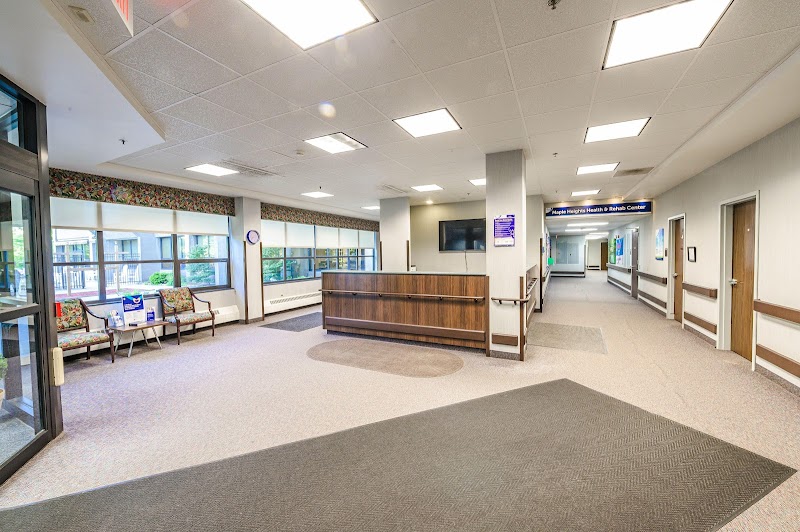
How is Maple Heights Health & Rehab Center, Llc Staffed?

CMS rates Maple Heights Health & Rehab Center, LLC's staffing level at 3 out of 5 stars, which is average compared to other nursing homes. Staff turnover is 51%, compared to the Pennsylvania average of 46%.

What Have Inspectors Found at Maple Heights Health & Rehab Center, Llc?

State health inspectors documented 126 deficiencies at Maple Heights Health & Rehab Center, LLC during 2023 to 2025. These included: 1 Immediate Jeopardy (the most serious level, indicating potential for serious harm or death), 3 that caused actual resident harm, and 122 with potential for harm. Immediate Jeopardy findings are rare and represent the most serious regulatory concerns. They require immediate corrective action.
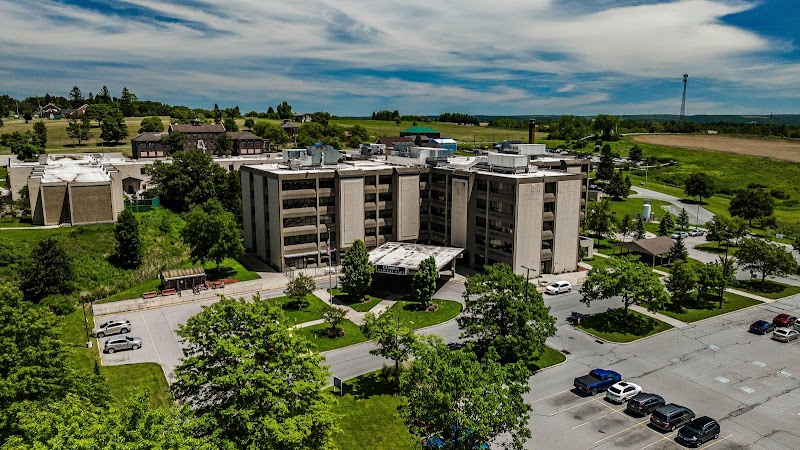
Who Owns and Operates Maple Heights Health & Rehab Center, Llc?

Maple Heights Health & Rehab Center, LLC is owned by a for-profit company. For-profit facilities operate as businesses with obligations to shareholders or private owners. The facility is operated by SABER HEALTHCARE GROUP, a chain that manages multiple nursing homes. With 301 certified beds and approximately 154 residents (about 51% occupancy), it is a large facility located in EBENSBURG, Pennsylvania.

How Does Maple Heights Health & Rehab Center, Llc Compare to Other Pennsylvania Nursing Homes?

Compared to the 100 nursing homes in Pennsylvania, Maple Heights Health & Rehab Center, LLC's overall rating (1 stars) is below the state average of 3.0, staff turnover (51%) is near the state average of 46%, and health inspection rating (1 stars) is much below the national benchmark.

What Should Families Ask When Visiting Maple Heights Health & Rehab Center, Llc?

Based on this facility's data, families visiting should ask: "What changes have been made since the serious inspection findings, and how are you preventing similar issues?" "What safeguards and monitoring systems are in place to protect residents from abuse or neglect?" "Can I visit during a mealtime to observe dining assistance and food quality?" "How do you handle medical emergencies, and what is your hospital transfer rate?" These questions are particularly relevant given the facility's Immediate Jeopardy citations and the substantiated abuse finding on record.

Is Maple Heights Health & Rehab Center, Llc Safe?

Based on CMS inspection data, Maple Heights Health & Rehab Center, LLC has documented safety concerns. The facility has 1 substantiated abuse finding (meaning confirmed case of resident harm by staff or other residents). Inspectors have issued 1 Immediate Jeopardy citation (the most serious violation level indicating risk of serious injury or death). The facility has a 1-star overall rating and ranks #100 of 100 nursing homes in Pennsylvania. Families considering this facility should ask detailed questions about what corrective actions have been taken since these incidents.

Do Nurses at Maple Heights Health & Rehab Center, Llc Stick Around?

Maple Heights Health & Rehab Center, LLC has a staff turnover rate of 51%, which is about average for Pennsylvania nursing homes (state average: 46%). Moderate turnover is common in nursing homes, but families should still ask about staff tenure and how the facility maintains care continuity when employees leave.

Was Maple Heights Health & Rehab Center, Llc Ever Fined?

Maple Heights Health & Rehab Center, LLC has been fined $65,231 across 3 penalty actions. This is above the Pennsylvania average of $33,731. Fines in this range indicate compliance issues significant enough for CMS to impose meaningful financial consequences. Common causes include delayed correction of deficiencies, repeat violations, or care failures affecting resident safety. Families should ask facility leadership what changes have been made since these penalties.

Is Maple Heights Health & Rehab Center, Llc on Any Federal Watch List?

Maple Heights Health & Rehab Center, LLC is not on any federal watch list. The most significant is the Special Focus Facility (SFF) program, which identifies the bottom 1% of nursing homes nationally based on persistent, serious quality problems. Not being on this list means the facility has avoided the pattern of deficiencies that triggers enhanced federal oversight. This is a positive indicator, though families should still review the facility's inspection history directly.