ELKINS CREST HEALTH & REHABILITATION CENTER
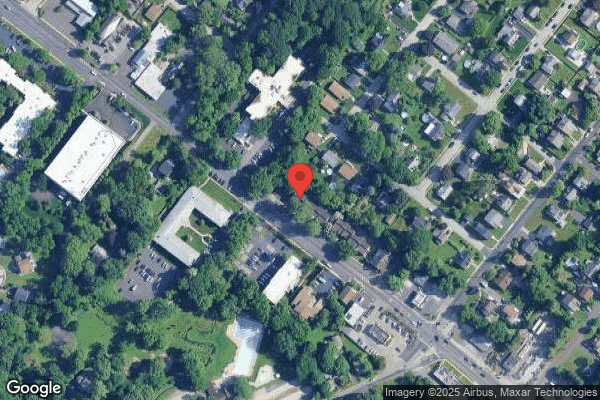
265 E. TOWNSHIP LINE ROAD, ELKINS PARK, PA 19027 (215) 379-2700
For profit - Corporation 150 Beds SABER HEALTHCARE GROUP Data: November 2025
Trust Grade
91/100
#32 of 653 in PA
Last Inspection: October 2024

Within standard 12-15 month inspection cycle. Federal law requires annual inspections.

Overview

Elkins Crest Health & Rehabilitation Center has received a Trust Grade of A, indicating it is highly recommended and performs excellently compared to other facilities. It ranks #32 out of 653 nursing homes in Pennsylvania, placing it in the top half of all facilities in the state, and #4 out of 58 in Montgomery County, meaning only three local options are rated higher. The facility is improving, with the number of issues decreasing from five in 2023 to four in 2024. Staffing is rated average with a turnover rate of 29%, which is significantly better than the state average, but it has less RN coverage than 92% of facilities in Pennsylvania, which is concerning. However, there have been multiple incidents related to food safety; for example, food items were not properly dated or stored, and unsanitary conditions were noted in the kitchen, posing potential health risks. Overall, while Elkins Crest has strong ratings and a good reputation, families should consider the food safety issues alongside its strengths.

Trust Score
A
91/100
In Pennsylvania
#32/653
Top 4%
Safety Record
Low Risk
No red flags
Inspections
Getting Better
5 → 4 violations
Staff Stability
✓ Good
29% annual turnover. Excellent stability, 19 points below Pennsylvania's 48% average. Staff who stay learn residents' needs.
Penalties
○ Average
$12,335 in fines. Higher than 62% of Pennsylvania facilities. Some compliance issues.
Skilled Nurses
⚠ Watch
Each resident gets only 20 minutes of Registered Nurse (RN) attention daily — below average for Pennsylvania. Fewer RN minutes means fewer trained eyes watching for problems.
Violations
⚠ Watch
12 deficiencies on record. Higher than average. Multiple issues found across inspections.
★★★★★
5.0
Overall Rating
★★★☆☆
3.0
Staff Levels
★★★★★
5.0
Care Quality
★★★★☆
4.0
Inspection Score
Stable
2023: 5 issues
2024: 4 issues

The Good

  • 5-Star Quality Measures · Strong clinical quality outcomes
  • Low Staff Turnover (29%) · Staff stability means consistent care
  • Full Sprinkler Coverage · Fire safety systems throughout facility
  • No fines on record
  • Staff turnover is low (29%)

    19 points below Pennsylvania average of 48%

Facility shows strength in quality measures, staff retention, fire safety.

The Bad

Federal Fines: $12,335

Below median ($33,413)

Minor penalties assessed

Chain: SABER HEALTHCARE GROUP

Part of a multi-facility chain

Ask about local staffing decisions and management

The Ugly 12 deficiencies on record

Oct 2024 4 deficiencies
CONCERN (D)

Potential for Harm - no one hurt, but risky conditions existed

Deficiency F0637 (Tag F0637)

Could have caused harm · This affected 1 resident

Based on clinical record review and staff interview, it was determined that the facility failed to ensure that a Minimum Data Set assessment for a signifcant change in condition was completed for one ...

Read full inspector narrative →
Based on clinical record review and staff interview, it was determined that the facility failed to ensure that a Minimum Data Set assessment for a signifcant change in condition was completed for one of 28 sampled residents. (Resident 39) Findings include: Clinical record review revealed that Resident 39 experienced a decline in his overall status and hospice services began on April 9, 2024. There was no Minimum Data Set (MDS) assessment completed to reflect the significant change in the resident's condition. In an interview on October 8, 2024, at 10:00 a.m., the Director of Nursing confirmed that a significant change in status MDS assessment was not completed upon a change in the resident's condition.
CONCERN (D)

Potential for Harm - no one hurt, but risky conditions existed

Deficiency F0638 (Tag F0638)

Could have caused harm · This affected 1 resident

Based on review of the Resident Assessment Instrument (RAI) Users Manual, clinical record review, and staff interview, it was determined that the facility failed to timely complete a quarterly Minimum...

Read full inspector narrative →
Based on review of the Resident Assessment Instrument (RAI) Users Manual, clinical record review, and staff interview, it was determined that the facility failed to timely complete a quarterly Minimum Data Set (MDS) assessment for one of 28 sampled residents. (Resident 119) Findings include: The Long-Term Care Facility RAI User's Manual, which provides instructions and guidelines for completing required MDS assessments (mandated assessments of a resident's abilities and care needs), revised October 2023, indicates that quarterly assessments must be no more than 92 days after the Assessment Reference Date (ARD) of the most recent assessment, and the assessment was to have a completion date that was no later than the ARD plus 14 calendar days. Clinical record review revealed that Resident 119 had a quarterly MDS assessment completed on February 18, 2024. There was no evidence that any MDS assessment, including a quarterly assessment, had been completed until August 16, 2024. In an interview on October 8, 2024, at 11:21 a.m., the Director of Nursing stated that the MDS quarterly assessment had not been completed in a timely manner as required by the RAI manual.
CONCERN (D)

Potential for Harm - no one hurt, but risky conditions existed

Unnecessary Medications (Tag F0759)

Could have caused harm · This affected 1 resident

Based on observation, clinical record review, and review of manufacturer's drug usage recommendations, it was determined that the facility failed to maintain a medication error rate of less than five ...

Read full inspector narrative →
Based on observation, clinical record review, and review of manufacturer's drug usage recommendations, it was determined that the facility failed to maintain a medication error rate of less than five percent (%) for two of four residents observed on medication administration. (Residents 28, 47) Findings include: Observations of medication administration on October 6, 2024, from 9:30 a.m. to 10:15 a.m., revealed that two medication errors occured during 30 medication administration opportunities, resulting in a medication administration error rate of 6.67%. Clinical record review revealed that Resident 28 had diagnoses that included chronic obstructive pulmonary disease. A review of physician's order dated November 15, 2022, revealed that staff was to administer one puff of a fluticasone furoate-vilanterol (Breo Ellipta) inhaler every day. A review of the manufacturer's instructions for use of the inhaler revealed that users of the inhaler were to rinse their mouth with water after inhalation to help reduce the risk of developing an infection in the mouth or throat. Observation of the medication pass on October 6, 2024, at 9:40 a.m., revealed that Resident 28 was not directed to rinse her mouth after using the inhaler. Clinical record review revealed that Resident 47 had diagnoses that included asthma and shortness of breath. A review of physician's order dated February 5, 2024, revealed that staff were to administer one puff of a fluticasone furoate (Arnuity Ellipta) inhaler. A review of the manufacturer's prescribing information revealed that users were to rinse their mouth with water after using the inhaler to help reduce the chance of getting an infection in the mouth or throat. Observation of the medication pass on October 6, 2024, at 9:50 a.m., revealed that Resident 47 was not directed to rinse her mouth after using the inhaler. 28 Pa. Code 211.12(d)(1)(5) Nursing services.
CONCERN (F)

Potential for Harm - no one hurt, but risky conditions existed

Food Safety (Tag F0812)

Could have caused harm · This affected most or all residents

Based on observation, it was determined that the facility failed to store food under sanitary conditions in the main kitchen and on two of three nursing unit pantries. (First floor and Second floor) F...

Read full inspector narrative →
Based on observation, it was determined that the facility failed to store food under sanitary conditions in the main kitchen and on two of three nursing unit pantries. (First floor and Second floor) Findings include: Observation of the kitchen on October 6, 2024, at 9:20 a.m., revealed the following: In the walk-in freezer, there was an opened box of chicken leg quarters on the bottom shelf with an accumulation of ice. There was an opened bag of hamburgers that was not dated. There were two opened packages of mixed vegetables that were not dated. On the freezer shelf there was pepperoni wrapped in plastic wrap that had a use-by date of August 7, 2024. In the walk-in refrigerator, there was an opened bag of shredded cheese that had no date and miniature butter cups on the floor underneath the shelves. In dry storage, there was a pack of taco shells removed from the original packaging that was not dated. There were five bags of hot dog buns on a shelf that had a use-by date of August 22, 2024. There was one bag of hot dog buns that had a hole with an insect inside. There were three bags of dinner rolls and one bag of hamburger rolls that were opened and were not dated. On the storage shelf there was a box of sprinkles with a use-by date of July 18, 2024. Observation of the first floor unit pantry on October 6, 2024, at 10:55 a.m., revealed that in the freezer, there was a package of sausage, egg, and cheese croissant with no name or date. There was an unknown item wrapped in aluminum foil with no name or date. Observation of the second floor unit panty on October 6, 2024, at 11:28 a.m., revealed that in the freezer, there was an unlabeled clear food storage bag of vegetables and an unknown item inside a black bag with no name or date. In the refrigerator, there was a bottle of soda that was opened with no name or date. CFR 483.60 Food Procurement Store/Prepare/Serve-Sanitary. Previously cited 9/22/23. 28 Pa. Code 201.18(b)(3) Management.
Sept 2023 4 deficiencies
CONCERN (D)

Potential for Harm - no one hurt, but risky conditions existed

Assessment Accuracy (Tag F0641)

Could have caused harm · This affected 1 resident

**NOTE- TERMS IN BRACKETS HAVE BEEN EDITED TO PROTECT CONFIDENTIALITY** Based on clinical record review, observation and staff interview, it was determined that the facility failed to complete an accu...

Read full inspector narrative →
**NOTE- TERMS IN BRACKETS HAVE BEEN EDITED TO PROTECT CONFIDENTIALITY** Based on clinical record review, observation and staff interview, it was determined that the facility failed to complete an accurate Minimum Data Set (MDS) assessment for three of 29 sampled residents. (Residents 22, 80, 105) Findings include: Clinical record review revealed that Resident 22 had diagnoses that included dementia and heart disease. Review of Resident 22's MDS assessment dated [DATE], indicated Resident 22 was on hospice. There was no documentation in the clinical record that indicated Resident 22 was on hospice services. In an interview on September 22, 2023, at 10:45 a.m., the Director of Nursing confirmed that MDS assessment had been inaccurately coded and that Resident 22 was not on hospice at that time. Clinical record review revealed that Resident 80 had diagnoses that included diabetes and dependence of renal dialysis. Section B of the MDS assessment dated [DATE], indicated that the resident had the ability to see in adequate light. In an interview on September 19, 2023, at 10:00 a.m., Resident 80 stated she is blind and can only see shadows. In an interview on September 21, 2023, at 2:00 p.m., the Director of Nursing confirmed the resident had severely impaired vision and that the MDS assessment had been inaccurately coded. Clinical record review revealed that Resident 105 had diagnoses that included traumatic hemorrhage of the cerebrum (stroke), tracheostomy (surgical airway), and seizures. Review of Resident 105's MDS assessment dated [DATE], indicated that Resident 105 did not utilize any type of restraint. On September 27, 2022, a physician ordered for staff to apply a left hand mitt restraint. Observations on September 19, 20, and 21, 2023 at various times, revealed Resident 105 wearing the a left hand mitt restraint, which was not identified on the MDS assessment.
CONCERN (D)

Potential for Harm - no one hurt, but risky conditions existed

PASARR Coordination (Tag F0644)

Could have caused harm · This affected 1 resident

**NOTE- TERMS IN BRACKETS HAVE BEEN EDITED TO PROTECT CONFIDENTIALITY** Based on clinical record review and staff interview, it was determined that the facility failed to develop a care plan and provi...

Read full inspector narrative →
**NOTE- TERMS IN BRACKETS HAVE BEEN EDITED TO PROTECT CONFIDENTIALITY** Based on clinical record review and staff interview, it was determined that the facility failed to develop a care plan and provide specialized services in accordance with the Pre-admission Screening and Resident Review (PASARR) evaluation for two of 29 sampled residents. (Residents 67, 77) Findings include: Clinical record review revealed that Resident 67 was admitted on [DATE], with diagnoses that included anxiety, mood disorder, major depressive disorder, violent behavior, and psychosis (a severe mental condition in which thought and emotions are affected that contact is lost with external reality). Review of the Minimum Data Set (MDS) assessment dated [DATE], identified the resident was oriented and required extensive assistance from staff. Review of the record revealed that Resident 67 had a PASARR Level 1 (federally required assessment to help ensure that all individuals with serious mental disorders and/or intellectual disabilities are not inappropriately placed in nursing homes for long term care) completed on August 5, 2020. According to that assessment, Resident 67 had a positive screen for serious mental illness that identified a need for specialized services such as training, service coordination, advocacy services, peer counseling, support groups, community integration activities, equipment, assessments, and transportation to help people function as independently as possible. Review of the clinical record revealed a lack of documentation to support that specialized services were included in the care plan or provided to Resident 67. Clinical record review revealed that Resident 77 was admitted on [DATE], with diagnoses that included schizophrenia, major depressive disorder, and schizoaffective disorder (a person who experience psychotic symptoms such as, hallucinations and delusions). Review of the MDS assessment dated [DATE], identified the resident was oriented and required assistance from staff. Review of the record revealed that Resident 77 had a PASARR Level 1 completed on August 3, 2018. According to that assessment, Resident 77 had a positive screen for serious mental illness that identified a need for specialized services. Review of the clinical record revealed a lack of documentation to support that specialized services were included in the care plan or provided to Resident 77. In an interview on September 21, 2023, at 2:00 p.m., the Administrator confirmed that no specialized services were provided for Residents 67 and 77.
CONCERN (E)

Potential for Harm - no one hurt, but risky conditions existed

Safe Environment (Tag F0584)

Could have caused harm · This affected multiple residents

**NOTE- TERMS IN BRACKETS HAVE BEEN EDITED TO PROTECT CONFIDENTIALITY** Based on observation, it was determined that the facility failed to provide a safe, clean, and comfortable environment for resid...

Read full inspector narrative →
**NOTE- TERMS IN BRACKETS HAVE BEEN EDITED TO PROTECT CONFIDENTIALITY** Based on observation, it was determined that the facility failed to provide a safe, clean, and comfortable environment for residents on three of three nursing units. (Nursing Units One, Two, Three) Findings include: Observations during the environmental tour of Unit One on September 20, 2023, at various times, revealed a bottom dresser drawer without a handle in room [ROOM NUMBER]-2, a broken nightstand top drawer in room [ROOM NUMBER]-1, and a broken bottom dresser drawer handle in room [ROOM NUMBER]-1. Observations during the environmental tour of Unit Two on September 19, 20, and 21, 2023, at various times throughout the day, revealed that the arm and base of the overbed tables in resident rooms 203, 204, 210, 211, 215, and 217 were covered in a dark dried substance. In room [ROOM NUMBER]-1, there was a celing tile with a large water stain with black spots and white residue surrounding the tile. In room [ROOM NUMBER]-2, the wall paper was off the wall. In room [ROOM NUMBER]-2, the outlet cover was broken behind the head of the bed. In room [ROOM NUMBER]-2, the baseboard cover was broken off the heating unit. Observations during the environmental tour of Unit Three on September 19 and 20, 2023, at various times throughout the day, revealed room [ROOM NUMBER] had a marred walledand a piece of wall molding was missing. On the side of 306-1, there was a piece of wall trim that was dangling by the headboard and on the side of 306-2, there were several holes in the wall where the wall trim had been. The arm and base of the overbed tables were covered in a dark, dried substance. The wall paper behind bed 1 and 2 in room [ROOM NUMBER] was off the wall. In room [ROOM NUMBER]-2, the baseboard cover was broken off the heating unit and the dresser was missing handles. In room [ROOM NUMBER], the bottom dresser drawer was broken. In room [ROOM NUMBER], the wall trim behind bed 2 was missing. In room [ROOM NUMBER], the wall paper was off the wall. In room [ROOM NUMBER], the headboard was detached from the bed frame and there were large water stained ceiling tiles above the bed. In room [ROOM NUMBER], the armoire closet was missing a bottom drawer and there were large water stained ceiling tiles above the bed. 28 Pa. Code 201.18(b)(1) Management.
CONCERN (F)

Potential for Harm - no one hurt, but risky conditions existed

Food Safety (Tag F0812)

Could have caused harm · This affected most or all residents

Based on policy review and observation, it was determined that the facility failed to properly store food and maintain sanitary conditions in the dietary department. Findings include: Review of the f...

Read full inspector narrative →
Based on policy review and observation, it was determined that the facility failed to properly store food and maintain sanitary conditions in the dietary department. Findings include: Review of the facility's policy entitled, Storage of Dry Food Policy, last reviewed March 2, 2023, revealed food was to be stored in a manner to avoid contamination, optimize food safety, and protect food quality and that foods were to be marked with a date when they were opened. Review of the facility's policy entitled, Use-By Guide-Quick Reference, last reviewed March 2, 2023, revealed foods should not be kept longer than seven days from the date marked on the product and the use-by date marked on the container. Observation during the tour of the kitchen on September 19, 2023, at 10:03 a.m., revealed the following: In the walk-in cooler, there was a container of diced tomatoes, an opened bag of lettuce, and a bag of tortillas that were not dated. There were two opened large jars of french dressing and mayonnaise with food debris on the outside of both containers. There were two large containers of sour cream with a use-by date of August 31, 2023, and one container of ricotta cheese with a use-by date of September 10, 2023. There was a cooked pork loin dated September 11, 2023. There were two vents with an accumulation of dust. In the freezer, there was a bag of opened sausage patties and a bag of tortillas that were not dated. In the bulk food storage area there were three large bins of flour, sugar, and thickener that were not dated. The top of the lid to the flour bin was covered with food debris. The bottom of the scoop holder had a accumulation of food debris. CFR 483.60(i) Food Safety Requirement Previously cited 10/04/22. 28 Pa. Code 201.14(a) Responsibility of licensee.
May 2023 1 deficiency
MINOR (B) 📢 Someone Reported This

A family member, employee, or ombudsman was alarmed enough to file a formal complaint

Minor Issue - procedural, no safety impact

Safe Environment (Tag F0584)

Minor procedural issue · This affected multiple residents

**NOTE- TERMS IN BRACKETS HAVE BEEN EDITED TO PROTECT CONFIDENTIALITY** Based on observation, the facility failed to maintain a safe, clean, homelike environment on two of three nursing units. (Second...

Read full inspector narrative →
**NOTE- TERMS IN BRACKETS HAVE BEEN EDITED TO PROTECT CONFIDENTIALITY** Based on observation, the facility failed to maintain a safe, clean, homelike environment on two of three nursing units. (Second and Third Floor) Findings include: Observation on May 15, 2023, at 9:30 a.m. and again at 12:15 p.m., on the Third Floor nursing unit revealed dirty, stained, or sticky floors in rooms 314, 315, 317, 318, 321, and 326. Observation on May 15, 2023, at 10:15 a.m., on the Third Floor nursing unit revealed stains or spills on the floor in the hallway between rooms [ROOM NUMBERS]. There was spilled liquid on the floor outside room [ROOM NUMBER]. The baseboards and walls throughout the low side of the unit were stained and soiled. There was a strong urine odor in the toilet are of room [ROOM NUMBER] that was still present at 12:15 p.m. 28 Pa. Code 207.2(a) Administrator's responsibility.
Oct 2022 3 deficiencies
CONCERN (E)

Potential for Harm - no one hurt, but risky conditions existed

MDS Data Transmission (Tag F0640)

Could have caused harm · This affected multiple residents

Based on review of the Resident Assessment Instrument Users Manual (RAI), clinical record review, and staff interview, it was determined that the facility failed to timely complete Minimum Data Set (M...

Read full inspector narrative →
Based on review of the Resident Assessment Instrument Users Manual (RAI), clinical record review, and staff interview, it was determined that the facility failed to timely complete Minimum Data Set (MDS) assessments for 46 of 84 sampled residents. (Residents 3, 4, 5, 6, 7, 9, 10, 11, 12, 13, 14, 15, 16, 17, 18, 19, 20, 21, 22, 23, 24, 25, 26, 27, 28, 29, 30, 31, 32, 34, 35, 36, 38, 39, 40, 41, 42, 43, 44, 45, 46, 47, 48, 246, 248, 249) Findings include: Review of the Long Term Care Facility RAI User's Manual which provides instructions and guidelines for completing required MDS assessments, (federally mandated assessment tool), dated October 2019, revealed that annual, quarterly, and admission assessments were to be completed no longer then 14 days after the Assessment Reference Date (ARD) which refers to the last day of the assessment observation period. Clinical record review revealed that Residents 4, 5, 7, 12, 25, 29, 40, 41, 42, and 45 had an annual MDS assessment noted as still in progress and had not yet been completed as per the time requirements. Clinical record review revealed that Residents 3, 6, 9, 10, 11, 13, 14, 15, 16, 17, 18, 19, 20, 21, 22, 23, 24, 26, 27, 28, 30, 31, 32, 34, 35, 36, 38, 39, 43, 44, 46, 47, and 48 had a quarterly MDS assessment noted as still in progress and had not yet been completed as per the time requirements. Clinical record review revealed that Residents 246, 248, and 249 had an admission MDS assessment noted as still in progress and had not yet been completed as per the time requirements. In an interview on October 3, 2022, at 1:50 p.m., the Administrator confirmed that the MDS assessments had not been completed within the required time frame.
CONCERN (F)

Potential for Harm - no one hurt, but risky conditions existed

Food Safety (Tag F0812)

Could have caused harm · This affected most or all residents

Based on policy review and observation, it was determined that the facility failed to store foods in a sanitary manner and failed to maintain sanitary conditions in the dietary department. Findings i...

Read full inspector narrative →
Based on policy review and observation, it was determined that the facility failed to store foods in a sanitary manner and failed to maintain sanitary conditions in the dietary department. Findings include: Review of the facility policy entitled Storage of Refrigerated Foods, last reviewed March 1, 2022, revealed that perishable foods were to be stored in order to maximize food safety and quality. Perishable foods were to be refrigerated promptly upon delivery. Refrigerated items were to have a label showing the name of the food and the date it was to be consumed or discarded. If an item had been previously cooked and stored and it was later mixed with another food item to make a new dish, the label and the new dish was to indicate the discard date of the previously cooked item. Observation during the environmental tour of the dietary department on October 2, 2022, at 10:00 a.m., revealed there was dirt and debris on the floors throughout the kitchen and on the floors inside of the walk in refrigerator and walk in freezer. Both of the convection ovens were soiled with grease build up on the inside and on the doors of the ovens. There was food spillage on the front and sides of the main oven. Observation in the walk in refrigerator revealed four blocks of cheese that had been opened and resealed and was not labeled or dated. There was a bag of mozzarella cheese and a bag of parmesan cheese that had been opened and resealed and was not labeled or dated. There were two aluminum bins hotel pans that had food items in them and were covered but not labeled or dated. There was a large aluminum pot of a food that was not labeled or dated. There was a large aluminum bowl of a meat that was not labeled or dated. There was a plate of cooked chicken that was not labeled or dated. Observation in the walk in freezer revealed four bags of English muffins that were not labeled or dated. There was a large box that contained eight to ten bags of various food items that had been opened and resealed and were not labeled or dated. There was one bag of shrimp that had been opened and was not resealed, labeled or dated. There were two large bags of mixed vegetables that were opened not resealed properly and left open to air and were not labeled or dated. 28 Pa. Code 201.14(a) Responsibility of licensee.
MINOR (C)

Minor Issue - procedural, no safety impact

Safe Environment (Tag F0921)

Minor procedural issue · This affected most or all residents

**NOTE- TERMS IN BRACKETS HAVE BEEN EDITED TO PROTECT CONFIDENTIALITY** Based on observation, it was determined that the facility failed to provide a functional, comfortable and sanitary environment f...

Read full inspector narrative →
**NOTE- TERMS IN BRACKETS HAVE BEEN EDITED TO PROTECT CONFIDENTIALITY** Based on observation, it was determined that the facility failed to provide a functional, comfortable and sanitary environment for residents on three of three nursing units. (Nursing units one, two, three) Findings include: Observations in room [ROOM NUMBER] during the environmental tour of unit one on October 2, 2022 at 12:50 p.m., revealed bed one had a broken headboard, and the outlet box behind bed two had detached from the wall and there was a hole in the wall. Observation during the environmental tour on October 2, 2022, at 10:45 a.m., revealed that the walls in resident rooms 201, 204, 206, 209, 214, 219, 223, and 224 were marred and scratched. Observations during the environmental tour of unit on October 2, 2022, and October 3, 2022, at various times throughout the day, revealed that the walls in resident rooms 301, 304, 305, 309, 317, 319, 322, 324, and 328 were marred and scratched. The bathroom door in room [ROOM NUMBER] had a large hole in the center of the door. In room [ROOM NUMBER], the baseboard heating unit had no cover. In room [ROOM NUMBER], the baseboard cover was off the heating unit. The curtain in room [ROOM NUMBER] was dirty with brown and orange colored stains. The bottom dresser drawer was broken in room [ROOM NUMBER]. In room [ROOM NUMBER], the toilet was leaking and wrapped with a fitted sheet. 28 Pa. Code 201.18 (b) (1) Management 28 Pa. Code 217.2 (a) Administrator's responsibility.
Understanding Severity Codes (click to expand)
Life-Threatening (Immediate Jeopardy)
J - Isolated K - Pattern L - Widespread
Actual Harm
G - Isolated H - Pattern I - Widespread
Potential for Harm
D - Isolated E - Pattern F - Widespread
No Harm (Minor)
A - Isolated B - Pattern C - Widespread

Questions to Ask on Your Visit

  • "Can I speak with families of current residents?"
  • "What's your RN coverage like on weekends and overnight?"

Our Honest Assessment

Strengths
  • • Grade A (91/100). Above average facility, better than most options in Pennsylvania.
  • • No major safety red flags. No abuse findings, life-threatening violations, or SFF status.
  • • 29% annual turnover. Excellent stability, 19 points below Pennsylvania's 48% average. Staff who stay learn residents' needs.
Concerns
  • • 12 deficiencies on record. Higher than average. Multiple issues found across inspections.
  • • $12,335 in fines. Above average for Pennsylvania. Some compliance problems on record.
Bottom line: Generally positive indicators. Standard due diligence and a personal visit recommended.

About This Facility

What is Elkins Crest Health & Rehabilitation Center's CMS Rating?

CMS assigns ELKINS CREST HEALTH & REHABILITATION CENTER an overall rating of 5 out of 5 stars, which is considered much above average nationally. Within Pennsylvania, this rating places the facility higher than 99% of the state's 100 nursing homes. This rating reflects solid performance across the metrics CMS uses to evaluate nursing home quality.

How is Elkins Crest Health & Rehabilitation Center Staffed?

CMS rates ELKINS CREST HEALTH & REHABILITATION CENTER's staffing level at 3 out of 5 stars, which is average compared to other nursing homes. Staff turnover is 29%, compared to the Pennsylvania average of 46%. This relatively stable workforce can support continuity of care.

What Have Inspectors Found at Elkins Crest Health & Rehabilitation Center?

State health inspectors documented 12 deficiencies at ELKINS CREST HEALTH & REHABILITATION CENTER during 2022 to 2024. These included: 10 with potential for harm and 2 minor or isolated issues.

Who Owns and Operates Elkins Crest Health & Rehabilitation Center?

ELKINS CREST HEALTH & REHABILITATION CENTER is owned by a for-profit company. For-profit facilities operate as businesses with obligations to shareholders or private owners. The facility is operated by SABER HEALTHCARE GROUP, a chain that manages multiple nursing homes. With 150 certified beds and approximately 146 residents (about 97% occupancy), it is a mid-sized facility located in ELKINS PARK, Pennsylvania.

How Does Elkins Crest Health & Rehabilitation Center Compare to Other Pennsylvania Nursing Homes?

Compared to the 100 nursing homes in Pennsylvania, ELKINS CREST HEALTH & REHABILITATION CENTER's overall rating (5 stars) is above the state average of 3.0, staff turnover (29%) is significantly lower than the state average of 46%, and health inspection rating (4 stars) is above the national benchmark.

What Should Families Ask When Visiting Elkins Crest Health & Rehabilitation Center?

Based on this facility's data, families visiting should ask: "Can I visit during a mealtime to observe dining assistance and food quality?" "How do you handle medical emergencies, and what is your hospital transfer rate?" "Can I speak with family members of current residents about their experience?"

Is Elkins Crest Health & Rehabilitation Center Safe?

Based on CMS inspection data, ELKINS CREST HEALTH & REHABILITATION CENTER has a clean safety record: no substantiated abuse findings (meaning no confirmed cases of resident harm), no Immediate Jeopardy citations (the most serious violation level indicating risk of serious injury or death), and is not on the Special Focus Facility watch list (a federal program monitoring the lowest-performing 1% of nursing homes). The facility has a 5-star overall rating and ranks #1 of 100 nursing homes in Pennsylvania. While no facility is perfect, families should still ask about staff-to-resident ratios and recent inspection results during their visit.

Do Nurses at Elkins Crest Health & Rehabilitation Center Stick Around?

Staff at ELKINS CREST HEALTH & REHABILITATION CENTER tend to stick around. With a turnover rate of 29%, the facility is 17 percentage points below the Pennsylvania average of 46%. Low turnover is a positive sign. It means caregivers have time to learn each resident's needs, medications, and personal preferences. Consistent staff also notice subtle changes in a resident's condition more quickly.

Was Elkins Crest Health & Rehabilitation Center Ever Fined?

ELKINS CREST HEALTH & REHABILITATION CENTER has been fined $12,335 across 1 penalty action. This is below the Pennsylvania average of $33,202. While any fine indicates a compliance issue, fines under $50,000 are relatively common and typically reflect isolated problems that were subsequently corrected. Families should ask what specific issues led to these fines and confirm they've been resolved.

Is Elkins Crest Health & Rehabilitation Center on Any Federal Watch List?

ELKINS CREST HEALTH & REHABILITATION CENTER is not on any federal watch list. The most significant is the Special Focus Facility (SFF) program, which identifies the bottom 1% of nursing homes nationally based on persistent, serious quality problems. Not being on this list means the facility has avoided the pattern of deficiencies that triggers enhanced federal oversight. This is a positive indicator, though families should still review the facility's inspection history directly.