FREDERICK LIVING - CEDARWOOD

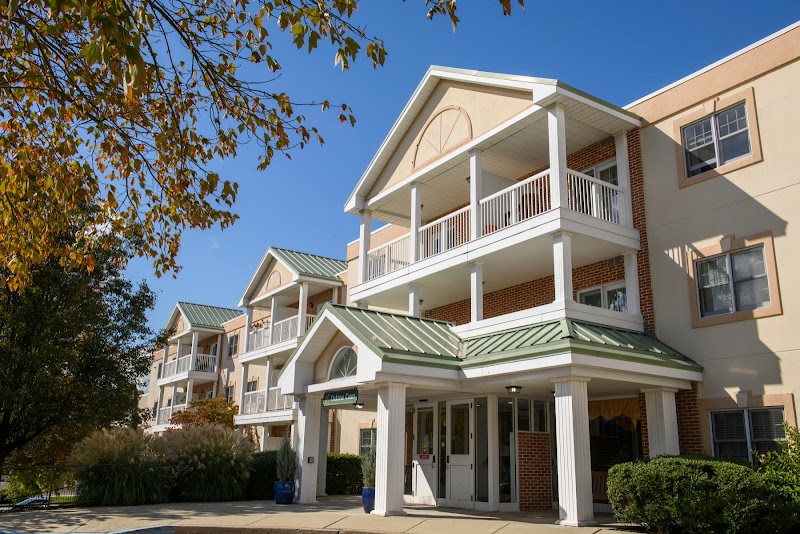
2849 BIG ROAD, FREDERICK, PA 19435 (610) 754-7878
Non profit - Corporation 61 Beds Independent Data: November 2025
Trust Grade
93/100
#39 of 653 in PA
Last Inspection: October 2023

Over 2 years since last inspection. Current conditions may differ from available data.

Overview

Frederick Living - Cedarwood has received an excellent Trust Grade of A, indicating it is highly recommended and performs well compared to other facilities. It ranks #39 out of 653 nursing homes in Pennsylvania, placing it in the top half, and #6 out of 58 in Montgomery County, indicating only five local options are better. The facility is improving, with issues decreasing from three in 2021 to just one in 2023. Staffing is a strong point, with a perfect 5/5 star rating and a turnover rate of 29%, well below the state average, ensuring continuity of care. However, there have been some concerns, such as the failure to implement a physician's bowel protocol for several residents and a previous incident where vaccinations were administered without adequate privacy, which may affect residents' dignity and comfort. Overall, while the facility shows many strengths, families should consider both the positive aspects and the noted deficiencies.

Trust Score
A
93/100
In Pennsylvania
#39/653
Top 5%
Safety Record
Low Risk
No red flags
Inspections
Getting Better
3 → 1 violations
Staff Stability
✓ Good
29% annual turnover. Excellent stability, 19 points below Pennsylvania's 48% average. Staff who stay learn residents' needs.
Penalties
✓ Good
No fines on record. Clean compliance history, better than most Pennsylvania facilities.
Skilled Nurses
✓ Good
Each resident gets 104 minutes of Registered Nurse (RN) attention daily — more than 97% of Pennsylvania nursing homes. RNs are the most trained staff who catch health problems before they become serious.
Violations
✓ Good
Only 4 deficiencies on record. Cleaner than most facilities. Minor issues only.
★★★★★
5.0
Overall Rating
★★★★★
5.0
Staff Levels
★★★★★
5.0
Care Quality
★★★★★
5.0
Inspection Score
Stable
2021: 3 issues
2023: 1 issues

The Good

  • 5-Star Staffing Rating · Excellent nurse staffing levels
  • 5-Star Quality Measures · Strong clinical quality outcomes
  • Low Staff Turnover (29%) · Staff stability means consistent care
  • Full Sprinkler Coverage · Fire safety systems throughout facility
  • No fines on record
  • Staff turnover is low (29%)

    19 points below Pennsylvania average of 48%

Facility shows strength in staffing levels, quality measures, staff retention, fire safety.

The Bad

No Significant Concerns Identified

This facility shows no red flags. Among Pennsylvania's 100 nursing homes, only 1% achieve this.

The Ugly 4 deficiencies on record

Oct 2023 1 deficiency
CONCERN (D)

Potential for Harm - no one hurt, but risky conditions existed

Quality of Care (Tag F0684)

Could have caused harm · This affected 1 resident

**NOTE- TERMS IN BRACKETS HAVE BEEN EDITED TO PROTECT CONFIDENTIALITY** Based on clinical record review and staff interview, it was determined that the facility failed to ensure that a physician's ord...

Read full inspector narrative →
**NOTE- TERMS IN BRACKETS HAVE BEEN EDITED TO PROTECT CONFIDENTIALITY** Based on clinical record review and staff interview, it was determined that the facility failed to ensure that a physician's order was implemented for three of 12 sampled residents. (Residents 22, 23, 30) Findings include: Clinical record review revealed that the physician directed staff to administer the following bowel protocol for Residents 22, 23, and 30: staff was to administer prune juice on day shift (7:00 a.m. to 3:00 p.m.) if the resident had no bowel movement (BM) in 72 hours. If prune juice was ineffective, staff was to administer milk of magnesia 24 hours later on evening shift (3:00 p.m. to 11:00 p.m.). If milk of magnesia was ineffective, a bisacodyl suppository was to be administered on night shift (11:00 p.m. to 7:00 a.m.). If the suppository was ineffective, an enema was to be administered on night shift, 24 hours later. Clinical record review revealed that Resident 22 was admitted to the facility on [DATE], with diagnoses that included dementia and constipation. On August 17, 2023, the physician directed staff to follow the bowel protocol as needed. The Minimum Data Set (MDS) assessment dated [DATE], indicated that the resident had memory impairment and was dependent on staff for toileting. Record review revealed that from October 7 through 11, 2023, the bowel protocol was not followed as ordered by the physician and the resident did not have a BM until October 11, 2023, at 10:39 p.m. Further review of the clinical record revealed that from October 11 through 15, 2023, the bowel protocol was not followed as ordered by the physician and the resident did not have a BM until October 15, 2023, at 1:29 p.m. Clinical record review revealed that Resident 23 was admitted to the facility on [DATE], with diagnoses that included dementia, stroke, and constipation. On November 24, 2020, the physician directed staff to follow the bowel protocol as needed. The MDS assessment dated [DATE], indicated that the resident had memory impairment and was dependent on staff for toileting. Review of nurse aide documentation revealed that the resident had a BM on October 18, 2023, at 9:15 p.m. Record review revealed that from October 18 through 24, 2023, the bowel protocol was not followed as ordered by the physician and the resident did not have a bowel movement until October 24, 2023, at 7:40 p.m. Clinical record review revealed that Resident 30 was admitted to the facility on [DATE], with diagnoses that included dementia and constipation. On April 27, 2022, the physician directed staff to follow the bowel protocol as needed. The MDS assessment dated [DATE], indicated that the resident had memory impairment and was dependent on staff for toileting. Review of Resident 30's medication administration record for September 2023, revealed that the resident had a BM after administration of prune juice on September 23, 2023, at 10:39 a.m. Further review revealed that from September 23, 2023, through October 1, 2023, the bowel protocol was not followed as ordered by the physician and the resident did not have a BM until October 1, 2023, at 3:43 p.m. Additionally, from October 1 through 8, 2023, the bowel protocol was not followed as ordered by the physician, and the resident did not have a BM until October 8, 2023, at 10:44 a.m. Record review revealed that from October 15 through 21, 2023, the bowel protocol was not followed as ordered by the physician and the resident did not have a BM until October 21, 2023. In an interview on October 26, 2023, at 9:31 a.m., the Director of Nursing stated that staff did not follow the bowel protocol per the physicians' orders. 28 Pa. Code 211.12(d)(1)(5) Nursing services.
Nov 2021 3 deficiencies
CONCERN (D)

Potential for Harm - no one hurt, but risky conditions existed

Resident Rights (Tag F0550)

Could have caused harm · This affected 1 resident

Based on a confidential group interview, it was determined that the facility failed to administer vaccinations in a dignified manner to two of four residents at resident council. Findings include: Du...

Read full inspector narrative →
Based on a confidential group interview, it was determined that the facility failed to administer vaccinations in a dignified manner to two of four residents at resident council. Findings include: During a confidential group interview on November 3, 2021, at 10:30 a.m., two residents stated that during the month of October 2021, the pharmacist entered the facility during lunch to administer the booster vaccine to all the residents. The residents stated, We felt like we were rounded up like cattle during our meal time to receive a booster vaccine. The residents stated that there was no privacy provided and that they were afraid to express their feelings about the situation. The residents felt the situation could have been handled in a more dignified manner. 28. Pa Code 201.29(i) Resident rights.
CONCERN (D)

Potential for Harm - no one hurt, but risky conditions existed

Accident Prevention (Tag F0689)

Could have caused harm · This affected 1 resident

Based on clinical record review, observation and staff interview, it was determined that the facility failed to ensure that safety interventions were implemented and in place for one of 16 sampled res...

Read full inspector narrative →
Based on clinical record review, observation and staff interview, it was determined that the facility failed to ensure that safety interventions were implemented and in place for one of 16 sampled residents. (Resident 42) Findings include: Clinical record review revealed that Resident 42 had diagnoses that included abnormalities of gait and mobility and history of falling. The current care plan identified that the resident was at risk to fall related to gait balance problems, poor safety awareness, history of falls, anxiety, and wandering. On September 6, 2021, Resident 42 fell in the dining room. Review of the incident report revealed the resident was to be placed in a stationary chair in the dining room as an intervention to prevent future falls, however there was no documented evidence that this intervention was implemented. On September 29, 2021, Resident 42 was lowered to the floor in the hallway when walking with a nurse aide. Review of the incident report revealed that to prevent recurrence, the resident was to walk with staff with a wheelchair readily available behind the resident. On November 2, 2021 at 11:34 a.m., Resident 42 was observed walking in the hallway with Nurse Aide 1 with no wheelchair available behind the resident. In an interview on November 4, 2021 at 12:25 p.m., the Director of Nursing confirmed that the stationary chair intervention was not implemented. 28 Pa. Code 211.12(d)(5) Nursing services.
CONCERN (D)

Potential for Harm - no one hurt, but risky conditions existed

Deficiency F0697 (Tag F0697)

Could have caused harm · This affected 1 resident

Based on clinical record review and staff interview, it was determined that the facility failed to ensure pain management included the attempt to provide non-pharmacological interventions to alleviate...

Read full inspector narrative →
Based on clinical record review and staff interview, it was determined that the facility failed to ensure pain management included the attempt to provide non-pharmacological interventions to alleviate pain prior to or in conjunction with the administration of pain mediation prescribed on an as needed basis for three of 16 sampled residents. (Residents 22, 28, 43) Findings include: Clinical record review revealed that Resident 22 had diagnoses that included arthritis, gout, and Myelodysplastic syndrome (dysfunctional blood cells). The resident had a physician's order for pain medication, Tramadol to be administered every six hours as needed for breakthrough pain. Review of the medication administration record (MAR) revealed that the resident received the as needed Tramadol four times in July 2021, one time in August 2021, 16 times in September 2021, 21 times in October 2021, and two times in November 2021. There was a lack of documentation to support that non-pharmacological interventions were offered to address the assessed pain prior to the administration of the as needed narcotic pain medication Clinical record review revealed that Resident 28 had diagnoses that included hypertension and osteoporosis (a condition when bone strength weakens). The resident had a physician's order dated September 15, 2021, for a narcotic pain medication, Tramadol, to be administered every six hours as needed for moderate pain. The resident's care plan instructed staff to provide non-pharmacological interventions such as: music, relaxation, and positioning for comfort. Review of the MAR revealed that the resident received the as needed narcotic pain medication 21 times in October 2021. There was a lack of documentation to support that non-pharmacological interventions were offered to address the assessed pain prior to the administration of the as needed narcotic pain medication. Clinical record review revealed that Resident 43 had diagnoses that included diabetes and gout (inflammation of the joints). The resident had a physician's order dated October 12, 2021, for a narcotic pain medication, oxycodone, to be administered every four hours as needed for moderate-severe pain. The resident's care plan instructed staff to provide non-pharmacological interventions such as: music, relaxation, positioning for comfort, and snacks. Review of the MAR revealed that the resident received the as needed narcotic pain medication 32 times in October 2021. There was a lack of documentation to support that non-pharmacological interventions were offered to address the assessed pain prior to the administration of the as needed narcotic pain medication. In an interview on November 4, 2021, at 9:05 a.m., the Director of Nursing confirmed that there was a lack of documentation to support that non-pharmacological interventions were offered to Residents 22, 28, and 43 prior to or in conjunction with the administration of the as needed pain medication. 28 Pa. Code 211.12(d)(1)(5)Nursing services.
Understanding Severity Codes (click to expand)
Life-Threatening (Immediate Jeopardy)
J - Isolated K - Pattern L - Widespread
Actual Harm
G - Isolated H - Pattern I - Widespread
Potential for Harm
D - Isolated E - Pattern F - Widespread
No Harm (Minor)
A - Isolated B - Pattern C - Widespread

Questions to Ask on Your Visit

  • "Can I speak with families of current residents?"
  • "What's your RN coverage like on weekends and overnight?"

Our Honest Assessment

Strengths
  • • Grade A (93/100). Above average facility, better than most options in Pennsylvania.
  • • No major safety red flags. No abuse findings, life-threatening violations, or SFF status.
  • • No fines on record. Clean compliance history, better than most Pennsylvania facilities.
  • • Only 4 deficiencies on record. Cleaner than most facilities. Minor issues only.
Concerns
  • • No significant concerns identified. This facility shows no red flags across CMS ratings, staff turnover, or federal penalties.
Bottom line: Generally positive indicators. Standard due diligence and a personal visit recommended.

About This Facility

What is Frederick Living - Cedarwood's CMS Rating?

CMS assigns FREDERICK LIVING - CEDARWOOD an overall rating of 5 out of 5 stars, which is considered much above average nationally. Within Pennsylvania, this rating places the facility higher than 99% of the state's 100 nursing homes. This rating reflects solid performance across the metrics CMS uses to evaluate nursing home quality.

How is Frederick Living - Cedarwood Staffed?

CMS rates FREDERICK LIVING - CEDARWOOD's staffing level at 5 out of 5 stars, which is much above average compared to other nursing homes. Staff turnover is 29%, compared to the Pennsylvania average of 46%. This relatively stable workforce can support continuity of care.

What Have Inspectors Found at Frederick Living - Cedarwood?

State health inspectors documented 4 deficiencies at FREDERICK LIVING - CEDARWOOD during 2021 to 2023. These included: 4 with potential for harm.
Who Owns and Operates Frederick Living - Cedarwood?

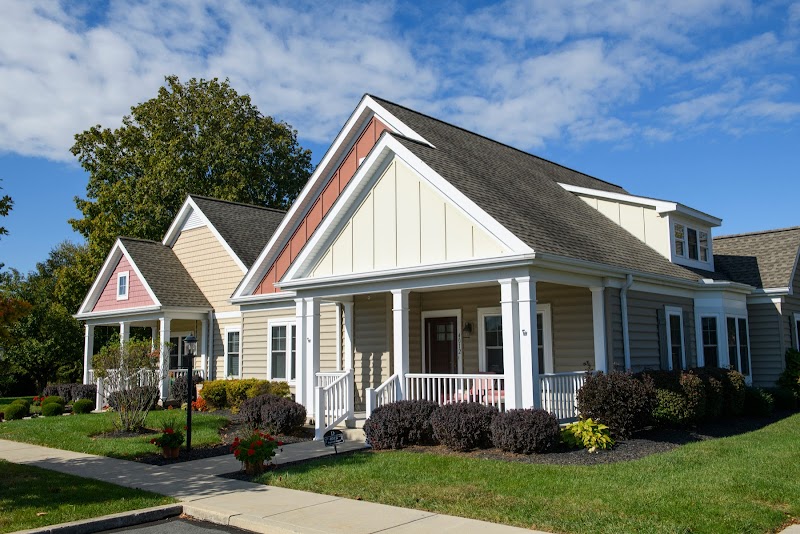
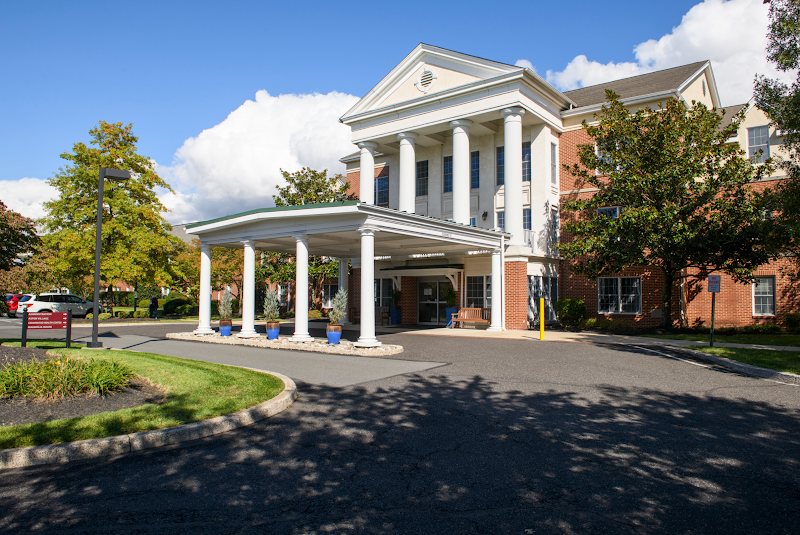
FREDERICK LIVING - CEDARWOOD is owned by a non-profit organization. Non-profit facilities reinvest revenue into operations rather than distributing to shareholders. The facility operates independently rather than as part of a larger chain. With 61 certified beds and approximately 30 residents (about 49% occupancy), it is a smaller facility located in FREDERICK, Pennsylvania.
How Does Frederick Living - Cedarwood Compare to Other Pennsylvania Nursing Homes?

Compared to the 100 nursing homes in Pennsylvania, FREDERICK LIVING - CEDARWOOD's overall rating (5 stars) is above the state average of 3.0, staff turnover (29%) is significantly lower than the state average of 46%, and health inspection rating (5 stars) is much above the national benchmark.

What Should Families Ask When Visiting Frederick Living - Cedarwood?

Based on this facility's data, families visiting should ask: "Can I visit during a mealtime to observe dining assistance and food quality?" "How do you handle medical emergencies, and what is your hospital transfer rate?" "Can I speak with family members of current residents about their experience?"

Is Frederick Living - Cedarwood Safe?

Based on CMS inspection data, FREDERICK LIVING - CEDARWOOD has a clean safety record: no substantiated abuse findings (meaning no confirmed cases of resident harm), no Immediate Jeopardy citations (the most serious violation level indicating risk of serious injury or death), and is not on the Special Focus Facility watch list (a federal program monitoring the lowest-performing 1% of nursing homes). The facility has a 5-star overall rating and ranks #1 of 100 nursing homes in Pennsylvania. While no facility is perfect, families should still ask about staff-to-resident ratios and recent inspection results during their visit.

Do Nurses at Frederick Living - Cedarwood Stick Around?

Staff at FREDERICK LIVING - CEDARWOOD tend to stick around. With a turnover rate of 29%, the facility is 17 percentage points below the Pennsylvania average of 46%. Low turnover is a positive sign. It means caregivers have time to learn each resident's needs, medications, and personal preferences. Consistent staff also notice subtle changes in a resident's condition more quickly. Registered Nurse turnover is also low at 14%, meaning experienced RNs are available to handle complex medical needs.

Was Frederick Living - Cedarwood Ever Fined?

FREDERICK LIVING - CEDARWOOD has no federal fines on record. CMS issues fines when nursing homes fail to meet care standards or don't correct problems found during inspections. The absence of fines suggests the facility has either maintained compliance or corrected any issues before penalties were assessed. This is a positive indicator, though families should still review recent inspection reports for the full picture.

Is Frederick Living - Cedarwood on Any Federal Watch List?

FREDERICK LIVING - CEDARWOOD is not on any federal watch list. The most significant is the Special Focus Facility (SFF) program, which identifies the bottom 1% of nursing homes nationally based on persistent, serious quality problems. Not being on this list means the facility has avoided the pattern of deficiencies that triggers enhanced federal oversight. This is a positive indicator, though families should still review the facility's inspection history directly.