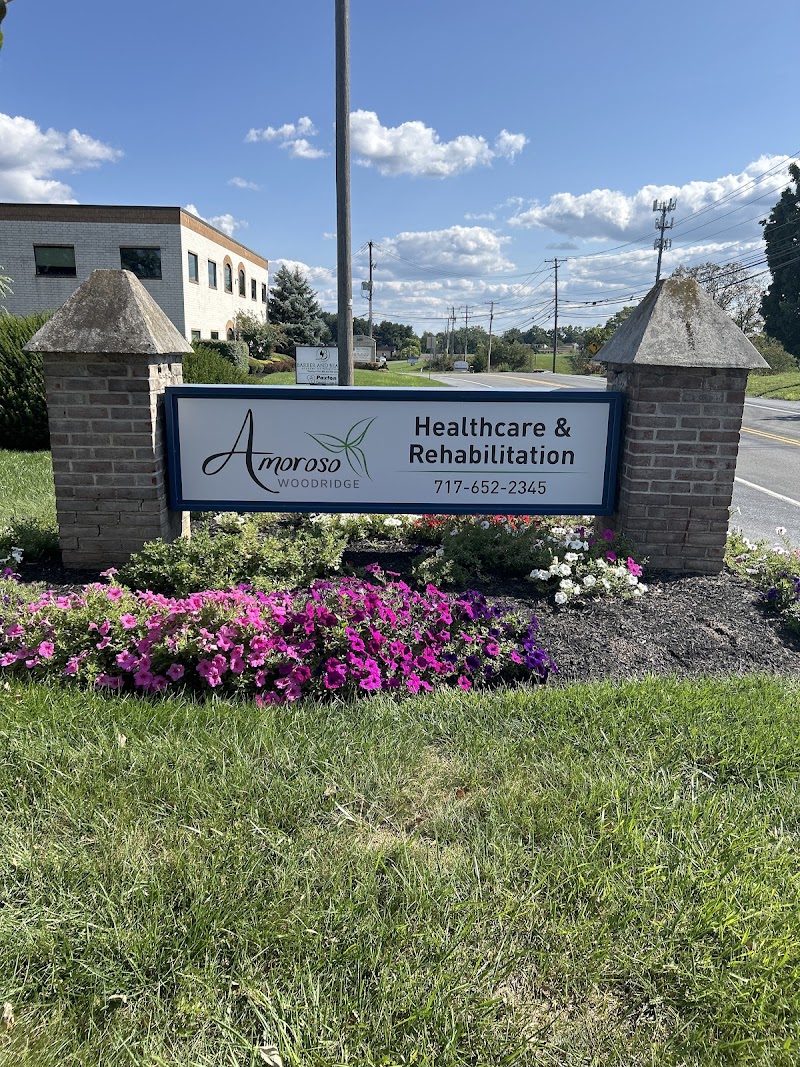
AMOROSO HEALTHCARE AND REHABILITATION WOODRIDGE
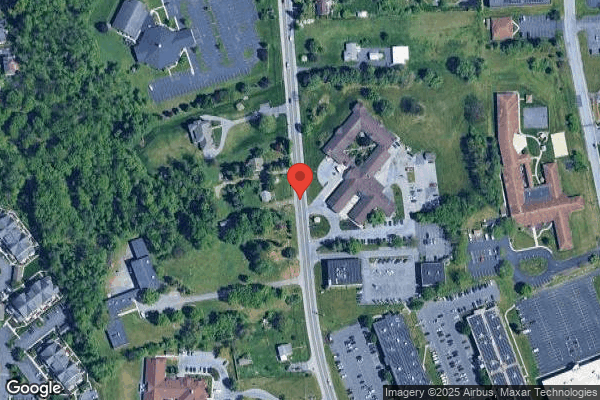
3625 NORTH PROGRESS AVE, HARRISBURG, PA 17110 (717) 652-2345
For profit - Corporation 95 Beds Independent Data: November 2025
Trust Grade
55/100
#258 of 653 in PA
Last Inspection: October 2024

Within standard 12-15 month inspection cycle. Federal law requires annual inspections.

Overview

Amoroso Healthcare and Rehabilitation Woodridge has a Trust Grade of C, which means it is average and sits in the middle of the pack for nursing homes in Pennsylvania. It ranks #258 out of 653 facilities in the state, placing it in the top half, and #3 out of 8 in Dauphin County, indicating only two local options are better. The facility is showing improvement, with the number of issues decreasing from 15 in 2023 to 9 in 2024. Staffing is a strength, with a 0% turnover rate, well below the state average, suggesting that staff members are stable and familiar with the residents' needs. However, the facility has concerning fines totaling $42,016, which are higher than 84% of Pennsylvania facilities, indicating potential compliance issues. Additionally, while RN coverage is average, there were specific incidents noted during inspections, such as failing to follow physician orders for two residents, which could impact their health management. There were also concerns about not conducting timely background checks for employees, raising questions about staff safety. Overall, while there are strengths in staffing stability, the facility must address these compliance and care issues to improve its overall quality.

Trust Score
C
55/100
In Pennsylvania
#258/653
Top 39%
Safety Record
Low Risk
No red flags
Inspections
Getting Better
15 → 9 violations
Staff Stability
○ Average
Turnover data not reported for this facility.
Penalties
✓ Good
$42,016 in fines. Lower than most Pennsylvania facilities. Relatively clean record.
Skilled Nurses
○ Average
Each resident gets 36 minutes of Registered Nurse (RN) attention daily — about average for Pennsylvania. RNs are the most trained staff who monitor for health changes.
Violations
⚠ Watch
24 deficiencies on record. Higher than average. Multiple issues found across inspections.
★★★☆☆
3.0
Overall Rating
★★★☆☆
3.0
Staff Levels
★★☆☆☆
2.0
Care Quality
★★★☆☆
3.0
Inspection Score
Stable
2023: 15 issues
2024: 9 issues

The Good

  • Full Sprinkler Coverage · Fire safety systems throughout facility
  • No fines on record

Facility shows strength in fire safety.

The Bad

3-Star Overall Rating

Near Pennsylvania average (3.0)

Meets federal standards, typical of most facilities

Federal Fines: $42,016

Above median ($33,413)

Moderate penalties - review what triggered them

The Ugly 24 deficiencies on record

Dec 2024 1 deficiency
CONCERN (D) 📢 Someone Reported This

A family member, employee, or ombudsman was alarmed enough to file a formal complaint

Potential for Harm - no one hurt, but risky conditions existed

Respiratory Care (Tag F0695)

Could have caused harm · This affected 1 resident

**NOTE- TERMS IN BRACKETS HAVE BEEN EDITED TO PROTECT CONFIDENTIALITY** Based on clinical record review and staff interview, it was determined the facility failed to provide respiratory care consisten...

Read full inspector narrative →
**NOTE- TERMS IN BRACKETS HAVE BEEN EDITED TO PROTECT CONFIDENTIALITY** Based on clinical record review and staff interview, it was determined the facility failed to provide respiratory care consistent with professional standards of practice for one of one resident reviewed (Resident 5). Findings include: Review of Resident 5's clinical record revealed diagnoses that included chronic kidney disease (CKD - a condition where the kidneys are damaged and can't filter blood as they should) and diabetes (a disease that occurs when your blood glucose, also called blood sugar, is too high). Review of Resident 5's hospital referral paperwork revealed an assessment/plan on December 17, 2024, for: will need outpatient, in-lab PSG (polysomnography) with BiPAP (a noninvasive ventilator that helps people breathe by delivering pressurized air through a mask) titration. Review of Resident 5's hospital referral paperwork revealed an assessment data on December 17, 2024, for the following: Pulmonary following the patient continue BiPAP at night, continue BiPAP at night and as needed during the day. Review of Resident 5's clinical record revealed the Resident was admitted to the facility on [DATE], at approximately 5:00 PM from the hospital. Review of Resident 5's clinical record revealed a nurse's progress note on December 18, 2024, at 5:34 PM, that read: Alerted by charge nurse that Resident 5 came from the hospital with discharge paperwork and order for a Bi-PAP at bedtime. No spare Bi-PAP in house, contact made to facility's oxygen supply company, requesting Bi-PAP via phone and email. Unable to deliver bi-PAP until Thursday, December 19, 2024. Verbalized to charge nurse to contact physician for further orders. Review of Resident 5's clinical record revealed a nurse's progress note on December 19, 2024, at 12:02 AM, that the Resident requested to be sent back to the hospital if the facility could not get a Bi-PAP for the night. Resident 5 was sent back to the hospital. During an interview with the Director of Nursing (DON) and Nursing Home Administrator (NHA) on December 20, 2024, at 10:37 AM, revealed they did receive a referral that mentioned Resident 5 needing a bi-PAP, although the hospital the Resident came from uses Careport for communication of their referrals and do not have any verbal communication with facilities. The DON revealed that herself, the NHA, and Director of Social Services are responsible for reviewing and approving referrals that come in. 28 Pa. Code 211.12(d)(5) Nursing services
Oct 2024 6 deficiencies
CONCERN (D)

Potential for Harm - no one hurt, but risky conditions existed

Tube Feeding (Tag F0693)

Could have caused harm · This affected 1 resident

Based on observations, facility policy review, manufacturer label review, and staff interview, it was determined that the facility failed to provide appropriate care and services to residents receivin...

Read full inspector narrative →
Based on observations, facility policy review, manufacturer label review, and staff interview, it was determined that the facility failed to provide appropriate care and services to residents receiving tube feedings for one of three residents with tube feedings reviewed (Resident 19). Findings include: Review of facility policy, Enteral Nutrition, revised November 2018, failed to reveal any expectation for labeling an enteral nutrition bottle with the time or date that it was open and placed into use. Review of Resident 19's clinical record revealed diagnoses of abnormal weight loss (unintentional weight loss or weight loss without trying) and feeding difficulties (difficulties eating, chewing, or swallowing). Observation of Resident 19 on October 15, 2024, at 10:14 AM, revealed that the Resident was lying in bed. Beside the Resident's bed was a pole with tube feeding hanging. The tube feeding container was not labeled with the time or date that the tube feeding was opened, or when the administration began. Observation of Resident 19 on October 16, 2024, at 9:52 AM, revealed that the Resident was lying in bed. Beside the Resident's bed was a pole with tube feeding hanging. The tube feeding container was not labeled with the time or date that the tube feeding was opened, or when the administration began. Review of current physician orders for Resident 19 on October 15, 2024, revealed a current order for Resident 19 to receive enteral feeding, Jevity 1.5 cal (type of enteral feeding) at 60 ml/hr from 6:00 PM until 6:00 AM. Review of product information for Jevity 1.5 cal, last updated November 9, 2022, revealed, once opened, the product may be used for up to 48 hours after initial connection when clean techniques is used. Otherwise, it should be discarded after no more than 24 hours. Interview with the Director of Nursing at 12:35 PM, revealed the facility does not have a separate policy that speaks to the labeling and dating of enteral nutrition, but the expectation would be that the nurse would date the bottle when it is placed into use. 28 Pa. Code 211.12(d)(1)(3)(5) Nursing services
CONCERN (D)

Potential for Harm - no one hurt, but risky conditions existed

Deficiency F0761 (Tag F0761)

Could have caused harm · This affected 1 resident

Based on observation, policy review, and staff interviews, it was determined that the facility failed to ensure drugs are stored in locked compartments and only accessible by authorized personnel for ...

Read full inspector narrative →
Based on observation, policy review, and staff interviews, it was determined that the facility failed to ensure drugs are stored in locked compartments and only accessible by authorized personnel for two of three resident areas observed (100 Hall and 200 Hall). Findings Include: Review of facility provided policy, Disposal of Medications and Medication-Related Supplies, effective July 1, 2023, revealed, all discontinued and unused medications may be disposed of by the facility, and medications to returned to the pharmacy should be secured until the time of pick-up. An observation on October 15, 2024, at 10:11 AM revealed a round, white object on the floor in a resident's room in the 100 Hall. An immediate interview with Employee 6 (Registered Nurse), confirmed the round, white object to be a medication (pill) and stated she would attempt to determine the type of medication. An additional interview with Employee 6 on October 15, 2024, at 12:44 PM, revealed she was unable to determine the name or origin of the medication. An interview with the Director of Nursing (DON) on October 16, 2024, at 12:45 PM, confirmed she had knowledge of the medication found on the floor in a resident room in the 100 Hall. Observation of the 200-hall nursing station on October 16, 2024, at 12:30 PM, revealed one round white pill with 210 inscribed on it. The pill was identified as Amlodipine (blood pressure medication) 5 mg tablet. Interview with Employee 13 (Registered Nurse Supervisor) on October 16, 2024, at 12:30 PM, revealed that a nurse had just been there wasting medication and must have dropped it. Interview with the DON on October 17, 2024, at 1:35 PM, revealed an expectation that the facility policy would have been followed and the medication would be secured. 28 Pa. Code 201.18(b)(1) Management 28 Pa. Code 211.9(a)(1) Pharmacy services
CONCERN (E) 📢 Someone Reported This

A family member, employee, or ombudsman was alarmed enough to file a formal complaint

Potential for Harm - no one hurt, but risky conditions existed

Abuse Prevention Policies (Tag F0607)

Could have caused harm · This affected multiple residents

Based on employee file review, policy review, and staff interviews, it was determined that the facility failed to conduct timely, complete, and accurate background investigations for four of five empl...

Read full inspector narrative →
Based on employee file review, policy review, and staff interviews, it was determined that the facility failed to conduct timely, complete, and accurate background investigations for four of five employee files reviewed (Employee 7, 8, 9, and 11). Findings include: Review of facility policy, titled Hiring, last reviewed August 16, 2024, revealed section 10 stated, Where appropriate, background investigations may be conducted on persons making application for employment with this facility and on current employees as per regulatory guidelines. Review of Employee 7's personnel file revealed that Employee 7 was hired by the facility on August 19, 2024. Review of Employee 7's application submitted to the facility revealed that Employee indicated, Yes, to the question of, Have you ever been convicted of a felony or misdemeanor? Employee 7 did not have anything recorded in the section below the question which stated, If yes, please explain. Review of Employee 7's personnel file revealed the facility completed a criminal background check through the Pennsylvania State Police on August 27, 2024. Review of the criminal background check revealed the facility failed to submit the Employee's correct name and the correct date of birth . Further, the submission did not include Employee 7's social security number. Review of Employee 8's personnel file revealed Employee 8's hire date was August 25, 2024. Review of Employee 8's personnel file revealed the facility did not conduct a criminal background check upon hire. Employee 8's personnel file contained a criminal background check completed on December 20, 2021. Review of Employee 9's personnel record revealed that Employee 9 was hired on August 16, 2024. Review of Employee 9's personnel record revealed the facility did not conduct a criminal background check upon hire. Employee 9's personnel record contained a criminal background check that was completed on February 7, 2024. Review of Employee 11's personnel file revealed Employee 11's hire date was July 16, 2024. Review of Employee 11's personnel file revealed the facility did not conduct a criminal background check upon hire. Review of Employee 11's personnel file revealed a criminal background check completed on January 23, 2024. Further review of Employee 11's personnel record also revealed the facility did not verify that Employee 11's Registered Nurse license was unencumbered (active, with no professional or legal restrictions placed upon the license). Review of Employee 11's personnel record revealed a license verification conducted on January 23, 2024. During a staff interview on October 16, 2024, Director of Nursing (DON) confirmed that the person who would be responsible for alerting the facility to any criminal convictions or actions taken against a professional license would be the employee. During a staff interview on October 17, 2024, at approximately 11:15 AM, DON confirmed that the facility should conduct criminal background checks and professional license verifications upon hire at the facility. 28 Pa code 201.18(b)(1)(3) Management
CONCERN (E) 📢 Someone Reported This

A family member, employee, or ombudsman was alarmed enough to file a formal complaint

Potential for Harm - no one hurt, but risky conditions existed

Quality of Care (Tag F0684)

Could have caused harm · This affected multiple residents

Based on observation, record review, and staff interviews, it was determined that the facility failed to provide the highest practical well-being by not following physician orders for two of 23 reside...

Read full inspector narrative →
Based on observation, record review, and staff interviews, it was determined that the facility failed to provide the highest practical well-being by not following physician orders for two of 23 residents reviewed (Residents 22 and 72). Findings include: Review of Resident 22's clinical record revealed diagnoses that included chronic kidney disease (CKD loss of the ability of the kidneys to remove waste and concentrate urine) and congestive heart failure (CHF when your heart muscle doesn't pump blood as well as it should). Review of Resident 22's physician orders revealed an order for Fiasp FlexTouch Subcutaneous Solution Pen-injector 100 Unit/milliliter (Insulin Aspart with Niacinamide) Inject as per sliding scale: If 140-180 = 2; 181-240 = 4; 241-300 = 6; 301-350 = 8; 351-400 = 10; if greater than 400 administer 10 units and call physician, subcutaneously before meals and at bedtime related to type 2 diabetes mellitus with diabetic polyneuropathy, with an order date of April 29, 2024. Review of Resident 22's July 2024 Medication Administration Record (MAR) revealed on July 1, 2024, at 12:00 PM, Resident 22's blood sugar level was 229, and it was marked that Resident 22 received no units of insulin at that time. Review of Resident 22's August 2024 MAR revealed on August 14, 2024, at 8:00 AM, Resident 22 had a blood sugar level of 140, and it was marked that Resident 22 received no units of insulin at that time. Review of Resident 22's October 2024 MAR revealed on October 13, 2024, at 8:00 AM, Resident 22 had a blood sugar level of 269, and it was marked they Resident 22 received no units of insulin at that time. During an interview with the Nursing Home Administrator and Director of Nursing (DON) on October 17, 2024, at 11:30 AM, they revealed that Resident 22 is care planned for refusing medications, but they would have expected it to have been marked as a refusal on the MARs if Resident 22 had refused insulin during the days listed above. Review of Resident 72's clinical record revealed diagnoses that included hypertension (elevated/high blood pressure) and peripheral vascular disease (disease of the arteries that decreases circulation of blood in the extremities of the body). Review of Resident 72's clinical record revealed that on July 11, 2024, Resident 72 was examined by consultative dental services. Review of the consultation sheet revealed the dentist documented that Resident 72 had an abscess at the site of an extracted tooth with pus drainage (sign of infection). As a result of the findings, the dentist prescribed clindamycin (an antibiotic medication used to treat infections) 300 milligrams (mg - metric unit of measure) two tablets stat (medical term used to indicate the medication or treatment should be provided right away), then one tablet (equal to 300 mg) four times a day until 29 pills were used. Review of Resident 72's interdisciplinary progress notes revealed that on July 12, 2024, at 4:41 PM, DON documented, [Resident 72] was seen by dentist on [July 11, 2024] for tooth pain at #6 retained root. Dentist identified an abscess with pus exudate in addition to the pain. Antibiotic order for loading dose followed by QID admin x7days . Review of Resident 72's medication administration record revealed that Resident 72 did not receive the initial dose of 600 mg of clindamycin. Review of progress note entered on July 12, 2024, at 10:09 PM, by Employee 19 revealed it stated, The medication [Clindamycin] is on order, spoke with pharmacy they stated the medication [should] arrive by morning. Review of Resident 72's clinical record revealed that Resident 72 did not receive the initial dose of clindamycin 600 mg. Further, Resident 72 was not started on clindamycin 300 mg four times a day until July 13, 2024, at 6:00 PM. During a staff interview on October 17, 2024, at approximately 11:15 AM, DON revealed that the consultative dental service did not provide the consultation sheet with the order until July 12, 2024; at which time, the order was transcribed. However, the facility did not have clindamycin available at that time and would need the medication delivered from the pharmacy. DON confirmed that there was no documented evidence that Resident 72 received the initial dose of clindamycin 600 mg. Further, since it was not available at the time of administration, an administration prompt in the electronic medication administration record did not occur again. During the staff interview, DON stated that stat orders are expected to be provided in a time frame no less than four hours. Review of Resident 72's clinical record revealed that on July 16, 2024, Resident 72 was scheduled for an appointment with an oral surgeon on September 18, 2024, at 3:15 PM. Review of Resident 72's progress notes revealed that on July 31, 2024, at 8:50 AM, Employee 6 documented, [Employee 6] spoke with [oral surgeon's office staff] she updated this RN that resident will be having teeth extractions on [August 8, 2024] at 10am .[Oral surgeon office staff] advised [Resident 72's] Apixaban needs to be placed on hold 5 days prior to procedure .[Certified Registered Nurse Practitioner] gave [verbal order] to place Apixaban on hold. Review of Resident 72's clinical record revealed that staff did not hold Resident 72's Apixaban order for five days leading up to the procedure and, as a result, Resident 72 was unable to have the procedure when planned. During a staff interview on October 17, 2024, at approximately 11:15 AM, DON revealed that Resident 72 was sent to the hospital on August 2, 2024, and returned August 3, 2024, and, upon returning, staff did not continue the hold order for Resident 72's Apixaban. During the staff interview, the DON revealed that staff should have continued the hold order for Resident 72's Apixaban upon returning to the facility on August 3, 2024. 42 CFR 483.25 Quality of care 28 Pa. Code 211.12(d)(1)(3)(5) Nursing services
CONCERN (E)

Potential for Harm - no one hurt, but risky conditions existed

Deficiency F0730 (Tag F0730)

Could have caused harm · This affected multiple residents

Based on facility document review and staff interviews, it was determined that the facility failed to complete a performance review for nurse aide staff at least once every 12 months for five of five ...

Read full inspector narrative →
Based on facility document review and staff interviews, it was determined that the facility failed to complete a performance review for nurse aide staff at least once every 12 months for five of five employees reviewed (Employees 1, 2, 3, 4, and 5). Findings Include: Review of select facility documentation revealed that Employee 1 was hired on November 16, 1999; Employee 2 was hired on January 4, 2019; Employee 3 was hired on March 27, 2007; Employee 4 was hired on September 12, 2011; and Employee 5 was hired on May 1, 2006. On October 16, 2024, at approximately 8:45 AM, the surveyor was provided with performance evaluations for Employees 2, 3, and 5. Review of the performance evaluations revealed they were all dated as being completed on October 15, 2024. No performance evaluations were provided for Employees 1 and 4. On October 16, 2024, at 11:05 AM, the Director of Nursing (DON) stated that the facility has been working on updating the performance evaluations because of the recent change in ownership and they were starting staff with a clean slate. In a follow-up interview with the DON on October 16, 2024, at 11:14 AM, she confirmed that there were no performance evaluations completed prior to October 15, 2024. 28 Pa. Code 201.14(a) Responsibility of licensee 28 Pa. Code 201.19(2) Personnel policies and procedures
CONCERN (E)

Potential for Harm - no one hurt, but risky conditions existed

Infection Control (Tag F0880)

Could have caused harm · This affected multiple residents

Based on observations, facility policy review, clinical record review, and resident and staff interviews, it was determined that the facility failed to maintain a safe and sanitary environment that su...

Read full inspector narrative →
Based on observations, facility policy review, clinical record review, and resident and staff interviews, it was determined that the facility failed to maintain a safe and sanitary environment that supports infection prevention and control for seven of 25 residents reviewed (Residents 40, 49, 60, 66, 80, 83, and 86); and failed to maintain an accurate data collection system of infection surveillance from January 2024 through August 2024. Findings Include: Review of facility policy, titled Enhanced Barrier Precautions, with a revision date of March 2024, revealed Enhanced barrier precautions (EBPs) are utilized to reduce the transmission of multi-drug resistant organisms (MDROs) to residents. Further review of the policy revealed: 2. EBPs employ targeted gown and glove use in addition to standard precautions during high contact resident care activities when contact precautions do not otherwise apply. 5. EBPs are indicated (when contact precautions do not otherwise apply) for residents with wounds and/or indwelling medical devices regardless of MDRO colonization. a. Wounds generally include chronic wounds (i.e., pressure ulcers, diabetic foot ulcers, venous stasis ulcers, and unhealed surgical wounds), not shorter-lasting wounds like skin breaks or skin tears. b. Indwelling medical devices include central lines, urinary catheters, feeding tubes and tracheostomies. Peripheral IV catheters are not considered an indwelling medical device for purposes of EBPs. 6. EBPs remain in place for the duration of the resident's stay or until resolution of the wound or discontinuation of the indwelling medical device that places them at increased risk. Review of facility policy, titled Coronavirus Disease (COVID-19) - Using Personal Protective Equipment, revised May 2023, revealed, when caring for a resident with suspected or confirmed SARS-CoV-2 infection, personnel who enter the room of the resident will adhere to standard precautions and use a NIOSH (National Institute for Occupational Safety and Health)-approved N95 mask or equivalent or higher-level respirator, gown, gloves, and eye protection. Observation of Resident 40 on October 15, 2024, at 11:34 AM, revealed Resident 40 with an indwelling catheter. Observation of Resident 40's room revealed no signage on the door indicating that Resident 40 was receiving EBP. Review of Resident 49's clinical record revealed that Resident 49 received tube feeding through a G-tube and that Resident 49 has a pressure ulcer (a skin injury caused by prolonged pressure on a specific area of the body) to the left heel. Observation of Resident 49's room on October 15, 2024, at 11:26 AM, revealed no signage on the door indicating that Resident 49 was receiving EBP. During an interview with the Director of Nursing (DON) on October 17, 2024, at 10:10 AM, she stated that the aforementioned residents should be on EBP. Review of Resident 60's clinical record revealed diagnoses that include COVID-19 (Respiratory virus). Observation of Resident 60's room door on October 15, 2024, at 12:20 PM, revealed a sign that said, Quarantine Room: Gloves, gown, N95, face shield when entering room. Observation of Employee 12 on October 15, 2024, at 12:20 PM, revealed him walking into Resident 60's room to serve Resident 60 lunch, wearing only an surgical mask and disposable gown for PPE. When Employee 12 was finished in the room, he exited the room and hung his used disposable gown on the PPE cabinet located in the hallway outside of Resident 60's room. Review of Resident 60's clinical record revealed that Resident 60 had received a positive COVID-19 test on October 10, 2024, at 8:51 PM. Review of Resident 60's care plan on October 16, 2024, at 12:30 PM, revealed a care plan for Resident 60 is positive for COVID-19, with an intervention of maintain standard and transmission-based precautions, with a date initiated of October 11, 2024. Interview with the DON on October 17, 2024, at 10:38 AM, revealed that the facility policy should have been followed and appropriate PPE worn. Observation of Resident 66 on October 15, 2024, at 11:01 AM, revealed the use of an indwelling catheter. Observation of Resident 66's room door revealed no signage on the door indicating that Resident 66 was receiving EBP. Review of Resident 80's clinical record revealed diagnoses included hypertension (elevated/high blood pressure) and peripheral vascular disease (disease of the arteries that decreases blood circulation in the extremities). During a resident interview with Resident 80 on October 15, 2024, at approximately 12:00 PM, it was observed that Resident 80 had a sutured wound of the face. Observation of Resident 80's room entrance failed to reveal any indication that Resident 80 was on EBP. Review of Resident 80's physician orders failed to reveal any orders for Resident 80 to be on EBP. Interview with the DON on October 17, 2024, at 11:30 AM, revealed that the facility policy should have been followed and Resident 80 should have been on EBP because of his medical conditions. Review of Resident 83's clinical record revealed diagnoses included hypertension and congestive heart failure (CHF disease process that results in decreased ability of the heart to pump blood to the body). Review of Resident 83's clinical record revealed that Resident 83 had a gastrostomy tube (surgically placed opening to the stomach through the abdominal tissue) for hydration and medication. Observation of Resident 83's room entrance failed to reveal any indication that Resident 83 was on EBP. Review of Resident 83's physician orders failed to reveal any orders for Resident 83 to be on EBP. Interview with the DON on October 17, 2024, at 11:30 AM, revealed that the facility policy should have been followed and Resident 83 should have been on EBP because of his medical conditions. Review of Resident 86's clinical record revealed diagnoses of pressure ulcer of sacral region (ulcer, caused by pressure, located in the sacral region) and acute kidney failure (AKF a sudden decline in kidney function). Observation of Resident 86's room door failed to reveal any signage or any other notification that Resident 86 was on EBP. Further observation of Resident 86 at that time revealed the Resident lying in his bed and the Resident had an indwelling catheter. Review of Resident 86's physician orders failed to reveal any orders for Resident 86 to be on EBP. Review of Resident 86's care plan failed to reveal any plan of care for Resident 86 to be on EBP. Interview with the DON on October 17, 2024, at 11:00 AM, revealed that the facility policy should have been followed and Resident 86 should have been on EBP because of his medical conditions. On October 17, 2024, at 10:08 AM, the DON provided the facility's data collection of infection surveillance for September 2024. She stated that January 2024 through June 2024 was done electronically under the facility's prior ownership and, since the new owners took over, she was unable to access the monthly infection surveillance for January 2024 through June 2024. In a follow-up correspondence from the DON on October 17, 2024, at 12:52 PM, she stated that, in addition to not being able to access the infection surveillance for January through June, she was also unable to locate the monthly infection surveillance for July 2024 and August 2024. 28 Pa Code 201.14(a) Responsibility of licensee 28 Pa Code 211.1(a)(c)Reportable diseases 28 Pa. Code 211.12(d)(1)(2)(5) Nursing services
Aug 2024 1 deficiency
CONCERN (D) 📢 Someone Reported This

A family member, employee, or ombudsman was alarmed enough to file a formal complaint

Potential for Harm - no one hurt, but risky conditions existed

Pressure Ulcer Prevention (Tag F0686)

Could have caused harm · This affected 1 resident

Based on clinical record review and staff interview, it was determined that the facility failed to ensure that residents received necessary treatment and services, consistent with professional standar...

Read full inspector narrative →
Based on clinical record review and staff interview, it was determined that the facility failed to ensure that residents received necessary treatment and services, consistent with professional standards of practice, to promote healing and prevent infection of a pressure ulcer for one of three residents reviewed for pressure ulcers (Resident 1). Findings Include: Review of Resident 1's clinical record revealed diagnoses that included Schizophrenia (a disorder that affects a person's ability to think, feel, and behave clearly), major depressive disorder (a mental health disorder characterized by persistently depressed mood or loss of interest in activities, causing significant impairment in daily life), and anxiety (a feeling of fear, dread, and uneasiness). Further review of Resident 1's clinical record revealed that she is followed weekly by an outside wound consultant for an unstageable pressure ulcer (injury to skin and underlying tissue resulting from prolonged pressure on the skin) to her sacrum (a triangular bone in the lower back). Review of Resident 1's wound consult dated July 23, 2024, revealed a new treatment recommendation to cleanse the wound with 0.125% Dakin's solution (wound cleanser), apply Santyl (ointment is used to remove damaged tissue), Silver alginate (a type of dressing) to the base of the wound, and secure with bordered foam. Review of Resident 1's physician orders revealed an order dated July 23, 2024, to cleanse the sacrum with normal saline solution (NSS), apply Santyl with silver alginate to wound base, and secure with bordered foam. There was no order for the Dakin's solution. Review of Resident 1's wound consult dated July 30, 2024, revealed the same treatment recommendation that was made on July 23, 2024. Review of Resident 1's physician orders revealed no new treatment orders were placed after Resident 1's wound consult on July 30, 2024, and the same treatment that was ordered on July 23, 2024, remained in place. During an interview with the Nursing Home Administrator and Director of Nursing (DON) on August 20, 2024, at 12:34 PM, the DON stated she was unsure why the Dakin's solution wasn't ordered. 28 Pa. Code 211.12(d)(1)(3)(5) Nursing services
Jun 2024 1 deficiency
CONCERN (D) 📢 Someone Reported This

A family member, employee, or ombudsman was alarmed enough to file a formal complaint

Potential for Harm - no one hurt, but risky conditions existed

Deficiency F0658 (Tag F0658)

Could have caused harm · This affected 1 resident

Based on observation, clinical record review, and staff interviews, it was determined that the facility failed to ensure care and services were provided in accordance with professional standards for o...

Read full inspector narrative →
Based on observation, clinical record review, and staff interviews, it was determined that the facility failed to ensure care and services were provided in accordance with professional standards for one of three residents reviewed (Resident 1). Findings include: Review of Resident 1's clinical record revealed diagnoses that included congestive heart failure (a long-term condition that happens when your heart can't pump blood well enough to meet your body's needs), gastro esophageal reflux disease (a chronic digestive disease where the liquid content of the stomach refluxes into the esophagus, the tube connecting the mouth and stomach), and hypertension (high blood pressure). Review of Resident 1's physicians orders revealed the following medications: Clopidogrel Bisulfate Oral Tablet 75 mg (milligram- unit of measure), give one tablet by mouth one time a day, with a start date of November 13, 2023. Famotidine Tablet 20 mg, give one tablet by mouth one time a day, with a start date of May 25, 2024. Jardiance Oral Tablet 10 mg, give one tablet by mouth one time a day, with a start date of May 10, 2024 MagOx 400 Oral Tablet, give 800 mg by mouth three times a day, with a start date of November 13, 2023. Metoprolol Tartrate Oral Tablet 25 mg, give 0.5 tablet by mouth every 12 hours, with a start date of November 12, 2023. Lasix Oral Tablet 20 mg, give one tablet by mouth one time a day, with a start date of November 12, 2023. Eliquis Oral Tablet, give 5 mg by mouth two times a day, with a start date of January 19, 2024. Florastor Capsule 250 mg, give one capsule by mouth two times a day, with a start date of November 12, 2023. Observation in Resident 1's room June 24, 2024, at 9:49 AM, revealed a cup of medications on her bedside table. During an interview with Employee 1 (Licensed Practical Nurse) on June 24, 2024, at 9:54 AM, the surveyor inquired about the medications being left at Resident 1's bedside. Employee 1 stated she thought Resident 1 had an order that she can self-administer her own medications, and she confirmed that she gave the aforementioned medications that were left on Resident 1's bedside table. Review of Resident 1's clinical record revealed a Medication Self-Administration Screen, dated January 8, 2024, that stated Interdisciplinary team review of resident's abilities to self-medication administer determined resident is unable to safely administer her medications. Interview with the Director of Nursing (DON) on June 24, 2024, at 10:42 AM, revealed all of the aforementioned medications were signed off between 9:36 AM and 9:38 AM, and that she would expect medications to not be signed off as administered until after they are taken by the Resident. Follow-up interview with the DON on June 24, 2024, at 11:22 AM, revealed that Resident 1 will sometime refuse medications because she doesn't like staff to stay and watch her, but that she does not have orders for self-administration and she would expect Resident 1's medications not to be left at the bedside. 28 Pa. Code 201.18(b)(1) Management 28 Pa Code 211.12(c)(d)(1)(5) Nursing Services
Dec 2023 5 deficiencies
CONCERN (D)

Potential for Harm - no one hurt, but risky conditions existed

Assessment Accuracy (Tag F0641)

Could have caused harm · This affected 1 resident

**NOTE- TERMS IN BRACKETS HAVE BEEN EDITED TO PROTECT CONFIDENTIALITY** Based on clinical record review and staff interviews, it was determined that the faciliy failed to ensure the resident assessmen...

Read full inspector narrative →
**NOTE- TERMS IN BRACKETS HAVE BEEN EDITED TO PROTECT CONFIDENTIALITY** Based on clinical record review and staff interviews, it was determined that the faciliy failed to ensure the resident assessment was accurate for two of 21 residents reviewed (Residents 10 and 49). Findings include: Review of Resident 10's clinical record on December 5, 2023, at approximately 10:00 AM, revealed diagnoses that included diabetes mellitus type II (decreased ability of the body to utilize insulin for the transport of glucose from the blood into the cells) and chronic kidney disease stage 4 (severe decrease in the ability of the kidneys to filter toxins from the blood). Review of Resident 10's Quarterly Minimum Data Set (MDS - standardized assessment tool utilized to identify a residents physical, mental, and psychosocial needs), with an assessment reference date of September 13, 2023, revealed that section N0410 Medications Received, subsection E - Anticoagulants, was coded to reflect Resident 10 had received an anticoagulant medication for seven of seven days of the look-back period. Review of Resident 10's clinical record revealed that Resident 10 was not receiving an anticoagulant medication during the assessment reference period of the September 13, 2023 Quarterly MDS. During a staff interview on December 7, 2023, at approximately 11:00 AM, Director of Nursing (DON) confirmed that Resident 10 had not received an anticoagulant, and that the MDS was incorrectly coded. Review of Resident 49's clinical record revealed diagnoses that included Alzheimer's Disease (a progressive disease that destroys memory and other important mental functions) and Schizophrenia (a disorder that affects a person's ability to think, feel, and behave clearly). Further review of Resident 49's diagnoses revealed the Schizophrenia was dated November 4, 2019, and present on admission to the facility, but not added to the diagnosis list until August 4, 2023. Review of Resident 49's hospital documentation dated October 31, 2019, revealed that the Resident had a history of paranoid schizophrenia. Review of Resident 49's quarterly MDS dated [DATE]; annual MDS dated [DATE]; quarterly MDS dated [DATE]; and significant change MDS dated [DATE], all revealed that in section I, Schizophrenia was not coded as a diagnosis. Review of Resident 49's significant change MDS dated [DATE], revealed that in Section N, it was coded that a gradual dose reduction (GDR) of Resident 49's antipsychotic medication had been attempted on August 16, 2023. Review of Resident 49's clinical record revealed no evidence of a GDR being attempted on that date. During an interview with the Nursing Home Administrator and DON on December 7, 2023, at 11:28 AM, it was confirmed that Resident 49 had a diagnosis of Schizophrenia in 2019, was missed being placed on the diagnosis list, and, therefore, was missed being placed on the MDS assessments. It was also confirmed that the GDR was incorrectly coded on the September 22, 2023, MDS, as no GDR was attempted. 28 Pa Code 211.5(f)(vi) Medical Records 28 Pa Code 211.12 (d)(3)(5) Nursing Services
CONCERN (D)

Potential for Harm - no one hurt, but risky conditions existed

Deficiency F0658 (Tag F0658)

Could have caused harm · This affected 1 resident

Based on observation, policy review, and resident and staff interviews, it was determined that the facility failed to ensure services provided meet professional standards of quality and practice for o...

Read full inspector narrative →
Based on observation, policy review, and resident and staff interviews, it was determined that the facility failed to ensure services provided meet professional standards of quality and practice for one of 21 residents reviewed (Resident 28). Findings Include: Review of the facility's policy, titled Self -Administration of Medications, revised December 2016, read Residents have the right to self-administer medications if the interdisciplinary team has determined that it is clinically appropriate and safe for the resident to do so. Review of the facility's policy, titled Medication Administration-Preparation and General Guidelines, read Medications are administered as prescribed in accordance with good nursing principles and practices and only by persons legally authorized to do so. The policy continued, Residents are allowed to self-administer medications when specifically authorized by the attending physician and in accordance with procedures for self-administration of medications. Also, The resident is always observed after administration to ensure that the dose was completely ingested. An observation of Resident 28 in her room, on December 4, 2023, at 10:06 AM, revealed the Resident in bed with a cup of water in one hand and one small medicine cup containing multiple medications in the other hand. An immediate interview with Resident 28 revealed the licensed practical nurse (Employee 1) provided her the medications and water and exited the room. An interview with the Director of Nursing on December 6, 2023, at 11:16 AM, revealed Resident 28 has not been assessed to self-administer her medications, and agreed Employee 1 should not have left the medications with Resident 28. 28 Pa. Code 211.12 (d) (1) (2) (5)
CONCERN (D)

Potential for Harm - no one hurt, but risky conditions existed

Deficiency F0675 (Tag F0675)

Could have caused harm · This affected 1 resident

Based on clinical record review, observation, policy review, and resident and staff interviews, it was determined that the facility failed to ensure residents receive the necessary care and services t...

Read full inspector narrative →
Based on clinical record review, observation, policy review, and resident and staff interviews, it was determined that the facility failed to ensure residents receive the necessary care and services to attain or maintain the highest practicable physical, mental, and psychosocial well-being for one of 21 residents reviewed (Resident 9). Findings include: Review of facility policy, titled Activities of Daily Living (ADLs), Supporting, last revised in March 2018, revealed the following: Resident will be provided with care, treatment, and services to ensure that their activities of daily living (ADLs) do not diminish unless the circumstances of their clinical condition(s) demonstrate that diminishing ADLs are unavoidable. Review of the clinical record for Resident 9 revealed diagnoses that included peripheral vascular disease (a slow and progressive circulation disorder caused by narrowing, blockage, or spasms) and schizophrenia (a disorder that affects a person's ability to think, feel, and behave clearly). During an interview with Resident 9 on December 5, 2023, at 1:32 PM, they revealed that they requested to get out of bed today, but was told by staff the mechanical lift battery was dead so they will get out of bed tomorrow (December 6, 2023). Resident was observed laying in bed during the interview. During an interview with CNA 1 (CNA - Certified Nurse Aide) on December 5, 2023, at 1:35 PM, revealed that Resident 9 was not assisted out of bed due to the mechanical lift battery being dead, CNA 1 confirmed Resident 9 will get out of bed tomorrow (December 6, 2023). Interview with CNA 1 revealed that the facility has multiple batteries for the mechanical lift. Review of Resident 9's current comprehensive care plan on December 6, 2023, at 9:36 AM, which was last reviewed on October 2, 2023, revealed an intervention that stated the following: Resident prefers to be out of bed in wheelchair ., with an initiation date of February 19, 2023. Another intervention on Resident 9's current comprehensive care plan revealed the following: Resident to be encouraged to be up in wheelchair for two-three hours at a time; then return to bed to help with would healing to sacrum, with an initiation date of March 27, 2023. Furthermore, Resident 9 has an intervention on their current comprehensive care plan that was initiated on June 17, 2020, that stated, Out of bed to wheelchair as tolerated' During an interview with the Nursing Home Administrator on December 6, 2023, at 11:22 AM, revealed the facility has plenty of mechanical lift batteries, and that their expectation would have been for the staff to have gotten a charged battery to assist getting Resident 9 out of bed when requested. 28 Pa. Code 211.10(a) Resident care policies 28 Pa. Code 211.10(c) Resident care policies
CONCERN (D) 📢 Someone Reported This

A family member, employee, or ombudsman was alarmed enough to file a formal complaint

Potential for Harm - no one hurt, but risky conditions existed

Accident Prevention (Tag F0689)

Could have caused harm · This affected 1 resident

Based on observations, clinical record review, and staff interviews, it was determined that the faciliy failed to ensure that the resident enviornment was free of accident hazards two of three residen...

Read full inspector narrative →
Based on observations, clinical record review, and staff interviews, it was determined that the faciliy failed to ensure that the resident enviornment was free of accident hazards two of three residents reviewed for falls (Residents 14 and 35). Findings include: Review of Resident 14's clinical record revealed diagnoses including type 2 diabetes (a chronic condition that affects the way the body processes blood sugar) and aphasia (loss of ability to understand or express speech, caused by brain damage). Observation made on December 4, 2023, at 9:51 AM, revealed Resident 14 had a fall mat down on the left side of their bed, while the Resident was lying in bed. Observation made on December 5, 2023, at 9:08 AM, revealed Resident 14 had a fall mat down on the left side of their bed, while the Resident was lying in bed. Observation made on December 5, 2023, at 1:48 PM, revealed Resident 14 had a fall mat down on the left side of their bed, while the Resident was lying in bed. Observation made on December 6, 2023, at 10:15 AM, revealed Resident 14 had a fall mat down on the left side of their bed, while the Resident was lying in bed. Review of Resident 14's current physician's orders, with last order review date November 29, 2023, revealed an order for bilateral fall mats with the indication being for safety, with the original order date being March 6, 2023. Review of Resident 14's current comprehensive care plan last reviewed on August 21, 2023, revealed a focus area of: Resident is at risk for falls related to impaired mobility, left side hemiplegia, neuropathy, prescribed medications; with an intervention of: Bilateral fall mats, initiated on February 13, 2023. Review of a fall incident report on Resident 14 that revealed Resident 14 sustained a fall out of bed on February 11, 2023, at 1:58 PM. The intervention that was for a fall mat to be added to the right side of the bed, will now be on both sides of bed. Review of a fall risk assessment completed on Resident 14 on February 15, 2023, revealed Resident 14 scored a 10 on the assessment, indicating they are a high risk for falls. Review of electronic correspondence received from the Nursing Home Administrator (NHA) on December 7, 2023, at 10:07 AM, revealed the facility identified this concern as an issue, and the rehab manager assessed Resident 14's room yesterday (December 6, 2023), and found that the Roommate is upset with Resident 14 having both fall mats down. During an interview with the NHA on December 7, 2023, at 11:23 AM, revealed that their expectation would have been for Resident 14's bilateral fall mats to be down as ordered by the physician. Review of Resident 35's clinical record on December 5, 2023, at approximately 1:00 PM, revealed diagnoses including history of cerebral vascular accident (stroke - loss of blood to an area of the brain) with hemiplegia (paralysis of one side) and hemiparesis (muscle weakness of one side), and mild cognitive impairment (decreased ability of decision making, trouble remembering, and/or difficulty with concentration and learning). During general observations on December 4, 2023, at approximately 11:00 AM, it was observed that the power-cord to a portable HVAC unit (portable unit that heats or cools air) was partially taped to the floor across Resident 35's doorway. Observation of the power-cord revealed some area was loose and moveable. Review of Resident 35's comprehensive plan of care revealed a care plan with a focus of, .risk for falls [related to] deconditioning, hemiplegia and she will attempt to self ambulate without her walker, which was last revised on September 21, 2023. Review of the interventions for the fall care plan revealed an intervention of, The resident needs a safe environment with: even floors free from spills and/or clutter . Review of Resident 35's care plan for activities of daily living, revealed Resident 35 was independent with transfers (how one moves from the bed, to chair, or chair to standing positions). Review of Resident 35's most recent fall risk evaluation completed on June 1, 2023, revealed Resident 35 was assessed as High Risk of falls. Review of Resident 35's nurse aide documentation for walking in her room revealed that on 25 of 30 days reviewed, Resident 35 ambulated independent of staff assistance. During a staff interview on December 7, 2023, at approximately 11:00 AM, NHA revealed that the HVAC system was portable and that it could be moved to a separate area of the hallway so that the power-cord was not traversing Resident 35's doorway. 42 CFR 483.25(d) Accidents 28 Pa. Code: 201.18(b)(1)(e)(1) Management 28 Pa. Code: 211.10(d) Resident care policies 28 Pa. Code 211.12(d)(1)(3)(5) Nursing services
CONCERN (E)

Potential for Harm - no one hurt, but risky conditions existed

Drug Regimen Review (Tag F0756)

Could have caused harm · This affected multiple residents

Based on clinical record review, facility policy review, and staff interviews, it was determined that the facility failed to ensure residents pharmacy reviews are acted upon appropriately by the atten...

Read full inspector narrative →
Based on clinical record review, facility policy review, and staff interviews, it was determined that the facility failed to ensure residents pharmacy reviews are acted upon appropriately by the attending physician for four of five residents reviewed for unnecessary medication (Residents 19, 45, 49, and 63) Findings include: Review of facility policy, titled Consultant Pharmacist Reports IIIA1: Medication Regimen Review (Monthly Report), dated 2006, revealed Recommendations are acted upon and documented by the facility staff and or the prescriber. Physician accepts and acts upon suggestion or rejects and provides an explanation for disagreeing. Review of Resident 19's clinical record revealed diagnoses that included dysphagia (difficulty swallowing) and parkinsonism (brain conditions that cause slowed movements, stiffness, and tremors). Review of Resident 19's pharmacy recommendation dated July 15, 2023, revealed the consultant pharmacist's recommendation stated, This resident has been receiving Pyridoxine 50 milligrams (mg) twice a day and Valproic Avid 1500 mg once a day for bipolar disorder/depression with psychotic features. The review requested evaluation of the continued need and effectiveness, if determined necessary, to include a risk-vs-benefit analysis. Review of the pharmacy recommendation revealed that on July 18, 2023, the physician declined the recommendation and failed to provide an explanation. During an interview with the Director of Nursing (DON) and Nursing Home Administrator (NHA) on December 7, 2023, at 11:23 AM, revealed their expectation would have been for the physician to have provided a rationale for declining the pharmacist's recommendation. Review of Resident 45's clinical record revealed diagnoses that included type 2 diabetes (a chronic condition that affects the way the body processes blood sugar) and essential hypertension (high blood pressure). Review of Resident 45's pharmacy recommendation dated March 14, 2023, revealed the consultant pharmacist's recommendation stated, This resident is using the Percocet as needed quite frequently. Please review the usage to determine if a low-dose routine order would be appropriate for treating pain. Review of the pharmacy recommendation revealed that the physician declined the recommendation and failed to provide an explanation. During an interview with the DON and NHA on December 7, 2023, at 11:23 AM, revealed their expectation would have been for the physician to have provided a rationale for declining the pharmacist's recommendation. Review of Resident 49's clinical record revealed diagnoses that included Alzheimer's Disease (a progressive disease that destroys memory and other important mental functions) and Schizophrenia (a disorder that affects a person's ability to think, feel, and behave clearly). Review of Resident 49's pharmacy recommendation dated August 16, 2023, revealed that Resident 49 was currently receiving two antipsychotic medications, Seroquel and Haldol, and while this therapy may be well suited for the resident, there is the concern of increased side effects with 2 or more similar agents being used for the same condition. If this is clinically relevant, please include a risk-vs-benefit notation. The physician responded disagree on August 23, 2023, but provided no rationale for the disagreement. During an interview with the NHA and DON on December 7, 2023, at 11:28 AM, they confirmed the physician should have documented a rationale for the disagreement. Review of Resident 63's clinical record on December 4, 2023, at approximately 12:00 PM, revealed diagnoses including degenerative disease of the nervous system (disease state with multiple causes that affects balance, movement, talking, breathing, and heart function) and hypertension. Review of Resident 63's pharmacy recommendation dated April 24, 2023, revealed the consultant pharmacist's recommendation stated, This resident's order for Buspar (medication used to treat anxiety) 5 mg [milligrams - metric unit of measure] is due for assessment in accordance with CMS [Centers for Medicare and Medicaid Services] guidelines for psychopharmacologic medications . The review requested consideration of a gradual dose reduction of the medication. Review of the pharmacy recommendation revealed that on April 26, 2023, the physician declined with a rational of Hospice [patient]. Review of Resident 63's pharmacy recommendation dated August 16, 2023, revealed the consultant pharmacist's recommendation stated, This resident's order for Zoloft (medication used to treat depression) 25 mg [in the morning] is due for assessment in accordance with CMS guidelines for psychopharmacologic medications. Review of the pharmacy recommendation revealed that on August 23, 2023, the physician declined with a rational of Hospice. Finally, on October 14, 2023, the consultant pharmacist made the recommendation to attempt a gradual dose reduction of Resident 63's Buspar 5 mg twice a day in accordance with CMS guidelines for psychopharmacologic medications. Review of the recommendation revealed that on October 15, 2023, the physician declined with a rational of Hospice. During a staff interview on December 7, 2023, at approximately 11:00 AM, Regional Director of Clinical Services revealed that the facility has been providing education with physicians on providing appropriate rationales for declining pharmacy recommendations. 28 Pa. Code 211.10(c) Resident care policies
Jan 2023 10 deficiencies
CONCERN (D)

Potential for Harm - no one hurt, but risky conditions existed

Deficiency F0558 (Tag F0558)

Could have caused harm · This affected 1 resident

Based on observations, record review, policy review, and interviews, it was determined that the facility failed to ensure the environment meets the individual needs of each resident by providing adapt...

Read full inspector narrative →
Based on observations, record review, policy review, and interviews, it was determined that the facility failed to ensure the environment meets the individual needs of each resident by providing adaptive equipment needed to use the call bell system for one of 25 residents reviewed (Resident 20). Findings include: Review of facility provide policy, Call Lights, revised September 7, 2014, states Residents unable to use their call light will be checked frequently and offered another device, i.e., tap bell, if appropriate. Review of Resident 20's clinical record revealed diagnoses that included nontraumatic intracerebral hemorrhage (bleeding into the substance of the brain in the absence of trauma or surgery) and muscle weakness (when your full effort doesn't produce a normal muscle contraction or movement). Review of Resident 20's care plan on January 8, 2022, revealed a care plan with a focus area of, has a physical functioning deficit related to: Self-care impairment, Mobility impairment, history of refusing ADLs or baths; CVA w/ hemiparesis, aphasia, hemiplegia; with an intervention of, Call bell within reach, tap pad in place of standard call bell, place on non-affected side, with a revision date of November 15, 2022. Observation of Resident 20 on January 8, 2022, at 10:30 AM, revealed Resident 20 lying in bed and his call bell was a regular call bell and not one with a tap pad. Interview with Resident 20's Representative on January 8, 2022, at 10:30 AM, revealed that Resident 20 needed a tap pad call bell and used to have one but has not had it for several months. Interview with the Director of Nursing on January 10, 2022, at 1:30 AM, revealed that a work order had been completed the previous day and that a tap pad call bell had been installed. She also revealed that she would expect that Resident 20 would have had the tap pad call bell before this date. Pa. Code 211.12(d)(1) Nursing Services
CONCERN (D)

Potential for Harm - no one hurt, but risky conditions existed

Assessment Accuracy (Tag F0641)

Could have caused harm · This affected 1 resident

Based on clinical record review and staff interview, it was determined that the facility failed to ensure that the resident assessment accurately reflected the resident's status for three of 25 reside...

Read full inspector narrative →
Based on clinical record review and staff interview, it was determined that the facility failed to ensure that the resident assessment accurately reflected the resident's status for three of 25 residents reviewed (Residents 43, 48, and 67). Findings Include: Review of 43's clinical record revealed diagnoses that included atrial fibrillation (irregular, often rapid heart rate that commonly causes poor blood flow and can result in blood clot formation) and seizure disorder. Review of Resident 43's Quarterly MDS (Minimum Data Set - an assessment tool to review all care areas specific to the resident such as a resident's physical, mental, or psychosocial needs) with the assessment reference date (last day of the assessment period) of November 2, 2022, revealed in Section M- Skin Conditions that Resident 43 was coded as having no pressure ulcers (injuries to the skin and underlying tissue, primarily caused by prolonged pressure on the skin). Further review of Resident 43's clinical record revealed the presence of a pressure ulcer from August 7, 2022, through December 6, 2022. Email communication received from Director of Nursing (DON) on January 11, 2023, 11:40 AM, indicated that the concern was reviewed with the Registered Nurse Assessment Coordinator and that a modification would be completed. During an interview with Nursing Home Administrator (NHA) and DON on January 11, 2023, at 11:44 AM, the DON confirmed that she would expect the MDS to be coded accurately. Review of Resident 48's clinical record revealed diagnoses that included congestive heart failure (CHF- a chronic condition in which the heart doesn't pump blood as well as it should) and stage 4 chronic kidney disease. Review of Resident 48's quarterly MDS assessment, dated November 17, 2022, revealed in section J, it is coded that Resident 48 has had one fall, with a major injury, since the prior MDS assessment. Review of Resident 48's clinical record revealed that Resident 48 had one fall, which was on October 30, 2022. Review of Resident 48's fall incident report, dated October 30, 2022, revealed that Resident 48 had an abrasion to her face and a bruise to her left lower leg. Further review of Resident 48's incident report revealed no other injuries and no major injuries as a result of the fall. During an interview with the NHA and DON on January 11, 2023, at 11:45 AM, they confirmed that Resident 48's November MDS was coded incorrectly. Review of Resident 67's clinical record revealed diagnoses that included osteoarthritis (condition that occurs when the cartilage that cushions the ends of bones in your joints gradually deteriorates) and hypertension (high blood pressure). Review of Resident 67's Discharge Return Anticipated MDS (Minimum Data Set - an assessment tool to review all care areas specific to the resident such as a resident's physical, mental or psychosocial needs) with the assessment reference date (last day of the assessment period) of September 26, 2022, revealed in Section K- Swallowing/ Nutritional Status that Resident 67 was coded as no or unknown weight loss. Further review of Resident 67's clinical record revealed a progress note dated September 14, 2022, at 12:22 PM, that indicated Resident 67 had experienced a 5% weight loss over the past 30 days. Email communication received from DON on January 11, 2023, 11:40 AM, indicated that the concern was reviewed with the Registered Nurse Assessment Coordinator and that a modification would be completed. During an interview with NHA and DON on January 11, 2023, at 11:44 AM, the DON confirmed that she would expect the MDS to be coded accurately. 28 Pa. Code 211.5(f) Clinical records
CONCERN (D)

Potential for Harm - no one hurt, but risky conditions existed

Deficiency F0657 (Tag F0657)

Could have caused harm · This affected 1 resident

Based on clinical record review and staff interview, it was determined that the facility failed to ensure the resident's comprehensive plan of care was updated upon changes in the resident's condition...

Read full inspector narrative →
Based on clinical record review and staff interview, it was determined that the facility failed to ensure the resident's comprehensive plan of care was updated upon changes in the resident's condition for two of 25 residents reviewed (Residents 19 and 43). Findings include: Review of Resident 19's clinical record revealed diagnoses that included bipolar disorder (mental illness that causes unusual shifts in mood, energy, activity levels, concentration, and ability to carry out day to day tasks) and depression. Review of Resident 19's physician orders revealed the following order: Oxygen at 2L VIA Nasal Cannula as needed for shortness of breath, dated October 5, 2022. Review of Resident 19's care plan revealed a focus for oxygen therapy with an intervention of oxygen via nasal prongs at 2 liters continuously with humidification, dated August 20, 2022. Email communication from Nursing Home Administrator (NHA) received on January 10, 2022, at 5:45 PM, revealed that the Resident's care plan was updated to reflect the as needed use of oxygen. During an interview with NHA on January 11, 2023, at 8:52 AM, the NHA confirmed that she would expect the care plan to have been revised at the time of the order change. Review of Resident 43's clinical record revealed diagnoses that included atrial fibrillation (irregular, often rapid heart rate that commonly causes poor blood flow and can result in blood clot formation) and seizure disorder. Review of Resident 43's physician orders revealed the following order: Wound Care: Cleanse left second toe with normal saline or wound cleanser, apply Betadine to affected area daily, leave open to air, every evening shift, dated November 20, 2022. Further review of Resident 43's clinical record revealed a Wound Healing Solutions Consult, dated December 6, 2022, that indicated the wound had resolved and to discontinue current treatment to area. Review of Resident 43's care plan revealed a focus for an alteration in skin integrity, with a revision date of November 20, 2022. During an interview with NHA and Director of Nursing (DON) on January 11, 2023, at 11:45 AM, the DON indicated that the care plan should have been revised when the pressure area resolved. Email communication received on January 11, 2023 at 11:57 AM, from NHA included a revised care plan that included a focus for potential for alteration in skin integrity. 42 CFR 483.21(b) Comprehensive Care Plans 28 Pa. Code 211.11(d)(e) Resident care plan 28 Pa. Code 211.12(d)(5) Nursing services
CONCERN (D)

Potential for Harm - no one hurt, but risky conditions existed

ADL Care (Tag F0677)

Could have caused harm · This affected 1 resident

Based on clinical record review, observations, policy review, and resident and staff interviews, it was determined that the facility failed to maintain adequate personal hygiene and grooming of reside...

Read full inspector narrative →
Based on clinical record review, observations, policy review, and resident and staff interviews, it was determined that the facility failed to maintain adequate personal hygiene and grooming of residents dependent on staff for assistance with these activities of daily living for two of 25 residents reviewed (Residents 18 and 29). Findings include: Review of Facility provided policy, Activities of Daily Living (ADLs), Supporting, revised March 2018, revealed, Residents will be provided with care, treatment, and services as appropriate to maintain or improve their ability to carry out activities of daily living (ADLs). Residents who are unable to carry out activities of daily living independently will receive the services necessary to maintain good nutrition, grooming and personal and oral hygiene. Review of Resident 18's clinical record revealed diagnoses that included type 2 diabetes (a chronic condition results in too much sugar circulating in the bloodstream) and flaccid hemiplegia (a neurological condition characterized by weakness or paralysis and reduced muscle tone). Observation of Resident 18 on January 8, 2023, at 10:00 AM; January 9, 2023, at 10:50 AM; and January 10, 2023, at 9:58 AM, revealed Resident 20 had noticeable facial hair present on her upper lip and chin. Review of Resident 18's care plan on January 8, 2023, revealed a care plan with a focus area of ADL deficit and an intervention that Resident 18 required the assistance of one person to complete personal hygiene. Interview with the Director of Nursing (DON) on January 11, 2021, at 12:15 PM, revealed that, after she was made aware of the facial hair by the surveyor, she had an Employee go and check on Resident 18 and offer to remove the facial hair. Resident 18 allowed the Employee to remove the facial hair. The DON also revealed that she would have expected it to be removed earlier without prompting from the survey team. Review of Resident 29's clinical record revealed diagnoses that includes atherosclerotic heart disease (a disease in which plaque builds up inside your arteries, plaque consist of fat cholesterol and calcium) and chronic respiratory failure (a long-term condition that happens when your lungs cannot get enough oxygen into your blood). Review of Resident 29's care plan on January 8, 2023, revealed a care plan with a focus area of ADL deficit and an intervention that Resident 29 required the assistance of one person to complete bathing. During an interview with Resident 29 on January 8, 2023, at 11:30 AM, while the son was visiting, both the Resident and the son expressed concern that Resident 29 has not received a shower while at the facility. Resident 29 was admitted to the facility December 6, 2022. A review of the Resident's task sheet (Nurse Aide Task) states, Bathing: bed bath/shower every Monday and Thursday 7-3 shift. There was no documentation to show that showers were offered or refused. During an interview with the DON and the Nursing Home Administrator on January 9, 2023, at 1:00 PM, they both agreed that residents' preference for bathing should be honored. The facility changed the care plan to BATHING: The resident is 1 assist for bathing/showering, offer resident a shower on bath day. The task sheet was also revised to state, Offer a shower every Monday and Thursday 7-3 shift. 28 Pa. Code 211.12(d)(1)(3)(5) Nursing services
CONCERN (D)

Potential for Harm - no one hurt, but risky conditions existed

Respiratory Care (Tag F0695)

Could have caused harm · This affected 1 resident

Based on clinical record review, policy review, observations, and staff interviews, it was determined that the facility failed to provide respiratory services for three of 25 residents reviewed (Resid...

Read full inspector narrative →
Based on clinical record review, policy review, observations, and staff interviews, it was determined that the facility failed to provide respiratory services for three of 25 residents reviewed (Resident 29, 50, and 74). Findings include: Review of facility provided policy, titled Oxygen therapy, without initiation or revision dates, failed to reveal information on cleaning of oxygen concentrator filters or changing the oxygen tubing. Review of Resident 29's clinical record revealed diagnoses that include atherosclerotic heart disease (a disease in which plaque builds up inside your arteries consisting of fat, cholesterol, or calcium) and interstitial pulmonary disease (progressive disorder that causes scarring of lung tissue). Observation of Resident 29 on January 8, 2023, at 10:00 AM, revealed the Resident lying in bed. Further observation revealed their oxygen concentrator sitting beside the bed and the concentrator filter was covered with thick white dust. The oxygen tubing was dated January 1, 2023. During an interview and observations with Employee 7 (Nurse Aide), he stated that the nurses change the oxygen tubing and clean the filters. Employee 8 (Registered Nurse) was interviewed, observed the tubing and filters, and then agreed that the oxygen tubing should have been changed more recently and the filters should have been cleaned. A review of the physician orders dated January 2023 state, Change oxygen tubing, and humidification bottle, cleanse oxygen filter, every Wednesday night shift. Based on these orders, the oxygen tubing should have been changed January 4, 2023, and the filters should have cleaned at the same time. Interview with the Director of Nursing (DON) on January 10, 2023, at 1:55 PM, confirmed the oxygen concentrator filter should be cleaned and the oxygen tubing changed as ordered by the physician. Review of Resident 50's clinical record revealed diagnoses that include congestive heart failure (occurs when the heart muscle doesn't pump blood as well as it should) and obstructive sleep apnea (occurs when the muscles that support the soft tissues in your throat, such as your tongue and soft palate, temporarily relax). Observation of Resident 50 on January 8, 2023, at 9:55 AM, revealed the Resident lying in bed. Further observation revealed their oxygen concentrator sitting beside the bed and the concentrator filter was covered with thick white dust. Interview with the DON on January 11, 2023, at 10:30 AM, revealed that she would expect that the oxygen concentrator filter be cleaned and free of debris. Review of Resident 74's clinical record revealed diagnoses that include atherosclerotic heart disease (a disease in which plaque builds up inside your arteries consisting of fat, cholesterol or calcium) and interstitial pulmonary disease (progressive disorder that causes scarring of lung tissue). Observation of Resident 74 on January 8, 2023, at 10:00 AM, revealed the Resident lying in bed. Further observation revealed their oxygen concentrator sitting beside the bed and the concentrator filter was covered with thick white dust. The oxygen tubing was dated January 1, 2023. During an interview and observations with Employee 7 (Nurse Aide), he stated that the nurses change the oxygen tubing and clean the filters. Employee 8 (Registered Nurse) was interviewed, observed the tubing and filters, and then agreed that the oxygen tubing should have been changed more recently and the filters should have been cleaned. A review of the physician orders dated January 2023 state, Change oxygen tubing, and humidification bottle, cleanse oxygen filter, every Wednesday night shift. Based on these orders the oxygen tubing should have been changed January 4, 2023, and the filters should have cleaned at the same time. Interview with the DON on January 10, 2023, at 1:55 PM, confirmed the oxygen concentrator filter should be cleaned and the oxygen tubing changed as ordered by the physician. 28 Pa. Code 211.12(d)(3) Nursing services 28 Pa. Code 211.12(d)(5) Nursing services
CONCERN (D)

Potential for Harm - no one hurt, but risky conditions existed

Deficiency F0810 (Tag F0810)

Could have caused harm · This affected 1 resident

**NOTE- TERMS IN BRACKETS HAVE BEEN EDITED TO PROTECT CONFIDENTIALITY** Based on observations, clinical record review, and staff interviews, it was determined that the facility failed to provide adapt...

Read full inspector narrative →
**NOTE- TERMS IN BRACKETS HAVE BEEN EDITED TO PROTECT CONFIDENTIALITY** Based on observations, clinical record review, and staff interviews, it was determined that the facility failed to provide adaptive feeding devices for two of 22 residents reviewed (Residents 32 and 43). Findings include: Review of Resident 32's clinical record revealed diagnoses that included Parkinson's Disease (a disorder of the central nervous system that affects movement, often including tremors) and hemiplegia (paralysis affecting one side of the body) and hemiparesis (weakness or the inability to move on one side of the body) following a stroke, affecting the right dominant side. Review of Resident 32's current physician orders revealed an order, dated January 2, 2023, for Kennedy cup (a lightweight spillproof drinking cup that is used with a straw), scoop plate (a plate with a high rim that has been specifically designed to make it easier to scoop food onto a utensil without spilling), and wedge to left side when eating in bed, for all meals. Review of Resident 32's current nutrition care plan revealed an intervention, initiated December 28, 2022 and revised January 3, 2023, for adaptive equipment as ordered- Kennedy cup, scoop plate, and wedge to left side when eating in bed. Observation on January 8, 2023, at 1:00 PM, revealed Resident 32 in bed, eating lunch. Resident 32 did not have a Kennedy cup. Resident 32 had two clear, plastic disposable cups and a styrofoam cup in front of her with a drink in them. Observation on January 9, 2023, at 12:36 PM, revealed Resident 32 eating lunch in the dining room. Resident 32's lunch was served on a regular plate, not a scoop plate. Observation on January 10, 2023, at 9:12 AM, revealed Resident 32 in bed, eating breakfast. Resident 32 did not have a Kennedy cup and Resident 32 did not have a scoop plate. Resident 32's breakfast was on a regular plate. Observation on January 10, 2023, at 12:20 PM, revealed Resident 32 in the dining room for lunch. Resident 32's lunch was served on a regular plate, not a scoop plate, and Resident 32 had no drinks in front of her. At 12:28 PM, Resident 32 was given a drink in a clear, plastic disposable cup, not a Kennedy cup. During an interview with the Nursing Home Administrator (NHA) and Director of Nursing (DON) on January 11, 2023, at 11:46 AM, they confirmed that Resident 32's adaptive equipment should have been provided to her at mealtime. Review of Resident 43's clinical record revealed diagnoses that included history of a traumatic brain injury (form of an acquired brain injury that occurs when a sudden trauma causes damage to the brain), contractures (permanent tightening of muscles, tendons, skin, and nearby tissues that causes the joint to shorten and become very stiff) of the left wrist and hand, glaucoma (increased pressure within the eyeball, causing gradual loss of sight), and abnormal posture. Observation of Resident 43 during an interview on January 10, 2023, at approximately 12:24 PM, revealed Resident 43 was utilizing regular silverware to eat their lunch. Resident 43's physician orders revealed an order for [NAME] Cup (a plastic cup with handles, and a lid with a hole for a straw) , plate guard (unique spill guard that promotes independence while minimizing messy spills at meal time), and built-up utensils (eating utensils that have soft, built-up foam handles that spread the fingers so they don't completely close around the handle, which reduces stress on the joints and allows user to grasp easily) for all meals, dated January 3, 2023. NHA and DON were made aware of observation on January 10, 2023, at approximately 1:45 PM. During an interview with NHA on January 11, 2023 at approximately 8:50 AM, NHA indicated that she would have expected Resident 43 to have had their built up utensils. 28 Pa code 211.6(b)(d) - Dietary Services
CONCERN (E)

Potential for Harm - no one hurt, but risky conditions existed

Comprehensive Care Plan (Tag F0656)

Could have caused harm · This affected multiple residents

Based on observations, interviews, and record review, the facility failed to develop and/or implement a comprehensive person centered care plan for three of 25 records reviewed (Residents 17, 32, and ...

Read full inspector narrative →
Based on observations, interviews, and record review, the facility failed to develop and/or implement a comprehensive person centered care plan for three of 25 records reviewed (Residents 17, 32, and 43). Findings include: Review of the clinical record for Resident 17 revealed diagnoses that include urinary retention (bladder does not empty completely with urination) and congestive heart failure (excessive body/lung fluid caused by a weakened heart). Observation of Resident 17 on January 8, 2023, at approximately 10:30 AM, revealed her lying in bed resting, and observation of a foley drainage bag connected to the side of the bed. A review of the Resident 17's care plan and interventions failed to reveal a care plan for the urinary catheter. During an interview with the Director of Nursing (DON) on January 8, 2023, the DON was asked if a care plan for the urinary catheter was developed. The DON provided a hospice plan that mentions the need for a urinary catheter but failed to address the details of the catheter care and service per the physician orders. On January 9, 2023, a urinary catheter care plan was developed by the facility for Resident 17 that included physician orders 18 French (size of catheter) foley catheter with 30 cc balloon (fluid amount to retain catheter in the bladder) to straight drainage for urinary retention. May change as needed for leakage, dislodgement or occlusion. In addition interventions were added to change urinary catheter bag monthly and PRN (as needed). An interview with the DON on January 10, 2023, at approximately 1:55 PM, the DON indicated a urinary catheter care plan should have been implemented on admission to the facility December 5, 2022. Review of Resident 32's clinical record revealed diagnoses that included Parkinson's Disease (a disorder of the central nervous system that affects movement, often including tremors) and hemiplegia (paralysis affecting one side of the body) and hemiparesis (weakness or the inability to move on one side of the body) following a stroke, affecting the right dominant side. Review of Resident 32's comprehensive MDS assessment (Minimum Data Set- an assessment tool to review all care areas specific to the resident such as a resident's physical, mental or psychosocial needs), dated August 23, 2022, revealed that in the Care Area Assessment (CAA), Resident 32 triggered for dental. Review of the CAA summary revealed that a dental care plan would be developed. Review of Resident 32's current care plan revealed no dental care plan in place. During an interview with the Nursing Home Administrator (NHA) and DON on January 11, 2023, at 11:44 AM, they stated that a dental care plan should have been developed. Review of Resident 32's current physician orders revealed an order, dated December 19, 2022, for a Foley catheter. Review of Resident 32's current care plan revealed a Foley catheter care plan was developed on January 9, 2023. During an interview with the NHA and DON on January 11, 2023, at 11:44 AM, they stated that the catheter care plan should have been developed sooner. Review of Resident 43's clinical record revealed diagnoses that included atrial fibrillation (irregular, often rapid heart rate that commonly causes poor blood flow and can result in blood clot formation), seizure disorder, and abnormal posture. Observation made of Resident 43 on January 8, 2023, at approximately 1:29 PM, revealed Resident 43 was still in bed, dressed in a hospital gown, and with eyes closed. Observation made of Resident 43 on January 9, 2023, at approximately 12:40 PM, revealed that Resident 43 was still in bed, wearing a hospital gown, and eating lunch. Observation made of Resident 43 during an interview on January 10, 2023, at approximately 12:24 PM, revealed that Resident 43 was still in bed, wearing a hospital gown, and eating lunch. Resident 43 indicated they prefer to sleep in, prefer to remain in bed, and they are more comfortable wearing the hospital gown. Review of Resident 43's care plan revealed a focus for activities of daily living self-care deficit with an intervention to ensure the Resident is well groomed and appropriately dressed, with initiated date of May 12, 2021. Further review of Resident 43's care plan revealed no documentation of Resident 43's preferences to sleep in and wear a hospital gown. During an interview on January 10, 2023, at approximately 1:50 PM, the NHA and DON were informed of Resident 43's preferences and care plan findings. Email communication received from NHA on January 10, 2023 at 5:46 PM revealed Resident 43's care plan had been updated to reflect their preferences. During an interview with NHA on January 10, 2023, at approximately 08:52 AM, the NHA indicated that she would expect the care plan to reflect Resident preferences and that if the facility would have had known Resident 43's preferences they would have added them to Resident 43's care plan. 28 Pa. Code 211.11 (d) Resident care plan 28 Pa. Code 211.5 (f) Clinical records
CONCERN (E)

Potential for Harm - no one hurt, but risky conditions existed

Deficiency F0730 (Tag F0730)

Could have caused harm · This affected multiple residents

Based on review of select facility documentation and staff interview, it was determined that the facility failed to ensure that nurse aide performance evaluations were completed at least annually and ...

Read full inspector narrative →
Based on review of select facility documentation and staff interview, it was determined that the facility failed to ensure that nurse aide performance evaluations were completed at least annually and that in-service education was provided based on the outcome of these reviews for five of five nurse aides reviewed (Employees 2, 3, 4, 5, and 7). Findings Include: Review of select facility documentation revealed that Employee 2 was hired on March 27, 2007; Employee 3 was hired on November 16, 1999; Employee 4 was hired on September 7, 2021; Employee 5 was hired on March 16, 2010; and Employee 7 was hired on May 22, 2000. During an interview with the Nursing Home Administrator and Director of Nursing on January 11, 2023, at 10:15 AM, they confirmed that there are no annual performance evaluations for the aforementioned employees. 28 Pa. Code 201.14(a) Responsibility of licensee 28 Pa. Code 201.18(b)(1) Management
CONCERN (E)

Potential for Harm - no one hurt, but risky conditions existed

Food Safety (Tag F0812)

Could have caused harm · This affected multiple residents

Based on observation, review of facility policy, and interview, it was determined that the facility failed to store food, beverages, and eating utensils in accordance with professional standards for f...

Read full inspector narrative →
Based on observation, review of facility policy, and interview, it was determined that the facility failed to store food, beverages, and eating utensils in accordance with professional standards for food safety in the main kitchen and in two of two pantries. Findings include: Review of facility policy, titled Regular Maintenance with review date of February 29, 2016, indicated the following: Frequently check refrigerators/freezers for seals and leaks; clean leaks and spills as they occur; keep freezer elements, floors, and shelving free of frost built-up; and, to obtain maximum freezing, results the elements should be checked daily and defrosted as necessary. Review of facility policy titled, Cleaning Reach-In Refrigerators and Freezers dated February 29, 2016, indicated that reach-in refrigerators should be cleaned weekly and reach-in freezers should be cleaned monthly. Review of facility policy, titled Food Storage with review date of March 26, 2020, indicated the following: Food storage areas shall be cleaned at all times; Frozen foods shall be stored at zero degrees Fahrenheit (F) or below at all times; A thermometer is available in all store rooms, freezers, and refrigeration units; All foods will be dated at time of receipt and be inventoried using the first in, first out method. Review of facility policy, titled Food from Outside Sources dated December 14, 2017, indicated: Visitors/family members will label food and beverages with the resident's name and date, and Perishable foods with a used by date, which is three days from the date it was brought into the facility. Observations in the main kitchen on January 8, 2022, at approximately 9:18 AM, revealed the following: 1) in the beverage cooler: two one gallon jugs of milk each containing 20 percent or less, with a manufacturer date of January 5, 2023, there was no open date indicated on either jug; seven pitchers of tea, lemonade, and orange drink that were not dated or labeled; three individual, small plastic storage containers of food that were not labeled or dated; and visible debris noted on shelves/ racks; 2) in the dry storage: a battery operated thermometer was noted, but not working; 3) in the walk-in freezer: the cooling unit of the freezer was noted to have a heavy build-up of ice that had extended down toward the top shelf and a plastic bag of hash browns was frozen and secured into this ice build-up; two plastic bags of breaded patties that were opened, unsealed, not dated or labeled; an aluminum container of lasagna that was opened on one corner and was noted to be covered in ice crystals; a bag of biscuits not labeled or dated; and a bag of sausage not labeled or dated; 4) in the milk cooler: an unopened gallon of milk with a manufacturer date of January 5, 2023; 5) in the reach-in freezer: a bag of carrots and mixed vegetables not dated; 6) in the ice cream freezer: a build-up of frosty ice was noted; 7) in the cooking area: the stove was noted to have two front burners on and nothing being cooked on them; the stove was also noted to have a heavy build-up of grease; the front, left hand corner of the grill attached to the stove was noted to be slightly warm and there was a red, plastic lid noted laying on the grill as well as a container of syrup, and cooking oil; 8) cooks reach-in refrigerator: there was half of an onion in a plastic bag and half of a cucumber with the used end wrapped in aluminum foil that were not dated; 9) microwave: noted with food debris; and 10) shelving unit where metal bins were being stored were noted with visible debris. On January 8, 2023, at approximately 2:10 PM, an additional tour was completed with Employee 1 (Dietary Manager) and they were shown all identified concerns. During an interview conducted during this tour, Employee 1 indicated, in regards to the pitchers of beverages not labeled or dated, they are prepared in the morning for use that day; he would need to follow-up with vendor on the date on the milk; and the two burners on the stove are left on because the stove is old and it takes a while to get them to work when we need them, and they are turned off at the end of each shift. Observation on January 8, 2023, at approximately 2:16 PM, of the 200 Wing Nourishment Room, the following was noted: 1) microwave with visible food residue; 2) freezer with visible food debris; 3) refrigerator was noted to have a bowl of applesauce not dated, visible food debris, and a lunch bag labeled with a Resident's name and room but items inside bag were not dated; and 4) a bottle of Mountain Dew was in the condiment drawer with no label or date. Observation on January 9, 2023, at approximately 10:50 AM, of the 100 Wing Nourishment refrigerator/freezer the following was noted: 1) visible food residue noted in refrigerator and freezer; 2) thermometer noted in freezer, which read 10 degrees, and ice and ice cream were noted to be frozen; 3) in the refrigerator there was a plastic bag with a brown paper bag inside, with no labeled with a name or date; 4) microwave had visible food debris splattered inside; and 4) inside ice machine on lip of white plastic guide, there was a faint yellow residue with two black spots noted. Follow-Up observation of main kitchen on January 10, 2023, at approximately 9:01 AM, revealed that there was still no working thermometer in the dry storage area; the walk-in freezer had been defrosted; there was a bag of noodles opened, unsecured, and not dated in the ice cream cooler; there was a bag of biscuits not dated in the ice cream cooler; reach-in refrigerator with food debris noted on bottom; stove still with heavy grease build-up; shelving unit had been cleaned; a silverware container with spoons and forks were noted to be stored upright, with eating portion exposed and one spoon noted to have dried food debris. On January 10, 2023, at approximately 1:50 PM, concerns were reviewed with Nursing Home Administrator NHA and Director of Nursing. Email communication received from NHA on January 10, 2023, at 5:45 PM, revealed that a work order had been submitted for the stove. During an interview with NHA on January 11, 2023, at approximately 8:59 AM, the NHA confirmed that she would expect items to be stored, labeled, and dated as per policy and that equipment cleaning would be done according to facility policy. She also confirmed that the unit refrigerators had been identified as a concern and that they are working to identify a facility process. Email communication received from NHA on January 11, 2023, at 11:41 AM, indicated that the date on the milk was the use by date. Follow-up email communication received from NHA on January 11, 2023, at 11:45 AM, indicated she would have expected the milk to have been discarded. 28 Pa code 211.6(b)(d) - Dietary Services
MINOR (B)

Minor Issue - procedural, no safety impact

Deficiency F0625 (Tag F0625)

Minor procedural issue · This affected multiple residents

**NOTE- TERMS IN BRACKETS HAVE BEEN EDITED TO PROTECT CONFIDENTIALITY** Based on clinical record review and staff interview, it was determined that the facility failed to ensure that the resident and ...

Read full inspector narrative →
**NOTE- TERMS IN BRACKETS HAVE BEEN EDITED TO PROTECT CONFIDENTIALITY** Based on clinical record review and staff interview, it was determined that the facility failed to ensure that the resident and resident representative received written notice of the facility bed-hold policy at the time of transfer for eight of 25 resident records reviewed (Residents 3, 5, 18, 32, 34, 67, 76, and 82). Findings Include: Review of Resident 3's clinical record revealed diagnoses that include atrial fibrillation (irregular and rapid heartbeat) and hypertension (elevated blood pressure). Review of nursing progress notes dated December 12, 2022, and January 3, 2023, revealed that Resident 3 was transferred and admitted to the hospital on both dates. Review of facility provided documents failed to reveal that the facility bed-hold policy was provided to the Resident or their Representative at time of transfer. Interview with the Director of Nursing (DON) on January 11, 2023, at 10:19 AM, revealed that the facility has not been sending a bed-hold policy. Review of Resident 5's clinical record revealed diagnoses that included hypertension and traumatic brain injury (TBI- brain dysfunction caused by an outside force, usually a violent blow to the head). Further review of Resident 5's clinical record revealed that he was transferred and admitted to the hospital on [DATE] and on December 30, 2022. Review of Resident 5's clinical record revealed no evidence that the facility's bed-hold policy was provided to Resident 5 or his Responsible Party at the time of either hospital transfer. During an interview with the Nursing Home Administrator (NHA) on January 11, 2023, at 10:17 AM, she confirmed that Resident 5 nor his Responsible Party were provided the bed-hold policy at the time of either hospital transfer. Review of Resident 18's clinical record revealed diagnoses that included type 2 diabetes (a chronic condition results in too much sugar circulating in the bloodstream) and flaccid hemiplegia (a neurological condition characterized by weakness or paralysis and reduced muscle tone). Review of nursing progress note dated January 4, 2023, at 6:50 AM, revealed that Resident 18 was sent to and admitted to the hospital. Review of facility provided documents failed to reveal that the facility bed-hold policy was provided to the Resident or their Representative at the time of transfer. Interview with the DON on January 11, 2023, at 10:19 AM, revealed that the facility had not been sending a bed-hold policy. Review of Resident 32's clinical record revealed diagnoses that included Parkinson's Disease (a disorder of the central nervous system that affects movement, often including tremors) and hemiplegia (paralysis affecting one side of the body) and hemiparesis (weakness or the inability to move on one side of the body) following a stroke, affecting the right dominant side. Further review of Resident 32's clinical record revealed that she was transferred and admitted to the hospital on [DATE] and December 8, 2022. Review of Resident 32's clinical record revealed no evidence that the facility's bed-hold policy was provided to Resident 32 or her Responsible Party at the time of either hospital transfer. During an interview with the NHA on January 11, 2023, at 10:17 AM, she confirmed that Resident 32 nor her Responsible Party were provided the bed-hold policy at the time of either hospital transfer. Review of Resident 34's clinical record revealed diagnoses that included encephalopathy (a broad term for any brain disease that alters brain function or structure) and seizures (a sudden, uncontrolled electrical disturbance in the brain). Review of nursing progress note dated December 30, 2022, at 12:51 PM, revealed that Resident 34 was sent to and admitted to the hospital. Review of facility provided documents failed to reveal that the facility bed-hold policy was provided to the Resident or their Representative at time of transfer. Interview with the DON on January 11, 2023, at 10:19 AM revealed that the facility had not been sending a bed-hold policy. Review of Resident 67's clinical record revealed diagnoses that included osteoarthritis (condition that occurs when the cartilage that cushions the ends of bones in your joints gradually deteriorates) and hypertension (high blood pressure). Review of nursing progress note dated September 26, 2022, at 7:50 PM, revealed that Resident 67 was sent to and admitted to the hospital. Review of facility provided documents failed to reveal that the facility bed-hold notice was provided to the Resident or their Representative at time of transfer. An interview with the NHA on January 11, 2023, at 10:16 AM, revealed that the facility had not been sending a bed-hold notice. Review of Resident 76's clinical record revealed diagnoses that included heart failure and hypertension (high blood pressure). Review of nursing progress note dated November 4, 2022, at 11:34 AM, revealed that Resident 76 was a direct admit to the hospital. Review of facility provided documents failed to reveal that the facility bed-hold notice was provided to the Resident or their Representative at time of transfer. An interview with the NHA on January 11, 2023, at 10:16 AM, revealed that the facility had not been sending a bed-hold notice. Review of Resident 82's clinical record revealed diagnoses that included congestive heart failure (occurs when the heart muscle doesn't pump blood as well as it should) and essential (primary) hypertension (occurs when you have abnormally high blood pressure that's not the result of a medical condition). Review of nursing progress note dated October 11, 2022, at 9:29 AM, revealed that Resident 82 was sent to and admitted to the hospital. Review of facility provided documents failed to reveal that the facility bed-hold policy was provided to the Resident or their Representative at time of transfer. Interview with the DON on January 11, 2023, at 10:19 AM, revealed that the facility had not been sending a bed-hold policy. 28 Pa. Code 201.14(a) Responsibility of Licensee
Understanding Severity Codes (click to expand)
Life-Threatening (Immediate Jeopardy)
J - Isolated K - Pattern L - Widespread
Actual Harm
G - Isolated H - Pattern I - Widespread
Potential for Harm
D - Isolated E - Pattern F - Widespread
No Harm (Minor)
A - Isolated B - Pattern C - Widespread

Questions to Ask on Your Visit

  • "Can I speak with families of current residents?"
  • "What's your RN coverage like on weekends and overnight?"

Our Honest Assessment

Strengths
  • • No major safety red flags. No abuse findings, life-threatening violations, or SFF status.
Concerns
  • • 24 deficiencies on record. Higher than average. Multiple issues found across inspections.
  • • $42,016 in fines. Higher than 94% of Pennsylvania facilities, suggesting repeated compliance issues.
  • • Grade C (55/100). Below average facility with significant concerns.
Bottom line: Mixed indicators with Trust Score of 55/100. Visit in person and ask pointed questions.

About This Facility

What is Amoroso Healthcare And Rehabilitation Woodridge's CMS Rating?

CMS assigns AMOROSO HEALTHCARE AND REHABILITATION WOODRIDGE an overall rating of 3 out of 5 stars, which is considered average nationally. Within Pennsylvania, this rating places the facility higher than 0% of the state's 100 nursing homes. This mid-range rating indicates the facility meets federal standards but may have areas for improvement.

How is Amoroso Healthcare And Rehabilitation Woodridge Staffed?

CMS rates AMOROSO HEALTHCARE AND REHABILITATION WOODRIDGE's staffing level at 3 out of 5 stars, which is average compared to other nursing homes.

What Have Inspectors Found at Amoroso Healthcare And Rehabilitation Woodridge?

State health inspectors documented 24 deficiencies at AMOROSO HEALTHCARE AND REHABILITATION WOODRIDGE during 2023 to 2024. These included: 23 with potential for harm and 1 minor or isolated issues.

Who Owns and Operates Amoroso Healthcare And Rehabilitation Woodridge?

AMOROSO HEALTHCARE AND REHABILITATION WOODRIDGE is owned by a for-profit company. For-profit facilities operate as businesses with obligations to shareholders or private owners. The facility operates independently rather than as part of a larger chain. With 95 certified beds and approximately 88 residents (about 93% occupancy), it is a smaller facility located in HARRISBURG, Pennsylvania.

How Does Amoroso Healthcare And Rehabilitation Woodridge Compare to Other Pennsylvania Nursing Homes?

Compared to the 100 nursing homes in Pennsylvania, AMOROSO HEALTHCARE AND REHABILITATION WOODRIDGE's overall rating (3 stars) matches the state average and health inspection rating (3 stars) is at the national benchmark.

What Should Families Ask When Visiting Amoroso Healthcare And Rehabilitation Woodridge?

Based on this facility's data, families visiting should ask: "Can I visit during a mealtime to observe dining assistance and food quality?" "How do you handle medical emergencies, and what is your hospital transfer rate?" "Can I speak with family members of current residents about their experience?"

Is Amoroso Healthcare And Rehabilitation Woodridge Safe?

Based on CMS inspection data, AMOROSO HEALTHCARE AND REHABILITATION WOODRIDGE has a clean safety record: no substantiated abuse findings (meaning no confirmed cases of resident harm), no Immediate Jeopardy citations (the most serious violation level indicating risk of serious injury or death), and is not on the Special Focus Facility watch list (a federal program monitoring the lowest-performing 1% of nursing homes). The facility has a 3-star overall rating and ranks #1 of 100 nursing homes in Pennsylvania. While no facility is perfect, families should still ask about staff-to-resident ratios and recent inspection results during their visit.

Do Nurses at Amoroso Healthcare And Rehabilitation Woodridge Stick Around?

AMOROSO HEALTHCARE AND REHABILITATION WOODRIDGE has not reported staff turnover data to CMS. Staff turnover matters because consistent caregivers learn residents' individual needs, medications, and preferences. When staff frequently change, this institutional knowledge is lost. Families should ask the facility directly about their staff retention rates and average employee tenure.

Was Amoroso Healthcare And Rehabilitation Woodridge Ever Fined?

AMOROSO HEALTHCARE AND REHABILITATION WOODRIDGE has been fined $42,016 across 1 penalty action. The Pennsylvania average is $33,499. While any fine indicates a compliance issue, fines under $50,000 are relatively common and typically reflect isolated problems that were subsequently corrected. Families should ask what specific issues led to these fines and confirm they've been resolved.

Is Amoroso Healthcare And Rehabilitation Woodridge on Any Federal Watch List?

AMOROSO HEALTHCARE AND REHABILITATION WOODRIDGE is not on any federal watch list. The most significant is the Special Focus Facility (SFF) program, which identifies the bottom 1% of nursing homes nationally based on persistent, serious quality problems. Not being on this list means the facility has avoided the pattern of deficiencies that triggers enhanced federal oversight. This is a positive indicator, though families should still review the facility's inspection history directly.