TRANSITIONS HEALTHCARE AUTUMN GROVE CARE CENTER
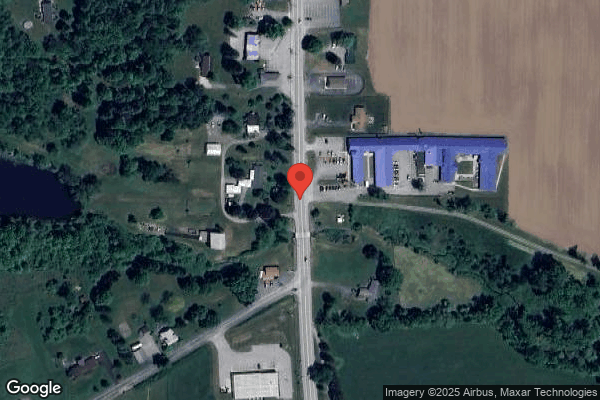

555 SOUTH MAIN STREET, HARRISVILLE, PA 16038 (724) 735-4224
For profit - Limited Liability company 103 Beds TRANSITIONS HEALTHCARE Data: November 2025 2 Immediate Jeopardy citations
Trust Grade
6/100
#502 of 653 in PA
Last Inspection: July 2025

Inspected within the last 6 months. Data reflects current conditions.

Overview

Transitions Healthcare Autumn Grove Care Center has received a Trust Grade of F, indicating significant concerns about the quality of care provided. It ranks #502 out of 653 facilities in Pennsylvania, placing it in the bottom half, and #7 out of 11 in Butler County, meaning only three local options are better. While the facility has shown some improvement in its issues, decreasing from 5 in 2024 to 3 in 2025, the overall situation remains troubling. Staffing is a relative strength with a 4 out of 5 rating, but the turnover rate is concerning at 59%, which is higher than the state average of 46%. However, the facility has faced serious issues, including failing to provide emergency life-saving interventions for a choking resident, which put all residents at risk. Additionally, there were significant delays in meal service, causing residents to receive meals hours late. On a more positive note, the RN coverage is average, which means there is some oversight to catch potential problems. Despite the strengths, the high fines of $179,218 and numerous deficiencies raise valid concerns for families considering this facility.

Trust Score
F
6/100
In Pennsylvania
#502/653
Bottom 24%
Safety Record
High Risk
Review needed
Inspections
Getting Better
5 → 3 violations
Staff Stability
⚠ Watch
59% turnover. Above average. Higher turnover means staff may not know residents' routines.
Penalties
✓ Good
$179,218 in fines. Lower than most Pennsylvania facilities. Relatively clean record.
Skilled Nurses
✓ Good
Each resident gets 42 minutes of Registered Nurse (RN) attention daily — more than average for Pennsylvania. RNs are trained to catch health problems early.
Violations
⚠ Watch
25 deficiencies on record. Higher than average. Multiple issues found across inspections.
★★☆☆☆
2.0
Overall Rating
★★★★☆
4.0
Staff Levels
★★☆☆☆
2.0
Care Quality
★★☆☆☆
2.0
Inspection Score
Stable
2024: 5 issues
2025: 3 issues

The Good

  • 4-Star Staffing Rating · Above-average nurse staffing levels
  • Full Sprinkler Coverage · Fire safety systems throughout facility
  • No fines on record

Facility shows strength in staffing levels, fire safety.

The Bad

2-Star Overall Rating

Below Pennsylvania average (3.0)

Below average - review inspection findings carefully

Staff Turnover: 59%

13pts above Pennsylvania avg (46%)

Frequent staff changes - ask about care continuity

Federal Fines: $179,218

Well above median ($33,413)

Significant penalties indicating serious issues

Chain: TRANSITIONS HEALTHCARE

Part of a multi-facility chain

Ask about local staffing decisions and management

Staff turnover is elevated (59%)

11 points above Pennsylvania average of 48%

The Ugly 25 deficiencies on record

2 life-threatening
Jul 2025 3 deficiencies
CONCERN (D)

Potential for Harm - no one hurt, but risky conditions existed

Deficiency F0605 (Tag F0605)

Could have caused harm · This affected 1 resident

Based on review of clinical records and facility policy, and staff interview, it was determined that the facility failed to provide a clinical rationale for the continued use of a PRN (as needed) psyc...

Read full inspector narrative →
Based on review of clinical records and facility policy, and staff interview, it was determined that the facility failed to provide a clinical rationale for the continued use of a PRN (as needed) psychotropic (affecting the mind) medication beyond 14-days one of five residents reviewed (Resident R5).A facility policy entitled Behavior Health Program dated 4/21/25, indicated that the physician will limit the timeframe for PRN psychotropic mediations to 14 days, unless a longer timeframe is deemed appropriate by the attending physician or prescribing practitioner. Residents R5's clinical record revealed an admission date of 1/13/24, with diagnoses that included bipolar disorder (mental health condition that causes extreme mood swings that include emotional highs, called mania, and lows, known as depression) liver failure, difficulty eating, gall stones, and heart disease. The clinical record revealed a new physician's order dated 6/22/25, to administer Lorazepam (antianxiety medication) every six hours as needed for 45 days. Further review of Resident R5's clinical record lacked evidence of a physician's rationale for ordering the psychotropic medication past the 14-day limit. Resident R5's clinical record contained a plan of care for ordered anti-anxiety medications and included Ativan (Lorazepam) PRN for 14 days and that it was reordered on 6/22/25, for 45 days. During an interview on 7/24/25, at 2:40 p.m. the Nursing Home Administrator confirmed that there was no evidence of a physician's rationale for ordering the PRN Lorazepam for 45 days. 28 Pa. Code 211.12(d)(1)(3)(5) Nursing services
CONCERN (E)

Potential for Harm - no one hurt, but risky conditions existed

Food Safety (Tag F0812)

Could have caused harm · This affected multiple residents

Based on review of facility policies, observations, and staff interviews, it was determined that the facility failed to serve food in a safe and sanitary manner during tray line and ensure that food w...

Read full inspector narrative →
Based on review of facility policies, observations, and staff interviews, it was determined that the facility failed to serve food in a safe and sanitary manner during tray line and ensure that food was stored in accordance with standards for food safety, and failed to label food brought into the facility with the resident's name and use by date, and failed to maintain sanitary conditions in one of two pantry refrigerators (CD Unit). Findings include: A facility policy entitled Bare Hand Contact with Food and Use of Plastic Gloves dated 4/21/2025, indicated Single-use gloves will be worn when handling food directly with hands to assure that bacteria is not transferred from the food handlers' hands to the food product being served. The policy further stated that anytime a contaminated surface is touched, the gloves must be changed, and hands must be washed. Examples include after handling boxes, crates, or packages; during food preparation, as often as necessary to remove soil and contamination and to prevent cross contamination when changing tasks; and any time a contaminated surface is touched. A facility policy entitled Food Availability dated 4/21/2025, indicated cleaning and sanitizing refrigerators on a regular cleaning schedule, and as needed. A facility policy entitled Food Brought in from Outside Sources and Personal Food Storage dated 4/21/2025, indicated food and beverages brought in from outside sources that require refrigeration or freezing should be labeled with the resident's name and date and stored in the refrigerator / freezer apart from facility food. A facility policy entitled Food Safety for Your Loved One dated 4/21/2025, indicated food in unmarked or unlabeled containers should be marked with the current date the food item was stored and the resident's name. Observation on 7/22/25, at 11:43 a.m. during tray line, revealed that Dietary Employee E2 left the kitchen area with gloved hands, went into the store room closet in hallway, grabbed a large can of chicken noodle soup, came back into the kitchen and opened the can of soup utilizing a can opener, poured the soup into a pan on the stove top, went to the sink, turned on the water and filled the soup can, poured the water into the pan of soup on the stove top, and then threw away the can. Immediately after this at 11:46 a.m. Dietary Employee E2 was observed grabbing a hamburger bun with his/her gloved hand, placing the bun on a plate, using utensils he/she put a hamburger on the bun, grabbed a slice of cheese with his/her gloved hand and placed it on the burger. Immediately after this at 11:47 a.m. Dietary Employee E2 grabbed another hamburger bun with his/her gloved hand, placed the bun on a plate, using utensils he/she put a hamburger in a bowl, used his/her gloved hands to break up the burger, put the burger on the bun, grabbed a slice of cheese with his/her gloved hand and placed it on the burger. Dietary Employee E2 then proceeded to grab three premade grilled cheese sandwiches from a tray with his/her gloved hands and placed them in a skillet. At 11:49 a.m. surveyor stopped Dietary Employee E2 and reviewed the above observations with him/her. Dietary Employee E2 confirmed he/she did the aforementioned and stated he/she tries to remember to change his/her gloves and wash his/her hands but did not do it this time. During an interview on 7/22/25, at 11:50 a.m. Dietary Manager was informed of the above observations and confirmed that Dietary Employee E2 should have changed his/her gloves and washed his/her hands after handling the soup can. Observation on 7/22/25, at 2:27 p.m. on CD unit pantry freezer revealed a 20-ounce bottle of Diet Pepsi with no name and no date. Observation on 7/22/25, at 2:28 p.m. on CD unit pantry refrigerator revealed a 12-ounce can of C4 performance energy drink and a plastic bowl with lid containing applesauce with no name and no date. A dried thick yellow substance was observed on the bottom and 2nd shelf of the refrigerator. During an interview on 7/22/25, at 2:33 p.m. Licensed Practical Nurse Employee E1 confirmed resident freezer / refrigerator in CD unit pantry was dirty and contained items that were not labeled as required. 28 Pa. Code 201.14(a) Responsibility of licensee28 Pa. Code 201.18(e)(2.1) Management
CONCERN (E) 📢 Someone Reported This

A family member, employee, or ombudsman was alarmed enough to file a formal complaint

Potential for Harm - no one hurt, but risky conditions existed

Deficiency F0925 (Tag F0925)

Could have caused harm · This affected multiple residents

Based on review of facility policy, observation, and staff interview, it was determined that the facility failed to maintain an effective pest control program to ensure a pest free environment in one ...

Read full inspector narrative →
Based on review of facility policy, observation, and staff interview, it was determined that the facility failed to maintain an effective pest control program to ensure a pest free environment in one of two pantries (CD Unit). Findings include: A facility policy entitled Pest Control dated 4/21/2025, indicated Routine pest control procedures will be in place. Observation of the pantry on CD Unit on 7/22/25, at 2:27 p.m. revealed numerous small flying insects on the walls, around the sink, around the garbage can and around the base of the floor where a portion of the baseboard was coming off. During an interview on 7/22/25, at 2:33 p.m. Licensed Practical Nurse (LPN) Employee E1 confirmed the presence of small flying insects in the CD pantry. LPN Employee E1 stated they are always bad in here and if someone leaves any food on the counters, it is much worse. The facility was unable to provide any evidence of prior pest control treatment to CD pantry. 28 Pa Code 201.14(a) Responsibility of licensee28 Pa. Code 201.18(b)(3)(e)(2.1) Management
Aug 2024 5 deficiencies
CONCERN (D)

Potential for Harm - no one hurt, but risky conditions existed

Resident Rights (Tag F0550)

Could have caused harm · This affected 1 resident

Based on review of clinical records, observations, and staff interviews, it was determined that the facility failed provide an environment that enhances resident's quality of life for three of 21 resi...

Read full inspector narrative →
Based on review of clinical records, observations, and staff interviews, it was determined that the facility failed provide an environment that enhances resident's quality of life for three of 21 residents reviewed (Residents R25, R65, R69). Findings include: Resident R25's clinical record revealed an admission date of 6/14/24, with diagnoses that included bipolar disorder (a mental illness that causes unusual shifts in a person's mood, energy, activity levels, and concentration), dementia, tremors, need for assistance with personal care, and cognitive communication deficit (communication difficulty that is caused by a cognitive deficit rather than a language or speech deficit). The clinical record lacked evidence of a physician's order and/or plan of care to address him/her consuming meals while sitting in the hall at the nurse's station. Resident R25's most recent Admission/5-Day Minimum Data Set (MDS-standardized assessment tool used to evaluate the health and functional abilities of residents in Medicare or Medicaid certified nursing homes) Section C0500 with an Assessment Reference Date (ARD-a time period to look back for review of resident status) of 6/19/24, indicated that Resident R25's Brief Interview of Mental Status (BIMS-cognitive screening tool used in nursing homes and other long-term care facilities to assess the cognitive condition of residents) score of four (severely impaired cognition). Resident R65's clinical record revealed an admission date of 1/05/22, with diagnoses that included dementia, anxiety, mood disorder, and difficulty eating. The clinical record lacked evidence of a physician's order and/or plan of care to address him/her consuming meals while sitting in the hall at the nurse's station. Resident R65's most recent Significant Change MDS Section C0500 with an ARD of 8/15/24, indicated that his/her BIMS score was a score of one (severely impaired cognition). Resident R69's clinical record revealed an admission date of 3/19/21, with diagnoses that included psychotic disorder, Alzheimer's disease (brain disorder that slowly destroys memory and thinking skills, and eventually the ability to perform even the simplest tasks), anxiety, and cognitive communication deficit. The clinical record lacked evidence of a physician's order and/or plan of care to address him/her consuming meals while sitting in the hall at the nurse's station. Resident R69's most recent Quarterly MDS Section C0500 with an ARD of 7/03/24, indicated that his/her BIMS score was a score of three (severely impaired). Observations on 8/22/24, at 12:49 p.m. revealed Residents R65 and R69 feeding themselves lunch at a tray table while sitting in the hall across from the Unit C/D nurse's station, and Resident R25 being fed by staff at a tray table while sitting in the hall across from the Unit C/D nurse's station. During an interview at that time, Registered Nurse Employee E2 confirmed the main dining area is at max capacity so residents eat here, those who cannot eat in their rooms have to eat up here, the resident lounge is not open during meals due to the choking incident. During an interview on 8/23/24, at 10:10 a.m. the Executive Director and Nursing Home Administrator confirmed that there is not enough room for all residents to eat in the main dining area at one time. 28 Pa. Code 205.9(c) Corridors 28 Pa. Code 201.18 (b)(3) Management 28 Pa. Code 201.18 (e)(1) Management 28 Pa. Code 211.10 (a) Resident Care Policies 28 Pa. Code 211.12 (d)(1)(5) Nursing Services
CONCERN (D)

Potential for Harm - no one hurt, but risky conditions existed

Assessment Accuracy (Tag F0641)

Could have caused harm · This affected 1 resident

Based on review of clinical records and Minimum Data Set (MDS - federally mandated standardized assessment conducted at specific intervals to plan resident care), and staff interview, it was determine...

Read full inspector narrative →
Based on review of clinical records and Minimum Data Set (MDS - federally mandated standardized assessment conducted at specific intervals to plan resident care), and staff interview, it was determined that the facility failed to ensure that MDS assessments accurately reflected the status of two of 21 residents reviewed (Residents R15 and R32). Findings include: MDS instructions for section N0350A Medications - Insulin Injections revealed to Record the number of days that insulin injections were received during the last 7 days or since admission / entry or reentry if less than 7 days. Resident R15's clinical record revealed an admission date of 4/11/24, with diagnoses that included Type II diabetes (condition that affects how your body uses insulin), breast cancer, and dementia (loss of cognitive functioning affecting a persons memory and behaviors). Resident R15's clinical record revealed a physician's order dated 4/12/24, for Liraglutide injection (an antihyperglycemic [medication to reduce elevated blood sugar levels] injection used to help control blood sugar, which is not classified as an insulin) 1.8 milligrams (mg) one time a day. Further review of Resident R15's clinical record revealed a physician's order dated 4/26/24, for Trulicity injection (an antihyperglycemic injection used to help control blood sugar, which is not classified as an insulin) 1.5 mg every Friday. Resident R15's admission MDS with an Assessment Reference Date (ARD-time period to look back to review resident status) of 4/18/24, indicated Resident R15 received insulin six of the last seven days. Resident R15's quarterly MDS with an ARD of 5/30/24, indicated that Resident R15 received insulin one of the last seven days. Resident R32's clinical record revealed an admission date of 4/18/24, with diagnoses that included morbid obesity, heart failure and hyperglycemia (elevated blood sugar level). Resident R32's clinical record revealed a physician's order dated 5/30/24, for Trulicity injection 1.5 mg every Thursday. Resident R32's quarterly MDS with an ARD of 7/16/24, indicated that Resident R32 received insulin one of the last seven days During an interview on 8/22/24, at 2:09 p.m. the Registered Nurse Assessment Coordinator confirmed that neither Liraglutide or Trulicity are classified as insulin and Resident R15's and R32's MDS's for section N0350A were coded incorrectly and should have been coded as zero. 28 Pa. Code 201.14(a) Responsibility of licensee 28 Pa. Code 211.5(f)(ix) Medical records
CONCERN (D)

Potential for Harm - no one hurt, but risky conditions existed

Respiratory Care (Tag F0695)

Could have caused harm · This affected 1 resident

Based on review of facility policy and clinical records, observations, and staff interview, it was determined that the facility failed to maintain proper care of respiratory equipment for one of two r...

Read full inspector narrative →
Based on review of facility policy and clinical records, observations, and staff interview, it was determined that the facility failed to maintain proper care of respiratory equipment for one of two residents reviewed for respiratory services (Resident R66). Findings include: Review of facility policy dated 8/7/24, entitled Oxygen Concentrators indicated The facility will include cleaning of humidifiers and filters to maintain optimal function and infection control procedures and for filters clean weekly and as needed, rinse thoroughly with clear water, and towel day to remove excess water. Resident R66's clinical record revealed an admission date of 2/17/20, with diagnoses that included chronic obstructive pulmonary disease (COPD - a lung disease that results in difficulty breathing, cough, and mucus production), dementia (loss of cognitive functioning affecting a persons memory and behaviors), and high blood pressure. Resident R66's physician's order dated 2/27/24, revealed that oxygen was ordered at three liters per minute every shift via nasal cannula (tubing that enters into the nostrils to administer oxygen). Further review of physician orders revealed that the oxygen filter is to be cleaned weekly every night shift every Sunday. Observation on 8/20/24, at approximately 12:13 p.m. and on 8/21/24, at approximately 8:52 a.m. revealed that Resident R66's oxygen concentrator had one filter on the back of the concentrator that contained a gray dusty substance. During an interview on 8/21/24, at approximately 8:55 a.m. Licensed Practical Nurse Employee E1 confirmed that the oxygen concentrator filter contained a gray dusty substance and should not. 28 Pa. Code 211.12(d)(1)(5) Nursing services
CONCERN (D)

Potential for Harm - no one hurt, but risky conditions existed

Deficiency F0698 (Tag F0698)

Could have caused harm · This affected 1 resident

Based on review of facility dialysis (a blood purifying treatment given when your kidneys are not functioning) center contract, facility policy, and clinical record, and staff interview, it was determ...

Read full inspector narrative →
Based on review of facility dialysis (a blood purifying treatment given when your kidneys are not functioning) center contract, facility policy, and clinical record, and staff interview, it was determined that the facility failed to maintain records relating to dialysis communication for one of one residents reviewed for dialysis (Resident R79). Findings include: Review of dialysis contract between the facility and the dialysis clinic dated 7/18/14, revealed that the responsibility of the skilled nursing facility included that the healthcare staff will make an assessment of each patient's physical condition and determine whether the patient is stable enough to be dialyzed on an outpatient basis. If it is determined that a patient is sufficiently stable, this assessment will be communicated to the facility's nurse manager or his or her designee. This assessment and communication will occur prior to each and every transfer of a patient to the dialysis clinic for hemodialysis on an outpatient basis regardless of the number of times any particular patient may be transferred and dialyzed. The agreement further stated that the dialysis clinic shall provide to the facility information which may be utilized in the development and maintenance of the patients care plan and information about how care should be rendered to a patient in emergency and non-emergency situations. Review of facility policy dated 8/7/24, entitled Dialysis indicated It is the policy of this facility to maintain medical record documentation for residents receiving renal dialysis in accordance with state and federal regulations and regulatory guidelines. The policy further stated The renal dialysis provider will provide the facility with copies of reports of all tests performed on the resident during renal dialysis, written physician orders or recommendations for change in medications/treatment and a copy of reports of any unusual events occurring while at the dialysis unit. The reports will be returned with the resident following each treatment. And Should the renal dialysis unit fail to comply with this agreement, the Charge Nurse will notify the facility Administrator who will in turn contact the Administrative Officer in charge of the renal dialysis unit. Resident R79's clinical record revealed an admission date of 7/10/23, with diagnoses that included end stage renal disease (a disease where the kidneys no longer work to meet the body's needs), diabetes, and anxiety. Review of R79's physician orders dated 5/9/24, revealed Resident R79 received dialysis every Monday, Wednesday, and Friday with a chair time of 6:30 a.m. On 8/22/24, at approximately 3:35 p.m. it was requested for evidence that communication between the facility and the dialysis center was occurring with each dialysis treatment every Monday, Wednesday, and Friday for Resident R79. Upon review of dialysis communication documents dated between 5/31/24, and 7/15/24, it was identified that there was no evidence that any evidence of communication was provided by the facility to the dialysis center since 7/15/24, for a total of 16 visits to the dialysis center from 7/15/24, to 8/22/24. During an interview on 8/23/24, at 10:42 a.m. the Executive Director confirmed the lack of communication from the facility to the dialysis center for Resident R79 since 7/15/24, and additionally confirmed that communication is to occur between the facility and the dialysis center for each treatment rendered and the facility should have evidence of this in the resident's clinical record. 28 Pa. Code 211.5(f)(iv)(viii) Medical records 28 Pa. Code 211.12(d)(1)(3)(5) Nursing services
CONCERN (E)

Potential for Harm - no one hurt, but risky conditions existed

Food Safety (Tag F0812)

Could have caused harm · This affected multiple residents

**NOTE- TERMS IN BRACKETS HAVE BEEN EDITED TO PROTECT CONFIDENTIALITY** Based on review of facility policies, observations, and staff interviews, it was determined that the facility failed to store fo...

Read full inspector narrative →
**NOTE- TERMS IN BRACKETS HAVE BEEN EDITED TO PROTECT CONFIDENTIALITY** Based on review of facility policies, observations, and staff interviews, it was determined that the facility failed to store food and food containers in a safe and sanitary manner in two of two nourishment refrigerators (A/B Unit, C/D/Unit). Findings include: A facility policy entitled, Food Safety for your Loved One dated 8/07/24, indicated food or beverages should be labeled and dated to monitor for food safety: food and beverages that have passed the manufacturer's expiration date will be discarded; food or beverage items without an manufacturer's expiration date should be dated upon arrival in the facility and thrown away seven days after the date marked; and foods in unmarked or unlabeled containers should be marked with the current date the food item was stored and the resident's name. A facility policy entitled, Food Brought in from Outside Sources and Personal Food Storage dated 8/07/24, indicated that foods and beverages brought in from outside sources that require refrigeration or freezing should be labeled with the resident's name and date. A facility policy entitled, Food Availability dated 8/07/24, indicated that food and nutrition services staff are responsible for cleaning and sanitizing refrigerators on a regular cleaning schedule and as needed. Observation on 8/23/24, at 10:40 a.m. of the pantry refrigerator on the A/B Unit revealed the following food items without a resident name or date: a clear plastic container half full and labeled as ham salad; a white plastic bowl covered with aluminum foil and half full of a rice and corn mixture; a red [NAME] bag that contained a clear plastic wrapping of deli meat and cheese, and a clear plastic container of fresh cut vegetables with a best if used by date of 8/16/24. Observation on 8/23/24, at 10:53 a.m. of the pantry refrigerator on the C/D Unit revealed: a white foam container with chicken tenders and a pint size Chinese take-out container with someone's first name on it and dated 8/07/24. Also in the refrigerator were the following items that lacked a name and date: three pizza boxes that contained various slices of pizza, a black plastic container with a clear lid that contained a piece of meat, one submarine sandwich and a croissant in a cooler bag, black lunch pail that contained two cans of Mountain Dew and a sandwich, and a ¾ full clear plastic drink cup of dark colored pop with a straw. The shelves and bottom of the refrigerator had dried spills of a variety of colored liquids, food crumbs and debris. During an interview on 8/23/24, during the above observations the Dietary Manager confirmed that the refrigerators on both units contained outdated, unlabeled, and undated food items and the refrigerator of C/D Unit contained the dried spills, food crumbs, and debris. 28 Pa. Code 211.10(d) Resident care policies 28 Pa. Code 201.18(b)(1) Management
Nov 2023 5 deficiencies 2 IJ (1 facility-wide)
CRITICAL (K) 📢 Someone Reported This

A family member, employee, or ombudsman was alarmed enough to file a formal complaint

Immediate Jeopardy (IJ) - the most serious Medicare violation

Deficiency F0805 (Tag F0805)

Someone could have died · This affected multiple residents

Based on review of clinical records, facility documents and coroner's report, and staff interviews it was determined the facility failed to provide food in a form designed to meet individual needs for...

Read full inspector narrative →
Based on review of clinical records, facility documents and coroner's report, and staff interviews it was determined the facility failed to provide food in a form designed to meet individual needs for one resident (Resident R1) who choked and ceased to breath as a result. This failure placed nine residents that had similar diet needs for bite-sized pieces at a high risk for death and resulted in an Immediate Jeopardy situation for Residents R2, R3, R4, R5, R6, R7, R8, R9, and R10. Findings include: Review of Resident R1's clinical record revealed an admission date of 8/08/23, with diagnoses that included alcoholic myopathy, muscle weakness, unsteadiness on feet, and dysphagia (difficulty swallowing). Review of physician's orders revealed that Resident R1's diet was regular texture with meats cut into bite-size pieces, allowed thin liquids with direct supervision and meal trays, and nectar thick liquids at bedside. Review of Resident R1's clinical record revealed he/she was followed by Speech Therapy from 9/12/23-10/11/23 Therapy notes indicated due to documented physical impairments and associated functional deficits, without skilled therapeutic interventions that Resident R1 was at risk for aspiration (food or liquid entering the airway) and that Resident R1 required supervision/assistance at mealtime due to swallowing safety 50 percent to 75 percent of the time. Review of Resident R1's care plan revealed that he/she was to be monitored and staff to document and report to the physician for signs and symptoms of dysphagia, pocketing, choking, drooling, holding food in mouth, several attempts at swallowing, and refusing to eat. The care plan also indicated that Resident R1 appears concerned during meals. Review of Resident R1's meal ticket revealed he/she was to have thin liquids in a regular cup with a Rije cup (a drinking aid for people with swallowing disorders) on the side and a spouted cup for nectar thick liquids (slightly more body than thin liquids used for people with swallowing disorders). An alert on the meal ticket revealed that Resident R1 was to have cut meats. Review of facility bite sized diet guidelines revealed, Soft & Bite-Sized This diet restriction is intended for those that have some chewing ability to break food into smaller pieces and move food around in order to swallow safely. Food served on this diet must be soft and tender, with particle sizes no larger than 1.5 centimeters x 1.5 centimeters (0.59 inches). Review of facility hotdog order revealed that two cases of Smithfield Beef Franks, five count per pound, frozen, 10-pound package was delivered on 10/10/23. The Smithfield Beef [NAME] served on 10/11/23, were 91 grams per hotdog, when compared to a Ball Park Beef Hot Dog, original length which are 53 grams per hotdog. This information identified that the hotdogs served at the facility on 10/11/23 were almost double the size of a regular hotdog. During an interview on 10/31/23, at 1:55 p.m. Dietary Staff Employee E9 stated, the hotdog was cut, but not in bite-size pieces, the hotdog was in a bun and cut into four equal pieces and there was only one piece of the hotdog left on [Resident R1's] tray and that [Resident R1] did not eat any of the bun. He/she confirmed that the hotdogs were larger than a normal hotdog that you would buy at the grocery store. Subsequent interview with Dietary Staff Employee E9 on 11/1/23, at approximately 1:30 p.m. revealed that he/she provided a description of a bite-sized diet from the facility's diet manual and that a bite-size diet food should be cut into 0.59-inch sized pieces. He/she also said they do not follow this diet that is in the manual because it is not in their electronic system, but it is a good reference to use when a resident is ordered a bite-size diet. Review of physician's orders for Residents R2, R3, R4, R5, R6, R7, R8, R9, R10, revealed all had diet orders comparable to Resident R1 with orders in place for bite-sized meat. Review of the facility policy entitled, Therapeutic Diets Provided To Residents in Long-Term Care last reviewed 8/3/23, revealed, To assure provision of the appropriate diet for each resident and to maximize resident care . Review of information submitted by the facility dated 10/11/23, revealed, .Coroner notified writer that cause of death was accidental, asphyxiation (lack of oxygen and impaired respiration, suffocation), removal of piece of hot dog from resident's airway. Resident's diet was as follows: Regular textures with meats cut into bite-size pieces, sugar substitute, allowed thin liquids with direct supervision and meal trays, nectar thick liquids at bedside. Review of facility investigation documentation revealed the following written staff interviews: Review of Occupational Therapist Employee E6's written statement on 10/11/23, at 11:40 a.m., revealed, called C/D lounge by RN [Registered Nurse Employee E1] walking down to C/D lounge- entered C/D lounge resident sitting in dining room armed chair with drool noted on lips, lips lightly blue, and cool to touch, arms resting relaxed at sides, eyes barely open. No active movement observed occasional gasp (whole body) therapist supported resident in upright position-CNA [Certified Nurse Aide Employee E7] was behind resident having stated completed Heimlich and upon walking to dining room audibly heard back thrusts being performed, RN [Employee E1], LPN [Licensed Practical Nurse] Employee E5, CNA [Employee E7], LPN [Employee E4] transferred resident out of armed chair into broda [type of positioning chair] wheelchair. Assist from CNA staff Tray without Rije cup. Hot dog pieces all gone but one and bun intact. OT only drink consumed. The facility investigation lacked a written statement for CNA Employee E7 who was the staff member that was in the D-Wing Lounge at the time Resident R1 started to choke. Interview with LPN Employee E4 on 10/31/23 at 12:35 p.m., revealed that he/she had no training on emergency response such as a STAT call over the intercom. He/she was in the facility at time of incident and heard another LPN Employee E5 yelling. He/she went to the lounge and saw Resident R1 going unresponsive, he/she was unsure if the resident was choking at that time and then looked down at Resident R1's meal and noticed a hotdog in front of Resident R1 and that it was not a normal hot dog it was a jumbo hotdog. He/She then smacked Resident R1 on the back and did a finger sweep which he/she did not find anything. He/she stated that Resident R1 is known for eating too fast and attempting to eat too much food at once, so Resident R1 had to be monitored for safety. He/She identified that Nursing Assistant Employee E7 was the only staff member in the D-Wing Lounge at that time and did not see anyone performing the Heimlich on Resident R1. He/She stated that there was no crash cart/suctioning brought to the lounge and that Resident R1 was a DNR with a limited POLST. Review of the Resident R1's autopsy report completed by the coroner dated 10/11/23, revealed there was 3.5 x 2.5 x 2 centimeters [cm--2.54 centimeters equal to one inch] piece of hotdog lodged and blocking the larynx/trachea and numerous large pieces of hotdog in the stomach. Review of Resident R1's death certificate identified the main cause of death as asphyxiation (being deprived of oxygen which can result in suffocation or death) related to choking on a bolus (ball like mixture of food and saliva) of food. The facility failed to provide food in a form designed to meet individual needs for one resident (Resident R1) who choked and ceased to breath as a result. This failure placed eight residents that had similar diet needs related to bite-sized pieces at a high risk for death and resulted in an Immediate Jeopardy (IJ) situation for Residents R2, R3, R4, R5, R6, R7, R8, and R9. The Nursing Home Administrator (NHA) was notified of the IJ situation on October 31, 2023, at 4:39 p.m. and was provided the IJ template. An Immediate Action Plan was requested. The Immediate Action Plan was provided by the NHA and the Director of Nursing on October 31, 2023, and approved at 6:31 p.m. The approved plan included: 1. Facility already implemented plan through our QAPI committee on October 19, 2023. 2. Facility has reviewed all resident diets to ensure proper diets are provided, completed on October 12, 2023. This review was completed by Dietician, Speech Therapist, Director of Rehabilitation, Certified Dietary Manager, Nursing Home Administrator, and Director of Nursing. 3. Diets have been altered for safety reasons based on residents' needs, orders have been updated as of October 16, 2023. 4. Staff have been educated ensuring food is served in accordance with ordered diet. This education occurred on October 25, 2023. 5. Hot Dogs, and other tubular meats, were removed from the facility menus on October 12, 2023. 6. Audits are being completed five days per week for four weeks, then three days per week for four weeks, then weekly for four weeks. All audits will be taken to QAPI. On November 1, 2023, between 10:45 a.m. and 3:15 p.m. observations, staff interviews, and review of facility policy, and education, verified that the facility had implemented the above identified action plan. The Immediate Jeopardy was removed on November 1, 2023, 2:45 p.m. when the action plan implementation was verified. 28 Pa. Code 201.14(a) Responsibility of licensee 28 Pa. Code 201.18(b)(1)(2)(3) Management 28 Pa. Code 201.18(e)(1) Management 28 Pa. Code 211.12(c) Nursing services 28 Pa. Code 211.12(d)(1)(2)(3)(5) Nursing services
CRITICAL (L) 📢 Someone Reported This

A family member, employee, or ombudsman was alarmed enough to file a formal complaint

Immediate Jeopardy (IJ) - the most serious Medicare violation

Deficiency F0836 (Tag F0836)

Someone could have died · This affected most or all residents

⚠️ Facility-wide issue

Based on review of facility policy, clinical records, facility documents, staff documentation, and coroner's report and staff interviews, it was determined the facility failed to provide emergency lif...

Read full inspector narrative →
Based on review of facility policy, clinical records, facility documents, staff documentation, and coroner's report and staff interviews, it was determined the facility failed to provide emergency life-saving interventions as required for one resident who was choking and still breathing where professional licensed staff did not attempt life-saving interventions to Resident R1 as required. This failure placed all 100 residents that may have needed emergency life-saving interventions, at a high risk for death and resulted in an Immediate Jeopardy situation. Findings include: Review of the facility policy entitled, Foreign Body Airway Obstruction Management, last reviewed 8/3/23, revealed, Facility personnel will be trained on the procedure for Foreign-Body Airway Obstruction [Heimlich Maneuver]. The Heimlich Maneuver is used on conscious adults and thrusts are to continue even if the resident loses consciousness in an attempt to dislodge an obstruction. Review of facility documents entitled, Job Description-Registered Nurse Supervisor revealed that Registered Nurse (RN) Supervisors are expected to assist with or institute emergency measures for sudden adverse developments in residents. Review of Resident R1's clinical record revealed an admission date of 8/08/23, with diagnoses that included alcoholic myopathy (disease of muscle tissue), muscle weakness, unsteadiness on feet, and dysphagia (difficulty swallowing). Review of physician's orders revealed that Resident R1's diet was regular textures with meats cut into bite size pieces, allowed thin liquids with direct supervision and meal trays, nectar thick liquids at bedside. Resident R1 was followed by Speech Therapy from 9/12/23-10/11/23. Therapy notes indicated that due to documented physical impairments and associated functional deficits, without skilled therapeutic interventions Resident R1 was at risk for: aspiration (food or liquid entering the airway) and that Resident R1 required supervision/assistance at mealtime due to swallowing safety 50 percent to 75 percent of the time. Review of Resident R1's care plan revealed that he/she was to be monitored and staff to document and report to the physician for signs and symptoms of dysphagia, pocketing, choking, drooling, holding food in mouth, several attempts at swallowing, and refusing to eat. The care plan also indicated Resident R1 appears concerned during meals. Review of Resident R1's POLST [Pennsylvania Orders for Life-Sustaining Treatment] dated 8/09/23, revealed FIRST follow these orders, THEN contact physician, Certified Registered Nurse Practitioner [CRNP] or Physician Assistant. This is an Order Sheet based on the person's medical condition and wishes at the time the orders were issued. Everyone shall be treated with dignity and respect. The POLST was signed by both the physician and Resident R1 and Section A revealed that if the person has no pulse and is not breathing DNR [Do Not Attempt Resuscitation] Allow Natural Death. Section B revealed Medical Interventions person has pulse and/or is breathing as Limited Additional Interventions. Section B was signed by both the physician and Resident R1 revealed the resident wanted oral suction and manual treatment of airway obstruction. Review of information submitted by the facility dated 10/11/23, revealed, Registered Nurse Supervisor [Employee E1] response STAT [immediately/without delay] to D wing lounge and noted that Resident R1 was nonresponsive, lips cyanotic, resident taking gasps. Review of progress notes revealed documentation completed by RN Employee E1 on 10/11/23 at 12:12 p.m., which stated, writer called to d lounge. [Resident R1] nonresponsive, lips cyanotic, resident taking gasp. No spo2 [blood oxygen level] obtainable . in house and paged to room. Resident seen one hour prior by CRNP [Certified Registered Nurse Practitioner]. CRNP at her side. No chest movement. No pulse. POLST verified several times. CRNP states CTB [ceased to breath] at 11:40 a.m. Brother .notified. Brother coming to see resident. Review of facility investigation documentation revealed the following written staff interviews: Review of Certified Nursing Assistant [CNA] Employee E2's written statement revealed on 10/11/23, I was feeding another resident. He/She was starting to spit out food after a few bites. I took him/her up by the nurse's station and then I had to talk to the Therapy lady up at the nurse's station. I didn't come back in like usual to feed a couple other residents in there. Review of CNA Employee E3's written statement revealed, on 10/11/23, at 11:30 a.m. I helped pass a few trays in D-Lounge. When I left the D-Lounge [CNA Employee E7] was still passing trays. I left to toilet a resident on another hall who had been asking to go at the time trays arrived. Trying to self-transfer. After toileting resident, I was at the desk when I heard [CNA Employee E7] yell for LPN [Licensed Practical Nurse Employee E4] in D-Lounge. That is when I heard [Resident R1] choking. His/her code status was looked up and RN [Employee E1] was called. I did not go down to the lounge at this time, I moved residents in the hall to make a path for anybody who needed to get there quickly. Review of LPN Employee E4's written statement on 10/11/23, revealed, called to the lounge by other LPN [Employee E5]. This nurse went into lounge LPN [Employee E5] and CNA [Employee E7] were in the lounge. They stated they weren't sure what was going on with [Resident R1]. His/her color was dusky. His/her eyes were big. I asked [Resident R1] if he/she was choking, [Resident R1] looked at me and then went unresponsive. I ran to look at POLST and told LPN [Employee E5] to call RN [Employee E1]. POLST said DNR. I ran and got RN [Employee E1], and we ran back to the lounge. Review of LPN Employee E5's written statement on 10/11/23, revealed, I was walking down D hall to pass 11 a.m. meds. I stopped in the lounge to ask an aide [Employee E7] a question. When I walked in the resident looked like he/she was going to cough, but she didn't make any noise. Then the resident looked like she was choking. [CNA Employee E7] patted her on the back a couple of times. Resident started looking blue. I ran and grabbed my pulse ox. Resident coughed quietly. [CNA Employee E7] did Heimlich. Resident just turned more blue. I yelled for the resident's nurse, [LPN Employee E4] came. I called [RN Supervisor Employee E1] on the phone to come now. [He/she] came pretty quick. We checked resident was a DNR. She was blue but was still taking a quick breath now and then. The nurse practioner came. We got her in a chair and took her to her room. They called her time of death. The lunch tray cart was in the lounge while they were eating. Review of Occupational Therapist Employee E6's written statement on 10/11/23 at 11:40 a.m., revealed, called C/D lounge by RN [Employee E1] walking down to C/D lounge- entered C/D lounge resident sitting in dining room armed chair with drool noted on lips, lips lightly blue, and cool to touch, arms resting relaxed at sides, eyes barely open. No active movement observed occasional gasp (whole body) therapist supported resident in upright position-CNA [Employee E7] was behind resident having stated completed Heimlich and upon walking to dining room audibly heard back thrusts being performed, RN [Employee E1], LPN [Employee E5], CNA [Employee E7], LPN [Employee E4] transferred resident out of armed chair into broda wheelchair. Assist from CNA staff Tray without Rije cups. Hot dog pieces all gone but one and bun intact. OT only drink consumed. Subsequent interview conducted with RN Employee E1 on 10/31/23, at approximately 9:15 a.m., revealed that he/she gave a statement that was sent to the Department of Health; he/she stated it was a bad day and he/she was monitoring in the dining room at the time of the incident. He/She got called to D-wing Lounge and went there after gathering the CRNP, upon arrival the resident took like two gasps of air and then stopped breathing, he/she was a DNR so did not initiate CPR (cardiopulmonary resuscitation). Subsequent interview with LPN Employee E4 on 10/31/23, at 12:35 p.m., revealed, that he/she had no training on emergency response such as a STAT call over the intercom. He/she was in the facility at time of incident and heard another LPN Employee E5 yelling. He/she went to the lounge and saw Resident R1 going unresponsive, he/she was unsure if the resident was choking at that time and then looked down at Resident R1's meal and noticed a hot dog in front of Resident R1 and that it was not a normal hotdog it was a jumbo hotdog. He/She then smacked Resident R1 on the back and did a finger sweep which he/she did not find anything. He/she stated that Resident R1 is known for eating too fast and attempting to eat too much food at once, so Resident R1 had to be monitored for safety. He/She stated that Nursing Assistant Employee E7 was the only staff member in the D-Wing Lounge at that time and did not see anyone performing the Heimlich on Resident R1. He/She stated that there was no crash cart/suctioning brought to the lounge and that Resident R1 was a DNR with a limited POLST. Subsequent interview with LPN Employee E5 on 10/31/23, at 12:56 p.m., revealed that he/she had no training on emergency response such as a CPR or STAT code. LPN Employee E5 stated that when he/she entered the lounge the resident looked funny, and his/her body was flopping; Resident R1 was blue in color. LPN Employee E5 stated they ran to get the pulse ox and called the RN Employee E1 on the portable phone while in the lounge. LPN Employee E5 stated that CNA Employee E7 was performing the Heimlich 3 or 4 times and Resident R1 was slow breathing; Resident R1 was slow breathing when RN Employee E1 entered the room, described the breaths as slow with longer than normal gaps in-between, but confirmed that Resident R1 was still moving air. He/she did not see anyone else perform the Heimlich on Resident R1; the crash cart/suctioning was not brought to the lounge. Interview conducted on 10/31/23, at 11:00 a.m. with the Nursing Home Administrator (NHA) and the Director of Nursing (DON) revealed, they both responded to the D-Wing Lounge after hearing the alert over the intercom. They stated they entered at the same time as the RN Employee E1 and CRNP Employee E8 and it happened in seconds. Advised there was not any time to call 911 and as they entered, Resident R1 took a couple of more breaths and then he/she was gone. They were unable to provide a statement regarding a timeline and advised the crash cart/suctioning was not taken to the lounge. The DON confirmed they have not conducted any type of competencies or mock drills regarding STAT situations with staff since he/she has been employed there, which has been over 1 year. Statement received via e-mail from CRNP Employee E8 on 10/31/23, at 1:42 p.m. revealed, The patient was seen early morning 10/11/23 in stable condition. I was called to the small lounge on the D Hall due to the patient being unresponsive. Upon arrival to the lounge the patient was slumped over in a chair. She had no pulse or respirations. It was communicated to me that she is a DNR. Nursing staff reported they were not aware of the patient eating any food from her lunch tray. She was taken back to her room and the coroner was notified. The facility investigation lacked a written statement for CNA Employee E7 who was the staff member that was in the D-Wing Lounge at the time Resident R1 started to choke and attempted the Heimlich, while yelling for assistance from additional staff. Review of the Resident R1's autopsy report completed by the coroner dated 10/11/23, revealed there was 3.5 x 2.5 x 2 centimeters [cm--2.54 centimeters equal to one inch] piece of hotdog lodged and blocking the larynx/trachea and numerous large pieces of hotdog in the stomach. Review of Resident R1's death certificate identified the main cause of death as asphyxiation (being deprived of oxygen which can result in suffocation and death) related to choking on a bolus (ball like mixture of food and saliva) of food. The facility's Licensed Professional Staff failed to provide emergency life-saving interventions which would have included but are not limited to, continuing the Heimlich Maneuver and/or utilizing suction for one resident who was choking and still breathing. This failure placed all 100 residents that may have needed emergency life-saving interventions, at a high risk for death and resulted in an Immediate Jeopardy (IJ) situation. The NHA was notified of the IJ situation on October 31, 2023, at 4:39 p.m. and was provided the IJ template. An Immediate Action Plan was requested. The Immediate Action Plan was provided by the NHA and the DON on October 31, 2023, and approved at 6:31 p.m. The plan included: 1. Facility already implemented process improvement plan through QAPI committee on October 19, 2023. 2. Facility completed training with staff on responding to emergency choking situations, completed on October 11, 2023. 3. Facility is working with Healthcare Coalition and Superior Ambulance in getting onsite CPR certification class scheduled, began calls to schedule on October 11, 2023. 4. Facility implemented that all licensed staff obtain CPR certification online until and in-person onsite class is confirmed. Certifications are obtained and housed in employees personnel file, implemented on October 11, 2023. 5. Facility has eliminated the use of Lounge Dining and have all residents dining in the main dining room where suctioning is available and additional staff are present effective October 12, 2023. 6. Audits are being completed five days per week for four weeks, then three days per week f or four weeks, then weekly for four weeks. All audits will be taken to QAPI. On November 1, 2023, between 10:45 a.m. and 3:15 p.m. observations, staff interviews, and review of facility policy, and education, verified that the facility had implemented the above identified action plan. The Immediate Jeopardy was removed on November 1, 2023, 2:45 p.m. when the action plan implementation was verified. 28 Pa. Code 201.14(a) Responsibility of licensee 28 Pa. Code 201.18(b)(1)(2)(3) Management 28 Pa. Code 201.18(e)(1) Management 28 Pa. Code 211.12(c) Nursing services 28 Pa. Code 211.12(d)(1)(2)(3)(5) Nursing services
CONCERN (E) 📢 Someone Reported This

A family member, employee, or ombudsman was alarmed enough to file a formal complaint

Potential for Harm - no one hurt, but risky conditions existed

Deficiency F0678 (Tag F0678)

Could have caused harm · This affected multiple residents

**NOTE- TERMS IN BRACKETS HAVE BEEN EDITED TO PROTECT CONFIDENTIALITY** Based on review of facility policies, facility documentation and staff interviews, it was determined that the facility failed to...

Read full inspector narrative →
**NOTE- TERMS IN BRACKETS HAVE BEEN EDITED TO PROTECT CONFIDENTIALITY** Based on review of facility policies, facility documentation and staff interviews, it was determined that the facility failed to ensure facility staff were properly trained to provide basic life support including, Heimlich Maneuver (emergency life-saving procedure that is done immediately when a person is choking which can increase the chances of survival after choking) and cardiopulmonary resuscitation (CPR-emergency life-saving procedure that is done when breathing or a heartbeat has stopped and when performed immediately can double or triple chances of survival after cardiac arrest) for 85 of 135 facility personnel. Findings include: Review of facility policy entitled Cardiopulmonary Resuscitation dated [DATE], revealed facility personnel will be trained on the imitation of cardiopulmonary resuscitation and basic life support. Review of facility policy entitled Foreign Body Airway Obstruction Management dated [DATE], revealed facility personnel will be trained on the procedure for foreign body airway obstruction. Review of the facility personnel CPR certification records as of [DATE], revealed 85 out of 135 staff personnel lacked evidence of completing basic life support including the Heimlich Maneuver and or CPR with the component of hands-on practice and in-person skills assessment. Further review of facility personnel CPR certification records revealed 34 CPR certifications were through National CPR Foundation. Review of National CPR Foundation training program revealed that the program does not include completion of hands-on practice and in-person skills assessments. The National CPR Foundation program indicated Learn useful-life skill techniques through video demonstration. Review of facility personnel CPR certification records revealed one certification through the National Health and Safety Association. Review of the National Health and Safety Association program revealed that the program does not include completion of hands-on practice and in-person skills assessment. The National Health and Safety Association program indicated No manikin required. Review of facility personnel CPR certification records revealed one certification through the American Health Care Academy. Review of the certification revealed an internet based activity and does not indicate completion of hands-on practice and in-person skills assessment. Review of facility personnel CPR certification records revealed one certification through CPR Select. Review of CPR Select program revealed that the program does not include completion of hands-on practice and in-person skills assessment. CPR Select program indicated No Skills test required. Interview with Nursing Assistant (NA) Employee E9 on [DATE], at 10:30 a.m. revealed that on [DATE], he/she was told by facility management to go online and get CPR certified. Interview also revealed that the CPR online training that he/she completed consisted of watching videos and reading material then answering 10 questions. There was no hands-on practice or in-person skills completed. Review of NA Employee E9's CPR certificate revealed it was from the National CPR Foundation. Interview with NA Employee E10 on [DATE], at 10:50 a.m. revealed that on [DATE], he/she was told by facility management to go online and complete CPR training. Interview also revealed that he/she did not complete the training course online. During an interview on [DATE], at 11:15 a.m. the Nursing Home Administrator confirmed there was no evidence that 85 facility personnel completed hands-on practice and in-person skills assessment with the CPR certifications. 28 Pa. Code 201.18(b)(1)(3) Management 28 Pa. Code 211.12 (d)(1)(3)(5) Nursing services
CONCERN (E) 📢 Someone Reported This

A family member, employee, or ombudsman was alarmed enough to file a formal complaint

Potential for Harm - no one hurt, but risky conditions existed

Deficiency F0726 (Tag F0726)

Could have caused harm · This affected multiple residents

**NOTE- TERMS IN BRACKETS HAVE BEEN EDITED TO PROTECT CONFIDENTIALITY** Based on review of job descriptions, facility cardiopulmonary resuscitation (CPR-emergency life-saving procedure that is done wh...

Read full inspector narrative →
**NOTE- TERMS IN BRACKETS HAVE BEEN EDITED TO PROTECT CONFIDENTIALITY** Based on review of job descriptions, facility cardiopulmonary resuscitation (CPR-emergency life-saving procedure that is done when breathing or a heartbeat has stopped and when performed immediately can double or triple chances of survival after cardiac arrest) records, facility assessment, and staff interviews, it was determined that the facility failed to ensure that licensed nursing staff have the specific competencies and skill sets necessary to care for resident's needs. Findings include: Review of facility Job Description entitled Licensed Practical Nurse dated 3/2017, revealed that CPR and AED (Automated External Defibrillator-medical device used to help those experiencing sudden cardiac arrest) certification are minimum requirements to perform the job. The review also revealed an essential job function is to attend in-services and/or educational programs in accordance with company and regulatory requirements. Review of Job Description entitled Certified Nursing Assistant dated 3/2017, revealed an essential job function is to attend in-services and/or educational programs in accordance with company and regulatory requirements. Review of Job Description entitled Registered Nurse dated 3/2017, revealed that CPR and AED certification are minimum requirements to perform the job. The review also revealed the Registered Nurse ensures that standards of nursing care are upheld, and policies and procedures are followed. Review of the Facility assessment dated 10/2023, revealed the column Frequency relative to benchmark on the assessment identified that a category for swallowing difficulty and residents with mechanically altered diets was very high which indicated an increase need of competent staff for basic life support including, Heimlich Maneuver (emergency life-saving procedure that is done immediately when a person is choking which can increase the chances of survival after choking) and CPR. Review of facility personnel CPR records revealed 85 out of 135 staff lacked evidence of completing basic life support including the Heimlich Maneuver and/or CPR with the component of hands-on practice and in-person skills assessment. Therefore, the facility's CPR records lacked evidence that 85 of 135 facility staff were evaluated and assessed to be competent in basic life support including the Heimlich Maneuver and CPR. Interview with Nursing Assistant (NA) Employee E10 on [DATE], at 10:30 a.m. revealed that he/she completed CPR online training that consisted of watching videos and reading material then answering 10 questions. There was no hands-on practice or in-person skills completed. The interview also revealed he/she was not trained in basic life support including the Heimlich Maneuver. Interview with NA Employee E11 on [DATE], at 10:50 a.m. revealed that he/she was not trained in Basic Life Support including the Heimlich Maneuver and/or CPR certified. Interview with NA Employee E12 on [DATE], at 10:35 a.m. revealed that he/she was not trained in Basic Life Support including the Heimlich Maneuver and or CPR certified. Interview with Licensed Practical Nurse (LPN) Employee E4 on [DATE], at 12:45 p.m. revealed that he/she was not provided with training on emergency response including basic life support, Heimlich Maneuver and CPR, and what to do once an emergency is identified to prevent a condition from worsening. Interview with LPN Employee E5 on [DATE], at 12:47 p.m. revealed that he/she was not provided with training on emergency response including basic life support, Heimlich Maneuver and CPR, and what to do once an emergency is identified to prevent a condition from worsening. During an interview on [DATE], at 11:00 a.m. the Director of Nursing (DON) confirmed they have not conducted any type of competencies or mock drills regarding STAT (a term used in the medical field for response to an emergency) situations with staff since he/she has been employed there, which has been over one year. The DON also confirmed that competencies should be completed for staff. During an interview on [DATE], at 11:15 a.m. the Nursing Home Administrator confirmed there was no evidence that 85 facility personnel completed hands-on practice and in-person skills assessment with the CPR certifications. 28 Pa. Code 201.14(a) Responsibility of licensee 28 Pa. Code 211.12(d)(1)(3)(5) Nursing services
CONCERN (E) 📢 Someone Reported This

A family member, employee, or ombudsman was alarmed enough to file a formal complaint

Potential for Harm - no one hurt, but risky conditions existed

Administration (Tag F0835)

Could have caused harm · This affected multiple residents

Based on review of facility records and job descriptions, it was determined that the Nursing Home Administrator (NHA) and the Director of Nursing (DON) failed to effectively manage the facility to mak...

Read full inspector narrative →
Based on review of facility records and job descriptions, it was determined that the Nursing Home Administrator (NHA) and the Director of Nursing (DON) failed to effectively manage the facility to make certain that professional licensed staff implemented life-saving interventions in response to a choking episode that led to death and failed to ensure the provision of food in a form to meet individual resident needs. Findings include: Review of the job description for the NHA revealed that the NHA's purpose is to lead and direct the overall operations of the nursing home facility in accordance with customer needs, government regulations, and company policies, with focus on maintaining excellent care for the residents while achieving the facility's business operations. The NHA's essential job functions include being responsible to ensure quality and proper resident care and services and possess and display a practical knowledge of nursing facility operations. Review of the job description for the DON revealed that the DON's purpose is to manage the overall operations of the Nursing Department in accordance with company policies, standard nursing practices, and regulatory guidelines. The DON's essential job functions include being responsible to monitor and analyze clinical reports including falls, weights, wounds, dietary consultants, pharmacy consultants, etc. and take appropriate actions, assume administrative authority, responsibility and accountability for all functions, activities, and training of the Nursing department, and ensure nursing staff is educated and prepared to perform duties at an acceptable level. Based on the findings that the facility failed to ensure that professional licensed staff implemented life-saving interventions in response to a choking episode that led to death and failed to ensure the provision of food in a form to meet individual resident needs for all residents, the NHA and the DON failed to fulfill their purpose and essential job duties to ensure that the Federal and State guidelines and regulations were followed. Refer to F836 and F805 28 Pa. Code 201.14(a) Responsibility of Licensee 28 Pa. Code 201.18(a) Management 28 Pa. Code 201.18(b)(1)(3) Management 28 Pa. Code 201.18(e)(1) Management 28 Pa. Code 211.12(c) Nursing Services 28 Pa. Code 211.12(d)(1)(5) Nursing Services
Sept 2023 12 deficiencies
CONCERN (D)

Potential for Harm - no one hurt, but risky conditions existed

Safe Environment (Tag F0584)

Could have caused harm · This affected 1 resident

**NOTE- TERMS IN BRACKETS HAVE BEEN EDITED TO PROTECT CONFIDENTIALITY** Based on review of facility documents, observations, and staff interviews it was determined that the facility failed to provide ...

Read full inspector narrative →
**NOTE- TERMS IN BRACKETS HAVE BEEN EDITED TO PROTECT CONFIDENTIALITY** Based on review of facility documents, observations, and staff interviews it was determined that the facility failed to provide housekeeping services necessary to maintain a clean, homelike environment for one of 22 residents (Resident R71). Findings include: Review of a facility document provided on 9/13/23, entitled C-Hall Scrub Rooms indicated that Resident R71's room (room [ROOM NUMBER]) was assigned to be cleaned on Tuesdays, and indicated that the staff are to: clean the tops, sides, and front of nightstands, pull out bed and nightstands from walls, and sweep and mop the floors. Resident R71's clinical record revealed an admission date of 2/17/2020, with diagnoses that included sudden and long-term respiratory (breathing) failure, chronic obstructive pulmonary disease, (COPD- a group of diseases that cause airflow blockage and breathing-related problems), and cognitive communication deficit (inhibits or prevents one from performing normal mental processes such as talking, remembering things, problem-solving and safety awareness). Observations on 9/11/23, at 12:44 p.m. and on 9/12/23, at 9:40 a.m. of Resident R71's room revealed two white powder bottles and a nebulizer mask (mask that covers the mouth and nose usually held onto the face with an elastic band and used to treat respiratory disorders) on the floor between the bed and the nightstand. Observation on 9/13/23, at 11:38 a.m. of Resident R71's room revealed one white powder bottle and a nebulizer mask on the floor between the bed and the nightstand. During an interview on 9/13/23, at 11:44 a.m. the Director of Nursing confirmed the presence of the white powder bottle and nebulizer mask on the floor between the bed and nightstand. 28 Pa. Code 201.14(a) Responsibility of licensee 28 Pa. Code 201.18(e) (2.1) Management
CONCERN (D)

Potential for Harm - no one hurt, but risky conditions existed

Assessment Accuracy (Tag F0641)

Could have caused harm · This affected 1 resident

Based on review of the Long Term Care Facility Resident Assessment Instrument 3.0 User's Manual 2019 (RAI-assessment guide used to plan the provision of care for residents), clinical records and staff...

Read full inspector narrative →
Based on review of the Long Term Care Facility Resident Assessment Instrument 3.0 User's Manual 2019 (RAI-assessment guide used to plan the provision of care for residents), clinical records and staff interviews, it was determined that the facility failed to ensure that the Minimum Data Set (MDS-federally mandated standardized assessment conducted at specific intervals to plan resident care) assessment accurately reflected the status for two of 22 residents reviewed (Residents R19 and R68) Findings include: Review of the RAI manual instructions for Section M01030 Number of Venous and Arterial Ulcers identified to code the number currently present. Section B1000 and B1200 Vision and Corrective Lenses identified to code the ability to see in adquate light from 0- adquate, 1- impaired, 2-moderately impaired, 3- highly impaired and 4 - severly impaired and corrective lenses used 0- no 1 -yes Review of Resident R19's clinical record revealed an admission date of 12/13/22, with diagnoses that included heart disease, dementia, anxiety and high blood pressure. Review of Resident R19's Annual MDS with an Assessment Reference Date (ARD-last day of observation of the look back period) of 8/21/23, revealed that it was coded as having zero venous wounds. Clinical record documentation under skin/wound dated 8/08/23, and 8/15/23, both revealed the presence of two venous wounds one on the right lower leg and one on the right ankle. Resident R68's clinical record revealed an admission date of 12/03/21, with diagnoses that included heart conditions, high blood pressure and anxiety. Resident R68's Quarterly MDS with an ARD of 7/25/23, revealed under section B10000 Vision as 0 for Adequate vision and under section B1200. Corrective Lenses as 0 No Corrective Lenses used. Clinical record documentation dated 3/16/23, indicated impaired vision and that resident was not a surgical candidate. Previous MDS's for Resident R68 all indicated impaired vision and used corrective lenses. During an interview on 9/13/23, at 2:55 p.m. Registered Nurse Assessment Coordinator confirmed that Resident R19's 8/21/23 MDS, and Resident R68's 7/25/23 MDS, were both coded incorrectly. 28 Pa. Code 201.14(a) Responsibility of licensee 28 Pa. Code 211.5(f) Clinical Records
CONCERN (D)

Potential for Harm - no one hurt, but risky conditions existed

Deficiency F0660 (Tag F0660)

Could have caused harm · This affected 1 resident

Based on review of clinical records, and resident and staff interviews, it was determined that the facility failed to implement an effective discharge plan for one of 22 residents reviewed (Resident R...

Read full inspector narrative →
Based on review of clinical records, and resident and staff interviews, it was determined that the facility failed to implement an effective discharge plan for one of 22 residents reviewed (Resident R40). Findings include: Review of Resident R40's clinical record revealed an admission date of 10/12/20, with diagnoses including adult failure to thrive (a condition typically adults with multiple medical conditions involving loss of appetite weight loss, daily activity, and loss of interest in social activity). Long-term inflammation of the pancreas, esophageal varices (enlarged veins in the esophagus, the tube that connects the throat and stomach), depression, and anxiety. The clinical record also revealed a care plan dated 3/24/21, that indicated Resident R40 would like to move closer to another city when a bed would become available. Further review of Resident R40's clinical record revealed departmental progress notes dated: 12/14/22: indicated the facility spoke to Resident R40's family regarding the desire to transfer to another nursing home. 12/21/22: indicated that Resident R40's discharge plan was to transfer to a nursing home closer to family, and that his/her BIMs (Brief Interview for Mental Status- cognitive screening measure that evaluates memory and orientation and includes free and cued recall items) was a 15 (cognitively intact), he/she can make his/her needs known and is understood and can understand. 2/08/23: indicated that Resident R40 requested to be transferred to a nursing home closer to another town and he/she is agreeable to being assessed by therapy prior to discharge. 7/19/23: indicated that Resident R40 requested a referral be sent to another nursing home in the requested town 7/26/23: indicated that Resident R40 would like to move closer to his/her hometown and that his/her BIMs was an eight (moderately impaired), he/she can make his/her needs known and is understood and can understand. 8/03/23: indicated that Resident R40 would like to move closer to his/her hometown, and that his/her BIMs was an eight (moderately impaired), he/she can make his/her needs known and is understood and can understand. There was no evidence that the facility attempted to reach out to other nursing homes near Resident R40's hometown to make referrals on his/her behalf. During an interview on 9/11/23, at 1:05 p.m. Resident R40 confirmed that he/she has .been here for over two years and was originally only at this facility until a bed opened up in a nursing home closer to his/her hometown, and that he/she goes stir crazy, and does not receive visitors because his/her family lives two and a half to three hours away, and that he/she wished to be discharged to a nursing home closer to his/her home. During an interview on 9/14/23, at 11:05 a.m. the Social Worker confirmed that there was no documentation to support discharge referral attempts to facilities closer to Resident R40's hometown. 28 Pa. Code 211.11(e) Resident care plan 28 Pa. Code 201.14(a) Responsibility of licensee
CONCERN (D)

Potential for Harm - no one hurt, but risky conditions existed

Incontinence Care (Tag F0690)

Could have caused harm · This affected 1 resident

Based on review of facility policy, clinical records, and resident and staff interview, it was determined that the facility failed to ensure urinary catheter care was completed per physician orders fo...

Read full inspector narrative →
Based on review of facility policy, clinical records, and resident and staff interview, it was determined that the facility failed to ensure urinary catheter care was completed per physician orders for two residents reviewed (Residents R57 and R49) and failed to ensure adequate physician orders were in place for a urinary catheter for one resident reviewed (R49). Findings include: Review of the facility policy entitled Catheter Care-Routine, dated 8/3/2023, indicated to reduce the risk of infection, routine hygiene will be performed each day and as needed. Collection bag should be emptied as needed but at least every shift and document care performed in the electronic health record. Review of Resident R57's clinical record revealed an admission date of 6/30/2022, with diagnoses that included obstructive and reflux uropathy (urine blockage), hypertension (high blood pressure), type II diabetes, chronic kidney disease, and muscle weakness. Review of Resident R57's physician's orders dated 4/25/2023, revealed an order for foley catheter #16FR (French-size of the catheter) 10 cc (cubic centimeter) balloon to straight drain, check every shift. During an interview on 9/13/2023, at 10:00 a.m. R57 expressed he/she was concerned about how often his/her catheter bag is being emptied and care that was being performed. Review of R57's Treatment Administration Record for August 2023 and September 2023, completed by the Licensed Nurses revealed his/her urinary catheter was not checked and drained every shift per physician orders on 8/13/23, 8/18/23, 9/5/23, 9/8/23 and 9/10/23. Tasks that are completed by the Nursing Assistants (NA) for August 2023 and September 2023, revealed his/her urinary catheter was not checked and drained every shift per physician orders on 8/1/23, 8/3/23, 8/5/23, 8/7/23, 8/11/23, 8/13/23, 8/15/23, 8/17/23, 8/18/23, 8/21/23, 8/22/23, 8/24/23, 8/25/23, 8/30/23, 8/31/23, 9/5/23, 9/7/23, 9/9/23. 9/10/23, and 9/11/23. Review of Resident R49's clinical record revealed an admission date of 3/2/2023, with diagnoses that included cutaneous abscess of the perineum, cutaneous abscess of the buttock, heart failure, chronic kidney disease, and hyperglycemia (high blood sugar). Review of R49's Tasks for August 2023 and September 2023 revealed the only physician's order related to his/her foley catheter was for foley/suprapubic catheter: provide catheter care, every shift. Review of R49's physician order summary lacked evidence that adequate physician orders were in place for a urinary catheter, which would include but not limited to foley catheter and balloon size, foley catheter scheduled changes, foley catheter as needed changes due to soiling or dislodgement, draining the foley catheter collection bag, and foley catheter collection bag changes. Review of R49's Tasks that are completed by the NAs for August 2023 and September 2023, revealed his/her catheter care was not completed every shift per physician orders on 8/1/23, 8/2/23, 8/3/23, 8/4/23, 8/5/23, 8/7/23, 8/8/23, 8/9/23, 8/12/23, 8/13/23, 8/15/23, 8/17/23, 8/18/23, 8/21/23, 8/22/23, 8/23/23, 8/24/23, 8/26/23, 8/28/23, 8/29/23, 8/30/23,8/31/23, 9/4/23, 9/5/23, 9/6/23, 9/7/23, 9/9/23, 9/10/23, 9/11/23, and 9/12/23. During an interview on 9/13/2023, at 1:20 p.m. the Director of Nursing confirmed that the clinical records lacked evidence that catheter care was being completed per physician orders for residents R57 and R49 and that R49's clinical record lacked adequate urinary catheter orders. 28 Pa. Code 201.14(a) Responsibility of licensee 28 Pa. Code 211.12(d)(1)(5) Nursing services
CONCERN (D)

Potential for Harm - no one hurt, but risky conditions existed

Tube Feeding (Tag F0693)

Could have caused harm · This affected 1 resident

Based on review of facility policy, observation, and staff interview, it was determined that the facility failed to provide care and services to help prevent complications related to a gastrostomy tub...

Read full inspector narrative →
Based on review of facility policy, observation, and staff interview, it was determined that the facility failed to provide care and services to help prevent complications related to a gastrostomy tube (G-tube- a tube that is placed directly into the stomach through) for one of three residents with g-tubes (Resident R255). Findings include: Review of a facility policy entitled Verifying Tube Feed Placement dated 8/03/23, indicated that staff should always check the feeding tube placement prior to administering medications by aspiration of stomach contents (using a syringe to draw out stomach contents using a sucking motion). Review of Resident R255's clinical record revealed an admission date of 8/18/23, with diagnoses that included malnutrition, gastrostomy status, adult failure to thrive (state of decline that is multifactorial and includes weight loss, decreased appetite, poor nutrition, and inactivity). The clinical record also included a care plan entitled unintentional weight loss dated 8/19/23, that included check for tube placement and gastric contents per facility policy. Observation on 9/12/23, at 8:27 a.m. of medication administration revealed Licensed Practical Nurse (LPN) Employee E4 prepared medications to administer to Resident R255 through his/her g-tube and failed to verify placement prior to administering medications. During an interview at that time, LPN Employee E4 confirmed that he/she should have checked for tube placement before giving the medications. During an interview on 9/14/23, at 8:45 a.m. the Director of Nursing confirmed that LPN Employee E4 should have checked for g-tube placement prior to administering medications. 28 Pa. Code 211.12(d)(1)(5) Nursing services
CONCERN (D)

Potential for Harm - no one hurt, but risky conditions existed

Deficiency F0849 (Tag F0849)

Could have caused harm · This affected 1 resident

Based on review of Hospice contract, clinical records, and staff interviews, it was determined that the facility failed to make certain that Hospice documentation was maintained in the clinical record...

Read full inspector narrative →
Based on review of Hospice contract, clinical records, and staff interviews, it was determined that the facility failed to make certain that Hospice documentation was maintained in the clinical record for two of 22 residents reviewed (Residents R1 and R80). Findings include: Review of facility Hospice contract dated 1/26/10, indicated that Hospice and Facility shall communicate with each other on a regular basis and each party is responsible for documenting such communications in it's respective clinical records to ensure that the needs of Hospice Patients are met; facility shall prepare and maintain complete and detailed records concerning each Hospice patient and each clinical record shall completely, promptly, and accurately document all services provided to, and the events concerning, each Hospice resident, including progress notes; and each record shall document that the specified services are furnished. Review of Resident R1's clinical record revealed an admission date of 3/22/07, with diagnoses that included Cerebral Palsy, high blood pressure, diabetes, schizoaffective disorder and anxiety, and a physician's order dated 1/11/22, to admit Resident R1 to Hospice services. Further review of Resident R1's clinical record revealed a lack of evidence of collaboration/communication of Hospice staff schedule and documentation of Hospice communication detailing Hospice services and service dates. Review of Resident R80's clinical record revealed an admission date of 8/20/21, with diagnoses that included sudden respiratory distress, pneumonitis (general term for lung inflammation) due to inhalation of food/vomit, and senile degeneration of the brain, and a physician's order dated 7/15/23, to admit Resident R80 to Hospice services. Further review of Resident R80's clinical record revealed a lack of evidence of collaboration/communication of Hospice staff schedule and documentation of Hospice communication detailing Hospice services and service dates. During an interview on 9/13/23, at 2:10 p.m. Nurse Assistant (NA) Employee E5, NA Employee E6, Licensed Practical Nurse (LPN) Employee E7, and LPN Employee E8 confirmed that there is no set schedule for Hospice staff, and they do not know when Hospice is coming in, and LPN Employees E7 and E8 confirmed that they receive verbal updates only. During an interview on 9/14/23, at 9:05 a.m. the Director of Nursing confirmed that there was no evidence of a schedule made available to facility staff and no communication sheets provided to facility from Hospice provider. 28 Pa. Code 201.18(b)(1)(3)(e)(1) Management 28 Pa. Code 211.12(d)(1)(3)(5) Nursing services
CONCERN (D)

Potential for Harm - no one hurt, but risky conditions existed

Infection Control (Tag F0880)

Could have caused harm · This affected 1 resident

Based on review of facility policy, observations, and staff interviews, it was determined that the facility failed to ensure COVID-19 infection control protocols were followed to help prevent the deve...

Read full inspector narrative →
Based on review of facility policy, observations, and staff interviews, it was determined that the facility failed to ensure COVID-19 infection control protocols were followed to help prevent the development and transmission of communicable diseases and infections on one of four nursing units (Unit A). Findings include: Review of facility policy entitled COVID-19 Response to an outbreak and residents with exposure, dated 8/3/23, stated place the resident with suspected or confirmed SARS-CoV-2 infection in a single-person room. The door should be kept closed (if safe to do so). Ideally, the resident should have a dedicated bathroom. If cohorting, only residents with the same respiratory pathogen should be housed in the same room. In general, the residents who are diagnosed with SARS-CoV-2 infection should be maintained in Transmission-Based Precautions. Observations conducted on 9/11/23, at 12:00 p.m. on Unit A revealed a COVID positive resident roomed with a COVID negative resident and sharing a bathroom with two additional COVID negative residents. Further observation revealed the door remained opened, the privacy curtain was not pulled/there was no type of barrier between residents, and there was not a bedside toilet provided. During an interview on 9/11/23, at 12:30 p.m. the Infection Preventionist revealed the resident was isolated in place due to facility having no available rooms and confirmed the facility did not implement additional interventions to protect the roommate as well as the other two residents who share a bathroom with the COVID positive resident During an interview on 9/11/23, at 12:15 p.m. the Director of Nursing confirmed that the facility failed to implement additional interventions to protect the roommate and the other two residents who shared the bathroom. 28 Pa. Code 211.10(d) Resident care policies 28 Pa. Code 211.12(d)(1)(5) Nursing services
CONCERN (E)

Potential for Harm - no one hurt, but risky conditions existed

Deficiency F0761 (Tag F0761)

Could have caused harm · This affected multiple residents

Based on review of facility policy, observations and staff interview, it was determined that the facility failed to prevent the opportunity for the potential unauthorized access of medications on one ...

Read full inspector narrative →
Based on review of facility policy, observations and staff interview, it was determined that the facility failed to prevent the opportunity for the potential unauthorized access of medications on one of four medication carts (B Cart), failed to discard expired multi-dose vial Lantus insulin (long-acting insulin used to maintain healthy blood sugar levels) and label an opened Lispro insulin (fast-acting insulins used to control high blood sugar) pen with a resident's name and date opened on one of four medication carts (A Cart), and failed to label a multi-dose container of Tuberculin solution (used to test for the disease tuberculosis) with the date it was opened in one of two medication storage rooms (C/D Unit). Findings include: Review of a facility policy entitled, Storage of Medications dated 8/03/23, indicated that medication carts are locked when they are not attended, all expired medications will be removed from the active supply, and when the original seal is initially broken the container or vial will be dated and the expiration date of the container or vial will be 30 days from the opening. Observation on 9/11/23, between 11:55 a.m. and 11:58 a.m. revealed the B Cart in the B Unit hallway was unsecured and unattended. During an interview on 9/11/23, at 11:58 a.m. Licensed Practical Nurse (LPN) Employee E1 confirmed that the B Cart was parked in the B unit hallway and was unsecured and unattended and that medication carts should be locked when not in view. Observation on 9/11/23, at 3:45 p.m. revealed that A Cart contained an opened multi-dose vial of Lantus dated as opened on 8/07/23, and an unsealed Lispro insulin pen that lacked a label containing a resident's name and an open date. During an interview at that time LPN Employee E2 confirmed that the multidose vial of Lantus was expired and should have been discarded on 9/07/23, and that there was no way to tell which resident was to receive the Lispro insulin or what date it was opened. Observation on 9/12/23, at 9:03 a.m. of medication storage room on the C/D Unit revealed an opened multi-dose vial of Tuberculin solution that lacked a date it was opened. During an interview at that time Registered Nurse Employee E3 confirmed that the opened multi-dose vial of Tuberculin should contain a label indicating the date it was opened. During an interview on 9/14/23, at 8:45 a.m. the Director of Nursing confirmed that the unlabeled, undated Lispro, undated Tuberculin multi-dose vial, and the expired Lantus should have been discarded. 28. Pa. Code 201.18(b)(1) Management 28. Pa. Code 211.9(a)(1) Pharmacy services 28 Pa. Code 211.12(d)(1) Nursing services
CONCERN (E)

Potential for Harm - no one hurt, but risky conditions existed

Medical Records (Tag F0842)

Could have caused harm · This affected multiple residents

**NOTE- TERMS IN BRACKETS HAVE BEEN EDITED TO PROTECT CONFIDENTIALITY** Based on review of facility policies, facility documents, and clinical records, observations, and staff interview, it was determ...

Read full inspector narrative →
**NOTE- TERMS IN BRACKETS HAVE BEEN EDITED TO PROTECT CONFIDENTIALITY** Based on review of facility policies, facility documents, and clinical records, observations, and staff interview, it was determined that the facility failed to ensure proper documentation regarding treatment and services for one resident receiving wound care (Resident R1), and administration of medications for 16 residents on the C Hall Unit (secured unit). Findings include: Review of Resident R1's clinical record revealed an admission date of 3/22/07, with diagnoses that included Cerebral Palsy, high blood pressure, diabetes, schizoaffective disorder (mental disorder characterized by abnormal thought processes and an unstable mood) and anxiety and was a female. Review of Resident R1's clinical record revealed skin/wound notes by a Certified Registered Nurse Practioner (CRNP) on the following dates: 9/12/23, 9/09/23, 8/29/23, 8/22/23, 8/15/23, 8/08/23, 8/01/23, 7/25/23 and 7/18/23, all indicating that the patient is a [AGE] year old male. During an interview on 9/13/23, at 2:15 p.m. the Nursing Home Administrator confirmed that the skin/wound notes were documented in error regarding Resident R1 being a female. Review of a facility policy entitled Administration Procedures for All Medications dated 8/03/23, indicated that after administration staff are to document the administration in the Medication Administration Record (MAR). Review of September 2023 MARs for residents on the C Hall Unit revealed a lack of documentation that physician prescribed evening medications were administered on 9/09/23. Review of a facility document entitled Medication Administration Audit report provided on 9/13/23, indicated that the 16 residents on C Hall Unit did not receive physician prescribed medications on the evening shift of 9/09/23. During an interview on 9/13/23, at 9:00 a.m. the Director of Nursing confirmed that there was no documentation to support that physician prescribed medications were administered to 16 residents on C Hall Unit on 9/09/23. 28 Pa. Code 211.12(d)(1)(5) Nursing services 28 Pa. Code 211.5(f)(x) Medical records
CONCERN (F)

Potential for Harm - no one hurt, but risky conditions existed

Deficiency F0802 (Tag F0802)

Could have caused harm · This affected most or all residents

Based on review of facility grievances and resident council minutes, observations and resident and staff interviews, it was determined that the facility failed to provide sufficient staff to carry out...

Read full inspector narrative →
Based on review of facility grievances and resident council minutes, observations and resident and staff interviews, it was determined that the facility failed to provide sufficient staff to carry out the functions of the food and nutrition services in the main kitchen and delay of meal service to residents. Findings include: Review of the tray line delivery times dated 1/18/22, revealed A Wing residents (the last unit delivered) were scheduled to receive their lunch at 12:00 p.m. Review of the June Resident Council Minutes indicated concerns voiced regarding meal times. Review of the July and August grievance logs revealed 14 complaints regarding dietary concerns and that staff were educated. Eleven resident interviews (Residents R14, R27, R44, R48, R56, R57, R58, R64, R75, and R83) all indicated that all meals are not delivered timely. The interviews indicated that residents have been receiving breakfast as late as 10:00 a.m., lunch as late as 2:00 p.m. and dinner as late as 8:00 p.m They all indicated that this has been an ongoing issue since June. Observations on 9/12/23 and 9/13/23, at 1:00 p.m. or one hour late, revealed that the meal trays destined for A Wing left the kitchen. During an interview on 9/11/23, at 11:00 a.m [NAME] Employee E9 confirmed that there were only two staff for the morning shift and that there was only one cook due to call offs. During an interview on 9/14/23, at 11:15 a.m. the Nursing Home Administrator confirmed that the cook called off the morning of 9/13/23, delaying the meal delivery times. 28 Pa. Code 201.14(a) Responsibility of licensee 28 Pa. Code 201.18(b)(3) Management
CONCERN (F)

Potential for Harm - no one hurt, but risky conditions existed

Food Safety (Tag F0812)

Could have caused harm · This affected most or all residents

Based on review of facility policies, observations, and staff interview, it was determined the facility failed to properly store foods/maintain proper sanitation in the main kitchen. Findings include...

Read full inspector narrative →
Based on review of facility policies, observations, and staff interview, it was determined the facility failed to properly store foods/maintain proper sanitation in the main kitchen. Findings include: Review of facility policy entitled, Cleaning Dishes/Dish Machine last reviewed 8/03/23, revealed that Low Temperature Dishwasher using chemicals to sanitize that the wash temperature should be 120 degrees Farenheit and that the final rinse sanitization should be at 50 parts per million (50 PPM). It further indicated that staff should check to ensure that the soap and sanitizer are dispensing properly and thermal strips should be used. Review of facility policy entitled, Cleaning Instructions: Freezers last reviewed 8/03/23, revealed that freezers will be defrosted as needed (when the frost is greater than or equal to 1/4 inch thick, the freezer should be defrosted). Review of the EcoLab Operation Manual dated 10/29/07, for the ES Series Chemical Sanitizing Dishmachine, indicated for daily machine preparation to check levels in all chemical containers and replace if empty. Observations on 9/11/23, at approximately 2:00 p.m. and again on 9/12/23, at 10:00 a.m. revealed the dishmachine was being used without any chemical sanitization. Observations on 9/12/23, at 8:55 a.m. of the freezers in the basement area, there was an excessive accumulation of ice on the top shelf and door of Freezer 1, that filled the shelf and only a corner of a product on that shelf was slightly observable. Freezer 3 had an accumulation of ice on the top shelf and a deep freezer also had an accumulation of ice inside. During the above observations and review of information, the Dietary Manager confirmed that the dishmachine was operating without the chemical sanitizer and the freezers should not have excessive accumulation of ice. 28 Pa. Code 201.14(a) Responsibility of licensee 28 Pa. Code 211.6(f) Dietary services
MINOR (C)

Minor Issue - procedural, no safety impact

Deficiency F0575 (Tag F0575)

Minor procedural issue · This affected most or all residents

Based on observations and staff interview, it was determined that the facility failed to display the Department of Health (DOH) Hotline (toll-free telephone number) number in a prominent/accessible lo...

Read full inspector narrative →
Based on observations and staff interview, it was determined that the facility failed to display the Department of Health (DOH) Hotline (toll-free telephone number) number in a prominent/accessible location for residents, resident representatives, and other visitors to observe and access in the facility. Findings include: Observations throughout the facility on 9/13/23, at approximately 11:30 a.m. with Medical Records Employee E10 revealed that the DOH Hotline phone number was not posted for residents, resident representatives, and other visitors. During an interview on 9/14/23, at 10:30 a.m. the Nursing Home Administrator confirmed the facility failed to display the DOH Hotline phone number for residents, resident representatives, and other visitors. 28 Pa. Code 201.14(a) Responsibility of licensee 28 Pa. Code 201.18(e) (2.1) Management
Understanding Severity Codes (click to expand)
Life-Threatening (Immediate Jeopardy)
J - Isolated K - Pattern L - Widespread
Actual Harm
G - Isolated H - Pattern I - Widespread
Potential for Harm
D - Isolated E - Pattern F - Widespread
No Harm (Minor)
A - Isolated B - Pattern C - Widespread

Questions to Ask on Your Visit

  • "What changes have you made since the serious inspection findings?"
  • "Why is there high staff turnover? How do you retain staff?"
  • "Can I speak with families of current residents?"
  • "What's your RN coverage like on weekends and overnight?"

Our Honest Assessment

Strengths
  • • Licensed and certified facility. Meets minimum state requirements.
Concerns
  • • Multiple safety concerns identified: 2 life-threatening violation(s), $179,218 in fines. Review inspection reports carefully.
  • • 25 deficiencies on record, including 2 critical (life-threatening) violations. These warrant careful review before choosing this facility.
  • • $179,218 in fines. Extremely high, among the most fined facilities in Pennsylvania. Major compliance failures.
  • • Grade F (6/100). Below average facility with significant concerns.
Bottom line: Trust Score of 6/100 indicates significant concerns. Thoroughly evaluate alternatives.

About This Facility

What is Transitions Healthcare Autumn Grove's CMS Rating?

CMS assigns TRANSITIONS HEALTHCARE AUTUMN GROVE CARE CENTER an overall rating of 2 out of 5 stars, which is considered below average nationally. Within Pennsylvania, this rating places the facility higher than 0% of the state's 100 nursing homes. A rating at this level reflects concerns identified through health inspections, staffing assessments, or quality measures that families should carefully consider.
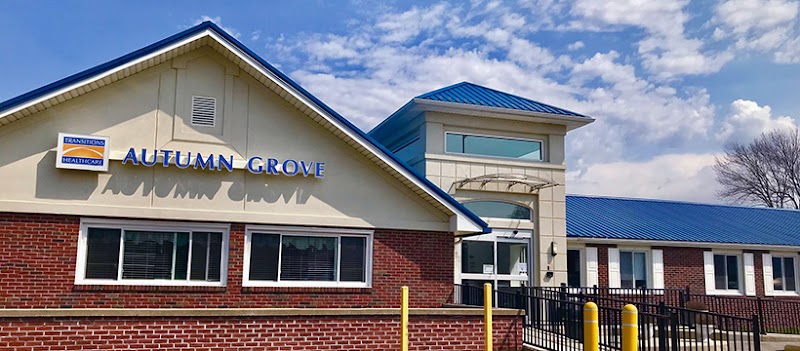
How is Transitions Healthcare Autumn Grove Staffed?

CMS rates TRANSITIONS HEALTHCARE AUTUMN GROVE CARE CENTER's staffing level at 4 out of 5 stars, which is above average compared to other nursing homes. Staff turnover is 59%, which is 13 percentage points above the Pennsylvania average of 46%. High turnover can affect care consistency as new staff learn residents' individual needs.

What Have Inspectors Found at Transitions Healthcare Autumn Grove?

State health inspectors documented 25 deficiencies at TRANSITIONS HEALTHCARE AUTUMN GROVE CARE CENTER during 2023 to 2025. These included: 2 Immediate Jeopardy (the most serious level, indicating potential for serious harm or death), 22 with potential for harm, and 1 minor or isolated issues. Immediate Jeopardy findings are rare and represent the most serious regulatory concerns. They require immediate corrective action.

Who Owns and Operates Transitions Healthcare Autumn Grove?

TRANSITIONS HEALTHCARE AUTUMN GROVE CARE CENTER is owned by a for-profit company. For-profit facilities operate as businesses with obligations to shareholders or private owners. The facility is operated by TRANSITIONS HEALTHCARE, a chain that manages multiple nursing homes. With 103 certified beds and approximately 97 residents (about 94% occupancy), it is a mid-sized facility located in HARRISVILLE, Pennsylvania.
How Does Transitions Healthcare Autumn Grove Compare to Other Pennsylvania Nursing Homes?

Compared to the 100 nursing homes in Pennsylvania, TRANSITIONS HEALTHCARE AUTUMN GROVE CARE CENTER's overall rating (2 stars) is below the state average of 3.0, staff turnover (59%) is significantly higher than the state average of 46%, and health inspection rating (2 stars) is below the national benchmark.

What Should Families Ask When Visiting Transitions Healthcare Autumn Grove?

Based on this facility's data, families visiting should ask: "What changes have been made since the serious inspection findings, and how are you preventing similar issues?" "How do you ensure continuity of care given staff turnover, and what is your staff retention strategy?" "Can I visit during a mealtime to observe dining assistance and food quality?" "How do you handle medical emergencies, and what is your hospital transfer rate?" These questions are particularly relevant given the facility's Immediate Jeopardy citations and the facility's high staff turnover rate.

Is Transitions Healthcare Autumn Grove Safe?

Based on CMS inspection data, TRANSITIONS HEALTHCARE AUTUMN GROVE CARE CENTER has documented safety concerns. Inspectors have issued 2 Immediate Jeopardy citations (the most serious violation level indicating risk of serious injury or death). The facility has a 2-star overall rating and ranks #100 of 100 nursing homes in Pennsylvania. Families considering this facility should ask detailed questions about what corrective actions have been taken since these incidents.

Do Nurses at Transitions Healthcare Autumn Grove Stick Around?

Staff turnover at TRANSITIONS HEALTHCARE AUTUMN GROVE CARE CENTER is high. At 59%, the facility is 13 percentage points above the Pennsylvania average of 46%. High turnover means new staff may not know residents' individual needs, medications, or preferences. It can also be disorienting for residents, especially those with dementia who rely on familiar faces. Families should ask: What is causing the turnover? What retention programs are in place? How do you ensure care continuity during staff transitions?

Was Transitions Healthcare Autumn Grove Ever Fined?

TRANSITIONS HEALTHCARE AUTUMN GROVE CARE CENTER has been fined $179,218 across 1 penalty action. This is 5.1x the Pennsylvania average of $34,871. Fines at this level are uncommon and typically indicate a pattern of serious deficiencies, repeated violations, or failure to correct problems promptly. CMS reserves penalties of this magnitude for facilities that pose significant, documented risk to resident health or safety. Families should request specific documentation of what issues led to these fines and what systemic changes have been implemented.

Is Transitions Healthcare Autumn Grove on Any Federal Watch List?

TRANSITIONS HEALTHCARE AUTUMN GROVE CARE CENTER is not on any federal watch list. The most significant is the Special Focus Facility (SFF) program, which identifies the bottom 1% of nursing homes nationally based on persistent, serious quality problems. Not being on this list means the facility has avoided the pattern of deficiencies that triggers enhanced federal oversight. This is a positive indicator, though families should still review the facility's inspection history directly.