LUTHERAN HOME AT HOLLIDAYSBURG
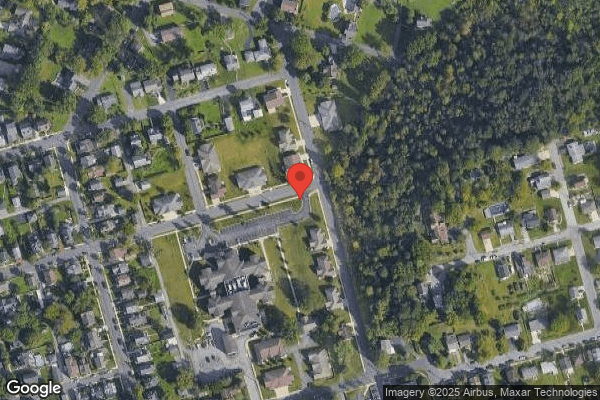
916 HICKORY STREET, HOLLIDAYSBURG, PA 16648 (814) 696-4527
Government - County 89 Beds Independent Data: November 2025
Trust Grade
30/100
#457 of 653 in PA
Last Inspection: September 2024

Within standard 12-15 month inspection cycle. Federal law requires annual inspections.

Overview

Lutheran Home at Hollidaysburg has received a Trust Grade of F, indicating significant concerns about the facility's overall care and management. With a state ranking of #457 out of 653, they are in the bottom half of Pennsylvania nursing homes, and #7 out of 9 in Blair County suggests there are better local options available. The facility is worsening, with issues increasing from 7 in 2023 to 17 in 2024. On a positive note, staffing is rated 4 out of 5 stars, indicating a relatively stable workforce, though a turnover rate of 48% is average. However, the facility has accumulated $113,847 in fines, which is higher than 94% of Pennsylvania facilities, pointing to ongoing compliance problems. Specific incidents include a failure to protect a resident from mental abuse and a lack of clear communication regarding hospital transfers for several residents, which raises serious concerns about the quality of care provided. Overall, while staffing appears to be a strength, there are significant weaknesses in care standards and compliance.

Trust Score
F
30/100
In Pennsylvania
#457/653
Bottom 31%
Safety Record
High Risk
Review needed
Inspections
Getting Worse
7 → 17 violations
Staff Stability
⚠ Watch
48% turnover. Above average. Higher turnover means staff may not know residents' routines.
Penalties
✓ Good
$113,847 in fines. Lower than most Pennsylvania facilities. Relatively clean record.
Skilled Nurses
✓ Good
Each resident gets 50 minutes of Registered Nurse (RN) attention daily — more than average for Pennsylvania. RNs are trained to catch health problems early.
Violations
⚠ Watch
34 deficiencies on record. Higher than average. Multiple issues found across inspections.
★★☆☆☆
2.0
Overall Rating
★★★★☆
4.0
Staff Levels
★★★★☆
4.0
Care Quality
★★☆☆☆
2.0
Inspection Score
Stable
2023: 7 issues
2024: 17 issues

The Good

  • 4-Star Staffing Rating · Above-average nurse staffing levels
  • 4-Star Quality Measures · Strong clinical quality outcomes
  • Full Sprinkler Coverage · Fire safety systems throughout facility
  • No fines on record

Facility shows strength in staffing levels, quality measures, fire safety.

The Bad

2-Star Overall Rating

Below Pennsylvania average (3.0)

Below average - review inspection findings carefully

Staff Turnover: 48%

Near Pennsylvania avg (46%)

Higher turnover may affect care consistency

Federal Fines: $113,847

Well above median ($33,413)

Significant penalties indicating serious issues

The Ugly 34 deficiencies on record

1 actual harm
Sept 2024 17 deficiencies
CONCERN (D)

Potential for Harm - no one hurt, but risky conditions existed

Deficiency F0578 (Tag F0578)

Could have caused harm · This affected 1 resident

Based on review of facility policies and clinical records, as well as staff interviews, it was determined that the facility failed to ensure that the resident and/or resident representative had an opp...

Read full inspector narrative →
Based on review of facility policies and clinical records, as well as staff interviews, it was determined that the facility failed to ensure that the resident and/or resident representative had an opportunity to develop an advance directive (instructions regarding the provision of health care when the resident is incapacitated) or assist in formulating an advance directive for three of 25 residents reviewed (Residents 22, 27, 35). Findings include: The facility policy regarding advance directives and life sustaining treatment preferences, dated January 11, 2024, indicated that upon admission, the persons served will be provided with written information concerning the right to refuse or accept medical or surgical treatment and to formulate an advance directive if he or she chooses to do so. If the persons served indicates that he or she has not established advance directives, the healthcare center staff will offer assistance in establishing advance directives. The persons served will be given the option to accept or decline the assistance, and care will not be contingent on either decision. Nursing staff will document in the medical record the offer to assist, and the persons served decision to accept or decline assistance. An admission Minimum Data Set (MDS) assessment (a mandated assessment of a resident's abilities and care needs) for Resident 22, dated July 16, 2024, indicated that the resident was cognitively intact, was able to be clearly understood and clearly able to understand others, and required assistance with care needs. A quarterly MDS assessment for Resident 27, dated June 8, 2024, revealed that the resident was cognitively impaired, was usually understood and usually able to understand others, and required assistance for care needs. A quarterly MDS assessment for Resident 35, dated August 22, 2024, revealed that the resident was cognitively impaired, was rarely/never understood and was rarely/never able to understand others, was dependent for care needs, and had a diagnosis that included dementia. Review of the clinical records for Residents 22, 27, and 35 revealed that they did not have advance directives. There was no documented evidence in their clinical records to indicate that the residents and/or their representative were informed of their rights to develop advance directives, no documented evidence that the residents and/or their representatives were provided the opportunity and assistance to formulate an advance directive, and no documented evidence that advanced directives were addressed with the residents and/or resident representatives periodically throughout their course of stay. Interview with the Director of Nursing on September 12, 2024, at 3:12 p.m. confirmed that there was no documented evidence in Resident 22's, 25's and 35's clinical records to indicate that the residents and/or their representatives were informed of their rights to develop advance directives, no documented evidence that the residents and/or their representatives were provided the opportunity and assistance to formulate an advance directive, and no documented evidence that advanced directives were addressed with the residents and/or resident representatives periodically throughout their course of stay. Interview with the Social Service Director on September 12, 2024, at 4:16 p.m. indicated that on admission, if the residents have advanced directives, they are obtained and placed in the medical record. She indicated that if they do not have advance directives, they are given the information on advanced directives and if they decide they do not want to formulate one, the facility does not pursue it any further and the facility does not document in the resident's clinical record the decision to or not to formulate an advanced directive. 28 Pa. Code 201.29(a)(d) Resident Rights.
CONCERN (D)

Potential for Harm - no one hurt, but risky conditions existed

Comprehensive Care Plan (Tag F0656)

Could have caused harm · This affected 1 resident

Based on review of facility policy and clinical records, as well as staff interviews, it was determined that the facility failed to ensure that a resident's care plan was developed to reflect the resi...

Read full inspector narrative →
Based on review of facility policy and clinical records, as well as staff interviews, it was determined that the facility failed to ensure that a resident's care plan was developed to reflect the resident's specific care needs for one of 25 residents reviewed (Resident 29). Findings: The facility's policy regarding care plans, dated January 11, 2024, indicated that the care plan is to ensure care and treatment is planned and individualized to the person's served problems/needs, conditions, impairment, disability, and or disease. If a significant change occurs, the care plan is to be reviewed for accuracy and completeness and revised if necessary. If any team member identifies an interim change that does not meet the definition of a significant change, the care plan may be adjusted accordingly. An annual Minimum Data Set (MDS) assessment (a mandated assessment of a resident's abilities and care needs) for Resident 29, dated June 14, 2024, revealed that the resident was cognitively impaired, was sometimes understood and sometimes able to understand others, and required assistance with some care needs. A physician's note, dated March 7, 2024, indicated that the resident had a diagnosis of dementia. A physician's order for Resident 29, dated August 23, 2024, indicated that the resident was to receive four milligrams (mg) of Zofran (a medication given for nausea and vomiting) every six hours as needed for nausea and/or vomiting. A nurse's note for Resident 29, dated August 17, 2024, at 2:54 p.m., indicated that the resident had a large emesis at 2:40 p.m. A nurse's note, dated August 21, 2024, at 10:57 p.m., indicated that the resident had a small emesis. A nurse's note, dated August 30, 2024, at 10:48 p.m., indicated that the resident had a small emesis at 3:20 p.m. A nurse's note, dated September 2, 2024, at 2:38 p.m., indicated that the resident had an emesis that a.m. of undigested food, and Zofran was given with no further emesis. There was no documented evidence that a care plan was developed to address Resident 29's risk for dehydration related to her episodes of nausea/vomiting and her order for treatment with Zofran. Interview with the Director of Nursing on September 12, 2024, at 1:46 p.m. confirmed that a care plan to address Resident 29's risk for dehydration related to her episodes of nausea/vomiting and her order for treatment with Zofran was not developed and should have been. 28 Pa. Code 201.24(e)(4) admission Policy. 28 Pa. Code 211.12(d)(1)(5) Nursing Services.
CONCERN (D)

Potential for Harm - no one hurt, but risky conditions existed

Deficiency F0676 (Tag F0676)

Could have caused harm · This affected 1 resident

Based on a review of clinical records, as well as staff interviews, it was determined that the facility failed to ensure that ambulation programs to maintain or improve physical abilities were provide...

Read full inspector narrative →
Based on a review of clinical records, as well as staff interviews, it was determined that the facility failed to ensure that ambulation programs to maintain or improve physical abilities were provided as ordered and/or care planned for one of 25 residents reviewed (Resident 2). Findings include: An annual Minimum Data Set (MDS) assessment (a mandated assessment of a resident's abilities and care needs) for Resident 2, dated June 11, 2024, revealed that the resident was cognitively impaired, was usually understood and able to usually understand others, and required partial/moderate assistance to walk 10 feet, 50 feet and 150 feet. A care plan for Resident 2, initiated July 28, 2024, indicated that the resident had the potential for decline in abilities and was placed on an ambulation program. Staff was to offer assistance with the program as directed and was to incorporate programs into activities or tasks to improve participation (such as ambulate to/from bathroom and to/from dining room). The original initiation date for her restorative ambulation program was documented as August 25, 2023. A quarterly MDS assessment for Resident 2, dated August 1, 2024, revealed that the resident was cognitively impaired, was usually understood and able to usually understand others, and required partial/moderate assistance to walk 10 feet and 50 feet. The ability to walk 150 feet was not applicable. Clinical record review for Resident 2 revealed that she was on an ambulation program and was to be encouraged to ambulate 75 feet using a gait belt and a front-wheeled walker with assist of one staff and a wheelchair follow to and from the bathroom twice daily in the a.m. and p.m. seven days per week. Review of Resident 2's daily charting documentation for her ambulation program from June 2024 through August 2024, as well as review of nursing notes, revealed that there was no documented evidence that the ambulation program was completed in the a.m. for the following dates: July 12, July 19, August 4, August 22 and August 28. Review of Resident 2's daily charting documentation for her ambulation program from June 2024 through August 2024, as well as review of nursing notes, revealed that there was no documented evidence that the ambulation program was completed in the p.m. for the following dates: June 6, June 7, June 10, July 4, July 10, July 17, July 20, August 1, August 3, August 4, August 10, August 28, August 30, and August 31. An interview with the Director of Nursing on September 12, 2024, at 4:36 p.m. confirmed that there was no documented evidence that Resident 2's ambulation program was completed on the above-mentioned dates. 28 Pa. Code 211.12(d)(3)(5) Nursing Services.
CONCERN (D)

Potential for Harm - no one hurt, but risky conditions existed

Quality of Care (Tag F0684)

Could have caused harm · This affected 1 resident

**NOTE- TERMS IN BRACKETS HAVE BEEN EDITED TO PROTECT CONFIDENTIALITY** Based on review of clinical records, as well as staff interviews, it was determined that the facility failed to ensure that phys...

Read full inspector narrative →
**NOTE- TERMS IN BRACKETS HAVE BEEN EDITED TO PROTECT CONFIDENTIALITY** Based on review of clinical records, as well as staff interviews, it was determined that the facility failed to ensure that physician's orders were followed for one of 25 residents reviewed (Resident 45). Findings include: A review of the clinical record for Resident 45 revealed that the resident was admitted to the facility on [DATE], with diagnoses that included diabetes. Physician's orders for Resident 45, dated September 8, 2024, included an order for the resident to have her blood sugar checked before meals and at bedtime and for staff to administer sliding scale (dose is based on a person's blood sugar) insulin (medication used to lower blood sugar). Review of the Medication Administration Record (MAR) for Resident 8, dated September 2024, revealed no documented evidence that the resident's blood sugar was checked to determine if insulin was required on September 9 before breakfast, on September 10 before breakfast, and on September 10 before supper. Interview with the Director of Nursing on September 12, 2024, at 3:05 p.m. confirmed that there was no documented evidence that Resident 8's blood sugar was checked as ordered by the physician on the above-mentioned dates and times per physician orders. 28 Pa. Code 211.12(d)(1)(5) Nursing Services.
CONCERN (D)

Potential for Harm - no one hurt, but risky conditions existed

Pressure Ulcer Prevention (Tag F0686)

Could have caused harm · This affected 1 resident

Based on review of facility policies and clinical records, as well as staff interviews, it was determined that the facility failed to ensure that treatments for pressure ulcers were provided as ordere...

Read full inspector narrative →
Based on review of facility policies and clinical records, as well as staff interviews, it was determined that the facility failed to ensure that treatments for pressure ulcers were provided as ordered by the physician for one of 25 residents reviewed (Resident 4). Findings include: The facility's policy regarding treatment/medication administration, dated January 11, 2024, indicated that medications are administered in a safe and timely manner, and as prescribed and recorded on the resident's treatment administration record (TAR). A significant change Minimum Data Set (MDS) assessment (a mandated assessment of a resident's abilities and care needs) for Resident 4, dated June 29, 2024, revealed that the resident was cognitively impaired, was understood and able to understand others, required assistance with care needs, was dependent for transfers, had two unstageable pressure ulcers (full-thickness pressure injuries in which the base is obscured by slough and/or eschar), and had a diagnosis that included peripheral vascular disease (disease reducing blood flow to the legs). A care plan, initiated on June 25, 2024, revealed that the resident had areas to his bilateral heels with an intervention to administer treatments as ordered. Physician's orders for Resident 4, dated July 13, 2024, included an order for staff to cleanse bilateral heels with normal saline (a sterile solution used for the moistening of wound dressings and wound debridement), pat dry, apply skin prep (creates a barrier to protect skin from irritants like medical adhesives) to the peri wound, allow to dry, apply single layer of xeroform (dressing used to prevent and treat infections and promote wound healing), cover with alleyvn heel (a padded foam dressing for added comfort), wrap with kerlix (wrap used to secure dressing in place) and secure with tape daily and as needed for blister/deep tissue injury (pressure injury that affects the underlying soft tissues and may not be visible until advanced) to bilateral heels. A review of the resident's Treatment Administration Record (TAR) for July 2024 revealed that the resident did not receive the treatment on July 19, 2024, as ordered. Physician's orders for Resident 4, dated August 22, 2024, included an order for staff to cleanse the left heel pressure ulcer with wound cleanser, apply silver alginate (antimicrobial dressing used to prevent infection and absorb drainage) to base of the wound, and secure with border foam every other day and as needed. A review of the resident's Treatment Administration Record (TAR) for August 2024 revealed that the resident did not receive the treatment on August 2, 5, and 14, 2024, as ordered. Interview with the Director of Nursing on September 11, 2024, at 8:49 a.m. confirmed that there was no documented evidence that wound treatments were done to the areas listed above on dates listed above. 28 Pa. Code 211.12(d)(1)(5) Nursing Services.
CONCERN (D)

Potential for Harm - no one hurt, but risky conditions existed

Incontinence Care (Tag F0690)

Could have caused harm · This affected 1 resident

Based on clinical record reviews, observations, and staff interviews, it was determined that the facility failed to ensure that interventions were in place to prevent urinary tract infections for one ...

Read full inspector narrative →
Based on clinical record reviews, observations, and staff interviews, it was determined that the facility failed to ensure that interventions were in place to prevent urinary tract infections for one of 25 residents reviewed (Resident 13) who had an indwelling urinary catheter. Findings include: A significant change Minimum Data Set (MDS) assessment (a mandated assessment of a resident's abilities and care needs), dated August 8, 2024, revealed that the resident had diagnoses that included dementia and obstructive uropathy (when urine cannot drain through the urinary tract) and had an indwelling urinary catheter (a flexible tube inserted and held in the bladder to drain urine). Physician's orders for Resident 13, dated August 6, 2024, included an order for the resident to have an indwelling urinary catheter due to having an obstruction and urinary retention. A care plan, dated August 6, 2024, indicated that the catheter tubing and collection bag were to be kept off the floor. Observations of Resident 13 on September 12, 2024, at 12:31 p.m. and 12:37 p.m. revealed that she was in her recliner chair and her catheter drainage tubing and collection bag were in direct contact with the floor. Interview with Nurse Aide 2 at that time confirmed that the catheter tubing and bag should not be in contact with the floor. Interview with the Director of Nursing on September 12, 2024, at 1:48 p.m. confirmed that Resident 13's catheter tubing and bag should be off the floor. 28 Pa. Code 211.12(d)(5) Nursing Services.
CONCERN (D)

Potential for Harm - no one hurt, but risky conditions existed

Deficiency F0692 (Tag F0692)

Could have caused harm · This affected 1 resident

Based on clinical record reviews and staff interviews, it was determined that the facility failed to ensure that interventions to maintain nutrition were provided as recommended by the dietician for o...

Read full inspector narrative →
Based on clinical record reviews and staff interviews, it was determined that the facility failed to ensure that interventions to maintain nutrition were provided as recommended by the dietician for one of 25 residents reviewed (Resident 13). Findings include: A significant change Minimum Data Set (MDS) assessment (a mandated assessment of a resident's abilities and care needs) for Resident 13, dated August 8, 2024, revealed that the resident was cognitively intact, required supervision with eating, weighed 106 pounds, and had weight loss. Dietary notes for Resident 13, dated August 26, 2024, at 3:41 p.m., revealed that the resident had a significant weight loss and the dietitian recommended to the physician to add four ounces of magic cup (frozen nutritional supplement) daily with dinner and four ounces of enriched pudding (pudding with additional nutrients) daily with lunch. Observations of Resident 13 during the lunch meal on September 12, 2024, at 12:31 p.m. revealed that the resident was sitting in her room eating her meal, and she did not have enriched pudding. The resident's meal ticket, dated September 12, 2024, indicated that the resident was to have enriched pudding. Interview with Nurse Aide 2 on September 12, 2024, at 12:37 p.m. confirmed that Resident 13 did not receive enriched pudding with her lunch meal. Interview with the Director of Nursing on September 12, 2024, at 2:22 p.m. confirmed that Resident 13 should have received enriched pudding if it was on her meal ticket. 28 Pa. Code 211.12(d)(3)(5) Nursing Services.
CONCERN (D)

Potential for Harm - no one hurt, but risky conditions existed

Deficiency F0729 (Tag F0729)

Could have caused harm · This affected 1 resident

**NOTE- TERMS IN BRACKETS HAVE BEEN EDITED TO PROTECT CONFIDENTIALITY** Based on a review of facility job descriptions and personnel files, as well as staff interviews, it was determined that the faci...

Read full inspector narrative →
**NOTE- TERMS IN BRACKETS HAVE BEEN EDITED TO PROTECT CONFIDENTIALITY** Based on a review of facility job descriptions and personnel files, as well as staff interviews, it was determined that the facility failed to ensure that staff renewed the nurse aide registry to allow individuals to work as a nurse aide for one of six nurse aides reviewed (Nurse Aide 3). This deficiency was cited as past non-compliance. Findings include: The facility's job description for Nurse Aide, undated, revealed that a nurse aide certification was necessary to perform functions of the position. The personnel file for Nurse Aide 3 revealed that her certification on the nurse aide registry expired on [DATE]. The facility was unaware that Nurse Aide 3's certification on the nurse aide registry was expired until it was discovered it on [DATE]. Nurse Aide 3 worked in the facility from [DATE] to [DATE]. Interview with the Nursing Home Administrator on [DATE], at 1:21 p.m. confirmed that Nurse Aide 3's certification on the nurse aide registry expired on [DATE], and should have been renewed prior to expiring and working in the facility. Following the discovery that a nurse aide's certification had expired the following corrective action were taken: The nurse aide was immediately pulled from the schedule, then terminated for not renewing her registry timely. The Director of Nursing immediately upon discovery of the expired registry completed an audit of all registry and licensed staff to verify that there were no other staff with expired status. The Nursing Home Administrator, Director of Nursing, Administrative Assistant, and Human Resources Director will be responsible for checking all registry and license expiration dates for the month. Staff members who have registry or licenses that will expire that month will be given written notice that they must renew within the month. If staff do not renew within two weeks of the written notice, they are pulled from the schedule and will not be scheduled for work until after they renew. The Nursing Home Administrator educated the Director of Nursing, the Administrative Assistant, and the Human Resources Director on the new policy regarding verifying the current status of the employee's registry or license. The review of the facility's corrective actions revealed that they were in compliance with F729 as of [DATE]. 28 Pa. Code 201.29 Personnel Policies and Procedures.
CONCERN (D)

Potential for Harm - no one hurt, but risky conditions existed

Pharmacy Services (Tag F0755)

Could have caused harm · This affected 1 resident

Based on review of policies and clinical records, as well as staff interviews, it was determined that the facility failed to ensure the accountability of controlled medications (drugs with the potenti...

Read full inspector narrative →
Based on review of policies and clinical records, as well as staff interviews, it was determined that the facility failed to ensure the accountability of controlled medications (drugs with the potential to be abused) for one of 25 residents reviewed (Resident 3). Findings include: A facility policy for medication administration, dated January 11, 2024, indicated that medications were to be poured, administered, and documented by the licensed team member with accountability for the specific medication cart. A quarterly Minimum Data Set (MDS) assessment (a mandated assessment of a resident's abilities and care needs) for Resident 3, dated August 9, 2024, revealed that the resident was cognitively impaired, was understood and understands, had pain, and received an opioid (a controlled pain medication). Physician's orders for Resident 3, dated November 29, 2023, included and order for the resident to receive 5-325 milligrams (mg) of hydrocodone-acetaminophen three times a day for chronic arm pain. Review of the controlled drug record (a form that accounts for each tablet/pill/dose of a controlled drug) for Resident 3 for June, July and August 2024 revealed that staff signed out a dose of hydrocodone-acetaminophen for administration to the resident on June 21 at 11:00 p.m., July 19 at 3:00 p.m., August 6 at 11:00 p.m., August 8 at 11:00 p.m., August 11 at 11:00 p.m., and August 21, 2024 at 11:00 p.m. However, there was no documented evidence in the resident's clinical record, including on the Medication Administration Record (MAR) and nursing notes, that the hydrocodone-acetaminophen was administered to the resident on the above listed dates and times. Interview with the Director of Nursing on September 12, 2024, at 12:15 p.m. confirmed that there was no documented evidence in Resident 3's clinical records to indicate that the signed-out doses of hydrocodone-acetaminophen were administered to the resident on the above-mentioned dates and times. 28 Pa. Code 211.9(a)(1) Pharmacy Services. 28 Pa. Code 211.12(d)(1)(3)(5) Nursing Services.
CONCERN (D)

Potential for Harm - no one hurt, but risky conditions existed

Deficiency F0761 (Tag F0761)

Could have caused harm · This affected 1 resident

Based on review of policies, observations, and staff interviews, it was determined that the facility failed to properly secure and store medications in one of two medication rooms (front hall). Findin...

Read full inspector narrative →
Based on review of policies, observations, and staff interviews, it was determined that the facility failed to properly secure and store medications in one of two medication rooms (front hall). Findings include: The facility's policy regarding medication storage, dated January 11, 2024, indicated that all drugs and biologicals were to be stored in a safe, secure, and orderly manner. The nursing staff was responsible for maintaining medication storage and preparation areas in a clean, safe, and sanitary manner. Compartments (including, but not limited to, drawers, cabinets, rooms, refrigerators, carts, and boxes) containing drugs and biologicals were to be locked when not in use. Unlocked medication carts were not to be left unattended. Observations on September 9, 2024, at 10:25 a.m. revealed that the door to the medication room on the second floor (front hall) was left open and unattended. The medication cart was stored inside the medication room and was unlocked. Interview with Licensed Practical Nurse 4 on September 9, 2024, at 10:28 a.m. confirmed that she was down the hallway and the medication room should have been locked Interview with the Director of Nursing on September 9, 2024, at 3:15 p.m. confirmed that the medication cart and room should have been locked when unattended by staff. 28 Pa. Code 211.9(a)(1) Pharmacy Services. 28 Pa. Code 211.12(d)(1)Nursing Services.
CONCERN (D)

Potential for Harm - no one hurt, but risky conditions existed

Laboratory Services (Tag F0770)

Could have caused harm · This affected 1 resident

Based on clinical record reviews and staff interviews, it was determined that the facility failed to ensure that laboratory specimens were obtained as ordered by the physician for one of 25 residents ...

Read full inspector narrative →
Based on clinical record reviews and staff interviews, it was determined that the facility failed to ensure that laboratory specimens were obtained as ordered by the physician for one of 25 residents reviewed (Resident 3). Findings include: A quarterly Minimum Data Set (MDS) assessment (a mandated assessment of a resident's abilities and care needs) for Resident 3, dated August 9, 2024, indicated that the resident was cognitively impaired and was receiving an anticoagulant (blood thinner). A care plan, dated January 20, 2023, indicated that the resident had a history of deep vein thrombosis (blood clot that develops in a deep vein) and pulmonary embolism (blood clot that goes to lung), and Coumadin was to be administered as ordered and laboratory results were to be monitored per physician orders. Physician's orders for Resident 3, dated August 28, 2024, included an order for the resident to receive 6.5 milligrams (mg) of Coumadin (a blood thinner) daily and to check the PT/INR (a test that indicates how much time it takes for the blood to clot) on September 4, 2024. A review of Resident 3's clinical record revealed that staff failed to obtain the PT/INR on September 4, 2024, as ordered. Interview with the Director of Nursing on September 11, 2024, at 1:26 p.m. confirmed that Resident 3 did not have a PT/INR drawn on September 4, 2024, as ordered by the physician and should have. 28 Pa. Code 211.12(d)(1)(3)(5) Nursing Services.
CONCERN (D)

Potential for Harm - no one hurt, but risky conditions existed

Infection Control (Tag F0880)

Could have caused harm · This affected 1 resident

Based on review of facility policies and clinical records, as well as observations and staff interviews, it was determined that the facility failed to ensure that staff used proper infection control t...

Read full inspector narrative →
Based on review of facility policies and clinical records, as well as observations and staff interviews, it was determined that the facility failed to ensure that staff used proper infection control techniques during incontinent care for one of 25 residents reviewed (Resident 30). Findings include: The facility's policy regarding hand washing, dated January 11, 2024, indicated that hand washing is the single most important means of preventing infection, and that hands are to be washed after the care of the resident, and after any contact which may contaminate you. Gloves are worn when there is contact with blood and body fluids, secretions, and excretions. Gloves are not a substitute for hand washing, and hands are to be washed even when gloves are worn. A quarterly minimum data set (MDS) assessment (mandated to assess the resident abilities and care needs) for Resident 30, dated August 31, 2024, indicated that she was cognitively intact, was dependent on staff for toileting hygiene, had an indwelling catheter (a thin, hollow tube that is inserted into the bladder to collect and drain urine), was frequently incontinent of bowel, and had diagnosis that included Multiple Sclerosis (a disorder of the central nervous system marked by weakness, numbness, a loss of muscle coordination, and problems with vision, speech, and bladder control). Observations of Resident 30 on August 11, 2024, at 9:26 a.m. revealed that the resident had been incontinent of bowel. With the assistance of another nurse aide, Nurse Aide 5 rolled the resident on her left side and removed bowel movement from the resident's buttocks with disposable wipes, then removed a soiled brief that was under the resident. Without removing the contaminated gloves and washing her hands, Nurse Aide 5 placed a sling under the resident for transfer use, handled the resident's indwelling catheter drainage bag tubing to clamp it, and put the unused disposable wipes in the resident's bed side table. Interview with Nurse Aide 5 on August 11, 2024, at 9:42 a.m. revealed that she should have removed her gloves and washed her hands after providing incontinent care and before touching the resident's sling, indwelling catheter tubing and container of disposable wipes. Interview with the Director of Nursing on August 11, 2024, at 10:44 a.m. confirmed that Nurse Aide 5 should have removed her gloves and completed hand hygiene immediately after providing incontinence care and prior to touching the resident's the personal belongings and catheter tubing. 28 Pa. Code 211.12(d)(1)(5) Nursing Services.
CONCERN (E)

Potential for Harm - no one hurt, but risky conditions existed

Transfer Notice (Tag F0623)

Could have caused harm · This affected multiple residents

Based on clinical record reviews and staff interviews, it was determined the facility failed to provide clearly documented reasons for facility-initiated transfers to the hospital to the resident and ...

Read full inspector narrative →
Based on clinical record reviews and staff interviews, it was determined the facility failed to provide clearly documented reasons for facility-initiated transfers to the hospital to the resident and resident's representative in language and manner that could be easily understood for five of 25 residents reviewed (Residents 8, 18, 35, 42, 47). Findings include: A quarterly Minimum Data Set (MDS) assessment (a mandated assessment of a resident's abilities and care needs) for Resident 8, dated August 4, 2024, revealed that the resident was cognitively intact, was independent with personal hygiene care needs, and had diagnosis that included dementia. A nurse's note for Resident 8, dated January 17, 2024, revealed that the resident had a fall in her bathroom and complained of right hip pain. The physician was notified, and the resident was transferred to the emergency room for evaluation. There was no documented evidence that a written notice of Resident 8's transfer to the hospital was provided to the resident or her responsible party regarding the reason for the transfer. A review of the clinical record revealed that Resident 18 was transferred to the hospital on September 2, 2024. There was no documented evidence that a Notice of Transfer letter was issued to Resident 18 or his responsible party. A quarterly MDS assessment for Resident 35, dated August 22, 2024, revealed that the resident was cognitively impaired, was rarely/never understood and was rarely/never able to understand others, was dependent for care needs, and had a diagnosis that included dementia. A nurse's note for Resident 35, dated July 9, 2024, at 11:55 a.m. revealed that the facility received a call from the physician's assistant at Elite Orthopedics indicating that the resident's fracture to her right upper extremity was open and they were sending her to the hospital for intravenous antibiotics. There was no documented evidence that a written notice of Resident 35's transfers to the hospital was provided to the resident's representative regarding the reason for transfer. An admission MDS assessment for Resident 42, dated August 28, 2024, revealed that the resident was cognitively intact, required assistance from staff for daily care needs, and had diagnoses that included diabetes. A nurse's note for Resident 42, dated August 26, 2024, at 9:19 a.m. revealed that the resident had complaints of dizziness and nausea, and was diaphoretic (sweating). The physician was notified, and the resident was transferred to the emergency room for evaluation. There was no documented evidence that a written notice of Resident 42's transfers to the hospital were provided to the resident or the resident's representative regarding the reason for transfer. A nursing note for Resident 47, dated September 4, 2024, at 10:27 a.m. revealed that the resident was admitted to the facility with diagnoses that included dementia. A nursing note, dated September 6, 2024, at 12:00 a.m. revealed the resident had a fall and received a 1.5 centimeter laceration to her forehead. The physician was notified, and the resident was transferred to the emergency room for evaluation. There was no documented evidence that a written notice of Resident 42's transfers to the hospital were provided to the resident or the resident's representative regarding the reason for transfer. Interview with the Director of Nursing on September 12, 2024, at 12:15 p.m. revealed that she was not aware that a written notice must be sent to the resident or their responsible party upon transfer out of the facility and therefore, no such letter was done. 28 Pa. Code 201.29(f)(k)(l)(2) Resident Rights. 28 Pa. Code 201.14(a) Responsibility of Licensee.
CONCERN (E)

Potential for Harm - no one hurt, but risky conditions existed

Deficiency F0657 (Tag F0657)

Could have caused harm · This affected multiple residents

Based on review of facility policies and residents' clinical records, as well as staff interviews, it was determined that the facility failed to review and revise care plans for two of 25 residents re...

Read full inspector narrative →
Based on review of facility policies and residents' clinical records, as well as staff interviews, it was determined that the facility failed to review and revise care plans for two of 25 residents reviewed (Residents 15, 29). Findings include: The facility's policy regarding care plans, dated January 11, 2024, indicated that the care plan is to ensure care and treatment is planned and individualized to the person's served problems/needs, conditions, impairment, disability, and or disease. If a significant change occurs, the care plan is to be reviewed for accuracy and completeness and revised if necessary. If any team member identifies an interim change that does not meet the definition of a significant change, the care plan may be adjusted accordingly. A quarterly Minimum Data Set (MDS) assessment (a mandated assessment of a resident's abilities and care needs) for Resident 15, dated July 10, 2024, indicated that the resident was understood and able to understand others, was dependent on staff for personal hygiene care, and had diagnoses that included hemiplegia (paralysis that affects only one side of your body) after having a stroke. Review of the care plan for Resident 15, dated July 29, 2019, revealed that the resident had right-sided hemiparesis (weakness on one side of the body) and hemiplegia and that staff were to encourage the resident to wear an AFO (Ankle Foot Orthosis - a support device intended to control the position and motion of the ankle) brace on his right foot when he was out of bed and wear a resting hand splint (device that supports the hand and wrist in the best position while resting) on his right hand at night and removed in the morning. There was no documented evidence that the resident was wearing an AFO brace or a resting hand splint. Interview with Resident 15 on August 12, 2024, at 9:11 a.m. revealed that the resident had not been wearing an AFO brace or a resting hand splint, and he did not recall if he ever had. Interview with the Director of Rehabilitation on August 12, 2024, at 9:29 a.m. revealed that the resident previously had an order to use a resting hand splint on his right hand; however, the resident refused to wear it, and the order was discontinued. Interview with Physical Therapist 1 on August 12, 2024, at 9:29 a.m. revealed that he was not aware of the resident needing or using an AFO brace in the two years he has been a physical therapist in the facility. The resident does not currently have an issue that would indicate the need for an AFO brace. Interview with the Director of Nursing on August 12, 2024, at 10:02 a.m. revealed that the resident did not use an AFO brace or a resting hand splint and that his care plan should have been revised to reflect that but was not. An annual MDS assessment for Resident 29, dated June 14, 2024, revealed that the resident was cognitively impaired, was sometimes understood and sometimes able to understand others, required assistance with some care needs, and had a diagnosis of diabetes. A care plan for Resident 29, dated June 23, 2023, indicated that she was to have fingerstick blood sugars obtained per physician's orders. There was no documented evidence in the resident's clinical record that she was ordered to have fingerstick blood sugars obtained. An interview with the Director of Nursing on September 12, 2024, at 1:46 p.m. confirmed that Resident 29's care plan was not revised to reflect that the fingerstick blood sugars were discontinued. 28 Pa. Code 211.12(d)(5) Nursing Services.
CONCERN (E)

Potential for Harm - no one hurt, but risky conditions existed

Accident Prevention (Tag F0689)

Could have caused harm · This affected multiple residents

Based on review of facility policies and clinical records, as well as observations and staff interviews, it was determined that the facility failed to provide adequate supervision and failed to ensure...

Read full inspector narrative →
Based on review of facility policies and clinical records, as well as observations and staff interviews, it was determined that the facility failed to provide adequate supervision and failed to ensure that the environment remained as free of accident hazards as possible for three of 25 residents reviewed (Residents 4, 29, 40). Findings include: A facility policy for elopement, dated January 11, 2024, indicated that an elopement is defined as when a resident leaves the facility, or enters an unsafe area, without any team member being aware that the resident has done so. An analysis of each elopement is to be completed by the health care center management team, identifying all possible reasons why safety and security measures were breached. A quarterly Minimum Data Set (MDS) assessment (a mandated assessment of a resident's abilities and care needs) for Resident 40, dated August 9, 2024, indicated that the resident was moderately cognitively impaired, had a history of wandering, was independent with personal hygiene needs and ambulation, and had diagnoses that included dementia. A care plan for Resident 40, dated August 1, 2023, indicated that the resident was at risk for wandering out of the facility. Staff were to discuss and investigate causes of wandering and exit-seeking behaviors, attempt to intervene, and provide interventions, support, and reassurance for her needs and wants. An intervention, dated April 1, 2024, indicated that staff were to complete checks on her whereabouts for safety every 15 minutes when warranted. A nurse's note for Resident 40, dated November 24, 2023, at 9:00 p.m. revealed that the resident went to the first floor using the front elevator. She reported to staff at the time that she knew she was not supposed to use the elevator but did anyway. A nurse's note, dated January 10, 2024, at 3:24 p.m. revealed that the resident was found roaming the front hall on the first floor by housekeeping staff. The resident was given a snack and returned to the second floor. A nurse's note, dated January 15, 2024, at 8:43 p.m., revealed that the resident was found wandering on the first floor near the back hall nurse's station, reporting that she was going to dinner with her family. She was escorted to her room on the second floor. A nurse's note, dated February 11, 2024, at 11:26 a.m., revealed that the resident appeared on the first floor from the front elevator. The nurse aide was not aware that the resident was not on the second floor. A nurse's note, dated April 1, 2024, at 6:24 p.m., revealed that the resident was not on the second floor when staff completed a 15-minute check on the resident. The resident was found on the first floor sitting on the sofa in the lounge and she was assisted upstairs. A nurse's note, dated June 14, 2024, at 2:45 p.m., revealed that the resident was off the unit and returned by staff at 2:40 p.m. A nurse's note, dated July 5, 2024, at 1:30 p.m., revealed that the resident was in her room at 1:15 p.m. and was found on the first floor at 1:22 p.m. The resident reported that she was looking for the bathroom and was redirected to the bathroom on the second floor. A nurse's note, dated July 29, 2024, at 9:13 p.m., revealed that the resident was unable to be located during her 15-minute check and was found on the first floor. She was returned to the second floor without difficulty. A nurse's note, dated August 31, 2024, at 1:21 p.m., revealed that at approximately 11:50 a.m. the resident was observed by staff on the first floor at the rear elevator. She was last seen at 11:45 a.m. in the activity room and returned to the second floor without difficulty. An interview with the Director of Nursing on September 10, 2024, at 11:54 a.m. revealed that resident rooms on the first floor have been empty since March 6, 2024. There was no documented evidence that the facility conducted an investigation or an analysis of Resident 40's repeated elopements from the second floor. An interview with the Director of Nursing on September 10, 2024, at 2:34 p.m. confirmed that Resident 40 left the second floor on the identified dates and times without supervision. An analysis was not completed because the facility did not view the incidents as elopements. Resident 40 was not supposed to leave the floor without supervision, but the facility believed she remained safe because the outside doors were locked preventing her from leaving the facility. The Director of Nursing confirmed that there was potential for the resident to be unsafe when leaving the unit unsupervised. An interview with the Director of Nursing on September 11, 2024, at 10:44 a.m. confirmed that there was a risk for Resident 40 when she eloped from the second floor and administration was not in the facility, but believed the resident remained safe because of the 15-minute checks being completed. The resident and her elopements were discussed at morning meetings, but there was no documentation of it and no formal investigations or analysis were completed. A facility policy for assessments of falls, dated January 11, 2024, indicated that when a resident falls, the following information should be recorded in the resident's medical record: the immediate interventions and appropriate interventions taken to prevent future falls. A facility policy for managing falls and fall risk, dated January 11, 2024, indicated that if a resident continues to fall, staff will re-evaluate the situation and whether it is appropriate to continue or change current interventions. The attending physician will help the staff reconsider possible causes that may not previously been identified. A significant change MDS assessment for Resident 4, dated June 29, 2024, revealed that the resident was cognitively impaired, was understood and able to understand others, required assistance with care needs, was dependent for transfers, had a fall without injury since his prior assessment, and had diagnoses that included Parkinson's and dementia. A nurse's note for Resident 4, dated August 25, 2024, at 2:42 p.m., indicated that the resident had a fall at 1:30 p.m. when he attempted to transfer himself to the bathroom. The resident was assessed with no apparent visible injuries. Review of the fall investigation revealed that Resident 4 was stated on hourly safety checks beginning August 26, 2024, through August 28, 2024. Review of the hourly safety checks for Resident 4, initiated on August 26, 2024, revealed that there was no documented evidence that the hourly safety checks were completed on August 27, 2024, at 11:00 a.m., 12:00 p.m., and 1:00 p.m. Interview with the Director of Nursing on September 12, 2024, at 1:25 p.m. confirmed that hourly safety checks were not completed for Resident 4 on August 27, 2024, on the above-mentioned times. An annual MDS assessment for Resident 29, dated June 14, 2024, revealed that the resident was cognitively impaired, was sometimes understood and sometimes able to understand others, required assistance with some care needs, and had two or more falls without injury since the prior assessment. A physician's note, dated March 7, 2024, indicated that the resident had a diagnosis of dementia. A nurse's note for Resident 29, dated December 24, 2023, at 11:57 a.m., indicated that at 8:15 a.m. a staff nurse aide notified the nurse that the resident had indicated she had fallen on the floor and hit her head and left shoulder. Upon investigation, the nurse observed a discolored, reddened, raised area to the back of the resident's head with a small circular area in middle that was purple/blue in color and a dark red and purple abrasion to the resident's left upper ear. A nursing assessment to the resident's left shoulder area revealed no changes in skin color and no bruising or open areas. The resident indicated that she was going to go to the bathroom when she slipped on her socks and fell to the floor beside the bed. She indicated that she got herself up and crawled back to bed. The nurse indicated that nonskid slipper socks were applied, and the resident was educated to wear nonskid slipper socks with ambulation. X-ray results to the resident's left shoulder were pending. A nurse's note for Resident 29, dated December 24, 2023, at 1:22 p.m., indicated that Resident 29 complained of pain with range of motion to her left shoulder. The nurse indicated there was no swelling or bruising to the resident's left upper extremity/shoulder. A nurse's note for Resident 29, dated December 24, 2023, at 2:52 p.m., indicated that Resident 29's x-ray results were suspicious for a nondisplaced fracture of the distal fourth shaft aspect of the left clavicle. A nurse's note for Resident 29, dated December 24, 2023, at 3:45 p.m., indicated that Resident 29's neurological checks and safety checks were ongoing. Review of the hourly safety checks for Resident 29, initiated on December 24, 2023, revealed no documented evidence that the hourly safety checks were completed on December 24, 2023, at 4:00 p.m., 5:00 p.m., 6:00 p.m., 7:00 p.m., 8:00 p.m. and 9:00 p.m. and on December 25, 2023, at 3:00 p.m., 4:00 p.m., 5:00 p.m., 6:00 p.m., 7:00 p.m., 8:00 p.m. and 9:00 p.m. Interview with the Director of Nursing on September 12, 2024, at 12:35 p.m. confirmed that hourly safety checks were not completed for Resident 29 on December 24, 2023, and December 25, 2023, on the above-mentioned times. A nurse's note for Resident 29, dated April 26, 2024, at 7:04 a.m., revealed that the resident said she rolled out of bed during the night because she was too close to the edge. She denied hitting her head and indicated that she hit her knees but did not have pain and was able to get back into bed on her own. There were no documented injuries to her head or bilateral knees. Neurological checks and safety checks were initiated. A nurse's note for Resident 29, dated May 16, 2024, at 7:33 p.m., indicated that the resident lost her balance with her walker and fell across her bed with no injuries documented. Interview with the Director of Nursing on September 12, 2024, at 12:35 p.m. revealed that new interventions were not developed after Resident 29's fall on the above-mentioned dates because the facility felt that all of the appropriate interventions were already in place. A nurse's note for Resident 29, dated June 14, 2024, at 10:15 p.m., indicated that the resident reported that she fell in her room and hit the left side of her head. There were no documented injuries. Neurological checks and hourly safety checks were initiated. Review of the hourly safety checks for Resident 29, initiated on June 14, 2024, revealed that there was no documented evidence that the hourly safety checks were completed on June 17, 2024, at 3:00 p.m., 4:00 p.m., 5:00 p.m., 6:00 p.m., 7:00 p.m., 8:00 p.m. and 9:00 p.m. Interview with the Director of Nursing on September 12, 2024, at 12:35 p.m. confirmed that hourly safety checks were not completed for Resident 29 on June 17, 2024, on the above-mentioned times and revealed that new interventions were not developed after Resident 29's fall on the above-mentioned date. A nurse's note for Resident 29, dated August 8, 2024, at 6:28 p.m., indicated that the resident had a fall and was observed lying on her right side with her walker on top of her and head toward the door. The resident denied hitting her head and reported that she was putting her blanket on her bed and got her walker tangled in it. There were no documented injuries. Neurological checks and safety checks were initiated. Review of the hourly safety checks for Resident 29, initiated on August 8, 2024, revealed that there was no documented evidence that the hourly safety checks were completed on August 8, 2024, at 6:00 p.m., 7:00 p.m., 8:00 p.m. and 9:00 p.m. Interview with the Director of Nursing on September 12, 2024, at 12:35 p.m. confirmed that hourly safety checks were not completed for Resident 29 on August 8, 2024, on the above-mentioned times. A nurse's note for Resident 40, dated January 28, 2024, revealed that the resident had an unwitnessed fall in her room. The resident reported that her foot slipped causing her to fall. A nurse's note, dated April 19, 2024, at 4:13 p.m., revealed that the resident had a witnessed fall in her room. The resident lost her balance and fell hitting her head on the footboard and sustained a hematoma to her head and a bruise to her left shoulder. A nurse's note, dated April 20, 2024, at 1:54 p.m., revealed that the resident was observed on the floor in her room. The resident reported sliding off the bed. A nurse's note, dated June 3, 2024, at 8:35 p.m., revealed that the resident was observed on the floor in her room. The resident reported sliding off the bed. A nurse's note, dated June 11, 2024, revealed that the resident was observed on the floor in her room beside her bed. A nurse's note, dated July 15, 2024, at 11:51 p.m., revealed that the resident was observed on the floor in front of the chair in her room. The resident reported sliding off the chair. Interview with the Director of Nursing on August 12, 2024, at 1:40 p.m. revealed that new interventions were not developed after Resident 40's fall on the above-mentioned dates because the facility felt all the appropriate interventions were already in place. 28 Pa. Code 201.14(a) Responsibility of Licensee. 28 Pa. Code 201.18(b)(1)(e)(1) Management. 28 Pa. Code 211.12(d)(1)(5) Nursing Services.
CONCERN (E)

Potential for Harm - no one hurt, but risky conditions existed

Medical Records (Tag F0842)

Could have caused harm · This affected multiple residents

**NOTE- TERMS IN BRACKETS HAVE BEEN EDITED TO PROTECT CONFIDENTIALITY** Based on review of polices and clinical records, as well as staff interviews, it was determined that the facility failed to main...

Read full inspector narrative →
**NOTE- TERMS IN BRACKETS HAVE BEEN EDITED TO PROTECT CONFIDENTIALITY** Based on review of polices and clinical records, as well as staff interviews, it was determined that the facility failed to maintain clinical records that were complete and accurately documented for two of 25 residents reviewed (Residents 42, 45). Findings include: A facility policy for medication administration, dated January 11, 2024, indicated that medications were to be poured, administered, and documented by the licensed team member with accountability for the specific medication cart. An admission Minimum Data Set (MDS) assessment (a mandated assessment of a resident's abilities and care needs) for Resident 42, dated August 28, 2024, revealed that the resident was cognitively intact, required assistance from staff for daily care needs, had diagnoses that included diabetes, and received insulin. Physician's orders for Resident 42, dated August 22, 2024, included an order for the resident to receive Humalog insulin (medication used to lower blood sugar) subcutaneously (beneath the skin) with meals based on a sliding scale (amount of insulin based on blood sugar results). Review of the Medication Administration Record (MAR) for Resident 42, dated August and September 2024, revealed that the amount of insulin administered with meals (7:30 a.m., 11:30 a.m., 4:30 p.m.) according to the sliding scale were not documented on the MAR. Interview with the Director of Nursing on September 11, 2024, at 1:26 p.m. confirmed that there was no documentation of the amount of insulin provided according to the sliding scale and that the amount of insulin administered should be charted on the MAR. Review of the clinical record for Resident 45 revealed that the resident was admitted to the facility on [DATE], with diagnoses that included diabetes. Physician's orders for Resident 45, dated September 8, 2024, included an order for the resident to have her blood sugar checked before meals and at bedtime and for staff to administer sliding scale (dose is based on a person's blood sugar) insulin (medication used to lower blood sugar). Review of the MAR for Resident 8, dated September 2024, revealed that the results of Resident 45's blood sugar testing were not documented before supper on September 8, 2024, or before breakfast, lunch and supper on September 9, 10 and 11, 2024. Interview with the Director of Nursing on September 12, 2024, at 3:05 p.m. confirmed that there was no documented evidence that Resident 8's blood sugar results were documented in her clinical record, and they should have been. 28 Pa Code 211.5(f) Clinical Records. 28 Pa. Code 211.12(d)(5) Nursing Services.
CONCERN (E)

Potential for Harm - no one hurt, but risky conditions existed

QAPI Program (Tag F0867)

Could have caused harm · This affected multiple residents

Based on review of the facility's plans of correction for previous surveys, and the results of the current survey, it was determined that the facility's Quality Assurance Performance Improvement (QAPI...

Read full inspector narrative →
Based on review of the facility's plans of correction for previous surveys, and the results of the current survey, it was determined that the facility's Quality Assurance Performance Improvement (QAPI) committee failed to correct quality deficiencies and ensure that plans to improve the delivery of care and services effectively addressed recurring deficiencies. Findings include: The facility's deficiencies and plan of corrections for an annual survey ending October 12, 2023, revealed that the facility developed plans of correction that included quality assurance systems to ensure that the facility maintained compliance with cited nursing home regulations. The results of the current survey, ending September 13, 2024, identified repeated deficiencies related to a failure to develop and implement comprehensive care plans, failure to revise care plans, failure to protect residents from accidents/hazards, failure to store medications securely,; and failure to ensure that resident's medical records were complete and accurate. The facility's plan of correction for a deficiency regarding developing and implementing care plans, cited during the survey ending October 12, 2023, revealed that the facility would complete audits and report the results of the audits to the QAPI committee for review. The results of the current survey, cited under F656, revealed that the facility's QAPI committee failed to successfully implement their plan to ensure care plans were developed and implemented timely. The facility's plan of correction for a deficiency regarding revision of care plans, cited during the survey ending October 12, 2023, revealed that the facility would complete audits and report the results of the audits to the QAPI committee for review. The results of the current survey, cited under F657, revealed that the facility's QAPI committee failed to successfully implement their plan to ensure that resident's care plans were revised timely. The facility's plan of correction for a deficiency regarding safety and accident hazards, cited during the survey ending October 12, 2023, revealed that the facility would complete audits and report the results of the audits to the QAPI committee for review. The results of the current survey, cited under F689, revealed that the facility's QAPI committee failed to successfully implement their plan to ensure residents were free from accidents and hazards. The facility's plan of correction for a deficiency regarding labeling and storing medications, cited during the survey ending October 12, 2023, revealed that the facility would complete audits and report the results of the audits to the QAPI committee for review. The results of the current survey, cited under F761, revealed that the facility's QAPI committee failed to successfully implement their plan to ensure that medications were stored securely. The facility's plan of correction for a deficiency regarding complete and accurate medical records, cited during the survey ending October 12, 2023, revealed that the facility would complete audits and report the results of the audits to the QAPI committee for review. The results of the current survey, cited under F842, revealed that the facility's QAPI committee failed to successfully implement their plan to ensure that resident's medical records were complete and accurate. Refer to F656, F657, F689, F761, F842. 28 Pa. Code 201.14(a) Responsibility of Licensee. 28 Pa. Code 201.18(e)(1) Management.
Oct 2023 7 deficiencies 1 Harm
SERIOUS (G)

Actual Harm - a resident was hurt due to facility failures

Free from Abuse/Neglect (Tag F0600)

A resident was harmed · This affected 1 resident

Based on review of policies, clinical records, and investigation documents, as well as staff interviews, it was determined that the facility failed to ensure that residents were free from abuse for on...

Read full inspector narrative →
Based on review of policies, clinical records, and investigation documents, as well as staff interviews, it was determined that the facility failed to ensure that residents were free from abuse for one of 24 residents reviewed (Resident 3), resulting in the resident suffering mental anguish. Findings include: The facility's abuse policy, dated January 11, 2023, indicated that each resident had the right to be free from verbal, sexual, physical, and mental abuse; corporate punishment; misappropriation of property; and involuntary seclusion. Every resident in the facility was to be treated with consideration, respect, and full recognition of his/her dignity and individuality, and management and staff were jointly and individually responsible to ensure each resident was free from abuse, neglect, and misappropriation of property. A Minimum Data Set (MDS) assessment (a mandated assessment of a resident's abilities and care needs) for Resident 3, dated September 13, 2023, indicated that the resident was alert and oriented, and required the extensive assistance of staff for daily care needs, including transfers and ambulation. Facility investigation documents, dated August 9, 2023, revealed that on August 8, 2023, at approximately 5:00 p.m. Licensed Practical Nurse 1 responded to Resident 3's call bell. Resident 3 asked Licensed Practical Nurse 1 to help her get her walker and get out of her recliner chair and into her wheelchair for dinner. At that time Licensed Practical Nurse 1 threw the resident's walker in front of her and told her to walk herself. Resident 3 then pushed herself out to the nurse's station where she talked to Licensed Practical Nurse 2 and told her what happened. Licensed Practical Nurse 2 immediately told the Director of Nursing what Resident 3 stated had happened. The Director of Nursing stated that she was too tired to stay and deal with it. Licensed Practical Nurse 2 notified the Nursing Home Administrator several hours later when she realized the Director of Nursing still had done nothing about the incident. The Nursing Home Administrator immediately came in to investigate. A witness statement, dated August 9, 2023, at 3:15 p.m., by Nurse Aide 3 indicated that he responded to Resident 3 waving at him from within her room. When he entered her room, she was upset. He noted that her wheelchair was approximately ten feet away from her and her walker was in front of her. Resident 3 told Nurse Aide 3 that Licensed Practical Nurse 1 moved her wheelchair, threw her walker in front of her, and told her to walk by herself. Nurse Aide 3 stated that he assisted the resident into her wheelchair, and Resident 3 proceeded to the nurse's station and she was still upset. A witness statement, dated August 9, 2023, by Staff Member 4 revealed that Resident 3 was emotionally upset by the incident involving Licensed Practical Nurse 1 and that after the Director of Nursing was made aware of the incident, Licensed Practical Nurse 1 went to Resident 3 and stated, You may have just cost me my job. Resident 3 was emotionally distressed by this and verbalized she never intended for anyone to get fired. She stated that later in the evening, after the incident, Licensed Practical Nurse 1 came to give Resident 3 her bedtime medications but did not make any further comments to her at that time. Interview with the Nursing Home Administrator on October 12, 2023, at 11:23 a.m confirmed that Resident 3 was visibly upset regarding Licensed Practical Nurse 1's actions and words and that she remained upset the next day. He stated that the Director of Nursing should have immediately escorted Licensed Practical Nurse 1 out of the building and started an investigation, but she did not, and this allowed Licensed Practical Nurse 1 to have further contact with Resident 3 after the initial incident. He stated that Resident 3 was afraid to go back to her room and was tearful after this occurred. The Director of Nursing and Licensed Practical Nurse 1 were terminated. 28 Pa. Code 201.14(a) Responsibility of licensee. 28 Pa. Code 201.18(b)(1)(e)(1) Management. 28 Pa. Code 201.29(a)(j) Resident rights. 28 Pa. Code 211.12(d)(5) Nursing services.
CONCERN (D)

Potential for Harm - no one hurt, but risky conditions existed

Comprehensive Care Plan (Tag F0656)

Could have caused harm · This affected 1 resident

Based on a review of facility policy and clinical records, observations, and staff interviews, it was determined that the facility failed to develop a comprehensive care plan that included specific an...

Read full inspector narrative →
Based on a review of facility policy and clinical records, observations, and staff interviews, it was determined that the facility failed to develop a comprehensive care plan that included specific and individualized interventions to address the care needs of residents for two of 24 residents reviewed (Residents 1, 26). Findings include: The facility's policy regarding care plan development, dated January 11, 2023, revealed that based on the Minimum Data Set assessments (mandated assessments of a resident's abilities and care needs) and any other related information, an individualized, person-centered care plan would be developed to address problems/needs, goals, and approaches/interventions. A quarterly Minimum Data Set (MDS) assessment (a mandated assessment of a resident's abilities and care needs) for Resident 1, dated July 12, 2023, revealed that the resident was cognitively impaired and required extensive assistance from staff for daily care needs. Observations of Resident 1 on October 10, 2023, at 11:03 a.m. revealed that she had a machine that is able to remotely check her pacemaker at bedside. A nursing note for Resident 1, dated October 9, 2023, stated that the resident was due for her pacemaker check and the facility was to use the device at bedside. There was no documented evidence that a care plan was developed for a pacemaker for Resident 1. An interview with the Director of Nursing on October 11, 2023, at 9:50 a.m. confirmed that Resident 1 did not have a care plan for her pacemaker. A facility policy for elopement, dated January 11, 2023, indicated that all residents at risk, or those demonstrating attempts to leave the unit or building, will have a photograph taken and available for all team members to view and use. The interdisciplinary team provides goals and approaches to address the elopement risk. A quarterly MDS assessment for Resident 26, dated August 15, 2023, revealed that the resident was understood and able to understand others, required extensive assistance with daily care needs, and had diagnoses that included Alzheimer's disease. Review of an elopement risk assessment, dated August 7, 2023, indicated that Resident 26 had an elopement risk score of 22, indicating she was a high risk for elopement. A nurse's note for Resident 26, dated August 7, 2023, at 9:50 a.m., indicated that an elopement risk assessment was completed and identified that resident as a high risk for elopement. The resident was to be placed on the elopement list. Review of Resident 26's current care plan revealed no documented evidence that a care plan was developed to address care related to wandering or being a high elopement risk. Interview with the Registered Nurse Assessment Coordinator on October 12, 2023, at 1:18 p.m. confirmed that Resident 26 did not have a care plan developed to address care related to being a high elopement risk and should have. 28 Pa. Code 211.11(d) Resident care plan. 28 Pa. Code 211.12(d)(5) Nursing services.
CONCERN (D)

Potential for Harm - no one hurt, but risky conditions existed

Accident Prevention (Tag F0689)

Could have caused harm · This affected 1 resident

Based on review of policies, as well as and clinical records and staff interviews, it was determined that the facility failed to ensure that the environment remained as free from accident hazards as p...

Read full inspector narrative →
Based on review of policies, as well as and clinical records and staff interviews, it was determined that the facility failed to ensure that the environment remained as free from accident hazards as possible, by not properly identifying residents with a high risk for elopement for one of 24 residents reviewed (Resident 33). Findings include: A facility policy for elopement, dated January 11, 2023, included that all residents at risk or those demonstrating attempts to leave the unit or building will have a photograph taken and available for all team members to view and use. The interdisciplinary team provides goals and approaches to address the elopement risk. A quarterly Minimum Data Set (MDS) assessment (a mandated assessment of a resident's care needs and abilities) for Resident 33, dated September 14, 2023, revealed that the resident was cognitively impaired, exhibited wandering behaviors, required extensive assistance with daily care needs, and had diagnoses that included Alzheimer's disease. A care plan for Resident 33, dated August 10, 2023, indicated that the resident was a wondering risk due to going in and out of residents' rooms. Interventions included to provide for safety by following elopement risk procedures. A nurse's note for Resident 33, dated October 4, 2023, at 4:22 p.m. revealed that the resident was entering other residents' rooms and taking personal items that did not belong to her. She was noted to be attempting to exit the alarmed doors by the elevator that leads to a stairwell. Interview on October 12, 2023, at 3:00 p.m. with Licensed Practical Nurse 5 confirmed that Resident 33 was not on the elopement risk list that was located in a binder on the unit and last updated on February 24, 2019. Interview with the Registered Nurse Assessment Coordinator on October 11, 2023, at 3:48 p.m. revealed that the elopement binder was no longer used, and in its place an elopement list containing names and photos of residents who are a high risk for elopement were hung at every nurse's station and at different departments throughout the facility. Observations of the elopement lists posted in an administrative office, and at a nurse's station on the first and second floor, were made at this time, and Resident 33 was not on the lists. Interview with the Registered Nurse Assessment Coordinator on October 12, 2023, at 1:19 p.m. confirmed that Resident 33 should have been put on the elopement list when she was identified as a high risk for elopement but was not. 28 Pa. Code 201.14(a) Responsibility of licensee. 28 Pa. Code 201.18(b)(1)(e)(1) Management. 28 Pa. Code 211.10(d) Resident care policies. 28 Pa. Code 211.12(d)(5) Nursing services.
CONCERN (E)

Potential for Harm - no one hurt, but risky conditions existed

Deficiency F0657 (Tag F0657)

Could have caused harm · This affected multiple residents

Based on review of policies and clinical records, observations, and staff interviews, it was determined that the facility failed to ensure that care plans were updated to reflect changes in residents'...

Read full inspector narrative →
Based on review of policies and clinical records, observations, and staff interviews, it was determined that the facility failed to ensure that care plans were updated to reflect changes in residents' care needs for four of 24 residents reviewed (Residents 2, 30, 31, 38). Findings include: A facility policy for care planning, dated January 11, 2023, indicated that if any interdisciplinary team member identified an interim change, the care plan would be adjusted accordingly. A quarterly Minimum Data Set (MDS) assessment (a federally-mandated assessment of a resident's abilities and care needs) for Resident 2, dated July 11, 2023, revealed that the resident was cognitively impaired and required extensive assistance from staff for her daily care needs. The resident's care plan, most recently updated on July 11, 2023, revealed that the resident was at risk for falls due to her impaired cognition. Physician's orders for Resident 2, dated May 1, 2022, included an order for the resident to receive two fall mats for safety. Observations of Resident 2 on October 10, 2023, at 10:35 a.m. revealed that she was in bed, her bed was low to the ground, and she had two fall mats down. There was no documented evidence that Resident 2's care plan was revised to include that she was in a low bed or that she had two fall mats for safety. Interview with the Registered Nurse Assessment Coordinator (RNAC - a registered nurse who is responsible for the completion of MDS assessments) on October 11, 2023, at 1:02 p.m. confirmed that Resident 2's care plan did not contain the low bed or the two fall mats and that it should have. A quarterly MDS assessment for Resident 30, dated September 14, 2023, revealed that the resident was understood and could understand others, required limited assistance with daily care needs, and had diagnoses that included congestive heart failure (heart does not pump blood as well as it should). A care plan for Resident 30, dated June 22, 2023, included that the resident was at risk for weight loss and was to be restricted to 1800 cc of fluids per day. Physician's orders for Resident 30, dated August 17, 2023, included an order to discontinue the 1800 cc (cubic centimeters) per day fluid restriction. Interview with the Registered Nurse Assessment Coordinator on October 12, 2023, at 2:23 p.m. confirmed that the care plan for Resident 30 was not revised when the fluid restriction was discontinued and should have been. An annual MDS for Resident 31, dated August 2, 2023, revealed that the resident was cognitively intact and required extensive assistance for daily care needs. Resident 31's care plan, dated July 18, 2023, revealed that she had intravenous (IV) antibiotics for an infection. A care plan, dated June 1, 2023, revealed that the resident had an indwelling urinary catheter (tube inserted directly into the bladder), 18 French (specific size) with a 10 cubic centimeters (cc) balloon (used to secure the device within the bladder). Resident 31's Medication Administration Record (MAR) for July 2023 revealed that her IV antibiotics were complete on July 24, 2023. Physician's orders for Resident 31, dated September 27, 2023, included an order for the resident to have an indwelling urinary catheter that was 16 French with a 10 cc balloon. Observations of Resident 31 on October 12, 2023, at 10:53 a.m. revealed that Resident 31's urinary catheter was a 16 French, 10 cc balloon, which matched her physician's order but not her care plan. Interview with the RNAC on October 11, 2023, at 1:55 p.m. confirmed that Resident 31's IV antibiotics were discontinued on July 28, 2023, and that her care plan should have been revised at that time. Interview with Registered Nurse Assessment Coordinator on October 12, 2023, at 11:42 a.m. confirmed that Resident 31's care plan should have been updated to reflect the physician's order regarding the size of her urinary catheter and that it was not. A significant change MDS for Resident 38, dated July 14, 2023, revealed that the resident was cognitively impaired and required extensive assistance for daily care needs. A care plan for Resident 38, dated July 24, 2023, revealed that the resident was at risk for complication from blood thinning medications (Xarelto). A review of Resident 38's Medication Administration Records (MAR), dated July 2023, revealed that the resident's Xarelto was discontinued on July 19, 2023. Interview with RNAC (RNAC - a registered nurse who is responsible for the completion of MDS assessments) on October 12, 2023, at 1:02 p.m. confirmed that Resident 38's care plan should have been updated to reflect the discontinued Xarelto and it was not. 28 Pa. Code 211.11(d) Resident care plan. 28 Pa. Code 211.12(d)(5) Nursing services.
CONCERN (E)

Potential for Harm - no one hurt, but risky conditions existed

Medication Errors (Tag F0758)

Could have caused harm · This affected multiple residents

Based on review of facility policy and clinical records, as well as staff interviews, it was determined that the facility failed to ensure that residents were free from unnecessary medications for one...

Read full inspector narrative →
Based on review of facility policy and clinical records, as well as staff interviews, it was determined that the facility failed to ensure that residents were free from unnecessary medications for one of 24 residents reviewed (Resident 26). Findings include: The facility's policy for Psychotropic Medication Use, dated January 11, 2023, indicated that residents receiving psychotropic (cause changes in mood and behavior) drugs will be monitored for targeted behaviors and side effects. Behavioral approaches are to be utilized prior to giving as needed medications. A quarterly Minimum Data Set (MDS) assessment (a mandated assessment of a resident's abilities and care needs) for Resident 26, dated August 15, 2023, revealed that the resident was understood and able to understand others, required extensive assistance with daily care needs, and had diagnosis that included Alzheimer's disease. Physician's orders for Resident 26, dated August 23, 2023, included an order for the resident to receive 0.25 milligrams (mg) of alprazolam (a psychotropic medication to treat anxiety) every six hours as needed. Review of the Medication Administration Record for Resident 26 for September and October 2023 revealed that the resident was administered 0.25 mg of alprazolam on September 2 at 4:42 p.m., September 11 at 3:57 p.m., September 13 at 3:16 p.m., September 16 at 2:38 p.m., and October 8, at 6:47 p.m. There was no documented evidence that non-pharmalogical behavioral approaches were attempted prior to administering alprazolam on these dates and times. Review of the clinical record for Resident 26 revealed no documented rationale for the long-term use of alprazolam as needed, and as required by federal law. An interview with the Registered Nurse Assessment Coordinator on October 11, 2023, at 2:47 p.m. and again on October 12, 2023, at 1:18 p.m. confirmed that there were no non-pharmalogical interventions attempted prior to the administration of alprazolam on the above dates and times, and there was no documented rationale for the long-term use of alprazolam, per facility policy. 28 Pa. Code 211.12(d)(5) Nursing services.
CONCERN (E)

Potential for Harm - no one hurt, but risky conditions existed

Deficiency F0761 (Tag F0761)

Could have caused harm · This affected multiple residents

Based on review of facility policies, manufacturer's instructions and clinical records, as well as observations and staff interviews, it was determined that the facility failed to label multi-dose con...

Read full inspector narrative →
Based on review of facility policies, manufacturer's instructions and clinical records, as well as observations and staff interviews, it was determined that the facility failed to label multi-dose containers of insulin with the date they were opened in one of two medication carts reviewed (1st Floor Back Medication Cart), failed to ensure that controlled refrigerated medications were stored in a separately locked, permanently affixed container in two of two medication refrigerators reviewed (second floor front and second floor back medication room refrigerators), and failed to label a bottle of testing solution when it was opened in one of two medication room refrigerators reviewed (second floor back medication refrigerator). Findings include: Manufacturer's directions for Insulin Lispro (Humalog - a fast-acting insulin used to lower blood sugar levels), dated November 2019, indicated that opened vials were to be thrown away after 28 days of use, even if there was insulin left in the vial. The facility's policy regarding medication labels, dated January 11, 2023, revealed that each prescription medication label includes expiration date of medication (if not on label, must be on container). Physician's orders for Resident 29, dated October 6, 2023, included an order for the resident to receive Insulin Lispro as per a sliding scale (the amount of Insulin given was determined by the blood sugar level) three times per day. Observations of the 1st Floor Back Medication Cart on October 11, 2023, at 8:35 a.m. revealed that Resident 29's Insulin Lispro Pen Injector was not labeled with the date it was opened. Interview with Licensed Practical Nurse 6 at the time of observation confirmed that Resident 29's Insulin Lispro Pen Injector was not labeled with the date it was opened. Interview with the Director of Nursing on October 12, 2023, at 2:30 p.m. confirmed that the Insulin Lispro Pen Injector should have been dated with the date that it was opened. Physician's orders for Resident 16, dated September 12, 2023, included an order for the resident to receive 1 milligram (mg) of ABHR (compound of controlled medications that include Lorazepam, diphenhydramine, haloperidol, and metoclopramide used together to treat nausea, vomiting or agitation) gel topically every day for anxiety and agitation. Physician's orders for Resident 31, dated July 18, 2023, included an order for the resident to receive 0.5 mg of Ativan Intensol (antianxiety medication that is a controlled dug) 2 mg/milliliter (ml) every four hours as needed for agitation. Physician's orders for Resident 33, dated July 18, 2023, included an order for the resident to receive 0.5 ml of Ativan Intensol 2 mg/ml at bedtime daily and every four hours as needed for restlessness or anxiety. Observations on October 12, 2023, at 12:00 p.m. of the medication refrigerator in the second-floor front medication room revealed 14 doses of ABHR gel in a bag labeled for Resident 16 and a bottle of Ativan Intensol labeled for Resident 31 lying on a shelf in the refrigerator and not stored separately from other refrigerated medications. A separate locked box was not present in the refrigerator. Interview with Licensed Practical Nurse 7 at that time revealed that medications were double locked because they were in a locked refrigerator in a locked room, but the controlled drugs were not in a separate container from other medications. Observations on October 12, 2023, at 12:10 p.m. of the medication refrigerator in the second floor back medication room revealed two bottles of Ativan Intensol labeled for Resident 33 on a shelf in the refrigerator and not stored separately from other refrigerated medications. There was an attached locked box in the refrigerator that was not being used. Interview with Licensed Practical Nurse 2 at that time confirmed that the locked box was not being used to store controlled refrigerated medications. The manufacturer's instructions for Aplisol (a solution injected under the skin to test for tuberculosis - a lung infection) revealed that vials in use more than 30 days should be discarded due to possible oxidation (exposure to oxygen causing it to lose its properties) and degradation (breakdown of the substance causing it to lose its quality), which may affect potency. Observations on October 12, 2023, at 12:10 p.m. of the medication refrigerator in the second floor back medication room revealed one opened bottle of Aplisol on the door of the refrigerator without the date opened to determine when the medication should be discarded. Interview on October 12, 2023, at 12:10 p.m. with Licensed Practical Nurse 2 confirmed that the bottle of Aplisol in the refrigerator was opened and was not dated to identify when the medication should be discarded, and it should have been. 28 Pa. Code 211.9(a)(1) Pharmacy services. 28 Pa. Code 211.12(d)(1) Nursing services.
CONCERN (E)

Potential for Harm - no one hurt, but risky conditions existed

Medical Records (Tag F0842)

Could have caused harm · This affected multiple residents

Based on review of clinical records and interviews with staff, it was determined that the facility failed to maintain clinical records that were complete for one of 24 residents reviewed (Resident 29)...

Read full inspector narrative →
Based on review of clinical records and interviews with staff, it was determined that the facility failed to maintain clinical records that were complete for one of 24 residents reviewed (Resident 29). Findings include: An Annual Minimum Data Set (MDS) assessment (mandated assessment of a resident's abilities and care needs) for Resident 29, dated July 18, 2023, revealed that the resident was understood and could understand, required extensive assistance for all care, and had a diagnosis of diabetes (a group of diseases that result in too much sugar in the blood). A care plan for the resident, dated August 14, 2023, indicated that the resident had diabetes and that staff were to administer medications as ordered by the physician. A care plan for the resident, dated September 9, 2023, indicated that the resident was to participate with the restorative nurse program (helps residents practice activities of daily living to improve, or at least maintain, overall functioning) for ambulating related to the inability to ambulate without assistance and risk of decline. The resident was to ambulate 50 feet using a gait belt (an assistance safety device that can be used to help a resident sit, stand, or walk around, as well as to transfer) and folding wheeled walker with the assist of one and with a wheelchair to follow. The resident was to complete the program two times a day seven days a week and if the resident refused, staff was to re-offer again on their shift. Physician's orders for Resident 29, dated October 6, 2023, included an order for the resident to receive Insulin Lispro (Humalog - a fast-acting insulin used to lower blood sugar levels) one unit for a blood sugar of 150 through 200 milligram/deciliter (mg/dL); two units for a blood sugar 201 through 250 mg/dL; four units for a blood sugar of 251 through 300 mg/dL; six units for a blood sugar of 301 through 350 mg/dL; 10 units for a blood sugar of 351 through 400 mg/dL; and to hold for a blood sugar of 401 through 600 mg/dL. Resident 29's Medication Administration Records (MAR's) for October 2023 revealed that on October 7, 2023, at 11:30 a.m. the blood sugar level was documented as 306 mg/dL; on October 7, 2023, at 4:30 p.m. the blood sugar level was documented as 273 mg/dL; on October 9, 2023, at 11:30 a.m. the blood sugar level was documented as 395 mg/dL; on October 11, 2023, at 7:30 a.m. the blood sugar level was documented as 307 mg/dL; and on October 11, 2023, at 11:30 a.m. the blood sugar level was documented as 359 mg/dL. The Insulin Lispro was signed as given; however, there was no documented evidence in Resident 29's clinical record to indicate the amount of Insulin Lispro that was given on the above dates and times. Interview with Registered Nurse Assessment Coordinator (RNAC - a registered nurse who is responsible for the completion of MDS assessments) on October 12, 2023, at 10:55 a.m. confirmed that there was no documented evidence in Resident 29's clinical record to indicate the amount of Insulin that was administered on the above dates. A nursing note for Resident 29, dated March 13, 2023, revealed that the ambulation restorative program was initiated and is as follows. The resident is to walk 50 feet with limited assist of one, a gait belt, and wheelchair to follow twice a day seven days per week. Staff was educated and all parties are aware. A therapy discharge readiness/restorative nursing program for Resident 29, dated August 30, 2023, revealed that the resident was to ambulate up to 50 feet with a folding wheeled walker, with the assist of one with a gait belt, and with a wheelchair to follow. Ambulation restorative nursing program documentation for Resident 29, dated September 2023, revealed no documented evidence that the ambulation restorative nursing program had been completed and/or refused during the a.m. shifts on September 12, 13, 14 and 15, 2023, and during the p.m. shifts on September 5, 8 and 13, 2023. Interview with the RNAC on October 12, 2023, at 11:40 a.m. confirmed that there was no documented evidence that Resident 29's ambulation restorative nursing program had been completed and/or refused on the above dates. She indicated that staff should be documenting if the resident completed, refused, or was unable to complete the program. 28 Pa. Code 211.5(f) Clinical records. 28 Pa. Code 211.12(d)(5) Nursing services.
Nov 2022 10 deficiencies
CONCERN (D)

Potential for Harm - no one hurt, but risky conditions existed

Deficiency F0558 (Tag F0558)

Could have caused harm · This affected 1 resident

Based on clinical record reviews and staff interviews, it was determined that the facility failed to accommodate the preference for a shower for one of 26 residents reviewed (Resident 28). Findings in...

Read full inspector narrative →
Based on clinical record reviews and staff interviews, it was determined that the facility failed to accommodate the preference for a shower for one of 26 residents reviewed (Resident 28). Findings include: The facility's policy for bathing and showering, dated May 19, 2022, indicated that staff are to refer to the care plan for the frequency, time, and day, and that the bath/shower was based on the resident's preference. An annual Minimum Data Set (MDS) assessment (a mandated assessment of a resident's abilities and care needs) for Resident 28, dated October 1, 2022, indicated that she was moderately cognitively impaired, was understood and could understand, required extensive assistance of two for bed mobility and transfers, and required the assistance of one staff for bathing. A care plan for the resident, dated April 2, 2022, revealed that she had preferences for her daily routine that included to have a shower at least three times a week. A COVID-19 care plan, dated April 2, 2022, included an intervention during isolation to hold showers to decrease the risk of cross-contamination. A list of residents who tested positive for COVID-19 in the past four weeks revealed that Resident 28 tested positive on November 5, 2022. Interview with Nurse Aide 5 on November 15, 2022, at 1:59 p.m. revealed that Resident 28 received only bed baths while in isolation for COVID-19, as directed by the facility. Interview with Resident 28 on November 15, 2022, at 2:09 p.m. revealed that she prefers to shower every other day instead of a bath, and that she could sure use one. Interview with the Director of Nursing on November 16, 2022, at 11:22 a.m. confirmed that there was no documented evidence that Resident 28 received showers while in isolation, per her preference. 28 Pa. Code 211.12(d)(5) Nursing services.
CONCERN (D)

Potential for Harm - no one hurt, but risky conditions existed

Deficiency F0655 (Tag F0655)

Could have caused harm · This affected 1 resident

Based on a review of policies and clinical records, as well as staff interviews, it was determined that the facility failed to ensure that baseline care plans included the use of antibiotic medication...

Read full inspector narrative →
Based on a review of policies and clinical records, as well as staff interviews, it was determined that the facility failed to ensure that baseline care plans included the use of antibiotic medication through a peripheral catheter for one of 26 residents reviewed (Resident 54). Findings include: The facility's policy for baseline care planning, dated May 19, 2022, revealed that the facility was to develop a baseline care plan within 72 hours of a resident's admission to the facility, and that it should include the minimum healthcare information necessary to properly care for a resident. The baseline care plan was to include initial goals based on orders established during the nursing assessment on admission. An nursing note for Resident 54 on admission, dated November 4, 2022, revealed that the resident was admitted to the facility from the hospital, had sepsis (infection of the blood stream) of the left knee prosthetic joint and had a peripherally inserted central catheter (PICC - a long, thin tube that's inserted through a vein to administer fluids or medications) line in the upper right arm. Physician's orders for Resident 54, dated November 4, 2022, included orders for the resident to have the PICC line flushed with 10 milliters of normal saline solution before and after administration of Vancomycin (antibiotic) and 1250 milligrams of Vancomycin daily for the treatment of staphylococcus capitis (the organism of infection) growth in the left knee joint. A baseline care plan developed for Resident 54, dated November 6, 2022, had no documented evidence to indicate the needs and instructions specific to the use of a PICC line for intravenous antibiotics. Interview with the Director of Nursing on November 15, 2022, at 10:25 a.m. confirmed that there was no baseline care plan created for Resident 54 to address the use of antibiotics or the use and maintance of a PICC line, and that there should have been. 28 Pa. Code 211.11(e) Resident care plan.
CONCERN (D)

Potential for Harm - no one hurt, but risky conditions existed

Comprehensive Care Plan (Tag F0656)

Could have caused harm · This affected 1 resident

Based on review of policies and clinical records, as well as staff interviews, it was determined that the facility failed to develop and implement a comprehensive person-centered care plan that includ...

Read full inspector narrative →
Based on review of policies and clinical records, as well as staff interviews, it was determined that the facility failed to develop and implement a comprehensive person-centered care plan that included specific and individualized interventions for one of 26 residents reviewed (Resident 19). Findings include: The facility's policy regarding care plans, dated May 19, 2022, revealed that staff were to ensure that care and treatments were planned and individualized to the resident's problem, needs, conditions, impairments, disability, and disease. The care plans were to be based off of information obtained through MDS (Minimum Data Set), assessments, and any other related information to address the problems, needs, goals, approaches, and interventions. An annual Minimum Data Set (MDS) assessment (a mandated assessment of a resident's abilities and care needs) for Resident 19, dated November 12, 2022, revealed that the resident was severely cognitively impaired, required extensive assistance for daily care tasks, and had diagnoses that included diabetes mellitus (diseases that results in too much sugar in the blood). Physician's orders for Resident 19, dated October 10, 2022, included an order for the resident to receive 2.5 milligrams of Bromocriptine (a medication used to help control blood sugar levels for type 2 diabetes) twice a day for type 2 diabetes (adult onset diabetes). There was no documented evidence that a care plan was developed and implemented related to the care and treatment of type 2 diabetes for Resident 19. Interview with the Director of Nursing on November 16, 2022, at 2:52 p.m. confirmed that a care plan for the care and treatment of type 2 diabetes was not developed for Resident 19 and should have been. 28 Pa. Code 211.11(d) Resident care plan. 28 Pa. Code 211.12(d)(5) Nursing services.
CONCERN (D) 📢 Someone Reported This

A family member, employee, or ombudsman was alarmed enough to file a formal complaint

Potential for Harm - no one hurt, but risky conditions existed

Pressure Ulcer Prevention (Tag F0686)

Could have caused harm · This affected 1 resident

Based on review of policies and clinical records, as well as staff interviews, it was determined that the facility failed to ensure that pressure ulcer treatments were provided as ordered for one of 2...

Read full inspector narrative →
Based on review of policies and clinical records, as well as staff interviews, it was determined that the facility failed to ensure that pressure ulcer treatments were provided as ordered for one of 26 residents reviewed (Resident 45) and failed to provide pressure redistribution devices as ordered for one of 26 residents reviewed (Resident 37). Findings include: A quarterly Minimum Data Set (MDS) assessment (a mandated assessment of a resident's abilities and care needs) for Resident 45, dated September 20, 2022, revealed that the resident was severely cognitively impaired, required extensive assistance with daily care tasks, was at risk for pressure ulcer (skin impairment caused by pressure) development, and had one unhealed Stage 4 pressure ulcer (a wound with damage to deeper tissues, tendons, nerves, and joints) and one unstagable pressure ulcer (wounds covered with slough or eschar). Physician's orders for Resident 45, dated November 11, 2022, included an order to cleanse the right trochanter (hip area) with normal saline solution or wound cleanser, then lightly fill wound cavity with a 2 percent bactroban antibiotic-penetrated 1/4 inch gauze strip, then apply skin prep (a protective film) to the periwound (the skin surrounding a wound), cover with gauze, and secure with border dressing (an absorptive dressing bordered with adhesive) twice a day and as needed. A wound care consultation for Resident 45, dated November 3, 2022, revealed that the right trochanter measured 0.3 centimeters (cm) x 0.3 c.m. x 1.5 c.m., with a wound base that was difficult to visualize and had moderate nonodorous serous (a thin, watery and clear substance exiting the wound) drainage. Treatment Administration Records for Resident 45 for November 2002 revealed that there was no documented evidence that the right trochanter wound treatment was completed on November 10 or 13, 2022, during the second shift as ordered. Interview with the Director of Nursing on November 16, 2022, at 2:09 p.m. and 3:10 p.m. revealed that she could not locate a facility policy, or any documentation, regarding the second shift wound treatments. However, she spoke with a nurse who was assigned to complete treatments on one of the days listed, and was told that it was completed that day, but the other staff member was not available and was unable to provide any evidence or further information. The facility's policy for pressure redistribution devices (devices used to prevent direct pressure on the skin), dated May 19, 2022, indicated that for prevention of skin breakdown the current proven pressure-relieving devices are to be in use, such as heel elevating cushion or pressure-relieving boot. A quarterly MDS assessment for Resident 37, dated January 1, 2022, indicated that he was alert and oriented, required extensive assistance of two for bed mobility and transfers, was not ambulatory, required extensive assistance of one for hygiene and dressing, had venous and arterial ulcers, and was at risk for pressure ulcers. A wound consult note for Resident 37, dated November 3, 2022, indicated that he had an x-ray completed on October 27, 2022, which showed osteomyelitis (inflammation of the bone caused by infection) and that he was started on a six-week course of intravenous (directly into a vein) antibiotics. He had a wound of the right heel and a wound on his left lateral malleolus (ankle bone). It further indicated that multipodus boots (special boots to offload heels from any direct pressure) were in use and staff were to continue to off load the lower extremities. A physician's order for Resident 37, dated September 7, 2022, indicated that he was to have his right foot in an offloading boot every shift, and an order dated October 6, 2022, indicated that his heels were to be offloaded from pressure at all times. Observations of Resident 37 in bed on November 14, 2022, at 11:29 a.m., 12:09 p.m., and 12:23 p.m. revealed that his multipodus boots were on top of his closet and he had a pillow under his legs at the knee area. The pillow was compressed to the level of his mattress and his heels and lateral feet were in direct contact with the bed. Interview with Resident 37 at that time indicated that he was provided morning care before breakfast (as per his daily preference). He further indicated he did not refuse to have his boots put on and that staff put his legs on a pillow since he was to get out of bed; however, they have not come to get him up yet. Interview with Licensed Practical Nurse 4 on November 14, 2022, at 12:23 p.m. revealed that the one pillow being used did not provide him with the proper offloading of his heels and confirmed that both heels were in direct contact with the mattress. Interview with the Director of Nursing on November 15, 2022, at 12:32 p.m. indicated that staff should have ensured that the one pillow was effective when using it for offloading and/or he should have had the boots placed back on while in bed if he was not getting out of bed in a short period of time after care was provided. 28 Pa. Code 211.12(d)(5) Nursing services.
CONCERN (D) 📢 Someone Reported This

A family member, employee, or ombudsman was alarmed enough to file a formal complaint

Potential for Harm - no one hurt, but risky conditions existed

Deficiency F0692 (Tag F0692)

Could have caused harm · This affected 1 resident

Based on review of policies and clinical records, as well as staff interviews, it was determined that the facility failed to ensure that residents' weights were obtained in accordance with the weight ...

Read full inspector narrative →
Based on review of policies and clinical records, as well as staff interviews, it was determined that the facility failed to ensure that residents' weights were obtained in accordance with the weight monitoring policy for one of 36 residents reviewed (Resident 36) who experienced weight loss. Findings include: The facility's policy regarding weight monitoring, dated May 19, 2022, indicated that the purpose was to establish a uniform protocol for recording and reviewing residents. All residents are to be weighed within 24 hours of admission then weekly for four weeks, within 24 hours of a readmission, monthly, and as determined by physician's orders or for those deemed to require more frequent monitoring. Charge nurse responsibilities include monitoring and reminding nursing assistants to obtain weights as ordered. If there is a five-pound gain or loss from the previous weight, it is to be noted on the unit calendar for the resident to be reweighed the next day as close to the same time of day as possible. All reweighs are to be done by the nursing assistant and the charge nurse together. A quarterly Minimum Data Set (MDS) assessment (a mandated assessment of a resident's abilities and care needs) for Resident 36, dated September 24, 2022, indicated that the resident was confused and required extensive assistance or total dependance with all activities of daily living. The resident's weight records revealed that she weighed 159.2 pounds on October 7, 2022, and 145.9 pounds on November 13, 2022 (a 13.3 pound loss) There was no documented evidence that Resident 36 was reweighed on November 14, 2022, per the facility's policy. Interview with Registered Dietician on November 16, 2022, at 2:30 p.m. confirmed that Resident 36 should have been reweighed on November 14, 2022. She also confirmed that Resident 36 did have a 13.3-pound weight loss when the reweigh was obtained on November 16, 2022, at 2:16 p.m. A speech consult was ordered as an intervention for Resident 36's weight loss. 28 Pa. Code 211.12(d)(1)(5) Nursing services
CONCERN (D)

Potential for Harm - no one hurt, but risky conditions existed

Pharmacy Services (Tag F0755)

Could have caused harm · This affected 1 resident

**NOTE- TERMS IN BRACKETS HAVE BEEN EDITED TO PROTECT CONFIDENTIALITY** Based on review of policies and clinical records, as well as staff interviews, it was determined that the facility failed to ens...

Read full inspector narrative →
**NOTE- TERMS IN BRACKETS HAVE BEEN EDITED TO PROTECT CONFIDENTIALITY** Based on review of policies and clinical records, as well as staff interviews, it was determined that the facility failed to ensure the accountability of controlled medications (drugs with the potential to be abused) for two of 26 residents reviewed (Residents 41, 45). Findings include: The facility's policy regarding controlled medication disposal, dated [DATE], indicated that medications included in the DEA classification as controlled substances are subject to special handling, storage, disposal and recordkeeping in the facility in accordance with federal and state laws and regulations. A record of disposal should be maintained of all controlled substances destroyed at the facility. The name of the resident, medication name, strength, prescription number, and quantity is recorded along with signatures of two licensed personnel performing the destruction and method of destruction. Physician's order for resident 41, dated [DATE], revealed that the resident was ordered 50 milligrams (mg) of Tramadol (a narcotic pain medication) by mouth every six hours as needed for pain that was rated five to ten on a scale of one to ten. Physician's order for resident 41, dated [DATE], included an order for 50 mg of Tramadol by mouth at bedtime and to continue the as-needed dose every six hours for chronic pain. Nursing notes dated [DATE], indicated that the resident expired at the facility on that date. The medication disposition for Resident 41, dated [DATE], indicated that there were 44 doses of Tramadol 50 mg tablets destroyed. There was no documented evidence that two licensed personnel performed the destruction of Resident 41's Tramadol. Interview with the Director of Nursing on [DATE], at 1:51 p.m. confirmed that there was no documented evidence that two licensed personnel performed the destruction of Resident 41's Tramadol. A quarterly MDS assessment for Resident 45, dated [DATE], revealed that the resident was severely cognitively impaired, required extensive assistance with daily care tasks, and received opioids (narcotic medication used to treat pain). Physician's orders for Resident 45, dated [DATE], included orders for the resident to receive a 25 micrograms (mcg) per hour fentanyl patch (a narcotic pain medication) topically every 72 hours as needed for pain management. Resident 45's controlled substance records for [DATE] revealed that on [DATE], staff did not sign for a 25 mcg fentanyl patch that was removed for administration to the resident; however, the Medication Administration Record had documentation indicating that the medication was administered. Interview with the Director of Nursing on [DATE], at 3:10 p.m. confirmed that a fentanyl patch was not signed out on the narcotic sheet, but was documented as administered in the Medication Administration Record, and she could not explain why. 28 Pa. Code 211.9(h) Pharmacy services. 28 Pa. Code 211.12(d)(1) Nursing services. 28 Pa. Code 211.12(d)(5) Nursing services.
CONCERN (E)

Potential for Harm - no one hurt, but risky conditions existed

Abuse Prevention Policies (Tag F0607)

Could have caused harm · This affected multiple residents

Based on review of policies and personnel files, as well as staff interviews, it was determined that the facility failed to verify the status of nursing licenses with the State Board of Nursing for on...

Read full inspector narrative →
Based on review of policies and personnel files, as well as staff interviews, it was determined that the facility failed to verify the status of nursing licenses with the State Board of Nursing for one of one registered nurse (Registered Nurse 1) reviewed, and failed to complete a nurse aide registry verification for one of one nurse aide (Nurse Aide 2) reviewed upon hire. Findings include: The facility's policy regarding abuse, neglect, involuntary seclusion, misappropriation of property, other suspicious crimes or events, dated May 19, 2022, indicated that the credentials of all licensed or certified applicants would be verified through the appropriate occupational boards and registries. The personnel file for Registered Nurse 1 revealed a start date of July 5, 2022. As of November 15, 2022, there was no documented evidence that her license was verified with the State Board prior to hire. The personnel file for Nurse Aide 2 revealed that she was hired on August 28, 2022. As of November 15, 2022, there was no documented evidence that the nurse aide's standing on the Pennsylvania Nurse Aide Registry was verified prior to hire. Interview with Human Resources Assistant 3 on November 15, 2022, at 12:05 p.m. confirmed that the license verification and nurse aide registry checks for Registered Nurse 1 and Nurse Aide 2 were not completed as required. 28 Pa. Code 201.14(a) Responsibility of licensee. 28 Pa. Code 201.18(e)(1) Management.
CONCERN (E)

Potential for Harm - no one hurt, but risky conditions existed

Quality of Care (Tag F0684)

Could have caused harm · This affected multiple residents

Based on a review of clinical records, as well as observations and staff interviews, it was determined that the facility failed to follow physician's orders for medication administration for two of 26...

Read full inspector narrative →
Based on a review of clinical records, as well as observations and staff interviews, it was determined that the facility failed to follow physician's orders for medication administration for two of 26 residents reviewed (Residents 19, 45). Findings include: A quarterly Minimum Data Set (MDS) assessment (a mandated assessment of a resident's abilities and care needs) for Resident 19, dated August 18, 2022, revealed that the resident was cognitively impaired, required extensive assistance with daily care tasks, except eating, and had a diagnosis of diabetes mellitus (disorder where body has high sugar levels in the blood). A nursing note for Resident 19, dated October 10, 2022, indicated that the resident was positive for COVID-19 (respiratory virus), and that some medications would need to be adjusted or held as advised by the pharmacist, and the physician agreed. A physician's order for Resident 19, dated October 10, 2022, included an order for the resident to receive 2.5 milligrams (mg) of Bromocriptine (medication sometimes used to lower blood sugar) twice a day for type 2 diabetes (hold for eight days then resume as ordered). Review of the Medication Administration Record (MAR) for November 2022 revealed that Resident 19's 4:00 p.m. dose of Bromocriptine was held on November 13 and 14, 2022. Interview with the Director of Nursing on November 16, 2022, at 10:55 a.m. revealed that the 4:00 p.m. doses of Bromocriptine were not administered to Resident 19 on November 13 and 14, 2022, as ordered, and that the order was written poorly. The medication was held as ordered for eight days prior to its start date in October 2022; however, the nurses also held the medication on November 13 and 14, 2022, which she would consider a medication error. A quarterly MDS assessment for Resident 45, dated September 20, 2022, revealed that the resident was severely cognitively impaired, required extensive assistance with daily care tasks, and received opioids (narcotic medication used to treat pain). Physician's orders for Resident 45, dated October 12, 2022, included orders for the resident to receive a 25 micrograms (mcg) per hour fentanyl patch (a narcotic pain medication) topically every 72 hours as needed for pain management. Resident 45's controlled substance records for October 2022 revealed that on October 17, 2022, staff did not sign for a 25 mcg fentanyl patch that was removed for administration to the resident; however, the Medication Administration Record had documentation indicating that the medication was administered. Interview with the Director of Nursing on November 16, 2022, at 3:10 p.m. confirmed that a fentanyl patch was not signed out on the narcotic sheet, but was documented as administered in the Medication Administration Record, and she could not explain why. 28 Pa. Code 211.12(d)(3) Nursing services. 28 Pa. Code 211.12(d)(5) Nursing services.
CONCERN (E)

Potential for Harm - no one hurt, but risky conditions existed

Deficiency F0804 (Tag F0804)

Could have caused harm · This affected multiple residents

Based on review of policies, as well as observations and interviews with residents and staff, it was determined that the facility failed to serve food that was palatable and at proper temperatures. Fi...

Read full inspector narrative →
Based on review of policies, as well as observations and interviews with residents and staff, it was determined that the facility failed to serve food that was palatable and at proper temperatures. Findings include: The facility's policy regarding food temperatures, dated May 19, 2022, revealed that the delivery standard for hot food must be served at a temperature between 135 to 155 degrees Fahrenheit. During a meeting with a group of residents on November 14, 2022, at 1:30 p.m., residents stated that the hot foods on their meal trays were often served cold. A test tray for the lunch meal on November 15, 2022, at 11:45 a.m. revealed that the cart left the kitchen at 11:46 a.m., arrived on the nursing unit at 11:47 a.m., and the last resident was served at 12:00 p.m. The test tray was tasted at 12:03 p.m. and mixed vegetables were 132.4 degrees Fahrenheit, the pureed baked ziti was 133 degrees Fahrenheit, and both items were not palatable due to tasting cold. Interview with the Dietary Manager on November 16, 2022, at 11:20 a.m. confirmed that hot foods should be served at 135 degrees Fahrenheit or higher 28 Pa. Code 201.18(b)(3) Management. 28 Pa. Code 211.6(d) Dietary services.
CONCERN (E)

Potential for Harm - no one hurt, but risky conditions existed

Food Safety (Tag F0812)

Could have caused harm · This affected multiple residents

Based on review of policies, as well as observations and staff interviews, it was determined that the facility failed to store and serve food in a sanitary manner. Findings include: The facility's pol...

Read full inspector narrative →
Based on review of policies, as well as observations and staff interviews, it was determined that the facility failed to store and serve food in a sanitary manner. Findings include: The facility's policy regarding food labeling, dated May 19, 2022, indicated that all items are to be properly labeled with the required information. Each label must contain the product name, use-by date, date the product was prepared or opened, time it was prepared and team member initials where applicable, date frozen, if applicable, and date thawed, if applicable. The facility's policy regarding dishwashing and pot washing procedures, dated May 19, 2022, indicated that correct sanitization of dishware and pots would remove dirt and debris as well as prevent the spread of bacteria. Pots are pre-scraped and washed as soon as possible. Pots with burnt coatings should be scraped and soaked prior to washing in the three-compartment sink, the first filled with hot, soapy wash water, the second with hot rinse water, and the third with sanitizer water. Observations in the walk-in cooler on November 14, 2022, revealed that there was a previously opened 32-ounce carton of Vitamin D milk, a previously opened 32-ounce carton of 2-percent milk, a previously opened 32-ounce carton of iced tea, a previously opened 46-ounce carton of prune juice, a previously opened 46-ounce carton of pomegranate berry thickened juice, a previously opened 32-ounce carton of liquid eggs, and a previously opened 16-ounce container of pork base. None of these food items were labeled with the date they were opened. There were two trays of apple, orange and prune juice poured into cups that were not dated with the date they were prepared Observations during a follow-up visit to the kitchen on November 15, 2022, at 9:03 a.m. revealed that on the second shelf of a five-tiered cart where clean pots and pans were stored, there were eight stainless steel pans and two cookie sheets with a dried, crusty, removable substance on them. Interview with the Dietary Manager on November 16, 2022, at 11:20 a.m. confirmed that all of the food items should have been labeled with the date they were opened or prepared and that the stainless steel pans and cookie sheets were not clean. 28 Pa. Code 211.6(f) Dietary services.
Understanding Severity Codes (click to expand)
Life-Threatening (Immediate Jeopardy)
J - Isolated K - Pattern L - Widespread
Actual Harm
G - Isolated H - Pattern I - Widespread
Potential for Harm
D - Isolated E - Pattern F - Widespread
No Harm (Minor)
A - Isolated B - Pattern C - Widespread

Questions to Ask on Your Visit

  • "Can I speak with families of current residents?"
  • "What's your RN coverage like on weekends and overnight?"

Our Honest Assessment

Strengths
  • • Licensed and certified facility. Meets minimum state requirements.
Concerns
  • • Multiple safety concerns identified: 1 harm violation(s), $113,847 in fines. Review inspection reports carefully.
  • • 34 deficiencies on record, including 1 serious (caused harm) violation. Ask about corrective actions taken.
  • • $113,847 in fines. Extremely high, among the most fined facilities in Pennsylvania. Major compliance failures.
  • • Grade F (30/100). Below average facility with significant concerns.
Bottom line: Trust Score of 30/100 indicates significant concerns. Thoroughly evaluate alternatives.

About This Facility

What is Lutheran Home At Hollidaysburg's CMS Rating?

CMS assigns LUTHERAN HOME AT HOLLIDAYSBURG an overall rating of 2 out of 5 stars, which is considered below average nationally. Within Pennsylvania, this rating places the facility higher than 0% of the state's 100 nursing homes. A rating at this level reflects concerns identified through health inspections, staffing assessments, or quality measures that families should carefully consider.

How is Lutheran Home At Hollidaysburg Staffed?

CMS rates LUTHERAN HOME AT HOLLIDAYSBURG's staffing level at 4 out of 5 stars, which is above average compared to other nursing homes. Staff turnover is 48%, compared to the Pennsylvania average of 46%.

What Have Inspectors Found at Lutheran Home At Hollidaysburg?

State health inspectors documented 34 deficiencies at LUTHERAN HOME AT HOLLIDAYSBURG during 2022 to 2024. These included: 1 that caused actual resident harm and 33 with potential for harm. Deficiencies causing actual harm indicate documented cases where residents experienced negative health consequences.

Who Owns and Operates Lutheran Home At Hollidaysburg?

LUTHERAN HOME AT HOLLIDAYSBURG is owned by a government entity. Government-operated facilities are typically run by state, county, or municipal agencies. The facility operates independently rather than as part of a larger chain. With 89 certified beds and approximately 41 residents (about 46% occupancy), it is a smaller facility located in HOLLIDAYSBURG, Pennsylvania.

How Does Lutheran Home At Hollidaysburg Compare to Other Pennsylvania Nursing Homes?

Compared to the 100 nursing homes in Pennsylvania, LUTHERAN HOME AT HOLLIDAYSBURG's overall rating (2 stars) is below the state average of 3.0, staff turnover (48%) is near the state average of 46%, and health inspection rating (2 stars) is below the national benchmark.

What Should Families Ask When Visiting Lutheran Home At Hollidaysburg?

Based on this facility's data, families visiting should ask: "Can I visit during a mealtime to observe dining assistance and food quality?" "How do you handle medical emergencies, and what is your hospital transfer rate?" "Can I speak with family members of current residents about their experience?"

Is Lutheran Home At Hollidaysburg Safe?

Based on CMS inspection data, LUTHERAN HOME AT HOLLIDAYSBURG has a clean safety record: no substantiated abuse findings (meaning no confirmed cases of resident harm), no Immediate Jeopardy citations (the most serious violation level indicating risk of serious injury or death), and is not on the Special Focus Facility watch list (a federal program monitoring the lowest-performing 1% of nursing homes). The facility has a 2-star overall rating and ranks #100 of 100 nursing homes in Pennsylvania. While no facility is perfect, families should still ask about staff-to-resident ratios and recent inspection results during their visit.

Do Nurses at Lutheran Home At Hollidaysburg Stick Around?

LUTHERAN HOME AT HOLLIDAYSBURG has a staff turnover rate of 48%, which is about average for Pennsylvania nursing homes (state average: 46%). Moderate turnover is common in nursing homes, but families should still ask about staff tenure and how the facility maintains care continuity when employees leave.

Was Lutheran Home At Hollidaysburg Ever Fined?

LUTHERAN HOME AT HOLLIDAYSBURG has been fined $113,847 across 7 penalty actions. This is 3.3x the Pennsylvania average of $34,217. Fines at this level are uncommon and typically indicate a pattern of serious deficiencies, repeated violations, or failure to correct problems promptly. CMS reserves penalties of this magnitude for facilities that pose significant, documented risk to resident health or safety. Families should request specific documentation of what issues led to these fines and what systemic changes have been implemented.

Is Lutheran Home At Hollidaysburg on Any Federal Watch List?

LUTHERAN HOME AT HOLLIDAYSBURG is not on any federal watch list. The most significant is the Special Focus Facility (SFF) program, which identifies the bottom 1% of nursing homes nationally based on persistent, serious quality problems. Not being on this list means the facility has avoided the pattern of deficiencies that triggers enhanced federal oversight. This is a positive indicator, though families should still review the facility's inspection history directly.