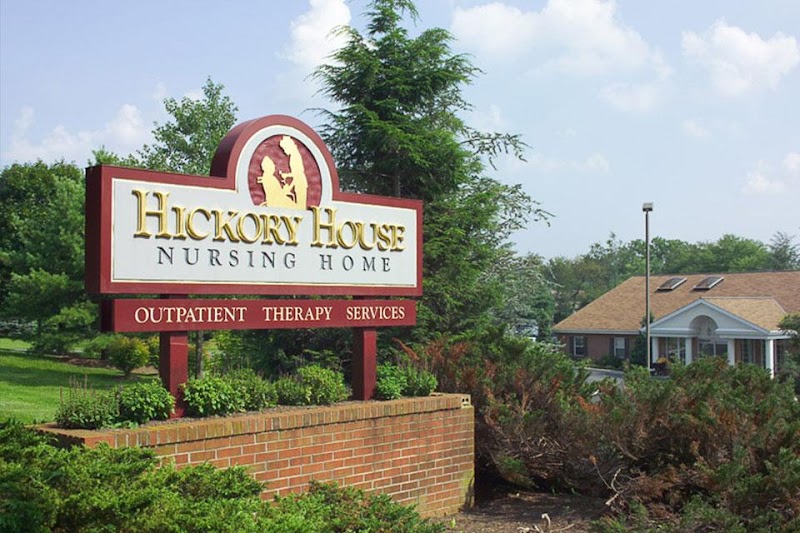
HICKORY HOUSE NURSING HOME
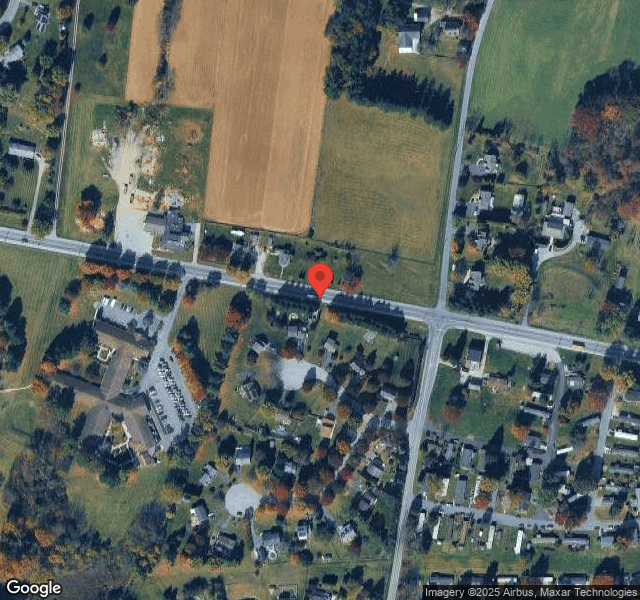
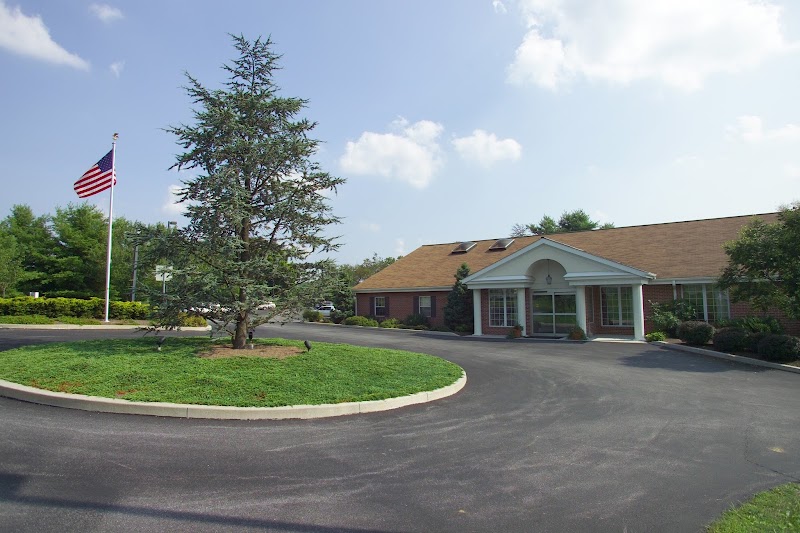
3120 HORSESHOE PIKE, HONEY BROOK, PA 19344 (610) 273-2915
For profit - Partnership 110 Beds LIFE CARE CENTERS OF AMERICA Data: November 2025
Trust Grade
80/100
#52 of 653 in PA
Last Inspection: June 2025

Inspected within the last 6 months. Data reflects current conditions.

Overview

Hickory House Nursing Home in Honey Brook, Pennsylvania, has a Trust Grade of B+, indicating it is above average and recommended for families seeking care. It ranks #52 out of 653 facilities in the state, placing it in the top half, and #3 out of 20 in Chester County, meaning only two local options are better. The facility is improving, with the number of issues declining from five in 2024 to four in 2025. Staffing is rated 4 out of 5 stars, but the turnover rate of 55% is average, which might indicate some instability. There have been no fines, which is a positive sign, and the nursing home has more RN coverage than many facilities, helping to catch potential issues. However, there are concerns regarding the care provided. There were instances where the staff failed to thoroughly investigate incidents involving residents, and there were missed medication doses for some residents without notifying the physician. Additionally, there was a report of a resident feeling mistreated by a staff member, which was not properly addressed according to facility policies. Overall, while Hickory House has many strengths, families should weigh these concerns carefully when considering this nursing home for their loved ones.

Trust Score
B+
80/100
In Pennsylvania
#52/653
Top 7%
Safety Record
Low Risk
No red flags
Inspections
Getting Better
5 → 4 violations
Staff Stability
⚠ Watch
55% turnover. Above average. Higher turnover means staff may not know residents' routines.
Penalties
✓ Good
No fines on record. Clean compliance history, better than most Pennsylvania facilities.
Skilled Nurses
✓ Good
Each resident gets 47 minutes of Registered Nurse (RN) attention daily — more than average for Pennsylvania. RNs are trained to catch health problems early.
Violations
⚠ Watch
13 deficiencies on record. Higher than average. Multiple issues found across inspections.
★★★★★
5.0
Overall Rating
★★★★☆
4.0
Staff Levels
★★★★★
5.0
Care Quality
★★★★☆
4.0
Inspection Score
Stable
2024: 5 issues
2025: 4 issues

The Good

  • 4-Star Staffing Rating · Above-average nurse staffing levels
  • 5-Star Quality Measures · Strong clinical quality outcomes
  • Full Sprinkler Coverage · Fire safety systems throughout facility
  • No fines on record

Facility shows strength in staffing levels, quality measures, fire safety.

The Bad

Staff Turnover: 55%

Near Pennsylvania avg (46%)

Frequent staff changes - ask about care continuity

Chain: LIFE CARE CENTERS OF AMERICA

Part of a multi-facility chain

Ask about local staffing decisions and management

Staff turnover is elevated (55%)

7 points above Pennsylvania average of 48%

The Ugly 13 deficiencies on record

Jun 2025 4 deficiencies
CONCERN (D)

Potential for Harm - no one hurt, but risky conditions existed

Report Alleged Abuse (Tag F0609)

Could have caused harm · This affected 1 resident

Based upon review of facility policy and procedure and review of facility documentation, it was determined the facility failed to report an allegation of abuse for one of one resident reviewed (Reside...

Read full inspector narrative →
Based upon review of facility policy and procedure and review of facility documentation, it was determined the facility failed to report an allegation of abuse for one of one resident reviewed (Resident 101). Findings include: Review of facility policy and procedure titled Abuse - Conducting an Investigation, reviewed May 7, 2025 revealed Complaints and grievances will be investigated as outlined in the Concern and Comment (Grievance) Program Policy and will be reported immediately if the investigation reveals any alleged violations involving neglect, abuse (including injuries of unknown source), and/or misappropriation of resident property, by anyone furnishing services on behalf of the provider, to the administrator of the provider, and as required by State law. Review of a grievance filed by Resident 101 on May 8, 2025, revealed Resident 101 felt he was not spoken to nicely and the CNA threw the shirt at him and told him to put it on. [Resident] said [CNA] would not help [Resident] put socks on then left the room and didn't come back. Interview with the Director of Nursing on June 6, 2025, at 10:30 a.m. confirmed that the above abuse allegation was not reported to the State agency as required. 28 Pa. Code 201.14(a) Responsibility of Licensee Previously cited 5/31/2024 28 Pa. Code 201.18(v)(1)(2) Management Previously cited 5/31/2024 28 Pa. Code 201.29(c) Resident Rights Previously cited 5/31/2024
CONCERN (D)

Potential for Harm - no one hurt, but risky conditions existed

Investigate Abuse (Tag F0610)

Could have caused harm · This affected 1 resident

Based upon review of facility policy and procedure and review of facility documentation, it was determined the facility failed to investigate an allegation of abuse for one of one resident reviewed (R...

Read full inspector narrative →
Based upon review of facility policy and procedure and review of facility documentation, it was determined the facility failed to investigate an allegation of abuse for one of one resident reviewed (Resident 101). Findings include: Review of facility policy and procedure titled Abuse - Conducting an Investigation, reviewed May 7, 2025 revealed When an incident or suspected incident of resident abuse and/or neglect, injury of unknown source, exploitation, or misappropriation of resident property is reported, the administrator/designee will investigate the occurrence. Protection will be provided to the alleged victim and other residents, such as room or staffing changes as needed to protect the resident(s) from the alleged perpetrator. Review of a grievance filed by Resident 101 on May 8, 2025, revealed Resident 101 felt he was not spoken to nicely and the CNA threw the shirt at him and told him to put it on. [Resident] said [CNA] would not help [resident] put socks on then left the room and didn't come back. Interview with the Director of Nursing on June 6, 2025, at 10:30 a.m. confirmed that the above abuse allegation was not fully investigated. 28 Pa. Code 201.14(a) Responsibility of Licensee Previously cited 5/31/2024 28 Pa. Code 201.18(v)(1)(2) Management Previously cited 5/31/2024 28 Pa. Code 201.29(c) Resident Rights Previously cited 5/31/2024
CONCERN (D)

Potential for Harm - no one hurt, but risky conditions existed

Quality of Care (Tag F0684)

Could have caused harm · This affected 1 resident

Based on review of clinical records and staff interviews, it was determined that the facility failed to ensure physician's orders were followed for three of three residents reviewed. (Resident 40, Res...

Read full inspector narrative →
Based on review of clinical records and staff interviews, it was determined that the facility failed to ensure physician's orders were followed for three of three residents reviewed. (Resident 40, Resident 42 and Resident 50). Findings include: Review of Resident 40's clinical record revealed a physician's order for Midodrine (medication used to treat hypotension) 2.5 milligrams (mg) to be administered three times per day and to hold the medication for systolic blood pressure greater than 125 mm/Hg (millimeters of mercury). Review of Resident 40's May 2025 Medication Administration Record (MAR) revealed Resident 40 received Midrodrine 2.5 mg on May 26, 2025 for a blood pressure of 134/43; May 30, 2025 for a blood pressure of 126/46 and May 31, 2025 for a blood pressure of 131/45. Review of Resident 40's June 2025 MAR revealed Resident 40 received Midrodrine 2.5 mg three times on June 2, 2025 for blood pressure readings of 145/50, 135/52 and 135/52 and June 3, 2025 for blood pressure of 131/55. The above information was conveyed to the Nursing Home Administrator and Director of Nursing on June 6, 2025 at 10:00 a.m. Review of Resident 42's clinical record revealed diagnoses including acute congestive heart failure, unspecified protein-calorie malnutrition (critical condition resulting from adequate intake of protein and calories) and dementia (general loss of cognitive abilities, including memory). Review of Resident 42's physician's orders dated May 30, 2025 revealed an order for fluid restriction of 1800 milliliters (ml) in 24 hours- 360 ml on each meal tray, shift 1 -360 ml, shift 2- 360 ml and shift 3 -120 ml every shift for CHF. Review of Resident 42's physician orders dated February 6, 2025 revealed Nursing bedside hydration three times a day. This order was discontinued on June 3, 2025. Review of Resident 42's Fluid Task sheet and Medication Administration Record revealed Resident 42 exceeded the daily fluid allotment as follows: May 31 2025; June 1 2025, June 2 2025 and June 3 2025. Interview with Director of Nursing on June 6, 2025, at 10:15 a.m. confirmed the physician orders were not followed for fluid restriction. Review of Resident 50's clinical record revealed diagnoses including hypertensive chronic kidney disease with stage 1 through stage 4 chronic kidney disease, or unspecified chronic kidney disease. (A medical condition referring to damage to the kidney due to chronic high blood pressure.) Review of Resident 50's physician's orders revealed Metoprolol Succinate ER Tablet Extended Release 24 Hour 25 MG. Give 1 tablet by mouth two times a day for HTN Hold if SBP <110 or HR <60 Review of Resident 50s medication administration record (MAR) for the month of March 2025, and April 2025, revealed the facility administered the above medication four times outside of parameters. The facility failed to ensure Resident 50's medication order Metoprolol Succinate ER was administered as ordered. 28 Pa. Code 211.12(c)(d)(1)(3)(5) Nursing services Previously cited 5/31/2024
CONCERN (D)

Potential for Harm - no one hurt, but risky conditions existed

Respiratory Care (Tag F0695)

Could have caused harm · This affected 1 resident

Based on clinical record review, observations, and resident interview, it was determined the facility failed to follow a physician's order for oxygen therapy for one of four residents reviewed (Reside...

Read full inspector narrative →
Based on clinical record review, observations, and resident interview, it was determined the facility failed to follow a physician's order for oxygen therapy for one of four residents reviewed (Resident 50). Findings include: Review of facility policy, titled Oxygen Administration (Infection Control, Safety, & Storage) last revised 04/08/2025 revealed Change oxygen supplies (e.g., cannula, tubing, humidifier) weekly and when visibly soiled. Equipment should be labeled with resident name and dated when setup or changed out. Review of Resident #50's clinical record revealed there was a current physician's order for the resident to be receiving oxygen therapy via a nasal cannula. The cannula was to be changed every night shift every Wednesday. Observation of Resident #50 on June 3, 2025, at 01:56 p.m. Revealed the nasal cannula (a device used to deliver supplemental oxygen or increased airflow to a patient or person in need of respiratory help). Was dated 05/15/2025. It was soiled with red tinged nasal prongs, 2 brownish red dots also appeared on the side of the cannula on wrapping. Further observation on June 4, 2025, at 09:03 a.m. revealed the same soiled cannula, dated 05/15/2025. Interview with Resident #50 on June 3, 2025, at 01:59 p.m. revealed the resident wears the oxygen often and while in the facility and has it hooked up to an oxygen concentrator. The facility failed to follow a physician's order for oxygen therapy for Resident #50. PA Code 211.10(c) Resident Care Policies
May 2024 5 deficiencies
CONCERN (D)

Potential for Harm - no one hurt, but risky conditions existed

Accident Prevention (Tag F0689)

Could have caused harm · This affected 1 resident

Based on clinical records review, facility documentation review, and staff interviews, it was determined that the facility failed to provide appropriate assessment and supervision to prevent a fall fo...

Read full inspector narrative →
Based on clinical records review, facility documentation review, and staff interviews, it was determined that the facility failed to provide appropriate assessment and supervision to prevent a fall for one of the 24 residents reviewed (Resident 35). Findings include: Review of resident 35's diagnosis list includes Dementia (term used to describe a group of symptoms affecting memory, thinking, and social abilities severely enough to interfere with daily life), and Cerebral Vascular Accident (CVA- interruption in the flow of blood to cells in the brain). Review of Resident 35's AdmissionMinimum Data Set (MDS- standardized assessment tool that measures health status in long-term care residents) dated November 22, 2023, revealed Resident 35 had a severe cognitive impairment and was dependent on transfers. The same MDS revealed car transfer assessment was not attempted due to medical conditions or safety concerns. Review of the active care plan initiated on November 22, 2023, revealed a care plan for ADLs (activities of daily living) which indicated that Resident 35 was an extensive assistance with two (persons) with transfers using the hemi walker (A kind of walker used for patient with full or partial paralysis on one side of the body). Review of the facility documentation and incident Report revealed that on January 1, 2024, at 11:45 a.m., the resident was found on the floor in the driveway outside of the facility by the main entrance on the passenger side of the family van. The family (grandson) signed the resident out for an outing. As per the resident, her/his knees got weak, and was unable to stand to get into the van causing the fall. Interview conducted with the Director of Nursing on May 31, 2024, revealed that for a resident going out on pass and requiring a two-person assist with transfers, rehab will be notified to assess the resident's safety with car transfers. Interview conducted with licensed Physical Therapist Employee E3 conducted on May 31, 2024, revealed that the rehab department was not notified that Resident 35 was going out on pass with a family. Employee E3 reported that a car transfer assessment would have been done if they had been informed. Review of the facility documentation revealed that on January 1, 2024, at 10:22 p.m., Resident 35 was assisted by an aide from a wheelchair to the bed but slipped from the chair, the aide lowered the resident to the floor and called for help. Review of the unlicensed employee E5 statement dated January 1, 2024, revealed: I attempted to pivot transfer patient from a chair to bed. The same statement revealed resident was lowered to the floor when she/he slipped. Interview conducted with the Diretor of Nursing on May 31, 2024, confirmed Resident 35 was provided with one person to assist with transfers on the night of January 1, 2024, despite needing a two-person assist with the use of hemi-walker as documented on the resident's plan of care. The facility failed to ensure Resident 35 was provided with appropriate assessment and supervision to prevent two falls in a day. 28 Pa. Code 211.10 (c)(d) Resident care policies 28 Pa. Code 211.12(d)(1)(5) Nursing services
CONCERN (D)

Potential for Harm - no one hurt, but risky conditions existed

Respiratory Care (Tag F0695)

Could have caused harm · This affected 1 resident

Based on a review of the facility's policy, observation, clinical records review, and resident and staff interview, it was determined that the facility failed to ensure a physician order for Oxygen us...

Read full inspector narrative →
Based on a review of the facility's policy, observation, clinical records review, and resident and staff interview, it was determined that the facility failed to ensure a physician order for Oxygen use was in place for one of the residents reviewed (Resident 205). Findings include: Review of the facility's policy titled Oxygen Administration, revised on February 27, 2024, revealed that an oxygen order should be written for specific liter flow required by the resident. Review of Resident 205's diagnosis list includes Chronic Obstructive Pulmonary Disease (COPD-A type of lung disease characterized by long-term respiratory symptoms and airflow limitations), Bronchiectasis with an acute lower respiratory infection, and Pleural Effusion (A buildup of fluid between the tissues that line the lungs and the chest). Observation conducted May 28, 2024, at 9:49 a.m., revealed Resident 205 sited in a wheelchair receiving supplemental oxygen per nasal cannula (A device that delivers extra oxygen through a tube and into your nose). An observation of the oxygen concentrator machine gauge revealed resident was receiving supplemental oxygen at two liters per minute (LPM). Interview conducted with Resident 205 on May 28, 2024, at 10:00 a.m., revealed that she/he was on as-needed supplemental oxygen at home but had been using continuous supplemental oxygen since being admitted to the facility four days ago. Observation conducted on May 30, 2024, at 11:35 a.m., revealed Resident 205 in the rehab room receiving supplemental oxygen per nasal cannula at two LPM while doing therapy. An interview with Resident 205 revealed she/he needed supplemental oxygen because she/he got short of breath during exertion. Review of Resident 205's clinical records failed to reveal an active physician's order for supplemental oxygen use and the liter per minute required. Interview with the Director of Nursing conducted on May 31, 2024, at 11:00 a.m., confirmed that there was no physician's order for Resident 205's supplemental oxygen from admission. The DON confirmed that the order was made on May 31, 2024. Review of the physician's order dated May 31, 2024, revealed an order for oxygen at two to four LPM per nasal cannula, which may be titrated to keep saturation above 90%. Notify the physician if saturation needs cannot be met at four liters. The facility failed to ensure that there was a physician's order for the supplemental oxygen use for Resident 205. 28 Pa. Code 211.10 (c)(d) Resident care policies 28 Pa. Code 211.12(d)(1)(5) Nursing services
CONCERN (D)

Potential for Harm - no one hurt, but risky conditions existed

Deficiency F0757 (Tag F0757)

Could have caused harm · This affected 1 resident

Based on facility policy and procedure review, clinical record review and staff interview it was determined the facility failed to ensure residents did not receive unnecessary medications for one of s...

Read full inspector narrative →
Based on facility policy and procedure review, clinical record review and staff interview it was determined the facility failed to ensure residents did not receive unnecessary medications for one of six residents reviewed. (Resident 79) Findings Include: Review of facility policy and procedure titled Definition of Infections for Surveillance Activities, last reviewed May 16, 2024 revealed Identification of infection should not be based on a single piece of evidence but should always consider the clinical presentation and any microbiologic (lab studies) or radiologic (X-rays, CT scan etc.) information that is available. Microbiologic and radiologic findings should not be the sole criteria for defining an event as an infection. Similarly, diagnosis by a physician alone is not sufficient for a surveillance definition of infection and must be accompanied by documentation of complete signs and symptoms. Review of Resident 79's progress notes revealed a nursing entry dated May 10, 2024 at 2:17 p.m. stating CNA (Certified Nursing Assistant) to desk stating resident complaining of dysuria (pain during urination) and was noted to have drops of blood on his penis and in brief. Doctor's office called, await call back. Review of the entire clinical record revealed there was no documented evidence of an assessment of the resident completed by a nurse on Resident 79 related to his complaint of dysuria and the blood noted by the CNA. Further review of Resident 79's progress notes revealed a nursing entry dated May 10, 2024 at 2:30 p.m. stating Doctor's office returned phone call and was updated on resident. He said because it is Friday afternoon and resident is symptomatic with noted blood, he ordered antibiotic. Review of the entire clinical record revealed there was no evidence Resident 79's urine was tested to confirm a urinary infection. Review of Resident 79's Medication Administration Record (MAR) revealed the resident received Amoxicillin-Pot Clavulanate (antibiotic) Tablet 500-125 MG (milligrams) twice a day for five days from May 11-15 2024 for a diagnosis of probable UTI (Urinary Tract Infection). Interview with the Director of Nursing and the Nursing Home Administrator on May 31, 2024 at 11:30 a.m. confirmed Resident 79 did not have a nursing assessment to confirm the signs and symptoms reported to the RN by the CNA or a laboratory study to confirm a UTI and the sensitivity of the organism causing the infection prior to the administration of antibiotics. 28 Pa Code 211.5 (f) Clinical records 28 Pa code 211.10 (c) Resident care policies 28 Pa. 211.12(c)(d)(1)(3)(5) Nursing services
CONCERN (E)

Potential for Harm - no one hurt, but risky conditions existed

Investigate Abuse (Tag F0610)

Could have caused harm · This affected multiple residents

**NOTE- TERMS IN BRACKETS HAVE BEEN EDITED TO PROTECT CONFIDENTIALITY** Based on facility policy and procedure review, clinical record review, and staff interviews, it was determined the facility fail...

Read full inspector narrative →
**NOTE- TERMS IN BRACKETS HAVE BEEN EDITED TO PROTECT CONFIDENTIALITY** Based on facility policy and procedure review, clinical record review, and staff interviews, it was determined the facility failed to thoroughly investigate incidents for three of 32 residents reviewed. (Residents 2, 95, and 155) Findings include: Review of facility policy and procedure titled Protection of Residents: Reducing the Threat of Abuse & Neglect, reviewed May 15, 2020, revealed when an incident of or suspected incident of resident abuse and/or neglect of unknown source, exploitation or misappropriation of resident property is reported the administrator/designee will investigate the occurrence. The administrator/designee will complete an Incident Report and will utilize the Incident Investigation Questionnaire Form to document the investigation. The written summary of the investigation should include, but is not limited to: a review of the incident report, an interview with the person reporting the incident, interviews of any witnesses to the incident, an interview with the resident if appropriate, a review of the residents medical record, an interview with employees as needed, a review of the employees file as needed, Interviews with staff members on all shifts having contact with the resident at the time of the incident. Interview with the resident's roommate, family, and or visitors which may have information regarding the incident, interview other resident who received care and services from the alleged perpetrator, a review of all circumstances surrounding the incident. Review of Resident 2's clinical record revealed the following diagnosis: Unspecified Dementia (the loss of cognitive functioning - thinking, remembering, and reasoning - to such an extent that it interferes with a person's daily life and activities), Cognitive communication deficit (difficulty with communication that is caused by a problem with thinking), Anxiety disorder (intense, excessive and persistent worry and fear about everyday situations.), Major Depressive disorder (a persistent feeling of sadness and loss of interest). Additional review of Resident 2's clinical record revealed Resident 2 was actively prescribed Eliquis (blood thinner, blocks the activity of certain clotting substances in the blood). Review of Resident 2's progress notes revealed a progress note dated April 23, 2024, which states the following On this night the CAN (Certified nursing assistant) informed me that this resident had blood on his hand, wrist and on many tissues in the trash can. When assessing the situation, there was a band aide soaked with blood on his left wrist. When the band aide was removed the area was still bleeding. There was approximately a straight line cut approximately 1 centimeter long with no depth nor width on his left wrist. The area kept bleeding. The edges were approximated with 2 steri strips (strong adhesive bandages. They're often used to hold together the edges of a cut or wound, providing support for healing) after cleansing with NSS (normal saline solution). A pressure dressing of 4x4's was applied and wrapped with cling. Interview conducted with Resident 2 on May 29, 2024, at 1:18 p.m. reported that he/she does not remember how he/she sustained a laceration but remembers a male nurse placing a band aid on his wrist. Review of incident report, provided by the Director of Nursing (DON) on May 30, 2024, failed to contain any documentation identifying the nurse that treated Resident 2's wound and failed to provide any evidence of the nurse notifying the supervisor. Additional review of the incident report revealed the DON failed to attain any witness statements. Interview conducted with the Nursing Home Administrator on May 31, 2024, at 11:47 a.m. confirmed the incident was not thoroughly investigated. Review of Resident 95's diagnosis list includes Dementia (term used to describe a group of symptoms affecting memory, thinking, and social abilities severely enough to interfere with daily life), and Metabolic Encephalopathy (A group of neurological disorders that affects the brain due to a chemical imbalance in the blood). Review of Resident 95's admission Minimum Data Set (MDS- standardized assessment tool that measures health status in long-term care residents) revealed resident had a severe cognitive impairment. Review of Resident 95's nursing progress notes dated April 26, 2024, at 7:57 p.m., revealed that at around 9:30 p.m., the nursing supervisor received a call from a state trooper stating that the resident had called 911 due to feeling of not being safe in the facility. The resident informed the nursing supervisor that he/she did not feel safe and would like his/her sleeping pill. The state trooper came to the facility and spoke to the resident who reported that he/she was beaten and tossed into bed by two men. Documentation revealed that as per the trooper, the resident's description of the men who tossed him/her in bed was that of an EMT staff. Review of the facility documentation, Incident Report revealed that on April 26, 2024, at 7:30 p.m., the RN supervisor received a call from the state trooper stating that the resident had called 911 due to not feeling safe in the facility. The report revealed that as per the resident description, he/she was beaten and tossed in bed by two men. The resident was assessed, and the physician and POA were notified. Review of Resident 95's clinical records and facility documentation failed to reveal that a statement was taken from staff that had or possibly was in contact with the resident. Interview with the Director of Nursing conducted on May 31, 2024, confirmed that there was no documented evidence that staff who had or possibly had contact with the resident was interviewed. The facility failed to ensure Resident 95's allegation of physical abuse was comprehensively investigated. Review of Resident 155's census tab of the clinical record revealed the resident was admitted to the facility on [DATE] from the hospital after a surgical repair of a fractured hip. Review of Resident 155's Progress Notes revealed a Nursing Entry dated April 23, 2024 at 12:03 a.m. stating, This RN (Registered Nurse) was alerted by CNA (Certified Nursing Assistant) that while providing incont (incontinent) care she saw a gold point sticking out of resident's anus; while attempting to wipe resident's buttocks a fully intact writing pen came out of resident's rectum. Resident Alert with confusion and unable to explain how the pen became lodged in his rectum and denied pain. Resident was assessed for trauma none noted. Facility was asked to provide all documentation related to the investigation of this incident upon admission for Resident 155. An incident report was provided but there was no documented evidence any staff, or residents had been interviewed or that the company that had transported the resident to the facility from the hospital, or the hospital itself was contacted by the facility for investigation into this incident. Interview with the Nursing Home Administrator and the Director of Nursing on May 31, 2024 at 11:30 a.m. confirmed there was not a thorough investigation into the incident to Resident 155 upon admission on [DATE]. 28 Pa. Code 201.14(a) Responsibility of Licensee 28 Pa. Code 201.18(b)(1)(3)(e)(1) Management 28 Pa. Code 201.29(a)(d) Resident Rights 28 Pa. Code 211.5(f) Clinical Records
CONCERN (E)

Potential for Harm - no one hurt, but risky conditions existed

Quality of Care (Tag F0684)

Could have caused harm · This affected multiple residents

Based on clinical records review and staff interview, it was determined that the facility failed to follow the physician's orders and notify the physician of missed medications for three of the 24 res...

Read full inspector narrative →
Based on clinical records review and staff interview, it was determined that the facility failed to follow the physician's orders and notify the physician of missed medications for three of the 24 residents reviewed (Residents 9, 51, and 95). Findings include: Review of Resident 9's physician order dated May 18, 2024, revealed an order for Vancomycin HCL (antibiotic) Oral Capsule 125 mg given one capsule by mouth every 12 hours for C-diff (An inflammation of the colon caused by the bacteria Clostridium difficile) until May 18, 2024. Review of Resident 9's clinical record including May 2024 Medication Administration Record revealed Vancomycin was not administered to the resident until the morning of May 18, 2024, missing three doses due to unavailability of the medication. Review of the physician's progress notes dated May 20, 2024, revealed the assessment and plan: Diarrhea (loose stool), history of recent C-diff, and Vancomycin completed. Review of Resident 9's clinical records failed to reveal that the physician was notified that the resident was only administered one out of four doses of Vancomycin ordered on May 16, 2024, due to the unavailability of the medication from the pharmacy. Interview with Director of Nursing conducted on May 31, 2024, confirmed the physician was not notified of the missed Vancomycin doses ordered on May 16, 2024, until May 21, 2024. Review of Resident 51's physician's orders revealed an physician's order dated February 26, 2024, for Coreg Oral Tablet (beta blocker used to treat high blood pressure and heart failure) 25 milligrams (mg) two times a day at 8 a.m. and 4 p.m., hold for systolic blood pressure (SBP) less than 100 or heart rate (HR) less than 60. Review of Resident 51's May 2024 Medication Administration Report (MAR) revealed the resident received Coreg 25 mg on May 8, 2024, with a documented HR of 59, May 12, 2024, with a documented HR of 56, May 18, 2024, with a documented HR of 59, May 22, 2024, with a documented HR of 54, May 23, 2024, with a documented HR of 55, and May 24, 2024, with a documented HR of 53. Review of Resident 51's April 2024 MAR revealed the resident received Coreg 25mg on April 3, 2024, for a documented HR of 57, April 6, 2024, for a documented HR of 57, April 7, 2024, for a documented HR of 58, April 21, 2024, for a documented HR of 57, April 23, 2024, for a documented HR of 56, April 26, 2024, for a documented HR of 55, and April 29, 2024, for a documented HR of 58. Review of Resident 51's March 2024 MAR revealed the resident received Coreg 25mg on March 22, 2024, for a documented HR of 54, and March 23, 2024, for a documented HR of 55. Review of Resident 51's clinical records revealed a physician note dated April 30, 2024, documenting medication was administered to resident with a documented heart rate of less than 60 for three days in April. Interview conducted on June 3, 2024, at 10:46 a.m. with the Nursing Home Administrator occurred and during which the above information was conveyed. Review of the Resident 95's nursing progress notes dated May 22, 2024, at 2:12 p.m., revealed Nurse Practitioner was in to see the resident due to having loose stools. A new order to continue the current Vancomycin until May 28, 2024, was made. Review of Resident 95's physician's order dated April 24, 2024, revealed an order for Midodrine (medication used to treat low blood pressure) 5 mg give one tablet by mouth three times a day for Hypotension (low blood pressure). Hold for Systolic Blood Pressure (SBP) over 130 Review of the May 2024, Medication Administration Record (MAR) revealed that from May 1, 2024, until May 22, 2024, Resident 95 was administered Midodrine 13 times with a systolic blood pressure above 130 ranging from 132/55 mmHg to 169/51 mmHg. Interview with the Director of Nursing on May 31, 2024, confirmed the Midodrine medication was administered to Resident 95 outside of ordered parameters. The facility failed to ensure physician's order for the Midodrine medication administration parameter order was followed. 28 Pa. Code 211.12(d)(1)(5) Nursing services
Sept 2023 1 deficiency
CONCERN (D) 📢 Someone Reported This

A family member, employee, or ombudsman was alarmed enough to file a formal complaint

Potential for Harm - no one hurt, but risky conditions existed

Quality of Care (Tag F0684)

Could have caused harm · This affected 1 resident

Based on clinical record review and staff interview, it was determined that the facility failed to ensure that physician orders were followed and insulin administration was given timely for three of f...

Read full inspector narrative →
Based on clinical record review and staff interview, it was determined that the facility failed to ensure that physician orders were followed and insulin administration was given timely for three of four residents reviewed (Residents R2 R3, and Resident R4). Findings Include: Review of Resident R2's clinical record revealed diagnoses including but not limited to Diabetes Mellitus (impaired ability of the body to produce or respond to insulin and thereby maintain proper levels of sugar (glucose) in the blood). Review of Resident R2's clinical record revealed a physician's order for Lantus (long acting insulin) SoloStar Solution Pen-Injector 100 UNIT/ML (mililiter) with instruction to Inject 10 unit subcutaneously (under the skin) one time a day for diabetic, give 8 am. Review of Resident R2's clinical record including the September 2023 MAR (Medication Administration Record) revealed the Lantus insulin was not administered within acceptable time parameter ten times from September 1, 2023 through September 15, 2023. Review of clinical record of Resident R3 revealed a diagnosis of Diabetes Mellitus. Further review of Resident R3's clinical record revealed a physician's order initiated on April 21, 2023 for NovoLOG FlexPen Solution Pen-injector 100 UNIT/ML (Insulin Aspart) with instructions to Inject 8 unit subcutaneously four times a day for diabetic give 6a/12p/4p/8p. Additional review of Resident R3's clinical record including September 2023 MARs revealed the following: September 1, 2023 NovoLOG was to be administered at 4 p.m. but was not administered until 8:48 p.m. with the next administration scheduled for 8 p.m. which was administered at 8:50 p.m. On September 2, 2023, Novolog was to be administered at 4 p.m. but was not administered until 7:41 pm. with the next administration dose scheduled for 8 p.m. which was administered at 7:42 p.m. On september 3, 2023 the 4 p.m. scheduled dose was administered at 6:34 p.m. and the 8 p.m. NovoLOG dose was administered at 8:39 p.m. September 6, 2023 the NovoLOG 4 p.m. dose was administered at 6:35 p.m. and the 8 p.m. dose was administered at 7:09 p.m. Further review of Resident R3's September 2023 MARs revealed on September 12, 2023 the NovoLOG 6 a.m dose was not administered until 9:59 a.m. On September 13, 2023 the 4 p.m. Novolog dose was not administered until 8:46 p.m. and the 8 p.m. dose was adminstered at 9:01 p.m. Review of Resident R4's clinical record revealed a diagnosis of Diabetes Mellitus. Further review of Resident R4's clinical record revealed a physician's order for HumaLOG (short acting insulin) KwikPen Subcutaneous Solution 100 UNIT/ML with instructions Inject as per sliding scale: if 0 - 200 = 0 units Call doctor if BGT (Blood Glucose Test) less than 70 and initiate hypoglycemia protocol; 201 - 250 = 2 units; 251 - 300 = 4 units; 301 - 350 = 6 units; 351 - 400 = 8 units call doctor if BGT over 400, subcutaneously four times a day for diabetes give 7:30 am, 12p, 5p, 8p. Review of Resident R4's clinical record including the September 2023 MAR revealed the HumaLOG insulin was not administered within acceptable time parameters seven times from September 1, 2023 through September 15, 2023. Interview conducted on Sepember 15, 2023 at approximately 6:56 p.m. with the Nursing Home Administrator when the above information was conveyed. 28 Pa Code 211.12(d)(1)(5) Nursing Services
Jun 2023 3 deficiencies
CONCERN (D)

Potential for Harm - no one hurt, but risky conditions existed

Quality of Care (Tag F0684)

Could have caused harm · This affected 1 resident

Based upon clinical record review, it was determined the facility failed to follow physician orders for medication administration for two of 18 residents reviewed (Resident 22 and Resident 63). Findin...

Read full inspector narrative →
Based upon clinical record review, it was determined the facility failed to follow physician orders for medication administration for two of 18 residents reviewed (Resident 22 and Resident 63). Findings include: Review of Resident 22's physician orders dated June 2, 2023, revealed an order for Ampicillin-Sulbactam (antibiotic medication) Sodium Intravenous Solution 3 grams to be administered intravenously every 6 hours for a right foot infection. Review of Resident 22's June Medication Administration Record (MAR) failed to reveal evidence that Resident 22 received the antibiotic medication as ordered by the physician on June 28, 2023, at 6:00 a.m. Interview with the Assistant Director of Nursing on June 30, 2023, at 10:00 a.m. confirmed Resident 22 did not receive the antibiotic medication as ordered by the physician. Review of Resident 63's physician orders dated May 31, 2023, revealed an order for Lorazepam (anti-anxiety medication) 0.5 milligrams (mg) to be administered daily at 8:00 a.m. Review of Resident 63's clinical progress notes revealed Resident 63 was administered Lorazepam 0.5 mg on June 14, 2023, at 2:15 a.m. Resident 63 was then unable to receive the scheduled dose at 8:00 a.m. Interview with the Assistant Director of Nursing on June 30, 2023, at 10:05 a.m. confirmed Resident 63 received Lorazepam 0.5 mg at 2:15 a.m. on June 14, 2023, instead of receiving it at 8:00 a.m. as ordered by the physician. The facility failed to ensure medications were administered according to physician orders. 28 Pa. Code 211.12(d)(1)(5) Nursing Services
CONCERN (D)

Potential for Harm - no one hurt, but risky conditions existed

Respiratory Care (Tag F0695)

Could have caused harm · This affected 1 resident

Based on observation, clinical record review and staff interview, it was determined the facility failed to provide respiratory care consistent with professional standards of practice, for one of 32 re...

Read full inspector narrative →
Based on observation, clinical record review and staff interview, it was determined the facility failed to provide respiratory care consistent with professional standards of practice, for one of 32 residents reviewed (Resident 92). Findings include: Observation conducted on June 27, 2023, at approximately 11:24 a.m. revealed Resident 92 was receiving oxygen therapy via nasal cannula (device that delivers extra oxygen to your nose through soft prongs). Review of Resident 92's clinical record on June 27, 2023, failed to reveal any active orders for oxygen therapy. Further review of Resident 92's clinical record revealed a care plan intervention for 2-3 L continues oxygen via nasal cannula. Interview conducted with the Director of Nursing (DON) and Nursing Home Administrator on June 30, 2023, at approximately 12:15 p.m. confirmed that Resident 92 did not have an order for oxygen therapy. 28 Pa. Code 211.10 (c)(d) Resident care policies 28 Pa. Code 211.12(d)(1)(5) Nursing services
CONCERN (D)

Potential for Harm - no one hurt, but risky conditions existed

Drug Regimen Review (Tag F0756)

Could have caused harm · This affected 1 resident

Based on clinical record review, it was determined that the facility failed to ensure the physician provided a clinical rationale for declining a consultant pharmacist recommendation for one of five r...

Read full inspector narrative →
Based on clinical record review, it was determined that the facility failed to ensure the physician provided a clinical rationale for declining a consultant pharmacist recommendation for one of five residents reviewed for unnecessary medications (Resident 26). Findings include: Review of Resident 26's physician's orders revealed an order dated May 12, 2023 for hydroxyzine pamoate (medication used to treat allergies and can also be used to treat anxiety) 25 milligrams (mg) - give 1 capsule by mouth three times a day for anxiety and picking at skin. Review of Resident 26's pharmacy reviews revealed a Note to Attending Physician/Prescriber dated May 18, 2023, which stated that hydroxyzine was a potentially inappropriate medication for residents over the age of 65 due to increased risk for confusion, dry mouth, constipation, and other side effects. Further review of Resident 26's pharmacy review from May 18, 2023, revealed the physician signed the recommendation on May 26, 2023, and checked off the box for disagree but did not provide a clinical rationale for declining the pharmacist's recommendation. The physician's failure to provide a clinical rationale for declining the consultant pharmacist's recommendation for Resident 26 was discussed and confirmed with the Assistant Director of Nursing on June 30, 2023, at 10:10 a.m. 28 Pa. Code 201.18(b)(1)(2) Management
Understanding Severity Codes (click to expand)
Life-Threatening (Immediate Jeopardy)
J - Isolated K - Pattern L - Widespread
Actual Harm
G - Isolated H - Pattern I - Widespread
Potential for Harm
D - Isolated E - Pattern F - Widespread
No Harm (Minor)
A - Isolated B - Pattern C - Widespread

Questions to Ask on Your Visit

  • "Why is there high staff turnover? How do you retain staff?"
  • "Can I speak with families of current residents?"
  • "What's your RN coverage like on weekends and overnight?"

Our Honest Assessment

Strengths
  • • Grade B+ (80/100). Above average facility, better than most options in Pennsylvania.
  • • No major safety red flags. No abuse findings, life-threatening violations, or SFF status.
  • • No fines on record. Clean compliance history, better than most Pennsylvania facilities.
Concerns
  • • 13 deficiencies on record. Higher than average. Multiple issues found across inspections.
  • • 55% turnover. Above average. Higher turnover means staff may not know residents' routines.
Bottom line: Generally positive indicators. Standard due diligence and a personal visit recommended.

About This Facility

What is Hickory House's CMS Rating?

CMS assigns HICKORY HOUSE NURSING HOME an overall rating of 5 out of 5 stars, which is considered much above average nationally. Within Pennsylvania, this rating places the facility higher than 99% of the state's 100 nursing homes. This rating reflects solid performance across the metrics CMS uses to evaluate nursing home quality.
How is Hickory House Staffed?

CMS rates HICKORY HOUSE NURSING HOME's staffing level at 4 out of 5 stars, which is above average compared to other nursing homes. Staff turnover is 55%, which is 9 percentage points above the Pennsylvania average of 46%. High turnover can affect care consistency as new staff learn residents' individual needs.

What Have Inspectors Found at Hickory House?

State health inspectors documented 13 deficiencies at HICKORY HOUSE NURSING HOME during 2023 to 2025. These included: 13 with potential for harm.
Who Owns and Operates Hickory House?

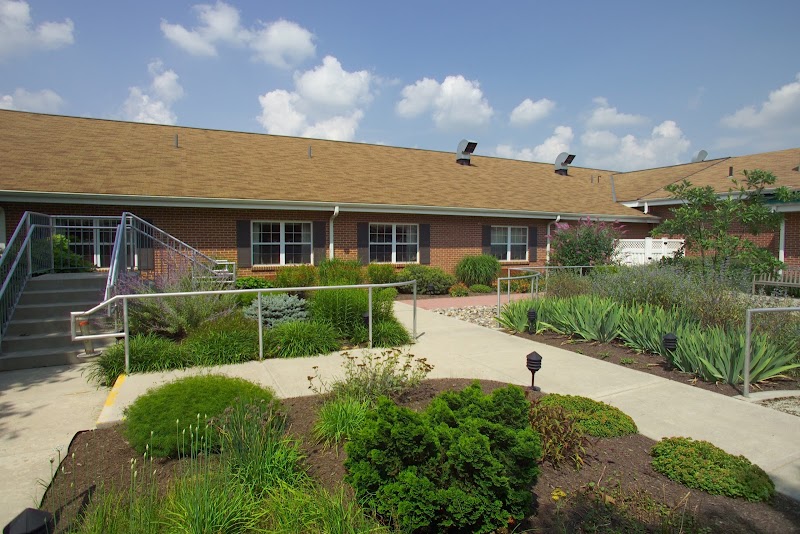
HICKORY HOUSE NURSING HOME is owned by a for-profit company. For-profit facilities operate as businesses with obligations to shareholders or private owners. The facility is operated by LIFE CARE CENTERS OF AMERICA, a chain that manages multiple nursing homes. With 110 certified beds and approximately 103 residents (about 94% occupancy), it is a mid-sized facility located in HONEY BROOK, Pennsylvania.

How Does Hickory House Compare to Other Pennsylvania Nursing Homes?

Compared to the 100 nursing homes in Pennsylvania, HICKORY HOUSE NURSING HOME's overall rating (5 stars) is above the state average of 3.0, staff turnover (55%) is near the state average of 46%, and health inspection rating (4 stars) is above the national benchmark.

What Should Families Ask When Visiting Hickory House?

Based on this facility's data, families visiting should ask: "How do you ensure continuity of care given staff turnover, and what is your staff retention strategy?" "Can I visit during a mealtime to observe dining assistance and food quality?" "How do you handle medical emergencies, and what is your hospital transfer rate?" "Can I speak with family members of current residents about their experience?" These questions are particularly relevant given the facility's high staff turnover rate.

Is Hickory House Safe?

Based on CMS inspection data, HICKORY HOUSE NURSING HOME has a clean safety record: no substantiated abuse findings (meaning no confirmed cases of resident harm), no Immediate Jeopardy citations (the most serious violation level indicating risk of serious injury or death), and is not on the Special Focus Facility watch list (a federal program monitoring the lowest-performing 1% of nursing homes). The facility has a 5-star overall rating and ranks #1 of 100 nursing homes in Pennsylvania. While no facility is perfect, families should still ask about staff-to-resident ratios and recent inspection results during their visit.

Do Nurses at Hickory House Stick Around?

Staff turnover at HICKORY HOUSE NURSING HOME is high. At 55%, the facility is 9 percentage points above the Pennsylvania average of 46%. High turnover means new staff may not know residents' individual needs, medications, or preferences. It can also be disorienting for residents, especially those with dementia who rely on familiar faces. Families should ask: What is causing the turnover? What retention programs are in place? How do you ensure care continuity during staff transitions?

Was Hickory House Ever Fined?

HICKORY HOUSE NURSING HOME has no federal fines on record. CMS issues fines when nursing homes fail to meet care standards or don't correct problems found during inspections. The absence of fines suggests the facility has either maintained compliance or corrected any issues before penalties were assessed. This is a positive indicator, though families should still review recent inspection reports for the full picture.

Is Hickory House on Any Federal Watch List?

HICKORY HOUSE NURSING HOME is not on any federal watch list. The most significant is the Special Focus Facility (SFF) program, which identifies the bottom 1% of nursing homes nationally based on persistent, serious quality problems. Not being on this list means the facility has avoided the pattern of deficiencies that triggers enhanced federal oversight. This is a positive indicator, though families should still review the facility's inspection history directly.