JERSEY SHORE SKILLED NURSING AND REHABILITATION CE
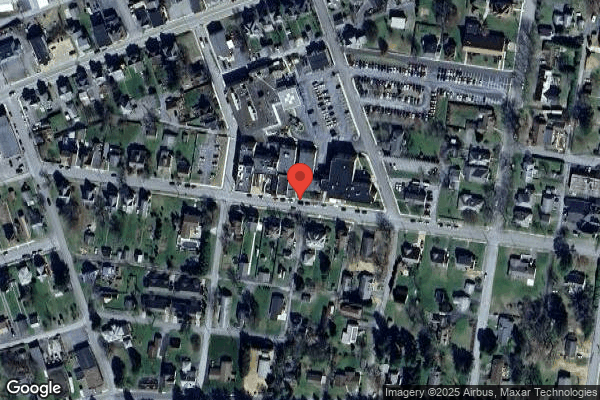

1008 THOMPSON STREET, JERSEY SHORE, PA 17740 (570) 398-4747
For profit - Corporation 120 Beds GENESIS HEALTHCARE Data: November 2025
Trust Grade
15/100
#583 of 653 in PA
Last Inspection: May 2025

Inspected within the last 6 months. Data reflects current conditions.

Overview

Jersey Shore Skilled Nursing and Rehabilitation Center has received a Trust Grade of F, indicating significant concerns about the quality of care provided. It ranks #583 out of 653 facilities in Pennsylvania, placing it in the bottom half, and #7 out of 8 in Lycoming County, meaning only one local facility is rated worse. The facility is worsening, with issues increasing from 17 in 2024 to 25 in 2025. Staffing is average with a 3 out of 5 rating and a 56% turnover rate, which is concerning but slightly above the state average. However, the facility faces serious issues, including failing to protect a resident from inappropriate physical restraints and not promptly treating a pressure ulcer, both of which led to actual harm. Additionally, they have incurred $61,652 in fines, higher than 85% of facilities in Pennsylvania, suggesting repeated compliance problems.

Trust Score
F
15/100
In Pennsylvania
#583/653
Bottom 11%
Safety Record
High Risk
Review needed
Inspections
Getting Worse
17 → 25 violations
Staff Stability
⚠ Watch
56% turnover. Above average. Higher turnover means staff may not know residents' routines.
Penalties
✓ Good
$61,652 in fines. Lower than most Pennsylvania facilities. Relatively clean record.
Skilled Nurses
○ Average
Each resident gets 37 minutes of Registered Nurse (RN) attention daily — about average for Pennsylvania. RNs are the most trained staff who monitor for health changes.
Violations
⚠ Watch
61 deficiencies on record. Higher than average. Multiple issues found across inspections.
★☆☆☆☆
1.0
Overall Rating
★★★☆☆
3.0
Staff Levels
★☆☆☆☆
1.0
Care Quality
★☆☆☆☆
1.0
Inspection Score
Stable
2024: 17 issues
2025: 25 issues

The Good

  • Full Sprinkler Coverage · Fire safety systems throughout facility
  • No fines on record

Facility shows strength in fire safety.

The Bad

1-Star Overall Rating

Below Pennsylvania average (3.0)

Significant quality concerns identified by CMS

Staff Turnover: 56%

Near Pennsylvania avg (46%)

Frequent staff changes - ask about care continuity

Federal Fines: $61,652

Above median ($33,413)

Moderate penalties - review what triggered them

Chain: GENESIS HEALTHCARE

Part of a multi-facility chain

Ask about local staffing decisions and management

Staff turnover is elevated (56%)

8 points above Pennsylvania average of 48%

The Ugly 61 deficiencies on record

2 actual harm
Oct 2025 2 deficiencies
CONCERN (E) 📢 Someone Reported This

A family member, employee, or ombudsman was alarmed enough to file a formal complaint

Potential for Harm - no one hurt, but risky conditions existed

Quality of Care (Tag F0684)

Could have caused harm · This affected multiple residents

Based on clinical record review and staff interview, it was determined that the facility failed to provide physician ordered treatment for wounds for four of five residents reviewed (Residents CR1, 1,...

Read full inspector narrative →
Based on clinical record review and staff interview, it was determined that the facility failed to provide physician ordered treatment for wounds for four of five residents reviewed (Residents CR1, 1, 2, and 4). Findings include: Clinical record review for Resident 1 revealed a physician's order dated July 26, 2025, for the resident to have treatment to a Stage 3 (full thickness skin loss that extends to the fat layer) of the right heel daily cleansing with a normal saline solution (NSS), pat dry, apply skin prep to the wound and leave open to air. There was no evidence this treatment was completed on September 11, and 17, 2025. Closed clinical record review for Resident CR1 revealed a physician's order dated August 25, 2025, for the resident to have a left lateral foot wound cleaned with NSS and have a betadine (antiseptic) soaked cover, pads, and gauze applied and covered with a bandage wrap every three days. The resident also had an order dated August 25, 2025, to receive treatment to venous ulcers (due to poor circulation) on his right foot first toe, left foot third toe, and the left heel to cleanse with NSS, paint with betadine, leave open to air, and to be done daily. Review of Resident CR1's treatment record for August 2025, revealed the resident was not documented as receiving the treatment on August 31, 2025, as ordered/scheduled. Clinical record review for Resident 2 revealed a physician's order dated September 19, 2025, for the resident to have treatment with negative pressure wound therapy (a vacuum to remove fluid and debris from wounds to promote healing) continuously, with a treatment to include the wound cleansed with wound cleanser, gauze placed into the wound, apply skin prep to intact skin around the wound, apply a dressing and secure the vacuum tubing per the manufacturer's guidelines every Monday, Wednesday, and Friday. Review of Resident 2's treatment record for September 2025, revealed the resident was not documented as receiving the treatment as ordered on Friday, September 26, 2025. Clinical record review for Resident 4 revealed a physician's order dated September 10, 2025, for the resident to have treatment completed to a pressure ulcer (wound of the skin due to prolonged pressure to an area) on the resident's coccyx to be cleansed with normal saline and apply calcium alginate (cream used for wound treatment), and cover with foam dressing every day. Review of Resident 4's treatment record for September 2025, revealed no evidence that the resident received the treatment as ordered on September 15, 19, 22, 29, 30, 2025. Further review for Resident 4 revealed a physician's order dated September 8, 2025, for negative pressure wound therapy continuously to the resident's left hip with a treatment to the wound itself including cleansing the wound with cleanser, placing foam into the wound, covering the wound with a dressing, and securing the wound vacuum tube every Monday, Wednesday, and Friday. Review of the resident's treatment record for September 2025, revealed no evidence the treatment was completed as ordered on September 15, 19, 22, or 29, 2025. A nursing note dated September 30, 2025, at 5:17 PM noted the resident's wound vacuum had been alerting full canister from the start of shift and the resident indicated the wound nurse came to his room that morning to change it but didn't have the supplies and was told the wound nurse had to order the supplies. The information regarding no evidence of the above noted treatments was reviewed with the Director of Nursing and Nursing Home Administrator on October 1, 2025, at 3:30 PM. There was no additional information to indicate whether the treatments were completed as ordered or that the resident had refused or was not available for the treatment to be completed. The Director of Nursing indicated Resident 4 utilized a different negative pressure machine for his wound than others in the facility and supply delivery was delayed, which may have impacted Resident 4's treatments. 28 Pa. Code 201.18(b)(1)(3) Management 28 Pa. Code 211.12(d)(1)(5) Nursing services
CONCERN (E) 📢 Someone Reported This

A family member, employee, or ombudsman was alarmed enough to file a formal complaint

Potential for Harm - no one hurt, but risky conditions existed

Pharmacy Services (Tag F0755)

Could have caused harm · This affected multiple residents

**NOTE- TERMS IN BRACKETS HAVE BEEN EDITED TO PROTECT CONFIDENTIALITY** Based on review of select facility policies, clinical record review, and resident and staff interview, it was determined that th...

Read full inspector narrative →
**NOTE- TERMS IN BRACKETS HAVE BEEN EDITED TO PROTECT CONFIDENTIALITY** Based on review of select facility policies, clinical record review, and resident and staff interview, it was determined that the facility failed to provide timely medications to one of five residents reviewed (Resident 3) and failed to obtain and provide medications for one of five residents reviewed (Resident CR1). Findings include: Review of the facility's current policy entitled Medication Administration General Guidelines, revealed it is the facility's policy that medications are administered within 60 minutes of scheduled times, except before or after meal orders, which are administered based on mealtimes. In an interview with Resident 3 on October 1, 2025, at 3:14 PM the resident indicated she sometimes needs to tell staff she needs her medications because they are late. Resident 3 stated she used to get her morning medication closer to 8:00 AM but it has been closer to 10:30 AM at times, and that she believes her medication times were going to change because staff were working on two floors. Review of Resident 3's medication administration record for September 2025, revealed the following medications administered outside the 60-minute window of the scheduled administration time. Breo Ellipta Inhalation Aerosol Powder (a maintenance medication to assist with breathing conditions) scheduled for 8:00 AM was administered late between 10:00 and 11:00 AM on September 26, 27, 28, and 29, 2025. Diltiazem HCL Extended Release (used to treat blood pressure) scheduled for 8:00 AM was administered late between 10:00 and 11:00 AM on September 26, 27, 28, and 29, 2025. This medication was also ordered to be held for the resident for a systolic blood pressure (top/upper number, pressure when your heart beats) less that 90, and a heart rate less than 50. There was no evidence that Resident 3's blood pressure or heart rate was checked prior to the administration of this medication on September 27, 28, 29 or 30, 2025. Eliquis (blood thinner) scheduled for administration two times a day at 8:00 AM and 8:00 PM was administered late between 10:00 and 11:00 AM on September 26, 27, 28, and 29, 2025, and too early for the second dose between 5:00 PM and 6:00 PM on the same days the morning dose was administered late on September 26, 27, and 28, 2025. The resident was not documented as being administered, the evening dose on September 29, or the morning or evening dose on September 30, 2025. There was no evidence to indicate the resident refused or was not available for staff to administer the medication. Metoprolol Succinate Extended Release (blood pressure and heart medication) scheduled to be given one time a day at 8:00 AM was administered late between 10:00 and 11:00 AM on September 26, 27, 28, 29, 2025. The medication was also ordered to be held for a systolic blood pressure less than 90 and a heart rate less than 50. There was no evidence that Resident 3's blood pressure or heart rate was checked prior to the administration of this medication on September 27, 28, 29 or 30, 2025. Potassium Chloride Extended Release (mineral supplement to maintain fluid balance and heart and kidney function) scheduled to me administered three times a day at 6:00 AM, 2:00 PM, and 8:00 PM was not documented as administered for the 6:00 AM dose on September 16, and 24, and late between 9:00 AM and 10:00 AM on September 30th, 10:00 and 11:00 AM on September 26, 27, 28, 29, 2025. Resident 3 was then documented as receiving the next dose of the extended-release medication within the scheduled time of 1:00 PM - 3:00 PM (one hour before/after scheduled 2:00 PM) potentially leaving only 4 hours between doses. Tylenol (mild pain reliever) scheduled to be administered two times a day at 8:00 AM and 8:00 PM was administered late between 10:00 and 11:00 AM on September 26, 27, 28, 29, 2025, and the evening dose was documented as being administered early between 5:00 and 6:00 PM on September 26, 27, and 28, 2025, three of the same days the morning dose was administered late. The resident was not documented as being administered, the evening dose on September 29, or the morning or evening dose on September 30, 2025. There was no evidence to indicate the resident refused or was not available for staff to administer the medication. In an interview with the Director of Nursing on October 1, 2025, at 2:30 PM she indicated Resident 3 is permitted to self-administer medications, but the time documented on the Medication Administration Record would be the time staff provided the resident with the medication. Closed clinical record review for Resident CR1 revealed the resident was re-admitted to the facility on [DATE], from the hospital where the resident was being treated for a wound of the left foot and returned to the facility with a PICC line (flexible tube inserted into a vein used for long-term intravenous medication administration). A facility physician history and physical note dated August 22, 2025, at 8:02 PM indicated that Resident CR1 was admitted and treated at the hospital for a left foot abscess, and was discharged from the hospital with Levofloxacin (potent, broad-spectrum antibiotic used to treat bacterial infections), 750 milligrams to be given orally every 48 hours, and Vancomycin (powerful antibiotic used for systemic infections throughout the body), to be given intravenously (IV) every 24 hours until September 27, 2025. The physician's plan indicated to continue the Vancomycin and Levofloxacin as directed. There was no evidence Resident CR1 was ordered Levofloxacin or Vancomycin upon admission to the facility on August 22, 2025. Review of Resident CR1's physician orders revealed Vancomycin as noted above was not ordered and administered until August 25, 2025, three days later, and Levofloxacin was not ordered until August 27, 2025, and administered on August 28, 2025, six days later. A follow up physician's note dated August 27, 2025, at 10:10 PM indicated that staff did not transcribe the Vancomycin order because it was not clearly documented on the hospital discharge instructions from the hospital and noted facility nursing staff contacted the provider on August 22, 2025, indicating the resident had a PICC line and needed IV medication and was advised to talk to the hospital discharging physician about which IV antibiotic, and noted the IV antibiotic was never transcribed and was not given noting the resident missed two doses (August 23, and 24, 2025). The note did not address the Levofloxacin not being ordered or administered. Results of a Vancomycin trough (lab measure obtained to assess the concentration of the antibiotic in the bloodstream to ensure the drug is at a level high enough to be effective and not too high to be toxic) ordered and obtained on August 25, 2025, revealed a level of 9 ug/ml (microgram/milliliter) below the desired minimum level of 10. Review of Resident CR1's hospital discharge instructions revealed one page of the resident's medications and discharge instructions was missing (page 9 of a 23-page document), of which facility staff indicated would have contained the IV medication and the Levofloxacin. It could not be determined if the page was available upon the resident's admission. Resident CR1 did not receive the antibiotics as noted above and noted by the physician on August 22, 2025, upon admission to the facility to continue as part of the resident's plan of care. The above findings regarding Resident 3's timing of medication administration, and Resident CR1's missed doses of antibiotics were reviewed with the Nursing Home Administrator and Director of Nursing on October 1, 2025, at 3:30 PM. 28 Pa. Code 211.9 (a)(1)(d) Pharmacy services 28 Pa. Code 211.12(c)(d)(1)(3)(5) Nursing services
Aug 2025 2 deficiencies
CONCERN (D) 📢 Someone Reported This

A family member, employee, or ombudsman was alarmed enough to file a formal complaint

Potential for Harm - no one hurt, but risky conditions existed

ADL Care (Tag F0677)

Could have caused harm · This affected 1 resident

**NOTE- TERMS IN BRACKETS HAVE BEEN EDITED TO PROTECT CONFIDENTIALITY** Based on clinical record review, observation, and resident and staff interview, it was determined that the facility failed to pr...

Read full inspector narrative →
**NOTE- TERMS IN BRACKETS HAVE BEEN EDITED TO PROTECT CONFIDENTIALITY** Based on clinical record review, observation, and resident and staff interview, it was determined that the facility failed to provide activities of daily living care for dependent residents for two of 10 residents reviewed (Residents 5 and 7).Findings include: Interview with Resident 5 on August 14, 2025, at 10:21 AM revealed that no staff provided morning care assistance (e.g., bathing, hygiene, or incontinence care) on this date. Resident 5 stated, they (staff) have done nothing since 4:00 this morning, six hours, no care, no one changed me. Clinical record review for Resident 5 revealed a significant change MDS (Minimum Data Set, an assessment tool completed at specific intervals to determine resident care needs) assessment dated [DATE], that assessed Resident 5 as without cognitive deficits (BIMS, Brief Interview for Mental Status, score of 15 out of 15), frequently incontinent of urine and always incontinent of bowel, dependent on staff for toileting, and that he required substantial to maximum assistance with hygiene and bathing. Interview with Employee 1 (licensed practical nurse) on August 14, 2025, at 10:30 AM revealed that the unit had four nurse aides assigned at the beginning of the shift; however, one nurse aide (Employee 2, nurse aide) left the building to accompany a resident to a medical appointment. A nurse aide from the other hallway (Employee 6, nurse aide) was to assume the assignment for Employee 2. Employee 1 confirmed that, according to the assignment sheet she had Resident 5, and morning care was not completed. Interview with Employee 6 on August 14, 2025, at 10:35 AM confirmed that she had not provided Resident 5 any care yet on this date. Interview with Employee 3 (nurse aide) on August 14, 2025, at 10:42 AM confirmed that she was assigned to the hallway on which Resident 5 resided; however, she did not provide any care to Resident 5 on this date. Interview with Employee 5 (nurse aide) on August 14, 2025, at 11:10 AM confirmed that she was assigned to the nursing unit on which Resident 5 resided; however, she did not provide any care to Resident 5 on this date because she was working on the other hallway. Interview with Employee 2 (nurse aide) on August 14, 2025, at 2:25 PM (upon her return to the building) confirmed that she did not provide morning care to Resident 5 on this date. Employee 2 stated that she passed breakfast trays and then left the building with a resident for a medical appointment. Clinical record review for Resident 5 revealed Documentation Survey Report (electronic documentation by nurse aide staff to record care provided) data dated August 14, 2025, at 12:24 PM that indicated no staff noted the completion of care related to bathing, dressing, hygiene, or toileting for Resident 5 on this date. The Documentation Survey Report dated August 2025c, also indicated that staff noted hygiene assistance for Resident 5 was Not Applicable (indicating care did not occur), for day shift on August 5, 7, 8, and 10, 2025. The same document indicated that staff noted Toilet/Bladder/Bowel assistance for Resident 5 was Not Applicable, for August day shift on August 1, 2, 3, 6, 7, 8, 11, and 12, 2025. The Documentation Survey Report dated July 2025, indicated that staff failed to provide hygiene assistance to Resident 5 on the following dates and shifts: July 1, 2025, day shiftJuly 5, 2025, day shift and evening shiftJuly 21, 2025, evening shiftJuly 26, 2025, day shiftJuly 27, 2025, day shift and evening shift The Documentation Survey Report dated July 2025, indicated that staff failed to provide toilet/bladder/bowel assistance to Resident 5 on the following dates and shifts: July 1, 2025, day shift and evening shiftJuly 5, 2025, day shiftJuly 9, 2025, evening shiftJuly 10, 2025, day shiftJuly 11, 2025, day shiftJuly 12, 2025, evening shiftJuly 14, 2025, day shiftJuly 15, 2025, evening shiftJuly 21, 2025, evening shiftJuly 22, 23, 24, and 25, 2025, day shiftJuly 27, 2025, evening shiftJuly 30 and 31, 2025, day shift The surveyor reviewed the above concerns regarding Resident 5's activities of daily living care during an interview with the Nursing Home Administrator and the Director of Nursing on August 14, 2025, at 3:30 PM. Observation of Resident 7 on August 14, 2025, at 10:43 AM revealed she was in bed. Interview with Employee 3 on the date and time of the observation revealed that she just completed Resident 7's morning care. Employee 3 stated that skilled therapy staff would arrive on the unit before lunch and staff would transfer Resident 7 out of bed to leave the nursing unit at that time. Observation of the second-floor nursing unit on August 14, 2025, at 11:09 AM revealed staff transported Resident 7 in a wheelchair onto the elevator to leave the nursing unit. Clinical record review for Resident 7 revealed a plan of care developed by the facility to address her activities of daily living self-care deficit (last revised June 1, 2022) that listed interventions that included: Transfer with mechanical full body liftOut of bed to geri (geriatric) lounge chairAssist with daily hygiene, grooming, dressing, oral care, and eating as needed Observation of Resident 7 on August 14, 2025, at 1:46 PM revealed she was in her wheelchair outside her room door. Interview with Employee 3 on August 14, 2025, at 1:48 PM revealed that Resident 7 was not transferred out of her wheelchair (via a total lift) or provided incontinence care since she provided her morning care (completed at 10:43 AM). Observation of Resident 7 on August 14, 2025, at 2:30 PM revealed that Employee 3 and Employee 2 transported Resident 7 into her room with a lift device to provide care. A plan of care developed by the facility to address Resident 7's incontinence of bowel and bladder (last revised April 1, 2019) revealed interventions that included to See Task list for individualized toileting plan. Review of a Documentation Survey Report (Task list documentation) dated August 2025, for Resident 7 revealed the Intervention/Task of Individual Toileting Plan: after breakfast and Lunch before super and after super, HS (hour of sleep/bedtime), all rounds on 11-7 (11:00 PM to 7:00 AM) and as needed, was initialed as completed by Employee 3 on August 14, 2025, at 2:59 PM although no staff assisted Resident 7 with toileting after lunch on this date. Resident 7 did not receive incontinence care for the almost four hours reviewed or incontinence care after lunch per her toileting program. The surveyor reviewed the above concerns regarding Resident 7's activities of daily living care during an interview with the Nursing Home Administrator and the Director of Nursing on August 14, 2025, at 3:30 PM. 28 Pa. Code 211.12(d)(1)(5) Nursing services
CONCERN (E) 📢 Someone Reported This

A family member, employee, or ombudsman was alarmed enough to file a formal complaint

Potential for Harm - no one hurt, but risky conditions existed

Infection Control (Tag F0880)

Could have caused harm · This affected multiple residents

Based on a review of select facility policies and procedures, observation, clinical record review, and staff interview, it was determined that the facility failed to implement appropriate enhanced bar...

Read full inspector narrative →
Based on a review of select facility policies and procedures, observation, clinical record review, and staff interview, it was determined that the facility failed to implement appropriate enhanced barrier precautions for three of four residents reviewed for infection control concerns (Residents 1, 2, and 3).Findings include: Review of the Center for Medicaid and Medicare Services (CMS) memo entitled, Enhanced Barrier Precautions (EBP, gown and glove use) in Nursing Homes to Prevent the Spread of Multi-drug Resistant Organisms, released by CMS on March 20, 2024, with an implementation date of April 1, 2024, revealed that nursing care facilities are to use EBP for residents with chronic wounds or indwelling medical devices (e.g., indwelling urinary catheters) during high-contact resident care activities regardless of their multidrug-resistant organism status. High-contact activity would include things like dressing, transferring, changing linens, providing hygiene, changing briefs, wound care, or device care. Review of the facility's current policy entitled Enhanced Barrier Precautions, last revised December 16, 2024, revealed that EBP is defined as an infection control intervention designed to reduce the transmission of novel or multi-drug-resistant organisms (MDROs, bacteria and other microorganisms that have developed resistance to one or more classes of antimicrobial medications). It employs targeted personal protective equipment (PPE) use during high-contact resident activities. Use EBP for a resident with a wound or indwelling medical device. The policy referred to an Enhanced Barrier Precautions procedure. Review of the facility's, Procedure: Enhanced Barrier Precautions, revealed that the first step is for staff to post the appropriate EBP sign on the resident's room door. For all residents with a chronic wound and/or an indwelling medical device (e.g., urinary catheter) staff are required to use a gown and gloves prior to high-contact care activities which include: dressing, transferring, providing hygiene, changing linens, changing briefs or assisting with toileting, and device care. Clinical record review for Resident 3 revealed her diagnoses list included: Urinary tract infection (infection of any part of the urinary system such as the urethra, bladder, ureters, or kidneys)Neuromuscular Dysfunction of Bladder (neurogenic bladder, communication between the brain and bladder malfunctions and can cause retention of urine)Bacteremia (presence of bacteria in the blood)Pressure ulcer of the sacrum, Stage IV (wound with full-thickness skin and tissue loss over the area at the base of the spine) Active physician orders for Resident 3 included: Change Indwelling catheter when occluded or leaking as needed (dated August 8, 2025) Indwelling catheter 16FR (diameter size of tubing, size 16 French) with 10 ml (milliliters) balloon to bedside straight drainage for diagnosis of neuromuscular dysfunction of bladder (dated August 8, 2025) Wound: Negative Pressure Wound Therapy (wound vac, gentle suction applied to the wound bed to improve the wound environment and promote healing of complicated wounds) to buttocks. Cleanse with wound cleanser, place gauze/black into wound, apply skin prep (liquid protective skin barrier) to intact skin around the wound, and window tape the peri-wound (area around the wound) with a transparent dressing. Cover with occlusive transparent dressing and secure tubing per manufacturer guide every day shift every three day(s) for sacral wound and as needed for soilage or dislodgement (dated August 8, 2025) If wound vac malfunctions, stop the wound vac, remove the dressing, cleanse the area with wound cleanser, and apply a dry dressing. Notify the provider (dated August 8, 2025) Nursing documentation dated August 12, 2025, at 2:50 PM revealed that staff noted Resident 3 had a urinary catheter intact, and she had a pressure ulcer on her sacrum and coccyx (tailbone, triangular shaped bone at the end of the spine). Observation of Resident 3's room door on August 14, 2025, at 9:45 AM revealed an EBP sign that Bed C (Resident 3's bed assignment in the three-bed room) required EBP. Observation of the room revealed four individuals (three facility staff and one staff from the facility's contracted transport company) transferring Resident 3 from her bed to a wheelchair. None of the four individuals observed were wearing an isolation gown. The contracted transport company staff propelled Resident 3's wheelchair out of the room and the tubing and collection container of an indwelling urinary catheter was observed near Resident 3's lower legs and feet. Observation of Resident 3's room on August 14, 2025, at 2:04 PM revealed Employee 2 (nurse aide) with the facility's contracted transport company staff returned Resident 3 to her room. Employee 2, Employee 3 (nurse aide), and Employee 6 (nurse aide), donned gloves to begin transferring Resident 3 from the wheelchair to her bed. Resident 3's indwelling urinary catheter collection bag and tubing was visible. The staff requested additional assistance from Employee 1 (licensed practical nurse) to complete the transfer. Employee 1 donned gloves. None of the four individuals donned an isolation gown before transferring Resident 3 from her wheelchair to her bed. Employees 3 and 6 changed Resident 3's incontinence brief during the observation without donning an isolation gown. The surveyor reviewed the above concerns regarding EBP for Resident 3 during an interview with the Nursing Home Administrator and the Director of Nursing on August 14, 2025, at 3:30 PM. Clinical record review for Resident 2 revealed active physician orders for staff to complete a treatment to Resident 2's left lower leg daily in the evening and as needed for dislodgement. Observation of Resident 2's room door on August 14, 2025, at 9:51 AM revealed a sign for EBP; however, the sign indicated that only Bed C in the room (the resident closest to the window) required EBP. Resident 2 was assigned the first bed, Bed A, the bed closest to the door. Observation of Resident 2's left lower leg with Employee 1 on August 14, 2025, at 9:54 AM revealed that she had a dressing covering the middle of her left lower leg. Employee 1 confirmed that evening shift staff complete a dressing change to Resident 2's left lower leg daily. Observation of Resident 2 on August 14, 2025, at 1:38 PM revealed that she was yelling, and she wanted to get out of bed. Observation of Employees 1 and 3 on August 14, 2025, at 1:48 PM revealed they donned gloves (but did not don an isolation gown) before changing Resident 2's incontinence brief and transferring Resident 2 from her bed to her wheelchair via a full-body mechanical lift. Once Resident 2 was in her wheelchair, Employee 1 completed a full linen change of her bed. Employee 1 was not wearing an isolation gown. Interview with Employee 1 on August 14, 2025, at 2:19 PM confirmed that the EBP sign on Resident 2's door did not indicate that EBP were necessary for Resident 2 although Resident 2 had a wound that required daily treatment. Employee 1 confirmed that the PPE used for Resident 2's care was limited to glove use, and staff did not utilize an isolation gown for her high-contact care (that included dressing, transferring, changing her incontinence brief, and changing her linens). The surveyor reviewed the above concerns regarding the implementation of EBP for Resident 2 during an interview with the Director of Nursing and the Nursing Home Administrator on August 14, 2025, at 3:30 PM. Clinical record review for Resident 1 revealed active physician orders for staff to provide care to: A right flank and left flank nephrostomy tube (thin, flexible tubing surgically inserted through the side and directly into the kidney for the purpose of draining urine) daily and as neededA left inner thigh wound every shift and as neededA sacral wound every shift and as needed Nursing documentation dated August 13, 2025, at 6:38 PM revealed that staff admitted Resident 1 to the facility, and she had nephrostomy tubes draining urine into bags at her bedside. Observation of Resident 1's room door on August 14, 2025, at 2:32 PM revealed an EBP sign that indicated the residents in the B and D beds required EBP. Resident 1 resided in the C bed (bed closest to the window on the right side of the room). Observation of the second-floor nursing unit on August 14, 2025, at 2:35 PM revealed that Employee 5 (nurse aide) attempted to assist Resident 1 to transfer from her wheelchair to her bed; however, Employee 5 did not don an isolation gown to assist Resident 1 to transfer. Interview with Employee 4 (licensed practical nurse) on August 14, 2025, at 2:39 PM confirmed that the sign on Resident 1's door did not indicate that she required EBP; however, she did due to the presence of nephrostomy tubes. Employee 4 obtained a marker and added, Bed C, to the sign on Resident 1's room door. During continued observation of Resident 1's room on August 14, 2025, at 2:42 PM Employee 5 requested additional assistance from Employee 4 to transfer Resident 1 to her bed. Employee 4 entered the room, did not don an isolation gown, and with the extensive physical assistance of Employees 4 and 5 (neither wearing an isolation gown), Resident 1 transferred from her wheelchair to her bed. Interview with Employee 7 (registered nurse) on August 14, 2025, at 2:42 PM while observing the staff transfer Resident 1, confirmed that the staff did not don an isolation gown to perform the high-contact activity. Employee 7 indicated that she was not familiar with Resident 1 due to her recent admission; however, the facility's infection preventionist would want a resident with indwelling nephrostomy tubes to have EBP in place. The surveyor reviewed the above concerns regarding the implementation of EBP for Resident 1 during an interview with the Nursing Home Administrator and the Director of Nursing on August 14, 2025, at 3:30 PM. 483.80 Infection ControlPreviously cited deficiency 5/16/25 28 Pa. Code 211.10(d) Resident care policies 28 Pa. Code 211.12(d)(1)(3)(5) Nursing services
May 2025 19 deficiencies
CONCERN (D)

Potential for Harm - no one hurt, but risky conditions existed

Deficiency F0554 (Tag F0554)

Could have caused harm · This affected 1 resident

Based on select policy review, clinical record review, and staff interview, it was determined that the facility failed to determine a resident's capability to self-administer their medications for one...

Read full inspector narrative →
Based on select policy review, clinical record review, and staff interview, it was determined that the facility failed to determine a resident's capability to self-administer their medications for one of 20 residents reviewed (Resident 22). Findings include: Clinical record review for Resident 22 revealed the following physician orders: On March 20, 2025, Biofreeze (for pain) 5 percent gel apply to bilateral (both) knees and back topically every day and evening shift for knee and back pain. On May 1, 2025, Resident may keep Biofreeze at bedside. There was no documentation that indicated the facility had assessed Resident 22 for the ability to correctly self-administer their Biofreeze gel. The above information was reviewed during an interview with the Nursing Home Administrator on May 15, 2023, at 2:30 PM. The Nursing Home Administrator confirmed that Resident 22 was not assessed to self-administer medications. 28 Pa. Code 201.18(b)(1)(3)(e)(1) Management 28 Pa. Code 211.12(d)(1)(3)(5) Nursing Services
CONCERN (D)

Potential for Harm - no one hurt, but risky conditions existed

Deficiency F0578 (Tag F0578)

Could have caused harm · This affected 1 resident

Based on clinical record review and staff interview, it was determined that the facility failed to implement a resident's right to refuse medications for one of one resident reviewed (Resident 69). Fi...

Read full inspector narrative →
Based on clinical record review and staff interview, it was determined that the facility failed to implement a resident's right to refuse medications for one of one resident reviewed (Resident 69). Findings include: Clinical record review for Resident 69 revealed that the facility admitted her on October 8, 2024, with a diagnosis of Cerebral Palsy (a disorder that affects muscle tone, movement, and posture due to abnormal brain development before birth). A nursing progress note for Resident 69 dated March 31, 2025, at 1:16 PM indicated that she would not take her evening medications and clamped her mouth shut when offered them. The note indicated that the medications were then given to her through her G-Tube (Gastrostomy tube, a small flexible tube surgically inserted through the abdomen into the stomach to deliver nutrition, fluids, and medications). Further clinical record review revealed that Resident 69's medications were ordered to be given by mouth and there was no order to administer them through her G-Tube. Interview with the Nursing Home Administrator on May 15, 2025, at 10:15 AM revealed that the nurse should not have administered Resident 69's medications through the G-Tube after she refused them and clamped her mouth shut. The facility failed to honor Resident 69's right to refuse her medications. 28 Pa. Code 201.29(a) Resident rights 28 Pa. Code 211.12(d)(3)(5) Nursing services
CONCERN (D)

Potential for Harm - no one hurt, but risky conditions existed

Deficiency F0605 (Tag F0605)

Could have caused harm · This affected 1 resident

Based on clinical record review and staff interview, it was determined that the facility failed to ensure a resident's medication regime was free from medications potentially classified as a chemical ...

Read full inspector narrative →
Based on clinical record review and staff interview, it was determined that the facility failed to ensure a resident's medication regime was free from medications potentially classified as a chemical restraint for one of six residents reviewed (Resident 46). Findings include: Clinical record review for Resident 46 revealed an order dated February 11, 2025, for Lorazepam (a medication used to treat anxiety) oral tablet 0.5 mg by mouth every six hours as needed for anxiety and agitation. Further clinical record review revealed that Resident 46's order for Lorazepam did not have a 14 day stop date and there was no physician's progress note that provided a rationale for the medication extending past 14 days. Review of Resident 46's medication administration record revealed that she utilized the as needed Lorazepam two times in April 2025, and seven times from May 1-14, 2025. Interview with the Nursing Home Administrator on May 15, 2025, at 10:31 AM confirmed the above noted findings related to Resident 46's Lorazepam. 28 Pa. Code 211.9(a)(1)(k) Pharmacy services 28 Pa. Code 211.10(a) Resident care policies 28 Pa. Code 211.12(c)(d)(1)(3)(5) Nursing services
CONCERN (D)

Potential for Harm - no one hurt, but risky conditions existed

Incontinence Care (Tag F0690)

Could have caused harm · This affected 1 resident

Based on observation, clinical record review, and staff interview, it was determined that the facility failed to implement interventions to care for and monitor a resident's urinary catheter for one o...

Read full inspector narrative →
Based on observation, clinical record review, and staff interview, it was determined that the facility failed to implement interventions to care for and monitor a resident's urinary catheter for one of three residents reviewed (Resident 42). Findings include: Observation of Resident 42 on May 13, 2025, at 10:10 AM and May 14, 2025, at 11:44 AM revealed that they were in bed and had a Foley (urine) catheter in place. Clinical record review for Resident 42 revealed that there was a physician's order dated May 2, 2025, for a Foley catheter to gravity. There was no physician's order that identified the size of the Foley catheter, the size of the Foley catheter balloon, or to justify the need for and implementation of Resident 42's catheter. The above information was reviewed with the Nursing Home Administrator during an interview on May 15, 2025, at 2:30 PM. 28 Pa. Code 201.18(b)(1) Management 28 Pa. Code 211.10(c)(d) Resident care policies 28 Pa. Code 211.12(d)(1)(5) Nursing services
CONCERN (D)

Potential for Harm - no one hurt, but risky conditions existed

Respiratory Care (Tag F0695)

Could have caused harm · This affected 1 resident

Based on observation, clinical record review, and resident and staff interview, it was determined that the facility failed to provide appropriate respiratory care and services for one of one resident ...

Read full inspector narrative →
Based on observation, clinical record review, and resident and staff interview, it was determined that the facility failed to provide appropriate respiratory care and services for one of one resident reviewed (Resident 50). Findings include: Observation of Resident 50's room on May 13, 2025, at 10:06 AM revealed an oxygen concentrator with tubing attached. Observation of and interview with Resident 50 on May 13, 2025, at 11:28 AM revealed that there was an oxygen tank on the back of their wheelchair that was set a 3 liters per minute with oxygen being administered via a NC (nasal canula, tubing to deliver oxygen to the nose). Resident 50 stated that she needed oxygen continuously at 3 liters per minute (LPM) for respiratory concerns/diagnoses. Clinical record review for Resident 50 revealed hospital discharge instructions dated April 15, 2025, that indicated Resident 50 was discharged to the facility on oxygen 3 LPM continuously. Review of Resident 50's physician orders revealed no orders for oxygen usage in the facility. The above information was reviewed with the Nursing Home Administrator during an interview on May 15, 2025, at 2:30 PM. 28 Pa. Code 211.10 (c)(d) Resident care policies 28 Pa. Code 211.12(d)(1)(5) Nursing Services
CONCERN (D)

Potential for Harm - no one hurt, but risky conditions existed

Deficiency F0726 (Tag F0726)

Could have caused harm · This affected 1 resident

Based on staff interview, it was determined that the facility failed to ensure that nursing staff possessed the appropriate competencies and skill sets related to enteral feedings, catheter care, or i...

Read full inspector narrative →
Based on staff interview, it was determined that the facility failed to ensure that nursing staff possessed the appropriate competencies and skill sets related to enteral feedings, catheter care, or intravenous therapy for two of two employees (Employees 1 and 8). Findings include: A review of the facility's current resident population documentation revealed that the facility has one resident receiving an enteral feeding (alternate form of nutrition administered via a tube), two receiving intra-venous (by vein) therapy, six with an indwelling catheter, and four residents with in-house acquired wounds. A request for nursing staff competencies for Employee 1, registered nurse, and Employee 8, licensed practical nurse, revealed facility staff could not provide any evidence either Employee 1 or Employee 8 had any competency assessments completed to appropriately perform the above care for the residents of the facility. Interview with the Nursing Home Administrator on May 15, 2025, at 2:15 PM revealed there was no evidence of nursing staff competencies available. 28 Pa Code 201.20(a) Staff development
CONCERN (D)

Potential for Harm - no one hurt, but risky conditions existed

Deficiency F0744 (Tag F0744)

Could have caused harm · This affected 1 resident

Based on clinical record review and staff interview, it was determined that the facility failed to develop and implement individualized person-centered care plans to address dementia and cognitive los...

Read full inspector narrative →
Based on clinical record review and staff interview, it was determined that the facility failed to develop and implement individualized person-centered care plans to address dementia and cognitive loss displayed by one of three residents reviewed (Resident 20). Findings include: Clinical record review for Resident 20 revealed that the facility admitted her on July 19, 2024. Further clinical record review revealed that a diagnosis of dementia (loss of memory, language, problem-solving, and other thinking abilities that interfere with daily life), was added to her clinical record on July 29, 2024. A review of Resident 20's care plan revealed that there was no indication that the facility had developed and implemented a person-centered care plan to address the resident's dementia and cognitive loss. The findings were reviewed with the Nursing Home Administrator during a meeting on May 16, 2025, at 9:33 AM at which time the Nursing Home Administrator confirmed the facility had no further documentation that the facility developed and implemented an individualized person-centered care plan to address Resident 20's dementia prior to the surveyor's questioning. 28 Pa Code 211.12 (d)(1)(3)(5) Nursing services
CONCERN (D)

Potential for Harm - no one hurt, but risky conditions existed

Deficiency F0757 (Tag F0757)

Could have caused harm · This affected 1 resident

Based on clinical record review and staff interview, it was determined that the facility failed to ensure a resident's medication regime was free from potentially unnecessary medications for one of si...

Read full inspector narrative →
Based on clinical record review and staff interview, it was determined that the facility failed to ensure a resident's medication regime was free from potentially unnecessary medications for one of six residents reviewed (Resident 42). Findings include: Clinical record review for Resident 42 revealed a physician's order dated March 21, 2024, for Olanzapine (for schizophrenia, a mental disorder characterized by disruptions in thought processes, perceptions, emotional responsiveness, and social interactions) 5 mg (milligrams) by mouth (PO) at bedtime for schizophrenia. Review of Resident 42's clinical documentation revealed no justification for, signs and symptoms, diagnoses of, or documentation, which indicated that Resident 22 had schizophrenia. Review of Resident 42's pharmacy recommendations revealed no documentation where the consultant pharmacist identified that Resident 42's Olanzapine was ordered for schizophrenia without an appropriate diagnosis. The above information was reviewed during an interview with the Nursing Home Administrator on May 15, 2025, at 10:20 AM. 28 Pa. Code 211.9(a)(1)(k) Pharmacy services 28 Pa. Code 211.10(a) Resident care policies 28 Pa. Code 211.12(c)(d)(1)(3)(5) Nursing services
CONCERN (D)

Potential for Harm - no one hurt, but risky conditions existed

Unnecessary Medications (Tag F0759)

Could have caused harm · This affected 1 resident

Based on observation, clinical record review, review of select facility policy and procedures, and staff interview, it was determined that the facility failed to ensure a medication error rate below f...

Read full inspector narrative →
Based on observation, clinical record review, review of select facility policy and procedures, and staff interview, it was determined that the facility failed to ensure a medication error rate below five percent (Residents 4, 57, and 62). Findings include: The facility's medication error rate was 10.71 percent based on 28 medication opportunities with three medication errors. The policy entitled Nasal Administration, dated September 27, 2024, indicates that nursing staff are to have the resident gently blow their nose prior to administration. During administration, nursing staff are to press a finger to the nostril not being used for administration. Observation of a medication administration pass on May 13, 2025, at 8:35 AM revealed Employee 1, licensed practical nurse, preparing to administer a saline nasal solution (helps with dry nasal passages) nose spray to Resident 57. Employee 1 administered one spray of the saline nasal spray to each of Resident 57's nostrils. Employee 1 did not have Resident 57 blow her nose or press close the opposite nostril during the administration of the saline nasal solution. Observation of a medication administration pass on May 13, 2025, at 8:42 AM revealed Employee 1 preparing to administer potassium chloride (a potassium supplement) ER (extended release) 10 mEq (milliequivalents) to Resident 62. Employee 1 crushed the potassium chloride tablet prior to administering it to Resident 62. Review of Resident 62's pharmacy card containing the potassium chloride supplement indicated to not crush the tablet. Observation of a medication administration pass on May 13, 2025, at 8:50 AM revealed Employee 1 preparing to administer a saline nasal solution nose spray to Resident 4. Employee 1 administered one spray of the saline nasal spray to each of Resident 4's nostrils. Employee 1 did not have Resident 4 blow her nose or press close the opposite nostril during the administration of the saline nasal solution. Interview with Employee 1 on May 13, 2025, at 8:52 AM confirmed the above findings. 28 Pa. Code 211.10(a) Resident care policies 28 Pa. Code 211.12(d)(1)(5) Nursing services
CONCERN (D)

Potential for Harm - no one hurt, but risky conditions existed

Infection Control (Tag F0880)

Could have caused harm · This affected 1 resident

Based on observation, clinical record review, and resident and staff interview, it was determined that the facility failed to implement appropriate enhanced barrier precautions for one of 24 residents...

Read full inspector narrative →
Based on observation, clinical record review, and resident and staff interview, it was determined that the facility failed to implement appropriate enhanced barrier precautions for one of 24 residents reviewed (Residents 52). Findings included: Review of the memo entitled Enhanced Barrier Precautions (EBP, gown and glove use) in Nursing Homes to Prevent the Spread of Multi-drug Resistant Organisms released by the Center for Medicaid and Medicare Services (CMS) on March 20, 2024, with an implementation date of April 1, 2024, revealed that nursing care facilities are to use EBP for residents with chronic wounds or indwelling medical devices (i.e., indwelling urinary catheters) during high-contact resident care activities regardless of their multidrug-resistant organism status. High-contact activity would include things like dressing, transferring, changing linens, providing hygiene, changing briefs, wound care, or device care. Review of the facility's current policy entitled Enhanced Barrier Precautions, revealed it is the facility's policy to use EBP in addition to Standard Precautions (infection control practices used for all patients) when Contact precautions (heightened infection control measures to prevent the spread of infections) do not otherwise apply, or when a resident has a targeted multi-drug-resistant organisms (MDROs - bacteria that have developed resistance to one or more antimicrobial drugs). The policy also indicated when EBP are needed an appropriate EBP sign will be placed on the patient's room door, and personal protective equipment (PPE) should be readily accessible and located outside the patient's room. The PPE is to be used during high contact patient care activities such as dressing, bathing, transferring, providing hygiene, changing linens or briefs, device care, or assisting with toileting. Before exiting the room, the PPE is to be placed in the trash and hand hygiene performed upon exiting the room. An observation of Resident 52's room on May 13, 2025, at 10:50 AM revealed the resident was out of the room. A sign was observed on the door to the room indicating Stop - Standard Precautions plus Droplet Precautions (infection control measures to prevent the spread of diseases that are transmitted through respiratory droplets), and to wear a gown, gloves, and mask to enter the room. There were no PPE bins containing gowns or masks outside the room or near the room, nor were any PPE disposal bins observed in the room or directly outside the door to the room. In an interview with Employee 7, nurse aide, on May 13, 2025, at 11:21 AM who was working in the hallway where Resident 52 resided, indicated she was not sure why the sign was on Resident 52's door and was not aware Resident 52 or any of his roommates were on any precautions, and indicated the sign may not have been removed from flu season. In an interview with the Nursing Home Administrator on May 13, 2025, at 12:33 PM it was determined that neither Resident 52 nor any of his roommates were to have Droplet Precautions and the sign was from an old instance and had not been removed from the door, but Resident 52 is to have EBP in place due to a history of an MDRO per the facility policy. Clinical record review for Resident 52 revealed the resident has a history of draining wounds on his bilateral lower extremities, and per a lab report result dated December 31, 2024, the resident's wound culture was positive for Methicillin-Resistant Staphylococcus aureus (MRSA, bacteria resistant to several antibiotics, an MDRO). An observation of Resident 52 on May 14, 2025, at 9:30 AM revealed the resident wheeling himself out of his room in a wheelchair. The Droplet Precautions sign on the door noted above had been removed and no signage appeared on the door indicating any additional precautions were needed for any of the resident's residing in Resident 52's room. Resident 52 was observed to have bandages wrapped around his lower legs. In an interview with the Nursing Home Administrator on May 14, 2025, at 11:18, she indicated Resident 52 was indeed on EBP, and the signage should have been changed on the resident's door to the room with PPE supplies placed outside the room, when it was brought to the facility's staff attention on May 13, 2025. Clinical record review for Resident 52 on May 15, 2025, at 12:31 PM revealed Special Instructions were now added in Resident 52's electronic record indicating the resident was to have EBP for draining wounds. In an interview with the Nursing Home Administrator and Director of Nursing on May 15, 2025, at 2:30 PM it was confirmed Resident 52 should have had EBP in place with appropriate signage on the resident's door and availability of the required PPE should have been available outside the resident's room. An observation of Resident 52's room on May 16, 2025, at 12:27 PM revealed no signage indicating EBP was located on Resident 52's door to alert staff and visitors that additional precautions were needed for the resident prior to entering the room nor were the required PPE supplies located outside the room and readily available. Cross refer F868, F882 28 Pa. Code 201.18(b)(1) Management 28 Pa. Code 211.10(d) Resident care policies 28 Pa. Code 211.12(d)(1)(3)(5) Nursing services
CONCERN (D)

Potential for Harm - no one hurt, but risky conditions existed

Deficiency F0887 (Tag F0887)

Could have caused harm · This affected 1 resident

Based on clinical record review and staff interview, it was determined that the facility failed to offer and administer a COVID immunization for one of five residents reviewed for immunizations (Resid...

Read full inspector narrative →
Based on clinical record review and staff interview, it was determined that the facility failed to offer and administer a COVID immunization for one of five residents reviewed for immunizations (Resident 69). Findings include: Clinical record review revealed the facility admitted Resident 69 on October 8, 2024. Review of Resident 69's clinical record revealed no documentation of any COVID-19 vaccines. Review of Resident 69's COVID 19 vaccine consent form date October 8, 2024, revealed a signed consent requesting the facility administer the current CDC recommended COVID vaccine. There was no additional information in Resident 69's clinical record that the facility offered or administered Resident 69 a COVID immunization since admission October 8, 2024. Interview with the Nursing Home Administrator on May 16, 2025, at 10:35 AM confirmed these findings. 28 Pa. Code 211.5(f) Medical records 28 Pa. Code 211.12(d)(1)(3)(5) Nursing services
CONCERN (E)

Potential for Harm - no one hurt, but risky conditions existed

Quality of Care (Tag F0684)

Could have caused harm · This affected multiple residents

Based on clinical record review and staff interview, it was determined that the facility failed to provide the highest practicable care regarding physician ordered medications one of 20 residents (Res...

Read full inspector narrative →
Based on clinical record review and staff interview, it was determined that the facility failed to provide the highest practicable care regarding physician ordered medications one of 20 residents (Resident 50). Findings include: Clinical record review for Resident 50 revealed a physician's order dated April 16, 2025, for Metoprolol Succinate ER (for high blood pressure) 200 milligrams (mg) by mouth twice daily for high blood pressure. Hold for systolic blood pressures (when the heart is contracting) less than 100 mmHg (millimeters of mercury) or a heart rate less than 60 beats per minute. Review of Resident 50's April and May 2025, MARs (medication administration record, a form to document medication administration) revealed that staff failed to document either a blood pressure, heart rate, or both on the following dates: April 16, 2025, at 8:00 PM April 17, 2025, at 8:00 PM April 19, 2025, at 8:00 AM and 8:00 PM April 20, 2025, at 8:00 AM and 8:00 PM April 21, 2025, at 8:00 AM and 8:00 PM April 22, 2025, at 8:00 AM and 8:00 PM April 23, 2025, at 8:00 AM and 8:00 PM April 24, 2025, at 8:00 AM April 25, 2025, at 8:00 AM and 8:00 PM April 26, 2025, at 8:00 AM and 8:00 PM April 27, 2025, at 8:00 AM and 8:00 PM April 28, 2025, at 8:00 AM and 8:00 PM April 29, 2025, at 8:00 AM May 5, 2025, at 8:00 AM May 12, 2025, at 8:00 PM Staff documented Resident 50's blood pressure as less than physician ordered parameters, but administered her Metoprolol Succinate on May 12, 2025, at 8:00 AM 96/52 mmHg. The above information was reviewed during an interview on May 15, 2025, at 2:30 AM with the Nursing Home Administrator. 28 Pa. Code 211.10(c) Resident care policies 28 Pa. Code 211.12(c)(d)(1)(3)(5) Nursing Services
CONCERN (E)

Potential for Harm - no one hurt, but risky conditions existed

Deficiency F0688 (Tag F0688)

Could have caused harm · This affected multiple residents

Based on clinical record review and resident and staff interview, it was determined that the facility failed to ensure a resident with limited range of motion received appropriate treatment and servic...

Read full inspector narrative →
Based on clinical record review and resident and staff interview, it was determined that the facility failed to ensure a resident with limited range of motion received appropriate treatment and services to increase and/or prevent further decrease in range of motion for three of four residents reviewed for range of motion concerns (Residents 13, 46, and 47). Findings include: Interview with Resident 46 on May 13, 2025, at 11:32 AM revealed that her legs are getting stiff. She indicated that she no longer goes to therapy and that she is not getting any exercise done to her legs. Clinical record review of Resident 46's task documentation revealed that staff are to complete passive range of motion (PROM, movement of a joint through range of motion by an external force) to her bilateral lower extremities. The program is set up in the task to be completed two times per day. Further review of Resident 46's task documentation related to her PROM program from April 1, 2025, to May 13, 2025, revealed that not applicable was documented 18 times, and response not required was documented 9 times. Clinical record review for Resident 47 revealed a quarterly MDS (Minimum Data Set, an assessment completed at intervals by the facility determining care needs of the resident) dated May 5, 2025, that indicated Resident 47 had an impairment on one side of his upper extremities. Clinical record review of Resident 47's care plan indicated an intervention dated September 4, 2024, for him to receive an active-assist range of motion program (AAROM, when the joint receives partial assistance from an outside force to move through range of motion) to his upper extremities. Further clinical record review revealed no evidence that Resident 47 was receiving an AAROM program to his upper extremities. Interview with the Nursing Home Administrator on May 16, 2025, at 9:30 AM confirmed that Resident 47's AAROM program was never added to his task list, so staff were unaware to do the program. Interview with the Nursing Home Administrator on May 16, 2025, at 9:30 AM confirmed the above noted finding related to Residents 46 and 47's PROM program. In an interview and observation of Resident 13 on May 14, 2025, at 2:00 PM she indicated she does not walk and has not for a long time, but pointed to her bent fingers and stated she thinks her hands and arms are getting a little bit worse. Resident 13 stated she does not receive any exercises or therapy for her arms or hands. Clinical record review for Resident 13 revealed the resident had a resident task added to her care on April 18, 2024, indicating a restorative program for active range of motion was to be completed for the resident and to see the resident's care plan for the program description. A review of Resident 13's plan of care revealed initiated on May 9, 2017, indicated the resident is at risk for a loss of range of motion related to arthritis and multiple sclerosis (a disease affecting the central nervous system). An intervention on the plan of care last revised on April 18, 2024, indicated the resident was to have restorative active range of motion to her bilateral upper and lower extremities with 10 repetitions with morning and evening care with a participation goal of 15 minutes twice a day. Further clinical review for Resident 13's task completion for April and May 2025, to date, revealed no evidence the range of motion program noted above was being completed with the resident as indicated. The Nursing Home Administrator confirmed the above findings in an interview on May 15, 2025, at 2:15 PM. 28 Pa. Code 211.12(d)(1)(3)(5)Nursing services
CONCERN (E)

Potential for Harm - no one hurt, but risky conditions existed

Drug Regimen Review (Tag F0756)

Could have caused harm · This affected multiple residents

Based on clinical record review and staff interview, it was determined that the facility failed to ensure that the resident's attending physician addressed pharmacy recommendations for five of six res...

Read full inspector narrative →
Based on clinical record review and staff interview, it was determined that the facility failed to ensure that the resident's attending physician addressed pharmacy recommendations for five of six residents reviewed for unnecessary medications (Residents 20. 26, 33, 42, and 45). Findings include: Review of Resident 26's clinical record revealed a progress note dated October 10, 2024, and again on November 20, 2024, indicating that the pharmacist completed a drug regimen review for Resident 26 and to see report for recommendations. There was no documented evidence in Resident 26's clinical record to indicate what the pharmacist recommended or if it was addressed by Resident 26's physician. Review of a pharmacy recommendation dated December 9, 2024, indicated that Resident 26 has been on the same dose of Melatonin (a sleep aid) since 2022. The pharmacist recommended to evaluate the dose or consider changing it to as needed. There was no documented evidence that this recommendation was addressed by Resident 26's physician. Resident 26 remains on the same dose of Melatonin since 2022. Review of a pharmacy recommendation dated January 13, 2025, indicated that Resident 26 has been on the same dose of Haldol (an antipsychotic medication used to treat various mental disorders) since November 2023. The pharmacist recommended to evaluate the Haldol dose for a gradual dose reduction. There was no documented evidence that this recommendation was addressed by Resident 26's physician. Resident 26 remains on the same dose of Haldol since November 2023. Review of Resident 26's pharmacy recommendation dated February 13, 2025, indicated that antipsychotics have the capacity to cause tardive dyskinesia (a disorder causing involuntary movements). The pharmacist recommended that Resident 26's physician conduct testing every six months to determine if tardive dyskinesia is occurring. There was no documented evidence in Resident 26's clinical record to indicate that this was addressed by Resident 26's physician. Review of a pharmacy recommendation dated March 6, 2025, indicated that Resident 26 has been on the same dose of Ativan (treats anxiety) since October 2023. The pharmacist recommended to evaluate the Ativan dose for a gradual dose reduction. There was no documented evidence that this recommendation was addressed by Resident 26's physician. Resident 26 remains on the same dose of Ativan since October 2023. Review of Resident 33's clinical record revealed a progress note dated October 10, 2024, indicating that the pharmacist completed a drug regimen review for Resident 33 and to see report for recommendations. There was no documented evidence in Resident 33's clinical record to indicate what the pharmacist recommended or if it was addressed by Resident 33's physician. Review of a pharmacy recommendation dated December 6, 2024, indicated that Resident 33 has been on the same dose of Melatonin since August 2023. The pharmacist recommended to evaluate the dose for its need. There was no documented evidence that this recommendation was addressed by Resident 33's physician. Resident 33 remains on the same dose of Melatonin since August 2023. Review of Resident 45's clinical record revealed a progress note dated October 10, 2024, indicating that the pharmacist completed a drug regimen review or Resident 45 and to see report for recommendations. There was no documented evidence in Resident 45's clinical record to indicate what the pharmacist recommended or if it was addressed by Resident 45's physician. Review of a pharmacy recommendation dated January 9, 2025, indicated that Resident 45 has been on the same dose of Melatonin since February 2023. The pharmacist recommended to evaluate the dose for its need. There was no documented evidence that this recommendation was addressed by Resident 45's physician. Resident 45 remains on the same dose of Melatonin since February 2023. Interview with the Administrator on May 16, 2025, at 8:59 AM confirmed the above findings for Residents 26, 33, and 45. Clinical record review for Resident 20 revealed the pharmacist conducted a monthly medication review and made recommendations on December 7, 2024, and January 13, 2025, that were not addressed or addressed timely by the Resident 20's physician. Review of the pharmacist recommendation dated December 7, 2024, requested a decrease in Resident 20's Trazodone (a medication used to treat insomnia and/or depression) 75 milligrams (mg) to 50 mg at bedtime. The facility provided the surveyor with a copy of the pharmacy review, but it was not addressed or signed by the physician. Review of Resident 20's clinical record revealed that his order for Trazodone was decreased to 50 mg but not until April 7, 2025. Review of the pharmacy recommendation dated January 13, 2025, revealed a request for the physician to consider a decrease in Resident 20's Lexapro (a medication used to treat depression) 10 mg daily. The facility provided the surveyor with a copy of the pharmacy review, but it was not addressed or signed by the physician. Clinical record review for Resident 20 revealed that her Lexapro order continued at 10 mg daily. Clinical record review for Resident 42 revealed that the consultant pharmacist completed a medication review on August 12, 2024. The pharmacist identified that Resident 42 was on Celexa (an anti-depressant medication) 20 mg once daily and requested that the physician address the need for a gradual dose reduction of the medication. On September 13, 2024, Resident 42's physician addressed the pharmacist's recommendation and decreased the Celexa to 10 mg daily. On February 11, 2025, the consultant pharmacist again requested that Resident 42's Celexa 20 mg dosage be reviewed for the need of a gradual dose reduction though Resident 42 was currently on Celexa 10 mg. The physician again indicated to decrease the Celexa to 10 mg. Resident 42's Celexa 10 mg order continued since the September 13, 2024, physician's response to the pharmacist and was discontinued on March 17, 2025. There was no documentation that Resident 42's Celexa was increased back to 20 mg. Facility documentation dated May 15, 2025, revealed that the pharmacist missed Resident 42's Celexa medication being decreased due to them forgetting to update their software. The facility's contracted pharmacist failed to provide accurate information for Resident 42's medications during their monthly medication review. Further review of Resident 42's pharmacy medication review on February 11, 2025, revealed that the pharmacist indicated they were on Trazodone (an anti-depressant) and Celexa for depression. The pharmacist requested a medication review to consider utilizing one anti-depressant or document the rationale for the continued use of more than one anti-depressant. There was no documentation that the physician addressed the pharmacist's medication recommendation. Review of Resident 42's pharmacy medication review dated March 5, 2025, revealed that the pharmacist indicated they were on Olanzapine 5 mg and requested the medication be reviewed for the need of a gradual dose reduction. There was no documentation that the physician addressed the pharmacist's medication recommendation. The above information was reviewed during an interview with Nursing Home Administrator on May 16, 2025, at 8:59 AM. 483.45(c) Drug Regimen Review Previously cited 4/10/24 28 Pa. Code 211.9 (k) Pharmacy services 28 Pa. Code 211.12(d)(3)(5) Nursing services
CONCERN (E)

Potential for Harm - no one hurt, but risky conditions existed

Deficiency F0868 (Tag F0868)

Could have caused harm · This affected multiple residents

Based on review of Quality Assurance meeting attendance records and staff interview, it was determined that the facility failed to conduct Quality Assurance and Performance Improvement (QAPI) meetings...

Read full inspector narrative →
Based on review of Quality Assurance meeting attendance records and staff interview, it was determined that the facility failed to conduct Quality Assurance and Performance Improvement (QAPI) meetings at least quarterly with all the required committee members for four of four quarters (May 2024, through May 2025). Findings include: Review of facility's Quality Assurance and Performance Improvement (QAPI) Committee Meeting Attendance Records from May 2024, to May 2025, revealed the facility failed to have an Infection Preventionist in attendance for any of the meetings held in the noted time frame as required to attend at least quarterly. The Nursing Home Administrator indicated in an interview on May 16, 2025, at 12:00 PM that the facility has been without an Infection Preventionist since July 2024, and there was no evidence the Infection Preventionist attended a QAPI meeting in May or June 2024. The facility failed to have all the required QAPI committee members present at least quarterly as required. Cross refer F882, F880 28 Pa Code: 201.18(e )(1)(2) Management
CONCERN (E)

Potential for Harm - no one hurt, but risky conditions existed

Deficiency F0882 (Tag F0882)

Could have caused harm · This affected multiple residents

Based on staff interview, it was determined that the facility failed to have a designated Infection Preventionist with the necessary qualifications responsible for the facility's infection prevention ...

Read full inspector narrative →
Based on staff interview, it was determined that the facility failed to have a designated Infection Preventionist with the necessary qualifications responsible for the facility's infection prevention and control program. Findings include: Interview with the Nursing Home Administrator on May 13, 2025, at 9:15 AM revealed that the facility's previous Director of Nursing fulfilled the position of infection preventionist until July 2024, at which time she stepped down as the Director of Nursing into another position within the facility and is no longer employed by the facility. The interview indicated that the facility currently does not have an infection preventionist and has not had one since July 2024. Interview with the Nursing Home Administrator on May 15, 2025, at 2:30 PM confirmed the above findings regarding the infection preventionist position. 28 Pa. Code 201.18(b)(1)e)(1)(3)(6) Management 28 Pa. Code 201.19(3) Personnel policies and procedures 28 Pa. Code 211.12(c)(d)(1)(4)(5) Nursing services
CONCERN (F)

Potential for Harm - no one hurt, but risky conditions existed

Food Safety (Tag F0812)

Could have caused harm · This affected most or all residents

Based on observation and staff interview, it was determined that the facility failed to store, prepare, and serve food in a manner to prevent the potential spread of foodborne illness in the main kitc...

Read full inspector narrative →
Based on observation and staff interview, it was determined that the facility failed to store, prepare, and serve food in a manner to prevent the potential spread of foodborne illness in the main kitchen and the facility's pantry for three of three nursing units (First, Second, and Third Floor Nursing Unit; Resident 70). Findings include: Review of the 2022 Food and Drug Administration's Food Code revealed that the temperature of the wash solution in spray type ware washers (dishwashers) that use hot water to sanitize may not be less than 160 degrees Fahrenheit and the temperature of the fresh hot water sanitizing rinse as it enters the manifold may not be more than 194 degrees Fahrenheit or less than 180 degrees Fahrenheit for a single tank, conveyor, dual temperature machine. Observation of the facility's kitchen on May 13, 2025, at 9:16 AM revealed that staff were actively washing dishes through the facility's high temperature, single tank, conveyor, dual temperature dishwashing machine. The dishwasher was leaking large amounts water out of the bottom of the unit and onto the floor each time the staff sent a rack of dishes though the machine. Concurrent observation of the dishwasher's wash and final rinse temperatures revealed that the wash temperature was 146 degrees Fahrenheit, and the final rinse temperature was 156 degrees Fahrenheit. Both gauges had acceptable sanitizing temperature ranges identified on the gauge as the wash temperature range must be greater than 160 degrees Fahrenheit and the final rinse temperature must be between 180 degrees Fahrenheit and 194 degrees Fahrenheit. Kitchen staff did not identify that the dishwasher water temperatures were not at or within the appropriate temperatures to sterilize and sanitize dishes to prevent the potential for foodborne illness. Kitchen staff continued to utilize the dishwasher after the low water temperatures were identified by the surveyor. The facility's dishwasher temperatures did not meet temperatures to properly sanitize the facility's dishes. Observation of the Third Floor Nursing Unit's pantry on May 16, 2025, at 10:45 AM revealed that there was an undated, unlabeled container with a grilled sandwich inside the refrigerator. Observation of the First Floor Nursing Unit's pantry on May 16, 2025, at 10:50 AM revealed that there was an opened box of chocolate oatmeal pies labeled and available for Resident 70's use. The use by date was May 11, 2025. Observation of the Second Floor Nursing Unit's pantry on May 16, 2025, at 10:54 AM revealed that there was an undated, unlabeled, open container of corn soup with a use by date of May 14, 2025, inside the refrigerator. The above information was reviewed with the Nursing Home Administrator during an interview on May 13, 2025, at 10:20 AM and May 16, 2025, at 11:01 AM. 483.60(i)(1)(2) Food Procurement. store/prepare/serve Sanitary Previously cited 4/10/24 28 Pa. Code 201.14 (a) Responsibility of licensee
MINOR (B)

Minor Issue - procedural, no safety impact

Deficiency F0628 (Tag F0628)

Minor procedural issue · This affected multiple residents

Based on clinical record review and staff interview, it was determined that the facility failed to notify the Office of the State Long-Term Care Ombudsman upon transfer to the hospital for five of sev...

Read full inspector narrative →
Based on clinical record review and staff interview, it was determined that the facility failed to notify the Office of the State Long-Term Care Ombudsman upon transfer to the hospital for five of seven residents reviewed for hospitalizations (Residents 37, 42, 45, 47, and 79). Findings include: Review of Resident 45's clinical record revealed that the facility transferred him to the hospital on April 5, 2025. There was no documented evidence that the facility notified the Office of the State Long-Term Care Ombudsman regarding Resident 45's transfer to the hospital on April 5, 2025. Interview with the Administrator on May 15, 2025, at 10:20 AM confirmed the above findings for Resident 45. Review of Resident 47's clinical record revealed that the facility transferred him to the hospital on April 13, 2025. There was no documented evidence that the facility notified the Office of the State Long-Term Care Ombudsman regarding Resident 47's transfer to the hospital on April 13, 2025. Review of Resident 79's clinical record revealed that the facility transferred him to the hospital on April 21, 2025. There was no documented evidence that the facility notified the Office of the State Long-Term Care Ombudsman regarding Resident 79's transfer to the hospital on April 21, 2025. Interview with the Nursing Home Administrator on May 15, 2025, at 10:15 AM revealed that the ombudsman is to be notified of all the transfers that occur within the month, at the end of every month. She stated that she could not find evidence that this was done since August of 2024. Clinical record review for Resident 37 revealed the resident was transferred to the hospital on April 17, and again on April 24, 2025. There was no documented evidence as of May 15, 2025, that the facility notified the Office of the State Long-Term Care Ombudsman regarding Resident 37's transfers to the hospital as noted. Interview with the Nursing Home Administrator on May 15, 2025, at 10:00 AM confirmed the above findings for Resident 37. Clinical record review for Resident 42 revealed that they were transferred to the hospital on February 1, 2025, after there was a change in their condition. There was no documentation that the facility provided written notification to the State Ombudsman as required regarding the transfer. The above information was reviewed during an interview on May 15, 2025, at 2:30 PM with the Nursing Home Administrator. 28 Pa. Code 201.14(a) Responsibility of license 28 Pa. Code 201.29(a) Resident rights
MINOR (C)

Minor Issue - procedural, no safety impact

Staffing Information (Tag F0732)

Minor procedural issue · This affected most or all residents

Based on observation, review of posted daily nurse staffing data, and staff interview, it was determined that the facility failed to retain posted nursing staffing information for the past 18 months o...

Read full inspector narrative →
Based on observation, review of posted daily nurse staffing data, and staff interview, it was determined that the facility failed to retain posted nursing staffing information for the past 18 months or ensure nursing staffing information was posted on three of three resident nursing units (First, Second, and Third floors). Findings include: Observation of the facility on May 16, 2025, at 12:55 PM with the Director of Nursing revealed no evidence nursing staffing hours for the day were posted on the first, second, or third floor nursing units, or at the main entrance to the facility. Facility staff could not provide any evidence the facility retained any daily posted nursing staffing information for the past 18 months. These findings were confirmed with the Nursing Home Administrator on May 16, 2025, at 1:30 PM. 28 Pa. Code 201.14(a) Responsibility of licensee 28 Pa. Code 201.18 (d)(3) Management
Apr 2025 1 deficiency
CONCERN (D) 📢 Someone Reported This

A family member, employee, or ombudsman was alarmed enough to file a formal complaint

Potential for Harm - no one hurt, but risky conditions existed

Report Alleged Abuse (Tag F0609)

Could have caused harm · This affected 1 resident

Based on clinical record review, review of facility documents, and resident and staff interview, it was determined that the facility failed to accurately report an incident as an allegation of neglect...

Read full inspector narrative →
Based on clinical record review, review of facility documents, and resident and staff interview, it was determined that the facility failed to accurately report an incident as an allegation of neglect for one of four residents reviewed (Resident 2). Findings include: Review of a facility reported incident to the State event reporting system dated March 26, 2025, revealed facility staff reported Resident 2 as requiring transfer to the hospital due to an accident /injury on March 26, 2025, at 10:45 AM. The incident indicated that Resident 2 was found lying on the floor in her room with her head on the floor between the bed and nightstand. The resident was reported as having pain to the right knee and right arm, and a hematoma (bruise, a collection of blood that pools outside of a blood vessel) was noted by her right eye. The resident was reported as being sent to the emergency room for evaluation. The incident report was rejected by the State on March 27, 2025, requesting more information regarding if staff followed care plan interventions for Resident 2 at the time the incident occurred. In a final State accepted submission of the incident regarding Resident 2 dated March 31, 2025, facility staff indicated Resident 2's care plan was being followed as the resident has an enabler bar for assisting her to turn and reposition in bed and noted a nurse aide had been in the resident's room within 15 minutes before the incident assisting with morning care. Clinical record review for Resident 2 revealed a late entry note dated March 26, 2025, at 10:45 AM noting the staff member was called to Resident 2's room as the resident was found on the floor by a nurse aide. It was noted the staff member asked the resident what had happened. The resident responded she had rolled out of bed. An additional progress note for Resident 2 dated March 26, 2025, at 10:45 AM noted the staff member was called to Resident 2's room and the resident was lying on the floor on her right side of her abdomen. The writer noted the resident's bed was in the high position when the staff member entered the room. The note also indicated per the nurse aide, morning care was being completed on the resident and the nurse aide left the room for a minute and found the resident on the floor when she returned. A progress note dated March 26, 2025, at 11:30 AM revealed one on one education was provided to the nurse aide (NA) on the risks of leaving a resident's bed at the high level and to never walk away from a resident if the bed is at a high level. It was noted the NA voiced understanding. A nurse practitioner note dated March 26, 2025, at 3:07 PM indicated that nursing reported Resident 2 was found on the floor shortly after a nurse aide who was in the process of cleaning her in bed had walked out to get something. It was noted the resident reported she slid out of bed and hit her head on the floor. Further clinical record review for Resident 2 revealed the resident was assessed on February 2, and April 2, 2025, for bed rails and it was determined no rails were to be utilized. There was no evidence Resident 2 was ever ordered an enabler or that they were ever placed on the bed as indicated in the incident report to the State. A review of Resident 2's five-day MDS (minimum data set, an assessment completed at periodic intervals of time to assess resident care needs) dated February 17, 2025, revealed the resident was assessed as being dependent on staff for bathing, hygiene, rolling, and lying to sitting. In an interview and observation of Resident 2 on April 15, 2025, at 1:05 PM, the resident was observed in bed. There were no enabler bars observed on the bed and Resident 2 indicated she never had any. Resident 2 indicated she did have a recent fall from her bed as a nurse aide was bathing her and asked the resident if she would be okay while she went to grab something. While the nurse aide was out of the room, the resident stated she felt her leg slipping off the edge of the bed, and the rest of her just kept going with it and she ended up on the floor. Resident 2 stated she sustained a bruised eye and bruised leg. Review of facility documents, which included witness statements of Resident 2's incident revealed a staff statement that the nurse aide who was providing care to Resident 2 approached the nursing desk to show another staff member a patch from the resident, noting the nurse aide returned to Resident 2's room and them came back to the desk stating the resident rolled out of bed. The statement indicated the nurse aide was asked if the resident was kept on her side and the nurse aide stated yes. The writer indicated when they got to the room Resident 2 was on her face on the floor with the bed as high as it goes. A licensed practical nurse (LPN) witness statement indicated the nurse aide came to the desk to show the nurse Resident 2 needed a new patch, and then returned stating the resident was on the floor. The LPN noted the resident was observed on the floor with the bed in the highest position. The nurse aide providing care to the resident indicated she was washing the resident and the resident's wound bandage was bloody, so the nurse aide rolled the resident on her back to go show the LPN. When the NA came back to the room the resident stated her leg fell off the bed and she rolled with it to the floor. Resident 2's emergency room report from March 26, 2025, indicated the resident sustained a contusion (bruise) of the right knee and scalp. The facility failed to accurately report the details of Resident 2's fall sustained on March 26, 2025, as it was indicated the resident had enabler bars, and the care plan was followed. There was no mention of staff leaving the resident as care was being provided, that the resident was left in the highest bed position, or that potential neglect had occurred. The facility obtained statements indicating they completed education with the nurse aide involved due to not following procedure regarding the resident. The facility failed to report a potential allegation of neglect to the appropriate agencies that caused Resident 2 to sustain a fall from bed, and she incurred an emergency room visit with minor injury. The above information was reviewed with the Nursing Home Administrator on April 15, 2025, at 3:26 PM. 28 Pa. Code 201.14(a)(c) Responsibility of licensee. 28 Pa. Code 201.18(b)(1)(e)(1) Management
Jan 2025 1 deficiency 1 Harm
SERIOUS (G) 📢 Someone Reported This

A family member, employee, or ombudsman was alarmed enough to file a formal complaint

Actual Harm - a resident was hurt due to facility failures

Deficiency F0604 (Tag F0604)

A resident was harmed · This affected 1 resident

Based on clinical record review, review of select facility policies and procedures, and staff interview, it was determined that the facility failed to ensure that a resident was free from abuse regard...

Read full inspector narrative →
Based on clinical record review, review of select facility policies and procedures, and staff interview, it was determined that the facility failed to ensure that a resident was free from abuse regarding the use of a physical restraint not required to treat a resident's medical symptoms for one of one resident reviewed for restraints resulting in actual harm (Resident 1). Findings include: Review of the policy entitled Abuse Prohibition, last reviewed on September 27, 2024, indicates that the facility prohibits abuse, mistreatment, neglect, misappropriation of resident/patient property, and exploitation for all patients. This includes, but is not limited to, freedom from corporal punishment, involuntary seclusion, and any physical or chemical restraint not required to treat the patient's medical symptoms. Anyone who witnesses an incident of suspected abuse is to report the incident to his or her supervisor immediately. Review of the policy entitled Use of Restraints, last reviewed on September 27, 2024, indicates the patients have the right to be free from any physician or chemical restraints imposed for purpose of discipline or convenience, and not required to treat the patient's medical symptoms. Convenience is defined as the result of any action that has the effect of altering a patient's behavior such that the patient requires a lesser amount of effort or care and is not in the patient's best interest. A physical restraint is defined as any manual method, physical or mechanical device, equipment or material that is attached or adjacent to the body, cannot be easily removed by the patient, and restricts the patient's freedom of movement or normal access to their body. When the use of a restraint is indicated, the facility must use the least restrictive alternative for the least amount of time and document ongoing re-evaluation of the need for restraints. There must be documentation identifying the medical symptom being treated and an order for the use of the specific type of restraint. Consent must be obtained prior to the application of the restraint. Emergency restraint use may be used for as a last resort to protect the safety of the patient and others if the patient's unanticipated violent or aggressive behavior places self or others in imminent danger. The order for the restraint must be obtained from the physician either during the application or immediately after the restraint has been applied. Supporting documentation must reflect what the patient was doing and what happened that presented the imminent danger. Review of a facility submitted information to the Department of Health dated January 11, 2025, indicated that employees used a sheet across Resident 1's chest and tied her to her chair on January 8, 2025, and again on January 11, 2025. Review of the facility's investigation into Resident 1's use of a sheet as a restraint revealed a statement by Employee 1, licensed practical nurse (LPN), that indicated on January 8, 2025, around 5:00 AM, Resident 1 would not stay in her chair. Employee 1 indicated she put a sheet across her chest and tied it around the chair. There was no evidence in Employee 1's statement nor in Resident 1's clinical record to indicate a medical or emergent need to use a restraint. Review of Employee 2's, LPN, statement dated January 11, 2025, indicated that on January 8, 2025, she observed Resident 1 restrained to a reclining chair with a folded sheet across her chest and abdomen area and tied underneath the back of the chair. Interview with Employee 2 on January 21, 2025, at 1:30 PM confirmed this information. Employee 2 also indicated during the interview that she arrived on the unit around 7:00 AM when she observed this and that she did not report the use of the restraint to her supervisor at that time. Resident 1 was in a restraint for almost two hours. Review of a statement from Employee 3, nurse aide, dated January 11, 2025, indicated that on January 11, 2025, at 6:00 AM she observed Employee 4, LPN, holding Resident 1's arms down while Employee 5, nurse aide, placed a sheet across Resident 1's chest and tied it underneath her chair. Review of Employee 4's statement dated January 11, 2025, indicated that Resident 1 was trying to get up on her own and there was no medication ordered for agitation. Employee 4 stated she notified her supervisor and was told someone had to stay with Resident 1, but we all had work to do. Review of Employee 5's, nurse aide, statement dated January 11, 2025, at 1:15 PM indicated that Resident 1 was trying to hop out of her chair. Employee 5 indicated that she stretched a sheet long like a seat belt over Resident 1's hips and tied it behind the back of her chair. Employee 5's statement indicated that Employee 4 held onto her shoulders. Employee 5 indicated in her statement that other staff had been doing it, even last week. There was no evidence in Employee 5's statement nor in Resident 1's clinical record to indicate a medical or emergent need to use a restraint. Review of a statement from Resident 5, undated, indicated that he saw nursing staff restraining Resident 1's arms. Review of a statement from Resident 6, dated January 14, 2025, indicated that she saw nursing staff tie Resident 1 to her chair, and that Resident 1 was kicking and screaming. Resident 6 also indicated in a separate statement that Resident 1 was screaming and crying as staff were applying the sheet. Review of Resident 1's clinical record revealed no documented evidence to indicate that the facility obtained a physician's order for the use of the restraint, obtained consent before using the restraint, or attempted a least restrictive device. There was no documented evidence in Resident 1's clinical record to indicate that there was an identified medical reason for the use of the restraint, or that an emergency use was appropriate or approved, either on January 8, 2025, or January 11, 2025, when the restraint was used. Interview with Employee 6, physical therapist, on January 21, 2025, at 9:45 AM revealed that no one in the therapy department had received updated restraint and/or abuse training after Resident 1's incident on January 8, 2025, and January 11, 2025. Review of a list of therapy employees revealed that there are currently nine employees that work with residents. Interview with the Administrator on January 21, 2025, at 1:45 PM acknowledged the above findings, confirmed that the therapy department did not receive additional training until after the surveyors questioning, and confirmed that Employee 2 did not report inappropriate restraint use on January 8, 2025. The facility failed to ensure that a resident was free from abuse regarding using a sheet as a restraint for non-medical and/or non-emergent reasons. 28. Pa Code 201.14(a) Responsibility of licensee 28 Pa. Code 201.18(e)(1) Management 28 Pa. Code 211.8 (c.1) Use of Restraints 28 Pa. Code 211.12(d)(5) Nursing Services
Aug 2024 1 deficiency
CONCERN (D) 📢 Someone Reported This

A family member, employee, or ombudsman was alarmed enough to file a formal complaint

Potential for Harm - no one hurt, but risky conditions existed

ADL Care (Tag F0677)

Could have caused harm · This affected 1 resident

**NOTE- TERMS IN BRACKETS HAVE BEEN EDITED TO PROTECT CONFIDENTIALITY** Based on clinical record review and resident and staff interview, it was determined the facility failed to ensure that a residen...

Read full inspector narrative →
**NOTE- TERMS IN BRACKETS HAVE BEEN EDITED TO PROTECT CONFIDENTIALITY** Based on clinical record review and resident and staff interview, it was determined the facility failed to ensure that a resident who is dependent on staff for toileting, toileting hygiene, and mobility in bed, receives the appropriate treatment and services to meet the professional standards of care to the extent possible for one of six residents reviewed (Resident 4). Findings include: In an interview with Resident 4 on August 29, 2024, at 10:24 AM the resident was observed lying in bed stating she was waiting to go get a shower. Resident 4 stated, It takes two people to change me and sometimes they wait until my shower in the morning to change me, but I have been lying here wet, and I am soggy. Resident 4 indicated she last had her brief changed at 4:00 AM. A slight urine odor was present near the resident and as the resident had her covers pulled back, with her brief exposed, the brief appeared wet and full. Resident 4 stated she has had a diaper rash for two months. Resident 4 also indicated she was not provided her dentures for breakfast and did eat the oatmeal and French toast that was served because they were soft enough. Resident 4 indicated her dentures were kept in a black box on her bedside stand. No dentures were observed in the resident's mouth. A black denture container was observed on the resident's bedside stand to the right of the resident's head of bed beyond the resident's reach. Clinical record review for Resident 4 revealed a quarterly MDS (minimum data set, an assessment completed at specific intervals of time to determine resident care needs) dated August 22, 2024, in which facility staff assessed the resident as being dependent on staff for bed mobility, toileting hygiene, and that the resident was frequently incontinent of urine. Review of Resident 4's [NAME] (a guide to resident care needs) revealed the resident transfers with a full body mechanical lift and was to have an individual toileting plan of scheduled toileting of AM/PM care, before breakfast and lunch, after supper, HS (evening), and second rounds on 11-7 as needed. A review of a Urinary Incontinence assessment completed for Resident 4 upon the resident's admission to the facility dated July 28, 2023, indicated staff assessed the resident's type of incontinence as, Functional, can't get to the toilet in time due to physical disability, external obstacles, or problems thinking or communicating. In an interview with Employee 1 and Employee 2, nurse aides assigned to Resident 4's hall, on August 29, 2024, at 10:30 AM, Employee 1 stated she had reported to work at 7:00 AM to Resident 4's hall, and Employee 2 stated she reported to work at 6:00 AM to Resident 4's hall and neither employee had provided Resident 4 with a bed pan, dentures, or incontinence care since the start of their shift. A review of a wound evaluation assessment for Resident 4 dated August 28, 2024, revealed the resident was identified as having facility acquired moisture associated skin damage on her left ischial tuberosity (a pair of bones in the pelvis), and received a new order dated August 28, 2024, for calmoseptine external ointment to be applied to her groin and labia topically two times a day. The facility failed to provide Resident 4 with the care and services needed to promote continence, toileting hygiene, and provide the resident dentures for eating. The above information was reviewed with the Nursing Home Administrator and Director of Nursing on August 19, 2024, at 3:30 PM. 28 Pa Code 201.14(a) Responsibility of Licensee 28 Pa Code 201.18(b)(1) Management 28 Pa Code 211.12(d)(1)(5) Nursing Services
Aug 2024 1 deficiency
CONCERN (E) 📢 Someone Reported This

A family member, employee, or ombudsman was alarmed enough to file a formal complaint

Potential for Harm - no one hurt, but risky conditions existed

Safe Environment (Tag F0584)

Could have caused harm · This affected multiple residents

Based on observation and staff and resident interview, it was determined that the facility failed to provide adequate housekeeping and maintenance services to maintain a clean and orderly environment ...

Read full inspector narrative →
Based on observation and staff and resident interview, it was determined that the facility failed to provide adequate housekeeping and maintenance services to maintain a clean and orderly environment two of three nursing units (A and B unit, C unit; Residents 3, 4, 5, 6, 7, and 8). Findings include: Observation of Resident 3's room on August 6, 2024, at 8:18 AM revealed a two light bulb fixture recessed into the ceiling of the bathroom, which also served as the exhaust fan. The unit contained a thick coating of dust covering the interior portion of the unit visible when looking up at the light. A rusty metal washer was lying on the floor to the right sink side of the toilet base, and an additional washer was observed on the base of the toilet next to it. A large pile of black and brown debris was scattered on the base of the toilet covering where the washers were located. An observation of Resident 6's bathroom on August 6, 2024, at 8:27 AM revealed peeling wallpaper along the walls where the wallpaper met the cove base. An observation of Resident 5's room on August 6, 2024, at 8:38 AM revealed dried food and debris collected around the metal portion of the bed frame on the floor at the base of the bed. The bathroom floor tile contained discolored stains and debris. The caulking surrounding the base of the toilet was blackened. Several holes were observed in the wall appearing to be where prior items were hung on the wall. A larger hole 1 inch x 2 inch was observed on the wall beside the toilet. Dirt/debris buildup was observed along the walls and corners where the cove base meets the flooring. Cobwebs were observed over the ceiling light in the bathroom covering the light and extending to the ceiling tiles. The exhaust fan was making a screeching noise. Dust buildup was observed in the visible interior portion of the recessed bathroom light. A sink located directly outside Resident 5's bathroom was observed with black and brown dried debris surrounding the drain area of the sink extending throughout the sink basin, large pieces of dried debris were observed on the sink drain. Neither hot nor cold water knobs turned on any water to the sink. An observation of Resident 4's room on August 6, 2024, at 9:19 AM revealed a sheer window curtain inside of the thicker drape covering the window. The sheer curtain contained a dried brown/orange water mark 18 inches up the curtain at levels across the curtain. A large vertical tear in the curtain greater than 12 inches was also observed. A wallpaper border above the resident's bed was peeling off the wall and hanging at the border seam. The wallpaper behind the resident's bed was peeling away from the wall. An observation of Resident 7's room located on the lowest level of the facility (which has no roof exposure) on August 6, 2024, at 9:31 AM revealed the center closet in the three bed resident room without a door. A closet door was observed leaning up against the wall by a dresser in the room. Two ceiling tiles were observed in the corner of the room by the window with significant dried brown stains. The bathroom was observed with two dried brown stained ceiling tiles in the corner of the bathroom. Multiple holes were observed in the bathroom walls appearing to be where old items were hung. Dirt buildup was observed along the edges of the flooring where it met the cove base. This visible dust was observed hanging from the recessed lighting in the bathroom ceiling. An observation of Resident 8's room also on the lowest level of the facility on August 6, 2024, at 9:37 AM revealed orange stains on the pull-down window shade. A ceiling tile in the corner of the resident's bathroom contained significant dried brown stains. The above information was reviewed with the Director of Nursing on August 6, 2024, at 7:10 PM. 483.10(i)(1)(2) Safe, clean, homelike environment Previously cited 4/10/24 28 Pa. Code 201.18 (e)(2.1) Management
Apr 2024 12 deficiencies
CONCERN (D)

Potential for Harm - no one hurt, but risky conditions existed

Deficiency F0578 (Tag F0578)

Could have caused harm · This affected 1 resident

Based on clinical record review and staff interview, it was determined that the facility failed to determine a resident's wishes regarding an advance directive for one of 10 residents reviewed (Reside...

Read full inspector narrative →
Based on clinical record review and staff interview, it was determined that the facility failed to determine a resident's wishes regarding an advance directive for one of 10 residents reviewed (Resident 27). Findings include: Clinical record review for Resident 27 revealed that the facility admitted her on March 6, 2024, with a diagnosis of a left femoral fracture and end stage renal disease. Clinical record review revealed her advance directive to be DNR (Do Not Resuscitate, a medical order that instructs health care providers not to intervene if a patient stops breathing or if their heart stops beating). A Medical Practitioner Note (Physician/ Nurse practitioner) dated March 7, 2024, at 10:28 PM revealed that Resident 27 was severely lethargic and fatigued. Her neurological assessment revealed that she was alert, awake, and oriented to person only. The note further indicated that Resident 27 desired to be a DNR based on her advance directive. Interview with the Nursing Home Administrator and Director of Nursing (DON) on April 9, 2024, at 2:12 PM revealed that they obtained Resident 27's DNR information from her discharge records that were brought with her from the hospital. Interview with the DON on April 10, 2024, at 12:32 PM revealed that there was no advance directive located in Resident 27's chart and that she was unsure where the physician obtained the DNR information. The facility failed to determine a resident's wishes related to her code status prior to obtaining a physician's order for her code status. 28 Pa. Code 211.5(f) Clinical records 28 Pa. Code 211.12(d)(1)(3)(5) Nursing services
CONCERN (D)

Potential for Harm - no one hurt, but risky conditions existed

Deficiency F0582 (Tag F0582)

Could have caused harm · This affected 1 resident

Based on clinical record review and staff interview, it was determined that the facility failed to provide the correct required notification to a resident whose payment coverage changed for two of fiv...

Read full inspector narrative →
Based on clinical record review and staff interview, it was determined that the facility failed to provide the correct required notification to a resident whose payment coverage changed for two of five residents reviewed (Residents 34 and 89). Findings include: A review of the Form Instructions Skilled Nursing Facility (SNF) Advanced Beneficiary Notice of Non-coverage (SNFABN) Form CMS-10055 revealed that examples of the common reasons why an extended care stay, or services may not be covered under Medicare might include the beneficiary no longer requires daily skilled care for a medical condition but wants to continue residing in the skilled nursing facility (SNF). The SNF enters a good faith estimate of the cost of the corresponding care that may not be covered by Medicare. In the blank that follows Beginning on ., the skilled nursing facility enters the date on which the beneficiary may be responsible for paying for care that Medicare is not expected to cover. The beneficiary selects an option box to indicate a desire to continue to receive the care or not to continue to receive the care and if there is a desire to have the bill submitted to Medicare for consideration. The beneficiary or their authorized representative must sign the signature box to acknowledge that they read and understood the notice. The SNF must issue this notice when there is a termination of all Medicare Part A services for coverage reasons. If after issuing the NOMNC, the SNF expects the beneficiary to remain in the facility in a non-covered stay, the SNFABN must be issued to inform the beneficiary of potential liability for the non-covered stay. Clinical record review of census information for Resident 34 revealed that the facility provided services primarily paid for by Medicare starting September 7, 2023. Resident 34's Medicare payment for services ended October 3, 2023. Resident 34 began to privately pay for his care on October 4, 2023. Resident 34 still resides in the facility. There was no documented evidence to indicate that the facility provided a CMS-10055 form to Resident 34 and/or his responsible party. Clinical record review of census information for Resident 89 revealed that the facility provided services primarily paid for by Medicare starting January 4, 2024. Resident 89's Medicare payment for services ended February 14, 2024. Resident 89 began to privately pay for his care on February 14, 2024. Resident 89 still resides in the facility. There was no documented evidence to indicate that the facility provided a CMS-10055 form to Resident 89 and/or his responsible party. The surveyor confirmed the above findings regarding Resident 34's and Resident 89's Medicare notices during an interview with Employee 1, medical records, on April 8, 2024, at 1:06 PM. Employee 1 indicated that she was not aware that the CMS-10055 form was to be used. 28 Pa. Code 201.18(e)(1) Management 28 Pa. Code 201.29(a) Resident rights
CONCERN (D)

Potential for Harm - no one hurt, but risky conditions existed

Comprehensive Care Plan (Tag F0656)

Could have caused harm · This affected 1 resident

**NOTE- TERMS IN BRACKETS HAVE BEEN EDITED TO PROTECT CONFIDENTIALITY** Based on clinical record review and staff interview, it was determined that the facility failed to develop and implement a compr...

Read full inspector narrative →
**NOTE- TERMS IN BRACKETS HAVE BEEN EDITED TO PROTECT CONFIDENTIALITY** Based on clinical record review and staff interview, it was determined that the facility failed to develop and implement a comprehensive person-centered care plan to maintain the highest practicable care for one of three residents reviewed (Resident 81). Findings Include: Clinical record review for Resident 81 revealed that he was admitted to the facility on [DATE], and his primary language was Spanish. He was also able to speak in broken English (you speak English with difficulty or with a lot of mistakes). Interview with the Nursing Home Administrator and Director of Nursing on April 9, 2024, at 2:10 PM revealed that staff communicate with Resident 81 through one employee, a licensed practical nurse, that speaks Spanish, and some staff have interpreter applications on their phones. A Medical Practitioner (Physician or Nurse Practitioner) progress note dated March 4, 2023, at 2:33 PM revealed that Resident 81 solely speaks Spanish, but can communicate through movements such as head nods. A Social Determinant of Health (conditions in the environment that affect a wide range of health, functioning, and quality of life outcomes and risks) progress note dated March 18, 2024, at 9:39 AM by social services revealed that Resident 81 did not need or want an interpreter to communicate with a doctor or health care staff. A Medical Practitioner note date December 20, 2023, at 2:19 PM revealed that a discussion was held with Resident 81, and the nurse, who speaks Spanish and she communicated with him in detail regarding his code status (the type of emergent treatment a person would or would not receive if their heart or breathing stops). Review of Resident 81's care plan revealed no care plan related to his communication deficit or interventions for the staff to utilize to improve communication with him. Interview with the Director of Nursing on April 9, 2024, at 2:14 PM confirmed that there is not always a staff member present that speaks Spanish, and that there was no care plan in Resident 81's clinical record addressing his communication concerns or interventions for staff to utilize to communicate with him. The facility failed to implement a person center care plan to maintain the highest practicable care for Resident 81. 28 Pa. Code 211.12(d)(5) Nursing services
CONCERN (D)

Potential for Harm - no one hurt, but risky conditions existed

Deficiency F0685 (Tag F0685)

Could have caused harm · This affected 1 resident

Based on clinical record review and staff interview, it was determined that the facility failed to provide treatment to improve hearing for one of three residents reviewed (Resident 81). Findings incl...

Read full inspector narrative →
Based on clinical record review and staff interview, it was determined that the facility failed to provide treatment to improve hearing for one of three residents reviewed (Resident 81). Findings include: Clinical record review for Resident 81 revealed an audiologist (a health care professional that assesses and manages disorders of hearing) progress note from an outside provider dated March 21, 2024, at 12:20 PM that indicated his left ear was impacted with cerumen (ear wax). The note further indicated that it should be removed as soon as possible by the facility if the resident allows. The facility should follow their protocol for cerumen removal with Debrox (a medication used to treat wax build-up) as ordered by the facility physician. Resident 81 should return for a hearing exam following cerumen removal. Clinical record review for Resident 81 revealed no evidence that the Debrox treatment to his ear was ordered or done. Interview with the Nursing Home Administrator on April 9, 2024, at 2:10 PM confirmed that the audiologist recommendations for Resident 81, were never reviewed by his physician and the treatment was never completed. The facility failed to implement recommended interventions to potentially improve Resident 81's hearing. 28 Pa. Code 211.10(a)(d) Resident care policies 28 Pa. Code 211.11(d) Resident care plan 28 Pa. Code 211.12(d)(1)(3)(5) Nursing services
CONCERN (D)

Potential for Harm - no one hurt, but risky conditions existed

Pressure Ulcer Prevention (Tag F0686)

Could have caused harm · This affected 1 resident

Based on clinical record review and staff interview, it was determined that the facility failed to evaluate a pressure ulcer to prevent decline and promote healing for one of two residents reviewed (R...

Read full inspector narrative →
Based on clinical record review and staff interview, it was determined that the facility failed to evaluate a pressure ulcer to prevent decline and promote healing for one of two residents reviewed (Residents 27). Findings include: Clinical record review for Resident 27 revealed that the facility admitted her on March 6, 2024, with a closed wound to her left heel. Review of Resident 27's skin and wound evaluation dated March 7, 2024, revealed that she had an abrasion that was present on admission and measured 2.5 centimeters (cm) x 2.0 cm with no depth. The wound bed was 100 percent covered with epithelial (a type of tissue that covers many surfaces on the inside and outside of your body). There was no slough (yellowish/white material noted on a wound bed) or eschar (dead tissue) present, and there was no drainage. It was a foam dressing and there was no additional care noted on the evaluation. An admission MDS (Minimum Data Set, an assessment completed at intervals by the facility to determine care needs) date March 13, 2024, revealed that Resident 27 did not have any pressure ulcers. Review of Resident 27's next skin and wound evaluation dated April 6, 2024, revealed that the wound was an abrasion on the left heel, that was present on her admission to the facility, 1.9 cm x 2.6 cm with no depth. The wound bed was now eschar but did not identify the percentage. No drainage was noted. No dressing was identified, and no additional care was noted on the evaluation form. Review of Resident 27's care plan that was initiated on March 7, 2024, and resolved on April 9, 2024, revealed the left heel wound was identified as a deep tissue injury (DTI, persistent non-blanchable deep red, maroon or purple discoloration with intact skin due to damage of underlying soft tissue). Interview with the Nursing Home Administrator and Director of Nursing on April 9, 2024, at 2:21 PM related to whether the wound on Resident 27's left heel was an abrasion or a pressure ulcer, revealed that they were going to have the wound specialist look at it on this same date. On April 10, 2024, at 9:13 AM the Nursing Home Administrator provided an initial wound evaluation and management summary that was completed by the wound clinic physician that indicated the wound on Resident 27's left heel was a pressure ulcer unstageable DTI with intact skin. The wound was 1.5 cm x 2.5 cm and depth was not measurable. They also provided a skin and wound evaluation form dated April 9, 2024, that indicated the wound was a pressure ulcer on the left heel, unstageable, and 100 percent, eschar was present, indicating the pressure ulcer declined. Review of Resident 27's treatment administration record (TAR) for March and April 2024, revealed that the staff were completing a body audit on the evening shift daily for skin observation. Review of Resident 27's clinical record revealed no documented evidence that the left heel was being assessed during the body audit. There was no evidence that the facility completed an evaluation at least weekly on Resident 27's left heel pressure ulcer that included the location and staging, the size, drainage to include type, of odor present, and amount, pain, the color and type of tissue present, and a description of the wound bed and edges, to promote healing. The Director of Nursing confirmed the above noted findings during a meeting on April 10, 2024, at 12:30 PM. The facility failed to conduct an evaluation, at least weekly, to promote healing and prevent decline, of Resident 27's left heel pressure ulcer that worsened. 483.25(b)(1)(i)(ii) Treatment/svcs to Prevent/heal Pressure Ulcer Previously cited deficiency 5/11/23 and 12/4/23 28 Pa. Code 201.18(b)(1)(3) Management 28 Pa. Code 211.10(a)(d) Resident care policies 28 Pa. Code 211.12(d)(1)(3)(5) Nursing care services
CONCERN (D)

Potential for Harm - no one hurt, but risky conditions existed

Drug Regimen Review (Tag F0756)

Could have caused harm · This affected 1 resident

Based on clinical record review and staff interview, it was determined that the facility failed to ensure that the resident's attending physician addressed pharmacy recommendations timely and implemen...

Read full inspector narrative →
Based on clinical record review and staff interview, it was determined that the facility failed to ensure that the resident's attending physician addressed pharmacy recommendations timely and implemented accepted recommendations timely for two of five residents reviewed (Residents 50 and 80). Findings include: Clinical record review for Resident 50 revealed a consultant pharmacist recommendation dated February 6, 2024, for the initiation of Vitamin D3 for the resident. The recommendation was noted as accepted by the physician and signed on February 25, 2024, by the physician. Further record review for Resident 50 revealed the resident did not receive a physician's order for the Vitamin D3 until March 6, 2024, 10 days later. Clinical record review for Resident 80 revealed a consultant pharmacist recommendation dated October 13, 2023, to check a serum Vitamin D level on the resident due to a recent fall. The recommendation was reviewed by the physician until November 27, 2023, greater than 30 days from the date of the recommendation. The physician did accept the recommendation for Resident 80 to obtain a serum Vitamin D level when signed on November 27, 2023, although there was no evidence the serum Vitamin D level was obtained until February 5, 2024, even though the resident had other blood lab work completed in the time frame. A consultant pharmacy recommendation dated February 6, 2024, for Resident 80 noted the serum Vitamin D level that was obtained on February 5, 2024, with a concentration of 11 ng/mL (nanograms/milliliter) and now recommended the addition of a Vitamin D3 supplement. Review of Resident 80's lab report dated February 5, 2024, revealed Resident 80's serum Vitamin D level was identified as deficient with a level less than 20 ng/mL. Resident 80 was ordered Vitamin D3 on February 6, 2024. The above information regarding Resident 50 and 80 was reviewed with the Nursing Home Administrator and Director of Nursing on April 9, 2024, at 2:00 PM. 28 Pa. Code 211.9 (d)(k) Pharmacy services 28 Pa. Code 211.12(d)(3)(5) Nursing services
CONCERN (D)

Potential for Harm - no one hurt, but risky conditions existed

Deficiency F0801 (Tag F0801)

Could have caused harm · This affected 1 resident

Based on staff interview, it was determined that the facility failed to employ a qualified registered dietitian, in the absence of a full time certified dietary manager. Findings include: Interview wi...

Read full inspector narrative →
Based on staff interview, it was determined that the facility failed to employ a qualified registered dietitian, in the absence of a full time certified dietary manager. Findings include: Interview with the Administrator on April 7, 2024, at 2:00 PM revealed that the facility has not had a qualified dietitian either full time, part time, or on a consultant basis since March 8, 2024. It was also confirmed that the facility does not have a certified dietary manager. 28 Pa Code 201.18(e)(6) Management
CONCERN (D)

Potential for Harm - no one hurt, but risky conditions existed

Deficiency F0947 (Tag F0947)

Could have caused harm · This affected 1 resident

Based on review of facility staff education records and staff interview, it was determined that the facility failed to ensure that all nurse aide staff completed a minimum of 12 hours of in-service ed...

Read full inspector narrative →
Based on review of facility staff education records and staff interview, it was determined that the facility failed to ensure that all nurse aide staff completed a minimum of 12 hours of in-service education training each year for two of four nurse aides reviewed (Employees 2 and 3). Findings include: During an interview with the Nursing Home Administrator (NHA) and Employee 6, human resources director, scheduler, and payroll, on April 10, 2024, at 9:30 AM the surveyor requested evidence of annual in-service education for Employee 2, nurse aide, hired January 25, 2022, and Employee 3, nurse aide, hired February 2, 2016. Interview with the NHA and Employee 6 on April 10, 2024, at 10:00 AM confirmed that Employee 2 only completed 6.26 hours and Employee 3 only completed 3.01 hours of the required 12 hours of annual in-service education, which included dementia training, abuse prevention training, and any areas of weakness or resident special care needs in the past year. 28 Pa. Code 201.18(b)(3) Management 28 Pa. Code 201.20(a)(d) Staff development 28 Pa. Code 211.12(c) Nursing services
CONCERN (E)

Potential for Harm - no one hurt, but risky conditions existed

Safe Environment (Tag F0584)

Could have caused harm · This affected multiple residents

Based on observations and staff and resident interview, it was determined that the facility failed to provide adequate housekeeping and maintenance services to maintain a clean and orderly environment...

Read full inspector narrative →
Based on observations and staff and resident interview, it was determined that the facility failed to provide adequate housekeeping and maintenance services to maintain a clean and orderly environment on three of three nursing units (A and B Nursing Unit, D and E Nursing Unit, C Nursing Unit; Residents 7, 27, 43, 44, 79, 84, 89, 91, 97, and 153). Findings include: Observation of the facility's B hall nursing unit on April 8, 2024, at 8:58 AM revealed the following environmental concerns: At the end of the B hall nursing unit, the wallpaper was stained to the right of the heating and air conditioning unit. The wall outside Resident 84's room had peeling, stained, and cut wallpaper. Resident 84's room was missing a closet door. Resident 89's room was missing one of the closet doors. One handle fixture of the closet door was loose. The plastic protective cover on the lower half of the room doorway was broken and jagged. Observation of the facility's E hall nursing unit on April 8, 2024, at 11:30 AM, revealed the following environmental concerns: The closet door bottom brackets were broken in Resident 7's room causing the doors to swing back and forth. Resident 7 indicated that they have been broken and don't work right. Resident 7's bathroom door was difficult to open and shut as the bottom portion of the door was dragging on the floor. Resident 43's room had a large marring outside the bathroom on the wall. The marring had multiple colors inside, such as black, brown, and tan. Resident 43 indicated she was told it was mold. The wall in front of Resident 43's bed in between dressers was marred and scraped. A ceiling tile to the right of her window was stained. The wooden faceplate on the bottom drawer of Resident 43's dresser was broken. The bottom bracket of the closet doors was broken causing the doors to swing back and forth. One door of Resident 97's closet was broken and propped up against a shelf on the inside of her closet. The wall in front of Resident 153's bed by his dresser was marred and scraped. Resident 153's top dresser drawer was missing the handle. The above concerns regarding B and E halls were reviewed with the Administrator and Director of Nursing on April 8, 2024, at 2:15 PM. Observation of Resident 91's room on the D unit on April 8, 2024, at 10:50 AM revealed the door to enter the room was all marred on the side that faces the hallway. The left corner inside the door had a buildup of dirt in it. In front of the closet there was dirt noted on the floor. There was a small plastic medicine cup noted on the floor to the left of the dresser that had the television on it. The bathroom door frame was all marred, there was used tissue on the floor of the bathroom, the toilet seat was dirty, the back of the toilet was splattered with a brown substance, and there was a small amount of brown substance on the floor to the left of the toilet. Observation of Resident 27's room on D unit on April 8, 2024, at 11:33 AM revealed that the door to the room was all marred, the frame to the bathroom door was all marred and chipped, the bathroom floor was dirty with a build-up of dirt around the toilet, and behind the head of the bed was a buildup of dirt and dust on the floor along the cove base. The above noted concerns regarding Resident 27's and 91's rooms were reviewed with the Nursing Home Administrator and Director of Nursing on April 8, 2024, at 2:22 PM. Observation of the C unit on April 7, 2024, at 10:39 AM revealed a dark blue armchair in the lounge area attached to the dining room with dried smeared food and crumbs on the interior and exterior sides of the arms on the chair and the seating area. Glass doors at the end of the hallway of the C unit, which exit to a foyer with another set of doors to an outdoor patio area, were observed with curtains on the exterior of the first set of doors to the foyer. The curtains were visibly dirty and dead bugs and cobwebs were collected at the base of the curtains. The foyer area was covered in dirt and debris, dead bugs, and cobwebs. A card table was observed folded up along the wall in the foyer area and was covered in cobwebs and dead bugs. The above findings on C unit were reviewed with the Nursing Home Administrator and Director of Nursing on April 8, 2024, at 2:20 PM. Observation of Resident 79's room on April 7, 2024, at 11:00 AM revealed that there were two medication cups lying on the floor by the door side of the bed near the trash can. There was red liquid in the shape of a medication cup dried on the floor beside one of the medication cups. On April 7, 2024, at 2:18 PM, the two medication cups were now placed in the Resident 79's trash can, however the dried red liquid remained on the floor. On April 8, 2024, at 9:46 AM the dried red liquid remained on Resident 79's floor. A six inch brown stain was now identified between Resident 79's bed and the bedside stand near the trash can. Observation of Resident 44's bathroom on April 7, 2024, at 2:14 PM revealed that the molding around the bottom of Resident 44's bathroom door was marred and scuffed. Observation of the A Wing Nursing Unit on April 7, 2024, at 2:15 PM revealed that the corner protector to the right of the A wing's double entry door was falling off the protector backing with 2 inches of the protector's backing exposed at the top. The surveyor reviewed the above information during an interview with the Nursing Home Administrator and Director of Nursing on April 8, 2024, at 1:30 PM and April 9, 2024, at 2:00 PM. 28 Pa. Code 207.2(a) Administrators Responsibility
CONCERN (E)

Potential for Harm - no one hurt, but risky conditions existed

Deficiency F0692 (Tag F0692)

Could have caused harm · This affected multiple residents

Based on clinical record review and staff interview, it was determined that the facility failed to provide timely assessment and implement interventions to promote acceptable parameters of nutritional...

Read full inspector narrative →
Based on clinical record review and staff interview, it was determined that the facility failed to provide timely assessment and implement interventions to promote acceptable parameters of nutritional status for four of seven residents reviewed for nutritional concerns (Residents 46, 59, 86, and 91). Findings include: Review of Resident 46's clinical record revealed that the facility admitted him on March 18, 2024. Resident 46 was admitted to the facility with a diagnosis of malnutrition and needing a feeding tube for nutrition. There was no documented evidence in Resident 46's clinical record to indicate that an initial comprehensive dietary assessment was completed. A Minimum Data Set Assessment (MDS, an assessment completed at specific intervals to determine care needs) dated March 25, 2024, indicated that the facility assessed him as being at nutritional risk and that the facility would proceed to develop a care plan regarding his risk for weight loss. There was no documented evidence in Resident 46's clinical record to indicate that the facility developed a potential for weight loss care plan or implemented interventions. Resident 46 was weighed by nursing staff on March 20, 2024, at 120 pounds. On April 3, 2024, nursing staff weighed Resident 46 at 110 pounds, which would be an 8.3 percent loss in less than three weeks. There was no documented evidence in Resident 46's clinical record to indicate that Resident 46's nutritional needs were assessed to determine if his caloric needs were being met. Interview with the Administrator on April 7, 2024, at 2:00 PM revealed that the facility has been without a qualified dietitian since March 8, 2024. Once the surveyor brought up the weight loss concerns regarding Resident 46, a dietary assessment was completed on April 10, 2024, at 7:12 AM. The assessment indicated that Resident 46 only eats 0-50 percent of his meals, and he has not been getting enough calories with his current order of nutrition by feeding tube. Interview with the Administrator on April 9, 2024, at 12:28 PM confirmed the above findings for Resident 46. Clinical record review for Resident 59 revealed the resident was admitted from another nursing facility on January 31, 2024, with a history of significant weight loss and dementia. A nutrition note by the registered dietitian dated February 14, 2024, at 1:30 PM indicated Resident 59 had variable weights since her admission with an initial weight on February 1, 2024, of 117.2 pounds, then 128 pounds on February 6, 104.5 pounds on February 7, and 109 pounds on February 12, 2024. The dietitian acknowledged a variance of scales utilized to obtain the weights may have a contributed to the variance in the weights, but due to the resident's history of weight loss and malnutrition, nutritional supplements were increased for the resident. Review of Resident 59's weight record revealed the resident's weight continued to decline after the registered dietitian's note on February 14, 2024, with a weight of 100 pounds on February 26, 2024, 99.9 pounds on March 4, 2024, 97 pounds on March 18, 2024, 99 pounds on March 25, 2024, and 84.5 pounds on April 3, 2024. There was no evidence of a reweight after the April 3, 2024, weight and it was noted as last weight, refused. Resident 59 continued to lose weight since last noted by the registered dietitian on February 14, 2024, with a 12 pound (11 percent) severe weight loss from 109 pounds on February 12 to 97 pounds on March 11, 2024, and a 15.4 pound (15.4 percent) severe weight loss from 99.9 pounds on March 4, 2024, to April 3, 2024, residents last known weight. Resident 59's weights revealed a 32.7-pound weight loss since her admission to the facility from the weight first obtained on February 1, 2024, to the April 3, 2024, weight. There was no evidence Resident 59 was further assessed by the dietitian or physician regarding the resident's continued weight loss since the nutrition note on February 14, 2024. In an interview with the Nursing Home Administrator on April 9, 2024, at 2:19 PM the administrator indicated the facility has not employed a registered dietitian/nutrition professional since March 8, 2024, was currently in the recruitment phase and confirmed there was no additional information regarding nutrition interventions for Resident 59 after the resident continued to lose weight. Clinical record review for Resident 86 revealed the following weights: December 18, 2023, 138.0 pounds January 5, 2024, 129.0 pounds (9 pounds, 6.5 percent weight loss in 18 days) February 1, 2024, 131.2 pounds (6.8 pounds, 5.03 percent weight loss since December 18, 2023) March 1, 2024, 132.0 pounds (6 pounds, 4.3 percent weight loss in 2.5 months) Review of Resident 86's meal intakes revealed that between December 15, 2024, and March 5, 2024, staff documented he ate 25 percent of his meal 16 times, ate 0 percent of his meal twice, and refused his meal seven times. There were several meals where Resident 86 was out of the facility visiting with his family. Review of Resident 86's physician documentation dated December 15, 2023, revealed that the resident had a poor prognosis due to stage four lung cancer with metastasis, with recent hospitalization for a pulmonary embolism. The physician's goal was to ensure that Resident 86 was supported nutritionally and identified nutritional support was of significant importance. The physician indicated that though (Resident 86)'s prognosis was very poor with limited survival (our) goal was to make sure that as long as (Resident 86) was alive he remains comfortable and safe. Resident 86's physician ordered the following: On December 15, 2023, for staff to provide a regular diet with regular texture. On December 19, 2023, admitted Resident 86 to hospice for terminal illness of lung cancer. On December 20, 2023, provided a house shake twice daily for inadequate oral intake. On December 31, 2023, administer Zofran 4 milligrams every 8 hours as needed for nausea/vomiting. On February 21, 2024, discontinue hospice services per resident request. Review of Resident 86's registered dietitian documentation on December 19, 2023, the dietitian identified that Resident 86 had an advanced cancer diagnosis with hospice services, their intake was 78 percent, they had an elevated nutritional need, and recommended a house shake twice daily. The dietician deferred Resident 86's weekly weight monitoring secondary to their hospice status with weight loss expected, noting the dietitian was available for consultation as needed. The facility completed Resident 86's care plan conference on December 28, 2023, and indicated that his meal intakes were 25 to 50 percent, accepted nutritional supplements, and noted no eating difficulties. Review of Resident 86's nursing documentation revealed the following: On December 30, 2023, Resident 86 complained of an upset stomach at 2:10 AM with ginger ale accepted. On December 31, 2023, at 12:00 AM the facility notified the on-call physician regarding Resident 86 complaining of nausea and they ordered Zofran. At 6:05 AM, Resident 86 again complained of nausea. The facility notified hospice staff. At 5:00 PM, staff indicated that Resident 86 complained of intermittent nausea throughout the day. On January 12, 2024, Resident 86's physician indicated that the resident reported weight loss since his cancer diagnosis and requested staff keep the resident as comfortable and pain free as possible. On January 17, 2024, Resident 86's physician revealed that the resident complained of chest discomfort (mid-sternal regions) with swallowing liquids and solids for several months during almost every meal and had a diminished appetite. He ordered staff to start Omeprozole (for acid reflux) 40 milligrams by mouth daily and complete a barium swallow study for chest pain due to swallowing. Review of Resident 86's clinical record revealed neither the Omeprozole or barium study were ordered for Resident 86 between January 17, 2024, and March 5, 2024. On February 12, 2024, at 4:28 AM, Resident 86 complained of feeling like something was stuck in (his) throat and was irritating. Resident 86 was able to speak with no redness or irritation noted. He had eaten ice cream earlier with no concerns. On March 3, 2024, 3:35 PM, Resident 86 complained of a sore throat and felt he had trouble swallowing. His physician ordered throat lozenges/cough drops and his family requested Resident 86 receive hot soup or broth, ice cream, and mashed potatoes with every meal. The kitchen was notified. On March 5, 2024, a different dietitian noted a significant change with Resident 86 and the first time that the dietitian assessed this resident. The dietitian noted the 6 pound (4.3 percent) weight loss in 2.5 months with malnutrition included in the diagnoses since admission. The dietitian noted ongoing swallowing concerns since January 17, 2024, with the resident informing the dietitian concerns with eating most food items, particularly meats. Resident 86 also indicated that the chocolate shakes being sent are too rich at times with noted creaminess. The dietitian changed the shakes to vanilla and the timing for the shakes to be delivered with the breakfast and dinner meals. Resident 86 was also agreeable to try Gelatin plus supplements, noting he would be open to try anything. Resident 86 indicated that he used to weight 149 to 155 pounds prior to admission with weight loss noted due to significant loss of muscle, fat, and grip strength and continued to lose weight despite eating. The dietitian informed Resident 86 that these were signs of malnutrition. The dietician identified that the facility had not ordered the Omeprozole and/or barium swallow study per the physician directive/documentation on January 17, 2024 (1.5 months prior). The dietitian indicated to monitor meal and supplement intakes/acceptance, weights, lab orders, medications, and diet texture tolerance. He also recommended a speech evaluation. On March 5, 2024, at 4:44 PM, nursing staff approached Resident 86 regarding the physician ordered Omeprozole and barium swallow study from January 17, 2024. Resident 86 determined that he did not wish to have the Omeprozole medication and did not want the barium swallow study completed. There was no documentation that indicated the facility's two dietitians identified, monitored, and implemented dietary interventions for Resident 86's weight loss and swallowing and intake concerns between December 19, 2023, and March 5, 2024. This surveyor reviewed the above information during an interview with the Nursing Home Administrator and Director of Nursing on April 9, 2024, at 1:37 PM and April 9, 2024, at 2:19 PM Clinical record review for Resident 91 revealed that the facility admitted him on January 11, 2024, with an admission weight of 185 pounds. He was on a regular diet with regular texture. A dietary progress note dated January 12, 2024, at 2:47 PM indicated that Resident 91's intakes have been variable with increased nutritional needs for healing related to a fracture. The note indicated that a request would be made to the food service director to offer resident high protein food options. It also indicated that the registered dietician would follow Resident 91. Review of Resident 91's documented weights revealed that he had a significant weight loss of 10 percent from January 11, 2024, when he weighed 185 pounds to March 7, 2024, where he weighed 165 pounds, and a 5 percent weight loss from January 11, 2024, where he weighed 185 pounds to February 22, 2024, where he weighed 175 pounds. Review of Resident 91's physician orders and care plan revealed that no new interventions were initiated related to his significant weight loss. There was no documentation that indicated the facility identified, monitored, and implemented dietary interventions for Resident 91's significant weight loss that was noted on February 22, 2024, and March 7, 2024. This surveyor reviewed the above information related to Resident 91's weight loss during an interview with the Nursing Home Administrator and Director of Nursing on April 9, 2024, at 2:15 PM. 483.25(g)(1) Maintain acceptable parameters of nutrition Previously cited 5/11/23 28 Pa. Code 201.14 (a) Responsibility of licensee 28 Pa. Code 211.12(d)(1)(3)(5) Nursing services
CONCERN (E)

Potential for Harm - no one hurt, but risky conditions existed

Medication Errors (Tag F0758)

Could have caused harm · This affected multiple residents

Based on clinical record review and staff interview, it was determined that the facility failed to ensure a resident's medication regime was free from potentially unnecessary medications for one of fi...

Read full inspector narrative →
Based on clinical record review and staff interview, it was determined that the facility failed to ensure a resident's medication regime was free from potentially unnecessary medications for one of five residents reviewed (Resident 13). Findings include: Clinical record review for Resident 13 revealed a physician's order dated November 1, 2023, and discontinued on March 6, 2024, for Ativan (for anxiety) 1 milligram (mg) by mouth (PO) twice daily (BID) as needed (PRN) for 60 days. On March 16, 2024, Resident 13's physician reordered the Ativan 1 mg PO BID PRN for anxiety for another 60 days. Review of Resident 13's February, March, and April 2024 MARs (medication administration record, a form to document medication administration) revealed that there was no documentation that staff attempted non-medicinal interventions prior to administration of her PRN Ativan for 24 of the 25 administrations in February 2024, for 29 of the 36 administrations in March 2024, and for 9 of the 10 administrations in April 2024. The surveyor reviewed the above information for Resident 13 during an interview with the Nursing Home Administrator and Director Nursing on April 8, 2024, at 2:14 PM. 28 Pa. Code 211.9(a)(1)(k) Pharmacy services 28 Pa. Code 211.10(a) Resident care policies 28 Pa. Code 211.12(c)(d)(1)(3)(5) Nursing services
CONCERN (F)

Potential for Harm - no one hurt, but risky conditions existed

Food Safety (Tag F0812)

Could have caused harm · This affected most or all residents

Based on observation and staff interview, it was determined that the facility failed to store food in accordance with professional standards for food service safety and sanitation in the facility's ma...

Read full inspector narrative →
Based on observation and staff interview, it was determined that the facility failed to store food in accordance with professional standards for food service safety and sanitation in the facility's main kitchen. Findings include: An observation of the facility's main kitchen on April 7, 2024, at 8:38 AM revealed the following: A coffee station was observed with cabinets below the coffee maker with sliding doors. The tracks of the doors were filled with dried food, debris, and ground coffee. A household refrigerator located in the preparation area was observed with a dried white substance covering the lower interior shelf of the refrigerator and dried liquid spills on the interior door. A sliding window and wall behind a preparation table located beside the refrigerator noted above was covered with dried food splatter. A piece of equipment on a cart beside the table covered in a garbage bag was also observed with dried food splatter on the exterior of the garbage bag. A cart the piece of equipment was sitting on was covered in dust and debris as well as a dolly the cart sat on top of. A large round garbage can in the same area was uncovered with the lid leaning against the wall behind it. The flooring area around the garbage can extending behind the oven was observed with dried food and debris. Concurrent interview with Employee 5, cook, indicated the equipment under the garbage bag was an industrial mixer, which had not been used in several years. The lower shelves of preparation tables located near the food serving line contained a buildup of dust and debris. The wall area behind a preparation table holding the food processor was observed with dried food splatter covering the tiles on the wall, and the cabinets above the area. A sliding door cabinet under the area contained a buildup of dust and debris in the tracks of the sliding doors. A carboard box of sheet pan liners in the cabinet was observed open with the carboard box soiled with grease spots and dried food. A large round gray garbage can was sitting beside the mixer/cart the lid was off the garbage can and sitting propped up against the wall. The floor surrounding the garbage can and extending behind the oven had significant dried debris. Lower shelves of the preparation table area, which contains a sink, was soiled with dried spills and debris. Several packages of bread products were observed on a rack in the dry storage area including multiple loaves of white bread, hot dog rolls, and hamburger rolls. The bread products were in clear plastic bags and there was no visible indication as to when they were placed there or when they needed to be used by. Employee 5 indicated the bread products came into the facility fresh but was not sure when they expired. Employee 5 found a carboard box from bread in the area and indicated the bread came delivered in the box, which also did not have a use by date on it but did indicate to keep the product frozen until ready to use. Employee 5 then indicated she was not sure if the bread came in fresh or frozen. There was no evidence to indicate when the bread products were pulled from the frozen state as indicated on the box, or when they needed to be used by. Shelving units throughout the dry storage area with food products stored on them were observed with dust, debris, and dried spills on several of the shelves. In an interview with the Nursing Home Administrator and Director of Nursing on April 8, 2024, at 2:25 PM the above findings were reviewed. 28 Pa. Code 201.14 (a) Responsibility of licensee
Mar 2024 3 deficiencies
CONCERN (D) 📢 Someone Reported This

A family member, employee, or ombudsman was alarmed enough to file a formal complaint

Potential for Harm - no one hurt, but risky conditions existed

Quality of Care (Tag F0684)

Could have caused harm · This affected 1 resident

Based on clinical record review, and staff interview, it was determined that the facility failed to provide the highest practicable care regarding the implementation of physician-ordered recommendatio...

Read full inspector narrative →
Based on clinical record review, and staff interview, it was determined that the facility failed to provide the highest practicable care regarding the implementation of physician-ordered recommendations regarding an oral medication for one of two residents reviewed (Resident 1). Findings include: Clinical record review for Resident 1 revealed the resident has a diagnosis of hypercalcemia, (a condition in which the calcium level in the blood becomes too high), and hyperparathyroidism, (a condition that develops from too much activity in one or more parathyroid glands which boost the level of calcium in the bloodstream when needed), and these conditions were managed by the resident's endocrinologist. Further clinical record review for Resident 1 revealed a facility consultation form for Resident 1 from endocrinology dated March 27, 2023, noting the diagnosis of hypercalcemia, and hyperparathyroidism with recommendations to start Sensipar (cinacalcet, a medication used to treat high levels of calcium in the blood), 15 milligrams (mg) daily, and the resident was to return in three months. A copy of the prescription dated March 27, 2023, for Sensipar, 30 milligrams, take 0.5 tablets by mouth daily for 90 days, was observed in the resident's paper clinical record. A facility consultation form from endocrinology for Resident 1 dated June 27, 2023, noted to draw ionized calcium among multiple other lab work prior to a follow up appointment in two months. An after-visit summary from the June 27, 2023, visit noted instructions to continue Sensipar, schedule a two month follow up visit and obtain the noted lab work a few days prior to the appointment. Resident 1 was scheduled with a follow up appointment with endocrinology on August 28, 2023, and the requested lab work was ordered to be drawn on August 21, 2023. A review of Resident 1's medication orders revealed the Sensipar was ordered for the resident on March 20, 2023, after the March 27, 2023, endocrinology visit and was stopped after 90 days on June 28, 2023. There was no evidence the Sensipar was continued as instructed from the endocrinology visit on June 27, 2023. A review of Resident 1's ionized calcium level obtained by lab on August 21, 2023, which was collected as recommended by endocrinology before the resident's scheduled appointment on August 28, 2023, revealed a level of 1.52 millimoles per liter (mmol/L), which was flagged as high from the reference range of 1.13-1.32 mmol/L. Resident 1's primary physician and endocrinology were made aware of the lab results with no new orders. Due to transportation issues, Resident 1's endocrinology appointment was cancelled on August 28, 2023, with rescheduled dates of August 30, and September 8, 2023, cancelled for the same reason. Resident 1 was then scheduled to see the endocrinologist on February 14, 2024. A nursing note dated October 10, 2023, at 2:16 PM noted the Resident 1's endocrinology appointment was scheduled for February 14, 2024, and labs were ordered for two days prior to the appointment. These labs included the ionized calcium level among the other labs that were also to be completed prior to the resident attending the appointment that was originally scheduled on August 28, 2023. A review of an ionized calcium level laboratory result collected on February 12, 2024, revealed a result of 1.60 mmol/L, which was flagged as critically high above the high end of the reference range of 1.13 - 1.32 mmol/L. A nursing note dated February 12, 2024, at 8:23 AM noted lab results with critical result for ionized calcium reported to doctor by message and email and order was obtained to send the resident to emergency department was received. A review of Resident 1's emergency room after visit summary dated February 12, 2024, it was noted to increase the resident's oral intake of water, and an extensive discussion with the resident's mother had taken place regarding the risk and benefit of intervention for the hypercalcemia (elevated ionized calcium level), in the emergency department and the mother wanted to avoid the discomfort of intravenous (IV, needle inserted into a vein), treatment and planned to follow up with the scheduled endocrinology appointment on February 14, 2024. Review of Resident 1's facility consultation report from endocrinology on February 14, 2024, it was noted to restart the Sensipar 15 mg, once daily, and to draw lab work on February 27, 2024, which included an ionized calcium level. Resident 1 was again ordered Sensipar 15 mg once daily on February 15, 2024. A review of Resident 1's ionized calcium level obtained by lab on February 27, 2024, after the medication was restarted, revealed a level of 1.34 mmol/L which remained high, but improved from the level obtained on February 12, 2024, and lower than the level of 1.52 mmol/L obtained on August 21, 2023. Resident 1 had not received the Sensipar, a medication used to control blood calcium levels, since it was stopped on June 28, 2023, and not continued as instructed upon the endocrinology visit on June 27, 2023. Resident 1 did experience an increase in the ionized calcium level upon lab work obtained prior to the scheduled August 28, 2023, endocrinology appointment that was cancelled. No other ionized calcium level was obtained until prior to the February 14, 2024, endocrinology appointment, after August 30, and September 8, 2023, appointments were cancelled by the facility. The Sensipar medication was then restarted after the February 14, 2024, appointment and based on repeated lab work of the ionized calcium has resulted in an improvement in the resident blood calcium level. There was no evidence endocrinology was aware the resident was not receiving the Sensipar from June 28, 2023, until the appointment on February 14, 2024. In an interview with the Director of Nursing on March 22, 2024, at 1:17 PM it was confirmed Resident 1 was not ordered to continue the Sensipar as instructed after the resident's endocrinology appointment on June 27, 2023, the resident had a high ionized calcium level on August 21, 2023, the resident missed appointments with endocrinology on August 28, 30, and September 8, 2023, had a critical high calcium level on February 12, 2024, requiring a visit to the emergency room, and upon visiting endocrinology on February 14, 2024, the Sensipar was restarted, and follow up lab work resulted in improvement in the resident's blood calcium level. Refer to 840 28 Pa. Code 211.12(d)(1)(3)(5) Nursing services
CONCERN (D) 📢 Someone Reported This

A family member, employee, or ombudsman was alarmed enough to file a formal complaint

Potential for Harm - no one hurt, but risky conditions existed

Deficiency F0745 (Tag F0745)

Could have caused harm · This affected 1 resident

**NOTE- TERMS IN BRACKETS HAVE BEEN EDITED TO PROTECT CONFIDENTIALITY** Based on clinical record review and resident and staff interview, it was determined that the facility failed to ensure that medi...

Read full inspector narrative →
**NOTE- TERMS IN BRACKETS HAVE BEEN EDITED TO PROTECT CONFIDENTIALITY** Based on clinical record review and resident and staff interview, it was determined that the facility failed to ensure that medically related social services were provided to one of two residents reviewed (Resident 2). Findings include: In an interview with Resident 2 on [DATE], at 11:15 AM in the resident's room, Resident 2 stated she had resided in the room next door prior to the current room, and her roommate died. Resident 2 continued to say, She wasn't even that old, we had been talking, it was in the middle of the night, and I was up due to still having pain, then she was just gone. Resident 2 stated it was scary for her, she had never been in a nursing home, and after they all left, I knew she was gone. They pulled the curtain, and she was left in the room with her until later in the morning, when they came to take her out. Resident 2 indicated she was never approached by any staff to ask if she wanted to leave the room while her deceased roommate remained on the other side of the curtain, and again stated it was scary and uncomfortable for her. Resident 2 also stated in the interview that she thought this all had something to do with her room move, as they needed the room for someone who had to be alone, but they could tell I was freaked out because she died in there, as she wrinkled up her lips. Clinical record review for Resident 2 revealed the resident was admitted to the facility on [DATE], and was non-ambulatory due to due to fractures and injuries sustained from a fall prior to admission. Resident to was placed in a room with Resident CR1 upon admission on [DATE]. Closed clinical record review for Resident CR1 revealed the resident expired at the facility on [DATE], while in the same room with Resident 2. Further review revealed Resident CR1's physician's Discharge summary dated [DATE], at 2:58 PM, which noted the resident was pronounced on [DATE], at 3:58 AM, and it was reported that after a nurse evaluated the resident she was resting well, and when staff went back in to see her, she was not breathing and not responding. A nursing note dated [DATE], at 4:07 AM, for Resident CR1 noted at approximately 3:10 AM an aide entered the room to retrieve vital signs and discovered the resident was not breathing, and yelled for writer (licensed practical nurse, LPN), who quickly assessed and called the registered nurse, (RN). The resident was listed as full code, and the RN and LPN started Cardiopulmonary Resuscitation, (CPR), and while talking to the resident's first contact she stated if the resident was still being worked on to stop CPR, and the contact planned to inform them of the funeral home decision once she arrived in the morning. A nursing note for Resident CR1 dated [DATE], at 4:10 AM noted the nurse was called to the resident's room and the resident was without pulse or respirations . Cardiopulmonary Resuscitation, (CPR), was started and 911 was called with one policeman and one Emergency Medical Technician, (EMT), arriving. It was noted CPR continued for 35 minutes, and the resident's power of attorney was called and indicated if the resident was not responding to stop everything. A note on [DATE], at 4:34 AM for Resident CR1 noted the time of death called at 3:58 AM. A note on [DATE], at 7:44 AM for Resident CR1 noted the funeral home was notified at 7:40 AM. A note on [DATE], at 9:06 AM for Resident CR1 noted the funeral home was at the facility at 8:20 AM to pick up the body. Resident 2 remained in the room with deceased Resident CR1 with the curtain pulled from 3:58 AM until the funeral home arrived at 8:20 AM. There was no evidence Resident 2 was provided any emotional support after the above incidents regarding her roommate requiring CPR, and expiring, or that Resident 2 was questioned about her desire to remain in the room with Resident CR1 deceased with the curtain pulled between them until the funeral home came to the facility to retrieve Resident CR1's body. Resident 2 was not able to independently move herself from the room. Clinical record review for Resident 2 did reveal she was moved to another room on [DATE], after CR1's body was already removed from the room. There was no documentation regarding the room move in Resident 2's clinical record. In an interview with the Director of Nursing on [DATE], she indicated the room move was due to arrival of an admission who needed a private room. As of [DATE], there was no evidence social services or any facility staff discussed the incident of Resident 2's roommate requiring CPR and expiring being witnessed by Resident 2, or how Resident 2 felt about remaining in the room with the deceased body. In an interview with the Director of Nursing on [DATE], at 12:18 PM, she indicated after a resident death, postmortem care is completed, and the curtain is pulled between residents, and she was not aware of any procedure to follow up with the roommate(s), as to wanting to remain in the room with the deceased body until the funeral home arrived. 28 Pa. Code 211.12(d)(1)(3)(5) Nursing services
CONCERN (E) 📢 Someone Reported This

A family member, employee, or ombudsman was alarmed enough to file a formal complaint

Potential for Harm - no one hurt, but risky conditions existed

Deficiency F0840 (Tag F0840)

Could have caused harm · This affected multiple residents

Based on clinical record review, and staff interview, it was determined that the facility failed to secure transportation for outside services for one of two residents reviewed for transportation need...

Read full inspector narrative →
Based on clinical record review, and staff interview, it was determined that the facility failed to secure transportation for outside services for one of two residents reviewed for transportation needs (Resident 1). Findings include: Clinical record review for Resident 1 revealed the resident has a diagnosis of hypercalcemia, (a condition in which the calcium level in the blood become too high), and hyperparathyroidism, (a condition that develops from too much activity in one or more parathyroid glands which boost the level of calcium in the bloodstream when needed), and these conditions were managed by the resident's endocrinologist. A review of Resident 1's appointments with the endocrinology revealed the resident met with the endocrinologist on March 27, 2023, June 27, 2023, and was scheduled to meet again on August 28, 2023. A progress note for Resident 1 dated August 28, 2023, at 9:18 AM noted transportation was unable to take the resident to the appointment with endocrinology and it was rescheduled for August 30, 2023. A progress note for Resident 1 dated August 29, 2023, at 10:08 AM noted notification was received from the receptionist that transport was unable to take Resident 1 to the appointment scheduled for August 30, 2023, endocrinology was made aware, and an appointment was scheduled for September 8, 2023, at 1:30 PM. A progress note for Resident 1 dated September 8, 2023, at 9:12 AM noted the writer was informed by the receptionist that transportation for the day was rejected by the transport company and the resident's endocrinology appointment was cancelled. A progress note for Resident 1 dated October 10, 2023, at 2:16 PM, greater than one month after the last missed endocrinology appointment, noted an endocrinology appointment was scheduled for February 14, 2024, at 8:30 AM, nearly eight months since the last time the resident had seen the endocrinologist, and almost six months since the resident's August 2023, appointment was missed, and continued to be missed two more times due to transportation issues. In an interview with the Director of Nursing on March 22, 2024, at 1:15 PM, she indicated Resident 1 requires transportation via stretcher and transportation company utilized for that type of transfer cancelled on the facility and there was no backup. The Director of Nursing indicated the facility pays for the transportation for Resident 1 to appointments and confirmed the resident's endocrinology appointments were missed on August 28, 30, and September 8, until the resident finally attended the appointment on February 14, 2024. 483.70 (g) Use of outside resources Previously cited 5/11/23 28 Pa. Code 201.21(c) Use of outside resources 28 Pa. Code 211.12(d)(3) Nursing services
Dec 2023 1 deficiency 1 Harm
SERIOUS (G) 📢 Someone Reported This

A family member, employee, or ombudsman was alarmed enough to file a formal complaint

Actual Harm - a resident was hurt due to facility failures

Pressure Ulcer Prevention (Tag F0686)

A resident was harmed · This affected 1 resident

**NOTE- TERMS IN BRACKETS HAVE BEEN EDITED TO PROTECT CONFIDENTIALITY** Based on closed clinical record review and staff interview, it was determined that the facility failed to timely identify and tr...

Read full inspector narrative →
**NOTE- TERMS IN BRACKETS HAVE BEEN EDITED TO PROTECT CONFIDENTIALITY** Based on closed clinical record review and staff interview, it was determined that the facility failed to timely identify and treat a pressure ulcer for one of two residents reviewed, which resulted in actual harm (Residents CR1). Findings include: Closed clinical record review for Resident CR1 revealed the resident was admitted to the facility on [DATE], after a hospital stay with a list of complex medical diagnosis that included a new right leg below knee amputation, and surgery for repair of a left hip fracture. An admission evaluation started September 1, 2023, and completed September 2, 2023, revealed facility staff assessed Resident CR1 as having multiple skin alterations in addition to the left hip and right leg surgical site due to the procedures noted above, including a deep tissue injury to the resident's left heel with a protective boot in place. A skin and wound evaluation dated September 2, 2023, noted the area on Resident CR1's left heel to be a deep tissue injury measuring 2.9 centimeters (cm) in length, by 1.5 cm in width, it was noted a boot was in place and the heel was covered with purple eschar. Resident CR1 was transferred to the hospital three days after admission on [DATE], for medical reasons and returned to the facility on September 6, 2023, at which time another admission/re-admission evaluation was completed on September 7, 2023. The admission/re-admission evaluation dated September 7, 2023, revealed facility staff assessed Resident CR1 as having a skin alteration of the left heel measuring1.5 centimeter red area with a black center (length and width was not provided). There was no other skin/wound evaluation assessment identified upon the residents return to the facility. A physician's order was identified dated September 7, 2023, to apply skin prep to the resident's left heel two times a day. There was no evidence of any further assessments or weekly monitoring to include measurements of the area, decline or improvement of the area, or effectiveness of treatment on Resident CR1's left heel, until a skin/wound evaluation was completed on October 30, 2023, eight weeks later. Review of Resident CR1's skin and wound evaluation dated October 30, 2023, revealed a deep tissue injury to the resident's left heel measuring 2.1 cm by 1.6 cm and although the measurement was noted as smaller than the assessment on September 1, 2023, the evaluation noted the area as deteriorating. There was no change in treatment identified. A physician's order dated November 3, 2023, was identified to schedule an appointment with the resident's podiatrist and request treatment for the left lower extremity. A skin wound evaluation completed on November 4, 2023, for the left heel deep tissue area now assessed the area as measuring 4.5 cm by 1.5 cm but noting the area as stable. A physician's order the same day, November 4, 2023, was identified with a new treatment to the left heel to wash with normal saline, pat dry, paint with betadine, allow to dry, apply a 4x4, then kling wrap to the foot pad area with heel foam then kling wrap to hold it in place daily. A nursing note dated November 8, 2023, at 10:23 PM noted the wound on Resident CR1's left heel appears to be improving with less yellow slough. A skin wound evaluation completed on November 11, 2023, assessed the area as measuring 5.4 cm by 3.1 cm. No changes in treatment were identified. A nursing note dated November 13, 2023, at 5:56 PM noted Resident CR1's left heel was showing little improvement with a black area still on the upper portion of the wound. Resident CR1 did not see his podiatrist until November 14, 2023, and returned with new orders for treatment to the left heel, which started on November 16, 2023, to apply Exufiber (material used for treatment of wounds) to the wound with a change every other day and apply a football dressing consisting of three layers of padding. A skin wound evaluation completed on November 18, 2023, assessed the left heel area as 6.0 cm by 3.8 cm and deteriorating. An electronic medication administration note dated November 19, 2023, at 6:41 PM noted while changing Resident CR1's dressing it was noted there was a lot of yellow and green slough (slough is essentially the by-product of the inflammatory phase of wound healing), and the registered nurse was asked to evaluate it. The note indicated a dressing was changed back to paint the heel with betadine and cover with gauze and cotton wrap as ordered and call the wound care doctor in the morning for further instruction. Review of Resident CR1's closed record did not reveal any evidence the wound care doctor or any doctor was contacted regarding the condition of the resident's heel after the November 19, 2023, note above. Nursing documentation dated November 22, 2023, at 6:47 PM revealed that Resident CR1 was observed to be lethargic and shaking with a temperature of 104 degrees Fahrenheit, after blankets were removed the temperature was retaken at 102.2 degrees Fahrenheit. The family had arrived at the facility and requested the resident be transferred to the hospital at that time. Documentation at 10:44 PM on November 22, 2023, noted the dressing change was completed with a foul odor noted. The resident was transferred to the hospital on November 22, 2023, and did not return to the facility. In an interview with the Nursing Home Administrator on December 4, 2023, at 3:55 PM it was confirmed that Resident CR1 did not receive weekly assessments of the deep tissue injury on the left heel from September 7 to October 30, 2023, see a physician for the resident's left heel wound until November 14, 2023, after being admitted to the facility, or receive follow up after a decline in the heel was noted on November 19, 2023. 483.25(b)(1)(i)(ii) Treatment/svcs to Prevent/heal Pressure Ulcer Previously cited deficiency 5/11/23 28 Pa. Code 201.18(b)(1)(3) Management 28 Pa. Code 211.10(a)(d) Resident care policies 28 Pa. Code 211.12(d)(1)(3)(5) Nursing care services
Sept 2023 1 deficiency
CONCERN (D) 📢 Someone Reported This

A family member, employee, or ombudsman was alarmed enough to file a formal complaint

Potential for Harm - no one hurt, but risky conditions existed

Pharmacy Services (Tag F0755)

Could have caused harm · This affected 1 resident

Based on clinical record review, review of facility documentation, and staff interview, it was determined that the facility failed to obtain physician ordered medications for one of six residents revi...

Read full inspector narrative →
Based on clinical record review, review of facility documentation, and staff interview, it was determined that the facility failed to obtain physician ordered medications for one of six residents reviewed (Resident CR1). Findings include: Review of the facility's pharmacy schedule revealed that on Monday through Friday, orders need to be received by 7:00 PM for a delivery departure at 8:00 PM. For Saturday, orders need to be received by 4:00 PM for a delivery departure at 5:00 PM. If a medication is needed prior to the next scheduled delivery and is not in the emergency/back-up supply, please follow your regular process to submit the order, then to request the medications STAT (immediately). Closed clinical record review for Resident CR1 revealed that on Friday, September 1, 2023, at 3:48 PM the facility admitted him with diagnoses of atrial fibrillation (irregular heart rhythm), COPD (chronic obstructive pulmonary disease, restriction of the airways causing breathing difficulty), adult failure to thrive (weight loss, poor appetite/nutrition), schizoaffective disorder (a mental disorder in which a person may have hallucinations/delusions), end stage renal (kidney) disease, and dependence on dialysis (when blood is passed through a machine to filter waste products). His admitting medication physician orders were as follows: Carbamazepine (to control mood) 200 mg (milligrams) tablet, give 400 mg orally every morning and bedtime. Apixaban (Eliquis, a blood thinner) 5 mg tablet orally every morning and bedtime. Ativan (controlled substance to treat anxiety) 0.5 mg tablet orally every 12 hours orally as needed for anxiety. Bromocriptine Mesylate (medication given for breast leaking side effect of antipsychotic medication) 2.5 mg tablet, give 5 mg orally every morning and bedtime. Carvedilol (to treat high blood pressure) 12.5 mg tablet orally every morning and bedtime. Colestid (to help control kidney disease) 5 GM (gram) oral packet by mouth every bedtime. Depakote (mood stabilizer) 500 mg delayed release tablet orally every morning and bedtime Ferrous Sulfate (iron supplement) 325 mg tablet orally every morning and bedtime Finasteride (to treat enlarged prostate) 5 mg tablet orally daily. Gabapentin (medication to treat pain, stabilize mood) 300 mg capsule, two capsules orally every morning and bedtime. Hydroxyzine (to treat itching) 25 mg tablet every 12 hours orally as needed itching. Klonopin (controlled substance to treat anxiety) 0.5 mg tablet every morning and bedtime. Lamotrigine (to treat seizures) 200 mg tablet orally every bedtime. Levothyroxine (to treat a low thyroid) 25 mcg (microgram) tablet orally every morning. Nicotine Transdermal Patch 24 hour (patch on the skin to reduce cigarette cravings), apply 21 mg transdermal one time daily. Pantopraxole (to treat heartburn) 40 mg tablet orally every 48 hours. Quetiapine (antipsychotic, to treat hallucinations/delusions) 25 mg, two tablets orally at bedtime. Quetiapine 300 mg tablet, two tablets orally at bedtime Risperidone (antipsychotic, to treat hallucinations/delusions) 3 mg tablet orally every morning and bedtime. Sevelamer Carbonate (to control high levels of phosphorous with kidney disease) 800 mg tablet, give three tablets three times daily. Tamsulosin (to treat enlarged prostate) 0.4 mg capsule, give two capsules orally at bedtime. Virt-Caps (vitamin for kidney disease) 1 mg capsule daily Vitamin D (supplement) 50 mcg capsule daily Review of Resident CR1's admission Evaluation revealed that facility staff verified these admission orders with the physician on September 1, 2023, at 7:10 PM. Review of Resident CR1's MAR (MAR, medication administration record) for September 2023, revealed that the following medications were not administered on September 1, 2023, at 8:00 PM or bedtime: Carbamazepine, Apixaban, Bromocriptine Mesylate, Carvedilol, Colestid, Depakote, Ferrous Sulfate, Lamotrigine, Gabapentin, Klonopin, Quetiapine, Risperidone, Sevelamer, and Tamsulosin. Further review of Resident CR1's MAR for September 2, 2023, revealed that Bromocriptine, Klonopin, and the Nicotine Patch was not administered in the morning at 8:00 AM, and Sevelamer Carbonate was not administered on at 8:00 AM and 12:00 PM. Review of a nursing progress note for Resident CR1 dated September 2, 2023, at 6:34 PM revealed that the Coumadin and Eliquis orders were clarified, the Coumadin was discontinued, and the hospital staff faxed a different set of orders, and the nurse found several medication changes. Medication changes were done per medical doctor. Review of Resident CR1's physician orders revealed that he was ordered the following medications on September 2, 2023: Advair Diskus Inhalation Aerosol Powder Breath Activated 100-50 mcg/act (microgram/activation) (to open airways for ease in breathing) one puff every morning and bedtime. Ipratopuim-Albuteral Solution 0.5 -2.5 mg/ml (milliliter), inhale one vial orally every four hours as needed for COPD. Lidocore Externa Patch (pain relief) apply to neck topically every m morning and at bedtime, on in morning and off at bedtime. Risperdal 0.5 tablet, give 1.5 mg orally every morning and bedtime. Sevelamer Carbonate 800 mg, take three tablets orally with meals (previous order changed from three times daily to with meals three times daily) Torsemide (diuretic pill to eliminate excess water) 60 mg tablet once daily. Albuterol Sulfate Inhaler (to treat shortness of breath) inhale two puffs four times a day. Artificial Tears 1.4 % (eye drops for dry eyes) instill one drop four times a day. Cinacalcet HCL (lowers calcium and phosphorous in residents on dialysis) 60 mg tablets, give two tablets orally every Monday, Wednesday, and Friday. Review of Resident CR1's MAR for September 2, 2023, at 8:00 PM revealed that the Advair Diskus and Artificial Tears were not administered and on September 3, 2023, at 8:00 AM the Advair Diskus was not administered. Review of a pharmacy delivery shipment for Resident CR1 revealed medications that were ordered on September 1, 2023, were received by the facility on September 2, 2023, at 8:22 PM and the medications ordered on September 2, 2023, were received on September 3, 2023, at 7:31 PM. During an interview with the Nursing Home Administrator on September 25, 2023, at 12:30 PM the surveyor questioned what the blank areas and the coding 9 indicated on the MAR. It was revealed that the above medications were not administered. The blank areas on the MAR indicated that the medications were not confirmed at the time with the physician and the coding 9 indicates to see nurses notes, however in this case it indicated they were not administered. The Nursing Home Administrator also indicated that the nurse was responsible for the administration of medications to the other residents on the unit prior to working on Resident CR1's new admission orders. There was no documented evidence that the physician was contacted about the above medications that were unavailable to administer and for further orders for a substitute, or to order them STAT. There was no evidence that the nurse attempted to obtain the medications from another source for a resident on medications for numerous medical conditions. This surveyor reviewed the above information during an interview with the Nursing Home Administrator and Director of Nursing on September 25, 2023, at 2:45 PM. 28 Pa. Code 211.9 (f)(4)(k) Pharmacy services 28 Pa. Code 211.12(c)(d)(1)(3)(5) Nursing services 28 Pa. Code 211.9 (f)(4)(k) Pharmacy services 28 Pa. Code 211.12(c)(d)(1)(3)(5) Nursing services
May 2023 17 deficiencies
CONCERN (D)

Potential for Harm - no one hurt, but risky conditions existed

Resident Rights (Tag F0550)

Could have caused harm · This affected 1 resident

Based on observation and staff interview, it was determined that the facility failed to promote resident dignity during dining on one of three nursing units (C unit, Residents 21, 27, 59, 69, 71, and ...

Read full inspector narrative →
Based on observation and staff interview, it was determined that the facility failed to promote resident dignity during dining on one of three nursing units (C unit, Residents 21, 27, 59, 69, 71, and 73). Findings include: Observation on the C nursing unit on May 8, 2023, at 11:24 AM revealed residents seated at tables in the dining room. Resident 21 was seated at table with a full meal tray in front of her, Residents 27, 73, and 71, were seated at the same table with only a beverage watching Resident 21 eat. No facility staff were present in the dining room. Staff was observed passing trays to resident rooms on the unit. Residents 27, 73, and 71 did not receive any food until 11:55 AM, 31 minutes later. An observation on May 9, 2023, at 11:27 AM, revealed four facility staff in the C unit dining room passing resident meal trays. Residents were seated at several tables in the dining room. Resident 21 was served the last tray off the meal cart, as a staff member was overheard saying, that is all the resident trays off the cart that go to the dining room. Resident 21 was again seated at a table with Resident's 27, 73, and 71, who did not have any food, only a beverage. Resident 59 was also observed sitting at a nearby table with a meal tray, as Resident 69 sat at the other side of the table with only a beverage. The staff members proceeded to exit the dining room with the meal cart and pass meal trays to the resident rooms on the unit. No one acknowledged the residents did not have a meal seated at the same table with a resident who did. Resident 69 was not served his lunch until 12:04 PM, as Resident 59 was finished eating at the table with him. Residents 27, 73, and 71, were served their lunch at 12:06 PM, 39 minutes after Resident 21 was served lunch sitting at the table with them. The above information was reviewed with the Nursing Home Administrator and Director of Nursing on May 9, 2023, at 2:15 PM. 28 Pa. Code 201.29(j) Resident rights
CONCERN (D)

Potential for Harm - no one hurt, but risky conditions existed

Deficiency F0554 (Tag F0554)

Could have caused harm · This affected 1 resident

Based on select policy review, clinical record review, and staff interview, it was determined that the facility failed to determine a resident's capability to self-administer their medications for one...

Read full inspector narrative →
Based on select policy review, clinical record review, and staff interview, it was determined that the facility failed to determine a resident's capability to self-administer their medications for one of seven residents reviewed (Resident 28). Findings include: Observation of a medication administration pass on May 8, 2023, at 1:13 PM with Employee 6, licensed practical nurse, revealed that Employee 6 handed Resident 28 an Albuterol inhaler (to assist with breathing). Resident 28 shook the inhaler, inserted it into his mouth, administered one puff, and held his breath. He waited 30 seconds and again shook the inhaler, inserted it into his mouth, administered one puff, and held his breath. Employee 6 did not provide education to Resident 28 prior to or during the administration as to how to administer the Albuterol inhaler, including how long to wait in between administering multiple puffs. Immediate follow-up interview with Employee 6 confirmed the observation. The surveyor and Employee 6 reviewed the instructions on the back of Resident 28's Albuterol inhaler box, which revealed that if your healthcare provider has told you to use more sprays, wait one minute. There was no documentation which indicated that the facility had assessed Resident 28 for the ability to correctly self-administer his Albuterol inhaler. The surveyor reviewed the above information for Resident 28 during an interview with the Nursing Home Administrator and Director of Nursing on May 8, 2023, at 2:15 PM. The Nursing Home Administrator confirmed that Resident 28 was not assessed to self-administer medications. 28 Pa. Code 201.18(b)(1)(3)(e)(1) Management 28 Pa. Code 211.12(d)(1)(3)(5) Nursing services
CONCERN (D)

Potential for Harm - no one hurt, but risky conditions existed

Abuse Prevention Policies (Tag F0607)

Could have caused harm · This affected 1 resident

Based on review of select facility policies, employee personnel records,and staff interview, it was determined that the facility failed to implement an abuse prohibition policy pertaining to screening...

Read full inspector narrative →
Based on review of select facility policies, employee personnel records,and staff interview, it was determined that the facility failed to implement an abuse prohibition policy pertaining to screening for three of five newly hired employees reviewed (Employees 1, 3, and 4). Findings include: The facility policy entitled Abuse Prohibition, last reviewed on September 22, 2022, revealed it is the facility's process to screen potential employees for a history of abuse, neglect, or mistreating patients, including attempting to obtain information from previous employers and/or current employers, and checking with the appropriate licensing boards and registries. Review of personnel files for Employee 1 (nurse aide) hired January 11, 2023; Employee 3 (social service director) hired February 20, 2023; and Employee 4 (licensed practical nurse) hired April 3, 2023, revealed no evidence the facility completed reference checks on the employees. In an interview with the Nursing Home Administrator on May 11, 2023, at 10:12 AM it was confirmed that the facility failed to complete reference checks prior to employment for Employee's 1, 3, and 4. 28 Pa. Code 201.19 Personnel policies and procedures
CONCERN (D)

Potential for Harm - no one hurt, but risky conditions existed

Deficiency F0625 (Tag F0625)

Could have caused harm · This affected 1 resident

Based on clinical record review and staff interview, it was determined that the facility failed to provide a written notice of the facility's bed-hold policy to residents' responsible parties for two ...

Read full inspector narrative →
Based on clinical record review and staff interview, it was determined that the facility failed to provide a written notice of the facility's bed-hold policy to residents' responsible parties for two of six residents reviewed for hospitalization concerns (Residents 74 and 41). Findings include: Nursing documentation dated February 14, 2023, at 7:43 PM revealed that Resident 74 was admitted to the hospital with sepsis (infection detected in the bloodstream). Interview with the Nursing Home Administrator on May 11, 2023, at 9:32 AM confirmed that the facility did not have evidence that staff provided a written notice of the facility's bed-hold policy to Resident 74's son (designated as his next of kin and first emergency contact) at the time of Resident 74's hospitalization. Clinical record review for Resident 41 revealed a progress note dated September 17, 2022, at 12:10 PM that indicated staff transferred him to the emergency room. There was no evidence in the clinical record that a written notice of the facility's bed-hold policy was provided to Resident 41's responsible party at the time of his transfer. Further clinical record review for Resident 41 revealed a nursing progress noted dated September 23, 2022, at 7:37 PM that indicated he was at an appointment earlier in the day and a CT scan was done that showed a fracture of his right hip. He was then transferred from the appointment to the hospital and admitted . There was no evidence in Resident 41's record that the facility provided his responsible party with a written notice of the facility's bed-hold policy at the time of his transfer. Interview with the Nursing Home Administrator on May 11, 2023, at 11:30 AM confirmed that the facility did not have evidence that staff provided Resident 41's responsible party with a written notice of the facility's bed-hold policy at the time of his transfer. 28 Pa. Code 201.14(a) Responsibility of licensee 28 Pa. Code 201.29(f) Resident rights
CONCERN (D)

Potential for Harm - no one hurt, but risky conditions existed

Comprehensive Care Plan (Tag F0656)

Could have caused harm · This affected 1 resident

**NOTE- TERMS IN BRACKETS HAVE BEEN EDITED TO PROTECT CONFIDENTIALITY** Based on observation, clinical record review, and resident and staff interview, it was determined that the facility failed to de...

Read full inspector narrative →
**NOTE- TERMS IN BRACKETS HAVE BEEN EDITED TO PROTECT CONFIDENTIALITY** Based on observation, clinical record review, and resident and staff interview, it was determined that the facility failed to develop and implement a comprehensive person-centered care plan to maintain the highest practicable well-being for one of 18 residents reviewed (Residents 72). Findings Include: Clinical record review for Resident 72 revealed an admission MDS (Minimum Data Set, an assessment completed by the facility at intervals to determine care needs) dated December 22, 2022, that indicated Resident 72's has moderate difficulty with hearing. A quarterly MDS dated [DATE], indicated that Resident 72's hearing is moderately impaired. Clinical record review of Resident 72's care plan revealed a care plan for difficulty communicating as related to hearing loss/deafness. The only intervention identified to assist Resident 2 with communication was to attempt to minimize excess noise. Observation on May 9, 2023, at 10:32 AM revealed Resident 72 was in bed in her room awake. The surveyor attempted to ask her questions and she either did not respond or answered inappropriately. When she was asked how she was doing she did not respond. When she was asked if her bed was comfortable, she answered by saying she has good neighbors. Interview with the Director of Nursing and Nursing Home Administrator on May 9, 2023, at 3:10 PM related to Resident 72's hearing loss and communication revealed that Resident 72 has a white board (a dry erase board that you can write on and erase) in her room that can be used for communicating with her. The intervention to utilize a white board as needed to communicate with Resident 72 was not identified on her care plan until May 9, 2023, after the surveyor brought the concern to the attention of the Nursing Home Administrator and DON. Interview with the Nursing Home Administrator on May 11, 2023, at 12:05 PM confirmed that the facility failed to develop and implement a comprehensive person-centered care plan to maintain the highest practicable well-being related to communication for Residents 72. 28 Pa. Code 211.11 (d) Resident care plan
CONCERN (D)

Potential for Harm - no one hurt, but risky conditions existed

ADL Care (Tag F0677)

Could have caused harm · This affected 1 resident

**NOTE- TERMS IN BRACKETS HAVE BEEN EDITED TO PROTECT CONFIDENTIALITY** Based on clinical record review and resident and staff interview, it was determined that the facility failed to ensure a depende...

Read full inspector narrative →
**NOTE- TERMS IN BRACKETS HAVE BEEN EDITED TO PROTECT CONFIDENTIALITY** Based on clinical record review and resident and staff interview, it was determined that the facility failed to ensure a dependent resident received assistance with bathing for one of two residents reviewed for activities of daily living concerns (Resident 22). Findings include: Interview with Resident 22 on May 8, 2023, at 1:04 PM indicated that she is supposed to receive two showers a week; however, she stated that she sometimes does not receive any showers in a week. Resident 22 stated that this past week she was supposed to get a shower after the previous Wednesday (May 3, 2023) but she did not get one. She did not receive a shower on Saturday (May 6, 2023). Resident 22 stated that staff are supposed to write on the calendar on the wall at the head of her bed when she is given a shower. Observation of the calendar revealed that staff wrote, shower, on Wednesday, May 3, 2023; however, there were no notations pertaining to care on Saturday, May 6, 2023. Clinical record review for Resident 22 revealed a quarterly MDS (Minimum Data Set, an assessment tool completed at specific intervals to determine resident care needs) dated January 5, 2023, that assessed Resident 22 as dependent on the physical assistance of one staff for part of the bathing activity. An annual MDS dated [DATE], assessed Resident 22 as totally dependent on the physical assistance of one staff for bathing. The plan of care developed by the facility to address Resident 22's activities of daily living (ADL) self-care deficits listed interventions that included instructions to assist Resident 22 to bathe/shower as needed. The plan of care did not clarify Resident 22's preference whether she wished to receive a shower or a bath. Review of Resident 22's bathing records dated March 1, 2023, through May 10, 2023, revealed that task documentation instructed staff Shower/Bath on Saturday and Wednesday evenings. The documentation did not clarify Resident 22's preference whether she wished to receive a shower or a bath. The bathing records indicated that staff provided Resident 22 assistance with a bed bath on Wednesday, April 26, 2023. There was no indication that Resident 22 preferred a bed bath as opposed to a shower on her scheduled shower day. The bathing records indicated that staff documented a shower or bath was not applicable for Resident 22 on her scheduled shower day on Wednesday, March 15, 2023. The bathing records included no documentation for Saturday, May 6, 2023. Interview with the Nursing Home Administrator on May 10, 2023, at 10:30 AM confirmed that although staff documented a bed bath as noted above, there was no evidence that was Resident 22's (versus the staff's) preference for care on that date. The interview indicated that the facility could not provide Resident 22's identified preferences for bathing. Interview with the Director of Nursing on May 11, 2023, at 10:50 AM confirmed that Resident 22 was not given a shower on Saturday, May 6, 2023, and staff documented nothing on that date to indicate Resident 22 refused. 28 Pa. Code 211.11(d) Resident care plan 28 Pa. Code 211.12(d)(1)(5) Nursing services
CONCERN (D)

Potential for Harm - no one hurt, but risky conditions existed

Deficiency F0685 (Tag F0685)

Could have caused harm · This affected 1 resident

**NOTE- TERMS IN BRACKETS HAVE BEEN EDITED TO PROTECT CONFIDENTIALITY** Based on clinical record review and resident and staff interview, it was determined that the facility failed to ensure the provi...

Read full inspector narrative →
**NOTE- TERMS IN BRACKETS HAVE BEEN EDITED TO PROTECT CONFIDENTIALITY** Based on clinical record review and resident and staff interview, it was determined that the facility failed to ensure the provision of a vision assistive device for one of two residents reviewed for vision/hearing concerns (Resident 22). Findings include: Interview with Resident 22 on May 8, 2023, at 1:15 PM, revealed that she needed new glasses. Resident 22 stated that she brought a pair of glasses with her when she was admitted to the facility; but they were, lost. Clinical record review of an Inventory of Personal Effects form (document the facility utilized to inventory resident personal possessions) dated July 16, 2022, (the day after Resident 22's admission) revealed that staff noted Resident 22 had glasses. The Resident Assessment Instrument 3.0 User's Manual (instructions regarding the completion of the MDS, Minimum Data Set, an assessment tool completed at specific intervals to determine resident care needs) instructs the assessor to ensure that the resident's customary visual appliance for close vision is in place (e.g., eyeglasses, magnifying glass) when completing the assessment. Decreased ability to see can limit the enjoyment of everyday activities and can contribute to social isolation and mood and behavior disorders. Many residents who do not have corrective lenses could benefit from them, and others have corrective lenses that are not sufficient. Planning for Care includes knowing if corrective lenses were used when determining ability to see to better identify management needs. Residents with eyeglasses or other visual appliances should be assisted in accessing them. Use and maintenance should be included in care planning. Residents who do not have adequate vision without eyeglasses or other visual appliances should be asked about history of corrective lens use. Steps for Assessment include prior to beginning the assessment, ask the resident whether he or she uses eyeglasses or other vision aids and whether the eyeglasses or vision aids are at the nursing home. An admission MDS dated [DATE], and a quarterly MDS assessment dated [DATE], noted that corrective lenses were used in completing Resident 22's assessments. Quarterly MDS assessments dated January 5, 2023, and April 7, 2023, noted that corrective lenses were not used in completing the assessments. The surveyor requested any information pertaining to the loss and/or replacement of Resident 22's glasses during an interview with the Nursing Home Administrator and the Director of Nursing on May 9, 2023, at 2:30 PM. The facility provided a Grievance/Concern form dated May 9, 2023, (following the surveyor's questioning) that began a facility's response to Resident 22's missing glasses. Nursing documentation dated May 10, 2023, at 9:24 AM indicated that staff spoke with Resident 22's daughter regarding the glasses, and she stated that she would appreciate it if the facility would arrange services with their in-house optician to get Resident 22 her glasses. The facility was unable to provide evidence that staff identified or implemented interventions to rectify Resident 22's missing glasses before the surveyor's questioning. 28 Pa. Code 211.12(d)(1)(3)(5) Nursing services
CONCERN (D)

Potential for Harm - no one hurt, but risky conditions existed

Pressure Ulcer Prevention (Tag F0686)

Could have caused harm · This affected 1 resident

Based on observation, review of select facility policies and procedures, clinical record review, and staff interview, it was determined that the facility failed to provide the highest practicable care...

Read full inspector narrative →
Based on observation, review of select facility policies and procedures, clinical record review, and staff interview, it was determined that the facility failed to provide the highest practicable care to promote pressure ulcer healing for one of four residents reviewed (Resident 72). Findings include: The facility procedure entitled, Wound Dressings: Aseptic last reviewed without changes on September 22, 2022, revealed that a no touch technique is a method of changing surface dressings without directly touching the wound or any surface that might come in contact with the wound. Clean gloves are used along with sterile solutions, supplies, and dressings that are maintained as clean. The policy indicated that the staff member should clean and disinfect the over-bedtable and place a clean barrier on the over-bedtable and place supplies on the barrier. Open dressings without contaminating and keep the dressing or gauze within the open packet and place on top of the barrier. Expose area to be treated, apply clean gloves, remove the soiled dressing, and discard the soiled dressing and gloves. Perform hand hygiene, apply gloves, cleanse wound, apply and secure clean dressing. Clinical record review for Resident 72 revealed a current physician's order that indicated to cleanse the pressure ulcer area on her sacrum with normal saline solution, pat dry, apply a collagen wound dressing (a dressing that provides a moist healing environment) to the wound bed, and cover with a silicone foam bordered dressing (a highly absorbent self-adhering dressing that forms a gentle seal between the dressing and the wound to ensure that fluid does not escape on to the surface of the skin) every three days on evening shift and as needed for wound soilage or dislodgement. Clinical record review for Resident 72 revealed a skin and wound evaluation dated May 5, 2023, that indicated she had a Stage III pressure ulcer (injury to the skin caused by prolonged pressure to the area and extends into deeper tissue and fat) on her sacrum (bone located at the bottom of the spine) that was in house acquired. The area measured 0.9 centimeters long by 0.7 centimeters wide and 0.1 centimeter depth. Observation of Resident 72's dressing change on May 11, 2023, at 3:09 PM revealed Employee 7, registered nurse, entered Resident 72's room with all the treatment supplies. He introduced himself and explained that he was going to change her dressing. He placed all the supplies, normal saline solution, a package of 4x4 gauze pads, a collagen wound dressing and bordered gauze on Resident 72's overbed table. Employee 7 did not cleanse the overbed table first and he did not provide a barrier to set up a clean field. Employee 7 then washed his hands, donned gloves, removed the soiled dressing from Resident 72's sacral area, and discarded it. With the same soiled gloves on, he cleansed Resident 72's sacral area by squirting the normal saline onto the wound, and then he reached into the package of 4x4 gauze pads and pulled some out to cleanse the area. He then patted the area dry with clean gauze pads. Then, with the same soiled gloves on, he applied the collagen dressing and bordered gauze per order. Employee 7 wore the same pair of gloves throughout the dressing change. Concurrent interview with Employee 7 confirmed that he did not wash his hands or change his gloves from the start of the dressing change to the end of the dressing change. The Director of Nursing and the Nursing Home Administrator were made aware of the above concerns related to Resident 72's dressing change on May 10, 2023, at 3:22 PM. The facility failed to provide the highest practicable care to Resident 72 to promote pressure ulcer healing. 28 Pa. Code 211.10(c)(d) Resident care policies 28 Pa. Code 211.12(d)(1)(5) Nursing services
CONCERN (D)

Potential for Harm - no one hurt, but risky conditions existed

Incontinence Care (Tag F0690)

Could have caused harm · This affected 1 resident

Based on observation, clinical record review and staff interview, it was determined that the facility failed to plan appropriate care and services to manage an indwelling catheter to minimize potentia...

Read full inspector narrative →
Based on observation, clinical record review and staff interview, it was determined that the facility failed to plan appropriate care and services to manage an indwelling catheter to minimize potential negative outcomes for one of two residents reviewed for indwelling catheter concerns (Resident 74). Findings include: Clinical record review for Resident 74 revealed an active physician order (dated December 23, 2022) to maintain an indwelling catheter (tubing inserted through the urethra to the bladder to drain urine) every shift. Resident 74's active physician orders did not include instructions regarding the treatment of potential blockages, or the size of the indwelling catheter used. A plan of care created on December 23, 2022 (Resident 74's admission to the facility) to address his use of an indwelling urinary catheter did not include the planned treatment of potential complications from the use of an indwelling catheter (such as blockage of the catheter) or the ongoing care protocol (such as frequency of catheter changes or the size of the catheter used). Observation of Resident 74 on May 8, 2023, at 2:38 PM revealed the collection bag of an indwelling catheter secured at his bedside. Review of Resident 74's MAR (medication administration record, electronic documentation of the administration of medications) revealed that Resident 74 received Nitrofurantoin MCR (antibiotic) for a urinary tract infection from February 1 through 9, 2023. The surveyor reviewed the above concerns during an interview with the Nursing Home Administrator and the Director of Nursing on May 9, 2023, at 2:00 PM. Interview with the Nursing Home Administrator and the Director of Nursing on May 10, 2023, at 2:40 PM confirmed that the facility did not have physician orders or a care plan regarding Resident 74's indwelling urinary catheter size or for the treatment of potential blockages until following the surveyor's questioning. Physician orders initiated May 9, 2023 (following the surveyor's questioning), instructed staff to utilize a 16 French/10 cc (cubic centimeter) Foley catheter; and to change the urinary catheter as needed for dislodgement or blockage. 28 Pa. Code 211.11(d) Resident care plan 28 Pa. Code 211.12(d)(1)(5) Nursing services
CONCERN (D)

Potential for Harm - no one hurt, but risky conditions existed

Deficiency F0692 (Tag F0692)

Could have caused harm · This affected 1 resident

**NOTE- TERMS IN BRACKETS HAVE BEEN EDITED TO PROTECT CONFIDENTIALITY** Based on clinical record review and resident and staff interview, it was determined that the facility failed to provide the high...

Read full inspector narrative →
**NOTE- TERMS IN BRACKETS HAVE BEEN EDITED TO PROTECT CONFIDENTIALITY** Based on clinical record review and resident and staff interview, it was determined that the facility failed to provide the highest practicable care related to a physician ordered fluid restriction for one of one resident reviewed (Resident 41). Findings include: Clinical record review revealed that Resident 41 had current physician orders for a fluid restriction of 960 cc (cubic centimeter) of fluids every 24 hours. The fluid restriction was related to his diagnosis of kidney failure and the need for dialysis (a process where your blood passes through a tube into an artificial kidney or filter to draw out waste from your blood) four times a week. A fluid restriction worksheet for Resident 41 dated September 28, 2022, completed by the registered dietician, revealed that Resident 41 was to have 120 cc of fluid per shift provided by nursing to equal 360 cc of fluid in 24 hours. Dietary was to provide 600 ccs of fluid every 24 hours with his meals. Clinical record review for Resident 41 revealed no evidence that staff were monitoring his fluid intake. Resident 41's fluid restriction parameters were identified on his care plan but were not identified on the nurse aide [NAME], or in the task section of the computerized documentation system where the nurse aides document care. The fluid restriction parameters were not identified on Resident 41's current medication administration record or treatment administration record. Interview with Director of nursing on May 11, 2023, at 10:45 AM revealed that the facility does not monitor Resident 41's fluid intakes or the fluid intakes of other residents that are on fluid restrictions. They provide what the resident is to get at meals and per shift but do not monitor the amount the resident consumes. The facility failed to provide the highest practicable care related to a physician ordered fluid restriction for one of one resident reviewed. 28 Pa. Code 211.6 (d) Dietary services 28 Pa. Code 211.12 (d)(1)(3)(5) Nursing services
CONCERN (D)

Potential for Harm - no one hurt, but risky conditions existed

Respiratory Care (Tag F0695)

Could have caused harm · This affected 1 resident

Based on review of select facility policies and procedures, observation, clinical record review, and staff interview, it was determined that the facility failed to apply supplemental oxygen per physic...

Read full inspector narrative →
Based on review of select facility policies and procedures, observation, clinical record review, and staff interview, it was determined that the facility failed to apply supplemental oxygen per physician orders for two of four residents reviewed for supplemental oxygen use concerns (Residents 23 and 43). Findings include: The facility policy entitled, Oxygen Concentrator, last reviewed without changes on September 22, 2022, revealed steps for administration that included: step one, verify the physician's order, and step 10, set the liter flow per the physician's order. Clinical record review for Resident 23 revealed an active physician's order to administer supplemental oxygen at 2 l/m (two liters per minute) via n/c (nasal cannula, flexible tubing with small prongs at one end inserted into the nostrils for the application of supplemental oxygen) every shift for shortness of breath. Review of plans of care developed by the facility for Resident 23 did not address her use of supplemental oxygen. Observation of Resident 23 on May 9, 2023, at 10:45 AM revealed supplemental oxygen in use via a room concentrator (medical device used to concentrate the oxygen available in room air to administer oxygen-enriched supply back to the resident) at one liter per minute. Observation of Resident 23 on May 11, 2023, at 11:43 AM with Employee 8 (licensed practical nurse), revealed supplemental oxygen again in use at one liter per minute. Employee 8 confirmed that Resident 23's current physician orders instruct staff to administer the oxygen at two liters per minute. Clinical record review for Resident 43 revealed active physician orders for staff to administer supplemental oxygen at one liter per minute via nasal cannula continuously every shift. Review of plans of care developed by the facility for Resident 43 did not address her use of supplemental oxygen. Observation of Resident 43 on May 8, 2023, at 1:41 PM revealed supplemental oxygen in use via a room concentrator at two liters per minute. Observation of Resident 43 on May 11, 2023, at 11:35 AM revealed her supplemental oxygen flow rate was at two liters per minute. Interview with Employee 8 during an observation of Resident 43 on May 11, 2023, at 11:38 AM confirmed that although current physician orders for Resident 43 instructed staff to administer the supplemental oxygen at one liter per minute, Resident 43's room concentrator was set to two liters per minute. Employee 8 confirmed that she was Resident 43's assigned nurse on this date, and that she did not adjust the rate flow higher for any reason on that shift. The surveyor reviewed the above findings regarding Residents 43 and 23's supplemental oxygen administration during an interview with the Nursing Home Administrator on May 11, 2023, at 11:55 AM. 28 Pa. Code 211.10(d) Resident care policies 28 Pa. Code 211.12(d)(1)(5) Nursing services
CONCERN (D)

Potential for Harm - no one hurt, but risky conditions existed

Deficiency F0697 (Tag F0697)

Could have caused harm · This affected 1 resident

Based on review of select facility policies, clinical record review, and staff interview, it was determined that the facility failed to provide the highest practicable care regarding physician ordered...

Read full inspector narrative →
Based on review of select facility policies, clinical record review, and staff interview, it was determined that the facility failed to provide the highest practicable care regarding physician ordered pain medications for one of one resident reviewed (Resident 3). Findings include: The facility policy entitled, Pain Management, last reviewed without changes on September 22, 2022, revealed that the facility will have defined parameters for PRN (as needed) pain medications. Review of Physiopedia's and Wikipedia's definition of the numeric pain rating scale (parameters) from zero to 10 indicated that no pain was identified as zero, mild pain was identified as one to three, moderate pain was identified as four to six, and severe pain was identified as seven to 10. Clinical record review for Resident 3 revealed physician's orders for the following pain medications: Ordered on October 31, 2022, Acetaminophen (Tylenol, for mild pain) 650 milligrams (mg) by mouth (PO) every 6 hours as needed (PRN) for pain, not to exceed 3 Grams in 24 hours. Ordered on February 21, 2023, Morphine Sulfate (for severe pain) 100 mg per 5 milliliters (ml), 0.25 ml (5 mg) PO every 2 hours PRN for pain. Ordered on May 6, 2023, Acetaminophen 500 milligrams PO every 6 hours PRN for pain related to left side of back cellulitis. There was no documentation that the facility identified which pain medication that staff were to administer for mild, moderate, and/or severe pain parameters. The surveyor reviewed Resident 3's pain information during an interview with the Nursing Home Administrator and Director of Nursing on May 8, 2023, at 2:40 PM. 28 Pa. Code 211.12(c)(d)(1)(3)(5) Nursing services
CONCERN (D)

Potential for Harm - no one hurt, but risky conditions existed

Dental Services (Tag F0791)

Could have caused harm · This affected 1 resident

Based on review of select facility policies and procedures, clinical record review, observation, and resident and staff interview, it was determined that the facility failed to assist a resident in ob...

Read full inspector narrative →
Based on review of select facility policies and procedures, clinical record review, observation, and resident and staff interview, it was determined that the facility failed to assist a resident in obtaining routine dental care for one of two residents reviewed for dental concerns (Resident 43). Findings include: The facility policy entitled, Dental Services, last reviewed without changes on September 22, 2022, revealed that the purpose of the policy is to ensure that residents obtain needed dental services, including routine dental care. The facility will provide or obtain from an outside resource routine and emergency dental services to meet the needs of each resident. The facility must assist residents who are eligible and wish to participate to apply for reimbursement of dental services as an incurred medical expense under the state plan. Routine dental services include dental cleanings, smoothing of broken teeth, and limited prosthodontic procedures such as taking impressions for dentures. Observation of Resident 43 on May 8, 2023, at 1:33 PM revealed that she had many missing teeth; two teeth were observed in Resident 43's lower jaw, and she appeared edentulous (without visible teeth) on her top jaw. Interview with Resident 43 on the date and time of the observation revealed that she dropped and broke her dentures while at home before her admission to the facility (on October 14, 2022); and that she has not had any professional practitioner (dentist or hygienist) to clean her natural teeth or perform an oral exam. Resident 43 stated that she would like to get her dentures replaced. An admission MDS (Minimum Data Set, an assessment tool completed at specific intervals to determine resident care needs) dated November 1, 2022, assessed that Resident 43 likely or obviously had cavities or broken natural teeth. Nursing documentation dated November 2, 2022, at 12:23 PM indicated that Resident 43 had natural teeth with a broken tooth. A plan of care initiated by the facility on October 15, 2022, to address Resident 43's dental or oral cavity health problem related to broken dentures and carious teeth, did not include an intervention to assist her in making a dental appointment to obtain routine dental care. The surveyor requested all evidence of Resident 43's professional dental services during an interview with the Nursing Home Administrator and the Director of Nursing on May 9, 2023, at 2:00 PM. Recreational services documentation dated May 9, 2023, at 6:51 PM (following the surveyor's questioning) indicated that staff spoke with Resident 43 who confirmed that she dropped and broke her dentures before coming to the facility; and that she would like to have an evaluation by a dentist to possibly get new dentures. The writer indicated that the facility would refer Resident 43 to the facility's contracted dental provider. Interview with the Director of Nursing and the Nursing Home Administrator on May 10, 2023, at 2:30 PM indicated that the facility had no evidence that the facility obtained Resident 43's preferences regarding receiving professional dental services to address her identified carious teeth and edentulous upper jaw before the surveyor's questioning. 28 Pa. Code 211.11(d) Resident care plan 28 Pa. Code 211.12(d)(3) Nursing services 28 Pa. Code 211.15(a) Dental
CONCERN (D)

Potential for Harm - no one hurt, but risky conditions existed

Menu Adequacy (Tag F0803)

Could have caused harm · This affected 1 resident

Based on review of select facility policies and procedures, clinical record review, and family and staff interview, it was determined that the facility failed to incorporate resident preferences for d...

Read full inspector narrative →
Based on review of select facility policies and procedures, clinical record review, and family and staff interview, it was determined that the facility failed to incorporate resident preferences for dietary choices for one of 18 residents reviewed (Resident 56). Findings include: The facility policy entitled, Self-Determination, last reviewed without changes on September 22, 2022, indicated that the purpose of the policy is to ensure each resident can exercise his/her autonomy regarding those things that are important in their life. The facility must promote and accommodate resident self-determination through support of resident choice including, but not limited to, making choices about aspects of their life in the facility that are significant to them. Interview with Resident 56's daughter on May 8, 2023, at 11:57 AM revealed that she brings V8 (vegetable juice) drinks to the facility for her mother; and it is her preference that staff provide the V8 drinks when she is not at the facility. Resident 56's daughter stated that she has spoken to facility management about implementing V8 drinks with her mother's diet; but she does not believe that staff give the drinks to her mother consistently. Clinical record review for Resident 56 revealed progress note documentation by the facility dietitian dated January 12, 2022, at 12:36 PM that indicated Resident 56 had a significant weight loss when comparing her current weight with that obtained three and six months earlier. The dietitian noted that Resident 56's weight was trending downward. The dietitian telephoned Resident 56's daughter regarding the weight loss and discussed interventions. Resident 56's daughter suggested interventions and stated, .her mom loves V8 and that she will drop some off at the facility for hr to have. Review of plans of care developed by the facility to address Resident 56's increased risk for weight fluctuations and variable oral intake revealed interventions that included to honor food preferences. Interview with the Nursing Home Administrator on May 10, 2023, at 10:40 AM confirmed that the facility had no evidence that the V8 juice preference was incorporated into Resident 56's dietary preferences. Clinical record progress note documentation dated May 10, 2023, at 5:32 PM (following the surveyor's questioning) revealed that the writer spoke with Resident 56's daughter via phone who confirmed that she would provide, and would like her mother to drink, V8 juice three times a week. 28 Pa. Code 201.29(j) Resident rights 28 Pa. Code 211.6(c)(d) Dietary services 28 Pa. Code 211.12(d)(3) Nursing services
CONCERN (D)

Potential for Harm - no one hurt, but risky conditions existed

Deficiency F0840 (Tag F0840)

Could have caused harm · This affected 1 resident

**NOTE- TERMS IN BRACKETS HAVE BEEN EDITED TO PROTECT CONFIDENTIALITY** Based on observation, clinical record review, and family and staff interview, it was determined that the facility failed to arra...

Read full inspector narrative →
**NOTE- TERMS IN BRACKETS HAVE BEEN EDITED TO PROTECT CONFIDENTIALITY** Based on observation, clinical record review, and family and staff interview, it was determined that the facility failed to arrange for hair styling services for one of 18 residents reviewed (Resident 56). Findings include: Interview with Resident 56's daughter on May 8, 2023, at 12:41 PM revealed that Resident 56 is dependent for all care and that she wanted services for her mother's hair to be cut/styled; but she does not believe that she is receiving those services. Observation of Resident 56 on the date and time of the interview revealed that her hair appeared combed with a [NAME] holding back a portion of her hair from her face. The surveyor requested that the facility provide evidence that outside resources (or appropriate provider services) for hair cutting were arranged for Resident 56 during an interview with the Nursing Home Administrator and the Director of Nursing on May 9, 2023, at 2:21 PM. The interview indicated that the facility provided beautician services to cut hair monthly to those residents who desired the services, and the facility would provide the facility's beautician's log/billing to show services provided for Resident 56. Interview with the Nursing Home Administrator and the Director of Nursing on May 10, 2023, at 2:50 PM confirmed that staff conversation with Resident 56's daughter (following the surveyor's questioning) confirmed that she wanted beautician services. The interview reiterated that the facility would provide a haircut for a resident monthly without additional charges, but Resident 56 did not receive any services in 2023. The interview indicated that the facility would be able to provide the beautician's billing to determine when Resident 56 last received services. Clinical record documentation dated May 10, 2023, at 5:32 PM revealed that during the Nursing Home Administrator's telephone conversation with Resident 56's daughter, Resident 56's daughter expressed that she would like her mother to have a haircut about every two to two and one-half months to keep the hair out of her eyes. Evidence provided by the facility on May 11, 2023, indicated that Resident 56 did not receive professional hair styling services since October 7, 2022. There was no evidence that Resident 56 received hair cutting services for the seven months since October 7, 2022. 28 Pa. Code 201.21(b) Use of outside resources 28 Pa. Code 211.12(d)(3) Nursing services
CONCERN (E)

Potential for Harm - no one hurt, but risky conditions existed

Deficiency F0688 (Tag F0688)

Could have caused harm · This affected multiple residents

Based on clinical record review and staff interview, it was determined that the facility failed to provide services to maintain a resident's range of motion for five of eight residents reviewed (Resid...

Read full inspector narrative →
Based on clinical record review and staff interview, it was determined that the facility failed to provide services to maintain a resident's range of motion for five of eight residents reviewed (Residents 3, 26, 28, 55, and 53). Findings include: Clinical record review for Resident 3 revealed a current care plan for staff to provide restorative active-assisted range of motion (ROM, movement of the body to maintain a resident's ability) to their upper and lower extremities during activities of daily of living (ADLs, daily resident care and services) for 15 minutes twice daily (BID). Review of Resident 3's task documentation from February to May 2023, revealed that staff documented not applicable, documented zeros, or did not document completion of the upper and lower extremity ROM on the following dates: April 6, 2023, day shift April 7 and 13, 2023, evening shift May 4, 2023, day, and evening shift Clinical record review for Resident 26 revealed a current care plan for staff to provide restorative active-assisted ROM to their upper extremities (UE) during ADLs for 15 minutes BID. Review of Resident 26's task documentation from February to May 2023, revealed that staff documented not applicable, documented zeros, or did not document completion of the UE ROM on the following dates: February 8, 14, and 28, 2023, day shift February 26, 2023, evening shift March 3, 8, 9, and 25, 2023, day shift March 2, 2023, evening shift April 12, 13, 24, and 28, 2023, day shift April 12 and 13, 2023, evening shift May 4, 2023, evening shift Further review of Resident 26's care plan revealed that staff was to provide restorative ambulation and walk in the hallway for 250 to 300 feet with a handheld assist of one staff member for 15 minutes BID. Review of Resident 26's task documentation from February to May 2023, revealed that staff documented not applicable, documented zeros, or did not document completion of the restorative ambulation on the following dates: February 8, 18, 19, 27, and 28, 2023, day shift February 4, 5, 6, 27, and 28, 2023, evening shift March 3, 4, 7, 8, 9, 24, and 25, 2023, day shift March 3, 4, and 7, 2023, evening shift April 12, 24, 26, and 28, 2023, day shift April 9, 12, 13, 18, and 20, 2023, evening shift May 7 and 8, 2023, evening shift Clinical record review for Resident 28 revealed a current care plan for staff to provide restorative active ROM (AROM) to their lower extremities (LE) during AM (morning) and PM (evening) care, with a participation goal of 15 minutes. Review of Resident 28's task documentation from February to May 2023, revealed that staff documented not applicable, documented zeros, or did not document completion of the LE AROM on the following dates: March 3, 17, and 25, 2023, day shift April 6 and 9, 2023, day shift May 4, 2023, day, and evening shift Further review of Resident 28's care plan revealed that staff was to provide restorative ambulation in the hallway for 50 feet with a front wheeled walker and assist of one staff member once daily (QD), with a participation goal of 15 minutes. Review of Resident 28's task documentation from February to May 2023, revealed that staff documented not applicable, documented zeros, or did not document completion of the restorative ambulation on the following dates: March 3, 6, 17, 20, 25, and 29, 2023 April 6 and 9, 2023 May 4, 2023 Clinical record review for Resident 55 revealed a current care plan for staff to provide passive ROM (PROM) to their LE during care and ADLs including ankle pumps, bend and straighten out knees, bend hip and knee, and slide leg out to side and back BID. Review of Resident 55's task documentation from February to May 2023, revealed that there was no documentation that indicated staff completed the LE PROM per the resident's care plan. Further review of Resident 55's care plan revealed that staff was to provide restorative active-assisted ROM to their UE during ADLs, with a participation goal of 10 minutes BID. Review of Resident 55's task documentation from February to May 2023, revealed that staff documented not applicable, documented zeros, or did not document completion of the UE ROM on the following dates: February 8, 2023, day shift March 3, 8, 9, 24, and 25, 2023, day shift April 12, 24, and 28, 2023, day shift April 7, 13, and 20, 2023, evening shift May 4, 2023, evening shift Further review of Resident 55's care plan revealed that staff was to provide restorative wheelchair mobility with staff to encourage the resident to self-propel for 50 feet to and from the dining room with the lunch and dinner meals. Review of Resident 55's task documentation from February to May 2023, revealed that staff documented not applicable, documented zeros, or did not document completion of the restorative ambulation on the following dates: February 4, 5, 8, 18, 19, 24, 27, and 28, 2023, day shift February 3, 4, 6, 10, 19, 20, 22, 24, and 26, 2023, evening shift March 3, 5, 8, 9, 10, 13, 14, 24, 25, 26, and 27, 2023, March 1, 2, 4, 5, 8, 9, 15, 16, 17, 20, 23, 24, 25, 25, 27, 28, 29, 29, 30, and 31, 2023, evening shift April 1, 2, 3, 5, 6, 7, 11, 12, 15, 19, 24, 28, 29, and 30, 2023, day shift April 1, 2, 3, 5, 6, 7, 8, 9, 11, 12, 13, 14, 16, 17, 18, 19, 20, 21, 22, 23, 24, 25, 26, 29, and 30, 2023, evening shift May 7, 2023, day shift May 1, 4, and 8, 2023, evening shift The surveyor reviewed the above information on May 8, 2023, at 2:40 PM, and on May 9, 2023, at 3:10 PM with the Nursing Home Administrator and Director of Nursing. Clinical record review for Resident 53 revealed a current care plan that indicated she was to have passive range of motion (PROM) to her bilateral lower extremities with her daily care to prevent a decline in her range of motion. Review of Resident 53's task documentation from February to May 2023, revealed that there was no documentation to indicate that the passive range of motion to Resident 53's lower extremities was being done. Interview with the Nursing home administrator on May 10, 2023, at 12:14 PM revealed that the facility is not able to provide documentation that Resident 53's passive range of motion program to her bilateral lower extremities was being done. The facility failed to provide services to maintain a resident's range of motion for fiver residents. 28 Pa. Code 211.10(a)(c)(d) Resident care policies 28 Pa. Code 211.12(c)(d)(1)(3)(5) Nursing services
MINOR (B)

Minor Issue - procedural, no safety impact

Transfer Notice (Tag F0623)

Minor procedural issue · This affected multiple residents

Based on clinical record review and staff interview, it was determined that the facility failed to provide written notice of transfer to residents' responsible parties for two of six residents reviewe...

Read full inspector narrative →
Based on clinical record review and staff interview, it was determined that the facility failed to provide written notice of transfer to residents' responsible parties for two of six residents reviewed for hospitalization concerns (Residents 74 and 41). Findings include: Clinical record review for Resident 74 revealed nursing documentation dated February 14, 2023, at 7:37 PM that indicated staff sent transfer documentation with Resident 74 when he was transferred to the emergency room. Nursing documentation dated February 14, 2023, at 7:43 PM revealed that Resident 74 was admitted to the hospital with sepsis (infection detected in the bloodstream). Interview with the Nursing Home Administrator on May 11, 2023, at 9:32 AM confirmed that the facility did not have evidence that staff provided a written notice of transfer to Resident 74's son (designated as his next of kin and first emergency contact) as soon as practicable following Resident 74's hospitalization. Clinical record review for Resident 41 revealed a progress note dated September 17, 2022, at 12:10 PM that indicated staff sent transfer documentation with Resident 41 when he was transferred to the emergency room. There was no evidence in the clinical record that a written notice of transfer was provided to his responsible party as soon as practicable following his transfer. Further clinical record review for Resident 41 revealed a nursing progress noted dated September 23, 2022, at 7:37 PM that indicated he was at an appointment earlier in the day and a CT scan was done that showed a fracture of his right hip. He was then transferred from the appointment to the hospital and admitted . There was no evidence in Resident 41's record that a written notice of transfer was provided to his responsible party as soon as practicable following his transfer. Interview with the Nursing Home Administrator on May 11, 2023, at 11:30 AM confirmed that the facility did not have evidence that staff provided a written notice of transfer to Resident 41's responsible party as soon as practicable following his transfers. 28 Pa. Code 201.14(a) Responsibility of licensee 28 Pa. Code 201.29(a) Resident rights
Understanding Severity Codes (click to expand)
Life-Threatening (Immediate Jeopardy)
J - Isolated K - Pattern L - Widespread
Actual Harm
G - Isolated H - Pattern I - Widespread
Potential for Harm
D - Isolated E - Pattern F - Widespread
No Harm (Minor)
A - Isolated B - Pattern C - Widespread

Questions to Ask on Your Visit

  • "Why is there high staff turnover? How do you retain staff?"
  • "Can I speak with families of current residents?"
  • "What's your RN coverage like on weekends and overnight?"

Our Honest Assessment

Strengths
  • • Licensed and certified facility. Meets minimum state requirements.
Concerns
  • • Multiple safety concerns identified: 2 harm violation(s), $61,652 in fines. Review inspection reports carefully.
  • • 61 deficiencies on record, including 2 serious (caused harm) violations. Ask about corrective actions taken.
  • • $61,652 in fines. Extremely high, among the most fined facilities in Pennsylvania. Major compliance failures.
  • • Grade F (15/100). Below average facility with significant concerns.
Bottom line: Trust Score of 15/100 indicates significant concerns. Thoroughly evaluate alternatives.

About This Facility

What is Jersey Shore Skilled Nursing And Rehabilitation Ce's CMS Rating?

CMS assigns JERSEY SHORE SKILLED NURSING AND REHABILITATION CE an overall rating of 1 out of 5 stars, which is considered much below average nationally. Within Pennsylvania, this rating places the facility higher than 0% of the state's 100 nursing homes. A rating at this level reflects concerns identified through health inspections, staffing assessments, or quality measures that families should carefully consider.
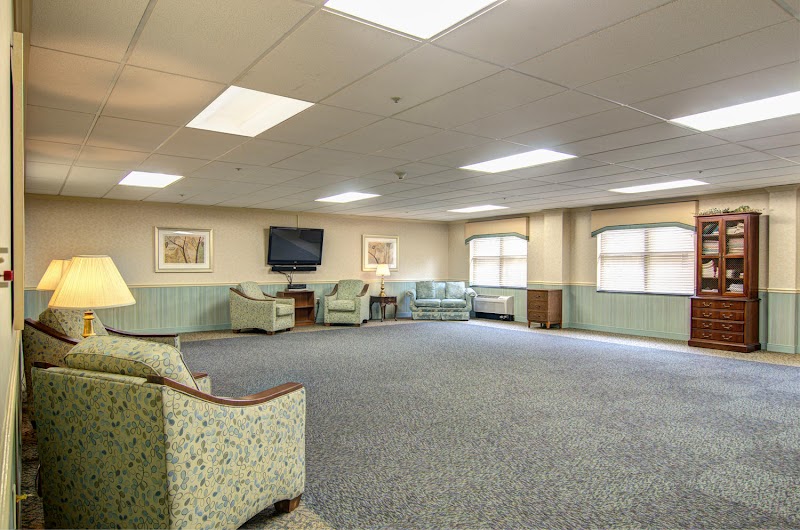
How is Jersey Shore Skilled Nursing And Rehabilitation Ce Staffed?

CMS rates JERSEY SHORE SKILLED NURSING AND REHABILITATION CE's staffing level at 3 out of 5 stars, which is average compared to other nursing homes. Staff turnover is 56%, which is 10 percentage points above the Pennsylvania average of 46%. High turnover can affect care consistency as new staff learn residents' individual needs. RN turnover specifically is 70%, which is notably high. RNs provide skilled clinical oversight, so turnover in this role can affect medical care quality.

What Have Inspectors Found at Jersey Shore Skilled Nursing And Rehabilitation Ce?

State health inspectors documented 61 deficiencies at JERSEY SHORE SKILLED NURSING AND REHABILITATION CE during 2023 to 2025. These included: 2 that caused actual resident harm, 56 with potential for harm, and 3 minor or isolated issues. Deficiencies causing actual harm indicate documented cases where residents experienced negative health consequences.
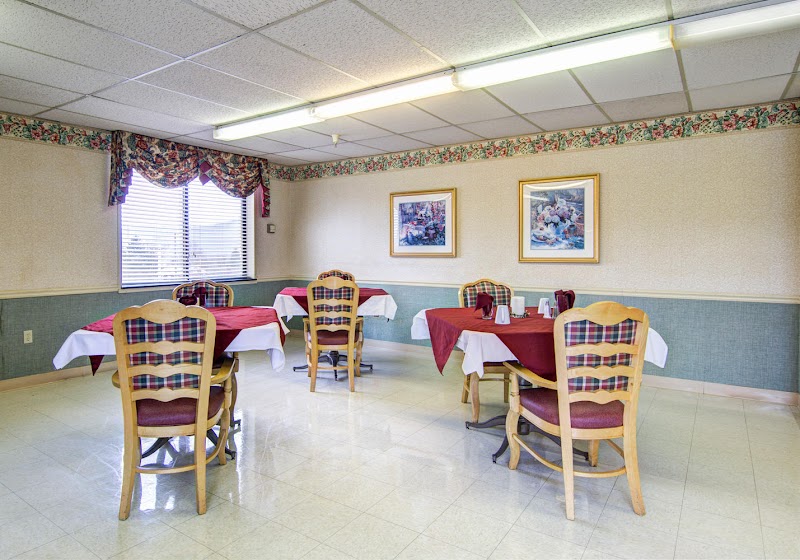
Who Owns and Operates Jersey Shore Skilled Nursing And Rehabilitation Ce?

JERSEY SHORE SKILLED NURSING AND REHABILITATION CE is owned by a for-profit company. For-profit facilities operate as businesses with obligations to shareholders or private owners. The facility is operated by GENESIS HEALTHCARE, a chain that manages multiple nursing homes. With 120 certified beds and approximately 82 residents (about 68% occupancy), it is a mid-sized facility located in JERSEY SHORE, Pennsylvania.
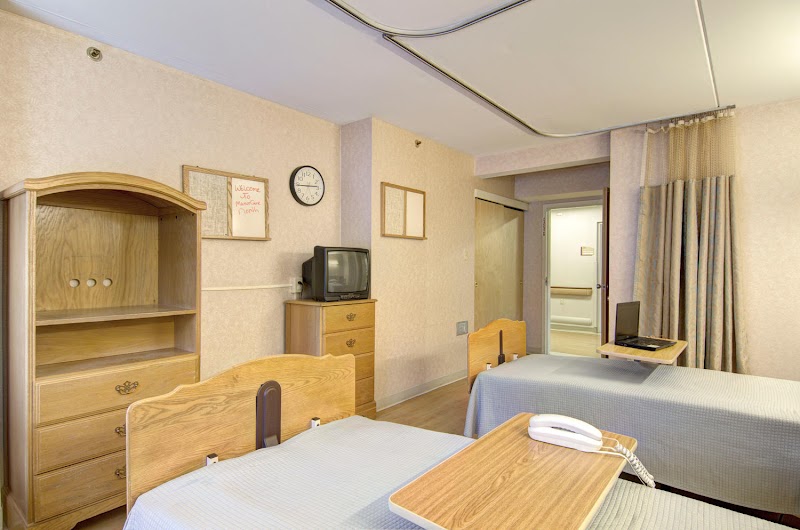
How Does Jersey Shore Skilled Nursing And Rehabilitation Ce Compare to Other Pennsylvania Nursing Homes?

Compared to the 100 nursing homes in Pennsylvania, JERSEY SHORE SKILLED NURSING AND REHABILITATION CE's overall rating (1 stars) is below the state average of 3.0, staff turnover (56%) is near the state average of 46%, and health inspection rating (1 stars) is much below the national benchmark.

What Should Families Ask When Visiting Jersey Shore Skilled Nursing And Rehabilitation Ce?

Based on this facility's data, families visiting should ask: "How do you ensure continuity of care given staff turnover, and what is your staff retention strategy?" "Can I visit during a mealtime to observe dining assistance and food quality?" "How do you handle medical emergencies, and what is your hospital transfer rate?" "Can I speak with family members of current residents about their experience?" These questions are particularly relevant given the facility's high staff turnover rate.

Is Jersey Shore Skilled Nursing And Rehabilitation Ce Safe?

Based on CMS inspection data, JERSEY SHORE SKILLED NURSING AND REHABILITATION CE has a clean safety record: no substantiated abuse findings (meaning no confirmed cases of resident harm), no Immediate Jeopardy citations (the most serious violation level indicating risk of serious injury or death), and is not on the Special Focus Facility watch list (a federal program monitoring the lowest-performing 1% of nursing homes). The facility has a 1-star overall rating and ranks #100 of 100 nursing homes in Pennsylvania. While no facility is perfect, families should still ask about staff-to-resident ratios and recent inspection results during their visit.

Do Nurses at Jersey Shore Skilled Nursing And Rehabilitation Ce Stick Around?

Staff turnover at JERSEY SHORE SKILLED NURSING AND REHABILITATION CE is high. At 56%, the facility is 10 percentage points above the Pennsylvania average of 46%. Registered Nurse turnover is particularly concerning at 70%. RNs handle complex medical decisions and coordinate care — frequent RN changes can directly impact care quality. High turnover means new staff may not know residents' individual needs, medications, or preferences. It can also be disorienting for residents, especially those with dementia who rely on familiar faces. Families should ask: What is causing the turnover? What retention programs are in place? How do you ensure care continuity during staff transitions?

Was Jersey Shore Skilled Nursing And Rehabilitation Ce Ever Fined?

JERSEY SHORE SKILLED NURSING AND REHABILITATION CE has been fined $61,652 across 2 penalty actions. This is above the Pennsylvania average of $33,695. Fines in this range indicate compliance issues significant enough for CMS to impose meaningful financial consequences. Common causes include delayed correction of deficiencies, repeat violations, or care failures affecting resident safety. Families should ask facility leadership what changes have been made since these penalties.

Is Jersey Shore Skilled Nursing And Rehabilitation Ce on Any Federal Watch List?

JERSEY SHORE SKILLED NURSING AND REHABILITATION CE is not on any federal watch list. The most significant is the Special Focus Facility (SFF) program, which identifies the bottom 1% of nursing homes nationally based on persistent, serious quality problems. Not being on this list means the facility has avoided the pattern of deficiencies that triggers enhanced federal oversight. This is a positive indicator, though families should still review the facility's inspection history directly.