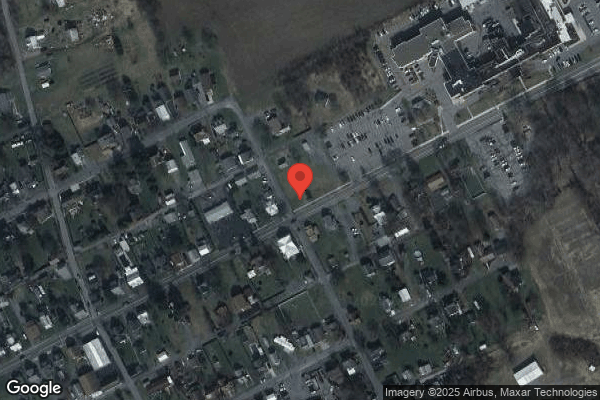
MUNCY PLACE

215 EAST WATER STREET, MUNCY, PA 17756 (570) 546-4017
Non profit - Corporation 138 Beds UPMC SENIOR COMMUNITIES Data: November 2025
Trust Grade
40/100
#321 of 653 in PA
Last Inspection: July 2025

Inspected within the last 6 months. Data reflects current conditions.

Overview

Muncy Place has a Trust Grade of D, indicating below average performance and some concerns. It ranks #321 out of 653 facilities in Pennsylvania, placing it in the top half, and #2 out of 8 in Lycoming County, meaning only one local option is ranked higher. The facility is worsening, as the number of issues reported increased from 5 in 2024 to 9 in 2025. Staffing is a notable strength, with a 5/5 star rating and a turnover rate of 34%, which is significantly lower than the state average. Although there are no fines on record, there have been serious and concerning incidents, including staff neglect that resulted in a resident suffering a fracture and failures to maintain sanitary food storage practices. Overall, while Muncy Place excels in staffing, it faces critical areas needing improvement in care quality and safety.

Trust Score
D
40/100
In Pennsylvania
#321/653
Top 49%
Safety Record
High Risk
Review needed
Inspections
Getting Worse
5 → 9 violations
Staff Stability
○ Average
34% turnover. Near Pennsylvania's 48% average. Typical for the industry.
Penalties
✓ Good
No fines on record. Clean compliance history, better than most Pennsylvania facilities.
Skilled Nurses
✓ Good
Each resident gets 58 minutes of Registered Nurse (RN) attention daily — more than average for Pennsylvania. RNs are trained to catch health problems early.
Violations
⚠ Watch
22 deficiencies on record. Higher than average. Multiple issues found across inspections.
★★★☆☆
3.0
Overall Rating
★★★★★
5.0
Staff Levels
★★★★☆
4.0
Care Quality
★★☆☆☆
2.0
Inspection Score
Stable
2024: 5 issues
2025: 9 issues

The Good

  • 5-Star Staffing Rating · Excellent nurse staffing levels
  • 4-Star Quality Measures · Strong clinical quality outcomes
  • Full Sprinkler Coverage · Fire safety systems throughout facility
  • No fines on record
  • Staff turnover below average (34%)

    14 points below Pennsylvania average of 48%

Facility shows strength in staffing levels, quality measures, fire safety.

The Bad

3-Star Overall Rating

Near Pennsylvania average (3.0)

Meets federal standards, typical of most facilities

Staff Turnover: 34%

12pts below Pennsylvania avg (46%)

Typical for the industry

Chain: UPMC SENIOR COMMUNITIES

Part of a multi-facility chain

Ask about local staffing decisions and management

The Ugly 22 deficiencies on record

1 actual harm
Jul 2025 8 deficiencies
CONCERN (D)

Potential for Harm - no one hurt, but risky conditions existed

Deficiency F0605 (Tag F0605)

Could have caused harm · This affected 1 resident

Based on clinical record review and staff interview it was determined that the facility failed to ensure a resident's medication regime was free from potentially unnecessary psychotropic medication fo...

Read full inspector narrative →
Based on clinical record review and staff interview it was determined that the facility failed to ensure a resident's medication regime was free from potentially unnecessary psychotropic medication for one of five residents reviewed for medication regimen review (Resident 85). Findings include: Clinical record review for Resident 85 revealed an active physician's order dated July 8, 2025, for staff to administer the antianxiety medication, Alprazolam, 1 mg (milligram) as needed (PRN) every eight hours with a stop date of January 3, 2026, (180 days from the order date). Active physician orders for Resident 85 also included instructions for staff to administer 0.5 mg of Alprazolam three times daily (order date November 26, 2024).Per the medication resource Drugs.com, the usual maximum adult dose for anxiety is 4 mg per day. The lowest possible effective dose should be administered and the need for continued treatment reassessed frequently.If administered as often as the active physician orders permitted, Resident 85 could receive 4.5 mg of Alprazolam per day, which exceeds the usual maximum adult dose.Review of Resident 85's medication administration record (MAR, electronic documentation of the administration of medications) dated May 2025, revealed that Resident 85 received the PRN dose of the Alprazolam medication on 16 occasions on the following dates and times:May 1, 2025, at 10:27 AMMay 8, 2025, at 11:00 AMMay 9, 2025, at 10:35 AMMay 12, 2025, at 10:00 AMMay 15, 2025, at 11:49 AMMay 17, 2025, at 12:00 PMMay 18, 2025, at 11:00 AMMay 20, 2025, at 11:00 AMMay 21, 2025, at 10:25 AMMay 23, 2025, at 10:00 AMMay 25, 2025, at 4:04 PMMay 26, 2025, at 4:01 PMMay 27, 2025, at 11:00 AMMay 28, 2025, at 11:04 AMMay 29, 2025, at 10:30 AMMay 31, 2025, at 3:38 PMReview of Resident 85's MAR dated June 2025, revealed that Resident 85 received the PRN dose of the Alprazolam medication on seven occasions on the following dates and times:June 1, 2025, at 10:20 AMJune 4, 2025, at 11:05 AMJune 5, 2025, at 10:00 AMJune 9, 2025, at 11:35 AMJune 12, 2025, at 11:08 AMJune 18, 2025, at 10:00 AMJune 20, 2025, at 11:04 AMReview of Resident 85's MAR dated July 2025, revealed that Resident 85 received the PRN dose of the Alprazolam medication on four occasions from July 1 through 28, 2025, on the following dates and times:July 9, 2025, at 12:00 PMJuly 13, 2025, at 11:00 AMJuly 14, 2025, at 11:00 AMJuly 17, 2025, at 11:01 AMResident 85's documented use of the PRN Alprazolam medication indicated that she did not require the PRN dose daily; nor did she exceed more than one dose in one day. Interview with the Director of Nursing, the Nursing Home Administrator, Employee 4 (assistant director of nursing), and Employee 5 (assistant nursing home administrator), on July 25, 2025, at 12:00 PM confirmed the above findings for Resident 85.The evidence reviewed also indicated that staff consistently administered the PRN Alprazolam between the hours of 10:00 AM and 12:00 PM on 24 of the 27 occasions.Review of Resident 85's plans of care did not provide evidence that the facility identified the pattern of Resident 85's PRN Alprazolam use; or implemented an individualized intervention to address Resident 85's need for PRN antianxiety medication at a consistent time of day. Due to the above documented frequency of the administration of the PRN dose of Alprazolam, there was insufficient evidence that Resident 85 required the Alprazolam dose to exceed the recommended daily maximum, or that the stop date of 180 days met the regulatory requirement for physician review (at 14 days).28 Pa. Code 211.12(d)(1)(3)(5) Nursing services
CONCERN (D)

Potential for Harm - no one hurt, but risky conditions existed

Comprehensive Care Plan (Tag F0656)

Could have caused harm · This affected 1 resident

**NOTE- TERMS IN BRACKETS HAVE BEEN EDITED TO PROTECT CONFIDENTIALITY** Based on clinical record review and staff interview, it was determined that the facility failed to develop a comprehensive care ...

Read full inspector narrative →
**NOTE- TERMS IN BRACKETS HAVE BEEN EDITED TO PROTECT CONFIDENTIALITY** Based on clinical record review and staff interview, it was determined that the facility failed to develop a comprehensive care plan related to anticoagulant use for one of five residents selected for medication regimen review (Resident 85). Findings include: Clinical record review for Resident 85 revealed an active physician's order dated January 2, 2025, for staff to administer the anticoagulant medication Eliquis (anticoagulants are a family of medications that stop your blood from clotting too easily; they can break down existing clots or prevent clots from forming in the first place) 2.5 mg (milligrams) two times daily. Review of an annual MDS (Minimum Data Set, an assessment tool completed at specific intervals to determine resident care needs) dated February 2, 2025, assessed Resident 85 as taking an anticoagulant medication. A quarterly MDS assessment dated [DATE], assessed Resident 85 as taking an anticoagulant medication. Review of plans of care developed by the facility to identify and address Resident 85's medical needs did not include a plan of care that noted her use of an anticoagulant medication. The plans of care did not address pertinent associated risks and the prevention of potential complications from the use of an anticoagulant (e.g., bleeding and bruising). Interview with the Director of Nursing, the Nursing Home Administrator, Employee 4 (assistant director of nursing), and Employee 5 (assistant nursing home administrator), on July 25, 2025, at 12:00 PM confirmed the above findings for Resident 85. 28 Pa. Code 211.12(d)(1)(5) Nursing services
CONCERN (D)

Potential for Harm - no one hurt, but risky conditions existed

Quality of Care (Tag F0684)

Could have caused harm · This affected 1 resident

Based on clinical record review and staff interview, it was determined that the facility failed to provide the highest practicable care regarding physician ordered medication parameters for one of 21 ...

Read full inspector narrative →
Based on clinical record review and staff interview, it was determined that the facility failed to provide the highest practicable care regarding physician ordered medication parameters for one of 21 residents reviewed (Resident 1). Findings include: Clinical record review for Resident 1 revealed a diagnosis list that included hypertension (high blood pressure). A review of the current physician orders for Resident 1 revealed an order dated May 15, 2025, for Metoprolol Tartrate (a medication that is used to treat high blood pressure and/or heartrate) 25 milligrams (mg) give one tablet by gastrostomy tube (a medical tube inserted through the abdomen into the stomach to provide feeding, hydration, and/or medications) every eight hours. The order indicated a blood pressure and/or pulse hold: pulse less than 60; systolic blood pressure (SBP, the top number of a blood pressure reading where the heart contracts) less than 100. A review of the Medication Administration Record (MAR) from May, June, and July 2025, for Resident 1 revealed that the Metoprolol was marked as administered outside of the physician specified parameters for the following dates: May 27 during the midnight administration; the blood pressure was documented as 92/63.June 15 during the midnight administration; the blood pressure was documented as 93/63.June 17 during the midnight administration; the blood pressure was documented as 99/72. July 8, during the midnight administration; the blood pressure was documented as 95/63.July 10, during the midnight administration; the blood pressure was documented as 90/59.July 10, during the 8:00 AM administration; the blood pressure was documented as 94/66. There was no documentation for Resident 1 to indicate a rationale for why the medication was administered outside of the specific stated parameters. The facility provided nursing shift report sheets (sheets used by nursing staff to keep track of important resident information that are not part of the clinical record) with attached dates written on post-it notes of May 27, June 15, June 17, July 8, and July 10 that the facility indicated the doses of Metoprolol were held those dates; however, Resident 1's medication administration record documentation does not reflect that the doses were held. The above information for Resident 1 was reviewed in a meeting with the Nursing Home Administrator and Director of Nursing on July 23, 2025, at 2:15 PM. 28 Pa. Code 211.12(d)(1)(3)(5) Nursing services
CONCERN (D)

Potential for Harm - no one hurt, but risky conditions existed

Deficiency F0688 (Tag F0688)

Could have caused harm · This affected 1 resident

Based on clinical record review, observation, and family and staff interview, it was determined that the facility failed to implement physician ordered interventions for a resident with limited range ...

Read full inspector narrative →
Based on clinical record review, observation, and family and staff interview, it was determined that the facility failed to implement physician ordered interventions for a resident with limited range of motion for one of nine residents reviewed for range of motion concerns (Resident 85). Findings include: Clinical record review for Resident 85 revealed an active physician's order dated June 4, 2024, that instructed staff to ensure Resident 85 wore a left palm guard with digit separators (splint worn on the hand with cushioning to split the fingers and protect the palm) in the morning for four hours and in the evening for four hours with skin checks every two hours. Review of a plan of care developed by the facility for contracture prevention for Resident 85 revealed a goal that Resident 85 would wear the left palm guard/digit separator for four hours in the morning and four hours in the evening. Interventions included in the plan of care indicated that nursing staff would don (apply) and doff (remove) the splint as scheduled for further contracture prevention. Observation of Resident 85 on July 22, 2025, at 12:14 PM in the common dining area on the nursing unit revealed no splint to her left hand. The fingers of Resident 85's bilateral hands were bent; and it appeared that Resident 85 used her knuckles to grasp beverage cups during her lunch meal. Interview with Resident 85's husband on July 22, 2025, at 2:53 PM confirmed that Resident 85's hands have arthritic changes (stiffness, swelling, and limited mobility of joints). Resident 85's husband stated, you cannot straighten them. Resident 85's husband stated that it depends on what staff are working if Resident 85 has her hand splint on or not. Resident 85's husband stated that the splint use is inconsistent. Observation of Resident 85 on July 23, 2025, at 1:05 PM revealed two nurse aides transferred her back to bed. Resident 85 did not have a splint on her left hand. Interview with Employee 10 (one of the two nurse aides caring for Resident 85) on July 23, 2025, at 1:11 PM revealed that she believed staff from the overnight shift applied Resident 85's splint. Employee 10 stated that Resident 85 wears the splint in the morning from 6:00 AM to 8:00 AM. Employee 10 referred to the electronic kiosk in the hallway that contained resident care instructions and reported that the only instructions for the nurse aides were to, don and doff splint as scheduled. Employee 10 stated that she removed a splint from Resident 85 at 8:00 AM that morning, and she was not sure when Resident 85 should wear it again during her day. Review of nurse aide documentation of the application of Resident 85's hand splint revealed that only day and evening shift staff document the implementation of the device (not overnight shift). No staff initialed the implementation of the hand splint intervention for Resident 85 on either the day or evening shift on July 23, 2025. Observation of Resident 85 in the nursing unit dining room on July 25, 2025, at 9:18 AM revealed she was using her bilateral hands that were formed into fists to drink from a cup. Resident 85's fingers were contracted (bent). Resident 85 was not wearing a hand splint. Observation of Resident 85 on July 25, 2025, at 11:38 AM revealed she was in her room without a hand splint on her left hand. Interview with Employee 11 (nurse aide) on July 25, 2025, at 11:41 AM revealed that she did not know the schedule to follow for Resident 85's hand splint. Employee 11 confirmed that she was assigned to Resident 85's care on this date. Employee 11 located a hand splint device on Resident 85's overbed table and Resident 85 permitted Employee 11 to apply the device to her left hand. The surveyor reviewed the above concerns regarding Resident 85's hand splint use during an interview with the Director of Nursing, the Nursing Home Administrator, Employee 4 (assistant director of nursing), and Employee 5 (assistant nursing home administrator), on July 25, 2025, at 12:00 PM. 483.25(c)(1)-(3) Increase/prevent Decrease in ROM/mobilityPreviously cited deficiency 8/16/2024 28 Pa. Code 211.12(d)(1)(5) Nursing services
CONCERN (D)

Potential for Harm - no one hurt, but risky conditions existed

Tube Feeding (Tag F0693)

Could have caused harm · This affected 1 resident

Based on a review of select facility policies and procedures, clinical record review, observation, and staff interview, it was determined that the facility failed to provide appropriate treatment and ...

Read full inspector narrative →
Based on a review of select facility policies and procedures, clinical record review, observation, and staff interview, it was determined that the facility failed to provide appropriate treatment and services for a resident who is fed by enteral means to prevent potential complications for one of three residents reviewed for tube feeding concerns (Resident 5). Findings include: The surveyor requested the facility policies and procedures related to bolus feeding (the administration of a limited volume of liquid nutrition formula over a brief period of time) via a gastrostomy tube (G-tube, a tube that is placed directly into the stomach through an abdominal wall incision for administration of food, fluids, and medications; also known as a PEG tube) during an interview with the Nursing Home Administrator, Director of Nursing, Employee 4 (assistant director of nursing), and Employee 5 (assistant nursing home administrator), on July 25, 2025, at 12:00 PM; and again, during an interview with Employee 5 on July 25, 2025, at 1:00 PM. The facility was only able to provide a policy entitled, Enteral Tube Medication Administration, last reviewed without changes on June 17, 2025, that instructed staff to verify tube placement per facility protocol before administering medications. The policy instructed staff to allow medication to flow down the tube via gravity; give gentle boosts with the plunger (one inch down) if the medication will not flow by gravity, repeat, if necessary, do not push medications through the tube. The facility was unable to provide the facility protocol used to verify tube placement during the onsite survey. Interview with Resident 5 on July 22, 2025, at 1:01 PM revealed that she receives liquid nutrition every four hours through a tube in her abdomen (PEG tube); that she is not allowed food consumption through her mouth. Resident 5 stated that she had surgery to place this abdominal tube three weeks ago. Nursing documentation dated June 19, 2025, at 1:01 PM revealed that the hospital staff gave a report of Resident 5's condition to the writer that included that Resident 5 had a PEG tube placed due to esophageal dysmotility (when the esophagus does not move food and liquid from the mouth to the stomach as it should). Clinical record review for Resident 5 revealed active physician orders dated June 19, 2025, for the following care needs for Resident 5: Nothing by mouth (NPO)One carton of Nutren 2.0 (liquid nutrition) three times a dayCleanse and apply a dressing to a G-tube site daily and as neededTube Feeding - Check placement 3 (three) times dailyTube Feeding - Check residual 3 times dailyTube Feeding - Check placement PRN (as needed)Tube Feeding - Check residual PRN Observation of Resident 5's bolus G-tube feeding on July 25, 2025, at 8:50 AM with Employee 12 (registered nurse) revealed Employee 12 filled a syringe with 50 milliliters of water and flushed Resident 5's tube by pressing the plunger of the syringe. Employee 12 did not allow gravity to instill the water into Resident 5's stomach. Employee 12 did not attempt any intervention to verify the correct placement of Resident 5's G-tube before completing the flush. Employee 12 did not check for any residual feeding in Resident 12's stomach before completing the flush. Employee 12 repeated the process of filling the syringe with Nutren 2.0 liquid nutrition and administering the Nutren 2.0 via Resident 5's G-tube by pushing the plunger four times until the entire 8.45 fluid ounces of liquid nutrition was consumed. Employee 12 did not attempt to allow the liquid nutrition to flow into Resident 5's stomach via gravity. Continued observation of the G-tube feeding on July 25, 2025, at 9:02 AM revealed Employee 12 flushed Resident 5's G-tube with 100 milliliters of water by pushing the plunger of the syringe (not via gravity). Following the completion of the G-tube feeding on July 25, 2025, at 9:04 AM Employee 12 rinsed the used syringe in Resident 5's bathroom, removed her gloves, obtained dressings and saline from Resident 5's in-room cabinet, and donned new gloves without performing hand hygiene (e.g., alcohol hand sanitizer or hand washing with soap and water). Employee 12, then, cleansed Resident 5's G-tube insertion site and applied a new gauze dressing around Resident 5's G-tube. Interview with Employee 12 on July 25, 2025, at 9:12 AM confirmed that she did not complete any G-tube flushes or feedings via a gravity method. Employee 12 denied completing any interventions to confirm the appropriate placement of Resident 5's G-tube. Employee 12 indicated that there were numerical markings visible on Resident 5's G-tube; however, she did not know what number would indicate a correct insertion depth for Resident 5. Employee 12 confirmed that she did not assess for any residual feeding (e.g. aspirate stomach contents) before completing the task. Employee 12 also confirmed that she did not wash her hands or utilize hand sanitizer after removing soiled gloves and donning new gloves. Interview with Employee 5 on July 25, 2025, at 1:00 PM confirmed that the documentation of Employee 12's competency related to G-tube care reviewed a process of care utilizing a gravity method. The procedural steps in the competency did not include using a plunger method to complete the entire process of instillation via a G-tube. 28 Pa. Code 211.10(a)(c)(d) Resident care policies 28 Pa. Code 211.12(d)(1)(5) Nursing services
CONCERN (D)

Potential for Harm - no one hurt, but risky conditions existed

Infection Control (Tag F0880)

Could have caused harm · This affected 1 resident

Based on review of select facility policies and procedures, observation, clinical record review, and staff interview, it was determined that the facility failed to implement contact precautions for on...

Read full inspector narrative →
Based on review of select facility policies and procedures, observation, clinical record review, and staff interview, it was determined that the facility failed to implement contact precautions for one of two residents reviewed for isolation concerns (Resident 4), and implement proper hand hygiene practices consistent with accepted standards of practice for two of 21 residents (Residents 5 and 9). Findings include:Review of the facility policy entitled, Hand Hygiene, dated July 18, 2025, revealed that hand hygiene must be performed prior to donning gloves when gloves are being worn for interaction with a patient and/or patient zone. Hand hygiene must be performed after removing gloves when gloves are being worn for interaction with a patient and/or patient zone and patient surroundings. Remove gloves, clean hands, and don a fresh pair of gloves when caring for a patient that requires moving from a dirty site to a clean site. Clinical record review for Resident 9 revealed nursing documentation dated July 21, 2025, at 2:11 PM that Resident 9 had increasing edema (swelling) in both her arms over the weekend. The nurse noted four open areas on Resident 9's arms, and treatment included an oil emulsion dressing (a non-adherent gauze mesh that is impregnated with an oil-based substance, typically white petrolatum or a similar emollient, that allows the dressing to create a protective barrier over the wound, minimizing trauma during dressing changes, and ensuring that the dressing does not stick to the wound surface), gauze, and kerlix wrap (rolled stretchable gauze) daily and as needed. Observation of wound care for Resident 9 with Employee 12 (registered nurse) on July 25, 2025, at 8:27 AM revealed Employee 12 removed the soiled kerlix wrapping, gauze, and oil emulsion dressings from Resident 9's right arm. Employee 12 removed her gloves and donned new gloves without performing hand hygiene (e.g., alcohol hand sanitizer or hand washing with soap and water). Employee 12 used saline-soaked gauze to cleanse two sites on Resident 9's right mid forearm. Employee 12 removed her gloves to open the packaging of the oil emulsion dressings and donned new gloves without performing hand hygiene. Employee 12 applied an oil emulsion dressing over each wound site on Resident 9's right arm, applied sterile gauze, and wrapped Resident 9's right forearm with kerlix dressing. Employee 12 removed her gloves and donned new gloves without performing hand hygiene. Continued observation of Resident 9's wound care on July 25, 2025, at 8:38 AM revealed Employee 12 removed the soiled kerlix wrapping, gauze, and oil emulsion dressings from Resident 9's left arm. Employee 12 removed her gloves and donned new gloves without performing hand hygiene. Employee 12 cleansed two sites on Resident 9's left forearm with saline-soaked gauze, applied oil emulsion dressings and gauze over the two wound sites, and wrapped Resident 9's left arm with kerlix dressing. Employee 12 removed her gloves before documenting the date on Resident 9's dressing. Employee 12 donned new gloves without performing hand hygiene to clean Resident 9's overbed table and remove the garbage from Resident 9's room. Interview with Resident 5 on July 22, 2025, at 1:01 PM revealed that she receives liquid nutrition every four hours through a tube in her abdomen (gastrostomy tube or G-tube, a tube that is placed directly into the stomach through an abdominal wall incision for administration of food, fluids, and medications; also known as a PEG tube); that she is not allowed food consumption through her mouth. Resident 5 stated that she had surgery to place this abdominal tube three weeks ago. Nursing documentation dated June 19, 2025, at 1:01 PM revealed that the hospital staff gave a report of Resident 5's condition to the writer that included that Resident 5 had a PEG tube placed due to esophageal dysmotility (when the esophagus does not move food and liquid from the mouth to the stomach as it should). Observation of Resident 5's bolus G-tube feeding (the administration of a limited volume of liquid nutrition formula over a brief period of time) via a PEG tube with Employee 12 on July 25, 2025, at 8:50 AM revealed Employee 12 used gloved hands to flush water and instill liquid nutrition into Resident 5's stomach until 9:04 AM when Employee 12 rinsed the syringe used for the procedure in Resident 5's bathroom sink. Employee 12 removed her gloves, obtained dressings and saline from Resident 5's in-room cabinet, and donned new gloves without performing hand hygiene. Employee 12 then cleansed Resident 5's G-tube insertion site and applied a new gauze dressing around Resident 5's G-tube. Interview with Employee 12 on July 25, 2025, at 9:12 AM confirmed that she did not wash her hands or utilize hand sanitizer after removing soiled gloves and donning new gloves during the care observed for Residents 5 and 9. Review of the facility policy titled, “Transmission Based Precautions in Long Term Care,” last reviewed without changes on June 17, 2025, revealed that “contact precautions are intended to prevent transmission of pathogens that are spread by direct or indirect contact with the resident or environment and require the use of appropriate personal protective equipment (PPE), including gowns and gloves before or upon entering (i.e. before making contact with the resident or resident’s environment) the room or cubicle.“ Review of the facility policy titled, Patient and Exam Room Cleaning Procedures, last reviewed without changes on June 17, 2025, revealed a section titled, Before Entering the Room, which instructed staff to look for isolation signs that indicate the need for personal protective equipment and special precautions. Wear required personal protective equipment. Clinical record review for Resident 4 revealed a diagnosis list that included a history of urinary tract infections, hydronephrosis (a swelling of the kidney caused by a build-up of urine), and calculus of the kidney (kidney stone). Current physician orders for Resident 4 revealed orders for an indwelling urinary foley catheter (medical tubing inserted into the bladder to drain urine) and associated care. Clinical record review for Resident 4 revealed a progress note dated July 21, 2025, at 11:25 AM that noted the resident was started on Cipro (an antibiotic medication to help fight bacteria in the body) for a urinary tract infection; asymptomatic urine was tested for pre-operative testing. Lab documentation revealed a urinalysis and associated culture for Resident 4 dated July 16, 2025, that noted various bacteria in the urine: Escherichia coli ESBL, enterococcus faecalis, pseudomonas aeruginosa, and mixed flora. Observation of Resident 4’s room on July 22, 2025, at 10:30 AM revealed a yellow sign on the doorframe outside of the room that indicated the resident was on contact precautions. The sign noted all staff and visitors must follow these precautions, which included hand hygiene, gown, and gloves. Employee 7, housekeeping staff, was observed entering the room with no gown. Continued observation of Resident 4’s room on July 22, 2025, at 10:36 AM revealed Employee 7 proceeded to clean the room and was wiping various surfaces that included the bedside table and wall vent. The employee was then observed sweeping the floor of the room. Employee 7 did not have on a gown as indicated by the isolation sign. Observation of Employee 7 on July 22, 2025, at 10:51 AM revealed the employee left the room with gloves on and entered the hallway. She proceeded to throw something away in the housekeeping cart positioned outside of Resident 4’s room. Employee 7 then returned to the room to finish cleaning. An interview with Employee 7 on July 22, 2025, at 11:00 AM revealed that the employee may have missed seeing the yellow contact isolation sign and should have worn a gown in addition to the gloves to clean Resident 4’s room. An interview with Employee 8, licensed practical nurse, on July 22, 2025, at 2:56 PM confirmed that Resident 4 is on contact isolation due to antibiotics and an upcoming urology appointment procedure. Further review of Resident 4’s clinical record revealed a care plan for enhanced barrier precautions (EBP, gown and glove use during direct care used in nursing homes to prevent the spread of multi-drug resistant organisms which are bacteria that are resistant to some antibiotics). The clinical record did not reveal an existing order or care plan for contact isolation. The new care that was added by the facility on July 23, 2025 (after discussion with the surveyor), noted an infection requiring precautions with the site documented as “urine organism ESBL.” The care plan noted the resident's goal of, “…will comply with contact precautions.” The above information for Resident 4 was reviewed in a meeting with the Nursing Home Administrator and Director of Nursing on July 23, 2025, at 2:49 PM. The facility reported that the expectation would be that the cleaning staff utilize a gown and gloves to clean the isolation room. An interview with Employee 9, registered nurse, on July 24, 2025, at 10:05 AM confirmed that Resident 4 is on contact isolation due to ESBL in the urine and pre-operative precautions. 483.80(a)(1)(2)(4)(e)(f) Infection Prevention and ControlPreviously cited deficiency 8/16/24 28 Pa. Code 211.12(d)(1)(5) Nursing services 28 Pa. Code 201.18(b)(1) Management 28 Pa. Code 211.10(d) Resident care policies
CONCERN (E)

Potential for Harm - no one hurt, but risky conditions existed

Resident Rights (Tag F0550)

Could have caused harm · This affected multiple residents

Based on observation and staff interview, it was determined that the facility failed to ensure resident dignity during dining for two of two residents reviewed (Residents 94 and 100).Findings include:...

Read full inspector narrative →
Based on observation and staff interview, it was determined that the facility failed to ensure resident dignity during dining for two of two residents reviewed (Residents 94 and 100).Findings include: Observation on July 22, 2025, at 12:21 PM revealed Employee 1, nurse aide, feeding both Resident 94 and Resident 100 their lunch meals. Employee 1 stood between the two residents who were seated next to the dining table while she fed them. During this same time, Employee 1 would leave the table and grab other plates to serve other residents in an adjacent dining room. Observation on July 22, 2025, at 12:26 PM revealed that Employee 1 left Resident 94 and Resident 100, and Employee 2, nurse aide, arrived and finished feeding both Resident 94 and Resident 100. Employee 2 also stood between both Resident 94 and Resident 100 to finish feeding them. Observation on July 23, 2025, at 12:32 PM revealed that the facility served Resident 94 and Resident 100 their lunch meals. Employee 3, nurse aide, began feeding Resident 100 his meal standing up at 12:35 PM. Employee 3 continued feeing Resident 100 for 30 minutes while she stood the entire time. Employee 3 then left with Resident 100 out of the dining area and did not return. There were no observations of nursing staff attempting to feed Resident 94 until 1:00 PM, at which time he was asleep. The above findings were reviewed during an interview with the Administrator and the Director of Nursing on July 24, 2025, at 2:18 PM. 28 Pa. Code 201.29(j) Resident rights
CONCERN (F)

Potential for Harm - no one hurt, but risky conditions existed

Food Safety (Tag F0812)

Could have caused harm · This affected most or all residents

Based on observation and staff interview, it was determined that the facility failed to store food items in a safe and sanitary manner and maintain the environment in a safe and sanitary condition in ...

Read full inspector narrative →
Based on observation and staff interview, it was determined that the facility failed to store food items in a safe and sanitary manner and maintain the environment in a safe and sanitary condition in the facility's main kitchen and second floor kitchenette.Findings include: Observation of the facility's main kitchen with Employee 6, Dietary Manager, on July 22, 2025, at 8:45 AM revealed the following: A walk-in cooler contained the following: A bag of lunch meat with no dates on it. A container of asiago cheese with a use by date of July 13, 2025. A container of provolone cheese with a use by date of July 5, 2025. A large bag of lettuce opened to the ambient air with a use by date of July 19, 2025. A container labeled, vegetable fresh prep, with a use by date of July 13, 2025.Cooked bacon with a use by date of July 13, 2025. A container of chicken salad with a use by date of July 19, 2025.Feta cheese with a use by date of July 19, 2025. A second walk-in cooler had a damaged single serve milk carton that was leaking onto the adjacent cartons and surrounding area. A hospitality cart in the dry storage area had a snack bag of expired pretzels. A storage rack holding various adaptive equipment had a container of clear, plastic cups with handles. Multiple cups were noted to have a build-up of moisture. Employee 6 was unable to state how long the cups were wet. The dishwashing area contained the following: A black colored, plastic, corner floor shelf that held various housekeeping items with an accumulation of debris underneath it. The debris included food items, a single-use butter container, and a drinking straw. The corner of the dishwashing room where a fan was attached had a significant accumulation of dried splash stains on the walls and ceiling. The fan had a build-up of dust on the protective cover and fan blades. The floor, adjacent to a floor drain under the ice machine, contained various debris, including a plastic cup, and a broken piece of a red colored plate. Observation of the second floor kitchenette on July 23, 2025, at 11:00 AM revealed the resident refrigerator contained a sandwich with no dates or label on it. The above findings were reviewed with the Nursing Home Administrator and Director of Nursing on July 23, 2025, at 2:00 PM. 28 Pa. Code 201.14 (a) Responsibility of Licensee
Jun 2025 1 deficiency 1 Harm
SERIOUS (G) 📢 Someone Reported This

A family member, employee, or ombudsman was alarmed enough to file a formal complaint

Actual Harm - a resident was hurt due to facility failures

Free from Abuse/Neglect (Tag F0600)

A resident was harmed · This affected 1 resident

**NOTE- TERMS IN BRACKETS HAVE BEEN EDITED TO PROTECT CONFIDENTIALITY** Based on a review of select facility policies and procedures, clinical record review, and staff interview, it was determined tha...

Read full inspector narrative →
**NOTE- TERMS IN BRACKETS HAVE BEEN EDITED TO PROTECT CONFIDENTIALITY** Based on a review of select facility policies and procedures, clinical record review, and staff interview, it was determined that the facility failed to protect residents from staff neglect by implementing interventions to prevent falls for two of four residents reviewed (Residents 1 and 2) resulting in harm to include a fracture for one of two residents reviewed (Resident 2). Findings include: The facility policy entitled, Abuse: Prevention, Investigation, and Reporting, last reviewed without changes on June 4, 2025, revealed that Resident abuse is defined as any act of omission or commission, which may cause or does cause actual physical, psychological, or emotional harm or injury to a resident. Neglect means the failure to provide goods and services necessary to avoid physical harm, pain, mental anguish, or emotional distress. Neglect refers to failure through inattentiveness, carelessness, or omission to provide timely, consistent, safe, adequate, and appropriate services, treatments and care, including but not limited to nutrition, medication, therapies, and activities of daily living. The absence of reasonable accommodations of individual needs and preferences may result in resident neglect. Examples cited included the failure to provide safety precautions. Training employees included that all employees would be provided with in-service training following any incident regarding abuse, neglect, mistreatment of residents, or misappropriation of property. Identification of Abuse listed components that included that in the incident report a description of the scene, positioning of the resident, witnesses, time and nature of injury will be included. The staff member completing the investigation will investigate a minimum of eight hours prior to the known injury to determine cause. Protection of resident(s) during the investigation included that residents are protected from harm during the investigation from all involved parties. Components listed under Investigation of Abuse included that all allegations of abuse, neglect, mistreatment of resident, or misappropriation of property will be reported immediately to the supervising nurse. The Director of Nursing is the abuse prevention officer. The Director of Nursing or designee will be notified immediately of any suspected or alleged abuse. Written, signed statements will be obtained from the resident, the alleged offender/offenders, and witnesses. All involved parties will be interviewed by the person conducting the investigation. The Administrator or designee will continue the investigation by gathering information to complete all sections of the PB-22, Report Form for Investigation of Alleged Abuse, Neglect, Misappropriation of Property. Employees suspected of resident abuse, neglect, mistreatment of residents or misappropriation of property will be suspended pending investigation and subject to SH Corrective Action Procedures. Clinical record review for Resident 1 revealed Kardex documentation (electronic documentation available to nurse aide staff that lists resident care needs) that stipulated Resident 1 required Safety/Precautions: Safety Alarms. Review of Resident 1's comprehensive care plan revealed interventions that included, Bed alarm when in bed. Nursing documentation dated May 3, 2025, at 4:15 PM revealed that nurse aide staff found Resident 1 on the floor with bleeding above her left eye. Upon assessment, staff noted Resident 1 had a laceration above her left eye, a bump on her forehead, and a bump above her left eye and on her left cheek. Staff called emergency medical services (EMS, 911) to transport Resident 1 to the hospital emergency room (ER). Nursing documentation dated May 3, 2025, at 7:40 PM noted that Resident 1 returned from the ER; and was assessed to have a black eye and bruising to left check (sic) Laceration of the left eyebrow, traumatic contusion (soft tissue injury of blood vessels resulting in swelling and discoloration) of left periorbital (area around the eye) region. Per report from (ER registered nurse) four or five absorbable sutures placed in the left eyebrow, also she has a small laceration below the left eye, which was not sutured, band aid in place. Review of an Incident/Accident Evaluation (form the facility utilizes to document the outline of an incident investigation) dated May 3, 2025, at 3:25 PM revealed that Resident 1's bed alert was not alarming upon checking alarm was not turned on, resident noted to have bleeding above her left eye, upon assessment resident noted to have a laceration above left eye, bump on forehead and bump above left eye and on left cheek. Review of the PB-22 (Provider Bulletin 22, form electronically submitted to the Department when an event is investigated for potential abuse, neglect, or misappropriation of property) for the incident dated May 3, 2025, at 3:24 PM confirmed that the facility substantiated resident neglect. Employee 3 (registered nurse) provided a statement that Employee 1 (nurse aide) attested that she placed Resident 1 in her bed the afternoon of May 3, 2025, prior to her fall. Resident 1's POC (plan of care) was not followed as Resident 1's fall alarm was not sounding at the time of the fall. Employee 3 stated, (Employee 1) assisted (Resident 1) in bed after lunch, the alarm box was present on the bed, but she did not check to ensure the alarm engaged. The facility's findings were that Employee 1 did not check to ensure Resident 1's safety alarm on her bed was functioning before exiting her room after placing her in bed. The facility's corrective action was to provide education to Employee 1. Employee 4 (assistant director of nursing) documented that the PB-22 was completed on May 6, 2025, at 2:54 PM. The PB-22 did not include information to suggest that the facility suspended Employee 1 pending the outcome of the investigation or provided all employees in-service training following the above incident of substantiated resident neglect. Review of Employee 1's timecard revealed that she worked May 3, 2025, from 10:33 AM to 11:03 PM; May 4, 2025, from 10:32 AM to 11:10 PM; and May 6, 2025, from 10:40 AM to 10:57 PM. Documentation of Supervisor Counseling (form the facility utilizes to record verbal warnings between a staff member and their supervisor) dated May 6, 2025, for the issue/violation that occurred on May 3, 2025, noted a summary of a conversation with Employee 1 and her response. The form indicated that the supervisor (noted as Employee 4) explained to Employee 1 the necessity of always checking fall prevention measures. The counseling documented for Employee 1 was dated three days after the incident with Resident 1, and Employee 1 was permitted to work with a resident assignment without evidence of a suspension per the facility policy. Interview with the Nursing Home Administrator on June 9, 2025, at 9:05 AM revealed that the facility has scheduled in-service training for all staff on June 11, 2025, that includes the topic of abuse prevention, investigation, and reporting. The interview indicated that (other than the scheduled in-service for all staff) individual registered nurse supervisor trainings are provided with an alleged perpetrator as documented in the completed PB-22s. Clinical record review for Resident 2 revealed a quarterly MDS (Minimum Data Set, an assessment tool completed at specific intervals to determine resident care needs) assessment dated [DATE], that assessed Resident 2 as dependent for rolling left to right, to change from sitting to standing, for personal hygiene, and for toileting hygiene (helper does all the effort. Resident does none of the effort to complete the activity. Or the assistance of two or more helpers is required for the resident to complete the activity). Review of Resident 2's Kardex documentation stipulated that Resident 2 required the assistance of two staff for bed mobility. Nursing documentation dated May 31, 2025, at 1:17 PM that Resident 2 was in bed receiving care from two nurse aides. During care, Resident 2 rolled out of bed and landed on the floor, in a sitting position. Staff heard two loud pops, and assisted Resident 2 to a lying position on the floor. Staff called 911. Resident 2 presented with a bruise on her right knee that staff documented as 3x6 (no unit of measurement provided). A paramedic arrived and assessed Resident 2, straightened her lower extremities, reported that Resident 2's left kneecap was subluxed (partial separation of a joint), and he popped it back into place. Two emergency medical technicians arrived, and Resident 2 was transferred off the floor to a stretcher with the assistance of four people. Review of a witness statement from Employee 5 (nurse aide) relating to Resident 2's fall on May 31, 2025, at 11:50 AM revealed that he was in the bathroom to get washcloths and the wheelchair for Resident 2's care. He heard she's on the floor. He walked out to see Resident 2 sitting against the side of her bed with her legs, almost Indian style. He attempted to help her to the ground softly and (he) heard a pop and immediately called for the nurse. Review of a witness statement from Employee 2 (nurse aide) relating to Resident 2's fall on May 31, 2025, at 11:50 AM revealed that she was rolling Resident 2 to the enabler bar. (Employee 5) was present, but he went to grab the wheelchair. As Employee 2 was proceeding with care her (Resident 2) lower half started sliding along with her upper half. Her upper body was on the bed as she was sitting Indian style. Neither staff statement indicated that the Director of Nursing or Nursing Home Administrator was notified of Resident 2's fall as a result of not following her plan of care (i.e., alarms, level of assistance, gait belt, fall mats). Review of a PB-22 in response to Resident 2's fall on May 31, 2025, at 12:00 PM revealed the facility's description of the incident was that Employee 5 was in the bathroom gathering supplies for care and Resident 2's wheelchair when Employee 2 continued with care. Resident 2 rolled towards the enabler bar, her lower body began sliding off the bed, and her legs were mal aligned on the floor. Staff members heard a pop, 911 transferred Resident 2 to the ER, and at the ER diagnostics completed revealed an acute right distal femoral fracture (break in the lower part of the thigh bone). Resident 2 was admitted to the hospital for planned surgical intervention. The facility substantiated neglect for the failure to utilize two staff members per Resident 2's bed mobility care guidelines. Employee 4 documented that the PB-22 was completed on June 4, 2025, at 1:35 PM. Review of Documentation Supervisor Counseling forms dated May 31, 2025, revealed that the registered nurse supervisor counseled Employees 2 and 5 regarding staying at the bedside when Resident 2 is positioned on her side to prevent falls. Employee 5 reiterated his statement that he was not present at the bedside when Resident 2 was initially rolled on her side in bed. He was in the bathroom gathering supplies to do care to get Resident 2 out of bed when he heard the nurse aide state that she was on the floor. He did not witness the fall. Review of Employee 2's timecard revealed that she worked May 31, 2025, from 11:02 AM to 10:57 PM; June 1, 2025, from 6:47 AM to 7:03 PM; and June 2, 2025, from 2:37 PM to 11:04 PM. There was no evidence that the facility suspended Employee 2 pending the outcome of the investigation of Resident 2's fall (and substantiated neglect) on May 31, 2025. There was no evidence that the facility provided all employees in-service training following Resident 2's incident of substantiated neglect. The surveyor confirmed the above findings regarding the fall incidents for Residents 1 and 2 with the Director of Nursing, the Nursing Home Administrator, and Employee 4 on June 9, 2025, at 5:00 PM. The facility failed to ensure that staff implemented resident interventions identified as necessary in the residents' care plan to avoid accident and injury for Residents 1 and 2. 28 Pa. Code 201.14(a) Responsibility of licensee 28 Pa. Code 201.18(b)(1)(2)(e)(1) Management 28 Pa. Code 201.19(7) Personnel policies and procedures 28 Pa. Code 201.20(d) Staff development 28 Pa. Code 201.29(a) Resident rights 28 Pa. Code 211.12(c)(d)(1)(5) Nursing services
Aug 2024 5 deficiencies
CONCERN (D)

Potential for Harm - no one hurt, but risky conditions existed

Assessment Accuracy (Tag F0641)

Could have caused harm · This affected 1 resident

Based on clinical record review and staff interview, it was determined that the facility failed to ensure complete and accurate Minimum Data Set (MDS) assessments for one of 21 residents reviewed (Res...

Read full inspector narrative →
Based on clinical record review and staff interview, it was determined that the facility failed to ensure complete and accurate Minimum Data Set (MDS) assessments for one of 21 residents reviewed (Resident 8). Findings include: Review of Resident 8's clinical record revealed a Minimum Data Set Assessment (MDS, a form completed at specific intervals to determine care needs) dated July 1, 2024, that indicated the facility assessed him an having a urinary catheter (a tube that is inserted into the bladder to drain urine). There was no documented evidence in Resident 8's clinical record to indicate that he was utilizing a urinary catheter. Interview with the Administrator on August 15, 2024, at 9:38 AM confirmed Resident 8 did not utilize a urinary catheter. 28 Pa. Code 211.5(f)(ix) Medical records 28 Pa. Code 211.12(d)(1)(5) Nursing services
CONCERN (D)

Potential for Harm - no one hurt, but risky conditions existed

Deficiency F0676 (Tag F0676)

Could have caused harm · This affected 1 resident

**NOTE- TERMS IN BRACKETS HAVE BEEN EDITED TO PROTECT CONFIDENTIALITY** Based on staff interview and clinical record review, it was determined that the facility failed to provide care and services to ...

Read full inspector narrative →
**NOTE- TERMS IN BRACKETS HAVE BEEN EDITED TO PROTECT CONFIDENTIALITY** Based on staff interview and clinical record review, it was determined that the facility failed to provide care and services to maintain optimal communication for one of one resident reviewed (Resident 74). Findings include: Clinical record review for Resident 74 revealed that he had a history of a CVA (Cerebrovascular accident, a loss of blood flow to the brain that causes brain tissue damage). An annual MDS (Minimum Data Set, an assessment completed by the facility at intervals to determine care needs of the resident) indicated that Resident 74 had unclear speech and was usually understood and understands. Review of the care areas determined that he had a communication problem, and that the facility would develop a plan of care related to this. Review of his current care plan revealed that he had a care plan problem that indicated he had difficulty with communication due to speech and language deficits related to a CVA. The goal was that he would express his daily wants and needs. The interventions indicated to ask simple yes and no questions and give him time to respond. Review of Resident 74's Speech therapy (ST) Discharge summary dated [DATE], (this was the last time ST treated him), revealed that he had a CVA in January 2022. He was seen by ST at other entities prior to admission to the facility. The ST discharge summary indicated that the recommended communication strategies for Resident 74 were an AAC (Augmentative and alternative communication device- speech generating devices, a tablet or laptop that helps someone with a speech or language impairment to communicate). She also indicated that the tablet she was using to work on his communication was no longer in his room, and his sister indicated that she took it home with her and she was unsure if the sister was going to bring it back. There was no further follow-up from ST related to Resident 74's AAC device. Her discharge summary also indicated that the staff are reporting that Resident 74 is getting frustrated at times when trying to communicate, although she did not witness this. The concerns related to Resident 74's communication were brought to the attention of the NHA (Nursing Home Administrator) on August 14, 2024, at 2:15 PM. An interview with NHA on August 16, 2024, at 12:49 PM revealed that she had just talked to Resident 74's sister, and she confirmed that she did take the AAC device home because Resident 74 was not using it. The NHA indicated that that no other devices were offered or being used at this time to optimize Resident 74's communication. The facility failed to provide care and services to optimize Resident 74's communication. 28 Pa. Code 211.10 (c)(d) Resident care policies
CONCERN (D)

Potential for Harm - no one hurt, but risky conditions existed

Deficiency F0790 (Tag F0790)

Could have caused harm · This affected 1 resident

Based on clinical record review and resident and staff interview, it was determined that the facility failed to follow up with needed dental services for one of two residents reviewed (Resident 39). F...

Read full inspector narrative →
Based on clinical record review and resident and staff interview, it was determined that the facility failed to follow up with needed dental services for one of two residents reviewed (Resident 39). Findings include: Interview with Resident 39 on August 14, 2024, at 11:56 AM revealed that the facility cancelled her dental appointment today because they didn't stop her blood thinner. Resident 39 indicated that she was supposed to get a tooth pulled and now she must wait until September 2024. Resident 39 also added that the tooth she was supposed to get pulled is now broken and causing her discomfort. Review of the dental consult dated June 4, 2024, indicated that Resident 39 was noted to voice discomfort on her lower tooth, had dental caries (tooth decay) in two teeth, and a large cavity into the nerve on one tooth that could not be fixed. The recommendations from the dentist indicated that Resident 39 should be scheduled to return, to stop blood thinners, treat the caries on two teeth, and extract the tooth with the large cavity. Nursing documentation dated June 4, 2024, at 12:03 PM indicated that Resident 39 returned from her dental appointment, extraction recommended, and follow appointment to be scheduled. Review of the Request for Appointment form dated June 4, 2024, indicated that the facility scheduled Resident 39's follow up appointment for dental extractions and fillings for August 14, 2024, at 8:00 AM. There was no documented evidence in Resident 39's clinical record to indicate that the facility stopped her blood thinners as recommended in the June 4, 2024, dental consult for her August 14, 2024, appointment nor attempted to obtained further information from the dentist after her June 4, 2024, dental appointment regarding the recommendations provided. Interview with the Administrator and Director of Nursing on August 15, 2024, at 11:00 AM confirmed the above findings for Resident 39 and indicated that her next scheduled dental appointment is not until September 23, 2024. 28 Pa. Code 211.15(a) Dental services
CONCERN (D)

Potential for Harm - no one hurt, but risky conditions existed

Infection Control (Tag F0880)

Could have caused harm · This affected 1 resident

Based on observation, clinical record review, and staff interview, it was determined that the facility failed to implement appropriate enhanced barrier transmission-based precautions for one of 21 res...

Read full inspector narrative →
Based on observation, clinical record review, and staff interview, it was determined that the facility failed to implement appropriate enhanced barrier transmission-based precautions for one of 21 residents reviewed (Resident 12). Findings include: Review of the memo entitled Enhanced Barrier Precautions (EBP, gown and glove use) in Nursing Homes to Prevent the Spread of Multi-drug Resistant Organisms, released by the Center for Medicaid and Medicare Services (CMS) on March 20, 2024, with an implementation date of April 1, 2024, revealed that nursing care facilities are to use EBP for residents with chronic wounds or indwelling medical devices during high-contact resident care activities regardless of their multidrug-resistant organism status. High-contact activity would include things like dressing, transferring, changing linens, providing hygiene, changing briefs, wound care, or device care. A review of the current physician orders for Resident 12 revealed an order dated July 18, 2024, that noted the resident was on Enhanced Barrier Precautions. The resident also had current orders for tracheostomy (trach, an opening surgically made through the neck into the windpipe through which a tube/cannula allows the passage of air and supplemental oxygen) management three times daily. A review of the current care plan for Resident 12 revealed the resident was on enhanced barrier precautions due to colonization with multi-drug resistant organisms that required the precautions. An intervention included using proper personal protective equipment (gowns, gloves) when performing high-contact activities. Observation outside of Resident 12's room on August 16, 2024, at 8:50 AM revealed a sign on the resident's door frame that indicated the resident was on Enhanced Barrier Precautions and a gown and gloves must be worn for high-contact resident activities. Observation of tracheostomy care for Resident 12 on August 16, 2024, at 9:00 AM revealed Employee 1, respiratory therapist, entered the resident's room with no gown. Employee 1 proceeded to perform tracheostomy care, a high contact resident activity, that included suctioning of the tracheostomy, cleaning around the site, and an inner cannula change. Employee 1 did not utilize a gown and only wore gloves during the high-contact resident activity. An interview with Employee 1 outside of Resident 12's room regarding the sign and required personal protective equipment revealed that the employee should have worn a gown during the care. Employee 1 failed to wear the appropriate personal protective equipment during tracheostomy care for Resident 12. The Nursing Home Administrator and Director of Nursing were notified of the above findings on August 16, 2024, at 1:23 PM. 28 Pa. Code 201.18(b)(1) Management 28 Pa. Code 211.10(d) Resident care policies
CONCERN (E)

Potential for Harm - no one hurt, but risky conditions existed

Deficiency F0688 (Tag F0688)

Could have caused harm · This affected multiple residents

Based on clinical record review and resident and staff interview, it was determined that the facility failed to provide services to maintain a resident's range of motion (ROM) for seven of eight resid...

Read full inspector narrative →
Based on clinical record review and resident and staff interview, it was determined that the facility failed to provide services to maintain a resident's range of motion (ROM) for seven of eight residents reviewed (Residents 18, 42, 58, 59, 60, 71, and 88). Findings include: Clinical record review for Resident 18 revealed a current care plan for staff to provide a restorative nursing program (RNP) to prevent contracture(s) which included: AAROM (active assisted range of motion, movement of the body to maintain a resident's ability) to their BL (bilateral) arms at the shoulders, elbows, wrists, and fingers. Do a slow progressive stretch and monitor for discomfort for up to 30 repetitions by shift. PROM (passive range of motion) to their BLLE (lower legs at the hips, knees, and ankles for flexion, extension, abduction (moving away from the middle of the body), adduction (moving closer to the middle of the body), and ankle pumps, slowly and gently up to 20 repetitions by shift. Review of task documentation for Resident 18 revealed that staff did not document completion and/or document previously scheduled (task was completed on a different shift, was not completed during the shift indicated/care planned) completion of the restorative task on the following dates: AAROM to their BLUE at the shoulders, elbows, wrists, and fingers. Do a slow progressive stretch and monitor for discomfort for up to 30 repetitions by shift. Evening Shift: July 5, 6, 8, 17, 18, 19, 22, 23, 26, 28, 30, and 31, 2024 August 1, 10, and 12, 2024 PROM to their BL legs at the hips, knees, and ankles for flexion, extension, abduction, adduction, and ankle pumps, slowly and gently up to 20 repetitions by shift. Evening Shift: July 5, 6, 8, 17, 18, 22, 23, 26 28, 30, and 31, 2024 August 1, 10, and 12, 2024 Clinical record review for Resident 42 revealed a current care plan for staff to provide a RNP which included: AAROM to BLLE at the hips, knees, and ankles three times 10 repetitions by shift. AAROM to BLUE at the shoulders, elbows, wrists, and fingers three times 10 repetitions by shift. Review of task documentation for Resident 42 revealed that staff did not document completion and/or document previously scheduled (task was completed on a different shift, was not completed during the shift indicated/care planned) completion of the restorative task on the following dates: AAROM to BLLE at the hips, knees, and ankles three times 10 repetitions by shift. Evening Shift: July 3, 5, 8, 10, 13, 22, 30, and 31, 2024 August 7, 9, 10, 12, and 13, 2024 AAROM to BLUE at the shoulders, elbows, wrists, and fingers three times 10 repetitions by shift. July 3, 5, 8, 10, 13, 22, 30, and 31, 2024 August 7, 9, 10, 12, and 13, 2024 Clinical record review for Resident 58 revealed a current care plan for staff to provide a RNP which included: AROM to BLLE at the hips, knees, and ankles times 10 repetitions by shift. Review of task documentation for Resident 58 revealed that staff did not document completion and/or document previously scheduled (task was completed on a different shift, was not completed during the shift indicated/care planned) completion of the restorative task on the following dates: Evening Shift: July 5, 7, 8, 13, 14, 16, and 18, 2024 August 1, 4, 7, 10, and 13, 2024 Clinical record review for Resident 71 revealed a current care plan for staff to provide a RNP which included: AAROM to BLLE at the hips, knees, and ankles three times 10 repetitions by shift. AAROM to BLUE at the elbows, wrists, and fingers for flexion and extension three times 10 repetitions by shift. PROM to BL shoulders three times 10 repetitions for gentle flexion and extension by shift. Review of task documentation for Resident 71 revealed that staff did not document completion and/or document previously scheduled (task was completed on a different shift, was not completed during the shift indicated/care planned) completion of the restorative task on the following dates: AAROM to BLLE at the hips, knees, and ankles three times 10 repetitions by shift. Day Shift: July 4 and 6, 2024 Evening Shift: July 8, 10, 22, 23, 29, 30, and 31, 2024 August 1, 7, 11, 12, and 13, 2024 AAROM to BLUE at the elbows, wrists, and fingers for flexion and extension three times 10 repetitions by shift. Day Shift: July 4 and 6, 2024 Evening Shift: July 8, 10, 22, 23, 29, 30, and 31, 2024 August 1, 7, 11, 12, and 13, 2024 PROM to BL shoulders three times 10 repetitions for gentle flexion and extension by shift. Day Shift: July 4 and 6, 2024 Evening Shift: July 8, 10, 22, 23, 29, 30, and 31, 2024 August 1, 7, 11, 12, and 13, 2024 Clinical record review for Resident 59 revealed a current care plan for staff to provide a RNP which included: AROM to the right and left hips, right knee, and right ankle for flexion and extension 10 times three repetitions by shift. AROM to BLUE at the elbows, wrists, and hands for flexion and extension three times 10 repetitions by shift. AAROM to shoulders for flexion and extension by shift. Review of task documentation for Resident 59 revealed that staff did not document completion and/or document previously scheduled (task was completed on a different shift, was not completed during the shift indicated/care planned) completion of the restorative task on the following dates: AROM to the right and left hips, right knee, and right ankle for flexion and extension 10 times three repetitions by shift. Evening Shift: July 3, 4, 6, 8, 10, 13, 22, 26, 30, and 31, 2024 August 7 and 10, 2024 AROM to BLUE at the elbows, wrists, and hands for flexion and extension three times 10 repetitions by shift. July 4, 6, 8, 10, 13, 22, 26, 30, and 31, 2024 August 7 and 10, 2024 AAROM to shoulders for flexion and extension by shift. July 4, 6, 8, 10, 13, 22, 26, 30, and 31, 2024 August 7 and 10, 2024 Clinical record review for Resident 60 revealed a current care plan for staff to provide a RNP which included: AROM to BLLE at the hips, knees, and ankles for flexion and extension three times 10 repetitions by shift. AAROM to BLUE at the shoulders, elbows, wrists, and fingers, for flexion and extension three times for 10 repetitions by shift. Review of task documentation for Resident 60 revealed that staff did not document completion and/or document previously scheduled (task was completed on a different shift, was not completed during the shift indicated/care planned) completion of the restorative task on the following dates: AROM to BLLE at the hips, knees, and ankles for flexion and extension three times 10 repetitions by shift. Day Shift: July 26, 2024 Evening Shift: July 5, 8, 10, 16, 18, 22, 29, 30, and 31, 2024 August 1, 7, 10, 11, 12, and 13, 2024 AAROM to BLUE at the shoulders, elbows, wrists, and fingers, for flexion and extension three times for 10 repetitions by shift. Day Shift: July 26, 2024 Evening Shift: July 5, 8, 10, 16, 18, 22, 29, 30, and 31, 2024 August 1, 7, 10, 11, 12, and 13, 2024 Clinical record review for Resident 88 revealed a current care plan for staff to provide a RNP, which included ambulate with a rolling walker with assist of one and use of a gait belt for mobility up to 300 feet by shift. Review of Resident 88's physical therapy discharge summary date July 17, 2024, revealed that they discharged him to RNP for ambulation and ROM with possible transfers. Review of task documentation for Resident 88 revealed that staff did not document completion and/or document previously scheduled (task was completed on a different shift, was not completed during the shift indicated/care planned) completion of the restorative task on the following dates: Evening Shift: July 5, 8, 14, 16, 18, 22, 23, 28, 29, 30, and 31, 2024 August 1, 7, 9, 10, 11, 12, and 13, 2024 Further review of Resident 88's task documentation revealed that they usually accept staff assistance as needed for care and services, with five refusals to ambulate identified throughout July and August 2024. Observation and interview with Resident 88 on August 13, 2024, and 11:35 AM and August 14, 2024, at 8:59 AM revealed that they were dressed and sitting in a wheelchair in their room. They indicated that they have not received therapy recently, but they would like to walk so they could go home. The surveyor reviewed the above information on August 15, 2024, at 2:15 PM with the Nursing Home Administrator and Director of Nursing. 28 Pa. Code 211.10(a)(c)(d) Resident care policies 28 Pa. Code 211.12(c)(d)(1)(3)(5) Nursing services
Sept 2023 6 deficiencies
CONCERN (D) 📢 Someone Reported This

A family member, employee, or ombudsman was alarmed enough to file a formal complaint

Potential for Harm - no one hurt, but risky conditions existed

Resident Rights (Tag F0550)

Could have caused harm · This affected 1 resident

Based on observation and staff interview, it was determined that the facility failed to promote resident dignity during dining in one of two dining rooms observed (second floor dining room, Resident 1...

Read full inspector narrative →
Based on observation and staff interview, it was determined that the facility failed to promote resident dignity during dining in one of two dining rooms observed (second floor dining room, Resident 14). Findings include: An observation of the second-floor dining room on September 12, 2023, at 12:32 PM revealed Resident 14 reclined in a specialty chair in front of a dining table. A plate of untouched pureed food and three two-handled cups with beverages (identified as thickened water, thickened juice and strawberry Ensure) sat on the table in front of the resident and out of the resident's reach. One cup had an empty thickened juice container. Another resident was observed feeding herself across the table from Resident 14 with her meal almost gone. Residents were seated at other tables in the dining room being assisted by staff or feeding themselves with the majority of their meal complete. As other individuals walked past Resident 14, including the surveyor, Resident 14 was asking everyone if they wanted some of her food. At 12:40 PM a dietary staff member was observed approaching the resident and asked the resident, Aren't you hungry today? Resident 14 responded, I am hungry, but have some. At 12:42 PM Employee 5, nurse aide, sat down beside Resident 14 to assist with feeding the resident. The resident across the table from Resident 14 had stacked all her empty dishes up and was exiting the table. Resident 14 only ate a couple bites of food, and the resident was asked if she wanted dessert, and was offered one bite of which the resident refused. At 12:46 PM Employee 5 stated, Ok, I will take you back to your room, and proceeded to get up from the table and pushed the resident out of the dining room. Resident 14 was not offered any of the three beverages including the Ensure, nutritional supplement. Clinical record review for Resident 14 revealed a quarterly MDS (Minimum Data Set, an assessment completed at periodic intervals of time to assess resident care needs) dated August 24, 2023, that assessed Resident 14 as having a BIMS (Brief Interview of Mental Status) score of 3 indicating severe cognitive impairment and requiring extensive assistance of one person physical assist for eating. The surveyor reviewed the above findings during an interview with the Nursing Home Administrator on September 14, 2023, at 3:20 PM. 28 Pa. Code 201.29(a) Resident rights
CONCERN (D) 📢 Someone Reported This

A family member, employee, or ombudsman was alarmed enough to file a formal complaint

Potential for Harm - no one hurt, but risky conditions existed

Deficiency F0583 (Tag F0583)

Could have caused harm · This affected 1 resident

Based on observations and staff interview, it was determined that the facility failed to ensure confidentiality of personal health information and a resident's right to privacy for four of six residen...

Read full inspector narrative →
Based on observations and staff interview, it was determined that the facility failed to ensure confidentiality of personal health information and a resident's right to privacy for four of six residents (Residents 12, 17, 46, and 75). Findings include: Observation of the medication pass for the first floor [NAME] hallway on September 14, 2023, at 9:07 AM with Employee 3, licensed practical nurse, revealed an almost full trash receptacle attached to the side of the medication cart. Observation of the trash receptacle revealed an empty medication card for Resident 12 that noted the resident's name and the prescribed dose of Metformin (a medication used to help control high blood sugar). Observation of the trash receptacle revealed an empty medication card for Resident 17 that noted the resident's name and the prescribed dose of Jardiance (a medication used to control high blood sugar in people with diabetes). Observation of the trash receptacle revealed an empty medication card for Resident 46 that noted the resident's name and the prescribed dose of Eliquis (a medication used to prevent blood clots from forming). Observation of the trash receptacle revealed an empty medication card for Resident 75 that noted the resident's name and the prescribed dose of Jardiance. A concurrent interview with Employee 3 confirmed the tops of the packages that included the resident's name and prescribed medication information should be removed and shredded and not thrown in the regular trash. The above findings for Residents 12, 17, 46, and 75 were reviewed with the Nursing Home Administrator on September 14, 2023, at 2:30 PM. 28 Pa. Code 211.12(d)(1) Nursing services
CONCERN (D) 📢 Someone Reported This

A family member, employee, or ombudsman was alarmed enough to file a formal complaint

Potential for Harm - no one hurt, but risky conditions existed

Unnecessary Medications (Tag F0759)

Could have caused harm · This affected 1 resident

Based on observation, clinical record review, and staff interview, it was determined that the facility failed to ensure a medication error rate of less than five percent (Resident 302). Findings inclu...

Read full inspector narrative →
Based on observation, clinical record review, and staff interview, it was determined that the facility failed to ensure a medication error rate of less than five percent (Resident 302). Findings include: The facility's medication error rate was 6.06 percent based on 33 medication opportunities with two medication errors. Observation of Resident 302's medication administration pass on September 14, 2023, at 8:55 AM revealed Employee 3, licensed practical nurse, administered the resident's medications that included Levothyroxine (a medication used to treat thyroid problems) 50 mcg (micrograms). The labeling on the Levothyroxine medication instructed the user to take the medication on an empty stomach a half hour to one hour before breakfast, and at least four hours before an antacid/iron/or vitamin or mineral supplement. The medication was also administered with Ferosul (a type of iron supplement) and the resident's additional morning medications. Observation of Resident 302, at 8:55 AM during receipt of her medications revealed that the resident was eating breakfast that included eggs, hash browns, cereal, and milk. Review of the medication guidelines attached to the order in the electronic health record for the Levothyroxine included a how to section that noted that Levothyroxine is usually once daily on an empty stomach, 30 minutes to one hour before breakfast. Clinical record review for Resident 302 did not specify or provide clarification if the resident was allowed to take the medication with the iron supplement and during breakfast. Further observation of Resident 302's medication administration pass revealed Employee 3 administered Senexon-S (a combination medication used to treat and prevent constipation). Clinical record review for Resident 302 revealed the resident was to receive two Senna (a medication used to treat and prevent constipation) 8.6 milligram (mg) tablets once daily with morning med pass and not the combination medication Senexon-S that was administered. An interview on September 14, 2023, at 2:30 PM with Employee 6, registered nurse, confirmed that the Senexon-S and Senna are two different medications and would have to check about the administration time for the Levothyroxine. An interview with Employee 6 on September 15, 2023, at 12:57 PM revealed that staff clarified with the resident after the surveyor questioning that she usually took the Levothyroxine earlier than her other medications and the time of administration would be changed. Employee 6 further indicated that the resident may have been confused upon initially questioning her. However, there was no evidence that staff clarified the labeling on the medication card regarding administration (take the medication on an empty stomach a half hour to one hour before breakfast, and at least four hours before an antacid/iron/or vitamin or mineral supplement) with the pharmacist or physician. The above information for Resident 302 was reviewed with the Nursing Home Administrator on September 15, 2023, at 1:15 PM. 28 Pa. Code 211.9(a)(1) Pharmacy services 28 Pa. Code 211.12(d)(1)(3)(5) Nursing services
CONCERN (D) 📢 Someone Reported This

A family member, employee, or ombudsman was alarmed enough to file a formal complaint

Potential for Harm - no one hurt, but risky conditions existed

Deficiency F0761 (Tag F0761)

Could have caused harm · This affected 1 resident

Based on observation and staff interview, it was determined that the facility failed to properly store and secure medications on two of three nursing units (First Floor [NAME] Hall, Second Floor; Resi...

Read full inspector narrative →
Based on observation and staff interview, it was determined that the facility failed to properly store and secure medications on two of three nursing units (First Floor [NAME] Hall, Second Floor; Residents 54 and 12). Findings include: Observation of Resident 54's room on September 12, 2023, at 11:11 AM with Employee 4, Respiratory Therapist, revealed an unlocked cabinet on the left wall as you enter the room that contained the following medications that were identified as Resident 54's: Albuterol HFA (an inhaler used to treat or prevent lung diseases), Atrovent HFA (an inhaler used to help with difficulty breathing in people with lung disease), and Flovent HFA (an inhaler used to treat asthma). Concurrent interview with Employee 4 confirmed that the medications should be stored in the locked medication cart of a locked cabinet. The Nursing Home Administrator was made aware of the concerns related to medication security on September 14, 2023, at 2:45 PM. The facility failed to secure Resident 54's medications as noted above. Observation of the medication pass for the First Floor [NAME] Hallway on September 14, 2023, at 9:00 AM with Employee 3, licensed practical nurse, revealed the following regarding the medication cart: The glucometer (a medical device used to measure the amount of glucose in blood) had several cards kept in the plastic storage case with the device. The laminated card for Resident 12 had a quarter-sized dried reddish, brown colored stain on the card. A pill crusher on top of the cart had a significant accumulation of a black colored substance under the area of the device where the pills are crushed. The coating of the device was starting to come off and flake in the area where the pills are placed to be crushed. A drawer holding the medication cards had paper debris on the bottom and an unidentified small, orange-colored round pill in the bottom of the drawer. A second drawer holding medication cards had paper debris on the bottom and an unidentified half tablet white in color and two round brown colored pills on the bottom of the drawer. A concurrent interview with Employee 3 reported that staff should be discarding any pills that fall into the drawer. The above information regarding the medication cart was review with the Nursing Home Administrator on September 14, 2023, at 2:30 PM. 483.45(g)(h)(1)(2) Label/store Drugs and Biologicals Previously cited deficiency 10/07/2022 28 Pa. Code 211.9 (k) Pharmacy services 28 Pa. Code 211.12 (c)(d)(1)(3)(5) Nursing services
CONCERN (D) 📢 Someone Reported This

A family member, employee, or ombudsman was alarmed enough to file a formal complaint

Potential for Harm - no one hurt, but risky conditions existed

Infection Control (Tag F0880)

Could have caused harm · This affected 1 resident

Based on select review of policies, observation, and staff interview, it was determined that the facility failed to implement an effective Water Management Program for the prevention and control of wa...

Read full inspector narrative →
Based on select review of policies, observation, and staff interview, it was determined that the facility failed to implement an effective Water Management Program for the prevention and control of water-borne contaminants, such as Legionella (a bacteria that may cause Legionnaires' Disease, a serious type of pneumonia). Findings include: A review of the Water Management Plan provided by the facility revealed a section titled a Roadmap for Responding to Legionella Environmental Test Results - Example. The document noted that, No Legionella positivity or concentration threshold correlates directly with disease. In its Legionella toolkit, the CDC.gov (Centers for Disease Control and Prevention) emphasizes, there is no safe amount or type of Legionella, and the presence of any Legionella should trigger response activities.' Review of facility documentation dated June 1, 2023, revealed the facility SNU PT Sink tested positive for Legionella feeleii with a concentration of 10.0 CFU/ml (colony forming unit per milliliter). Per the Nursing Home Administrator (NHA), this was the Skilled Nursing Unit Physical Therapy sink located on the second floor. Review of facility documentation dated August 10, 2023, revealed the facility SNU - Beauty Shop Restroom tested positive for Legionella feeleii with a concentration of 5.0 CFU/ml. Per the NHA, this was the bathroom located adjacent to the beauty shop in the basement of the facility. Interview with the NHA and Employee 7, maintenance staff, on September 14, 2023, at 1:00 PM confirmed that the facility was aware of the positive results. Employee 7 reported that housekeeping staff flush the commodes and sinks daily in each resident room. Documentation was provided for the previous three months that noted that this was performed in the occupied and unoccupied resident rooms. However, there was no documentation provided to indicate these actions were being taken to protect residents, staff, and/or visitors from the specific areas that tested positive. An interview with the NHA on September 15, 2023, at 1:04 PM revealed that the SNU - Beauty Shop Restroom was still being used by staff and visitors. However, residents were not supposed to be using the bathroom and beauty shop staff typically escort them to their beauty shop appointment since residents are not supposed to be in the basement alone. Observation of the SNU - Beauty Shop Restroom on September 15, 2023, at 1:45 PM confirmed the restroom was in the basement of the facility adjacent to the beauty shop. The door was closed, unlocked, and accessible to anyone passing by. A concurrent interview with Employee 7 revealed that he was unsure what specific remediation, flushing, or retesting, was done to protect anyone that may use the restroom after the restroom tested positive. Observation of the SNU PT Sink on September 15, 2023, at 2:06 PM revealed the sink was in the therapy room on the second floor at the end of a resident area. The sink was still in use and easily accessible and an unidentified therapy employee confirmed that residents still utilize the sink to wash dishes. A concurrent interview with Employee 7 revealed that the aerator was removed from the sink's faucet upon testing positive. An interview with the NHA on September 15, 2023, at 2:15 PM revealed that the positive areas have not been retested and the NHA will call the company to have retesting completed as soon as possible. Employee 7 revealed the facility currently has a chlorine dioxide injection system (a system to help control Legionella). A proposal was provided by the facility dated July 31, 2023, that addressed a secondary disinfection system for the potable hot water. The proposal indicated if the facility would like to proceed to email or call the supplier with a purchase order. There was no evidence provided of further action taken with this. The facility failed to implement further immediate strategies (shutting off water or restricting access or retesting) at the positive test sites to prevent the potential spread of waterborne pathogens to residents, staff, or visitors that may utilize or encounter the positive-tested areas. 28 Pa. Code 201.18(b)(1) Management 28 Pa. Code 211.10(d) Resident care policies
CONCERN (E) 📢 Someone Reported This

A family member, employee, or ombudsman was alarmed enough to file a formal complaint

Potential for Harm - no one hurt, but risky conditions existed

Food Safety (Tag F0812)

Could have caused harm · This affected multiple residents

Based on observation and staff interview, it was determined that the facility failed to prepare, store, and serve food in a sanitary environment and maintain equipment in proper working order in the f...

Read full inspector narrative →
Based on observation and staff interview, it was determined that the facility failed to prepare, store, and serve food in a sanitary environment and maintain equipment in proper working order in the facility's main kitchen. Findings include: An observation of the main kitchen on September 12, 2023, at 10:28 AM with Employee 2, food service manager, revealed the following: The concrete block wall in the dish room area under the garbage disposal and extending to the dish machine prewash area contained peeling paint and some blackened areas on the wall. Food service staff were observed running racks of dishes through the dish machine, the final rinse was observed to not exceed 166 degrees Fahrenheit. Employee 2 indicated he was not aware of any problems with the dish machine. A review of the temperature checks of the machine for the morning of September 12, 2023, provided by Employee 2, noted the machine final rinse was 180 degrees Fahrenheit, and the acceptable range was 180-195 degrees Fahrenheit. A large open utensil storage rack was located at the end of two production tables. The rack contained multiple spoons, and spatulas hanging off hooks on the rack. Bins were also observed hanging off the side of the rack storing multiple scoops. The bin of scoops was directly beside an industrial size countertop mixer. A metal rack hung from the ceiling above the same preparation area with multiple ladles hanging from the rack. The utensils were used in food preparation and serving and were uncovered and stored open to the potential contamination of dust, debris, and food splatter. Employee 1, cook, was observed filling beverages in the main kitchen. Employee 1 had a full moustache and beard, which appeared greater than one half inch in length, and no beard covering was present. At 11:40 AM on September 12, 2023, Employee 2 indicated maintenance staff were working on the dish machine and adjusting the water temperature booster and the machine was reaching 178 degrees Fahrenheit. At 1:30 PM Employee 2 indicated the machine was set up to utilize a chemical for sanitizing should the final rinse temperature not meet the 180-195 degrees Fahrenheit. An observation of a sink/garbage disposal in the production area of the main kitchen on September 14, 2023, at 12:38 PM revealed the wall behind the garbage disposal contained several pipes running to the sink. The wall contained peeling paint, dirt buildup, and dried food debris. The above information was reviewed with the Nursing Home Administrator on September 14, 2023, at 3:20 PM. 28 Pa. Code 201.14(a) Responsibility of licensee
Jun 2023 2 deficiencies
CONCERN (D) 📢 Someone Reported This

A family member, employee, or ombudsman was alarmed enough to file a formal complaint

Potential for Harm - no one hurt, but risky conditions existed

Deficiency F0685 (Tag F0685)

Could have caused harm · This affected 1 resident

**NOTE- TERMS IN BRACKETS HAVE BEEN EDITED TO PROTECT CONFIDENTIALITY** Based on review of select facility policies and procedures, clinical record review, observation, and staff interview, it was det...

Read full inspector narrative →
**NOTE- TERMS IN BRACKETS HAVE BEEN EDITED TO PROTECT CONFIDENTIALITY** Based on review of select facility policies and procedures, clinical record review, observation, and staff interview, it was determined that the facility failed to provide hearing assistive device treatment and services for one of six residents reviewed (Resident 1). Findings include: Interview with the Nursing Home Administrator and the Director of Nursing on June 6, 2023, at 3:35 PM revealed that the facility could not provide a policy/procedure to address the care and treatment planning for a resident who required the use of a hearing aid (e.g., assist in making appointments with a hearing device professional, planned storage, responsible person to ensure the application of the device, and steps taken if the device is determined missing, etc.). Observation of Resident 1 on June 6, 2023, at 9:45 AM revealed she was in the hallway while Employee 1 (licensed practical nurse) positioned herself closely to Resident 1's face while repeatedly asking the same questions while Resident 1 exhibited difficulty with the communication. Resident 1 repeatedly asked, What? Interview with Employee 1 on the date and time of the above observation indicated that she could not find Resident 1's hearing aid that morning, and that it was, gone. Employee 1 indicated that Resident 1 was to wear a hearing aid in her left ear, but, that she only did so when she wanted. Interview with Employee 1 and Employee 2 (assistant director of nursing) on June 6, 2023, at 9:50 AM indicated that Resident 1's [NAME] (electronic documentation of resident care needs to include hearing devices) indicated that she wore a hearing aid only in her left ear. Resident 1's [NAME] printed June 6, 2023, at 9:56 AM indicated that Resident 1 required a hearing aid in her right and left ears. A plan of care developed by the facility to address Resident 1's leisure activity listed interventions that included Resident 1 wore bilateral hearing aids most of the day, and that staff would remind Resident 1 to utilize her hearing aids. Interview with the Nursing Home Administrator, the Director of Nursing, Employee 2, and Employee 3 (assistant nursing home administrator) on June 6, 2023, at 1:45 PM revealed that staff determined Resident 1 was missing a hearing aid on May 1, 2023; however, staff did not document this in her medical record and did not update her [NAME] or plan of care to reflect that she was not wearing her right hearing aid. The interview confirmed that the facility could not provide evidence that staff took any steps to arrange for Resident 1's hearing aid replacement (e.g., determine if she or her responsible party wanted to have the device replaced or arrange for an appointment with a hearing device professional). Late entry social services documentation dated June 6, 2023, at 1:46 PM (for an effective date of May 1, 2023), revealed that Resident 1's daughter reported that her mother's hearing aid was missing, and staff were instructed to, keep an eye out for missing item and to notify IDT (interdisciplinary team) of its return. Social services documentation dated June 6, 2023, at 2:09 PM revealed that facility staff left a message with Resident 1's primary contact to inquire about scheduling an appointment for the missing hearing aid. 28 Pa. Code 211.10(a)(d) Resident care policies 28 Pa. Code 211.11(d) Resident care plan 28 Pa. Code 211.12(d)(1)(3)(5) Nursing services
CONCERN (D) 📢 Someone Reported This

A family member, employee, or ombudsman was alarmed enough to file a formal complaint

Potential for Harm - no one hurt, but risky conditions existed

Accident Prevention (Tag F0689)

Could have caused harm · This affected 1 resident

**NOTE- TERMS IN BRACKETS HAVE BEEN EDITED TO PROTECT CONFIDENTIALITY** Based on review of select facility policies and procedures, clinical record review, and staff interview, it was determined that ...

Read full inspector narrative →
**NOTE- TERMS IN BRACKETS HAVE BEEN EDITED TO PROTECT CONFIDENTIALITY** Based on review of select facility policies and procedures, clinical record review, and staff interview, it was determined that the facility failed to implement interventions to prevent resident falls for two of six residents reviewed (Residents 1 and 2). Findings include: The facility policy entitled, Fall Prevention and Management, last revised June 2023, revealed that the licensed nurse is responsible to initiate safety interventions to prevent or minimize falls based on the fall risk evaluation and communicate interventions initiated on the resident care plan. The licensed nurse is responsible to develop and periodically update the fall related care plan. The licensed nurse is responsible to review the resident care plan and revise (add/delete) interventions to prevent/minimize subsequent falls. Clinical record review for Resident 1 revealed nursing documentation dated May 26, 2023, at 1:46 PM that Resident 1 sustained a fall at 8:30 AM. The documentation indicated that staff followed guidelines when providing care with the assistance of one staff and a gait belt. Resident 1 was sent to the emergency room for an evaluation and treatment and returned from the emergency room with a diagnosis of a fractured nose. The documentation indicated that staff updated Resident 1's [NAME] (electronic documentation of resident care needs, to include level of staff assistance required, utilized by nurse aide staff caring for a resident) to reflect a downgraded transfer status. Review of Resident 1's active plan of care developed by the facility to address Resident 1's potential for injury, trauma, and falls related to her debility indicated an active intervention, dated April 5, 2023, that Resident 1 required the assistance of two staff and a gait belt for transfers. Review of Resident 1's [NAME] dated March 17, 2023 (active at the time of Resident 1's fall on May 26, 2023) revealed that the physical therapist instructed staff to provide the assistance of one staff person for transfers; and that Resident 1 could ambulate to the bathroom and in the halls with the assistance of one staff person and a roller walker. Resident 1's plan of care and [NAME] provided different instructions pertaining to transfer status at the time of her fall on May 26, 2023. Review of Resident 1's [NAME] dated May 26, 2023, indicated that a physical therapist documented a downgraded transfer status as Resident 1 required the assistance of two staff with a gait belt for transfers at that time. Clinical record review for Resident 1 revealed nursing documentation dated June 1, 2023, at 8:34 AM that the registered nurse (RN) was walking down the hall when the licensed practical nurse (LPN) reported Resident 1 had fallen. The RN noted Resident 1 on the floor in her bathroom. Resident 1 sustained a skin tear to her left forearm measuring 2.5 cm (centimeters) by 1 cm by less than 0.1 cm and an abrasion to the left side of her back measuring 19 cm by 1.5 cm by 0 cm. The documentation indicated that one staff member attempted to transfer Resident 1 at the time of the fall. Review of the facility's investigation of Resident 1's fall on June 1, 2023, confirmed that nurse aide staff failed to obtain the assistance of additional staff when transferring Resident 1 to provide toileting care. Clinical record review for Resident 2 revealed a plan of care developed by the facility to address his risk for falls that listed interventions that included two staff to provide assistance with bed mobility (dated March 31, 2023). Nursing documentation dated May 2, 2023, at 4:55 PM revealed that a nurse aide reported that while she was providing care, Resident 2 became combative (pushing and pulling away from her) when he rolled off the other side of the bed. Resident 2 did not sustain any injuries. Review of Resident 2's [NAME] in effect at the time of Resident 2's fall instructed staff to ensure the assistance of two staff for bed mobility. The facility's investigation of Resident 2's fall on May 2, 2023, confirmed that staff failed to follow his plan of care and ensure the assistance of two staff for bed mobility as per his [NAME]. Interview with the Director of Nursing, the Nursing Home Administrator, Employee 2 (assistant director of nursing), and Employee 3 (assistant nursing home administrator), on June 6, 2023, at 1:45 PM confirmed the above findings for Residents 1 and 2. 28 Pa. Code 211.11(d) Resident care plan 28 Pa. Code 211.12(d)(1)(3)(5) Nursing services
Understanding Severity Codes (click to expand)
Life-Threatening (Immediate Jeopardy)
J - Isolated K - Pattern L - Widespread
Actual Harm
G - Isolated H - Pattern I - Widespread
Potential for Harm
D - Isolated E - Pattern F - Widespread
No Harm (Minor)
A - Isolated B - Pattern C - Widespread

Questions to Ask on Your Visit

  • "What safeguards are in place to prevent abuse and neglect?"
  • "Can I speak with families of current residents?"
  • "What's your RN coverage like on weekends and overnight?"

Our Honest Assessment

Strengths
  • • No fines on record. Clean compliance history, better than most Pennsylvania facilities.
  • • 34% turnover. Below Pennsylvania's 48% average. Good staff retention means consistent care.
Concerns
  • • Multiple safety concerns identified: Federal abuse finding, 1 harm violation(s). Review inspection reports carefully.
  • • 22 deficiencies on record, including 1 serious (caused harm) violation. Ask about corrective actions taken.
  • • Grade D (40/100). Below average facility with significant concerns.
Bottom line: This facility has a substantiated abuse finding. Extreme caution advised. Explore alternatives.

About This Facility

What is Muncy Place's CMS Rating?

CMS assigns MUNCY PLACE an overall rating of 3 out of 5 stars, which is considered average nationally. Within Pennsylvania, this rating places the facility higher than 0% of the state's 100 nursing homes. This mid-range rating indicates the facility meets federal standards but may have areas for improvement.

How is Muncy Place Staffed?

CMS rates MUNCY PLACE's staffing level at 5 out of 5 stars, which is much above average compared to other nursing homes. Staff turnover is 34%, compared to the Pennsylvania average of 46%. This relatively stable workforce can support continuity of care.

What Have Inspectors Found at Muncy Place?

State health inspectors documented 22 deficiencies at MUNCY PLACE during 2023 to 2025. These included: 1 that caused actual resident harm and 21 with potential for harm. Deficiencies causing actual harm indicate documented cases where residents experienced negative health consequences.

Who Owns and Operates Muncy Place?

MUNCY PLACE is owned by a non-profit organization. Non-profit facilities reinvest revenue into operations rather than distributing to shareholders. The facility is operated by UPMC SENIOR COMMUNITIES, a chain that manages multiple nursing homes. With 138 certified beds and approximately 101 residents (about 73% occupancy), it is a mid-sized facility located in MUNCY, Pennsylvania.

How Does Muncy Place Compare to Other Pennsylvania Nursing Homes?

Compared to the 100 nursing homes in Pennsylvania, MUNCY PLACE's overall rating (3 stars) matches the state average, staff turnover (34%) is significantly lower than the state average of 46%, and health inspection rating (2 stars) is below the national benchmark.

What Should Families Ask When Visiting Muncy Place?

Based on this facility's data, families visiting should ask: "What safeguards and monitoring systems are in place to protect residents from abuse or neglect?" "Can I visit during a mealtime to observe dining assistance and food quality?" "How do you handle medical emergencies, and what is your hospital transfer rate?" "Can I speak with family members of current residents about their experience?" These questions are particularly relevant given the substantiated abuse finding on record.

Is Muncy Place Safe?

Based on CMS inspection data, MUNCY PLACE has documented safety concerns. The facility has 1 substantiated abuse finding (meaning confirmed case of resident harm by staff or other residents). The facility has a 3-star overall rating and ranks #1 of 100 nursing homes in Pennsylvania. Families considering this facility should ask detailed questions about what corrective actions have been taken since these incidents.

Do Nurses at Muncy Place Stick Around?

MUNCY PLACE has a staff turnover rate of 34%, which is about average for Pennsylvania nursing homes (state average: 46%). Moderate turnover is common in nursing homes, but families should still ask about staff tenure and how the facility maintains care continuity when employees leave.

Was Muncy Place Ever Fined?

MUNCY PLACE has no federal fines on record. CMS issues fines when nursing homes fail to meet care standards or don't correct problems found during inspections. The absence of fines suggests the facility has either maintained compliance or corrected any issues before penalties were assessed. This is a positive indicator, though families should still review recent inspection reports for the full picture.

Is Muncy Place on Any Federal Watch List?

MUNCY PLACE is not on any federal watch list. The most significant is the Special Focus Facility (SFF) program, which identifies the bottom 1% of nursing homes nationally based on persistent, serious quality problems. Not being on this list means the facility has avoided the pattern of deficiencies that triggers enhanced federal oversight. This is a positive indicator, though families should still review the facility's inspection history directly.