HERITAGE RIDGE SENIOR LIVING AT JOHNSTOWN
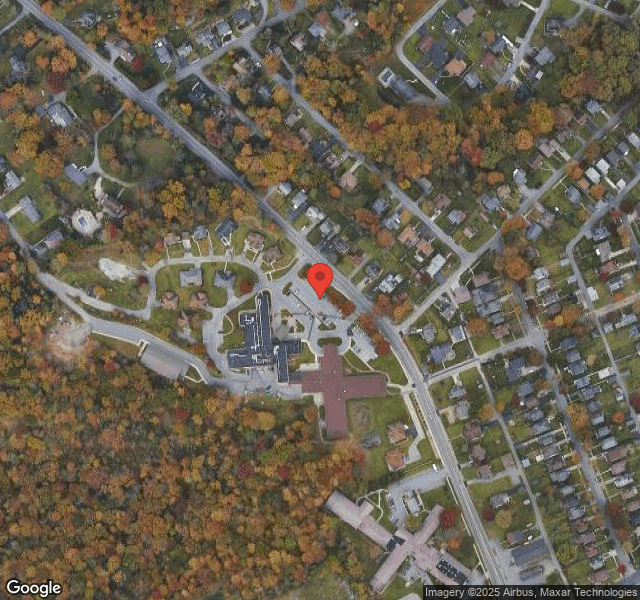

807 GOUCHER STREET, JOHNSTOWN, PA 15905 (814) 255-6844
For profit - Corporation 63 Beds CONTINUUM HEALTHCARE Data: November 2025
Trust Grade
33/100
#572 of 653 in PA
Last Inspection: February 2025

Within standard 12-15 month inspection cycle. Federal law requires annual inspections.

Overview

Heritage Ridge Senior Living at Johnstown has received a Trust Grade of F, indicating significant concerns and a poor overall rating. It ranks #572 out of 653 in Pennsylvania, placing it in the bottom half of facilities statewide, and #5 out of 9 in Cambria County, meaning only a few local options are available. The facility is showing an improving trend, with issues decreasing from 26 in 2024 to 22 in 2025, but it still has a concerning total of 71 issues found, including one serious incident where a resident suffered a large laceration due to neglect. Staffing is a relative strength, with a 4 out of 5-star rating and lower turnover at 46%, which is the state average, and good RN coverage that exceeds 89% of similar facilities. However, the facility has also incurred fines of $21,590, higher than 82% of Pennsylvania homes, suggesting ongoing compliance problems, and there have been failures to follow physician orders for care and medication management for multiple residents.

Trust Score
F
33/100
In Pennsylvania
#572/653
Bottom 13%
Safety Record
Moderate
Needs review
Inspections
Getting Better
26 → 22 violations
Staff Stability
⚠ Watch
46% turnover. Above average. Higher turnover means staff may not know residents' routines.
Penalties
✓ Good
$21,590 in fines. Lower than most Pennsylvania facilities. Relatively clean record.
Skilled Nurses
✓ Good
Each resident gets 58 minutes of Registered Nurse (RN) attention daily — more than average for Pennsylvania. RNs are trained to catch health problems early.
Violations
⚠ Watch
71 deficiencies on record. Higher than average. Multiple issues found across inspections.
★☆☆☆☆
1.0
Overall Rating
★★★★☆
4.0
Staff Levels
★★★☆☆
3.0
Care Quality
★☆☆☆☆
1.0
Inspection Score
Stable
2024: 26 issues
2025: 22 issues

The Good

  • 4-Star Staffing Rating · Above-average nurse staffing levels
  • Full Sprinkler Coverage · Fire safety systems throughout facility
  • No fines on record

Facility shows strength in staffing levels, fire safety.

The Bad

1-Star Overall Rating

Below Pennsylvania average (3.0)

Significant quality concerns identified by CMS

Staff Turnover: 46%

Near Pennsylvania avg (46%)

Higher turnover may affect care consistency

Federal Fines: $21,590

Below median ($33,413)

Minor penalties assessed

Chain: CONTINUUM HEALTHCARE

Part of a multi-facility chain

Ask about local staffing decisions and management

The Ugly 71 deficiencies on record

1 actual harm
Jul 2025 2 deficiencies
CONCERN (D) 📢 Someone Reported This

A family member, employee, or ombudsman was alarmed enough to file a formal complaint

Potential for Harm - no one hurt, but risky conditions existed

Quality of Care (Tag F0684)

Could have caused harm · This affected 1 resident

Based on review of facility policies and clinical records, as well as staff interviews, it was determined that the facility failed to ensure neurological assessments including vital signs and neurolog...

Read full inspector narrative →
Based on review of facility policies and clinical records, as well as staff interviews, it was determined that the facility failed to ensure neurological assessments including vital signs and neurological checks were completed following an unwitnessed fall for three of seven residents reviewed (Residents 1, 2, and 6).Findings include:The facility's policy for neurological assessments, dated November 4, 2024, indicated that neurological assessments are indicated upon physician's orders; following an unwitnessed fall; subsequent to a fall or other accident/injury involving head trauma; and when indicated by resident condition. When assessing neurological status, always include frequent vital signs. Perform neurological checks with the frequency as ordered or per fall protocol. The facility's neurological flow sheet indicated that vital signs and neurological checks were to be completed every 15 minutes for one hour, then every 30 minutes for one hour, then every hour for four hours, then every four hours for 24 hours.A quarterly Minimum Data Set (MDS) assessment (a mandated assessment of a resident's abilities and care needs) assessment for Resident 1, dated May 30, 2025, revealed that the resident had mild cognitive impairment, was usually understood and usually able to understand others, required assistance with daily care needs, had two or more falls with no injury since the prior assessment, and had a diagnosis of Parkinson's disease (a disorder of the central nervous system that affects movement, often including tremors). A nurse's note for Resident 1, dated May 14, 2025, at 7:25 a.m., revealed that the resident had an unwitnessed fall and had a bleeding abrasion to the left side of his scalp. The resident was sent to the hospital for a computed tomography (CT) scan of the head following a fall with head strike (impact to the head). A nursing note for Resident 1, dated May 14, 2025, at 11:23 a.m. revealed that the resident had returned from the hospital. There was no documented evidence that vital signs and neurological checks were completed per protocol after the resident returned from the hospital.Interview with the Director of Nursing on July 8, 2025, at 3:35 p.m. confirmed that neurological checks should have been completed for Resident 1 related to his unwitnessed fall with head injury. A quarterly MDS assessment for Resident 2, dated June 2, 2025, revealed that the resident was cognitively intact, required assistance with daily care needs, had two or more falls with no injury since the prior assessment and had a diagnosis of Multiple Sclerosis (MS)(chronic disease that affects nerves in the brain and spinal cord).A nurse's note for Resident 2, dated May 28, 2025, at 4:56 a.m., revealed that the resident had an unwitnessed fall. There was no documented evidence that vital signs and neurological checks were completed per protocol after an unwitnessed fall.Interview with the Director of Nursing on July 8, 2025, at 4:56 p.m. confirmed that there was no documented evidence that vital signs and neurological checks were completed per protocol after Resident 2's unwitnessed fall.An admission MDS assessment for Resident 6, dated April 24, 2025, revealed that the resident was cognitively impaired, required assistance with daily care needs, had wandering behaviors, had a bed and chair alarm for safety and had a diagnosis of dementia.A nurse's note for Resident 6, dated June 16, 2025, at 4:45 a.m., revealed that the resident had an unwitnessed fall. There was no documented evidence that vital signs and neurological checks were completed per protocol after an unwitnessed fall.Interview with the Director of Nursing on July 8, 2025, at 4:56 p.m. confirmed that there was no documented evidence that vital signs and neurological checks were completed per protocol after Resident 6's unwitnessed fall.28 Pa. Code 211.12(d)(1)(5) Nursing Services.
CONCERN (D) 📢 Someone Reported This

A family member, employee, or ombudsman was alarmed enough to file a formal complaint

Potential for Harm - no one hurt, but risky conditions existed

Deficiency F0757 (Tag F0757)

Could have caused harm · This affected 1 resident

Based on review of facility policies and clinical records, as well as staff interviews, it was determined that the facility failed to ensure that residents were free from unnecessary psychotropic medi...

Read full inspector narrative →
Based on review of facility policies and clinical records, as well as staff interviews, it was determined that the facility failed to ensure that residents were free from unnecessary psychotropic medications (medications that affect the mind, emotions and behavior), by failing to ensure that non-pharmacological (non-medication) behavioral interventions (individualized, non-pharmacological approaches to care), were attempted prior to the administration of as needed antianxiety medications (psychotropic medication used to treat anxiety) for one of seven residents reviewed (Resident 6).Findings include:The facility's policy regarding psychotropic medication use, dated November 4, 2024, indicated that non-pharmacological approaches are used (unless contraindicated) to minimize the need for medications, permit the lowest possible dose, and allow for discontinuation of medications when possible.An admission Minimum Data Set (MDS) assessment (a mandated assessment of a resident's abilities and care needs) for Resident 6, dated April 24, 2025, revealed that the resident was cognitively impaired, required assistance with daily care needs, had wandering behaviors, received antipsychotic and antianxiety medications and had a diagnosis of Dementia. Current physician's orders for Resident 6, included orders for the resident to receive 0.5 milligrams (mg) of Ativan (Lorazepam) (a psychotropic medication used to treat anxiety) every six hours as needed for restlessness/agitation and for staff to monitor the resident's behavior every shift and document non-pharmacological interventions.Review of the Medication Administration Record (MAR) for Resident 6 for June and July 2025 revealed that the resident was administered 0.5 mg of Ativan on June 3 at 8:54 p.m.; June 6 at 12:39 p.m.; June 6 at 6:59 p.m.; June 7 at 1:39 p.m.; June 7 at 10:46 p.m.; June 10 at 6:56 p.m.; June 11 at 7:48 p.m.; June 14 at 9:30 p.m.; June 17 at 7:05 p.m.; June 23 at 2:30 p.m.; June 24 at 8:27 p.m.; June 27 at 10:18 p.m.; June 28 at 6:55 p.m.; June 29 at 7:30 p.m.; June 30 at 6:56 p.m.; July 1 at 6:46 p.m.; July 2 at 1:29 a.m.; July 4 at 2:33 p.m.; July 5 at 2:27 p.m.; and July 6 at 4:30 a.m. There was no documented evidence that non-pharmacological behavioral interventions were attempted prior to administering Ativan on the above-mentioned dates and times.Interview with the Director of Nursing on July 8, 2025, at 4:05 p.m. confirmed that non-pharmacological interventions should have been attempted prior to the administration of as needed Ativan to Resident 6 on the above-mentioned dates and times.28 Pa. Code 211.12(d)(5) Nursing services.
Apr 2025 1 deficiency
CONCERN (D) 📢 Someone Reported This

A family member, employee, or ombudsman was alarmed enough to file a formal complaint

Potential for Harm - no one hurt, but risky conditions existed

Investigate Abuse (Tag F0610)

Could have caused harm · This affected 1 resident

Based on review of policies and clinical records, as well as staff interviews, it was determined that the facility failed to complete a thorough investigation for an incident that occurred for one of ...

Read full inspector narrative →
Based on review of policies and clinical records, as well as staff interviews, it was determined that the facility failed to complete a thorough investigation for an incident that occurred for one of four residents reviewed (Resident 2). Findings include: A facility policy for incident and accident reports, dated January 20, 2025, revealed that the accidents or incidents involving residents, employees, visitors and vendors, occurring on our premises shall be investigated and reported to the administrator. An admission Minimum Data Set (MDS) assessment (a mandated assessment of a resident's abilities and care needs) for Resident 2, dated March 3, 2025, revealed that the resident was cognitively intact, required extensive assistance with daily care needs, and had a diagnosis of dementia. Interview with the Social Worker on April 17, 2025, at 10:35 a.m. revealed an incident in March 2025 when Resident 2's spouse came to the facility, took Resident 2 out of the building, and attempted to put her in his vehicle to take her home. He made threats towards staff and the police were called. A Social Service note for Resident 2, dated March 20, 2025, at 4:27 p.m., revealed that the social worker had a conversation with Resident 2's daughter to provide an update regarding the resident's spouse attempting to take the resident from the facility. The Social Worker explained that the resident was unable to stand to get herself into the car and spouse became extremely frustrated with Resident 2 and with facility staff while they were attempting to explain the concern for her safety. The situation was de-escalated with police presence; however, the police did have to contact crisis related to a comment made by the spouse to the officer. Crisis did talk with resident's spouse and felt that he was okay to go home once he calmed down. The social worker explained that resident was safe and remained at the facility. The daughter voiced understanding and stated that she felt that the safest place for the resident was to remain at the facility. Interview with the Director of Nursing April 17, 2025, at 12:15 p.m. revealed that she was not aware that an investigation needed to be completed when a family member of a resident was involved. Interview with the Nursing Home Administrator on April 17, 2025, at 12:30 p.m. revealed that he signed a document that Resident 2's spouse was no longer permitted on the property following the incident on March 20, 2025, and that he was not aware that an investigation needed to be completed. 28 Pa. Code 201.18(e)(1) Management. 28 Pa. Code 211.10(d) Resident Care Policies. 28 Pa. Code 211.12(d)(5) Nursing Services.
Feb 2025 18 deficiencies
CONCERN (D)

Potential for Harm - no one hurt, but risky conditions existed

Deficiency F0578 (Tag F0578)

Could have caused harm · This affected 1 resident

Based on review of facility policies and clinical records, as well as staff interviews, it was determined that the facility failed to ensure that the resident and/or resident representative had an opp...

Read full inspector narrative →
Based on review of facility policies and clinical records, as well as staff interviews, it was determined that the facility failed to ensure that the resident and/or resident representative had an opportunity to develop an advance directive (instructions regarding the provision of health care when the resident is incapacitated) or assist in formulating an advance directive for one of 29 residents reviewed (Resident 33). Findings include: The facility policy regarding advance directives, dated January 20, 2025, indicated that upon admission, the resident or resident representative will be provided with written information concerning the right to refuse or accept medical or surgical treatment and to formulate an advance directive if he or she chooses to do so. If the resident or resident representative indicates that he or she has not established advance directives, the healthcare center staff will offer assistance in establishing advance directives. The resident or resident representative will be given the option to accept or decline the assistance, and care will not be contingent on either decision. Nursing staff will document in the medical record the offer to assist, and the resident's or resident representative's decision to accept or decline assistance. Information about whether or not the resident has executed an advance directive is displayed prominently in the medical record. A quarterly Minimum Data Set (MDS) assessment (a mandated assessment of a resident's abilities and care needs) for Resident 33, dated November 26, 2024, revealed that the resident was mildly cognitively impaired, required supervision to independent with care needs, had verbal behavioral symptoms expressed towards others occurring one to three days in the look-back period, and had diagnoses that included schizoaffective disorder (a mental health condition and mood disorder), bipolar disorder (a mood disorder), anxiety, depression and post-traumatic stress disorder (a mental and behavioral disorder that develops related to a terrifying event). Review of Resident 33's medical records indicated that they did not have advance directives. There was no documented evidence in the resident's clinical record that the resident and/or resident representative was given the opportunity to formulate an advance directive, and no documented evidence of the resident's and/or resident representative's decision regarding formulating advanced directives. Interview with the Director of Nursing on February 12, 2025, at 12:39 p.m. confirmed that there was no documented evidence in Resident 33's medical records that the resident and/or resident representative was given the opportunity to formulate an advance directive, and no documented evidence of the resident's and/or resident representative's decision regarding formulating advanced directives. 28 Pa. Code 201.29(a)(d) Resident Rights.
CONCERN (D)

Potential for Harm - no one hurt, but risky conditions existed

Notification of Changes (Tag F0580)

Could have caused harm · This affected 1 resident

Based on a review of clinical records, as well as staff interviews, it was determined that the facility failed to ensure that a resident's attending physician was notified about medication refusals of...

Read full inspector narrative →
Based on a review of clinical records, as well as staff interviews, it was determined that the facility failed to ensure that a resident's attending physician was notified about medication refusals of insulin and requests to speak to the physician for one of 29 residents reviewed (Resident 26). Findings include: An admission MDS assessment for Resident 26, dated January 14, 2025, revealed that the resident was cognitively intact, required assistance with personal care needs, and had diagnoses that included stroke and diabetes. Physician's orders for Resident 26, dated January 7, 2025, included an order for the resident to receive six units of insulin lispro (fast-acting insulin to treat high blood sugar) daily with lunch and dinner. Review of the MAR for January 2025 and February 2025 revealed that the resident refused her dinnertime dose on January 21, 27, and 30, and February 4 and 8, 2025. Physician's orders for Resident 26, dated January 8, 2025, included an order for the resident to receive 18 units of insulin lispro daily with breakfast. Review of the MAR, dated January 2025 and February 2025, revealed that the resident refused this dose on January 28 and February 1, 2, 7, and 11. Physician's orders for Resident 26, dated January 20, 2025, included an order for the resident to receive 48 units of insulin glargine (long-acting insulin used to treat high blood sugar) at bedtime. Review of the MAR, dated January 2025 and February 2025, revealed that the resident refused her bedtime insulin on January 30 and February 9. A nurse's note for Resident 26, dated February 1, 2025, at 1:49 p.m., revealed that the resident was refusing her insulins, stating that the amount of insulin was too high. The physician was aware and was to review insulin and medications on rounds Monday, February 3, 2025. A Medication Administration Note for Resident 26, dated February 2, 2025, at 8:24 a.m., revealed that the resident was refusing her morning insulin until she clarifies the dosage with the physician. A certified registered nurse practitioner (a registered nurse with advanced training and education) note for Resident 26, dated February 3, 2025, at 12:47 p.m., revealed that the resident reported concerns of insulin management, and the resident was encouraged to discuss that with the doctor. There was no documented evidence in Resident 26's clinical record as of February 11, 2025, that the physician was made aware that the resident's continued refusal of some of her ordered insulin doses until she clarified with her physician or that the insulin dosage was addressed by the physician as requested by the resident. Interview with the Director of Nursing on February 12, 2025, at 3:00 p.m. confirmed that the physician was not notified of Resident 26's request for clarification of insulin doses and continued refusals and should have been.
CONCERN (D)

Potential for Harm - no one hurt, but risky conditions existed

Transfer Notice (Tag F0623)

Could have caused harm · This affected 1 resident

Based on clinical record reviews and staff interviews, it was determined that the facility failed to notify the resident and/or resident's representative and the ombudsman in writing of the transfer a...

Read full inspector narrative →
Based on clinical record reviews and staff interviews, it was determined that the facility failed to notify the resident and/or resident's representative and the ombudsman in writing of the transfer and reason for hospitalization for four of 29 residents reviewed (Residents 13, 23, 33, 37). Findings include: A quarterly Minimum Data Set (MDS) assessment (a mandated assessment of a resident's abilities and care needs) for Resident 13, dated November 26, 2024, revealed that the resident was cognitively impaired, required assistance from staff for daily care needs, and had diagnosis that included heart failure and diabetes. A nurse's note for Resident 13, dated May 13, 2024, at 6:30 p.m., revealed that the resident was observed lying on the floor in his room with bleeding observed from above his left eyebrow and above his left ear. The resident was transferred to the emergency room for evaluation and treatment. There was no documented evidence that a written notice of Resident 13's transfer to the hospital was provided to the resident and/or resident representative and the ombudsman regarding the reason for the transfer. A quarterly MDS assessment for Resident 23, dated January 14, 2025, revealed that the resident was cognitively intact, was dependent on staff for daily care needs, and had diagnosis that included metabolic encephalopathy (a change in how your brain works due to an underlying condition). A nurse's note for Resident 23, dated October 13, 2024, at 6:30 p.m., revealed that the resident was unable to answer orientation questions or hold a meaningful conversation and was transported to the emergency room for evaluation and treatment. There was no documented evidence that a written notice of Resident 23's transfer to the hospital was provided to the resident and/or resident representative and the ombudsman regarding the reason for the transfer. A quarterly MDS assessment for Resident 33, dated November 26, 2024, revealed that the resident was mildly cognitively impaired, required supervision to independent with care needs, and had diagnoses that included schizoaffective disorder (a mental health condition and mood disorder), bipolar disorder (a mood disorder), and post-traumatic stress disorder (a mental and behavioral disorder that develops related to a terrifying event). A nursing note for Resident 33, dated October 14, 2024, at 1:07 p.m., revealed that a crisis representative arrived at the facility and spoke with resident. The resident was agreeable to be sent to the hospital for a mental health evaluation, and the resident was transported to the hospital. There was no documented evidence that a written notice of Resident 33's transfer to the hospital was provided to the resident and/or resident representative and the ombudsman regarding the reason for the transfer. A quarterly MDS assessment for Resident 37, dated December 4, 2024, revealed that the resident was cognitively intact, required assistance with care needs, and had diagnoses that included diabetes, obstructive uropathy (blockage of the urinary tract), and renal insufficiency (kidneys lose the ability to remove waste and balance fluids). A nursing note for Resident 37, dated October 14, 2024, at 11:48 a.m., revealed that the resident had abnormal blood work and reports of intermittent nausea and vomiting. The certified registered nurse practioner was notified, and the resident was transferred to the hospital for further evaluation. A nursing note for Resident 37, dated November 17, 2024, at 5:25 a.m., revealed that the resident's left nephrostomy tube (thin flexible tube inserted into the kidney through the skin to drain urine directly into a collection bag) was dislodging. The physician was notified, and the resident was transferred to the hospital. A nursing note for Resident 37, dated January 18, 2025, at 12:44 p.m., revealed that the resident's nephrostomy tube was hanging out of the site several inches past the stitch that would have secured it to the skin. The physician was notified, and the resident was transferred to the hospital. There was no documented evidence that a written notice of Resident 37's transfers to the hospital were provided to the resident and/or resident representative and the ombudsman regarding the reason for the transfers. Interview with the Nursing Home Administrator on February 12, 2025, at 3:20 p.m. confirmed that the facility did not provide a written notice to the above residents and/or their representative and ombudsman regarding the reason for the transfer to the hospital on the above-mentioned dates. 28 Pa. Code 201.25 Discharge Policy. 28 Pa. Code 201.29(f)(g) Resident Rights.
CONCERN (D)

Potential for Harm - no one hurt, but risky conditions existed

Deficiency F0625 (Tag F0625)

Could have caused harm · This affected 1 resident

Based on review of clinical records, as well as staff interviews, it was determined that the facility failed to provide a written notice of the facility's bed-hold policy to the resident and/or the re...

Read full inspector narrative →
Based on review of clinical records, as well as staff interviews, it was determined that the facility failed to provide a written notice of the facility's bed-hold policy to the resident and/or the resident's representative at the time of a transfer for four of 29 residents reviewed (Residents 13, 23, 33, 37). Findings include: A quarterly Minimum Data Set (MDS) assessment (a mandated assessment of a resident's abilities and care needs) for Resident 13, dated November 26, 2024, revealed that the resident was cognitively impaired, required assistance from staff for daily care needs, and had diagnosis that included heart failure and diabetes. A nurse's note for Resident 13, dated May 13, 2024, at 6:30 p.m., revealed that the resident was observed lying on the floor in his room with bleeding observed from above his left eyebrow and above his left ear. The resident was transferred to the emergency room for evaluation and treatment. There was no documented evidence that a bed-hold notice was provided to Resident 13 or his responsible party. A quarterly MDS assessment for Resident 23, dated January 14, 2025, revealed that the resident was cognitively intact, was dependent on staff for daily care needs, and had diagnosis that included metabolic encephalopathy (a change in how your brain works due to an underlying condition). A nurse's note for Resident 23, dated October 13, 2024, at 6:30 p.m., revealed that the resident was unable to answer orientation questions or hold a meaningful conversation and was transported to the emergency room for evaluation and treatment. There was no documented evidence that a bed-hold notice was provided to Resident 23 or his responsible party. A quarterly MDS assessment for Resident 33, dated November 26, 2024, revealed that the resident was mildly cognitively impaired, required supervision to independent with care needs, and had diagnoses that included schizoaffective disorder (a mental health condition and mood disorder), bipolar disorder (a mood disorder), and post-traumatic stress disorder (a mental and behavioral disorder that develops related to a terrifying event). A nursing note for Resident 33, dated October 14, 2024, at 1:07 p.m., revealed that a crisis representative arrived to facility and spoke with resident. He was agreeable to be sent to the hospital for a mental health evaluation and the resident was transported to the hospital. There was no documented evidence that a bed hold notice was provided to Resident 33 or his responsible party. A quarterly MDS assessment for Resident 37, dated December 4, 2024, revealed that the resident was cognitively intact, required assistance with care needs, and had diagnoses that included diabetes, obstructive uropathy (blockage of the urinary tract), and renal insufficiency (kidneys lose the ability to remove waste and balance fluids). A nursing note for Resident 37, dated October 14, 2024, at 11:48 a.m., revealed that the resident had abnormal blood work and reports of intermittent nausea and vomiting, and she was transferred to the hospital for further evaluation. A nursing note for Resident 37, dated November 17, 2024, at 5:25 a.m., revealed that the resident's left nephrostomy tube (thin flexible tube inserted into the kidney through the skin to drain urine directly into a collection bag) was dislodging. The physician was notified, and the resident was transferred to the hospital. A nursing note for Resident 37, dated January 18, 2025, at 12:44 p.m., revealed that the resident's nephrostomy tube was hanging out of the site several inches past the stitch that would have secured it to the skin. The physician was notified, and the resident was transferred to the hospital. There was no documented evidence that a bed-hold notice was provided to Resident 37 or her responsible party. Interview with the Nursing Home Administrator on February 12, 2025, at 3:20 p.m. confirmed that the facility did not provide bed-hold notices to the above residents and/or their representative when the residents were transferred to the hospital. 28 Pa. Code 201.14(a) Responsibility of Licensee. 28 Pa. Code 201.18(b)(3) Management.
CONCERN (D)

Potential for Harm - no one hurt, but risky conditions existed

Assessment Accuracy (Tag F0641)

Could have caused harm · This affected 1 resident

Based on a review of the Resident Assessment Instrument User's Manual and clinical records, as well as staff interviews, it was determined that the facility failed to complete accurate Minimum Data Se...

Read full inspector narrative →
Based on a review of the Resident Assessment Instrument User's Manual and clinical records, as well as staff interviews, it was determined that the facility failed to complete accurate Minimum Data Set assessments for six of 29 residents reviewed (Residents 9, 17, 21, 26, 37, 42). Findings include: The Long-Term Care Facility Resident Assessment Instrument (RAI) User's Manual, which provides guidance and instructions for the completion of Minimum Data Set (MDS) assessments (mandated assessments of a resident's abilities and care needs), dated October 2024, revealed that N0415E anticoagulant (medications used as a blood thinner) was to be coded (1) is taking, if the resident received an anticoagulant medication during the seven-day assessment period. A quarterly MDS assessment for Resident 9, dated November 13, 2024, revealed that Section N0415E was not coded (1), which indicated that the resident did not receive an anticoagulant during the seven-day assessment period. Physician's order for Resident 9, dated June 22, 2024, included an order for the resident to receive 2.5 milligrams (mg) of apixaban (a blood thinner) two times a day for atrial fibrillation (an abnormal fluttering heart beat). Review of the Medication Administration Record (MAR) for Resident 9, dated November 2024, revealed that 2.5 mg of apixaban was administered twice a day during the seven-day assessment period. The Long-Term Care Facility RAI User's Manual, dated October 2024, revealed that O0110K1 hospice was to be coded (B) while a resident, when residents identified as being in a hospice program for terminally ill persons where an array of services was provided for the palliation and management of terminal illness and related conditions. Physician's order for Resident 17, dated August 5, 2024, included an order for the resident to be admitted to hospice services. A care plan, dated July 31, 2024, indicated the resident had a terminal illness. A skin wound note, dated December 30, 2024, indicated that Resident 17 was currently on hospice care. A quarterly MDS assessment for Resident 17, dated January 1, 2024, revealed that Section O0110K1 was not coded (B), which indicated that the resident did not receive hospice services during the seven-day assessment period. Interview with the Registered Nurse Assessment Coordinator on February 12, 2025, at 3:44 p.m. confirmed that above-mentioned MDS assessments for Residents 9 and 17 were coded incorrectly. The Long-Term Care Facility RAI User's Manual, dated October 2024, revealed that Section N0415H Opioid (narcotic medications used to treat pain) was to be coded (1) if the resident received an opioid medication during the seven-day assessment period. Physician's order for Resident 21, dated March 18, 2024, included for the resident to receive 5 milligrams (mg) of oxycodone (an opioid) two times a day. Review of the Medication Administration Record (MAR) for Resident 21, dated November 2024, revealed that 5 mg of oxycodone was administered twice a day during the seven-day assessment period. A quarterly MDS assessment for Resident 21, dated November 27, 2024, revealed that Section N0415H was not coded (1), which indicated that the resident did not receive an opioid during the seven-day assessment period. Physician's order for Resident 26, dated January 7, 2025, included an order for the resident to receive 25 mg of Tramadol (an opioid) every eight hours as needed for pain. Review of the MAR for Resident 26, dated January 2025, revealed that the resident was administered Tramadol daily on January 8 through January 14. An admission MDS assessment for Resident 26, dated January 14, 2025, revealed that Section N0415H was not coded (1), indicating that the resident did not receive an opioid during the seven-day assessment period. Interview with the Director of Nursing on February 12, 2025, at 12:39 p.m. confirmed that above-mentioned MDS assessments for Residents 21 and 26 should have indicated that the residents were receiving an opioid medication and did not. The Long-Term Care Facility RAI User's Manual, dated October 2024, revealed that Section H0100 was to be coded for each appliance that was used at any time in the past seven days. Select none of the above if none of the appliances A-D were used in the past seven days. Physician's orders for Resident 37, dated January 21, 2025, included an order for a left nephrostomy tube (thin flexible tube inserted into the kidney through the skin to drain urine directly into a collection bag). A care plan for Resident 37, dated June 25, 2024, revealed that the resident had a nephrostomy tube. A quarterly MDS assessment for Resident 37, dated January 28, 2025, revealed that Section H0100C was coded, indicating that the resident had an ostomy. Interview with the Director of Nursing on February 12, 2025, at 6:04 p.m. confirmed that Section H0100 was coded inaccurately for Resident 37, and that Section H0100A should have been coded indicating that the resident had a nephrostomy tube. An admission MDS assessment for Resident 42, dated December 27, 2024, revealed that Section N0415H was coded (1), indicating that the resident received an opioid during the seven-day assessment period. Review of the MAR for Resident 42, dated December 2024, revealed that there was no documented evidence that the resident received an opioid during the seven-day assessment period. Interview with the Director of Nursing on February 12, 2025, at 12:39 p.m. confirmed that above-mentioned MDS for Resident 42 was coded incorrectly, indicating that the resident received an opioid when he did not. 28 Pa. Code 211.5(f) Clinical Records.
CONCERN (D)

Potential for Harm - no one hurt, but risky conditions existed

Comprehensive Care Plan (Tag F0656)

Could have caused harm · This affected 1 resident

Based on facility policies and clinical record reviews, as well as staff interviews, it was determined that the facility failed to ensure that resident-centered care plans were developed and implement...

Read full inspector narrative →
Based on facility policies and clinical record reviews, as well as staff interviews, it was determined that the facility failed to ensure that resident-centered care plans were developed and implemented for three of 29 residents reviewed (Residents 7, 16, 33). Findings include: The facility's policy regarding care plans, dated January 20, 2025, indicated that the comprehensive, person-centered care plan that includes measurable objectives and timetables to meet the resident's physical, psychological and functional needs is developed and implemented for each resident. Assessments of residents are ongoing and care plans are revised as information about the residents and the resident's conditions change. A quarterly Minimum Data Set (MDS) assessment (a mandated assessment of a resident's abilities and care needs) for Resident 7, dated November 13, 2024, revealed that the resident was cognitively intact, required assistance with care needs, received an antibiotic, anticoagulant (blood thinner), diuretic (a medication used to treat fluid build-up), and insulin, and had diagnoses that included coronary artery disease (CAD-a disease that limits blood flow to the heart caused by plaque buildup in the arteries), congestive heart failure (CHF-the heart cannot pump blood well enough to meet the body's needs), hypertension (HTN-high blood pressure), atrial fibrillation (irregular heart rhythm), diabetes, and presence of a cardiac pacemaker (a surgically-implanted, small battery-powered device to manage irregular heartbeats or heart failure). Physician's orders for Resident 7, dated May 29, 2024, included an order for the resident to receive six units of insulin Lispro subcutaneously with meals, 0.75 mg of Trulicity (a diabetic medication) subcutaneously daily every Thursday, and 2.5 mg of apixaban (an anticoagulant medication) twice daily. Physician's orders, dated August 5, 2024, included an order for the resident to have Accuchecks (blood sugar checks) three times daily with meals and to receive 1 mg of bumetanide (a diuretic medication) daily. Physician's orders, dated August 31, 2024, included an order for the resident to receive 500 milligrams (mg) of Cefadroxil (an antibiotic) daily for preventative. Physician's orders, dated January 8, 2025, included an order indicating that the resident had a dual chamber pacemaker to the left chest wall and follows with CPG cardiology. Physician's orders, dated January 20, 2025, included an order for the resident to receive 14 units of insulin Glargine subcutaneously at bedtime. Physician's orders, dated January 27, 2025, included an order for the resident to use a Dexcom G7 Sensor (Continuous Glucose System Sensor) subcutaneously (injected into the fat layer of the skin) every 10 days and Dexcom G7 Receiver Device (Continuous Glucose System Receiver to measure blood sugars) and ensure that the device is charged every shift. There was no documented evidence that care plans were developed to address Resident 7's diabetic needs including her use of the Dexcom and need for diabetic medications, cardiac needs including the presence of a cardiac pacemaker with her need to follow with a cardiologist, her need for diuretic and anticoagulant medications, or the need for long-term antibiotic therapy. Interview with the Registered Nurse Assessment Coordinator on February 12, 2025, at 2:51 p.m. confirmed that Resident 7 did not have a care plan in place to address her diabetic and cardiac needs, her diuretic and anticoagulant medications, or the need to address her long-term antibiotic therapy and should have. A quarterly MDS assessment for Resident 16, dated November 6, 2024, revealed that the resident was cognitively impaired, required assistance with care needs, was receiving an anticonvulsant (medication used to prevent or control seizures), and had a diagnosis of epilepsy (a seizure disorder). Physician's orders for Resident 16, dated November 22, 2024, included an order for the resident to receive 0.5 mg of clonazepam (an anticonvulsant) twice daily. There was no documented evidence that a care plan was developed to address Resident 16's seizure disorder and need for anticonvulsant medication. Interview with the Registered Nurse Assessment Coordinator on February 12, 2025, at 2:51 p.m. confirmed that Resident 16 did not have a care plan in place to address his seizure disorder and need for anticonvulsant medication. A quarterly MDS assessment for Resident 33, dated November 26, 2024, revealed that the resident was mildly cognitively impaired, required supervision to independent with care needs, had verbal behavioral symptoms expressed towards others occurring one to three days in the look-back period, and had diagnoses that included schizoaffective disorder (a mental health condition and mood disorder), bipolar disorder (a mood disorder), anxiety, depression, and post-traumatic stress disorder (PTSD - a mental and behavioral disorder that develops related to a terrifying event). Review of Resident 33's clinical records revealed that he was receiving routine psychological services for his diagnoses of depression, anxiety, bipolar disorder, schizoaffective disorder, and PTSD. A trauma assessment for Resident 33, completed October 15, 2024, identified triggers for reliving traumatic experience, physical and emotional symptoms of reliving trauma, and support and coping strategies/interventions. There was no documented evidence that a care plan was developed to address Resident 33's PTSD, his triggers, and his coping strategies/interventions. Interview with the Registered Nurse Assessment Coordinator on February 12, 2025, at 2:51 p.m. confirmed that Resident 33 did not have a care plan in place to address his PTSD, his triggers, and his coping strategies/interventions. 28 Pa. Code 211.12(d)(5) Nursing Services.
CONCERN (D)

Potential for Harm - no one hurt, but risky conditions existed

Deficiency F0657 (Tag F0657)

Could have caused harm · This affected 1 resident

Based on review of clinical records, as well as staff interviews, it was determined that the facility failed to ensure that a resident's care plan was updated/revised to reflect the resident's specifi...

Read full inspector narrative →
Based on review of clinical records, as well as staff interviews, it was determined that the facility failed to ensure that a resident's care plan was updated/revised to reflect the resident's specific care needs for two of 29 residents reviewed (Residents 9, 13). Findings include: A quarterly Minimum Data Set (MDS) assessment (a mandated assessment of a resident's abilities and care needs) for Resident 9, dated November 18, 2024, revealed that the resident was understood, could understand others, had a Brief Interview for Mental Status (BIMS -a structured cognitive interview) of 15 indicating that the resident was cognitively intact, required substantial to max assistance for showering and bathing, and had diagnoses that included congestive heart failure (CHF) and a history of falls. A care plan for self care performance deficit, dated June 21, 2024, indicated that the resident prefers showers twice a week, but may refuse. A care plan for the resident, dated June 24, 2024, revealed that the resident had the potential for actual skin impairment due to ichthyosis vulgaris (a common, inherited skin disorder characterized by dry, scaly, and thickened skin). Physician orders for Resident 9, dated October 5, 2024, included an order for the resident's entire body to be lathered with Vaseline followed by Dove moisturizing lotion. A review of Resident 9's clinical record, including nurse aide tasks, revealed special instructions to provide the resident with a complete bed bath daily and no showers. Following the bed bath, staff were to apply white petrolatum external ointment head to toe, followed by Dove lotion. Interview with the Director of Nursing on February 11, 2025, at 4:01 p.m. confirmed that Resident 9's care plan needed updated to reflect her bed bath and skin care needs. A quarterly MDS assessment for Resident 13, dated November 26, 2024, revealed that the resident was cognitively impaired, required assistance from staff for daily care needs, had diagnoses that included heart failure and diabetes, and used a chair alarm daily. A care plan for Resident 13, dated May 16, 2024, indicated that the resident was an elopement risk, and a care plan, dated December 27, 2024, indicated that the resident required oxygen therapy. A review of elopement risk evaluations for Resident 13, dated September 9, 2024, and November 20, 2024, revealed that the resident had a score of zero and was not an elopement risk. Review of the clinical record also revealed no documented evidence that Resident 13 was receiving oxygen therapy. An interview with the Director of Nursing on February 11, 2025, at 10:54 a.m. and 12:30 p.m. revealed that Resident 13 was no longer an elopement risk and no longer received oxygen therapy, and his care plans should have been revised. 28 Pa. Code 211.12(d)(5) Nursing Services.
CONCERN (D)

Potential for Harm - no one hurt, but risky conditions existed

Accident Prevention (Tag F0689)

Could have caused harm · This affected 1 resident

Based on review of clinical records and staff interviews, it was determined that the facility failed to ensure that assistance devices to prevent accidents or injury were in place for three of 29 resi...

Read full inspector narrative →
Based on review of clinical records and staff interviews, it was determined that the facility failed to ensure that assistance devices to prevent accidents or injury were in place for three of 29 residents reviewed (Residents 13, 17, 24) Findings include: A quarterly Minimum Data Set (MDS) assessment (a mandated assessment of a resident's abilities and care needs) for Resident 13, dated November 26, 2024, revealed that the resident was cognitively impaired, required assistance from staff for daily care needs, and had diagnoses that included heart failure and diabetes. Physician's orders for Resident 13, dated May 29, 2024, included an order for the resident to have a chair alarm to his wheelchair at all times. A nurse's note for Resident 13, dated July 20, 2024, at 2:00 p.m., revealed that the resident had fallen in his bathroom. The resident reported that he was trying to ambulate from his wheelchair to the bathroom. The chair pad alarm was not present on his wheelchair. A facility incident investigation, dated July 20, 2025, indicated that the resident's chair alarm was not in place. Interview with the Director of Nursing on February 11, 2025, at 10:54 a.m. confirmed that Resident 13 did not have a chair alarm on his wheelchair at the time of his fall on July 20, 2024, and should have. A quarterly MDS assessment for Resident 17, dated October 18, 2024, revealed that the resident was cognitively intact and had diagnoses that included dementia and a history of falls. A care plan for the resident, dated December 26, 2023, revealed that the resident was at high risk for falls due to deconditioning and gait balance problems. A fall investigation for Resident 17, dated October 5, 2024, indicated that the resident was trying to plug in his radio and slid off his wheelchair. The chair alarm was not sounding at the time of the fall. An immediate intervention was to replace the chair alarm. Staff were provided education on checking the placement and function of the bed and chair alarms during routine rounds. A fall investigation for Resident 17, dated November 11 2024, indicated that the resident was found sitting on the floor in front of his closet with his back against the foot rests of the wheelchair. Resident 17's roommate alerted staff to the fall. The resident's ordered chair alarm was not sounding at the time of the fall. The resident had a 15 centimeter (cm) by 4 cm abrasion on his back that was bleeding. Interview with the Director of Nursing on February 12, 2025, at 4:56 p.m. confirmed that Resident 17 did not have a functional chair alarm on his wheelchair at the time of his fall on October 5, 2024, and November 11, 2024, and should have. A quarterly MDS assessment for Resident 24, dated November 7, 2024, revealed that the resident was cognitively intact, required assistance from staff for daily care needs, and had diagnoses that included Alzheimer's disease. Physician's orders for Resident 24, dated September 3, 2024, included an order for the resident to be transferred using a sit-to-stand lift. A nurse's note for Resident 24, dated June 11, 2024, at 5:37 p.m., revealed that the resident was being transferred to the toilet when she lost her balance due to her left foot getting caught, causing her to be off balance, and the resident slid down the wall and then to the floor. A facility incident investigation, dated June 11, 2024, revealed that the resident was not transferred with a sit-to-stand lift as ordered. Education was provided by the registered nurse on site for safe transfers. Interview with the Director of Nursing on February 12, 2025, at 2:04 p.m. revealed that the facility's incident report indicated that the resident was not transferred with a sit-to-stand lift as ordered at the time of her fall on June 11, 2024. The Director of Nursing revealed that the nurse aide reported using a sit-to-stand lift; however, a witness statement was not available and the incident report indicated that a sit-to-stand was not used. 28 Pa. Code 211.12(d)(3)(5) Nursing Services.
CONCERN (D)

Potential for Harm - no one hurt, but risky conditions existed

Incontinence Care (Tag F0690)

Could have caused harm · This affected 1 resident

Based on review of facility policies and clinical records, as well as observations and staff interviews, it was determined that the facility failed to ensure that residents received proper care for in...

Read full inspector narrative →
Based on review of facility policies and clinical records, as well as observations and staff interviews, it was determined that the facility failed to ensure that residents received proper care for indwelling urinary catheters (a flexible catheter used to drain urine from the bladder into a drainage collection bag) and nephrostomy tubes (thin, flexible tube inserted into the kidney through the skin to drain urine directly into a collection bag) for two of 29 residents reviewed (Residents 1, 37). Findings include: A facility policy related to catheter care, dated January 20, 2025, indicated that the catheter tubing and drainage bag are kept off the floor and to observe urine level for noticeable increases or decrease. If the level stays the same, or increases rapidly, report it to the physician or supervisor. Follow the facility procedure for measuring and documenting input and output. A quarterly Minimum Data Set (MDS) assessment (a mandated assessment of a resident's abilities and care needs) for Resident 1, dated November 8, 2024, revealed that the resident was cognitively impaired, required assistance with care needs, had an indwelling urinary catheter, had diagnoses that included neurogenic bladder (bladder lacks control due to nerve or muscle problems), and had a urinary tract infection in the last 30 days. A care plan for the resident, dated June 25, 2024, revealed that the resident had an indwelling urinary catheter. Staff was to ensure that the catheter bag and tubing were secure and the tubing was not on the floor, and staff was to monitor and document intake and output as per facility policy. Physician's orders for Resident 1, dated December 30, 2024, included an order for an indwelling foley catheter to straight drainage. Staff were to ensure the catheter tubing and bag were secured to bed frame and not touching the floor and that the privacy bag was in place. Observations of Resident 1 on February 9, 2025, at 2:31 p.m. revealed that the resident was lying in bed with his indwelling urinary catheter drainage bag and the catheter tubing was in direct contact with the floor. Interview with Nurse Aide 1, at the time of the observation, confirmed that the catheter bag and catheter tubing should not have been touching the floor. Interview with the Director of Nursing on February 9, 2025, at 3:20 p.m. confirmed that Resident 1's indwelling catheter drainage bag and tubing should not have been touching the floor. Review of the clinical record for Resident 1 for November and December 2024 and January and February 2025 revealed no documented evidence that his output was monitored and documented for the following days and shifts: November 14 and 21 on the night shift, November 25 on the evening shift, December 1 on the night shift, December 21, 25 and 30 on the evening shift, January 7 and 27 on the night shift, January 17 and 28 on the evening shift, and on February 1 on the night shift. Interview with the Director of Nursing on February 12, 2025, at 8:57 a.m. confirmed that there was no documented evidence that Resident 1's indwelling foley catheter output was monitored and documented on the above-mentioned dates/shifts as per the care plan and facility policy. A facility policy related to nephrostomy tube care, dated January 20, 2025, indicated to measure output initially every hour for four hours, then every four hours for 24 hours, then every eight hours. Empty drainage bag once per shift and as needed. A quarterly MDS assessment for Resident 37, dated December 4, 2024, revealed that the resident was cognitively intact, required assistance with care needs, and had diagnoses that included diabetes, obstructive uropathy (blockage of the urinary tract), and renal insufficiency (kidneys lose the ability to remove waste and balance fluids). Physician's orders for Resident 37, dated January 21, 2025, included an order for a left nephrostomy tube. A care plan for Resident 37, dated June 25, 2024, revealed that the resident had a nephrostomy tube, and staff was to monitor and document intake and output as per facility policy. Review of the clinical record for Resident 37 for November and December 2024 and January and February 2025 revealed no documented evidence that staff monitored and documented the resident's nephrostomy tube output on the following dates and shifts: November 1 and 14 on the night shift, November 1 and 28 on the day shift, December 1, 6, and 23 on the night shift, December 25 on the evening shift, January 1, 9, 23 and 27 on the night shift, and February 1 on the night shift. Interview with the Director of Nursing on February 11, 2025, at 2:12 p.m. confirmed that there was no documented evidence that staff monitored and documented Resident 37's nephrostomy tube output on the above-mentioned dates/shifts as per the care plan and facility policy. 28 Pa. Code 211.12(d)(3)(5) Nursing Services.
CONCERN (D)

Potential for Harm - no one hurt, but risky conditions existed

Pharmacy Services (Tag F0755)

Could have caused harm · This affected 1 resident

Based on review of facility policies and clinical records, as well as staff interviews, it was determined that the facility failed to maintain accountability for controlled medications (drugs with the...

Read full inspector narrative →
Based on review of facility policies and clinical records, as well as staff interviews, it was determined that the facility failed to maintain accountability for controlled medications (drugs with the potential to be abused) for one of 29 residents reviewed (Resident 26). Findings include: The facility's policy for medication administration, dated January 20, 2025, indicated that the individual administering the medication initials the resident's Medication Administration Record (MAR) on the appropriate line after giving each medication and before administering the next one. An admission Minimum Data Set (MDS) assessment (a mandated assessment of a resident's abilities and care needs) for Resident 26, dated January 14, 2025, revealed that the resident was cognitively intact, required assistance with personal care needs, and had diagnoses that included stroke and diabetes. Physician's orders for Resident 26, dated January 7, 2025; January 22, 2025; and February 5, 2025, included an order for the resident to receive 25 milligrams (mg) of Tramadol (a narcotic pain medication) every eight hours as needed for pain. Review of the controlled drug record (a form that accounts for each tablet/pill/dose of a controlled drug) for Resident 26, dated January and February 2025, revealed that a 25 mg Tramadol tablet was signed out on January 14, 2025, at 8:24 p.m.; January 21, 2025, at 10:00 a.m.; January 22, 2025, at 11:00 a.m.; January 29, 2025, at 10:00 a.m.; and February 5, 2025, at 10:00 a.m. and 7:37 p.m. However, there was no documented evidence in Resident 26's clinical record, including the Medication Administration Record (MAR), that the signed-out doses of controlled medications were administered to the resident on the above-mentioned dates and times. Interview with the Director of Nursing on February 12, 2025, at 3:56 p.m. confirmed that there was no documented evidence in Resident 26's clinical record to indicate that the signed-out doses of controlled medications mentioned above were administered. 28 Pa. Code 211.9(a)(1) Pharmacy Services. 28 Pa. Code 211.12(d)(1)(3)(5) Nursing Services.
CONCERN (D)

Potential for Harm - no one hurt, but risky conditions existed

Deficiency F0760 (Tag F0760)

Could have caused harm · This affected 1 resident

Based on a review of facility policies, clinical records, and staff interviews, it was determined that the facility failed to ensure that it was free from significant medication errors for one of 29 r...

Read full inspector narrative →
Based on a review of facility policies, clinical records, and staff interviews, it was determined that the facility failed to ensure that it was free from significant medication errors for one of 29 residents reviewed (Resident 21). Findings include: A quarterly Minimum Data Set (MDS) assessment (a mandated assessment of a resident's abilities and care needs) for Resident 21, dated November 27, 2024, indicated that the resident was cognitively intact, required assistance from staff for personal hygiene needs, and had diagnosis that included right femur (thigh bone) fracture. A nurse's note for Resident 21, dated October 2, 2024, at 9:42 p.m. revealed that orders were received to continue administering 2.5 milligrams (mg) of Coumadin (blood thinner) every Monday, Wednesday, and Friday, and 2 mg of Coumadin every Tuesday, Thursday, Saturday, and Sunday. Review of the Medication Administration Record (MAR) for Resident 21, dated October 2024, revealed no documented evidence that Coumadin was administered on October 2 through October 15, 2024. Interview with the Director of Nursing on February 12, 2025, at 8:58 a.m. confirmed that Coumadin should have been administered to Resident 21 on October 2 through October 15, but was not. 28 Pa Code 211.9(a)(1) Pharmacy Services. 28 Pa. Code 211.12(d)(1)(5) Nursing Services.
CONCERN (D)

Potential for Harm - no one hurt, but risky conditions existed

Deficiency F0761 (Tag F0761)

Could have caused harm · This affected 1 resident

**NOTE- TERMS IN BRACKETS HAVE BEEN EDITED TO PROTECT CONFIDENTIALITY** Based on review of facility policies, observations, and staff interviews, it was determined that the facility failed to properly...

Read full inspector narrative →
**NOTE- TERMS IN BRACKETS HAVE BEEN EDITED TO PROTECT CONFIDENTIALITY** Based on review of facility policies, observations, and staff interviews, it was determined that the facility failed to properly label a multi-use vial of Aplisol in one of one medication room reviewed. Findings include: The facility's policy regarding medication labeling and storage, dated [DATE], indicated medications and biologicals are stored in a safe, secure, and orderly manner. Nursing staff is responsible for maintaining medication storage and preparation areas in a clean, safe, and sanitary method. Manufacturer's directions for use of Aplisol (tuberculin purified protein derivative), dated [DATE], indicated that the vials in use more than 30 days should be discarded due to possible oxidation and degradation, which may affect potency. Observations in the facility's medication room refrigerator in the main medication room on February 12, 2025, at 1:29 p.m. revealed one multi-use vial of Aplisol that was open and undated. Interview with Licenced Practical Nurse 2 at the time of the observation confirmed that the vial was not dated and should be discarded. An interview with the Director of Nursing on February 12, 2025, at 3:01 p.m. confirmed that the multi-use vial of Aplisol should have been dated when opened and discarded when expired. 28 Pa. Code 211.9(a)(1) Pharmacy Services. 28 Pa. Code 211.12(d)(1) Nursing Services.
CONCERN (D)

Potential for Harm - no one hurt, but risky conditions existed

Laboratory Services (Tag F0770)

Could have caused harm · This affected 1 resident

Based on clinical record reviews and staff interviews, it was determined that the facility failed to obtain laboratory services as ordered by the physician for one of 29 residents reviewed (Resident 1...

Read full inspector narrative →
Based on clinical record reviews and staff interviews, it was determined that the facility failed to obtain laboratory services as ordered by the physician for one of 29 residents reviewed (Resident 1). Findings include: A quarterly Minimum Data Set (MDS) assessment (a mandated assessment of a resident's abilities and care needs) for Resident 1, dated November 8, 2024, revealed that the resident was cognitively impaired, required assistance with care needs, was frequently incontinent of bowel, and had a diagnosis of dementia. A nursing note for Resident 1, dated January 20, 2025, at 6:38 p.m., revealed that the resident had a large bowel movement with red staining noted to his sheets around the stool. Physician's orders for Resident 1, dated January 20, 2025, included an order to obtain three stool samples for immuno-fecal occult (hidden) blood with instructions to record each collection in the resident's electronic health record and notify the physician if positive. A nursing note for Resident 1, dated January 21, 2025, at 9:29 a.m., revealed that the resident's first fecal occult blood specimen was negative. A nursing note for Resident 1, dated January 25, 2025, at 4:50 a.m., revealed that two stool samples were needed to be obtained. As of February 11, 2025, there was no documented evidence in Resident 1's clinical record that his remaining two stools were obtained and tested for occult blood. Interview with the Director of Nursing on February 11, 2025, at 2:12 p.m. confirmed that there was no documented evidence in Resident 1's clinical record that his remaining two stools were obtained and tested for occult blood. 28 Pa. Code 211.12(d)(1)(3)(5) Nursing Services.
CONCERN (D)

Potential for Harm - no one hurt, but risky conditions existed

QAPI Program (Tag F0867)

Could have caused harm · This affected 1 resident

Based on review of the facility's plans of correction and the results of the current survey, it was determined that the facility's Quality Assurance Performance Improvement (QAPI) committee failed to ...

Read full inspector narrative →
Based on review of the facility's plans of correction and the results of the current survey, it was determined that the facility's Quality Assurance Performance Improvement (QAPI) committee failed to correct quality deficiencies and ensure that plans to improve the delivery of care and services effectively addressed recurring deficiencies. Findings include: The facility's deficiencies and plans of corrections for State Survey and Certification (Department of Health) survey ending February 29, 2024, revealed that the facility developed plans of correction that included quality assurance systems to ensure that the facility maintained compliance with cited nursing home regulations. The results of the current survey, ending February 12, 2025, identified repeated deficiencies related to a failure to develop and implement comprehensive care plans, failure to update/revise care plans, failure to provide quality of care, failure to provide a safe environment that is free of accident hazards, failure to maintain compliance with the regulation regarding complete and accurate accounting of controlled medications, failure to store and label residents medications properly, and failure to ensure food was palatable and served at the proper temperature. The facility's plans of correction for deficiencies regarding developing and implementing comprehensive care plans, cited during the survey ending February 29, 2024, revealed that the facility would complete audits and report the results of the audits to the QAPI committee for review. The results of the current survey, cited under F656, revealed that the facility's QAPI committee failed to successfully implement their plan to ensure ongoing compliance with the regulation regarding developing and implementing comprehensive care plans. The facility's plan of correction for a deficiency regarding a failure to update/revise residents' care plans, cited during the survey ending February 29, 2024, revealed that the facility developed a plan of correction that included completing audits and reporting the results of the audits to the QAPI committee for review. The results of the current survey, cited under F657, revealed that the facility's QAPI committee failed to successfully implement their plan to ensure ongoing compliance with regulations regarding updating/revising residents' care plans. The facility's plan of correction for a deficiency regarding quality of care, cited during the survey ending February 29, 2024, revealed that the facility developed a plan of correction that included completing audits and reporting the results of the audits to the QAPI committee for review. The results of the current survey, cited under F684, revealed that the facility's QAPI committee failed to successfully implement their plan to ensure ongoing compliance with regulations regarding quality of care. The facility's plan of correction for deficiencies regarding a safe environment that is free of accident hazards, cited during the survey ending February 29, 2024, revealed that the facility developed plans of correction that included completing audits and reporting the results of the audits to the QAPI committee for review. The results of the current survey, cited under F689, revealed that the facility's QAPI committee failed to maintain compliance with the regulation regarding a safe environment that is free of accident hazards. The facility's plan of correction for a deficiency regarding pharmacy services accurate accounting of controlled medications, cited during the survey ending February 29, 2024, revealed that the facility developed a plan of correction that included completing audits and reporting the results of the audits to the QAPI committee for review. The results of the current survey, cited under F755, revealed that the QAPI committee was ineffective in maintaining compliance with regulation regarding pharmacy services accurate accounting of controlled medications. The facility's plan of correction for a deficiency regarding proper storage and/or labeling of medications, cited during the survey ending February 29, 2024, revealed that the facility developed a plan of correction that included completing audits and reporting the results of the audits to the QAPI committee for review. The results of the current survey, cited under F761, revealed that the facility's QAPI committee failed to maintain compliance with the regulation regarding storing and labeling resident's medications properly. The facility's plans of correction for deficiencies regarding ensuring that food was palatable and at proper serving temperatures, cited during the survey ending on February 29, 2024, revealed that the facility developed a plan of correction that included completing audits and reporting the results of the audits to the QAPI committee for review. The results of the current survey, cited under F804, revealed that the facility's QAPI committee failed to successfully implement their plan to ensure ongoing compliance with regulations regarding ensuring the food was palatable and had proper serving temperatures. Refer to F656, F657, F684, F689, F755, F761, F804. 28 Pa. Code 201.14(a) Responsibility of Licensee. 28 Pa. Code 201.18(e)(1) Management.
CONCERN (D)

Potential for Harm - no one hurt, but risky conditions existed

Infection Control (Tag F0880)

Could have caused harm · This affected 1 resident

Based on observations and staff interviews, it was determined that the facility failed to use proper infection control practices to reduce the spread of infections and prevent cross-contamination for ...

Read full inspector narrative →
Based on observations and staff interviews, it was determined that the facility failed to use proper infection control practices to reduce the spread of infections and prevent cross-contamination for one of 29 residents reviewed (Resident 1). Findings include: A quarterly Minimum Data Set (MDS) assessment (a mandated assessment of a resident's abilities and care needs) for Resident 1, dated November 8, 2024, revealed that the resident was cognitively impaired, required assistance with care needs, had an indwelling urinary catheter (a flexible catheter used to drain urine from the bladder into a drainage collection bag), had diagnoses that included neurogenic bladder (bladder lacks control due to nerve or muscle problems), and had a urinary tract infection in the last 30 days. A care plan for the resident, dated June 25, 2024, revealed that the resident had an indwelling urinary catheter. Physician's orders for Resident 1, dated December 30, 2024, included an order for an indwelling foley catheter to straight drainage, ensure catheter tubing and bag are secured to bed frame and not touching the floor, and ensure privacy bag is in place. Observations of Resident 1 on February 9, 2025, at 2:31 p.m. revealed that the resident was lying in bed with his indwelling urinary catheter drainage bag and the catheter tubing in direct contact with the floor. Interview with Nurse Aide 1, at the time of the observation, confirmed that the catheter bag and catheter tubing should not have been touching the floor. She proceeded to pick the catheter bag and catheter tubing up off the floor with her bare, ungloved hands, then placed the catheter bag and tubing back on the floor, obtained a pair of gloves provided to her by another nurse aide, put the gloves on, and proceeded to place the catheter bag and tubing into the dignity bag. Interview with the Director of Nursing on February 9, 2025, at 3:20 p.m. confirmed that the nurse aide should have had gloves on when handling Resident 1's catheter bag and tubing, and she should not have placed the catheter bag and tubing on the floor while donning her gloves. 28 Pa. Code 201.14(a) Responsibility of Licensee. 28 Pa. Code 201.18(e)(1) Management. 28 Pa. Code 211.12(d)(1)(5) Nursing Services.
CONCERN (E)

Potential for Harm - no one hurt, but risky conditions existed

Quality of Care (Tag F0684)

Could have caused harm · This affected multiple residents

Based on review of clinical records, as well as staff interviews, it was determined that the facility failed to follow physician's orders for care and treatment for five of 29 residents reviewed (Resi...

Read full inspector narrative →
Based on review of clinical records, as well as staff interviews, it was determined that the facility failed to follow physician's orders for care and treatment for five of 29 residents reviewed (Resident 1, 24, 26, 37, 38). Findings include: A quarterly Minimum Data Set (MDS) assessment (a mandated assessment of a resident's abilities and care needs) for Resident 1, dated November 8, 2024, revealed that the resident was cognitively impaired, required assistance with care needs, was frequently incontinent of bowel, and had a diagnosis of dementia. Physician's orders for Resident 1, dated July 6, 2024, included an order for the resident to receive 30 milliliters (ml) of Milk of Magnesia as needed for constipation if no bowel movements in three days, which as to be administered on the 7:00 a.m. to 3:00 p.m. shift on the first medication pass. Review of Resident 1's bowel record for February 2025 revealed no documented evidence that the resident moved his bowels from February 1 through February 4, 2025, for a total of four days. Review of Resident 1's Medication Administration Record (MAR) for February 2025 revealed no documented evidence that he received Milk of Magnesia as ordered for constipation. Interview with the Director of Nursing on February 11, 2025, at 2:12 p.m. confirmed that there was no documented evidence that Resident 1 received Milk of Magnesia as ordered for constipation. A quarterly MDS assessment for Resident 24, dated November 7, 2024, revealed that the resident was cognitively intact, required assistance from staff for daily care needs, and had diagnoses that included Alzheimer's disease. Physician's orders for Resident 24, dated July 31, 2024, included orders for the resident to wear a left hand palm guard after evening care, removing for hygiene, skin checks, and exercise. Review of Resident 24's clinical record, including nurse aide documentation, revealed no documented evidence that a left hand palm guard was applied to the resident as ordered. An interview with Resident 24 on February 12, 2025, at 8:43 a.m. revealed that she does have a palm guard that she is to wear at night; however, they do not always put it on her. She does not refuse to wear it; she thinks they forget to put it on. Interview with the Director of Nursing on February 12, 2025, at 10:10 a.m. confirmed that there was no documented evidence that Resident 24 had her palm guard applied as ordered and stated it was because the order was not transcribed correctly. An admission MDS assessment for Resident 26, dated January 14, 2025, revealed that the resident was cognitively intact, required assistance with personal care needs, and had diagnoses that included stroke and diabetes. Physician's orders for Resident 26, dated January 7, 2025, included an order to follow hypoglycemic protocol if the resident's blood sugar was less than 70 mg/dL, with or without symptoms, which included to administer 15 grams of glucose by mouth or carbohydrates found in any of the following: one-half cup of juice, one-half cup of applesauce, one cup milk, one tube glucose gel, or thee glucose tablets, wait 15 minutes and recheck the blood glucose level. Review of the blood glucose records for Resident 26 for February 2025 revealed that on February 8 at 5:00 p.m. the resident's blood sugar was 64 mg/dL. There was no documented evidence that hypoglycemic protocol was followed as ordered. Physician's orders for Resident 26, dated January 7, 2025, included an order for the resident to receive six units of insulin lispro (fast-acting insulin to treat high blood sugar) daily with lunch and dinner. Review of the MAR for January 2025 and February 2025 revealed that the medication was not administered at lunch time on January 18, 20, 22, 23, 25, and 26, 2025. Physician's orders for Resident 26, dated January 8, 2025, included an order for the resident to receive 18 units of insulin lispro daily with breakfast. Review of the MAR, dated January 2025 and February 2025, revealed that the medication was not administered with breakfast on January 10, 14, and 19, 2025. Interview with the Director of Nursing on February 12, 2025, at 3:00 p.m. confirmed that hypoglycemic protocol was not followed as ordered for a low blood glucose and that insulin was not administered on the above dates and times as ordered and should have been. A quarterly MDS assessment for Resident 37, dated December 4, 2024, revealed that the resident was cognitively intact, required assistance with care needs, and had diagnoses that included diabetes, obstructive uropathy (blockage of the urinary tract), and renal insufficiency (kidneys lose the ability to remove waste and balance fluids). A care plan for Resident 37, dated June 25, 2024, revealed that the resident had a percutaneous drain (a small flexible tube inserted through the skin into a body cavity or organ to drain accumulated fluid) and the output needed to be monitored. Review of Resident 37's clinical record, including the resident's Treatment Administration Record (TARs), dated November and December 2024, and January and February 2025, revealed no documented evidence that staff monitored and documented the resident's percutaneous drain output. Interview with the Director of Nursing on February 11, 2025, at 2:12 p.m. confirmed that there was no documented evidence that staff monitored and documented Resident 37's percutaneous drain output as per the care plan. A significant change MDS for Resident 38, dated November 25, 2024, revealed that the resident was understood, could usually understand others, had a Brief Interview for Mental Status (BIMS -a structured cognitive interview) of 6 indicating that the resident was moderately cognitively impaired, required assistance for care needs, and had a diagnosis which included end-stage renal failure, hypertension (high blood pressure), Type I diabetes (unable to produce insulin to lower blood sugar), and received dialysis (procedure that filters waste products and excess fluid from the blood when the kidneys are no longer functioning properly). Physician's orders for Resident 38, dated December 11, 2024, included an order for the resident to receive 10 units of insulin Lantus (long acting insulin) daily in the morning. Review of the MAR, dated December 2024, January 2025, and February 2025, revealed that the medication was not administered on December 18, 2024; January 3, 6, 8, 13, 15, 17, 20, 22, and 27, 2025; and February 3, 6, and 10, 2025. Physician's orders for Resident 38, dated December 25, 2024, included an order for the resident to receive 5 mg of amlodipine (medication used to treat high blood pressure) daily in the morning for hypertension (high blood pressure). Review of the MAR, dated December 2024, January 2025, and February 2025 revealed that the medication was not administered in the morning on December 27 and 29, 2024; January 3, 6, 8, 13, 15, 17, 20, 22, 27, and 31, 2025; and February 3, 6, and 10, 2025. Interview with the Director of Nursing on February 12, 2025, at 3:22 p.m. confirmed that Resident 38's orders were not transcribed correctly, and she did not receive her medication as the physician ordered. 28 Pa. Code 211.12(d)(1)(5) Nursing Services.
CONCERN (E)

Potential for Harm - no one hurt, but risky conditions existed

Drug Regimen Review (Tag F0756)

Could have caused harm · This affected multiple residents

Based on review of facility policies and clinical records, as well as staff interviews, it was determined that the facility failed to ensure that monthly pharmacy medication reviews were completed for...

Read full inspector narrative →
Based on review of facility policies and clinical records, as well as staff interviews, it was determined that the facility failed to ensure that monthly pharmacy medication reviews were completed for seven of 29 residents reviewed (Residents 16, 21, 23, 26, 33, 38, 50). Findings include: The facility policy regarding pharmacy services, dated January 20, 2025, indicated that the consultant pharmacist will provide a documented review of the medication regimen of each resident at least monthly, or more frequently under certain conditions, based on applicable federal and state guidelines; provide appropriate communication of information to prescribers and facility leadership about potential or actual problems related to any aspect of medications and pharmacy services, including medication irregularities, and pertinent resident-specific documentation in the medical record, as indicated; and provide the facility with written or electronic reports and recommendations related to all aspects of medication and pharmaceutical services review. Review of the clinical records for Residents 16, 21, 23, 26, 33, 38 and 50 revealed no documented evidence that monthly pharmacy medication reviews were completed from August 2024 through January 2025. Interview with the Director of Nursing on February 12, 2025, at 12:12 p.m. confirmed that there was no documented evidence that monthly pharmacy medication reviews were completed for the above-mentioned residents on the above-mentioned months reviewed. Interview with the Nursing Home Administrator on February 12, 2025, at 12:46 p.m. indicated that the facility had switched pharmacies in January 2024, and he thought the Director of Nursing was receiving the monthly pharmacy medication reviews. 28 Pa. Code 211.9(a)(1) Pharmacy Services. 28 Pa. Code 211.12(d)(3)(5) Nursing Services.
CONCERN (E)

Potential for Harm - no one hurt, but risky conditions existed

Deficiency F0804 (Tag F0804)

Could have caused harm · This affected multiple residents

Based on review of facility policy, observations, and staff interviews, it was determined that the facility failed to serve palatable food that was at appropriate temperatures. Findings include: The f...

Read full inspector narrative →
Based on review of facility policy, observations, and staff interviews, it was determined that the facility failed to serve palatable food that was at appropriate temperatures. Findings include: The facility's policy regarding food temperatures and point of service, dated January 20, 2025, indicated that hot foods would be held at temperatures of 135 degrees or above. Best efforts would be made to present hot food hot and cold foods cold at point of service by using thermal lids and bases, heated or chilled plates, and thermal pellets as necessary. Observations of the kitchen's lunch meal tray line on February 10, 2025, revealed that it began at 12:01 p.m. and included barbecued ribs, homestyle baked beans, corn on the cob, and watermelon. The last tray was placed on the cart at 12:14 p.m. The cart left the kitchen and arrived on the unit at 12:17 p.m., and the last tray was removed from the cart and served at 12:27 p.m. The test tray was removed from the cart at 12:42 p.m. The barbecued rib was 114 degrees Fahrenheit (F) and tasted cold and was not palatable, the baked beans were 127 degrees F, the corn was 102 degrees F tasted cold and was not palatable, the watermelon was 53.1 degrees F, the pureed barbecued rib was 113.7 degrees F and was cold and not palatable, the pureed corn was 112 degrees F and was cold and not palatable, the pureed baked beans were 114.8 degrees F and were cold and not palatable. Interview with Director of Dietary on January 14, 2025, at 3:08 p.m. confirmed that the temperatures were not palatable because the tray line and tray passing was delayed. 28 Pa. Code 201.18(b)(1) Management. 28 Pa. Code 211.6(f) Dietary Services.
Jan 2025 1 deficiency
CONCERN (D) 📢 Someone Reported This

A family member, employee, or ombudsman was alarmed enough to file a formal complaint

Potential for Harm - no one hurt, but risky conditions existed

Menu Adequacy (Tag F0803)

Could have caused harm · This affected 1 resident

Based on review of facility policies and written menus, as well as observations and staff and resident interviews, it was determined that the facility failed to ensure that dietary staff served the pl...

Read full inspector narrative →
Based on review of facility policies and written menus, as well as observations and staff and resident interviews, it was determined that the facility failed to ensure that dietary staff served the planned portion sizes and had condiments available per resident preference. Findings include: A facility policy related to menus, dated January 20, 2025, indicated that menus are developed and prepared to meet resident choices including religious, cultural and ethnic needs while following established national guidelines for nutritional adequacy. Deviations from posted menus are recorded (including the reason for the substitution and/or deviation) and archived. Menus provide a variety of foods from the basic daily food groups and indicate standard portions at each meal. If a food group is missing from a resident's daily diet, the resident is provided an alternative means of meeting his or her nutritional needs. The facility's written menu for the breakfast meal on January 23, 2025, revealed that the residents were to receive two pancakes each, six ounces of breakfast grits, two slices of bacon, a single banana, six ounces of juice, eight ounces of whole or two-percent milk, and six ounces of coffee or hot tea. During an interview with Resident 5 on January 23, 2025, at 8:39 a.m. the resident was delivered his breakfast tray and stated that he was supposed to have more; that's it; the rest must have gone into the atmosphere. The resident's tray ticket revealed that he was to receive ground sausage with gravy, six ounces of breakfast grits, two pancakes, a single banana, six ounces of juice, eight ounces of whole milk, and six ounces of coffee or tea. Observations at that time revealed that Resident 5 had received a single pancake with syrup, ground sausage without gravy, and a glass of milk. He stated, that might be enough to hold me for an hour. During an interview with Resident 6 on January 23, 2025, at 8:47 a.m. the resident revealed that he received one pancake with syrup, two slices of bacon, and a glass of milk for breakfast. The resident's tray ticket revealed that he was to receive two slices of bacon, six ounces of breakfast grits, two pancakes, a single banana, six ounces of juice, eight ounces of whole milk, and six ounces of coffee. The resident indicated that he usually gets a small glass of orange juice and usually gets coffee but that generally comes before or after breakfast. He stated that he gets hungry sometimes. During an interview with Resident 7 on January 23, 2025, at 9:16 a.m., the resident revealed that she received one pancake with syrup, two slices of bacon, oatmeal, a glass of juice, and a glass of milk for breakfast. She indicated that she did not receive a banana and does not receive snacks. During an interview with Resident 8 on January 23, 2025, at 9:19 a.m., the resident revealed that she received one pancake with syrup, two slices of bacon, oatmeal, a glass of juice, a glass of milk, and a cup of coffee for breakfast. She indicated that she did not receive a banana. Physician's orders for Resident 8, dated January 7, 2025, revealed that the resident was ordered a consistent carbohydrate diet with preferences that included cold cereal with a banana for breakfast and prune juice if available. During an interview with Resident 9 on January 23, 2025, at 11:20 a.m., the resident revealed that she received one pancake with syrup, two slices of bacon, and a glass of juice for breakfast. She indicated that she did not receive oatmeal, cold cereal or a banana. She stated that she does like bananas for the potassium and feels at times they do not get enough to eat. She indicated that she does get hungry and will snack on her personal snacks that her family provides that are stored in her room. She indicated that the staff do not pass snacks or condiments with meals. She indicated that she has asked for things like salt, pepper, ketchup, and mustard, and they were not available. She stated that they are on a budget with the prices of everything going up. Interview with the Dietary Manager on January 23, 2025, at 12:01 p.m. confirmed that one pancake was served for breakfast, that a banana was not served for breakfast due to the bananas being green, and indicated that they did not serve grits due to the residents not liking them. She indicated that they would provide them if requested and considered getting the instant grits for the occasion when a resident would request them. She confirmed that the breakfast served did not follow the written menu. The facility's written menu for the lunch meal on January 23, 2025, revealed that the residents were to receive baked breaded fish one each, four ounces of basmati rice, four ounces of California blend vegetables, lemon cake one each, and eight ounces of beverage of choice. During an interview with Resident 10 on January 23, 2025, at 12:43 p.m. the resident revealed that she was not crazy about fish but likes tartar sauce with her fish. Observations at that time revealed that the resident did not have tartar sauce on lunch tray. Observations on January 23, 2025, at 12:44 p.m. revealed that no tartar sauce was sent with the meal carts to the units and observations of the lunch trays on the A wing and B wing revealed that few residents had tartar sauce on their trays. An interview with Resident 11 on January 23, 2025, at 1:02 p.m. revealed that the resident received chicken tenders for her lunch meal instead of fish. She indicated that she thinks it would taste much better with ketchup. Observations at that time revealed that the resident did not receive ketchup on her lunch tray. Interview with Nurse Aide 1 on January 23, 2025, at 12:56 p.m. revealed that condiments are not available on the units or with the meal carts. She indicated that snacks are available, but not sometimes based on what the residents can chew. She indicated that the cookies are hard, but there was pudding available for the residents receiving a pureed diet. Interview with Nurse Aide 2 on January 23, 2025, at 1:00 p.m. revealed that the kitchen does not typically send condiments with the meal carts or on the resident trays. She indicated that they may send some tartar sauce or random dressings, but usually, if the residents want something, they have to go searching for it. Interview with Dietary Manager on January 23, 2025, at 1:05 p.m. confirmed that tartar sauce should have been provided on the lunch trays for anyone that had fish. She indicated that she started placing some condiments in the nutrition station so they were available if needed, but when she checked, it was observed that there was no ketchup or tartar sauce available. 28 Pa. Code 211.6(a) Dietary Services. 28 Pa. Code 201.29(j) Resident Rights.
Dec 2024 2 deficiencies
CONCERN (D) 📢 Someone Reported This

A family member, employee, or ombudsman was alarmed enough to file a formal complaint

Potential for Harm - no one hurt, but risky conditions existed

Deficiency F0804 (Tag F0804)

Could have caused harm · This affected 1 resident

Based on review of facility policies and information provided by the facility, as well as observations and staff interviews, it was determined that the facility failed to serve food items at appetizin...

Read full inspector narrative →
Based on review of facility policies and information provided by the facility, as well as observations and staff interviews, it was determined that the facility failed to serve food items at appetizing temperatures. Findings include: The facility's policy regarding food temperatures, dated February 23, 2024, revealed that the temperatures of foods shall be recorded before being served from the steam table. Hot foods will be held at temperatures 135 degrees or above and cold foods will be held at 41 degrees or below prior to serving to maintain food safety. Best efforts will be made to present hot foods hot and cold foods cold at the point of service by using various temperature retention service ware such as thermal lids and bases, heated or chilled plates and thermal pellets as necessary. Observations of the lunch meal service in the main kitchen on December 18, 2024, revealed that the first B hallway cart containing a test tray left the main kitchen at 12:15 p.m. and arrived on B hallway at 12:17 p.m. Trays were passed to the residents that were in their rooms starting at 12:17 p.m. and the last resident was served at 12:20 p.m. The test tray was removed from the cart at 12:20 p.m. The temperature of the baked ham was 119.9 degrees Fahrenheit (F), the scalloped potatoes were 119.4 degrees F, the cooked carrots were 119.6 degrees F, and the apple juice was 55.6 degrees F. The ham, potatoes, and carrots were cold and not at a palatable or appetizing temperature. Interview with the Dietary Director at the time of observation confirmed that the baked ham, scalloped potatoes, and carrots on the test tray were not at an appetizing temperature. 28 Pa. Code 201.18(b)(1) Management. 28 Pa. Code 211.6(f) Dietary Services.
CONCERN (E) 📢 Someone Reported This

A family member, employee, or ombudsman was alarmed enough to file a formal complaint

Potential for Harm - no one hurt, but risky conditions existed

Food Safety (Tag F0812)

Could have caused harm · This affected multiple residents

Based on review of facility policies, as well as observations and staff interviews, it was determined that the facility failed to store and prepare food in accordance with professional standards for f...

Read full inspector narrative →
Based on review of facility policies, as well as observations and staff interviews, it was determined that the facility failed to store and prepare food in accordance with professional standards for food service safety by failing to store food under sanitary conditions, failing to ensure that food was served under sanitary conditions, and by failing to properly label and date refrigerated and frozen foods. Findings include: The facility's policy regarding food labeling and dating, dated February 23, 2024, revealed that leftovers and open foods shall be clearly labeled with the date the food item is to be discarded. Food items to be labeled and dated included items prepared in house and food items that are opened and stored for later use. The facility's policy for cleaning standards, dated February 23, 2024, revealed that food contact surfaces, non-food contact surfaces, equipment, pans, and utensils must be kept clean at all times. This includes but not limited to free of grease deposits, food residue, dust, and other soil accumulation/debris. Observations in the facility's kitchen on December 18, 2024, at 8:44 a.m. revealed that in the dry storage area there was a plastic storage container labeled breadcrumbs maple syrup that was not dated and two bags of pasta noodles that were opened and undated. There were also five packs of hot dog buns, one pack of rolls, three bags of tortilla shells, and four loaves of bread with no labels or dates. Four large cans of tomato soup and 11 cans of cream of mushroom soup were not clearly labeled with a discard date. Observations in the walk-in cooler on December 18, 2024, at 8:47 a.m. revealed a plastic container labeled chicken noodle soup and a plastic container labeled gravy, both with a discard date of December 12 written on the label. A glass jar containing beets was labeled with a discard date of December 5, and a plastic container of crushed pineapple was labeled with a discard date of December 13. There was a medium-size plastic container of wilting lettuce left open to air and undated. Two sealed bags of chopped lettuce had use-by dates of December 15. Two packages of frozen loin-style meat that were not labeled or dated was observed thawing on a shelf next to a metal container covered in plastic wrap labeled shredded pork and a metal container covered in plastic wrap labeled pork gravy. Observations in the walk-in freezer on December 18, 2024, at 8:49 a.m. revealed debris scattered on the floor including two containers resembling pudding cups on the floor under a shelf. Observations of a portable drink cooler on December 18, 2024, at 8:49 a.m. revealed three trays of chocolate milk pre-poured into plastic cups, one tray of white milk pre-poured into plastic cups, one tray of orange juice pre-poured into plastic cups, and three trays of other juices pre-poured into plastic cups. There were no labels or discard dates on any cup or tray containing the milk and juice. There were also three small refrigerators under a table along the wall that contained one tray of chocolate milk pre-poured into plastic cups and one tray of juice pre-poured into plastic cups that were not labeled or dated. Observations of the work/prep space in the kitchen on December 18, 2024, at 8:50 a.m. revealed a stainless-steel table with an open drawer containing utensils. The bottom of the drawer was scattered with a brown substance and had a black/dark brown clump of unknown substance making contact with the utensils. The stainless-steel prep table containing a sink that was behind the tray line area had two drawers in it. The drawer on the left side had an accumulation of crumbs and debris in it and the drawer on the right side was lined with brown pieces of paper taped together. Three stainless-steel table tops, as well as the front and sides of the stainless-steel cooler, appeared streaked or spotted with unknown substances. A plastic container containing sugar and a plastic container containing flour were observed under the table along the back wall of the kitchen. Both containers were streaked and spotted with an unknown substance and the sugar container had a white scoop sitting in the sugar. The deep fryer had a significant amount of grease build up on both sides of it as well as on the floor underneath it. The stove beside the deep fryer and the oven beside the stove were splattered with markings appearing to be food or grease splatters. A personal protective mask and a paper towel were observed on the floor behind the ice machine. Interview with the Dietary Manager at the time of the observations confirmed that the food items in the dry storage area were not labeled and dated per facility policy; the chicken noodle soup, gravy, beets, crushed pineapple, and lettuce in the walk-in cooler were past the identified discard date and should have been removed; and the frozen meat in the walk-in cooler should not have been thawing next to prepared foods. The interview also confirmed that milk and juices poured in cups to be placed on residents' meal trays should have been dated and labeled, and that the stainless steel appliances, tabletops, drawers, stove, oven, deep fryer, and floor under the deep fryer did not appear to be free of grease deposits, food residue, dust, and other soil accumulation/debris. Interview with the Dietary Manager on December 18, 2024, at 12:38 p.m. revealed that the dietary staff are responsible for cleaning and sanitizing the kitchen and that the dietary staff were to have lists of daily cleaning tasks that were to be completed; however, those tasks were not being completed by the dietary staff. 28 Pa. Code 211.6(f) Dietary services.
Oct 2024 1 deficiency
CONCERN (D) 📢 Someone Reported This

A family member, employee, or ombudsman was alarmed enough to file a formal complaint

Potential for Harm - no one hurt, but risky conditions existed

Menu Adequacy (Tag F0803)

Could have caused harm · This affected 1 resident

Based on review of written menus, as well as observations and staff interviews, it was determined that the facility failed to ensure that dietary staff served the planned portion sizes. Findings incl...

Read full inspector narrative →
Based on review of written menus, as well as observations and staff interviews, it was determined that the facility failed to ensure that dietary staff served the planned portion sizes. Findings include: The facility's written menu for the lunch meal on October 24, 2024, revealed that the residents were to receive four ounces of steak fries and four ounces of homemade coleslaw. Observations during the lunch meal in the main kitchen on October 24, 2024, at 12:08 p.m. revealed that Dietary [NAME] 1 was preparing plates for residents who were to receive their meal trays in the skilled main dining room and their rooms. Dietary [NAME] 1 would reach into a bin on the steam table with a gloved hand and grab a hand full of steak fries and then place them on the plates. Then using metal tongs, she would reach in a metal pan and obtain the homemade coleslaw and place the homemade coleslaw on the plate. She then was given metal tongs to obtain the steak fries. She would reach in the bin in the steam table and obtain the steak fries and then place them on a plate. There were times that Dietary [NAME] 1 would obtain additional steak fries to place on the plate or she would remove some steak fries from the plate and place them back into the bin on the steam table. Interview with the Temporary Dietary Manager on October 24, 2024, at 12:39 p.m. confirmed that the posted menu indicated that the residents were to receive four ounces of steak fries and four ounces of homemade coleslaw, and that Dietary [NAME] 1 should have used a measured serving utensil for the steak fries and homemade coleslaw. 28 Pa. Code 211.6(a) Dietary Services. 28 Pa. Code 201.29(j) Resident Rights.
Sept 2024 3 deficiencies
CONCERN (D) 📢 Someone Reported This

A family member, employee, or ombudsman was alarmed enough to file a formal complaint

Potential for Harm - no one hurt, but risky conditions existed

Deficiency F0657 (Tag F0657)

Could have caused harm · This affected 1 resident

Based on review of facility policies and residents' clinical records, as well as staff interviews, it was determined that the facility failed to review and revise care plans for two of five residents ...

Read full inspector narrative →
Based on review of facility policies and residents' clinical records, as well as staff interviews, it was determined that the facility failed to review and revise care plans for two of five residents reviewed (Residents 2, 4). Findings include: The facility's policy regarding care plans, dated February 22, 2024, indicated that the comprehensive, person-centered care plan that includes measurable objectives and timetables to meet the resident's physical, psychological and functional needs is developed and implemented for each resident. Assessments of residents are ongoing and care plans are revised as information about the residents and the resident's conditions change. A quarterly Minimum Data Set (MDS) assessment (a mandated assessment of a resident's abilities and care needs) for Resident 2, dated August 9, 2024, indicated that the resident was cognitively impaired, required assistance with care needs, had a weight gain, and had diagnoses that included anemia (blood disorder in which the blood has a reduced ability to carry oxygen) and gastroesophageal reflux disorder (a digestive disorder that causes heartburn and aid indigestion). Physician's orders for Resident 2, dated September 15, 2024, included an order for the resident to receive a carbohydrate-controlled diet, mechanical soft texture diet and be provided large/double portions and no eggs. A physician's order, dated September 16, 2024, included an order for the resident to receive Ensure with meals. There was no documented evidence that Resident 2's nutrition care plan reflected his specialized diet, large/double portions, preference for no eggs, and his order to receive Ensure. A quarterly MDS assessment for Resident 4, dated August 16, 2024, revealed that the resident was cognitively impaired, was usually understood and usually able to understand others, required assistance with some care needs, and had a diagnosis of that included dysphagia (difficulty swallowing). Physician's orders for Resident 4, dated August 28, 2024, included an order for the resident to receive a no added salt, regular texture diet. Observations during the facility tour on September 18, 2024, at 9:07 a.m. revealed that Resident 4 did not have teeth and did not have dentures in. The resident indicated that she had upper and lower dentures and that they were in the bathroom. Observations at that time revealed that the resident's upper and lower dentures were in the resident's bathroom soaking in a denture cup. There was no documented evidence that Resident 4's care plan addressed her need for upper and lower dentures to enable her to chew her food. Interview with the Director of Nursing on September 18, 2024, at 2:47 p.m. confirmed that Resident 2's nutrition care plan should have been revised to reflect his specialized diet, large/double portions, preference for no eggs, and his order to receive Ensure and confirmed that Resident 4's care plan should have been revised to reflect her need for upper and lower dentures to enable her to chew her food. 28 Pa. Code 201.24(e)(4) admission Policy. 28 Pa. Code 211.12(d)(5) Nursing Services.
CONCERN (D) 📢 Someone Reported This

A family member, employee, or ombudsman was alarmed enough to file a formal complaint

Potential for Harm - no one hurt, but risky conditions existed

ADL Care (Tag F0677)

Could have caused harm · This affected 1 resident

Based on observations, as well as interviews with facility staff and residents, it was determined that the facility failed to ensure that dentures were in place to maintain the ability to chew foods f...

Read full inspector narrative →
Based on observations, as well as interviews with facility staff and residents, it was determined that the facility failed to ensure that dentures were in place to maintain the ability to chew foods for one of five residents reviewed (Resident 4). Findings include: A quarterly MDS assessment for Resident 4, dated August 16, 2024, revealed that the resident was cognitively impaired, was usually understood and usually able to understand others, required assistance with some care needs, and had a diagnosis of that included dysphagia (difficulty swallowing). Physician's orders for Resident 4, dated August 28, 2024, included an order for the resident to receive a no added salt, regular texture diet. Observations on September 18, 2024, at 9:07 a.m. revealed that Resident 4 was sitting at the side of her bed and had eaten all the food on her breakfast tray. Her tray ticket indicated that she received French toast and sausage. She indicated that her food was good, but she had to gum it. Observations at that time indicated that the resident did not have teeth and did not have dentures in her mouth. The resident indicated that she had upper and lower dentures and that they were in the bathroom. Observations at that time revealed that the resident's upper and lower dentures were in the resident's bathroom soaking in a denture cup. Interview with Licensed Practical Nurse 1 on September 18, 2024, at 9:08 a.m. revealed that Resident 4 did wear upper and lower dentures and confirmed that she should have had them in for breakfast. She indicated that she would tell the nurse aide to put them in. Interview with Nurse Aide 2 on September 18, 2024, at 9:35 a.m. confirmed that Resident 4 did not have her teeth in for breakfast and they should have been in. Interview with the Director of Nursing on September 18, 2024, at 2:47 p.m. confirmed that Resident 4 should have had her dentures in for breakfast. 28 Pa. Code 211.12(d)(1)(3)(5) Nursing Services.
CONCERN (D) 📢 Someone Reported This

A family member, employee, or ombudsman was alarmed enough to file a formal complaint

Potential for Harm - no one hurt, but risky conditions existed

Food Safety (Tag F0812)

Could have caused harm · This affected 1 resident

Based on review of policies, as well as observations and staff interviews, it was determined that the facility failed to to ensure that food items stored in the nutrition room were labeled, dated, and...

Read full inspector narrative →
Based on review of policies, as well as observations and staff interviews, it was determined that the facility failed to to ensure that food items stored in the nutrition room were labeled, dated, and secured, and that outdated foods were discarded. Findings include: The facility policy regarding food receiving and storage, dated February 22, 2024, revealed that food items and snacks kept on the nurses' units must be maintained as indicated: All food items to be kept below 41 degrees Fahrenheit must be placed in the refrigerator located at the nurse's station and labeled with a use by date, beverages must be dated when opened and discarded after 24 hours, and other opened containers must be dated and sealed or covered during storage. Observations of the nutrition room's refrigerator on the nursing unit on September 18, 2024, at 11:08 a.m. revealed a thickened dairy drink dated as opened on July 18, 2024. Instructions on the container stated that the thickened milk may be stored up to seven days when refrigerated after opening. Observations also revealed a large container of applesauce partially covered by plastic wrap and not dated. Interview with the Director of Nursing on September 18, 2024, at 11:30 a.m. confirmed that the thickened dairy drink should have been discarded and the applesauce should have been sealed and dated. Interview with the Dietary Manager on September 18, 2024, at 11:40 a.m. confirmed that the nutrition room refrigerator was to be checked by the dietary staff daily to make sure food is labeled and dated and foods are discarded that are out of date or not labeled. 28 Pa. Code 211.6(f) Dietary Services.
Aug 2024 4 deficiencies 1 Harm
SERIOUS (G) 📢 Someone Reported This

A family member, employee, or ombudsman was alarmed enough to file a formal complaint

Actual Harm - a resident was hurt due to facility failures

Free from Abuse/Neglect (Tag F0600)

A resident was harmed · This affected 1 resident

Based on review of policies, investigation reports, and clinical records, as well as staff interviews, it was determined that the facility failed to ensure that residents were free from neglect for on...

Read full inspector narrative →
Based on review of policies, investigation reports, and clinical records, as well as staff interviews, it was determined that the facility failed to ensure that residents were free from neglect for one of three residents reviewed (Resident 3), resulting in a large laceration that required surgical intervention and repair. Findings include: The facility's policy regarding abuse and neglect, dated February 23, 2024, indicated that the facility management and staff will institute measures to address the needs of residents and minimize the possibility of abuse and neglect. An admission Minimum Data Set (MDS) assessment (a mandated assessment of a resident's abilities and care needs) for Resident 3, dated May 8, 2024, revealed that she was cognitively impaired, dependent on staff for transfers, had diagnoses that included dementia and heart failure, and was receiving an anticoagulant (blood thinning) medication. Physician's orders for Resident 3, dated May 3, 2024, included an order for the resident to be transferred with a full mechanical lift. The July, 2024 nurse aide task sheet for Resident 3, indicated that she was a full body mechanical lift for transfers. A nursing/incident note for Resident 3, dated July 18, 2024, at 6:50 p.m., revealed that the nurse was called to the resident's room. Staff reported that the resident was sitting at the bedside after a transfer from the wheelchair to her bed and was noted to have a large laceration to the right lower extremity with a significant amount of bleeding. Pressure was applied to the area. The physician was notified and an order was received for Resident 3 to be transported to the emergency department by ambulance. A witness statement by Nurse Aide 1, dated July 18, 2024, at 6:50 p.m., regarding Resident 3's right lower leg laceration revealed that she had transferred the resident from her wheelchair to the bed with a two-person physical assist. Resident 3 sat on the edge of the bed and it was noted that the skin was open. Nurse Aide 1 immediately applied pressure while Nurse Aide 2 left to inform the registered nurse. A witness statement by Nurse Aide 2, dated July 18, 2024, at 6:50 p.m., regarding Resident 3's right lower leg laceration revealed that she assisted Nurse Aide 1 to physically stand Resident 3 from her chair and turn her toward the bed. That is when Nurse Aide 1 noticed that Resident 3's leg was cut and bleeding. The cut was covered and Nurse Aide 2 left the room to get help. A witness statement by Licensed Practical Nurse 3, dated July 18, 2024, at 6:50 p.m., regarding Resident 3's right lower leg laceration revealed that he received a report that Resident 3 had split her leg open and he went to her room. The resident was lying in bed with towels wrapped around her right lower extremity. Licensed Practical Nurse 3 applied pressure to the area until emergency services arrived. Hospital emergency room documents, dated July 19, 2024, at 12:32 a.m., indicated that Resident 3 presented to the emergency department with a significant right leg laceration. She was reportedly at the facility being moved into bed by facility staff when staff inadvertently bumped her right leg against one of the iron bedposts. The hospital trauma surgery service has admitted the resident, because she required operative intervention to repair the laceration. There was significant hemorrhaging noted during her work up with episodes of hypotension (low blood pressure) consistent with hemorrhagic shock (insufficient blood flow can cause damage to organs). Resident 3 was given one unit of uncrossmatched blood at this time. An interview with the Therapy Director on August 5, 2024, at 2:30 p.m. revealed that the therapy department worked with Resident 3 trialing her with a two-person physical assist with pivot. Resident 3 had cognitive issues, and at times therapy staff were unable to transfer the resident with a physical assist. The physician's order for Resident 3 to be a mechanical lift transfer remained in place and was not changed to a two-person physical assist with pivot. An interview with the Director of Nursing on August 5, 2024, at 3:33 p.m. confirmed that Nurse Aides 1 and 2 transferred Resident 3 incorrectly causing an injury to her leg. Resident 3 was sent to the hospital and did not return. 28 Pa. Code 211.10(c)(d) Resident Care Policies. 28 Pa. Code 201.24(e)(4) admission Policy. 28 Pa. Code 211.12(d)(1)(5) Nursing Services.
CONCERN (D) 📢 Someone Reported This

A family member, employee, or ombudsman was alarmed enough to file a formal complaint

Potential for Harm - no one hurt, but risky conditions existed

Deficiency F0573 (Tag F0573)

Could have caused harm · This affected 1 resident

**NOTE- TERMS IN BRACKETS HAVE BEEN EDITED TO PROTECT CONFIDENTIALITY** Based on review of the facility's policies, documents, and residents' clinical records, as well as staff interviews, it was dete...

Read full inspector narrative →
**NOTE- TERMS IN BRACKETS HAVE BEEN EDITED TO PROTECT CONFIDENTIALITY** Based on review of the facility's policies, documents, and residents' clinical records, as well as staff interviews, it was determined that the facility failed to provide timely medical record access to residents and/or their legal representative for one of seven residents reviewed (Resident 2). Findings include: The facility's policy regarding access to personal and medical records, dated February 23, 2024, indicated that each resident has the right to access and/or obtain copies of his or her personal and medical records upon request. A resident may submit an oral or written request for access to personal or medical information pertaining to him/her. The resident or his/her legal representative may grant others the right to access the resident's records if such request is made in writing and identifies the information that is to be released and to whom the information was to be released. A durable healthcare power of attorney (POA) form, dated February 15, 2022, indicated that Resident Family Member 1 was the resident's POA (individual legally authorized to make health decisions in the event the resident was no longer able to make his/her own decisions). A review of the clinical record revealed that Resident 2's Family Member 1 was the POA for financial and care needs, and the first emergency contact. A letter for medical/billing record requests, dated June 29, 2024, indicated that the facility received a request for medical records from Resident 2's Family Member 1. The request was for all documents and possessions concerning Resident 2, including all medical records created at the facility, records provided by the family and third parties, and all medication that was prescribed, whether brought in or purchased through her insurance at the facility. The appropriated Power of Attorney documents were on file at the facility. A nursing note for Resident 2, dated June 20, 2024, revealed that she was admitted to the facility from the hospital and was alert and oriented times four (aware of person, place, time, and situation). A nursing note for Resident 2, dated June 25, 2024, revealed that she was out of the facility and that she would not be returning. The facility census record revealed that Resident 2 was admitted on [DATE], and discharged five days later. Interview with Licensed Practical Nurse 5, who was responsible for medical records and the administrative secretary on August 5, 2024, at 3:18 p.m., revealed that the request for medical records was a long process with corporate oversite. She was still printing the record and the next step would be to send it to corporate for review and approval. The request was received but not fulfilled. Interview with the Director of Nursing on August 5, 2024, at 4:35 p.m. confirmed that she was aware Resident 2's Family Member 1 previously requested copies of medical records, was not aware that the record request was still in process, and thought the request for information was completed. She would have expected it would handled timely, approximately one week to fulfill the request. 28 Pa. Code 201.29(a) Resident Rights.
CONCERN (D) 📢 Someone Reported This

A family member, employee, or ombudsman was alarmed enough to file a formal complaint

Potential for Harm - no one hurt, but risky conditions existed

Investigate Abuse (Tag F0610)

Could have caused harm · This affected 1 resident

Based on review of policies and clinical records, as well as staff interviews, it was determined that the facility failed to initiate and conduct a thorough investigation to rule out neglect for one o...

Read full inspector narrative →
Based on review of policies and clinical records, as well as staff interviews, it was determined that the facility failed to initiate and conduct a thorough investigation to rule out neglect for one of seven residents reviewed (Resident 5). Findings include: The facility's policy regarding accidents and incidents, dated February 23, 2024, indicated that all accidents and incidents involving residents, employees, visitors, and vendors occuring on the premises shall be investigated and reported to the Nursing Home Administrator. The nurse supervisor, charge nurse, and/or the department director or supervisor shall promptly initiate and document an investigation of the accident or incident. A significant change Minimum Data Set (MDS) assessment (a mandated assessment of a resident's abilities and care needs) for Resident 5, dated February 13, 2024, revealed that the resident was usually understood, could usually understand, had diagnoses that included dementia and malnutrition, and had unhealed pressure ulcers. A care plan for the resident, dated April 15, 2024, indicated a potential for skin impairment related to fragile skin. A wound assesment report for Resident 5, dated April 8, 2024, revealed there were two new skin tear/lacerations on the left forearm and the left hand. The left forearm measured 4.50 centimeters (cm) by 0.80 cm with a depth of 0.20 cm. The left hand skin tear measured 3.80 cm by 2.28 cm with a depth of 0.20 cm. Both areas were documented as new and in-house aquired on April 8, 2024. There was no documented evidence that an investigation was completed for Resident 5's newly identified skin tears on April 8, 2024, to rule out neglect and/or abuse. Interview with the Director of Nursing on August 5, 2024, at 3:33 p.m. confirmed that an investigation was not completed as to how Resident 5 aquired two new skin tears on April 8, 2024. She indicated that the wound consultant rounds every Monday with a registered nurse; however, the nurse failed to report or initiate an investigation into the new skin tears. 28 Pa. Code 201.14(a) Responsibility of Licensee. 28 Pa. Code 201.18(e)(1) Management.
CONCERN (D) 📢 Someone Reported This

A family member, employee, or ombudsman was alarmed enough to file a formal complaint

Potential for Harm - no one hurt, but risky conditions existed

Medical Records (Tag F0842)

Could have caused harm · This affected 1 resident

Based on review of facility policy, clinical records, and investigation documents, as well as staff interviews, it was determined that the facility failed to ensure that clinical records were complete...

Read full inspector narrative →
Based on review of facility policy, clinical records, and investigation documents, as well as staff interviews, it was determined that the facility failed to ensure that clinical records were complete and accurately documented for one of seven residents reviewed (Resident 3). Findings include: A facility policy regarding charting and documentation, dated February 23, 2024, revealed that objective observations, medications administered, treatments or services performed, changes in condition, evens, incidents, or accidents involving the resident, and progress toward changes in the care plan goal and objectives should be documented in the medical record. Documentation in the medical record would be objective, complete and accurate. An admission Minimum Data Set (MDS) assessment (a mandated assessment of a resident's abilities and care needs) for Resident 3, dated May 8, 2024, revealed that the resident was cognitively impaired, required staff assistance for care needs, and had diagnoses that included dementia and heart failure. Facility investigation documents for Resident 3 revealed that the resident had three bruises on her arm on on July 10, 2024. The investigation document included witness statements, and an undated, not signed, handwritten assessment of the resident; however, there was no documentation of the assessment in the resident's clinical record. Interview with the Director of Nursing on August 5, 2024, at 5:43 p.m. confirmed that although a registered nurse assessed Resident 3 on July 10, 2024, and documented the assessment on the investigation documents, those documents were not part of the resident's clinical record. The assessment was not documented in the resident's clinical record and should have been. 28 Pa. Code 211.5(f) Clinical Records. 28 Pa. Code 211.12(d)(1) Nursing Services.
May 2024 1 deficiency
CONCERN (E) 📢 Someone Reported This

A family member, employee, or ombudsman was alarmed enough to file a formal complaint

Potential for Harm - no one hurt, but risky conditions existed

Grievances (Tag F0585)

Could have caused harm · This affected multiple residents

Based on review of policies, clinical records, and facility grievance forms, as well as staff interviews, it was determined that the facility's policy failed to indicate a reasonable expected time fra...

Read full inspector narrative →
Based on review of policies, clinical records, and facility grievance forms, as well as staff interviews, it was determined that the facility's policy failed to indicate a reasonable expected time frame for completing the review of the grievances, and that the facility failed to make prompt efforts to resolve a grievance by not having documented evidence of the steps taken to investigate the grievance, a summary of the pertinent findings or conclusion regarding the resident's concerns, or any corrective action taken or to be taken by the facility as a result of the grievance for eight of 11 residents reviewed (Residents 4 through 11). Findings include: The facility's grievance policy, dated February 22, 2024, indicated that the nursing home administrator has assigned the responsibility of investigating grievances and complaints to the grievance officer (e.g. Social Services). Upon receiving a grievance and complaint report, the grievance officer will begin an investigation into the allegations. The investigation and report will include, as applicable, the date and time of the alleged incident, the circumstances surrounding the alleged incident, the location of the incident, the names of any witnesses and their accounts of the alleged incident, the resident's account of the alleged incident, accounts of any other individuals involved, and recommendations for corrective action. The grievance officer will record and maintain all grievances and complaints on the Resident Grievance Complaint Log. The following information will be recorded and maintained in the log: The date the grievance/complaint was received, the name and room number of the resident filing the grievance/complaint, the name and relationship of the person filing the grievance/complaint on behalf of the resident, the date the alleged incident took place, the names of the person(s) investigating the incident, the date the resident or interested party was informed of the findings, and the disposition of the grievance. The Resident Grievance/Compliant Investigation Report Form will be filed with the nursing home administrator/designee timely. The resident or person acting on behalf of the resident will be informed of the findings of the investigation, as well as any corrective actions recommended. However, the facility's grievance policy did not indicate a reasonable expected time frame for completing the review of the grievances. The facility's Grievance, Concern, Complaint Log, dated April 2024, revealed: On April 18, 2024, Resident 4 and Resident 5 submitted a concern that they do not get enough to eat. On April 18, 2024, Resident 6 submitted a concern that she does not like the food and does not get what she orders. On April 18, 2024, Resident 7 submitted a concern that she does not get what she orders. On April 26, 2024, Resident 8's daughter submitted a concern that the food is cold and nasty. On April 29, 2024, staff submitted a concern for Resident 9 that he requires honey thick liquids, and that he received thin liquids on his breakfast tray. On April 29, 2024, staff submitted a concern for Resident 10 that she requires nectar thick liquids, and that she received honey thick liquids on her breakfast tray. On April 29, 2024, Resident 11's niece submitted a concern that she continues to receive bread of multiple types on her meal trays. As of May 14, 2024, there was no documented evidence that the facility made prompt efforts to investigate and resolve the above grievance/complaints. Interview with the Nursing Home Administrator on May 14, 2024, at 12:45 p.m. confirmed that the facility's grievance policy did not indicate a reasonable expected time frame for completing the review of the grievances, and that there was no documented evidence that the facility made prompt efforts to investigate and resolve grievances for Residents 4 through 11. 28 Pa. Code 201.29(i) Resident Rights.
Feb 2024 14 deficiencies
CONCERN (D)

Potential for Harm - no one hurt, but risky conditions existed

Deficiency F0582 (Tag F0582)

Could have caused harm · This affected 1 resident

Based on clinical record reviews and staff interviews, it was determined that the facility failed to provide the required notice to the resident or the resident's representative following the end of t...

Read full inspector narrative →
Based on clinical record reviews and staff interviews, it was determined that the facility failed to provide the required notice to the resident or the resident's representative following the end of their Medicare coverage for three of three residents reviewed (Residents 10, 39, 146) who remained in the facility for long-term care. Findings include: A Skilled Nursing Facility (SNF) Beneficiary Protection Notification Review form, completed by the facility and dated January 19, 2024, revealed that Medicare coverage for Resident 10 started on December 5, 2023, and that her last covered day was January 21, 2024. The form indicated that the facility initiated discontinuation from Medicare Part A coverage and that the resident's benefit days were not exhausted. A Skilled Nursing Facility (SNF) Beneficiary Protection Notification Review form, completed by the facility and dated October 10, 2023, revealed that Medicare coverage for Resident 39 started on August 29, 2023, and that her last covered day was October 5, 2023 The form indicated that the facility initiated discontinuation from Medicare Part A coverage and that the resident's benefit days were not exhausted. A Skilled Nursing Facility (SNF) Beneficiary Protection Notification Review form, completed by the facility and dated January 17, 2024, revealed that Medicare coverage for Resident 146 started on December 27, 2023, and that her last covered day was January 17, 2024. The form indicated that the facility initiated discontinuation from Medicare Part A coverage and that the resident's benefit days were not exhausted. There was no documented evidence that Resident's 10, 39 and 146 were provided with an Advance Beneficiary Notice of Noncoverage (ABN - a notice given to Medicare beneficiaries to convey that Medicare is not likely to provide coverage in a specific case). Interview with the Nursing Home Administrator and Director of Social Services on February 27, 2024, at 9:07 a.m. revealed that the ABN's were not issued because there was no staff doing that, and that they will be doing it going forward. 28 Pa. Code 201.18(e)(1) Management.
CONCERN (D)

Potential for Harm - no one hurt, but risky conditions existed

Comprehensive Care Plan (Tag F0656)

Could have caused harm · This affected 1 resident

Based on clinical record reviews and staff interviews, it was determined that the facility failed to ensure that resident-centered care plans were developed and implemented for two of 25 residents rev...

Read full inspector narrative →
Based on clinical record reviews and staff interviews, it was determined that the facility failed to ensure that resident-centered care plans were developed and implemented for two of 25 residents reviewed (Residents 13, 25). Findings include: The facility's policy regarding care plans, dated November 30, 2023, indicated that the facility would develop a written plan of care that was individualized for each resident's daily care routines and would be reviewed and revised as necessary and when a resident experiences a status change. An annual Minimum Data Set (MDS) assessment (a mandated assessment of a resident's abilities and care needs) for Resident 13, dated February 2, 2024, revealed that the resident was cognitively intact, required assistance from staff for his daily care needs, required oxygen therapy. and had diagnoses that included Parkinson's, heart failure, and dementia. Physician's orders for Resident 13, dated November 21, 2023, included an order for oxygen 3 liters via nasal cannula. There was no documented evidence that a care plan was developed to address Resident 13's individual care and treatment needs related to his use of oxygen. Interview with the Director of Nursing on February 28, 2024, at 8:26 a.m. confirmed that there was no care plan developed for Resident 13's care and treatment needs related to his use of oxygen. A significant change MDS assessment for Resident 25, dated January 2, 2024, revealed that the resident was cognitively impaired, required assistance for daily care needs, received oxygen therapy, had a Stage 3 pressure ulcer (involves full thickness of the skin and underlying subcutaneous tissue), and had diagnoses that included a stroke, dementia, high blood pressure, and heart failure. Physician's orders for Resident 25, dated January 9, 2024, included an order for oxygen 1-6 liters via nasal cannula. Physician's orders for Resident 25, dated February 26, 2024, included an order for one-half strength Dakin's Solution and calcium alginate (treatments used to treat wounds), apply to sacral wound topically and cover with bordered gauze one time a day. There was no documented evidence that a care plan was developed to address Resident 25's care needs related to the use of oxygen or a Stage 3 pressure injury. Interview with the Director of Nursing on February 27, 2024, at 3:28 p.m. confirmed that Resident 25's care plan did not address his care needs related to his use of oxygen or the Stage 3 pressure injury and should have. 28 Pa. Code 211.12(d)(5) Nursing Services.
CONCERN (D)

Potential for Harm - no one hurt, but risky conditions existed

Deficiency F0657 (Tag F0657)

Could have caused harm · This affected 1 resident

Based on clinical record reviews and staff interviews, it was determined that the facility failed to review and revise care plans for one of 25 residents reviewed (Resident 25). Findings include: A si...

Read full inspector narrative →
Based on clinical record reviews and staff interviews, it was determined that the facility failed to review and revise care plans for one of 25 residents reviewed (Resident 25). Findings include: A significant change Minimum Data Set (MDS) assessment (a mandated assessment of a resident's abilities and care needs) for Resident 25, dated January 2, 2024, revealed that the resident was cognitively impaired, required assistance for daily care needs, received oxygen therapy, had a Stage 3 pressure ulcer (involves the full thickness of the skin and underlying subcutaneous tissue), and had diagnoses that included a stroke, dementia, high blood pressure, and heart failure. A care plan, dated December 17, 2023, indicated the resident's Foley catheter (a tube inserted into the bladder) was an 18 French, 10 cc catheter (size of the catheter). Physician's orders for Resident 25, dated December 27, 2023, included an order for an indwelling Foley catheter, size 16 French 10 cc. Observation of Resident 25 on February 28, 2024, at 9:28 a.m. with the Licensed Practical Nurse Assessment Coordinator confirmed that the resident had a 16 French 10 cc catheter inserted. There was no documented evidence that Resident 25's care plan was updated to reflect the physician's orders for the size of the Foley catheter. Interview with the Director of Nursing on February 28, 2024, at 1:30 p.m. confirmed that Resident 25's care plan should have been updated to reflect the change in physician's orders for the size of the Foley catheter. 28 Pa. Code 211.12(d)(5) Nursing Services.
CONCERN (D)

Potential for Harm - no one hurt, but risky conditions existed

Quality of Care (Tag F0684)

Could have caused harm · This affected 1 resident

Based on clinical record reviews and staff interviews, it was determined that the facility failed to ensure that physician's orders were followed regarding a resident's enteral feeding (feeding throug...

Read full inspector narrative →
Based on clinical record reviews and staff interviews, it was determined that the facility failed to ensure that physician's orders were followed regarding a resident's enteral feeding (feeding through a tube inserted directly into the stomach) and calorie count for one of 25 residents reviewed (Resident 22) and failed to obtain and document a pain level every shift for one of 25 residents reviewed (Resident 33). Findings include: A quarterly Minimum Data Set (MDS) assessment (a mandated assessment of a resident's abilities and care needs) for Resident 22, dated January 10, 2024, revealed that the resident was cognitively intact and that he had a feeding tube. Resident 22's care plan, dated January 6, 2024, indicated that the resident should receive enteral nutrition as ordered. Physician's orders for Resident 22, dated September 28, 2023, and January 13, 2024, included an order for the resident to received Osmolite 1.5 (a type of liquid feed for a feeding tube) at 55 milliliters (mL) per hour for 20 hours per day. A nursing note for Resident 22, dated January 19, 2024, revealed that the physician ordered a calorie count for the resident. A physician's note, dated February 1, 2024, indicated that the calorie count had not been done and that the physician was still asking for one to be done. He stated that Resident 22 appeared to be getting excess calories with the enteral feeding and the regular food the resident was consuming. A nutritional note, dated January 26, 2024, revealed that Resident 22's feeding was to be decreased from 55 mL per hour to 45 mL per hour and to run for only 16 hours per day. There was no documented evidence that Resident 22's enteral feed was changed at that time. Physician's note, dated Feburary 8, 2024, regarding Resident 22 revealed that staff told the physician that Resident 22's feeding had been decreased since he was ingesting a lot of calories by mouth. A nutritional note, dated Feburary 9, 2024, for Resident 22 indicated that his enteral feeding was to be decreased to 45 mL per hour for 18 hours. There was no documented evidence that Resident 22's enteral feeding was changed at that time. Observations of Resident 22 on February 26, 2024, at 9:38 a.m. revealed that his enteral feed was Osmolite 1.5 and it was infusing at 55 mL per hour. Observations of Resident 22 on February 27, 2024, at 10:11 a.m. revealed that his feeding was infusing at 45 mL per hour. Interview with the Director of Nursing on February 28, 2024, at 10:12 a.m. revealed that there was a miscommunication between the physician and the dietician and that they were not aware of what the other one wanted, that was why there was a delay in changing the rate of the feeding tube infusion for Resident 22, and also a delay in getting the calorie count done. An admission MDS assessment for Resident 31, dated December 25, 2023, indicated that the resident was cognitively impaired, required staff assistance for daily care needs, and had a diagnosis of a hip fracture. Physician's orders for Resident 31, dated December 19, 2023, included an order to document the resident's pain level every shift. A review of Resident 31's Medication Administration Record for December 2023 and January 2024 revealed no evidence that a numeric pain level was obtained and documented every shift as ordered from December 19, 2023, to January 8, 2024. Interview with the Director of Nursing on February 27, 2024, at 12:12 p.m. confirmed that the pain level should have been obtained every shift and documented as ordered. 28 Pa. Code 211.5(f) Clinical Records. 28 Pa. Code 211.12(d)(1)(5) Nursing Services.
CONCERN (D)

Potential for Harm - no one hurt, but risky conditions existed

Unnecessary Medications (Tag F0759)

Could have caused harm · This affected 1 resident

Based on review of clinical records, as well as observations and staff interviews, it was determined that the facility failed to ensure that the medication error rate was less than five percent. Findi...

Read full inspector narrative →
Based on review of clinical records, as well as observations and staff interviews, it was determined that the facility failed to ensure that the medication error rate was less than five percent. Findings include: Observations during medication administration on February 26, 2024, at 3:59 p.m. revealed that three medication administration errors were made during 29 opportunities for error, resulting in an error rate of 10.34 percent. Physician's orders for Resident 20, dated November 3, 2023, included an order for the resident to receive 850 milligrams (mg) of Metformin (a medicine used to treat high blood sugar) twice a day. A review of the pill card (a way of packaging medications that are grouped by the time and day of taking them) for Resident 20's Metformin revealed that the pharmacy had placed several additional labels (stickers) on the pill card related to the medication. One label advised that the resident was to receive Metformin with food. Observations during A hall medication pass on February 26, 2024, at 4:13 p.m. revealed that Licensed Practical Nurse 1 administered Resident 20's Metformin with water but no food as per the pharmacy label on the pill card. Physician's orders for Resident 28, dated October 6, 2023, included an order for the resident to receive 25 mg of Metoprolol (a medicine used to treat heart failure) twice a day. A review of the pill card for Resident 28's Metoprolol revealed that the pharmacy had placed several additional labels (stickers) on the pill card related to the medication. One label advised that the resident was to receive Metoprolol with or immediately after a meal. Observations during A hall medication pass on February 26, 2024, at 4:21 p.m. revealed that Licensed Practical Nurse 1 administered Resident 28's Metoprolol with water only and no food, and not immediately after a meal, as the resident had not eaten her dinner meal yet. Physician's orders for Resident 33, dated September 28, 2023, included orders for the resident to receive 1000 mg of Metformin twice a day. A review of the pill card for Resident 33's Metformin revealed that the pharmacy had placed several additional labels (stickers) on the pill cards related to the medications. One label advised that the resident was to receive Metformin with food. Observations during A hall medication pass on February 26, 2024, at 4:03 p.m. revealed that Licensed Practical Nurse 1 administered Resident 28's Metformin with water only and no food, as per the pharmacy label. Interview with Licensed Practical Nurse 1 on February 26, 2024, at 4:44 p.m. revealed that she did not notice the pharmacy labels (stickers) on the pill cards for Residents 20, 28 or 33 advising to either give the medications with food or immediately after a meal. She further revealed that the electronic medication administration record did not indicate that these medications were to be given specifically with food or immediately after meals. Interview with the Nursing Home Administrator on February 27, 2024, at 12:25 p.m. confirmed that the facility failed to ensure that physicians orders, pharmacy recommendations, and the electronic medication administration record all matched for Resident 20's Metformin, Resident 28's Metoprolol, and Resident 33's Metformin. 28 Pa. Code 211.12(d)(1)(5) Nursing Services.
CONCERN (D)

Potential for Harm - no one hurt, but risky conditions existed

Deficiency F0761 (Tag F0761)

Could have caused harm · This affected 1 resident

Based on observations and staff interviews, it was determined that the facility failed to ensure that labeling of medication matched physician's orders for three of 25 residents reviewed (Residents 20...

Read full inspector narrative →
Based on observations and staff interviews, it was determined that the facility failed to ensure that labeling of medication matched physician's orders for three of 25 residents reviewed (Residents 20, 28, 33). Findings include: Physician's orders for Resident 20, dated November 3, 2023, included an order for the resident to receive 850 milligrams (mg) of Metformin (a medicine used to treat high blood sugar ) twice a day. A review of the pill card (a way of packaging medications that are grouped by the time and day of taking them) for Resident 20's Metformin revealed that the pharmacy had placed several additional labels (stickers) on the pill card related to the medication. One label advised that the resident was to receive Metformin with food. Observations during A hall medication pass on February 26, 2024, at 4:13 p.m. revealed that Licensed Practical Nurse 1 administered Resident 20's Metformin with water but no food as per the pharmacy label on the pill card. Physician's orders for Resident 28, dated October 6, 2023, included an order for the resident to receive 25 mg of Metoprolol (a medicine used to treat heart failure) twice a day. A review of the pill card for Resident 28's Metoprolol revealed that the pharmacy had placed several additional labels (stickers) on the pill card related to the medication. One label advised that the resident was to receive Metoprolol with or immediately after a meal. Observations during A hall medication pass on February 26, 2024, at 4:21 p.m. revealed that Licensed Practical Nurse 1 administered Resident 28's Metoprolol with water only and no food, and not immediately after a meal, as the resident had not eaten her dinner meal yet. Physician's orders for Resident 33, dated September 28, 2023, included orders for the resident to receive 1000 mg of Metformin twice a day. A review of the pill card for Resident 33's Metformin revealed that the pharmacy had placed several additional labels (stickers) on the pill cards related to the medications. One label advised that the resident was to receive Metformin with food. Observations during A hall medication pass on February 26, 2024, at 4:03 p.m. revealed that Licensed Practical Nurse 1 administered Resident 28's Metformin with water only and no food, as per the pharmacy label. Interview with Licensed Practical Nurse 1 on February 26, 2024, at 4:44 p.m. revealed that she did not notice the pharmacy labels (stickers) on the pill cards for Residents 20, 28 or 33 advising to either give the medications with food or immediately after a meal. She further revealed that the electronic medication administration record did not indicate that these medications were to be given specifically with food or immediately after meals. Interview with the Nursing Home Administrator on February 27, 2024, at 12:25 p.m. confirmed that the facility failed to ensure that physicians orders, pharmacy recommendations, and the electronic medication administration record all matched for Resident 20's Metformin, Resident 28's Metoprolol, and Resident 33's Metformin. 28 Pa. Code 211.9(a)(1)(h) Pharmacy Services.
CONCERN (E)

Potential for Harm - no one hurt, but risky conditions existed

Accident Prevention (Tag F0689)

Could have caused harm · This affected multiple residents

Based on clinical record reviews, observations, and staff interviews, it was determined that the facility failed to complete safety assessments to ensure that the use of air mattresses did not create ...

Read full inspector narrative →
Based on clinical record reviews, observations, and staff interviews, it was determined that the facility failed to complete safety assessments to ensure that the use of air mattresses did not create safety hazards for four of 25 residents reviewed (Residents 22, 25, 31, 33). Findings include: A quarterly Minimum Data Set (MDS) assessment (a mandated assessment of a resident's abilities and care needs) for Resident 22, dated January 10, 2024, revealed that the resident was cognitively intact and that he had skin breakdown. Physician's order for Resident 22, dated October 4, 2023, included an order for the resident to have a specialty air mattress. Resident 22's care plan, dated December 14, 2023, indicated that the resident was to have a specialty air mattress. Observations of Resident 22 on February 26, 2024, at 8:56 a.m. revealed that the resident was in bed and lying on an air mattress. There was no documented evidence that the use of an air mattress was assessed for potential safety hazards prior to the air mattress being placed on Resident 22's bed. A significant change MDS assessment for Resident 25, dated January 2, 2024, revealed that the resident was cognitively impaired, required assistance for daily care needs, received oxygen therapy, had a Stage 3 pressure ulcer, and had diagnoses that included a stroke, dementia, high blood pressure, and heart failure. Physician's orders for Resident 25, dated December 27, 2023, included an order for the resident to have a specialty air mattress. Observation of Resident 25 on February 26, 2024, at 9:45 a.m. revealed that the resident was in bed and lying on an air mattress. There was no documented evidence that the use of an air mattress was assessed for potential safety hazards prior to the air mattress being placed on Resident 25's bed. An admission MDS assessment for Resident 31, dated December 25, 2023, revealed that the resident was cognitively impaired, required assistance for daily care needs, and had diagnoses that included a hip fracture and dementia. Physician's orders for Resident 31, dated December 26, 2023, included an order for the resident to have a specialty air mattress. Observation of Resident 31 on February 26, 2024, at 10:15 a.m. revealed that the resident was in bed and lying on an air mattress. There was no documented evidence that the use of an air mattress was assessed for potential safety hazards prior to the air mattress being placed on Resident 31's bed. A quarterly MDS assessment for Resident 33, dated February 6, 2024, revealed that the resident was cognitively intact, required assistance for daily care needs, and had diagnoses that included diabetes mellitus, anxiety, and depression. Physician's orders for Resident 33, dated November 21, 2023, included an order for the resident to have a specialty air mattress. Observation on of Resident 33 on February 26, 2024, at 9:36 a.m. revealed that the resident was in bed and lying on an air mattress. There was no documented evidence that the use of an air mattress was assessed for potential safety hazards prior to the air mattress being placed on Resident 33's bed. Interview with the Director of Nursing on February 27, 2024, at 1:31 p.m. confirmed that an assessment for potential safety hazards was not completed prior to the air mattress being placed on any of the residents' beds. 28 Pa. Code 211.12(d)(5) Nursing Services.
CONCERN (E)

Potential for Harm - no one hurt, but risky conditions existed

Deficiency F0692 (Tag F0692)

Could have caused harm · This affected multiple residents

Based on clinical record reviews and staff interviews, it was determined that the facility failed to initiate nutritional interventions to prevent weight loss for one of 25 residents reviewed (Residen...

Read full inspector narrative →
Based on clinical record reviews and staff interviews, it was determined that the facility failed to initiate nutritional interventions to prevent weight loss for one of 25 residents reviewed (Resident 11). Findings include: A quarterly Minimum Data Set (MDS) assessment (a mandated assessment of a resident's abilities and care needs) for Resident 11, dated November 16, 2023, revealed that the resident was cognitively intact, was able to make himself understood, could understand others, and did not require staff assistance with meals. A dietician's note for Resident 11, dated January 22, 2024, revealed that the resident experienced a 7.5 percent unplanned weight loss in three months. A physician's order for Resident 11, dated January 27, 2024, revealed that the resident was to have a house supplement twice a day due to weight loss. There was no documented evidence that Resident 11 received the ordered house supplement twice a day from January 27, 2024, to February 1, 2024. Interview with the Dietitian on February 28, 2024, at 8:38 a.m. confirmed that there was no documented evidence that Resident 11 received the house supplement on the above dates as ordered. 28 Pa. Code 211.12(d)(3)(5) Nursing Services.
CONCERN (E)

Potential for Harm - no one hurt, but risky conditions existed

Tube Feeding (Tag F0693)

Could have caused harm · This affected multiple residents

Based on a review of policies and clinical records, as well as staff interviews, it was determined that the facility failed to ensure that a tube feeding was documented in accordance with the facility...

Read full inspector narrative →
Based on a review of policies and clinical records, as well as staff interviews, it was determined that the facility failed to ensure that a tube feeding was documented in accordance with the facility's policy and the resident's care plan for one of 25 residents reviewed (Resident 13). Findings include: The facility's policy regarding enteral feeding (nutritional formula provided via a tube inserted into the stomach), dated November 30, 2022, indicated that nursing staff will monitor for signs and symptoms of aspiration and/or feeding intolerance. An annual Minimum Data Set (MDS) assessment (a mandated assessment of a resident's abilities and care needs) for Resident 13, dated February 2, 2024, indicated that the resident was cognitively intact, required assistance from staff for all daily care needs, and had a feeding tube (a tube surgically implanted into the stomach for feeding). Resident 13's current care plan, dated September 26, 2023, revealed that staff should check for tube placement and gastric contents/residual volume per the facility's protocol. Physician's orders for Resident 13, dated September 25, 2023, included an order to check tube placement before starting feedings and medications. Check the residual at least once each shift and record it. Physician's orders for the resident, dated February 23, 2024, included orders for the resident to receive 79 cc per hour of Jevity 1.2 (type of enteral nutrition) for 20 hours and 25 cc per hour of free water flush for 20 hours for a total of 500 cc a day. Review of Resident 13's clinical record for September 2023 through February 28, 2024, revealed that there was no documented evidence that gastric residuals or tube placement was checked per physician's orders. Interview with the Director of Nursing on February 28, 2024, at 8:26 a.m. confirmed that there was no documented evidence that gastric residual or tube placement was checked per physician's orders. 28 Pa. Code 211.12(d)(5) Nursing Services.
CONCERN (E)

Potential for Harm - no one hurt, but risky conditions existed

Deficiency F0698 (Tag F0698)

Could have caused harm · This affected multiple residents

Based on review of facility contracts and clinical records, and staff interview, it was determined that the facility failed to maintain records relating to dialysis communication and collaboration for...

Read full inspector narrative →
Based on review of facility contracts and clinical records, and staff interview, it was determined that the facility failed to maintain records relating to dialysis communication and collaboration for one of one residents reviewed for dialysis (Resident 37). Findings include: A Quarterly MDS assessment (a mandated assessment of a resident's abilities and care needs) for Resident 37, dated December 21, 2023, revealed that the resident was cognitively intact, required minimal assistance for daily care needs, and was receiving dialysis (a procedure to remove waste products and excess fluid from the blood when the kidneys stop working properly). Review of the dialysis contract, dated August, 2022, revealed that the center shall maintain reports of all services rendered by Center in accordance with its usual medical records procedures. Review of Resident 37's clinical record revealed an admission date of November 28, 2023, with diagnoses that included end-stage renal disease (a disease that causes the kidneys not to function properly), diabetes, and hypercholesterolemia (high cholesterol). Current physician's orders for Resident 37 revealed orders that included dialysis every Monday, Wednesday, and Friday at 7:00 a.m. Review of Resident 37's clinical record revealed no evidence of communication between the facility and dialysis clinic. Interview with the Director of Nursing on February 27, 2024, at 12:25 p.m. confirmed that there was no evidence of ongoing communication and collaboration between the facility and dialysis clinic, and also confirmed that communication should be done with every dialysis treatment. 28 Pa. Code 211.5(f)(viii) Medical Records. 28 Pa. Code 211.12(d)(1)(3)(5) Nursing Services.
CONCERN (E)

Potential for Harm - no one hurt, but risky conditions existed

Pharmacy Services (Tag F0755)

Could have caused harm · This affected multiple residents

Based on review of facility policy and clinical records, as well as staff interviews, it was determined that the facility failed to maintain accountability for controlled medications (drugs with the p...

Read full inspector narrative →
Based on review of facility policy and clinical records, as well as staff interviews, it was determined that the facility failed to maintain accountability for controlled medications (drugs with the potential to be abused) for three of 25 residents reviewed (Residents 22, 31, 33). Findings include: The policy for narcotic destruction, dated November 30, 2023, revealed that there must be one nurse to destroy a narcotic and one nurse to witness the destruction. A quarterly Minimum Data Set (MDS) assessment (a mandated assessment of a resident's abilities and care needs) for Resident 22, dated January 10, 2024, revealed that the resident was cognitively intact and that he had pain. Physician's orders for Resident 22, dated November 17, 2023, included an order for the resident to receive a 5 micrograms (mcg) per hour Buprenorphine patch (narcotic pain medication) and to change the patch weekly. Review of the controlled drug record (a form that accounts for each tablet/pill/dose of a controlled drug) for Resident 22 for November and December 2023, as well as January and February 2024, indicated that a Buprenorphine patch was removed from the resident on November 24, 2023; December 1, 8, 15, 22, 29, 2023; January 5, 19, 26, 2024; and February 9, 2024, prior to placing a new patch on him at that time. There was no documented evidence that two nurse's witnessed the destruction of the Buprenorphine patch on any of the dates listed. Interview with the Director of Nursing on February 28, 2024, at 10:12 a.m. confirmed that there was no documented evidence in Resident 22's clinical records to indicate that there were two nurses to destroy the Buprenorphine patches and that there should have been. An admission MDS assessment for Resident 31, dated December 25, 2023, revealed that the resident was cognitively impaired, required assistance for daily care needs, and had diagnoses that included hip fracture. Physician's orders for Resident 31, dated January 2, 2024, included an order for the resident to receive 5 mg (milligram) of Oxycodone (narcotic pain medication) every six hours for pain as needed. Review of the controlled drug record for Resident 31 for December 2023 and January 2024 indicated that one 10 mg tablet of Oxycodone was signed-out for administration to the resident on December 31, 2023, and January 12, 2024. However, the resident's clinical record, including the Medication Administration Record (MAR) and nursing notes, contained no documented evidence that the signed-out tablet of Oxycodone was administered to the resident on these dates. Interview with the Director of Nursing on February 27, 2024, at 12:12 p.m. confirmed that there was no documented evidence on the resident's electronic health record that staff administered the controlled drug to Resident 31 on the dates mentioned above. A quarterly MDS assessment for Resident 33, dated February 6, 2024, revealed that the resident was cognitively intact, required assistance for daily care needs, and had diagnoses that included diabetes mellitus, anxiety, and depression. Physician's orders for Resident 33, dated August 21, 2023, included an order for the resident to receive 10 mg (milligram) of Oxycodone (narcotic pain medication) every four hours for pain. Review of the controlled drug record for Resident 33 for September and October 2023 indicated that one 10 mg tablet of Oxycodone was signed-out for administration to the resident on September 8 and 25, 2023, and October 6, 23 and 29, 2023. However, the resident's clinical record, including the MAR and nursing notes, contained no documented evidence that the signed-out tablet of Oxycodone was administered to the resident on these dates. Interview with the Director of Nursing on February 28, 2024, at 12:20 p.m. confirmed that there was no documented evidence on the resident's electronic health record that staff administered the controlled drug to Resident 33 on the dates mentioned above. 28 Pa. Code 211.9(h) Pharmacy Services. 28 Pa. Code 211.12(d)(1)(5) Nursing Services.
CONCERN (E)

Potential for Harm - no one hurt, but risky conditions existed

Deficiency F0804 (Tag F0804)

Could have caused harm · This affected multiple residents

Based on observations, as well as resident and staff interviews, it was determined that the facility failed to serve food items that were palatable. Findings include: Interview with Resident 10 on Feb...

Read full inspector narrative →
Based on observations, as well as resident and staff interviews, it was determined that the facility failed to serve food items that were palatable. Findings include: Interview with Resident 10 on February 26, 2024, at 9:47 a.m. revealed that she does not like the taste of the food. Interview with Resident 23 on February 16, 2024, at 11:24 a.m. revealed that the food can be hard and the meals are sometimes cold. Interview with Resident 33 on February 26, 2024, at 9:36 a.m. revealed that the food is not very warm. Observations in the kitchen for the lunch meal service on February 27, 2024, at 12:21 a.m. revealed that a test tray left the kitchen and arrived on the [NAME] Room dining area at 12:22 p.m., where one tray was removed from the food cart and at 12:25 p.m. the cart was then transported to the B hall nursing unit and arrived at 12:27 p.m. The lunch meal on February 27, 2024, consisted of barbecue chicken breast, spinach, carrots, macaroni and cheese, mandarin oranges, milk and coffee. Trays were passed to the residents in their rooms and the last resident was served and eating at 12:39 a.m. The test tray on February 27, 2024, at 12:40 p.m. revealed that the chicken was 105.2 degrees Fahrenheit (F), the temperature of the spinach was 104 degrees F, the temperature of the macaroni and cheese was 119 degrees F, the mandarin slices were 57 degrees F, the milk was 50 degrees F, and the coffee was 150 degrees F. The chicken, spinach, and macaroni and cheese were cool and unappetizing. Interview with the Food Service Director on February 27, 2024, at 12:49 p.m. confirmed that foods should be served to residents at proper temperatures.
CONCERN (E)

Potential for Harm - no one hurt, but risky conditions existed

Food Safety (Tag F0812)

Could have caused harm · This affected multiple residents

Based on review of policies, as well as observations and staff interviews, it was determined that the facility failed to store, prepare, distribute and serve food in accordance with professional stand...

Read full inspector narrative →
Based on review of policies, as well as observations and staff interviews, it was determined that the facility failed to store, prepare, distribute and serve food in accordance with professional standards for food service safety. Findings include: The facility's policy regarding food storage, dated November 30, 2023, revealed that any food that has been opened must be labeled, dated and secured in such a way that the food item is air tight. Observations in the kitchen's freezer on February 27, 2024, at 9:30 a.m. revealed approximately 30 chicken patties, one-third of a bag of French fries, three-quarters of a bag of Tater tots, 25 egg omelets, and 20 sausage patties that were opened and not labeled, dated or secured. Observations in the kitchen's walk-in dry storage on February 27, 2024, at 11:31 a.m. revealed that there was one opened box with approximately two pounds of loose lasagna noodles and one opened box of approximately five pounds of spaghetti noodles that were not labeled, dated or secured. The facility's policy regarding hair coverings, dated November 30, 2023, revealed that the purpose of the policy was to ensure sanitary practices during food preparation in the kitchen. Hair restraints were to be worn in a manner to cover all hair. Observations in the kitchen on February 27, 2024, at 11:35 a.m. revealed that [NAME] 2 was plating food that included, barbecue chicken, macaroni and cheese, spinach and carrots. The cook wore a hairnet that revealed approximately five inches of hair tendrils on the right side of her head and two inches on the back of her neck. Dietary Aide 3 was receiving the plated food and adding food to the plate. She wore a hairnet and approximately seven inches of hair on the right side of her head was not covered. Dietary Aide 4 was carrying and working with trays of uncovered food. She wore a hairnet and approximately six inches of hair on the left side of her face was not covered. Observations inside the pantry microwave on February 27, 2024, at 12:57 p.m. revealed the following exposed, worn and/or rusty areas: a two-inch area on the bottom (in the back), a one-inch area on the top right, and a five to six-inch area on the top left. Interview with the Dietary Manager on February 27, 2024, at 1:01 p.m. confirmed that all food items in the kitchen should be labeled, dated and secured, that staff should wear hairnets that cover all of their hair, and that the inside of the pantry microwave should not have areas where the paint is worn off. 28 Pa. Code 211.6(f) Dietary Services.
CONCERN (E)

Potential for Harm - no one hurt, but risky conditions existed

QAPI Program (Tag F0867)

Could have caused harm · This affected multiple residents

Based on review of the facility's plans of correction for previous surveys, and the results of the current survey, it was determined that the facility's Quality Assurance Performance Improvement (QAPI...

Read full inspector narrative →
Based on review of the facility's plans of correction for previous surveys, and the results of the current survey, it was determined that the facility's Quality Assurance Performance Improvement (QAPI) committee failed to correct quality deficiencies and ensure that plans to improve the delivery of care and services effectively addressed recurring deficiencies. Findings include: The facility's deficiencies and plans of corrections for a State Survey and Certification (Department of Health) survey ending March 2, 2023, revealed that the facility developed plans of correction that included quality assurance systems to ensure that the facility maintained compliance with cited nursing home regulations. The results of the current survey, ending February 28, 2024, identified repeated deficiencies related to development of comprehensive care plans, revision of residents' care plans, quality of care, safe environment free of accident hazards, proper nutrition and hydration, accountability of controlled substances, labeling of medications, and food stored, prepared and served in a sanitary manner. The facility's plan of corrections for deficiencies regarding developing/implementing comprehensive care plans, cited during the survey ending March 2, 2023, revealed that the facility would complete audits and report the results of the audits to the QAPI committee for review. The results of the current survey, cited under F656, revealed that the facility's QAPI committee failed to successfully implement their plan to ensure ongoing compliance with regulations regarding developing comprehensive care plans. The facility's plan of correction for a deficiency regarding revising residents' care plans, cited during the survey ending March 2, 2023, revealed that audits of care plans would be completed, and the results would be reported to the QAPI committee for review. The results of the current survey, cited under F657, revealed that the QAPI committee was ineffective in maintaining compliance with the regulation regarding revising residents' care plans. The facility's plan of correction for a deficiency regarding quality of care cited during the survey ending March 2, 2023, revealed that quality of care would be monitored by QAPI. The results of the current survey, cited under F684, revealed that the QAPI committee was ineffective in maintaining compliance with regulation regarding quality of care. The facility's plans of correction for deficiencies regarding providing a safe environment free of accident hazards, cited during the survey ending March 2, 2023, revealed that the facility developed plans of correction that included completing audits and reporting the results of the audits to the QAPI committee for review. The results of the current survey, cited under F689, revealed that the facility's QAPI committee failed to maintain compliance with the regulation regarding safety and accident-free environment. The facility's plans of correction for deficiencies regarding nutrition and hydration, cited during the survey ending on March 2, 2023, revealed that audits would be conducted and the results of the audits would be brought before the QAPI committee for further monitoring. The results of the current survey, cited under F692, revealed that the QAPI committee was ineffective in maintaining compliance with the regulation regarding nutrition and hydration. The facility's plan of corrections for deficiencies regarding accountability of controlled substances, cited during the survey ending March 2, 2023, revealed that the facility would complete audits and report the results of the audits to the QAPI committee for review. The results of the current survey, cited under F755, revealed that the facility's QAPI committee failed to successfully implement their plan to ensure ongoing compliance with regulations regarding accountability of controlled substances. The facility's plan of corrections for deficiencies regarding the storage/labeling/disposal of medications, cited during the survey ending March 2, 2023, revealed that the facility would complete audits and report the results of the audits to the QAPI committee for review. The results of the current survey, cited under F761, revealed that the facility's QAPI committee failed to successfully implement their plan to ensure ongoing compliance with the labeling/storage/disposal of medications. The facility's plan of correction for a deficiency regarding food procurement, store/prepare/serve-sanitary cited during the survey ending March 2, 2023, revealed that food procurement, store/prepare/serve-sanitary would be monitored by QAPI. The results of the current survey, cited under F812, revealed that the QAPI committee was ineffective in maintaining compliance with regulation food procurement, store/prepare/serve-sanitary. Refer to F656, F657, F684, F689, F692, F755, F761, and F812. 28 Pa. Code 201.14(a) Responsibility of Licensee. 28 Pa. Code 201.18(e)(1) Management.
Jan 2024 1 deficiency
CONCERN (E) 📢 Someone Reported This

A family member, employee, or ombudsman was alarmed enough to file a formal complaint

Potential for Harm - no one hurt, but risky conditions existed

Notification of Changes (Tag F0580)

Could have caused harm · This affected multiple residents

Based on clinical record reviews and staff interviews, it was determined that the facility failed to ensure that the physician was notified about the unavailability of medications for two of five resi...

Read full inspector narrative →
Based on clinical record reviews and staff interviews, it was determined that the facility failed to ensure that the physician was notified about the unavailability of medications for two of five residents reviewed (Residents 1, 3). Findings include: An admission Minimum Data Set (MDS) assessment (a mandated assessment of a resident's abilities and care needs) for Resident 1, dated September 4, 2023, revealed that the resident was severely cognitively impaired and had a diagnosis of dementia (long and short-term memory loss). Physician's orders for Resident 1, dated September 14, 2023, included orders for the resident to receive 4 milligrams (mg) of Apixaban (blood thinner) twice a day and an order, dated September 15, 2023, for 600 mg of Mucinex (used to treat congestion/excessive mucous production) one tablet twice a day. Review of the Medication Administration Records (MAR) and nursing notes for Resident 1 for October 2023 revealed no documented evidence that the resident was administered Apixaban October 2 at 8:00 a.m.; October 8 at 8:00 a.m.; October 9 at 8:00 a.m. and 4:00 p.m.; October 10 at 8:00 a.m. and 4:00 p.m.; October 11 at 8:00 a.m. and 4:00 p.m.; October 13 at 8:00 a.m.; October 14 at 8:00 a.m.; October 15 at 4:00 p.m.; October 16 at 4:00 p.m.; October 17 at 8:00 a.m. and 4:00 p.m.; and October 18 at 8:00 a.m. Staff were documenting that the medication was not available. Review of the MAR and nursing notes for Resident 1 for October 2023 revealed no documented evidence that the resident was administered Mucinex on October 8 at 8:00 a.m.; October 9 at 4:00 p.m.; October 10 at 4:00 p.m.; October 13 at 8:00 a.m.; October 14 at 8:00 a.m.; October 14 at 8:00 a.m.; October 17 at 4:00 p.m.; and October 18 at 8:00 a.m. Staff were documenting that the medication was not available. There was no documented evidence that the resident's physician was notified that the Apixaban or Mucinex were unavailable for administration. An annual MDS for Resident 3, dated September 10, 2023, revealed that the resident was cognitively intact and had diagnoses that included Factor V clotting disorder (blood does not clot properly) and that she had unhealed pressure ulcers. Physician's orders for Resident 3, dated September 13, 2023, included an order for the resident to receive Glucerna 1.0 (supplement) 240 milliters (mL) by mouth two times a day. Review of Resident 3's MAR, dated September, October and November 2023 revealed that the Glucerna was not administered and that the staff were charting not available. There was no documented evidence that the physician or dietician were notified regarding the unavailability of Resident 3's Glucerna. Interview with the Director of Nursing on January 31, 2024, confirmed that there was no documented evidence that the physician was notified about Resident 1's and 3's medications or supplements not being available or administered as ordered on the mentioned dates and times. 28 Pa. Code 211.12(d)(1)(5) Nursing Services.
Mar 2023 23 deficiencies
CONCERN (D)

Potential for Harm - no one hurt, but risky conditions existed

Safe Environment (Tag F0584)

Could have caused harm · This affected 1 resident

Based on a review of facility policies and observations, as well as staff interviews, it was determined that the facility failed to provide a homelike environment during meals in the common dining are...

Read full inspector narrative →
Based on a review of facility policies and observations, as well as staff interviews, it was determined that the facility failed to provide a homelike environment during meals in the common dining area. Findings include: The facility's policy for resident rights, dated February 24, 2023, indicated that residents shall be treated with dignity and respect. Observations of the common dining area on February 28, 2023, at 12:04 p.m. revealed that there were nine residents eating their lunch meals with their plates on heated serving plates and all items were on a tray. Review of the residents' clinical records revealed that there were no documented preferences. This was the only communal dining area, because the dining room had been closed. Interview with Registered Nurse 1 on February 28, 2023, at 12:19 p.m. revealed that resident meals in the dining room have always been served on trays and heated serving plates since she has been employed at the facility. Registered Nurse 1 did not feel that the process was undignified, and as a registered nurse she could not answer dietary questions. Interview with the Director of Nursing on March 2, 2023, at 3:06 p.m. confirmed that meals have been served on trays and heating plates, and that signs were posted to inform staff to serve meals in a homelike manner. 28 Pa. Code 201.29(j) Resident rights. 28 Pa. Code 207.2(a) Administrator's responsibility.
CONCERN (D)

Potential for Harm - no one hurt, but risky conditions existed

Abuse Prevention Policies (Tag F0607)

Could have caused harm · This affected 1 resident

Based on a review of the facility's policies and employee personnel files, it was determined that the facility failed to ensure that a licensure check was completed before hire for one of five employe...

Read full inspector narrative →
Based on a review of the facility's policies and employee personnel files, it was determined that the facility failed to ensure that a licensure check was completed before hire for one of five employee files reviewed (Registered Nurse 1). Findings include: The facility's policy for abuse, dated February 2, 2023, indicated that credentials for all licensed or certified applicants will be verified through the appropriate occupational boards and registries. Review of the employee file for Registered Nurse 1 indicated that she was hired on November 14, 2022. There was no documented evidence that her professional license was checked to ensure it was current and that she had no disciplinary action filed, until February 1, 2023. Interview with the Nursing Home Administrator on March 1, 2023, at 4:06 p.m. confirmed that they could not find any documented evidence that the licensure check was obtained prior to hire and that it should have been. 42 CFR 483.13 - Resident Behavior and Facility Practices, 10-1-1998 edition. 28 Pa. Code 201.14(a) Responsibility of licensee. 28 Pa. Code 201.18(e)(1) Management.
CONCERN (D)

Potential for Harm - no one hurt, but risky conditions existed

Deficiency F0655 (Tag F0655)

Could have caused harm · This affected 1 resident

Based on a review of policies and clinical records, as well as staff interviews, it was determined that the facility failed to ensure that a baseline care plan was created for one of 34 residents revi...

Read full inspector narrative →
Based on a review of policies and clinical records, as well as staff interviews, it was determined that the facility failed to ensure that a baseline care plan was created for one of 34 residents reviewed (Resident 39). Findings include: The facility's policy regarding initial admission care plans, dated February 24, 2023, indicated that an intitial admission care plan was to be developed and used for the first 14 days. A nursing note for Resident 39, dated January 25, 2023, revealed that she was admitted from the hospital after having a stroke and fall at home. A baseline care plan developed for Resident 39, dated January 25, 2023, had no documented evidence to indicate the needs and instructions specific to the care and needs of the resident. There was a baseline section but no information was added. Interview with the Director of Nursing on March 2, 2023, at 3:05 p.m. confirmed that there was no baseline care plan created for Resident 39 to address her individualized care needs. 28 Pa. Code 211.11(e) Resident care plan.
CONCERN (D)

Potential for Harm - no one hurt, but risky conditions existed

Deficiency F0658 (Tag F0658)

Could have caused harm · This affected 1 resident

Based on review of the Pennsylvania Nursing Practice Act, residents' clinical records, and the facility's investigative documents, as well as staff interviews, it was determined that the facility fail...

Read full inspector narrative →
Based on review of the Pennsylvania Nursing Practice Act, residents' clinical records, and the facility's investigative documents, as well as staff interviews, it was determined that the facility failed to ensure that a professional (registered) nurse completed a timely assessment when changes in condition occurred for three of 34 residents reviewed (Residents 7, 20, 40). Findings include: The Pennsylvania Code, Title 49, Professional and Vocational Standards, State Board of Nursing, 21.11 (a)(1)(2)(4) indicated that the registered nurse was to collect complete and ongoing data to determine nursing care needs, analyze the health status of individuals and compare the data with the norm when determining nursing care needs, and carry out nursing care actions that promote, maintain and restore the well-being of individuals. The facility's policy regarding change in condition, dated February 24, 2023, indicated that the licensed nurses collect information or data that may be used to determine a plan of action based on resident's needs. The registered nurse assesses human responses and plans, implements and evaluated nursing care for person served. In carrying out this responsibility the nurse performs all of the following functions as defined by the Nurse Practice Act. A nursing note dated January 1, 2023, indicated that she was called to Resident 7's room for a skin tear, and upon the entering room the resident was lying in bed, the left pant leg was lifted, and a skin tear was observed to upper left shin. The nurse aide stated that she saw it when helping the resident to the bathroom. The nurse aide stated that she answered the resident's alarm, and when she entered the room the resident was self transferring into bed, the nurse aide assisted her to bed, and noted blood on her pant leg. The nurse aide immediately reported the observation to the licensed practical nurse. The skin tear was cleansed and dressed, and the resident tolerated it well. The call bell was placed in reach and the resident was reminded to ring for assistance and to not self transfer for her safety, and the registered nurse was made aware. There was no documented evidence that a registered nurse assessed Resident 7's skin tear and there was no treatment ordered. Interview with the Director of Nursing on March 1, 2023, at 2:50 p.m. confirmed that there was no registered nurse assessment for Resident 7's skin tear and that there should have been. Observations of Resident 20 lying in her bed on February 27, 2023, at 11:37 a.m. revealed that she had an oxygen concentrator (a machine that takes in air from the room and filters out nitrogen for delivery) beside her bed and oxygen was being delivered via nasal canula (a tube used to deliver oxygen into the nose) at 3 liters per minute. A nursing note, dated February 22, 2023, at 5:02 a.m. revealed that the resident was awake and responsive, speech was incoherent, vital signs were stable, respirations easy with a pulse ox of 92 percent on room air. A nursing note, dated February 24, 2023, at 7:44 a.m. indicated that the resident was drowsy but arousable, lethargic, vital signs were stable with a pulse ox 92 percent on 3 liters of oxygen via nasal cannula. There was no documented evidence that a registered nurse assessed Resident 20 for the need for oxygen therapy. Interview with the Director of Nursing on March 1, 2023, at 2:50 p.m. confirmed that there was no assessment by a registered nurse for Resident 20's need for oxygen and there should have been. A quarterly Minimum Data Set (MDS) assessment (a mandated assessment of a resident's abilities and care needs) for Resident 40, dated June 28, 2022, revealed that the resident was cognitively impaired and required extensive assistance from staff for bed mobility, toileting, and dressing and hygiene, and was totally dependent on staff for transfers and bathing. The resident had moisture-associated skin damage and had a indwelling catheter. An active diagnosis list for the resident indicated that he had a stroke. Observations of a bed bath for Resident 40 on February 27, 2023, at 10:24 a.m. revealed that the resident had two pen areas on the left and right side of the buttocks. A licensed practical nursing note for Resident 40, dated January 7, 2023, indicated that the resident had green-yellow drainage from the penis at the catheter site, the area was tender to touch, and the supervisor was aware. A registered nursing note for Resident 40, dated January 9, 2023, indicated that the physician was notified of the resident's abdominal swelling and scrotal discomfort. A physician note for Resident 40, dated January 12, 2023, indicated that staff wanted him seen for scrotal swelling and the scrotal area showed no swelling whatsoever, and the skin breakdown was under control. Physician's orders for Resident 40, dated February 27, 2023, indicated that the perisacrum and gluteal ulcers were to be cleansed with soap and water and have A & D oinment applied to the ulcers and periscrotal areas three times a day or as needed. A wound consult for Resident 40, dated February 27, 2023, indicated that there was new partial thickness ulcerations of the left gluteus and right gluteus noted on skin assessment related to moisture-associated skin damage with denudement and recommended the treatment ordered above. There is no documention of a skin assessment regarding the reopened moisture-associated skin damage areas. There was no documented evidence that a registered nurse assessed Resident 40's penile drainage or the new/reopened moisture-associated skin damage partial thickness ulcerations. Interview with the Director of Nursing on February 27, 2023, at 4:15 p.m. and March 2, 2023, at 3:02 p.m. confirmed that Resident 40 had been followed with wound rounds in the past, but he was seen for a new/reopened area, and if there was no documented evidence in the clinical record, then the nursing assessments were not completed, but should have been. 28 Pa. Code 211.12(d)(1)(3) Nursing services. 28 Pa. Code 211.12(d)(5) Nursing services.
CONCERN (D)

Potential for Harm - no one hurt, but risky conditions existed

Deficiency F0676 (Tag F0676)

Could have caused harm · This affected 1 resident

Based on a review of facility policies and clinical records, as well as resident and staff interviews, it was determined that the facility failed to ensure that restorative nursing programs to maintai...

Read full inspector narrative →
Based on a review of facility policies and clinical records, as well as resident and staff interviews, it was determined that the facility failed to ensure that restorative nursing programs to maintain or improve physical abilities were provided as ordered and/or care planned for one of 34 residents reviewed (Resident 35). Findings include: The facility's policy regarding initial restorative nursing, dated February 24, 2023, indicated that therapy would design a program to promote the resident's ability to adapt to living independently and as safely as possible, with a focus on achieving and maintaining the optimal physical, mental, and psychological functioning through the use of restorative programs. Physical and occupational therapy will design a patient-specific ambulation program to assist the resident to help achieve their highest possible functional status. Nursing staff will be educated, along with the patient, as appropriate, on the specific program to ensure proper procedures and safety. A quarterly Minimum Data Set (MDS) assessment (a mandated assessment of a resident's abilities and care needs) for Resident 35, dated June 27, 2022, revealed that the resident was understood, could understand others, was cognitively intact, required limited to extensive assistance with all care and extensive assistance with eating related to a feeding tube. The resident's care plan, dated June 8, 2021, indicated that the resident had an ADL (activities of daily living) impairment and was to receive restorative nursing. A physician's order, dated February 14, 2022, included an order for the resident to receive restorative nursing services. Physician's orders for Resident 35, dated June 9, 2022, included an order for the resident to be ambulated 100-200 feet with a front-wheeled walker with the limited assist of one on a restorative nursing program. Physician's orders for Resident 35, dated February 7, 2023, included an order for the resident to receive Jevity, 1.2 calories, to be infused at 66 cubic centimeter (cc) per hour, 24 hours a day by feeding tube. Interview with Resident 35 on February 27, 2023, at 11:03 a.m. revealed that he was sitting in his wheelchair with his tube feed infusing. The resident stated that he felt he needed more strengthening and was tired of hearing that the facility was short on personnel, and that he has only been ambulated a few times each month. Restorative documentation for Resident 35, from February through March 2023, revealed that the restorative ambulation task was documented as not applicable, did not walk, or no documentation at all on the morning shifts of February 12, 14, 18-21, 23-26, and 28 and March 1 and 2, 2023. Interview with Resident 35 on March 2, 2023, at 2:31 p.m. revealed that he was not offered to ambulate, he did not refuse to ambulate, nor was he assisted to ambulate that morning. Interview with Nurse Aide 2 on March 2, 2023, at 3:01 p.m. revealed that she was assigned to Resident 35 for the evening shift but had been was given room to room report by first shift and was not informed about restorative ambulation not being done. Interview with the Director of Nursing on March 2, 2023, at 3:12 p.m. confirmed that there was no documented evidence that restorative ambulation was provided to Resident 35 on the dates listed or why it was not provided as ordered. She further indicated that currently there were no restorative nurses on staff to oversee the program. 28 Pa. Code 211.12(d)(3)(5) Nursing services.
CONCERN (D)

Potential for Harm - no one hurt, but risky conditions existed

Accident Prevention (Tag F0689)

Could have caused harm · This affected 1 resident

Based on review of facility policies and clinical records, as well as observations and staff interviews, it was determined that the facility failed to conduct a thorough investigation to determine the...

Read full inspector narrative →
Based on review of facility policies and clinical records, as well as observations and staff interviews, it was determined that the facility failed to conduct a thorough investigation to determine the root cause of a fall for two of 34 residents reviewed (Residents 7, 15). Findings include: An admission Minimum Data Set (MDS) assessment (a mandated assessment of a resident's abilities and care needs) for Resident 7, dated June 29, 2022, revealed that the resident was cognitively intact and required extensive assistance from staff for all of her care needs. A nursing note for Resident 7, dated January 1, 2023, indicated that the nurse was called to the resident's room for a skin tear. Upon entering the room, the resident was lying in bed, left pant leg was lifted, and a skin tear was observed on the upper left shin. The nurse aide said she saw the skin tear when helping the resident to the bathroom. The nurse aide was answering the resident's alarm, and when she entered the room the resident was self-transferring into bed. The nurse aide assisting the resident to bed noted blood on her pant leg and immediately reported the observation to the licensed practical nurse. The skin tear was cleansed and dressed, the resident tolerated the procedure well, the call bell was placed in reach, and the resident was reminded to ring for assistance and to not self-transfer for her safety. The registered nurse was made aware. There was no documented evidence that a thorough investigation to rule out abuse or neglect was completed to determine how Resident 7's skin tear occurred, in order to prevent future accidents from happening. Interview with the Director of Nursing on March 1, 2023, at 2:50 p.m. confirmed that a thorough investigation was not completed regarding Resident 7's skin tear to determine what happened in order to prevent future accidents. A discharge Minimum Data Set (MDS) assessment (a mandated assessment of a resident's abilities and care needs) for Resident 15, dated August 23, 2023, revealed that the resident was cognitively intact and required limited assistance from staff for her daily care needs. A nursing note, dated November 30, 2022, at 5:23 a.m., revealed that around 3:00 a.m. Resident 15's bed alarm went off, staff rushed in and found resident lying on the floor, head leaning on bed frame and a large amount of blood was on the back of her head. The resident was holding her head and crying in pain and said that she fell and hit her head on the bed. Resident 15 was alert and oriented at that time, pressure was applied to the bleeding area, and neurological checks were normal. The resident had range of motion to all extremities per her normal. The resident was toileted at 2:30 a.m. per staff report. A call was placed to 9-1-1 to transport resident to the emergency room. At 3:15 a.m. EMS was present and pressure continued to be applied to residents head. The resident was taken to Conemaugh hospital for evaluation. Resident 15's daughter, the Director of Nursing, and the physician were notified. A nursing note for Resident 15, dated November 30, 2022, at 6:36 a.m. revealed that the resident returned from Conemaugh hospital at 6:15 a.m. accompanied by her daughter. She was returned to bed. The resident was in stable condition with two staples noted to the back of her head and she voiced no complaints of discomfort. There was no documented evidence that a thorough investigation was completed to rule out abuse or neglect and determine how Resident 15 fell in order to prevent future accidents. Interview with the Director of Nursing on March 1, 2023, at 2:50 p.m. confirmed that there was no thorough investigation to determine how Resident 15 fell in order to prevent future falls from happening. 28 Pa. Code 211.12(d)(5) Nursing services.
CONCERN (D)

Potential for Harm - no one hurt, but risky conditions existed

Incontinence Care (Tag F0690)

Could have caused harm · This affected 1 resident

Based on review of clinical records, as well as observations and staff interviews, it was determined that the facility failed to provide appropriate care to prevent urinary tract infections and failed...

Read full inspector narrative →
Based on review of clinical records, as well as observations and staff interviews, it was determined that the facility failed to provide appropriate care to prevent urinary tract infections and failed to obtain physician's orders for the size of indwelling urinary catheters for two of of 34 residents reviewed (Residents 2, 16). Findings include: An annual Minimum Data Set (MDS) assessment (a mandated assessment of a resident's abilities and care needs) for Resident 2, dated July 5, 2022, revealed that the resident was rarely or never understood, was severly cognitively impaired, required limited to extensive assistance from staff for activities of daily living, and had an indwelling urinary catheter (a tube that is inserted into the bladder to drain urine). Physician's orders for Resident 2, dated January 16, 2023, indicated that the resident was to use an 18 French (size), 10 cc balloon catheter connected to drainage due to a bladder outlet obstruction. A privacy bag was to be in place on the urine drainage bag when resident was visible from hallway, and the catheter tubing was to be maintained off the ground at all times. The resident's care plan, dated October 11, 2019, indicated that the resident had an impairment of activities of daily living related to having cerebral palsy since birth, with interventions to keep the urine drainage bag covered with a dignity bag and to keep tubing off the floor at all times. Observations from the hallway on February 28, 2023, at 12:43 p.m. revealed that Resident 2 was sitting in his wheelchair and the urine drainage bag and tubing were in direct contact with the floor, resting against the front of the left wheel. At 12:50 p.m., Nurse Aide 5 entered the room and collected a lunch tray from Resident 2's roommate who was assigned the window bed. Interview with Registered Nurse 4 on February 28, 2023, at 12:52 p.m. confirmed that Resident 2's catheter tubing and bag were in direct contact with the floor and wheelchair wheel and should not have been touching the floor and should be in a privacy bag. Interview with Director of Nursing on February 28, 2023, at 4:40 p.m. confirmed that Resident 2's catheter tubing should not have been on the floor and should have been in a privacy bag. A quarterly MDS assessment for Resident 16, dated January 16, 2023, revealed diagnoses that included a traumatic spinal cord dysfunction, and that the resident was understood and could understand, required extensive assistance for care, and had an indwelling urinary catheter. Physician's orders for Resident 16, dated October 19, 2022, included an order for an indwelling urinary catheter with catheter care every shift and as needed. There was no catheter size or balloon size indicated. Observations of Resident 16 on February 27, 2023, at 10:45 a.m. confirmed that she had an indwelling urinary catheter and it was attached to the side of her bed. Interview with the Director of Nursing on March 1, 2023, at 2:50 p.m. confirmed that Resident 16's physician's order did not contain a catheter or balloon size and should have. 28 Pa. Code 211.12(d)(1)(5) Nursing services.
CONCERN (D)

Potential for Harm - no one hurt, but risky conditions existed

Deficiency F0692 (Tag F0692)

Could have caused harm · This affected 1 resident

Based on observations, as well as resident and staff interviews, it was determined that the facility failed to provide adequate nutrition for one of 34 residents reviewed (Resident 11). Findings inclu...

Read full inspector narrative →
Based on observations, as well as resident and staff interviews, it was determined that the facility failed to provide adequate nutrition for one of 34 residents reviewed (Resident 11). Findings include: A discharge Minimum Data Set (MDS) assessment (a mandated assessment of a resident's abilities and care needs) for Resident 11, dated June 18, 2022, revealed that the resident was cognitively intact and required extensive assistance from staff for all of his care needs. A dietary note, dated February 3, 2023, indicated that Resident 11 was ordered a regular diet with thin liquids, had an average intake of 90 percent, and maintained his weight adequately. An interview with Resident 11 and his daughter on February 28, 2023, at 12:57 p.m. revealed that the resident did not receive a breakfast tray that morning. Resident 11 stated that he had snacks in his room, so he did not let anyone know that he did not get a breakfast tray. Registered Nurse 1 indicated that she was not aware that Resident 11 did not receive a breakfast tray. Interview with the Director of Nursing on March 1, 2023, at 2:50 p.m. confirmed that Resident 11 should have received a breakfast tray and he did not. 28 Pa. Code 211,12(d)(3) Nursing services. 28 Pa Code 211.12(d)(5) Nursing services.
CONCERN (D)

Potential for Harm - no one hurt, but risky conditions existed

Respiratory Care (Tag F0695)

Could have caused harm · This affected 1 resident

Based on clinical record review and staff interviews, it was determined that the facility failed to obtain a physician's order for oxygen therapy for one of 34 residents reviewed (Resident 20). Findin...

Read full inspector narrative →
Based on clinical record review and staff interviews, it was determined that the facility failed to obtain a physician's order for oxygen therapy for one of 34 residents reviewed (Resident 20). Findings include: Observations on February 27, 2023, at 11:35 a.m. revealed that Resident 20 was lying in her bed with oxygen being delivered via nasal cannula (a medical device that delivers oxygen therapy into the nose). Interview with Registered Nurse 1 indicated that Resident 20 was not cognitively intact and she required extensive assistance for all of her care needs. There was no Minimum Data Set (MDS) assessment (a mandated assessment of a resident's abilities and care needs) information available. The was no documented evidence that a physician's order was obtained for Resident 20 to receive oxygen therapy. Interview with the Director of Nursing on March 1, 2023, at 2:50 p.m. confirmed that Resident 20 did not have a physician's order for oxygen therapy and should have. 28 Pa. Code 211.12(d)(5) Nursing services.
CONCERN (D)

Potential for Harm - no one hurt, but risky conditions existed

Pharmacy Services (Tag F0755)

Could have caused harm · This affected 1 resident

Based on facility policies and clinical record reviews as well as staff interviews, it was determined that the facility failed to maintain a complete and accurate accounting of controlled medications ...

Read full inspector narrative →
Based on facility policies and clinical record reviews as well as staff interviews, it was determined that the facility failed to maintain a complete and accurate accounting of controlled medications (medications with the potential to be abused) for three of 34 residents reviewed (Residents 10, 16, 39). Findings include: The facility's policy for controlled medications, dated February 24, 2023, indicated that when a dose of controlled medication was removed from the container for administration but refused by the resident or not given for any reason, it was not placed back in the container, it was to be destroyed, and the disposal was to be documented on the accountability records. The same applied to the disposal of unused partial tablets and unused portions of single dose vials or ampules. Physician's orders for Resident 10, dated February 17 and 18, 2023, included orders for the resident to receive 0.50 milligrams (mg) of Lorazepam (a controlled a antianxiety medication) every four hours as needed for anxiety and 0.5 milliliters (ml) of morphine sulfate 100mg/5ml concentrate (a controlled narcotic pain medication) every two hours as needed for pain or difficulty breathing. Resident 10 ceased to breathe on December 18, 2022, and there was no documented evidence to indicate that the medications were destroyed. Interview with the Director of Nursing on March 2, 2023, at 6:05 p.m. confirmed that there was no documented evidence that the medications Lorazepam and morphine sulfate were destroyed upon Resident 10's death. The facility's policy for controlled medications, dated February 24, 2023, indicated that when controlled medication is administered, the licensed nurse administering the medication immediately enters the information on the accountability record (sign-out sheet) and the medication administration record with the date and time of administration, amount administered, and the signature of the nurse administering the dose, completed after the dose was actually administered. Physician's orders for Resident 16, dated October 11, 2022, included an order for the resident to receive 5 milligrams (mg) of oxycodone, immediate-release tablet, four times a day as needed. The controlled medication record for for Resident 16 for January, Febraury and March 2023 revealed that the oxycodone was removed on January 22 at 8:50 p.m., January 26 at 1:50 a.m., February 6 at 9:05 a.m., February 8 at 8:05 p.m., February 10 at 4:00 p.m., February 16 at 7:45 p.m., February 17 at 5:00 p.m., February 19 at 1:15 a.m., February 20 at 12:30 p.m., February 22 at 6:40 p.m. and 9:30 p.m., February 24 at 10:00 a.m., February 26 at 1:30 a.m. and 12:10 p.m., February 27 at 4:00 p.m., and March 1 at 3:00 a.m. (16 times). Interview with the Director of Nursing on March 2, 2023, at 6:04 p.m. confirmed that there was no documented evidence that the doses of oxycodone that were signed-out on the above dates and times were actually administered to Resident 16 or destroyed. The Director of Nursing also confirmed that staff are to document after a medication is provided. A nursing note for Resident 39, dated January 25, 2023, revealed that she was admitted for m the hospital after having a stroke and fall at home. The resident had brusing to her right side and down to her hip, and she used lidocaine patches for discomfort. Physician's orders for Resident 39, dated January 25, 2023, and February 10, 2023, included an order for the resident to receive a 5 mg tablet of Oxycodone HCL every four hours as needed for moderate pain. The controlled drug record for Resident 39 for Febraury 2023 revealed that 5 mg of Oxycodone HCL was removed on February 1 at 8:00 p.m.; February 4 at 7:20 a.m.; February 5 at 4:10 a.m. and 12:30 p.m.; February 6 at 2:45 a.m.; February 10 at 9:00 a.m., 3:30 p.m., and 8:30 p.m.; February 11 at 1:10 a.m.; February 19 at 2:26 a.m.; February 26 at 1:30 a.m.; and February 28 at 2:44 a.m. There was no documented evidence in the resident's clinical record or the medication administration record that the 12 tablets were administered to Resident 39. Interview with the Director of Nursing on March 2, 2023, at 3:06 p.m. confirmed that there was no documented evidence that doses of oxycodone tablets that were signed-out on the controlled drug record on the above dates and times were actually administered to Resident 39, and there should be documention in the clinical record when the medication was administered. 28 Pa. Code 211.5(f) Clinical records. 28 Pa. Code 211.9(a)(1) Pharmacy services. 28 Pa. Code 211.9(h) Pharmacy services. 28 Pa. Code 211.12(d)(1)(5) Nursing services.
CONCERN (D)

Potential for Harm - no one hurt, but risky conditions existed

Deficiency F0761 (Tag F0761)

Could have caused harm · This affected 1 resident

Based on facility policy, observations, and staff interviews, it was determined that the facility failed to securely store medications in one of two medication carts reviewed (B wing). Findings inclu...

Read full inspector narrative →
Based on facility policy, observations, and staff interviews, it was determined that the facility failed to securely store medications in one of two medication carts reviewed (B wing). Findings include: The facility's policy regarding medication administration (general guidelines), dated February 24, 2023, indicated that during medication administration, the medication cart is kept closed and locked when out of sight of the medication nurse. No medication are kept on top of the cart. Observations in the B wing medication cart on March 1, 2023, at 3:45 p.m. revealed that the medication cart was left unattended and unlocked with the top drawer open while Registered Nurse 12 was administering medication in the common room, not in sight of the unsecured cart for approximately five minutes. Interview with Registered Nurse 12 on March 1, 2023, at 3:50 p.m. revealed that the medication cart should be closed and locked. Interview with the Director of Nursing on March 2, 2023, at 3:09 a.m. revealed that the medication cart and all drawers should be closed and secured when not in attendance. The facility's current policy for vials and ampules of injectable medications indicated that medication in multidose vials may be used for 28 days after the initial opening (unless the manufacturer specifies a shortened expiration date) if inspection reveals no problems during that time. The date opened is to be recorded on multidose vials on the vial label or on accessory label affixed for that purpose. Current manufacturer's instructions for Lantus insulin pen indicated that it is provided in a 3 milliliter single-patient use prefilled pen. The Lantus insulin pen should be discarded after 28 days, even if there is still insulin remaining. Physician's orders for Resident 28, dated November 15, 2021, included an order for the resident to receive 18 units of Lantus insulin every evening at bedtime for diabetes. Observations of the medication cart for B hall on March 1, 2023, at 8:06 a.m. revealed that there were two opened and in use Lantus insulin pens (one dated received as received on February 6, 2023, and one dated as received on February 19, 2023) for Resident 28, which were not dated when opened. Interview with Licensed Practical Nurse 13 on March 1, 2023, at 8:08 a.m. confirmed that the pens are to be dated when opened and that these pens were not. 28 Pa. Code 211.9(a)(1) Pharmacy services.
CONCERN (D)

Potential for Harm - no one hurt, but risky conditions existed

Deficiency F0773 (Tag F0773)

Could have caused harm · This affected 1 resident

Based on clinical record reviews and staff interviews, it was determined that the facility failed to ensure that laboratory testing was completed as ordered by the physician for one of 34 residents re...

Read full inspector narrative →
Based on clinical record reviews and staff interviews, it was determined that the facility failed to ensure that laboratory testing was completed as ordered by the physician for one of 34 residents reviewed (Resident 35). Findings include: A diagnosis record for Resident 35, undated, revealed that the resident had diagnoses that included atrial fibrillation (irregular heart beat) and a mechanical heart valve. A care plan for Resident 35, dated June 8, 2021, indicated that anticoagulant medications were to be administered as ordered and laboratory tests were to be monitored according to physician's orders. Physician's orders for Resident 35, dated September 12, 2022, included an order for the resident to have blood drawn for a prothrombin time and international normalized ratio (PT/INR - blood tests that determine how long it takes the blood to clot) in one week (September 19, 2022); however, there was no documented evidence that the PT/INR was obtained on September 19, 2022. Physician's orders, dated January 26, 2023, included an order for the resident to have blood drawn for a PT/INR stat (immediately); however, there was no documented evidence that the PT/INR was obtained on January 26, 2023. Physician's orders, dated February 21, 2023, included an order for the resident to have blood drawn for a PT/INR; however, there was no documented evidence that the PT/INR was obtained on February 21, 2023. Interview with the Director of Nursing on March 2, 2023, at 1:00 p.m. confirmed that the PT/INR tests ordered by the physician on the dates mentioned above were not obtained as ordered. 28 Pa. Code 201.14(a) Responsibility of licensee. 28 Pa. Code 211.12(d)(3)(5) Nursing services.
CONCERN (D)

Potential for Harm - no one hurt, but risky conditions existed

QAPI Program (Tag F0867)

Could have caused harm · This affected 1 resident

Based on review of the facility's plans of correction for previous surveys, and the results of the current survey, it was determined that the facility's Quality Assurance Performance Improvement (QAPI...

Read full inspector narrative →
Based on review of the facility's plans of correction for previous surveys, and the results of the current survey, it was determined that the facility's Quality Assurance Performance Improvement (QAPI) committee failed to correct quality deficiencies and ensure that plans to improve the delivery of care and services effectively addressed recurring deficiencies related to abuse policy implementation; services to meet professional standards; activities of daily living; quality of care; treatment and services to prevent pressure ulcers; bowel and bladder incontinence; food procurement-storing, preparing and serving food under sanitary conditions; and following proper infection control practices. Findings include: The facility's plans of correction for deficiencies regarding the implementation of the facility's abuse policy, cited during the survey ending April 13, 2022, revealed that the facility would complete audits and report the results of the audits to the QAPI committee for review. The results of the current survey, cited under F607, revealed that the facility's QAPI committee was ineffective in maintaining compliance with the regulation regarding the implementation of the abuse policy. The facility's plans of correction for deficiencies regarding services to meet professional standards, cited during the survey ending April 13, 2022, revealed that the facility would complete audits and report the results of the audits to the QAPI committee for review. The results of the current survey, cited under F658, revealed that the facility's QAPI committee was ineffective in maintaining compliance with the regulation regarding services to meet professional standards. The facility's plans of correction for deficiencies regarding activities of daily living, cited during the survey ending April 13, 2022, revealed that the facility would complete audits and report the results of the audits to the QAPI committee for review. The results of the current survey, cited under F676, revealed that the facility's QAPI committee was ineffective in maintaining compliance with the regulation regarding activities of daily living. The facility's plans of correction for deficiencies regarding quality of care, cited during the survey ending April 13, 2022, revealed that the facility would complete audits and report the results of the audits to the QAPI committee for review. The results of the current survey, cited under F684, revealed that the facility's QAPI committee was ineffective in maintaining compliance with the regulation regarding quality of care. The facility's plans of correction for deficiencies regarding the treatment and services to prevent pressure ulcers, cited during the survey ending April 13, 2022, revealed that the facility would complete audits and report the results of the audits to the QAPI committee for review. The results of the current survey, cited under F686, revealed that the facility's QAPI committee was ineffective in maintaining compliance with the regulation regarding the treatment and services to prevent pressure ulcers. The facility's plans of correction for deficiencies regarding bowel and bladder incontinence, cited during the survey ending April 13, 2022, revealed that the facility would complete audits and report the results of the audits to the QAPI committee for review. The results of the current survey, cited under F690, revealed that the facility's QAPI committee was ineffective in maintaining compliance with the regulation regarding bowel and bladder incontinence. The facility's plans of correction for deficiencies regarding food procurement, storing, preparing and serving food under sanitary conditions, cited during the survey ending April 13, 2022, revealed that the facility would complete audits and report the results of the audits to the QAPI committee for review. The results of the current survey, cited under F812, revealed that the facility's QAPI committee was ineffective in maintaining compliance with the regulation regarding food procurement, storing, preparing and serving food under sanitary conditions. The facility's plans of correction for deficiencies regarding proper infection control practices, cited during the survey ending April 13, 2022, revealed that the facility would complete audits and report the results of the audits to the QAPI committee for review. The results of the current survey, cited under F880, revealed that the facility's QAPI committee was ineffective in maintaining compliance with the regulation regarding proper infection control practices. Refer to F607, F658, F676, F684, F686, F690, F812, F880. 28 Pa. Code 201.14(a) Responsibility of licensee. 28 Pa. Code 201.18(e)(1) Management.
CONCERN (D)

Potential for Harm - no one hurt, but risky conditions existed

Infection Control (Tag F0880)

Could have caused harm · This affected 1 resident

Based on review of policies, clinical records, and manufacturer's instructions, as well as observations and staff interviews, it was determined that the facility failed to ensure proper disinfection o...

Read full inspector narrative →
Based on review of policies, clinical records, and manufacturer's instructions, as well as observations and staff interviews, it was determined that the facility failed to ensure proper disinfection of a reusable medical device after each resident use for two of 34 residents reviewed (Residents 20, 27), and failed to ensure that proper infection control practices were followed during medication administration for two of 34 residents reviewed (Residents 20, 21). Findings include: The manufacturer's instructions for cleaning of the Assure Prism Glucometer (device used to test the blood sugar level in a small sample of blood), dated April 2021, indicated that the meter should be cleaned and disinfected after each resident use with a germicidal wipe. The blood glucose monitoring system was only to be used for testing multiple residents when standard precautions and the manufacturer's disinfection procedures are followed. Physician's orders for Resident 20, dated February 13, 2023, included an order for the resident to be provided NovoLog Insulin (a fast acting insulin) as per sliding scale coverage (a set of instructions for administering dosages of insulin based on blood glucose readings) three times a day with meals. Physician's orders for Resident 27, dated February 7, 2023, included an order for a blood sugar check to be obtained before breakfast and dinner with no coverage. Observations on March 1, 2023, at 8:02 a.m. revealed that Licensed Practical Nurse 8 removed the glucometer from the drawer of the medication cart without cleaning it. She applied gloves, obtained a sample of blood via a fingerstick from Resident 20, tested the resident's blood sample using the glucometer, and then returned to the medication cart and placed the glucometer in the drawer without cleaning it. At 8:20 a.m. Licensed Practical Nurse 8 removed the glucometer from the drawer of the medication cart without cleaning it, applied gloves, obtained a sample of blood via a fingerstick from Resident 27, tested the resident's blood sample using the glucometer, and then returned to the medication cart and placed the glucometer in the drawer without cleaning it. Interview with Licensed Practical Nurse 8 on March 1, 2023, at 8:30 a.m. confirmed that she should have cleaned the glucometer after each resident use. Interview with Director of Nursing on March 1, 2023, at 11:29 a.m. revealed that Licensed Practical Nurse 8 should have used one of the approved wipes to clean the glucometer (according to the manufacturer's instructions) after each resident use. The facility's medication administration policy, dated February 24, 2023, indicated that staff were to wash their hands and don gloves when handling medications. Observations during medication administration on March 1, 2023, at 8:18 a.m. and 8:30 a.m. revealed that Licensed Practical Nurse 8 prepared to administer medications to Residents 20 and 21, and the nurse touched each medication with her bare hands, placed them in the medication cup, and then administered the medications to the residents. Interview with Licensed Practical Nurse 8 on March 1, 2023, at 8:30 a.m. confirmed that she should have touch the medications with her bare hands. Interview with the Director of Nursing on March 1, 2023, at 11:29 a.m. confirmed that Licensed Practical Nurse 8 should not have touched Resident 20's and 21's medications with her bare hands. 28 Pa. Code 211.12(d)(1)(5) Nursing services.
CONCERN (D)

Potential for Harm - no one hurt, but risky conditions existed

Deficiency F0943 (Tag F0943)

Could have caused harm · This affected 1 resident

Based on review of facility policies and staff training records, as well as staff interviews, it was determined that the facility failed to provide annual abuse training for two of five employees revi...

Read full inspector narrative →
Based on review of facility policies and staff training records, as well as staff interviews, it was determined that the facility failed to provide annual abuse training for two of five employees reviewed (Registered Nurse 6, Nurse Aide 7). Findings include: The facility's abuse policy, dated February 24, 2023, indicated that annually, team members would receive training on abuse, neglect, involuntary seclusion, misappropriation of property, and other suspicious crimes or events. A list of staff provided by the facility revealed that Registered Nurse Supervisor 6 was hired on February 6, 2005. However, there was no documented evidence that Registered Nurse Supervisor 6 received annual abuse training from February 6, 2022, through February 6, 2023. Nurse Aide 7 was hired on March 16, 1994. However, there was no documented evidence that Nurse Aide 7 received annual abuse training from March 16, 2021, through March 16, 2022. Interview with the Director of Nursing on March 3, 2023, at 2:05 p.m. confirmed that Registered Nurse Supervisor 6 and Nurse Aide 7 did not receive annual abuse training according to the facility abuse policy. 28 Pa. Code 201.14(a) Responsibility of licensee. 28 Pa. Code 201.18(b)(1) Management. 28 Pa. Code 201.20(a)(c) Staff development.
CONCERN (E)

Potential for Harm - no one hurt, but risky conditions existed

Comprehensive Assessments (Tag F0636)

Could have caused harm · This affected multiple residents

**NOTE- TERMS IN BRACKETS HAVE BEEN EDITED TO PROTECT CONFIDENTIALITY** Based on review of the Resident Assessment Instrument User's Manual and residents' clinical records, as well as staff interviews...

Read full inspector narrative →
**NOTE- TERMS IN BRACKETS HAVE BEEN EDITED TO PROTECT CONFIDENTIALITY** Based on review of the Resident Assessment Instrument User's Manual and residents' clinical records, as well as staff interviews, it was determined that the facility failed to ensure that comprehensive admission and annual Minimum Data Set assessments were completed in the required timeframe for three of 34 residents reviewed (Residents 34, 39, 40). Findings include: The Long-Term Care Facility Resident Assessment Instrument (RAI) User's Manual, which provides instructions and guidelines for completing required Minimum Data Set (MDS) assessments (mandated assessments of a resident's abilities and care needs), dated October 2019, indicated that for admission MDS assessments, the assessment completion date was to be no later than the resident's admission date plus 13 calendar days and annual comprehensive MDS assessments were to be completed no later than the assessment reference date (ARD - the last day of the assessment's look-back period) plus 14 calendar days. An annual MDS assessment for Resident 34 revealed that the resident had an assessment reference date of January 18, 2023, and the MDS assessment was still in progress and not completed as of March 2, 2023, which was 29 days after it should have been complete. An admission MDS assessment for Resident 39 revealed that the resident was admitted to the facility on [DATE], and the resident's admission MDS assessment was completed on February 23, 2023, which was 29 days after admission. An annual MDS assessment for Resident 40 revealed that the resident had an assessment reference date of December 26, 2023, and the MDS assessment was still in progress and not completed as of March 2, 2023, which was 51 days after it should have been completed. Interview with Director of Nursing on February 27, 2023, at 4:15 p.m. confirmed that the admission and annual MDS assessments were not completed within the required timeframe. 28 Pa. Code 211.5(f) Clinical records.
CONCERN (E)

Potential for Harm - no one hurt, but risky conditions existed

Deficiency F0638 (Tag F0638)

Could have caused harm · This affected multiple residents

Based on review of the Resident Assessment Instrument User's Manual and clinical records, as well as staff interviews, it was determined that the facility failed to ensure that Quarterly Minimum Data ...

Read full inspector narrative →
Based on review of the Resident Assessment Instrument User's Manual and clinical records, as well as staff interviews, it was determined that the facility failed to ensure that Quarterly Minimum Data Set assessments were completed within the required timeframe for 11 of 34 residents reviewed (Residents 2, 3, 5, 7, 12, 15, 34, 39, 40, 61, 62). Findings include: The Long-Term Care Facility Resident Assessment Instrument (RAI) User's Manual, which provides instructions and guidelines for completing required Minimum Data Set (MDS) assessments (mandated assessments of residents' abilities and care needs), dated October 2019, indicated that the completion date for a quarterly assessment is the Assessment Reference Date (ARD - the last day of an assessment's look-back period) plus 14 days. A quarterly MDS assessment for Resident 2, with an ARD of October 12, 2022, was not complete as of March 2, 2023, which was 127 days after the assessment was due. A quarterly MDS assessment for Resident 2, with an ARD of January 5, 2023, was not complete as of March 2, 2023, which was 14 days after the assessment was due. A quarterly MDS assessment for Resident 3, with an ARD of September 21, 2022, was completed on December 29, 2022, which was 99 days after the assessment was due. A quarterly MDS assessment for Resident 5, with an ARD of December 21, 2022, was completed on January 18, 2023, which was 28 days after the assessment was due. A quarterly MDS assessment for Resident 7, with an ARD of September 29, 2022, was not completed as of March 2, 2023, which was 140 days after the assessment was due. A quarterly MDS assessment for Resident 7, with an ARD date of December 27, 2022, was not completed as of March 2, 2023, which was 53 days after the assessment was due. A quarterly MDS assessment for Resident 12, with an ARD date of September 14, 2022, was not completed as of March 2, 2023, which was 155 days after the assessment was due. A quarterly MDS assessment for Resident 12, with an ARD date of December 22, 2022, was not completed as of March 2, 2023, which was 58 days after the assessment was due. A quarterly MDS assessment for Resident 15, with an ARD date of September 2, 2022, was not completed as of March 2, 2023, which was 143 days after the assessment was due. A quarterly MDS assessment for Resident 15, with an ARD date of December 7, 2022, was not completed as of March 2, 2023, which was 73 days after the assessment was due, A quarterly MDS assessment for Resident 34, with an ARD of September 19, 2022, was not complete as of March 2, 2023, which was 150 days after the assessment was due. A quarterly MDS assessment for Resident 34, with an ARD of December 14, 2022, was completed on January 11, 2023, which was 14 days after the assessment was due. A quarterly MDS assessment for Resident 39, with an ARD of October 18, 2022, was not complete as of March 2, 2023, which was 121 days after the assessment was due. A quarterly MDS assessment for Resident 40, with an ARD of September 26, 2022, was not complete as of March 2, 2023, which was 143 days after the assessment was due. A quarterly MDS assessment for Resident 40, with an ARD of December 26, 2022, was not complete as of March 2, 2023, which was 52 days after the assessment was due. A quarterly MDS assessment for Resident 61, with an ARD of September 13, 2022, was completed on January 9, 2023, which was 118 days after the assessment was due. A quarterly MDS assessment for Resident 62, with an ARD of September 15, 2022, was completed on December 29, 2022, which was 105 days after the assessment was due. Interview with the Director of Nursing and former Registered Nurse Assessment Coordinator (RNAC - a registered nurse who is responsible for the completion of MDS assessments) on February 27, 2023, at 4:15 p.m. confirmed that the MDS's were not completed within the required timeframe, as patient care was priority over completing assessments and hiring staff has been difficult. The facility had hired an RNAC, but she left, and currently the facility only has two part-time RNAC consultants working to check the assessments. 28 Pa. Code 211.5(f) Clinical records. 28 Pa. Code 211.12(d)(5) Nursing services.
CONCERN (E)

Potential for Harm - no one hurt, but risky conditions existed

MDS Data Transmission (Tag F0640)

Could have caused harm · This affected multiple residents

Based on review of the Resident Assessment Instrument and clinical records, as well as staff interviews, it was determined that the facility failed to transmit Minimum Data Set (MDS) assessments to th...

Read full inspector narrative →
Based on review of the Resident Assessment Instrument and clinical records, as well as staff interviews, it was determined that the facility failed to transmit Minimum Data Set (MDS) assessments to the required electronic system, the Centers for Medicare and Medicaid Services (CMS) Quality Improvement and Evaluation System (QIES) Assessment Submission and Processing (ASAP) System, within 14 days of completion for seven of 34 residents reviewed (Residents 4, 9, 19, 36, 41, 63, 64). Findings include: The Long-Term Care Facility Resident Assessment Instrument (RAI) User's Manual, which provides instructions and guidelines for completing required Minimum Data Set (MDS) assessments (federally-mandated assessments of a resident's abilities and care needs), dated October 2017, indicated that comprehensive MDS assessments must be transmitted electronically within 14 days of the Care Plan Completion Date (V0200C2 + 14 days). All other MDS assessments must be submitted within 14 days of the MDS Completion Date (Z0500B + 14 days). A significant change MDS assessment for Resident 4, dated November 4, 2022, revealed that the resident's care plan was completed on November 15, 2022; however, it was not submitted to CMS until December 21, 2022. An admission MDS assessment for Resident 9, dated October 29, 2022, revealed that the resident's care plan was completed on November 3, 2022; however, it was not submitted to CMS until December 21, 2022. An annual MDS assessment for Resident 19, dated August 30, 2022, revealed that the resident's care plan was completed on September 12, 2022; however, it was not submitted to CMS until January 4, 2023. A quarterly MDS assessment for Resident 36 revealed that it was completed on September 5, 2022. The assessment was submitted to CMS on December 21, 2022. An annual MDS assessment for Resident 41, dated August 29, 2022, revealed that the resident's care plan was completed on September 12, 2022; however, it was not submitted to CMS until December 21, 2022. A quarterly MDS assessment for Resident 63 revealed that it was completed on September 27, 2022. The assessment was submitted to CMS on December 21, 2022. An admission MDS assessment for Resident 64, dated August 25, 2022, revealed that the resident's care plan was completed on August 31, 2022; however, it was not submitted to CMS until December 21, 2022. Interview with the Director of Nursing on February 27, 2023, at 4:15 p.m. confirmed that the above MDS assessments were not submitted to CMS in a timely manner. 28 Pa. Code 211.5(f) Clinical records.
CONCERN (E)

Potential for Harm - no one hurt, but risky conditions existed

Comprehensive Care Plan (Tag F0656)

Could have caused harm · This affected multiple residents

Based on a review of facility policies and clinical records, as well as staff interviews, it was determined that the facility failed to develop care plans that accurately reflected the individualized ...

Read full inspector narrative →
Based on a review of facility policies and clinical records, as well as staff interviews, it was determined that the facility failed to develop care plans that accurately reflected the individualized care needs for two of 34 residents reviewed (Residents 16, 20). Findings include: The facility's policy for care plans, dated February 2, 2022, indicated that an individualized person-centered care plan was to be developed that addresses problems/needs, goals, approaches and interventions. The current diagnosis record for Resident 16, included spinal cord injury and spinal stenosis (narrowing of the spinal canal). A physician's progress note for Resident 16, dated February 23, 2023, indicated that she had anxiety and depression. Physician's orders for Resident 16, dated October 19, 2022, included orders for the resident to receive 0.5 milligrams (mg) of Quetiapine (Seroquel) at bedtime as needed for anxiety, and to inject 0.4 milliliter (ml) (40 mg) of Enoxaparin (blood thinner) under the skin daily for spinal cord injury. Physician's orders, dated November 11, 2022, included orders for Resident 16 to receive 2 mg of Valium three times daily for anxiety and spasms. There was no documented evidence that a care plan was developed for Resident 16 related to the use of anticoagulant and antianxiety medications. Interview with the Director of Nursing on March 2, 2023, at 1:00 p.m. confirmed that a care plan was not developed for the resident's antianxiety and anticoagulant medication use. Physician's orders for Resident 16, dated October 19, 2022, included orders for an indwelling catheter (a tube that is inserted into the bladder to drain urine) and catheter care every shift and as needed; however, there was no catheter size or balloon size indicated. There was no documented evidence that a care plan was developed for the care and treatment of Resident 16's indwelling urinary catheter. Interview with Director of Nursing on March 1, 2023, at 2:35 p.m. confirmed that a care plan was not developed for Resident 16's indwelling catheter and catheter care. A nurse's note for Resident 20, dated February 24, 2023, indicated that the resident was drowsy but arousable and vital signs were stable with a pulse ox (oxygen saturation level) of 92 percent on 3 liters (flow of oxygen level) of oxygen via nasal cannula (a tube that provides oxygen through the nose). There was no documented evidence in Resident 20's clinical record that a care plan had been developed for the use of oxygen. Interview with the Director of Nursing on March 1, 2023, at 2:35 p.m. confirmed that a care plan was not developed for the delivery of oxygen. 28 Pa. Code 211.11(d) Resident care plan.
CONCERN (E)

Potential for Harm - no one hurt, but risky conditions existed

Deficiency F0657 (Tag F0657)

Could have caused harm · This affected multiple residents

Based on review of policies and clinical records, as well as observations and staff interviews, it was determined that the facility failed to revise residents' care plans with individualized intervent...

Read full inspector narrative →
Based on review of policies and clinical records, as well as observations and staff interviews, it was determined that the facility failed to revise residents' care plans with individualized interventions to address their care needs for two of 34 residents reviewed (Residents 34, 39). Findings include: The facility's policy regarding care plans, dated February 24, 2023, indicated that resident care plans would be updated to ensure care and treatment were individualized to meet the resident's problems, needs, and condition. A quarterly Minimum Data Set (MDS) assessment (a mandated assessment of a resident's abilities and care needs) for Resident 34, dated July 25, 2022, revealed that the resident understands and was understood, was severely cognitively impaired, required extensive assistance with daily care tasks, was at risk for pressure ulcer (skin impairment caused by pressure) development, and had no pressure ulcers. A care plan, dated February 5, 2021, indicated that Resident 34 was at risk for alteration in skin integrity due to impaired mobility. A nursing note for Resident 34, dated January 24, 2023, revealed that the resident was showered, hair washed, and there was a small open slit area noted on the coccyx area measuring 0.2 centimeters (cm) x 0.2 cm x 0.2 cm. A wound consult for Resident 34, dated January 24, 2023, revealed that the resident was seen for evaluation and management of a Stage II (the skin breaks open, wears away, or forms an ulcer, which is usually tender, painful, and expands into deeper layers of the skin) facility-aquired pressure ulcer that was found during a routine skin assessment. A new treatment was recommended to cleanse the site with normal saline or wound cleanser, apply skin prep to the periwound, and cover with a hydrocolloid dressing to be changed every other day and as needed. There was no documented evidence that Resident 34's care plan was revised to include the actual presence and interventions for the care and treatment of a pressure ulcer. A nursing note for Resident 39, dated January 25, 2023, revealed that she was admitted from the hospital after having a stroke and fall at home. A care plan, dated January 25, 2023, indicated that Resident 39 had a potential for falls due to left-sided hemiplegia (paralysis of one side of the body). A nursing note for Resident 39, dated February 16, 2023, revealed that the resident was found on the floor in her room, the resident stated she fell forward out of her wheelchair and hit her head on the floor, and was having right hip pain. The physician assessed her and ordered her be sent to the hospital for evaluation. An orthopedic consult for Resident 39, dated February 21, 2023, revealed that she was being evaluated for a displaced clavicle fracture or possible joint separation but it was found to be an old injury. There was no documented evidence that Resident 39's care plan was revised to include her history of actual falls or new interventions to prevent additional falls. Interview with the Director of Nursing on March 2, 2023, at 3:14 p.m. confirmed that Resident 34's care was not updated to reflect the care and treatment interventions for a facility-aquired pressure ulcer, and that Resident 39's care plan was not updated to reflect the care and treatment interventions for a resident with a history of falls or interventions to prevent additional falls, and that both care plans should have been updated. 28 Pa. Code 211.11(d) Resident care plan. 28 Pa. Code 211.12(d)(5) Nursing services.
CONCERN (E)

Potential for Harm - no one hurt, but risky conditions existed

Quality of Care (Tag F0684)

Could have caused harm · This affected multiple residents

Based on review of policies and clinical records, as well as staff interviews, it was determined that the facility failed to ensure that physician's orders for monitoring blood pressure were followed ...

Read full inspector narrative →
Based on review of policies and clinical records, as well as staff interviews, it was determined that the facility failed to ensure that physician's orders for monitoring blood pressure were followed for one of 34 residents reviewed (Resident 39) and failed to ensure that laboratory testing was completed as ordered by the physician, which resulted in a delay in treatment for three of 34 residents reviewed (Residents 7, 20, 35). Findings include: A nursing note for Resident 7, dated January 1, 2023, indicated that the nurse was called to the resident's room for a skin tear. Upon entering the room, the resident was lying in bed with her left pant leg lifted, and a skin tear was observed to upper left shin. The nurse aide stated that she saw it when helping the resident to the bathroom. The nurse aide stated that she answered the resident's alarm, and when she entered the room the resident was self-transferring into bed. The nurse aide assisted her to bed and noted blood on her pant leg. The nurse aide immediately reported the observation to the licensed practical nurse. The skin tear was cleansed and dressed, and the resident tolerated it well. The call bell was placed in reach and the resident was reminded to ring for assistance and to not self-transfer for her safety, and the registered nurse was made aware. There was no documented evidence that a treatment was ordered for Resident 7's skin tear and there should have been. Interview with the Director of Nursing on March 1, 2023, at 2:50 p.m. confirmed that there was no order for a treatment for Resident 7's skin tear and there should have been. Observations of Resident 20 lying in her bed on February 27, 2023, at 11:37 a.m. revealed that she had an oxygen concentrator (a machine that takes in air from the room and filters out nitrogen for delivery) beside her bed and oxygen was being delivered via nasal canula (a tube used to deliver oxygen into the nose) at 3 liters per minute. A nursing note, dated February 22, 2023, at 5:02 a.m. revealed that the resident was awake and responsive, speech was incoherent, vital signs were stable, respirations easy with a pulse ox of 92 percent on room air. A nursing note, dated February 24, 2023, at 7:44 a.m. indicated that the resident was drowsy but arousable, lethargic, vital signs were stable with a pulse ox of 92 percent on 3 liters of oxygen via nasal cannula. There was no documented evidence of a physician's order for Resident 20 to receive oxygen therapy. Interview with the Director of Nursing on March 1, 2023, at 2:50 p.m. confirmed that there was no order for Resident 20 to receive oxygen therapy and there should have been. A diagnosis record for Resident 35, undated, revealed that the resident had diagnoses that included atrial fibrillation (irregular heart beat) and a mechanical heart valve. Physician's orders for Resident 35, dated September 12, 2022, included an order for the resident to receive 3.0 milligrams (mg) of Coumadin (anticoagulant-blood thinner) daily and also to have blood drawn for a prothrombin time and international normalized ratio (PT/INR - blood tests that determine how long it takes the blood to clot) in one week (September 19, 2022). A care plan, dated June 8, 2021, indicated that anticoagulant medications were to be administered as ordered and laboratory tests were to be monitored according to physician's orders. There was no documented evidence that the PT/INR tests were completed on September 19, 2022, as ordered by the physician. Physician's orders for Resident 35, dated September 26, 2022, included orders to hold the resident's Coumadin on September 26, 2022, and to start giving 3 mg of Coumadin daily on September 27, 2022, alternating with 2.5 mg on September 28, 2022. Interview with the Director of Nursing on March 2, 2023, at 1:00 p.m. confirmed that the PT/INR test ordered by the physician for September 19, 2022, was not done, which resulted in the resident's Coumadin being held and the dose being lowered. The facility's policy regarding medication administration (general guidelines), dated February 24, 2023, indicated that medications were to be administered in accordance with written orders of the attending physician. A nursing note for Resident 39, dated January 25, 2023, revealed that she was admitted from the hospital after having a stroke and a fall at home. Physician's orders for Resident 39, dated January 27, 2023, included orders for the resident to receive 12.5 milligrams (mg) of Lopressor (blood pressure medication) twice a day to be held for a systolic blood pressure less than 105 or heart rate below 55 beats per minute for hypertension (high blood pressure). Physician's orders for Resident 39, dated January 27, 2023, included orders for the resident to receive 5 mg of Amlodipine (blood pressure medication) daily to be held for a systolic blood pressure less than 105 or heart rate below 55 beats per minute for hypertension. Physician's orders for Resident 39, dated January 27, 2023, included orders for the resident to receive 5 milligrams (mg) of Lisinopril (blood pressure medication) daily to be held for a systolic blood pressure less than 105 or heart rate below 55 beats per minute for hypertension. Resident 39's blood pressure record for February 2023 indicated that blood pressures were obtained once in the morning on February 1, 2, 4, 5, 8, 9, 10, 14, 16, 23, 24, and 27, 2023. There was no documented evidence to indicate that blood pressures were obtained twice a day as ordered after February 1, 2023. Interview with the Director of Nursing on March 2, 2023, at 3:06 p.m. confirmed that there was no documented evidence that Resident 39's blood pressures were obtained as ordered after February 1, 2023. 28 Pa. Code 211.12(d)(5) Nursing services.
CONCERN (E)

Potential for Harm - no one hurt, but risky conditions existed

Pressure Ulcer Prevention (Tag F0686)

Could have caused harm · This affected multiple residents

Based on a review of policies and clinical records, as well as staff interviews, it was determined that the facility failed to ensure that wound consultant recommendations were followed, wound care wa...

Read full inspector narrative →
Based on a review of policies and clinical records, as well as staff interviews, it was determined that the facility failed to ensure that wound consultant recommendations were followed, wound care was administered, and weekly wound assessments were completed for one of 34 residents reviewed (Resident 34) with a facility-aquired pressure ulcer. Findings include: The facility's policy regarding wound protocol, dated February 24, 2023, indicated that rounds are made by a designated registered nurse and wound team, at least weekly, to measure and record the healing or decline in wound condition. Staff were to document in the electronic health record for each area identified, and the physician and the resident representative would be notified of any new wound or change in wound condition. Preventive measures were to be individualized and implemented upon identification of a new alteration in skin integrity. A quarterly Minimum Data Set (MDS) assessment (a mandated assessment of a resident's abilities and care needs) for Resident 34, dated July 25, 2022, revealed that the resident was severely cognitively impaired, required extensive assistance with daily care tasks, was at risk for pressure ulcer (skin impairment caused by pressure) development, and had no pressure ulcers. A care plan, dated February 5, 2021, indicated that Resident 34 was at risk for alteration in skin integrity due to impaired mobility. A nursing note for Resident 34, dated January 24, 2023, revealed that the resident was showered and a small open slit was noted on the coccyx area, measuring 0.2 centimeters (cm) x 0.2 cm x 0.2 cm. A wound consult for Resident 34, dated January 24, 2023, revealed that the resident was seen for evaluation and management of a new Stage II (the skin breaks open, wears away, or forms an ulcer, which is usually tender, painful, and expands into deeper layers of the skin) facility-aquired pressure ulcer that was found during a routine skin assessment. The sacrum partial-thickness ulceration measured 0.5 cm x 0.4 cm x 0.2 cm. A new treatment was recommended to cleanse the site with normal saline or wound cleanser, apply skin prep to the periwound, cover with a hyrocolloidal dressing, to be changed every other day and as needed. A wound consult for Resident 34, dated February 14, 2023, indicated that the pressure ulcer was 0.2 cm x 0.1 cm x 0.2 cm, and it was recommended to continue the same treatment. Interview with Nurse Aide 3 on March 1, 2023, at 11:55 a.m. revealed that she was aware Resident 34 had a skin concern to the buttocks area, the area was more tender today during care, had no dressing, and a nurse put a boarded gauze over it for comfort. Observations of wound care on on August 9, 2022, at 8:51 a.m. revealed that Registered Nurse 4 was unaware that the resident had a pressure ulcer, and an undated, pink bordered gauze dressing was removed. The pressure ulcer measured 2.5 cm x 2.0 cm, and remained a Stage II presure ulcer. There was no documented evidence in the clinical record that Resident 34 was provided wound care per the wound consult recommendation, had any orders for wound care, or had weekly wound assessments for February 20 or 27, 2023, when the wound nurse completed rounds. Interview with the Director of Nursing on March 2, 2023, at 3:14 p.m. confirmed that there was no documented evidence that the physician was notified of Resident 34's new pressure ulcer, that orders were obtained to reflect the wound consultation recommendation, and no documented evidence that treatment was provided to the facility-aquired pressure ulcer. The Director of Nursing also confirmed that weekly wound assessments were not completed and should have been. 28 Pa. Code 211.12(d)(5) Nursing services.
CONCERN (E)

Potential for Harm - no one hurt, but risky conditions existed

Food Safety (Tag F0812)

Could have caused harm · This affected multiple residents

Based on review of policies, as well as observations and staff interviews, it was determined that the facility failed to ensure that food was stored and prepared in accordance with professional standa...

Read full inspector narrative →
Based on review of policies, as well as observations and staff interviews, it was determined that the facility failed to ensure that food was stored and prepared in accordance with professional standards for food service safety and failed to ensure that dietary staff wore appropriate hair coverings. Findings include: The facility's policy regarding storing food and equipment, dated February 24, 2023, indicated that food should be stored in a manner that ensures quality, freshness, and safeguards against foodborne illness. An assigned team member would check the temperature of all refrigerators and freezers two times a day. A third reading may be recommended by the business unit for sites open more than 10 hours. Observations of the prep cooler in the main kitchen on February 27, 2023, at 8:37 a.m. revealed that a temperature log for checking temperatures three times a day did not have any temperatures documented from February 22, 2023, through the morning of February 27, 2023, with only one temperature documented on February 25, 2023. Observations of the stand alone freezer in the main kitchen on February 27, 2023, at 8:40 a.m. revealed that a temperature log for checking temperatures three times a day did not have any temperatures documented from February 22, 2023, through the morning of February 27, 2023, with only one temperature documented on February 25, 2023. Observations of the second prep cooler in the main kitchen on February 27, 2023, at 8:41 a.m. revealed that a temperature log for checking temperatures three times a day did not have any temperatures documented from February 22, 2023, through the morning of February 27, 2023, with only one temperature documented on February 25, 2023. Interview with Support Contract Staff 9 on February 27, 2023, at 8:51 a.m. confirmed that temperatures should be recorded at least once a day; however, staffing shortages, especially on the weekend, have created difficulties. Interview with Support Contract Staff 10 on February 28, 2023, at 11:15 a.m. confirmed that temperatures should be recorded per policy and a training was completed for all staff regarding food storage and monitoring temperatures. A weekly kitchen cleaning schedule, undated, revealed that the kitchen was to be cleaned on a daily basis. Observations of the kitchen area on March 1, 2023, at 11:29 a.m., 11:39 a.m., and 1:17 p.m. revealed that the wall above the ice machine and reach-in refrigerator had a large build up of dust and debris, the top of the convection oven had food debris and dust build up and clean oven racks were stored on top, the fan above the three-compartment sink had a build up of dust on the cage, and the dishwasher area had a fan that had a large build up of dust on the cage, blowing on clean dishes as they came out of the dishwasher. Interview with the Dietary Support Worker 10 on March 1, 2023, at 11:39 a.m. and Dietary Support Worker 9 confirmed that the kitchen wall, convection oven, and fans needed cleaned. The facility's policy regarding personal hygeine, dated February 24, 2023, revealed that staff were to wear a hairnet or cap to restrain all hair. Observations in the main kitchen during service for the lunch meal on March 1, 2023, at 11:39 a.m. revealed that Dietary Worker 11 was assisting with the tray line and placing items on the trays. She had a hair net on and she had long tendrils that were hanging out of the hairnet. Interview with Dietary Support Worker 10 on March 1, 2023, at 11:39 a.m. confirmed that Dietary Worker 11 should have had her hair covered when working around food in the kitchen. 28 Pa. Code 211.6(f) Dietary services.
Understanding Severity Codes (click to expand)
Life-Threatening (Immediate Jeopardy)
J - Isolated K - Pattern L - Widespread
Actual Harm
G - Isolated H - Pattern I - Widespread
Potential for Harm
D - Isolated E - Pattern F - Widespread
No Harm (Minor)
A - Isolated B - Pattern C - Widespread

Questions to Ask on Your Visit

  • "Can I speak with families of current residents?"
  • "What's your RN coverage like on weekends and overnight?"

Our Honest Assessment

Strengths
  • • Licensed and certified facility. Meets minimum state requirements.
Concerns
  • • 71 deficiencies on record, including 1 serious (caused harm) violation. Ask about corrective actions taken.
  • • $21,590 in fines. Higher than 94% of Pennsylvania facilities, suggesting repeated compliance issues.
  • • Grade F (33/100). Below average facility with significant concerns.
Bottom line: Trust Score of 33/100 indicates significant concerns. Thoroughly evaluate alternatives.

About This Facility

What is Heritage Ridge Senior Living At Johnstown's CMS Rating?

CMS assigns HERITAGE RIDGE SENIOR LIVING AT JOHNSTOWN an overall rating of 1 out of 5 stars, which is considered much below average nationally. Within Pennsylvania, this rating places the facility higher than 0% of the state's 100 nursing homes. A rating at this level reflects concerns identified through health inspections, staffing assessments, or quality measures that families should carefully consider.

How is Heritage Ridge Senior Living At Johnstown Staffed?

CMS rates HERITAGE RIDGE SENIOR LIVING AT JOHNSTOWN's staffing level at 4 out of 5 stars, which is above average compared to other nursing homes. Staff turnover is 46%, compared to the Pennsylvania average of 46%. This relatively stable workforce can support continuity of care.

What Have Inspectors Found at Heritage Ridge Senior Living At Johnstown?

State health inspectors documented 71 deficiencies at HERITAGE RIDGE SENIOR LIVING AT JOHNSTOWN during 2023 to 2025. These included: 1 that caused actual resident harm and 70 with potential for harm. Deficiencies causing actual harm indicate documented cases where residents experienced negative health consequences.

Who Owns and Operates Heritage Ridge Senior Living At Johnstown?

HERITAGE RIDGE SENIOR LIVING AT JOHNSTOWN is owned by a for-profit company. For-profit facilities operate as businesses with obligations to shareholders or private owners. The facility is operated by CONTINUUM HEALTHCARE, a chain that manages multiple nursing homes. With 63 certified beds and approximately 58 residents (about 92% occupancy), it is a smaller facility located in JOHNSTOWN, Pennsylvania.

How Does Heritage Ridge Senior Living At Johnstown Compare to Other Pennsylvania Nursing Homes?

Compared to the 100 nursing homes in Pennsylvania, HERITAGE RIDGE SENIOR LIVING AT JOHNSTOWN's overall rating (1 stars) is below the state average of 3.0, staff turnover (46%) is near the state average of 46%, and health inspection rating (1 stars) is much below the national benchmark.

What Should Families Ask When Visiting Heritage Ridge Senior Living At Johnstown?

Based on this facility's data, families visiting should ask: "Can I visit during a mealtime to observe dining assistance and food quality?" "How do you handle medical emergencies, and what is your hospital transfer rate?" "Can I speak with family members of current residents about their experience?"

Is Heritage Ridge Senior Living At Johnstown Safe?

Based on CMS inspection data, HERITAGE RIDGE SENIOR LIVING AT JOHNSTOWN has a clean safety record: no substantiated abuse findings (meaning no confirmed cases of resident harm), no Immediate Jeopardy citations (the most serious violation level indicating risk of serious injury or death), and is not on the Special Focus Facility watch list (a federal program monitoring the lowest-performing 1% of nursing homes). The facility has a 1-star overall rating and ranks #100 of 100 nursing homes in Pennsylvania. While no facility is perfect, families should still ask about staff-to-resident ratios and recent inspection results during their visit.

Do Nurses at Heritage Ridge Senior Living At Johnstown Stick Around?

HERITAGE RIDGE SENIOR LIVING AT JOHNSTOWN has a staff turnover rate of 46%, which is about average for Pennsylvania nursing homes (state average: 46%). Moderate turnover is common in nursing homes, but families should still ask about staff tenure and how the facility maintains care continuity when employees leave.

Was Heritage Ridge Senior Living At Johnstown Ever Fined?

HERITAGE RIDGE SENIOR LIVING AT JOHNSTOWN has been fined $21,590 across 2 penalty actions. This is below the Pennsylvania average of $33,295. While any fine indicates a compliance issue, fines under $50,000 are relatively common and typically reflect isolated problems that were subsequently corrected. Families should ask what specific issues led to these fines and confirm they've been resolved.

Is Heritage Ridge Senior Living At Johnstown on Any Federal Watch List?

HERITAGE RIDGE SENIOR LIVING AT JOHNSTOWN is not on any federal watch list. The most significant is the Special Focus Facility (SFF) program, which identifies the bottom 1% of nursing homes nationally based on persistent, serious quality problems. Not being on this list means the facility has avoided the pattern of deficiencies that triggers enhanced federal oversight. This is a positive indicator, though families should still review the facility's inspection history directly.