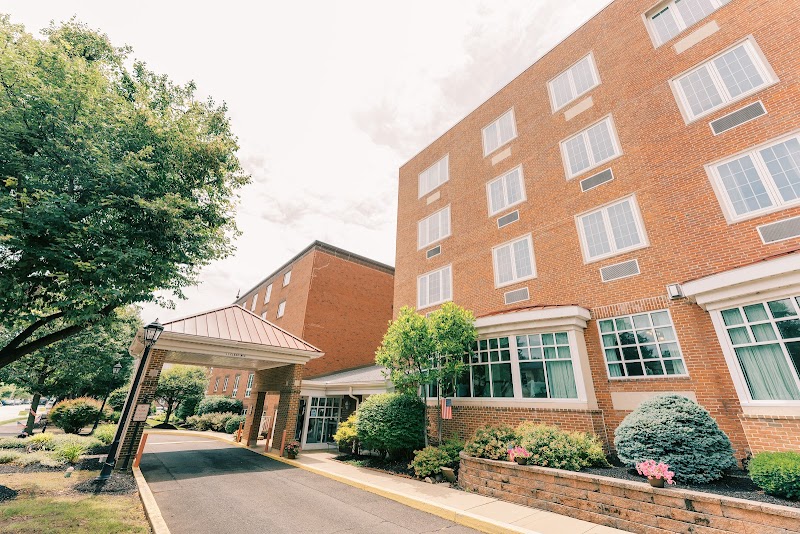
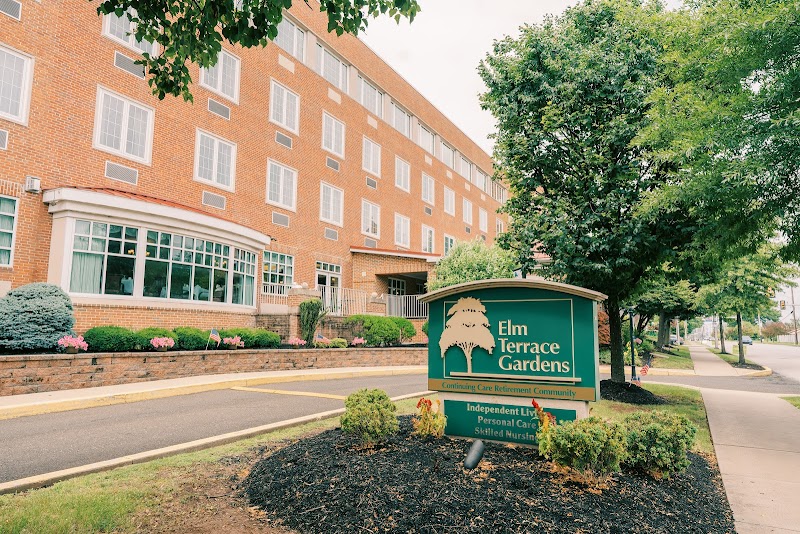

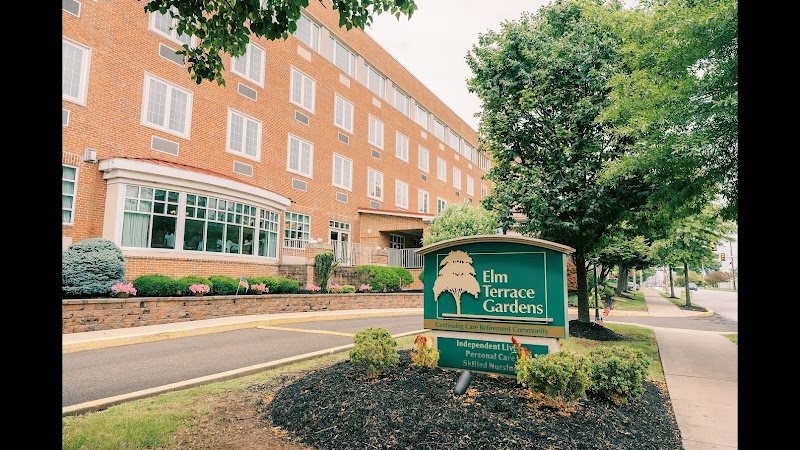
ELM TERRACE GARDENS

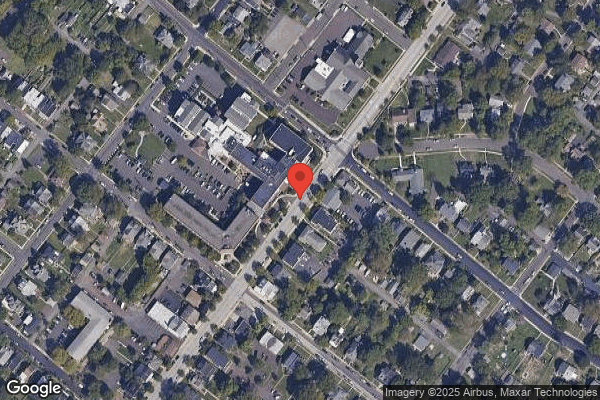
660 NORTH BROAD STREET, LANSDALE, PA 19446 (215) 361-5600
Non profit - Corporation 72 Beds Independent Data: November 2025
Trust Grade
90/100
#33 of 653 in PA
Last Inspection: March 2025

Within standard 12-15 month inspection cycle. Federal law requires annual inspections.

Overview

Elm Terrace Gardens in Lansdale, Pennsylvania, has earned an impressive Trust Grade of A, indicating it is considered excellent and highly recommended among nursing homes. With a state rank of #33 out of 653, it positions itself in the top half of Pennsylvania facilities, and it ranks #5 out of 58 in Montgomery County, meaning only four local homes are rated higher. However, the facility is experiencing a worsening trend, with issues increasing from 1 in 2024 to 3 in 2025. Staffing is a strong point, boasting a 5/5 star rating and a turnover rate of 40%, which is lower than the state average, ensuring continuity of care. Notably, there have been no fines recorded, and the facility offers more RN coverage than 82% of state facilities, which is a significant advantage for resident care. Despite these strengths, there are areas of concern. Recent inspections revealed that the facility failed to provide adequate assistance for dining, affecting the dignity of some residents, and there were issues with the accuracy of health assessments that misrepresented a resident's skin condition. Additionally, there was a breach in sanitary food service practices, as staff did not change gloves between tasks, which raises potential infection risks. While Elm Terrace Gardens has many positive aspects, families should weigh these recent issues carefully as they consider care options for their loved ones.

Trust Score
A
90/100
In Pennsylvania
#33/653
Top 5%
Safety Record
Low Risk
No red flags
Inspections
Getting Worse
1 → 3 violations
Staff Stability
○ Average
40% turnover. Near Pennsylvania's 48% average. Typical for the industry.
Penalties
✓ Good
No fines on record. Clean compliance history, better than most Pennsylvania facilities.
Skilled Nurses
✓ Good
Each resident gets 69 minutes of Registered Nurse (RN) attention daily — more than 97% of Pennsylvania nursing homes. RNs are the most trained staff who catch health problems before they become serious.
Violations
○ Average
9 deficiencies on record. Average for a facility this size. Mostly minor or procedural issues.
★★★★★
5.0
Overall Rating
★★★★★
5.0
Staff Levels
★★★☆☆
3.0
Care Quality
★★★★☆
4.0
Inspection Score
Stable
2024: 1 issues
2025: 3 issues

The Good

  • 5-Star Staffing Rating · Excellent nurse staffing levels
  • Full Sprinkler Coverage · Fire safety systems throughout facility
  • No fines on record
  • Staff turnover below average (40%)

    8 points below Pennsylvania average of 48%

Facility shows strength in staffing levels, fire safety.

The Bad

Staff Turnover: 40%

Near Pennsylvania avg (46%)

Typical for the industry

The Ugly 9 deficiencies on record

Mar 2025 3 deficiencies
CONCERN (D)

Potential for Harm - no one hurt, but risky conditions existed

Resident Rights (Tag F0550)

Could have caused harm · This affected 1 resident

**NOTE- TERMS IN BRACKETS HAVE BEEN EDITED TO PROTECT CONFIDENTIALITY** Based on clinical record review, observation, and staff interview, it was determined that the facility failed to provide assista...

Read full inspector narrative →
**NOTE- TERMS IN BRACKETS HAVE BEEN EDITED TO PROTECT CONFIDENTIALITY** Based on clinical record review, observation, and staff interview, it was determined that the facility failed to provide assistance with dining in a manner that promoted and maintained dignity for three of 19 sampled residents in one of two dining areas. (Second Floor) (Residents 18, 27, 54) Findings include: Clinical record review revealed that Resident 18 had diagnoses that included Alzheimer's disease and dysphagia, oral phase (difficulty chewing before swallowing). Review of the Minimum Data Set (MDS) assessment, dated February 27, 2025, revealed that the resident had cognitive impairment and needed assistance from staff with eating. Review of Resident 18's care plan revealed that staff was to provide total assistance with feeding. Resident 27 had diagnoses that include Alzheimer's disease and dysphagia, oropharyngeal phase (difficulty swallowing). Review of the MDS dated [DATE], revealed that the resident had cognitive impairment and needed staff assistance with eating. Review of Resident 27's care plan revealed that staff was to provide total assistance with feeding. Resident 54 had diagnoses that include frontotemporal neurocognitive disorder. Review of the MDS dated [DATE], revealed that the resident had cognitive impairment and needed assistance from staff with eating. Review of Resident 54's care plan revealed that staff was to provide total assistance with feeding. On March 25, 2025, from 12:45 p.m. through 1:05 p.m., nurse aide (NA) 1 was observed standing while assisting Residents 18, 27, and 54 with lunch. On March 25, 2025, from 12:37 p.m. through 12:45 p.m., NA 2 was observed standing while assisting Resident 27 with lunch. In an interview on March 27, 2025, at 10:04 a.m., the Administrator stated that staff were not to stand over residents while feeding them. 28 Pa. Code 211.12(d)(1)(5) Nursing services.
CONCERN (D)

Potential for Harm - no one hurt, but risky conditions existed

Assessment Accuracy (Tag F0641)

Could have caused harm · This affected 1 resident

**NOTE- TERMS IN BRACKETS HAVE BEEN EDITED TO PROTECT CONFIDENTIALITY** Based on clinical record review and staff interview, it was determined that the facility failed to ensure that the Minimum Data ...

Read full inspector narrative →
**NOTE- TERMS IN BRACKETS HAVE BEEN EDITED TO PROTECT CONFIDENTIALITY** Based on clinical record review and staff interview, it was determined that the facility failed to ensure that the Minimum Data Set (MDS) assessment was completed accurately to reflect the current status of one of 19 sampled residents. (Resident 8) Findings include: Clinical record review revealed that Resident 8 was admitted to the facility on [DATE]. Review of an admission nursing assessment, dated March 1, 2025, revealed a lack of evidence that the resident had a pressure ulcer upon admission. In an interview on March 26, 2025, at 11:10 a.m., Registered Nurse 1 stated that the resident did not have any pressure ulcers during his admission to the facility. Review of section M of the MDS assessment, which assessed skin conditions, dated March 7, 2025, indicated that the resident had a stage two pressure ulcer that was present upon admission. There was a lack of evidence to indicate that the resident had a stage two pressure ulcer while in the facility. In an interview on March 27, 2025, at 9:46 a.m., the Director of Nursing confirmed that the MDS assessment was not accurate.
CONCERN (D)

Potential for Harm - no one hurt, but risky conditions existed

Food Safety (Tag F0812)

Could have caused harm · This affected 1 resident

Based on policy review, observation, and staff interview, it was determined that the facility failed to serve food in a sanitary manner in one of two dining areas (Second Floor). Findings include: Re...

Read full inspector narrative →
Based on policy review, observation, and staff interview, it was determined that the facility failed to serve food in a sanitary manner in one of two dining areas (Second Floor). Findings include: Review of the facility's policy, Hand Washing/Hand Hygiene, dated January 7, 2025, revealed staff was expected to wash their hands and wear disposable gloves that are replaced between tasks during which they may have been soiled. On March 25, 2025, from 12:50 p.m. to 1:25 p.m. Dietary Aide 1 was observed wearing one pair of gloves to assist resident 27 with utensils, clear soiled plates, and assist with preparing plates of food for other residents. At no time did Dietary Aide 1 change gloves between tasks. In an interview on March 27, 2025, at 10:04 a.m., the Administrator stated that staff completing dining tasks were to change disposable gloves between tasks. 28 Pa. Code 201.14(a) Responsibility of licensee.
May 2024 1 deficiency
CONCERN (D)

Potential for Harm - no one hurt, but risky conditions existed

Comprehensive Care Plan (Tag F0656)

Could have caused harm · This affected 1 resident

**NOTE- TERMS IN BRACKETS HAVE BEEN EDITED TO PROTECT CONFIDENTIALITY** Based on clinical record review, observation, and staff interview, it was determined that the facility failed to implement care ...

Read full inspector narrative →
**NOTE- TERMS IN BRACKETS HAVE BEEN EDITED TO PROTECT CONFIDENTIALITY** Based on clinical record review, observation, and staff interview, it was determined that the facility failed to implement care planned interventions for one of 19 sampled residents. (Resident 13) Findings include: Clinical record review revealed that Resident 13 was admitted to the facility on [DATE], and had diagnoses that included a stroke with remaining weakness to one side of the body and altered mental status. According to the Minimum Data Set assessment dated [DATE], the resident was cognitively impaired and had sustained falls on two occasions since admission. A review of the care plan revealed that the resident had a risk for falls related to confusion and lack of safety awareness and staff was to place the fall mat on left side of the bed while in bed and to check placement every shift. Observations on May 15, 2024, at 9:40 a.m., and May 16, 2024, at 9:01 a.m., revealed Resident 13 was in bed with no fall mat to the left side of the bed. In an interview on May 17, 2024, at 11:17 a.m., the Community Registered Nurse Educator stated that the fall mat should have been in place when the resident was in bed. CFR. 483.21(b)(1) Comprehensive Care Plans Previously cited 6/1/23. 28 Pa. Code 211.12(d)(1)(5) Nursing services.
Jun 2023 5 deficiencies
CONCERN (D)

Potential for Harm - no one hurt, but risky conditions existed

Safe Environment (Tag F0584)

Could have caused harm · This affected 1 resident

Based on observation, it was determined that the facility failed to provide a safe, sanitary and comfortable environment on two of four nursing units. (Nursing units D-1A and D-1B) Findings include: O...

Read full inspector narrative →
Based on observation, it was determined that the facility failed to provide a safe, sanitary and comfortable environment on two of four nursing units. (Nursing units D-1A and D-1B) Findings include: Observation throughout the facility during all days of the survey revealed the following: A lift (used to transfer residents from surface to surface) labeled 450 on Unit D-1A had dirty wheels. A lift labeled 600 on Unit D-1B had dirty wheels Observations on May 30, 2023, at 12:07 p.m., and May 31, 2023, at 12:25 p.m., revealed the oxygen concentrator filter was dusty and dirty. Resident 35 was observed using the oxygen concentrator on May 30, 2023, at 2:10 p.m. 28 Pa. Code 201.18(b)(3) Management.
CONCERN (D)

Potential for Harm - no one hurt, but risky conditions existed

Comprehensive Care Plan (Tag F0656)

Could have caused harm · This affected 1 resident

**NOTE- TERMS IN BRACKETS HAVE BEEN EDITED TO PROTECT CONFIDENTIALITY** Based on clinical record review and staff interview, it was determined that the facility failed to develop a care plan with inte...

Read full inspector narrative →
**NOTE- TERMS IN BRACKETS HAVE BEEN EDITED TO PROTECT CONFIDENTIALITY** Based on clinical record review and staff interview, it was determined that the facility failed to develop a care plan with interventions to address an identified problem area for two of 18 sampled residents. (Residents 58, 68) Findings include: Clinical record review revealed that Resident 58 had diagnoses that included depression. Physician orders dated May 18, 2023, directed staff to administer antidepressant medications (fluoxetine and bupropion) daily for depression. Review of the Minimum Data Set (MDS) assessment dated [DATE], revealed that the resident was administered antidepressant medications on five occasions during the review period. Review of the Care Area Assessment (CAA) summary identified the use of antidepressant medications as a problem to be care planned. Review of the care plan revealed there were no interventions included to address the use of antidepressant medication. In an interview on June 1, 2023, at 10:51 a.m., the Director of Nursing (DON) confirmed there had been no care plan developed for the use of antidepressant medications for Resident 58. Clinical record review revealed that Resident 68 was admitted to the facility on [DATE], with diagnoses that included fatigue fracture of vertebra, sacral and sacrococcygeal region (broken pelvis), dorsalgia (back pain), and legal blindness. Review of the MDS assessment dated [DATE], revealed that the resident had urinary incontinence and decreased mobility. The CAA identified urinary incontinence and pressure ulcer as problem areas to be care planned. Review of Resident 68's current care plan did not include interventions to address urinary incontinence or the pressure ulcer. In an interview on June 1, 2023, at 10:56 a.m., the DON confirmed that there had been no care plan developed to address these CAA areas for Resident 68. 28 Pa. Code 211.11(d) Resident care plan. 28 Pa. Code 211.12(d)(5) Nursing services.
CONCERN (D)

Potential for Harm - no one hurt, but risky conditions existed

Quality of Care (Tag F0684)

Could have caused harm · This affected 1 resident

Based on clinical record review and staff interview, it was determined that the facility failed to ensure physician's orders were implemented for two of 19 sampled residents. (Residents 58, 62) Findin...

Read full inspector narrative →
Based on clinical record review and staff interview, it was determined that the facility failed to ensure physician's orders were implemented for two of 19 sampled residents. (Residents 58, 62) Findings include: Clinical record review revealed that Resident 58 had diagnoses that included hypertension and dementia. A physician's order dated May 18, 2023, directed staff to administer a medication for high blood pressure (diltiazem) once daily unless the heart rate was less than 65 beats per minute (bpm). A review of the May 2023, medication administration record (MAR) revealed that staff administered the medication when the heart rate was less than 65 bpm on two occasions. In an interview on June 1, 2023, at 10:51 a.m., the Director of Nursing (DON) confirmed that the medication was administered outside of the established parameters for Resident 58. Clinical record review revealed that Resident 62 had diagnoses that included hypotension. A physician's order dated April 25, 2023, directed staff to administer a medication (fludrocortisone acetate) once daily unless the systolic blood pressure (SBP) was greater than 140 millimeters of mercury (mmHg). On May 17, 2023, the physician ordered to withhold the medication if the SBP was greater than 110 mmHg. Review of the May 2023 MAR revealed staff administered the medication 14 times outside of the established parameters. A physician's order dated April 5, 2023, directed staff to administer a medication (midodrine) once daily unless the SBP was greater than 140 mmHg. On May 16, 2023, the physician ordered to withhold the medication if the SBP was greater than 110 mmHg. Review of the May 2023 MAR revealed staff administered the medication six times outside of the established parameters In an interview on June 1, 2023, at 11:33 a.m., the DON confirmed that the medications were administered outside of established parameters for Resident 62. 28 Pa. Code 211.12(d)(1)(5) Nursing services.
CONCERN (D)

Potential for Harm - no one hurt, but risky conditions existed

Deficiency F0810 (Tag F0810)

Could have caused harm · This affected 1 resident

**NOTE- TERMS IN BRACKETS HAVE BEEN EDITED TO PROTECT CONFIDENTIALITY** Based on clinical record review and observation, it was determined that the facility failed to ensure that adaptive equipment wa...

Read full inspector narrative →
**NOTE- TERMS IN BRACKETS HAVE BEEN EDITED TO PROTECT CONFIDENTIALITY** Based on clinical record review and observation, it was determined that the facility failed to ensure that adaptive equipment was provided to two of 19 sampled residents. (Residents 21, 44) Findings include: Clinical record review revealed that Resident 21 had diagnoses that included Parkinson's disease, hemiplegia and hemiparesis following a cerebral infarction affecting the right dominant side (weakness or the inability to move on one side of the body after a stroke), and anxiety. Review of the Minimum Data Set (MDS) assessment dated [DATE], revealed that Resident 21 required limited assistance with eating and had a functional limitation in range of motion on one side of his upper extremities. A physician's order dated March 30, 2023, directed staff to serve the resident a puree diet on a sectioned plate with a left curved spoon with built up handle. Observation on May 30, 2023, from 12:28 p.m., through 1:00 p.m., revealed Resident 21 was served lunch on a regular plate. Resident 21 was observed on May 31, 2023, from 10:18 a.m., through 10:35 a.m., in bed with breakfast and had a regular spoon and a regular plate. Resident 21 proceeded to eat breakfast with the regular spoon, spilling food onto the table and clothing protector. Resident 21 was not provided a sectioned plate and left curved spoon with built up handle as the physician had ordered. Clinical record review revealed that Resident 44 had diagnoses that included depression, anxiety, dementia, and dysphagia. Review of the MDS assessment dated [DATE], revealed that the resident required supervision for eating. Review of the care plan revealed the resident was at risk for weight loss and interventions included that staff provide a scoop dish with meals. A physician's order dated January 28, 2022, directed staff to serve the resident a puree diet on a scoop dish. Observation on May 31, 2023, at 12:07 p.m., through 12:40 p.m., revealed the resident was served a puree diet on a regular plate. The resident proceeded to eat the meal from a regular plate and food items were spilling onto the resident's clothing protector. Resident 44 was not provided with a scoop dish per the plan of care or physician's order. 28 Pa. Code 211.12(d)(1)(5) Nursing services.
MINOR (C)

Minor Issue - procedural, no safety impact

Transfer Notice (Tag F0623)

Minor procedural issue · This affected most or all residents

**NOTE- TERMS IN BRACKETS HAVE BEEN EDITED TO PROTECT CONFIDENTIALITY** Based on clinical record review and staff interview it was determined that the facility failed to notify the resident, the resid...

Read full inspector narrative →
**NOTE- TERMS IN BRACKETS HAVE BEEN EDITED TO PROTECT CONFIDENTIALITY** Based on clinical record review and staff interview it was determined that the facility failed to notify the resident, the resident's representative(s), and the local ombudsman of the transfer and the reasons for transfer in writing for seven of seven sampled residents who were transferred to the hospital. (Residents 2, 20, 23, 35, 55, 62, 66) Findings include: Clinical record review revealed that Resident 2 was transferred and admitted to the hospital on [DATE], and April 28, 2023, after a change in condition. There was no documented evidence that the resident, the resident's responsible party, and the ombudsman were provided written information regarding the resident's transfer to the hospital. Clinical record review revealed that Resident 20 was transferred and admitted to the hospital on [DATE], after a change in condition. There was no documented evidence that the resident, the resident's responsible party, and the ombudsman were provided written information regarding the resident's transfer to the hospital. Clinical record review revealed that Resident 23 was transferred and admitted to the hospital on [DATE], after a change in condition. There was no documented evidence that the resident, the resident's responsible party, and the ombudsman were provided written information regarding the resident's transfer to the hospital. Clinical record review revealed that Resident 35 was transferred and admitted to the hospital on [DATE], February 1, 2023, and May 17, 2023, after a change in condition. There was no documented evidence that the resident, the resident's responsible party, and the ombudsman were provided written information regarding the resident's transfer to the hospital. Clinical record review revealed that Resident 55 was transferred and admitted to the hospital on [DATE], after a change in condition. There was no documented evidence that the resident, the resident's responsible party, and the ombudsman were provided written information regarding the resident's transfer to the hospital. Clinical record review revealed that Resident 62 was transferred and admitted to the hospital on [DATE], after a change in condition. There was no documented evidence that the resident, the resident's responsible party, and the ombudsman were provided written information regarding the resident's transfer to the hospital. Clinical record review revealed that Resident 66 was transferred and admitted to the hospital on [DATE], after a change in condition. There was no documented evidence that the resident, the resident's responsible party, and the ombudsman were provided written information regarding the resident's transfer to the hospital. In an interview on May 31, 2023, at 12:38 p.m., the Director of Nursing stated that the identified residents, residents' representatives, and the local ombudsman were not notified in writing of the transfer to the hospital.
Understanding Severity Codes (click to expand)
Life-Threatening (Immediate Jeopardy)
J - Isolated K - Pattern L - Widespread
Actual Harm
G - Isolated H - Pattern I - Widespread
Potential for Harm
D - Isolated E - Pattern F - Widespread
No Harm (Minor)
A - Isolated B - Pattern C - Widespread

Questions to Ask on Your Visit

  • "Can I speak with families of current residents?"
  • "What's your RN coverage like on weekends and overnight?"

Our Honest Assessment

Strengths
  • • Grade A (90/100). Above average facility, better than most options in Pennsylvania.
  • • No major safety red flags. No abuse findings, life-threatening violations, or SFF status.
  • • No fines on record. Clean compliance history, better than most Pennsylvania facilities.
  • • 40% turnover. Below Pennsylvania's 48% average. Good staff retention means consistent care.
Concerns
  • • No significant concerns identified. This facility shows no red flags across CMS ratings, staff turnover, or federal penalties.
Bottom line: Generally positive indicators. Standard due diligence and a personal visit recommended.

About This Facility

What is Elm Terrace Gardens's CMS Rating?

CMS assigns ELM TERRACE GARDENS an overall rating of 5 out of 5 stars, which is considered much above average nationally. Within Pennsylvania, this rating places the facility higher than 99% of the state's 100 nursing homes. This rating reflects solid performance across the metrics CMS uses to evaluate nursing home quality.

How is Elm Terrace Gardens Staffed?

CMS rates ELM TERRACE GARDENS's staffing level at 5 out of 5 stars, which is much above average compared to other nursing homes. Staff turnover is 40%, compared to the Pennsylvania average of 46%. This relatively stable workforce can support continuity of care.

What Have Inspectors Found at Elm Terrace Gardens?

State health inspectors documented 9 deficiencies at ELM TERRACE GARDENS during 2023 to 2025. These included: 8 with potential for harm and 1 minor or isolated issues.

Who Owns and Operates Elm Terrace Gardens?

ELM TERRACE GARDENS is owned by a non-profit organization. Non-profit facilities reinvest revenue into operations rather than distributing to shareholders. The facility operates independently rather than as part of a larger chain. With 72 certified beds and approximately 64 residents (about 89% occupancy), it is a smaller facility located in LANSDALE, Pennsylvania.

How Does Elm Terrace Gardens Compare to Other Pennsylvania Nursing Homes?

Compared to the 100 nursing homes in Pennsylvania, ELM TERRACE GARDENS's overall rating (5 stars) is above the state average of 3.0, staff turnover (40%) is near the state average of 46%, and health inspection rating (4 stars) is above the national benchmark.

What Should Families Ask When Visiting Elm Terrace Gardens?

Based on this facility's data, families visiting should ask: "Can I visit during a mealtime to observe dining assistance and food quality?" "How do you handle medical emergencies, and what is your hospital transfer rate?" "Can I speak with family members of current residents about their experience?"

Is Elm Terrace Gardens Safe?

Based on CMS inspection data, ELM TERRACE GARDENS has a clean safety record: no substantiated abuse findings (meaning no confirmed cases of resident harm), no Immediate Jeopardy citations (the most serious violation level indicating risk of serious injury or death), and is not on the Special Focus Facility watch list (a federal program monitoring the lowest-performing 1% of nursing homes). The facility has a 5-star overall rating and ranks #1 of 100 nursing homes in Pennsylvania. While no facility is perfect, families should still ask about staff-to-resident ratios and recent inspection results during their visit.

Do Nurses at Elm Terrace Gardens Stick Around?

ELM TERRACE GARDENS has a staff turnover rate of 40%, which is about average for Pennsylvania nursing homes (state average: 46%). Moderate turnover is common in nursing homes, but families should still ask about staff tenure and how the facility maintains care continuity when employees leave.

Was Elm Terrace Gardens Ever Fined?

ELM TERRACE GARDENS has no federal fines on record. CMS issues fines when nursing homes fail to meet care standards or don't correct problems found during inspections. The absence of fines suggests the facility has either maintained compliance or corrected any issues before penalties were assessed. This is a positive indicator, though families should still review recent inspection reports for the full picture.

Is Elm Terrace Gardens on Any Federal Watch List?

ELM TERRACE GARDENS is not on any federal watch list. The most significant is the Special Focus Facility (SFF) program, which identifies the bottom 1% of nursing homes nationally based on persistent, serious quality problems. Not being on this list means the facility has avoided the pattern of deficiencies that triggers enhanced federal oversight. This is a positive indicator, though families should still review the facility's inspection history directly.