ST MARY CENTER FOR REHABILITATION & HEALTHCARE
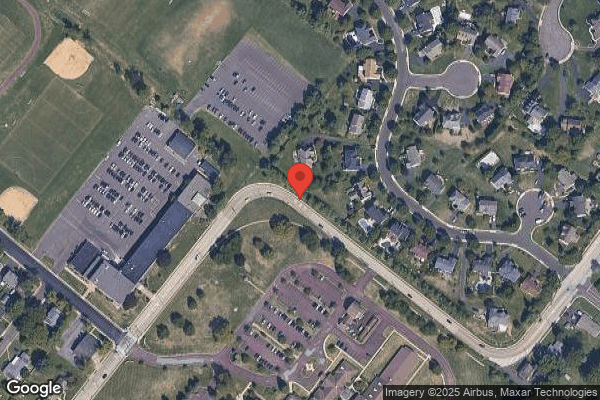

701 LANSDALE AVENUE, LANSDALE, PA 19446 (215) 368-0900
For profit - Individual 120 Beds CENTER MANAGEMENT GROUP Data: November 2025
Trust Grade
75/100
#235 of 653 in PA
Last Inspection: January 2025

Within standard 12-15 month inspection cycle. Federal law requires annual inspections.

Overview

St. Mary Center for Rehabilitation & Healthcare has a Trust Grade of B, which means it is a good choice, indicating solid care but with some room for improvement. They rank #235 out of 653 facilities in Pennsylvania, placing them in the top half, and #29 out of 58 in Montgomery County, meaning only a few local options are better. The facility is improving, having reduced its issues from 5 in 2023 to 3 in 2025. However, staffing is a concern with a rating of 2 out of 5 stars and a high turnover rate of 65%, which is significantly above the state average, indicating challenges in retaining staff. On the positive side, there have been no fines, suggesting good compliance with regulations, and the facility has average RN coverage, which is essential for catching potential health issues. However, there are some weaknesses, such as incidents where food safety protocols were not followed, including improperly stored food in the dietary department, and there were cleanliness issues observed in several nursing units. Additionally, the facility failed to utilize non-drug methods to manage pain for some residents, which is an important aspect of comprehensive care. Overall, while St. Mary Center has strengths, families should weigh these concerns as part of their decision-making process.

Trust Score
B
75/100
In Pennsylvania
#235/653
Top 35%
Safety Record
Low Risk
No red flags
Inspections
Getting Better
5 → 3 violations
Staff Stability
⚠ Watch
65% turnover. Above average. Higher turnover means staff may not know residents' routines.
Penalties
✓ Good
No fines on record. Clean compliance history, better than most Pennsylvania facilities.
Skilled Nurses
○ Average
Each resident gets 36 minutes of Registered Nurse (RN) attention daily — about average for Pennsylvania. RNs are the most trained staff who monitor for health changes.
Violations
○ Average
9 deficiencies on record. Average for a facility this size. Mostly minor or procedural issues.
★★★★☆
4.0
Overall Rating
★★☆☆☆
2.0
Staff Levels
★★★★☆
4.0
Care Quality
★★★★☆
4.0
Inspection Score
Stable
2023: 5 issues
2025: 3 issues

The Good

  • 4-Star Quality Measures · Strong clinical quality outcomes
  • Full Sprinkler Coverage · Fire safety systems throughout facility
  • No fines on record

Facility shows strength in quality measures, fire safety.

The Bad

Staff Turnover: 65%

18pts above Pennsylvania avg (46%)

Frequent staff changes - ask about care continuity

Chain: CENTER MANAGEMENT GROUP

Part of a multi-facility chain

Ask about local staffing decisions and management

Staff turnover is elevated (65%)

17 points above Pennsylvania average of 48%

The Ugly 9 deficiencies on record

Jan 2025 3 deficiencies
CONCERN (D)

Potential for Harm - no one hurt, but risky conditions existed

Comprehensive Care Plan (Tag F0656)

Could have caused harm · This affected 1 resident

Based on clinical record review and staff interview, it was determined that the facility failed to develop a comprehensive care plan that addressed individual residents' needs as identified in the com...

Read full inspector narrative →
Based on clinical record review and staff interview, it was determined that the facility failed to develop a comprehensive care plan that addressed individual residents' needs as identified in the comprehensive assessment for three of 25 sampled residents. (Residents 6, 9, 61) Findings include: Clinical record review revealed that Resident 6 had diagnoses that included metabolic encephalopathy (a brain disorder) and mild cognitive impairment. The Minimum Data Set (MDS) Care Area Assessment (CAA) summary dated January 5, 2025, noted that the resident's cognitive loss was to be addressed in the care plan. There was no evidence that interventions to address Resident's 6's cognitive loss were included in the current care plan. Clinical record review revealed that Resident 9 had diagnoses that included aphasia (difficulty speaking), dementia, and brain injury. The MDS CAA summary dated May 14, 2024, noted that the resident's cognitive loss and dementia were to be addressed in the care plan. The quarterly MDS summary dated December 30, 2024, indicated the resident's cognition remained limited. There was no evidence that interventions to address Resident's 9's cognitive loss and dementia were included in the current care plan. Clinical record review revealed that Resident 61 had diagnoses that included dementia, and brain injury. The MDS CAA summary dated December 30, 2024, noted that the resident's cognitive loss and communication deficits were to be addressed in the care plan. There was no evidence that interventions to address Resident's 61's cognitive loss and communication deficits were included in the current care plan. In an interview on January 24, 2025, at 9:49 a.m., the Director of Nursing confirmed there was no documented evidence that the identified care areas were addressed in the care plans. 28 Pa. Code 211.12(d)(1)(5) Nursing services.
CONCERN (D)

Potential for Harm - no one hurt, but risky conditions existed

Quality of Care (Tag F0684)

Could have caused harm · This affected 1 resident

Based on clinical record review and staff interview, it was determined that the facility failed to implement physician's orders for four of 25 sampled residents. (Residents 28, 32, 55, 258) Findings i...

Read full inspector narrative →
Based on clinical record review and staff interview, it was determined that the facility failed to implement physician's orders for four of 25 sampled residents. (Residents 28, 32, 55, 258) Findings include: Clinical record review revealed that Resident 28 had diagnoses that included hypertension (high blood pressure) with heart failure. On December 28, 2021, that physician ordered that staff administer a medication (atenolol) one time a day for hypertension with heart failure. Staff was not to administer the medication if the resident's systolic blood pressure (SBP, the first measurement of blood pressure when the heart beats and the pressure is at its highest) was less than 120 millimeters of mercury (mm/Hg). Review of Resident 28's medication administration records (MARs) revealed that staff administered the medication two times in January 2025 when the resident's SBP was less than 120 mm/Hg. Clinical record review revealed that Resident 32 had diagnoses that included heart failure, hypertension, and chronic kidney failure. On April 27, 2023, the physician ordered that staff administer a medicine (nifedipine) one time a day for hypertension. On September 15, 2023, the physician ordered that staff administer a medicine (metoprolol tartrate) two time a day for hypertension. Staff was not to administer the medications if the resident's systolic blood pressure was less than 120 mm/Hg. Review of Resident 32's MARs revealed that staff administered the nifedipine two times in December 2024 and one time in January 2025 when the resident's SBP was less than 120 mm/Hg. The metoprolol tartrate was administered five times in December 2024 and three times in January 2025 when the resident's SBP was less than 120 mm/Hg. On August 14, 2025, that physician ordered that staff weigh the resident twice a week on Tuesdays and Fridays. A review of the MARs and weight summary revealed that there was no documented evidence that staff weighed Resident 32 as ordered on December 6, 13, 20, and 27, 2024, and January 17, 2025. Clinical record review revealed that Resident 55 had diagnoses that included heart failure. On September 30, 2024, the physician ordered that staff administer a medicine (carvedilol) twice a day for heart failure. Staff was not to administer the medication if the resident's SBP was less than 100 mm/Hg. Review of Resident 55's MARs revealed that staff administered the medication three times in January 2025 when the resident's SBP was less than 100 mm/Hg. Clinical record review revealed that Resident 258 had diagnoses that included hypotension (low blood pressure). On January 16, 2025, the physician ordered that staff administer a medication (midodrine) two times a day for hypotension. Staff was not to administer the medication if the resident's SBP was greater than 130 mm/Hg. Review of Resident 258's MAR revealed that staff administered the medication four times in January 2025 when the resident's SBP was greater than 130 mm/Hg. In an interview on January 24, 2025, at 9:45 a.m., the Director of Nursing confirmed that the medications were administered outside of the established parameters for Residents 28, 32, 55, and 258 and that there was no documented evidence that Resident 32 was weighed as ordered. 28 Pa. Code 211.12(d)(1)(3)(5) Nursing services.
CONCERN (F)

Potential for Harm - no one hurt, but risky conditions existed

Food Safety (Tag F0812)

Could have caused harm · This affected most or all residents

Based on policy review, observation, and staff interview, it was determined that the facility failed to properly store food and maintain sanitary conditions in the dietary department. Findings includ...

Read full inspector narrative →
Based on policy review, observation, and staff interview, it was determined that the facility failed to properly store food and maintain sanitary conditions in the dietary department. Findings include: Review of the facility's policy entitled, Date Marking for Food Safety, dated December 18, 2024, revealed that staff was to date a food when it was opened and discard expired food items. Observations during the tour of the dietary department on January 21, 2025, at 9:30 a.m., revealed the following: In the freezer, there were opened bags of onion rings, raw cookies, and fish sticks that were not dated. There was a box for diced chicken that contained a bag of breaded meat and a bag of diced chicken that were both opened and were not dated. In the dairy cooler, there was a container of sour cream with a best by date of January 14, 2025, and 18 cartons of milk with a use-by date of January 18, 2025. There was a parmesan cheese container that had red food debris covering it. In the production walk-in cooler, there was an opened case of orange juice with a use by date of December 26, 2024, and an opened package of ten hot dogs that were not dated. In dry storage, there was an opened package of sprinkles that had dried flour on the top and side of the container. There was a package of opened tortillas that was not dated. The tray line milk cooler contained 12 cartons of milk with a use by date of January 18, 2025. In an interview on January 21, 2025, at 10:30 a.m., the Food Service Director confirmed that the identified items should have been dated and were not and that the expired items should have been removed. 28 Pa. Code 201.14(a) Responsibility of licensee. 28 Pa. Code 201.18(b)(3) Management.
Aug 2023 1 deficiency
CONCERN (D) 📢 Someone Reported This

A family member, employee, or ombudsman was alarmed enough to file a formal complaint

Potential for Harm - no one hurt, but risky conditions existed

Safe Environment (Tag F0584)

Could have caused harm · This affected 1 resident

**NOTE- TERMS IN BRACKETS HAVE BEEN EDITED TO PROTECT CONFIDENTIALITY** Based on observation, it was determined that the facility failed to provide a safe, clean, and comfortable environment on one of...

Read full inspector narrative →
**NOTE- TERMS IN BRACKETS HAVE BEEN EDITED TO PROTECT CONFIDENTIALITY** Based on observation, it was determined that the facility failed to provide a safe, clean, and comfortable environment on one of four nursing units. (St. [NAME]) Findings include: During the tour of the St. Thersea nursing unit on August 22, 2023, at various times the following was observed: In room [ROOM NUMBER], the corner near the door there were cobwebs and dirt and debris on the floor. In room [ROOM NUMBER] there was dirt and debris on the floor under the B bed, the heating unit had dirt on the vents and the door to the control panel was broken, the nightstand near the wall had a white dried substance on the drawer, and the two plastic drawers near the door had a dried brown substance on them. There were crumbs and debris around the A bed in room [ROOM NUMBER]. There was a build up of black dirt in the doorway of room [ROOM NUMBER]. In doorway of room [ROOM NUMBER] there was a hairbrush and food crumbs on the floor and there were three flies observed near a food tray in the room. The resident fall mats in rooms 303, 305, 307, 309, 311, 312, and 315 were soiled with various dirt and debris. In the Circle of Friends area on the unit there were multiple ceiling tiles that were stained black and brown. 483.10 Resident rights. Previously cited 2/23/23 28 Pa. Code 207.2(a) Administrator's responsibility.
Feb 2023 4 deficiencies
CONCERN (D)

Potential for Harm - no one hurt, but risky conditions existed

Assessment Accuracy (Tag F0641)

Could have caused harm · This affected 1 resident

**NOTE- TERMS IN BRACKETS HAVE BEEN EDITED TO PROTECT CONFIDENTIALITY** Based on clinical record review and staff interview, it was determined that the facility failed to ensure that the Minimum Data ...

Read full inspector narrative →
**NOTE- TERMS IN BRACKETS HAVE BEEN EDITED TO PROTECT CONFIDENTIALITY** Based on clinical record review and staff interview, it was determined that the facility failed to ensure that the Minimum Data Set (MDS) assessment was completed to accurately reflect the resident's current status for one of 24 sampled residents. (Resident 71) Findings include: Clinical record review revealed that Resident 71 had diagnoses that included end-stage renal (kidney) disease and dependence on renal dialysis (the process of removing water and toxins from the blood in people whose kidneys can no longer perform those functions). Resident 71's care plan indicated that the resident had dialysis scheduled three times per week. Nursing documentation noted that the resident attended dialysis on November 17 and 22, 2022. The MDS assessment dated [DATE], did not identify Resident 71 as receiving dialysis under section O, Special Treatments and Programs. During an interview on February 23, 2023, at 11:39 a.m., the Director of Nursing confirmed that Resident 71 received dialysis during the November 26, 2022, MDS assessment period. 28 Pa. Code 211.5(f) Clinical records.
CONCERN (D) 📢 Someone Reported This

A family member, employee, or ombudsman was alarmed enough to file a formal complaint

Potential for Harm - no one hurt, but risky conditions existed

Deficiency F0790 (Tag F0790)

Could have caused harm · This affected 1 resident

**NOTE- TERMS IN BRACKETS HAVE BEEN EDITED TO PROTECT CONFIDENTIALITY** Based on clinical record review and staff interview, it was determined that the facility failed to provide timely dental service...

Read full inspector narrative →
**NOTE- TERMS IN BRACKETS HAVE BEEN EDITED TO PROTECT CONFIDENTIALITY** Based on clinical record review and staff interview, it was determined that the facility failed to provide timely dental services for one of 24 sampled residents. (Resident 315) Findings include: Clinical record review revealed that Resident 315 had diagnoses that included gastroesophageal reflux disease, depression, osteoporosis, and cerebral vascular accident (stroke). Review of the Minimum Data Set assessment dated [DATE], revelaed that the resident had cognitive impairment. Review of a dental summary report dated December 2, 2021, revealed that Resident 315's tooth number 14 was broken and causing discomfort and that the resident needed to be seen for an emergency examination. A nurse's note dated January 25, 2022, indicated that the dentist recommended the resident be referred to an oral surgeon. A physician's order dated February 10, 2022, directed that Resident 315 have a dental appointment for an extraction. Review of a dental summary report dated August 11, 2022, revealed that Resident 315 had mouth pain and had not yet received an appointment with an oral surgeon for extraction. There was no evidence that the resident was scheduled for a dental consult for an extraction until September 1, 2022. In an interview on February 23, 2023, at 3:23 p.m., the Director of Nursing confirmed that there was no evidence in the clinical record that the facility attempted to provide timely dental services for Resident 315. Pa. Code 211.12(d)(1)(5) Nursing services.
CONCERN (E) 📢 Someone Reported This

A family member, employee, or ombudsman was alarmed enough to file a formal complaint

Potential for Harm - no one hurt, but risky conditions existed

Safe Environment (Tag F0584)

Could have caused harm · This affected multiple residents

**NOTE- TERMS IN BRACKETS HAVE BEEN EDITED TO PROTECT CONFIDENTIALITY** Based on observation, it was determined that the facility failed to provide a clean and homelike environment on three of four nu...

Read full inspector narrative →
**NOTE- TERMS IN BRACKETS HAVE BEEN EDITED TO PROTECT CONFIDENTIALITY** Based on observation, it was determined that the facility failed to provide a clean and homelike environment on three of four nursing units. (St. [NAME], St. [NAME], St. [NAME]) Observations on the St. [NAME] nursing unit conducted February 21, 2023, at various times, revealed room [ROOM NUMBER] had small pieces of debris, dust, and food particles on the floor. There was a large amount of dried yellow liquid under 205 bed A. These conditions were still present when observed on February 22, 2023, at 12:50 p.m. In room [ROOM NUMBER], there was scattered debris and paper against the wall beside bed B. Observations conducted on February 21, 2023, at 10:15 a.m., revealed that there was a strong pervasive urine odor in the St. [NAME] nursing unit corridor near rooms 306 through 311. These conditions were still present when observed on February 22, 2023, at 9:28 a.m. and 12:52 p.m. Observations on the St. [NAME] nursing unit on February 21, 2023, at 1:55 p.m., and February 22, 2023, at 9:27 a.m., revealed that there was no footboard on bed B in room [ROOM NUMBER]. The mechanical pump for the air mattress was on the floor positioned against the bed frame. CFR: 483.10(i) Safe Environment. Previously cited March 18, 2022. 28 Pa. Code 207.2(a) Administrator's responsibility.
CONCERN (E)

Potential for Harm - no one hurt, but risky conditions existed

Deficiency F0697 (Tag F0697)

Could have caused harm · This affected multiple residents

Based on facility policy review, clinical record review, and staff interview, it was determined that the facility failed to attempt non-pharmacological interventions to alleviate pain prior to the adm...

Read full inspector narrative →
Based on facility policy review, clinical record review, and staff interview, it was determined that the facility failed to attempt non-pharmacological interventions to alleviate pain prior to the administration of pain medication prescribed on an as needed basis for two of 24 sampled residents. (Residents 13, 48) Findings include: Review of the facility policy entitled, Pain Management, revealed that pain management interventions should be consistent with the resident's goals for treatment. Non-pharmacological interventions may be appropriate alone or in conjunction with medications. Clinical record review revealed that Resident 13 had diagnoses that included obstructive uropathy (urine cannot drain through the urinary tract) and pain in the left shoulder and right hip. There was a physician's order, dated October 20, 2022, for staff to provide the resident with narcotic pain medication (oxycodone) every four hours as needed for pain. Review of the January and February 2023, Medication Administration Records (MARs) and nursing notes revealed there was a lack of documentation to support that the resident was offered non-pharmacological interventions prior to or in conjunction with the administration of the as needed pain medication on 43 of 43 occurrences. Clinical record review revealed that Resident 48 had diagnoses that included Parkinson's disease, seizures, and multiple falls. There was a physician's order, dated November 13, 2022, for staff to provide the resident with narcotic pain medication (oxycodone) every six hours as needed for moderate to severe pain. Review of the January 2023, MARs and nursing notes revealed there was a lack of documentation to support that the resident was offered non-pharmacological interventions prior to or in conjunction with the administration of the as needed pain medication on 13 of 13 occurrences. On January 27, 2023, the physician's order changed for staff to administer the as needed narcotic pain medication (oxycodone) every eight hours as needed for pain. Review of the February 2023, MARs and nursing notes revealed there was a lack of documentation to support that the resident was offered non-pharmacological interventions prior to or in conjunction with the administration of the as needed pain medication on 16 of 16 occurrences. During an interview on February 23, 2023, at 12:00 p.m., the Director of Nursing confirmed there was no evidence to support that non-pharmacological interventions were offered to address the pain prior to the administration of the as needed narcotic pain medications. 28 Pa. Code 211.12(d)(1)(5) Nursing services.
Nov 2022 1 deficiency
CONCERN (D) 📢 Someone Reported This

A family member, employee, or ombudsman was alarmed enough to file a formal complaint

Potential for Harm - no one hurt, but risky conditions existed

Accident Prevention (Tag F0689)

Could have caused harm · This affected 1 resident

**NOTE- TERMS IN BRACKETS HAVE BEEN EDITED TO PROTECT CONFIDENTIALITY** Based on clinical record review and staff interviw, it was determined that the facility failed to provide adequate supervision r...

Read full inspector narrative →
**NOTE- TERMS IN BRACKETS HAVE BEEN EDITED TO PROTECT CONFIDENTIALITY** Based on clinical record review and staff interviw, it was determined that the facility failed to provide adequate supervision related to an elopement (unauthorized departure from the facility) for one of four sampled residents. (Resident 1) Findings include: Clinal record review revealed that Resident 1 was admitted to the facility on [DATE], with diagnoses that included dementia, anxiety and frontal temporal lobe neuro dysfunction (disorder that affects younger individuals altering personality, behavior and judgment). Review of the admision Minimum Data Set Assessment (MDS) revealed that Resident 1 had severe cognitive decline, poor impulse control and displayed behaviors of wandering. The resident had a wander guard ( a bracelet like device that is placed on an extremity that assisted with the location of a resident who may wander) applied related to the wandering. A note by a nurse on November 6, 2022, at 7:45 p.m. revealed that the resident was seated in the area around the nurses' station with no complaints. At 8: 30 p.m., the nurse was unable to locate the resident to provided evening care. Administrative staff were notified and a search for the resident was initiated. The local police were notified and the resident was found at a super market. The resident was cooperative and returned to the facility at 11:30 p.m., with facility staff and the police. The resident was assessed and found to have no injury . In an interview on November 9, 2022, at 12:20 p.m., the Director of Nursing stated that the facility was unable to determined how the resident was able to exit the facility. The cameras placed at the main and emergency entrances did not show the resident exiting the building. The wanderguard was still intact and functional upon return, The facility failed to provide the necessary level of supervision to prevent the resident from leaving without staff knowledge. 28 Pa. Code 211.12(d)(1)(5) Nursing services.
Understanding Severity Codes (click to expand)
Life-Threatening (Immediate Jeopardy)
J - Isolated K - Pattern L - Widespread
Actual Harm
G - Isolated H - Pattern I - Widespread
Potential for Harm
D - Isolated E - Pattern F - Widespread
No Harm (Minor)
A - Isolated B - Pattern C - Widespread

Questions to Ask on Your Visit

  • "Why is there high staff turnover? How do you retain staff?"
  • "Can I speak with families of current residents?"
  • "What's your RN coverage like on weekends and overnight?"

Our Honest Assessment

Strengths
  • • No major safety red flags. No abuse findings, life-threatening violations, or SFF status.
  • • No fines on record. Clean compliance history, better than most Pennsylvania facilities.
Concerns
  • • 65% turnover. Above average. Higher turnover means staff may not know residents' routines.
Bottom line: Generally positive indicators. Standard due diligence and a personal visit recommended.

About This Facility

What is St Mary Center For Rehabilitation & Healthcare's CMS Rating?

CMS assigns ST MARY CENTER FOR REHABILITATION & HEALTHCARE an overall rating of 4 out of 5 stars, which is considered above average nationally. Within Pennsylvania, this rating places the facility higher than 99% of the state's 100 nursing homes. This rating reflects solid performance across the metrics CMS uses to evaluate nursing home quality.
How is St Mary Center For Rehabilitation & Healthcare Staffed?

CMS rates ST MARY CENTER FOR REHABILITATION & HEALTHCARE's staffing level at 2 out of 5 stars, which is below average compared to other nursing homes. Staff turnover is 65%, which is 18 percentage points above the Pennsylvania average of 46%. High turnover can affect care consistency as new staff learn residents' individual needs.

What Have Inspectors Found at St Mary Center For Rehabilitation & Healthcare?

State health inspectors documented 9 deficiencies at ST MARY CENTER FOR REHABILITATION & HEALTHCARE during 2022 to 2025. These included: 9 with potential for harm.
Who Owns and Operates St Mary Center For Rehabilitation & Healthcare?

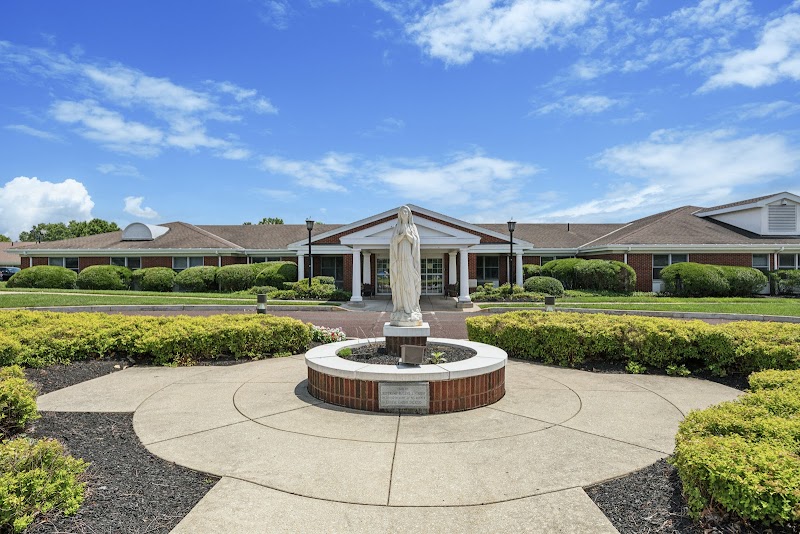
ST MARY CENTER FOR REHABILITATION & HEALTHCARE is owned by a for-profit company. For-profit facilities operate as businesses with obligations to shareholders or private owners. The facility is operated by CENTER MANAGEMENT GROUP, a chain that manages multiple nursing homes. With 120 certified beds and approximately 112 residents (about 93% occupancy), it is a mid-sized facility located in LANSDALE, Pennsylvania.
How Does St Mary Center For Rehabilitation & Healthcare Compare to Other Pennsylvania Nursing Homes?

Compared to the 100 nursing homes in Pennsylvania, ST MARY CENTER FOR REHABILITATION & HEALTHCARE's overall rating (4 stars) is above the state average of 3.0, staff turnover (65%) is significantly higher than the state average of 46%, and health inspection rating (4 stars) is above the national benchmark.

What Should Families Ask When Visiting St Mary Center For Rehabilitation & Healthcare?

Based on this facility's data, families visiting should ask: "How do you ensure continuity of care given staff turnover, and what is your staff retention strategy?" "Can you walk me through typical staffing levels on day, evening, and night shifts?" "Can I visit during a mealtime to observe dining assistance and food quality?" "How do you handle medical emergencies, and what is your hospital transfer rate?" These questions are particularly relevant given the facility's high staff turnover rate and the below-average staffing rating.

Is St Mary Center For Rehabilitation & Healthcare Safe?

Based on CMS inspection data, ST MARY CENTER FOR REHABILITATION & HEALTHCARE has a clean safety record: no substantiated abuse findings (meaning no confirmed cases of resident harm), no Immediate Jeopardy citations (the most serious violation level indicating risk of serious injury or death), and is not on the Special Focus Facility watch list (a federal program monitoring the lowest-performing 1% of nursing homes). The facility has a 4-star overall rating and ranks #1 of 100 nursing homes in Pennsylvania. While no facility is perfect, families should still ask about staff-to-resident ratios and recent inspection results during their visit.

Do Nurses at St Mary Center For Rehabilitation & Healthcare Stick Around?

Staff turnover at ST MARY CENTER FOR REHABILITATION & HEALTHCARE is high. At 65%, the facility is 18 percentage points above the Pennsylvania average of 46%. High turnover means new staff may not know residents' individual needs, medications, or preferences. It can also be disorienting for residents, especially those with dementia who rely on familiar faces. Families should ask: What is causing the turnover? What retention programs are in place? How do you ensure care continuity during staff transitions?

Was St Mary Center For Rehabilitation & Healthcare Ever Fined?

ST MARY CENTER FOR REHABILITATION & HEALTHCARE has no federal fines on record. CMS issues fines when nursing homes fail to meet care standards or don't correct problems found during inspections. The absence of fines suggests the facility has either maintained compliance or corrected any issues before penalties were assessed. This is a positive indicator, though families should still review recent inspection reports for the full picture.

Is St Mary Center For Rehabilitation & Healthcare on Any Federal Watch List?

ST MARY CENTER FOR REHABILITATION & HEALTHCARE is not on any federal watch list. The most significant is the Special Focus Facility (SFF) program, which identifies the bottom 1% of nursing homes nationally based on persistent, serious quality problems. Not being on this list means the facility has avoided the pattern of deficiencies that triggers enhanced federal oversight. This is a positive indicator, though families should still review the facility's inspection history directly.