


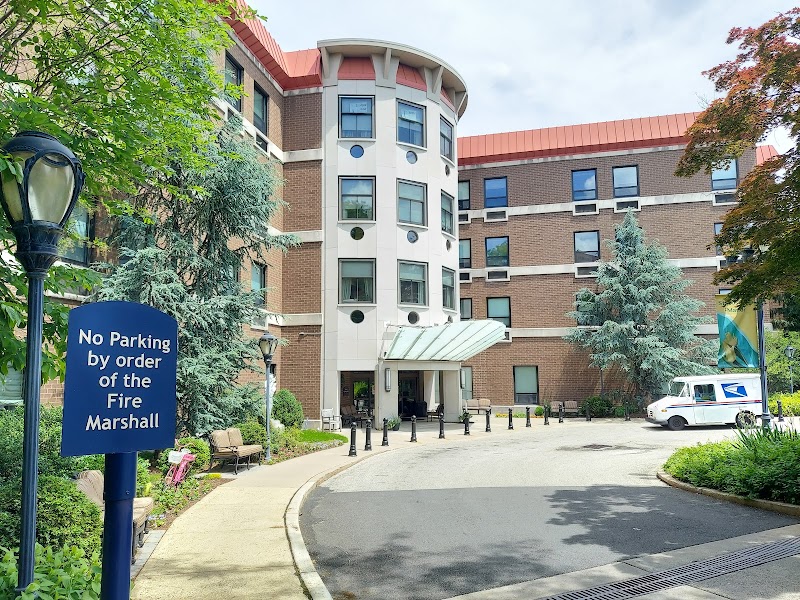
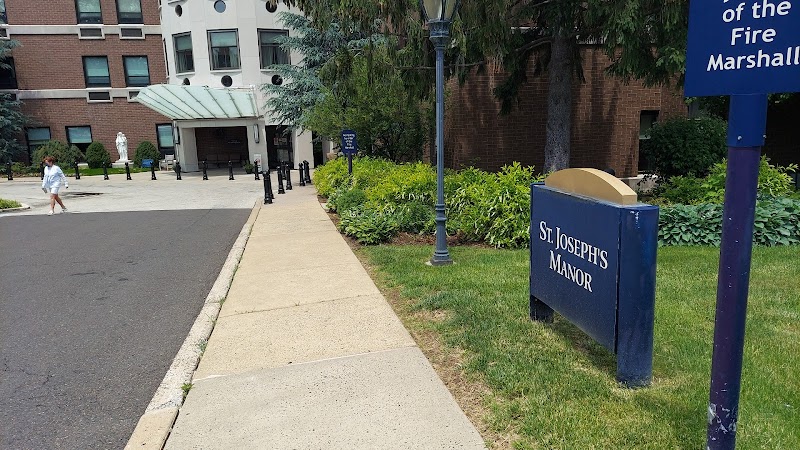
ST JOSEPH'S MANOR

1616 HUNTINGDON PIKE, MEADOWBROOK, PA 19046 (215) 938-4000
Non profit - Corporation 296 Beds Independent Data: November 2025
Trust Grade
70/100
#360 of 653 in PA
Last Inspection: February 2025

Within standard 12-15 month inspection cycle. Federal law requires annual inspections.

Overview

St. Joseph's Manor has a Trust Grade of B, which means it is a good choice, indicating a solid level of care. However, it ranks #360 out of 653 facilities in Pennsylvania, placing it in the bottom half of the state's nursing homes, and #40 out of 58 in Montgomery County, suggesting only a few local options are better. The trend is worsening, with issues increasing from 1 in 2024 to 4 in 2025. Staffing is a strong point, with a rating of 4 out of 5 stars and a turnover rate of 40%, which is below the state average, meaning staff members tend to stay longer and know the residents well. While there have been no fines, which is good, there were several concerning incidents, including failures to maintain proper food storage that could lead to foodborne illness and not notifying families about significant weight loss in residents, which reflects some lapses in care. Overall, while the facility has strengths in staffing and no fines, the increasing number of issues and specific incidents raise some concerns for prospective residents and their families.

Trust Score
B
70/100
In Pennsylvania
#360/653
Bottom 45%
Safety Record
Low Risk
No red flags
Inspections
Getting Worse
1 → 4 violations
Staff Stability
○ Average
40% turnover. Near Pennsylvania's 48% average. Typical for the industry.
Penalties
✓ Good
No fines on record. Clean compliance history, better than most Pennsylvania facilities.
Skilled Nurses
✓ Good
Each resident gets 49 minutes of Registered Nurse (RN) attention daily — more than average for Pennsylvania. RNs are trained to catch health problems early.
Violations
○ Average
6 deficiencies on record. Average for a facility this size. Mostly minor or procedural issues.
★★★☆☆
3.0
Overall Rating
★★★★☆
4.0
Staff Levels
★★★★☆
4.0
Care Quality
★★★☆☆
3.0
Inspection Score
Stable
2024: 1 issues
2025: 4 issues

The Good

  • 4-Star Staffing Rating · Above-average nurse staffing levels
  • 4-Star Quality Measures · Strong clinical quality outcomes
  • Full Sprinkler Coverage · Fire safety systems throughout facility
  • No fines on record
  • Staff turnover below average (40%)

    8 points below Pennsylvania average of 48%

Facility shows strength in staffing levels, quality measures, fire safety.

The Bad

3-Star Overall Rating

Near Pennsylvania average (3.0)

Meets federal standards, typical of most facilities

Staff Turnover: 40%

Near Pennsylvania avg (46%)

Typical for the industry

The Ugly 6 deficiencies on record

Apr 2025 2 deficiencies
CONCERN (D) 📢 Someone Reported This

A family member, employee, or ombudsman was alarmed enough to file a formal complaint

Potential for Harm - no one hurt, but risky conditions existed

Notification of Changes (Tag F0580)

Could have caused harm · This affected 1 resident

**NOTE- TERMS IN BRACKETS HAVE BEEN EDITED TO PROTECT CONFIDENTIALITY** Based on policy review, clinical record review, and staff interview, it was determined that the facility failed to notify each r...

Read full inspector narrative →
**NOTE- TERMS IN BRACKETS HAVE BEEN EDITED TO PROTECT CONFIDENTIALITY** Based on policy review, clinical record review, and staff interview, it was determined that the facility failed to notify each resident's responsible party of a significant weight loss for two of eight sampled residents. (Residents CL1 and 3) Findings include: Review of the facility policy entitled, Weight Management Guidelines, dated January 6, 2025, revealed that nursing staff were to report unexplained significant weight changes to the family/responsible party. Clinical record review revealed that Resident CL1 had diagnoses that included Alzheimer's dementia and dysphagia (difficulty swallowing). Review of the Minimum Data Set (MDS) assessment dated [DATE], revealed the resident was rarely understood. Review of the resident's weights revealed that on February 6, 2025, the resident weighed 178.6 pounds (lbs). On March 2, 2025, Resident CL1 weighed 167.8 lbs, which was confirmed with a reweigh on March 4, 2025. This reflected a six percent weight loss in one month. There was no documented evidence that Resident CL1's family/responsible party was notified of the significant weight loss. Clinical record review revealed that Resident 3 had diagnoses that included dementia and dysphagia. Review of the MDS assessment dated [DATE], revealed the resident was rarely understood. Review of the resident's weights revealed that on January 2, 2025, the resident weighed 138.8 lbs. On February 4, 2025, Resident 3 weighed 131.2 lbs. On March 4, 2025, Resident 3 weighed 131.4 lbs. This reflected a 5.4 percent weight loss between January and February that continued through March. There was no documented evidence that Resident 3's family/responsible party was notified of the significant weight loss. In an interview on April 25, 2025, at 4:21 p.m., the Administrator confirmed that there was no documented evidence that Residents CL1 and 3's families were notified of the significant weight loss, and they should have been. 28 Pa. Code 211.12(d)(1)(5) Nursing services.
CONCERN (D) 📢 Someone Reported This

A family member, employee, or ombudsman was alarmed enough to file a formal complaint

Potential for Harm - no one hurt, but risky conditions existed

Quality of Care (Tag F0684)

Could have caused harm · This affected 1 resident

Based on clinical record review and staff interview, it was determined that the facility failed to implement physicians' orders for two of eight sampled residents. (Residents 3 and 5) Findings include...

Read full inspector narrative →
Based on clinical record review and staff interview, it was determined that the facility failed to implement physicians' orders for two of eight sampled residents. (Residents 3 and 5) Findings include: Clinical record review revealed that Resident 3 had diagnoses that included hypertension (high blood pressure). A physician's order dated March 12, 2025, directed staff to administer a medication (lisinopril) one time a day for hypertension. Staff was not to administer the medication if the resident's blood pressure (BP) was less than 110 over 65 millimeters of mercury (mm/Hg). Review of Resident 3's medication administration records (MARs) revealed that staff administered the medication one time in March 2025, and two times in April 2025, when the resident's BP was less than 110 over 65 mm/Hg. Clinical record review revealed that Resident 5 had diagnoses that included hypertension. On April 17, 2025, the physician ordered staff to administer a medicine (metoprolol tartrate) two times a day for hypertension. Staff was not to administer the medication if the resident's systolic blood pressure (SBP, the first measurement of blood pressure when the heart beats and the pressure is at its highest) was less than 100 millimeters of mercury (mm/Hg). Review of Resident 5's MARs revealed that staff administered the metoprolol tartrate four times in April 2025, when the resident's SBP was less than 100 mm/Hg. In an interview on April 25, 2025, at 3:40 p.m., the Administrator confirmed that the medication was administered outside the established parameters for Residents 3 and 5. 28 Pa. Code 211.12(d)(1)(5) Nursing services.
Feb 2025 2 deficiencies
CONCERN (F)

Potential for Harm - no one hurt, but risky conditions existed

Food Safety (Tag F0812)

Could have caused harm · This affected most or all residents

Based on review of facility policy, observations, and staff interview, it was determined that the facility failed to store and serve foods in a sanitary manner in the dietary department to prevent the...

Read full inspector narrative →
Based on review of facility policy, observations, and staff interview, it was determined that the facility failed to store and serve foods in a sanitary manner in the dietary department to prevent the potential for foodborne illness. Findings include: Review of the facility policy entitled Food Storage, last reviewed March 8, 2024, revealed that food was to be stored immediately after receipt and maintained in a manner to prevent damage, spoilage, infestation, or bacterial contamination. Observation during the initial kitchen tour on February 11, 2025, at 10:00 a.m., revealed the following: There was debris on the bottom of the stand up ice cream freezer. There were four bins of dry goods that included white rice, flour, thickened liquid product, sugar and brown rice. The scoops for the dry goods were stored inside the bins on top of the dry goods. There was a container of whipped cream in a refrigerator that was not labeled or dated. In the dry goods storage room at 10:06 a.m, there was a bag of cereal that had been opened and re-sealed, but was not labeled or dated. There was also a bag of spaghetti and a bag of penne pasta that had been opened and re-sealed but was not labeled or dated. There was a bag of long grain rice that had been opened, had not been re-sealed and was not dated. There was a bag of tortilla chips that had been opened, was re-sealed, and was not dated. In the same dry goods storage room, there was a box of kosher salt that was opened and stored on a shelf on a rack that was not sealed or dated. There was a container of old bay seasoning on the same shelf that was opened, did not have a lid on it, and was not dated. In an interview on February 11, 2025, at 10:10 a.m., the Director of Dietary Dining Services stated that all food that had been opened was to be re-sealed, labeled, and dated. In addition, he stated that the scoops for the dry goods were not to be stored inside the dry storage bins. 28 Pa.Code 201.14(a) Responsibility of licensee.
CONCERN (F)

Potential for Harm - no one hurt, but risky conditions existed

Deficiency F0838 (Tag F0838)

Could have caused harm · This affected most or all residents

**NOTE- TERMS IN BRACKETS HAVE BEEN EDITED TO PROTECT CONFIDENTIALITY** Based on review of the facility assessment and dietary policies and procedures, it was determined that the facility failed to im...

Read full inspector narrative →
**NOTE- TERMS IN BRACKETS HAVE BEEN EDITED TO PROTECT CONFIDENTIALITY** Based on review of the facility assessment and dietary policies and procedures, it was determined that the facility failed to implement the facility wide assessment to ensure that there was an inventory of resources. These resources included an adequate supply of sustenance, food and beverages, in the event of an emergency/disaster for residents and staff. Findings include: Review of the facility assessment dated [DATE], revealed that the facility was to maintain and manage a documented inventory of resources that may be needed in an emergency. There was a reference in the facility assessment to the facility emergency preparedness plan. Review of the current, referenced emergency preparedness plan revealed, the facility was to ensure that adequate sustenance needs for residents and staff were to be available during an emergency. In addition, review of the policy entitled Food and Nutrition Disaster Plan, last reviewed March 8, 2024, revealed that the purpose was to allow for advance planning in possible emergency/disaster situations. The procedure involved preparedness that included ensuring that there was an inventory of food on hand including perishable and non-perishable food. The inventory was to include adequate supplies for all current service points and additional staff and visitors. Observations in the kitchen on February 11, 2025, at 10:15 a.m., and review of facility documentation regarding the emergency food supply list revealed that the required number of listed food items were not available per the facility par listing. In an interview on February 11, 2025, at 10:30 a.m. the general manager of the dietary department stated that the facility did not have the required listed food items per the facility par listing. In an interview on February 13, 2025, at 9:30 a.m., the Administrator stated that the facility did not have the required supply of food/beverages in the event of an emergency/disaster on hand in the building as per the facility assessment, emergency preparedness plan and the dietary policy and procedure. 201.14(a) Responsibility of Licensee 201.18(b)(1) Management.
Feb 2024 1 deficiency
CONCERN (D)

Potential for Harm - no one hurt, but risky conditions existed

Quality of Care (Tag F0684)

Could have caused harm · This affected 1 resident

**NOTE- TERMS IN BRACKETS HAVE BEEN EDITED TO PROTECT CONFIDENTIALITY** Based on clinical record review and staff interview, it was determined that the facility failed to ensure that physicians' order...

Read full inspector narrative →
**NOTE- TERMS IN BRACKETS HAVE BEEN EDITED TO PROTECT CONFIDENTIALITY** Based on clinical record review and staff interview, it was determined that the facility failed to ensure that physicians' orders were implemented for three of 36 sampled residents. (Resident 73, 185, 446) Findings include: Clinical record review revealed that Resident 73 had diagnoses that included dementia and muscle weakness. The Minimum Data Set (MDS) assessment, dated January 10, 2024, indicated that the resident was cognitively impaired and required substantial assistance for toileting. A physician's order dated November 5, 2019, directed staff to administer 30 milliliters (ml) of a laxative (milk of magnesia) if the resident did not have a bowel movement in two days, and then an enema (Fleet's) the next day if the resident still had no bowel movement. A review of the documentation revealed that no bowel movements were recorded from January 17 through 22, and from January 24 through 30, 2024. According to the Medication Administration Record (MAR) there was no documented evidence that laxatives or enemas were given as ordered. Clinical record review revealed that Resident 185 had diagnoses that included a recent joint replacement, anxiety, and depression. The MDS assessment, dated January 6, 2024, indicated the resident was alert and oriented and required assistance for toileting. On January 2, 2024, the physician ordered that staff administer 30 ml of a laxative (milk of magnesia) if the resident did not have a bowel movement in two days, and then an enema (Fleet's) the next day if the resident still had no bowel movement. A review of the documentation revealed that no bowel movements were recorded from January 7 through January 11, from January 11 through January 16, from January 16 through January 21, and from January 25 through January 29, 2024. According to the MAR there was no documented evidence that laxatives or enemas were given as ordered. In an interview on February 2, 2024, at 11:25 a.m., the DON confirmed that staff failed to administer laxatives and enemas as ordered to Residents 73 and 185. Clinical record review revealed that Resident 446 was admitted to the facility on [DATE], and had diagnoses of a recent joint replacement, osteoarthritis, and chronic kidney disease. On the date of admission, the physician ordered that staff administer 650 milligrams (mg) of a pain medication (acetaminophen) every four hours as needed for pain, but not to exceed 3,000 mg in a 24-hour period. On January 25, 2024, the physician also ordered that staff administer 1,000 mg of acetaminophen every eight hours routinely for pain and hydrocodone-acetaminophen 5/325 mg every six hours as needed for severe pain. On January 27, 2024, the physician decreased the routine acetaminophen dose to 650 mg every eight hours. According to the MARs, Resident 446 received more than 3,000 mg of acetaminophen within a 24-hour period on January 27 and 28, 2024. In an interview on February 2, 2024, at 11:14 a.m., the DON confirmed that Resident 446 received over 3,000 mg of acetaminophen on January 27 and 28, 2024, and that this was in excess of the maximum ordered daily dose. 28 Pa. Code 211.12(d)(1)(5) Nursing services.
Feb 2023 1 deficiency
CONCERN (D)

Potential for Harm - no one hurt, but risky conditions existed

Comprehensive Care Plan (Tag F0656)

Could have caused harm · This affected 1 resident

**NOTE- TERMS IN BRACKETS HAVE BEEN EDITED TO PROTECT CONFIDENTIALITY** Based on clinical record review and staff interview, it was determined that the facility failed to implement and develop compreh...

Read full inspector narrative →
**NOTE- TERMS IN BRACKETS HAVE BEEN EDITED TO PROTECT CONFIDENTIALITY** Based on clinical record review and staff interview, it was determined that the facility failed to implement and develop comprehensive care plans to meet the current needs of three of 35 sampled residents. (Residents 105, 126, 158) Findings include: Clinical record review revealed that Resident 105 had diagnoses of dementia, anemia, need for assistance with personal care, dysphagia (difficulty swallowing), and Vitamin D deficiency. The Minimum Data Set (MDS) assessment dated [DATE], indicated that the resident had memory impairment and required supervision for eating. A review of the care plan revealed the resident was at risk for nutrition related to dementia and increased confusion and required assistance with cueing to eat. There was an intervention for staff to cut up the resident's food into bite-size pieces. On February 21, 2023, at 12:51 p.m., and again at 1:42 p.m. the resident was observed to have been served a sandwich for lunch and it was not cut into bite size pieces. The resident did not eat any of the meal. On February 22, 2023, at 12:32 p.m., the resident was again observed to have been served a sandwich for lunch and it was not cut into bite-size pieces. In an interview on February 23, 2023, at 10:46 a.m., the licensed nurse, LPN1, confirmed that there was an intervention for staff to cut up Resident 105's food into bite-size pieces as per care plan. Clinical record review revealed that Resident 126 had diagnoses that included depression. Review of the MDS dated [DATE], identified that the resident had been administered an antidepressant four days in the review period. According to the Care Area Assessment, the facility identified the resident's antidepressant drug use was a problem and an individualized care plan with interventions was to be developed. There was no care plan intervention to address the use of antidepressant medication for Resident 126. Clinical record review revealed that Resident 158 had diagnoses that included major depressive disorder. Review of the MDS dated [DATE], identified that the resident had been administered an antidepressant three days in the review period. According to the Care Area Assessment, the facility identified the resident's antidepressant drug use and mood state were problems and an individualized care plan with interventions was to be developed for each. There were no care plan interventions to address the use of antidepressant medication and mood state for Resident 158. In an interview conducted on February 23, 2023, at 10:23 a.m., the Director of Nursing confirmed that there were no care plan interventions developed to address the use of antidepressant medication for Residents 126 and 158 and the mood state for Resident 158. 28 Pa. Code 211.11(d) Resident care plan.
Understanding Severity Codes (click to expand)
Life-Threatening (Immediate Jeopardy)
J - Isolated K - Pattern L - Widespread
Actual Harm
G - Isolated H - Pattern I - Widespread
Potential for Harm
D - Isolated E - Pattern F - Widespread
No Harm (Minor)
A - Isolated B - Pattern C - Widespread

Questions to Ask on Your Visit

  • "Can I speak with families of current residents?"
  • "What's your RN coverage like on weekends and overnight?"

Our Honest Assessment

Strengths
  • • No major safety red flags. No abuse findings, life-threatening violations, or SFF status.
  • • No fines on record. Clean compliance history, better than most Pennsylvania facilities.
  • • 40% turnover. Below Pennsylvania's 48% average. Good staff retention means consistent care.
Concerns
  • • No major red flags. Standard due diligence and a personal visit recommended.
Bottom line: Mixed indicators with Trust Score of 70/100. Visit in person and ask pointed questions.

About This Facility

What is St Joseph'S Manor's CMS Rating?

CMS assigns ST JOSEPH'S MANOR an overall rating of 3 out of 5 stars, which is considered average nationally. Within Pennsylvania, this rating places the facility higher than 0% of the state's 100 nursing homes. This mid-range rating indicates the facility meets federal standards but may have areas for improvement.

How is St Joseph'S Manor Staffed?

CMS rates ST JOSEPH'S MANOR's staffing level at 4 out of 5 stars, which is above average compared to other nursing homes. Staff turnover is 40%, compared to the Pennsylvania average of 46%. This relatively stable workforce can support continuity of care.

What Have Inspectors Found at St Joseph'S Manor?

State health inspectors documented 6 deficiencies at ST JOSEPH'S MANOR during 2023 to 2025. These included: 6 with potential for harm.

Who Owns and Operates St Joseph'S Manor?

ST JOSEPH'S MANOR is owned by a non-profit organization. Non-profit facilities reinvest revenue into operations rather than distributing to shareholders. The facility operates independently rather than as part of a larger chain. With 296 certified beds and approximately 201 residents (about 68% occupancy), it is a large facility located in MEADOWBROOK, Pennsylvania.

How Does St Joseph'S Manor Compare to Other Pennsylvania Nursing Homes?

Compared to the 100 nursing homes in Pennsylvania, ST JOSEPH'S MANOR's overall rating (3 stars) matches the state average, staff turnover (40%) is near the state average of 46%, and health inspection rating (3 stars) is at the national benchmark.

What Should Families Ask When Visiting St Joseph'S Manor?

Based on this facility's data, families visiting should ask: "Can I visit during a mealtime to observe dining assistance and food quality?" "How do you handle medical emergencies, and what is your hospital transfer rate?" "Can I speak with family members of current residents about their experience?"

Is St Joseph'S Manor Safe?

Based on CMS inspection data, ST JOSEPH'S MANOR has a clean safety record: no substantiated abuse findings (meaning no confirmed cases of resident harm), no Immediate Jeopardy citations (the most serious violation level indicating risk of serious injury or death), and is not on the Special Focus Facility watch list (a federal program monitoring the lowest-performing 1% of nursing homes). The facility has a 3-star overall rating and ranks #1 of 100 nursing homes in Pennsylvania. While no facility is perfect, families should still ask about staff-to-resident ratios and recent inspection results during their visit.

Do Nurses at St Joseph'S Manor Stick Around?

ST JOSEPH'S MANOR has a staff turnover rate of 40%, which is about average for Pennsylvania nursing homes (state average: 46%). Moderate turnover is common in nursing homes, but families should still ask about staff tenure and how the facility maintains care continuity when employees leave.

Was St Joseph'S Manor Ever Fined?

ST JOSEPH'S MANOR has no federal fines on record. CMS issues fines when nursing homes fail to meet care standards or don't correct problems found during inspections. The absence of fines suggests the facility has either maintained compliance or corrected any issues before penalties were assessed. This is a positive indicator, though families should still review recent inspection reports for the full picture.

Is St Joseph'S Manor on Any Federal Watch List?

ST JOSEPH'S MANOR is not on any federal watch list. The most significant is the Special Focus Facility (SFF) program, which identifies the bottom 1% of nursing homes nationally based on persistent, serious quality problems. Not being on this list means the facility has avoided the pattern of deficiencies that triggers enhanced federal oversight. This is a positive indicator, though families should still review the facility's inspection history directly.