SUBURBAN WOODS HEALTH & REHA
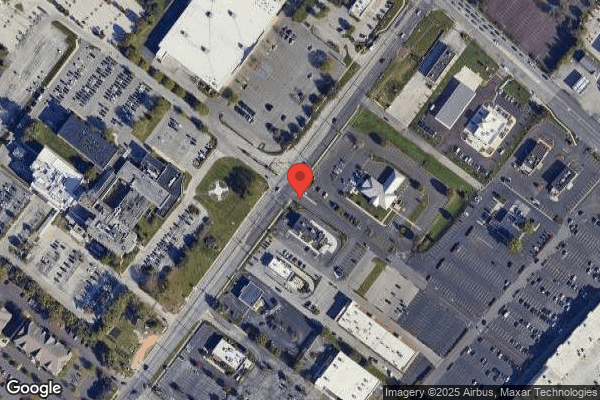
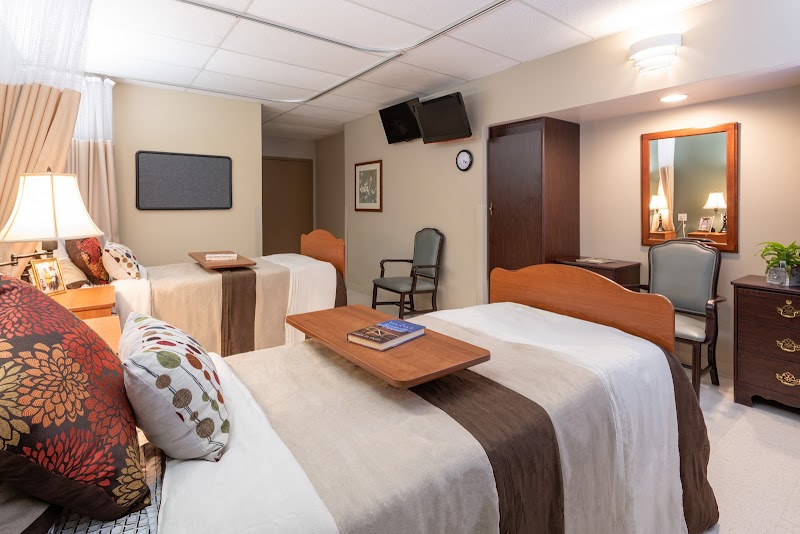
2751 DEKALB PIKE, NORRISTOWN, PA 19401 (610) 278-2700
For profit - Corporation 119 Beds SABER HEALTHCARE GROUP Data: November 2025
Trust Grade
68/100
#238 of 653 in PA
Last Inspection: April 2025

Within standard 12-15 month inspection cycle. Federal law requires annual inspections.

Overview

Suburban Woods Health & Rehabilitation in Norristown, Pennsylvania has a Trust Grade of C+, which indicates it is decent and slightly above average. It ranks #238 out of 653 facilities in Pennsylvania, placing it in the top half, and #30 out of 58 in Montgomery County, suggesting it has some competition but is still a viable option. The facility's trend is stable, with 7 identified issues both in 2024 and 2025, indicating no significant improvement or decline. Staffing is rated average with a turnover rate of 34%, which is better than the state average, but there is concerning RN coverage, lower than 81% of state facilities. They have $7,443 in fines, which is average, but recent inspections revealed some serious concerns, such as food safety issues in the kitchen and delays in meal service that upset residents. Additionally, residents reported not being invited to participate in their care planning, which is a significant oversight. Overall, while the facility has strengths in staffing stability, there are important areas that need attention, particularly in food service and resident engagement.

Trust Score
C+
68/100
In Pennsylvania
#238/653
Top 36%
Safety Record
Low Risk
No red flags
Inspections
Holding Steady
7 → 7 violations
Staff Stability
○ Average
34% turnover. Near Pennsylvania's 48% average. Typical for the industry.
Penalties
⚠ Watch
$7,443 in fines. Higher than 82% of Pennsylvania facilities, suggesting repeated compliance issues.
Skilled Nurses
⚠ Watch
Each resident gets only 27 minutes of Registered Nurse (RN) attention daily — below average for Pennsylvania. Fewer RN minutes means fewer trained eyes watching for problems.
Violations
⚠ Watch
22 deficiencies on record. Higher than average. Multiple issues found across inspections.
★★★★☆
4.0
Overall Rating
★★★☆☆
3.0
Staff Levels
★★★★★
5.0
Care Quality
★★★☆☆
3.0
Inspection Score
Stable
2024: 7 issues
2025: 7 issues

The Good

  • 5-Star Quality Measures · Strong clinical quality outcomes
  • Full Sprinkler Coverage · Fire safety systems throughout facility
  • No fines on record
  • Staff turnover below average (34%)

    14 points below Pennsylvania average of 48%

Facility shows strength in quality measures, fire safety.

The Bad

Staff Turnover: 34%

12pts below Pennsylvania avg (46%)

Typical for the industry

Federal Fines: $7,443

Below median ($33,413)

Minor penalties assessed

Chain: SABER HEALTHCARE GROUP

Part of a multi-facility chain

Ask about local staffing decisions and management

The Ugly 22 deficiencies on record

Apr 2025 7 deficiencies
CONCERN (D)

Potential for Harm - no one hurt, but risky conditions existed

Free from Abuse/Neglect (Tag F0600)

Could have caused harm · This affected 1 resident

**NOTE- TERMS IN BRACKETS HAVE BEEN EDITED TO PROTECT CONFIDENTIALITY** Based upon interviews with residents and staff, review of clinical records, facility documentation and policy, it was determined...

Read full inspector narrative →
**NOTE- TERMS IN BRACKETS HAVE BEEN EDITED TO PROTECT CONFIDENTIALITY** Based upon interviews with residents and staff, review of clinical records, facility documentation and policy, it was determined that the facility failed to ensure residents were free from abuse and neglect for one of 21 resident records reviewed (Resident R94). Findings include: Review of the facility's policy titled, Abuse, Neglect, and Exploitation revised July 2024, states, The facility will not tolerate abuse, neglect, mistreatment, of residents. The same policy states that Mental abuse includes humiliation, punishment and deprivation. Review of Resident R94's clinical record revealed that the resident was admitted to the facility on [DATE] with the diagnoses of bipolar disorder (moods of extreme highs and of extreme lows), depression, muscle weakness and scoliosis (unnatural curvature of the spine). Review of Resident R94's nursing note dated March 20, 2025, stated, Resident reported to staff that she had put her call light on and requested to go to the bathroom, she stated that staff informed her she should go in the brief she was wearing, and she would come back to change her once she was finished. She stated that when she was finish, she rang her call light to be changed, and staff changed her while she was in bed. During an interview with Resident R94's roommate, Resident R57 on April 1, 2025 at 12:30 p.m. stated, I overheard an aide say to Resident R94 that she was tired of changing the resident and told the resident to go in her pants. On April 2, 2025, at 10:57 a.m. during an interview with Resident R94 stated, The aide was getting me ready for bed and I told her I had to use the bathroom. She said to go in my pants, and she would come back to change me. I couldn't hold it, and I went in my pants. It felt degrading and I am embarrassed to even say it happened. Interview with the Unit Manager Employee E3 on April 2, 2025 at 12:39 p.m. stated Resident R94 is continent of urine. She is able to feel when she has to urinate. When she has to use the bathroom, she tells us and we assist her to the toilet. Review of the facility's reported event submitted on March 20, 2025, and the facility's investigation concluded he allegation was found substantiated and the nursing assistant was terminated for mental abuse. 28 Pa Code 201.18(b)(1) Management 28 Pa Code 201.29(a)(c) Resident rights 28 Pa Code 211.10(c) Resident care policies 28 Pa Code 211.12(c) Nursing services 28 Pa Code 211.12(d)(1)(5) Nursing services
CONCERN (D)

Potential for Harm - no one hurt, but risky conditions existed

Accident Prevention (Tag F0689)

Could have caused harm · This affected 1 resident

**NOTE- TERMS IN BRACKETS HAVE BEEN EDITED TO PROTECT CONFIDENTIALITY** Based on review of facility policy, review of facility documentation, review of clinical record, and staff interview, it was det...

Read full inspector narrative →
**NOTE- TERMS IN BRACKETS HAVE BEEN EDITED TO PROTECT CONFIDENTIALITY** Based on review of facility policy, review of facility documentation, review of clinical record, and staff interview, it was determined that the facility failed to provide adequate supervision to prevent an elopement for one of two residents reviewed for wandering/elopement (Resident R308). Findings Include: Review of facility policy Elopement/Unauthorized Absence dated August 2, 2024, revealed the facility will identify residents with potential and/or actual risk factors for elopement and protect the resident through development and implementation of safety interventions. In the event of a resident elopement the facility will implement its policies and procedures promptly to locate the resident in a timely manner. Review of Resident R308's Minimum Data Set (MDS - federally mandated resident assessment and care screening) dated August 8, 2024, revealed the resident had severe cognitive impairment and had diagnoses of dementia (decline in cognitive function that interferes with daily life) and altered mental status. Further review of the MDS revealed Resident R308 was independent for transfers and ambulation. Continued review of Resident R308's MDS dated [DATE], revealed the resident exhibited the behavior of wandering daily. Review of Resident R308's comprehensive care plan dated June 1, 2024, revealed the resident had cognitive impairment related to dementia diagnosis with wandering/elopement. Review of Resident R308's clinical record revealed a nursing note dated June 3, 2024, that revealed the interdisciplinary team (IDT) met and discussed Resident R308's elopement risk. Per the IDT/Elopement Risk note dated June 3, 2024, Resident R308 was placed on 15-minute checks due to the resident removing his wander guard. Continued review of Resident R308's clinical record revealed a nursing note dated August 1, 2024, that revealed IDT met again to discuss Resident R308's elopement risk. Per the IDT/Elopement Risk note, dated August 1, 2024, Resident R308 remained on 15-minute checks due to his continued refusal to wear the wander guard and continued wandering on the unit at times. Review of Resident R308's clinical record revealed a nursing note dated August 15, 2024, by Registered Nurse, Employee E6, that revealed staff were unable to locate Resident R308. Review of facility documentation revealed an incident report dated August 15, 2024, that indicated Resident R308 was last seen ambulating in the hallway at 7:30 p.m. At 7:45 p.m. when the resident's assigned nurse aide, Employee E7, went to check on Resident R308, the resident could not be located. A code was promptly announced to notify staff in the building that Resident R308 could not be located, and staff immediately began to search inside and outside the building. Further review of the incident report dated August 15, 2024, revealed the Director of Nursing, Employee E2, was able to locate Resident R308 in the parking lot at approximately 9:00 p.m. Resident R308 was subsequently brought back into the building and no injuries were identified upon assessment. Review of Resident R308's clinical record revealed the resident was subsequently put on 1:1 supervision status-post the elopement for increased supervision. Interview on April 3, 2025, at 12:05 p.m. with the Director of Nursing, Employee E2, confirmed this employee found Resident R308 in the parking lot around 9:00 p.m. Further interview with Director of Nursing, Employee E2, revealed Resident R308 admitted to exiting the facility through the front door. Director of Nursing, Employee E2, reported that it was assumed that Resident R308 must have followed behind a family member (of another resident) who was exiting the building. 28 Pa. Code 211.12 (d)(5) Nursing Services
CONCERN (D)

Potential for Harm - no one hurt, but risky conditions existed

Deficiency F0840 (Tag F0840)

Could have caused harm · This affected 1 resident

**NOTE- TERMS IN BRACKETS HAVE BEEN EDITED TO PROTECT CONFIDENTIALITY** Based on review of clinical records, and interviews with staff, it was determined that the facility failed to ensure timely prov...

Read full inspector narrative →
**NOTE- TERMS IN BRACKETS HAVE BEEN EDITED TO PROTECT CONFIDENTIALITY** Based on review of clinical records, and interviews with staff, it was determined that the facility failed to ensure timely provision of professional services furnished by outside providers, for one of 21 resident records reviewed (Resident R93). Findings include Review of Resident R93's clinical record revealed that the resident was admitted to the facility on [DATE], with a diagnosis of Huntington's disease (a rare, inherited neurological disorder that causes nerve cells in the brain to break down, leading to progressive physical and mental decline). Review of nursing note dated January 8, 2025, indicated the resident refused to go to an outside appointment with the hospital related to the diagnosis of Huntington disease. Continue review of the same note stated, Appointment attempted to be rescheduled, message left to contact facility to schedule a new appointment date and time. Further review of Resident R93's clinical record revealed no documented evidence that the facility ensure that the appointment was rescheduled. The Director of Nursing on April 3, 2025, at 10:00 a.m. confirmed no new appointment was made. 28 Pa. Code 211.12 (d)(1) Nursing Services.
CONCERN (D)

Potential for Harm - no one hurt, but risky conditions existed

Medical Records (Tag F0842)

Could have caused harm · This affected 1 resident

Based on clinical record review and interview with staff, it was determined that the facility did not maintain complete and accurate medical records related to diagnoses for physician ordered medicati...

Read full inspector narrative →
Based on clinical record review and interview with staff, it was determined that the facility did not maintain complete and accurate medical records related to diagnoses for physician ordered medications for two of 21 records reviewed (Residents R18 and R81). Findings include: Review of clinical documentation for Resident R18 revealed a physician order, dated January 1, 2025, for Metoclopramide HCl 10MG tablet, with the instructions 1 tab, oral, three times a day .before meals. On the order sheet, the area marked ICD-10 Diagnosis was filled out as N/A (not applicable). There was no reason for use given for the medication. Further review revealed another physician order, dated January 30, 2025, for Systane Hydration, 0.4-0.3%, with the instructions 1 drop in each eye once a day. On the order sheet, the area marked ICD-10 Diagnosis was filled out as N/A. There was no reason for use given for the medication. Review of clinical documentation for Resident R81 revealed a physician order, dated March 20, 2025, for Lidocaine HCl .cream; 4%, with the instructions administer cream to right shoulder [every] shift. On the order sheet, the area marked Diagnosis was blank. There was no reason for use given for the medication. Interview with the Director of Nursing, Employee E2, on April 3, 2025, at 2:15 p.m. confirmed that all medication orders must list the diagnosis or reason for use to be complete. 28 Pa. Code 211.12(c) Nursing service 28 Pa. Code 211.12(d)(1) Nursing service 28 Pa. Code 211.12(d)(2) Nursing service 28 Pa. Code 211.12 (d)(5) Nursing service
CONCERN (D)

Potential for Harm - no one hurt, but risky conditions existed

Antibiotic Stewardship (Tag F0881)

Could have caused harm · This affected 1 resident

**NOTE- TERMS IN BRACKETS HAVE BEEN EDITED TO PROTECT CONFIDENTIALITY** Based on review of resident records and interviews with staff, it was determined the facility did not ensure antibiotics were ad...

Read full inspector narrative →
**NOTE- TERMS IN BRACKETS HAVE BEEN EDITED TO PROTECT CONFIDENTIALITY** Based on review of resident records and interviews with staff, it was determined the facility did not ensure antibiotics were administered with adequate indication for use for one of 21 resident records reviewed (Resident R94). Findings include: Review of Resident R94's clinical record revealed that the resident was admitted to the facility on [DATE] diagnosed with bipolar disorder (moods of extreme highs and of extreme lows), depression, muscle weakness and scoliosis (unnatural curvature of the spine). Review of Resident R94's physician note dated October 28, 2024 indicated the resident's urinalysis was abnormal, noting the resident's white count was improving, the urinalysis weakly suggestive of infection and was still waiting for the colony count and cultures and sensitivities and noted the resident denied any urinary symptoms. Further review of Resident R94's nursing notes, dated October 28, 2024, revealed the labs were further reviewed by a Nurse Practioner that ordered an antibiotic, Bactrim DS for three days. Interview with the Director of Nursing on April 2, 2025, at 3:00 p.m. stated that during QAPI I remind the physicians about prescribing antibiotics with no indication for use and Resident R94 was used as an example. 28 Pa. Code 211.12 (d)(1) Nursing Services.
CONCERN (F)

Potential for Harm - no one hurt, but risky conditions existed

Food Safety (Tag F0812)

Could have caused harm · This affected most or all residents

**NOTE- TERMS IN BRACKETS HAVE BEEN EDITED TO PROTECT CONFIDENTIALITY** Based on observations and interviews with staff, it was determined that the facility did not ensure that food was stored, prepar...

Read full inspector narrative →
**NOTE- TERMS IN BRACKETS HAVE BEEN EDITED TO PROTECT CONFIDENTIALITY** Based on observations and interviews with staff, it was determined that the facility did not ensure that food was stored, prepared, distributed and served in accordance with professional standards for food service safety. Findings include: A tour of the Food Service Department was conducted on March 31, 2025, at 9:15 a.m. with Employee E5, Food Service Director (FSD), revealed the following concerns: Observation in the receiving dock revealed a lot of trash scattered around the loading dock next to the dumpster including empty milk carton, plastic juice cups and paper. Observation in the dry storage area revealed a buildup of dust, dirt and black substance on the floor under she shelves next to the aluminum freezer walls. Observation in the walk-in freezer revealed that the floor was dirty and had debris on the floor under the shelves. Observation in the walk-in cooler revealed that the floor was dark and dirty with [NAME] stains on the floor under the shelves. Observation of the wall in the dish room area behind the high-pressure spray hose and scrap sink revealed the paint on the wall was dirty and the paint was peeling off. Observation of the convection oven revealed a heavy build-up of dark black burned on food splatter and grease drippings on the inside surfaces of both ovens. Interview with the FSD on March 31, 2025, at 9:25 a.m. confirmed the above findings. 28 Pa. Code 201.14(a) Responsibility of licensee
MINOR (C)

Minor Issue - procedural, no safety impact

Assessment Accuracy (Tag F0641)

Minor procedural issue · This affected most or all residents

**NOTE- TERMS IN BRACKETS HAVE BEEN EDITED TO PROTECT CONFIDENTIALITY** Based on a review of clinical records and staff interview, it was determined that the facility failed to ensure that the Minimum...

Read full inspector narrative →
**NOTE- TERMS IN BRACKETS HAVE BEEN EDITED TO PROTECT CONFIDENTIALITY** Based on a review of clinical records and staff interview, it was determined that the facility failed to ensure that the Minimum Data Set Assessments (MDS - a federally mandated standardized assessment conducted at specific intervals to plan resident care) accurately reflected the status of two residents out of 21 sampled (Residents R48 & R93). Findings included: A review of Resident R48's clinical record revealed that the resident was admitted to the facility on [DATE]. Review of Resident R48's physician orders revealed a February 4, 2025, order to admitted to hospice care with the diagnosis of Parkinson's Disease (progressive disease of the central nervous system). Further review of a Significant Change Minimun Data Set (MDS) assessment dated [DATE], section J revealed that the resident had a life expectancy of less than six months, and that section O did not indicate that the resident was on hospice. Interview with the MDS Coordinator, Employee E4 on April 2, 2025, at 11:25 a.m. confirmed that Resident R48 was put on hospice care on February 4 and that Section J of the February 4, 2025, MDS indicated a life expectancy of less than six months and that Section O of the MDS should have been triggered for hospice services. Review of Resident R93's clinical record revealed a Quarterly MDS dated [DATE]. Review of Section C: Cognitive Pattern within the MDS dated [DATE], revealed this section was not completed and marked as not assessed. Interview on April 3, 2025, at 10:15 a.m. with MDS Coordinator, Employee E4, revealed interviews for mental status could not be completed timely by the social services department and subsequently needed to be coded as no information. 28 Pa. Code 201.14(a) Responsibility of licensee 28 Pa. Code 211.5(f) Clinical Records
May 2024 7 deficiencies
CONCERN (D)

Potential for Harm - no one hurt, but risky conditions existed

Safe Environment (Tag F0584)

Could have caused harm · This affected 1 resident

**NOTE- TERMS IN BRACKETS HAVE BEEN EDITED TO PROTECT CONFIDENTIALITY** Based on observations and interviews with residents and staff, it was determined that the facility failed to maintain a safe, cl...

Read full inspector narrative →
**NOTE- TERMS IN BRACKETS HAVE BEEN EDITED TO PROTECT CONFIDENTIALITY** Based on observations and interviews with residents and staff, it was determined that the facility failed to maintain a safe, clean, comfortable, and homelike environment for one of two nursing units observed (2 floor nursing unit). Findings include: Facility policy titled Occupied Resident Room Cleaning Procedure last revised on August 30, 2022 revealed Proper cleaning and disinfecting of environmental surfaces is necessary to break the chain of infection. Cleaning refers to the removal of visible soil from surfaces through the physical action of scrubbing with detergents/surfactants and rinsing with water. This step is to reduce the volume of organisms on a surface and remove foreign material that could interfere with disinfection. Occupied resident rooms will be cleaned daily to maintain a sanitary environment. On May 14, 2024, at 11:23 a.m. observations on the Second-floor unit room [ROOM NUMBER] B bed revealed quarter of the privacy curtain was falling off as there was no curtain hooks. There was a floor mat with all four edges ripped. The floor mat covered with spots. room [ROOM NUMBER] the wall was chipped by the door. On May 14, 2024, at 11:43 a.m. an interview with Resident R34 who was residing in room [ROOM NUMBER] B bed revealed that the bathroom sink is very slowly draining the water. The wall behind the bed was observed to be scrapped off, wall on the left side of the room when you are facing the window was scrapped off. Bathroom had brown spots all over the bathroom wall and around the toilet. The sink was not draining the water once the water was running. Resident R34's dresser which was located between the two closet had a missing third shelve. The dresser had a layer of dust, with sugar spilled. The air conditioning unit had a layer of dust, brown spots of old spills which went into the wall. Resident's clothing was laying on the floor in large bags on the top of each other by the bedside of an A bed. room [ROOM NUMBER] the edges of the floor were dirty with brown spots. The bathroom had brown spots all over the walls and toilet. Bathroom had running water in the sink and the hot water handle was broken which did not allow the water to turn off. The floor was dirty and there was an unrolled toilet paper laying on the dirty floor. On May 14, 2024, at 11:57 a.m. an interview with the unit manager, Employee E9 and Maintenance and Housekeeping Director Employee E10 confirmed, the above observations. On May 14, 2024, at 12:28 p.m. Maintenance and Housekeeping Director, Employee E10 tested the hot water in room [ROOM NUMBER] with his hand and it never got hot. room [ROOM NUMBER] hot water revealed temperature 97 F. (Fahrenheit). Further observation revealed that there was a bug running on the wall. Employee E10 killed the bug while testing the water. Hot water tested the water on the Second-floor shower room revealed that the hot water was between 95 F.-99 F. which was not comfortable hot water temperatures for the residents. On May 14, 2024, at 1:44 p.m. Resident R38's family interview revealed that facility was not clean, and that there was a urine smell present. Two months ago, there was a dry stool all around the restroom in room [ROOM NUMBER]. Nursing assistant provided a family with wipes and family member had to clean up the stool. Since it was dry family member knew that it was there a for a while. On May 15, 2024, room [ROOM NUMBER] sink was unclogged, and the water temperature went to 99 F. and there was a basin observed collecting drips of water from the sink pipe. On May 15, 2024, at approximately 1:15 p.m. observation was taken place in room [ROOM NUMBER] Resident's R49 call bell's plate was off the wall and exposed wires were visible. This observation was confirmed by the Maintenance and Housekeeping Director, Employee E10. 28 Pa Code 201.14(a) Responsibility of licensee 28 Pa Code 204.15(a) Windows 28 Pa Code 205.67(c) Electric requirements for existing construction
CONCERN (D)

Potential for Harm - no one hurt, but risky conditions existed

Comprehensive Care Plan (Tag F0656)

Could have caused harm · This affected 1 resident

Based on review of facility policies, review of clinical records, and staff interviews, it was determined that the facility failed to develop comprehensive care plans related to medication administrat...

Read full inspector narrative →
Based on review of facility policies, review of clinical records, and staff interviews, it was determined that the facility failed to develop comprehensive care plans related to medication administration and recovery of history alcohol abuse to meet the care needs for one of three residents reviewed. (Resident R50) Findings include: Review of the facility's policy titled Comprehensive Care Planning Policy revealed that the facility must develop a comprehensive Person-Centered Care Plan for each resident that includes a measurable objective and timetables to meet the resident medical nursing, and mental and psychosocial need that are identified in the comprehensive assessments. There may be additional problem area not triggered by the MDS (Minimum Data Set, federal mandated process for clinical assessment of all residents) which will need to be addressed in the care plan. Review of residents clinical record revealed that Resident R50 has a diagnosis of Diabetes type 2 (chronic condition which blood glucose level are too high), muscle weakness, spinal stenosis (narrowing of the spine resulting in pressure on the spinal cord and nerves), bipolar disorder (a mental illness that causes unusual shifts in a person's mood), anxiety(an emotion of fear or worry), neuromuscular dysfunction of bladder (loss of control of the bladder muscles), toxic encephalopathy(abnormal brain function caused by toxins in the brain), morbid obesity (a body mass index of 40 or more). Continued review of Resident R50's May 2024 physician orders revealed an order for insulin Lispro (a fast-acting insulin that works by lowering levels of sugar in the blood) 100/ml order to give 6 units three times a day with meals. Review of resident R50's May 2024 medication administration record (MAR), revealed that Resident R50 routinely refuses accu check s(a blood glucose test) and insulin. Review of Resident R50's current care plan revealed that Resident R50 has a diagnosis of diabetes mellitus containing a goal to be free of signs and symptoms of hypoglycemia and hypoglycemia with intervention of assessment, documents, and reports sign and symptoms of hypoglycemia and encourage the resident to practice good health practices. Continued review of the resident's are plan revealed that there was no care plan developed to address refusal of medication, education of resident and staff, and any plan or implementation of hypoglycemia (low blood sugar, require immediate treatment). Interview with Licensed nurse, Employee E8 on May 15 at 8:30 a.m. on the second-floor nursing floor during medication pass, employee was observed distributing medication for Resident R50. Interview with Licenced nurse E8 during the observation revealed that Resident R50 declines her daily accu checks. Employee E8 stated that Resident R50 notifies the staff when she feels the need for the prescribed insulin. Interview with Resident R50 May 16, 2024 at 11:25a.m., revealed that she does not have her blood sugar levels taken with accu checks. She stated that she just lets the nurses know when she feels like she needs it. Continued interview with Resident R50 May 16, 2024, at 11:30 a.m. revealed that this resident greatest accomplishment of her life was maintaining sobriety. Although Resident R50 has been alcohol free for many years and she still feels the need to attend meeting twice a week outside the facility. Observation of Resident R50's room revealed diplomas on the wall and a picture by her bed that was explained as her greatest's supporter, her sponsor. Continued review of Resident R50's care plan did not included the diagnosis of soberness and there was no care plan developed related to coordinating care and support for the resident as well of implementing resident assistance to prepare and travel outside the facility of group meeting. Interview with Director of Nursing, Employee E2 confirms the above findings. 28 Pa Code 211.10(c) Resident Care Policies 28 Pa. Code 211.12(d)(3) Nursing Services
CONCERN (D)

Potential for Harm - no one hurt, but risky conditions existed

ADL Care (Tag F0677)

Could have caused harm · This affected 1 resident

Based on observation, review of facility policy, clinical record review, resident and staff interviews, it was determined that the facility failed to provide appropriate Activity of Daily Living (ADL)...

Read full inspector narrative →
Based on observation, review of facility policy, clinical record review, resident and staff interviews, it was determined that the facility failed to provide appropriate Activity of Daily Living (ADL) for three of 21 residents reviewed who were unable to carryout ADL care independently. (Resident R19, R29, and R75) Findings include: A review of the Facility Policy titled, Personal Care last revised on November 8, 2023, revealed Morning care will be offered each day to promote resident comfort, cleanliness, grooming, and general wellbeing. Residents who can perform their own personal care are encouraged to do so but will be provided with setup assistance if needed. Showers and baths are scheduled two times weekly or more or less often according to resident preference. Further under procedures number 7. Provide shaving as desired by resident 9. Provide fingernail care Review of MDS (Minimum Data Set-assessment of resident care need) for Resident R19 dated April 24, 2024, revealed that the resident was dependent on the staff for personal hygiene, transfer, and toileting. MDS also revealed that the resident had a BIMS (Brief Interview for Mental status) score of 8 which indicated that the resident's cognitive status for daily decision making was moderately impaired. Review of MDS (Minimum Data Set-assessment of resident care need) for Resident R29 dated May 14, 2024, revealed that the resident was dependent on the staff for personal hygiene, transfer, toileting, dressing, bed mobility. MDS also revealed that the resident had a BIMS (Brief Interview for Mental status) score of 13 which indicated that the resident's cognitive status for daily decision making was intact. Review of MDS (Minimum Data Set-assessment of resident care need) for Resident R75 dated April 25, 2024, revealed that the resident was dependent on the staff for personal hygiene, transfer, toileting, dressing, bed mobility. MDS also revealed that the resident had a BIMS (Brief Interview for Mental status) score of 15 which indicated that the resident's cognitive status for daily decision making was intact. On May 14, 2024, at 1:17 p.m. an interview and observation revealed that Resident R75 had a beard and has been asking since Sunday May 11, 2024 to shave his beard. A nursing assistant. Employee E12 responded to Resident R75 I don't have time on Sunday. Resident R75 requested two times on Monday May 12, 2024, and no one provided him a shave. A grievance investigation was conducted for the above concern, and it revealed that Resident R75 did request his beard to be shaved on May 13, 2024 and certified nursing assistant, Employee E12 wrote in the statement dated May 15, 2024 revealed due to lunch arriving late, need to do other residents and then passing down and collecting trays there as no time to shave Resident R75. On May 15, 2024, at 12:20 p.m. Resident R19 was observed sitting in the dining room with facial hair and long nails. Resident R19 did want his nail to be cut and facial hair to be shaved. Unit Manager, Employee E9 did confirmed the observation. On May 17, 2024, at 9:42 a.m. an interview and observation revealed that Resident R29 had long nails and wanted them to be trimmed. License Nurse, Employee E8 confirmed the observations. On May 17, 2024, at 12:30 p.m. an interview with the Registered Nurse Assessment Coordinator, Employee E6 confirmed the Resident R19 required extensive assistance of one person from the staff for ADL care in personal hygiene, bathing, and toileting. Resident R29 required extensive assistance of two person from the staff for ADL care in personal hygiene, bathing, and toileting. Resident R75 required extensive assistance of one to two person from the staff for ADL care in personal hygiene, bathing, and toileting. 28 Pa. Code 201.29(j) Resident rights. 28 Pa. Code 211.12(d)(5) Nursing services.
CONCERN (D)

Potential for Harm - no one hurt, but risky conditions existed

Accident Prevention (Tag F0689)

Could have caused harm · This affected 1 resident

Based on review of safety data sheet, review of facility documentation, review of clinical records, observations, and staff and resident interviews, it was determined that the facility failed to ensur...

Read full inspector narrative →
Based on review of safety data sheet, review of facility documentation, review of clinical records, observations, and staff and resident interviews, it was determined that the facility failed to ensure residents received adequate supervision during transfers for two of three residents reviewed for falls (Resident R84 and R30) and failed to ensure the resident environment remained free of accident hazards related to access to cleaning agents and the security of windows. Findings Include: Review of facility policy Mechanical Lift revised January 7, 2022, revealed a mechanical lift may be used for transferring residents that cannot be safely transferred by themselves or with staff assistance. Two staff person assist/oversight is required for total body lifts. Review of Resident R84's Quarterly Minimum Data Set (MDS - federally mandated resident assessment and care screening) dated February 15, 2024, revealed the resident was cognitively intact and was total dependence (full staff performance every time), 2-persons physical assist for transfers (how resident moves between surfaces including to or from bed, chair, wheelchair). Review of Resident R84's comprehensive care plan revised May 22, 2023, revealed the resident had a self-care deficit related to immobility and need for assistance with activities of daily living and transfers. Intervention dated August 5, 2022, revealed resident was hoyer lift for transfers (total body lift - device used to hoist resident with slings that hook up to the lift's arm and cradle the resident during transfer) with assist of 2 people. Review of facility documentation submitted to the State Survey Agency revealed on March 22, 2024, Resident R84 fell during transfer with the hoyer lift. Facility documentation indicated that Resident R84 was transferred with 1-person assist but required 2-person assistance. Review of facility documentation Witness Statement dated March 22, 2024, by nurse aide, Employee E4, revealed the employee was using the hoyer lift to transfer Resident R84. Nurse aide, Employee E4, stated as the hoyer lift was being turned, the lift tipped and Resident R84 fell. Review of facility documentation Witness Statement dated March 22, 2024, by Director of Nursing, Employee E2, revealed the employee responded to a call for help in Resident R84's room. Upon arriving, Resident R84 was on the floor near the night stand and bed with the hoyer lift tilted to the side. Director of Nurse, Employee E2, asked nurse aide, Employee E4, who assisted with the transfer and nurse aide, Employee E4, responded no one. Interview on May 17, 2024, at 12:40 p.m. with Resident R84 confirmed nurse aide, Employee E4, did not have assistance during transfer with hoyer lift at the time of the fall on March 22, 2024. Review of Resident R30's clinical record revealed that resident has a diagnoses of encephalopathy (disturbance of brain function) and schizophrenia (a mental disorder characterized by reoccurring episodes of psychosis) . Further review of Resident R30's care plan developed March 27, 2024, revealed that resident was at risk for falls related to history of placing self on floors, decreased mobility, seizure disorder, lack of coordination, abnormal gait and insomnia. Review of Resident R30's MDS (Minimum Data Set , a federal mandated process for clinical assessment of all residents), revealed that Resident R30's functional status determined that this resident required total dependence of 2 person assists for transfers. Interview with Resident R30 on May 17, 2024, at 10:45 a.m. revealed that the resident confirmed falling while he was been transferred to his bed by one employee. Review of the facility documentation reported to the State Agency revealed a written statement by nursing assistant, Employee E20 which stated was asked to help put patient [Resident R30] . in the bed he was sliding out of the hoyer pad. Employee E21 assisted in the transfer and the hoyer lift was used. Patient was sliding out of chair for the most part to he day assisted with putting him up. Review of the written statement by nursing assistant, Employee E21 revealed that she asked another nurse aide to help with the transfer of Resident R30 with the hoyer lift he said yes he push the resident down to this room while I grab the brief and washcloths when I got back down to the room the resident was already transfer into the bed. The facility concluded that the resident did not substantitiate any injuries. Employee E20 was terminated for failure to follow the resident's care plan appropiately. Tour and Observation of the laundry room conducted on May 16, 2024 at 9:43 a.m. accompanied by Maintenance Director, Employee E10 revealed that the facility outsource's their linens. The facility laundry room is available to the residents for personal use. Observation of the laundry room revealed an industrial soap hung on the wall available for use. This observation concluded that there were no instruction for detergent use nor any measuring apparatus for use. Interview with Employee E10 at time of observation stated that the instruction is for about a cup when question where the measuring cup was, Employee E10 had no response. Employee E10 confirmed that the bottle instructions states for industrial use only . Review of the laundry detergent manufacture produces the product Pyxis Enzyme laundry Detergent, Safety data sheet for the laundry detergent / state industrial products has a hazard identifying serious eye damage category 2A, oral and acute toxicity, dermal category 5. Handling and storage instruction to store locked up. Interview with Resident R95 on May 16, 2024 at 1:25 p.m. revealed that this resident has used the provided laundry detergent. Resident R95 admitted not knowing the instructions for the detergent. This resident has stopped using the detergent due to a skin sensitivity. Resident R95 admitted to acquiring a rash and has since stopped using the detergent. Interview with Licenced nurse, Employee E14, revealed that she has assisted the resident with the laundry. Employee E14 allowed the resident to measure the detergent and pour it in the machine. Employee E14 confirmed not being aware of the instructions for the detergent. Interview with nursing assistant, Employee E15 stated that this employee has assisted residents with the laundry of their personal items. Employee E15 stated that the residents did not wear gloves of PPE (personal protective equipment). Continued tour of the facility accompanied with Maintenance Director, Employee E10 on May 16, 2024, at 10:05 a.m. revealed a window on the second-floor dementia unit not possessing a safety lock on the resident's window. Resident R72 and Resident R373 occupied a room that the window was equipped to open as wide as 17.5 inches. Interview with Maintenance Director, Employee E10 at time of observation revealed that this employee was aware that the windows must have a safety lock that disable the window from opening beyond a specific level and was unaware that the window in the resident's room was able to be open to 17.5 inches. 28 Pa. Code 204.7 Laundry 28 Pa. Code 210.18(1) Management 28 Pa. Code 201.14(a) Responsibility of licensee 28 Pa Code 211.10 (d) Resident Care Policies 28 Pa Code 211.12 (d)(5) Nursing Services
CONCERN (D)

Potential for Harm - no one hurt, but risky conditions existed

Deficiency F0919 (Tag F0919)

Could have caused harm · This affected 1 resident

**NOTE- TERMS IN BRACKETS HAVE BEEN EDITED TO PROTECT CONFIDENTIALITY** Based on observation, review of facility policy and staff interviews, it was determined that the facility failed to ensure that ...

Read full inspector narrative →
**NOTE- TERMS IN BRACKETS HAVE BEEN EDITED TO PROTECT CONFIDENTIALITY** Based on observation, review of facility policy and staff interviews, it was determined that the facility failed to ensure that residents call systems was accessible for 11 out of 11 residents reviewed (Residents R29, R49, R75, R103, R95, R76, R81, R8, R66, R85, R53). Findings: Facility policy titled Operations last revised on February 24, 2023, revealed It is the policy of the facility to provide residents with a means of communicating with staff. A call system is installed in each resident room and toilet/bath areas. The facility responds to resident needs and requests. It further revealed under procedures number 3. Staff will respond to call lights promptly. Review of MDS (Minimum Data Set-assessment of resident care need) for Resident R29 dated May 14, 2024, revealed that the resident was dependent on the staff for personal hygiene, transfer, toileting, dressing, bed mobility. MDS also revealed that the resident had a BIMS (Brief Interview for Mental status) score of 13 which indicated that the resident's cognitive status for daily decision making was intact. Review of MDS (Minimum Data Set-assessment of resident care need) for Resident R49 dated February 13, 2024, revealed that the resident was dependent on the staff for personal hygiene, transfer, toileting, dressing, bed mobility. MDS also revealed that the resident had a BIMS (Brief Interview for Mental status) score of 12 which indicated that the resident's cognitive status for daily decision making was moderately impaired. Review of MDS (Minimum Data Set-assessment of resident care need) for Resident R75 dated April 25, 2024, revealed that the resident was dependent on the staff for personal hygiene, transfer, toileting, dressing, bed mobility. MDS also revealed that the resident had a BIMS (Brief Interview for Mental status) score of 15 which indicated that the resident's cognitive status for daily decision making was intact. On May 14, 2024, at 1:17 p.m. an interview was held with Resident R75 who reported that yesterday May 13, 2024, R75 pressed his call bell at 3:50 p.m. and was responded at 4:50 p.m. Many times, Resident R75 uses his phone to call the nursing station to get his call bell answered because staff would not respond to his call bell. On May 15, 2024, at 10:30 a.m. a resident council meeting was held with nine alert and oriented Residents (R103, R95, R76, R81, R8, R66. R85, R53) Residents reported that when they pressed the call bell, facility staff would enter the room and turn off the bell without providing assistance. They were often told, I'm not assigned to you, I'll let your staff know, but no one would return to help. Overall, the response to call bells was poor. On May 15, 2024, at approximately 1:15 p.m. observation was taken place in room [ROOM NUMBER] Resident's R49 call bell was underneath the bed and was not accessible to Resident R49. This observation was confirmed by the Maintenance and Housekeeping Director, Employee E10. On May 17, 2024, at 9:39 a.m. observations were taken place in room [ROOM NUMBER], Resident's R49 call bell was on the floor, not in accessible position. Resident R49 reported I need to be changed and I can't locate the call bell . This observation was confirmed by the license nurse, Employee E8. On May 17, 2024, at 9:42 a.m. Resident R29 was observed in bed and his call bell was located on the dresser. Resident R29 was not able to reach it. License nurse, Employee E8 reported that she will get a clip for Resident R29 to clip his call bell to the sheets. 28 Pa. Code 201.14 Responsibility of Licensee 28. Pa. Code 201.18 (b)(1)Management 28 Pa. Code 211.12 (d)(1) Nursing Services
CONCERN (D)

Potential for Harm - no one hurt, but risky conditions existed

Safe Environment (Tag F0921)

Could have caused harm · This affected 1 resident

**NOTE- TERMS IN BRACKETS HAVE BEEN EDITED TO PROTECT CONFIDENTIALITY** Based on the review of facility policy, observations and interviews with resident and staff, it was determined that the facility...

Read full inspector narrative →
**NOTE- TERMS IN BRACKETS HAVE BEEN EDITED TO PROTECT CONFIDENTIALITY** Based on the review of facility policy, observations and interviews with resident and staff, it was determined that the facility failed to ensure a functional, sanitary environment on one of two nursing units observed (2nd floor nursing units) and for for 6 out of 10 residents reviewed. (Residents R4, R131, R66, R56, R29, and R50). Findings: Review of facility policy titled Occupied resident room cleaning revised August 30, 2022, revealed that occupied resident room will be cleaned daily, it is housekeeping's responsibility to inspect room and report any maintenance issues noted during cleaning. On May 14, 2024, at 11:37 a.m. on the Second-floor north side of the nursing unit at the end of the hallway there was a strong urine odor. License nurse, Employee E11 confirmed the observations and reported that Resident R39 was incontinent and has behavioral issues with her incontinence. On May 14, 2024, at 12:54 p.m. observation was confirmed by the Maintenance and Housekeeping Director, Employee E10 that there was strong urine odor by the second-floor nursing when facing to go into the dining room. On May 14, 2024, at 1:44 p.m. Resident R38's family interview revealed that facility was not clean, that a urine smell was present. Family member was wearing a surgical mask and reported that there was frequent urine odors at the facility and the conditions were unsanitary. On May 15, 2024, at approximately 11:15 a.m. room [ROOM NUMBER] had strong urine odor. Maintenance and Housekeeping Director, Employee E10 confirmed the odor. Observation of Resident R131's room on May 16, 2024 at 10:10 a.m. revealed broken blinds that did not open. Observation of Resident R66 on May 16, 2024 at 10:15 a.m. revealed stained windows and wall. Observation of Resident R56 and R29's room on May 16, 2024 at 10:20 a.m. revealed the privacy curtain between the beds was found to be stained. Interview on May 16, 2024 at 10:20 a.m. with Maintance Director, Employee E19 during above observations confirmed the above findings. 28 Pa. Code. 207.2(a) Administrator's responsibility. 28 Pa Code 201.18 (b)(3) Management 28 Pa Code 214.15 Windows
CONCERN (E)

Potential for Harm - no one hurt, but risky conditions existed

Deficiency F0809 (Tag F0809)

Could have caused harm · This affected multiple residents

Based on review of facility documentation, observations, and staff and resident interviews, it was determined that the facility failed to ensure meals were served in accordance with resident preferenc...

Read full inspector narrative →
Based on review of facility documentation, observations, and staff and resident interviews, it was determined that the facility failed to ensure meals were served in accordance with resident preferences for two of two nursing units (1st and 2nd floor). Findings Include: Interview on May 14, 2024, at 12:30 p.m. with Resident R100 revealed lunch used to be served at noon. Recently, lunch has been coming later since change in process of delivering food trucks. Interview on May 14, 2024, at 12:35 p.n. with alert and oriented Resident R68 and R81 revealed residents were upset because lunch is supposed to be served at noon but still has not been delivered. Further interview revealed lunch has been getting served late and has come late as 2:00 p.m. Observations on May 14, 2024, at 12:42 p.m. revealed a lunch truck was just delivered to the 1st floor dining room. Interview on May 14, 2024, at 1:00 p.m. with Nurse Aide, Employee E3, revealed the 1st floor nursing unit is still waiting for 2 more food trucks to be delivered. Further interview revealed a total of 3 food trucks are delivered to the 1st floor nursing unit, and were waiting for about 30-35 more lunch trays for the residents. Continued interview on May 14, 2024, at 1:00 p.m. with Nurse Aide, Employee E3, revealed there was a change in process for the delivery of meal trays and that breakfast is now served too early on the 1st floor nursing unit, and most residents are not awake when breakfast is delivered. Further interview revealed lunch and dinner are now served later and most residents are upset with the change in meal times. Observations on May 14, 2024, at 1:06 p.m. revealed the 2nd food truck was delivered to the 1st floor nursing unit. Interview on May 14, 2024, at 1:15 p.m. with Resident R6 revealed the resident was upset because she was not served lunch yet. Resident R6 reported lunch and dinner are always late and that dinner was not served until almost 7:00 p.m. the night prior. Interview on May 14, 2024, at 1:24 p.m. with Resident R13 revealed the resident did not get lunch yet and that lunch is usually late. Resident R13 reported he would like his lunch earlier. Observations on May 14, 2024, at 1:34 p.m. revealed the 3rd lunch truck was delivered to the 1st floor with approximately 16 meal trays. Observations on May 14, 2024, revealed Residents R69 and R3 were the last to be served lunch on the 1st floor nursing unit at 1:42 p.m. On May 15, 2024, at 10:30 a.m. a resident council meeting was held with nine alert and oriented Residents (R103, R95, R76, R81, R8, R66. R85, R53). Residents reported that breakfast is being served too early in the morning and lunch is being served too late. 28 Pa. Code 201.18(b) Management
Sept 2023 8 deficiencies
CONCERN (D)

Potential for Harm - no one hurt, but risky conditions existed

Deficiency F0559 (Tag F0559)

Could have caused harm · This affected 1 resident

**NOTE- TERMS IN BRACKETS HAVE BEEN EDITED TO PROTECT CONFIDENTIALITY** Based on review of facility policies, clinical record reviews and interviews with staff, it was determined that the facility fai...

Read full inspector narrative →
**NOTE- TERMS IN BRACKETS HAVE BEEN EDITED TO PROTECT CONFIDENTIALITY** Based on review of facility policies, clinical record reviews and interviews with staff, it was determined that the facility failed to provide written notice, including reason for the change, prior to moving a resident to another room, for one of 29 residents reviewed (Resident R78). Findings include: Review of facility policy, Room and Roommate Change Policy dated last revised August 13, 2020, revealed, The facility will notify the resident/resident representative prior to a room or roommate change including the reason for the change. Continued review revealed, The facility will document that notification was completed with reason for change. Review of Resident R78's Quarterly MDS (Minimum Data Set - a mandatory periodic resident assessment tool), dated June 15, 2023, revealed that the resident was admitted to the facility on [DATE], and had diagnoses including dementia (decline in memory or other thinking skills severe enough to reduce a person's ability to perform everyday activities) and depression (mood disorder characterized by low mood, a feeling of sadness, and a general loss of interest in things). Review of Resident R78's census information revealed that on April 29, 2023, the resident was moved from room [ROOM NUMBER]A to room [ROOM NUMBER]B. Review of progress notes revealed a nursing note, dated April 25, 2023, at 11:25 p.m. which indicated that Resident R78 was moved to room [ROOM NUMBER]B. Continued review revealed another nurses note, dated April 26, 2023 at 6:10 a.m. which indicated that Resident R78 was awake all shift, unable to redirect to bed . resident refused to go into newly assigned room. Continued review of Resident R78's census information that on August 16, 2023, the resident was moved from room [ROOM NUMBER]B to room [ROOM NUMBER]B. Review of progress notes revealed a late entry nurses note, dated August 25, 2023, at 6:00 p.m. which indicated that Resident R78's room was changed. Continued review revealed another nurses note, dated August 25, 2023, at 8:40 p.m. which indicated that Resident R78 was moved from room [ROOM NUMBER] to room [ROOM NUMBER]B and that the resident's guardian was made aware. Further review of Resident R78's clinical record revealed no documented evidence of the reason for the room change, if the resident or her responsible party was notified prior to the room change or if the resident was agreeable or given the opportunity to refuse the room change. Interview on September 1, 2023, at 11:48 a.m. the Nursing Home Administrator and Director of Nursing confirmed that there was no documentation in Resident R78's clinical record available for review at the time of the survey to indicate why the resident's room was changed or if she or her guardian were informed in writing prior to the change. 28 Pa. Code 201.14(a) Responsibility of licensee 28 Pa. Code 201.18(b)(2) Management 28 Pa. Code 201.18(e)(1) Management
CONCERN (D)

Potential for Harm - no one hurt, but risky conditions existed

Deficiency F0578 (Tag F0578)

Could have caused harm · This affected 1 resident

**NOTE- TERMS IN BRACKETS HAVE BEEN EDITED TO PROTECT CONFIDENTIALITY** Based on review of facility policy and clinical record and staff interview, it was determined that the facility failed to ensure...

Read full inspector narrative →
**NOTE- TERMS IN BRACKETS HAVE BEEN EDITED TO PROTECT CONFIDENTIALITY** Based on review of facility policy and clinical record and staff interview, it was determined that the facility failed to ensure that advance directives was reflected on physician's orders for one of 29 residents reviewed. (Resident R38) Findings include: Review of facility protocol on Advance Directives revealed that Advance Directives are written instructions about the future medical care should you become unable to make decisions for example unconscious or too ill to communicate). These are also called health care directives. Upon admission during path meetings, advance directives will be discussed with resident and/or resident representatives to determine if any advanced directives have been chosen, Utilize Interact Advanced Care Planning Tracking Form, once completed, upload to PCC (point click care- the electronic medical record program used by the facility) the document tab. Clinical chart will identify any applicable forms i.e., DNR (Do Not Resuscitate a directive by the resident not to perform measures to re-start the heartbeat should the heart stops beating) form, POLST (Physician Orders for Life Sustaining Treatment) , Living wills, etc., Review of Resident R38's clinical record revealed that Resident R38 was admitted to the facility on [DATE]. Resident R38's had a diagnosis of Dementia (progressive degenerative disease of the brain resulting in loss of reality). Review of Resident R38's quarterly MDS (Minimum Data Set, a federally required resident assessment completed at specific interval) assessment section C0100 Should BIMS (Brief Interview for Mental Status) be conducted dated August 16, 2023 revealed that Resident R38 was not assessed. Review of the physician's orders revealed that there was no order for Do Not Resucitated (DNR) for Resident R38. Interview with Director of Nursing, Employee E2 conducted on September 5, 2023, at 9:27 a.m. confirmed that there was no completed POLST form in the paper chart. Further Employee E2 also confirmed that there was no order for Resident R38's DNR status. Interview with the Social Worker, Employee E11 conducted on September 5, 2023, at 9:54 a.m. confirmed that Resident R38's son wanted Resident R38 to be on DNR. 28 Pa. Code 201.29(a) Resident rights
CONCERN (D)

Potential for Harm - no one hurt, but risky conditions existed

Safe Environment (Tag F0584)

Could have caused harm · This affected 1 resident

**NOTE- TERMS IN BRACKETS HAVE BEEN EDITED TO PROTECT CONFIDENTIALITY** Based on observation and interview with staff, it was determined that the facility failed to maintain a comfortable and homelike...

Read full inspector narrative →
**NOTE- TERMS IN BRACKETS HAVE BEEN EDITED TO PROTECT CONFIDENTIALITY** Based on observation and interview with staff, it was determined that the facility failed to maintain a comfortable and homelike environment for one of two units observed. (Second floor unit) Findings include: Observation of the second-floor hallway outside room [ROOM NUMBER] conducted on August 30, 2023, at 9:57 a.m. revealed a very strong odor of urine. Further observation revealed that room [ROOM NUMBER] had a very strong odor of urine. Further, the mattress in room [ROOM NUMBER] Bed B (by the window) had stains on it. Interview with ADON (Assistant Director of Nursing), Employee E7 conducted at the time of the observation confirmed that the hallway had a very strong odor of urine. Further, Employee E7 revealed that Resident R56 and Resident R86 refuses their showers and that the smell was coming from them. Follow-up observation conducted on the second-floor hallway and in room [ROOM NUMBER] on August 31, 2023, at 9:46 a.m. revealed that the strong odor of urine was still present in the hallway and in the resident's room. Interview with unit manager, Employee E3 confirmed that the hallway still had a very strong odor of urine. Further Employee E3 revealed that Resident R56 and Resident R86 new mattress was ordered and mattress in room should be changed before end of the day. Interview with facility Nursing Home Administrator, Employee E1 and Director of Nursing, Employee E2 conducted on August 31, 2023, at 2:06 p.m. revealed that they are aware of the smell and that the mattresses will be changed. Follow-up observation conducted on September 1, 2023, at 2:24 p.m. revealed that the hallway still had smell of urine and room [ROOM NUMBER] still smelled of urine. Interview with Unit manager, Employee E3 conducted at the time of the observation revealed that the mattresses for both Residents R56 and Resident R86 in room [ROOM NUMBER], had already been changed with new mattresses and that the smell was coming from the residents on room [ROOM NUMBER] because they both were non-complaint with their ADL's. Further unit manager revealed that since both residents had the same problems they were roomed in together. Further she revealed that none of the residents complained of the smell in their room. Follow-up observation on the second-floor hallway and room [ROOM NUMBER] conducted on September 5, 2023, at 12:38 p.m. revealed that room [ROOM NUMBER] and the hallway next to room [ROOM NUMBER] still has a smell of urine. 28 Pa. code 201.14(a) Responsibility of licensee 28 Pa. Code 201.18(b)(3) Management 28 Pa Code 207.2(a) Administrator's responsibility
CONCERN (D)

Potential for Harm - no one hurt, but risky conditions existed

Deficiency F0657 (Tag F0657)

Could have caused harm · This affected 1 resident

Based on stafff interviews and the review of clinical records, it was determined that the facility failed to ensure that a person-centered plan of care was developed for one resident with a history of...

Read full inspector narrative →
Based on stafff interviews and the review of clinical records, it was determined that the facility failed to ensure that a person-centered plan of care was developed for one resident with a history of suicide attempt for 1 out of 29 residents reviewed (Resident R18). Findings include: Review of the August 2023 physician orders for Resident R18 included the following diagnosis: bipolar (a serious mental illness characterized by extreme mood swings); depression (a mood disorder that causes a persistent feeling of sadness and loss of interest); cerebral infarction (a stroke); hypertension (high blood pressure) and dementia (a group of symptoms that affects memory, thinking and interferes with daily life). Review of a nursing note dated May 8, 2023 at 7:46 a.m. by a licensed nurse indicated that the licensed nurse (Employee E11) went in to answer the resident's call bell and noticed that the resident had the call bell cord wrapped around her neck. The note also documented that the resident was teary and kept saying that she wanted to die. I don't want to live anymore, and was described as very resistant to let go of the cord. Continued review of the clinical record indicated that the resident was admitted into the psychiatric department of the nearby hospital on May 8, 2023 and was discharged back to the facility on May 24, 2023. Review of the resident's person-centered plan of care did not include a plan of care for the resident's suicide attempt on May 8, 2023 to ensure that appropriate care, services and interventions are documented for nursing staff and other treatment providers who provide care and services to the resident. During an interview with the Assistant Director of Nursing, Employee E7 on August 31, 2023 at 10:11 a.m. it was confirmed that there was no care plan for the resident's history of self-harm. 28 Pa. Code 211.12(c) Nursing services 28 Pa. Code 211.12(d)(1)(3)(5) Nursing services
CONCERN (D)

Potential for Harm - no one hurt, but risky conditions existed

Respiratory Care (Tag F0695)

Could have caused harm · This affected 1 resident

Based on observations, staff interviews, review of facility policy and the review of clinical records, it was determined that the facility failed to follow physician orders for oxygen administration f...

Read full inspector narrative →
Based on observations, staff interviews, review of facility policy and the review of clinical records, it was determined that the facility failed to follow physician orders for oxygen administration for 1 out of 29 residents reviewed (Resident R157). Findings include: Review of the facility's policy, Oxygen Administration (all routes) policy with a revision date of December 16, 2019 indicated that licensed clinicians with demonstrated competence will administer oxygen via the specified route as ordered by a provider. Review of the August 2023 physician orders for Resident R157 included the following diagnosis: asthma; anxiety disorder (an uncomfortable feeling of nervousness or worry about something that is happening or might happen in the future) chronic obstructive pulmonary disease (a common, preventable and treatable disease that is characterized by persistent respiratory symptoms like progressive breathlessness and cough). Continued review of the August 2023 physician orders included a physician's order with an order date of July 28, 2023 and monthly thereafter, for Resident R157 to have 2 liters of oxygen administered to her through a nasal cannula (a medical device used to provide supplemental oxygen therapy to people who have lower oxygen levels) every shift. During an observation on August 20, 2023at 2:00 p.m. in the resident's room, the resident was observed receiving 3 liters of oxygen from her oxygen concentrator in her room, and not the 2 liters as ordered by the physician. During an observation in the complany of licensed nurse (Employee E4) on August 30, 2023 at 2:02 p.m. of the resident's oxygen amount, Employee E4 confirmed that the resident had 3 liters of oxygen, and not 2 liters of oxygen as ordered by the physician. 28 Pa. Code 211.12(c) Nursing services 28 Pa. Code 211.12(d)(1)(5) Nursing services
CONCERN (D)

Potential for Harm - no one hurt, but risky conditions existed

Deficiency F0698 (Tag F0698)

Could have caused harm · This affected 1 resident

Based on staff interviews, review of facility policy and the review of the clinical records, it was determined that the facility failed to ensure that residents received care and services for the prov...

Read full inspector narrative →
Based on staff interviews, review of facility policy and the review of the clinical records, it was determined that the facility failed to ensure that residents received care and services for the provision of dialysis, related to nutritional supplements for 1 of 2 residents reviewed for dialysis (Resident R53). Findings include: Review of the policy, Hemodialysis Care Policy, with a revision date of August 24, 2023 indicated that staff will administer/hold medications as ordered by the provider and will arrange for a packed meal to be sent if the resident will be gone over a mealtime. Review of the August 2023 physician orders for Resident R53 included the following diagnosis: dementia (a group of symptoms that affects memory, thinking and interferes with daily life); dysphagia (difficulty swallowing); diabetes (a disorder in which the body has high sugar levels for prolonged periods of time); cerebral infarction (a stroke), and end stage renal disease (a condition where the kidney reaches advanced state of loss of function). Continued review of the August 2023 physician orders included a physician order with an order date of November 28, 2022, and monthly thereafter for Resident R53 to receive hemodialysis (treatment for an individual with advanced kidney disease that involves the use of a medical device that filters wastes, salts and fluid from an individual's blood when their kidneys are no longer healthy enough to do this on their own) on Mondays, Wednesday and Fridays, with a starting time of 10:35 a.m. Review of the resident's August 2023 physician orders also included a physician's order with an order date of February 14, 2023, for Resident R53 to have a magic cup (a frozen supplement) one time a day for a nutritional supplement at lunch. The physician orders included instructions for staff to record the percentage of consumption. During an interview with the Registered Dietician (Employee E5) on September 5, 2023 at 10:20 a.m. the registered dietician reported that the supplement was prescribed to increase the resident's calories and protein intake. Review of the resident's Medication Administration/Treatment Administration for the month of August 2023 did not show evidence that the staff ensured that the resident received the supplement on his dialysis treatment days, on August 2, 4, 7, 9, 11, 14, 16, 21, 23, 25, 28, 30, as ordered by the physician. During an interview with the 2nd floor Unit Manager (Employee E3) on September 1, 2023, at 11:02 a.m. it was discussed that no documentation in the clinical record could be produced to show evidence that the resident is received his magic cup, as ordered by the physician on the dates referenced above. 28 Pa. Code 211.12(c) Nursing services 28 Pa. Code 211.12(d)(1)(3)(5) Nursing services
CONCERN (D)

Potential for Harm - no one hurt, but risky conditions existed

Deficiency F0761 (Tag F0761)

Could have caused harm · This affected 1 resident

Based on observation, interview with staff and review of facility policy, it was determined that the facility failed to ensure that controlled substances were stored in a safe and secure compartment f...

Read full inspector narrative →
Based on observation, interview with staff and review of facility policy, it was determined that the facility failed to ensure that controlled substances were stored in a safe and secure compartment for one of two medication rooms observed (second floor medication room) Findings include: Observation of the second-floor medication room conducted on August 31, 2023, at 09:13 a.m. with unit manager Employee E3 revealed that the medication room was locked and can only be opened with a key kept by the charge nurse, Further observation revealed that the refrigerator in the narcotic room was not locked. Interview with Employee E3 confirmed that the refrigerator was not locked. Further observation revealed that there were two permanently affixed boxes inside the refrigerator, one box was a empty plastic box which was locked and one metal box which was unlocked. Further, the unlocked metal box contained one unopened bottle of 30 ml of Lorazepam 2 mg/ml ( Lorazepam is a sedative and a controlled medication) with Resident R46's name affixed to the box of the bottle and one opened vial of Lorazepam 2 mg/ml. containing approximately 22 ml of liquid inside the bottle with Resident R16's name affixed to the box. Further observation revealed that there was no date opened written on the date opened sticker affixed to the opened Ativan bottle with a resident's name on it. Interview with Unit Manager, Employee E3 confirmed that the box containing one unopened bottle of 30 ml of Lorazepam 2mg/ml with resident R46's name affixed to the box of the bottle and one opened bottle of Lorazepam 2mg/ml with approximately 22 ml of liquid inside the bottle with Resident R16's name affixed to the box was not locked. Further interview with unit manager confirmed that there was no date opened written on the date opened sticker affixed to the opened Ativan bottle. 28 Pa. Code 201.18(b)(1) Management 28 Pa. Code 211.12(d)(1)(3)(5) Nursing services
CONCERN (E)

Potential for Harm - no one hurt, but risky conditions existed

Deficiency F0553 (Tag F0553)

Could have caused harm · This affected multiple residents

Based on resident and staff interviews, review of faciltiypolicy and review of the clinical records, it was determined that the facility failed to ensure that residents were provided with the opportun...

Read full inspector narrative →
Based on resident and staff interviews, review of faciltiypolicy and review of the clinical records, it was determined that the facility failed to ensure that residents were provided with the opportunity to participate in the care planning process for 9 out of 9 residents interviewed (Resident R75, R52, 72, R10, R74, R55, R91, R88, R93). Findings include: Review of the facility policy, Resident Care Conference, with a revision date of July 17, 2021, indicated that each resident and /or responsible party shall be, invited to participate in their care conference. If the resident is their own responsible party, the invitation to family members will be at their sole discretion. During a group meeting with residents on August 31, 2023, at 11:00 a.m. when interviewed residents reported not receiving written or verbal notification of any scheduled care plan meeting. Documentation provided from the Registered Nurse Assessment Coordinator, Employee E8 indicated the following dates for resident's care plan meetings: Resident R75 on June 19, 2023; Resident R52, August 28, 2023; Resident R72, August 28, 2023; Resident R10, August 27, 2023; Resident R74, August 3, 2023; Resident R55, July 12, 2023; Resident R91, August 1; Resident R88, June 19, 2023; Resident R93, July 20, 2023. During an interview with the Registered Nurse Assessment Coordinator (RNAC), Employee E8 on September 1, 2023, at 9:58 a.m. she reported that she provides the dates of resident care plan meetings to the interdisciplinary team and that the facility front desk receptionist who calls the family to notify them of the meeting. The RNAC also reported that a letter is provided to the residents, but confirmed that none could be found for the referenced residents when asked. The RNAC also confirmed that there was also no documentation to show evidence that residents and/or their responsible parties received any verbal notified of the care plan meetings that were scheduled on the above referenced days. 28 Pa. 211.5(f) Clinical records 28 Pa. Code 211.12(c) Nursing services 28 Pa. Code 211.12(d)(1)(5) Nursing services
Understanding Severity Codes (click to expand)
Life-Threatening (Immediate Jeopardy)
J - Isolated K - Pattern L - Widespread
Actual Harm
G - Isolated H - Pattern I - Widespread
Potential for Harm
D - Isolated E - Pattern F - Widespread
No Harm (Minor)
A - Isolated B - Pattern C - Widespread

Questions to Ask on Your Visit

  • "Can I speak with families of current residents?"
  • "What's your RN coverage like on weekends and overnight?"

Our Honest Assessment

Strengths
  • • No major safety red flags. No abuse findings, life-threatening violations, or SFF status.
  • • 34% turnover. Below Pennsylvania's 48% average. Good staff retention means consistent care.
Concerns
  • • 22 deficiencies on record. Higher than average. Multiple issues found across inspections.
Bottom line: Mixed indicators with Trust Score of 68/100. Visit in person and ask pointed questions.

About This Facility

What is Suburban Woods Health & Reha's CMS Rating?

CMS assigns SUBURBAN WOODS HEALTH & REHA an overall rating of 4 out of 5 stars, which is considered above average nationally. Within Pennsylvania, this rating places the facility higher than 99% of the state's 100 nursing homes. This rating reflects solid performance across the metrics CMS uses to evaluate nursing home quality.
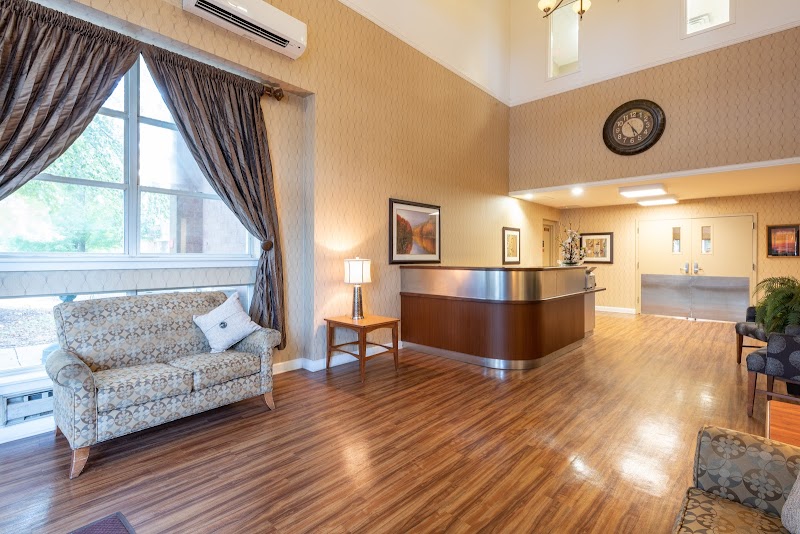
How is Suburban Woods Health & Reha Staffed?

CMS rates SUBURBAN WOODS HEALTH & REHA's staffing level at 3 out of 5 stars, which is average compared to other nursing homes. Staff turnover is 34%, compared to the Pennsylvania average of 46%. This relatively stable workforce can support continuity of care.

What Have Inspectors Found at Suburban Woods Health & Reha?

State health inspectors documented 22 deficiencies at SUBURBAN WOODS HEALTH & REHA during 2023 to 2025. These included: 21 with potential for harm and 1 minor or isolated issues.
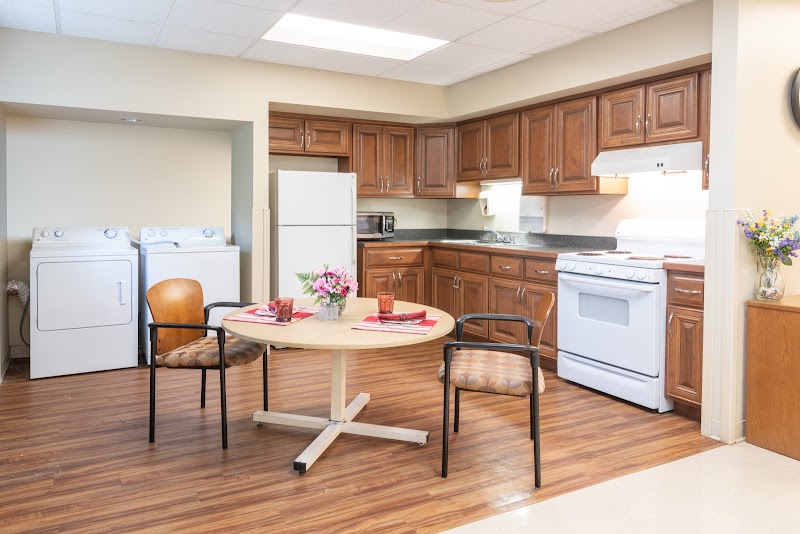
Who Owns and Operates Suburban Woods Health & Reha?

SUBURBAN WOODS HEALTH & REHA is owned by a for-profit company. For-profit facilities operate as businesses with obligations to shareholders or private owners. The facility is operated by SABER HEALTHCARE GROUP, a chain that manages multiple nursing homes. With 119 certified beds and approximately 105 residents (about 88% occupancy), it is a mid-sized facility located in NORRISTOWN, Pennsylvania.
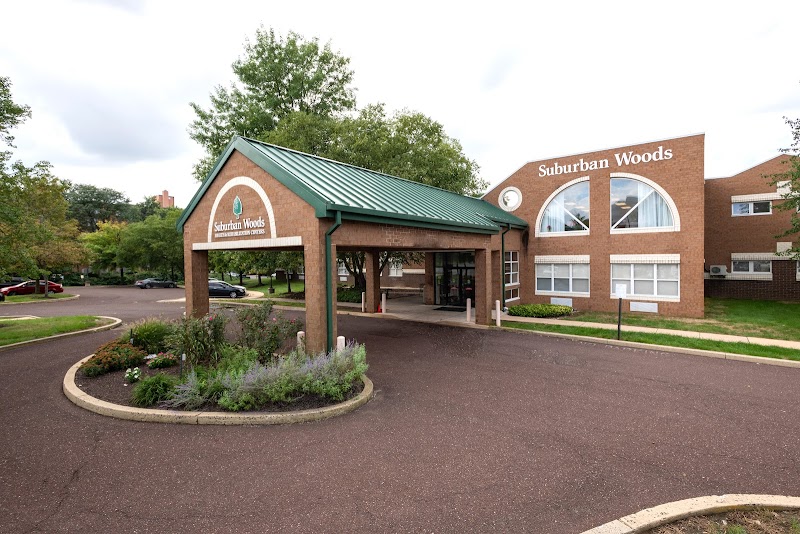
How Does Suburban Woods Health & Reha Compare to Other Pennsylvania Nursing Homes?

Compared to the 100 nursing homes in Pennsylvania, SUBURBAN WOODS HEALTH & REHA's overall rating (4 stars) is above the state average of 3.0, staff turnover (34%) is significantly lower than the state average of 46%, and health inspection rating (3 stars) is at the national benchmark.

What Should Families Ask When Visiting Suburban Woods Health & Reha?

Based on this facility's data, families visiting should ask: "Can I visit during a mealtime to observe dining assistance and food quality?" "How do you handle medical emergencies, and what is your hospital transfer rate?" "Can I speak with family members of current residents about their experience?"

Is Suburban Woods Health & Reha Safe?

Based on CMS inspection data, SUBURBAN WOODS HEALTH & REHA has a clean safety record: no substantiated abuse findings (meaning no confirmed cases of resident harm), no Immediate Jeopardy citations (the most serious violation level indicating risk of serious injury or death), and is not on the Special Focus Facility watch list (a federal program monitoring the lowest-performing 1% of nursing homes). The facility has a 4-star overall rating and ranks #1 of 100 nursing homes in Pennsylvania. While no facility is perfect, families should still ask about staff-to-resident ratios and recent inspection results during their visit.

Do Nurses at Suburban Woods Health & Reha Stick Around?

SUBURBAN WOODS HEALTH & REHA has a staff turnover rate of 34%, which is about average for Pennsylvania nursing homes (state average: 46%). Moderate turnover is common in nursing homes, but families should still ask about staff tenure and how the facility maintains care continuity when employees leave.

Was Suburban Woods Health & Reha Ever Fined?

SUBURBAN WOODS HEALTH & REHA has been fined $7,443 across 1 penalty action. This is below the Pennsylvania average of $33,153. While any fine indicates a compliance issue, fines under $50,000 are relatively common and typically reflect isolated problems that were subsequently corrected. Families should ask what specific issues led to these fines and confirm they've been resolved.

Is Suburban Woods Health & Reha on Any Federal Watch List?

SUBURBAN WOODS HEALTH & REHA is not on any federal watch list. The most significant is the Special Focus Facility (SFF) program, which identifies the bottom 1% of nursing homes nationally based on persistent, serious quality problems. Not being on this list means the facility has avoided the pattern of deficiencies that triggers enhanced federal oversight. This is a positive indicator, though families should still review the facility's inspection history directly.