HORSHAM CENTER FOR JEWISH LIFE
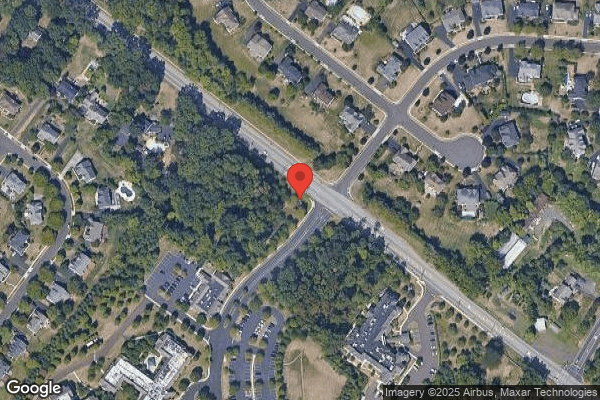
1425 HORSHAM ROAD, NORTH WALES, PA 19454 (215) 371-3000
For profit - Corporation 324 Beds IMPERIAL HEALTHCARE GROUP Data: November 2025 2 Immediate Jeopardy citations
Trust Grade
6/100
#440 of 653 in PA
Last Inspection: June 2025

Inspected within the last 6 months. Data reflects current conditions.

Overview

Horsham Center for Jewish Life has received a Trust Grade of F, indicating significant concerns about the quality of care provided. Ranking #440 of 653 in Pennsylvania places it in the bottom half of facilities, and #42 of 58 in Montgomery County suggests that only a few local options may be better. The situation appears to be worsening, as the number of issues increased from 14 in 2024 to 24 in 2025. Staffing is rated at 3/5, which is average, with a turnover rate of 45%, slightly below the state average. However, the facility has incurred concerning fines totaling $114,699, which is higher than 83% of state facilities, and has less RN coverage than 92% of Pennsylvania facilities, meaning there is limited oversight from registered nurses. Specific incidents have raised serious alarm, including a failure to provide adequate supervision for a resident with suicidal ideation, leading to a self-harm incident that put the resident in immediate jeopardy. Another critical finding involved a resident who was not properly monitored during dialysis treatment, resulting in a serious infection and an emergency transfer to the hospital. While the facility has some strengths in staffing stability, these severe deficiencies highlight significant weaknesses in resident safety and care.

Trust Score
F
6/100
In Pennsylvania
#440/653
Bottom 33%
Safety Record
High Risk
Review needed
Inspections
Getting Worse
14 → 24 violations
Staff Stability
⚠ Watch
45% turnover. Above average. Higher turnover means staff may not know residents' routines.
Penalties
⚠ Watch
$114,699 in fines. Higher than 92% of Pennsylvania facilities. Major compliance failures.
Skilled Nurses
⚠ Watch
Each resident gets only 25 minutes of Registered Nurse (RN) attention daily — below average for Pennsylvania. Fewer RN minutes means fewer trained eyes watching for problems.
Violations
⚠ Watch
43 deficiencies on record. Higher than average. Multiple issues found across inspections.
★★☆☆☆
2.0
Overall Rating
★★★☆☆
3.0
Staff Levels
★★★★☆
4.0
Care Quality
★★☆☆☆
2.0
Inspection Score
Stable
2024: 14 issues
2025: 24 issues

The Good

  • 4-Star Quality Measures · Strong clinical quality outcomes
  • Full Sprinkler Coverage · Fire safety systems throughout facility
  • No fines on record

Facility shows strength in quality measures, fire safety.

The Bad

2-Star Overall Rating

Below Pennsylvania average (3.0)

Below average - review inspection findings carefully

Staff Turnover: 45%

Near Pennsylvania avg (46%)

Higher turnover may affect care consistency

Federal Fines: $114,699

Well above median ($33,413)

Significant penalties indicating serious issues

Chain: IMPERIAL HEALTHCARE GROUP

Part of a multi-facility chain

Ask about local staffing decisions and management

The Ugly 43 deficiencies on record

2 life-threatening 1 actual harm
Sept 2025 1 deficiency
CONCERN (D) 📢 Someone Reported This

A family member, employee, or ombudsman was alarmed enough to file a formal complaint

Potential for Harm - no one hurt, but risky conditions existed

Deficiency F0740 (Tag F0740)

Could have caused harm · This affected 1 resident

Based on clinical record review, and staff interviews it was determined that the facility failed to ensure each resident is provided with the necessary behavioral health care in a timely manner to att...

Read full inspector narrative →
Based on clinical record review, and staff interviews it was determined that the facility failed to ensure each resident is provided with the necessary behavioral health care in a timely manner to attain or maintain the highest practicable mental and psychosocial well-being for one of five resident records reviewed (Resident R1).Findings Include: Review of care plan for Resident R1 dated August 4, 2025, revealed that the resident was at risk to be verbally aggressive (yelling/cursing when redirected) related to dementia. Interventions included, Psychiatric/Psychogeriatric consult as indicated.Review of clinical record for Resident R1 dated July 1, 2025, revealed that the resident noted to be agitated, resident was going into other residents' rooms, several attempts were made to redirect the resident, and it was unsuccessful. Staff remained with resident for supervision, and the residents were not cooperative with therapy.Review of physician progress note dated July 9, 2025, revealed that staff reported patient had wandering and some inappropriate behaviors. Some agitation was noted related to living situation.Review of clinical record for Resident R1 dated August 4, 2025, revealed that resident's sister-in-law, called the social worker and reported that resident was angry, mean and cursing at her and his niece, over the weekend. Resident appears calm today. Social Worker sent referral to psych for consultReview of clinical record for Resident R1 dated August 16, 2025, revealed that the resident became increasingly agitated and verbally aggressive toward staff when approached regarding bedtime routine. At around 7 a.m., the nurse was notified by the front desk that resident had called 911. Dispatch reported that the resident appeared confused and stated he was located outside of the facility. The resident was reorientated. Continued review of clinical record revealed that the resident did not leave the facility.Review of clinical record for Resident R1 dated August 23, 2025, revealed that the resident observed to be agitated and combative. Resident was verbally redirected at times.Review of psych consult binder available at the nurses station revealed that the resident was not on the list to be seen or documentation that the resident was seen.Review of facility electronic communication log between the facility staff and psych provider revealed that a request for psych consultation for Resident R1 was sent 30 days ago. 12 days ago a follow up message was sent for consultation. Both of the messages were unanswered.Interview with director of nursing, Employee E2 on September 3, 2025, at 1:17 p.m. confirmed that the resident was not seen by psychiatric services and should have been seen as soon as possible.28 Pa. Code 211.12(d)(1)(3)(5) Nursing services.
Jul 2025 1 deficiency
CONCERN (D) 📢 Someone Reported This

A family member, employee, or ombudsman was alarmed enough to file a formal complaint

Potential for Harm - no one hurt, but risky conditions existed

Accident Prevention (Tag F0689)

Could have caused harm · This affected 1 resident

**NOTE- TERMS IN BRACKETS HAVE BEEN EDITED TO PROTECT CONFIDENTIALITY** Based on a review of clinical records, facility policies and documentation and staff interview, it was determined facility did n...

Read full inspector narrative →
**NOTE- TERMS IN BRACKETS HAVE BEEN EDITED TO PROTECT CONFIDENTIALITY** Based on a review of clinical records, facility policies and documentation and staff interview, it was determined facility did not ensure adequate supervision and assistance to prevent accidents during a mechanical lift transfer for one of two residents reviewed (Resident R2). Review of facility policy title Lifting Machine, Using a Mechanical, revised July 2017, revealed that at least two (2) nursing staff are needed to safely move a resident with a mechanical lift, when possible.A review of Resident R2's clinical record revealed that he was admitted to the facility on [DATE], with diagnosis of chronic obstructive pulmonary disease (an ongoing lung condition caused by damage to the lungs).A review of Resident R2's allegation of abuse incident investigation report revealed that on June 18, 2025, Employee E13, nurse aide, was providing care to Resident R2 using a sit to stand lift. The report indicated that Employee E13 was by herself when she lifted the resident and transported him into the bathroom and bumped his arm in the doorway. Employee E13's statement states that she put Resident R2 onto the mechanical lift, and when she was turning the bathroom light on his arm was hurt on the door.Further review of Resident R2's incident investigation revealed that on June 18, 2025, Employee E13 was educated by Employee E19, Registered Nurse, to use two staff members when using a mechanical lift.Telephone interview with the Administrator on July 17, 2025, confirmed that Employee E13 was operating the mechanical lift by herself on June 18, 2025, when she was transporting resident R2 to the bathroom when his arm was bumped into the door, and that after this incident she was educated by the nurse to use two staff with a mechanical lift. The Administrator also indicated that Employee E13 had quit about a week after the incident and was not returning his calls related to this investigation. 28 Pa Code 211.12(d)(5) Nursing services 28 Pa Code 211.10(d) Resident care policies
Jun 2025 6 deficiencies
CONCERN (D)

Potential for Harm - no one hurt, but risky conditions existed

Deficiency F0604 (Tag F0604)

Could have caused harm · This affected 1 resident

Based on observations; review of clinical records, policies, and procedures; and staff interviews; it was determined that the facility failed to ensure that a resident was free from physical restraint...

Read full inspector narrative →
Based on observations; review of clinical records, policies, and procedures; and staff interviews; it was determined that the facility failed to ensure that a resident was free from physical restraints for one out of 35 residents reviewed (Resident R156). Findings include: Review of Resident R156's clinical record revealed that the resident was admitted in the facility on June 1, 2024, with diagnoses including Unspecified Dementia, Unspecified Severity, Without Behavioral Disturbance, Psychotic Disturbance, Mood Disturbance, and Anxiety (Dementia is the loss of cognitive functioning - thinking, remembering, and reasoning - to such an extent that it interferes with a person's daily life and activities), Parkinson's Disease with Dyskinesia (neurological disorder that primarily affects movement, causing symptoms like tremors, stiffness, and slowness of movement), Anxiety Disorder (Anxiety disorders are a group of mental health conditions characterized by excessive, persistent, and uncontrollable feelings of worry and fear), and Depression (major loss of interest in pleasurable activities). Review of Resident R156's physician orders revealed an order, dated October 25, 2024, to check placement of bed alarm for placement and function every shift for safety. Review of Resident R156's care plan, revealed; Chair alarm in place, date-initiated April 18, 2025, and Bed Alarm in place while in bed. Check for proper function daily, date-initiated July 2, 2024. Review of Resident R56's Minimum Data Set (MDS- assessment of resident care needs) dated May 6, 2025, indicated that bed alarm and chair alarm were used daily. Continued review of the MDS revealed that the resident was assessed as requiring partial to moderate assistance for sit to lying in bed, sit to stand and for lying to sitting on side of bed. Observation conducted on June 17, 2025, at 12: 36 p.m., revealed that Resident R156's has a bed alarm in placed. Review of Resident R156's clinical records of Resident R156 revealed no documented evidence that the resident was evaluated for the use of a chair/bed alarm. Interview with Employee E6, the Unit Manager, a Registered Nurse, on June 17, 2025, at 12:39 p.m., confirmed the findings. 28 Pa Code 211.8(f) Use of restraints
CONCERN (D)

Potential for Harm - no one hurt, but risky conditions existed

Tube Feeding (Tag F0693)

Could have caused harm · This affected 1 resident

Based on observations, review of facility policies, clinical record reviews and interviews with staff, it was determined that the facility failed to ensure appropriate enteral feeding practices relate...

Read full inspector narrative →
Based on observations, review of facility policies, clinical record reviews and interviews with staff, it was determined that the facility failed to ensure appropriate enteral feeding practices related to labeling for one of two residents reviewed for tube feeding (Resident R299). Findings include: Review of physician order for Resident R299, dated April 27, 2025, indicated, one time a day Administer Jevity 1.5 @50 ml/hr until total volume of 500 ml daily has infused . Observations on June 18, 2025, at 1:37 p.m. in Resident R299's room, revealed that the bottle of Jevity 1.5 Enteral Feed was dated June 10, 2025. Follow-up interview with the unit manager, Employee E11 at 1:39 p.m. confirmed the above-mentioned finding. Continued interview revealed that the enteral feed bottle must be discarded every 24 hours. 28 Pa Code 211.10(c) Resident care policies 28 Pa Code 211.12(d)(3)(5) Nursing services
CONCERN (D)

Potential for Harm - no one hurt, but risky conditions existed

Respiratory Care (Tag F0695)

Could have caused harm · This affected 1 resident

Based on observed, clinical record review and staff interview, it was determined that the facility failed to provide appropriate respiratory care and services for one of 35 residents reviewed (R205). ...

Read full inspector narrative →
Based on observed, clinical record review and staff interview, it was determined that the facility failed to provide appropriate respiratory care and services for one of 35 residents reviewed (R205). Findings include: Review of physician order for Resident R205 indicated an order dated March 9, 2025; Check and change Oxygen tubing weekly and as needed, every night shift, every Saturday per protocol; date the Oxygen tubing. Review of physician order for Residnet R205 indicated an order dated May 8, 2025; Oxygen at two Litters, to keep SPO2 (pulse oxygen level) greater than 90, Every Shift for Shortness of Breath. Observation conducted on June 17, 2025, at 10:37 a.m., revealed that Resident R205 was disconnected from Oxygen tube, although the Oxygen Concentrator was running, and while the oxygen tubing was laying on the floor. At the time of the finding the same was confirmed with a Licensed Nurse, Employee E7. 28 Pa Code 211.10(c) Resident care policies 28 Pa Code 211.12(d)(5) Nursing services
CONCERN (D)

Potential for Harm - no one hurt, but risky conditions existed

Deficiency F0699 (Tag F0699)

Could have caused harm · This affected 1 resident

Based on review of clinical records, staff and resident interviews, it was determined that the facility failed to provide culturally competent, trauma care in accordance with professional standards of...

Read full inspector narrative →
Based on review of clinical records, staff and resident interviews, it was determined that the facility failed to provide culturally competent, trauma care in accordance with professional standards of practice, accounting for the resident's past experiences and preferences in order to eliminate and/or mitigate triggers that may cause re-traumatization of the resident for one of three residents sampled for behavior. (Resident R130) Findings include: A review of the clinical record revealed that Resident R130 was admitted to the facility, with diagnoses to include post-traumatic stress disorder (PTSD)(a mental health condition that develops after experiencing or witnessing a traumatic event, such as a natural disaster, war, violent crime, or personal loss), anxiety disorder, and bipolar disorder. A quarterly Minimum Data Set assessment (MDS- a federally mandated standardized assessment process conducted at specific intervals to plan resident care) for Resident R130 dated April 8, 2025, Section I, Active Diagnoses, Psychiatric/Mood Disorder, question I6100, indicated the resident has post-traumatic stress disorder (PTSD). Resident R158's current care plan, review completed on June 16, 2025, revealed a care plan for PTSD. Further review of the care plan did not address resident's actual diagnoses/condition of PTSD, identifying the resident's past experiences and possible triggers that may cause re-traumatization. Interview with the Social Service Director, Employee E10, on June 20, 2025, at 10:16 a.m. confirmed that Resident R130's care plan for PTSD did not include resident's actual diagnoses/condition of PTSD, identifying the resident's past experiences and possible triggers that may cause re-traumatization. 28 Pa. Code 211.12(c)(d)(3)(5) Nursing services
CONCERN (D)

Potential for Harm - no one hurt, but risky conditions existed

Infection Control (Tag F0880)

Could have caused harm · This affected 1 resident

**NOTE- TERMS IN BRACKETS HAVE BEEN EDITED TO PROTECT CONFIDENTIALITY** Based on observations, review of facility policies, review of facility documentation, clinical record review and interviews with...

Read full inspector narrative →
**NOTE- TERMS IN BRACKETS HAVE BEEN EDITED TO PROTECT CONFIDENTIALITY** Based on observations, review of facility policies, review of facility documentation, clinical record review and interviews with staff, it was determined that the facility failed to maintain an effective infection control program related with Enhanced Barrier Precautions for one of 14 residents reviewed (R142). Findings include: Review of literature revealed that Enhanced Barrier Precautions are infection control intervention designed to reduce the transmission of novel or Multi-Drug-Resistant Organisms. Enhanced Barrier Precautions require to employ the use of targeted Personal Protective Equipment (PPE) during high contact patient/resident activities. Review of Resident R142's clinical record revealed that the resident was admitted to the facility on [DATE] with the diagnoses of Dependence on Renal Dialysis, and Obstructive and Reflux Uropathy Obstructive Unspecified (Reflux Uropathy Obstructive Unspecified refers to a condition where there's a blockage in the urinary tract that prevents normal urine flow. Review of physician order dated June 2, 2025, for Resident R142, indicated an order stating, Enhanced Barrier Precautions Every Shift. On June 17, 2025, at 10:52 a.m., observed Ophthalmologist (eye doctor), E8, was providing Eye-Examination -Care to Resident R142, without wearing a protective gown as part of the PPE. At the time of the finding, the same was confirmed with Employee E8. 28 Pa Code 201.14(a) Responsibility of licensee 28 Pa Code 201.18(d) Management
CONCERN (E)

Potential for Harm - no one hurt, but risky conditions existed

Deficiency F0804 (Tag F0804)

Could have caused harm · This affected multiple residents

Based on review of facility documentation, observations, and resident and staff interviews, it was determined that the facility failed to provide food and drink that was palatable and served at the pr...

Read full inspector narrative →
Based on review of facility documentation, observations, and resident and staff interviews, it was determined that the facility failed to provide food and drink that was palatable and served at the proper temperature. Findings include: Interview with Resident R80 on June 16, 2025 at 11:23am revealed that food does not taste good. Interview with Resident R230 on June 16, 2025 at 1:07pm revealed that food does not taste good and is not cooked to right temperatures, tends to be overdone or underdone depending on the dish. Interview conducted with Resident R137, during dining on June 16, 2025, at 1:27 p.m. revealed that the food was cold. During a group interview on June 18, 2025, at 10:03 p.m. when food was brought up and all the residents agreed that there were problems with the food. Residents R33, R110, and R230, stated that last week, chicken was served partially raw with visible blood. Observations during a test tray conducted with the Dietitian, Employee E9, on June 18, 2025, at 1:01 p.m. revealed pasta registered at 107.6 degrees Fahrenheit (F); green beans registered at 102.5 degrees F; salmon at 109.5 degrees F; and orange juice at 52.5 degrees F. Follow-up interview with the Dietitian, at 1:20 a.m. confirmed that the tested food items were too cool to be palatable. 28 Pa. Code 201.14(a) Responsibility of licensee 28 Pa. Code 201.18(b)(3) Management 28 Pa. Code 201.14(a) Responsibility of licensee 28 Pa. Code 201.18(b)(3) Management 28 Pa. Code 211.6(f) Dietary services
Feb 2025 3 deficiencies
CONCERN (D) 📢 Someone Reported This

A family member, employee, or ombudsman was alarmed enough to file a formal complaint

Potential for Harm - no one hurt, but risky conditions existed

Transfer Requirements (Tag F0622)

Could have caused harm · This affected 1 resident

**NOTE- TERMS IN BRACKETS HAVE BEEN EDITED TO PROTECT CONFIDENTIALITY** Based on clinical record review and staff interview, it was determined that the facility failed to make certain that the necessa...

Read full inspector narrative →
**NOTE- TERMS IN BRACKETS HAVE BEEN EDITED TO PROTECT CONFIDENTIALITY** Based on clinical record review and staff interview, it was determined that the facility failed to make certain that the necessary resident information was communicated to the physician before the resident was discharged against medical advice (AMA) for one of one resident reviewed. (Residents R1). Findings include: Review of Resident R1's clinical record revealed the resident was admitted on [DATE], with the diagnoses of fracture of right lower leg, Parkinson's disease (movement disorder of the nervous system), dysphagia (difficulty swallowing), type 2 diabetes (failure of the body to produce insulin), and lack of coordination,. Review of Resident R1's Minimum Data Set (MDS - a periodic assessment of care needs) dated, November 16, 2024, revealed a Brief Interview for Mental Status (BIMS) of 15 which indicated that the resident was cognitively intact. On January 27, 2025, at 9:02 a.m., an interview was held with the Administrator, Employee E1, and the Director of Nursing, Employee E2, who reported that Resident R1 was discharged with AMA (Against Medical Advice) status as the family did not cooperate in receiving transfer training to safely take the resident to a funeral. The interdisciplinary team (IDT), did not agree with Resident R1 leaving the facility without the family being trained to safely transfer the resident. On January 27, 2025, at 10:42 a.m., a telephone interview was conducted with the physician (Employee E7). Employee E7 revealed that he/she was unaware of the AMA status or the family's non-compliance. Employee E7 received a message on January 16, 2025, requesting a call back before 10:00 a.m. regarding Resident R1. However, by the time the physician, Employee E7 returned the call, Resident R1 had already left the facility. Employee E7 stated during interview that if he/she had been informed, it would have been recommended that the facility document the family's refusal rather than having the resident sign for an Against Medical Advice (AMA) discharge. On January 27, 2025, at 11:14 a.m., an interview was conducted with the Rehabilitation Director (Employee E6). Employee E6 revealed that on January 14, 2025, the family requested that Resident R1 attend a family funeral. Two male family members were designated to assist the resident with transfers, as the resident is unable to ambulate independently. Employee E6 reported that Resident R1 required one-person assistance with minimal support for transfers. The family was offered training the following day to ensure a safe transfer; however, the family declined, as the two family members were out of state and unavailable to attend the training. On February 27, 2025, at 12:00 p.m., an interview was conducted with the Director of Nursing (Employee E2) and the Administrator (Employee E1). Both employees confirmed that the physician was not informed about the status of Resident R1 before the resident left the facility, and they acknowledged that the physician should have been involved in the decision-making process. 28 Pa. Code 201.29 (a)(c.3)(2) Resident rights
CONCERN (D) 📢 Someone Reported This

A family member, employee, or ombudsman was alarmed enough to file a formal complaint

Potential for Harm - no one hurt, but risky conditions existed

Dental Services (Tag F0791)

Could have caused harm · This affected 1 resident

**NOTE- TERMS IN BRACKETS HAVE BEEN EDITED TO PROTECT CONFIDENTIALITY** Based on a review of clinical records and interview with resident and staff, it was determined that the facility did not ensure ...

Read full inspector narrative →
**NOTE- TERMS IN BRACKETS HAVE BEEN EDITED TO PROTECT CONFIDENTIALITY** Based on a review of clinical records and interview with resident and staff, it was determined that the facility did not ensure that routine dental services were provided to residents in a timely manner for one of five clinical records reviewed (Resident R1) . Findings include: Review of Resident R1's clinical record revealed the resident was admitted on [DATE]. A review of the clinical record indicated that Resident R1 had a scheduled appointment on February 27, 2025, at 1:00 p.m. for the extraction of tooth #19. However, the prior dental consultation on February 13, 2025, indicated that R1's Xarelto medication needed to be held for three days before the scheduled procedure. A review of the Medication Administration Record (MAR) for February 23-27, 2025 revealed that Xarelto was administered, with no documentation indicating that it needed to be held for Resident R1 to undergo the scheduled procedure on February 27, 2025. On February 25, 2025, at 2:26 p.m., an interview with the unit manager, Employee E4 and the Director of Nursing (Employee E2) revealed that the Xarelto medication was not held prior to today's appointment due to the unit manager reported that she missed the special instruction to withhold it. As a result, the procedure needed to be rescheduled. 28 Pa. Code 211.12 (d) (5) Nursing services
CONCERN (D) 📢 Someone Reported This

A family member, employee, or ombudsman was alarmed enough to file a formal complaint

Potential for Harm - no one hurt, but risky conditions existed

Deficiency F0840 (Tag F0840)

Could have caused harm · This affected 1 resident

**NOTE- TERMS IN BRACKETS HAVE BEEN EDITED TO PROTECT CONFIDENTIALITY** Based on interview with and review of clinical records, it was determined that the facility failed to ensure timely provision of...

Read full inspector narrative →
**NOTE- TERMS IN BRACKETS HAVE BEEN EDITED TO PROTECT CONFIDENTIALITY** Based on interview with and review of clinical records, it was determined that the facility failed to ensure timely provision of professional services furnished by outside providers, for one of 5 residents reviewed (Residents R1). Findings include: Review of Resident R1's clinical record revealed the resident was admitted on [DATE], diagnosed with Fracture of Right lower leg, Parkinson's disease (movement disorder of the nervous system) and lack of coordination. Continued review of Resident R1's clinical record revealed that the resident sustained a fall on November 5, 2024, and was diagnosed with distal right fibula fracture. Resident R1 was receiving orthopedic services and had a follow up on December 23, 2024, with a recommendation for follow up in 4 weeks. Resident R1 next follow up appointment was scheduled for February 10, 2025, which resulted in a total of 8 weeks follow up. On February 27, 2025, at 2:26 p.m., an interview was conducted with the Director of Nursing, Employee E2 confirmed that Resident R1 had an appointment scheduled for January 20, 2025, which facility learned when the unit manager, Employee E5 who is no longer at the facility received a reminder email from the resident's family on January 19, 2025, reminding the facility about the upcoming appointment. However, transportation arrangements needed to be set up 48 hours in advance, and as a result, Resident R1's appointment had to be rescheduled. Further information revealed, according to an email dated on January 20, 2025, from the unit manager, Employee E5, it was stated: Summary notes were found in [Resident R1's] records this morning while passing medication. I asked the [Resident R1], upon her return, if she had a consultation sheet, to which she replied that she had given it to me. During this same interview Director of Nursing, Employee E2 confirmed that Employee E5 was terminated on February 13, 2025 due to unsatisfactory in regards to following up with families, residents. 28 Pa. Code 211.12 (d)(1) Nursing Services.
Feb 2025 11 deficiencies 1 Harm
SERIOUS (G) 📢 Someone Reported This

A family member, employee, or ombudsman was alarmed enough to file a formal complaint

Actual Harm - a resident was hurt due to facility failures

Deficiency F0698 (Tag F0698)

A resident was harmed · This affected 1 resident

**NOTE- TERMS IN BRACKETS HAVE BEEN EDITED TO PROTECT CONFIDENTIALITY** Based on review of clinical records, interviews with staff, and facility policy, it was determined the facility failed to ensure...

Read full inspector narrative →
**NOTE- TERMS IN BRACKETS HAVE BEEN EDITED TO PROTECT CONFIDENTIALITY** Based on review of clinical records, interviews with staff, and facility policy, it was determined the facility failed to ensure residents who require dialysis treatment receive such services, consistent with professional standards of practice, including ongoing assessment of the resident's condition and monitoring for complications before, during, and after dialysis treatments for one of three dialysis resident's reviewed (Resident R104). The facility's failure to properly monitor Resident R104's right arm fistula (used for dialysis access) resulted in actual harm to Resident R104 who required an emergent transfer to the hospital from the dialysis center when the resident's fistula was assessed as swollen, infected with purulent (thick, yellowish substance that occurs with infection) drainage and the development of a non-occlusive right brachial deep vein thrombosis. (Resident R104). Findings include: Review of the facility's policy titled, Hemodialysis Catheters-Access and Care of revised on, February 2023, indicates, after placement of the fistula or graft, the site cannot be accessed until it matures which may take 2-3 weeks for a graft and 6-12 weeks for a fistula. The primary goal is to prevent infection and maintain patency of the catheter (preventing clots). To prevent infection and/or clotting the site needs to be clean at all times. Check for signs and symptoms infection (warmth, redness, tenderness, or edema) at the access site when performing routine care. Check the color of the fingers and the radial pulse of the access arm when performing routine care and at regular intervals. Check the patency of the site at regular intervals, palpate the site to feel the Thrill or use a stethoscope to hear the whoosh sound or bruit. The nurse should document in the resident's medical record every shift the location of the catheter, condition of dressing (interventions if needed), if dialysis was done during shift, any part of report from dialysis nurse post-dialysis being given, and observations post-dialysis. Review of Resident R104's clinical record revealed, Resident R104 was admitted to the facility on [DATE], diagnosed with end state renal disease and ordered to receive hemodialysis (acts like an artificial kidney, removes waste and fluid from the body) three times a week on Tuesday, Thursday and Fridays. On November 13, 2024, Resident R104's nursing progress note revealed the resident returned from the hospital status post-surgery for the resident's right arm fistula (used for dialysis access) was noted wrapped with an ACE bandage from fingertips to the resident's upper arm, with no signs of swelling. Review of Resident R104's November 2024 physician's orders revealed there were no evidence the attending physician's orders were obtained for the care and monitoring of the resident's right arm fistula when returning from the hospital. Review of Resident R104's nursing skin checks documentation dated November 15, 2024, revealed no signs and symptoms of infection. Review of physician orders revealed an order obtained on November 25, 2024, for the antibiotic, Doxycycline Hyclate 100 milligrams tablet, to be given twice a day for 10 days due to erythema (redness) at the surgical sight. On November 26, 2024 nursing note for Resident R104 indicated the antibiotic was used for the resident's erythema at surgical site and that the right arm remained swollen and the resident returned from dialysis without issues. On November 27, 2024, nursing note notes indicated [Resident R104]'s use of antibiotic for erythema to surgical scar with no swelling or tenderness with arm wrapped with ace bandage. November 27, 2024, nursing note indicates, Resident R104 use of antibiotic for erythema to surgical scar with no swelling or tenderness with arm wrapped with ace bandage. Continuing the review of Resident R104's nursing notes dated, November 28, November 29, November 30, December 1, 2, 3, 4, and December 5, 2024 revealed the resident continued on the antibiotic, erythema was still observed at the surgical site, right arm remained swollen with the ace wrap in place. Continued review of Resident R104's nursing documentation revealed there was no evidence the resident's physician was notified by nursing staff that the resident right arm continued to be swollen when the antibiotics were completed on December 5, 2024. Further review of nursing notes from December 6, 2024 through December 9, 2024 did not reveal the resident's right surgical wound was assessed/evaluated. Review of facility documentation title Long term care evaluation dated December 16, 2024, noted non pitting edema, not dependent upon positioning, documented as 'not new,' was located on Resident R104's right palm of hand, right upper arm, right anterior elbow, and right forearm. Review of Resident R104's nursing skin check dated December 17, 2024, failed to document the status of Resident R104's swollen arm but stated at the time of assessment the resident was off the unit and the wound was wrapped. On December 19, 2024, Resident R104's nursing progress note indicated the resident was Sent out to the hospital ER (Emergency Room) for evaluation on swollen right arm. Dialysis team called this nurse and stated that they reached out to nephrology in regard to resident swollen right arm and resident needs ER visit ASAP (as soon as possible). Review of hospital records revealed Resident R104 presented to the emergency on December 19, 2024, with right upper extremity erythema edema, cellulitis/abscess with purulent drainage (thick milky foul smelling drainage commonly called pus) from his fistula site, also with nonocclusive right brachial DVT (Deep Venous Thrombosis-blood clot) and was placed on Vancomycin (an antibiotic used for severe infections). The correspondence/communication between the facility and dialysis center during that time period was either incomplete or not found. Resident R104 was also found to have two dialysis communication books both with missing and/or incomplete data between both parties. Due to a lack of documentation, the Unit Manager Employee E19 on February 7, 2025, at 10:30 a.m. was asked about the progression of Resident R104's surgical wound and the infection. The Unit Manager could not provide any additional information other than stating, We were wrapping his arm and when his arm swelled, he was sent to the hospital. Interview with the Director of Nursing on February 7, 2025 at 5:00 p.m. confirmed there were no orders obtained related to the care of the right arm fistula upon the resident's returned from the hospital on November 13, 2024. The facility failed to properly monitor and assess Resident R104's right arm fistula (used for dialysis access) for complications during and after dialysis treatments which resulted in actual harm to Resident R104 who required an emergent transfer to the hospital from the dialysis center when the resident's fistula was assessed as swollen, infected with purulent drainage and the development of a non-occlusive right brachial deep vein thrombosis. 28 Pa. Code: 211.10(c) Resident care policies 28 Pa Code 211.5(f)(ix) Clinical records 28 Pa. Code 211.12(d)(1)(3)(5) Nursing services
CONCERN (D) 📢 Someone Reported This

A family member, employee, or ombudsman was alarmed enough to file a formal complaint

Potential for Harm - no one hurt, but risky conditions existed

Deficiency F0657 (Tag F0657)

Could have caused harm · This affected 1 resident

**NOTE- TERMS IN BRACKETS HAVE BEEN EDITED TO PROTECT CONFIDENTIALITY** Based on clinical record review and interview with staff, it was determined that the facility did not ensure that care plans wer...

Read full inspector narrative →
**NOTE- TERMS IN BRACKETS HAVE BEEN EDITED TO PROTECT CONFIDENTIALITY** Based on clinical record review and interview with staff, it was determined that the facility did not ensure that care plans were updated in a timely manner for one of 35 records reviewed related to resident's behaviors of dislodging a peg tube (Resident R237). Findings include: Review of facility undated policy, titled Care Plans, Comprehensive Person- Centered dated in March 2022 indicated that a comprehensive, person-centered care plan that includes measurable objectives and timetables to meet the resident's physical, psychosocial and functional needs is developed and implemented for each resident. Assessment of resident's are ongoing, and care plans are revised as information about the residents and the residents' conditions changes. Review of clinical documentation revealed that Resident R237 was admitted to the facility on [DATE], and had diagnoses of benign neoplasm of stomach, Alzheimer's disease (progressive degenerative disease of the brain), Gastrostomy status, unspecified protein-calorie malnutrition, and attention- deficit hyperactivity. Further review revealed a note, dated March 18, 2024, at 2:13 p.m. revealed that resident's peg tube on his bed came out from abdomen. Further review revealed a note, dated June 11, 2024, at 10:19 a.m. revealed that resident pulled out peg tube. Reviewed of nursing notes for Resident R237 revealed that on December 12, 2024, at 10:59 a.m. nursing aide notified nurse of peg tube being out of the resident's stomach. Resident R237 stated that he pulled the peg tube out. Review of Resident's R237's care plan revealed that there was no care plan developed related to the resident's were behavior of pulling of his peg tube. Interview with Director of Nursing Employee E2, on February 7, 2025, at 2:15 p.m. was confirmed that resident's care plan needed to be revised related to the resident pulling the peg tube out. 28 Pa. Code 211.10 (d) Resident care policies 28 Pa. Code 211.12 (d)(5) Nursing services
CONCERN (D) 📢 Someone Reported This

A family member, employee, or ombudsman was alarmed enough to file a formal complaint

Potential for Harm - no one hurt, but risky conditions existed

Quality of Care (Tag F0684)

Could have caused harm · This affected 1 resident

Based on interview with residents, interview with staff, and review of clinical records, it was determined that facility failed to obtained a consultation with an especialist and administered insulin ...

Read full inspector narrative →
Based on interview with residents, interview with staff, and review of clinical records, it was determined that facility failed to obtained a consultation with an especialist and administered insulin medications as ordered by the physican for two of 35 residents reviewed. (Resident R40 and Resident R94) Findings include: Review of Resident R40's clinical record, revealed medical history of multiple sclerosis (slow progressive disease of the cenetal nervous system), paraplegia (paralysis on the lower half of the body), lymphedema (condition of localized swelling caused by a compromised lymphatic system) and muscle weakness. Interview with Resident R40 on Tuesday, on February 4, 2025, at 11:00 a.m., revealed that she has not seen a lymphedema specialist after communicating her preference with nursing staff over past seven months. Review of Resident R40's clinical record revealed an active physician order, obtained on August 31, 2024, for lymphedema therapy consult. Further review of Resident R40's clinical record revealed physician note, dated January 23, 2025, at 3:15 p.m., indicating to monitor for chronic bilateral lower extremity edema. R40 has been refusing diuretic and ace wrapping. she continues to state no one is doing anything about her condition . consider lymphedema therapy/vascular consult order previously appears still pending. Review of facility provided statement from unit clerk, Employee E9, dated February 7, 2025, revealed the following: Last summer it was requested that I look into lymphedema treatment centers in the area. I discussed with a colleague who stated that the only one they know of was closed. I also texted my old clinical manager at (cancer center) to see if she knew of anywhere, and unfortunately she did not. When I researched online, I was unable to locate any place that would be helpful. Review of Resident R40's clinical record revealed no documented evidence of a follow-up with Resident R40 regarding a lymphedema consult appointment. Review of facility policy 'Insulin Administration,' revised September 2014, indicates that the type of insulin, dosage requirements, strength, and method of administration must be verified before administration, to assure that it corresponds with the order on the medication sheet and the physician's order. Review of Resident R94's clinical record, on February 5, 2025, revealed medical history of chronic kidney disease - stage 3, type 2 diabetes mellitus with diabetic neuropathy. Review of Resident R94's physician orders revealed Novolog pen fill subcutaneous solution cartridge 100 unit/ml (insulin Aspart) inject 8 unit subcutaneously before meals for diabetes, to be administered at 11:00 a.m. Review of facility provided audit medication administration report revealed that on February 2, 2025, insulin Aspart was administered at 2:04 pm, by licensed nurse, employee E10. 28 Pa Code 211.12(d)(5)Nursing services
CONCERN (D) 📢 Someone Reported This

A family member, employee, or ombudsman was alarmed enough to file a formal complaint

Potential for Harm - no one hurt, but risky conditions existed

Respiratory Care (Tag F0695)

Could have caused harm · This affected 1 resident

Based on observation, record review, and staff interviews, it was determined the facility failed to provide respiratory care/oxygen services consistent with professional standards of practice for thre...

Read full inspector narrative →
Based on observation, record review, and staff interviews, it was determined the facility failed to provide respiratory care/oxygen services consistent with professional standards of practice for three of 35 residents reviewed (Residents R406, R18, and R114). Findings include: Review of Resident 406's clinical record revealed diagnoses including Chronic Respiratory Failure with hypoxia (the lungs cannot adequately oxygenate the blood, leading to low oxygen levels). Review of Resident 406's clinial record failed to reveal a physician's order for oxygen therapy. Observations conducted of Resident R406's room on February 4, 2025, at 10:30 a.m. revealed Resident 406 was wearing his/her oxygen and the filter on the concentrator contained an abundance of grey, fuzz substance. Review of Resident R18's clinical record revealed diagnoses including Chronic Respiratory Failure with hypoxia (the lungs cannot adequately oxygenate the blood, leading to low oxygen levels). Further review of Resident R18's clinical record revealed a September 29, 2024, physician's order for oxygen at 2 litters per minute continuously. Observations conducted of Resident R18's room on February 4, 2025, at 10:45 a.m. revealed Resident R18 was wearing his/her oxygen and the filter on the concentrator contained a buildup of whiteish, grey, fuzz substance. Review of Resident R114's clinical record revealed diagnoses including Chronic Respiratory Failure with hypoxia (the lungs cannot adequately oxygenate the blood, leading to low oxygen levels). Observations conducted of Resident R114's room on February 4, 2025, at 10:55 a.m. revealed Resident R18 was wearing his/her oxygen and the filter on the concentrator contained a buildup of grey, fuzzy substance. During an interview with the Unit Manager, Employee E8 on February 4, 2025, at 11:45 a.m., it was revealed that the oxygen concentrator filter in these three rooms needed to be cleaned. 28 Pa code 211.12(d)(1)(2)-Nursing Services
CONCERN (D) 📢 Someone Reported This

A family member, employee, or ombudsman was alarmed enough to file a formal complaint

Potential for Harm - no one hurt, but risky conditions existed

Deficiency F0730 (Tag F0730)

Could have caused harm · This affected 1 resident

Based on review of facility provided documentation, it was determined that facility did not ensure nurse aides had completed annual performance evaluation for three out of nine nurse aides reviewed (E...

Read full inspector narrative →
Based on review of facility provided documentation, it was determined that facility did not ensure nurse aides had completed annual performance evaluation for three out of nine nurse aides reviewed (Employee E11, E12, E13) Findings include: Review of facility policy 'Performance Evaluations,' revised September 2020, indicates that a performance evaluation will be completed on each employee at the conclusion of his/her 90-day probationary period, and at least annually thereafter. Request to review nurse aide performance evaluations on Wednesday, February 5, 2025, at 12:05 p.m. revealed facility was unable to provide completed performance evaluation for nurse aide, Employees E11 and E12. Request to review additional nurse aide performance evaluations on Friday, February 7, 2025, at 11:15 a.m., revealed facility was unable to provide completed performance evaluation for nurse aide, Employee E13. 28 Pa Code 211.12(d)(1) Nursing services 28 Pa Code 211.12(d)(5) Nursing services
CONCERN (D) 📢 Someone Reported This

A family member, employee, or ombudsman was alarmed enough to file a formal complaint

Potential for Harm - no one hurt, but risky conditions existed

Deficiency F0744 (Tag F0744)

Could have caused harm · This affected 1 resident

**NOTE- TERMS IN BRACKETS HAVE BEEN EDITED TO PROTECT CONFIDENTIALITY** Based on clinical record review and staff interview, it was determined that the facility failed to develop and implement an indi...

Read full inspector narrative →
**NOTE- TERMS IN BRACKETS HAVE BEEN EDITED TO PROTECT CONFIDENTIALITY** Based on clinical record review and staff interview, it was determined that the facility failed to develop and implement an individualized person-centered care plan to address a resident's dementia care needs for one of 35 residents reviewed (Resident R46). Findings Include: Reviewed facility dementia policy title Dementia Clinical Protocol dated in November 2018 states that treatment/management for the individual with confirmed dementia, the IDT team will identify a resident-centered care plan to maximized remain function and quality of life. Review of the admission sheet of Resident R46, revealed that Resident R46 was admitted to the facility on [DATE], with the diagnosis of Dementia (Dementia is not a specific disease but is rather a general term for the impaired ability to remember, think, or make decisions that interferes with doing everyday activities). Review of Minimun Data Set (MDS- assessment of resident care needs) revealed that Resident R46 received antipsychotic (Antipsychotic medications have the effect of changing a person's behavior, mood, and emotions). On February 7, 2025, at 10:04 a.m., review of Resident 46's care plan revealed no care plan with measurable goals and interventions to address the care and treatment need related with dementia care of Resident R46. During an interview on February 7, 2025, at 9:44 a.m., the Director of Nursing (DON), confirmed that residents with diagnosis Dementia should be care planned. 28 Pa Code 211.11(d) Resident care plan 28 Pa Code 211.12 (d)(1)(3)(5) Nursing service
CONCERN (D) 📢 Someone Reported This

A family member, employee, or ombudsman was alarmed enough to file a formal complaint

Potential for Harm - no one hurt, but risky conditions existed

Medical Records (Tag F0842)

Could have caused harm · This affected 1 resident

**NOTE- TERMS IN BRACKETS HAVE BEEN EDITED TO PROTECT CONFIDENTIALITY** Based upon review of resident records and interviews with staff it was determined that the facility failed to maintain ongoing c...

Read full inspector narrative →
**NOTE- TERMS IN BRACKETS HAVE BEEN EDITED TO PROTECT CONFIDENTIALITY** Based upon review of resident records and interviews with staff it was determined that the facility failed to maintain ongoing communication between the facility and a dialysis provider that was completed and/or available for review for three of three residents receiving dialysis (Resident R104, R139 and R230). Findings include Resident R104 was admitted to the facility on [DATE], diagnosed with end state renal disease and was ordered to receive hemodialysis three times a week on Tuesday, Thursday and Fridays. Hospital records revealed Resident R104 presented to the emergency on December 19, 2024, with right upper extremity erythema edema, cellulitis/abscess with purulent drainage (thick milky foul smelling drainage commonly called pus) from his fistula site, also with nonocclusive right brachial DVT (blood clot) and was placed on Vancomycin (an antibiotic used for severe infections). The correspondence/communication between the facility and dialysis center during that time period was either incomplete or not found. Resident R104 was also found to have two dialysis communication books both with missing and/or incomplete data between both parties. Due to a lack of documentation, the Unit Manager on February 7, 2025, at 10:30 a.m. was asked about the progression of Resident R104's surgical wound and the infection. The Unit Manager could not provide any additional information other than stating, We were wrapping his arm and when his arm swelled, he was sent to the hospital. Review of Resident R139's clinical record revealed a physician's order for hemodialysis every Monday, Wednesday and Friday with a 3:00 p.m. chair time at an on-site dialysis center. Further review of Resident R139's dialysis log record revealed that only eleven of nineteen log pages were completed with one page (2/5/25) having no documentation from the dialysis center on the resident's clinical information, and the other ten pages (12/24/24, 12/27/24, 12/29/24, 1/3/25, 1/10/25, 1/17/25, 1/20/25, 1/24/25, 1/29/25 and 1/31/25) missing the post-dialysis documentation from the facility evening staff. Interview with the Unit Manager, Employee E8, on February 7, 2025, at 9:30 a.m. confirmed that the dialysis center had failed to complete the clinical documentation on February 5, 2025, and that the facility nurse should have completed the post-dialysis documentation on the other ten dates for Resident R139. 28 Pa. Code: 211.5(f) Clinical records 28 Pa. Code: 211.5(g) Clinical records
CONCERN (D) 📢 Someone Reported This

A family member, employee, or ombudsman was alarmed enough to file a formal complaint

Potential for Harm - no one hurt, but risky conditions existed

Deficiency F0947 (Tag F0947)

Could have caused harm · This affected 1 resident

Based on review of facility provided documentation and interview with staff, it was determined that facility did not ensure required in-services training was provided for one nurse aide out of nine nu...

Read full inspector narrative →
Based on review of facility provided documentation and interview with staff, it was determined that facility did not ensure required in-services training was provided for one nurse aide out of nine nurse aides reviewed (Employee E14) Findings include: Review of facility policy 'In-Service Training, Nurse Aide,' revised August 2022, indicates that in-service training is based on the outcome of the annual performance review, annual in-services: are no less than 12 hours per employment year. Request to review regular in-service education for nurse aides, on Wednesday, February 5, 2025, at 12:05 pm, revealed facility unable to provide completed in-service education for nurse aide, Employee E14. 28 Pa Code 201.19(7) Personnel policies and procedures 28 Pa Code 201.20(d) Staff development
CONCERN (E) 📢 Someone Reported This

A family member, employee, or ombudsman was alarmed enough to file a formal complaint

Potential for Harm - no one hurt, but risky conditions existed

Deficiency F0725 (Tag F0725)

Could have caused harm · This affected multiple residents

**NOTE- TERMS IN BRACKETS HAVE BEEN EDITED TO PROTECT CONFIDENTIALITY** Based on observations, interview with residents and staff, it was determined that the facility did not provide sufficient nursin...

Read full inspector narrative →
**NOTE- TERMS IN BRACKETS HAVE BEEN EDITED TO PROTECT CONFIDENTIALITY** Based on observations, interview with residents and staff, it was determined that the facility did not provide sufficient nursing staff at all times to provide nursing and related services to meet the resident's needs for 12 out of 35 residents reviewed (Resident R180, R46, R155, R247, R75, R78, R137, R32, R134, R11, R161 and R7) Findings include: Review of facility's policy 'Call System, Residents,' revised September 2022, indicates that calls for assistance are answered in a timely fashion. Observations on Tuesday, February 4, 2025, on D3 unit, revealed call bell light on appeared at 9:45 a.m., room#304. Continued observation on D3 unit, revealed call bell light still on at 10:16 am, room#304. Interview with Resident R180, in room [ROOM NUMBER], on February 4, 2025, at 10:30 am, revealed that late call bell response time is common and he believes nurse aides quit or left to another unit. Interview with Resident R217, on February 4, 2025, unit D3, at 11:15 a.m. Interview with Resident R15, unit D2, on February 4, 2025, unit D3, at 11:30 a.m., revealed concern with facility not having enough nurse aides. Interview with Resident R111, on February 4, 2025, at 11:35, unit D2, revealed concern with facility not having enough nurse aides. Interview with Resident R16, unit D2, on February 4, 2025, at 11:40 a.m., revealed concern with facility not having enough nurse aides which affects her shower days. Interview with Resident R73, unit D2, on February 4, 2025, at 11:45 a.m., revealed concern with facility not having enough nurse aides which affects her shower days. Interview with nursing aide, Employee E16, on February 4, 2025, at 11:12 a.m., revealed that she has 13 residents on her case loaded and only 2 nursing aides working during the day shift. Also feels overwhelmed with the resident's case loaded and asked the facility to have more staff on each unit but nothing was provided. Interview with Resident R46 on February 5, 2025, at 1:16 p.m. revealed concern with call bell not been answered in timely manner and medication not been giving in timely manner because of not enough staff. Resident council meeting was held on February 5, 2025, at 10:30 a.m. with alert residents R247, R75, R78, R137, R32, R134, R11, R161 and R7, reported the biggest concern in this facility is not having enough of nursing aides and nurses on each unit. Call bells are not answered in a timely manner, residents must wait 45 mins to one hour to get help. A lot of falls happened because residents get up to use the bathroom without assistant due to not having enough staff and staff support. Medication is not pass out in the timely manner because not enough nurses on each unit. 28 Pa Code 211.12(d)(4) Nursing services 28 Pa Code 201.14(a) Responsibility of licensee 28 Pa Code 201.18(a)(3) management
CONCERN (E) 📢 Someone Reported This

A family member, employee, or ombudsman was alarmed enough to file a formal complaint

Potential for Harm - no one hurt, but risky conditions existed

Deficiency F0804 (Tag F0804)

Could have caused harm · This affected multiple residents

Based on observations, resident and staff interviews, it was determined that the facility failed to provide food and drink that was palatable and served at palatable temperatures for 15 of 35 resident...

Read full inspector narrative →
Based on observations, resident and staff interviews, it was determined that the facility failed to provide food and drink that was palatable and served at palatable temperatures for 15 of 35 residents reviewed (Residents R114, R55, R406, R10, R268, R204, R31, R18, R285, R407, R22, R221, R182, R28 and R118). Findings include: Interview with Resident R114 on February 4, 2025, at 9:55 a.m. revealed that the food is always served cold. Interview with Resident R55 on February 4, 2025, at 9:59 a.m. revealed that he does not care for the food, it is just not good, they could do a lot better. Interview with Resident R406 February 4, 2025, at 10:03 a.m. revealed that the food does not taste good, and it is not always hot enough. Interview with Resident R268 February 4, 2025, at 10:06 a.m. revealed the food is cold, especially the scrambled eggs. He stated that the kitchen staff say it is hot when it leaves the kitchen but it takes too long to be delivered. He said that he doesn't like that the meat is served only at night and at lunch it is too much starch and cheese, not good for a diabetic worried about cholesterol. He said that most days he can only eat the soup. Interview with Resident R10 on February 4, 2025, at 10:10 a.m. revealed that she does not like the food, and it is often cold when she gets it. Interview with Resident R204 on February 4, 2025, at 10:13 a.m. revealed that the food is not always hot, and you don't always get what is on the meal ticket. Interview with Resident R31 on February 4, 2025, at 10:17 a.m. revealed that she thinks that the food is horrible, she just doesn't like it at all, and that it is often too cold. Interview with Resident R18 on February 4, 2025, at 10:20 a.m. revealed that the food is horrible, she can't eat anything with their mayonnaise and that cuts out the chicken and egg salad sandwiches which I love, and so that kills me. Interview with Resident R285 on February 4, 2025, at 10:23 a.m. revealed that the food is often served cold. Interview with Resident R407 on February 4, 2025, at 10:27 a.m. revealed that the food is not very good and it could be hotter. Interview with Resident R22 on February 4, 2025, at 10:31 a.m. revealed that she does not like the food, it is really bad. Interview with Resident R221 on February 4, 2025, at 10:35 a.m. revealed that he doesn't like the food, it is poor quality, and he doesn't think they follow the Kosher laws, that the Rabbi is not inspecting the food like they should. He said that he does not eat it that often. Interview with Resident R182 on February 4, 2025, at 10:44 a.m. revealed that he doesn't eat the food, it is sometimes cold, and that he usually orders out. Interview with Resident R118's spouce on February 4, 2025, at 11:41 a.m. revealed that the food does not taste good, and is often burned or cold, and that the meat is of low quality. Observations during a test tray conducted with the Dietitian, Employee E6, on February 5, 2025, at 12:20 p.m. revealed that the Brussels sprouts were 124.5 degrees and below 135 degrees, and the skim milk was 50 degrees, and the red gelatin was 53.4 degrees. The macaroni and cheese tasted bland with little cheese flavor, the skim milk tasted warm, and the gelatin was not cool or firm. An interview with the the Dietitian, Employee E6, on February 5, 2025, at 12:30 p.m. confirmed that these food items were outside the acceptable temperature range and therefore not palatable. 28 Pa. Code 201.14(a) Responsibility of licensee 28 Pa. Code 201.18(b)(3) Management
MINOR (B) 📢 Someone Reported This

A family member, employee, or ombudsman was alarmed enough to file a formal complaint

Minor Issue - procedural, no safety impact

Transfer Notice (Tag F0623)

Minor procedural issue · This affected multiple residents

Based on review of facility documentation, review of clinical records, and interviews with staff, it was determined that the facility failed to notify the Office of the State Long-Term Care Ombudsman ...

Read full inspector narrative →
Based on review of facility documentation, review of clinical records, and interviews with staff, it was determined that the facility failed to notify the Office of the State Long-Term Care Ombudsman of facility-initiated emergency transfers to the hospital and that a resident's representative was made aware of a facility-initiated transfer, for two of eight residents reviewed. (Residents R67 and R237) Findings Include: Review of nursing notes for Resident R67 dated November 10, 2024, at 10:18 a.m. revealed that the resident had a unwitnessed fall and was transferred to a local hospital for evaluation. Further review revealed a note, dated October 8, 2024, at 11:16 p.m., which indicated that Resident R67 was admitted to the local hospital for feeling nauseous and dizzy and was observation with syncope. Further record review for another Residents R237 revealed that November 24, 2024, at 3:14 p.m. revealed that resident pulled the hypodermoclysis out and family wanted to send resident to hospital to be evaluated. Further review revealed a note, dated June 11, 2024, at 10:19 a.m. revealed that Resident R237 pulled out Peg tube and was send to hospital. Further review revealed a note, dated March 18, 2024, at 2:13 p.m. revealed that resident's peg tube on his bed came out from abdomen and was send to hospital. Review of documentation provided by the Assistant Administrator, Employee E15, on February 6, 2025, at 1:38 p.m., revealed the Office of the State Long Term Care Ombudsman was not made aware Residents R67 and R237's facility-initiated emergency transfers to the hospital as required. 28 Pa. Code 201.14(a) Responsibility of licensee 28 Pa. Code 201.18(b)(2) Management
Jan 2025 2 deficiencies 1 IJ
CRITICAL (J) 📢 Someone Reported This

A family member, employee, or ombudsman was alarmed enough to file a formal complaint

Immediate Jeopardy (IJ) - the most serious Medicare violation

Accident Prevention (Tag F0689)

Someone could have died · This affected 1 resident

Based on the review of clinical records, facility documentation, facility policies, and interview with residents and staff, it was determined the facility failed to ensure a resident's environment was...

Read full inspector narrative →
Based on the review of clinical records, facility documentation, facility policies, and interview with residents and staff, it was determined the facility failed to ensure a resident's environment was free of accident hazards, and failed to ensure hazardous materials were not accessible to one of nine residents (Resident R1). Staff failed to provide supervision for Resident R1 with documented history of suicidal ideation and who voiced suicidal thoughts. This failure resulted in Resident R1 obtaining a disposable razor and cutting her/his wrist. This failure placed Resident R1 at risk for serious injury and resulted in an Immediate Jeopardy situation for Resident R1. This deficiency is cited as past non-compliance. Findings Include: Review of facility policy Safety and Supervision of Residents dated August 2024, revealed Our facility strives to make the environment as free from accident hazards as possible. Resident safety, supervision and assistance to prevent accidents are facility-wide priorities. Safety risks and environmental hazards are identified on an ongoing basis through a combination of employee training, employee monitoring, and reporting processes; QAPI (Quality Assurance Improvement Plan) reviews of safety and incident/accident data; and a facility-wide commitment to safety at all levels of the organization. Individualized, Resident-Centered Approach to Safety 1. Our individualized, resident-centered approach to safety addresses safety and accident hazards for individual residents. 2. The interdisciplinary care team shall analyze information obtained from assessments and observations to identify any specific accident hazards or risks for individual residents. 3. The care team shall target interventions to reduce individual risks related to hazards in the environment, including adequate supervision and assistive devices. 4. Implementing interventions to reduce accident risks and hazards shall include the following: a. Communicating specific interventions to all relevant staff; b. Assigning responsibility for carrying out interventions; c. Ensuring that interventions are implemented; and d. Documenting interventions. 1. Due to their complexity and scope, certain resident risk factors and environmental hazards are addressed in dedicated policies and procedures. These risk factors and environmental hazards include the following: a. Bed Safety; b. Safe Lifting and Movement of Residents; c. Falls; d. Smoking; e. Unsafe Wandering; f. Poison Control; g. Electrical Safety; and h. Water Temperatures. i. Items that can have potential harm Review of facility policy Suicide Threats dated August 2024, revealed that Resident suicide threats shall be taken seriously and addressed appropriately. 1. Staff shall report any resident threats or alarming passive language of potential suicide immediately to the nurse supervisor/charge nurse. 2. The nurse supervisor/charge nurse shall immediately assess the situation and shall notify the charge nurse/supervisor and/or director of nursing services of such threats. 3. After assessing the resident, the nurse supervisor/charge nurse shall notify the resident's attending physician and responsible party, and shall seek further direction from the physician. 4. All nursing personnel and other staff involved in caring for the resident shall be informed of the suicide threat and instructed to report changes in the resident's behavior immediately. 5. Staff will monitor the resident's mood and behavior and update care plans accordingly. 6. Staff shall document details of the situation objectively in the resident's medical record. Review of facility policy 1:1 (a facility staff individually providing observation to a resident) Supervision of Residents dated December 31, 2024, revealed Resident safety is a priority at Horsham Center for Jewish Life. Residents that are exhibiting behaviors that may cause harm, are placed on 1 :1 supervision until IDT (Interdisciplinary team) team meets and updates plan of care to ensure safety. The behaviors below are not all inclusive: o Active/passive suicidal ideation o Repeated or continuing attempts to seriously self-harm o Active exit-seeking-residents o Repeated aggressive behaviors o Acute psychotic episodes. Once resident is placed on 1 :1 the following steps are to be followed: o Staff who is assigned will be given report on resident. o Shift to shift report will be completed when changing shift with ongoing and off going shift. o If any of the above behaviors arise, the supervisor is to be notified immediately. o One to one will always be within arm's length as it relates to resident safety. Review of Resident R1's clinical record revealed that the resident was admitted to the facility with diagnoses of bipolar disorder with psychotic episode (a mental illness that causes extreme mood swings, often called manic-depressive disorder), major depressive disorder (major loss of interest in pleasurable activites), and generalized anxiety disorder. Review of MDS (Minimum Data Set-Assessment of resident care needs) for Resident R1 dated December 3, 2024, revealed that the resident had a BIMS (Brief Interview for Mental Status) score of 13 which indicated that the cognitive status of the resident was intact. MDS mood assessment indicated that the resident felt down, depressed or hopeless 7-11 days in two weeks. Resident stated yes to Feeling bad about yourself - or that you are a failure or have let yourself or your family down, with a frequency of 2-6 days in 2 weeks. Resident also indicated feeling lonely or isolated. Review of care plan for Resident R1 dated August 11, 2024, revealed the resident had a history of suicidal ideation and/or intent. Care plan interventions included, assess for any suicidal ideations, consult psychology and/or psychiatry as ordered, If resident having active suicidal ideations check and remove any items/objects in room that could potentially be used for self-harm and place resident on 1:1, if needed. Review of hospital record for Resident R1 dated December 24, 2024, revealed the resident admitted to the hospital from the facility for worsening depression. Resident continued to display symptoms of calling out, making statements of wanting to die and was referred for inpatient psychiatric stay. Review of physician's note for Resident R1 dated December 24,2024, revealed the resident had a recent stay at the hospital for uncontrolled anxiety and behaviors. Resident's diagnoses from hospital included depression, anxiety and bipolar disorder. The physician recommended to monitor resident closely. Review of nursing note for Resident R1 dated December 29, 2024, at 4:56 a.m., revealed the resident displayed signs of anxiety throughout the beginning of the shift. Review of nursing note for Resident R1 dated December 29, 2024, at 9:27 a.m., revealed that Nurse reports resident stated (she/he) is going to cut (his/her) wrists. 1:1 started, MD (physician) notified, VM (voice message) left for daughter, room searched for harmful objects. Resident is to have plastic silverware, dietary/nursing made aware. DON (Director of Nursing) notified. Review of nursing note for Resident R1 dated December 29, 2024, at 1:56 p.m., revealed the resident had signs and symptoms of anxiety. The resident was on 1:1 supervision for suicidal ideation. Resident to have plastic silverware. Resident displayed signs of anxiety throughout the shift. Review of facility investigation revealed a written statement provided by Employee E4, Registered Nurse, dated December 29, 2024 revealed the resident expressed that (he/she) wanted to cut (his/her) wrists. Resident was placed on 1:1. Employee E4 searched the tables, bathroom and the tray tables. Employee E4 removed scissors, pens, and a sharp rock painting off the wall. Review of physician progress note for Resident R1 dated December 30, 2024, revealed the practitioner recommended to continue 1:1 supervision for safety related to expressed concern. Review of Psychiatrist, Employee E8's note for Resident R1 dated December 30, 2024, revealed Continue 1:1 supervision for safety due to expressed concerns. Caution to discourage dependence on aide as secondary gain for attention in light of isolation. Review of facility investigation dated December 31, 2024, related to Resident R1 revealed Resident R1 had a vertical 1.5 inch scratch and three vertical 3 centimeters scratches medial to 1.5 inch. scratch to inner aspect of left wrist which occurred on December 31, 2024, around 5:40 a.m. Resident stated (he/she) attempted to cut (his/her) own wrist. Wound was cleaned with normal saline and covered with a dry dressing. Cleanse scratch on left wrist with normal saline and bacitracin applied then covered with Band-Aid until healed. Review of nursing note for Resident R1 dated December 31, 2024, at 6:26 a.m., revealed, At approximately 0540 (5:40 a.m.) signee received a call from the Nurse Aide assigned to 1:1 explaining the resident acquired a razor and was threatening to cut her wrist. At the time of the call the CNA (nurse aide) didn't feel the resident would willingly relinquish the razor. Signee went to the resident's room to find she had given up the razor after she had scraped her wrist, causing a superficial abrasion. Wound was cleaned with NSS (normal saline solution) and covered with a clean dry dressing. Spoke with the resident to find she was feeling very down and lonely. Meanwhile the Nurse Aide swept the room for items the resident could potentially use to harm herself. Following our conversation . Mental Health Practitioner on-call contacted, message left requesting call-back. Physician called, message left requesting call-back; email sent reporting the incident. Strict 1:1 maintained. Report given to oncoming nurse and 1: 1 Nurse Aide. Review of nursing note for Resident R1 dated December 31, 2024, at 6:26 a.m., revealed While on unit A, passing morning medication. This nurse was notified by supervisor that resident had attempted to cut (his/her) wrist. Resident had several harmful items in (his/her) room upon searching by aide. After assessment, the resident received a superficial cut on the left inner wrist as 1: 1 aide was able to take item from resident. The supervisor notified the resident family as well as the psych nurse. Supervisor dressed resident cut. This nurse notified that resident will not go out at this time but will be seen by doctor. Items removed by aide. Resident complained of pain during this shift and received PRN (as needed) medication. Resident pleasant during this shift, however had moment of seeking excessive validation. Resident out of bed during most of this shift with 1 :1 aide in room. Resident plan of care is ongoing. Review of facility investigation revealed a written statement provided by statement from Licensed nurse, Employee E5, obtained by the Director of Nursing dated December 31, 2024, revealed that she confirmed the resident was on 1:1 during 11-7 with the resident. She stated that the resident was on precautions for norovirus (contagious virus that causes diarrhea and vomiting), and (he/she) was using the bathroom throughout the night into the early morning as (he/she) continued with gastrointestinal (GI) issues. Employee E5 stated that she gave the resident privacy in the bathroom and since (he/she) had norovirus while (he/she) was having ongoing GI issues. Staff remained outside the bathroom door Employee E5 stated that the resident came out of the bathroom and stated that (he/she) had cut (his/her) wrist with a razor that (he/she) found in the bathroom drawer. Immediately Employee E5 went into the bathroom to look in the drawer and she took a razor out of the drawer. She said that resident picked up the other razor and when Employee E5 asked for (resident) to give it to her Resident R1 declined. Employee E5 told (him/her) again that staff need to take the razor and if (resident) didn't give it to her, she would call security. The supervisor was called, and the resident handed over the razor. Review of progress note for Resident R1 by the Director of Nursing (DON) dated December 31, 2024, revealed that she assessed resident's left wrist, scratch marks are noted vertically on the inside of the wrist. Band-Aid was in place, some redness noted. Resident stated to the Director of Nursing, she/he did that with a razor that she/he found in the back of the bathroom drawer, and it was stupid of him/her to do, and regreted it. Interview with Employee E6, Licensed Practical Nurse, on January 7, 2025, at 11:50 a.m., revealed that she was working on December 29, 2024, when resident first expressed suicidal ideation. Resident told her that she/he was going to cut her/his wrist. Employee E6 stated the resident was placed on 1:1. Employee E6 stated 1:1 supervision should be provided all the time including inside the bathroom. Employee E6 stated razors were kept in locked clean utility room and she was not sure how resident obtained razors. Interview with Resident R1's husband who was a resident at the facility, on January 7, 2025, at 11:55 a.m., revealed that Resident R1 had severe depression since childhood. Husband stated the resident received the razors from the facility, it was the kind the facility provided. Interview with the Unit Manager, Employee E7 on January 7, 2025, at 12:00 p.m., stated she found potentially hazardous items during a search after resident cut her wrist. She stated the call bell cord was not removed after resident made the first threat, she had vaseline, lotions, and other personal product liquids in her room. Employee E7 stated resident told her that she/he got the razor from the bathroom drawer. Employee E7 stated razors should not be kept with residents with suicidal ideation and staff should stay at arms length of resident at all times when on 1:1 watch. Staff should have visual of resident even including the bathroom. Interview on January 7, 2025, at 1:00 p.m., with Employee E5, Nurse Aide who provided 1:1 supervision on December 31, 2024 to Resident R1 at the time that the resident cut her/his wrist stated that when she started 1:1 suicide watch shift, the aide I relieved informed me that the resident had been experiencing diarrhea. The resident remained awake throughout the night, frequently using the phone and going to the bathroom about every hour. At around 5:30 a.m., the resident came out of the bathroom and informed me that she/he had cut herself/himself while I was in her room. Resident R1 stated she/he had used a razor, and upon inspection, three disposable razors were found. The resident had stayed in her/his room all night, and the bathroom door had been closed during the resident use, preventing Employee E5 observing what the resident was doing in the bathroom. Employee E5 stated, she had assumed the resident had been searched before being placed on 1:1 observation. Staff stated she did not conduct a room sweep at the start of her shift. Employee E5 also stated she did not have proper PPE (Protective personal equipment), such as a mask, which limited her ability to provide supervision in the bathroom. Employee E5 stated she did not ensure the bathroom was safe before the resident used the bathroom and closed the door. After the incident, she conducted a room search and discovered a screwdriver and scissors in the desk drawer, two packs of thumbtacks in the drawer and some on the wall, two additional razors in the bathroom vanity drawer. Interview on January 7, 2025, at 1:40 p.m., with Employee E4, Registered Nurse, who searched resident room on December 29, 2024, when the resident expressed suicidal ideation stated she checked the bathroom, countertop, and drawers that was close to resident's bed, but didn't find anything. When asked if she thoroughly checked the bathroom vanity closet she stated I'm fairly certain I opened them fully, but nothing was removed from the bathroom. She stated she didn't search other cabinets and drawers other than the bedside table, where she only saw a pen and scissors. There was a sharp rock-like item on the wall which was removed. She stated she did not recall seeing a table or a cabinet next to the door. Employee E4 stated she didn't check other areas in the room, just the immediate area of the resident, and placed the resident on 1:1 supervision. Employee E4 stated the call bell cord was not removed as well. Employee E4 confirmed that the call bell cord should have been removed. Employee E4 stated resident was really anxious and a lot of time was spent calming the resident down. She stated she did not recall seeing any other items. Employee E4 also stated when residents were placed on 1:1, staff need to stay with the resident, keeping eyes on them at all times to monitor their actions. Interview with psychiatrist, Employee E8 on January 7, 2025, at 2:44 p.m. revealed that she ordered 1:1 supervision for safety related to suicidal ideation. Employee E8 stated due to resident's mental status she discouraged staff from providing companionship because she did not want resident to get used to it and to only use 1:1 for safety. Interview on January 7, 2025 at 1:40 p.m., with Employee E2, Director of Nursing, stated when resident who has a communicable disease is on isolation, staff should wear PPE and be with resident at all times. Staff should also thoroughly check the room for potentially dangerous objects when resident's express suicidal ideation. Director of Nursing confirmed that the staff did not thoroughly check Resident R1's environment when (he/she) expressed suicidal ideation on December 29, 2024, and did not provide 1:1 supervision consistently as ordered which resulted in resident obtaining razor and cut her wrist. An Immediate Jeopardy situation was identified to the Nursing Home Administrator on January 7, 2025, at 3:55 p.m. for the facility's failure to ensure that resident's environment was free of accident hazards, and failed to ensure that hazardous materials were not accessible to a resident. Staff failed to provide 1:1 supervision for Resident R1 with documented history of suicidal ideation and voiced suicidal thoughts two days prior to the indicent. This failure resulted in Resident R1 obtaining a disposable razor and cutting her/his wrist. The facility's failure placed Resident R1 who had a history of suicidal ideation at risk for serious injury and resulted in immediate jeopardy situation. An IJ Template was presented to the facility on January 7, 2025, at 3:55 p.m. The facility submitted a written plan of action on January 7, 2024, at 6:10 p.m. and implemented the plan of action which included: Resident's room was searched for all potentially dangerous objects and were removed. Documentation revealed 1:1 supervision continued, December 31, 2024, and remains in place. Review of residents with SI (suicidal ideation) was conducted on December 31, 2024, no other residents on December 31, 2024, were being observed for SI. The facility reviewed and implemented policies on December 31, 2024, to ensure that the residents with suicidal ideation/ behaviors that can lead to self-harm, do not have access to potentially dangerous objects such as sharp objects, medications, hazardous chemicals and staff provide appropriate 1:1 supervision when indicated. Education was started on December 31, 2024, for staff responsible for overseeing room searches on the policy of ensuring no sharp objects, medications, hazardous chemicals are accessible to the resident. December 31, 2024, achieving >77% and continued on January 1, 2025, with the facility completing >90%. Education will continue for any staff not educated, upon their return, prior to their 1:1 shift, until reaching 100%. Education was provided to staff providing 1:1 on ensuring that residents with SI are always within arm's length as per the supervision policy. Education was started on December 31, 2024, achieving >77% and continued on January 1, 2025, with the facility completing >90% and will continue upon their return for any staff not educated prior to their 1:1 shift until reaching 100%. Audit completed December 31, 2024, and continues Q (every) Shift for the resident on 1:1 for SI to ensure safe environment. QAPI meeting was conducted on December 31, 2024, with the IDT and will continue to be reviewed with the committee to determine if further action is needed. On January 8, 2024, at 4:45 p.m. the action plan was reviewed, observations were made of all nursing units and resident rooms. Interviews were conducted with staff to confirm that the in-service education was completed. Observation was completed to ensure consistent 1:1 observation was provided. Review of facility documentation revealed that the corrective plan was immediately developed and initiated on December 31, 2024. Audits were initiated to ensure that no sharp objects, medications, hazardous chemicals are accessible to the residents with suicidal ideation and residents with SI are always within arm's length as per the supervision policy. The facility reviewed and updated their policy related to 1:1 supervision. Additionally, the facility educated all staff to the updated facility policy. Interviews were conducted with Nurse Aides, Licensed nursing staff and Registered Nurses regarding trainings and competencies related to ensuring that no sharp objects, medications, hazardous chemicals are accessible to the residents with suicidal ideation and residents with SI are always within arm's length as per the supervision policy. Staff also stated that they received sufficient trainings from the facility. The facility alleged compliance with their plan of correction as of January 1, 2025. The Nursing Home Administrator was notified that the Immediate Jeopardy was lifted on January 8, 2025, at 4:45 p.m. This deficiency was identified as Immediate Jeopardy past non-compliance. 28 Pa. Code 211.12(d)(1) Nursing services 28 Pa. Code 211.12(d)(3)(5) Nursing services 28 Pa. Code 211.10(d) Resident care policies 28 Pa. Code 201.14(a) Responsibility of licensee 28 Pa. Code 211.18(b)(1) Management
CONCERN (D) 📢 Someone Reported This

A family member, employee, or ombudsman was alarmed enough to file a formal complaint

Potential for Harm - no one hurt, but risky conditions existed

Administration (Tag F0835)

Could have caused harm · This affected 1 resident

Based on review of facility records, job descriptions, and staff interviews, it was determined that the Nursing Home Administrator (NHA) and the Director of Nursing (DON) did not effectively manage th...

Read full inspector narrative →
Based on review of facility records, job descriptions, and staff interviews, it was determined that the Nursing Home Administrator (NHA) and the Director of Nursing (DON) did not effectively manage the facility to ensure that the resident's environment was free of accident hazards, and failed to ensure hazardous materials were not accessible to a resident. This failure resulted in Resident R1 able to obtaining a disposable razor and cutting her/his wrist. The facility's failure placed Resident R1 who had a history of suicidal ideation at risk for serious injury and resulted in Immediate Jeopardy situation. Findings include: Review of the job description for the Nursing Home Administrator (NHA) revealed that The primary purpose of the job position is to manage the Facility in accordance with current applicable federal, state, and local standards, guidelines, and regulations that govern long-term care facilities. To follow all facility policies and apply them uniformly to all employees. To ensure the highest degree of quality care is provided to our residents at all times. As Administrator, you are delegated the authority, responsibility, and accountability necessary for carrying out your assigned duties. Every effort has been made to identify the essential functions of this position. However, it in no way states or implies that these are the only duties you will be required to perform. The omission of specific statement of duties does not exclude them from the position if the work is similar, related, or is an essential function of the position. Other related duties that may become necessary/appropriate to assure facility is in compliance with current laws, regulations, and guidelines concerning operation of facility. Supervise all department heads and administrative staff. Ensures a safe environment. Ensures that all incidents' or suspected incidents of resident abuse are investigated immediately and appropriate action is taken. Review of the job description for the Director of Nursing (DON) revealed that To plan, organize, develop and direct the overall operation of the Nursing Service Department in accordance with current federal, state, and local standards, guidelines, and regulations that govern the facility, and as may be directed by the Administrator and the Medical Director, to ensure that the highest degree of quality care is maintained at all times. As Director of Nursing, you are delegated the authority, responsibility, and accountability necessary for carrying out your assigned duties. Every effort has been made to identify the essential functions of this position. However, it in no way states or implies that these are the only duties you will be required to perform. The omission of specific statement of duties does not exclude them from the position if the work is similar, related, or is an essential function of the position. Organize and direct nursing administration, nursing services and resident care developing, organizing, implementing, evaluating and directing the day-to-day functions of the Nursing Service Department, its programs and activities. Participate in developing, maintaining and periodically updating written nursing policies, procedures, reference materials, manuals, objections, and philosophies. Is responsible for making daily rounds for observation of the care of residents, for talking with physician and visiting selected residents. Facilitates communication among employees, Supervisor, and instructors in all shifts to assess, plan implement, and evaluate resident related programs. Review nurse notes and monitor resident to determine if the care plans are being followed and if each resident's needs are being met, and, participate in assessing, reviewing and revising care plans as required. Review of Resident R1's clinical record revealed that the resident was admitted to the facility with diagnoses of bipolar disorder with psychotic episode (a mental illness that causes extreme mood swings, often called manic-depressive disorder), major depressive disorder, and generalized anxiety disorder. Review of MDS (Minimum Data Set-Assessment of resident care needs) for Resident R1 dated December 3, 2024, revealed that the resident had a BIMS (Brief Interview for Mental Status) score of 13 which indicated that the cognitive status of the resident was intact. MDS mood assessment indicated that the resident felt down, depressed or hopeless 7-11 days in two weeks. Resident stated yes to Feeling bad about yourself - or that you are a failure or have let yourself or your family down with a frequency of 2-6 days in 2 weeks. Resident also indicated feeling lonely or isolated. Review of care plan for Resident R1 dated August 11, 2024, revealed that the resident had a history of suicidal ideation and/or intent. Care plan interventions included, assess for any suicidal ideations, consult psychology and/or psychiatry as ordered, If resident having active suicidal ideations check and remove any items/objects in room that could potentially be used for self-harm and place resident on 1:1 (supervison), if needed. Review of facility investigation dated December 31, 2024, revealed that Resident R1 had a vertical 1.5 inch. scratch and three vertical 3 centimeters (cm) scratches medial to 1.5 inches scratch to inner aspect of left wrist which occurred on December 31, 2024, around 5:40 a.m. Resident stated she attempted to cut her/his own wrist. Wound was cleaned with normal saline and covered with a dean dry dressing. Cleanse scratch on left wrist with normal saline and bacitracin applied then covered with Band-Aid until healed. Review of hospital record for Resident R1 dated December 24,2024, revealed that the resident admitted to the hospital from the facility for worsening depression. Resident continued to display symptoms of calling out, making statements of wanting to die and was referred for inpatient psychiatric stay. Review of physician progress note for Resident R1 dated December 24,2024, revealed that the resident recent stay at the hospital for uncontrolled anxiety and behaviors. Resident's diagnosis from hospital included depression, anxiety and bipolar disorder. Practitioner recommended to monitor resident closely. Review of nursing note for Resident R1 dated December 29, 2024, at 9:27 a.m., revealed that Nurse reports resident stated (she/he) is going to cut (his/her) wrists. 1:1 started, MD (physician) notified, VM (voice message) left for daughter, room searched for harmful objects. Resident is to have plastic silverware, dietary/nursing made aware. DON (Director of Nursing) notified. Review of nursing note for Resident R1 dated December 29, 2024, at 1:56 p.m., revealed that the resident was on 1: 1 supervision for suicidal ideation. Resident to have plastic silverware. Resident displayed signs of anxiety throughout the shift. Review of statement from Employee E4, Registered Nurse, dated December 29, 2024 revealed that the resident expressed that she/he wanted to cut her/his wrists. Resident was placed on 1:1. Employee E4 searched the tables, bathroom and the tray tables. Employee E4 removed scissors, pens, and a sharp rock painting off the wall. Review of physician note for Resident R1 dated December 30, 2024, revealed that the practitioner recommended to continue 1:1 supervision for safety related to expressed concern. Review of nursing note for Resident R1 dated December 31, 2024, at 6:26 a.m., revealed, At approximately 0540 (5:40 a.m.) signee received a call from the Nurse Aide assigned to 1:1 explaining the resident acquired a razor and was threatening to cut her wrist. At the time of the call the CNA (nurse aide) didn't feel the resident would willingly relinquish the razor. Signee went to the resident's room to find she had given up the razor after she had scraped her wrist, causing a superficial abrasion. Wound was cleaned with NSS (normal saline solution) and covered with a clean dry dressing. Spoke with the resident to find she was feeling very down and lonely. Meanwhile the Nurse Aide swept the room for items the resident could potentially use to harm herself. Following our conversation . Mental Health Practitioner on-call contacted, message left requesting call-back. Physician called, message left requesting call-back; email sent reporting the incident. Strict 1:1 maintained. Report given to oncoming nurse and 1: 1 Nurse Aide. Interview on January 7, 2025, at 1:00 p.m., with Employee E5, Nurse Aide who provided 1:1 supervision on December 31, 2024 to Resident R1 at the time that the resident cut her/his wrist stated that when she started 1:1 suicide watch shift, the aide I relieved informed me that the resident had been experiencing diarrhea. The resident remained awake throughout the night, frequently using the phone and going to the bathroom about every hour. At around 5:30 a.m., the resident came out of the bathroom and informed me that she/he had cut herself/himself while I was in her room. Resident R1 stated she/he had used a razor, and upon inspection, three disposable razors were found. The resident had stayed in her/his room all night, and the bathroom door had been closed during the resident use, preventing Employee E5 observing what the resident was doing in the bathroom. Employee E5 stated, she had assumed the resident had been searched before being placed on 1:1 observation. Staff stated she did not conduct a room sweep at the start of her shift. Employee E5 also stated she did not have proper PPE (Protective personal equipment), such as a mask, which limited her ability to provide supervision in the bathroom. Employee E5 stated she did not ensure the bathroom was safe before the resident used the bathroom and closed the door. After the incident, she conducted a room search and discovered a screwdriver and scissors in the desk drawer, two packs of thumbtacks in the drawer and some on the wall, two additional razors in the bathroom vanity drawer. Interview on January 7, 2025, at 1:40 p.m., with Employee E4, Registered Nurse, who searched resident room on December 29, 2024, when the resident expressed suicidal ideation stated she checked the bathroom, countertop, and drawers that was close to resident's bed, but didn't find anything. When asked if she thoroughly checked the bathroom vanity closet she stated I'm fairly certain I opened them fully, but nothing was removed from the bathroom. She stated she didn't search other cabinets and drawers other than the bedside table, where she only saw a pen and scissors. There was a sharp rock-like item on the wall which was removed. She stated she did not recall seeing a table or a cabinet next to the door. Employee E4 stated she didn't check other areas in the room, just the immediate area of the resident, and placed the resident on 1:1 supervision. Employee E4 stated the call bell cord was not removed as well. Employee E4 confirmed that the call bell cord should have been removed. Employee E4 stated resident was really anxious and a lot of time was spent calming the resident down. She stated she did not recall seeing any other items. Employee E4 stated when residents were placed on 1:1, staff need to stay with the resident, keeping eyes on them at all times to monitor their actions. Based on the deficiencies identified in this report, the Nursing Home Administrator and Director of Nursing failed to fulfill essential duties and responsibilities of their position to ensure that the Federal and State guidelines and Regulations were followed, contributing to the Immediate Jeopardy situation. Refer to F689 28 Pa. Code: 201.18(b)(1) Management 28 Pa. Code: 201.18(b)(3) Management
Aug 2024 6 deficiencies 1 IJ
CRITICAL (J) 📢 Someone Reported This

A family member, employee, or ombudsman was alarmed enough to file a formal complaint

Immediate Jeopardy (IJ) - the most serious Medicare violation

Accident Prevention (Tag F0689)

Someone could have died · This affected 1 resident

**NOTE- TERMS IN BRACKETS HAVE BEEN EDITED TO PROTECT CONFIDENTIALITY** Based on interviews, review of clinical records and facility documentation, it was determined that the facility failed to ensure...

Read full inspector narrative →
**NOTE- TERMS IN BRACKETS HAVE BEEN EDITED TO PROTECT CONFIDENTIALITY** Based on interviews, review of clinical records and facility documentation, it was determined that the facility failed to ensure that adequate supervision was provided to a resident who verbally expressed to nursing staff that she wanted to kill herself, which resulted in an Immediate jeopardy to Resident R1 who ingested acetaminophen, was transferred out to the hospital, had elevated blood levels of acetaminophen, and received treatment for intentional acetaminophen overdose (Resident R1). Findings include: Review of the August 2024 physician orders for Resident R1 included the diagnoses of hypertension (high blood pressure); chronic kidney disease (a gradual loss of kidney function that can lead to kidney failure); cerebral infarction (a stroke); muscle weakness; anxiety (excessive, persistent and uncontrollable worry and fear about everyday situations) and depression (a mood disorder that cause persistent feelings of sadness and loss of interest). Review of the resident's annual Minimum Data Set Assessment (MDS-a periodic assessment of a resident's needs) dated July 23, 2024 indicated that the resident was assessed with a BIMS (Brief Interview of Mental Status) score of 15, which indicated that the resident was cognitively intact. Review of a note written by the psychologist dated April 2, 2024, at 12:21 p.m. documented that the village leader (unit manager) called the psychologist and informed the psychologist that the resident left her (unit manager) several voicemails overnight reporting thoughts of being better off dead. The note also indicated that while meeting with the resident at the unit manager's request, the resident endorsed having felt overwhelmed with the thoughts of being better off dead last evening, but denied thoughts of self-harm then or in session. The psychologist reported that the resident stated that she was still having thoughts of being better off dead but denied suicide ideation. Review of a note written by the psychologist dated May 3, 2024, at 4:04 p.m. indicated a session with the psychologist where resident reported . thought of being better -off dead; she denied SI (suicidal ideation) on my interview . Review of a note written by the psychologists dated June 24, 2024, at 10:55 a.m. indicated a session with the psychologist .thoughts of being better off dead; she denied SI on my interview . Review of a nursing note dated August 3, 2022 at 10:20 p.m. by Licensed nurse, Employee E3 documented that while doing her rounds at the start of her shift (3:00 p.m. -11:00 p.m.), Resident R1 stated, I am going to kill myself. Licensed nurse, Employee E3 stated that she redirected the resident and the resident stated, know what to do and will do it. Licensed nurse, Employee E3 reported that she notified the supervisor, vitals were obtained, and she gave the report to the upcoming nurse for follow-up (11:00 p.m.-7:00 a.m.). Review of an interview conducted by the facilty on August 6, 2024, with Licensed nurse, Employee E3 revealed that the resident told her that she wanted to kill herself because she was upset at the care she received Friday night related to having a bowel movement after drinking prune juice and the call bell response time. Licensed nurse, Employee E3 reported that she contacted the Nursing Supervisor, Employee E5 asking that the nurse assess the resident, but reported that nursing supervisor, Employee E5 never came to the floor. Licensed nurse, Employee E3's statement also indicated that when she completed her first medication administration on her shift, the resident's assigned nurse aide, Employee E6 came to the nurses station with a bottle of Tylenol. Nurse aide, Employee E6 told Licensed nurse, Employee E3 that the resident said that she took 25 pills. Licensed nurse, Employee E3 indicated in her statement that she called the Nursing Supervisor, Employee E5 by phone, did not get an answer, so she contacted the Unit Manager, Employee E7 and asked her what she should do. Licensed nurse, Employee E3 reported that the Unit Manager, Employee E7 told her to contact the nursing Supervisor, Employee E5. Licensed nurse, Employee E3 reported that the nursing supervisor came to the floor for the first time between 8:30 p.m. and 9:00 p.m. and instructed her to take vitals and keep an eye on her. Licensed nurse, Employee E3 reported that she checked on the resident frequently throughout her shift approximately every 25-30 minutes and that she thought that the resident should have a 1:1 instead. Licensed nurse, Employee E3 reported that she gave the resident her 9:30 p.m. medications and that the resident's assigned nurse aide checked on the resident throughout his shift. Employee E3 reported that the resident was asleep at 9:00 p.m. During an interview with Licensed nurse, Employee E3 on August 19, 2024, at 3:43 p.m. the statement that Employee E3 provided to facility administration on August 6, 2024 was reviewed with her, and she confirmed that it was an accurate account of what occurred. Employee E3 reported that the resident's assigned nurse aide for the 3:00 p.m. through the 11:00 p.m. nursing shift (Employee E6) also informed her (Employee E3) that when he went to conduct rounds at the beginning his shift, the resident also told him that she wanted to kill herself. Employee E3 notified the nursing supervisor, but he did not come up. Employee E3 reported that she also notified the licensed supervisor (Employee E5) when the assigned nurse aide (Employee E6) notified her that the resident reported that she took Tylenol. Employee E3 reported that the nursing supervisor did not come up, so she called the Unit Manger (Employee E7) on day shift (7:00 a.m. through 3:00 p.m.) that the resident reported that she wanted to kill herself, and that the resident told her nurse aide (Employee E6) that she took 25 Tylenol, and that the nurse supervisor was notified, but he did not come to see the resident yet. Employee E3 reported that the Unit Manager told her to walk to the nurse supervisor's office to find him. Review of a written nurse aide statement obtained during an interview conducted with Nurse aide, Employee E6 (assigned nurse aide for 3:00-11:00 p.m. shift) on August 6, 2024, indicated that the nurse aide reported that at the start of his shift at 3:00 p.m. the resident also told him that she wanted to kill herself because she was unhappy with the way that she is taken care of. The nurse aide reported that he notified licensed nurse, Employee E3 who then went to see the resident. The nurse aide reported that she told the nurse I am [AGE] years old. I don't know why I am still alive. The nurse aide reported that when he brought the resident her dinner tray she did not want to eat and stated that she wanted to kill herself. The nurse aide reported that he checked on her at approximately between 5:00 p.m. and 6:00 p.m. and that is when the resident told the nurse aide that she took 30 pills of Tylenol and showed the nurse aide the bottle which he brought to Licensed nurse, Employee E3. Continued review of the nurse aide's statement indicated that the nurse supervisor came to the floor later and took vital signs. The nurse aide, Employee E6 explained that he was not assigned to be a 1:1 for the resident but stated that he checked on her throughout his shift. During an interview with Employee E6 on August 19, 2024 at 12:04 p.m. the statement that Employee E6 provided to facility administration on August 6, 2024 was reviewed with him, and he confirmed that it was an accurate account of what occurred. Employee E6 also reported that the resident's statements about wanting to kill herself occurred during the beginning of his shift. He stated that he checked on her throughout his shift and that when he went to deliver the resident's dinner to her, she was lying in her bed. He reported that he was not told that the resident had to have a 1:1 (a staff member assigned to monitor a resident at all times due to medical or safety concerns.) Employee E6 reported that when he went back to the resident's room to retrieve her dinner tray, she told him that she did not want anything to eat and stated to him again that she wanted to kill herself. Unit manager, Employee E7 (3:00 p.m. 11:00 p.m. shift) reported that Licensed nurse, Employee E3 contacted her at 5:43 p.m. on August 3, 2024, was frantic, and reported that the resident had suicidal ideations. Unit manager, Employee E7 reported that she told Licensed nurse, Employee E3 to notify the nurse supervisor and that Licensed nurse, Employee E3 told her that the supervisor was not answering her phone. Unit manager, Employee E7 reported that she told Licensed nurse, Employee E3 to physically go try to locate the nurse supervisor. Unit manager, Employee E7 reported that she contacted Licensed nurse, Employee E3 at 6:37 p.m. and told her that the nurse supervisor came. During an interview with Employee E7 on August 19, 2024 at 4:45 p.m. the statement that Employee E7 provided to facility administration on August 6, 2024 was reviewed with her, and she confirmed that it was an accurate account of what occurred. Employee E7 reported that she was not working when she was contacted by Licensed nurse, Employee E3 and told Employee E3 to go physically find Employee E5 (nurse supervisor) since he had not coming up to the floor regarding what she reported to him regarding the resident stating that she wanted to kill herself and telling her assigned nurse aide that she took Tylenol. Review of a statement obtained from Nursing Supervisor, Employee E5 indicated that he came to see the resident, he did not notice any changes with the residents and that he took the resident's vitals. Nursing Supervisor, Employee E5 reported that he went to assess the resident around 5:00 p.m. regarding her behavioral threat and the resident told her that she wanted the police and that she was not happy. Nursing Supervisor, Employee E5 reported that he assessed the resident again at approximately 10:00 p.m. and that the resident did not tell him that she took medication to kill herself but told him that she wanted the police. The nurse supervisor reported that he instructed Licensed nurse, Employee E3 to monitor the resident and inform him of any changes. Review of an interview conducted with Licensed nurse, Employee E4 indicated that Employee E4 reported that at the start of her shift, she was notified by Licensed nurse, Employee E3 that the resident took Tylenol and that the bottle was taken from her room. Licensed nurse, Employee E4 reported that Licensed nurse, Employee E3 told her that the nurse Supervisor, Employee E5 stated that she does not need a 1:1 but to monitor her every hour. Licensed nurse, Employee E4 reported that she questioned as to why the resident was not on a 1:1. Licensed nurse, Employee E4 reported that she checked on the resident and that she was sleeping when she received a call from the security office on the first floor informing her that the resident called 911 (Emergency Meidcal Services). Licensed nurse, Employee E4 reported that the resident told her that she took the pills before lunch and then told her that she took them at 6:00 p.m. Licensed nurse, Employee E4 also indicated in her statement that the resident reported that she was unhappy here and this is nowhere [sic} to live. Resident was transported to 911 and Licensed nurse, Employee E4 reported that she went into the resident room with the police present and the nurse supervisor for her shift present (Employee E8) and found another bottle of tylenol and eyedrops and removed them from the room. Review of a nursing note dated August 4, 2024 at 12:45 a.m. documented that the resident reported to Licensed nurse, Employee E4 ( 11:00 p.m. - 7:00 a.m.) that she called 911 because she took 25-500 milligram of Tylenol because she does not want to live here anymore. Licensed nurse, Employee E4 reported that 911 personnel transported the resident to the hospital and that Licensed nurse, Employee E4 left a voicemail message for the physician and contacted one of the resident's daughters. Review of an interview conducted with Nursing Supervisor, Employee E8 revealed that at the start of her shift she did not receive any information from the 3-11 p.m. nursing Supervisor, Employee E5 that the resident was having suicidal ideations. Nursing Supervisor, Employee E8 reported that the resident stated that she took 25 pills of Tylenol and told the Emergency Medical Technician and the police officer that she wanted to kill herself when she was assessed. Nursing Supervisor, Employee E8 reported that she told Licensed nurse, Employee E4 to search the resident's room for any other medications and that Licensed nurse, Employee E4 conducted the search and returned with a bag of medication that she found. Nursing Supervisor, Employee E8 was not available for interview with State Survey agency. Review of the resident's hospital records with the Director of Nursing on August 8, 2024 at 2:30 p.m. indicated that the resident's admitting diagnosis was intentional acetaminophen overdose and Cluster B personality disorders (a group of mental disorders that involve unpredictable dramatic or intensely emotional responses to things) and that the resident was treated with N-ACETYLCYSTEINE (also known as N-acetylcysteine (NAC), a medication that is used to treat paracetamol overdose, also known as acetaminophen overdose). Continued review of the hospital records indicated that the resident's acetaminophen level was 103.5 micrograms per milliliter (mcg/mL) of acetaminophen in her blood. A blood level of acetaminophen in the range of 10 to 20 mcg/mL is considered safe (Haldeman-Englert, Foley, [NAME], 2022). Review of the resident's clinical record did not show evidence that she was adequately supervised and interventions were implemented to ensure resident safety for a resident who verbally expressed to at least two facility staff that she wanted to kill herself, and then acted upon it by ingesting a large quantity of Tylenol pills. During an interview with the Director of Nursing (DON) and Nursing Home Administrator (NHA) on August 8, 2024 at 5:30 p.m. it was discussed that there was no information in the clinical record to show evidence that the resident was adequately supervised by staff to prevent self-harm. The facility failed to ensure that adequate monitoring and supervision was provided to a resident who expressed to nursing staff that she wanted to kill herself. The facility's failure to ensure that the resident received adequate monitoring and supervision resulted in the resident ingesting acetaminophen at the facility as an attempt to kill herself, being transferred out to the hospital, where she was assessed with an elevated blood level of acetaminophen, and received medical treatment for intentional acetaminophen overdose. Based on the above findings, an Immediate Jeopardy to the safety of the resident was identified to the Nursing Home Administrator (NHA) on August 19, 2024, at 10:53 a.m. for failure to adequately monitor and supervise a resident who verbally expressed to nursing staff that she had a desire to kill herself. An Immediate Jeopardy template (a document which included information necessary to establish each of the key components of immediate jeopardy) was provided to the Nursing Home Administrator and Director of Nursing on August 19, 2024, at 10:53 a.m. On August 19, 2024 at 3:18 p.m. the facility provided the following corrective action plan: 1. A facility sweep was completed to ensure that there is no medication in the rooms of residents who don't have a physician's order, or not approved for self-administration. 2. ROBO was made to all families on 8/4/2024 to remind them that if they are bringing in any medication for their loved ones, that they give it to the nurse's station to ensure that it is handled properly. 3. Touchdown (Closed Circuit TV) was updated on 8/4/2024 to add a message stating that medications must be received at the nurses' station and not directly to the resident's room. 4. All staff were educated on notifying the DON, NHA, and nursing supervisor that when a resident mention thought of self-harm and if medications are ever in a resident's room, they must notify the nurse supervisor to ensure that the resident has been approved to have the medications. Educations were completed for all staff working in the building on 8/5/2024. Ninety percent completion for overall staff was reached on 8/9/2024. 5. A minimum of 90% of licensed staff were in-serviced on immediately notifying the physician if a resident mentions thoughts of self-harm and to place the resident on 1:1 to ensure safety. 6. The policy regarding suicidal threats was updated to reflect any alarming language that might lead to potential suicide. All staff in the building will be educated today (8/19/24), or prior to coming in contact with any residents. 7. A random audit was conducted to ensure staff understood the above educations. These audits will continue weekly x 3 and monthly x 3. 8. The facility will continue to conduct random audits of resident rooms to ensure that there are no medications in the rooms of residents who don't have a physician's order, or who are not approved for self-administration of medications. Theses audits will continue weekly x3 and monthly x3. 9. A whole house audit has been completed for all residents that triggered for suicidal ideations to ensure that all interventions are in place and care plans were updated. Audits will continue and will include new admissions, weekly x3 and monthly x3. 10. Audit results will be reviewed at QAPI X3 months. 11. Facility will educate residents who have a history of suicidal ideation/intent that incoming packages will need to be checked, with their permission, for any items that could potentially be used for self-harm. 12. Supervisor was suspended pending the investigation. Following verification of the implementation of the immediate action plan and review of staff education documentation, the Immediate Jeopardy was lifted on August 20, 2024, at 5:32 p.m. 28 Pa. Code 201.18(d) Management 28 Pa. Code 211.10(b) Resident care policies 28 Pa. Code 211.10(c) Resident care policies 28 Pa. Code 211.10(d) Resident care policies 28 Pa. Code 211.12(c) Nursing services 28 Pa. Code 211.12(d)(1) Nursing services 28 Pa. Code 211.12(d)(3) Nursing services 28 Pa. Code 211.12(d)(5) Nursing services 28 Pa. Code 211.11(a) Resident care plan
CONCERN (E) 📢 Someone Reported This

A family member, employee, or ombudsman was alarmed enough to file a formal complaint

Potential for Harm - no one hurt, but risky conditions existed

Notification of Changes (Tag F0580)

Could have caused harm · This affected multiple residents

**NOTE- TERMS IN BRACKETS HAVE BEEN EDITED TO PROTECT CONFIDENTIALITY** Based on staff interviews, the review of the clinical record and facility documents, it was determined that the facility failed ...

Read full inspector narrative →
**NOTE- TERMS IN BRACKETS HAVE BEEN EDITED TO PROTECT CONFIDENTIALITY** Based on staff interviews, the review of the clinical record and facility documents, it was determined that the facility failed to ensure that the physician was notified regarding a resident's verbal threats of wanting to kill herself, and failed to ensure that the physician was notified when the resident reported to nursing staff that she ingested 25-30 milligrams of Tylenol for 1 out of 3 residents reviewed (Resident R1). Findings include: Review of the facility policy, Change in Condition, with a revision date of February 2021 indicted that the nurse will notify the resident's attending physician or physician on call for reasons that include, but not limited to the following: discovery of injuries of an unknown source; the refusal of treatment or medication two or more consecutive times, an accident or incident involving the resident and a significant change in a resident's physician/emotional/mental condition. Review of the policy also indicated that the resident's representative will also be notified. Review of the August 2024 physician orders for Resident R1 included hypertension (high blood pressure); chronic kidney disease (a gradual loss of kidney function that can lead to kidney failure); cerebral infarction (a stroke); muscle weakness; anxiety (excessive, persistent and uncontrollable worry and fear about everyday situations) and depression (a mood disorder that cause persistent feelings of sadness and loss of interest). Review of a nursing note dated August 3, 2022, at 10:20 p.m. by Licensed nurse, Employee E3 documented that while doing her rounds at the start of her shift (3:00 p.m. -11:00 p.m.), Resident R1 stated, I am going to kill myself. Licensed nurse, Employee E3 stated that she redirected the resident and the resident stated, know what to do and will do it. Licensed nurse, Employee E3 reported that she notified the supervisor, vitals were obtained, and she gave the report to the upcoming nurse for follow-up (11:00 p.m.-7:00 a.m.). Review of an interview conducted by the facility on August 6, 2024, with Licensed nurse, Employee E3 revealed that the resident told her that she wanted to kill herself because she was upset at the care she received Friday night related to having a bowel movement after drinking prune juice and the call bell response time. Licensed nurse, Employee E3 reported that she contacted the Nursing Supervisor, Employee E5 asking that the nurse assess the resident, but reported that nursing supervisor, Employee E5 never came to the floor. Licensed nurse, Employee E3's statement also indicated that when she completed her first medication administration on her shift, the resident's assigned nurse aide, Employee E6 came to the nurses station with a bottle of Tylenol. Nurse aide, Employee E6 told Licensed nurse, Employee E3 that the resident said that she took 25 pills. Licensed nurse, Employee E3 indicated in her statement that she called the Nursing Supervisor, Employee E5 by phone, did not get an answer, so she contacted the Unit Manager, Employee E7 and asked her what she should do. Licensed nurse, Employee E3 reported that the Unit Manager, Employee E7 told her to contact the nursing Supervisor, Employee E5. Licensed nurse, Employee E3 reported that the nursing supervisor came to the floor for the first time between 8:30 p.m. and 9:00 p.m. and instructed her to take vitals and keep an eye on her. Licensed nurse, Employee E3 reported that she checked on the resident frequently throughout her shift approximately every 25-30 minutes and that she thought that the resident should have a 1:1 instead. Licensed nurse, Employee E3 reported that she gave the resident her 9:30 p.m. medications and that the resident's assigned nurse aide checked on the resident throughout his shift. Employee E3 reported that the resident was asleep at 9:00 p.m. During an interview with Licensed nurse, Employee E3 on August 19, 2024, at 3:43 p.m. the statement that Employee E3 provided to facility administration on August 6, 2024 was reviewed with her, and she confirmed that it was an accurate account of what occurred. Employee E3 reported that the resident's assigned nurse aide for the 3:00 p.m. through the 11:00 p.m. nursing shift (Employee E6) also informed her (Employee E3) that when he went to conduct rounds at the beginning his shift, the resident also told him that she wanted to kill herself. Employee E3 notified the nursing supervisor, but he did not come up. Employee E3 reported that she also notified the licensed supervisor (Employee E5) when the assigned nurse aide (Employee E6) notified her that the resident reported that she took Tylenol. Review of a written nurse aide statement obtained during an interview conducted with Nurse aide, Employee E6 (assigned nurse aide for 3:00-11:00 p.m. shift) on August 6, 2024, indicated that the nurse aide reported that at the start of his shift at 3:00 p.m. the resident also told him that she wanted to kill herself because she was unhappy with the way that she is taken care of. The nurse aide reported that he notified licensed nurse, Employee E3 who then went to see the resident. The nurse aide reported that she told the nurse I am [AGE] years old. I don't know why I am still alive. The nurse aide reported that when he brought the resident her dinner tray she did not want to eat and stated that she wanted to kill herself. The nurse aide reported that he checked on her at approximately between 5:00 p.m. and 6:00 p.m. and that is when the resident told the nurse aide that she took 30 pills of Tylenol and showed the nurse aide the bottle which he brought to Licensed nurse, Employee E3. Continued review of the nurse aide's statement indicated that the nurse supervisor came to the floor later and took vital signs. The nurse aide, Employee E6 explained that he was not assigned to be a 1:1 for the resident but stated that he checked on her throughout his shift. Unit manager, Employee E7 (3:00 p.m. 11:00 p.m. shift) reported that Licensed nurse, Employee E3 contacted her at 5:43 p.m. on August 3, 2024, was frantic, and reported that the resident had suicidal ideations. During an interview with Employee E7 on August 19, 2024 at 4:45 p.m. the statement that Employee E7 provided to facility administration on August 6, 2024 was reviewed with her, and she confirmed that it was an accurate account of what occurred. Review of a statement obtained from Nursing Supervisor, Employee E5 indicated that he came to see the resident, he did not notice any changes with the residents and that he took the resident's vitals. Nursing Supervisor, Employee E5 reported that he went to assess the resident around 5:00 p.m. regarding her behavioral threat and the resident told her that she wanted the police and that she was not happy. Nursing Supervisor, Employee E5 reported that he assessed the resident again at approximately 10:00 p.m. and that the resident did not tell him that she took medication to kill herself but told him that she wanted the police. The nurse supervisor reported that he instructed Licensed nurse, Employee E3 to monitor the resident and inform him of any changes. Review of an interview conducted with Licensed nurse, Employee E4 indicated that Employee E4 reported that at the start of her shift, she was notified by Licensed nurse, Employee E3 that the resident took Tylenol and that the bottle was taken from her room. Licensed nurse, Employee E4 reported that the resident told her that she took the pills before lunch and then told her that she took them at 6:00 p.m. Licensed nurse, Employee E4 also indicated in her statement that the resident reported that she was unhappy here and this is nowhere [sic} to live. Resident was transported to 911 and Licensed nurse, Employee E4 reported that she went into the resident room with the police present and the nurse supervisor for her shift present (Employee E8) and found another bottle of tylenol and eyedrops and removed them from the room. Continued review of the resident's clinical record and the investigation did not show evidence that the physician was contacted at any time during the 3:00 p.m. through the 11:00 p.m. nursing shift regarding the threats that that the resident verbalized to staff stating that she was going to kill herself, to ensure that the physician was notified of the change in mental status, and that any specific orders and/or instructions (e.g. instructions to send out to the hospital; instructions for the resident to have a 1:1; instructions to search the resident's room, etc) could be implemented by nursing staff to ensure appropriate care and services for the resident. Continued review of the clinical record and the investigation regarding the incident also did not show evidence that the physician was notified when the resident reported to staff that she ingested 25-500 mg of Tylenol, to ensure that the physician was notified of the resident's reported actions, and that any specific orders and/or instructions could also be implemented by nursing staff (e.g. send out to hospital; call poison control; monitor resident; search her room; refrain from administering any medication that she has scheduled for the evening, etc) to ensure appropriate care and services. During an interview with the Director of Nursing (DON) and the Nursing Home Administrator (NHA) on August 7, 2024 at 4:00 p.m. that there was no evidence that nursing staff during the 3:00 p.m. through the 11:00 p.m. shift notified the physician regarding the resident's initial threat of self-harm that she verbalized to nursing staff, and no evidence that nursing staff notified the physician when the resident reported to the nursing assistant on the 3:00 p.m. through the 11:00 p.m. that she ingested Tylenol. 28 Pa Code 201.18 (b)(1) Management 28 Pa. Code 211.10 (c) Resident care policies 28 Pa. Code 211.12 (c)(d)(1)(3) Nursing services
CONCERN (E) 📢 Someone Reported This

A family member, employee, or ombudsman was alarmed enough to file a formal complaint

Potential for Harm - no one hurt, but risky conditions existed

Comprehensive Care Plan (Tag F0656)

Could have caused harm · This affected multiple residents

Based on interviews, review of clinical records, it was determined that the facility failed to ensure comprehensive person-centered plan of care for a resident with a history of passive suicidal ideat...

Read full inspector narrative →
Based on interviews, review of clinical records, it was determined that the facility failed to ensure comprehensive person-centered plan of care for a resident with a history of passive suicidal ideation (thoughts of wanting to die or thinking one would be better off dead) for 1 out of 3 residents reviewed (Resident R1). Findngs include: Review of the facility policy, Care Plans, Comprehensive Person-Centered with a revision date of March 2022 indicated that assessments of residents are ongoing and care plans are revised as information about the resident and the resident's conditions change. Review of the August 2024 physician orders for Resident R1 included the diagnoses of hypertension (high blood pressure); chronic kidney disease (a gradual loss of kidney function that can lead to kidney failure); cerebral infarction (a stroke); muscle weakness; anxiety (excessive, persistent and uncontrollable worry and fear about everyday situations) and depression (a mood disorder that cause persistent feelings of sadness and loss of interest). Review of the resident's annual Minimum Data Set Assessment (MDS-a periodic assessment of a resident's needs) dated July 23, 2024 indicated that the resident was assessed with a BIMS (Brief Interview of Mental Status) score of 15, which indicated that the resident was cognitively intact. Review of a note written by the psychologist dated April 2, 2024, at 12:21 p.m. documented that the village leader (unit manager) called the psychologist and informed the psychologist that the resident left her (unit manager) several voicemails overnight reporting thoughts of being better off dead. The note also indicated that while meeting with the resident at the unit manager's request, the resident endorsed having felt overwhelmed with the thoughts of being better off dead last evening, but denied thoughts of self-harm then or in session. The psychologist reported that the resident stated that she was still having thoughts of being better off dead but denied suicide ideation. Review of a note written by the psychologist dated May 3, 2024, at 4:04 p.m. indicated a session with the psychologist where resident reported . thought of being better -off dead; she denied SI (suicidal ideation) on my interview . Review of a note written by the psychologists dated June 24, 2024, at 10:55 a.m. indicated a session with the psychologist .thoughts of being better off dead; she denied SI on my interview . Review of the resident's person-centered plan of care did not include any goals or interventions to address the resident's passive suicide ideations statements of being better off dead that would aide in preventing the resident from engaging in any self-harm behaviors. During an interview with the Director of Nursing (DON) and Nursing Home Administrator (NHA) on August 8, 2024 at 5:30 p.m. it was discussed that there was no information in the clinical record to show evidence that a person-centered plan of care was developed for the resident's passive suicide ideation (thoughts of being better off dead) that was expressed on a number of occassions to the facility's psychologist and the facility's unit manager (Employee E7). 28 Pa Code 211.10(c) Resident care policies 28 Pa Code 211.10(d) Resident care policies 28 Pa Code 211.11(d) Resident care plan 28 Pa. Code 211.12(c(1) )Nursing services 28 Pa. Code 211.12(d)(1) Nursing services 28 Pa. Code 211.12(d)(5) Nursing services
CONCERN (E) 📢 Someone Reported This

A family member, employee, or ombudsman was alarmed enough to file a formal complaint

Potential for Harm - no one hurt, but risky conditions existed

Quality of Care (Tag F0684)

Could have caused harm · This affected multiple residents

Based on staff interviews, review of facility policy, and review of the clinical record, it was determined that the facility failed to ensure that resident's medications were administered in a timely ...

Read full inspector narrative →
Based on staff interviews, review of facility policy, and review of the clinical record, it was determined that the facility failed to ensure that resident's medications were administered in a timely manner for 1 out of 3 residents reviewed (Resident R2). Findings include: Review of the facility policy, Administering Medications, with a revision date of April 2019, indicated that medication administration times are determined by resident need and benefit, not staff convenience, and includes the following factors that are considered: -enhancing optimal therapeutic effect of the medication -preventing potential medication or food interactions; and -honoring resident choices and preferences, consistent with his or her care plan Continued review of the facility policy indicated that medications are administered within one hour of their prescribed time, unless otherwise specified (for example, before and after meal orders). Review of the physician orders for Resident R2 indicated that the resident was admitted into the facility on July 13, 2024 for rehabilitation services with diagnoses that included aftercare for knee replacement surgery; cataracts; dysphagia (difficulty swallowing) and Parkinson's disease (a progressive disorder that affects the nervous system and the parts of the body controlled by the nerves). The resident was subsequently discharged back to his home with his wife on August 1, 2024. Review of the resident's July 2024 physician orders indicted an order for Selegiline 1-5 milligram tablet, by mouth two times a day for the treatment of degenerative joint disease. The medication was ordered to be administered at 8:00 a.m. and 8:00 p.m. Review of the resident's Medication Administration Audit Report (a clinical time stamp on when medication was administered to a resident by nursing staff) for Selegilline, was reviewed for July 2024, indicated that the resident was administered the above referenced medication late on the following days: The resident's 8:00 a.m. dose for July 15, 2024 was administered at 10:03 a.m. The resident's 8:00 a.m. dose for July 17, 2024 was administered to the resident at 10:07 a.m. The resident's 8:00 a.m. dose for July 18, 2024 was administered to the resident at 10:19 a.m. The resident's 8:00 a.m. dose was administered to the resident at 10:01 a.m. A physician's order starting upon the resident's admission instructed for the resident to be administered 1-25-100 milligram tablet of the medication, Carbidopa-Levodopa, by mouth four times a day for the treatment of Parkinson's Disease. The medication was ordered to be administered at 8:00 a.m. and 12:00 p.m. 4:00 p.m. and 8:00 p.m. Review of the resident's Medication Administration Audit Report was reviewed for July 2024 and indicated that the resident was administered the above referenced medication late on the following days: The resident's 8:00 a.m. dose was administered at 10:07 a.m. on July 17, 2024. The resident' s 12:00 p.m. dose was administered at 1:28 p.m. on July 17, 2024. The resident's 8:00 a.m. dose was administered at 10:19 a.m. on July 18, 2024. The resident's 8:00 a.m. dose was administered at 10:01 a.m. on July 20, 2024. A physician's order starting upon the resident's admission instructed for the resident to be administered 1-100 milligram tablet of the medication, Amantadine HCI Tablet, by mouth three times a day for the treatment of Parkinson's Disease. The medication was ordered to be administered at various times throughout the month of July 2024 due to orders being changed/adjusted. Review of the resident's Medication Administration Audit Report was reviewed for July 2024 and indicated that the resident was administered the above referenced medication late on the following days: The resident's 9:00 p.m. dose was administered at 11:02 p.m. on July 13, 2024 The resident's 8:00 a.m. dose was administered at 10:19 a.m. on July 18, 2024. The resident's 8:00 a.m. dose was administered at 10:01 a.m. on July 20, 2024. During a discussion with the Director of Nursing (DON) the Nursing Home Administrator (NHA) on August 8, 2024 at 3:30 p.m. the medications that were administered to the resident were reviewed with the DON. 28 Pa. Code 211.10(c) Resident care policies 28 Pa. Code 211.12(d)(1) Nursing services 28 Pa. Code 211.12(d)(1) Nursing services
CONCERN (E) 📢 Someone Reported This

A family member, employee, or ombudsman was alarmed enough to file a formal complaint

Potential for Harm - no one hurt, but risky conditions existed

Administration (Tag F0835)

Could have caused harm · This affected multiple residents

**NOTE- TERMS IN BRACKETS HAVE BEEN EDITED TO PROTECT CONFIDENTIALITY** Based on a review of clinical records, facility documentation and interviews with staff, it was determined that the Nursing Home...

Read full inspector narrative →
**NOTE- TERMS IN BRACKETS HAVE BEEN EDITED TO PROTECT CONFIDENTIALITY** Based on a review of clinical records, facility documentation and interviews with staff, it was determined that the Nursing Home Administrator and the Director of Nursing failed to effectively manage the facility regarding the suicide attempt of one of three residents reviewed (Resident R1). Findings include: Review of the job description of the Nursing Home Administrator (NHA) indicated that the primary purpose of the job description is to manage the facility in accordance with current applicable federal, state, and local standards, guidelines and regulations that govern long term care facilities. Review of the job description of the Director of Nursing (DON) included organizing and directing administration, nursing services and resident care, in addition to developing, organizing, implementing and evaluating and directing the day-to-day functions of the Nursing Services Department, it programs and activities. Review of the August 2024 physician orders for Resident R1 included the diagnoses of hypertension (high blood pressure); chronic kidney disease (a gradual loss of kidney function that can lead to kidney failure); cerebral infarction (a stroke); muscle weakness; anxiety (excessive, persistent and uncontrollable worry and fear about everyday situations) and depression (a mood disorder that cause persistent feelings of sadness and loss of interest). Review of a nursing note dated August 3, 2022 at 10:20 p.m. by Licensed nurse, Employee E3 documented that while doing her rounds at the start of her shift (3:00 p.m. -11:00 p.m.), Resident R1 stated, I am going to kill myself. Licensed nurse, Employee E3 stated that she redirected the resident and the resident stated, know what to do and will do it. Licensed nurse, Employee E3 reported that she notified the supervisor, vitals were obtained, and she gave the report to the upcoming nurse for follow-up (11:00 p.m.-7:00 a.m.). Review of an interview conducted by the facility on August 6, 2024, with Licensed nurse, Employee E3 revealed that the resident told her that she wanted to kill herself because she was upset at the care she received Friday night related to having a bowel movement after drinking prune juice and the call bell response time. Licensed nurse, Employee E3 reported that she contacted the Nursing Supervisor, Employee E5 asking that the nurse assess the resident, but reported that nursing supervisor, Employee E5 never came to the floor. Licensed nurse, Employee E3's statement also indicated that when she completed her first medication administration on her shift, the resident's assigned nurse aide, Employee E6 came to the nurses station with a bottle of Tylenol. Nurse aide, Employee E6 told Licensed nurse, Employee E3 that the resident said that she took 25 pills. During an interview with Licensed nurse, Employee E3 on August 19, 2024, at 3:43 p.m. the statement that Employee E3 provided to facility administration on August 6, 2024 was reviewed with her, and she confirmed that it was an accurate account of what occurred. Employee E3 reported that the resident's assigned nurse aide for the 3:00 p.m. through the 11:00 p.m. nursing shift (Employee E6) also informed her (Employee E3) that when he went to conduct rounds at the beginning his shift, the resident also told him that she wanted to kill herself. Employee E3 notified the nursing supervisor, but he did not come up. Employee E3 reported that she also notified the licensed supervisor (Employee E5) when the assigned nurse aide (Employee E6) notified her that the resident reported that she took Tylenol. Employee E3 reported that the nursing supervisor did not come up, so she called the Unit Manger (Employee E7) on day shift (7:00 a.m. through 3:00 p.m.) that the resident reported that she wanted to kill herself, and that the resident told her nurse aide (Employee E6) that she took 25 Tylenol, and that the nurse supervisor was notified, but he did not come to see the resident yet. Employee E3 reported that the Unit Manager told her to walk to the nurse supervisor's office to find him. Review of a written nurse aide statement obtained during an interview conducted with Nurse aide, Employee E6 (assigned nurse aide for 3:00-11:00 p.m. shift) on August 6, 2024, indicated that the nurse aide reported that at the start of his shift at 3:00 p.m. the resident also told him that she wanted to kill herself because she was unhappy with the way that she is taken care of. The nurse aide reported that he notified licensed nurse, Employee E3 who then went to see the resident. The nurse aide reported that she told the nurse I am [AGE] years old. I don't know why I am still alive. The nurse aide reported that when he brought the resident her dinner tray she did not want to eat and stated that she wanted to kill herself. The nurse aide reported that he checked on her at approximately between 5:00 p.m. and 6:00 p.m. and that is when the resident told the nurse aide that she took 30 pills of Tylenol and showed the nurse aide the bottle which he brought to Licensed nurse, Employee E3. Continued review of the nurse aide's statement indicated that the nurse supervisor came to the floor later and took vital signs. The nurse aide, Employee E6 explained that he was not assigned to be a 1:1 for the resident but stated that he checked on her throughout his shift. Unit manager, Employee E7 (3:00 p.m. 11:00 p.m. shift) reported that Licensed nurse, Employee E3 contacted her at 5:43 p.m. on August 3, 2024, was frantic, and reported that the resident had suicidal ideations. Unit manager, Employee E7 reported that she told Licensed nurse, Employee E3 to notify the nurse supervisor and that Licensed nurse, Employee E3 told her that the supervisor was not answering her phone. Unit manager, Employee E7 reported that she told Licensed nurse, Employee E3 to physically go try to locate the nurse supervisor. Unit manager, Employee E7 reported that she contacted Licensed nurse, Employee E3 at 6:37 p.m. and told her that the nurse supervisor came. Review of an interview conducted with Licensed nurse, Employee E4 indicated that Employee E4 reported that at the start of her shift, she was notified by Licensed nurse, Employee E3 that the resident took Tylenol and that the bottle was taken from her room. Licensed nurse, Employee E4 reported that Licensed nurse, Employee E3 told her that the nurse Supervisor, Employee E5 stated that she does not need a 1:1 but to monitor her every hour. Licensed nurse, Employee E4 reported that she questioned as to why the resident was not on a 1:1. Licensed nurse, Employee E4 reported that she checked on the resident and that she was sleeping when she received a call from the security office on the first floor informing her that the resident called 911 (Emergency Medical Services). Licensed nurse, Employee E4 reported that the resident told her that she took the pills before lunch and then told her that she took them at 6:00 p.m. Licensed nurse, Employee E4 also indicated in her statement that the resident reported that she was unhappy here and this is nowhere [sic} to live. Resident was transported to 911 and Licensed nurse, Employee E4 reported that she went into the resident room with the police present and the nurse supervisor for her shift present (Employee E8) and found another bottle of tylenol and eyedrops and removed them from the room. Review of a nursing note dated August 4, 2024 at 12:45 a.m. documented that the resident reported to Licensed nurse, Employee E4 ( 11:00 p.m. - 7:00 a.m.) that she called 911 because she took 25-500 milligram of Tylenol because she does not want to live here anymore. Licensed nurse, Employee E4 reported that 911 personnel transported the resident to the hospital and that Licensed nurse, Employee E4 left a voicemail message for the physician and contacted one of the resident's daughters. Review of an interview conducted with Nursing Supervisor, Employee E8 revealed that at the start of her shift she did not receive any information from the 3-11 p.m. nursing Supervisor, Employee E5 that the resident was having suicidal ideations. Nursing Supervisor, Employee E8 reported that the resident stated that she took 25 pills of Tylenol and told the Emergency Medical Technician and the police officer that she wanted to kill herself when she was assessed. Nursing Supervisor, Employee E8 reported that she told Licensed nurse, Employee E4 to search the resident's room for any other medications and that Licensed nurse, Employee E4 conducted the search and returned with a bag of medication that she found. Based on the deficiencies identified in this report, the NHA and DON failed to fulfill essential duties and responsibilities of their position, contributing to the Immediate Jeopardy situation. Refer to F689. 28 Pa. Code 201.14(a) Responsibility of licensee 28 Pa Code 201.18(b)(1) Management 28 Pa. Code 201.18(b)(3) Management 28 Pa. Code 201.18(e)(1) Management
CONCERN (E) 📢 Someone Reported This

A family member, employee, or ombudsman was alarmed enough to file a formal complaint

Potential for Harm - no one hurt, but risky conditions existed

Medical Records (Tag F0842)

Could have caused harm · This affected multiple residents

Based on review of the clinical record and facility documentation, it was determined that the facility failed to ensure complete and accurate documentation related to a resident's mental health status...

Read full inspector narrative →
Based on review of the clinical record and facility documentation, it was determined that the facility failed to ensure complete and accurate documentation related to a resident's mental health status for 1 out of 3 residents reviewed (Resident R1). Findings include: Review of the August 2024 physician orders for Resident R1 included the diagnoses of hypertension (high blood pressure); chronic kidney disease (a gradual loss of kidney function that can lead to kidney failure); cerebral infarction (a stroke); muscle weakness; anxiety (excessive, persistent and uncontrollable worry and fear about everyday situations) and depression (a mood disorder that cause persistent feelings of sadness and loss of interest). Review of the resident's annual Minimum Data Set Assessment (MDS-a periodic assessment of a resident's needs) dated July 23, 2024 indicated that the resident was assessed with a BIMS (Brief Interview of Mental Status) score of 15, which indicated that the resident was cognitively intact. Review of a note written by the psychologist dated April 2, 2024, at 12:21 p.m. documented that the village leader (unit manager) called the psychologist and informed the psychologist that the resident left her (unit manager) several voicemails overnight reporting thoughts of being better off dead. The note also indicated that while meeting with the resident at the unit manager's request, the resident endorsed having felt overwhelmed with the thoughts of being better off dead last evening, but denied thoughts of self-harm then or in session. The psychologist reported that the resident stated that she was still having thoughts of being better off dead but denied suicide ideation. Continued review of the multi-disciplinary notes did not show any documentation from the unit manager, Employee E7 related to the date that she received the voicemails when the resident left several voicemails overnight reporting thoughts of being better off dead, no documentation as to what specifically did the resident say in the voicemails, and what if anything was implemented by the unit manager after she listened to the voicemails. During an interview with unit manager , Employee E7 on August 20, 2024 at 11:33 a.m. she reported that she did not remember when the incident occurred, she reported that she did not write a note regarding the voicemails that the resident left, and that she did not remember exactly what the resident stated in the voicemails related to the resident having thoughts of being better of dead. Employee E7 reported that she just knows that she called the psychologist up and notified him about the voicemails that the resident left on the answering machine so that he could come in and see her. 28 Pa. Code 211.5 (f)(ii) Medical records 28 Pa. Code 211.12(c) Nursing services 28 Pa. Code 211.12(d)(1) Nursing services
Mar 2024 8 deficiencies
CONCERN (D)

Potential for Harm - no one hurt, but risky conditions existed

Notification of Changes (Tag F0580)

Could have caused harm · This affected 1 resident

**NOTE- TERMS IN BRACKETS HAVE BEEN EDITED TO PROTECT CONFIDENTIALITY** Based on clinical record review and review of facility policy, it was determined that the facility failed to ensure that the phy...

Read full inspector narrative →
**NOTE- TERMS IN BRACKETS HAVE BEEN EDITED TO PROTECT CONFIDENTIALITY** Based on clinical record review and review of facility policy, it was determined that the facility failed to ensure that the physician was notified of a resident change in condition related to abnormal blood sugar levels for one of 35 resident reviewed. (Resident R648) Findings include: Review of facilities policy titled Management of hypoglycemia revealed that the resident's provider was to be notify after giving the resident an oral form of rapidly absorbed glucose or glucagon. Review of Resident R648's clinical record revealed that the resident was admitted to the facility on [DATE] with the diagnoses of dementia (progressive degenerative disease of the brain) and type 1 diabetes (failure of the body to produce insulin to enable sugar to pass from the blood stream to cells) . Review of residents' care plan noted an intervention for resident's diagnosis of diabetes mellitius as monitor/document and report any signs or symptoms of hypoglycemia. Further review of residents' clinical record revealed special instructions to Please call Nurse Practitioner 1st with any changes in condition immediately after notifying MD. Review of resident's progress note on March 17, 2023 at 1:20 p.m revealed resident's blood sugar level was 61 and resident was 'feeling sick to her stomach'. Resident ate lunch and per progress note the resident's blood sugar level rose to 227 'an hour later' and 'insulin was administered. ' Further review of blood sugar levels revealed resident's blood sugar level of 23 mg/dl on March 17, 2023 at 4:24 p.m. Review of Resident R648's Medication Administration Record (MAR) revealed Glucagon Emergency Kit 1mg administered in residents left deltoid. Progress note on March 17, 2024 at 4:53 p.m. revealed resident given food and drinks and 'supervisor was notified'. Further review of resident R648's clinical record revealed no documented evidence that the resident's physician was notified of the resident's blood sugar levels and the need to administer Glucagon on March 17, 2024. 28 Pa Code 211.10(c) Resident care policies 28 Pa. Code 211.12 (d)(1)(3) Nursing services
CONCERN (D)

Potential for Harm - no one hurt, but risky conditions existed

Deficiency F0582 (Tag F0582)

Could have caused harm · This affected 1 resident

Based on a review of clinical records, facility provided documentation, and interview with staff, it was determined that the facility failed to provide the required advanced notice, through a Notice o...

Read full inspector narrative →
Based on a review of clinical records, facility provided documentation, and interview with staff, it was determined that the facility failed to provide the required advanced notice, through a Notice of Medicare Non-Coverage (CMS 10123), regarding the termination of Medicare services for two of three residents sampled (Residents R141, R166) Findings include: The form Notice of Medicare Non-Coverage (NOMNC) CMS-10123, is a notice that informs the recipient when care received from the skilled nursing facility is ending; and how to contact a Quality Improvement Organization to appeal. The Medicare provider must ensure that the notice is delivered at least two calendar days before covered services end. Review of Resident R141's Notice of Medicare Non-Coverage (NOMNC) cms-10123 revealed that the Medicare skilled A services will end on December 11, 2023. Review of Resident R166's Notice of Medicare Non-Coverage (NOMNC) cms-10123 revealed that the Medicare skilled A services will end on December 14, 2023. Interview with the Nursing Home Administrator on March 21, 2024 confirmed the facility did not ensure to that notice was delivered at least two calendar days before Resident R141 and R166 covered services ended. 28 Pa Code 201.29(a) Resident rights
CONCERN (D)

Potential for Harm - no one hurt, but risky conditions existed

Quality of Care (Tag F0684)

Could have caused harm · This affected 1 resident

Based on review of clinical record review and interviews with staff, the facility failed to properly transcribe a physician order for one of four residents reviewed (Resident R105). Finding include: ...

Read full inspector narrative →
Based on review of clinical record review and interviews with staff, the facility failed to properly transcribe a physician order for one of four residents reviewed (Resident R105). Finding include: Review of Resident R105's clinical record revealed that the resident was admitted to hospice services with a diagnosis of systolic congestive heart failure (excessive body fluid caused by weakened heart muscle) on February 16, 2024. Included was a recommendation for Lorazepam 2mg/ml suspension with written instructions to take 0.5 mg (0.25ml) sublingual every 4 hours as needed for restlessness and anxiety. On February 17, 2024 the physician order was added with an end date 14 days later on March 2, 2024. Review of Resident R105's March 2024 physician orders revealed that the order was renewed on March 15, 2024 2024 and transcribed into the MAR incorrectly as scheduled every 4 hours. Resident received a dose on March 15, 2024 at 4:00 p.m and March 16, 2024 at midnight and 4:00 a.m. Progress note on March 16, 2024 at 2:57 p.m. revealed Lorazepam order was transcribed incorrectly. Order was discontinued. Interview with Director of Nursing on March 19, 2024 at 1:30 p.m. confirmed order was transcribed incorrectly and that they do not have a procedure for nurses on the floor when transcribing medications. 28 Pa. Code 211.10 (c) Resident care policies 28 Pa. Code 211.12 (d)(1) Nursing services
CONCERN (D) 📢 Someone Reported This

A family member, employee, or ombudsman was alarmed enough to file a formal complaint

Potential for Harm - no one hurt, but risky conditions existed

Deficiency F0725 (Tag F0725)

Could have caused harm · This affected 1 resident

Based on observation, review of clinical records, and interviews with residents and staff, it was determined that the facility failed to maintain sufficient nursing staff levels to provide nursing car...

Read full inspector narrative →
Based on observation, review of clinical records, and interviews with residents and staff, it was determined that the facility failed to maintain sufficient nursing staff levels to provide nursing care and services for three of 35 residents reviewed (Residents R135, R123 and R138 ). Findings include: Review of facility's policy Answering the Call Light revised September 2022, the purpose of this procedure is to ensure timely response to the resident's request and needs. Answer the resident call system within 5-15 minutes. An interview with Resident R135 on March 18, 2024, at 1:17 p.m. revealed that many times they must wait a long time to get change because they are short staff with nursing aides day and night shifts. Daily shift has two nurse aides and night shift has one nurse aide for 27 residents on D2 unit. An interview with Resident R123 on March 18, 2024, at 12:49 p.m. revealed that it a one hour waiting time to get your call bell answered because it one nurse aide only for 13 residents. An interview with Registered Nurse, unit manger, Employee E16, on March 18, 2024, at 1:20 p.m. provided nurse aides daily assignment sheet and it revealed two nursing aides on each unit D2 and C2. Also, it was reported that they always had it this way. An interview with Resident R138 on March 19, 2024, at 11:30 a.m. revealed and observed that still need to get washed and dressed. Observations on March 19, 2024, at 10:00 a.m., on second floor, unit C, revealed that many residents reported that only two nurse aides for one unit. Residents were still waiting to be provide morning hygiene care and dressed. Observations on March 19, 2024, 11:30 a.m. on the second floor, C unit revealed residents still waiting to be provide morning bed bath hygiene care. Three call bells were observed on. The call bell was answered and turn off by Licensed nurse, Employee E15 on March 19, 2024 at 11:44 a.m. Employee E15 informed the residents that their nurse aide will come in soon. Observations on March 19, 2024, at 11:35 a.m. revealed that Resident R138 was still in her hospital gown and waiting to receive assistance to use the bathroom and get morning care. Observations on March 19, 2024, at 11:45 a.m., on second floor unit C, revealed a number of residents who were still waiting to be changed and washed up from the night. An interview with the nurse aide, Employee E12, on March 19, 2024, at approximately 10:35 a.m. revealed that there were two nursing aides for 27 residents on C2 unit. Also reported that they were behind on resident's care because of being short staff. Also, many time they can't do resident's care or answer call bells in a timely manner because of only two nursing aides on the unit. Also, it was reported that nursing aides don't have time to take they breaks or lunch because it is a lot of work with 13 residents on their case load or other nursing aide needs to help with two-person assistant. Resident council was held on March 20, 2024, at 10:30 a.m. with alert and oriented residents (Residents R79, R41, R201, R95, R259, R89, R123 and R130) revealed that short staff with nurse aide. Residents reported that they must wait up to an 1 hour or longer to get ready or washed up because its only two nurse aide working on each unit. An interview with Register Nurse, unit manger Employee E16, on March 19, 2024, at approximately 2:01 p.m. revealed and confirmed that they have two nurses aides per unit for D2 unit for 27 residents and C2 unit 26 residents. 28 Pa Code: 211.12 (d)(4) Nursing services 28 Pa Code: 201.14(a) Responsibility of licensee
CONCERN (D) 📢 Someone Reported This

A family member, employee, or ombudsman was alarmed enough to file a formal complaint

Potential for Harm - no one hurt, but risky conditions existed

Deficiency F0802 (Tag F0802)

Could have caused harm · This affected 1 resident

Based on observation and interviews with staff and residents, it was determined that the facility did not employ sufficient staff to carry out the functions of food and nutrition services and that mea...

Read full inspector narrative →
Based on observation and interviews with staff and residents, it was determined that the facility did not employ sufficient staff to carry out the functions of food and nutrition services and that meals were served timely in one of three dining rooms (Second floor). Findings include: Observation of lunch meal service on March 18, 2024 at 12:15 p.m. revealed eighteen residents seated in the dining room waiting for lunch. All residents were offered a beverage. At 12:30 p.m., Food Service staff, Employee E17 pushed a cart into the dining room with eight bowls of soup. Seven residents were seated at a table and only one resident received a bowl of soup. At 12:45 p.m., Employee E17 pushed in a cart of eight more bowls of soup. At 12:55 p.m. the final resident received a bowl of soup. Resident R134 stated the soup is not hot. Employee E17, picked up the bowl of soup and went into the pantry where she reheated the soup in the microwave. She brought the soup out to Resident R134 who stated, yes, the soup was hot It's fine. Again, Employee E117 came from the pantry with eight entrees and only one resident at the table of seven was served. Ten minutes later, Employee E17 returned with eight more entrees. Resident R134 stated, I am always last. At this time, residents were leaving the dining room without being offered chocolate parfait, the dessert listed on the menu. An interview on March 18, 2024 at 1:10 p.m. with Employee E17 revealed that his job title was food service worker and he was responsible for delivering food from the pantry to the residents seated in the dining room. An interview on March 18, 2024 at 1:15 p.m. with Employee E4, Registered Dietician, revealed that the food temperatures were not taken for food items on the steamtable in the pantry which was located adjacent to the dining room. Employee E4 located the food thermometer and stated that food should have been temped at point of service but the food arrived late. Employee E4 confirmed that Employee E10 should not have microwaved the soup and that soup should have been temped before serving to residents. An interview on March 18, 2024 at 1:20 p.m. with Employee E10 revealed that her job title was Dining Concierge. The Job Overview revealed that the dining concierge is responsible for assisting the dietary department with the menu process and meeting with residents to assist with their meal selections. The dining concierge provides an overview of the meal selection process to new admissions and those who call with inquiries. The dining concierge is a hospitality professional who attends to the needs of patients/residents and helps them with the menu/meal selection process while staying at the skilled nursing facility. Interview with Employee E17 confirmed that Dining Concierge job description did not include reheating food in the microwave. An interview on March 18, 2024 at 2:45 p.m. with Nursing Home Administrator revealed, lunch arrived late due to not having enough staff in the dietary department due to call outs. 28 Pa. Code 201.18 (b)(3) Management 28 Pa Code 211.6(c)(d)(1) Dietary Services
CONCERN (D) 📢 Someone Reported This

A family member, employee, or ombudsman was alarmed enough to file a formal complaint

Potential for Harm - no one hurt, but risky conditions existed

Food Safety (Tag F0812)

Could have caused harm · This affected 1 resident

Based on observations of the Food and Nutrition Services, reviews of policies and procedures and food committee meeting minutes, and interviews with residents, it was determined that the facility fail...

Read full inspector narrative →
Based on observations of the Food and Nutrition Services, reviews of policies and procedures and food committee meeting minutes, and interviews with residents, it was determined that the facility failed to ensure that each resident received foods and beverages that were palatable and at safe and appetizing temperatures for five of 35 residents reviewed (Residents R123, R11, R134, R135 and R69) and in two of six nursing units. (D2 second floor, and B2 second floor Findings include: A review of facility documentation titled HACCP Daily Tasty Panel Chart log on March 21, 2024, stated that recommended serving temperatures to ensures hot or cold food at of consumption: soup, sauces, gravies, vegetables 160 degrees Fahrenheit (F) to 180 degrees Fahrenheit (F), meat, poultry, seafood and eggs 145 degrees Fahrenheit (F) to 165 degrees Fahrenheit (F), and cold food below 40 degrees Fahrenheit (F) and other entrees 160 degrees Fahrenheit (F). A review of facility policy title Food Holding Temperature Requirements: states that food temperatures should be taken prior to service to ensure that holding temperatures. Interview on unit D2 dining room with Resident R123 on March 19, 2024, at 12:29 p.m. revealed that most of the time food is not hot and a lot of carbs. Interview on unit D2 dining room with Resident R111 on March 19, 2024, at 1:02 p.m. revealed that grill sandwich was just delivered to her room, and it was cold. Interview on unit D2 dining room with Resident R134 on March 19, 2024, at 1:23 p.m. revealed that food served cold and a lot of sandwiches. Interview on unit D2 dining room with Resident R135 on March 19, 2024, at 1:23 p.m. revealed that food sometimes comes undercooked or overcooked, cold and needs to be reheated in the microwave. Interview on unit C1 dining room with Resident R69 on March 21, 2024, at 2 p.m. revealed that food preference are not honored. Resident council was held on March 20, 2024, at 10:30 with alert and oriented residents (Residents R79, R41, R201, R95, R259, R89, R123 and R130) revealed that these residents were unsatisfied with the food temperature. During lunch time observation on March 21, 2024, at 12:00 p.m. in unit D2 second floor in the small unit kitchen it was revealed that food was getting served on resident's plates without taking the temperature of each hot food in the steam table. During lunch time observation on March 21, 2024, at 12:19 p.m. in unit B2 second floor in the small unit kitchen it was revealed that food was getting served to the resident's plates without taking the temperature of each hot food on the steam table. Also, the food was plated without lids and plate covers to keep the appropriate food temperature. Food Service staff, Employee E13 confirmed that they didn't take temperature the food prior serving. Also, food service employee E 13, started to microwave food that was plated and sitting out without plate covers and also didn't take the temperature after heating the food. Temperatures of the food were taken on March 21, 2024 at 12:23 p.m. with food service staff, Employee E13 and Food Manager, Employee E14 revealed that eggplant was 172 degrees Fahrenheit (F), Pasta was 152 and low sodium pasta was 119 degrees Fahrenheit (F), soup was 136 degrees Fahrenheit (F), stuffed pepper was 154 degrees Fahrenheit (F) and grill cheese sandwiched was 124 degrees Fahrenheit (F). Food Manager took the pasta, grilled cheese sandwiches and soup to big kitchen to be reheated. Also confirmed that it was not the right temperature, that they follow from the HACCP Daily Tasty Panel Chart log. Unit B2 small kitchen staff didn't wait for the reheated food to come back from the kitchen and started to serviced food with not appropriate food temperature and send out the open food chart to resident's rooms at 12:46 p.m / A test tray was completed on the second floor on unit B2 resident's rooms with Food Manager, Employee E14 at 12:47 p.m. it was revealed that pasta was 118 degrees Fahrenheit. An interview with the Food Manager, Employee E14, on March 21, 2024, at approximately 12:50 p.m. confirmed that the above-mentioned food items were below the acceptable temperatures, and it shouldn't being send out and served to the residents in their rooms. 28 Pa. Code 201.14(a) Responsibility of licensee 28 Pa. Code 201.18 (b)(3) Management
CONCERN (D)

Potential for Harm - no one hurt, but risky conditions existed

Medical Records (Tag F0842)

Could have caused harm · This affected 1 resident

**NOTE- TERMS IN BRACKETS HAVE BEEN EDITED TO PROTECT CONFIDENTIALITY** Based on review of clinical records and interviews with staff, it was determined that the facility did not ensure residents' med...

Read full inspector narrative →
**NOTE- TERMS IN BRACKETS HAVE BEEN EDITED TO PROTECT CONFIDENTIALITY** Based on review of clinical records and interviews with staff, it was determined that the facility did not ensure residents' medical records were complete and accurately documented for one of 35 resident records reviewed (Resident R199). Findings include: Resident R199 was admitted to the facility on [DATE], with diagnoses of high blood pressure, depression, and chronic kidney disease. Review of 199's Living Will explained that the document lets the person express their wishes about life support and allows them to appoint someone to speak on their behalf when they cannot speak for themselves, in the event they become terminally ill. The documentation states the declaration must be signed including month and date, by the resident or have another person sign on their behalf and, also in the presence of at least two individuals. Further review of Resident R199 living will revealed the resident failed to specify the year it was signed and did not include the signatures of two people as witnesses. Interview with the Director of Nursing on March 20, 2024, at 1:30 p.m. stated Resident R199's living will was not valid due to missing signatures and incomplete date. 28 Pa. Code 211.12(d)(5) Nursing services
MINOR (B)

Minor Issue - procedural, no safety impact

Staffing Information (Tag F0732)

Minor procedural issue · This affected multiple residents

Based on observations and interview with staff, it was determined that the facility did not ensure to post nurse staffing data on a daily basis in a prominent place as required and did not provide for...

Read full inspector narrative →
Based on observations and interview with staff, it was determined that the facility did not ensure to post nurse staffing data on a daily basis in a prominent place as required and did not provide form in a clear and understandable format. Findings include: Observations on March 18, 2024 at 1:00 p.m. of the main lobby revealed Daily staffing for Monday march 18, 2024, unit: default, census .1. Review of Daily Staffing for March 12, 2024 through March 18, 2024 revealed no evidence of correct census, no minimum working hours required for RN's, LPN's and nurse aides, no evidence of actual hours worked and no documentation of call outs. Observation of units A2, B2 and D3 on March 18, 2024 through March 21, 2024 revealed no evidence of nursing staff data. Interview with facility's executive director, staffing coordinator, as well as administrator on March 18, 2024 and March 21, 2024 confirmed that daily staffing format was incorrectly filled out and not placed in a prominent place for residents to access. 28 Pa Code 201.14(a) Responsibility of licensee
Nov 2023 1 deficiency
CONCERN (D) 📢 Someone Reported This

A family member, employee, or ombudsman was alarmed enough to file a formal complaint

Potential for Harm - no one hurt, but risky conditions existed

Comprehensive Care Plan (Tag F0656)

Could have caused harm · This affected 1 resident

Based on observations, review of facility policy and interviews with residents, it was determined the facility failed to implement a resident's care plan related showers to one of ten residents review...

Read full inspector narrative →
Based on observations, review of facility policy and interviews with residents, it was determined the facility failed to implement a resident's care plan related showers to one of ten residents reviewed. (Resident R1) Findings Include: Review of facility policy titled Activities of Daily Living (ADLs), Supporting states Residents will be provided with care, treatment and services as appropriate to maintain or improve their ability to carry out activities of daily living (ADLs). Review of Resident R1's clinical record revealed the following diagnoses Cerebral infarction (a disruption of blood flow to the brain due to problems with the blood vessels that supply it), Muscle Weakness, Abnormalities of gait, Hemiplegia (paralysis of one side of the body), Fibromyalgia (a chronic (long-lasting) disorder that causes pain and tenderness throughout the body, as well as fatigue and trouble sleeping). Review of Resident R1's quarterly Minimum Data Set (MDS- assessment date September 9, 2023 of resident care needs) revealed a BIMS (Brief Interview for Mental Status) score of 15 indicating intact cognition. Continued review of the MDS revealed that the resident was assessed with needing required partial moderate assistance with showers. Interview held on November 9, 2023 at 10:52 a.m. revealed Resident R1 explained how she has not been getting showers on Wednesday mornings. When asked if she has refused showers before the resident stated no, I always want to get my shower. Resident R1 pulled out a note pad and stated that the day before on November 8, 2023, the resident pushed her call bell at 9:18 a.m. and at 10:05 a.m. a nurse aide came in and I told her I needed to use the toilet. She asked if I wanted to use the toilet and get dressed now or wait to use the bathroom until it was time for my shower. Resident R1 stated she really needed to use the restroom to have a bowel movement, so the staff got me up and put her on the toilet and then got her dressed. By 10:45 a.m. she was finished changing and dressing but she still have not received a shower. Review of Resident R1's care plan dated April 6, 2023 revealed that a care plan was developed related to at times resident refuses showers. One intervention listed staff will continue to encourage resident to accept shower when offered. Review of facility documentation revealed that Resident R1 was to receive showers on Wednesdays and Saturdays. Further, review of facility documentation revealed on Wednesday October 18, 2023 staff documented the resident refused a shower. Review of the shower record for Resident R1 on Wednesday November 1, 2023 revealed staff documented the resident refused a shower. Review of the shower record for Resident R1 on Wednesday November 8, 2023 revealed staff documented not applicable for Resident R1's shower. Further review of Resident R1's clinical record revealed no notes for October 18, November 1, or November 8, 2023 made from staff regarding why the resident refused or what interventions were used in the attempt to get her to take a shower. 28 Pa. Code 211.10(d) Resident care policies 28 Pa. Code 211.12 (d)(1)(5) Nursing Services
Sept 2023 2 deficiencies
CONCERN (D) 📢 Someone Reported This

A family member, employee, or ombudsman was alarmed enough to file a formal complaint

Potential for Harm - no one hurt, but risky conditions existed

Comprehensive Care Plan (Tag F0656)

Could have caused harm · This affected 1 resident

Based on review of clinical records and facility policy determined the facility failed to develop a comprehensive care plan related to one residents required assistants with activities of daily living...

Read full inspector narrative →
Based on review of clinical records and facility policy determined the facility failed to develop a comprehensive care plan related to one residents required assistants with activities of daily living for one of four resident records reviewed (Resident R1). Findings include: Review of the facility policy titled, Care Plans, Comprehensive Person- Centered revised December 2016 indicated care plans will include measurable objectives and timeframes, describe the services that are to be furnished to attain or maintain the residents highest practicable physical mental and psychosocial well-being. Review of Resident R1's clinical record revealed an admission date of July 12, 2023 diagnosed with Multiple Sclerosis, (a chronic disease of the central nervous system) polyneuropathy (malfunction of multiple nerves throughout the body), and muscle weakness. Review of Resident R1's admissions MDS (an assessment of resident needs) dated July 17, 2023 indicated the resident had impairments to one side of her upper body and both sides of her lower extremities and required extensive assistance for bed mobility, transfers, toileting, dressing and was completely dependent upon staff for bathing. Review of Resident R1's base line care plan dated July 12, 2023 revealed the resident had potential to develop skin injuries related to her limited mobility, had reduced strength requiring physical therapy, and pain requiring staff to monitor for pain and administer pain medication as order. Further review of the resident's care plan revealed the facility failed to care plan and specify the assistance the resident needed with her activities of daily living including the required number of staff needed for safe transfers. Pa. Code 211.10 (a)(c) Resident care policies.
CONCERN (D) 📢 Someone Reported This

A family member, employee, or ombudsman was alarmed enough to file a formal complaint

Potential for Harm - no one hurt, but risky conditions existed

Deficiency F0694 (Tag F0694)

Could have caused harm · This affected 1 resident

**NOTE- TERMS IN BRACKETS HAVE BEEN EDITED TO PROTECT CONFIDENTIALITY** Based on review of facility policies, clinical record review and interviews with staff, it was determined that the facility fail...

Read full inspector narrative →
**NOTE- TERMS IN BRACKETS HAVE BEEN EDITED TO PROTECT CONFIDENTIALITY** Based on review of facility policies, clinical record review and interviews with staff, it was determined that the facility failed to maintain intravenous (IV) devices in accordance with professional standards of practice for one of four resident records reviewed (Resident R2) Findings include: Review of facility policy, Peripheral IV Dressing Changes revised on April 2016, revealed the purpose of the policy was to prevent catheter related infections associated with contaminated, loosened, or soiled catheter-site dressings. The policy continues to state the IV dressing should be changes every 5-7 days and to document the date, time, type of dressing, reason for dressing change, any complications, interventions related to insertion cite and/or surrounding area and the resident's response to the procedure. Review of Resident R2's clinical record revealed the resident was admitted on [DATE], diagnosed with right shoulder septic arthritis, and received intravenous antibiotics, Cefepime and Vancomycin via the resident's left upper extremity PICC ( peripherally inserted central catheter - a thin soft tube inserted in a vein in the arm with the tip of the tube positioned in a large vein that carries blood to the heart) for six weeks. Review of Resident R2 care plan for PICC line for antibiotic use dated September 1, 2023, included goals of minimal complications, targeted on September 18, 2023. Interventions dated September 1, 2023, included weekly PICC line dressing changes, including measuring, and documenting the resident's arm circumference, and the PICC line from the insertion site to the hub of the catheter. Review of Resident R2 Physician orders instructed to change the PICC dressing every Friday starting September 8, 2023. Further review of Resident R2's clinical record revealed no documented evidence, since the resident's admission, that the dressing was changed per the physician orders that included the measurement and documentation of his arm circumference, and the measurement from the insertion site to the hub of the catheter. 28 Pa.Code 211.12 (d)(5) Nursing Services
Jul 2023 1 deficiency
CONCERN (D) 📢 Someone Reported This

A family member, employee, or ombudsman was alarmed enough to file a formal complaint

Potential for Harm - no one hurt, but risky conditions existed

Quality of Care (Tag F0684)

Could have caused harm · This affected 1 resident

Based on review of clinical records, observation, and interviews with Residents and Staff it was determined that the facility failed to follow physicians' orders regarding wound care for one of eight ...

Read full inspector narrative →
Based on review of clinical records, observation, and interviews with Residents and Staff it was determined that the facility failed to follow physicians' orders regarding wound care for one of eight residents. (Resident R1) Findings include: Review of Resident R1 clinical record revealed diagnosis: type 2 diabetes mellitus, (a condition when the body cannot process sugar , which can lead to circulatory disorders causing slow healing wounds),a non-healing arterial wound of the left shin (also known as ischemic wounds are wounds that develop as a results of damage to the arteries due to lack of blood flow to the tissue.) and Arterial ulceration of the left lateral foot (a blood blockage to the arteries of the lower extremity causing a skin ulcer ). Review of resident R1's person centered care initiated on May 31, 2023, revealed a plan of care related to Resident R1 having a skin alteration involving a wound to left lower leg and left foot. The plan specifies wound care as MD (medical doctor) orders. Review of residents R1 physician orders reveal two orders for two wounds. One order is for wound care of the Left Lateral ankle/foot for Skin Prep BID(twice a day) and PRN(as needed) . The other order of wound care is for the left lower extremity to Cleanse with soap and water rinse with saline solution. Apply Xeroform dressing (non-adherent dressing that provides a moist wound environment) to wound bed, wet to dry. Place 4x4, gauze pads then secure with kling wrap every other day. Observation of wound care on July 20,2023 at 11:08 a.m. with Employee E1 , Licensed nurse, reviewed physician orders and prepared for wound care for both Residents R1's wounds on his lower left leg . As E1 licensed nurse was prepping for wound care it was noticed that date on the residents foot was covered with a bandage dated July 14, 2023. Employee E1 , Licensed nurse, confirmed the date was July 14, 2023 (5 days ago) and she stated that she does not know why the wound dressing had July 14,2023 on it. The second wound on the residents lower left leg was not dated at all, Employee E1, Licensed nurse,stated that it looks like it has not been changed in a few days. Employee E1 , Licensed nurse, made this observation because the wound dressing was stuck to the wound and dried. Employee E1, Licensed nurse, confirmed that the order for resident R1 wound on his foot was ordered to be skin prepped twice a day. Interview with Resident R1, revealed that he is unsure of last time the wounds were attended to. 28 Pa Code 201.18 mangement 28 Pa code 211.12 nursing services
Feb 2023 1 deficiency
CONCERN (E) 📢 Someone Reported This

A family member, employee, or ombudsman was alarmed enough to file a formal complaint

Potential for Harm - no one hurt, but risky conditions existed

Deficiency F0804 (Tag F0804)

Could have caused harm · This affected multiple residents

Based on review of facility documentation, observations, review of facility's policy and resident and staff interviews, it was determined that the facility failed to provide food and drink that was pa...

Read full inspector narrative →
Based on review of facility documentation, observations, review of facility's policy and resident and staff interviews, it was determined that the facility failed to provide food and drink that was palatable and served at the proper temperature for nine of fifteen residents reviewed (Residents R1, R3, R7, R8, R9, R12, R13, R14 and R15). Findings include: A review of Food & Nutrition Services, Sodexo Seniors Policy, Taste & Temperature Control/Food Holding dated January 2016, revealed that, Food is maintained at proper temperatures during service to meet resident expectations for palatability and to ensure food safety principles are maintained to prevent foodborne illness. Interview on Unit A1 with Resident R3 on February 6, 2023, at 11:48 a.m. revealed that the food is ok, that yesterday the bread was so hard that I could not chew it, and sometimes it is cold. Interview on Unit A1 with Resident R7 on February 6, 2023, at 11:55 a.m. revealed that he has been a resident at the facility for a long time, that the food was fair, and that it was not warm enough. Interview on Unit A1 with Resident R8 on February 6, 2023, at 12:02 p.m. revealed that the food is not great, that she is Italian and does not like the food that they serve and that it is not always hot. Observations during a test tray conducted with Employee E8, Clinical Nutrition Manager, on February 6, 2023, at 12:07 p.m., revealed the spinach and mushroom quiche was only 109 degrees and the hash brown potatoes were only 104 degrees. Tasting the quiche was cold and rubbery and the potatoes were cold and difficult to swallow. Interview on Unit A1 with Resident R9 on February 6, 2023, at 12:17 p.m. revealed that her food was cold this morning and she did not want to eat it, but that one of the aides went and got her hot cereal. Interview on Unit A3 with Resident R12 on February 6, 2023, at 12:22 p.m. revealed that the food was horrible, that there only a few foods and some sandwiches that she can eat, she can never eat the platters, that the food is sometimes hot and sometimes it is not hot. Interview on Unit A3 with Resident R13 on February 6, 2023, at 12:25 p.m. that the food is horrible, that it is never hot, that this company is no better that what they had before and that they should find a company that can get it right. Interview on Unit A3 with Resident R14 on February 6, 2023, at 12:29 p.m. that the food is very bad, that the food provider is not competent or capable of making good food and that the facility should change again, and that the food is never warm enough. Interview on Unit B3 with a family member of Resident R15 on February 6, 2023, at 12:34 p.m. who was visiting his mother and complained that the food is always cold. Interview on Unit C3 with Resident R1 on February 6, 2023, at 2:00 p.m. revealed that the food is horrible, and it is always cold. An interview with the Clinical Nutrition Manager, Employee E8, on February 6, 2023, at 12:14 p.m., on February 6, 2023, at 12:30 p.m. confirmed that the spinach and mushroom quiche and the hash brown potatoes were below the acceptable temperature and therefore too cold to be palatable. 28 Pa. Code 201.14(a) Responsibility of licensee 28 Pa. Code 201.18(b)(3) Management 28 Pa. Code 211.6(f) Dietary services
Understanding Severity Codes (click to expand)
Life-Threatening (Immediate Jeopardy)
J - Isolated K - Pattern L - Widespread
Actual Harm
G - Isolated H - Pattern I - Widespread
Potential for Harm
D - Isolated E - Pattern F - Widespread
No Harm (Minor)
A - Isolated B - Pattern C - Widespread

Questions to Ask on Your Visit

  • "What changes have you made since the serious inspection findings?"
  • "Can I speak with families of current residents?"
  • "What's your RN coverage like on weekends and overnight?"

Our Honest Assessment

Strengths
  • • Licensed and certified facility. Meets minimum state requirements.
Concerns
  • • Multiple safety concerns identified: 2 life-threatening violation(s), 1 harm violation(s), $114,699 in fines. Review inspection reports carefully.
  • • 43 deficiencies on record, including 2 critical (life-threatening) violations. These warrant careful review before choosing this facility.
  • • $114,699 in fines. Extremely high, among the most fined facilities in Pennsylvania. Major compliance failures.
  • • Grade F (6/100). Below average facility with significant concerns.
Bottom line: Trust Score of 6/100 indicates significant concerns. Thoroughly evaluate alternatives.

About This Facility

What is Horsham Center For Jewish Life's CMS Rating?

CMS assigns HORSHAM CENTER FOR JEWISH LIFE an overall rating of 2 out of 5 stars, which is considered below average nationally. Within Pennsylvania, this rating places the facility higher than 0% of the state's 100 nursing homes. A rating at this level reflects concerns identified through health inspections, staffing assessments, or quality measures that families should carefully consider.
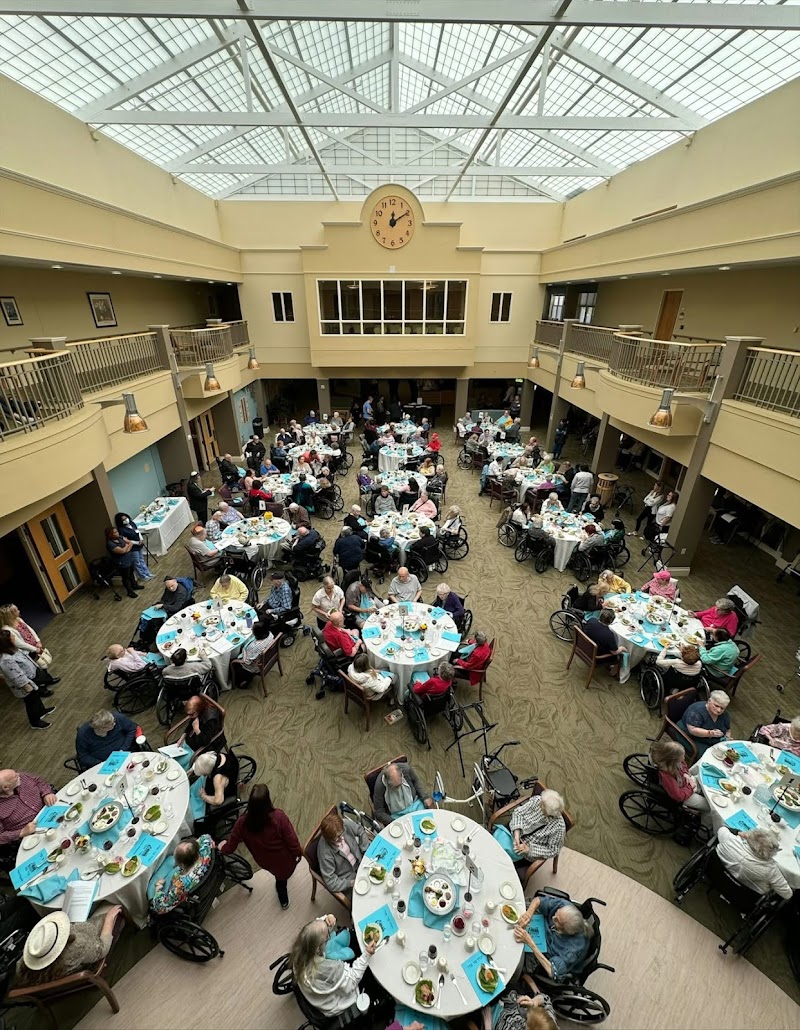
How is Horsham Center For Jewish Life Staffed?

CMS rates HORSHAM CENTER FOR JEWISH LIFE's staffing level at 3 out of 5 stars, which is average compared to other nursing homes. Staff turnover is 45%, compared to the Pennsylvania average of 46%. This relatively stable workforce can support continuity of care.

What Have Inspectors Found at Horsham Center For Jewish Life?

State health inspectors documented 43 deficiencies at HORSHAM CENTER FOR JEWISH LIFE during 2023 to 2025. These included: 2 Immediate Jeopardy (the most serious level, indicating potential for serious harm or death), 1 that caused actual resident harm, 38 with potential for harm, and 2 minor or isolated issues. Immediate Jeopardy findings are rare and represent the most serious regulatory concerns. They require immediate corrective action.

Who Owns and Operates Horsham Center For Jewish Life?

HORSHAM CENTER FOR JEWISH LIFE is owned by a for-profit company. For-profit facilities operate as businesses with obligations to shareholders or private owners. The facility is operated by IMPERIAL HEALTHCARE GROUP, a chain that manages multiple nursing homes. With 324 certified beds and approximately 302 residents (about 93% occupancy), it is a large facility located in NORTH WALES, Pennsylvania.
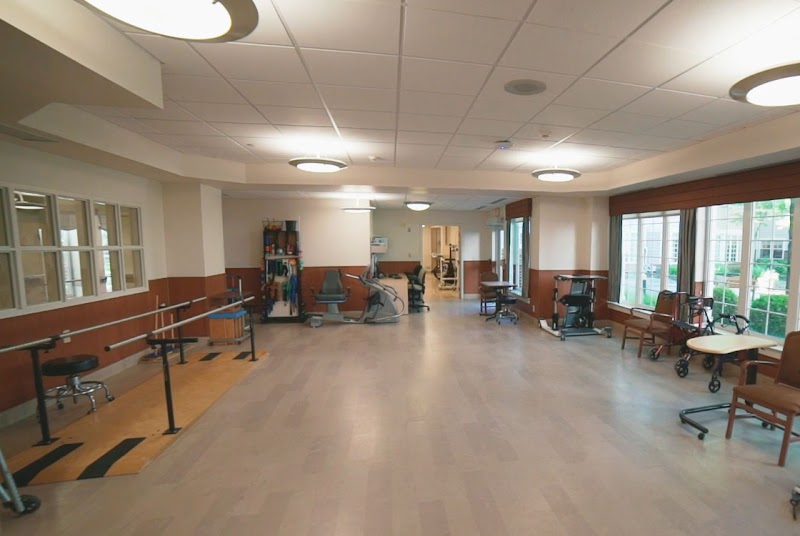
How Does Horsham Center For Jewish Life Compare to Other Pennsylvania Nursing Homes?

Compared to the 100 nursing homes in Pennsylvania, HORSHAM CENTER FOR JEWISH LIFE's overall rating (2 stars) is below the state average of 3.0, staff turnover (45%) is near the state average of 46%, and health inspection rating (2 stars) is below the national benchmark.

What Should Families Ask When Visiting Horsham Center For Jewish Life?

Based on this facility's data, families visiting should ask: "What changes have been made since the serious inspection findings, and how are you preventing similar issues?" "Can I visit during a mealtime to observe dining assistance and food quality?" "How do you handle medical emergencies, and what is your hospital transfer rate?" "Can I speak with family members of current residents about their experience?" These questions are particularly relevant given the facility's Immediate Jeopardy citations.

Is Horsham Center For Jewish Life Safe?

Based on CMS inspection data, HORSHAM CENTER FOR JEWISH LIFE has documented safety concerns. Inspectors have issued 2 Immediate Jeopardy citations (the most serious violation level indicating risk of serious injury or death). The facility has a 2-star overall rating and ranks #100 of 100 nursing homes in Pennsylvania. Families considering this facility should ask detailed questions about what corrective actions have been taken since these incidents.

Do Nurses at Horsham Center For Jewish Life Stick Around?

HORSHAM CENTER FOR JEWISH LIFE has a staff turnover rate of 45%, which is about average for Pennsylvania nursing homes (state average: 46%). Moderate turnover is common in nursing homes, but families should still ask about staff tenure and how the facility maintains care continuity when employees leave.

Was Horsham Center For Jewish Life Ever Fined?

HORSHAM CENTER FOR JEWISH LIFE has been fined $114,699 across 2 penalty actions. This is 3.4x the Pennsylvania average of $34,226. Fines at this level are uncommon and typically indicate a pattern of serious deficiencies, repeated violations, or failure to correct problems promptly. CMS reserves penalties of this magnitude for facilities that pose significant, documented risk to resident health or safety. Families should request specific documentation of what issues led to these fines and what systemic changes have been implemented.

Is Horsham Center For Jewish Life on Any Federal Watch List?

HORSHAM CENTER FOR JEWISH LIFE is not on any federal watch list. The most significant is the Special Focus Facility (SFF) program, which identifies the bottom 1% of nursing homes nationally based on persistent, serious quality problems. Not being on this list means the facility has avoided the pattern of deficiencies that triggers enhanced federal oversight. This is a positive indicator, though families should still review the facility's inspection history directly.