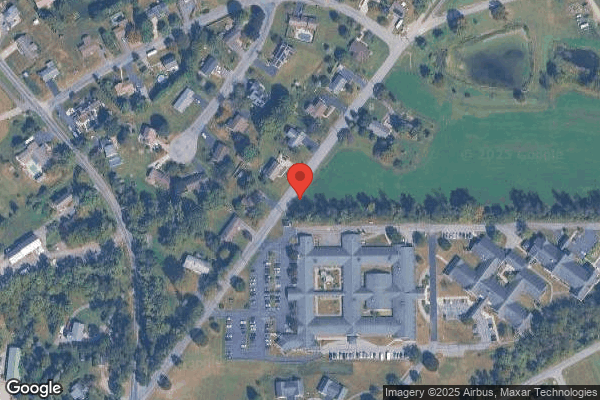
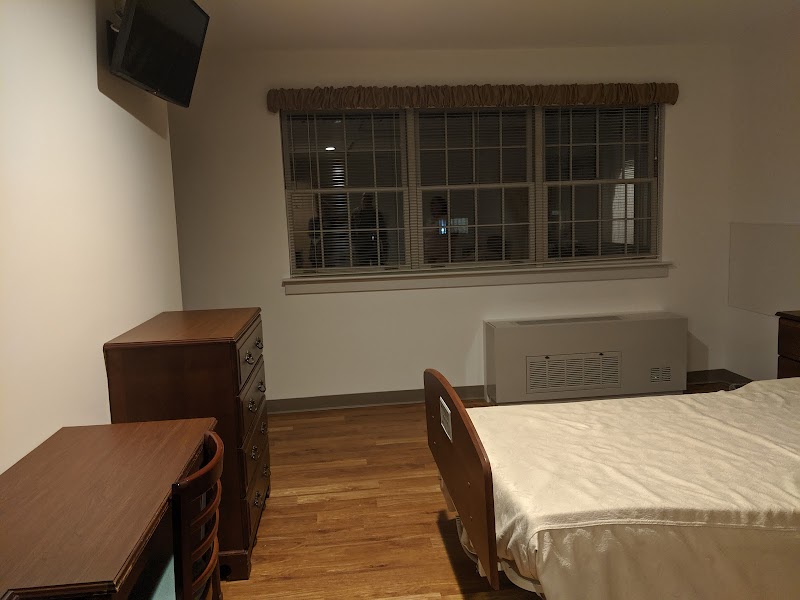
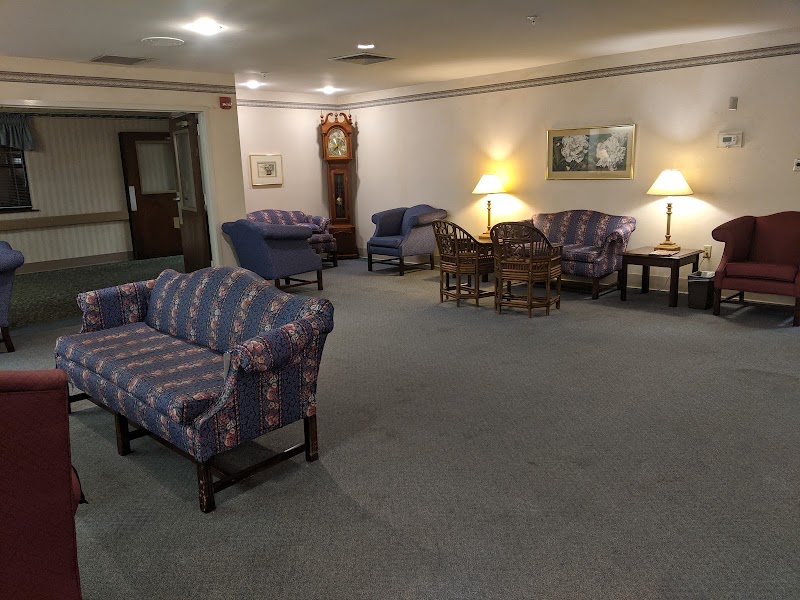
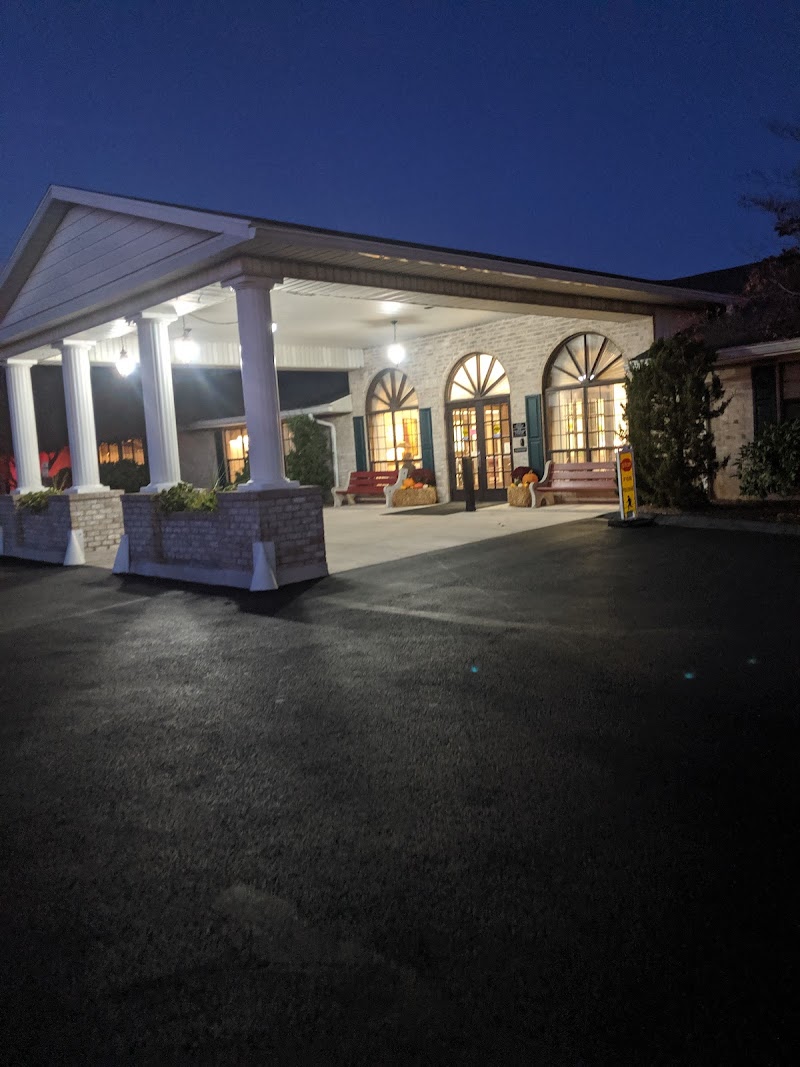
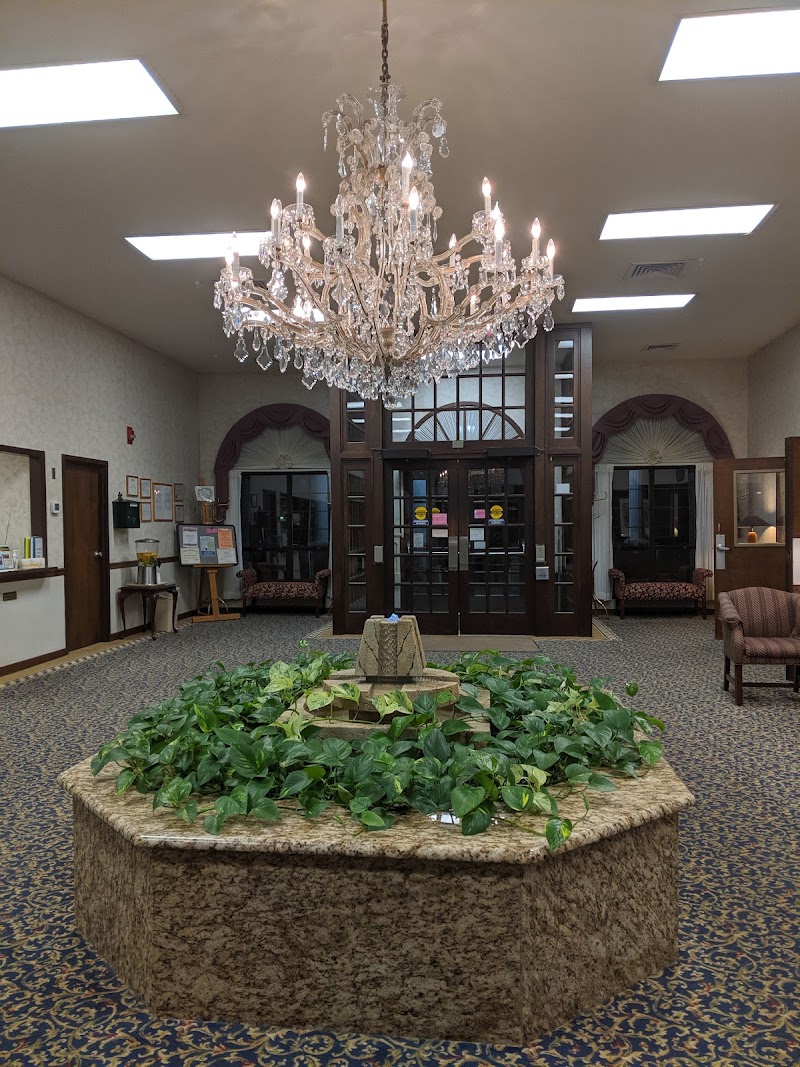
NOTTINGHAM VILLAGE

58 NEITZ ROAD, NORTHUMBERLAND, PA 17857 (570) 473-8366
For profit - Corporation 121 Beds Independent Data: November 2025
Trust Grade
43/100
#469 of 653 in PA
Last Inspection: December 2024

Within standard 12-15 month inspection cycle. Federal law requires annual inspections.

Overview

Nottingham Village in Northumberland, Pennsylvania, has a Trust Grade of D, indicating below-average care with some concerns. It ranks #469 out of 653 facilities in the state, placing it in the bottom half, and #4 out of 7 in the county, suggesting only three local options are better. The facility appears to be improving, significantly reducing issues from 23 in 2024 to just 1 in 2025. Staffing is a notable strength, with a turnover rate of 0%, much lower than the Pennsylvania average, but the facility has concerning RN coverage, having less than 78% of other state facilities, which could impact resident care. Families should be aware of serious incidents, including a failure to ensure a resident was free from neglect, resulting in severe injuries, and concerns regarding the lack of consent and assessment for bed assistive devices, as well as inadequate dental care for residents, which raises red flags about overall resident safety and well-being.

Trust Score
D
43/100
In Pennsylvania
#469/653
Bottom 29%
Safety Record
Moderate
Needs review
Inspections
Getting Better
23 → 1 violations
Staff Stability
○ Average
Turnover data not reported for this facility.
Penalties
✓ Good
$8,018 in fines. Lower than most Pennsylvania facilities. Relatively clean record.
Skilled Nurses
○ Average
Each resident gets 32 minutes of Registered Nurse (RN) attention daily — about average for Pennsylvania. RNs are the most trained staff who monitor for health changes.
Violations
⚠ Watch
25 deficiencies on record. Higher than average. Multiple issues found across inspections.
★★☆☆☆
2.0
Overall Rating
★★☆☆☆
2.0
Staff Levels
★★★★☆
4.0
Care Quality
★★☆☆☆
2.0
Inspection Score
Stable
2024: 23 issues
2025: 1 issues

The Good

  • 4-Star Quality Measures · Strong clinical quality outcomes
  • Full Sprinkler Coverage · Fire safety systems throughout facility
  • No fines on record

Facility shows strength in quality measures, fire safety.

The Bad

2-Star Overall Rating

Below Pennsylvania average (3.0)

Below average - review inspection findings carefully

Federal Fines: $8,018

Below median ($33,413)

Minor penalties assessed

The Ugly 25 deficiencies on record

1 actual harm
Feb 2025 1 deficiency
CONCERN (D) 📢 Someone Reported This

A family member, employee, or ombudsman was alarmed enough to file a formal complaint

Potential for Harm - no one hurt, but risky conditions existed

Deficiency F0697 (Tag F0697)

Could have caused harm · This affected 1 resident

Based on clinical record review, review of select facility policies, and resident and staff interview, it was determined that the facility failed to ensure that pain management was provided that was c...

Read full inspector narrative →
Based on clinical record review, review of select facility policies, and resident and staff interview, it was determined that the facility failed to ensure that pain management was provided that was consistent with professional standards of practice for one of three residents reviewed (Resident 1). Findings include: Review of the current facility policy entitled Pain Assessment/Management, revealed at the time of a pain interview, if it is determined that the resident is having pain on a scale of 7 to10, or severe pain (regardless of frequency), or is having frequent or constant pain (that the resident does not feel is tolerable), the resident will be placed on a pain management program, unless otherwise documented on the pain assessment. The pain management program consists of assessing/observing for pain at least every shift and updating the physician if pain is not being managed effectively. Pain management will be documented on the Medication Administration Record (MAR, a form utilized to document the administration of medications) by licensed staff. The charge nurse will update the physician if the resident's pain is not being managed effectively. Clinical record review revealed the facility admitted Resident 1 on June 26, 2024, with diagnosis including displaced bimalleolar fracture of right lower leg (a severe injury to the ankle joint and bones of the lower leg) and displaced osteochondral fracture of her right patella (a break in the cartilage and bone of the kneecap). Nursing documentation dated January 19, 2025, at 6:15 AM revealed the registered nurse found Resident 1 on the floor and upon assessment she was found with complaints of pain rating five out of 10 in her right knee. Documentation noted Resident 1's right outer canthus (the outer or inner part of the eye where the upper and lower lids meet) with a 2.5 centimeter (cm) by 3 cm ecchymotic contusion (bruising. Documentation revealed Resident 1 was assisted from the floor with a maxi lift and three staff. Resident 1 was noted to be yelling out in pain during the entire process. The registered nurse noted Resident 1's verbalization of pain did not match her cathartic reaction. The registered nurse noted as needed Tylenol and an ice pack were provided for pain relief. Nursing documentation dated January 19, 2025, at 6:15 AM revealed the licensed practical nurse found Resident 1 lying on the floor in her bathroom doorway complaining of severe pain. Review of Resident 1's neurological checklist dated January 19, 2025, noted staff assessed Resident 1's pain as a seven out of 10, noting she grimaced and showed nonverbal signs of pain. Review of Resident 1's MAR dated January 2025, noted an order dated June 28, 2024, for nursing staff to administer Resident 1 Tylenol 325 milligrams (mg), two tablets every four hours as needed for pain rated one to three. Review of Resident 1's January 2025, MAR revealed nursing staff did not administer Resident 1 any as needed Tylenol on January 19, 2025. Further review of Resident 1's MAR revealed an order for pain monitoring every shift for routine pain dated June 26, 2024. Nursing staff assessed Resident 1's pain on the first shift on January 19, 2025, noting pain rated a five out of 10. There were no further assessments of Resident 1's pain noted. During an interview with Resident 1 on January 11, 2025, at 11:40 AM she confirmed that she was in a lot of pain after her fall on January 19, 2025. There was no documentation that the facility implemented the pain assessment program or addressed Resident 1's complaints of severe pain. Interview with the Director of Nursing on February 11, 2025, at 1:25 PM confirmed these findings. 28 Pa Code 211.10(c) Resident care policies 28 Pa Code 211.12(d)(1) Nursing services
Dec 2024 15 deficiencies
CONCERN (D)

Potential for Harm - no one hurt, but risky conditions existed

Deficiency F0558 (Tag F0558)

Could have caused harm · This affected 1 resident

Based on clinical record review, observation, and staff and resident interview, it was determined that the facility failed to accommodate resident needs regarding the accessibility of a call bell for ...

Read full inspector narrative →
Based on clinical record review, observation, and staff and resident interview, it was determined that the facility failed to accommodate resident needs regarding the accessibility of a call bell for one of 23 residents reviewed (Resident 108). Findings include: Clinical record review for Resident 108 revealed the facility admitted her on September 19, 2024, with diagnosis including hemiparesis (a condition that causes weakness or an inability to move on one side of the body) following cerebral infarction (a serious condition that occurs when brain tissue dies due to lack of blood flow to the brain) affecting the right dominant side. Interview with Resident 108 on December 3, 2024, at 11:23 AM revealed that she has limited range of motion to her right side following her stroke. Observation of Resident 108 on December 3, 2024, at 11:26 AM and 1:14 PM revealed Resident 108 was in bed with her call bell attached to the top of the assist bar rail at the head of her bed. Resident 108 was unable to reach her call bell. Observation of Resident 108 on December 4, 2024, at 11:17 AM revealed Resident 108 was again in bed with her call bell attached to the top of the assist bar rail at the head of her bed. Resident 108 was unable to reach her call bell. The above information for Resident 108 was reviewed with the Nursing Home Administrator and Director of Nursing during a meeting on December 5, 2024, at 2:22 PM. 28 Pa. Code 211.12(d)(1)(5) Nursing services
CONCERN (D)

Potential for Harm - no one hurt, but risky conditions existed

Abuse Prevention Policies (Tag F0607)

Could have caused harm · This affected 1 resident

Based on clinical record review, review of select policies and procedures, and staff interview, it was determined that the facility failed to implement their abuse policy regarding completion of an in...

Read full inspector narrative →
Based on clinical record review, review of select policies and procedures, and staff interview, it was determined that the facility failed to implement their abuse policy regarding completion of an investigation of an unknown injury for one of one resident reviewed (Resident 28). Findings include: The policy entitled Abuse Prohibition last reviewed on July 18, 2024, indicates that the facility uses an incident reporting system to report, investigate, and track all unusual incidents. Incidents of unknown origin are investigated according to the facility's stand-up meeting/investigation of unusual incidents. Suspicious injuries, occurrences, trends, or patterns that may constitute abuse are identified and investigated. Review of Resident 28's clinical record revealed nursing documentation dated September 26, 2024, at 2:30 PM that indicated Resident 28 was complaining of right leg pain. Nursing staff administered Tylenol (for pain relief) that was ineffective and notified Resident 28's physician. Nursing documentation dated September 27, 2024, at 2:30 PM indicated that Resident 28 continued to complain of pain in her right lower extremity from her hip to ankle. Nursing staff obtained a physician order for an x-ray of her right knee. Review of Resident 28's x-ray report dated September 27, 2024, indicated that her right knee demonstrated irregularity suggesting a tibial plateau fracture (a break at the top of the tibia bone in the knee joint, typically due to impact trauma). Nursing documentation dated September 28, 2024, at 2:04 AM revealed that the facility obtained a physician's order to send Resident 28 to the emergency room for treatment of her injury. Review of the emergency room documentation dated September 28, 2024, at 3:07 AM confirmed Resident 28's right knee tibial plateau fracture and indicated that her diagnosis also included ligamentous knee injury (a tear or sprain in one of the knee's four major knee ligaments). Nursing documentation dated September 28, 2024, at 11:00 AM revealed that Resident 28 returned from the emergency room with a right leg immobilizer (a splint used to keep stabilize or restrict movement of the leg). There was no documented evidence or incidents noted in Resident 28's clinical record to indicate how this injury occurred. Interview with the Director of Nursing on December 5, 2024, at 9:08 AM confirmed that the facility did not complete an investigation into Resident 28's fractured tibial plateau fracture to rule out the potential for abuse and neglect. 28 Pa. Code 201.18(b)(1) Management 28 Pa. Code 201.29(a)(c) Resident rights
CONCERN (D)

Potential for Harm - no one hurt, but risky conditions existed

Assessment Accuracy (Tag F0641)

Could have caused harm · This affected 1 resident

**NOTE- TERMS IN BRACKETS HAVE BEEN EDITED TO PROTECT CONFIDENTIALITY** Based on clinical record review and resident and staff interview, it was determined that the facility failed to ensure assessmen...

Read full inspector narrative →
**NOTE- TERMS IN BRACKETS HAVE BEEN EDITED TO PROTECT CONFIDENTIALITY** Based on clinical record review and resident and staff interview, it was determined that the facility failed to ensure assessments accurately reflected residents' status for two of 23 residents reviewed (Residents 108 and 112). Findings include: Clinical record review for Resident 108 revealed the facility admitted her on September 19, 2024, with diagnosis including hemiparesis (a condition that causes weakness or an inability to move on one side of the body) following cerebral infarction (a serious condition that occurs when brain tissue dies due to lack of blood flow to the brain) affecting her right dominant side. Interview with Resident 108 on December 3, 2024, at 11:23 AM revealed that she has limited range of motion to her right side following her stroke. Further review of Resident 108's clinical record revealed an admission MDS (Minimum Data Set, an assessment tool completed at specific intervals to determine resident care needs) dated September 25, 2024, in which facility staff assessed Resident 108 as having no impairment of her upper extremities. Interview with the Director of Nursing on December 5, 2024, at 10:22 AM confirmed Resident 108's functional limitation in her range of motion was coded in error on the MDS dated [DATE]. Review of Resident 112's clinical record revealed an MDS dated [DATE], that indicated the facility assessed him as being discharged to a hospital setting. Nursing documentation dated September 21, 2024, at 10:35 AM revealed that the facility discharged Resident 112 to his home. Interview with the Director of Nursing on December 5, 2024, at 10:23 AM confirmed that Resident 112's September 21, 2024 MDS was coded in error regarding his discharge status. 28 Pa. Code 211.5(f)(ix) Medical records 28 Pa. Code 211.12(d)(1)(3)(5) Nursing services
CONCERN (D)

Potential for Harm - no one hurt, but risky conditions existed

Quality of Care (Tag F0684)

Could have caused harm · This affected 1 resident

Based on clinical record review, observation, and resident and staff interview, it was determined that the facility failed to ensure quality of care related to a cardiac pacemaker use for one of 23 re...

Read full inspector narrative →
Based on clinical record review, observation, and resident and staff interview, it was determined that the facility failed to ensure quality of care related to a cardiac pacemaker use for one of 23 residents reviewed (Resident 68). Findings include: Interview with Resident 68 on December 4, 2024, at 11:14 AM revealed that she had a history of heart disease, and that she had a cardiac pacemaker (medical device implanted in the chest with wires to the heart to deliver electrical signals to control a heart rate) placed. Resident 68 pointed to an electronic device on her bedside stand and stated that a representative from the pacemaker monitoring company calls the nurses' station when she begins to show signs that fluid is accumulating in her body. Resident 68 stated that her Lasix (diuretic medication, used to remove excess fluid from the body) is sometimes adjusted because of this symptom change. Clinical record review for Resident 68 revealed no physician orders or plan of care that indicated that Resident 68 had a cardiac pacemaker. Diagnoses listed in Resident 68's clinical record included the following: Acute on chronic combined systolic (congestive) and diastolic (congestive) heart failure (ongoing failure of the heart to pump effectively that results in fluid buildup in the body that can worsen suddenly requiring treatment) Paroxysmal atrial fibrillation (irregular heartbeat in the upper part of the heart that can be intermittent) An admission physician's progress note (history and physical) dated July 18, 2024, indicated that the facility admitted Resident 68 following a hospitalization for heart failure. The documentation noted a surgical history that included heart ablation (sections of the heart are surgically treated to stop abnormal electrical signals, Ablate Heart Dysrhythm Focus). The documentation indicated that Resident 68 had an, AICD (automatic implantable cardioverter defibrillator, battery-operated device that can provide electrical impulses to maintain a normal rhythm and provide electrical shocks to the heart to correct life-threatening fast rhythms) per her records. The surveyor reviewed the above concerns that Resident 68 had an internal cardiac pacemaker; however, her physician orders and plan for her care did not address the use of this device, during an interview with the Director of Nursing and the Nursing Home Administrator on December 5, 2024, at 2:00 PM. A physician's order (following the surveyor's questioning) dated December 5, 2024, at 4:37 PM noted that Resident 68 had an, ACID and HF Integration, completed for alerts and every 91 days as scheduled by a consulting cardiology provider. The cardiology provider monitors and would notify the facility of any issues. Interview with the Director of Nursing on December 6, 2024, at 10:07 AM confirmed that Resident 68's cardiac pacemaker device could identify a potential fluid accumulation around her heart for which the monitoring company would call the facility. The facility was unaware how this device communicates with the monitoring company (e.g., via satellite, internet, cell phone); or what emergency procedures (e.g., power supply) would be necessary to continue its functioning when the facility would experience an interruption in utilities. The interview also confirmed that the device was not addressed in Resident 68's plan of care. 28 Pa. Code 211.12(d)(1)(3)(5) Nursing services
CONCERN (D)

Potential for Harm - no one hurt, but risky conditions existed

Deficiency F0688 (Tag F0688)

Could have caused harm · This affected 1 resident

Based on observation, clinical record review, and staff and resident interview, it was determined that the facility failed to implement a restorative nursing program as recommended by therapy to ensur...

Read full inspector narrative →
Based on observation, clinical record review, and staff and resident interview, it was determined that the facility failed to implement a restorative nursing program as recommended by therapy to ensure a resident with limited range of motion received appropriate treatment and services to increase and/or prevent further decrease in range of motion for one of three residents reviewed (Residents 108). Findings include: Clinical record review for Resident 108 revealed the facility admitted her on September 19, 2024, with diagnosis including hemiparesis (a condition that causes weakness or an inability to move on one side of the body) following a cerebral infarction (a serious condition that occurs when brain tissue dies due to lack of blood flow to the brain) affecting right dominant side. Interview with Resident 108 on December 3, 2024, at 11:23 AM revealed that she has limited range of motion to her right side following her stroke. She stated that she no longer receives physical therapy. Review of Resident 108's admission Minimum Data Set (MDS, an assessment completed at specific intervals to determine care needs) dated September 25, 2024, noted Resident 108 had impairment on one side of her lower extremity. Review of physical therapy documentation dated November 8, 2024, noted the discharge recommendations for Resident 108 was for staff to complete passive range of motion (PROM) and active range of motion (AROM) exercises to both Resident 108's lower extremities to maintain ability for clothing management and daily hygiene tasks. Therapy discharge documentation noted therapy established PROM/AROM exercises and trained staff. Further review of Resident 108's clinical record revealed no evidence that staff implemented PROM or AROM programs. Interview with Employee 5 (physical therapist) on December 6, 2024, at 10:30 AM confirmed that a range was motion program was never established for Resident 108, and nursing staff were not educated. The above findings for Resident 108 were reviewed with the Director of Nursing on December 6, 2024, at 1:12 PM. 28 Pa. Code 211.12(d)(1)(5) Nursing services
CONCERN (D)

Potential for Harm - no one hurt, but risky conditions existed

Deficiency F0698 (Tag F0698)

Could have caused harm · This affected 1 resident

Based on clinical record review, observation, and resident and staff interview, it was determined that the facility failed to implement care to prevent potential complications from a dialysis access s...

Read full inspector narrative →
Based on clinical record review, observation, and resident and staff interview, it was determined that the facility failed to implement care to prevent potential complications from a dialysis access site for one of one resident reviewed for dialysis services (Resident 62). Findings include: Interview with Resident 62 on December 3, 2024, at 12:58 PM revealed that he required dialysis treatments (treatment for kidney failure; a machine filters extra fluid and waste products from the blood) three times a week, and that the treatment was administered through a fistula (surgical connection between an artery and a vein making a larger blood vessel for dialysis treatment) located in the area over his right bicep (upper arm) muscle. Resident 62 stated that staff obtain blood pressure assessments from his leg. Resident 62 stated, Once in a while a nurse will come in and think that she's going to take it in my arm, but I tell her to do it in my leg. Observation of Resident 62 and his room during the interview revealed no indicators that Resident 62 had right arm use restrictions. Clinical record review for Resident 62 revealed no physician's order or plan of care intervention that restricted staff use of his right arm for blood pressure assessments or blood draws. The surveyor reviewed the above concern that staff could utilize Resident 62's right arm inappropriately causing potential damage to his dialysis fistula during an interview with the Nursing Home Administrator and the Director of Nursing on December 4, 2024, at 2:00 PM. Interview with the Director of Nursing on December 5, 2024, at 10:40 AM confirmed that the right arm limb restriction was not included in Resident 62's plan of care until following the surveyor's questioning. Observation of Resident 62's room on December 6, 2024, at 9:15 AM revealed that Resident 62 was out of the facility for his dialysis treatment. A sign above the right side of his bed noted, No BP (blood pressure) right arm. 28 Pa. Code 211.12(d)(1)(3)(5) Nursing services
CONCERN (D)

Potential for Harm - no one hurt, but risky conditions existed

Deficiency F0725 (Tag F0725)

Could have caused harm · This affected 1 resident

Based on observations, clinical record review, and resident and staff interview, it was determined that the facility failed to have sufficient nursing staff to meet resident's needs related to call be...

Read full inspector narrative →
Based on observations, clinical record review, and resident and staff interview, it was determined that the facility failed to have sufficient nursing staff to meet resident's needs related to call bell response time for two of 23 residents reviewed (Resident 19 and 52). Findings include: Interview with Resident 19 on December 4, 2024, at 11:34 AM revealed that when she rings her call bell, staff will come in and then say they will be back but never come back. Review of Resident 52's Minimum Data Set Assessment (MDS, an assessment tool completed at specific intervals to determine care needs) dated November 11, 2024, indicated the facility assessed her as being cognitively intact and needing the extensive assistance of two staff members for toileting. Observation on December 3, 2024, at 9:54 AM revealed that Resident 52 rang her call bell. The call bell continued to ring until 10:26 AM, 32 minutes after Resident 52 initiated the call bell. At 10:26 AM, Employee 1, nurse aide, entered Resident 52's room, the call light went out, and Employee 1 immediately walked back out of Resident 52's room. Interview with Resident 52 on December 3, 2024, at 10:29 AM revealed that she needed to move her bowels and needed the bed pan but Employee 1 flew out of here. This surveyor instructed Resident 52 to ring the call bell again. After Employee 1 exited Resident 52's room, this surveyor observed her collecting breakfast trays. Employee 1 was not providing any other care to residents. Observation on December 3, 2024, at 10:29 AM revealed that Resident 52's call bell was answered a second time, 35 minutes after Resident 52's initial call for assistance. Review of Resident 52's clinical record revealed that she has a diagnosis of irritable bowel syndrome (a condition that affects the digestive system). Nursing documentation dated December 2, 2024, at 4:40 PM indicated that Resident 52 had not had a bowel movement for three days. Nursing staff administered Milk of Magnesia (a medication used to treat occasional constipation) on December 2, 2024, at 6:31 PM. Interview with the Administrator and Director of Nursing on December 5, 2024, at 2:00 PM acknowledged the above findings for Resident 52. 28 Pa. Code 201.18(b)(1)(3) Management 28 Pa. Code 211.12(d)(1)(3)(4)(5) Nursing services
CONCERN (D)

Potential for Harm - no one hurt, but risky conditions existed

Deficiency F0761 (Tag F0761)

Could have caused harm · This affected 1 resident

**NOTE- TERMS IN BRACKETS HAVE BEEN EDITED TO PROTECT CONFIDENTIALITY** Based on observation and staff interview, it was determined that the facility failed to ensure adequate labeling and storage of ...

Read full inspector narrative →
**NOTE- TERMS IN BRACKETS HAVE BEEN EDITED TO PROTECT CONFIDENTIALITY** Based on observation and staff interview, it was determined that the facility failed to ensure adequate labeling and storage of medications and biologicals on one of three nursing units (Station III) and for one of 23 residents reviewed (Resident 29). Findings include: Observation of the Station III nursing unit on [DATE], at 10:41 AM revealed an unlocked medication cart. The medication cart was sitting in a heavily occupied area of the nursing station. The unlocked medication cart was accessible to non-licensed staff, visitors, and other residents. The unlocked medication cart remained unattended until 10:46 AM. Interview with Employee 3, licensed practical nurse, on [DATE], at 10:46 AM confirmed the above observations. During a medication administration observation on [DATE], at 9:00 AM revealed Employee 2, licensed practical nurse, administering medications to Resident 29. Employee 2 indicated that Resident 29 administers her own eye drops. Employee 2 prompted Resident 29 to find her eye drops and administer them during the medication administration observation. Resident 29 reached into a zippered pouch that contained other items such as writing implements and pulled out a bottle of eyedrops. The bottle of eyedrops had some small brown colored stains on it, and the label was rubbing off. The eyedrops were not labeled with the resident's name or administration details. This surveyor was unable to identify that actual name of the eyedrops, other than it was a saline eye drop. Resident 29 could not remove the lid to the eyedrops, as the lid appeared stuck. Employee 2 had to assist Resident 29 to remove the stuck lid. The bottle of eye drops had an expiration date of [DATE]. Resident 29 administered the eyedrops using the bottle of eyedrops she found in her zippered pouch. Employee 2 then told Resident 29 that those eyedrops were expired after the surveyor informed her of the expiration date. Interview with the Administrator and Director of Nursing on [DATE], at 2:03 PM acknowledged the above findings. 28 Pa. Code 211.9 (k) Pharmacy services 28 Pa. Code 211.12 (c)(d)(1)(5) Nursing services
CONCERN (D)

Potential for Harm - no one hurt, but risky conditions existed

Infection Control (Tag F0880)

Could have caused harm · This affected 1 resident

Based on a review of select facility policies and procedures, clinical record review, observation, and staff interview, it was determined that the facility failed to implement transmission-based preca...

Read full inspector narrative →
Based on a review of select facility policies and procedures, clinical record review, observation, and staff interview, it was determined that the facility failed to implement transmission-based precautions for one of 23 residents reviewed (Resident 103). Findings include: Review of the facility policy, Contact Precautions, last reviewed without changes on July 18, 2024, revealed that in addition to standard precautions, use contact precautions for specified residents known or suspected to be infected with epidemiologically important microorganisms that can be transmitted by direct contact with the resident (hand or skin-to-skin contact that occurs when performing resident care activities that require touching the resident's dry skin) or by indirect contact (touching) with environmental surfaces or resident care items in the patient's environment. In addition to wearing a gown as outlined under standard precautions, wear a gown when entering the room if you anticipate that your clothing will have substantial contact with the resident, environmental surfaces, or items in the resident's room, or if the resident is incontinent. A sign will be posted at the resident's doorway to indicate to visitors that they should check with the nurse before entering to ensure proper precautions are followed. A physician's order will be obtained and written when placing a resident on precautions and when precautions can be discontinued. Review of the facility policy, Enhanced Barrier Precautions, last reviewed without changes on July 18, 2024, revealed that enhanced barrier precautions will be initiated for any resident with an infection or colonization with a CDC targeted MDRO when contact precautions do not otherwise apply. A sign will be posted at the resident's doorway to alert staff. A physician's order will be obtained and written when placing a resident on enhanced barrier precautions. Providers and staff must also wear gloves and gowns for high contact activities that include changing briefs or assisting with toileting. Clinical record review for Resident 103 revealed nursing documentation dated September 9, 2024, at 2:10 PM that the facility readmitted Resident 103 from the hospital. A physician's order dated September 9, 2024, instructed staff to administer Cephalexin (Keflex, a first-generation cephalosporin antibiotic, refers to the first group of cephalosporins discovered), every six hours for Resident 103's urinary tract infection, for five days. A laboratory report for a urine specimen collected September 9, 2024, revealed that Resident 103's urine indicated an infection with ESBL E-Coli (extended-spectrum beta-lactamases Escherichia coli, bacteria typically found in the gut that produces a chemical that makes some antibiotics ineffective in treating the bacterial infection), This patient may require isolation. This gram-negative bacilli displays in vitro (experiments outside a living organism) resistance to multiple antibiotics. This patient may require isolation. The report indicated that the E-Coli found was resistant to Cefazolin (a first-generation cephalosporin). Nursing documentation dated September 13, 2024, at 7:44 PM indicated that the physician ordered the antibiotic, Cipro, to treat Resident 103's urinary tract infection (UTI). Resident 103 received the antibiotic, Keflex, previously. Review of a quarterly MDS (Minimum Data Set, an assessment tool completed at specific intervals to determine resident care needs) dated November 6, 2024, assessed Resident 103 as always incontinent of bowel and bladder. There was no evidence in Resident 103's clinical record to indicate that the facility implemented any isolation precautions for Resident 103 upon her readmission to the facility or after the final laboratory report that indicated an infection with a multiple drug resistant organism (MDRO). Review of plans of care developed by the facility to address Resident 103's care needs revealed a plan of care that included Resident 103's urinary tract infection diagnosis that did not include the implementation of contact or enhanced barrier precautions. Observation of Resident 103 on December 5, 2024, at 12:41 PM revealed she was in bed, with covers pulled down to her thighs, dressed in a shirt and an incontinence brief (no pants). Interview with the Director of Nursing on December 5, 2024, at 12:50 PM confirmed that the facility did not have evidence of the implementation of enhanced barrier or contact precautions upon the knowledge of a MDRO UTI for Resident 103. The facility also did not have any additional laboratory testing that indicated the absence of the MDRO in Resident 103's urine. Interview with Employee 9 (nurse aide) on December 5, 2024, at 12:55 PM confirmed that Resident 103 was incontinent of bowel and bladder, and dependent upon staff for care, which included the use of incontinence briefs. Employee 9 stated that she was going to provide Resident 103 incontinence care for the first time since earlier that morning. Employee 9 did not use an isolation gown to indicate the use of enhanced barrier or contact precautions. There was no indication by Resident 103's doorway or in her room that indicated the use of enhanced barrier or contact precautions. 483.80(a)(1)(2)(4)(e)(f) Infection Prevention and Control Previously cited deficiency 1/5/24 28 Pa. Code 211.12(d)(1)(3)(5) Nursing services
CONCERN (D)

Potential for Harm - no one hurt, but risky conditions existed

Deficiency F0883 (Tag F0883)

Could have caused harm · This affected 1 resident

Based on a review of select facility policies and procedures, clinical record review, and staff interview, it was determined that the facility failed to offer and administer an influenza immunization ...

Read full inspector narrative →
Based on a review of select facility policies and procedures, clinical record review, and staff interview, it was determined that the facility failed to offer and administer an influenza immunization unless refused for one of five residents reviewed for immunizations (Resident 3). Findings include: The facility policy entitled, Influenza Vaccine, last reviewed without changes on July 18, 2024, revealed that residents who have no medical contraindications to the vaccine will be offered the influenza vaccine annually to encourage and promote the benefits associated with vaccinations against influenza. Between October 1st and October 31st each year, the influenza vaccine shall be offered to residents unless the vaccine is medically contraindicated, or the resident has already been immunized. Prior to vaccination, the resident (or resident's legal representative) will be provided information and education regarding the benefits and potential side effects of the influenza vaccine. Provision of such education shall be documented in the resident's medical record. For those who receive the vaccine, the date of vaccination will be documented in the resident's medical record. A resident's refusal of the vaccine shall be documented on the informed consent for influenza vaccine and placed in the resident's medical record. Current CDC (Centers for Disease Control) guidance at https://www.cdc.gov/flu/vaccines stipulates that, For most people who need only one dose of influenza vaccine for the season, September and October are generally good times to be vaccinated against influenza. Ideally, everyone should be vaccinated by the end of October. Clinical record review for Resident 3 revealed that the facility admitted her on May 13, 2022. Review of Resident 3's immunization history revealed that she received an influenza immunization on January 14, 2022 (before entering the facility), and October 25, 2023 (while a resident of the facility). Resident 3's clinical record contained no evidence that she received an influenza vaccine for the 2024-2025 influenza season. The surveyor requested any additional immunization documentation for Resident 3 during an interview with Employee 8 (registered nurse/infection control prevention coordinator) on December 4, 2024, at 9:26 AM. Interview with Employee 8 on December 4, 2024, at 10:37 AM confirmed that Resident 3 was a resident in the facility for over two years, and that the facility could not produce an informed consent for the influenza vaccine since the one completed in 2023. The interview confirmed that the facility did not have evidence that Resident 3 or her responsible party declined the 2024-2025 influenza vaccine. The surveyor reviewed the above concerns regarding Resident 3's influenza vaccination status during an interview with the Director of Nursing and the Nursing Home Administrator on December 5, 2024, at 2:00 PM. Interview with Employee 8 on December 5, 2024, at 2:49 PM confirmed that there was no documentation in Resident 3's medical record regarding declination or administration of the 2024-2025 seasonal influenza vaccine. Employee 8 stated that she would attempt to find any progress note documentation regarding any contact with Resident 3's responsible party regarding obtaining consent or refusal of the vaccine. Nursing documentation created by Employee 8 on December 5, 2024, at 3:12 PM indicated that she attempted to contact Resident 3's responsible party regarding vaccine consents. 28 Pa. Code 211.5(f) Medical records 28 Pa. Code 211.12(d)(1)(5) Nursing services
CONCERN (D)

Potential for Harm - no one hurt, but risky conditions existed

Deficiency F0887 (Tag F0887)

Could have caused harm · This affected 1 resident

Based on a review of select facility policies and procedures, clinical record review, and staff interview, it was determined that the facility failed to offer and administer a COVID immunization for o...

Read full inspector narrative →
Based on a review of select facility policies and procedures, clinical record review, and staff interview, it was determined that the facility failed to offer and administer a COVID immunization for one of five residents reviewed for immunizations (Resident 3). Findings include: The facility policy entitled, Coronavirus Disease (COVID-19) - Vaccination of Residents, last reviewed without changes on July 18, 2024, revealed that each resident is offered the COVID-19 vaccine unless the immunization is medically contraindicated, or the resident has already been immunized. The resident (or resident representative) could accept or refuse a COVID-19 vaccine, and to change his/her decision. COVID-19 vaccine education, documentation, and reporting are overseen by the infection preventionist and coordinated by his or her designee. Before the COVID-19 vaccine is offered, the resident/resident representative is provided with education regarding the benefits, risks, and potential side effects associated with the vaccine. Residents/resident representatives must sign a consent to vaccinate form prior to receiving the vaccine. Booster vaccine doses are provided in accordance with current CDC guidance. Efforts to help the resident obtain vaccination are documented. If the resident did not receive the COVID-19 vaccine due to medical contraindications, prior vaccination or refusal, appropriate documentation is made in the resident's record. Clinical record review for Resident 3 revealed that the facility admitted her on May 13, 2022. Review of Resident 3's immunization history revealed that she did not receive a COVID (a contagious respiratory illness caused by a virus) immunization booster in the fall of October 2023, because Resident 3's responsible party refused the immunization consent. Nursing documentation dated August 17, 2024, at 3:11 PM revealed that testing indicated Resident 3 had COVID and the facility implemented isolation precautions. On October 25, 2024, Employee 8, registered nurse/infection control, documented that Resident 3 was not eligible for a COVID booster for 2024-2025 because the facility did not have consent to administer the vaccine. Resident 3's clinical record contained no additional information that the facility offered or administered Resident 3's COVID immunization after October 2023. Interview with Employee 8 on December 4, 2024, at 9:26 AM indicated that the facility did not administer a COVID booster to Resident 3 because Resident 3's responsible party refused the consent to the vaccine. Employee 8 stated that she would provide the consent form that documented Resident 3's responsible party's declination of informed consent. Interview with Employee 8 on December 4, 2024, at 10:37 AM confirmed that Resident 3 did not receive any COVID vaccines since her admission to the facility in 2022. The interview also confirmed that the facility could not produce an informed consent for the COVID vaccine that evidenced that Resident 3's responsible party declined the booster vaccine. The surveyor reviewed the above concerns regarding Resident 3's COVID immunization status during an interview with the Director of Nursing and the Nursing Home Administrator on December 5, 2024, at 2:00 PM. Interview with Employee 8 on December 5, 2024, at 2:49 PM confirmed that there was no documentation in Resident 3's medical record regarding declination or administration of a COVID booster immunization since 2023. Employee 8 stated that she would attempt to find any progress note documentation regarding any contact with Resident 3's responsible party regarding obtaining consent or refusal of the vaccine. Nursing documentation created by Employee 8 on December 5, 2024, at 3:12 PM indicated that she attempted to contact Resident 3's responsible party regarding vaccine consents. 28 Pa. Code 211.5(f) Medical records 28 Pa. Code 211.12(d)(1)(5) Nursing services
CONCERN (E)

Potential for Harm - no one hurt, but risky conditions existed

Deficiency F0700 (Tag F0700)

Could have caused harm · This affected multiple residents

Based on observation, clinical record review, and staff interview, it was determined that the facility failed to obtain consent for, assess the need for, and assess entrapment risks from bed assistive...

Read full inspector narrative →
Based on observation, clinical record review, and staff interview, it was determined that the facility failed to obtain consent for, assess the need for, and assess entrapment risks from bed assistive bars for two of two residents reviewed for accident hazards (Residents 19 and 108). Findings include: Observation of Resident 19 on December 4, 2024, at 11:52 AM revealed she was in bed with assist bars mounted bilaterally at the head of her bed. Resident 19's bed was also equipped with a headboard and a footboard. The surveyor requested evidence of an assessment for need, an assessment for entrapment risks, and consent for the use of the bed assistive devices for Resident 19 during an interview with the Director of Nursing, the Nursing Home Administrator, and Employee 8 (registered nurse/infection control prevention coordinator) on December 4, 2024, at 2:00 PM. Interview with the Nursing Home Administrator on December 5, 2024, at 10:10 AM indicated that the facility utilized a bed system measurement device to assess four zones of potential entrapment risks presented with the use of a bed rail. The interview indicated that the facility could not provide documentation of the assessment completed to determine Resident 19's need for the assistive device, the assessment of potential entrapment risks from the use of the device on Resident 19's bed, or a consent obtained prior to installation of the device for Resident 19. A new physician's order obtained on December 5, 2024, at 11:04 AM (following the surveyor's questioning), indicated that Resident 19 was to use a bed enabler rail to assist with bed mobility. A Side Rail Assessment Form dated December 5, 2024, indicated that occupational therapy staff recommended side rails as an enabler for Resident 19. A Side Rail Consent Form signed by Resident 19 on December 5, 2024, indicated a desire for the assistive device. A Bed System Measurement Device Test Results Worksheet dated December 5, 2024, indicated that maintenance staff assessed Resident 19's bed assistive device for entrapment risks. Clinical record review for Resident 108 revealed the facility admitted her on September 19, 2024, with diagnosis including hemiparesis (a condition that causes weakness or an inability to move on one side of the body) following cerebral infarction (a serious condition that occurs when brain tissue dies due to lack of blood flow to the brain) affecting right dominant side. Interview with Resident 108 on December 3, 2024, at 11:23 AM, revealed that she has limited range of motion to her right side following her stroke. Observation of Resident 108 on December 3, 2024, at 11:26 AM and 1:14 PM, revealed she was in bed with assist bars mounted bilaterally at the head of her bed. Observation of Resident 108 on December 4, 2024, at 11:17 AM revealed she was in bed with assist bars mounted bilaterally at the head of her bed. Observation of Resident 108 on December 5, 2024, at 11:01 AM revealed she was in bed, and the assist bars were removed bilaterally from the head of her bed. Interview with the Nursing Home Administrator on December 5, 2024, at 11:57 AM confirmed that Resident 108 was unable to use the bilateral assist bars mounted on her bed. He stated the facility had no documentation of the assessment completed to show the need for Resident 108's assist bars, the assessment of potential risks from the use of the device on Resident 108's bed, or consent obtained prior to the installation of the device for Resident 108. 28 Pa. Code 211.12(d)(1)(3)(5) Nursing services
CONCERN (E)

Potential for Harm - no one hurt, but risky conditions existed

Dental Services (Tag F0791)

Could have caused harm · This affected multiple residents

Based on clinical record review and resident and staff interview, it was determined that the facility failed to ensure routine prophylactic dental services for one of three residents reviewed for dent...

Read full inspector narrative →
Based on clinical record review and resident and staff interview, it was determined that the facility failed to ensure routine prophylactic dental services for one of three residents reviewed for dental concerns (Resident 62). Findings include: Interview with Resident 62 on December 3, 2024, at 12:49 PM revealed that he had natural teeth, but the, hygienist has never been here. Resident 62 indicated that no dental professional had cleaned his teeth, and he brushes his teeth. Interview with the Director of Nursing on December 5, 2024, at 10:40 AM confirmed that there was no evidence that a hygienist or dental professional provided prophylactic (preventative) cleaning of Resident 62's teeth in the past year. Following the interview with the Director of Nursing, the facility provided one progress note from the facility's consulting dental provider dated September 17, 2024, that was noted as an annual exam by the dentist. The progress note indicated that there was heavy soft plaque/food debris buildup, light hard calculus (hard deposit when soft plaque becomes calcified) deposits, moderate gingival (gum) inflammation/swollen bleeding gums, and moderate risk for caries (cavities/decay). The recommended treatment plan was for prophy (preventative cleanings) every six months. The facility provided no clinical record evidence that Resident 62 received routine prophylactic dental cleanings in the past year. 28 Pa. Code 211.12(d)(1)(3)(5) Nursing services
CONCERN (E)

Potential for Harm - no one hurt, but risky conditions existed

Food Safety (Tag F0812)

Could have caused harm · This affected multiple residents

Based on observation and staff interview, it was determined that the facility failed to store food items and maintain equipment in a safe and sanitary manner in the facility's main kitchen. Findings ...

Read full inspector narrative →
Based on observation and staff interview, it was determined that the facility failed to store food items and maintain equipment in a safe and sanitary manner in the facility's main kitchen. Findings included: Initial tour of the facility's main kitchen on December 3, 2024, between 7:55 AM and 9:00 AM revealed the following: The dry storage goods area revealed the following: A bag of elbow macaroni had a blank date sticker on it and contained no open or use by date. There was a hole in the bottom of the bag. A temperature control unit on the wall had a significant accumulation of a black substance on the vents. An open container of whole rosemary had an expired use date of May 2024. An open container of blue food coloring had an unreadable use by sticker. The bottle was hand dated 1-30-19. The walk-in freezer contained several cardboard boxes that held food items (snickerdoodle dough, whipped topping, and cherry turnovers) that were located under the internal circulation fans. The boxes had a large accumulation of ice on them. A walk-in cooler contained eight cardboard boxes that held orange juice containers. The boxes noted, store at 0 degrees Fahrenheit. Three boxes observed were stamped by the facility with a date of November 8, 2024, and one box had a date of October 30, 2024. A concurrent interview with Employee 6, Dietary Manager, revealed the dates indicated when the items were pulled from the freezer to thaw for use. A review of the manufacturer's instructions for the items revealed the items come frozen, thaw before serving, mark each case with the date the product was thawed, once thawed the items are to be kept refrigerated, and once thawed they are to be used within 10 days of thawing. The orange juice was not used within 10 days of thawing. Further observation of the walk-in cooler revealed a low-fat cottage cheese with an expired use by date of 12/2, and two open bags of cubed cheese that had an expired facility use by date of 12-2-24. Observation of a second walk-in cooler revealed the following: Several clear containers of pudding with expired facility use by dates of December 1, 2024, and December 2, 2024. A thawed box of hot dogs with a facility use by date of 11/30/24. A container of hot dog chili sauce with a manufacturer's use by/freeze by date of November 29, 2024. Two containers of baked lima beans with an expired use by date of November 24, 2024. A large bag of shredded lettuce with an expired use by date of November 30, 2024. Two coated wire storage racks of items located near the center of the kitchen, that Employee 6 identified as clean, had items stored on the bottom shelves (one rack had various baking pans; the other rack had large black colored storage tubs and plate lids). There was no protective covering to protect these clean items on the bottom shelf from mop splash during floor cleaning. A green colored plastic tray in the sink next to the dishwasher had an extensive build-up of a black colored substance on it. A temperature control unit located on the wall in the food prep area had visible dust on it and a black colored build-up on the vents. The tops of the commercial coffee machine and juice machine had an accumulation of dust. Observation revealed an employee at a food prep area with a beard and no facial hair restrainer (beard guard). The employee was identified by administrative staff as Employee 7, dietary staff, and revealed the employee should have a beard cover. The above findings were reviewed with Employee 6 at the time of the findings. The above information was reviewed with the Nursing Home Administrator and Director of Nursing on December 4, 2024, at 2:50 PM. 483.60(i) Food Procure, Store/Prepare/Serve -Sanitary Previously cited 1/5/24 28 Pa. Code 201.14(a) Responsibility of licensee
CONCERN (E)

Potential for Harm - no one hurt, but risky conditions existed

Deficiency F0848 (Tag F0848)

Could have caused harm · This affected multiple residents

Based on review of the facility's arbitration agreements and staff interview, it was determined that the facility's arbitration agreements failed to ensure a neutral and fair arbitration process by en...

Read full inspector narrative →
Based on review of the facility's arbitration agreements and staff interview, it was determined that the facility's arbitration agreements failed to ensure a neutral and fair arbitration process by ensuring the selection of a neutral arbitrator for three of three residents reviewed with a signed arbitration agreement (Residents 19, 62, and 68). Findings include: Review of an Agreement to Resolve Disputes by Voluntary Mediation and/or Mandatory Binding Arbitration, (an agreement that the resident/resident's responsible party and the facility will resolve legal disputes through binding arbitration, waiving the right to a trial) signed by Resident 19 on February 22, 2023, revealed that the document stipulated that, Subject to Section 6 of this Agreement, the Arbitration shall be administered by (name of arbitrator services company designated by the facility). In the event (name of arbitrator services company designated by the facility) is unable or unwilling to serve, then the request for Arbitration must be submitted to the Facility within thirty (30) days of receipt of notice of (name of arbitrator services company designated by the facility) unwillingness or inability to serve as a neutral arbitrator. The parties shall mutually select an alternative neutral arbitration service within thirty (30) days thereafter. The agreement afforded the facility the selection of the arbitrator (third-party decision-maker contracted to resolve a dispute) initially unless the facility-selected arbitrator could not provide the services. Resident 62 signed an arbitration agreement with the same verbiage on April 20, 2023. Resident 68 signed an arbitration agreement with the same verbiage on July 15, 2024. The surveyor reviewed the above concerns regarding the arbitration agreements signed by Residents 19, 62, and 68 during an interview with the Nursing Home Administrator and the Director of Nursing on December 4, 2024, at 2:00 PM. Interview with the Nursing Home Administrator on December 5, 2024, at 10:10 AM confirmed that the facility's current arbitration agreement did not stipulate that both parties would agree upon a neutral arbitrator unless the arbitrator that was selected by the facility was unable or unwilling to provide the services. 28 Pa. Code 201.14(a) Responsibility of licensee 28 Pa. Code 201.18(b)(2) Management. 28 Pa. Code 201.29(a)(j) Resident rights
Jan 2024 2 deficiencies
CONCERN (D) 📢 Someone Reported This

A family member, employee, or ombudsman was alarmed enough to file a formal complaint

Potential for Harm - no one hurt, but risky conditions existed

Pharmacy Services (Tag F0755)

Could have caused harm · This affected 1 resident

Based on closed clinical record review, review of select policies and procedures, and staff interview, it was determined that the facility failed to ensure the proper safety and security of medication...

Read full inspector narrative →
Based on closed clinical record review, review of select policies and procedures, and staff interview, it was determined that the facility failed to ensure the proper safety and security of medication dispensing for one of three residents reviewed (Resident CR1). Findings include: The policy entitled Storage of Medications, last reviewed on January 20, 2024, indicates that the medication supply is accessible only to licensed nursing personnel or staff members lawfully authorized to administer medications. The policy entitled Administration Procedures for all Medications, last reviewed on January 20, 2024, does not include written guidance ensuring that the licensed nurse who pours the medication should also be the same person who administers the medication. Review of Resident CR1's closed clinical record revealed that the facility admitted her on January 8, 2024, for end-of-life care. A physician's order dated January 11. 2024, indicated that nursing staff were to administer Morphine (a narcotic pain reliever) 20 mg (milligrams) per ml (milliliters) .25 ml (milliliters) every one hour as needed for terminal distress. Interview on January 25, 2024, at 10:15 AM with Employee 1, licensed practical nurse, revealed that on the weekend of January 13, 2024, or January 14, 2024, she prepared a dose of Resident CR1's morphine and handed the syringe to Employee 2, licensed practical nurse, to administer. Employee 2 was visiting a dying family member but on medical leave from the facility and not working when Employee 1 let her administer the morphine to Resident CR1. Employee 1 did not safely ensure the correct dispensing of Resident CR1's morphine. Interview with the Administrator and Director of Nursing on January 25, 2024, at 2:30 PM confirmed the above findings. 28 Pa. Code 211.9 (a)(1)(c)(k) Pharmacy services 28 Pa. Code 211.12(c)(d)(1)(2)(5) Nursing services
CONCERN (D) 📢 Someone Reported This

A family member, employee, or ombudsman was alarmed enough to file a formal complaint

Potential for Harm - no one hurt, but risky conditions existed

Medical Records (Tag F0842)

Could have caused harm · This affected 1 resident

Based on closed clinical record review and staff interview, it was determined that the facility failed to ensure accurate and complete clinical documentation for one of 3 residents reviewed (Resident ...

Read full inspector narrative →
Based on closed clinical record review and staff interview, it was determined that the facility failed to ensure accurate and complete clinical documentation for one of 3 residents reviewed (Resident CR1). Findings include: Review of Resident CR1's closed clinical record revealed that the facility admitted her on January 8, 2024. A physician's order dated January 11. 2024, indicated that nursing staff were to administer Morphine (a narcotic pain reliever) 20 mg (milligrams) per ml (milliliters) .25 ml (milliliters) every one hour as needed for terminal distress. Interview on January 25, 2024, at 10:15 AM with Employee 1, licensed practical nurse, revealed that on the weekend of January 13, 2024, or January 14, 2024, she prepared a dose of Resident CR1's morphine and handed the syringe to Employee 2, licensed practical nurse, to administer. Employee 2 was visiting Resident CR1 but on medical leave from the facility when Employee 1 let her administer the morphine to Resident CR1. Employee 1 indicated that she signed off Resident CR1's morphine administration as if she gave it on Resident CR1's MAR (Medication Administration Record, a form utilized to document the administration of medications) dated January 2024. Interview with the Administrator and Director of Nursing on January 25, 2024, at 2:30 PM confirmed the above findings. 28 Pa. Code 211.5 (f)(x) Medical records 28 Pa. Code 211.12 (c)(d)(1)(2)(5) Nursing services
Jan 2024 6 deficiencies 1 Harm
SERIOUS (G)

Actual Harm - a resident was hurt due to facility failures

Free from Abuse/Neglect (Tag F0600)

A resident was harmed · This affected 1 resident

**NOTE- TERMS IN BRACKETS HAVE BEEN EDITED TO PROTECT CONFIDENTIALITY** Based on a review of select facility policies and procedures, facility documentation, clinical record review, and interviews wit...

Read full inspector narrative →
**NOTE- TERMS IN BRACKETS HAVE BEEN EDITED TO PROTECT CONFIDENTIALITY** Based on a review of select facility policies and procedures, facility documentation, clinical record review, and interviews with staff, it was determined that the facility failed to ensure that a resident remained free from neglect, which resulted in actual harm with serious injuries, including diagnoses of traumatic subarachnoid hemorrhage (bleeding in the brain), right hip contusion, and scalp laceration for one of one resident reviewed for abuse (Resident 41). Findings include: The facility policy entitled Abuse Prohibition, last reviewed without changes on July 20, 2023, revealed it is the policy of the facility that every resident will be free from mistreatment, neglect, and misappropriation of property. The facility will do all that is within its control to prevent occurrences of abuse. This will be managed through a system of employee screening, staff training, resident and family awareness programs, procedures to identify abuse and contributing factors, procedures to report and investigate occurrences, and corrective actions to prevent occurrences of abuse. The supervision of staff to identify inappropriate behaviors, when such staff behaviors or unsafe techniques are identified, the staff member's supervisor must intervene and correct the inappropriate behavior or unsafe technique. The monitoring of the provision of care and services and supervising the delivery of care to ensure that neglect of care does not occur. Clinical record review for Resident 41 revealed nursing documentation dated December 24, 2023, at 11:20 AM noting the registered nurse entered Station One and heard yelling on the front hall. The registered nurse observed Resident 41 lying on the floor on the right side of the bed with a lift sling and lift at his feet. Blood was noted on the back of Resident 41's head. Nursing documentation dated December 24, 2023, at 6:39 PM noted Resident 41 was sent to the hospital at 12:05 PM, was admitted , and transferred to the trauma intensive care unit with diagnoses of subarachnoid hemorrhage, right hip contusion (bruise), and occipital scalp laceration. A review of the facility investigation dated December 24, 2023, at 11:20 AM revealed while Employee 8 (nurse aide) was transferring Resident 41 in the maxi lift, Resident 41 slid out from the sling and fell onto the floor. Resident 41 was noted with a hematoma forming on the back of his head, with a laceration on top of the hematoma. A statement from Employee 8 revealed she attached the lift, and at that time her hall partner returned from break and stopped in to say she would be down in a minute. Employee 8's statement revealed she began to lift Resident 41, while Resident 41's daughter was moving his wheelchair into the hall. Employee 8 noted she began to move Resident 41 into bed and without warning Resident 41 slid down through the sling, and his head hit the floor. Further review of Resident 41's clinical record revealed a physician's order dated September 12, 2023, that indicated Resident 41 transfers with two staff assist, using the maxi lift. A review of Resident 41's task history (where nurse aides document the care provided to residents) in point click care (electronic medical record) also noted Resident 41's transfer status was maxi lift with the assistance of two staff. A review of the PB22 (Provider Bulletin 22, form required from the facility to document an investigation of abuse and/or neglect) submitted to the Department of Health on December 28, 2023, revealed Employee 8 transferred Resident 41 from his wheelchair to his bed via the full mechanical lift. During the process, Resident 41 slid off the lift sling onto the floor causing a laceration to the back of his head. It was reported that another nurse aide stopped by the room and stated she would be back in a minute to help, but Employee 8 chose not to wait and proceeded on her own to lift and transfer Resident 41. The facility investigation concluded that Resident 41 was not safely secured for transfer, and a two-person assist was not present during the transfer, which was listed on Resident 41's task [NAME] for transfers. A review of Employee 8's personnel file revealed that she received a verbal warning on January 8, 2019, due to transferring a resident with one assist when the resident was care planned two assist. There was no documentation of education. Employee 8 received a verbal warning again on March 18, 2019, for transferring a resident incorrectly who was ordered a maxi lift. The verbal warning noted this is the second resident Employee 8's supervisor had witnessed her transfer not according to the resident's plan of care. There was no documentation of education. Employee 8 received a written warning on January 2, 2020, for again not following a resident's plan of care regarding two assists with a maxi lift. The written warning noted Employee 8 admitted she did not follow the resident's plan of care. A review of the Personnel Policy handbook provided by Employee 3 (human resources) revealed any employee may be discharged without warning for one of the following, including abusive and inconsiderate treatment of residents, and negligence in the performance of duties directly related to care of a resident. An interview with Employee 3 on January 4, 2024, at 12:32 PM confirmed Employee 8 had three previous violations for not transferring residents appropriately. She stated the facility does not have a specific protocol for progressive discipline, indicating it would be on a case-by-case basis. The facility failed to ensure that a resident remained free from neglect, which resulted in actual harm. These findings were reviewed during an interview with the Nursing Home Administrator and Director of Nursing on January 4, 2023, at 1:22 PM. 28 Pa. Code 201.18(e)(1) Management 28 Pa. Code 201.29(a) Resident rights
CONCERN (D)

Potential for Harm - no one hurt, but risky conditions existed

Deficiency F0583 (Tag F0583)

Could have caused harm · This affected 1 resident

Based on observations and staff interview, it was determined that the facility failed to ensure confidentiality of personal health information and a resident's right to privacy for one of three nursin...

Read full inspector narrative →
Based on observations and staff interview, it was determined that the facility failed to ensure confidentiality of personal health information and a resident's right to privacy for one of three nursing units reviewed (Nursing Unit 1; Residents 9, 37, and 57). Findings include: Observations on January 2, 2023, at 11:09 AM and January 3, 2023, at 9:06 AM revealed two treatment carts located in the hallway of Nursing Unit 1. On the top of each cart was a binder that had a typed document attached to the outside of the binder that was clearly visible to anyone passing by the cart. The attached document contained information for several residents in the facility that included diagnosis information and instances of protected health information for each resident listed on the sheet. Resident 9's name was clearly visible with a notation that the resident had a colostomy. An interview with Employee 4, licensed practical nurse, on January 3, 2023, at 9:06 AM revealed that the document and associated binder were related to keeping track of supplies that were used during various treatments. Observation on January 3, 2023, at 9:05 AM of the hallway of Nursing Unit 1, revealed a medication cart with a computer that was clearly visible to anyone passing by. The computer was logged into Resident 57's medical record. There were no staff around at the time of the finding and Resident 57's protected health information (PHI) was clearly visible to anyone passing by. Employee 4 was then observed coming out of a resident's room and started working with the computer. It was unclear how long the resident's chart was left unsecured. Observation on January 5, 2023, at 10:07 AM of the nurse station for Nursing Unit 1 revealed a computer that was clearly visible to anyone passing by. The computer was logged into Resident 37's medical record. There were no staff around at the time of the finding and Resident 37's PHI was clearly visible to anyone passing by. Employee 5, licensed practical nurse, was then observed returning to the nurse station with a vital sign unit (automated blood pressure unit on wheels) and proceeded to work with the computer. It was unclear how long the resident's chart was left unsecured. The above information for the PHI was reviewed with the Nursing Home Administrator and Director of Nursing on January 4, 2023, at 2:25 PM. The findings for Resident 37 were reviewed with the Director of Nursing on January 5, 2023, at 10:45 AM. 28 Pa. Code 211.12(d)(1) Nursing services
CONCERN (D)

Potential for Harm - no one hurt, but risky conditions existed

Respiratory Care (Tag F0695)

Could have caused harm · This affected 1 resident

Based on observation, clinical record review, and staff and resident interview, it was determined that the facility failed to provide appropriate respiratory care and services for one of one resident ...

Read full inspector narrative →
Based on observation, clinical record review, and staff and resident interview, it was determined that the facility failed to provide appropriate respiratory care and services for one of one resident reviewed (Resident 2). Findings include: According to the American Association for Respiratory Care proper cleansing of respiratory (nebulizer) equipment reduces infection risk. The longer a dirty nebulizer sits and is allowed to dry, the harder it is to clean thoroughly. Parts of the aerosol drug delivery device should be rinsed and then washed with soap and hot water after each treatment. Once completely dry, store the nebulizer cup and mouthpiece in a zip lock bag. Clinical record review for Resident 2 revealed a current physician's order for staff to administer Oxygen 2 LPM (liters per minute) via nasal cannula (NC, tubing to deliver Oxygen via the nose) at HS (hour of sleep, bedtime). Observation of Resident 2's Oxygen concentrator on January 2, 2024, at 11:18 AM revealed that their Oxygen was set at 3 LPM. Concurrent interview with Resident 2 revealed that the Oxygen concentrator was to be set at 2 LPM, that she was unable to turn the concentrator off herself, and she forgot to ask staff to turn it off when they were in her room. Further observation of Resident 2 on January 3, 2024, at 8:58 AM revealed she was sleeping in bed and her oxygen concentrator was set at 3 LPM. On January 4, 2024, at 9:32 AM Resident 2 was not wearing their Oxygen NC. The NC was unbagged and lying across the top of the Oxygen concentrator. The concentrator was turned off and there was a bag attached to the concentrator and available for the NC to be placed therein. The surveyor reviewed the above information for Resident 2 during with the Director of Nursing on January 4, 2024, at 10:00 AM and 2:45 PM. 28 Pa. Code 211.10 (c)(d) Resident care policies 28 Pa. Code 211.12(d)(1)(5) Nursing Services
CONCERN (D)

Potential for Harm - no one hurt, but risky conditions existed

Infection Control (Tag F0880)

Could have caused harm · This affected 1 resident

Based on observation, review of select facility policies and procedures, and staff interview, it was determined that the facility failed to ensure an environment free from the potential spread of infe...

Read full inspector narrative →
Based on observation, review of select facility policies and procedures, and staff interview, it was determined that the facility failed to ensure an environment free from the potential spread of infection regarding transmission-based precautions on one of three nursing units (Nursing Unit 1; Resident 44). Findings include: Review of the policy titled, Droplet Precautions, last reviewed without changes on July 20, 2023, revealed that in addition to standard precautions, droplet precautions will be used for residents with known or suspected to have serious illnesses transmitted by droplets (large particle droplets) that can be generated by the patient during coughing, sneezing, talking, or the performance of procedures. An illness list included COVID-19 (a highly contagious respiratory disease caused by the SARS-CoV-2 virus). The policy further noted to wear a mask and eye protection or a face shield to protect mucous membranes of the eyes, nose, and mouth during procedures and resident-care activities when there is an expectation of possible exposure to infectious material. Review of the Centers for Disease Control and Prevention (CDC) Guideline for Isolation Precautions: Preventing Transmission of Infectious Agents in Healthcare Settings, last updated July 2023, noted the type of precautions utilized for COVID-19 infections included: Airborne, Droplet, Contact, and Standard. Further precautions and comments noted Airborne precautions preferred, N95 or higher respiratory protection, surgical mask if N95 is unavailable, and eye protection (goggles, face shield). Observation of Resident 44's room on January 2, 2024, at 12:00 PM revealed an isolation tote hanging on the door that included various personal protective equipment (PPE) such as gowns, gloves, and N95 respirators. A sign attached to the door frame indicated droplet precautions in the room. The sign noted that everyone must clean their hands before entering and when leaving the room, and to make sure their eyes/nose/mouth are fully covered before entry. Clinical record review for Resident 44 revealed the resident tested positive for COVID-19 on December 27, 2023, at 8:30 PM. A current care plan for Resident 44 revealed that the resident had a potential for complications related to a positive test for COVID-19. One of the interventions noted to implement and maintain transmission-based precautions. Observation of Resident 44's room on January 2, 2024, at 12:04 PM revealed Employee 6, housekeeping and Employee 7, housekeeping, were in the resident's room. Employee 6 was observed cleaning the stripped bed with a cleaning rag while talking to Employee 7. The resident was in a chair next to the bed. Employee 6 was observed only wearing a surgical mask and gloves. Employee 6 and Employee 7 then exited the room. Employee 6 continued to wear her mask and the gloves she was just cleaning with. An interview with Employee 6 on January 2, 2024, at 12:06 PM revealed that Resident 44 was on isolation precautions for Covid. When asked what PPE the employee was supposed to wear in the room, the employee noted she was supposed to wear a mask. Upon further questioning by the surveyor, the employee was unsure if she was to wear an N95 or gown or eye protection and would have to check. The employee was observed twice reaching up and grabbing her surgical mask with her gloved hand and pulling it away from her face during the conversation. Employee 6 also held the cleaning rag she was using in the room to clean the bed. When further asked if Employee 6 was to wear eye protection as the sign on the door indicated the employee was unsure. Employee 6 failed to utilize the appropriate transmission-based precautions and ensure an environment free from the potential spread of infection. The above information was reviewed with the Nursing Home Administrator and Director of Nursing on January 3, 2023, at 2:00 PM. 28 Pa. Code 201.18(b)(1) Management 28 Pa. Code 211.10(d) Resident care policies
CONCERN (E)

Potential for Harm - no one hurt, but risky conditions existed

Food Safety (Tag F0812)

Could have caused harm · This affected multiple residents

Based on observation and staff interview, it was determined that the facility failed to store food and maintain equipment in a sanitary manner and ensure temperature monitoring was in place to prevent...

Read full inspector narrative →
Based on observation and staff interview, it was determined that the facility failed to store food and maintain equipment in a sanitary manner and ensure temperature monitoring was in place to prevent the potential spread of food borne illness in the facility's main kitchen. Findings included: An observation of the facility's main kitchen with Employee 1 (food service director) on January 2, 2024, from 9:39 to 9:56 AM revealed the following: In the dry storage room, there was a bag of frosted flakes cereal opened, not secured, and not dated. There was a bag of powdered sugar opened with a use-by date of December 21, 2023, available for use. In the freezer, there was an open bag of frozen chicken breasts, with three chicken breasts, not secured, or dated. In the refrigerator, there was a pan of prime rib, covered with no date. An interview with Employee 1 revealed that the meat was cooked prior. Observation of the cool-down logs with Employee 1 on January 2, 2024, at 9:46 AM revealed the prime rib was listed on the log but there were no temperatures recorded. An interview with Employee 1 confirmed there was no evidence that the prime rib was cooled appropriately to prevent potential food-borne illness. A review of the kitchen's dishwasher temperature logs for December 2023 revealed the following: December 2, 3, 8, 18, and 21, 2023, the wash and rinse cycle for the dinner meal was not recorded. December 4, 2023, there were no temperatures documented for breakfast, lunch, and dinner meals. Observation of the ice machine in the facility's main kitchen revealed that the ice machine did not have the appropriate air gap as defined in the 2018 International Plumbing Code. A review of the 2021 International Plumbing Code revealed the following: 801.2 Protection. Devices, appurtenances, appliances, and apparatus intended to serve some special function, such as storage of ice or foods, that discharge to the drainage system, shall be provided with protection against backflow, flooding, fouling, contamination, and stoppage of the drain. 802.1.1 Food handling. Equipment and fixtures utilized for the storage, preparation and handling of food shall discharge through an indirect waste pipe by means of an air gap. 802.3.1 Air gap. The air gap between the indirect waste pipe and the flood level rim of the waste receptor shall be not less than twice the effective opening of the indirect waste pipe. The vents on the front of the ice machine were extremely dusty. The above concerns were reviewed with the Nursing Home Administrator and Director of Nursing during a meeting on January 3, 2024, at 2:40 PM. 28 Pa. Code 201.14 (a) responsibility of licensee
MINOR (B)

Minor Issue - procedural, no safety impact

Transfer Notice (Tag F0623)

Minor procedural issue · This affected multiple residents

Based on clinical record review and staff interview, it was determined that the facility failed to notify the Office of the State Long-Term Care Ombudsman of a transfer to the hospital for one of four...

Read full inspector narrative →
Based on clinical record review and staff interview, it was determined that the facility failed to notify the Office of the State Long-Term Care Ombudsman of a transfer to the hospital for one of four residents reviewed (Resident 8). Findings include: A review of Resident 8's clinical record revealed that the facility transferred her to the hospital on November 5, 2023. There was no documented evidence that the facility notified the Office of the State Long-Term Care Ombudsman of Resident 8's transfer to the hospital. Interview with Employee 2, social worker, on January 4, 2024, at 10:14 AM confirmed the above findings and indicated that she had not sent any transfer notices to the Office of the State Long-Term Care Ombudsman for resident transfers. Employee 3 indicated that she was pulling the wrong report and transfers were not listed on the report that she sent. 28 Pa. Code 201.14(a) Responsibility of license 28 Pa. Code 201.29(a) Resident rights
Feb 2023 1 deficiency
CONCERN (E)

Potential for Harm - no one hurt, but risky conditions existed

Deficiency F0885 (Tag F0885)

Could have caused harm · This affected multiple residents

Based on review of select facility policies and procedures, review of facility documentation, and staff interview, it was determined that the facility failed to notify residents or their representativ...

Read full inspector narrative →
Based on review of select facility policies and procedures, review of facility documentation, and staff interview, it was determined that the facility failed to notify residents or their representatives following confirmed staff member infections of COVID-19 for four of four staff members reviewed for timely notifications (Employees 1, 2, 3, and 4). Findings include: A review of the policy titled, Containing and Controlling Outbreaks of Coronavirus/(COVID-19), revealed a purpose of the policy is to contain and control outbreaks of COVID-19 (a viral infection typically causing respiratory disease). The section titled, Notification to Residents/Families, revealed that, Residents/families will be notified of a single confirmed infection of COVID-19. An interview with the Nursing Home Administrator on February 12, 2023, at 9:22 AM revealed that the facility's mechanism of notifying residents and/or their responsible parties following COVID-19 infections is to utilize an automated phone system or the Nursing Home Administrator tells the resident directly of the confirmed case. Facility documentation revealed that Employee 1 (dietary staff) tested positive for COVID-19 on February 4, 2023. Facility documentation revealed that Employee 2 (nurse aide) tested positive for COVID-19 on February 5, 2023. Facility documentation revealed that Employee 3 (office staff) and Employee 4 (license practical nurse) tested positive for COVID-19 on February 8, 2023. Review of the facility's testing logs dated February 10, 2023, revealed that the facility identified five residents who now tested positive for COVID-19. There was no documentation indicating that the facility notified the resident and/or the resident's responsible party of any of the confirmed staff member cases of COVID-19 after February 4, 2023, as required. Clinical documentation revealed that the facility notified the residents and/or their responsible party after the residents tested positive for COVID-19 on February 10, 2023. However, a review of the call transcripts for the reviewed residents revealed that the facility only mentioned that five residents currently on Station Three Rehab Unit tested positive for COVID-19 and still did not mention anything about positive cases of staff members. An interview on February 15, 2023, at 12:22 PM with the Nursing Home Administrator confirmed that neither the residents nor their responsible parties were informed of the positive cases of staff members with COVID-19. 28 Pa. Code 201.18(e)(1) Management 28 Pa. Code 201.29(a) Resident rights
Understanding Severity Codes (click to expand)
Life-Threatening (Immediate Jeopardy)
J - Isolated K - Pattern L - Widespread
Actual Harm
G - Isolated H - Pattern I - Widespread
Potential for Harm
D - Isolated E - Pattern F - Widespread
No Harm (Minor)
A - Isolated B - Pattern C - Widespread

Questions to Ask on Your Visit

  • "Can I speak with families of current residents?"
  • "What's your RN coverage like on weekends and overnight?"

Our Honest Assessment

Strengths
  • • Licensed and certified facility. Meets minimum state requirements.
Concerns
  • • 25 deficiencies on record, including 1 serious (caused harm) violation. Ask about corrective actions taken.
  • • Grade D (43/100). Below average facility with significant concerns.
Bottom line: Trust Score of 43/100 indicates significant concerns. Thoroughly evaluate alternatives.

About This Facility

What is Nottingham Village's CMS Rating?

CMS assigns NOTTINGHAM VILLAGE an overall rating of 2 out of 5 stars, which is considered below average nationally. Within Pennsylvania, this rating places the facility higher than 0% of the state's 100 nursing homes. A rating at this level reflects concerns identified through health inspections, staffing assessments, or quality measures that families should carefully consider.

How is Nottingham Village Staffed?

CMS rates NOTTINGHAM VILLAGE's staffing level at 2 out of 5 stars, which is below average compared to other nursing homes.

What Have Inspectors Found at Nottingham Village?

State health inspectors documented 25 deficiencies at NOTTINGHAM VILLAGE during 2023 to 2025. These included: 1 that caused actual resident harm, 23 with potential for harm, and 1 minor or isolated issues. Deficiencies causing actual harm indicate documented cases where residents experienced negative health consequences.

Who Owns and Operates Nottingham Village?

NOTTINGHAM VILLAGE is owned by a for-profit company. For-profit facilities operate as businesses with obligations to shareholders or private owners. The facility operates independently rather than as part of a larger chain. With 121 certified beds and approximately 112 residents (about 93% occupancy), it is a mid-sized facility located in NORTHUMBERLAND, Pennsylvania.

How Does Nottingham Village Compare to Other Pennsylvania Nursing Homes?

Compared to the 100 nursing homes in Pennsylvania, NOTTINGHAM VILLAGE's overall rating (2 stars) is below the state average of 3.0 and health inspection rating (2 stars) is below the national benchmark.

What Should Families Ask When Visiting Nottingham Village?

Based on this facility's data, families visiting should ask: "Can you walk me through typical staffing levels on day, evening, and night shifts?" "Can I visit during a mealtime to observe dining assistance and food quality?" "How do you handle medical emergencies, and what is your hospital transfer rate?" "Can I speak with family members of current residents about their experience?" These questions are particularly relevant given the below-average staffing rating.

Is Nottingham Village Safe?

Based on CMS inspection data, NOTTINGHAM VILLAGE has a clean safety record: no substantiated abuse findings (meaning no confirmed cases of resident harm), no Immediate Jeopardy citations (the most serious violation level indicating risk of serious injury or death), and is not on the Special Focus Facility watch list (a federal program monitoring the lowest-performing 1% of nursing homes). The facility has a 2-star overall rating and ranks #100 of 100 nursing homes in Pennsylvania. While no facility is perfect, families should still ask about staff-to-resident ratios and recent inspection results during their visit.

Do Nurses at Nottingham Village Stick Around?

NOTTINGHAM VILLAGE has not reported staff turnover data to CMS. Staff turnover matters because consistent caregivers learn residents' individual needs, medications, and preferences. When staff frequently change, this institutional knowledge is lost. Families should ask the facility directly about their staff retention rates and average employee tenure.

Was Nottingham Village Ever Fined?

NOTTINGHAM VILLAGE has been fined $8,018 across 1 penalty action. This is below the Pennsylvania average of $33,159. While any fine indicates a compliance issue, fines under $50,000 are relatively common and typically reflect isolated problems that were subsequently corrected. Families should ask what specific issues led to these fines and confirm they've been resolved.

Is Nottingham Village on Any Federal Watch List?

NOTTINGHAM VILLAGE is not on any federal watch list. The most significant is the Special Focus Facility (SFF) program, which identifies the bottom 1% of nursing homes nationally based on persistent, serious quality problems. Not being on this list means the facility has avoided the pattern of deficiencies that triggers enhanced federal oversight. This is a positive indicator, though families should still review the facility's inspection history directly.