ORWIGSBURG NURSING AND REHABILITATION CENTER
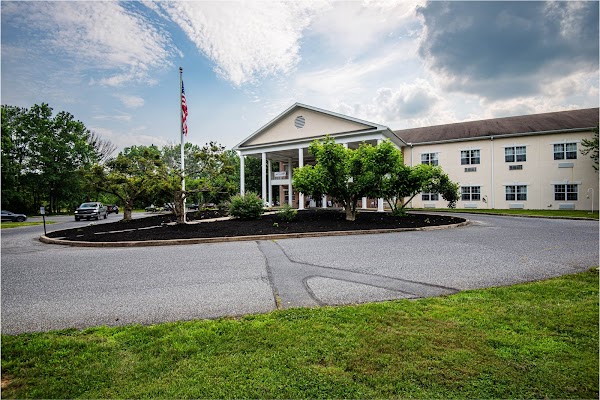
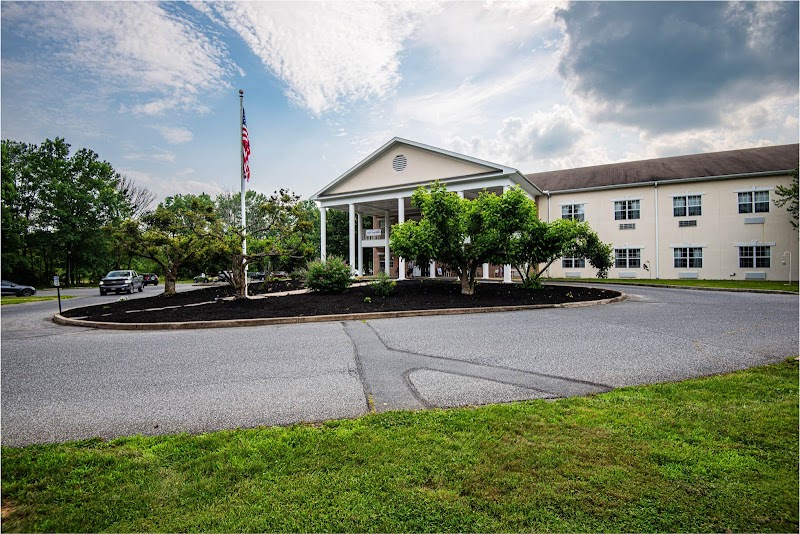
1000 ORWIGSBURG MANOR DR, ORWIGSBURG, PA 17961 (570) 366-2999
For profit - Limited Liability company 130 Beds IMPERIAL HEALTHCARE GROUP Data: November 2025
Trust Grade
63/100
#327 of 653 in PA
Last Inspection: August 2025

Inspected within the last 6 months. Data reflects current conditions.

Overview

Orwigsburg Nursing and Rehabilitation Center has a Trust Grade of C+, which means it is slightly above average but not exceptional. In Pennsylvania, it ranks #327 out of 653 facilities, placing it in the bottom half, and #6 out of 12 in Schuylkill County, indicating only five local options are better. The facility is improving, having reduced its issues from 6 in 2024 to 2 in 2025. However, staffing is a concern, with a poor rating of 1 out of 5 stars and a turnover rate of 55%, which is close to the state average. Recent inspections revealed some serious shortcomings, such as failing to follow doctors' orders for medication and not maintaining proper grooming and hygiene for several residents, which raises concerns about the overall care provided. On a positive note, health inspections received a 4 out of 5 rating, and the facility has no critical life-threatening issues reported.

Trust Score
C+
63/100
In Pennsylvania
#327/653
Top 50%
Safety Record
Low Risk
No red flags
Inspections
Getting Better
6 → 2 violations
Staff Stability
⚠ Watch
55% turnover. Above average. Higher turnover means staff may not know residents' routines.
Penalties
⚠ Watch
$22,128 in fines. Higher than 79% of Pennsylvania facilities, suggesting repeated compliance issues.
Skilled Nurses
⚠ Watch
Each resident gets only 24 minutes of Registered Nurse (RN) attention daily — below average for Pennsylvania. Fewer RN minutes means fewer trained eyes watching for problems.
Violations
○ Average
10 deficiencies on record. Average for a facility this size. Mostly minor or procedural issues.
★★★☆☆
3.0
Overall Rating
★☆☆☆☆
1.0
Staff Levels
★★☆☆☆
2.0
Care Quality
★★★★☆
4.0
Inspection Score
Stable
2024: 6 issues
2025: 2 issues

The Good

  • Full Sprinkler Coverage · Fire safety systems throughout facility
  • No fines on record

Facility shows strength in fire safety.

The Bad

3-Star Overall Rating

Near Pennsylvania average (3.0)

Meets federal standards, typical of most facilities

Staff Turnover: 55%

Near Pennsylvania avg (46%)

Frequent staff changes - ask about care continuity

Federal Fines: $22,128

Below median ($33,413)

Minor penalties assessed

Chain: IMPERIAL HEALTHCARE GROUP

Part of a multi-facility chain

Ask about local staffing decisions and management

Staff turnover is elevated (55%)

7 points above Pennsylvania average of 48%

The Ugly 10 deficiencies on record

Aug 2025 2 deficiencies
CONCERN (D)

Potential for Harm - no one hurt, but risky conditions existed

Assessment Accuracy (Tag F0641)

Could have caused harm · This affected 1 resident

**NOTE- TERMS IN BRACKETS HAVE BEEN EDITED TO PROTECT CONFIDENTIALITY** Based on clinical record review and staff interview, it was determined that the facility failed to complete an accurate Minimum ...

Read full inspector narrative →
**NOTE- TERMS IN BRACKETS HAVE BEEN EDITED TO PROTECT CONFIDENTIALITY** Based on clinical record review and staff interview, it was determined that the facility failed to complete an accurate Minimum Data Set (MDS) assessment for one of 25 sampled residents. (Resident 3)Findings include:Clinical record review revealed that Resident 3 had diagnoses that included anxiety, depression, and atrial fibrillation (irregular heartbeat). Review of Resident 3's MDS assessment dated [DATE], indicated that Resident 3 had a tracheostomy (surgical hole in the front of the neck for breathing). Review of Resident 3's clinical record revealed no physician's orders or care plan indicating the resident had a tracheostomy. In an interview on August 7, 2025, at 9:02 a.m., the Administrator confirmed Resident 3's MDS was inaccurate and that Resident did not have a tracheostomy.
CONCERN (E)

Potential for Harm - no one hurt, but risky conditions existed

Quality of Care (Tag F0684)

Could have caused harm · This affected multiple residents

Based on observation, clinical record review, and staff interview, it was determined that the facility failed to implement physicians' orders for four of 25 sampled residents. (Residents 8, 62, 86 and...

Read full inspector narrative →
Based on observation, clinical record review, and staff interview, it was determined that the facility failed to implement physicians' orders for four of 25 sampled residents. (Residents 8, 62, 86 and 115)Findings include: Clinical record review revealed that Resident 8 had diagnoses that included chronic kidney failure, congestive heart failure, and diabetes. A physician's order dated March 24, 2025, directed staff to administer a medication (isosorbide mononitrate) daily in the morning for heart disease. The medication was to be held if the resident's systolic blood pressure (SBP, the first measurement of blood pressure when the heart beats and the pressure is at its highest) was less than 115 millimeters of mercury (mm/Hg). Review of Resident 8's medication administration records (MARs) revealed that staff administered the medication six times in May 2025, five times in June 2025, and four times in July when the resident's SBP was less than 115 mmHg.Clinical record review revealed that Resident 62 had a diagnosis of hypertension (high blood pressure). On March 5, 2025, the physician ordered staff to administer a blood pressure medication (losartan potassium) one time a day. Staff were not to administer the medication if the resident's systolic blood pressure was less than 110 mmHg. Review of Resident 62's MAR revealed that staff administered the medication three times in July 2025, when the SBP was less than 110 mmHg. Clinical record review revealed that Resident 86 had a diagnosis of hypertension (high blood pressure). On April 15, 2025, the physician ordered staff to administer a blood pressure medication (metoprolol tartrate) two times a day. Staff were not to administer the medication if the resident's SBP was less than 110 mmHg. Review of Resident 86's MAR revealed that staff administered the medication six times in July 2025, when the SBP was less than 110 mmHg.In an interview on August 7, 2025, at 9:00 a.m., the Administrator confirmed that medications were administered outside of the established parameters for Residents 8, 62, and 86. Clinical record review revealed that Resident 115 had diagnoses that included partial paralysis on the right side following a cerebral infarction (stroke) and chronic respiratory failure with hypoxia (a condition in which the body's tissues do not receive enough oxygen). A physician's order dated June 22, 2022, directed staff on every shift to administer oxygen via a padded nasal cannula at a pressure of two liters per minute (LPM). On August 7, 2025, at 10:34 a.m., Resident 115 was observed sitting in a wheelchair in the second-floor hallway, where staff had placed her with an empty oxygen tank and no nasal cannula. In an interview on August 7, 2025, at 10:45 a.m., the facility Regional Nurse stated that oxygen was not administered to resident 115 per physician's orders. 28 Pa. Code 211.12(d)(1)(5) Nursing services.
Jul 2024 6 deficiencies
CONCERN (D)

Potential for Harm - no one hurt, but risky conditions existed

ADL Care (Tag F0677)

Could have caused harm · This affected 1 resident

**NOTE- TERMS IN BRACKETS HAVE BEEN EDITED TO PROTECT CONFIDENTIALITY** Based on clinical record review, observation, and staff and resident interview, it was determined that the facility failed to pr...

Read full inspector narrative →
**NOTE- TERMS IN BRACKETS HAVE BEEN EDITED TO PROTECT CONFIDENTIALITY** Based on clinical record review, observation, and staff and resident interview, it was determined that the facility failed to provide services to maintain adequate grooming and personal hygiene for four of 20 sampled residents. (Residents 17, 31, 68 and 87) Findings include: Clinical record review revealed that Resident 17 had diagnoses that included diabetes and a history of respiratory disease. According to the Minimum Data Set (MDS) assessment, dated June 10, 2024, she could communicate her needs and required supervision with her activities of daily living (ADLs) such as personal hygiene. The resident was hospitalized from [DATE] to 18, 2024, after a decline in condition. After returning from the hospital, she was more dependent on staff for all mobility and care, including her ADLs. On July 23, 2024, at 12:28 p.m., the resident was observed in bed with long and jagged finger and toe nails. At that time, the resident stated, They haven't helped me trim my nails in a while. On July 25, 2024, at 12:49 p.m., the resident was again observed with untrimmed finger and toe nails. Clinical record review revealed that Resident 31 had diagnoses that included diabetes and hypertension. According to the MDS assessment, dated May 30, 2024, he could communicate his needs and required substantial assistance from staff for all ADLs such as personal hygiene. On July 23, 2024, at 1:38 p.m., the resident was observed in his chair with long, yellow, and jagged fingernails. In an interview with the resident at that time, he stated that he preferred his nails short but needed help to cut them. On July 24, 2024, at 11:52 a.m., and on July 25, 2024, at 10:04 a.m., the resident was again observed with untrimmed fingernails. Clinical record review revealed that Resident 68 had diagnoses that included macular degeneration and anxiety. According to the MDS assessment, dated June 12, 2024, he could communicate his needs and required substantial assistance from staff for ADLs such as personal hygiene. On July 23, 2024, at 10:34 a.m., the resident was observed in bed with long, yellow, jagged fingernails with dark debris caked underneath the nails. In an interview with the resident at that time, he referenced his hands and stated, I can't get any help here with them. On July 24, 2024, at 11:25 a.m., and on July 25, 2024, at 9:37 a.m. and 12:41 p.m., the resident was again observed with untrimmed fingernails. On July 25, 2024, at 12:41 p.m., the resident stated, these nails are really sharp and dangerous and I keep trying to get them to help me. Clinical record review revealed that Resident 87 had diagnoses that included history of a stroke with residual weakness to one side of the body and osteoarthritis. According to the MDS assessment, dated April 6, 2024, he could communicate his needs and was dependent on staff for ADLs such as personal hygiene. On July 23, 2024, at 10:40 a.m., the resident was observed in bed with long and jagged fingernails. In an interview with the resident at that time he stated that he did not prefer his nails this long but could not cut them on his own. On July 24, 2024, at 12:08 p.m., and on July 25, 2024, at 10:14 a.m., the resident was again observed with untrimmed fingernails. In a group interview on July 24, 2024, at 10:07 a.m., Residents 7, 23, 24, 34, 45, 98, and 99, stated that routine nail care was not done by staff as a part of ADL assistance. In an interview on June 25, 2024, at 1:54 p.m., the Director of Nursing stated that staff was to perform nail care with the residents' showers. 28 Pa. Code 211.12(d)(1)(5) Nursing services.
CONCERN (D)

Potential for Harm - no one hurt, but risky conditions existed

Incontinence Care (Tag F0690)

Could have caused harm · This affected 1 resident

**NOTE- TERMS IN BRACKETS HAVE BEEN EDITED TO PROTECT CONFIDENTIALITY** Based on clinical record review, policy review, and staff interview, it was determined that the facility failed to assess bladde...

Read full inspector narrative →
**NOTE- TERMS IN BRACKETS HAVE BEEN EDITED TO PROTECT CONFIDENTIALITY** Based on clinical record review, policy review, and staff interview, it was determined that the facility failed to assess bladder incontinence and provide services to restore as much bladder function as possible for two of 24 sampled residents. (Residents 57, 60) Findings include: Review of the facility policy entitled, Urinary Continence and Incontinence - Assessment and Management, last reviewed January 16, 2024, revealed that facility staff was to complete a urinary incontinence assessment periodically and when there was a change in voiding. Staff would define each resident's level of continence and identify the type of incontinence. Clinical record review revealed that Resident 57 was admitted to the facility on [DATE], with diagnoses that included anxiety and hemiplegia. A Bowel and Bladder Program Screener was completed on April 3, 2024, and May 1, 2024, and indicated that the resident was a candidate for a scheduled toileting program. According to the Minimum Data Set (MDS) assessment, dated June, 24 2024, the resident needed assistance from staff for toileting. The assessment further indicated that the resident was incontinent of urine and was not on a toileting program. Further review of the Bowel and Bladder Program Screeners revealed that Resident 57's type of urinary incontinence was not identified and there was no indication that the resident was on a scheduled toileting program. There was no documented evidence that a scheduled toileting program had been implemented. Clinical record review revealed that Resident 60 was admitted to the facility on [DATE], with diagnoses that included diabetes mellitus. A Bowel and Bladder Program Screener was completed on December 27, 2023, March 27, 2024, and June 28, 2024, and indicated that the resident was a candidate for a scheduled toileting program. According to the MDS assessment, dated June 29, 2024, the resident needed assistance from staff for toileting, was frequently incontinent of urine, and was not on a toileting program. Further review of the Bowel and Bladder Program Screeners revealed that Resident 60's type of urinary incontinence was not identified and there was no indication that the resident was on a scheduled toileting program. There was no documented evidence that a scheduled toileting program had been implemented. In an interview on July 26, 2024, at 10:00 a.m., the Director of Nursing confirmed that there was no documented evidence that the residents' urinary incontinence had been assessed in accordance with facility policy or that toileting programs were implemented for Residents 57 and 60. 28 Pa. Code 211.12(d)(1)(5) Nursing services.
CONCERN (D)

Potential for Harm - no one hurt, but risky conditions existed

Medication Errors (Tag F0758)

Could have caused harm · This affected 1 resident

Based on clinical record review and staff interview, it was determined that the facility failed to offer non-pharmacological interventions prior to the administration of as needed anti-anxiety medicat...

Read full inspector narrative →
Based on clinical record review and staff interview, it was determined that the facility failed to offer non-pharmacological interventions prior to the administration of as needed anti-anxiety medications for one of 24 sampled residents. (Resident 57) Findings include: Clinical record review revealed that Resident 57 had diagnoses that included schizophrenia and anxiety. On June 10 and 24, 2024, and July 8 and 22, 2024, the physician ordered an anti-anxiety medication, alprazolam, be given every eight hours as needed for 14 days. Review of the medication administration records for June and July 2024, revealed that staff had administered the as needed alprazolam 30 times. There was no documented evidence that staff attempted non-pharmacological interventions prior to the administration of the as needed anti-anxiety medication. In an interview on July 26, 2024, at 10:05 a.m., the Director of Nursing confirmed that there was no documented evidence that staff attempted non-pharmacological interventions prior to the administration of the as needed anti-anxiety medication. 28 Pa. code 211.12(d)(1)(5) Nursing services.
CONCERN (D)

Potential for Harm - no one hurt, but risky conditions existed

Deficiency F0806 (Tag F0806)

Could have caused harm · This affected 1 resident

**NOTE- TERMS IN BRACKETS HAVE BEEN EDITED TO PROTECT CONFIDENTIALITY** Based on clinical record review, review of facility documentation, observation, and resident interview, it was determined that t...

Read full inspector narrative →
**NOTE- TERMS IN BRACKETS HAVE BEEN EDITED TO PROTECT CONFIDENTIALITY** Based on clinical record review, review of facility documentation, observation, and resident interview, it was determined that the facility failed to ensure that a resident's preference at meal times had been accommodated for one of 24 sampled residents. (Resident 27) Findings include: Clinical record review revealed that Resident 27 had diagnoses that included diabetes mellitus and congestive heart failure. A Minimum Data Set assessment dated [DATE], indicated that the resident was alert and able to make his needs known. Resident 27's ongoing care plan revealed he had the potential to be at nutritional risk and an intervention was to honor his food preferences. On July 23, 2024, at 10:55 a.m., Resident 27 stated that he frequently received items he disliked on his meal trays. On July 23, 2024, at 12:40 p.m., Resident 27's lunch tray was observed and he received rice as a side dish. Review of Resident 27's meal ticket at that time revealed that rice was listed as a food the resident disliked. In an interview at that time the resident stated that he did not want the rice and would not eat it.
CONCERN (D)

Potential for Harm - no one hurt, but risky conditions existed

Deficiency F0810 (Tag F0810)

Could have caused harm · This affected 1 resident

Based on clinical record review, observation, and staff interview, it was determined that the facility failed to provide adaptive equipment to assist with eating meals for one of 24 sampled residents....

Read full inspector narrative →
Based on clinical record review, observation, and staff interview, it was determined that the facility failed to provide adaptive equipment to assist with eating meals for one of 24 sampled residents. (Resident 1) Findings include: Clinical record review revealed that Resident 1 had diagnoses that included dysphagia and aphasia. On March 19, 2024, the physician ordered that staff provide the resident a two handled cup at all meals. Review of an occupational therapy note dated July 17, 2024, revealed that it was recommended for the resident to continue to use a two handled mug or regular mug/cup with a lid and straw to aid independence. On July 23, 2024, from 12:40 p.m. through 12:55 p.m., and on July 25, 2024, from 12:40 p.m. through 12:55 p.m., Resident 1 was observed in the dining room without a two handled cup or regular mug/cup with a lid and straw for her beverages. In an interview on July 26, 2024, at 10:20 a.m., Registered Nurse 1 confirmed that the resident should have received her drink in a two handled cup at all meals. 28 Pa. Code 211.12(d)(1)(3)(5) Nursing services.
CONCERN (D)

Potential for Harm - no one hurt, but risky conditions existed

Infection Control (Tag F0880)

Could have caused harm · This affected 1 resident

**NOTE- TERMS IN BRACKETS HAVE BEEN EDITED TO PROTECT CONFIDENTIALITY** Based on facility policy review, clinical record review, observations, and interviews, it was determined that the facility faile...

Read full inspector narrative →
**NOTE- TERMS IN BRACKETS HAVE BEEN EDITED TO PROTECT CONFIDENTIALITY** Based on facility policy review, clinical record review, observations, and interviews, it was determined that the facility failed to follow policy related transmissions-based precautions and use of personal protective equipment for one of 24 sampled residents. (Resident 47) Findings include: Review of the facility policy entitled, Isolation- Categories of Transmission-Based Precautions, last reviewed on January 16, 2024, revealed that transmission-based precautions (TBP) were additional measures to protect staff, visitors, and other residents from becoming infected when a resident was diagnosed with specific pathogens. A sign was hung on the room entrance door so that staff and visitors were aware of the need for precautions. Clinical record review revealed that Resident 47 was admitted to the facility on [DATE], with a diagnoses that included dementia, pneumonia, and methicillin-resistant staphylococcus aureus (a drug resistant infection) in the sputum. On May 13, 2024, a physician ordered that staff use TBP when providing care. On July 24, 2024, at 9:35 a.m., a sign was observed outside Resident 47's room that directed staff and visitors to follow TBP, including use of a gown and gloves, when in the room. On July 24, 2024, from 9:38 a.m. to 9:50 a.m., Nurse Aide (NA) 1 was observed without a gown in Resident 47's room and providing care, including incontinence care and assistance with bathing without a gown. On July 24, 2024, at 1:08 p.m., a visitor was observed in the room without a gown. In an interview on July 25, 2024, at 10:37 a.m., the Infection Preventionist confirmed that Resident 47 was on TBP and that all staff and visitors in the resident's room should have followed the policy and worn appropriate protective equipment including gowns. 28 Pa. Code 211.10(c)(d) Resident care policies. 28 Pa. Code 211.12(d)(1)(5) Nursing services.
Aug 2023 2 deficiencies
CONCERN (D)

Potential for Harm - no one hurt, but risky conditions existed

Quality of Care (Tag F0684)

Could have caused harm · This affected 1 resident

Based on clinical record review and staff interview, it was determined that the facility failed to ensure that physician's orders were implemented for one of 23 sampled residents. (Resident 3) Finding...

Read full inspector narrative →
Based on clinical record review and staff interview, it was determined that the facility failed to ensure that physician's orders were implemented for one of 23 sampled residents. (Resident 3) Findings include: Clinical record review revealed that Resident 3 had diagnoses that included paraplegia (loss of feeling or movement in part of the body), anxiety, depression, and chronic pain. A physician's order dated June 21, 2023, directed staff to administer Percocet (a pain medication) every four hours as needed for severe pain of eight to 10 on the pain scale. Review of the June, July, and August 2023, medication administration records revealed that staff administered the medication when the resident's pain was rated below eight on the pain scale eight times in June, 19 times in July, and one time in August. In an interview on August 4, 2023, at 9:45 a.m., Quality Regulatory Consultant 1 confirmed that staff had administered the Percocet when the resident's pain was below the established parameters. CFR 483.25 Quality of Care Previously cited 10/6/22 28 Pa. Code 211.12(d)(1)(5) Nursing services.
CONCERN (D)

Potential for Harm - no one hurt, but risky conditions existed

Deficiency F0688 (Tag F0688)

Could have caused harm · This affected 1 resident

**NOTE- TERMS IN BRACKETS HAVE BEEN EDITED TO PROTECT CONFIDENTIALITY** Based on clinical record review and staff interview, it was determined that the facility failed to implement treatment and servi...

Read full inspector narrative →
**NOTE- TERMS IN BRACKETS HAVE BEEN EDITED TO PROTECT CONFIDENTIALITY** Based on clinical record review and staff interview, it was determined that the facility failed to implement treatment and services to prevent a further decrease in range of motion for one of six sampled residents with limited range of motion. (Resident 46) Findings include: Clinical record review revealed that Resident 46 had diagnoses that included quadriplegia (the inability to be able to move any muscles from the neck down), muscle spasm, and traumatic brain injury. The Minimum Data Set assessment dated [DATE], indicated that the resident was cognitively impaired, dependent on staff for activities of daily living, and had a limitation in range of motion on both sides of the upper extremities. On March 8, 2022, the occupational therapist (OT) recommended a restorative nursing program (RNP) for range of motion for both shoulders and the right elbow. A physician's order dated March 9, 2022, directed staff to provide the RNP and provide a prolonged stretch for both shoulders and also to extend the right elbow five times and hold it for 30 seconds. There was no evidence that staff had implemented the RNP. In an interview conducted on August 3, 2023, at 10:12 a.m., Quality Regulatory Consultant 1 confirmed there was no evidence that the RNP was provided and that it was not on the task list for nursing care duties. In an interview conducted on August 3, 2023, at 11:00 a.m., The Director of Therapy stated that Resident 46 required the RNP as recommended for both shoulders and right elbow for muscle contractures. In an interview conducted on August 3, 2023, at 12:09 p.m., Nurse Aide 1 (NA1) stated that nurse aides viewed the required daily care duties and RNPs on the task list. 28 Pa. Code 211.12(d)(1)(3)(5) Nursing services.
Understanding Severity Codes (click to expand)
Life-Threatening (Immediate Jeopardy)
J - Isolated K - Pattern L - Widespread
Actual Harm
G - Isolated H - Pattern I - Widespread
Potential for Harm
D - Isolated E - Pattern F - Widespread
No Harm (Minor)
A - Isolated B - Pattern C - Widespread

Questions to Ask on Your Visit

  • "Why is there high staff turnover? How do you retain staff?"
  • "Can I speak with families of current residents?"
  • "What's your RN coverage like on weekends and overnight?"

Our Honest Assessment

Strengths
  • • No major safety red flags. No abuse findings, life-threatening violations, or SFF status.
Concerns
  • • $22,128 in fines. Higher than 94% of Pennsylvania facilities, suggesting repeated compliance issues.
  • • 55% turnover. Above average. Higher turnover means staff may not know residents' routines.
Bottom line: Mixed indicators with Trust Score of 63/100. Visit in person and ask pointed questions.

About This Facility

What is Orwigsburg Nursing And Rehabilitation Center's CMS Rating?

CMS assigns ORWIGSBURG NURSING AND REHABILITATION CENTER an overall rating of 3 out of 5 stars, which is considered average nationally. Within Pennsylvania, this rating places the facility higher than 0% of the state's 100 nursing homes. This mid-range rating indicates the facility meets federal standards but may have areas for improvement.
How is Orwigsburg Nursing And Rehabilitation Center Staffed?

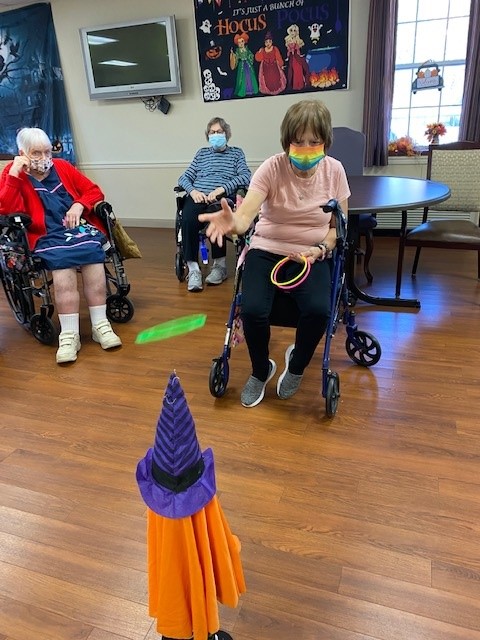
CMS rates ORWIGSBURG NURSING AND REHABILITATION CENTER's staffing level at 1 out of 5 stars, which is much below average compared to other nursing homes. Staff turnover is 55%, which is 9 percentage points above the Pennsylvania average of 46%. High turnover can affect care consistency as new staff learn residents' individual needs.

What Have Inspectors Found at Orwigsburg Nursing And Rehabilitation Center?

State health inspectors documented 10 deficiencies at ORWIGSBURG NURSING AND REHABILITATION CENTER during 2023 to 2025. These included: 10 with potential for harm.
Who Owns and Operates Orwigsburg Nursing And Rehabilitation Center?

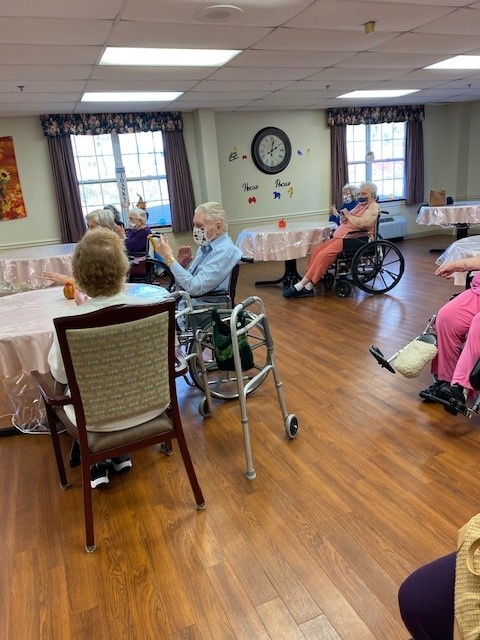
ORWIGSBURG NURSING AND REHABILITATION CENTER is owned by a for-profit company. For-profit facilities operate as businesses with obligations to shareholders or private owners. The facility is operated by IMPERIAL HEALTHCARE GROUP, a chain that manages multiple nursing homes. With 130 certified beds and approximately 108 residents (about 83% occupancy), it is a mid-sized facility located in ORWIGSBURG, Pennsylvania.

How Does Orwigsburg Nursing And Rehabilitation Center Compare to Other Pennsylvania Nursing Homes?

Compared to the 100 nursing homes in Pennsylvania, ORWIGSBURG NURSING AND REHABILITATION CENTER's overall rating (3 stars) matches the state average, staff turnover (55%) is near the state average of 46%, and health inspection rating (4 stars) is above the national benchmark.

What Should Families Ask When Visiting Orwigsburg Nursing And Rehabilitation Center?

Based on this facility's data, families visiting should ask: "How do you ensure continuity of care given staff turnover, and what is your staff retention strategy?" "Can you walk me through typical staffing levels on day, evening, and night shifts?" "Can I visit during a mealtime to observe dining assistance and food quality?" "How do you handle medical emergencies, and what is your hospital transfer rate?" These questions are particularly relevant given the facility's high staff turnover rate and the below-average staffing rating.

Is Orwigsburg Nursing And Rehabilitation Center Safe?

Based on CMS inspection data, ORWIGSBURG NURSING AND REHABILITATION CENTER has a clean safety record: no substantiated abuse findings (meaning no confirmed cases of resident harm), no Immediate Jeopardy citations (the most serious violation level indicating risk of serious injury or death), and is not on the Special Focus Facility watch list (a federal program monitoring the lowest-performing 1% of nursing homes). The facility has a 3-star overall rating and ranks #1 of 100 nursing homes in Pennsylvania. While no facility is perfect, families should still ask about staff-to-resident ratios and recent inspection results during their visit.

Do Nurses at Orwigsburg Nursing And Rehabilitation Center Stick Around?

Staff turnover at ORWIGSBURG NURSING AND REHABILITATION CENTER is high. At 55%, the facility is 9 percentage points above the Pennsylvania average of 46%. High turnover means new staff may not know residents' individual needs, medications, or preferences. It can also be disorienting for residents, especially those with dementia who rely on familiar faces. Families should ask: What is causing the turnover? What retention programs are in place? How do you ensure care continuity during staff transitions?

Was Orwigsburg Nursing And Rehabilitation Center Ever Fined?

ORWIGSBURG NURSING AND REHABILITATION CENTER has been fined $22,128 across 2 penalty actions. This is below the Pennsylvania average of $33,300. While any fine indicates a compliance issue, fines under $50,000 are relatively common and typically reflect isolated problems that were subsequently corrected. Families should ask what specific issues led to these fines and confirm they've been resolved.

Is Orwigsburg Nursing And Rehabilitation Center on Any Federal Watch List?

ORWIGSBURG NURSING AND REHABILITATION CENTER is not on any federal watch list. The most significant is the Special Focus Facility (SFF) program, which identifies the bottom 1% of nursing homes nationally based on persistent, serious quality problems. Not being on this list means the facility has avoided the pattern of deficiencies that triggers enhanced federal oversight. This is a positive indicator, though families should still review the facility's inspection history directly.