TREMONT HEALTH & REHABILITATION CENTER


44 DONALDSON ROAD, TREMONT, PA 17981 (570) 695-3141
For profit - Corporation 180 Beds SABER HEALTHCARE GROUP Data: November 2025
Trust Grade
75/100
#241 of 653 in PA
Last Inspection: March 2025

Within standard 12-15 month inspection cycle. Federal law requires annual inspections.

Overview

Tremont Health & Rehabilitation Center has a Trust Grade of B, indicating it is a solid choice for care, falling within the good range. It ranks #241 out of 653 facilities in Pennsylvania, which places it in the top half of the state, and #3 out of 12 in Schuylkill County, meaning only two local facilities are rated higher. The facility is improving, with a reduction in issues from 7 in 2024 to just 2 in 2025. Staffing is rated at 4 out of 5 stars, showing a good level of care, though with a 43% turnover rate, which is slightly below the state average of 46%. Notably, there have been no fines, which is a positive sign of compliance. However, there are some concerns. The facility had instances where residents did not receive their scheduled showers, which impacts their quality of life. Additionally, there were cleanliness issues noted, such as peeling wallpaper and dirty floors in common areas, indicating problems with maintenance. Lastly, there was a failure to document a Minimum Data Set assessment for a resident who passed away, which raises questions about record-keeping practices. Overall, while there are strengths in staffing and compliance, families should be aware of these weaknesses when considering this facility.

Trust Score
B
75/100
In Pennsylvania
#241/653
Top 36%
Safety Record
Low Risk
No red flags
Inspections
Getting Better
7 → 2 violations
Staff Stability
○ Average
43% turnover. Near Pennsylvania's 48% average. Typical for the industry.
Penalties
✓ Good
No fines on record. Clean compliance history, better than most Pennsylvania facilities.
Skilled Nurses
⚠ Watch
Each resident gets only 25 minutes of Registered Nurse (RN) attention daily — below average for Pennsylvania. Fewer RN minutes means fewer trained eyes watching for problems.
Violations
⚠ Watch
13 deficiencies on record. Higher than average. Multiple issues found across inspections.
★★★★☆
4.0
Overall Rating
★★★★☆
4.0
Staff Levels
★★★☆☆
3.0
Care Quality
★★★★☆
4.0
Inspection Score
Stable
2024: 7 issues
2025: 2 issues

The Good

  • 4-Star Staffing Rating · Above-average nurse staffing levels
  • Full Sprinkler Coverage · Fire safety systems throughout facility
  • No fines on record
  • Staff turnover below average (43%)

    5 points below Pennsylvania average of 48%

Facility shows strength in staffing levels, fire safety.

The Bad

Staff Turnover: 43%

Near Pennsylvania avg (46%)

Typical for the industry

Chain: SABER HEALTHCARE GROUP

Part of a multi-facility chain

Ask about local staffing decisions and management

The Ugly 13 deficiencies on record

Mar 2025 2 deficiencies
CONCERN (D)

Potential for Harm - no one hurt, but risky conditions existed

MDS Data Transmission (Tag F0640)

Could have caused harm · This affected 1 resident

**NOTE- TERMS IN BRACKETS HAVE BEEN EDITED TO PROTECT CONFIDENTIALITY** Based on clinical record review and staff interview, it was determined the facility failed to ensure completion of a Minimum Dat...

Read full inspector narrative →
**NOTE- TERMS IN BRACKETS HAVE BEEN EDITED TO PROTECT CONFIDENTIALITY** Based on clinical record review and staff interview, it was determined the facility failed to ensure completion of a Minimum Data Set (MDS) assessment for one of three sampled residents who were discharged from the facility. (Resident 109) Findings include: Clinical record review revealed that Resident 109 passed away in the facility on [DATE]. There was no documented evidence that an MDS assessment was completed to reflect the discharge status when the resident expired in the facility. In an interview on [DATE], at 11:00 a.m., the Administrator confirmed that the MDS had not been completed when the resident was discharged from the facility on [DATE].
CONCERN (D) 📢 Someone Reported This

A family member, employee, or ombudsman was alarmed enough to file a formal complaint

Potential for Harm - no one hurt, but risky conditions existed

Quality of Care (Tag F0684)

Could have caused harm · This affected 1 resident

Based on facility policy review, clinical record review, and staff interview, it was determined that the facility failed to ensure physicians' orders were implemented for four of 36 sampled residents....

Read full inspector narrative →
Based on facility policy review, clinical record review, and staff interview, it was determined that the facility failed to ensure physicians' orders were implemented for four of 36 sampled residents. (Residents 5, 21, 33, and 56) Findings include: Review of the policy entitled, General Dose Preparation and Medication Administration, last reviewed November 26, 2024, revealed that staff were to obtain vital signs if necessary and document physician-indicated medication administration information. Clinical record review revealed that Resident 5 had diagnoses that included hemiplegia and hemiparesis (paralysis) and multiple sclerosis. Review of the Minimum Data Set (MDS) assessment, dated February 28, 2025, revealed Resident 5 had cognitive impairment, was at risk for developing pressure ulcers, and was dependent on staff for putting on and taking off footwear. Review of Resident 5's care plan revealed he had the potential for skin breakdown with an intervention for staff to apply bilateral pressure relieving boots. On April 4, 2024, the physician ordered for staff to apply bilateral Prevalon boots to Resident 5's feet at all times, except during care. Observations on March 11, 2025, at 10:27 a.m., March 12, 2025, at 11:30 a.m. and 1:00 p.m., and March 13, 2025, at 8:25 a.m., 10:10 a.m., and 11:30 a.m., revealed Resident 5 in bed with no Prevalon boots in place. Resident 5 was not receiving care at the time of the observations. In an interview on March 14, 2025, at 9:24 a.m., the Assistant Director of Nursing confirmed the Prevalon boots were not in place and should have been. Clinical record review revealed that Resident 21 had diagnoses that included edema, reduced mobility, and generalized muscle weakness. On February 3, 2025, the physician ordered for staff to apply Ace wraps to Resident 21's bilateral lower extremities twice daily at 8:00 a.m. and remove at 9:00 p.m. Observations on March 11, 2025, at 12:00 p.m., March 12, 2025, at 12:31 p.m., March 13, 2025, at 8:21 a.m., and March 14, 2025, at 8:15 a.m. and 9:25 a.m., revealed Resident 21 without Ace wraps applied to her bilateral lower extremities. During interviews on March 11, 2025, at 12:00 p.m., March 13, 2025, at 8:21 a.m., and March 14, 2025, at 9:25 a.m., Resident 21 confirmed that she was not asked if she wanted her Ace wraps applied to her bilateral lower extremities. In an interview on March 13, 2025, at 1:15 p.m., the Assistant Director of Nursing confirmed the Ace wraps were not applied as ordered and should have been. Clinical record review revealed that Resident 33 had diagnoses that included hypertension (high blood pressure). On April 8, 2024, the physician ordered staff to administer a blood pressure medicine (amlodipine) once a day. Staff were not to administer the medication if the resident's systolic blood pressure (SBP, the first measurement of blood pressure when the heart beats and the pressure is at its highest) was less than 100 millimeters of mercury (mmHg). Review of Resident 33's February and March 2025 Medication Administration Records (MARs) revealed that staff administered the medication 39 times with no documentation to support that the blood pressure was assessed prior to medication administration per physician's order. Clinical record review revealed that Resident 56 had diagnoses that included hypertension. On April 3, 2024, the physician ordered staff to administer a medication (carvedilol) twice a day for hypertension. Staff were not to administer the medication if the resident's SBP was less than 120 mmHg. Review of Resident 56's MARs revealed that staff administered the medication 13 times in January 2025, seven times in February 2025, and four times in March 2025, when the resident's SBP was less than 120 mmHg. In an interview on March 14, 2025, at 9:07 a.m., the Assistant Director of Nursing confirmed there was no documented evidence that the blood pressure was taken prior to medication administration per physician's order as identified for Resident 33 and that the medication was administered outside of the established parameters as noted for Resident 56. CFR 483.25 Quality of Care. Previously cited 9/11/24. 28 Pa. Code 211.12(d)(1)(5) Nursing services.
Sept 2024 3 deficiencies
CONCERN (D) 📢 Someone Reported This

A family member, employee, or ombudsman was alarmed enough to file a formal complaint

Potential for Harm - no one hurt, but risky conditions existed

Quality of Care (Tag F0684)

Could have caused harm · This affected 1 resident

**NOTE- TERMS IN BRACKETS HAVE BEEN EDITED TO PROTECT CONFIDENTIALITY** Based on clinical record review and staff interview, it was determined that the facility failed to provide care and services to ...

Read full inspector narrative →
**NOTE- TERMS IN BRACKETS HAVE BEEN EDITED TO PROTECT CONFIDENTIALITY** Based on clinical record review and staff interview, it was determined that the facility failed to provide care and services to meet each resident's needs for one of six sampled residents. (Resident 1) Findings include: Clinical record review revealed that Resident 1 was admitted to the facility on [DATE], with diagnoses that included hypertension and chronic obstructive pulmonary disease. Review of the current care plan revealed that the resident had hearing loss and wore hearing aides. Review of a progress note dated August 15, 2024, revealed that Resident 1 had an appointment for the physician to clean his ears on September 6, 2024, and that the physician was to clean his ears in the facility. Review of a physician's progress note dated August 22, 2024, revealed that there was no evidence that the physician addressed or cleaned Resident 1's ears. On August 28, 2024, the physician ordered for staff to administer ear drops to both the resident's ears for seven days and then the physician would flush. There was no documented evidence that the physician cleaned or flushed Resident 1's ears or that the resident went to his scheduled appointment on September 6, 2024. In an interview on September 11, 2024, at 2:25 p.m., the Administrator and Director of Nursing confirmed there was no evidence that the physician cleaned Resident 1's ears and that Resident did not attend the September 6, 2024 appointment to have his ears cleaned. 28 Pa. Code 211.12(d)(1)(5) Nursing services.
CONCERN (E) 📢 Someone Reported This

A family member, employee, or ombudsman was alarmed enough to file a formal complaint

Potential for Harm - no one hurt, but risky conditions existed

Resident Rights (Tag F0550)

Could have caused harm · This affected multiple residents

**NOTE- TERMS IN BRACKETS HAVE BEEN EDITED TO PROTECT CONFIDENTIALITY** Based on clinical record review and resident interview, it was determined that the facility failed to provide services to enhanc...

Read full inspector narrative →
**NOTE- TERMS IN BRACKETS HAVE BEEN EDITED TO PROTECT CONFIDENTIALITY** Based on clinical record review and resident interview, it was determined that the facility failed to provide services to enhance each resident's quality of life by offering showers as scheduled to four of six sampled residents. (Residents 1, 2, 3, 4) Findings include: Clinical record review revealed that Resident 1 was admitted to the facility on [DATE] with diagnoses that included hypertension and chronic obstructive pulmonary disease . The Minimum Data Set (MDS) assessment dated [DATE], indicated that the resident needed staff assistance for bathing. The resident was to receive a shower twice per week on Monday and Thursday. Review of documentation in the clinical record revealed that the resident only received two showers since admission to the facility on July 4, 2024. Clinical record review revealed that Resident 2 had diagnoses that included congestive heart failure and hypertension. The MDS assessment dated [DATE], indicated the resident needed staff assistance for bathing. The resident was to receive a shower twice per week on Monday and Thursday. Review of documentation in the clinical record revealed that the resident was not offered a shower eight of 18 scheduled times in the past 90 days. Clinical record review revealed that Resident 3 had diagnoses that included diabetes mellitus and chronic obstructive pulmonary disease. The MDS assessment dated [DATE], indicated that the resident was oriented and needed staff assistance for bathing. The resident was to receive a shower twice per week on Wednesday and Saturday. In an interview on September 11, 2024, at 12:05 p.m. the resident stated that she preferred to take a shower twice a week and was not offered the opportunity to do so. Resident 3 stated that she would not refuse the opportunity to shower. Review of documentation in the clinical record revealed that the resident was not offered a shower 14 of 17 scheduled times in the past 90 days. Clinical record review revealed that Resident 4 had diagnoses that included hypertension and depression. The MDS assessment dated [DATE], indicated that the resident was oriented and was dependent on staff assistance for bathing. The resident was to receive a shower twice per week on Monday and Thursday. In an interview on September 11, 2024, at 12:30 p.m. the resident stated that she preferred to take a shower twice a week and was not offered the opportunity to do so. Resident 4 stated that she would not refuse the opportunity to shower. Review of documentation in the clinical record revealed that the resident was not offered a shower eight of 18 scheduled times in the past 90 days. 28 Pa. Code 211.12(d)(5) Nursing services. Previously cited 10/28/23
CONCERN (E) 📢 Someone Reported This

A family member, employee, or ombudsman was alarmed enough to file a formal complaint

Potential for Harm - no one hurt, but risky conditions existed

Safe Environment (Tag F0921)

Could have caused harm · This affected multiple residents

**NOTE- TERMS IN BRACKETS HAVE BEEN EDITED TO PROTECT CONFIDENTIALITY** Based on observation it was determined that the facility failed to provide a safe, sanitary, and comfortable environment on two ...

Read full inspector narrative →
**NOTE- TERMS IN BRACKETS HAVE BEEN EDITED TO PROTECT CONFIDENTIALITY** Based on observation it was determined that the facility failed to provide a safe, sanitary, and comfortable environment on two of three nursing units (B and C unit) and the main dining room. Findings include: Observation on the B nursing unit on September 11, 2024, from 10:30 a.m. through 2:00 p.m. revealed the following: The wall paper was peeling and hanging off the wall in multiple areas in the common area across from the nurses' station. The floor outside the door to the janitor's closet had a large accummulation of black dirt. In rooms 101, 102, 104, 105, 106, and 107, the floors were sticky and the tiles had a dull black/brown coating of dirt accummulation. In room [ROOM NUMBER] the heating unit contained peeling paint and cobwebs near the controls. The wall to the right of the closet was heavily marred. In the shared bathroom there was a brown/black ring of dirt on floor around the bottom of the toilet, the right side toilet grab bar was loose, the wall around the soap dispenser was peeling, and the bathroom door was heavily marred. In room [ROOM NUMBER] near the doorway, the floor was cracked and missing a piece of tile. In room [ROOM NUMBER], bed 2's top drawer to the night stand was broken and crooked, the bottom drawer near the sink did not close and was misaligned, and the closet doors did not close and were misaligned. Obersvations on the C nursing unit on September 11, 2024, from 10:30 a.m. through 2:30 p.m. revealed the following: In room [ROOM NUMBER] the front cover to the heating unit was broke and sticking out exposing a sharp edge. In room [ROOM NUMBER] there was a chair for resident use that the cushion was peeling and flaking off. In the main dining room there was a missing ceiling tile in the middle of the room. 28 Pa. Code 201.14(a) Responsibility of licensee. 28 Pa. Code 201.18(b)(1) Management.
May 2024 1 deficiency
CONCERN (D) 📢 Someone Reported This

A family member, employee, or ombudsman was alarmed enough to file a formal complaint

Potential for Harm - no one hurt, but risky conditions existed

Accident Prevention (Tag F0689)

Could have caused harm · This affected 1 resident

Based on clinical record review and staff interview, it was determined that the facility failed to provide adequate interventions and supervision to prevent elopement (leaving an area without permissi...

Read full inspector narrative →
Based on clinical record review and staff interview, it was determined that the facility failed to provide adequate interventions and supervision to prevent elopement (leaving an area without permission or supervision) for one of eight sampled residents. (Resident CL 1) Findings include: Clinical record review revealed that Resident CL 1 had diagnoses that included chronic kidney disease. The Minimum Data Set assessment, dated September May 1, 2024, indicated that the resident was able to walk without staff assistance. Review of the current care plan revealed that Resident CL 1 was at risk to elope and an intervention was for staff to apply a wander guard (a bracelet like device that is placed on an extremity that assisted with the location of a resident who may wander) to her left wrist. A physician's order dated April 24, 2023, directed that the resident wear a wander guard and that staff check placement every shift and the function of the device daily. Review of the treatment administration records for April and May 2024, revealed that there was no documented evidence that staff checked the placement or function of the wander guard from April 9, 2024, through May 3, 2024. On May 3, 2024, at 9:50 a.m. the resident was found outside approximately three blocks from the facility by a staff member on their way to work. During an interview on May 30, 2024, at 2:00 p.m., the Director of Nursing confirmed that there was no documented evidence that staff checked the placement and function of the wander guard from April 9, 2024, through May 3, 2024, when the resident was found outside the facility. 28 Pa. Code 211.12(d)(1)(5) Nursing services.
Feb 2024 3 deficiencies
CONCERN (D)

Potential for Harm - no one hurt, but risky conditions existed

Resident Rights (Tag F0550)

Could have caused harm · This affected 1 resident

Based on clinical record review and observation, it was determined that the facility failed to provide assistance with dining in a manner that promoted and maintained dignity for three residents in tw...

Read full inspector narrative →
Based on clinical record review and observation, it was determined that the facility failed to provide assistance with dining in a manner that promoted and maintained dignity for three residents in two of four dining rooms. (Residents 9, 91, 205) Findings include: Clinical record review revealed that Resident 9 had diagnoses that included Alzheimer's dementia, unspecified protein-calorie malnutrition, and gastro-esophageal reflux disease without esophagitis. Review of the Minimum Data Set (MDS) assessment, dated November 28, 2023, revealed that the resident had cognitive impairment. Review of Resident 9's care plan revealed the resident was to be seated upright in a chair with the assistance of one staff member while eating. On February 21, 2024, from 8:32 a.m. until 8:54 a.m., Nurse Aide (NA) 1 was observed standing while assisting Resident 9 with breakfast. Clinical record review revealed that Resident 91 had diagnoses that included diabetes mellitius. Review of the MDS assessment, dated February 20, 2024, revealed that the resident had cognitive impairment and needed staff assistance with eating. Review of Resident 91's care plan revealed that staff was to assist him with self-feeding and provide verbal cueing with meals. On February 21, 2024, from 8:30 a.m. through 8:45 a.m., NA 2 was observed standing while assisting Resident 91 with breakfast. Clinical record review revealed that Resident 205 had diagnoses that included heart failure and chronic kidney disease. Review of the MDS assessment, dated November 28, 2023, revealed that the resident had cognitive impairment and needed staff assistance with eating. Review of the Therapy Staff Education form revealed that staff was to assist Resident 205 with meals. On February 21, 2024, from 8:30 a.m. through 8:45 p.m. and from 11:45 a.m. through 12:00 p.m., NA 3 was observed standing while assisting Resident 205 with breakfast and lunch. 28 Pa. Code 211.12(d)(1)(5) Nursing services.
CONCERN (D)

Potential for Harm - no one hurt, but risky conditions existed

Comprehensive Care Plan (Tag F0656)

Could have caused harm · This affected 1 resident

**NOTE- TERMS IN BRACKETS HAVE BEEN EDITED TO PROTECT CONFIDENTIALITY** Based on clinical record review and staff interview, it was determined that the facility failed to develop and implement an indi...

Read full inspector narrative →
**NOTE- TERMS IN BRACKETS HAVE BEEN EDITED TO PROTECT CONFIDENTIALITY** Based on clinical record review and staff interview, it was determined that the facility failed to develop and implement an individualized person-centered care plan to meet each resident's needs as related to a diagnosis of post traumatic stress disorder and as identified in the comprehensive assessment for two of 31 sampled residents. (Residents 8, 21) Findings include: Clinical record review revealed that Resident 8 had diagnoses that included post traumatic stress disorder (PTSD), depression, and Fourier's gangrene (tissue death). Review of a psychiatric consultation dated December 20, 2023, revealed Resident 8 was a combat veteran with PTSD. Review of the Resident Centered Care/All About Me Information Form dated February 3, 2024, revealed the resident had triggers from past trauma that included loud noises, fireworks, and cars backfiring. Resident 8's care plan did not include interventions to address the resident's PTSD diagnosis and related triggers to prevent re-traumatization. Clinical record review revealed that Resident 21 was admitted to the facility on [DATE], with diagnoses that included major depressive disorder and anxiety disorder. The Minimum Data Set assessment Care Area Assessment summary dated December 11, 2023, noted that the resident's psychotropic drug use was to be addressed in the care plan. There was no documented evidence that interventions to address Resident 21's psychotropic drug use were included in the care plan. In an interview on February 23, 2024, at 9:34 a.m., the social worker (SW1) confirmed the identified areas were not addressed in Residents 8 or 21's care plans. 28 Pa. Code 211.12(c)(d)(1)(3)(5) Nursing services.
CONCERN (D)

Potential for Harm - no one hurt, but risky conditions existed

Deficiency F0688 (Tag F0688)

Could have caused harm · This affected 1 resident

**NOTE- TERMS IN BRACKETS HAVE BEEN EDITED TO PROTECT CONFIDENTIALITY** Based on clinical record review and resident interview, it was determined that the facility failed to provide restorative nursin...

Read full inspector narrative →
**NOTE- TERMS IN BRACKETS HAVE BEEN EDITED TO PROTECT CONFIDENTIALITY** Based on clinical record review and resident interview, it was determined that the facility failed to provide restorative nursing services to prevent a reduction in range of motion and/or to improve or maintain mobility on a consistent basis for one of 31 sampled residents. (Resident 147) Findings include: Clinical record review revealed that Resident 147 had diagnoses that included repeated falls and colon cancer. The Minimum Data Set assessment dated [DATE], indicated that the resident was not cognitively impaired and required staff assistance for activities of daily living. Review of the physical therapy Discharge summary dated [DATE], revealed that the resident required staff assistance for transfers and walking. The physical therapist recommended a restorative nursing program for Resident 147. Staff was to assist the resident to walk 150 feet daily with a walker while staff followed with a wheelchair. Review of Resident 147's current care plan revealed that he was dependent on staff assistance for transfers and that he was to walk 150 feet with staff assistance. In an interview on February 20, 2024, at 12:00 p.m., Resident 147 stated that staff did not offer to walk him consistently, he desired to walk daily, and that he would not refuse an offer to walk. Review of nursing documentation from January 27, 2024, through February 22, 2024, revealed there was a lack of documentation to support that the resident received restorative nursing services on February 4, 9, 11, 20, and 22, 2024. CFR 483.25(c)(2) Mobility Previously cited 3/10/23 28 Pa. Code 211.12(d)(1)(3)(5) Nursing services.
Oct 2023 1 deficiency
CONCERN (D) 📢 Someone Reported This

A family member, employee, or ombudsman was alarmed enough to file a formal complaint

Potential for Harm - no one hurt, but risky conditions existed

Resident Rights (Tag F0550)

Could have caused harm · This affected 1 resident

**NOTE- TERMS IN BRACKETS HAVE BEEN EDITED TO PROTECT CONFIDENTIALITY** Based on clinical record review and resident interview, it was determined that the facility failed to provide services to enhanc...

Read full inspector narrative →
**NOTE- TERMS IN BRACKETS HAVE BEEN EDITED TO PROTECT CONFIDENTIALITY** Based on clinical record review and resident interview, it was determined that the facility failed to provide services to enhance each resident's quality of life by offering showers as scheduled to two of nine sampled residents. (Residents 1, 9) Findings include: Clinical record review revealed that Resident 1 had diagnoses that included diabetes mellitus and depression. The Minimum Data Set (MDS) assessment dated [DATE], indicated that the resident was oriented and was dependent on staff assistance for bathing. The resident was to receive a shower twice per week on Monday and Thursday. During an interview on Ocotber 28, 2023, at 9:15 a.m., the resident reported that he preferred to take a shower twice a week and was not offered the opportunity to do so. Resident 1 stated that he would not refuse the opportunity to shower. Review of documentation in the clinical record revealed that the resident was not offered a shower five of eight scheduled times in the past 30 days. Clinical record review revealed that Resident 9 had diagnoses that included congestive heart failure and depression. The MDS assessment dated [DATE], indicated the resident was oriented and was dependent on staff assistance for bathing. During an interview on Ocotber 28, 2023, at 10:30 a.m., Resident 9 stated that she preferred to take a shower twice a week and was not offered the opportunity to do so. Resident 9 stated that she would not refuse the opportunity to shower. Review of documentation in the clinical record revealed that the resident was not offered a shower eight of eight scheduled times in the past 30 days. 28 Pa. Code 211.12(d)(5) Nursing services.
Mar 2023 3 deficiencies
CONCERN (D)

Potential for Harm - no one hurt, but risky conditions existed

Quality of Care (Tag F0684)

Could have caused harm · This affected 1 resident

**NOTE- TERMS IN BRACKETS HAVE BEEN EDITED TO PROTECT CONFIDENTIALITY** Based on clinical record review and staff interview, it was determined that the facility failed to ensure that a physician's ord...

Read full inspector narrative →
**NOTE- TERMS IN BRACKETS HAVE BEEN EDITED TO PROTECT CONFIDENTIALITY** Based on clinical record review and staff interview, it was determined that the facility failed to ensure that a physician's order was implemented for one of 31 sampled residents. (Resident 97) Findings include: Clinical record review revealed that Resident 97 was admitted to the facility on [DATE], with diagnoses that included diabetes and end stage renal disease. Review of the clinical record revealed the resident was transported to another location for hemodialysis at 9:00 a.m. on Mondays, Wednesdays, and Fridays. Review of a physician order, dated June 26, 2022, revealed that the resident was to have an insulin injection of 7 units of Humalog insulin solution twice a day with the first dose scheduled at 11 a.m. Review of the Medication Administration Records for January 2023, revealed that the medication was not given eight times, February 2023, the medication was not given six times and March 2023, the medication was not given three times. In an interview on March 10, 2023, at 10:21 a.m., the Director of Nursing stated the physician order was not followed and there was no documentation to support the physician was notified the resident was missing the 11 a.m. doses due to dialysis. 28 Pa. Code 211.12(d)(1)(5) Nursing services.
CONCERN (D)

Potential for Harm - no one hurt, but risky conditions existed

Deficiency F0688 (Tag F0688)

Could have caused harm · This affected 1 resident

**NOTE- TERMS IN BRACKETS HAVE BEEN EDITED TO PROTECT CONFIDENTIALITY** Based on clinical record review, observation, and staff interview, it was determined that the facility failed to implement inter...

Read full inspector narrative →
**NOTE- TERMS IN BRACKETS HAVE BEEN EDITED TO PROTECT CONFIDENTIALITY** Based on clinical record review, observation, and staff interview, it was determined that the facility failed to implement interventions to prevent contractures for one of six sampled residents with limited range of motion. (Resident 147) Findings include: Clinical record review revealed that Resident 147 had diagnoses that included Parkinson's disease and aphasia (loss of ability to understand or express speech). Review of the Minimum Data Set assessment dated [DATE], revealed that Resident 147 had cognitive impairments, and had functional limitation in range of motion on one side of the upper and lower extremities, and required extensive assistance from staff for most activities of daily living. On January 26, 2023, a physician ordered that staff apply a left palm guard during morning care and remove it with evening care. Observations on March 7, 2023, at 12:21 p.m., March 8, 2023 at 11:40 a.m., and 12:21 p.m., and March 9, 2023 at 10:45 a.m., revealed that Resident 147 did not have the left palm guard in the left hand and the hand was clenched in a fist. In an interview on March 10, 2023, at 11:30 a.m., the Rehabilitation Director, confirmed the left palm guard was ordered due to Resident 147's muscle contracture of the left hand. In an interview on March 10, 2023 at 11:12 a.m., the Director of Nursing confirmed that Resident 147 should have been wearing the left palm guard. CFR 483.25(c)(2) Mobility Previously cited 5/21/21 28 Pa. Code 211.12(d)(1)(3)(5) Nursing services.
CONCERN (D)

Potential for Harm - no one hurt, but risky conditions existed

Incontinence Care (Tag F0690)

Could have caused harm · This affected 1 resident

**NOTE- TERMS IN BRACKETS HAVE BEEN EDITED TO PROTECT CONFIDENTIALITY** Based on facility policy review, clinical record review, and staff interview, it was determined that the facility failed to prov...

Read full inspector narrative →
**NOTE- TERMS IN BRACKETS HAVE BEEN EDITED TO PROTECT CONFIDENTIALITY** Based on facility policy review, clinical record review, and staff interview, it was determined that the facility failed to provide services to restore function to residents identified with a decline in bladder and bowel continence for one of 31 sampled residents. (Resident 67) Findings include: Review of the facility policy entitled, Continence Management Program, dated October 20, 2022, revealed that based on the resident's comprehensive assessment, all residents who were incontinent would receive appropriate treatment and services to restore continence to the extent possible. Clinical record review revealed that Resident 67 had diagnoses that included lack of coordination and abnormalities of gait and mobility. The Minimum Data Set (MDS) assessment dated [DATE], indicated that the resident was always continent of bladder and bowel. Review of the MDS assessments dated November 5, 2022, and February 5, 2023, revealed that Resident 67 had a decline in continence and had become occasionally incontinent of bladder and frequently incontinent of bowel. Evaluations for continence and retraining dated November 17, 2022, and February 17, 2023, failed to identify the resident's decline in continence. Nurse Aide documentation for 30 days prior to March 10, 2023, reflected that the resident continued to experience occasional episodes of urinary incontinence and frequent episodes of bowel incontinence. There was a lack of documentation to support that services were provided to address Resident 67's decline in bladder and bowel function. During an interview on March 10, 2023, at 10:21 a.m., the Director of Nursing confirmed that a decline in continence should have been evaluated and resulting interventions implemented. 28 Pa. Code 211.12(d)(1)(5) Nursing services.
Understanding Severity Codes (click to expand)
Life-Threatening (Immediate Jeopardy)
J - Isolated K - Pattern L - Widespread
Actual Harm
G - Isolated H - Pattern I - Widespread
Potential for Harm
D - Isolated E - Pattern F - Widespread
No Harm (Minor)
A - Isolated B - Pattern C - Widespread

Questions to Ask on Your Visit

  • "Can I speak with families of current residents?"
  • "What's your RN coverage like on weekends and overnight?"

Our Honest Assessment

Strengths
  • • No major safety red flags. No abuse findings, life-threatening violations, or SFF status.
  • • No fines on record. Clean compliance history, better than most Pennsylvania facilities.
  • • 43% turnover. Below Pennsylvania's 48% average. Good staff retention means consistent care.
Concerns
  • • 13 deficiencies on record. Higher than average. Multiple issues found across inspections.
Bottom line: Generally positive indicators. Standard due diligence and a personal visit recommended.

About This Facility

What is Tremont Health & Rehabilitation Center's CMS Rating?

CMS assigns TREMONT HEALTH & REHABILITATION CENTER an overall rating of 4 out of 5 stars, which is considered above average nationally. Within Pennsylvania, this rating places the facility higher than 99% of the state's 100 nursing homes. This rating reflects solid performance across the metrics CMS uses to evaluate nursing home quality.
How is Tremont Health & Rehabilitation Center Staffed?

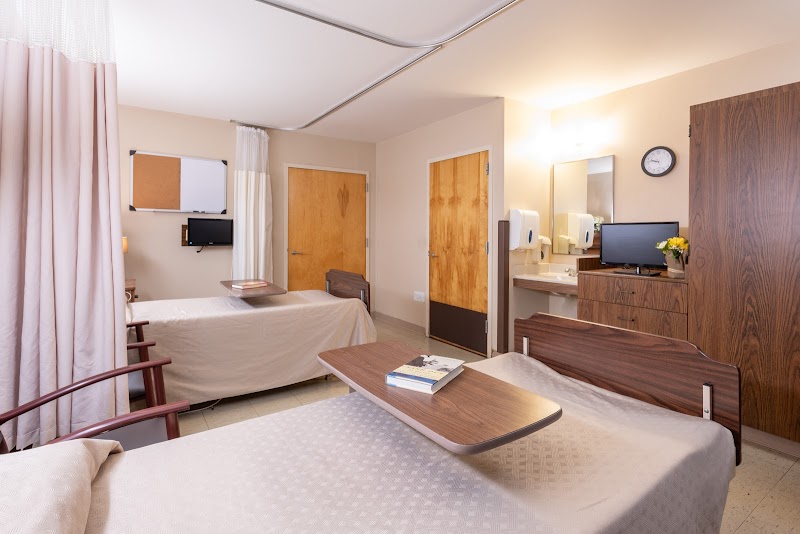
CMS rates TREMONT HEALTH & REHABILITATION CENTER's staffing level at 4 out of 5 stars, which is above average compared to other nursing homes. Staff turnover is 43%, compared to the Pennsylvania average of 46%. This relatively stable workforce can support continuity of care.

What Have Inspectors Found at Tremont Health & Rehabilitation Center?

State health inspectors documented 13 deficiencies at TREMONT HEALTH & REHABILITATION CENTER during 2023 to 2025. These included: 13 with potential for harm.

Who Owns and Operates Tremont Health & Rehabilitation Center?

TREMONT HEALTH & REHABILITATION CENTER is owned by a for-profit company. For-profit facilities operate as businesses with obligations to shareholders or private owners. The facility is operated by SABER HEALTHCARE GROUP, a chain that manages multiple nursing homes. With 180 certified beds and approximately 162 residents (about 90% occupancy), it is a mid-sized facility located in TREMONT, Pennsylvania.
How Does Tremont Health & Rehabilitation Center Compare to Other Pennsylvania Nursing Homes?

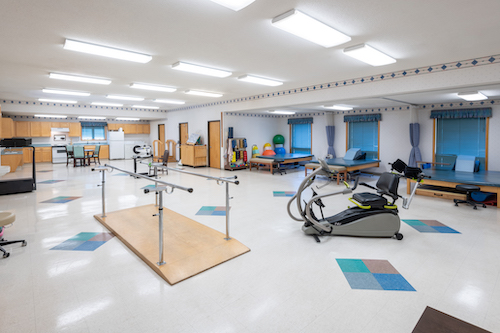
Compared to the 100 nursing homes in Pennsylvania, TREMONT HEALTH & REHABILITATION CENTER's overall rating (4 stars) is above the state average of 3.0, staff turnover (43%) is near the state average of 46%, and health inspection rating (4 stars) is above the national benchmark.

What Should Families Ask When Visiting Tremont Health & Rehabilitation Center?

Based on this facility's data, families visiting should ask: "Can I visit during a mealtime to observe dining assistance and food quality?" "How do you handle medical emergencies, and what is your hospital transfer rate?" "Can I speak with family members of current residents about their experience?"

Is Tremont Health & Rehabilitation Center Safe?

Based on CMS inspection data, TREMONT HEALTH & REHABILITATION CENTER has a clean safety record: no substantiated abuse findings (meaning no confirmed cases of resident harm), no Immediate Jeopardy citations (the most serious violation level indicating risk of serious injury or death), and is not on the Special Focus Facility watch list (a federal program monitoring the lowest-performing 1% of nursing homes). The facility has a 4-star overall rating and ranks #1 of 100 nursing homes in Pennsylvania. While no facility is perfect, families should still ask about staff-to-resident ratios and recent inspection results during their visit.

Do Nurses at Tremont Health & Rehabilitation Center Stick Around?

TREMONT HEALTH & REHABILITATION CENTER has a staff turnover rate of 43%, which is about average for Pennsylvania nursing homes (state average: 46%). Moderate turnover is common in nursing homes, but families should still ask about staff tenure and how the facility maintains care continuity when employees leave.

Was Tremont Health & Rehabilitation Center Ever Fined?

TREMONT HEALTH & REHABILITATION CENTER has no federal fines on record. CMS issues fines when nursing homes fail to meet care standards or don't correct problems found during inspections. The absence of fines suggests the facility has either maintained compliance or corrected any issues before penalties were assessed. This is a positive indicator, though families should still review recent inspection reports for the full picture.

Is Tremont Health & Rehabilitation Center on Any Federal Watch List?

TREMONT HEALTH & REHABILITATION CENTER is not on any federal watch list. The most significant is the Special Focus Facility (SFF) program, which identifies the bottom 1% of nursing homes nationally based on persistent, serious quality problems. Not being on this list means the facility has avoided the pattern of deficiencies that triggers enhanced federal oversight. This is a positive indicator, though families should still review the facility's inspection history directly.