CARE PAVILION NURSING AND REHABILITATION CENTER
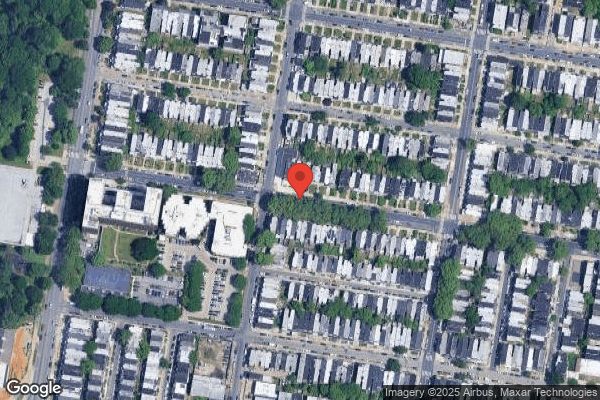

6212 WALNUT STREET, PHILADELPHIA, PA 19139 (215) 476-6264
For profit - Corporation 396 Beds BEDROCK CARE Data: November 2025 4 Immediate Jeopardy citations
Trust Grade
0/100
#538 of 653 in PA
Last Inspection: February 2025

Within standard 12-15 month inspection cycle. Federal law requires annual inspections.

Overview

Care Pavilion Nursing and Rehabilitation Center has received a Trust Grade of F, indicating poor performance with significant concerns. It ranks #538 out of 653 facilities in Pennsylvania, placing it in the bottom half, and #40 out of 46 in Philadelphia County, meaning there are only a few local options that are worse. While the facility is improving, with issues decreasing from 46 in 2024 to 32 in 2025, the overall situation remains concerning. Staffing is rated 3 out of 5, which is average, with a low turnover rate of 24%, suggesting that staff stay longer and build relationships with residents. However, the facility faces serious issues, including $406,016 in fines, which is higher than 91% of Pennsylvania facilities, and critical incidents such as a resident being subjected to non-consensual sexual contact and another resident eloping from a secure area, raising serious safety and care concerns.

Trust Score
F
0/100
In Pennsylvania
#538/653
Bottom 18%
Safety Record
High Risk
Review needed
Inspections
Getting Better
46 → 32 violations
Staff Stability
✓ Good
24% annual turnover. Excellent stability, 24 points below Pennsylvania's 48% average. Staff who stay learn residents' needs.
Penalties
⚠ Watch
$406,016 in fines. Higher than 80% of Pennsylvania facilities, suggesting repeated compliance issues.
Skilled Nurses
⚠ Watch
Each resident gets only 19 minutes of Registered Nurse (RN) attention daily — below average for Pennsylvania. Fewer RN minutes means fewer trained eyes watching for problems.
Violations
⚠ Watch
98 deficiencies on record. Higher than average. Multiple issues found across inspections.
★☆☆☆☆
1.0
Overall Rating
★★★☆☆
3.0
Staff Levels
★★☆☆☆
2.0
Care Quality
★☆☆☆☆
1.0
Inspection Score
Stable
2024: 46 issues
2025: 32 issues

The Good

  • Low Staff Turnover (24%) · Staff stability means consistent care
  • Full Sprinkler Coverage · Fire safety systems throughout facility
  • No fines on record
  • Staff turnover is low (24%)

    24 points below Pennsylvania average of 48%

Facility shows strength in staff retention, fire safety.

The Bad

1-Star Overall Rating

Below Pennsylvania average (3.0)

Significant quality concerns identified by CMS

Federal Fines: $406,016

Well above median ($33,413)

Significant penalties indicating serious issues

Chain: BEDROCK CARE

Part of a multi-facility chain

Ask about local staffing decisions and management

The Ugly 98 deficiencies on record

4 life-threatening 3 actual harm
Sept 2025 2 deficiencies 1 Harm
SERIOUS (G) 📢 Someone Reported This

A family member, employee, or ombudsman was alarmed enough to file a formal complaint

Actual Harm - a resident was hurt due to facility failures

Accident Prevention (Tag F0689)

A resident was harmed · This affected 1 resident

**NOTE- TERMS IN BRACKETS HAVE BEEN EDITED TO PROTECT CONFIDENTIALITY** Based on review of facility policy, review of facility documentation, review of clinical records, and interviews with staff, it ...

Read full inspector narrative →
**NOTE- TERMS IN BRACKETS HAVE BEEN EDITED TO PROTECT CONFIDENTIALITY** Based on review of facility policy, review of facility documentation, review of clinical records, and interviews with staff, it was determined that the facility failed to ensure proper supervision of residents during smoking hours which resulted in actual harm to Resident R1 who sustained first and second degree burn on face when nasal cannula ignited while smoking with oxygen in use for one of 38 residents reviewed (Resident R1). This deficiency was cited as past non compliance. Findings include: Review of undated Resident and Visitor Smoking Rules revealed the following: #1. No smoking is allowed indoors anywhere at Care Pavilion; including cigarettes, vape devices, etc. No smoking when oxygen is in use. #2. No smoking outside of the Walnut Street entrance/exit. #3. Residents and visitor smoking is only permitted in the designated outdoor smoking area (The Courtyard) during designated smoking times. Two designated staff members 'Smoking Monitors' are stationed in the smoking area at all times. #6. Residents are permitted to hold their own smokable tobacco products; however, they are not permitted to hold combustible devices such as lighters, matches, vape devices and other electronic smoking devices that contain a heating element. Review of Resident R1's clinical record revealed Resident R1 was admitted to the facility on [DATE], with diagnoses of End Stage Renal Disease (condition where the kidneys have permanently lost most of their ability to function), and dependent on Renal Dialysis. Review of Resident R1's Medicare 5-day MDS (Minimum Data Set- federally required resident assessment completed at specific intervals) assessment dated [DATE], section C0500, BIMS Summary Score revealed a score of 12 indicating Resident R1 had a moderate cognitive deficit. Section GG0170 Mobility J. Walk 50 feet with two turns: Once standing, the ability to walk at least 50 feet and make two turns was coded 04 (Supervision or touching assistance), K. Walk 150 feet: Once standing, the ability to walk at least 150 feet in a corridor or similar space was coded 88 (Not attempted due to medical condition or safety concerns). Review of Resident R1's Smoking Evaluation dated July 22, 2025, revealed under section #2. Resident did not use oxygen, Cognitive: #3. did not have Dementia, #4. did not have poor memory, under section Behavior: #7. no history of unsafe smoking habits, under section Evaluation: #13. Smoking Decision: Independent smoking is allowed. Further, the next smoking assessment was completed on August 28, 2025, where the resident was coded as Resident is not allowed to smoke. Review of Resident R1's August 2025 physician orders revealed an order for oxygen at 4L (liters)/Min (minute)-6L/Min via NC (nasal canula) - PRN (as needed) dated August 21, 2025, for supplementary oxygen. Review of Resident R1's nursing notes dated August 27, 2025, time stamped 3:35 PM revealed: Resident ambulated to unit in distress, resident was bleeding from lip with visible burn marks to face. [Resident R1] explained that (he/she) lit cigarette while nasal cannula was inserted. [Resident R1] stated (he/she) did not want RP (responsible party) called, visibly upset. [Resident R1] stated (he/she) snuck outside to smoke with oxygen tank. Transportation called for resident to be transferred to ER (Emergency Room). Resident provided cold rag with ice and A&D applied. DON (Director of Nursing)/SW (Social Worker) /Administrator made aware . EMT (Emergency Medical Transport) arrived transported to local hospital, oncoming nurse made aware. Review of Resident R1's nurse's notes dated August 28, 2025, revealed that Resident R1 returned from local hospital via ambulance transport status post self-inflicted accidental from smoking to burns to face, nose and lip areas. Upon return 1st/2nd degree burns to be left open to air. Burn lesions on face left worse than right around nasolabial folds. nares, upper lip with redness/swealing no open blisters. Noted scant bleeding. Resident reports 8/10 pain. Denies inner damage to oral mucosa. Review of facility investigation revealed that on August 27, 2025, at approximately 3:30 pm, Resident R1 returned to the unit from the courtyard bleeding from his/her lips with visible burn marks to the side of his/her face. Resident R1 stated he/she left the unit to smoke while using 02 (oxygen) tank and nasal canula was on. Interview with facility Nursing Home Administrator (NHA), Employee E1 conducted on September 9, 2025, at 9:03 AM revealed Resident R1 was a dialysis resident who came back from on-site dialysis treatment. Nursing Home Administrator, Employee E1 revealed that resident uses a wheelchair. Resident R1 returned from dialysis with portable oxygen, went to the smoking area with oxygen in use, took another resident's cigarette but forgot (he/she) had O2 on. Further facility administrator revealed that at the time of the incident, there was a resident Bar-B-Q and there were a lot of activities occurring in the courtyard. Observation of the door leading to the courtyard conducted on September 9, 2025, at 9:08 AM revealed that the door was located immediately to the left of the reception desk. Further observation revealed that Smoking monitor, Employee E12 was at the door to the courtyard and was writing names of residents who were going into the courtyard. Further Employee E12 was assisting residents on wheelchairs and controlling the traffic of residents who were passing through the door. Interview with Smoking monitor, Employee E12 conducted on September 9, 2025, at 1:43PM revealed that at the time of the incident with Resident R1, at almost 3PM, his partner Employee E13 smelled marijuana and told him to check. Employee E12 then went to see the group where the smell was coming from when he saw a flash on Resident R1's face who was nearby and saw that Resident R1's face was burned on the face. Employee E12 then turned off Resident R1's oxygen and took Resident R1 to the nurse supervisor's office next to the front desk. Interview with Smoking monitor, Employee E13 confirmed that she was working at the time of the incident and that she was assigned to watch the door and Smoking monitor, Employee E12 was assigned to be by the gate on the other end of the courtyard. Further interview with Smoking monitor, Employee E13 revealed that while manning the door to the courtyard, she smelled marijuana and asked Smoking monitor, Employee E12 to check. After a while she heard a loud pop and heard one of the residents yelled fire or something and when she looked, she saw Resident R1 in the gazebo. Further Smoking monitor, Employee E13 revealed that Resident R1's face was bleeding and that Smoking monitor, Employee 12 was already there helping Resident R1. Additional interview with Smoking monitor, Employee E13 revealed that she was assigned to the door and was writing down names of residents who came through the door to the Smoking Courtyard. Employee E13 revealed that there was a Bar-B-Q going on at that time and there were a lot of residents in the courtyard and that she was very busy. She did not notice Resident R1 go into the courtyard and did not know how Resident R1 got in.Resident R1 was in the hospital at the time of investigation and was not available for interview.The facility failed to supervise Resident R1 who was on oxygen while smoking in the courtyard. This failure resulted in actual harm to Resident R1 whose oxygen nasal canula ignited while smoking causing Resident R1 to sustain first and second degree burns to his face. This deficiency was cited as past non-compliance.Review of facility Action plan/Follow up documentation revealed the following information.Resident was immediately assessed and noted with burns to his/her face. 911 (emergency transport) was called and resident was transferred out. Other residents that were present in the courtyard were assessed with no injuries noted. Fire Marshall assessed and reviewed incident at the facility. - date completed-8/27/25 House wide room sweeps of the facility were conducted in an attempt to recover lighters and matches from the residents. - date completed- 8/27/25Current list of residents that smoke was reviewed to determine if there were others that also wear O2. - date completed- 8/27/25Current residents that smoke had new smoking assessments completed- - 8/27/25Current residents that smoke had care plan reviews completed on or before 8/27/25.Signs were placed on the door to the smoking courtyard to alert staff and residents that O2 use is not permitted during smoking times.- date completed - 8/27/25Re-direction was completed with smoking monitors on smoking safety and updated smoking policy. - date completed- 8/27/25Dialysis staff educated regarding process for returning residents to nursing unit when the complete dialysis and not to allow resident to leave until a facility staff member comes to transport them back to their nursing unit. -9/5/25A new attendance sheet/safety check sheet was implemented with smoking monitors for each smoke break to ensure there are no safety concerns such as O2 use before initiating smoking. - 8/28/25Facility smoking times and schedules were reviewed for assigning units/times in an effort to decrease volume of resident at one time. -8/27/25A new Security Attendant safety check form and process was implemented for resident who leave the facility on independent LOAs. - 8/27/25Facility smoking policy was reviewed and revised to include resident that are on continuous O2 will not be permitted to smoke and will be offered smoking cessation alternatives. -8/27/25NHA or designee will complete 5 smoke break observations per week x4 weeks. Results will be reviewed during facilities monthly QAPI meeting to determine further need for auditing. -8/29/25DON or designee will complete weekly audits of 5 residents that smoke to ensure assessment, care plan and O2 use is assessed and care planned x4 weeks. Results will be reviewed during facilities monthly QAPI meeting to determine further need for auditing. -8/29/25 Review was conducted of clinical records, facility documentation, staff education, and facility audits. Residents and visitors smoking rules were revised and staff education completed. Interview with staff revealed that the staff was knowledgeable about the facility's rules of no oxygen allowed in the smoking courtyard. Dialysis staff were in-serviced related to returning residents to nursing unit once dialysis treatment was completed. It was determined that the plan of correction was implemented and identified as past non-compliance. 28 Pa. Code 201.14(a) Responsibility of licensee 28 Pa. Code 201.18(b)(1) Management
CONCERN (D) 📢 Someone Reported This

A family member, employee, or ombudsman was alarmed enough to file a formal complaint

Potential for Harm - no one hurt, but risky conditions existed

Comprehensive Care Plan (Tag F0656)

Could have caused harm · This affected 1 resident

Based on review of facility policy, review of clinical records, observations, and staff interviews, it was determined that the facility failed to develop a comprehensive person-centered care plan for ...

Read full inspector narrative →
Based on review of facility policy, review of clinical records, observations, and staff interviews, it was determined that the facility failed to develop a comprehensive person-centered care plan for one of 7 Residents reviewed (R2).Findings include:Review of clinical records indicated that Resident R2 was admitted in the facility on August 4, 2025. with the diagnoses of Homelessness, Anxiety Disorder (a mental health disorder characterized by feelings of worry, anxiety, or fear that are strong enough to interfere with one's daily activities), and Psychoactive Substance Abuse (the harmful or hazardous use of substances that alter brain function, affecting mood, perception, cognition, and behavior). Review of information submitted to the State Survey Agency revealed that on August 29, 2025, at approximately 5:25 p.m., a staff member, receptionist, Employee E4, who was outside of the facility on her way back from her break and observed Resident R2, on the sidewalk at the corner of the facility. Employee E4 immediately returned the resident to the facility and notified the nursing supervisor of the situation. Resident R2 was immediately assessed, and no concerns were identified from assessment. Resident R2 was placed on one-to-one observation, and a wanderguard (devise adjacent to the body that activates the locking mechanism of doors leading to the outside of the nursing unit) was applied. Signs were placed on exit doors to alert staff and visitors that residents may try to follow them out of the facility and to please don't open or hold doors for residents. Review of Resident R2's nursing note dated August 29, 2025, indicated that around 5:20 p.m., resident was observed by security existing through the front door despite multiply attempted to redirect. She was later brought in by a staff member. who stated she found her at corner of the building. Resident is nonverbal but able to make cues. Keep saying bye-bye. She is exit- seeking, non-compliant with redirection and resident likes to sit in front lobby. Resident was initiated at 1:1 monitoring, wander guard applied on left leg, noted she was anxious, resident was wheelchair bound, siblings notified. Review of witness statement of Receptionist, Employee E4, regarding Resident R2's elopement on August 29, 2025, indicated as follows; at approximately 5:25 p.m., I was outside on my break when I saw Resident R2 on the sidewalk at the corner of the facility. I immediately brought resident back into the facility and notified the nursing supervisor of the elopement. During interview on September 9, 2025, at 10:12 a.m., the administrator stated as follows; on August 29, 2025, R2 was in the main lobby of the facility by the main entrance/exit doors. The Security Attendant, Employee E5, who was covering the Reception Desk while the Receptionist was on break buzzed a visitor out, releasing the lock on the door to allow egress. When the visitor coming into the facility entered the door, another visitor who was exiting grabbed the door before it closed and held the door for Resident R2 to exit in her wheelchair. The exiting visitor also held the second door for Resident R2, who proceeded to wheeled out of the facility; quickly, so as to avoid being seen. Resident R2 exited at approximately 5:25 P.M. and was quickly identified by the Receptionist, Employee E4, who was returning from her break. Employee returned the resident to the facility approximately five minutes later at 5:30 P.M. through an entrance at the rear of the facility. The incident was recorded, and we could see the events that led to the resident exit. On September 9, 2025, at 12:02 p.m., tried to interview Resident R2, in her room. Resident R2 was cognitively not able to answer the questions. On September 9, 2025, Employee E4 was not available for face-to-face interview. On September 9, 2025, at 3:12p.m., attempted to interview Receptionist, Employee E4 over telephone, Employee E4 did not answer the telephone call. On September 9, 2025, Employee E5 was not available for face-to-face interview. On September 9, 2025, at 3:14p.m., tried to interview Employee E5 over telephone, Employee E5 did not attend the telephone call. Review of Elopement Risk Evaluation dated August 5, 2025, for Resident R2, indicated that the resident was not at risk for elopement at that time. Review of Elopement Risk Evaluation dated August 19, 2025, for R2, indicated Resident R2 was at risk for elopement at that time. Elopement Risk Evaluation dated August 19, 2025, directed for intervention as; nurse should implement interventions as appropriate until IDT (interdisciplinary team) reviews for final decisions. Review of Resident R2's care plan failed did not include interventions to prevent elopement, based on the elopement risk assessment, the traffic of the facility at the front desk/main entrance, and the need for positioning of sufficient number of staff overseeing front desk or main entrance traffic. On September 10, 2025, at 1:30 p.m., during an interview with the Administrator, and the Director of Nursing, confirmed the above findings. 28 Pa Code 211.10 (c)(d) Resident care policies28 Pa Code 211.12(d)(1)(3)(5) Nursing services
Jun 2025 1 deficiency
CONCERN (E) 📢 Someone Reported This

A family member, employee, or ombudsman was alarmed enough to file a formal complaint

Potential for Harm - no one hurt, but risky conditions existed

Deficiency F0925 (Tag F0925)

Could have caused harm · This affected multiple residents

**NOTE- TERMS IN BRACKETS HAVE BEEN EDITED TO PROTECT CONFIDENTIALITY** Based on review of facility documentation, observations and interviews with residents and staff, it was determined that the faci...

Read full inspector narrative →
**NOTE- TERMS IN BRACKETS HAVE BEEN EDITED TO PROTECT CONFIDENTIALITY** Based on review of facility documentation, observations and interviews with residents and staff, it was determined that the facility failed to maintain an effective pest control program. Findings include: Observation on all six nursing units in the building on June 26, 2025, accompanied with Maintenance Director, Employee E2 on June 26, 2025, at 9:30 a.m., revealed large quantity of mouse droppings in the following resident rooms: 151,152, 157,162, 252, 211, 215, 221, 307, 317, 320, 321, 322, 328, 408, 410, 413, and 418. Interview with Resident R2 on June 26, 2025, at 9:35 a.m. revealed that this resident saw a mouse in his room a while ago, does not remember when. Interview with Resident R3 on June 26, 2025, at 9:50 a.m. revealed that this resident has seen mice. Interview with Housekeeping Director, Employee E 3 in room [ROOM NUMBER], on June 26, 2025, at 9:50 a.m. revealed that all rooms are cleaned daily. This employee confirmed that the room [ROOM NUMBER] observed together has not been cleaned yet at this time. Employee E3 also confirmed that presence of significant amount of mouse dropping. Review of pest sighting logs on all nursing units revealed, revealed reports dated May 29, 2025, a mouse sighting in room [ROOM NUMBER], on June 10, 2025, a roach was observed the closet, and on June 13, 2025 a mouse in room [ROOM NUMBER]. 28 Pa. Code 201.18(b)(3) Management
Jun 2025 1 deficiency
CONCERN (D) 📢 Someone Reported This

A family member, employee, or ombudsman was alarmed enough to file a formal complaint

Potential for Harm - no one hurt, but risky conditions existed

Deficiency F0726 (Tag F0726)

Could have caused harm · This affected 1 resident

**NOTE- TERMS IN BRACKETS HAVE BEEN EDITED TO PROTECT CONFIDENTIALITY** Based on observations, interview with staff and resident it was determined that facility did not ensure to assure resident safet...

Read full inspector narrative →
**NOTE- TERMS IN BRACKETS HAVE BEEN EDITED TO PROTECT CONFIDENTIALITY** Based on observations, interview with staff and resident it was determined that facility did not ensure to assure resident safety and maintain the highest practicable physical, mental, and psychosocial well-being for one of six residents reviewed (Resident R1) Findings include: Review of facility policy 'Administering Medications, reviewed December 11, 2024, indicates that the individual administering the medications must sign it out as being administered (or held/refused) per protocol in the electronic health record, and if a drug is withheld, refused or given at a time other than the scheduled time, the individual administering the medications shall document in the electronic health record per protocol. The resident's responsible party, if applicable, and Attending Physician will be made aware. Interview with Resident R1 on Wednesday, June 11, 2025 , 11:00 am, on third floor unit in room [ROOM NUMBER]-A, revealed that resident was not ready to take his morning medications earlier; observed medications cup with pills in it on bedside table - R1 stated he takes medications with crackers which were not available to him. Interview with licensed nurse, employee E3, on third floor unit nurses station, revealed resident did not take his medications because he did not have crackers. Review of R1's electronic medication administration record revealed already signed out morning medications for Bumex 3mg, COQ10 supplement, cyanocobalamin 1000mcg, metformin 500mg, multivitamin, apixaban 2.5mg, ciprofloxacin 500mg, cyclobenzaprine 5mg, gabapentin 300 mg. Review of facility provided job description for licensed practical nurse, indicates that The LPN nurse provides direct care, administers treatments and medications, organizes and distributes daily assignments to direct care staff consistent with staff competency and each individual resident's comprehensive resident assessment and plan of care. Review of R1's care plan, initiated April 26, 2024, indicates he has a behavior problem (refusing meds) related to (specify behavior) . Review of E3's 'medication pass competency, completed January 21, 2025 indicates that all doses of medication are documented on the MAR immediately after administration (NOT BEFORE), and Resident is observed to be certain that oral medications are swallowed and that sublingual medications are not swallowed, and wasted, refused, withheld, discontinued or expired medications are disposed of per facility policy. Further review of facility provided documentation revealed an incomplete 'staff orientation and training checklist,' for E3. 28 Pa Code 201.20(a)(b) staff development 28 Pa Code 211.12(d)(1) nursing services 28 Pa Code 211.12(d)(5) nursing services
May 2025 3 deficiencies
CONCERN (D) 📢 Someone Reported This

A family member, employee, or ombudsman was alarmed enough to file a formal complaint

Potential for Harm - no one hurt, but risky conditions existed

Quality of Care (Tag F0684)

Could have caused harm · This affected 1 resident

Based on review of clinical record and interview with staff, it was determined that facility did not ensure that residents received treatment and care in accordance with professional standards practic...

Read full inspector narrative →
Based on review of clinical record and interview with staff, it was determined that facility did not ensure that residents received treatment and care in accordance with professional standards practice related to physician orders for blood sugar levels for one of three residents reviewed (Resident R3) Findings include: Review of facility's policy 'Insulin Administration,' revised April 1, 2022, indicates that blood glucose is to be checked per physician's order or facility protocol. Review of facility policy 'Administering Medications,' reviewed December 11, 2024, indicates that the following information must be checked/verified for each resident prior to administering medications: blood sugar, if necessary, per physician order. Review of Resident R3's clinical record revealed that resident had the diagnoses of end stage renal disease, type 2 diabetes mellitus (failure of the body to produce insulin), mild protein-calorie malnutrition, and dependance on renal dialysis. Review of Resident R3's May 2025 physician order for Novolog (insulin Aspart) to be injected per sliding scale before meals and at bedtime; at 7:30 a.m., 11:00 a.m., 4:00 p.m. and 9:00 p.m Review of nursing notes dated May 7, 2025, at 10:58 am, revealed resident was noted with blood sugar reading of 31, not responding to his name, not able to swallow, IM (intramuscular) glucagon 1 milligram (mg) administered, rechecked blood sugar after, it read 35. MD (physician) aware n/o (new order) given to send resident to emergency room for further evaluation. Further review of Resident R3's electronic medication administration record (e-TAR) revealed no documented evidence that the resident blood glucose level was assessed on May 7, 2025 at 7:30 am. It was noted that the blood glucose level was not obtained due to hospitalization, however - per documentation in nursing notes, Resident R3 was picked up by emergency personnel at 10:50 am for transfer to hospital. The facility did not ensure resident's blood glucose level was assessed timely at 7:30 a.m. as ordered by the physician. Findings confirmed with facility's Regional Clinical Nurse, Employee E4. 28 Pa Code 211.12(d)(5) Nursing services
CONCERN (D) 📢 Someone Reported This

A family member, employee, or ombudsman was alarmed enough to file a formal complaint

Potential for Harm - no one hurt, but risky conditions existed

Accident Prevention (Tag F0689)

Could have caused harm · This affected 1 resident

**NOTE- TERMS IN BRACKETS HAVE BEEN EDITED TO PROTECT CONFIDENTIALITY** Based on reviews of clinical records, interviews with staff, reviews of the facility assessment and policies and procedures revi...

Read full inspector narrative →
**NOTE- TERMS IN BRACKETS HAVE BEEN EDITED TO PROTECT CONFIDENTIALITY** Based on reviews of clinical records, interviews with staff, reviews of the facility assessment and policies and procedures reviews, it was determined that the facility failed to established criteria or a screening process for the safe escort to ensure the safety of residents for an approved leave of absence for one of nine residents reviewed. (Resident R8) Findings include: A review of the facility policy titled leave of absence dated February 24, 2025 indicated that the purpose of this policy was to ensure the health, safety and quality of life for all of the residents. The policy indicated that residents requesting either an independent and escorted leaves of absence from the facility must receive an order from their physician that indicates a leave of absence will be safe for there resident prior to leave being granted. The physician my deem an independent leave of absence to be unsafe, but may consider and approve an escorted leave of absence if they feel that escorted leaves of absence are in the best safety interest of the resident. Residents who have an approved escorted leave of absence must have the individual escorting them on a leave sign them out prior to their leave. Any denials of independent or escorted leaves of absence are at the discretion of the resident's physician; as as the physician may consider risks such as history of substance abuse and/or drug use, physical limitations and general health considerations. Review of Resident R8's clinical record revealed an admission Minimal Data Set (MDS-an assessment of care needs) dated February 24, 2025 that indicated Resident R8 was admitted to the facility on [DATE]. The resident's BIMS (brief interview of mental status) indicated that this resident was cognitively intact with a BIMS of 15. The resident was assessed as independent with activities of daily living and ambulation. The assessment indicated that the resident expressed that it was very important to involve her family in discussions about her care. The assessment indicated that this resident had a diagnosis of opioid use with withdrawal and the discharge plan was to return to the community. A review of the social worker assessment dated [DATE] revealed that Resident R8 was admitted to the facility for short term rehabilitation and plans were to return to the community. The social worker documented that that Resident R8 was in contact with her daughter for discharge planning. The social worker confirmed in this assessment that Resident R8 had drug and alcohol abuse with opioid use. Review of nursing note date May 5, 2025 revealed that the resident alert and oriented x 4 (situation, place, time and person). Review of nursing note dated May 6, 2025 at 9:04a.m. revealed resident had a death in family and requested escorted LOA (leave of absence). Per MD (physician), resident ok to have LOA with escort. Continued review of nursing documentation dated May 6, 2025 at 10:33 a.m. revealed Resident alert and verbally responsive . resident went home on LOA with a family member, stated she has a family emergency. resident stated she will be back around 10:00 pm today, upcoming nursing team will follow up. Review of physician orders revealed that an order was obtained on May 6, 2026 at 8:46am. Resident may have LOA with escort. Interview with the physician, Employee E6, at 1:00 p.m., on May 29, 2025 revealed that the physician ordered a leave of absence with an escort for Resident R8 secondary to the resident's diagnosis of poly substance use disorder with opioid use. The physician explained that he wanted the resident to have a safe escort or an escort that would help protect the safety and well-being of Resident R8; while on a leave of absence from the facility, for a family emergency. Review of nursing note dated may 7, 2025 at 6:46 a.m. revealed Resident left LOA 5/6/25 and did not return on 11-7 shift and is still on LOA at this time. Continued review of nursing documentation dated May 7, 2025 at 7:59 a.m. revealed that report was given by charge nurse that resident on LOA, was supposed to come back by 10pm but not yet returned.Called placed to ER contact and resident cell number through out the night but no responses. Interview with the Administrator, Employee E5, at 1:30 p.m., on May 29, 2025 confirmed that the facility had not established criteria or a screening process for the safe escort and defined the job of the safe escort. Interview with the licensed practical nurse, Employee E8, at 11:30 a.m., on May 29, 2025 who was familiar with Resident R8 revealed that the friend, Resident R8 left the facility with on May 6, 2025 was not listed as a visitor for this resident since her admission on [DATE]. Resident R8's contact and family member was listed as her daughter. Clinical record review for May 7, 2025 revealed that Resident R8's daughter reported to the facility that the resident passed away from a drug overdose. 28 PA. Code 211.10(a)(b)(c)(d) Resident care policies 28 PA. Code 211.12(c)(d)(1)(3)(5) Nursing services 28 PA. Code 201.14(a) Responsibility of licensee
CONCERN (D) 📢 Someone Reported This

A family member, employee, or ombudsman was alarmed enough to file a formal complaint

Potential for Harm - no one hurt, but risky conditions existed

Infection Control (Tag F0880)

Could have caused harm · This affected 1 resident

Based on review of clinical records, interview with residents and staff, it was determined facility did not implement infection prevention and control program for one of three residents reviewed (Resi...

Read full inspector narrative →
Based on review of clinical records, interview with residents and staff, it was determined facility did not implement infection prevention and control program for one of three residents reviewed (Resident R1) Findings include: Review of facility policy 'Isolation Steps: Categories of Transmission Based Precautions,' updated July 12, 2022, indicates that Enhanced Barrier Precautions expand the use of personal protective equipment (PPE) beyond situations in which exposure to blood and body fluids is anticipated and refer to the use of gown and gloves during high-contact resident care activities that provide opportunities for transfer of multidrug-resistant organisms (MDRO) to staff hands and clothing. Further review of policy indicates that all residents with the following condition should use EBP's: open wounds and/or indwelling medical devices (e.g., central line, urinary catheter, feeding tube, tracheostomy) regardless of MDRO colonization status who reside on a unit or wing where a resident known to be infected or colonized with a novel or targeted MDRO resides. Review of Resident R1's clinical record revealed that the resident was admitted to hospice services on May 22, 2025, with the diagnosis of hemiplegia and hemiparesis (paralysis/weakness) affecting right dominant side, pressure ulcer of sacral region - stage 4 (ulcer involving loss of skin layers, exposing muscle and bone, and chronic kidney disease. Review of Resident R1's care plan, revealed resident has pressure ulcer to sacrum, right heel and right lateral foot related to immobility , history of ulcers and thin/fragile skin. Further review of care plan revealed no evidence of interventions related to enhanced barrier precautions. Observations of Resident R1's room, on Thursday, May 29, 2025 at 11:00 am, revealed a door post indicating Resident R1 is on EBP's. Further observations revealed wound care treatment supplies in basins on floor; wound vacuum attached to residents sacral wound was touching the floor. During observations of wound care treatment, completed by Wound Care Nurse, employee E1 and Physician Assistant, employee E2 , on Thursday, May 29, 2025 at 11:45 am, Employee E1 and Employee E2 did not wear gowns during procedure. Employee E1 removed wedge pillow off of Resident R1's bed and placed it on floor - then proceeded to place same wedge pillow under resident's bare back, close to opened sacral wound. Employee E1 was also observed to place the end of wound vacuum which touched floor on resident's bed pad. Further observations revealed Employee E1 changing gloves by retrieving them from her pocket. Further observations of Resident R1's room environment revealed stale flowers on R1's bedside table attracting flies. Findings confirmed with Employee E1, Employee E2 and Licensed nurse, Employee E3. 28 Pa. Code 211.10(c)(d) Resident care policies 28 Pa. Code 211.12(d)(5) Nursing Services
Apr 2025 3 deficiencies
CONCERN (D) 📢 Someone Reported This

A family member, employee, or ombudsman was alarmed enough to file a formal complaint

Potential for Harm - no one hurt, but risky conditions existed

Free from Abuse/Neglect (Tag F0600)

Could have caused harm · This affected 1 resident

**NOTE- TERMS IN BRACKETS HAVE BEEN EDITED TO PROTECT CONFIDENTIALITY** Based upon interviews with resident, resident's family, and staff, review of resident records and facility policy it was determi...

Read full inspector narrative →
**NOTE- TERMS IN BRACKETS HAVE BEEN EDITED TO PROTECT CONFIDENTIALITY** Based upon interviews with resident, resident's family, and staff, review of resident records and facility policy it was determined that the facility neglected to give timely incontinence care to one of four residents reviewed (Resident R1). Findings include: Review of the facility policy for Abuse states, Abuse and neglect exist I many forms and to varying degrees. The policy further states that, Neglect occurs when the facility is aware of or should have been aware of goods and service that a resident requires but the facility failed to provide them to the resident(s) that resulted in or may result in physical harm, pain, mental anguish or emotional distress. Resident R1 was admitted to the facility on [DATE], with history of cerebral infarction (stroke) with left side weakness, and aphasic (non-verbal). Review of Resident R1 functional abilities dated April 16, 2025, assessed the resident as dependent upon staff for all self-care, that included eating, hygiene, toileting, bathing,and dressing, bed mobility and transfers from bed to chair and/or chair to bed. Review of Resident R1's care plan for the potential risk of acquiring skin impairment dated April 10. 2025, indicated it was due to the resident's right-side hemiparesis (weakness), obesity, impaired mobility, incontinence of bowel and bladder. Nursing staff were to keep the resident's skin dry due to this increased risk. Interview with Resident R1's family member on April 24, 2025, at 12:30 p.m. stated, On Easter Sunday, (April 20, 2025), I was here with my wife, and she waited from 11:30 a.m. until the next shift at 4:00 p.m. until she was changed. She does not deserve to sit in BM (bowel movement) for that long. I went to the front desk and asked them to help but no one did anything. I spoke to the Nursing Home Administrator the next day about it and he apologized and said, 'It was because they were short staffed because of Easter.' 'That doesn't make it right and my wife shouldn't be treated like this. Review of Resident R1 care that is documented on the nursing assitants' 'Task program did not show documenation of any type of care the resident recieved on first shift 7am to 3p.m. including no documenatation that the resident received incontinece care on April 20, 2025. Immediately after the interview, the Nursing Home Administrator was interviewed, with Resident R1's family member that confirmed their previous conversation on Monday April 21,2025 regarding Resident R1 not receiving timely incontinence care. 28 Pa Code 211.10(c) Resident care policies 28 Pa Code 211.12(c) Nursing services 28 Pa Code 211.12(d)(1)(5) Nursing services
CONCERN (D) 📢 Someone Reported This

A family member, employee, or ombudsman was alarmed enough to file a formal complaint

Potential for Harm - no one hurt, but risky conditions existed

Report Alleged Abuse (Tag F0609)

Could have caused harm · This affected 1 resident

**NOTE- TERMS IN BRACKETS HAVE BEEN EDITED TO PROTECT CONFIDENTIALITY** Based on interviews with staff review of resident records and facility policy and procedure, it was determined that the facility...

Read full inspector narrative →
**NOTE- TERMS IN BRACKETS HAVE BEEN EDITED TO PROTECT CONFIDENTIALITY** Based on interviews with staff review of resident records and facility policy and procedure, it was determined that the facility failed to notify state agencies as required for two of four resident records reviewed (Residenr R1 and R2). Findings include: Review of facility policy for Abuse, states, Abuse and neglect exist I many forms and to varying degrees. Neglect occurs when the facility is aware of or should have been aware of goods and service that a resident requires but the facility failed to provide them to the resident(s) that resulted in or may result in physical harm, pain, mental anguish or emotional distress. The same policy states that initial reporting of incidents and or allegations will immediately be reported to the state agency including a follow-up investigation report within five working says. Resident R1 was admitted to the facility on [DATE], with history of cerebral infarction (stroke) with left side weakness, incontinent of bowel and bladder and depended upon staff for all the resident's care needs. Interview with Resident R1's family member on April 24, 2025, at 12:30 p.m. stated, the Nursing Home Administrator was told on Monday (April 21, 2025) that Resident R1, after having a bowel movement, had to wait from 11:30 am to 4:00 p.m. for her adult brief to be changed on Easter (April 20, 2025). Immediately afterwards, an interview with Nursing Home Administrator, and Resident R1's family member spoke and confirmed their previous conversation on Monday April 21,2025 regarding Resident R1 not receiving timely incontinence care. Further review revealed the facility failed to report the incident. The facility reported to state agency that Resident R2 on April 7, 2025, was noticed by the nurse the resident's right great toe toenail was broken off. Upon the facility's investigation and interview with a staff member, a housekeeper admitted he hit the resident with his cart. During an interview on April 23, 2025, at 2:00 p.m. the Nursing Home Administrator confirmed the facility failed to report the follow-up investigation to state agency as required. 28 Pa. Code:201.14(a)(c) Responsibility of licensee. 28 Pa. Code:201.18(b)(1)(e)(1) Management.
CONCERN (D) 📢 Someone Reported This

A family member, employee, or ombudsman was alarmed enough to file a formal complaint

Potential for Harm - no one hurt, but risky conditions existed

Deficiency F0919 (Tag F0919)

Could have caused harm · This affected 1 resident

**NOTE- TERMS IN BRACKETS HAVE BEEN EDITED TO PROTECT CONFIDENTIALITY** Based on observations, interviews with staff and resident family and review of facility policy, it was determined that the facil...

Read full inspector narrative →
**NOTE- TERMS IN BRACKETS HAVE BEEN EDITED TO PROTECT CONFIDENTIALITY** Based on observations, interviews with staff and resident family and review of facility policy, it was determined that the facility failed to ensure that call bells were within reach for one of four residents reviewed (Resident R1 ). Findings include: Review of the facility's policy for call bells dated April 1, 2022, states, The residents are to have access to call bells at all times and ensure the call bell is within reach before leaving the resident room. Resident R1 was admitted to the facility on [DATE], with history of cerebral infarction (stroke) and left side weakness, and was aphasic (non-verbal). Review of Resident R1 functional abilities dated April 16, 2025, assessed the resident as dependent on staff to provide all self-care needs, including eating, toileting bathing, dressing, bed mobility, and transfers from bed to chair and/or chair to bed. Interview with Resident R1's family on April 24, 2025, at 12:30 p.m. stated, Resident R1 was non-verbal and could not use the right side because it was paralyzed from a resent stroke. The family member pointed to the resident's call bell that was positioned on the right side of the resident's bed and said, If I am not here, she can't holler, and she's not able to grab the call bell when it is positioned on her bad side. 28 Pa. Code 211.12(d)(1(5) Nursing services
Apr 2025 2 deficiencies
CONCERN (D) 📢 Someone Reported This

A family member, employee, or ombudsman was alarmed enough to file a formal complaint

Potential for Harm - no one hurt, but risky conditions existed

Deficiency F0804 (Tag F0804)

Could have caused harm · This affected 1 resident

Based on observations, resident and staff interviews, it was determined that the facility failed to provide food and drink that were served at palatable temperatures for one out of the five residents ...

Read full inspector narrative →
Based on observations, resident and staff interviews, it was determined that the facility failed to provide food and drink that were served at palatable temperatures for one out of the five residents reviewed. (Resident R1) Findings include: Review of facility policy titled, Accurate and Quality of Tray Line Service, dated January 17, 2019, revealed, Hot food will be kept hot ( > 135° F) and cold foods will be kept cold (<41 ° F). Interview with Resident R1 on April 10, 2025, at 10:54 a.m. revealed food is cold, drink is too warm. Observations during a test tray conducted with the Food Service Director, Employee E8, on April 10, 2025, at 11:37 p.m. revealed Corned Beef 120 degrees Fahrenheit (F); New Potatoes registered 125 degrees F; and cold Lemon Meringue Pie registered 80 degrees F, Cranberry juice registered 62 degrees. Follow-up interview with the FSD, at 11:45 a.m. revealed that thot foods should be at at least 135 degrees F and confirmed that these food items were outside the acceptable temperature range and therefore not palatable. 28 Pa. Code 201.14(a) Responsibility of licensee 28 Pa. Code 201.18(b)(3) Management
CONCERN (D) 📢 Someone Reported This

A family member, employee, or ombudsman was alarmed enough to file a formal complaint

Potential for Harm - no one hurt, but risky conditions existed

Infection Control (Tag F0880)

Could have caused harm · This affected 1 resident

Based on observations, resident and staff interview and review of facility policy, it was determined facility failed to maintain standards of an infection control practices by reusing resident's bedpa...

Read full inspector narrative →
Based on observations, resident and staff interview and review of facility policy, it was determined facility failed to maintain standards of an infection control practices by reusing resident's bedpan for three out of five residents reviewed. (R1, R2, R3). Findings include: Review of the facility policy titled Non-critical Resident Care Equipment -Cleaning, dated April 1, 2022, revealed Reusable resident care equipment/instruments/devices will be maintained and decontaminated according to manufacturer's instructions to prevent resident-to-resident transmission of infections (cross contamination). It further under Responsibility states The responsibility for cleaning non-critical resident care equipment is divided between housekeeping and clinical staff. The housekeeping items are addressed in a department specific policy. Interview with Resident R1 on April 10, 2025, at 10:42 a.m. revealed they reuse my bedpan with my roommate and it's unsanitary. An observation revealed one bedpan located in the Resident's R1 and R2 restroom laying on the top of the toilet not being labeled and having unsanitary yellow residue. Interview with nursing assistance, Employee E6 on April 10, 2025, at 10:46 a.m. during the interview, when asked about the use of bedpans, Employee E6 initially presented a washing basin. Upon clarification that a bedpan is used for toileting in bed, Employee E5 reported that bedpans are stored in the medication room. When any resident needs to use a bed panstaff can access them in medication rooms. Interview with the license nurse, Employee E7 on April 10, 2025, at 10:47 a.m. Employee E7 confirmed that each resident should have a personal bedpan stored in their drawers Residents R1 and R2, labeled with their names. It was further confirmed that one bedpan was found in the shared restroom of Residents R1 and R2, placed on top of the toilet and noted to have yellow residue. When asked who else uses a bedpan on the nursing unit, Employee E7 identified Resident R3. Observation confirmed that Resident R3's bedpan was located on top of her tray table and was not labeled. When asked where bedpans are stored and how nursing aides access them, Employee E7 stated they are kept in the medication room. However, upon observation of the medication room, no bedpans were found. Interview with the unit manager, Employee E4 on April 10, 2025, at 12 : 10 p.m. Employee E4 confirmed that each resident should have a personal bedpan stored in their drawers and labeled. Resident R1 still did not have her bedpan, and that the unsanitary bedpan remained in Resident R1's restroom. On April 10, 2025, at 12:19 p.m. an observation with Central Supply Employee E9 confirmed that facility does have 50+ bed pans in the central supply room in the basement; E9 did not received any request to form nursing staff that 1 east nursing unit had no bed pans in the medication room. On April 10, 2025, at 2:45 p.m. it was confirmed that by the Administrator, Employee E1 and Assistant Director of Nursing, Employee E3 the facility did not ensure that each resident had their own bedpan, which should have been labeled, appropriately sanitized, and assigned to each resident with proper name labeling. 28 Pa Code 211.12 (d)(1)(5) Nursing services
Apr 2025 2 deficiencies
CONCERN (D) 📢 Someone Reported This

A family member, employee, or ombudsman was alarmed enough to file a formal complaint

Potential for Harm - no one hurt, but risky conditions existed

Resident Rights (Tag F0550)

Could have caused harm · This affected 1 resident

Based on observations and interviews with staff, it was determined that the facility failed to provide an environment that promotes the maintenance and enhancement of each resident's dignity for one o...

Read full inspector narrative →
Based on observations and interviews with staff, it was determined that the facility failed to provide an environment that promotes the maintenance and enhancement of each resident's dignity for one of four nursing units (4th floor nursing units). Findings include: Observations during the initial tour on April 1, 2025, at 12:30 p.m. revealed that the staff served resident meals with plastic utensils. Interview with Resident R1 on April 1, 2025, at 11:30 a.m. stated facility served food with plastic utensils. Observations during the initial tour on April 1, 2025, at 12:30 p.m. revealed that Resident R1 was eating with plastic Interview with Nurse Aide, Employee E3, on April 1, 2025, at 12:35 p.m. stated facility served all residents for breakfast with plastic utensils. She said she did not know reason for it. Interview with Dietary Staff, Employee E4, on April 1, 2025, at 12:45 p.m. stated facility served all residents for breakfast with plastic utensils. Employee E4 stated facility was out of regular utensils and did not have enough utensils to serve all residents. 28 Pa. Code 201.29 (j) Resident Rights 28 Pa. Code 211.12 (d)(1) Nursing Services 28 Pa. Code 211.12 (d)(5) Nursing Services
CONCERN (D) 📢 Someone Reported This

A family member, employee, or ombudsman was alarmed enough to file a formal complaint

Potential for Harm - no one hurt, but risky conditions existed

Safe Environment (Tag F0584)

Could have caused harm · This affected 1 resident

Based on observations, resident and staff interviews, it was determined that facility failed maintain a safe, clean comfortable and home like environment for residents of one of four nursing units. (t...

Read full inspector narrative →
Based on observations, resident and staff interviews, it was determined that facility failed maintain a safe, clean comfortable and home like environment for residents of one of four nursing units. (third floor) Findings Include: Observation of Resident R3 on April 1, 2025, at 11:30 AM revealed that there were two urinals filled with urine sitting on resident's bedside table and dresser. Interview with Resident R3 on April 1, 2025, at 11:30 AM stated one urinal was filled last night before he went to sleep but staff did not empty it on 3-11 p.m. shift or overnight shift. Resident also stated the morning staff did not empty the urinal even though the staff was inside the room multiple times. Interview with Employee E5 on April 1, 2025, at 12 noon stated staff should have emptied Resident R3's urinal. Employee stated that she talked to the assigned nurse aide, but she did not give a reason for not emptying urinal. Employee E5 asked the assigned nurse aide to empty the urinal. Observation of Resident R4 on April 1, 2025, at 11:40 AM revealed that there was one urinal filled with urine sitting on resident's bedside table. Observation of facility 3rd floor shower room on April 1, 2025, at 11:30 AM revealed that there was a leak from the roof that was continuously dripping water, it appears that the ceiling was discolored indicating the leak was therefore a period of time. 28 Pa Code: 201.14 (a) Responsibility of licensee.
Feb 2025 18 deficiencies 1 IJ
CRITICAL (J) 📢 Someone Reported This

A family member, employee, or ombudsman was alarmed enough to file a formal complaint

Immediate Jeopardy (IJ) - the most serious Medicare violation

Free from Abuse/Neglect (Tag F0600)

Someone could have died · This affected 1 resident

**NOTE- TERMS IN BRACKETS HAVE BEEN EDITED TO PROTECT CONFIDENTIALITY** Based on review of facility policy, facility documentation, clinical records, and staff interviews, it was determined the facili...

Read full inspector narrative →
**NOTE- TERMS IN BRACKETS HAVE BEEN EDITED TO PROTECT CONFIDENTIALITY** Based on review of facility policy, facility documentation, clinical records, and staff interviews, it was determined the facility failed to protect Resident R271 with severe cognitive impairment from unwanted/non-consensual sexual contact by Resident R137 who had a history of sexually inappropriate behavior, including an unsolicited sexual contact with Resident 208 on January 31, 2025. This failure resulted in an Immediate Jeopardy situation when Resident R137 was found pinning down and performing oral sex on Resident R271. (Resident R137 and Resident R271) Findings Include: Review of facility policy titled Abuse reviewed December 13, 2024, revealed sexual abuse is defined as non-consensual sexual contact of any type with a resident. It is the policy of the facility that residents will be protected from abuse while they are residing at the facility. Review of the Facility Assessment Tool (determines what resources are necessary to care for its residents competently during both day-to-day operations (including nights and weekends) and emergencies) dated January 16, 2025, revealed more than half (55%) of the resident demographic was made up of psychiatric/ mood disorders. Continued review of the facility assessment revealed that approximately 50% of the residents living in the Memory Care unit (4th floor nursing unit) have behaviors toward others, wandering or exit seeking behaviors. Review of Resident R137's admission Minimum Data Set (MDS - federally mandated resident assessment and care screening) dated January 20, 2025, revealed resident was admitted to the facility on [DATE], and had moderate cognitive impairment. Further review of the MDS assessment revealed Resident R137 was independent for mobility (walking 10 and 50 feet) and noted diagnoses of Depression (major loss of interest in pleasurable activities) and alcohol dependence with alcohol-induced persisting Dementia (progressive degenerative disease of the brain). Review of Resident R137's comprehensive care plan dated January 16, 2025, revealed the resident displayed inappropriate sexual behaviors (verbal or physical) related to making inappropriate remarks. Resident R137 touches other residents and/or staff inappropriately. Review of Resident R137's clinical record revealed a nursing note dated January 31, 2025, at 3:24 p.m. that revealed [Resident R137] is engaged in inappropriate sexual behavior with staff and other residents. He attempted to touch the private parts of one staff and another resident. Additional review of Resident R137's comprehensive care plan revealed the care plan was revised on January 31, 2025, to include new interventions for every 15 minute checks. Review of Resident R208's quarterly MDS dated [DATE], revealed the resident was rarely/never understood and had short-term and long-term memory problem. Further review of the MDS assessment revealed Resident R208 had diagnoses of Manic Depression, Bipolar Disease (condition in which a person has period of depression and periods of extreme happiness), and Adjustment Disorder with mixed anxiety and depressed mood. Review of Resident R208's comprehensive care plan dated February 23, 2024, revealed the resident had an alteration in neurological status related to traumatic brain injury (TBI). Intervention dated February 23, 2024, included to cue and redirect Resident R208 as needed. Interview on February 13, 2025, at 11:15 a.m. with Licensed Nurse 4th floor Unit Manager, Employee E14, revealed this employee was unaware of who's private parts Resident R137 attempted to touch, and did not have an incident report (formal document that records unexpected events, accidents, or issues within a company. The document provides a detailed account of the incident, including where and when it happened, who was involved, and any contributing factors) for the incident of January 31, 2025. Interview on February 13, 2025, at 11:26 a.m. with Licensed Nurse, Employee E23, revealed on January 31, 2025, staff overheard screaming from Resident R208's room. When the nurse aide responded to the screaming, Resident R137 was observed attempting to touch Resident R208's penis. Continued interview with Licensed Nurse, Employee E23, revealed this incident was the first of witnessing Resident R137 act sexually inappropriate. Interview on February 13, 2025, at 11:40 a.m. with Nurse Aide, Employee E24, revealed on January 31, 2025, the employee responded to yelling in Resident R208's room and Resident R137 was observed pulling at Resident R208's pants saying [Resident R137] wanted to suck Resident R208's penis. Continued interview with Nurse Aide, Employee E24, revealed this incident was reported to the charge nurse. Review of Resident R271's quarterly Minimum Data Set (MDS - federally mandated resident assessment and care screening) dated November 8, 2024, revealed the resident was rarely/never understood. Resident R271 assessed with BIMS (Brief Interview of Mental Status) of 3, which indicated the resident had severe cognitive impairment. Further review of Resident R271's MDS assessment revealed Resident R271 had behaviors of wandering daily and diagnoses of Dementia and Psychotic Disorder (loss of contact with reality). Review of Resident R271's clinical record revealed a nursing progress note dated January 25, 2025, indicating the resident was observed by the nursing staff wandering into other residents' rooms. The nursing staff indicated the resident was redirected to his/her room several times. Further review of Resident R271's clinical record revealed a nursing progress note dated January 30, 2025, that indicated this resident was wandering around the nursing unit. Review of Resident R271's comprehensive care plan initiated at the time of admission to the facility on August 8, 2024, revealed the resident had behavior problem related to Psychosis, wandering in other resident's rooms, and difficult to redirect. Interventions developed included to check in on the resident every 30 minutes and informed resident that behavior is not accetable and suggest appropiate ways to express self Review of Resident R271's clinical record revealed a nurse practitioner assessment dated [DATE], that indicated this resident had diagnoses of Psychosis (loss of contact with reality resulting in disorganized thinking) and Dementia. The nurse practitioner indicated being unable to obtain information from Resident R271 because of cognitive deficits. Continued review of Resident R271 clinical record revealed a nursing note dated February 12, 2025, that indicated this resident was wandering about the nursing unit and required redirection at all times. Interview on February 13, 2025, at 11:00 a.m. with Licensed Nurse, Employee E13, who was familiar with the care of Resident R271 confirmed this resident was significantly confused and wandered about the nursing unit ad lib (as desired). Interview on February 13, 2025, at 11:15 a.m. with Licensed Nurse 4th floor Unit Manager, Employee E14, confirmed, Resident R271 had been wandering into other residents' rooms since admission to the facility in August 2024. The nurse reported the other residents do not want Resident R271 wandering inside their bedrooms. This nurse also confirmed that besides every 30 minute checks, the care plan for Resident R271 had not been revised to include recreational needs for resident's with Dementia. Review of Resident R271's clinical record revealed a nursing progress note dated February 13, 2025, that indicated Resident R271 was sent to the emergency room of the hospital as a sexual assault victim. The nursing staff documented Resident R271 had a change in mental status as a result of the sexual assault. Review of Resident R271's hospital record revealed Resident R271 was sent to the hospital on February 13, 2025, because the resident was found on the floor receiving oral sex from another resident (Resident R137). Review of facility documentation revealed a statement by Nurse Aide, Employee E22, dated February 12, 2025, that indicated as Nurse Aide, Employee E22, was coming out of another resident's room; the employee witnessed the Resident R271 being pinned down by Resident R137. As Nurse Aide, Employee E22, entered the room Resident R137 was observed to have both of Resident R271's arms pinned to his/her side performing oral sex on Resident R271. Resident R271 was observed squirming and holding onto his/her brief. Nurse aide, Employee E22, promptly notified the charge nurse of the incident who subsequently responded to the incident and was able to get Resident R137 off Resident R271. Resident R271 was then escorted back to his/her room until the local police arrived. Interview on February 13, 2025, at 12:53 p.m. with Nurse Aide, Employee E20, revealed on February 12, 2025, at approximately 9:30 p.m. Nurse Aide, Employee E22, called for assistance and when Nurse Aide, Employee E20, responded she observed Resident R137 holding down Resident R271 and performing oral sex. Nurse Aide, Employee E20, revealed Resident R137 was completely unaware that staff were in the doorway observing the incident. Further interview revealed Nurse Aide, Employee E20, and Nurse Aide, Employee E22, went to get the charge nurse to assist and then went back to the resident's room before intervening. Interview on February 13, 2025, at 3:20 p.m. with Licensed Nurse, Employee E16, revealed approximately two weeks prior during an initial encounter with Resident R137, the resident asked Licensed Nurse, Employee E16, if Employee E16 had a big penis and if Resident R137 could suck his penis. Continued interview with Licensed Nurse, Employee E16, revealed that on February 12, 2025, at approximately 9:30 p.m., the employee was notified by Nurse Aides, Employee E20 and E22, that Resident R137 was performing oral sex on Resident R271. Licensed Nurse, Employee E16, promptly responded to the incident between Resident R137 and R271. Licensed Nurse, Employee E16, observed Resident R137 performing oral sex on and subsequently had to physically remove Resident R137 from Resident R271. Interview on February 13, 2025, at approximately 9:45 a.m. with the Director of Nursing, Employee E2, confirmed that revealed on February 12, 2025, around 9:30 p.m. Resident R137 was found/observed performing oral sex on Resident R271. An Immediate Jeopardy situation was identified to the Nursing Home Administrator, Employee E1, and Director of Nursing, Employee E2, on February 13, 2025, at 12:02 p.m. for the facility's failure to protect a resident from sexual abuse (non-consensual sexual contact) by a resident who had a history of sexually inappropriate behaviors. This resulted in Resident R137 pinning down and performing oral sex on Resident R271 while Resident R271 was observed squirming and holding onto his/her brief. An Immediate Jeopardy template (document which included information necessary to establish each of the key components of immediate jeopardy) was provided to the Nursing Home Administrator, Employee E1, and Director of Nursing, Employee E2, on February 13, 2025, at 12:11 p.m. The facility submitted a written plan of action on February 13, 2025, at approximately 2:51 p.m. and implemented the plan of action which included: 1. Resident R271 and Resident R137 were immediately separated and monitored by staff on February 12, 2025. 2. Police were called and arrived at the facility shortly after the incident on February 12, 2025. 3. Both residents (Resident R271 and R137) were sent to the local hospital emergency room for evaluation on February 12, 2025 and remained at the facility as of February 13, 2025. 4. Both residents (Resident R271 and R137) responsible parties were made aware of transfer and incident on February 12, 2025. 5. Skin checks were completed on 4-west with no adverse findings on February 12, 2025. 6. Current residents with known sexual behaviors were audited for recent behaviors and appropriate care planned interventions to ensure the safety of other residents. 7. Social worker completed random resident interviews to ensure no unwanted sexual behaviors have occurred or were occuring. 8. Abuse policy education was initiated house wide for identifying and reporting sexual abuse and sexually promiscuous behaviors including examples of such behaviors. 9. Change in Condition policy education was initiated with the nursing staff: Resident's exhibiting behaviors will have a change in condition assessment completed and will be discussed in clinical meeting for further care plan review and intervention implementation. When a behavior is observed, the resident(s) will be put on 1:1 observation until they are able to be assessed by IDT (interdisciplinary team) and the supervisor/DON or designee will be made aware. 10. The Change in Condition policy was reviewed and revised. 11. The Abuse policy was reviewed and updated to include examples of sexual abuse, warning signs and soft signs (excessive clingyness, low self esteem, recurrent nightmares, or overly friendliness towards strangers) of sexual abuse. 12. Residents with documented behaviors will be audited weekly x 4 weeks to ensure interventions and care plans are in place. Results of auditing will be reviewed during QAPI meeting to determine further need for ongoing auditing. Review of clinical records confirmed Resident R271 and R137 were transferred to the hospital and responsible parties were notified of the transfer and incident. Both residents remained at the hospital as of February 14, 2025. Review of facility documentation confirmed the facility completed skin checks for all residents on 4-west with no adverse findings. Review of facility plan of action confirmed the facility completed the audits to ensure other residents with known sexual behaviors had appropriate care planned interventions to ensure the safety of other residents. Interview with the Director of Nursing, Employee E2, on February 14, 2025, at 11:47 a.m. revealed each nursing unit census was printed out and reviewed with the unit manager to identify residents with sexually inappropriate behaviors. Any identified residents had care plans reviewed and ensured proper interventions were in place to keep residents safe. Further interview with the Director of Nursing, Employee E2, revealed staff also identified residents with wandering behaviors as these residents are at an increased risk for abuse. Further review of facility documentation confirmed residents were interviewed to ensure no unwanted sexual behaviors occurred. Interviews conducted with 37 staff members from all departments were conducted on February 14, 2025. All staff members reported that they received education regarding the abuse policy for identify identifying and reporting sexual abuse and sexually promiscuous behaviors including examples of such behaviors. Licensed nursing staff, nursing assistants as well as ancillary staff from all departments, including maintenance, therapy, dietary, activities, and housekeeping were interviewed. Interviews with licensed nursing staff confirmed staff were educated on the change in condition policy and interventions to implement for a resident exhibiting behaviors. The Abuse and Change in Condition policies were reviewed for revisions. The Immediately Jeopardy was lifted on February 14, 2025, at 12:32 p.m. 28 Pa. Code 201.14(a) Responsibility of licensee 28 Pa. Code 201.18(b)(1) Management 28 Pa. Code 211.10 (d) Resident care policies
CONCERN (D)

Potential for Harm - no one hurt, but risky conditions existed

Deficiency F0567 (Tag F0567)

Could have caused harm · This affected 1 resident

**NOTE- TERMS IN BRACKETS HAVE BEEN EDITED TO PROTECT CONFIDENTIALITY** Based on staff interviews and review of resident's records and facility policy, it was determined that the facility did not ensu...

Read full inspector narrative →
**NOTE- TERMS IN BRACKETS HAVE BEEN EDITED TO PROTECT CONFIDENTIALITY** Based on staff interviews and review of resident's records and facility policy, it was determined that the facility did not ensure that a resident had reasonable access to their personal funds for one of 36 resident records reviewed (Resident 91). Findings include: Review of the facility's policy titled, Resident Trust Policy revised July 2023 indicated the facility ensures that the residents has the right to have access to their personal funds. Resident R91 was admitted to the facility on [DATE] diagnosed with epilepsy (brain condition that causes recurring seizures), Parkinson's Disease (progressive disease of the central nervous system), cataract (clouding of the lens of the eye), severe stage of primary open-angle glaucoma (increase eye pressure resulting in the inability of fluid to drain [NAME] the inner eye), bilateral and had severe cognitive impairment and required a responsible party (RP) to take care of his affairs. Interview with the RP on February 11, 2025, at 12:00 p.m. indicated no one from the facility escorts the resident to the business office to receive his monthly allowance. The RP further stated they helped the resident only one time late last year but never helped again. Review of Resident R91's statement revealed only one withdrawal occurred in November 2024. The Director of Nursing confirmed on February 13, 2025, the facility should accommodate Resident R91 to the business office. 28 Pa. Code 201.29(a) Resident rights 28 Pa. Code 201.18(a)(b)(3) Management
CONCERN (D)

Potential for Harm - no one hurt, but risky conditions existed

Deficiency F0578 (Tag F0578)

Could have caused harm · This affected 1 resident

**NOTE- TERMS IN BRACKETS HAVE BEEN EDITED TO PROTECT CONFIDENTIALITY** Based on review of clinical records and interviews with staff and facility policy, it was determined the facility did not ensure...

Read full inspector narrative →
**NOTE- TERMS IN BRACKETS HAVE BEEN EDITED TO PROTECT CONFIDENTIALITY** Based on review of clinical records and interviews with staff and facility policy, it was determined the facility did not ensure a resident's code status was updated to reflect the residents wishes for one of 36 resident records reviewed (Resident R101). Findings include: Review of facility policy titled, Advanced Care Planning states, it is the policy of the facility to support the rights of residents in making decisions regarding their care and treatment. Resident R101 was admitted to the facility on [DATE] with the diagnosed with epilepsy (brain condition that causes recurring seizures), anxiety disorder, hemiplegia (weakness of one side of the body) following cerebral infarction and major depressive disorder and was placed on hospice October 31, 2024. Review of Resident R101 hospice communication book and resident care plan revealed the resident's Physician Orders for Life-Sustaining Treatment and Medical Orders for Life-Sustaining Treatment ( POLST- are medical orders that specify a person's wishes for end-of-life care) stated Resident R101 wishes were for, No resuscitation; Comfort Care Measures Only. Further review of Resident R101 clinical record revealed the facility failed to honor the resident's wishes and it remained Full Code, indicating the resident's preference for all possible life-saving measures to be taken in the event of a cardiac or respiratory arrest. This was confirmed with Licensed Practical nurse LPN Employee E18 on February 18, 2025, at 10:30a.m. 28 Pa. Code 211.12(d)(5) Nursing services
CONCERN (D) 📢 Someone Reported This

A family member, employee, or ombudsman was alarmed enough to file a formal complaint

Potential for Harm - no one hurt, but risky conditions existed

Safe Environment (Tag F0584)

Could have caused harm · This affected 1 resident

**NOTE- TERMS IN BRACKETS HAVE BEEN EDITED TO PROTECT CONFIDENTIALITY** Based on observations and resident interviews, it was determined that the facility failed to maintain the facility in clean and ...

Read full inspector narrative →
**NOTE- TERMS IN BRACKETS HAVE BEEN EDITED TO PROTECT CONFIDENTIALITY** Based on observations and resident interviews, it was determined that the facility failed to maintain the facility in clean and homelike environment for two of six nursing units toured (3 west and 3 east). Findings Include: Interview on February 11, 2025, at 1:15 p.m. with Resident R502 revealed about two weeks ago there was allegedly a leak from the unit above and water was pouring from the ceiling. Observations on February 11, 2025, at 1:15 p.m. in room [ROOM NUMBER] confirmed the ceiling tiles above the sink in the room and in bathroom had water damage and had a brown/yellow discoloration. Observations on February 12, 2025, at 11:55 a.m. on the 3 east nursing unit revealed in the soiled linen closet there was multiple bags of soiled linen and trash on the floor of the closet. Observations on February 12, 2025, at 12:00 p.m. in room [ROOM NUMBER] revealed there was leftover food wrapped in foil on the night stand next to the B-Bed. Observations on February 12, 2025, at 12:23 p.m. in room [ROOM NUMBER] revealed the panel on the wall was peeling off. 28 Pa Code 201.14 (a) Responsibility of licensee.
CONCERN (D)

Potential for Harm - no one hurt, but risky conditions existed

Deficiency F0685 (Tag F0685)

Could have caused harm · This affected 1 resident

**NOTE- TERMS IN BRACKETS HAVE BEEN EDITED TO PROTECT CONFIDENTIALITY** Based on review of clinical records, and interviews with staff and facility policy, it was determined that the facility failed t...

Read full inspector narrative →
**NOTE- TERMS IN BRACKETS HAVE BEEN EDITED TO PROTECT CONFIDENTIALITY** Based on review of clinical records, and interviews with staff and facility policy, it was determined that the facility failed to provide vision and audiology services in a timely manner for one out of 36 residents reviewed (Resident R91). Findings include: Resident R91 was admitted to the facility on [DATE] diagnosed with epilepsy (brain condition that causes recurring seizures), Parkinson's Disease (progressive disease of the central nervous system), cataract (clouding of the lens of the eye), severe stage of primary open-angle glaucoma (increase eye pressure resulting in the inability of fluid to drain [NAME] the inner eye), bilateral and had severe cognitive impairment. Interview with Resident R91's family member on February 11, 2025 at 12:00 p.m. indicated they have been asking to see a doctor about his glaucoma and cataracts . The family stated the resident told them he only sees shadows. Also during the interview, the family indicated the resident was hard of hearing and asked the facility to see the audiologist and has not seen one. Review of Resident R91's audiology appointment dated January 16, 2024, revealed Resident R91 had a scheduled audiology appointment but was unable to be assessed due to impacted ears and was told the ears needed to be cleaned. Records reveal no evidence second audiologist appointment was not made. Continue review of Resident R91's clinical records revealed the resident was seen by Optometry in July 21, 2023 and noted to Refer to ophthalmology for end-stage glaucoma. Records reveal no evidence the appointment was made. On January 18, 2025 the Director of Nursing confirmed no ophthalmology appointment was found or scheduled for Resident R91 28 Pa. Code 201.14(a)(b) Responsibility of licensee.
CONCERN (D)

Potential for Harm - no one hurt, but risky conditions existed

Deficiency F0688 (Tag F0688)

Could have caused harm · This affected 1 resident

] Based on observations, review of clinical records, and staff interview, it was determined that the facility failed to ensure residents with limited range of motion received treatment and services to...

Read full inspector narrative →
] Based on observations, review of clinical records, and staff interview, it was determined that the facility failed to ensure residents with limited range of motion received treatment and services to maintain or improve range of motion/mobility for one of one resident reviewed with limited range of motion (Resident R231). Findings Include: Review of Resident R231's quarterly Minimum Data Set (MDS - federally mandated resident assessment and care screening) dated November 23, 2024, revealed the resident had severe cognitive impairment and had diagnoses of hemiplegia (one sided paralysis or weakness of the face, arm, or leg) affecting left nondominant side, muscle wasting, and other muscle spasm. Review of Resident R231's comprehensive care plan dated June 1, 2022, revealed the resident had an activities of daily living self-care performance deficit related to non-verbal, non-oriented, weakness to right upper arm, and lower legs. Continued review of Resident R231's comprehensive care plan dated April 4, 2023, revealed the resident had limited physical mobility related to contractures (when muscles, tendons, joints, or other tissues tighten or shorten causing a deformity), neurological deficits, and weakness. Observations on February 12, 2025, at 12:48 p.m. revealed Resident R231 was resting in bed and had a right-hand contracture. Resident R231 did not have a splint (devices that support, protect, or assist in the movement of various body parts) or other orthotic device on at the time of observations. Observations on February 18, 2025, at 9:45 a.m. with the Registered Nurse, Employee E19, confirmed Resident R231 had a right-hand contracture and was not wearing a splint or other orthotic device. Interview on February 18, 2025, at 9:45 a.m. with the Registered Nurse, Employee E19, revealed this employee was unsure if Resident R231 was supposed to be wearing a splint for the right-hand contracture. Interview on February 18, 2025, at 11:56 a.m. with the Director of Rehab, Employee 26, revealed when Resident R231 was discharged from occupational therapy treatment on March 8, 2024, a right resting hand splint was recommended. Review of Resident R231's Occupational Therapy Evaluation and Plan of treatment dated January 28, 2025, by Occupation Therapist, Employee E27, revealed Resident R231 was referred for occupational therapy due to a change in upper body contracture status, range of motion and mobility resulting in impairments with participating in functional activities and activities of daily living. Interview on February 18, 2025, at 12:13 p.m. with Occupational Therapist, Employee E27, revealed when Resident R231 was evaluated for occupational therapy on January 28, 2025, there was no evidence that Resident R231 had prior use of a splint. Occupational therapist, Employee E27, reported there was no splint in the resident's room and that when the employee attempted to apply the splint Resident R231 was too contracted, and the splint did not fit the way it should. Interview on February 18, 2025, at 12:27 p.m. with Registered Nurse, Employee E19, confirmed Resident R231 did not have a physician order for a splint. Review of Resident R231's entire clinical record revealed no documented evidence the resident had a splint. 28 Pa. Code 211.12 (d)(3) Nursing services. 28 Pa. Code 211.12 (d)(5) Nursing services.
CONCERN (D)

Potential for Harm - no one hurt, but risky conditions existed

Accident Prevention (Tag F0689)

Could have caused harm · This affected 1 resident

**NOTE- TERMS IN BRACKETS HAVE BEEN EDITED TO PROTECT CONFIDENTIALITY** Based on review of clinical records, interviews with staff and review of facility documentation and policy, it was determined th...

Read full inspector narrative →
**NOTE- TERMS IN BRACKETS HAVE BEEN EDITED TO PROTECT CONFIDENTIALITY** Based on review of clinical records, interviews with staff and review of facility documentation and policy, it was determined the facility failed to ensure residents received adequate supervision to maintain residents' safety for 3 of 36 resident records reviewed (Residents R93, 253, and 224 ) Findings include: Review of the facility's policy titled Accidents stated its purpose is provide an environment that is free from controllable accident hazards and provision of supervision needed to prevent avoidable accidents. Review of Resident R93's clinical record revealed that the resident was admitted to the facility on [DATE] with the diagnoses of dementia (progressive degenrative disease of the brain) unspecified severity with agitation, alcohol dependence with alcohol-induced persisting dementia, and anxiety disorder. Review of Resident R93 initially cared planned in May 2020 revealed that a care plan was developed for aggression and verbal abuse related to the resident's diagnosis of dementia, poor impulse control, behaviors of pushing others, and the physical altercations with other residents. The goal was that Resident R93 would not harm self or others through the review date. Interventions included monitor/document/report signs of Resident R93 posing a danger to self or others, for staff to redirect the resident from agitating other residents and to distract him with an activity, initiated January 2023 and checking on the resident every 15 minutes-initiated February 2023. Review of Resident R93 nurses note dated June 25, 2024, indicated the resident's room was changed to a different resident's room and also stated, resident-to resident altercation resident (R93) went into another resident's room (R253) and urinated in the sink the other resident (R253) followed him and they got in to a fight. R93 was punched in the mouth and gums bleeding. Resident R253 is care planned for being physically aggressive with poor impulse control. Interview with the unit manager on February 18, 2025 at 12:30 p.m. indicated she saw the urine in the sink and R93 was in the room and knew what happened. Resident R252 is a big guy and they started fighting pointing to the area in the hallway near Resident R253's room. That's what they do they walk around and around all day. On August 27, 2024 nurses note indicated Resident R93 was observed with a hematoma on the resident's forehead, and a cut by the left eyebrow and was told by the nursing assistant the resident was found on the peer's bed in a bloody sheet. The peer was his roommate Resident R224 also known to be aggressive, and care planned for cognitive deficits, dependent on staff for meeting his emotional, intellectual, physical and social needs . Care planned for being physically aggressive with poor impulse control. Continuing the same nurses note stated when the staff asked Resident R224 why he did it Resident R224 stated. He should not have sat on his bed. Nurse Practioner progress note dated August 28, 2024. assessed Resident R93 after the physical altercation with his roommate with scattered bruising to the bilateral cheeks, forehead, inner canthus of the right eye and forehead and bump on the left forehead with scratch marks above the left eyebrow. Continuing Resident R93's clinical record revealed on October 4, 2024, Resident R93 is noted alert/confused wandered around the unit, continues to go in other residents' rooms, not easy to redirect, always resisted to redirection. October 9, 2024, revealed that Resident R93 was sitting in Resident R281's wheelchair. Resident R281 was noticed with bloody nose and a scratch to the lower jaw. Resident R282 identified Resident R93 as the person who punched him because he demanded Resdient R93 to leave his room. Facility incident report indicated Resident R282 received a nosebleed and a 2cm left lower jaw scratch. 28 Pa. Code 201.14(a) Responsibility of Licensee 28 Pa. Code 201.18 (e)(1)(3) Management
CONCERN (D)

Potential for Harm - no one hurt, but risky conditions existed

Incontinence Care (Tag F0690)

Could have caused harm · This affected 1 resident

Based on review of select facility policies and procedures, clinical record review, and staff interview, it was determined that the facility failed to implement treatment and services for incontinence...

Read full inspector narrative →
Based on review of select facility policies and procedures, clinical record review, and staff interview, it was determined that the facility failed to implement treatment and services for incontinence management for two of five residents reviewed with incontinence (Resident R80, and R256). Findings include: Review of physician order for Resident R80, dated April 4, 2024, indicated an order for Supra Pubic Urinary Catheter with size 16FR/30 cc balloon. On February 18, 2025, at 11:49 a.m., it was observed that Resident R80 had a Supra Pubic Urinary Catheter of 16FR/10ML, instead of 16FR/30 cc balloon. At the time of the finding, confirmed the same with the Unit Manager, a Licensed Nurse, Employee E28. Review of physician order for Resident R256, dated October 14, 2024, indicated an order for Supra Pubic urinary Catheter with size 14FR/10 cc balloon. On February 18, 2025, at 10:55 a.m., it was observed that Resident R256 had a Supra Pubic Urinary Catheter of 14FR/30 cc, instead of 14FR/10 cc Balloon. At the time of the finding, confirmed the same with a Licensed Nurse, Employee E29. 28 Pa Code 211.12(d)(1) Nursing services 28 Pa Code 211.12(d)(5) Nursing services
CONCERN (D)

Potential for Harm - no one hurt, but risky conditions existed

Deficiency F0692 (Tag F0692)

Could have caused harm · This affected 1 resident

**NOTE- TERMS IN BRACKETS HAVE BEEN EDITED TO PROTECT CONFIDENTIALITY** Based on review of facility policy, observations, review of clinical record, and resident interview, it was determined that the ...

Read full inspector narrative →
**NOTE- TERMS IN BRACKETS HAVE BEEN EDITED TO PROTECT CONFIDENTIALITY** Based on review of facility policy, observations, review of clinical record, and resident interview, it was determined that the facility failed to monitor and modify interventions consistent with the resident's assessed needs to maintain acceptable parameters of nutritional status for two of four residents reviewed for nutrition (Resident R251 and R214). Findings Include: Review of facility policy Weight Assessment and Intervention dated February 15, 2022, revealed the nursing staff and Registered Dietitian will work to prevent, monitor, and intervene for undesirable weight loss of the residents. Any weight change of greater than or less than 5 pounds within 30 days will be retaken for confirmation. Significant Weight Changes are defined as: a. more or less than 5% within 30 days; and b. more or less than 10% within 6 months. Review of Resident R251's quarterly Minimum Data Set (MDS - federally mandated resident assessment and care screening) dated January 24, 2025, revealed the resident had severe cognitive impairment and had a diagnosis of dysphagia (difficulty swallowing), and cognitive communication deficit. Continued review of Resident R251's quarterly MDS revealed no weight was documented/recorded under Section K - Swallowing/Nutritional Status. Review of Resident R251's comprehensive care plan dated March 10, 2024, revealed the resident was at risk for malnutrition related to dysphagia, dementia (which can subsequently impact food intake/weights), protein calorie malnutrition (health condition that develops when someone doesn't have enough nutrients to meet their body's needs), actual body weight less than ideal body weight, and history of refusing weights. Observations on February 12, 2025, at 12:47 p.m. revealed Resident R251 had a thin/frail appearance and had not eaten much of the lunch meal. Interview on February 12, 2025, at 12:51 p.m. with Registered Nurse, Employee E19, revealed Resident R251 was a slow eater. Review of Resident R251's weight history revealed a documented weight on December 9, 2024, of 138.6 pounds and a documented weight on January 10, 2025, of 131.4 pounds, which reflected a 7.2 pound / 5.2% significant weight loss in one month. Review of Resident R251's clinical record revealed a nursing progress note dated January 21, 2025, that the resident refused to be reweighed. Continued review of Resident R251's clinical record revealed the weight obtained on January 10, 2025, was struck out by Registered Dietitian, Employee E30, on January 28, 2025, with no re-weight obtained. Review of Resident R251's nutrition assessment dated [DATE], indicated that Resident R251's weight was stable and assessed the resident based on a weight of 138.6 pounds. The nutrition assessment failed to address the potential/questionable weight loss that was deemed inaccurate with no supporting documentation. Continued review of Resident R251's weight history revealed a documented weight on February 6, 2025, of 128.8 pounds which further confirmed a weight loss trend. This reflected a 10.4 pound / 7.5% weight loss from December 9, 2024. Review of Resident R251's entire clinical record revealed no documented evidence the weight loss on February 6, 2025, had yet been addressed by the Registered Dietitian as of February 14, 2025. Review of Resident R214's significant change MDS dated [DATE], revealed the resident had moderate cognitive impairment and had significant weight loss in the last month or last six months. Continued review of the MDS revealed Resident R214 had a diagnosis of malnutrition. Review of Resident R214's comprehensive care plan dated May 28, 2024, revealed the resident had a nutrition problem (or potential for) related to malnutrition, history of variable meal intakes, and history of significant weight changes. Review of Resident R214's weight history revealed a documented weight on October 7, 2024, of 96.6 pounds and a documented weight on November 7, 2024, of 84 pounds which reflected a 12.6 pound / 13% significant weight loss in one month. Review of Resident R214's clinical record revealed the significant weight loss was not addressed until December 6, 2024, in a nutrition assessment completed by the Registered Dietitian which confirmed the significant weight loss and additional interventions were added to the plan of care. Continued review of Resident R214's weight history revealed the weight loss was sustained and continued to trend down to 78 pounds on December 9, 2024, which reflected another significant weight loss of 6 pounds / 7% in one month. 28 Pa. Code 211.10 (d) Resident care policies. 28 Pa. Code 211.12 (d)(5) Nursing Services.
CONCERN (D)

Potential for Harm - no one hurt, but risky conditions existed

Tube Feeding (Tag F0693)

Could have caused harm · This affected 1 resident

**NOTE- TERMS IN BRACKETS HAVE BEEN EDITED TO PROTECT CONFIDENTIALITY** Based on review of clinical record and interviews with staff, it was determined that the facility failed to follow physician ord...

Read full inspector narrative →
**NOTE- TERMS IN BRACKETS HAVE BEEN EDITED TO PROTECT CONFIDENTIALITY** Based on review of clinical record and interviews with staff, it was determined that the facility failed to follow physician orders regarding tube feeding for one resident out of six residents' with tube feedings reviewed. (Resident R96). Findings include: Review of Resident R96's clinical record revealed the resident was admitted to the facility on [DATE]. Resident R96 had diagnoses of Adult Failure to Thrive, (Adult failure to thrive is a decline seen in older adults - typically those with multiple chronic medical conditions - resulting in poor nutrition, weight loss, inactivity, depression and decreasing functional ability), and Gastrostomy (a surgical procedure that creates an opening (stoma) in the stomach through the abdominal wall. This opening allows a tube (gastrostomy tube) to be inserted directly into the stomach for feeding, medication administration, or gastric decompression). Review of Resident R96's physician orders revealed an order dated January 22, 2025, to administer Jevity 1.2 Cal Enteral Liquid via Feeding Pump @ 60 Milliters/hr x 18 hours per day or until total volume infused, every shift for tube feeding protocol. Observation on February 18, 2025, at 11:39 a.m., revealed that the tube feeding was set up for Resident R96, and that the feeding rate was set 60 milliliters per hour for Jevity 1.5 and not for Jevity 1.2 as ordered by the physician. The same was confirmed with the Unit Manager, a Licensed Nurse, Employee E28. 28 Pa Code 211.10(c) Resident care policies 28 Pa Code 211.12(d)(1)(3) Nursing services
CONCERN (D)

Potential for Harm - no one hurt, but risky conditions existed

Respiratory Care (Tag F0695)

Could have caused harm · This affected 1 resident

Based on observation, interview review of clinical records it was determined that the facility failed to provide oxygen therapy consistent with professional standards of practice, the comprehensive pe...

Read full inspector narrative →
Based on observation, interview review of clinical records it was determined that the facility failed to provide oxygen therapy consistent with professional standards of practice, the comprehensive person-centered care plan, the residents' goals and preferences for one of 36 resident records reviewed (Resident R153) Findings include: Resident R153 was admitted to the facility diagnosed with chronic obstructive pulmonary disease (a lung disease that makes it difficult to breathe) and was ordered 3 liters of continuous supplemental oxygen with instruction to change the tubing every Wednesday and initial and date the new tubing. Observation and interview with the resident's nurse, Licensed nurse, Employee E18 confirmed on February 11, 2025, at 11:30a.m. that the tubing was not dated to indicate when it was last changed, and the oxygen was set at 4.5 liters not 3 liters per the physician's orders. 28 Pa. Code 211.10(c) Resident care policies 28 Pa. Code 211.12(d)(1) Nursing services
CONCERN (D)

Potential for Harm - no one hurt, but risky conditions existed

Deficiency F0698 (Tag F0698)

Could have caused harm · This affected 1 resident

Based on staff interviews and the review of clinical records, it was determined that the facility failed to maintain complete and accurate records related to dialysis communication for one of four dia...

Read full inspector narrative →
Based on staff interviews and the review of clinical records, it was determined that the facility failed to maintain complete and accurate records related to dialysis communication for one of four dialysis residents reviewed (Resident R64). Findings include: Review of Resident 648's physician order, dated November 15, 2024, revealed Resident R64 receives Hemo dialysis treatment on Mondays, Wednesdays, and Fridays. Review of Resident R64 's Hemodialysis Communication Record revealed that on November 22, 2024; November 27, 2024; December 2, 2024; December 6, 2024; December 13, 2024; December 20, 2024; December 25, 2024; January 13, 2025; January 15, 2025; January 17, 2025; January 20, 2025; January 22, 2025; January 25, 2025; January 27, 2025; January 29, 2025; January 31, 2025; February 5, 2025; February 7, 2025; February 10, 2025; and February 12, 2025, it was lacking information on bruit (A dialysis bruit is a whooshing sound heard over a dialysis fistula or graft that indicates how well the access is working), thrill (A dialysis thrill is a vibration felt over a fistula or graft that indicates blood flow. It's a sign that the access is working properly), Signs and Symptoms of infection if any, and the Signature of the Nursing Home Nurse. Interview with the Charge , a Licensed Nurse, Employee E3, on February 18, 2024, at 10:10 a.m., confirmed lack of information in the Hemodialysis Communication Record of Resident R64. 28 Pa. Code 211.5(f)(vii) Clinical records 28 Pa. Code 211.12(d)(3) Nursing services
CONCERN (D)

Potential for Harm - no one hurt, but risky conditions existed

Pharmacy Services (Tag F0755)

Could have caused harm · This affected 1 resident

**NOTE- TERMS IN BRACKETS HAVE BEEN EDITED TO PROTECT CONFIDENTIALITY** Based on review of facility policy, review of clinical records, and resident and staff interviews, it was determined that the fa...

Read full inspector narrative →
**NOTE- TERMS IN BRACKETS HAVE BEEN EDITED TO PROTECT CONFIDENTIALITY** Based on review of facility policy, review of clinical records, and resident and staff interviews, it was determined that the facility failed to provide pharmaceutical services to meet the needs of each resident for one 36 residents reviewed (Resident R502). Findings Include: Review of facility policy Administering Medications revised April 17, 2024, revealed medications should be administered in a safe and timely manner, and as prescribed. Continued review of facility policy revealed that if a medication is not available the nurse will identify reason for the unavailable medication and subsequently reach out to the pharmacy as applicable, to determine when medication will be available. If the mediation is not available in the emergency supply the nurse should contact the physician for further instructions. Review of Resident R502's clinical record revealed the resident was newly admitted to the facility on [DATE], and was identified as alert and oriented (AAOX3- aware of who they are, where they are, and what time it is) and was able to communicate needs without problems. Interview on February 11, 2025, at 1:15 p.m. with Resident R502 revealed the resident had not received testosterone medication yet since admitted to the facility. Review of Resident R502's clinical record revealed a physician order dated February 3, 2025, to apply testosterone transdermal gel 10mg at bedtime daily. Review of Resident R502's medication administration record confirmed Resident R502 has not received Testosterone from February 3, 2025, through February 14, 2025. Review of Resident R502's clinical record revealed the doctor was notified twice on February 5, 2025, and once on February 8, 2025, that the resident required a new order for Testosterone per the pharmacy request. Further review of Resident R502's clinical record revealed no documented evidence the physician responded to/addressed notifications from nursing to obtain the resident's medication. Review of Resident R502's entire clinical record revealed no documented evidence nursing implemented the proper procedures to obtain the resident's medication for February 3-4, February 6-7, and February 9-13. Interview on February 14, 2025, at 10:30 a.m. with Registered Nurse, Employee E19, confirmed Resident R502's missed medication doses, and that the unavailable medication was not communicated from the 3:00 p.m. to the 11:00 p.m. nursing shift. Registered Nurse, Employee E19, confirmed nursing staff did not implement/follow the proper procedures to ensure the acquiring and administering of Resident R502's medication. 28 Pa. Code 211.9 (a)(1) Pharmacy services 28 Pa. Code 211.10(c) Resident care policies 28 Pa. Code 211.12(d)(1) Nursing services
CONCERN (D) 📢 Someone Reported This

A family member, employee, or ombudsman was alarmed enough to file a formal complaint

Potential for Harm - no one hurt, but risky conditions existed

Deficiency F0804 (Tag F0804)

Could have caused harm · This affected 1 resident

Based on observations of the food service, reviews of policies and procedures and interviews with residents and staff, it was determined that the facility did not ensure food was palatable, attractive...

Read full inspector narrative →
Based on observations of the food service, reviews of policies and procedures and interviews with residents and staff, it was determined that the facility did not ensure food was palatable, attractive and prepared and served in portion sizes to meet each residents' needs. (Residents: R 278, R 267, R50, R 241, R10, R175, R 299, R 279, R5, R16, and R11). Findings include: A review of the policy titled test tray evaluation dated January 17, 2019, revealed that test tray evaluations and monitoring were the responsibility of the food and nutriton services department. The policy indicated that the food and nutrition services department was to use the meal tray evaluation system to objectively evaluate the quality of the foods being served to the residents. A review of the policy titled altered portions dated January 17, 2019, revealed that it was the responsibility of the registered dietitian to ensure that all residents food preferences were being honored to promote meal satisfaction. The policy indicated that double portion sizes of foods at meals would be ordered by the physician. Observations of the noon meal service on the one east nursing unit at noon on January 12, 2025, revealed that the menu was planned for hamburger steak with onions, steamed rice, pearled carrots and cinnamon apples. Observations were made on February 12, 2025, during the preparation, delivery and service of foods and fluids planned for the residents' meals on the one east nursing. Food service on the one east nursing unit revealed that the preparation of the hamburger steak with onions was unappetizing and inedible for those residents ordered regular no added salt large portions, regular consistent carbohydrate and renal diets. The hamburger steak was over cooked, unable to be cut with a knife, hard and rubbery. The Residents: R 278, R 267, R50, R 241, R10, R175, R 299, R 279, R5 and R16 were observed asking the nursing staff for a replacement meal tray; because they could not eat or swallow the food. Alert and oriented residents that were interviewed (Residents: R 299, R 279, R5, R16, R 278, R 267 and R50 ) reported that often have to ask for substitute foods and drinks because the dietary staff were preparing foods and fluids that they requested not to have on the menus. The residents collectively reported that their food preferences were not being honored at the facility. Further interview with these residents identified and confirmed problems with food preparation and service, of the preplanned menu items. Interviews with the nursing staff (Employees E10, E11, E12) on the one east nursing unit confirmed the lack of food preparation skills by the dietary employees. The nursing staff reported that the hamburger steak with onions was inedible on February 12, 2025 and that there were other items sent on the meal trays that were not appetizing and in a form that were satisfactory for the residents. Interview on February 12, 2025, at 12:01 p.m. with alert and oriented Resident R11 revealed the food was not palatable. 28 Pa. Code 211.10(c) Resident care policies
CONCERN (D)

Potential for Harm - no one hurt, but risky conditions existed

Administration (Tag F0835)

Could have caused harm · This affected 1 resident

**NOTE- TERMS IN BRACKETS HAVE BEEN EDITED TO PROTECT CONFIDENTIALITY** Based on review of facility documentation, review of clinical records, and interviews with staff, it was determined that the Nur...

Read full inspector narrative →
**NOTE- TERMS IN BRACKETS HAVE BEEN EDITED TO PROTECT CONFIDENTIALITY** Based on review of facility documentation, review of clinical records, and interviews with staff, it was determined that the Nursing Home Administrator and the Director of Nursing failed to effectively manage the facility resulting in an Immediate Jeopardy situation with a resident who had a history of sexually inappropriate behaviors engaging in unwanted/non-consensual sexual contact with a resident who had severe cognitive impairment. Findings Include: Review of the job description of the Nursing Home Administrator (NHA) revealed that, the employee assumes full-time administrative authority, responsibility and accountability for the operations of the nursing facility. The employee manages facility employees in the provision of care and services rendered in accordance with professional standards, and in compliance with state and federal laws and regulations. The employee implements operational and financial objectives of management and allocates resources in an efficient and economical manner to attain or maintain the highest practicable physical, mental and psycho-social well-being of each resident. Review of the job description of the Director of Nursing (DON) revealed that, the employee assumes full time administrative and clinical authority, responsibility, and accountability for the delivery of nursing services in the facility. The employee manages employees in the provision of care and services according to professional standards of nursing practice, consistent with facility philosophy of care and state and federal laws and regulations. In collaboration with the Nursing Home Administrator, allocates department resources in an efficient manner to enable each resident to attain or maintain the highest practicable physical, mental, and psychosocial well-being. The employee communicates and interprets policies and procedures to nursing staff and subsequently monitors practice for effective implementation. Review of Resident R137's admission Minimum Data Set (MDS - federally mandated resident assessment and care screening) dated January 20, 2025, revealed resident was admitted to the facility on [DATE], and had moderate cognitive impairment. Further review of the MDS assessment revealed Resident R137 was independent for mobility (walking 10 and 50 feet) and noted diagnoses of Depression (major loss of interest in pleasurable activities) and alcohol dependence with alcohol-induced persisting Dementia (progressive degenerative disease of the brain). Review of Resident R137's comprehensive care plan dated January 16, 2025, revealed the resident displayed inappropriate sexual behaviors (verbal or physical) related to making inappropriate remarks. Resident R137 touches other residents and/or staff inappropriately. Review of Resident R137's clinical record revealed a nursing note dated January 31, 2025, at 3:24 p.m. that revealed [Resident R137] is engaged in inappropriate sexual behavior with staff and other residents. He attempted to touch the private parts of one staff and another resident. Review of Resident R208's quarterly MDS dated [DATE], revealed the resident was rarely/never understood and had short-term and long-term memory problem. Further review of the MDS assessment revealed Resident R208 had diagnoses of Manic Depression, Bipolar Disease (condition in which a person has period of depression and periods of extreme happiness), and adjustment disorder with mixed anxiety and depressed mood. Interview on February 13, 2025, at 11:40 a.m. with Nurse Aide, Employee E24, revealed on January 31, 2025, the employee responded to yelling in Resident R208's room and Resident R137 was observed pulling at Resident R208's pants saying [Resident R137] wanted to suck Resident R208's penis. Continued interview with Nurse Aide, Employee E24, revealed this incident was reported to the charge nurse. Review of Resident R271's quarterly Minimum Data Set (MDS - federally mandated resident assessment and care screening) dated November 8, 2024, revealed the resident was rarely/never understood. Resident R271 assessed with BIMS (Brief Interview of Mental Status) of 3, which indicated the resident had severe cognitive impairment. Further review of Resident R271's MDS assessment revealed Resident R271 had diagnoses of Dementia and Psychotic Disorder (loss of contact with reality). Review of Resident R271's comprehensive care plan dated August 8, 2024, revealed the resident had a behavior problem related to psychosis, wandering in other resident's rooms and difficult to redirect. Review of Resident R271's clinical record revealed a nursing progress note dated February 13, 2025, that indicated Resident R271 was sent to the emergency room of the hospital as a sexual assault victim. The nursing staff documented Resident R271 had a change in mental status as a result of the sexual assault. Review of facility documentation revealed a statement by Nurse Aide, Employee E22, dated February 12, 2025, that indicated as Nurse Aide, Employee E22, was coming out of another resident's room; the employee witnessed the Resident R271 being pinned down by Resident R137. As Nurse Aide, Employee E22, entered the room Resident R137 was observed to have both of Resident R271's arms pinned to his/her side performing oral sex on Resident R271. Resident R271 was observed squirming and holding onto his/her brief. Nurse aide, Employee E22, promptly notified the charge nurse of the incident who subsequently responded to the incident and was able to get Resident R137 off Resident R271. Resident R271 was then escorted back to his/her room until the local police arrived. Interview on February 13, 2025, at 12:53 p.m. with Nurse Aide, Employee E20, revealed on February 12, 2025, at approximately 9:30 p.m. Nurse Aide, Employee E22, called for assistance and when Nurse Aide, Employee E20, responded she observed Resident R137 holding down Resident R271 and performing oral sex. Nurse Aide, Employee E20, revealed Resident R137 was completely unaware that staff were in the doorway observing the incident. Further interview revealed Nurse Aide, Employee E20, and Nurse Aide, Employee E22, went to get the charge nurse to assist and then went back to the resident's room before intervening. Interview on February 13, 2025, at 3:20 p.m. with Licensed Nurse, Employee E16, revealed approximately two weeks prior during an initial encounter with Resident R137, the resident asked Licensed Nurse, Employee E16, if Employee E16 had a big penis and if Resident R137 could suck his penis. Continued interview with Licensed Nurse, Employee E16, revealed that on February 12, 2025, at approximately 9:30 p.m., the employee was notified by Nurse Aides, Employee E20 and E22, that Resident R137 was performing oral sex on Resident R271. Licensed Nurse, Employee E16, promptly responded to the incident between Resident R137 and R271. Licensed Nurse, Employee E16, observed Resident R137 performing oral sex on and subsequently had to physically remove Resident R137 from Resident R271. Interview on February 13, 2025, at approximately 9:45 a.m. with the Director of Nursing, Employee E2, confirmed that revealed on February 12, 2025, around 9:30 p.m. Resident R137 was found/observed performing oral sex on Resident R271. Based on the deficiencies identified in this report, the Nursing Home Administrator and Director of Nursing failed to fulfill essential duties and responsibilities of their position to ensure that the Federal and State guidelines and Regulations were followed, contributing to the Immediate Jeopardy situation. Refer to F600. 28 Pa. Code 201.14 (a) Responsibility of licensee. 28 Pa. Code 211.12 (c) Nursing services.
CONCERN (D)

Potential for Harm - no one hurt, but risky conditions existed

Infection Control (Tag F0880)

Could have caused harm · This affected 1 resident

Based on observations, review of facility policies, review of facility documentation, clinical record review and interviews with staff, it was determined that the facility failed to maintain an effect...

Read full inspector narrative →
Based on observations, review of facility policies, review of facility documentation, clinical record review and interviews with staff, it was determined that the facility failed to maintain an effective infection control program related with Enhanced Barrier Precautions for one of two residents reviewed (Residentb R96). Findings include: Review of literature revealed that Enhanced Barrier Precautions are infection control Intervention designed to reduce the transmission of novel or Multi-Drug-Resistant Organisms. Enhanced Barrier Precautions require to employ the use of targeted personal protective equipment (PPE) during high contact patient/resident activities. On February 18, 2025, at 11:28 a.m. review of physician order for Resident R96 revealed an order dated February 12, 2025, for Enhanced Barrier Precautions: Gown and Gloves during high contact care/activities with resident, every shift for prophylaxis secondary to peg tube, and chronic wound. Observation on February 18, 2025, at 11:39 a.m. revealed that a Licensed nurse, Employee E28, was cleaning the peg tube site of Resident R 96; but Licensed nurse, Employee E28 did not wear the PPE, even though Resident R96 was on Enhanced Barrier Precautions. At the time of the finding, confirmed the same with Licnesed nurse, Employee E28. 28 Pa. Code 211.10(d) Resident care policies 28 Pa. Code 211.12(d)(1) Nursing services
CONCERN (E)

Potential for Harm - no one hurt, but risky conditions existed

Pressure Ulcer Prevention (Tag F0686)

Could have caused harm · This affected multiple residents

**NOTE- TERMS IN BRACKETS HAVE BEEN EDITED TO PROTECT CONFIDENTIALITY** Based on review of facility policy, review of clinical records, observations and staff interviews, it was determined that the fa...

Read full inspector narrative →
**NOTE- TERMS IN BRACKETS HAVE BEEN EDITED TO PROTECT CONFIDENTIALITY** Based on review of facility policy, review of clinical records, observations and staff interviews, it was determined that the facility failed to implement pressure ulcer prevention interventions for three of six residents reviewed for pressure ulcers (Resident R122, Resident R231 and R153). Findings Include: Review of the facility's policy titled, Prevention of Pressure Ulcers states to identify residents at risk for pressure ulcers, common sites of pressure ulcers include back of head, around ears, and heels of feet. Reduce or remove underlying risk factors and monitor the impact of the interventions and to modify the interventions as appropriate. Review of Resident R122's clinical record revealed a physician order dated September 17, 2022, to put on heel protectors to bilateral heels while Resident R122 was in bed for the prevention of skin breakdown. Review of Resident R122's quarterly Minimum Data Set (MDS - federally mandated resident assessment and care screening) dated January 15, 2025, revealed the resident was dependent on staff for putting on and taking off footwear. Continued review of the MDS revealed Resident R122 had severe cognitive impairment and was at risk of developing pressure ulcers/injuries. Observations on February 12, 2025, at 12:31 p.m. revealed Resident R122 was in bed. Observations with Registered Nurse, Employee E19, revealed Resident R122 did not have heel protectors on while in bed. No heel protectors were present in room at time of observation. Review of Resident R231's clinical record revealed a physician order dated November 10, 2022, to put on heel protectors to bilateral heels while Resident R231 was in bed for the prevention of skin breakdown. Review of Resident R231's quarterly MDS dated [DATE], revealed the resident was dependent on staff for putting on and taking off footwear. Continued review of the MDS revealed Resident R231 had severe cognitive impairment and was at risk of developing pressure ulcers/injuries. Observations on February 18, 2025, at 9:44 a.m. revealed Resident R231 was in bed. Observations with Registered Nurse, Employee E19, revealed Resident R231 did not have heel protectors on while in bed. No heel protectors were present in room at time of observation. Resident R153 was admitted to the facility diagnosed with chronic obstructive pulmonary disease ( COPD is a lung disease that makes it difficult to breathe) and was ordered 3 liters of continuous supplemental oxygen with instruction to use ear mates to oxygen tubing at all times to help relieve pressure dated April 25, 2024. During an interview the resident stated a few weeks ago she had a sore behind her left ear from the tubing and it was very painful. Interview with the resident's nurse, Licensed Practical nurse LPN Employee E18 confirmed on February 11, 2025, at 11:30 a.m. the facility failed to provide ear mates to Resident R153 to prevent pressure injury. 28 Pa. Code 211.10(c)(d) Resident care policies 28 Pa. Code 211.12(d)(1)(3) Nursing services
CONCERN (F) 📢 Someone Reported This

A family member, employee, or ombudsman was alarmed enough to file a formal complaint

Potential for Harm - no one hurt, but risky conditions existed

Food Safety (Tag F0812)

Could have caused harm · This affected most or all residents

Based on observations of the food and nutrition services department, reviews of the pest control operator's reports, interviews with staff, reviews of policies and procedures and reviews of the city d...

Read full inspector narrative →
Based on observations of the food and nutrition services department, reviews of the pest control operator's reports, interviews with staff, reviews of policies and procedures and reviews of the city department of health inspection report, it was determined that the dietary services was not maintained in accordance with standards for food service safety . Findings include: A review of the policy titled Sanitation of Dining and food service areas dated January 17, 2019 revealed that it was the responsibility of the food service staff to maintain the sanitation of the main kitchen through cleaning. It was the responsibility of the food service director to over see the cleaning and sanitation throughout the dietary department. The cleaning schedule indicated that the dietary and housekeeping staff were responsible for the routine cleaning of the ceiling area of the main kitchen. Observations of the entire ceiling area throughout the main kitchen revealed porous, bulging tiles that were water damaged. Interview with the Director of Dietary Services, Employee E7 and the Maintenance Director, Employee E8 at 10:00 a.m., on February 11, 2025 confirmed that water piping burst above the main kitchen during the month of Janaury, 2025. At that time the operations of the main kitchen for dinner and breakfast the following morning had to be delayed; because the meal preparation and tray line set up had to be done in the hallway outside the main kitchen; until the piping was shut off and the water stopped dripping and flowing into the kitchen above the food service equipment. Observations revealed ceiling tiles that were missing leaving exposed electrical wiring, vents and coils. Observations revealed ceiling tiles that were soiled with food debris, grease, rust and dirt. The rusting was predominantly along the metal supports situated on tracks of the drop down ceiling design. Reviews of the City department of health inspection report for the main kitchen dated December 10, 2024, revealed that the facility was issued a citation for damaged ceiling tiles in the ware wash area of the kitchen. The inspection report also cited the acoustic stained drop ceiling tiles throughout the main kitchen particular concern for those directly over hot stoves and storage areas. Pest control reports for December, 2024, January and February, 2025 for the main kitchen were reviewed and revealed that the kitchen was being treated for cockroaches. The pest control operator pointed out areas of food debris near hot food service equipment that needed to be cleaned and removed. A review of the food inspection report from the City Department of health December 10, 2024 damaged ceiling tiles in the ware wash area. Acoustic stained ceiling tiles in the main kitchen and ware wash area. Interviews with the Director of Maintenance and the Director of Dietary Services at 10:30 a.m., on February 11, 2025 revealed that a purchase order was placed on January 30, 2025 for white washable ceiling tiles for the main kitchen. The Maintenance Director, Employee E8, reported that a total of 100 ceiling tiles will be necessary for the main kitchen to ensure that the food and nutrition services department was operating within the standards for food service safety. 28 Pa. Code 201.14(a) Responsibility of licensee 28 Pa. Code: 201.18(b)(3)(2.1) Management
Dec 2024 2 deficiencies
CONCERN (D) 📢 Someone Reported This

A family member, employee, or ombudsman was alarmed enough to file a formal complaint

Potential for Harm - no one hurt, but risky conditions existed

Deficiency F0804 (Tag F0804)

Could have caused harm · This affected 1 resident

Based on observations, resident and staff interviews, and a review of facility documentation, it was determined that the facility failed to provide food and drink that was palatable and served at pala...

Read full inspector narrative →
Based on observations, resident and staff interviews, and a review of facility documentation, it was determined that the facility failed to provide food and drink that was palatable and served at palatable temperatures for five of ten residents reviewed (Residents R2, R8, R9, R10 and R11). Findings include: A review of Test Tray Evaluation Form, revealed that the standard temperature for hot foods, including entrée and starch, on tray line was over 135 degrees and cold food, including milk and juice, was under 50 degrees. Interview with Resident R8 on December 16, 2024, at 10:55 a.m. revealed that the food is not always warm enough. Interview with Resident R9 on December 16, 2024, at 11:00 a.m. revealed that the food is often cold, that they do not bring her coffee and she prefers oatmeal as the cream of wheat makes her sick. Interview with Resident R10 on December 16, 2024, at 11:03 a.m. revealed that the food does not taste good, and it is not always hot enough. Interview with Resident R11 on December 16, 2024, at 11:07 a.m. revealed that the food is not always warm, and that they do not take away the dirty trays. Interview with Resident R2 on December 16, 2024, at 11:14 a.m. revealed that the food that they bring is cold and mushy. Observations during a test tray conducted with the Food Service Director (FSD), Employee E4, revealed that the roast pork, colored pasta, green beans and chicken noodle soup were all below 135 degrees, and the apple juice and cinnamon apple dessert were above 50 degrees. An interview with the FSD, on December 16, 2024, at 12:20 p.m. confirmed that these food items were outside the acceptable temperature and therefore not palatable, and a review of the Test Tray Evaluation Form revealed all foods and drinks except coffee did not meet the standard of service temperature. 28 Pa. Code 201.14(a) Responsibility of licensee 28 Pa. Code 201.18(b)(3) Management
CONCERN (D) 📢 Someone Reported This

A family member, employee, or ombudsman was alarmed enough to file a formal complaint

Potential for Harm - no one hurt, but risky conditions existed

Deficiency F0925 (Tag F0925)

Could have caused harm · This affected 1 resident

**NOTE- TERMS IN BRACKETS HAVE BEEN EDITED TO PROTECT CONFIDENTIALITY** Based on observations, interviews, and a review of facility policies and documentation, it was determined that the facility was ...

Read full inspector narrative →
**NOTE- TERMS IN BRACKETS HAVE BEEN EDITED TO PROTECT CONFIDENTIALITY** Based on observations, interviews, and a review of facility policies and documentation, it was determined that the facility was not maintaining an effective pest control program for six of ten residents interviewed (Residents R2, R3, R4, R5, R8 and R10). Findings include: A review of facility Pest Control policy revised September 27, 2024, states that the facility maintains an ongoing pest control program to ensure the building is kept free of insects and rodents. Interview with Resident R4 on December 16, 2024, at 10:44 a.m. revealed that she has seen mice in her room. Interview with Resident R5 on December 16, 2024, at 10:48 a.m. revealed that there is a problem with mice, and that he see's mouse poop all over the facility. He said that the exterminator was in his room last week and said that they would be gone in three days, but he still sees and hears them. He thinks the mice chewed the pillows on the bed next to his. Resident R5 said that a while ago he got a small mouse stuck between his meal plate and the plastic plate pellet on his tray. Mouse droppings were observed in the corner of his room next to the heating and air conditioner. Interview with Resident R8 on December 16, 2024, at 10:55 a.m. revealed that he has seen mice and bugs in his room. Interview with Resident R10 on December 16, 2024, at 11:03 a.m. revealed that the facility has a problem with mice, and that he has seen droppings. Interview with Resident R2 on December 16, 2024, at 11:14 a.m. revealed that she has seen mice under her bed, and that her roommate has trouble feeding herself and that she drops food and crumbs and when they make the bed they just shake it on the floor and that this attracts the mice and bugs. Interview with Resident R3 on December 16, 2024, at 12:34 p.m. revealed that she has seen rats come in from under the HVAC unit. A brief review of the Pest Sighting/Evidence Log at the facility revealed mice sighting as follows: 1st Floor East October 7, 2024 - mice in room [ROOM NUMBER] November 15, 2024 - mouse droppings in room [ROOM NUMBER] behind bed B 2nd Floor East October 7, 2024 - mouse droppings behind furniture October 23, 2024 - mice in room [ROOM NUMBER] glue board placed 2nd Floor West August 17, 2024 - mice sighted in 2West hallway December 12, 2024 - mice in room [ROOM NUMBER] 3rd Floor East September 18, 2024 - mice near B bed 3rd Floor West October 23, 2024 - one mouse caught by B side dresser November 4, 2024 - Mice next to B bed HVAC unit November 26, 2024 - mice ran up resident bed November 29 Mice running in room [ROOM NUMBER]-305, 309, 322-324 December 13, 2024 - multiple mice sightings in room [ROOM NUMBER] and 324 An interview with maintenance director, Employee E10, on December 16, 2024, at 2:45 p.m. confirmed that these sightings were from the pest logs kept on each floor. An interview with the Administrator, on December 16, 2024, at 2:50 p.m. confirmed that the above findings. 28 Pa. Code: 201.18(b)(1)(3) Management
Nov 2024 1 deficiency
CONCERN (D) 📢 Someone Reported This

A family member, employee, or ombudsman was alarmed enough to file a formal complaint

Potential for Harm - no one hurt, but risky conditions existed

Investigate Abuse (Tag F0610)

Could have caused harm · This affected 1 resident

**NOTE- TERMS IN BRACKETS HAVE BEEN EDITED TO PROTECT CONFIDENTIALITY** Based on a review of facility policies, facility documentation, review of clinical records and interviews with residents and sta...

Read full inspector narrative →
**NOTE- TERMS IN BRACKETS HAVE BEEN EDITED TO PROTECT CONFIDENTIALITY** Based on a review of facility policies, facility documentation, review of clinical records and interviews with residents and staff, it was determined that the facility failed to conduct a thorough investigation related to an allegation of verbal and physical abuse for one of two residents (Resident R1). Findings include: Review of Resident R1's clinical record revealed that Resident R1 was admitted to the facility on [DATE], with diagnoses of Unspecified Intellectual Disability, Post Traumatic Stress Disorder (PTSD), Transsexualism, and Anxiety Disorder. Review of Resident R1's Quarterly MDS (minimum data set, a federally required resident assessment completed at a specific interval) assessment dated [DATE] Section C0500 BIMS (brief interview of mental status) score revealed that Resident R1 scored 15, suggesting that Resident R1 was cognitively intact. Review of resident's care plan revealed that a care plan was developed on November 6, 2024 for the resident having the potential to be physically aggressive towards staff and/or other residents in relation to anger, and poor impulse control. Continued review of the resident's care plan revealed that on February 21, 2024 a care plan was developed related to Resident R1's behaviors which included to unable to effective cope with anxiety, depression, intellectual disability, transsexualism, PTSD, physical assault, nightmares of committing suicide with no suicidal plan while awake and nightmares of being killed in shelter: paranoid/delusional accusatory/argumentative towards others regarding sexual orientation and loudly expressing inappropriate statements, and accusatory of staff i.e. (throwing water at him). Further review of the resident's care plan revealed that the resident has a behavior problem with seeking attention from male employees. Resident has history of these behaviors. Date initiated: September 20, 2024. Interview with Resident R1 conduced on November 26, 2024, at 9:39 a.m. revealed that a female employee doesn't like him because he is gay. Further Resident R1 also revealed that the female employee called him a faggot and that he reported it to the facility staff, but nobody did anything about it. Further interview with Resident R1 revealed that he did not remember the name of the employee. Interview with Social Worker, Employee E4 conducted on November 26, 2024, at 11:48 a.m. revealed that back in September, 2024 Resident R1 reported to him that a staff called him a faggot. Further interview with Social Worker, Employee E4 revealed that he filled out a Resident Concern Form (a form, the facility uses to document resident complaints and concerns which will then be investigated, and the investigation and its conclusion is documented on the same form) and submitted the Resident Complaint Form to the Director of Social Services. Interview with Nursing Home Administrator, Employee E1 revealed that he was not aware of Resident R1's allegation that a staff member called him a faggot. Further, Employee E1 was not aware of an investigation conducted to address Resident R1's above allegation. Review of Resident Concern Form dated September 10, 2024, completed by Social Worker, Employee E4 revealed that the concern was voiced by individual/family, Resident involved was Resident R1. Review of the Resident Concern Form section Detail of concern revealed that Resident R1 stated that he had a verbal confrontation with Nurse aide, Employee E6. And that during the confrontation, Employee E6 called him a faggot. Further review of the resident's concern form revealed that the following sections were not completed (left blank): Employee investigating the concern, findings, and disposition, whether the concern was confirmed or not, whether the resident/responsible party was notified, date that the resident/responsible party was notified, name of the person notified, and follow-up section (if applicable). Further the section for the administrator's signature and date at the bottom of the form was not signed. Review of a written statement dated September 10, 2024, completed by Assistant Director of Nursing (ADON), Employee E3 revealed that Resident R1 also revealed that a nurse's aide called him a faggot. Review of facility documents revealed that there was no evidence that the above resident's concern was investigated. Review of facility documents revealed no documented evidence that an investigation was conducted related to resident's report of staff calling him a faggot. There was no conclusion as to whether the allegation was substantiated or not. Interview with the Director of Social Services, Employee E5 conducted on November 26, 2024, at 1:05 pm confirmed that Employee E4 submitted a report alleging that a staff member called him a faggot. Further, the Director of Social Services, Employee E5, confirmed that an investigation was not conducted to address Resident R1's above allegation. Interview with ADON, Employee E3 conducted on November 26, 2024, at 1:18 pm revealed that the facility collected statements from staff. Further interview with ADON, Employee E3 confirmed that Resident R1's above allegation was not investigated and was not reported to the department of health. Further, Employee E3 revealed that the staff involved in the allegation was terminated due to reasons unrelated to the incident Review of psychology note dated November 6, 2024, revealed that Resident R1 reported that staff hit him on the nose with a door. Interview with Director of Nursing (DON), Employee E2 and ADON, Employee E3 conducted on November 26, 2024, at 11:06 am revealed that they were not aware that Resident R1 reported to the psychologist that a staff hit him on the nose with a door. Further DON, Employee E2 and ADON, Employee E3 revealed that the Psychologist did not report the incident to anyone. Further interview with ADON, Employee E3 and Social Worker, Employee E4 confirmed that Resident R1's allegation that a staff hit him on the nose with a door was not investigated and was not reported to the State Department of Health. 28 Pa. Code 201.14(a) Responsibility of licensee 28 Pa. Code 201.29 (a) Resident rights
Oct 2024 1 deficiency
CONCERN (D) 📢 Someone Reported This

A family member, employee, or ombudsman was alarmed enough to file a formal complaint

Potential for Harm - no one hurt, but risky conditions existed

Quality of Care (Tag F0684)

Could have caused harm · This affected 1 resident

**NOTE- TERMS IN BRACKETS HAVE BEEN EDITED TO PROTECT CONFIDENTIALITY** Based on clinical record reviews and interviews with residents and staff, it was determined that the facility failed to ensure t...

Read full inspector narrative →
**NOTE- TERMS IN BRACKETS HAVE BEEN EDITED TO PROTECT CONFIDENTIALITY** Based on clinical record reviews and interviews with residents and staff, it was determined that the facility failed to ensure that a resident received appropriate care to a surgical wound, for one of seven residents reviewed (Resident R2). Findings include: Interview on October 22, 2024, at 10:25 a.m. Resident R2 stated that she had a wound vac (device that decreases air pressure on a wound, helping the wound to heal more quickly) upon her admission to the facility to her surgical wound and that she did not receive any wound care or dressing changes to the wound vac device for a week. Review of Resident R2's admission MDS (Minimum Data Set - a mandatory periodic resident assessment tool), dated October 2, 2024, revealed that the resident was admitted to the facility on [DATE], with diagnoses including cellulitis (bacterial skin infection) of the right axilla (armpit). Continued review revealed that the resident had a surgical wound. Review of Resident R2's care plan, dated initiated October 2, 2024, revealed that the resident had a right axilla wound, with interventions including to provide wound consults and treatments as ordered. Review of Resident R2's hospital discharge documentation, dated October 1, 2024, revealed that the resident had a wound vac with instructions to change the dressing every Monday, Wednesday and Friday and for the pressure to be set at 125 mmHg (millimeters of mercury - unit of pressure used to measure blood pressure and other fluids). Review of Resident R2's wound consultant notes, dated October 2, 2024, revealed that the resident's wound was evaluated and to provide wound vac dressing changes every Monday, Wednesday and Friday. Continued review of Resident R2's wound consultant notes, dated October 9, 2024, revealed that the resident's wound was evaluated and to provide wound vac dressing changes every Monday, Wednesday and Friday. Review of progress notes for Resident R2 revealed a nurses note, dated October 16, 2024, at 12:00 p.m. which indicated that the resident returned from a post-operative physician's appointment, that the wound vac was removed, that no new orders were prescribed by the physician and that the resident did not require any follow-up care. Review of Resident R2's Medication and Treatment Records for October 2024, revealed that there were no treatment orders noted or documentation of any wound treatments or wound vac care from her admission on [DATE], through October 16, 2024, when the resident's wound vac was removed. Interview on October 22, 2024, at 4:08 p.m. the Director of Nursing confirmed that there were no treatment orders noted on Resident R2's Medication and Treatment Records from October 1, 2024, through October 16, 2024, and no evidence of any wound treatments or wound vac care provided during that time. 28 Pa Code 211.5(f)(viii) Medical records 28 Pa Code 211.12(d)(5) Nursing services
Oct 2024 1 deficiency
CONCERN (E) 📢 Someone Reported This

A family member, employee, or ombudsman was alarmed enough to file a formal complaint

Potential for Harm - no one hurt, but risky conditions existed

Deficiency F0919 (Tag F0919)

Could have caused harm · This affected multiple residents

Based on reviews of policies and procedures, observation of mechanical and electrical equipment and interviews with staff, it was determined that the facility was not adequately equipped to allow resi...

Read full inspector narrative →
Based on reviews of policies and procedures, observation of mechanical and electrical equipment and interviews with staff, it was determined that the facility was not adequately equipped to allow residents to call for staff assistance through a communication system directly to a centralized staff work area on one of four nursing units. (Four [NAME] nursing unit) Findings include: A review of the policy and procedure titled call bells, dated April 1, 2022 revealed that it was the responsibility of the facility to ensure that each resident had access to a call bell at all times; while in their rooms, bathing areas and toilet areas. The facility was also responsible for providing a variety of call bells to each resident so that each resident could communicate their needs to the staff directly to a centralized staff work area. Observations of the Fourth floor nursing unit revealed that residents when in their rooms, toilet and bathing areas did not have a means of directly contacting caregivers through the resident call system at the centralized nurses station. Observations of the call bell system at the centralized nurses station on the Four [NAME] nursing unit revealed that the monitor at the nurses station was not fully functioning. The screen that was permanently affixed to the wall at the nurses station was not visually displaying the room number for each resident room and audibly sounding at the centralized nurses station. These observations were confirmed with the maintenance director. Interview with the nursing staff, Employee E3, the maintenance director, Employee E6 and assistant administrator, Employee E5 at 2:00 p.m., on October 2, 2024, confirmed that all portions of the resident call system on the Four [NAME] nursing unit were not fully functioning as follows: the system was turned off at the nurses' station, the volume of the call bell system was not working at all; staff could not hear the bell and the monitor/screen, located at the centralized nursing station was not visually indicating: the resident room, toilet room or bathing area where the residents were calling for staff assistance). 28 PA. Code 211.10(a)(b)(c)(d) Resident care policies 28 PA. Code 205.28(a)(b)(c)(1) Nurses' station 28 PA. Code 201.18(b)(1)(3)(e)(2.1) Management
Sept 2024 1 deficiency
CONCERN (D) 📢 Someone Reported This

A family member, employee, or ombudsman was alarmed enough to file a formal complaint

Potential for Harm - no one hurt, but risky conditions existed

Comprehensive Care Plan (Tag F0656)

Could have caused harm · This affected 1 resident

**NOTE- TERMS IN BRACKETS HAVE BEEN EDITED TO PROTECT CONFIDENTIALITY** Based on clinical record review, interviews with staff and reviews of policies and procedures, it was determined that the facili...

Read full inspector narrative →
**NOTE- TERMS IN BRACKETS HAVE BEEN EDITED TO PROTECT CONFIDENTIALITY** Based on clinical record review, interviews with staff and reviews of policies and procedures, it was determined that the facility failed to develop and implement a comprehensive person center care plan for respiratory care for one of ten residents reviewed. (Resident R1) Findings include: Review of the policy and procedure titled Baseline care plan, comprehensive care plan and ongoing care plan updated dated April 1, 2022, revealed that a comprehensive care plan was to be developed and implemented by the interdisciplinary care team for each resident. The care plan was required to include measurable objectives and timeframes to meet a resident's medical, nursing, mental and psychosocial needs. The policy indicated that the services provided by the interdisciplinary care team were required to meet professional standards of quality and provided by qualified persons. Review of Resident R1's comprehensive assessment (MDS-an assessment of care needs) dated September 17, 2024, indicated that this resident was admitted to the facility on [DATE] with diagnoses the diagnoses of obstructive pulmonary disease (lung and airway disease that restrict breathing), chronic kidney disease with heart failure and coronary artery disease. Clinical record review revealed a nurse practitioner progress note dated September 7, 2024, that indicated that the care plan for Resident R1 was to continue medications (albuterol and fluticasone -salmeterol) bronchodilators and a steroid for chronic obstructive pulmonary disease and that Resident R1's respiratory function was to be monitored. Clinical record review revealed a physician progress note for September 8, 2024, that indicated Resident R1 care plan was to continue physical therapy, occupational therapy and that the resident's respiratory function was to be monitored for a diagnosis of chronic obstructive pulmonary disease. Clinical record review revealed a nurse practitioner progress note dated September 13, 2024, that indicated that the care planning for Resident R1 for the diagnosis of chronic obstructive pulmonary disease was to use a pulse oximeter (a test for precise measurement of oxygen levels in the blood) before, during and after therapy, breathing treatments and use of oxygen to augment, as needed therapy outcomes. Clinical record review revealed a care plan for Resident R1 that indicated that the nursing staff were to assess Resident R1 for shortness of breath (dyspnea) and cyanosis every shift. There was no documentation to indicate that this was being completed on each tour of duty, by the nursing staff for September 8, 2024 through September 16, 2024. Clinical record review revealed that there was no care plan developed and implemented for the diagnosis of chronic obstructive pulmonary disease and the use of a pulse oximeter (a test for precise measurement of oxygen levels in the blood) before, during and after therapy, after breathing treatments and when oxygen was used to augment therapy outcomes. Interview with the registered nurse, Employee E2 at 1:30 p.m., on September 30, 2024 who was familiar with the care plan and treatment of Resident R1, revealed that neither the nursing staff nor the physical therapist, Employee E6 nor the occupational therapist, Employee E5 were performing and documenting blood oxygen levels using the pulse oximeter for Resident R1 for September 8, 2024 through September 16, 2024 in accordance with the nurse practitioner and the physician's assessment and treatment plans of chronic obstructive pulmonary disease. 28 Pa. Code 211.10(a)(b)(c)(d) Resident care policies 28 Pa. Code 211.12(d)(3)(5) Nursing services 28 Pa. Code 201.21(c) Use of outside resources
Aug 2024 5 deficiencies
CONCERN (D) 📢 Someone Reported This

A family member, employee, or ombudsman was alarmed enough to file a formal complaint

Potential for Harm - no one hurt, but risky conditions existed

Safe Environment (Tag F0584)

Could have caused harm · This affected 1 resident

**NOTE- TERMS IN BRACKETS HAVE BEEN EDITED TO PROTECT CONFIDENTIALITY** Based on observations, and resident and staff interviews, it was determined that the facility failed to maintain a safe, clean, ...

Read full inspector narrative →
**NOTE- TERMS IN BRACKETS HAVE BEEN EDITED TO PROTECT CONFIDENTIALITY** Based on observations, and resident and staff interviews, it was determined that the facility failed to maintain a safe, clean, homelike environment on three of five nursing units (A, B, E Nursing Units). Findings include: An initial tour of the facility on August 21, 2024, 11:00 a.m. revealed the following observations. Observation of facility room [ROOM NUMBER] revealed there were broken air conditioning unit with open covers. During the observation Resident R1 stated that the air conditioning unit had been in the same condition for a while at least from June or July of 2024. Observation of room [ROOM NUMBER] revealed that base board molding under the air condition unit was missing. Interview with Employee E4, Nurse aide stated room [ROOM NUMBER] had water leak from air-condition unit which created flood in the room. Employee stated the air condition unit work more when it was warm outside and caused water leak in the room. During the observation air condition unit was not on and no water was seen on the floor. Employee E4 stated it only leaks when the air condition unit turn on for long time. Interview with Employee E5, Housekeeping employee, stated room [ROOM NUMBER] had water leak from air-condition unit. Observation of room [ROOM NUMBER], 319 revealed that the air condition unit cover was missing. Observation of room [ROOM NUMBER] revealed that the over the head light was not functioning. Resident side of the area did not have any other source of light. During the observation Resident R2 stated the light was broken for 9 months. Further observation revealed that the door stopper to room [ROOM NUMBER] was missing which created a dent on the closet door handle. The door lock was also broken. The edges of the door was broken with exposed sharp plywood edges. Observation of room [ROOM NUMBER] revealed that the wall plug unit was burned out. Facility used a long extension cord to plug the air condition unit which was on the floor. Resident R3 at the time of the observation stated the plug got burned months ago and it was not replaced. 28 Pa. Code: 201.29(j)(k) Resident rights. 28 Pa. Code: 207.2(a) Administrator's responsibility.
CONCERN (D) 📢 Someone Reported This

A family member, employee, or ombudsman was alarmed enough to file a formal complaint

Potential for Harm - no one hurt, but risky conditions existed

Deficiency F0637 (Tag F0637)

Could have caused harm · This affected 1 resident

Based on a review of clinical records and the Resident Assessment Instrument and staff interviews, it was determined that the facility failed to conduct a significant change Minimum Data Set Assessmen...

Read full inspector narrative →
Based on a review of clinical records and the Resident Assessment Instrument and staff interviews, it was determined that the facility failed to conduct a significant change Minimum Data Set Assessments (MDS - a federally mandated standardized assessment process conducted at specific intervals to plan resident care) for one of three residents reviewed (Resident R4). Findings include: According to the RAI User's Manual dated October 2024, A significant change is a major decline or improvement in a resident's status that: 1. Will not normally resolve itself without intervention by staff or by implementing standard disease-related clinical interventions, the decline is not considered self-limiting; 2. Impacts more than one area of the resident's health status; and 3. Requires interdisciplinary review and/or revision of the care plan. o Decline in two or more of the following: - Resident's decision-making ability has changed; - Presence of a resident mood item not previously reported by the resident or staff and/or an increase in the symptom frequency (PHQ-2 to 9©), e.g., increase in the number of areas where behavioral symptoms are coded as being present and/or the frequency of a symptom increases for items in Section E (Behavior); - Changes in frequency or severity of behavioral symptoms of dementia that indicate progression of the disease process since the last assessment; - Any decline in an ADL physical functioning area (e.g., self-care or mobility) (at least 1) where a resident is newly coded as partial/moderate assistance, substantial/maximal assistance, dependent, resident refused, or the activity was not attempted since last assessment and does not reflect normal fluctuations in that individual's functioning; - Resident's incontinence pattern changes or there was placement of an indwelling catheter; - Emergence of unplanned weight loss problem (5% change in 30 days or 10% change in 180 days); - Emergence of a new pressure ulcer at Stage 2 or higher, a new unstageable pressure ulcer/injury, a new deep tissue injury or worsening in pressure ulcer status; - Resident begins to use a restraint of any type when it was not used before; and/or - Emergence of a condition/disease in which a resident is judged to be unstable. Review of MDS (Minimum Data Set) for Resident R4 revealed that a quarterly MDS was completed on June 24, 2024. Section M of the assessment revealed that the resident had no pressure ulcers. A review of the clinical record of Resident R4 revealed a wound progress note which indicated that the resident developed a Stage 3 pressure wound to the coccyx on June 30, 2024. Review of dietary weight note dated July 22, 2024, revealed that the resident had a significant weight loss on July 19, 2024. Resident lost 10.1% body weight in 1 month and 11.3% in 6 months. Interview with the MDS coordinator, Employee E6, on August 21, 2024, at 2:00 p.m. confirmed that Resident R4 had two significant changes in condition after the last MDS quarterly assessment on June 24, 2024, which required a significant change on status assessment within 14 days of the change. Employee E6 stated no significant change assessment was completed for Resident R4. 28 Pa. Code 211.12(c)(d)(3)(5) Nursing services
CONCERN (D) 📢 Someone Reported This

A family member, employee, or ombudsman was alarmed enough to file a formal complaint

Potential for Harm - no one hurt, but risky conditions existed

Deficiency F0692 (Tag F0692)

Could have caused harm · This affected 1 resident

Based on the review of clinical records, review of facility policy, staff interviews, it was determined that the facility failed to maintain appropriate nutritional parameters for one of four resident...

Read full inspector narrative →
Based on the review of clinical records, review of facility policy, staff interviews, it was determined that the facility failed to maintain appropriate nutritional parameters for one of four residents reviewed. (Resident R4). Findings include: Review of facility policy Weights Assessment and Interventions dated February 15, 2022, revealed Any weight change of greater than 5 pounds within 30 days will be retaken for confirmation. Dietician will also review monthly weights by the 10th of the month to follow individual weight trends over time. Negative trends will be assessed by the dietician weather or not the definition of Significant weight change is met. Review of weight data for Resident R4 revealed that the resident weighed 138.6 on June 11, 2024, and 124.6 on July 19, 2024 which was 14-pound weight loss over 30 days/ a month. Review of dietary weight note for Resident R4 dated July 22, 2024, revealed that the resident had a significant weight loss on July 19, 2024. Resident lost 10.1% body weight in 1 month and 11.3% in 6 months. Further review of the progress note revealed recommendation to continue to monitor weight trends. Weight stability at current weight or weight gain of 2-4 pound/month desired. Provide therapeutic diet as ordered, continue to monitor intake and record amount consumed. Continue supplement House Shakes twice daily as ordered, Resident with increased nutrient needs secondary stage 3 Pressure Ulcer. Continue to monitor intake and record amount consumed and that the physician was made aware. Continued review of the progress note revealed that the facility did not add any additional nutritional measures followed by the new pressure ulcer and significant weight loss. Review of meal intake consumption record for Resident R4 revealed that from July 23 to August 20, 2024, staff did not document the amount consumed for all three meals on July 25, 26, 28, 31, August 3, 6, 9, 10, and 11. Staff did not document two of three meals on July 23, 24, 27, August 1, 2, 5, 7, 8, 12, 14, 15, 16, 17, 18, and 19. Staff did not document one of three meal intake on August 4. Review of weight record revealed that the staff did not do a reweight to verify the significant weight loss per facility policy. Review of physician progress note for Resident R4 dated August 4, 2024 revealed no evidence that the physician addressed Resident R4's weight loss on July 19, 2024. It was documented that denies fatigue, fever, chills, night sweats, appetite changes, changes in weight, weakness It was documented as resident has dyslipidemia (abnormally elevated cholesterol or fats (lipids) in the blood.) and continue taking medication. Review of physician progress note for Resident R4 dated August 13, 2024 revealed no evidence that the physician addressed Resident R4's weight loss on July 19, 2024. Interview with Dietician, Employee E7, on August 21, 2024, at 2 00 p.m. confirmed that Resident R4's weight loss was not confirmed by reweighing. Employee E7 confirmed that the facility did not monitor Resident R4's meal intake as recommended. Employee E7 stated facility did not add nutritional supplement because of budget even though resident required increased nutritional needs due to new weight loss and new stage 3 pressure ulcer. Employee E7 stated facility was using a lot of supplements for residents so new order of supplements were not encouraged. Employee E7 also stated she notified a nurse practitioner of Resident R4's weight loss via placing weight data in her mailbox. Interview with Director of Nursing (DON) on August 21, 2024, at 2 00 p.m. stated the nurse practitioner Employee E7 notified of Resident R4's weight loss was not Resident R4's practitioner, she was from a long term care plan provider which Resident R4 was not enrolled in. DON confirmed that there was no evidence that Resident R4's physician was notified of the weight loss. 28 Pa. Code 211.12(d)(3) Nursing services. 28 Pa. Code 211.12(d)(5) Nursing services.
CONCERN (D) 📢 Someone Reported This

A family member, employee, or ombudsman was alarmed enough to file a formal complaint

Potential for Harm - no one hurt, but risky conditions existed

Deficiency F0710 (Tag F0710)

Could have caused harm · This affected 1 resident

Based on clinical record review, facility policy and interviews with staff, it was determined that the facility did not ensure that a physician assessment was completed related to unplanned weight los...

Read full inspector narrative →
Based on clinical record review, facility policy and interviews with staff, it was determined that the facility did not ensure that a physician assessment was completed related to unplanned weight loss for one of 4 residents with weight loss reviewed (Resident R4). Findings include: Review of facility policy Weights Assessment and Interventions dated February 15, 2022, revealed Any weight change of greater than 5 pounds within 30 days will be retaken for confirmation. Dietician will also review monthly weights by the 10th of the month to follow individual weight trends over time. Negative trends will be assessed by the dietician weather or not the definition of Significant weight change is met. If a weight loss meets the definition of significant, the dietician should discuss with the interdisciplinary team and make recommendation. Review of weight data for Resident R4 revealed that the resident weighed 138.6 on June 11, 2024, and 124.6 on July 19, 2024. Which was 14-pound weight loss over 30 days/ a month. Review of dietary weight note for Resident R4 dated July 22, 2024, revealed that the resident had a significant weight loss on July 19, 2024. Resident lost 10.1% body weight in 1 month and 11.3% in 6 months. Further review of the progress note revealed that it was documented as the Physician made aware. However, the name of the physician or the provider was not documented. Review of physician progress note for Resident R4 dated August 4, 2024, revealed no evidence that the physician addressed Resident R4's weight loss on July 19, 2024. It was documented that denies fatigue, fever, chills, night sweats, appetite changes, changes in weight, weakness It was documented as resident has dyslipidemia (abnormally elevated cholesterol or fats (lipids) in the blood.) and continue taking medication. Review of physician progress note for Resident R4 dated August 13, 2024, revealed no evidence that the physician addressed Resident R4's weight loss on July 19, 2024. Interview with Dietician, Employee E7, on August 21, 2024, at 2 00 p.m. stated she notified a nurse practitioner of Resident R4's weight loss via placing weight data in her mailbox. Interview with Director of Nursing (DON) on August 21, 2024, at 2 00 p.m. stated the nurse practitioner Employee E7 notified of Resident R4's weight loss was not Resident R4's practitioner, she was from a long term care plan provider which Resident R4 was not enrolled in. DON confirmed that there was no evidence that Resident R4's physician was notified of the weight loss. 28 Pa. Code:211.12(d)(5) Nursing services. 28 Pa. Code:211.2(a) Physician services. 28 Pa. Code 211.5(f) Clinical records
CONCERN (D) 📢 Someone Reported This

A family member, employee, or ombudsman was alarmed enough to file a formal complaint

Potential for Harm - no one hurt, but risky conditions existed

Safe Environment (Tag F0921)

Could have caused harm · This affected 1 resident

**NOTE- TERMS IN BRACKETS HAVE BEEN EDITED TO PROTECT CONFIDENTIALITY** Based on observations and interviews with resident and staff, it was determined that the facility failed to ensure a safe and fu...

Read full inspector narrative →
**NOTE- TERMS IN BRACKETS HAVE BEEN EDITED TO PROTECT CONFIDENTIALITY** Based on observations and interviews with resident and staff, it was determined that the facility failed to ensure a safe and functional environment for one of four floors (Third floor). Finding Include: Observation of facility Third floor west nursing unit on August 21, 2024, at 12:00 p.m. revealed that next to room [ROOM NUMBER] there were two large trash containers without lids on the hallway. There was water in both containers. There were also sheets on the floor. However, the floor appeared dry during the observation. There was no rain at the time of the observation. Interview with Nurse Aide, Employee E8, stated there was leak from the ceiling and the containers and sheets were placed there to collect the water. Employee E8 stated the leak was going on for months. Interview with Resident R3 on August 21, 2024, at 12:30 p.m. stated he was a resident at the facility for years and the water leak has been going on for almost least a year. Resident stated sometimes the leak was so bad that it created wet floors which was not safe for people to walk by. Interview with Administrator on August 21, 2024, at 2:15 p.m. stated facility had issues with water leak from the ceiling on third floor. Administrator stated he thought the issue was resolved and was not aware the leak was still present. 28 Pa. Code 201.14 (a) Responsibility of licensee. 28 Pa. Code 201.18 (b)(1) Management.
May 2024 6 deficiencies
CONCERN (D)

Potential for Harm - no one hurt, but risky conditions existed

Resident Rights (Tag F0550)

Could have caused harm · This affected 1 resident

**NOTE- TERMS IN BRACKETS HAVE BEEN EDITED TO PROTECT CONFIDENTIALITY** Based on observations, review of facility's policies, interview with staff and resident, it was determined that the facility did...

Read full inspector narrative →
**NOTE- TERMS IN BRACKETS HAVE BEEN EDITED TO PROTECT CONFIDENTIALITY** Based on observations, review of facility's policies, interview with staff and resident, it was determined that the facility did not ensure that residents were treated with dignity and respect for three of 35 residents reviewed (Residents R27, R125, R129) Findings include: Review of facility provided documentation of job description for nurse aides indicates that nursing staff are to provide care in a manner that protects and promotes resident rights, dignity, self-determination and active participation. Offers and respects resident choices in matters of daily routine .handles all resident property with respect. Review of facility provided 'nurse aide clinical skill competency,' completed for nurse aides, Employees E11 and E10 on May 15, 2024 and May 2, 2024 indicated that nursing staff are to demonstrate respecting resident privacy and dignity by knocking on doors before entering resident rooms and bathrooms. Observations on May 28, 2024 at 11:51 a.m. revealed a nurse aide, Employee E11 was in Resident R129's room on 2 East unit, inside the resident's restroom with the door closed and on his cell phone. Further observation revealed a nurse aide, Employee E10 sitting down on R125's bed in room [ROOM NUMBER] on her cell phone. Review of assignment sheet for day shift for unit 2 East, for May 28, 2024, revealed that neither nurse aides were assigned to care for R129 and R125; neither of the residents were present in their rooms at times of findings. Finding confirmed by unit manager, Employee E3. Interview with Resident R27 on May 28, 2024 at 11:00 a.m. on unit 1 East revealed that Resident R27, a non-smoking resident, was refused a fresh air break by facility's receptionist, Employee E13 due to break area being occupied for smoking break for residents who smoke. Resident R27 stated that he is often turned away to leave outside for a break because there is no other location available for fresh-air breaks for non-smoking residents. 28 Pa. Code 201.14(a) Responsibility of licensee 28 Pa Code 211.12(d)(1) Nursing services
CONCERN (D)

Potential for Harm - no one hurt, but risky conditions existed

Transfer Notice (Tag F0623)

Could have caused harm · This affected 1 resident

Based on the review of clinical records and interview with staff, it was determined that the facility failed to notify the resident and the resident's representative(s) of the transfer to the hospital...

Read full inspector narrative →
Based on the review of clinical records and interview with staff, it was determined that the facility failed to notify the resident and the resident's representative(s) of the transfer to the hospital and the reasons for the transfer in a timely manner for two of 35 residents reviewed (Residents R202 and R286). Findings include: A review of Resident R286 's clinical record revealed that the resident was transferred to the hospital on March 13, 2023. Further review of Resident R286's clinical record failed to reveal documentation of a written hospital transfer notice provided by the facility to the Office of the State Long-Term Ombudsman and representative. A review of Resident R202's clinical record revealed that the resident was transferred to the hospital on January 22, 2024. Further review of Resident R202's clinical record failed to reveal documentation of a written hospital transfer notice provided by the facility to the Office of the State Long-Term Ombudsman and representative. Interview with the facility Administrator, Employee E1, and Director of Nursing Employee, E2, on May 31, 2024, at 11:20 a.m. confirmed that Residents R202 and R286 did not have evidence of transfer notices provided to the Office of the State Long-Term Ombudsman and representative. 28 Pa. Code 201.14(a) Responsibility of license 28 Pa. Code 201.29(a) Resident rights
CONCERN (D)

Potential for Harm - no one hurt, but risky conditions existed

Assessment Accuracy (Tag F0641)

Could have caused harm · This affected 1 resident

Based on clinical record review and interviews with staff, it was determined that the facility failed to accurately complete a resident assessment for one of 35 residents reviewed (Resident R242). Fin...

Read full inspector narrative →
Based on clinical record review and interviews with staff, it was determined that the facility failed to accurately complete a resident assessment for one of 35 residents reviewed (Resident R242). Findings include: A review of Resident R242's quarterly Minimum Data Set (MDS- assessment of resident needs) dated March 1, 2024, revealed that the resident was on dialysis. Review of Resident R242 entire clinical record revealed no evidence that the resident was receiving dialysis services. An interview with the Registered Nurse Assessment Coordinator, Employee E5, conducted on May 31, 2024, at 10:38 a.m. confirmed that Resident 242's MDS was coded inaccurately. 28 Pa. Code 201.14(a) Responsibility of licensee 2 Pa. Code 211.5(f) Medical records
CONCERN (D)

Potential for Harm - no one hurt, but risky conditions existed

Deficiency F0922 (Tag F0922)

Could have caused harm · This affected 1 resident

Based on observation of the facility's physical environment and interviews with staff, it was determined that the facility failed to ensure that a supply of potable (safe for drinking) water on hand a...

Read full inspector narrative →
Based on observation of the facility's physical environment and interviews with staff, it was determined that the facility failed to ensure that a supply of potable (safe for drinking) water on hand at the facility in the event that there was a loss of normal water supply. Findings include: A review of the undated facility policy, Emergency Preparedness Program, revealed that, in the event of an emergency, which prohibits the use of internal water sources, alternate potable water sources are available. Bottled water is available in the employee lounge and the main kitchen. The facility is storing one gallon per day for three days plus an additional 100 gallons for staff and volunteers. Observation of the facility storage are in the basement on May 28, 2024, at 11:05 a.m. revealed that there was only 300 gallons of potable water being stored as part of the facility's emergency preparedness. Interview with the Food Service Director on May 28, 2024, at 11:05 a.m. confirmed that the facility had a census of 288 residents and that they did not have a three-day supply of water on site for the residents and staff in the event of an emergency with loss of water supply. During an interview with the Nursing Home Administrator on May 31, 2024, at 1:15 p.m. he acknowledged that the facility did not have the water on hand at the start of the survey according to their Emergency Preparedness policy. 28 Pa. Code: 201.18(b)(1)(3) Management
CONCERN (E)

Potential for Harm - no one hurt, but risky conditions existed

Accident Prevention (Tag F0689)

Could have caused harm · This affected multiple residents

**NOTE- TERMS IN BRACKETS HAVE BEEN EDITED TO PROTECT CONFIDENTIALITY** Based on observation, facility policy review, clinical record review and interviews with staff, it was determined that the facil...

Read full inspector narrative →
**NOTE- TERMS IN BRACKETS HAVE BEEN EDITED TO PROTECT CONFIDENTIALITY** Based on observation, facility policy review, clinical record review and interviews with staff, it was determined that the facility did not ensure that the resident environment remained as free of accident hazards related to access to smoking materials for two of 35 residents reviewed (Residents R12, and R222), and during three out of three smoking breaks observed. Findings include: Review of facility policy Smoking Safety Policy, most recently revised March 2024, revealed that during designated smoking times, staff will be present. The staff member will be responsible for .Handling smoking paraphernalia . [and to] Return smoking paraphernalia to designated areas. Further review revealed that smoking and lighting materials will be kept in a designated area and not in the resident's possession. Continued review revealed that [policy] violations could include but not limited to . Maintaining supplies/ lighting materials that should be locked up. Review of clinical documentation for Resident R12 revealed that he was admitted to the facility on [DATE], and had diagnoses of bipolar disorder (a mental disorder involving moods which cycle between depressive lows and manic highs which can affect judgement), major depressive disorder, schizoaffective disorder (a mental disorder which can involve impaired judgement and delusions affect the perception of reality), and muscle spasm. Review of the care plan for Resident R12 revealed that staff was to remind the resident smoking materials are for use only in designated smoking areas, and not to share smoking materials with other residents. Review of the most recent smoking evaluation for the resident, completed on May 2, 2024, revealed that supervised smoking is required and staff will light cigarette and hold supplies. During an interview with Resident R12 conducted on May 29, 2024, at 12:53 p.m., the resident was observed to have a pack of cigarettes in the cupholder of his motorized wheelchair. When asked where he had gotten them, he stated that he had bummed them off of his roommate, Resident R205. Review of clinical documentation for Resident R222 revealed that she was admitted to the facility on [DATE], and had diagnoses of hemiplegia and hemi paresis affecting left non-dominant side (a condition in which some of the resident's limb and/or trunk movement is affected or impaired), and muscle weakness. Review of the care plan for Resident R222 revealed that she requires supervision while smoking, and that her smoking supplies are stored by the facility. Review of the most recent smoking evaluation for the resident, completed on May 2, 2024, revealed that supervised smoking is required and staff will light cigarette and hold supplies. Observations conducted on May 28, 2024, at 12:35 p.m. revealed that Resident R222 was sitting at a table in the dining room eating lunch with a pack of cigarettes on the table next to her. No staff were observed to be monitoring her. An interview was conducted with the unit manager, licensed nurse, Employee E3, at 12:41 p.m., in which he stated, I think they're allowed to keep them (cigarettes). Observations conducted prior to and during the 2:30 p.m. scheduled smoking times on May 28, 29, and 30 2024, revealed a number of observed residents waiting in the lobby for the supervised break were in possession of one or more cigarettes and/or other smoking paraphernalia. Staff was not witnessed distributing the materials and the supply cart was observed to be outside of the facility. An interview with Employees E1, the Nursing Home Administrator, and E2, the Director of Nursing, on May 31, 2024, at 1:00 p.m. confirmed that staff is expected to keep all smoking materials locked in the supply cart until the scheduled break times, and that no resident is to have their cigarettes or other smoking materials at other times. 28 Pa. Code 211.10(d) Resident care policies 28 Pa. Code 211.12(c) Nursing services 28 Pa. Code 211.12(d)(1) Nursing services 28 Pa. Code 211.12(d)(5) Nursing services
CONCERN (E)

Potential for Harm - no one hurt, but risky conditions existed

Food Safety (Tag F0812)

Could have caused harm · This affected multiple residents

Based on observations and interviews with staff, it was determined that the facility did not ensure that food was stored, prepared, distributed, and served in accordance with professional standards fo...

Read full inspector narrative →
Based on observations and interviews with staff, it was determined that the facility did not ensure that food was stored, prepared, distributed, and served in accordance with professional standards for food service safety. Findings include: An initial tour of the Food Service Department (FSD) was conducted on May 28, 2024, at 10:45 a.m. with Employee E4, Food Service Director, which revealed the following: Observations in the receiving area revealed both garage doors were wide open, and the inner door was not functioning. Cardboard boxes stacked on top of the trash compactor. Observation in the walk-in cooler revealed a buildup of greyish substance growing on the ceiling, Observations of the convection ovens revealed a buildup of dust and grime on the top and exterior of the ovens. Observation in the dish room revealed a white fan with a heavy buildup of black dust and dirt on the fan blades and grills and the fan blowing toward the clean dishes. Interview with FSD on May 28, 2024, at 10:45 a.m., confirmed the above findings. 28 Pa. Code: 201.14(a) Responsibility of licensee. 28 Pa. Code 201.18(b)(3) Management
Mar 2024 2 deficiencies
CONCERN (D) 📢 Someone Reported This

A family member, employee, or ombudsman was alarmed enough to file a formal complaint

Potential for Harm - no one hurt, but risky conditions existed

Accident Prevention (Tag F0689)

Could have caused harm · This affected 1 resident

**NOTE- TERMS IN BRACKETS HAVE BEEN EDITED TO PROTECT CONFIDENTIALITY** Based on observations, review of facility policy, resident and staff interviews, and review of facility documentation, it was de...

Read full inspector narrative →
**NOTE- TERMS IN BRACKETS HAVE BEEN EDITED TO PROTECT CONFIDENTIALITY** Based on observations, review of facility policy, resident and staff interviews, and review of facility documentation, it was determined that the facility failed to provide an environment that was free of accidents hazards to three of eleven residents observed. (Residents R3, R8, R9). Findings Include: Interview with Director of Maintenance Employee E9 on March 26, 2024 at 10:30 a.m. revealed they did recently have an issue with one window fully opening. The Director of Maintenance Employee E9 stated that it was brought to his attention by a staff member that room [ROOM NUMBER] had a window that was opening all the way. The Director of Maintenance Employee E9 stated that they immediately did a whole house audit and found that one window in room [ROOM NUMBER] did fully open. The Director of Maintenance Employee E9 stated that it was fixed. On March 26, 2024 at 1:00 p.m. the surveyor entered the hallway on the second floor to go to room [ROOM NUMBER] to check to ensure the window was not fully opening. As the surveyor proceeded down the hallway there was a strong smell of cigarette smoke. The surveyor went to the nurse's station and asked if anyone was on enhanced supervision on that hallway for smoking in the building. Several nurses looked at each other and one proceeded to get up and walk down the hallway. The nurse checked room [ROOM NUMBER] first and then room [ROOM NUMBER]. The door to room [ROOM NUMBER] was almost fully shut. The nurse walked into the room and the surveyor followed. Observation was made of Resident R8 sitting by the left window in the room with the window fully open. A silver screw was visible on the bottom right side of the window. The Nursing Home Administrator, Employee E1 and the Maintenance Director Employee E9 were called to the floor. Employee E1, Employee E2, and Employee E6 all went into room [ROOM NUMBER]. Observation was made of the bathroom and there was a confirmed odor of cigarette smoke. Employee E9 confirmed that the window was secured last week. Observation of the silver screw on the left window ledge was confirmed by Employee E9. Review of Resident R8's clinical record revealed the resident had a care plan in place for safe smoking. The care plan has a focus as Resident R8 is a smoker and one goal listed states, Resident R8 is noncompliant with the facility smoking policy (Revision date of October 18, 2023) Review of Resident R9's clinical record revealed the resident had a care plan in place for safe smoking. Observations made of the second floor was made on March 26, 2024 at 10:40 a.m. revealed that Resident R3's was cleaning out the top drawer of his dresser. The resident explained he was cleaning out his dresser drawer and there were mouse droppings in the drawer. Further observation of the room revealed a small white pill under Resident R3's bed and a medium tan pill in the resident's trash can. Licensed nurse, Employee E10 was called into the room at 10:44 a.m. and observed the white pill on the floor. Licensed nurse, Employee E10 picked up the pill and stated, this is a blood pressure pill, we had this issue before I don't know what is going on he always takes his medications for me. Resident R3 confirmed he does always take his pills for licensed nurse Employee E10. Resident R3 then pulled two more similar small white pills out of his top dresser drawer. Employee E10 left the room with the one small white pill from the floor. Resident R3 then was asked what pills they were. Resident R3 stated that they were melatonin pills and he does not always like to take all of them at night. Resident R3 at 10:46 a.m. stated, I'm about to take them right now, and then ingested the two small white pills. Review of the Administering Medications policy dated April 1, 2022 states, Policy: Medications shall be administered in a safe and timely manner, and as prescribed. For Resident R3 medication were not taken as prescribed evident by the excess medication observed being stored in the resident's room. 28 Pa. Code 201.14 (a) Responsibility of Licensee 28 Pa. Code 201.18 (b)(1)(e)(1) Management
CONCERN (D) 📢 Someone Reported This

A family member, employee, or ombudsman was alarmed enough to file a formal complaint

Potential for Harm - no one hurt, but risky conditions existed

Deficiency F0925 (Tag F0925)

Could have caused harm · This affected 1 resident

**NOTE- TERMS IN BRACKETS HAVE BEEN EDITED TO PROTECT CONFIDENTIALITY** Based on observations, review of facility documentation, interviews with residents and staff, it was determined that the facilit...

Read full inspector narrative →
**NOTE- TERMS IN BRACKETS HAVE BEEN EDITED TO PROTECT CONFIDENTIALITY** Based on observations, review of facility documentation, interviews with residents and staff, it was determined that the facility has failed to maintain an effective pest control program in the kitchen and two of three nursing units (2nd and 3rd floor). Findings Include: Tour of the main kitchen on March 26, 2024 at 9:02 a.m. was conducted with Regional Director of Dining, Employee E4 and Assistant Director of Dining Employee E5. A tour was taken of the entire kitchen included the loading dock area. Regional Director of Dining stated that there was a crack in the old trash compactor, and they just received a new one. Around the trash compactor was several small pieces of paper trash. The surveyor asked The Regional Director of Dining Employee E4 if he has had any trouble with mice recently and he stated yes. Employee E4 confirmed on March 26, 2024 at 9:20 a.m. that he had seen a picture of a mouse on top of the chicken in the walk in refrigerator. Employee E4 stated that last Thursday (March 21, 2024) he came in to find large holes in the walk-in refrigerator which were leading to mice entering the walk-in refrigerator. Employee E4 also stated that there was no rubber bumper on the bottom of the door to the walk-in refrigerator which was causing mice to be able to get in. The Regional Director of Dining Employee E4 explained that they did find mice in the walk in and that everything that was exposed was discarded. When asked about the chicken thighs sitting on the rack, he stated they were new chicken thighs. Observation of the sign on the outside of the rack revealed a date of March 20, 2024. The Regional Director of Dining, Employee E4 stated that he placed a rubber gasket on the bottom of the refrigerator door and the left side corner was repaired with spray foam and sheets of metal. Observation of the left side of the refrigerator floor still revealed gaps/breaks in the flooring. The facility currently had glue mouse traps over the gaps/breaks in the flooring. The Regional Director of Dining Employee E4 stated that they will be replacing the entire walk in refrigerator floor. Inspection of the walk-in refrigerator revealed there were four large packages of defrosted chicken drumsticks on a rack with a label on the outside that read March 20, 2024. The Regional Director of Dining Employee E4 stated that the former Director of Dining was let go on March 21, 202 due to his inability to be proactive about issues that were going on in the kitchen. The Regional Director of Dining Employee E4 stated at 9:31 a.m. that he had spent the entire morning cleaning out mouse droppings from the former Director of Dining's office floor. Observation of Resident R2's room at 10:01 a.m. revealed a large whole in the left side of the wall. Interview with Resident R4's at 10:40 a.m. revealed that the resident sees mice every night. Resident R4's stated, I've have been staying here nearly two years and they come in just about every night. I saw one last night, they have to do something about this. Observations conducted on the 2nd and 3rd floor revealed the following: Resident R5's room at 10:56 a.m. revealed mouse droppings on the floor of the room. Resident R6's room at 11:30 a.m. revealed a large whole in the wall. Resident R6 stated that there are mice at night, and they come through that whole and from under the heating vent. Interview with Resident R7 at 11:01 a.m. revealed that mice come in the room. Resident R7 stated that sometimes it happens in the evenings after dinner but mostly they come out in the night. Review of pest control records from March 4, 2024, Checked logbooks, no reports. Treated throughout the kitchen, kitchenettes, dining areas, bathrooms, laundry, pantries, locker rooms and the common areas. Observed minor dead mice activity on glue boards in the kitchen/dry storage room during service. Dusted and baited voids throughout the rooms on the first and second floor east wing. Recommended sealing voids. Minor mice activity on glue boards in rooms [ROOM NUMBERS] during service. Review of pest control records from March 5, 2024, Checked logbooks. No reports. Verbal reports of mice activity. Recommended utilizing logbooks. Inspected and treated rooms on the second floor west for mice activity. Dusted and baited voids throughout and placed glue boards. Observed moderate mice activity on glue boards in room [ROOM NUMBER] during service. Recommend better sanitation for room [ROOM NUMBER]. Observed droppings behind dresser, trash and food on the floor and underneath HVAC system. Voids observed in rooms [ROOM NUMBER]. Recommend sealing voids. Inspected and treated the kitchen, dry storage room. Dishwasher room, dining areas, nurses' stations, bathrooms, activities room, nourishment rooms and common areas for occasional invaders. Observed minor mice activity on glue boards in the kitchen during service. Review of pest control records from March 7, 2024, Checked logbooks, few mice reports. Inspected and treated all room on the second-floor west wing for mice. Dusted and baited voids throughout and placed glue boards. Four mice caught on glue boards in room [ROOM NUMBER], 3 mice in room [ROOM NUMBER] and 6 mice in room [ROOM NUMBER]. Sanitation concerns is at the top of the list, these rooms have been shown to staff however, conditions continue to need attention. In order for service to be successful, sanitary concerns and voids need to be corrected. These HVAC systems continue to be in poor shape. Old/dead activity should be cleaned up, observing droppings and mouse bones. Treated drop ceiling above two west nurses' stations. Inspected and treated in the kitchen, kitchenettes, dining areas, bathrooms, locker rooms, activities rooms and common areas for occasional invaders. Two mice caught on glue boards in th dining room area first floor. Review of pest control records from March 11, 2024, Checked logbooks, no reports. Treated throughout the kitchen, storage rooms, elevator utility room, and the common areas. Observed minor activity on glue board in the kitchen and minor roach activity observed during service. Review of pest control records from March 12, 2024, Checked logbooks, 3 reports of mice activity. Inspected and treated rooms; 276, 407, and the nurses' station/fourth floor for mice activity. Dusted and baited voids throughout and placed glue boards. Droppings observed along heater. Dusted and baited voids on the third floor. Voids and mice droppings observed in rooms [ROOM NUMBERS] during service. Recommend sealing voids and cleaning droppings throughout. Inspected and treated the kitchen, dining room, kitchenettes, nurses' stations, bathrooms and the common areas for occasional invaders. Baited voids throughout and placed monitors and glue boards as needed. Observed minor mice activity on glue board in the kitchen/dry storage room. Review of pest control records from March 14, 2024, Checked logbooks, no reports. Applied general treatment throughout the kitchen, kitchenettes, dining room, pantries, bathrooms, nurses' stations, and the common areas. No activity observed during service. Dust and baited throughout voids through the rooms on three west, one mice observed on glue board in room [ROOM NUMBER] and two mice in room [ROOM NUMBER] during service. Huge voids observed in the following rooms: 312, 314, 352, 354, and 355. Review of pest control records from March 18, 2024, Checked logbooks, no reports. Treated throughout the kitchen, dining areas, pantries, med rooms, shower rooms, activities room and the common areas. Observed minor mice activity on glue board in the kitchen during service. Review of pest control records from March 19, 2024, Checked logbooks, no reports. Treated throughout the kitchen, kitchenettes, pantries, dining areas, utilities rooms, unit manager office, nurse's stations, locker rooms, bathrooms and the common areas. Observed minor mice activity on glue board in the pantry/2E floor during service. Baited drop ceilings through 3E and 3W. Observed minor mice activity on glue board in room [ROOM NUMBER]. Recommended sealing the voids for it is an entry point. Review of pest control records from March 21, 2024, Checked logbooks, reports of mice acidity. Dusted and baited voids throughout the rooms on the third and fourth floor. Voids are visible in every other room. Recommended sealing voids. Treated throughout the kitchen, dining areas, pantries, storage rooms, bathrooms and the common areas. Observed minor mice activity on glue boards in dry storage room/kitchen and in room [ROOM NUMBER] and 423 during service. Review of pest control records from March 25, 2024, Check logbooks. No reports. Treated throughout the kitchen, pantries, showers, dining areas, therapy/gym and the common hallways. Observed minor mouse activity on glue boards in the common room/first floor during service. Dusted and baited voids throughout the rooms on the third floor. Recommended sealing voids to help prevent pest activity. 28 Pa. Code:201.14(a) Responsibility of licensee 28 Pa. Code 201.18(b)(1)(3) Management
Feb 2024 1 deficiency
CONCERN (D) 📢 Someone Reported This

A family member, employee, or ombudsman was alarmed enough to file a formal complaint

Potential for Harm - no one hurt, but risky conditions existed

Report Alleged Abuse (Tag F0609)

Could have caused harm · This affected 1 resident

**NOTE- TERMS IN BRACKETS HAVE BEEN EDITED TO PROTECT CONFIDENTIALITY** Based on interviews with facility staff and residents and review of facility documents, it was determined that the facility fail...

Read full inspector narrative →
**NOTE- TERMS IN BRACKETS HAVE BEEN EDITED TO PROTECT CONFIDENTIALITY** Based on interviews with facility staff and residents and review of facility documents, it was determined that the facility failed to report an incident of alleged verbal abuse to the Department of Health as required for one of five resident reviewed (Resident R2). Findings include: Review of facility document titled Formal Investigation Report and dated January 14, 2024, revealed a witness statement by Resident R2 alleging verbal abuse by a staff member. Resident R2 alleged that on January 14, 2024, during the 3 p.m. to 11 p.m. shift, she overheard a nursing assistant providing care to her roommate refer to her (resident R2) as a junkie and a whore. Review of Resident R2 revealed that the resident was admitted to the facility on [DATE], with the diagnoses of adult failure to thrive (a state of decline caused by multiple chronic concurrent diseases), diabetes (a disorder of the body's metabolism caused by insufficient insulin production), anemia (a condition in which the body does not have enough healthy red blood cell), history of alcohol abuse, cirrhosis of the liver (chronic liver damage that can be caused by alcohol abuse), malignant neoplasm of liver (liver cancer) and depression (a mental health disorder characterized by a lowering of mood). Additional review of the clinical record revealed that the resident was fully alert and oriented and cognitively intact. An interview was conducted with Resident R2 on February 22, 2024 at 11:00 a.m. Resident R2 confirmed that she had an encounter with a nursing assistant on January 14, 2024 and repeated her assertion that the nursing assistant made inappropriate comments about her. An interview was conducted with the Director of nursing, Employee E2 on February 22, 2024 at 1:00 p.m. Employee E2 stated that an investigation was conducted into the incident. Witness statements were obtained, police were notified, the mobile crisis unit was notified, a psych consult was placed and notifications were made to the primary care physician and the resident representative. The investigation did not yield sufficient evidence to substantiate the allegation of abuse. It was confirmed during the interview that the incident involving Resident R2 and a nursing assistant on January 14, 2024 was not reported to the Department of Health as required 201.14. (c) Responsibility of licensee.
Jan 2024 26 deficiencies 1 IJ
CRITICAL (J) 📢 Someone Reported This

A family member, employee, or ombudsman was alarmed enough to file a formal complaint

Immediate Jeopardy (IJ) - the most serious Medicare violation

Free from Abuse/Neglect (Tag F0600)

Someone could have died · This affected 1 resident

**NOTE- TERMS IN BRACKETS HAVE BEEN EDITED TO PROTECT CONFIDENTIALITY** Based on review of facility policies, facility documentation, review of clinical records and staff interviews, it was determined...

Read full inspector narrative →
**NOTE- TERMS IN BRACKETS HAVE BEEN EDITED TO PROTECT CONFIDENTIALITY** Based on review of facility policies, facility documentation, review of clinical records and staff interviews, it was determined that the facility failed to make certain a resident was free from verbal abuse for one of 36 residents reviewed which resulted in an Immediate Jeopardy Situation (Resident R464). Findings include: The facility's Abuse Policy dated November 28, 2016, indicates: verbal abuse is defined as the user of oral, written or gestured language that willfully includes disparaging and derogatory terms to resident, or within their hearing distance, regarding less of their age, ability to comprehend, or disability. Example or verbal abuse include, but not limited to threats of harm; saying things to frighten a resident, such as telling a resident that he/she will never be able to see his/her family again. Review of admission record indicated Resident R464 was admitted to the facility on [DATE]. Review of Resident R464's quarterly Minimum Data Set (MDS - a periodic assessment of care needs) dated November 2, 2023, indicated the Resident R464's Brief Interview for Metal Status (BIMS) cognition was intact. Continue review of Resident R464's clinical record revealed the diagnoses to inlcude: Major Depressive disorder, recurrent, and cognitive communication deficit. Review of Resident R464's care plan, dated initiated July 25, 2023, revealed that the resident had behaviors related to problem solving, putting them at risk for negative behaviors, reduced independence with activities of daily living and safely awareness when navigating the SNF environment. Goal included: resident will exhibit adequate problem solving to safely navigate the SNF environment Interventions included: Speech Therapy to address deficits through active treatment plan. Review of information sent to the Department on October 11, 2023, indicated that Resident R464 was verbally abused by a Nurse aide (NA), Employee E22. Review of Nurse aide, Employee E22's witness statement dated October 2, 2023, indicated that the employee delivered a breakfast tray to said resident and I didn't notice that he already had a table, so I brought in a table for him to use that's when the verbal abuse started and that's when he threatened to hit me then he tried to swing at me. Then I reported to my unit manger then he came back out the hallway to continue to verbally abuse and threats. Review of Unit Manager, Employee E23's witness statement dated October 4, 2023, indicated hearing verbal altercation after walking through the doorway leading to the back hallway. Observation was made of Resident R464 and NA, Employee E22 engaged in heated argument, both were yelling and using profanity towards each other. The Resident R464 was observed sitting in his manual wheelchair in front of the room and NA, Employee E22 was approximately 10-15 feet away. Employee E23 stepped into separate both parties by grabbing Nurse aide, Employee E22 and asking to go to the nurse's station, the two were still yelling at each other. Review of Housekeeper, Employee E24's witness statement dated October 4, 2023, indicated witnessed NA, Employee R22 calling Resident R464 that thing and using profound language toward Resident R464. Both NA, Employee E22 and Resident R464 were calling cuss words yelling and screaming at each other. Review of facility documentation sent to the Department on October 11, 2023 revealed: Verbal abuse that occurred 10/3/2023 [sic - occurred on 10/2/2024] between a CNA and resident will be substantiated based on the witness statements. The CNA has not worked since the incident [sic - Nurse Aide Worked on October 4, 2023] and will be terminated. Interview on January 4, 2023, at 1:42 p.m. the Administrator confirmed that the facility failed to prevent verbal abuse for one of 36 residents reviewed (Resident R464). On January 18, 2024, at 10:47 a.m. an interview with Employee E24, Housekeeper, revealed that on October 2, 2023, at approximately 7:30 a.m. approached NA, Employee E22 to inform her that room [ROOM NUMBER] where Resident 464 was resigning was scheduled for deep detail cleaning. Employee E22 responded that thing over there will not come out of the room. I don't know about that thing over there reference referring to Resident R464 who was in C bed. Resident R464 came to the door and responded to employee E22 who are you calling 'that thing'? Both Resident R464 and Employee E22 started verbal altercation by cursing at each other. Employee E22 observed stating to Resident R464 Fxxx you, you Bxxx, Mxx, Fxx. NA, Employee E22 was also observed by going toward Resident R464 by holding her right hand in the air and pointing with her thumb and index finger up and using cursing language. The unit manager, Employee 23, came to separate and pulled Employee E22 by her right hand and pulled her away to the nursing station. Housekeeper, Employee E24 as a mandated reporter did not report this verbal abuse to anyone as she assumed that Unit Manager, Employee E23 directly observed NA, Employee E22 cursing at the Resident R464 and interfered in the verbal altercation and would take the appropriate actions to report it to the administration. On January 18, 2024, at 11:08 a.m. an interview was held with Assistant Administrator (ANHA), Employee E13 who conducted the internal investigated of verbal abuse. It was revealed on October 2, 2023, at approximately 10:30 a.m. the unit manager Employee E23 came to her office and reported that NA, Employee E22 desires to go home as Resident R464 yelled at her and E22 was unable to perform her responsibilities. No other information was shared with Employee E13 for her to take action to investigate the matter of potential verbal abuse. The next day or two later I went to speak to Resident R464 who reported that they got into a verbal altercation about tray and his wheelchair being moved and he couldn't get to his wheelchair. I asked if he felt safe and he stated yes and that's when we started the investigation and suspended NA, Employee E22. Investigation began on 10/4/23. ANHA, Employee E13 confirmed that Unit Manager, Employee E23 and Housekeeper, Employee E24, failed to report verbal abuse immediately and there was a delay in conducting the investigation and suspending the NA, Employee E22 who was the alleged perpetrator. ANHA, Employee E13 confirmed facility inaccurately reported to the Department that the verbal abuse occurred on October 3, 2023, as the verbal abuse occurred on October 2, 2023. ANHA, Employee E13, confirmed according to the punch report Employee E22 worked on October 2, 2023, from 7:09AM-3PM. Was off on October 3, 2023, and returned to work on October 4, 2023, at 7:02AM-10:15 AM. Facility did not suspend the alleged perpetrator immediately and allowed her to perform her responsibilities. ANHA, Employee E13 clarified that based on the record Employee E22 left the building on October 2, 2023, at approximately 10:00 a.m. as being upset and unable to perform her responsibilities. However, the human resource department edited the timecard and paid her until end of her shift which ended at 3:00 p.m. Surveyor reviewed the re-training sign in sheets for recognizing and reporting elderly abuse, which was dated October 3, 2023, with re-training approximately 173 staff. ANHA, Employee E13 was questioned why the facility did not recognize the abuse until October 4, 2023, why there was a re-training conducted of all staff on October 3, 2023, and there was no clear answer provided by ANHA, Employee E13. On January 18, 2024, at 12:04 p.m. a telephone attempt was made to interview unit manager, Employee E23 who was no longer working for the facility and there was no response. Voice message was left. On January 18, 2024, at 2:10 p.m. interview was conducted with Resident R271 who a roommate for Resident R464 was recalled the situation which occurred on October 2, 2023 and reported the incident woke me up as the [Resident R464] was using profanity toward NA, Employee E22. Resident R271 did not hear NA, Employee E22 curse at the Resident 464 besides might of said yea you too, I can't recall if she called him any names. On January 18, 2024 at 2:35 p.m. Resident R86 which room was located near Resident's R464 was interviewed who overheard the verbal altercation and remember coming toward her doorway to observe the situation. Resident R86 reported Resident R464 asked for assistance as he/she was really disabled. NA, Employee E22 started using profound language toward Resident R464. Resident R464 started cursing and NA, Employee E22 as it became uncontrollable. I came out of the room to observe it and hear it. Based on the above findings, an Immediate Jeopardy to the safety of the resident was identified for failure to ensure that a resident was free from verbal abuse from a nursing aid staff. An Immediate Jeopardy template (a document which included information necessary to establish each of the key components of immediate jeopardy) was provided to the Nursing Home Administrator on January 18, 2024, at 12:36 p.m. The facility initiated a plan of correction to address the failure of ensuring that a resident was free from physical abuse. Facility plan of correction included the following: 1. Resident R464 had a skin check performed with no findings. Resident R464 continued schedule skin checks per clinical record review. 2. Per nursing notes no distress was noted 3. The alleged perpetrator was suspended on 10/4/2023 and terminated on 10/11/2023 based on investigation. 4. On 10/11/2023 resident was offered emotional support by social services. 5. Resident was monitored post incident for ongoing support. 6. Other residents on the assignment were interviewed to ensure that no other residents were affected. completed on 10/4/2023 7. 100% Unit Managers and CNAs were educated on recognizing and reporting abuse completed on 10/13/2023 8. 100% of housekeeping staff will be educated on recognizing and reporting abuse completed on 10/13/2023. 9. Weekly audits will be completed weekly x3 to identify abuse for 2 months to identify on each shift. 10. Weekly audits of grievances will be completed by administration to ensure residents have not experienced abuse of any kind. 11. During QAPI the facility will review the audits and reportable events to determine if there have been allegations of abuse. 12. Facility will report allegations of abuse through the event reporting system. Review of facility documentation revealed that the corrective action plan was immediately initiated. Interviews were initiated to screen residents for abuse. Residents were interviewed by facility staff. Facility in-services for staff were promptly initiated and included abuse and neglect and reporting requirements. Examples of verbal abuse reviewed included screaming, yelling, cursing, etc. Interviews were conducted on January 18, 2024 between 10:47 a.m.-2:55 p.m. & 3:06 p.m.-5:10 p.m. with staff from various departments. All staff reported that they received the in-service training. It was confirmed during the interviews that they were able to recognize signs of resident abuse, that they were knowledgeable on reporting resident abuse as well as their role in the abuse investigation process. Interviews conducted on January 18, 2024, between 2:18 p.m.-2:52 p.m. & 3:06 p.m.-3:13 p.m. with residents from all nursing units reported that they had no concerns related to staff or care. Residents denied any concerns of abuse and reported that they felt safe at the facility. The Immediate Jeopardy was lifted on January 19, 2024, at 9 :30 a.m. 28 Pa. Code 201.18 (b)(1) Management 28 Pa. Code 211.10 (c)(d) Resident Care policies 28 Pa. Code 211.12 (d)(1)(2)(3)(5) Nursing services
CONCERN (D)

Potential for Harm - no one hurt, but risky conditions existed

Deficiency F0558 (Tag F0558)

Could have caused harm · This affected 1 resident

Based on review of facility documents, review of clinical records, and staff interviews, it was determined that the facility failed to accommodate the residents' needs related to performing an assessm...

Read full inspector narrative →
Based on review of facility documents, review of clinical records, and staff interviews, it was determined that the facility failed to accommodate the residents' needs related to performing an assessment for outdoor use of a power wheelchair for one of 36 residents reviewed. (Resident 120) Findings include: Facility's policy titled Leave of Absence Policy revised October 24, 2022, revealed It is the policy of the facility to coordinate, when appropriate, the preparation for and return from a leave of absence including but not limited to physical, medical and medication needs. Under Policy Interpretation and implementation, it further suggests 1. Independent leave of absence is a leave with no family and/ or staff present 2. Upon being informed of a request for a leave of absence, the nurse will ensure there is a physician order, perform any needed education, and complete a care plan. 3. Residents cleared by rehab for independent use of wheelchairs off facility property will be provided with an ID badge that the residents must have during independent LOA. On January 2, 2024, at 12:27 p.m. an interview was held with Resident R120 who reported that he has a strong desire to have a leave of absence privileges and physical therapy department evaluated Resident R120 several months ago and did not approve him to have Leave of Absence privileges due to his manual wheelchair. An admission Minimum Data Set (MDS) assessment (a mandated assessment of a resident's abilities and care needs) for Resident 120, dated December 1, 2023, indicated that the Resident R120's Brief Interview for Metal Status (BIMS) cognition was intact. A physician note dated January 5, 2024, indicated Resident 120 was generally alert, and no acute distress denies any signs of blurry vision, dyspnea, or dizziness. On January 5, 2024, at 12:04 p.m. an interview was held with Physical Therapy (PT) Director, Employee E19 who reported that R120 was evaluated by PT Department on November 8, 2023 and failed the PT assessment due to patient is safe to leave building in wheelchair. Patient is unable to manage front ramp incline. Further discussion revealed that facility's front door has an automatic wheelchair ramp door opener that Resident R120 was unable to reach independently which failed his PT test as he will depend on the staff to push the automatic door handle. Further discussion revealed that Resident R120 received a power mobility power wheelchair which Resident R120 was assessed on November 14, 2023, to be safe to operate in the indoor by completing the indoor driving assessment manual. However, a re-evaluation assessment was not completed for Resident R120 for the outdoor use while on the power wheelchair. The Physical Therapy (PT) Director, Employee E19 confirmed that facility does not have a procedure to implement LOA assessment for power mobile wheelchair for safe outdoor use. Employee E19 would need to discuss with Administration how to implement procedures to provide reasonable accommodation for resident who desire to use their power wheelchair outside of the facility. 28 Pa. Code 211.10(c) Resident care policies 28 Pa. Code 211.12(d)(5) Nursing services
CONCERN (D)

Potential for Harm - no one hurt, but risky conditions existed

Deficiency F0583 (Tag F0583)

Could have caused harm · This affected 1 resident

**NOTE- TERMS IN BRACKETS HAVE BEEN EDITED TO PROTECT CONFIDENTIALITY** Based on review of facility policy, observation, and staff interview, it was determined that the facility failed to maintain the...

Read full inspector narrative →
**NOTE- TERMS IN BRACKETS HAVE BEEN EDITED TO PROTECT CONFIDENTIALITY** Based on review of facility policy, observation, and staff interview, it was determined that the facility failed to maintain the confidentiality of residents' medical information and phone communication on two of six nursing units (3rd floor East and 3rd floor west unit). Findings include: During an observation on January 3, 2023, at 10:11 a.m. the Medication Cart outside of room [ROOM NUMBER] on the Third floor west was left unattended with the computer screen open with Residents R152 identifiable information so any passerby could see resident personal and confidential information. During an interview on January 3, 2023, at 10:11 a.m. Licensed Practical Nurse, Employee E7 confirmed that the facility failed to maintain resident identifiable personal and medical information in a confidential manner. Employee E7 closed and locked the computer and reported the cart was assigned to Licensed Practical Nurse, Employee E8 who was not near her cart. On January 2, 2024, at 9:39 a.m. an observation revealed Resident R115 was in his wheelchair at the 3rd floor east nursing station using the nurse's telephone while there was no privacy. There was nurses and aides coming in and out of nursing station and Resident R115's phone conversation could be heard. License nurse, Employee E4 confirmed the observation and reported in the dining room on the floor there's a telephone for the residents to use. However, Employee E4 confirmed that the dining room on the 3rd east floor resident's phone is not wheelchair accessible level; therefore, Resident R115 would not be able to use the dining room telephone to obtain more privacy during their conversation. 28 Pa. code: 211.5(b) Clinical records. 28 Pa. Code: 201.29(i) Resident Rights 28 Pa. Code: 211.12(d)(3) Nursing Services
CONCERN (D)

Potential for Harm - no one hurt, but risky conditions existed

Transfer Notice (Tag F0623)

Could have caused harm · This affected 1 resident

Based on the review of clinical records and interview with staff, it was determined that the facility failed to notify the resident and the resident's representative(s) of the transfer to the hospital...

Read full inspector narrative →
Based on the review of clinical records and interview with staff, it was determined that the facility failed to notify the resident and the resident's representative(s) of the transfer to the hospital and the reasons for the transfer in a timely manner, in writing and in a language and manner they understood after a selected resident was transferred to the hospital for one of 36 residents reviewed. (Resident R79) Findings Include: Review of MDS (Minimum Data Set-Assessment of resident care needs) for Resident R79 dated November 29, 2023, revealed that the resident had a BIMS (Brief Interview of Mental Status) score of 11 which indicated moderate cognitive impairment. Review of nursing note for Resident R79 dated November 21, 2023, revealed that Resident R79 was discharged to the hospital on November 21, 2023, related to shortness of breath. Review of clinical record revealed no evidence that Resident R79's representative was notified of the transfer to the hospital and the reasons for the transfer in writing, and in a language and manner they understood. Interview with the Nursing Home Administrator, Employee E1, on January 4, 2024, at 2:33 p.m. confirmed that the Resident R79's representative was not notified in writing of the reasons for the transfer, and in a language and manner they understood. 28 Pa. Code 201.14(a) Responsibility of license 28 Pa. Code 201.29(a) Resident rights
CONCERN (D)

Potential for Harm - no one hurt, but risky conditions existed

Deficiency F0625 (Tag F0625)

Could have caused harm · This affected 1 resident

Based on clinical record review and staff interview, it was determined that the facility failed to ensure that the resident and resident representative receive written notice of the facility bed-hold ...

Read full inspector narrative →
Based on clinical record review and staff interview, it was determined that the facility failed to ensure that the resident and resident representative receive written notice of the facility bed-hold policy at the time of a facility-initiated transfer to a hospital for one of 36 residents reviewed. (Resident R79) Findings include: Review of MDS (Minimum Data Set-Assessment of resident care needs) for Resident R79 dated November 29, 2023, revealed that the resident had a BIMS (Brief Interview of Mental Status) score of 11 which indicated moderate cognitive impairment. Review of nursing note for Resident R79 dated November 21, 2023, revealed that Resident R79 was discharged to the hospital on November 21, 2023, related to shortness of breath. Further review of Resident R1's clinical record revealed that there was no documented evidence that Resident R79's representative was provided with a written notice of the facility bed-hold policy at the time of Resident R79's facility-initiated transfer to the hospital. Interview with the Nursing Home Administrator, Employee E1, on January 4, 2024, at 2:33 p.m. confirmed that Residents R1's representative was not provided with the bed hold policy during transfer. 28 Pa Code 201.14(a) Responsibility of licensee
CONCERN (D)

Potential for Harm - no one hurt, but risky conditions existed

Assessment Accuracy (Tag F0641)

Could have caused harm · This affected 1 resident

**NOTE- TERMS IN BRACKETS HAVE BEEN EDITED TO PROTECT CONFIDENTIALITY** Based on observations, clinical record reviews and interviews with staff, it was determined that the facility failed to ensure t...

Read full inspector narrative →
**NOTE- TERMS IN BRACKETS HAVE BEEN EDITED TO PROTECT CONFIDENTIALITY** Based on observations, clinical record reviews and interviews with staff, it was determined that the facility failed to ensure that MDS assessments accurately reflected residents' status related to PASRR and oxygen use for three of 36 residents reviewed (Residents R249, R58 and R257). Findings include: The PASRR (Preadmission Screening Resident Review) was created in 1987 through language in the Omnibus Budget Reconciliation Act (OBRA) and it has three goals: to identify individuals with mental illness and/or intellectual disability, to ensure they are placed appropriately, whether in the community or in a nursing facility, and to ensure they receive the services they require for their mental illness or intellectual disability. The PASRR Level 1 must be completed on all persons who are considering admission to a Medicaid certified nursing facility. A Level II PASRR evaluation must be completed if the Level 1 PASRR determined that the person is a targeted person with mental illness or an intellectual disability. The Level II PASRR would determine if placement or continued stay in the requested or current nursing facility is appropriate. Review of Resident R249's PASRR Level 1, dated March 2, 2022, revealed that the resident had a positive screen for serious mental illness and required a Level II evaluation. Review of Resident R249's Determination Letter, dated March 4, 2022, revealed that the resident did have evidence of a Mental Health condition that meets the criteria for review by the Office of Mental Health and Substance Abuse Services, and that the facility must provide or arrange for provision of mental health services. Review of Resident R249's Annual MDS (Minimum Data Set - a mandatory periodic resident assessment tool), dated March 2, 2023, revealed that the resident was coded as No indicating that the resident was not considered by the level II PASRR process to have a serious mental illness. Review of Resident R58's PASRR Level 1, dated August 6, 2022, revealed that the resident had experienced a significant life disruption due to a mental health condition. Review of Resident R58's Determination Letter, dated October 4, 2022, revealed that the resident did have evidence of a Mental Health condition that meets the criteria for review by the Office of Mental Health and Substance Abuse Services, and that the facility must provide or arrange for provision of mental health services. Review of Resident R58's care plan, dated initiated November 15, 2023, revealed that the resident has a positive target status due to his mental health condition and that he will be offered specialized mental health services. Review of Resident R58's Annual MDS, dated [DATE], revealed that the resident was coded as No indicating that the resident was not considered by the level II PASRR process to have a serious mental illness. Interview on January 4, 2024, at 12:18 p.m. with Employee E14, Registered Nurse Assessment Coordinator, confirmed that Resident R249 and R58's MDS assessments were not completed accurately related to PASRR status. Observation on January 2, 2024, at 11:30 a.m. revealed Resident R257 was receiving oxygen therapy via a nasal cannula and oxygen concentrator. Review of active physician orders for Resident R257 revealed an order, dated November 10, 2022, for oxygen at two liters per minute via nasal cannula continuously every shift. Review of Resident R257's Quarterly MDS, dated [DATE], revealed that the resident was coded as not receiving any oxygen therapy while at the facility. During a follow-up interview on January 5, 2024, at 9:32 a.m. Employee E14, Registered Nurse Assessment Coordinator, confirmed that Resident R257 MDS assessment was not completed accurately related to oxygen therapy. 28 Pa Code 201.14(a) Responsibility of licensee
CONCERN (D)

Potential for Harm - no one hurt, but risky conditions existed

Comprehensive Care Plan (Tag F0656)

Could have caused harm · This affected 1 resident

Based on observations, clinical record reviews and interviews with staff, it was determined that the facility failed to develop comprehensive person-centered care plans related to oxygen and mental he...

Read full inspector narrative →
Based on observations, clinical record reviews and interviews with staff, it was determined that the facility failed to develop comprehensive person-centered care plans related to oxygen and mental health needs for three of 36 residents reviewed (Residents R58, R257 and R292). Findings include: The PASRR (Preadmission Screening Resident Review) was created in 1987 through language in the Omnibus Budget Reconciliation Act (OBRA) and it has three goals: to identify individuals with mental illness and/or intellectual disability, to ensure they are placed appropriately, whether in the community or in a nursing facility, and to ensure they receive the services they require for their mental illness or intellectual disability. The PASRR Level 1 must be completed on all persons who are considering admission to a Medicaid certified nursing facility. A Level II PASRR evaluation must be completed if the Level 1 PASRR determined that the person is a targeted person with mental illness or an intellectual disability. The Level II PASRR would determine if placement or continued stay in the requested or current nursing facility is appropriate. Review of Resident R58's PASRR Level 1, dated August 6, 2022, revealed that the resident had mental health conditions, including schizophrenia (mental illness associated with loss of reality contact, delusions and hallucinations) and depression (mood disorder characterized by low mood, a feeling of sadness, and a general loss of interest in things). Continued review revealed that the resident had experienced a significant life disruption, including a suicide attempt, due to his mental health conditions. Review of Resident R58's Determination Letter, dated October 4, 2022, revealed that the resident did have evidence of a Mental Health condition that meets the criteria for review by the Office of Mental Health and Substance Abuse Services, and that the facility must provide or arrange for provision of mental health services. Review of active physician orders for Resident R58 revealed an order, dated November 29, 2023, for quetiapine fumarate (an antipsychotic medication) related to his diagnosis of schizoaffective disorder. Review of Resident R58's care plan, dated initiated November 15, 2023, revealed that the resident has a positive target status due to his mental health condition and that he will be offered specialized mental health services. Further review of Resident R58's care plan revealed that no care plan had been developed specific to his schizoaffective disorder, history of suicide attempt or for his use of antipsychotic medication. Interview on January 4, 2024, at 1:00 p.m. Employee E6, unit manager, confirmed that a care plan had not been developed for Resident R58 related to his schizoaffective disorder, history of suicide attempt or for his use of antipsychotic medication. Observation on January 2, 2024, at 11:30 a.m. revealed Resident R257 was receiving oxygen therapy via a nasal cannula and oxygen concentrator. Review of active physician orders for Resident R257 revealed an order, dated November 10, 2022, for oxygen at two liters per minute via nasal cannula continuously every shift. Review of Resident R257's care plan, dated initiated October 11, 2023, revealed that no care plan had been developed related to the resident's use of oxygen. Interview on January 5, 2024, at 9:32 a.m. Employee E14, Registered Nurse Assessment Coordinator, confirmed that Resident R257 did not have a care plan developed related to oxygen therapy. Observaton on January 3, 2024, at 10:18 a.m. revealed Resident R292 was receiving oxygen therapy via a nasal cannula and oxygen concentrator. Review of active physician orders for Resident R292 revealed an order, dated December 8, 2022, for oxygen at 2 liters per minute via nasal cannula sats >93%. Review of Resident R292's care plan, dated initiated October 27, 2023, revealed that no care plan had been developed related to the resident's use of oxygen. Interview on January 3, 2024, at 10:47 a.m. Employee E6, Unit Manager, confirmed that Resident R292 did not have a care plan developed related to oxygen therapy. 28 Pa Code 211.12(d)(5) Nursing services
CONCERN (D)

Potential for Harm - no one hurt, but risky conditions existed

Deficiency F0657 (Tag F0657)

Could have caused harm · This affected 1 resident

Based on clinical record reviews and interviews with staff, it was determined that the facility failed to ensure that a care plan was updated related to nutrition for one of six residents reviewed rel...

Read full inspector narrative →
Based on clinical record reviews and interviews with staff, it was determined that the facility failed to ensure that a care plan was updated related to nutrition for one of six residents reviewed related to nutrition (Resident R277). Findings include: Review of progress notes for Resident R277 revealed a physician's note, dated September 12, 2023, at 10:59 a.m. which indicated that the resident was seen for follow-up examination and noted to have weight gain and edema (swelling caused by too much fluid trapped in the body's tissues). The physician noted that the resident was on a fluid restriction and to monitor his weight every week. Review of active physician orders for Resident R277 revealed an order, dated December 7, 2023, for fluid restriction of 1800 milliliters daily. Continued review of active physician orders for Resident R277 revealed an order, dated September 12, 2023, for weekly weights. Review of Resident R277's care plan, dated initiated July 26, 2023, revealed that the resident had a nutritional problem related to significant weight gain and increased edema. Continued review revealed no indication that the resident required fluid restrictions or weekly weights. Interview on January 4, 2024, at 2:02 p.m. Employee E15, dietician, confirmed that Resident R277's care plan was not updated to include that he required fluid restrictions and weekly weights. 28 Pa Code 211.12(d)(3) Nursing services
CONCERN (D)

Potential for Harm - no one hurt, but risky conditions existed

Deficiency F0676 (Tag F0676)

Could have caused harm · This affected 1 resident

**NOTE- TERMS IN BRACKETS HAVE BEEN EDITED TO PROTECT CONFIDENTIALITY** Based on observation, review of clinical records, review of facility policy, and staff interviews, it was determined that the fa...

Read full inspector narrative →
**NOTE- TERMS IN BRACKETS HAVE BEEN EDITED TO PROTECT CONFIDENTIALITY** Based on observation, review of clinical records, review of facility policy, and staff interviews, it was determined that the facility failed to provide a communication device to maintain optimal communication for one of 36 residents reviewed. (Residents R235) The findings include: Review of facility policy titled, Resident Rights- Communication dated June 4, 2022, indicated that the facility is responsible to facilitate the residents right to communicate by providing interpretation-language line, On January 3, 2024, at 10:00 a.m. revealed resident R235 had a communication barrier and did not understand any questions posed by the surveyor. Interview with the resident's sister on January 3, 2023, at 10:45 a.m. revealed that Resident R235's primary language is Mandarin and that the resident did not understand staff who provided care as he does not understand English. Review of Resident R235's clinical record revealed that the resident was admitted to the facility on [DATE]. Further review revealed that the resident needed an interpreter to communicate with healthcare staff. Review of Resident R235's current care plan dated October 20, 2022, revealed that the resident can communicate by using a communication board and interpreter service. Interview with Nurse Aid, Employee E27, who provided direct care to Resident R235 on January 4, 2023, at 1:00 p.m. revealed that sometimes when he (R235) does not want someone to come in he starts to scream- this is how we know he wants to be left alone. Employee E27 stated that he speaks to the resident in English and that the communication is poor. Employee E27 stated he was not aware of any interpreter services that there is no translation available on the nursing floor. Interview with Nurse Aids, Employee E28 and Employee E29, conducted on January 4, 2024, at 1:04 p.m. confirmed that Resident R235 does not have a communication board available in his room. Employee E28 stated that she was not aware of a translation line for non-English-speaking residents. Employee E29 stated that she uses google translate on her phone to communicate with the resident. Interview with the facility administrator on January 4, 2024, at 1:18 p.m. confirmed there was no translation service available on the fourth-floor nursing unit and that Resident R235 did not have a communication board in his room. Review of Resident R235's quarterly Minimum Data Set (MDS - a periodic assessment of care needs) dated July 13, 2023, revealed Resident R235 was coded no for needing an interpreter to communicate with a doctor or healthcare staff. A follow-up interview was conducted with the Registered Nurse Assessment Coordinator (RNAC), Employee E14, on January 5, 2024, at 10:02 a.m. which confirmed that the resident did require an interpreter to communicate with healthcare staff; the MDS was incorrectly coded no for section A1100. Language. 28 Pa. Code 211.10(c) Resident care policies 28. Pa Code 211.12 (d)(3)(5) Nursing Services.
CONCERN (D)

Potential for Harm - no one hurt, but risky conditions existed

Deficiency F0685 (Tag F0685)

Could have caused harm · This affected 1 resident

Based on interviews and the review of clinical records, it was determined that the facility failed to ensure that residents received proper treatment and assistive devices to maintain vision for one o...

Read full inspector narrative →
Based on interviews and the review of clinical records, it was determined that the facility failed to ensure that residents received proper treatment and assistive devices to maintain vision for one out of 36 residents reviewed (Resident R198) Findings include: Review of the facility policy, Consultations dated July 2019 indicated that the purpose of the policy was to ensure residents received necessary medical services, as ordered by the attending physician or designee. The policy also indicated that the facility will arrange appointments and transportation for residents when consultations need to occur outside of the facility Review of the January 2024 physician orders for Resident R198 included the diagnoses of tobacco use; hepatitis C (a viral infection that causes liver swelling); atrial fibrillation ( a disease of the heart characterized by irregular and often faster heartbeat); heart disease ( a range of conditions that affect the heart) and malnutrition (occurs when an organism gets too few or too many nutrients, resulting in health problems). Review of nurse practioner notes dated December 17, 2023, at 3: 47 p.m., November 18, 2023 at 9:59 p.m., and November 4, 2023, 10:00 a.m. documented that Resident R198 is also legally blind (a term that the government uses for an individual who can still see, but not as clearly as normal vision). Review of the physician orders also indicated that the resident was admitted into the facility on November 3, 2022. Review of the physician orders also indicated that the resident was admitted into the facility on November 3, 2022. During an interview with Resident R198 on January 1, 2024, at 10:00 a.m. Resident R198 stated that he cannot see because he has cataracts (a condition affecting the eye that causes clouding of the lens, and if not treated, the condition can eventually result in vision loss). The resident reported that he was supposed to see the cataract doctor but has not seen anyone yet for his eyes. Review of a consult from the optometrist (a healthcare professional who provides primary vision care, such as eye exams), dated February 21, 2023 indicated that Resident R198 needed to be referred for cataract surgery as soon as possible. Please refer for cataract surgery asap, per the eye specialist documentation on the consult. Continued review of the clinical record revealed scheduled follow up appointments to see the ophthalmologist (eye doctors who can diagnose and treat any eye conditions such as cataracts) for his cataracts on June 26, 2023, at 9:45 a.m., July 20, 2023 at 10:00 a.m., and October 12, 2023 at 3:00 p.m. Continued review of the nursing notes and clinical record did not show evidence that Resident R198 attended any of the above referenced appointments to ensure that he received proper treatment and services for his vision problems that were identified by the eye specialist on February 21, 2023. Review of a nursing note dated October 12, 2023, at 2:00 p.m. indicated that the resident did not attend his ophthalmology appointment because there was no one to take him, and that the appointment would be rescheduled. Per the nursing note written on the above date and time, Resident missed Ophthalmology appointment due to escort issue. Appointment will be rescheduled ASAP. During an interview with the Assistant Director of Nursing (ADON, Employee E31) on January 4, 2024 at 2:13 p.m. it was confirmed that on June 30, 2023, the facility did not have transportation to take the resident to his scheduled appointment. The ADON reported that on July 20, 2023, the resident arrived at the ophthalmologist office late, and the physician was not able to see the resident due to his lateness. In regard to the appointment on October 12, 2023, the ADON reported that facility did not have transportation to take the resident to this scheduled appointment. It was also confirmed by the ADON during this above referenced interview that there was no documentation that the cancelled October 12, 2023 appointment was ever rescheduled by the facility for the resident to see the ophthalmologist, as initially recommended on February 21, 2023. 28 Pa. Code 211.10(c) Resident care policies 28. Pa Code 211.12 (d)(3)(5) Nursing Services
CONCERN (D)

Potential for Harm - no one hurt, but risky conditions existed

Pressure Ulcer Prevention (Tag F0686)

Could have caused harm · This affected 1 resident

Based on review of clinical records and interviews with staff, it was determined that the facility failed to ensure that wound treatment was provided for 1 out of 36 residents reviewed (Resident R164)...

Read full inspector narrative →
Based on review of clinical records and interviews with staff, it was determined that the facility failed to ensure that wound treatment was provided for 1 out of 36 residents reviewed (Resident R164). Findings reviewed: Review of the resident's January 2023 physician orders indicated that Resident R164 was admitted into the facility on July 10, 2023 and had the following diagnosis which included: multiple sclerosis (a potentially disabling disease of the brain and spinal cord that affects the immune system);heart failure (a condition that occurs when an individual's heart muscle doesn't pump blood as well as it should); diabetes (a condition that happens when an individual's blood sugar is too high; depression (a mood disorder that causes a persistent feeling of sadness and loss of interest), and nicotine dependence (when an individual has an addiction to nicotine, a substance present in tobacco products). Review of a wound care consultation progress note by the wound care physician's assistant dated October 10, 2023, Resident R164 was being treated by the facility for bilateral lower extremity vascular wounds (wounds on your skin that develop because of problems with blood circulation). Review of a physician's order indicated a physician's order for nursing staff to clean the resident's lower left extremity with a normal saline solution, apply an adaptic dressing, ABD pads (a highly absorbent pad for wound dressing). The order also indicated that the would then be wrapped with kling one time a day for wound care (klling- Stretch Conforming Gauze that is a non-Sterile absorbent gauze roll, which stretches and conforms to the body shape and clings to itself as it is wrapped). Review of the resident's physician orders for October 2023 also indicated the above referenced wound treatments orders for the resident's right lower extremity. Continued review of the resident's October 2023 physician orders included a physician's order for the resident to have Clobetasol Propionate External Cream, 0.05% ( a topical steroid medication used to treat skin condition) applied to his bilateral legs topically two times a day. Review of nursing note on October 22, 2023 at 9:57 p.m. indicted that the resident's wound treatment was not performed because there was not enough wound supplies to wrap the resident's wound. Review of the resident's Medication Administration Record (MAR) and Treatment Administration Record (TAR) did not include documentation that wound care treatment was provided, as referenced above, and ordered for the resident's right and left lower extremities on October 22, 2023 or October 23, 2023. During an interview with the Director of Nursing on January 5, 2024 at 2:46 p.m. the DON confirmed that there was no documentation of wound treated being provided on the referenced days, and that she could not provided an explanation as to why. 28. Pa Code 211.12 (d)(3)(5) Nursing Services.
CONCERN (D)

Potential for Harm - no one hurt, but risky conditions existed

Deficiency F0688 (Tag F0688)

Could have caused harm · This affected 1 resident

**NOTE- TERMS IN BRACKETS HAVE BEEN EDITED TO PROTECT CONFIDENTIALITY** Based on clinical record review and interview with staff and resident, it was determined that the facility failed to ensure that...

Read full inspector narrative →
**NOTE- TERMS IN BRACKETS HAVE BEEN EDITED TO PROTECT CONFIDENTIALITY** Based on clinical record review and interview with staff and resident, it was determined that the facility failed to ensure that residents received care and services to prevent deterioration and mobility for two of 36 residents observed. (Resident R51 and Resident R95). Findings include: Observation of Resident R51 conducted on January 3, 2023, at 11:10 am revealed that Resident R51's left had was in a fist. Further observation revealed that there were no splints in Resident R51's room. Review of clinical record revealed that Resident R51 was admitted to the facility on [DATE]. Further, Resident R51 had diagnoses of but not limited to Abnormalities of Gait and Mobility, Muscle Wasting and Atrophy, Parkinson's Disease, Anxiety Disorder, Venous Thrombosis and Embolism, Schizoaffective Disorder, Malignant Neoplasm of Prostate. Follow-up observation of resident R51 conducted on January 5, 2023, at 10:12 am revealed that Resident R51 was in bed. Further resident R51's left hand was still in a fist with no splints observed in Resident R51's room. Review of Resident R51's quarterly MD S dated December 21, 2023, section C0500, BIMS (brief interview of mental status) Summary Score revealed a score of 13, suggesting that Resident R51 was cognitively intact. Section GG0115, Functional Limitation in Range of Motion A. Upper extremity (shoulder, elbow, wrist, hand) was coded one (impaired on one side, B. Lower extremity (hip, knee, ankle, foot) was coded 2 (impaired on both sides). Review of Physical Therapy note reveled that Resident R 51 had contracture of muscle right lower leg and contracture of muscle left lower leg, and demonstrated excessive flexion of right wrist and can benefit from a splint. Review of Physical Therapy discharge note dated January 2, 2024, revealed a recommendation for restorative program-Restorative Range of Motion Program, restorative brace and splint program. Range of Motion program: Bilateral Lower Extremity Passive Range of Motion for hip extension and knee extension in order to improve positioning and Out Of Bed tolerance. Splint and Brace Program- wear Right Upper extremity splint for up to 1 hour or as tolerated 1-2/day to decrease risk of further contracture. Review of Resident R51's clinical record revealed that there was no documented evidence of the restorative brace; and splint program; Range of Motion program; Both Lower Extremity Passive Range of Motion for hip extension and knee extension in order to improve positioning and Out Of Bed tolerance was conducted. Interview with Director of Nursing Employee E2 and Regional Nurse, Employee E16 conducted on January 5, 2023, at 1:28pm confirmed that Resident R51 was not placed on restorative brace and splint program; Range of Motion program: Both Lower Extremity Passive Range of Motion for hip extension and knee extension in order to improve positioning; and Out Of Bed tolerance was conducted. Observation of Resident R95 conducted on January 2, 2024, at 9:10 a.m. revealed that resident's left hand was in a fixed position, interview with Resident R 95 revealed that he uses splint and that he tries to put it on on his own. Review of Occupational Therapy Discharge note dated November 14, 2023, revealed a recommendation for Restorative Range of Motion Program, Restorative Bed Mobility program, Range of Motion program: Bilateral Upper Extremity Active Range Of Motion 3X10 daily. Review of Resident R95's clinical record revealed that there was documented evidence that Restorative Range of Motion Program, Restorative Bed Mobility program, Range of Motion program: Bilateral Upper Extremity Active Range Of Motion 3X10 daily was conducted according to Occupational Therapy recommendation. Interview with Employee E2 and Regional Nurse, Employee E16 conducted on January 5, 2023, at 1:28 pm confirmed that Resident R95 was not placed on Restorative Range of Motion Program, Restorative Bed Mobility program. Range of Motion program: Bilateral Upper Extremity Active Range Of Motion 3X10 daily was conducted according to Occupational Therapy recommendation. 28 Pa. Code 211.10(d) Resident care policy 29 Pa. Code 211.10(b) Resident care plans 28 Pa. Code 211.12(d)(1)(3)(5) Nursing services
CONCERN (D) 📢 Someone Reported This

A family member, employee, or ombudsman was alarmed enough to file a formal complaint

Potential for Harm - no one hurt, but risky conditions existed

Accident Prevention (Tag F0689)

Could have caused harm · This affected 1 resident

Based on observations, staff interviews, review of clinical records, and review of facility documentation, it was determined that the facility failed to provide assistive devices necessary to prevent ...

Read full inspector narrative →
Based on observations, staff interviews, review of clinical records, and review of facility documentation, it was determined that the facility failed to provide assistive devices necessary to prevent falls for one of 36 residents reviewed for accidents. (Resident R286). Findings include: Review of the January 2024 physician orders for Resident R286 included the following diagnosis: cerebral infarction (a stroke); diabetes (a condition that happens when an individual's blood sugar is too high); chronic obstructive pulmonary disease (COPD- a chronic inflammatory lung disease that causes obstructed airflow from the lungs); dysphagia (difficulty swallowing) and a history of falling. Review of the resident's December 14, 2023 Quarterly Minimum Data Set Assessment indicated that the resident was cognitively impaired. Review of the resident's person-centered plan of care revealed a care plan dated April; 28, 2023 that stated Resident R286 uses floor mats. The goal in the care plan indicated that the resident will not be injured if he falls out of bed and the interventions included placing the floor mats on the side of the resident's bed at bedtime, and anytime he is in bed. Review of Resident R286's last three falls provided at the facility included a fall out of his bed on September 26, 2023 while in his room, a fall out of his bed on October 4, 2023, and a fall out of his bed on November 23, 2023. During an observation on January 3, 2024 10:00 a.m. resident was observed in his bed without any fall mats on the floor. During an observation on January 5, 2024 at 9:45 a.m. Resident R286 was seen lying in bed without any fall mats on the floor. During an interview with Employee E32 (licensed nurse) on January 5, 2024 at 9:47 a.m. Employee E32 reported that Resident R32 does not not use fall mats at all. She reported, there is no order for him to use them. During an interview with the Director of Nursing (DON) on January 5, 2024 at 2:46 p.m. it was confirmed that Resident R286 is required to have fall mats while in bed. 28 Pa Code 201.18 (b)(1) Management. 28 Pa. Code 211.10 (d) Resident care policies. 28 Pa Code 211.12 (d)(1) Nursing services.
CONCERN (D)

Potential for Harm - no one hurt, but risky conditions existed

Deficiency F0692 (Tag F0692)

Could have caused harm · This affected 1 resident

Based on review of facility policies, clinical record reviews and interviews with staff, it was determined that the facility failed to ensure that weights were monitored for two of six residents revie...

Read full inspector narrative →
Based on review of facility policies, clinical record reviews and interviews with staff, it was determined that the facility failed to ensure that weights were monitored for two of six residents reviewed related to nutrition (Residents R70 and R277). Findings include: Review of facility policy, Weight Assessment and Intervention dated February 15, 2022, revealed, Weights will be recorded in the residents electronic medical record. Any significant weight change within 30 days will be retaken for confirmation. Significant weight changes are defined as: more or less than 5% [five percent] within 30 days. Review of Resident R70's Nutrition Assessment Risk, dated December 4, 2023, revealed that the resident triggered for significant weight loss of 6.6 percent over the past month and that a reweigh was requested to confirm true weight loss. Review of progress notes for Resident R70 revealed a nutrition note, dated December 20, 2023, at 6:30 p.m. which indicated that the re-weight requested was still pending at that time. Review of weights for Resident R70 revealed that on November 5, 2023, the resident weighed 190.3 pounds. On December 3, 2023, the resident weighed 177.8 pounds. This indicated a 6.57 percent weight loss in one month. Review of progress notes for Resident R277 revealed a physician's note, dated September 12, 2023, at 10:59 a.m. which indicated that the resident was seen for follow-up examination and noted to have weight gain and edema (swelling caused by too much fluid trapped in the body's tissues). The physician noted to monitor the resident's weight every week. Review of active physician orders for Resident R277 revealed an order, dated September 12, 2023, for weekly weights. Review of weights for Resident R277 revealed that since September 2023, his weight has been obtained only once per month. Review of medication and treatment records for Resident R277 from September 2023 through January 2024, revealed no documentation of any weights for the resident. Interview on January 4, 2024, at 11:56 a.m. Employee E6, unit manager, confirmed that no additional weights had been obtained for Resident R70 since December 3, 2023. Employee E6, unit manager, also confirmed that weekly weights were not obtained as prescribed for Resident R277. Interview on January 4, 2024, at 2:02 p.m. Employee E15, dietician, confirmed that her request for Resident R70 to be re-weighed still has not been done. Employee E15, dietician, also confirmed that weekly weights have not been done for Resident R277. 28 Pa Code 211.12(d)(3) Nursing services 28 Pa Code 211.12(d)(5) Nursing services
CONCERN (D)

Potential for Harm - no one hurt, but risky conditions existed

Tube Feeding (Tag F0693)

Could have caused harm · This affected 1 resident

Based on observations, review of facility policies, clinical record review and interviews with staff, it was determined that the facility failed to ensure appropriate enteral feeding practices related...

Read full inspector narrative →
Based on observations, review of facility policies, clinical record review and interviews with staff, it was determined that the facility failed to ensure appropriate enteral feeding practices related to labeling for one of three residents reviewed for tube feedings (Resident R257). Findings include: Review of facility policy, Enteral Feeding dated last revised April 2, 2023, revealed that, The licensed nurse is responsible to assure patency of the feeding tube, administration of nutritional products and medications per physician orders, assessment of the tube and skin site, and documentation of the enteral feeding process. Review of physician orders for Resident R257 revealed an order, dated November 27, 2023, for tube feeding formula Nepro enteral liquid via feeding pump at 70 milliliters per hour for 15 hours per day for a total volume of 1050 milliliters, hang at 7:00 p.m. during the evening shift. Observation on January 2, 2024, at 11:29 a.m. revealed Resident R257 resting in bed. Next to his bed hanging in a feeding pump was an opened, undated, unlabeled bottle of Nepro. Interview, at the time of the observation, the Director of Nursing confirmed that Resident R257's tube feeding formula bottle was opened, undated and unlabeled. The Director of Nursing stated that the feeding infusion was finished and that the bottle should have been taken down. 28 Pa Code 211.12(d)(5) Nursing services
CONCERN (D)

Potential for Harm - no one hurt, but risky conditions existed

Deficiency F0742 (Tag F0742)

Could have caused harm · This affected 1 resident

**NOTE- TERMS IN BRACKETS HAVE BEEN EDITED TO PROTECT CONFIDENTIALITY** Based on clinical record reviews and interviews with staff, it was determined that the facility failed to provide emotional supp...

Read full inspector narrative →
**NOTE- TERMS IN BRACKETS HAVE BEEN EDITED TO PROTECT CONFIDENTIALITY** Based on clinical record reviews and interviews with staff, it was determined that the facility failed to provide emotional support services after substantiated verbal abuse incident for 1 resident and failed to ensure that one resident who expressed that he wasnted to die was assessed and monitored by nursing staff for 2 out of 36 residents reviewed (Resident R464, R211). Findings include: Review of admission record indicated Resident R464 was admitted to the facility on [DATE]. Review of Resident R464's quarterly Minimum Data Set (MDS - a periodic assessment of care needs) dated November 2, 2024, indicated the resident R464's Brief Interview for Metal Status (BIMS) cognition was intact. Diagnoses of Major Depressive disorder, recurrent, cognitive communication deficit, Review of a facility submitted report dated October 3, 2023, R464, indicated Resident R464 was verbally abused by a Nurse Aid (NA), Employee E22. Review of facility investigation dated October 3, 2023, indicated the facility's conclusion that Nurse Aide, Employee E22 was found to be verbally abusive towards Resident R464 and was terminated. Interview on January 4, 2023, at 1:42 p.m. the Administrator confirmed that the facility failed to prevent verbal abuse for one of 36 residents reviewed (Resident R464). Continued review of Resident R464's clinical record revealed no indication that the resident received emotional services from a social worker, psychologist, or psychiatrist (mental health providers) after the verbal abuse. Resident R464 only received emotional support by the facility Social Worker Director, Employee E25 on October 11, 2023 which was eight day later after the verbal abuse occurred. On January 4, 2024, at 2:13 p.m. a telephone interview was held with Social Worker Director, Employee E25 who confirmed that progress note was documented on October 11, 2023, to provide emotional support for Resident 464 and there was no further documentation to support any emotional support was provided immediately after the verbal abuse Interview on January 04, 2024, at approximately 2:20 p.m. the Administrator confirmed that Resident R464 had not received any emotional support after the verbal abuse. Review of the facility policy, Change in Condition, dated April 1, 2022 outline situations in which that that the facility will consult the resident's physician, nurse practioner or physician's assistant, and if known notify the resident's legal representative or an interested family member which included the following: an accident that results in injury and has the potential for requiring physical interventions; a need to alter treatment significantly (i.e. a need to discontinue an existing form of treatment due to adverse consequences, or to commence a new form of treatment, in addition to an acute illness or a significant change in the resident's physical, mental, or psychosocial status (i.e. deterioration in health, mental, psychosocial status in either life-threatening conditions or clinical complications.). Review of the January 2024 physician orders for Resident R211 included the following diagnosis: chronic obstructive pulmonary disease (COPD- a chronic inflammatory lung disease that causes obstructed airflow from the lungs); heart failure(a condition in which the heart muscle doesn't pump blood as well as it should); history of falling, and depression (a mood disorder that causes a persistent feeling of sadness and loss of interest). Review of a nursing note dated May 17, 2023 at 8:41 p.m. indicated that R211 informed Employee E33 (unit manger) that he wanted to die, and that he was going to refuse to eat and take medicine while he awaited results as to whether or not he had scabies (an itchy skin rash caused by a tiny mite that burrows under the skin and lays eggs). Resident R211 also, expressed concerns about wanting to go back to the room he had to be move out of after it was suspected that he had scabies. Continued review of the nursing documentation included no evidence in the resident's clinical record that the facility supported the resident's above referenced behavior health need, by providing appropriate treatment, care and services to the resident. Once the resident expressed a desire to die and refuse meals, there was no documentation that the facility implemented any measures to ensure the safety of the resident, conducted an assessment on the resident regarding his comments, and monitored the resident after the resident verbalized the statements of wanting to die. The clinical record did not have evidence of documentation that the physician was notified on the day of incident, or documentation regarding the resident's change in mental status and what, if any orders, instructions he provided to nursing staff regarding the resident's change in mental condition. During an interview with the Assistant Director of nursing (ADON, Employee E31) on January 4, 2024 at 2:13 p.m. it was confirmed with the ADON that there was no documentation that the physician was notified regarding the resident's change in mental status. It was also confirmed that there was no assessment and monitoring of the resident by nursing staff, to ensure continued safety, support, care and services for Resident R211 who had a change in mental status and verbalized wanting to die to Employee E33. 28 Pa. Code 201.14(a) Responsibility of licensee 28 Pa. Code 201.18(b)(1) Management 28 Pa Code 211.12(d)(1) Nursing services 28 Pa Code 211.12(d)(5) Nursing services
CONCERN (D)

Potential for Harm - no one hurt, but risky conditions existed

Dental Services (Tag F0791)

Could have caused harm · This affected 1 resident

**NOTE- TERMS IN BRACKETS HAVE BEEN EDITED TO PROTECT CONFIDENTIALITY** Based on interviews and the review of clinical records, it was determined that the facility failed to ensure routine dental serv...

Read full inspector narrative →
**NOTE- TERMS IN BRACKETS HAVE BEEN EDITED TO PROTECT CONFIDENTIALITY** Based on interviews and the review of clinical records, it was determined that the facility failed to ensure routine dental services for 1 out of 36 residents reviewed with a Medicaid insurance plan (Resident R198). Findings include: Review of the facility policy Dental Services, dated April 1, 2022 indicated that Routine and emergency dental services are available to meet the resident's oral health services in accordance with the resident's assessment and plan of care. The policy also stated that the facility has a contract with a dentist that comes to the facility and provides dental services monthly and that a designated staff member will be responsible for assisting the resident/family in making dental appointments and transportation arrangements as necessary Continued review of the policy indicated that the facility will assist residents who are eligible and wish to participate to apply for reimbursement of dental services as an incurred medical expense under the Medicaid state plan. Review of the January 2024 physician orders for Resident R198 included the following diagnosis: tobacco use; hepatitis C (a viral infection that causes liver swelling); atrial fibrillation ( a disease of the heart characterized by irregular and often faster heartbeat); heart disease ( a range of conditions that affect the heart) and malnutrition (occurs when an organism gets too few or too many nutrients, resulting in health problems). Review of the physician orders also indicated that the resident was admitted into the facility on November 3, 2022. During an interview with Resident R198 on January 2, 2024, at 10:00 a.m. the resident reported that he has not seen a dentist since he's been at the facility and that he needed dentures. Resident stated, If I have them, I think I would be able to eat better and talk better. Resident reported, I've been telling the nurses, but I still have not seen the dentist. Review of the resident's November 7, 2023, Annual Minimum Data Set Assessment (MDS-periodic assessment of a resident's needs) indicated that the resident was cognitively intact. Review of the resident's clinical notes and clinical record, and resident consultations did not show evidence that Resident R198 had ever been seen by the dentist for any dental services since his admission on [DATE] to ensure that his oral cavity was properly assessed by dental staff for any dental concerns, and that any additional dental services that the resident was interested in (e.g. dentures) could be discussed with the treating dental staff, and the facility. During an interview with the Director of Nursing (DON) on January 5, 2024 at 2:46 p.m. it was confirmed by the DON that no information could be produced to show evidence that Resident R198 had been seen by a dentist at the facility for routine dental care. 28 Pa. Code 201.14(a) Responsibility of licensee 28 Pa. Code 201.18(b)(1) Management 28 Pa Code 211.12(d)(1) Nursing services 28 Pa Code 211.12(d)(5) Nursing services
CONCERN (D)

Potential for Harm - no one hurt, but risky conditions existed

Deficiency F0806 (Tag F0806)

Could have caused harm · This affected 1 resident

Based on observations and interviews with residents and staff, it was determined that the facility failed to ensure that beverages were provided per resident preferences for two of 36 residents review...

Read full inspector narrative →
Based on observations and interviews with residents and staff, it was determined that the facility failed to ensure that beverages were provided per resident preferences for two of 36 residents reviewed (Residents R58 and R217). Findings include: Interview on January 2, 2024, at 11:40 a.m. Resident R217 stated that he doesn't get all of his menu items at meals. Interview on January 2, 2024, at 12:04 p.m. Resident R58 stated that he hasn't been getting coffee with his meals. Observation of the luncheon meal on January 2, 2024, at 12:47 p.m. revealed that Resident R217's meal slip indicated that he should receive eight ounces of milk with his meal. No milk was observed on the resident's meal tray. Continued observation of the luncheon meal revealed that Resident R58's meal slip indicated that he should get coffee with his meal. No coffee was observed on the resident's meal tray. Interview, on January 2, 2024, at 12:54 p.m. Employee E6, unit manager, stated that residents should receive beverages as per their meal slips. 28 Pa. Code 201.14(a) Responsibility of licensee
CONCERN (D)

Potential for Harm - no one hurt, but risky conditions existed

Administration (Tag F0835)

Could have caused harm · This affected 1 resident

Based on a review of clinical records, facility documentation and interviews with staff, it was determined that the Nursing Home Administrator and the Director of Nursing failed to effectively manage ...

Read full inspector narrative →
Based on a review of clinical records, facility documentation and interviews with staff, it was determined that the Nursing Home Administrator and the Director of Nursing failed to effectively manage the facility related to the verbal abuse of one resident (Resident R464) and resulted in an Immediate Jeopardy situation. Findings include: Review of the job description for the Nursing Home Administrator revealed, responsibility and accountability for the operations and for the financial viability of the nursing facility. Review of the job description for the Director of Nursing revealed, assumes full time administrative and clinical authority, responsibility and accountability for the delivery of nursing services in the facility. Manages employees in the provision of care and services according to professional standards of nursing practices, consistent with facility's philosophy of care and state and feral laws and regulations. Review of Resident R464's quarterly Minimum Data Set (MDS - a periodic assessment of care needs) dated November 2, 2024, indicated the resident R464's Brief Interview for Metal Status (BIMS) cognition was intact. Continue review of Resident R464's clinical record revealed the diagnoses of Diagnoses of Major Depressive disorder, recurrent, and cognitive communication deficit. Review of Resident R464's care plan, dated initiated July 25, 2023, revealed that the resident had behaviors related to problem solving , putting them at risk for negative behaviors, reduced independence with activities of daily living and safely awareness when navigating the SNF environment. Goal included: resident will exhibit adequate problem solving to safely navigate the SNF environment Interventions included: Speech Therapy to address deficits through active treatment plan. Review of facility documentation submitted by the Director of Nursing , DON Employee E2 to the Pennsylvania Department of Health dated October 11, 2023, indicated that Resident R464 was verbally abused by a Nurse aide (NA), Employee E22. Further investigation revealed a correction action plan dated October 9. 2023 stated under reason for action [Resident R464] stated CNA that was bothering him yesterday is on his unit and he was uncomfortable with her being there. Which led the investigation to ask for the punch reports of Employee E22. On January 17, 2024, at 11:38 a.m. Assisting Administrator, Employee E31 confirmed by sharing the Employee E22 electronic punch reports that incident occurred on October 2, 2023, not October 3, 2023, as Employee E22 did not work on October 3, 2023, from 7:09 a.m. to 3:00 p.m. and return to work on October 2, 2023, and returned on October 4, 2023, 7:02 a.m. to 10:15 a.m. This revealed that facility did not accurately report the event report to the Department of Health which resulted in immediate jeopardy related to not removing the alleged perpetrator, Employee E22 off the schedule to ensuring safety of Resident R464. Surveyor reviewed the re-training sign in sheets for recognizing and reporting elderly abuse, which was dated October 3, 2023, with re-training approximately 173 staff. ANHA, Employee E13 was questioned if the facility did not recognize the abuse until October 4, 2023, why there was a re-training conducted of all staff on October 3, 2023, and there was no clear answer provided by ANHA, Employee E13. On January 18, 2024, at 12:04 p.m. a telephone attempt was made to interview unit manager, Employee E23 who was no longer working for the facility and there was no response. Voice message was left. Based on the deficiencies identified in this report, the Nursing Home Administrator and Director of Nursing failed to fulfill essential duties and responsibilities of their position, contributing to the Immediate jeopardy situation. 28 Pa Code 201.14(a) Responsibility of licensee 28 Pa Code 201.18(b)(1) Management 28 Pa Code 201.18(b)(3) Management 28 Pa Code 201.18(e)(1) Management
CONCERN (D)

Potential for Harm - no one hurt, but risky conditions existed

Medical Records (Tag F0842)

Could have caused harm · This affected 1 resident

Based on interviews with staff and review of facility policy, it was determined that the facility failed to ensure that resident electronic signatures documented on admission documents were safeguarde...

Read full inspector narrative →
Based on interviews with staff and review of facility policy, it was determined that the facility failed to ensure that resident electronic signatures documented on admission documents were safeguarded to prevent unauthorized use of the signatures for one out of two residents reviewed (Resident R164). Findings include: Review of the Electronic Signature policy dated April 1, 2022, indicted that this policy addressed the usage of electronic signatures for medical records and agreements throughout the operations of the facility. Continued review of the policy indicated that when electronic signatures are used, safeguards to prevent unauthorized access, reconstruct information, and minimize fraud must be in place. The policy indicated that safeguards included but are not limited to (1) Verification of a person's identity before assigning the unique qualifier (2) System security roles to control what sections/areas individuals can access or enter data based on the individual's role, security role and unique identifier (3) A specific computer lock out time that is activated when there has been no activity (4) System security that prevents a record from being changed once it is electronically signed and requires any corrections to be entered as amendments to the record. Review of the resident's January 2023 physician orders indicated that Resident R164 was admitted into the facility on July 10, 2023 and had the following diagnosis which included: multiple sclerosis (a potentially disabling disease of the brain and spinal cord that affects the immune system);heart failure (a condition that occurs when an individual's heart muscle doesn't pump blood as well as it should); diabetes (a condition that happens when an individual's blood sugar is too high; depression (a mood disorder that causes a persistent feeling of sadness and loss of interest), and nicotine dependence (when an individual has an addiction to nicotine, a substance present in tobacco products). Review of the resident's Quarterly Minimum Data Set Assessment (MDS-a periodic assessment of a resident's needs) completed December 27, 2023, indicated that the resident was cognitively intact. Review of the resident's admission agreement dated July 10, 2023 included the following information that was reviewed with resident by the facility's admission department: visitation, payment for cost of care, medical care, discharges, transfers, beholds, arbitration agreements, the facility's smoking policy in addition to other information relevant to his stay at the facility. Review of the resident's admission Agreement made on July 10, 2023, indicated that admission agreement was reviewed by the resident, and acknowledged by the electronic signature of the resident using what resembled a cursive signature font on the admission Agreement for Resident R164. During and interview with Resident R164 on January 5, 2023 at 2:30 p.m. Resident R163 reported that he did not recall signing anything by typing anything into a computer when he came into the facility to be admitted . Continued review of the electronic signature documentation indicated that electronic admission Agreement utilized by the admission Department did not include, but not limited, assigned identifiers for those signing the agreements (e.g. resident, responsible party) to minimize fraud, and to ensure that an entry could not be changed once entered by anyone with he exception of the identifier resident and/or responsible party for that resident. During an interview with the admission Director (Employee E9) on January 5, 2024 at 11:40 a.m, the admission Director reported that during the admission meeting with the newly admitted resident, the admission department reviews the admission Agreement with the resident and that the admission Department types in the resident's name using the cursive font, acknowledging for the resident that the resident is in agreement with and understands what was reviewed with him/her by the Admission's Department Continued interview with the Admission's Director confirmed that facility did not have a process in place for the resident and his/her responsible party to provide his/her own signature or other marking (if he/she cannot sign his/her name) to indicate acknowledgement and understanding of the admission Agreement once the resident and his/or responsible party had reviewed the above referenced documents with the facility's admission Department representative. 28 Pa. Code 201.14(a) Responsibility of licensee 28 Pa. Code 201.18(b)(1) Management 28 Pa Code 211.12(d)(1) Nursing services 28 Pa Code 211.12(d)(5) Nursing services
CONCERN (D)

Potential for Harm - no one hurt, but risky conditions existed

Deficiency F0847 (Tag F0847)

Could have caused harm · This affected 1 resident

**NOTE- TERMS IN BRACKETS HAVE BEEN EDITED TO PROTECT CONFIDENTIALITY** Based on review of facility documents and resident clinical record reviews and staff and resident interviews it was determined t...

Read full inspector narrative →
**NOTE- TERMS IN BRACKETS HAVE BEEN EDITED TO PROTECT CONFIDENTIALITY** Based on review of facility documents and resident clinical record reviews and staff and resident interviews it was determined that the facility failed to ensure a resident and resident's representative had the capacity to understand the terms of a binding arbitration agreement for one of 3 residents reviewed (Resident R292). Findings include: Review of admission record indicated Resident R292 was admitted to the facility on [DATE], with the following diagnosis of unspecified dementia unspecpecified severity without behavioral disturbance, psychotic disturbance, mood disturbance and anxiety, unspecified mood disorder, and cognition communication deficit. Review of the Resident Assessment Instrument 3.0 User's Manual effective August 2023, indicated that a Brief Interview for Mental Status (BIMS) dated August 2023, indicated BIMS score indicated 5 - severely impairment. Further review of clinical record indicates resident Cognition Assessment on June 17, 2023, by the physician recommending Resident R292 is impaired function and possible cognitive impairment. Further review of the clinical record did not indicate Resident R292 had any Family or Legal Representation. Resident R292 was hospitalized on [DATE], and local hospital filles for Resident R292 to have Power of Attorney and the local court grants Power of Attorney on August 9, 2023. Resident R292 returned to the facility on August 9, 2023. Review of Resident R292's Binding Arbitration Agreement (a binding agreement by the parties to submit to arbitration all or certain disputes which have arisen or may arise between them in respect of a defined legal relationship, whether contractual or not. The decision is final, can be enforced by a court, and can only be appealed on very narrow grounds) indicated she signed the document on admission on [DATE]. On January 2, 2023, at 9:45 a.m. during entrance meeting Administrator, Employee E1 who reported that admission Director, Employee E9 and Admissions Coordinator, Employee E10 are Lead on the Arbitration process. On January 5, 2023, at 11:46 a.m. an interview was held with admission Director, Employee E9, who is the Lead on Arbitration process, confirmed that facility has a practice to after receiving verbal approval form the residents to sign arbitration agreement. Resident 292 's arbitration agreement was signed by the prior admission director, Employee 18. After Resident R292 returned from the hospitalization on August 9, 2023, which equals to being out of the facility for 18 days with a Power of Attorney representation the facility should have done another arbitration education with Power of Attorney. admission Director, Employee E9 confirmed that facility does not have a process in place for readmitted residents who had a change in condition to re-educate representative or resident representatives about arbitration agreement. It was confirmed that Resident R292 is not cognitively capable to sign the arbitration agreement and the Power of Attorney should have been given the opportunity to be educated about the arbitration rights. 28 Pa. Code: 201.14(a)(c)(d)(e) Responsibility of licensee. 28 Pa. Code: 201.18(e)(1) Management
CONCERN (D)

Potential for Harm - no one hurt, but risky conditions existed

Infection Control (Tag F0880)

Could have caused harm · This affected 1 resident

Based on observation, review of facility policy and procedures, and interview with staff, it was determined that the facility failed to maintain proper infection control practices related to, laundry ...

Read full inspector narrative →
Based on observation, review of facility policy and procedures, and interview with staff, it was determined that the facility failed to maintain proper infection control practices related to, laundry services and the facility failed to maintain proper infection control practices related to hand washing for three of thirty-six residents observed (Resident R183, Resident R146, Resident R53) Findings include: Review of Facility Policy on Infection Control dated October 24, 2022, reviewed September 5, 2023, under section Purpose revealed that The facility must establish and maintain an infection prevention and control program designed to provide a safe, sanitary and comfortable environment and to help prevent the development and transmission of communicable diseases and infections. Section Goals reveal that the goals of the Infection Control Program are to: Provide a safe, sanitary, and comfortable environment. Prevent the development and transmission of communicable diseases and infection. Monitor for occurrence of infection and implement appropriate control measures. Identify and correct issues relating to infection control practices. Ensure compliance with state and federal regulations relating to infection control. Section Scope of the Infection Control Program revealed that the Infection Control Program is comprehensive in that it addresses detection, prevention, and control of infections among residents, staff, volunteers, visitors, and others. Major activity of the program are: preventing, identifying, reporting, investigating and controlling infections and communicable diseases for residents, staff, volunteers, visitors and others. Staff and resident education are done to focus on the risk infection and practices to decrease risk. Policies, procedures and aseptic practices are followed by personal in performing procedures and in disinfection of equipment. Under section Division of Responsibilities for Infection Control Activities, The governing body is responsible for the infection control program. Infection preventionist is responsible to carry out the daily functions of the infection control program. Those functions are described in the Infection Prevention as job description. The infection preventionist has the required state and federal trainings. Under section Reporting Mechanisms for Infection Control, Compliance with infection control practices is monitored and documented by staff evaluation observation of practices. Medication observation conducted on January 3, 2023, at 9:45 am with licensed nurse Employee E11 revealed that during medication administration for Resident R183, Employee E11 did not wash or sanitize his hands before preparing Resident R183 's medications and did not wash or sanitize his hands after administering Resident R183's medications. Further observation revealed that Employee E11, then moved on to administer Resident R146's medication. During medication administration for Resident R146, Employee E11 did not wash or sanitize his hands before preparing Resident R146 's medications and did not wash or sanitize his hands after administering Resident R146 medications. Interview with Employee E11 conducted during the observation confirmed that Employee E11 did not wash or sanitize his hands before preparing Resident R183 and Resident R 146's medications and did not wash or sanitize his hands after administering Resident R183 and Resident R146's medications. Further observation with Employee E11, revealed that after administering medications for Resident R53, Employee E11, washed his hands in the sink inside Resident R53's room. Further, Employee E11 washed his hands for a total of nine seconds counting from the time Employee E11 started wetting his hands to lathering his hands with soap and rinsing his hands with water. Observation of the Laundry room conducted on January 5, 2023, at 9:45 am with Director of Environmental Services Employee E12 revealed a large bin with the top edge of the bin as high as the knee of the surveyor parked in the area between the washing machines and the table with folded clothes. Further observation revealed that multiple sweaters and sweat tops in hangers were hanged on the top edge of the bin. Further, the bin also contained clothing with some of the clothing, hanging over the bin. Further observation revealed that the bottom part of the sweaters and sweat tops hanging on the bin touching the floor and the clothing that were over the bin were also touching the floor. Interview with Employee E12 conducted at the time of the observation revealed that the sweaters and sweat tops in hangers hanging on the bin and the clothes in the bin that were hanging over were all clean and had just been recently washed. Further Employee E12 confirmed that the bottom part of the sweaters and sweat tops hanging on the bin touching the floor and the clothing that were over the bin were also touching the floor. Further, Employee E12 stated that the clothes should not have been touching the floor and that all clothes touching the floor will be rewashed. 28 Pa. Code 201.14(a) Responsibility of licensee 28 Pa. Code 211.12(c) Nursing services 28 Pa. Code 211.12(d)(1) Nursing services
CONCERN (E)

Potential for Harm - no one hurt, but risky conditions existed

Safe Environment (Tag F0584)

Could have caused harm · This affected multiple residents

Based on observation, and staff interview, it was determined that the facility failed to ensure adequate supply of linenes in two of six nursing units. (3rd floor west and east) Findings Include: On J...

Read full inspector narrative →
Based on observation, and staff interview, it was determined that the facility failed to ensure adequate supply of linenes in two of six nursing units. (3rd floor west and east) Findings Include: On January 2, 2024, at 12:27 p.m. an interview was held with Resident R 120 who reported that they're always out of sheets, wash cloth. Nursing Aide , Employee E20 came into the room to change the sheets and realized that there was no sheets available to change R120's bed. An interview was held with Employee E20 who reported that facility is out of sheets, wash cloths, hospital gowns on the entire 3rd floor west and east. Observation in the clean linen's room on the 3rd floor east unit confirmed the entire room was empty, and third floor had no linens, wash cloth, hospital gowns. On January 2, 2024, at 12:38 p.m. an interview and observation were held with the Housekeeping Director, Employee E21 in the laundry room which revealed that facility normally outsource laundry services 6 days a week and has not received service for the past three days. At the time of the observation facility had 32 total clean fitted sheets, 35 hospital gowns for the census of total of 307 residents. There was no data collected who last received clean sheets or which unit requires clean sheets. The current procedure was in place to keep washing the sheets using two in house washing machines which wash 15 fitted and 20 linens per load which takes 45 min to wash. When nursing aides call the laundry service to get sheets what ever is washed goes to that specific unit. It was further revealed the reason why the shipment was delayed due to outsource laundry company was not getting paid by the facility; therefore, the laundry service has stopped. On January 2, 2024, at 2:05 p, m, Administrator Employee E1 confirmed that facility has not received clean laundry service for the past 3 days and delivery was going to come today with three days of shipment. On January 3, 2024, at 9:08 a.m. it was confirmed facility received laundry shipment by the Housekeeping Director, Employee 21. 29 Pa. Code 207.2(2) Administrator's Responsibility 28 Pa. Code 201.29(j) Resident rights
CONCERN (E)

Potential for Harm - no one hurt, but risky conditions existed

Respiratory Care (Tag F0695)

Could have caused harm · This affected multiple residents

Based on observations, review of facility policies, clinical record review and interviews with staff, it was determined that the facility failed to ensure appropriate oxygen therapy was provided for t...

Read full inspector narrative →
Based on observations, review of facility policies, clinical record review and interviews with staff, it was determined that the facility failed to ensure appropriate oxygen therapy was provided for two residents reviewed for respiratory care (Residents R292 and R257). Findings include: Review of facility policy, Oxygen Administration dated December 4, 2023, revealed, Verify that there is a physician's order for this procedure. Review the physician's orders or facility protocol for oxygen administration. Review of active physician orders for Resident R257 revealed an order, dated November 10, 2022, for oxygen at two liters per minute via nasal cannula continuously every shift. Continue review of active physician orders for Resident R257 revealed an order, dated December 17, 2023, to change the oxygen tubing equipment weekly during the night shift on Sundays. Observation on January 2, 2024, at 11:30 a.m. revealed Resident R257 was receiving oxygen therapy via a nasal cannula and oxygen concentrator. The oxygen flow rate was set at three liters per minute. The date on the humidification bottle attached to the oxygen tubing was dated December 24, 2023. Interview, at the time of the observation, the Director of Nursing confirmed that Resident R257 was ordered oxygen at two liters per minute and stated that the oxygen tubing equipment should be changed every week. Observation on January 3, 2024, at 10:18 a.m. revealed Resident R292 was receiving oxygen therapy via a nasal cannula and oxygen concentrator at level 4 liter, there was no filter behind the concentrator and oxygen tubing was not labeled. Review of active physician orders for Resident R292 revealed an order, dated December 8, 2022, for oxygen at 2 liters per minute via nasal cannula sats >93%. Interview on January 3, 2024, at 10:47 a.m. Employee E6, Unit Manager, confirmed that Resident R292 was receiving oxygen level at 4 liters and there was no filter, and oxygen tubing was not labeled. 28 Pa Code 211.12(d)(5) Nursing services
CONCERN (E)

Potential for Harm - no one hurt, but risky conditions existed

Garbage Disposal (Tag F0814)

Could have caused harm · This affected multiple residents

Based on observations and an interview with staff, it was determined that the facility did not ensure that garbage and refuse was disposed of properly. Findings Include: An initial tour of the Food ...

Read full inspector narrative →
Based on observations and an interview with staff, it was determined that the facility did not ensure that garbage and refuse was disposed of properly. Findings Include: An initial tour of the Food Service Department conducted on January 2, 2024, at 9:14 a.m. with Food Service Director (FSD), Employee E17, and the facility administrator revealed large pieces of serine wrap and oil debris leaking from the trash can. Oil debris produced a foul odor and was leaking unto the food receiving area. Interview with the facility administrator and Food Service Director, Employee E10, confirmed the above-mentioned findings. 28 Pa. Code 201.18(b)(3) Management
CONCERN (F)

Potential for Harm - no one hurt, but risky conditions existed

Food Safety (Tag F0812)

Could have caused harm · This affected most or all residents

Based on observations and interviews with staff, it was determined that the facility did not ensure that food was stored, prepared, distributed, and served in accordance with professional standards fo...

Read full inspector narrative →
Based on observations and interviews with staff, it was determined that the facility did not ensure that food was stored, prepared, distributed, and served in accordance with professional standards for food service safety. Findings include: A review of facility policy titled, Dating and Labeling policy, revised January 24, 2017, indicated that all products in storage must be labeled with date the package was opened and that ready to eat foods must be dated with a 72- hour use by date and discarded when expired; label all goods with a date received and identity of product. A tour of the Food Service was conducted on January 2, 2023, at 9:14 a.m. with the Food Service Director (FSD) employee E17, and the facility Administrator, revealed the following concerns: Observations in the reach in refrigerator labeled, F, revealed he following items were found unlabeled and undated: bag of lima beans; chicken patties; and an open package of waffles (single pieces were out of the package). Observations in the milk box cooler revealed that the thermometer temperature reading was registered in the temperature danger zone (the temperature range in which food-borne bacteria can grow), at 49.8 degrees Fahrenheit (F). A temperature check was performed by the FSD on several items and revealed the following: Lemonade registered at 44.8 degrees F; thickened orange juice at 64.1 degrees F; thickened dairy beverage at 49.8 degrees F. Interview with the FSD, employee E17 and facility administrator on January 2, 2024, at approximately 9:30 a.m. confirmed that the Milk Box temperature was above the acceptable temperature and in the temperature danger zone. Observations in the main reach in refrigerator abled, A, revealed the following concerns: Observations revealed that the ready to eat (prepared or cooked in advance, with no further cooking or preparation required before being eaten) Beef Pot Roast was leaking and had an expiration date of November 20, 2023; two, five-pound ready to eat oven roasted turkey dated with only a received date of December 19, 2023; two containers of undated and unlabeled marinated drumsticks; and four pulled undated and unlabeled pork loins. Interview with the FSD, employee E17 and facility administrator on January 2, 2024, at approximately 9:50 a.m. confirmed the above-mentioned findings. 28 Pa. Code 201.14(a) Responsibility of licensee
Dec 2023 1 deficiency
CONCERN (D) 📢 Someone Reported This

A family member, employee, or ombudsman was alarmed enough to file a formal complaint

Potential for Harm - no one hurt, but risky conditions existed

Quality of Care (Tag F0684)

Could have caused harm · This affected 1 resident

**NOTE- TERMS IN BRACKETS HAVE BEEN EDITED TO PROTECT CONFIDENTIALITY** Based on record review and interview with staff. It was determined that the facility did not ensure that a physician's order for...

Read full inspector narrative →
**NOTE- TERMS IN BRACKETS HAVE BEEN EDITED TO PROTECT CONFIDENTIALITY** Based on record review and interview with staff. It was determined that the facility did not ensure that a physician's order for a STAT (immediately or without delay) CT (Computed Tomography scan is a diagnostic imaging procedure that uses a combination X-rays and computer technology to produce images of the inside of the body) for one of one resident reviewed. Findings include: Review of Resident R1's clinical record revealed that Resident R1 was initially admitted to the facility on [DATE], with a most recent readmission to the facility on [DATE]. Further review of Resident R1's clinical record revealed that Resident R1's diagnoses included Chronic Kidney Disease, End Stage Renal Disease, Dependence on Renal Dialysis, Weakness. Review of Resident R1's Significant Change MDS (minimum data set- a federally required resident assessment completed at a specific interval) dated [DATE], section C0500, BIMS (brief interview for mental status) Summary Score revealed that Resident R1 scored 8 suggesting that Resident R 1 was moderately impaired in cognition. Review of nurses note dated [DATE], and time stamped at 7:20 a.m. revealed that at 6:50 a.m. nurse was called to resident t's room by the CNA ( nurse aide) assigned to resident. The resident was observed at the side/edge of bed and face between the bed, and the oxygen concentrator. Licensed nurse assisted the nurse aide to position resident on the bed when resident was turned saw hematoma to resident right face close to eye. According to nurse aide, the resident hit her head on the oxygen concentrator when she tried to turn her on the side. The area was assessed, the eye is slightly red, c/o (compliant) mild pain at the area when touch, but refused pain med. Resident denied dizziness, no blood, intact bruise at the site. Neurological check initiated and within limit. Ice pack applied at the site, but non- compliant. Report given to incoming nurse and unit manager. Nurses will continue to monitor. MD . notified, replied to monitor the hematoma. Hematoma to resident right face close to eye. According to care nurse, resident hit her head on the oxygen concentrator when she tried to turn her on the side. Review of NP (nurse practitioner) note dated [DATE], and time stamped at 1:15 p.m. revealed that NP saw, evaluated, and examined her in dialysis receiving treatment for reported injury to right side of face. Further, NP note revealed that resident was noted with soft tissue swelling to her right cheek bone, endorsed tenderness, poor historian and was unable to explain how the injury occurred, no other injuries reported or noted at of evaluation and examination and that NP will continue to monitor. Further NP note also revealed that resident was awake, alert, disoriented with no change in mental status from baseline. Right face x-ray ordered, neuro checks as per facility protocol. Review of Physician's order revealed a STAT order for CT of the head for blunt force trauma dated [DATE]. Review of nurses note dated [DATE], time stamped at 8:01 a.m. revealed that Residents' CT to be scheduled by 2 E Lead LPN per night shift supervisor. 2 E Lead LPN later reported that prior auth is needed to schedule and that MD needs to give attention to acquiring auth. She was told to explain to in house NP what was required. Script received from NP and delivered to 2 E Lead LPN who reported at end of shift that she did not get around to schedule the exam. NP made aware and he advised to continue monitoring and reschedule asap. Review of NP note dated [DATE], time stamped at 12:04 pm revealed that CT scan of head requested for further evaluation. Further review of resident's clinical record revealed that on [DATE], time stamped at 2:30 pm, revealed that Resident was reported unresponsive at approximately 1:30 pm. Code Blue called and bedside BLS (basic life support)/CPR (cardiopulmonary resuscitation) /AMBU Ventilations (artificial manual breathing unit, a self-inflating bag used in artificial respiration) initiated with AED (automatic external defibrillator) application with no shockable rhythm. Resident was subsequently sent to a local hospital. Further review of the resident's clinical record revealed no documented evidence that the STAT CT scan ordered on [DATE], was completed, further, there was no order to change the CT scan of the head from a STAT to ASAP. Further, NP did not have any documentation acknowledging that the order for a STAT CT scan of the head was changed to CT scan of the head ASAP. Interview with licensed nurse, Employee E3 LPN conducted on [DATE], at 11:01am revealed that she was the 2E Lead LPN working on [DATE]. Further Employee E3 also confirmed that she was the one who was trying to get an authorization for the CT scan of head for Resident R1. Further interview with Employee E3 revealed that she called a local hospital/clinic to schedule the CT scan, however, she was told that they needed the scrip and the authorization number in order to schedule the CT scan. The scrip was then requested and was provided by NP. Employee E3 revealed that she then called Resident R1's insurance to request an authorization but needed for information. Employee E3 then called physician's office and they told her that they will take care of it. Employee E3 then revealed that it was the end of her shift, and she informed the supervisor and she left for the day. 28 Pa. Code 211.10 (c) Resident care policy 28 Pa. Code 211.12 (d) Nursing services
Nov 2023 2 deficiencies
CONCERN (D) 📢 Someone Reported This

A family member, employee, or ombudsman was alarmed enough to file a formal complaint

Potential for Harm - no one hurt, but risky conditions existed

Report Alleged Abuse (Tag F0609)

Could have caused harm · This affected 1 resident

Based on policy and procedure review, interviews with staff and review of the reportable event submitted to the State survey agency, it was determined that the facility failed to report immediately, a...

Read full inspector narrative →
Based on policy and procedure review, interviews with staff and review of the reportable event submitted to the State survey agency, it was determined that the facility failed to report immediately, an allegation of sexual abuse, in response to an allegation made by a resident and failed to report the results of the investigation in accordance with State laws within five working days of the incident for one of 18 residents reviewed. Findings include: A review of the policy titled Abuse dated October 24, 2022, revealed that it was the responsibility of the facility to ensure that each resident was free from abuse. The policy indicated that abuse included: neglect, verbal, sexual, physical, mental abuse, corporal punishment or involuntary seclusion. The policy also indicated that no abuse would be tolerated and that residents and staff would be monitored and protected from abuse. The policy indicated that sexual abuse was defined as non-consensual contact of any type with a resident. The procedures for investigation of possible sexual abuse were that the investigation was to occur immediately. The policy said that the Administrator was responsible to make a reportable event to the Department of State within 24 hours; and report within five days the completed investigation with a plan of correction/action to prevent further occurances of the event. The investigation was to be promptly and thoroughly investigated. When a suspected incident of abuse had been alleged the Administrator was to investigate who was involved, obtain resident statements, obtain staff statements, describe the resident's behavior and do a complete evaluation of the resident suspected as being abused and document any findings of an injury. Notify the physician of the suspected abuse. The policy also said that a medical, evidentiary or sexual assault exam was to be completed as soon as appropriate. Review of a facility reported incident to the State Agency revealed that on October 10, 2023 an allegation of sexual abuse was reported by an alert and oriented resident, Resident R3 to the administrative and nursing staff at the facility. The alert and oriented resident, Resident R3 identified a perpetrator, Resident R2. Resident R3 articulated to the nursing and administrative staff that a male resident was in bed with her roommate, lying on top of her roommate, Resident R1 on October 9, 2023. Further review of the incident report to the State Survey Agency completed buy the facility failed to accurately report the incident to the State survey agency. The facility failed to report the incident as a possible sexual abuse to the State survey agency. According to the reportable incident submitted to the Department of State on October 10, 2023, the incident indicated that an alert and oriented resident, Resident R3, reported to the nursing staff that a male resident, Resident R2 was in her bed room. Resident R3 also reported that Resident R2 was in bed with her roommate Resident R1. The incident indicated that Resident R1 was unable to communicate the fact that the male resident, Resident R2 was in bed non-consensually with Resident R1. Further a review of investigation submitted to the State Survey Agency revealed that the results of the investigation was not submitted to the State Survey agency until October 26, 2023, which was over the required five working days for submission. Interview with the Nursing Home Administrator and the Director of Nursing at 1:30 p.m., on November 2, 2023 confirmed that the facility failed to completely and accurately report an allegation of sexual assult/abuse made by an alert and oriented resident on October 10, 2023. Further interview with the Nursing Home Administrator confirmed that a provider bulletin #22, a form devised by the State survey agency and used by the facility to comprehensively report the results of an abuse investigation was not completed until October 26, 2023; eleven days after the State law requirement for reporting the results of an investigation. 28 Pa. Code 201.14(a)(c) Responsibility of licensee 28 Pa. Code 201.18(b)(1)(3)(e)(1) Management 28 Pa. Code 211.10(d) Resident care policies 28 Pa. Code 211.12(d)(1) Nursing services
CONCERN (D) 📢 Someone Reported This

A family member, employee, or ombudsman was alarmed enough to file a formal complaint

Potential for Harm - no one hurt, but risky conditions existed

Investigate Abuse (Tag F0610)

Could have caused harm · This affected 1 resident

**NOTE- TERMS IN BRACKETS HAVE BEEN EDITED TO PROTECT CONFIDENTIALITY** Based on observations, reviews of clinical records, review of policies and procedures, review of facility documentation and inte...

Read full inspector narrative →
**NOTE- TERMS IN BRACKETS HAVE BEEN EDITED TO PROTECT CONFIDENTIALITY** Based on observations, reviews of clinical records, review of policies and procedures, review of facility documentation and interviews with staff and residents, it was determined that the facility failed to conduct a completed and thorough investigation into an allegation of possible sexual abuse for one of 18 residents reviewed. (Resident R1) Findings include: A review of the policy titled Abuse dated October 24, 2022, revealed that it was the responsibility of the facility to ensure that each resident was free from abuse. The policy indicated that abuse included: neglect, verbal, sexual, physical, mental abuse, corporal punishment or involuntary seclusion. The policy also indicated that no abuse would be tolerated and that residents and staff would be monitored and protected from abuse. The policy indicated that sexual abuse was defined as non-consensual contact of any type with a resident. The procedures for investigation of possible sexual abuse were that the investigation was to occur immediately. The policy said that the Administrator was responsible to make a reportable event to the Department of State within 24 hours; and report within five days the completed investigation with a plan of correction/action to prevent further occurances of the event. The investigation was to be promptly and thoroughly investigated. When a suspected incident of abuse had been alleged the Administrator was to investigate who was involved, obtain resident statements, obtain staff statements, describe the resident's behavior and do a complete evaluation of the resident suspected as being abused and document any findings of an injury. Notify the physician of the suspected abuse. The policy also said that a medical, evidentiary or sexual assault exam was to be completed as soon as appropriate. According to the reportable incident submitted to the Department of State on October 10, 2023, the incident indicated that an alert and oriented resident, Resident R3, reported to the nursing staff that a male resident, Resident R2 was in her bed room. Resident R3 also reported that Resident R2 was in bed with her roommate Resident R1. The incident indicated that Resident R1 was unable to communicate the fact that the male resident, Resident R2 was in bed non-consensually with Resident R1. Review of Resident R1's Minimum Data Set assessment (MDS-an assessment of care needs) dated August 1, 2023 confirmed that Resident R1's speech pattern was absent of spoken words. The MDS also indicated that Resident R1's cognition was severely impaired and that her ability to express self was rarely understood. Resident R1 was listed as requiring assist of two staff members for toileting, personal hygiene and dressing. The assessment also indicated that this resident was frequently incontinent of bowel and bladder. Review of Resident R2's quarterly MDS assessment dated [DATE] revealed that this resident was ambulatory in the corridor and bed room without the use of an assistive device. The assessment also indicated Resident R2 had modified independence with daily cognitive abilities. Observation of Resident at 1:00 p.m., on Novemeber 1, 2023 confirmed that the resident was independent with ambulation on and off the nursing unit and inside the resident's the bed room. Review of Resident R3's quarterly assessment dated [DATE], indicated that this resident was cognitively intact. Review for Resident R11's annual MDS assessment dated [DATE], indicated that this resident was cognitively intact and had adequate vision. Review of the nursing statement collected on October 10, 2023, revealed that Resident R3 reported to the Nurse aide, Employee E7 that there was a male resident in her room. Resident R2 then ambulated with her wheel chair out to the nurses station to report that the male resident was inside room her room lying in her roommate's bed with Resident R1. When Resident R3 was asked by the staff to provide a written statement of events on October 9, 2023 into October 10, 2023 the resident indicated that she heard her roommate's bed moving and saw Resident R2 had her roommate's covers pulled back and was on top of her. Resident R3 reported that she told Resident R2 to get off of her roommate, Resident R1. Resident R3 also reported in this statement that she told the Registered nurse, Supervisor about this possible sexual abuse on October 10, 2023, but the registered nurse did not take her allegation seriously. A review of the facility investigation into the alleged sexual abuse revealed an incomplete investigation. There was no documented evidence that the Licensed nurse assigned to the 11 to seven tour of duty for October 9, 2023 into October 10, 2023 assessed Resident R1 for any signs and symptoms of injury related to possible sexual abuse. The Registered nurse, Supervisor, Employee E17 assigned to 7 pm through 7am on October 9 and 10, 2023, gave a statement indicating that none of the nursing staff or residents reported any incident on October 9 or 10, 2023. Interview with the Social Worker, Employee E16, at 2:00p.m., on November 1, 2023 revealed that Resident R2 had a room change on October 10, 2023 due to a possible sexual assault that occurred between Resident R2 and Resident R1 on October 9, 2023. The Social Worker indicated that protective services was notified about the room change for Resident R2 to a another floor in the facility; because of the allegation of possible sexual abuse. Further review of the facility's investigation of possible sexual abuse for Resident R1 revealed an incomplete investigation. The facility failed to interview any other residents and obtain statements from the residents about the possible sexual abuse of Resident R1 on October 9 or 10, 2023. Interview with the Nursing Home Administrator and Director of Nursing at 11:30 a.m., on November 2, 2023 confirmed that the facility failed to accurately report an allegation of sexual abuse for Resident R1 on October 10, 2023 with the alleged perpetrator Resident R2. Further interview with the Director of Nursing confirmed that Licensed nursing staff failed to examine and document the evaluation of Resident R1 related to the allegation of possible sexual abuse on October 10, 2023. The Director of Nursing also confirmed that none of the alert and oriented residents were interviewed related to the allegation of possible sexual abuse for Resident R2. 28 Pa. Code 201.18(b)(1)(3)(e)(1) Management 28 Pa. Code 211.10(d) Resident care policies 28 Pa. Code 211.12(c)(d)(1) Nursing services
Sept 2023 3 deficiencies 1 IJ
CRITICAL (J) 📢 Someone Reported This

A family member, employee, or ombudsman was alarmed enough to file a formal complaint

Immediate Jeopardy (IJ) - the most serious Medicare violation

Accident Prevention (Tag F0689)

Someone could have died · This affected 1 resident

**NOTE- TERMS IN BRACKETS HAVE BEEN EDITED TO PROTECT CONFIDENTIALITY** Based on observations, review of clinical records, review of facility policies, review of documentation and interviews with resi...

Read full inspector narrative →
**NOTE- TERMS IN BRACKETS HAVE BEEN EDITED TO PROTECT CONFIDENTIALITY** Based on observations, review of clinical records, review of facility policies, review of documentation and interviews with residents and staff, it was determined that the facility failed to adequately supervise a resident who was assessed to be at risk for elopement for one of eight residents reviewed, resulting in Resident R1 exiting the secure dementia unit, eloping from the facility, and missing for over 24 hours. This failure placed the resident at high risk for injury and was identified as an Immediate Jeopardy. (Resident R1) Findings include: Review of facility policy title, Elopement revised on March 1, 2023, revealed, elopement is defined as, when a resident leaves the premises or a safe area without authorization and or necessary supervision and elopement risk prevention protocol should be followed. Included in the purpose of the policy was to provide prompt and appropriate intervention(s) should an elopement occur and to train and maintain staff awareness of the importance of resident safety and security. Review of facility's documentation related to fire drill performance stated perform a drill during the third shift. Test the system by activating a smoke detector, pull station, or other trigger in the proper zone. Maintenance staff should verify activation at the fire department/monitoring company. Staff in the zone of origin should systematically inspect each room to find the fire and ensure doors are closed. Notify residents of the drill, if applicable document who the residents were that were involved in the evacuation, and where they were evacuated to. Verify operation of the alarm system (during drill). Conduct a walk-through inspection checking the following items: magnetic outside courtyard gate releases, areas of the building will include: dining rooms, kitchen, laundry, shower room and therapy/gym. Review of Resident R1's admission MDS (Minimum Data Set - a mandatory periodic resident assessment tool), dated September 15, 2022, revealed that the resident was admitted to the facility on [DATE], with the diagnoses of heart failure (a chronic condition in which the heart doesn't pump blood as well as it should), hypertension (high blood pressure), renal failure (a condition in which the kidneys lose the ability to remove waste and balance fluids), diabetes (ability to produce or respond to the hormone insulin is impaired, resulting in abnormal metabolism of carbohydrates and elevated levels of glucose), long term use of insulin and alcohol use with unspecified alcohol-induced disorder. Continued review of the MDS revealed that the resident was independent in making decisions regarding tasks of daily life and that the resident had wandering behaviors. Review of nursing notes revealed a note, dated September 8, 2022, at 9:17 p.m. which indicated that Resident R1 was admitted to the facility and that due to having a history of elopement a Wanderguard (devise that is place on resident's wrist or ankle which prevent doors to the unit to be open for exit) was placed on the resident's leg. Review of Resident R1's Elopement Risk Assessment, dated October 27, 2022, and September 3, 2023, revealed that the resident was identified by the facility as being at risk for elopement. Review of nursing note dated April 14, 2023, at 2:24 p.m. indicated that Resident R1 attempted to elope from the building at 10:00 a.m. The resident asked his aide to accompany him to the vending machine to buy some snacks and while the resident was at the lobby, he ran through the front door that was open and took off. Aide alerted bystanders who helped to run after him and caught up with him at the parking lot. The resident was subsequently redirected back to the secure dementia unit. Review of Resident R1's care plan last revised August 31, 2023, revealed that a care plan for the risk of elopement related to impaired safety awareness. Resident wanders seeking exit from the unit. The interventions included to distract the resident from wandering by offering pleasant diversions, structured activities, food, conversation, television, or book; identified patterns of wandering and a Wanderguard alert. Further review of Resident R1's clinical records revealed a physician order dated May 23, 2023, for frequent monitoring; every shift for elopement. Interview on September 18, 2023, at 11:11 a.m. with Employee E3, nurse aide, revealed that she was the assigned nurse aide to care for Resident R1 on September 14, 2023, during the 11-7 shift. Employee E3 stated that when the fire drill alarm activated, around 12:30 a.m., she was called down to the first floor to participate in the fire drill and sign paperwork, along with nurse aide, Employee E4. After signing the fire drill documents, Employee E3 proceeded to assist her assigned residents with personal care and failed to ensure Resident R1 was in his room and to head count her assigned residents after the fire drill. After the fire drill, Employee E3 proceeded to provide care to resident starting from room [ROOM NUMBER], not accounting for Resident R1. Interview conducted with the Charge Nurse on the locked dementia unit, Employee E5, on September 18, 2023, at 3:54 p.m. Employee E5 confirmed that she failed to supervise the exit door on the high side (rooms 417-424) because multiple residents on the unit verbalized exit seeking behaviors. I was all over the place; it got hectic; and I couldn't just stand at the door. Further interview revealed that the Charge Nurse, Employee E5, was notified by nurse aid, Employee E3, that Resident R1 was missing at approximately 5:00 a.m., four and a half hours after Resident R1 eloped. Further interview conducted on September 18, 2023, with nurse aide, Employee E6, at 5:30 p.m. revealed that because the nurse aides, Employee E3 and E4, were called down to participate in the fire drill, the dementia locked unit only had two employees to supervise all of the residents on the floor. Nurse Aide, Employee E6, secured the exit door on the low side (rooms 401-408) during the drill. Interview with the facility receptionist, Employee E11, conducted on September 19, 2023, at 12:44 p.m. revealed that she had seen the resident during the fire drill on the first floor. Employee E11 stated, I saw the resident, I told my coworker to get that door (the door to the outside smoking area). He stood there and the resident turned around and went towards the west side . I didn't see him afterwards; we were signing papers. Review of facility provided documentation, Camera Timeline and Pictures revealed that on September 15, 2023, at 12:34:35 a.m. the resident was headed towards the admission office, failed to open the office door, and then headed towards the reception area but never came insight of front desk. At 12:35:36 resident was seen walking back in sight past elevators. At 12:35:48 the resident went down the hallways towards the ATM (automated teller machine). At 12:36:27 a.m. the resident was headed toward smoke room hallway and exited outside through the exit door at 12:36:41 a.m. An interview with the Nursing Home Administrator, Employee E1, and Director of Nursing, Employee E2, conducted on September 18, 2023, at approximately 1:20 p.m. confirmed that lack of supervision on the Fourth-floor secured dementia unit resulted in Resident R1 escaped from the fourth-floor unit through the unsupervised exit door (which was located approximately five steps from his room). Failing to secure the exit doors on the First floor resulted in Resident R1's escape out of the facility through the indoor smoke room hallway exit door. Based on the above findings, an Immediate Jeopardy to the safety of the resident was identified for failure to provide adequate supervision of a resident who was identified as an elopement risk by the facility. Resident R1 went missing from September 15, 2022, at 12:36 p.m. and is still yet to return. An Immediate Jeopardy template (a document which included information necessary to establish each of the key components of immediate jeopardy) was provided to the Nursing Home Administrator (NHA) on September 18, 2023, at 1:54 p.m. On September 18, 2023, the facility initiated a plan of correction to address the failure of ensuring that a resident was adequately supervised to prevent elopement. The facility's plan of correction included the following: 1. Upon notification that a resident had eloped from the facility, the facility initiated a search for the resident at 5 a.m. on September 15, 2023. The facility notified the following: police, family member, searched/called shelters, local hospitals and public transportation. 2. Facility immediately concluded resident head count and confirmed that all other residents were accounted for. 3. On September 15, 2023, the facility audited 100% of the residents at risk for elopement that have an order for a wanderguard which equaled 33 residents. This audit included a review of the residents Elopement User Defined Assessment, orders, and care plan. 4. On September 15, 2023, the facility verified that 100% of photos of wandering residents remain posted in ancillary departments and at nurses' stations for staff awareness were current. 5. On September 15, 2023, the facility revised its fire drill policy and procedure to include the following: o Following drill head count to be completed and reported to Maintenance. o Added question to ensure elevators/ stairwells are monitored during drill. o Do not set audible alarm for 11-7 drills. o Only send one nursing assistant to fire drill from the dementia unit. 6. On September 15, 2023, the facility-initiated elopement and fire drill education which carried out through the weekend. As of September 18, 2023, 33% of facility staff were reeducated on the elopement and fire drill policies. This education will continue at the start of each shift until the facility receives 100%. Any staff that we are unable to reach will be educated prior to working. 7. The facility added a screamer alarm on the exit door near smoking room which is activated 24/7 and is not connected to the wanderguard system so it will alarm regardless of fire alarm when offline. 8. The facility will complete elopement and fire drills weekly starting on September 18, 2023, for 2 months. During the fire drills, audits will be completed to ensure new protocols are being followed including supervision of exit doors and head counts following drills to ensure prompt accountability of all residents in the facility. The facility conducted its first drill on September 18, 2023, at 5:00am. 9. All audits will be reported to Quality Assurance Performance Improvement Committee. After the initial audits are completed, the committee will review the audits findings and determine the frequency of future audits. A review was conducted of the education, competencies and drills provided to facility staff related to resident elopement. Interviews were conducted on September 19, 2023. Facility staff were able to verbalize proper unit procedures during a fire drill. Facility staff demonstrated verbal understanding of key concepts from recent training, including the importance of securing the exit doors, conducting a head count, and sufficient supervision during the fire drill. Staff were able to define elopement and identified the importance of notifying authorities right away. Facility audits were reviewed and residents who were identified by the facility as being at risk for elopement had appropriate elopement prevention measures in place. Review of audits and a tour of the facility's screamer (an activating alarm when the door opens) system was conducted on September 19, 2023, at 5:06 p.m. and alarms were functioning appropriately. Review of facility documentation revealed that the corrective action plan was immediately initiated on September 18, 2023. The facility's action plan was accepted on September 19, 2023, at 5:32 p.m. 28 Pa. Code 201.18(b)(1) Management 28 Pa. Code 211.10(d) Resident care policies 28 Pa. Code 211.12(c) Nursing services 28 Pa. Code 211.12(d)(1) Nursing services 28 Pa. Code 211.12(d)(3) Nursing services 28 Pa. Code 211.12(d)(5) Nursing services
CONCERN (D) 📢 Someone Reported This

A family member, employee, or ombudsman was alarmed enough to file a formal complaint

Potential for Harm - no one hurt, but risky conditions existed

Deficiency F0553 (Tag F0553)

Could have caused harm · This affected 1 resident

**NOTE- TERMS IN BRACKETS HAVE BEEN EDITED TO PROTECT CONFIDENTIALITY** Based on review of facility polices, clinical record reviews and interviews with staff, it was determined that the facility fail...

Read full inspector narrative →
**NOTE- TERMS IN BRACKETS HAVE BEEN EDITED TO PROTECT CONFIDENTIALITY** Based on review of facility polices, clinical record reviews and interviews with staff, it was determined that the facility failed to provide a resident's representative with the right to participate in the care planning process for one of 19 residents reviewed (Resident R13). Findings include: Review of facility policy titled, Care Plan Meeting dated October 24, 2022, revealed, The facility will ensure that the residents, families, or representatives understand the comprehensive care planning process which includes the care planning meetings. The facility will designate a member of the team to communicate with the residents, families or representatives regarding the day and tine of the scheduled care plan meeting. Review of Resident R13's admission MDS (Minimum Data Set - a mandatory periodic resident assessment tool), dated July 3, 2023. Revealed that the resident was admitted to the facility on [DATE], with Diabetes (disease in which the body's ability to produce or respond to the hormone insulin is impaired), cognitive communication deficit (difficulty with any aspect of communication that is affected by disruption of cognition), and alcohol abuse. Continued review revealed that the resident was independent in making decisions regarding tasks of daily life. Interview with Resident R13 on September 20, 2023, at 12:30 p.m. revealed that resident required an escort when leaving the facility. Resident voiced her frustration regarding not being notified of her care plan changes and why she can no longer leave the facility alone. Review of Resident R13's clinical records including clinical notes, social services notes, interdisciplinary team notes, failed to reveal any indication of the facility attempted to involve Resident R13 to care conferences. Further review of clinical record failed to reveal any documentation of care conferences being held for the year of 2022 for Resident R13. Interview was held with the Director of Social Services, Employee E12, on September 20, 2023, at 12:41 p.m. where the above-mentioned findings were brought to his attention. Employee E9, confirmed that there was no documented evidence that a care plan meeting was held with Resident R12 since her admission on [DATE] and that this information should have been documented in the electronic clinical records. 28 Pa. Code 201.29(a) Resident rights 28 Pa. Code 211.11(e) Resident care plan
CONCERN (D) 📢 Someone Reported This

A family member, employee, or ombudsman was alarmed enough to file a formal complaint

Potential for Harm - no one hurt, but risky conditions existed

Administration (Tag F0835)

Could have caused harm · This affected 1 resident

**NOTE- TERMS IN BRACKETS HAVE BEEN EDITED TO PROTECT CONFIDENTIALITY** Based on a review of clinical records, facility documentation and interviews with staff, it was determined that the Nursing Home...

Read full inspector narrative →
**NOTE- TERMS IN BRACKETS HAVE BEEN EDITED TO PROTECT CONFIDENTIALITY** Based on a review of clinical records, facility documentation and interviews with staff, it was determined that the Nursing Home Administrator and the Director of Nursing failed to effectively manage the facility related to a resident eloping from the facility for one of eight clinical records reviewed (Resident R1). This failure placed Resident R1 at high risk for injury and was identified as an Immediate Jeopardy situation. Findings include: Review of the job description for the Nursing Home Administrator (NHA) revealed NHA assumes full-time administrative authority, responsibility and accountability for the operations and for the financial responsibility of the nursing facility. Manages facility employees in the provision of care and services rendered in accord with professional standards, and in compliance with state and federal laws and regulations. Review of job description for the Director of Nursing (DON) revealed The Director of Nursing Services assumes full time administrative and clinical authority, responsibility and accountability for the delivery of nursing services in the facility. Manages employees in the provision of care and services according to professional standards of nursing practice, consistent with facility philosophy of care and state and federal laws and regulations. Develops and maintains nursing policies and procedures that reflect current standards of nursing practice and facility philosophy of care consistent with state and federal laws and regulations. Communicate and interprets policies and procedures to nursing staff. Monitors practice for effective implementation. Review of Resident R1's admission Elopement Risk assessment, dated September 8, 2022, and most recent assessment dated [DATE], revealed that the resident was identified by the facility as being at risk for elopement. Review of Resident R1's current care plan, revealed that a care plan for the risk of elopement related to impaired safety awareness. Interview on September 18, 2023, at 11:11 a.m. with Employee E3, nurse aide, revealed that she was the assigned nurse aid to care for Resident R1 on December 14, 2023, during the night shift. Employee E3 stated that when the fire drill alarm activated, around 12:30 p.m., she was called down to the first floor to participate in the fire drill and sign paperwork, along with nurse aide, Employee E4. After signing the fire drill documents, Employee E3 proceeded to assist her assigned residents with personal care and failed to ensure Resident R1 was in his room and to headcount her assigned residents after the fire drill. After the fire drill, Employee E3 proceeded to provide care to resident starting from room [ROOM NUMBER], not accounting for Resident R1. Interview conducted with the Charge Nurse on the secured dementia unit, Employee E5, on September 18, 2023, at 3:54 p.m. Employee E5 confirmed that she failed to supervise the exit door on the high side (rooms 417-424) because multiple residents on the unit verbalized exit seeking behaviors. I was all over the place; it got hectic; and I couldn't just stand at the door. Further interview revealed that the Charge Nurse, Employee E5, was notified by nurse aide, Employee E3, that Resident R1 was missing at approximately 5:00 a.m., four and a half hours after Resident R1 eloped. Further interview conducted on September 18, 2023, with nurse aide, Employee E6, at 5:30 p.m. revealed that because the nurse aides, Employees E3 and E4, were called down to participate in the fire drill, the dementia secured unit only had two employees to supervise all residents on the floor. Employee E6 succeeded at secure the exit door on the low side (rooms 401-408) during the drill. Interview with the facility receptionist, Employee E11, conducted on September 19, 2023, at 12:44 p.m. revealed that she had seen the resident during the fire drill on the First floor. Employee E11 stated, I saw the resident, I told my coworker to get that door (the door to the outside smoking area). He stood there and the resident turned around and went towards the west side . I didn't see him afterwards; we were signing papers. Review of facility provided documentation, Camera Timeline and Pictures revealed the following: On September 15, 2023, at 12:34:35 a.m. the resident was headed towards the admission office, failed to open the office door, and then headed towards the reception area but never came insight of front desk. At 12:35:36 resident was seen walking back in sight past elevators. At 12:35:48 the resident went down the hallways towards the ATM (automatic teller machine). At 12:36:27 a.m. the resident was headed toward smoke room hallway and exited outside through the exit door at 12:36:41 a.m. An interview with the facility with the Nursing Home Administrator, Employee E1, and Director of Nursing, Employee E2, conducted on September 18, 2023, at approximately 1:20 p.m. confirmed that lack of supervision on the fourth-floor secured dementia unit resulted in Resident R1 eloping from the Fourth-floor unit through the unsupervised exit door (which was located approximately five steps from his room). Failing to secure the exit doors on the First floor resulted in Resident R1's escape out of the facility through the indoor smoke room hallway exit door. Resident R1 went missing from December 15, 2022, at 12:36 p.m. and could not be located for over seven days. Based on the deficiencies identified in this report, the Nursing Home Administrator and Director of Nursing failed to fulfill essential duties and responsibilities of their position, contributing to the Immediate Jeopardy situation. Refer to F689. 28 Pa. Code 201.14(a) Responsibility of licensee 28 Pa. Code 201.18(b)(1) Management 28 Pa. Code 201.18(e)(1) Management 28 Pa. Code 211.10(d) Resident care policies 28 Pa. Code 211.12(d)(1) Nursing services 28 Pa. Code 211.12(d)(5) Nursing services
Aug 2023 3 deficiencies
CONCERN (D) 📢 Someone Reported This

A family member, employee, or ombudsman was alarmed enough to file a formal complaint

Potential for Harm - no one hurt, but risky conditions existed

Deficiency F0676 (Tag F0676)

Could have caused harm · This affected 1 resident

**NOTE- TERMS IN BRACKETS HAVE BEEN EDITED TO PROTECT CONFIDENTIALITY** Based on observations, review of facility policy, review of clinical records, and staff interviews, it was determined that the f...

Read full inspector narrative →
**NOTE- TERMS IN BRACKETS HAVE BEEN EDITED TO PROTECT CONFIDENTIALITY** Based on observations, review of facility policy, review of clinical records, and staff interviews, it was determined that the facility failed to ensure dependent residents received the necessary services to maintain good grooming and personal hygiene for 1 out of 3 residents reviewed (Resident R13). Findings include: Review of the facility policy, Activities of Daily Living, dated April 1, 2022, indicted that the facility will ensure that a resident is given the appropriate treatment and services to maintain or improve his or her ability to carry out the activities of daily living. The policy also indicated that the facility would provide care and services for the following activities of daily living which included bathing, dressing, grooming, and oral care, in addition to toileting and eating. Continued review of the policy indicated that a resident who is unable to carry out activities of daily living will receive the necessary services to maintain good nutrition, grooming, and personal an oral hygiene. Review of the physician orders for Resident R13 indicated that the resident was admitted into the facility on August 1, 2023 from the hospital with the following diagnosis: malnutrition (an imbalance between the nutrients that an individual's body needs to function, and the nutrients that the individual gets; candida esophagitis (an infection caused by a fungus); dysphasia (difficulty swallowing) and Human Immunodeficiency virus (HIV). During an observation on the Third-floor nursing unit on August 16, 2023, at 11:58 a.m. Resident R13 was observed sitting in the hallway with a hospital gown on. Resident appeared unkempt, as residents had an overgrown beard, and his hair was long, and uncombed. During a discussion with the resident, Resident R13 reported that he had not been given a shave or a haircut when asked, and reported that he would like to receive a haircut and have his beard shaved Review of the resident's interdisciplinary notes indicated that the resident was admitted into the facility from the hospital on August 1, 2023. Observation regarding the above also made with the Nursing Home Administrator (NHA) on August 16, 2023, at 2:21 p.m. in the resident's room. Review of the resident's admission Minimum Data Set Assessment (MDS) dated [DATE], indicated that the resident was mildly cognitively impaired. Review of the resident's person-centered plan of care dated August 1, 2023, indicated that the resident required the assistance of 1 staff with personal hygiene and oral care. During an interview with the Director of Nursing (DON) on August 16, 2023 at 3:04 p.m. it was confirmed that no documentation could be produced to show evidence that Resident R13 was offered and/or provided with a haircut and the opportunity to have his beard shaved. 28 Pa. Code 211.12 (d)(1) Nursing Services 28 Pa. Code 211.12 (d)(5) Nursing Services
CONCERN (D) 📢 Someone Reported This

A family member, employee, or ombudsman was alarmed enough to file a formal complaint

Potential for Harm - no one hurt, but risky conditions existed

Pharmacy Services (Tag F0755)

Could have caused harm · This affected 1 resident

**NOTE- TERMS IN BRACKETS HAVE BEEN EDITED TO PROTECT CONFIDENTIALITY** Based on staff interviews, review of facility policy and review of the clinical record, it was determined that the failed to pro...

Read full inspector narrative →
**NOTE- TERMS IN BRACKETS HAVE BEEN EDITED TO PROTECT CONFIDENTIALITY** Based on staff interviews, review of facility policy and review of the clinical record, it was determined that the failed to provide routine and emergency drugs and biologicals to meet the needs of its residents in a timely manner for 1 out of 3 residents reviewed (Resident R13) Findings include: Review of the facility policy, Pharmacy Services, dated October 4, 2022, indicated that it is the policy of the facility to provide Pharmacy Services in accordance to State and Federal regulation. Continued review of the policy indicated that the pharmaceutical services including procedures that assure the accurate, acquiring, receiving, dispensing and administration of all drugs and biologicals to meet the needs of each resident. Review of the physician orders for Resident R13 indicated that the resident was admitted into the facility on August 1, 2023 from the hospital with the following diagnosis: malnutrition (an imbalance between the nutrients that an individual's body needs to function, and the nutrients that the individual gets; candida esophagitis (an infection caused by a fungus); dysphasia (difficulty swallowing) and Human Immunodeficiency virus (HIV). Review of the resident's admission Minimum Data Set Assessment (MDS) dated [DATE], indicated that the resident was mildly cognitively impaired. Continued review of the resident's physician orders for August 2023 included a physician's order with an order date of August 1, 2023 for on 200 milligram tablet of the medication, Livtencity to be taken orally through the resident's peg tube 2 times a day. The medication is an antiviral (a medication hat that helps the body fight off certain viruses that can cause disease and serves the purpose of protecting an individual from getting a viral infection or from spreading a virus, to others). Review of nursing notes on August 3, 2023, at 8:45 p.m. indicated that the medication was on order. Review of a nursing note on August 3, 2023, at 12:24 p.m. indicted that the pharmacy reported to the facility that they do not supply the noted medication. Review of nursing notes from August 3, 2023, through August 11, 2023, indicated that the medication was not administered to the resident as prescribed. Continued review of the clinical record showed no documentation that the facility made efforts to obtain the referenced supplements to ensure the continuity of care for Resident R13's medical conditions that they were ordered to treat (e.g using another pharmacy or utilizing other strategies to ensure that the medication was available to the resident in a timely manner) Information received from the Nursing Home Administrator on August 17, 2023 at 2:10 p.m. indicated that the medication was picked up at facility by the Admission's Director on August 12, 2023. Review of the physician's orders for August 2023 also included a physician's order date August 2, 2023 for the resident to be administered Banatrol plus (a supplement used to controls the length of time and severity of diarrhea naturally) one packet a day orally through his peg tube every 6 hours. Review of nursing notes on August 2, 2023 at 8:50 p.m. indicated that the Bananatrol supplement was not available a the facility and was, on order. Review of nursing notes from August 3, 2023-August 16, 2023 indicated that the supplement had not been available for staff to administer it to the resident, per physician orders to ensure appropriate care, services and treatment for Resident R13's medical conditions. Review of physician orders for August 2023 included a physician's order for 5 milliliters of Magonate oral liquid (a mineral supplement used to prevent and treat low amounts of magnesium in the blood, symptoms of too much stomach acid such as stomach upset, heartburn, and acid indigestion) to be given to the resident through his peg tube after meals. Review of nursing notes on August 2, 2023 at 8:21 p.m. indicated that the supplement was not available at the facility and was on order. Review of nursing notes from August 3, 2023-August 16, 2023 indicated that the supplement had not been available for staff to administer it to the resident, per physician orders to ensure appropriate care, services and treatment for Resident R13's medical conditions. During an interview with the Director of Nursing (DON) on August 16, 2023 at 2:56 p.m. it was confirmed that the two supplements above (Banatrol plus and Magonate) were still not available in the building for the resident to have them administered to him, as ordered by the physician. 28 Pa Code 211.9 (a)(1)Pharmacy Services
CONCERN (E) 📢 Someone Reported This

A family member, employee, or ombudsman was alarmed enough to file a formal complaint

Potential for Harm - no one hurt, but risky conditions existed

Safe Environment (Tag F0584)

Could have caused harm · This affected multiple residents

**NOTE- TERMS IN BRACKETS HAVE BEEN EDITED TO PROTECT CONFIDENTIALITY** Based on observations and interviews, it was determined that the facility failed to ensure a safe, clean, comfortable, and homel...

Read full inspector narrative →
**NOTE- TERMS IN BRACKETS HAVE BEEN EDITED TO PROTECT CONFIDENTIALITY** Based on observations and interviews, it was determined that the facility failed to ensure a safe, clean, comfortable, and homelike environment for residents on 3 of 4 nursing units (1st floor, 2nd floor and 3rd floor nursing units). Findings include: Observation conducted of room [ROOM NUMBER] on the 1st floor, on [DATE], at 11:12 a.m. revealed that there were 4 strawberries lying on a napkin with 4 flying bugs flying around them and on them at various periods of time during the observation. Resident R1 reported that they were his strawberries and that he planned to eat them. Employee E5 (licensed nurse) came to the resident's room to administer his medication, saw the flying bugs and strawberries, and moved the medications over to another area in the resident's room so that she could administer them. During another observation in Resident R2's room on [DATE], at 12:04 p.m. 1 strawberry was observed on the resident's bedside table with 3 flying bugs observed flying around it and on it during various times of the observation. During an observation of room [ROOM NUMBER] on [DATE] at 11:25 a.m. Resident R3 was observed in his bed resting. Resident's wheelchair was in his room next to the heating/air conditioning system, and a dead, brown clored bug was observed lying in the resident's wheelchair. Employee E4 (housekeeping staff) was notified and removed the deceased bug from the resident's wheelchair. During an observation in room [ROOM NUMBER] on [DATE] 11:34 a.m. Resident R4 reported that his bathroom ceiling has been leaking for a few months. Observation of the resident's bathroom revealed 3 stained brown ceiling tiles above the resident's bathroom. One of the 3 ceiling tiles were observed to have a cluster of black spots on it. The baseboard along the wall of Resident R4's bathroom behind the toilet was observed as being damaged with sections of it appearing to have be missing/torn off. The left side of the baseboard behind the resident's toilet was missing the baseboard and a chunk of the wall area, forming a hole in the wall. Resident R4 reported that he has observed bugs crawling from out of the exposed area and into his bathroom. Continued observation upon while in the room during the above referenced date and time, included an observation where Resident R4's roommate (Resident R5) was observed having a flying bug around his section of the room. When exiting the room, 2 flies were observed resting on the resident's bed sheets as Resident R5 was sleeping. Observation with the Nursing Home Administrator (NHA) and the Director of Housekeeping (DOH) on [DATE] at 2:14 p.m. occurred in room [ROOM NUMBER] regarding the noted area in the bathroom. During an observation on the room of Resident's R6 and R7 on the 2nd floor nursing unit (room [ROOM NUMBER]) on [DATE], at 11:34 a.m., Resident R6 reported that her bathroom sink was not working. Resident stated, It's not working. It's stopped up. Upon entering the resident's room, a clear plastic trash bag was observed covering the residents sink. There was also a pink basin lying on top of the clear plastic trash bag. In addition, a white tissue was observed in front of the resident's bathroom door. Stained, brown ceiling tile was observed to the left of Resident R6's bed. Five items were observed on the resident's floor, and a clear plastic cup used by nursing to disperse medication cup was observed on the left of her bed. To the left of Resident R7's bed (when standing in front of the bed) was an unopened straw lying on the floor, and an unopened packet of peri-guard ointment. Observation with the Nursing Home Administrator (NHA) and the Director of Housekeeping (DOH) on [DATE] at 2:14 p.m. occurred in room [ROOM NUMBER] regarding the noted area in the bathroom. During an observation on [DATE] at 11:41 p.m. in Resident R9's room (room [ROOM NUMBER]), the resident was observed lying in her bed. On the left side of the resident's bed (when standing in front of the bed). 5 -8 green circular spots were observed on the left side of the resident's bed with two wet sudsy areas on top of them. A black bug was observed crawling under the resident's bed on the left side. During an observation on [DATE] at 11:42 a.m. in room [ROOM NUMBER], a black bug was observed crawling on the right side of the head of the bed of Resident R9's . A raisin bran cereal wrapper was also observed under the foot of the resident's bed. Observation with the Nursing Home Administrator (NHA) and the Director of Housekeeping (DOH) on [DATE] at 2:16 p.m. occurred in room [ROOM NUMBER] regarding the noted area in the bathroom where the noted areas observed earlier, remained the same during their observations, During an observation on the 2nd floor west on [DATE], at 11:47 a.m. nursing station, a red substance was observed splattered on one of the three squares (the one to the left) of the nursing station the left nursing station square desk that faces the elevator. Observation with NHA on [DATE] at 2:17 p.m. where the same noted area observed earlier, remained the same at the time of this observation, During an observation in Resident R11's room (room [ROOM NUMBER]) , the resident's bathroom light was fluttering and very dim. Resident R11 reported it's been like that for a while. During an observation in Resident R12 room (room [ROOM NUMBER]) , the 3rd drawer was missing from the resident's dresser. Observation with NHA and DOH on [DATE] at 2:20 p.m. of the bathroom light and the missing dresser drawer. During an observation of room [ROOM NUMBER] in on [DATE] at 12:00 p.m. Resident R15 reported that her room tiles in her bedroom and bathroom were stained. Stained tiles were observed in the resident's bedroom on the left side of her bed, and stained tiles were observed in her bathroom. Observation with NHA and Director of Housekeeping on [DATE] at 2:00 p.m. regarding the noted areas. 28 Pa. Code 201.14(a) Responsibility of licensee
Jun 2023 1 deficiency
CONCERN (D) 📢 Someone Reported This

A family member, employee, or ombudsman was alarmed enough to file a formal complaint

Potential for Harm - no one hurt, but risky conditions existed

Comprehensive Care Plan (Tag F0656)

Could have caused harm · This affected 1 resident

Based on observations, review of facility policy, review of clinical records, and staff interview, it was determined that the facility failed to implement care plan interventions to ensure appropriate...

Read full inspector narrative →
Based on observations, review of facility policy, review of clinical records, and staff interview, it was determined that the facility failed to implement care plan interventions to ensure appropriate transfer from chair to bed for one of four residents reviewed (Resident R1). Findings Include: Review of facility policy Baseline Care Plan, Comprehensive Care Plan, and Ongoing Care Plan Updates dated April 1, 2022, revealed the facility will develop and implement a comprehensive person-center care plan for each resident that includes measurable objectives to meet a resident's needs. The comprehensive care plan will describe any services that are to be furnished to attain or maintain the resident's highest practicable physical, mental, and psychosocial well-being. Review of facility policy Mechanical Lift dated April 1, 2022, revealed staff should review the resident's care plan to assess for any special needs of the resident. Continued review of facility policy revealed two nursing assistants (and/or licensed nursing/therapy staff members) will be required to perform the procedure during the lift. Review of Resident R1's Comprehensive Minimum Data Set (MDS - federally mandated resident assessment and care screening) dated March 3, 2023, revealed the resident was cognitively intact and required extensive, two-person physical assistance for transfers (how the resident moves between surfaces including to or from: bed, chair, wheelchair). Review of Resident R1's comprehensive care plan dated February 25, 2023, revealed the resident had an activities of daily living self-care performance deficit related to limited mobility. Interventions revealed the resident required a mechanical Hoyer lift (device that lifts and transfers patients who can't walk or put weight on their legs) for transfers. Observations on May 31, 2023, at 10:50 a.m. revealed Resident R1 was positioned in a chair in her room with an nurse aide standing beside the resident with a mechanical Hoyer lift, getting ready to transfer the resident back to bed. Further observations on May 31, 2023 at 11:01 a.m. revealed nurse aide, Employee E3, came out of Resident R1's room alone and Resident R1 was back in bed. Interview with nurse aide, Employee E3, confirmed that no other staff members were in the room at the time of the transfer and that Resident R1 was assisted back to bed via the mechanical Hoyer lift with 1-person physical assistance. 28 Pa Code 211.11(d) Resident care plan 28 Pa Code 211.11(e) Resident care plan
May 2023 2 deficiencies 2 Harm
SERIOUS (G) 📢 Someone Reported This

A family member, employee, or ombudsman was alarmed enough to file a formal complaint

Actual Harm - a resident was hurt due to facility failures

Free from Abuse/Neglect (Tag F0600)

A resident was harmed · This affected 1 resident

**NOTE- TERMS IN BRACKETS HAVE BEEN EDITED TO PROTECT CONFIDENTIALITY** Based on a review of clinical records, review of facility documents, and interviews with staff and residents, it was determined ...

Read full inspector narrative →
**NOTE- TERMS IN BRACKETS HAVE BEEN EDITED TO PROTECT CONFIDENTIALITY** Based on a review of clinical records, review of facility documents, and interviews with staff and residents, it was determined that the facility failed to ensure that a resident was free from verbal abuse and neglect related to failing to provide goods or services that a resident requires by not ensuring that a resident received treatment and care following an Acute Care Hospital's discharge recommendations for a follow up appointment with a Neurologist which caused harm to Resident R167 related to the resident experiencing prolonged headaches for one of forty residents reviewed (Resident R167). Findings include: Review of Facility Policy Freedom From Abuse, Neglect and Exploitation, dated 2021, revealed: Purpose- To keep residents free from abuse, neglect and corporal punishment of any kind by any person. Types of Abuse . 5. Neglect a. Neglect may be occurring, if the facility is aware, or should have been aware of, goods or services that a resident requires but the facility fails to provide them to the resident. b. Neglect may be the result of a pattern of failures or may be the result of one or more failures involving one resident and one staff person. Review of Resident R167's clinical record revealed the resident was admitted to the facility on [DATE], with diagnosis to include Hemiplegia and Hemiparesis (Muscle weakness or partial paralysis on one side of the body) following Cerebral Infarction (stroke) affecting the Right Dominant side. Review of the Quarterly Minimum Data Set assessment (MDS- periodic assessment of care needs) for Resident R167 dated September 26, 2022, revealed for transfers the resident required a two person physical assist and the Resident was determined to be cognitively intact. Interview with Resident R167 during a group resident council meeting on April 26, 2023 at 10:45 a.m. revealed the resident stated: I had an accident where I was hit by a Hoyer lift several months ago. I have been having headaches since, I was still supposed to see a neurologist, but I have not yet. Review of Resident R167's clinical record revealed on October 20, 2022, there was an incident that occurred where Resident R167 was injured by a Hoyer lift and was sent to the hospital. Further review of the resident's clinical record revealed documentation of ongoing headaches experienced by the resident. Review of a report submitted to the Department of Health on October 21, 2022 revealed: Resident returned to the facility on October 24, 2022, with diagnosis of a subdural hematoma tracking along the right falx and along the undersurface of the right temporal lobe ( head injury strong enough to burst blood vessels) , and laceration to his upper left lip. Further interview with the Resident R167 at 2:10 p.m. on April 27, 2023, revealed: the resident stated that while the staff was using the Hoyer lift they placed the Hoyer improperly. He stated that the hoyer lift was at the end of his bed rather than bedside like it usually is. The resident stated that while one staff was lowering him into his chair from his bed the second staff pulled back on the Hoyer sling which made the sling tilt over and hit him in the face. Resident R167 reports the second staff to be Nurse Assistant, Employee E19. Resident R167 reports the second staff Nursing Assistant, Employee E19, had been verbally abusive in the past saying keep my name out your mouth. Interview with Administrator, Employee E1, on April 27, 2023, at 2:17 p.m. revealed Nursing Assistant, Employee E19, was terminated for verbal abuse and neglect on April 3rd, 2023. Review of facility submitted information from October 20, 2022, revealed resident R167, returned to the facility on 10/24 with diagnosis of a subdural hematoma tracking along the right falx and along the undersurface of the right temporal lobe, and laceration to his upper left lip. Review of a nurses note dated November 5, 2022, revealed: Note Text: Resident constantly complaining of headache after his return from the hospital, this morning he was seen throwing up emesis, he confirmed his headache is excruciating. his VS: 164/107, 105, 96(RA). Kindly advise next step of action to take. MD notified, resident is self RP. Clinical record review revealed a discharge summary from a hospital stay from November 5 through November 6, 2022, which revealed: follow up with neurosurgery at [hospital] as soon as possible. Follow up in 1-2 weeks with CAT scan of your head prior to resuming aspirin and Plavix. Review of a Nurse Practitioner Progress Note dated November 21, 2022, revealed: Note Text: This is a late entry for 11/21/22. Subjective: Routine Nursing Home Visit done to check on P [Patient] status. P reports headaches since Hospital discharge, says he is yet to see the Neurologist. P [Patient] also reports cold symptoms, chest congestion and cough requesting medication. Nursing staff reports some abnormal behavior, P smoking in his room. PLAN: Headaches S/P Hospital for fall from Hoyer lift. Neurology evaluation pending. Review of a Social Services Progress Note dated December 2, 2022, revealed: Note Text: SW met with resident to gain statement for a separate investigation and resident informed this SW that yesterday during the 3-11 shift his CNA refused to provide care. resident asked CNA if he could be put in bed at 4pm before trays came up and she refused to help. resident stated that CNA sits at the desk on her computer for hours and does not assist him. she told him to roll himself to his room . Review of a Nurse Practitioner Progress Note dated December 22, 2022, revealed: Note Text: Subjective: Routine Nursing Home Visit done to check on P [Patient] status. P reports headaches since Hospital discharge . Plan: Neurology evaluation pending. Meds reviewed: No changes Schedule Neurology F/U as ordered. Review of a Nurse Practitioner Progress Note dated March 27, 2023, revealed: . He reports he is doing fine but still has headaches, P was told that CT head is without acute finding. PLAN: Still reports Headaches, Neurology consult pending, will discuss with [outside agency] to coordinate with facility. Review of a Nurse Practitioner Progress Note dated April 28, 2023, revealed: . Still reports headache Neurology consult scheduled for June 2023 . Interview with Unit Clerk, Employee E18, on April 27, 2023, at 12:55 p.m. revealed neurology appointment had not yet been held but is scheduled for June 15th, 2023. When questioned of an appointment held sooner, Employee E18 stated this was the soonest they could get Resident 167 an appointment. After asking for additional documentation relating to attempting to find an appointment for Resident R167, the facility could not provide any documentation. The facility failed to ensure that a resident was free from verbal abuse and neglect related to failing to provide goods or services that a resident requires by not ensuring that a resident received treatment and care following an Acute Care Hospital's discharge recommendations for a follow up appointment with a Neurologist which caused harm to Resident R167 related to the resident experiencing prolonged headaches. 483.13 Resident Behavior and Facility Practices, 10-1-1998 edition. 28 Pa Code 201.14(a) Responsibility of licensee 28 Pa Code 201.18(b)(1) Management 28 Pa. Code 211.10(d) Resident care policies 28 Pa Code 211.12(d)(1) Nursing services 28 Pa Code 211.12(d)(5) Nursing services
SERIOUS (G) 📢 Someone Reported This

A family member, employee, or ombudsman was alarmed enough to file a formal complaint

Actual Harm - a resident was hurt due to facility failures

Accident Prevention (Tag F0689)

A resident was harmed · This affected 1 resident

**NOTE- TERMS IN BRACKETS HAVE BEEN EDITED TO PROTECT CONFIDENTIALITY** Based on a review of clinical records, review of facility documents and resident and staff interviews it was determined that the...

Read full inspector narrative →
**NOTE- TERMS IN BRACKETS HAVE BEEN EDITED TO PROTECT CONFIDENTIALITY** Based on a review of clinical records, review of facility documents and resident and staff interviews it was determined that the facility failed to make certain that a resident was free from accident hazards and was provided a safe transfer resulting in actual harm when a resident was hit in the head / face with a Hoyer Lift causing a subdurral Hematoma, a cut lip and Headaches for one of forty residents reviewed (Resident R167). Findings Include: Review of Resident R167's clinical record revealed the resident was admitted to the facility on [DATE], with diagnosis to include Hemiplegia and Hemiparesis (Muscle weakness or partial paralysis on one side of the body) following Cerebral Infarction (stroke) affecting the Right Dominant side. Review of the Quarterly Minimum Data Set assessment (MDS- periodic assessment of care needs) for Resident R167 dated September 26, 2022, revealed for transfers the resident required a two person physical assist and the Resident was determined to be cognitively intact. Interview with Resident R167 during a group resident council meeting on April 26, 2023 at 10:45 a.m. revealed the resident stated: I had an accident where I was hit by a Hoyer lift several months ago. I have been having headaches since, I was still supposed to see a neurologist, but I have not yet. Review of Resident R167's clinical record revealed on October 20, 2023, there was an incident that occurred where Resident R167 was injured by a Hoyer lift and was sent to the hospital. Further review of the resident's clinical record revealed documentation of ongoing headaches experienced by the resident. Review of facility documentation submitted to the Department of Health on October 21, 2023 revealed: revealed: Resident returned to the facility on 10/24 with diagnosis of a subdural hematoma tracking along the right falx and along the undersurface of the right temporal lobe ( head injury strong enough to burst blood vessels), and laceration to his upper left lip. Clinical record review revealed a discharge summary from a hospital stay from November 5 through November 6, 2022, which revealed: follow up with neurosurgery at [hospital] as soon as possible. Follow up in 1-2 weeks with CAT scan of your head prior to resuming aspirin and Plavix. Further interview with Resident R167 at 2:10 p.m. on April 27, 2023, revealed: the resident stated that while the staff was using the Hoyer lift they placed the Hoyer improperly. He stated that the hoyer lift was at the end of his bed rather than bedside like it usually is. The resident stated that while one staff was lowering him into his chair from his bed the second staff pulled back on the Hoyer sling which made the sling tilt over and hit him in the face. Resident R167 reports the second staff to be Nurse Assistant, Employee E19. Interview with Director of Nursing (DON) Employee E2, on April 27th at 1:20 p.m. reports staff competencies on hoyer lift training on file from 2018. No staff competencies on file from 2019-2022 prior to the incident that occurred in October 2022. Director of Nursing (DON) Employee E2 reports NHA an outside agency completed the trainings with the employees, but they are not able to access the documentation from 2019-2022. Documentation was not able to be provided. Interview with the Administrator, Employee E1, on April 27, 2024, at 2:30 p.m. revealed that no full witness statements was taken for Resident R167. The Administrator, Employee E1, confirmed that the only interview consisted of a statement in the incident report, incident description where the resident stated: An accident while trying to be transferred into his w/c. Employee E1, Administrator, confirmed that no other statement was taken for Resident R167 at the time of the incident or after. Interview with the Administrator, Employee E1, on April 27, 2023, at 2:17 p.m. revealed Nursing Assistant, Employee E19, was terminated for verbal abuse and neglect on April 3, 2023. Interview on May 4, 2023 at 11:00 a.m. with Employee E7, Nurse Aide, revealed: I was asked to assist Employee E19, Nurse Aide, with getting her resident out of bed into the wheelchair. I have worked here for twenty-two years. I know the correct way to position the hoyer lift. The correct way is to do it from the front. She positioned it from the side. Employee didn't do anything wrong but possibly she pulled the resident back too hard. That caused the resident to shift and I told her to pull the emergency release so he wouldn't fall. At that point, the hook hit his lip. I guess the bar with the scale attached could have hit him in the head but I didn't see that. We reported this to the charge nurse immediately. We provided statements. Then the Administrator asked us to demonstrate exactly what we did. We did not widen the base of the lift for stability. We were re-educated to widen the base when we are setting up the hoyer lift. The facility failed to make certain that a resident was free from accident hazards and was provided a safe transfer resulting in actual harm when a resident was hit in the head / face with a Hoyer Lift causing a subdurral Hematoma, a cut lip and Headaches 28 Pa Code 201.14(a) Responsibility of licensee 28 Pa Code 201.18(b)(1) Management 28 Pa Code 211.12(d)(5) Nursing services
Jan 2023 2 deficiencies
CONCERN (D) 📢 Someone Reported This

A family member, employee, or ombudsman was alarmed enough to file a formal complaint

Potential for Harm - no one hurt, but risky conditions existed

Deficiency F0558 (Tag F0558)

Could have caused harm · This affected 1 resident

Based on observations, interview with staff, and review of facility policy, it was determined the facility failed to ensure a resident's access to their call bell 1for one of five resident records rev...

Read full inspector narrative →
Based on observations, interview with staff, and review of facility policy, it was determined the facility failed to ensure a resident's access to their call bell 1for one of five resident records reviewed (Resident R5). Findings include: Review of the facility's policy, Call bell system, indicated that the purpose of the call bell system is to have a communication system in place that enables residents to call for staff assistance, and have their calls relayed through a centralize staff work area. When residents are in their rooms, bathrooms, or bathing areas, they will have a means of directly contacting staff to provide a timely response to address resident safety and care needs. Continued review of the policy indicated that call bells will be secured within the resident's reach at all times and will be answered promptly by all staff to comply with resident rights. The policy also stated that call bells are located in resident rooms, bathroom, and shower rooms, and that they will be checked for functioning on a routine preventive maintenance scheduled by the Maintenance Department. During an observation on January 23, 2023 at 1:45 p.m. Resident R5 was observed watching television in her room. During the observation, the resident's call bell was observed hanging over her bed rail and approximately ½ an inch from the floor. Licensed nursing staff, Employee E4 was observed in the hall. Employee E4 was told that the resident's call bell was hanging over the resident's bed rail, near the floor, and that the resident could not reach it. Employee E4 stated, the other nurse has her, and walked away. 28 Pa. Code 201.29(j) Resident rights 28 Pa. Code 211.10(d) Resident care policies
CONCERN (D) 📢 Someone Reported This

A family member, employee, or ombudsman was alarmed enough to file a formal complaint

Potential for Harm - no one hurt, but risky conditions existed

Medical Records (Tag F0842)

Could have caused harm · This affected 1 resident

Based on staff interviews, review of facility policy and review of clinical records, it was determined that the facility failed to ensure that the resident's clinical record included documentation reg...

Read full inspector narrative →
Based on staff interviews, review of facility policy and review of clinical records, it was determined that the facility failed to ensure that the resident's clinical record included documentation regarding the monitoring and assessment of a resident's skin area for one of five residents clinical records reviewed (Resident R3). Findings include: Review of the facility policy, Skin Treatment Protocol, with a modification date of November 19, 2018 indicated that it was the facility's policy to provide a comprehensive program for residents with surgical blisters, abrasions, excoriations (lesions on the surface of the skin) denuded area (the top layer of an individual's skin is gone from a particular area of their body), skin tears, etc. Review of the Wound Prevention and Maintenance policy with a modification date of November 19, 2018, indicated that residents will be assessed by the licensed nurse or wound nurse on admission, readmission and as needed. The policy also stated that the nursing assistant will observe each resident's skin integrity and all licensed nurses will check each resident's skin integrity two times a week during the resident's bath or shower day, and as needed. Continued review of the policy stated that documentation will be completed by the nursing assistant and the licensed nurse at least two times a week. Review of the January 2023 physician orders indicated that Resident R3 was admitted into the facility from the hospital on January 4, 2023, with diagnoses of hypertension (high blood pressure), dysphagia (difficulty swallowing), and cancer of the head, face and neck. Review of the nursing notes indicated that the resident was discharged from the facility on January 10, 2023, and was admitted into the hospital. Review of the resident's skin assessment completed by licensed nursing staff on the date that the resident was admitted indicated that the resident had a skin alteration on his sacrum area (long triangular bone/area at the base of an individual's spine). The skin assessment documented the sacrum as being excoriated. Review of the clinical record did not include any documentation on the monitoring or assessment of the resident's excoriated sacrum area from January 5, 2023 through his discharge from the facility on January 10, 2023. During an interview with the Director of Nursing on January 23, 2023 at 2:15 p.m. it was confirmed that there was no documentation in the clinical record on the area identified on the resident's sacrum. 28 Pa. Code 211.5(f) Clinical records 28 Pa. Code 211.12(d)(1) Nursing services
Jan 2023 4 deficiencies 1 IJ
CRITICAL (J) 📢 Someone Reported This

A family member, employee, or ombudsman was alarmed enough to file a formal complaint

Immediate Jeopardy (IJ) - the most serious Medicare violation

Accident Prevention (Tag F0689)

Someone could have died · This affected 1 resident

**NOTE- TERMS IN BRACKETS HAVE BEEN EDITED TO PROTECT CONFIDENTIALITY** Based on observations, clinical record review, review of facility policies and documentation and interviews with residents and s...

Read full inspector narrative →
**NOTE- TERMS IN BRACKETS HAVE BEEN EDITED TO PROTECT CONFIDENTIALITY** Based on observations, clinical record review, review of facility policies and documentation and interviews with residents and staff, it was determined that the facility failed to adequately supervise a resident who was assessed to be at risk for elopement for one of eight residents reviewed, resulting in Resident R1 exiting the secure dementia unit, eloping from the facility and missing for over 24 hours. This failure placed the resident at high risk for injury and was identified as an Immediate Jeopardy of past non-compliance. Findings include: Review of facility policy, Clinical Services: Elopement Prevention dated February 20, 2020, revealed, Elopement is defined as when a resident/patient leaves the premises of a safe area without authorization and/or any necessary supervision and places the resident/patient at harm or injury. Review of Resident R1's Quarterly MDS (Minimum Data Set - a mandatory periodic resident assessment tool), dated December 16, 2022, revealed that the resident was admitted to the facility on [DATE], and had diagnoses including heart failure (a chronic condition in which the heart doesn't pump blood as well as it should), hypertension (high blood pressure), renal failure (a condition in which the kidneys lose the ability to remove waste and balance fluids), diabetes (ability to produce or respond to the hormone insulin is impaired, resulting in abnormal metabolism of carbohydrates and elevated levels of glucose), long term use of insulin and alcohol use with unspecified alcohol-induced disorder. Continued review revealed that the resident was independent in making decisions regarding tasks of daily life and that the resident had wandering behaviors. Review of Resident R1's admission Elopement Risk assessment, dated September 8, 2022, revealed that the resident was identified by the facility as being at risk for elopement. Review of Resident R1's care plan, dated initiated September 8, 2022, revealed that the resident was placed on the facility's Center Watch Program (resident's name included in a book at the front desk of residents at risk for elopements, staff education on who was at risk of elopement). Review of nursing notes revealed a note, dated September 8, 2022, at 9:17 p.m. which indicated that Resident R1 was admitted to the facility and that due to having a history of elopement a Wanderguard (devised that is place on resident's wrist or ankle which prevent doors to the unit to be open for exit) was placed on the resident's leg. Continued review of Nurses Notes revealed a note, dated October 6, 2022, at 3:00 p.m. which indicated that Resident R1 was moved to the fourth floor, which is the facility's secure (locked) dementia care unit. Continued review of Nurses Notes revealed a note, dated October 27, 2022, at 3:33 p.m. which indicated that Resident R1 left the facility's secure dementia unit at 1:45 p.m. and was found in a lounge area on the facility's first floor. Another note, written at 4:20 p.m. indicated that the resident was exit seeking and told staff that he exited the unit via the stairwell. The resident was subsequently redirected back to the secure dementia unit. Review of facility documentation revealed that the facility inspected and adjusted the locking mechanism on the stairwell door after the incident. Review of resident's care plan dated October 27, 2022, revealed that a care plan for the risk of elopement related to impaired safety awareness. Resident wanders seeking exit from the unit. The interventions included to distract the resident from wandering by offering pleasant diversions, structured activities, food, conversation, television or book. Identified patterns of wandering- us wandering purposeful, aimless or escapist? Is resident looking for something? Wanderguard alert. Further review of nurses notes revealed a note, dated December 21, 2022, at 1:11 p.m. which indicated that when nursing staff went to get Resident R1 to obtain his weight, the resident was unable to be found on the unit and a search was initiated. The resident had not expressed any exit seeking behaviors that morning. Interview on January 3, 2023, at 2:43 p.m. with Employee E10, nurse aide, revealed that she was the assigned nurse aide to care for Resident R1 on December 21, 2022, during the day shift. Employee E10 stated that when lunch trays arrived on the unit between 12:00 p.m. and 1:00 p.m. she began to distribute the trays to the residents. Employee E10 stated that it was at that time when she realized that she was unable to find Resident R1. Employee E10 stated that she checked his room, bathroom and the lounge area, then immediately notified the charge nurse that she was unable to find the resident. Employee E10 stated that she continued to conduct her search, that she heard the door alarm and checked the stairwell from the secure dementia unit down to the lobby and could not find the resident. Employee E10 stated that Resident R1 had his typical morning routine that day and did not exhibit any unusual behaviors prior to his elopement. Interview on January 3, 2023, at 4:54 p.m. with Employee E14, smoke aide, revealed that on December 21, 2022, while he was on break in the facility's indoor smoking lounge, he noticed someone walk past the lounge. Employee E14 stated that he did not know who the person was, that he did not look like a resident or a staff person and that he assumed it was a visitor. Employee E14 stated that he escorted the unknown person out of the smoking lounge and into the hallway. Employee E14 confirmed that he did not tell anyone or find anyone to assist the person and stated that he just redirected the unknown person down the hallway. Employee E14 continued that approximately fifteen minutes later he heard a code yellow [elopement] announcement. Employee E14 stated that he proceeded to the lobby area and reviewed the camera footage. Employee E14 confirmed that the unknown person he had previously directed down the hall was identified as Resident R1 on the camera footage leaving the facility. Interview on January 3, 2023, at 4:19 p.m. with Employee E13, receptionist, revealed that on December 21, 2022, she received a call from the fourth floor unit asking her if she had seen a resident. Employee E13 stated that when staff from the unit called her, they provided a description of the resident but not his name. Employee E13 continued that five minutes later the fourth floor unit called again and asked her to call a code yellow [elopement]. Employee E13 stated that she announced the code yellow, that a search was initiated and that she began reviewing camera footage. Employee E13 stated that she identified Resident R1 leaving out the door on the camera footage and immediately informed the Nursing Home Administrator (NHA). Employee E13 stated that she did not remember seeing Resident R1 leave through the door, that at the time she was receiving her lunch from staff and pushing the button to open the door to allow x-ray technicians to enter the building. Employee E13 stated that she never laid eyes on him when Resident R1 entered the lobby area and exited through the parking lot door. Employee E13 stated that she knew Resident R1 was an elopement risk, that his information and picture was maintained in a book at the desk and that she had recently received training on elopement prevention, including participation in elopement drills, how to call a code yellow as well as step-by-step procedures and protocols. Observation of camera footage from December 21, 2022, was reviewed with Employee E3, assistant administrator, on January 3, 2023, at 3:28 p.m. The camera footage revealed that Resident R1 walked out of the lobby parking lot doors while multiple people went through the doorway, including facility staff and contracted technicians bringing in a portable x-ray machine, at 12:18 p.m. The receptionist was seen pressing the buzzer to allow the x-ray technicians to enter the building while looking away from the door, distracted and talking with facility staff. A wall panel of the Wanderguard system behind the receptionist desk showed that the light activated at the lobby parking lot door. Interview with Employee E3 at the time of the observation revealed that prior to the resident exiting the building, the lights on the Wanderguard panel activated for the stairwell, then the Walnut lounge corridor (on the first floor before the lobby area) before lighting at the lobby parking lot doors. Review of hospital records for Resident R1 revealed that he was brought to the emergency department on December 22, 2022, at 3:08 p.m. Hospital nursing notes indicated that the resident was brought to the hospital by emergency responders that were called by a passerby. Resident R1 reported to hospital staff that he was walking on the street and that his leg gave out. The resident denied any injuries and was noted to be alert and oriented but forgetful. Hospital staff noted that the resident was wearing a Wanderguard, that the resident did not know what it was or its function and that the hospital was able to identify the resident from paperwork found in his coat pocket. Continued review revealed that the hospital informed the facility that the resident was in their emergency department on December 22, 2022, at 4:13 p.m. Resident R1 was subsequently returned to the facility. Interview on January 3, 2023, at 10:15 a.m. the Nursing Home Administrator (NHA) confirmed that the facility was unable to determine how Resident R1 got through the stairwell door to leave the secure dementia unit. The NHA also confirmed that the facility was unable to determine where Resident R1 was found in the community before being transported to the hospital by emergency responders. Based on the above findings, an Immediate Jeopardy to the safety of the resident was identified for failure to provide adequate supervision of a resident who was identified as an elopement risk by the facility. Resident R1 went missing from December 21, 2022, at 12:18 p.m. until he was brought to the hospital on December 22, 2022 at 3:08 p.m., a period of almost 27 hours. An Immediate Jeopardy template (a document which included information necessary to establish each of the key components of immediate jeopardy) was provided to the Nursing Home Administrator (NHA) on January 4, 2022, at 2:26 p.m. On December 21, 2022, the facility initiated a plan of correction to address the failure of ensuring that a resident was adequately supervised to prevent elopement. The facility plan of correction included the following: 1. Resident was placed on a 1:1 upon return to the facility. His care plan was updated to reflect his current elopement status. Resident was evaluated at the emergency department and returned to the facility on December 22, 2022, approximately 8:15 p.m. with no new orders and free of injury. Resident was placed on secure unit after return from emergency department. Wanderguard remains on resident's right arm. Social services assessed resident for psycho-social status, and resident's medications were reviewed and approved by primary care physician. 2. All residents who were identified as a high risk for elopement were audited to ensure the assessment was completed, care plans reflect the resident's status, Wanderguard placement occurred, and orders reflect Wanderguard usage and placement. Any discrepancies were corrected to ensure compliance. No other residents affected. Residents at risk for elopement audit was initiated on December 22, 2022 and completed on December 23, 2022. 3. The facility will review new admissions to ensure that elopement assessment is complete and accurate weekly for eight weeks. 4. Monthly audits will continue for two months to ensure accuracy of elopement assessments, care plans, and protocol is in place for residents who have been identified as a high elopement risk. 5. The elopement policy was reviewed, and staff were re-educated on the elopement protocol (elopement policy, signs of resident exhibiting wandering/exit seeking behaviors). Education was initiated on December 21, 2022 and completed on December 25, 2022. 6. Staff education percentages: Nursing 100%, Dietary 92% (waiting for PRN staff), Medical Records 100%, Therapy 100%, Activities 100%, Administration 100%, Housekeeping 100%. Any staff who were not educated will receive education prior to working their first shift of work. Agency staff will be educated on elopement policy prior to working shifts at facility. 7. The facility conducted elopement education and drills (Code Yellow) on December 25, 2022 and December 26, 2022 for post incident. Elopement drills will be completed monthly each shift to ensure compliance. 8. Receptionists desk were educated on front desk monitoring, ensuring the front desk staff are not distracted when unlocking doors to let staff/residents in or out, residents must have unescorted leave of absences to exit independently, and to be cautious during change of shift related to the volume of staff going in and out. Education completed December 25, 2022. 9. Elopement competencies for all departments initiated on December 23, 2022, and completed on December 25, 2022. Ongoing competencies will be completed monthly for two months to ensure staff retained the education and is competent related to elopement policy on twenty percent of staff monthly. 10. Door audits were completed post incident on December 21, 2022, and December 22, 2022. All door Wanderguards were functioning. Ongoing audits weekly. Observation on January 3, 2023, at 8:53 a.m. revealed Resident R1 was in the lounge area in the facility's secure dementia unit with 1:1 supervision provided by nurse aide staff. Interview, at the time of the observation, Resident R1 stated that he wants to leave the facility but does not have any place to live. Resident R1 confirmed that he left the faciity on December 21, 2022, and reported that he went to a friend's house, that he was drinking coffee on a street corner, got sick and that someone called an ambulance. Resident R1 would not state where he went or provide any other details from his misadventure. Resident R1 stated that he continues to feel frustrated with his situation and that he still wants to leave the facility. A review was conducted of the education, competencies and drills provided to facility staff related to resident elopement. Interviews were conducted on January 3 and 4, 2023. Facility staff were able to verbalize what they would do if they found a resident with exit seeking behaviors or if they were unable to find a resident. Facility staff demonstrated verbal understanding of key concepts from recent training, including reporting any usual activity, paying attention to alarms, watch doors, ensure stairwell doors fully close, monitor surroundings and cover keypads when entering codes to unlock doors. Facility audits were reviewed and residents who were identified by the facility as being at risk for elopement had appropriate elopement prevention measures in place. Review of audits and a tour of the facility's Wanderguard system was conducted on January 3, 2023, at 3:42 p.m. and alarms were functioning appropriately. Review of facility documentation revealed that the corrective action plan was immediately initiated on December 21, 2022. The facility's action plan was accepted on January 4, 2023, at 4:37 p.m. and identified as past non-compliance. 28 Pa. Code 201.14(a) Responsibility of licensee 28 Pa. Code 201.18(b)(1) Management 28 Pa. Code 201.18(e)(1) Management 28 Pa. Code 211.10(d) Resident care policies 28 Pa. Code 211.12(d)(1) Nursing services 28 Pa. Code 211.12(d)(5) Nursing services
CONCERN (D) 📢 Someone Reported This

A family member, employee, or ombudsman was alarmed enough to file a formal complaint

Potential for Harm - no one hurt, but risky conditions existed

Safe Environment (Tag F0584)

Could have caused harm · This affected 1 resident

Based on observations and interviews with residents and staff, it was determined that the facility failed to maintain a safe and comfortable home-like environment for one of seven nursing units review...

Read full inspector narrative →
Based on observations and interviews with residents and staff, it was determined that the facility failed to maintain a safe and comfortable home-like environment for one of seven nursing units reviewed (2 East nursing unit). Findings include: Interview on January 3, 2023, at 9:27 a.m. Resident R4 stated that she sometimes refuses to take showers in the shower room because its dirty and the staff don't clean it. Interview on January 3, 2023, at 9:40 a.m. Resident R6 stated that the shower room across the hall was always dirty and had a bad odor that bothered her. Observation on January 3, 2023, at 9:49 a.m. of the 2 East shower room revealed that the room smelled of old cigarettes and that cigarette ashes, burn stains and cigarette butts were noted on the floors. The toilet seat was soiled with a brown substance and a soiled brief was noted on a shower bed. The above observations were confirmed with Employee E4, Assistant Nursing Home Administrator, at 9:58 a.m. on January 3, 2023. Continued observation on January 4, 2023, at 9:50 a.m. of the 2 East shower room revealed that the room still had a cigarette odor and that cigarette ashes, burn stains and cigarette butts remained on the floors. The toilet seat was still soiled with a brown substance. Interview on January 4, 2023, at 3:10 p.m. Employee E4 confirmed that the 2 East shower room was still soiled and had a bad odor. He stated that the room needed to be deep cleaned to remove the stains and odors. 28 Pa. Code 201.14(a) Responsibility of licensee
CONCERN (D) 📢 Someone Reported This

A family member, employee, or ombudsman was alarmed enough to file a formal complaint

Potential for Harm - no one hurt, but risky conditions existed

Administration (Tag F0835)

Could have caused harm · This affected 1 resident

Based on a review of clinical records, facility documentation and interviews with staff, it was determined that the Nursing Home Administrator and the Director of Nursing failed to effectively manage ...

Read full inspector narrative →
Based on a review of clinical records, facility documentation and interviews with staff, it was determined that the Nursing Home Administrator and the Director of Nursing failed to effectively manage the facility related to a resident eloping from the facility for one of eight clinical records reviewed (Resident R1). This failure placed Resident R1 at high risk for injury and was identified as an Immediate Jeopardy of past non-compliance. Findings include: Review of the job description for the Nursing Home Administrator (NHA) revealed that the NHA assumes full-time administrative authority, responsibility and accountability for the operations of the nursing facility. Continued review revealed that the NHA Manages employees in the provision of care and services rendered in accordance with professional standards, and in compliance with state and federal laws and regulations. Further review revealed that the NHA allocates resources in an efficient manner to enable each resident to attain or maintain the highest practicable physical, mental and psycho-social well-being of each resident. Review of the job description for the Director of Nursing (DON) revealed that the DON assumes full-time administrative and clinical authority, responsibility and accountability for the delivery of nursing services in the facility. Manages Employees in the provision of care and services according to professional standards of nursing practice consistent with facility philosophy of care and state and federal laws and regulations. In collaboration with the NHA, allocates department resources in an efficient manner to enable each resident to attain or maintain the highest practicable physical, mental, and psycho-social well-being of each resident. Review of Resident R1's admission Elopement Risk assessment, dated September 8, 2022, revealed that the resident was identified by the facility as being at risk for elopement. Review of Resident R1's care plan, dated initiated September 8, 2022, revealed that the resident was placed on the facility's Center Watch Program for Elopement Risk. Interview on January 3, 2023, at 2:43 p.m. with Employee E10, nurse aide, revealed that on December 21, 2022, when lunch trays arrived on the unit between 12:00 p.m. and 1:00 p.m. she began to distribute the trays to the residents. Employee E10 stated that it was at that time when she realized that she was unable to find Resident R1. Interview on January 3, 2023, at 4:54 p.m. with Employee E14, smoke aide, revealed that on December 21, 2022, he encountered an unknown person by the facility's indoor smoking lounge. Employee E14 stated that he escorted the unknown person out of the smoking lounge and into the hallway and confirmed that he did not tell anyone or find anyone to assist the person. Employee E14 stated that approximately fifteen minutes later he heard a code yellow [elopement] announcement. Employee E14 confirmed that the unknown person he had previously directed down the hall was identified as Resident R1 on the camera footage leaving the facility. Interview on January 3, 2023, at 4:19 p.m. with Employee E13, receptionist, revealed that on December 21, 2022, she announced a code yellow, that a search was initiated and that she began reviewing camera footage. Employee E13 stated that she identified Resident R1 leaving out the door on the camera footage and immediately informed the Nursing Home Administrator (NHA). Employee E13 stated that she did not remember seeing Resident R1 leave through the door, that at the time she was receiving her lunch from staff and pushing the button to open the door to allow x-ray technicians to enter the building. Employee E13 stated that she never laid eyes on him when Resident R1 entered the lobby area and exited through the parking lot door. Observation of camera footage from December 21, 2022, was reviewed with Employee E3, assistant administrator, on January 3, 2023, at 3:28 p.m. The camera footage revealed that Resident R1 walked out of the lobby parking lot doors while multiple people went through the doorway, including facility staff and contracted technicians bringing in a portable x-ray machine, at 12:18 p.m. The receptionist was seen pressing the buzzer to allow the x-ray technicians to enter the building while looking away from the door, distracted and talking with facility staff. A wall panel of the wanderguard system behind the receptionist desk showed that the light activated at the lobby parking lot door. Interview with Employee E3 at the time of the observation revealed that prior to the resident exiting the building, the lights on the wanderguard panel activated for the stairwell, then the Walnut lounge corridor (on the first floor before the lobby area) before lighting at the lobby parking lot doors. Interview on January 3, 2023, at 10:15 a.m. the Nursing Home Administrator (NHA) confirmed that the facility was unable to determine how Resident R1 got through the stairwell door to leave the secure dementia unit. The NHA also confirmed that the facility was unable to determine where Resident R1 was found in the community before being transported to the hospital by emergency responders. Resident R1 went missing from December 21, 2022, at 12:18 p.m. until he was brought to the hospital on December 22, 2022, at 3:08 p.m., a period of almost 27 hours. Based on the deficiencies identified in this report, the Nursing Home Administrator and Director of Nursing failed to fulfill essential duties and responsibilities of their position, contributing to the Immediate Jeopardy situation. Refer to F689. 28 Pa. Code 201.14(a) Responsibility of licensee 28 Pa. Code 201.18(b)(1) Management 28 Pa. Code 201.18(e)(1) Management 28 Pa. Code 211.10(d) Resident care policies 28 Pa. Code 211.12(d)(1) Nursing services 28 Pa. Code 211.12(d)(5) Nursing services
CONCERN (E) 📢 Someone Reported This

A family member, employee, or ombudsman was alarmed enough to file a formal complaint

Potential for Harm - no one hurt, but risky conditions existed

Deficiency F0553 (Tag F0553)

Could have caused harm · This affected multiple residents

**NOTE- TERMS IN BRACKETS HAVE BEEN EDITED TO PROTECT CONFIDENTIALITY** Based on review of facility policies, clinical record review and interviews with residents and staff, it was determined that the...

Read full inspector narrative →
**NOTE- TERMS IN BRACKETS HAVE BEEN EDITED TO PROTECT CONFIDENTIALITY** Based on review of facility policies, clinical record review and interviews with residents and staff, it was determined that the facility failed to ensure that residents had the right to participate in their care planning process, including attending care planning meetings and establishing expected goals and outcomes of care, for four of eight residents reviewed (Residents R1, R3, R4, and R6). Findings include: Review of facility policy, Care Plan Meeting dated October 24, 2022, revealed, The facility will ensure that the residents, families, or representatives understand the comprehensive care planning process which includes the care planning meetings. Continue review revealed, Residents should be encouraged to participate in their care plan review process. The residents are asked to express their preferences about care which will be incorporated into the care plan. Interview on January 3, 2023, at 8:53 a.m. Resident R1 stated that he felt frustrated with his situation, that he wants to leave the facility and that he needs assistance to find housing. Resident R1 stated that he has not participated in a care planning meeting since his admission to the facility. Interview on January 3, 2023, at 9:17 a.m. Resident R3 stated that he has not had a care planning meeting or discussed his goals of care and that he wants to discharge back to the community. Interview on January 3, 2023, at 9:27 a.m. Resident R4 stated that she wants information about the Nursing Home Transition Program to be able to return to the community and that she has not had any recent care planning meetings or opportunities to discuss her goals of care. Interview on January 3, 2023, at 9:40 a.m. Resident R6 stated that she has not had any recent care planning meetings and that she plans on discharging home soon. Clinical record review for Resident R1 revealed that he was admitted to the facility on [DATE]. Review of progress notes revealed no indication that the resident was invited to or participated in any care planning meetings. Clinical record review for Resident R3 revealed that he was admitted to the facility on [DATE]. Review of progress notes revealed that on March 23, 2022, the resident participated in a care conference, that his plan of care was discussed and that he will be long term care at the facility. Continued review revealed no evidence of any subsequent care conferences or opportunities for the resident to discuss his goals of care. Further review of progress notes revealed that on July 1, 2022, December 29, 2022, and January 3, 2023, Resident R3 informed the facility that he wanted to discharge back to the community. Resident R3 subsequently discharged against medical advice on January 3, 2023. Clinical record review for Resident R4 revealed that she was admitted to the facility on [DATE]. Review of progress notes revealed that on March 30, 2022, the resident participated in a care conference, that her plan of care was discussed and that she will be long term care at the facility. Continued review revealed no evidence of any subsequent care conferences or opportunities for the resident to discuss her goals of care. Clinical record review for Resident R6 revealed that she was admitted to the facility on [DATE]. Review of progress notes revealed that on November 10, 2021, the resident participated in a care conference, that her plan of care was discussed and that she will be long term care at the facility. Continued review revealed no evidence of any subsequent care conferences or opportunities for the resident to discuss her goals of care. Interview on January 4, 2023, at 4:12 p.m. Employee E3, Assistant Nursing Home Administrator, confirmed that there was no evidence of any recent care planning meetings for Residents R1, R3, R4, and R6. Employee E3 stated that the facility needs to conduct an audit and educate social work staff on care planning meetings policies. 28 Pa. Code 201.29(a) Resident rights 28 Pa. Code 211.11(e) Resident care plan
Dec 2022 2 deficiencies
CONCERN (D) 📢 Someone Reported This

A family member, employee, or ombudsman was alarmed enough to file a formal complaint

Potential for Harm - no one hurt, but risky conditions existed

Comprehensive Care Plan (Tag F0656)

Could have caused harm · This affected 1 resident

**NOTE- TERMS IN BRACKETS HAVE BEEN EDITED TO PROTECT CONFIDENTIALITY** Based on review of facility policy and review of clinical records, it was determined that the facility failed to develop a compr...

Read full inspector narrative →
**NOTE- TERMS IN BRACKETS HAVE BEEN EDITED TO PROTECT CONFIDENTIALITY** Based on review of facility policy and review of clinical records, it was determined that the facility failed to develop a comprehensive care plan related to skin and hospice services for one of four residents reviewed (Resident R1). Findings include: Review of facility policy Comprehensive Care Plan revealed the care plan is intended to promote continuity of care and communication among staff, increase resident safety, and minimize potential adverse events. The care plan is a balance between conditions and risks affecting resident's health and safety. Review of Resident R1's clinical record revealed the resident was admitted to the facility on [DATE], and had diagnoses of type 2 diabetes mellitus (impairment in the way the body regulates and uses sugar) with diabetic peripheral angiopathy (blood vessel disease caused by high blood sugar levels) and foot ulcer, and chronic respiratory failure (when the lungs cannot supply enough oxygen into the blood or eliminate enough carbon dioxide from the blood). Review of Resident R1's hospital discharge records dated July 7, 2022, revealed the resident had a complicated history of peripheral artery disease (the narrowing or blockage of the vessels that carry blood from the heart to the legs) and chronic right food wound. Review of Resident R1's clinical record revealed the resident developed an open area to the right ankle during a hospitalization from August 25, 2022, through September 6, 2022. Review of Resident R1's treatment administration record (includes key information about the individual's treatments including treatment type, frequency, and any special instructions) and weekly wound consults revealed the resident received wound treatments for the right ankle from September 6, 2022, until discharge on [DATE]. Review of Resident R1's comprehensive care plan revealed the facility initiated a care plan on July 11, 2022, that the resident was at risk for skin impairment related to (r/t) and failed to provide further description. The comprehensive care plan failed to include the resident's risk factors for skin breakdown including diabetic peripheral angiopathy, peripheral artery disease with history of and treatment for chronic right food wound. Review of Resident R1's clinical record revealed a hospice consent form that the resident was signed onto hospice November 7, 2022, for chronic respiratory failure (when the lungs cannot supply enough oxygen into the blood or eliminate enough carbon dioxide from the blood) and hypoxia (low oxygen levels). Review of Resident R1's comprehensive care plan revealed no documented evidence a a comprehensive care plan was developed related to the treatment and services for hospice. 28 Pa Code 211.11(d) Resident care plan
CONCERN (D) 📢 Someone Reported This

A family member, employee, or ombudsman was alarmed enough to file a formal complaint

Potential for Harm - no one hurt, but risky conditions existed

Deficiency F0760 (Tag F0760)

Could have caused harm · This affected 1 resident

**NOTE- TERMS IN BRACKETS HAVE BEEN EDITED TO PROTECT CONFIDENTIALITY** Based on review of clinical records, and staff interviews, it was determined that the facility failed to ensure one resident was...

Read full inspector narrative →
**NOTE- TERMS IN BRACKETS HAVE BEEN EDITED TO PROTECT CONFIDENTIALITY** Based on review of clinical records, and staff interviews, it was determined that the facility failed to ensure one resident was free from significant medication errors for one of four residents reviewed (Resident R1). Findings include: Review of Resident R1's clinical record revealed the resident was admitted to the facility on [DATE] and had a diagnosis of acute and chronic respiratory failure. Review of Resident R1's clinical record revealed a hospice form that the resident was signed onto hospice November 7, 2022, for chronic respiratory failure (when the lungs cannot supply enough oxygen into the blood or eliminate enough carbon dioxide from the blood) and hypoxia (low oxygen levels). Review of Resident R1's nursing progress note dated November 7, 2022, by licensed nurse, Employee E3, revealed the hospice agency made medication recommendations for Morphine Sulfate, every 4 hours as needed (PRN) for shortness of breath, and Ativan every 6 hours PRN (as needed) for anxiety (persistent worry and fear). Review of Resident R1's Medication Administration Record (includes key information about the individual's medication including, the medication name, dose taken, special instructions and date and time) revealed the medications were incorrectly ordered in the resident's clinical record. Medications were ordered daily as straight orders, instead of as needed. Continued review of Resident R1's Medication Administration Record revealed the Ativan was ordered, and given, every 6 hours for altered mental status and Morphine was ordered, and given, every four hours from evening shift (3:00 p.m. to 11:00 p.m.) on November 8, 2022, through day shift (7:00 a.m. to 3:00 p.m.) on November 12, 2022. Interview with Employee E1, Nursing Home Administrator, and Employee E2, Director of Nursing on December 13, 2022, at 5:15 p.m. confirmed that the Ativan and Morphine were incorrectly ordered in the resident's clinical record. 28 Pa. Code 201.18(b)(1) Management 28 Pa. Code 211.10(c) Resident care policies 28 Pa. Code 211.12(c) Nursing services 28 Pa. Code 211.12(d)(3) Nursing services
Understanding Severity Codes (click to expand)
Life-Threatening (Immediate Jeopardy)
J - Isolated K - Pattern L - Widespread
Actual Harm
G - Isolated H - Pattern I - Widespread
Potential for Harm
D - Isolated E - Pattern F - Widespread
No Harm (Minor)
A - Isolated B - Pattern C - Widespread

Questions to Ask on Your Visit

  • "What changes have you made since the serious inspection findings?"
  • "What safeguards are in place to prevent abuse and neglect?"
  • "Can I speak with families of current residents?"
  • "What's your RN coverage like on weekends and overnight?"

Our Honest Assessment

Strengths
  • • 24% annual turnover. Excellent stability, 24 points below Pennsylvania's 48% average. Staff who stay learn residents' needs.
Concerns
  • • Multiple safety concerns identified: Federal abuse finding, 4 life-threatening violation(s), 3 harm violation(s), $406,016 in fines, Payment denial on record. Review inspection reports carefully.
  • • 98 deficiencies on record, including 4 critical (life-threatening) violations. These warrant careful review before choosing this facility.
  • • $406,016 in fines. Extremely high, among the most fined facilities in Pennsylvania. Major compliance failures.
  • • Grade F (0/100). Below average facility with significant concerns.
Bottom line: This facility has a substantiated abuse finding. Extreme caution advised. Explore alternatives.

About This Facility

What is Care Pavilion's CMS Rating?

CMS assigns CARE PAVILION NURSING AND REHABILITATION CENTER an overall rating of 1 out of 5 stars, which is considered much below average nationally. Within Pennsylvania, this rating places the facility higher than 0% of the state's 100 nursing homes. A rating at this level reflects concerns identified through health inspections, staffing assessments, or quality measures that families should carefully consider.
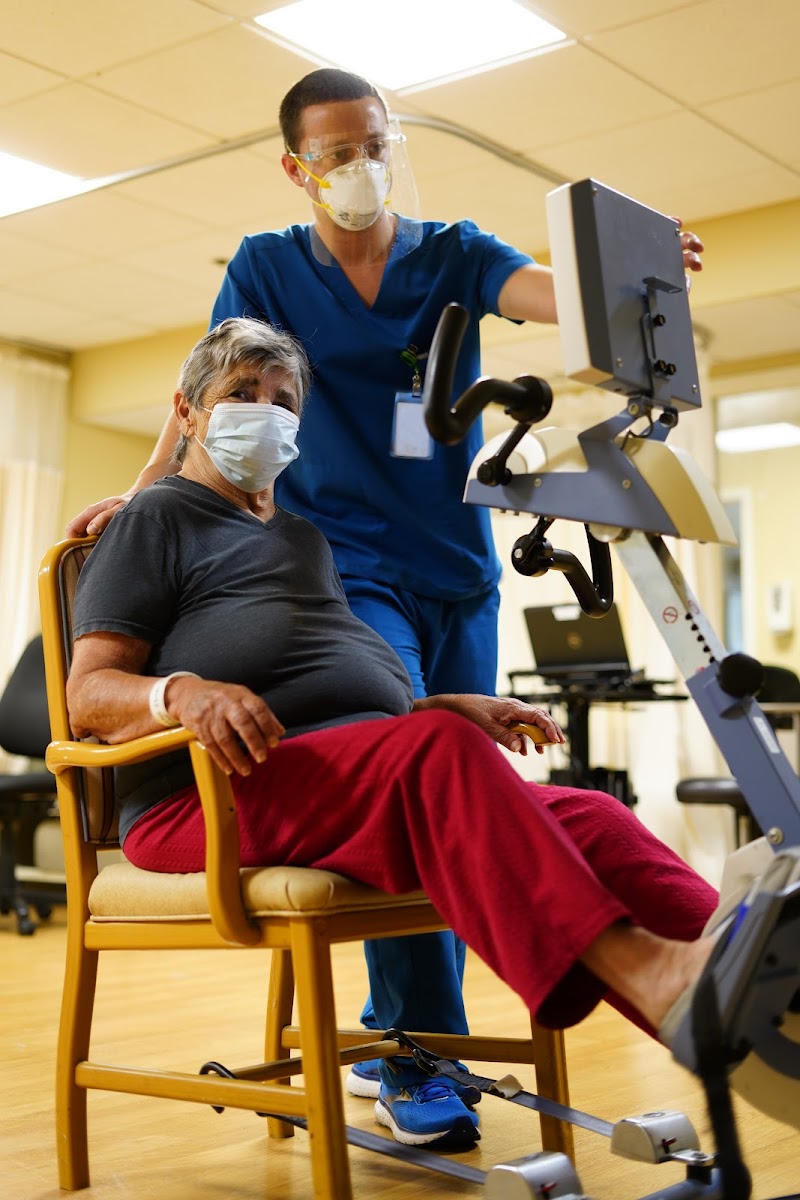
How is Care Pavilion Staffed?

CMS rates CARE PAVILION NURSING AND REHABILITATION CENTER's staffing level at 3 out of 5 stars, which is average compared to other nursing homes. Staff turnover is 24%, compared to the Pennsylvania average of 46%. This relatively stable workforce can support continuity of care.

What Have Inspectors Found at Care Pavilion?

State health inspectors documented 98 deficiencies at CARE PAVILION NURSING AND REHABILITATION CENTER during 2022 to 2025. These included: 4 Immediate Jeopardy (the most serious level, indicating potential for serious harm or death), 3 that caused actual resident harm, and 91 with potential for harm. Immediate Jeopardy findings are rare and represent the most serious regulatory concerns. They require immediate corrective action.
Who Owns and Operates Care Pavilion?

CARE PAVILION NURSING AND REHABILITATION CENTER is owned by a for-profit company. For-profit facilities operate as businesses with obligations to shareholders or private owners. The facility is operated by BEDROCK CARE, a chain that manages multiple nursing homes. With 396 certified beds and approximately 325 residents (about 82% occupancy), it is a large facility located in PHILADELPHIA, Pennsylvania.
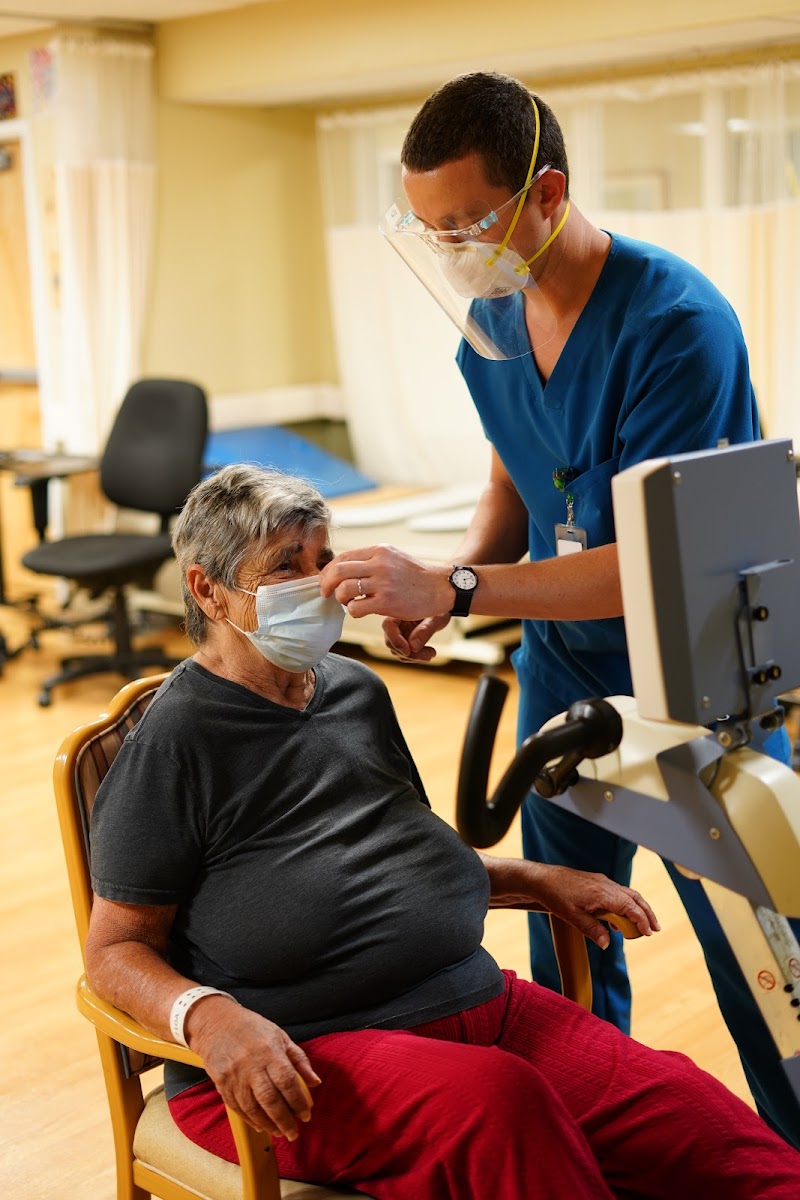
How Does Care Pavilion Compare to Other Pennsylvania Nursing Homes?

Compared to the 100 nursing homes in Pennsylvania, CARE PAVILION NURSING AND REHABILITATION CENTER's overall rating (1 stars) is below the state average of 3.0, staff turnover (24%) is significantly lower than the state average of 46%, and health inspection rating (1 stars) is much below the national benchmark.

What Should Families Ask When Visiting Care Pavilion?

Based on this facility's data, families visiting should ask: "What changes have been made since the serious inspection findings, and how are you preventing similar issues?" "What safeguards and monitoring systems are in place to protect residents from abuse or neglect?" "Can I visit during a mealtime to observe dining assistance and food quality?" "How do you handle medical emergencies, and what is your hospital transfer rate?" These questions are particularly relevant given the facility's Immediate Jeopardy citations and the substantiated abuse finding on record.

Is Care Pavilion Safe?

Based on CMS inspection data, CARE PAVILION NURSING AND REHABILITATION CENTER has documented safety concerns. The facility has 1 substantiated abuse finding (meaning confirmed case of resident harm by staff or other residents). Inspectors have issued 4 Immediate Jeopardy citations (the most serious violation level indicating risk of serious injury or death). The facility has a 1-star overall rating and ranks #100 of 100 nursing homes in Pennsylvania. Families considering this facility should ask detailed questions about what corrective actions have been taken since these incidents.

Do Nurses at Care Pavilion Stick Around?

Staff at CARE PAVILION NURSING AND REHABILITATION CENTER tend to stick around. With a turnover rate of 24%, the facility is 22 percentage points below the Pennsylvania average of 46%. Low turnover is a positive sign. It means caregivers have time to learn each resident's needs, medications, and personal preferences. Consistent staff also notice subtle changes in a resident's condition more quickly.

Was Care Pavilion Ever Fined?

CARE PAVILION NURSING AND REHABILITATION CENTER has been fined $406,016 across 5 penalty actions. This is 10.9x the Pennsylvania average of $37,139. Fines at this level are uncommon and typically indicate a pattern of serious deficiencies, repeated violations, or failure to correct problems promptly. CMS reserves penalties of this magnitude for facilities that pose significant, documented risk to resident health or safety. Families should request specific documentation of what issues led to these fines and what systemic changes have been implemented.

Is Care Pavilion on Any Federal Watch List?

CARE PAVILION NURSING AND REHABILITATION CENTER is not on any federal watch list. The most significant is the Special Focus Facility (SFF) program, which identifies the bottom 1% of nursing homes nationally based on persistent, serious quality problems. Not being on this list means the facility has avoided the pattern of deficiencies that triggers enhanced federal oversight. This is a positive indicator, though families should still review the facility's inspection history directly.