CLIVEDEN NURSING AND REHABILITATION CENTER
6400 GREENE STREET, PHILADELPHIA, PA 19119 (215) 844-6400
For profit - Limited Liability company 180 Beds BEDROCK CARE Data: November 2025
Trust Grade
50/100
#399 of 653 in PA
Last Inspection: June 2025

Inspected within the last 6 months. Data reflects current conditions.

Overview

Cliveden Nursing and Rehabilitation Center has a Trust Grade of C, indicating it is average and falls in the middle of the pack among nursing homes. It ranks #399 out of 653 facilities in Pennsylvania, placing it in the bottom half, and #27 out of 46 in Philadelphia County, meaning there are only a few local options that are better. The facility's trend is worsening, with issues increasing from 21 in 2024 to 22 in 2025, which raises concerns about the overall quality of care. Staffing is an area of concern, as it has a low rating with only 2 out of 5 stars, and the RN coverage is less than 99% of Pennsylvania facilities, which means residents may not be receiving the level of nursing care needed. Specific findings include a failure to maintain effective pest control, as residents reported mice in their rooms, and inadequate tracking of infection rates, which could put residents at risk for health complications. While there have been no fines reported, the facility has significant deficiencies that families should consider when making their decision.

Trust Score
C
50/100
In Pennsylvania
#399/653
Bottom 39%
Safety Record
Low Risk
No red flags
Inspections
Getting Worse
21 → 22 violations
Staff Stability
⚠ Watch
46% turnover. Above average. Higher turnover means staff may not know residents' routines.
Penalties
✓ Good
No fines on record. Clean compliance history, better than most Pennsylvania facilities.
Skilled Nurses
⚠ Watch
Each resident gets only 16 minutes of Registered Nurse (RN) attention daily — below average for Pennsylvania. Fewer RN minutes means fewer trained eyes watching for problems.
Violations
⚠ Watch
62 deficiencies on record. Higher than average. Multiple issues found across inspections.
★★☆☆☆
2.0
Overall Rating
★★☆☆☆
2.0
Staff Levels
★★★☆☆
3.0
Care Quality
★★☆☆☆
2.0
Inspection Score
Stable
2024: 21 issues
2025: 22 issues

The Good

  • Full Sprinkler Coverage · Fire safety systems throughout facility
  • No fines on record

Facility shows strength in fire safety.

The Bad

2-Star Overall Rating

Below Pennsylvania average (3.0)

Below average - review inspection findings carefully

Staff Turnover: 46%

Near Pennsylvania avg (46%)

Higher turnover may affect care consistency

Chain: BEDROCK CARE

Part of a multi-facility chain

Ask about local staffing decisions and management

The Ugly 62 deficiencies on record

Aug 2025 2 deficiencies
CONCERN (D) 📢 Someone Reported This

A family member, employee, or ombudsman was alarmed enough to file a formal complaint

Potential for Harm - no one hurt, but risky conditions existed

Comprehensive Care Plan (Tag F0656)

Could have caused harm · This affected 1 resident

**NOTE- TERMS IN BRACKETS HAVE BEEN EDITED TO PROTECT CONFIDENTIALITY** Based on a review of medical records and staff interviews it was determined that the facility failed to develop and implement ca...

Read full inspector narrative →
**NOTE- TERMS IN BRACKETS HAVE BEEN EDITED TO PROTECT CONFIDENTIALITY** Based on a review of medical records and staff interviews it was determined that the facility failed to develop and implement care plans for two of eight residents reviewed regarding intravenous (IV) and ostomy care. (Resident R7 and R8.) Findings include: A review of Resident R7's clinical record revealed that the resident was admitted to the facility on [DATE], with a colostomy. Interview with Resident R7 on August 13, 2025, at 11:00 a.m. revealed that the resident was receiving colostomy care each day. Further review of Resident R7's medical record revealed no comprehensive care plan for the care of his colostomy. A review of Resident R8's clinical record revealed that the resident was admitted to the facility on [DATE], with an IV. Interview with Resident R on August 13, 2025, at 11:15 a.m. revealed that the resident had an IV for medication to prevent infection to his wounds. An interview with the Director of Nursing on August 13, 2025, at 1:20 p.m. confirmed that there was no care plan to address resident R7's colostomy care or Resident R8's IV care. 28 Pa. Code 211.12 (d)(5) Nursing services
CONCERN (D) 📢 Someone Reported This

A family member, employee, or ombudsman was alarmed enough to file a formal complaint

Potential for Harm - no one hurt, but risky conditions existed

Deficiency F0726 (Tag F0726)

Could have caused harm · This affected 1 resident

Based on review of facility documentation and staff interview, it was determined that the facility failed to ensure that licensed nursing staff had the proper competencies including intravenous (IV) c...

Read full inspector narrative →
Based on review of facility documentation and staff interview, it was determined that the facility failed to ensure that licensed nursing staff had the proper competencies including intravenous (IV) care and ostomy care for four of four licensed nurse training records reviewed (Employees E4, E5, E6 & E7). Findings include:Review of the provided facility policies did not reveal any policy related to nursing competencies.Review of training records provided did not reveal competencies requested including IV care for Employees E4 and E5, and ostomy care for Employees E4, E5, E6 and E7.Interview with the Director of Nursing on August 13, 2025, at 1:15 p.m. confirmed that there was no documentation available to review to show that the selected licensed nursing staff had been evaluated for competency in ostomy care, and that Employee E6 and E7 had no IV competency documented. 28 Pa. Code: 211.12(d)(1) Nursing services 28 Pa. Code 211.12(d)(5) Nursing services
Jun 2025 1 deficiency
CONCERN (D) 📢 Someone Reported This

A family member, employee, or ombudsman was alarmed enough to file a formal complaint

Potential for Harm - no one hurt, but risky conditions existed

Safe Environment (Tag F0921)

Could have caused harm · This affected 1 resident

Based on observations, and staff and resident interviews. it was determined that the facility failed to maintain a comfortable environment for one of three nursing units observed (3rd floor lounge). ...

Read full inspector narrative →
Based on observations, and staff and resident interviews. it was determined that the facility failed to maintain a comfortable environment for one of three nursing units observed (3rd floor lounge). Findings Include: A tour of the facility was conducted on June 26, 2025, at approximately 10:30 a.m. with Maintenance Director, Employee E3, to monitor the temperatures of the building and resident care areas. Temperatures taken by Maintenance Director, Employee E3, on June 26, 2025, at 11:15 a.m. in the 3rd floor multipurpose room revealed temperatures reached up to 84 degrees. Temperature of the room felt hot, humid, and uncomfortable. Observations on June 26, 2025, at 11:15 a.m. in the 3rd floor multipurpose room revealed about 20 residents were gathered in the room and were being supervised by nurse aide, Employee E4. Interview with nurse aide, Employee E4, revealed these residents required supervision due to fall risks. Nurse aide, Employee E4, was observed to be sitting in a chair amongst the resident's drinking a cold, iced coffee. Further observations revealed 16 residents (Resident R2, R3, R4, R5, R6, R7, R8, R9, R10, R11, R12, R13, R14, R15, R16, R17) were sitting without any kind of beverage. Nurse aide, Employee E4, confirmed the residents did not have water and would get a pitcher of water and ice to begin passing beverages. Further observations on June 26, 2026, at 11:15 a.m. revealed Resident R1 looked uncomfortable with a clammy/sweaty appearance. During an interview with Resident R1 the resident confirmed being uncomfortable due to the warm temperature of the room. Interviews with Resident R2 and R3 reported feeling hot and uncomfortable due to the temperatures of the room. 28 Pa Code: 201.14 (a) Responsibility of licensee.
Jun 2025 17 deficiencies
CONCERN (D)

Potential for Harm - no one hurt, but risky conditions existed

Deficiency F0559 (Tag F0559)

Could have caused harm · This affected 1 resident

Based staff interviews, review of facility policy and the review of the clinical record, it was determined that the facility failed to ensure that a resident received proper notification for a room ch...

Read full inspector narrative →
Based staff interviews, review of facility policy and the review of the clinical record, it was determined that the facility failed to ensure that a resident received proper notification for a room change, and failed to ensure that the resident had the opportunity to refuse a room change for 1 out of 29 residents reviewed (Resident R11). Findings include: Review of the facility policy, Room Change/Roommate Assignment, dated April 1, 2022 indicated that changes in room or roommate assignment shall be made when the facility deems it necessary or when the resident requests the change. Changes in room or roommate assignment shall be made when the facility deems it necessary or when the resident requests the change. The policy also stated that prior to changing a room or roommate assignment all parties involved in the change/assignment (e.g., residents or their representatives (sponsors)) will be given advance notice of such change. Continued review of the policy indicated that he notice of a change in room or roommate assignment may be oral or in writing, or both, and will include the reason(s) for such change. Review of the June 2025 physician orders for Resident R11 included the following diagnoses epilepsy; hypertension (high blood pressure) and muscle weakness. During an interview Resident R11 on June 10, 2025 at 10:30 a.m. the resident reported he was told that he had to move from the st floor because the first floor was only for short term residents. The resident reported that he told the facility that he did not want to move. I told them that I did not want to move. Review of the resident's clinical record revealed a Roommate Change-Advanced Notification form dated April 23, 2025 indicating that on the above referenced date, the resident was moved from the1st floor to the 3rd floor on April 23, 2025 and that the reason for the room change was switch from skilled unit to long-term care unit. Review of a nursing note dated April 23, 2025 at 1:04 p.m. indicated that the resident was transferred from the 1st floor to the 3rd floor on the above referenced date. Review of the clinical record did not show evidence that the resident received advanced notice of the room changed (prior to April 23, 2025) and instead, was notified the same day that the room change occurred. Review of the clinical record also did not show evidence that the resident was allowed the opportunity to refuse the room change to the 3rd floor. During a discussion with the Director of Nursing on June 13, 2025 at 12:15 p.m. , it was discussed that there was no evidence in the clinical record that the resident received advanced notice of his room change that occurred on April 23, 2025, and there was no evidence that the resident was provided with the right to refuse the room change to the 3rd floor. The facility failed to ensure prior written notification was provided to Resident R11 and failed to ensure that the resident was provided with the opportunity to refuse the room change. 28 Pa. Code 201.14(a) Responsibility of licensee 29 Pa. Code 201.29(d) Resident rights 29 Pa. Code 201.29(j) Resident rights
CONCERN (D)

Potential for Harm - no one hurt, but risky conditions existed

Safe Environment (Tag F0584)

Could have caused harm · This affected 1 resident

Based on observations, resident and staff interviews, it was determined that facility failed maintain a safe, clean comfortable and home like environment for residents of one of three nursing units. (...

Read full inspector narrative →
Based on observations, resident and staff interviews, it was determined that facility failed maintain a safe, clean comfortable and home like environment for residents of one of three nursing units. (Third floor) Findings Include: Observation of Third floor nursing unit on June 10, 2025, at 9:45 AM revealed there was a strong odor of urine throughout the South unit hallway. Observation of Third floor nursing unit on June 10, 2025, at 9:52 AM revealed there was a strong odor of urine throughout the [NAME] unit hallway. Interview with the Licensed Practical Nurse, Employee E23, on June 9, 2025, at 9:52 AM confirmed that there was strong odor of urine on both hallways. Employee E3 stated it could be from staff changing the residents. A follow up tour of the south hallway on June 10, 2025, at 10:00 AM revealed that there were no residents receiving incontinence care. Observation of Third floor nursing unit on June12, 2025, at 10:41 AM revealed there was strong odor of on the [NAME] hallway. Observation of the Third-floor dining room on June11, 2025, at 10:35 AM revealed that there was trash on the floor, liquid spill on the floor and table. There were breakfast trays sitting on the table. Residents were observed sitting in the dining room and watching TV at the time of the observation. Interview with the Housekeeping Director, Employee E24, on June 12, 2025, at 10:52 AM confirmed that there was strong odor on the third-floor hallway. He stated facility cleaned the rooms, but the odor still kept coming. He stated staff sprayed the hallway but it only lasted for 15 min and the odor comes back. 28 Pa Code: 201.14 (a) Responsibility of licensee.
CONCERN (D)

Potential for Harm - no one hurt, but risky conditions existed

Deficiency F0628 (Tag F0628)

Could have caused harm · This affected 1 resident

Based on review of facility documentation, review of clinical records, and interviews with staff, it was determined that the facility failed to notify the Office of the State Long-Term Care Ombudsman ...

Read full inspector narrative →
Based on review of facility documentation, review of clinical records, and interviews with staff, it was determined that the facility failed to notify the Office of the State Long-Term Care Ombudsman of facility-initiated emergency transfers to the hospital for 3 of 29 residents reviewed (Residents R83, R137 and R118). Findings Include: Clinical record review for Resident R83 revealed progress notes, dated October 15, 2024, at 11:18 a.m. and 1:06 p.m. which indicated that the resident had increased abdominal girth and no bowel movement in 72 hours (three days) and was ordered by the physician to be transferred to a local hospital for evaluation. Clinical record review for Resident R137 revealed a progress note, dated May 1, 2025, ay 11:12 p.m. which indicated that the resident had abnormal labs and was ordered by the physician to be transferred to a local hospital for evaluation. Review of Resident R118's clinical record revealed a nursing progress note dated January 19, 2025, that indicated the resident had an unwitnessed fall and sustained a hematoma (collection of blood that pools outside of blood vessels) to the head. Resident R118 was subsequently transferred to the local hospital for evaluation. Further review revealed that there was no indication that the Office of the State Long-Term Care Ombudsman was notified of the above facility-initiated emergency transfers for Residents R83, R137 and R118. Interview on June 12, 2025, at 9:26 p.m. Employee E3, Regional Nurse, confirmed that the Office of the State Long-Term Care Ombudsman was not notified in a timely manner as required of facility-initiated emergency transfers and discharges. 28 Pa. Code 201.14(a) Responsibility of licensee 28 Pa. Code 201.18(b)(2) Management
CONCERN (D)

Potential for Harm - no one hurt, but risky conditions existed

Quality of Care (Tag F0684)

Could have caused harm · This affected 1 resident

**NOTE- TERMS IN BRACKETS HAVE BEEN EDITED TO PROTECT CONFIDENTIALITY** Based on clinical record review and staff interview, it was determined that the facility failed to follow up dental consults rel...

Read full inspector narrative →
**NOTE- TERMS IN BRACKETS HAVE BEEN EDITED TO PROTECT CONFIDENTIALITY** Based on clinical record review and staff interview, it was determined that the facility failed to follow up dental consults related to recommendations for dentures, for 1 out of 29 residents reviewed (Resident R97). Findings include: Review of the facility policy, Dental Services, with a date of April 1, 2022 indicated that the facility has a contract with a dentist who comes to the facility and provides dental services on a monthly basis. Continued review of the policy indicated that a designated staff member is responsible for assisting the resident/family in making dental appointments and transportation arrangements as necessary. Review of the June 2025 physician orders for Resident R97 included the diagnosis of dysphagia (difficulty swallowing). During an interview with Resident R97 on June 11, 2025 at 1:00 p.m. the resident reported that he has been trying to get help from the facility with getting new upper dentures, and that he has a hard time chewing his food properly due to no longer having his upper dentures. The resident reported that his teeth were thrown away on his food tray by staff, and that he was notified by the facility that Medicaid will not pay for replacement dentures. Residnet R97 was observed with no upper dentures/teeth in his mouth during the above referenced interview. Review of an onsite dental consultation visit dated April 4, 2025, indicated that the resident was seen for a visit by the dentist and reported patient claims that the facility lost his denture. Continued review of the dental consult asked for the facility to approve front upper dentures. Please approve FU. Review of the resident's clinical record did not include any evidence that the facility followed with the recommendations. Review of an onsite dental consultation visit dated April 15, 2025 indicated that the resident told the dentist that he is still waiting or his upper dentures and that staff [NAME] the dentures out. Pt stated he's waiting for his upper denture. He said the staff [sic] it out. Continued review of the dental consult indicated that the resident reported to the dentist that he was not able to eat without his teeth. Pt said he is not able to eat without his teeth. Review of the resident's clinical record did not include any evidence that the facility followed with the recommendations from the above referenced dental visit. During an interview with the Unit Manger (Employee E20) on June 13, 2025 at 10:54 a.m. the above-referenced dental consults were reviewed with the unit manager. The unit manager reported that after residents are seen by the dentist, the dentist provides the dental consults to the nurse, and the nurse writes a note in the clinical record regarding the dental consults. It was discussed with unit manager that there was nothing in the clinical record to indicate that anything was followed up with in regards to the resident's 2 dental visits. 28 Pa Code 211.12(d)(1)(3)(5) Nursing services 28. Pa Code 211.15 Dental services
CONCERN (D)

Potential for Harm - no one hurt, but risky conditions existed

Deficiency F0685 (Tag F0685)

Could have caused harm · This affected 1 resident

Based on clinical record reviews and interviews with residents and staff, it was determined that the facility failed to assist a resident to obtain an audiologist consult for hearing aides, for one of...

Read full inspector narrative →
Based on clinical record reviews and interviews with residents and staff, it was determined that the facility failed to assist a resident to obtain an audiologist consult for hearing aides, for one of 29 residents reviewed (Resident R117). Findings include: Interview on June 10, 2025, at 11:27 a.m. Resident R117 stated that he had difficulty hearing and needed hearing aids. Resident R117 stated that he was evaluated by a doctor for hearing loss, but that he has not received his hearing aides yet. Clinical record review for Resident R117 revealed an Ear Nose and Throat (ENT) Consultation Report, dated June 18, 2024, which indicated that the resident had suspected hearing loss, and recommended an audiology (branch of medicine focused on hearing) and hearing aide evaluation. Further review of Resident R117's clinical record revealed that there was no documentation available for review at the time of the survey to indicate if the resident received the audiology and hearing aid evaluations that were recommended by the ENT specialist. Interview on June 12, 2025, at 9:26 a.m. Employee E3, Regional Nurse, confirmed that Resident R117 did not receive the audiology evaluation as recommended. 28 Pa Code 201.18(a)(1) Management 28 Pa Code 211.12(d)(3)(5) Nursing services
CONCERN (D)

Potential for Harm - no one hurt, but risky conditions existed

Deficiency F0688 (Tag F0688)

Could have caused harm · This affected 1 resident

Based on interviews with residents, review of facility policy and review of clinical records, it was determined that the facility failed to ensure that a device to prevent contractures was applied as ...

Read full inspector narrative →
Based on interviews with residents, review of facility policy and review of clinical records, it was determined that the facility failed to ensure that a device to prevent contractures was applied as order by the physician for one out of 29 residents reviewed (Resident R97) Findings include: Review of the June 2025 physician orders for Resident R97 included the following diagnosis: heart failure (occurs when the heart muscles don't pump blood as well as they should); diabetes (a disease characterized by high blood sugar levels); and dysphagia (difficulty swallowing). Continued review of June 2025 physician orders included a physician order with a start date of February 16, 2023 for RUE (right upper extremity) elbow extension splint and resting hand splint on in a.m. and off in p.m. with skin checks prior to donning (putting on) and post doffing (removing) every morning and at bedtime. Review of the resident's person-centered plan of care included a plan of care dated February 19, 2023 stating that the resident required restorative programs related to contracture management so that the resident would be able to maintain his current activities of daily living ability. The interventions outlined in the care plan associated with this goal included the resident participating in restorative programs to the best of his ability, in addition to wearing a right wrist support brace. During an interview with the resident on June 11, 2025 at 1:12 p.m. the resident was observed without any splints on. When asked if he wore a splints on his right hand/elbow the resident reported, I used to wear something on this hand (pointing to his right hand) but they took it. I don't know why. During an interview with the unit manger (Employee E20) on June 11, 2025 at 1:27 p.m. the physician's order for the splint were reviewed with the unit manager in the resident's electronic clinical record. The unit manager acknowledged that splint has not been applied to the resident. Review of the resident's Treatment Administration Record (TAR) and Medication Administration Record (MAR) did not show evidence that the splint was applied, as ordered, at anytime during June 1, 2025 through June 11, 2025. During an interview with the occupational therapist (Employee E21), on June 13, 2025 at 12:07 p.m., the occupational therapist reported that the resident does require the use of the right write and hand splint for the management of his tone. 28 Pa Code 211.12 (a)(c)(d)(5) Nursing services 28 Pa. Code: 211.5(f) Clinical records
CONCERN (D)

Potential for Harm - no one hurt, but risky conditions existed

Respiratory Care (Tag F0695)

Could have caused harm · This affected 1 resident

**NOTE- TERMS IN BRACKETS HAVE BEEN EDITED TO PROTECT CONFIDENTIALITY** Based on review of facility policy, review of clinical records, observations, and staff and resident interviews, it was determin...

Read full inspector narrative →
**NOTE- TERMS IN BRACKETS HAVE BEEN EDITED TO PROTECT CONFIDENTIALITY** Based on review of facility policy, review of clinical records, observations, and staff and resident interviews, it was determined that the facility failed to provide necessary respiratory care consistent with professional standards of practice for one of three residents reviewed for tracheostomy (Resident R127). Findings Include: Review of facility policy Tracheostomy Care revised October 4, 2024, revealed it is the policy of the facility to establish standards for the care and maintenance of tracheostomy tubes. Per the policy, trach care sohuld be performed daily and as needed for dressing soilage. This includes removal of drain/dressing sponge and cleasing around stoma site and trach plate. Review of Resident R127's comprehensive Minimum Data Set (MDS - federally mandated resident assessment and care screening) dated April 27, 2025, revealed the resident was admitted to the facility on [DATE], was determined cognitively intact, and had diagnoses of respiratory failure (when the respiratory system fails to maintain normal levels of oxygen and carbon dioxide in the blood) and tracheostomy status (surgical hole in the windpipe that helps with breathing with the use of a medical tracheostomy tube). Review of Resident R127's comprehensive care plan dated April 24, 2025, revealed the resident had a tracheostomy related to impaired breathing mechanics. Interventions included to ensure trach ties were secured at all times, suction as needed, monitor/document for signs ands symptoms in change of status, and to use universal precautions as appropriate. Observations June 11, 2025, at 10:45 a.m. confirmed Resident R127 had a tracheostomy and used a cap (a device that covers the opening of the tracheostomy tube, forcing the patient to breathe through the nose and mouth) on the end of the trach. Interview with Resident R127 on June 11, 2025, at 10:45 a.m. the resident reported tracheostomy care is not done daily by nursing staff. Review of Resident R127's clinical record revealed a physician order dated June 10, 2025, that the resident was ordered a #8 shiley cuffless dxLT (size and type of tracheostomy). Continued review of Resident R127's entire clinical record revealed no documented evidence the resident had physician orders or a comprehensive care plan for the daily care of the tracheostomy or orders/interventions for management of the cap used for the tracheostomy. Interview and observation on June 11, 2025, at 2:12 p.m. with Registered Nurse, Employee E18, revealed Resident R127 was wearing a #6 shiley cuffless tracheostomy tube and that the physician order was incorrect. Further interview on June 11, 2025, at 2:12 p.m. with Registered Nurse, Employee E18, confirmed Resident R127 did not have physician orders or documentation for the daily care/cleaning of the tracheostomy and no physician order for the management and use of the cap on the tracheostomy 28 Pa. Code 211.10 (c) Resident care policies. 28 Pa. Code 211.12 (d)(5) Nursing services.
CONCERN (D)

Potential for Harm - no one hurt, but risky conditions existed

Deficiency F0726 (Tag F0726)

Could have caused harm · This affected 1 resident

Based on review of facility documentation, review of personnel files and interviews with staff, it was determined that the facility failed to assure that nursing staff possess the competencies and ski...

Read full inspector narrative →
Based on review of facility documentation, review of personnel files and interviews with staff, it was determined that the facility failed to assure that nursing staff possess the competencies and skill sets necessary to provide nursing and related services to meet the residents' needs for three of five personnel files of newly hired staff reviewed (Employees E8, E9 and E10). Findings include: Review of the facility's job description for nurse aides revealed that nurse aide staff are responsible for providing direct personal care to residents, including performing restorative nursing and rehabilitative procedures, serving meals trays, assisting residents with feeding, assisting residents with transferring, lifting and ambulating, and providing incontinence and skin care. Review of the facility's job description for licensed practical nurses (LPNs) revealed that LPNs are responsible for providing direct nursing care to residents, including administration of medications, treatments and direct care according to physician orders. Review of facility documentation of newly hired staff revealed that Employee E8 was hired by the facility on April 29, 2025, as a nurse aide; Employee E9 was hired by the facility on April 29, 2025, as a nurse aide; and Employee E10 was hired by the facility on April 29, 2025, as an LPN. Review of Employees E8, E9 and E10's personnel files revealed no evidence that the employees received any skills competency evaluations to ensure competency of hands-on skills and techniques necessary to care for residents' needs. Interview on June 11, 2025, at 1:25 p.m. the Director of Nursing confirmed that no hands-on skills evaluations for Employees E8, E9 and E10 were available for review at the time of the survey. 28 Pa. Code 201.19(7) Personnel policies and procedures 28 Pa. Code 201.20(b) Staff development
CONCERN (D)

Potential for Harm - no one hurt, but risky conditions existed

Deficiency F0730 (Tag F0730)

Could have caused harm · This affected 1 resident

Based on a review of facility documentation and interviews with staff, it was determined that the facility failed to complete performance reviews for three of three nurse aides personnel files reviewe...

Read full inspector narrative →
Based on a review of facility documentation and interviews with staff, it was determined that the facility failed to complete performance reviews for three of three nurse aides personnel files reviewed related to performance reviews as required (Employees E11, E12 and E13). Findings include: Review of facility documentation pertaining to current employees, revealed that Employee E11 was hired by the facility as a nurse aide on July 14, 1996; Employee E12 was hired as a nurse aide on September 15, 1988; and Employee E13 was hired as a nurse aide on November 26, 2007. Interview on June 11, 2025, at 10:03 a.m. Employee E5, HR Director, revealed that the facility had not completed any performance reviews for any staff, including Employees E11, E12 and E13. 28 Pa. Code 201.19(2) Personnel policies and procedures
CONCERN (D)

Potential for Harm - no one hurt, but risky conditions existed

Deficiency F0761 (Tag F0761)

Could have caused harm · This affected 1 resident

**NOTE- TERMS IN BRACKETS HAVE BEEN EDITED TO PROTECT CONFIDENTIALITY** Based on observation, staff interviews and review of manufacturers' guidelines, it was determined that the facility failed to en...

Read full inspector narrative →
**NOTE- TERMS IN BRACKETS HAVE BEEN EDITED TO PROTECT CONFIDENTIALITY** Based on observation, staff interviews and review of manufacturers' guidelines, it was determined that the facility failed to ensure that all drugs and biologicals used in the facility were labeled and stored in accordance with professional standards of practice for two of four medication carts observed. (Third floor east and south medication carts). Findings Include: Review of manufacturer's guidelines for Humalog Insulin (insulin lispro) (medication used to treat high blood sugar levels) revealed that Humalog must be discarded 28 days after opening. Review of manufacturer's guidelines for Lantus Insulin(insulin glargine) revealed that the medication must be discarded 28 days after opening. Review of manufacturer's guidelines for Novolin Insulin revealed that the medication must be discarded 28 days after opening. Review of manufacturer's guidelines for Novolog Insulin (insulin aspart) revealed that the medication must be discarded 28 days after opening. Unopened vials should be refrigerated unit use. Observation on [DATE], at 9:52 a.m. of the second-floor south medication cart with Licensed Practical Nurse, Employee E25, revealed open and undated vials of 2 Novolin vials, 3 Lantus vials and 5 lispro vials. There was also one vial of expired Lispro and one vials of expired Novolin in the cart. These observations were confirmed by Employee E25. Observation on [DATE], at 10:00 a.m. of the second-floor east medication cart with Licensed Practical Nurse, Employee E23, revealed open and undated one NovoLog vial, 2 Lantus vials and one Aspart vial in the cart. There were also numerous unidentified loose pills behind the medication containers on the top drawer. These observations were confirmed by Employee E23. 28 Pa. Code 211.9(a)(1) Pharmacy services. 28 Pa. Code 211.12(d)(1)(5) Nursing services.
CONCERN (D)

Potential for Harm - no one hurt, but risky conditions existed

Deficiency F0825 (Tag F0825)

Could have caused harm · This affected 1 resident

**NOTE- TERMS IN BRACKETS HAVE BEEN EDITED TO PROTECT CONFIDENTIALITY** Based on clinical records and staff interview. it was determined that the facility failed to ensure that a resident with out den...

Read full inspector narrative →
**NOTE- TERMS IN BRACKETS HAVE BEEN EDITED TO PROTECT CONFIDENTIALITY** Based on clinical records and staff interview. it was determined that the facility failed to ensure that a resident with out dentures was assess for speech rehabilitation services for 1 out of 29 residents reviewed (Resident R97). Findings include: Review of the June 2025 physician orders for Resident R97 included the diagnosis of dysphagia (difficulty swallowing). During an interview with Resident R97 on June 11, 2025 at 1:00 p.m. the resident reported that he has been trying to get help from the facility with getting new upper dentures, and that he has a hard time chewing his food properly due to no longer having his upper dentures. The resident reported that his teeth were thrown away on his food tray by staff, and that he was notified by the facility that Medicaid will not pay for replacement dentures. Residnet R97 was observed with no upper dentures/teeth in his mouth during the above referenced interview. Review of an onsite dental consultation visit dated April 15, 2025 indicated that the resident told the dentist that he is still waiting or his upper dentures and that staff [NAME] the dentures out. Pt stated he's waiting for his upper denture. He said the staff [sic] it out. Continued review of the dental consult indicated that the resident reported to the dentist that he was not able to eat without his teeth. Pt said he is not able to eat without his teeth. Review of the resident's clinical record did not include any evidence that the facility referred resident to speech therapy due to the resident stating to the dentist that he was having trouble eating without his upper dentures. During an interview with the Director of Rehabilitation (Employee E21) on June 13, 2025 at 12:07 p.m. the Director of Rehab reported that there was no evidence that the speech therapist assessed the resident after any of his dental visits in April 2025 at any time in April 2005 through the current month of June 2025. 28 Pa Code 211.12(d)(1)(3)(5) Nursing services 28. Pa Code 211.15 Dental services
CONCERN (E)

Potential for Harm - no one hurt, but risky conditions existed

Investigate Abuse (Tag F0610)

Could have caused harm · This affected multiple residents

Based on review of facility policy, facility documentation, review of clinical records, and staff interviews, it was determined that the facility failed to conduct a complete and thorough investigatio...

Read full inspector narrative →
Based on review of facility policy, facility documentation, review of clinical records, and staff interviews, it was determined that the facility failed to conduct a complete and thorough investigation related to abuse/neglect and misappropriation of resident property for three of four residents reviewed (Resident R303, R90 and R108.). Findings Include: Review of facility policy Abuse, reviewed December 2024, revealed misappropriation of resident property was defined as the deliberate misplacement, exploitation, or wrongful, temporary, or permanent use of a resident's belongings or money without the resident's consent. It is the policy of the facility that reports of abuse (mistreatment, neglect, or abuse, including injuries of unknown source, exploitation and misappropriation of property) are promptly and thoroughly investigated. Investigation regarding misappropriation should consist of, but not limited to, an interview with any witnesses to the incident, a search of resident room (with resident permission), interviews with the resident's roommate, family members, and visitors, a root-cause analysis of all circumstances surrounding the incident. Review of Resident R303's comprehensive Minimum Data Set (MDS - federally mandated resident assessment and care screening) dated January 5, 2025, revealed the resident was cognitively intact, assessed by a Brief Interview for Mental Status (BIMS) score of 15. Review of documentation submitted to the Survey State Agency on February 20, 2025, revealed that Resident R303 reported that on February 15, 2025, nurse aide, Employee E16, allegedly stole $100 from the resident's purse while the nurse aide was in the room to provide care. Resident R303 subsequently provided the Nursing Home Administrator, Employee E1, with a copy of the receipt for the money Resident R303 withdrew from the ATM. Review of facility documentation revealed a statement dated February 20, 2025, by nurse aide, Employee E16, who denied stealing Resident R303's money. Nurse aide, Employee E16, was subsequently suspended pending an investigation. Interview on June 12, 2025, at 12:07 p.m. with the Director of Nursing, Employee E2, revealed no investigation was available for the allegations of misappropriation of resident's property. Review of facility documentation revealed no evidence that the facility obtained interviews with any witnesses to the incident, a search of the resident room (with resident permission), interview with family members or visitors, or interviews with resident's roommate or residents under the care of the same nurse aide in question. Interview on June 12, 2025, at 2:00 p.m. with the Nursing Home Administrator, Employee E1, revealed the statement by nurse aide, Employee E16, was all that was available for the investigation of misappropriation for Resident R303's allegedly stolen money. Review of the June 2025 physician orders for Resident R90 included the following diagnoses: dementia (a term used to describe a group of symptoms affecting memory, thinking and social abilities); muscle weakness and lack of coordination. Review of the resident's Quarterly Minimum Data Set Assessment (MDS-periodic assessment of a resident's needs) dated September 13, 2024 indicated that the resident was severely cognitively impaired. Review of a reportable incident submitted to the State Survey Agency on October 16, 2024 indicated that on October 15, 2024 at approximately 3:30 p.m. Resident R90 fell out of her wheelchair in the hallway outside her room and was found lying on her left side. Continued review of the resident's fall report indicated that the resident was found on the floor in the hallway lying on her left side, and that the resident was unable to provide a description of what happened. Review of the fall report provided by the facility did not show evidence that the facility conducted a complete and through investigation (e.g. interviews with any staff members or residents who may have been present; no information on who found the resident on the floor )to rule out abuse/neglect. During an interview on June 12, 2025, at 12:07 p.m. with the Director of Nursing, Employee E2, revealed no investigation was available for the above referenced incident. Review of the June 2025 physician orders for Resident R108 included the following diagnoses: osteoarthritis of the knee; lack of coordination; morbid obesity; muscle weakness and difficulty walking. Review of the resident's Quarterly Minimum Data Set Assessment (MDS-periodic assessment of a resident's needs) for the resident dated October 28, 2024 indicated that the resident was awake, alert and oriented. Review of a reportable incident submitted to the State Survey Agency on October 30, 2024 indicated that on October 29, 2024, the resident sustained a fall while transferring from her bed to the wheelchair while using a mechanical lift with two nurse aides. Continued review of the reportable incident indicated that the sling broke during the transfer causing the resident to slide down in the sling and onto the floor. The resident was subsequently sent out to the hospital and treated for a left thumb sprain. The reportable incident also indicated that staff were interviewed, resident were interviewed, and that abuse was ruled out, and staff was able to confirm that the sling was connected correctly to the lift. Review of the information related to the investigation that was provided by the facility did not show evidence of a complete and through investigation to rule out abuse/neglect. The facility could not produce any interviwed regarding the incident from the nurse aides, other nursing staff, or the resident. It was also unknow if the facility investigated to ensure that the sling that the reportedly two nurse aides were utilizing during the transfer was the correct sling size for the resident's weight. During an interview on June 12, 2025, at 12:07 p.m. with the Director of Nursing, Employee E2, revealed no investigation was available for the above referenced incident. 28 Pa. Code 201.14 (a) Responsibility of licensee. 28 Pa. Code 201.29 (a) Resident rights.
CONCERN (E)

Potential for Harm - no one hurt, but risky conditions existed

Infection Control (Tag F0880)

Could have caused harm · This affected multiple residents

Based on review of facility policy, facility documentation, and staff interviews it was determined that the facility failed to implement appropriate tracking and surveillance of infection for five of ...

Read full inspector narrative →
Based on review of facility policy, facility documentation, and staff interviews it was determined that the facility failed to implement appropriate tracking and surveillance of infection for five of five months of infection surveillance data reviewed. (January 2025 through May 2025) Findings Include: Review of facility policy Surveillance, June 2025, revealed The ongoing, systematic collection, analysis, and interpreta1ion of health data essential to the planning, implementation, and evaluation of public health practice, closely integrated with the timely dissemination of these data to those who need to know. The Infection Preventionist will monitor new infections and antibiotic. The Infection Preventionist is encouraged to map out the HAI onto a facility map monthly to rule out concerns/ patterns with care givers. The surveillance sheet will capture the following information : o Name o Room o Unit o Indication where acquired o CAI = community-acquired infection o HAI = hospital-acquired infection o NHAI = nursing home-acquired infection o Other Nosocomial = acquired in another health care setting o New infections/ ABT use o Signs/ Symptoms o Onset Date o Type of Infection o Antibiotic (HAI and community acquired) o Prescribing Physician o Dose o Start and End date o Total Days o X-Ray/ Labs Results o Cultures o Organism identified o Date of Culture (if applicable) o Cultures ordered during stay o Cultures results during stay o ESBL, Cdiff, MRSA, VRE, CRE o Indicate Diagnostic Tool Used o Whether criteria were met A request was made to Director of Nursing, Employee E2 for infection tracking of the facility on June 10, 2025. Review of facility infection tracking for the month of January 2025 revealed that the facility had 11 infections for the month of January 2025. 10 of those infections were facility acquired. The tracking did not include signs and symptoms or stop dates for the antibiotics. Review of January 2025 pharmacy order report revealed that the facility had 15 residents/infections with antibiotics ordered which was not consistent with facility tracking form. Review of facility infection tracking for the month of February 2025 revealed that the 2nd floor had 2 infections for the month of February. Both of those infections were facility acquired. The tracking did not include signs and symptoms or stop dates for the antibiotics. There was no tracking available for 3rd floor. Review of February 2025 pharmacy order report revealed that the facility had 5 residents/infections with antibiotics ordered which was not consistent with facility tracking form. Review of facility infection tracking for the month of March 2025 revealed that the 3rd floor had 3 infections for the month of March 2025. All three of those infections were facility acquired. The tracking did not include signs and symptoms or stop dates for the antibiotics. Review of February 2025 pharmacy order report revealed that the facility had 5 residents/infections with antibiotics ordered which was not consistent with facility tracking form. Review of March 2025 pharmacy order report revealed that the facility had 14 residents/infections with antibiotics ordered which was not consistent with facility tracking form. Review of facility infection tracking for the month of April 2025 revealed that the facility had 5 infections for the month of April. 3 of those infections were facility acquired. The tracking did not include signs and symptoms or stop dates for the antibiotics. Review of April 2025 pharmacy order report revealed that the facility had 13 residents/infections with antibiotics ordered which was not consistent with facility tracking form. Review of facility documentation revealed that no infection tracking for were available for May 2025. Review of May 2025 pharmacy order report revealed that the facility had 12 residents/infections with antibiotics ordered which was not consistent with facility tracking form Interview with Employee E2, Director of Nursing on June 11, 2025, at 2 p.m. confirmed that the facility did not have complete infection surveillance including the tracking of signs and symptoms. 28 Pa. Code 211.10(d) Resident care policies. 28 Pa. Code 211.12(d)(1)(5) Nursing services.
CONCERN (E)

Potential for Harm - no one hurt, but risky conditions existed

Antibiotic Stewardship (Tag F0881)

Could have caused harm · This affected multiple residents

Based on a review of facility documentation, facility policies and staff interviews, it was determined that the facility failed to maintain an effective antibiotic stewardship program that includes a ...

Read full inspector narrative →
Based on a review of facility documentation, facility policies and staff interviews, it was determined that the facility failed to maintain an effective antibiotic stewardship program that includes a system that includes antibiotic use protocols and a system to effectively monitor antibiotic usage for 10 of 10 months of antibiotic stewardship program data reviewed. (January 2025, February 2025, March 2025, April 2025, and May 2025). Findings Include: A review of CDC (Centers for Disease Control and Prevention) guidelines, The core element of Antibiotic Stewardship for Nursing Homes, revealed that Improving the use of antibiotics in healthcare to protect patients and reduce the threat of antibiotic resistance is a national priority. 1. Antibiotic stewardship refers to a set of commitments and actions designed to optimize the treatment of infections while reducing the adverse events associated with antibiotic use.2 The Centers for Disease Control and Prevention (CDC) recommends that all acute care hospitals implement an antibiotic stewardship program (ASP) and outlined the seven core elements which are necessary for implementing successful ASPs.2 CDC also recommends that all nursing homes take steps to improve antibiotic prescribing practices and reduce inappropriate use. Nursing homes monitor both antibiotic use practices and outcomes related to antibiotics in order to guide practice changes and track the impact of new interventions. Data on adherence to antibiotic prescribing policies and antibiotic use are shared with clinicians and nurses to maintain awareness about the progress being made in antibiotic stewardship. Clinician response to antibiotic use feedback (e.g., acceptance) may help determine whether feedback is effective in changing prescribing behaviors. Integrate the dispensing and consultant pharmacists into the clinical care team as key partners in supporting antibiotic stewardship in nursing homes. Pharmacists can provide assistance in ensuring antibiotics are ordered appropriately, reviewing culture data, and developing antibiotic monitoring and infection management guidance in collaboration with nursing and clinical leaders. Identify clinical situations which may be driving inappropriate courses of antibiotics such as asymptomatic bacteriuria or urinary tract infection prophylaxis and implement specific interventions to improve use. Perform reviews on resident medical records for new antibiotic starts to determine whether the clinical assessment, prescription documentation and antibiotic selection were in accordance with facility antibiotic use policies and practices. When conducted over time, monitoring process measures can assess whether antibiotic prescribing policies are being followed by staff and clinicians. Track the amount of antibiotic used in your nursing home to review patterns of use and determine the impact of new stewardship interventions. Some antibiotic use measures (e.g., prevalence surveys) provide a snap-shot of information; while others, like nursing home initiated antibiotic starts and days of therapy (DOT) are calculated and tracked on an ongoing basis. Selecting which antibiotic use measure to track should be based on the type of practice intervention being implemented. Interventions designed to shorten the duration of antibiotic courses, or discontinue antibiotics based on post-prescription review (i.e., antibiotic time-out), may not necessarily change the rate of antibiotic starts, but would decrease the antibiotic DOT. Review of facility policy, Antimicrobial Stewardship Program, dated February 2025 revealed that Since antimicrobials are frequently over or inappropriately prescribed, a concerted effort to decrease or eliminate inappropriate use can make a big impact on resident safety and the reduction of adverse events. Antimicrobial stewardship consists of coordinated interventions aimed at treating infections while promoting appropriate antimicrobial use. The practice of antimicrobial stewardship requires commitment, leadership, communication, and actions informed by best practice guidelines and defined protocols. In compliance with the current Centers for Medicare and Medicaid Services (CMS} Requirements of Participation for infection control in long-term care facilities, this Antimicrobial Stewardship Policy outlines how the facility will address this important health care issue. Actions Prescription record keeping. Dose, duration, route, and indication of every antimicrobial prescription MUST be documented in the medical record for every resident, regardless of prior prescriptions or documentation elsewhere (e .g., in medical record of a discharging facility). Notation of this information should be made on the day that an in-house prescription is written or on the day that a resident returns to the facility on an antimicrobial prescribed elsewhere. Records will be reviewed monthly to assess compliance with this require ent swell as prescription appropriateness for the individual resident, site, and type of infection. Assessment of residents suspected of having an infection. Provider will utilize the Pennsylvania Patient Safety Reporting (PA-PSRS} Criteria when considering initiation of antimicrobials for suspected infections including; urinary tract infections, respiratory tract infections, gastrointestinal infections, skin and soft tissue infections and device related blood stream infections. Antimicrobial time-out. At 72 hours after antimicrobial initiation or first dose in the facility, each resident will be reassessed for consideration o l antimicrobial need, duration, selection, and de-escalation potential. At this time, laboratory testing results, response to therapy, resident condition, and facility needs (e . , outbreak situation) will be considered. Completion of an antimicrobial time out must be recorded in the resident record. Review of facility antibiotic stewardship/surveillance data provided by the facility during the survey revealed that the facility only completed 10 resident infection review from January 2025 to June 2025. Review of January 2025 pharmacy order report revealed that the facility had 15 residents/infections with antibiotics ordered which was not consistent with facility tracking form. Review of February 2025 pharmacy order report revealed that the facility had 5 residents/infections with antibiotics ordered which was not consistent with facility tracking form. Review of March 2025 pharmacy order report revealed that the facility had 14 residents/infections with antibiotics ordered which was not consistent with facility tracking form. Review of April 2025 pharmacy order report revealed that the facility had 13 residents/infections with antibiotics ordered which was not consistent with facility tracking form. Review of May 2025 pharmacy order report revealed that the facility had 12 residents/infections with antibiotics ordered which was not consistent with facility tracking form. Interview with Employee E2, Director of Nursing on June 11, 2025, at 2 p.m. confirmed that the confirmed that the facility antibiotic stewardship program did not include use protocols for antibiotics, did not include complete review of facility antibiotic orders to determine the appropriateness of the antibiotics and a system to effectively monitor antibiotic usage and a tracking of symptoms. 28 Pa. Code 211.10(d) Resident care policies. 28 Pa. Code 211.12(d)(1)(5) Nursing services
CONCERN (E)

Potential for Harm - no one hurt, but risky conditions existed

Deficiency F0883 (Tag F0883)

Could have caused harm · This affected multiple residents

**NOTE- TERMS IN BRACKETS HAVE BEEN EDITED TO PROTECT CONFIDENTIALITY** Based on review of clinical records and staff interviews, it was determined that the facility failed to offer and/or provide the...

Read full inspector narrative →
**NOTE- TERMS IN BRACKETS HAVE BEEN EDITED TO PROTECT CONFIDENTIALITY** Based on review of clinical records and staff interviews, it was determined that the facility failed to offer and/or provide the influenza and pneumococcal immunization for three of five residents reviewed (Resident R117, R295, R32, R62, and R95). The findings include: Review of the clinical record for Resident R117 revealed the resident was admitted to the facility on [DATE]. Resident was [AGE] years old. Review of R117's immunization records revealed no evidence that the resident received the pneumococcal vaccine, or the facility offered the pneumococcal vaccine. Facility did not offer or administer influenza vaccine. Review of the clinical record for Resident R295 revealed that the resident was [AGE] years old. Review of R295's immunization records revealed no evidence that the resident received the pneumococcal vaccine, or the facility offered the pneumococcal vaccine. Review of the clinical record for Resident R32 revealed that the resident was [AGE] years old. Review of R32's immunization records revealed no evidence that the resident received the pneumococcal vaccine, or the facility offered the pneumococcal vaccine. Review of the clinical record for Resident R62 revealed the resident was admitted to the facility on [DATE]. Resident was [AGE] years old. Review of R62's immunization records revealed no evidence that the resident received the pneumococcal vaccine, or the facility offered the pneumococcal vaccine. Facility did not offer or administer influenza vaccine. Review of the clinical record for Resident R95 revealed that the resident was [AGE] years old. Review of R95's immunization records revealed no evidence that the resident received the pneumococcal vaccine, or the facility offered the pneumococcal vaccine. 28 Pa Code: 201.14 (a ) Responsibility of licensee 28 Pa Code: 201.12 (d)(1) Nursing services
MINOR (B)

Minor Issue - procedural, no safety impact

Assessment Accuracy (Tag F0641)

Minor procedural issue · This affected multiple residents

**NOTE- TERMS IN BRACKETS HAVE BEEN EDITED TO PROTECT CONFIDENTIALITY** Based on review of clinical records and staff interviews, it was determined that the facility failed to ensure assessments accur...

Read full inspector narrative →
**NOTE- TERMS IN BRACKETS HAVE BEEN EDITED TO PROTECT CONFIDENTIALITY** Based on review of clinical records and staff interviews, it was determined that the facility failed to ensure assessments accurately reflected the resident's status for four of 29 residents reviewed (Resident R127, R133, R128, and R142). Findings Include: Review of the Centers for Medicare and Medicaid Services (CMS) Long Term Care RAI Manual dated October 2019 revealed the resident Minimum Data Set (MDS - a federally mandated standardized assessment conducted at specific intervals to plan resident care) included Section C: Cognitive Status which is used to determine the resident's attention, orientation, and ability to registry and recall information. Review of Resident R128's clinical record revealed a quarterly MDS dated [DATE]. Review of Resident R133's clinical record revealed an admission MDS dated [DATE]. Review of Section C: Cognitive Pattern for each above-mentioned residents' MDS, revealed section C0100 should brief interview for mental status [BIMS] (C0200-C0500) be conducted revealed this question was marked with a dash and left unanswered. Subsequently, the BIMS assessment was not conducted. Interview on June 12, 2025, with the Registered Nurse Assessment Coordinator (RNAC) confirmed BIMS assessments should have been done for Resident R128 and R133 but were unable to be completed timely for the MDS. Therefore, Section C of the MDS needed to be coded as no information. Review of Resident R127's comprehensive MDS dated [DATE], revealed the resident was admitted to the facility on [DATE], was determined cognitively intact, and had diagnoses of respiratory failure (definition) and tracheostomy status (definition). Review of Resident R127's comprehensive care plan dated April 24, 2025, revealed the resident had a tracheostomy related to impaired breathing mechanics. Interventions included to suction as needed. Continued review of Resident 127's comprehensive MDS dated [DATE], Section O revealed the facility was required to check off treatments, procedures, or programs that were received by the resident. Review of Section O - Special Treatments, Procedures, Programs revealed the facility failed to check off suctioning and tracheostomy care under the respiratory treatment category. Review of Resident R142's clinical record revealed a nursing note dated March 14, 2025, that the resident had a planned discharge home and was picked up by a friend. Resident R142 was noted to have received prescriptions and discharge instructions. Review of Resident R142's MDS dated [DATE], revealed section A2105. Discharge Status was marked incorrectly and indicated that Resident R142 was discharged to a short-term hospital. 28 Pa. Code 201.14 (a) Responsibility of licensee.
MINOR (C)

Minor Issue - procedural, no safety impact

Deficiency F0838 (Tag F0838)

Minor procedural issue · This affected most or all residents

Based on review of facility documentation and interviews with staff, it was determined that the facility failed to conduct and document a facility-wide assessment to determine what resources are neces...

Read full inspector narrative →
Based on review of facility documentation and interviews with staff, it was determined that the facility failed to conduct and document a facility-wide assessment to determine what resources are necessary to care for its residents competently during both day-to-day operations and emergencies, as required. Findings include: Review of facility documentation, Facility Matrix, dated June 10, 2025, revealed that the facility had a census of 144 residents. Continued review revealed that 58 residents required dementia care, 12 residents required care of pressure ulcers, 11 residents required indwelling catheter care, 5 residents required dialysis, 4 residents required hospice, 4 residents required intravenous therapy, 7 residents required feeding tube care, 3 residents required tracheostomy care, 6 residents required transmission based precautions, and 2 residents required trauma-informed care. The Facility Assessment was requested by State Agents on June 10, 2025, at 10:21 a.m. and again on June 11, 2025, at 1:30 p.m. Interview on June 11, 2025, at 1:31 p.m. the Nursing Home Administrator revealed that the Facility Assessment was not available for review at the time of the survey. 28 Pa. Code 201.14(a) Responsibility of licensee
Jan 2025 2 deficiencies
CONCERN (D) 📢 Someone Reported This

A family member, employee, or ombudsman was alarmed enough to file a formal complaint

Potential for Harm - no one hurt, but risky conditions existed

Deficiency F0919 (Tag F0919)

Could have caused harm · This affected 1 resident

Based on observation's, interview with resident and staff, it was determined that the facility failed to ensure that a call device was accessible to one out of nine residents observed (Resident R6) Fi...

Read full inspector narrative →
Based on observation's, interview with resident and staff, it was determined that the facility failed to ensure that a call device was accessible to one out of nine residents observed (Resident R6) Findings include: Review of facility policy 'Call Bells,' revised April 1, 2022, indicates that all residents are to have access to call bells at all times, even if it is generally believed that the resident is unable to use it. Staff are expected to be as vigilant as possible in keeping the call bell within reach of the resident, and the call system must be accessible to residents: while in their bed. Review of Resident R6's clinical record on January 31st, 2025, revealed medical diagnosis of hemiplegia and hemiparesis (paralysis and weakness) following cerebral infarction affecting left non-dominant side, muscle wasting and atrophy, generalized muscle weakness, morbid obesity. Observations of R6 during lunch meal service, on January 31, 2025 at 12:30 pm, revealed Resident R6 in bed with lunch tray on bedside table over Resident R6's bed. Further observation of Resident R6 revealed resident coughing continuously while consuming meal, unable to verbalize need for assistance. Resident R6 attempted to reach for call bell which was placed on left side of bed, without success. Interview with Licensed nurse, Employee E1, on January 31, 2025, at 12:35 pm, confirmed that Resident R6 was unable to use her left upper extremity due to hemiplegia and hemiparesis. Interview with facility's Director of Nursing, Employee E3, on January 31, 2024, confirmed that Resident R6's call bell was to be placed on right side of bed. 28 Pa Code 211.12(d)(1)(2) Nursing services 28 Pa Code 211.10(c)(d) Resident care policies
CONCERN (E) 📢 Someone Reported This

A family member, employee, or ombudsman was alarmed enough to file a formal complaint

Potential for Harm - no one hurt, but risky conditions existed

Safe Environment (Tag F0584)

Could have caused harm · This affected multiple residents

Based on observations, interview with residents and staff, and review of facility policy, it was determined that the facility did not ensure to provide safe, homelike environment for four out of five ...

Read full inspector narrative →
Based on observations, interview with residents and staff, and review of facility policy, it was determined that the facility did not ensure to provide safe, homelike environment for four out of five rooms observed (Room's 301, 302, 303, 304) Findings include: Review of facility's policy 'Resident Rights - Safe/Clean/Comfortable/Homelike Environment,' revised April 1, 2022, indicates that the facility must provide a safe, clean, comfortable, and homelike environment .housekeeping and maintenance services necessary to maintain a sanitary, orderly, and comfortable interior. Observations on January 31, 2025, at 1:00 pm, on third floor unit, in room#301, revealed a missing ceiling tile in resident's restroom, six leaking stains ceiling tiles, leaking stain down the wall in restroom. Observation of room# 302 revealed leaking stains on ceiling tiles above resident's bed. Observations of room# 304 revealed missing ceiling tile and three leaking stains on ceiling tiles. Observations of room# 303 revealed leaking stains on two ceiling tiles. Interview with Resident R5, in room# 304, bed A, revealed the missing ceiling tile between bed A and bed B, occurred about a week ago, and no effort was observed to replace the missing tile. 28 Pa Code 201.18(a) Management 28 Pa Code 201.18(b)(1) Management 28 Pa Code 201.18(b)(3) Management 28 Pa Code 201.18(d) Management 28 Pa Code 201.29(a) Resident Rights
Aug 2024 20 deficiencies
CONCERN (D)

Potential for Harm - no one hurt, but risky conditions existed

Deficiency F0552 (Tag F0552)

Could have caused harm · This affected 1 resident

Based on clinical record reviews and interviews with staff, it was determined that the facility failed to ensure that a resident was allowed to participate in decisions regarding medical appointment r...

Read full inspector narrative →
Based on clinical record reviews and interviews with staff, it was determined that the facility failed to ensure that a resident was allowed to participate in decisions regarding medical appointment requests for one of twenty-eight residents reviewed. (Resident 135). Findings Include: Interview with Resident R135 on August 27, 2024 at 9:52 a.m. revealed the resident had concerns with seeing outside physicians which she had mentioned multiple times and no one ever followed through with giving her an answer or scheduling any appointments with her. Review of Resident R135's clinical record revealed on August 1, 2024 there was an Interdisciplinary Progress Note that stated, Care Conference scheduled on 8/1/24. IDT (Interdisciplinary Team) visited with resident by bedside. Resident had concerns for nursing and the in-house physician. Resident wishes to get vitamin supplements D-3, to get print out of all their medications getting. Requesting to see the cardiologist specialist at (hospital). Wanting to get a MRI x-ray to check why not using legs. Requested to be updated when they had a virus several months ago. Aware of the POLST code status. Interview with the Director of Nursing Employee E2 on August 30, 2024 at 2:12 p.m. revealed the physician was aware of the requests made by Resident 135 but had not yet followed up on them. 28 Pa Code 201.18(b)(2) Management 28 Pa Code 211.12(d)(1) Nursing services
CONCERN (D)

Potential for Harm - no one hurt, but risky conditions existed

Deficiency F0574 (Tag F0574)

Could have caused harm · This affected 1 resident

Based on the tour of facility, observations and interviews with staff, it was determined the facility failed to ensure State Department of Health information was posted visible in a prominent place to...

Read full inspector narrative →
Based on the tour of facility, observations and interviews with staff, it was determined the facility failed to ensure State Department of Health information was posted visible in a prominent place to residents in two out of three of the units. (Second Floor and Third Floor) Findings include: On August 28, 2024 at approximately 11:11 a.m. a tour of the facility with Social Worker, Employee E14 and it was determined that only one of three units had the State Department of Health contact information posted and visible for residents and/or family. The first floor has a paper printed State Department of Health signs with small print that were posted in a glass case before you entered unit one. The printed paper we posted high in the glass case which would make it non-visible for residents who were wheelchair bound. A tour of the second-floor nursing unit revealed no printed State Department of Health signs located on the unit. A tour of the third-floor nursing unit revealed no printed State Department of Health signs located on the unit. Social Worker Employee E14 confirmed the facility failed to ensure that the process for filing a complaint and the State Department of Health Hotline number was posted as required. 28 Pa. Code 201.20(a) Resident rights.
CONCERN (D)

Potential for Harm - no one hurt, but risky conditions existed

Deficiency F0583 (Tag F0583)

Could have caused harm · This affected 1 resident

Based on observation, staff interview, review of clinical record, it was determined that the facility failed to maintain privacy related to personal privacy during tracheostomy care and sensitive pati...

Read full inspector narrative →
Based on observation, staff interview, review of clinical record, it was determined that the facility failed to maintain privacy related to personal privacy during tracheostomy care and sensitive patient health information during medication administration for three of 28 residents reviewed (Resident R9, Resident R121, and Resident R97). Findings include: Medication administration observation with Licensed nurse, Employee E18 conducted on August 28, 2024, at 9:05 am revealed that after preparing the morning medications for Resident R9 Employee E18 went inside Resident R9's room to give her medications. Further observation revealed that Employee E18 left her laptop open with the laptop facing the hallway with Resident R9's medical information visible. Further medication administration observation with Employee E18, revealed that, during medication administration for Resident R121, after preparing the morning medications for Resident R121, Employee E18 went inside Resident R121s room to give him his medications. Further observation revealed that Employee E18 left her laptop open with the laptop facing the hallway with Resident R121s medical information visible. Interview with Employee E18 conducted after the medication administration observation confirmed that the laptop was left open unattended while she went inside Resident R9 and Resident R121. Tracheostomy care observation for Resident R97 with Licensed nurse, Employee E17 conducted on August 30, 2024, at 8:50 am revealed that Resident R97 was in a single room. Further, there was no privacy curtain around Resident R97's bed. Further observation revealed that after Licensed nurse, Employee E17 finished setting up the dressing kit and the dressing supplies, Employee E17 started to perform the tracheostomy care on Resident R97. Further observation revealed that the door to the resident's room was left open the entire time nurse was performing trach care with Resident R97 visible from the hallway. Interview with Licensed nurse, Employee E17 conducted after the tracheostomy care was completed, confirmed that the door was left open during the tracheostomy care. Interview with Employee E2 conducted on August 30, 2024, at 9:38 a.m. revealed that the facility did not have a policy for privacy. 28 Pa. Code 210.29(i) Resident rights 28 Pa. Code 211.12(d)(3) Nursing services
CONCERN (D)

Potential for Harm - no one hurt, but risky conditions existed

Grievances (Tag F0585)

Could have caused harm · This affected 1 resident

Based on observations, review of facility policy, review of facility records, and interviews with residents and staff, it was determined that the facility failed to ensure that grievance forms were ac...

Read full inspector narrative →
Based on observations, review of facility policy, review of facility records, and interviews with residents and staff, it was determined that the facility failed to ensure that grievance forms were accessible for residents who wish to file a grivance anonymously and there was no grievance box availble on two of three nursing floors (First and Third floor). Findings Include: Review of facility policy titled, Grievance Program dated April 1, 2022 states, Purpose: To promote an environment and culture open to feedback positive and or negative from residents, family members, employees, physicians, and any other visitors. Both positive and negative comments from these individuals helps to provide information which will be incorporated into policies, procedures, and practices within the organization that focus on creating a culture of excellence through identification and resolution within continuous quality improvement. Right to file Grievances: residents and visitors have the right to present concerns/grievances on behalf of himself or herself or others to the staff or administrator of the facility either verbally or in writing, to governmental officials, or to any other persons; to file grievance anonymously; to receive a written decision related to the grievance filed, if requested; to recommend changes in policies and services to facility personnel; and to join with other residents or individuals within or outside the facility to work for improvements in resident care, and be free of restraint, interference, coercion, discrimination, or reprisal. Review of the facility Resident Concern Report revealed that there was no place to check off that the form was being filled out anonymously. A tour of the facility was taken on August 28, 2024 at 11:11 a.m. with Social Worker Employee E14. A tour of facility revealed that there were no grievance forms located throughout the facility that were accessible for residents to obtain anonymously. The tour of the facility also revealed there was no grievance box on the first or third floor nursing units allowing residents to turn in anonymous grievances. The grievance box located on the social workers office on the second floor is high up on the door, not allowing for residents who are wheelchair bound to turn in grievance forms anonymously. Interview with Social Worker Employee E14 on August 28, 2024 at 11:15 a.m. revealed that residents must obtain a copy of the Resident Concern Report from a social worker or from a nurse at the nurses station currently. Resident Concern Reports are located on the door of the social workers office on the second floor, but this is in the administration office, where there is a sign stating residents are not welcome to enter. Further interview with the Social Worker Employee E14 revealed there are no grievance logs that are accessible prior to June 2024 due the facility not keeping a log of facility grievances. Interview with Nursing Home Administrator Employee E1 on August 28, 2024 at 12:24 p.m. confirmed there is no facility grievance log available prior to June 2024. Employee E1 stated that the previous Nursing Home Administrator was not keeping a log of grievances each month. Employee E1 stated that there were some grievance forms available for January 2024 through May 2024, but the facility may be missing some due to a process not being in place for filing them. Interviews held during resident council on August 29, 2024 at 10:00 a.m. revealed residents stated that they did not know how to file a grievance form including Residents R55. Interviews held during resident council on August 29, 2024 at 10:00 a.m. revealed several residents stated that they did not have any resolve to grievances formed regarding missing clothing items including Residents R55, R89, and R98. Resident R55 stated at 10:20 a.m. that the evening before she had approximately $20.00 to $30.00 dollars stolen from her during the night shift. She reported that she told the nurse on shift about the stolen money, but nothing has yet to be done. Resident R55 also stated that she had a family member buy her fifteen pairs of socks a few months ago due to none of her socks coming back in the laundry. Resident R55 stated that at this point she does not currently have any socks. Resident R55 showed the surveyor her shoes and stated she did not have any socks on which was observed. Review of the facility grievance log from the last six months revealed no grievance completed for Resident R55. Resident R89 stated at 10:23 a.m. during resident council that he has had clothing stolen and nothing has been done about it. Resident R89 stated that his sister bought new clothes a few weeks ago to replace clothing that has been missing. Resident R89 stated that he reported the clothing being stolen six weeks including jeans from his room. Resident R89 stated that his sister now does his laundry so that his items will not be stolen or not returned. Review of the facility grievances for the last six months revealed no grievances completed for Resident R89. At 10:40 a.m. Resident R98 stated that he had clothing taken to the laundry and a lot of them had not been returned. Resident R98 stated that a lot of the items were labeled with his name and still were not returned. When asked if the resident mentioned this to staff he stated, I mention it to everyone I see because I want my stuff back. Resident R98 stated that this has been going on for several weeks. Review of the facility grievance log revealed no grievance form completed for Resident R98. 28 Pa. Code 201.18(b)(2) Management 28 Pa. Code 201.29(a)(i) Resident rights
CONCERN (D)

Potential for Harm - no one hurt, but risky conditions existed

Assessment Accuracy (Tag F0641)

Could have caused harm · This affected 1 resident

**NOTE- TERMS IN BRACKETS HAVE BEEN EDITED TO PROTECT CONFIDENTIALITY** Based on clinical record review and interview with staff, it was determined that the facility did not ensure that resident asses...

Read full inspector narrative →
**NOTE- TERMS IN BRACKETS HAVE BEEN EDITED TO PROTECT CONFIDENTIALITY** Based on clinical record review and interview with staff, it was determined that the facility did not ensure that resident assessments accurately reflected resident status related to discharge for one of three closed records reviewed (Resident R141). Findings include: Review of clinical documentation revealed that Resident R141 was admitted to the facility on [DATE], and discharged from the facility on June 11, 2024. A nursing note written on June 11, at 8:11 p.m. stated, Resident discharged . Left facility at about 5pm via medical transport with family. All scripts and personal belongings were taken by family prior to discharge. Home care services referral in place. The resident's discharge instructions, signed by licensed nurse, Employee E15, on June 11, 2024 included referral for homecare physical therapy and occupational therapy services. Review of the resident's discharge MDS (Minimum Data Set, a periodic evaluation of resident needs), section A2105, Discharge Status, signed on June 14, 2024, by the Registered Nurse Assessment Coordinator, Employee E16, stated that the resident was discharged to a short-term general hospital. Interview with employee E16, on August 29, 2024, at 1:30 p.m. revealed that the resident had been discharged to his home by staff, and that the assessment had been coded in error. 28 Pa Code 211.5(f) Clinical records
CONCERN (D)

Potential for Harm - no one hurt, but risky conditions existed

Deficiency F0655 (Tag F0655)

Could have caused harm · This affected 1 resident

**NOTE- TERMS IN BRACKETS HAVE BEEN EDITED TO PROTECT CONFIDENTIALITY** Based on review of facility policies, review of clinical records, and staff interviews, it was determined at the facility failed...

Read full inspector narrative →
**NOTE- TERMS IN BRACKETS HAVE BEEN EDITED TO PROTECT CONFIDENTIALITY** Based on review of facility policies, review of clinical records, and staff interviews, it was determined at the facility failed to develop a baseline care plan that includes the instructions needed to provide effective and person-centered care within 48 hours of admission for respiratory care, pressure ulcer, catheter, and pain for three of twenty-eight residents reviewed (Residennt R130, Resident R138 and Resident R444). Findings include: Review facility policy for baseline care plan, comprehensive care plan, and ongoing care plan updates dated April 1/20/22. Reveal that under section Policy Statement: Bedrock Care will follow a uniform process for initiating the baseline care plan upon admission, the Comprehensive Care Plan upon CAA completion and ensuring care plans are updated to reflect the resident's status. Under subsection baseline care plan. The facility will develop and implement a baseline care plan for each resident that includes the instructions needed to provide effective and person-centered care of the resident that meets professional standards of quality care. The baseline care plan will: #1. Be developed within 48 hours of a residence admission; #a. The admitting nurse will initiate baseline care plan in facility electronic health record utilizing the nursing admission assessment and the admission Used Defined Assessment (UDA's), orders, and clinical knowledge of the resident. #2. Include the minimum health care information necessary to properly care for your resident, including but not limited to; #a. Initial goals based on admission orders, #b. Physician orders, #c. Dietary orders, #d. Therapy services, #e. social services, and #f. PASARR recommendations if applicable. The facility will provide the resident and the representative with the summary of the baseline care plan when requested. That includes, but not limited to, the initial goals of the resident, and a summary of the resident's medications and dietary instructions. This written summary of the baseline care plan must be provided to the resident and or the representative by completion of the comprehensive care plan. Review of Resident R130's clinical record revealed that Resident R130 was admitted to the facility on [DATE], with diagnoses of Chronic Kidney Disease (A long standing disease of the kidneys leading to renal failure), Burn of unspecified body region, Severe Protein Calorie Malnutrition, Sepsis (is a life threatening emergency that happens when the body's response to an infection damages vital organs and often causes death). Further review of Resident R130's clinical record revealed a physician's order obtained August 16, 2024 to insert Foley Catheter to promote sacrum wound healing. Further review of Resident R130's clinical record revealed that there was no baseline care plan for the unrinary catheter developed within 48 hours of Resident R130's admission. Review of Resident R138's clinical record revealed that Resident R138 was admitted to the facility on [DATE] with diagnoses of Extradural and Subdural Abscess, Dorsalgia (Dorsalgia is a collective name given to a group of conditions that produce moderate to intense pain in the muscles, nerves, bones, joints, or other structures associated with the spinal column of the body.), Osteomyelitis of the vertebra (lumbar region) and infective myositis (Infectious myositis is a rare infection of the skeletal muscles caused by a variety of pathogens, including bacteria, fungi, viruses, and parasites.) of unspecified left leg, Opioid Abuse. Further review of Resident R138'd clinical record revealed a physician's order for: Oxycodone oral tablet 10 milligrams, give 10 milligrams by mouth every six hours as needed for pain-ordered August 19, 2024, Roxicodone 10 milligram tablet, give 2 tablets by mouth every six hours as needed for pain for 10 days-ordered August 7, 2024, Ibuprofen oral tablets 600 milligrams, give one tablet by mouth three times a day for pain for 10 days-ordered August 7, 2024, Gabapentin Oral capsule 400 milligrams, give 2 capsules by mouth every eight hours for a neuropathy for 360 days-order date August 7, 2024, Acetaminophen Tablet 325 milligrams. Give 2 tablets by mouth every eight hours for pain, for 10 days- ordered August 7, 2024, Lidocaine external patch 5% applied to affected area topically in the morning for pain and remove per schedule-ordered August 8, 2024. Further review of Resident R138's clinical record revealed that there was no baseline care plan for pain management developed within 48 hours of Resident R138's admission. Review of Resident R444's clinical record revealed that Resident R444 was admitted to the facility on [DATE], with diagnoses of Anoxic brain damage, Type 2 diabetes mellitus. Pressure ulcer, Tracheostomy Status (tracheostomy in place) Review of Resident R444's clinical record revealed a physician's order for: Santyl external ointment, 250 units per gram, apply to sacrum topically every day shift for wound. Cleanse sacrum with NS (normal saline), pat dry apply Santyl ointment adaptic bordered dressing-ordered August 23, 2024, Santyl external ointment, 250 unit per gram apply to sacrum topically as needed for wound. Cleanse Sacrum with NS (normal saline), pat dry apply Santyl ointment, adaptic border dressing-order date August 22, 2024, #8 Shiley Cuffed/Non-Fenestrated trach every shift -Start Date-August 22, 2024, Oxygen humidification: O2 5 liters via trach collar, 28% humidification every shift 5L-Start Date- August 22, 2024, Suction trach PRN every shift-Start Date-August 22, 2024 Further review of Resident R444's clinical record revealed that there was no baseline care plan for wound-care, pressure ulcer or skin breakdown developed within 48 hours of Resident R444's admission. 28 Pa. Code 211.10(d) Resident care policies
CONCERN (D)

Potential for Harm - no one hurt, but risky conditions existed

Deficiency F0657 (Tag F0657)

Could have caused harm · This affected 1 resident

**NOTE- TERMS IN BRACKETS HAVE BEEN EDITED TO PROTECT CONFIDENTIALITY** Based on review of facility policy, review of clinical records, and interviews with staff it was determined that the facility fa...

Read full inspector narrative →
**NOTE- TERMS IN BRACKETS HAVE BEEN EDITED TO PROTECT CONFIDENTIALITY** Based on review of facility policy, review of clinical records, and interviews with staff it was determined that the facility failed to ensure that a resident's care plan was updated/revised to reflect the resident's specific care needs for three of twenty-eight residents reviewed. (Residents R31, R55, R97) Findings Include: Review of facility policy titled Baseline Care Plan, Comprehensive Care Plan and Ongoing Care Plan Updates dated April 1, 2022 states, Policy Statement- Facility will follow a uniform process for initiating the baseline care plan upon admission, The Comprehensive care plan upon CAA completion, and ensure care plans are updated to reflect the resident's status. Further review of the policy states, Ongoing updates to care plans- Nursing staff will update the care plan related to physician's orders and/or changes in care needs. The nursing staff will initiate and/or update acute care plans for the resident as they are warranted. Resident R31 was observed on August 27, 2024 at 11:01 a.m. with oxygen on. Review of Resident R31's care plan revealed there was no current care in place for oxygen therapy. Review of Resident R31's current physician orders revealed an order for oxygen therapy that was initiated on September 30, 2023. An interview held with the Director of Nursing, Employee E2 on August 30, 2024 at 12:02 p.m. confirmed Resident R31's current care plan did not have oxygen therapy included. Employee E2 provided a document that showed Resident R31 did have a care plan in place for Oxygen therapy but the focus was checked off as resolved/cancelled. Review of Resident R55's clinical record revealed the resident had a diagnosis of Dementia. Review of the resident's care plan revealed the resident did not have a care plan focus in place for the Dementia (progressive degenerative disease of the brain) diagnosis. An interview with the Director of Nursing Employee E2 at 10:29 a.m. confirmed that Resident R55 did not have a current care plan focus in place for Dementia care. Review of the clinical record for resident R97 revealed that he was admitted to the facility on [DATE], and had diagnoses including, but not limited to, acute and chronic respiratory failure, aphasia (inability to process speech), anoxic brain damage (caused by going for an extended period of time without oxygen), and encounter for attention to gastrostomy (an opening made into the stomach through the abdominal wall, in this case for the purpose of inserting a tube to assist with feeding). Review of the resident's care plan revealed that it included instructions for both every shift Jevity 1.5 (a type of nutrition made to go through a gastrostomy tube) @65 mL x12 hrs TV = 780 mL via PEG Which was ordered May 16, 2024, and ISOSOURCE (another type of tube feed formula) 1.5 x20 hrs total volume=1,200 mL via PEG, which was ordered on May 11, 2024. According to review of the resident's physician orders, the isosource had been discontinued on May 16, 2024. During an interview on August 30, 2024 at 11:00 a.m., the Director of Nursing, Employee E2, confirmed that only the Jevity order was active and that the care plan should have been revised to remove the isosource instrutions. 28 Pa. Code 211.12(d)(5) Nursing Services.
CONCERN (D)

Potential for Harm - no one hurt, but risky conditions existed

Quality of Care (Tag F0684)

Could have caused harm · This affected 1 resident

**NOTE- TERMS IN BRACKETS HAVE BEEN EDITED TO PROTECT CONFIDENTIALITY** Based on a review of clinical records, review of facility policy, and interviews with residents and staff, it was determined the...

Read full inspector narrative →
**NOTE- TERMS IN BRACKETS HAVE BEEN EDITED TO PROTECT CONFIDENTIALITY** Based on a review of clinical records, review of facility policy, and interviews with residents and staff, it was determined the facility failed obtain a physican order for tracheostomy care and suctioning for one resident and failed to notify the physician after one resident missed medication doses for two out of 28 residents reviewed. (Resident R 97 and Resident R138) Findings include: Tracheostomy care observation for Resident R97 with Employee E17 conducted on August 30, 2024, at 8:50 am revealed that Employee E17 performed tracheostomy care dressing of tracheostomy site with normal saline, replaced the disposable inner cannula and suctioned Resident R97. Review of Resident R97's clinical record revealed that there was no physician's order to suction Resident R97. Interview with Director of Nursing, Employee E2 conducted on August 30, 2024, at 9:38 a.m. confirmed that there were no orders for suctioning. Employee E2 further stated that she will have an order for suctioning put in. Review of Resident R138's clinical record revealed that Resident R138 was admitted to the facility on [DATE] with diagnoses of Extradural and Subdural Abscess, Dorsalgia (Dorsalgia is a collective name given to a group of conditions that produce moderate to intense pain in the muscles, nerves, bones, joints, or other structures associated with the spinal column of the body.), Osteomyelitis of the vertebra (lumbar region) and infective myositis (Infectious myositis is a rare infection of the skeletal muscles caused by a variety of pathogens, including bacteria, fungi, viruses, and parasites) of unspecified left leg, Opioid Abuse. Further review of Resident 138's clinical record revealed the following physician's order : Daptomycin-Sodium Chloride Intravenous Solution 500-0.9 MG/50ML-% Use 475 mg intravenously one time a day for Infection for 32 Days-Start Date-08/08/2024-D/C Date-08/10/2024 Daptomycin- Sodium Chloride Intravenous Solution 500-0.9 MG/50ML- % Use 475 mg intravenously one time a day for Infection for 32 Days-Start Date-08/11/2024-D/C Date-08/19/2024 Daptomycin-Sodium Chloride Intravenous Solution 500-0.9 MG/50ML-% Use 475 mg intravenously at bedtime for Infection for 32 Days-Start Date-08/19/2024-D/C Date- 08/20/2024 Daptomycin-Sodium Chloride Intravenous Solution 500-0.9 MG/50ML-% Use 475 mg intravenously at bedtime for Infection for 32 Days-Start Date-08/21/2024 Reviews of Resident R138's MAR (medication administration record) for August 2024 revealed that on August 10, 2024, the MAR was coded 5; on August 12. 2024, the MAR was coded 9; on August 18, 2024, the MAR was coded 9; on August 19, 2024, the MAR was coded 9; on August 25, 2024, the MAR was coded 5 and on August 27, 2024, the MAR was coded 9. Review of the MAR Code Chart revealed that 5 was for Hold/see progress note and 9 was for Other/see progress notes. Review of Resident R138's progress notes revealed the following notes: On August 26, 2024, 6:16 NOT GIVEN: Resident AAOx4, able to make needs known. Waiting on Daptomycin-Sodium Chloride Intravenous Solution 500-0.9 MG/50ML, from pharmacy. Resident did not receive ABT I.V. There was no documented evidence that the physician was made aware that Daptomycin was not administered to Resident R138. Review of MAR revealed that the MAR was coded as given. On August 25, 2024, 12:57 NOT GIVEN: Resident AAOx4, able to make needs known. Waiting on Daptomycin-Sodium Chloride Intravenous Solution 500-0.9 MG/50ML, from pharmacy. Resident did not receive ABT I.V. Daptomycin-Sodium Chloride Intravenous Solution 500-0.9 MG/50ML. There was no documented evidence that the physician was made aware that Daptomycin was not administered to Resident R138. On August 25, 2024, 22:04 NOT GIVEN: Resident AAOx4, able to make needs known. Pharmacy was called and notified about ABT on Daptomycin-Sodium Chloride Intravenous Solution 500-0.9 MG/50ML, from pharmacy. Pharmacy said it will arrive tomorrow by Noon. Resident did not receive ABT I.V. Daptomycin-Sodium Chloride Intravenous Solution 500-0.9 MG/50ML on shift. There was no documented evidence that the physician was made aware that Daptomycin was not administered to Resident R138. On August 25, 2024, 6:24 NOT GIVEN: Resident continues on I.V. ABT, no s/s of adverse reaction, afebrile during this shift. RUE PICC site in place, no s/s of infection, bleeding. Resident denies pain/discomfort during this shift. Resident didn't receive I.V. awaiting pharmacy to delivery later today, DON (director of nursing) made aware. There was no documented evidence that the physician was made aware that Daptomycin was not administered to Resident R138. There was no documented evidence that the physician was made aware that Daptomycin was not administered to Resident R138. On August 25, 2024, NOT GIVEN: Daptomycin-Sodium Chloride Intravenous Solution 500-0.9 MG/50ML-% Use 475 mg intravenously at bedtime for Infection for 32 Days Awaiting pharmacy to delivery. There was no documented evidence that the physician was made aware that Daptomycin was not administered to Resident R138. August 19, 2024, 21:23 NOT GIVEN: Daptomycin-Sodium Chloride Intravenous Solution 500-0.9 MG/50ML-% Use 475 mg intravenously at bedtime for Infection for 32 Days not administered, waiting pharmacy delivery, supervisor informed. There was no documented evidence that the physician was made aware that Daptomycin was not administered to Resident R138. August 18, 2024, 11:21 NOT GIVEN: Daptomycin-Sodium Chloride Intravenous Solution 500-0.9 MG/50ML-% Use 475 mg intravenously one time a day for Infection for 32 Days Medication unavailable, waiting on pharmacy. There was no documented evidence that the physician was made aware that Daptomycin was not administered to Resident R138. August 12, 2024, 9:56 NOT GIVEN: Daptomycin-Sodium Chloride Intravenous Solution 500-0.9 MG/50ML-% Use 475 mg intravenously one time a day for Infection for 32 Days pending delivery. There was no documented evidence that the physician was made aware that Daptomycin was not administered to Resident R138. 28 Pa. Code 211.9(d) Pharmacy services 28 Pa. Code 211.12(d)(1)(3)(5) Nursing services.
CONCERN (D)

Potential for Harm - no one hurt, but risky conditions existed

Respiratory Care (Tag F0695)

Could have caused harm · This affected 1 resident

Based on review of facility policy, review of clinical records, observations, and interviews with staff, it was determined that the facility failed to ensure that physician orders were followed regard...

Read full inspector narrative →
Based on review of facility policy, review of clinical records, observations, and interviews with staff, it was determined that the facility failed to ensure that physician orders were followed regarding oxygen administration for two of two residents observed on oxygen. (Resident R4 and R31) Findings Include: Review of facility policy titled, Oxygen Administration with a policy date of December 4, 2023 state, Purpose: The purpose of this procedure is to provide guidelines for safe oxygen administration. Preparation: 1. Verify that there is a physician's order for this procedure. Review the physician's orders or facility protocol for oxygen administration. 2. Review the resident's care plan to assess for any special needs of the resident. 3. Assemble the equipment and supplies as needed. Steps in the Procedure: Wash and dry your hands thoroughly. Remove all potentially flammable items from the immediate area where the oxygen is to be administered. Check the tubing connected to the oxygen cylinder to assure that it is free or kinks. Turn on the oxygen. Unless otherwise ordered, start the flow of oxygen at the rate of 2 to 3 liters per minute. Observation on August 27, 2024 at 9:55 a.m. revealed Resident R4's oxygen was administered and was set at 5 liters. Review of the resident's clinical record revealed an order for continuous oxygen at a rate of 2 liters. Review of Resident R4's clinical record revealed the resident was re-admitted to the facility August 27, 2022 with the following diagnoses: cerebral palsy (a group of conditions that affect movement and posture caused by brain damage before birth), pneumonia (an infection of the air sacs in one of both lungs), asthma (a condition in which the airways narrow and swell) . Interview and observation of Resident R4's oxygen with licensed nurse Employee E9 on August 27, 2024 at 12:04 p.m. revealed Resident R4's oxygen was set wrong and the licensed nurse Employee E9 reset the level to 2 liters. Observation on August 27, 2024 at 10:10 a.m. revealed Resident R31's oxygen was administered and was set at 1 liter. Review of the resident's clinical record revealed an order for continuous oxygen at a rate of 3 liters. Interview and observation of Resident R31's oxygen with licensed nurse Employee E8 at 12:18 p.m. revealed Resident R31's oxygen was set wrong and the licensed nurse Employee E31 reset the level to 3 Liters. 28 Pa. Code 211.12(d)(1)(2) Nursing Services
CONCERN (D)

Potential for Harm - no one hurt, but risky conditions existed

Deficiency F0698 (Tag F0698)

Could have caused harm · This affected 1 resident

**NOTE- TERMS IN BRACKETS HAVE BEEN EDITED TO PROTECT CONFIDENTIALITY** Based on review of clinical records and facility documentation and interviews with staff, it was determined that the facility fa...

Read full inspector narrative →
**NOTE- TERMS IN BRACKETS HAVE BEEN EDITED TO PROTECT CONFIDENTIALITY** Based on review of clinical records and facility documentation and interviews with staff, it was determined that the facility failed to maintain ongoing communication between the facility and a dialysis provider for three of eight dialysis residents reviewed (Residents R44, R133 and R28). Findings include: A review of the Dialysis Policy dated April 1, 2022, revealed that the facility will utilize the Dialysis Communication form each time a resident attends dialysis as a tool to relay pertinent information regarding the resident's condition and coordinate care and services with the dialysis provider. Review of Resident R33's clinical record revealed that the resident was admitted on [DATE], with diagnoses including but not limited to end stage renal disease (condition where the kidney reaches advanced state of loss of function). Further review of Resident 33's clinical record revealed that the resident has dialysis treatments three times per week on Monday, Wednesday and Friday at 5:15 a.m. at a dialysis center. A review of Resident R33's dialysis communication book revealed that on four dates (June 26, 2024, July 12, 2024, August 19, 2024, and August 23, 2024) had no documented communication from the dialysis center. Further review revealed that on the August 16, 2024, log page there was no documentation from the facility nurse after the resident returned from dialysis. An interview on August 29, 2024, at 12:50 p.m. with the Licensed Nurse, Employee E9, confirmed the above findings, acknowledging that the log sheets should be completed each time the resident goes to dialysis, and that the dialysis center should be completing the middle section of the report, and the nurse on duty when the resident returns should complete the bottom section. 28 Pa. Code: 211.10(c) Resident care policies 28 Pa Code 211.5(f)(ix) Clinical records 28 Pa. Code 211.12(d)(1)(3)(5) Nursing services
CONCERN (D)

Potential for Harm - no one hurt, but risky conditions existed

Pharmacy Services (Tag F0755)

Could have caused harm · This affected 1 resident

**NOTE- TERMS IN BRACKETS HAVE BEEN EDITED TO PROTECT CONFIDENTIALITY** Based on review of clinical records, it was determined that the facility failed to provide pharmaceutical services to assure the...

Read full inspector narrative →
**NOTE- TERMS IN BRACKETS HAVE BEEN EDITED TO PROTECT CONFIDENTIALITY** Based on review of clinical records, it was determined that the facility failed to provide pharmaceutical services to assure the acquiring and administering of medications to meet the residents need of one resident for one of twenty-eight residents reviewed. (Resident R138) Findings include: Review of Resident R138's clinical record revealed that Resident R138 was admitted to the facility on [DATE] with diagnoses of Extradural and Subdural Abscess, Dorsalgia (Dorsalgia is a collective name given to a group of conditions that produce moderate to intense pain in the muscles, nerves, bones, joints, or other structures associated with the spinal column of the body.), Osteomyelitis of the vertebra (lumbar region) and infective myositis (Infectious myositis is a rare infection of the skeletal muscles caused by a variety of pathogens, including bacteria, fungi, viruses, and parasites.)of unspecified left leg, Opioid Abuse. Further review of Resident 138's clinical record revealed the following physician's order for Daptomycin: Daptomycin-Sodium Chloride Intravenous Solution 500-0.9 MG/50ML-% Use 475 mg intravenously one time a day for Infection for 32 Days-Start Date-08/08/2024-D/C Date-08/10/2024 Daptomycin- Sodium Chloride Intravenous Solution 500-0.9 MG/50ML- % Use 475 mg intravenously one time a day for Infection for 32 Days-Start Date-08/11/2024-D/C Date-08/19/2024 Daptomycin-Sodium Chloride Intravenous Solution 500-0.9 MG/50ML-% Use 475 mg intravenously at bedtime for Infection for 32 Days-Start Date-08/19/2024-D/C Date- 08/20/2024 Daptomycin-Sodium Chloride Intravenous Solution 500-0.9 MG/50ML-% Use 475 mg intravenously at bedtime for Infection for 32 Days-Start Date-08/21/2024 Reviews of Resident R138's MAR (medication administration record) for August 2024 revealed that on August 10, 2024, the MAR was coded 5; on August 12. 2024, the MAR was coded 9; on August 18, 2024, the MAR was coded 9; on August 19, 2024, the MAR was coded 9; on August 25, 2024, the MAR was coded 5 and on August 27, 2024, the MAR was coded 9. Review of the MAR Code Chart revealed that 5 was for Hold/see progress note and 9 was for Other/see progress notes. Review of Resident R138's progress notes revealed the following notes: On August 27, 2024, NOT GIVEN: Daptomycin-Sodium Chloride Intravenous Solution 500-0.9 MG/50ML-% Use 475 mg intravenously at bedtime for Infection for 32 Days. Attempted to call pharmacy several times, spoke with Dr. [NAME]. Medication was not delivered overnight. On call pharmacy told me to call back after 8am to speak with pharmacist, they are not available right now. On August 26, 2024, 6:16 NOT GIVEN: Resident AAOx4, able to make needs known. Waiting on Daptomycin-Sodium Chloride Intravenous Solution 500-0.9 MG/50ML, from pharmacy. Resident did not receive ABT I.V. On August 25, 2024, 12:57 NOT GIVEN: Resident AAOx4, able to make needs known. Waiting on Daptomycin-Sodium Chloride Intravenous Solution 500-0.9 MG/50ML, from pharmacy. Resident did not receive ABT I.V. Daptomycin-Sodium Chloride Intravenous Solution 500-0.9 MG/50ML. On August 25, 2024, 22:04 NOT GIVEN: Resident AAOx4, able to make needs known. Pharmacy was called and notified about ABT on Daptomycin-Sodium Chloride Intravenous Solution 500-0.9 MG/50ML, from pharmacy. Pharmacy said it will arrive tomorrow by Noon. Resident did not receive ABT I.V. Daptomycin-Sodium Chloride Intravenous Solution 500-0.9 MG/50ML on shift. On August 25, 2024, 6:24 NOT GIVEN: Resident continues on I.V. ABT, no s/s of adverse reaction, afebrile during this shift. RUE PICC site in place, no s/s of infection, bleeding. Resident denies pain/discomfort during this shift. Resident didn't receive I.V. awaiting pharmacy to delivery later today, DON (director of nursing) made aware. On August 25, 2024, NOT GIVEN: Daptomycin-Sodium Chloride Intravenous Solution 500-0.9 MG/50ML-% Use 475 mg intravenously at bedtime for Infection for 32 Days Awaiting pharmacy to delivery. August 19, 2024, 21:23 NOT GIVEN: Daptomycin-Sodium Chloride Intravenous Solution 500-0.9 MG/50ML-% Use 475 mg intravenously at bedtime for Infection for 32 Days not administered, waiting pharmacy delivery, supervisor informed. August 18, 2024, 11:21 NOT GIVEN: Daptomycin-Sodium Chloride Intravenous Solution 500-0.9 MG/50ML-% Use 475 mg intravenously one time a day for Infection for 32 Days Medication unavailable, waiting on pharmacy. August 12, 2024, 9:56 NOT GIVEN: Daptomycin-Sodium Chloride Intravenous Solution 500-0.9 MG/50ML-% Use 475 mg intravenously one time a day for Infection for 32 Days pending delivery. 28 Pa. Code 211.9(d) Pharmacy services
CONCERN (D)

Potential for Harm - no one hurt, but risky conditions existed

Drug Regimen Review (Tag F0756)

Could have caused harm · This affected 1 resident

**NOTE- TERMS IN BRACKETS HAVE BEEN EDITED TO PROTECT CONFIDENTIALITY** Based on a review of clinical records and facility documentation, and staff interviews, it was determined the facility failed to...

Read full inspector narrative →
**NOTE- TERMS IN BRACKETS HAVE BEEN EDITED TO PROTECT CONFIDENTIALITY** Based on a review of clinical records and facility documentation, and staff interviews, it was determined the facility failed to implement a complete drug regimen review process for three of 36 residents clinical records reviewed (Resident R18 and R35). Findings Include: Review of the Pharmacy Services: Drug Regimen Review Policy dated October 24, 2022, revealed, the pharmacist will report any irregularities to the attending physician and the facility's medical director and director of nursing, and these reports will be acted upon. Review of Resident R18's clinical record revealed that resident was admitted on [DATE], with diagnoses including anxiety. A review of Resident R18's pharmacy progress notes revealed the following note: August 6, 2024 - Medication Regimen Reviewed. Recommendations made. SeeMedication Regimen Review Report. Further review of Resident R18's clinical record revealed no further pharmacy notes or recommendations related to the August 6, 2024, recommendation. Interview with the Director of Nursing on August 30, 2024, at 11:15 p.m. confirmed that there was no further documentation available for review for the related to the August 6, 2024, recommendation. Review of Resident R35's clinical record revealed that resident was admitted on [DATE], with diagnoses including depression and post-traumatic stress disorder. A review of Resident R35's pharmacy progress notes revealed the following note: July 16, 2024 - Medication Regimen Reviewed. Recommendations made. See Medication Regimen Review Report. Further review of Resident R35's clinical record revealed no further pharmacy notes or recommendations related to the July 16, 2024, recommendation. Interview with the Director of Nursing on August 30, 2024, at 11:15 p.m. confirmed that there was no further documentation available for review for the related to the July 16, 2024, recommendation. 28 Pa. Code 211.9 (k) Pharmacy services. 28 Pa. Code 211.12 (d)(1)(3)(5) Nursing services.
CONCERN (D)

Potential for Harm - no one hurt, but risky conditions existed

Deficiency F0801 (Tag F0801)

Could have caused harm · This affected 1 resident

Based on staff interviews and a review of employee credentials, it was determined that the facility failed to employ a qualified director of food and nutrition services (Employees E4). Findings includ...

Read full inspector narrative →
Based on staff interviews and a review of employee credentials, it was determined that the facility failed to employ a qualified director of food and nutrition services (Employees E4). Findings include: An interview on August 27, 2024, at 9:30 a.m. with Employee E4, Food Service Director (FSD), revealed that her responsibilities included oversight of ordering, receiving, storing, preparation and service of food. Further interview with the FSD confirmed that she was not currently a certified dietary manager (CDM); or a certified food manager (CFM); or had a national certification for food service management and safety from a national certifying body; or had an associate's or higher degree in food service management or hospitality from an accredited institution; and that she had not received frequently scheduled consultations from a qualified dietitian. A review of Employee E4's credentials revealed that Employee E4 did not meet the statutory qualifications of a director of food and nutrition services. During an interview on August 30, 2024, at 10:30 a.m. with the Administrator, the FSD's personnel file was reviewed, and her qualifications were discussed which revealed she had been working at the facility for over a year and was not a Certified Dietary Manager or Certified Food Manager. The Administrator confirmed that the FSD had not completed these requirements. The Nursing Home Administrator was unable to provide evidence that the FSD was Certified, and therefore unqualified to direct the dietary department. 28 Pa. Code 211.6(c)(d) Dietary services 28 Pa Code 201.18(e)(1)(6) Management
CONCERN (D)

Potential for Harm - no one hurt, but risky conditions existed

Deficiency F0804 (Tag F0804)

Could have caused harm · This affected 1 resident

Based on review of facility documentation, observations, and resident and staff interviews, it was determined that the facility failed to provide food and drink that was palatable and served at the pr...

Read full inspector narrative →
Based on review of facility documentation, observations, and resident and staff interviews, it was determined that the facility failed to provide food and drink that was palatable and served at the proper temperature for three of eight residents interviewed (Residents R52, R236 and R6). Findings include: A review of Test Tray form revealed that the standard temperature range for Entrée, Starch and Vegetable was 135° F, and milk and cold beverage were 45° F. Interview on the second floor with Resident R52 on August 27, 2024, at 10:40 AM revealed that the food is not great, and not aways warm enough, and too many eggs, and has not been getting her milk. Interview on the second floor with Resident R136 on August 27, 2024, at 10:45 AM, at 10:55 AM revealed that for the past four to five days he was not getting coffee, no milk and no ice cream listed on his ticket, and for breakfast he is only getting one yogurt, and the food is not always hot when he is served. Interview on the second floor with Resident R77 on August 27, 2024, at 10:50 AM revealed that she does not like the food, it is of poor quality, no variety, that especially the vegetables are overcooked and mushy, and that the food is not always warm enough. Interview on the second floor with Resident R132 on August 27, 2024, at 10:55 AM revealed that the resident had issues with meals and was tired of complaining, he also said that he should be getting double portions and that his food is not always warm. Observations during a test tray conducted with Employee E3, Food Service Director, on August 28, 2024, at 12:20 PM revealed that the chicken was 116.8 degrees, the potatoes were 114.5 degrees, the broccoli was 108 degrees, the milk was 50 degrees, and the hot tea was 116.6 degrees. Tasting revealed that the hot food was too cool and the hot water was not warm enough to steep the tea. An interview with the Dietary Staff, Employee E4, on August 28, 2024, at 12:20 PM confirmed that the hot foods and hot water were too cool to be palatable. Interviews with residents during Resident Council on August 29, 2024 at 10:00 a.m. revealed residents had complaints about the food palatability at the facility. The following resident described the food as cold when it was supposed to be hot, having bad texture, and not being offered alternatives: Resident R1, R14, R44, R98. 28 Pa. Code 201.14(a) Responsibility of licensee 28 Pa. Code 201.18(b)(3) Management 28 Pa. Code 211.6(f) Dietary services
CONCERN (D)

Potential for Harm - no one hurt, but risky conditions existed

Deficiency F0847 (Tag F0847)

Could have caused harm · This affected 1 resident

**NOTE- TERMS IN BRACKETS HAVE BEEN EDITED TO PROTECT CONFIDENTIALITY** Based on a review of facility documents and resident clinical records and interviews with staff and residents, it was determined...

Read full inspector narrative →
**NOTE- TERMS IN BRACKETS HAVE BEEN EDITED TO PROTECT CONFIDENTIALITY** Based on a review of facility documents and resident clinical records and interviews with staff and residents, it was determined that the facility failed to ensure that residents had the capacity to understand the terms of a binding arbitration agreement for three of nine residents reviewed (Resident R56). Findings include: Review of Attachment 19, Binding Arbitration Agreement, found on page 72 of the facilities admission Agreement revealed, The Arbitration Agreement was explained to the Resident, his/her Resident Representative, or Guardian with legal authority to enter into the Arbitration Agreement in the case of a Resident without capacity signing below, in a form and manner that he or she understands, including in a language the Resident and his/her Resident Representative signing below understand. Interview on August 29, 2024, at 1:15 p.m., with the Administrator, who was on the phone with the admission Director, who was home on a medical leave, revealed that the admission Director stated that all arbitration agreements were always signed as part of the admission agreement, and no resident had refused to sign the arbitration agreement. Review of the Resident Assessment Instrument 3.0 User's Manual effective October 2019, indicated that a Brief Interview for Mental Status (BIMS) is a screening test that aides in detecting cognitive impairment. The BIMS total score suggests the following distributions: 13-15: cognitively intact 8-12: moderately impaired 0-7: severe impairment Review of admission record indicated Resident R56 was admitted to the facility on [DATE]. Review of Resident R56's Minimum Data Set (MDS - a periodic assessment of care needs) dated August 6, 2023, indicated the diagnoses of stroke and dementia (progressive degenerative disease of the brain). The resident was assessed with a BIMS (Brief Interview of Mental Status) score of 3 - severe impairment of cognition. Review of Resident R56's Binding Arbitration Agreement (a binding agreement by the parties to submit to arbitration all or certain disputes which have arisen or may arise between them in respect of a defined legal relationship, whether contractual or not. The decision is final, can be enforced by a court, and can only be appealed on very narrow grounds) indicated that he signed the document (typed in script) on admission on [DATE]. Interview on May 16, 2024, at 2:05 p.m. with the Nursing Home Administrator confirmed that this resident had a low BIMS score, indicating severe cognitive impairment, and should not have been signing admissions documents including the binding arbitration agreement as he did not have the capacity to understand the terms of a binding arbitration agreement. 28 Pa. Code: 201.14(a)(c)(d)(e) Responsibility of licensee.
CONCERN (E)

Potential for Harm - no one hurt, but risky conditions existed

Resident Rights (Tag F0550)

Could have caused harm · This affected multiple residents

Based on observation and interviews with residents and facility staff, it was determined that the facility failed to provide care and services to enhance residents' dignity related to serving meals on...

Read full inspector narrative →
Based on observation and interviews with residents and facility staff, it was determined that the facility failed to provide care and services to enhance residents' dignity related to serving meals on disposable paperware, serving residents meals timely on one of three dining rooms (Third floor dining room) and no catheter dignity bag for one of 28 Residents reviewed (Resident R244). Findings include: Observations during the initial tour of the facility on August 27, 2024, at 10:50 a.m. in Resident R244's room revealed that resident had an indwelling foley catheter in place and that the urine collection bag attached to the catheter was hanging from the side of the bed not covered with a dignity bag exposing a clear plastic bag with a amber colored fluid inside of it. The urine collection bag was clearly visible through the doorway hallway. Interview with the Licensed nurse, Employee E9, on August 27, 2024, at 11:15 a.m. confirmed that Resident R100's catheter bag, which was hanging on the side of her bed, was visible from the doorway and was not covered. During further interview with Employee E9, she stated that the urine collection bag should be in a dignity bag, or the privacy curtain should be drawn. Dining observation was made on the third floor in the dining room on August 27, 2024 starting at 12:18 p.m. There were 22 residents present and seated in the dining room waiting on their mails. At 12:23 p.m. the first food truck arrived on only 12 of the 22 residents were served their meals. At one table 4 were served and 2 were missing their meals. At the second table four were served and one was missing their meal. At the third table 3 were served and two were missing their meals. At the fourth table 3 were served and 1 was missing their meal. There were also 2 residents seated alongside the wall not served with their tray tables in front of them. When asked about the timing of the meals, the nurse aide Employee E12 stated that she would prefer that all residents' trays in the dining room are brought up at the same time but it hasn't been. Employee E12 stated the second food truck usually does not arrive till closer to 1:00 p.m. Continued observation revealed the second truck came up to the dining room at 12:55 p.m. Nurse aide Employee E13 began passing on the food to the remaining residents, and she did not take the food of the trays when placing them in front of the residents. Resident R7 who needed feeding assistance was served his food tray at 12:58 p.m. but did not receive the assistance for eating until 1:09 p.m. due to nurse aides Employee E12 and E13 feeding two other residents first. Observations during the lunch meal on August 28, 2024, at 12:25 p.m. in the third-floor dining room revealed facility staff delivering trays to the residents who were sitting at tables in the dining room. Further observation revealed clear plastic disposable cups with lids on multiple trays containing applesauce and a yellow pudding like substance which was being served to many residents. Further observation revealed that the residents were not offered clothing protectors and several residents had food spilled on their clothing and that they ate their food from the trays for the entire meal. Interview with the Administrator on August 30, 2024, at 12:10 p.m. confirmed that in the dining room staff would be expected to offer clothing protectors and to remove the meal from the tray when serving in the dining room. 28 Pa. Code: 201.18(b)(1) Management 28 Pa. Code: 201.29(a) Resident rights
CONCERN (E)

Potential for Harm - no one hurt, but risky conditions existed

Safe Environment (Tag F0584)

Could have caused harm · This affected multiple residents

**NOTE- TERMS IN BRACKETS HAVE BEEN EDITED TO PROTECT CONFIDENTIALITY** Based on observations and interviews with residents and staff, it was determined that the facility failed to provide a drawer or...

Read full inspector narrative →
**NOTE- TERMS IN BRACKETS HAVE BEEN EDITED TO PROTECT CONFIDENTIALITY** Based on observations and interviews with residents and staff, it was determined that the facility failed to provide a drawer or cabinet in the resident's room that can be locked for storage of the resident valuable items for two of 35 residents reviewed. Findings include: Review of facility policy, Inventory of Resident Personal Belongings/ Property, revised July 1, 2023, revealed that, Money, jewelry, or collectibles should be kept in a lock drawer. If a resident doesn't have a key, one will be provided. Observations during the initial tour of the second-floor nursing unit on August 27, 2024, at 11:30 a.m. in room [ROOM NUMBER], bed A revealed a wardrobe with a silver hasp, but no lock and the top drawer on the chest next to her bed had a lock. Interview with Resident R77, who lives in room [ROOM NUMBER], Bed A, revealed that she was missing almost all of her tops, and that they told her that they would lock them in her wardrobe so that they would be safe, but she did not have a lock for the wardrobe. She further stated people steal everything, and that she did not have the key for her locking top drawer where she could store valuables. Observations during the initial tour of the second-floor nursing unit on August 27, 2024, at 11:35 a.m. in room [ROOM NUMBER], bed A revealed that the top drawer on the chest next to her bed had a lock. Interview with Resident R51, who lives in room [ROOM NUMBER], Bed A, revealed that she was missing a lot of clothing, including T-Shirts, sweatshirts and sweat pants, and soaps and sprays that her family had brought her. She said that she did not have a key to her locked drawer to keep her valuables. Interview with the Unit Manager, Employee E7, on the second-floor nursing unit on August 27, 2024, at 11:45 a.m. confirmed that these residents did not have keys to their locked drawers to protect their valuables. Interviews with residents during Resident Council on August 29, 2024 at 10:00 a.m. revealed residents had complaints about money being stolen from their rooms and clothing items being taken to be laundered and never being returned. Resident R55 stated at 10:20 a.m. that the evening before she had approximately $20.00 to $30.00 dollars stolen from her during the night shift. She reported that she told the nurse on shift about the stolen money, but nothing has yet to be done. Resident R55 also stated that she had a family member buy her fifteen pairs of socks a few months ago due to none of her socks coming back in the laundry. Resident R55 stated that at this point she does not currently have any socks. Resident R55 showed the surveyor her shoes and stated she did not have any socks on which was observed. Review of the facility grievance log from the last six months revealed no grievance completed for Resident R55. Resident R89 stated at 10:23 a.m. during resident council that he has had clothing stolen and nothing has been done about it. Resident R89 stated that his sister bought new clothes a few weeks ago to replace clothing that has been missing. Resident R89 stated that he reported the clothing being stolen six weeks including jeans from his room. Resident R89 stated that his sister now does his laundry so that his items will not be stolen or not returned. Review of the facility grievances for the last six months revealed no grievances completed for Resident R89. At 10:40 a.m. Resident R98 stated that he had clothing taken to the laundry and a lot of them had not been returned. Resident R98 stated that a lot of the items were labeled with his name and still were not returned. When asked if the resident mentioned this to staff he stated, I mention it to everyone I see because I want my stuff back. Resident R98 stated that this has been going on for several weeks. Review of the facility grievance log revealed no grievance form completed for Resident R98. Review of the facility grievances revealed Resident R31's family filed grievance on July 20, 2024 in regards to missing clothing and missing a virtual assistance device. The Findings and Disposition of the form revealed, Room was searched for missing belongings and condition of room. [virtual assistance device] was not found after searching both sides of room. Recreation therapy loaned one to the daughter to program its intentions. Review of Resident R31's clinical record revealed no inventory sheets had been completed for the resident since his admission on [DATE]. There was no evidence that Resident R31's item would be replaced or that the family would be reimbursed for the item. There was also no evidence of the facility completing a new inventory sheet for the resident. 28 Pa. Code 204.5 (f) Resident Rooms.
CONCERN (E)

Potential for Harm - no one hurt, but risky conditions existed

Deficiency F0726 (Tag F0726)

Could have caused harm · This affected multiple residents

Based on personnel records and interview with staff, it was determined that the facility did not provide requested evidence of competency trainings for licensed nursing staff for four of four employee...

Read full inspector narrative →
Based on personnel records and interview with staff, it was determined that the facility did not provide requested evidence of competency trainings for licensed nursing staff for four of four employees records review. (Employees E9, E18, E20, and E21) Findings include: On August 29, 2024, at 2:15 p.m., the surveyor requested skills competency evaluations for Licensed Nurses, Employees E9, E18, E20, and E21. The requested skills were to related to medication administration, oxygen administration, care of gastrostomies and administration of nutrition, tracheostomy care, wound care, and abuse prevention and reporting. In an interview on August 30, 2024, at 10:30 a.m. with the Nursing Home Administrator, Employee E1, stated that the facility was unable to supply the surveyor with all of the requested skills competencies for the nurses, stating that they didn't have them. 28 Pa. Code: 211.12(d)(1) Nursing services 28 Pa. Code 211.12(d)(5) Nursing services
CONCERN (E)

Potential for Harm - no one hurt, but risky conditions existed

Deficiency F0730 (Tag F0730)

Could have caused harm · This affected multiple residents

Based on clinical record review and interview with staff, it was determined that the facility did not provide requested evidence of yearly performance reviews for nurse aides. Findings include: On Aug...

Read full inspector narrative →
Based on clinical record review and interview with staff, it was determined that the facility did not provide requested evidence of yearly performance reviews for nurse aides. Findings include: On August 29, 2024, at 12:39 p.m., an email was sent to the Nursing Home Administrator, Employee E1 requesting evidence of yearly performance reviews for nurse aides. During an interview on August 30, 2024, at 10:15 a.m. the Director of Nursing, Employee E2 stated that there were no yearly reviews for the nurse aides. 28 Pa. Code: 211.12(d)(1) Nursing services 28 Pa. Code 211.12(d)(5) Nursing services
CONCERN (E)

Potential for Harm - no one hurt, but risky conditions existed

Food Safety (Tag F0812)

Could have caused harm · This affected multiple residents

Based on observations and interviews with staff, it was determined that the facility did not ensure that food was stored, prepared, distributed, and served in accordance with professional standards fo...

Read full inspector narrative →
Based on observations and interviews with staff, it was determined that the facility did not ensure that food was stored, prepared, distributed, and served in accordance with professional standards for food service safety. Findings include: An initial tour of the Food Service Department was conducted on August 27, 2024, at 9:30 a.m. with Employee E4, Food Service Director (FSD), which revealed the following: Observation in the receiving area revealed trash including paper and plastic on the ground near the door and dumpster. Observation in the walk-in refrigerator revealed a dark substance on the walls and an accumulation of dirt and dust on the floor, especially in the corners. Observation in the hot food production area revealed a prep table with the undershelf setting directly on the ground, the shelf was pitted with rust colored stains and there was no way to clean under it without moving it. Further observations revealed the outsides of the convection oven and reach-in refrigerator were covered with a layer of grease and grime, and the door gaskets were torn on the right door of the reach in refrigerator. The interior of the convection ovens were also covered in a build-up of dark colored baked on coating of burned food. Observations of the dish machine revealed a build-up of light brownish substance in the corners of the top of the machine. Interview with FSD on August 27, 2024, at 9:45 a.m., confirmed the above findings. 28 PA Code: 201.14(a) Responsibility of licensee. 28 Pa. Code 201.18(b)(3) Management
May 2024 1 deficiency
CONCERN (E) 📢 Someone Reported This

A family member, employee, or ombudsman was alarmed enough to file a formal complaint

Potential for Harm - no one hurt, but risky conditions existed

Safe Environment (Tag F0921)

Could have caused harm · This affected multiple residents

**NOTE- TERMS IN BRACKETS HAVE BEEN EDITED TO PROTECT CONFIDENTIALITY** Based on the review of facility observations and interviews with resident and staff, it was determined that the facility failed ...

Read full inspector narrative →
**NOTE- TERMS IN BRACKETS HAVE BEEN EDITED TO PROTECT CONFIDENTIALITY** Based on the review of facility observations and interviews with resident and staff, it was determined that the facility failed to ensure a safe, functional, sanitary environment on three of three nursing units observed. (1st , 2nd, 3rd floor nursing units) Findings: On May 8, 2024, at 9:41 a.m. observation tour was conducted with the Administrator, Employee E1 and confirmed the followings: First floor nursing unit, room [ROOM NUMBER] bathroom had a detached heating baseboard, 4 basins stored on the top of the sink. room [ROOM NUMBER] baseboard behind the bed A was missing. room [ROOM NUMBER] & 113 had a detached heating baseboard. room [ROOM NUMBER] had a strong urine odor. Second floor room [ROOM NUMBER] had a hole in the wall above the B bed. Third floor room [ROOM NUMBER] bathroom was missing a cover to the toilet paper roll. Bed A had a dirty floor mat with large stain spots and each of the angle of the mat was ripped out. Resident R3 reported she just moved into the room and the floor mat doesn't below there. room [ROOM NUMBER] had brief laying on the bottom of the tray wheels. Basin on the top of the dresser. On May 8, 2004, at 11:20 an interview with the Housekeeping Director, Employee E3 revealed that he has a total of 17 housekeeping staff which included floor technicians and laundry staff. The housekeeping staff are responsible to spray the edges of the room, let it soak, wipe down the dust off the beside dressers, high dust and overhead lamps and wipe down the mirror, wipe down the blinds and widow stool molding. Then to mop the entire floor of the room. On May 8, 2004, at 11:27 a.m. observation tour took place on the 3rd floor with the Housekeeping Director, Employee E3 confirmed room [ROOM NUMBER] dresser had a layer of dust, there was a C-Pap machine which was dusty and unsanitary. Resident R9 reported that no one cleaned his dresser, and he uses the C-pap mashing every day. The A bed had a broken dresser 1st shelf. Bathrooms in room [ROOM NUMBER], 329, had dirty floor edges. Observation in room [ROOM NUMBER] found two basins in bathroom sink. On May 8, 2024, during a 2:45 p.m. interview with the Director of Nursing, Employee E2 indicated that basins should be kept on the bottom shelf in the resident's room. It was confirmed that the basins were not being properly stored but instead left in various locations around the resident's room. 28 Pa. Code. 207.2(a) Administrator's responsibility.
Dec 2023 2 deficiencies
CONCERN (D) 📢 Someone Reported This

A family member, employee, or ombudsman was alarmed enough to file a formal complaint

Potential for Harm - no one hurt, but risky conditions existed

Resident Rights (Tag F0550)

Could have caused harm · This affected 1 resident

Based on observations, review of clinical records, and interviews with staff, it was determined that the facility failed to ensure dignity for residents related to the use of plastic utensils during t...

Read full inspector narrative →
Based on observations, review of clinical records, and interviews with staff, it was determined that the facility failed to ensure dignity for residents related to the use of plastic utensils during the lunch time meal (Resident R1, R2, R3, R4, R5, R6), and for one resident who required assistance with feeding from nursing staff (Resident R6), for 6 out of 6 residents reviewed. Findings include: During a dining observation on December 26, 2023, during the lunch time meal on the 2nd floor nursing unit residents were observed eating their lunch time meals with white plastic utensils. During an observation on December 26, 2023, at 12:30 p.m. in the 2nd floor dining room, Resident R2, Resident R3 and Resident R4 were observed in the dining room being fed by nursing staff with white plastic utensils. Observation on December 26, 2023 at 1:00 p.m. on the 2nd floor nursing unit, Resident R1 was observed in her room at 1:00 p.m. eating her lunch time meal with white plastic utensils. Observation on December 26, 2023, at 1:03 p.m. on the 2nd floor nursing unit, Resident R5 was observed being fed by nursing staff with white plastic utensils. Observation on December 26, 2023 at 12:56 p.m., Resident R6 was observed in her room being fed by nursing staff with white plastic utensils Interview with Employee E6, Regional Dietary Director (RDD) on December 26, 2023 at 1:30 p.m. the RDD reported that there were a shortage of silverware in the facility, which resulted in some residents being provided with plastic utensils to eat with during their meals. When asked how long the facility had a shortage of silverware for residents to eat from, he reported that he was unaware of how long the shortage has occurred. Review of the December 2023 physician orders for Resident R6 included the following diagnosis: dementia (a group of symptoms that affects an individual's memory, thinking, and interferes with an individual's daily life); arthritis, and history of transient ischemic attack (TIA-a brief stroke-like attack that an individual has where symptoms resolve themselves within 24 hours). Review of the resident's quarterly Minimum Data Set Assessment (MDS- a periodic assessment of a resident's needs) dated November 22, 2023, indicated that the resident was cognitively impaired. Review of the resident's person-centered plan of dated March 16, 2023, indicated that the resident R6 was totally dependent on staff for eating. Interview with Employee E4 (3rd floor licensed nurse) on December 26, 2023, at 10:56 a.m. Residents R6 and R7 were identified as residents who required assistance by staff with eating their meals. During an observation on December 26, 2023, at 12:56 p.m. Resident R6 was observed in her bed with her meal tray from her lunch time meal sitting on her bedside table, waiting for staff to assist her with eating her lunch time meal, Employee E5 (nursing assistant) was observed feeding Resident's R6's roommate (Resident R7) her lunch time meal in front of Resident R6, while Resident R6 was observed laying in her bed waiting to be fed her lunch time meal. During another observation on December 26, 2023, at 1:06 p.m. Resident R6 was observed in her room with her lunch meal tray still sitting on her bedside table. Employee E5 was not present in the room. Employee E5 then entered the room during the above date and time, and began feeding Resident R6, 10 minutes later after Resident R6 was first observed in her room at 12:56 p.m. with her meal tray waiting to be fed by nursing staff. At 1:11 p.m., 5 minutes later, Employee E5 was seen exiting Resident R6's room with her meal tray, placed the meal tray on the cart that goes back down to dietary to be cleaned, and stated that Resident R6 did not want to eat. 28 Pa. Code 211.12(c) Nursing services 28 Pa. Code 211.12(d)(3) Nursing services
CONCERN (E) 📢 Someone Reported This

A family member, employee, or ombudsman was alarmed enough to file a formal complaint

Potential for Harm - no one hurt, but risky conditions existed

Deficiency F0804 (Tag F0804)

Could have caused harm · This affected multiple residents

Based on interviews with staff and residents, review of the facility tray audit form, and the completion of a lunch test tray, it was determined that the facility failed to provide food and drinks tha...

Read full inspector narrative →
Based on interviews with staff and residents, review of the facility tray audit form, and the completion of a lunch test tray, it was determined that the facility failed to provide food and drinks that were served at appetizing temperatures on one of three nursing units (2nd floor nursing unit). Findings include: Review of the resident tray audit form utilized by the facility to assess the temperature and quality of the food revealed that hot food items and hot beverages should be a minimum temperature of 135 degrees Fahrenheit at point of service. Further review of the tray audit form revealed that cold desserts and cold beverages, should be served at a maximum temperature that is less than or equal to 50 degrees at point of service. Interview with residents on December 26, 2023 regarding their meal temperatures, the following was reported: Interview with Resident R8 at 10:40 a.m., the resident reported, Breakfast is always cold. Interview with Resident R9 at 10:42 a.m. where Resident R9 stated, in reference to food temperatures, I very rarely get anything hot around here. Resident R10 was interviewed at 10:44 a.m. and reported, The food is always cold. Resident R11 was interviewed at 10:47 a.m. and reported, Food is never hot. It's not even at least warm. Resident R12 was interviewed at 10:49 a.m. and reported, The food is always cold. My coffee is always cold. Resident R13 reported at 11:03 a.m., The food is always cold. On December 26, 2023, at 12:35 p.m. Test tray temperatures were taken by the Regional Food Service Director on the 3rd floor nursing unit using the facility's food thermometer. The meal was barbecue ribs, baked potato, milk, one ice cream carton, one magic cup container (a frozen dessert that is often times given to residents who are on a specialized diet), and a glass of lemonade. Additional items served on the test tray were hot black coffee and green beans. The temperature of the hot black coffee was 117 degrees Fahrenheit, and the temperatures of the green beans were 126 degrees Fahrenheit. Both temperatures were confirmed by the Regional Food Service Director on December 26, 2023 at 12:53 p.m. to be served at temperatures that are lower than the facility's standards for hot beverages and hot foods served to residents. 28 Pa. Code 201.18 (b)(3) Management 28 Pa. Code 211.6 (c) Dietary Services
Nov 2023 10 deficiencies
CONCERN (D) 📢 Someone Reported This

A family member, employee, or ombudsman was alarmed enough to file a formal complaint

Potential for Harm - no one hurt, but risky conditions existed

Safe Environment (Tag F0584)

Could have caused harm · This affected 1 resident

**NOTE- TERMS IN BRACKETS HAVE BEEN EDITED TO PROTECT CONFIDENTIALITY** Based on observations, residents and staff interviews and review of clinical records, it was determined that the facility failed...

Read full inspector narrative →
**NOTE- TERMS IN BRACKETS HAVE BEEN EDITED TO PROTECT CONFIDENTIALITY** Based on observations, residents and staff interviews and review of clinical records, it was determined that the facility failed to ensure a clean, safe, comfortable homelike environment for 1 out of 3 nursing units (3rd floor nursing unit). Findings include: Review of the November 2023 physician orders for Resident R16 included the diagnoses of diabetes (a group of diseases that affect how the body uses blood sugar), hypertension (high blood pressure) delusions (a type of mental health condition in which a person can't tell what's real from what's imagined) and dementia (a group of symptoms that affects memory, thinking and interferes with daily life). Review of Resident R16's Quarterly Minimum Data Set assessment dated [DATE], indicated that Resident R16 was cognitively impaired. During a tour on the 3rd floor nursing unit on November 14, 2023 at 10:00 a.m. an odor of urine mixed with other unpleasant odors that cannot be described could be detected on the floor upon approaching Resident R16's room despite the residen's door being closed. On the above referenced date and time period, Resident R16 was seen walking down another hall of rooms (hallway #2 on the 3rd floor) and although she was at the other end of hallway #2, the odor or urine mixed with other unpleasant odors that cannot be described, seemed to be emitting from Resident R16 which could be detected at the start of hallway #2. Resident R16 also appeared to be unkempt while walking down the 2nd of three hallways on the floor. As you approach the end of the 2nd of 3 hallways of rooms that Resident R16 was walking down, the odor got stronger as the closer you got to the resident. The above referenced odors could also be detected on the 3rd floor nursing station from November 15, 2023, through November 17, 2023 at various times between 9:30 a.m. and 2:00 p.m. during visits to the floor. During an interview with Resident R11 on November 14, 2023, at 10:25 a.m. Resident R11 reported that Resident R16 will often times enter his room, uninvited. He also reported that the whole floor smells because of her not taking showers or changing her clothes. Resident R11 reported that when his door is open the odor of Resident R16 enters his room, which is why he keeps his door shut. Information reported to the state survey agency on November 13, 2023, at 8:30 a.m. also indicated that there was a smell of urine in the facility on the 3rd floor. Review of the resident's nursing notes from January 13, 2023 through November 14, 2023 indicated that the resident refused care (e.g. medications, bathing, changing clothing). During an interview with the Employee E8 (3rd floor Unit manager) on November 17, 2023, at 10:00 a.m. it was also reported by Employee E8 that Resident R16 refuses care (e.g. medications and bathing, changing clothes) and has an odor that overwhelms that third floor nursing unit due to the residen's poor hygiene. 28 Pa. Code 201.14(a) Responsibility of licensee
CONCERN (D)

Potential for Harm - no one hurt, but risky conditions existed

Comprehensive Care Plan (Tag F0656)

Could have caused harm · This affected 1 resident

**NOTE- TERMS IN BRACKETS HAVE BEEN EDITED TO PROTECT CONFIDENTIALITY** Based on observations, reviews of policies and procedures and interviews with residents and staff, it was determined that the fa...

Read full inspector narrative →
**NOTE- TERMS IN BRACKETS HAVE BEEN EDITED TO PROTECT CONFIDENTIALITY** Based on observations, reviews of policies and procedures and interviews with residents and staff, it was determined that the facility failed to developed a plan of care for refusal of medication for one of seven residents with mood and behavioral needs. Resident R35) Findings include: A review of the facility policy titled Behavior Management dated April 1, 2022 revealed that the staff and physician were responsible for identifying residents with dementia, problematic behavior and mental illness. The policy also said that the staff and physician were responsible for treatment and management of each resident's mental disorder. The policy indicated that a psychiatric consult was to be called for each resident to manage behavioral issues. A review of the facility policy titled Refusal of Care dated January 3, 2022 indicated that the in light of care refusal by a resident, the interdisciplinary team would make every effort to obtain compliance with the plan of care. The interdisciplinary team members were to confer with the resident to identify ways to promote acceptance of the care intervention. The policy also indicated that the physician must be notified for three consecutive scheduled administration times that were refused. The nurse was responsible for notification and documentation related to contact of the physician of the treatment or medication refusal. Review of Resident R35's annual Minimum Data Set (MDS- assessment of resident care needs) dated March 14, 2023 and a quaterly assessment dated [DATE]; indicated that Resident R35 was cognitively intact. The assessments also indicated that this resident had diagnoses of psychotic disorder. Review of Resident R35's November 2023's Medication Administration Record indicated that Resident R35 refused the medication Nifedipine (anti hypertensive- a calcium channel blocker) 60 milligrams by mouth once a day on November 1, 2, 3, 4, 5, 7, 8, 8, 10, 12, 13, 14, 2023. Continued review of the resident clinical record revealed an order for Catapres TTS-1 (used to lower blood pressure, a central alpha agonist patch) to be applied in the morning every Saturday. This medication was refused on November 4, 2023. The medication Hydralazine 50 mg to be given by mouth three times a day. Medication refusals of this medication were documented for November 1, 2, 3, 4, 5, 6, 7, 8, 9, 10, 11, 12, 13, 14, 15, 2023. Clinical record review revealed that the only psychiatric consult for Resident R35 was dated August 24, 2023 indicated that Resident R35 had diagnoses of dementia, and increased anxiety. The assessment indicated that Resident R35 refused medications at times and required frequent reminders to take medications due to mental decline and forgetfulness. Interview with Resident R35 at 11:30 a.m., on November 16, 2023 revealed that this resident was asking the nursing staff to adjust her medication scheduled times to increase her compliance with taking the medications. The interview also indicated that the resident did not like the taste of the medications and that she was willing to take the medications with favorite foods. Review of Resident R35's care plan to meet the mental health and behavioral health needs failed to include adjusted medication administration times to be given with preferred foods to aide in compliance. 28 Pa. Code 211.10(d) Resident care policies 28 Pa. Code 211.12(c)(d)(1)(3)(5) Nursing services
CONCERN (D) 📢 Someone Reported This

A family member, employee, or ombudsman was alarmed enough to file a formal complaint

Potential for Harm - no one hurt, but risky conditions existed

Deficiency F0688 (Tag F0688)

Could have caused harm · This affected 1 resident

Based on interviews with residents, review of facility policy and staff and review of clinical records, it was determined that the facility failed to ensure that one resident participated in the resto...

Read full inspector narrative →
Based on interviews with residents, review of facility policy and staff and review of clinical records, it was determined that the facility failed to ensure that one resident participated in the restorative care nursing program to maintain, improve, or prevent avoidable decline in range of motion and mobility for one out of 34 residents reviewed (Resident R44). Findings include: Review of the facility policy, Specialized Rehabilitation and Restorative Services, dated April 1, 2022 indicated that the facility will ensure that specialized rehabilitation services are provided under the written order of a physician by qualified personnel. The policy also stated that the facility will provide restorative services when necessary, as indicated by the assessment of the interdisciplinary team, such as, but not limited to walking, transfer training, bowel and bladder training, bed mobility, Range of Motion, eating and/or swallowing, amputation/ prostheses care and communication, in addition to splint and brace. Review of the November 2023's physician orders for Resident R44 indicated that the resident was admitted into the facility on July 8, 2022 with diagnosis of difficulty in walking; anxiety disorder (intense, excessive and persistent worry and fear about everyday situations); dysphasia (difficulty swallowing) and cerebral infarction (a stroke) affecting the right dominant side. Review of the resident's person-centered plan of care dated October 2022 included a plan of care for the resident's right sided contracture. The goal outlined in this plan of care was for the resident to maintain her current range of motion (the extent that she can currently move the identified area). The interventions include the use of a right elbow splint and right resident hand splint applied. During an observation on November 14, 2023, at 10:00 a.m. the resident was observed in her bed and an right elbow splint and right-hand splint was not observed on the resident. During an observation on November 15, 2023 at 2:02 p.m. Resident R44 was sitting in her wheelchair with activity staff watching a movie and a right elbow splint and a right hand splint could not be observed. Additional observations between November 16, 2023 at 9:30 a.m. and 2:00 p.m. periodically during these time frames indicated that that the facility did not ensure that resident had her splinting devices applied, as required to maintain, improve, or prevent avoidable decline in range of motion and mobility. During an interview with Resident R44 on November 16, 2023 at 1:20 p.m. when asked if she ever wears anything on her hand or elbow and she replied no. During an interview with Employee E6 (licensed nursing staff) on November 16, 2023 at 1:22 p.m. Employee E6 reported that the resident did not have any splints, and that she does not have a physician's order to wear any splints for her contracture. During an interview on November 16, 2023 at 1:58 p.m. with the Director of Rehabilitation it was confirmed that the resident has a restorative care program that includes that use of a right elbow splint and a right resident hand splint that nursing staff should be applying to her as instructed. 28 Pa Code 211.12 (a)(c)(d)(5) Nursing services 28 Pa. Code: 211.5(f) Clinical records
CONCERN (D)

Potential for Harm - no one hurt, but risky conditions existed

Incontinence Care (Tag F0690)

Could have caused harm · This affected 1 resident

**NOTE- TERMS IN BRACKETS HAVE BEEN EDITED TO PROTECT CONFIDENTIALITY** Based on observation, clinical record review and staff interview, it was determined that the facility failed to ensure that phys...

Read full inspector narrative →
**NOTE- TERMS IN BRACKETS HAVE BEEN EDITED TO PROTECT CONFIDENTIALITY** Based on observation, clinical record review and staff interview, it was determined that the facility failed to ensure that physician orders were followed related to the size of an indewelling urinary cathter for one of one residents reviewed with a urinary catheter. Findings include: Review of Resident R91's clinical records that the resident was admitted to the facility on [DATE] with the diagnosis of Neuromuscular Dysfunction of Bladder (the nerves and muscles do not work together very well. As a result, the bladder may not fill or empty correctly. Bladder muscles may be overactive and squeeze more often than normal and before the bladder is full of urine). Review of physician order dated June 23, 2019, for Resident R91, indicated an order for Suprapubic Catheter Size 16 FR, 10cc balloon. Observation conducated on November 17, 2023, at 10:57 a.m. of Resident R91's suprapubic catheter in the presence of Licensed nurse, Employee E9, the resident had Suprapubic Catheter Size 16 FR, 30cc balloon. At the time of the finding, Employee E9 confirmed that the size and [NAME] of the urinary cathter was not the size and [NAME] ordered by the physician. 28 Pa Code 211.12(c) Nursing services 28 Pa. Code 211.12(d)(1) Nursing services
CONCERN (D)

Potential for Harm - no one hurt, but risky conditions existed

Deficiency F0726 (Tag F0726)

Could have caused harm · This affected 1 resident

A review of the skills training and competency records for the nursing staff, staff interview, review of facility policies and facility assessment, it was determined that appropriate competencies and ...

Read full inspector narrative →
A review of the skills training and competency records for the nursing staff, staff interview, review of facility policies and facility assessment, it was determined that appropriate competencies and skills sets were not provided for the nursing staff related to dementia management and behavioral health care. Findings include: A review of the policy titled Training Program dated November, 2017, revealed that it was the responsibility of administrative staff to provide staff with the necessary training consistent with their expected roles to provide quality of care and services to the resident population. The policy also indicated that each nursing staff member was to receive dementia management training and competencies for challenging behaviors, conflict resolution and anger management. A review of facility documentation provided by the administrative staff on November 14, 2023 revealed that there were 154 residents living in the facility. Of the 154 residents 61 of the residents were identified with dementia care needs. A review of the facility wide assessment indicated that the facility had a dementia population as well as a behavioral health population living at the facility. A review of the annual training for the year 2023 revealed that Registered nurses, Employees E12, E13, E14 and Licensed practical nurses, Employees E15 and E16 did not receive annual or orientation training for dementia management or behavioral health care needs for the residents. Interview with the Director of Nursing at 2:00 p.m., on November 17, 2023 confirmed the lack of documentation to indicate that annual or orientation skills training and competencies for the nursing staff especially in the area of dementia management and behavioral health care. 28 Pa. Code 201.20(a)(6)(b)(d) Staff development
CONCERN (D)

Potential for Harm - no one hurt, but risky conditions existed

Drug Regimen Review (Tag F0756)

Could have caused harm · This affected 1 resident

**NOTE- TERMS IN BRACKETS HAVE BEEN EDITED TO PROTECT CONFIDENTIALITY** Based on clinical record review and interviews with staff, it was determined that the facility did not ensure that the consultan...

Read full inspector narrative →
**NOTE- TERMS IN BRACKETS HAVE BEEN EDITED TO PROTECT CONFIDENTIALITY** Based on clinical record review and interviews with staff, it was determined that the facility did not ensure that the consultant pharmacist's recommendations were implemented in a timely manner for two of five records reviewed (Residents R30 and R46). Findings include: Review of clinical records revealed that Resident R30 was admitted to the facility on [DATE]. Review of clinical documentation revealed that the consultant pharmacist had made recommendations for Resident R30 on June 6, 2023 as follows: currently (Resident R30) receiving Atorvastatin (Lipitor) for dyslipidemia (unhealthy levels of one or more kinds of lipid (fat) in blood). Unable to locate recent serum lipid profile (a common blood test that healthcare providers use to monitor and screen for an individual's risk of cardiovascular disease) in chart. Recommended three months after start then annually thereafter. Please consider ordering. Further review of the recommendation revealed that the physician had noted and agreed with the pharmacist's recommendation. But review of clinical records did not show any physician order to this effect. Review of monthly pharmacy review for Resident R46, revealed that on May 9, 2023, pharmacy recommendation were as follow: Currently receiving Famotidine 40 milligrams (mg) at bed time. Please evaluate current need. Consider switch to maintenance dose, 20 mg at bed time if appropriate. Further review of the Drug Regimen Review dated May 9, 2023 revealed that there was no signature, no date from the physician indicating that the physician has reviewed the Pharmacy recommendation. Further, Physician response was not filled out. Review of physician orders for Resident R46 revealed an order for Famotidine Oral Tablet 40 mg (Famotidine), give 1 tablet by mouth at bedtime for GERD (gastroespphagal reflux) with an order date of January 27, 2023 and discontinued on July 26, 2023. Further review of Resident R46's clinical record revealed no documented evidence that the pharmacy recommendation was reviewed by the physician, there was no documented evidence indicating whether the physician was in agreement or not with the Pharmacy recommendation and there was no documented evidence as to why the pharmacy recommendation was not followed. Interview with the Director of Nursing, on November 17, 2023, at 2:45 p.m., confirmed that the physician had not addressed the consulting pharmacist's recommendation in a timely manner. 28 Pa Code 201.18(b)(3) Management 28 Pa. Code 211.12(c) Nursing services
CONCERN (D)

Potential for Harm - no one hurt, but risky conditions existed

Medical Records (Tag F0842)

Could have caused harm · This affected 1 resident

**NOTE- TERMS IN BRACKETS HAVE BEEN EDITED TO PROTECT CONFIDENTIALITY** Based on review of clinical records, observations and resident and staff interviews, it was determined that the facility failed ...

Read full inspector narrative →
**NOTE- TERMS IN BRACKETS HAVE BEEN EDITED TO PROTECT CONFIDENTIALITY** Based on review of clinical records, observations and resident and staff interviews, it was determined that the facility failed to maintain clinical records that were complete and accurately documented for one of 30 residents reviewed (R22, R91). Findings include: Review of Resident R22 clinical record revealed that the resident was admitted to the facility on [DATE], and readmitted on [DATE]. R22 had diagnoses including Encounter for surgical aftercare following surgery on the Genitourinary System (Genitourinary surgery concentrates on the medical and surgical aspects of the male and female urinary tracts), End Stage Renal Disease (a medical condition in which a person's kidneys cease functioning on a permanent basis leading to the need for a regular course of long-term dialysis or a kidney transplant to maintain life). Review of Resident R22's physician orders, dated June 2, 2023, revealed an order for Ferrous Gluconate Oral Tablet 324 (38 Fe) milligrams, (Ferrous Gluconate), give one tablet, by mouth, in the morning, related to Sepsis, Unspecified Organism. Further review of literature indicated that Ferrous Gluconate is an iron supplement used to treat or prevent low blood levels of iron. At the time of the finding, Licensed Nurse, Employee E9, confirmed that there was discrepancy related with the diagnosis for which Ferrous Gluconate was prescribed for Resident R22. 28 Pa Code 211.5(f) Medical records
CONCERN (D)

Potential for Harm - no one hurt, but risky conditions existed

Infection Control (Tag F0880)

Could have caused harm · This affected 1 resident

**NOTE- TERMS IN BRACKETS HAVE BEEN EDITED TO PROTECT CONFIDENTIALITY** Based on observation, review of facility policy and procedures and interview with staff, it was determined that the facility fai...

Read full inspector narrative →
**NOTE- TERMS IN BRACKETS HAVE BEEN EDITED TO PROTECT CONFIDENTIALITY** Based on observation, review of facility policy and procedures and interview with staff, it was determined that the facility failed to maintain proper infection control practices related to signage outside of a room for a residen with a transmission based precaution and during tracheostomy care for one of one resident with a tracheostomy. (Resident R109). Findings include: Review of facility policy on Tracheostomy Care dated April 1, 2022 revealed that [NAME] section Policy It is the policy of Bedrock Care to establish standards for the caree and maintenance of tracheostomy tubes. Following these standards will assist in maintaining a patent airway, reduce the risk of nosocomial infection and help to prevent breakdown, excopriation and infection of the surrounding skin. Review of section Procedure reveaed that #4 Equipment, a. Suction equipment, b. Disposable inner cannula, c. Sterile Normal Saline, d. 4X4 gauze, e. Personal protective equipment as needed. Review of facility policy on Transmission Based Precaution dated April 1, 2022 and last reviewed on September 26, 2022, under section Policy revealed that Standard Precautions shall always be used when caring for residents regardless of their suspected or confirmed infections status. Transmission-Based Precautions shall be used when caring for residents who are documented or suspected to have communicable diseases or infections that can be transmitted to others. Section Contact Precaution revealed that in addition to Standard Precautions, implement Contact Precautions for residents known or suspected to be infected with microorganisms that can be transmitted by direct contact with the resident or indirect contact with environmental surfaces or resident-care items in the resident ' s environment. The decision on whether precautions are necessary will be evaluated on a case by case basis. Section Isolation Signage revealed that when isolation precautions are implemented, signage should be placed on the entrance/ doorway of the room to indicate the type of precautions that are in place. The facility can use the CDCapproved signs for all 4 types of isolation: a) Contact Precautions: a.https://www.cdc.gov/infectioncontrol/pdf/contact-precautions-sign-P.pdf b) Enhanced Barrier Precautions a. https://www.cdc.gov/hai/pdfs/containment/enhanced-barrier-precautions-sign- P.pdf Review of Resident R109's clinical record revealed that Resident 109 was admitted to the faciity on April 28, 2021. Further review of Resident R109's clinical record revealed that Resident 109's had diagnoses of but not limited to sudden cardiac arrest (the heart suddently and unexpectantly stops beating); hypertension (high blood pressure); respiratory failure (a serious condition that makes it difficult to breathe on your own), and asphasia ( a disorder that affects the way an individual can comoprehend and communicate as a result of damage or injury to specifica areas of the brain). Review of Resident R109's physician orders revealed an order to change disposable inner cannula every shift for trach care, #8 Shiley Cuffed/Non-Fenestrated trach every shift. Observation of tracheostomy care for Resident R109 conducted on November 16, 2023 at 10:33 am with licensed nurse Employee E4 revealed that nurse prepared the over head table used for the tracheostomy care procedure using gloves by wiping the overbed table with a sanitizer. Further observation revealed that Employee E4, went to a closet containing Resident R109's dressing supplies without removing her gloves. Further, Employee E4 proceeded to remove supplies from the closet and placed them on the overbed table that she had previously wiped with a disinfectant. Further, without changing gloves, Employee E4 proceeded to opened tracheostomy care kit and opened the suction kit. Further, with the same gloved hand Employee E4 then proceeded to reach behind the suction machine located on Resident R109 dressing table and took the suction tubing from behind the suction machine. Further, without changing gloves, Employee E4 proceeded to set up the tracheostomy care kit and the suction kit . After setting up the tracheostomy care kit and the suction kit, Employee E4 changed gloves. Further observation revealed that after changing gloves, Employee E4 proceeded to suction Resident R109. After suctioning Resident R109, Employee E4 changed her gloves and proceeded to remove Resident R109's inner cannula and replaced it with a new inner cannula. Further observation revealed with the same gloved hand that she used to change Resident R109's inner cannula, Employee E4, reached into a pack of clean gauze located in the shelf of Resident R109's bed side dresser. Without changing her gloves, Employee E4 then proceeded to place the gauze on Resident R109 tracheostomy site, and secured the trach collar. Further, without changing gloves, Employee E4 proceeded to turn adjust the feeding pump. Review of the resident's nursing notes from November 1, 2023 through November 15, 2023 indicated that the resident was on isolation precautions for extended spectrum beta-lactamases (ESBL- an infection) in his sputum (mucus that is coughed up by an individual). During an observation on November 14, 2023 at 10:59 a.m. Resident R109's door was observed with no signage present on the door to notify visitors and staff, of the type of precautions that are in place for Resident R109 to ensure that upon entering the room, individuals are aware of what precautions are needed prior to entering the room to limit the risk of the resident's infection being transmitted to others entering his room to visit and/or providing care to him. During an interview with Employee E10 (nurse aide) on the above referenced date and time, it was confirmed that the resident had an infection that could be transmitted to others and that certain personal protective equipment (e.g gowns, gloves) were required to be worn prior to entering the resident's room. 28 Pa. Code 201.14(a) Responsibility of licensee 29 Pa. Code 211.12(c) Nursing services 28 Pa. Code 211.12(d)(1) Nursing services .
CONCERN (D)

Potential for Harm - no one hurt, but risky conditions existed

Safe Environment (Tag F0921)

Could have caused harm · This affected 1 resident

**NOTE- TERMS IN BRACKETS HAVE BEEN EDITED TO PROTECT CONFIDENTIALITY** Based on observation and interviews with staff, it was determined that the facility failed to maintain a safe, sanitary, and com...

Read full inspector narrative →
**NOTE- TERMS IN BRACKETS HAVE BEEN EDITED TO PROTECT CONFIDENTIALITY** Based on observation and interviews with staff, it was determined that the facility failed to maintain a safe, sanitary, and comfortable environment for residents in one of three nursing units. (3rd floor) Findings include: On November 14, 2023, at 10:41 a.m., during observational a tour of the facility in room [ROOM NUMBER] of Resident R91, detected that the sheet rock of the wall was punctured. On November 14, 2023, at 10:46 a.m., during observational a tour of the facility in room [ROOM NUMBER] of Resident R100, detected that the base board molding of the bathroom was peeled off. On November 15, 2023, at 9:37 a.m.during observational a tour of the facility in room [ROOM NUMBER] of Resident R22, detected that the base board molding of the wall was peeled out. At the time of those findings, it was confirmed with a Licensed Nurse, Employee E9. 28 Pa. Code 201.18(b)(1) Management
CONCERN (D)

Potential for Harm - no one hurt, but risky conditions existed

Deficiency F0924 (Tag F0924)

Could have caused harm · This affected 1 resident

**NOTE- TERMS IN BRACKETS HAVE BEEN EDITED TO PROTECT CONFIDENTIALITY** Based on observation, interviews with resident and staff, it was determined that the facility failed to equip corridors with saf...

Read full inspector narrative →
**NOTE- TERMS IN BRACKETS HAVE BEEN EDITED TO PROTECT CONFIDENTIALITY** Based on observation, interviews with resident and staff, it was determined that the facility failed to equip corridors with safe handrails, for one of one nursing unit. (3rd floor nursing unit). Findings include: During the observational tour of the facility, on November 14, 2023, at 10:51 a.m., it was detected that the handrail at the corner of the wall, opposite to the elevator on third floor, facing resident room [ROOM NUMBER], the room of R22, was broken, presenting the sharp edges exposed. At the time of the observation, it was confirmed with the Licensed nurse, Employee E9. 28 Pa Code 205.9 (a) Corridors
Sept 2023 1 deficiency
CONCERN (D) 📢 Someone Reported This

A family member, employee, or ombudsman was alarmed enough to file a formal complaint

Potential for Harm - no one hurt, but risky conditions existed

Food Safety (Tag F0812)

Could have caused harm · This affected 1 resident

Based on observation, review of facility policy and interviews with staff, it was determined that the facility did not ensure that hairnets were available and properly utilized in the kitchen during p...

Read full inspector narrative →
Based on observation, review of facility policy and interviews with staff, it was determined that the facility did not ensure that hairnets were available and properly utilized in the kitchen during preparation of the luncheon meal. Findings include: Review of facility policy titled Dietary Manual: Dining Services Employees Clothing/ Hygiene/ Hair Guidelines, dated April 1, 2022, revealed that .hairnets and/ or disposable bouffant caps should be stored in an area that is easily accessible to any person entering the department, and hairnets or disposable bouffant caps must cover hair. Observations conducted on September 27, 2023, at 12:05 p.m. in the presence of dietary staff, Employee E3 revealed that during preparation of the luncheon meal, a dietary staff worker was not wearing a hairnet. Dietary staff, Employee E3 approached the tray line with a pan of cooked broccoli. Additionally, Employee E3 working on the line dishing food had his hair improperly secured, with the ends of his braids extending below the line of the net. A hairnet was provided to the surveyor from the pocket of Employee E3; no supply could be found inside or outside of the food preparation area. Interview with Employees E1, the Nursing Home Administrator, on September 27, 2023, at 12:30 p.m. revealed that the facility did not have a sufficient supply of hairnets available for staff upon his entrance to the building that day. They further confirmed that the above observations did not constitute proper sanitary conditions for the food preparation area. 28 Pa. Code 211.6 (f) Dietary services
Mar 2023 1 deficiency
CONCERN (D) 📢 Someone Reported This

A family member, employee, or ombudsman was alarmed enough to file a formal complaint

Potential for Harm - no one hurt, but risky conditions existed

Medical Records (Tag F0842)

Could have caused harm · This affected 1 resident

Based on clinical record review and interview with resident and staff, it was determined that the facility to ensure complete documentation in a resident's clinical related to a resident's leave of ab...

Read full inspector narrative →
Based on clinical record review and interview with resident and staff, it was determined that the facility to ensure complete documentation in a resident's clinical related to a resident's leave of abscess for one of 10 residents reviewed (Resident R1) Findings include: Review of Resident R1's quarterly Minimum Data Set (MDS- assessment of resident's care needs) dated October 13, 2022 revealed that the resident was assessed with a score of 14 which indicated that the resident was cognitively intact. Review of Resident R1's current care plan revealed that the resident was permitted to go on LOA (leave of absence) with supervision. Interview with Resident R1 on March 15, 2023, at 1:55 p.m. revealed that the resident used to go out to the mall with his sister and that he was desiring of such trips to continue. Interview with the Director of Nursing, and Licensed nurse, Employee E4, on March 15, 2023 at 3:15 p.m., revealed that on occasion, the resident would become non-verbal and be either unwilling or unable to answer questions. They stated that on the most recent occasion that the resident's sister wished to take him out for an LOA, the resident would not answer as to whether or not he wanted to go, so they contacted the resident's brother who is the resident's Power of Attorney (POA). R1's POA stated that he did not feel it was safe to allow his brother to leave with his sister, and directed that the facility not allow these trips to continue any longer. The Director of Nursing and Licensed nurse, Employee E4 stated that, as the resident had been unable to speak for himself in that moment, they had to defer to the wishes of the POA. Continued review of the clinical record revealed that the most recent nursing note was from December 25, 2022, which stated that Resident R1 had returned from a LOA with his brother. There was no documentation in the resident's clinical record related to Resident's R1's POA wishing for LOA with resident's sister to be suspended. 28 Pa. Code 211.12(c) Nursing service 28 Pa. Code 211.12(d)(1) Nursing service 28 Pa. Code 211.12(d)(2) Nursing service 28 Pa. Code 211.12 (d)(5) Nursing service
Jan 2023 3 deficiencies
CONCERN (D) 📢 Someone Reported This

A family member, employee, or ombudsman was alarmed enough to file a formal complaint

Potential for Harm - no one hurt, but risky conditions existed

Safe Environment (Tag F0584)

Could have caused harm · This affected 1 resident

**NOTE- TERMS IN BRACKETS HAVE BEEN EDITED TO PROTECT CONFIDENTIALITY** Based on observation and staff interview, it was determined that the facility failed to ensure a safe, clean and comfortable and...

Read full inspector narrative →
**NOTE- TERMS IN BRACKETS HAVE BEEN EDITED TO PROTECT CONFIDENTIALITY** Based on observation and staff interview, it was determined that the facility failed to ensure a safe, clean and comfortable and homelike environment in two of three nursing units. (First and Second floor nursign units) Findings include: Observation on the First Floor of room [ROOM NUMBER] occupied by Resident R137 conducted on January 9, 2023, at 12:49 p.m. revealed that multiple clothes in hangers were hanging on the curtain ceiling track, which was directly attached to the ceiling, the room was observed to have clothing on the bed and chair, three boxes were on the floor overflowing with clothing, shoes and other personal items, dresser was observed with snacks, soda bottles and other food items purchased from the outside. Soda cans were observed lined up on top of resident's closet, folded cardboards were observed on top of the resident's closet touching the ceiling, windowsill and air conditioner had food items and other personal items on top. Interview with Resident R137at the time of the observation revealed that he buys food from the outside and confirmed that everything in the room was his. Further Resident R137 revealed that he used to have a roommate, but the roommate was moved to another room and that he is now the only occupant of room [ROOM NUMBER]. Further Resident R137 confirmed that the clothing on top of Bed A was his personal belongings. Observation of room [ROOM NUMBER]A occupied by Resident R154 during an interview with resident R154 conducted on January 10, 2022, at 10:51 a.m. revealed that Resident R154's roommate R149's suction machine was making a loud noise making conversation with Resident R154 difficult. During interview with Resident R154 conducted at the time of the observation, surveyor had a difficulty hearing Resident R 154. Further, Resident R154 indicated several times during the interview that he couldn't hear anything because of the noise. Observation of room [ROOM NUMBER]B occupied by Resident R149 conducted on January 10, 2023, at 12:47 p.m. revealed that a continuous suction pump placed on Resident R149's bedside table was very loud and that the floor under the bedside table was dirty. Observation of the Second Floor, room [ROOM NUMBER]B occupied by Resident R129 conducted on January 9, 2023, at 12:21 p.m. revealed piles of clothing on the floor, further observation revealed crumbs and other debris on the floor. Interview with resident R129 conducted at the time of the observation confirmed that the clothing on the floor was hers. Further, resident was unable to recall when the room was cleaned. 28 Pa. Code 207.2 (d)Administrator's responsibility 28 Pa. Code 483.15(h)(2) Housekeeping and maintenance
CONCERN (D) 📢 Someone Reported This

A family member, employee, or ombudsman was alarmed enough to file a formal complaint

Potential for Harm - no one hurt, but risky conditions existed

Medical Records (Tag F0842)

Could have caused harm · This affected 1 resident

Based on clinical record reviews, interviews with staff and policy and procedure reviews, it was determined that the facility failed to ensure accurate and complete documentation in the clinical recor...

Read full inspector narrative →
Based on clinical record reviews, interviews with staff and policy and procedure reviews, it was determined that the facility failed to ensure accurate and complete documentation in the clinical record for one of one residents who was ordered a nutritional supplement. (Resident R132) Findings include: A review of the policy titled Medical Nutritional Therapy dated January 17, 2020, it was revealed that the Registered Dietitian was responsible for the assessment and care planning of the nutritional needs of each resident. The policy also indicated that the dietitian was to document in the progress notes and care plan the assessment and monitoring of each resident's nutritional care. Clinical record review revealed that Resident R132's height was 66 inches. Based on a height of 66 inches Resident R132's ideal body weight was 142 pounds +/- 10%. Weights were recorded at 96.6 pounds on January 5, 2023, December 5, 2022, 94.6 pounds and an admission weight of 98.8 pounds on July 7, 2022. On November 28, 2022 the Registered Dietitian indicated that this resident had a low body mass index (BMI-a value derived from the mass and height of a person that was used to evaluate a healthy weight) of 14.8, normal BMI was 18.5 to 24.9. The nutritional care plan was for healthful weight gain. Review of Resident R132's November 2022 physician orders revealed that the physician had ordered the nutritional supplement Magic Cup twice a day on November 15, 2022 to assist with weight gain. Review of Resident R132 entire clinical record revealed no documentation to indicate that the nursing staff were observing and documenting the percentage consummed of this supplement by Resident R132 daily. Interview with the Registered Dietitian, Employee E11, on January 11, 2023 at 1:45 p.m., confirmed that the nursing staff were not accurately and completely documenting how much of the nutritional supplement Resident R132 was consumming on a daily basis. 28 Pa. Code 211.10(c) Resident care policies 28 Pa. Code 211.5(f) Clinical records
CONCERN (F) 📢 Someone Reported This

A family member, employee, or ombudsman was alarmed enough to file a formal complaint

Potential for Harm - no one hurt, but risky conditions existed

Deficiency F0925 (Tag F0925)

Could have caused harm · This affected most or all residents

**NOTE- TERMS IN BRACKETS HAVE BEEN EDITED TO PROTECT CONFIDENTIALITY** Based on observations of the physical environment, reviews of the pest control operator's reports, and interviews with resident ...

Read full inspector narrative →
**NOTE- TERMS IN BRACKETS HAVE BEEN EDITED TO PROTECT CONFIDENTIALITY** Based on observations of the physical environment, reviews of the pest control operator's reports, and interviews with resident and staff, it was determined that the facility failed to maintain an effective pest control program to ensure that the facility was free of pests for three of three nursing units and kitchen. (First floor, second floor and third floor) Findings include: Interview with Resident R363 on January 10, 2023, at 10.53 a.m. revealed that she observed mice in her room since her admission. She stated it goes underneath the dresser and the hole underneath the wall the air conditioning unit. The following observations were completed with the Nursing Home Administrator on January 11, 2023, at 1.56 p.m. which had a potential of allowing entry for pests and rodents to resident and non-resident areas. Observations of the Resident R363's room revealed that there were holes/gap on the wall underneath the wall the air conditioning unit. Observations of the resident room [ROOM NUMBER] on first floor revealed that the wall underneath air-conditioning unit had an opening. Observations of the resident room [ROOM NUMBER] on first floor revealed that the wall underneath air-conditioning unit had an opening. The baseboard heater's cover was not securely closed which created an opening. A review of the pest control operator's reports for January 10, 2023, revealed that there were reports of roaches in third floor shower room. Review of the pest control operator's reports for January 4, 2023, revealed that there were reports of mice and roach activity in resident rooms- 209, 228, 202, 203, 205, 206 and 210. Staff reported hearing mice activity in the drop ceilings of the second-floor admission office. Review of the pest control operator's reports for December 27, 2022, revealed that there were reports of roaches in resident room [ROOM NUMBER]. Facility asked the pest control operator to not bait the offices where the possible mice were heard. A review of the pest control operator's reports for December 20, 2022, revealed that there was a dead mouse from the glue board in the dietary office. A review of the pest control operator's reports for December 14, 2022, revealed that there was reports of ants activity in room [ROOM NUMBER]. Minor roach activity seen in third floor shower room. room [ROOM NUMBER] had reports of mice activity. A review of the pest control operator's reports for December 7, 2022, revealed that there were mouse droppings by the kitchen door. A review of the pest control operator's reports for November 30, 2022, revealed that kitchen staff reported mice in the kitchen. Most activities are inside the baseboard heater. 28 Pa. Code 201.18(a)(b)(1) Management 28 Pa. Code 207.2(a) Administrator's responsibility
Jan 2023 1 deficiency
CONCERN (D) 📢 Someone Reported This

A family member, employee, or ombudsman was alarmed enough to file a formal complaint

Potential for Harm - no one hurt, but risky conditions existed

Comprehensive Care Plan (Tag F0656)

Could have caused harm · This affected 1 resident

**NOTE- TERMS IN BRACKETS HAVE BEEN EDITED TO PROTECT CONFIDENTIALITY** Based on clinical record review, review of facility policy and staff interviews, it was determined that the facility did not dev...

Read full inspector narrative →
**NOTE- TERMS IN BRACKETS HAVE BEEN EDITED TO PROTECT CONFIDENTIALITY** Based on clinical record review, review of facility policy and staff interviews, it was determined that the facility did not develop and implement a comprehensive care plan for residents with history of substance abuse for two of three residents reviewed.(Residents R1 and R2) Findings include: Review of facility policy on substance use disorder (SUD) dated October 24, 2022, stated that [the facility's company] affirms a commitment to maintain a drug free environment for the health and safety of the individuals in the facility but recognizes that resident with history of substance abuse disorder maybe at increased risk for illegal or prescription drug overdose if the resident continues using substances while residing in the nursing home. Further, the policy states that upon admission, the facility will complete a substance use disorder assessment. Under the section title procedure, the policy states that upon admission, the facility will educate resident's party on the substance use disorder policy. This policy includes steps to assess resident with a history of substance use disorder and implement care plan interventions to ensure the safety of all residents. Review of Resident R1's clinical record revealed that resident was admitted to the facility on [DATE], with diagnoses of Acute Kidney failure, Alcohol Dependence, Cocaine use. Further, a Social History completed on October 1, 2022, indicated that resident had history of Cocaine and ETOH (alcohol) abuse. Review of Resident R1 admission Minimum Data Set) dated October 7, 2022 revealed that the resident had a BIMS (Brief Interview for Mental Status) score of 7 suggesting that the resident was severely impaired in cognition. Further review of Resident R1's clinical record revealed that there was no care plan addressing the resident's history of cocaine and alcohol abuse and risk for relapse. Review of Resident R2's clinical record revealed that resident was admitted to the facility on [DATE]. Review of Resident R2's social history completed on April 21, 2022, revealed documentation that Resident R2 denied a history of substance abuse, but that the resident's admission records showed alcohol & psychoactive substance abuse. Review of Resident R2's MDS dated [DATE] revealed a BIMS (Brief Interview for Mental Status) score of 15 suggesting that the resident had intact cognition. Further review of Resident R2's clinical record revealed that there was no care plan addressing the resident's history of cocaine and alcohol abuse and risk for relapse. 28 Pa. Code 211.11(d) Resident care plan 28 Pa. Code 211.(d)(1) Nursing services 28 Pa. Code 211.12 (d)(5) Nursing services
Dec 2022 1 deficiency
CONCERN (D) 📢 Someone Reported This

A family member, employee, or ombudsman was alarmed enough to file a formal complaint

Potential for Harm - no one hurt, but risky conditions existed

Respiratory Care (Tag F0695)

Could have caused harm · This affected 1 resident

Based on interviews with staff, review of clinical records and review of facility policies, it was determined that the facility did not ensure that C-PAP machines were on a routine cleaning schedule t...

Read full inspector narrative →
Based on interviews with staff, review of clinical records and review of facility policies, it was determined that the facility did not ensure that C-PAP machines were on a routine cleaning schedule to prevent infections for four of five residents reviewed (Resident R1, R2, R3, R4). Finding includes Review of the facility's policy and guidelines for CPAP/BiPAP Equipment Routine Cleaning dated October 2022 states, If the CPAP (continuous positive airway pressure is a non-invasive ventilation machine) or BIPAP (Bilevel positive airway pressure ventilation machine) equipment is not properly cleaned and dried, bacteria builds up and can lead to infections, especially in your airway passages. Therefore, the cleaning and disinfection schedule should be followed diligently. A weekly cleaning of the air filter, mask, water chamber and hose, as well has the care of the water chamber will be followed for all CPAP and BIPAP equipment. Review of Resident R1's physician orders dated January 21, 2021 revealed an order for a C-PAP machine to be used every night for the resident's diagnosis of sleep apnea (collapse of the upper airway during sleep). Continue review of the order failed to include routine cleaning of the equipment. Review of Resident R2's clinical record revealed a diagnosis of obstructive sleep apnea dated January 21, 2021 and ordered a C-PAP machine to be used every night to assist in breathing. Continue review of the order failed to include routine cleaning of the equipment. Review of Resident R3 clinical record revealed a diagnosis of obstructive sleep apnea dated November 18, 2022 and ordered a C-PAP machine to be used every night to assist in breathing. Continue review of the order failed to include routine cleaning of the equipment. Review of Resident R4's clinical record revealed a diagnosis of asthma (disease of the airways in your lungs) and was ordered a C-PAP machine to be used every night for shortness of breath dated August 4, 2022. Continue review of the order failed to include routine cleaning of the equipment. Regional Registered Nurse Employee E3 confirmed on December 5, 2022 at 3:30 p.m. the facility failed to ensure orders for routine cleaning of the C-PAP equipment were implemented. 28 Pa Code 211.12(d)(1) Nursing services 28 Pa Code 211.12(d)(3) Nursing services 28 Pa Code 211.12(d)(5) Nursing services
Understanding Severity Codes (click to expand)
Life-Threatening (Immediate Jeopardy)
J - Isolated K - Pattern L - Widespread
Actual Harm
G - Isolated H - Pattern I - Widespread
Potential for Harm
D - Isolated E - Pattern F - Widespread
No Harm (Minor)
A - Isolated B - Pattern C - Widespread

Questions to Ask on Your Visit

  • "Can I speak with families of current residents?"
  • "What's your RN coverage like on weekends and overnight?"

Our Honest Assessment

Strengths
  • • No major safety red flags. No abuse findings, life-threatening violations, or SFF status.
  • • No fines on record. Clean compliance history, better than most Pennsylvania facilities.
Concerns
  • • 62 deficiencies on record. Higher than average. Multiple issues found across inspections.
  • • Grade C (50/100). Below average facility with significant concerns.
Bottom line: Mixed indicators with Trust Score of 50/100. Visit in person and ask pointed questions.

About This Facility

What is Cliveden's CMS Rating?

CMS assigns CLIVEDEN NURSING AND REHABILITATION CENTER an overall rating of 2 out of 5 stars, which is considered below average nationally. Within Pennsylvania, this rating places the facility higher than 0% of the state's 100 nursing homes. A rating at this level reflects concerns identified through health inspections, staffing assessments, or quality measures that families should carefully consider.

How is Cliveden Staffed?

CMS rates CLIVEDEN NURSING AND REHABILITATION CENTER's staffing level at 2 out of 5 stars, which is below average compared to other nursing homes. Staff turnover is 46%, compared to the Pennsylvania average of 46%. RN turnover specifically is 71%, which is notably high. RNs provide skilled clinical oversight, so turnover in this role can affect medical care quality.

What Have Inspectors Found at Cliveden?

State health inspectors documented 62 deficiencies at CLIVEDEN NURSING AND REHABILITATION CENTER during 2022 to 2025. These included: 60 with potential for harm and 2 minor or isolated issues. While no single deficiency reached the most serious levels, the total volume warrants attention from prospective families.
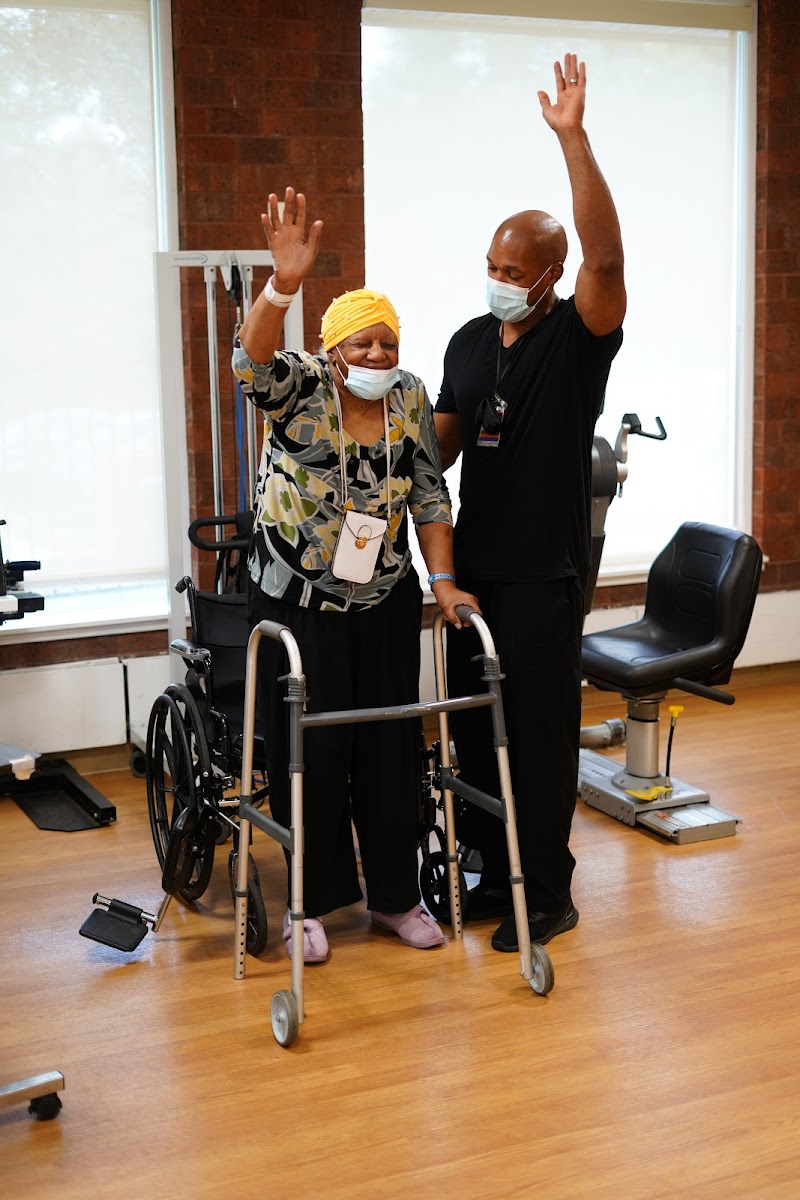
Who Owns and Operates Cliveden?

CLIVEDEN NURSING AND REHABILITATION CENTER is owned by a for-profit company. For-profit facilities operate as businesses with obligations to shareholders or private owners. The facility is operated by BEDROCK CARE, a chain that manages multiple nursing homes. With 180 certified beds and approximately 145 residents (about 81% occupancy), it is a mid-sized facility located in PHILADELPHIA, Pennsylvania.

How Does Cliveden Compare to Other Pennsylvania Nursing Homes?

Compared to the 100 nursing homes in Pennsylvania, CLIVEDEN NURSING AND REHABILITATION CENTER's overall rating (2 stars) is below the state average of 3.0, staff turnover (46%) is near the state average of 46%, and health inspection rating (2 stars) is below the national benchmark.

What Should Families Ask When Visiting Cliveden?

Based on this facility's data, families visiting should ask: "Can you walk me through typical staffing levels on day, evening, and night shifts?" "Can I visit during a mealtime to observe dining assistance and food quality?" "How do you handle medical emergencies, and what is your hospital transfer rate?" "Can I speak with family members of current residents about their experience?" These questions are particularly relevant given the below-average staffing rating.

Is Cliveden Safe?

Based on CMS inspection data, CLIVEDEN NURSING AND REHABILITATION CENTER has a clean safety record: no substantiated abuse findings (meaning no confirmed cases of resident harm), no Immediate Jeopardy citations (the most serious violation level indicating risk of serious injury or death), and is not on the Special Focus Facility watch list (a federal program monitoring the lowest-performing 1% of nursing homes). The facility has a 2-star overall rating and ranks #100 of 100 nursing homes in Pennsylvania. While no facility is perfect, families should still ask about staff-to-resident ratios and recent inspection results during their visit.

Do Nurses at Cliveden Stick Around?

CLIVEDEN NURSING AND REHABILITATION CENTER has a staff turnover rate of 46%, which is about average for Pennsylvania nursing homes (state average: 46%). Moderate turnover is common in nursing homes, but families should still ask about staff tenure and how the facility maintains care continuity when employees leave.

Was Cliveden Ever Fined?

CLIVEDEN NURSING AND REHABILITATION CENTER has no federal fines on record. CMS issues fines when nursing homes fail to meet care standards or don't correct problems found during inspections. The absence of fines suggests the facility has either maintained compliance or corrected any issues before penalties were assessed. This is a positive indicator, though families should still review recent inspection reports for the full picture.

Is Cliveden on Any Federal Watch List?

CLIVEDEN NURSING AND REHABILITATION CENTER is not on any federal watch list. The most significant is the Special Focus Facility (SFF) program, which identifies the bottom 1% of nursing homes nationally based on persistent, serious quality problems. Not being on this list means the facility has avoided the pattern of deficiencies that triggers enhanced federal oversight. This is a positive indicator, though families should still review the facility's inspection history directly.