IMMACULATEMARYCENTER FOR REHABILITATION&HEALTHCARE
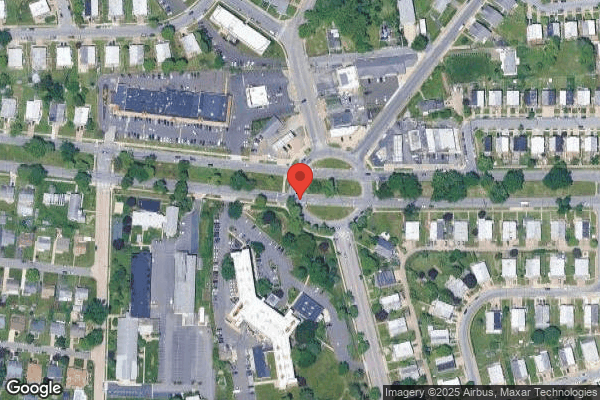
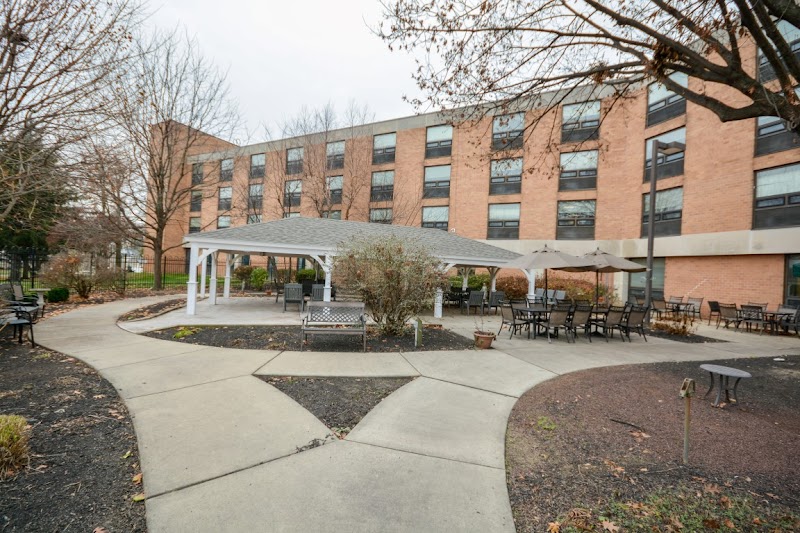
2990 HOLME AVENUE, PHILADELPHIA, PA 19136 (215) 335-2100
For profit - Corporation 296 Beds CENTER MANAGEMENT GROUP Data: November 2025
Trust Grade
35/100
#577 of 653 in PA
Last Inspection: April 2025

Within standard 12-15 month inspection cycle. Federal law requires annual inspections.

Overview

Immaculate Mary Center for Rehabilitation and Healthcare has a Trust Grade of F, which indicates significant concerns and a poor quality of care. Ranking #577 out of 653 facilities in Pennsylvania means it is in the bottom half of nursing homes in the state, and at #43 of 46 in Philadelphia County, only a few local options are worse. The facility's performance has been stable, with 16 reported issues over the last two years, raising concerns about overall care standards. Staffing is a significant weakness here, with a low rating of 1 out of 5 stars and a high turnover rate of 63%, well above the state average. Although there have been no fines reported, the facility has less RN coverage than 99% of Pennsylvania facilities, which is concerning as Registered Nurses play a critical role in monitoring resident health. Specific incidents noted include a failure to provide a clean and safe environment for residents, with multiple rooms showing unemptied trash bins and other sanitation issues. Additionally, the facility did not appropriately assess residents with newly diagnosed mental disorders, which is a requirement to ensure they receive the correct level of care. Lastly, there were failures to develop comprehensive care plans for residents requiring oxygen therapy and antipsychotic medications, which could jeopardize their well-being. Overall, while there are some positives like no fines and a few quality measures rated good, the overwhelming issues related to staffing, cleanliness, and care planning are serious red flags for families considering this facility for their loved ones.

Trust Score
F
35/100
In Pennsylvania
#577/653
Bottom 12%
Safety Record
Low Risk
No red flags
Inspections
Holding Steady
16 → 16 violations
Staff Stability
⚠ Watch
63% turnover. Above average. Higher turnover means staff may not know residents' routines.
Penalties
✓ Good
No fines on record. Clean compliance history, better than most Pennsylvania facilities.
Skilled Nurses
⚠ Watch
Each resident gets only 16 minutes of Registered Nurse (RN) attention daily — below average for Pennsylvania. Fewer RN minutes means fewer trained eyes watching for problems.
Violations
⚠ Watch
47 deficiencies on record. Higher than average. Multiple issues found across inspections.
★☆☆☆☆
1.0
Overall Rating
★☆☆☆☆
1.0
Staff Levels
★★★★☆
4.0
Care Quality
★★☆☆☆
2.0
Inspection Score
Stable
2024: 16 issues
2025: 16 issues

The Good

  • 4-Star Quality Measures · Strong clinical quality outcomes
  • Full Sprinkler Coverage · Fire safety systems throughout facility
  • No fines on record

Facility shows strength in quality measures, fire safety.

The Bad

1-Star Overall Rating

Below Pennsylvania average (3.0)

Significant quality concerns identified by CMS

Staff Turnover: 63%

17pts above Pennsylvania avg (46%)

Frequent staff changes - ask about care continuity

Chain: CENTER MANAGEMENT GROUP

Part of a multi-facility chain

Ask about local staffing decisions and management

Staff turnover is elevated (63%)

15 points above Pennsylvania average of 48%

The Ugly 47 deficiencies on record

Sept 2025 4 deficiencies
CONCERN (D) 📢 Someone Reported This

A family member, employee, or ombudsman was alarmed enough to file a formal complaint

Potential for Harm - no one hurt, but risky conditions existed

Quality of Care (Tag F0684)

Could have caused harm · This affected 1 resident

Based on the review of clinical records, podiatry consults reports and interviews with staff, it was determined that the facility failed to implement podiatry recommendation for wound care and promote...

Read full inspector narrative →
Based on the review of clinical records, podiatry consults reports and interviews with staff, it was determined that the facility failed to implement podiatry recommendation for wound care and promote wound healing for one of five residents reviewed. (Resident R1)Findings Include:According to National Library of Medicine Chronic wounds often occur in patients with diabetes mellitus due to the impairment of wound healing. Impaired healing in diabetes is the result of a complex pathophysiology involving vascular, neuropathic, immune, and biochemical components. Hyperglycemia correlates with stiffer blood vessels which cause slower circulation and microvascular dysfunction, causing reduced tissue oxygenation. Blood vessel alterations observed in diabetic patients also account for reduced leukocyte migration into the wound, which becomes more vulnerable to infections. The hyperglycemic environment itself can compromise leucocyte function. In addition, peripheral neuropathy can lead to numbness of the area and reduced ability to feel pain, which can lead to chronicization of wounds that are not immediately noticed and properly treated. The described features are particularly relevant in the lower limbs and particularly the foot, more exposed to even minor wounds and thus more susceptible to chronicization. In addition, alterations of motor and sympathetic functions lead to physical deformation of the foot and increased plantar pressure, as well as excessive skin dryness which can further favor cracks and unnoticed small wounds.Review of care plan for Resident R1 dated April 10, 2025, revealed that the resident had a potential for alteration in skin integrity related to decreased mobility, incontinence, aged skin, related lateral ankle wound, opening to sacrum, peripheral vascular disease, and history of diabetics.Review of clinical record for Resident R1 dated August 15, 2025, revealed that the resident had wounds to heel/plantar foot deep tissue injury (DTI), and lateral foot wounds.Review of podiatry consult report dated August 7, 2025, revealed that the resident had right dorsal foot, lateral foot and heel deep tissue injury. The recommendations included betadine wet to dry dressing with abdominal pads, secure with tape. Optimize nutrition for healing, optimize glucose for healing with a blood glucose level less than 180 mg/dl.Review of podiatry consult report dated August 14, 2025, revealed that the resident had right dorsal foot, lateral foot and heel deep tissue injury. The recommendations included betadine wet to dry dressing with abdominal pads, secure with tape. Optimize nutrition for healing, optimize glucose for healing with a blood glucose level less than 180 mg/dl.Review of podiatry consult report dated August 21, 2025, revealed that the resident had right dorsal foot, lateral foot and heel deep tissue injury. The provider documented that the right heel was concerning and worsened depth with border line exposed bone. The recommendations included betadine wet to dry gauze with abdominal pads cover with kerlix or Kling, tape and apply Tubigrip. The recommendation included a glucose level of 140-180 mg/dl for healing. Review of podiatry consult report dated August 15, 2025, revealed that the right dorsal foot 2.5cm x2cm x0, 10% eschar, 90% granulation tissue, peeled skin, and Peri wound intact. Plan- betadine moistened adaptic due to dressing adherence. Right heel surgical wound measured 6.5cmx5cmx0.2cm, 25% slough, and 75% granulation tissue, moderate serous drainage, and peri wound erythema. Right Plantar DTI measured 5cmx2cmx0cm 100% dry eschar. Plan- continue Betadine-soaked gauze, gauze, abdominal pads, kerlix then ace wraps. Follows only by Podiatry. Review of physician order for Resident R1 revealed an order to check blood glucose level twice daily, notify physician for blood glucose below 70 or above 250.Review of Medication Administration Record (MAR)for Resident R1 for August 2025 revealed that the resident was noted with blood sugar of260 on 8/5/25 at 4:30 p.m.284 on 8/11/25 at 4:30 p.m.259 on 8/14/25 at 4:30 p.m.260 on 8/15/25 at 4:30 p.m.324 on 8/16/25 at 4:30 p.m.289 on 8/19/25 at 4:30 p.m.257 on 8/21/25 at 4:30 p.m.262 on 8/22/25 at 4:30 p.m.279 on 8/24/25 at 4:30 p.m.302 on 8/25/25 at 4:30 p.m.333 on 8/26/25 at 4:30 p.m.286 on 8/27/25 at 6:30 a.m.256 on 8/27/25 at 4:30 p.m.271 on 8/28/25 at 4:30 p.m.Further review of the MAR revealed that after the podiatrist made the recommendation to keep the blood sugar below 180 on August 7, 2025, the resident was noted with 39 blood glucose level entries out of 43 entries above 180.Review of Resident R1's clinical record from August 7 to August 28, 2025 revealed no documented evidence that the physician was notified of the elevated blood sugar blood sugar or facility attempted or modified nutritional or pharmacological interventions to control the elevated blood sugar.Review of clinical record for Resident R1 dated August 29, 2025, revealed that the resident was sent to the emergency from doctors' appointment for wound infection.Review of clinical record for Resident R1 dated August 29, 2025, revealed that the resident was admitted to the hospital with osteomyelitis (an infection of the bone)Interview with the Director of Nursing on September 15, 2025, at 2:30 p.m. confirmed that the podiatry recommendation for diabetic management for Resident R1 to promote wound healing was not addressed by the facility and staff did not notify the physician of the elevated blood sugar. 28 Pa. code 211.10(c)(d) Resident care policies28 Pa. Code 211.12(d)(1)(2)(5) Nursing services
CONCERN (D) 📢 Someone Reported This

A family member, employee, or ombudsman was alarmed enough to file a formal complaint

Potential for Harm - no one hurt, but risky conditions existed

Deficiency F0685 (Tag F0685)

Could have caused harm · This affected 1 resident

Based on the review of clinical records, observations, and interviews with resident representative and staff, it was revealed that the facility failed to provide appropriate services to promote and ma...

Read full inspector narrative →
Based on the review of clinical records, observations, and interviews with resident representative and staff, it was revealed that the facility failed to provide appropriate services to promote and maintain hearing abilities for one of five residents reviewed. (Resident R3)Findings Include:Review of Resident R3's MDS (Minimum Data Set-Assessment of resident care needs) dated February 28, revealed that resident's ability to hear had moderate difficulty and Resident R3 was using a hearing aide.Review of Resident R3's MDS (Minimum Data Set-Assessment of resident care needs) dated February 28, revealed that resident's ability to hear had moderate difficulty and Resident R3 was using a hearing aide.Interview with Resident R2's representative on September 15, 2025, at 10.50 a.m. revealed that the resident had difficulty hearing and she was missing her hearing aid. Resident R5 was not using a hearing aid when she was admitted to the facility however a week after her admission the hearing aid was missing. Resident representative said the resident was not seen by an audiologist or the hearing aid was replaced. Review of care plan for Resident R2 dated November 7, 2024, revealed that the resident had communication problems related to hearing loss/deafness and language barrier. The interventions included communication device, use hearing aids.Review of clinical record revealed no evidence that the resident was seen by an audiologist or scheduled to visit an audiologist to manage hearing impairment or potentially replacing lost hearing aids.Review of an audiology consult report dated March 10, 2025, revealed that the audiology consult was cancelled and a comment was provided patient could not understand. Italian is her main language.Interview with Director of Nursing, Employee E2, on September 15, 2025, at 2:30 p.m. confirmed that the resident was not seen by an audiologist and the resident did not have hearing aids.28 Pa. Code 211.12 (d)(1)(3)(5) Nursing services28 Pa. Code: 201.18 (b)(2) Management28 Pa. Code: 211.10 (d) Resident care policies
CONCERN (D) 📢 Someone Reported This

A family member, employee, or ombudsman was alarmed enough to file a formal complaint

Potential for Harm - no one hurt, but risky conditions existed

Deficiency F0710 (Tag F0710)

Could have caused harm · This affected 1 resident

Based on clinical record review and staff interviews, the facility failed to ensure that a physician assessment was completed and that changes in medical status were addressed in accordance with profe...

Read full inspector narrative →
Based on clinical record review and staff interviews, the facility failed to ensure that a physician assessment was completed and that changes in medical status were addressed in accordance with professional standards of practice for diabetic management to promote wound healing for one of five residents reviewed (Resident R1).Findings Include:According to the National Library of Medicine, Chronic wounds often occur in patients with diabetes mellitus due to the impairment of wound healing. Impaired healing in diabetes is the result of a complex pathophysiology involving vascular, neuropathic, immune, and biochemical components. Hyperglycemia correlates with stiffer blood vessels which cause slower circulation and microvascular dysfunction, resulting in reduced tissue oxygenation. Blood vessel alterations observed in diabetic patients also account for reduced leukocyte migration into the wound, making it more vulnerable to infections. The hyperglycemic environment itself can compromise leukocyte function. In addition, peripheral neuropathy can lead to numbness of the area and reduced ability to feel pain, which can lead to chronic wounds that are not immediately noticed and properly treated. The described features are particularly relevant in the lower limbs, particularly the foot, which is more exposed to even minor wounds and thus more susceptible to chronic wounds. In addition, alterations of motor and sympathetic functions lead to physical deformation of the foot and increased plantar pressure, as well as excessive skin dryness, which can further favor cracks and unnoticed small wounds.Review of the care plan for Resident R1 dated April 10, 2025, revealed that the resident had a potential for alteration in skin integrity related to decreased mobility, incontinence, aged skin, lateral ankle wound, opening to sacrum, peripheral vascular disease, and history of diabetes.Review of the clinical record for Resident R1 dated August 15, 2025, revealed wounds to the heel/plantar foot with deep tissue injury (DTI) and lateral foot wounds.Review of the podiatry consult report dated August 7, 2025, revealed right dorsal foot, lateral foot, and heel deep tissue injury. The recommendations included betadine wet-to-dry dressing with abdominal pads secured with tape, optimizing nutrition for healing, and optimizing glucose for healing with a blood glucose level less than 180 mg/dL.Review of the podiatry consult report dated August 14, 2025, revealed right dorsal foot, lateral foot, and heel deep tissue injury. The recommendations included betadine wet-to-dry dressing with abdominal pads secured with tape, optimizing nutrition for healing, and optimizing glucose for healing with a blood glucose level less than 180 mg/dL.Review of the podiatry consult report dated August 21, 2025, revealed right dorsal foot, lateral foot, and heel deep tissue injury. The provider documented that the right heel was concerning with worsened depth and borderline exposed bone. The recommendations included betadine wet-to-dry gauze with abdominal pads covered with Kerlix or Kling, tape, and apply Tubigrip. The recommendation also included maintaining a glucose level of 140-180 mg/dL for healing.Review of physician orders for Resident R1 revealed an order to check blood glucose levels twice daily and notify the physician for blood glucose below 70 or above 250.Review of the Medication Administration Record (MAR) for Resident R1 for August 2025 revealed the following blood sugar results:260 on 8/5/25 at 4:30 p.m.284 on 8/11/25 at 4:30 p.m.259 on 8/14/25 at 4:30 p.m.260 on 8/15/25 at 4:30 p.m.324 on 8/16/25 at 4:30 p.m.289 on 8/19/25 at 4:30 p.m.257 on 8/21/25 at 4:30 p.m.262 on 8/22/25 at 4:30 p.m.279 on 8/24/25 at 4:30 p.m.302 on 8/25/25 at 4:30 p.m.333 on 8/26/25 at 4:30 p.m.286 on 8/27/25 at 6:30 a.m.256 on 8/27/25 at 4:30 p.m.271 on 8/28/25 at 4:30 p.m.Further review of the MAR revealed that after the podiatrist recommended maintaining blood glucose below 180 on August 7, 2025, the resident had 39 out of 43 blood glucose entries above 180.Review of Resident R1's clinical record from August 7 to August 28, 2025, revealed no documented evidence that the physician was notified of the elevated blood sugars, nor that the facility attempted and/or modified nutritional or pharmacological interventions to control the elevated blood sugar.Review of the clinical record revealed that podiatry recommendations for optimal diabetic management dated August 7, 14, and 21, were not addressed by the physician, and the resident demonstrated elevated blood sugar levels during most checks.Review of the clinical record for Resident R1 dated August 29, 2025, revealed that the resident was sent to the emergency department from a doctor's appointment for wound infection.Review of the clinical record for Resident R1 dated August 29, 2025, revealed that the resident was admitted to the hospital with osteomyelitis (an infection of the bone).Interview with the Director of Nursing on September 15, 2025, at 2:30 p.m. confirmed that the podiatry recommendations for diabetic management for Resident R1 to promote wound healing were not addressed by the physician.28 Pa. Code 211.12(d)(1)(2)(5) Nursing services
CONCERN (D) 📢 Someone Reported This

A family member, employee, or ombudsman was alarmed enough to file a formal complaint

Potential for Harm - no one hurt, but risky conditions existed

Infection Control (Tag F0880)

Could have caused harm · This affected 1 resident

Findings Include:Review of facility policy Enhanced Barrier Precautions dated September 2024 revealed that Enhanced barrier precautions (EBP) utilizes targeted gown and glove use during high-contact r...

Read full inspector narrative →
Findings Include:Review of facility policy Enhanced Barrier Precautions dated September 2024 revealed that Enhanced barrier precautions (EBP) utilizes targeted gown and glove use during high-contact resident care activities to reduce the transmission of MDRO's(Multi drug Resistant organisms). Examples of high contact resident care activities requiring gown and gloves for EBP include but are not limited to Dressing, Wound care: any skin opening requiring a dressing.According to CDC (Centers for Disease Control and Prevention) guidelines Infection Control Assessment and Response (ICAR) Tool for General Infection Prevention and Control (IPC) Across Settings revealed that Wound care supplies such as dressing materials and equipment should be selected and gathered prior to entering the patient/resident care area to avoid accessing the supply cart/clean storage area during the procedure. Only the materials needed for an individual patient/resident should be brought into the patient/resident's room or treatment area and placed on a clean surface and away from potential sources of contamination (e.g., away from splash zones of sinks) prior to beginning wound care activities. Use an alcohol-based hand rub or wash with soap and water for the following clinical indications: Immediately before touching a patient, Before performing an aseptic task (e.g., placing an indwelling device) or handling invasive medical devices, Before moving from work on a soiled body site to a clean body site on the same patient, After touching a patient or the patient's immediate environment, After contact with blood, body fluids or contaminated surfaces, Immediately after glove removalObservation of Resident R5's room on September 15, 2025, at 10.00 a.m. revealed that the resident was sitting in a wheelchair. Employee E4, Licensed Practical Nurse and Employee E5, Nurse Aide was observed doing wound care. Both employees were not wearing a gown and gloves. It was observed on the resident door a sign of EBP. Interview with Licensed nurse, Employee E3, on February 24, 2023, at 10:00 a.m., confirmed that Employee E4, and Employee E5 did not wear appropriate personal protective equipment while providing wound care for Resident R5.A wound care observation of Resident R4 on September 16, 2025, at 11:00 a.m. with Licensed nurse, Employee E6, revealed the employee placed the dressing supplies including gloves, gauze, saline bottle, border dressing and wound care medication on resident's bed at the foot of the bed. It was observed that the employee wore clean gloves, removed old dressing and wound was cleaned with saline, it was observed that the saline was dripping from the gauze to the bed while employee was cleaning the wound.Further observation of the procedure revealed that the employee removed the worn gloves and applied new gloves from the gloves that were on the bed. There was no hand washing after the wound was cleaned and before applying the new dressing.28 Pa. Code 201.14(a) Responsibility of licensee.28 Pa. Code 211.12(d)(1) Nursing services
Aug 2025 1 deficiency
CONCERN (D) 📢 Someone Reported This

A family member, employee, or ombudsman was alarmed enough to file a formal complaint

Potential for Harm - no one hurt, but risky conditions existed

Report Alleged Abuse (Tag F0609)

Could have caused harm · This affected 1 resident

**NOTE- TERMS IN BRACKETS HAVE BEEN EDITED TO PROTECT CONFIDENTIALITY** Based on review of clinical record, facility documentation, and interviews with staff, it was determined that the facility faile...

Read full inspector narrative →
**NOTE- TERMS IN BRACKETS HAVE BEEN EDITED TO PROTECT CONFIDENTIALITY** Based on review of clinical record, facility documentation, and interviews with staff, it was determined that the facility failed to report an injury of unknown origin to the local State Survey Agency as required for one of four resident records reviewed (Resident R1).Findings include:Review of facility policy Abuse Prevention/Reporting, revised 2023, revealed Staff is trained upon orientation and annually on the abuse prevention program. The training will include types of abuse, stress management tips, and the recognition of signs and symptoms of abuse which may include, but are not limited to the following:a. bruises, skin tears, welts, etc., of unknown origin;b. unexplained injuries.The facility will report all alleged violations involving mistreatment, neglect or abuse to the Department of Health, Division of Nursing Facilities, and to other agencies required by law and Act 13 (Ombudsman. Police, Department, Department of Aging Services, Protective Services). The facility will conduct an investigation of all suspected cases of abuse. The final report will be completed and sent to the respective agencies. The procedure for investigation, results, and corrective action must be included in the report.Review of clinical record revealed Resident R1 was admitted to the facility on [DATE] with a diagnose that included atrial fibrillation (irregular and often rapid heart rhythm), muscle wasting and atrophy (thinning of muscle tissue), and chronic kidney disease (condition that affects your kidney's ability to filter blood). Review of Resident R1's Minimum Data Set (MDS) assessment (a mandated assessment of a resident's abilities and care needs), dated June 30, 2025, revealed the resident had a Brief Interview for Mental Status (BIMS) score of 0 indicating severe cognitive impairment.Review of Resident R1's nursing progress note, dated July 25, 2025, revealed resident noted with pain, redness, and swelling to RLE (right lower extremity). Skin warm to touch. Further review of Resident R1's nursing progress note, dated July 26, 2025, revealed resident had a stat (immediate) order for an x-ray due to redness and swelling to RLE. X-ray completed today showing results of a fracture. Resident transferred to ED (Emergency Department) per physician order. Review of facility investigation, initiated on July 26, 2025, revealed resident found in bed with redness and swelling to RLE. X-ray ordered and results showed a fracture. Investigation revealed Resident R1 may have injured his/her leg while sitting near the nursing station. Review of 12 witness statements revealed no staff witnessed or was aware of an injury or change in Resident R1's condition prior to Resident R1 stating he/she was in pain.Review of July 2025 reports provided to the State Survey Agency from the facility revealed no submission of Resident R1's injury of unknown origin that resulted in a fibula fracture (lower leg) from the facility as required. Interview on August 08, 2025 at 11:30 a.m. with Director of Nursing (DON), Employee E1, confirmed that the facility failed to report Resident R1's injury of unknown origin to the state agency in the required timeframe. 28 Pa. Code:201.14(a)(c) Responsibility of licensee.28 Pa. Code:201.18(b)(1)(e)(1) Management.
Apr 2025 10 deficiencies
CONCERN (D)

Potential for Harm - no one hurt, but risky conditions existed

Resident Rights (Tag F0550)

Could have caused harm · This affected 1 resident

**NOTE- TERMS IN BRACKETS HAVE BEEN EDITED TO PROTECT CONFIDENTIALITY** Based on observation and review of facility policy, it was determined facility did not ensure dignity for one of two residents d...

Read full inspector narrative →
**NOTE- TERMS IN BRACKETS HAVE BEEN EDITED TO PROTECT CONFIDENTIALITY** Based on observation and review of facility policy, it was determined facility did not ensure dignity for one of two residents during wound care treatment (Resident R207) Findings include: Review of facility policy 'Resident Dignity,' indicates that staff shall attempt to maintain and protect resident privacy, including bodily privacy during assistance with personal care and during treatment procedures. Review of Resident R207's clinical record revealed a medical history of unspecified intellectual disabilities, non-pressure chronic ulcer of back limited to breakdown of skin, muscle wasting and atrophy, orthostatic hypotension, heart failure. Review of R207's care plan, revealed that resident is to be encouraged to allow bed to be in the lowest position when care is not being provided. During hygiene care and wound care treatment on Wednesday, April 16, 2025 at 11:30 am, room [ROOM NUMBER]-B, observed both nursing employees - nurse aide, employee E8 and licensed nurse, employee E7 - leave the room at the same time, leaving R207 on raised bed, exposed - during which time maintenance staff entered the room. 28 Pa Code 201.29(j) Resident Rights 28 Pa Code 211.12(d)(1) Nursing Services 28 Pa Code 211.12 (d)(5) Nursing services
CONCERN (D)

Potential for Harm - no one hurt, but risky conditions existed

Incontinence Care (Tag F0690)

Could have caused harm · This affected 1 resident

Based on review of the facility policies and procedures, review of clinical records, and interview with staff, it was determined that the facility failed to implement treatment and services for incont...

Read full inspector narrative →
Based on review of the facility policies and procedures, review of clinical records, and interview with staff, it was determined that the facility failed to implement treatment and services for incontinence management for one of 24 residents reviewed (Resident R88). Findings include: Review of literature revealed that, a Foley catheter is a thin, flexible tube inserted into the urinary bladder through the urethra (the urethra is a tube that carries urine from the bladder out of the body in both males and females) to drain urine. It's used for various reasons, including urinary retention, bladder drainage during surgeries, and when someone cannot urinate on their own. The catheter is held in place by a small balloon filled with water inside the urinary bladder. The French scale is a universal system for sizing Foley Catheters, by measuring its external diameter. In medical terms, Foley size Fr refers to the French scale used to measure the diameter of a Foley catheter. Each French unit (Fr) is equivalent to 0.33 millimeters (mm) in diameter. Choosing the correct size of Foley catheter is crucial to ensure comfort, effective drainage, and to minimize the risk of trauma to the urethra or bladder. Review of physician order for Resident R88, dated February 19, 2025, indicated an order to irrigate Foley Catheter with 60 cc of sterile saline for blockage as needed, with the Foley Catheter of size 18 Fr. Review of Care Plan for R88, dated March 4, 2025, and revised on April 3, 2025, indicated that R88 had Foley Catheter size 18Fr. On April 16, 2025, at 01:21 p.m., it was observed that R88 had a Foley Catheter of Size 14Fr/30 cc Balloon, instead of the physician ordered size of 18Fr. At the time of the finding, confirmed the same with a Licensed Nurse, Employee E17. 28 Pa Code 211.12(d)(1) Nursing services 28 Pa Code 211.12(d)(5) Nursing services
CONCERN (D)

Potential for Harm - no one hurt, but risky conditions existed

Respiratory Care (Tag F0695)

Could have caused harm · This affected 1 resident

**NOTE- TERMS IN BRACKETS HAVE BEEN EDITED TO PROTECT CONFIDENTIALITY** Based on a review of clinical records and facility policies and procedures, observations of care and services, and interviews wi...

Read full inspector narrative →
**NOTE- TERMS IN BRACKETS HAVE BEEN EDITED TO PROTECT CONFIDENTIALITY** Based on a review of clinical records and facility policies and procedures, observations of care and services, and interviews with staff, it was determined that the facility failed to consistently provide respiratory care and supplemental oxygen as ordered by the physician for two of 35 residents reviewed. (Resident R41 and R57). Findings included: A review of the facility policy titled Oxygen Administration-Resident dated March 2020, stated The purpose of this procedure is to provide guidelines for safe oxygen administration. Bulletin # 6 further stated Adjust the oxygen delivery device so that it is comfortable for the resident and the proper flow of oxygen at the rate ordered. A review of a clinical record for Resident R41 revealed an admission on [DATE], with chronic obstructive pulmonary disease and polyneuropathy. Review of Resident R41 physician orders revealed an order obtained October 25, 2024, for oxygen 2 liter via N/C (per min via nasal cannula), every shift diagnosis of pneumonia. On April 15, 2025, at 10:38 a.m., it was observed that Resident R41 had oxygen set at 3 liters per minute via nasal cannula. Unit Manager, Employee E9, confirmed these observations and reported that the setting should be 2 liters and Resident R41 changed the setting. Resident R41 was interviewed and did not report changing the oxygen. A review of a clinical record for Resident R57 revealed an admission on [DATE], with acute on chronic diastolic (congestive) heart failure (excessive body/lung fluid caused by a weakened heart muscle), and chronic atrial fibrillation (rapid heart beat) A review of the physician order dated November 16, 2022, oxygen 3 liter via N/C (per min via nasal cannula), every shift for the diagnosis of congestive heart failure. On April 14, 2025, at 11:55 a.m., it was observed that Resident R41 had oxygen set at 2 liters per minute via nasal cannula. Unit Manager, Employee E9, confirmed these observations. 28 Pa. Code 211.10(c) Resident care policies 28 Pa. Code 211.12 (d)(1)(5) Nursing services
CONCERN (D)

Potential for Harm - no one hurt, but risky conditions existed

Deficiency F0744 (Tag F0744)

Could have caused harm · This affected 1 resident

**NOTE- TERMS IN BRACKETS HAVE BEEN EDITED TO PROTECT CONFIDENTIALITY** Based on clinical record review and staff interview, it was determined that the facility failed to develop and implement an indi...

Read full inspector narrative →
**NOTE- TERMS IN BRACKETS HAVE BEEN EDITED TO PROTECT CONFIDENTIALITY** Based on clinical record review and staff interview, it was determined that the facility failed to develop and implement an individualized person-centered care plan to address a resident's dementia care needs for one of 35 residents reviewed (Resident R169). Findings Include: Review of the admission sheet of Resident R169, revealed that Resident R169 was admitted to the facility on [DATE], with the diagnosis of Dementia (Dementia is not a specific disease but is rather a general term for the impaired ability to remember think, or make decisions that interferes with doing everyday activities). Review the care plan date March 13, 2025, revealed that of Resident 169's care plan revealed no care plan with measurable goals and interventions to address the care and treatment need related with dementia care of Resident R169. During an interview on April 16, 2025, at 12:10 p.m., the Director of Nursing (DON), confirmed that residents with diagnosis Dementia should be care planned. 28 Pa Code 211.11(d) Resident care plan 28 Pa Code 211.12 (d)(1)(3)(5) Nursing service
CONCERN (E)

Potential for Harm - no one hurt, but risky conditions existed

Safe Environment (Tag F0584)

Could have caused harm · This affected multiple residents

**NOTE- TERMS IN BRACKETS HAVE BEEN EDITED TO PROTECT CONFIDENTIALITY** Based on observation and interview with staff, it was determined that facility did not ensure to provide a safe, clean, sanitary...

Read full inspector narrative →
**NOTE- TERMS IN BRACKETS HAVE BEEN EDITED TO PROTECT CONFIDENTIALITY** Based on observation and interview with staff, it was determined that facility did not ensure to provide a safe, clean, sanitary and homelike environment for five of 51 rooms observed (Room#'s 200-B, 207-B, 209-B, 210-B, 425-B) Findings include: Review of facility policy 'Homelike Environment,' indicates that residents are to be provided with a safe, clean, comfortable and homelike environment Observations on 2nd floor unit, on Monday, April 14, 2025 at 10:30 am, in room [ROOM NUMBER]-B, revealed two used wash cloths on floor in front of resident's bed, unemptied trash bin, and unemptied bed side commode. Further observations in room [ROOM NUMBER]-B, at 11:00 am, revealed overflowing trash bin as well as excess trash on floor, three separate liquid areas on floor. Upon interview with nurse aide, employee E4, it was revealed that staff from previous shift were responsible for cleaning room [ROOM NUMBER]-B. Further observations of 2nd floor unit, revealed amount of trash under bed in room [ROOM NUMBER]-B. Further observations of 2nd floor unit, revealed food crumbs on floor and unclean bedside table in room [ROOM NUMBER]-B. Further observations of 2nd floor unit, revealed used/unemptied portable urinal on floor next to bed B, room [ROOM NUMBER]. On April 14, 2025, at 11:19 a.m., an observation was conducted and confirmed by the Unit Manager, Employee E15, in room [ROOM NUMBER]. The privacy curtain separating the two residents had large yellow and white stains. Additionally, the wall across from the bed in room [ROOM NUMBER]B had multiple brown stains, and the air conditioner vent cover also had visible brown spills. Two empty medication cups were observed on the right corner of the resident's room. 28 Pa Code 201.14 (a) Responsibility of licensee
CONCERN (E)

Potential for Harm - no one hurt, but risky conditions existed

PASARR Coordination (Tag F0644)

Could have caused harm · This affected multiple residents

**NOTE- TERMS IN BRACKETS HAVE BEEN EDITED TO PROTECT CONFIDENTIALITY** Based on clinical record review and staff interview, it was determined that the facility failed to refer a resident with a newly...

Read full inspector narrative →
**NOTE- TERMS IN BRACKETS HAVE BEEN EDITED TO PROTECT CONFIDENTIALITY** Based on clinical record review and staff interview, it was determined that the facility failed to refer a resident with a newly diagnosed mental disorder for level II of the PASRR (Pennsylvania Pre-admission Screening Resident Review) or three of three residents reviewed (Residents R119, R174, and R184). Findings include: The PASRR (Pennsylvania Pre-admission Screening Resident Review), federally required form to help ensure that all individuals are evaluated for serious mental disorder and/or intellectual disability to ensure applicants are not inappropriately placed in nursing homes for long term care, dated March 1, 2009, lists examples of serious mental illness including mood disorder, bipolar, and depression. The revised PA-PASRR-ID bulletin number dated March 1, 2014, revealed that nursing facilities are responsible for assuring the accuracy of information reported on the PA-PASRR-ID form. If the individual has a change in condition that affects target status a PA-PASRR-EV (Level II) will need to be completed. Nursing facilities will communicate the need to have a PA-PASRR-EV done by notifying the Department's (Department of Public Welfare, now the Department of Human Services) Office of Long-Term Living, Bureau of Quality and Provider Management, Division of Nursing Facility Field Operations via the MA 408 form (a form used to notify the Department of a change in a resident's target status). On April 14, 2025, at 12:53 p.m., review of the PASRR form for Resident R184 completed on September 1, 2021, revealed that under Section III, Mental Health assessment, for question Does the individual have a mental health condition or suspected mental health condition, other than Dementia that may lead to chronic disability , the response was entered No. Review of the PASRR form for Resident R184 completed on September 1, 2021, revealed that under Section VIII, PASRR Level I Screening Outcome, the response was entered as Individual has negative screen for Serious Mental Illness, Intellectual Disability/Developmental Disability, or Other Related Condition; no further evaluation (Level II) is necessary. On April 16, 2025, at 10:01 a.m., review of clinical record for Resident R184 revealed a diagnoses list which indicated that the resident was diagnosed with Schizoaffective Disorder, Bipolar Type {a mental health condition characterized by symptoms of both schizophrenia (like hallucinations and delusions) and a mood disorder (like mania or depression)}, on September 30, 2021; Unspecified Mood Disorder (mental health conditions characterized by significant and persistent changes in emotional state, affecting how individuals feel and behave), on September 1, 2021; and Major Depressive Disorder Recurrent, (Major Depressive Disorder, is characterized by an all-consuming feeling of sadness, lethargy and hopelessness), on March 21, 2023. On April 15, 2025, at 10:45 a.m., review of the PASRR form for Resident R174 completed on May 4, 2021, revealed that under Section III, Mental Health assessment, for question Does the individual have a mental health condition or suspected mental health condition, other than Dementia that may lead to chronic disability, the response was entered No. Review of the PASRR form for Resident R174 completed on May 4, 2021, revealed that under Section VIII, PASRR Level I Screening Outcome, the response was entered as Individual has negative screen for Serious Mental Illness, Intellectual Disability/Developmental Disability, or Other Related Condition; no further evaluation (Level II) is necessary. On April 15, 2025, at 10:45 a.m., review of clinical record for Resident R174 revealed a diagnoses list which indicated that the resident was diagnosed with Schizoaffective Disorder (like hallucinations and delusions) on January 25, 2021; Anxiety disorder ( is a mental health conditions characterized by excessive fear, anxiety and related behavioral disturbances) on May 4, 2021 and Major Depressive Disorder Recurrent, ( is characterized by an all-consuming feeling of sadness, lethargy and hopelessness), on May 10 , 2021. On April 16, 2025, at 10:08 a.m., interview with the Social Worker, Employee E16, confirmed that Resident R184, R174 should have had an updated PASRR level II, completed with the diagnoses of Schizoaffective Disorder, Bipolar Type, and Major Depressive Disorder. Review of clinical record for resident R119 revealed that he was admitted to the facility on [DATE] with diagnoses including, but not limited to, hemiplegia and hemiparesis (paralysis affecting only on side of the body) following cerebral infarction (stroke) affecting the right dominant side, non-ST elevation myocardial infarction (heart attack), and aphasia (a language disorder that results from brain damage which affects an individual's ability to communicate). Further review revealed a PASRR, also dated June 29, 2018, which indicated that the resident had no diagnosis of neurocognitive disease or dementia, no serious mental illness, and no intellectual disability, resulting in a negative screening with no need for a level 2 evaluation. This PASRR was dated as reviewed by the state authority on July 26, 2018. Review of all diagnoses for the resident revealed that a diagnosis of psychosis was entered on May 2, 2019, diagnoses of major depressive disorder and anxiety disorder were entered on May 6, 2019, and a diagnosis of dementia was entered on March 24, 2023. There was no indication that the PASRR had been updated to include the new diagnoses. Interview with employee E1, the Nursing Home Administrator on April 17, 2025 at 2:30 p.m. confirmed that the PASRR had not been updated as required. 28 Pa Code 201.18(e)(1) Management 28 Pa Code 211.12(d)(3) Nursing services 28 Pa Code 211.16(a) Social services28 Pa Code 211.16(a) Social services
CONCERN (E)

Potential for Harm - no one hurt, but risky conditions existed

Comprehensive Care Plan (Tag F0656)

Could have caused harm · This affected multiple residents

**NOTE- TERMS IN BRACKETS HAVE BEEN EDITED TO PROTECT CONFIDENTIALITY** Based on observations of care and services, interviews with staff, reviews of clinical records and policy and procedures, it was...

Read full inspector narrative →
**NOTE- TERMS IN BRACKETS HAVE BEEN EDITED TO PROTECT CONFIDENTIALITY** Based on observations of care and services, interviews with staff, reviews of clinical records and policy and procedures, it was determined that the facility failed to develop a comprehensive care plan for oxygen therapy and antipsychotic medication for two out of 35 residents reviewed. (Resident R41 and R190) Findings include: A review of the policy titled Resident Plan of Care dated June 2024, revealed Our facility's Care Planning/Interdisciplinary Team is responsible for the development of a plan of care for each resident. The care plan is based on the resident's assessment and is developed by a Care Plan/Disciplinary Team. A review of a clinical record for Resident R41 revealed an admission on [DATE], with chronic obstructive pulmonary disease (disease process that causes decreased ability of the lungs to perform) and polyneuropathy (a general degeneration of peripheral nerves that spreads toward the center of the body). A review of the physician order dated October 25, 2024, revealed an order for oxygen 2 liter via N/C (per min via nasal cannula), every shift diagnosis of pneumonia. A review of the comprehensive care plan dated March 4, 2025, did not indicate a care plan for oxygen therapy. On April 15, 2025, at 10:37 a.m. an interview with Unit Manager, Employee E9 confirmed that there was no care plan for the oxygen therapy. Review of documentation for Resident R190 revealed that the resident was admitted to the facility on [DATE], with the diagnoses of dementia (progressive degenrative disease of the brain), depression (major loss of interest in activities), and malignant neoplasm (cancer) of the breast. Review of physician orders for the resident revealed an order for Rexulti (an antipsychotic medication which is FDA approved to treat dementia and depression) Oral Tablet 0.5 MG .give 1 tablet by mouth one time a day for behaviors entered on March 6, 2025. Antipsychotic medications carry the potential for adverse reactions such as involuntary movements, restlessness and difficulty with movement. Review of the care plan for the resident revealed that no care plan had been developed to adress the use of the antipsychotic, including the need to monitor for potential adverse reactions. Interview with Employee E2, the Director of Nursing, on April 17, 2025, at 2:30 p.m. confirmed that no care plan had been developed for antipsychotic use. 28 PA. Code 211.10(a)(b)(c)(d) Resident care policies 28 PA. Code 211.12(d)(2)(3)(5) Nursing services
CONCERN (E)

Potential for Harm - no one hurt, but risky conditions existed

Food Safety (Tag F0812)

Could have caused harm · This affected multiple residents

**NOTE- TERMS IN BRACKETS HAVE BEEN EDITED TO PROTECT CONFIDENTIALITY** Based on observations, interviews with staff, and a review of facility procedures, it was determined that the facility failed to...

Read full inspector narrative →
**NOTE- TERMS IN BRACKETS HAVE BEEN EDITED TO PROTECT CONFIDENTIALITY** Based on observations, interviews with staff, and a review of facility procedures, it was determined that the facility failed to store food in accordance with professional standards for food service safety. Facility Policy: The review of the facility's policy titled Food Storage, dated March 2020 revealed Foods shall be stored in a manner that complies with safe food handling practices. Under fourth sentence All foods stored in the refrigerator or freezer will be covered, labeled and dated (use by date). On April 14, 2025, at 9:23 a.m., a kitchen tour was conducted with the Dietary Supervisor, Employee E10. During the tour, it was observed that the preparation table contained various spices-such as ground cinnamon, chicken herb, Italian seasoning, and poultry seasoning-that were opened and not dated. Additionally, an opened container of [NAME] Parmesan cheese was found stored alongside the spices without a label or date. According to Employee E10, the manufacturer's instructions indicate that Parmesan cheese must be refrigerated once opened. Further observations revealed dry storage room had 3 bags of opened pasta not labeled and dated, traditional stuffing mix seasoning not labeled and dated. Walking refrigerator C had two sandwiches that were on the tray were not labeled and dated. All observations were confirmed by the dietary supervisor, Employee E10. 28 Pa. Code: 201.14(a) Responsibility of licensee. 28 Pa. Code 201.18(b)(3) Management
CONCERN (E)

Potential for Harm - no one hurt, but risky conditions existed

Garbage Disposal (Tag F0814)

Could have caused harm · This affected multiple residents

Based on observations and an interview with staff, it was determined that the facility did not ensure that garbage and refuse was disposed of properly. Finding includes: A tour of the Food Service Dep...

Read full inspector narrative →
Based on observations and an interview with staff, it was determined that the facility did not ensure that garbage and refuse was disposed of properly. Finding includes: A tour of the Food Service Department was conducted on April 14, 2025, at 9:23 a.m., with the Dietary Supervisor, Employee E10. The following concerns were noted: A 96-gallon commercial trash can was observed leaking a significant amount of yellow and brown liquid as staff transferred it from the dishwasher area to the loading dock. Employee E10 stated that the Administrator had been notified of the issue several weeks ago and that a replacement trash can had been ordered. Two staff members were observed outside cleaning the cement near the dumpster due to residue from the leaking trash can. On April 15, 2025, at 9:25 a.m., further observations revealed ongoing issues. Two 96-gallon commercial trash cans were actively leaking. One can, located near the dishwasher, was in use while staff scraped dirty plates from breakfast trays. A trail of spilled food-including string beans, peas, and chopped carrots-was observed from the dishwasher area to the loading dock. At the loading dock, a second leaking trash can have created a puddle of white and yellow residue, resulting in a slippery surface. Employee E10 confirmed these observations. An interview with the Administrator, Employee E1, conducted on April 15, 2025, at approximately 11:45 a.m., confirmed that the Administrator had been aware since April 4, 2024, that 96-gallon commercial trash cans were broken, which allowed the leakage to occur. The Administrator stated that attempts were made to order replacements; however, there had been no response from the supplier. 28 Pa. Code 201.18(b)(3) Management 28 Pa. Code 207.2(a) Administrator's responsibility
CONCERN (E)

Potential for Harm - no one hurt, but risky conditions existed

Infection Control (Tag F0880)

Could have caused harm · This affected multiple residents

Based on observation, review of facility policy and procedure and interviews with staff, it was determined that the facility failed to maintain an effective infection control program related with appr...

Read full inspector narrative →
Based on observation, review of facility policy and procedure and interviews with staff, it was determined that the facility failed to maintain an effective infection control program related with appropriate cleaning techniques for medical equipment, on two of the four Medication Administration Reviews; (R106, R96) and Enhanced Barrier Precautions for three of four residents during wound treatment (Residents R96, R113, and R539). Findings include: Review of Facility Policy effective date September 2024, on Enhanced Barrier Precaution, indicated that Enhanced Barrier Precautions are infection control intervention designed to reduce the transmission of novel or Multi-Drug-Resistant Organisms (MDROs). Enhanced Barrier Precautions require to employ the use of targeted Personal Protective Equipment (PPE) during high contact patient/resident activities. It utilizes targeted gown and glove use during high-contact resident care activities to reduce the transmission of MDROs. Further review of policy points out examples of high - contact resident care activities requiring gown and gloves for EBP include but are not limited to: dressing, bathing/showering, transferring, providing hygiene, changing linens, changing briefs or assisting with toileting, device care or use: central lines, urinary catheter, feeding tubes, tracheostomy, ventilator, wound care; any skin opening requiring a dressing. Review of Facility Policy on Infection control indicated that the staff would follow established infection control procedures such as hand washing, antiseptic technique, use of gloves, and isolation precautions for administration of medications, as applicable. It also indicated that all reusable equipment will be decontaminated and/or sterilized between residents at the point-of-care. On April 15, 2025, 9:02 a.m., during medication administration, to Resident R106, Employee E5, a Licensed Nurse, used the sphygmomanometer (an instrument for measuring blood pressure), without disinfecting it, which was used for checking blood pressure of other residents. At the time of the finding, Employee E6 confirmed the same. On April 15, 2025, at 9:50 a.m., review of admission Sheet of Resident R96 revealed that Resident R96 had Methicillin-Resistant Staphylococcus Aureus (MRSA) infection. Review of literature indicated that MRSA is a bacterial infection resistant to many common antibiotics, including methicillin, penicillin, and amoxicillin. MRSA can cause various infections, primarily skin and soft tissue infections, but can also lead to bloodstream infections, pneumonia, and other serious illnesses. MRSA can spread through direct contact with an infected person or object contaminated with the bacteria. Preventing MRSA involves practicing good hygiene, such as frequent handwashing, avoiding contact with open wounds, and not sharing personal items. Observation on April 15, 2025, at 9:50 a.m., revealed that a Licensed Nurse, Employee E6, was applying Nicotine Transdermal Patch 24 Hour 21 MG/24 HR (Nicotine), Trans dermal, to Resident R96 as ordered. Employee E6 also checked the oxygen saturation of Resident R96, and changed the oxygen tubing of Resident R96. Employee E6 did not wear the PPE, even though Resident R96 was on Enhanced Barrier Precautions. The findings were confirmed with Employee E6. Observation on April 16, 2025, at 11:47 a.m., revealed that a Licensed Nurse, Employee E5, was administering wound treatment to Resident R113, as ordered. Licensed nurse, Employee E5 did not follow Enhanced Barrier Precaution Protocol, as E5 could not disposed of the used gown (PPE) in a designated trashcan for soiled PPE. Employee E5 did leave the used PPE on the PPE cart at the entrance of the room of ResidentR113, in the hallway, meant for keeping clean gowns and other clean PPE items, even though Resident R113 was on Enhanced Barrier Precautions. Findings were confirmed with Licensed Nurse, Employee E5 at the time of the observation. Review of R539's clinical record revealed medical history of type 2 diabetes mellitus, hyperosmolality and hypernatremia, retention of urine. Review of R539's physician orders revealed an active order for foley catheter care each shift; observations on Monday, April 14, 2025, at 10:30 am revealed R539's in bed, foley bag hanging off of side of his bed, touching the floor. Further observations revealed two nursing employees, nurse aide, employee E8 and licensed nurse, employee E7, providing hygiene care and wound care treatment without wearing PPE. 28 Pa Code 201.14(a) Responsibility of licensee 28 Pa Code 201.18(d) Management 28 Pa Code 211.12 (d)(1)(5) Nursing services
Feb 2025 1 deficiency
CONCERN (E) 📢 Someone Reported This

A family member, employee, or ombudsman was alarmed enough to file a formal complaint

Potential for Harm - no one hurt, but risky conditions existed

Deficiency F0557 (Tag F0557)

Could have caused harm · This affected multiple residents

**NOTE- TERMS IN BRACKETS HAVE BEEN EDITED TO PROTECT CONFIDENTIALITY** Based on observations, clinical record review, and interviews with residents and staff, it was determined that the facility fail...

Read full inspector narrative →
**NOTE- TERMS IN BRACKETS HAVE BEEN EDITED TO PROTECT CONFIDENTIALITY** Based on observations, clinical record review, and interviews with residents and staff, it was determined that the facility failed to maintain personal dignity for five of five residents observed (Resident R1, R2, R3, R4, R5). Findings: Facility policy titled Resident Dignity, dated 2020, revealed each resident shall be cared for in a manner that promotes and enhances quality of life, dignity, respect and individuality. Residents' private space and property shall be respected. Staff shall maintain an environment in which private information is protected. Staff shall attempt to maintain and protect resident privacy, including bodily privacy during assistance with personal care and during treatment procedures. Demeaning practices and standards of care that compromise dignity are prohibited. Staff shall promote dignity and assist residents as needed. Clinical record review revealed Resident R1 was admitted to the facility on [DATE] with a diagnosis of fracture of upper end of left humerus (arm), chronic kidney disease, and muscle weakness. Review of Resident R1's Minimum Data Set (MDS) assessment (a mandated assessment of a resident's abilities and care needs) dated January 15, 2025, revealed the resident had a Brief Interview for Mental Status (BIMS) score of 9 indicating moderately impaired cognition. Observation on 2nd floor north wing on February 03, 2025 at 9:40 a.m. revealed Resident R1's gown untied, falling down her left shoulder, and partially exposing her left side of chest. Resident R1 had a blanket covering her right side of chest. Interview with Resident R1 on February 03, 2025 at 9:41 a.m. revealed Resident R1 crying and she stated she feels uncomfortable and feels exposed. Resident R1 stated she is unable to tie gown by herself due to having limited range of motion on her left side. Resident R1 further stated that staff leaves her gown untied so it is easily accessible for staff to access her sling on her left arm. Observation on 2nd floor north wing on February 3, 2025 at 10:05 a.m. revealed Resident R3's door and privacy curtain open. Resident R3 was lying on her right side with her gown untied and brief exposed. Further observation on February 03, 2024 at 10:07 a.m. revealed Resident R4 had a table beside his bed that included gloves, wipes, and several briefs. Resident R4's gown was above his waist and his brief was exposed. Further observation on 2nd floor north wing on February 03, 2025 at 1:20 p.m. revealed Resident R2's gown untied and her back and brief exposed. Interview on February 03, 2025 at 1:22 p.m. with Resident R2 revealed Resident R2 would like her gown tied and was not tied upon her arrival. Resident R2 stated she is unable to reach her backside to tie her gown. Review of Resident R5's clinical record revealed Resident R5 was admitted to the facility on [DATE] with a diagnosis that included fracture of right femur (thigh), muscle wasting and atrophy, and lack of coordination. Review of Resident R5's Minimum Data Set (MDS) assessment (a mandated assessment of a resident's abilities and care needs) dated January 15, 2025, revealed the resident had a Brief Interview for Mental Status (BIMS) score of 14 indicating intact cognition. Observation on February 03, 2025 at 2:10 p.m. revealed Resident R5's door open with his undergarment pulled down above knees and brief exposed. Interview with Resident R5 on February 03, 2025 at 2:11 p.m. revealed Resident R5 requested help and has been waiting for one hour and twenty minutes to have his undergarments pulled up and be transferred to his wheelchair. Employee E1, nurse aidet, was observed entering room at 2:12 p.m. and Resident R5 stated he has been waiting over an hour for help. Employee E1 stated I know. Interview with Employee E1 on February 3, 2025 at 2:12 revealed Resident R5 required a two person assist and there was no staff available to help assist. Residents R1, R2, R3, R4, and R5 all had their doors and privacy curtains open, revealing their body to anyone who walked past their rooms. 28 Pa. Code: 201.18(b)(2) Management. 28 Pa. Code: 201.29(j) Resident's rights.
Jun 2024 12 deficiencies
CONCERN (D)

Potential for Harm - no one hurt, but risky conditions existed

Deficiency F0554 (Tag F0554)

Could have caused harm · This affected 1 resident

Based on observations, interviews and the review of clinical record, it was determined that the facility failed to ensure that 1 out of 37 residents was assessed to ensure that it was clinically appro...

Read full inspector narrative →
Based on observations, interviews and the review of clinical record, it was determined that the facility failed to ensure that 1 out of 37 residents was assessed to ensure that it was clinically appropriate to self-administer medication (Resident R606). Findings include: Review of the facility policy, Self-Administration of Medication, with an effective date of 11/2017 indicated that the resident's mental and physical abilities will be assessed to determine whether self-administering medication is clinically appropriate for them to do so, in addition to other assessment factors that include, but not limited to the resident's ability to read and understand medication labels, the resident's comprehension of the purpose, proper dosage, the administration time for the medication(s), and the resident's comprehension of the purpose and proper dosage and administration time for his or her medications. Continued review of the policy indicated that self-administered medications must be stored in a safe and secure place in the resident's room, in a medication cart, or in the facility's medication room. Review of the resident's June 2024 physician orders included the following diagnosis: aortic aneurism (a bulge in the wall of an individual's aorta that can rupture or dissect and cause life-threatening bleeding) hypertension (High blood pressure); epilepsy (a brain condition that causes recurring seizures) and glaucoma (a condition in which the nerves that provides information to the brain is damaged and will cause gradual vision loss if not treated). Review of the physician orders for June 2024 included a physician order dated February 26, 2024 for the medication eye drop, Combigan Solution 0.2-0.5% (Brimonidine-timolol-generic name). The physician's order included instructions for the resident to be administered 1 drop in both eyes every 12 hours for the treatment of glaucoma. There were no instructions in the physician orders for the resident to self-administer this medication. Continued review of the June 2024 included a physician's order dated March 13, 2024 for the medication eye drop, Xalatan Ophthalmic Solution 0.005% (Latanoprost-generic name). The physician's order included instructions for the resident to have one drop of the medication administered in both of her eyes in the evening for the treatment of glaucoma. The physician's order also indicated that the resident may self-administer this medication. Review of the resident's person-centered plan of care included a plan of care for the treatment for the resident's glaucoma with a revision date of February 28, 2024 for the resident to demonstrate proper use of the self-administration of eye drops that can be kept at the resident's bedside. The eye drops documented in the plan for self-administration are Combigan. During an observation in the resident's room on June 17, 2024, at 10:15 a.m. Resident R606 was observed in her room in her wheelchair with a sandwich bag on her bed with what appeared to be at least 3 bottles of medication in it, amongst other things. The bottles of eye medications were labeled as being Comigan and Latanoprost (as described her June 2024 physician orders) were observed in the a zip lock sandwich bag. A 3rd eye medication, Systane (an over the count medication that relievers the symptoms of dry eyes) was also observed in the zip log sandwich bag. The resident's June 2024 physician orders did not show evidence of the medication, Systane, but during the above referenced interview with the resident, she reported that that she utilizes this medication to treat her dry eyes. When asked, the resident reported that the bottles of medication in her bag were her eye drops that she administers on her own. When asked resident if she keeps her medication in a locked drawer or if nursing staff keeps it for her until it is time for her to administer it to herself, she stated that she keeps it in her room on her table or where it is now (referring to her bed where the medication was located). Review of the resident's clinical record did not show evidence that an assessment was completed on the resident to ensure that it was clinically appropriate for the resident to self-administer the eye drops (e.g. the resident's ability to ensure that the medication is safely stored if she is going to keep them in her room, the resident's understanding of instructions regarding the administration of the medication, in addition to the resident's cognitive status related to the administration of the eye drops). During an interview with the unit manager (Employee E3) on June 17, 2024, at 11:32 a.m. it was confirmed that the resident does self-administers the eye drops on her own and that there was no evidence that an assessment done by the facility to ensure that it was clinically appropriate for the resident to do so. 28 Pa. Code 211.12 (d) Nursing services 28 Pa. Code 211.12(d)(1) Nursing services
CONCERN (D)

Potential for Harm - no one hurt, but risky conditions existed

Deficiency F0559 (Tag F0559)

Could have caused harm · This affected 1 resident

Based on interviews and review of clinical records, it was determined that the facility failed to ensure that written notice, including the reason for the room change was provided to the resident and/...

Read full inspector narrative →
Based on interviews and review of clinical records, it was determined that the facility failed to ensure that written notice, including the reason for the room change was provided to the resident and/his or her responsible party prior to the room change for 1 out of 37 residents reviewed (Resident R609). Findings include: Review of the facility's policy Room Changes, with a revision date of October 2022 indicated that when a resident request a room change, they will be offered another appropriate bed, as available. The policy also stated that before the room change occurs, the resident and their roommate will be notified of the reason for the room change. Review of the Resident R606's June 2024 physician orders included the following diagnosis: aortic aneurism (a bulge in the wall of an individual's aorta that can rupture or dissect and cause life-threatening bleeding), hypertension (high blood pressure); epilepsy (a brain condition that causes recurring seizures) and glaucoma (a condition in which the never that provides information to the brain is damaged and will cause gradual vision loss if not treated). Review of the November 2023 physician orders for Resident R609 revealed a nursing note at 10:53 p.m. indicated that she was admitted into the facility from a hospital on November 3, 2023. Review of the resident's physician orders for November 2023 included the following diagnosis: dysphagia (difficulty swallowing); respiratory failure (a condition that makes it difficult for an individual to breath on their own); dementia (a term used to describe a group of symptoms affecting an individual's memory, thinking and social abilities); anxiety (a feeling of worry, nervousness, or unease, typically about an imminent event or something with an uncertain outcome); hypertension (high blood pressure) and chronic obstructive pulmonary disease (COPD- a long-term lung disease that makes it difficult to breath). Review of Resident R609's admission Minimum Data Set Assessment (MDS-period assessment of a resident's needs) dated November 9, 2023, indicated that the resident was cognitively impaired. Review of the nursing notes written in the clinical record of Resident R609's roommate (Resident R606) by Employee E9 (licensed nurse) dated December 12, 2023 at 3:47 a.m. during the 11:00 p.m. through the 7:00 a.m. shift, documented that Resident R606 came to the nursing station yelling that her roommate (Resident R609) should be taken out of the room because Resident R609 keeps talking to herself, and she (Resident R606) is unable to sleep. Continued review of the nurse note documented that Resident R606 stated to Employee E9 that if her roommate is not taken out of the room, she was going to strangle her. Continued review of the note indicated that Employee E9 notified the nursing supervisor of what Resident R606 stated, and Resident R609 was then moved to another room (410B) with the assistance of two staff during the above-referenced nursing shift. Review of the clinical record for Resident R609 did not show any documentation that the resident and/or her responsible party was sent written notice about the room change, and the reason why the room change was being required (e.g. why Resident R609 had to move from the room when it was her roommate who had the complaint) prior to the move that took place on the 11:00 p.m. through the 7:00 a.m. shift. to ensure that the resident and her responsible party had the opportunity to meet Resident R609's new roommate, see the new room location, and ask any questions that the resident and/or the responsible party may have had before the room change. During an interview with the 7:00 a.m. through 3:00 p.m. Unit Manager (Employee E3) on June 17, 204 at 11:32 a.m. it was confirmed that Employee E3 was notified of the room change that took place on December 12, 2023 on the previous shift (11:00 p.m. through the 7:00 a.m.) when she came in for her 7:00 a.m. through 3:00 p.m. nursing shift. Employee E3 reported that she verbally notified Resident R609's daughter on December 12, 2023, of her mother's room change that took place on the previous shift (11:00 p.m. through the 7:00 a.m.) and documented the telephone call with the resident's responsible party on the facility's Room/Roommate Change Sheet. 28 Pa. Code 201.14(a) Responsibility of licensee 29 Pa. Code 201.29(d) Resident rights
CONCERN (D)

Potential for Harm - no one hurt, but risky conditions existed

Notification of Changes (Tag F0580)

Could have caused harm · This affected 1 resident

Based on review of facility policy and review clinical records it was determined that the facility failed to ensure that the physician was notified of a resident's refusal to take prescribed medicatio...

Read full inspector narrative →
Based on review of facility policy and review clinical records it was determined that the facility failed to ensure that the physician was notified of a resident's refusal to take prescribed medications for one of 46 residents reviewed (Resident R108). Findings Include: Review of the facility policy titled Administering Medications, effective March 2020, states medications shall be administered in a safe and timely manner, and as prescribed. Review of Resident R108's Quarterly Minimum Data Set (MDS - federally mandated resident assessment and care screening) dated May 31, 2024, revealed the resident was cognitively intact, had a diagnosis of diabetes mellitus (characterized by high blood sugar levels in the blood - a disorder in which the body does not produce or appropriately utilize insulin in the body) and received insulin (hormone produced by the body which regulates the amount of glucose in the blood) injections. Review of Resident R108's comprehensive care plan revised October 6, 2022, revealed the resident had potential for hyperglycemia related to a diagnosis of diabetes, non-compliant with diabetic diet, and refusal of insulin. Interventions dated July 17, 2021, included to administer medication per order and report any concerns to the doctor. Review of Resident R108's physician orders revealed an order for Humalog (fast acting insulin that lowers blood sugars) injections subcutaneously (injection between the skin and muscle) before meals [3 times per day] dated February 23, 2024. Review of Resident R108's physician orders revealed an order for Levemir (long-acting insulin) injections subcutaneously at bedtime for diabetes mellitus. Review of Resident R108's medication administration record (MAR) for May 2024 revealed the resident refused 21 out of 31 prescribed doses of Levemir. Further review of Resident R108's MAR for May 2024, revealed the resident refused 58 out of 93 prescribed doses of Humalog. Review of Resident R108's MAR for June 2024 revealed the resident refused 10 out of 13 prescribed doses of Levemir. Further review of Resident R108's MAR for June 2024, revealed the resident refused 24 out of 39 prescribed doses of Humalog. Review of Resident R108's entire clinical record revealed no documented evidence the physician was made aware of the frequent refusals of the prescribed insulin. Review of Resident R108's clinical record revealed assessments by Physician, Employee E18, dated June 3, 2024, and June 11, 2024, that the diabetes weas treated with Levemir and Humalog. Further review of Resident R108's clinical record revealed an assessment by Nurse Practitioner, Employee E17, dated June 12, 2024, that the diabetes was treated with Levemir and Humalog. None of the above reviewed assessments by the Physician, Employee E18, or Nurse Practitioner, Employee E17, mentioned or addressed the regular refusals of insulin.
CONCERN (D)

Potential for Harm - no one hurt, but risky conditions existed

Comprehensive Care Plan (Tag F0656)

Could have caused harm · This affected 1 resident

Based on review of facility policy, review of clinical records, resident interviews, and staff interviews, it was determined the facility failed to ensure that resident care plans were reviewed and re...

Read full inspector narrative →
Based on review of facility policy, review of clinical records, resident interviews, and staff interviews, it was determined the facility failed to ensure that resident care plans were reviewed and revised to reflect the residents' status and care needs related to communication and aggressive behavior for two of eights residents reviewed. (Resident R507 and R205) Findings include: Review of the facility policy Comprehensive Care Plan dated March 2020, revealed A plan of care will be created for each resident that includes but not limited to measurable objectives and timetables to meet the resident's physical, psychosocial and functional needs. Continued review of this policy revealed that Identifying problem areas and their causes, and developing interventions, that are targeted and meaningful to the resident, are the endpoints of the interdisciplinary process. The Assessments of the residents are ongoing and care plans are revised as information about the residents and residents condition changes. Review of Resident R507's Quarterly minimum data set (MDS- a federal mandated resident assessment and care screening) dated June 7, 2024, revealed resident R507 was admitted into the facility March 2, 2024, with diagnosis' dementia, renal deficiency, and hypertension. Further review of resident R507's MDS revealed that resident R507's preferred language is Spanish and has also combined with a hearing deficit, making communication difficult. Review of resident R507 comprehensive care plan dated March 13, 2024, revealed that residents R507 has difficulty communicating related to hearing loss, there is no intervention of goals related to speech/ language. This care did not include an updated assessment pof residents communication barrier. Review of resident R507's clinical record nursing progress note dated June 11, 2024, revealed the resident is Spanish speaking but speaks some English. Interview with Resident R 507's family representative on June 12, 2024, at 10:40 a.m. states that resident R 507 has no family in the area. She has been resident R507's neighbor for forty years. This representative stated that the resident R 507 does not speak any English. The representative continued to state that she visits the resident twice weekly and is available for the resident to call her if needed. Interview with licensed nurse, Employee E15 on June 12, 2024, at 11:46 a.m. revealed that resident R 507 speaks little English, the employee stated that she uses her phone, an app translator to communicate with resident R507. Review of Resident R507's care plan revealed the care plan had not been updated with communication barrier interventions Review of Resident R205's Quarterly minimum data set (MDS- a federal mandated resident assessment and care screening) dated May 5, 2024, revealed resident R205 was admitted into the facility April 9, 2024, with diagnosis' Dementia, anxiety and depression, hypertension, renal insufficiency, and diabetes. Further review of the MDS revealed that resident R 205 possess a severely impaired cognitive skill along with communication barrier, the resident speaks Cantonese. Review of psychiatrist consultation note dated February 9, 2024, revealed that the nursing staff has been reporting aggressive and agitated behaviors. Review of resident R205's clinical record nurse progress note dated March 1, 2024, reveled physical aggression, resident hit another resident on her hand. Review of resident R 205's clinical record nursing progress note dated March 17, 2024, revealed a report that resident R 205 hit a visitor. Review of resident R 205's clinical record nursing note dated March 26, 2024, revealed resident R 205 slapped another resident on her face. Review of resident R 205's comprehensive care plan revealed resident R 205 is at risk for behavior symptoms related to dementia, language barriers, agitated and combative at times, with a priority or desired goal of free or reduced behavior symptoms through next review. The Care plan does not include an updated assessment or plan for resident R 205's abusive behavior. 28 Pa. Code 211.10(b) Resident care policies 28 Pa. Code (d)(1) Nursing services
CONCERN (D)

Potential for Harm - no one hurt, but risky conditions existed

Deficiency F0692 (Tag F0692)

Could have caused harm · This affected 1 resident

**NOTE- TERMS IN BRACKETS HAVE BEEN EDITED TO PROTECT CONFIDENTIALITY** Based on interviews and the review of clinical records, it was determined that the facility failed to maintain acceptable parame...

Read full inspector narrative →
**NOTE- TERMS IN BRACKETS HAVE BEEN EDITED TO PROTECT CONFIDENTIALITY** Based on interviews and the review of clinical records, it was determined that the facility failed to maintain acceptable parameters of nutritional status related to a resident's recorded weights for 1 out of 37 residents (Resident R112). Findings include: Review of the policy, Resident Weights, with an effective date of March 2020 indicated that the nursing staff will measure resident weights upon admission and record the weights in each resident's electronic record. The policy also indicated that weight changes of 5% or more will be retained, and if the weight is verified, nursing will notify the dietician. Continued review of the policy indicated that the dietician wil review resident weights monthly to follow individual weight trends over time. The policy also indicated that negative trends will be evaluated by the treatment teams as to whether or not the criteria for significant weight change has been met. Review of the June 2024 physician orders for Resident R112 indicated that the resident was admitted into the facility on January 16, 2024, with diagnosis that included the following: lymphedema (a condition that results in swelling of the leg or arm); tachycardia (increase heart rate); hypotension (high blood pressure), and chronic kidney disease (gradual loss of kidney function that can lead to chronic kidney disease). Review of the electronic clinical record included the following weights for Resident R112: January 16, 2024@6:07 p.m.---152lbs (admission weight recorded) January 17, 2024@11:45 a.m. ---171.2 lbs February 6, 2024@10:20 p.m.---219.4 lbs March 12, 2024@3:15 p.m.---128 lbs March 20, 2024@11:58 a.m.--- 128.6 lbs April 3, 2024@1:21 p.m.----125.0 lbs June 10, 2021@12:53 a.m.---112.6lbs Review of a clinical note from the register dietician (Employee E10) dated January 17, 2024, at 2:34 p.m. indicated that the resident's admission weight recorded at the facility was 152lbs., and that the resident's weight at the hospital was also 152lbs., Review of the note indicated that the resident 's re-weight on January 17, 2024, was 171.2. Continued review of the progress note indicated that when asked by the dietician, the resident informed the dietician that she was unsure of her usual body weight, but reported to the dietician that she thinks that the 171.2lbs. that was recorded on January 17, 2024 was an accurate weight for her. Per the registered dietician note, the dietician reported that she will delete the weight of 152 lbs. based on her conversation with the resident: Will strike-out weight of 152# given likely inaccurate entry and continue to monitor. Continued review of the above referenced note did not show evidence that the dietician ensured that the an accurate admission weight was utilized to ensure that the resident's nutritional status was being accurately assessed and monitored. During an interview with the registered dietician on June 24, 2024 at 1:20 p.m. the dietician reported that she assumed that nursing staff did not weigh the resident upon her admission on [DATE], and that the nursing staff just recorded the weight of 152 lbs. from the hospital since, this is what they(nursing staff) usually do. Employee E9 reported that although she assumed this, that she did not verify with them if this was true or not. As a result, the dietician requested a re-weight. When the re-weight was obtained, nursing recorded the resident as weighing 171.2 lbs. on January 17, 2024 at 11:45 a.m. The dietician reported that because she assumed that the resident was not weighed on the date of her admission and that nursing just inputted her weight from the hospital, she recorded the weight of 171.2 as the official admission weight once she received that weight as the re-weight. The dietician also reported that she also spoke with the resident who reported that the weight of 171.2 lbs. was more accurate than the 151 lbs: Resident reports she is unsure of UBW (usually body weight) but reports she thinks 171.2# is an accurate weight. Will strike-out weight of 152# given likely inaccurate entry and continue to monitor. Review of the resident's clinical record indicated that on February 6, 2024 the resident's weight was taken and recorded as being 219.4 lbs., which is a significant weight gain of 28.1% from the last weight of January 17, 2024 weight of 171.2lbs. (48.1lbs loss). Continued review of the clinical record did not show evidence that this significant weight gain was addressed by nursing staff or the dietician until February 20, 2024, which is 14 days after the weight of 219.4 was recorded by nursing staff. Continued review of the clinical record did not show evidence that the weight gain was acknowledge by nursing or the dietician and that a re-weight was obtained in a timely manner to ensure that resident's nutritional status was being accurately assessed and monitored. During an interview with the registered dietician on June 17, 2024, at 1:20 p.m. it was confirmed that there was no documentation to show evidence that the above referenced significant weight gain that was recorded by nursing staff on February 6, 2024 was addressed by the dietician in a timely manner. The dietician confirmed that she did not address the weight gain reported on February 6, 2024 until February 20, 2023. The dietician reported that she asked nursing staff for a re-weight on February 20, 2024 due to the significant weight gain that was recorded on February 6, 2024. The dietician confirmed that another weight was not taken by nursing staff for Resident R112 until March 12, 2024, 21 days after the significant weight gain of 28.1% (48.2 pounds) was recorded for the resident. Continued review of the resident's clinical record indicated that the resident was weighed on March 12, 2024 and the resident's weight was recorded as being 128 lbs. Review of the clinical record -41.7% weight loss (91.4lb loss) from February 6, 2024 through March 12, 2024. Review of the clinical record regarding the above referenced weight loss did not show evidence that the weight gain was acknowledge by nursing or the dietician, and that a re-weight was obtained in a timely manner to ensure that resident's nutritional status was being accurately assessed and monitored. During an interview with the registered dietician on June 17, 2024, at 1:20 p.m. it was confirmed that there was no documentation from the dietician that she was aware of the recorded significant weight loss of -41.7% (91.4 lb loss) from February 6, 2024 through March 12, 2024, addressed the weight loss, or asked for a re-weight due to the recorded -41.7% weight loss (91.4 lb weight loss) recorded from February 6, 2024 through March 12, 2024. Continued review of the clinical record indicated that that a re-weight was not obtained in a timely manner and that the re-weight was obtained from the resident on March 20, 2024, 8 days later. The clinical record documented that resident's re-weight as 128.6 (only 6 ounces more than the weight taken on March 12, 2024), which still constituted a significant weight loss of -41.4% (90.8lb weight loss) when compared to the resident's weight loss that was taken on February 6, 2024. There was no evidence in the clinical record that this significant weight loss of -41.4 was addressed by the dietician when the re-weight confirmed that the weight loss was significant. During an interview with the registered dietician on June 17, 2024, at 1:20 p.m. it was confirmed that the re-weight was obtained on March 20, 2024, which recorded the resident's weight at 128.6 which constituted significant weight loss. It was also confirmed by Employee E9 that she did not address this weight loss, which was supported by a re-weight that was done. Continued review of the resident's clinical record indicated that the resident was weighed on April 3, 2024 and the resident's weight was recorded as being 125 lbs. Review of a weight obtain on June 10, 2024 recorded the resident's weight at being 112.6 lbs., which constitutes -9.92% weight loss (12.4 lb loss). There was no documentation in the clinical record indicating that this weight loss was addressed, or a re-weight was requested to ensure that resident's nutritional status was being accurately assessed and monitored. During an interview with the registered dietician on June 17, 2024, at 1:20 p.m. it was confirmed that the weights recorded constituted a significant weight loss of 9.92% and there this was not addressed in by the dietician in the clinical notes, and there was no documentation on whether or a not a re-weight was requested. The dietician reported during the above referenced interview that she asked nursing staff for a re-weight for the June 10, 2024, but has not received the re-weight for the resident. 28 Pa. Code 201.18 (b)(1) Management 28 Pa. Code 211.12(d)(1)(3) Nursing services
CONCERN (D)

Potential for Harm - no one hurt, but risky conditions existed

Deficiency F0697 (Tag F0697)

Could have caused harm · This affected 1 resident

**NOTE- TERMS IN BRACKETS HAVE BEEN EDITED TO PROTECT CONFIDENTIALITY** Based on review of facility policies and clinical records and interviews with residents and staff, it was determined that the fa...

Read full inspector narrative →
**NOTE- TERMS IN BRACKETS HAVE BEEN EDITED TO PROTECT CONFIDENTIALITY** Based on review of facility policies and clinical records and interviews with residents and staff, it was determined that the facility failed to ensure that pain management was provided that was consistent with professional standards of practice, for one of 37 residents reviewed (R71). Findings include: Review of facility policy, Administering Medications dated March 2020 revealed, Medications must be administered one hour before and after the prescribed times. Interview on June 17, 2024, at 10:07a.m. Resident R71 stated that her pain medications were not received this morning and that she was in a lot of back pain. Review of Resident R71's record revealed that she was admitted to the facility on [DATE], with diagnoses including low back pain, infection, and inflammatory reaction due to other cardiac and vascular devices. Review Resident R71 physician order on June 17, 2024, at 10:10 am revealed order on May 23, 2024, Gabapentin oral capsule give 100 mg by mouth three times (9am, 1pm and 5pm) a day for pain. Review of Medication Administration Records (MARs) for Resident R71 for June 17, 2024, revealed that the resident's Gabapentin pain medication 100 mg. was not given per physician order and it was administered more than one hour after prescribed time. Interview on June 17, 2024, at 10.12 a.m. Employee E7, licensed nurse, confirmed that she had not administered Resident R71's Gabapentin yet because she just hasn't gotten around to giving it yet and because short a nurse on the cart. 28 Pa Code 211.10(c ) Resident care policies 28 Pa Code 211.12(d)(1) Nursing services
CONCERN (D)

Potential for Harm - no one hurt, but risky conditions existed

Deficiency F0698 (Tag F0698)

Could have caused harm · This affected 1 resident

**NOTE- TERMS IN BRACKETS HAVE BEEN EDITED TO PROTECT CONFIDENTIALITY** Based on staff interviews and the review of clinical records, it was determined that the facility failed to maintain complete an...

Read full inspector narrative →
**NOTE- TERMS IN BRACKETS HAVE BEEN EDITED TO PROTECT CONFIDENTIALITY** Based on staff interviews and the review of clinical records, it was determined that the facility failed to maintain complete and accurate records related to dialysis communication for one of 37 dialysis residents reviewed (Resident R71). Findings include: Review of Resident R71's clinical record revealed that the resident was admitted to the facility on [DATE], and has a diagnosis of End-Stage Renal Disease (a medical condition in which a person's kidneys cease functioning on a permanent basis leading to the need for a regular course of long-term dialysis or a kidney transplant to maintain life). Review of Resident R71's physician order, dated May 24, 2024, revealed that Resident R71 receive dialysis treatment in the facility on Monday through Friday. Review of Resident R71's Hemodialysis Communication Record revealed that on, May 24, 2024, through June 14, 2024 it didn't have information on Pre-Weight before going to dialysis. On each of the communication record the top part say nursing home use only prior to dialysis. Interview with the Director of Nurse employee E2, confirmed that it's the nursing responsibility to due paper work for residents prior going to dialysis. 28 Pa. Code 201.18(b)(1) Management 28 Pa. Code 211.5(f) Clinical records 28 Pa Code 211.5(g)(h) Clinical records 28 Pa Code 211.10(c) Resident care policies 28 Pa. Code 211.12(d)(3) Nursing services 28 Pa.Code 211.12(d)(1)(5) Nursing services
CONCERN (D)

Potential for Harm - no one hurt, but risky conditions existed

Deficiency F0740 (Tag F0740)

Could have caused harm · This affected 1 resident

Based on interviews and the review of clinical records it was determined that that facility failed to ensure that behavioral health services were provided to 1 out of 37 residents who stated that she ...

Read full inspector narrative →
Based on interviews and the review of clinical records it was determined that that facility failed to ensure that behavioral health services were provided to 1 out of 37 residents who stated that she wanted to die (Resident R606). Findings include: Review of the Resident R606's June 2024 physician orders included the following diagnosis: aortic aneurism (a bulge in the wall of an individual's aorta that can rupture or dissect and cause life-threatening bleeding, hypertension (high blood pressure); epilepsy (a brain condition that causes recurring seizures) and glaucoma (a condition in which the never that provides information to the brain is damaged and will cause gradual vision loss if not treated). Review of a nursing note dated May 28, 2024, at 1:40 a.m. indicated that the resident complained of chest pain was provided with 3 tablets of Nitrostat (tablets used to relieve chest pain) administered but provided no relief to the resident. Emergency Medical Services were contacted, but when they arrived, the resident refused to go and stated that she wanted to die: Resident refused to go the hospital when 911 arrived, resident stated in the present of a CNA that she wants to die. VS-118/72-70-20-98.0-96% via NC. MD . notified. Continued review of the resident's clinical record did not show evidence that the resident was properly assessed by nursing staff regarding the comment that she made about not wanting to go to the hospital, and wanting to die instead (e.g., why did she make this statement; did she have a plan, was she depressed, etc) to determine if the resident was in need of and/or wanted to be referred for any additional services to (e.g. psychiatric and/or counseling services) to further assess any behavioral health needs that the resident may have. Review of the clinical record indicated that the resident was seen by the nurse practioner the next day, but there was no documentation that the nurse practitioner was aware of the statement that the resident made about the reason that the resident made about not wanting to go to the hospital. Review of a progress notes written by the nurse practitioner on regarding Resident R606 on May 28, 2024, at 10:36 a.m. states that she had chest pain overnight, does not want to go to the hospital or get any further testing done, pt denies pain this morning. During an interview with the Unit Manager (Employee E3) on June 17, 2024, at 11:32 a.m. it was discussed that there was no documentation that the comment that resident made regarding wanting to die was assessed by nursing staff or the nurse practitioner to see if any additional services were needed to address her behavioral health needs. 28 Pa Code 211.12(d)(1)(3)(5) Nursing services.
CONCERN (D)

Potential for Harm - no one hurt, but risky conditions existed

Deficiency F0760 (Tag F0760)

Could have caused harm · This affected 1 resident

**NOTE- TERMS IN BRACKETS HAVE BEEN EDITED TO PROTECT CONFIDENTIALITY** Based on review of clinical records, facility policy and staff interview determined the facility failed to ensure one of 37 resi...

Read full inspector narrative →
**NOTE- TERMS IN BRACKETS HAVE BEEN EDITED TO PROTECT CONFIDENTIALITY** Based on review of clinical records, facility policy and staff interview determined the facility failed to ensure one of 37 residents reviewed was free from a significant medication error (Resident R174). Findings include: Review of the facility policy titled Administering Medications, effective March 2020 states medications shall be administered in a safe and timely manner, and as prescribed. The individual administering the medication must check for the following five rights of administering medications: a. Right Resident b. Right time and frequency of administration c. Right Dose d. Right Route e. Right Drug Resident R174 was admitted to the facility on [DATE], diagnosed with Diabetes Mellitus (the body cannot regulate and use sugar as fuel), high blood pressure and unspecified intellectual disabilities. Review of Resident R174 Nursing progress note dated, May 7, 2024, stated at 10:50 a.m. Resident R174 received her roommate's medications in error. The medications that were given to Resident R174 were, Apixaban 2.5 mg (prevents blood clots), aspirin 81 mg, Ferrous sulfate 325 mg (iron supplement) Glipizide (treats high blood sugar levels caused by diabetes mellitus) Meloxicam 15 mg (anti-inflammatory for pain) Memantine 10mg ( cognitive-enhancing medication) Ocuvite Extra (supplement for the eyes) and Pepcid 20mg (stomach acid reducer). The resident was seen by a nurse practioner, and orders were received to send the resident to the emergency room for evaluation where she was admitted to the hospital. Review of Resident R174 hospital records explained that on May 7, 2024, at approximately 8:30 a.m. Resident R174 received her dose of the medication metformin (used to treat high blood sugar levels that are caused by a type of diabetes mellitus) and two hours later she received her roommate's glipizide. Shortly afterwards the resident started feeling light-headed and dizzy. On her initial arrival to the emergency room her blood glucose (sugar levels) was 67 ( A normal fasting blood sugar level is between 70 and 100 milligrams per deciliter (mg/dL) which was later corrected by administering intravenous (I.V.) fluids. The resident was admitted to ICU for blood glucose checks every two hours for the incidental glipizide ingestion. The resident's glucose levels remained stable and was downgraded to a medical/surgical floor and then was discharge back to the facility on May 9, 2024. An interview was conducted on June 14, 2024, at 12:33 p.m. with the nurse, Licensed Practical Nurse (LPN) Employee E6 that administered the wrong medication to Resident R174. The LPN stated, As soon as I did it (gave the wrong medication) I knew and went right to my supervisor and told them. I was distracted when someone started talking to me as I was pouring their medications and I gave both to Resident R174. 28 Pa. Code 211.12(d)(1) Nursing services 28 Pa. Code 211.12(d)(3) Nursing services 28 Pa. Code 211.12(d)(5) Nursing services
CONCERN (D)

Potential for Harm - no one hurt, but risky conditions existed

Medical Records (Tag F0842)

Could have caused harm · This affected 1 resident

Based on interviews and the review of clinical records, it was determined that the facility failed to ensure complete and accurate clinical records for 1 out of 37 records reviewed (Resident R98). Fi...

Read full inspector narrative →
Based on interviews and the review of clinical records, it was determined that the facility failed to ensure complete and accurate clinical records for 1 out of 37 records reviewed (Resident R98). Findings include: Review of the January 2024 physician orders for Resident R98 included the following diagnosis: diabetes (a condition that happens when your blood sugar is too high); absence of left leg below the knee and absence of right toes; hypertension (high blood pressure) and dependence of renal dialysis ( the process of removing excess water, solutes, and toxins from the blood in people whose kidneys can no longer perform these functions naturally). Continued review of the resident's June 2024 physician orders included a physician's order dated September 29, 2023 for the resident to attend dialysis treatment 5 days. The resident's start time for dialysis treatment was listed as 8:15 a.m. Review of nurse documentation on October 9, 2024 at 12:10 p.m. by Employee E12 (licensed nurse) indicated that the resident returned from in house dialysis due to being hypotensive (low blood pressure) and change in mental status: Resident returned to unit from in house Dialysis d/t being hypotensive and change of mental status. Continued review of the clinical record did not include any additional information, monitoring or notifying the physician related to the change in the resident's health care status documented by the licensed nurse. Review of nurse documentation on October 10, 2024 at 12:30 p.m. by Employee E12 (licensed nurse) indicated that the resident returned from in house dialysis due to being hypotensive (low blood pressure) and change in mental status: Resident returned to unit from in house Dialysis d/t being hypotensive and change of mental status. Continued review of the clinical record did not include any additional information, monitoring or notifying the physician related to the change in the resident's health care status documented by the licensed nurse. Review of nurse documentation on October 11, 2024 at 12:45 p.m. by Employee E12 (licensed nurse) indicated that the resident returned from in house dialysis due to being hypotensive (low blood pressure) and change in mental status: Resident returned to unit from in house Dialysis d/t being hypotensive and change of mental status. During an interview with the 4th floor Unit Manager (Employee E14) for Resident R98 on June 17, 2024, at 2:19 p.m. the documentation reviewed with the Unit Manger indicated that the resident finished his dialyses treatment on those days and that there was no concern with his blood pressure or any changes with his mental status. A report from the dialyses nurse (Employee E13) was also obtained during this time she also reported that there were no reported changes to the resident and that he completed his dialysis treatment on all three days. Continued interview with the above referenced Unit Manger for Resident R98 indicated that there was no explanation as to why Employee E12 documented Resident R98 as having a change in condition on the above referenced dates when the documentation from dialysis and the dialysis nurse interview did not support Employee E12's claim of him being hypotensive and having a change of mental status. 28 Pa. Code 211.5 (f) Medical records 28 Pa. Code 211.12(c) Nursing services 28 Pa. Code 211.12(d)(1) Nursing services
CONCERN (D)

Potential for Harm - no one hurt, but risky conditions existed

Deficiency F0925 (Tag F0925)

Could have caused harm · This affected 1 resident

**NOTE- TERMS IN BRACKETS HAVE BEEN EDITED TO PROTECT CONFIDENTIALITY** Based on facility policy, resident and staff interviews, review of facility documents, it was determined that the facility faile...

Read full inspector narrative →
**NOTE- TERMS IN BRACKETS HAVE BEEN EDITED TO PROTECT CONFIDENTIALITY** Based on facility policy, resident and staff interviews, review of facility documents, it was determined that the facility failed to maintain an effective pest control system for one resident's room relating to delinquent bedbug treatment. Findings include: Review of facility policy titled pest Control dated March 2020 revealed that the facility shall maintain an effective pest control program. Review of nursing progress note on February 25, 2024, revealed that the nursing supervisor was called to the room and observed several insects in the corner of the sheets and head of the bed. Administrator notified. Review of the facility's pest control management service inspection report dated February 8, 2024, revealed that management company was on site of the facility for weekly service pest control. The general comments/ instructions note on this date of inspection was Inspected and treated room [ROOM NUMBER] for mice activity. During service observed a bed bug on the bed near the window. Spoke with the administrator (Employee E1). Review of the facility's pest control management service inspection report dated February 15, 2024, revealed that management company was on site of the facility for weekly service pest control. The general comment/ instructions of this inspection noted inspected and treated room [ROOM NUMBER] for first bedbug treatment spoke with the administrator (Employee E1). Review of the facility's pest control management service inspection report dated February 22, 2024, revealed that management company was on site of the facility for weekly service pest control. The general comments/ instructions note on this date of inspection was Treated 2nd bedbug treatment spoke to the administrator (Employee E1). Review of the facility's pest control management service inspection report dated February 29, 2024, revealed that management company was on site of the facility for weekly service pest control. The general comments/ instructions note on this date of inspection was Inspected and treated room [ROOM NUMBER] for third bedbug treatment. Review of the facility's pest control management service inspection report dated March 20, 2024, revealed that management company was on site of the facility for weekly service pest control. The general comments/ instructions note on this date of inspection was Inspected and treated room [ROOM NUMBER] for a fourth bedbug treatment. Observed live activity on curtain in knitting box by window. Continued review of this inspection revealed the first-time surrounding rooms 251 and room [ROOM NUMBER] were inspected for bedbug activity. No activity seen Administrator was notified via phone. Interview with Administrator, Employee E1 revealed that he was unaware of the original sighting and confirmed that the initial treatment was delayed until sighting was confirmed. Review o f Pennsylvania Department of Health Event Details of reported Event # 995548 revealed that an incident was reported on March 19, 2024, a staff member observed a bed bug in room [ROOM NUMBER]. Further review of this document revealed that the pest control company was contacted inspection and treatment on March 20, 2024. This was reported by administrator Employee E1. Review of the facility,s policy titled Laundry Services dated March 2020, revealed that the facility will provide laundry services for all residents . Review of the Center for Disease Control and Prevention Environmental infection Control Guidelinesdated 2002, title Laundry and Bedding revealed contaminated textiles and fabrics often contain high numbers of micro organisms from body substances, including blood, skin, stool, urine, vomit and other body tissues and fluids Further review revealed that Contaminated textiles and fabrics are placed into bags or other appriopate containment Tour of the facility's laundry room on June 13, 2024 at 12:44 p.m., accompanied by maintance director Employee E19 revealed the building laundry chute being utilized by spoiled laundry. This laundry from the laundry chute was observed to be loose and unwrapped. Interview with Employee E 19 at time of observation , confirmed that the laundry was not bagged properly. 28 Pa. Code 201.14(a) Responsibility of Licensee 28 Pa. Code 210.18 (e)(2.1) Management 28 Pa. Code 211.1 (b) Reportable Diseases Based on review of facility policy, observations, review of clinical records, review of facility documents, and staff interviews it was determined that the facility failed to maintain an effective pest control program in the main kitchen, laundry, and one resident room. Findings Include: Review of pest control report dated February 19, 2024, revealed the kitchen is seeing roaches . a lot of roach activity behind the wall covering by the steamers . recommended a clean out. The administration would like to try conventional treatments first. Review of pest control report dated February 22, 2024, revealed the kitchen was treated for roach activity. Review of pest control report dated May 8, 2024, revealed the pest control company met with the Nursing Home Administrator, Employee E1, and the dietary manager to discuss roaches in kitchen oven. Oven was opened and bait was applied to the inside of the oven. Review of pest control report dated May 15, 2024, revealed laundry was treated for roach activity. Review of pest control report dated May 22, 2024, revealed tray line (located in the main kitchen) and dishwashing area were treated for roach activity. Review of pest control report dated May 23, 2024, revealed most of the roach activity seen in the dishwashing room [located in the main kitchen] is most likely coming from the laundry room. Heavy activity seen on the laundry room monitors which is below the dishwashing area Review of pest control report dated May 29, 2024, revealed the kitchen is showing some [roach] activity around the dishwasher. Continued review of the report revealed it was believed that the laundry room was the epicenter of the roach activity. The issue in laundry was just brought to the pest control company ' s attention last service. Continued review of pest control reports dated June 4, 2024, revealed a clean out per recommendations from pest control report on February 19, 2024, was not completed until June 4, 2024. Continued review of pest control report dated June 4, 2024, revealed treated kitchen for after hours roach clean out. Treated dishwasher area, behind stove, in between ice maker, underneath sinks, and common areas throughout the kitchen. Observations of the main kitchen and food storage areas on June 12, 2024, at 10:15 a.m. with the Food Service Director, Employee E5, revealed the doors for the outside loading dock/food delivery area led directly into the dry food storage area. Observations revealed the door sweep was not completely sealed, allowing easy access to the building for common household pests and rodents. Follow-up observations in the main kitchen on June 13, 2024, at 1:15 p.m. with the Food Service Director, Employee E5, revealed a live cockroach on the wall behind the steam tables. Review of nursing progress note on February 25, 2024, revealed that the nursing supervisor was called to the room and observed several insects in the corner of the sheets and head of the bed. Administrator notified. Review of the facility's pest control management service inspection report dated February 8, 2024, revealed that management company was on site of the facility for weekly service pest control. The general comments/ instructions note on this date of inspection was Inspected and treated room [ROOM NUMBER] for mice activity. During service observed a bed bug on the bed near the window. Spoke with the administrator (Employee E1). Review of the facility's pest control management service inspection report dated February 15, 2024, revealed that management company was on site of the facility for weekly service pest control. The general comment/ instructions of this inspection noted inspected and treated room [ROOM NUMBER] for first bedbug treatment spoke with the administrator (Employee E1). Review of the facility's pest control management service inspection report dated February 22, 2024, revealed that management company was on site of the facility for weekly service pest control. The general comments/ instructions note on this date of inspection was Treated 2nd bedbug treatment spoke to the administrator (Employee E1). Review of the facility's pest control management service inspection report dated February 29, 2024, revealed that management company was on site of the facility for weekly service pest control. The general comments/ instructions note on this date of inspection was Inspected and treated room [ROOM NUMBER] for third bedbug treatment. Review of the facility's pest control management service inspection report dated March 20, 2024, revealed that management company was on site of the facility for weekly service pest control. The general comments/ instructions note on this date of inspection was Inspected and treated room [ROOM NUMBER] for a fourth bedbug treatment. Observed live activity on curtain in knitting box by window. Continued review of this inspection revealed the first-time surrounding rooms 251 and room [ROOM NUMBER] were inspected for bedbug activity. No activity seen Administrator was notified via phone. Interview with Administrator, Employee E1 revealed that he was unaware of the original sighting and confirmed that the initial treatment was delayed until sighting was confirmed. Review of a facility reported incident that was reported on March 19, 2024, a staff member observed a bed bug in room [ROOM NUMBER]. Further review of this document revealed that the pest control company was contacted inspection and treatment on March 20, 2024. This was reported by administrator Employee E1. Review of the facility,s policy titled Laundry Services dated March 2020, revealed that the facility will provide laundry services for all residents . Review of the Center for Disease Control and Prevention Environmental infection Control Guidelinesdated 2002, title Laundry and Bedding revealed contaminated textiles and fabrics often contain high numbers of micro organisms from body substances, including blood, skin, stool, urine, vomit and other body tissues and fluids Further review revealed that Contaminated textiles and fabrics are placed into bags or other appriopate containment Tour of the facility's laundry room on June 13, 2024 at 12:44 p.m., accompanied by maintance director Employee E19 revealed the building laundry chute being utilized by spoiled laundry. This laundry from the laundry chute was observed to be loose and unwrapped. Interview with Employee E 19 at time of observation , confirmed that the laundry was not bagged properly. 28 Pa. Code 201.14(a) Responsibility of Licensee 28 Pa. Code 210.18 (e)(2.1) Management 28 Pa. Code 211.1 (b) Reportable Diseases
CONCERN (E)

Potential for Harm - no one hurt, but risky conditions existed

Deficiency F0883 (Tag F0883)

Could have caused harm · This affected multiple residents

**NOTE- TERMS IN BRACKETS HAVE BEEN EDITED TO PROTECT CONFIDENTIALITY** Based on clinical records and staff interviews, it was determined that the facility failed to offer and or provide the influenza...

Read full inspector narrative →
**NOTE- TERMS IN BRACKETS HAVE BEEN EDITED TO PROTECT CONFIDENTIALITY** Based on clinical records and staff interviews, it was determined that the facility failed to offer and or provide the influenza and pneumococcal immunization for 10 of ten residents reviewed. (Resident R 15, R36, R39.R 73, R110, R111, R190, R204, R228, R231). Findings include: Review of facility policy titled Influenza vaccine dated November 2018 revealed that all residents who have no medical contradictions to the vaccine will be offered the influenza vaccine annually to encourage and promote the benefits associated with vaccination against influenza. Further review of this document revealed that for those residents who receive the vaccine, the date of vaccination, the lot number, expiration date, person administrating, and site of vaccination will be documented in the residents medical record. A resident's refusal shall be documented in the resident medical record. Review of the The Advisory Committee on Immunization Practices (ACIP) refers to a group of medical and public health experts that develops recommendations on how to use vaccines to control diseases in the United States. ACIP's recommendations stand as public health advice that will lead to a reduction in the incidence of vaccine preventable diseases and an increase in the safe use of vaccines and related biological products, Pneumococcal ACIP Vaccine recommendations dated November 22, 2024 , revealed the Advisory Committee on Immunization Practices (ACIP) recommended 13-valent pneumococcal conjugate vaccine (PCV13) in series with 23-valent polysaccharide vaccine (PPSV23) for all adults aged 65 years. The regulation requires that each resident is offered pneumococcal immunization, unless the immunization is medically contraindicated, or the resident has already been immunized. There should be documentation in the medical record if there is reason to believe that pneumococcal vaccine(s) was given previously, but the date cannot be verified, and this had an impact upon the decision regarding administration of the vaccine(s). Facilities should follow the CDC and ACIP recommendations for vaccines. Review of the Centers for Doease Control and Prevention (CDC) Morbidity and Mortality Weekly report dated August 25, 2023 revealed Prevention and Control of Seasonal Influenza with Vaccines: Recommendations of the Advisory Committee on Immunization Practices - United States, 2023-24 Influenza Season : The ACIP recommends that adults aged sixty-five years preferentially receive any one of the following higher dose or adjuvanted influenza vaccines: quadrivalent high-dose inactivated influenza vaccine (HD-IIV4), quadrivalent recombinant influenza vaccine (RIV4), or quadrivalent adjuvanted inactivated influenza vaccine (aIIV4). If none of these three vaccines is available at an opportunity for vaccine administration, then any other age-appropriate influenza vaccine should be used. Review of the clinical record for Resident R15 revealed the resident was admitted to the facility on [DATE]. Review of R15's immunization record revealed no evidence that the resident received the vaccines influenza or pneumococcal or that the facility offered the vaccines. Review of the clinical record for Resident R36 revealed the resident was admitted to the facility on [DATE]. Review of R 36's immunization record revealed no evidence that the resident received the vaccine pneumococcal or that the facility offered the vaccine. Review of the clinical record for Resident R73 revealed the resident was admitted to the facility on [DATE]. Review of R 73's immunization record revealed no evidence that the resident received the vaccines influenza or pneumococcal or that the facility offered the vaccines. Review of the clinical record for Resident R 110 revealed the resident was admitted to the facility on [DATE]. Review of R110's immunization record revealed no evidence that the resident received the vaccine pneumococcal or that the facility offered the vaccine. Review of the clinical record for Resident R 111 revealed the resident was admitted to the facility on [DATE]. Review of R 111's immunization record revealed no evidence that the resident received the vaccines influenza or pneumococcal od that the facility offered the vaccines. Review of the clinical record for Resident R190 revealed the resident was admitted to the facility on [DATE]. Review of R190's immunization record revealed no evidence that the resident received the vaccines influenza or pneumococcal or that the facility offered the vaccines. Review of the clinical record for Resident R204 revealed the resident was admitted to the facility on [DATE]. Review of R204's immunization record revealed no evidence that the resident received the vaccines influenza or pneumococcal or that the facility offered the vaccines. Review of the clinical record for Resident R228 revealed the resident was admitted to the facility on [DATE]. Review of R 228's immunization record revealed no evidence that the resident received the vaccines influenza or pneumococcal or that the facility offered the vaccines. Review of the clinical record for Resident R 231 revealed the resident was admitted to the facility on [DATE]. Review of R 231's immunization record revealed no evidence that the resident received the vaccine influenza or that the facility offered the vaccine. Interview with infection control nurse Employee E16 on June 14, 2024, at 11:41 a.m. confirmed that there was no documentation of the pneumococcal or influenza vaccine. Employee E16 believed that information was located somewhere else and would find it and update the resident clinical records. Review of Records on June 17, 2024, at time of survey exit the records have not been received and the residents' records were not updated. 28 Pa. Code 210.14 (a) Responsibility of licensee 28 Pa. Code 201. 18(1) Management
May 2024 1 deficiency
CONCERN (D) 📢 Someone Reported This

A family member, employee, or ombudsman was alarmed enough to file a formal complaint

Potential for Harm - no one hurt, but risky conditions existed

Safe Environment (Tag F0584)

Could have caused harm · This affected 1 resident

**NOTE- TERMS IN BRACKETS HAVE BEEN EDITED TO PROTECT CONFIDENTIALITY** Based on observation, and staff interview, it was determined that the facility failed to provide a clean and homelike environmen...

Read full inspector narrative →
**NOTE- TERMS IN BRACKETS HAVE BEEN EDITED TO PROTECT CONFIDENTIALITY** Based on observation, and staff interview, it was determined that the facility failed to provide a clean and homelike environment to on one of two nursing units (Third Floor Nursing Unit). Findings include: Observation of the Third Floor Nursing Unit designated as 3-North revealed the following: On May 16, 2024, at approximately 11:00 a.m., a strong odor of urine was detected near room [ROOM NUMBER] while touring the nursing unit. Follow up observation was conducted on May 16, 2024 at 2:10 p.m. with the Nursing Home Administrator a strong urine odor was still noticeable near room [ROOM NUMBER]. The Nursing Home Administrator confirming that the odor of urine was present.
Apr 2024 3 deficiencies
CONCERN (D) 📢 Someone Reported This

A family member, employee, or ombudsman was alarmed enough to file a formal complaint

Potential for Harm - no one hurt, but risky conditions existed

Grievances (Tag F0585)

Could have caused harm · This affected 1 resident

Based on the review of clinical records, facility documentation, facility policies, and interviews with resident and staff, it was determined that the facility failed to demonstrate evidence that a re...

Read full inspector narrative →
Based on the review of clinical records, facility documentation, facility policies, and interviews with resident and staff, it was determined that the facility failed to demonstrate evidence that a resident/resident representative grievance was promptly documented, and resolved for one of three resident records reviewed and failed to ensure that the grievance policy inlcuded all the required components. (Resident R1) Findings Include: Review of facility policy Grievance/Concern Recording and Investigation revised 09/2023 revealed Grievances/concerns filed with the facility will be investigated and actions will be taken to resolve the grievance/concerns. Policy Interpretation and Implementation: The Administrator has assigned the responsibility of investigating grievances/concerns to the department director or designee. Upon receiving a grievance/concern report, the department director or designee will begin an investigation into the grievance/concern. If the grievance/concern cannot be addressed timely, a written grievance/ concern will be documented on a concern log for further follow-up. The department director(s) of any named employee(s) will be notified of the nature of the grievance/concern that an investigation is underway. The resident, or person acting on behalf of the resident, will be informed of the findings of the investigation of a grievance/concern. The administrator will coordinate actions with the appropriate state and federal agencies, depending on the nature of the grievance/concern. Continue review of the grievance policy revealed that the policy failed to include that the facility is to track all grievances, to ensure the documentation of grievance decision, and a summary statements of all grievance. Interview with facility Administrator on April 17, 2024, at 2:00 p.m. stated facility did not document all grievances from residents, or resident representatives. Administrator stated facility only initiated written greivance when a grievance/concern was not able to be address quickly. Administrator also confirmed that the above-mentioned policy was the only facility grievance policy, no other policy was available related to facility grievance process. Interview with resident representative and resident on April 17, 2024, at 1:00 p.m. stated facility did not provide appropriate diet for the resident. She was provided food that she was not able to chew. Resident representative also stated she was not given enough food; she should have received double portion and facility often did not provide the food. Resident representative stated she reported this concerns multiple times to the facility staff but did not resolve the issue or received a response from the facility. Review of a physician progress note dated March 23, 2024, revealed that the resident was asking for more food, resident had double portion ordered but resident stated it was not enough. Interview with Employee E4, Nursing unit coordinator, on April 17, 2024, at 1:34 p.m. stated resident and representative did mention about not receiving double portion as ordered. Employee E4 stated he did not initiate a grievance about this, but he verified if she was getting appropriate quantity of food. Interview with facility Administrator on April 17, 2024, at 2:00 p.m. confirmed that the facility did not have a documented concern/grievance from Resident R1 or representative related to not receiving food as ordered. 28 Pa. Code 201.18 (b)(1)(3)(2.1)(4) Management 28 Pa. Code 201.29 (a) Resident Rights
CONCERN (D) 📢 Someone Reported This

A family member, employee, or ombudsman was alarmed enough to file a formal complaint

Potential for Harm - no one hurt, but risky conditions existed

Report Alleged Abuse (Tag F0609)

Could have caused harm · This affected 1 resident

Based on review of facility's policies, review of clinical records and staff interviews, it was determined that the facility failed to ensure that an alleged violations involving resident neglect was ...

Read full inspector narrative →
Based on review of facility's policies, review of clinical records and staff interviews, it was determined that the facility failed to ensure that an alleged violations involving resident neglect was reported to the State Survey Agency (Department of Health) as required for two of three residents reviewed (Resident R1 and Resident R2). Findings include: Review of the facility policy titled, Abuse Prevention/Reporting revised, December 12, 2023, revealed, Neglect - the failure of a facility, its employees or services providers to provide goods and services to a resident that are necessary to avoid physical harm, pain, mental anguish or emotional distress. ABUSE means the willful infliction of injury, unreasonable confinement, intimidation, or punishment with resulting physical harm, pain, or mental anguish. Abuse also includes the deprivation by an individual, including a caretaker, of goods or services that are necessary to attain or maintain physical, mental, and psychosocial well-being. Instances of abuse of all residents, irrespective of any mental or physical condition, cause physical harm, pain or mental anguish. It includes verbal abuse, physical abuse, and mental abuse including abuse facilitated or enabled through the use of technology. The facility will report all alleged violations involving mistreatment, neglect or abuse to the Department of Health, Division of Nursing Facilities, and to other agencies required by law and Act 13 (Ombudsman. Police, Department, Department of Aging Services, Protective Services and/or the Attorney General). The facility will conduct an investigation of all suspected cases of abuse. The final report will be completed and sent to the respective agencies. The procedure for investigation, results, and corrective action must be included in the report. Bulletin #22 will be submitted to DOH for suspected and actual cases of resident abuse. Review of grievance dated April 1, 2024, by Resident R1 revealed that the resident reported that the nurse aide did not assist her while in the bathroom. She stated she called her daughter to come and get her. Interview with resident representative and resident on April 17, 2024, at 1:00 p.m. stated staff did not provide care to the resident on April 1, 2024, around 2 a.m. She stated staff put resident in the bathroom, did not return to assist her, did not answer the call bell in a timely manner and when one staff came to answer call bell after long time, she refused to provide care. Resident representative stated she went into the facility in the middle of the night to assist the resident. Review of facility grievance dated April 8, 2024, revealed that Resident R2's daughter reported concern related to the care, resident was unhappy with weekend care, call bell response time, male staff not to enter room or provide care and resident wanted to go home. Review of social service statement dated April 8, 2024, revealed that the social worker met with Resident R2 and her family. Family reported that they have been unhappy with the care provided on 3-11 and 7-3. Review of a statement from dietician dated April 8, 2024, revealed that at the time of care conference resident and family members informed that they would be taking resident home, they were dissatisfied with the over nigh care. Review of facility reported incident revealed that the above allegation was not reported to the State Survey Agency as required. Interview with the Nursing Home Administrator on April 17, 2024, at 2:00 p.m. confirmed that the allegation of resident neglect for Resident R1 and Resident R2 was not reported to the Department of Health. 28 Pa. Code 201.18(b)(1) Management. 28 Pa. Code 201.18(e)(1) Management.
CONCERN (D) 📢 Someone Reported This

A family member, employee, or ombudsman was alarmed enough to file a formal complaint

Potential for Harm - no one hurt, but risky conditions existed

Investigate Abuse (Tag F0610)

Could have caused harm · This affected 1 resident

Based on review of clinical records, facility policies and interviews with staff, it was determined that the facility failed to conduct a complete and thorough investigation of improper resident care ...

Read full inspector narrative →
Based on review of clinical records, facility policies and interviews with staff, it was determined that the facility failed to conduct a complete and thorough investigation of improper resident care for one of three residents reviewed. (Resident R2). Findings include: Review of the facility policy titled, Abuse Prevention/Reporting revised, December 12, 2023, revealed, Neglect - the failure of a facility, its employees or services providers to provide goods and services to a resident that are necessary to avoid physical harm, pain, mental anguish or emotional distress. ABUSE means the willful infliction of injury, unreasonable confinement, intimidation, or punishment with resulting physical harm, pain, or mental anguish. Abuse also includes the deprivation by an individual, including a caretaker, of goods or services that are necessary to attain or maintain physical, mental, and psychosocial well-being. Instances of abuse of all residents, irrespective of any mental or physical condition, cause physical harm, pain or mental anguish. It includes verbal abuse, physical abuse, and mental abuse including abuse facilitated or enabled through the use of technology. INVESTIGATION: All claims should immediately be investigated as per policies and procedures. Residents and family members will be informed of the complaint, the investigation, and actions taken as a result of the investigation. 1. The following is a list of methods to be used to conduct investigation: a. Review of records; b. Observe and interview residents, staff members, accused personnel, witnesses, family members, visitors; c. Compile written documentation which includes signed witness; statements, statement of accused personnel, medical records, incident reports and other pertinent information; d. Review of employee work schedules; e. Observe social media posts. 2. All incident reports are reviewed and analyzed to identify patterns according to shifts, type of incident, resident, and numbers of incident; staff involved and care givers for past 24 hours. 3. In the event of misappropriation of property, a thorough search of the building is conducted to determine possible misallocation of missing items. A Missing Item Form is completed and missing items are analyzed for patterns, location and care givers. 4. In the event of a suspicious incident (i.e. death, fall), the immediate environment should not be disturbed until proper authorities are notified and arrive (i.e. Police, Administrator, Medical Director, Coroner, Department of Health, Office of Aging). 5. Bulletin #22 will be utilized for reporting all suspected and actual cases of abuse involving any staff member. 6. All incidents involving abuse will be analyzed to determine root cause and to identify ways to prevent reoccurrence of the incident. Review of facility grievance dated April 8, 2024, revealed that Resident R2's daughter reported concern related to the care, resident was unhappy with weekend care, call bell response time, male staff not to enter room or provide care and resident wanted to go home. Further review of the investigation revealed no documented evidence that the facility ontained written statements from resident or representative related to specifics of the allegation Review of social service statement dated April 8, 2024, revealed that the social worker met with Resident R2 and her family. Family reported that they have been unhappy with the care provided on 3-11 and 7-3. Review of a statement from dietician dated April 8, 2024, revealed that at the time of care conference resident and family members informed that they would be taking resident home, they were dissatisfied with the over nigh care. Review of assignment sheet/staffing sheet of the facility revealed that there were eight nurses' aides worked on the unit on 4/6/24 and 4/7/24 for all three shifts. Facility staffing sheet revealed that there was two LPNs assigned on the unit for day and evening shift and one for the night shift. There was only four staff interviews and one supervisor statements included in facility investigation. Interview with the Director of Nursing on April 17, 2024, at 2:00 p.m. confirmed that the facility did not obtain witness statement from all staff who worked on the unit. 28 Pa. Code 201.14(a) Responsibility of licensee. 28 Pa. Code 201.18(e)(1) Management.
Aug 2023 11 deficiencies
CONCERN (D)

Potential for Harm - no one hurt, but risky conditions existed

Deficiency F0583 (Tag F0583)

Could have caused harm · This affected 1 resident

**NOTE- TERMS IN BRACKETS HAVE BEEN EDITED TO PROTECT CONFIDENTIALITY** Based on observation, interview with staff and review of facility policy, it was determined that the facility failed to provide ...

Read full inspector narrative →
**NOTE- TERMS IN BRACKETS HAVE BEEN EDITED TO PROTECT CONFIDENTIALITY** Based on observation, interview with staff and review of facility policy, it was determined that the facility failed to provide privacy to residents during resident care for one of 40 residents observed (Resident R90). Findings include: Review of facility Policy on Resident Dignity dated March 2020 revealed that each resident shall be cared for in a manner that promotes and enhances quality of life, dignity, respect and individuality. Section Policy Interpretation and Implementation states that resident's private space and property shall be respected, staff shall maintain an environment in which private information is protected, staff shall attempt to maintain and protect resident privacy, including bodily privacy during assistance with personal care and during treatment procedures. Review of Resident R90's clinical record revealed that Resident R90 was admitted to the facility on [DATE]. Further review of Resident R90's clinical record reveled that Resident R90 had the following diagnoses of Parkinson's disease (muscle weakness and cognitive communication deficit). Review of Resident R90's admission MDS (Minimum Data Set- a federally required resident assessment completed at a specific interval) dated July 29, 2023, section C0500 BIMS (Brief Interview for Mental Status) summary score revealed that Resident R90's BIMS score was 8 suggesting that Resident R90 had moderately impaired cognition, section G 0110 Activities of Daily Living Assistance, revealed that Resident R90 required extensive assistance in ADL's (Activities in Daily Living). Observation of the Second-floor unit conducted on August 25, 2023, at 10:11 a.m. revealed that a loud scream was heard from room [ROOM NUMBER]. Further observation revealed that the door to room [ROOM NUMBER] was open. Further investigation revealed that Resident R 90 was on the bed by the door, lying on his right side facing the door, the privacy curtain was not drawn, Resident R90 was visible from the hallway, wearing only a t-shirt with no pants on. The resident's genitals were exposed while Nurse aide, Employee E8 was standing behind Resident R90 wiping his buttocks. Interview with Nurse aide, Employee E8 conducted at the time of the observation confirmed that the door should be closed when providing care to residents. 28 Pa. Code 201.29(i) Resident rights 28 Pa. Code 211.12(d)(1) Nursing services
CONCERN (D)

Potential for Harm - no one hurt, but risky conditions existed

Deficiency F0602 (Tag F0602)

Could have caused harm · This affected 1 resident

**NOTE- TERMS IN BRACKETS HAVE BEEN EDITED TO PROTECT CONFIDENTIALITY** Based on review of policies, clinical records, facility investigation, and staff interviews, it was determined that the facility...

Read full inspector narrative →
**NOTE- TERMS IN BRACKETS HAVE BEEN EDITED TO PROTECT CONFIDENTIALITY** Based on review of policies, clinical records, facility investigation, and staff interviews, it was determined that the facility failed to prevent the misappropriation of medication (Resident 509) and personal clothing (Resident 94) for two of 40 residents reviewed. Findings include: The facility's Abuse Policy revised on April 2023 states, The resident has the right to be free from verbal, sexual, physical, or mental abuse, corporate punishment, neglect, misappropriation of property and involuntary seclusion. The facility considers all the above to be abuse and uses the general term abuse to specify all. Review of facility policy on Controlled Substances dated March 2020 states, controlled substances must be stored in locked container and must remain locked at all times, except when obtaining medications. Nursing staff will compete a controlled medication count routinely. The nurse coming on duty and the nurse going off duty must make the count together; they must document and report any discrepancies to the Director of Nursing Services. Information submitted by the facility revealed on July 29, 2023, at approximately 3:30 a.m. Licensed Practical Nurse(LPN) Employee E20 received and signed from the pharmacy a blister pack of 28 tablets of Oxycodone ( a controlled substance used to treat moderate to severe pain) 5 milligrams (mg) for Resident R509. The LPN stated she signed Resident R509's narcotics in the narcotic book and placed the mediation in the narcotic box. The facility discovered on August 3, 2023, Resident R509's pain medication was missing along with the page in the narcotic book used to document receiving the 28 tablets of Oxycodone. Confirmed with the Director of Nursing on August 28, 2023, at 3:30 p.m. the narcotic book used to document the receipt of the 28 tablets of Resident R509's oxycodone revealed the shift-to-shift count had multiple missing signatures during the time Resident R509's medication went missing and no documented evidence the shift count was conducted to ensure accuracy. Review of facility's 'Laundry' policy, effective March 202, states that Laundry personnel will wash resident personal belongings separate from bulk laundry items. Residents' personal items are delivered back to residents. Interview with Resident R94, on August 23, 2023 at 12:30 p.m. revealed that the resident was missing ten pairs of pants, which he stated were taken to laundry room last week. Review of R94's 'missing item report' completed on August 24, 2023, revealed Resident stated he is missing 10 pairs of pants. Size S color blue sweatpants, Philly sweatpants, brown khaki, brown pants. Review of e-mail notification from facility's pastoral care, Employee E19, to facility's Social Worker, Employee E12, dated August 22, 2023, at 11:19 a.m. revealed the following: I just visited with [R94] (420A). He has only one pair of pants - the ones that are on him. He claims to have about 10 pairs in the laundry labeled with his name which have not been returned to him. Would you please be able to check on this for him? Interview with facility's Director of Laundry Services, Employee E11, on August 24, 2023 at 2:15 p.m. revealed that he reminds laundry employees to make sure personal belonging items delivered are labeled with residents' names, but that does not always happen; nurse aides are responsible for labeling residents' belongings as well. Employee E11 stated that residents are supposed to receive back clean personal belongings within three days but due to being short-staffed that does not always happen; currently, facility has two dayshift employees, one evening shift employee, and no laundry services employees on weekends due to difficulty retaining staff. Interview with facility's Social Worker, Employee E12, on August 24, 2023 at approximately 11:30 a.m., revealed that nurse aides are responsible for labeling each residents' personal belongings prior to it being delivered to laundry room. Employee E12 stated she also emphasizes to residents' family members to label personal belongings. Additional review of 'missing items reports' revealed that Resident R48's daughter reported that 5+[NAME] t-shirts w/pocket 2x - 3x in basic colors, 5+ pairs [NAME] sweatpants 2x - 3x in basic colors, 5+pair of [NAME] shorts 2x-3x in basic colors, multiple pairs of [NAME] crew socks are missing from room. Reports items are unlabeled because family does laundry. Last seen in residents closet when transferred to 2 South, which was on July 14, 2023. Additional review of 'missing item report' revealed Resident R255 was missing 3 black pants, gray, was labeled. 2 black shirts, olive color. For all three outstanding 'missing item reports', Employee E12 checked laundry and looked in basement on August 24, 2023. During laundry tour on August 24, 2023 at 2:00 pm, observed three full racks of unlabeled and donated personal belongings, according to Director of Laundry Services, Employee E11. 28 Pa. Code 201.18(b)(2) Management 28 Pa. Code 211.9(a)(1)(k) Pharmacy Services 28 Pa. Code 211.12(c)(d)(1)(5) Nursing Services
CONCERN (D)

Potential for Harm - no one hurt, but risky conditions existed

Investigate Abuse (Tag F0610)

Could have caused harm · This affected 1 resident

Based on observation, clinical record review, interviews with staff and review of policies and procedures, it was determined that the facility failed to conduct a complete and thorough investigation i...

Read full inspector narrative →
Based on observation, clinical record review, interviews with staff and review of policies and procedures, it was determined that the facility failed to conduct a complete and thorough investigation into allegations of abuse and prevent the occurances of further abuse for one of two residents reviewed. ( Resident R195) Findings include: A review of the policy titled Abuse Prevention and Reporting, dated April 2023, revealed that it was the responsibility of the facility to ensure the safety and well-being of all the residents. The facility staff were to ensure that the residents were free from verbal, sexual, physicial and mental abuse, corporal punishment, neglect, misappropriation of property and involuntary seclusion. The facility policy also indicated that staff were to follow an abuse prevention program. The policy and procedures said that the abuse prevention program would occur by training staff with abuse interventions, reporting and detection of abuse. The policy indicated that the facility was responsible for identifying events and occurrences that may constitute or contribute to the abuse. The facility was also responsible for conducting a comprehensive investigation into allegation of possible abuse. The policy indicated that the facility was responsible for conducting interviews with residents, staff members, accused personnel, witnesses and family members. The facility was responsible for safe guarding documentation related to the investigation including signed statements. According to the policy the facility would terminate the employee when abuse had been substantiated. Observations of Resident R195 at 10:00 a.m., on August 23, 2023 revealed that this resident was seated in a wheelchair in the lounge area. Observations also revealed that it was difficult to get information from this resident; since her speech was unclear. Resident R195 smiled to accept the greeting from the Licenced nurse, Employee E21. Clinical record review for Resident R195 revealed that this resident had diagnoses of down syndrome (is a genetic disorder that causes physical and mental developmental delays and disabilities), intellectual disability (a learning disability characterized by below average intelligence) and blindness of the right eye. The quarterly assessment MDS (Minimun Data Set-an assessment of care needs) dated March 27, 2023 indicated that Resident R195 was severely impaired with decision making. The assessment also indicated that this resident required physical assistance of one person for dressing (how a resident puts on fastens and takes off all items of clothing). The care plan for Resident R195 indicated that at times this resident would remove her clothing in public areas. The approach listed on the care plan was to report this change in behavior to the licensed or registered nurse and the disrobing was to be documented and addressed by the licensed or registered nurse on duty. The care plan for Resident R195 also indicated that hand gestures/demonstrations were to be used to serve as cues for Resident R195 to understand putting on clothing. The care plan also indicated that the care giver was to maintain eye contact with Resident R195 and phrase all questions in a yes/no format. On March 28, 2023 Employee E16, a Registered nurse, reported to the Unit Manager, Registered nurse, Employee E14, that she had witnessed Resident R195 being verbally, mentally and physically abused by nursing assistant, Employee E15. On March 28, 2023 Employee E16 said that she was in her office with the door closed and heard yelling. Employee E16 came out of her office and walked to the dayroom to hear nursing assistant, Employee E15 saying put it on, put it on, I am going to call the police. The registered nurse saw nursing assistant, Employee E15 poking Resident R195 in the forehead saying put it on, put it on. The registered nurse said that she observed employee E15 holding Resident R195's shirt in her hand. The registered nurse, Employee E16 reported that she approached the nursing assistant, Employee E15, and asked her to step away from Resident R195. The registered nurse, Employee E16 assisted Resident R195 with dressing putting her shirt on. Interview with Registered nurse, Employee E16 at 11:00 a.m., on August 25, 2023 confirmed that nursing assistant, Employee E15 was yelling, harassing and physically poking the forehead of Resident R195 on March 28, 2023. The registered nurse also reported that nursing assistant, Employee E15 failed to follow the behavioral health care plan established to protect the resident 's safety and provide an abuse free environment for Resident R195. Further interview with Registered nurse, Employee E16 revealed that as a registered nurse and staff member she explained having an obligation to her nursing profession, as a mandated reporter of abuse that was witnessed at the facility on March 28, 2023 for the sake of Resident R195. The Registered Nurse Supervisor, Employee E14, reported during an interview at 10:00 a m., on August 28, 2023 that she immediately dismissed Employee E15, a nursing assistance and began investigation of the verbal, mental and physical abuse that transpired on March 28, 2023 during the seven to three nursing shift. A review of pertinent documentation and interview with the Nursing Home Administrator, Employee E1, at 1:00 p.m., on August 24, 2023 confirmed that the facility failed to conduct a comprehensive investigation into the abuse that had been witnessed by staff member Employee E16, in the interest of Resident R195, on March 28, 2023. The documented report failed to include a thorough investigation into the verbal, mental and physical abuse allegations on March 28, 2023. There were no interviews conducted with other residents who received care from the nursing assistant and perpetrator, Employee E15. The administrative staff indicated that the nursing assistant, Employee E15's, tone of voice was loud on March 28, 2023; however the administrative staff failed to consider the witness statement of registered nurse, Employee E16 who confirmed verbal, mental and physical abuse of Resident R195 at 7:50 a.m., on March 28, 2023, during the 7 a.m.-3 p.m.shift. Interview with the Nursing Home Administrator, at 1:15 p.m., on August 25, 2023 confirmed that nursing assistant, nursing assistant, Employee E15, had not received any training after March 28, 2023 related to the proper care of residents with down syndrome and intellectual disability. 28 Pa. Code: 201.18(b)(1)(3) Management 28 Pa. Code: 201.29(c) Resident rights 28 Pa. Code: 211.12(c)(d)(1)(5) Nursing services
CONCERN (D)

Potential for Harm - no one hurt, but risky conditions existed

Incontinence Care (Tag F0690)

Could have caused harm · This affected 1 resident

**NOTE- TERMS IN BRACKETS HAVE BEEN EDITED TO PROTECT CONFIDENTIALITY** Based on observation, clinical record review, review of facility policy review and interview with staff, it was determined that ...

Read full inspector narrative →
**NOTE- TERMS IN BRACKETS HAVE BEEN EDITED TO PROTECT CONFIDENTIALITY** Based on observation, clinical record review, review of facility policy review and interview with staff, it was determined that the facility failed to provide appropriate nephrostomy care for one of one resident reviewed (Resident R459). Findings include: Review of the facility policy on Care of Nephrostomy Tube dated March 2020 revealed that section Purpose stated that the purpose of this procedure is to provide guidelines for the care of the resident with a nephrostomy tube. General Guidelines states that #1. Empty drainage bag as needed or as ordered. Further review of the facility policy on Care of Nephrostomy Tube revealed that it further addressed Dressing Changes and Irrigation but did not address care and placement of the drainage bag. Review of Resident R459's clinical record revealed that he was admitted to the facility on [DATE]. Further review of Resident R 459's clinical record revealed that Resident R459 had the diagnoses of Chronic Kidney Disease Unspecified, Displacement of Nephrostomy Catheter. Review of Resident R459's physician's orders revealed an order for Flush bilateral nephrostomy with 30cc of saline once a day every 24 hours as needed for prophylactic dated August 25, 2023, and an order to Aassess site every-shift. Document output every shift dated August 18, 2023. Further review of the physician's orders revealed that there were no physician's orders regarding care and placement of the nephrostomy drainage bag. Observation of the second-floor unit conducted on August 23, 2023, at 11:21 a.m. revealed that Resident R459 was on his bed. Further observation revealed that a bag with light amber colored liquid was lying flat on Resident R459's bed to his right side connected to a tube going into Resident R459's abdominal area. Further observation revealed that the bag was full, and the amber colored liquid was also observed up to the tube. Interview with Resident R459 conducted at the time of the observation revealed that the bag is connected to a tube from his kidneys and that the liquid in the bag was his urine. Interview with Licensed nurse, Employee E5 conducted on August 23, 2023, at 11:30 a.m. revealed that the bag was a nephrostomy drainage bag. Further, Employee E5 also confirmed that nephrostomy drainage bag was laying on the bed and that it should be hanging by gravity. Further Employee E5 proceeded to take the bag from Resident R459's bed and hanged it under the bed. Interview with Unit Manager, Employee E6 conducted on August 28, 2023, at 10:27 a.m. revealed that all urinary draining bags including nephrostomy bags should be draining by gravity. Interview with Director of Nursing, Employee E2 conducted on August 28, 2023, at 10:58 a.m. confirmed that all urine drainage bags should be hanging by gravity unless otherwise ordered by the physician. 28 Pa. Code 211.10(d) Resident care policies 28 Pa. Code 211.12(c)(d)(1)(5) Nursing services
CONCERN (D)

Potential for Harm - no one hurt, but risky conditions existed

Respiratory Care (Tag F0695)

Could have caused harm · This affected 1 resident

**NOTE- TERMS IN BRACKETS HAVE BEEN EDITED TO PROTECT CONFIDENTIALITY** Based on observation, review of facility policy, review of clinical records and staff interview, it was determined that the faci...

Read full inspector narrative →
**NOTE- TERMS IN BRACKETS HAVE BEEN EDITED TO PROTECT CONFIDENTIALITY** Based on observation, review of facility policy, review of clinical records and staff interview, it was determined that the facility failed [NAME] provide humidification for one resident receiving oxygen for one of three residents reviewed on oxygen therapy.(Resident R173) Findings include: Review of facility policy on Oxygen Administration with a revised date of December 2022, revealed that section Purpose states that the purpose of this procedure is to provide guidelines for safe Oxygen administration. Section Step in the Procedure, #8 check the mask, tank, humidifier etc. to ensure they are in good working order and are securely fastened. #10 periodically check water level. Review of clinical record revealed that Resident R173 was admitted to the facility on [DATE]. Further review of Resident R173's clinical record revealed that Resident R173 had diagnoses of but not limited to Chronic Obstructive Pulmonary Disease (acute) (disease process that cuses decreased aboility of the lungs to perform) and Obstructive Sleep Apnea (a disorder that causes you to stop breathing while asleep). Review of Resident R173's physician orders dated July 14, 2023, revealed an order for Oxygen 3 liters via nasal cannula continuously every shift for diagnosis of Chronic Obstructive Pulmonary Disease. Review of Resident R173's admission MDS (Minimum Data Set- a federally required resident assessment competed at a specific interval) dated July 20, 2023 section C0500 BIMS (Brief Interview for Mental Status) summary score revealed that Resident R173's BIMS score was 15 suggesting that Resident R173 was cognitively intact, Section O0100 (Special Treatments, Procedures and Programs),C (Oxygen), revealed that Resident R173 received before being admitted to the facility and received oxygen while a resident of the facility. Observation Resident R173 conducted on August 23, 2023, at 11:11 a.m. during the tour of the second-floor unit revealed that Resident R173 was in bed, had an oxygen concentrator on via nasal cannula. Interview with Resident R173 conducted at the time of the observation revealed that Resident R173 nose was dry. Resident R173 stated My nose is dry I dont know why. Further Resident R173 revealed that he didn't know anything about the humidification bottle and did not know if it was changed or not. Observation of the oxygen concentrator revealed that the oxygen concentrator was on, but the humidification bottle of the oxygen concentrator was empty. Interview with Licensed nurse, Employee E7 conducted on August 23, 2023, at 11: 24 a.m. confirmed that the bottle was empty. Employee E7, then proceeded to get a new humidifier bottle from behind the nurse's station replaced the empty bottle with a new one. 28 Pa. Code 211.12(c) Resident care policies 28 Pa. Code 211.12(d)(5) Nursing services
CONCERN (D)

Potential for Harm - no one hurt, but risky conditions existed

Pharmacy Services (Tag F0755)

Could have caused harm · This affected 1 resident

Based on review of facility documents, review of facility policy and procedure, observations, and interviews with staff, it was determined that the facility failed to implement a system of records of ...

Read full inspector narrative →
Based on review of facility documents, review of facility policy and procedure, observations, and interviews with staff, it was determined that the facility failed to implement a system of records of receipt of controlled drugs between shifts to enable accurate reconciliation accountability for one medication cart. (Second floor first cart) Findings include: Review of facility policy on Controlled Substances dated March 2020 revealed that under section Policy Statement, the facility shall comply with all laws, regulations and other requirements related to handling, storage, disposal and documentation of schedule II and other controlled substances drugs maintained on premises. Under Policy Interpretation and Implementation, #1 only authorized licensed nursing and/or pharmacy personnel shall have access to Scheduled II controlled. #5 Controlled substances must be stored in the medication room or medication caret in locked container separate from containers for any non-controlled medications. The container must remain locked at all times, except when it is accessed to obtain medications for residents. #9 nursing staff will compete a controlled medication count routinely. The nurse coming on duty and the nurse going off duty must make the count together, they must document and report any discrepancies to the Director of Nursing Services Review of the narcotic book for second floor first cart conducted on August 24, 2023 at 9: 58 a.m. with Licensed nurse, Employee E9 revealed that the shift to shift count had multiple missing signatures and there were no documented evidence that a shift to shift count was conducted on the following dates: January 12, 2023(11-7 shift), January 13 to 14, 2023 (all shifts), January 16 to 20, 2023(all shifts), January 22 to 24, 2023(all shifts), January 26 to 27, 2023(all shifts), January 29, 2023 (3-11 shift) to February 3, 2023 (3-11 shift), February 5, to 9, 2023 (all shifts), February 13, 2023 to 17, 2023 (all shifts), February 20 to 24, 2023 ( all shifts), February 26, 2023 to March 3, 2023 (all shifts), March 5 to 6, 2023 ( all shifts), March 8 to 16, 2023 ( all shifts), March 19 to 20, 2023 ( all shifts), March 22 to 24, 2023 ( all shifts), March 25 to 26, 2023 ( all shifts), March 28, 2023 to April 7, 2023 ( all shifts), April 16 to 17, 2023(all shifts), April 30, 2023 to May 6, 2023 (all shifts), May 8 to 13, 2023 ( all shifts), May 16 to 19, 2023 ( all shifts), May 22, 2023 to June 7, 2023 ( all shifts), June 9, 2023 (all shifts), June 11, 2023 ( all shifts), June 13, 2023 (11 to 7 shift) to June 14, 2023 (3-11 shift), June 19 to 24, 2023 ( all shifts), June 26, 2023 ( all shifts), June 29, 2023 ( all shifts), July 6, 2023 ( all shifts), July 8 to 10, 2023 ( all shifts), July 12 to 14, 2023 ( all shifts), July 19 to 20, 2023 ( all shifts), July 23 to 25, 2023 (all shifts), July 26, 2023 (11-7 shift), July 27, 2023 (all shifts), August 1 to 2, 2023 ( all shifts), August 8 to 9, 2023 ( all shifts), August 15 to 16, 2023 ( all shifts), August 19, 2023 (all shifts) to August 20, 2023 (7-3 shift). Interview with Licensed nurse, Employee E9 revealed that every change of shift, two nurses, the incoming and the outgoing nurse must count the narcotics together and the incoming nurse must sign the shift count in the narcotic book confirming that the count was correct, and the outgoing nurse will also sign in the shift count in the narcotic book confirming that the count was correct. Further, Employee E9 confirmed that that the shift count for the narcotics had multiple dates without signatures. 28 Pa. Code 211.9(a)(1)(k) Pharmacy Services 28 Pa. Code 211.12(c)(d)(1)(3)(5) Nursing Services
CONCERN (D)

Potential for Harm - no one hurt, but risky conditions existed

Medication Errors (Tag F0758)

Could have caused harm · This affected 1 resident

Based on review of clinical records and facility's documentations, it was determined facility did not ensure residents who have not used psychotropic drugs are not given these drugs unless the medicat...

Read full inspector narrative →
Based on review of clinical records and facility's documentations, it was determined facility did not ensure residents who have not used psychotropic drugs are not given these drugs unless the medication is necessary to treat a specific condition for one out of one residents reviewed (Resident R57) Findings include: Review of Resident R57's clinical records on August 28, 2023 at 2:00 pm, revealed diagnosis of dementia with behavioral disturbance, major depressive disorder, anxiety disorder. Review of R57's physician orders revealed an active order placed on June 20, 2023, for Risperidone (antipsychotic medication) 0.5mg to be administered three times daily. Review of Resident R57's clinical record revealed a request from physician, Employee E10, on April 14, 2023 and July 18, 2023, for psych follow-up for appropriate diagnosis. Review of Residents R57's pharmacy review for unnecessary psychotropic medication regimen review, for April 2023, revealed Risperidone with dementia diagnosis will trigger quality indicator for inappropriate antipsychotic use per CMS. Please review diagnosis. Review of R57's pharmacy review from June 2023, revealed Risperidone with dementia diagnosis will trigger quality indicator for inappropriate antipsychotic use per CMS. Please review diagnosis. Review of R57's pharmacy review from July 2023, revealed Risperidone with dementia diagnosis will trigger quality indicator for inappropriate antipsychotic use per CMS. Please review diagnosis. Review of R57's psychiatric evaluation, from June 13, 2023, revealed an assessment and plan to continue current medication regimen. It was noted on June 20, 2023, facility's physician, Employee E10, gave new order (N.O.) for Risperidal 0.5mg three times daily, patient was on 0.25mg three times daily. 28 Pa Code 211.12(d)(1)(5)Nursing services
CONCERN (D)

Potential for Harm - no one hurt, but risky conditions existed

Deficiency F0761 (Tag F0761)

Could have caused harm · This affected 1 resident

Based on observation, interview with staff and review of facility policy, it was determined that the facility did not ensure that controlled substances were stored in a safe and secure compartment for...

Read full inspector narrative →
Based on observation, interview with staff and review of facility policy, it was determined that the facility did not ensure that controlled substances were stored in a safe and secure compartment for one of three medication rooms observed. (Second Floor medication room) Findings include: Review of facility policy on Controlled Substances dated March 2020 revealed that under section Policy Statement, the facility shall comply with all laws, regulations and other requirements related to handling, storage, disposal and documentation of schedule II and other controlled substances drugs maintained on premises. Under Policy Interpretation and Implementation, #1 only authorized licensed nursing and/or pharmacy personnel shall have access to Scheduled II controlled. #5 Controlled substances must be stored in the medication room or medication cart in locked container separate from containers for any non-controlled medications. The container must remain locked at all times, except when it is accessed to obtain medications for residents. #9 nursing staff will compete a controlled medication count routinely. The nurse coming on duty and the nurse going off duty must make the count together, they must document and report any discrepancies to the Director of Nursing Services. Observation of the Second Floor 2 north medication room with Employee E3 conducted on August 24, 2023 at 10:12 a.m. revealed that the refrigerator in the medication room did not have a lock. Further, the permanently affixed bin inside the refrigerator was not locked. Further there was one blister pack containing thirteen tablets of 5 milligram Dronabinol cap. Further, the blister pack was labelled with Resident R460's name on it. Interview with Licensed nurse, Employee E3 conducted at the time of the observation confirmed that the permanently affixed bin in the refrigerator located in the two north medication room was not locked. Further Employee E3 also confirmed that a blister pack containing 13 tablet of Dronabinol ( a controlled schedule III medication) 5 milligrams was in the unlocked bin. 28 Pa. Code 201.18(b)(1) Management 28 Pa. Code 211.12(c)(d)(1)(3)(5) Nursing Services
CONCERN (D)

Potential for Harm - no one hurt, but risky conditions existed

Medical Records (Tag F0842)

Could have caused harm · This affected 1 resident

Based on review of clinical records, observations, and resident and staff interviews, it was determined that the facility failed to maintain clinical records that were complete and accurately document...

Read full inspector narrative →
Based on review of clinical records, observations, and resident and staff interviews, it was determined that the facility failed to maintain clinical records that were complete and accurately documented for two of 40 residents reviewed (R20, R222). Findings include: On August 24, 2023, at 9:38 a.m., during review of medication administration, it was observed that the charge nurse, a Licensed Practical Nurse (LPN), Employee E18, administered to Resident R20, one tablet of Protonix Oral Tablet Delayed Release 40 MG (Pantoprazole Sodium), as ordered by the physician. Review of the physician order dated February 2, 2023, revealed that the diagnosis for the administration of Protonix Oral Tablet was documented as Bipolar. Further review of the rationale for the use of Protonix tablet indicated that it is not used to treat Bipolar Disorder (a mental illness that causes unusual shifts in a person's mood, energy, activity levels, and concentration), but used to treat Gastroesophageal Reflux Disease (GERD), a chronic digestive disease, where the liquid content of the stomach refluxes into the esophagus, the tube connecting the mouth and stomach. An interview with the LPN, Employee E18, on August 24, 2023, at 9:43 a.m., confirmed, that the documented diagnosis for the use of Protonix for R20 was not accurate. On August 28, 2023, at 1:08 p.m., during the examination of the Drug Regimen Review for Resident R222, it was revealed that on April 2, 2023, the pharmacist had recommended; Midodrine, a medicine which is used to treat orthostatic hypotension; a sudden fall in blood pressure that occurs when a person assumes a standing position; should not be dosed after 5 p.m. On April 11, 2023, the Physician had agreed the pharmacist's recommendation and instructed to administer Midodrine at 9 a.m., 1 p.m., and 5 p.m. But, on August 28, 2023, at 1:08 p.m., during the review of the physician order for R222, dated August 21, 2023; it was indicated that no specification of the Midodrine-administration-time as at 9 a.m., 1 p.m., and 5 p.m. was documented. An interview with the Director of Nursing, on August 28, 2023, at 1:23 p.m., confirmed the finding. The facility failed to maintain clinical records that were complete and accurately documented for two residents reviewed.
CONCERN (D)

Potential for Harm - no one hurt, but risky conditions existed

Infection Control (Tag F0880)

Could have caused harm · This affected 1 resident

Based on observation, review of facility policy and procedures, and interview with staff, it was determined that the facility failed to maintain proper infection control practices during medication ad...

Read full inspector narrative →
Based on observation, review of facility policy and procedures, and interview with staff, it was determined that the facility failed to maintain proper infection control practices during medication administration for one of seven medication carts observed. (second floor's second cart) Findings include: Review of facility policy on Administering medication dated March 2020 revealed that under Policy Statement, Medications shall be administered in a safe and timely manner and as prescribed. Under Policy Interpretation and Implementation, #11 the staff shall follow established facility infection control procedures (e.g. handwashing, antiseptic, technique, gloves, isolation precaution etc.) for the administration of medications, as applicable. Review of Resident R14's MAR (Medication Administration Record) revealed that Resident R14's 9:00 a.m. oral medications were as follow: Metformin 1000 mg tablet, Atorvastatin 40 mg tablet, Calcium Carbonate/Vit D 600-200 mg tablet, FeSo4 (Ferrous Sulfate also known as Iron supplement) 325mg tablet, Metoprolol 50 mg tablet, Nitrofurantoin 100 tablet, Protonix 40 mg tablet, Senna 8.6 mg tablet and Buspar 30 mg tablet. Medication Pass observation conducted with Employee E4, licensed nurse, on August 24, 2023, at 8:32 a.m., revealed that during medication administration for Resident R14, Employee E4 started preparing Resident R14's medications. Employee E14 had popped the metformin 1000 mg tablet and the Atorvastatin 40 mg tablet into a cup. Further, when Employee popped Resident R14's Buspar 30 mg tab into the cup, the one tablet of Buspar 30 mg fell on top of the medication cart. Further observation revealed that Employee E4 proceeded to pick up the one tablet of Buspar 30 mg tablet from the top of the medication care using her bare fingers and proceeded to put the one tablet of Buspar 30 mg tablet into the cup containing the metformin 1000 mg tablet and the Atorvastatin 40 mg tablet. Further, Employee E4 continued to take the rest of Resident R14's and placed them in the same cup with the Buspar tablet. Further observation revealed that Employee E4 then went in Resident R14's room and gave Resident R14 the medications. Interview with Employee E4 conducted at the time of the observation confirmed that one tablet of Buspar 30 mg tablet the tablet fell on top of the medication cart and that she picked up the tablet from the top of the medication cart using her bare finger, placed it in the cup and gave the medications to Resident R14. 28 Pa. Code 201.14(a) Responsibility of licensee 28 Pa. Code 211.12(c) Nursing services 28 Pa. Code 211.12(d)(1) Nursing services
CONCERN (E)

Potential for Harm - no one hurt, but risky conditions existed

Food Safety (Tag F0812)

Could have caused harm · This affected multiple residents

Based on observations of the operations within the Food and Nutrition Department, interviews with staff, reviews of the pest control operator's reports and kitchen cleaning schedules, it was determine...

Read full inspector narrative →
Based on observations of the operations within the Food and Nutrition Department, interviews with staff, reviews of the pest control operator's reports and kitchen cleaning schedules, it was determined that the facility failed to ensure that foods were stored, prepared, distributed and served in accordance with professional standards for food service. Findings include: A review of the policy titled Food and Nutrition Services Department Sanitation dated March 18, 2021 revealed that floors were to be kept clean and free of debris. Cleaning schedules for the food and nutrition department were to be followed. The pot and pan sink was to be properly filled with hot water, detergent and sanitizing solution at the appropriate concentration. A review of the policy titled Pest Control dated March 2020 revealed that the facility was responsible to maintain an effective pest control program so that the building was pest free. Observations of the operations of the food and nutrition department were made with the Director of Food Service, Employee E13 on August 23, 2023 at 11:00 a.m. and on August 25, 2023 at 10:30 a.m. Flooring throughout the main kitchen was heavily soiled with food debris, dirt and discarded paper and plastic. The heaviest accumulations were noted underneath large pieces of food service equipment (dish machine three compartment sink, storage racks, food preparation tables, oven, stove and tray line assembly equipment). Floor drains contained a build-up of food debris. The food debris was preventing the flow of excess water on the floors from draining into the sewage system. The food debris provided sustenance for pests to live and breed. The tubing connected to the ice machine used to drain excess water or condensation from the ice machine was not allowing an air gap into the floor drain. The tubing was placed directly adjacent to the floor drain. An air gap was required to prevent nonpotable water and sewage back flow into the ice machine and ice making. A review of the cleaning assignments for the main kitchen for the month of August, 2023, revealed that floor cleaning was not included daily. The cleaning schedules for the kitchen were not documented as required. Dietary staff signatures were missing/blank; to designate that the cleaning/sanitizing job had been done as assigned daily, weekly or monthly. It was also noted that the cleaning schedule failed to incorporate all of the cleaning duties and equipment to be cleaned and sanitized throughout the main kitchen. Interview with the Director of Dietary Services at 2:00 p.m., on August 25, 2023 revealed that the main kitchen was not running with a full complement of dietary staff. The Director of Dietary Services has had to cook on serveral occassions because the food and nutrition department did not have sufficient dietary cooks employed to carry out the day to day functions of the food service operation. Observations of the main kitchen, at various times throughout the days of the survey, revealed the presence of live household flies within the main kitchen (cooking, food storage and preparation areas). Observations of the double doors leading directly outside the main kitchen to the trash and garbage refuse area revealed that upon closing these doors did not seal properly. The unsealed doors allowed easy entry for pests and rodents and access to the main kitchen. A review of the pest control operator's reports for the months of August, July and June, 2023 revealed that the main kitchen had been treated for common household pests (roaches, mice and flies). On July 6, 2023 the pest control operator noted that dead mice were found in the main kitchen. On July 27, 2023 the pest control operator advised the dietary staff that better sanitation was needed to avoid pest infestation. The pest control operator found the floors to be sticky with food spillage. The ceiling area including the ceiling tiles, vents and light screens contained an accumulation of dried food spillage, dirt, dust, rust and brown staining from water damage. The cement wall area behind the dish machine contained wet and dried food spattering that had adhered to the wall surface area. A black substance resembling mold was present running along the wall area closest to the dish machine sorting tables. A thickened accumulation of soap scum was visible. The food disposal equipment was located in the dish room and lacked a cover to prevent it from spraying food debris onto the near by wall and sorting table during operation. The mobile equipment being used to hold dozens of cleaned dome lids ( cover foods during transfer to the nursing units for the residents) were soiled with food spillage and dirt and dust. The wood cove molding was detaching from the wall; providing a place where pests could live and breed. Paint chips and dirt were on the floor area directly infront of the unsecure wooden cove molding that spanned ten feet in length along the back wall. The pipes underneath the three compartment sink were leaking water directly on the floor. The flooring unneath the three compartment sink was saturated with water accumulation. Excess water pooling in the main kitchen provides food for common household pests to live and breed. The walk-in freezer contained ice that had accumulated and thicken on the floor of the industrial sized freezer unit. The ice purposed a tripping hazard for staff and required the freezer unit to run longer to maintain effective temperatures for food storage. The amount of chemical sanitizer being used in the three compartment sink was not able to be measured properly. The staff were not able to demonstrate the parts per million usage of the quaternary ammonia as recommended by the chemical manufacturer using the litmus paper testing kit. The chemical sanitizer was to be 150 to 400 ppm to routinely and effectively santize the pots, pans utencils and dishes. The upper limit of the chemical sanitizer was not included with the litmus testing kit. Upon observation, the litmus testing strip did show an oportunity for over use of the chemical quaternary solution. Upon testing, the strip indicated a dark green color. 28 Pa. Code: 201.14(a)(b) Responsibility of licensee 28 Pa. Code: 201.18(b)(1)(3)(d) Management 28 Pa. Code: 205.13(b) Floors
Jul 2023 1 deficiency
CONCERN (D) 📢 Someone Reported This

A family member, employee, or ombudsman was alarmed enough to file a formal complaint

Potential for Harm - no one hurt, but risky conditions existed

Deficiency F0919 (Tag F0919)

Could have caused harm · This affected 1 resident

Based on observation, review of the facility policy and staff, resident, and family interview, it was determined that the facility failed to ensure that call bells were available for resident use for ...

Read full inspector narrative →
Based on observation, review of the facility policy and staff, resident, and family interview, it was determined that the facility failed to ensure that call bells were available for resident use for four of residents (resident R1, R2, R3 and R4) in three units observed. Findings include: Review of the facility policy title Call Bell System with effective date of March 2020 under section Policy Statement revealed that Facility utilizes a call system to allow residents to call for staff assistance. Tour of the facility conducted on July 12, 2023, between 8:10 a.m. to 9:32 a.m. revealed that Resident R1's call bell cord was on top of a shelf to the right of resident not within resident's reach. Interview with Resident R1 conducted at the time of the observation revealed that she knew how to use the call bell, but she did not know where it was. Interview with Unit Manager, Employee E3 confirmed that call bell was on the shelf out of reach by Resident R1. Further, Unit manager also asked resident if she knew how to use the call bell. Resident R1 stated that she knew how to use it. Employee E3 then proceeded to clip the call bell to Resident R1's bed sheet to the right side of Resident R1. Further observation revealed that Resident R2's call bell cord was wrapped around the overhead table to left of the resident's bed. Further the call bell was not within reach of the resident. Interview with Resident R2's son who was present at the time of the observation revealed that the call bell was already on the overhead table when he came into the room. Further observation revealed that the call bell for Residents R3 was on the floor to the right side next to Resident R3's bed. Interview with Unit Manager, Employee E3 conducted at the time of the observation confirmed that the call bell was on the floor. Further, Employee E3 also asked Resident R3 if she knew how to use the call bell. Resident R3 stated that she knew how to use it. Employee E3 then proceeded to clip the call bell to Resident R3's bed sheet to the right side of Resident R3. Further observation revealed that Resident R4's call bell was also on the floor. 28 Pa Code 211.12(d)(1)(3)(5) Nursing services 28 Pa Code 211.18(b)(1)(3) Management
Nov 2022 3 deficiencies
CONCERN (D) 📢 Someone Reported This

A family member, employee, or ombudsman was alarmed enough to file a formal complaint

Potential for Harm - no one hurt, but risky conditions existed

Comprehensive Care Plan (Tag F0656)

Could have caused harm · This affected 1 resident

**NOTE- TERMS IN BRACKETS HAVE BEEN EDITED TO PROTECT CONFIDENTIALITY** Based on a review of clinical records, review of facility documentation, and interviews with staff, it was determined that the f...

Read full inspector narrative →
**NOTE- TERMS IN BRACKETS HAVE BEEN EDITED TO PROTECT CONFIDENTIALITY** Based on a review of clinical records, review of facility documentation, and interviews with staff, it was determined that the facility failed to develop and implement a comprehensive care plan related to diabetic and depression management for one of one clinical records reviewed (Resident R3). Findings include: Review of Resident R3's clinical record revealed the resident was admitted on [DATE], with the diagnoses of type 2 diabetes (a chronic condition that affects the way the body processes blood sugar), and major depressive disorder. Review of Resident R3's October 2022 physician orders revealed that the resident was ordered insulin to be injected subcutaneously every morning and at bedtime for diabetes mellitus. Review of Resident R3's nursing notes dated October 30, 2022 revealed that the resident voiced concern with being sad and missing his family; nsg (nursing) will continue to monitor. Review of dietary note upon the resident return from the hospital on November 4, 2022 revealed During interview resident became very tearful and stated his decreased appetite is not r/t (related to) dislike of food but secondary to missing his family members, especially his mother, as they have not come to visit. Review of Resident R3's care plan dated, October 27, 2022, and updated November 16, 2022, revealed that no plan of care was developed for diabetic and depression management. 28 Pa. Code 211.11(d) Resident care plan 28 Pa Code 211.12(d)(5) Nursing services
CONCERN (D) 📢 Someone Reported This

A family member, employee, or ombudsman was alarmed enough to file a formal complaint

Potential for Harm - no one hurt, but risky conditions existed

Deficiency F0692 (Tag F0692)

Could have caused harm · This affected 1 resident

**NOTE- TERMS IN BRACKETS HAVE BEEN EDITED TO PROTECT CONFIDENTIALITY** Based on clinical record review and staff interview, it was determined that the facility failed to ensure that acceptable nutrit...

Read full inspector narrative →
**NOTE- TERMS IN BRACKETS HAVE BEEN EDITED TO PROTECT CONFIDENTIALITY** Based on clinical record review and staff interview, it was determined that the facility failed to ensure that acceptable nutritional status was maintained related to diabetic management for one of three clinical records reviewed. (Resident R3) Findings include: Review of Resident R3's clinical record revealed the resident was admitted to the facility on [DATE], with the diagnoses of type 2 diabetes (a chronic condition that affects the way the body processes blood sugar), epilepsy (seizure disorder), insomnia, (difficulty sleeping), major depressive disorder, and vascular dementia (progressive degenerative disease of the brain). Review of Resident R3's October 2022 physican orders revealed that the resident was ordered insulin to be injected subcutaneously every morning and at bedtime for diabetes mellitus. Review of nursing note dated on October 31, 2022 revealed that Resident R3 became unresponsive, Licensed Nurse Employee E8 assessed the resident when he was found on the floor unresponsive. Employee E8 checked the resident's blood sugar level and it was found to be 37mg/dL ( diabetic adults blood sugar levels range from 70 to 130 mg/dL before meals and less than 180 mg/dL after 2 hours of meals). Employee E8 proceeded to administered Glucagon 1 milligram (mg) intramuscular, after 15 min passed, the charge nurse checked the blood sugar and it was 33mg/dL. A second dose of Glucagon 1mg was administered, the resident's glucose level was assessed after 15 min and it was 60 mg/dL. The resident became alert and started to respond to staff. Resident R3 was subsequently transferred to the local hospital. Further review of Resident's R3's clinical record revealed no documented evidence that Employee E8 notify the registered dietitian of the resident poor meal consumption. Review of the dietary progress note dated November 4, 2022 revealed: admitted 10/27 and send out to hospital on 10/31 due to hypoglycemic episode. Low BS (blood sugar) levels attributed to resident's dislike of foods. A review Resident R3's food intake records revealed that there were no documented meals intakes for October 31, 2022, when the resident became unresponsive. An interview with Employee E8, Licensed Nurse, on November 16, 2022, at 11:23 a.m. confirmed that she was the nurse on October 31, 2022, from 7 AM-11 PM. She administered insulin medication to Resident R3 at approximately 9:00 a.m. and the resident's glucose level was 188 mg/dL. Resident R3 did not eat his lunch on October 31, 2022 as the resident was upset about not being able to connect with his family. Employee E8 reported that the resident barely ate any breakfast and refused lunch meals and snacks after lunch. She encouraged the resident to eat lunch but he refused due to being very upset that his family dump him here. Interview conducted with the Nursing Home Administrator and the Director of Nursing, on November 16, 2022, at 1:54 p.m. revealed that when a diabetic resident refuses meals the nurse would notify a unit manager/nursing supervisor. The dietitian would be called and they would encourage and see what foods the resident would want to eat. When notified that the nurse did not notify her superior but only encourage Resident R3 to eat his snack, both DON and Admin were not aware that the resident refused meals. Further, it was noted that Resident R3's food intake consumption was not documented by a nurse assistant (NA) for any meals for the day of the event on October 31, 2022. The Nursing Home Administrator reported that it was the nurse aide's job to document meal consumption. Interview with the Registered Dietician Employee E9 on November 16, 2022, revealed that the nurse normally would check a resident's blood sugar level if diabetic and she would be notified if the diabetic resident has refused meals. After Resident R3 was readmitted she reviewed the hospital records which stated Resident R3 was hospitalized due to hypoglycemia due to a dislike of foods. 28 Pa. Code 211.10(c) Resident care policies 28 Pa. Code 211.12(c) Nursing services 28 PA Code 211.12(d)(1) Nursing services 28 Pa Code 211.12(d)(5) Nursing services
CONCERN (D) 📢 Someone Reported This

A family member, employee, or ombudsman was alarmed enough to file a formal complaint

Potential for Harm - no one hurt, but risky conditions existed

Deficiency F0804 (Tag F0804)

Could have caused harm · This affected 1 resident

Based on observations of the Food and Nutrition Services, reviews of policies and procedures, review of food committee meeting minutes, and interviews with residents, it was determined that the facili...

Read full inspector narrative →
Based on observations of the Food and Nutrition Services, reviews of policies and procedures, review of food committee meeting minutes, and interviews with residents, it was determined that the facility failed to ensure that each resident received foods and beverages that were palatable, attractive, and at safe and appetizing temperatures. Findings include: The facility's policy regarding meal temperatures, dated November 30, 2017, title Food Temperatures states Foods are stored, prepared, and served at proper temperatures. Process: all foods/ Temperature Control for Safety Food must maintain an internal temperature of 41 degrees Fahrenheit or lower-, or 135 degrees Fahrenheit or higher while being held for service. Internal cooking temperature. Observations conducted of a meal test tray on November 16, 2022 at 12:25 p.m., in the presence of the Dietary Director, Employee E3 revealed that the temperatures of the hot foods tested were below the facility's established policy of 135 degrees Fahrenheit and the temperature of the cold foods tested was above 41 degrees Fahrenheit as follows: -coffee tested was 131 degrees Fahrenheit, -milk was 49.5 degrees Fahrenheit, -lemon pudding was 44.6 degrees Fahrenheit, -spaghetti was 129 degrees Fahrenheit, -broccoli was 129.9 degrees Fahrenheit, 28 Pa. Code 211.6(d) Dietary services
Understanding Severity Codes (click to expand)
Life-Threatening (Immediate Jeopardy)
J - Isolated K - Pattern L - Widespread
Actual Harm
G - Isolated H - Pattern I - Widespread
Potential for Harm
D - Isolated E - Pattern F - Widespread
No Harm (Minor)
A - Isolated B - Pattern C - Widespread

Questions to Ask on Your Visit

  • "Why is there high staff turnover? How do you retain staff?"
  • "Can I speak with families of current residents?"
  • "What's your RN coverage like on weekends and overnight?"

Our Honest Assessment

Strengths
  • • No major safety red flags. No abuse findings, life-threatening violations, or SFF status.
  • • No fines on record. Clean compliance history, better than most Pennsylvania facilities.
Concerns
  • • 47 deficiencies on record. Higher than average. Multiple issues found across inspections.
  • • Grade F (35/100). Below average facility with significant concerns.
  • • 63% turnover. Above average. Higher turnover means staff may not know residents' routines.
Bottom line: Trust Score of 35/100 indicates significant concerns. Thoroughly evaluate alternatives.

About This Facility

What is Immaculatemarycenter For Rehabilitation&Healthcare's CMS Rating?

CMS assigns IMMACULATEMARYCENTER FOR REHABILITATION&HEALTHCARE an overall rating of 1 out of 5 stars, which is considered much below average nationally. Within Pennsylvania, this rating places the facility higher than 0% of the state's 100 nursing homes. A rating at this level reflects concerns identified through health inspections, staffing assessments, or quality measures that families should carefully consider.
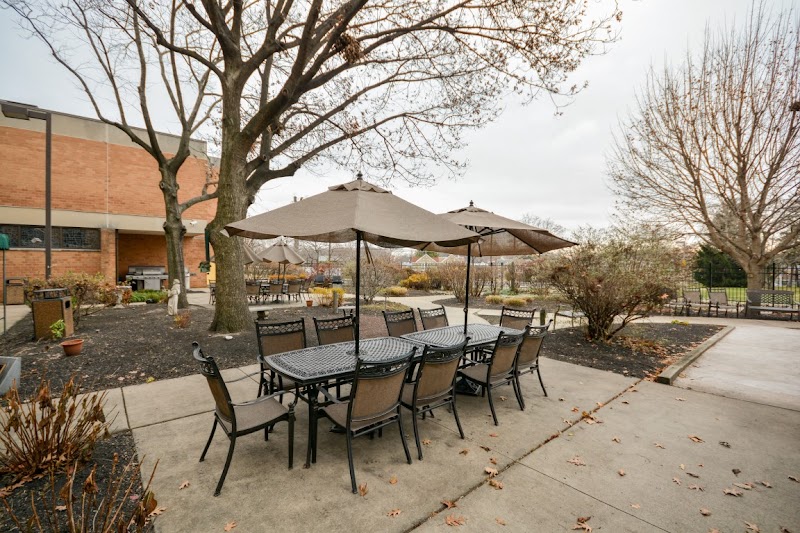
How is Immaculatemarycenter For Rehabilitation&Healthcare Staffed?

CMS rates IMMACULATEMARYCENTER FOR REHABILITATION&HEALTHCARE's staffing level at 1 out of 5 stars, which is much below average compared to other nursing homes. Staff turnover is 63%, which is 17 percentage points above the Pennsylvania average of 46%. High turnover can affect care consistency as new staff learn residents' individual needs.

What Have Inspectors Found at Immaculatemarycenter For Rehabilitation&Healthcare?

State health inspectors documented 47 deficiencies at IMMACULATEMARYCENTER FOR REHABILITATION&HEALTHCARE during 2022 to 2025. These included: 47 with potential for harm.
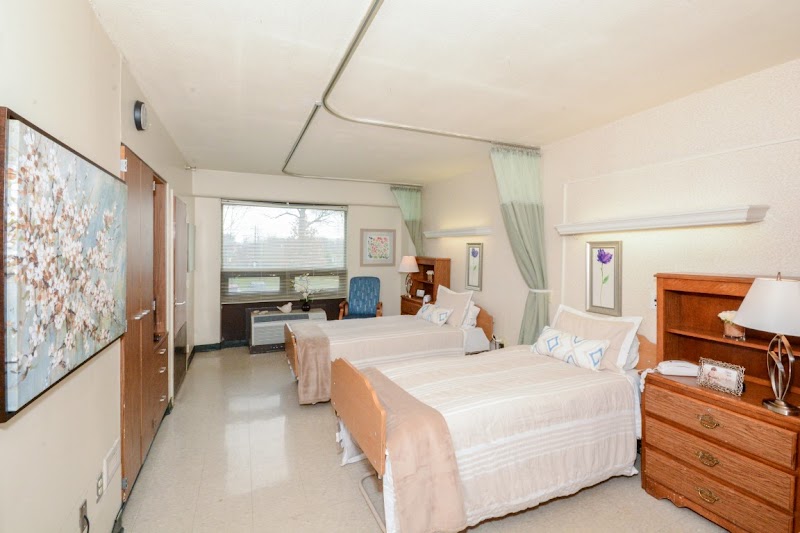
Who Owns and Operates Immaculatemarycenter For Rehabilitation&Healthcare?

IMMACULATEMARYCENTER FOR REHABILITATION&HEALTHCARE is owned by a for-profit company. For-profit facilities operate as businesses with obligations to shareholders or private owners. The facility is operated by CENTER MANAGEMENT GROUP, a chain that manages multiple nursing homes. With 296 certified beds and approximately 273 residents (about 92% occupancy), it is a large facility located in PHILADELPHIA, Pennsylvania.

How Does Immaculatemarycenter For Rehabilitation&Healthcare Compare to Other Pennsylvania Nursing Homes?

Compared to the 100 nursing homes in Pennsylvania, IMMACULATEMARYCENTER FOR REHABILITATION&HEALTHCARE's overall rating (1 stars) is below the state average of 3.0, staff turnover (63%) is significantly higher than the state average of 46%, and health inspection rating (2 stars) is below the national benchmark.

What Should Families Ask When Visiting Immaculatemarycenter For Rehabilitation&Healthcare?

Based on this facility's data, families visiting should ask: "How do you ensure continuity of care given staff turnover, and what is your staff retention strategy?" "Can you walk me through typical staffing levels on day, evening, and night shifts?" "Can I visit during a mealtime to observe dining assistance and food quality?" "How do you handle medical emergencies, and what is your hospital transfer rate?" These questions are particularly relevant given the facility's high staff turnover rate and the below-average staffing rating.

Is Immaculatemarycenter For Rehabilitation&Healthcare Safe?

Based on CMS inspection data, IMMACULATEMARYCENTER FOR REHABILITATION&HEALTHCARE has a clean safety record: no substantiated abuse findings (meaning no confirmed cases of resident harm), no Immediate Jeopardy citations (the most serious violation level indicating risk of serious injury or death), and is not on the Special Focus Facility watch list (a federal program monitoring the lowest-performing 1% of nursing homes). The facility has a 1-star overall rating and ranks #100 of 100 nursing homes in Pennsylvania. While no facility is perfect, families should still ask about staff-to-resident ratios and recent inspection results during their visit.

Do Nurses at Immaculatemarycenter For Rehabilitation&Healthcare Stick Around?

Staff turnover at IMMACULATEMARYCENTER FOR REHABILITATION&HEALTHCARE is high. At 63%, the facility is 17 percentage points above the Pennsylvania average of 46%. High turnover means new staff may not know residents' individual needs, medications, or preferences. It can also be disorienting for residents, especially those with dementia who rely on familiar faces. Families should ask: What is causing the turnover? What retention programs are in place? How do you ensure care continuity during staff transitions?

Was Immaculatemarycenter For Rehabilitation&Healthcare Ever Fined?

IMMACULATEMARYCENTER FOR REHABILITATION&HEALTHCARE has no federal fines on record. CMS issues fines when nursing homes fail to meet care standards or don't correct problems found during inspections. The absence of fines suggests the facility has either maintained compliance or corrected any issues before penalties were assessed. This is a positive indicator, though families should still review recent inspection reports for the full picture.

Is Immaculatemarycenter For Rehabilitation&Healthcare on Any Federal Watch List?

IMMACULATEMARYCENTER FOR REHABILITATION&HEALTHCARE is not on any federal watch list. The most significant is the Special Focus Facility (SFF) program, which identifies the bottom 1% of nursing homes nationally based on persistent, serious quality problems. Not being on this list means the facility has avoided the pattern of deficiencies that triggers enhanced federal oversight. This is a positive indicator, though families should still review the facility's inspection history directly.