IVY HILL POST ACUTE NURSING & REHABILITATION LLC
1401 IVY HILL ROAD, PHILADELPHIA, PA 19150 (215) 233-5605
For profit - Limited Liability company 145 Beds Independent Data: November 2025
Trust Grade
53/100
#297 of 653 in PA
Last Inspection: March 2025

Within standard 12-15 month inspection cycle. Federal law requires annual inspections.

Overview

Ivy Hill Post Acute Nursing & Rehabilitation LLC has a Trust Grade of C, which means it is average and falls in the middle of the pack among nursing homes. It ranks #297 out of 653 facilities in Pennsylvania, placing it in the top half of the state, and #15 out of 46 in Philadelphia County, indicating that only a few local options are better. However, the facility is trending downward, with the number of issues increasing from 11 in 2024 to 17 in 2025. Staffing is a relative strength, with a rating of 4 out of 5 stars and a turnover rate of 44%, which is slightly below the state average. On the downside, the facility has faced fines of $11,450, which is average but still indicates some compliance issues. RN coverage is a concern, as it is lower than 84% of facilities in Pennsylvania, which may affect the quality of care. Specific incidents include a failure to promptly address a urinary issue for a resident, leading to a hospital transfer due to severe complications, and concerns regarding food safety and cleanliness within the facility. While there are strengths in staffing, the increasing number of issues and specific care failures raise valid concerns for families considering this nursing home.

Trust Score
C
53/100
In Pennsylvania
#297/653
Top 45%
Safety Record
Moderate
Needs review
Inspections
Getting Worse
11 → 17 violations
Staff Stability
○ Average
44% turnover. Near Pennsylvania's 48% average. Typical for the industry.
Penalties
✓ Good
$11,450 in fines. Lower than most Pennsylvania facilities. Relatively clean record.
Skilled Nurses
⚠ Watch
Each resident gets only 29 minutes of Registered Nurse (RN) attention daily — below average for Pennsylvania. Fewer RN minutes means fewer trained eyes watching for problems.
Violations
⚠ Watch
49 deficiencies on record. Higher than average. Multiple issues found across inspections.
★★★☆☆
3.0
Overall Rating
★★★★☆
4.0
Staff Levels
★★★★★
5.0
Care Quality
★★☆☆☆
2.0
Inspection Score
Stable
2024: 11 issues
2025: 17 issues

The Good

  • 4-Star Staffing Rating · Above-average nurse staffing levels
  • 5-Star Quality Measures · Strong clinical quality outcomes
  • Full Sprinkler Coverage · Fire safety systems throughout facility
  • No fines on record
  • Staff turnover below average (44%)

    4 points below Pennsylvania average of 48%

Facility shows strength in staffing levels, quality measures, fire safety.

The Bad

3-Star Overall Rating

Near Pennsylvania average (3.0)

Meets federal standards, typical of most facilities

Staff Turnover: 44%

Near Pennsylvania avg (46%)

Typical for the industry

Federal Fines: $11,450

Below median ($33,413)

Minor penalties assessed

The Ugly 49 deficiencies on record

1 actual harm
Mar 2025 17 deficiencies
CONCERN (D) 📢 Someone Reported This

A family member, employee, or ombudsman was alarmed enough to file a formal complaint

Potential for Harm - no one hurt, but risky conditions existed

Deficiency F0554 (Tag F0554)

Could have caused harm · This affected 1 resident

**NOTE- TERMS IN BRACKETS HAVE BEEN EDITED TO PROTECT CONFIDENTIALITY** Based on clinical record review, interviews with residents and staff and reviews of policies and procedures, it was determined t...

Read full inspector narrative →
**NOTE- TERMS IN BRACKETS HAVE BEEN EDITED TO PROTECT CONFIDENTIALITY** Based on clinical record review, interviews with residents and staff and reviews of policies and procedures, it was determined that for one of two residents reviewed that the interdiciplinary care planning team failed to assess each resident for self adminitration of medications and determine if the practice was clinically appropriate and safe in accordance with their residents rights. (Resident R94) Findings include: A review of the undated facility policy titled self-medication administration revealed that it was each resident's right to manage their medications independently within the nursing home. The policy indicated that the facility was responsible for assessing each resident to deem if the resident was capable of safely managing their own medications. Clinical record review for Resident R94 revealed a quarterly comprehensive assessment dated [DATE] that indicated this resident was cognitively intact, had no swallowing problems with foods or fluids. The assessment also indicated that the resident had adequate vision, was able to follow directs and had no functional limitations of upper extremities. Interview with Resident R94 at 2:30 p.m., on March 24, 2025 revealed that the resident does order medications (airbone gummies, centrum silver, finasteride, folic acid, glipizide, glycolax powder, docusate sodium, ascorbic acid, ferrous sulfate) to be delivered to the facility or that the facility pharmacy delivers to the facility for him. Resident R94 reported that he was a retired pharmacist and he was interested in administering medications to himself. The resident was understanding that he would have to be provided with a locked bed side cabinet to secure the medications from staff and other residents. Inreview with the licensed practical nurse, Employee E24 at 2:40 p.m., on March 24, 2025 confirmed that Resident R94 had been given the opportunity of assessment by the interdisiplinary care team, to the determine his ability to self administer medications. The licensed nurse, Employee E24 reported being aware that the resident had been requesting to self administer medications, since admission to the facility on December 13, 2024. The licensed practical nurse, Employee E24 verified that there was no care plan developed for Resident R94 to self administer medications as he desired. 28 PA. Code 211.10(a)(b)(c)(d) Resident care policies 28 PA. Code 211.12(d)(1)(3)(5) Nursing services 28 PA. Code 201.29(a) Resident rights
CONCERN (D) 📢 Someone Reported This

A family member, employee, or ombudsman was alarmed enough to file a formal complaint

Potential for Harm - no one hurt, but risky conditions existed

Grievances (Tag F0585)

Could have caused harm · This affected 1 resident

Based on the review of clinical records, facility documentation, facility policies, and interviews with resident and staff, it was determined that the facility failed to demonstrate evidence that a gr...

Read full inspector narrative →
Based on the review of clinical records, facility documentation, facility policies, and interviews with resident and staff, it was determined that the facility failed to demonstrate evidence that a grivance was promptly documented and resolved for one of 26 resident records reviewed. (Resident R95) Findings Include: The facility will fully investigate and respond to all concerns or complaints regarding patient/resident care and/or treatment. The patient/resident/ resident representative has the right to file a grievance orally, in writing, or anonymously. All grievances will be responded to within 48-72 hours, and in writing if requested. On March 24, 2025, at 12:55 p.m., an interview was conducted with Resident R37, who reported that $80 had gone missing in January 2025. The facility investigated the concern but did not issue a refund, stating that the amount was not documented on the resident's inventory sheet. Resident R37 also mentioned that the facility had promised to provide a locked drawer for storing his personal belongings. At 12:57 p.m. on the same day, Unit Manager Employee E19 confirmed that no locked drawer was available at Resident R37's bedside for the storage of personal items. Grievance was not resolved. On March 25, 2025, at 10:30 a.m. a resident council meeting was held with 8 alert and oriented residents ( R31, R70, R89, R71, R34, R34, R127, R94) who reported that resolution of the grievances are not communicated to the residents. Resident R94 reported that he requested for the resolution of his grievance would be given to him in writing and facility declined. On March 26, 2025, at 2:15 p.m., an interview was conducted with the family representative of Resident R108, who expressed concern that the resident's clothing was missing. The representative explained that they personally bring new clothing, label it, and place it in the resident's closet. However, they were unaware that the facility is supposed to complete an inventory sheet for every item brought to Resident R108. The representative also reported that, during a visit two days ago, the resident was seen wearing someone else's clothing for two consecutive days. A review of the grievance which was filed by a resident's R95 family representative on January 22, 2025, listed missing clothing items such as black & gray skinny jeans, black hoodie, 1 black long sleeve thermal, plain black short sleeve t-shirt, burgundy pants with pink paw prints, fresh empire black t-shirt with lime green, gray long sleeve with pink stirp around collar, burgundy pants stretchy. Grievance noted that items were found, and grievance resolved. A review of the inventory sheet dated November 27, 2024, none of the above missing items were listed on the inventory sheet. On March 28, 2025, at 10:05 a.m., an observation was conducted with the Housekeeping Supervisor, Employee E16, regarding Resident R95's clothing. It was noted that the resident had additional items in her closet, none of which were listed on the inventory sheet. E16 is responsible for labeling the clothing and managing its location when items go missing as part of the grievance process. However, R16 does not complete the inventory sheet. It was also confirmed that some of Resident R95's clothing, such as a black winter jacket, had been labeled by the family using tape, which can easily come off. The clothing should have been labeled by the facility instead with facility's ironing labeling process. On March 28, 2025, at 10:28 a.m., an interview was conducted with Social Worker Director, Employee E3, who confirmed that she does not educate residents or their representatives about the clothing inventory process, nor does she complete the inventory sheet. E3 handles grievances and reported that families are notified about the clothing inventory process upon admission, based on the facility's signage at the receptionist desk. E3 further confirmed that in the case of Resident R95's grievance, dated January 22, 2025, the missing clothing had not been originally documented on the resident's inventory sheet. On March 28, 2025, at 10:36 a.m. an admission director, Employee E18 was interviewed who reported that she does not educate families about the inventory sheet and personal belongings upon admission. On March 28, 2025, at 10:43 a.m., an interview was conducted with the receptionist, Employee E17, who reported that when families bring in bags of clothing, she asks if the items are for the resident. If the family confirms, she provides them with an Inventory of Personal Possessions form to complete and checks the clothing against the form. E17 then hands the clothing bag, along with the form, to the nursing assistant or unit manager for the resident, who is responsible for completing the inventory sheet and placing it in the resident's hard chart. However, if the family handles the resident's laundry, the receptionist does not check the clothing or provide the Inventory of Personal Possessions form. In this case, the family simply drops off the clothing directly in the resident's room, and the clothing is neither labeled nor added to the inventory list. On March 28, 2025, at 10:50 a.m., a follow-up interview was conducted with the Social Work Director, Employee E3, who acknowledged that there is a broken process with the inventory sheet. There is no documentation for clothing when families handle the laundry for the resident, nor is there a clear process to track and locate the clothing, as was the case with Resident R95. 28 Pa. Code 201.18 (b)(1)(3)(2.1)(4) Management 28 Pa. Code 201.29 (a) Resident Rights
CONCERN (D) 📢 Someone Reported This

A family member, employee, or ombudsman was alarmed enough to file a formal complaint

Potential for Harm - no one hurt, but risky conditions existed

Deficiency F0604 (Tag F0604)

Could have caused harm · This affected 1 resident

Based on a review of clinical records, observations, and staff interviews, it was determined that the facility failed to identify the placement of beds against the wall as a restraint, the use of a se...

Read full inspector narrative →
Based on a review of clinical records, observations, and staff interviews, it was determined that the facility failed to identify the placement of beds against the wall as a restraint, the use of a seatbelt on a wheelchair as a restraint, and did not assess the functional status of an individual resident to determine the appropriateness of using a restraint for two of the 26 residents reviewed (Resident R108 and Resident R26) Findings Include: Review of Resident R108's clinical record revealed that the resident was admitted to the facility February 1, 2024, with a diagnosis of difficulty in walking, and encephalopathy (disease that affects the brain's structure or function). On March 24, 2025, at 12:52 p.m., Resident R108 was observed sitting in a wheelchair in the dining room with a seatbelt fastened across his waist. The seatbelt was locked, preventing the resident from being able to release it. This observation was confirmed by the unit manager, Employee 19, who reported that Resident R108 does not have an order for the use of a seatbelt restraint and expressed uncertainty as to why the seatbelt was locked across his knees. Clinical record review revealed Resident R26 was admitted to the facility November 06, 2020 with a diagnosis of diabetes mellitus (condition of high blood sugar caused by insulin problems), morbid obesity, and difficulty walking. Observation on March 24, 2025 at 10:05 a.m. revealed Resident R26's left side of bed was against the wall. Interview with Resident R26 on March 24, 2025 at 10:06 a.m. revealed Resident R26's bed against the wall is not preference based and the bed was against the wall when resident was moved into the room. Further interview with Resident R26 revealed his bed against the wall prevents him from getting out of bed on the left side. Review of Resident R26's clinical record revealed no physician assessment for Resident R26's bed against the wall and no care plan related to the purpose of Resident R26's bed against the wall. Interview on March 18, 2025 at 9:30 a.m. with Unit Manager, Employee E24, revealed Resident R26 has a larger bed due to residents size and Resident R26's bed may be against the wall due to limited space. 28 Pa. Code 211.8(e)(f) Use of Restraints. 28 Pa. Code:211.12(d)(1)(5) Nursing services.
CONCERN (D) 📢 Someone Reported This

A family member, employee, or ombudsman was alarmed enough to file a formal complaint

Potential for Harm - no one hurt, but risky conditions existed

Comprehensive Care Plan (Tag F0656)

Could have caused harm · This affected 1 resident

**NOTE- TERMS IN BRACKETS HAVE BEEN EDITED TO PROTECT CONFIDENTIALITY** Based on review of facility policy, facility documentation, review of clinical records, and interview with staff; it was determi...

Read full inspector narrative →
**NOTE- TERMS IN BRACKETS HAVE BEEN EDITED TO PROTECT CONFIDENTIALITY** Based on review of facility policy, facility documentation, review of clinical records, and interview with staff; it was determined the facility failed to develop a comprehensive care plan and interventions to address Resident R30's recent overdose, Resident R36's lack of toiling program and Resident R69's past traumatic stress disorder (PTSD) abd self administration of medication (Resident R94) for 4 of 26 residents reviewed. (Resident R30, R36, R69, R94) Findings include: Review of facility policy titled Interdisciplinary Care Planning Protocol undated, revealed Nursing admission Assessment completed on day of admission but in no event later than 24 hours of admission. Nursing Initiates interim Care Plan-the interim care plan must address all immediate care needs. Review of Resident R30's clinical record revealed that the resident was admitted to the facility on [DATE], with diagnosis of other low back pain, opioid dependency, and anxiety disorder. Review of Resident R30's quarterly Minimum Data Set assessment (MDS- assessment of resident care needs) dated March 20, 2025, revealed the resident had a BIMS (Brief Interview of Mental Status) score of 15, indicating the resident was cognitively intact. Clinical progress notes dated March 8, 2025 revealed that Resident R30 noted to be lethargic, Vital Signs (VS) obtained temperature (T)97.6, heart rate (HR) 74, R18, blood pressure (BP)130/90, oxygen (O2)96%. x 1 dose of norcan administered with positive response. Clinical progress notes dated March 7, 2025, revealed Resident R30 Leave of Absence (LOA) with granddaughter at 9:00 a.m. to get ID. Resident R30 returned from LOA (leave of absence) at 12:00 p.m. Review of Resident R30's care plan revealed that a care plan was initiated on December 12, 2024, for history of substance seeking behavior (alcohol, oxycodone and benzos, other and has potential for complications such as substance abuse, withdrawal symptoms, and mood and or behavioral disturbance. Intervention documented as administer medication as ordered and observe for effectiveness and/onside effect. And second intervention updated on March 24, 2025 observe mouth and hands after each medication administration to ensure resident swallowed pills. A progress note dated March 10, 2025 by the Physiatry, Employee E23 seen today at bedside nursing report of overdose over the weekend requiring Norcan with positive effect. She had been excessively drowsy and lethargic on Saturday morning, unable to arouse multiple times prior to Norcan administration. On review of medications, he facility prescribed regiment of oxycodone has been at a stable long term dose for her chronic neck pain and has not had issue with lethargy or drowsiness for the 3 months she had been here. She had previously displayed signs of med seeking higher doses which I determined were not indicated, as noted previously. We kept her current dose as she does have indicated for cervical surgical interventions which was delayed and reason for severe neck pain. Per nursing she did go out of the building with here granddaughter on Friday (the day prior to her Narcan administration) and do suspect she may have gotten illicit substance at that time. Continued review of resident's care plan revealed that it was not until March 11, 2025, (3 days from the incident related to the administration of Narcan) that the resident's care plan was revised to address alcohol, narcotics, and other drug use, with potential complications such as recurrence of substance abuse, post-acute withdrawal symptoms, and mood or behavioral disturbances. The goal outlined in the plan was for the resident to exhibit acceptable behavior, as evidenced by: no alcohol or drugs hidden in the room or brought by visitors, and no use of addictive substances unless prescribed by a doctor. The interventions include administering medications as ordered and monitoring for side effects and effectiveness, particularly with Naloxone. On April 2, 2025, at 11:05 a.m., an interview with the Director of Nursing confirmed that the revised care plan does not include interventions to identify and monitor behavioral changes, or signs and symptoms that may indicate potential drug use upon returned from LOA. Additionally, it was noted that ongoing consent from the resident to search their belongings upon returning from a LOA has not been addressed. Clinical record review for Resident R36 revealed a quarterly comprehensive assessment MDS (an assessment of care needs) dated March 4, 2025 that this resident was moderately cognitively impaired. The assessment indicated that this resident was incontinent of bowel and bladder. The assessment also said that this resident required substantial assistance with staff for transfers from the bed to the toilet or bed pan. The assessment indicated that the resident was dependent on staff for toileting hygiene. Interview with the nursing assistant, Employee E26, at 10:00 a.m., on March 28, 2025 revealed that this nursing assistant was assigned to the care of Resident R36. The nursing assistant reported that Resident R36 did not have an individualized care plan for toileting. The nursing assistant said that Resident R36 uses an incontinent brief for bowel and bladder episodes. The nursing assistance's experience with caring for Resident R36 was that the resident will use the call bell to let staff know he needs staff assistance to be changed after voiding or a bowel movement. Clinical record review confirmed that Resident R36 did not have a care plan developed for prompted toileting (upon rising, before and after meals and at bedtime). There was no documented evidence that toileting equipment (bed pan, bed side commode) had been trialed with Resident R36. There was no evidence that resident care equipment (mechanical lift) was being used for Resident R36's toileting needs. Clinical record review for Resident R94 revealed a quarterly MDS assessment dated [DATE] indicated this resident was cognitively intact and had no swallowing problems with foods or fluids. The assessment also indicated that the resident had adequate vision, was able to follow directions and had no functional limitations of upper extremities. Interview with Resident R94 at 2:30 p.m., on March 24, 2025 revealed that the resident does order medications (airborne gummies, Centrum silver, finasteride, folic acid, glipizide, glycolax powder, docusate sodium, ascorbic acid, ferrous sulfate) to be delivered to the facility or that the facility pharmacy delivers to the facility for him. Resident R94 reported that he was a retired pharmacist and he was interested in administering medications to himself. The resident was understanding that he would have to be provided with a locked bed side cabinet to secure the medications from staff and other residents. Inteview with the licensed practical nurse, Employee E24 at 2:40 p.m., on March 24, 2025 reported being aware that the resident had been requesting to self administer medications, since admission to the facility on December 13, 2024. The licensed practical nurse, Employee E24 verified that there was no care plan developed for Resident R94 to self administer medications as desired. 28 Pa. Code 201.18(e)(1) Management 28 Pa Code 211.10(d) Resident care policies 28 Pa. Code 211.12 (c)(d)(1) Nursing Services
CONCERN (D) 📢 Someone Reported This

A family member, employee, or ombudsman was alarmed enough to file a formal complaint

Potential for Harm - no one hurt, but risky conditions existed

Accident Prevention (Tag F0689)

Could have caused harm · This affected 1 resident

Based on resident and staff interview, review of facility policy and staff interview, it was determined that the facility failed to properly supervise residents during medication administration for on...

Read full inspector narrative →
Based on resident and staff interview, review of facility policy and staff interview, it was determined that the facility failed to properly supervise residents during medication administration for one of 26 residents reviewed (Resident R57). Findings include: Review of Facilities' policy titled Administering medications reviewed January 18, 2025 revealed under section Policy Interpretations and Implementation stated only persons licensed or permitted by this state to prepare, administer and document the administration of medications may do so. Never leave a medication unattended in a resident's room. Residents may self-administer their own medications only if the Attending Physician, in conjunction with the Interdisciplinary Care Planning Team, has determined that they have the decision-making capacity to do so safely. Review of Resident R57's clinical record revealed that the resident was admitted to the facility August 9, 2019 with a diagnosis of Traumatic Brain Injury, Hypokalemia (low potassium), and Hypertension (high blood pressure), Depression and Anxiety. Review of Resident R57's clinical record revealed no documented evidence that order was in place for Resident R57 to self-administer medications. Review of Resident R57's comprehensive care plan initiated on November 28, 2022, revealed that resident barricades in bathroom and room entrance door and is at risk for harming self and others. Review of Resident R57's Minimum Data Set (MDS assessment of resident care needs) dated March 18, 2025, in Section C- Cognitive Patterns revealed that resident has a BIMS (brief interview for mental status) of 13, which indicated that the resident was cognitively intact. Interview with Resident R57 on March 24, 2025 at 11:50 p.m. revealed that resident had concerns about receiving medications on time and stated 3 months ago, I did not receive my medications for 2 or 3 days and I got dizzy because I wasn't getting my meds. So I take them on my own now, I save them in my drawer so when they miss my medications, I can take it myself. Observation on March 24, 2025 at 11:52 PM, revealed Resident R57 removing a clear tupperware-like container with a blue lid from her bedside table and showing the container filled with multiple types of pills and 1 paper medication cup inside. Continued interview with Resident R57 on March 24, 2025 at 11:52PM revealed that she had taken her meds this morning because this is a good nurse, she knows how to give me my meds, a lot of them don't know and just forget about me. Interview with Unit Manager, Employee E19, on March 24, 2025 at 11:53PM, confirmed multiple pills and 1 paper medication cup being stored in Resident R57's bedside table in clear Tupperware-like container with blue lid. Observation of Unit Manager, Employee E19 on March 24, 2025 at 11:53PM, employee removed paper medication cup from clear container and dumping numerous multicolored pills onto a clean white napkin. Observation on March 24, 2025 at 11:54PM, revealed Unit Manager, Employee E19 escorted pills to the medication cart of Registered Nurse, Employee E21 and were place on top. Observation on March 24, 2025 at 12:05 PM, revealed Registered Nurse, Employee E21 counting and identifying pills as follows, Hydrochlorothiazide 25mg- 35 pills counted, Amlodipine 5mg - 13 pills counted, Potassium Chloride 20 meq- 4 pills counted (split in half). Continued observation revealed pills appear dry, no visible deterioration or discoloration, white napkin remained dry and no visible signs of discoloration. Upon transfer of pills to the top of the medication cart, visible dust and residue remained from pills. Observation on March 24, 2025 at 12:05 PM, revealed medication counted and confirmed by Unit Manager, Employee E19 and Registered Nurse, Employee E21 revealed a total of 52 pills discovered in Resident R57's bedside table. Review of Resident R57's Clinical record revealed a physician order dated November 8, 2023, for Hydrochlorothiazide 25 milligrams (mg) by mouth one time a date related to hypertension hold for a systolic blood pressure <100 or a HR (heart rate) <55. Further review of Resident R57's clinical record revealed a physician order dated October 19, 2023, for Amlodipine besylate 5 mg by mouth in the evening related to hypertension, hold for a systolic blood pressure <100 or a HR <55. Continued review of Resident R57's clinical record revealed a physician order dated December 21, 2022, for Potassium Chloride ER (extended released) 20 meq by mouth daily. 28 Pa. Code 201.18(e)(1) Management 28 Pa Code 211.10(d) Resident care policies 28 Pa. Code 211.12 (c)(d)(1) Nursing Services
CONCERN (D) 📢 Someone Reported This

A family member, employee, or ombudsman was alarmed enough to file a formal complaint

Potential for Harm - no one hurt, but risky conditions existed

Deficiency F0692 (Tag F0692)

Could have caused harm · This affected 1 resident

Based on observation, clinical record review, interview with staff and review of policies, it was determined that the facility failed to ensure that a resident was provided with devices to optimize po...

Read full inspector narrative →
Based on observation, clinical record review, interview with staff and review of policies, it was determined that the facility failed to ensure that a resident was provided with devices to optimize posture during dining and failed to collect additional nutritional biochemical data related to the resident's nutritional status for one of five residents reviewed. (Resident R63) Findings include: A review of the undated policy titled nutrition evaluation indicated that it was the facility's responsibility to ensure that each resident received proper nutrition and dietary support to promote their health and well being. The policy also indicated that each resident would undergo a nutritoinal assessment by a registered dietitian. The dietitian was responsible for assessing the resident's medical history, dietary preferences, allergies and and special dietary needs. The dietitian would also be responsible for assessing biochemical data collected related to a resident's nutritional status. The facility would collaborate the healthcare professionals (physician, nursing, dietitian occupational therapist speech/swallowing pathologist) to ensure that each resident's nutritional needs are effectively met. Clinical record review revealed a quarterly assessment Minimum Data set (MDS- an assessment of care needs) dated January 1, 2025 for Resident R63 that indicated this resident was severely cognitive impaired. The assessment indicated the resident was prescribed a mechanically altered diet and that the resident required substantial assistance of staff with eating. Observations of Resident R63 during the noon meal service on the third floor nursing unit on March 24, 2025 revealed that this resident was sitting in the dining room, in her wheel chair, being assisted with her meal by the nursing staff. The resident's head was tilted to the side and chin positioned in her chest. The nursing staff said that Resident R63 had not been evaluated for adapted equipment to ensure upright positioning during meals and safe swallowing. Interview with the occupational therapist, Employee E32 at 11:30 a.m., on March 26, 2025 revealed that it was not until March 26, 2025 that Resident R63 was assessed and supplied with a high back wheel chair for postural alignment of her back and neck. Clinical record review for Resident R63 revealed that this resident was prescribed Levothyroxine 25mcg one time a day for low production of thyroid hormone in the body or hypothyroidism, since December 29, 2024. Review of Resident R53's clinical record revealed the the resident had a diagnosis of hypothyroidism (the thyroid gland does not produce enough thyroid hormone). The only biochemical data available for review for Resident R63 was dated August 30, 2024 that indicated a low thyroid stimulating hormone of .17uIU/ml with a normal range of .3 to 4.2, free T4 that was within normal range and no T3 available for review. A low TSH (thyroid stimulating hormone) laboratory value was indicative of probable hyperthyroidism (over production of thyroid hormone in the body). Interview with the licensed practical nurse, Employee E24, at 11:00 a.m., on March 26, 2025 confirmed that there were no other nutritional related biochemical studies for Resident R63 available for review. 28 Pa. Code 211.10(a)(b)(c)(d) Resident care policies 28 Pa. Code 211.12(d)(1)(3)(5) Nursing services 28 Pa. Code 201.14(a) Responsibility of licensee
CONCERN (D) 📢 Someone Reported This

A family member, employee, or ombudsman was alarmed enough to file a formal complaint

Potential for Harm - no one hurt, but risky conditions existed

Respiratory Care (Tag F0695)

Could have caused harm · This affected 1 resident

**NOTE- TERMS IN BRACKETS HAVE BEEN EDITED TO PROTECT CONFIDENTIALITY** Based on clinical record review, review of facility policy and staff interview, it was determined the facility failed to provide...

Read full inspector narrative →
**NOTE- TERMS IN BRACKETS HAVE BEEN EDITED TO PROTECT CONFIDENTIALITY** Based on clinical record review, review of facility policy and staff interview, it was determined the facility failed to provide respiratory care consistent with professional standards of practice for one of one resident reviewed (Resident R23). Findings include: Review of facility policy titled Oxygen Therapy, no date, revealed Oxygen (02) is administered appropriately to residents to improve oxygenation and provide comfort to residents experiencing respiratory difficulties. Oxygen is administered by licensed staff with a physicians order. In an emergency oxygen can be administered and order should be received as soon as possible. Clinical record review revealed Resident R23 was re-admitted to the facility on [DATE] with a diagnosis of sepsis (serious condition in which the body has a severe response to an infection), chronic obstructive pulmonary disease (lung condition caused by damage to the airways that limit airflow), and hypertension (high blood pressure). Observation on March 24, 2025 at 11:28 a.m. revealed Resident R23 was receiving 2 Liters of oxygen. Further observation revealed Resident R23's oxygen tubing did not include a date of when the tube was connected. Review of Resident R23's clinical record revealed no physician order for oxygen to be administer. Interview on March 24, 2025 with Certified Nursing Assistant, Employee E14, confirmed Resident R23's oxygen tubing was note dated. Interview on March 24, 2025 at 11:51 a.m. with Registered Nurse, Employee E15, confirmed Resident R23 did not have an order for oxygen to be administered. 28 Pa. Code 211.12(d)(5) Nursing services
CONCERN (D)

Potential for Harm - no one hurt, but risky conditions existed

Deficiency F0697 (Tag F0697)

Could have caused harm · This affected 1 resident

**NOTE- TERMS IN BRACKETS HAVE BEEN EDITED TO PROTECT CONFIDENTIALITY** Based on the review of clinical records, facility documentation, and staff interviews, it was determined the facility failed to ...

Read full inspector narrative →
**NOTE- TERMS IN BRACKETS HAVE BEEN EDITED TO PROTECT CONFIDENTIALITY** Based on the review of clinical records, facility documentation, and staff interviews, it was determined the facility failed to ensure that pain level assessments were accurate for one of the 2 residents reviewed (Resident R30) . Findings include: Review of Resident R30's clinical record revealed that the resident was admitted to the facility on [DATE], with diagnosis of other low back pain and opioid dependency. Review of Resident R30 physician's orders dated, December 13, 2024, revealed an order for pain assessment every shift for pain assessment. Continued review of December 2024 physician order revealed and order dated December 15, 2024, through March 8, 2025, for Oxycodone tablet 10 milligrams (mg) give 1 tablet every 6 hours for pain. Review of Resident R30's March 2025 physician orders confirmed and order date March 8, 2025 through March 19, 2025, for Oxycodone oral tablet 10 mg give 1 tablet by mouth every 12 hours for pain. Continued review of physican orders revealed and ordered dated March 19, 2025, for Oxycodone oral tablet 10 mg give 1 tablet by mouth every 8 hours for pain. Clinical progress note dated, March 19, 2025, stated Resident was upset about her standing pain meds not being effective, resident was seen by pain management MD (physician), recommendation to increase oxycodone 10 mg discontinue (D/C) q (every) 12 hr (hours) 10 mg and start oxycodone 10 mg q 8 hr. resident agreeable, using to continue to monitor document and assess pain. Review of the Medication Administration Report (MAR) for the month of March 2025 revealed 0 pain levels documented, including March 19, 2025. On March 24, 2025, at 11:20 a.m. interview was conducted with Resident R30 who reported that I have a shooting pain, pain level 9-10. On March 24, 2025, at 11:32 a.m. license unit manager, Employee E19 confirmed that pain assessments are not being completed. On March 24, 2025, at 11:52 a.m. license nurse, Employee E22 was interviewed about pain assessment and why based on March MAR they have 0. Employee E22 reported referring to the resident she doesn't tell them to me. On March 27, 2025, at 2:46 p.m. Director of Nursing, Employee E2 confirmed that pain assessment has not been completed. 28 Pa Code 211.12(d)(1) Nursing services
CONCERN (D) 📢 Someone Reported This

A family member, employee, or ombudsman was alarmed enough to file a formal complaint

Potential for Harm - no one hurt, but risky conditions existed

Deficiency F0699 (Tag F0699)

Could have caused harm · This affected 1 resident

Based on review of clinical records, staff and resident interviews, it was determined that the facility failed to provide culturally competent, trauma informed care in accordance with professional sta...

Read full inspector narrative →
Based on review of clinical records, staff and resident interviews, it was determined that the facility failed to provide culturally competent, trauma informed care in accordance with professional standards of practice, accounting for the resident's past experience and preferences in order to eliminate and /or mitigate triggers that may cause re-traumatization of the resident for one of four residents reviewed. (Resident R 69) Findings include: Review of facility policy titled Trama Informed Care,revealed the facility ensures that residents who are trauma survivors receive culturally competent, trauma informed care in accordance with professional standards of practice and accounting for resident's experiences and preferences in order to eliminate or mitigate triggers that may cause re-traumatization of the resident. Upon admission the facility will assess each resident to ensure they receive appropriate treatment and services. A questionnaire will be utilized for each resident by the social services department in order to identify any trauma and/or post-traumatic stress disorder and to gather trigger information so that our understanding of their traumatic events can be detailed and specific. Additional information may be obtained from the medical record, physical and emotional assessments, from the resident, from family members who have shared this information. The facility will provide the necessary behavioral health care and services to attain or maintain the highest practicable physical, mental and psychosocial wellbeing in accordance with the individual resident assessment and plan of care. The facility will ensure employees have education training or in-service in caring for residents identified with mental and psychological disorders, as well as residents with a history of trauma and/or post-traumatic stress disorder. Care plans and interventions will be reviewed quarterly and more often, if necessary, based on any change in the residents physical and psychosocial well-being. As we evaluate our interventions, we will be sensitive to the need for professional referral to psychological/mental health services and personnel as well as ways to communicate our plans to staff in order to enlist their support. Review of Resident R69's annual Minimum Data Set (MDS-federal mandated assessment for all residents) dated February 1, 2025 revealed that the resident was admitted into the facility on August 24, 2021 with diagnoses of heart failure, hypertension (high blood pressure) and schizophrenia (a mental disorder characterized by hallucinations, delusions (disorganized thinking and behavior). Resident R69 has a BIMS (brief interview of mental status) of 9 indicating that Resident R69 was moderately cognitively impaired. Review of Resident R69's psychological note dated August 14, 2024, revealed patient admits that his anger gets him in trouble and sometimes physical altercations. He believes this is due to a real perceived sexual assault in the past he has said he is on edge and offensive and protective of himself and his body. Review of Residents R69's care plan revealed Resident R69 was admitted into a psychiatric hospital for behavior as a voluntary admit on January 14, 2025 due to aggressive behaviors towards staff members. Review of psychiatric hospital discharge notes dated January 15, 2025 revealed that Resident R69 was referred to the hospital from the nursing facility with a diagnosis of psychosis triggered by PTSD (post-traumatic stress disorder) relating to past sexual trauma patient presenting with increased mania agitation and a history of trauma. Review of Resident R69's clinical record revealsed no indication that this resident has been assessed for PTSD, educated and or treated for this documented diagnosis of post-traumatic stress disorder. Interview with Director of Nursing, Employee E2 on March 27, 2025 confirmed that Resident R69 was diagnosed with PTSD and not care planned for it. 28 Pa. Code 211.12(c)(d)(3) Nursing Services 28 Pa. Code 211.11(e) Resident Care Plan 28 Pa. Code 211.16(a) Social Services
CONCERN (D) 📢 Someone Reported This

A family member, employee, or ombudsman was alarmed enough to file a formal complaint

Potential for Harm - no one hurt, but risky conditions existed

Drug Regimen Review (Tag F0756)

Could have caused harm · This affected 1 resident

**NOTE- TERMS IN BRACKETS HAVE BEEN EDITED TO PROTECT CONFIDENTIALITY** Based on a review of clinical record review, and interviews with staff, it was determined that the facility failed to ensure tha...

Read full inspector narrative →
**NOTE- TERMS IN BRACKETS HAVE BEEN EDITED TO PROTECT CONFIDENTIALITY** Based on a review of clinical record review, and interviews with staff, it was determined that the facility failed to ensure that medication regimens were followed by the facility in a timely manner for two of the five residents reviewed related to medication regimen reviews (Residents R30 and R61). Findings include: Review of Resident R30's clinical record revealed that the resident was admitted to the facility on [DATE], with diagnosis with atherosclerotic heart diseases of native coronary artery without angina pectoris, and cerebral infarction (stroke). Continued review revealed that the resident received Atorvastatin Calcium Oral Table 80 milligrams give 1 tablet by mouth prescribed by the physician on December 13, 2024. A Pharmaceutical review of the Medication Regimen was conducted on December 23, 2024, and February 26, 2025 revealed a recommendation for Lipids suggested with 80 mg (milligrams) Atorvastatin. Review of Resident R30's clinical record revealed no documented evidience that a laboratory study for lipids was completed. An interview was held on March 28, 2025, at 1:38 p.m. with Employee E2, Director of Nursing (DON) who confirmed that the recommendation to perform Lipids labs was not followed on December 23, 2024, and on February 26, 2025. Review of Resident R61's clinical record revealed Resident R61 was admitted to the facility on [DATE] with a diagnosis of necrotizing fascitis (serious bacterial infection), amputation of right foot, and hypotension (low blood pressure). Further review of Resident R61's clinical record revealed a physician order, dated November 21, 2024, for Midodrine (medication to treat low blood pressure) 5 mg to be given 1 time a day every Tuesday, Thursday, and Saturday for hypotension during dialysis. Review of Resident R61's monthly pharmacy review, dated January 08, 2025, revealed a pharmacist recommendation for Midodrine order to include a blood pressure limit. Further review of Resident R61's January 2025 throguh March 2025 physician order for Midodrine revealed no blood pressure limit was included in the order. Interview on March 28, 2025 at 12:21 p.m. with Employee E2, DON, confirmed pharmacy recommendation was not followed. 28 Pa Code 211.9(f)(3) Pharmacy services
CONCERN (D) 📢 Someone Reported This

A family member, employee, or ombudsman was alarmed enough to file a formal complaint

Potential for Harm - no one hurt, but risky conditions existed

Medication Errors (Tag F0758)

Could have caused harm · This affected 1 resident

Based on the review of clinical records, and staff interviews, it was determined that the facility failed to ensure that as needed anti-anxiety medication was limited to 14 days unless a documented ra...

Read full inspector narrative →
Based on the review of clinical records, and staff interviews, it was determined that the facility failed to ensure that as needed anti-anxiety medication was limited to 14 days unless a documented rationale was provided for one of eight residents reviewed for medication administration regimen. (Resident R69) Findings include: Review of physician orders for Resident R 69 dated March 25, 2025, revealed that there an order for Lorazepam (Ativan-this medication is used to treat anxiety) 1 mg, to give every twelve hours PRN (as needed) for agitation, end date is indefinite. Review of clinical record for Resident R 9 revealed no evidence that the attending prescribing practitioner documented the rationale for use as needed anti-anxiety medication in the resident's clinical record and indicated the duration for the prn order. 28 Pa. Code 211.12 (d)(1)(3)(5) Nursing Services
CONCERN (D) 📢 Someone Reported This

A family member, employee, or ombudsman was alarmed enough to file a formal complaint

Potential for Harm - no one hurt, but risky conditions existed

Deficiency F0760 (Tag F0760)

Could have caused harm · This affected 1 resident

Based on review of the clinical records, review of facility policies and interviews with staff, it was determined that the facility failed to ensure that a resident was free of significant medication ...

Read full inspector narrative →
Based on review of the clinical records, review of facility policies and interviews with staff, it was determined that the facility failed to ensure that a resident was free of significant medication error for one of four residents reviewed for medication administration relating to prescribed route of medication administration. (Resident R 116) Findings include: Review of facility policy titled Administering medications revised January 18, 2025, revealed that medications shall be administered in a safe and timely manner and in accordance with the physician order. The individual administering the medication must check the label to verify the right resident, for right medication, right dosage, right time, and rate route of administration before giving the medication. Review of Resident R116's quarterly Minimum Data Set (MDS- a federal mandated assessment tool for all residents) dated December 27, 2024 revealed that Resident R116 was admitted into the facility July 12, 2024 with diagnoses including renal failure (kidney failure) and traumatic brain injury. Resident R116 is on a therapeutic diet with the aid of a feeding tube. Review of Resident R116 physician orders revealed current orders for the medication Propranolol 20 milligrams (mg) to be given 1 tablet via peg-tube, the medication Lansoprazole 30 mg to be given via peg-tube, and multi vitamin to be given via peg-tube . Review of Resident R116's care plan revealed that Resident R 116 is at risk for alteration and hydration related to dysphasia (difficulty swallowing), fluid restriction, tube feeding with interventions to include administer medication per physician orders date-initiated July 26, 2024. Observation of medication pass on March 25, 2025, at 08:15a.m. on the second-floor nursing unit, east med cart with Licensed nurse, Employee E21, revealed that Employee E21 crushed the pills and administered the medications orally to Resident R116. Interview with Resident R116 at time of observation revealed that the resident usually is given medications orally. Interview with Licensed nurse, Employee E21 on March 28, 2025, at 11:59 a.m. revealed that she has always administered Resident R116's medication orally. This employee stated that she was told to during morning meeting. Interview with Director of Nursing, Employee E 2 on March 28, 2025 at 11:59 a.m. confirmed that the resident has current orders for medications to be administered via peg-tube. 28 Pa. Code 211.12(d)(1) Nursing Services 28 Pa. Code 211.12(d)(3) Nursing Services
CONCERN (E) 📢 Someone Reported This

A family member, employee, or ombudsman was alarmed enough to file a formal complaint

Potential for Harm - no one hurt, but risky conditions existed

Safe Environment (Tag F0584)

Could have caused harm · This affected multiple residents

**NOTE- TERMS IN BRACKETS HAVE BEEN EDITED TO PROTECT CONFIDENTIALITY** Based on observation and resident and staff interviews, it was determined that the facility failed to provide adequate housekeep...

Read full inspector narrative →
**NOTE- TERMS IN BRACKETS HAVE BEEN EDITED TO PROTECT CONFIDENTIALITY** Based on observation and resident and staff interviews, it was determined that the facility failed to provide adequate housekeeping and maintenance services to ensure a clean, comfortable, and homelike environment for three of three nursing units observed (first floor, second floor, third floor). Findings include: On March 24, 2025, at 12:57 p.m., Unit Manager Employee E19 confirmed that Resident R37 in room [ROOM NUMBER]-2 did not have access to a locked drawer at his bedside to store his personal belongings. Resident R37 had filed a grievance on January 3, 2025, regarding the missing $80, which was not reimbursed, and had been promised a locked drawer to secure his personal items. Observation on March 25, 2025 at 11:44 a.m. in room [ROOM NUMBER] revealed Resident R15 lying in bed in a fetal position. Interview with Resident R15 on March 25, 2025 at 11:45 a.m. revealed room [ROOM NUMBER] did not have a working heating unit. Resident R16 further stated the middle part of her bed was broken and she is unable to lay comfortably. Interview with Certified Nursing Assistance, Employee E13, confirmed Resident R15's bed and heating unit were broken. Observation of Resident R6 and R89's room [ROOM NUMBER] on March 24, 2025 at 11:30am, revealed unmaintained, leaking windowsill. Windowsill appeared dirty with thick dust and large dried clumps of patching plaster dripped along sill with no evidence of an attempt to clean up. Further observation revealed multiple soiled ceiling tiles. Observation of resident room [ROOM NUMBER] was confirmed by Maintenance Director, Employee E20, on March 24, 2025 at 11:44 AM. Observation of Resident R52 and R66's room [ROOM NUMBER] on March 24, 2025 at 11:15 AM revealed multiple soiled ceiling tiles. Observation of resident room [ROOM NUMBER], was confirmed by Maintenance director, Employee E20, on March 24, 2025 at 11:45 AM. On March 25, 2025, at 10:30 a.m. a resident council meeting was held with 8 alert and oriented residents ( R31, R70, R89, R71, R34, R34, R127, R94) who reported that they do not have locks on their drawers to keep their personal belonging. On March 25, 2025, at 12:48 p.m., an observation was made with Maintenance Director, Employee E20, who confirmed that the residents in the rooms 318-2, 303-2, 215-2, 300-1, 107-2, 308-1, 112-2, 231-1did not have access to locked drawers for storing their personal belongings. Observation of first floor dining room on March 25, 2025 at 11:32 AM revealed multiple soiled ceiling tile dispersed throughout dining area. 28 Pa Code 201.18(b)(1)(3) Management.
CONCERN (E) 📢 Someone Reported This

A family member, employee, or ombudsman was alarmed enough to file a formal complaint

Potential for Harm - no one hurt, but risky conditions existed

Free from Abuse/Neglect (Tag F0600)

Could have caused harm · This affected multiple residents

**NOTE- TERMS IN BRACKETS HAVE BEEN EDITED TO PROTECT CONFIDENTIALITY** Based on observations of care and services, interviews with residents and staff and reviews of policies and procedures, it was d...

Read full inspector narrative →
**NOTE- TERMS IN BRACKETS HAVE BEEN EDITED TO PROTECT CONFIDENTIALITY** Based on observations of care and services, interviews with residents and staff and reviews of policies and procedures, it was determined that the facility failed to ensure that three of 38 residents were protected from inappropriate sexual behaviors from one resident. (Residents R63, R44, R82) Findings include: A review of the undated facility policy titled resident rights, abuse, neglect, mistreatment or misappropriation of resident property revealed that it was the responsibility of the facility to prevent abuse, neglect, mistreatment or misappropriation of resident property. All staff were responsible for reporting and investigating abuse including resident to resident abuse. All employees would be screened for convictions of abuse. Residents would be screened by the social worker for personal or family history of abuse. All employees, including management staff and volunteers would receive training upon orientation and annually about recognizing, reporting and prevention of abuse. The training was to include how staff was to report their knowledgement of allegations of abuse without fear of reprisal. The policy indicated that all residents and families and staff were encouraged to report concerns of abuse without fear of retribution. The facility administration was responsible to provide feedback regarding the concern that was expressed. That all staff and volunteers would be trained to immediately report an observed/suspected incident of abuse. The facility had a zero tolerance for resident abuse, neglect, mistreatment or misappropriation of resident property by anyone including staff members, other residents, consultants, volunteers, and staff of other agencies serving the residents. Any witness to abuse must submit a report immediately to the employee's supervisor. The witness must report to the nursing supervisor the following information: name of the resident involved, date and time of the incident, location of the incident, the perpetrator, names of other witnesses to the incident, type of abuse. The nursing supervisor was then responsible for examining the resident. The nursing supervisor was responsible for recording the incident of abuse or alleged abuse in the residents' clinical record. The nursing supervisor was to notify the abuse coordinator (the Nursing Home Administrator and Director of Nursing). During the investigation the perpetrator will be supervised or suspended, pending the results of the investigation. The policy indicated that an incident report (documentation) would be completed for the abuse event and the physician would examine the resident as indicated. The abuse coordinator would be responsible for complete a comprehensive investigation of the alleged abuse. The investigation would be recorded and reported to State Agencies as required with corrective actions taken. The abuse coordinator would contact the resident or responsible party with the results of the abuse investigation report and corrective actions taken. Review of Resident R44's quarterly Minimum Data Set (MDS- a federal mandated assessment for all residents) dated December 25, 2024, revealed Resident R44 was admitted into the facility June 2, 2023, with diagnoses of bipolar disorder (condition in which a person has periods of depression and periods of being extremely happy), human immunodeficiency virus and dysphasia (problem swallowing). Resident R44's cognition was evaluated as a BIMS (brief interview mental status) score of 10 indicating resident R44 has moderate cognitive impairment and independent with mobility. Review of Resident R44's November 2024 physician orders revealed an order for resident to be checked every hour initiated November 6, 2024. Continued review of the physician orders also revealed an order obtained on January 13, 2025 for one to one supervision at all times. Review of nursing notes date November 6, 2024, revealed that Resident R44 ordered for one hour checks. The resident was observed several times throughout the shift coming in and out of resident's rooms, and community rooms showing inappropriate sexual behaviors. Continued review of Resident R 44's clinical record revealed multiple room changes from November 2024 through January 2025 as follows: November 11, 2024 room [ROOM NUMBER], December 3, 2024 room [ROOM NUMBER], December 23, 2024, room [ROOM NUMBER], January 8, 2025 room [ROOM NUMBER], January 9, 2025 room [ROOM NUMBER], January 11, room [ROOM NUMBER]. There was no documented evidence in the resident's clinical record of the rationale for the room changes. Review of psychology note dated February 21, 2024, noted that the resident displayed hypersexual thoughts and behaviors. The clinician informed unit nurse manager and voiced the concerns that he is fixated on having sex and has made comments about wanting to act when his urges. Review of resident's care plan dated December 19, 2025, revealed cognitive loss related to traumatic brain injury resident has a BIMS score of 10 with interventions to include, speaking in a calm positive manner, do not rush or supply words, and identify self when speaking to resident. Continued review of Resident R44's care plan revealed that Resident R44 has sexual inappropriate behavior and sexual abuse allegations dated December 24, 2025, with interventions to continue 1:1 supervision. Resident R44 has been observed displaying sexual inappropriate behaviors, touching of genitals, grabbing at staff in appropriate areas, inappropriate sexual comments toward staff dated December 19, 2024. Interview with nursing aide, Employee E8 on March 24, 2025, at 10:15 a.m. revealed that this employee had witnessed Resident R44 taking off Resident R63's underwear. Resident R63 does not have the cognition to consent. Employee 8 stated that she went directly to the nurse unit manager and reported it last January. Employee E8 stated that Assistant Director of Nursing and Director of Nursing and Nursing Home Administrator were all made aware of the incident. Employee E8 stated that she is aware of two other occasions that Resident R44 was caught having inappropriate sexual behavior. Continued interview with nurse aide, Employee E8 stated that on another occasion the visiting volunteer pastor had caught Resident R44 touching a resident's breast during the service. The volunteer pastor immediately reported the incident to staff. Interview with volunteer pastor, Employee E10 on March 26, 2025, at 3:00 p.m. revealed that Employee E10 stated that he remembered an incident that when he saw Resident R44 with his hand on Resident R82's breast, over her sweater. Employee E10 stated that resident R44 is no longer allowed to attend services, he is very uncomfortable with resident R44's gestures towards the pastor's wife. Review of Resident R78's MDS (Minims Date Set) dated January 7, 2025, in Section C- cognitive patterns, revealed that resident has a BIMS (brief interview for mental status) of 12 (moderately impaired). Review of Resident R78's progress note dated December 15, 2025 at 1:18PM, revealed resident is cognitively intact. Interview with Resident R78 on March 27, 2025 at 9:11 a.m., revealed that he had witnessed multiple occasions of sexually inappropriate behaviors of Resident R44 towards Resident R82 in common areas. These behaviors included Resident R44 touching the leg of Resident R82. Resident R44 acting sexually toward Resident R82. Resident R44 grabbing Resident R82 from behind and wrapping his arms around her. Resident R44 giving little gifts to Resident R82. Staff would tell Resident R44 to leave the common area when inappropriate behaviors observed, sometimes other residents would intervene as well. Interview with nursing aide, Employee E30 on March 25 at 3:45 p.m. when question why Resident R44 was on one to one supervision she stated that he is touchy with other residents Interview with nurse aide, Employee E31 on March 25 , 2024 at 3:55p.m. he touches residents inappropriately Review of Resident R63's quarterly MDS dated [DATE] indicated that this resident had diagnoses of adjustment disorder with anxiety and dementia (a condition characterized by progressive or persistent loss of intellectual functioning, especially with impairment of memory and abstract thinking) with agitation. The assessment indicated a BIMS of 3 which indicated severe cognitive impairment. The assessment indicated that this resident used a wheelchair, required staff supervision and contact guard (minimal physical support) with chair to bed/bed to chair transfers. The resident was assessed with bowel and bladder incontinence. Interview with a nurse aide, Employee E8 on March 24 and March 26, 2025 during the seven to three nursing tour of duty revealed that this employee witnessed Resident R44 in the bed room of Resident R63 in January, 2024. Employee E8 reported seeing Resident R44 was in the process of removing Resident R63 underwear (brief), while the resident was supine in bed. Further interview with Employee E8 revealed that Resident R44 was escorted to the dining room on the third floor nursing unit away from Resident R63. Employee E8 also reported that Resident R44 was fully clothed upon entering the bed room. Interview with nurse aide, Employee 8, at 10:30 a.m., on March 26, 2025 revealed that this employee reported the incident of nonconsensual touching to a licensed nurse on the unit and to the unit manager. Review of Resident R63 and Resident R44's January 2025 nursing documentation revealed no documented evidence of the above observation reported by nurse aide, Employee E8. Interview with administrative staff Employees E1 and E2 at 11:00 a.m., on March 26, 2025 confirmed that there was no documentation at the facility of any report related the Resident R44 being observed removing Resident R63's brief. Interview with nursing aide, Employee E9 at 9:30 a.m., on March 26, 2025 revealed that this employee was familiar with the care of Resident R44. The nursing aide, Employee E9 described Resident R44 as being independently ambulatory throughout the facility and that it was common knowledge of Resident R44 to ambulate away from the third floor nursing unit, unsupervised and down to the vending machine for snack foods. Interview with registered nurse, Employee E25 at 2:30 p.m., on March 26, 2025 confirmed that this nurse was responsible for supervising Resident R44 during the 3-11 tour of duty on the third floor nursing unit. The registered nurse reported that Resident R44 likes to verbally curse profanity toward the male residents. The registered nurse said that Resident R44 was independently ambulatory and would walk into other residents (male and female) rooms unsupervised taking their clothing. The registered nurse also reported that Resident R44 would expose himself and urinate in the hallway or lounge area during the 7-11 nursing shift. A review of the clinical record and care plan for Resident R44 revealed that there was incomplete and unavailable documentation to indicate that staff were monitoring this resident's whereabouts, since January, 2024. There was no documentation to indicate that 15 minute, 30 minutes, or hourly checks were complete and accurately documented by staff for this resident since January, 2024. The facility documentation of monitoring of Resident R44's whereabouts was confirmed with the Director of Nursing at 10:15 a.m., on March 26, 2025. A review of the nursing staff assignment sheets for March 24 and March 25, 2025 revealed that nursing staff were not explicitly assigned duties to supervise the care of Resident R44. The nursing assignments for March 24, 2025 and March 25, 2025 were confirmed with Licensed nurse, Employee E24, on March 26, 2025 at 9:00 a.m. 28 Pa. Code 201.14(b) Responsibility of licensee 28 Pa. Code 211.10(d) Resident care policies 28 Pa. Code 211.12(c)(d)(1) Nursing services 28 Pa. Code 211.5(f)(ii)(iii)(ix) Medical records
CONCERN (E) 📢 Someone Reported This

A family member, employee, or ombudsman was alarmed enough to file a formal complaint

Potential for Harm - no one hurt, but risky conditions existed

Abuse Prevention Policies (Tag F0607)

Could have caused harm · This affected multiple residents

Based on reviews of personnel files and the Department of State documents, staff interviews and reviews of policies and procedures, it was determined that the facility failed to perform criminal histo...

Read full inspector narrative →
Based on reviews of personnel files and the Department of State documents, staff interviews and reviews of policies and procedures, it was determined that the facility failed to perform criminal history background checks for two of two volunteer files (Employees E10, and E11) reviewed and the facility failed to ensure residents were protected from abuse by implementing the established abuse policy (Residents R63 and R44). Findings include: A review of the undated facility policy titled resident rights, abuse, neglect, mistreatment or misappropriation of resident property revealed that it was the responsibility of the facility to prevent abuse, neglect, mistreatment or misappropriation of resident property. The policy indicated that all staff were responsible for reporting and investigating abuse including resident to resident abuse. The policy indicated that all employees would be screened for convictions of abuse. The nurse aide registry, licensing authorities and references would be referenced for each employee prior to hire. Residents would be screened by the social worker for personal or family history of abuse. The policy indicated that all employees, including management staff and volunteers would receive training upon orientation and annually about recognizing, reporting and prevention of abuse. The training was to include how staff was to report their knowledgement of allegations of abuse without fear of reprisal. All residents and families and staff were encouraged to report concerns of abuse without fear of retribution. The facility administration was responsible to provide feedback regarding the concern that was expressed. All staff and volunteers would be trained to immediately report an observed/suspected incident of abuse. The facility had a zero tolerance for resident abuse, neglect, mistreatment or misappropriation of resident property by anyone including staff members, other residents, consultants, volunteers, and staff of other agencies serving the residents. Any witness to abuse must submit a report immediately to the employee's supervisor. The witness must report to the nursing supervisor the following information: name of the resident involved, date and time of the incident, location of the incident, the perpetrator, names of other witnesses to the incident, type of abuse. The nursing supervisor was then responsible for examining the resident. The nursing supervisor was responsible for recording the incident of abuse or alleged abuse in the residents' clinical record. The policy indicated that the nursing supervisor was to notify the abuse coordinator (the nursing home administrator and Director of nursing). During the investigation the perpetrator will be supervised or suspended, pending the results of the investigation. An incident report (documentation) would be completed for the abuse event and the physician would examine the resident as indicated. The abuse coordinator would be responsible for complete a comprehensive investigation of the alleged abuse. The investigation would be recorded and reported to State Agencies as required with corrective actions taken. The abuse coordinator would contact the resident or responsible party with the results of the abuse investigation report and corrective actions taken. On March 26, 2025, at 2:04 p.m. an interview with Volunteer Pastor, Employee 10 revealed that he and his wife, Employee E11 had been coming to the facility for 22 years to conduct religious activities. On March 28, 2025, at 1:15 p.m. an interview with the Human Services Director, Employee E12 revealed that she was not responsible for conducting the State Police background checks. An interview was conducted with the Nursing Home Administrator, Employee E1, and Director of Nursing, Employee E2 on March 28, 2025, at 1:30 p.m. confirmed that criminal record for Volunteer Pastor, Employee 10 and his wife, Employee E11 were not conducted or available for review. Review of Resident R44's Minimum Data Set (MDS- a federal mandated assessment for all residents) dated December 25, 2024, revealed Resident R44 was admitted into the facility June 2, 2023, with diagnoses of bipolar disorder (condition in which a person has periods of depression and periods of being extremely happy), human immunodeficiency virus and dysphasia (problem swallowing). Resident R44's cognition was evaluated as a BIMS (brief interview mental status) score of 10 indicating resident R44 has moderate cognitive impairment. This resident functional abilities are mainly independent with ADLs (activities of daily living). Review of psychology note dated February 21, 2024, revealed summary of session, which noted that Resident R44 admitted to physically assaulting a staff member. He displayed hypersexual thoughts and behaviors. The clinician informed unit nurse manager and voiced the concerns that he is fixated on having sex and has made comments about wanting to act when his urges. Interview with nursing aide, Employee E8 on March 24, 2025, at 10:15 a.m. revealed that this employee had witnessed Resident R44 taking off Resident R63's underwear. Resident R63 does not have the cognition to consent. Employee 8 stated that she went directly to the nurse unit manager and reported it last January. Employee E8 stated that Assistant Director of Nursing and Director of Nursing and Nursing Home Administrator were all made aware of the incident. Employee E8 stated that she is aware of two other occasions that Resident R44 was caught having inappropriate sexual behavior. Interview with the Nursing Home Administrator, Employee E1 and Director of Nursing, Employee E2 at 12:00 p.m., on March 26, 2025 revealed that both administrative staff members who were the facility's abuse coordinators, said that they were unaware of any reports of possible sexual abuse, for Resident R44. Continued interviews with the director of nursing and the administrator confirmed that they were unaware of any reports of inappropriate sexual conduct by Resident R44. 28 Pa. Code 201.18(b)(1)(e)(1) Management 28 Pa. Code 201.19(8) Personnel policies and procedures
CONCERN (E) 📢 Someone Reported This

A family member, employee, or ombudsman was alarmed enough to file a formal complaint

Potential for Harm - no one hurt, but risky conditions existed

PASARR Coordination (Tag F0644)

Could have caused harm · This affected multiple residents

Based on review of clinical records and interview with staff, it was revealed that the facility did not ensure revisions were made to the PASRR (Pre-admission Screening and Resident Review) applicatio...

Read full inspector narrative →
Based on review of clinical records and interview with staff, it was revealed that the facility did not ensure revisions were made to the PASRR (Pre-admission Screening and Resident Review) application to include mental health diagnoses for 3 out of 3 residents reviewed. (Resident R108, R10, R90). Findings include: Review of Resident R108's PASRR completed on January 31, 2024, indicated that Resident R108 had no mental health diagnosis. Review of R108's clinical record revealed on May 2, 2024, obtained a mental disorder and on April 4, 2024, obtained an anxiety disorder. A review of Resident R10's PASRR completed on February 24, 2023, indicated that Resident R10 had a mental health condition of Schizophrenia (serious mental health condition that affects how people think, feel, and behave) , altered mental status. A review of the resident diagnosis revealed that Resident R10 also had mood disorder due to known physiological condition as of July 24, 2023. Clinical record review revealed Resident R90 had a mental diagnosis of Bipolar Disorder (mental health condition that causes extreme mood swings), obtained October 11, 2024, and Schizophrenia obtained October 28, 2024. Review of Resident R90's PASRR completed on October 11, 2024 revealed Resident R90 had a mental diagnosis of Bipolar Disorder. Further review of Resident R90's clinical record revealed no updated PASRR to include Resident R90's diagnosis of Schizophrenia. Interview with the facility Social Worker, Employee E3 on March 26, 2025, at 02:05 p.m., confirmed that facility did not update any PASSAR forms for any residents if they were not a target for level 2. It was further confirmed that the PASSR forms for Residents R108, R10 and R90, should have been updated with the additional updated mental health diagnosis. 28 PA Code 211.10 (c) Resident Care Policies 28 PA Code 211.5(f)(viii) Medical records
CONCERN (E) 📢 Someone Reported This

A family member, employee, or ombudsman was alarmed enough to file a formal complaint

Potential for Harm - no one hurt, but risky conditions existed

Deficiency F0943 (Tag F0943)

Could have caused harm · This affected multiple residents

Based on personnel record review, and staff interview, it was determined that the facility failed to provide abuse, neglect and exploitation training for two of two volunteer staff reviewed (Employee ...

Read full inspector narrative →
Based on personnel record review, and staff interview, it was determined that the facility failed to provide abuse, neglect and exploitation training for two of two volunteer staff reviewed (Employee E10, and E11). Findings: A review of the Facility Policy titled Residents/Patient Right-Abuse, Neglect, Mistreatment or Misappropriation of Resident/Patient's Property undated, revelated All employees, including management staff and volunteers, will receive training upon orientation and annually. In-services regarding abuse, neglect, mistreatment or misappropriation of resident's/patient's property. Training will include how staff should report their knowledge of allegations without fear of reprisal; How to recognize signs of burnout, frustration and stress that may lead to abuse On March 26, 2025, at 2:04 p.m. an interview with Volunteer Pastor, Employee 10 revealed that he and his wife, Employee E11 had been coming to the facility for 22 years to conduct religious activities. On March 28, 2025, at 1:15 p.m. an interview with the Human Services Director, Employee E12 revealed that she is not responsible for conducting training for any volunteers. An interview was conducted with the Nursing Home Administrator, Employee E1, and Director of Nursing, Employee E2 on March 28, 2025, at 1:30 p.m. confirmed that abuse training for volunteer Pastor, Employee 10 and Employee E11 ere not conducted or available for review. 28 Pa. Code 201.18(b)(1)(e)(1) Management 28 Pa. Code 201.19(8) Personnel policies and procedures
Jun 2024 11 deficiencies
CONCERN (D)

Potential for Harm - no one hurt, but risky conditions existed

Deficiency F0657 (Tag F0657)

Could have caused harm · This affected 1 resident

**NOTE- TERMS IN BRACKETS HAVE BEEN EDITED TO PROTECT CONFIDENTIALITY** Based on a review of clinical records, facility documentation, and interviews with staff, it was determined that the facility fa...

Read full inspector narrative →
**NOTE- TERMS IN BRACKETS HAVE BEEN EDITED TO PROTECT CONFIDENTIALITY** Based on a review of clinical records, facility documentation, and interviews with staff, it was determined that the facility failed to review and revise comprehensive person-centered plan of care in a timely manner, for one of 28 resident records reviewed (Residents R384). Findings include: Review of Resident R384's clinical records revealed an admission date of December 22, 2023. Review of Resident R384's clinical record revealed medical diagnosis of Meniere's Disease, (a rare inner ear condition that affects both balance and hearing), Malignant Neoplasm of Endometrium, (a type of cancer that begins as a growth of cells in the uterus, Hypertension, (high blood pressure), Muscle Weakness, Atrial Fibrillation,( an irregular and often rapid heart rate), Chronic Obstructive Pulmonary Disease, (obstructed airflow from the lungs), Myocardial Infraction, (heart attack), Protein Calorie Malnutrition, Osteoarthritis, (tissue and parts of joints gradually deteriorate), Nontraumatic Intracerebral Hemorrhage in Cerebellum, (bleeding into brain tissue), Acute Embolism and Thrombosis of Left Lower Extremity, (disruption of blood flow), Hearing Loss and Acute Kidney Failure, (condition that occurs when kidneys suddenly become unable to filter waste products from blood). Review of Resident R384's clinical records revealed a care plan dated December 26, 2023, documenting Resident 384 has a code status of full code. Further review of Resident R384's clinical records revealed physician orders documenting Resident R384's code status as DNR/DNI. Review of Resident R384's medical chart failed to reveal a POLST (Physician Order for Life Sustaining Treatment) form. During interview on June 12, 2024, at 1:48 p.m. the Social Worker (SW) stated Resident R384's code status was changed to DNR/DNI when hospitalized on [DATE], due to an Intracranial Hemorrhage. The SW stated Resident R384's representative lived out of the country and the facility initially had difficulty contacting them to confirm the correct facility readmission code status. The SW stated he/she was eventually able to contact Resident R384's representative via an online app. (an instant messaging and voice over IP service which allows users to send text messages, voice messages, video messages and share documents, images, and other content online). The SW further stated the resident's representative requested additional time to discuss and decide with family Resident R384's code status. Per the SW, on June 11, 2024, a temporary verbal agreement was made to have Resident R384's code status remain as DNR/DNI until a signed, updated, POLST was obtained by the facility. During interview with the SW, it was confirmed that Resident R384's care plan and physician orders did not match and Resident R384's POLST was not current. 28 Pa. Code 211.10(d) Resident care policies 28 Pa. Code 211.12(d)(5) Nursing services
CONCERN (D)

Potential for Harm - no one hurt, but risky conditions existed

Deficiency F0676 (Tag F0676)

Could have caused harm · This affected 1 resident

Based on observations of care and services and interviews with staff, it was determined that the facility failed to assess communication needs and ensure that appropriate treatment and services were p...

Read full inspector narrative →
Based on observations of care and services and interviews with staff, it was determined that the facility failed to assess communication needs and ensure that appropriate treatment and services were provided to maintain the ability to speak and understand the preferred language for one of two residents reviewed. (Resident R10) Findings include: Observations of Resident R10 at 11:15 a.m., on June 10, 2024 revealed that this resident was in need of assistance with bathing, dressing and grooming. Resident R10 was unable to articulate his needs for assistance with activities of daily living. Interview with the licensed nursing staff, Employee E6, at 12:00 noon on June 10, 2024 revealed that Resident R10 was speaking his native language of Cambodian that the nurse could not understand. Clinical record review revealed a care plan for Resident R10 that indicated this resident has a language barrier and communication problem. There were no care plan measures to provide an interpreter for assessment purposes of cognitive ability and quality of life enrichment for Resident R10. There was no documented family/friend contacts for Resident R10. Interview with the Speech/Language Pathologist, Employee E9, at 1:00 p.m., on June 12, 2024 confirmed the lack of assessment and use of assistive devices (language line and interpreter) to comprehensively determine Resident R10's communication abilities in Cambodian, the preferred language of this resident. The Speech/Language pathologist also confirmed that the interdisciplinary care team failed to determine if Resident R10 wanted an interpreter to communicate with the doctor or healthcare staff. 28 PA. Code 211.5(f)(ii)((iv)(vi)(vii)(viii)(ix) Medical records 28 PA. Code 201.29(a)(4) Resident rights 28 PA. Code 201.14(a) Responsibility of licensee
CONCERN (D)

Potential for Harm - no one hurt, but risky conditions existed

Quality of Care (Tag F0684)

Could have caused harm · This affected 1 resident

Based on observation, reveiw of physician's orders and interview with staff, it was determined that the facility to ensure that physician's order related to tube feeding was followed for one of twenty...

Read full inspector narrative →
Based on observation, reveiw of physician's orders and interview with staff, it was determined that the facility to ensure that physician's order related to tube feeding was followed for one of twenty-eight residents reveiwed (Resident R14). Findings include: Review of Resident R14's clinical record revealed a physician's order dated June 9, 2024, for every 4 hours Bolus Feeding: Jevity 1.5 via PEG (percutaneus Gastroscopic Gastrostomy tube- a tube conneced to the stomach used to introduce liquid food into the stomach) , 237 ml bolus 6x/day, total volume 1422 ml per 24 hours. Further, a physican's order dated June 9, 2024 for NPO (nothing by mouth) was also in place. Observation conducted during tour of the second floor unit on June 10, 2024 at 9:37 am revealed that licensed nurse Employee E13 was administering a cream-colored liquid into Resident R14's peg tube using a large syringe. Further observation revealed that there was one cup of cream-colored liquid left on the overhead table which the Employee E13 was observed throwing out in the resident's toilet. Interview with the Employee E13 revealed that she had already given resident one container and a half of Jevity and that the cup of cream-colored liquid that she threw out was the half of the second container of Jevity that she gave to the resident. Further interview with the nurse revealed that the resident only gets one Jevity. Further, Employee E13 confirmed that the order for Resident R14's feeding was only for one Jevity but that Resident R14 complains of being hungry, so she always gives Resident R14 an extra half a container of Jevity. Further interview with Employee E13 revealed that she has been telling the dietician that Resident R14 still complains of being hungry after the one container of Jevity but no changes of the Jevity order has been made. Interview with Dietician Employee E18 conducted on June 12, 2024 at 12:05pm confirmed resident gets Jevity 1.5 237 ml. bolus 6x/day. Further, Employee E18 revealed that she was not aware that the resident requested for more feeding and that she should be made aware if resident requests for more feeding so she can adjust her plan of care. Further, Employee E18 also revealed that resident's caloric intake calculation was based on the current physician's feeding orders. Further Employee E18 also revealed that because we was not aware of the extra Jevity feeding that Resident R14 received, any weight changes in Resient R14 would have been attributed to the current physician's order of Every 4 hours Bolus Feeding: Jevity 1.5 via PEG, 237ml bolus 6x/day, total volume 1422ml per 24 hours and not on the extra Jevity that was given to Resident R14. 28 Pa. Code 211.10 (c) Resident care policies 28 Pa. Code 211.12(d)(5) Nursing services
CONCERN (D)

Potential for Harm - no one hurt, but risky conditions existed

Deficiency F0685 (Tag F0685)

Could have caused harm · This affected 1 resident

Based on observations of care and services, clinical record review, interviews with staff and reviews of policies and procedures. it was determined that the facility failed to ensure proper treatment ...

Read full inspector narrative →
Based on observations of care and services, clinical record review, interviews with staff and reviews of policies and procedures. it was determined that the facility failed to ensure proper treatment and assistive devices to maintain vision for one of two residents reviewed. (Resident R10) Findings include: Review of the undated facility policy titled vision services revealed that it was the responsibility of the staff at the facility to assist each resident with obtaining vision services. The policy also indicated that it was the responsibility of the staff to notify the vision services provider for the necessary vision care services for the residents. The policy indicated that broken or damaged glasses was considered an emergent problem and that the vision service provider would be notified immediately for timely repair services for the resident. Clinical record review revealed a comprehensive quarterly assessment (MDS-an assessment of care needs) dated April 21, 2024 for Resident R10. The assessment indicated that Resident R10 required the use of corrective lenses for adequate vision. Clinical record review revealed that Resident R10 was evaluated on December 12, 2023 and was prescribed corrective lenses by the optometrist. Observations of Resident R10 at 10:30 a.m., on June 12, 2024 revealed that this resident was not wearing glasses. The licensed nurse, Employee E6, reported that the resident had not been wearing his glasses because they were broken. The nurse also reported that that the glasses have been broken since he was in an arguement with another resident in the facility on April 24, 2024. Observations of Resident R10 at 10:35 a.m., on June 12, 2024 revealed that the resident was holding in his hand, a pair of broken eye glasses. Further observations revealed that the frame was cracked and the left lense was missing. The licensed nurse, Employee E6, asked Resident R10 to read a printed Vietamese picture board. Resident R10 was not able to visualize or read the picture descriptions or captions. Clinical record review revealed that there was no documentation to indicate that the vision service provider was notified, emergently about Resident R10's broken glasses on April 24, 2024. Interview with the licensed practical nurse, Employee E6, at 11:00 a.m., on June 12, 2024 confirmed that Resident R10 had no corrective lenses available for use since April 24, 2024. 28 PA. Code 211.5(f)(ii)(iii)(viii)(ix) Medical records 28 PA. Code 211.10(a)(b)(c)(d) Resident care policies 28 PA. Code 211.12(d)(3)(5) Nursing services
CONCERN (D)

Potential for Harm - no one hurt, but risky conditions existed

Deficiency F0688 (Tag F0688)

Could have caused harm · This affected 1 resident

**NOTE- TERMS IN BRACKETS HAVE BEEN EDITED TO PROTECT CONFIDENTIALITY** Based on observation, clinical record review, staff and resident interviews, it was determined that the facility failed to ensur...

Read full inspector narrative →
**NOTE- TERMS IN BRACKETS HAVE BEEN EDITED TO PROTECT CONFIDENTIALITY** Based on observation, clinical record review, staff and resident interviews, it was determined that the facility failed to ensure that a resident who exhibited new onset of decrease in functional abilities receive appropriate treatment and services to improve and prevent further deterioration for one of 28 was observed (Resident R 14). Findings include Observation of Resident R14 conducted during tour of the second-floor unit on May 10, 2024, at 10:42 am revealed that Resident was on his bed. Further, observation revealed that resident was not able to open right hand fully. Further, Resident R14's fingers remain in a in a flexed position when hands were open. interview with Resident R14 conducted at the time of the observation revealed that he doesn't have a splint and that he was not receiving PT (physical Therapy or OT (Occupational therapy) services. Review of resident R14 clinical record revealed that Resident R14 was originally admitted to the facility on [DATE]. Further review of Resident R14's medical record revealed that, on April 6, 2024, Resident R14 was sent to the hospital and was readmitted on [DATE]. Further review of Resident R154's clinical record revealed that a significant assessment MDS assessment was conducted on May 7, 2024. Review of Physical Therapy evaluation and plan of treatment dated May 3, 2024, revealed that Resident R14 exhibited new onset of decrease in strength, decrease in functional mobility, decrease in transfer, reduce ability to safely ambulate, reduced balance, reduced functional activity tolerance, decreased postural alignment, reduced static and dynamic balance, increased need for assistance from others and reduced ADL (activity of daily living) participation, indicating the need for physical therapy to assess functional abilities. Further review of Physical Therapy evaluation and plan of treatment dated May 3, 2024, revealed that Resident R14 requires skilled physical therapy services to assess functional abilities, facilitate with all functional mobility, promote safety awareness, enhance rehab potential, increase functional activity tolerance, increase Left Extremity Range of Motion and strength, minimize falls, decrease complaints of pain and teach compensatory adaptation techniques in order to enhance patients quality of life by improving ability to return to prior level of functional skills. Further review of Physical therapy notes revealed no documented evidence that restorative skilled services were provided to Resident R14. Interview with physical therapist Employee E17 conducted on June 12, 2024, at 1:26 pm revealed that Resident R14 was not picked up for restorative physical therapy because Resident R14 was on custodial care. Interview with Rehab Director Employee E16 conducted on May 12, 2024, at 2:45 confirmed that resident was not placed on restorative PT because resident was on custodial care and that facility will not get paid for custodial care. Further Rehab director confirmed that Resident R15 can benefit from Restorative Physical Therapy. Further review of Resident R14's clinical record revealed that there was no documented evidence that the resident or the next of kin was informed that Resident R14 was not provided with the needed physical therapy restorative services and the reason for not providing the necessary services. Further there was no documented evidence that the family was given options that can be taken in order for Resident R14 to receive the restorative physical therapy services. Review of resident's clinical document revealed that resident's payor source was keystone community health choice which falls under the umbrella of Medicaid. Further, there was no documented evidence that Resident R14 was custodial care. Interview with business office manager Employee E19 conducted on June 13, 2024, at 11:14 am revealed that Resident R14's payor source was keystone under community health choice which falls under the umbrella of Medicaid. 28 Pa. Code 211.10(d)m Resident care policy 28 Pa. Code 211.10(b) Resident care plan
CONCERN (D)

Potential for Harm - no one hurt, but risky conditions existed

Deficiency F0692 (Tag F0692)

Could have caused harm · This affected 1 resident

Based on clinical review it was determined that the facility failed to monitor labs for one resident on fluid restrictions (Resident R75). Findings include: Review of Resident R75's clinical records r...

Read full inspector narrative →
Based on clinical review it was determined that the facility failed to monitor labs for one resident on fluid restrictions (Resident R75). Findings include: Review of Resident R75's clinical records revealed the resident was admitted into the facility on January 23, 2024, from the hospital. Resident R75's medical diagnosis include Guillain-Barre Syndrome (rare disorder in which immune system attacks nerves causing weakness, tingling and paralysis, and Myoneural Disorder (a rare autoimmune disorder that affects communication between nerves and muscles), Ataxic Gait (uncoordinated walking), Bipolar Disorder (disorder associated with episodes of mood swings ranging from depressive lows to manic highs), Disorder of Lung, Osteoarthritis (a type of arthritis that occurs when flexible tissue at the ends of bones wears down, Spondylosis (age-related wear and tear of the spinal disks), Scoliosis (sideways curvature of the spine), Kyphosis (a forward rounding of the back), Anxiety, Ulcerative Colitis (inflamed digestive tract), Hallucinations, and Neuromuscular Dysfunction (disorder that affects the nerves that control voluntary muscles and the nerves that communicate sensory information back to the brain). Review of Resident R75's clinical record including the Minimum Data Set Assessment (assessment completed at specific intervals to determine care needs) dated May 1, 2024, documents Resident R75 has a BIMS score of 13 indicating intact cognition. Review of resident R75's clinical records revealed a hospital discharge summary documenting the resident had developed worsening hyponatremia (a common electrolyte abnormality caused by an excess of total body water when compared to total body sodium content). It was unclear whether it was true or pseudohyponatremia (a rare potentially life threatening condition) from hyperproteinemia (abnormally high levels of protein in blood plasma) from Intravenous immunoglobulin (IVIG- a pooled antibody, and a biological agent used to manage various immunodeficiency states). Review of Resident R75's clinical records revealed physician orders for 1200 ml Fluid restriction daily. Nursing (NSG) to provide 360ml daily, 7-3 shift -200ml, 3-11 shift - 200ml, 11-7 shift- ice chips as needed (PRN) plus 30 ml protein supplement two times a day (BID) 60 ml. Dining to provide 840 ml, 360 ml fluids at breakfast, 240ml at lunch, 240ml at dinner Further review of Resident R75's clinical records failed to reveal evidence that continuation of fluid restrictions was required. Review of Resident R75's clinical records revealed dietary progress notes dated January 24, 2024, at 11:01 a.m., February 29, 2024, at 3:25 p.m., March 29, 2024, at 8:20 p.m., and April 26, 2024, at @:22 p.m., recommending Resident R75's labs be monitored. Review of Resident R75's clinical records revealed no evidence that lab work was done for the resident since admission. Interview on June 13, 2024, at 2:15 p.m. with Director of Nursing occurred when above information was reviewed and confirmed. 28 Pa. Code 211.10(a)(b)(c) Resident care policies .
CONCERN (D)

Potential for Harm - no one hurt, but risky conditions existed

Deficiency F0740 (Tag F0740)

Could have caused harm · This affected 1 resident

Based on interview with residents and staff, observations, and review of clinical records it was determined that facility failed to address and/or obtain necessary services for behavioral health care ...

Read full inspector narrative →
Based on interview with residents and staff, observations, and review of clinical records it was determined that facility failed to address and/or obtain necessary services for behavioral health care needs for one of 28 residents reviewed (Resident R82) Findings include: Review of Resident R82's clinical record revealed resident was admitted to facility with history of paranoid personality disorder, psychophysiological insomnia and major depressive disorder. Resident has been 302'd [involuntary admission to psychiatric unit] prior to admission for suicidal attempt. Interview with R82 on June 10th, 2024 at 12:30 PM, revealed that the resident has been seeking grief group support due to past trauma of loosing family members/friends. Resident tearful during interview and stated that she does not wish to self-harm, is not interested in pharmacological interventions, and has been asking for non-pharmacological support; specifically, grief support group, which has been helpful in the past because she wants to interact with peers who are able to relate to what she is feeling and is going through. Observations of R82 on June 10th, 2024 at 12:30 PM revealed scars from previous wounds on her abdomen and arms. Review of facility's nurse practitioner's note, employee E12, dated March 11, 2024, states that R82 reports periods of increased depression, she is tearful, had a conversation with her primary care physician (PCP) about attending grief group therapy at hospital. Per R82 report - PCP will be sending consult this month. E12 made nursing aware. R82 struggling with unresolved grief. R82 reports passive death wishes with no plan.looks forward to group therapy. R82 states she is not interested in any medication changes - requesting group grief therapy. Per nursing R82 mostly isolates to her room. Please consult psychology for nonpharmacological interventions to assist with unresolved grief (R82 requesting group grief therapy sessions). Review of nurse practitioner's note, dated March 13, 2024, at 09:00 AM, states R82 was in her room, the room was dark, R82 reported having depressed feelings and suicidal ideation (SI), no plan to follow through. Session focused on her feelings and contributing factors. They are stemming from loneliness, lack of social contact with family/friends and difficulty maintaining relationships .R82 was tearful throughout session, often ruminated over losses and feeling empty. Review of nurse practitioner's note, dated April 1st, 2024, states that R82 continues to express interest in group grief therapy or outpatient treatment and another recommendation made to reach out to psychology for non-pharmacological interventions. Review of facility's social worker's note, E11, dated May 1, 2024, indicates that R82 has poor coping skills, reported increased agitation and several episodes of physical aggression towards other residents, feels depression is getting worse, frequency of intensity of depressive mood has increased. The session focused on receiving higher level of care for therapeutic services. E11 texted unit manager, E4, and discussed current concerns and clinical recommendations. Review of facility's nurse practitioner's documentation, employee E12, dated May 20, 2024, states that resident has a history of agitation and aggression towards others and her wish is to join a group for grief therapy. Should patient become a danger to self or others please call crisis for psychiatric evaluation for an inpatient hospitalization. (Pt. continues to request group grief therapy sessions states been beneficial in the past) please consult psychology for nonpharmacological interventions to assist with unresolved grief. Review of social worker's psychotherapy note, employee E11, dated May 22, 2024, states that her mood was below 1 on a scale of 1 to 10 (10 meaning happy) she was tearful and elaborated more about her feelings R82 reported deflecting her pain by increased self abusive behaviors (upper arms and stomach) The marks were not deep nor did they require medical attention . the session focused on her feelings and self-mutilating behaviors through individual therapy. Discussed the need of higher level of care (i.e. intensive outpatient program or partial program). It is imperative R82 receives higher level of care. She is emotional decompensation and prior history of suicidal attempts. E11 spoke with unit manager, employee E4, after the session, she was informed of the mutilating behaviors and clinical recommendations - E11 sent her a photograph of a doctor at (hospital) who met with R82 about attending group sessions. E11 encouraged E4 to follow up with R82's primary care physician or psychiatrist about submitting paperwork or an extensive outpatient or partial program. E11 will follow up with unit nurse, E4, and provide clinical support as needed. Interview with unit manager, employee E4, on June 11, 2024 revealed that R82 only prefer's a specific facility for outpatient treatment and refuses to explore other options; however, facility unable to provide evidence that attempts were made to provide resident with grief support groups or outpatient treatments provided by alternative facilities. The facility did not provide necessary behavioral health care services to attain highest practicable physical, mental, and psychosocial well-being of resident. 28 Pa Code 211.12(d)(1)(5) Nursing services
CONCERN (D)

Potential for Harm - no one hurt, but risky conditions existed

Deficiency F0761 (Tag F0761)

Could have caused harm · This affected 1 resident

Based on review of facility policy, observation, and staff interview it was determined that the facility failed to ensure that all drugs and biologicals are stored and labeled in accordance with profe...

Read full inspector narrative →
Based on review of facility policy, observation, and staff interview it was determined that the facility failed to ensure that all drugs and biologicals are stored and labeled in accordance with professional standards for two of two medication rooms observed (second floor and third floor medication rooms). Findings include: Review of facility Policy on storage of medications revealed that under section Policy Statement, the facility shall store all drugs and biologicals in a safe, secure, and orderly manner. Under section Policy Interpretation and Implementation #2. The nursing staff shall be responsible for maintaining medication storage and preparation areas in a clean, safe and sanitary manner. Observation of the second -floor medication room conducted on June 11, 2024, at 11:46 am with licensed nurse Employee E13 revealed that a treatment cart was inside the medication room. Observation of the treatment cart revealed an opened tube of Santyl Collagenase inside the treatment cart. Further, the opened tube of Santyl did not have a label with resident's name attached to it. Interview with licensed nurse confirmed that an open tube of collagenase without any label was inside the treatment cart. Further licensed nurse revealed that it should have been labelled. Observation of the medication refrigerator in the 3rd floor medication room conducted on June 12, 2024, at 9:42 am with Unit manager Employee E14, revealed one opened 5 ml vial of Tuberculin, Purified protein derivative, 5 TU/0.1 ml. Further observation revealed that neither the opened 5 ml vial of Tuberculin, Purified protein derivative, 5 TU/0.1 ml. nor its box had a date opened affixed. Interview with unit manager Employee E14 conducted at the time of the observation confirmed that the neither the opened 5 ml vial of Tuberculin, Purified protein derivative, 5 TU/0.1 ml. nor its box had a date opened affixed. 28 Pa. Code 201.18(b)(l) Management 28 Pa. Code 211.12(d) Nursing services 29 Pa. Code 211.9(i) Pharmacy services
CONCERN (D) 📢 Someone Reported This

A family member, employee, or ombudsman was alarmed enough to file a formal complaint

Potential for Harm - no one hurt, but risky conditions existed

Dental Services (Tag F0791)

Could have caused harm · This affected 1 resident

**NOTE- TERMS IN BRACKETS HAVE BEEN EDITED TO PROTECT CONFIDENTIALITY** Based on observations of care and services, clinical record reviews, interviews with staff and policy and procedure reviews, it ...

Read full inspector narrative →
**NOTE- TERMS IN BRACKETS HAVE BEEN EDITED TO PROTECT CONFIDENTIALITY** Based on observations of care and services, clinical record reviews, interviews with staff and policy and procedure reviews, it was determined that the facility failed to provide routine dental services from an outside resource to meet the dental needs for one of three residents reviewed. (Resident R36) Findings include: Review of the undated facility policy titled dental services revealed that it was the responsibility of the staff to assist each resident with obtaining routine and emergency dental care. The policy indicated that the facility was responsible for identifying dental needs through assessment and that the resident would receive dental services from an outside provider. Observations of Resident R36 during the noon meal on July 10, 2024 revealed that this resident was refusing to eat his meal. Resident R36 said that the foods did not taste good. It was observed at 12: 30 p.m., on June 10, 2024 on the third floor nursing unit while Resident R36 was speaking, that this resident had obvious or likely cavity or broken teeth. Interview with the nursing assistant, Employee E7, that was familiar with the care of Resident R36 revealed that he would contact the main kitchen for substitute foods ( a peanut butter and jelly sandwich); instead of the pork loin which was the main entree served to Resident R36. The sandwich was a softer food item than the pork loin which was harder to chew for Resident R36 with dental care needs. Clinical record review for Resident R36 revealed an admission comprehensive assessment (MDS-an assessment of care needs) dated September 14, 2023 and listed Resident R36 as 69 inches and 124 pounds. A comprehensive quarterly assessment dated [DATE] for resident R36 that indicated this resident weighed 121 pounds. The comprehensive quarterly assessment dated [DATE] for Resident R36 documented a weight of 118 pounds. The weight recorded in the clinical record for Resident R36 for June, 2024 was 116 pounds. The Dietitian assessment dated [DATE] indicated that Resident R36 had a 10.8% weight loss over five months. The resident was recorded as being below usual body weight of 124 pounds and documented as being below ideal body weight of 154 pounds +/- 10%. The dietitian's nutritional care plan was to supplement the diet for Resident R36 with soft foods ice cream, pudding, chocolate milk and a liquid house supplement three times a day. The outside/consulting dental group staff evaluated Resident R36 on March 20, 2024 and indicated that Resident R36 needed full upper dentures. The resident had mild plaque and four teeth that needed extraction. resident R36 was in agreement to proceed with the extractions so that he could have impressions for dentures. On March 25, 2024 the outside dental group again evaluated Resident R36 and indicated that the resident required the four teeth to be extracted due to the fact that Resident R36 had periodontal disease (a serious gum infection that damages the soft tissue and bone supporting the tooth). Interview with the director of nursing, Employee E2 at 10:00 a.m., on June 13, 2024 confirmed that the teeth extrations had not been completed since March, 2024. The director of nursing also confirmed that there was no documentation to indicate a scheduled date for teeth extractions or upper and lower denture fittings for Resident R36. 28 PA. 211.15 Dental services 28 PA. 211.10(a)(b)(c)(d) Resident care policies 28 PA. 201.14(a) Responsibility of licensee 28 PA. 201.21(c) Use of outside resources
CONCERN (D)

Potential for Harm - no one hurt, but risky conditions existed

Infection Control (Tag F0880)

Could have caused harm · This affected 1 resident

Based on observation, it was determined that the facility failed to ensure that proper infection control practices were observed related to tube feeding and medication administration for one of one tu...

Read full inspector narrative →
Based on observation, it was determined that the facility failed to ensure that proper infection control practices were observed related to tube feeding and medication administration for one of one tube feeding observation and one of five residents observed (R14 and R79). Findings include Observation conducted during tour of the second-floor unit on June 10, 2024, at 9:37 am revealed that licensed nurse Employee E13 was providing Resident R14 with tube feeding via bolus (A way to send formula through the feeding tube using a catheter syringe. Bolus feedings give large doses of formulas several times a day), further observation revealed that Employee E13, licensed staff, was wearing gloves on her right hand but was not wearing gloves on her left hand. Further, Employee E13 was using both hands to handle the feeding equipment, (large syringe, cups) Further observation revealed that the over bed table where the tube feeding equipment and the two cups of cream-colored liquid were placed were dirty and did not have any clean covering. Observation during medication preparation by licensed nurse Employee E15 for Resident R79 conducted on May 12, 2024, at 8:52 am revealed that with gloved hands, Employee E15 placed a small bottle of Cosopt ophthalmic solution for Resident R79 into the medication cup containing Resident 79's po (by mouth-tablets) medications. Employee E15 then removed the small bottle of Cosopt ophthalmic solution and proceeded to administer the po medications to Resident R79 without changing gloves or sanitizing her hands. Further, Employee E15 proceeded to administer Cosopt ophthalmic solution to Resident Powel's left eye without changing her gloves or sanitizing her hands. Further observation revealed that during medication administration for Resident R115. Employee E15 then separated Resident R115's medications into three medication cups, placed the cups on top of the medication cart while preparing the medications, and stacked up the cups on top of each other. Further, the bottom of the two cups were touching the medications under. Employee E 15 then proceeded to enter Resident R115's room and administered the medications to Resident R115. 28 Pa. Code 211.12 (d)(1)(5) Nursing services 28 Pa. Code 201.14 (a) Responsibility of licensee
CONCERN (D)

Potential for Harm - no one hurt, but risky conditions existed

Room Equipment (Tag F0908)

Could have caused harm · This affected 1 resident

Based on observations of the operations within the food and nutrition department, reviews of policies and procedures, interviews with staff, and reviews of the the chemical manufacturers guidelines, i...

Read full inspector narrative →
Based on observations of the operations within the food and nutrition department, reviews of policies and procedures, interviews with staff, and reviews of the the chemical manufacturers guidelines, it was determined that the facility failed to maintain all mechanical dietary equipment in safe operating condition. Findings include: A review of the facility policy titled dish machine dated June 21, 2023 revealed that the dietary staff were responsible for washing, rinsing and sanitizing all dishes, bowls, cups, mugs, utencils, pots and pans after each meal. According to the policy the dietary staff were to test the chlorine using a test strip to ensure 50 ppm was being dispensed into the machine during the final rinse phase of dish washing. Observations of the dish machine on June 10, 2024 revealed that the low temperature dish machine was not registering (using a chlorine test strip) any chemical sanitizer (hypochlorite) during the final rinse cycle for proper cleaning and sanitizing of the dishes, bowls, cups, mugs, utencils, pots and pans. The chemical was unavailable for use because the mechanical devise and tubing used to dispense the chlorine into the dish machine was not fully functioning. Observations of the three compartment sink operation on June 10, 2024 revealed that dietary staff were unable to test the benzyl ammonium chloride or quaternary ammonium compound sanitizer using the test strip, due to the malfunctioning mechanical device (flex gap) that was connected to the chemical dispenser unit. Further observation revealed that as dietary staff were using the benzyl ammonium chloride sanitizer it caused a white foam on top of the solution and water. Dietary staff were reporting and showing 150 ppm as sufficient concentration of benzyl ammonium chloride sanitizer to effectively clean and sanitize utencils, pots and pans; however a review of the chemical manufacturer's instructions revealed that 200 ppm to 300 ppm of chemical to water ratio was required to clean and sanitize the pots and pans. Interview with the director of dietary services, Employee E3 and dietary aide, Employee E5, at 10:30 a.m., on June 10 and June 11, 2024 confirmed that the dispensing mechanics of the dietary equipment (dish machine and three compartment sinks) were not fully functioning to ensure that dishes, bowls, cups, mugs, utencils, pots and pans were effectively cleaned and sanitized daily after each meal. 28 PA. Code 201.18(b)(1)(3) Management 28 PA. Code 201.14(a) Responsibility of licensee 28 PA. Code 211.10(a)(c)(d) Resident care policies
Nov 2023 3 deficiencies
CONCERN (D) 📢 Someone Reported This

A family member, employee, or ombudsman was alarmed enough to file a formal complaint

Potential for Harm - no one hurt, but risky conditions existed

Deficiency F0568 (Tag F0568)

Could have caused harm · This affected 1 resident

**NOTE- TERMS IN BRACKETS HAVE BEEN EDITED TO PROTECT CONFIDENTIALITY** Based on clinical record review and resident and staff interview, it was determined that the facility failed to provide a reside...

Read full inspector narrative →
**NOTE- TERMS IN BRACKETS HAVE BEEN EDITED TO PROTECT CONFIDENTIALITY** Based on clinical record review and resident and staff interview, it was determined that the facility failed to provide a resident fund quarterly statement for one of two residents reviewed for personal funds. (Resident R2). Findings include: Facility policy titled Personal Funds undated revealed A copy of the quarterly statement will be submitted to the resident or the resident's designated representative (if resident is unable to comprehend or has requested that the statement be send to the representative ) on a quarterly basis/and or the request of the resident or designated representative. Review of Resident R2's clinical record revealed that resident was admitted to the facility on [DATE]. Review of the Resident R2's quarterly Minimum Data Set Assessment (MDS- a periodic assessment of a resident's needs) dated August 3, 2023, indicated that the resident's BIMS (Brief Interview of Mental Status) is severely cognitively impaired. On April 10, 2023, Resident R2 obtained a Power of Attorney (POA) to represent and support the resident of making decisions. On October 18, 2023, 2:23 p.m. Resident R2's POA reported that he/she had no knowledge of the financial statement for the Resident R2. On November 1, 2023 at 1:30 p.m. a telephone interview with the Business Office Manager, Employee E7 and Nursing Home Administrtor, Employee E1 who reported that Employee E7's role is a high level billing and not responsible for $45 or quarterly statement. Nursing Home Administrator, Employee E1 reported that residents come to him and Human Resources Director to received their funds. During an interview with the Nursing Home Administrator on November 1, 2023, at approximately 2:30 p.m. the surveyor was informed that there was no proof that the resident's POA received a copy of the quarterly statement. At the end of the day facility was not able to show any validating documents to show that facility mails quarterly statements to the POAs. 28 Pa. Code 201.29(a) Resident rights
CONCERN (D) 📢 Someone Reported This

A family member, employee, or ombudsman was alarmed enough to file a formal complaint

Potential for Harm - no one hurt, but risky conditions existed

Deficiency F0569 (Tag F0569)

Could have caused harm · This affected 1 resident

Based on review of clinical records and resident fund accounts, and staff interview, it was determined that the facility failed to provide a final accounting of funds within 30 days of transfer for on...

Read full inspector narrative →
Based on review of clinical records and resident fund accounts, and staff interview, it was determined that the facility failed to provide a final accounting of funds within 30 days of transfer for one of two residents (Resident CR1). Findings include: Resident CR1's clinical record indicated that the residnet was discharged on June 5, 2023, to another nursing home facility. The billing statement showed that facility received Resident CR1's pension payment on June 30, 2023, of the amount of $2,383.56 and Social Security for the amount of $1,398.00. Facility charged the resident for 4 days of stay for the month of June of total $1,978.00; which equaled the balance to be reimbursed to the resident of $1,758.56. Facility reported insurance denial claims which resulted in delaying the reimbursement. Facility issued a reimbursement check of $1,758.00 to Resident CL1 on October 27, 2023. Which resulted in 4 months delay. The amount and the address was incorrect on the check and facility re-issued a check of $1,758.56 on November 3, 2023. During an interview on November 1, 2023, at approximately 2;30 p.m. the Nursing Home Administrator confirmed that the billing account was not closed within 30 days of Resident CR1's transfer as required. 28 Pa. code 201.29(a) Resident rights 28 Pa. Code 201.29 (a) Resident rights
CONCERN (D) 📢 Someone Reported This

A family member, employee, or ombudsman was alarmed enough to file a formal complaint

Potential for Harm - no one hurt, but risky conditions existed

Transfer Requirements (Tag F0622)

Could have caused harm · This affected 1 resident

**NOTE- TERMS IN BRACKETS HAVE BEEN EDITED TO PROTECT CONFIDENTIALITY** Based on clinical record review and interview with resident, resident's representative, and staff, it was determined that the fa...

Read full inspector narrative →
**NOTE- TERMS IN BRACKETS HAVE BEEN EDITED TO PROTECT CONFIDENTIALITY** Based on clinical record review and interview with resident, resident's representative, and staff, it was determined that the facility did not ensure that proper referral was initiated to transfer resident to another facility for one of the two residents reviewed. (Resident R2) Findings include: Review of Resident R2's clinical record revealed that resident was admitted to the facility on [DATE]. Review of the Resident R2's quarterly Minimum Data Set Assessment (MDS- a periodic assessment of a resident's needs) dated August 3, 2023, indicated that the resident's BIMS (Brief Interview of Mental Status) is severely cognitively impaired. On April 10, 2023, Resident R2 obtained a Power of Attorney (POA) to represent support the resident of making decisions. A review of the clinical record conducted during the onsite visit revealed the first social service note which was documented on October 18, 2023, in regards to Resident R2 transfer progress revealed that Resident R2 reported I really don't want to be nowhere But I am here (Ivy Hill facility) and my friend lives up the street and he comes to sit with me. During this meeting the transfer process ended as the resident showed the desire to stay at the facility to allow his friend to visit. However, On October 18, 2023, at 11:00 a.m. an interview was held with Resident R2 who expressed the desire to be transferred to another skilled nursing faciltiy and he reported he never refused to be transferred and his friend can visit him at that facility An interview was held with the Social Worker Director, Employee E4 on October 18, 2023, at 1:44 pm who reported that Resident R2 and POA first expressed a desire to be transferred to another skilled nursing facility on July 20, 2023, based to her paper written notes. The POA reported there is 6 months waiting list and appropriate documentation needs to be gathered. Employee E4 confirmed that she did not make the official referral or inquired of the transferred documentation of the other skilled nursing facility until October 18, 2023. An interview was held with the Director of Nursing on October 18, 2023, at approximately 2:30 p, m. confirmed that there was no action done to initiate the transfer process until October 18, 2023. 28 Pa Code 201.18(b)(2) Management
Aug 2023 12 deficiencies
CONCERN (D)

Potential for Harm - no one hurt, but risky conditions existed

Deficiency F0582 (Tag F0582)

Could have caused harm · This affected 1 resident

Based on review of facility documentation and interviews with staff, it was determined that the facility failed to ensure discharge notices were completed timely and in completion for one of three res...

Read full inspector narrative →
Based on review of facility documentation and interviews with staff, it was determined that the facility failed to ensure discharge notices were completed timely and in completion for one of three residents reviewed (Resident R101). Findings Include: Interview with Director of Nursing, Employee E2 on August 17, 2023 at 11:38a.m. revealed acknowledgment that no ABN was completed for Resident R86. Review of Medicare coverage documents for Resident R101 revealed a copy of the original paperwork was given and looked to be whited out. Review of original copies were made on August 17, 2023 and the Director of Nursing, Employee E2 at 11:39.a.m. acknowledged Resident R101 signature page looks like a April 21 or April 24, 2023. Resident R101 original copy with white out stated service will end April 24, 2023 but the 24 was whited out on the first page. The second page dated April 21, 2023, the 21 was whited out. Resident R101 third page dated April 25, 2023, the 25 was whited out. The signature dated April 21, 2023 but the 21 is whited out. Unknown if notification was given with 48 hours of discharge The facility failed to ensure discharge notices were completed timely related to Medicare Part A covered services. 28 Pa. Code 201.14(a) Responsibility of licensee 28 Pa. Code 201.29(e) Resident rights
CONCERN (D) 📢 Someone Reported This

A family member, employee, or ombudsman was alarmed enough to file a formal complaint

Potential for Harm - no one hurt, but risky conditions existed

Safe Environment (Tag F0584)

Could have caused harm · This affected 1 resident

Based on observation, clinical record review and interview with staff and residents, it was determined that the facility did not maintain a safe, clean, comfortable, homelike environment for two of th...

Read full inspector narrative →
Based on observation, clinical record review and interview with staff and residents, it was determined that the facility did not maintain a safe, clean, comfortable, homelike environment for two of three nursing units (First floor and Second floor). Findings include: Observations conducted on the First floor nursing unit on August 14, 2023, at 9:55 a.m. revealed a strong odor of cigarette smoke in the hall way near the entrance to the resident lounge, through which residents access the smoking area outside. Licensed nurse, Employee E14, stated [it]smells like smoke in this hall all the time, I try to keep the door closed. The door was noted to be near to the door of Resident R48, who had a tracheostomy and noted respiratory care needs. Observations conducted on the Second floor nursing unit on August 14, 2023, at 10:55 a.m. revealed a wet floor near the bed of Resident R3, which appeared to be coming from under the heating/air conditioning unit in the room. A fitted bed sheet and a blanket were under the unit. Resident R3 stated it's been like that for a while. A second wet area was noted near the bed of Resident R40, which was only visible from the hallway. Continued observations at 11:32 a.m. revealed a wet area under the heating/air conditioning unit in the room of Resident R5. A towel was placed under the unit. Observations conducted on the first floor nursing unit on August 15, 2023, at 10:50 a.m. revealed houseflies in the room of Resident R304, walking on his water cup. The resident stated there's flies all in this building. The observation was confirmed with Licensed nurse, Employee E15 who stated, we have flies all over the building. Observations conducted on the Second floor nursing unit on August 15, 2023, at 11:17 a.m. revealed a wet area under the heating/air conditioning unit in the room of Resident R79. A towel was placed under the unit. In addition, the bathroom sink in this room was not draining. During observations of the First floor nursing unit conducted on August 16, 2023, at 1:57 p.m. a strong smell of cigarette smoke was again noted in the hallway near the resident lounge. Interview with the Nursing Home Administrator and the Director of Nursing on August 17, 2023, at 2:00 p.m. confirmed that the above findings. 28 Pa. Code 201.18(3) Management
CONCERN (D)

Potential for Harm - no one hurt, but risky conditions existed

Grievances (Tag F0585)

Could have caused harm · This affected 1 resident

Based on observation, review of facility policy, review of facility documentation and interview with residents and staff, it was determined that the facility failed to ensure that grievances/ concerns...

Read full inspector narrative →
Based on observation, review of facility policy, review of facility documentation and interview with residents and staff, it was determined that the facility failed to ensure that grievances/ concerns forms were available to residents. family or visitors in three of three nursing units. (Unit 1, Unit 2 and Unit 3) Findings include: Review of policy Grievance Policy The preface states, The facility will ensure prompt resolution to all grievances. The facility grievance process will be overseen by a designated Grievance Officer who will be responsible for receiving and tracking grievances through their conclusion, lead necessary investigations, maintaining the confidentiality of all information associated with grievances, communicate with residents throughout the process to resolution and coordinate with other staff and with state of federal agencies as may indicated by specific allegations. Further review of policy Grievance Policy the procedure states, I. Anonymous Grievance a. Residents who wish to file a grievance will need to obtain the filing paperwork. After the resident fills out the paper to the best of their ability, they should drop the grievance form off to the SW/Designee. The administrator, along with the interdisciplinary team will begin investigating grievances (excluding weekends/holidays). A tour of the facility on June 29, 2023 at 12:23 a.m. with Employee E9 revealed Unit 1, Unit 2 and Unit 3 did not have access anonymously to grievance/concern forms for residents, family, or visitors. Review of the facility Grievance Report form revealed there is no place to check to fill out the grievance form anonymously. Resident council held on August 16, 2023 at 10:00 a.m. with eight awake, alert, and oriented residents. Eight of eight of the residents stated they were unaware of where how to file an anonymous grievance at the facility. (R16, R88, R94, R38, R52, R70, R20, R39) Review of the Grievance logs from April 2023, May 2023, and June 2023 show a low number of grievances. April 2023 only one grievance was logged. Interview with Resident R16 on August 16, 2023 at 10:42 a.m. during resident council revealed resident was upset about having her room changed for renovations. Resident R16 stated it was supposed to only be two weeks and it has been over four months. Resident R16 stated there are two men living in her old room where she lived for seven years. Review of Resident R16 dietary progress note from July 7, 2023 reads, Appropriate staff aware of resident's desire to change rooms. No grievance form was on file for the month of July for Resident R16. Interview with Director of Social Services, Employee E6 on August 16, 2023 at 11:31a.m. revealed no grievance was completed for Resident R16 for her desire to change rooms. 28 Pa. Code 201.29(i) Resident Rights
CONCERN (D)

Potential for Harm - no one hurt, but risky conditions existed

Deficiency F0645 (Tag F0645)

Could have caused harm · This affected 1 resident

**NOTE- TERMS IN BRACKETS HAVE BEEN EDITED TO PROTECT CONFIDENTIALITY** Based on clinical record review and staff interviews, it was determined that the PASRR (Preadmission Screening and Resident Revi...

Read full inspector narrative →
**NOTE- TERMS IN BRACKETS HAVE BEEN EDITED TO PROTECT CONFIDENTIALITY** Based on clinical record review and staff interviews, it was determined that the PASRR (Preadmission Screening and Resident Review) was not appropriately completed according to the resident assessment for one of two residents reviewed related to PASRR assessments (Resident R21). Findings include: The PASRR (Preadmission Screening Resident Review) was created in 1987 through language in the Omnibus Budget Reconciliation Act (OBRA) and it has three goals: to identify individuals with mental illness and/or intellectual disability, to ensure they are placed appropriately, whether in the community or in a nursing facility, and to ensure they receive the services they require for their mental illness or intellectual disability. The PASRR Level 1 must be completed on all persons who are considering admission to a Medicaid certified nursing facility. A Level II PASRR evaluation must be completed if the Level 1 PASRR determined that the person is a targeted person with mental illness or an intellectual disability. The Level II PASRR would determine if placement or continued stay in the requested or current nursing facility is appropriate. Review of Resident R21's Annual MDS (Minimum Data Set - a mandatory periodic resident assessment tool) dated June 26, 2023, revealed that the resident was admitted to the facility on [DATE], and had diagnoses including schizophrenia (mental illness associated with loss of reality contact, delusions and hallucinations), depression (mood disorder characterized by low mood, a feeling of sadness, and a general loss of interest in things), and dementia (decline in memory or other thinking skills severe enough to reduce a person's ability to perform everyday activities). Review of Resident R21's PASRR Level I assessment, dated July 11, 2016, revealed that the resident had serious mental illness, with diagnoses of delusional disorder (false beliefs in something that is untrue) and schizophrenia. The assessment indicated that the resident required treatment at an acute psychiatric (mental health) hospital during April and May 2016 and that he experienced a significant life disruption due to mental illness, including suicide attempt and loss of housing. Continued review of the assessment revealed that the resident met the criteria to have a Level II PASRR evaluation completed, however, the resident was marked as an exempted hospital discharge because he was expected to remain in the facility for less than 30 days. The form further indicated that if the resident will be in the facility for more than the allotted days, that a Level II evaluation must be done on or before the 40th day from admission. Continued review of Resident R21's clinical record revealed that there was no indication in the record that a Level II PASRR evaluation had been completed. Interview on August 16, 2023, at 1:32 p.m. Employee E6, Director of Social Services, confirmed that there was no documentation available for review at the time of the survey that a Level II PASRR evaluation was completed for Resident R21. 28 Pa. Code 201.8(b)(1) Management 28 Pa. Code 201.8(e)(1) Management
CONCERN (D)

Potential for Harm - no one hurt, but risky conditions existed

Comprehensive Care Plan (Tag F0656)

Could have caused harm · This affected 1 resident

**NOTE- TERMS IN BRACKETS HAVE BEEN EDITED TO PROTECT CONFIDENTIALITY** Based on a review of clinical records, facility policy and procedures and interviews with residents and staff, it was determined...

Read full inspector narrative →
**NOTE- TERMS IN BRACKETS HAVE BEEN EDITED TO PROTECT CONFIDENTIALITY** Based on a review of clinical records, facility policy and procedures and interviews with residents and staff, it was determined that the facility failed to develop and implement comprehensive person-centered care plans related to dental services, diabetes management, hospice services, and mental health needs for four of 25 residents reviewed. (Residents R47, R4, R63 and R21). Findings include: Review of undated facilities policy, Interdisciplinary Care Planning Protocol, revealed that the nursing provides the overview of medical and nursing care regimens, and that care plan problems established by the team must be specific and individualized. A review of Resident R47's clinical record revealed that the resident was admitted to the facility on [DATE], with a diagnosis including but not limited to dysphagia (difficulty in swallowing). Interview with Resident R47 on August 14, 2023, at 11:45 a.m. revealed that she was having problems with her dentures, she said that they did not fit right and that she could not chew with them. Further review of Resident R47's clinical record revealed that dental consults from October 4, 2022, and January 18, 2023, which refer to examination of her full upper and lower dentures. A review of Resident R47's care plan did not reveal any care plan regarding the care of her dentures. Interview with the Employee E2, Director of Nursing (DON), on August 17, 2023, at 11:56 a.m. confirmed that Resident R47 did not have a care plan developed and implemented for Resident 47's dentures. Review of Resident R4's care plan, dated initiated February 23, 2023, revealed that the resident has the potential for hypoglycemia (low blood sugar) and hyperglycemia (high blood sugar) related to a diagnosis of diabetes (ability to produce or respond to the hormone insulin is impaired, resulting in abnormal metabolism of carbohydrates and elevated levels of blood sugar) and treatment with insulin (medication used to lower blood sugar levels). Interventions included to monitor blood sugars as ordered and report any concerns to the doctor. According to the American Diabetes Association, blood sugar levels should be between 90 and 130 mg/dL (milligrams per deciliter) before meals and less than 180 mg/dL two hours after meals. Review of blood sugar logs for Resident R4 revealed the following: On August 15, 2023, at 11:29 a.m. the resident's blood sugar level was 410 mg/dL; On August 8, 2023, at 5:58 p.m. the resident's blood sugar was 460 mg/dL; On Jully 2, 2023, at 5:16 a.m. the resident's blood sugar was 432 mg/dL. Continued clinical record review revealed that there were no notes to indicate if Resident R4's elevated blood sugar levels on the above dates were reported to the physician. Interview on August 16, 2023, at 2:17 p.m. the Director of Nursing stated that the facility did not have any policies regarding diabetes management or hyperglycemia protocols. Interview on August 16, 2023, at 2:20 p.m. Employee E13, Medical Director, confirmed that there were no blood sugar parameters or hyperglycemia protocols in Resident R4's clinical record and that he asked the resident's attending physician to provide clarification. Follow-up interview on August 17, 2023, at 1:19 p.m. the Director of Nursing confirmed that Resident R4 had elevated blood sugars on the above listed dates and that there was no indication in the record that the resident's physician was notified. Review of progress notes for Resident R63 revealed a nurses note, dated June 16, 2023, at 9:34 a.m. which indicated that the resident was admitted on to hospice services. Review of hospice documentation for Resident R63 revealed that he was admitted on to hospice services on June 16, 2023, for diagnoses including senile degeneration of the brain (loss of intellectual ability due to the deterioration of brain cells in old age), severe protein calorie malnutrition (condition where the body lacks enough protein and energy to function properly) and dysphagia (difficulty swallowing). Continued review revealed that Resident R63 would receive skilled nursing, social work and nurse aide services from the hospice provider. Review of facility policy, Hospice Program undated, revealed, When a resident participates in the hospice program, a coordinated plan of care between the facility, hospice agency and resident/family will be developed. Review of Resident R63's care plan related to hospice services revealed that it was not initiated until August 16, 2023, two months after the resident was admitted on to hospice services. Continued review revealed that the care plan did not indicate what services Resident R63 would be receiving from the hospice provider. Review of Resident R21's Annual MDS (Minimum Data Set - a mandatory periodic resident assessment tool) dated June 26, 2023, revealed that the resident was admitted to the facility on [DATE], and had diagnoses including schizophrenia (mental illness associated with loss of reality contact, delusions and hallucinations). Review of Resident R21's care plan, dated last reviewed July 17, 2023, revealed that no care plan had been developed to address the resident's mental health needs related to his diagnosis of schizophrenia. Interview on August 17, 2023, at 11:50 a.m. the Director of Nursing confirmed that no care plan had been developed for Resident R21 to address his mental health needs for schizophrenia. 28 Pa. Code 211.10(d) Resident care policies 28 Pa. Code 211.12(d)(5) Nursing services
CONCERN (D)

Potential for Harm - no one hurt, but risky conditions existed

Deficiency F0657 (Tag F0657)

Could have caused harm · This affected 1 resident

**NOTE- TERMS IN BRACKETS HAVE BEEN EDITED TO PROTECT CONFIDENTIALITY** Based on a review of clinical records, facility documentation, and interviews with staff, it was determined that the facility fa...

Read full inspector narrative →
**NOTE- TERMS IN BRACKETS HAVE BEEN EDITED TO PROTECT CONFIDENTIALITY** Based on a review of clinical records, facility documentation, and interviews with staff, it was determined that the facility failed to review and revise comprehensive person-centered plan of care in a timely manner, for one of 25 resident records reviewed (Residents R32). Findings include: Review of undated facilities policy, Interdisciplinary Care Planning Protocol, revealed that the nursing provides the overview of medical and nursing care regimens, and that care plan problems established by the team must be specific and individualized. Review of the clinical record for Resident R32 revealed the resident was admitted to the facility on [DATE], with diagnoses including diastolic heart failure (a condition in which your heart's main pumping chamber (left ventricle) becomes stiff and unable to fill properly). Further review of the clinical record for Resident R32 revealed a July 26, 2023, physician order to cleanse left anterior leg, right/left shin with normal saline solution (a mixture of sodium chloride and water; it has a number of uses in medicine including cleaning wounds), pat dry and apply xeroform (dressing that is made of a absorbent fine mesh gauze that easily conforms to the body and is comfortable and soothing against your skin) cover with large absorbent dressing, add ace wrap from toes to knee every early morning. Interview with Resident R32 on Monday, August 14, 2023, at 10:15 a.m. revealed that he did not have the ace wraps on his legs, and he stated that they had not put the ace wraps on his legs since Friday, August 11, 2023. A review of Resident R12's care plan, revealed a focus area developed on April 20, 2023, that the resident has edema of lower legs/feet, and an intervention also initiated on April 20, 2023, for TED stockings (stockings that help prevent blood clots and swelling in your legs. You may need these stockings if you have had surgery or you cannot get out of bed) as ordered, and that the resident refuses to wear them. Interview with the Employee E2, Director of Nursing (DON), on August 17, 2023, at 11:56 a.m. when she stated that the care plan for Resident R32 had not been updated until today, when she updated it to include leg wraps. 28 Pa. Code 211.10(d) Resident care policies 28 Pa. Code 211.12(d)(5) Nursing services
CONCERN (D)

Potential for Harm - no one hurt, but risky conditions existed

Deficiency F0742 (Tag F0742)

Could have caused harm · This affected 1 resident

**NOTE- TERMS IN BRACKETS HAVE BEEN EDITED TO PROTECT CONFIDENTIALITY** Based on clinical record reviews and interviews with staff, it was determined that the facility failed to provide mental health ...

Read full inspector narrative →
**NOTE- TERMS IN BRACKETS HAVE BEEN EDITED TO PROTECT CONFIDENTIALITY** Based on clinical record reviews and interviews with staff, it was determined that the facility failed to provide mental health services to a resident with a mental disorder for one of 25 residents reviewed (Resident R21). Findings include: Review of Resident R21's Annual MDS (Minimum Data Set - a mandatory periodic resident assessment tool) dated June 26, 2023, revealed that the resident was admitted to the facility on [DATE], and had diagnoses including schizophrenia (mental illness associated with loss of reality contact, delusions and hallucinations), depression (mood disorder characterized by low mood, a feeling of sadness, and a general loss of interest in things), and dementia (decline in memory or other thinking skills severe enough to reduce a person's ability to perform everyday activities). Review of Resident R21's care plan, dated initiated June 24, 2023, revealed that the resident exhibits depressive behaviors and takes antidepressant medications. Continued review revealed that the resident has episodes of insomnia with interventions to administer hypnotic medications as prescribed. Further review revealed that the resident has the potential for alteration in nutrition related to depression and takes an antidepressant medication to stimulate appetite. Continued review of Resident R21's clinical record revealed no indication that the resident received services from a psychologist or psychiatrist (mental health providers) for management of his mental health needs and behaviors. Interview on August 17, 2023, at 11:50 a.m. the Director of Nursing confirmed that Resident R21 had not received any mental health evaluations or services in over a year. 28 Pa. Code 201.14(a) Responsibility of licensee 28 Pa. Code 201.18(b)(1) Management 28 Pa Code 211.12(d)(1) Nursing services 28 Pa Code 211.12(d)(5) Nursing services
CONCERN (D)

Potential for Harm - no one hurt, but risky conditions existed

Garbage Disposal (Tag F0814)

Could have caused harm · This affected 1 resident

Based on observations and an interview with staff it was determined that the facility did not ensure that garbage and refuse was disposed of properly. Finding include: A tour of the Food Service Depar...

Read full inspector narrative →
Based on observations and an interview with staff it was determined that the facility did not ensure that garbage and refuse was disposed of properly. Finding include: A tour of the Food Service Department was conducted on August 14, 2023, at 9:45 a.m. with Employee E7, Food Service Director (FSD), revealed the following concerns: Observations in the receiving area revealed trash on the ground near the receiving door entrance into the building including used gloves, cardboard and multiple cigarette butts. Further observation revealed three dumpsters and the left dumpster (recycling) had one of the doors on the top open and the center trash dumpster had both doors on top open leaving the trash exposed to the air and pests. Interview with the FSD on August 14, 2023, at 10:00 a.m. confirmed the above findings. 28 Pa. Code 201.18(b)(3) Management 28 Pa. Code 201.14. Responsibility of licensee
CONCERN (D)

Potential for Harm - no one hurt, but risky conditions existed

Administration (Tag F0835)

Could have caused harm · This affected 1 resident

Based on the review of personnel records and interviews with staff, it was determined that the facility was not effectively managed as it submitted inaccurate performance appraisal data to the State S...

Read full inspector narrative →
Based on the review of personnel records and interviews with staff, it was determined that the facility was not effectively managed as it submitted inaccurate performance appraisal data to the State Survey Agency during a Federally mandated survey. Findings include: Performance appraisals for nurse aide staff were requested from the facility by State Survey Agents during entrance conference on August 14, 2023, at 9:51 a.m. Performance appraisals for nurse aide staff were requested again on August 16, 2023, at 2:17 p.m. Performance appraisals for nurse aide staff were requested again on August 17, 2023, at 9:30 a.m. and 11:50 a.m. On August 17, 2023, at 12:06 p.m. a performance appraisal for Employee E12, nurse aide, was provided by the Director of Nursing. The Director of Nursing stated that it was the only nurse aide performance appraisal available for review. Review of Employee E12's, nurse aide, personnel file revealed that the employee was hired by the facility to work as a nurse aide on August 9, 2023. Review of the performance appraisal for Employee E12, nurse aide, revealed that it was completed on June 5, 2023, by the Director of Nursing. The performance appraisal was signed and dated by the Director of Nursing on June 5, 2023. Interview on August 17, 2023, at 12:54 p.m. Employee E11, Human Resources, confirmed that Employee E12, nurse aide, was recently hired by the facility on August 9, 2023, and confirmed that Employee E12, nurse aide, did not work at the facility in June or at any time prior to August 9, 2023. Employee E11, Human Resources, stated that she was not involved in the performance appraisal process and was unable to explain why a performance appraisal was completed for Employee E12, nurse aide, in June even though the employee was not working at the facility at that time. Interview on August 17, 2023, at 1:18 p.m. the Director of Nursing was unable to explain the inaccuracies of the performance appraisal for Employee E12, nurse aide. The Director of Nursing stated that Employee E11, Human Resources, gave her the form to sign. The Director of Nursing confirmed that the signature on Employee E12's, nurse aide, performance appraisal was her signature. The Director of Nursing also confirmed that Employee E12's, nurse aide, signature on the performance appraisal did not match the employee's signature in her personnel file. 28 Pa Code 201.14(a) Responsibility of licensee 28 Pa Code 201.18(b)(3) Management 28 Pa Code 201.18(d) Management
CONCERN (E) 📢 Someone Reported This

A family member, employee, or ombudsman was alarmed enough to file a formal complaint

Potential for Harm - no one hurt, but risky conditions existed

Deficiency F0559 (Tag F0559)

Could have caused harm · This affected multiple residents

**NOTE- TERMS IN BRACKETS HAVE BEEN EDITED TO PROTECT CONFIDENTIALITY** Based on review of facility policies, clinical record reviews and interviews with residents and staff, it was determined that th...

Read full inspector narrative →
**NOTE- TERMS IN BRACKETS HAVE BEEN EDITED TO PROTECT CONFIDENTIALITY** Based on review of facility policies, clinical record reviews and interviews with residents and staff, it was determined that the facility failed to provide written notice, including reason for the change, prior to moving a resident to another room, for four of 32 residents reviewed (Residents R86, R36, R16 and R4). Findings include: Review of facility policy, Room Change/Roommate Assignment dated December 1, 2022, revealed, Prior to changing a room or roommate assignment all parties involved in the change/assignment (e.g., residents and their representatives) will be given advance notice of such change . and will include the reason(s) for such change. Interview on August 14, 2023, at 12:27 p.m. Resident R4 stated that her room had been changed recently, that she was not given a choice or proper notice of the room change and that she did not like her room. Review of Resident R4's census information revealed that on May 26, 2023, the resident was moved from room [ROOM NUMBER]-2 to room [ROOM NUMBER]-2. Continued review of Resident R4's census information revealed that on June 28, 2023, the resident was moved from room [ROOM NUMBER]-2 to room [ROOM NUMBER]-2. Review of Resident R4's clinical record revealed no documented evidence of the reason for the room changes, if the resident was notified prior to the room changes or if the resident was agreeable or given the opportunity to refuse the room changes. Review of Resident R86's census information revealed that on June 30, 2023, the resident was moved from room [ROOM NUMBER]-1 to room [ROOM NUMBER]-1. Review of progress notes for Resident R86 revealed a nurses note, dated July 1, 2023, at 6:32 a.m. which indicated that the resident was being monitored after a room change. Continued review of Resident R86's clinical record revealed no documented evidence of the reason for the room change, if the resident or his responsible party was notified prior to the room change or if the resident was agreeable or given the opportunity to refuse the room change. Interview on August 17, 2023, at 9:34 a.m. the Director of Nursing (DON) confirmed that there was no documentation available for review at the time of the survey to indicate why Resident R4 and Resident R86's rooms were changed or that the residents were informed in writing prior to the change. Interview on August 14, 2023, at 1:15 p.m. Resident R36 stated that he was moved against his will, and that his room had been changed without notice, that he was not given a choice or any notice of the room change and that he did not like the new room. Review of Resident R36's census information revealed that on August 8, 2023, the resident was moved from room [ROOM NUMBER]-2 to room [ROOM NUMBER]-1. Review of Resident R36's clinical record revealed no documented evidence of the room change or a reason for the room change, if the resident was notified prior to the room changes or if the resident was agreeable or given the opportunity to refuse the room change. Interview on August 15, 2023, at 2:10 p.m. with the DON and Director of Social Work requesting documentation on the notice to Resident R36 for the room change on August 8, 2023. An interview on August 16, 2023, with the DON when the documentation for Resident R36's room change was requested again. Finally a meeting with the Director of Social Work, on August 17, 2023, confirmed that there was no documentation to review related to Resident R36's room change, and that she had started a grievance with the resident related to the room change. Interview with Resident R16 on August 16, 2023 at 10:42a.m. during resident council revealed resident was upset about having her room changed for renovations. Resident R16 stated it was supposed to only be two weeks and it has been over four months. Resident R16 stated there are two men living in her old room where she lived for seven years. 28 Pa. Code 201.14(a) Responsibility of licensee 28 Pa. Code 201.18(b)(2) Management 28 Pa. Code 201.18(e)(1) Management
CONCERN (E)

Potential for Harm - no one hurt, but risky conditions existed

Deficiency F0730 (Tag F0730)

Could have caused harm · This affected multiple residents

Based on review of facility documentation and interviews with staff, it was determined that the facility failed to complete performance reviews for 17 of 17 nurse aide staff. Findings include: Perform...

Read full inspector narrative →
Based on review of facility documentation and interviews with staff, it was determined that the facility failed to complete performance reviews for 17 of 17 nurse aide staff. Findings include: Performance appraisals for nurse aide staff were requested from the facility by State Survey Agents during entrance conference on August 14, 2023, at 9:51 a.m. Performance appraisals for nurse aide staff were requested again on August 16, 2023, at 2:17 p.m. Performance appraisals for nurse aide staff were requested again on August 17, 2023, at 9:30 a.m. and 11:50 a.m. On August 17, 2023, at 12:06 p.m. a performance appraisal for Employee E12, nurse aide, was provided by the Director of Nursing. The Director of Nursing stated that it was the only nurse aide performance appraisal available for review. Review of facility documentation provided by Employee E11, Human Resources, revealed that the facility employed a total of 24 nurse aide staff. Continued review revealed that 17 nurse aides have been employed by the facility for greater than twelve months. Review of Employee E12's, nurse aide, personnel file revealed that the employee was hired by the facility to work as a nurse aide on August 9, 2023. Review of the performance appraisal for Employee E12, nurse aide, revealed that it was completed on June 5, 2023, by the Director of Nursing. The performance appraisal was signed and dated by the Director of Nursing on June 5, 2023. Interview on August 17, 2023, at 12:54 p.m. Employee E11, Human Resources, confirmed that Employee E12, nurse aide, was recently hired by the facility on August 9, 2023, and confirmed that Employee E12, nurse aide, did not work at the facility in June or at any time prior to August 9, 2023. Employee E11, Human Resources, stated that she was not involved in the performance appraisal process and was unable to explain why a performance appraisal was completed for Employee E12, nurse aide, in June even though the employee was not working at the facility at that time. Interview on August 17, 2023, at 1:18 p.m. the Director of Nursing was unable to explain the inaccuracies of the performance appraisal for Employee E12, nurse aide. Continued interview revealed that the Director of Nursing was unable to provide any other performance appraisals for nurse aide staff at the time of the survey. 28 Pa Code 201.19(2) Personnel policies and procedures
CONCERN (F)

Potential for Harm - no one hurt, but risky conditions existed

Food Safety (Tag F0812)

Could have caused harm · This affected most or all residents

Based on observations and interviews with staff, it was determined that the facility did not ensure that food was stored, prepared, distributed and served in accordance with professional standards for...

Read full inspector narrative →
Based on observations and interviews with staff, it was determined that the facility did not ensure that food was stored, prepared, distributed and served in accordance with professional standards for food service safety. Findings include: A tour of the Food Service Department was conducted on August 14, 2023, at 9:45 a.m. with Employee E7, Food Service Director (FSD), revealed the following concerns: Observation in the hallway between dietary and the receiving area was dirty, the floor was dusty with trash including dirty gloves. Observations in the dry storage are revealed a baseboard that was peeling off the wall, the floor under the shelves was dusty and dirty with empty cups on the floor under the shelving. Observations in the walk-in freezer revealed a pipe wrapped in black foam insulation coming from the condenser which was covered in thick ice which was frozen down to the shelf underneath. Observations in the kitchen revealed a counter with a juice machine and the floor under the bottom shelf was dusty and dirty with empty cups on the floor. Interview with the FSD on August 14, 2023, at 10:00 a.m. confirmed the above findings. 28 Pa. Code 201.14(a) Responsibility of licensee
Jul 2023 2 deficiencies
CONCERN (D) 📢 Someone Reported This

A family member, employee, or ombudsman was alarmed enough to file a formal complaint

Potential for Harm - no one hurt, but risky conditions existed

Deficiency F0637 (Tag F0637)

Could have caused harm · This affected 1 resident

Based on review of clinical records and interview with staff, it was determined that the facility failed to complete a comprehensive MDS (minimum data set-a federally required resident assessment comp...

Read full inspector narrative →
Based on review of clinical records and interview with staff, it was determined that the facility failed to complete a comprehensive MDS (minimum data set-a federally required resident assessment completed at specific interval) assessment after a significant change in eight areas in (ADL) activities in daily living were identified on two separate Quarterly MDS assessments for one of two resident's reviewed (resident R1). Findings include: Review of facility MDS revealed an admission MDS assessments dated January 23, 2023, a quarterly MDS assessment for April 10, 2023, and a quarterly MDS June 5, 2023. Review of the admission MDS section G dated January 23, 2023, section G revealed the following: Bed mobility was coded 1/1 (supervision with set up help) Transfer was coded 2/2 (limited assistance with one person assist) Walk in room was coded 2/2 (limited assistance with one person assist) Walk in corridor was coded 2/2 (limited assistance with one person assist) Locomotion on unit was coded 7/2 (Activity occurred only once or twice with one person assist) Locomotion off unit was coded 7/2 (Activity occurred only once or twice with one person assist) Eating was coded 1/1 (supervision with set up help) Review of the Quarterly MDS section G dated April 10, 2023, section G revealed the following: Bed mobility was coded 3/2 (extensive assistance with one person assist) Transfer was coded 3/2 (extensive assistance with one person assist) Walk in room was coded 1/2 (supervision with one person assist) Walk in corridor was coded 1/2 (supervision with one person assist) Locomotion on unit was coded 1/2 (supervision with one person assist) Locomotion off unit was coded 7/1 (Activity occurred only once or twice with set-up help) Eating was coded 1/2 (supervision with one person) Review of the admission MDS section G dated June 5, 2023, section G revealed the following: Bed mobility was coded 3/3 (extensive assistance with two persons assist) Transfer was coded 3/3 (extensive assistance with two persons assist) Walk in room was coded 8/8 (activity did not occur) Walk in corridor was coded 8/8 (activity did not occur) Locomotion on unit was coded 3/3 (extensive assistance with two persons assist) Locomotion off unit was coded 3/3 (extensive assistance with two persons assist) Eating was coded 3/2 (extensive assistance with one person assist) Comparative review of the MDS assessments for January 23, 2023, April 10, 2023, and June 5, 2023, revealed that Resident R1 deteriorated in bed mobility, transfers, walking in room, walking in corridor, locomotion in unit, locomotion off unit, and eating during the April 10, 2023, compared to the January 23, 2023, assessment and further deteriorated in bed mobility, transfers, walking in room, walking in corridor, locomotion in unit, locomotion off unit, and eating during the June 2023 MDS assessment. Further review of the facility MDS revealed that there was no significant change assessment completed. Interview with RNAC (Registered Nurse Assessment Coordinator) Employee E4 conducted on July 27, 2023, at 12:08 p.m. confirmed that when two or more changes in a resident's status is observed, a significant change assessment MDS must be completed. 28 Pa. Code 211.12 (d)(1)(5) Nursing services
CONCERN (D) 📢 Someone Reported This

A family member, employee, or ombudsman was alarmed enough to file a formal complaint

Potential for Harm - no one hurt, but risky conditions existed

Quality of Care (Tag F0684)

Could have caused harm · This affected 1 resident

**NOTE- TERMS IN BRACKETS HAVE BEEN EDITED TO PROTECT CONFIDENTIALITY** Based on observation, review of clinical records and interview with staff, it was determined that the facility failed to ensure ...

Read full inspector narrative →
**NOTE- TERMS IN BRACKETS HAVE BEEN EDITED TO PROTECT CONFIDENTIALITY** Based on observation, review of clinical records and interview with staff, it was determined that the facility failed to ensure that physician's orders were followed related to weekly weight for one of five residents reviewed (Resident R1). Findings include: Review of clinical record revealed that the resident was admitted to the facility on [DATE], with diagnoses of Dementia (general term for loss of memory, language, problem solving and other thinking abilities), Major Depressive Disorder, Essential Hypertension (an abnoramlly high blood pressure that is not a result of a medical condition), Atherosclerotic Heart Disease (a condition where the arteries become narrowed, making it difficult for blood to flow through them). Review of Resident R1's admission MDS (Minimum Data Set, a federally required assessment completed at a specific interval) dated January 23, 2023 section C0500 (BIMs-brief interview for mental status) revealed that resident's BIMS score was 03 suggesting that resident was cognitively impaired, section G0110(activities of daily living), H (eating) revealed that resident required supervision with setup help, section K0200 (height and weight) revealed that resident was 74 inches tall and 249 pounds in weight, section K0510(nutritional approaches) revealed that resident was on a therapeutic diet. Review of physician orders revealed an order dated January 16, 2023, for Weekly weight times four weeks post admission every day shift every Monday for Baseline for four Weeks Review of facility weight record revealed that resident's weight on admission [DATE]) was 249.6 lbs. (standing). Further review of the weight record revealed that resident R1 was next weighed on April 19, 2023, at 212.6 lbs, a 14% weight loss from January 16, 2023, weight. Further review of weight record revealed that Resident R1's weight was as follow: April 20, 2023, weight was 213.0 June 6, 2023, was 214.2 July 5, 2023, was 216.4 July 12, 2023, was 214.5 Interview with Dietician Employee, Employee E3, revealed that she started working in the facility on June 26, 2023 and that previous dietician was no longer employed at the facility. Interview with Director of Nursing Employee E2 conducted on July 27, 2023, at 3:20 p.m. confirmed that there was no weight for resident R1 after January 16, 2023, until April 19, 2023. 28 Pa. Code 201.18(b)(1)(3) Management 28 Pa. Code 211.12 (c)(d)(1)(5) Nursing services 28 Pa. code 201.14(a) Responsibility of licensee 28 Pa. Code 211.15(f)(g)(h) Clinical records
Apr 2023 2 deficiencies 1 Harm
SERIOUS (G) 📢 Someone Reported This

A family member, employee, or ombudsman was alarmed enough to file a formal complaint

Actual Harm - a resident was hurt due to facility failures

Incontinence Care (Tag F0690)

A resident was harmed · This affected 1 resident

Based on clinical record review and family and staff interviews, it was determined that the facility failed to obtain a urinary study in a timely manner for a resident with an indwelling urinary cathe...

Read full inspector narrative →
Based on clinical record review and family and staff interviews, it was determined that the facility failed to obtain a urinary study in a timely manner for a resident with an indwelling urinary catheter and experiencing bleeding from the urinary catheter for one of five residents reviewed. (Resident R1). This failure resulted in actual harm to Resident R1 who was transferred to the hospital, diagnosed with a urinary track infection, anemia and required two units of PRBC (packed red blood cells). Findings include: Review of Resident R1's Quarterly MDS (Minimum Data Set - a mandatory periodic resident assessment tool), dated February 6, 2023, revealed that the resident was admitted to the facility, November 12, 2022, with diagnoses of middle cerebral artery stroke (MCA stroke may cause language deficits, as well as weakness, sensory deficits and visual defects on the opposite side of the body) and urinary tract infection (UTI is an infection in any part of the urinary system including the kidneys, ureters, bladder and urethra). Continued review of the MDS revealed that the resident had short and long term care memory impairment, required extensive assistance with bed mobility and transfer and had an indwelling urinary catheter. Review of Resident R1's care plan initiated November 13, 2022, revealed that the resident had the potential for complications related to the use of foley catheter with a supporting diagnosis for the use of a foley catheter due to a sacral pressure ulcer. Interventions included to observe foley catheter for signs and symptoms of a UTI. Review of Resident R1's nursing notes dated April 8, 2023, at 7:29 p.m. by licensed nurse, Employee E11, Nurse received resident in bed with foley catheter draining bright red blood, and during incont (incontinent) care the resident's diaper was saturated with bright red blood along with bright red blood clots small to largest the size of a quarter. Resident appeared to be in no pain no distress. A review of Resident R1's hospice documentation revealed that the resident was admitted to hospice services on November 12, 2022. Continued review of R1's hospice record revealed a note dated April 8, 2023, stating that there was a change in condition with the bleeding from the foley catheter. Review of Resident R1's nursing note dated April 9, 2023, at 3:29 a.m. by Licensed nurse, Employee E11, revealed that the hospice nurse was in to assess resident, and during the exam the resident presented with several extra-large bright red blood clots (larger then previously) inside her incontinence brief, which was also saturated with blood, and the foley catheter was also draining bright red blood. The resident appeared to be very lethargic, even more than usual, as the resident was falling asleep during care. The hospice nurse indicated that she would have another nurse out in morning to follow-up. Review of nursing note date April 10, 2023, at 3:10 p.m. by Licensed nurse, Employee E9, revealed that hospice had made a recommendation for obtaining UA C&S (urine analysis with culture and sensitivity test used in diagnosing urinary tract infections, especially in patients who have a catheter inserted for an extended period of time) to rule out a UTI (urinary tract infection) related to a change in condition and hematuria (blood in the urine). The MD's (physician) office and daughter were made aware. Nursing to monitor. Continued review of nursing documentation dated April 10, 2023, at 9:18 p.m. by Licensed nurse, Employee E12, noted that urine specimen was obtained and placed in the refrigerator for the UA C&S test to diagnose a UTI. Further review of Resident R1's clinical record revealed no nursing note written on April 11, 2023, indicating that nursing was monitoring the change in condition with blood in the foley catheter and bright red blood and blood clots in the resident's incontinent brief. Review of nursing note dated April 12, 2023, at 1:54 p.m. revealed that Resident R1's daughter was present at the nurse's station with concerns about her mother related to her hematuria and increased trach secretions. Call was placed to MD office to approve recommendation by hospice for a UA C&S. Awaiting call back from office. Nursing note dated April 12, 2023, at 5:40 p.m. noted that the physician's office contacted the facility with verbal orders for a UA C&S collection. Continued review of nursing documentation dated April 13, 2023 at 2:57 p.m., revealed that Resident R1's daughter requested that the resident be sent out to the hospital related to increased secretions and hematuria. An interview with Resident R1's daughter, who is the resident's responsible party, at the facility on April 25, 2023, at 12:50 p.m. revealed that the daughter was frustrated that it took the facility too long to diagnose and treat her mother for a UTI which she, and everyone she spoke with was sure was causing her mother's bleeding in her Foley catheter, and her lethargy and sleeping through her visits which was not her norm. She stated that she pointed out the purple red urine in her mother's catheter bag every time she visited and how her mother's condition had continued to decline from when she first was aware of the bleeding on April 8, 2023, until she demanded that she be sent out to the hospital on April 13, 2023, because they still did not have any lab results and were not treating her mother's UTI. Resident R1's daughter was upset and said that her mother had to receive a transfusion of two units of blood once she got to the hospital. Review of Resident R1's hospital records dated April 21, 2023, revealed a urinalysis laboratory test completed 4/13/23 which indicated that the resident urine color was red and large content of blood. Continued review of hospital records revealed a CBC (complete blood count) which revealed a Hemoglobin level of 5.2 grams (gm)/per deciliter (dl) normal 12g/dl-16g/dl) and a Hematocrit level of 16.6% (normal levels 35.5 to 44.9%). Review of the iron panel revealed results which were consistent with iron deficient anemia, likely from bleeding. Resident R1's daughter consented for blood transfusion, and that 2 units PRBC (packed red blood cells are a type of blood replacement product used for blood transfusions. PRBC transfusion is typically given in situations where the patient has either lost a large amount of blood or has anemia that is causing notable symptoms) were transfused. Interview with Licensed nurse, Employee E9, Unit Manager on April 25, 2023, at 1:20 p.m. revealed that the facility became aware of the bleeding on April 8, 2023, which she pointed out was a Saturday. Hospice recommendation for a UA C&S was on April 10, 2023, and that the facility collected a sample that day. That it can take a day or two for results and when the daughter visited on April 12, 2023, asking about the results she called that lab who said that they never received the sample. Licensed nurse, Employee E9 got an order to collect another urine sample to send out for a UA C&S. That a sample was collected on April 12, 2023, but that it had not been picked up by the lab yet when the daughter arrived on April 13, 2023, demanding that her mother be sent out to the hospital. Interview with the Director of Nursing (DON) on April 25, 2023, at 2:15 p.m. confirmed that Resident R1's change in condition related to bleeding in her catheter and blood clots in her brief started on April 8, 2023, and that a urine sample was collected on April 10, 2023, at 10:30 p.m. and that it was picked up the next morning (April 11, 2023) and that when the Licensed nurse, Employee E9 called on April 12, 2023, she was told that it was not received by the lab, and that another order was initiated but it was not processed before the daughter insisted her mother be sent out. The DON confirmed that the change in condition was noted on Saturday, April 8, 2023, and that Resident R1 was sent out to the hospital six days later on Thursday, April 13, 2023, and that the resident never had UA C&S results or treatment with antibiotics during this time. The facility failed to ensure that laboratory testing was completed timely for a Resident R1 with urinary catheter who experience bleeding from the catheter and presented with blood clots. This failure resulted in actual harm to Resident R1 who was transferred to the hospital, diagnosed with a urinary tract infection and anemia and required two units of PRBC. 28 Pa. Code:201.18(a)(b)(1)(3) Management 28 Pa Code 211.119c) Resident care policies 28 Pa. Code:211.12(d)(1)(5) Nursing services
CONCERN (D) 📢 Someone Reported This

A family member, employee, or ombudsman was alarmed enough to file a formal complaint

Potential for Harm - no one hurt, but risky conditions existed

Laboratory Services (Tag F0770)

Could have caused harm · This affected 1 resident

**NOTE- TERMS IN BRACKETS HAVE BEEN EDITED TO PROTECT CONFIDENTIALITY** Based on review of clinical record and interviews with staff, it was determined that the facility failed to timely obtain labora...

Read full inspector narrative →
**NOTE- TERMS IN BRACKETS HAVE BEEN EDITED TO PROTECT CONFIDENTIALITY** Based on review of clinical record and interviews with staff, it was determined that the facility failed to timely obtain laboratory services for two of three residents reviewed. (Resident R1 & R3) Findings include: Review of Resident R1's Quarterly MDS (Minimum Data Set - a mandatory periodic resident assessment tool), dated February 6, 2023, revealed that the resident was admitted to the facility, November 12, 2022, with diagnoses including, but not limited to middle cerebral artery stroke (MCA stroke may cause language deficits, as well as weakness, sensory deficits and visual defects on the opposite side of the body) and urinary tract infection (UTI is an infection in any part of the urinary system including the kidneys, ureters, bladder and urethra). A review of the Resident R1's clinical record revealed a nursing notes dated April 8, 2023, by Licensed nurse, Employee E11, who noted that she received Resident R1 in bed with foley catheter draining bright red blood, and during incontinent care the resident's incontinence brief was saturated with bright red blood along with bright red blood clots with the largest the size of a quarter. Further review of Resident R1's clinical record revealed an April 9, 2023 note written at 3:29 a.m. by Licensed nurse, Employee E11, which indicated that the hospice nurse was in to assess resident and during the exam the resident presented with several extra-large bright red blood clots (larger than previously) inside her diaper, which was also saturated with blood, and the foley catheter was also draining bright red blood. The resident appears to be very lethargic, even more than usual, as she was falling asleep during care. The hospice nurse indicated that she would have another nurse out in morning to follow-up. Review of a verbal statement taken by the Director of Nursing on April 25, 2023, from the Employee E13, attending physician, at 2:30 p.m. revealed that that he had been contacted by the hospice provider regarding a change in condition for Resident R1, for hematuria (blood in the urine) in her foley catheter, and that he gave an order to collect urine for a UA (urinalysis) C&S (urine analysis with culture and sensitivity test used in diagnosing urinary tract infections, especially in patients who have a catheter inserted for an extended period of time and those who have painful urination, and is used to find out the specific germs causing the infection and to determine the most effective medication to use for treatment). Review of nursing note dated April 10, 2023, Licensed nurse, Employee E9, revealed that hospice had made a recommendation for obtaining UA C&S to rule out a UTI (urinary track infection) related to a change in condition and hematuria (blood in the urine). Review o of nursing note April 10, 2023, revealed that urine was obtained and placed in the refrigerator for the UA C&S test to diagnose a UTI. Review of an April 12, 2023, at 1:54 p.m. revealed that Resident R1's daughter was present at the nurse's station with concerns about her mother related to her hematuria and increased trach secretions. A call was placed to the physician's office to approve a recommendation by hospice for a UA C&S and that she was waiting for a callback from the physician's office. Continued review of nursing notes revealed that on April 12, 2023 at 5:40 p.m. revealed that the facility she was contacted by physician's office and received and entered a verbal order for a UA C&S collection. Review of an April 13, 2023, nurse revealed that Resident R1's daughter requested that her mother be sent out to hospital for observation related to increased secretions and hematuria. An interview with the Resident R1's daughter, who is the resident's responsible party, at the facility on April 25, 2023, at 12:50 p.m. revealed that the daughter was frustrated that it took the facility too long to diagnose and treat her mother for a UTI which she, and everyone she spoke with was sure was causing her mother's bleeding in her foley catheter, and her lethargy and sleeping through her visits which was not her norm. She stated that she pointed out the purple red urine in her mother's catheter bag every time she visited and asked for the urine to be tested since she became aware of the bleeding on April 8, 2023, until she demanded that she be sent out to the hospital on April 13, 2023, because the still did not have any lab results and were not treating her mother's UTI. Resident R1's daughter was upset and said that her mother had to receive a transfusion of two units of blood once she got to the hospital. A review of Resident R1's hospital records dated April 21, 2023, revealed lab tests, including iron panel with results which were consistent with iron deficient anemia, likely from bleeding. Resident R1's daughter consented for blood transfusion, and 2 units PRBC (packed red blood cells are a type of blood replacement product used for blood transfusions. PRBC transfusion is typically given in situations where the patient has either lost a large amount of blood or has anemia that is causing notable symptoms) were transfused. Interview with Licensed nurse, Employee E9, on April 25, 2023, at 1:20 p.m. revealed that the facility became aware of the bleeding on April 8, 2023, which she pointed out was a Saturday. She said that hospice recommendation for a UA C&S was on April 10, 2023, and that the facility collected a sample that day. She said that it can take a day or two for results and when the daughter visited on April 12, 2023, asking about the results she called that lab who said that they never received the sample. The UM said that she then got an order to collect another urine sample to send out for a UA C&S. She said that a sample was collected on April 12, 2023, but that it had not been picked up by the lab yet when the daughter showed up on April 13, 2023, demanding that her mother be sent out to the hospital. Interview with the Director of Nursing (DON) on April 25, 2023, at 2:15 p.m. confirmed that Resident R1's change in condition related to bleeding in her catheter and blood clots in her brief started on April 8, 2023, and that a urine sample was collected on April 10, 2023, at 10:30 p.m. and that it was picked up the next morning (April 11, 2023) and that when Licensed nurse, Employee E9 called on April 12, 2023, she was told that it was not received by the lab, and that another order was initiated but it was not processed before the daughter insisted her mother be sent out. The DON confirmed that the change in condition was noted on Saturday, April 8, 2023, and that Resident R1 was sent out to the hospital six days later on Thursday, April 13, 2023. Review of Resident R3's Quarterly MDS dated [DATE], revealed that the resident was admitted to the facility, October 9, 2022, with diagnoses including, but not limited kidney transplant and an elevated white blood cell count. A review of an April 18, 2023, progress note written at 11:27 a.m. revealed that Resident R3 need bloodwork and a urine analysis for her appointment with kidney transplant program, labs put in lab book and Licensed nurse was made aware. A review of facility lab report for Resident R3 revealed urinalysis collection date of April 20, 2023, at 7:00 a.m. and a first report date of April 21, 2023. Interview with the Director of Nursing (DON) on April 25, 2023, at 2:15 p.m. confirmed that Resident R3's labs, including urinalysis, were ordered on April 18, 2023, and the sample was not picked up till April 20, 2023, and that the results were not available until April 21, 2023, over three days later. 28 Pa. Code 211.10(a)(d) Resident care policies 28 Pa. Code 211.12(d)(1)(2)(3)(5) Nursing services
Mar 2023 2 deficiencies
CONCERN (D) 📢 Someone Reported This

A family member, employee, or ombudsman was alarmed enough to file a formal complaint

Potential for Harm - no one hurt, but risky conditions existed

Accident Prevention (Tag F0689)

Could have caused harm · This affected 1 resident

**NOTE- TERMS IN BRACKETS HAVE BEEN EDITED TO PROTECT CONFIDENTIALITY** Based on a review of clinical records and facility documentation and interviews with staff, it was determined that the facility ...

Read full inspector narrative →
**NOTE- TERMS IN BRACKETS HAVE BEEN EDITED TO PROTECT CONFIDENTIALITY** Based on a review of clinical records and facility documentation and interviews with staff, it was determined that the facility failed to ensure that residents were provided with adequate supervision in accompanying for medical appointment's for one of five residents' records reviewed (Resident R1). Findings include: Review of the clinical record for Resident R1 revealed that the Resident was admitted to the facility on [DATE], with diagnoses including Type 2 Diabetes Mellitus (A long-lasting condition that affects the way the body processes blood sugar (glucose), with type 2 diabetes, the body either doesn't produce enough insulin, or it resists insulin), Psychotic Disorder with Hallucinations (Psychotic disorders are severe mental disorders that cause abnormal thinking and perceptions), Need for Assistance with Personal Care, Parkinson's Disease (A disorder of the central nervous system that affects movement, often including tremors), Difficulty in Walking, Cognitive Communication Deficit, Depression, and Anxiety Disorder. Review of Concern Report dated February 12, 2023, regarding Resident R1 indicated a concern related to Resident R1 going to appointment alone. On February 13, 2023, the Assistant Director of Nursing (ADON) investigated the concern and concluded that Resident R1 was transported by the designated transportation company without an escort because staff were unaware of the appointment until last minute. The appointment was cancelled at visit due to no escort being present. Resident R1 was picked up from the appointment by the designated transport company, and Resident R1 was returned to her facility. The facility educated the staff on appointment policy and procedure. The facility rescheduled another appointment for R1 and decided that an escort will be scheduled to attend with Resident R1. Review of the report presented by the ADON, dated February 13, 2023, revealed that the ADON interviewed the charge nurse, employee E11, and Employee E11 had sated as follows: Resident R1 left from facility at 11:30 a.m., for neurology appointment with the transporter of the assigned ambulance. Resident R1 was alert and oriented at the time of transfer. The resident returned to the facility from the neurology appointment approximately at 2:45 p.m., on February 13, 2023, with the transporter of the assigned transport company ambulance. General assessment of R1 was completed on return, no issues noted, R1 stable. Interview with the Nursing Home Administrator and the ADON, on March 1, 2023, at 2:02 p.m., confirmed that these findings were accurate. 28 Pa Code 211.10(d) Resident care policies 28 Pa Code 211.12(c) Nursing services 28 Pa Code 211.12(d)(1) Nursing services 28 Pa Code 211.12(d)(5) Nursing services
CONCERN (E) 📢 Someone Reported This

A family member, employee, or ombudsman was alarmed enough to file a formal complaint

Potential for Harm - no one hurt, but risky conditions existed

Safe Environment (Tag F0921)

Could have caused harm · This affected multiple residents

**NOTE- TERMS IN BRACKETS HAVE BEEN EDITED TO PROTECT CONFIDENTIALITY** Based on observation and interviews with staff, it was determined that the facility failed to maintain a safe, sanitary, and com...

Read full inspector narrative →
**NOTE- TERMS IN BRACKETS HAVE BEEN EDITED TO PROTECT CONFIDENTIALITY** Based on observation and interviews with staff, it was determined that the facility failed to maintain a safe, sanitary, and comfortable environment for residents in the facility for one of one Nursing Units Observed (Second Floor Nursing Unit). Findings include: During a tour of the facility on March 1, 2023, revealed the following observations: 1- Rusted metallic covering of the wall light in the bathrooms of resident-rooms 216, and 220. 2- Stained ceiling panels, in the resident-room and bathroom of resident-room [ROOM NUMBER]. 3- Soiled with muddy colored stain in the inside of the toilet bowl of bathroom of resident-room [ROOM NUMBER]. 4- Dirty bathroom floor and bathroom walls of resident-room [ROOM NUMBER]. On March 1, 2023, at 11:18 a.m., Employee E3, the Charge Nurse of second floor, during an observation tour of the rooms, at 2:07 p.m., and Employee E2, the Assistant Director of Nursing, during an interview, confirmed the observations, that the facility was not maintaining an environment that was safe and sanitary for residents. 28 Pa Code 201.14(a) Responsibility of Licensee. 28 Pa Code 201.18(b)(1)(4) Management. 28 Pa Code 207.2(a) Administration
Understanding Severity Codes (click to expand)
Life-Threatening (Immediate Jeopardy)
J - Isolated K - Pattern L - Widespread
Actual Harm
G - Isolated H - Pattern I - Widespread
Potential for Harm
D - Isolated E - Pattern F - Widespread
No Harm (Minor)
A - Isolated B - Pattern C - Widespread

Questions to Ask on Your Visit

  • "Can I speak with families of current residents?"
  • "What's your RN coverage like on weekends and overnight?"

Our Honest Assessment

Strengths
  • • 44% turnover. Below Pennsylvania's 48% average. Good staff retention means consistent care.
Concerns
  • • 49 deficiencies on record, including 1 serious (caused harm) violation. Ask about corrective actions taken.
  • • $11,450 in fines. Above average for Pennsylvania. Some compliance problems on record.
  • • Grade C (53/100). Below average facility with significant concerns.
Bottom line: Mixed indicators with Trust Score of 53/100. Visit in person and ask pointed questions.

About This Facility

What is Ivy Hill Post Acute Nursing & Rehabilitation Llc's CMS Rating?

CMS assigns IVY HILL POST ACUTE NURSING & REHABILITATION LLC an overall rating of 3 out of 5 stars, which is considered average nationally. Within Pennsylvania, this rating places the facility higher than 0% of the state's 100 nursing homes. This mid-range rating indicates the facility meets federal standards but may have areas for improvement.
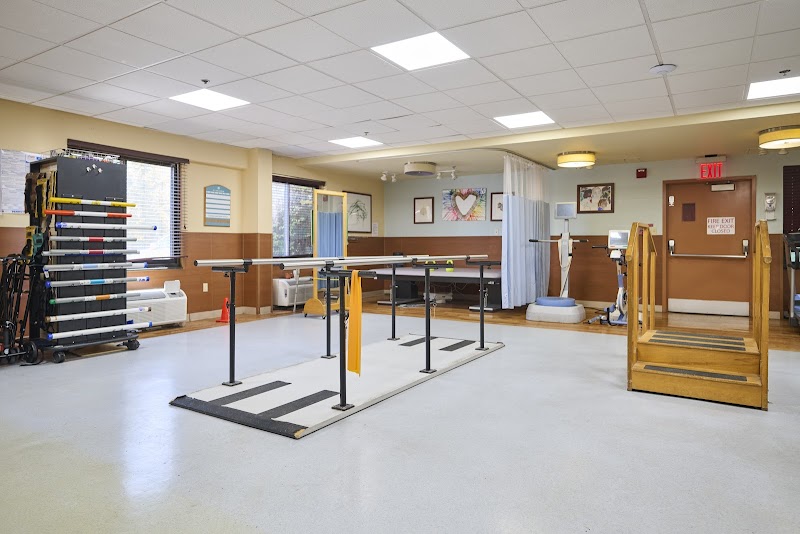
How is Ivy Hill Post Acute Nursing & Rehabilitation Llc Staffed?

CMS rates IVY HILL POST ACUTE NURSING & REHABILITATION LLC's staffing level at 4 out of 5 stars, which is above average compared to other nursing homes. Staff turnover is 44%, compared to the Pennsylvania average of 46%. This relatively stable workforce can support continuity of care.

What Have Inspectors Found at Ivy Hill Post Acute Nursing & Rehabilitation Llc?

State health inspectors documented 49 deficiencies at IVY HILL POST ACUTE NURSING & REHABILITATION LLC during 2023 to 2025. These included: 1 that caused actual resident harm and 48 with potential for harm. Deficiencies causing actual harm indicate documented cases where residents experienced negative health consequences.
Who Owns and Operates Ivy Hill Post Acute Nursing & Rehabilitation Llc?

IVY HILL POST ACUTE NURSING & REHABILITATION LLC is owned by a for-profit company. For-profit facilities operate as businesses with obligations to shareholders or private owners. The facility operates independently rather than as part of a larger chain. With 145 certified beds and approximately 136 residents (about 94% occupancy), it is a mid-sized facility located in PHILADELPHIA, Pennsylvania.
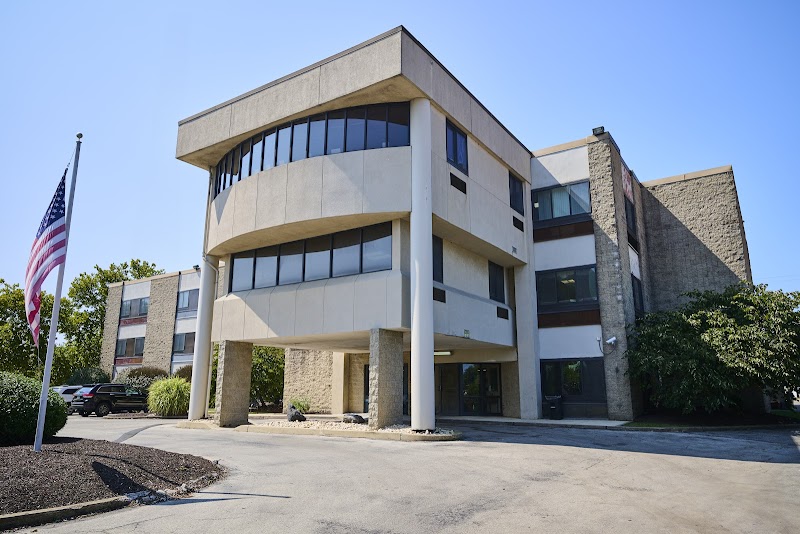
How Does Ivy Hill Post Acute Nursing & Rehabilitation Llc Compare to Other Pennsylvania Nursing Homes?

Compared to the 100 nursing homes in Pennsylvania, IVY HILL POST ACUTE NURSING & REHABILITATION LLC's overall rating (3 stars) matches the state average, staff turnover (44%) is near the state average of 46%, and health inspection rating (2 stars) is below the national benchmark.

What Should Families Ask When Visiting Ivy Hill Post Acute Nursing & Rehabilitation Llc?

Based on this facility's data, families visiting should ask: "Can I visit during a mealtime to observe dining assistance and food quality?" "How do you handle medical emergencies, and what is your hospital transfer rate?" "Can I speak with family members of current residents about their experience?"

Is Ivy Hill Post Acute Nursing & Rehabilitation Llc Safe?

Based on CMS inspection data, IVY HILL POST ACUTE NURSING & REHABILITATION LLC has a clean safety record: no substantiated abuse findings (meaning no confirmed cases of resident harm), no Immediate Jeopardy citations (the most serious violation level indicating risk of serious injury or death), and is not on the Special Focus Facility watch list (a federal program monitoring the lowest-performing 1% of nursing homes). The facility has a 3-star overall rating and ranks #1 of 100 nursing homes in Pennsylvania. While no facility is perfect, families should still ask about staff-to-resident ratios and recent inspection results during their visit.

Do Nurses at Ivy Hill Post Acute Nursing & Rehabilitation Llc Stick Around?

IVY HILL POST ACUTE NURSING & REHABILITATION LLC has a staff turnover rate of 44%, which is about average for Pennsylvania nursing homes (state average: 46%). Moderate turnover is common in nursing homes, but families should still ask about staff tenure and how the facility maintains care continuity when employees leave.

Was Ivy Hill Post Acute Nursing & Rehabilitation Llc Ever Fined?

IVY HILL POST ACUTE NURSING & REHABILITATION LLC has been fined $11,450 across 1 penalty action. This is below the Pennsylvania average of $33,193. While any fine indicates a compliance issue, fines under $50,000 are relatively common and typically reflect isolated problems that were subsequently corrected. Families should ask what specific issues led to these fines and confirm they've been resolved.

Is Ivy Hill Post Acute Nursing & Rehabilitation Llc on Any Federal Watch List?

IVY HILL POST ACUTE NURSING & REHABILITATION LLC is not on any federal watch list. The most significant is the Special Focus Facility (SFF) program, which identifies the bottom 1% of nursing homes nationally based on persistent, serious quality problems. Not being on this list means the facility has avoided the pattern of deficiencies that triggers enhanced federal oversight. This is a positive indicator, though families should still review the facility's inspection history directly.