LOGAN SQUARE REHABILITATION AND HEALTHCARE CENTER


2 FRANKLIN TOWN BLVD, PHILADELPHIA, PA 19103 (215) 563-1800
For profit - Corporation 109 Beds MARQUIS HEALTH SERVICES Data: November 2025 1 Immediate Jeopardy citation
Trust Grade
33/100
#455 of 653 in PA
Last Inspection: January 2025

Within standard 12-15 month inspection cycle. Federal law requires annual inspections.

Overview

Logan Square Rehabilitation and Healthcare Center received a Trust Grade of F, indicating significant concerns about the facility's quality of care. It ranks #455 out of 653 nursing homes in Pennsylvania, placing it in the bottom half of facilities statewide, and #31 out of 46 in Philadelphia County, meaning there are only a few local options that are better. The facility's trend is worsening, with issues increasing from 7 in 2024 to 9 in 2025. Staffing has a rating of 2 out of 5 stars and a turnover rate of 53%, which is average for Pennsylvania, suggesting some staff may not stay long enough to build strong relationships with residents. The center has accumulated $43,154 in fines, which is concerning and higher than 83% of facilities in the state, indicating potential compliance issues. In terms of RN coverage, the facility has average support, which is essential as registered nurses can identify problems that nursing assistants might overlook. Specific incidents reported include a failure to supervise a resident with access to over-the-counter medications, which created a critical risk, and inadequate labeling of medications, which poses a risk of improper administration. Additionally, the facility's resident call system was not functioning effectively, preventing residents from easily reaching staff for assistance. Overall, while there are some strengths in staffing, the many weaknesses and significant fines raise serious concerns for families considering this nursing home for their loved ones.

Trust Score
F
33/100
In Pennsylvania
#455/653
Bottom 31%
Safety Record
High Risk
Review needed
Inspections
Getting Worse
7 → 9 violations
Staff Stability
⚠ Watch
53% turnover. Above average. Higher turnover means staff may not know residents' routines.
Penalties
○ Average
$43,154 in fines. Higher than 57% of Pennsylvania facilities. Some compliance issues.
Skilled Nurses
✓ Good
Each resident gets 52 minutes of Registered Nurse (RN) attention daily — more than average for Pennsylvania. RNs are trained to catch health problems early.
Violations
⚠ Watch
49 deficiencies on record. Higher than average. Multiple issues found across inspections.
★★☆☆☆
2.0
Overall Rating
★★☆☆☆
2.0
Staff Levels
★★☆☆☆
2.0
Care Quality
★★☆☆☆
2.0
Inspection Score
Stable
2024: 7 issues
2025: 9 issues

The Good

  • Full Sprinkler Coverage · Fire safety systems throughout facility
  • No fines on record

Facility shows strength in fire safety.

The Bad

2-Star Overall Rating

Below Pennsylvania average (3.0)

Below average - review inspection findings carefully

Staff Turnover: 53%

Near Pennsylvania avg (46%)

Higher turnover may affect care consistency

Federal Fines: $43,154

Above median ($33,413)

Moderate penalties - review what triggered them

Chain: MARQUIS HEALTH SERVICES

Part of a multi-facility chain

Ask about local staffing decisions and management

The Ugly 49 deficiencies on record

1 life-threatening
Jan 2025 9 deficiencies
CONCERN (D)

Potential for Harm - no one hurt, but risky conditions existed

Deficiency F0558 (Tag F0558)

Could have caused harm · This affected 1 resident

**NOTE- TERMS IN BRACKETS HAVE BEEN EDITED TO PROTECT CONFIDENTIALITY** Based on observations, review of clinical records, and staff interview it was determined that the facility failed to provide rea...

Read full inspector narrative →
**NOTE- TERMS IN BRACKETS HAVE BEEN EDITED TO PROTECT CONFIDENTIALITY** Based on observations, review of clinical records, and staff interview it was determined that the facility failed to provide reasonable accommodation of needs for two of 30 residents reviewed (Resident R215 and R165). Findings Include: Review of Resident R215's clinical record revealed the resident was admitted to the facility on [DATE]. Height and weight measurements dated December 11, 2024, revealed Resident R215 was 6 feet 3 inches tall and weighed 225 pounds. Review of Resident R215's clinical record revealed a nursing note dated December 11, 2024, at 11:49 p.m. that a TELS (an electronic system used to enter, manage, and track maintenance requests) request was placed for a bed extender (increases the length and/or width of existing bed to provide more space and comfort). During an interview on January 12, 2025, at 11:35 a.m. Resident R215 reported that the bed was too small (Resident R215 was too tall for the bed) causing his feet to press against the footboard while lying in bed and subsequently causing his feet to feel numb. Observations confirmed Resident R215 appeared uncomfortable in bed as he needed to keep his legs bent and pulled to the side to keep them from pressing against the footboard. Observations on January 12, 2025, at 11:35 a.m. revealed the width of the bed was also too small leaving little room for Resident R215 to reposition in bed. Resident R215 reported feeling fearful of falling out of bed when being turned and repositioned due to the little space and no bed enablers to hold onto. Interview on January 12, 2025, at 12:07 p.m. with Nursing Supervisor, Employee E3, confirmed the bed was too small for Resident R215 and that the facility was working on getting a bed extender for the resident's bed. Interview on January 12, 2025, at 12:12 p.m. with Nursing Home Administrator, Employee E1, confirmed the facility was still working on getting the resident a bed extender and was unsure why a proper fitting bed was not available on the day Resident R215 was admitted . Observations on January 12, 2025, at 11:00 a.m. of Resident R165's room revealed the resident was laying on the bed. Residents foot was on top of the footboard with a pillow under the ankle area. Resident R165 stated the bed was short for him and he could not raise the head of the bed without placing foot on the bed. Further observation revealed that there was no bed extender placed on the bed. Interview with Administrator on January 12, 2025, at 2:00 p.m. stated facility could utilize bed extender for residents if the bed was short for them. Observation with Administrator confirmed that the bed for R165 was short and he placed his foot on the foor board. 28 Pa. Code 201.29 (a) Resident Rights. 28 Pa. Code 211.10 (d) Resident care policies.
CONCERN (D)

Potential for Harm - no one hurt, but risky conditions existed

Deficiency F0583 (Tag F0583)

Could have caused harm · This affected 1 resident

Based on observation and review of facility policy, it was determined that the facility failed to ensure that the residents right to privacy was protected for two of 30 residents reviewed. (Resident R...

Read full inspector narrative →
Based on observation and review of facility policy, it was determined that the facility failed to ensure that the residents right to privacy was protected for two of 30 residents reviewed. (Resident R Findings include: Review of facility policy titled Confidentiality of Information and Personal Privacy dated October 2017, revealed that the facility will safeguard the personal privacy and confidentiality of all resident personal and medical records. The facility will strive to protect the resident's privacy regarding his or her accommodations, medical treatment, written communication, personal care, visits, and family group meetings. Observation on the third floor activity room on January 13, 2025 at 10:53, the room included eleven residents and two employees, Registered nurse, Employee E8 was observed evaluating a resident's vital signs. registered nurse Employee E8 was overheard relaying the vital measurements to the resident. 28 Pa. Code 201.18(b)(2) Management
CONCERN (D)

Potential for Harm - no one hurt, but risky conditions existed

Deficiency F0655 (Tag F0655)

Could have caused harm · This affected 1 resident

**NOTE- TERMS IN BRACKETS HAVE BEEN EDITED TO PROTECT CONFIDENTIALITY** Based on review of clinical records, staff and resident interviews, it was determined that the facility failed to ensure that a ...

Read full inspector narrative →
**NOTE- TERMS IN BRACKETS HAVE BEEN EDITED TO PROTECT CONFIDENTIALITY** Based on review of clinical records, staff and resident interviews, it was determined that the facility failed to ensure that a written summary of the baseline care plan was provided to the resident and/or the resident's representative that included initial goals based on admission orders, physician orders, therapy services and social services for one of 22 residents reviewed (Resident R164). Findings include: Review of clinical record revealed that the resident was admitted to the facility on [DATE], with diagnosis including progressive neurological condition and cerebrovascular accident (stroke) and Parkinson's disease (progressive disease of the central nervous system). Interview with Resident R164 and with resident's family on January 12, 2025 at 11:25 a.m. stated she was admitted to the facility 9 days ago and she was not sure if she was getting all her medications. Continued interview with Resident R164 and resident's family stated they were not provided a written summary of the baseline care plan that included initial goals based on admission orders, physician orders, therapy services and social services. Review of the care plan and the clinical record revealed no documented evidence that the resident representative received a written summary of the baseline care plan that included initial goals based on admission orders, physician orders, therapy services and social services. A request was made to the Social Service Director on January 15, 2025, at 11:44 a.m., for a copy of the baseline care plan for Resident R164 and evidence that resident/resident representative received a copy of the baseline care plan. Interview with Social Service Director on January 15, 2025, at 11:44 a.m., stated facility did not conduct a baseline care plan meeting with Resident R164 and a written summary of the baseline care plan was provided to the resident and/or the resident's representative. 28 Pa. Code 211.10(c) Resident care policies 28 Pa. Code 211.10(d) Resident care policies 28 Pa. Code 211.12(d)(1) Nursing services
CONCERN (D)

Potential for Harm - no one hurt, but risky conditions existed

Pharmacy Services (Tag F0755)

Could have caused harm · This affected 1 resident

Based on review of facility policy, review of clinical records, and staff interview, it was determined that the facility failed to provide pharmaceutical services (including procedures that assure the...

Read full inspector narrative →
Based on review of facility policy, review of clinical records, and staff interview, it was determined that the facility failed to provide pharmaceutical services (including procedures that assure the accurate acquiring and administering of medications) to meet the needs of each resident for one of 22 residents reviewed (Resident R34). Findings Include: Review of facility policy Unavailable Medication dated June 2021 revealed in conjunction with the contracted pharmacy, the facility will make every effort to ensure that a medication ordered for the resident is available to meet their needs. Continued review of facility policy Unavailable Medication revealed in the event that a medication ordered for a residents is noted to be unavailable near or at the time it is to be dispensed, nursing staff shall contact the pharmacy regarding the unavailable medication, attempt to obtain the medication from the facility's automated medication dispensing system, notify the physician of the unavailable medication, report the date of the expected delivery, and obtain new orders. Review of Resident R34's admission Minimum Data Set (MDS - federally mandated resident assessment and care screening) dated December 21, 2024, revealed the resident was cognitively intact and had diagnoses of polycythemia vera (a rare blood cancer that causes too many red blood cells, thickening the blood and increasing the risk of blood clots) and atrial fibrillation (an irregular heart rhythm that can lead to stroke, heart failure and other complications). Further review of the MDS revealed Resident R34 was taking an anticoagulant (also referred to as a blood thinner - medications that reduces the formation of blood clots). Review of Resident R34's care plan dated December 18, 2024, revealed the resident was on anticoagulant therapy for blood clot prevention. Intervention dated December 18, 2024, included to provide medication as ordered. Review of Resident R34's medication administration record revealed Warfarin 2.5 mg (milligrams) (an anticoagulant medication) was due in the evening on January 4, 2025. The medication was signed out as drug/treatment not administered. Review of Resident R34's clinical record revealed a medication administration note for the Warfarin 2.5 milligerams (mg) dose due on January 4, 2025, that revealed waiting on pharmacy. Review of Resident R34's clinical record revealed no documented evidence the nurse called the pharmacy to determine an expected delivery date and no documented evidence the physician was made aware of the missed medication and subsequent new orders on how to proceed. Further review of Resident R34's medication administration record revealed Warfarin 2mg was due in the evening on January 6, 2025, and January 12, 2025. The medications were signed out as drug/treatment not administered on both dates. Review of Resident R34's clinical record revealed a medication administration note for the Warfarin 2mg dose due on January 6, 2025, that revealed awaiting pharmacy. Review of Resident R34's clinical record revealed a medication administration note for the Warfarin 2mg dose due on January 12, 2025, that revealed awaiting pharm. Interview on January 15, 2025, at 10:48 a.m. with Registered Nurse, Employee E4, revealed missed medications were due to the pharmacy not delivering medications in a timely manner. 28 Pa. Code 211.9 (a)(1) Pharmacy services.
CONCERN (D)

Potential for Harm - no one hurt, but risky conditions existed

Deficiency F0810 (Tag F0810)

Could have caused harm · This affected 1 resident

Based on review of facility policy, review of clinical records, observations and staff interviews, it was determined the facility failed to provide adaptive equipment for 1 of 18 residents observed du...

Read full inspector narrative →
Based on review of facility policy, review of clinical records, observations and staff interviews, it was determined the facility failed to provide adaptive equipment for 1 of 18 residents observed during dining on the third-floor dining room. Findings: Policy titled Assistive Devices and Equipment revealed the facility maintains and supervises the use of assisted devices and equipment for residents. Devices and equipment that assist with residents' mobility, safety and independence are provided for residents these may include but are not limited to specialized eating utensils and equipment. Recommendations for the use of devices and equipment are based on comprehensive assessment and documented in the residence care plan. Staff and volunteers are trained to demonstrate competency in the use of devices and equipment prior to assisting or supervising residents. Review of Residents R83's quarterly minimum data set (mds- a federal mandated assessment tool for all residents) dated December 9, 2024. Resident R83 entered the facility June 30 2023 with diagnosis' including malnutrition(imbalance between the nutrients the body needs to function and the nutrients it gets), hemiplegia (paralysis or weakness to one side of the body), aphasia (loss of ability to understand or express speech ), stroke (a condition in which poor blood flow to the brain and caused cell death). Resident R83 has been assessed as having a brief interview mental for mental status) score of three, indicating that resident R83 has severe cognitive impairment. Review of resident's physicians order dated January 4, 2024, revealed an order for buildup utensils with meals. Interview with Resident R83's family on January 12, 2024 at 12:05 p.m. in the third-floor dining room revealed that resident is supposed to have special utensils but was not given them. She said she asked a staff member for them but has not received them. Observation of lunch third floor January 12, 2025, at 12:10 p.m. rrevealed Rsident R83 has order for step up utensils, observed at lunch the resident given regular utensils. Interview with Nurse aide, Employee E8 confirmed that resident is supposed to be given build up utensils and has not received them at this meal. 28 Pa. Code 211.10(c) Resident care policies 28 Pa. Code 211.12 (d)(1) Nursing services
CONCERN (D)

Potential for Harm - no one hurt, but risky conditions existed

Deficiency F0868 (Tag F0868)

Could have caused harm · This affected 1 resident

Based on review of facility documents of Quality Assurance meeting attendance and staff interviews, it was determined that the facility failed to ensure that the Director of Nursing Services attended ...

Read full inspector narrative →
Based on review of facility documents of Quality Assurance meeting attendance and staff interviews, it was determined that the facility failed to ensure that the Director of Nursing Services attended a quarterly Quality Assurance Process Improvement (QAPI) committee meeting for nine of nine QAPI meeting documentations reviewed (February 2024 through October 2024). Findings Include: A review of QAPI committee meeting attendees list for the month of February 2024, March 2024, April 2024, May 2024, June 2024, July 2024, August 2024, September 2024 and October 2024 revealed that it lacked Director of Nursing as attendee for the meetings. This information was confirmed by the facility Regional Staff during a meeting on January 15, 2025, at 1:13 p.m. Facility documentation provided at the time of the survey did not have evidence that the director of nursing attended the meetings. There was no sign in sheet or meeting minutes information available for July of 2024 that any of the required members attended the meeting. Facility did not provide this information at the time of the survey. A request for copies of the original QAPI sign in sheet provided at the time of the survey was requested however was not submitted. 28 Pa. Code 201.18 (1)(3) Management.
CONCERN (D)

Potential for Harm - no one hurt, but risky conditions existed

Deficiency F0883 (Tag F0883)

Could have caused harm · This affected 1 resident

**NOTE- TERMS IN BRACKETS HAVE BEEN EDITED TO PROTECT CONFIDENTIALITY** Based on review of facility policy, review of clinical records, and staff and resident interviews, it was determined that the fa...

Read full inspector narrative →
**NOTE- TERMS IN BRACKETS HAVE BEEN EDITED TO PROTECT CONFIDENTIALITY** Based on review of facility policy, review of clinical records, and staff and resident interviews, it was determined that the facility failed to ensure that each resident was offered an influenza immunization for two of seven residents reviewed for immunizations (Resident R34 and R315). Findings Include: Review of Resident R34's admission Minimum Data Set (MDS - federally mandated resident assessment and care screening) dated December 21, 2024, revealed the resident was admitted to the facility on [DATE], and was cognitively intact. Interview on January 14, 2025, at 1:38 p.m. with Resident R34 the resident denied being offered the influenza immunization on admission but admitted being willing to accept the vaccine if suggested by the physician. Review of Resident R34's entire clinical record, including immunization history, revealed no documented evidence the resident was offered the immunization on admission or documentation that the resident either received the influenza immunization or did not receive the influenza immunization due to medical contraindications or refusal. Review of Resident R315's admission Minimum Data Set (MDS - federally mandated resident assessment and care screening) dated December 17, 2024, revealed the resident was admitted to the facility on [DATE], and was cognitively intact. Interview conducted on January 13, 2025 at 10:35 p.m. with Resident R315 revealed the facility did not offer the resident the influenza immunization on admission. Resident R315 stated she has been requesting the influenza immunization and would like to receive it before discharge Review of Resident R315's entire clinical record, including immunization history, revealed no documented evidence the resident was offered the immunization on admission or documentation that the resident either received the influenza immunization or did not receive the influenza immunization due to medical contraindications or refusal. 28 Pa. Code 211.5 (f)(iv) Medical records. 28 Pa. Code 211.12(d)(1) Nursing services
CONCERN (D)

Potential for Harm - no one hurt, but risky conditions existed

Safe Environment (Tag F0921)

Could have caused harm · This affected 1 resident

**NOTE- TERMS IN BRACKETS HAVE BEEN EDITED TO PROTECT CONFIDENTIALITY** Based on observations, review of clinical record, and staff and resident interviews it was determined that the facility failed t...

Read full inspector narrative →
**NOTE- TERMS IN BRACKETS HAVE BEEN EDITED TO PROTECT CONFIDENTIALITY** Based on observations, review of clinical record, and staff and resident interviews it was determined that the facility failed to provide a sanitary and comfortable environment for two of 30 residents reviewed (Resident R220 and R164). Findings Include: Review of Resident R220's clinical record revealed a physician order dated January 1, 2024, for an antibiotic medication to be administered intravenously (medical technique that administers medications directly into the vein) one time per day. Observations on January 15, 2024, at 11:56 a.m. with Director of Nursing, Employee E2, revealed Resident R220's IV pole (a device that holds a bag of intravenous fluids or medications in place as it is being administered to a patient) was soiled at the base of the pole with what appeared to be old tube feeding formula. Interview with Resident R164 and with resident's family on January12, 2025 at 11:25 a.m. stated she had an over the head light that would not turn off. She stated it was broken when she was admitted to the facility nine days ago. Resident stated she had been sleeping with the lights on for every day since her admission. Resident's family stated the cord that turns the light on and off did not work properly and the light did not turn off. Continued interview with Resident 164 stated some facility staff did try to fix it and left without fixing it. Observation of the over the head light revealed that the light string was broken and had only 2 inches left from the fixture. The light could not be turned off. Review of clinical record revealed that the resident was admitted to the facility on [DATE] with diagnosis including progressive neurological condition and cerebrovascular accident(stroke) and Parkinson's disease. Interview with Administrator on January 12, 2025, at 2:00 p.m. confirmed that overhead light for Resident R164 was broken.
CONCERN (E)

Potential for Harm - no one hurt, but risky conditions existed

Deficiency F0761 (Tag F0761)

Could have caused harm · This affected multiple residents

Based on the observation, review of facility policy and procedure, review of manufacturers guidelines, and interviews with staff, it was determined that the facility failed to properly label medicatio...

Read full inspector narrative →
Based on the observation, review of facility policy and procedure, review of manufacturers guidelines, and interviews with staff, it was determined that the facility failed to properly label medications upon opening for ophthalmic solutions found on two of three medications carts observed. (third floor carts one and two) Findings: Review of facility policy titled Medication Labeling and Storage revealed the facility stores all medications and biologicals under proper temperature, humidity, and light controls. Only authorized personnel have access to keys. The nursing staff is responsible for maintaining medications storage and preparation areas they clean safe and sanitary manner. Multi dose vials that have been opened or at accessed are dated and discarded within 28 days unless the manufacturer specifies a sure they're longer date for the open vial. Observation of medication pass with Employee Licensed nurse, Employee E5 on January 12, 2024, during med pass, inspection of third floor medication cart one revealed seven boxes of multi-use eye drops without any date written on the box of date of opening. Interview with Employee E5 at time of the above observation confirmed that seven boxes of multi-use eye drops did not contain the date of opening on the box. Observation of medication pass with Licensed nurse, Employee E6 on January 12, 2024, during med pass, inspection of third floor medication cart two revealed two boxes of multi-use eye drops without any date of opening on the box. Interview with Employee E6 at time of the above observation confirmed that the two boxes of multi-use eye drops did not contain the date of opening on the box. 28 Pa. Code 211.9(a)(1) Pharmacy services 28 Pa. Code 211.12(d0(1) Nursing services
Mar 2024 1 deficiency
CONCERN (D) 📢 Someone Reported This

A family member, employee, or ombudsman was alarmed enough to file a formal complaint

Potential for Harm - no one hurt, but risky conditions existed

Deficiency F0582 (Tag F0582)

Could have caused harm · This affected 1 resident

Based on a review of clinical records and facility provided documentation, and interview with staff, it was determined that the facility failed to provide the required advanced notice, through a Notic...

Read full inspector narrative →
Based on a review of clinical records and facility provided documentation, and interview with staff, it was determined that the facility failed to provide the required advanced notice, through a Notice of Medicare Non-Coverage (CMS 10123), regarding the termination of Medicare services for one of three residents sampled (Residents R1) Findings include: Review of Resident's R1 clinical record it revealed admission date on February 7, 2024, for short term rehabilitation. Resident's R1 funding source was Medicare skilled A services. Conntinued review of the clinical record revealed that Resident R1 was discharge from the facility on March 15, 2024. Then, Resident R1 was readmitted from the local hospital on March 19, 2024 with Medicare Part A benefits. On March 26, 2024, at 12:21 p.m. an interview was held with the Social Worker Director who revealed that Resident R1 was discharged as the Medicare service benefits were exhausted. It was further reported when Medicare funding exhausted therefore, Resident R1 did not receive Notice of Medicare Non-Coverage (NOMNC) cms-10123 the right to appeal a denial of Medicare services. On March 26, 2024, at 2:11 p.m. an interview was held with Administrator, Employee E1 and Business Director, Employee E6 who reported that Resident R1 was discharge mistakenly. Resident's R1's admission date was entered currently however, facility system started calculating Medicare remaining benefit days that were used from the Resident's R1 prior admission date in 2023; therefore, it gave a report to the facility that Resident's R1 Medicare benefits were exhausted versus facility determined that a resident no longer qualifies for Medicare Part A. Employee E1 confirmed that Resident R1 should have not been discharged on March 15, 2024. And if Resident R1 was appropriately qualified to be discharged Notice of Medicare Non-Coverage (NOMNC) cms-10123 should have been issued. 28 Pa Code 201.29(a) Resident rights
Jan 2024 6 deficiencies 1 IJ
CRITICAL (J)

Immediate Jeopardy (IJ) - the most serious Medicare violation

Accident Prevention (Tag F0689)

Someone could have died · This affected 1 resident

**NOTE- TERMS IN BRACKETS HAVE BEEN EDITED TO PROTECT CONFIDENTIALITY** Based on review of facility documentation, review of policy and procedures, review of clinical records, review of hospital recor...

Read full inspector narrative →
**NOTE- TERMS IN BRACKETS HAVE BEEN EDITED TO PROTECT CONFIDENTIALITY** Based on review of facility documentation, review of policy and procedures, review of clinical records, review of hospital records, observation and interviews with staff, it was determined that the facility failed to provide adequate supervision to a resident with a history of over-the-counter medication usage. The facility failed to conduct a thorough assessment of the resident's environment to ensure that the resident was not in possession of over-the-counter medication for one of seven residents reviewed (Resident R31), which resulted in an Immediate Jeopardy situation. Findings include: Review of facility policy, Visitation, revised September 2022, revealed, Our facility permits residents to receive visitors subject to the resident's wishes and the protection of the rights of others in the facility. 1. Some visitation may be subject to reasonable clinical and safety restrictions that protect the health, safety, security, and or rights of the facility's residents. Restriction of Individual Visitors 6. If it is determined that an illegal substance (s) has been brought into the facility by a visitor, it is immediately reported to the charge nurse or supervisor. The supervisor and the Director of Nursing Services determine whether the situation warrants a referral of law enforcement. b. If items or illegal substances are in plain view, and these pose a risk to the residents' health and safety, the items may be confiscated by facility staff. The circumstances, description of the item(s), and rationale for confiscating are documented in the resident's record. c. Facility staff does not conduct searches of a resident or their personal belongings, unless the resident or representative agrees to the search and understands the reason for the search. Review of facility policy, Administering Medication, revised April 2019, revealed, Medications are administered in a safe and timely manner, and as prescribed. 27. Residents may self-administer their own medications only if the attending physician, in conjunction with the interdisciplinary care planning team, has determined that they have the decision-making capacity to do so safely. Review of facility policy, Personal Property, revised August 2022, revealed, Residents are permitted to retain and use personal possessions, including furniture and clothing, as space permits, unless doing so would infringe on the rights or health and safety of other residents. 8. If items or illegal substances that belong to the resident are in plain view, and these pose a risk to the residents' health and safety, the items may be confiscated by facility staff. The circumstances, description of the item{s), and the rationale for confiscating are documented in the resident's record. 9. Facility does not conduct searches of a resident or their personal belongings, unless the resident or representative agrees to the search and understands the reason for the search. Review of clinical record for Resident R31 revealed that the resident was admitted to the facility on [DATE], with the diagnoses of metabolic encephalopathy (altered mental status); hepatic encephalopathy (a loss of brain function as a result of failure in the removal of toxins from the blood due to liver damage); chronic obstructive pulmonary disease (disease process that causes decreased ability of the lungs to perform); protein calorie malnutrition; cognitive communication deficit; muscle weakness; major depressive disorder (major loss in interest in pleasurable activites); alcohol dependence; unspecified dementia; history of falling; shortness of breath; insomnia; anxiety disorder, hypertension (high blood pressure) and atrial fibrillation (irregular and rapid heart beat). Review of a Nurse Practitioner note dated June 25, 2023, at 1:06 p.m. revealed seen today for an acute visit requested by nursing for increased anxiety, screaming out, and fixating on Tylenol dosage. Per nursing, behavior started a few days ago. Patient asks for Tylenol every two hours. Nursing educated patient on Tylenol regimen and daily limit of 3 mg ( milligrams). Patient then begins with agitation, anxiety and yelling out not controlled with redirection. Of note, patient's family member bring her OTC (over the counter) Tylenol found by nursing and removed from room multiple times. Nursing supervisor previously educated family member about policy and protocol of patient self medicating. Patient Currently on Klonopin BID (twice a day) for hx (history of) anxiety. On assessment, patient reports wanting Tylenol or chronic pains. Agreeable to Q6H (every 6 hours) regimen. Review of nurse practitioner note for Resident R31 on September 7, 2023 at 12:39 p.m. revealed, Eighty-one year old long term care female seen today for an acute visit requested by nursing for altered mental status described as increased lethargy, weakness and garbled speech. On assessment, patient lying in bed, easy to arouse, uncomprehendable speech (not baseline), generalized weakness throughout. Pupils 4mm brisk b/l. Facial features symmetrical. BP (blood pressure)180/70; heart rate 110; temperature 96.0 rectal. Of note, nursing reports new Tylenol bottle found in patient's room. 125 tablets missing, unclear when she obtained bottle and how much was taken. Patient has history of this occurrence with Tylenol overdosing. Rapid Covid-19 is negative. Resident was transported to hospital 911 with altered mental status, hypothermia (a condition of having a lower body temperature than normal body temperature) and possible Tylenol overdose. All emergency contacts called with no replies, unable to leave a voicemail, resident is responsible party. Review of hospital toxicology revealed, Acetaminophen level is 173.3. Acetaminophen level elevated. Will start NAC (N-Acetyl Cysteine which comes from the amino-acid L-cysteine. Amino acids are building blocks of protein). Spoke with Poison Control Center. Initiate NAC). Will admit. Further review of Resident R31's clinical record revealed Resident R31 was discharged from the hospital and readmitted to the facility on [DATE]. Review of Resident R31's updated care plan revealed that I am at risk for medication overdose related to history of overdose of Tylenol. The goal was I will be free of overdose related to Tylenol Medication. The interventions listed included Assess resident's pain level; Psych consult; Staff to observe environment for safety concern. Continued review included: Physician's order update: Monitor resident's room for medication not prescribed. Further review of Resident R31's clinical record of December 4, 2023, revealed, During AM care, Resident R31 was found with a bag of pills, marked Tylenol ER (about 45 pills in total). Resident would not give explanation about why she has the pills or who gave them to her. The resident stated, 'I did not take any tonight.' Assessed the resident and resident is AAO X 3 (alert to person, time and place), able to make own needs per baseline vital signs. Message left for MD (physician) and house supervisor was made aware. Attempted to educate resident on harmful amount of Tylenol, and self administration without MD and staff aware, and resident did not verbalize understanding and may need further teaching and reinforcement. Nursing will continue to monitor. Review of Nurse Practitioner's note of December 4, 2023 revealed, seen today for an acute visit requested by nursing after a bag of OTC Tylenol found in patient's room. This is a reoccurring issue with this patient, in which visitors bring patient large amounts of Tylenol and patient self-administers over the recommended amount (3G daily). This is evidenced by previous hospitalization for AMS 2/2 to Tylenol overdose. At that time, patient found with large quantity of Tylenol in her room. Unclear how many Tylenol she ingested, but Tylenol level at hospital was 173.3, poison control involved at that time and NAC (N-acetylcysteine) given. Today, patient observed lying in bed, alert and conversing STAT (immediate) Tylenol level ordered. Collection Date: December 4, 2023 11:00 Reported Date: 12/07/2023 15:07: 121 ug/ml Ref. Range 10-30 There is no follow up note to review. Review of Nurse Progress note of December 20, 2023, revealed, Resident was found with a large bag of pills in her bed, approximately 50 white oblong pills that appear to be Tylenol ES. Resident refuses to report where the pills came from or how many if any were taken. Resident appears stable at baseline. House Supervisor made aware and Nurse Practitioner. NP (Nurse Practitioner) ordered a stat Tylenol level. Resident ordered to be seen by Psych. (Tylenol stat level revealed: none detected) Review of care plan Follow-up Action: I am at risk for medication overdose related to history of overdose of Tylenol. Goal: I will be free of overdose related to Tylenol medication. Interventions: Assess resident's pain level; Grandson educated on the importance of supplying resident with Tylenol without facility/doctor's approval. Grandson educated on risk of resident taking additional medications; Psych consult; Staff to observe environment for safety concerns; stat Acetaminophen level ordered. Review of Psych note of December 20, 2023, revealed, There is concern that somebody brought her Tylenol She continuously complains of pain and that she needs Tylenol. Does not remember when she last received and insists 'I did not have it' when asked about her pain she is very non-specific. She becomes more irritated with continuous questions. Relates she is depressed and wants to go to the 'other place'. Medication change was made. (Ariprizole 2-3 mg may help better treat the anxiety in collaboration with duloxetine). An interview on January 23, 2024, at 1:00 p.m. with Employee E17, Regional [NAME] President, revealed, We were unable to find the supplier. Staff reports that this resident does not have visitors. We were unable to reach any of the emergency contacts. Resident is her own responsible party. Finally, on December 20, 2023, the Unit Manager saw the resident's grandson visiting. The nurse spoke with grandson to see if he knew how resident was receiving outside Tylenol. Grandson stated that he had been bringing them in because resident calls him and says that she needs them due to her being in pain. Grandson educated on resident receiving prescribed Tylenol and that she has a scheduled time that she receives them. Grandson reported that she tells him that she does not receive Tylenol at all and that Tylenol is the only thing that helps with her pain. Grandson educated on Tylenol toxicity affects on the body, including lethargy, nausea and vomiting as well as abdominal pain. Grandson voiced understanding and apologized. He stated that no matter how much she calls and begs, he will not bring her anymore Tylenol. An Immediate Jeopardy situation was identified to the Nursing Home Administrator on January 23, 2024, at 3:29 p.m. for the facilities failure to provide adequate supervision to a resident with a history of over the counter medication usage. The facility failed to conduct a thorough assessment of the resident's environment to ensure that the resident was not in possession of over the counter medication. An IJ template was provided to the facility The facility submitted a written plan of action on January 23, 2024, at 8:18 p.m. and implemented the the plan of action which included: 1. Resident has been assessed by the physician for pain management and psychosocial support. No changes were made to the pain medication regimen and the Geripsychologist was contacted for a follow up bedside visit. The diagnosis of PTSD (Post Traumatic Stress Disorder) was added with interventions for psychosocial support. Additionally, interventions were added for evaluation, management and compliance with pain medication regimen. All care plans have been updated. Completed 1/21/2024. 2. Licensed Nursing Home Administrator completed a visual audit of all resident rooms for both nonprescription and prescription medications. Any variances were reported to the physician for clarification and orders for self-medication, if appropriate. Completed 1/19/2024. 3. Immediate Actions/Education -Nursing Administration completed an audit of all residents to ensure anyone identified with similar concerns was assessed and provided immediate treatment and care planning. Any identified variances were immediately referred for physician evaluation. Completed 1/21/2024. -Nursing Administration completed a 7 day look back in EHR(Electronic Health Record) to identify any omission of documentation or any medication administered outside of parameter/indication for usage. Any variances were reported to the physician for follow up. Completed 1/21/2024. -LNHA, DON and ADON were educated on ERS (Electronic Reporting System) and requirements for reporting. Completed 1/21/2024. -Staff have been educated in visually inspecting rooms during care and in room visits for the presence of prescription and non-prescription medications at the bedside, in room searches as resident allows, greeting all visitors and monitoring for items brought in and the reporting requirements. Completed 90% by 1/21/2024. The remainder will be completed by 1/24/2024. -Resident has an updated pain assessment and care plan mapping the pathway for pain control including PRN medications with specific indications for usage. Completed 1/20/2024. -A mattress audit has been completed to ensure all are in good shape and maintaining pressure reduction. This audit was completed in an attempt to eliminate all causes of discomfort/pain. Any variances were reported to Plant Operations for installation of new mattress. Completed 1/21/2024. -Resident has an updated trauma informed care evaluation and care plan mapping the pathway for individualized psychosocial care. Completed 1/20/24. -Social Service designee will review all diagnoses and behavioral indicators to ensure anyone identified with similar concerns was assessed and provided immediate treatment and care planning. Completed 1/20/2024. 4. Ongoing Compliance will be monitored by: -Visual audit of all resident rooms for both non-prescription and prescription medications every shift for three days, then daily for three days, the three times per week for two weeks, weekly for two weeks then monthly for two months. Any variance will be reported to the RN Supervisor on duty for immediate follow-up. -Review of PCC dashboard on all PRN usage for any patterns/trends every shift for three days, then daily for three days, then three times a week for two weeks, weekly for two weeks then monthly for two months. Any variance will be reported to the RN Supervisor on duty for immediate follow-up. On January 24, 2024, the Action Plan was reviewed and interviews were conducted with nursing staff to confirm the in-service education was completed. Following the verification of the immediate action plan, the Nursing Home Administrator was notified that the Immediate Jeopardy was lifted on January 24, 2024 at 3:50 p.m. 28 Pa. Code 201.14(a) Responsibility of licensee 28 Pa. Code 201.18(b)(1) Management 28 Pa. Code 201.18(b)(3) Management 28 Pa. Code 201.10(d) Resident care policies 28 Pa. Code 211.12(d)(1)(3) Nursing services
CONCERN (D)

Potential for Harm - no one hurt, but risky conditions existed

ADL Care (Tag F0677)

Could have caused harm · This affected 1 resident

**NOTE- TERMS IN BRACKETS HAVE BEEN EDITED TO PROTECT CONFIDENTIALITY** Based on review of facility policy, review of clinical record, and interviews with staff and residents, it was determined that t...

Read full inspector narrative →
**NOTE- TERMS IN BRACKETS HAVE BEEN EDITED TO PROTECT CONFIDENTIALITY** Based on review of facility policy, review of clinical record, and interviews with staff and residents, it was determined that the facility failed to ensure that one of 34 residents received showers. (Resident R6). Findings Include: Review of undated facility policy Resident Rights revealed federal and state laws guarantee certain basic rights to all residents of the facility. These rights include the residents right to self-determination. Review of Resident R6's admission Minimum Data Set (MDS - federally mandated resident assessment and care screening) dated January 5, 2024, revealed the resident was admitted to the facility on [DATE], and was cognitively intact. Further review of the MDS revealed the resident was dependent on staff for shower/bathing. Interview with Resident R6 on January 18, 2024, revealed the resident had only received a bed bath since admission but would prefer to take a shower. Review of Resident R6's nursing [NAME] (electronic documentation system that enables nurses and nurse aides to write, organize, and easily reference key patient information that shapes their nursing care) revealed the resident was scheduled for showers on Thursday's during the 7:00 a.m. to 3:00 p.m. shift and on Sundays during the 3:00 p.m. to 11:00 p.m. shift. Further review of the nursing [NAME] revealed staff documented not applicable for Resident R6's showers. Interview on January 23, 2024, at 2:06 p.m. with nurse aide, Employee E14, confirmed the aide provided bed baths for Resident R6 and was unable to explain why the resident was not being provided with showers. Interview on January 24, 2024, at 1:49 p.m. with the Director of Nursing, Employee E2, revealed a shower schedule is developed for every resident on admission which would provide each resident the opportunity to receive a shower. Further interview with the Director of Nursing, Employee E2, confirmed that Resident R6 had no limitations regarding the ability to receive a shower and that Resident R6 expressed a preference in wanting a shower via the shower chair and was looking forward to it. 28 Pa. Code 211.10 (c) Resident care policies 28 Pa. Code 211.12(d)(5) Nursing Services
CONCERN (D)

Potential for Harm - no one hurt, but risky conditions existed

Tube Feeding (Tag F0693)

Could have caused harm · This affected 1 resident

**NOTE- TERMS IN BRACKETS HAVE BEEN EDITED TO PROTECT CONFIDENTIALITY** Based on review of facility policy, review of clinical record, observations, and interviews with staff and residents, it was det...

Read full inspector narrative →
**NOTE- TERMS IN BRACKETS HAVE BEEN EDITED TO PROTECT CONFIDENTIALITY** Based on review of facility policy, review of clinical record, observations, and interviews with staff and residents, it was determined that the facility failed to administer a resident's tube feeding per the physician orders for one of one resident with tube feeding reviewed (Resident R6). Findings Include: Review of undated facility policy Enteral Nutrition revealed adequate nutritional support through enteral nutrition is provided to residents as ordered. The nurse confirms that orders for enteral nutrition are complete and include volume and rate of administration. Review of Resident R6's admission Minimum Data Set (MDS - federally mandated resident assessment and care screening) dated January 5, 2024, revealed the resident was admitted to the facility on [DATE], and received nutrition via tube feeding (also known as enteral nutrition - nutrition is delivered using a flexible tube inserted through the nose, or directly into the stomach or small intestine). Further review of the MDS revealed Resident R6 was cognitively intact. Review of Resident R6's care plan dated January 2, 2024, revealed the resident had a nutritional problem related to NPO (nothing by mouth) and nutritional needs being met via enteral nutrition. Interventions dated January 2, 2024, revealed to provide tube feeding and water flushes as ordered. Review of Resident R6's physician orders dated January 2, 2024, revealed an order to provide water flushes of 200 milliliters (ml) every 6 hours (total 800 ml) (additional water provided to help meet a residents daily fluid needs). Further review of Resident R6's physician orders revealed an enteral feed order dated January 19, 2024, to provide Nutren 1.5 liquid (calorically dense tube-feeding formula) via feeding tube every shift, feeding pump set at 70ml per hour for 20 hours or until total volume 1440 ml infused. Feeding tube up at 6:00 p.m. and down at 2:00 p.m. the next day Observations on January 23, 2024, at 1:07 p.m. revealed Resident R6 was not hooked up to the tube feeding equipment and the tube feeding formula or additional water was not infusing per physician orders. Resident R6 indicated the tube-feeding was stopped either last night or earlier in the morning. Further observations on January 23, 2024, at 1:14 p.m. with Licensed Nurse, Employee E13, confirmed Resident R6 was not hooked up to the tube feeding pump for formula and water administration. Observations of the history on the tube-feeding pump with Licensed Nurse, Employee E13, indicated Resident R6 had only received 1036 ml of tube feeding formula and 600 ml of additional water. Interview on January 23, 2024, at 1:16 p.m. with Resident R6's licensed nurse, Employee E15, revealed the nurse was unaware the resident's tube feeding was not infusing. Licensed Nurse, Employee E13, suggested that therapy may have stopped the tube-feeding prior to services provided in the morning. Interview on January 23, 2024, at 1:55 p.m. with physical therapist, Employee E11, revealed Resident R6 was not hooked up to the tube-feeding when the employee came to get the resident for physical therapy. Physical therapist, Employee E11, reported that it is not within their scope of practice to manipulate the tube-feeding. Interview on January 23, 2024, at 2:06 p.m. with nurse aide, Employee E14, revealed the aide provided morning care before the resident went for therapy and Resident R6's tube feeding was not hooked up at that time. Follow-up interview on January 23, 2024, at 2:11 p.m. with licensed nurse, Employee E15, revealed it was undetermined when the tube-feeding was stopped for Resident R6. 28 Pa. Code 211.10 (a) Resident care policies 28 Pa. Code 211.12 (c) Nursing Services
CONCERN (D)

Potential for Harm - no one hurt, but risky conditions existed

Administration (Tag F0835)

Could have caused harm · This affected 1 resident

**NOTE- TERMS IN BRACKETS HAVE BEEN EDITED TO PROTECT CONFIDENTIALITY** Based on review of clinical records, facility documentation and interviews with staff, it was determined that the Nursing Home A...

Read full inspector narrative →
**NOTE- TERMS IN BRACKETS HAVE BEEN EDITED TO PROTECT CONFIDENTIALITY** Based on review of clinical records, facility documentation and interviews with staff, it was determined that the Nursing Home Administrator and the Director of Nursing failed to effectively manage the facility to ensure that residents were free from accidents related to self administration of medication. This failure placed Resident R31 at high risk for injury and was identified as an Immediate Jeopardy. Findings include: Review of the job description for the Nursing Home Administrator (NHA) revealed: The primary purpose of your position it is to direct the day to day functions of the Center in accordance with current federal, state and local standards, guidelines and regulations that govern nursing Centers to assure that the highest degree of quality care can be provided to our residents at all times. As Administrator, you are delegated the administrative authority, responsibility, and accountability necessary for carrying out your assigned duties. Review of job description for the Director of Nursing (DON) revealed: the primary purpose of your job position is to plan, organize, develop and direct the overall operation of our Nursing Service Department in accordance with current federal, state and local standards, guidelines and regulations that govern our Center, and as may be directed by the Administrator and the Medical Director, to ensure that the highest degree of quality care is maintained at all times. As Director of Nursing Services, you are delegated the administrative authority, responsibility and accountability necessary for carrying out your assigned duties. In the absence of the Medical Director, you are charged with carrying out the resident care policies established by this Center. Review of clinical record for Resident R31 revealed that the resident was admitted to the facility on [DATE], with the diagnoses of metabolic encephalopathy (altered mental status); hepatic encephalopathy (a loss of brain function as a result of failure in the removal of toxins from the blood due to liver damage); chronic obstructive pulmonary disease (disease process that causes decreased ability of the lungs to perform); protein calorie malnutrition; cognitive communication deficit; muscle weakness; major depressive disorder (major loss in interest in pleasurable activites); alcohol dependence; unspecified dementia; history of falling; shortness of breath; insomnia; anxiety disorder, hypertension (high blood pressure) and atrial fibrillation (irregular and rapid heart beat). Review of a Nurse Practitioner note dated June 25, 2023, at 1:06 p.m. revealed seen today for an acute visit requested by nursing for increased anxiety, screaming out, and fixating on Tylenol dosage. Per nursing, behavior started a few days ago. Patient asks for Tylenol every two hours. Nursing educated patient on Tylenol regimen and daily limit of 3 mg ( milligrams). Patient then begins with agitation, anxiety and yelling out not controlled with redirection. Of note, patient's family member bring her OTC (over the counter) Tylenol found by nursing and removed from room multiple times. Nursing supervisor previously educated family member about policy and protocol of patient self medicating. Patient Currently on Klonopin BID (twice a day) for hx (history of) anxiety. On assessment, patient reports wanting Tylenol or chronic pains. Agreeable to Q6H (every 6 hours) regimen. Review of nurse practitioner note for Resident R31 on September 7, 2023 at 12:39 p.m. revealed, Eighty-one year old long term care female seen today for an acute visit requested by nursing for altered mental status described as increased lethargy, weakness and garbled speech. On assessment, patient lying in bed, easy to arouse, uncomprehendable speech (not baseline), generalized weakness throughout. Pupils 4mm brisk b/l. Facial features symmetrical. BP (blood pressure)180/70; heart rate 110; temperature 96.0 rectal. Of note, nursing reports new Tylenol bottle found in patient's room. 125 tablets missing, unclear when she obtained bottle and how much was taken. Patient has history of this occurrence with Tylenol overdosing. Rapid Covid-19 is negative. Resident was transported to hospital 911 with altered mental status, hypothermia (a condition of having a lower body temperature than normal body temperature) and possible Tylenol overdose. All emergency contacts called with no replies, unable to leave a voicemail, resident is responsible party. Review of hospital toxicology revealed, Acetaminophen level is 173.3. Acetaminophen level elevated. Will start NAC (N-Acetyl Cysteine which comes from the amino-acid L-cysteine. Amino acids are building blocks of protein). Spoke with Poison Control Center. Initiate NAC). Will admit. Further review of Resident R31's clinical record revealed Resident R31 was discharged from the hospital and readmitted to the facility on [DATE]. Review of Resident R31's clinical record of December 4, 2023, revealed, During AM care, Resident R31 was found with a bag of pills, marked Tylenol ER (about 45 pills in total). Resident would not give explanation about why she has the pills or who gave them to her. The resident stated, 'I did not take any tonight.' Assessed the resident and resident is AAO X 3 (alert to person, time and place), able to make own needs per baseline vital signs. Message left for MD (physician) and house supervisor was made aware. Attempted to educate resident on harmful amount of Tylenol, and self administration without MD and staff aware, and resident did not verbalize understanding and may need further teaching and reinforcement. Nursing will continue to monitor. Review of Nurse Practitioner's note of December 4, 2023 revealed, seen today for an acute visit requested by nursing after a bag of OTC Tylenol found in patient's room. This is a reoccurring issue with this patient, in which visitors bring patient large amounts of Tylenol and patient self-administers over the recommended amount (3G daily). This is evidenced by previous hospitalization for AMS 2/2 to Tylenol overdose. At that time, patient found with large quantity of Tylenol in her room. Unclear how many Tylenol she ingested, but Tylenol level at hospital was 173.3, poison control involved at that time and NAC (N-acetylcysteine) given. Today, patient observed lying in bed, alert and conversing STAT (immediate) Tylenol level ordered. Collection Date: December 4, 2023 11:00 Reported Date: 12/07/2023 15:07: 121 ug/ml Ref. Range 10-30 There is no follow up note to review. Review of Nurse Progress note of December 20, 2023, revealed, Resident was found with a large bag of pills in her bed, approximately 50 white oblong pills that appear to be Tylenol ES. Resident refuses to report where the pills came from or how many if any were taken. Resident appears stable at baseline. House Supervisor made aware and Nurse Practitioner. NP (Nurse Practitioner) ordered a stat Tylenol level. Resident ordered to be seen by Psych. (Tylenol stat level revealed: none detected) This failure placed Resident R31 at risk for serious injury after intoxification with an over the counter medication and resulted in an Immediate Jeopardy situation. Based on the deficiencies identified in this report the Nursing Home Administrator and Director of Nursing failed to fulfill essential duties and responsibilities of the position, contributing to the Immediate Jeopardy situations. Refer F689 28 Pa. Code 201.18(b)(1) Management 28 Pa. Code 201.18(b)(3) Management 28 Pa. Code 201.18(d) Management 28 Pa. Code 211.12(c) Nursing services
CONCERN (D)

Potential for Harm - no one hurt, but risky conditions existed

Deficiency F0847 (Tag F0847)

Could have caused harm · This affected 1 resident

**NOTE- TERMS IN BRACKETS HAVE BEEN EDITED TO PROTECT CONFIDENTIALITY** Based on review of facility policy, review of facility documents and resident clinical record and staff and resident interviews,...

Read full inspector narrative →
**NOTE- TERMS IN BRACKETS HAVE BEEN EDITED TO PROTECT CONFIDENTIALITY** Based on review of facility policy, review of facility documents and resident clinical record and staff and resident interviews, it was determined that the facility failed to ensure a resident had the capacity to understand the terms of a binding arbitration agreement for one of one residents reviewed (Resident R49). Findings Include: Review of facility policy Binding Arbitration Agreements dated October 2022, revealed binding arbitration agreements are explained to the resident or their representative in a language form, and manner that they can understand. Review of Resident R49's admission Minimum Data Set (MDS - federally mandated resident assessment and care screening) dated August 19, 2023, revealed the resident was admitted to the facility on [DATE], and had a diagnosis of senile degeneration of brain (loss of intellectual ability). Further review of the MDS, Section C - Cognitive Patterns (items in this section are intended to determine the resident's attention, orientation, and ability to register and recall new information - these items are crucial factors in many care-planning decisions), indicated that Resident R49 scored a 3 on the Brief Interview for Mental Status (BIMS), which indicated the resident had severe cognitive impairment. Review of Resident R49's care plan dated August 10, 2023, revealed the resident had impaired cognitive function and/or impaired thought processes related to senile degeneration of the brain. Review of Resident R49's Binding Arbitration Agreement (a binding agreement by the parties to submit to arbitration all or certain disputes which have arisen or may arise between them in respect of a defined legal relationship, whether contractual or not. The decision is final, can be enforced by a court, and can only be appealed on very narrow grounds) indicated the resident signed the document on August 15, 2023. Further review of the Binding Arbitration Agreement revealed it was also signed by facility employee, Concierge, Employee 16. Interview on January 24, 2024, at 11:30 a.m. with Social Services, Employee E19, confirmed Resident R49 had cognitive impairments. Interview on January 24, 2024, at 12:04 p.m. with Concierge, Employee E16, revealed when the employee asks a resident to sign the arbitration agreement, the employee will speak with nursing or makes a personal judgement/perception, if social services assessment is not available, on whether the resident can fully understand or not when signing the arbitration agreement. Interview on January 24, 2024, at 2:15 p.m. with Resident R49 revealed the resident was unable to explain the binding arbitration agreement that was signed. 28 Pa. Code 211.10 (d) Resident care policies
CONCERN (D)

Potential for Harm - no one hurt, but risky conditions existed

Infection Control (Tag F0880)

Could have caused harm · This affected 1 resident

Based on observation, interviews with staff and review of facility policies and procedures, it was determined that the facility did not ensure an effective infection control program was maintained rel...

Read full inspector narrative →
Based on observation, interviews with staff and review of facility policies and procedures, it was determined that the facility did not ensure an effective infection control program was maintained related to hand hygiene during wound care for one of one resident observed with wounds. (Resident R96) Findings include: Review of facility policy, Handwashing/Hand Hygiene, revised August 2019, revealed: This facility considers hand hygiene the primary means to prevent the spread of infections. 7. Use an alcohol based hand rub containing at least 62% alcohol; or, alternatively soap (antimicrobial or non-antimicrobial) and water for the following situations: m. After removing gloves; Applying and Removing Gloves: 1. Perform hand hygiene before applying non-sterile gloves. 2. When applying, remove one glove from the dispensing box at a time, touching only the top of the cuff. 3. When removing gloves, pinch the glove at the wrist and peel away from the hand, turning the glove inside out. 4. Hold the removed glove in the gloved hand and remove the other glove by rolling it down the hand and folding it into the first glove. 5. Perform hand hygiene. Observation on January 23, 2024, at 10:30 a.m. with Employee E5, licensed nurse, of wound treatment for Resident R96 revealed: Employee E5 washed her hands anf gathered supplies for wound treatment. Employee E5 wiped overbed table and placed supplies on the bedside table. Employee E5 again washed her hands and donned new gloves. Employee E5 removed Resident R96's heel protector boot There was no dressing present on the heel wound. Employee E5 cleased the wound and patted it dry. Employee E5 then removed gloves and donned a clean pair of gloves without hand sanitizing. Employee E5 then applied the clean dressing. Review of Glucometer Policy (Manufacturers Policy) revealed: The EVENCARE G3 Meter should be cleaned and disinfected between each patient The meter is validated to withstand a cleaning and disinfection cycle of ten times per day for an average period of three years. Bloodborne Pathogen Contact times by Wipe Product Disinfectant Name---Contact Time Medline Micro-Kill Bleach Germicidal Bleach Wipes--- 30 secnds Dispatch@Hosp Cleaner Disinfectant Towels with Bleach---1minute Medline Micro-Kill Disinfecting, Deodorizing, Cleaning Wipes with Alcohol---2 minutes Chlorox Healthcare Bleach Germicidal and Disinfectant Wipes---1 minute Observation on January 22, 2024 at 12:15 p.m. with Employee E18, licensed nurse, revealed Employee E18 monitoring blood glucose for Resident RX and returning to medication cart and cleaning the glucometer with an alcohol swab. Employee E18 then checked the blood glucose of Resident RX and returned to the medication cart and cleansed the glucometer with an alcohol swab. 28 Pa. Code 211.12(d) Nursing services
Nov 2023 1 deficiency
CONCERN (D) 📢 Someone Reported This

A family member, employee, or ombudsman was alarmed enough to file a formal complaint

Potential for Harm - no one hurt, but risky conditions existed

Deficiency F0676 (Tag F0676)

Could have caused harm · This affected 1 resident

**NOTE- TERMS IN BRACKETS HAVE BEEN EDITED TO PROTECT CONFIDENTIALITY** Based on observation, review of clinical records, review of facility policy, and staff interviews, it was determined that the fa...

Read full inspector narrative →
**NOTE- TERMS IN BRACKETS HAVE BEEN EDITED TO PROTECT CONFIDENTIALITY** Based on observation, review of clinical records, review of facility policy, and staff interviews, it was determined that the facility failed to provide a communication device to maintain optimal communication for two of seven residents reviewed. (Residents R1 and R7) The findings include: The facility policy titled Translation and/or Interpretation Services adopted August 2021, indicated that the facility will ensure that non-English speaking residents will have access to translation and/or interpretation methods. The facility must utilize Interactive Voice Response (IVR) to connect to an interpreter for limited English proficient residents. The facility is to provide communication boards to assist health professionals and resident's wo have English language difficulties or communication difficulties to communicate. A review of clinical record revealed Resident R1 was admitted to the facility on [DATE], with diagnoses including spinal stenosis (A condition where spinal column narrows and compresses the spinal cord) and gait and mobility (abnormal walking pattern). On November 8, 2023, at 10:30 a.m. revealed Resident R1 had a communication barrier and did not understand any questions posed by the surveyor. Interview with the Resident's daughter revealed that Resident R1's primary language is Mandarine and that the resident cannot understand the nursing staff that provide care, especially at nighttime. The resident is unable to communicate her preference regarding such as room temperature and water instead of iced water. Review of Resident R1's care plan dated October 19, 2023, revealed that the resident requires the services of an interpreter. Interventions included, provide resident with a communication board with common words in English and resident's preferred language to aid in communication for simple daily needs; Use Language line (which includes Video Remote Interpretation serviced (VRI) as needed to provide adequate communication with resident. An interview with Nurse aide, Employee E3, conducted on November 8, 2023, at 11:12 a.m. revealed Resident R1 utilizes hand movements to communicate her needs and that if its hard, I call her daughter. Employee E3 confirmed that the resident was not provided with a communication board and VRI services. An interview with the Licensed Nurse Practitioner, Employee E4, conducted on 11:16 a.m. confirmed that Resident R1 did not receive a communication board or any other communication devices since admission. A review or clinical record revealed Resident R7 was admitted to the facility on [DATE]. Further review revealed a care plan dated November 1, 2023, stated that the resident required the services of an interpreter and must be provided with a communication board with common words in English and resident's preferred language to aid in communication for simple daily needs. Observations in Resident R7's room failed to reveal a posted communication board. Interview with The Licensed Nurse Practitioner, Employee E5, confirmed that Resident R7 was not provided with a communication board by the facility since admission. 28 Pa. Code 211.10(c) Resident care policies 28. Pa Code 211.12 (d)(3)(5) Nursing Services.
Nov 2023 1 deficiency
CONCERN (D) 📢 Someone Reported This

A family member, employee, or ombudsman was alarmed enough to file a formal complaint

Potential for Harm - no one hurt, but risky conditions existed

Resident Rights (Tag F0550)

Could have caused harm · This affected 1 resident

Based on observation, interview with resident and staff, review of resident records and facility policy, it was determined that the facility failed to ensure care and services was provided with dignit...

Read full inspector narrative →
Based on observation, interview with resident and staff, review of resident records and facility policy, it was determined that the facility failed to ensure care and services was provided with dignity and respect related to one resident's dinning experience of two resident records reviewed (Resident R1). Finding include: Review of the facility's policies title Resident rights not dated stated that employee shall treat all residents with respect and dignity. Review of Resident R1's physician orders revealed the resident was diagnosed with multiple sclerosis (MS a chronic disease of the central nervous system) a quadriplegic (paralysis of all four limbs), dysphagia (difficulty swallowing safety) and was on a regular diet with a minced and moist texture . Review of Resident R1's care plan revealed that the resident was at risk for malnutrition due to MS and quadriplegia and was totally dependent on staff with meals. On November 1, 2023, at 1:00 p.m. observation of lunch served to Resident R1 in the dining room with approximately 20 other residents revealed that Nurse Aide (NA), Employee E4 served Resident R1's a plate of food and walked away. After 10-15 minutes Resident R1's food remained untouched uncovered while the resident looked at her food and waited for someone to feed her. The resident stated even though she didn't like the way her meals were prepared (minced and moist) she was hungry and now was complaining the food was cold. The surveyor approached the NA and asked why the resident was still waiting for someone to help her eat. The NA stated that her and another NA serve all the meals to the tables first. Once everyone is served then the two NAs go back and feed the five residents in the dining room that need to be fed. There is only the two of us (NA) we have two more NAs that are helping the other residents that are not eating their lunch in the dining room. 28 Pa. Code 211.12(d)(1) Nursing Services
Aug 2023 1 deficiency
CONCERN (D) 📢 Someone Reported This

A family member, employee, or ombudsman was alarmed enough to file a formal complaint

Potential for Harm - no one hurt, but risky conditions existed

Deficiency F0675 (Tag F0675)

Could have caused harm · This affected 1 resident

Based on observations, clinical records review, interview with residents and review of facility policy, it was determined that facility failed to provide timely hygiene care to three out of 14 residen...

Read full inspector narrative →
Based on observations, clinical records review, interview with residents and review of facility policy, it was determined that facility failed to provide timely hygiene care to three out of 14 residents reviewed Resident R1, R2, and R3) Findings include: Review of facility's 'Activities of Daily Living (ADL's)' policy, revised on March 2018, states the following: appropriate care and services will be provided for residents who are unable to carry out ADL's independently, with the consent of the resident and in accordance with the plan of care, including appropriate support and assistance with: a. Hygiene (bathing, dressing, grooming, and oral care) d. dining (meals and snacks) Review of Resident R1's clinical records revealed diagnosis of cerebral infarction (stroke), morbid obesity, muscle wasting and atrophy, abnormalities of gait and mobility, difficulty in walking, unilateral primary osteoarthritis, glaucoma, chronic kidney disease stage 3, heart failure, high blood pressure. Review of Residents R1's care plan, revised on July 14, 2023, revealed that Resident R1 has bowel incontinence and required assist of 1 with toileting; and to monitor and document resident's abilities for activities of daily living (ADL's) and assist resident as needed. Observation during morning care provided to Resident R1 on August 21, 2023 at 11:15 a.m. revealed that upon entering Resident R1's room, Nurse aide, Employee E3, did not introduce herself to Resident R1. The resident stated that she was still waiting to get washed up, and that she was not aware of her nurse's name or nurse aide's name. Review of clinical records for Resident R2 revealed diagnosis of multiple sclerosis (a disease in which the immune system eats away at the protective covering of nerves), speech and language deficit, gait and mobility abnormality, cognitive communication deficit, hemiplegia and hemiparesis (weakness and loss of strength on right side of body), heart failure, right upper quadrant pain. Additional review of Resident R2's care plan revealed that Resident R2 had ADL and self-care performance deficit. Observation of morning hygiene care provided to Resident R2 on August 21, 2023 by Nurse aide, employee E4 revealed that morning hygiene was not provided to this resident until 12:12 p.m. Review of clinical records for Resident R3, revealed diagnosis of bursitis of left shoulder (inflammation of left shoulder), muscle wasting and atrophy, osteoarthritis, difficulty walking, mild cognitive impairment. Review of R3's care plan revealed that R3 has ADL self-care performance deficit and requires assist x1 staff with showering, repositioning, dressing and personal hygiene. Observed R3 on August 21, 2023, at 11:32 a.m. in room, undressed with wash basin at bedside. Resident R3 stated that she has been waiting for about half an hour for assistance. Facility did not ensure residents received , which resulted in delayed lunch meal administration, affecting residents psychosocial and mental wellbeing. 28 Pa. Code 211.12(d)(1) Nursing services 28 Pa. Code 211.12(d)(3) Nursing services 28 Pa. Code 211.12(d)(5) Nursing services
Aug 2023 1 deficiency
CONCERN (E) 📢 Someone Reported This

A family member, employee, or ombudsman was alarmed enough to file a formal complaint

Potential for Harm - no one hurt, but risky conditions existed

Deficiency F0919 (Tag F0919)

Could have caused harm · This affected multiple residents

**NOTE- TERMS IN BRACKETS HAVE BEEN EDITED TO PROTECT CONFIDENTIALITY** Based on review of resident grievances, observations of the communication system, reviews of policies and procedures, interviews...

Read full inspector narrative →
**NOTE- TERMS IN BRACKETS HAVE BEEN EDITED TO PROTECT CONFIDENTIALITY** Based on review of resident grievances, observations of the communication system, reviews of policies and procedures, interviews with residents and staff, it was determined that the facility failed to ensure that adequate equipment was used to effectively allow residents to call for staff assistance through a centralized staff work area. Findings include: A review of the policy titled resident call system, dated September 2022 revealed that the facility was responsible for providing a means to call staff directly for assistance through a communication system that alerts staff at a centralized work station. The policy indicated that the resident call system was to remain functioning at all times. The policy also indicated that if an audible communication was used; it would be at a volume level so that it can be easily heard by staff. The policy indicated that if a visual communication was used that the lights remained functional. The maintenance department was responsible for testing the system routinely to assure that it was functioning properly. The policy indicated that calls for assistance were to be answered as soon as possible. Interviews conducted on the second floor nursing unit, with alert and oriented residents: (Resident R1, R2, R3, R4, R5, R6, R7, R8, R9, R10, R11 and R13) on August 7, 2023 between 1:00 p.m. and 1:30 p.m. revealed that the residents were not satisfied with the response times, related to their requests for staff assistance with care; after activating the nursing call system. Resident R5 reported that it can take one half hour (30 minutes) before a staff member would come to your bed room to question what care and assistance was needed. A review of the resident grievances that were filed on behalf of the residents for the month of July, 2023 revealed that there were five concerns related to call system response times by staff. The residents filing these complaints were not happy with the postponed response or delays; before their calls for assistance would be answered by staff. Observations of Resident R4 in room [ROOM NUMBER], at 1:00 p.m., on August 7, 2023 revealed that this resident had activated the nursing call system, within her room, by pressing the hand held remote. The resident waited 10 minutes with no response from a staff member. Observations of the centralized staff work area revealed that the nurses station was not equipped to receive a call from this resident. The visual panel located at the nurses station was not showing the bed room number and name of this resident upon activation in room [ROOM NUMBER], as established. The audible alarm was also not functioning for room [ROOM NUMBER] at the centralized staff work area as installed. Interviews with the Nursing Home Administrator (NHA), Employee E1 and Director of Nursing, Employee E3 at 2:00 p.m., on August 7, 2023 confirmed that the communication system located at the nurses station on the second floor nursing unit was not fully functioning. The NHA explained that the nursing call system was designed to display the resident name and room number visually on the panel at the centralized staff work area. The administrator also reported that nursing call system was also audible and designed to sound continuously, until the call system was answered or deactivated by a staff, inside the resident bed room or bathing area. 28 PA. Code 211.10(a)(c)(d) Resident care policies 28 PA. Code 205.67(j) Electrical requirements for existing construction 28 PA. Code 205.28(a)(c)(1) Nurses' station
May 2023 1 deficiency
CONCERN (D) 📢 Someone Reported This

A family member, employee, or ombudsman was alarmed enough to file a formal complaint

Potential for Harm - no one hurt, but risky conditions existed

Deficiency F0697 (Tag F0697)

Could have caused harm · This affected 1 resident

**NOTE- TERMS IN BRACKETS HAVE BEEN EDITED TO PROTECT CONFIDENTIALITY** Based on review of clinical records, review of facility policy and interviews with staff, it was determined that the facility fa...

Read full inspector narrative →
**NOTE- TERMS IN BRACKETS HAVE BEEN EDITED TO PROTECT CONFIDENTIALITY** Based on review of clinical records, review of facility policy and interviews with staff, it was determined that the facility failed to ensure that pain management was provided consistent with physician orders for one of 4 residents reviewed. (Resident R1) Findings include: Review of the facility's policy titled, Pain Assessment and Management is to help the staff identify pain in the resident and address the underlying cause of pain, implementing the medication regimen as ordered and to report to the physcian any prolonged unrelieved pain. Review of Resident R1's clinical record reveal he was admitted to the facility on [DATE], for aftercare following a knee joint replacement. Review of Resident R1's physician orders dated May 6, 2023, revealed an order for Oxycodone with acetaminophen 5-325 milligrams tablet (also known as Percocet, a controlled drug given for moderate to severe pain) every 4 hours as needed for pain. Review of the hospital discharge instructions revealed the last dose given was on May 6, 2023, at 10:51 a.m. Review of Resident R1's care plan dated May 7, 2023, indicated Resident R1 had pain or a potential for pain with interventions that included administering analgesic as ordered, evaluating the effectiveness of pain management, and to monitor and record the presence of pain every shift. Resident R1's first nursing progress note available to review was dated May 7, 2023, at 2:50 a.m., the resident complained that he arrived at the facility at 3 p.m. (the day before) and was not attended to and was asking for his Percocet. The note also indicated Resident R1's Percocet had not arrived at the facility and was pending delivery. During that time the resident's medication administration records (MAR) revealed an order for Acetaminophen 325 milligrams tablet, two tablets for mild pain was given instead to relieve the pain, yet it was coded as a U for follow-up indicating it was unknown if it was effective. Further review of Resident R1's MAR on May 7, 2023, at 9:00 a.m. documented his pain a ten out of ten (ten being the highest) but no further documentation was found as to what was done to alleviate the resident's severe pain. Noting that his last pain medication was last received at the hospital, almost 24 hours prior. Nursing progress note dated May 7, 2023, at 4:15 p.m. indicated the pharmacy were unaware the meds not delivered. Resident R1's MAR on May 8, 2023, at 9:00 a.m. documented his pain a 7 out of ten but no further documentation was found as to what was done to alleviate the resident's pain. Continued review of Resident R1's clinical record revealed no evidence the resident was administered Percocet for pain nor evidence the physcian was informed that the pain medication was not delivered from pharmacy On May 30, 2023, at 12:00 p.m. an interview was conducted with the Social Worker (SW), Employee 3 regarding Resident R1 request to be discharged on May 8, 2023. The SW stated that she remembered the resident complaining that he wasn't receiving his pain medication. Interview conducted on May 30, 2023, at 1:20 p.m. with the Director of Nursing revealed that if a resident is in pain but the pain medication has not been delivered, I expect the nurse to call the physician for orders to use the e-box (emergency box) to get the medication until it is received from the pharmacy. 28 Pa. Code 211.10(c) Patient care policies 28 Pa. Code 211.12(d)(1) Nursing services
Mar 2023 1 deficiency
CONCERN (D) 📢 Someone Reported This

A family member, employee, or ombudsman was alarmed enough to file a formal complaint

Potential for Harm - no one hurt, but risky conditions existed

Deficiency F0761 (Tag F0761)

Could have caused harm · This affected 1 resident

Based on observations, review of manufacture's recommendation and staff interview, it was determined that the facility failed to ensure that all drugs and biologicals used in the facility were labeled...

Read full inspector narrative →
Based on observations, review of manufacture's recommendation and staff interview, it was determined that the facility failed to ensure that all drugs and biologicals used in the facility were labeled and stored in accordance with professional standards, for one of two medication carts observed. (Third floor unit) Findings include: Review of manufacture's direction for the antianxiety medication Lorazepam revealed that the medication is to be store at cold temperature, in a refrigerator between 36 degrees Fahrenheit and 46 degrees Fahrenheit. Observations of the Third Floor unit's medication cart on March 30, 2023 at 11:30 a.m. revealed an unopened Lorazepam Intensol Oral Concentrate, 2 milligrams/ per milliliters, stored in narcotic box and not refrigerated. Interview conducted with Licensed nurses, Employee E2 and Employee E4 confirmed that the medication Lorazepam Intensol Oral Concentrate was not refrigerated. 28 Pa. Code 211.9(a)(1)Pharmacy services 28 Pa. Code 211.12 (d)(1) Nursing services
Mar 2023 15 deficiencies
CONCERN (D)

Potential for Harm - no one hurt, but risky conditions existed

Deficiency F0572 (Tag F0572)

Could have caused harm · This affected 1 resident

Based on observation, residents group interview, staff interview and review of facility documentation, it was determined that the facility failed to ensure that residents were informed both orally and...

Read full inspector narrative →
Based on observation, residents group interview, staff interview and review of facility documentation, it was determined that the facility failed to ensure that residents were informed both orally and in writing of their resident rights and all rules and regulations during their stay for eight of eight residents interviewed. (R4, R13, R22, R32, R34, R35, R39, R65) Findings include: A resident group meeting with alert and oriented residents R4, R13, R22, R32, R34, R35, R39, R65. on March 16, 2023 at 11;00 a.m. revealed that during resident council meetings they were not educated on their rights as residents at the facility. Review of four months of resident council meeting minutes provided by Nursing Home Administrator for November 14, 2022, December 2, 2022, January 25,2023, and February 1, 2023 revealed that only one resident right was reviewed over the four month period. No resident rights were reviewed during resident council for the months of December 2022, January 2023, or February 2023. Interview with Social Services Director, Employee E7, revealed that resident rights were reviewed upon admission and then at resident council thereafter. Employee E7 confirmed that there was no evidence that resident rights were reviewed with the residents present at resident council for the months of December 2022, January 2023 and February 2023. Observation conducted during a tour of facility with Social Services Director, Employee E7 revealed no resident rights posted for the residents to read in any of the common areas on the second or third floors. 28 Pa. Code 201.29(e) Resident rights
CONCERN (D)

Potential for Harm - no one hurt, but risky conditions existed

Deficiency F0657 (Tag F0657)

Could have caused harm · This affected 1 resident

**NOTE- TERMS IN BRACKETS HAVE BEEN EDITED TO PROTECT CONFIDENTIALITY** Based on review of facility policy, review of clinical records and staff interview, it was determined that the facility failed t...

Read full inspector narrative →
**NOTE- TERMS IN BRACKETS HAVE BEEN EDITED TO PROTECT CONFIDENTIALITY** Based on review of facility policy, review of clinical records and staff interview, it was determined that the facility failed to ensure that the resident care plan was reviewed and revised to reflect the resident's status and care needs and failed to include the resident in developing the care plan and making decisions about his or her care for four of 25 residents reviewed (Resident R4, Resident R34, R13, and R134). Findings include: Review of facility policy Care Planning revealed comprehensive, person-centered care plans are based on resident assessments and developed by an interdisciplinary team which includes, but not limited, a registered nurse, nursing assistant, member of the food and nutrition services staff, and other staff as appropriate to meet the needs of the resident. Further review of the facility policy revealed the resident and the resident's family/representative are encouraged to participate in the development of and revisions to the resident's care plan. Care plan meetings are scheduled at the best time of the day for the resident and family when possible. Review of Resident R4's quarterly Minimum Data Set (MDS - federally mandated resident assessment and care screening) dated December 16, 2022, revealed the resident had a diagnosis of Parkinson's Disease (progressive disorder that affects the parts of the body controlled by the nerves - tremors are common, but the disorder may also cause stiffness or slowing of movement). Review of Resident R4's comprehensive care plan dated August 19, 2021, revealed the resident was at risk for drug/nutrient interaction related to Carbidopa-Levodopa (also known as Sinemet - medication used to treat symptoms of Parkinson's disease) and protein. Review of Resident R4's physician orders revealed no documented evidence the resident was prescribed Carbidopa-Levodopa. Review of documentation provided by the Nursing Home Administrator (NHA) on March 16, 2023, at 12:45 p.m. revealed Resident R4's Carbidopa-Levodopa was discontinued on April 27, 2022, due to ineffectiveness. Interview with the NHA confirmed the care plan should have been updated to reflect changes in the resident's treatment. Further review of Resident R4's clinical record revealed no documented evidence that care plan meetings were held or that the resident or resident representative were invited to participate in the development of the care plan. Review of Resident R34's quarterly MDS dated [DATE], revealed the resident was cognitively intact and had diagnoses of depression (persistent feeling of sadness and loss of interest) and delusional disorder (mental illness in which a person cannot tell what is real from what is imagined). Review of Resident R34's care plan dated January 8, 2021, revealed the resident had a mood problem related to history of bipolar disorder. Interventions dated April 9, 2021, included medication management, behavioral health consults as needed, and monitor/record/report mood patterns such as anxiety (feeling nervous, restless, or tense) and depression per facility protocol. Review of Resident R34's clinical record revealed the resident was assessed by the Geriatric Psychology Nurse Practitioner, Employee E9, on February 22, 2023, due to complaints of progressing mania (marked by periods of great excitement or euphoria, delusions, and overactivity). Employee E29 recommended new interventions to care plan a place where the resident can go to meditate. Review of Resident R34's care plan revealed no documented evidence revisions were made to the resident's care plan to address mental health interventions. Interview with Resident R34 on March 20, 2023, at 1:30 p.m. revealed the resident, or the resident representative, is being invited to participate in care plan meetings. Review of Resident R34's clinical record revealed no documented evidence of care plan meetings. Review of Resident R134's admission MDS dated [DATE], revealed the resident was admitted to the facility on [DATE], and cognitively intact. Interview on March 15, 2023, at 12:00 p.m. with Resident R134 revealed social services came in on March 14, 2023, indicating that the resident was going to be discharge on Friday, March 17, 2023. Resident R134 voiced concerns about discharge and thought he would be at the facility longer. Review of Social Services assessment dated [DATE], by Social Worker, Employee E15, revealed the resident was at the facility for short-term placement. Follow-up interview with Resident R134 on March 17, 2023, at 11:00 a.m. revealed there was no care plan meeting held after the resident's admission to discuss care goals and anticipated length of stay. Interview on March 17, 2023, at 11:15 a.m. with Social Services Director, Employee E7, confirmed Resident R134 did not have a care plan meeting and was on the list for next week. Review of Resident R13's comprehensive MDS dated [DATE], revealed the resident was cognitively intact, had a significant weight loss of 5% or more in the last month or 10% or more in the last 6 months, and received 25% or less of total calories through tube feeding (medical device used to provide nutrition formula via a tube directly into the stomach). Review of Resident R13's care plan dated April 6, 2020, revealed the resident had need for a tube feeding related to inadequate PO (food by mouth) intake. Review of Resident R13's weight history confirmed the resident had a significant weight loss from 116.8 pounds on February 15, 2023, to 86.6 pounds on March 2, 2023, reflecting a 25% weight loss over one month. Review of nutrition note dated March 7, 2023, by Registered Dietitian, Employee E23, revealed the dietitian spoke with Resident R13 regarding refusals of tube feeding. Resident R13 reported the scheduled 4:00 p.m. tube feeding is often refused due to still being full from the lunch meal. Employee E23 subsequently adjusted Resident R13's scheduled tube feeding times. Interview with Resident R13 on March 16, 2023, confirmed her main meal is the lunch time meal so she would refuse her scheduled 4:00 p.m. tube feeding due to still being full. Review of Resident R13's care plan revealed no documented evidence the care plan was revised with new interventions to reflect personalized interventions to optimize the resident's nutrition status. Further review of Resident R13's clinical record revealed no care planning meetings were being held with he resident. Interview with Resident R13 on March 20, 2023, at 1:15 p.m. confirmed resident not involved in care planning. 28 Pa. Code 211.11(d) Resident care plan. 28 Pa. Code 211.12(d)(5) Nursing services
CONCERN (D)

Potential for Harm - no one hurt, but risky conditions existed

Deficiency F0676 (Tag F0676)

Could have caused harm · This affected 1 resident

Based on observations, review of clinical records, and interview with residents and staff, it was determined that the facility failed to ensure a resident was provided with the appropriate treatment a...

Read full inspector narrative →
Based on observations, review of clinical records, and interview with residents and staff, it was determined that the facility failed to ensure a resident was provided with the appropriate treatment and services to maintain the ability to carry out activities of daily living related to communication for one of 25 residents reviewed (Resident R10). Findings include: Review of Resident R10's quarterly Minimum Data Set (MDS - federally mandated resident assessment and care screening) dated February 1, 2023, revealed the resident was cognitively intact and had moderately difficulty hearing. It was noted the resident did not use a hearing aide or other hearing appliance. Review of Resident R10's care plan dated July 8, 2022, revealed the resident had a communication problem related to hearing deficit in bilateral ears. Interventions dated July 8, 2022, included a left hearing aide and right cochlear implant (electronic device that can help provide sense of sound to a person who is profoundly deaf or severely hard of hearing). Review of Resident R10's clinical record revealed no documented evidence of a physician order for left hearing aide or right cochlear implant. Interview with Resident R10 on March 15, 2023, at 11:40 a.m. revealed the resident had signs on the wall behind the bed that indicated the resident wears a cochlear implant in the right ear. During a challenging interview with Resident R10, due to the resident's lack of ability to hear adequately, the resident reported he wears left and right hearing devices, and the facility lost them shortly after the resident's admission in July 2022. Interview on March 17, 2023, at 12:25 p.m. with Licensed Nurse, Employee E20, revealed Resident R10's hearing aide and right cochlear implant were not in the medication cart. Continued interview revealed this employee has never provided this resident with assistive hearing devices. Interview on March 17, 2023, at 12:30 p.m. with Unit Manager, Licensed Nurse, Employee E17, revealed they were unaware of lost hearing aide or cochlear implant for Resident R10. Follow-up interview and observations at 1:00 p.m. with Licensed Nurse, Employee E17 revealed Resident R10's right cochlear implant was found in the resident's bedside table drawer and provided for the resident. Employee E17 still not able to locate left hearing aide. Interview and observation with Resident R10 on March 20, 2023, at 10:30 a.m. revealed the resident was not wearing the right cochlear implant. Resident R10 was unaware that staff had the right cochlear implant. Interview on March 20, 2023, at 10:30 a.m. with Licensed Nurse, Employee E21, revealed right cochlear implant not provided for resident and not in the medication cart. Employee E21 reported the right cochlear implant had been missing for a while and unaware that it was found. Employee E21 confirmed no physician order for the right cochlear implant. 28 Pa. Code 201.29(j) Resident rights. 28 Pa Code 211.12(a) Nursing.
CONCERN (D)

Potential for Harm - no one hurt, but risky conditions existed

Deficiency F0685 (Tag F0685)

Could have caused harm · This affected 1 resident

**NOTE- TERMS IN BRACKETS HAVE BEEN EDITED TO PROTECT CONFIDENTIALITY** Based on observations, review of clinical records, and interview with residents and staff, it was determined that the facility f...

Read full inspector narrative →
**NOTE- TERMS IN BRACKETS HAVE BEEN EDITED TO PROTECT CONFIDENTIALITY** Based on observations, review of clinical records, and interview with residents and staff, it was determined that the facility failed to ensure a resident received proper treatment and devices to maintain hearing abilities for one of 25 residents reviewed (Resident R10). Findings Include: Review of Resident R10's quarterly Minimum Data Set (MDS - federally mandated resident assessment and care screening) dated February 1, 2023, revealed the resident was cognitively intact and had moderately difficulty hearing. It was noted the resident did not use a hearing aid or other hearing appliance. Review of Resident R10's admission MDS dated [DATE], revealed the resident had highly impaired hearing and used a hearing aid or other hearing appliance. Review of Resident R10's care plan dated July 8, 2022, revealed the resident had a communication problem related to hearing deficit in bilateral ears. Interventions dated July 8, 2022, included a left hearing aid and right cochlear implant (electronic device that can help provide sense of sound to a person who is profoundly deaf or severely hard of hearing). Review of Resident R10's clinical record revealed no documented evidence of a physician order for left hearing aid or right cochlear implant. Interview with Resident R10 on March 15, 2023, at 11:40 a.m. revealed the resident had signs on the wall behind the bed that indicated the resident wears a cochlear implant in the right ear. During a challenging interview with Resident R10, due to the resident's lack of ability to hear adequately, the resident reported he wears left and right hearing devices, and that the facility lost them shortly after his admission in July 2022. Resident R10 reported he scheduled himself an appointment to replace hearing aides but the earliest appointment was not available until May 2023. Review of Resident R10's discontinued physician orders revealed a physician order from July 8, 2022, through July 18, 2022, for a left hearing aid, apply in morning and remove at night. Interview on March 17, 2023, at 12:30 p.m. with Unit Manager, Licensed Nurse, Employee E17, revealed they were unaware of lost hearing aid or cochlear implant for Resident R10. Follow-up interview and observation at 1:00 p.m. with Employee E17 revealed Resident R10's right cochlear implant was found in the resident's bedside table drawer and provided for the resident. Employee E17 still not able to locate left hearing aide. Interview on March 20, 2023, at 10:45 a.m. with Nursing Home Administrator, Employee E1, confirmed the facility was still unable to locate the resident's left hearing aide. Continued interview with Employee E1 revealed facility staff are unaware when the left hearing aide was lost and were unaware of the upcoming appointment the resident scheduled for himself. 28 Pa. Code 201.21(b) Use of outside resources. 28 Pa. Code 211.12 (d)(1) Nursing services. 28 Pa. Code 211.12(d)(5) Nursing services.
CONCERN (D)

Potential for Harm - no one hurt, but risky conditions existed

Accident Prevention (Tag F0689)

Could have caused harm · This affected 1 resident

**NOTE- TERMS IN BRACKETS HAVE BEEN EDITED TO PROTECT CONFIDENTIALITY** Based on review of clinical records and staff and resident interviews, it was determined that the facility failed to ensure one ...

Read full inspector narrative →
**NOTE- TERMS IN BRACKETS HAVE BEEN EDITED TO PROTECT CONFIDENTIALITY** Based on review of clinical records and staff and resident interviews, it was determined that the facility failed to ensure one resident had appropriate assistive devices to prevent an accident for one of 25 residents reviewed (Resident R4). Findings include: Review of Resident R4's quarterly Minimum Data Set (MDS - federally mandated resident assessment and care screening) dated December 16, 2022, revealed the resident was admitted to the facility on [DATE], and had diagnoses of Parkinson's Disease (chronic and progressive movement disorder that causes tremors, stiffness, or slowing of movement), and difficulty in walking. Review of Resident R4's care plan dated August 18, 2021, revealed the resident was at risk for falls related to diagnosis of Parkinson's disease. Further review of Resident R4's care plan dated February 11, 2023, revealed the resident was also at risk for falls related to gait/balance problems and had actual falls on February 11, 2023, and February 23, 2023. Interview with Resident R4 on March 15, 2023, at 11:24 a.m. confirmed the resident had a recent fall out of the wheelchair and footrests were not on the wheelchair at the time of her fall. Review of Resident R4's clinical record revealed documentation by licensed nurse, Employee E17, dated February 23, 2023, that the resident had a fall out of her wheelchair during transport to the television room. Review of facility incident report dated February 23, 2023, revealed nurse aide, Employee E14, was transporting Resident R4 at the time of the incident. Upon further investigation it was determined that Resident R4 was being wheeled without the leg rests on the wheelchair. During transport, Resident R4 put her legs down, getting her feet/legs caught underneath the chair and fell forward. A physical assessment of Resident R4 revealed the resident sustained a bruise to her right cheek and right thigh. Further review of the incident report revealed Employee E14 was educated that when transporting in a wheelchair a resident, they should make sure the leg rests are applied. Interview on March 17, 2023, at 11:07 a.m. with the Nursing Home Administrator confirmed leg rests were not applied to Resident R4's wheelchair prior to transport and further confirmed the leg rests should have been applied. 28 Pa. Code 211.5(f) Clinical records 28 Pa. Code 211.10(d) Resident care policies 28 Pa. Code 211.12(d)(1) Nursing services 28 Pa. Code 211.12(d)(5) Nursing services
CONCERN (D) 📢 Someone Reported This

A family member, employee, or ombudsman was alarmed enough to file a formal complaint

Potential for Harm - no one hurt, but risky conditions existed

Deficiency F0725 (Tag F0725)

Could have caused harm · This affected 1 resident

Based on interviews and observation,s it was determined that the facility failed to ensure sufficient staffing was available to provide timely quality of care, and the supervision necessary to meet th...

Read full inspector narrative →
Based on interviews and observation,s it was determined that the facility failed to ensure sufficient staffing was available to provide timely quality of care, and the supervision necessary to meet the needs of residents for one of two nursing units observed (3rd floor nursing unit). Findings include: Review of Resident R71's care plan dated February 22, 2023, revealed the resident was at risk for falls related to confusion and balance problems. Interventions dated March 10, 2023, revealed when the resident is awake to encourage resident to be in the common area and participate with activities. Observations on March 15, 2023, at 11:13 a.m. revealed four residents sitting in the 3rd floor lounge, including Resident R71. Interview on March 15, 2023 at 11:15 a.m. with nurse aide, Employee 18, revealed this nurse aide was scheduled to be on lounge duty because the residents in the lounge were high risks for falls and required monitoring. Interview with Employee E18 revealed the employee was unable to be in the lounge with the residents because this employee still had three residents who required morning care and assistance out of bed. Continued interview with Employee E18 revealed there was only three aides on duty for the 3rd floor which made it challenging to care for all the residents in a timely manner and be on lounge duty. Employee E18 reported the day before, on March 14, 2023, it was worse because there were only two aides on duty for the 3rd floor. Interview with nurse aide, Employee E8 on March 15, 2023 at 12:10 p.m. revealed only two nursing assistants on the 2nd floor for day shift on March 15, 2023. Employee E8 stated she was on light duty so there was not much she could help with. Employee E8 stated she was passing out water and other beverages to residents to try to be helpful. During resident council held with nine awake, alert, and oriented residents on March 16th, 2023 at 11:00 a.m. eight out of nine residents: R4, R13, R22, R32, R34, R35, R39, R65 reported of not having sufficient staffing. Residents expressed call bells taking too long to be answered. Resident R13 stated she at times overnight has had to wait two hours for someone to answer her call light. 28 Pa. Code 201.18(e)(1) Management 28 Pa. Code 211.12(d)(5) Nursing services
CONCERN (D)

Potential for Harm - no one hurt, but risky conditions existed

Deficiency F0726 (Tag F0726)

Could have caused harm · This affected 1 resident

**NOTE- TERMS IN BRACKETS HAVE BEEN EDITED TO PROTECT CONFIDENTIALITY** Based on review of clinical records, review of facility policy and staff and resident interviews, it was determined that the fac...

Read full inspector narrative →
**NOTE- TERMS IN BRACKETS HAVE BEEN EDITED TO PROTECT CONFIDENTIALITY** Based on review of clinical records, review of facility policy and staff and resident interviews, it was determined that the facility failed to ensure that licensed nurses demonstrated competencies and skills necessary to administer medications for one of 23 residents reviewed. (Resident R134) Findings include: Review of facility policy Administering Medications revealed medications should be administered in accordance with physician orders. Medications should be administered within one hour of their prescribed time, unless otherwise specified (such as before, after, or with meals). Review of Resident R134's admission Minimum Data Set (federally mandated resident assessment and care screening) dated March 10, 2023, revealed the resident was admitted to the facility on [DATE], and was cognitively intact. Review of Resident R134's physician orders revealed the resident was prescribed the following medications scheduled in the morning and afternoon of March 16, 2023: -Metformin (helps control blood sugar levels) 1000 milligrams (mg) scheduled for 9:00 a.m. -Metamucil (used to treat constipation) Oral Packet with meals scheduled for 9:00 a.m. -Apixaban (used to prevent serious blood clots from forming) 5mg every 12 hours scheduled for 9:00 a.m. -Insulin (works by lowering levels of sugar in the body) Glargine 9 units subcutaneously scheduled for 9:00 a.m. -Insulin Lispro 5 units subcutaneously with meals scheduled at 8:00 a.m. and 12:00 p.m. Interview with Resident R134 on March 16, 2023, at 1:15 p.m. revealed the resident did not get any medications for the day. Review of Resident R134's medication administration record confirmed resident did not receive scheduled medications. Interview on March 16, 2023, at 2:05 p.m. with Registered Nurse, Employee E16, confirmed Resident R134 did not get scheduled medications. Interview on March 17, 2023, at 11:00 a.m. with Registered Nurse, Employee E16, revealed March 16, 2023, was Employee E11's second shift at the facility and that the employee did not complete orientation or competencies for medication administration prior to working on the floor. Employee 16 reported that Employee E11 was unaware Resident R134 was part of his assignment for medication administration. Interview on March 17, 2023, at 11:10 a.m. with the Nursing Home Administrator, confirmed Employee E11 did not complete competency for medication administration prior to working on the floor. 28 Pa. Code 201.14(a) Responsibility of licensee 28 Pa. Code 201.18(a)(3) Management
CONCERN (D)

Potential for Harm - no one hurt, but risky conditions existed

Pharmacy Services (Tag F0755)

Could have caused harm · This affected 1 resident

Based on clinical record review, manufactures recommendation, and staff interview, it was determined the facility failed to dispense and administer drugs according to the physician order and according...

Read full inspector narrative →
Based on clinical record review, manufactures recommendation, and staff interview, it was determined the facility failed to dispense and administer drugs according to the physician order and according to professional standards of practice for one of 23 residents reviewed. (Residents R78). Findings include: Review of manufactures recommendation for insulin lispro (Humalog) (a type of fast acting insulin) available at https://www.humalog.com. revealed that When using mealtime insulin like Humalog, you must test your blood sugar (glucose). For example, you may need to test before and after meals and at bedtime. HUMALOG may cause serious side effects that can lead to death, including low blood sugar (hypoglycemia). Signs and symptoms of low blood sugar may include Do not take HUMALOG if you are having an episode of low blood sugar (hypoglycemia). Review of physician order for Resident R78 dated February 28, 2023 revealed an order to administer insulin medication Lispro (fast-acting insulins used to control high blood sugar in adults and children with diabetes) injection solution 8 units subcutaneously before meals and at bed time. Check blood sugar prior to administering medication, hold medication when blood sugar less than 110 and call the physician if blood sugar greater than 250. Review of Medication Administration Record for Resident R78 for the month of March 2023 revealed that from March 1, 2023 to March 20, 2023, the resident received 76 doses of the insulin Lispro. The medication was held on March 1, 2023, at 6:00 a.m. Continued review of the record revealed no evidence that the staff checked blood sugar prior to administering insulin doses as ordered by the physician from March 1, 2023, to March 20, 2023 (a total of 76 doses). Interview with Licensed Nurse, Employee E28 on March 20, 2023, at 2:09 p.m. confirmed that staff the staff did not check blood sugar prior to administering insulin doses as ordered by the physician from March 1, 2023, to March 20, 2023 28 Pa. Code 211.12(d)(1)(5) Nursing Services
CONCERN (D) 📢 Someone Reported This

A family member, employee, or ombudsman was alarmed enough to file a formal complaint

Potential for Harm - no one hurt, but risky conditions existed

Unnecessary Medications (Tag F0759)

Could have caused harm · This affected 1 resident

Based on observations, review of clinical records, and interviews with facility staff and residents, it was determined that the facility did not ensure to keep medication error rate of five percent or...

Read full inspector narrative →
Based on observations, review of clinical records, and interviews with facility staff and residents, it was determined that the facility did not ensure to keep medication error rate of five percent or less for three out of four residents reviewed (Residents R64, R39 and R30) Findings include: Review of Resident R39's March 2023 physician orders revealed an order for Klor-Con 10 Tablet Extended Release 80 MEQ (Potassium Chloride Extended Release) to be administered three times a day for hypokalemia ( low potassium levels) During medication administration observation on March 16, 2023 at 10:00 a.m. Licensed nurse, Employee E11, prepared 30MEQ of Potassium chloride Extended Release and not 80 MEQ as ordered by the physician. Review of R64's March 2023 physician orders revealed an order for Nystop 100,000 unit/gram powder to be applied topically to bilateral breast and groin folds twice a day for fungus infection (Nystatin powder). Observation conducted on March 16, 2023 at 9:43 a.m. revealed Employee E11 documented that Nystatin powder as 'medication unavailable' in Resident R64's clinical record. Licensed nurse, Employee E11 did not check the medication storage room for extra medication or ask the Unit Manager for assistance. Employee E11 stated, all medications should already be in cart. Review of R30's March 2023 physicians order revealed an order for pain reliever plus tablet to administer 2 tablets by mouth three times a day for migraines. Pain reliever plus medication was scheduled to be administered at 8:00 a.m. Resident R30 approached Licensed nurse, Employee E11 on March 16, 2023 at 10:00 a.m. complaining of headache and expressed concern regarding her pain medication not being administered on time. R30 stated that that she voiced her pain level earlier that morning but was not administered medication. 28 Pa. Code 211.12(c) Resident care policies 28 Pa. Code 211.12(d)(1)(2)(5)Nursing Services
CONCERN (D) 📢 Someone Reported This

A family member, employee, or ombudsman was alarmed enough to file a formal complaint

Potential for Harm - no one hurt, but risky conditions existed

Deficiency F0760 (Tag F0760)

Could have caused harm · This affected 1 resident

**NOTE- TERMS IN BRACKETS HAVE BEEN EDITED TO PROTECT CONFIDENTIALITY** Based on review of facility policy, review of clinical records, and staff and resident interview, it was determined the facility...

Read full inspector narrative →
**NOTE- TERMS IN BRACKETS HAVE BEEN EDITED TO PROTECT CONFIDENTIALITY** Based on review of facility policy, review of clinical records, and staff and resident interview, it was determined the facility failed to ensure one resident was free from significant medication errors for one of 25 residents reviewed (Resident R134). Findings include: Review of facility policy Administering Medications revealed medications should be administered in accordance with physician orders. Medications should be administered within one hour of their prescribed time, unless otherwise specified (such as before, after, or with meals). Review of facility policy Adverse Consequences and Medication Errors revealed a medication error is defined as the preparation or administration of drugs which is not in accordance with physician orders. An example of a medication error includes omission, when a drug is ordered but not administered. A medication error is also described when a medication is given at the wrong time. Review of Resident R134's admission Minimum Data Set (federally mandated resident assessment and care screening) dated March 10, 2023, revealed the resident was cognitively intact and admitted to the facility on [DATE]. Further review of the MDS revealed the resident had a diagnosis of diabetes mellitus (characterized by high blood sugar levels in the blood - a disorder in which the body does not produce or appropriately utilize insulin in the body) and received insulin (hormone produced by the body which regulates the amount of glucose in the blood) injections. Review of Resident R134's physician orders revealed a physician order dated March 4, 2023, for Apixaban (used to prevent serious blood clots from forming) 5 milligrams (mg) every 12 hours for history of pulmonary embolism (condition in which one of the pulmonary arteries in the lungs gets blocked by a blood clot). Review of the physician order revealed the medication was scheduled to be given at 9:00 a.m. and 9:00 p.m. Further review of Resident R134's physician orders revealed a physician order dated March 8, 2023, for Insulin Lispro (fast acting insulin brand - works by lowering levels of sugar in the body), 5 units subcutaneously (under the skin) for diabetes mellitus. This medication was scheduled to be given with meals at 8:00 a.m., 12:00 p.m., and 5:00 p.m. Continued review of Resident R134's physician orders revealed a physician order dated March 4, 2023, for Insulin Glargine (long-acting insulin brand), 9 units one time a day. Review of the physician order revealed this medication was scheduled to be given at 9:00 a.m. Interview with Resident R134 on March 16, 2023, at 1:15 p.m. revealed the resident did not get any medications for the day. Continued interview with Resident R134 confirmed the resident ate breakfast and was just finishing lunch. Review of Resident R134's medication administration record confirmed the resident did not get prescribed morning or afternoon medications including Apixaban, insulin Glargine, or insulin Lispro with his meals. Interview on March 16, 2023, at 1:45 p.m. with Licensed nurse, Employee E25, revealed the licensed nurse on the other cart, Employee E11, was responsible for Resident R134's medication administration. Further interview revealed Employee E11 was currently taking a lunch break. Interview on March 16, 2023, at 2:05 p.m. with the 3rd floor unit manager, Licensed nurse, Employee E17, confirmed Employee E11, was still on break. Continued interview with Employee E17 revealed they were unsure when Employee E11 would be back from break and was unaware that Employee E11 did not administer medications for Resident R134. Continued interview on March 16, 2023 at 2:05 p.m. with Registered Nurse, Employee E16, confirmed Resident R134 did not get scheduled medications (morning dose of Apixaban, morning dose of insulin glargine, or morning/lunch dose of insulin lispro) and that it would be documented as a significant medication error. Further review of Resident R134's medication administration record revealed the resident's insulin lispro was held for the lunch time meal on March 10, 2023. Review of Resident R134's clinical record revealed a medication administration note dated March 10, 2023, by Licensed nurse, Employee E26, that the resident's morning dose of insulin lispro was administered late and would have coincided with the afternoon dose for the lunch meal. 28 Pa. Code 201.14(a) Responsibility of licensee 28 Pa. Code 201.18(b)(3) Management 28 Pa. Code 211.9(d) Pharmacy services 28 Pa. Code 211.12(d)(1) Nursing services 28 Pa. Code 211.12(d)(5) Nursing services
CONCERN (D)

Potential for Harm - no one hurt, but risky conditions existed

Deficiency F0809 (Tag F0809)

Could have caused harm · This affected 1 resident

Based on resident interviews and record review, it was determined that the facility failed to ensure residents were offered and provided with snacks and served at times in accordance with resident's n...

Read full inspector narrative →
Based on resident interviews and record review, it was determined that the facility failed to ensure residents were offered and provided with snacks and served at times in accordance with resident's needs, preferences, and requests for five residents (R4, R13, R32, R34, R65). Finding include: During a resident group interview on March 16, 2023 at 11:00 a.m. with Residents R4, R13, R22, R32, R34, R35, R39, R44, R65 revealed that the residents were not always offered an evening snack. All nine of nine residents stated that evening snacks were inconsistent. Resident R34 stated he believed 2nd floor got first choice of snacks therefore the 3rd floor got the leftover snacks. Review of the evening snack log for Resident R4 for a 30 day period revealed that no snack was given on the following dates: 2/21, 2/22, 2/23, 2/24, 2/25, 2/27, 2/28, 3/1, 3/5, 3/7, 3/9, 3/10, and 3/11. Further review of the the evening snack log revealed no documented evidence that Resident R4 was offered an evening snack on the following dates: 2/26/23, 3/2/23, 3/6/23, 3/7/23, 3/8/23, 3/12/23, 3/13/23, 3/1/234, 3/16/23, 3/17/23, or 3/18/23. Review of evening snack log for Resident R13 for a 30 day period it documented not applicable on 2/19 and 2/27. Further review of the the evening snack log revealed no documented evidence that Resident R13 was offered an evening snack on the following dates: 2/22/23, 2/24/23, 3/1/23, 3/3/23, 3/4/23, 3/7/23, 3/9/23, 3/10/23, 3/11/23, 3/12/23, 3/13/23, 3/15/23, 3/16/23. Review of the evening snack log for Resident R32 for a 30 day period it was noted not applicable on 2/19/23, 2/27/23, 3/1/23, 3/4/23, 3/10/23, 3/13/23, and 3/19/23. Further review of the the evening snack log revealed no documented evidence Resident R32 was offered an evening snack on the following dates: 2/20/23, 2/22/23, 2/23/23, 2/24/23, 3/3/23, 3/7/23, 3/11/23, 3/12/23, 3/15/23, 3/16/23, and 3/18/23. Upon review of the evening snack log for Resident R34 for a 30 day period it was noted not applicable on the following dates: 2/19/23, 2/27/23, 3/1/23, 3/8/23, 3/9/23, 3/10/23, and 3/13/23. Further review of the the evening snack log revealed no documented evidence Resident R34 was offered an evening snack on the following dates: 2/22/23, 2/24/23, 3/3/23, 3/7/23, 3/11/23, 3/15/23, 3/16/23. Upon review of the evening snack log for Resident R65 for a 30 day period it was noted not applicable on 2/21/23, 3/4/23 , 3/5/23, 3/8/23, 3/16/23, and 3/1/23 and no documentation of snack offered on 3/17/23. Further review of the the evening snack log revealed no documented evidence Resident R65 was offered an evening snack on the following dates: 2/20/23, 2/25/23, 3/2/23, 3/3/23, 3/11, 3/13/23, 3/14/23. 28 Pa Code 211.5(f) Clinical records 28 Pa. Code 211.10 (c) Resident care policies
CONCERN (D)

Potential for Harm - no one hurt, but risky conditions existed

Deficiency F0886 (Tag F0886)

Could have caused harm · This affected 1 resident

Based on Centers for Medicare & Medicaid Services (CMS) guidance, review of facility documentation, review of facility policy and staff interviews, it was determined that the facility failed to follow...

Read full inspector narrative →
Based on Centers for Medicare & Medicaid Services (CMS) guidance, review of facility documentation, review of facility policy and staff interviews, it was determined that the facility failed to follow the COVID-19 testing guidelines for staff based on outbreak protocol one of one selected days reviewed. (March 13, 2023) Findings include: Review of facility policy COVID-19 Testing Requirements-CMS last revised September 24, 2023, revealed that, Testing trigger: Newly identified COVID-19 positive staff or resident in a facility that can identify close contact: Test all staff, regardless of vaccination status, that had a higher-risk exposure with a COVID-19 positive individual. Testing trigger: Newly identified COVID-19 positive staff or resident in a facility that is unable to identify close contact: Test all staff, regardless of vaccination status, facility wide or at a group level if staff are assigned to a specific location where the new case occurred. (eg. Unit, floor, or other specific area(s) of the facility). Review of facility documentation revealed that the facility documentation revealed that the facility had residents tested positive COVID-19 on February 28, 2023, March 2, 2023, March 8, 2023, March 13, 2023, March 15, 2023, March 17, 2023, and March 19, 2023. The facility had staff tested positive on March 1, 2023, and March 14, 2023. It was also revealed that the facility outbreak protocol initiated to test all resident and staff. Interview with Infection Control Nurse, Employee E4, on March 20, 2023, at 11.34 a.m. stated facility was testing all staff once a week from March 1, 2023, to March 19, 2023. Review of nursing staffing schedule revealed that on March 13, 2023, there was 30 nursing staff worked on March 13, 2023, which included Restired Nurse, Licensed Practical Nurses and Nursing Assistants. Review of facility testing documentation from March 5, 2023, to March 13, 2023, revealed that no staff who worked according to the schedule of March 13, 2023, had weekly testing completed in the week of March 5, 2023, or a week prior to March 13, 2023. Facility did not submit documented evidence that all staff worked from March 3, 2023, to March 19, 2023, were tested according to facility outbreak protocol. 28 Pa Code 211.5(f) Clinical records 28 Pa Code 211.12(d)(5) Nursing services
CONCERN (E)

Potential for Harm - no one hurt, but risky conditions existed

Drug Regimen Review (Tag F0756)

Could have caused harm · This affected multiple residents

Based on clinical record review, interviews with staff and review of facility policy, it was determined that the facility did not ensure that the consultant pharmacist's recommendations were reviewed ...

Read full inspector narrative →
Based on clinical record review, interviews with staff and review of facility policy, it was determined that the facility did not ensure that the consultant pharmacist's recommendations were reviewed and provided in a timely manner for three out of five residents records reviewed. (Resident R54, R11, R19) Findings include: Review of facility policy Medication Regimen Reviews revealed the consultant pharmacist performs a medication regimen review for every resident in the facility receiving medications on admission, and at least monthly. The pharmacist provides a written report to the attending physician for any medication irregularity identified. If the physician does not provide a timely or adequate response, or the consultant pharmacist identifies that no action has been taken, he/she contacts the medical director of the administrator. Review of Resident R54's monthly medication review dated December 22, 2022, by Consultant Pharmacist, Employee E24, revealed recommendations to consider a dose reduction for the resident's prescribed antidepressant medication. Review of Resident R54's clinical record revealed the recommendation was not addressed by the attending physician until March 20, 2023. Review of Resident R54's monthly medication reviews dated January 22, 2023 and February 19, 2023, by Employee E24, revealed recommendations to please include an order to document removal of the Lidocaine patch at night. Review of Resident R54's clinical record revealed the recommendation was not addressed by the attending physician until March 20, 2023. Interview on March 20, 2023, at 12:10 p.m. with the Assistant Director of Nursing, Employee E4, confirmed pharmacy recommendations were not being addressed due to lack of process in place. Review of Resident R11's pharmacy review dated November 23, 2022 completed by consultant pharmacist stated recommendation provided to appropriate staff for review. Pharmacy review for Resident R19 provided by the facility revealed that Resident R11 had pharmacy review from November 23, 2022, December 22, 2022 and January 22, 2023 completed by consultant pharmacist which stated recommendation provided to appropriate staff for review. Interview with Infection Preventionist, Employee E4 on March 20, 2023 confirmed unavailability of pharmacists recommendations for Resident R11 and Resident R19. 28 Pa Code 211.9(k) Pharmacy services 28 Pa Code 211.10(a) Resident care policies
CONCERN (E)

Potential for Harm - no one hurt, but risky conditions existed

Antibiotic Stewardship (Tag F0881)

Could have caused harm · This affected multiple residents

Based on a review of facility documentation, facility policies and staff interviews, it was determined that the facility failed to maintain an effective antibiotic stewardship program that includes a ...

Read full inspector narrative →
Based on a review of facility documentation, facility policies and staff interviews, it was determined that the facility failed to maintain an effective antibiotic stewardship program that includes a system to effectively monitor antibiotic usage for four of five months of antibiotic stewardship program data reviewed. (November 2022 to February 2023). Findings include: A review of undated facility policy entitled Antibiotic Stewardship, revealed The purpose of our antibiotic stewardship program is to monitor the use of antibiotics in our residents. Orientation, training and education of staff will emphasize the importance of antibiotic stewardship and will include how inappropriate use of antibiotics affects individual residents and the overall community. When a nurse calls a physician/prescriber to communicate a suspected infection. He or she will have the following information available: A. Signs and symptoms; B. When symptoms were first observed; C. Resident's hydration status; D. Current medication list; E. Allergy information; F. Infection type; G. Any orders for warfarin and results of last INR H. Last creatinine clearance or serum creatinine, if available and I. Time of the last antibiotic dose. A review of CDC (Centers for Disease Control and Prevention) guidelines, The core element of Antibiotic Stewardship for Nursing Homes, revealed that Improving the use of antibiotics in healthcare to protect patients and reduce the threat of antibiotic resistance is a national priority. 1. Antibiotic stewardship refers to a set of commitments and actions designed to optimize the treatment of infections while reducing the adverse events associated with antibiotic use.2 The Centers for Disease Control and Prevention (CDC) recommends that all acute care hospitals implement an antibiotic stewardship program (ASP) and outlined the seven core elements which are necessary for implementing successful ASPs.2 CDC also recommends that all nursing homes take steps to improve antibiotic prescribing practices and reduce inappropriate use. Nursing homes monitor both antibiotic use practices and outcomes related to antibiotics in order to guide practice changes and track the impact of new interventions. Data on adherence to antibiotic prescribing policies and antibiotic use are shared with clinicians and nurses to maintain awareness about the progress being made in antibiotic stewardship. Clinician response to antibiotic use feedback (e.g., acceptance) may help determine whether feedback is effective in changing prescribing behaviors. Integrate the dispensing and consultant pharmacists into the clinical care team as key partners in supporting antibiotic stewardship in nursing homes. Pharmacists can provide assistance in ensuring antibiotics are ordered appropriately, reviewing culture data, and developing antibiotic monitoring and infection management guidance in collaboration with nursing and clinical leaders. Identify clinical situations which may be driving inappropriate courses of antibiotics such as asymptomatic bacteriuria or urinary tract infection prophylaxis and implement specific interventions to improve use Perform reviews on resident medical records for new antibiotic starts to determine whether the clinical assessment, prescription documentation and antibiotic selection were in accordance with facility antibiotic use policies and practices. When conducted over time, monitoring process measures can assess whether antibiotic prescribing policies are being followed by staff and clinicians. Track the amount of antibiotic used in your nursing home to review patterns of use and determine the impact of new stewardship interventions. Some antibiotic use measures (e.g., prevalence surveys) provide a snap-shot of information; while others, like nursing home initiated antibiotic starts and days of therapy (DOT) are calculated and tracked on an ongoing basis. Selecting which antibiotic use measure to track should be based on the type of practice intervention being implemented. Interventions designed to shorten the duration of antibiotic courses, or discontinue antibiotics based on post-prescription review (i.e., antibiotic time-out), may not necessarily change the rate of antibiotic starts, but would decrease the antibiotic DOT. At the time of the survey ending March 20, 2023, the facility failed to demonstrate their actions designed to implement an effective antibiotic/antimicrobial stewardship program which includes a system to effectively monitor antibiotic usage and prevent inappropriate use of antibiotic. Facility did not submit evidence of ASP program, surveillance, tracking, analysis which was requested to Infection Control Nurse, Employee E4 on March 20, 2023, at 11:36 a.m. An interview with the Regional Nurse, Employee E4, March 20, 2023 at 11:36 a.m. confirmed that there were no documented evidence of an effective antibiotic stewardship program and system of appropriate use of antibiotics as required. Employee E4 stated facility was aware of the issue and started a new program starting March 2023. 28 Pa. Code 211.12 (a)(c)(d)(1)(3)(5) Nursing services 28 Pa. Code 211.2(a) Physician services 28 Pa. Code 211.10(a) Resident care policies
CONCERN (E)

Potential for Harm - no one hurt, but risky conditions existed

Deficiency F0883 (Tag F0883)

Could have caused harm · This affected multiple residents

**NOTE- TERMS IN BRACKETS HAVE BEEN EDITED TO PROTECT CONFIDENTIALITY** Based on review of clinical records and staff interviews, it was determined that the facility failed to offer and/or provide the...

Read full inspector narrative →
**NOTE- TERMS IN BRACKETS HAVE BEEN EDITED TO PROTECT CONFIDENTIALITY** Based on review of clinical records and staff interviews, it was determined that the facility failed to offer and/or provide the influenza and pneumococcal immunization for five of five residents reviewed (Resident R51, R8, R30, R64 and R55). The findings include: Review of the clinical record for Resident R51 revealed the resident was admitted to the facility on [DATE]. Review of R51's immunization records revealed no evidence that the resident received the influenza and pneumococcal vaccines, or the facility offered the influenza or pneumococcal vaccines. Review of the clinical record for Resident R8 revealed the resident was admitted to the facility on [DATE]. Review of R8's immunization records revealed no evidence that the resident received the pneumococcal vaccine, or the facility offered the pneumococcal vaccine. Review of the clinical record for Resident R30 revealed the resident was admitted to the facility on February January 12, 2014. Review of R30's immunization records revealed no evidence that the resident received the influenza vaccine, or the facility offered the influenza vaccine. Review of the clinical record for Resident R64 revealed the resident was admitted to the facility on February April 16, 2021. Review of R64's immunization records revealed no evidence that the resident received the pneumococcal vaccine, or the facility offered the pneumococcal vaccine. Review of the clinical record for Resident R55 revealed the resident was admitted to the facility on [DATE]. Review of R55's immunization records revealed no evidence that the resident received the influenza and pneumococcal vaccines, or the facility offered the influenza or pneumococcal vaccines. Interview with Infection Control Nurse, Employee E4, on March 20, 2023, at 11.34 p.m. confirmed that there was no documented evidence that Resident R51, R8, R30, R64 and R55, received influenza and/or pneumococcal vaccines or the facility offered the influenza and/or pneumococcal vaccines. 28 Pa Code: 201.14 (a ) Responsibility of licensee 28 Pa Code: 201.18 (b)(1) Management 28 Pa Code: 211.15 (f) Clinical records
Feb 2023 1 deficiency
CONCERN (D) 📢 Someone Reported This

A family member, employee, or ombudsman was alarmed enough to file a formal complaint

Potential for Harm - no one hurt, but risky conditions existed

Deficiency F0658 (Tag F0658)

Could have caused harm · This affected 1 resident

**NOTE- TERMS IN BRACKETS HAVE BEEN EDITED TO PROTECT CONFIDENTIALITY** Based on observation, staff and resident interview, review of resident's clinical record, review of facility policy and review o...

Read full inspector narrative →
**NOTE- TERMS IN BRACKETS HAVE BEEN EDITED TO PROTECT CONFIDENTIALITY** Based on observation, staff and resident interview, review of resident's clinical record, review of facility policy and review of facility medication administration audit, it was determined that the facility did not ensure that resident's medications were given according to physician's orders for two resident of two residents reviewed. (Residents R1 and R2) . Findings include: Review of medication administration policy under Policy Heading: revealed that Medications are administered in a safe and timely manner, and as prescribed. Policy Section Entitled Policy Interpretation and Implementation #2 The Director of Nursing Service supervises and directs all personnel who administer medications and/or have related functions. #3 Staffing schedules are arranged to ensure that medications are administered without unnecessary interruptions. #, Medications are administered according to prescriber's orders, including any required time frame. #5 medication administration times are determined by resident needs and benefits, not staff convenience. Factors that are considered include: a. enhancing optimal therapeutic effect of the medication; b. preventing potential medication and food interaction; and c. honoring resident ' s choices and preferences, consistent with his or care plan. #7 Medications are administered within one hour of their prescribed time, unless otherwise specified (for example before and after meal orders). #23 As required or indicated for a medication, the individual administering the medication record in the resident ' s medical record: a. the date and time the medication was administered; b. the dosage; c. the route of administration. Review of clinical record revealed that Resident R2 was admitted to the facility on [DATE], with diagnosis of End Stage Renal Disease. Review of February 2023 physician's orders revealed the resident was order dialysis treatment three times a week (Tuesdays, Thursdays, and Saturdays). Interview with Assistant Nursing Home Administrator, Employee E2, conducted on February 27, 2023, at 3:50 p.m., confirmed that Resident R2 was on Dialysis and that he goes to dialysis on Tuesdays, Thursdays, and Saturdays between 9:15 a.m. to 4:00 p.m. Review of Resident R2's admission Minimum Data set (MDS a federally required resident assessment completed at a certain interval) with a reference date of February 11, 2023, section C0500 BIMS summary score BIMS-(brief interview for mental status) revealed a score of 15 indicating that resident was cognitively intact, Section I (active diagnoses) confirmed that resident had Renal Insufficiency, Renal Failure or End Stage Renal Disease (ESRD), section O0100J Special treatments, Procedures and Programs revealed that resident was on Dialysis. Review of Resident R2's February 2023 physician orders revealed an order for Sevelamer tablet, 800 milligrams, two tablets by mouth, three times a day with food. (Sevelamer is used to control high blood level of phosphorus in people with chronic kidney disease who are on dialysis. Sevelamer is in a class of medications called phosphate binders. It binds with phosphorus from food in the diet and prevents it from being absorbed into the blood stream). Interview with Resident R2 conducted on February 27, 2023, at 1:05 p.m. revealed that he gets his medications late and that he cannot eat his meals until the nurse brings him the medications because he must take the medications with his meals. As a result, his meals are already cold by the time the nurse brings the medications and when he asks for his cold meals to be heated up, the staff told him that they cannot heat up the food. Resident R2 further revealed that sometimes the medications were given to him over two hours late. Review of Resident R2, February 2023 Medication Administration Record (MAR) revealed that all medications were signed as given at the scheduled medication administration time. Review of facility Dining Hours schedule revealed that the second truck arrives for breakfast at 8:30 a.m., lunch at 12:30 p.m. and dinner at 5:30 p.m. Interview with Registered Dietician, Employee E5 conducted on February 27, 2023, at 3:31 p.m. revealed that Resident R2 was served his meals from the second truck. Further Employee E5 revealed that it sometimes takes 30 minutes before for residents to start eating from the time the truck arrives on the unit. Employee E5 also revealed that Resident R2 gets his breakfast between 8:30 a.m. to 9:00 a.m. his lunch between 12:30 to 1:00 p.m., and dinner between 5:30 p.m. to 6:00 p.m. Review of Resident R2's Medication Administration Record from February 13, 2023, to February 27, 2023, provided by the Nursing Home Administrator and Employee E3, Regional Nurse revealed the following dates when resident received the medication Sevelamer was administered to Resident R2. February 13, 2023, scheduled for 9:00 a.m. administered at 10:46 a.m. February 14, 2023, scheduled for 8:00 a.m. administered at 9:23 a.m. February 14, 2023 scheduled for 12:00 p.m. administered at 1:06 p.m. February 16, 2023, scheduled for 12:00 p.m. administered at 2:51 p.m. February 19, 2023, scheduled for 8:00 a.m. administered at 9:19 a.m. February 19, 2023, scheduled for 12:00 p.m. administered at 2:52 p.m. February 21, 2023, scheduled for 12:00 p.m. administered at 2:06 p.m. February 22, 2023, scheduled for 8:00 a.m. administered at 9:28 a.m. February 24, 2023, scheduled for 12:00 p.m. administered at 1:04 p.m. February 25, 2023, scheduled for 5:00 p.m. administered at 6:42 p.m. February 26, 2023, scheduled for 12:00 p.m. administered at 3:06 p.m. Review of R1's clinical record revealed that Resident R1 was admitted to the facility on [DATE] with diagnoses of displaced intertrochanteric fracture (hip fracture). Review of Resident R1's admission MDS dated [DATE], section C0500 BIMS score revealed that resident scored 15 indicating that resident was cognitively intact. Interview with Resident R1 conducted on February 27, 2023, at 10:05 a.m., revealed that sometimes, she did not receive any medications for 12 hours. Further interview with Resident R1 revealed that she was on antibiotic via PICC (Peripherally Inserted Central Catheter, a long thin tube inserted through vein in the arm and passed through the larger vein near the heart to give doctors access to the to the large central veins near the heart. It is generally used to give medication or liquid nutrition) line but nurse couldn't find her antibiotic last night but eventually found it. Resident R1 also revealed that she was supposed to get it at 9 p.m. but got at 12 midnight. Further, the resident revealed that she did not receive her morning antibiotic yet and that the nurse just flushed her PICC line. At 10:10 a.m., during interview with Resident R1, a nursing staff was observed coming into resident R1's room and gave Resident R1 her medications. Resident R1 revealed that she had a 6 a.m. medication and just received it at 10:10 a.m. Further interview with Resident R1 revealed that she was in pain and that she asked for Tylenol since 6:00 a.m. and that she just received the Tylenol at 10:10 a,m. Review of Resident R1's medication administration audit from February 13, 2023, to February 27, 2023, revealed the following dates when Resident R1 received her medications. Heparin Sodium Solution 5000 unit/ml inject 5000 unit Subcutaneously every 12 hours for clot prevention. February 16, 2023, scheduled for 9:00 p.m. administered at 1:44 p.m. February 25, 2023, scheduled for 9:00 p.m. administered at 11:06 p.m. February 25, 2023, scheduled for 9:00 a.m. administered at 11:51 a.m. Daptomycin Intravenous Solution Reconstituted (Daptomycin) Use 400 milligrams (mg) intravenously one time a day every other day for Left Lower Extremity Infection February 16, 2023, scheduled for 9:00 a.m. given at 1:39 p.m. February 18, 2023, scheduled for 9:00 a.m. given at 12:54 p.m. February 20, 2023, scheduled for 9:00 a.m. given at 12:19 p.m. February 22, 2023, scheduled for 9:00 a.m. given at 11:00 a.m. Cefepime-Dextrose IV solution reconstituted 1-5 gm-%(50ml) use 50 ml intravenously one time a day for left lower extremity infection February 16, 2023, scheduled for 9:00 p.m. given at 1:29 a.m. February 20, 2023, scheduled for 9:00 p.m. given at 11:21 p.m. February 24, 2023, scheduled for 9:00 p.m. given at 7:26 a.m. (given the next day February 25, 2023) February 25, 2023, scheduled for 9:00 p.m. given at 11:07 p.m. Oxycontin oral tablet ER 12-hour 10 mg (Oxycodone HCl) give one tablet by mouth twice a day for pain February 13, 2023, scheduled for 9:00 a.m. given at 11:06 a.m. February 15, 2023, scheduled for 9:00 a.m. given at 11:33 a.m. February 16, 2023, scheduled for 9:00 a.m. given at 13:14 p.m. February 16, 2023, scheduled for 9:00 p.m. given at 23:09 p.m. February 18, 2023, scheduled for 9:00 a.m. given at 12:43 a.m. February 21, 2023, scheduled for 9:00 p.m. given at 10:27 p.m. February 22, 2023, scheduled for 9:00 a.m. given at 10:53 a.m. February 24, 2023, scheduled for 9:00 a.m. given at 10:48 a.m. February 25, 2023, scheduled for 9:00 a.m. given at 11:26 a.m. February 25, 2023, scheduled for 9:00 p.m. given at 11:07 p.m. Interview with Nursing Home Administrator, Assistant Nursing Home Administrator, Employee E2 and Employee E3 Regional Nurse, conducted on February 27, 2023, at 1:34 p.m. revealed that they were not aware that the residents were receiving their medications late. 28 Pa. Code 211.12(d)(1) Nursing services 28 Pa. Code 211.12(d)(5) Nursing services
Feb 2023 1 deficiency
CONCERN (D) 📢 Someone Reported This

A family member, employee, or ombudsman was alarmed enough to file a formal complaint

Potential for Harm - no one hurt, but risky conditions existed

Resident Rights (Tag F0550)

Could have caused harm · This affected 1 resident

Based on review of the facility policy, observation, staff and resident interview, it was determined that the facility did not ensure that resident call bells were answered in a timely manner for 4 of...

Read full inspector narrative →
Based on review of the facility policy, observation, staff and resident interview, it was determined that the facility did not ensure that resident call bells were answered in a timely manner for 4 of 16 residents interviewed. (Residents R1, R2, R3 and R4) Findings include: Review of facility policy on Resident Call System (undated) revealed that under section title Policy Heading stated that residents are provided with a means to call staff for assistance through a communication system that directly calls a staff member or a centralized workstation. Section title Policy Interpretation and Implementation #1. Each resident is provided with a means to call the staff directly for assistance from his or her bed or other sleeping accommodation. #3. Call system communication may be audible or visual. The system may be wired or wireless. #6. The resident call system is routinely maintained and tested by maintenance department. #7. Calls for assistance are answered as soon as possible. Interview with Resident R1 during a tour of the facility conducted on February 7, 2023, from 9:00 a.m. to 10:59 a.m. revealed that it takes a long time for the staff to respond to the call bell and that sometimes they had to wait for an hour or more before someone comes in. Review of physician note dated February 6, 2023, revealed that Resident R1 was awake alert oriented ×3 (person, place and time). Call bell response test was conducted at the time of the interview. Call bell was activated at 9:07 a.m. follow up conducted at 10:06 a.m. revealed that call bell light outside Resident R1's room was still on. Observation of the call system conducted at the time of the call bell response test revealed that the call light outside the resident's room was on after the call bell was pressed and a red light on the call system attached to the wall above the resident's bed was also on. Follow-up interview with Resident R1 at 11:00 a.m. revealed that staff came to answer call bell at 10:16 a.m. Interview with Resident R2 during a tour of the facility conducted on February 7, 2023, from 9:00 a.m. to 10:59 a.m. revealed that staff takes a long time to respond to his call bell and when they respond they get nasty. Further, Resident R2 revealed that the three to eleven nurse told him: why do you keep on turning that damn light on? I'm not coming back here no more. Review of Resident R2's admission documentation dated February 3, 2023, revealed that Resident R2 was alert and oriented time, place, person and situation. Call bell response test was conducted at the time of the interview. The call bell was activated at 9:23 a.m. Observation of the call system conducted at the time of the call bell response test revealed that the call light outside the resident's room was on after the call bell was pressed and a red light on the call system attached to the wall above the resident's bed was also on. Follow up conducted at 10:06 a.m. revealed that call bell light outside Resident R2's room was still on. Interview with Resident R2 at 11:05 a.m. revealed that staff came to answer call bell at 10:16 a.m. Review of Resident R3's admission MDS (Minimum Data Set-a federally required resident assessment completed at a certain interval) Section C0500 BIMS (brief interview for mental status) dated January 24, 2023 revealed that resident R3 scored fifteen which indicated that she was cognitively intact. Interview with Resident R3 during a tour of the facility conducted on February 7, 2023, from 9:00 a.m to 10:59 a.m. revealed that most of the time, the evening and the night shift does not respond to the call bell and when they do respond they have an attitude. Review of Resident R4's admission MDS (minimum data set-a federally required resident assessment completed at a certain interval) Section C0500 BIMS (brief interview for mental status) dated November 7, 2022, revealed that resident R4 scored twelve which indicated that he had moderate impairment in cognition. Interview with Resident R4 during a tour of the facility conducted on February 7, 2023, from 9:00 a.m to 10:59 a.m. revealed that nobody responds to the call bell. 28 Pa. Code 201.18(b)(1) Management 28 Pa. Code 201.18(b)(3) Management 28 Pa. Code 211.12(d)(1) Nursing services 28 Pa. Code 211.12(d)(3) Nursing services 28 Pa. Code 211.12(d)(5) Nursing services
Jan 2023 10 deficiencies
CONCERN (D) 📢 Someone Reported This

A family member, employee, or ombudsman was alarmed enough to file a formal complaint

Potential for Harm - no one hurt, but risky conditions existed

Deficiency F0655 (Tag F0655)

Could have caused harm · This affected 1 resident

**NOTE- TERMS IN BRACKETS HAVE BEEN EDITED TO PROTECT CONFIDENTIALITY** Based on clinical record reviews and interviews with staff, it was determined that the facility failed to develop baseline care ...

Read full inspector narrative →
**NOTE- TERMS IN BRACKETS HAVE BEEN EDITED TO PROTECT CONFIDENTIALITY** Based on clinical record reviews and interviews with staff, it was determined that the facility failed to develop baseline care plans that include the instructions needed to provide effective and person-centered care within 48 hours of admission for three of seven residents reviewed (Residents R1, R5 and R4). Findings include: Review of Resident R1's admission MDS (Minimum Data Set - a mandatory periodic resident assessment tool), dated December 20, 2022, revealed that the resident was admitted to the facility on [DATE], and had diagnoses including lupus (an inflammatory disease in which the immune system attacks its own tissues, including joints, skin, kidneys, blood cells, brain, heart and lungs), heart failure (a chronic condition in which the heart doesn't pump blood as well as it should), chronic lung disease (a group of lung diseases that block airflow and make it difficult to breathe), chronic kidney disease (the gradual loss of kidney function), muscle weakness and difficulty walking. Review of Medication Administration Records (MARs) for December 2022 for Resident R1 revealed that the resident was prescribed Amiodarone (treats irregular heartbeat), furosemide (treats fluid retention caused by heart failure), lisinopril (treats high blood pressure), duloxetine (antidepressant medication used to treat depression, anxiety and nerve pain), montelukast (treats asthma), theophylline (treats asthma), albuterol nebulizer solution (treats chronic lung disease), cromolyn nebulizer solution (treats chronic lung disease) and Eliquis (prevents blood clots in people with certain heart conditions). Review of Resident R1's care plan, dated as initiated on December 21, 2022, revealed that no care plan had been developed related to the resident's respiratory needs, cardiac needs or use of psychotropic medications. Review of nursing notes for Resident R5 revealed a note, dated January 1, 2023, at 2:17 p.m. which indicated that the resident was admitted to the facility at 1:30 p.m. Review of Resident R5's MARs for January 2023 revealed that the resident had diagnoses including pulmonary embolism (blood clot in the lungs), chronic obstruction pulmonary disease (chronic lung disease), shortness of breath, high blood pressure, psoriasis (a condition in which skin cells build up and form itchy, dry patches) and rheumatoid arthritis (a chronic inflammatory disorder in which the body immune system attacks its own tissue, including joints and internal organs). Continued review revealed that the resident was prescribed methotrexate (treats rheumatoid arthritis), metoprolol (treats high blood pressure), tiotropium bromide inhaler (treats chronic lung disease), apixaban (treats blood clots), budesonide-formoterol fumarate inhaler (treats chronic lung disease) and haloperidol (antipsychotic medication used to treat mental disorders). Review of Resident R5's care plan, dated as initiated on January 3, 2023, revealed that no care plan had been developed related to the resident's respiratory needs, cardiac needs, rheumatoid arthritis, activities of daily living or use of blood thinning and antipsychotic medications. Review of Resident R4's admission MDS, dated [DATE], revealed that the resident was admitted to the facility on [DATE], and had diagnoses including cancer, cerebrovascular accident (damage to the brain from interruption of its blood supply), metabolic encephalopathy (abnormalities of the water, electrolytes, vitamins, and other chemicals that adversely affect brain function) and seizure disorder (abnormal electrical activity in the brain). Review of Resident R4's hospital discharge records, dated December 1, 2022, revealed that the resident was prescribed brivaracetam twice per day (medication used to treat seizures). Continued review revealed that Resident R4 was also prescribed clonazepam (medication used to treat seizures) as needed for seizure rescue. Review of Resident R4's admission Nursing Assessment, dated December 2, 2022, revealed that the resident had a stage one pressure ulcer to his sacrum (stage one pressure ulcer: intact skin with non-blanchable redness) and a stage three pressure ulcer to his right ear (stage three pressure ulcer: full thickness tissue loss in which the ulcer has gone through the skin into the fat tissue). Review of Resident R4's Fall Risk Evaluation, dated December 1, 2022, revealed that the resident was identified as being at moderate risk for falls related to the resident having recent falls, impaired mobility, unsteady balance, age, medications and health conditions. Review of Resident R4's care plan revealed that a care plan related to fall risk was not initiated until December 5, 2022. Continued review revealed that a care plan related to the resident's pressure ulcers was not developed until December 14, 2022. Further review revealed that no care plan was developed related to the resident's seizure disorder. During an interview on January 11, 2023, at 8:55 p.m. care plans were reviewed for Residents R1, R5 and R4 with the Nursing Home Administrator (NHA) who confirmed that the residents' baseline care plans had not been completed as required. 28 Pa. Code 211.11(a) Resident care plan 28 Pa. Code 211.11(d) Resident care plan
CONCERN (D) 📢 Someone Reported This

A family member, employee, or ombudsman was alarmed enough to file a formal complaint

Potential for Harm - no one hurt, but risky conditions existed

ADL Care (Tag F0677)

Could have caused harm · This affected 1 resident

**NOTE- TERMS IN BRACKETS HAVE BEEN EDITED TO PROTECT CONFIDENTIALITY** Based on observations, clinical record reviews and interviews with residents and staff, it was determined that the facility fail...

Read full inspector narrative →
**NOTE- TERMS IN BRACKETS HAVE BEEN EDITED TO PROTECT CONFIDENTIALITY** Based on observations, clinical record reviews and interviews with residents and staff, it was determined that the facility failed to maintain adequate personal hygiene and repositioning assistance for two residents who were dependent on assistance with activities of daily living (ADL) of seven residents reviewed (Residents R1 and R2). Findings include: Review of Resident R1's admission MDS (Minimum Data Set - a mandatory periodic resident assessment tool), dated December 20, 2022, revealed that the resident was admitted to the facility on [DATE], and had diagnoses including lupus (an inflammatory disease in which the immune system attacks its own tissues, including joints, skin, kidneys, blood cells, brain, heart and lungs), heart failure (a chronic condition in which the heart doesn't pump blood as well as it should), chronic lung disease (a group of lung diseases that block airflow and make it difficult to breathe), chronic kidney disease (the gradual loss of kidney function), muscle weakness and difficulty walking. Continued review revealed that the resident was always incontinent of bowel and bladder. Further review revealed that the resident was totally dependent on staff for toileting. Review of Resident R1's care plan, dated initiated December 26, 2022, revealed that the resident had bowel and urinary incontinence with interventions to check resident approximately every 2 [two] hours and provide incontinence care as needed. Interview on January 11, 2023, at 10:06 a.m. Resident R1 stated that she had not received any morning care or continence care yet that morning. Resident R1 stated that she's often left to sit in soiled briefs for up to seven hours, that staff often use the wrong size brief and that she last received continence care during the overnight shift at 6:30 a.m. Resident R1 stated that due to her limited mobility that she was unable to get out of bed or walk to the bathroom or change her own briefs. Observation, at the time of the interview, revealed that Resident R1's brief was soiled and saturated with urine. Continued observation revealed that at 10:29 a.m. Employee E5, nurse aide, entered Resident R1's room to provide morning care. Employee E5 confirmed that she had not provided any continence care to Resident R1 yet that morning and confirmed that the resident's brief was saturated with urine. Review of Resident R2's Quarterly MDS, dated [DATE], revealed that the resident was admitted to the facility on [DATE], and had diagnoses including multiple sclerosis (a disease in which the immune system attacks nerve cells resulting in nerve damage that disrupts communication between the brain and the body), quadriplegia (paralysis of all four limbs) and muscle weakness. Continued review revealed that the resident was totally dependent on staff for bathing and bed mobility. Review of Resident R2's care plan, dated initiated June 13, 2019, revealed that the resident has an ADL self-care performance deficit related to multiple sclerosis. Interventions include checking nail length, trim and clean on bath day and as needed, that the resident has a preferred dressing/grooming routine and that the resident is totally dependent on staff for dressing. Review of nurse aide documentation for Resident R2 revealed that the last documented bath was provided on January 3, 2023. Interview on January 11, 2023, at 12:02 p.m. Resident R2 stated that staff don't wash her face everyday and that they won't shave her facial hair. Resident R2 stated that she has repeatedly asked staff to wash, trim and clean her fingernails but that staff never get around to doing it. Resident R2 stated that due to her medical conditions she has lost all of her motor skills and is totally dependent on staff to provide all of her ADL care. Observation, at the time of the interview, revealed that Resident R2's face was dry and flakey and that she had long facial hairs on her chin and neck. Resident R2's fingernails were observed to be excessively long, overgrown and were full of dirt and debris under the nails. Continued interview Resident R2 stated that some days staff don't reposition her when she's in bed and that she is unable to move herself. Continued review of nurse aide documentation for Resident R2 for the past 30 days revealed that there was no indication that turning and repositioning assistance was provided on December 14, 17, 18, 19, 21, 23, 26, 27, 31, 2022, and January 5, 6, 8, 9 and 10, 2023. Review of Resident R2's nurse aide [NAME] (written tool that provides direction to nursing staff on resident's care), dated as printed on January 11, 2023, revealed that there were no instructions for nurse aide staff to inform them of the resident's ADL needs. Interview on January 11, 2023, at 12:44 p.m. the Nursing Home Administrator (NHA) confirmed that Resident R2's face was unshaved, dry and flakey and that her fingernails were overgrown and dirty. 28 Pa. Code 211.11(d) Resident care plan 28 Pa. Code 211.12(d)(5) Nursing services
CONCERN (D) 📢 Someone Reported This

A family member, employee, or ombudsman was alarmed enough to file a formal complaint

Potential for Harm - no one hurt, but risky conditions existed

Pressure Ulcer Prevention (Tag F0686)

Could have caused harm · This affected 1 resident

**NOTE- TERMS IN BRACKETS HAVE BEEN EDITED TO PROTECT CONFIDENTIALITY** Based on clinical record reviews and interviews with staff, it was determined that the facility failed to ensure that a resident...

Read full inspector narrative →
**NOTE- TERMS IN BRACKETS HAVE BEEN EDITED TO PROTECT CONFIDENTIALITY** Based on clinical record reviews and interviews with staff, it was determined that the facility failed to ensure that a resident who was admitted to the facility with pressure ulcers received necessary wound treatments in a timely manner, for one of seven residents reviewed (Resident R4). Findings include: Review of Resident R4's admission MDS (Minimum Data Set - a mandatory periodic resident assessment tool), dated December 7, 2022, revealed that the resident was admitted to the facility on [DATE], and had diagnoses including cancer, cerebrovascular accident (damage to the brain from interruption of its blood supply), metabolic encephalopathy (abnormalities of the water, electrolytes, vitamins, and other chemicals that adversely affect brain function) and seizure disorder (abnormal electrical activity in the brain). Continued review revealed that the resident was admitted to the facility with two pressure ulcers. Review of Resident R4's admission Nursing Assessment, dated December 2, 2022, revealed that the resident had a stage one pressure ulcer to his sacrum (stage one pressure ulcer: intact skin with non-blanchable redness) and a stage three pressure ulcer to his right ear (stage three pressure ulcer: full thickness tissue loss in which the ulcer has gone through the skin into the fat tissue). Review of wound consultant notes for Resident R4 revealed a note, dated December 7, 2022, which indicated that the resident's sacral ulcer was resolved and recommended to apply moisture barrier three times per day and as needed. The assessment also indicated that this was the consultant's initial assessment of Resident R4's stage three pressure injury of the right posterior (back) ear along the tract of oxygen tubing. The consultant recommended to cleanse the site daily, apply skin prep (a protective skin treatment) every shift and as needed, apply oxy ears (cushions on oxygen tubing), reposition and offload pressure to affected areas. Review of Treatment Administration Records (TARs) revealed that wound care orders for the treatment of Resident R4's right ear wound were not obtained until December 8, 2022, a period of seven days after the resident's admission to the facility. Continued review revealed that orders for oxygen tubing ear protectors were not obtained until December 7, 2022, a period of six days after the resident's admission to the facility. Further review revealed that orders for wound treatment and prevention for the resident's sacrum were not obtained until December 5, 2022, a period of four days after the resident's admission to the facility. Interview on January 11, 2023, at 7:10 p.m. the Nursing Home Administrator (NHA) confirmed that Resident R4 was admitted to the facility with two pressure ulcers and that wound care treatments and skin preventative measures were not provided in a timely manner. 28 Pa. Code 211.2(a) Physician services 28 Pa. Code 211.12(d)(1) Nursing services 28 Pa. Code 211.12(d)(3) Nursing services 28 Pa. Code 211.12(d)(5) Nursing services
CONCERN (D) 📢 Someone Reported This

A family member, employee, or ombudsman was alarmed enough to file a formal complaint

Potential for Harm - no one hurt, but risky conditions existed

Deficiency F0692 (Tag F0692)

Could have caused harm · This affected 1 resident

**NOTE- TERMS IN BRACKETS HAVE BEEN EDITED TO PROTECT CONFIDENTIALITY** Based on review of facility policies, clinical record reviews and interviews with staff, it was determined that the facility fai...

Read full inspector narrative →
**NOTE- TERMS IN BRACKETS HAVE BEEN EDITED TO PROTECT CONFIDENTIALITY** Based on review of facility policies, clinical record reviews and interviews with staff, it was determined that the facility failed to ensure that a resident who was identified by the facility as being malnourished and at nutritional risk received proper nutritional services, for one of seven residents reviewed (Resident R4). Findings include: Review of facility policy, Weight Assessment and Intervention undated, revealed that, Residents are weighed upon admission and at intervals established by the interdisciplinary team and/or as ordered by the physician. Continued review revealed that, Care planning for weight loss or impaired nutrition is a multidisciplinary effort and included the physician, nursing staff, the dietician, the consultant pharmacist, and the resident or resident's legal surrogate. Review of Resident R4's admission MDS (Minimum Data Set - a mandatory periodic resident assessment tool), dated December 7, 2022, revealed that the resident was admitted to the facility on [DATE], and had diagnoses including cancer, cerebrovascular accident (damage to the brain from interruption of its blood supply), metabolic encephalopathy (abnormalities of the water, electrolytes, vitamins, and other chemicals that adversely affect brain function) and dysphagia (difficulty swallowing). Continued review revealed that the resident required a mechanically altered (change in texture of food or liquids) and therapeutic diet. Review of Resident R4's admission Nutritional Risk Assessment, dated December 2, 2022, revealed that the resident was identified by the facility as being malnourished. and that he required a texture modified diet related to chewing/swallowing ability. A Nutrition Note, dated December 6, 2022, at 10:23 a.m. revealed that Resident R4 required 1:1 total feeding assistance and that the dietician recommended nutritional supplements including Magic Cup and Mighty Shake daily. Review of Resident R4's care plan, dated initiated December 6, 2022, revealed that the resident required a texture modified diet with interventions including: weigh resident as ordered, provide diet/supplement as ordered, monitor and record meal intakes, report any significant weight changes and to provide full/total assistance with setup and 1:1 feeding. Review of physician orders revealed that Resident R4 was prescribed a Heart Healthy (low fat/low cholesterol/2-2.5 gm NA [low sodium] diet, Minced and Moist texture, Nectar consistency, 1:1 feed assist/total assist from December 2, 2022, through December 15, 2022. On December 15, 2022, Resident R4's diet was changed to Heart Healthy (low fat/low cholesterol/2-2.5 gm NA [low sodium] diet, Soft and Bite-Sized texture, Nectar consistency, 1:1 feed assist/total assist. Continued review of physician orders for Resident R4 revealed that orders for Magic Cup daily and Mighty Shake daily were not obtained until December 20, 2022, which was a period of two weeks after the dietician made recommendations for nutritional supplements. Further review of physician orders revealed that no orders were obtained for Resident R4 at any time during his stay at the facility for weight monitoring. Review of weights for Resident R4 revealed that a weight was obtained by the facility on December 5, 2022, and that the resident weighed 181.5 pounds. There were no other weights documented in the resident's record available for review at the time of the survey. Review of speech therapy notes from December 6, 2022, through December 21, 2022, revealed that Resident R4 was observed by therapy staff with fast intake rate/impulsivity and that the resident required maximum physical and verbal cues, including therapy staff having to physically remove fork from the resident's hands, to ensure slow rate intake. Notes indicated that the resident exhibited these behaviors on multiple sessions and at times presented with coughing following fast rate intake. Review of nurse aide documentation of meal intakes for Resident R4 between December 13, 2022, through January 3, 2023, a period of 22 days, revealed that meal intakes were recorded on only 19 days for a total of 38 meals. Continued review of nurse aide documentation for Resident R4 between December 13, 2022, through January 3, 2023, revealed that Setup help only assistance was provided on 18 out of 19 days documented. Further review of nurse aide documentation revealed that there was no indication in the clinical record that Resident R4 was provided with 1:1 total feeding assistance as prescribed by the physician and recommended by the dietician. Review of Resident R4's clinical record revealed that he was discharged home from the facility on January 5, 2022. Interview on January 11, 2023, at 7:10 p.m. the Nursing Home Administrator confirmed that no weight monitoring was obtained for Resident R4 during his stay at the facility, that orders for dietary supplements were delayed and that nurse aide documentation reflected that only set up assistance was provided to Resident R4. The NHA confirmed that Resident R4 did not receive appropriate nutritional monitoring and assistance during his stay at the facility. 28 Pa. Code 201.14(a) Responsibility of licensee 28 Pa. Code 201.18(b)(1) Management 28 Pa. Code 211.12(d)(5) Nursing services
CONCERN (D) 📢 Someone Reported This

A family member, employee, or ombudsman was alarmed enough to file a formal complaint

Potential for Harm - no one hurt, but risky conditions existed

Respiratory Care (Tag F0695)

Could have caused harm · This affected 1 resident

**NOTE- TERMS IN BRACKETS HAVE BEEN EDITED TO PROTECT CONFIDENTIALITY** Based on clinical record review and interviews with staff, it was determined that the facility failed to ensure that appropriate...

Read full inspector narrative →
**NOTE- TERMS IN BRACKETS HAVE BEEN EDITED TO PROTECT CONFIDENTIALITY** Based on clinical record review and interviews with staff, it was determined that the facility failed to ensure that appropriate respiratory care was provided related to oxygen therapy for one of seven residents reviewed (Resident R4). Findings include: Review of Resident R4's admission MDS (Minimum Data Set - a mandatory periodic resident assessment tool), dated December 7, 2022, revealed that the resident was admitted to the facility on [DATE], and had diagnoses including cancer, pneumonia (lung inflammation caused by bacterial or viral infection), cerebrovascular accident (damage to the brain from interruption of its blood supply), metabolic encephalopathy (abnormalities of the water, electrolytes, vitamins, and other chemicals that adversely affect brain function) and dysphagia (difficulty swallowing). Review of progress notes for Resident R4 revealed a health status note, dated December 2, 2022, at 5:27 a.m. which indicated that the resident was a new admission to the facility and that he was on two liters of oxygen per minute via a nasal cannula (tubing that delivers oxygen). Review of Resident R4's care plan, dated initiated December 5, 2022, revealed that the resident had altered respiratory status related to hypoxia (low oxygen levels) and respiratory infection with interventions including to administer respiratory treatments and inhalants as ordered. Review of Resident R4's admission Nursing Assessment, dated December 2, 2022, revealed that the resident had a stage three pressure ulcer to his right ear (stage three pressure ulcer: full thickness tissue loss in which the ulcer has gone through the skin into the fat tissue). Review of wound consultant notes for Resident R4 revealed a note, dated December 7, 2022, which indicated the resident's stage three pressure injury of the right posterior (back) ear was noted to be along the tract of oxygen tubing. The consultant recommended to cleanse the site daily, apply skin prep (a protective skin treatment) every shift and as needed, apply oxy ears (cushions on oxygen tubing), reposition and offload pressure to affected areas. Review of physician orders for Resident R4 revealed that oxygen tubing ear protectors to be in place every shift were prescribed on December 7, 2022, and that oxy ears (cushions for oxygen tubing) at all times were prescribed on December 29, 2022. Continued review of progress notes revealed a physician note, dated December 30, 2022, at 12:09 p.m. which indicated that Resident R4 continues to require supplemental oxygen. Continued review of Resident R4's clinical record revealed that he was discharged home from the facility on January 5, 2022. Further review of physician orders revealed that there were no orders prescribed for oxygen therapy at any time while the resident was at the facility. There were no orders to indicate the required flow rate of oxygen, frequency of oxygen tubing changes, or orders for monitoring oxygen saturation levels. Review of vital signs for Resident R4 revealed that his oxygen saturation level was obtained on December 1, 2022, at 10:25 p.m. and was 95 percent. There were no other oxygen saturation levels documented in the resident's record available for review at the time of the survey. Interview on January 11, 2023, at 7:10 p.m. the Nursing Home Administrator confirmed that there were no orders related to the administration and monitoring of oxygen therapy for Resident R4. 28 Pa. Code 201.14(a) Responsibility of licensee 28 Pa. Code 201.18(b)(1) Management 28 Pa. Code 211.12(d)(5) Nursing services
CONCERN (D) 📢 Someone Reported This

A family member, employee, or ombudsman was alarmed enough to file a formal complaint

Potential for Harm - no one hurt, but risky conditions existed

Deficiency F0806 (Tag F0806)

Could have caused harm · This affected 1 resident

**NOTE- TERMS IN BRACKETS HAVE BEEN EDITED TO PROTECT CONFIDENTIALITY** Based on observations, clinical record review and interviews with residents and staff, it was determined that the facility faile...

Read full inspector narrative →
**NOTE- TERMS IN BRACKETS HAVE BEEN EDITED TO PROTECT CONFIDENTIALITY** Based on observations, clinical record review and interviews with residents and staff, it was determined that the facility failed to serve foods in accordance with resident preferences for one of seven residents reviewed (Resident R2). Findings include: Review of Resident R2's Quarterly MDS, dated [DATE], revealed that the resident was admitted to the facility on [DATE], and had diagnoses including multiple sclerosis (a disease in which the immune system attacks nerve cells resulting in nerve damage that disrupts communication between the brain and the body), quadriplegia (paralysis of all four limbs) and muscle weakness. Review of Resident R2's care plan, dated initiated April 6, 2020, revealed that the resident required tube feedings related to inadequate food intakes. Continued review revealed that the resident needed a regular texture diet with some chopped items related to poor dexterity and contractures. Interview on January 11, 2023, at 12:02 p.m. Resident R2 stated that does not care for the food at the facility and that she never receives what she orders. Resident R2 also stated that she was totally dependent on staff to feed her due to her contractures and medical conditions. Observation, at 12:20 p.m. revealed that Resident R2's food plate was delivered to her in the dining room. Three minutes later, Employee E8, nurse aide, sat down at the table and began to provide feeding assistance to the resident. Continued observation revealed that Resident R2's meal ticket indicated that the resident ordered a grilled ham and tomato sandwich on white bread. The resident was served a grilled cheese and tomato sandwich on rye bread. Resident R2 stated that she was frustrated with the food service at the facility and reported that she continues to rely on her tube feedings because of this. Interview, at the time of the observation, Employee E8 confirmed that Resident R2 was not served the foods as ordered on the meal ticket. 28 Pa. Code 201.18(b)(3) Management 28 Pa. Code 201.29(j) Resident rights
CONCERN (D) 📢 Someone Reported This

A family member, employee, or ombudsman was alarmed enough to file a formal complaint

Potential for Harm - no one hurt, but risky conditions existed

Medical Records (Tag F0842)

Could have caused harm · This affected 1 resident

**NOTE- TERMS IN BRACKETS HAVE BEEN EDITED TO PROTECT CONFIDENTIALITY** Based on clinical record review and interviews with residents and staff, it was determined that the facility failed to ensure co...

Read full inspector narrative →
**NOTE- TERMS IN BRACKETS HAVE BEEN EDITED TO PROTECT CONFIDENTIALITY** Based on clinical record review and interviews with residents and staff, it was determined that the facility failed to ensure complete, accurate and timely documentation related to the admission of two of seven residents reviewed (Residents R1 and R5). Findings include: Interview on January 11, 2023, at 10:06 a.m. Resident R1 stated that upon both her admission and readmission to the facility, she was left in bed for hours without care or any assessments from nursing staff. Review of Resident R1's admission MDS (Minimum Data Set - a mandatory periodic resident assessment tool), dated December 20, 2022, revealed that the resident was admitted to the facility on [DATE]. Review of progress notes for Resident R1 revealed a physician's note, date December 16, 2022, at 5:34 p.m. which indicated that the resident was admitted to the facility for rehabilitation related to exacerbation of chronic health issues, pain and weakness. Continued review of progress notes revealed that the first nursing note was written on December 17, 2022, at 1:39 a.m., which was two days after the resident's admission to the facility. Continued review of progress notes revealed a nursing note, dated December 23, 2022, at 6:55 p.m. which indicated that the resident was transferred to the emergency department for evaluation of facial drooping. Continued review of progress notes revealed a note, dated December 25, 2022, at 4:38 p.m. which indicated that Resident R1 was readmitted to the facility at 2:00 p.m. Further review of progress notes for Resident R1 revealed a note, dated December 25, 2022, at 8:44 p.m. which indicated that the resident's admission Assessment was completed. Review of Resident R1's admission Assessment revealed that it was dated as initiated on December 16, 2022, however, it was not signed and locked until December 26, 2022. The note indicated that the resident was admitted to the facility on [DATE], and that the physician was notified at 10:00 p.m., which was eight hours after the resident's readmission to the facility. Continued review of the assessment revealed that the resident's vital signs for the assessment were obtained a day later, on December 26, 2022, between 9:53 p.m. and 10:05 p.m. Interview on January 11, 2023, at 2:40 p.m. the Nursing Home Administrator (NHA) confirmed that no nursing admission Assessment had been completed upon Resident R1's admission to the facility on December 15, 2022. The NHA also confirmed that no vital signs or nursing notes regarding the resident's status were completed until December 17, 2022, which was two days after the resident's admission to the facility. Review of Progress notes for Resident R5 revealed a note, dated January 1, 2023, at 2:17 p.m. which indicated that the resident was admitted to the facility at 1:30 p.m. Review of Resident R5's admission Assessment, dated January 1, 2023, revealed that no assessment information had been entered. There was no resident information, physical evaluation, facility orientation or personal belongings documented. Follow-up interview with the NHA at 7:55 p.m. confirmed that no admission Assessment had been completed for Resident R5 upon her admission to the facility on Januray 1, 2023. 28 Pa. Code 211.5(f) Clinical records
CONCERN (D) 📢 Someone Reported This

A family member, employee, or ombudsman was alarmed enough to file a formal complaint

Potential for Harm - no one hurt, but risky conditions existed

Infection Control (Tag F0880)

Could have caused harm · This affected 1 resident

Based on review of professional literature, review of facility policies and documentation, clinical records review and interviews with residents and staff, it was determined that the facility failed t...

Read full inspector narrative →
Based on review of professional literature, review of facility policies and documentation, clinical records review and interviews with residents and staff, it was determined that the facility failed to implement appropriate transmission-based precautions for a resident who tested positive for COVID-19, for one of seven residents reviewed (Resident R7). Findings include: Review of the Pennsylvania Department of Health PAHAN 663, dated October 4, 2022, revealed that, The following are criteria to determine when Transmission-Based Precautions could be discontinued for patients with SARS-CoV-2 infection [the virus that causes COVID-19] . Patients who were asymptomatic throughout their infection and are not moderately to severely immunocompromised: At least 10 days have passed since the date of their first positive viral test. Review of facility policy, CDC [Center for Disease Control and Prevention] Guidance - Management of Residents with Suspected or Confirmed COVID-19 infection dated last revised September 24, 2022, revealed that, Healthcare personnel who enter the room of a resident with suspected or confirmed SARS-CoV-2 infection should adhere to Standard Precautions and use a NIOSH-approved particulate respirator with N95 filters or higher, gown, gloves, and eye protection. Continued review revealed that, Facilities should provide instruction, before visitors enter the resident's room, on hand hygiene, limiting surfaces touched, and use of PPE [personal protective equipment] according to current facility policy . Place a resident with suspected or confirmed SARS-CoV-2 infection in a single-person room. The door should be kept closed. Interview on January 11, 2023, at 11:10 a.m. Resident R7 stated that he recently had COVID-19 and that he was waiting for his ride to pick him up so he could discharge from the facility. Resident was observed wearing a KN95 mask while walking throughout the facility. Review of progress notes for Resident R7 revealed a nurses note, dated January 1, 2023, at 12:57 p.m. which indicated that the resident was tested for COVID-19 due to exposure and that the resident tested positive. Continued review revealed a physician's progress note, dated January 2, 2023, at 1:18 p.m. which indicated that Resident R7 tested positive for COVID-19 and that the resident was asymptomatic. The physician prescribed Paxlovid (antiviral medication used to treat COVID-19 infection). Continued review revealed a nurses note, dated January 3, 2023, at 5:48 p.m. which indicated that Resident R7 was tested again for COVID-19 using a rapid test and that he tested positive. Further review revealed that Resident R7 was discharged from the facility on January 11, 2023. Continued review of Resident R7's clinical record, including physician orders, care plans and progress notes, revealed no indication that the resident was placed on any Transmission-Based Precautions after he tested positive for COVID-19 or at any time during his stay at the facility. Interview on January 11, 2023, at 8:55 p.m. the Nursing Home Administrator (NHA) confirmed that there was no evidence in Resident R7's clinical record that the resident was placed on Transmission-Based Precautions related to his COVID-19 infection. The NHA stated that the facility's practice is to place residents on Transmission-Based Precautions for a period of ten days after confirmation of COVID-19 infection and that residents should have physician's orders in place specifying the required Transmission-Based Precautions. The NHA also stated that he was unable to find any facility policies that specified the facility's practice regarding duration of Transmission-Based Precautions for COVID-19 infections. 28 Pa. Code 211.5(f) Clinical records 28 Pa. Code 211.12(d)(1) Nursing services 28 Pa. Code 211.12(d)(3) Nursing services 28 Pa. Code 211.12(d)(5) Nursing services
CONCERN (D) 📢 Someone Reported This

A family member, employee, or ombudsman was alarmed enough to file a formal complaint

Potential for Harm - no one hurt, but risky conditions existed

Room Equipment (Tag F0908)

Could have caused harm · This affected 1 resident

**NOTE- TERMS IN BRACKETS HAVE BEEN EDITED TO PROTECT CONFIDENTIALITY** Based on observations, clinical record reviews and interviews with residents and staff, it was determined that the facility fail...

Read full inspector narrative →
**NOTE- TERMS IN BRACKETS HAVE BEEN EDITED TO PROTECT CONFIDENTIALITY** Based on observations, clinical record reviews and interviews with residents and staff, it was determined that the facility failed to maintain resident care equipment in safe operating condition for one of seven residents reviewed (Resident R2). Findings include: Review of Resident R2's Quarterly MDS, dated [DATE], revealed that the resident was admitted to the facility on [DATE], and had diagnoses including multiple sclerosis (a disease in which the immune system attacks nerve cells resulting in nerve damage that disrupts communication between the brain and the body), quadriplegia (paralysis of all four limbs) and muscle weakness. Continued review revealed that the resident was totally dependent on staff for bed mobility. Interview on January 11, 2023, at 12:02 p.m. Resident R2 stated that her bed was broken and that the lower part of the bed does not go up or down. Resident R2 stated that she was unable to move herself in bed due to her medical conditions and that it was difficult to stay comfortable in bed due to the lower part of the bed not being able to adjust for positioning. Observation of Resident R2's bed at 12:20 p.m. revealed that the lower half of the bed was non-operational; the foot of the bed was unable to be raised or lowered using the bed controls. Observation and interview with the Nursing Home Administrator at 12:36 p.m. confirmed that Resident R2's bed was not functioning properly. 28 Pa. 201.14(a) Responsibility of licensee
CONCERN (E) 📢 Someone Reported This

A family member, employee, or ombudsman was alarmed enough to file a formal complaint

Potential for Harm - no one hurt, but risky conditions existed

Quality of Care (Tag F0684)

Could have caused harm · This affected multiple residents

**NOTE- TERMS IN BRACKETS HAVE BEEN EDITED TO PROTECT CONFIDENTIALITY** Based on observations, review of facility policies, clinical record reviews and interviews with residents and staff, it was dete...

Read full inspector narrative →
**NOTE- TERMS IN BRACKETS HAVE BEEN EDITED TO PROTECT CONFIDENTIALITY** Based on observations, review of facility policies, clinical record reviews and interviews with residents and staff, it was determined that the facility failed to obtain and follow physician orders for three residents related to vital signs (Residents R1, R4, R5 and R7) and failed to obtain physician orders related to medications and skin treatments for two residents (Resident R1 and Resident R4), of seven residents reviewed. Findings include: Review of facility policy, Vital Signs dated July 2021, revealed that, Vital signs will be checked on a frequency as ordered by the physician. Continued review revealed, Notify the physician if the vital signs are abnormal, or outside the normal range for the resident. Document vital signs in the medical record per facility protocol. Interview on January 11, 2023, at 10:06 a.m. Resident R1 stated that the facility does not take her vital signs every day. Resident R1 stated that sometimes her blood pressure is high and that staff don't do anything about it. Resident R1 also stated that she has a dressing on her left hip and that staff haven't changed it all. Observation, at the time of the interview, revealed that Resident R1 had a soiled undated dressing consisting of gauze and pieces of tape on her left hip. The resident was also observed with three medication patches on her body; one on her left shoulder, and one on the top of each knee. The patch on her right knee was labeled as a Lidocaine five percent (5%) patch; the patches on her left shoulder and left knee were unlabeled. All three patches were undated. Review of Resident R1's admission MDS (Minimum Data Set - a mandatory periodic resident assessment tool), dated December 20, 2022, revealed that the resident was admitted to the facility on [DATE], and had diagnoses including lupus (an inflammatory disease in which the immune system attacks its own tissues, including joints, skin, kidneys, blood cells, brain, heart and lungs), heart failure (a chronic condition in which the heart doesn't pump blood as well as it should), atrial fibrillation (irregular heartbeat), chronic lung disease (a group of lung diseases that block airflow and make it difficult to breathe), chronic kidney disease (the gradual loss of kidney function), muscle weakness and difficulty walking. Review of Medication Administration Records (MARs) for December 2022 and January 2023 for Resident R1 revealed that the resident was prescribed Amiodarone (treats irregular heartbeat), Furosemide (treats fluid retention caused by heart failure) and Lisinopril (treats high blood pressure). Continued review revealed that blood pressure readings were obtained daily with administration of Lisinopril. Further review revealed that there were no parameters prescribed by the physician for any medications. Review of physician orders for Resident R1 revealed that there were no orders for vital signs (body temperature, pulse, respiration rate and blood pressure) to be obtained at any time during the resident's stay at the facility. Review of vital signs for Resident R1 revealed that the resident's oxygen saturation, respiration rate, and temperature were obtained only four times during her stay at the facility, on December 17, 21, 25 and 26, 2022. Resident R1's pulse was obtained only five times, on December 17, 21, 23, 25 and 26, 2022. Continued review of vital signs for Resident R1 revealed that on December 22, 2022, at 12:56 p.m. the resident's blood pressure was 190/95 (normal blood pressure is 120/80). Review of progress notes revealed a nurses note, dated December 22, 2022, at 6:46 p.m. which indicated that the resident's blood pressure was 190/95. There was no additional documentation or comments in the nurses note indicate if the resident was reassessed or if the physician was notified of the elevated blood pressure reading. Further review of progress notes revealed a physician's note, dated December 23, 2022, at 1:04 p.m. which indicated that the physician noted that the resident had a new facial droop and recommended sending the resident to the hospital for concern of a possible stroke (damage to the brain from an interruption of blood supply). There was no indication that the physician had been notified of the resident's elevated blood pressure the prior day. Continued review of physician's orders revealed an order, dated December 16, 2022, for lLidocaine patch 5% (pain patch) apply to left shoulder once per day. Continued review revealed that there were no physician orders for Lidocaine patches to ResidentR1's knees. Further review revealed no physician orders were obtained for any treatments or wound care to the resident's left hip. Resident R1's left hip dressing and medication patches were observed with Employee E6, Registered Nurse, on January 11, 2023, at 10:58 a.m. Employee E6 stated that she did not know about the resident's left hip dressing or what it was and confirmed that there were no physician orders for any dressings or wound care to the resident's left hip. Employee E6 stated that the medication patches were all Lidocaine patches for pain relief and confirmed that they were undated. Employee E6 also confirmed that no physician orders were listed for the Lidocaine patches on the resident's left and right knees. Interview on January 11, 2023, at 11:38 a.m. Resident R5 stated that staff have not taken her vital signs in days and that they have not been consistently taking them. Review of Resident R5's MARs revealed that the resident was admitted to the facility on [DATE]. Continued review revealed an order, dated January 1, 2023, for vital signs every shift for seven days. Further review revealed additional orders, dated January 2, 2023, for vital signs one time a day for monitoring for 30 days as well as vital signs one time a day every 7 [seven] days for vital signs. Review of Resident R5's vital signs revealed that the resident's blood pressure, pulse, respiration rate, temperature and oxygen saturation level were obtained on January 1, 2, 3, 5, 7 and 8, 2023. Further review revealed no indication that the resident's vital signs were obtained on January 6, 9, 10 or 11, 2023. Review of Resident R7's MARs revealed that the resident was admitted to the facility on [DATE]. Continued review revealed a physician's order, dated December 27, 2022, for vital signs every day shift for 30 days. Further review revealed that no vital signs were obtained on January 5 and 6, 2023. Continued review of Resident R7's MARs revealed a physician's order, dated December 31, 2022, to check blood sugar daily in the morning before breakfast. Review of blood sugar logs for Resident R7 revealed no indication that the resident's blood sugar was obtained on December 31, 2022, or January 1, 2, 3, 4, 5, 6, 7, 9, 10 or 11, 2023, as prescribed by the physician. Interview on January 11, 2023, at 11:05 a.m. Employee E4, Assistant Director of Nursing, stated that the facility's standard of care related to vital sign monitoring for new admissions was for vital signs to be obtained every shift for three days to establish a baseline for each resident and that vitals sign frequency should be ordered by the physician. Interview on January 11, 2023, at 8:55 p.m. the Nursing Home Administrator (NHA) confirmed that physician orders were not obtained or followed for Residents R1, R5 and R7. Review of Resident R4's admission MDS (Minimum Data Set - a mandatory periodic resident assessment tool), dated December 7, 2022, revealed that the resident was admitted to the facility on [DATE], and had diagnoses including cancer, cerebrovascular accident (damage to the brain from interruption of its blood supply), metabolic encephalopathy (abnormalities of the water, electrolytes, vitamins, and other chemicals that adversely affect brain function) and seizure disorder (abnormal electrical activity in the brain). Review of Resident R4's hospital discharge records, dated December 1, 2022, revealed that the resident was prescribed Brivaracetam twice per day (medication used to treat seizures). Continued review revealed that Resident R4 was also prescribed Clonazepam (medication used to treat seizures) as needed for seizure rescue. Review of nursing notes revealed a note, dated December 1, 2022, at 11:03 p.m. which indicated that the resident was admitted to the facility from the hospital and that the resident's medications were reviewed with the attending physician. Review of physician progress notes revealed an admission History and Physical note, dated December 2, 2022, at 9:53 a.m. which indicated that the resident had a past medical history significant for glioblastoma (aggressive type of brain cancer), cerebrovascular accident and seizure disorder. The physician noted that the above diagnoses would be treated with medications including Brivaracetam twice per day and cConazepam when necessary for seizures. Review of Resident R4's physician orders revealed that Brivaracetam was not prescribed for the resident until December 30, 2022. Continued review revealed that the resident was never prescribed Clonazepam at any time during his stay at the facility. Review of Medication Administration Records (MARs) for December 2022 revealed that Resident R4 received his first dose of Brivaracetam on December 30, 2022, at 9:00 p.m. The medication was not prescribed for 28 days after his admission to the facility, resulting in a total of 57 missed doses. Continued review of Resident R4's MARs revealed that the resident's scheduled dose for December 31, 2022, at 9:00 p.m. was not administered. Review of eMAR (electronic MAR) notes, dated January 1, 2023, at 5:56 a.m. revealed no rationale as to why the medication was not administered. Interview on January 11, 2023, at 7:10 p.m. the Nursing Home Administrator (NHA) confirmed that Resident R4 did not receive his brivaracetam for 28 days after his admission to the facility, that Resident R4 was not prescribed clonazepam at any time during his stay and stated that it was a transcription error. 28 Pa. Code 201.18(b)(1) Management 28 Pa. Code 201.18(d) Management 28 Pa. Code 211.2(a) Physician services 28 Pa. Code 211.10(a) Resident care policies 28 Pa. Code 211.12(d)(1) Nursing services 28 Pa. Code 211.12(d)(5) Nursing services
Understanding Severity Codes (click to expand)
Life-Threatening (Immediate Jeopardy)
J - Isolated K - Pattern L - Widespread
Actual Harm
G - Isolated H - Pattern I - Widespread
Potential for Harm
D - Isolated E - Pattern F - Widespread
No Harm (Minor)
A - Isolated B - Pattern C - Widespread

Questions to Ask on Your Visit

  • "What changes have you made since the serious inspection findings?"
  • "Can I speak with families of current residents?"
  • "What's your RN coverage like on weekends and overnight?"

Our Honest Assessment

Strengths
  • • Licensed and certified facility. Meets minimum state requirements.
Concerns
  • • Multiple safety concerns identified: 1 life-threatening violation(s), $43,154 in fines. Review inspection reports carefully.
  • • 49 deficiencies on record, including 1 critical (life-threatening) violation. These warrant careful review before choosing this facility.
  • • $43,154 in fines. Higher than 94% of Pennsylvania facilities, suggesting repeated compliance issues.
  • • Grade F (33/100). Below average facility with significant concerns.
Bottom line: Trust Score of 33/100 indicates significant concerns. Thoroughly evaluate alternatives.

About This Facility

What is Logan Square Rehabilitation And Healthcare Center's CMS Rating?

CMS assigns LOGAN SQUARE REHABILITATION AND HEALTHCARE CENTER an overall rating of 2 out of 5 stars, which is considered below average nationally. Within Pennsylvania, this rating places the facility higher than 0% of the state's 100 nursing homes. A rating at this level reflects concerns identified through health inspections, staffing assessments, or quality measures that families should carefully consider.

How is Logan Square Rehabilitation And Healthcare Center Staffed?

CMS rates LOGAN SQUARE REHABILITATION AND HEALTHCARE CENTER's staffing level at 2 out of 5 stars, which is below average compared to other nursing homes. Staff turnover is 53%, compared to the Pennsylvania average of 46%.

What Have Inspectors Found at Logan Square Rehabilitation And Healthcare Center?

State health inspectors documented 49 deficiencies at LOGAN SQUARE REHABILITATION AND HEALTHCARE CENTER during 2023 to 2025. These included: 1 Immediate Jeopardy (the most serious level, indicating potential for serious harm or death) and 48 with potential for harm. Immediate Jeopardy findings are rare and represent the most serious regulatory concerns. They require immediate corrective action.

Who Owns and Operates Logan Square Rehabilitation And Healthcare Center?

LOGAN SQUARE REHABILITATION AND HEALTHCARE CENTER is owned by a for-profit company. For-profit facilities operate as businesses with obligations to shareholders or private owners. The facility is operated by MARQUIS HEALTH SERVICES, a chain that manages multiple nursing homes. With 109 certified beds and approximately 103 residents (about 94% occupancy), it is a mid-sized facility located in PHILADELPHIA, Pennsylvania.
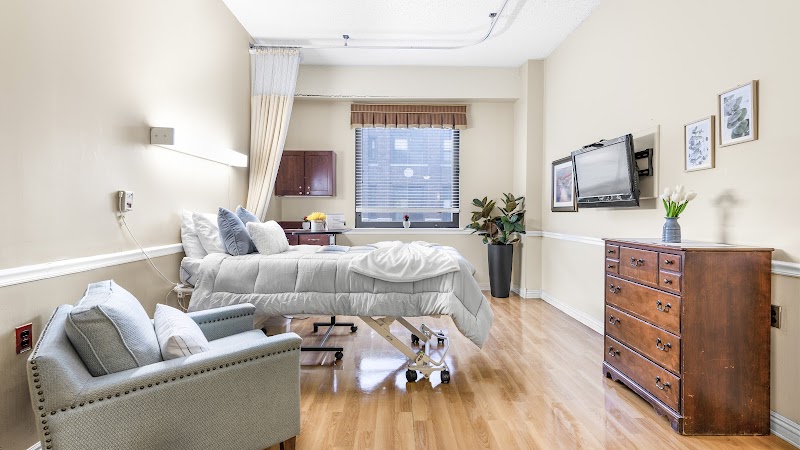
How Does Logan Square Rehabilitation And Healthcare Center Compare to Other Pennsylvania Nursing Homes?

Compared to the 100 nursing homes in Pennsylvania, LOGAN SQUARE REHABILITATION AND HEALTHCARE CENTER's overall rating (2 stars) is below the state average of 3.0, staff turnover (53%) is near the state average of 46%, and health inspection rating (2 stars) is below the national benchmark.

What Should Families Ask When Visiting Logan Square Rehabilitation And Healthcare Center?

Based on this facility's data, families visiting should ask: "What changes have been made since the serious inspection findings, and how are you preventing similar issues?" "Can you walk me through typical staffing levels on day, evening, and night shifts?" "Can I visit during a mealtime to observe dining assistance and food quality?" "How do you handle medical emergencies, and what is your hospital transfer rate?" These questions are particularly relevant given the facility's Immediate Jeopardy citations and the below-average staffing rating.

Is Logan Square Rehabilitation And Healthcare Center Safe?

Based on CMS inspection data, LOGAN SQUARE REHABILITATION AND HEALTHCARE CENTER has documented safety concerns. Inspectors have issued 1 Immediate Jeopardy citation (the most serious violation level indicating risk of serious injury or death). The facility has a 2-star overall rating and ranks #100 of 100 nursing homes in Pennsylvania. Families considering this facility should ask detailed questions about what corrective actions have been taken since these incidents.

Do Nurses at Logan Square Rehabilitation And Healthcare Center Stick Around?

LOGAN SQUARE REHABILITATION AND HEALTHCARE CENTER has a staff turnover rate of 53%, which is 7 percentage points above the Pennsylvania average of 46%. Moderate turnover is common in nursing homes, but families should still ask about staff tenure and how the facility maintains care continuity when employees leave.

Was Logan Square Rehabilitation And Healthcare Center Ever Fined?

LOGAN SQUARE REHABILITATION AND HEALTHCARE CENTER has been fined $43,154 across 1 penalty action. The Pennsylvania average is $33,510. While any fine indicates a compliance issue, fines under $50,000 are relatively common and typically reflect isolated problems that were subsequently corrected. Families should ask what specific issues led to these fines and confirm they've been resolved.

Is Logan Square Rehabilitation And Healthcare Center on Any Federal Watch List?

LOGAN SQUARE REHABILITATION AND HEALTHCARE CENTER is not on any federal watch list. The most significant is the Special Focus Facility (SFF) program, which identifies the bottom 1% of nursing homes nationally based on persistent, serious quality problems. Not being on this list means the facility has avoided the pattern of deficiencies that triggers enhanced federal oversight. This is a positive indicator, though families should still review the facility's inspection history directly.