ROOSEVELT REHABILITATION AND HEALTHCARE CENTER
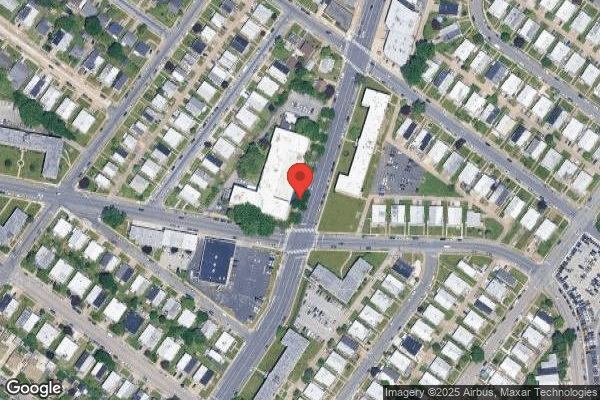

7800 BUSTLETON AVENUE, PHILADELPHIA, PA 19152 (215) 722-2300
For profit - Limited Liability company 240 Beds MARQUIS HEALTH SERVICES Data: November 2025 1 Immediate Jeopardy citation
Trust Grade
8/100
#627 of 653 in PA
Last Inspection: April 2025

Within standard 12-15 month inspection cycle. Federal law requires annual inspections.

Overview

Roosevelt Rehabilitation and Healthcare Center has a Trust Grade of F, indicating poor conditions and significant concerns about the quality of care provided. It ranks #627 out of 653 facilities in Pennsylvania, placing it in the bottom half of all nursing homes in the state and #45 out of 46 in Philadelphia County, meaning there is only one facility in the county that is rated lower. While the facility is reportedly improving, with the number of issues decreasing from 19 to 18 over the past year, it still faces serious challenges, including a concerning $63,953 in fines, which is higher than 79% of Pennsylvania facilities. Staffing is below average with a rating of 2 out of 5 stars and a turnover rate of 48%, which is in line with the state average; additionally, RN coverage is lower than 77% of state facilities, meaning fewer registered nurses are available to monitor residents closely. Specific incidents include a resident eloping from the facility for 13 hours due to inadequate supervision, and two residents suffering from pressure ulcers due to a lack of appropriate care and monitoring. Overall, while there are some signs of improvement, the facility has significant weaknesses that families should consider carefully.

Trust Score
F
8/100
In Pennsylvania
#627/653
Bottom 4%
Safety Record
High Risk
Review needed
Inspections
Getting Better
19 → 18 violations
Staff Stability
⚠ Watch
48% turnover. Above average. Higher turnover means staff may not know residents' routines.
Penalties
✓ Good
$63,953 in fines. Lower than most Pennsylvania facilities. Relatively clean record.
Skilled Nurses
⚠ Watch
Each resident gets only 29 minutes of Registered Nurse (RN) attention daily — below average for Pennsylvania. Fewer RN minutes means fewer trained eyes watching for problems.
Violations
⚠ Watch
81 deficiencies on record. Higher than average. Multiple issues found across inspections.
★☆☆☆☆
1.0
Overall Rating
★★☆☆☆
2.0
Staff Levels
★★★☆☆
3.0
Care Quality
★☆☆☆☆
1.0
Inspection Score
Stable
2024: 19 issues
2025: 18 issues

The Good

  • Full Sprinkler Coverage · Fire safety systems throughout facility
  • No fines on record

Facility shows strength in fire safety.

The Bad

1-Star Overall Rating

Below Pennsylvania average (3.0)

Significant quality concerns identified by CMS

Staff Turnover: 48%

Near Pennsylvania avg (46%)

Higher turnover may affect care consistency

Federal Fines: $63,953

Above median ($33,413)

Moderate penalties - review what triggered them

Chain: MARQUIS HEALTH SERVICES

Part of a multi-facility chain

Ask about local staffing decisions and management

The Ugly 81 deficiencies on record

1 life-threatening 2 actual harm
Sept 2025 2 deficiencies
CONCERN (D) 📢 Someone Reported This

A family member, employee, or ombudsman was alarmed enough to file a formal complaint

Potential for Harm - no one hurt, but risky conditions existed

Deficiency F0772 (Tag F0772)

Could have caused harm · This affected 1 resident

Based on clinical record review and staff interview, it was determined that the facility failed to ensure that laboratory studies were promptly obtained as ordered by the physician for one of five cli...

Read full inspector narrative →
Based on clinical record review and staff interview, it was determined that the facility failed to ensure that laboratory studies were promptly obtained as ordered by the physician for one of five clinical records reviewed (Resident R2).Findings include:Review of Resident R1's physician progress note dated September 6, 2025, indicated that resident was noted with elevated potassium level 5.5. and indicated that the blood likely hemolyzed (a condition where red blood cells (RBCs) burst, releasing their contents into the blood plasma or serum, which gives it a reddish tinge after centrifugation) and to repeat BMP (Basic Metabolic Panel) on September 8, 2025Review of Resident R1's physician progress note dated September 12, 2025, indicated that repeat BMP ordered for September 8, 2025, was not done and ordered for CMP (a blood test that measures multiple substances in the body to assess overall health and identify potential medical conditions).Continued review of clinical records for Resident R2 revealed no evidence that the lab ordered by the physician for September 8, 2025, and ordered on September 12, 2025, was completed.Interview with the Director of Nursing, Employee E2 on September 12, 2025, at 12:00 p.m. confirmed that the staff did not obtain lab work as ordered by the medical practitioner for September 8, 2025, and ordered on September 12, 2025.28 Pa. Code 211.5(f) Clinical records28 Pa. Code 211.10(c) Resident care policies28 Pa. Code 211.12(d)(1)Nursing services28 Pa. Code 211.12(d)(3) Nursing services28 Pa. Code 211.12(d)(5) Nursing services
CONCERN (D) 📢 Someone Reported This

A family member, employee, or ombudsman was alarmed enough to file a formal complaint

Potential for Harm - no one hurt, but risky conditions existed

Deficiency F0840 (Tag F0840)

Could have caused harm · This affected 1 resident

Based on clinical record review and resident and staff interview, it was determined that the facility failed to furnish an appointment for outside services in a timely manner for one of 5 residents re...

Read full inspector narrative →
Based on clinical record review and resident and staff interview, it was determined that the facility failed to furnish an appointment for outside services in a timely manner for one of 5 residents reviewed (Resident R2).During an interview on September 17, at 10:30 a.m. Resident R2 stated he needed to see an outside provider for wounds on the lower extremity which was following him in the community. Resident stated staff missed his appointment and did not arrange the transportation two weeks ago and on September 16, 2025. Resident stated staff told him prior to the appointment that the transportation was arranged. He stated at the time of the appointment he was told there was no transportation and the appointment was not completed.Resident R2's clinical record revealed an admission date of August 28, 2025, with diagnoses that included cellulitis (infection of skin) of right lower extremity and chronic venous hypertension ulcer of right lower extremity. Review of hospital record for Resident R2 on August 28, 2025, revealed that an appointment request to follow up with podiatry on September 2, 2025.Review of clinical record for Resident R2 revealed no evidence that the resident was seen by an podiatry as ordered by the hospital discharge summary. There was no documented reason for the cancellation of the service.Review of clinical record for Resident R2 revealed a wound care/podiatry consult report dated September 9, 2025, which indicated a follow up appointment with the provider on September 16, 2025, at 1:30 p.m.Review of clinical record for Resident R2 revealed no evidence that the resident was seen by an podiatry on September 16, 2025, at 1:30 p.m. There was no documented reason for the cancellation of the service.During an interview with Employee E2, Director of Nursing, on September 12, 2025, at 12:00 p.m. could not give a reason for not sending Resident R2 the appointment. Employee E2 confirmed that the facility missed Resident R2's appointment on September 2 and September 16. 28 Pa. Code 211.12(d)(3) Nursing services
Aug 2025 1 deficiency
CONCERN (D) 📢 Someone Reported This

A family member, employee, or ombudsman was alarmed enough to file a formal complaint

Potential for Harm - no one hurt, but risky conditions existed

ADL Care (Tag F0677)

Could have caused harm · This affected 1 resident

**NOTE- TERMS IN BRACKETS HAVE BEEN EDITED TO PROTECT CONFIDENTIALITY** Based on policy review, staff interviews, resident interviews, and clinical record review, it was determined that the facility f...

Read full inspector narrative →
**NOTE- TERMS IN BRACKETS HAVE BEEN EDITED TO PROTECT CONFIDENTIALITY** Based on policy review, staff interviews, resident interviews, and clinical record review, it was determined that the facility failed to provide showers to Resident R1 and feeding assistance to Resident R3. These were two of eight residents reviewed who were dependent on staff for activities of daily living. (Resident R1, R3).Findings include:A review of the Activities of Daily Living (ADL) Supporting Policy, last revised in April 2025, revealed: Residents are provided with care, treatment, and services as appropriate to maintain or improve their ability to carry out activities of daily living (ADLs). Residents who are unable to carry out activities of daily living independently receive the services necessary to maintain good nutrition, grooming, and personal and oral hygiene.Review of Resident R3's clinical record revealed that the resident was admitted to the facility on [DATE], with the diagnoses of adult failure to thrive, dementia (irreversible degenerative disease of the brain), muscle weakness, abnormal weight loss, and repeated falls. Review of Resident R3's quarterly Minimum Data Set assessment (MDS - a federally mandated standardized assessment process conducted periodically to plan resident care) dated June 17, 2025, revealed that Resident R3 was totally dependent on staff for activities of daily living to include bed mobility, transfers, toilet use and showers. The assessment further indicated that Resident R3 required supervision/assistance for eating.Continued review of the MDS revealed that the resident's cognition was severely impaired with a BIMS score of 00 (Brief Interview for Mental Status - a tool to assess cognitive function; a score of 00 which indicates the resident was unable to complete interview). The MDS indicated that Resident R3 was rarely/never understood by others when the resident attempted to speak and rarely/never understood when others spoke to the resident.Review of Resident R3's care plan, dated January 15, 2025, revealed that under the ADL's (activities of daily living) goal, the resident had deficits related to muscle wasting, atrophy, and dementia. The intervention task for eating stated: I require set-up assistance (opening packages, cutting meat, arranging plate, etc.) with eating and drinking.On August 26, 2025, at 10:25 a.m., Resident R3 was observed sitting in a Gerry (reclining) chair with her breakfast tray in front of her. The meal was barely touched. The tray contained two uncut pancakes, two uncut sausages, scrambled eggs, oatmeal, a nutritional supplement with a straw, juice without a straw, unopened milk with no straw, and unopened syrup. There was no assistant in the dining room who provided any supervision or assistance for eating.Unit Manager, Employee E3, confirmed the observation and asked nurse aide, Employee E5, whether Resident R3 had finished her breakfast. Employee E3 further reported that Resident R3 was not alert or oriented, did not speak English, and that her primary language is Chinese. Employee E3 acknowledged that the milk and syrup had not been opened, and that the sausages and pancakes should have been cut. In addition, straws should have been placed in both the juice box and the milk carton.Nurse aide, Employee E5, confirmed that Resident R3 was assigned to her and acknowledged that the resident's food should have been cut up and the packages opened. Employee E5 then cut the resident's food and poured syrup over the pancakes. Resident R3 immediately began eating independently, picking up cut pieces of food from the plate.A comprehensive review of the clinical record of Resident R1 revealed that admission of July 12, 2025, diagnoses included lack of coordination, protein calorie malnutrition, muscle wasting and atrophy, and muscle weakness.Review of Resident R1's admission Minimum Data Set (MDS - a periodic assessment of care needs) dated July 14, 2025, revealed a Brief Interview for Mental Status (BIMS) of 13 which indicated that the resident was cognitively intact. A review of the comprehensive care plan, dated July 12, 2025, revealed that under the ADLs goal for bathing, it stated: I prefer showers, assistance with turning and repositioning every two hours as able, I require one staff assist with bathing, and I require the assistance of one staff member and a sheet for turning and repositioning.On August 26, 2025, at 12:55 p.m., an interview was conducted with the Unit Manager, Employee E9, who confirmed that Resident R1 should have been scheduled for showers twice a week, on Mondays and Thursdays. A review of the clinical record with Employee E9 did not indicate which days showers were originally scheduled. There was no documentation under Task Documentation showing that showers were provided on Mondays and Thursdays. Employee E9 then entered the resident's scheduled shower days into Task Documentation and confirmed that R1's clinical record had been missing documentation and confirmation that showers were given on Mondays and Thursdays.On August 26, 2025, at 1:00 p.m. an interview with Resident R1 revealed that Resident R1 receives showers only once a week on Mondays. Resident R1 stated I would like to get showers twice a week.On August 26, 2025, at 2:45 p.m., Nursing Home Administrator, Employee E1, and the Director of Nursing, Employee E2, confirmed that the facility did not provide showers to Resident R1 twice a week and did not provide feeding assistance to Resident R3.28 Pa. Code 211.12 (d)(1) (5) Nursing Services28 Pa. Code 211.10(d) Resident care policies
Aug 2025 2 deficiencies
CONCERN (D) 📢 Someone Reported This

A family member, employee, or ombudsman was alarmed enough to file a formal complaint

Potential for Harm - no one hurt, but risky conditions existed

Comprehensive Care Plan (Tag F0656)

Could have caused harm · This affected 1 resident

Based on review of facility policies, clinical record reviews and interviews with staff, it was determined that the facility failed to develop comprehensive person-centered care plans related to a uri...

Read full inspector narrative →
Based on review of facility policies, clinical record reviews and interviews with staff, it was determined that the facility failed to develop comprehensive person-centered care plans related to a urinary catheter care for one of 9 residents reviewed (Resident R1).Findings include:Review of facility policy, Care Plans, Comprehensive Person-Centered March 2022, revealed, A comprehensive, person-centered care plan that includes measurable objectives and timetables to meet the resident's physical, psychosocial and functional needs is developed and implemented for each resident.Review of Resident R1's clinical record revealed an admission date of August 12, 2024, with diagnoses including chronic kidney disease, urinary tract infection, prostatic hyperplasia with lower urinary tract symptoms, urinary urgency, and urinary retention.A progress note, dated August 8, 2025, stated: Day 1/3 (day of one of three) new Foley catheter 16Fr/10mL placed at urology appointment this morning.A review of the comprehensive care plan dated May 20, 2025, did not reveal a care plan for catheter care.On August 11, 2025, at 11:06 a.m., an interview with the Assistant Director of Nursing, Employee E3, confirmed that no comprehensive care plan had been developed for the urinary catheter.28 Pa Code 211.10(c) Resident care policies28 Pa Code 211.12(d)(5) Nursing services
CONCERN (D) 📢 Someone Reported This

A family member, employee, or ombudsman was alarmed enough to file a formal complaint

Potential for Harm - no one hurt, but risky conditions existed

Quality of Care (Tag F0684)

Could have caused harm · This affected 1 resident

Based upon review of clinical records, interviews with staff and residents and reviews of policies and procedures, it was determined the facility did not ensure residents receive treatment and care in...

Read full inspector narrative →
Based upon review of clinical records, interviews with staff and residents and reviews of policies and procedures, it was determined the facility did not ensure residents receive treatment and care in accordance with professional standards of practice, by failing to follow physician's orders for urinary catheter care for 1 of 3 residents reviewed and for the need of 1:1 staff supervision at all times for one of 9 resident reviewed. (Resident R1).Findings include:A review of the policy titled Cather Care, Urinary Policy, last revised dated August 2022 revealed The purpose of this procedure is to prevent urinary catheter-associated complications, including urinary tract infections. Under documentation stated The following information should be recorded in the resident's medical record: 1. The date and time that catheter care was given. 2. The name and title of the individual(s) giving the catheter care. 3. All assessment data obtained when giving care to catheters. 4. Character of urine such as color (straw-colored, dark, or red), clarity (cloudy, solid particles, or blood), and odor. 5. Any problems noted at the catheter-urethral junction during perineal care such as drainage, redness, bleeding, irritation, crusting, or pain. 6. Any problems or complaints made by the resident related to the procedure. 7. How the resident tolerated the procedure. 8. If the resident refused the procedure, the reason(s) why and the intervention taken. 9. The signature and title of the person recording the data.A comprehensive review of Resident R1's clinical record revealed an admission date of August 12, 2024, with diagnoses including chronic kidney disease, urinary tract infection, prostatic hyperplasia with lower urinary tract symptoms, urinary urgency, and urinary retention.Review of nursing notes, dated August 8, 2025, stated: Day 1/3 (first or three day) new Foley catheter 16Fr/10mL placed at urology appointment this morning.A review of Resident R1's physician orders did not indicate an order for a urinary foley catheter. Continue review of physician orders revealed an order for 1:1 supervision every shift for safety.On August 11, 2025, at 11:06 a.m., an interview with the Unit Manager and the Assistant Director of Nursing (Employee E3) revealed that Resident R1 had a urinary foley catheter in place and was currently out of the facility for a doctor's appointment. However, review of the clinical record showed that a physician's order for the urinary Foley catheter had been missing since August 7, 2025. Employee E3 provided a hard copy of the urology consultation, which outlined that Resident R1 had a urinary foley catheter.On August 11, 2025, at 2:02 p.m. an interview and observation were conducted with Resident R1 in the room, who reported having a foley catheter. At that time, no 1:1 staff were present with Resident R1. At 2:07 p.m., an interview was conducted with the licensed nurse assigned to Resident R1, who confirmed that 1:1 supervision was not in place and contacted Nurse Aide, Employee E7, who was observed sitting at the nursing station. Nurse aide, Employee E7 confirmed she was assigned as the 1:1 staff for Resident R1 but had stepped away from the resident's room for approximately five minutes.On August 11, 2025, at 12:30 p.m. an interview was conducted with the Administrator and Director of Nursing confirming that facility failed to obtain a physician order for a urinary foley catheter order for Resident R1.28 Pa. Code 201.14(a) Responsibility of licensee 28 Pa. Code 211.12 (d)(1)(5) Nursing services
Apr 2025 12 deficiencies
CONCERN (D)

Potential for Harm - no one hurt, but risky conditions existed

Incontinence Care (Tag F0690)

Could have caused harm · This affected 1 resident

**NOTE- TERMS IN BRACKETS HAVE BEEN EDITED TO PROTECT CONFIDENTIALITY** Based on clinical record review and staff interview, it was determined that the facility failed to monitor the urine output one ...

Read full inspector narrative →
**NOTE- TERMS IN BRACKETS HAVE BEEN EDITED TO PROTECT CONFIDENTIALITY** Based on clinical record review and staff interview, it was determined that the facility failed to monitor the urine output one of one resident review with a urinary indwelling catheter. (Resident R49) Findings include: Review of Resident R49's clinical record revealed that Resident R49 was admitted to the facility on [DATE], with diagnoses of but not limited to Multiple Sclerosis (slow progressive disease of the central nervous system), Spastic Hemiplegia (weakness on one side of the body), and Presence of Urogenital Implants, Review of Resident R49's physician's orders revealed the following order: Urinary Catheter # 16 Fr/30ml balloon inflation to urinary Drainage Bag. Observation conducted on April 21, 2025, at 10:25 a.m. revealed that Resident R49 had a urine bag hanging under her bed with tubing connecting the bag to the resident. Further observation revealed that the urine bag and the tubing contained 50 cc of very cloudy liquid with sediments settling at the bottom of the urine tubing and urine bag. Further the urine bag did not have a date affixed to it. Interview with Licensed nurse, Employee E20 conducted on April 21, 2025, at 10:25 a.m., confirmed that the urine in the bag was very cloudy. Further Employee E20 revealed that she sometimes changes the bag once a week. Further Employee R20 revealed that it is the facility policy that the urine bag is dated however, PRN staff (staff hired to work whenever needed) doesn't always change the bags. Employee E20 did not know when the urine bag was last replaced. Review of Resident R49's clinical record revealed no documented evidence that Resident R49's urine output was monitored. Further review of Resident R49 clinical record revealed no documented evidence that the physician was made aware of Resident R49's cloudy urine. Further, there was no documented evidence of monitoring/observation of Resident R49's status after the cloudy urine was observed. 28 Pa. Code 201.14(a) Responsibility of licensee 28 Pa. Code 201.18(b)(1)(3) Management 28 Pa. Code 211.12(c) Nursing services
CONCERN (D)

Potential for Harm - no one hurt, but risky conditions existed

Deficiency F0692 (Tag F0692)

Could have caused harm · This affected 1 resident

**NOTE- TERMS IN BRACKETS HAVE BEEN EDITED TO PROTECT CONFIDENTIALITY** Based on clinical record reviews and staff interviews, it was determined that the facility failed to implement interventions to ...

Read full inspector narrative →
**NOTE- TERMS IN BRACKETS HAVE BEEN EDITED TO PROTECT CONFIDENTIALITY** Based on clinical record reviews and staff interviews, it was determined that the facility failed to implement interventions to maintain acceptable parameters of nutrition for one of 8 residents reviewed for nutrition. (Residents R38) Findings include: Review of facility policy titled, Supplementation dated January 2025, revealed that resident may benefit from a therapeutic supplement if they present with unplanned weight loss; impaired skin integrity; and reduction in the amount of food or drink is consumed by mouth. Review of Resident R38's clinical record revealed that the resident was admitted to the facility was on February 25, 2025, with diagnoses including malnutrition (lack of sufficient nutrients in the body), metabolic encephalopathy (brain dysfunction), muscle weakness, and cachexia (ill health involving weight and muscle loss). Further review revealed a BIMS score of three, indicating severe cognitive impairment. Review of Resident R38's nutrition assessment dated [DATE], revealed that the resident weighed 99 pounds, and had a BMI of 13 (extremely underweight). Further review revealed that the resident consumed 26-100% of meals. Review of Resident R38's care plan, date-initiated March 1, 2023, revealed that supplements should be provided during meals per resident's preference. Review of physician orders for Resident R38, revealed an order dated April 10, 2025, for Ensure Plus, three times a day for supplementation. Continued review Resident R38's clinical records including Medication Administration documentation failed to reveal documented evidence indicating that the Ensure Plus was provided for the resident three times a day. Observations of resident's lunch tray conducted on April 22, 2025, at 12:25 p.m. failed to reveal the Ensure Plus supplement on resident's tray. Follow-up observations of resident's conducted on April 23, 2025, at 12:14 p.m. failed to reveal the Ensure Plus supplement on resident's tray. Nurse manager, Employee E11, confirmed this finding. Interview with the Registered Dietitian, Employee E9, conducted on April 23, 2025, at 2:12 p.m. confirmed that there is no documented evidence indicating that the supplement was provided to Resident R38, per physician order. Interview with the facility Director of Nursing, conducted on April 24, 2025, at 9:35 a.m. confirmed that there was no documented evidence indicating that the resident received Ensure Plus Supplement on April 10, 2025, through April 23, 2025. 28 Pa. Code 211.12(c) Resident care policies 28 Pa. Code: 211.12(c)(d)(1)(2)(3)(5) Nursing services
CONCERN (D)

Potential for Harm - no one hurt, but risky conditions existed

Respiratory Care (Tag F0695)

Could have caused harm · This affected 1 resident

**NOTE- TERMS IN BRACKETS HAVE BEEN EDITED TO PROTECT CONFIDENTIALITY** Based on observation, clinical record review, review of facility policy and staff interview, it was determined that the facility...

Read full inspector narrative →
**NOTE- TERMS IN BRACKETS HAVE BEEN EDITED TO PROTECT CONFIDENTIALITY** Based on observation, clinical record review, review of facility policy and staff interview, it was determined that the facility failed to provide appropriate respiratory care and services for one of six residents reviewed (R125). Findings include: Review of the Facility Policy and Guidelines for Implementation of Oxygen Administration indicated that the nurse should review and follow the physician's orders while administering Oxygen via nasal canula. Review of Resident R125's clinical record revealed; the resident was initially admitted to the facility on [DATE]. Resident R125 was diagnosed with Chronic Obstructive Pulmonary Disease (Chronic Obstructive Pulmonary Disease -COPD- is a progressive lung disease characterized by airflow obstruction, primarily caused by long-term exposure to irritants like cigarette smoke), and Acute Respiratory Failure (Acute respiratory failure is a life-threatening condition where the lungs cannot adequately provide oxygen to the blood or remove carbon dioxide). Review of clinical record indicated that Resident R125 was ordered on January 3, 2025, Oxygen at 2 Liters/ Minute via Nasal Cannula to keep pulse ox > 92%, every shift for Diagnosis: COPD. Observation conducated on April 22, 2025, at 9:20 a.m., revealed that Resident R125 was administered Oxygen at 5 Liters/Min, via Nasal Canula., and not 2 Liters/Min, as ordered by the physician; and the same was confirmed with a Licensed Nurse, E21, at the time of the finding. 28 Pa Code 211.12(d)(5) Nursing services
CONCERN (D)

Potential for Harm - no one hurt, but risky conditions existed

Deficiency F0698 (Tag F0698)

Could have caused harm · This affected 1 resident

Based on staff interviews and the review of clinical records, it was determined that the facility failed to maintain complete and accurate records related to dialysis communication for two of four dia...

Read full inspector narrative →
Based on staff interviews and the review of clinical records, it was determined that the facility failed to maintain complete and accurate records related to dialysis communication for two of four dialysis residents reviewed (Residents R66, R125). Findings include: Review of Resident 66's physician order, dated March 6, 2025, revealed Resident R66 received dialysis treatment on Tuesdays, Thursdays, and Saturdays. Review of Resident R66 's Hemodialysis Communication Record revealed that it was lacking the following information as required per the communication log: On March 6, 2025, March 13, 2025, March 15, 2025, March,20, 2025, March 20, 2025, March 25, 2025, April 3, 2025, April 8, 2025, the information for new orders received and sent with patient, comment; shunt site observation; ports capped and completed yes or no, patient reports pain yes or no, lab values; pertinent /relevant observations; Signature/Title of staff, andTime. Interview with the Licensed Nurse, Employee E22, on April 24, 2025, at 10:09 a.m., confirmed lack of information in the Hemodialysis Communication Record of Resident R66. Review of Resident 125's physician order, dated January 3, 2025, revealed Resident R125 received dialysis Treatment on Tuesdays, Thursdays, and Saturdays. Review of Resident R125 's Hemodialysis Communication Record revealed that it was lacking the following information as required per the communication log: On April 3, 2025, the information for new orders received and sent with patient, comment; shunt site observation; ports capped and completed yes or no, patient reports pain yes or no, lab values; pertinent /relevant observations; signature/title of staff, and time. Interview with Licensed Nurse, Employee E22, on April 24, 2025, at 10:27 a.m., confirmed lack of information in the Hemodialysis Communication Record of Resident R125. 28 Pa Code 211.5(f) Clinical records 28 Pa Code 211.12(d)(3) Nursing services
CONCERN (D) 📢 Someone Reported This

A family member, employee, or ombudsman was alarmed enough to file a formal complaint

Potential for Harm - no one hurt, but risky conditions existed

Pharmacy Services (Tag F0755)

Could have caused harm · This affected 1 resident

**NOTE- TERMS IN BRACKETS HAVE BEEN EDITED TO PROTECT CONFIDENTIALITY** Based on clinical record review and staff interview, it was determined that the facility did not ensure the timely acquiring of ...

Read full inspector narrative →
**NOTE- TERMS IN BRACKETS HAVE BEEN EDITED TO PROTECT CONFIDENTIALITY** Based on clinical record review and staff interview, it was determined that the facility did not ensure the timely acquiring of medications from pharmacy for a newly admitted resident for one of one of 35 residents reviewed . (Resident R277). Findings Include: Review of the Policy, Administering Medications, Revised April 2019, states Medications are administered in a safe and timely manner, and as prescribed. Interview with Resident R277 on April 21, 2025, at 11:00 a.m. revealed that he did not get his prescribed cardiac medications on the day of his admission on [DATE]. Resident R277's wife confirmed this stating that she was very upset that they did not have his heart medications available. Review of the medical record revealed that Resident R277 was admitted on [DATE], with diagnosis including, but not limited to acute congestive heart failure (a sudden, life-threatening condition in which your heart is unable to do its job. Your heart is still beating, but it can't deliver enough oxygen to meet your body's needs). Further review of the clinical record for Resident R277 revealed an April 19, 2025, Carvedilol (a beta-blocker, which affect the heart and blood flow through arteries and veins, used to treat heart failure and hypertension (high blood pressure) oral tablet 3.125 mg, give one tablet by mouth every 12 hours for high blood pressure starting April 19, 2025, at 9:00 p.m. And an April 19, 2025, physician's order for Entresto oral tablet 24-26 mg (Sacubitril-Valsartan, a combination medicine that is used in adults with chronic heart failure) give one tablet by mouth every 12 hours for heart failure starting April 19, 2025, at 9:00 p.m. And an April 20, 2024 physician's order for Rivaroxaban (used to treat or prevent blood clots) oral tablet, 20 mg, give one tablet by mouth in the evening for pulmonary embolism (a blood clot in your lung that creates a blockage. This causes issues with blood flow and oxygen levels in your lungs. This is a medical emergency). And an April 20, 2025, physician's order for Spironolactone (is a potassium-sparing diuretic (water pill) that prevents your body from absorbing too much salt and keeps your potassium levels from getting too low) oral tablet, 25 mg, give 0.5 tablet by mouth one time a day in the morning for heart failure Review of the medication administration record for Resident R277 revealed that the Carvedilol that was ordered for April 19, 2025, at 9:00 p.m. was not administered on April 19, 2025, at 9:00 p.m., and that the April 20, 2025, 9:00 a.m. dose was coded 5, which is held. And that the first dose of Carvedilol was not administered until 9:00 p.m. on April 20, 2025. Further review of the medication administration record for Resident R277 revealed that the Entresto that was ordered for April 19, 2025, at 9:00 p.m. was not administered on April 19, 2025, at 9:00 p.m., and that the April 20, 2025, 9:00 a.m. dose was coded 5, which is held. And that the first dose of Entresto was not administered until 9:00 p.m. on April 20, 2025. Further review of the medication administration record for Resident R277 revealed that the Rivaroxaban and Spironolactone, important cardiac medications that the resident had been on in the hospital and recommended for use at the facility were not ordered until the day after the resident was admitted . And that the Spironolactone was ordered to be administered at 9:00 a.m. and 9:00 p.m., and that the 9:00 a.m. dose on April 20, 2025, was coded 5, or held, and his first dose was not administered until 9:00 p.m. on April 20, 2025. Interview with the Director of Nursing (DON), and Administrator, on April 24, 2025, at 10:50 a.m. confirmed that the resident was admitted at 5:00 p.m. on April 19, 2025, and that he was on these four heart medications, and that these medications were not available on April 19, 2025, and that the medications that were coded 5, for being held, should not have been coded as held, as there were no parameters in the physician orders for holding the medication. 28 Pa. Code 201.14(a) Responsibility of licensee 28 Pa. Code 201.18(b)(1)(3) Management 28 Pa. Code 211.12(c) Nursing services
CONCERN (D)

Potential for Harm - no one hurt, but risky conditions existed

Unnecessary Medications (Tag F0759)

Could have caused harm · This affected 1 resident

Based on observations, review of clinical records, and interviews with facility staff, it was determined that the facility failed to ensure that it was free of medication error rate of five percent or...

Read full inspector narrative →
Based on observations, review of clinical records, and interviews with facility staff, it was determined that the facility failed to ensure that it was free of medication error rate of five percent or greater for three of seven residents observed during medication administration (Residents R17, R20, and R195). Findings include: On April 22, 2025, at 9:29 a.m., observed that Employee E21, a Licensed Nurse, administered to Resident R20, the medicine, Breo Ellipta Aerosol Powder Breath Activated 200-25 MCG/INH (Fluticasone Furoate-Vilanterol), one puff inhale orally, and it was noticed that R20 did not rinse his mouth after inhaling Breo Ellipta Aerosol Powder. Review of physician order for Resident R20, revealed an order, dated June 29, 2022, to administer Breo Ellipta Aerosol Powder Breath Activated 200-25 MCG/INH (Fluticasone Furoate-Vilanterol), one puff, inhale orally one time a day for COPD, Rinse mouth and spit after administration. The Licensed Nurse, Employee E21, did not follow the physician order as the Resident R20 inhaled Breo Ellipta Aerosol Powder Breath Activated 200-25 MCG/INH, one puff; but did not rinse his mouth after inhaling Breo Ellipta Aerosol Powder. Review of literature revealed that inhaled corticosteroids like Breo Ellipta Aerosol Powder can sometimes lead to a fungal infection in the mouth and throat, known as oral thrush or oropharyngeal candidiasis. Rinsing mouth with water after each dose helps remove any remaining medication from the mouth and throat, reducing the risk of this infection. At the time of the finding, during an interview with Licensed nurse, Employee E21, confirmed the above findings. On April 22, 2025, at 9:44 a.m., observed that Employee E22, a Licensed Nurse, was administering Resident R17, the morning scheduled medicines. Review of physician order for Resident R17 indicted an order dated February 14, 2025, to administer, Ipratropium-Albuterol Inhalation Solution 0.5-2.5 (3) MG/3ML (Ipratropium-Albuterol), 3 ml inhale orally three times a day related to Other Tracheostomy Complication. The Licensed Nurse, Employee E22, double checked the medication cart and checked with other nurses, and stated that the facility did not have Ipratropium-Albuterol Inhalation Solution 0.5-2.5 (3) MG/3ML (Ipratropium-Albuterol), 3 ml, and they are waiting for it from the pharmacy. E22 could not administer to R17, the medicine Ipratropium-Albuterol Inhalation Solution 0.5-2.5 (3) MG/3ML (Ipratropium-Albuterol), 3 ml to inhale orally. On April 23, 2025, at 9:10 a.m., observed that Employee E23, a Licensed Nurse, administered the medicine, Aspirin Tablet Enteric Coated 81 MG, to Resident R195. Review of physician order dated January 25, 2024, for R195, revealed an order to administer Aspirin Tablet Chewable 81 MG, Give 1 tablet by mouth one time a day, monitor for signs and symptoms of bleeding. Review of literature revealed as follows: Regular Aspirin is absorbed in the stomach, while Enteric-Coated aspirin is absorbed in the small intestine. Do not crush or chew enteric-coated tablets. Doing so can increase stomach upset. Do not crush or chew extended-release tablets or capsules. Doing so can release all of the drug at once, increasing the risk of side effects. At the time of the observation, interview with Employee E23, confirmed the above findings. The facility incurred a medication error rate of 10.34%. Pa Code:211.12(d)(1)(2)(5) Nursing Services.
CONCERN (D)

Potential for Harm - no one hurt, but risky conditions existed

Deficiency F0806 (Tag F0806)

Could have caused harm · This affected 1 resident

Based on observations, and resident and staff interviews, it was determined that the facility failed to honor resident food and drink preferences by providing food that was requested by and acceptable...

Read full inspector narrative →
Based on observations, and resident and staff interviews, it was determined that the facility failed to honor resident food and drink preferences by providing food that was requested by and acceptable to the residents for six of 35 residents reviewed (Residents R279, R103, R189, R31, R53 and R27). Findings include: Interview during the initial tour of the 2 North unit with Resident R279 on April 21, 2025, at 11:35 a.m. revealed that she does not get the right food, not what I choose on my menu, that this happens several times a week. During a group interview on April 23, 2025, at 1:30 p.m. when food was brought up and all residents agreed that there were problems in the kitchen. Resident R103 stated that you don't always get what you want. Resident R189 stated that she does not always get what she wants either. Resident R31 stated that things are not always right on her meal tray, they forget things like my sugar. Interview with the Administrator on April 24, 2025, at 12:45 p.m. revealed that there had been problems in the kitchen and that they brought a management company in to run the kitchen two months ago and she feels things are getting better. Review of Resident R53 lunch meal ticket placed on his lunch tray on April 21, 2025, at 12:36 p.m. revealed a notation on the ticket that read, no pasta. Observation on April 21, 2025, at 12:36 p.m., Resident R 53's lunch tray consisted of a plate of spaghetti and meatballs. Interview with Resident R53 at time of the above observation, he stated I never get the right food, and the food does not match the ticket on the tray Interview on April 21, 2025, at 12:40 p.m. with Nursing aide, Employee E16 confirmed that the lunch ticket specified no pasta, and the resident was given pasta for lunch. Review of Resident R 27's quarterly minimum data set (MDS - a federal mandated assessment for all residents) dated February 28, 2025, revealed Resident R27 was admitted into the facility February 17, 2018, with a diagnosis of multiple sclerosis (a chronic disease immune disease that cause breakdown of the protective covering of nerves)and dependent on assistance for all activities of daily living including: transfers, personal hygiene, dressing, bathing, toileting and eating. This resident was on a mechanically altered diet and a therapeutic diet. Interview with Resident R27's family member on April 22, 2025, at 12:39 p.m. on the third-floor nursing unit revealed that this resident did not receive the sandwich that is supposed to be given every day. This resident's family member revealed that she has purchased specific lunch meat, bologna, to be given to the resident for meals stating the resident will only eat this. She has also purchased apple sauce and cranberry juice because of the uncertainty of Resident R27 receiving these items from the staff. Observation of residents' lunch tray on April 22, 2025, at 12:40 p.m. revealed lunch ticket indicating that Resident R27's lunch tray should consist of fried fish, vegetables, and sweet potato fries. Further observation of this lunch tray revealed the resident received a turkey sandwich only. Interview with Licensed nurse, Employee E18 at time of the above interview revealed that Employee E18 was aware that Resident R27 was supposed to receive bologna sandwiches from the kitchen. Employee E18 confirmed that Resident R27's tray contained a turkey sandwich and was not sure why she received a turkey sandwich. 28 Pa. Code 201.14(a) Responsibility of licensee 28 Pa. Code 201.18(b)(3) Management 28 Pa. Code 211.6(a) Dietary services
CONCERN (D)

Potential for Harm - no one hurt, but risky conditions existed

Food Safety (Tag F0812)

Could have caused harm · This affected 1 resident

Based on observations, review of facility policy and interviews with staff, it was determined that the facility did not ensure that food was stored, prepared, distributed and served in accordance with...

Read full inspector narrative →
Based on observations, review of facility policy and interviews with staff, it was determined that the facility did not ensure that food was stored, prepared, distributed and served in accordance with professional standards for food service safety. Findings include: Review of facility policy titled, Food Receiving and Storage dated 2001 indicated that refrigerated foods should be labeled, dated and monitored so they are used by their use by date, frozen, or discarded. A tour of the Food Service Department was conducted on April 21, 2025, at 9:37 a.m. with Employee E12, Food Service Director (FSD), revealed the following concerns: Observations revealed a foul smell, caused by food debris, in the dishwasher area. The walls contained streaks of black dirt. Observations in the walk-in cooler revealed the following items were dated with the received date only: 10-pound turkey received 4/16; beef bologna received 4/4; and two 10-pound ground beef received 4/18. Continued observations revealed top round with a received date of 4/16; interview with he FSD revealed that it was pulled from the freezer and did not contain a date of when it was removed from the freezer to defrost. 28 Pa. Code 201.14(a) Responsibility of licensee
CONCERN (E)

Potential for Harm - no one hurt, but risky conditions existed

Deficiency F0574 (Tag F0574)

Could have caused harm · This affected multiple residents

Based on a resident group interview, observations, and interviews with staff, it was determined that the facility failed to display proper contact information for the State Survey Agency, including th...

Read full inspector narrative →
Based on a resident group interview, observations, and interviews with staff, it was determined that the facility failed to display proper contact information for the State Survey Agency, including the Hotline number on three of three nursing floors and lobby area. (Second, Third, Fouth Floor and lobby) Findings include: A Resident Council interview was held on April 24, 2025, at 1:30 p.m. with nine alert and oriented residents who regularly attend resident council meetings. When asked if they knew how to contact the Pennsylvania Department of Health (DOH) with a complaint, all residents said no. When asked again if anyone knew how to contact DOH, they all shook their head no, and Resident R103 said that he never saw this number posted, and that they should hand out pamphlets to everyone. Observations in the lobby area and on all three of the nursing floors (Second, Third and Fouth) on April 23, 2025, at 2:30 p.m. with the Administrator revealed that the State Department of Health contact information was not posted in the lobby or on any of the three nursing floors as required. Interview with the Administrator April 23, 2025, at 2:45 p.m. confirmed that the contact information was not posted as required. 28 Pa. Code 201.18(b)(1)(3) (e)(1) Management 28 Pa. Code 201.29(c.1) Resident rights
CONCERN (E)

Potential for Harm - no one hurt, but risky conditions existed

Drug Regimen Review (Tag F0756)

Could have caused harm · This affected multiple residents

**NOTE- TERMS IN BRACKETS HAVE BEEN EDITED TO PROTECT CONFIDENTIALITY** Based on clinical record reviews, review of facility policies and documentation and interviews with staff, it was determined tha...

Read full inspector narrative →
**NOTE- TERMS IN BRACKETS HAVE BEEN EDITED TO PROTECT CONFIDENTIALITY** Based on clinical record reviews, review of facility policies and documentation and interviews with staff, it was determined that the facility failed to ensure the pharmacist recommendations were reviewed by the physician in a timely manner for three of five residents reviewed related to medication regime reviews (Resident R78, Resident 93 and Resident R114). Findings include: Review of facility policy, Medication Regimen Reviews revised May 2029 revealed the consultant pharmacist reviews the medication regimen of each resident monthly with the goal is to minimize adverse consequences of potential risk of medications. An irregularity refers to the medication that is inconsistent with acceptable pharmaceutical services standard of practice, the drug may not be supported by medical evidence, or without adequate monitoring, and or excessive doses that can be a risk to persons life, health or safety. The consultant pharmacist will then contact the physician, to report the irregularity. The physician then documents that the irregularity has been reviewed and action has taken place to address it. Review of consultant pharmacist Medication Regimen Review Recommendation for Resident R78 revealed a recommendation of resident has in order for sliding scale insulin lispro. Per package insert, insulin lispro is recommended to be dosed within 10 to 15 minutes of a meal. Please update the doctor order. Further review of consultant pharmacist recommendation for Resident 78 revealed the physician agreed with recommendation and responded that the insulin time has been adjusted. This document was signed by the physician. Review of Resident R78's clinical record review revealed a physician order dated July 11, 2024, for the drug insulin Lispro Solution 100 unit/ml with instruction to inject subcutaneously three time a day related to type 2 diabetes mellitus (group of diseases that result in too much sugar in the blood). No indication that this ordered was changed to be given with meals. Review of Resident R78's medication administration record schedule for April 2025 revealed the medication insulin lispro solution 100 unit per ML with instructions to inject as per sliding scale subcutaneously three times a day for diabetes. Review of pharmacist recommendation for Resident R93 dated February 22, 2025, revealed the following labs are missing from patient chart and are required to monitor safety and efficiency of medication. Please consider adding the following to the next lab draw thank you the labs recommended recommended are CMP (Complete Metabolic Panel, lipid panel, A1C, AMIODARONE level, vitamin D level, and TSH (Thyroid Level). Further review of this document revealed the physician wrote ordered on the document, indicating the physician ordered the recommended lab work for Resident R93 and signed the document. Review of Resident R93's physician orders, revealed no orders for the above recommendation of lab work . Review of Resident R93's physician order dated November 13, 2024, revealed a physician order for Flomax capsule 0.4 MG (tamsulosin) with instructions give one capsule by mouth at bedtime for benign prosthetic hyperplasia. Review of consultant pharmacist recommendations dated March 16, 2025, revealed currently receiving Tamsulosin [NAME] 0.4 MG at bedtime. Per literature, Flu Max is best absorbed and has best chance for clinical efficiency when given after dinner. Please consider switch flow Max 0.4 MG once daily after dinner Further review of this document revealed physician response stated that the physician disagreed with pharmacist's recommendation and instructed continue with HS (night) time. This document has not been signed or dated by the physician. Review of facility document entitled MRR Consultant Pharmacy Recommendations to Prescriber dated February 22, 2025, for Resident R114 revealed that Resident R114 currently receiving antihypertensive therapy without routine blood pressure and pulse monitoring. Please consider adding order for weekly BP and pulse, if appropriate. Further review of the document revealed OK written on it but signatures and date from physician indicating that the physician has reviewed the document. Review of Resident R114's clinical record revealed no other documented evidence that the physician has reviewed the document and did not have any documented evidence of actions taken by the physician to address the pharmacy recommendations. Interview with Director of Nursing, Employee E2 on April 24, 2025, at 12:50p.m. confirmed there was no evidence that these recommendations were noted and completed. 28 Pa. Code 211.5(f) Clinical records 28 Pa. Code 211.5 (h) Clinical records 28 Pa. Code 211.9 (f)(3) Pharmacy Services
CONCERN (E)

Potential for Harm - no one hurt, but risky conditions existed

Deficiency F0804 (Tag F0804)

Could have caused harm · This affected multiple residents

Based on review of facility documentation, observations, and resident and staff interviews, it was determined that the facility failed to provide food and drink that was palatable and served at the pr...

Read full inspector narrative →
Based on review of facility documentation, observations, and resident and staff interviews, it was determined that the facility failed to provide food and drink that was palatable and served at the proper temperature for 6 of 6 residents interviewed (Residents R113 R195, R279, R103, R189 and R12). Findings include: Interview with Resident R12 conducted during the tour of the first floor unit on April 21, 2024 at 01:31 PM complained that food was cold and that she does not always get the meal items that she requested for. Interview with Resident R113, on April 21, 2025, at 11:41 a.m. revealed that the food is cold, especially the pancakes, ant that they never have cold cereal available. Interview with Resident R195, on April 21, 2025, at 11:45 a.m. revealed that the food the food sucks and is always cold. Interview with Resident R279, on April 21, 2025, at 11:49 a.m. revealed that the meals are messed up, the eggs are dry, that she doesn't like coffee, that they send a tea bag, but no hot water, and they don't send enough sugar for my hot tea and the cereal, and the food is always cold. During a group interview on April 23, 2025, at 1:30 p.m. when food was brought up and all residents agreed that there were problems with the food. Resident R103 stated that the food is always cold, and that this was an ongoing problem. Resident R189 stated that her rib sandwich today was cold. Observations during a test tray conducted with the Food Service Director, Employee E12, on April 23, 2025, at 11:35 a.m. revealed apple juice registered 46.5 degrees Fahrenheit (F); canned pineapple registered 65 degrees F; mashed potatoes 126 degrees F; pork riblet 111 degrees F; and mixed vegetables degrees F. Follow-up interview with the Food Service Director, at 11:52 a.m. revealed that that foods should be reaching 140 degrees F and confirmed that the tested food items were too cool to be palatable. 28 Pa. Code 201.14(a) Responsibility of licensee 28 Pa. Code 201.18(b)(3) Management 28 Pa. Code 201.14(a) Responsibility of licensee 28 Pa. Code 201.18(b)(3) Management 28 Pa. Code 211.6(f) Dietary services
CONCERN (E)

Potential for Harm - no one hurt, but risky conditions existed

Infection Control (Tag F0880)

Could have caused harm · This affected multiple residents

**NOTE- TERMS IN BRACKETS HAVE BEEN EDITED TO PROTECT CONFIDENTIALITY** Based on observation, review of facility policy and procedure and interviews with staff, it was determined that the facility fai...

Read full inspector narrative →
**NOTE- TERMS IN BRACKETS HAVE BEEN EDITED TO PROTECT CONFIDENTIALITY** Based on observation, review of facility policy and procedure and interviews with staff, it was determined that the facility failed to maintain an effective infection control program related to appropriate cleaning techniques for medical equipment, on four of the seven Medication Administration Reviews (Residents R20, R176, R195, R227), and the Enhanced Barrier Precautions for four of seven residents treatments reviewed (R97, R168, R176, R195). Findings include: Review of facility policy titled Infection Prevention and Control Program revised June 2022, revealed the facility has an infection prevention and control program which monitors development and transmission of communicable disease and infections to promote safe sanitary and comfortable environment for residents' staff and visitors. Policies of this program include standard of transmission-based precautions and how and when isolation should be used for a resident including type and duration of isolation hand hygiene procedures. Review of facility policy and procedure titled Guidelines for Isolation Precaution revised March of 2023 revealed the policy is to reduce the risk of the transmission of infectious agents by utilizing in isolation guidelines established by the Center for Disease Control (CDC). Enhanced barrier precautions should be used in conjunction with standard precautions and enhanced barrier precautions are used as an infection control intervention designed to reduce the transmission of multi drug resistant organisms (MDROs) that is proportion extends the use of personal protective equipment (PPE) and refers to the use of gown and gloves during high contact resident care activities that provide opportunities for the transfer of MDROS to staff hands and clothing enhanced barrier precautions will be applied to all residents with any of the following; wounds, indwelling medical devices, regardless colonization status, staff will be properly trained on the proper use of PPE and will be implemented while resident high contact resident care activities that require gown and glove use include dressing, bathing showering, transferring, providing hygiene, changing linens, changing briefs, or assisting with toileting, device care ,or use of central line, urinary catheter, feeding tube, tracheostomy, ventilator and wound care. Review of Resident R168's clinical record revealed that the resident had the diagnoses of Quadriplegia, Hemiplegia, and dysphagia (difficulty swallowing), The resident was dependent of tube feeding. Review of Resident R168's care plan revealed I require enhanced barrier precautions related to feeding tube dated June 24, 2025, with interventions including gloves and gown must be worn during high contact care activities, dressing, bathing, showering, transferring, providing hygiene care, changing linens, changing briefs assisting with toileting, and device care or use. Observation of Resident 168's room door revealed no enhanced barrier signage or any indication that the resident was on any precaution. Observation of nurse aide, Employee E13 and nurse aide, Employee E14 providing care including bathing resident R168 and changing this resident's incontinence briefs revealed that neither Employee E13 or Employee E14 were were wearing a gown as required PPE for enhanced barrier precautions. Interview with nurse aide, Employee E14 confirmed there was no signage of enhanced barrier precaution on the door. Nurse aide, Employee E14 employee was not aware that a gown was warranted. Interview with licensed nurse, Employee E18 on April 22, 2025, at 12:18 p.m. confirmed no enhanced barrier precaution signage was on Residents R168's room door and on three other doors on the third-floor nursing unit. Employee E168 stated that the signs were locked in the Assistant Director of Nursing (ADON), Employee E5 's office. Interview with ADON, Employee E5 on April 23, 2025, at 11:32 a.m. revealed that all employees are made aware of any precaution, including enhanced barrier precaution on the floor during morning meeting prior to the shift. All employees have received education of what PPE is required for enhanced barrier precaution and when all PPE must be worn. Employee E5 stated she did not know why the employees were not following the protocol and the signs alerting staff and visitors. Review of Resident R97's clinical record revealed that Resident R97 was admitted to the facility on [DATE], with current diagnoses of Infection and Inflammatory reaction due to indwelling urethral Catheter Sequela, Obstructive and Reflux Uropathy. Review of Resident R97's physician's orders revealed an order for: Urinary Catheter: Maintain SPC (suprapubic catheter) catheter with16F 10ml balloon for Obstructive Uropathy. Observation conducted on April 21, 2025, at 10:25AM revealed that Resident R97 was in bed with a urine bag. Further, Urine bag and tubing was observed with cloudy with red tinged residue. Further observation revealed that there was no signage for EBP (Enhanced Barrier Precaution) signage posted outside Resident R97's room. Follow-up observation conducted on April 22, 2025, at 10:47AM revealed that nurse aide, Employee E18 was in Resident R97's room providing care to Resident R97 without a PPE (personal protective equipment). Interview with nurse aide, Employee E18 conducted at the time of the observation confirmed that she did not use PPE and that she did not know she had to wear PPE because there was no signage outside the door. Interview with nurse aide, Employee E19 conducted on April 22, 2025, at 10:50 AM revealed that she knows that she has to use PPE because of the sign posted outside the door. Further Employee E19 revealed that without the sign will not know that she has to wear PPE. Interview with Infection Preventionist Employee E5 revealed that the unit managers are responsible for putting up EBP precaution). On April 22, 2025, 9:29 a.m., during medication administration, to Resident R20, Employee E21, a Licensed Nurse, used the sphygmomanometer (an instrument for measuring blood pressure), without disinfecting it, which was used for checking blood pressure of other residents. At the time of the finding, Employee E21 confirmed the same. On April 23, 2025, 8:59 a.m., during medication administration, to Resident R 227, Employee E23, a Registered Nurse, used the sphygmomanometer, without disinfecting it, which was used for checking blood pressure of other residents. At the time of the finding, E23 confirmed the same. On April 23, 2025, at 9:08 a.m., review of Physician order dated June 24, 2024, for Resident R195 revealed; Enhanced Barrier Precautions, Every Shift. Observation on April 23, 2025, at 9:10 a.m., revealed that a Registered Nurse, Employee E23, was applying sphygmomanometer, to Resident R195 to check the resident's blood pressure. Employee E23 did not wear the PPE, even though Resident R195 was on Enhanced Barrier Precautions. The Registered Nurse, Employee E23 used the sphygmomanometer, without disinfecting it, which was used for checking blood pressure of other residents. At the time of the finding, confirmed the same with E23. On April 23, 2025, at 9:20 a.m. a review of physician order dated March 22, 2025, for Resident R176 revealed; Enhanced Barrier Precautions, Every Shift. Observation on April 23, 2025, at 9:23 a.m., revealed that a Registered Nurse, Employee E23, was applying sphygmomanometer, to Resident R176 to check the resident's blood pressure. Register Nurse, Employee E23 did not wear the PPE, even though Resident R176 was on Enhanced Barrier Precautions. Registered Nurse, Employee E23 used the sphygmomanometer, without disinfecting it, which was used for checking blood pressure of other residents. At the time of the finding, confirmed the same with Registered Nurse, Employee E23. 28 Pa Code 201.14(a) Responsibility of licensee 28 Pa Code 201.18(d) Management 28 Pa Code 211.12 (d)(1)(5) Nursing services
Jan 2025 1 deficiency
CONCERN (D) 📢 Someone Reported This

A family member, employee, or ombudsman was alarmed enough to file a formal complaint

Potential for Harm - no one hurt, but risky conditions existed

Deficiency F0809 (Tag F0809)

Could have caused harm · This affected 1 resident

Based on interview with resident and staff, and review of facility provided documentation, it was determined facility failure to ensure that one of 12 residents receive the breakfast meal. ( Resident ...

Read full inspector narrative →
Based on interview with resident and staff, and review of facility provided documentation, it was determined facility failure to ensure that one of 12 residents receive the breakfast meal. ( Resident R3) Findings include: Review of facility's policy 'Assistance with meals,' revised on March 2022, indicates that nursing staff will remove food trays from the food cart and deliver the trays to each resident's room. Interview with Resident R3, revealed that on January 7, 2025 his assigned nurse aide, employee E3, refused to change his bed linens upon request. Further interview with Resident R3 revealed that on the following morning, January 8, 2025, he did not receive his breakfast tray - which he believes was part of retaliation from E3 after he reported her to unit manager, employee E4, for refusing to change his bed linens. According to further interview with Resident R3, Employee E3 was his assigned nurse aide on January 8, 2025. Interview with Unit manager, Employee E4, on January 24, 2025 at 1:00 pm, revealed that on the morning of January 8, 2025. Employee E3 was re-assigned and was not assigned to provide care for Resident R3. There was miscommunication among nurse aides which resulted in Resident R3 not receiving breakfast tray. Review of facility provided grievance investigation revealed a statement from nurse aide, Employee E3, stating the following - (January 8, 2025) Resident in 212b requested different aide for the day. At the time when I went to give 212a his breakfast 212b was sleeping and doesn't like to be woken up so we left his tray Further review of grievance report submitted due to 'resident did not receive breakfast', dated January 8, 2025, revealed that meal was offered but resident said he was heading to lunch. Interviewed aides. Education provided regarding meal tray pass. 28 Pa Code 211.12(d)(1) Nursing services
Nov 2024 1 deficiency
CONCERN (E) 📢 Someone Reported This

A family member, employee, or ombudsman was alarmed enough to file a formal complaint

Potential for Harm - no one hurt, but risky conditions existed

ADL Care (Tag F0677)

Could have caused harm · This affected multiple residents

Based on clinical record review, observations, and interviews with staff, it was determined that the facility failed to provide incontinence care in a timely manner for four of six residents reviewed....

Read full inspector narrative →
Based on clinical record review, observations, and interviews with staff, it was determined that the facility failed to provide incontinence care in a timely manner for four of six residents reviewed. (Resident R1, R2, R3, R4) Findings include: Review of Resident's R1's clinical record revealed Resident R1 was admitted to the facility October 17, 2024 with a diagnosis of chronic Obstructive Pulmonary Disease (condition that prevents airflow to the lungs, causing breathing problems), Anemia (lack of healthy red blood cells to carry oxygen to the body's tissues), and Coronary Artery Disease (condition where the major blood vessels supplying the heart are narrowed, which reduces blood flow). Review of R1's Minimum Data Set (MDS), completed on November 11, 2023, revealed Brief Interview for Mental Status (BIMS) score of 14, which indicated that the resident's cognition is intact. Additional review of the MDS revealed that Resident R1 is dependent for toileting hygiene. Observation in Resident R1's room revealed Resident R1's call bell wrapped around the back of the resident's bed. Interview with Resident R1 on November 7, 2024 at 9:45 a.m. revealed he was soiled and needed assistance with being changed. Resident R1 stated that he attempted to call out for help for one hour and that he was unable to reach his call bell. Resident R1's roommate, Resident R5, also confirmed that staff does not assist Resident R1 timely and is left soiled frequently. Review of Resident's R2's clinical record revealed Resident R2 was admitted to the facility October 28, 2024 with a diagnoses of Hypertension (high blood pressure), Diabetes Mellitus (chronic disease that occurs when the body has high blood sugar levels), and Arthritis (swelling and tenderness of one or more joints). Review of R2's Minimum Data Set (MDS), completed on October 29, 2024, revealed Brief Interview for Mental Status (BIMS) score of 15, which indicated that the resident's cognition intact. Additional review of the MDS revealed that Resident R2 requires supervision and minor assistance for toileting hygiene. Interview with Resident R2 on November 7, 2024 at 10:05 a.m. revealed overnight Resident R2 pressed the call bell for assistance with toileting. Resident R2 stated staff did not come and she sat soiled for several hours. Interview with Resident R3 and R4 who require extensive assistance with toileting hygiene stated they do not get changed timely. Further interview with Resident R3's family stated that Resident R3 is often soiled when Resident R3's family visits. 28 Pa. Code 211.12(d)(5) Nursing Services.
Jul 2024 16 deficiencies
CONCERN (D)

Potential for Harm - no one hurt, but risky conditions existed

Safe Environment (Tag F0584)

Could have caused harm · This affected 1 resident

**NOTE- TERMS IN BRACKETS HAVE BEEN EDITED TO PROTECT CONFIDENTIALITY** Based on the observations and interview with the staff, it was determined that the facility failed to ensure a clean and homelik...

Read full inspector narrative →
**NOTE- TERMS IN BRACKETS HAVE BEEN EDITED TO PROTECT CONFIDENTIALITY** Based on the observations and interview with the staff, it was determined that the facility failed to ensure a clean and homelike environment two of three nursing units. (Third floor and Fourth Floor) Findings included: Observation of room [ROOM NUMBER] on June 30, 2024, at 9:41 a.m. revealed that there was water dripping from the ceiling. There was also a piece of ceiling tile missing. The dripping water was collected in a trash can, which was almost full. Interview with Resident R57 on June 30, 2024, at 9:41 a.m. stated the water had been leaking from ceiling for a few weeks now, it started when the facility turned on the air conditioner in May. Resident also stated facility staff was aware of the issue and did not fix the water leak. A follow up interview with Resident R57 on July 1, 2024, 11:00 a m. statedthat the facility staff replaced the tile with out fixing the water leak properly and the ceiling tile collapsed to the floor with water. Observation of Room for 423 on June 30, 2024, at 10:39 a.m. revealed that there was water on the floor and the floor was sticky. Observation of room [ROOM NUMBER] on June 30, 2024, at 11:00 a.m. Revealed that the baseboard molding was missing and there was a whole on the wall. Observation of room [ROOM NUMBER] and the hallway in front of the room on June 30, 2024, at 9:41 a.m. revealed that there was strong odor inside the room and at the hallway in front of the room. The odor was consistent with the odor of urine. During an interview with the facility administrator on July 3, 2024, at 11:00 a.m. the above observations were confirmed. 28 Pa. Code 201.18 (e)(1)(2.1)Management
CONCERN (D)

Potential for Harm - no one hurt, but risky conditions existed

Deficiency F0655 (Tag F0655)

Could have caused harm · This affected 1 resident

**NOTE- TERMS IN BRACKETS HAVE BEEN EDITED TO PROTECT CONFIDENTIALITY** Based on observations, review of facility policies, clinical record reviews and interviews with residents and staff, it was dete...

Read full inspector narrative →
**NOTE- TERMS IN BRACKETS HAVE BEEN EDITED TO PROTECT CONFIDENTIALITY** Based on observations, review of facility policies, clinical record reviews and interviews with residents and staff, it was determined that the facility failed to develop a baseline care plan within 48 hours of a resident's admission that included the minimum information necessary to properly care for a resident, for one of three residents reviewed related to respiratory care (Resident R266). Findings include: Review of facility policy, Care Plans - Baseline dated revised March 2022, revealed, A baseline plan of care to meet the resident's immediate health and safety needs is developed for each resident within forty-eight (48) hours of admission. Interview on June 30, 2024, at 11:11 a.m. Resident R266 stated that nursing staff don't always offer to assist her with caring for her laryngectomy tube (tube placed after the surgical removal of the larynx or voice box) and that she cares for it herself. Observation, at the time of the interview, revealed that Resident R266 had a laryngectomy tube that appeared clean and well cared for. Further, Resident R266 was unable to speak due to her laryngectomy and wrote on a piece of paper for the duration of the interview. Review of Resident R266's care plan revealed that she was admitted to the facility on [DATE], with diagnoses including malignant neoplasm of supraglottis (cancer involving the upper part of the larynx) and acquired absence of larynx (surgical removal of the larynx). Review of progress notes for Resident R266 revealed a respiratory therapy note, dated June 24, 2024, at 3:05 p.m. which indicated that the resident had a size 8.5 laryngectomy tube and that the resident preferred to clean, suction and care for her laryngectomy tube by herself. Further review of Resident R266's care plan revealed that no baseline care plan had been developed related to the resident's need for laryngectomy tube care, impaired communication related to her laryngectomy or respiratory needs including suctioning and assessment. Interview on July 1, 2024, at 10:21 a.m. Employee E24, respiratory therapist, revealed that she assessed Resident R266 upon her admission to the facility to determine her respiratory care needs. Employee E24, respiratory therapist, stated that the resident is offered assistance with laryngectomy care, but that the resident prefers to do her own care. Employee E24, respiratory therapist, stated that she wrote the above progress note, but that she did not develop a care plan because the resident was able to do her own care. Interview on July 2, 2024, at 1:07 p.m. the Director of Nursing confirmed that a baseline care plan had not been developed for Resident R266 related to her laryngectomy, communication and respiratory care needs. 28 Pa Code 211.10(d) Resident care policies 28 Pa Code 211.12(d)(5) Nursing services
CONCERN (D)

Potential for Harm - no one hurt, but risky conditions existed

Comprehensive Care Plan (Tag F0656)

Could have caused harm · This affected 1 resident

**NOTE- TERMS IN BRACKETS HAVE BEEN EDITED TO PROTECT CONFIDENTIALITY** Based on review of facility documents and policies, clinical record reviews and interviews with residents and staff, it was dete...

Read full inspector narrative →
**NOTE- TERMS IN BRACKETS HAVE BEEN EDITED TO PROTECT CONFIDENTIALITY** Based on review of facility documents and policies, clinical record reviews and interviews with residents and staff, it was determined that the facility failed to develop a comprehensive person-centered care plan related to smoking for one of three residents reviewed related to smoking (Resident R177). Findings include: Review of facility policy, Care Plans, Comprehensive Person-Centered dated revised March 2022, revealed, A comprehensive, person-centered care plan that includes measurable objectives and timetables to meet the resident's physical, psychosocial and functional needs is developed and implemented for each resident. Continued review revealed, Assessments of residents are ongoing and care plans are revised as information about the residents and the resident's conditions change. Review of facility policy, Smoking Policy - Residents dated revised October 2023, revealed, Resident smoking status is evaluated upon admission. If a smoker, the evaluation includes: current level of tobacco consumption; method of tobacco consumption; desire to quit smoking; and ability to smoke safely with or without supervision. Continued review revealed, A resident's ability to smoke safely is re-evaluated quarterly, upon a significant change and as determined by the staff. Review of facility documentation, Resident Smoking List provided to State Agents on June 30, 2024, revealed that Resident R177 was identified by the facility as a smoker. Interview on June 30, 2024, at 1:21 p.m. Employee E26, licensed nurse, stated that Resident R177 was outside smoking. Interview, on June 30, 2024, at 1:41 p.m. Resident R177 confirmed that she was outside smoking in the facility's designated smoking area during supervised smoke time. Review of Resident R177's Significant Change MDS (Minimum Data Set - a mandatory periodic resident assessment tool), dated April 7, 2024, revealed that the resident was admitted to the facility on [DATE], and had diagnoses including chronic obstructive pulmonary disease (a group of lung diseases that block airflow and make it difficult to breathe) and end stage renal disease (a medical condition in which a person's kidneys cease functioning on a permanent basis leading to the need for a regular course of long-term dialysis or a kidney transplant to maintain life). Continued review revealed that the assessment indicated that the resident did not use tobacco. Clinical record review for Resident R177 revealed a Resident Smoking Agreement, dated March 28, 2024, which indicated that Residents will be assessed after admission by Nursing/Social Services/designee and at a minimum annually. The interdisciplinary team will develop and implement a plan of care for each resident with specific protective equipment if needed. Continued review of Resident R177's clinical record revealed a smoking evaluation was completed by Employee E26, licensed nurse, on April 3, 2024. The evaluation indicated that the resident did not smoke, and no further assessment related to smoking was completed at that time. Review of Resident R177's care plan, dated September 13, 2023, revealed that no care plan had been developed related to the resident's smoking to ensure that the resident's safety is maintained. Interview on July 2, 2024, at 1:07 p.m. the Director of Nursing confirmed that a care plan had not been developed for Resident R177 related to smoking. 28 Pa Code 211.10(d) Resident care policies
CONCERN (D)

Potential for Harm - no one hurt, but risky conditions existed

Deficiency F0688 (Tag F0688)

Could have caused harm · This affected 1 resident

Based on the observations, review of clinical records, and interview with staff and resident, it was determined that the facility failed to ensure that a resident with limited range of motion, receive...

Read full inspector narrative →
Based on the observations, review of clinical records, and interview with staff and resident, it was determined that the facility failed to ensure that a resident with limited range of motion, received appropriate services to prevent further decline in range of motion and maintain appropriate positioning for one of one resident reviewed for positioning and mobility. (Resident R72). Finding Include: Interview with Resident R72 on June 30, 2024, at 9:52 a.m. stated he had contractures to his hand. Resident stated the contracture was a result of stroke. Resident stated he was not provided any services in the facility including exercise or splinting to prevent worsening of the contracture. Observation of Resident 72 June 30, 2024, at 9:52 a.m. revealed that the resident was laying in the bed. It was observed that both resident's hands appeared to be contracted. The resident was not using any positioning devices or splints. Review of physician progress note dated June 18, 2024 revealed that the resident had hemiplegia (Muscle weakness or partial paralysis on one side of the body that can affect the arms, legs, and facial muscles) and hemiparesis (a condition that causes weakness on one side of the body). Review of MDS (Minimum Data Set-Assessment of resident care needs) dated May 7, 2024, revealed that the resident's range of motion to the upper extremity was impaired. Review of occupational therapy evaluation dated May 1, 2024 revealed that the resident was presented with limited range of motion and decreased strength to bilateral upper extremity. However, a discharge summary on May 9, 2024 revealed that the facility did not establish a restorative program or functional maintenance program. Review of active care plan and physician order for Resident 72, revealed that the resident was not on restorative nursing program and was not receiving any services for the limited range of motion to his upper extremities. Interview with Employee E33, Rehab Director, on July 3, 2024, at 10:43 a.m. stated the resident had contracture to the upper extremity and was not receiving any services for the limited range of motion to his upper extremities. 28 Pa. Code 211.12 (d)(1)(3)(5) Nursing services 28 Pa. Code: 201.18 (b)(2) Management 28 Pa. Code: 211.10 (d) Resident care policies
CONCERN (D)

Potential for Harm - no one hurt, but risky conditions existed

Deficiency F0692 (Tag F0692)

Could have caused harm · This affected 1 resident

Based on the review of facility policy, clinical records and interview with staff, it was determined that the facility failed to provide acceptable nutritional parameters for one of 36 residents revie...

Read full inspector narrative →
Based on the review of facility policy, clinical records and interview with staff, it was determined that the facility failed to provide acceptable nutritional parameters for one of 36 residents reviewed. (Resident R194) Findings Include: Review of facility policy Weight Policy dated December 2022, revealed that It is the policy of this facility to weigh each resident on admission, then weekly for (4) four weeks, then monthly thereafter, unless otherwise ordered by physician/IDT team. The facility will utilize a consistent procedure for monitoring weights and prevent unnecessary weight loss/gain in our residents. Any resident displaying a significant change in weight of greater than or equal to 5%. gain/loss in one month will be reported to the Registered Dietitian and reweighed. The Registered Dietitian will review the medical record of residents with significant weight changes (i.e. 5% loss/gain in one month, 7.5% loss/gain in 3 months, 10% loss/gain in 6 months). Dietary interventions will be recommended as needed. All significant weight changes will be reported to the MD (physician). Interventions that are initiated in response to a weight change will be reflected in the care plan. Residents with weight loss / gain will be further reviewed in the IDT meeting/Risk. MD to be notified of significant weight changes by IDT. Review of physician progress note for Resident R194, dated June 7, 2024 revealed that the resident lost greater than 15 lb. (pounds) in one month, scale has been consistent. Does appear cachectic (physical wasting with loss of weight and muscle mass due to disease). Dietician on board. Monitor Weekly weights. Continue Enteral nutrition and adjust as needed. Review of weight record for Resident R194 revealed that on January 28, 2024, the resident weighed 178.2 lbs. on June 10, 2024, the resident weighed 131.8 pounds which was a -26.04 % loss. Review of clinical record revealed that the weight loss was not addressed by the staff until June 18, 2024. There was no reweight completed according to the facility policy. Review of dietary progress note dated June 18, 2024, revealed that residents' nutritional needs have met through the tube feeding intake and the resident was on NPO (Nothing by Mouth). Further review of the progress note revealed that resident's noted with unfavorable unplanned significant weight loss x 1 months. -5.99%, x 3months. -17.52% and likely due to severe protein-calorie malnutrition, Resident was underweight with a BMI 17.4. Resident was added on weekly weights. Progress note revealed that scale variance may played a role in weight loss along with disease progression and hospitalization. Further review of the weight record revealed that there was no weight completed until June 24, 2024. Interview with the Dietician, Employee E18, on July 2, 2024 confirmed that a reweight was not obtained after a significant weight loss on June 10, 2024 and the dietician did not evaluate the resident until June 18, 2024. 28 Pa. Code 211.12(d)(1)(3)(5) Nursing services
CONCERN (D)

Potential for Harm - no one hurt, but risky conditions existed

Deficiency F0698 (Tag F0698)

Could have caused harm · This affected 1 resident

Based on clinical record review, review of facility policy and staff interview, it was determine that the facility failed to ensure ongoing records of communication between the facility and the dialys...

Read full inspector narrative →
Based on clinical record review, review of facility policy and staff interview, it was determine that the facility failed to ensure ongoing records of communication between the facility and the dialysis center for one of three residents reviewed receiving dialysis. (Resident R58) Findings include: Review of the facility's policy titled Policy End Stage Renal Disease revised September 2010, revealed that residents with end-stage renal disease (ESRD) will be cared for according to currently recognized standards of care. Staff caring for residents with ESRD, including residents receiving dialysis care outside the facility, shall be trained in the care and special needs of these residents. Review of Resident R58's quarterly Minimum Data Set (MDS- assessment of resident's needs) dated February 16, 2024, revealed that the resident was admitted into the facility on April 30, 2020 with diagnosis's including end stage renal disease (a medical condition in which a person's kidneys cease functioning on a permanent basis leading to the need for a regular coarse of long-term dialysis or a kidney transplant to maintain life) and dependence on renal dialysis (the process of removing waste products and excess fluid from the body when the kidneys are no longer able to). Review of Resident R58's dialysis binder with documentation of communication between the facility and dialysis team which included residents' vitals, weight, vascular access, any new acute problems since last treatment, medication changes, nutritional concern, and labs to be drawn at dialysis unit. The Dialysis unit completes the following: pre and post weight, blood pressure, temperature, any lab results, brut thrill present, post treatment bleeding, catheter site, dressing, any medications given during dialysis treatment, any occurrences during dialysis such as fever, pain, chills, prolonged bleeding, hypertension, weakness, and physician orders of any changes such as dialysis time, change in target weight, diet, and medications. The final correspondence must be completed by facility nursing staff record of presence of brut, thrill, observation of catheter, and site, assess bandaged, vitals, any pertinent notes, or observations and signed by staff nurse. This dialysis communication binder revealed that on the following dates, the information and documentation was found to be incomplete: May 13, 2024, May 15, 2024, May 29, 2024, June 3, 2024, June 5, 2024, June 10, 2024, June 11, 2024, June 21, 2024, and June 28, 2024. These documents revealed no evidence that Resident R58 was assessed and monitored after returning to the nursing unit. Interview with Licensed nurse, Employee E11 on June 30, 2024 at 12:26 p.m. confirmed that the correspondence on the days above was found to be incomplete. Employee E11 then verified that it is the nursing responsibility to completed the dialysis communication pages in all the dialysis residents binders. 28 Pa. Code 211.10 (c) Resident care policies 28 Pa Code 211.12 (d)(3) Nursing Services
CONCERN (D)

Potential for Harm - no one hurt, but risky conditions existed

Deficiency F0710 (Tag F0710)

Could have caused harm · This affected 1 resident

Based on review of clinical record, review of facility policy and interviews with staff, it was determined that the facility did not ensure that a physician assessment was completed related to unplann...

Read full inspector narrative →
Based on review of clinical record, review of facility policy and interviews with staff, it was determined that the facility did not ensure that a physician assessment was completed related to unplanned weight loss for one of 7 residents reviewed for nutrition (Resident R194). Findings include: Review of facility policy Weight Policy dated December 2022, revealed that It is the policy of this facility to weigh each resident on admission, then weekly for (4) four weeks, then monthly thereafter, unless otherwise ordered by physician/IDT (interdiciplinary team). The facility will utilize a consistent procedure for monitoring weights and prevent unnecessary weight loss/gain in our residents. Any resident displaying a significant change in weight of greater than or equal to 5%. gain/loss in one month will be reported to the Registered Dietitian and reweighed. The Registered Dietitian will review the medical record of residents with significant weight changes (i.e. 5% loss/gain in one month, 7.5% loss/gain in 3 months, 10% loss/gain in 6 months). Dietary interventions will be recommended as needed. All significant weight changes will be reported to the MD (physician). Interventions that are initiated in response to a weight change will be reflected in the care plan. Residents with weight loss/gain will be further reviewed in the IDT meeting/risk. MD to be notified of significant weight changes by IDT. Review of Resident R194's physician notes dated June 7, 2024, revealed that the resident lost greater than 15 lbs (pounds) in one month, scale has been consistent. Resident appeared cachectic (physical wasting with loss of weight and muscle mass due to disease). Dietician on board. Monitor Weekly weights. Continue Enteral nutrition and adjust as needed. Review of weight record for Resident R194 revealed that on January 28, 2024, the resident weighed 178.2 lbs. On June 10, 2024, the resident weighed 131.8 pounds which was a -26.04 % loss. Review of clinical record for Resident R194 revealed no documented evidence that that the physician completed an assessment and addressed the nutritional and medical issue related to the weight change of June 10, 2024. Physician documentation did not address the specific weight loss. During an interview with the Director of Nursing on July 03, 2024, at 11:00 a.m. the above observations were confirmed. 28 Pa. Code:211.12(d)(5) Nursing services. 28 Pa. Code:211.2(a) Physician services. 28 Pa. Code 211.5(f) Clinical records
CONCERN (D)

Potential for Harm - no one hurt, but risky conditions existed

Drug Regimen Review (Tag F0756)

Could have caused harm · This affected 1 resident

Based on clinical record review, interview with staff, and review of facility policy, it was determined that the facility failed to ensure the physician documented the review of pharmacy recommendatio...

Read full inspector narrative →
Based on clinical record review, interview with staff, and review of facility policy, it was determined that the facility failed to ensure the physician documented the review of pharmacy recommendation and failed to document the rational for rejection of recommendation for one of three clinical records reviewed. (Resident R13) Findings include: Review of facility policy titled Medication Regimen Reviews revealed that the consultant pharmacist reviews the medication regimen of each resident at least monthly. The goal of the medication regimen review is to promote positive outcomes while minimizing adverse consequences and potential risks associated with the medication. An irregularity refers to the use if the medication that is inconsistent with accepted pharmaceutical standards of practice. The attending physician documents in the medical record that the irregularity has been reviewed and what action was taken to address it. Review of Resident R13's July 2024 physician orders revealed that Resident R13 has an order dated July 4, 2023, for Aripiprazole (Also known as Abilify, an anti-psychotic medication used to treat schizophrenia and bipolar disorder. It works by helping to restore the balance of certain natural substances in the brain). 5 mg (milligrams) to be given one time a day, every day. Continued review of Resident R13's physician orders revealed that Resident R13 has an order for Midodrine HCL (used to treat low blood pressure. It works by stimulating nerve endings in blood vessels to raise blood pressure) oral tablet 10 mg / give 1 tab x 8 hours for hypotension (low blood pressure) ordered July 3, 2023. Review of the Consultant Pharmacists Physician Report dated January 18, 2024, revealed the recommendation for the medication Aripiprazole be considered for a gradual dose reduction. The physician reviewed and signed the document and responded with a checked to disagree with the recommendation with no rational why the recommendation was rejected. Review of the Consultant Pharmacist Review Physician Report dated January 18, 2024, revealed that the medication Midodrine should not be dosed after 5:00 p.m. The medication is currently ordered for every 8 hours. The recommendation was to be dosed three times a day before 5:00 pm. The physician reviewed and signed the document and responded with a checked to disagree with the recommendation with no rational why the recommendation was rejected. Interview with Director of Nursing (DON) Employee E2 on July 2, 2024 at 1:41 p.m. confirmed the medication Regime Review documents for Resident R13 were inadequately completed without any documentation by the physician for rejection of pharmacist recommendations 28 Pa. Code 211.2(a) Physician Services
CONCERN (D)

Potential for Harm - no one hurt, but risky conditions existed

Deficiency F0761 (Tag F0761)

Could have caused harm · This affected 1 resident

Based on review of facility policy, observation, and staff interviews, it was determined that the facility failed to ensure that all drugs and biologicals used in the facility were labeled and stored ...

Read full inspector narrative →
Based on review of facility policy, observation, and staff interviews, it was determined that the facility failed to ensure that all drugs and biologicals used in the facility were labeled and stored in accordance with professional standards of practice for four of six medication carts observed. (Second floor center, Third floor center, Third south, and Forth floor center). Finding include: Review of facility policy titled Medication Storage and Labeling revised February 2023 revealed that the nursing staff is responsible for maintain medication storage and preparation areas are clean, safe, and sanitary manner. Labeling of medications and biologicals dispensed by the pharmacy is consistent with applicable federal and state requirements and currently accepted pharmaceutical practices. The medication label includes at minimum medication name prescribed dose, strength,expiration date, residents name, route of administration, and appropriate instructions and precautions. For over-the-counter medications in bulk containers, the label contains medication name, strength, quantity, accessory instructions, lot number, expiration date. Multi dose vials that have been opened are dated and discarded within 28 days unless the manufactures specify a shorter or longer date for open vial. Observation of the Third-floor center's medication cart on June 30, 2024, at 9:52 a.m. revealed multiple bottles of over the counter medication and eyedrops without a marked of opening date. Interview at time of above observation with Licensed nurse, Employee E 32, confirmed the above findings. Observation of the Second-floor center's medication cart on July 1, 2024, at 8:55 a.m. revealed an unidentifiable insulin pen and multiple bottles of eye drops without a marked date of opening. Interview with Licensed nurse, Employee E31 at time of the above observation confirmed the above findings. Observation of the Third-floor south's medication cart on July 2, 204 at 8:34 a.m. revealed a substantial number of loose pills and capsules in the drawers. The cart also consisted of over-the-counter medication bottles not dated of opening date. Interview with Licensed nurse, Employee E 32 at time of above observation confirmed the findings. Observation of the fourth-floor center's medication cart July 2, 2024, at 9:10 a.m. reveled loose pills found in the drawers of the cart. Interview with Licensed nurse Employee E30 at time of the above observation confirmed the findings. 28 Pa. Code 211.9(f)(2) Pharmacy Services 28 Pa. Code 211.12 (d)(1) Nursing Services
CONCERN (D) 📢 Someone Reported This

A family member, employee, or ombudsman was alarmed enough to file a formal complaint

Potential for Harm - no one hurt, but risky conditions existed

Deficiency F0806 (Tag F0806)

Could have caused harm · This affected 1 resident

Based on observations, review of facility policy and staff interviews, it was determined that the facility failed to provide food products based on the resident's food preference for four of 36 reside...

Read full inspector narrative →
Based on observations, review of facility policy and staff interviews, it was determined that the facility failed to provide food products based on the resident's food preference for four of 36 residents (Resident R22, R23, R98, R155). Findings include: Review of facility policy Resident Food Preferences, last revised July 2017, indicates Individual food preferences will be assessed upon admission and communicated to the interdisciplinary team. Upon resident's admission, the dietitian and/or nursing staff will identify a resident's food preferences. On June 30, 2024, at 11:50 a.m. observations were conducted with the Regional Dietary Director, Employee E14 who confirmed that Resident R 22's lunch preference ticket documented mechanical soft diet of ground pork loin, roasted sweet potatoes, seasoned fresh cauliflower and bread or roll with butter. Resident R22 lunch tray had mashed potatoes instead of sweet potatoes and no bread or roll with butter. Employee E14 confirmed that it should be mashed sweet potatoes and not mashed potato. On June 30, 2024, at 12:24 p.m. observations were conducted with the Regional Dietary Director, Employee E14 who confirmed that Resident R 23's lunch preference ticket documented regular diet, no white bread, all sandwiches on wheat, hot tea, milk and juice at every meal, dislike cauliflower. The lunch tray had white bread sandwich, no tea, and no substitute of vegetable since Resident R23 dislikes cauliflower. On July 1, 2024, at approximately 12:40 p.m. on the Third floor there was a complaint about lunch tortellini being too hard and resident's unable to chew them. Resident R155's tortellini dish was hard and it started chipping from being hard. On July 1, 2024, at 12:45 p.m. interview with the Regional Dietary Director, Employee E14 who was in the kitchen was provided a piece of tortellini which and confirmed the hard texture and being undercooked. Employee E14 stated that Baked Ziti with Cheese and Marinara was served as the main lunch entre and who ever did not like cheese and marinara were served tortellini pasta. On July 1, 2024, at 12:51 p.m. Unit Manager, Employee E7 on the 3rd floor confirmed that Resident R98 received lunch tray with only hard Tortellini Pasta and burned garlic bread on her plate. Observation confirmed that Tortellini pasta was hard, unable to be cut. Employee E7 send her plate back to the kitchen and requested an alternative. Interview with Resident R98 revealed that she/he called this morning to the kitchen and her preference ticket indicated Baked Ziti with Cheese and Marinara Sauce, Italian Blend Vegetables, Bread or Roll with Butter, Gelatin, Choice of Beverage, Sandwiches on every lunch and dinner tray. The lunch tray did not have anything that was on her preference besides choice of beverage. Resident R98 reported Tortellini was so hard that I was not able to bite, some pieces were robbery unable to chew the Tortellini. On July 1, 2024, at 1:15 p.m. Unit Manager, Employee E7 confirmed that Resident R57 also send his plate back to the kitchen and tortellini and garlic bread was not his preferences for lunch. Resident R57 reported I don't even eat pasta as I have colostomy bag and pasta causes constipation. I asked for a sandwich. Resident R57 was served tortellini per the nurse aide, Employee E25 who brougth his lunch tray. 28 Pa Code 201.14(a) Responsibility of licensee 28 Pa Code 211.6(a) Dietary services
CONCERN (D)

Potential for Harm - no one hurt, but risky conditions existed

Deficiency F0925 (Tag F0925)

Could have caused harm · This affected 1 resident

**NOTE- TERMS IN BRACKETS HAVE BEEN EDITED TO PROTECT CONFIDENTIALITY** Based on observations, and interviews with residents, it was determined that the facility failed to maintain an effective pest c...

Read full inspector narrative →
**NOTE- TERMS IN BRACKETS HAVE BEEN EDITED TO PROTECT CONFIDENTIALITY** Based on observations, and interviews with residents, it was determined that the facility failed to maintain an effective pest control program in the resident care areas for two resident rooms units reviewed. (room [ROOM NUMBER] and room [ROOM NUMBER]) Findings include: Observation of Resident room [ROOM NUMBER] on June 30, 2024, at 9:41 a.m. revealed that there was a sticky fly trap hanging from the ceiling with dead flies on it. Interview with Resident R70 stated there was flies in the facility and he used the trap to catch the flies. He stated he was using the trap for a while. Interview with Resident R107 stated there was mice, rats, flies and roached in his room. Resident points to the floor where there were roaches behind the door and inside the bathroom. Observation of Resident room [ROOM NUMBER] on June 30, 2024, at 10:39 a.m. revealed that there were flies in the room. Roaches were observed behind the door and inside the bathroom. The above observations were confirmed by the Administrator on July 3, 2024, at 11:00 a.m. 28 Pa. Code 201.14 (a) Responsibility of licensee.
CONCERN (D)

Potential for Harm - no one hurt, but risky conditions existed

Deficiency F0945 (Tag F0945)

Could have caused harm · This affected 1 resident

Based on review of facility policy and documents, staff interviews, and observation it was determined that the facility failed to provide training on infection control procedures relating to enhanced ...

Read full inspector narrative →
Based on review of facility policy and documents, staff interviews, and observation it was determined that the facility failed to provide training on infection control procedures relating to enhanced barrier precautions for seven of eight employees interviewed. Findings include: Review of the facility policy titled Enhanced Barrier Precautions dated August 2022. Revealed that enhanced barrier precautions (EBPs) are utilized to prevent the spread of multi-drug resistant organisms (MDROs) to residents. The Enhanced Barrier Precautions (EBPs) employ targeted gown and glove use during high contact resident care activities when contact precautions do not otherwise apply. The policy specifies that gloves and gown are applied prior to performing the high contact resident care activity (as opposed to Examples of high-contact resident care activities requiring the use of gown and gloves for EBPs which include: dressing, bathing/showering; transferring; providing hygiene; changing linens; changing briefs or assisting with toileting; . device care or use (central line, urinary catheter, feeding tube, tracheostomy/ventilator, etc.). Review of the facility policy titled Inservice Training, All Staff dated August 2022 revealed that all staff must participate in initial orientation and annual in-service training. The primary objective of the in-service training is to ensure that the staff are able to interact in a manner that enhances the resident's quality of life and quality of care and can demonstrate competency in the topic areas of training. Required training topics including infection prevention and control standards policies and procedures. Review of facility document Town Hall and Inservice for all employees, dated May 28, 2024, revealed that the agenda included discussion on the topic of enhanced barrier precautions. Further review of this document revealed the initiation of this new standard with a letter to the staff that stated You will soon see an increase in the circumstances when we are asking you to wear a gown and gloves while caring for residents. This is based on the new recommendations from the CDC to protect residents and staff from multidrug- resistant organisms. These recommendations are called Enhanced Barrier Precautions. Continued review of this document discussed why implementing the precaution is so important. the document then discussed what are the enhanced barrier precaution and include the following residents: resident with know MDRO, indwelling medical device including central venous catheter, urinary catheter, feeding tube, tracheostomy/ ventilator regardless of MDROS status and any residents with wounds. High contact resident care areas where gown and gloves should be worn are bathing/showering, transferring a resident, providing hygiene, changing bed linins, changing briefs or toileting, caring for or using an indwelling device, and performing wound care. There will be signs posted on the doors of residents to identify that EBP needs to be done. This in-service was completed and signed on the dates of May 28, 2024, May 30, 2024, and June 4, 2024, on all shifts. Observation of nursing assistant, Employee E4 on June 30, 2024, at 11:02 a.m. revealed that the employee providing care for Resident R52 without wearing a gown. Resident R52 has a diagnosis of and therefore is using a feeding tube. According to the facility policy of Enhanced Barrier Precaution, this resident should be under EBP. Observation of the resident's room revealed a posted a sign at the entrance of the room alerting staff and visitors, that the resident occupying the room is under EBP. The sign stated that staff must wear gown and gloves while providing care. Interview with nursing assistant, Employee E4 at time of observation revealed that Employee E4 understood that the EBP was that the resident require barrier cream or zinc cream on her skin to prevent skin breakdown. Interview with nursing assistant, Employee E8 on June 30, 2024 at 11:02 a.m. revealed that this employee recently began working at the facility. Employee E8 stated that she received two days of training and one day of shadowing another employee. Employee E8 stated that EBP was that the resident was on isolation precaution. EBP is the same as isolation. Interview with nursing assistant Employee E9, on June 30, 2024, at 11:22 a.m. revealed that she understood that if the barrier precaution sign is on the door then employees should wear all personal protective equipment (PPE), like with covid precaution. Interview with nursing assistant, Employee E6 on June 30, 2024, at 12:03 p.m. revealed that when asked about the barrier precaution sign, Employee E6 stated it meant that anyone entering the rooms needs to see the nurse before entering and wear a gown before entering the room. Interview with Licnesed nurse, Employee E10 on July 1, 2024, at 08:02 a.m. revealed that the precaution for enhanced barriers precaution meant the same thing as isolation precaution. Employee E10 then stated that there is no resident on the floor with any precaution. The signs need to be removed. Interview with licensed nurse, Employee E22 on July 1, 2024, at 8:09 a.m. revealed that enhanced barrier precautions is the same precautions as covid (isolation) but more. Interview with Licensed nurse, Employee E19 on July 1, 2024 at 8:45 a.m. revealed that this employee understood enhanced barrier precautions to be that the employee must wear gown and gloves, basically the same as isolation precaution. 28 Pa. Code 201.20(a)(6) Staff development 28 Pa. Code 211.12 (d)(2) Nursing Services
CONCERN (E) 📢 Someone Reported This

A family member, employee, or ombudsman was alarmed enough to file a formal complaint

Potential for Harm - no one hurt, but risky conditions existed

Deficiency F0804 (Tag F0804)

Could have caused harm · This affected multiple residents

Based on review of facility documents, resident interviews, meal tray observations and staff interviews, it was determined that the facility failed to provide palatable, attractive, and at a safe and ...

Read full inspector narrative →
Based on review of facility documents, resident interviews, meal tray observations and staff interviews, it was determined that the facility failed to provide palatable, attractive, and at a safe and appetizing temperature meals during lunch for two of two meal observations. ( June 30, 2024, and July 1, 2024). Findings include: Review of facility's policy titled Food Preparation and Service revised November 2023 revealed Danger Zone means temperatures above 41 degrees Fahrenheit (F) and below 135-degree F that allow the rapid growth of pathogenic microorganisms that can cause foodborne illness. A test tray performed on the Fourth floor by the Regional Dietary Director, Employee E14 revealed that on June 30, 2024, the planned hot meal served was Glazed Pork Loin , Roasted Sweet Potatoes, Seasoned Fresh Cauliflower. Alternative meal was Stuffed Shells with Sauce and Steamed Cauliflower. Desert was yellow cake and a choice of beverage. On June 30, 2024, at 11:50 a.m. observations were conducted with the Regional Dietary Director, Employee E14 who confirmed that Resident R22 received a mechanical soft diet of ground pork loin (white color), mashed potatoes (white color) and steamed white cauliflower. Employee E14 confirmed the lunch tray lacked color had no appearance, and not attractive. On June 30, 2024, at 11:55 a.m. on the 4th floor south side nursing unit a test tray was performed by Employee E14 as the last resident was served and revealed the following results. Glazed Pork Loin 130-degrees Fahrenheit, Steamed Cauliflower 125-degrees Fahrenheit, sweet potato 134-degrees Fahrenheit, apple juice 53-degrees Fahrenheit. Employee E14 confirmed that lunch was not served based on safe and appetizing temperatures. Interview on June 30, 2024, at 11:55 a.m. Resident R104 stated that the food was unappealing, that it was served cold and that it was tough/difficult to eat. Interview on June 30, 2024, at 12:10 p.m. Resident R267 stated that he did not like the food and refused to eat his lunch. Interview on June 30, 2024, at 12:11 p.m. Resident R268 stated that the food was too hard to eat and refused to eat his lunch. Interview on June 30, 2024, at 1:25 p.m. Resident R277 stated that he did not like the food. Interview on June 30, 2024, at 1:41 p.m. Resident R177 stated that the food was bad and that she often ordered out. During a group interviews meeting held on July 1, 2014, at 10:30 a.m. with alert and oriented residents (Residents R31, R89, R193 and R16) revealed that food is not appetizing and palatable. Residents were unsatisfied with the taste (food was under cooked or over cooked and not seasoned) and temperature of the food was cold. Interview, on July 1, 2024, at 12:22 p.m. Resident R262 stated that she is on a pureed diet, but that the food tastes bad and she refuses to eat it. On July 1, 2024, at 12:45 p.m. interview with the Regional Dietary Director, Employee E14, who was in the kitchen, was provided a piece of tortellini which the texture was hard confirmed the hard texture and tortellini pasta being undercooked which resulted in an unpalatable lunch. Employee E14 stated that Baked Ziti with Cheese and Marinara was served as the main lunch entre and whoever did not like marinara sauce was served tortellini pasta with half of hot dog bun as a toasted garlic bread. On July 1, 2024, at 12:51 p.m. license nurse, Unit Manager, Employee E7 confirmed that Resident R98 received a lunch tray with only hard tortellini pasta and burned garlic bread on her lunch plate. Observation confirmed that the tortellini pasta was hard, unable to be cut. Employee E7 sent her plate back to the kitchen and requested an alternative. Interview with Resident R98 revealed that she called this morning to the kitchen and her preference ticket indicated Baked Ziti with Cheese and Marinara Sauce, Italian Blend Vegetables, Bread or Roll with Butter, Gelatin, Choice of Beverage, Sandwiches on every lunch and dinner tray. The lunch tray did not have anything that was on her preference besides choice of beverage. Resident R98 reported tortellini was so hard that I was not able to bite, some pieces were rubbery and unable to chew the tortellini. Employee E7 confirmed that Resident's R98 lunch plate had no flavor, no appearance and was unpalatable. On July 1, 2024, at 2:45 p.m. an meeting was held with Administrator, Employee E1 and Director of Nursing, Employee E2 confirmed of the lunch being unpalatable and not appetizing. 28 Pa. Code 201.18 (e)(3)(4) Management 28 Pa. Code 201.18 (e)(3)(4) Management
CONCERN (E) 📢 Someone Reported This

A family member, employee, or ombudsman was alarmed enough to file a formal complaint

Potential for Harm - no one hurt, but risky conditions existed

Infection Control (Tag F0880)

Could have caused harm · This affected multiple residents

**NOTE- TERMS IN BRACKETS HAVE BEEN EDITED TO PROTECT CONFIDENTIALITY** Based on review of clinical records, observation, and interview with staff, it was determined that the facility failed to implem...

Read full inspector narrative →
**NOTE- TERMS IN BRACKETS HAVE BEEN EDITED TO PROTECT CONFIDENTIALITY** Based on review of clinical records, observation, and interview with staff, it was determined that the facility failed to implement enhanced barrier precautions and practice infection control practice relating to residents dining for 4 of 36 residents reviewed. (Resident 52, Resident R146, Resident 101, Resident 194) Findings include: Review of the facility policy titled Enhanced Barrier Precautions dated August 2022. Revealed that enhanced barrier precautions (EBPs) are utilized to prevent the spread of multi-drug resistant organisms (MDROs) to residents. The Enhanced Barrier Precautions (EBPs) employ targeted gown and glove use during high contact resident care activities when contact precautions do not otherwise apply. The policy specifies that gloves and gown are applied prior to performing the high contact resident care activity (as opposed to Examples of high-contact resident care activities requiring the use of gown and gloves for EBPs which include: dressing, bathing/showering; transferring; providing hygiene; changing linens; changing briefs or assisting with toileting; . device care or use (central line, urinary catheter, feeding tube, tracheostomy/ventilator, etc.). Signs are posted indicating the type of precautions and PPE required. EBPs are indicated (when contact precautions do not otherwise apply) for residents with wounds and/or indwelling medical devices regardless of MDRO colonization. Review of Resident R52's quarterly Minimum Data Set (MDS - resident assessment) dated May 15, 2024 revealed that Resident R52 entered the facility on June 2, 2022 with diagnosis including cva(cerebral vascular accident, commonly known as a stroke, an interruption of blood flow of the blood to cells in the brain) , dementia (a term for declining cognitive abilities of thinking, remembering or making decisions), hemiplegia( a paralysis that affects one side of the body), and aphagia ( the loss of the ability to swallow ) which require the resident receive nutrition by a feeding tube. Further review of clinical record revealed that Resident R52 revealed that the resident was provided nutrition through a feeding tube. Observation of nursing assistant, Employee E4 on June 30, 2024, at 11:02 revealed employee was provided care for this resident without a gown. Resident R52 has a diagnosis of and therefore is using a feeding tube. According to the facility policy of Enhanced Barrier Precaution, this resident should be under the for EBP. Observed on the door of Resident R52, is posted a sign alerting staff and visitors, that the resident occupying the room was under EPB. The sign stated that staff must wear gown and gloves while providing care. Interview with Employee E4 at time of observation revealed that Employee E4 understood that the EBP was the resident required barrier cream or zinc cream on her skin to prevent skin breakdown. Review of facility policy titled Handwashing /Hand hygiene dated October 2023 revealed that all personnel are trained and in-service regularly on the importance of hand hygiene in preventing the transmission of healthcare infections. The indication for hand hygiene is used after touching a resident or touching a resident's environment. Observation of residents dining in the Third floor dining room on June 30, 2024, at 12:41p.m. revealed six residents seated at three tables. Observed are two employees serving the resident lunch trays. Licensed nurse, Employee E11 and nurse aide, Employee E21 Observation included Employee E21 preparing Resident R146's meal. Employee E21 separated the sandwich with her hands, the began to feed the resident mashed potatoes. Employee E21 did not wash or sanitize her hands. Observation of room [ROOM NUMBER] on June 30, 2024, at 9:30 a.m. revealed that Resident R101 was in the room. Resident R 101 had a peg tube with feeding formula and flushes at the bed side. Further observation revealed no evidence that there was a sign outside the door to alert the staff, residents and visitors about the enhanced barrier precaution. Review of physician order for Resident R101 dated June 24, 2024 revealed an order for enhanced barrier precaution every shift. Observation of room [ROOM NUMBER] on June 30, 2024, at 10:30 a.m. revealed that Resident R194 was in the room. Resident R194 had a peg tube with feeding formula running and flushes at the bed side. Further observation revealed no evidence that there was a sign outside the door to alert the staff, residents and visitors about the enhanced barrier precaution. Review of physician order for Resident R194 dated June 24, 2024 revealed an order for enhanced barrier precaution every shift. 28 Pa. Code 211.12 (d)(1)(3)(5) Nursing services
CONCERN (E)

Potential for Harm - no one hurt, but risky conditions existed

Antibiotic Stewardship (Tag F0881)

Could have caused harm · This affected multiple residents

Based on a review of facility documentation, facility policies and staff interviews, it was determined that the facility failed to maintain an effective antibiotic stewardship program that includes a ...

Read full inspector narrative →
Based on a review of facility documentation, facility policies and staff interviews, it was determined that the facility failed to maintain an effective antibiotic stewardship program that includes a system that includes antibiotic use protocols and a system to effectively monitor antibiotic usage for six of six months of antibiotic stewardship program data reviewed. (January 2024, February 2024, March 2024, April 2024, May 2024 and June 2024). Findings Include: Review of facility policy Antibiotic Stewardship: Review and Surveillance of Antibiotic Use and Outcomes dated December 2016 , revealed the Antibiotic sage and outcome data will be collected and documented using a facility-approved antibiotic surveillance tracking form. The data will be used to guide decisions for improvement of individual resident antibiotic prescribing practices and facility-wide antibiotic stewardship. 1.As part of the facility Antibiotic Stewardship Program, all clinical infections treated with antibiotics will undergo review by the Infection Preventionist (IP), or designee. 2. The IP, or designee, will review antibiotic utilization as part of the antibiotic stewardship program and identify specific situations that are not consistent with the appropriate use of antibiotics Therapy may require further review and possible changes if: (1) the organism is not susceptible to antibiotic chosen; (2) the organism is susceptible to narrower spectrum antibiotic; (3) At the conclusion of the review, the provider will be notified of the review findings. (4) All resident antibiotic regimens will be documented on the facility-approved antibiotic surveillance tracking tool. The information gathered will include: a. resident name and medical record number; b. unit and room number; c. date symptoms appeared; name of antibiotic (see approved surveillance list); start date of antibiotic; f. pathogen identified (see approved surveillance list); g site of infection; h. date of culture; i. stop date; j. total days of therapy; k. outcome; and l. adverse events. Review of facility documentation from the month of April 2024 revealed that the facility had a total of 62 infections which included 23 facility/hospital acquired infections. 33 of those infection did not have any symptoms documented on the facility infection surveillance tool. It was also revealed that most of the antibiotic orders did not contain a stop date, total days of therapy, outcome and adverse events per facility policy. Review of facility documentation from the month of May 2024 revealed that the facility had a total of 18 infections which included 5 facility/hospital acquired infections. 12 of those infection did not have any symptoms documented on the facility infection surveillance tool. It was also revealed that most of the antibiotic orders did not contain a stop date, total days of therapy, outcome and adverse events per facility policy. Review of facility documentation from the month of June 2024 revealed that the facility had a total of 23 infections which included 12 facility/hospital acquired infections. 4 of those infection did not have any symptoms documented on the facility infection surveillance tool. It was also revealed that most of the antibiotic orders did not contain a stop date, total days of therapy, outcome and adverse events per facility policy. Review of facility antibiotic stewardship data revealed that the facility utilized Infection Report with criteria to be completed by licensed nurse at the onset of signs and symptoms of an infection. This tool had section for infection review to see if the infection met the criteria and required to be reported. This tool was completed until April 2024. Facility documentation did not show evidence that the facility utilized the tool since April 2024. Interview with Director of Nursing on July 2, 2024, at 10:42 a.m. confirmed the above finding. 28 Pa. Code 211.10(d) Resident care policies. 28 Pa. Code 211.12(d)(1)(5) Nursing services
CONCERN (F) 📢 Someone Reported This

A family member, employee, or ombudsman was alarmed enough to file a formal complaint

Potential for Harm - no one hurt, but risky conditions existed

Food Safety (Tag F0812)

Could have caused harm · This affected most or all residents

Based on review of facility policies, observations, and staff interviews, it was determined that the facility failed to ensure that food was prepared and served under sanitary conditions, in accordanc...

Read full inspector narrative →
Based on review of facility policies, observations, and staff interviews, it was determined that the facility failed to ensure that food was prepared and served under sanitary conditions, in accordance with professional standards for food service safety. Findings include: Facility's Policy titled Food Receiving and Storage last revised November 2022 revealed Foods shall be received and stored in a manner that complies with safe food handling practices. Under Dry Food Storage 4. Dry foods that are stored in bins are removed from original packaging, labeled and dated (used by date). Under Refrigerated/Frozen Storage further states 1.All foods stored in the refrigerator or freezer are covered, labeled and dated (use by date). 7. Refrigerated foods are labeled, dated and monitored so they are used by their use-by, frozen, or discarded: The facility's policy regarding food and nutrition services, dated August 14, 2023, indicated that employees will wear a clean and appropriate hairnet/hair restraint, and beards and facial hair will be contained. Observations conducted on June 30, 2024, at 9:10 a.m. of the main kitchen tour with the dietary supervisor, Employee E13 revealed a sweeping broom with the dustpan left on the floor in the kitchen by the serving table. The maintenance closet had 3 sweeping brooms, 2 dustpans, two mops just being left on the floor and not hang up. The dock area before going outside in the hallway had two large containers of trash on the floor and dirty gloves. Dry storage table which stored dressings had an open Italian dressing not dated when it was open, hot sauce was opened with no expiration date and only received date April 30, 2024. 7 loaves of bread were not labeled or dated with a received or expiration date. Sesame seeds and brown sugar packages were open with no labelwith opened date and expiration date. Main refrigerator had a full cart of prepared yellow cakes to be served with no preparation of expiration date. On the cart two full boxes of chicken legs labeled defrosted June 28, 2024, expires June 29, 2024. Main Freezer had open chicken fingers, frozen meat balls with no labels of opened and expired dates. Dietary aide, Employee E12 did not have a beard covering on his beard and hair net covering. Employee E12 was observed cutting cooked pork loin. A review of the facility policy titled Handwashing/Hand Hygiene last revised October 2023 revealed this facility considers hand hygiene the primary means to prevent the spread of healthcare-associated infections. Hand hygiene is indicated: a. immediately before touching a resident; b. before performing an aseptic task, c. after contact with blood, body fluids or contaminated surfaces; d. after touching a resident d. after touching the resident's environment. On July 2, 2024, at 11:50 a.m. second floor north dining room observations revealed nursing aide, Employee E27 and nursing aide, Employee E28 delivering food from the food truck to the dining hall without using any hand hygiene after they helped to cut food items on resident's lunch plates. Employee E28 was observed helping Resident R20 with directly touching R20's wheelchair foot rest, the picking something up with a napkin from the floor and then directly helping to open Resident's 20 clear seal on her fruit plate. Above observations were confirmed by the 2nd floor unit manager, Employee E17. 28 Pa Code: 201.14(a) Responsibility of licensee 28 Pa. Code 201.18(b)(1)(3) Management 28 Pa. Code 211.10(d) Resident care policies 28 Pa. Code 211.12(d)(1)(5) Nursing services 28 Pa. Code 211.12(d)(1)(5) Nursing services
Mar 2024 1 deficiency
CONCERN (D) 📢 Someone Reported This

A family member, employee, or ombudsman was alarmed enough to file a formal complaint

Potential for Harm - no one hurt, but risky conditions existed

ADL Care (Tag F0677)

Could have caused harm · This affected 1 resident

Based on clinical record review, observations, and interview with staff, it was determined that facility failed to provide incontinence care in a timely manner for two residents out of 16 reviewed. (R...

Read full inspector narrative →
Based on clinical record review, observations, and interview with staff, it was determined that facility failed to provide incontinence care in a timely manner for two residents out of 16 reviewed. (Resident R1 and R2) Findings include: Review of Resident's R1's clinical record revealed diagnosis of disorder of the skin and subcutaneous tissue, rash and other nonspecific skin eruption and resident R1 is care planned for check resident approximately every 2 hours and provide incontinence care as needed. Review of R1's minimum data set (MDS), completed on November 11, 2023, revealed Brief Interview for Mental Status (BIMS) score of 15, which indicated that the resident's cognition intact. Additional review of the MDS revealed that Resident R1 required 2 people assist for ADL's. Review of R2's minimum data set (MDS), completed on October 30, 2023, revealed Brief Interview for Mental Status (BIMS) score of 15, which indicated that the resident is cognitively intact. Additional review of the MDS revealed that Resident R1 required 2 people assist for ADL's. Interview with R1 on March 1, 2024, at 11:00 a.m. on the second floor in resident's room revealed that the resident was wet and was not changed from 5:00 a.m. today (this morning). Also reported that she called the call bell to be changed and is still waiting. Nursing Assistant, Employee E5 entered the resident's room at 11:15 a.m. and the resident asked if she could get change and the nursing assistant replied if it could be done after lunch. Resident said no because she been waiting from 5:00 a.m. to get change and would like to be changed. The Resident's roommate, Resident R2 also reported that it happens sometimes with staff not changing her in a timely manner, for example last night the 11-7 shift staff didn't want to change her. 28 Pa Code 201.29(j) Resident rights 28 Pa Code 211.11(d)(1)(5) Nursing services
Feb 2024 1 deficiency
CONCERN (D) 📢 Someone Reported This

A family member, employee, or ombudsman was alarmed enough to file a formal complaint

Potential for Harm - no one hurt, but risky conditions existed

Quality of Care (Tag F0684)

Could have caused harm · This affected 1 resident

**NOTE- TERMS IN BRACKETS HAVE BEEN EDITED TO PROTECT CONFIDENTIALITY** Based on review of facility policies, clinical record reviews and interviews with staff, it was determined that the facility fai...

Read full inspector narrative →
**NOTE- TERMS IN BRACKETS HAVE BEEN EDITED TO PROTECT CONFIDENTIALITY** Based on review of facility policies, clinical record reviews and interviews with staff, it was determined that the facility failed to obtain physician orders related to weekly weights for one of 13 residents reviewed (Residents R1). Findings include: Review of the facility policy titled NutraCo weight policy revised December 2023, revealed It is the policy of this facility to weight each resident on admission, then for 4 weeks, then monthly thereafter, unless to otherwise ordered by physician/IDT team. The facility will utilize a consistent procedure for monitoring weights and prevent unnecessary weight loss/gain in our residents. Review of Resident R1's admission MDS, dated [DATE], revealed that the resident was admitted to the facility on [DATE], and had diagnoses of rhabdomyolysis (condition characterized by the breakdown of muscle tissue that leads to the release of muscle fiber contents into the bloodstream), acute kidney failure with medullary necrosis, pneumonitis due to inhalation of food and vomit. Review of the Resident Assessment Instrument 3.0 User's Manual effective August 2023 (assessment of resident's care needs), indicated that the resident the resident was cognitively intact. Review of the monthly weight record revealed that at admission the resident weighted 160 pounds (Lbs.), continued review of the monthly weight record revealed that on December 21, 2023, the Resident R1 weighed 150 lbs. Continued review of monthly weights revealed on January 8, 2024, the Resident R1 weighed 146.7 pounds (lbs.). On February 7, 2024, the resident weighed 139.8 pounds which was -6.80 % weight loss in one months and -12.63 % weight loss since admission A review of clinical dietary progress notes revealed on January 24, 2024, Registered Dietician, Employee E3 recommended an intervention to complete weekly weight x 4 to monitor weight changes. Review of the January and February 2024 physician orders did not reflect weekly weight x 4 to be on the Resident's R1 orders. Review of the weights after the recommendation of the dietician there was no weekly weights taken from January 24, 2024 - February 7, 2024. Registered Dietician, Employee E3 was not available to be interviewed. An interview with the Director of Nursing, Employee E2 on February 7, 2024, at 3:27 p.m. confirm that there was no physician order for the weekly weights. 28 Pa Code 211.12(d)(5) Nursing services
Oct 2023 18 deficiencies
CONCERN (D)

Potential for Harm - no one hurt, but risky conditions existed

Deficiency F0602 (Tag F0602)

Could have caused harm · This affected 1 resident

Based on review of facility policies, review of facility documents, review of clinical records, review of facility investigation on diversion and staff interviews, it was determined that the facility ...

Read full inspector narrative →
Based on review of facility policies, review of facility documents, review of clinical records, review of facility investigation on diversion and staff interviews, it was determined that the facility failed to ensure that residents are free from misappropriation of resident property related to diversion of controlled substances for one of 35 residents reviewed. ( Resident R215) Findings include: Review of facility policy on Controlled Substances with revision date of Novemebr 2022, under section Policy: The policy conmplies woth all laws and regulations and other requirements related to handling, storage, disposal and documentation of controlled medications (listed as schedule II to IV of the commprehensive drug abuseprevention and control act of 1976). Under Policy Interpretation and Implementationm: Handling Controlled Substances 1. Only authorized nursing or pharmacy personnel have access to schedule II cpntrolled substances maitained on premises. 2. The Director of Nursing identifies staff who are authoriuzed to handle controlled substances. 3. Controlled substances are counted upon delivery. Nurses receiving the delivery along with the person delivering the medication must count the controlled substances together. Both individuals sign the designated contrrolled substance record. Dispensing Reconciling Controlled Substances: 1. Controlled substances are monitored and reconcied to identify loss or potential diversion in amanner that minimizes the time between loss/diversion and dteection/follow-up. 2. The system of reconciling the reciept, dispensing and dispisition of controlled substances includes the following: a. Records of personnel access and usage. b. Medication administration record. c. declining invetory record and d. Destruction, waste and return to pharmacy record. 3. Nursing staff count controlled medication inventory at the end of the shift using these records to reconcile inventory count.4. The nurse coming on duty and the nurse going off duty make the count together and document and report any descrepancy to the Director of Nursing. 7. Waste and/or disposal of controlled medications are done in the presence of the nurse and a witness who also suigns the disposition sheet.10. Cpontrolled susbtance are not surrendered to anyone except for the following: a. For a resident on pass or therapeutic leave. b. To a resident or responsiblke party upon discharge from the facility. c. to the DEA or other law enforcement officials functioning in a professional capacity in exchange for a receipt documenting the transaction. 13. Controlled subatnces remaining in the facility after the order ahs been discontinued or the resident has been discharghed are seculey locked in a an are with restricted access until destroyed 14. Acocuntability record for discontinued controlled substance are kept with the unised supply until it is destroyed or dispiosed of as required by applicable law and regulation. Observation of the narcotic box in Medication cart for Unit 4 Center conducted on October 18, 2023, at 9:13 a.m. together with Licensed nurse, Employee E10 revealed that Resident R108's Lorazepam 0.5 milligrams (mg) tablet blister pack had thirteen tablets in it. Further, review of the tracking sheet for Resident R108's Lorazepam 0.5 mg, revealed that the count for the Lorazepam 0.5 mg was fourteen. Interview with Licensed nurse, Employee E10 conducted at the time of the observation confirmed that he did not sign the tracking sheet after taking one tablet of Lorazepam 0.5 mg from Resident R108's blister pack. Further observation of Resident R108's blister pack of Lorazepam 0.5 mg tablet revealed that the seams of the blister pack was opened at the seams and the tablets were accessible without breaking the back of the pill compartments. Further observation revealed that parts of the seam of the Lorazepam 0.5 mg blister pack were taped up. Further, some of the tablets in the blister pack compartment had migrated to other compartments resulting in some unopened compartments empty and some unopened compartments containing up to three tablets. Interview with Licensed nurse, Employee E10 conducted at the time of the observation revealed that the blister pack seam has been broken and also confirmed that some of the tablets had migrated to the complartments of the other tablets. Interview with Regional Nurse, Employee E16 conducted at the time of the observation confirmed that the blister pack was compromised. Further Employee E16 revealed that she will have the narcotics wasted and will contact the pharmacy immediately. Further observation of the narcotic box in medication cart for Unit 4 Center revealed that Resident R40's Phenobarbital 32.4 mg tablet blister pack had 70 tablets in it. Further, review of the tracking sheet for Resident R40's Phenobarbital 32.4 mg revealed that the count for the Phenobarbital 32.4 mg was 71. Interview with Licensed nurse, Employee E10 confirmed that he did not sign the tracking sheet after taking one Phenobarbital 32.4 mg tablet from Resident R40's blisterpack. Review of the facility investigation for narcotic diversion reavealed that on August 15, 2023 Resident R215 had 31 tablets of Oxycodone 15mg. Review of the narcotic sheet for Resident R215's Oxycodone 15 mg revealed that the last count on August 15, 2023 was 31. Review of the narcotic sheet section Drug Destroyed revealed two illegible initials. Further review of the facility's investigation for narcotic diversion revealed the facility conducted interviews with all licensed nursing personnel who worked during date indicated on the Drug Destroyed section of the narcotic sheet. Further, none of the license nursing employee interviewed admitted to destrying the Oxycodones. Interview with Director of Nursing confirmed that the facility was not able to identify the initials on the destruction section of the narcotic sheet, was not able to identify who destroyed the Oxycodone and that the facility was not able to account for the remaining 31 oxycodone 15 mg in Resident R215's blister pack. 28 Pa. Code 201.18(b)(2) Management 28 Pa. Code 211.9(a)(1)(k) Pharmacy services 28 Pa. Code 211.12(c)(d)(1)(5) Nursing services
CONCERN (D)

Potential for Harm - no one hurt, but risky conditions existed

Investigate Abuse (Tag F0610)

Could have caused harm · This affected 1 resident

Based on a review of clinical records, review of facility documents, and staff interviews, it was determined that the facility failed to timely and thoroughly investigate and allegation of neglect rel...

Read full inspector narrative →
Based on a review of clinical records, review of facility documents, and staff interviews, it was determined that the facility failed to timely and thoroughly investigate and allegation of neglect related to a nurse not following a wound care center's instructions for wound care for one of 43 sampled residents reviewed (R176). Findings include: Review of Resident R176's clinical record revealed: Instructions, Physician's Orders: if you have any questions or concerns, please contact the wound center. Wound #1 Sacrum: Wound cleansing and dressings: Theraskin Graft Applied To Wound Today, 9/8/23, In The Wound Center. Do Not Remove Wound Vac. Keep Wound Vac In Place And Continue Incontinence Care. An interview on October 17, 2023 at 3:00 p.m. with Employee E8, nursing assistant, revealed, I knew Resident R176 had an appointment [September 11, 2023] so I went in 11:00 to provide care. Two people are needed to provide his care. I went out to get the nurse and she came in to help me. I cleaned around the wound vac. Resident R176 had a large bowel movement. No, the wound vac was not beeping. After washing up the resident, I left the room. The wound vac was on when I left the room. The dressing was intact. I did not observe the nurse removing the wound vac and dressing. An interview on October 18, 2023 at 9:30 a.m. with Employee E20, licensed nurse, revealed, I knew about the graft because I heard about it on morning report. No, I did not call the wound center to ask about removing wound vac. Wound vac was beeping. The dressing was coming off. He was soiled. Who was assisting you? I don't know who was in there. There might have been three people in the room. Did you have a physician order to remove wound vac and dressing? I removed it because the resident had a large bowel movement. He was very soiled and I knew he had an appointment that day [September 11, 2023]. I felt I couldn't send him out like that. A review of the investigation conducted by the facility from the incident that occurred on September 11, 2023, revealed that the facility did not substantiate the allegation of neglect. The only statements were taken from two staff members. However, Employee E20, Licensed Nurse, stated that I don't know who was in there [in the room when she provided wound care]. There might have been three people in the room. The Statements from the facility's investigation contained discrepancies and there was no further information available to show that the facility attempted to clarify the discrepencies to rule out neglect related to the nurse not following the wound care center's instructions for wound care. 28 Pa Code 201.14(a) Responsibility of licensee 28 Pa Code 201.18(b)(1) Management
CONCERN (D)

Potential for Harm - no one hurt, but risky conditions existed

Deficiency F0655 (Tag F0655)

Could have caused harm · This affected 1 resident

**NOTE- TERMS IN BRACKETS HAVE BEEN EDITED TO PROTECT CONFIDENTIALITY** Based on clinical record reviews, review of facility policies and interviews with residents and staff, it was determined that th...

Read full inspector narrative →
**NOTE- TERMS IN BRACKETS HAVE BEEN EDITED TO PROTECT CONFIDENTIALITY** Based on clinical record reviews, review of facility policies and interviews with residents and staff, it was determined that the facility failed to develop a baseline care plan within 48 hours of admission that included the instructions needed to provide effective and person-centered care for one of 43 residents reviewed (Resident R430). Findings include: Review of facility policy, Care Plans - Baseline dated revised March 2022, revealed, A baseline plan of care to meet the resident's immediate health and safety needs is developed for each resident within forty-eight (48) hours of admission. The baseline care plan includes instructions needed to provide effective, person-centered care of the resident to meet professional standards of quality care and must include the minimum healthcare information necessary to properly care for the resident including . initial goals based on admission orders and discussion with the resident [and] physician orders. Interview on October 16, 2023, at 12:16 p.m. Resident R430 stated that the facility did not prescribe the correct dose of her blood pressure medications when she was admitted to the facility from the hospital and that she had to refuse doses of the medication because of the error. Resident R430 stated that due to her medical conditions it was very important for her to properly manage her blood pressure. Resident R430 further stated that she does not trust the staff at the facility due to the medication errors related to her blood pressure medications. Review of Resident R430's Medication Administration Records (MARs) for September and October 2023 revealed that the resident was admitted to the facility on [DATE], and had diagnoses including hypertension (high blood pressure), cerebral aneurism (weakness in the blood vessels in the brain requiring treatment with blood pressure lowering medications to prevent rupture) and cerebral infarction (damage to the brain). Continued review of Resident R430's MARs revealed a physician's order, dated September 25, 2023, for Labetalol (medication used to treat high blood pressure) 300 mg (milligrams) four times per day. The order continued through October 9, 2023. The resident received 49 total doses of the medication and refused six doses. Review of Resident R430's hospital discharge records revealed for the resident to receive Labetalol 300 mg every eight hours (three times per day). Review of Resident R430's care plan, dated initiated September 2, 2023, revealed that no care plan was developed to address the resident's needs related to blood pressure medications or her goals for effective blood pressure management in relation to her medical conditions including cerebral aneurism and cerebral infarction. Interview on October 19, 2023, at 11:45 a.m. Employee E15, unit manager, confirmed that no care plan was developed for Resident R430 to address her needs related to blood pressure management. 28 Pa Code 211.10(c) Resident care policies 28 Pa Code 211.12(d)(1) Nursing services
CONCERN (D)

Potential for Harm - no one hurt, but risky conditions existed

Comprehensive Care Plan (Tag F0656)

Could have caused harm · This affected 1 resident

**NOTE- TERMS IN BRACKETS HAVE BEEN EDITED TO PROTECT CONFIDENTIALITY** Based on observations, review of facility policies, clinical record reviews and interviews with residents and staff, it was dete...

Read full inspector narrative →
**NOTE- TERMS IN BRACKETS HAVE BEEN EDITED TO PROTECT CONFIDENTIALITY** Based on observations, review of facility policies, clinical record reviews and interviews with residents and staff, it was determined that the facility failed to develop a comprehensive person-centered care plan related to activities for one of 43 residents reviewed (Resident R73). Findings include: Review of facility policy, Care Planning - Interdisciplinary Team dated revised March 2022, revealed, Comprehensive, person-centered care plan are based on resident assessments and developed by an interdisciplinary team Review of facility policy, Activity Programs undated, revealed, Activities offered are based on the comprehensive resident-centered assessment and the preferences of each resident. Continued review revealed, Adequate space and equipment are provided to ensure that needed services are identified in the resident's plan of care are met. Interview on October 16, 2023, at 12:12 p.m. Resident R73 stated that she would like to attend more activities, that she really enjoys outdoor activities but that she does not know what activities are available and that the activities calendar provided by the facility was too small for her to read. Observation, at the time of the interview, revealed a monthly activity calendar was posted on the bulletin board in Resident R73's room. The calendar was printed on a standard eight-and-one-half by eleven-inch sheet of paper with a small font that was difficult to read. Resident R73 stated that was the only calendar that gets provided to her. Review of Resident R73's admission MDS (Minimum Data Set - a mandatory periodic resident assessment tool), dated September 17, 2023, revealed that she was admitted to the facility on [DATE]., and had diagnoses including left leg amputation (surgical removal) and dependence on renal dialysis (the process of removing waste products and excess fluid from the body; dialysis is necessary when the kidneys are not able to adequately filter the blood). Continued review revealed that the resident required extensive assistance from one staff person for locomotion and that the resident uses a wheelchair for mobility. Further review revealed that it was very important to the resident to go outside to get fresh air and that it was somewhat important to have reading materials and to do her favorite activities. Review of Resident R73's clinical record revealed that no assessment was completed by the Activities Department to determine what the resident's preferred activities are or to determine if the resident requires any assistance to attend the activities of her choice. Review of Resident R73's care plan, dated initiated September 7, 2023, revealed that no care plan was developed related to activities needs, goals and preferences for the resident. Interview on October 19, 2023, at 1:00 p.m. Employee E5, Activities Director, confirmed that no care plan was developed for Resident R73 related to activities. 28 Pa. Code 211.12(d)(1) Nursing services
CONCERN (D)

Potential for Harm - no one hurt, but risky conditions existed

Deficiency F0657 (Tag F0657)

Could have caused harm · This affected 1 resident

Based on review of clinical records and interview with staff, it was determined that the facility did not update care plan to reflect new orders for monitoring wound vac for one records of 43 records ...

Read full inspector narrative →
Based on review of clinical records and interview with staff, it was determined that the facility did not update care plan to reflect new orders for monitoring wound vac for one records of 43 records reviewed (Resident R176). Findings Include: Review of Resident R176's clinical record revealed that Resident R176 had weekly appointments with an outside wound consulting treatment center. On September 8, 2023, Resident R176 was transported to the weekly appointment. Resident R176 received treatment at the wound center and returned with physician orders that included instructions: If you have any questions or concerns, please contact the wound center. Resident underwent excisional debridement of sacral wound and application of theraskin graft which was secured with steristrips, adaptic and wound vac. Do not remove wound vac. Keep wound vack in place and continu incontince care. Review of Resident R176's current care plan revealed that the resident's care was not to reflect the new orders for theraskin graft and monitoring wound vac. 28 Pa.Code 211.5(f) Clinical Records 28 Pa. Code 211.12(d)(1) Nursing Services
CONCERN (D)

Potential for Harm - no one hurt, but risky conditions existed

Deficiency F0679 (Tag F0679)

Could have caused harm · This affected 1 resident

**NOTE- TERMS IN BRACKETS HAVE BEEN EDITED TO PROTECT CONFIDENTIALITY** Based on observations, review of facility policies, clinical record reviews and interviews with residents and staff, it was dete...

Read full inspector narrative →
**NOTE- TERMS IN BRACKETS HAVE BEEN EDITED TO PROTECT CONFIDENTIALITY** Based on observations, review of facility policies, clinical record reviews and interviews with residents and staff, it was determined that the facility failed to provide an ongoing program to support residents in their choice of activities for one of 43 residents reviewed (Resident R73). Findings include: Review of facility policy, Activity Programs undated, revealed, Activities offered are based on the comprehensive resident-centered assessment and the preferences of each resident. Continued review revealed, Adequate space and equipment are provided to ensure that needed services are identified in the resident's plan of care are met. Interview on October 16, 2023, at 12:12 p.m. Resident R73 stated that she would like to attend more activities, that she really enjoys outdoor activities but that she does not know what activities are available and that the activities calendar provided by the facility was too small for her to read. Observation, at the time of the interview, revealed a monthly activity calendar was posted on the bulletin board in Resident R73's room. The calendar was printed on a standard eight-and-one-half by eleven-inch sheet of paper with a small font that was difficult to read. Resident R73 stated that was the only calendar that gets provided to her. Review of Resident R73's admission MDS (Minimum Data Set - a mandatory periodic resident assessment tool), dated September 17, 2023, revealed that she was admitted to the facility on [DATE]., and had diagnoses including left leg amputation (surgical removal) and dependence on renal dialysis (the process of removing waste products and excess fluid from the body; dialysis is necessary when the kidneys are not able to adequately filter the blood). Continued review revealed that the resident required extensive assistance from one staff person for locomotion and that the resident uses a wheelchair for mobility. Further review revealed that it was very important to the resident to go outside to get fresh air and that it was somewhat important to have reading materials and to do her favorite activities. Review of Resident R73's clinical record revealed that no assessment was completed by the Activities Department to determine what the resident's preferred activities are or to determine if the resident requires any assistance to attend the activities of her choice. Review of activities participation records for Resident R73 revealed that there was no documentation of any activities for the resident from September 14 through 24, from September 26 through 30, from October 2 through 10, or from October 12 through 14, 2023. Interview on October 19, 2023, at 1:00 p.m. Employee E5, Activities Director, confirmed that no activities assessment was completed for Resident R73 to determine her needs and preferences of activity programs and confirmed that there was no documentation available to indicate if the resident was offered to attend activities on the above dates. 28 Pa Code 211.10(d) Resident care policies
CONCERN (D)

Potential for Harm - no one hurt, but risky conditions existed

Quality of Care (Tag F0684)

Could have caused harm · This affected 1 resident

**NOTE- TERMS IN BRACKETS HAVE BEEN EDITED TO PROTECT CONFIDENTIALITY** Based on observations, clinical records reviews and interviews with residents and staff, it was determined that the facility fai...

Read full inspector narrative →
**NOTE- TERMS IN BRACKETS HAVE BEEN EDITED TO PROTECT CONFIDENTIALITY** Based on observations, clinical records reviews and interviews with residents and staff, it was determined that the facility failed to obtain, follow and clarify physician orders related to medications, repositioning, and wound care treatment for six of 43 residents reviewed (Residents R428, R430, R190, R162, R166, and R176). Findings include: Interview with Resident R428 on October 16, 2023, at 11:38 a.m. revealed that it he did not always got his medications and that it caused him to miss doses of medications that were important to him. Review of Resident R428's Medication Administration Records (MARs) for October 2023 revealed that the resident was admitted to the facility on [DATE], and had diagnoses of end stage renal disease (a medical condition in which a person's kidneys cease functioning on a permanent basis leading to the need for a regular course of long-term dialysis or a kidney transplant to maintain life), cancer of the testis and intra-abdominal lymph nodes, pulmonary embolism (blood clots that travel from veins in the body and clog the arteries in the lungs), hypotension (low blood pressure) and depression (mood disorder characterized by low mood, a feeling of sadness, and a general loss of interest in things). Continued review of Resident R428's MARs revealed the following: On October 1, 2023, the 9:00 a.m. dose of fludrocortisone (steroid medication) was noted as hold and was not administered; On October 1, 2023, the 9:00 a.m. dose of droxidopa (medication used to treat low blood pressure) was noted as hold and was not administered; On October 16, 2023, the 9:00 p.m. dose of droxidopa was noted as partial administration; On October 16, 2023, the 9:00 p.m. dose of trazodone (antidepressant medication) was noted as partial administration; On October 17, 2023, the 9:00 p.m. dose of trazodone was noted as not administered. Review of Resident R428's progress and eMAR (electronic MAR) notes revealed that there was no documented rationale or physician notification when the above doses of the resident's fludrocortisone, droxidopa and trazodone were not administered. Interview on October 16, 2023, at 12:16 p.m. Resident R430 stated that the facility did not prescribe the correct dose of her blood pressure medication when she was admitted to the facility from the hospital and that she received an incorrect dose of her antidepressant medication. Resident R430 stated that she had to refuse doses of the medication because of the error. Review of Resident R430's clinical record revealed that the resident was admitted to the facility on [DATE], with the diagnoses of hypertension (high blood pressure), cerebral aneurism (weakness in the blood vessels in the brain requiring treatment with blood pressure lowering medications to prevent rupture) and depression. Review of Resident R430's hospital discharge records revealed for the resident to receive Labetalol 300 milligrams (mg) every eight hours (three times per day) and Trazodone 25 mg daily at bedtime. Review of Resident R430's Medication Administration Records (MARs) revealed a physician's order, dated September 25, 2023, for Labetalol (medication used to treat high blood pressure) 300 mg (milligrams) four times per day. The order continued through October 9, 2023. The resident received 49 total doses of the medication and refused six doses. Continued review of Resident R430's MARs revealed a physician's order, dated September 25, 2023, for Trazodone (antidepressant medication) 50 mg give one tablet at bedtime. The medication was signed as administered on September 25, 2023. Review of Resident R190's Quarterly MDS (Minimum Data Set - a mandatory periodic resident assessment tool) dated August 4, 2023, revealed that the resident was admitted to the facility on [DATE], and had diagnoses including human immunodeficiency virus (HIV - damage to the body's immune system that interferes with the body's ability to fight infection and disease). Review of Resident R190's care plan, dated initiated April 30, 2023, revealed that the resident was at risk for infections due to human immunodeficiency virus and to educate the resident on infections risk, medications and treatment options. Review of Resident R190's MARs for August, September and October 2023 revealed a physician's order, dated April 29, 2023, for Triumeq (medication used to treat human immunodeficiency virus) one tablet daily at 9:00 a.m. Continued review of Resident R190's MARs related to the resident's Triumeq medication revealed the following: On October 16, 2023, the medication was noted as hold the medication was not administered and no rationale was provided in the eMAR note; On October 3, 2023, the medication was noted as hold the medication was not administered and no rationale was provided in the eMAR note; On September 25, 2023, the medication was noted as hold the medication was not administered and no rationale was provided in the eMAR note; On September 20, 2023, the medication was noted as not administered and no rationale was provided in the eMAR note; On September 18, 2023, the medication was noted as not administered and no rationale was provided in the eMAR note; On September 16, 2023, the medication was noted as not administered and no rationale was provided in the eMAR note; On September 2, 2023, the medication was noted as hold the medication was not administered and no rationale was provided in the eMAR note; On August 29, 2023, the medication was noted as not administered and no rationale was provided in the eMAR note; Interview on October 16, 2023, at 12:40 p.m. with Resident R162 stated that he had diabetes (ability to produce or respond to the hormone insulin is impaired, resulting in abnormal metabolism of carbohydrates and elevated levels of glucose) and expressed that he was frustrated because his blood sugar levels are too high sometimes and that the facility does not help him effectively manage his diabetes. Review of Resident R162's care plan, dated initiated July 20, 2023, revealed that the resident had diabetes, that he took insulin (medication used to lower blood sugar levels) and to notify the physician for blood sugar levels greater than 401 mg/dL (milligrams per deciliter). Review of Resident R162's blood sugar logs revealed the following: On July 24, 2023, at 10:03 p.m. the resident's blood sugar level was 413 mg/dL; On July 29, 2023, at 11:06 p.m. the resident's blood sugar level was 435 mg/dL; On September 14, 2023, at 9:42 p.m. the resident's blood sugar level was 450 mg/dL; On September 23, 2023, at 8:52 p.m. the resident's blood sugar level was 443 mg/dL; and On October 16, 2023, at 11:13 p.m. the resident's blood sugar level was 450 mg/dL. Review of progress notes for Resident R162 revealed no indication that the physician was notified of the resident's elevated blood sugar levels. Review of Resident R166's quarterly Minimun Data Set (MDS- assessment of resident care needs), dated September 13, 2023, revealed that the resident was admitted to the facility on [DATE], and had diagnoses including traumatic brain injury (brain damage) and cerebrovascular accident (damage to the brain from interruption of its blood supply). Continued review revealed that the resident was totally dependent for bed mobility and transfers. Review of care conference notes for Resident R166 revealed that a care conference was conducted on October 5, 2023, with the resident's family. His family expressed that they wanted him to be out of bed daily to his chair. Review of Resident R166's physician orders revealed an order, dated October 10, 2023, to have the resident out of bed to chair by 10:00 a.m. daily. Observations on October 16, 2023, at 11:09 a.m. and 12:44 p.m. revealed that Resident R166 was still in bed. Interview on October 17, 2023, at 11:36 a.m. Resident R166's family member stated that the resident's care was often delayed and that staff were not always attentive to the resident's needs. Continued observations on October 17, 2023, at 12:12 p.m. revealed that Resident R166 was still in bed. Interview on October 18, 2023, at 2:38 p.m. the medication discrepancies related to Residents R428, and R430 were reviewed with the Director of Nursing. Continued interview revealed that staff should have checked to see if the medications were available in the facility's electronic pharmacy and notified the physician of the missed doses. A list of medications kept in the facility's electronic pharmacy as well as the facility's policy and protocol related to unavailable medications was requested on October 18, 2023, at 2:40 p.m. and again on October 19, 2032, at 9:56 a.m. The requested items were not provided to State Agents at any time during the survey. Interview on October 19, 2023, at 11:45 a.m. Employee E15, unit manager, revealed that she was just made aware of the medication error yesterday related to Resident R430 and completed a medication incident report. Review of the medication incident report revealed that the medication errors were caused due a transcription error. Continued interview Employee E15, unit manager, confirmed that there was no indication in Resident R162's clinical record that the physician was notified of the resident's elevated blood sugar levels. Further interview Employee E15 confirmed that Resident R166 was not always out of bed by 10:00 a.m. as ordered and stated that she needed to clarify the physician's order to adjust the timing for when the resident gets out of bed. Review of facility policy, Wound Care, revised October 2010, revealed, Purpose: the purpose of this procedure is to provide guidelines for the care of wounds to promote healing. Preparation: Verify that there is a physician's order for this procedure. Review of Resident R176's clinical record revealed the resident was admitted to the facility on [DATE] with diagnoses of essential cerebral infarction (stroke); ; chronic pulmonary embolism (a blockage in the artery of the lung); aphasia (unable to comprehend or unable to formulate language because of damage to specific brain regions); diabetes mellitus (failure of the body to produce inulin); anoxic brain damage; severe protein calorie malnutrition; retention of urine; and pressure ulcer of sacral region, stage 4 (ulcer involving loss of skin layers, exposing muscle). Further review of Resident R176's clinical record revealed Resident R176 attends weekly visits to an outside wound consultant center. On September 8, 2023, Resident R176 attended a weekly visit with responsible party in attendance. Consultation report revealed, Findings: sacral injury and dimensions of wound; Diagnosis: stage 4 pressure injury: Recommendations: excisional debridement; theraskin graft applied, secured with steri strips and adaptic; vac reapplied; maintain strict incontinent care. Follow up appointment: next Monday-vac change. Continued review revealed: Instructions, Physician's Orders: if you have any questions or concerns, please contact the wound center. Wound #1 Sacrum: Wound cleansing and dressings: THERASKIN GRAFT APPLIED TO WOUND TODAY, 9/8/23, IN THE WOUND CENTER. DO NOT REMOVE WOUND VAC. KEEP WOUND VAC IN PLACE AND CONTINUE INCONTINENCE CARE. Nursing Progress Note dated 9/8/2023 revealed: Resident returned from wound care center. Excisional debridement done. Theraskin graft applied. Wound Vac applied. Follow up on Monday 9/11/23 at 2:45 p.m. for wound vac change. Review of Resident R176's treatment administration record revealed: check placement of wound vac dressing every shift. Review of Resident R176's return visit to wound consultant clinic on 9/11/2023 revealed the following note: the patient was brought into the room with the wound vac not in place. Upon assessment, a Mepilex border and border dressing noted in place. Upon removal of dressing, the theraskin graft that was put in place on 9/8/23 was completely removed. An interview on October 17, 2023 at 3:00 p.m. with Employee E8, nursing assistant, revealed, I knew Resident R176 had an appointment so I went in 11:00 to provide care. Two people are needed to provide his care. I went out to get the nurse and she came in to help me. I cleaned around the wound vac. Resident R176 had a large bowel movement. No, the wound vac was not beeping. After washing up the resident, I left the room. The wound vac was on when I left the room. The dressing was intact. I did not observe the nurse removing the wound vac and dressing. An interview on October 18, 2023 at 9:30 a.m. with Employee E20, licensed nurse, revealed, I knew about the graft because I heard about it on morning report. No, I did not call the wound center to ask about removing wound vac. Wound vac was beeping. The dressing was coming off. He was soiled. I don't know who was in there. There might have been three people in the room. Employee E20 was asked if there was a physician order to remove wound vac and dressing? I removed it because the resident had a large bowel movement. He was very soiled and I knew he had an appointment that day. I felt I couldn't send him out like that. Review of Employee E20's competency assessment related to negative pressure wound therapy, dated 2/10/23, revealed 1. Verify that there is an order for this procedure. Employee E20 failed to review physician orders with instructions DO NOT REMOVE WOUND VAC. CALL THE WOUND CENTER WITH CONCERNS. 28 Pa Code 211.9(a)(1) Pharmacy services 28 Pa Code 211.10(a) Resident care policies 28 Pa Code 211.12(d)(1) Nursing services 28 Pa Code 211.12(d)(3) Nursing services 28 Pa Code 211.12(d)(5) Nursing services
CONCERN (D)

Potential for Harm - no one hurt, but risky conditions existed

Deficiency F0685 (Tag F0685)

Could have caused harm · This affected 1 resident

Based on observations, clinical record review and interviews with staff and residents, it was determined that the facility failed to ensure that each resident received assistance with access to vision...

Read full inspector narrative →
Based on observations, clinical record review and interviews with staff and residents, it was determined that the facility failed to ensure that each resident received assistance with access to vision services for one of two residents reviewed for vision needs. (Resident R32) Findings include: Clinical record review for Resident R32 revealed a quarterly Mininun Data Set assessment (MDS-an assessment of care needs) dated August 17, 2023 indicating that this resident was alert and oriented with the ability to express ideas and understand others with clear comprehension. The assessment also indicated that Resident R32 required the use of corrective lenses for visual deficits. Interview with Resident R32 at 11:30 a.m., on October 19, 2023 revealed that the resident was using glasses. Observations of Resident R32 revealed that she was having difficulty seeing her magazines and puzzle pieces. Resident R32 was asking during the interview; if she could be examined by the eye doctor. Clinical record documentation for Resident R32 indicated that on May 18, 2023 the ophthalmologist (an eye doctor who can diagnose and treat any eye condition) examined and evaluated Resident R32. The ophthalmologist documented on May 18, 2023 that cataract surgery was recommended for severe vision impairment of the right and left eye. Interview with Licensed nurse, Employee E14, at 11:45 a.m., on October 19, 2023 revealed that the ophthalmologist examined Resident R32 on May 18, 2023 and recommended that this resident receive assistance with making arrangements for cataract surgery. The licensed nurse, Employee E14, confirmed that there were no arrangements or appointment scheduled for Resident R32 to receive cataract (eye surgery). 28 Pa. Code 201.18(b)(1) Management 28 Pa. Code 211.12(c)(d)(1)(3) Nursing services
CONCERN (D)

Potential for Harm - no one hurt, but risky conditions existed

Deficiency F0688 (Tag F0688)

Could have caused harm · This affected 1 resident

**NOTE- TERMS IN BRACKETS HAVE BEEN EDITED TO PROTECT CONFIDENTIALITY** Based on review of facility policies, clinical record reviews and interviews with residents and staff, it was determined that th...

Read full inspector narrative →
**NOTE- TERMS IN BRACKETS HAVE BEEN EDITED TO PROTECT CONFIDENTIALITY** Based on review of facility policies, clinical record reviews and interviews with residents and staff, it was determined that the facility failed to provide restorative nursing programs for two of 43 residents reviewed (Residents R162 and R58). Findings include: Review of facility policy, Restorative Nursing Services dated revised July 2017, revealed, Residents will receive restorative nursing care as needed to help promote optimal safety and independence. Review of Resident R58's clinical record revealed the diagnoses of Dementia (progressive degenrative disease of the brain), and Hemiplegia (paralysis of one side of the body). Review of Resident R58's MDS (Minimum Data Set- assessment of resident's needs) section title Functional Limitation in Range of Motion, revealed that Resident R58 had impairement on one side for upper extremities and impairement for both sides for lower extremities. Observation Resident R58 conducted on October 18, 2023 at 11:30 a.m. revealed that Resident R58's bilateral lower extremity was observed flexed and positioned to Resident R58's right side. Review of Resident R58's PT (Physical Therapy) note with certification date May 19, 2023 to June17, 2023 revealed that under musculoskeletal system assessment, Resident R58's right lower extremity's ROM (Range of Motion)=Impaired, left lower extremity ROM=impaired, Right hip=impaired, Right knee=impaired, right ankle=impaired. Left hip=impaired. left knee=impaired, left ankle impaired. Further review of Resident R58's Physical Therapy eval revealed that there was no numerical value for Resident R58's limitations making determination of any further deterioration in Resident R58's limitation impossible. Review of the PT's Discharge summary dated [DATE] revealed a recommendation for RNP (Restorative Nursing Program) for ROM exercises and bed mobility. Review of Resident R58's clinical record revealed that there was no documented evidence that Range of Motion exercies were conducted. Interview with Rehab Director, Employee E18 confirmed that any further deterioration of Resident R38's range of motion cannot be ascertained with out a numerical value comparison. Interview on October 16, 2023, at 12:39 p.m. Resident R162 stated that he did not understand why he was no longer receiving therapy services and that staff do not provide or assist him with restorative nursing services. Review of Resident R162's physical therapy Discharge summary, dated [DATE], revealed that the resident was able to ambulate 30 feet using a two-wheeled walker and recommended a restorative nursing program for ambulation. Review of Resident R162's clinical record revealed no indication that the resident received restorative nursing services for ambulation as recommended. Interview on October 19, 2023, at 11:45 a.m. Employee E15, Unit manager, stated that usually restorative nursing programs are documented as either physician orders or as a care plan task and confirmed that there was no evidence that Resident R162 was ever offered or provided restorative nursing services for ambulation as recommended by physical therapy. 28 Pa. Code 211.12(d)(3) Nursing services 28 Pa. Code 211.12(d)(5) Nursing services
CONCERN (D)

Potential for Harm - no one hurt, but risky conditions existed

Accident Prevention (Tag F0689)

Could have caused harm · This affected 1 resident

Based on interview with staff and resident and review of clinical record, it was determined that the facility failed to maintain an environment free from accident hazards related to faulty assistive d...

Read full inspector narrative →
Based on interview with staff and resident and review of clinical record, it was determined that the facility failed to maintain an environment free from accident hazards related to faulty assistive device (wheelchair brake) for one of 43 residents reviewed. (Resient R50) Findings include: Review of Resident R50's clinical record revealed that Rsident R50 was admitted to the facility on March 10, 2018. with the diagnoses of abnormalities of gait and mobility, dementia (progressive degenrative disease of the brain), and muscle weakness. Review of Resident R50's most recent quarterly MDS (Minimum Data Set- a federally required resident assessment completed at a specific interval) dated August 11, 2023, section C0500- BIMS Summary Score revealed a score of 15 suggesting that Resident R50 was cognitively intact. Observation of Resident R50 conducted on October 16, 2023 at 2:41 p.m. revealed that she had a bruise on her left elbow. Interview with Resident R50 conducted at the time of the observation revealed that Resident R50's bruise on her left elbow resulted from a fall a few days ago. Further, Resident R50 also revealed that her fall was caused by her wheelchair's broken brakes. Further interview with Resident R50 revealed that she was trying to sit on her wheel chair but when she sat, the wheel chair moved because the brakes were broken and cannot be locked. Resident R50 also revealed that she knew how to lock her wheelchair and that she locked the wheelchair but would not lock. Resident R50 also revealed that the staff knew about the broken wheelchair but Resident R50 could not tell who the staff was. Further interview with Resident R50 revealed that she had since been given a new wheelchair and the the current wheelchair can now be locked. Review of Resident R50's nusing note date October 15, 2023, revealed the following: Patient found on the floor in her bedroom sitting on her left hip. Patient stated she was changing her brief, stoodup and wheelchair not locked and she went on the floor. Review of OT (Occupational Therapy) note dated October 16, 2023, revealed that Resident R50 was screened by Occupational Therapist Employee E 9 after Resident R50's fall. OT note as follow: Resident fell due to w/c (wheelchair) not being locked. Upon assessment w/c brake found to be faulty. Referred to maintenance to address. Resident is at baseline level of function with transfers and w/c mobility. Interview with Regional Occupational Therapist, Employee E18 conducted on October 19, 2023 at 10:57 a.m. confirmed that Resident R50 was seen by Employee E19 and that Resident R50's wheelchair was assessed by Employee E19. Further Employee E18 revealed that Resident R50's wheelchair had beed referred to maintenance and had been fixed. 28 Pa. Code 201.14(a) Responsibility of licensee 28 Pa. Code 201.18(b)(1) Management 28 Pa. Code 201.18 (b)(3) Management 28 Pa. Code 211.12(d)(5) Nursing services
CONCERN (D)

Potential for Harm - no one hurt, but risky conditions existed

Deficiency F0692 (Tag F0692)

Could have caused harm · This affected 1 resident

**NOTE- TERMS IN BRACKETS HAVE BEEN EDITED TO PROTECT CONFIDENTIALITY** Based on clinical record reviews and interviews with staff, it was determined that the facility failed to adequately monitor the...

Read full inspector narrative →
**NOTE- TERMS IN BRACKETS HAVE BEEN EDITED TO PROTECT CONFIDENTIALITY** Based on clinical record reviews and interviews with staff, it was determined that the facility failed to adequately monitor the nutritional and hydration status for one of 43 residents reviewed (Resident R73). Findings include: Review of Resident R73's admission MDS (Minimum Data Set - a mandatory periodic resident assessment tool), dated September 17, 2023, revealed that she was admitted to the facility on [DATE], and had diagnoses including left leg amputation (surgical removal), end stage renal disease (a medical condition in which a person's kidneys cease functioning on a permanent basis leading to the need for a regular course of long-term dialysis or a kidney transplant to maintain life) and dependence on renal dialysis (the process of removing waste products and excess fluid from the body; dialysis is necessary when the kidneys are not able to adequately filter the blood). Review of Resident R73's admission Nutrition Evaluation, dated September 8, 2023, revealed recommendations to monitor the resident's weights before and after dialysis. Review of weights for Resident R73 revealed that upon her admission on [DATE], the resident weighed 111 pounds. The resident continued to weight between 110 and 111 pounds from September 15 through October 6, 2023. On October 6, 2023, two weights were recorded for the resident: 111 pounds and 124 pounds, which represents an 11.7% weight gain. Between October 7 through 19, 2023, the resident continued to gradually gain weight, weighing 125 pounds on October 7, 2023, and 129 pounds on October 19, 2023. Review of nursing notes for Resident R73 revealed no indication that the dietician or physician were aware or notified of the resident's significant weight change. Review of Resident R73's dialysis documentation revealed that on September 13, 2023, the resident weighed 52.8 kg (kilograms) (116 pounds) prior to her dialysis session. On October 2, 2023, the resident weighed 57.4 kg (126 pounds) prior to her dialysis session, which represents an 8.6% weight gain in approximately two weeks. On October 11, 2023, the resident weighed 55.8 kg (122 pounds) prior to her dialysis session. On October 16, 2023, the resident weighed 56.6 kg (124 pounds) prior to her dialysis session. Resident R73's weights as documented by the facility and dialysis were reviewed with Employee E15, unit manager, on October 19, 2023, at 1:47 p.m. There was no documented weight by the facility for September 13, 2023. On October 2, 2023, the facility documented weight was 111 pounds and the dialysis weight was 126 pounds. On October 11, 2023, the facility documented weight was 128.6 pounds and the dialysis weight was 122 pounds. On October 16, 2023, the facility documented weight was 128 pounds and the dialysis weight was 124 pounds. Interview with Employee E15, unit manager, confirmed that the facility's documented weights were not accurate compared to the resident's dialysis weights and was unable to explain why. Continued interview confirmed that there was no documentation available for review in Resident R73's clinical record to indicate that her significant weight gain was evaluated by the physician or dietician. 28 Pa Code 211.12(d)(5) Nursing services
CONCERN (D)

Potential for Harm - no one hurt, but risky conditions existed

Deficiency F0698 (Tag F0698)

Could have caused harm · This affected 1 resident

**NOTE- TERMS IN BRACKETS HAVE BEEN EDITED TO PROTECT CONFIDENTIALITY** Based on review of facility documentation, clinical record reviews and interviews with staff, it was determined that the facilit...

Read full inspector narrative →
**NOTE- TERMS IN BRACKETS HAVE BEEN EDITED TO PROTECT CONFIDENTIALITY** Based on review of facility documentation, clinical record reviews and interviews with staff, it was determined that the facility failed to ensure communication with the dialysis provider for one of one residents reviewed for dialysis (Resident R73). Findings include: Review of Long Term Care Facility Renal Dialysis Affiliation Agreement dated May 2, 2022, revealed that coordination of care will be maintained between the dialysis facility and the long term care facility. Review of Resident R73's admission MDS (Minimum Data Set - a mandatory periodic resident assessment tool), dated September 17, 2023, revealed that she was admitted to the facility on [DATE], and had diagnoses including left leg amputation (surgical removal), end stage renal disease (a medical condition in which a person's kidneys cease functioning on a permanent basis leading to the need for a regular course of long-term dialysis or a kidney transplant to maintain life) and dependence on renal dialysis (the process of removing waste products and excess fluid from the body; dialysis is necessary when the kidneys are not able to adequately filter the blood). Review of physician's orders for Resident R73 revealed an order, dated September 7, 2023, for the resident to attend in-house dialysis every Monday, Wednesday and Friday. Review of Resident R73's dialysis communication binder revealed that only four dialysis communication notes were available for review since the resident's admission to the facility. Review of Resident R73's dialysis documentation revealed that on September 13, 2023, the resident weighed 52.8 kg (kilograms) (116 pounds) prior to her dialysis session. On October 2, 2023, the resident weighed 57.4 kg (126 pounds) prior to her dialysis session, which represents an 8.6% weight gain in approximately two weeks. On October 11, 2023, the resident weighed 55.8 kg (122 pounds) prior to her dialysis session. On October 16, 2023, the resident weighed 56.6 kg (124 pounds) prior to her dialysis session. Interview on October 19, 2023, at 1:47 p.m. with Employee E15, unit manager, confirmed that only four dialysis notes were available for review for Resident R73 and that communication forms should be completed with each dialysis treatment. Employee E15, unit manager, also confirmed that there was no evidence of any communication between the facility and the dialysis center to evaluate Resident R73's significant weight gain. 28 Pa Code 211.12(d)(3) Nursing services
CONCERN (D)

Potential for Harm - no one hurt, but risky conditions existed

Deficiency F0790 (Tag F0790)

Could have caused harm · This affected 1 resident

Based on observations , clinical record review and interviews with residents and staff, it was determined that the facility failed to ensure that routine dental services were available for one of two ...

Read full inspector narrative →
Based on observations , clinical record review and interviews with residents and staff, it was determined that the facility failed to ensure that routine dental services were available for one of two residents reviewed. (Resident R32) Findings include: Clinical record review for Resident R32 revealed a quarterly Minimun Data Set (MDS-an assessment of care needs) dated August 17, 2023 indicating that this resident was alert and oriented with the ability to express ideas and understand others with clear comprehension. The assessment also indicated that Resident R32 was edentulous. Clinical record review for Resident R32 revealed a dental consult dated January 25, 2022 that indicated that Resident R32 was edentulous and that full upper and full lower dentures were recommended. Clinical record review revealed that there was no documentation available for review to indicate that an annual dental or oral examination had been completed for Resident R32 for 2023. Interview with Resident R32 at 11:00 a.m., on October 19, 2023 revealed that the resident desired dentures; for enhanced mastication of foods. Observations of Resident R32's oral cavity on October 19, 2023 at 11:00 a.m., revealed that this resident had no teeth. Resident R32 also reported during this interview, that she had not been fitted for dentures. Resident R32 said that she had not seen the dentist for over a year. Interview with the Licensed nurse, Employee E14, at 10:30 a.m., on October 19, 2023 confirmed that this resident had no dentures to use and that the resident had not been fitted for upper and lower dentures as recommended on January 25, 2022. 28 Pa. Code 211.15 Dental services
CONCERN (E)

Potential for Harm - no one hurt, but risky conditions existed

Grievances (Tag F0585)

Could have caused harm · This affected multiple residents

Based on interviews with residents, reviews of policies and procedures and observations, it was determined that the facility failed to ensure that each resident was given information about their right...

Read full inspector narrative →
Based on interviews with residents, reviews of policies and procedures and observations, it was determined that the facility failed to ensure that each resident was given information about their right to file a complaint, the grievance process and identification of the grievance official on three of three nursing floors. (2nd, 3rd and 4th Floor nursing units) Findings include: A review of the undated facility policy titled resident rights revealed that each resident shall treat residents with kindness, respect and dignity. The policy also indicated that each resident or responsible party for the resident had the right to voice a grievance to the facility without discrimination or reprisal and without fear of discrimination or reprisal. A review of the policy titled grievance and complaint procedure January, 2022 revealed that residents or their representatives have the right to file grievances, either orally or in writing, to the facility staff without threat or fear of retaliation. This policy also indicated that the administrator and staff would make prompt efforts to resolve a grievance to the satisfaction of the resident or complainant. The policy said that the grievance procedure would be posted for the residents. A meeting held with alert and oriented Residents (R17, R98, R75, R30, R19, R29, R135, R169, R167 and R168) at 1:30 p.m., on October 17, 2023 revealed that the residents that were in attendance were unaware and uninformed of the grievance process at the facility. The residents were not sure if they could file a complaint anonymously, orally or by email. The residents were unaware of their right to obtain a written decision regarding his or her grievance once the concern had been reviewed by the facility. During the meeting held with the Residents (R17, R98, R75, R30, R19, R29, R135, R169, R167 and R168) it was reported by the residents that they were not informed of who the grievance official was and the contact information for this staff member that was responsible for overseeing the grievance process for the residents. Observations made throughout 2nd, 3rd and 4th Floor nursing units, with the Nursing Home Administrator, Employee E2, at 2:30 p.m., on October 17, 2023 confirmed that posting related to the procedures for filing a grievance and the grievance official contact information were not available in prominent locations throughout the building for residents, staff and the public to use. 28 Pa. Code 201.29(a)(c) Resident rights
CONCERN (E)

Potential for Harm - no one hurt, but risky conditions existed

Pharmacy Services (Tag F0755)

Could have caused harm · This affected multiple residents

**NOTE- TERMS IN BRACKETS HAVE BEEN EDITED TO PROTECT CONFIDENTIALITY** Based on review of facility policy, review of facility documents, observations, and staff interviews, it was determined that the...

Read full inspector narrative →
**NOTE- TERMS IN BRACKETS HAVE BEEN EDITED TO PROTECT CONFIDENTIALITY** Based on review of facility policy, review of facility documents, observations, and staff interviews, it was determined that the facility failed to implement a system of records of receipt of controlled substances between shifts to enable accurate reconciliation and accountability for six of six medication carts observed and the facility failed to implement a system of record of dispensing of controlled substance for two of eighteen narcotic blister pack reviewed. The facility failed to ensure that medications were delivered timely for one of one of 43 residents reviewed. (Resident 190) Findings include: Review of facility policy on Controlled Substances with revision date of Novemebr 2022, under section Policy: The policy conmplies woth all laws and regulations and other requirements related to handling, storage, disposal and documentation of controlled medications (listed as schedule II to IV of the commprehensive drug abuseprevention and control act of 1976). Under Policy Interpretation and Implementationm: Handling Controlled Substances 1. Only authorized nursing or pharmacy personnel have access to schedule II cpntrolled substances maitained on premises. 2. The Director of Nursing identifies staff who are authoriuzed to handle controlled substances. 3. Controlled substances are counted upon delivery. Nurses receiving the delivery along with the person delivering the medication must count the controlled substances together. Both individuals sign the designated contrrolled substance record. Dispensing Reconciling Controlled Substances: 1. Controlled substances are monitored and reconcied to identify loss or potential diversion in amanner that minimizes the time between loss/diversion and dteection/follow-up. 2. The system of reconciling the reciept, dispensing and dispisition of controlled substances includes the following: a. Records of personnel access and usage. b. Medication administration record. c. declining invetory record and d. Destruction, waste and return to pharmacy record. 3. Nursing staff count controlled medication inventory at the end of the shift using these records to reconcile inventory count.4. The nurse coming on duty and the nurse going off duty make the count together and document and report any descrepancy to the Director of Nursing. 7. Waste and/or disposal of controlled medications are done in the presence of the nurse and a witness who also suigns the disposition sheet.10. Cpontrolled susbtance are not surrendered to anyone except for the following: a. For a resident on pass or therapeutic leave. b. To a resident or responsiblke party upon discharge from the facility. c. to the DEA or other law enforcement officials functioning in a professional capacity in exchange for a receipt documenting the transaction. 13. Controlled subatnces remaining in the facility after the order ahs been discontinued or the resident has been discharghed are seculey locked in a an are with restricted access until destroyed 14. Acocuntability record for discontinued controlled substance are kept with the unised supply until it is destroyed or dispiosed of as required by applicable law and regulation. Observation of the narcotic box in Medication cart for unit 4 Center conducted on October 18, 2023 at 9:13 am. together with licensed nurse, Employee E10 revealed that Resident R108's Lorazepam 0.5 milligrams (mg) tablet blister pack had thirteen tablets in it. Further, review of the tracking sheet for Resident R108's Lorazepam 0.5 mg, revealed that the count for the Lorazepam 0.5 mg was fourteen. Interview with Licensed nurse, Employee E10 conducted at the time of the observation confirmed that he did not sign the tracking sheet after taking one tablet of Lorazepam 0.5 mg from Resident R108's blister pack. Further observation of Resident R108's blister pack of Lorazepam 0.5 mg tablet revealed that the seams of the blister pack was opened at the seams and the tablets were accessible without breaking the back of the pill compartments. Further observation revealed that parts of the seam of the lorazepam 0.5 mg blister pack were taped up. Further, some of the tablets in the blister pack compartment had migrated to other compartments resulting in some unopened compartments empty and some unopened compartments containing up to three tablets. Interview with Licensed nurse, Employee E10 conducted at the time of the observation revealed that the blister pack seam has been broken and also confirmed that some of the tablets had migrated to the complartments of the other tablets. Interview with Regional nurse, Employee E16 conducted at the time of the observation confirmed that the blister pack was compromised. Further Employee E16 revealed that she will have the narcotics wasted and will contact the pharmacy immediately. Further observation of the narcotic box in medication cart for unit 4 center revealed that Resident R40's Phenobarbital 32.4 mg tablet blister pack had seventy tablets in it. Further, review of the tracking sheet for Resident R40's Phenobarbital 32.4 mg revealed that the count for the Phenobarbital 32.4 mg was seventy-one. Interview with Licensed nurse, Employee E10 confirmed that he did not sign the tracking sheet after taking one Phenobarbital 32.4 mg tablet from Resident R40's blisterpack. Review of Unit 4 center shift to shift narcotic count revealed that the sift to shift pages of the narcotic book ran out of pages on Octotber 9, 2023. Further review of the Narcotic book revealed no signatures from the incoming nurses and the outcomeing nurses attesting to the accuracy of the count of all narcotics present in the Unit 4 Center medication cart after October 2023. Interview with Licensed nurseEmployee E10 conducted at the time of the observation in the presence of Employee E16 confirmed that he did not sign the shift to shift narcotic count beacause there was no paper where he could sign. Review of the shift to shift controlled narcotic accountability (shift to shift narcotic accountability nurse's signature attests that the count of all narcotics present in the narcotic box are accurate) for Units 4 south, 4 center, 3 south, 3 center, 2 south and 2 north medication carts revealed multiple missing licensed nurse's signatures. Review of Resident R190's Quarterly MDS (Minimum Data Set - a mandatory periodic resident assessment tool) dated August 4, 2023, revealed that the resident was admitted to the facility on [DATE], and had diagnoses including human immunodeficiency virus (HIV - damage to the body's immune system that interferes with the body's ability to fight infection and disease). Review of Resident R190's care plan, dated initiated April 30, 2023, revealed that the resident was at risk for infections due to human immunodeficiency virus and to educate the resident on infections risk, medications and treatment options. Review of Resident R190's MARs for August, September and October 2023 revealed a physician's order, dated April 29, 2023, for Triumeq (medication used to treat human immunodeficiency virus) one tablet daily at 9:00 a.m. On September 24, 2023, the medication was noted as hold the medication was not administered and the eMAR note indicated awaiting supply; On September 23, 2023, the medication was noted as hold the medication was not administered and the eMAR note indicated awaiting supply; On September 3, 2023, the medication was noted as hold the medication was not administered and the eMAR note indicated pending pharmacy; On September 1, 2023, the medication was noted as hold the medication was not administered and the eMAR note indicated awaiting supply from pharmacy; On August 31, 2023, the medication was noted as not administered and the eMAR note indicated awaiting pharmacy; On August 27, 2023, the medication was noted as hold and the eMAR note indicated awaiting supply from pharmacy; On August 4, 2023, the medication was noted as not administered and the eMAR note indicated awaiting supply from pharmacy. 28 Pa. Code 201.18(b)(2) Management 28 Pa. Code 211.9(a)(1)(k) Pharmacy services 28 Pa. Code 211.12(d)(1)(3)(5) Nursing services
CONCERN (E)

Potential for Harm - no one hurt, but risky conditions existed

Deficiency F0761 (Tag F0761)

Could have caused harm · This affected multiple residents

Based on observations, review of facility policy and staff interview, it was determined that the facility failed to ensure that all drugs and biologicals used in the facility were labelled in accordan...

Read full inspector narrative →
Based on observations, review of facility policy and staff interview, it was determined that the facility failed to ensure that all drugs and biologicals used in the facility were labelled in accordance with professional standards, for two of the six residents reviewed (Residents R76, R90). Findings Include: Review of Facility Policy on Medication Labelling and Storage, revised in February 2023, indicated; labelling of medications and biologicals dispensed by the pharmacy is consistent with applicable federal and state requirements and currently accepted pharmaceutical practices; the medication label includes, at a minimum: (a) medication name, (b) prescribed dose (c) strength, (d) expiration date (e) resident's name (f) route of administration, and (g) appropriate instructions and precautions. On October 17, 2023, at 9:57 a.m., it was observed that a Licensed Nurse, Employee E20, administered to Resident R90, the medication Cymbalta Capsule 30 milligrams (mg) (DULoxetine HCl) , two capsules by mouth. Review of physician order indicated that the order was to administer Cymbalta Capsule Delayed Release Particles 30 mg give two capsules by mouth, one time a day for (polyneuropathy) related to Major Depressive Disorder. On October 17, 2023, at 10:07 a.m., Employee E20, and the Risk Manager, a Registered Nurse, E21, explained that per the pharmacy information the Cymbalta Capsule 30 mg (DULoxetine HCl) and Cymbalta Capsule Delayed Release Particles 30 MG (DULoxetine HCl), are the same. At the time of the finding, it was confirmed with E20 and E21, that the pharmacy did not label the drug accurately, to conform with the policy. On October 18, 2023, at 1:11 p.m., it was observed that the Licensed Nurse, E16, administered to Resident R76, the medication Metoclopramide HCl Tablet 5 mg, one tablet by mouth. Review of the physician order revealed that the order was to administer Metoclopramide HCl Tablet 5 mg, give 1 tablet by mouth after meals and at bedtime for give with meals. But review of the blister pack of the medication indicated that it was labelled as give one tablet by mouth before meals and at bedtime for give with meals. At the time of the finding, it was confirmed with E16 , that the pharmacy did not label the drug administration accurately to conform with the policy. 28 Pa. Code 211.9 (4)(j.1)(4) Pharmacy services
CONCERN (E)

Potential for Harm - no one hurt, but risky conditions existed

Food Safety (Tag F0812)

Could have caused harm · This affected multiple residents

Based on observations of the food and nutrition services department, reviews of policies and procedures and interviews with staff, it was determined that foods and beverages were being stored, prepare...

Read full inspector narrative →
Based on observations of the food and nutrition services department, reviews of policies and procedures and interviews with staff, it was determined that foods and beverages were being stored, prepared, delivered and served for the residents, under sanitary conditions. Findings include: A review of the dietary policy titled cleaning schedules dated September 1, 2018 revealed that the dietary staff were responsible for maintaining sanitation of the Food and Nutrition Services Department. The dietary manager/director was responsible for supplying written comprehensive cleaning schedules for dietary aides and cooks to complete daily, weekly and monthly to ensure that foods and beverages were being stored, prepared, delivered and served under sanitary conditions. A review of the cleaning schedules for the main kitchen and garbage and refuse area used by the kitchen staff revealed that not all food service equipment and the physical environment of the kitchen was included for cleaning and sanitizing. The deep cleaning of the flooring and walk-in refrigerator units and shelving was not listed on the cleaning schedules. Observations of the main kitchen were made in the presence of the director of dietary services, Employee E12, at 9:45 a.m., on October 16, 2023. The director of dietary services confirmed the lack of cleaning and sanitizing within the main kitchen and associated garbage and refuse area on October 16, 2023. Observations of the perimeter of the flooring throughout the the main kitchen revealed a build-up of food debris, dirt discarded papers and used cooking oil. The flooring contained the heaviest accumulation of food debris, dirt, discarded papers and sludge underneath large pieces of foodservice equipment, above floor drains and inside the cement water catch located in the hot food preparation area. This cement trough/catch was permanently installed in the floor and used to capture water from the steamed jacketed kettle and steamer. The flooring in this area contained a heavy build up of food debris and mud. The ceiling light fixtures throughout the main kitchen contained dirt and dead insects. The ceiling tiles and ceining vents throughout the kitchen contained an accumulation of dirt, dust, rust and dried food splatterings. The ceiling vents blowing and circulation air throughout the main kitchen were noted to be fourfeet by four feet in diameter. The shelving inside the two walk-in refrigerator units were heavily soiled with a black and white substance resembling mold. The walls inside the walk-in refrigerator units were covered with a white film. The metal removable shelving; where prepared and unprepared foods and beverages were stored in pans, crates and cardboard containers were soiled with dirt, rust and food debris. Vegetable cooking oil was in used in the hot food preparation area. The dietary staff reported that chicken and fish were often prepared using the deep fat fryer. The wall area and food service equipment ( industrial oven) a long side of the stand in place commercial deep fat fryer contained a coating of splattered oilv and burnt food debris. The three compartment sink faucet was constantly dripping water. The faucet would not prevent the water from dispensing. Observations revealed a live roach crawling on the wall area above the three compartment sink. Soiled pots and pans containing baked on foods and cooking grease were piled on top of each other awaiting cleaning in the three compartment sink. 28 Pa. Code 201.18(b)(1) Management
CONCERN (E) 📢 Someone Reported This

A family member, employee, or ombudsman was alarmed enough to file a formal complaint

Potential for Harm - no one hurt, but risky conditions existed

Deficiency F0925 (Tag F0925)

Could have caused harm · This affected multiple residents

Based on observations of the physical environment of the kitchen and basement of the facility, reviews of the pest control operators reports and interviews with staff and residents, it was determined ...

Read full inspector narrative →
Based on observations of the physical environment of the kitchen and basement of the facility, reviews of the pest control operators reports and interviews with staff and residents, it was determined that the facility was not maintaining an effective pest control program throughout the building. Findings include: Observations of the loading dock and receiving area of the facility; which was located in the basement revealed that the double doors leading out of the building did not seal properly upon closing. An inch gap was noted at the treshold of the doors. This gap allowed easy access inside the facility for common household pests and rodents. Observations of the trash and garbage storage area; which was located along side of the loading and receiving area in the basement of the facility revealed that a barrel of rancid (smelling or tasting unpleasant as a result of being old and stale) and previously used cooking oil that was awaiting removal from the premises. The barrel was overflowing with thickened oil and fat; that had been used during the cooking process in the main kitchen. Observations of the main kitchen on October 16, 2023 revealed a live roach on the wall area above the three compartment sink. Reviews of the pest control operator's reports revealed that for the months of August, September and October, 2023 the kitchen and common areas throughout the building have been receiving treatments for common household pests (roaches and rodents). A meeting held with alert and oriented Residents (R17, R98, R75, R30, R19, R29, R135, R169, R167 and R168) at 1:30 p.m., on October 17, 2023 revealed that the residents that were in attendance were concerned with the presence of common household pests (rodents and roaches). The residents reported seeing roaches and mice in their bedrooms and dining rooms throughout the building during the months of Augusts, September and October, 2023. One resident reported that he thought that the rodents were coming into his room by way of the heating unit located underneath the window inside his room. Interview with the Nursing Home Administrator, Employee E2, at 10:00 a.m., on October 18, 2023 confirmed the presence of pests and rodents and the treatment for common household pests (roaches and mice) in areas thorughout the building during the months of August, September and October, 2023. 28 Pa. Code 201.18(b)(1) Management
Sept 2023 1 deficiency
CONCERN (D) 📢 Someone Reported This

A family member, employee, or ombudsman was alarmed enough to file a formal complaint

Potential for Harm - no one hurt, but risky conditions existed

Medical Records (Tag F0842)

Could have caused harm · This affected 1 resident

**NOTE- TERMS IN BRACKETS HAVE BEEN EDITED TO PROTECT CONFIDENTIALITY** Based on observations, clinical record review, and interviews with staff, it was determined that the facility failed to ensure t...

Read full inspector narrative →
**NOTE- TERMS IN BRACKETS HAVE BEEN EDITED TO PROTECT CONFIDENTIALITY** Based on observations, clinical record review, and interviews with staff, it was determined that the facility failed to ensure that pain assessments were documented for one of six clinical records reviewed. (Resident R1). Findings include: Review of the clinical record for Resident R1 revealed that the resident was admitted to the facility on [DATE], for short-term rehabilitation following discharge from a hospital for treatment of a fracture of the right lower leg. Review of Resident R1's August 2023 physician orders revealed that an order was obtained for pain assessment to be conducted every shift. Review of Resident R1's Medication Administration Record revealed no documented evidence that a pain assessment was conducted on the following dates: August 23, 2023, August 28, 2023, and August 30, 2023. 28 Pa. Code 211.5(f) Medical records 28 Pa. Code 211.12(d)(1) Nursing services 28 Pa. Code 211.12(d)(5) Nursing services
Aug 2023 2 deficiencies
CONCERN (D) 📢 Someone Reported This

A family member, employee, or ombudsman was alarmed enough to file a formal complaint

Potential for Harm - no one hurt, but risky conditions existed

Deficiency F0558 (Tag F0558)

Could have caused harm · This affected 1 resident

**NOTE- TERMS IN BRACKETS HAVE BEEN EDITED TO PROTECT CONFIDENTIALITY** Based on observations, resident and staff interviews, facility policy, and the review of the clinical records, it was determined...

Read full inspector narrative →
**NOTE- TERMS IN BRACKETS HAVE BEEN EDITED TO PROTECT CONFIDENTIALITY** Based on observations, resident and staff interviews, facility policy, and the review of the clinical records, it was determined that the facility did not provide reasonable accommodations of needs related to toileting for two of 12 resident records reviewed. (Resident R2, R12) Findings include: Review of undated facility policy titled, Accommodation of Needs revealed that the residents individual needs, including the need for adaptive devices and modifications to the physical environment, are evaluated upon admission and reviewed on an ongoing basis. To accommodate individual needs, adaptations may be made to the physical environment, including the resident's bedroom, bathroom, as well as the common areas in the facility. The environment and staff behaviors are directed toward assisting the resident in maintaining and/or achieving safe independent functioning, dignity and well-being. Review of Resident R2's admission Minimum Data Set (MDS-an assessment of resident's needs) dated August 31, 2022, revealed Resident R2 was admitted to the facility on [DATE], with diagnoses including hemiparesis (weakness of one entire side of body or complete paralysis of half of the body), muscle weakness, gait (deviation in the pattern of walking), contracture of muscle to the upper arm (permanent tightening of the muscle that causes the joints to stiffen), lack of coordination, adhesive capsulitis of left shoulder (stiffness and pain in the shoulder joint), and acquired absence of right leg above knee. Review or Resident R2's Quarterly MDS dated , May 30, 2023, revealed resident required extensive assistance with one-person physical assist for toilet use. Resident was coded not steady, only stable to stabilize with staff assistance when moving on and off toilet. During an interview with Resident R2 conducted on August 9, 2023, at 9:49 a.m., Resident R2 stated that the restroom in his room is too small. Further interview revealed, I need to back up to get into the restroom with my wheelchair and there is simply not enough room to do that. Resident stated he uses the public shower bathroom down the hall independantly which has no privacy. Observations in the resident bathroom confirmed the bathroom is small and there was no room for Resident R2 to wheel in with his wheelchair. The toilet was attached to the left wall and positioned horizontally, making it difficult to transfer from wheelchair to toilet. Observations confirmed there was very little space between toilet seat and right wall, which made the toilet not accessible to resident. Interview with Nurse aide, Employee E12, on August 9, 2023, at 10:17 a.m., revealed residents are to be supervised when in the shower room, using the shower room restroom because the curtain did not provide privacy. She stated, this bathroom is for emergencies only and even if the resident is alert and oriented, we still must stand outside the shower bathroom to supervise. Further interview with another nurse aide, Employee E13 confirmed the shower bathroom may be used by residents only when the resident needs to use during lunch while in the dining room; residents must be supervised in the showroom bathroom. Observations of the 4th floor unit conducted on August 9, 2023, at approximately 10:21 a.m. revealed Resident R10 (not alert and oriented), entered the shower bathroom without supervision; Employee E12 confirmed this observation. Interview with nurse aide, Employee E14, at 11:36 a.m., revealed she provided personal care to Resident R2. This interview revealed Resident R2's bathroom in the room is tight and that he prefers to use the shower bathroom, because he can toilet himself in the shower bathroom. Interview with nurse aide, Employee E13, at 11:48 a.m., revealed Resident R2 does not use the bathroom in his room because it is tight in there. Review of Occupational Therapy Discharge summary dated , December 7, 2022, revealed Resident R2 needs assist with toilet in-room, but can toilet self independently in public bathroom. Interview with the Director of Rehabilitation and Occupational Therapist, Employee E15, at 12:37 p.m., confirmed that Resident R2 was able to independently toilet but due to the small bathroom set up in room [ROOM NUMBER], Resident R2 required assistance. Review of clinical records revealed that on December 21, 2022, Occupational Therapist, Employee E15 communicated to the Director of nursing, Employee E2, that Resident R2 was unable to use the bathroom in his room due to how he transfers, he uses the public bathroom . the way he stands/turns he can't do in his current bathroom. Further interview with Occupational Therapist, Employee E15 confirmed no further follow-up interventions and accommodations were directed toward assisting Resident R2 in maintaining or achieving independent functioning. Observations of Resident R12's bathroom revealed the toilet seat was small and low to the ground. Review of R12's clinical records revealed that Resident R12 was admitted to the facility on [DATE], with diagnoses including gait abnormalities, muscle weakness, and absence of eye. Further review revealed Resident R12 requires extensive assistance for toilet use. Interview with R'12's Registered Nurse, Employee E15, at approximately 12:30 p.m. confirmed residents' toilet is too small and is not accommodating Resident R12's toileting needs. Interview with Resident R12's nurse aide, Employee E16, at 12:33 confirmed that the toileting environment including the toilet seat in Resident R12's bathroom was too small for him and too low to the ground; not accommodating resident R12 toileting needs. 28 Pa. Code 211.10 (d) Resident care policies 28 Pa. Code 211.12(d)(1) Nursing services
CONCERN (D) 📢 Someone Reported This

A family member, employee, or ombudsman was alarmed enough to file a formal complaint

Potential for Harm - no one hurt, but risky conditions existed

Safe Environment (Tag F0584)

Could have caused harm · This affected 1 resident

**NOTE- TERMS IN BRACKETS HAVE BEEN EDITED TO PROTECT CONFIDENTIALITY** Based on observations, review of facility policy and interviews with staff, it was determined that the facility failed to mainta...

Read full inspector narrative →
**NOTE- TERMS IN BRACKETS HAVE BEEN EDITED TO PROTECT CONFIDENTIALITY** Based on observations, review of facility policy and interviews with staff, it was determined that the facility failed to maintain a safe, clean home like environment for one of 12 residents observed. (Resident R3) Findings include: Review of facility policy titled, Smoking Policy- Residents revised August 2022, and interview with facility Administrator, Employee E1, on August 9, 2023, at 10:35 a.m., revealed residents are not permitted to smoke in resident rooms and bathrooms; Smoking and electronic cigarette use is only permitted in designated resident smoking areas, which are located outside of the building. Smoking is not allowed inside the facility under any circumstances. Observations on August 9, 2023, at 10:27 p.m. of room [ROOM NUMBER] revealed a lingering smell of cigarette smoke. Further observation of the resident bathroom in room [ROOM NUMBER] revealed fresh smell of cigarette smoke. Review of current facility list of smokers revealed that one (Resident R3) of two residents, (Residents R3, R11) who resided in room [ROOM NUMBER] is a nonsmoker (Resident R3). Interview with alert and oriented Resident R3 at approximately 10:30 revealed Resident R3 witnessed his roommate, Resident R11, smoking in the bathroom. Interview with facility Administrator, Employee E1, on August 9, 2023, at 10:35 p.m. confirmed the above-mentioned finding related to the smell of cigarette smoke. Further interview with facility Administrator, Employee E1, on August 9, 2023, at 10:53 a.m. revealed that a pack of cigarettes was found in Resident R11's closet and confirmed that residents are not permitted to keep cigarettes in their rooms. 28 Pa. Code 207.2(a) Administrator's responsibility.
Jun 2023 6 deficiencies 1 IJ
CRITICAL (J) 📢 Someone Reported This

A family member, employee, or ombudsman was alarmed enough to file a formal complaint

Immediate Jeopardy (IJ) - the most serious Medicare violation

Accident Prevention (Tag F0689)

Someone could have died · This affected 1 resident

**NOTE- TERMS IN BRACKETS HAVE BEEN EDITED TO PROTECT CONFIDENTIALITY** Based on the review of clinical records, facility investigation, facility policies, interviews with staff and facility documenta...

Read full inspector narrative →
**NOTE- TERMS IN BRACKETS HAVE BEEN EDITED TO PROTECT CONFIDENTIALITY** Based on the review of clinical records, facility investigation, facility policies, interviews with staff and facility documentation, it was determined that the facility failed to provide appropriate supervision for Resident R1 which resulted in Resident R1 eloping from the facility and remaining out of the facility for approximately 13 hours. This failure placed Resident R1 and other residents who were identified as high risk for elopement at risk for serious harm and resulted in Immediate Jeopardy situation for one of eight residents reviewed. (Resident R1) Findings include: Review of undated facility policy Wandering and Elopements, revealed that The facility will identify residents who are at risk of unsafe wandering and strive to prevent harm while maintaining the least restrictive environment for residents. If an employee observes a resident leaving the premises, he/she should: a. Attempt to prevent the resident from leaving in a courteous manner. b. Get help from other staff members in the immediate vicinity, if necessary; and c. Instruct other staff member to inform the charge nurse or director of nursing services that a resident is attempting to leave or has left the premises. If the resident is missing, initiate the elopement/missing resident emergency procedure: a. Determine if the resident is out on an authorized leave or pass. b. If the resident was not authorized to leave, initiate a search of the building(s) and premises; and c. If the resident is not located, notify administrator and the director of nursing services, the resident's legal representative, the attending physician, the law enforcement officials and (as necessary) volunteer agencies. When the resident returns to the facility, the director of nursing services or charge nurse shall: a. examine the resident for injuries; b. contact the attending physician and report findings and conditions of the resident; c. notify the resident's legal representative (sponsor); d. notify search teams that the resident has been located; e. complete and file an incident report; and f. document relevant information in the resident's medical record. Review of clinical record for Resident R1 revealed that the resident was admitted to the facility on [DATE], with diagnoses of cerebrovascular disease (a variety of medical conditions that affect the blood vessels of the brain and the cerebral circulations), disorders of brain and history of cocaine use. Review of clinical record also revealed that the resident was receiving mental health services in the community and was assigned a case manager. Review of Resident R1's hospital record dated [DATE], revealed that the resident had a history of on-going cocaine use. Resident was alert and oriented with increased processing time and decreased problem solving. Review of care plan meeting note for Resident R1 dated [DATE], revealed that resident and community support team from behavioral health agency attended the conference. Discharge planning was documented as long-term care. Review of physical therapy Discharge summary dated [DATE], revealed that the resident was to reside in this long-term care facility. Review of Resident R1's Minimum Data Set (MDS-assessment of resident care needs) dated [DATE], revealed that the resident had a BIMS (Brief Interview for Mental Status) score of 11 which indicated that the resident's cognitive status was moderately impaired. Review of care plan for Resident R1 dated [DATE], revealed that the resident had impaired cognitive function and/or impaired thought processes related to other specified disorders of the brain, past history of gun shot wound that required craniotomy (a surgical operation in which a bone flap is temporarily removed from the skull to access the brain.), metabolic encephalopathy (a broad category that describes abnormalities of the water, electrolytes, vitamins, and other chemicals that adversely affect brain function), chronic ischemic change (a restriction in blood supply to any tissue,) currently alert oriented x 3 (person, place and time). Further review of the resident's care plan revealed that the resident required supervision and assistance with decision making, Monitor/document/report to physician of significant changes from cognitive baseline i.e., decision making ability, memory, recall and general awareness, difficulty expressing self, difficulty understanding others, level of consciousness, mental status. Review of physician orders for Resident R1 for the month of [DATE], revealed no evidence that the resident had an order for LOA (Leave of Absence). Review of a statement from Employee E5, Licensed Nurse, dated [DATE], revealed that during my shift 3-11(3pm-11pm) I did not see the resident in his room when I was doing my rounds. Residents lunch tray was in his room untouched. Later on I did called the charge nurse from the morning to find out if she has seen the resident. But she was not able to answer me. So later on, I did text her that I still haven't seen the resident. Then I did inform the night supervisor that I can't find the resident. I did text the charge nurse at 11:32 p.m. that I still haven't seen the resident. Interview with Employee E5, Licensed Practical Nurse, on [DATE], at 11:48 a.m. revealed that he started shift at 3 p.m. and he did not see Resident R1 in his room. His lunch tray was untouched. Employee E5 stated resident usually go down to smoke, so he thought the resident might be on the first floor. Employee E5 stated he then got busy with medication administration and new admissions. Towards the end of the shift around 11 p.m. he texted the morning shift Licensed Nurse, Employee E6, and asked if the resident was there at the end of her shift, but she did not respond. Employee E5 stated he reported it to the supervisor. Employee E6 responded close to midnight and stated the resident was there when she left. Employee E5 also stated then the facility-initiated elopement protocol, searched rooms, perimeter of the facility, reported to Director of Nursing, reported to Police and physician. Employee E5 confirmed that the resident was not accounted for at the start of the shift or during the safety rounds he performed. Review of a statement from Employee E7, Receptionist, dated [DATE], revealed that at 11:15 p.m. a code yellow (elopement alert) was called. Review of a statement from Employee E8, Nursing Assistant dated [DATE], revealed that she was assigned to him on [DATE], 7-3 shift, but she did not see him the entire shift. She did not pass him lunch or collect the trays. Employee E8 responded to a question of Upon leaving for the day, did you see Resident R1?. She did not recognize Resident R1 was not on the unit, resident was normally downstairs with other residents. Review of a statement from Employee E9, Nursing Assistant dated [DATE], who was assigned to resident on [DATE], for 3-11 shift revealed that she did not see Resident R1 and she charted Resident R1 for a bowel movement because she saw a bowel movement in the toilet and the room mate was incontinent. Further review of statement did not reveal if the employee made rounds at the beginning of the shift, completed safety rounds, or if she reported when Resident R1 was not accounted. A request for a written statement from Employee E6, Licensed Practical Nurse, who worked on [DATE], when Resident R1 allegedly eloped from the facility, was requested on multiple occasions to the Nursing Home Administrator and Regional Nurse, Employee E3 on [DATE], [DATE] and [DATE]. No statements were submitted by the facility for review. On [DATE], the Regional Nurse, Employee E3 stated that Employee E6, Licensed Practical Nurse, completed a statement, but the statement could not be located. A request was made to rewrite the statement by the Nursing Home Administrator to Employee E6, but no statement was provided during the survey despite several requests. An attempt to contact Employee E6, Licensed Practical Nurse was attempted via telephone on [DATE] and 24, 2023. Employee E6 did not respond to the phone calls. Review of a nurses note written by Employee E6, Licensed Practical Nurse, dated [DATE], which was written six days later on [DATE] revealed, Resident R1 received his medications this morning at approx 10:30 a.m., stated he did not want his nicotine patch anymore and upon checking resident's skin, no patch was found. Tolerated meds well and had tidied up his room. He had just come back from seeing business office where he said he got his money. Resident R1 then requested to leave facility and despite center guidance, he decided to leave AMA (Against medical Advice) and refused to sign AMA document. Physician was called and made aware. Review of text message communication between Employee E5 and E6 dated [DATE], revealed that Employee E5 asked Employee E6 if Resident R1 went home?, Employee E5 stated he didn't see him throughout the shift. He just checked the notes and no note showed that he went home. Further review of the communication revealed that Employee E6 replied Director of Nursing called her, No he didn't go home. He was there I gave him his medication. Review of clinical records, statements from staff worked on [DATE], interviews with staff including administrator revealed that the above late entry by Employee E6 was inconsistent with other documentation, statements, and interviews. Interview with Employee E10, Receptionist, on [DATE], 10:37 a.m. revealed that he worked on the morning of [DATE]. He did not recognize Resident R1 leaving, Resident R1 was a new resident, and he was not familiar with him. Employee E10 stated Resident R1 walked out without a walker or wheelchair, and he could have walked out with other family members or visitors. Employee E10 stated he knows most of the residents except new residents, if a resident walks out, he should stop him, and notify the nurses. Interview with Employee E8, Nursing Assistant, on [DATE], at 10:39 a.m. stated she saw Resident R1 on [DATE]. Resident R1 got dressed up and ate breakfast. Resident R1 normally eats in his room. She stated she then went to other residents' rooms and did not see him the remaining of the shift. Employee E8 also stated she was not aware of Resident R1 was leaving or Employee E6 who was the charge nurse did not inform her of Resident R1 not available or leaving the facility. Employee E8 stated she checks all residents every 2 hours. Employee E8 stated the resident came back to the facility after a week of the elopement but was not admitted . Interview with Employee E11, Business Office Manager, on [DATE], at 12:25 p.m. stated around 9:30 a.m. Resident R1 asked me for two checks that the office had received from Behavioral Health case manager. Resident R1 told Employee E11, Business Office Manager, that a friend would cash the check for him. Resident R1 was approved for Medicaid and his plan was to stay long term care. Interview with Nursing Home Administrator, Employee E1 on [DATE], at 12:41 p.m. confirmed that the facility did not recognize Resident R1's elopement until approximately 11:30 p.m. Facility staff failed to prevent Resident R1 from leaving the facility without appropriate supervision or physician order. Employee E1 also confirmed that Employee E6, Licensed Practical Nurse, and E8, Nursing Assistant, did not complete safety checks on Resident R1, Licensed Practical Nurse, Employees E5 and Nursing Assistant, E9 failed to complete initial check, routine checks throughout the shift on [DATE]. The Nursing Home Administrator confirmed that Employee E6's note which was written 6 days later was not an accurate documentation of incident happened on [DATE]. Review of clinical records for [DATE], revealed the resident possibly left the facility after 10:30 a.m. but prior to lunch time at noon. Interview with Nursing Home Administrator, Employee E1, on [DATE], at 4:00 p.m. stated all the exits doors were equipped with alarm and wander guard system, if the door is opened without access it would alarm. Employee E1 also stated there was no evidence of a door alarm on [DATE]. Employee E1 also stated facility assumed Resident R1 walked out the front door, which was locked and had receptionist present 24 hours a day. Review of nursing assistant documentation revealed that the staff did not document any evidence that the staff provided supervision, Activities of Daily Living assistance, documentation of intake and output, and skin check for 3p.m. to 11 p.m. shift on [DATE]. Review of clinical record revealed that the facility placed a physician order in the chart for AMA (Against Medical Advice) discharge on [DATE]. Clinical record revealed that the resident eloped from the facility on [DATE]. Review of Medication Administration Record dated [DATE], revealed that the staff documented staff consumed ensure supplement 100% on [DATE], at 9:00 a.m. A pain level of 0 was documented on [DATE], for Day shift. Review of vital signs documentation revealed that a pain level of 0 was documented by Licensed nurse, Employee E5 on [DATE] at 5:20 p.m. which was deleted at 11:43 p.m. The facility's failure to provide appropriate supervision put Resident R1 and other residents of the facility at risk for harm. The NHA was notified of the Immediate Jeopardy on [DATE], at 1:24 p.m. An Immediate Plan of Correction was requested. An Immediate Jeopardy template (a document which included information necessary to establish each of the key components of immediate jeopardy) was provided to the Nursing Home Administrator (NHA) and Director of Nursing (DON) on [DATE] at 1:24 p.m. The Immediate Plan of Correction was provided by the facility, on [DATE], at 4:35 p.m. and was accepted. On [DATE], the facility initiated a plan of correction to address the facility's failure to provide appropriate supervision which put Resident R1 and other residents of the facility at risk for harm. Facility plans of correction included the following: 1. Resident R1 no longer resides in the Center. 2. Night shift RN (Register Nurse) Supervisor on [DATE] into [DATE] completed a head count of all residents and compared it to the midnight census to ensure all residents were accounted for except [Resident R1] 3. Immediate Actions/Education - Nursing Administration reviewed all resident EHR (Electronic Health Record) for accurate elopement/wandering evaluations, orders for every shift placement checks, daily function tests and care plans. Elopement books found at reception desk and on every unit were reviewed to ensure that all residents identified as elopement risks were current and resident identifiers were available. - Review of Center elopement drills for completeness and staff participation. Plant Operations provided elopement drills held monthly for the last quarter. - RN Supervisors were educated on completion of head count of all residents compared to midnight census and the immediate reporting of any discrepancy to the Director of Nursing/designee. Completed [DATE] for 90 %. Remainder will be educated prior to next shift - Nursing staff educated on importance of accurate documentation of meal consumption/absence of meal and immediate notification of Charge Nurse. - Staff educated on signs and symptoms that may indicate a risk of elopement. - Staff educated on Leave of Absence Policy including the use of a pass system that is initiated on the nursing unit and is verified by the reception/security team - Reception/security educated on process of each visitor receiving a badge that must be returned prior to door being opened and visitor leaving the premise. In addition, education provided on Leave of Absence Policy including the use of the pass system. - Staff educated on elopement/missing person policy and procedure including code yellow announcement to notify staff in Center, search both on the premise and the surrounding areas, notification processes including Philadelphia Police Department. -Staff educated on elopement drills including how often and expected responses. 4. Ongoing Compliance will be monitored by: - Auditing census compared to head count every 4 HRS (hours) for 3 days then every 8 HRS for 3 days then every shift for 14 days then daily. - Interviewing alert and oriented residents to ensure staff is checking in every 4 HRS for 3 days then every 8 HRS for 3 days then every shift for 14 days then daily - Reviewing leave of absences to ensure compliance to pass system every 4 HRS for 3 days, every 8 HRS for 3 days then every shift for 14 days then daily. 5. All ongoing compliance audits will be presented and reviewed at the QAPI (Quality Assurance Program Improvement) meeting monthly for the next 6 months. On [DATE] the action plan was reviewed and interviews were conducted with Licensed Nursing staff, Registered Nurses and Nursing Assistants regarding education related to elopement protocol and resident safety check according to the facility protocol. Staff also stated that they received sufficient trainings from the facility. Nurses verbally demonstrated knowledge of elopement prevention and facility safety check protocol. The Nursing Home Administrator was notified that the Immediate Jeopardy was lifted on [DATE], at 5:59 p.m. 28 Pa. Code 201.14(a) Responsibility of licensee 28 Pa. Code: 201.18(b)(1) Management 28 Pa. Code 211.5(f) Clinical records 28 Pa. Code 211.12(d)(1) Nursing services 28 Pa. Code 211.12(d)(1)(5) Nursing services 28 Pa. Code 211.10(d) Resident care policies
CONCERN (D) 📢 Someone Reported This

A family member, employee, or ombudsman was alarmed enough to file a formal complaint

Potential for Harm - no one hurt, but risky conditions existed

Investigate Abuse (Tag F0610)

Could have caused harm · This affected 1 resident

**NOTE- TERMS IN BRACKETS HAVE BEEN EDITED TO PROTECT CONFIDENTIALITY** Based on the review of clinical records, interviews with staff, review of the facility policy and review of facility documentati...

Read full inspector narrative →
**NOTE- TERMS IN BRACKETS HAVE BEEN EDITED TO PROTECT CONFIDENTIALITY** Based on the review of clinical records, interviews with staff, review of the facility policy and review of facility documentation, it was determined that the facility failed to complete a thorough investigation of a resident elopement for one of eight resident records reviewed. (Resident R1) Findings Include: Review of undated facility policy Wandering and Elopements, revealed that The facility will identify residents who are at risk of unsafe wandering and strive to prevent harm while maintaining the least restrictive environment for residents. If an employee observes a resident leaving the premises, he/she should: a. Attempt to prevent the resident from leaving in a courteous manner. b. Get help from other staff members in the immediate vicinity, if necessary; and c. Instruct other staff member to inform the charge nurse or director of nursing services that a resident is attempting to leave or has left the premises. If the resident is missing, initiate the elopement/missing resident emergency procedure: a. Determine if the resident is out on an authorized leave or pass. b. If the resident was not authorized to leave, initiate a search of the building(s) and premises; and c. If the resident is not located, notify administrator and the director of nursing services, the resident's legal representative, the attending physician, the law enforcement officials and (as necessary) volunteer agencies. When the resident returns to the facility, the director of nursing services or charge nurse shall: a. examine the resident for injuries; b. contact the attending physician and report findings and conditions of the resident; c. notify the resident's legal representative (sponsor); d. notify search teams that the resident has been located; e. complete and file an incident report; and f. document relevant information in the resident's medical record. Review of clinical record for Resident R1 revealed that the resident was admitted to the facility on [DATE], with diagnoses of cerebrovascular disease (a variety of medical conditions that affect the blood vessels of the brain and the cerebral circulations), disorders of brain and history of cocaine use. Review of Resident R1's care plan dated [DATE], revealed that the resident had impaired cognitive function and/or impaired thought processes related to other specified disorders brain, past history if gunshot wound that required craniotomy (a surgical operation in which a bone flap is temporarily removed from the skull to access the brain.), metabolic encephalopathy (a broad category that describes abnormalities of the water, electrolytes, vitamins, and other chemicals that adversely affect brain function), chronic ischemic change (a restriction in blood supply to any tissue,). Further review of the care plan revealed that resident required supervision and assistance with decision making, monitor/document/report to physician of significant changes from cognitive baseline i.e., decision making ability, memory, recall and general awareness, difficulty expressing self, difficulty understanding others, level of consciousness, mental status. Review of a nurses note written by Licensed nurse, Employee E6 dated [DATE], revealed, Resident R1 received his medications this morning at approx 10:30 a.m., stated he did not want his nicotine patch anymore and upon checking resident's skin, no patch was found. Tolerated meds well and had tidied up his room. He had just come back from seeing business office where he said he got his money. Resident R1 then requested to leave facility and despite center guidance, he decided to leave AMA (Against medical Advice) and refused to sign AMA document. Physician was called and made aware. A request for a written statement from Licensed nurse, Employee E6, who worked on [DATE], when Resident R1 allegedly eloped from the facility, was requested on multiple occasions to the administrator and Regional nurse, Employee E3, on [DATE] [DATE] and [DATE] but no statement was submitted by the facility. On [DATE], the regional nurse stated that Licensed nurse, Employee E6 completed a statement, but the statement cannot be located. A request was made to rewrite the statement, but no statement was provided during the survey. An attempt to contact Licensed nurse, Employee E6, was attempted via phone on [DATE] and 24, 2023. Employee E6 did not respond to the phone calls. Interview with Nursing Home Administrator, Employee E11 on [DATE], at 12:41 p.m. confirmed that the facility did not recognize Resident R1's elopement until approximately 11:30 p.m. Facility staff failed to prevent Resident R1 from leaving the facility without appropriate supervision or physician order. Employee E1 also confirmed that Licensed Practical Nurse, Employee E6 and Nursing assistant, Employee E8 did not complete safety checks on Resident R1, Licensed Practical Nurse, Employee E5 and Nursing Assistant, Employee, E9 failed to complete initial check, routine checks throughout the shift on [DATE]. A written statement from Employee E10, Receptionist who worked at the time Resident R1 allegedly eloped from the facility was not obtained and/or submitted during the survey. Facility documentation submitted at the time of the survey did not include statements from other staff members who worked in the facility at the time Resident R1 allegedly eloped from the facility till the time staff became aware that he was missing from the facility. Review of nursing schedule revealed that there were a total of 33 nursing staff worked on 7:00 a.m. to 3:00 p.m. on [DATE]. A total of 27 nursing staff worked on 3 p.m. to 11 p.m. on [DATE]. Refer to F689 28 Pa Code 201.14(a) Responsibility of licensee 28 Pa Code 201.18(b)(1) Management
CONCERN (D) 📢 Someone Reported This

A family member, employee, or ombudsman was alarmed enough to file a formal complaint

Potential for Harm - no one hurt, but risky conditions existed

Transfer Requirements (Tag F0622)

Could have caused harm · This affected 1 resident

**NOTE- TERMS IN BRACKETS HAVE BEEN EDITED TO PROTECT CONFIDENTIALITY** Based on staff interviews, review of facility policy, review of facility docuementation and review of clinical records, it was d...

Read full inspector narrative →
**NOTE- TERMS IN BRACKETS HAVE BEEN EDITED TO PROTECT CONFIDENTIALITY** Based on staff interviews, review of facility policy, review of facility docuementation and review of clinical records, it was determined that the facility failed to re-admit a resident back into the facility after the resident eloped from the facility for 1 out of 8 residents reviewed. (Resident R1) Findings include: Review of an admission contract signed by Resident R1 on [DATE] revealed that Transfers and Discharges. The Facility will permit the Resident to remain in the Facility, and will not transfer or discharge the resident, unless: (1) the transfer or discharge is necessary for the Resident's welfare and the Resident's needs cannot be met in the facility; (2) the Resident's health has improved sufficiently so the Resident no longer needs the services provided by the Facility; (3) the safety or health of individuals in the Facility is endangered due the clinical or behavioral status of the Resident; (4) the Resident/Resident Representative has failed, after reasonable and appropriate notice, to pay for (or to have a third party/payor pay for) the Facility's services; or (5) the facility ceases to operate. In such cases, the Resident has a right to written notice of the transfer or discharge and the right to appeal. Resident may be transferred or discharged if the Resident voluntarily wishes to be transferred or discharged . In any situation in which the Resident is being transferred or discharged , the Facility will work cooperatively with the Resident/Resident Representative to develop and implement a safe, appropriate, and timely discharge plan. Review of facility bed hold policy signed by Resident R1 on [DATE] revealed that The Department will make payment to a nursing facility for a reserved bed when the recipient is absent from the facility for a continuous 24-hour period because of hospitalization or therapeutic leave. Each reserved bed for therapeutic leave shall be recorded on the facility's daily census record and invoice. If a bed is being reserved for a recipient who has been hospitalized and that bed is being temporarily occupied by another recipient, the occupied bed shall be recorded on the facility's daily census record and the invoice. A reserved bed shall be available for the recipient upon the recipient's return to the facility. The following limits on payment for reserved bed days apply: (1) Hospitalization. A recipient receiving skilled nursing care, intermediate care or intermediate care for the mentally retarded-except a recipient in a State-operated intermediate care facility for the mentally retarded-is eligible for a maximum 15 consecutive reserved bed days per hospitalization. The Department will pay a facility at a rate of one-third of the facility's current interim per diem rate on file with the Department for a hospital reserved bed day. (2) Therapeutic leave. Payment for therapeutic leave days is limited as follows: (i) A recipient receiving skilled nursing care is eligible for a maximum of 15 days per calendar year for therapeutic leave outside the facility if the leave is included in the individual's plan of care and is ordered by the attending physician. (ii) A recipient receiving intermediate care is eligible for a maximum of 30 days per calendar year of therapeutic leave outside the facility if the leave is included in the individual's plan of care and is ordered by the attending physician. (ii) A recipient receiving intermediate care for the mentally retarded is eligible for a maximum of 75 days per calendar year for therapeutic leave outside the facility. (iii) A recipient receiving both skilled and intermediate level of care during the calendar year is eligible for a maximum of 30 days per calendar year for therapeutic leave. Review of clinical record for Resident R1 revealed that the resident was admitted to the facility on [DATE], with diagnosis including cerebrovascular disease (a variety of medical conditions that affect the blood vessels of the brain and the cerebral circulations), disorders of brain and history of cocaine use. Review of clinical record also revealed that the resident was receiving mental health services in the community and was assigned a case manager. Review of Resident R1's hospital record dated [DATE], revealed that the resident had a history of on-going cocaine use. Resident was alert and oriented with increased processing time and decreased problem solving. Review of care plan meeting note for Resident R1 dated [DATE], revealed that resident and community support team from behavioral health agency attended the conference. Discharge planning was documented as long-term care. Review of physical therapy Discharge summary dated [DATE], revealed that the resident to reside in this long-term care facility. Review of care plan for Resident R1 dated [DATE] revealed that the resident had impaired cognitive function and/or impaired thought processes related to other specified disorders brain, past history if gunshot wound that required craniotomy (a surgical operation in which a bone flap is temporarily removed from the skull to access the brain.), metabolic encephalopathy (a broad category that describes abnormalities of the water, electrolytes, vitamins, and other chemicals that adversely affect brain function), chronic ischemic change (a restriction in blood supply to any tissue,) currently alert oriented x 3. Further review of the care plan revealed that resident required supervision and assistance with decision making, Monitor/document/report to physician of significant changes from cognitive baseline i.e., decision making ability, memory, recall and general awareness, difficulty expressing self, difficulty understanding others, level of consciousness, mental status. Review of Resident R1's Minimum Data Set (MDS-assessment of resident care needs) dated [DATE], revealed that the resident had a BIMS (Brief Interview for Mental Status) score of 11 which indicated that the resident's cognitive status was moderately impaired. Review of a statement from Employee E5, Licensed Nurse, dated [DATE], revealed that during my shift 3-11(3pm-11pm) I did not see the resident in his room when I was doing my rounds. Residents lunch tray was in his room untouched. Later on I did called the charge nurse from the morning to find out if she has seen the resident. But she was not able to answer me. So later on, I did text her that I still haven't seen the resident. Then I did inform the night supervisor that I can't find the resident. I did text the charge nurse at 11.32 p.m. that I still haven't seen the resident. Interview with Employee E5, Licensed Nurse, on [DATE], at 11:48 a.m. revealed that he started shift at 3 p.m. and he did not see Resident R1 in his room. His lunch tray was untouched. Employee E5 stated resident go down to smoke, so he though resident might be on the first floor. Employee E5 stated he then got busy with medication administration and new admissions. Towards the end of the shift around 11 p.m. he texted the morning shift Licensed Nurse, Employee E6, and asked if the resident was there at the end of her shift, but she did not respond. Employee E5 stated he asked. He reported it to the supervisor. Employee E6 responded close to midnight and stated the resident was there when she left. Employee E5 also stated then the facility-initiated elopement protocol, searched rooms, perimeter of the facility, reported to Director of Nursing, reported to Police and physician. Employee E5 confirmed that the resident was not accounted for at the start of the shift or during the safety rounds he performed. Interview with Resident R1's community behavioral health manager on [DATE], at 1:06 p.m. stated facility did recognize the resident was missing for hours and did not stop the resident from leaving the facility. He stated resident have active history of mental health and substance abuse. Resident was found at one his older places where he used to live and wanted to come back to the facility. He stated facility refused to take the resident back and stated resident left against the medical advice. Interview with Nursing assistant, Employee E8 on [DATE], at 10:39 a.m. stated the resident came back to the facility after a week of the elopement but was not admitted . Review of a nurses note written by Licensed nurse, Employee E6 dated [DATE] which was written six days later on [DATE] revealed, Resident R1 received his medications this morning at approx 10:30 a.m., stated he did not want his nicotine patch anymore and upon checking resident's skin, no patch was found. Tolerated meds well and had tidied up his room. He had just come back from seeing business office where he said he got his money. Resident R1 then requested to leave facility and despite center guidance, he decided to leave AMA (Against medical Advice) and refused to sign AMA document. Physician was called and made aware. Review of clinical record revealed no evidence that the facility offered Resident R1 to return to the facility or provided a safe discharge for the resident. Interview with the Nursing Home Administrator on [DATE], at 4 :00 p.m. confirmed that the resident eloped from the facility. The Nursing Home Administrator Administrator also confirmed that the facility did not offer the resident to come back to the facility or provided a safe discharge for the resident. The Nursing Home Administrator confirmed that Resident R1 did come back to the facility a week later of his elopement, resident was transferred to hospital for evaluation, but the facility did not enquire about his whereabouts or offered to returned to the facility. 28 Pa Code 201.18(a) Management 28 Pa Code 201.18(b)(1) Management 28 Pa Code 201.18 (b) (2) Management 28 Pa. Code 201.24(b) Admission 28. Pa Code 201.29(a) Resident rights 28 Pa Code 201.29 (f) Resident rights 28 Pa Code 201.29 (g) Resident rights 28 Pa Code 201.29 (j) Resident rights 28 Pa Code 201.25 (a) Discharge policy
CONCERN (D) 📢 Someone Reported This

A family member, employee, or ombudsman was alarmed enough to file a formal complaint

Potential for Harm - no one hurt, but risky conditions existed

Administration (Tag F0835)

Could have caused harm · This affected 1 resident

Based on review of facility records, job descriptions, and staff interviews, it was determined that the Nursing Home Administrator (NHA) and the Director of Nursing (DON) did not effectively manage th...

Read full inspector narrative →
Based on review of facility records, job descriptions, and staff interviews, it was determined that the Nursing Home Administrator (NHA) and the Director of Nursing (DON) did not effectively manage the facility to make certain that proper procedures were followed in the facility related to providing appropriate supervision for Resident R1 which resulted in Resident R1 eloping from the facility and remaining out of the facility for approximately 13 hours before staff recognizing Resident R1's absence. This failure placed Resident R1 and other residents who were identified as high risk for elopement at risk for serious harm and resulted in Immediate Jeopardy situation. Findings include: Review of the job description for the Nursing Home Administrator (NHA) revealed that The primary purpose of your job position is to direct the day-to-day functions of the center in accordance with current federal, state and local standards, guidelines, and regulations that govern nursing centers to assure that the highest degree of quality care can be provided to our residents at all times. Plan, develop organize, implement, evaluate, and direct the Center's program and activities. Ensure that all employees, residents, visitors, and the general public follow the centers established policies and procedures. Must be able to communicate policies, procedures, regulations, reports, etc to personal, residents, family members, visitors, and government agencies/personal. Review of the job description for the Director of Nursing (DON) revealed that The primary purpose of your job position is to plan, organize, develop and direct the overall operations of our Nursing Service Department in accordance with current federal, state, and regulations that govern our Center, and as may be directed by the Administrator and the Medical Director, to ensure that the highest degree of quality care is maintained at all times. Plan, develop organize, implement, evaluate, and direct the nursing service department, as well as its programs and activities, in accordance with current rules, regulations and guidelines that govern the nursing care facilities. Review of a statement from Employee E5, Licensed Nurse, dated June 9, 2023, revealed that during my shift 3-11(3pm-11pm) I did not see the resident in his room when I was doing my rounds. Residents lunch tray was in his room untouched. Later on I did called the charge nurse from the morning to fins out if she has seen the resident. But she was not able to answer me. So later on, I did text her that I still haven't seen the resident. Then I did inform the night supervisor that I can't find the resident. I did text the charge nurse at 11.32 p.m. that I still haven't seen the resident. Interview with Employee E5, Licensed Practical Nurse, on June 23, 2023, at 11:48 a.m. revealed that he started shift at 3 p.m. and he did not see Resident R1 in his room. His lunch tray was untouched. Employee E5 stated resident go down to smoke, so he though resident might be on the first floor. Employee E5 stated he then got busy with medication administration and new admissions. Towards the end of the shift around 11 p.m. he texted the morning shift Licensed Nurse, Employee E6, and asked if the resident was there at the end of her shift, but she did not respond. Employee E5 stated he asked. He reported it to the supervisor. Employee E6 responded close to midnight and stated the resident was there when she left. Employee E5 also stated then the facility-initiated elopement protocol, searched rooms, perimeter of the facility, reported to Director of Nursing, reported to Police and physician. Employee E5 confirmed that the resident was not accounted for at the start of the shift or during the safety rounds he performed. Review of a statement from Employee E7, Receptionist, dated June 9, 2023, revealed that the at 11:15 p.m. a code yellow (elopement alert) was called. Review of a statement from Employee E8, Nursing Assistant dated June 10, 2023, revealed that she was assigned to him on June 9, 2023, 7-3 shift, but she did not see him the entire shift. She did not pass him lunch or collect the trays. Employee E8 responded to a question of Upon leaving for the day, did you see Resident R1?, She did not recognize Resident R1, Resident was normally downstairs with other residents. Review of a statement from Employee E9, Nursing Assistant dated June 10, 2023, who was assigned to resident on June 9, 2023, for 3-11 shift revealed that she did not see Resident R1 and she charted Resident R1 for a bowel movement because she saw a bowel movement in the toilet and the roommate was incontinent. Further review of statement did not reveal if the employee made rounds at the beginning of the shift, completed safety rounds, or if she reported when Resident R1 was not accounted. Interview with The Nursing Home Administrator, Employee E11 on June 23, 2023, at 12:41 p.m. confirmed that the facility did not recognize Resident R1's elopement until approximately 11:30 p.m. Facility staff failed to prevent Resident R1 from leaving the facility without appropriate supervision or physician order. Employee E1 also confirmed that Licensed Nurse, Employee E6 and Nursing assistant, Employee E8 did not complete safety checks on Resident R1. Licensed nurse, Employee E5 and Nursing assistant, Employee E9 failed to complete initial check, routine checks throughout the shift on June 9, 2023. Review of nursing assistant documentation revealed that the staff did not document any evidence that the staff provided supervision, ADL assistance, documentation of intake and output, and skin check for 3:00 p.m. to 11:00 p.m. shift on June 9, 2023. The facility's failure to provide to provide appropriate supervision put Resident R1. The NHA was notified of the Immediate Jeopardy on June 23, 2023, at 1:24 p.m. Based on the deficiencies identified in this report, the Nursing Home Administrator and Director of Nursing failed to fulfill essential duties and responsibilities of their position to ensure that the Federal and State guidelines and Regulations were followed, contributing to the Immediate Jeopardy situation. Refer to F689 28 Pa. Code: 201.18(b)(1) Management 28 Pa. Code: 201.18(b)(3) Management
CONCERN (D) 📢 Someone Reported This

A family member, employee, or ombudsman was alarmed enough to file a formal complaint

Potential for Harm - no one hurt, but risky conditions existed

Deficiency F0836 (Tag F0836)

Could have caused harm · This affected 1 resident

**NOTE- TERMS IN BRACKETS HAVE BEEN EDITED TO PROTECT CONFIDENTIALITY** Based on a review of facility documents and interviews with staff, it was determined that the facility failed to provide complet...

Read full inspector narrative →
**NOTE- TERMS IN BRACKETS HAVE BEEN EDITED TO PROTECT CONFIDENTIALITY** Based on a review of facility documents and interviews with staff, it was determined that the facility failed to provide completed documentation and information as required within the appropriate time frames. Facility failed to operate and provide services in compliance with accepted professional standards and principles that apply to professionals providing services in such a facility. Findings include: Surveyor requested form the facility on [DATE], at 2:08 p.m. to provide the facility investigation related an incident reported to the State agency involving Resident R1. Facility did not provide the documentation as requested on [DATE]. A requested was made to send the investigation including statements via email was requested. Facility did not submit the requested documentation until [DATE]. During an interview with Regional Nurse, Employee E8, stated Employee E4, Assistant Administrator took the investigation home, and the investigation was not available at the facility. Employee E3 stated Employee E4 was sent home to get the investigation. Review of a nurses note written by Licensed nurse, Employee E6 dated [DATE], which was written six days later on [DATE] revealed, Resident R1 received his medications this morning at approx 10:30 a.m., stated he did not want his nicotine patch anymore and upon checking resident's skin, no patch was found. Tolerated meds well and had tidied up his room. He had just come back from seeing business office where he said he got his money. Resident R1 then requested to leave facility and despite center guidance, he decided to leave AMA (Against medical Advice) and refused to sign AMA document. Physician was called and made aware. A request for a written statement from Licensed nurse, Employee E6, who worked on [DATE], when Resident R1 allegedly eloped from the facility, was requested on multiple occasions to the Nursing Home Administrator and Regional nurse on [DATE], [DATE] and [DATE] and no statements were submitted by the facility. On [DATE], the regional nurse stated that Employee E6 completed a statement, but the statement cannot be located. A request was made to rewrite the statement, but no statement was provided during the survey or after the survey despite of several requests. An attempt to contact Licensed nurse, Employee E6 was attempted via phone on [DATE], [DATE] and [DATE]. Employee E6 did not respond to the phone calls. Review of clinical records, statements from staff worked on [DATE], interviews with staff including the Nursing Home Administrator revealed that the above late entry by Employee E6 was inconsistent with other documentations, statements, and interviews. Interview with the Nursing Home Administrator on [DATE], at 4 :00 p.m. confirmed that the resident eloped from the facility. Administrator confirmed that Employee E6's note which was written 6 days later was not an accurate documentation of incident that happened on [DATE]. Interview with Employee E3, Regional Nurse, on [DATE], at 12:41 p.m. stated Assistant Administrator, Employee E4, helped Employee E6 to write the late entry note which was not accurate depiction of the Resident R1's elopement on [DATE]. Employee E3 stated Employee E4 was suspended pending governing body investigation. Review of facility reported incident to the State Agency revealed that the facility reported the incident of Resident R1's alleged elopement as Discharge against medical advice, without providing relevant information of the incident that happened on [DATE]. This incident was submitted by the Nursing Home Administrator, Employee E1. Review of clinical record for Resident R1 revealed that incidents happened on [DATE] related to Resident R1's elopement, failure of employee's to supervise resident, announcement of code yellow (elopement alert), search of facility and parameters for resident, notification of physician, administration and resident representative, locating resident, resident responsible parties request to return to the facility was not included in the clinical record. Interview with Nursing assistant, Employee E8 on [DATE], at 10:39 a.m. stated the resident came back to the facility after a week of the elopement but was not admitted . Interview with the Nursing Home Administrator on [DATE], at 4 :00 p.m. confirmed Resident R1 did come back to the facility a week later of his elopement, resident was transferred to hospital for evaluation. Review of clinical record also revealed that the resident's return a week later was not included in the clinical record. 28 Pa. Code 201.18 (a) Management 28 Pa. Code 201.18(b)(3) Management 28 Pa. Code 201.14(a) Responsibility of licensee
CONCERN (D) 📢 Someone Reported This

A family member, employee, or ombudsman was alarmed enough to file a formal complaint

Potential for Harm - no one hurt, but risky conditions existed

Medical Records (Tag F0842)

Could have caused harm · This affected 1 resident

**NOTE- TERMS IN BRACKETS HAVE BEEN EDITED TO PROTECT CONFIDENTIALITY** Based on clinical record reviews, facility policies and staff interviews, it was determined that the facility failed to ensure t...

Read full inspector narrative →
**NOTE- TERMS IN BRACKETS HAVE BEEN EDITED TO PROTECT CONFIDENTIALITY** Based on clinical record reviews, facility policies and staff interviews, it was determined that the facility failed to ensure that residents' clinical records were completely and accurately documented for one of eight residents reviewed (Residents R1). Findings Include: Interview with Employee E5, Licensed Practical Nurse, on [DATE], at 11:48 a.m. revealed that he started shift at 3 p.m. and he did not see Resident R1 in his room. His lunch tray was untouched. Employee E5 stated resident go down to smoke, so he though resident might be on the first floor. Employee E5 stated he then got busy with medication administration and new admissions. Towards the end of the shift around 11 p.m. he texted the morning shift Licensed Nurse, Employee E6, and asked if the resident was there at the end of her shift, but she did not respond. Employee E5 stated he asked. He reported it to the supervisor. Employee E6 responded close to midnight and stated the resident was there when she left. Employee E5 also stated then the facility-initiated elopement protocol, searched rooms, perimeter of the facility, reported to Director of Nursing, reported to Police and physician. Employee E5 confirmed that the resident was not accounted for at the start of the shift or during the safety rounds he performed. Review of nursing assistant documentation revealed no documented evidence that the staff provided supervision, ADL assistance, documentation of intake and output, and skin check for 3p to 11 pm shift on [DATE]. Review of clinical record revealed that the facility placed a physician order in the chart for AMA discharge on [DATE]. Clinical record revealed that the resident eloped from the facility on [DATE]. Review of Medication Administration Record dated [DATE] revealed that the staff documented staff consumed ensure supplement 100% on [DATE], at 9:00 a.m. A pain level of 0 was documented on [DATE], for Day shift. Review of vital signs documentation revealed that a pain level of 0 was documented by Licensed nurse, Employee E5 on [DATE], at 5:20 p.m. which was deleted at 11:43 p.m. Review of a nurses note written by Licensed nurse, Employee E6 dated [DATE] which was written six days later on [DATE] revealed, Resident R1 received his medications this morning at approx 10:30 a.m., stated he did not want his nicotine patch anymore and upon checking resident's skin, no patch was found. Tolerated meds well and had tidied up his room. He had just come back from seeing business office where he said he got his money. Resident R1 then requested to leave facility and despite center guidance, he decided to leave AMA (Against medical Advice) and refused to sign AMA document. Physician was called and made aware. Review of clinical records, statements from staff worked on [DATE], interviews with staff including the Nursing Home Administrator revealed that the above late entry by Employee E6 was inconsistent with other documentations, statements, and interviews. Interview with the Nursing Home Administrator on [DATE], at 4 :00 p.m. confirmed that the resident was eloped from the facility. Administrator confirmed that Employee E6's note which was written 6 days later was not an accurate documentation of incident happened on [DATE]. 28 Pa. Code 211.5(f) Clinical records
May 2023 1 deficiency
CONCERN (D) 📢 Someone Reported This

A family member, employee, or ombudsman was alarmed enough to file a formal complaint

Potential for Harm - no one hurt, but risky conditions existed

Deficiency F0557 (Tag F0557)

Could have caused harm · This affected 1 resident

**NOTE- TERMS IN BRACKETS HAVE BEEN EDITED TO PROTECT CONFIDENTIALITY** Based on Observation, clinical record review and staff interview, it was determined that the facility failed to ensure the digni...

Read full inspector narrative →
**NOTE- TERMS IN BRACKETS HAVE BEEN EDITED TO PROTECT CONFIDENTIALITY** Based on Observation, clinical record review and staff interview, it was determined that the facility failed to ensure the dignity of the residents with urinary catheters bags for one of 9 residents reviewed. (Resident R1) Findings include: Review of facility policy and procedure titled Catheter care, Urinary, not dated, revealed The purpose of this procedure is to prevent urinary catheter-associated complications, including urinary tract infections. Further, it revealed under Infection Control bulletin 1. Use aseptic technique when handling or manipulating the drainage system. 2. Be sure the catheter tubing and drainage bag are kept off the floor. Review of Resident 1's clinical record revealed admission on [DATE], with a diagnosis that included flaccid neuropathic bladder (Neurogenic bladder dysfunction, or neurogenic bladder, refers to urinary bladder problems due to disease or injury of the central nervous system or peripheral nerves involved in the control of urination), infection and inflammatory reaction due to cystostomy catheter (surgeon insert a catheter info the cut/hole to allow the urine to drain from the bladder), and acute prostatitis (is a serious bacterial infection of the prostate gland). Review of Resident R1's current physician orders revealed Supra Pubic Catheter # 20/ 10 ml balloon inflation to urinary Drainage Bag, Change as needed for signs and symptoms of infection or obstruction. An admission Minimum Data Set assessment (MDS)- a federally mandated standardized assessment process conducted at specific intervals to plan resident care) dated, March 24, 2023, revealed, the resident required two staff member physical and extensive assist for bed mobility, transfer, dressing, personal hygiene, and toilet use. Brief Interview for Mental Status (BIMS) indicated that the resident's cognition was cognition was intact. A review of an clinical record revealed that Resident R1 was admitted to the hospital on [DATE] with a diagnosis of sepsis secondary to UTI. Urinary tract infection associated with cystostomy catheter, initial encounter and acute bacterial prostatitis and discharge back to the facility on April 28, 2023. Observations of Resident R1 on May 2, 2023, at 2:01 p.m revealed the resident was sitting in his wheel chair and his urinary catheter was on the floor and he was stepping on his catheter bag. Resident R1 further reported that he was transferred from his bed to his wheelchair after breakfast by nursing staff and his catheter remained on the floor from the time he was transferred. Resident R1 was observed wheeling his chair back and forth to find a good position and in the process he was stepping on his catheter bag. Employee E10, licensed nursing staff confirmed the observation of Resident R1 catheter bag laying directly on the floor and Resident R1 stepping on it. Interview conducted with the Employee E7, unit manager-licensed nurse on May 2, 2023, at 2:19 p.m. confirmed that facility failed to ensure the catheter drainage bag are kept off the floor. 28 Pa. Code 211.11(d) Resident care plan 28 Pa. Code 211.10 (d) Resident care policies 28 Pa. Code 211.12(d)(1)(3)(5) Nursing services
Apr 2023 4 deficiencies 1 Harm
SERIOUS (G) 📢 Someone Reported This

A family member, employee, or ombudsman was alarmed enough to file a formal complaint

Actual Harm - a resident was hurt due to facility failures

Pressure Ulcer Prevention (Tag F0686)

A resident was harmed · This affected 1 resident

**NOTE- TERMS IN BRACKETS HAVE BEEN EDITED TO PROTECT CONFIDENTIALITY** Based on clinical record review, review of facility policy, and interviews with staff, it was determined the facility failed to ...

Read full inspector narrative →
**NOTE- TERMS IN BRACKETS HAVE BEEN EDITED TO PROTECT CONFIDENTIALITY** Based on clinical record review, review of facility policy, and interviews with staff, it was determined the facility failed to ensure one of three residents reviewed for pressure ulcers was monitored, assessed and received the necessary services to prevent new pressure ulcers from developing, resulting in actual harm of pressure ulcer development for Resident R455. Findings include : Review of the facility's policy titled Pressure Ulcers/Skin Breakdown-Clinical Protocol, not dated stated, The nurse shall describe and document the full assessment of a pressure sore including location, stage, length, width and depth, presence of exudate or necrotic tissue. The purpose of the procedure is to provide information regarding identification of pressure ulcer/injury, risk factors, and develop interventions for specific risk factors. Review of Resident R455's clinical record revealed the resident was admitted to the facility on [DATE], diagnosed with Diabetes Type Two (A chronic condition that affects the way the body processes blood sugar ), high blood pressure, Traumatic Hemorrhage of cerebrum (bleeding in the brain) with loss of consciousness, volvulus (a loop of twisted intestine causing bowel obstruction), dementia, a history of falling, and cerebral infarction (stroke). Review of Resident R455's admission Minimum Data Set (MDS an assessment of resident's needs) dated August 19, 2022, revealed a brief interview for mental status (BIMS) was conducted revealing he was cognitively intact, was frequently incontinent of urine and used an ostomy for bowel, needed extensive assistance with 1-2 people for bed mobility, transfers, dressing, toileting, and bathing. Review of Resident R455's care plan revealed a potential impairment to his skin integrity and a potential to develop pressure ulcers related to his fragile skin, impaired mobility, and incontinence, dated August 15, 2022. Interventions included weekly preventative skin checks as ordered dated August 15, 2022. Review of Resident R455's Quarterly Minimum Data Set (MDS an assessment of resident's needs) dated November 18, 2022, revealed under Section M - Skin conditions revealed No was answered for Does the resident have one or more unhealed pressure ulcer(s) at Stage 1 or higher. Review of Resident R455's physician orders dated August 15, 2022, instructed the nurses to perform weekly skin checks to assess the resident's skin for potential impairment or developing pressure ulcers as delineated in the resident's care plan. Review of Resident R455's nursing progress note dated January 10, 2023, revealed the resident had a deterioration in health. The resident was transferred to the hospital due to abnormal vital signs, fever, low/high blood pressures, increased heart rate, respiratory, weight changes and a skin wound or ulcer. Review of Resident R455's clinical record did not include further wound assessments and/or documentation related to the wound. Review of Resident R455's Weekly Checks revealed the last documented skin check completed by a licensed nurse was on December 23, 2022, 18 days prior to the resident's hospital transfer. Review of Resident R455's hospital notes dated, January 11, 2023, revealed a community-acquired, unstageable pressure injury to the resident's sacrum. The hospital note described the pressure ulcer extending to the resident's bilateral buttocks with 100% nonviable (necrotic) tissue, scant to moderate amount of serosanguineous (yellowish fluid mixed with blood) drainage. The resident was also documented positive for incontinence associated dermatitis (exposure to urine on the skin causing damage and increasing the risks of developing pressure ulcers). The lack of the facility performing weekly skin checks, wound assessments, and/or documentation related to the wound revealed the resident failed to receive the necessary services to prevent new pressure ulcers from developing, resulting in actual harm of pressure ulcer development for Resident R455. During the survey, the surveyor requested from the Director of Nursing, the Assistant Nursing Home Administrator, and Registered Nurse, [NAME] President of Growth and Professional Development, Employee E4 the facility's policy on weekly skin checks, the nursing assessments for the missing weekly skin checks, the nursing assessment when the pressure ulcer was found on Resident R455's sacrum including the date, location, stage, length, width and depth, any presence of exudate or necrotic tissue. The facility failed to provide the surveyor the additional documentation and/or assessments. On April 20, 2023, at 3:30 p.m. Registered Nurse, [NAME] President of Growth and Professional Development, Employee E4, stated Resident R455 was very sick and needed to go to the hospital, the facility did not have time to measure wound. The VP stated she could not answer why the physician orders for weekly skin checks were not completed by nursing or why the pressure ulcer was found at such an advanced stage. The facility failed to ensure one of three residents reviewed for pressure ulcers was monitored, assessed and received the necessary services to prevent new pressure ulcers from developing, resulting in actual harm of pressure ulcer development for Resident R455. 28 Pa. Code 211.5 (f) Clinical Records 28 Pa. Code 211.12 (d) (1) Nursing Services
CONCERN (D) 📢 Someone Reported This

A family member, employee, or ombudsman was alarmed enough to file a formal complaint

Potential for Harm - no one hurt, but risky conditions existed

Deficiency F0602 (Tag F0602)

Could have caused harm · This affected 1 resident

**NOTE- TERMS IN BRACKETS HAVE BEEN EDITED TO PROTECT CONFIDENTIALITY** Based on review of facility policies, review of clinical records, review of facility documents, and staff interviews, it was det...

Read full inspector narrative →
**NOTE- TERMS IN BRACKETS HAVE BEEN EDITED TO PROTECT CONFIDENTIALITY** Based on review of facility policies, review of clinical records, review of facility documents, and staff interviews, it was determined that the facility failed to prevent the misappropriation of resident property for two of 35 residents reviewed (Residents R92, R114). Findings include: The facility's policy regarding abuse, last revised January 2023 , indicated that each resident has the right to be free from misappropriation of resident property and exploitation. It protects the resident by anyone including facility staff, staff from other agencies . any other individual. Review of Resident R93's clinical record revealed the resident was alert and oriented diagnosed with Diabetes (a chronic condition that affects the way the body processes blood sugar) a history of a cerebral vascular accident (stroke) and one sided weakness. Information submitted by the facility on December 7, 2022, indicated the resident asked a staff member to order him some Chinese food. The resident gave the staff member cash for his food. The food came to $13.15. When the resident received his food he noticed the bill was higher than expected. The resident realized there were more items ordered that he did not ask for. He asked the Nursing Assistant (NA) if she ordered any food but the NA did not reply. The resident did not offer to pay for her food nor give permission to use his money to order food. Review of Resident R114's clinical record revealed the resident was admitted to the facility on [DATE]. The resident is alert and oriented and diagnosed with Diabetes (a chronic condition that affects the way the body processes blood sugar) below knee amputation, and atrial flutter (irregular heartbeat). Information submitted by the facility, dated January 11, 2022, indicated a nurse's aide (NA ) took money from Resident R114's account. The resident admitted he asked the aide to go to the store for him. After the NA returned from the store, Resident R114 noticed money was missing from his account. The Police were called. The Resident did not file charges and the aide walked out of the building when when she heard the facility asked for a statement. 28 Pa. Code 201.14(a) Responsibility of license. 28 Pa. Code 201.18(b)(1) Management. 28 Pa. Code 211.12(d)(5) Nursing services.
CONCERN (D) 📢 Someone Reported This

A family member, employee, or ombudsman was alarmed enough to file a formal complaint

Potential for Harm - no one hurt, but risky conditions existed

ADL Care (Tag F0677)

Could have caused harm · This affected 1 resident

**NOTE- TERMS IN BRACKETS HAVE BEEN EDITED TO PROTECT CONFIDENTIALITY** Based on review of facility policy, observations, and resident and staff interviews, it was determined that the facility failed ...

Read full inspector narrative →
**NOTE- TERMS IN BRACKETS HAVE BEEN EDITED TO PROTECT CONFIDENTIALITY** Based on review of facility policy, observations, and resident and staff interviews, it was determined that the facility failed to maintain adequate hygiene for dependent residents for three of 35 residents reviewed (Residents R62, R177, R358). Findings Include: Review of facility policy Bathing and Showering, revised January 2022, revealed the facility will offer showers and tub baths to residents at least twice per week. Provision and refusals of showers and/or tub baths will be documented in the medical record by the nursing assistant and/or licensed nurse. A resident group meeting was held on April 18, 2023, on the 1st floor at 10:30 a.m. Review of Resident R358's clinical record revealed that the resident was admitted to the facility on [DATE]. Resident R358 was noted to be alert and oriented during the group meeting. Resident R358 reported during the resident group meeting that he didn't have a shower and would like one. Review of the resident's record revealed that resident R358 shower task didn't have any documentation about the receiving a shower from the admission date of April 7, 2023, to April 18, 2023. The progress notes revealed that his first shower in the facility was on April 20, 2023. Review of Resident R358's care plan initiated on April 7, 2022, revealed resident R358 requires assistance with bathing and showering and should be offered a shower twice per week. Review of Resident R177's clinical record revealed that the resident was admitted to the facility on [DATE], with diagnoses of Hemiplegia and hemiparesis (paralysis of one side of the body), muscle weakness, brain injury, and cognitive communication deficit (difficulty with thinking and how someone uses language). Interview with resident R177's roommate, Resident R21, on April 17, 2023, at 1:12 p.m. revealed, Resident R177 has not received a shower in three weeks. Interview with R177 revealed resident nodded and said, yes, when asked if he wanted a shower. Review of Resident R177's Care Plan initiated on August 29, 2022, revealed resident R177 requires assistance with bathing and showering and should be offered a shower twice per week. Review of resident section, special instructions, in the resident's clinical record revealed Resident R177 prefers to be showered and to be shaved, and is scheduled for showers on Tuesdays and Fridays on the 3-11 shift for both days. Further review of Resident R177 shower documentation revealed Resident R177 received four showers in the last thirty days (March 21, 2023- April 19, 2023). Resident R177 received a shower on March 22, April 4, April 15, and April 16, 2023. Review of progress notes revealed only one documented shower refusal note on March 1, 2023. Further review of the resident's clinical record revealed no documented evidence the resident refused a shower. Interview with Unit Manager, Employee E5, on April 19, 2023, at 12:24 p.m. confirmed the above-mentioned findings. Resident R62 was admitted to the facility on [DATE]. His most recent MDS (Minimum Data Set- a periodic assessment of resident care needs) assessment was conducted on March 12, 2023. In section G, functional abilities, it was assessed that the resident required extensive assistance from two or more persons in the areas of toilet use and personal hygiene. On April 17, 2023, at 12:41 p.m., the resident was observed during the lunch meal. At this time, the resident was observed to have limited movement in his lower limbs and was wearing only a disposable continence care brief from the waist down and was not covered by a sheet or blanket. The resident had a notable odor of a bowel movement. The resident stated that he had informed staff of his bowel movement when his tray was delivered. He stated that he was told they would change him after lunch. He further stated that he was uncomfortable, and that he felt degraded as he was forced to eat while sitting in my mess. Staff, who did not identify themselves, entered and exited the room multiple times during this interview, but did not directly address Resident R62 or assist him with continence care. Interview with the Nursing Home Administrator, Employee E1, on April 20, 2023, at 1:45 p.m. confirmed that dependent residents should not be left soiled during meal times. 28 Pa. Code: 211.12(1) Nursing services. 28 Pa. Code: 211.10(d) Resident care policies. 28 Pa. Code: 211.12 (2)(5) Nursing services.
CONCERN (E) 📢 Someone Reported This

A family member, employee, or ombudsman was alarmed enough to file a formal complaint

Potential for Harm - no one hurt, but risky conditions existed

Deficiency F0925 (Tag F0925)

Could have caused harm · This affected multiple residents

**NOTE- TERMS IN BRACKETS HAVE BEEN EDITED TO PROTECT CONFIDENTIALITY** Based on resident interviews and observations, it was determined that the facility failed to maintain an effective pest control ...

Read full inspector narrative →
**NOTE- TERMS IN BRACKETS HAVE BEEN EDITED TO PROTECT CONFIDENTIALITY** Based on resident interviews and observations, it was determined that the facility failed to maintain an effective pest control program for the main kitchen and two of six nursing units (Nursing Units 4 South, and 2 North) Findings Include: Review of facility grievance summary revealed on February 2, 2023, Resident R133 reported to licensed nurse, Employee E23, that a roach came up on his lunch tray. Observations on April 17, 2023, at 11:46 a.m. revealed ants on the floor in the room of resident R40. The resident stated that there had been multiple incidents of having bugs in her room, and that she found this disgusting. Observations on April 17, 2023, at 11:37 a.m. revealed ants on the overbed table for resident R24. The resident stated that there are roaches, ants, and mice everywhere, and that she sees them all the time. Interview on April 18, 2023, at 10:08 a.m. with Resident R305 the resident complained of mice in room coming out at night. Interview on April 18, 2023, at 10:20 a.m. with Resident R90 at 10:20 a.m., the resident complained of mice and roaches in their room. Resident R90 reported there had been a mouse behind his bed and the nurse aide was afraid to come into the room. Observations on April 18, 2023, at 10:25 a.m. revealed an open container of chocolate chip cookies, not in a sealed, airtight container, left on the dresser of room [ROOM NUMBER]-A. Interview on April 18, 2023, at 10:30 a.m. with Resident R71 the resident complained of mice and roaches in their room. During a follow-up tour of the main kitchen tour on April 18, 2023, at approximately 1:02 p.m. observations revealed a cockroach by the surveyor's foot. Food Service Director, Employee E7, confirmed this finding. 28 Pa. Code: 207.2(a) Administrator's responsibility
Mar 2023 1 deficiency
CONCERN (D) 📢 Someone Reported This

A family member, employee, or ombudsman was alarmed enough to file a formal complaint

Potential for Harm - no one hurt, but risky conditions existed

Quality of Care (Tag F0684)

Could have caused harm · This affected 1 resident

**NOTE- TERMS IN BRACKETS HAVE BEEN EDITED TO PROTECT CONFIDENTIALITY** Based on clinical record review and interview with staff, it was determined that the facility did not ensure that medications we...

Read full inspector narrative →
**NOTE- TERMS IN BRACKETS HAVE BEEN EDITED TO PROTECT CONFIDENTIALITY** Based on clinical record review and interview with staff, it was determined that the facility did not ensure that medications were administered according to physician's instructions for one of three residents reviewed (Resident R1) Findings include: Review of Resident R1's clinical record revealed that Resident R1 was admitted to the facility on [DATE], with diagnoses of Encephalopathy (disease that affects brain structure or function. It causes altered mental state and confusion), Cardiac Arrest, acute and chronic respiratory failure with hypoxia (low oxygen level). Review of Resident R1's nursing notes dated February 19, 2023, at 1:15 a.m., revealed that Resident R1 was found unresponsive. The resident's blood sugar level was checked and was fouund to be with 455 milligram/deciliter (normal blood sugar level range is 99mg/dL or lower). Further review of Resident R1's nursing note dated February 19, 2023 revealed that Resident R1 was transferred to the local hospital on February 19, 2023 at 1:35 p.m. Review of Resident R1's blood sugar level summary revealed that on February 19, 2023, blood sugar was checked at 1:14 a.m. with a blood sugar reading of 455 milligram/deciliter. Review of February 2023 physician's orders revealed an order dtaed February 3, 2023 for Humalog solution 100 unit/milliliter inject 2 units subcutaneously every 6 hours. This order was subsequently discontinued on February 17, 2023. Further review of Resident R1's physician's orders revealed an order for Humalog 100 units/milliliter, inject 5 units subcutaneously every six hours ordered on February 17, 2023, and was on going until the resident's was discharge to the hospital. Review of Resident R1's February 2023 Medication Administration Record (MAR) revealed that Homolog 5 units was due to be given at 12:00 a.m. Further, Resident R1's MAR revealed that the Humalog solution 5 units was not given to the Resident R1 as scheduled. Review of Resident R1's MAR from February 12, 2023, to February 19, 2023, revealed multiple episodes when Humalog was administered beyond the acceptable time frame. (1 hour before and 1 hour after the scheduled time of administration) as follows: February 13, 2023 due at 12:00 a.m. given at 1:20 a.m; due at 6:00 a.m. given at 7:09 a.m; due at 06:00 p.m; given at 11:12 p.m. February 14, 2023 due at 12:00 a.m. not given; due at 6:00 p.m. given at 8:27 p.m. February 15, 2023 due at 06:00 p.m. given at 08:00 p.m. February 16, 2023 due at 12:00 a.m. not given; due at 6:00 a.m. given at 7:26 a.m; due at 6:00 p.m. given at 7:51 p.m. February 18, 2023 due at 12:00 a.m. given at 2:08 a.m. due at 06:00 a.m. given at 7:10 a.m. due at 6:00 p.m. given at 7:56 p.m. Interview with RNAC (Registered Nurse Assessmemt Coordinator) Employee E3 conducted on March 1, 2023, at 1:15 p.m. revealed that Employee E3 spoke with the Intensive Care Unit's physician at the hospital and informed the physician that resident had a cardiac event and that Resident R1 had a pacemaker in place. Further interview with RNAC Employee E3 confirmed the Humalog Insulin administration timing for the order of every six hours was at 12:00 a.m., 6:00 am., 12:00 p.m. and 6:00 p.m. Employee E3 also confirmed that medications may only be administered one hour before to one hour after the schedule time of administration. 28 Pa Code 211.12(d)(1) Nursing Services 28 Pa Code 211.12(d)(5) Nursing Services
Jan 2023 2 deficiencies
CONCERN (D) 📢 Someone Reported This

A family member, employee, or ombudsman was alarmed enough to file a formal complaint

Potential for Harm - no one hurt, but risky conditions existed

Deficiency F0745 (Tag F0745)

Could have caused harm · This affected 1 resident

**NOTE- TERMS IN BRACKETS HAVE BEEN EDITED TO PROTECT CONFIDENTIALITY** Based on the review of clinical records, interviews with staff, resident and family member, review of facility policy, review of...

Read full inspector narrative →
**NOTE- TERMS IN BRACKETS HAVE BEEN EDITED TO PROTECT CONFIDENTIALITY** Based on the review of clinical records, interviews with staff, resident and family member, review of facility policy, review of facility documentation and resident's financial documents, it was determined that the facility failed to provide appropriate and sufficient social service to one resident related to appropriate assistance with financial application for a resident with limited English proficiency (LEP). (Resident R1). Findings include: Review of Undated facility policy Translation and/or Interpretation of Facility Services revealed, When encountering LEP individuals, staff members will conduct the initial language assessment and notify the staff person in charge of language access program. The coordinator of this facilities language access program is the Director of Social Services, or his/her designee. The facility shall provide written translation of vital information pertaining to health services, resident rights and facility policy, if the limited English proficiency population represents at least 5% of the population, or 1000 people eligible to be served by the facility whichever is fewer. Interpreters and translators must be appropriately trained in medical terminology, confidentiality of protected health information and ethical issues that may arise in communicating health related information. Family members and friends shall not be relied upon to provide interpretation services for the resident unless explicitly requested by the resident. Review of Resident R1's social service assessment dated [DATE], revealed under sensory and communication status that the resident's primary language was Spanish. It was documented that the Resident needed an interpreter to communicate with healthcare staff. Types of translators preferred was documented as language line, google translator/Translation At and facility staff. Review of communication care plan dated November 11, 2022, revealed that the resident's primary language was Spanish and required interpreter. Interventions were documented as language line and communication board. Interview with Resident R1 on January 23, 2023, at 10.40 a.m. revealed that she had limited English proficiency. Resident stated she speaks Spanish. Review of Resident R1's Medicaid long term care application revealed that the form was in English, and it was completed in English. Resident and facility staff signed the form. Review of Resident R1's admission packet which included facility rules dated November 7, 2023, revealed that the form was in English, and it was completed in English. Resident and facility staff signed the form. Review of a facility form Skilled Nursing facility Advance Beneficiary Notice of Non-coverage (SNF ABN) dated November 9, 2023, revealed that the resident signed the form. Interview with the Business office staff Employee E5 on January 23, 2023, at 11.35 a.m. stated she filled the Medicaid application with Resident R1. Employee E5 stated she did not use an interpreter or translator while filling up the application with the resident. Employee E5 also stated she did not speak or understand Spanish. Interview with the Concierge staff Employee E6 on January 23, 2023, at 1:45 p.m. stated she filled the admission Packet with the resident. Employee E6 stated she spoke Spanish. Employee E6 stated Resident R1's cousin was present over the phone during the meeting. Employee E5 stated she did not interpret medical terms and she was not trained on providing medical terminologies. Interview with Resident R1's family member, (listed in clinical records as cousin) on January 23, 2023, at 1.09 p.m., stated resident was not proficient in English and she could understand some basic questions, but she could not have fluent conversations, read or write in English. Family member stated facility made resident sign some paperwork without explaining to her properly including financial applications such as Medicaid applications. Family member also stated she was not present over the phone or at the facility to translate or explain when resident signed Medicaid application, resident rights, admission packet and Arbitration agreement. Review of Resident R1's clinical record or facility documentation revealed no documented evidence that the facility provided interpretation services for Resident R1. Interview with the Nursing Home Administrator on January 23, 2023, at 3:45 p.m. confirmed that the facility did not provide appropriate interpretation services and translation services for Resident R1 to complete financial applications and Facility admission packet which included facility rules. 28 Pa. Code 201.14(a) Responsibility of licensee 28 Pa. Code 211.16(a)(b) Social services
CONCERN (D) 📢 Someone Reported This

A family member, employee, or ombudsman was alarmed enough to file a formal complaint

Potential for Harm - no one hurt, but risky conditions existed

Deficiency F0847 (Tag F0847)

Could have caused harm · This affected 1 resident

**NOTE- TERMS IN BRACKETS HAVE BEEN EDITED TO PROTECT CONFIDENTIALITY** Based on the review of facility documentation, clinical records, interviews with staff, resident and family member it was determ...

Read full inspector narrative →
**NOTE- TERMS IN BRACKETS HAVE BEEN EDITED TO PROTECT CONFIDENTIALITY** Based on the review of facility documentation, clinical records, interviews with staff, resident and family member it was determined that the facility failed to ensure that the arbitration agreement was explained to the resident or representative in a language that the resident and his or her representative understood for one of one residents with limited English proficency. (Residentg R1) Findings include: Review of Resident R1's social service assessment dated [DATE], revealed under sensory and communication status that the resident's primary language was Spanish. It was documented that the Resident needed an interpreter to communicate with healthcare staff. Types of translators preferred was documented as language line, google translator/Translation At and facility staff. Review of communication care plan dated November 11, 2022, revealed that the resident's primary language was Spanish and required interpreter. Interventions were documented as language line and communication board. Interview with Resident R1 on January 23, 2023, at 10.40 a.m. revealed that she had limited English proficiency. Resident stated she speaks Spanish. Interview with the Concierge staff Employee E6 on January 23, 2023, at 1:45 p.m. stated she filled the Arbitration Agreement with the resident. Employee E6 stated she read headings and words that was in bold to the resident in English. Employee E6 confirmed that she did not interpret the Arbitration agreement or read the whole agreement. Employee E6 stated Resident R1's cousin was present over the phone during the meeting. Employee E6 stated she did not interpret medical terms and she was not trained on providing translation or interpretation on medical terminologies. Interview with Resident R1's family member, (listed in clinical records as cousin) on January 23, 2023, at 1:09 p.m., stated resident was not proficient in English and she could not understand some basic questions, but she could not have fluent conversations, read or write in English. Family member stated facility made resident sign some paperwork without explaining to her properly including the arbitration agreement. Family member also stated she was not present over the phone or at the facility to translate or explain when resident signed the Arbitration agreement. Review of Resident R1's arbitration agreement dated November 9, 2022 revealed that the required information per the regulation described below, -The agreement must explicitly grant the resident or his or her representative the right to rescind the agreement within 30 calendar days of signing it. -The agreement must explicitly state that neither the resident nor his or her representative is required to sign an agreement for binding arbitration as a condition of admission to, or as a requirement to continue to receive care at, the facility. -The agreement may not contain any language that prohibits or discourages the resident or anyone else from communicating with federal, state, or local officials, including but not limited to, federal and state surveyors, other federal or state health department employees, and representative of the Office of the State Long-Term Care Ombudsman, was not in bold letters or part of headings. 28 Pa. Code 201.24 (b) admission Policy 28 Pa. Code 201.14(a) Responsibility of Licensee 28 Pa. Code 201.18(b)(2) Management 28 Pa. Code 201.29(a)(j) Resident Rights
Dec 2022 6 deficiencies 1 Harm
SERIOUS (G) 📢 Someone Reported This

A family member, employee, or ombudsman was alarmed enough to file a formal complaint

Actual Harm - a resident was hurt due to facility failures

Pressure Ulcer Prevention (Tag F0686)

A resident was harmed · This affected 1 resident

**NOTE- TERMS IN BRACKETS HAVE BEEN EDITED TO PROTECT CONFIDENTIALITY** Based on a review of clinical records and facility policies, observations and staff interviews, it was determined that the facil...

Read full inspector narrative →
**NOTE- TERMS IN BRACKETS HAVE BEEN EDITED TO PROTECT CONFIDENTIALITY** Based on a review of clinical records and facility policies, observations and staff interviews, it was determined that the facility failed to implement wound care practitioner's recommendation of heel protection and pressure reduction to Resident R1's bony prominence, to consistently provide pressure ulcer interventions in accordance with the resident's plan of care; to timely identify, assess and provide treatment to pressure sore which resulted in actual harm to Resident R1, who developed five new facility acquired pressure sores, for one of five clinical record reviewed. (Resident R1) Findings include: A review of an undated facility policy entitled, Pressure Ulcers/Skin breakdown-Clinical protocol, 1. The nursing staff and practitioner will assess and document an individual's significant risk factor for developing pressure ulcers; for example immobility, recent weight loss, and a history of pressure ulcer(s), 2. In addition the nurse shall describe and document/report the following: a. Full assessment of pressure sore including location, stage, length, width and depth, presence of exudate or necrotic tissue; b. Pain assessment; C. Resident's mobility status; d. Current treatments, including support surfaces; and e. All active diagnoses. 3. The staff will examine the skin of newly admitted residents for evidence of existing pressure ulcers or other skin conditions. Treatment/Management 1. The physician will order pertinent wound treatments, including pressure reduction surfaces, wound cleansing and debridement approaches, dressings (occlusive, absorptive, etc.), and application of topical agents. Review of Resident R1's clinical record revealed that the resident was admitted to the facility on [DATE] with the diagnoses of non traumatic intracerebral hemorrhage (bleeding into the brain tissue), acute embolism of the deep vein of the lower extremities, muscle weakness, lack of coordination, cognitive communication deficit and dysphagia (swallowing difficulties). Review of the admission Minimum Data Set assessment (MDS - a federally mandated standardized assessment process conducted periodically to plan resident care) dated November 17, 2022, revealed that Resident R1 was at risk for developing pressure sores and the resident was totally dependent on staff for activities of daily living including bed mobility, transfers, and toilet use. The resident's cognition was severely impaired with a BIMS score of 99 (Brief Interview for Mental Status - a tool to assess cognitive function; a score of 99 which indicates the resident was unable to complete interview). The MDS indicated that Resident R1 was rarely/never understood by others when the resident attempted to speak and rarely/never understood when others spoke to the resident. Review of Resident R1's plan of care, dated November 11, 2022, revealed that a plan of care was developed related to pressure ulcers, and impaired mobility. Interventions included to cover left and right hip, bony prominence with large foam pads daily and as needed one time a day for preventative measures. Monitor and document changes in skin status such as: appearance, color, wound healing, signs and symptoms of infection, changes in wound size or stage to physician or designee as clinically indicated. Assistance to turn and reposition every 2 hours. Review of Resident R1's physician order dated November 12, 2022, revealed an order to apply large foam pads to left and right hip bony prominence daily and as needed for prevention. Continued review of physician order revealed an order dated November 27, 2022, for a wound treatment order to the sacrum. Review of wound care practitioner's documentation dated November 18, 2022, revealed that the resident had a pressure injury to the sacrum. Pressure reduction and turning precautions discussed with staff at time of visit and recommended heel protection and pressure reduction to bony prominence. Continued review of Resident R1's clinical record revealed that the resident was transferred to the hospital on November 19, 2022 and returned to the facility on the same day. Review of the resident's readmission orders revealed that there was no physician order for prevention of skin to left and right hip bony prominence. A skin observation of Resident R1 conducted on December 12, 2022, at 10:53 a.m. with Licensed nurse, Employee E4, revealed that the resident had a sacral wound with dressing in place. It was also observed that the resident had a right trochanter (around right hip bone area) wound with dressing in place. The right trochanter wound had moderate amount of drainage with slough at the wound base. Continued observation revealed that the resident had another open wound to his left trochanter area without dressing. The wound was not covered or appeared to have any treatment applied. Resident R1's heels were lying flat on the bed and there was no offloading devices used. Resident R1's feet were observed to be dry and cracked. Review of Resident R1's entire clinical record revealed no documented evidence that the facility assessed Resident R1's right trochanter and left trochanter wounds, including date of origin, location, stage, width, length, depth and presence of exudate. A review of the Resident R1's task (care card) documentation related to turning and repositioning revealed no documented evidence that nursing staff provided turning and repositioning consistently. There was no evidence that the staff provided turning and reposition on December 11, 2022, 7a.m.-3p.m. and 3p.m.-11p.m shift, December 10, 2022 on 7a.m.-3p.m. and 3p.m.-11p.m. shift, December 9, 2022 3p.m.-11p.m. shift, December 8, 2022, 7a.m.-3p.m. and 3p.m.-11p.m. shift, December 7, 2022, 7a.m.-3p.m. and 3p.m.-11p.m. shift, December 6, 2022, 3p.m.-11p.m. shift, December 5, 2022, 7a.m.-3p.m., 3p.m.-11p.m. and 11.-7a.m. , December 4, 2022, 7a.m.-3p.m., 3p.m.-11p.m. and 11.-7a.m. , December 3, 2022 7a.m.-3p.m., 3p.m.-11p.m. and 11.-7a.m. , December 2, 2022 7a.m.-3p.m. shift and December 1, 2022 7a.m.-3p.m. and 3p-11p.m. shift. A review of a turn and reposition record for November 2022, revealed the form was incomplete and revealed multiple days and times throughout the month of November 2022 that the resident was not turned and repositioned according to the resident's care plan. A review of a preventative skin care record to be completed by the nursing staff for November 2022, through December 12, 2022, revealed the form was incomplete and revealed multiple days and times throughout both months that there was no evidence that preventative skin care to the resident was provided according to the plan of care. Interview with Assistant Director of Nursing, Employee E3, on December 12, 2022, at 2.12 p.m. stated that there were no documented evidence of an assessment of the right and left trochanter wounds including location, stage, length, width and depth, presence of exudate or necrotic tissue. Further, there was no evidence that the physician was notified of these wounds. Interview with Licensed nurse, Employee E5, on December 12, 2022, at 2.53 p.m. confirmed that the facility did not have any documentation of Resident R1's right and left trochanter wounds, date of origin, wound assessment, family and physician notification. There was also no treatment ordered for right and left trochanter open wounds. A wound measurement provided by Licensed nurse, Employee E5 on December 12, 2022, at 2.53 p.m. revealed that the right trochanter wound measured 4.2 centimeter (cm) x 6.6 cm with slough and appeared as an unstageable wound. Employee E5 confirmed that the wound appeared deep and advanced. Left trochanter wound measured 2.3cm x 0.6 cm. with eschar (dead tissue that falls off (sheds) from healthy skin). During an interview with Wound Care Practitioner, Employee E6, on December 13, 2022, at 11:05 a.m. stated right and left trochanter pressure ulcers confirmed that the pressure ulcers were unstageable. Employee E6 also stated she found another wound during rounds to the resident's left heel. Wound Care Practitioner, Employee E6 identified it as DTI (Deep Tissue Injury- an injury to underlying tissue below the skin's surface that results from prolonged pressure in an area of the body). Employee E6 stated all the wounds identified on Resident R1 were classified as pressure ulcers. A review of Wound Care Practitioner's documentation, dated December 13, 2022, revealed that five new pressure ulcers were identified on Resident R1 as follows: bilateral trochanter unstageable pressure injury, right elbow unstageable pressure injury, left heel suspected DTI and left plantar foot suspected DTI. The facility failed to implement wound care practitioner's recommendation of heel protection and pressure reduction to bony prominence, to consistently provide pressure ulcer interventions in accordance to the resident' plan of care, to timely identify, assess and provide treatment to pressure sore which resulted in actual harm to Resident R1, who development five new facility acquired pressure sores. 28 Pa. Code 211.5(f) Clinical records 28 Pa. Code 211.10(a)(d) Resident care policies 28 Pa. Code 211.12(a)(c) Nursing services 28 Pa. Code 211.12(d)(1) Nursing services 28 Pa. Code 211.12(d)(3) Nursing services 28 Pa. Code 211.12(d)(5) Nursing services
CONCERN (D) 📢 Someone Reported This

A family member, employee, or ombudsman was alarmed enough to file a formal complaint

Potential for Harm - no one hurt, but risky conditions existed

ADL Care (Tag F0677)

Could have caused harm · This affected 1 resident

Based on interview with resident's representative, staff interview and review of clinical records, it was determined that the facility failed to provide showers for one of five residents reviewed depe...

Read full inspector narrative →
Based on interview with resident's representative, staff interview and review of clinical records, it was determined that the facility failed to provide showers for one of five residents reviewed dependent on staff for activities of daily living(Resident R1) Findings include: Clinical record review for Resident R1 revealed that his admission diagnoses included stroke (brain bleed), severe protein calorie malnutrition and cognitive communication deficit. Review of Resident R1's quarterly Minimum Data Set assessment (MDS - a federally mandated standardized assessment process conducted periodically to plan resident care) dated November 17, 2022, revealed that Resident R1 was totally dependent on staff for activities of daily living to include bed mobility, transfers, toilet use and showers. Continued review of the MDS revealed that the resident's cognition was severely impaired with a BIMS score of 99 (Brief Interview for Mental Status - a tool to assess cognitive function; a score of 99 which indicates the resident was unable to complete interview). The MDS indicated that Resident R1 was rarely/never understood by others when the resident attempted to speak and rarely/never understood when others spoke to the resident. Review of Resident R1's task record revealed that the resident was scheduled for showers twice a week on Tuesday and Friday on 3pm-11pm shift. Interview with Resident R1's representative on December 12, 2022, at 12.00 p.m. stated resident was not receiving appropriate toileting assistance, personal hygiene and showers. Review of task documentation for Resident R1 revealed that from November 12, 2022, to December 12, 2022, received no documented evidence that the resident received showers. 28 Pa. Code 211.12 (d)(1) Nursing Services 28 Pa. Code 211.12 (d)(5) Nursing Services
CONCERN (D) 📢 Someone Reported This

A family member, employee, or ombudsman was alarmed enough to file a formal complaint

Potential for Harm - no one hurt, but risky conditions existed

Deficiency F0688 (Tag F0688)

Could have caused harm · This affected 1 resident

Based on clinical record review, observation, and staff interviews, it was determined that the facility failed to ensure the application of a positioning device for one of two residents reviewed for r...

Read full inspector narrative →
Based on clinical record review, observation, and staff interviews, it was determined that the facility failed to ensure the application of a positioning device for one of two residents reviewed for range of motion positioning (Resident R1). Findings include: Clinical record review for Resident R1 revealed that his admission diagnoses included stroke (brain bleed), severe protein calorie malnutrition and cognitive communication deficit. Review of Resident R1's clinical record revealed a care plan for restorative nursing program dated December 2, 2022, which indicated Positioning in bed: Use pillows to position upper extremity, lower extremity, head/neck, and torso in comfortable, symmetrical manner, limbs in extension as possible. An admission MDS (Minimum Data Set, an assessment tool completed at specific intervals to determine resident care needs) dated November 17, 2022, indicated that the resident had impaired upper extremity range of motion on one side and impaired lower extremity range of motion on both sides. An observation of Resident R1 on December 12, 2022, at 10:53 a.m. with Employee E4, Unit Manager, revealed that the resident was lying to his right side in a fetal position. It was observed that the resident's extremities were contracted. Continued observation revealed that staff did not use pillows or any other positioning device in bed. An observation of Resident R1 on December 12, 2022, at 5:03 p.m., revealed that the resident was lying to his right side in a fetal position and staff did not use pillows or any other positioning device in bed. Interview with the Rehab Director, Employee E7, on December 12, 2022, at 4:03 p.m., stated that the resident's extremities were contracted and that the resident had open pressure ulcers. Employee E7 stated resident should be positioned in bed with pillows for comfort, managing and preventing worsening of contracture. 28 Pa. Code 211.10(c) Patient care policies 28 Pa. Code 211.10(d)(1) Nursing services 28 Pa. Code 211.12(d)(5) Nursing services
CONCERN (D) 📢 Someone Reported This

A family member, employee, or ombudsman was alarmed enough to file a formal complaint

Potential for Harm - no one hurt, but risky conditions existed

Pharmacy Services (Tag F0755)

Could have caused harm · This affected 1 resident

**NOTE- TERMS IN BRACKETS HAVE BEEN EDITED TO PROTECT CONFIDENTIALITY** Based on the review of facility documentation, clinical record review and staff interviews, it was determined that the facility ...

Read full inspector narrative →
**NOTE- TERMS IN BRACKETS HAVE BEEN EDITED TO PROTECT CONFIDENTIALITY** Based on the review of facility documentation, clinical record review and staff interviews, it was determined that the facility failed to provide necessary pharmaceutical services for one of five residents reviewed. (Resident R1) Findings include: Interview with Resident R2 on December 12, 2022, at 11:30 p.m. stated she did not receive her pain medications and some other medications ordered by the hospital. She stated she was admitted to the facility on [DATE]. Staff stated some of her medications were not available as they were waiting for the pharmacy to deliver the medications. Review of clinical record for Resident R2, revealed that the resident was admitted to the facility on dated December 9, 2022, with diagnosis including, malignant neoplasm of female breast (a disease in which abnormal cells divide uncontrollably and destroy body tissue), perforation of intestine and the surgery on the digestive system. Review of physician orders for Resident R1 dated December 9, 2022, revealed medication orders for Lamotrigine 50 milligrams (medication to the treatment of seizures and bipolar disorder) once daily, Dronabinol (used to prevent or treat nausea and vomiting that may occur after treatment with cancer medicines) 2.5 mg two times a day. Review of Medication administration Record (MAR) for Resident R1 for the month of December 2022 revealed that the resident did not receive Lamotrigine on December 10, 2022, at 9:00 a.m. Review of Medication Administration Record (MAR) for Resident R1 for the month of December 2022 also revealed that the resident did not receive Dronabinol on December 10 and December 11 at 8:00 a.m. and 4:00 p.m. Interview with Employee E8, Licensed Practical Nurse, on December 12, 2022, at 11:45 a.m. stated that the medication Dronabinol was not available and she was waiting for pharmacy to deliver the medication. Employee E8 also stated resident did not receive the morning dosage as ordered on December 12, 2022. 28 Pa. Code: 201.14(a)Responsibility of licensee. 28 Pa. Code: 211.9(a)(1)(f)(2)(4)(g)(h)(k)Pharmacy services.
CONCERN (D) 📢 Someone Reported This

A family member, employee, or ombudsman was alarmed enough to file a formal complaint

Potential for Harm - no one hurt, but risky conditions existed

Medical Records (Tag F0842)

Could have caused harm · This affected 1 resident

Based on the review of clinical records and interviews with staff, it was determined that the facility did not maintain complete and accurate clinical records related toileting assistance for three of...

Read full inspector narrative →
Based on the review of clinical records and interviews with staff, it was determined that the facility did not maintain complete and accurate clinical records related toileting assistance for three of five clinical records reviewed. (Resident R1, R3 and R4). Findings include: A review of the Resident R1's task (care card) revealed that the resident received toileting assistance from the staff. Further review of the task revealed no documented evidence that the staff documented that the resident received toileting assistance consistently. There were missing documentation for all three shifts (7:00 a.m.-3:00p.m./3:00 p.m.-11:00 p.m. and 11:00 p.m.-7:00 a.m.) on November 25, 26, December 3, 4 and 5. There were missing documentation for two shifts on November 24, 27, 28, 29, 30, December 1, 7, 8, 10 and 11. A review of the Resident R3's task (care card) revealed that the resident received toileting assistance from the staff. Further review of the task revealed no documented evidence that the staff documented that the resident received toileting assistance consistently. There were missing documentation for all shifts on November 16, 17, 21, December 2, 4 and 10. There were missing documentation for two shifts on November 14, 18, 19, 22, 23, 25, 27, 28, 29, 30, December 1, 5, 7 and 9. A review of the Resident R4's task (care card) revealed that the resident received toileting assistance from the staff. Further review of the task revealed no documented evidence that the staff documented that the resident received toileting assistance consistently. There were missing documentation for all shifts on November 26, 28 December 1, 2 and 6. There were missing documentation for two shifts on November 24, 25, 29, 30, December 3, 4, 5, 7, 9, 10 and 11 Interview with the Assistant Director of Nursing and Nursing Home Administrator, on December 12, 2022, at 5:30 p.m. confirmed that the staff was expected to timely document in the clinical record of the activity of daily living assistance provided to the resident. 28 Pa Code: 211.5(f) Clinical records 28 Pa Code: 211.12(d)(1) Nursing services
CONCERN (D) 📢 Someone Reported This

A family member, employee, or ombudsman was alarmed enough to file a formal complaint

Potential for Harm - no one hurt, but risky conditions existed

Deficiency F0925 (Tag F0925)

Could have caused harm · This affected 1 resident

Based on observations, review of the consulting pest control reports, review of facility documentations, and interviews with staff, it was determined that the facility failed to maintain an effective ...

Read full inspector narrative →
Based on observations, review of the consulting pest control reports, review of facility documentations, and interviews with staff, it was determined that the facility failed to maintain an effective pest control program in the resident care areas for two of three floors. (2nd and 3rd Floor) Findings include: Review of pest control operators report dated September 9, 2022, revealed that one resident room was treated for flies. Better sanitation is needed in patient rooms with companions, food products are causing pest issues. Review of pest control operators report dated October 3, 2022, revealed that the facility was treated for fly activity. Review of grievance form filed by Resident R3's family dated November 15, 2022, revealed that the resident was admitted to a Third-floor room with flies, roaches and mice. An observation of Resident R1 on December 12, 2022, at 10.53 a.m. with Employee E4, Unit Manager, revealed that the resident was lying on his bed. It was observed that there were house flies flying in resident's room. It was also observed that there were flies sitting on residents' body and face. Continued observation revealed that the resident had open wounds without dressing to cover the wound. An observation of Second-floor hallway, revealed that there were house flies in the hallway. 28 Pa. Code 201.18(a)(b)(1) Management 28 Pa. Code 207.2(a) Administrator's responsibility
Nov 2022 3 deficiencies
CONCERN (D) 📢 Someone Reported This

A family member, employee, or ombudsman was alarmed enough to file a formal complaint

Potential for Harm - no one hurt, but risky conditions existed

Deficiency F0558 (Tag F0558)

Could have caused harm · This affected 1 resident

**NOTE- TERMS IN BRACKETS HAVE BEEN EDITED TO PROTECT CONFIDENTIALITY** Based on observations, clinical record review and interviews with residents and staff, it was determined that the facility faile...

Read full inspector narrative →
**NOTE- TERMS IN BRACKETS HAVE BEEN EDITED TO PROTECT CONFIDENTIALITY** Based on observations, clinical record review and interviews with residents and staff, it was determined that the facility failed to provide reasonable accommodation of resident needs and preferences related to shaving and showering for one of five residents reviewed (Resident R6). Findings include: Observation on November 22, 2022, at 10:30 a.m. revealed Resident R6 resting in bed. The resident was observed with a long overgrown beard and facial hair. Interview, at the time of the observation, Resident R6 stated that no one ever shaves him and that he wants to be shaved. Resident R6 also stated that he prefers showers but the staff only give him bed baths. Review of Resident R6's admission MDS (Minimum Data Set - a mandatory periodic resident assessment tool) dated August 19, 2022, revealed that the resident was admitted to the facility on [DATE], and had diagnoses including stroke, dementia (decline in memory or other thinking skills severe enough to reduce a person's ability to perform everyday activities), and traumatic brain injury. Continued review revealed that the resident expressed during the assessment that it was very important to him to choose between a tub bath, shower or bed bath. Review of Resident R6's care plan, dated August 13, 2022, revealed that the resident has an ADL (activities of daily living) self care performance deficit related to dementia, weakness and poor coordination. Interventions included that the resident requires assistance from one staff person with bathing and personal hygiene, including shaving. Continued review revealed that the care plan specified to offer the resident showers twice per week. Review of Resident R6's nurse aide [NAME], dated printed November 22, 2022, revealed that the resident's scheduled shower days were Tuesday and Friday during the evening (3:00 p.m. to 11:00 p.m.) shift. Review of nurse aide documentation for Resident R6 related to bathing and showers for the past 30 days revealed that the resident was only provided with a shower two times. Interview on November 22, 2022, at 4:04 p.m. the Director of Nursing confirmed that Resident R6's preferences related to bathing and showers were not honored. 28 Pa Code 201.29(j) Resident rights 28 Pa Code 211.12(d)(5) Nursing services
CONCERN (D) 📢 Someone Reported This

A family member, employee, or ombudsman was alarmed enough to file a formal complaint

Potential for Harm - no one hurt, but risky conditions existed

Deficiency F0559 (Tag F0559)

Could have caused harm · This affected 1 resident

**NOTE- TERMS IN BRACKETS HAVE BEEN EDITED TO PROTECT CONFIDENTIALITY** Based on clinical record review and interviews with staff, it was determined that the facility failed to provide written notice,...

Read full inspector narrative →
**NOTE- TERMS IN BRACKETS HAVE BEEN EDITED TO PROTECT CONFIDENTIALITY** Based on clinical record review and interviews with staff, it was determined that the facility failed to provide written notice, including reason for the change, before a resident's room change for three of five residents reviewed (Residents R3, R5 and R6). Findings include: Review of Resident R3's admission MDS (Minimum Data Set - a mandatory periodic resident assessment tool), dated October 13, 2022, revealed that the resident was admitted to the facility on [DATE], and had diagnoses including malnutrition, adult failure to thrive, and cerebrovascular ischemia (damage to the brain from interruption of its blood supply). Continued review revealed that the resident had a BIMS (Brief Interview for Mental Status) score of ten, which indicated that the resident was moderately cognitively impaired. Continued clinical record review for Resident R3 revealed that listed under Census information, Resident R3 was moved to a different room within the facility on October 21, 2022, then moved again to another room on November 2, 2022, then moved again to another room on November 7, 2022, then moved again to another room on November 15, 2022, then moved to another bed on November 17, 2022, and moved again to another room on November 18, 2022. Further clinical record review for Resident R3 revealed that there was no indication in the record that the resident or her family were informed of the room changes, provided with a reason for the room changes, or provided the opportunity to refuse the room change. Review of Resident R5's Quarterly MDS, dated [DATE], revealed that the resident was admitted to the facility on [DATE], and had diagnoses including dementia (decline in memory or other thinking skills severe enough to reduce a person's ability to perform everyday activities), anxiety disorder (intense, excessive, persistent worry or fear) and psychotic disorder (loss of contact with reality). Continued review revealed that the resident had a BIMS score of fifteen, which indicated that the resident was cognitively intact. Continued clinical record review for Resident R5 revealed that listed under Census information, Resident R5 was moved to a different room within the facility on October 28, 2022. Continued clinical record review for Resident R5 revealed a Notification of Room/Roommate Change dated October 27, 2022, which indicated that the reason for the change was N/A. Further clinical record review for Resident R5 revealed that there was no indication in the record that the resident or her family were provided with a reason for the room change, or provided the opportunity to refuse the room change. Review of Resident R6's Quarterly MDS, dated [DATE], revealed that the resident was admitted to the facility on [DATE], and had diagnoses including stroke and dementia. Continued review revealed that the resident had a BIMS (Brief Interview for Mental Status) score of nine, which indicated that the resident was moderately cognitively impaired. Continued clinical record review for Resident R6 revealed that listed under Census information, Resident R6 was moved to a different room within the facility on October 25, 2022, then moved to another room on November 1, 2022. Further clinical record review for Resident R6 revealed that there was no indication in the record that the resident or his family were informed of the room changes, provided with a reason for the room changes, or provided the opportunity to refuse the room change. Interview on November 22, 200 at 3:30 p.m. the Director of Nursing (DON) confirmed that for Residents R3, R5 and R6 that there was no indication in their records that the residents or their family consented to the room changes, were provided with a reason for the room changes, or provided the opportunity to refuse the room changes. The DON was unable to provide any rationale as to why the residents were moved. 28 Pa. Code 201.14(a) Responsibility of licensee 29 Pa. Code 201.29(d) Resident rights 29 Pa. Code 201.29(j) Resident rights
CONCERN (D) 📢 Someone Reported This

A family member, employee, or ombudsman was alarmed enough to file a formal complaint

Potential for Harm - no one hurt, but risky conditions existed

Deficiency F0692 (Tag F0692)

Could have caused harm · This affected 1 resident

**NOTE- TERMS IN BRACKETS HAVE BEEN EDITED TO PROTECT CONFIDENTIALITY** Based on observations, clinical record review and interviews with residents and staff, it was determined that the facility faile...

Read full inspector narrative →
**NOTE- TERMS IN BRACKETS HAVE BEEN EDITED TO PROTECT CONFIDENTIALITY** Based on observations, clinical record review and interviews with residents and staff, it was determined that the facility failed to ensure that a resident with significant weight loss received proper nutritional services of five residents reviewed (Resident R3). Findings include: Observation on November 22, 2022, at 12:56 p.m. revealed Resident R3 sitting on the edge of her bed preparing to eat her lunch. Resident R3 was observed struggling to open her container of apple juice and requested assistance to open the juice as well as her container of Ensure Plus (nutritional supplement). Review of Resident R3's admission MDS (Minimum Data Set - a mandatory periodic resident assessment tool), dated October 13, 2022, revealed that the resident was admitted to the facility on [DATE], and had diagnoses including malnutrition, adult failure to thrive, and cerebrovascular ischemia (damage to the brain from interruption of its blood supply). Continued review revealed that the resident had a BIMS (Brief Interview for Mental Status) score of ten, which indicated that the resident was moderately cognitively impaired. Further review revealed that the resident required supervision and set-up assistance with eating. Review of Resident R3's admission Nutritional Risk Assessment, dated October 13, 2022, revealed that the resident was identified by the facility as being at nutritional risk for malnutrition with recommendations for gradual weight gain, encourage greater than 50% meal completion with no significant weight changes, monitor weights weekly and nutritional supplementation. Review of Resident R3's care plan, dated October 13, 2022, revealed that the resident had nutritional problems related to wounds, poor intakes, underweight, adult failure to thrive and severe malnutrition. Goals included that the resident will consume at least 50-75% of meals and will have gradual weight gain. Interventions included recording meal intakes, obtaining weights and evaluations by the dietician to evaluate nutritional status. Review of meal intakes for Resident R3 revealed that for the past 30 days, intakes were only recorded for a total of nine meals. Review of weights for Resident R3 revealed that on October 12, 2022, two weights were obtained for the resident which were 101 and 102.6 pounds. A week later, on October 19, 2022, the resident weighed 90.2 pounds, which was a 12.4 pound loss. This represents a 12% loss of body weight in one week. Subsequent weekly weights obtained revealed that the resident remained between 90 and 92.2 pounds. Further review of Resident R3's clinical record, including progress notes and evaluations, revealed that there were no notes to indicate that the resident sustained a significant weight loss or any evaluations to determine a potential cause for the loss. There was no indication that the resident's care plan had been updated to reflect her significant weight loss or that any new interventions were implemented. Interview on November 22, 2022, at 3:20 p.m. Employee E7, dietician, confirmed that there were no notes in Resident R3's clinical record to indicate that she had a significant weight loss and confirmed that the resident had not been re-evaluated after the loss. 28 Pa Code 201.14(a) Responsibility of licensee 28 Pa Code 201.18(b)(1) Management 28 Pa Code 211.12(d)(5) Nursing services
Understanding Severity Codes (click to expand)
Life-Threatening (Immediate Jeopardy)
J - Isolated K - Pattern L - Widespread
Actual Harm
G - Isolated H - Pattern I - Widespread
Potential for Harm
D - Isolated E - Pattern F - Widespread
No Harm (Minor)
A - Isolated B - Pattern C - Widespread

Questions to Ask on Your Visit

  • "What changes have you made since the serious inspection findings?"
  • "Can I speak with families of current residents?"
  • "What's your RN coverage like on weekends and overnight?"

Our Honest Assessment

Strengths
  • • Licensed and certified facility. Meets minimum state requirements.
Concerns
  • • Multiple safety concerns identified: 1 life-threatening violation(s), 2 harm violation(s), $63,953 in fines. Review inspection reports carefully.
  • • 81 deficiencies on record, including 1 critical (life-threatening) violation. These warrant careful review before choosing this facility.
  • • $63,953 in fines. Extremely high, among the most fined facilities in Pennsylvania. Major compliance failures.
  • • Grade F (8/100). Below average facility with significant concerns.
Bottom line: Trust Score of 8/100 indicates significant concerns. Thoroughly evaluate alternatives.

About This Facility

What is Roosevelt Rehabilitation And Healthcare Center's CMS Rating?

CMS assigns ROOSEVELT REHABILITATION AND HEALTHCARE CENTER an overall rating of 1 out of 5 stars, which is considered much below average nationally. Within Pennsylvania, this rating places the facility higher than 0% of the state's 100 nursing homes. A rating at this level reflects concerns identified through health inspections, staffing assessments, or quality measures that families should carefully consider.
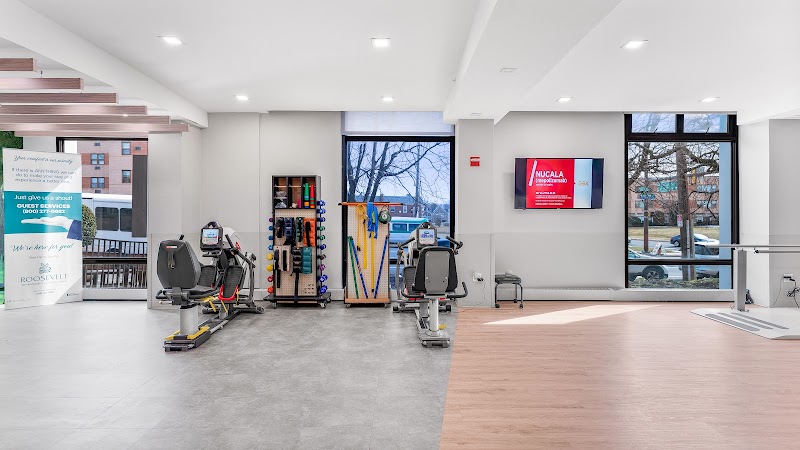
How is Roosevelt Rehabilitation And Healthcare Center Staffed?

CMS rates ROOSEVELT REHABILITATION AND HEALTHCARE CENTER's staffing level at 2 out of 5 stars, which is below average compared to other nursing homes. Staff turnover is 48%, compared to the Pennsylvania average of 46%. RN turnover specifically is 63%, which is notably high. RNs provide skilled clinical oversight, so turnover in this role can affect medical care quality.

What Have Inspectors Found at Roosevelt Rehabilitation And Healthcare Center?

State health inspectors documented 81 deficiencies at ROOSEVELT REHABILITATION AND HEALTHCARE CENTER during 2022 to 2025. These included: 1 Immediate Jeopardy (the most serious level, indicating potential for serious harm or death), 2 that caused actual resident harm, and 78 with potential for harm. Immediate Jeopardy findings are rare and represent the most serious regulatory concerns. They require immediate corrective action.

Who Owns and Operates Roosevelt Rehabilitation And Healthcare Center?

ROOSEVELT REHABILITATION AND HEALTHCARE CENTER is owned by a for-profit company. For-profit facilities operate as businesses with obligations to shareholders or private owners. The facility is operated by MARQUIS HEALTH SERVICES, a chain that manages multiple nursing homes. With 240 certified beds and approximately 210 residents (about 88% occupancy), it is a large facility located in PHILADELPHIA, Pennsylvania.
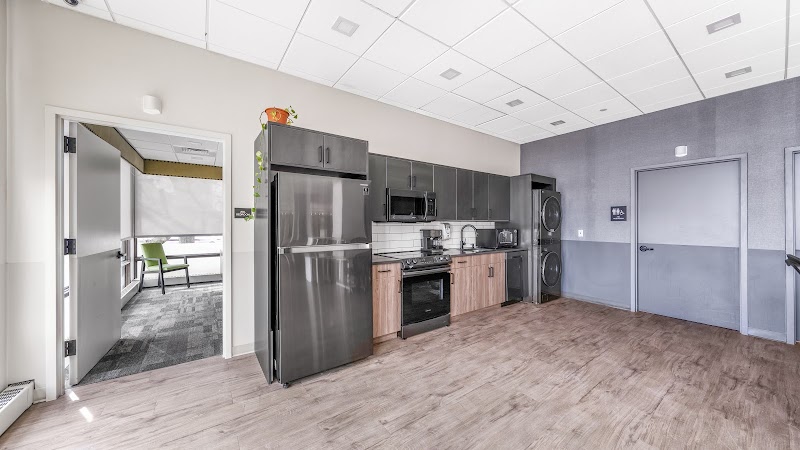
How Does Roosevelt Rehabilitation And Healthcare Center Compare to Other Pennsylvania Nursing Homes?

Compared to the 100 nursing homes in Pennsylvania, ROOSEVELT REHABILITATION AND HEALTHCARE CENTER's overall rating (1 stars) is below the state average of 3.0, staff turnover (48%) is near the state average of 46%, and health inspection rating (1 stars) is much below the national benchmark.

What Should Families Ask When Visiting Roosevelt Rehabilitation And Healthcare Center?

Based on this facility's data, families visiting should ask: "What changes have been made since the serious inspection findings, and how are you preventing similar issues?" "Can you walk me through typical staffing levels on day, evening, and night shifts?" "Can I visit during a mealtime to observe dining assistance and food quality?" "How do you handle medical emergencies, and what is your hospital transfer rate?" These questions are particularly relevant given the facility's Immediate Jeopardy citations and the below-average staffing rating.

Is Roosevelt Rehabilitation And Healthcare Center Safe?

Based on CMS inspection data, ROOSEVELT REHABILITATION AND HEALTHCARE CENTER has documented safety concerns. Inspectors have issued 1 Immediate Jeopardy citation (the most serious violation level indicating risk of serious injury or death). The facility has a 1-star overall rating and ranks #100 of 100 nursing homes in Pennsylvania. Families considering this facility should ask detailed questions about what corrective actions have been taken since these incidents.

Do Nurses at Roosevelt Rehabilitation And Healthcare Center Stick Around?

ROOSEVELT REHABILITATION AND HEALTHCARE CENTER has a staff turnover rate of 48%, which is about average for Pennsylvania nursing homes (state average: 46%). Moderate turnover is common in nursing homes, but families should still ask about staff tenure and how the facility maintains care continuity when employees leave.

Was Roosevelt Rehabilitation And Healthcare Center Ever Fined?

ROOSEVELT REHABILITATION AND HEALTHCARE CENTER has been fined $63,953 across 4 penalty actions. This is above the Pennsylvania average of $33,718. Fines in this range indicate compliance issues significant enough for CMS to impose meaningful financial consequences. Common causes include delayed correction of deficiencies, repeat violations, or care failures affecting resident safety. Families should ask facility leadership what changes have been made since these penalties.

Is Roosevelt Rehabilitation And Healthcare Center on Any Federal Watch List?

ROOSEVELT REHABILITATION AND HEALTHCARE CENTER is not on any federal watch list. The most significant is the Special Focus Facility (SFF) program, which identifies the bottom 1% of nursing homes nationally based on persistent, serious quality problems. Not being on this list means the facility has avoided the pattern of deficiencies that triggers enhanced federal oversight. This is a positive indicator, though families should still review the facility's inspection history directly.