TRANSITIONAL CARE UNIT AT NAZARETH HOSPITAL

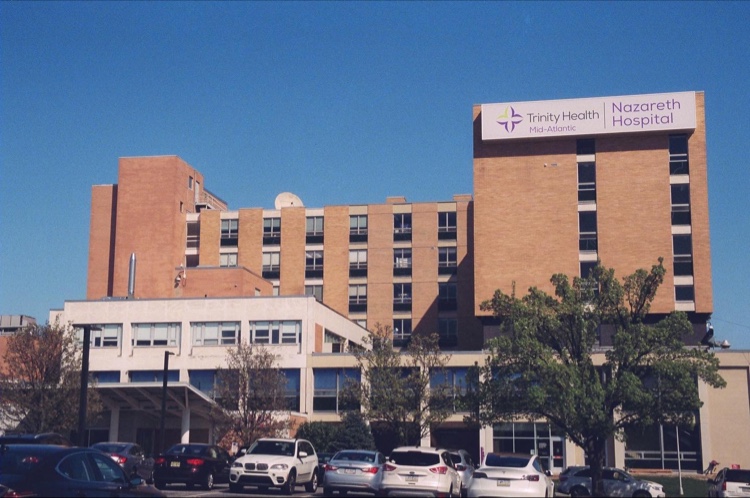
2601 HOLME AVENUE, PHILADELPHIA, PA 19152 (215) 335-6367
Non profit - Corporation 28 Beds TRINITY HEALTH Data: November 2025
Trust Grade
95/100
#132 of 653 in PA
Last Inspection: March 2025

Within standard 12-15 month inspection cycle. Federal law requires annual inspections.

Overview

The Transitional Care Unit at Nazareth Hospital has received a Trust Grade of A+, indicating it is an elite facility and among the best in its category. It ranks #132 out of 653 nursing homes in Pennsylvania, placing it in the top half of all facilities in the state and #6 out of 46 in Philadelphia County, meaning only five local options are better. The facility is improving, with the number of issues decreasing from six in 2023 to four in 2025. Staffing is a strong point, as they have a 5/5 star rating and a low turnover rate of 14%, well below the Pennsylvania average, which suggests a stable workforce that knows the residents well. Notably, there have been no fines recorded, which is a positive indicator of compliance. However, there are some concerns. The facility failed to ensure that advance directives were in place for two residents, and it did not develop a personalized care plan for two others, which could impact their care. Additionally, there was a lapse in clarifying a physician's order regarding daily weights for one resident, which could affect monitoring their health. Overall, while there are strengths in staffing and compliance, families should be aware of these identified issues in care planning and documentation.

Trust Score
A+
95/100
In Pennsylvania
#132/653
Top 20%
Safety Record
Low Risk
No red flags
Inspections
Getting Better
6 → 4 violations
Staff Stability
✓ Good
14% annual turnover. Excellent stability, 34 points below Pennsylvania's 48% average. Staff who stay learn residents' needs.
Penalties
✓ Good
No fines on record. Clean compliance history, better than most Pennsylvania facilities.
Skilled Nurses
✓ Good
Each resident gets 263 minutes of Registered Nurse (RN) attention daily — more than 97% of Pennsylvania nursing homes. RNs are the most trained staff who catch health problems before they become serious.
Violations
○ Average
10 deficiencies on record. Average for a facility this size. Mostly minor or procedural issues.
★★★★★
5.0
Overall Rating
★★★★★
5.0
Staff Levels
★★★★☆
4.0
Care Quality
★★★★☆
4.0
Inspection Score
Stable
2023: 6 issues
2025: 4 issues

The Good

  • 5-Star Staffing Rating · Excellent nurse staffing levels
  • 4-Star Quality Measures · Strong clinical quality outcomes
  • Low Staff Turnover (14%) · Staff stability means consistent care
  • Full Sprinkler Coverage · Fire safety systems throughout facility
  • No fines on record
  • Staff turnover is low (14%)

    34 points below Pennsylvania average of 48%

Facility shows strength in staffing levels, quality measures, staff retention, fire safety.

The Bad

Chain: TRINITY HEALTH

Part of a multi-facility chain

Ask about local staffing decisions and management

The Ugly 10 deficiencies on record

Mar 2025 4 deficiencies
CONCERN (D)

Potential for Harm - no one hurt, but risky conditions existed

Quality of Care (Tag F0684)

Could have caused harm · This affected 1 resident

**NOTE- TERMS IN BRACKETS HAVE BEEN EDITED TO PROTECT CONFIDENTIALITY** Based on staff interviews and the review of clinical records, it was determined that the facility failed to clarify a physician'...

Read full inspector narrative →
**NOTE- TERMS IN BRACKETS HAVE BEEN EDITED TO PROTECT CONFIDENTIALITY** Based on staff interviews and the review of clinical records, it was determined that the facility failed to clarify a physician's order related to daily weights for one out of 11 residents reviewed (Resident R61). Findings include: Review of the facility policy, Weights, with a review date of August 2019 indicted that the purpose of the policy is to monitor weight gain or loss. The policy also indicated that nursing will notify the physician or any weight gain of 2 or more pounds in one day, and the dietician of any weight loss. Review of the guidelines that the facility follows for the managemement of heart failure, 22 AHA/ACC/HFSA Guideline for the Management of Heart Failure indicated that the facility's disease management programs may compromise education, self-management, medication optimization, device management, weight monitoring, exercise and dietary advices . Review of Resident R61's nursing note dated March 13, 2025 at 11:54 a.m. indicated that the resident was admitted in to the facility with diagnosis that included the following: Hypoxia (low levels of oxygen), and Congestive Heart Failure (excessive body/lung fluid caused by a weakened heart muscle). Review of the resident's March 2025 physician orders included a physician's order for the resident to have daily weights. Review of the resident's weights obtained by the facility included the following weights: March 13, 2025 -177lbs at 6:31 p.m. March 14, 2025 -180lbs at 6:10 a.m. March 14, 2025 -180lbs at 2:53 p.m. March 15, 2025 -183lbs at 6:00 a.m. March 16, 2025 -184lbs at 6:00 a.m. March 16 2025 -185lbs at 11:00 a.m. March 17, 2025 -185lbs 5:35 a.m. March 18, 2025 -185lbs at 5:37 a.m. March 19, 2025 -187lbs at 6:25 a.m. March 20, 2025 -188lbs at 6:00 a.m. During an interview with the Director of Nursing (DON) on March 20, 2025 at 12:30 p.m. the DON reported that the rationale behind the physician's order for daily weights was related to his diagnosis of CHF. The American Heart Association's article, Managing Heart Failure Symptoms, indicated that many people are first alerted to worsening heart failure when they notice a weight gain of more than two or three pounds in a 24-hour period or more than five pounds in a week. This weight gain may be due to retaining fluids since the heart is not functioning properly. It's a good idea to track your weight and check in with your health care professional if you notice sudden changes and to make sure that you know the amount of weight gain your health care professional considers to be a problem for you. Review of the resident's daily weights indicated that from March 13, 2025 through March 14, 2025 Resident R61 gained 3lbs. Review of the resident's daily weights indicated that from March 14, 2025 through March 15, 2025 Resident R61 gained an additional 3lbs. Review of the resident's daily weights indicated that from March 15, 2025 through March 16, 2025 Resident R61 gained an additional 1-2lbs Review of the resident's daily weights indicated that from March 16, 2025 through March 20, 2025, the resident gained an addition 4 lbs. Continued review of the resident's daily weight scheduled indicated that from the date of the resident's admission [DATE]) through March 20, 2025, Resident R61 gained a total of 11lbs in an 8 day period. Review of the physician's order did not indicate when staff should alert the physician to weight gain. Continued review of the resident's physician notes did not show evidence that the resident's attending physician,was notified by nursing staff of the resident's initial weight gain, and any other weight gain thereafter. During an interview with the Director of Nursing (DON) on March 20, 2025 at 1:15 p.m. the DON reported that that all resident weights are discussed in morning meeting, but could not provide any evidence that the facility notified the physician of the resident's weight gain totaling 11 pounds within an 8 day period. 28 Pa. Code 211.10(c) Resident care policies 28 Pa. Code 211.12(d)(1) Nusing services
CONCERN (D)

Potential for Harm - no one hurt, but risky conditions existed

Deficiency F0694 (Tag F0694)

Could have caused harm · This affected 1 resident

**NOTE- TERMS IN BRACKETS HAVE BEEN EDITED TO PROTECT CONFIDENTIALITY** Based on observation, interviews with resident and staff, review of clinical records and facility policy, it was determined that...

Read full inspector narrative →
**NOTE- TERMS IN BRACKETS HAVE BEEN EDITED TO PROTECT CONFIDENTIALITY** Based on observation, interviews with resident and staff, review of clinical records and facility policy, it was determined that the facility failed to maintain a peripheral inserted central catheter (PICC) consistent with professional standards of practice for one of one resident with a PICC line. (Resident R4) Findings include: Review of facility policy on Maintenance of Central Venous Catheters (CVC) revealed that under section Purpose: intravenous therapy for the administration of blood products, fluids, and parenteral nutrition, as well as for hemodynamic monitoring is an essential part of medical practice. The following policy pertains to all central venous catheters (CVC) utilized at [NAME] Health Mid-Atlantic region, including PICC. Under section Maintenance of the Catheter Site, # C. The insertion site will be evaluated every shift for evidence of complications. Assessments include gentle palpation of the site through the intact dressing to discern tenderness and visual inspection of insertion site through the transparent dressing. Observation conducted on March 17, 2025, at 10:35a.m. during the tour of the unit revealed that Resident R4 was in bed awake. Further an intravenoues (IV) line was observed on the inner side of Resident R4's left upper arm. Interview with Resident R4 conducted at the time of the observation revealed that he gets antibiotics and that the nurses give him the antibiotic using the intravenous line on his left arm. Review of Resident R4's clinical record revealed that Resident R4 was admitted to the facility on [DATE]. Further review of Resident R4's clinical record revealed an order dated March 7, 2025, for Ceftriaxone (Rocephine) IV syringe 2 gm IV 400 ml/hr. every 12 hours. Interview with DON (Director of Nursing) Employee E2 conducted on March 18, 2025, at 12:56 p.m. revealed that the facility follows the policy for central venous catheters in caring for all PICC (peripherally inserted central catheter-a thin flexible tube inserted into a vein in the upper arm and threaded into a large vein in the chest, near the heart. It is used to provide access for administering medications, fluids and nutrition.). Further DON Employee E2 also revealed that PICC lines are measured by the nurse who administers the antibiotic to ensure proper placement. Review of Resident R4's clinical record revealed that there was no documented evidence that Resident R4's PICC line site was evaluated every shift or on a regular basis and there was no documented evidence that the PICC line length was measured at any time from Resident R7's admission on [DATE], up to March 17, 2025, to ascertain proper placement of the PICC line. Interview with DON Employee E2 confirmed that Resident R4's PICC line was not measured during his stay at the facility. Further DON Employee E2 revealed that PICC line length should be measured before administering an IV ABT (intra-venous antibiotic therapy) via PICC line. 28 Pa. Code 211.10(c) Resident care policies 28 Pa. Code 211.12(d)(5) Nursing services
CONCERN (D)

Potential for Harm - no one hurt, but risky conditions existed

Infection Control (Tag F0880)

Could have caused harm · This affected 1 resident

**NOTE- TERMS IN BRACKETS HAVE BEEN EDITED TO PROTECT CONFIDENTIALITY** Based on observation, review of facility policy and procedure, it was determined that the facility failed to maintain an effecti...

Read full inspector narrative →
**NOTE- TERMS IN BRACKETS HAVE BEEN EDITED TO PROTECT CONFIDENTIALITY** Based on observation, review of facility policy and procedure, it was determined that the facility failed to maintain an effective infection control program related to the hand hygiene during medication administration, and wound treatment for two of two residents observed. (Resident R61 and Resident R108) Findings include: Revie of facility policy on medication administration revealed that the policy did not address hand washing and other infection control subjects. Review of facility policy on Hand Hygiene revealed that under section Purpose: To assure proper hand hygiene practices are utilized by employees during all activities including patient care, and to prevent transmission of infectious pathogens. Hand hygiene helps to physical remove infectious from hands. Hands can also be decontaminated using waterless alcohol hand sanitizer. Under section Policy: It is the policy of [NAME] Hospital to decrease the risk for transmission of nosocomial pathogens that may be carried on the hands of healthcare workers. Under section Procedure: #3 Hand hygiene will be performed at the following times and as necessary: #a. Before and after entering a patient's room #b. Before and after direct patient contact. #c. Before donning gloves. #d. After removing gloves.#g. after contact with objects (including equipment) located in a patient's environment. Medication administration observation conducted on March 19, 2025, at 8:50 a.m. with Licensed nurse Employee E4 revealed that during medication administration for Resident R61, Employee E4 was observed wearing gloves. Further observstion revealed that Employee E4 proceeded to administer Resident R108's oral medications with the gloves on. Further observation revealed that Employee E4 was touching Resident R61's bed side table with the same gloves and proceeded to administer Resident R61 with an eye ointment without changing gloves. Medication administration observation conducted on March 19, 2025, at 9:38 a.m. with licensed nurse Employee E5 revealed that during medication administration for Resident R108, Employee E5 was observed wearing gloves Further observation revealed that Employee E5 proceeded to administer Resident R108's oral medications with the gloves on. Further, Employee E5 proceeded to apply Resident R108's Nystatin powder 100,00 units to Resident r108's groin without changing gloves. After applying the Nystatin powder 100,00 units to Resident R108's groin, Employee E5 proceeded to pull Resident R108's pajamas up, touched the bed, adjusted the bed controls, touched the overhead table, removed resident R108's heel booties, touched the bed controls to adjust the height of the bed and to elevate the head of bed without changing gloves or washing hands. 28 Pa Code 211.12 (d)(1)(5) Nursing services
CONCERN (E)

Potential for Harm - no one hurt, but risky conditions existed

Deficiency F0578 (Tag F0578)

Could have caused harm · This affected multiple residents

**NOTE- TERMS IN BRACKETS HAVE BEEN EDITED TO PROTECT CONFIDENTIALITY** Based on review of clinical record, review of facility policy and interviews with staff, it was determined that the facility fai...

Read full inspector narrative →
**NOTE- TERMS IN BRACKETS HAVE BEEN EDITED TO PROTECT CONFIDENTIALITY** Based on review of clinical record, review of facility policy and interviews with staff, it was determined that the facility failed to ensure that advanced directives/code status were in place for two of 11 clinical records reviewed (Resident R110 and Resident R111). Findings include: Review of facility policy on Advance Directive and Healthcare Agents and Representatives revealed that under section Purpose: The purpose of this policy is to ensure that [NAME] Hospital physicians and colleagues respect the health care decisions of its patients and comply with the requirement of Pennsylvania law governing Living Wills. Under section Policy: [NAME] Hospital will comply with the Living Will of a patient. Under section admission Procedure: Upon admission to [NAME] Hospital facility, the patient shall be informed of the right to execute an Advance Health Care Directives. The patient access representative will ask the patient if the patient has executed a living will/advance health care directive and if the patient has designated someone to be the patient's health care agent. The response will be a mandatory field within the electronic medical record. (EMR). If a patient has a living will/advance health care directives, a copy will be requested and scanned directly into the EMR. Review of Resident R110's clinical record revealed that Resident R110 was admitted to the facility on [DATE]. Further review of Resident R110's clinical record revealed that there was no advance directive in place and there no code status indicated Resident R110's clinical record. Review of Resident R110's physician orders revealed no order for advance directives or code status. Further review of Resident R110's clinical record revealed no documented evidence that advance directives was discussed with the resident. Interview with Resident R110 conducted on [DATE], at 2:52 p.m. with her sister acting as sign language interpreter revealed that she has a living will and wants one of the measures to be Do Not Resucitate. Interview with the Social Worker Employee E3 conducted on [DATE], at 3:05 p.m. revealed that she was aware of Resident R110's Advance Directives. Further Employee E3 also revealed that she was waiting for the physician to order the resident's advance directives and that only the physician can order the advance directives, and that code status will not reflect in Resident R110's clinical record until the physician orders it. Interview with the DON (Director of Nursing) Employee E2 conducted on [DATE], at 3:10 p.m. confirmed that there was no advance directive in place in Resident R110's clinical record. Further DON Employee E2 also confirmed that the physician has not ordered the advanced directive and that until the physician enters the order for Resident R110's Advance Directives, it will not be reflected in Resident R110's clinical record. Further interview with DON Employee E2 revealed that without the advance directive or without the code status indicated in the resident's clinical record, the resident will be considered a full code. Review of Resident R111's clinical record revealed that Resident R111 was admitted to the facility on [DATE]. Review of Resident R111's physician's orders revealed that a No CPR (Cardiopulmonary Resuscitation) and Do Not Intubate was ordered on [DATE], nine days after Resident R111's admission to the facility. Further review of Resident R111's clinical record revealed no documented evidence that advance directives was discussed with the resident from admission until [DATE]. Interview with the DON (Director of Nursing) Employee E2 conducted on [DATE], at 03:10 PM confirmed that there was no advance directive in place in Resident R111's clinical record until [DATE], nine days after Resident R111 was admitted to the facility. Further DON Employee E2 also confirmed that there was no code status indicated in Resident R111's clinical record until the physician entered the order for No CPR (Cardiopulmonary Resuscitation) and Do Not Intubate on [DATE]. Further interview with DON Employee E2 revealed that without the advance directive or without the code status indicated in the resident's clinical record, the resident will be considered a full code. 28 Pa Code 211.12(d)(3) Nursing services 28 Pa. Code 211.12(d)(5) Nursing services
Jul 2023 6 deficiencies
CONCERN (D)

Potential for Harm - no one hurt, but risky conditions existed

Transfer Requirements (Tag F0622)

Could have caused harm · This affected 1 resident

**NOTE- TERMS IN BRACKETS HAVE BEEN EDITED TO PROTECT CONFIDENTIALITY** Based on clinical record review, interviews with staff and policy and procedure review, it was determined for one of two closed ...

Read full inspector narrative →
**NOTE- TERMS IN BRACKETS HAVE BEEN EDITED TO PROTECT CONFIDENTIALITY** Based on clinical record review, interviews with staff and policy and procedure review, it was determined for one of two closed resident records, the facility failed to ensure a comprehensive, orderly, systematic and coordinated discharge to the community. (Resident R9) Findings include: Review of Resident R9's closed clinical record revealed that the resident was admitted to the facility on [DATE] for rehabilitation. On May 8, 2023 the physician's progress note indicated that the resident was requesting to be discharge. On May 9, 2023 the nursing staff documented in the clinical record that Resident R9 left the facility at 8:05 p.m., with a family member to return home. The resident was documented as advised to continue Nexium 40 milligrams (mg) twice daily to treat acid reflux, Ibuprofen 800 mg three times a day and as needed for pain, Carisoprodol 350 mg daily as needed for muscle spasm, Calcitrol 25 mg daily (a vitamin supplement) and Lisinopril 20 mg daily to treat high blood pressure. The physician indicated that the resident was advised to keep a log of her blood pressure at home. The resident was also advised to monitor her systolic number of her blood pressure and consider taking a lower dose if the blood pressure was less than 110. There was no documented evidence to indicate that Resident R9 had these medications were called into the local pharmacy for the continuation of the resident's care at home. There was no documentation to indicate that Resident R9 had a device to check her blood pressure daily. There was no documentation to indicate that the resident was supplied the family practice physician's contact information for laboratory studies (basal metabolic profile, magnesium level) that were advised for completion after discharge. The clinical record lacked documentation to indicate that Resident R9 was discharge to the community with her personal belongings. Interview with the Director of Nursing, Employee E2, on July 27, 2023 at 10:00 a.m., confirmed that the facility failed to provide documentation to indicate that arrangements were made for Resident R9 to receive home care needs (medications, medical equipment, physican's contact information) after discharge. Interview with the Director of Social Services, Employee E3, on July 27, 2023 at 10:30 a.m., confirmed that there was no documented accounting of Resident R9's personal belongings upon admission or at time of discharge. 28 Pa. Code 211.12(c)Nursing services 28 Pa. Code 211.12(d)(1) Nursing services
CONCERN (D)

Potential for Harm - no one hurt, but risky conditions existed

Quality of Care (Tag F0684)

Could have caused harm · This affected 1 resident

**NOTE- TERMS IN BRACKETS HAVE BEEN EDITED TO PROTECT CONFIDENTIALITY** Based on clinical record reviews, and staff interview, it was determined that the facility failed to ensure that physician order...

Read full inspector narrative →
**NOTE- TERMS IN BRACKETS HAVE BEEN EDITED TO PROTECT CONFIDENTIALITY** Based on clinical record reviews, and staff interview, it was determined that the facility failed to ensure that physician orders were follow related to medications for diabetes mellitus and hypotension for two of six residents reviewed. (Residents R61 and R70) Findings include: Clinical record review revealed that Resident R70 was admitted to the facility on [DATE]. The physician's assessment dated [DATE] indicated that the resident had a diagnosis of diabetes mellitus (a metabolic disorder in which the body has high blood glucose levels for prolonged periods of time, that was caused by an inadequate production of insulin). Clinical record review revealed that Resident R70 had physician' orders for insulin (Lispro Humalog); which was a fast acting insulin used to control high blood glucose. The physician directed the nursing staff to monitor Resident R70's blood glucose three times daily with meals. The physician orders also included directions for the nursing staff to treat hypoglycemia (low blood glucose). The physician indicated that for a blood glucose reading less than 54 mg/dl; directions were for the nursing staff to provide 30 grams of glucose (1 cup of apple juice/1 cup cranberry juice) to Resident R70. On July 24, 2023 the nursing staff documented a low blood glucose reading of 44 . There was no documentation to indicate that the nurse provided the 30 grams of glucose for Resident R70 as ordered by the physician on July 24, 2023. Interview with the Director of Nursing, Employee E2, on July 26, 2023 at 10:00 a.m., confirmed the lack of documentation to indicate that the physician's orders were followed directing the nursing staff to give 30 grams of glucose to Resident R70 for a low blood glucose of 44 obtained on July 24, 2023. Clinical record review for Resident R61 revealed that this resident had a diagnosis of heart failure. The physician had prescribed medication (Carvedilol) for this resident's cardiac issues. The Carvedilol medication was ordered two times a day with meals and specific instructions were indicated for its' administration by the nursing staff. The instructions were to obtain a blood pressure reading (was the pressure of the blood pushing against the walls of the arteries) and determine if the systolic blood pressure was below 105.) The physician had directed the nursing staff to hold the medication if the systolic blood pressure was below 105 or hypotension (low blood pressure). On July 19, 2023 the nursing staff documented at 9:00 a.m., that a blood pressure reading of 101/64 for resident R61. The medication Carvedilol was administered and not held as directed. On July 19, 2023 the medication, Carvedilol was administered at 5:00 p.m., to Resident R61; however there was no blood pressure obtained by the nursing staff. On July 21, 2023 at 9:00 a.m., Resident R61 had a blood pressure of 90/53. The medication, Carvedilol was given; despite physician's orders to hold the medication for a systolic reading less than 105. On July 21, 2023 at 4:00 p.m., a blood pressure reading of 98/61 was recorded by the nursing staff. The nursing staff documented that the medication, Caredilol was given to Resident R61. The nursing staff was directed to hold the medication for a systolic blood pressure reading of less than 105. On July 24, 2023 at 9:00 a.m., the nursing staff documented a blood pressure of 96/52. The medication, Carvedilol was administrated to Resident R61 and not held as directed by the physician. On July 24, 2023 at 5:00 p.m., the blood pressure of 94/54 was obtained for Resident R61. The medication, Carvedilol was administered to Resident R61 and was not held according to the physician's orders. The above findings were confirmed on July 26, 2023 at 9:30 a.m., with the Director of Nursing, Employee E2. 28 Pa. Code 211.10(d) Resident care policies 28 Pa. Code 211.12(c) Nursing services
CONCERN (D)

Potential for Harm - no one hurt, but risky conditions existed

Respiratory Care (Tag F0695)

Could have caused harm · This affected 1 resident

Based on observation, clinical record review and interviews with staff, it was determined that the facility did not maintain respiratory equipment according to professional standards of practice for t...

Read full inspector narrative →
Based on observation, clinical record review and interviews with staff, it was determined that the facility did not maintain respiratory equipment according to professional standards of practice for two of two residents reviewed in oxygen therapy (Resident R3 and Resident R112). Findings include: Observations conducted on July 25, 2023, at 10:56 a.m. revealed that Resident R3 was receiving supplemental oxygen via nasal cannula and the tubing was undated. Observations conducted on July 25, 2023, at 11:15 a.m. revealed that Resident R112 was receiving supplemental oxygen via nasal cannula and the tubing was undated. Interview with Licensed nurse, Employee E11 on July 26, 2023 at 2:05 p.m. confirmed that the tubing has not been dated. Interview with Director of nursing on July 27, 2023 at 2:40 p.m. revealed that the tubing is changed every Sunday and should be dated. 28 Pa. Code 211.12(c) Nursing services 29 Pa. Code 211.12(d)(1) Nursing services
CONCERN (D)

Potential for Harm - no one hurt, but risky conditions existed

Deficiency F0761 (Tag F0761)

Could have caused harm · This affected 1 resident

Based on observation, facility policy review, and interview with staff, it was determined that the facility failed to ensure the security of a medication cart for one of one cart observed. Findings in...

Read full inspector narrative →
Based on observation, facility policy review, and interview with staff, it was determined that the facility failed to ensure the security of a medication cart for one of one cart observed. Findings include: Review of facility policy titled Administering Medications, dated February 15, 2023 revealed never leave poured or prepared medications unsupervised. Observations conducted on July 24, 2023 at 9:00 a.m. revealed that a medication cart stationed on the second floor was unlocked and unattended for a period of 7 minutes not in view of licensed nurse, Employee E24. At 9:08 a.m., Licensed nurse, Employee E24, approached the cart. When the surveyor asked why the cart was unlocked, Employee E24 stated, she was tending to a resident on isolation and could not bring the cart in the room. Interview with the Nursing Home Administrator, and the Director of Nursing, Employee E2 on July 25, 2023, at 12:30 p.m. confirmed that medication cart should be locked at all times when unattended. 29 Pa. Code 211.12(c) Nursing services 29 Pa. Code 211.12(d)(1) Nursing services
CONCERN (D)

Potential for Harm - no one hurt, but risky conditions existed

Deficiency F0836 (Tag F0836)

Could have caused harm · This affected 1 resident

Based on a review of facility documents and interviews with staff, it was determined that the facility failed to provide completed documentation and information as required within the appropriate time...

Read full inspector narrative →
Based on a review of facility documents and interviews with staff, it was determined that the facility failed to provide completed documentation and information as required within the appropriate time frames. Findings include: An entrance conference was held on July 24, 2023, at 9:15 a.m. the entrance conference worksheet was provided to the Director of Nursing informing the facility of needed documents and their expected time frames for delivery. The list of documents included but was not limited to, the wifi access and patient records access, to be delivered immediately. On July 24, 2023, at 12:10 p.m. another request was made for patient record access. Interview with Director of Nursing at the time stated that the requests for access was made but has been denied. Director of Nursing was waiting for IT (information technology) to respond to the requests. On July 25, 2023, at 9:00 a.m., surveyors were given computers to be able to access they system but still surveyors were unable to gain access to the facility program. At 10:33 a.m., surveyors were given access and assisted into the facility patient record program. The information surveyors received was given by facility employee navigating the patient record program. On July 26, 2023 at 11:10 a.m., it was learned that the surveyors did not have full access of all residents electronic medical records. An exit conference was held on July 27, 2023, at 2:00 p.m. at this time, surveyors had still did not have full access and it was confirmed that surveyors were not granted full access to all records. 28 Pa. Code 201.14(a) Responsibility of licensee
CONCERN (E)

Potential for Harm - no one hurt, but risky conditions existed

Deficiency F0655 (Tag F0655)

Could have caused harm · This affected multiple residents

**NOTE- TERMS IN BRACKETS HAVE BEEN EDITED TO PROTECT CONFIDENTIALITY** Based on review of facility policy, clinical records review, it was determined the facility did not develop a person centered ba...

Read full inspector narrative →
**NOTE- TERMS IN BRACKETS HAVE BEEN EDITED TO PROTECT CONFIDENTIALITY** Based on review of facility policy, clinical records review, it was determined the facility did not develop a person centered baseline care plan for two of five resident clinical records reviewed. (Residents R3 and R116) Findings include: Review of facility policy titled Care Plan Policy last revised August 2012 revealed The transitional care unit at [NAME] Hospital will develop a comprehensive care plan for each resident that includes measurable objectives a timetables, to meet a residents medical, nursing and mental , and psychosocial needs that are identified in the comprehensive assessment. Review of Resident R3's clinical record revealed the resident was admitted to the facility on [DATE], to receive rehabilitation services for ambulatory disfunction (a condition that make it difficult to walk). Continued review of the clinical record revealed that Resident R3 had the diagnoses of urinary tract infection, ambulatory disfunction (a condition that makes it difficult to walk), shortness of breath, kidney disease, prostate cancer. Review of Resident R3's July 2023 physician orders revealed an order for an interdewelling urinary catheter care for the resident due to a super pubic catheter (a flexible tube that is surgically inserted to drain urine from the bladder). Further review of Resident R3's clinical record revealed a care plan initiated July 17, 2023. The care plan identified resident's needs for fall precaution and interdwelling catheter maintenance. Continued review of the resident's care plan revealed that there were no interventions developed related to fall precautions. Further the care plan stated that nursing staff will change foley catheter and urinary bag as needed and nursing staff will provide foley catheter care at every shift as needed. The resident did not have a foley catheter but am interdwelling catheter. The facility failed to develop interventions for an interdwelling catheter. Review of Resident R116 's clinical record revealed that Resident R116 was admitted to the facility on [DATE] with diagnosis of papillary carcinoma pancytopenia palate cancer and pressure injury on his left buttock. Further review of Resident R116's clinical record revealed a care plan initiated July 12, 2023 for interdwelling catheter maintenance, with the goal for the resident to have no complications for the interdwelling catheter. There were no other interventions developed to achieve the goal. 28 Pa. Code 211.12(d)(1) Nursing services 28 Pa. Code 211.12(d)(3) Nursing services
Understanding Severity Codes (click to expand)
Life-Threatening (Immediate Jeopardy)
J - Isolated K - Pattern L - Widespread
Actual Harm
G - Isolated H - Pattern I - Widespread
Potential for Harm
D - Isolated E - Pattern F - Widespread
No Harm (Minor)
A - Isolated B - Pattern C - Widespread

Questions to Ask on Your Visit

  • "Can I speak with families of current residents?"
  • "What's your RN coverage like on weekends and overnight?"

Our Honest Assessment

Strengths
  • • Grade A+ (95/100). Above average facility, better than most options in Pennsylvania.
  • • No fines on record. Clean compliance history, better than most Pennsylvania facilities.
  • • 14% annual turnover. Excellent stability, 34 points below Pennsylvania's 48% average. Staff who stay learn residents' needs.
Concerns
  • • No significant concerns identified. This facility shows no red flags across CMS ratings, staff turnover, or federal penalties.
Bottom line: Generally positive indicators. Standard due diligence and a personal visit recommended.

About This Facility

What is Transitional Care Unit At Nazareth Hospital's CMS Rating?

CMS assigns TRANSITIONAL CARE UNIT AT NAZARETH HOSPITAL an overall rating of 5 out of 5 stars, which is considered much above average nationally. Within Pennsylvania, this rating places the facility higher than 99% of the state's 100 nursing homes. This rating reflects solid performance across the metrics CMS uses to evaluate nursing home quality.
How is Transitional Care Unit At Nazareth Hospital Staffed?

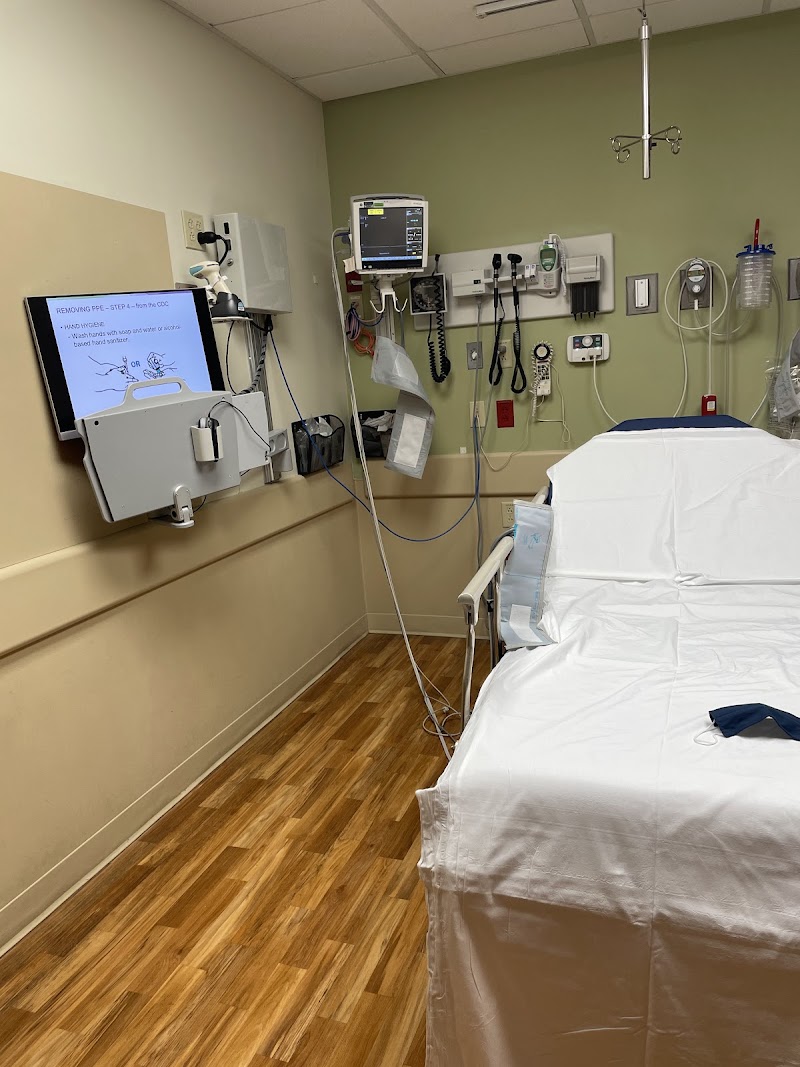
CMS rates TRANSITIONAL CARE UNIT AT NAZARETH HOSPITAL's staffing level at 5 out of 5 stars, which is much above average compared to other nursing homes. Staff turnover is 14%, compared to the Pennsylvania average of 46%. This relatively stable workforce can support continuity of care.

What Have Inspectors Found at Transitional Care Unit At Nazareth Hospital?

State health inspectors documented 10 deficiencies at TRANSITIONAL CARE UNIT AT NAZARETH HOSPITAL during 2023 to 2025. These included: 10 with potential for harm.

Who Owns and Operates Transitional Care Unit At Nazareth Hospital?

TRANSITIONAL CARE UNIT AT NAZARETH HOSPITAL is owned by a non-profit organization. Non-profit facilities reinvest revenue into operations rather than distributing to shareholders. The facility is operated by TRINITY HEALTH, a chain that manages multiple nursing homes. With 28 certified beds and approximately 11 residents (about 39% occupancy), it is a smaller facility located in PHILADELPHIA, Pennsylvania.
How Does Transitional Care Unit At Nazareth Hospital Compare to Other Pennsylvania Nursing Homes?

Compared to the 100 nursing homes in Pennsylvania, TRANSITIONAL CARE UNIT AT NAZARETH HOSPITAL's overall rating (5 stars) is above the state average of 3.0, staff turnover (14%) is significantly lower than the state average of 46%, and health inspection rating (4 stars) is above the national benchmark.

What Should Families Ask When Visiting Transitional Care Unit At Nazareth Hospital?

Based on this facility's data, families visiting should ask: "Can I visit during a mealtime to observe dining assistance and food quality?" "How do you handle medical emergencies, and what is your hospital transfer rate?" "Can I speak with family members of current residents about their experience?"

Is Transitional Care Unit At Nazareth Hospital Safe?

Based on CMS inspection data, TRANSITIONAL CARE UNIT AT NAZARETH HOSPITAL has a clean safety record: no substantiated abuse findings (meaning no confirmed cases of resident harm), no Immediate Jeopardy citations (the most serious violation level indicating risk of serious injury or death), and is not on the Special Focus Facility watch list (a federal program monitoring the lowest-performing 1% of nursing homes). The facility has a 5-star overall rating and ranks #1 of 100 nursing homes in Pennsylvania. While no facility is perfect, families should still ask about staff-to-resident ratios and recent inspection results during their visit.

Do Nurses at Transitional Care Unit At Nazareth Hospital Stick Around?

Staff at TRANSITIONAL CARE UNIT AT NAZARETH HOSPITAL tend to stick around. With a turnover rate of 14%, the facility is 32 percentage points below the Pennsylvania average of 46%. Low turnover is a positive sign. It means caregivers have time to learn each resident's needs, medications, and personal preferences. Consistent staff also notice subtle changes in a resident's condition more quickly.

Was Transitional Care Unit At Nazareth Hospital Ever Fined?

TRANSITIONAL CARE UNIT AT NAZARETH HOSPITAL has no federal fines on record. CMS issues fines when nursing homes fail to meet care standards or don't correct problems found during inspections. The absence of fines suggests the facility has either maintained compliance or corrected any issues before penalties were assessed. This is a positive indicator, though families should still review recent inspection reports for the full picture.

Is Transitional Care Unit At Nazareth Hospital on Any Federal Watch List?

TRANSITIONAL CARE UNIT AT NAZARETH HOSPITAL is not on any federal watch list. The most significant is the Special Focus Facility (SFF) program, which identifies the bottom 1% of nursing homes nationally based on persistent, serious quality problems. Not being on this list means the facility has avoided the pattern of deficiencies that triggers enhanced federal oversight. This is a positive indicator, though families should still review the facility's inspection history directly.